The notice on the front page of the Nov. 24, 1855, Philadelphia Ledger was nondescript.
“The Children’s Hospital, located on Blight St. running from Pine to Lombard below Broad is now open for the reception of patients.
Children suffering from acute diseases and accidents will be received free of charge.
A dispensary for sick children is also attached to the hospital and will be open at the same place every day (Sundays excepted) from 11 to 12 o’clock. When advice and medicine will be given free of charge.”
It was signed by T. Hewson Bache, M.D., Francis W. Lewis, M.D., and R.A.F. Penrose, M.D.
But those few lines were anything but nondescript. They announced the opening of Philadelphia Children’s Hospital, United States’ first medical facility specializing in pediatric care that would jump-start the country’s children’s health industry.
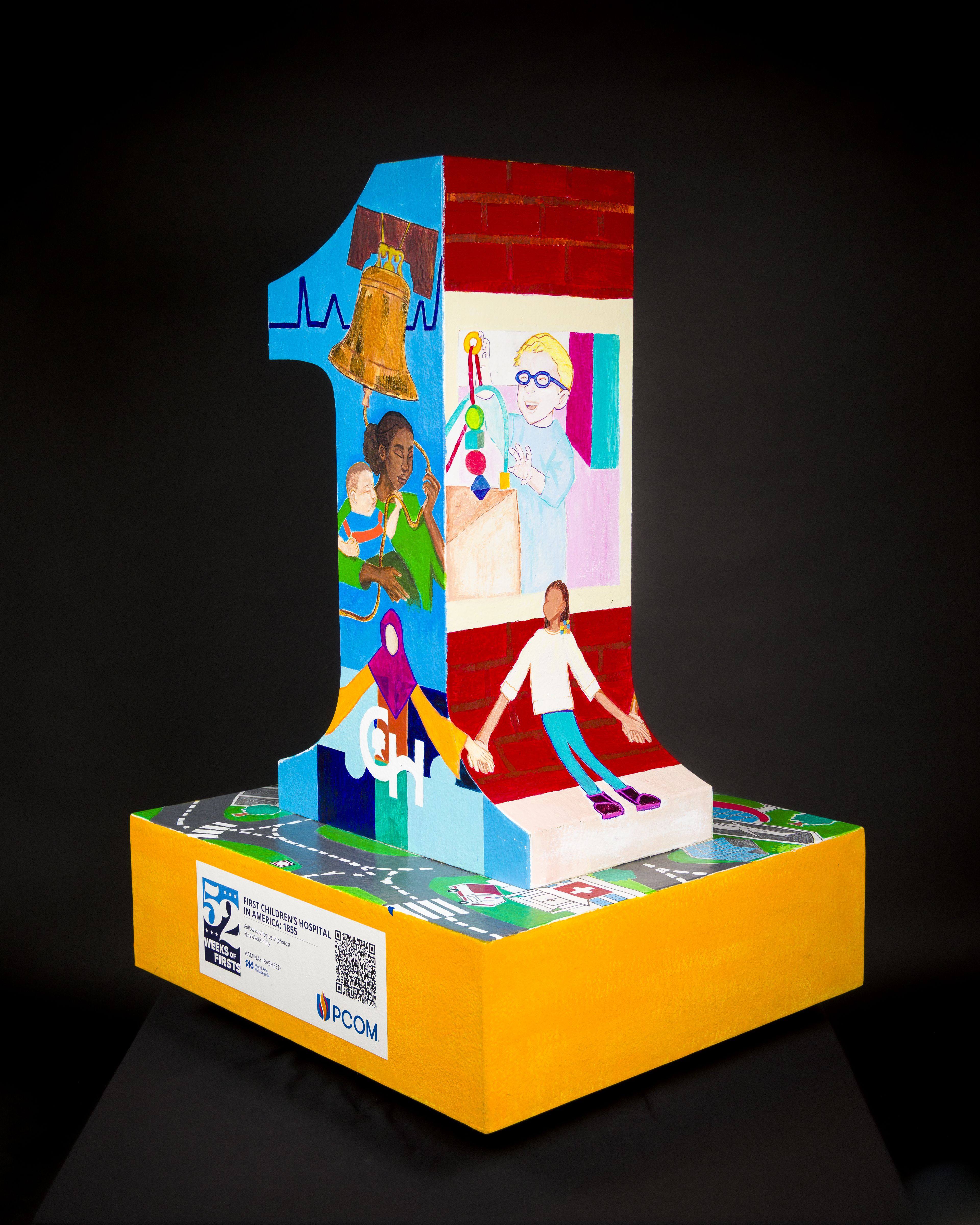
Aaminah Rasheed’s No. 1 uses bright, bold and complementary colors alongside inviting imagery representing a diverse range of young patientAaminah Rasheed and Colibri Workshop
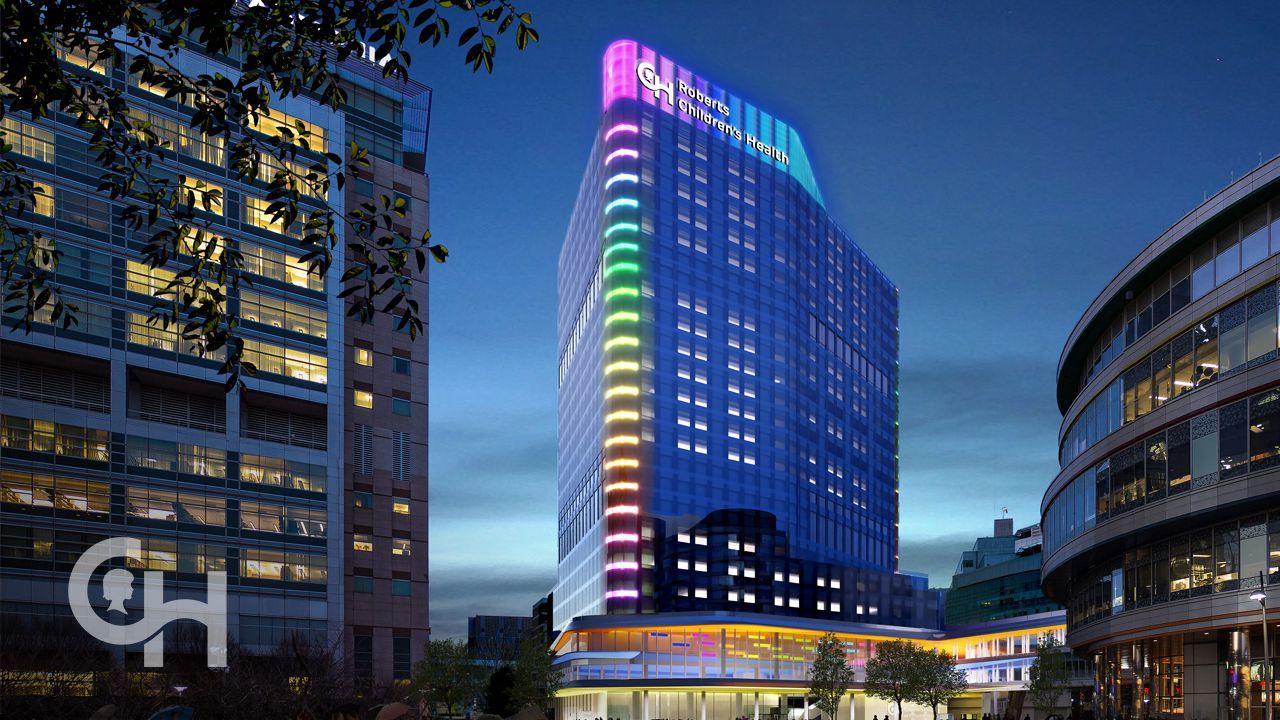
CHOP’s beginning will be celebrated this Saturday at its Morgan Center for Research & Innovation. It is the latest firstival, the Philadelphia Historic District’s weekly day party celebrating major American milestones with Philly roots.
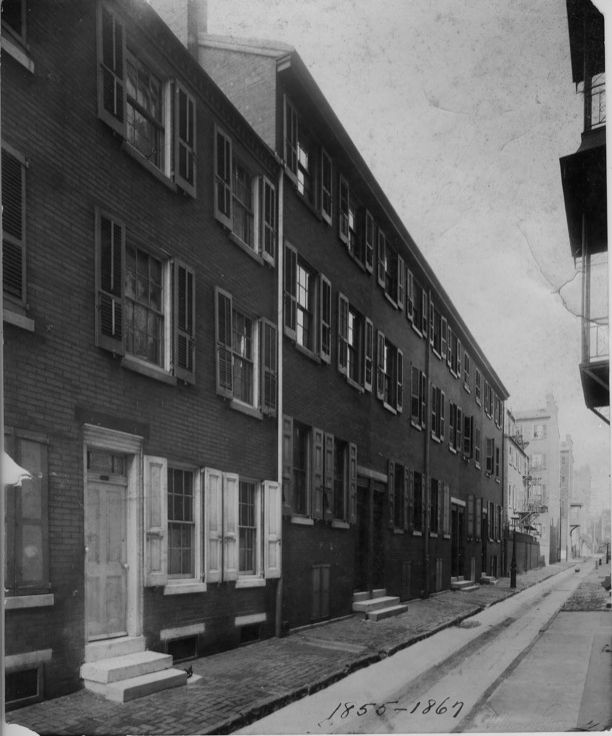
Bache, a descendant of Ben Franklin; Penrose, of the illustrious Biddle family; and Lewis were all accomplished doctors when they opened the 12-bed facility on Blight Street in the heart of Center City, now Watts Street.
Together they decided to open the hospital because children were becoming sick from living in unsanitary conditions marked by the beginning of the Industrial Revolution. Children were also being injured at an alarming rate from working in factories.
“Children are not just little adults,” said Joseph W. St. Geme III, CHOP’s physician-in-chief. “They have a unique physiology. One that evolves as they mature from newborn into adulthood.”
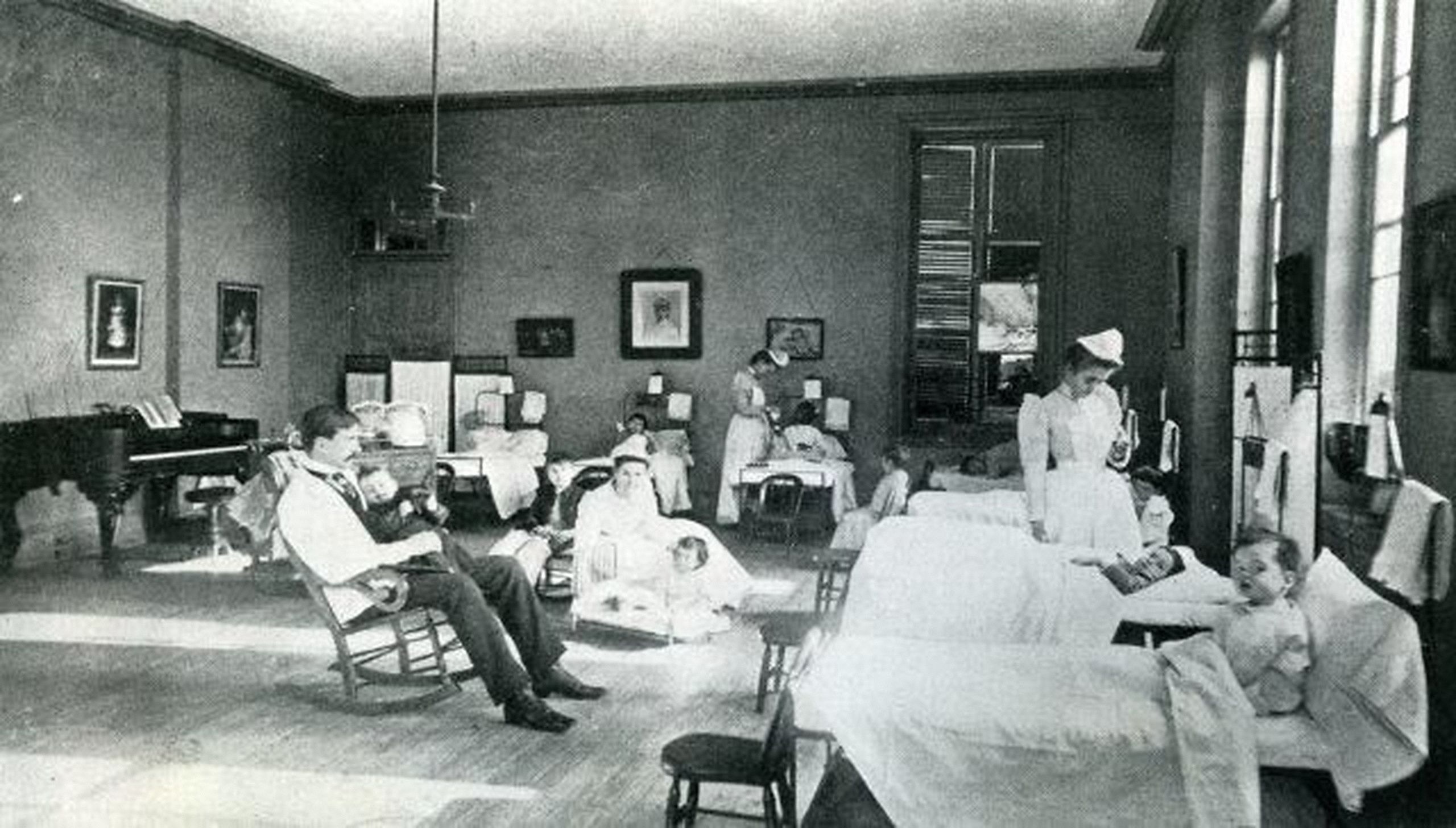
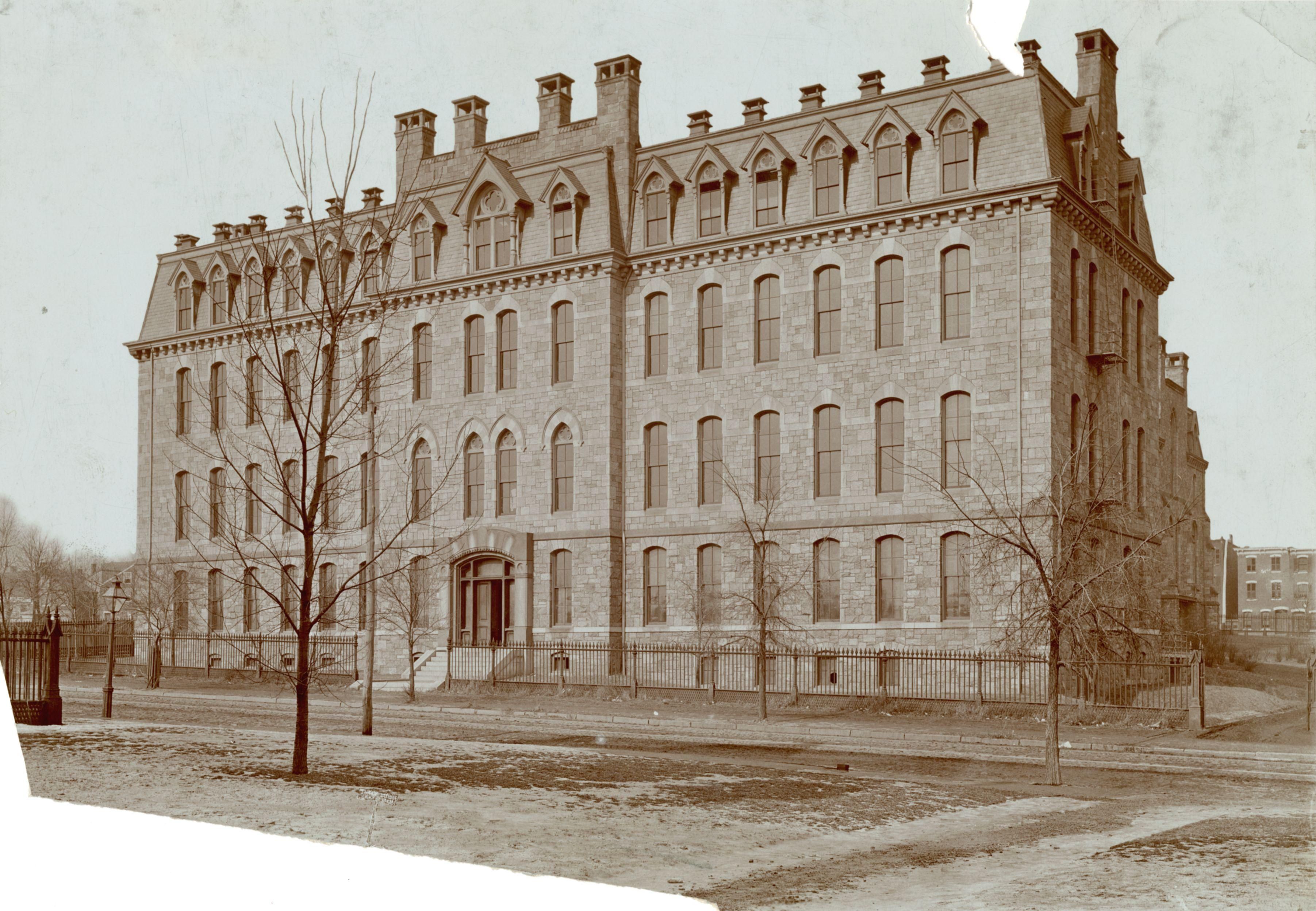
The original location of Children’s Hospital of Philadelphia or Chop located on Blight Street — now Watts Street — in Center City. It opened in 1855 and was there until 1886.Children's Hospital
During its first year, the children’s hospital treated 67 patients. And in 1877, CHOP created the country’s first training ground for pediatric doctors, establishing the foundation for pediatric practices in the United States.
CHOP moved to its second location at 22nd Street between Locust and Walnut Street in 1886, and in 1895, CHOP opened a training school for pediatric nurses. The hospital moved to 18th and Bainbridge in 1916, and it would stay there until 1974 when it made the campus on Civic Center Boulevard its home.
In 1929, CHOP formed its official affiliation with the University of Pennsylvania’s school of medicine, creating its pediatric department.
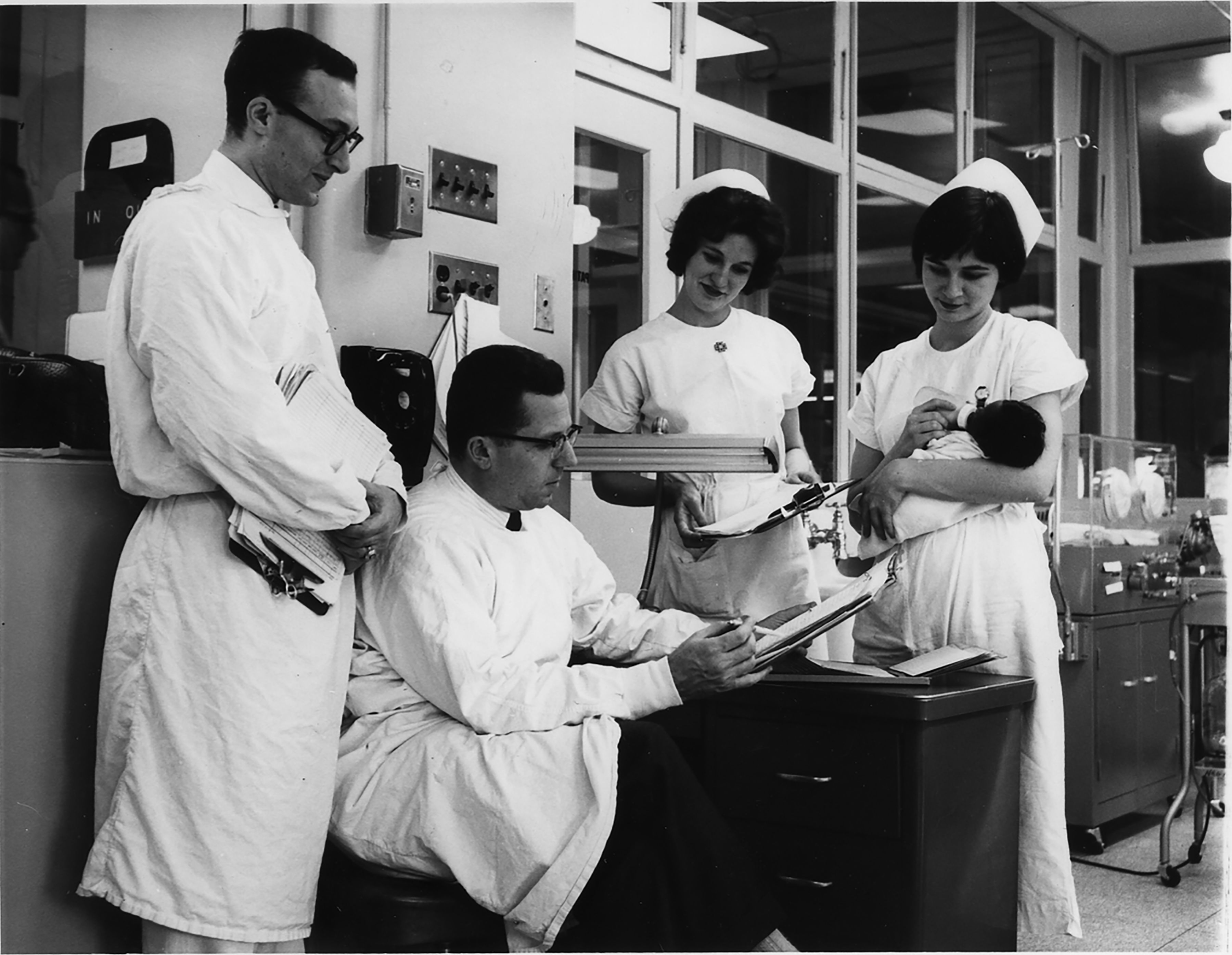
Throughout its 170 years, CHOP served as a leader in children’s health innovations making way for many firsts in the industry. In 1936, CHOP doctors discovered the vaccine for whooping cough. In 1943, they discovered the first vaccines for influenza — which were administered to adults, too. The first neonatal intensive care unit, or NICU, was established at CHOP in 1962. The first rubella vaccine was developed in 1963.
And more recently, CHOP doctors treated the newborn KJ Muldoon with CRISPR gene-editing therapy to treat a rare metabolic disease. They were the first doctors in the world to use these techniques.
CHOP doctors at the the hospital’s NICU unit in the 1960s, the first in the nation.Children's Hopsital
C. Everett Koop was CHOP’s surgeon-in-chief from 1948 to 1981 before serving as U.S. Surgeon General from 1982 to 1989. He pioneered techniques for operating on newborn babies and became an outspoken surgeon general on health issues, from smoking to AIDS. He died in 2013.
“We’ve gone from having just 12 beds in 1855 and 740 today,” Geme said. “A lot has happened since 1855.”
Children’s Hospital of Philadelphia in 2025Children's Hospital of Philadelphia
This week’s Firstival is Saturday, Nov. 21, 11 a.m. to 1 p.m. at Children’s Hospital of Philadelphia Morgan Center for Research & Innovation, 2716 S. St.
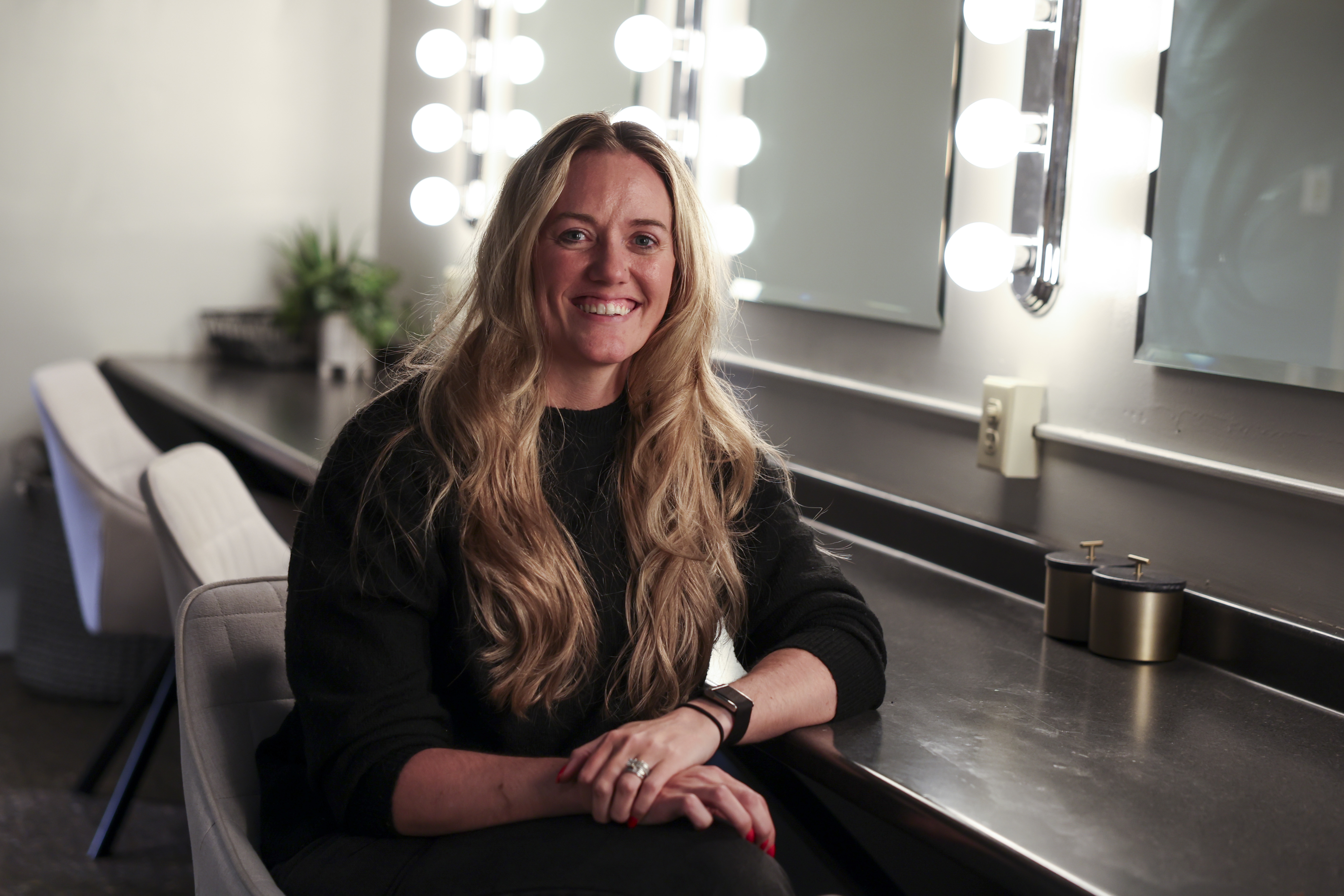
When Ashlee Hollis leased a cavernous Fishtown warehouse in 2022 and named it the Story Factory, the founder of Helm Creative Studio dreamed of turning it into a state-of-the-art space for her firm’s clients to create content.
And she did.
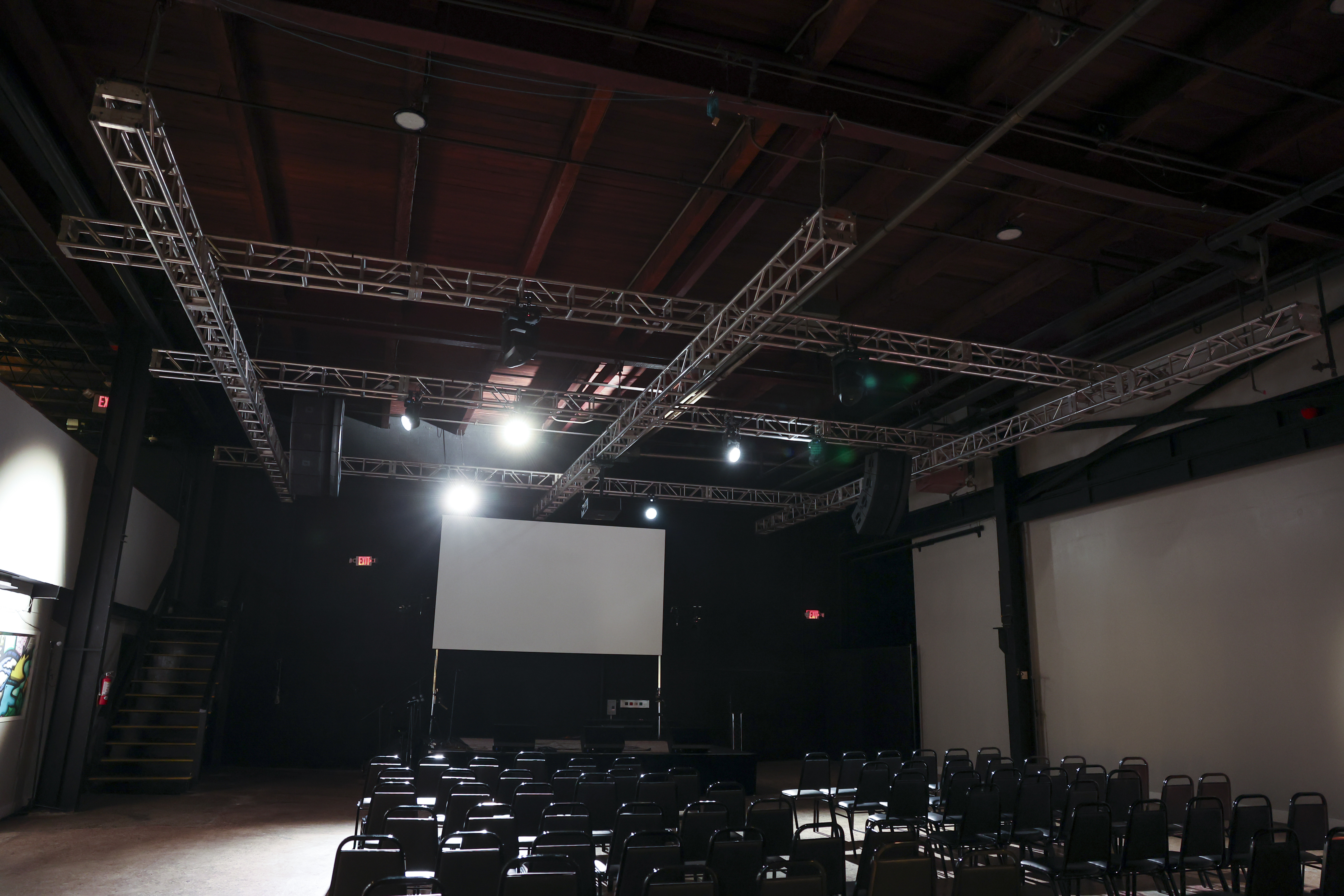
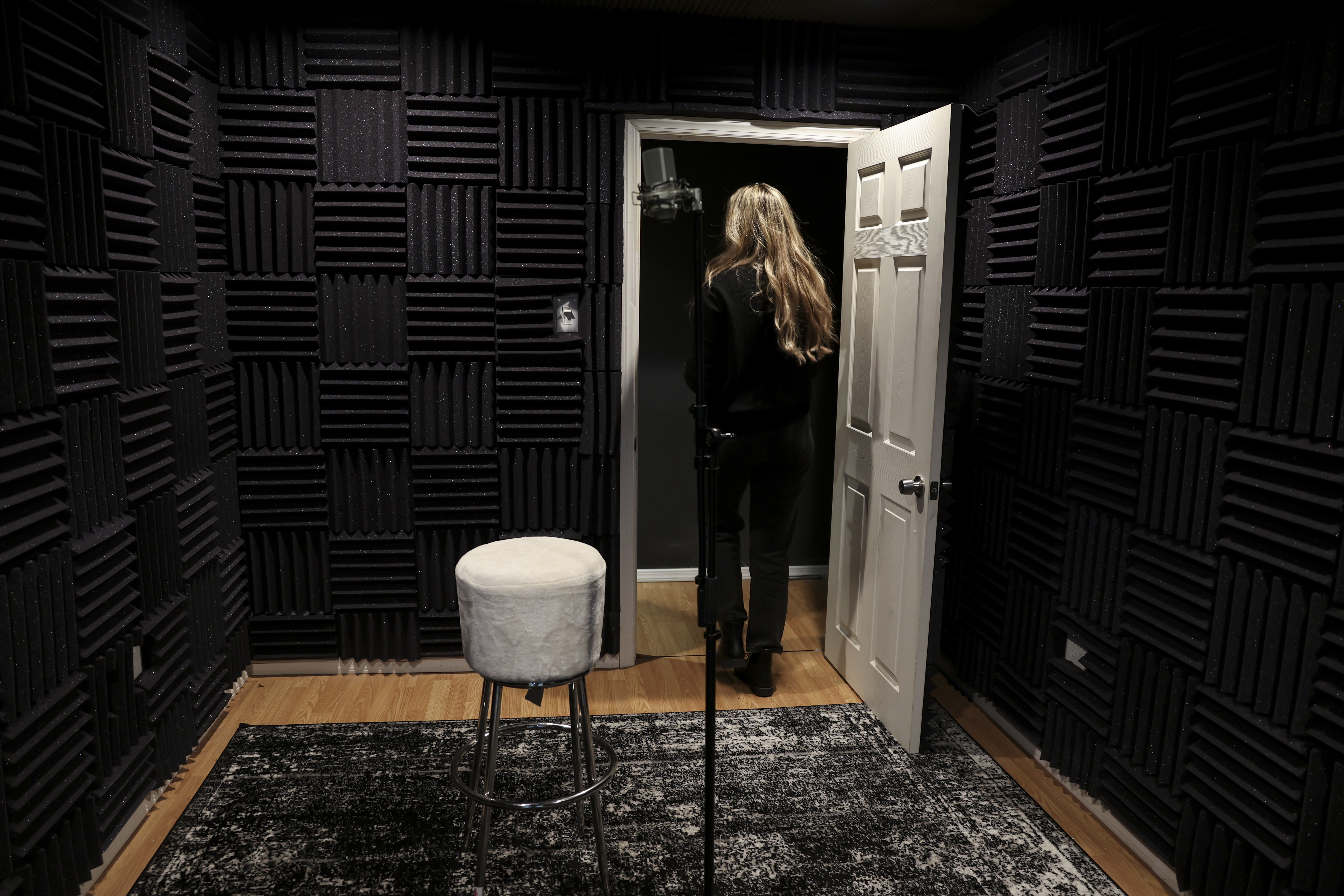
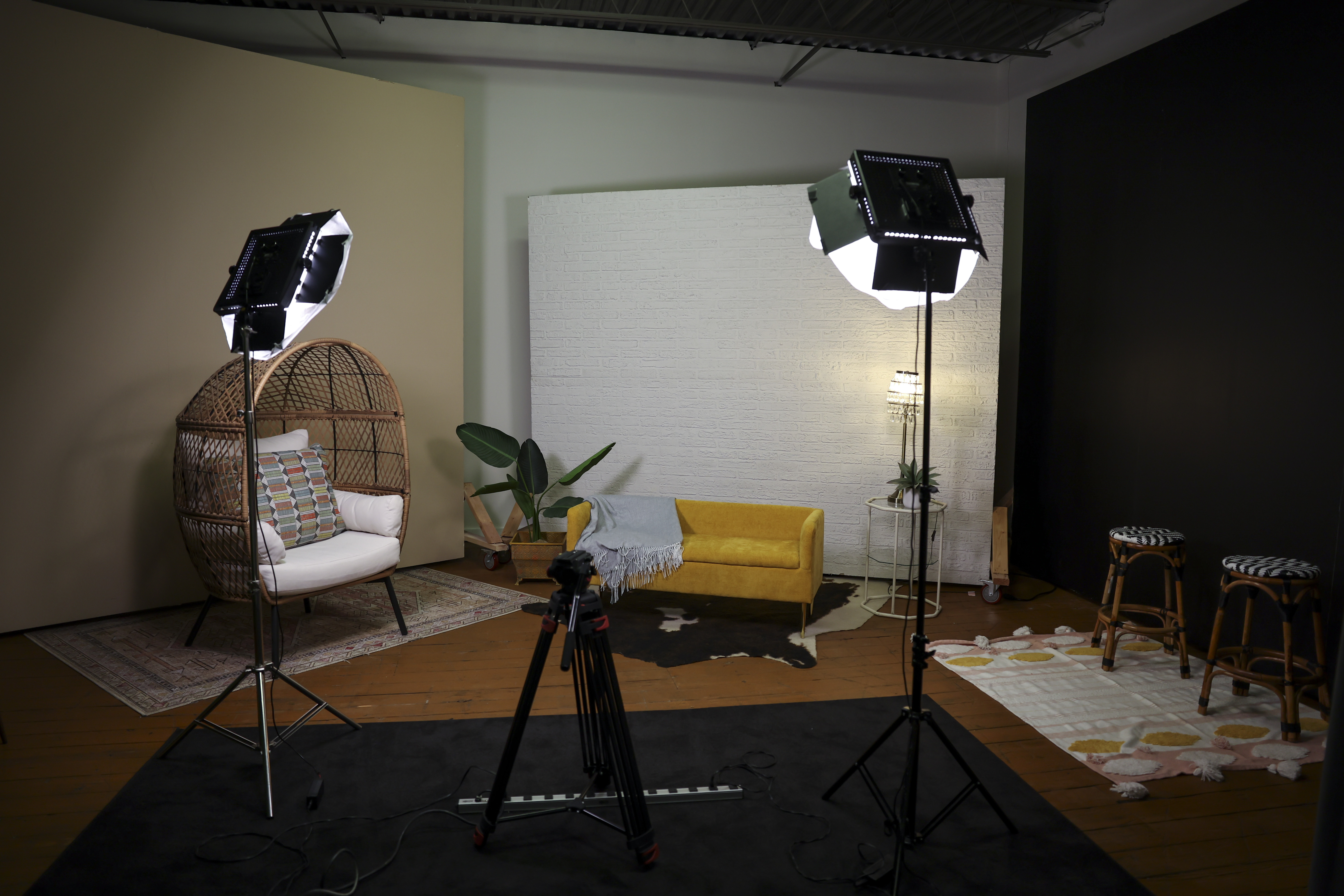
She built a soundstage for speakers to give Ted Talk-style talks in front of live audiences, and she built two soundproof podcast studios. She installed Instagram-friendly backdrops dripping with faux ivy and neon lights. There is an island across from the soundstage where folks can give cooking demonstrations, perfect in a town full of food content creators.
The main space at the Story Factory.Monica Herndon / Staff Photographer
For nearly four years, Hollis worked with 296 nonprofit and small business clients — which include the Philadelphia Orchestra, the Philadelphia Ballet, Live Nation, and the Eagles — filming video, producing podcasts, and staging photo shoots.
Hollis was content with the content.
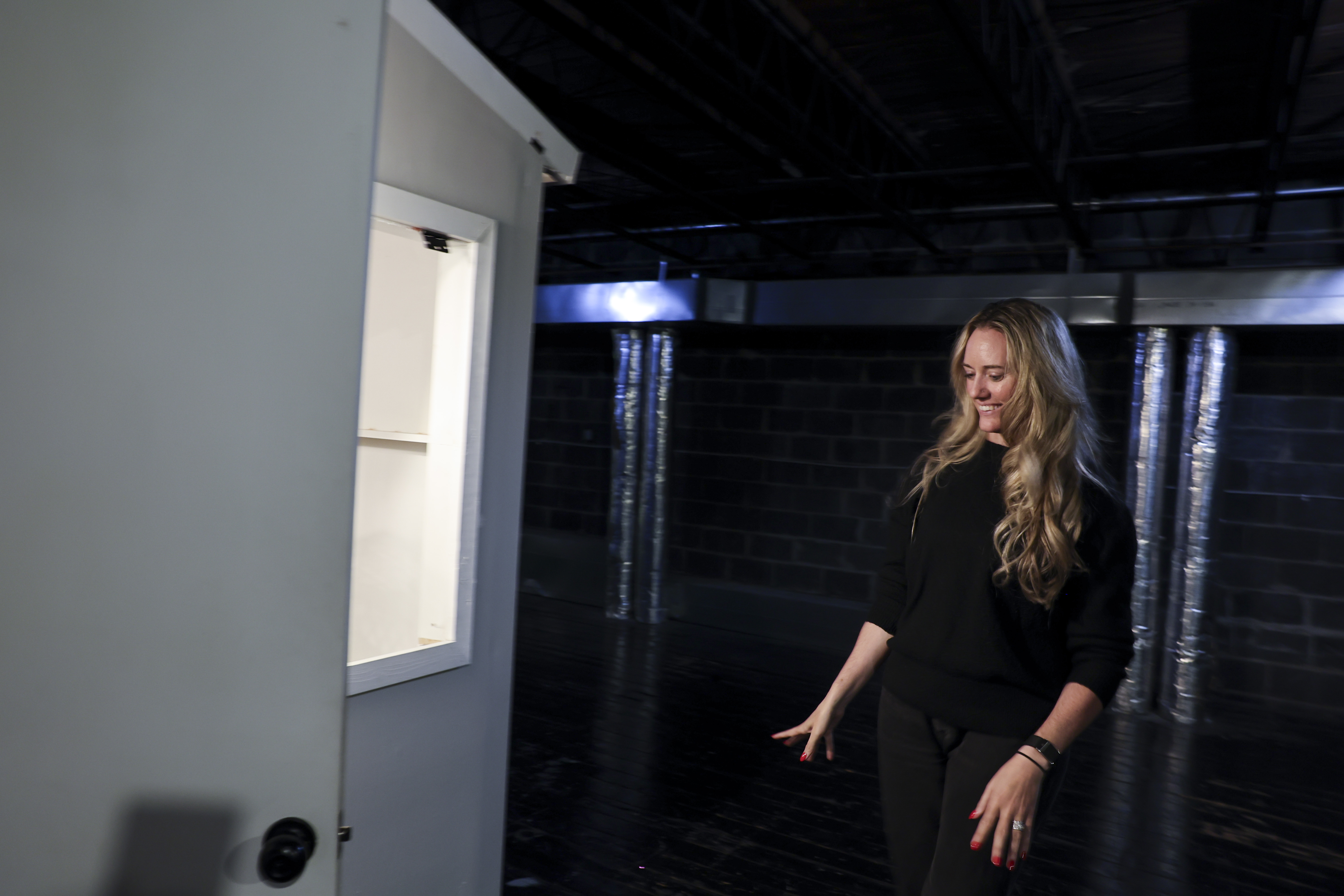
“We were happy and thriving,” she said one recent autumn afternoon dressed in head-to-toe black. She glided through the Story Factory in ballet flats like a modern-day princess.
Today, the Story Factory is on the verge of going Hollywood.
The Pennsylvania Film Office designated it as a qualified production facility in March, meaning any independent or major motion picture studio that uses the Story Factory for a project could be eligible for a tax credit from the state. With that credit, the state pays up to 30% of a production’s total cost, saving hundreds of thousands of dollars.
In early November, the state film office also approved the Story Factory as a qualified postproduction facility. So now, studios that use the Story Factory for postproduction that includes recording sound, editing visual effects, and mixing soundtracks can be reimbursed for up to 30% of their costs, too.
“It’s a huge deal for us,” Hollis said, beaming.
The Story Factory is the only qualified production facility in Philadelphia. There are five qualified postproduction facilities in the city, but the Story Factory is the only one the state has approved to be used for both production and postproduction.
“We are a place where a film can be shot from start to finish,” Hollis said. “That amazes me.”
‘Massive for Philly’s creative economy’
In a city billing itself as a movie making mecca, the Story Factory’s come-up is major, explained Nicole Shiner, co-executive director of the Greater Philadelphia Film Office.
During the fiscal year ending June 2026, Philadelphia hosted 272 film and TV productions ranging from episodes of Abbott Elementary to commercials, documentaries, and feature films. These projects generated $106.8 million in direct local spend with an economic impact of $223.3 million, according to Shiner.
Ashlee Hollis walks through a recording studio at the Story Factory.Monica Herndon / Staff Photographer
Pennsylvania’s tax credit program — which allots $100 million each fiscal year to incentivize production companies to bring their film projects to the Keystone state — is the driving force behind those numbers.
Of those 272 projects, 29 received tax credits, meaning at least 60% of their total qualified expenses were spent in Pennsylvania. Qualified expenses include everything from set design, hair and makeup, and food for the crew. If the projects used a qualified production facility, or a qualified postproduction facility, the state raised the ante and paid 30% of the projects’ total cost.
Tax credit eligible projects were just 10% of the Philadelphia region’s total film projects, Shiner said, “but they drove 90% of the direct spend, accounting for $93.3 million spent in our region and generating $202.4 million in economic impact to Southeastern PA.”
The Story Factory can mean even more money for the city’s bottom line, Shiner said. While recent projects like the Sylvester Stallone biopic I Play Rocky utilized Philadelphia strictly for on-location shoots, having a dedicated local facility allows future productions to also book in-town stage space for interiors, costume changes, and hair and makeup.
“The Story Factory is a massive win to the Philly creative economy,” Shiner said. “We love hosting big productions for location days, and our goal is to bring as much of their full schedule to the region as possible.”
A growing trend
In order to be a qualified production facility, a movie house must meet certain qualifications by the state, including a soundstage with an unobstructed floor space, a sliding roll-up access door a minimum of 14 feet tall (think a loading dock), an HVAC system with 50 tons of cooling capacity, and 24-hour security with badge access.
There are 12 qualified production facilities in Pennsylvania, including QVC’s Studio Park in West Chester. (The Home Shopping Network received its QPF status in 2013.) Two more QPFs will open by the end of 2026, bringing the state’s total to 14, Pennsylvania Film Commissioner Gino Pesi wrote in an email.
Most of these facilities are tens of thousands of square feet and are situated on acres of wooded land like SunCenter in Aston, where HBO’s Task and Apple TV’s Dope Thief were filmed.
A photo and video studio at the Story Factory.Monica Herndon / Staff Photographer
However, Pesi wrote, smaller facilities are popping up across the state, like Triode Studios in Lancaster that is just 10,000 square feet, and the Story Factory, which is just over 12,000 square feet.
Shiner said smaller facilities like the Story Factory are becoming common as both streaming outlets and network television experiment with more series with fewer episodes. Shooting is quicker and budgets are tighter.
And many, like Story Factory, are growing hubs for independent creators, Pesi said.
We can thank the pervasiveness of social media reels for that.
“My small business and nonprofit clients need the same quality of equipment and studio time titans in the movie industry need,” Hollis said. “Short documentaries, web series, even film festival entrants.”
Church videos to creative hub
Hollis, 39, moved from Kansas City to Kennett Square in 2008 with husband Elijah Hollis, who was then a youth pastor at the Power Place Church in Kennett Square.
Around 2012, the couple made a video promoting the mission of the nondenominational Christian church and soon after, members began asking them to make videos for their secular businesses.
In 2015, Hollis — now a mother of a boy and a girl — formed Helm. Her vision was to help small businesses tell stories with compassion, empathy, and zest. She landed the Robert Irvine Foundation as her first major client in 2016, and Helm grew one inspirational video at a time.
Hollis watched as social media continued to impact how her clients reached their audiences.
In 2021, she started looking for a one-stop shop where she could help clients make reel-ready videos and record podcasts in addition to designing and printing clients’ merch, posters, and brochures.
Ashlee Hollis talks about the production offices at the Story Factory.Monica Herndon / Staff Photographer
“We were becoming a niche creative studio,” Hollis said.
In 2022, Hollis stumbled upon the block-long studio along the border of Kensington, Fishtown, and Northern Liberties on Fifth Street. The building was the former home of Thomas Ashley’s Invincible Pictures’ Philadelphia Sound Stage. For a time, it operated as a QPF. A bit of the production for the 2012 Oscar-winning film Silver Linings Playbook was completed there. Philadelphia Sound Stage’s QPF status expired in 2016.
Hollis started leasing the building from Oxford Properties. In 2025, she had a chance meeting with Shiner, who suggested she apply for QPF status.
“I knew it would be the cherry on top of what they already created,” Shiner said.
The minimum investment for a QPF is $10,000. Hollis invested a total of $500,000 in the Story Factory. She redid the floors, installed a new kitchen, added rolling walls, upgraded the lighting, and made the podcast rooms soundproof, among other things.
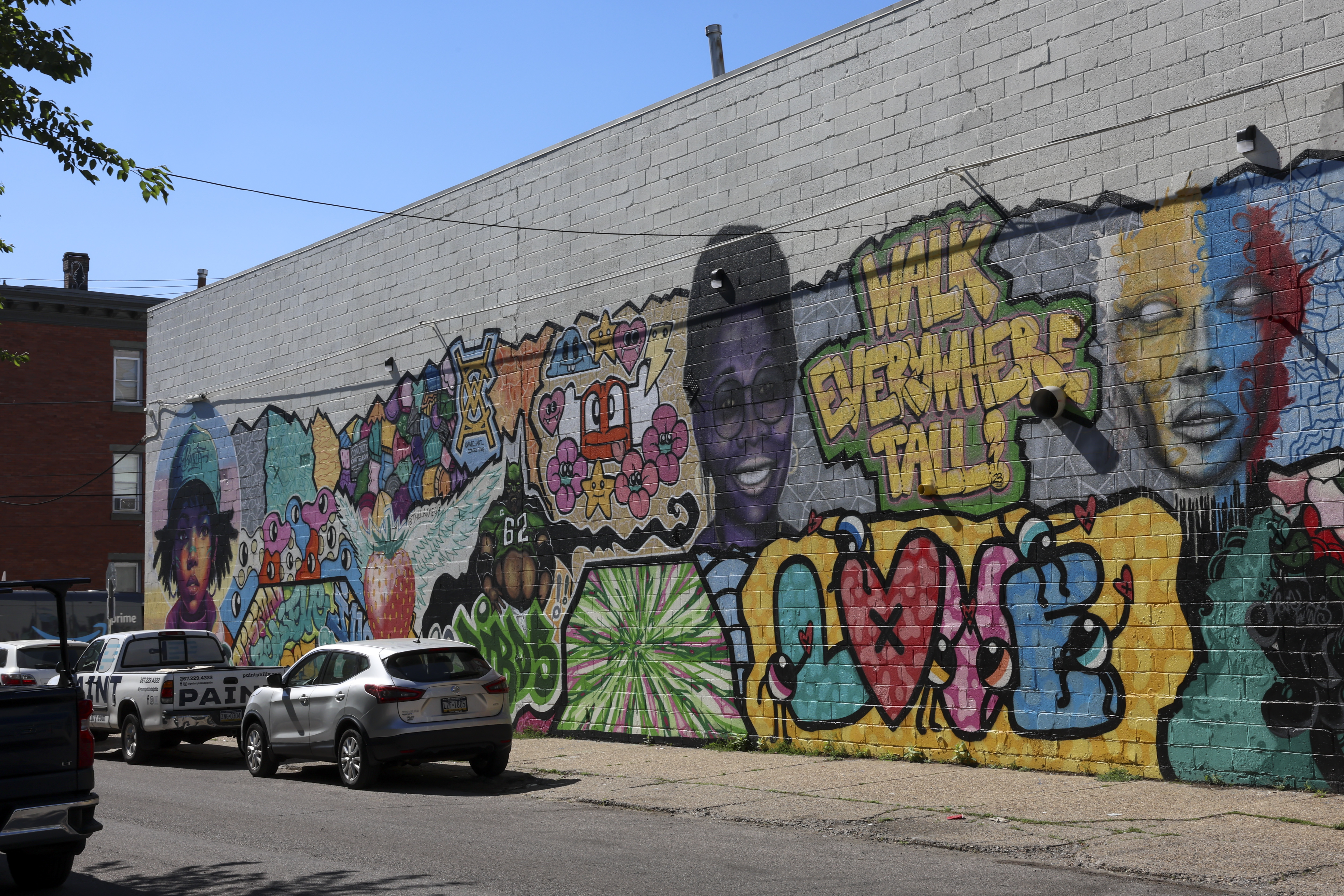
A technicolor mural popping with bold graffiti and inspirational quotes by artist Alloyius McIlwaine wraps around the colossal stone building.
The exterior of the Story Factory. A technicolor mural popping with bold graffiti and inspirational quotes by artist Alloyius McIlwaine wraps around the colossal stone building.Monica Herndon / Staff Photographer
On weekends, the Story Factory is the virtual home for Elijah Hollis’ Change Church. (Ashlee Hollis isn’t just a storytelling princess, she’s a first lady of a church.)
The rest of the time, the Story Factory is churning out, well, stories.
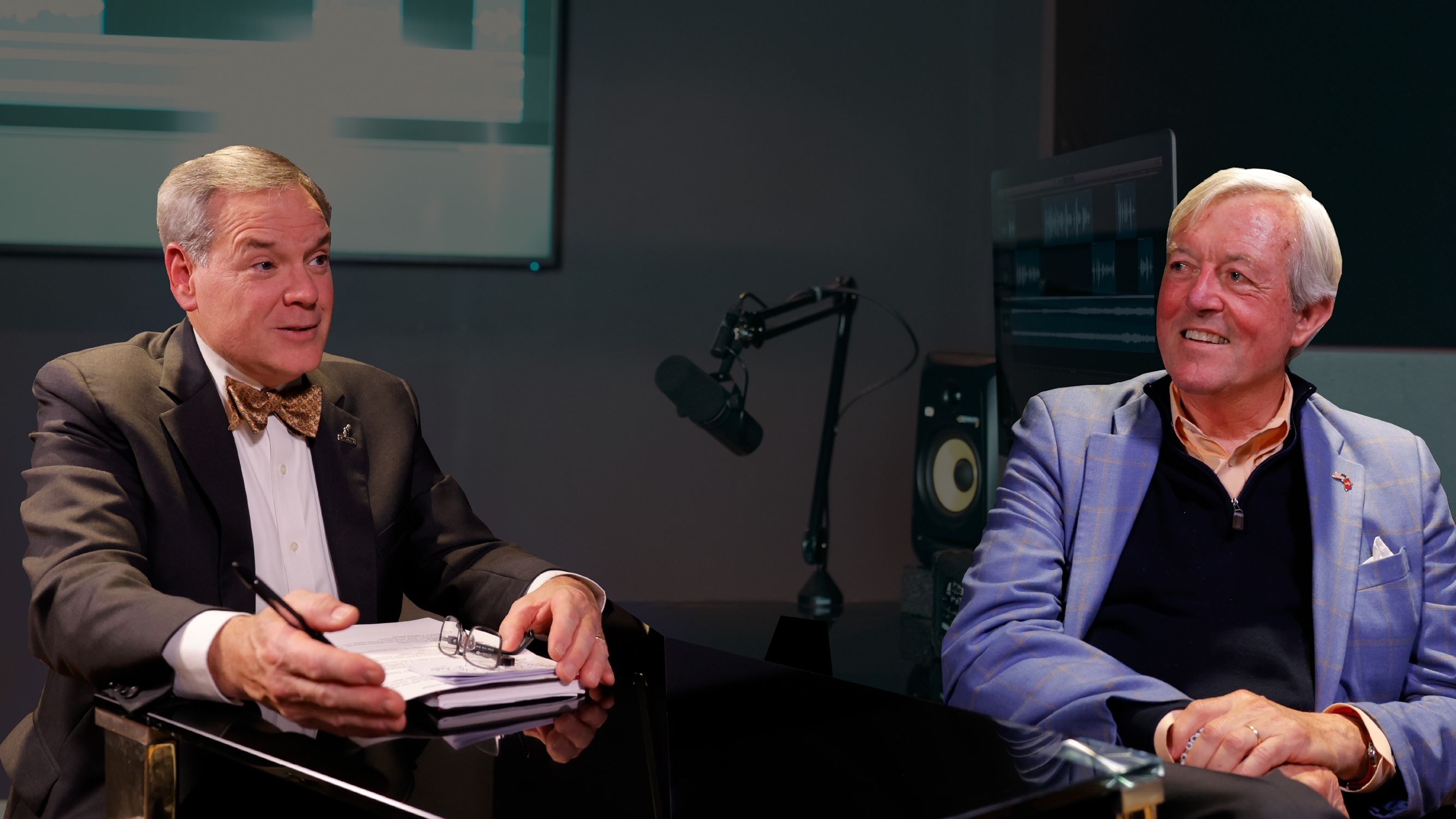
On a recent Wednesday afternoon, Blocs CEO Robert Delany and former Republican State Rep. George T. Kenney chopped it up during a recording of the inaugural episode of Blocs’ Mission Moments podcast.
“Helm has helped us evolve into a new place of modern-day storytelling,” Delany said. “They are helping us keep pace.”
Blocs CEO Robert Delany and former Republican State Rep. George T. Kenney record the inaugural episode of Blocs’ “Mission Moments” podcast.The Story Factory
Blocs, the nonprofit scholarship organization, has worked with Helm for nearly eight years.
Only now, there’s a bigger chance that one day, as Delany is walking out of the Story Factory, Stallone, Tina Fey, or perhaps even Will Smith will be walking in.
In 1740, Anglican priest George Whitefield welcomed his fellow clergymen to preach at a stately Fourth and Arch Street meetinghouse.
Whitefield, considered the father of the modern evangelical movement, declared Philadelphia his new Christian denomination’s headquarters. He dreamed of preachers from all over the world coming to speak.
That dream didn’t last. By the late 1740s, Whitefield and his movement were broke and in debt, eventually abandoning the building.
Meanwhile, Ben Franklin was in the midst of proposing a revolutionary idea of his own. The country’s first colleges were founded to train men of the cloth. But Franklin envisioned an institution of higher education that would teach the humanities, arts, sciences, and, of course, the antiquities, to the next generation of businessmen and community leaders.
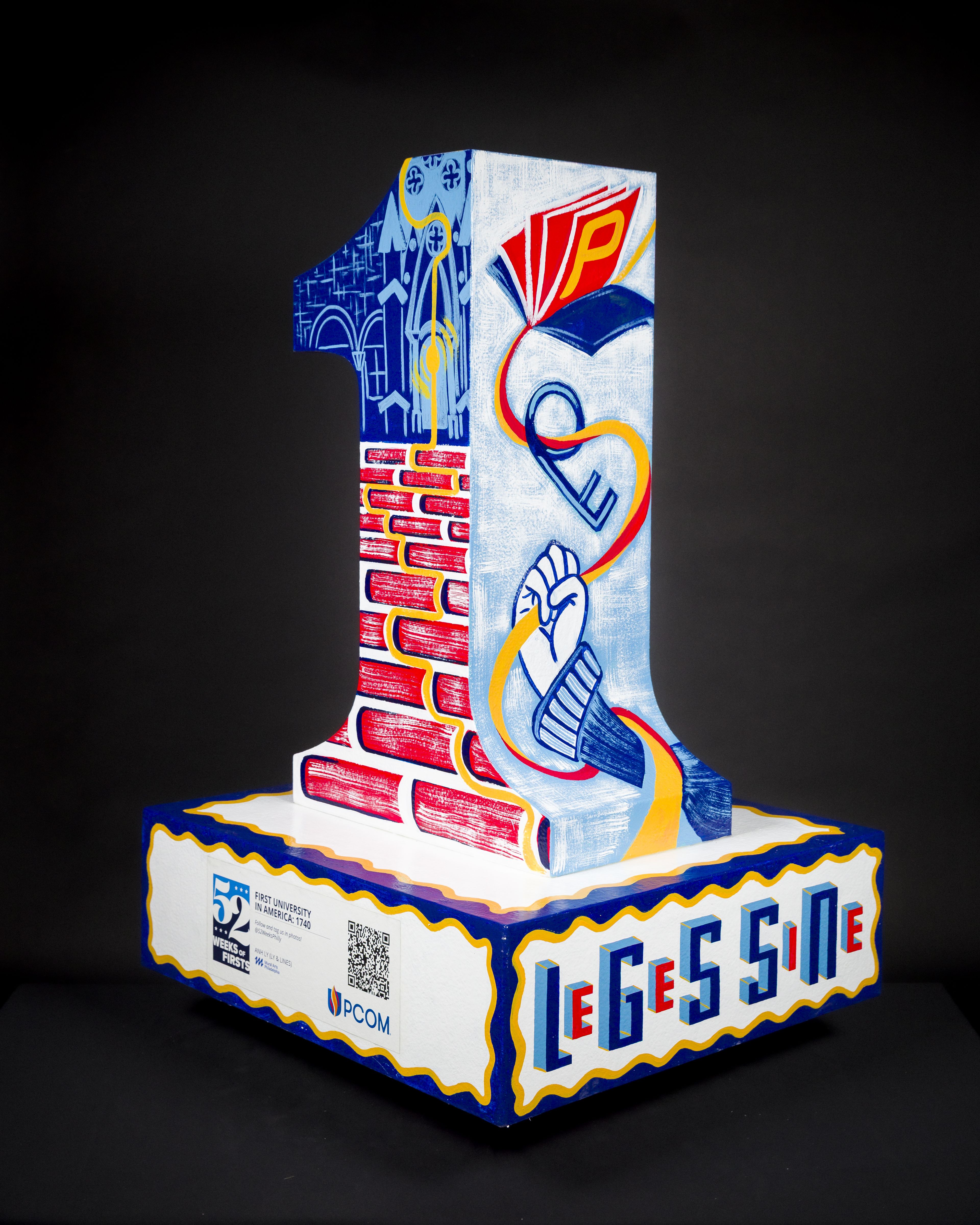
Anh Ly’s No. 1 celebrates the history of the University of Pennsylvania starting with its founder, Ben Franklin.Anh Ly and Colibrí Workshop
He presented his proposal in 1749 and won support of prominent Philadelphians. He formed a board of trustees and purchased the former clergyman’s building. In 1751, Franklin’s College, Academy, and Charity School of Philadelphia opened to students.
The founding of Pennsylvania’s first school of higher learning, which would ultimately become the University of Pennsylvania and America’s first university, will be celebrated Saturday as part of the Philadelphia Historic District’s firstival. Firstivals are weekly day parties marking American institutions with Philadelphia roots.
This week’s firstival will be held in Penn’s Houston Hall from 11 a.m. to 1 p.m.
In 1755, Penn trustees secured a new charter for the school, named it the College of Philadelphia, and appointed William Smith as the first provost. The first class of seven boys graduated in 1757, said John H. Pollack, curator of research services at the University of Pennsylvania’s Kislak Center for Special Collections.
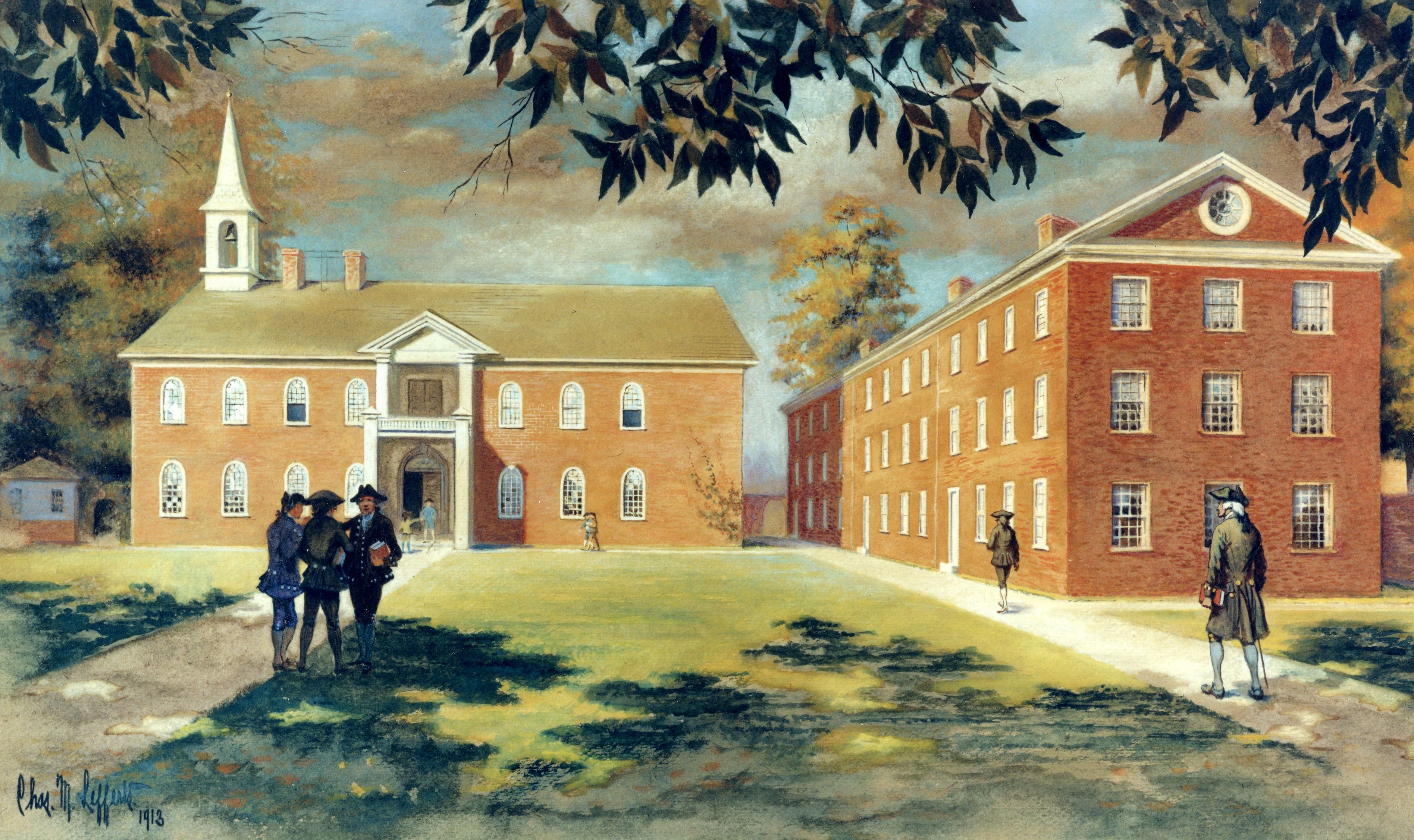
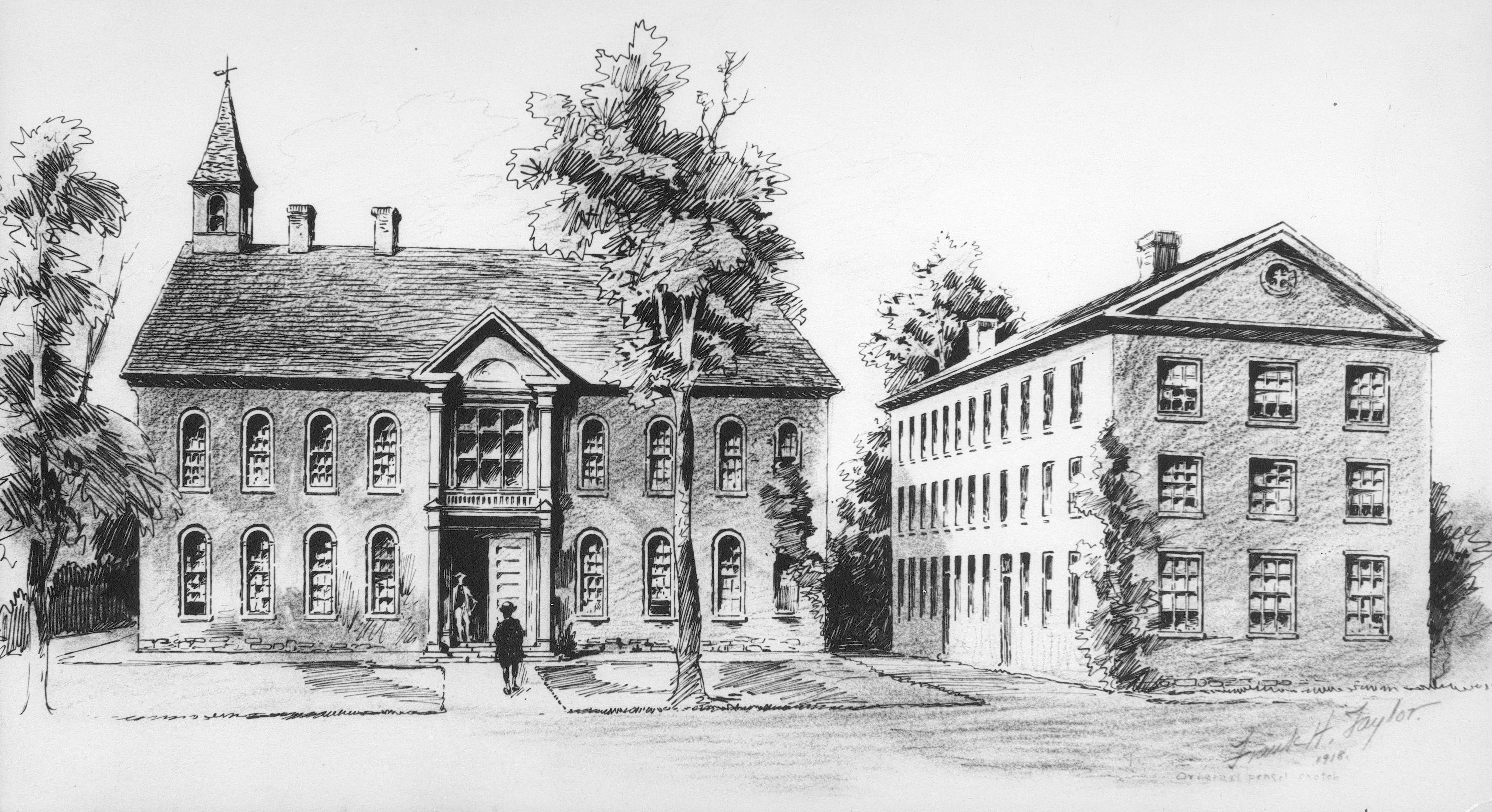
Fourth Street Campus, College of Philadelphia: Academy/College Building (built 1740) and Dormitory/Charity School (built 1762), exterior. Reproduction of an original pencil sketch by Frank H. Taylor, 1918The University of Pennsylvania Archives
However, explained J.M. Duffin, Penn’s assistant archivist, the College of Philadelphia didn’t become a university until 1765 when physicians John Morgan and William Shippen opened the country’s first medical college there.
“Now there were two distinct colleges operating under the same umbrella,” Duffin said. “This now qualified the College of Philadelphia as a university, the first on North American soil.”
During the Revolutionary War, the Pennsylvania legislature removed Smith because of his loyalty to Britain, Pollack said. The legislature formed a new board of trustees and a new charter changing the institution’s name to the University of the State of Pennsylvania. (The University of Pennsylvania was a state school before Penn State.)
“With that, we became the first school to have the term ‘university’ in our name,” Pollack said.
Smith returned to the university after the war seeking his old position. In 1789 the legislature created two separate institutions and Smith was put in charge of one. His university was situated in the original building at Fourth and Arch. The second school moved to the American Philosophical Society at Fifth and Chestnut.
“Those were a weird couple of years,” Pollack said. “There were two colleges and two medical schools. … But there weren’t enough students to sustain two universities.”
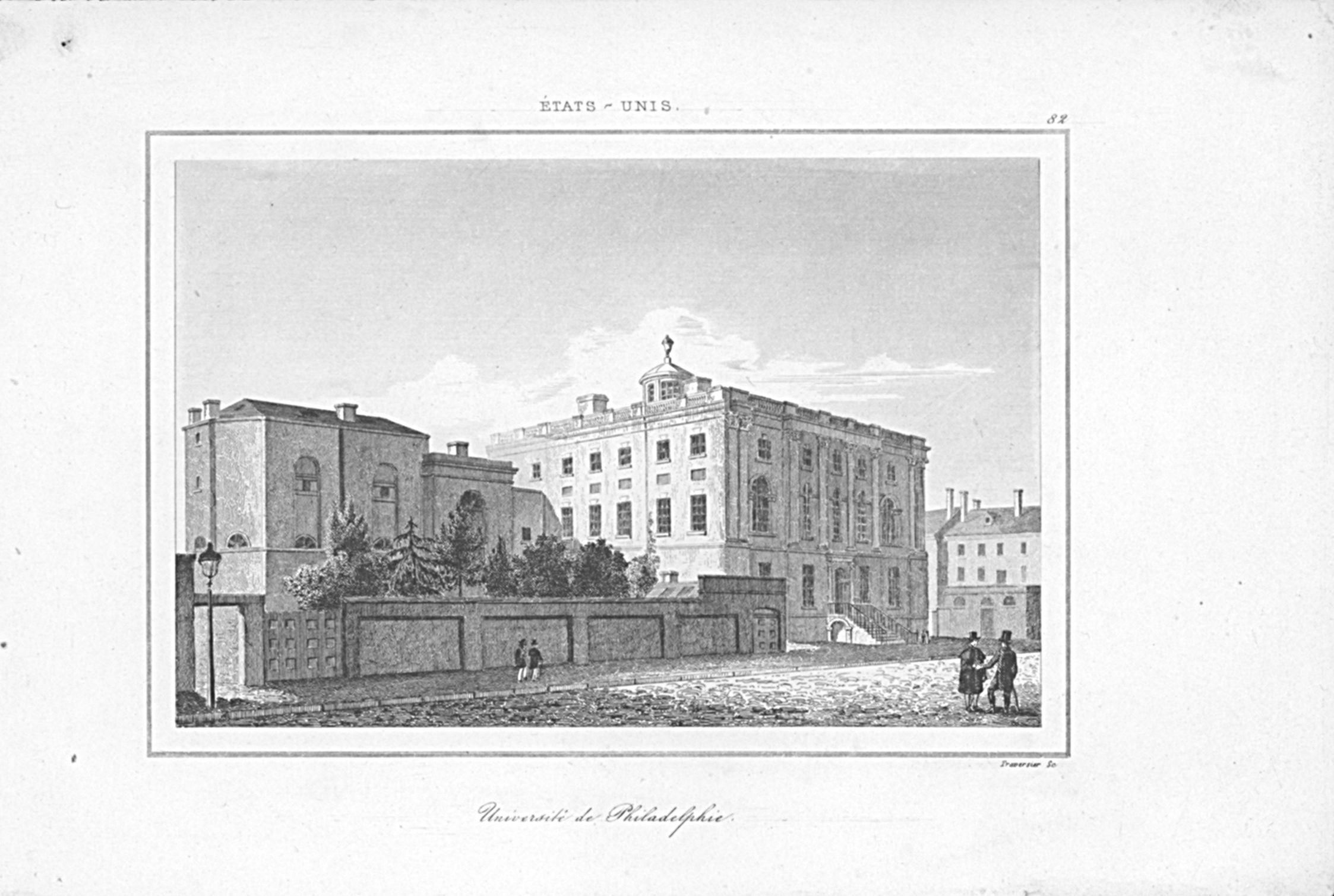
Ninth Street campus of the University of Pennsylvania (1802-1817), President’s House, exterior, from a lithograph.The University of Pennsylvania archives
Pennsylvania adopted a new state constitution in 1791. Language in the document joined the two schools and established the University of Pennsylvania as a private school.
The university moved to Ninth and Market in the 1800s.
“The state built that building to be the president’s house when it believed Philadelphia would be the capital city,” Duffin said. In this location, the University of Pennsylvania was the center of Philadelphia’s political and social scene.
“Penn wasn’t isolated from the world in its ivory tower,” Pollack said. “It wasn’t part of that elite club that the Ivy League evokes today.”
It moved to its West Philadelphia campus in 1872, occupying four buildings designed by architect and Penn alum Thomas Webb Richards.
Hare Building (built 1878, demolished 1969, Thomas W. Richards, architect), exterior, looking north west. One of the original buildings of the University of Pennsylvania’s West Philadelphia campus.The University of Pennsylvania archives
In 1882, Penn — following in the footsteps of graduate and doctoral programs at Johns Hopkins University — introduced its graduate program. The program meant more faculty, staff, and degrees, becoming the bellwether for the university system that we know today.
“During the late 1880s, through until about 1930, we see Penn’s biggest period of growth,” Duffin said. With the 20th century came a focus on college sports, especially football. Sports journalists began referring to many of the private colleges with strong sports teams as the Ivy League, a reference to their ivy-covered stone buildings.
In 1954, Penn was one of eight schools — seven of which started in colonial America — that signed the agreement forming the the Ivy League athletic conference.
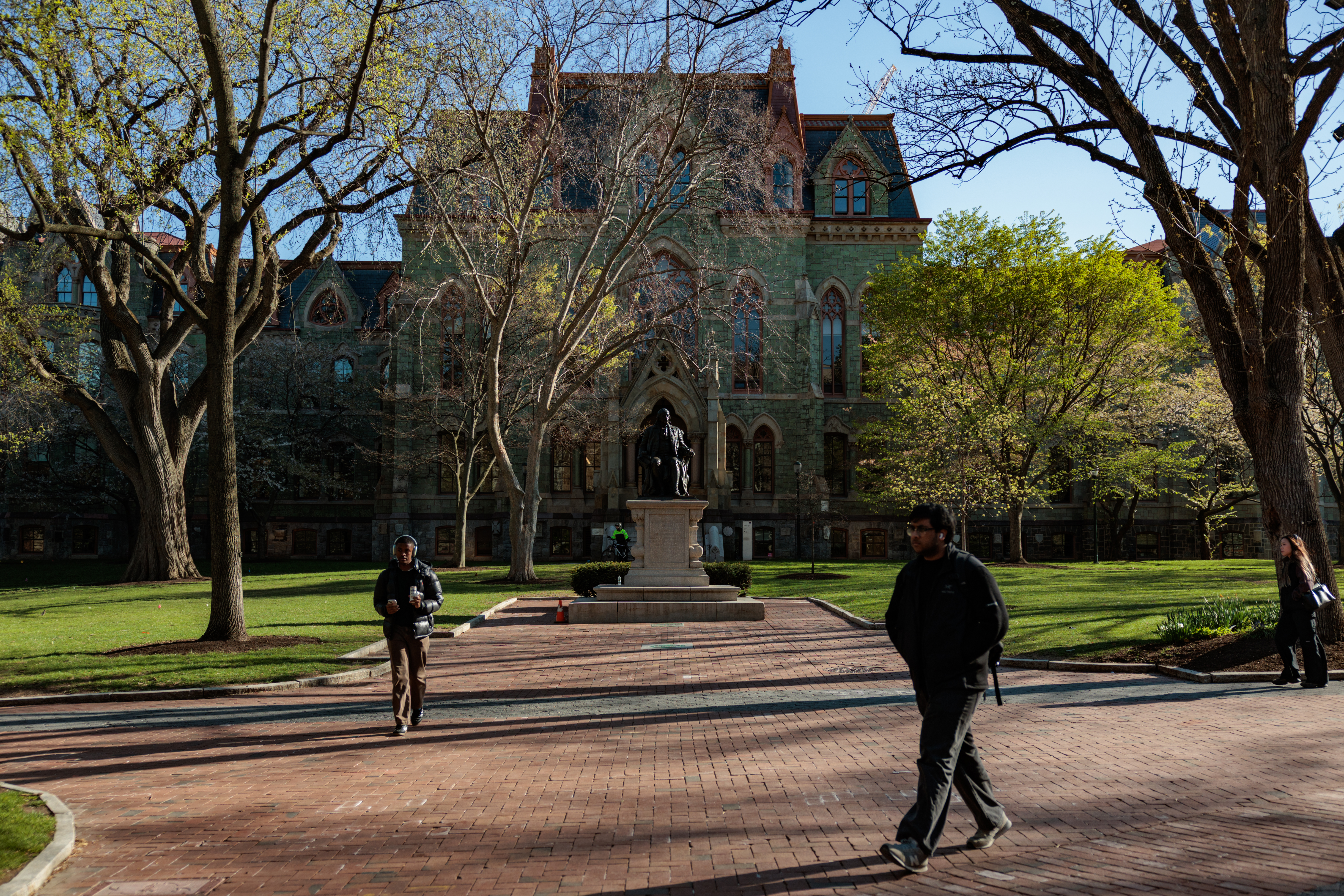
FILE — The University of Pennsylvania campus in Philadelphia, April 8, 2026. (Hannah Beier/The New York Times)HANNAH BEIER
With time, the Ivy League schools became synonymous with America’s most elite institutions.
Today the University of Pennsylvania boasts more than 30,000 students and 6,049 faculty members, with four undergraduate schools and 12 graduate and professional schools.
This week’s Firstival is Saturday, Nov. 14, 11 a.m. to 1 p.m. at Houston Hall at the University of Pennsylvania, 3417 Spruce St.
Thanksgiving Day 1920 was a cold, dark, and rainy day in Philadelphia. City dwellers went to church under the cover of black umbrellas, and hundreds flocked to Franklin Field to watch the University of Pennsylvania beat Cornell in football.
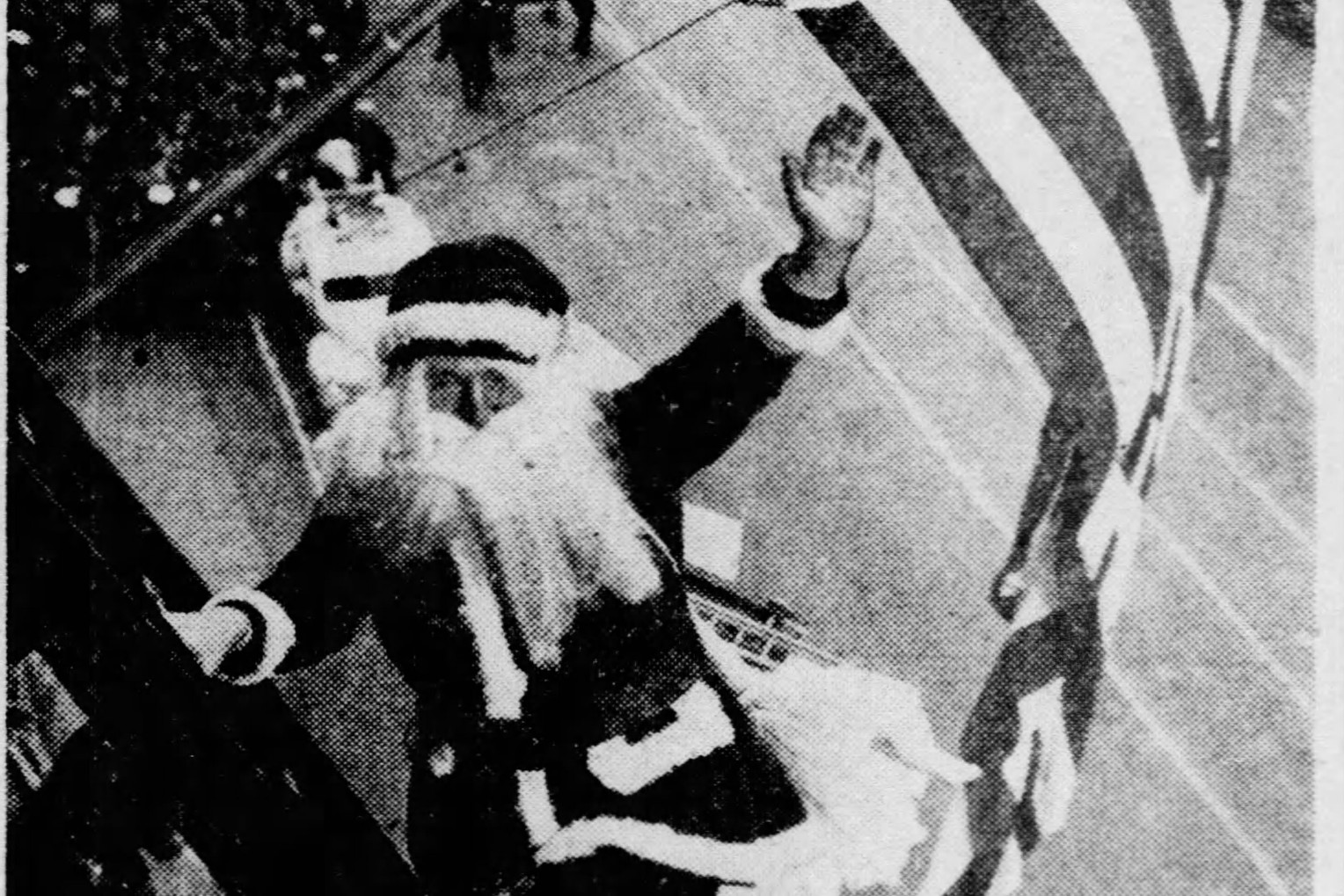
But Ellis A. Gimbel of the Gimbels department stores quietly started a new tradition that would go on to mark the official start of the holiday shopping season. Gimbel enlisted 50 of his store’s employees to dress like Santa’s elves and drive brand new Model Ts down Market Street ushering Santa Claus into town.
When Kriss Kringle arrived at Gimbels’ Ninth and Market Street entrance, he climbed a fire ladder to an eighth floor window and hoisted himself into Toyland. Here, Philadelphia’s little ones would take turns sitting on his lap, whispering Christmas wishes into his ear through Christmas Eve.
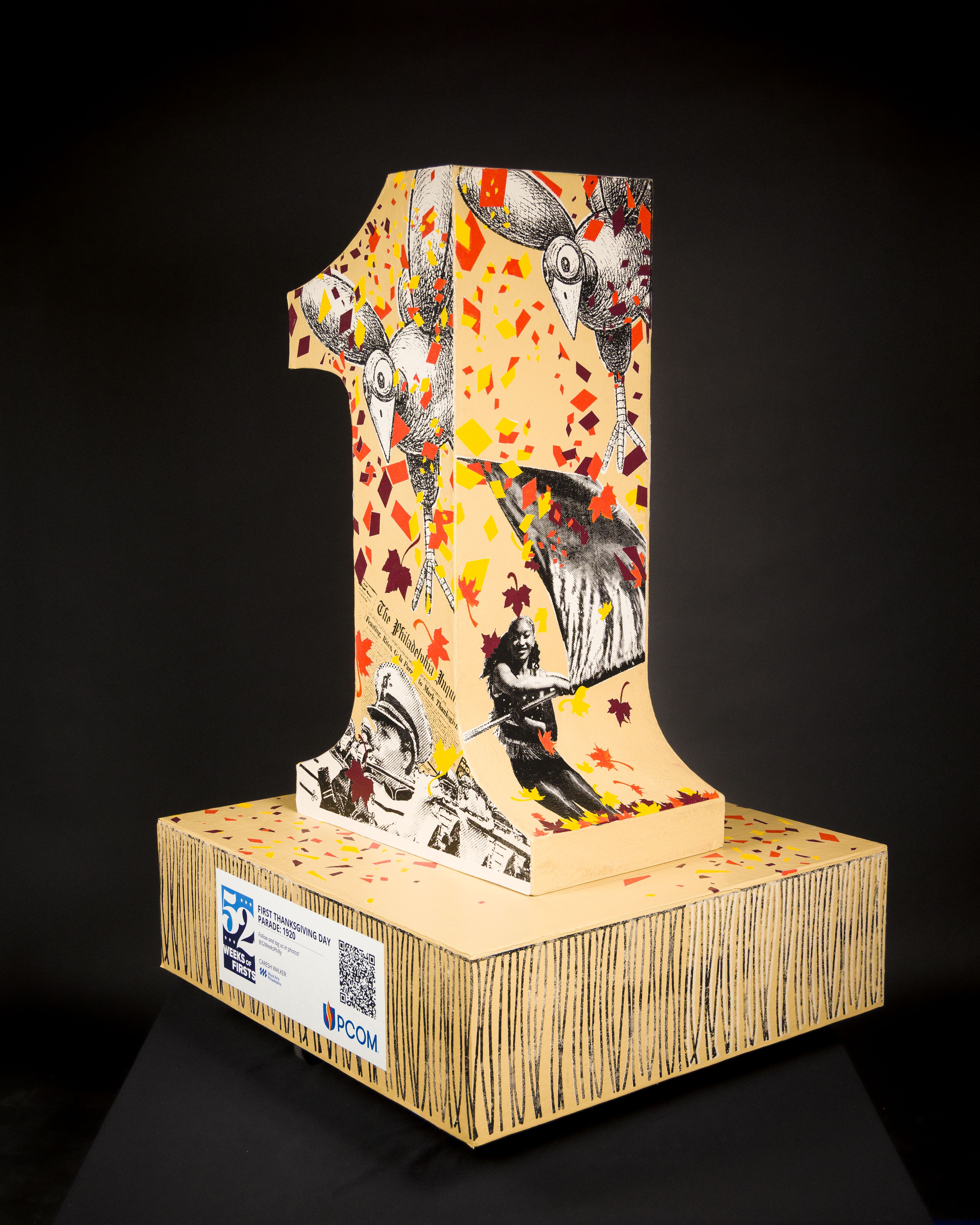
Caresh Walker’s No. 1 It pays homage to community, homecoming and the arrival of a new season, capturing the timeless energy and joy of the Thanksgiving Day Parade as it marches down the parkway.Caresh Walker and the Colibri Workshop
That parade — which through the years would also be called Uncle WIP’s Annual Toyland Parade — was America’s first Thanksgiving Day Parade.
The time-honored celebration will be feted Saturday from 11 a.m. to 1 p.m. at the Weitzman National Museum of American Jewish History. The party is the Philadelphia Historic District’s 45th firstival. Firstivals are weekly day parties honoring American traditions with strong Philadelphia roots during America’s 250th birthday year.
In its early years, Gimbels’ Thanksgiving Day Parade marched along Market Street with little to no fanfare, explained Todd Marcocci, coproducer of the the 6abc Dunkin’ Thanksgiving Day Parade.
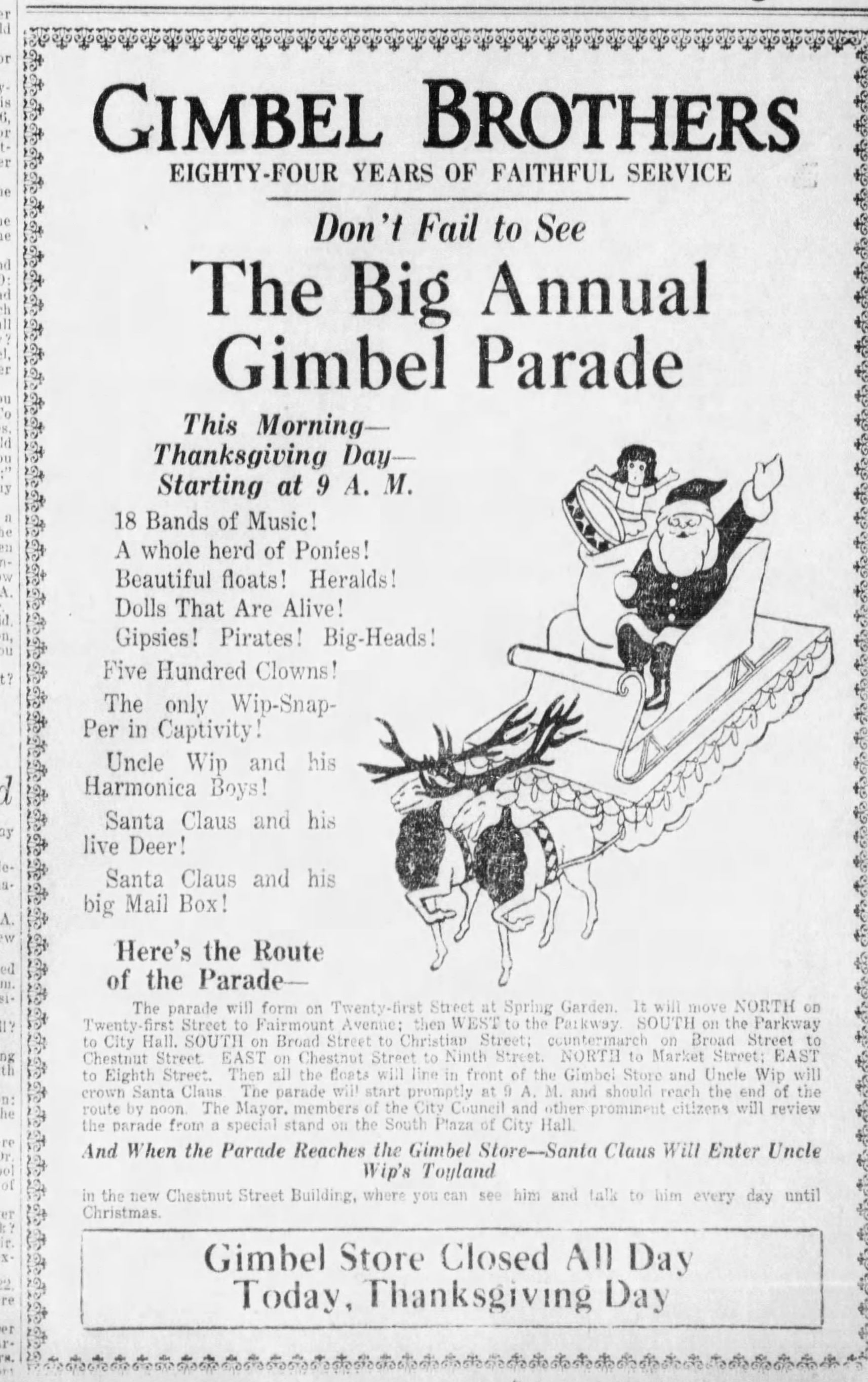
In fact, the first advertisement for it didn’t appear in The Inquirer until 1925, a year after R.H. Macy introduced his store’s Thanksgiving Day parade in New York.
Gimbel Brothers advertisement for the Thanksgiving Day parade published in The Inquirer on Nov. 25, 1926.Newspapers.com
That was the first year The Inquirer covered the festivities.
“Thousands of children enthusiastically cheered and abetted” Santa Claus, read an article in The Inquirer, which also reported the inclusion of nursery rhyme characters Little Red Riding Hood, Raggedy Ann, and Peter the Pumpkin Eater as they walked the route starting at 21st and Spring Garden, wound their way around City Hall, and ended at Gimbels.
According to the 1925 article, then-Philadelphia Mayor Freeland Kendrick and Sen. George W. Pepper joined Ellis Gimbel and his wife, Minnie, on the sidelines.
Each year, attendance swelled as Gimbel invited more children, including orphans and the blind. His motto: Not one child in Philadelphia should be hungry or unhappy on Christmas Day. It also became custom for Santa to receive a key to the city before hoisting himself up the engine ladder.
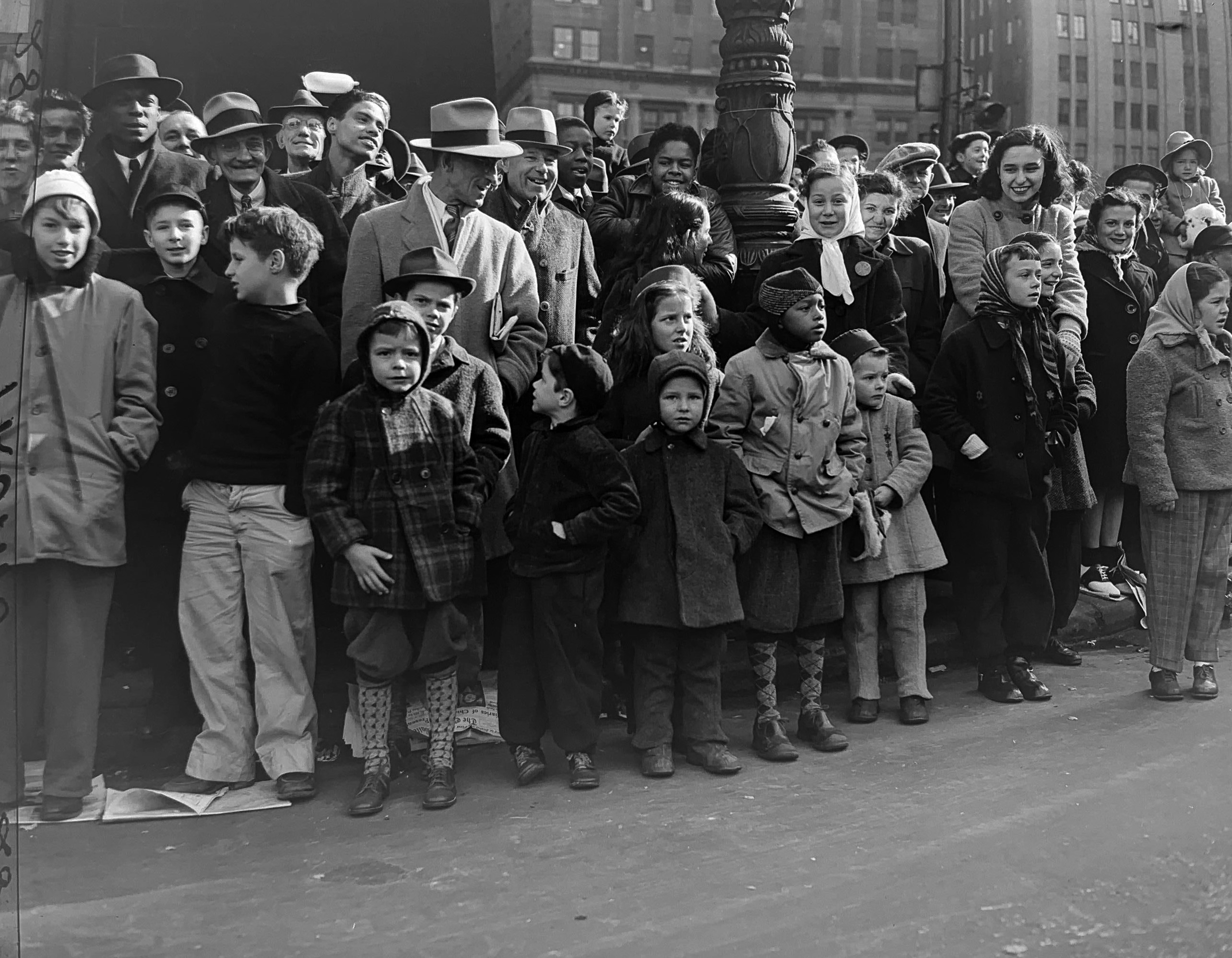
People watch Philadelphia’s Thanksgiving Day parade in 1945.Inquirer/Daily News archives
Adam Gimbel, Ellis Gimbel’s father, was a Jewish immigrant from Bavaria who started the Gimbel empire with a general store in Indiana in 1842. Ellis Gimbel was born in 1865 in Indiana and moved with his family to Philadelphia as an infant. He and his six brothers purchased the lot at Ninth and Market Streets and opened the flagship Gimbels on the East Coast in 1894.
The Gimbel brothers opened their New York store in 1910, starting a fierce competition with R.H. Macy. Ellis Gimbel stayed on in Philadelphia.
In 1936, Ellis Gimbel — an 1883 graduate of Central High School — became chairman of the Gimbels board. He died in 1950; a two-page obituary in The Inquirer referred to him as the leading member of Philadelphia’s “happiness cabinet.”
Gimbels’ Thanksgiving Day Parade turned 50 in 1969 and, by then, had grown to 5,000 participants with more than 110 floats and 31 bands. “Hundreds of thousands of Philadelphians jammed the streets” to see the festivities, according to an Inquirer article written that year.
Rain and high wind caused the parade’s first cancellation in 1971.
In 1982, the parade dropped Gimbels from its moniker and became the Philadelphia Thanksgiving Day Parade.
Allied Stores bought Gimbels in 1986, converting the department store at Ninth and Market to Stern’s. Allied didn’t want to pay the roughly $200,000 it cost to put on the parade. 6abc, the ABC-owned Philadelphia TV station, stepped in as the parade’s new sponsor. In 1996, the Walt Disney Co. acquired ABC and started producing the parade. Dunkin’ Donuts started collaborating with 6abc in 2011.
Philadelphia’s official Thanksgiving Day Parade came to be known as the 6abc Dunkin’ Thanksgiving Day Parade.
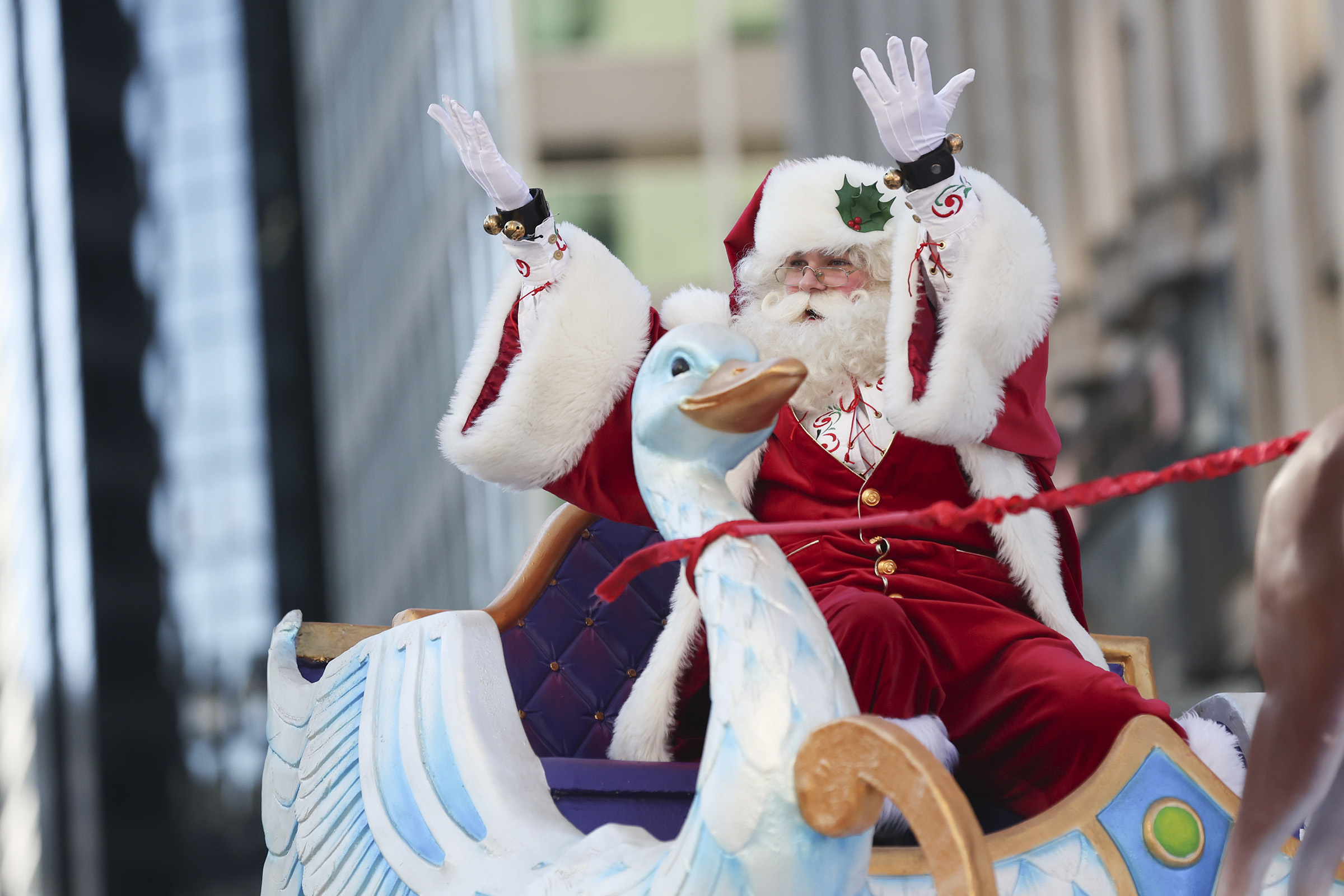
Santa Claus hypes up the crowd on the Benjamin Franklin Parkway during the 6abc Dunkin’ Thanksgiving Day Parade in Philadelphia on Thursday, Nov. 23, 2023.Heather Khalifa / Staff Photographer
In 2020, the parade’s 100th birthday year, it was canceled for only the second time in its 106-year history because of COVID. This year it’s expected to attract more than half a million spectators.
The 6abc news team will host, including Rick Williams and Alicia Vitarelli. Special guests willl include Quinta Brunson of Abbott Elementary, Ken Jennings of Jeopardy!, and Wheel of Fortune’s Ryan Seacrest. Plus performances from Ensemble Arts Philadelphia productions Waitress, Hell’s Kitchen, and The Who’s Tommy.
This week’s Firstival is Saturday, Nov. 7, from 11 a.m.-1 p.m., at Weitzman National Museum of American Jewish History, 101 S. Independence Mall East
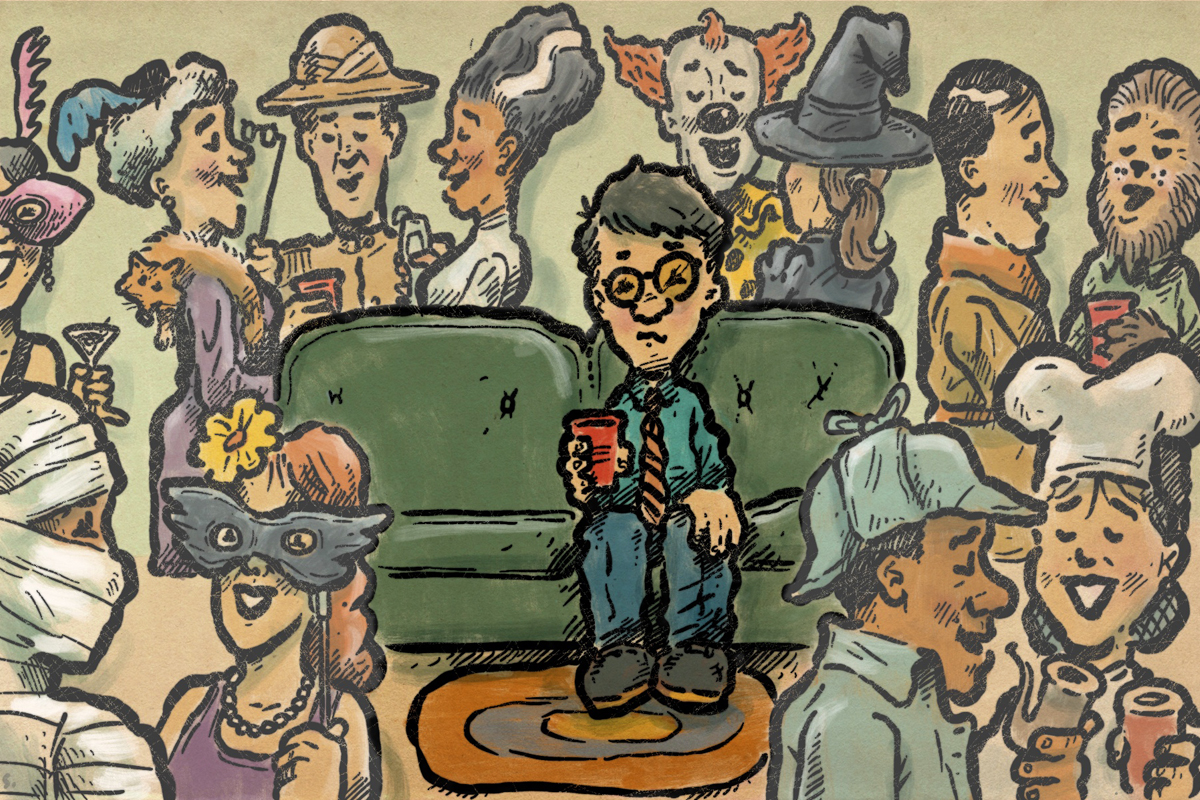
My friends are throwing a Halloween murder mystery party and didn’t assign a role to my boyfriend even though I said “we are free!” I’ve gotten the feeling they don’t like him, but how do I respond? Should I not say anything and bring him anyway?
Stephanie Farr, features columnist
I definitely don’t think you should just show up with your boyfriend, or he might end up playing the role of the murder victim at this Halloween mystery party. Even if he doesn’t, your friends might treat him like he’s dead if they don’t like him.
I say you’ve got to bite the bullet and straight up ask your friends if you can bring your man. You also don’t want him showing up and feeling totally awkward if he’s unliked, especially if he’s the only one who doesn’t have a role to play.
Elizabeth Wellington, features columnist
It’s like you read my mind, Stephanie. This holiday mystery requires being straightforward. You cannot afford to be skeletal in your approach, you must jump in head on. Face the question like you’re bobbing for apples in your Halloween punch. Avoid the poison, but ask what is the issue with your boo?
Stephanie Farr
I think what this person may actually be fearing is learning what their friends think of their boyfriend. If they haven’t said anything good about him, they may not have anything good to say.
Do you think our questioner should ask their friends if they like their boyfriend? Or maybe just ask if they forgot to include him? It could have been a simple mistake, but it could go deeper, too.
Elizabeth Wellington
I think you’re right. I suspect our dear reader knows deep down inside that their friends may see things in her partner that she doesn’t. When a person is smitten it’s hard to see their faults, but friends — especially old ones — can see the trash behind the mask. They see the person underneath the costume that clouds our lovelorn lenses. I highly suggest our reader ask her friends what’s up before the party. The answer may frighten you now. But it’s better than feeling like death warmed over later after a bad breakup. Ask me how I know.
Stephanie Farr
We’ve all dated someone who wears a mask, and you’re so right that it’s really hard to see someone’s true self when you’re enamored by whatever facade they’re putting on. Our friends and family are often much better at spotting it.
I’m gonna play devil’s advocate here and say if our dear reader does bring their boyfriend to the party, they better hide him in a full-body green man suit or be prepared to find out what their friends really think.
What do you think about our reader going to the party solo?
Elizabeth Wellington
I think that’s an option. But I don’t want her to give up on her boo. If her friends are truly her friends and they don’t like this guy, she should give them the opportunity to voice their opinion. If her friends, however, are engaged in tricks and treats rather than being honest about their feelings, our reader should be prepared to ghost and spend a lovely holiday at home eating peanut butter cups with her man.
Stephanie Farr
She could be bringing him into a vampire pit if her friends aren’t being honest with her. I will say I never offer up unsolicited negative opinions about people’s partners because I don’t want to get caught up in a spider web, but if I’m asked, I tell the truth. And there is nothing wrong with skipping out on a big party for a little hocus-pocus at home with your boo. Honestly, he’d probably prefer that over hanging out with your friends who may or may not like him.
Elizabeth Wellington
I completely agree. Be honest. Ask your friends. And depending on how spooky the answer is, you can ghost your man or your friends. Just don’t ghost yourself.
South Philly-born artist Moe Brooker and his magical playground of a city
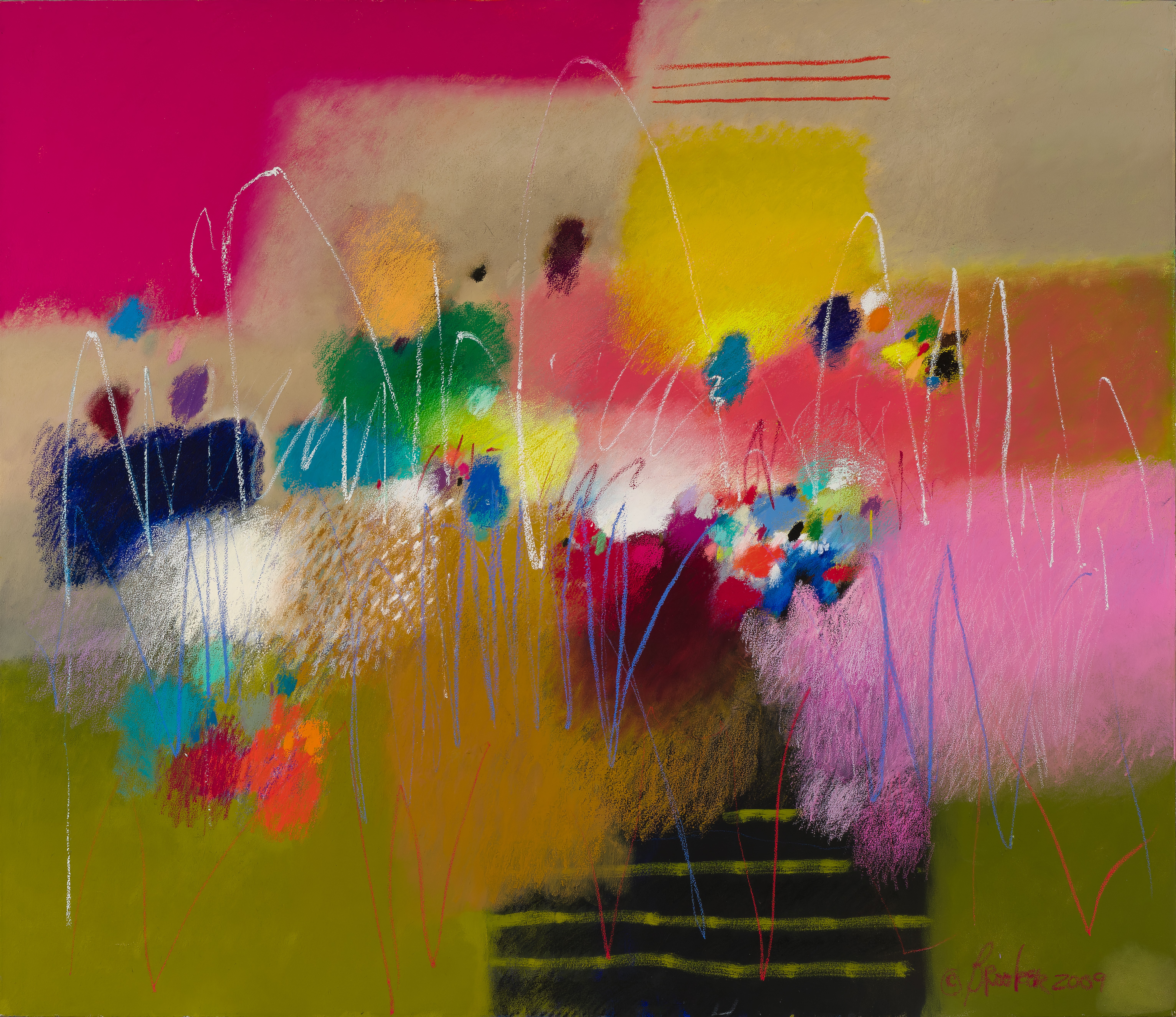
Colors explode in a series of abstract shapes on the white walls of the Kuch Gallery at Woodmere’s Smith Hall. The popping hues on canvass are part of the melodious exhibition “Listen With Your Eyes: A Moe Brooker Retrospective,” featuring more than 40 pieces by Brooker, a South Philly native, PAFA graduate, respected art professor, and renowned artist.
“Listen With Your Eyes” is Woodmere’s homage to Brooker, who died in 2022 at age 81. The exhibition — more than 20 years in the making — is the first-ever retrospective show dedicated solely to Brooker’s work and features his paintings, sculptures, weavings, and sketchbooks. It covers Brooker’s early realism in the 1970s through the 2000s, when his pieces evolved in size and became dreamier in style.
Moe Brooker’s “Listen With Your Eyes,” 2009. Mixed media and oil on canvas, 60 x 72 in.courtesy of Musa Brooker and Misha Brooker
His canvases are visual renditions of the jazz and classical music he loved so much. He uses the brightest hues in the palette; some pieces even appear psychedelic. Some are down right funky. All are synesthetic. It’s clear when Brooker heard music, he saw colors, and he was able to manifest what he saw in his mind’s eye as a tableau of intentional strokes.
One painting, also called “Listen With Your Eyes,” is my favorite of the bunch. It’s a whimsical mix of pastels punctuated with neon crescendos. A yellow globe rises from a garden of smaller cloudy circles of blue, purple, and brown, like a lazy sun on a hot summer’s morning.
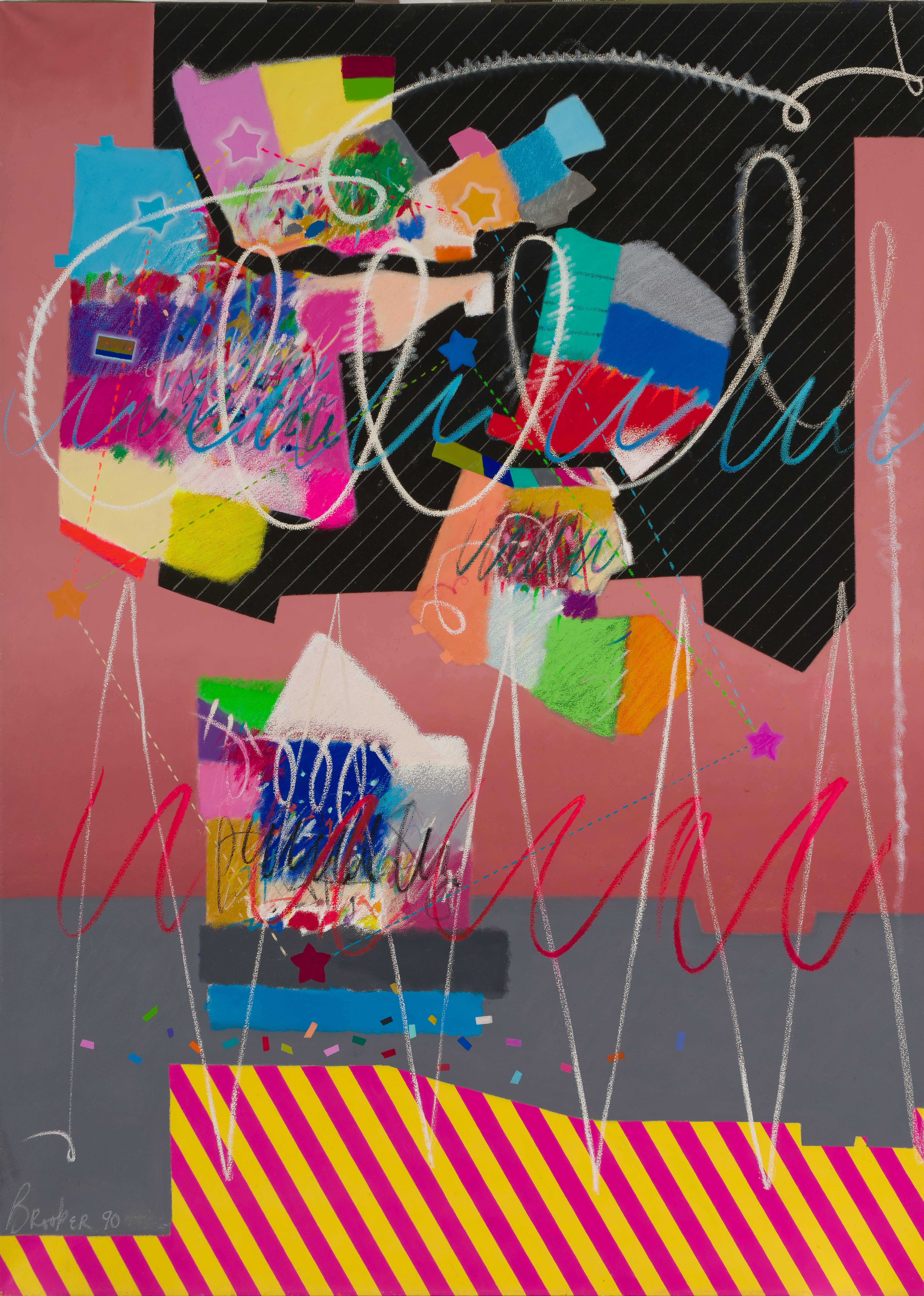
Moe Brooker’s “In the Measure of Every Part,” 1990. Oil on canvas with paint stick, 72 x 54 in.courtesy of Musa Booker and Misha Booker
Brooker’s work is not just musical; he weaves in the Philly landscape in such a way that I know he saw his city as a magical playground. In the Measure of Every Part is a fun house, a collage of concrete shapes, a harmony of colors doused in rhythm and blues.
In this way, Brooker saw Philly in 2009 much like I see Philly today.
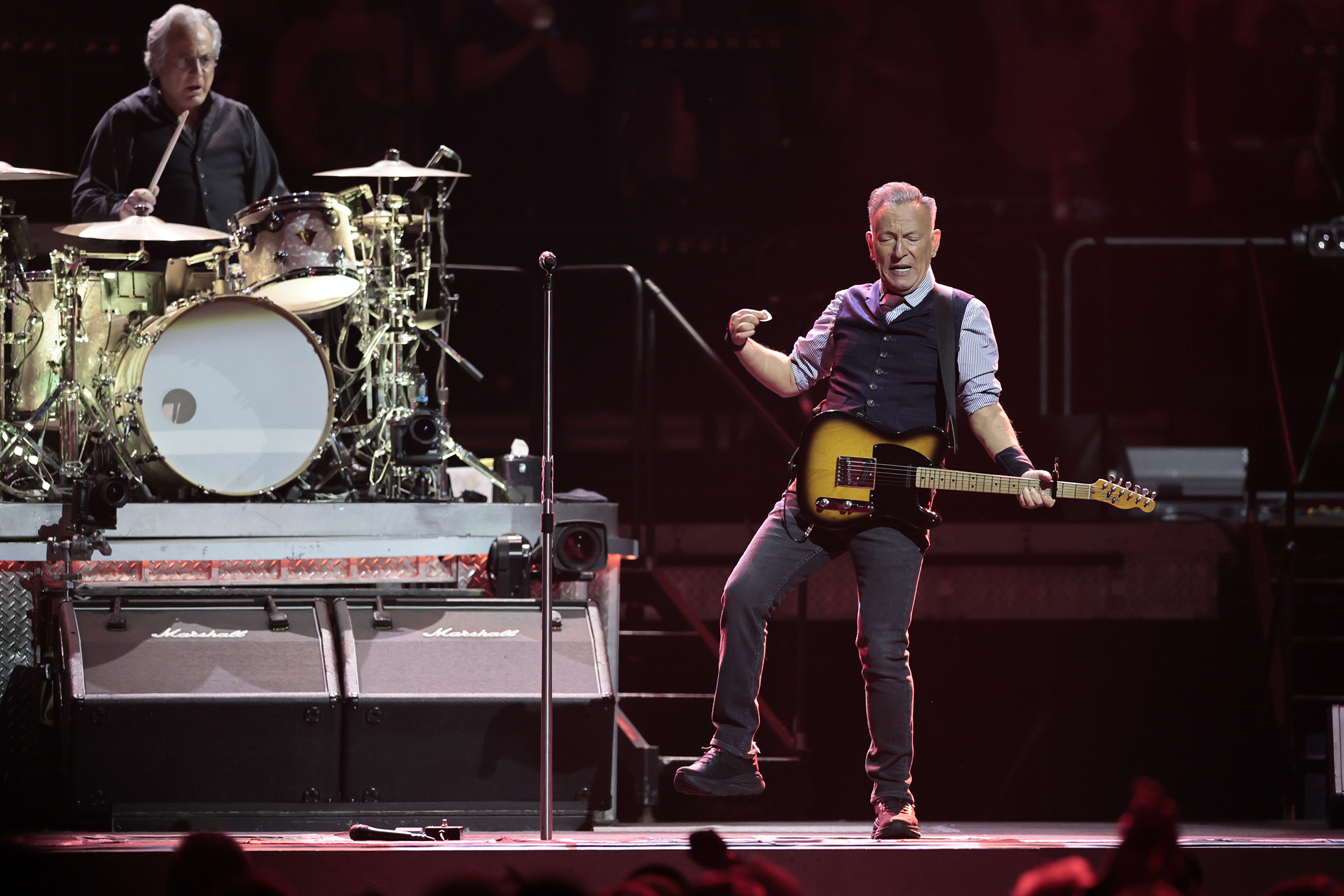
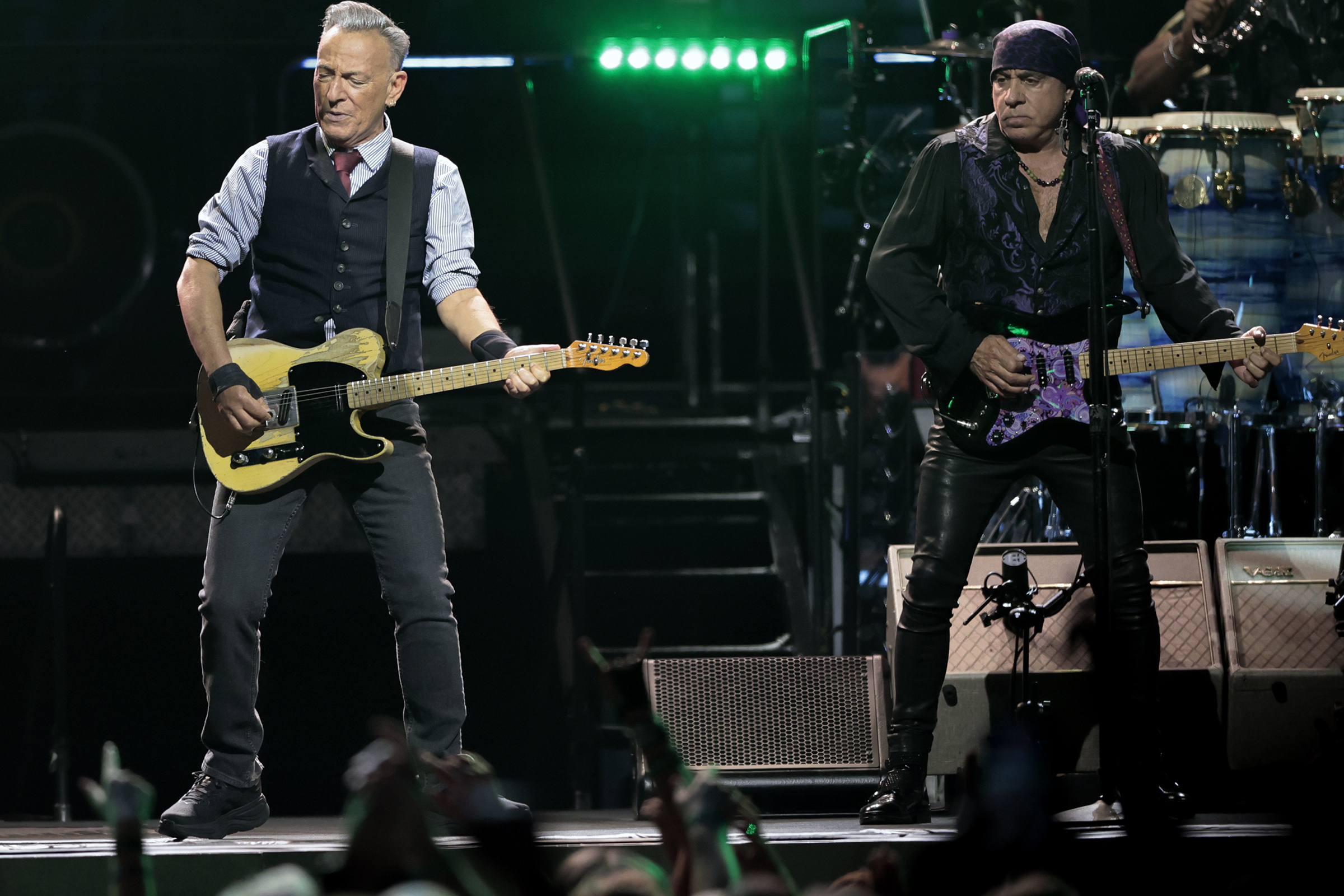
Bruce Springsteen and members of the E Street band perform during their “Land of Hope & Dreams” tour stop at Xfinity Mobile Arena in Philadelphia on May 30, 2026.Elizabeth Robertson / Staff Photographer
Springsteen’s Philly concert film is finally complete
The encore has arrived.
When word got out that Bruce Springsteen was releasing a YouTube concert film of his May 30 show with the E Street Band at Xfinity Mobile Arena, titled Land of Hope and Dreams American Tour (Philadelphia Freedom Cut), I naturally assumed the whole thing was going to be made available at once.
That was incorrect.
Instead, Springsteen chose to divvy it up in four parts, releasing the show, in which he was explicit in his criticism of President Donald Trump, as each chunk was finished by in-house E Street filmmaker Thom Zimny.
The release of the show in sections was in the spirit of the tour itself, which was quickly pulled together after Springsteen wrote “Streets of Minneapolis” in response to the killing of Alex Pretti and Renee Good by ICE agents last winter.
“The whole thing, the pop-up tour, was about immediacy and being in this moment, providing something that I felt an audience, my audience, could use in this moment,” Springsteen told Rolling Stone.
It also had the advantage of not needing to be consumed in one three-hour stretch, instead breaking down the marathon Springsteen experience into four easily consumable streaming episodes.
Now, seven weeks after the release of the first seven songs — starting with a rousing anti-Trump speech and a emphatic version of Edwin Starr’s “War” — the last of those came out this week.
The final section keeps up the protest theme.
Springsteen opens by shouting out the Pennsylvania Immigrant coalition before launching into the immigrant song “American Land,” in which he raises a fist and sings “the hands that built this country, we’re always trying to keep out.”
And, before Bob Dylan’s “Chimes of Freedom,” late civil rights leader John Lewis’ concept of “good trouble” is evoked as Springsteen urges his fans to “say something, do something, sing something” if they’re feeling angry or hopeless at the state of American affairs in 2026.
But the final 38-minute section also contains the celebratory parts of the show: the rousing, house-lights-up catharsis of “Born to Run,” the crowd pleasing “Dancing in the Dark,” and the horn-happy soul strut of “Tenth Avenue Freeze Out.” Plus, there are lots of crowd shots of Springsteen fans getting loosey-goosey on a Saturday night.
If you were there, look for yourself.
The concert film as a whole is a moving snapshot of Springsteen at 76, a still electrifying performer leading a band that’s steadfastly backed him for a half century. And as much as the “Land of Hope and Dreams” show is pointedly political, it is just as much about the bond between Springsteen, his fellow musicians, and their audience.
That deeply felt bond, in Philadelphia’s case, goes back to the Main Point in Bryn Mawr in 1973, a date that he notes before thanking his audience “for a lifetime.”
— Dan DeLuca
Jilly from Philly and her fire fits
It’s been a busy year for North Philly star Jill Scott. She released her first album in more than a decade in February, embarked on a world tour, and more recently appeared in Netflix’s Why Did I Get Married Again?, the third installment of Tyler Perry’s rom-com series.
Now almost 20 years since her acting debut in the series’ first movie (Why Did I Get Married?), Scott revisits the role of Sheila, the sweet and strong woman subjected to downright awful and fatphobic treatment from her (now ex) husband.
Jill Scott as Sheila in “Why Did I Get Married Again?”CHIP BERGMANN
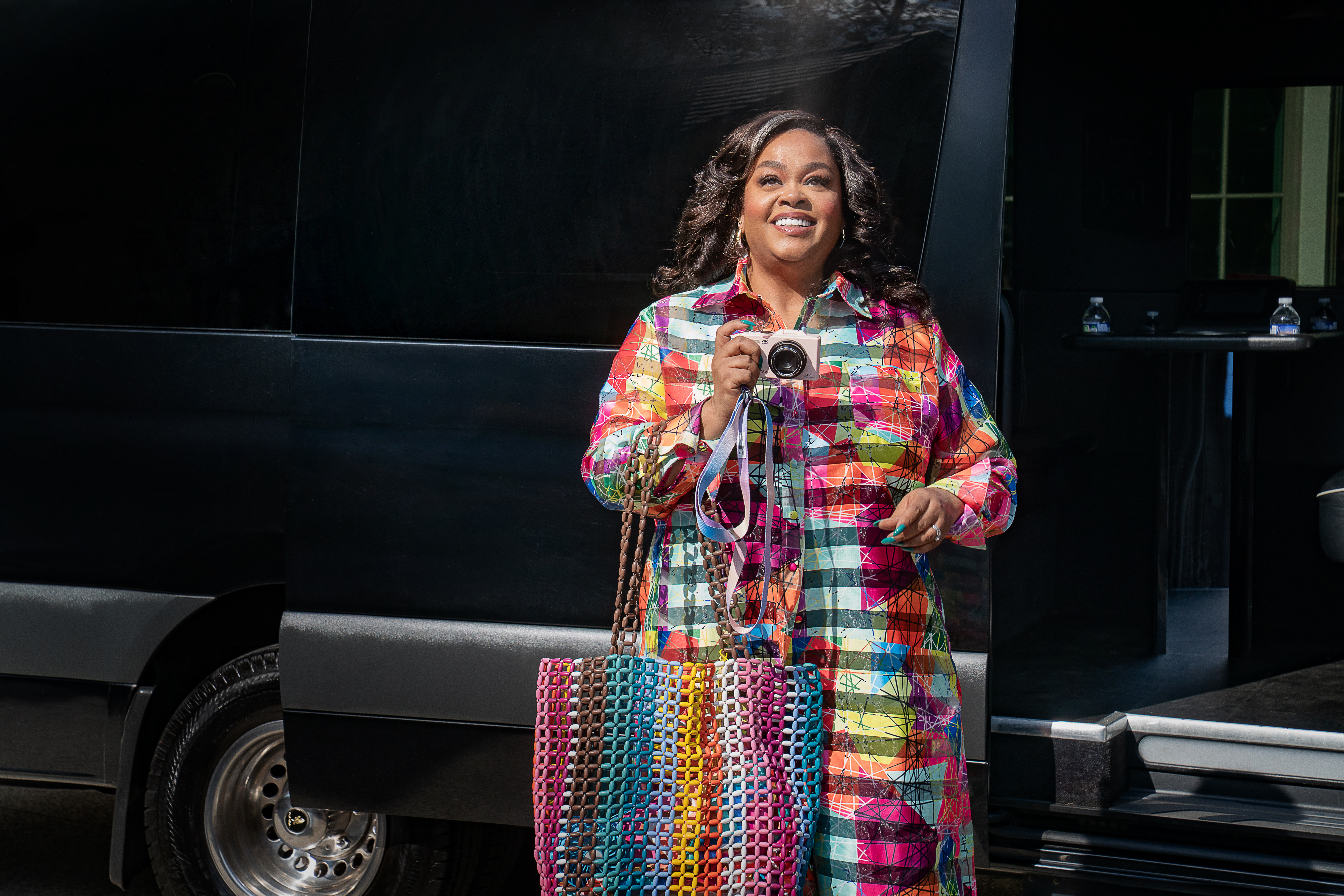
Over the course of the trilogy, Sheila gains confidence and thankfully sheds the frumpy old clothes of her past. The new film sees Scott’s character shine in a stunningly chic wardrobe with eye-catching accessories and flattering silhouettes that perfectly hug her curves (shout out to costume designer Raiyonda Vereen). Shrinking, shy Sheila is gone; in her place is a seductive and stylish woman who could easily walk a runway, with some of Scott’s undeniable star-power surfacing. It’s wonderful to see plus-size fashion get the spotlight here with pieces like a leopard print and black lace negligee and a bright-colored striped button-down dress with a matching tote bag. I’d definitely line up to buy that clothing line.
Plus, since it’s Halloween, I’ve got to share a spooky movie rec: the zombie classic Night of the Living Dead. Filmed and set outside of Pittsburgh, George A. Romero’s legendary horror film isn’t just creepy (and pretty gory), it’s also a fascinating social critique of 1968. Its sequel, Dawn of the Dead (1978), made the top 25 in The Inquirer’s ranking of the 50 best Philly movies.
“Why Did I Get Married Again?” is streaming on Netflix; “Night of the Living Dead” is streaming on multiple platforms, including YouTube, Prime Video, and HBO Max.
Edgar Allan Poe moved from New York to Philadelphia with his teenage wife, Virginia, and mother-in-law, Maria, in 1838.
He had already published his first book, Tamerlane and Other Poems, in 1827, but was yet to write a commercially successful novel. So he moved to Philadelphia, then the heart of the publishing industry, for a fresh start.
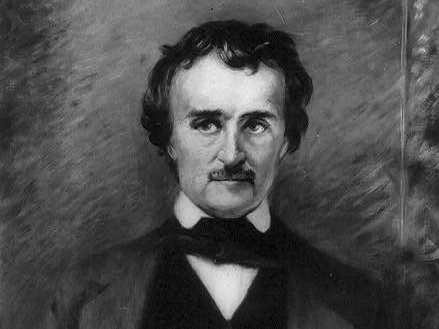
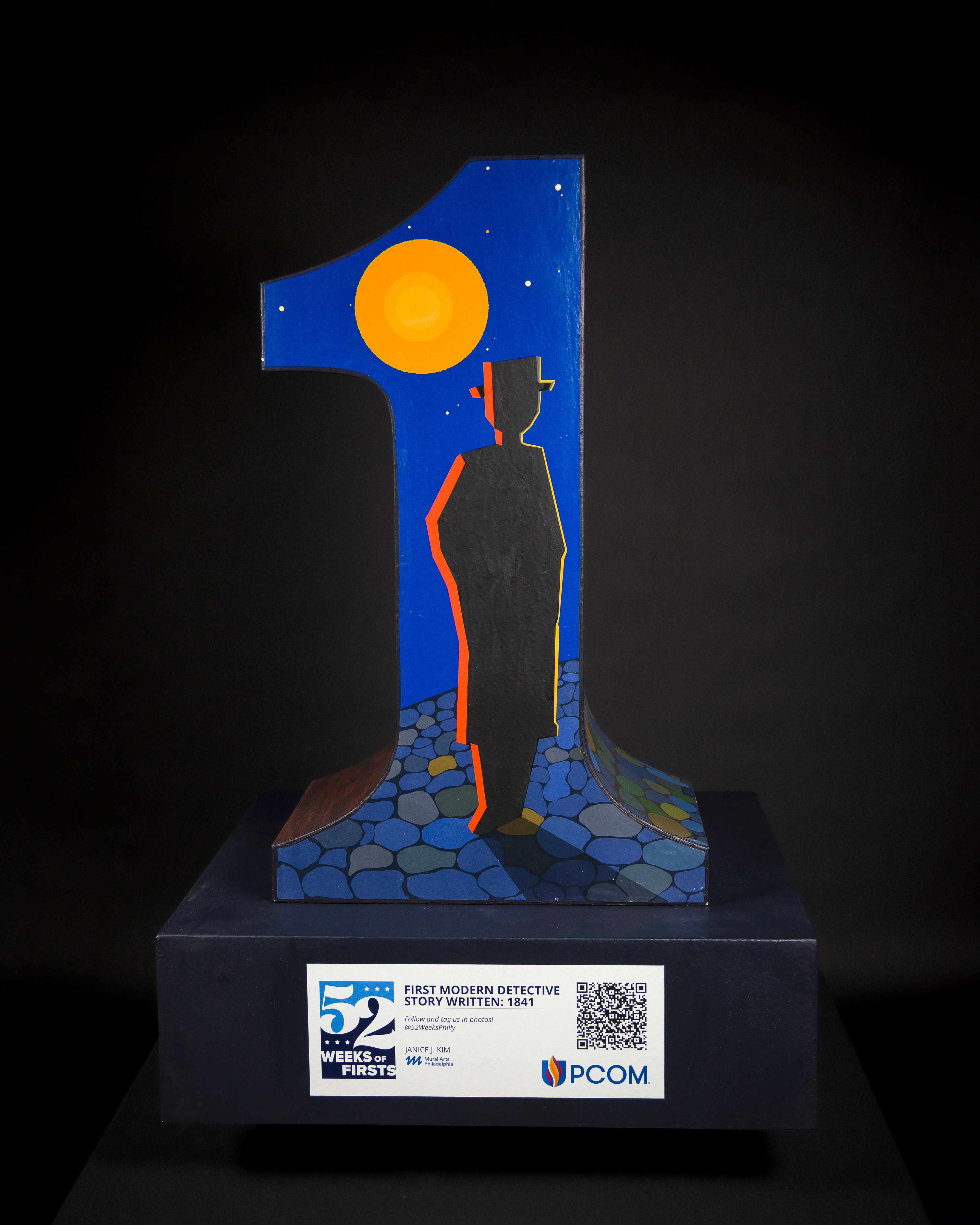
Artist Janice Kim’s No. 1 features an iconic photograph of the poet Edgar Allan Poe and images of a dark and stormy night, paying homage to the writer’s dark storytelling.Janice Kim courtesy of Colibri Workshop
On April 20, 1841, Poe, who had since turned his literary focus to short stories, published “The Murders in the Rue Morgue,” considered the world’s first work of detective fiction. Its protagonist, the nosey C. Auguste Dupin, was a figment of Poe’s imagination before detectives even existed.
Firstivals are weekly parties honoring important people, places, and events with Philadelphia roots.
For years, the Spring Garden site hosted popular Halloween parties as a nod to Poe’s knack for chilling and spooky works like “The Raven.” The dark, 18-stanza poem was published in the New York Evening Mirror in 1845, a year after Poe moved back to New York City.
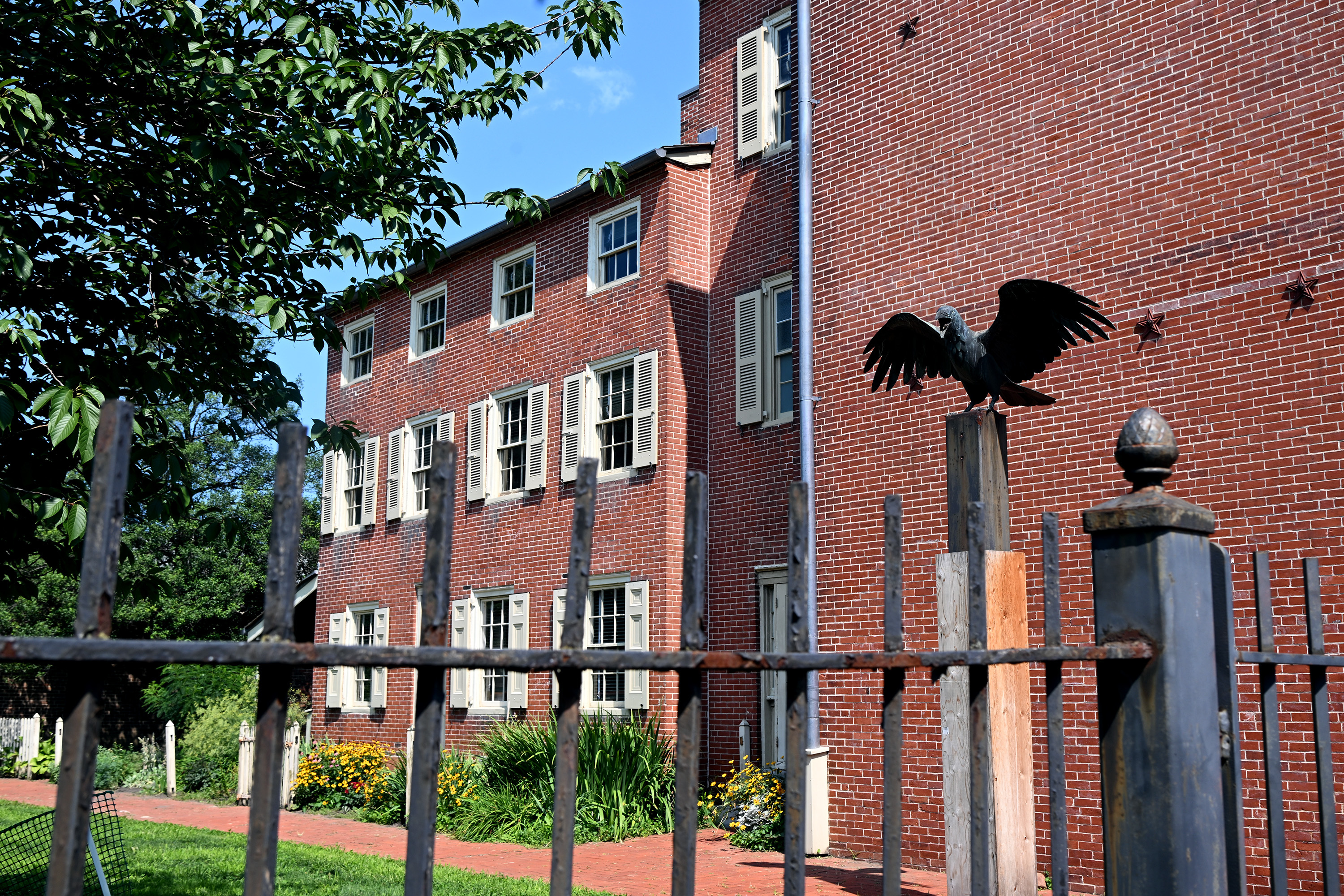
Historians speculate it was written when he still lived in Philadelphia, in his 19th-century home at 532 N. Seventh St., now designated as an historic site.
Poe, who also rented homes in today’s Old City, Rittenhouse Square, and the Art Museum neighborhoods, was most prolific during the eight years he lived in Philadelphia, says Michael Carbonaro, the park ranger at the Edgar Allan Poe National Historic Site.
Here, Poe penned several of his most popular works, including “The Black Cat,” “The Gold Bug,” “The Tell-Tale Heart,” and “The Pit and the Pendulum.” He also published two additional Dupin detective stories: “The Mystery of Rogêt” and “The Purloined Letter.”
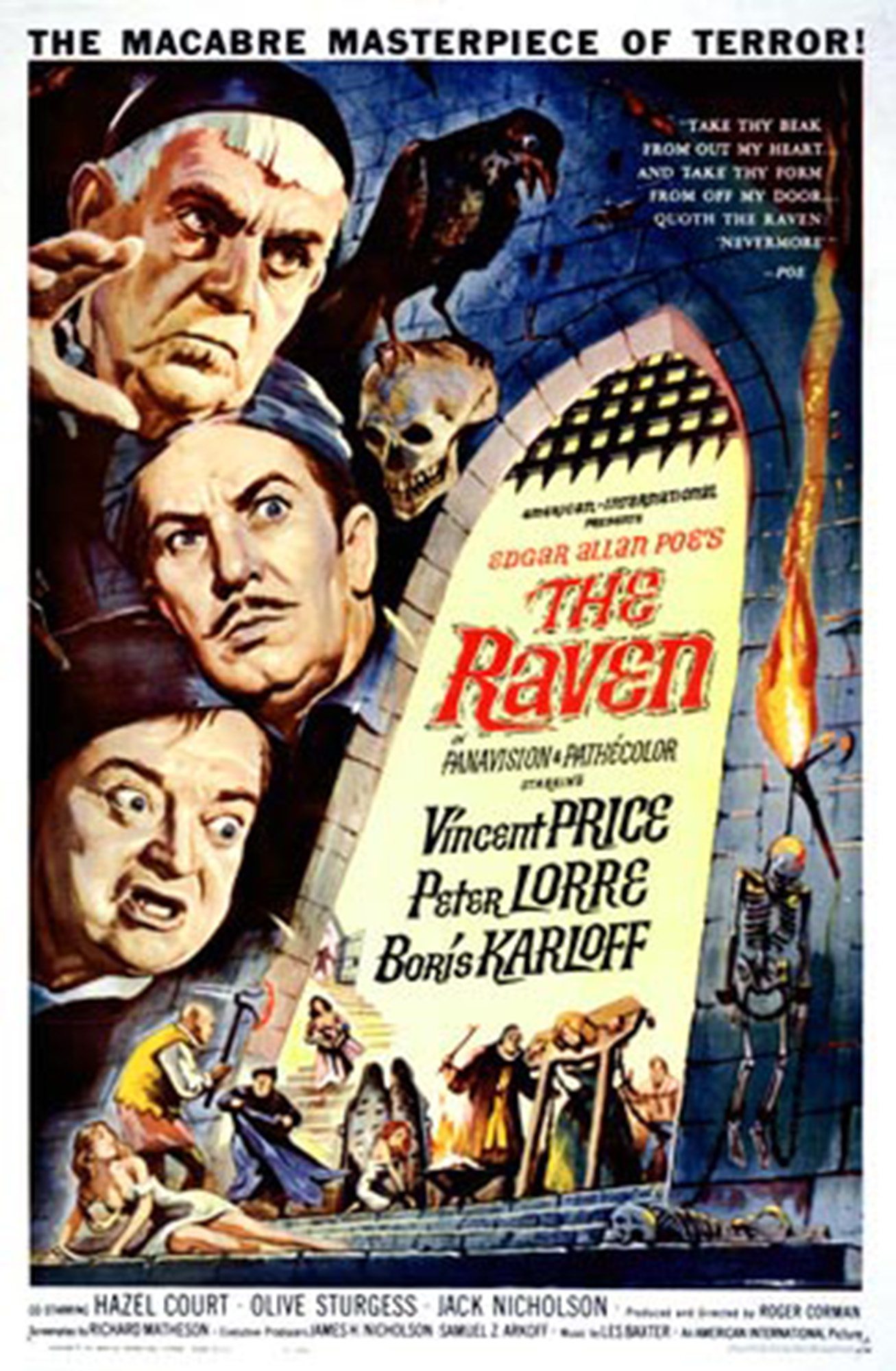
A movie poster featuring one of the many interpretations of Edgar Allan Poe’s “The Raven.” This 1963 version starred Vincent Prince. (Handout/TNS)Handout / MCT
“‘Murders’ is so masterfully done,” Carbonaro said. “And it’s the very beginning of a beloved literary genre. Sir Arthur Conan Doyle freely admits Dupin is the inspiration for Sherlock Holmes.”
And Columbo. And Matlock. And Nancy Drew. And Jessica Fletcher. And so on.
“The Murders of the Rue Morgue” is set in Paris, but historians agree Philadelphia inspires the plot with the kind of ghastly crime that was on the rise in the city in the 1800s.
In the story, the disfigured corpse of a mother and daughter are found in a French flat. Dupin learns of the killings from newspaper accounts, visits the scene with the anonymous narrator, and determines the murderer is an orangutan gone wild, outwitting the police.
An orangutan was featured in an exhibit on Penn’s Landing in 1839, capturing the city’s attention decades before the Philadelphia Zoo opened in 1874.
Also, while Poe lived in Philadelphia, his wife suffered a ruptured blood vessel while singing. Blood gushed from her mouth, inspiring Poe’s descriptions of one victim’s severed head in “Murders.”
The short story went on to be adapted for the stage and movie and TV screens. The first movie version, in 1932, starred Bella Lugosi as the sailor responsible for the orangutan.
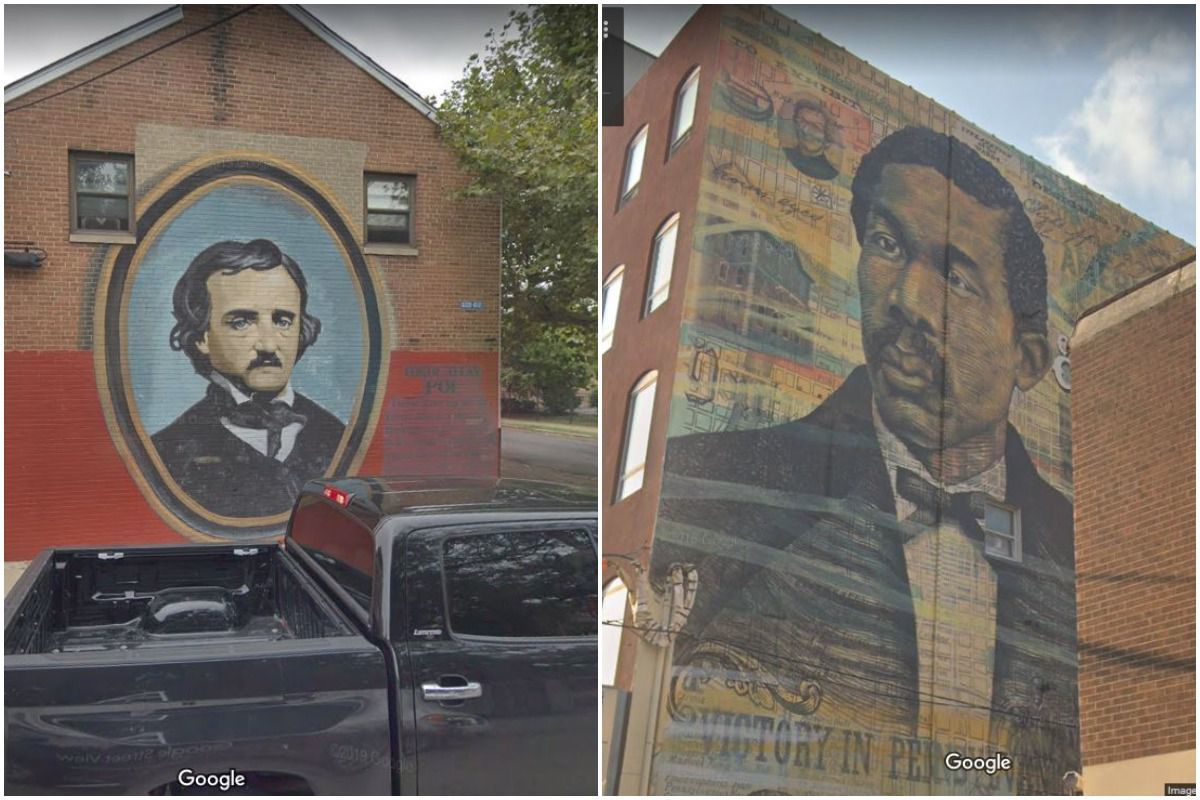
Some faces in Philly’s murals remain intact in Google Street View, including that of Edgar Allan Poe, at left, and Octavius Catto, at right.Google Street View
Thanks to America’s love for Poe’s ghost stories, the manuscript of the written-in-Philadelphia “Murders” took on a life of its own.
After the story was published in 1841, printer’s apprentice and Poe aficionado J.M. Johnston rescued the original manuscript, written in Poe’s delicate cursive, from the trash, took it home, and stashed it in a book. The manuscript survived several house fires and got accidentally thrown away before it was yet again rescued from a trash heap.
Johnston had the manuscript bound in 1869, according to a 1944 article in The Philadelphia Inquirer. Philanthropist and newspaper owner George W. Childs purchased the manuscript from Johnston for $200 in 1881. (About $4,995 in today’s money.)
Childs died in 1894 and bequeathed a bevy of literary works, including the handwritten manuscript of “Murders” as well as Poe’s acquaintance Charles Dickens’ final novel, Our Mutual Friend, to Drexel Institute. The two met when Dickens was in Philadelphia visiting Eastern State Penitentiary. Childs was a lifelong friend of A.J. Drexel.
The Edgar Allan Poe National Historic Site Sunday, Aug. 3, 2025. The sculpture is “Raven,” by David Caccia, 1979.Tom Gralish / Staff Photographer
In 1944, Richard Gimbel, grandson of Adam Gimbel, who founded Gimbels department store, purchased the manuscript of “Murders” for $34,000 through Philadelphia-based collector and dealer Charles Sessler. (Financier J.P. Morgan bought the Dickens’ manuscript at the same 1944 sale.)
Gimbel, the foremost collector of Poe memorabilia, bought Poe’s house in 1937 for $7,000, according to his 1970 obituary in the Philadelphia Daily News. Gimbel amassed more than 20,000 of Poe’s original items and turned the house on Seventh Street into a memorial to Poe before willing it to the city upon his death.
Chemist and mechanical engineer Henry R. Heyl moved to Philadelphia from Columbus, OH. in 1863. Shortly after setting up shop near the Curtis Building at 6th and Market Streets, he developed a knack for inventing things.
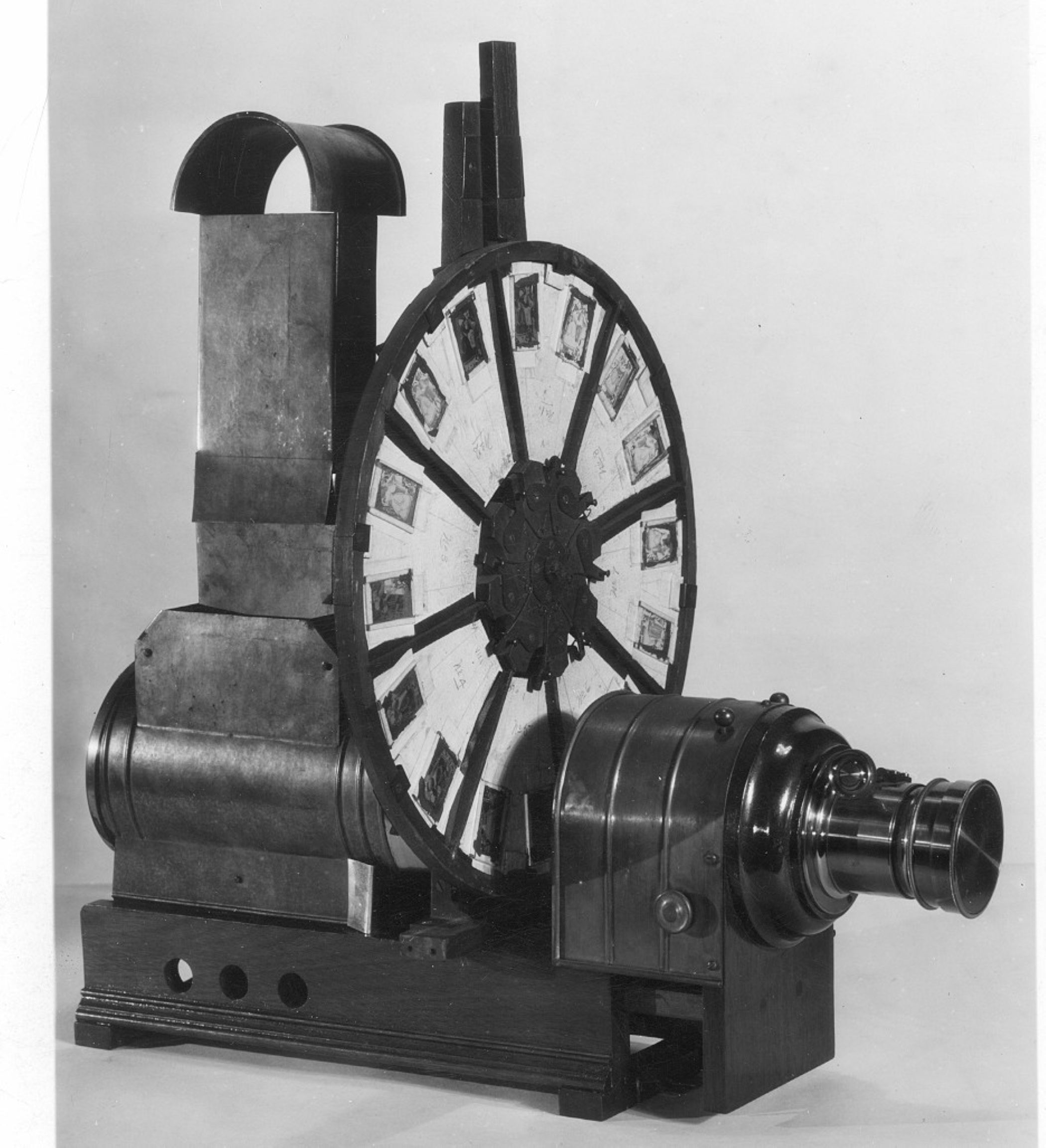
Among Heyl’s first inventions was a gadget that set photographs in motion, which he named the phasmatrope.
Heyl printed 16 photos — each slightly different from the ones before and after it — onto glass. Using a bright lamp, he projected the images through a shutter and onto a blank wall. A handheld crank controlled the device and synced the images with live sound. The result was the first moving image.
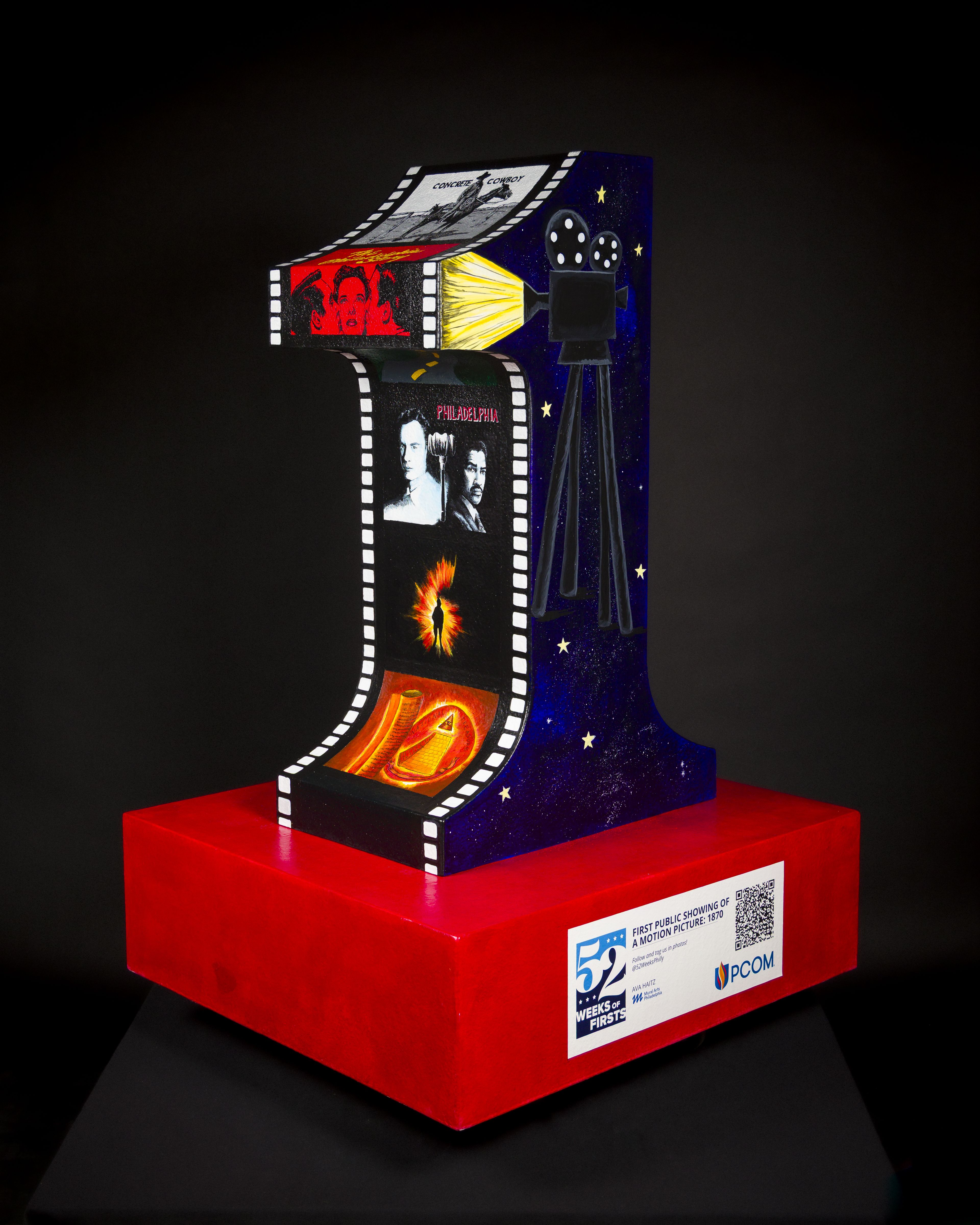
Ava Haitz’ No. 1 commemorates the first public screening of a motion picture, celebrating the birth of cinema and the power of storytelling through moving images.Ava Haitz and Colibri Workshop
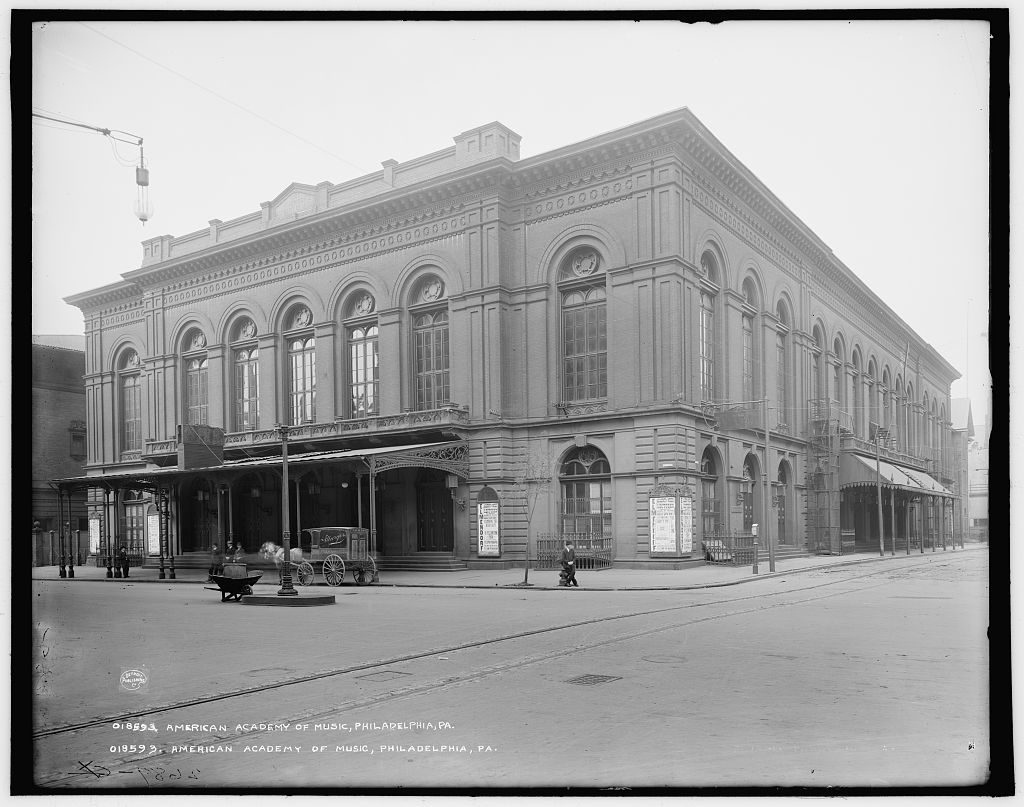
On the evening of Feb. 5, 1870, Heyl took his phasmatrope, or magic lantern projector, and demonstrated it to an audience of 1,500 people at the Academy of Music.
That presentation is considered America’s first motion picture screening and it will be celebrated Saturday at the Philadelphia Film Society Center from 11 a.m. to 1 p.m.
The day party, or firstival, is part of the Philadelphia Historic District’s yearlong celebration of America’s 250th birthday honoring events and happenings with Philly roots.
Heyl showed three films on that evening in 1870, each one a few seconds in length, said J. Andrew Greenblatt, CEO and executive director of the Philadelphia Film Society.
Henry C. Heyl’s phasmatrope. Heyl was a director of the Franklin Institute in the late 1800s and the phasmatrope was a part of the Institute’s collection for decades.The Franklin Institute
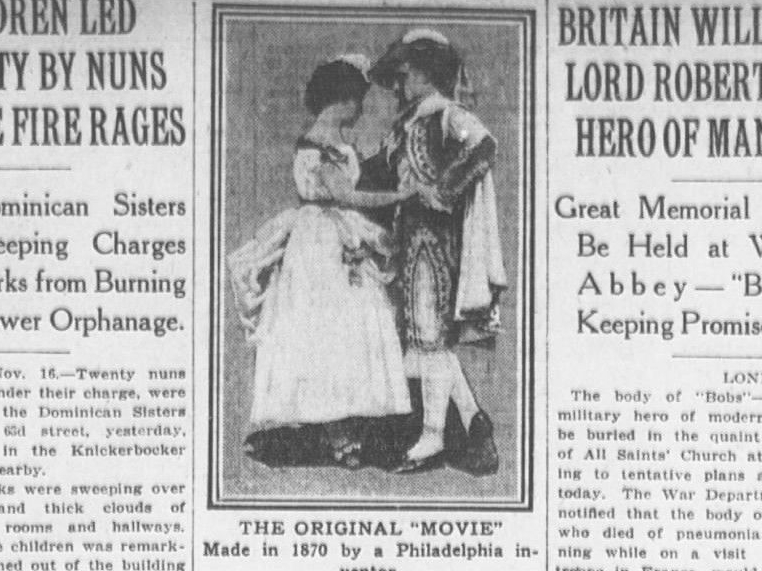
Allright, was a compilation of moves of the Japanese acrobat Little Allright. Brother Johnathan, debuted a character Heyl created and voiced behind the screen. The most famous film in the group is referred to as A Waltzing Couple and it featured Heyl dancing with a cousin. The 40-piece Philadelphia Orchestra provided the accompanying live music and Heyl’s performance effectively made him the first American actor in a motion picture, too.
According to a 1914 story in the Evening Public Ledger, Heyl demonstrated the phasmatrope at the Franklin Institute on March 16, 1870.
But that was its final public showing.
“He put it away and literally never demonstrated the phasmatrope again,” Greenblatt said. “He solved what he wanted to solve and went on to invent other things.”
American Academy of Music, Philadelphia. Early 1900s where a few years ago Heyl demonstrated his phasmatrope.Library of Congress
And invent other things, Heyl did.
In late 1870, he invented the indoor croquet table as part of an ongoing effort to find ways to play outdoor games inside.
In 1877, Heyl filed for a patent for a machine that inserted and clinched staples in one step, or the modern day stapler.
He created the foldable box, the precursor to the takeout container most popular in Chinese restaurants. In 1911, at age 69, Heyl invented the paper drinking cup.
In 1885, Heyl became a director at the Franklin Institute and remained a member of its board of managers for close to 30 years.
In 1919, when he was 77 years old, Heyl fainted and fell from a street car at the intersection of Broad and Walnut Streets, according to a report in the Evening Ledger. He was taken to Jefferson Hospital where he died.
He never filed a patent for his phasmatrope, yet the public showing of his motion picture helped establish the motion picture industry, fueling it with possibility, Greenblatt said. Heyl’s phasmatrope joined and other inventions like the zoetrope, the phenakistoscope, and the zoopraxiscope, laying the film industry’s early foundations.
French magician George Méliès’ silent science fiction film A Trip to the Moon was released in 1902 and is hailed as not just the first science fiction film, but the first to tell a cohesive story — with sound effects.
“Méliès A Trip to the Moon was a stunning 14-minute short in cinema history that everyone remembers,” Greenblatt said. “And when most people talk about the American film industry they just assume it started with Thomas Edison. But that germ was planted right here in Philadelphia.”
This week’s Firstival is Saturday, Oct. 24, from 11 a.m.-1 p.m., at the Philadelphia Film Society Center, 1412 Chestnut Street.
It was the summer of 1775 and Rhode Island’s delegates were concerned.
The colonists had been at war with Britain for four months and the battles were heating up. Bounded by the Narragansett Bay, an inlet of the Atlantic Ocean, Rhode Island was particularly vulnerable to a surprise British ambush by sea.
The New World’s tiniest colony knew they needed the firepower of fellow colonies to hold off the world’s largest navy in a sea battle. So in August, Rhode Island sent delegates to the Second Continental Congress in Philadelphia’s Independence Hall to request a “fleet of sufficient force for the protection of these colonies [to] be established.”
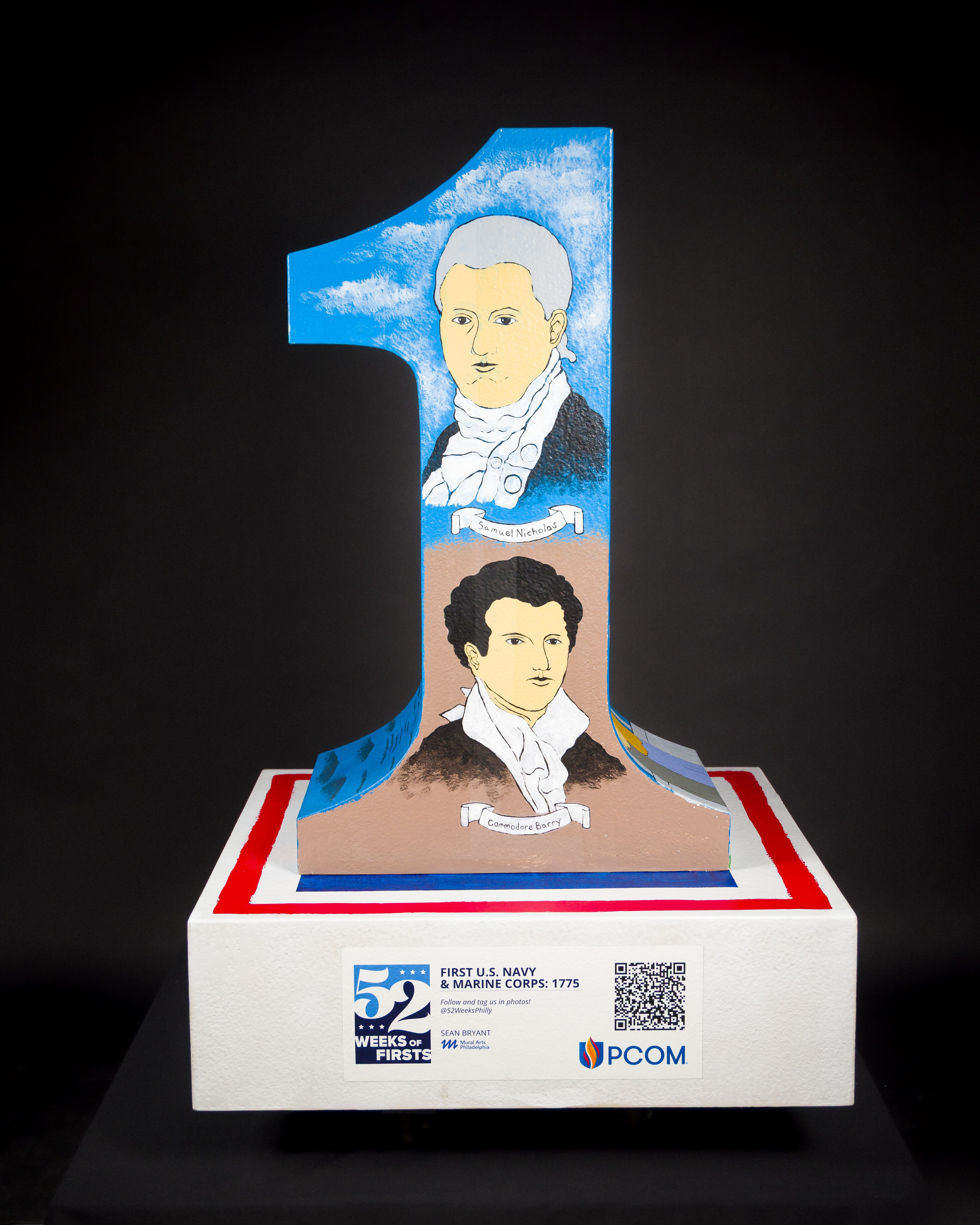
This design honors the founding of the United States Navy and Marine Corps in 1775 with images of colonial Philadelphia Quakers Joshua Humphreys and Samuel Nichols. Both were integral to both military branches’ founding.Sean Bryant and Colibrí Workshop
On Oct. 13, Congress voted to grant Connecticut and Rhode Island merchant vessels to patrol the North in a search-and-destroy mission for British ships. The Congress also voted in favor of supplying General George Washington with an armed schooner and sloop to seize British supplies.
With the authorization of the military to protect its interests on water, the Second Continental Congress created the U.S. Navy.
The U.S. Navy’s beginning will be remembered Saturday at the Arch Street Meeting House Firstival, part of the Philadelphia Historic District’s yearlong weekly celebration honoring important American institutions that trace their beginnings to Philadelphia.
“The creation of an American naval force was a key strategy to winning the war,” said Sean Connolly, executive director of the Arch Street Meeting House Preservation Trust. “It also proved to other European nations like the French, the Dutch, and the Spanish that we were to be taken seriously, that we were just like other world powers.”
Guarding the seas was just one part of the colonists’ military strategy. When the ships arrived at their destination they needed to employ guerrilla fighters and marines to match up to the might of the British Royal Marines.
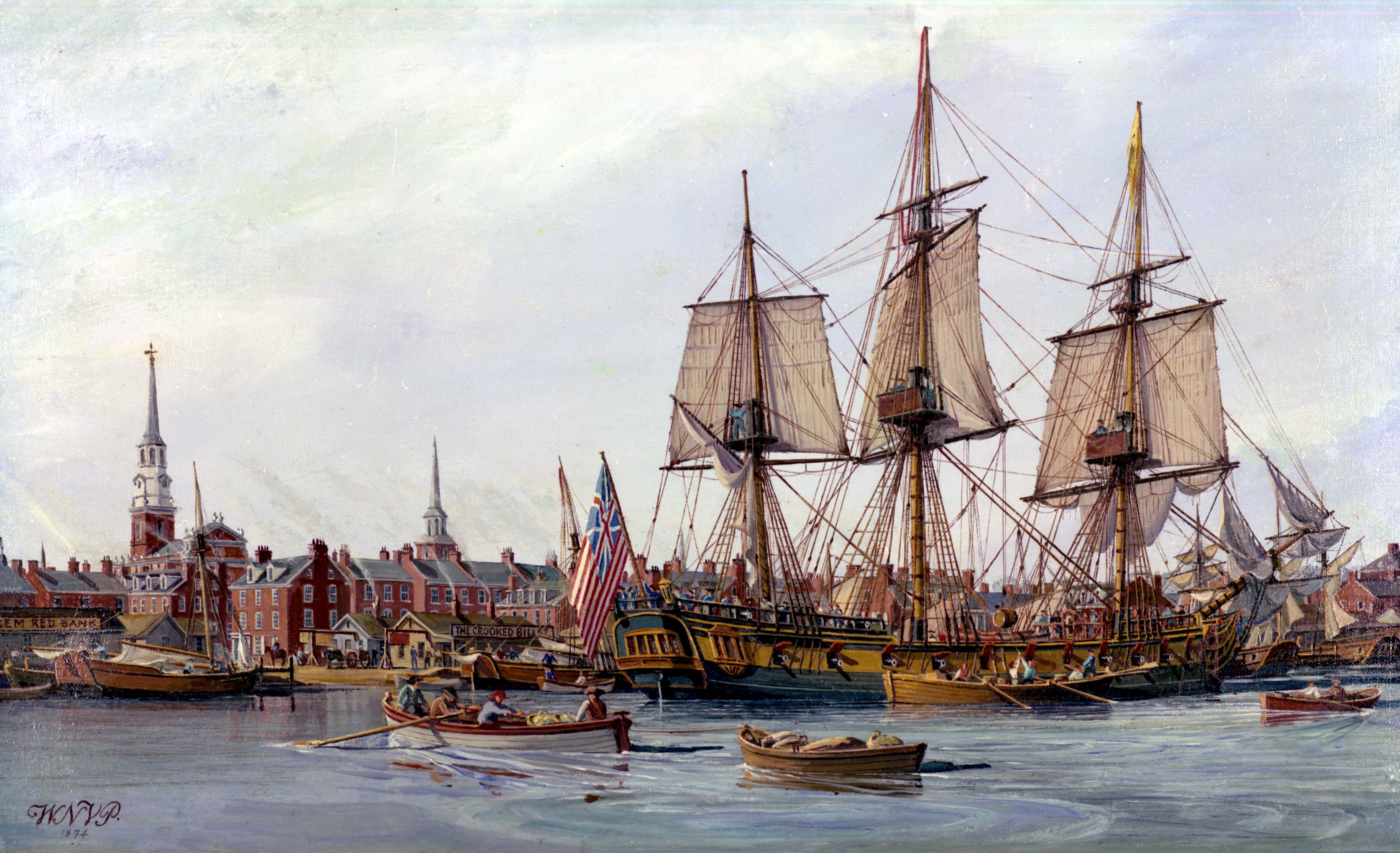
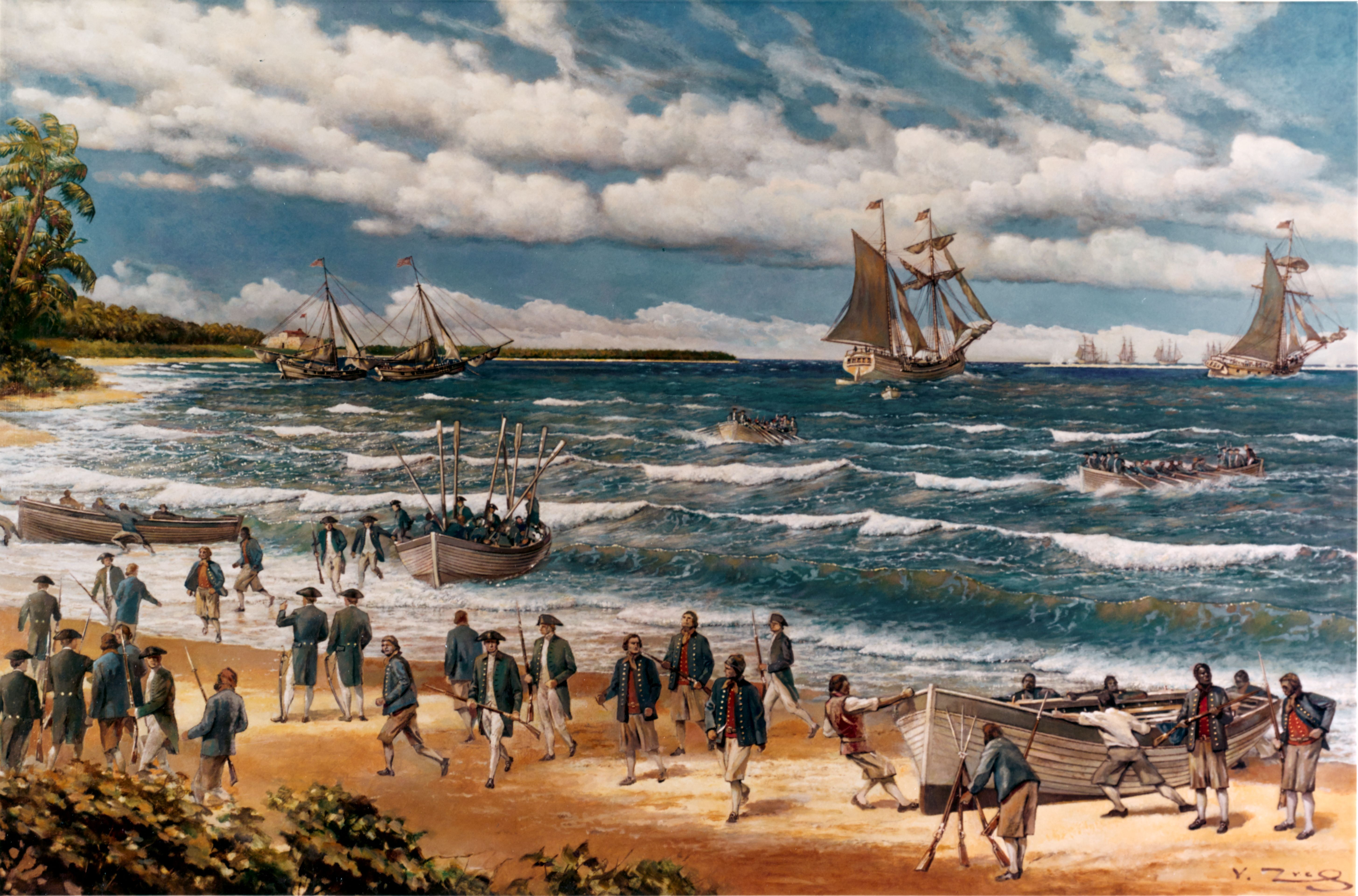
In March of 1776, Nicholas took a ship outfitted by another Philadelphia Quaker, Joshua Humphreys, to New Providence, the capital of the British-controlled Bahamas, where he commanded the United States to raid a British ship and steal its weapons and gunpowder.
Oil painting on canvas by V. Zveg, 1973, depicting Continental Sailors and Marines landing on New Providence Island, Bahamas, on March 3, 1776. Their initial objective, Fort Montagu, is in the left distance. Close off shore are the small vessels used to transport the landing force to the vicinity of the beach. They are (from left to right): two captured sloops, schooner Wasp and sloop Providence. The other ships of the American squadron are visible in the distance. The operation was commanded by Commodore Esek Hopkins.U.S. Navy Art Collection, Washington, D.C. U.S. Naval History and Heritage Command Photograph.
It was a strategic mission, Connolly said, to capture and destroy ships used to fight the colonists on American soil.
“It was a way of weakening the British forces by diverting their attention from America to their colonies in the Caribbean,” Connolly said. “We needed ammunition. So we decided to raid their forts of gunpowder and cannons and take it back to America. We were very successful, capturing 88 cannons, 15 mortars, and a huge amount of gunpowder.”
Most importantly, the Americans would no longer be underestimated. This show of military power, Connelly said, is why France joined the colonists.
After the Treaty of Versailles was signed in 1783, Congress disbanded the Colonial Navy and Marines. The Continental Army was a mere shell of itself.
“The Founding Fathers didn’t think we need a permanent military force anymore,” Connolly said. “They believed an armed militia could potentially be used against the government.”
But the need for defense proved necessary.
In August 1789, Washington (who was now president) created the U.S. Department of War, appointing Henry Knox as its first secretary. On Sept. 29, 1789, Washington reestablished the U.S. Army under the Constitution.
During his second term as president on March 27, 1794, Congress created the Navy as we know it today to protect American ships from pirates on the Mediterranean Sea. Humphreys was called on to build the first six U.S. Navy frigates.
U.S. Navy sailors listen as President Donald Trump speaks during an event at Tradepoint Atlantic on Sparrows Point in Maryland, on Tuesday, Oct. 6, 2026. (Kenny Holston/The New York Times)KENNY HOLSTON
One of the ships Humphreys designed, the USS Constitution, is still in active service as a training vessel for the Navy, Connolly said.
On July 11, 1798, President John Adams signed the act establishing and organizing the U.S. Marine Corps as a part of the Department of the Navy.
“The Quakers were pacifists, yes,” Connolly said. “But we cannot forget their military contributions to helping America become America.”
This week’s Firstival is Saturday, Oct. 17, from 11 a.m. to 1 p.m., at the Arch Street Meeting House, 320 Arch St.
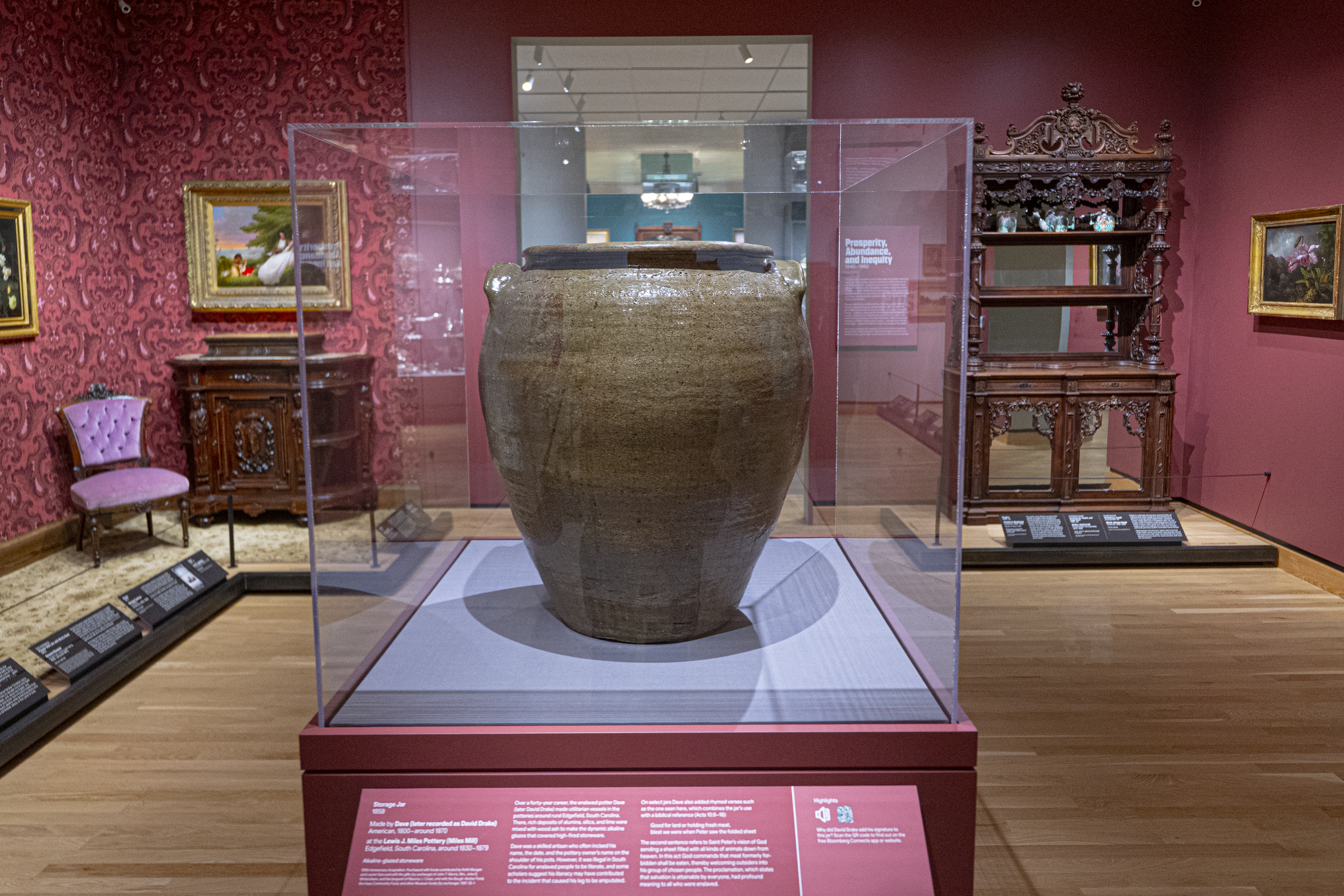
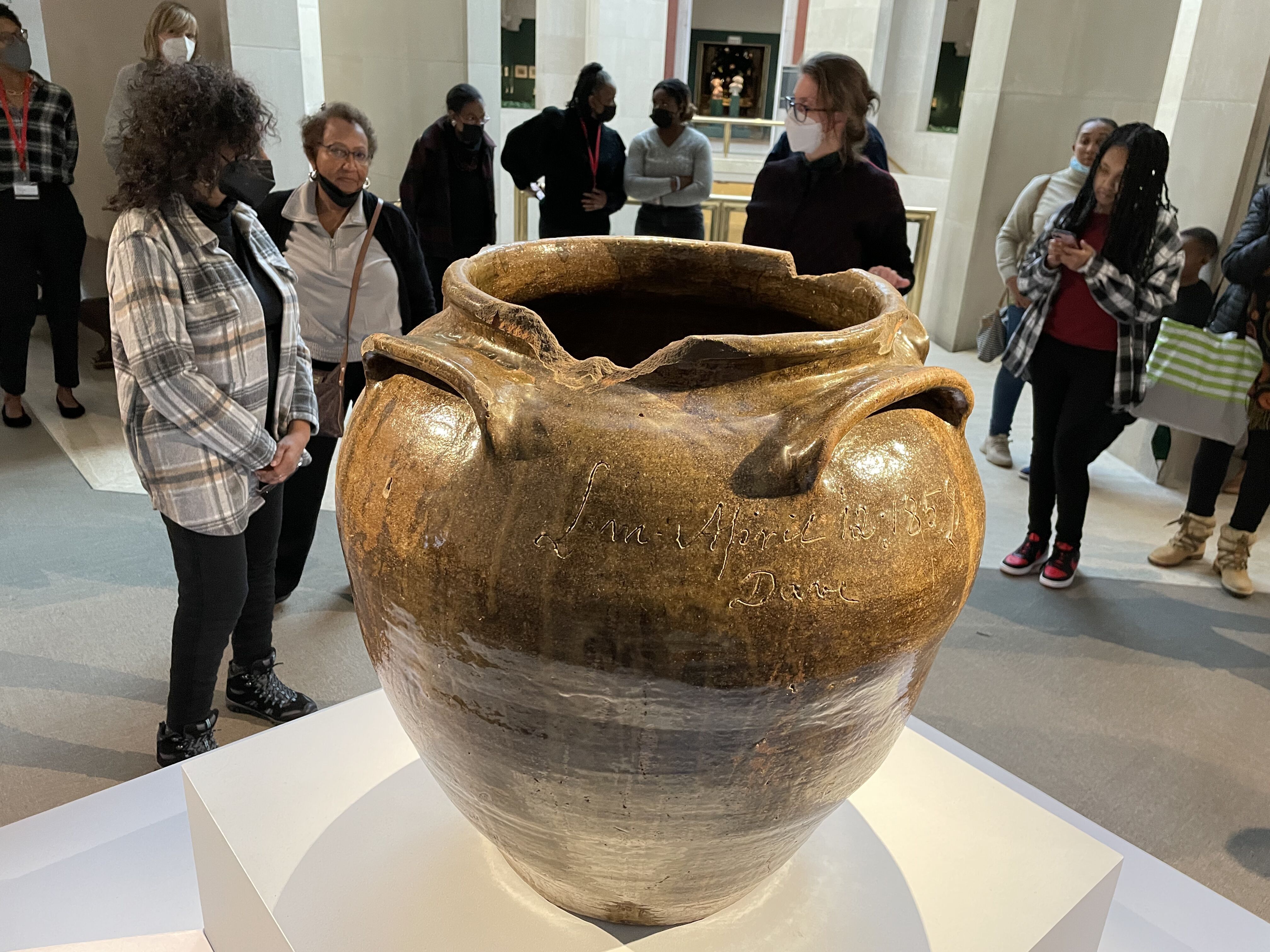
A sandy-hued 83-pound pot with a wide lip, fired by enslaved potter David Drake in the mid-19th century, anchors a gallery in the Philadelphia Museum of Art’s “A Nation of Artists,” its Semiquincentennial salute to illustrious American makers.
The stoneware stands proudly among chestnut étagères, plush upholstery, and vibrant oil paintings in a section called “Prosper, Abundance, and Inequity” staged by Art Museum curators to look like an ornate antebellum living room.
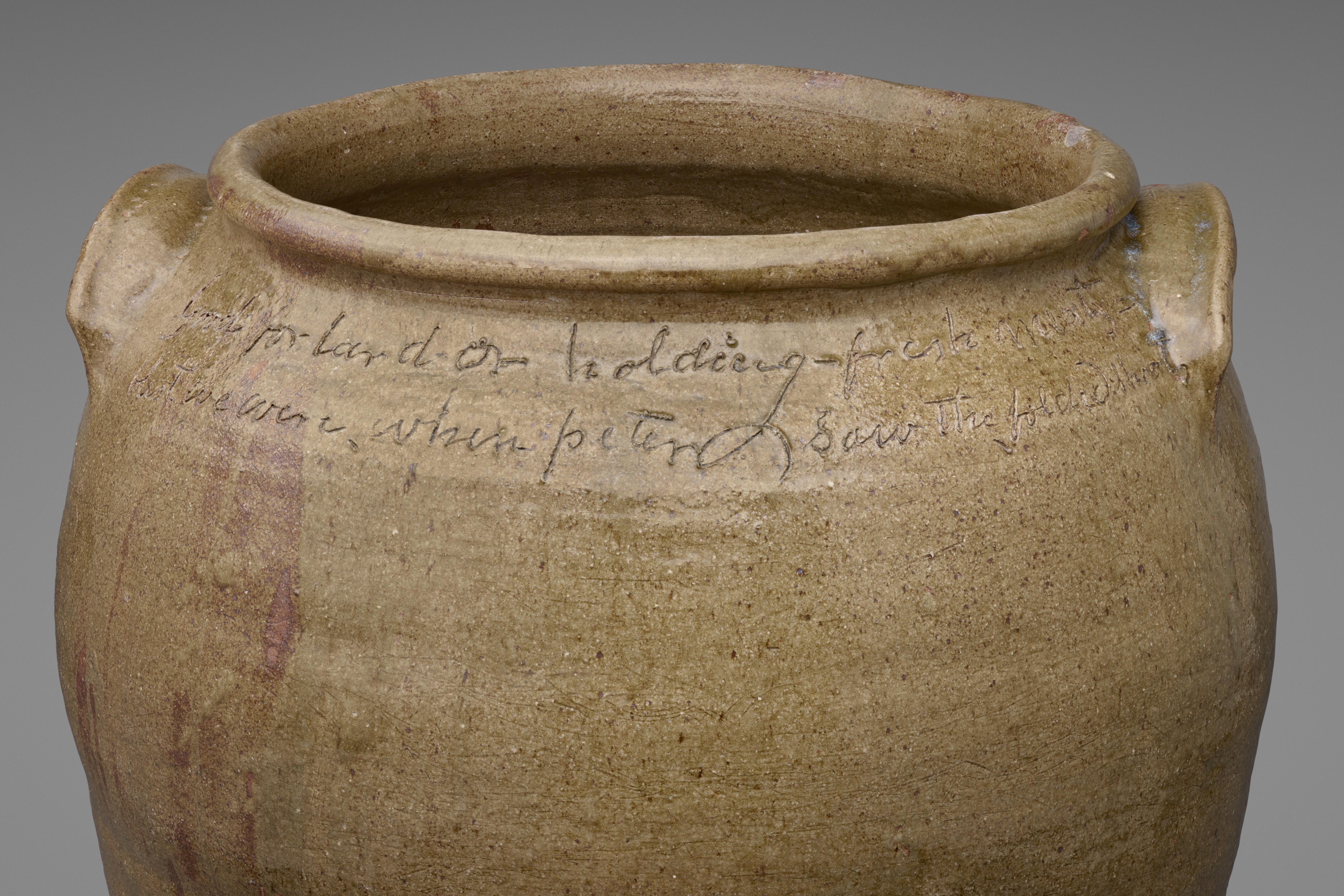
An inscription in the craftsman’s jagged script reads: Good for lard or holding fresh meat,/blest we were when peter saw the folded sheet, suggesting the potter was literate at a time when it was illegal for Black people to learn to read and write, making the earthenware even more valuable.
David Drake (1800 – c. 1870), ‘Storage Jar,’ 1859, Alkaline-glazed stoneware, 26 1/2 x 15 1/2 in., Philadelphia Museum of Art. The artwork will be a part of “A Nation of Artists,” a major collaborative exhibition between the Pennsylvania Academy of the Fine Arts and the Philadelphia Museum of Art.Courtesy of Philadelphia Museum of Art
The Art Museum’s inclusion of the bounded ceramicist’s work is an equitable nod to the artists — potters, basket weavers, tailors, and dressmakers — who made enslavers so rich that their progeny continues to benefit from that wealth today.
That is noteworthy, say Drake’s descendants, who prefer to call their ancestor “Dave the Potter” rather than use his enslaver’s surname.
They say they are grateful institutions like the Art Museum are acknowledging Dave’s work within the canon of great American artists.
But a nod, they say, is not sufficient.
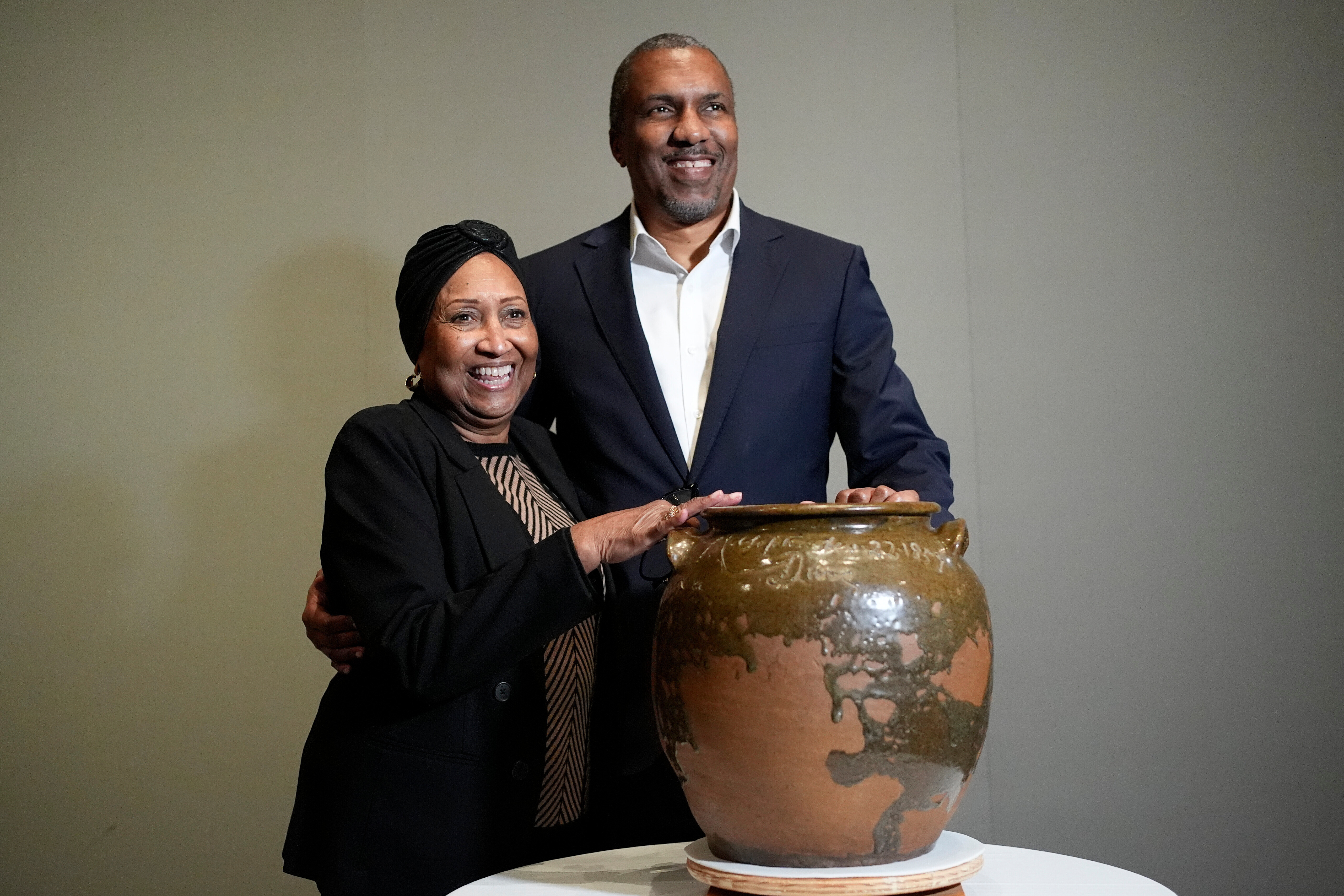
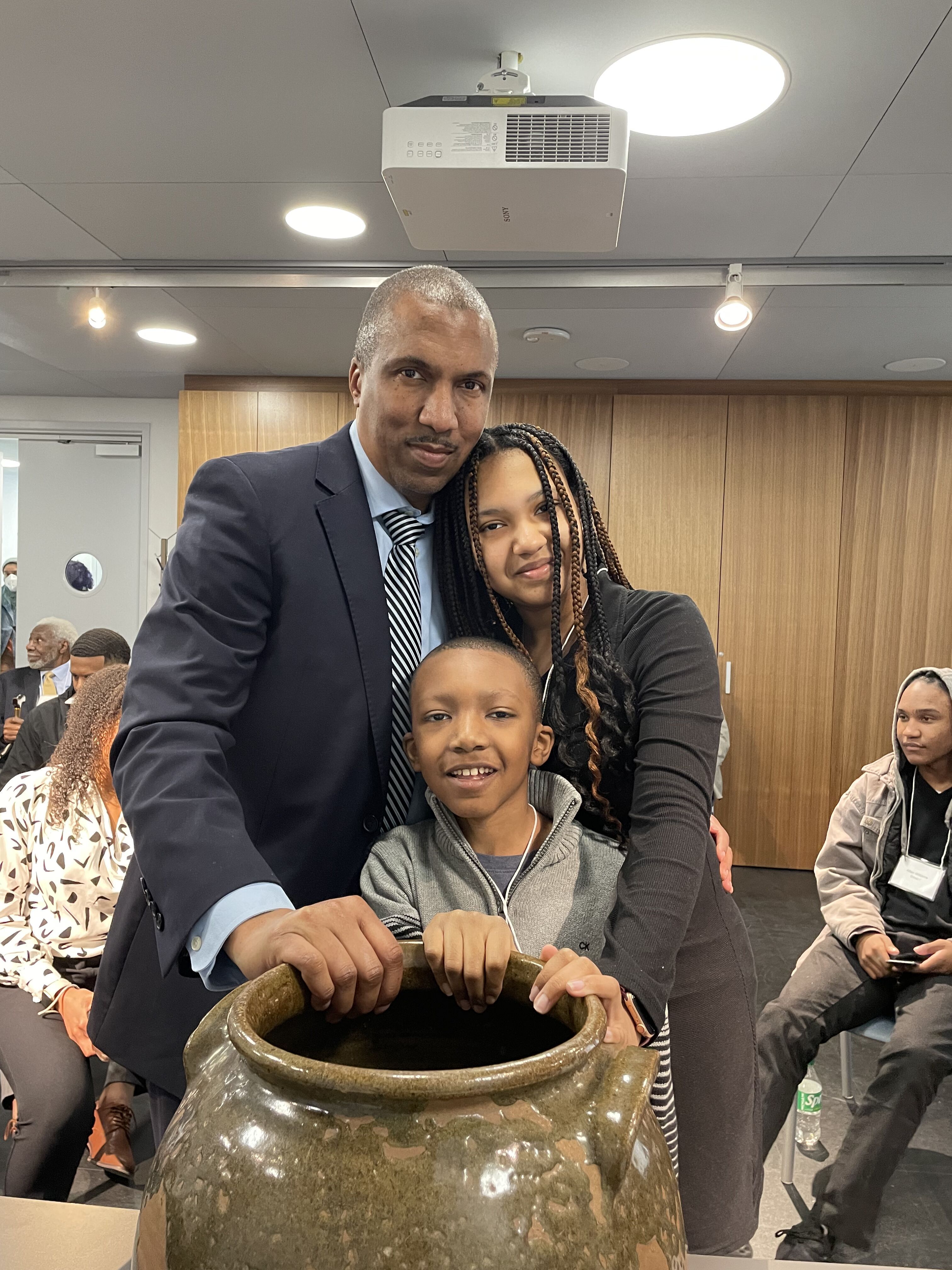
Pauline Baker and her son, Yaba Baker, pose with one of the pots created by their enslaved ancestor, David Drake, at the Museum of Fine Arts, Monday, Nov. 10, 2025, in Boston. (AP Photo/Robert F. Bukaty)Robert F. Bukaty
Dave’s descendants want museums to give the pottery back, including the giant, alkaline-glazed jar on display at the Art Museum.
“We want to own the pieces free and clear,” Yaba Baker, Dave’s fourth great-grandson and executive director of the Dave the Potter Legacy Trust, told The Inquirer. “Our goal is to then loan them back into public spaces so they can be viewed and Dave’s story can be told to the next generation.”
Restitution and repurchase
The seven lines of Dave’s descendants who are alive and living in and around Washington, D.C., and South Carolina have never benefited from their forefather’s labor.
Meanwhile, Dave’s pottery fetches tens of thousands of dollars per piece — and sometimes much more — at estate sales, at auctions, and on eBay.
With the help of Los Angeles-based real estate attorney and social justice advocate George Fatheree III — who helped transfer Bruce’s Beach, a beachfront property in Manhattan Beach, Calif., back to its original Black owners in 2022 — Baker has spent the last two years fighting to have Drake’s work returned to his family.
On Wednesday, several of Dave’s descendants attended a ceremony at Richmond’s Virginia Museum of Fine Arts for the return of a double-handled jug, inscribed with one of Dave’s poems, to the family. VMFA will repurchase the jug for an undisclosed price for its permanent collection.
The Milwaukee Art Museum announced last month it planned to return two of Dave’s jars to his descendants and purchase one of the restituted jars for an undisclosed price.
Both agreements are inspired by a similar deal struck last October between Dave’s descendants and the Museum of Fine Arts, Boston, the first institution to return one of Dave’s jars.
George Fatheree has spent the last two years leading the charge to have Drake’s workjars returned to his family.courtesy of George Fatheree
Of the more than two dozen museums Fatheree is talking to, about half a dozen are “engaged in conversation and moving toward a return.”
The Art Museum, Fatheree, said, is not.
Fatheree reached out to Art Museum director and CEO Daniel H. Weiss in February and was directed to museum attorney Rebecca Wui.
“Since the initial contact, we’ve had a few conversations that I would characterize as cordial in tone, but noncommittal,” Fatheree said, “… and to date, the museum has not indicated whether or not they intend to return the work to the family, and they have not provided any concrete sense of a timeline on the decision.”
The Art Museum acknowledged through a spokesperson the importance of Dave’s legacy and said it is engaged with various stakeholders to determine next steps, adding that at “this time, we are not able to discuss any further details.”
That, Fatheree said, is “disappointing.”
“What they need to understand is the act of delay and failure of urgency is a further act of injury to the family,” Fatheree said.
Art Museum’s history of restitution
During the last several decades, prominent museums across the world have been examining how they have acquired significant pieces of art and scientific specimens.
In 2022, the Smithsonian Institution and the Metropolitan Museum of Art were among dozens of museums that returned bronzes stolen from Benin, the capital of Nigeria, during the 1897 British raid on the city.
As an enslaved man, Fatheree argues, Dave made his pottery under duress. He did not have agency over his body, nor did he have the opportunity to profit from his labors. His work was stolen from him.
The chain of provenance, used to establish that art has moved fairly and ethically from artists to buyers to new owners throughout a piece’s history, was not just broken. It never started.
A poem jar by Dave the Potter in the “Hear Me Now: The Potters of Old Edgefield South Carolina” at the Metropolitan Museum of Art that was on exhibition from September 9, 2022-February 5, 2023.Dave the Potter Trust
“No museum would acquire a piece today where there has been a real break in provenance from an act of violence,” Fatheree said. “That’s what every museum that acquired Dave the Potter’s work did. … That’s a very uncomfortable conversation to have.”
‘An amazing individual’
Dave the Potter was born around 1800 on a plantation in Edgefield, S.C., where he was enslaved by a man named Harvey Drake. Drake and his uncle Abner Landrum owned Pottersville, 12 sprawling pottery factories that enslaved more than 75 Black people.
Landrum was also the publisher of the local newspaper, the Edgefield Hive. Scholars suggest he taught Dave to read. One of Dave’s many jobs was to assemble the newspaper type.
“Dave was such an amazing individual,” Baker said. “His skill set included writing and poetry at a time when our people couldn’t even read. His skills and craftsmanship were just so remarkable.”
Harvey Drake died in 1832, and Dave began making pottery for Harvey’s brother, Reuben. Dave’s oldest knownpiece with writing on it is a jug with earlike handles that dates to 1834, currently housed at the South Carolina State Museum. The piece features a rhyming couplet: Put every bit all between. Surely this jar will hold 14.
In 1740, South Carolina passed a law that made illegal teaching enslaved people how to read. In 1834, the law was updated so that any Black person, free or enslaved, caught reading would be punished by 50 lashes.
That did not stop Dave from signing his work, marking others, or adding signed couplets just under the lip and along the body of his massive storage jars, jugs, pots, and syrup and whiskey jugs.
When they were made, the pieces — which stored fruit, vegetables, and meats to feed the family of enslavers — sold for pennies on the gallon. In the meantime, Dave — who had two wives, both of whom were sold away from him — had no idea where his family was.
Historians believe Dave made from 40,000 to 60,000 pieces. It is unclear how many remain. Dave’s descendants are trying to get about 60 of them returned through their appeals to museums, Fatheree said.
“This man worked every single day doing the same thing, sometimes in 110-degree heat,” said Baker, who pointed out that Dave had just one leg. Although it is contested by historians, Dave’s descendants believe his leg was cut off as punishment, perhaps for knowing how to read.
“He was a valuable potter, and his enslavers wanted him to stay put,” Baker said. “His family was sold from underneath him. He didn’t have any agency over his body. Every day of my life, I’m inspired by him.”
Rightful owners
In 1849, Lewis Miles purchased Dave and brought him to his South Carolina pottery farm, Stony Bluff. Here is where it appears Dave made the bulk of his inscribed pieces. He marked many with LM, after Miles. Dave was signed on some.
Miles’ pottery plantation is where most of Dave’s poem pieces were seemingly made: three in 1857, eight in 1858, and seven in 1859.
The Art Museum’s piece is dated May 3, 1859.
Throughout the late 19th and most of the 20th century, Dave the Potter’s work was not considered high art, but it was recognizable in South Carolina, where it was commonly seen at yard sales and antique shows. And as historians discovered the pots, especially the ones with Dave’s etchings, the glazed ceramics increased in value.
The Art Museum has a history of collecting stoneware crafted by enslaved potters starting in 1904, when it acquired three alkaline-glazed stoneware face vessels made in the Edgefield district of South Carolina. That, the Art Museum said in a recent statement, set “the precedent for art museums to collect the art of this potting tradition.”
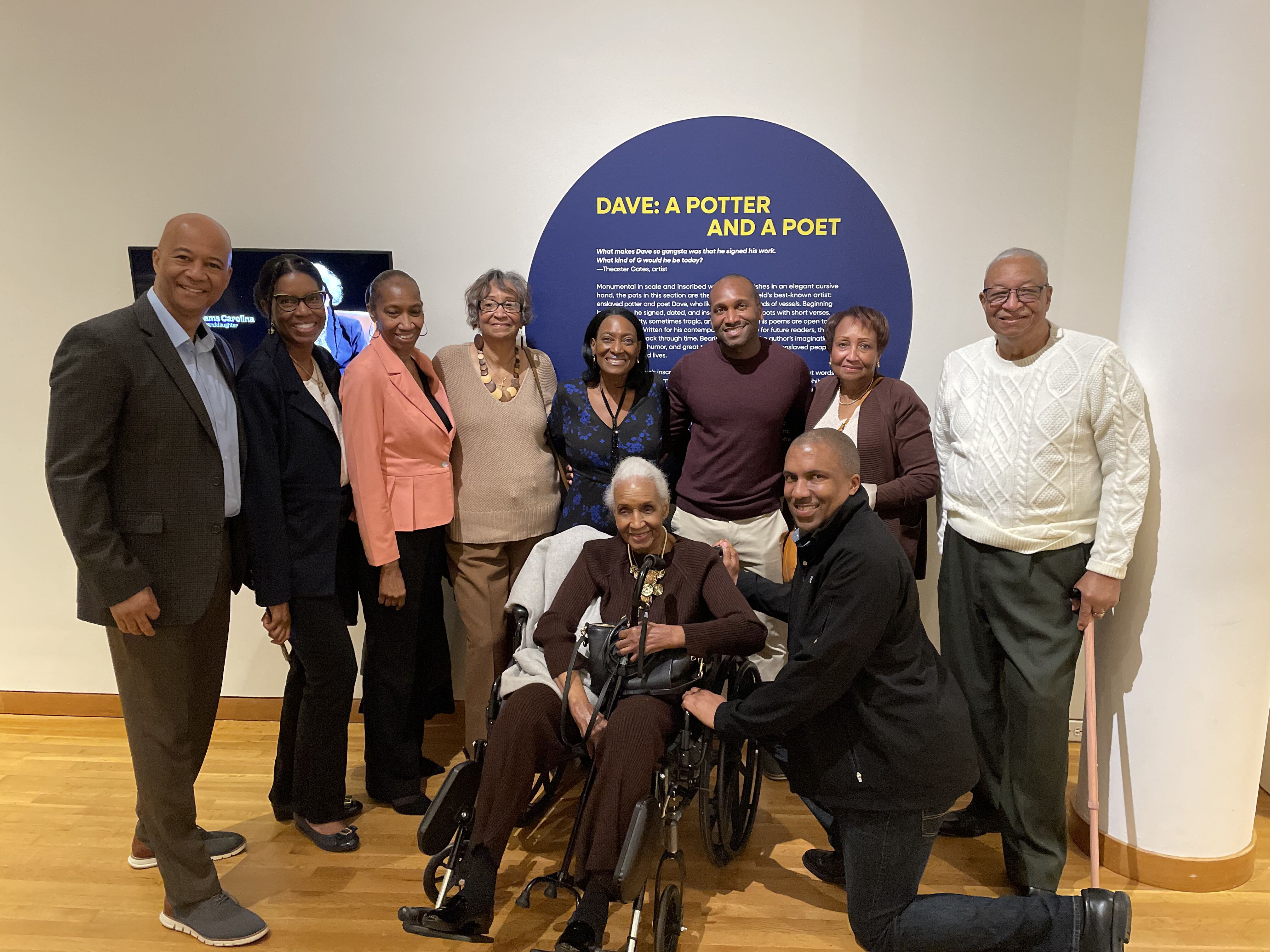
Dave the Potter’s descendants pictured at the Metropolitan Museum of Art’s ‘Hear Me Now’ exhibit in 2022-2023 from left to right: Adrian Williams, Sr. Leticia Carolina, Wanda Holmes, Daisy Whitner, Priscillia Williams, Brandon Williams, Pauline Baker, John Williams, Sr. (in the wheelchair is Priscilla Carolina, Yaba Baker kneeling beside her)Dave the Potter Legacy Trust, LLC
The face vessels are also on view in “A Nation of Artists.”
In 1997, the Art Museum purchased Dave’s pot for an undisclosed price when it was offered for sale by collectors.
A year later, the late historian Jill Beute Koverman curated the exhibition “I Made This Jar … The Life and Works of the Enslaved African American Potter, Dave” at the McKissick Museum at the University of South Carolina, the first solo exhibition of Dave’s work.
That show traveled to the Winterthur Museum in 2000 and featured 30 of Dave’s pots.
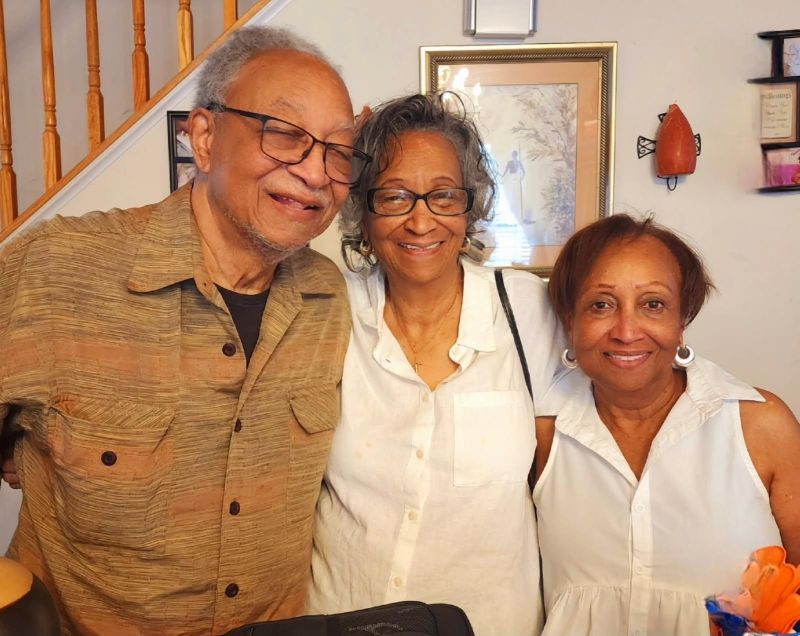
Dave the Potter’s eldest living descendants from left to right: John Williams, Sr., Daisy Whitner, Pauline Baker.Dave the Potter Legacy Trust
“These pieces weren’t made to be placed in the parlor of a home,” Koverman told The Inquirer in 2000. “According to the standards of the day, they wouldn’t be considered art at all.”
In 2016, the late historian April Hynes contacted Daisy Whitner, Baker’s aunt, informing her that she and her siblings — John Williams, Pauline Baker (Yaba’s mother), and the late Priscilla Williams Carolina — were descendants of Dave.
“We didn’t have any idea we were connected,” Baker said. “Before then, slavery felt distant to us. Now we have a personal connection.”
But it was not until Baker and his family were invited as guests to the Metropolitan Museum of Art’s 2022 exhibit “Hear Me Now: The Black Potters of Old Edgefield, South Carolina” did he consider himself and his family to be the rightful owners of Dave’s pottery.
“Someone asked me, ‘Do you own any pots?,’ and then I had to say, ‘No.’ I only had a replica,” Baker said.
“In any other situation, the descendants would at least have some of the artwork. And then I realized how my family was really missing out. People start businesses with this equity. They take loans out on these pieces.”
Baker thought of his daughter and his cousins who have children in college with tuition that costs upward of $75,000 a year.
He formed a trust and hired Fatheree in 2024.
‘Left out of the process’
The 2025 settlements between Drake’s descendants and the Museum of Fine Arts, Boston and, last month, with the Milwaukee Art Museum represented the first times a museum applied the principles of ethical restitution to artwork created by enslaved African Americans, Fatheree said.
The arrangements in Boston, Milwaukee, and now Virginia are accompanied with a certificate of ethical ownership that states the museum has “established good faith, lawful, legitimate, and ethical possession of the artwork and has all right, title, and interest to and in the artwork.”
Establishing provenance for artwork made by enslaved people when it was legal to enslave them is important, explained Vedet Coleman-Robinson, president and CEO of the Association of African American Museums. It establishes a precedent of what to do when valuable work made by enslaved African American artists ends up in art spaces today.
“African Americans have systemically been left out of the process,” said Coleman-Robinson, emphasizing that African Americans had no say in their work because they, too, were property.
“What we created during enslavement wasn’t owned by us, and it didn’t have a chance to become a part of our collective generational wealth. That’s why I think what the Drake descendants are doing is phenomenal. They aren’t just asking for money, they are asking for acknowledgment, and that acknowledgment piece is pivotal in telling a complete story.”
Yaba Baker with his daughter Kindra Baker and son Cameron Baker with a 19th-century pot made by Dave the Potter.The Dave the Potter Family Trust
Baker said his family is only asking the Art Museum for a conversation about what is owed them. That is not reparations, Baker said. It’s justice.
“Don’t treat our family differently,” he said. “If you are giving pieces back that have been taken under duress and stolen, then we deserve our work back. You said those were your ethics. Now we are just holding you to your word.”