Author: Nick Vadala

  • John Adams wanted ‘pomp and parade’ to mark July 2. For the 250th, Philly tried, despite the heat.

    John Adams wanted ‘pomp and parade’ to mark July 2. For the 250th, Philly tried, despite the heat.

    As the mercury climbed above 100 degrees in the Philadelphia region two days before the nation’s 250th birthday, it was, it seemed, too hot for liberty as originally planned.

    Thursday marked the start of the Red White & Blue To-Do — Philadelphia’s third-annual celebration of the day the Second Continental Congress voted to adopt a resolution of independence here on July 2, 1776. Though many events honoring that anniversary were planned, several highly anticipated gatherings were canceled or postponed due to the heat.

    And yet, despite the oppressive temperatures on a particularly toasty July day in the cradle of the nation’s founding, the celebration started early Thursday.

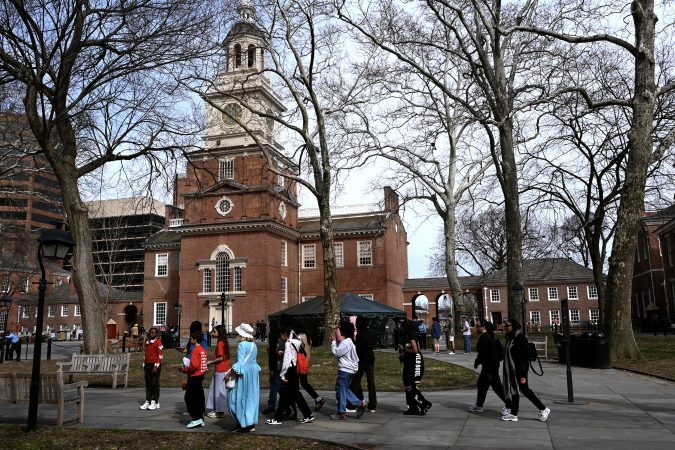
    At 7 a.m., some 250 revelers, clad in red, white, and blue clothing, gathered at Independence Mall to make a living Liberty Bell — a representation of a symbol that has defined Philadelphia for centuries, and a touchstone for Americans nationwide. The human formation even captured the bell’s signature crack through an outline of participants wearing blue.
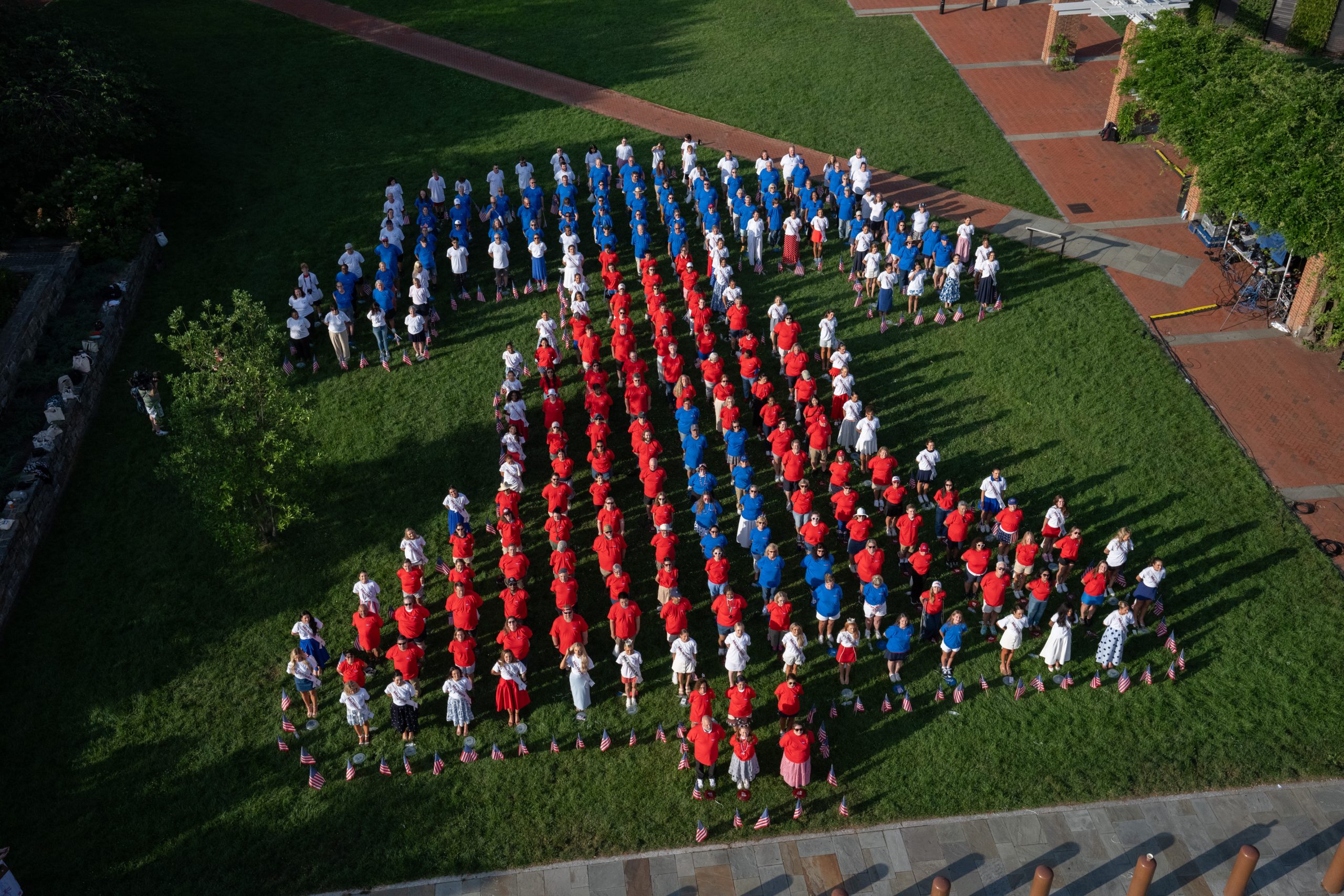
    Participants gather to create the Living Liberty Bell, gathering 250 people to form the shape of the famous bell on Independence Mall.Jessica Griffin / Staff Photographer

    Likewise, performers from neighborhoods across Philadelphia and nations around the world weren’t slowed down by the heat as they marched, stepped, and danced their way down Independence Mall in the Red, White & Blue To-Do Pomp & Parade. Attendance, however, did seem to be impacted, with relatively light crowds along the sunny parade route.

    The same was true for the 11 historic spaces across Old City filled with music Thursday as part of the WXPN Welcomes the Red, White & Blue To-Do Music Series. More than two dozen local artists performed, though audience seats were were not all filled as crowds remained light and foot traffic across the historic district was much sparser than an average Thursday.

    Legendary Philly poet and recording artist Ursula Rucker performed with Miles Orion on guitar at the Arch Street Meetinghouse for a crowd of about a dozen people. She gave moving renditions of her poems — like “Philadelphia Child” and “Fear or Freedom” — and ended her set on “L.O.V.E.”

    “Love soft, love hard, just love,” she said.

    Meanwhile, parade participants pulled wagons featuring small floats of Independence Hall, the LOVE sculpture, and the Liberty Bell, and a historical interpreter portraying John Adams brought up the rear of the procession. Lines for both Independence Hall and the Liberty Bell, meanwhile, snaked down the sides of their respective buildings.

    Pastor Funmi Obilana of RCCG Church in West Philly stopped to watch the parade with two other members of her congregation on their way to the President’s House site. The three women were doing a walking tour of their own city Thursday, stopping at places where their ancestors were once enslaved in advance of Independence Day.

    “We are here to pray for this city and this nation,” Obilana said. “Two-hundred-and-fifty years is a big number and it should be a new beginning, not only for Philadelphia, but for the nation.”
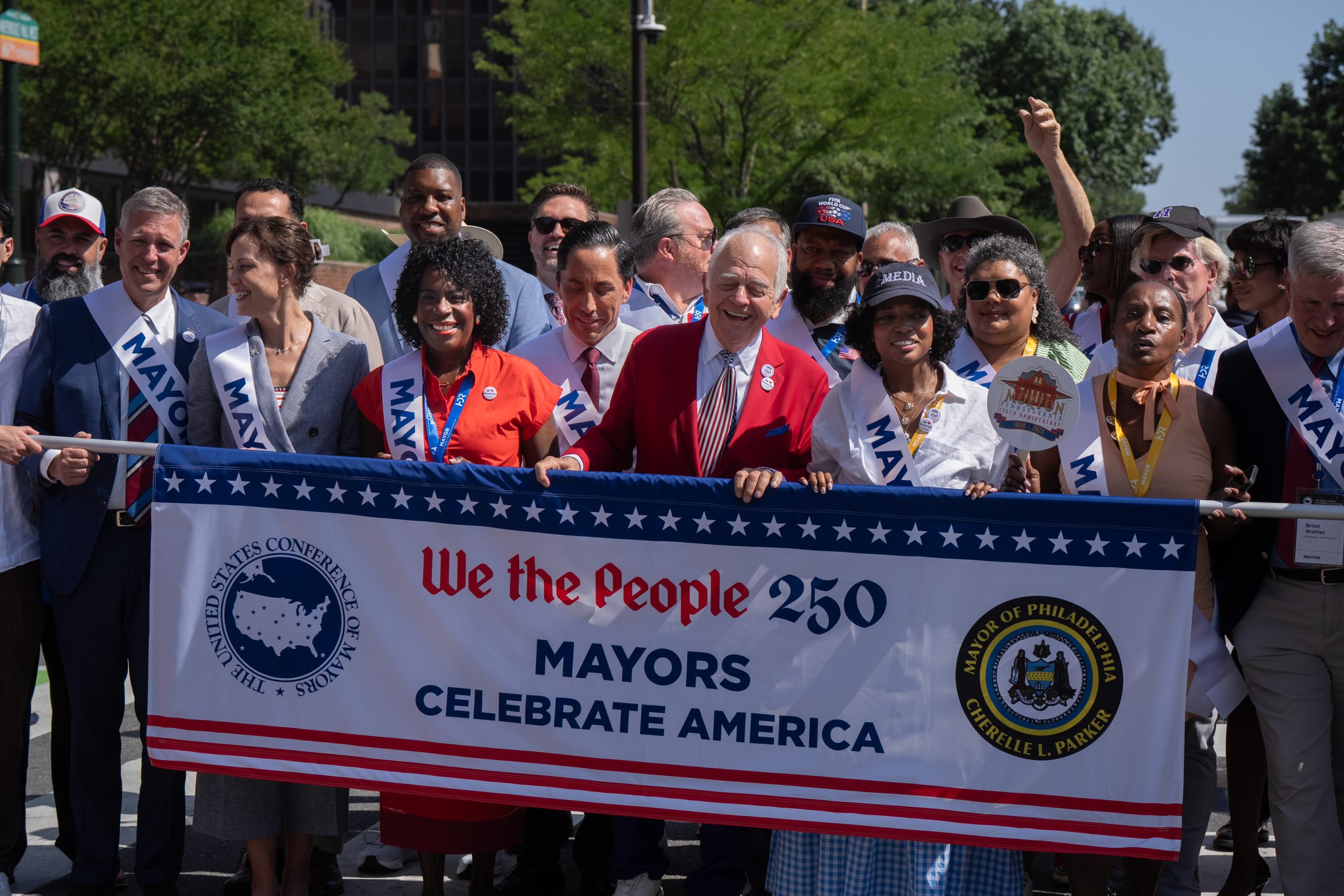
    Mayor Cherelle L. Parker leads bipartisan mayors from communities across the nation in a Historic March of America’s Mayors through the birthplace of American democracy, and past Independence Hall, in Philadelphia, July 2, 2026.Jessica Griffin / Staff Photographer

    Mayors from around the country who traveled to the city Thursday seemed to agree. Those local leaders were in town for a walk that featured 100 mayors from small towns and big cities nationwide touring Philadelphia. Despite scorching temperatures and differing political alignments, the mayors quickly befriended one another, many bonding over a shared connection of a city or state.

    That mayoral group, led by Philadelphia Mayor Cherelle L. Parker as they marched from the President’s House to Independence Hall, later gathered in a small auditorium in the Museum of the American Revolution. There, Parker urged attendees to come together and share ideas, as representatives from across the colonies had in the 1700s.

    “May today’s conversations strengthen old friendships, spark new ideas, and renew our shared commitment to public service,” Parker said. “Welcome to Philadelphia, everyone. Let’s roll up our sleeves and continue the hard work together.”

    The meeting, it seemed, was a fitting one. On July 2, 1776, 12 of the 13 colonies voted in favor of independence from Great Britain, explained Tom Cochran, U.S. Conference of Mayors CEO and executive director. Only New York cast a no vote — until a few days later when it got onboard, as well.

    “We talk about the declaration, we talk about the Constitution, it was on that day, July 2nd … that we broke,” Cochran said.
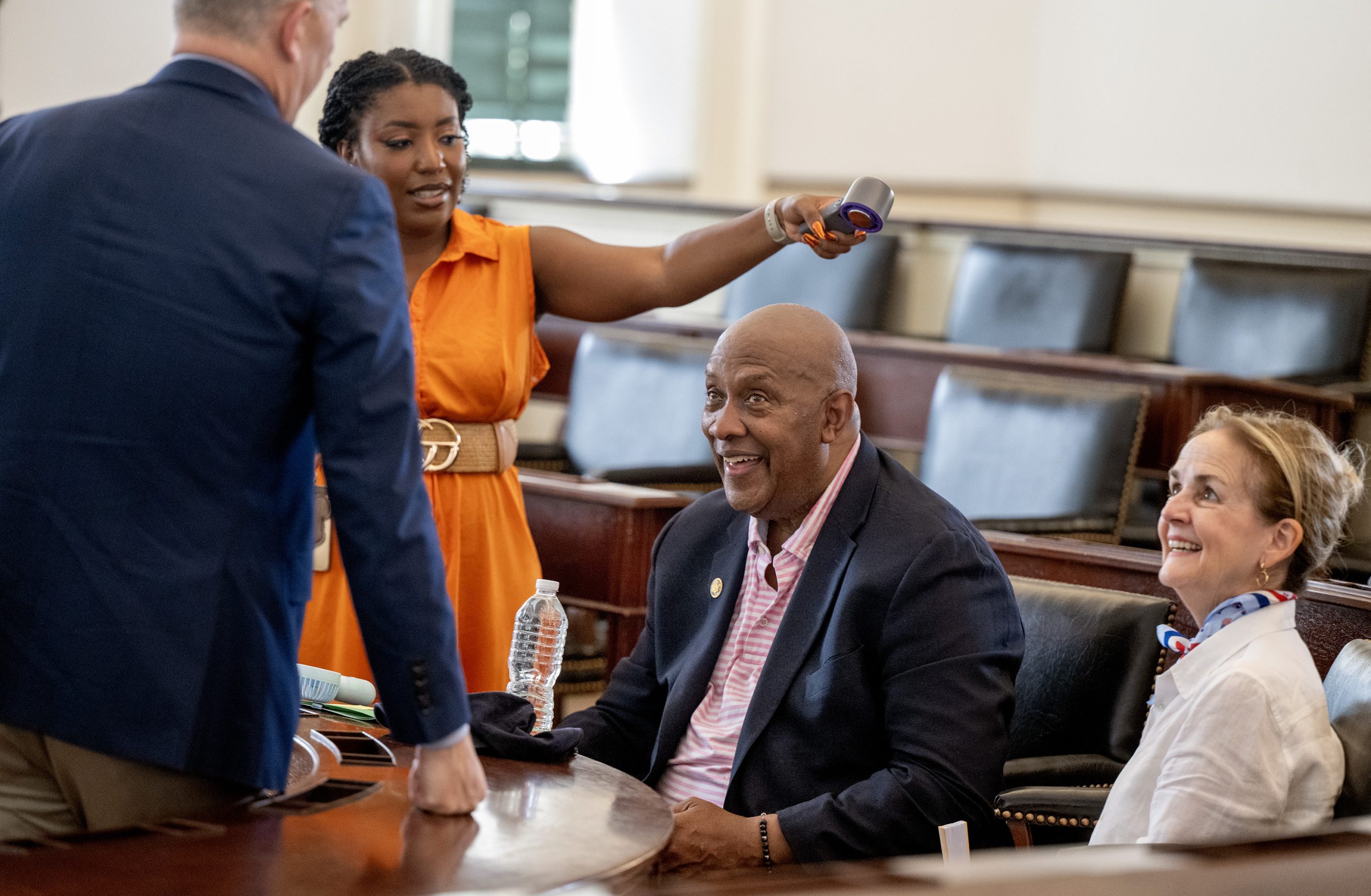
    Jarquiza Ayers, on the staff of U.S. Rep. Watson Coleman, uses a handheld fan to cool off U.S. Rep. Dwight Evans at Independence Hall.Tom Gralish / Staff Photographer

    About 30 members of Congress also made the trip to town, lining up to enter Independence Hall for a ceremonial event that included speeches from Pennsylvania Gov. Josh Shapiro and House Minority Leader Hakeem Jeffries (D., N.Y.). The event, said U.S. Rep. Glenn Thompson (R., Pa.), showed that “the origins of our republic trace back to Pennsylvania.”

    Founding Father John Adams believed July 2 would be celebrated for generations to come with “Pomp and Parade,” but July 4, when Congress approved the Declaration of Independence, ended up getting all of the glory and became the day we mark the nation’s founding. Now, more than two centuries later, Philadelphia seemed to be making good on Adams’ initial interpretation.

    That is, except for the heat. Thursday’s skyrocketing temperatures, which hit 102 degrees in the afternoon, resulted in some alterations to the day’s events. The parade, for example, fell victim to a shortened route. A planned All-American Block Party and the Wawa Welcome America Salute to Service concert, featuring Queen Latifah, were canceled entirely. Parades, fireworks, drone shows, and other events planned in South Jersey were also affected by the extreme heat.
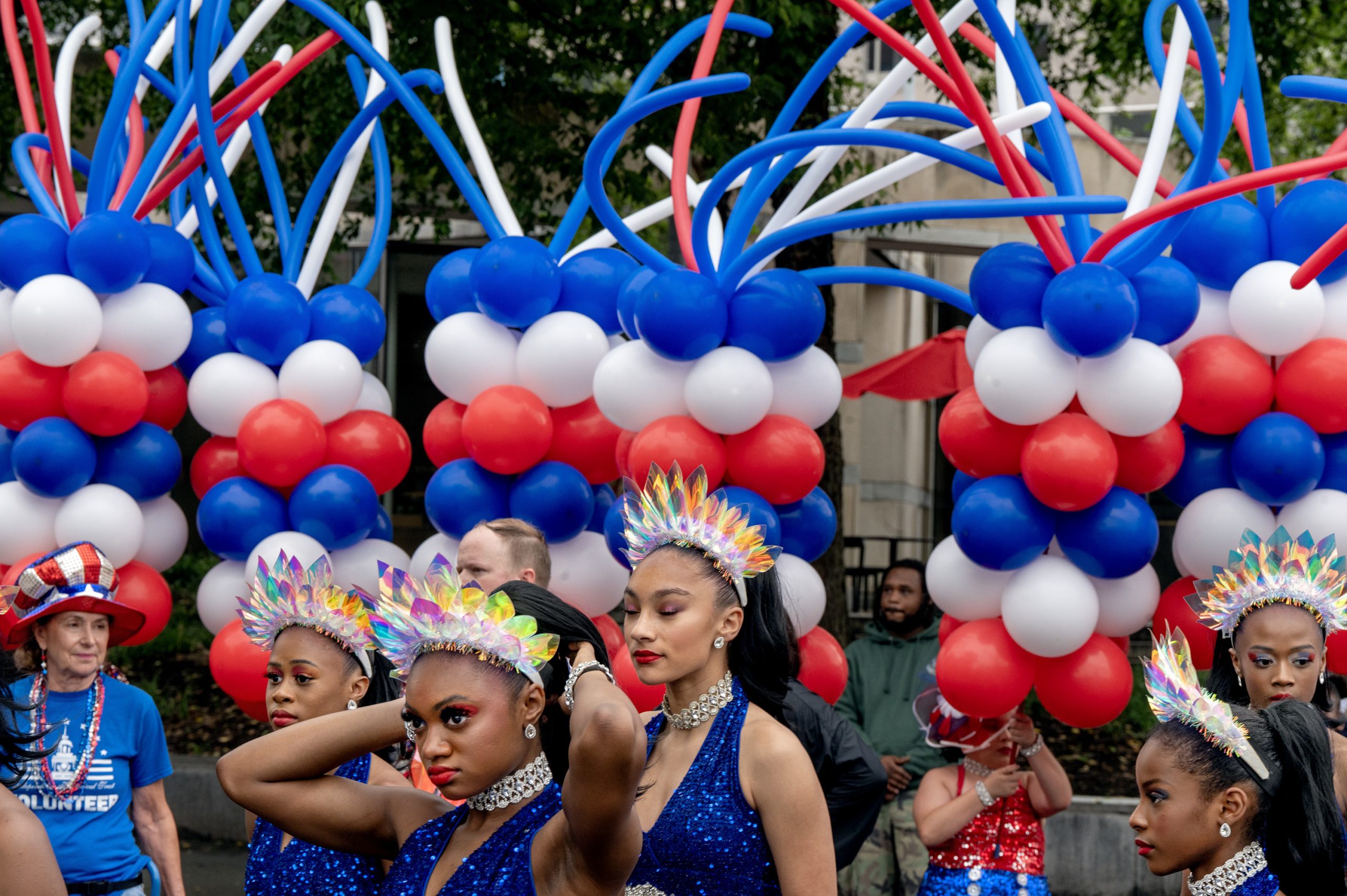
    Students of DANCE4LIFE School of the Arts & Training Institute in Claymont, Del. Wait for the start of the second annual Red, White, & Blue To-Do parade.Tom Gralish / Staff Photographer

    And as the Fourth approaches Saturday, we aren’t likely to get much relief. In fact, Friday is expected to be a little warmer, followed by possibly stormy weather slated for the evening of Independence Day.

    But the weather, however inclement, some visitors said, was illustrative of what the Founding Fathers dealt with when the United States was born a quarter-millennium ago. Lori Morgan and her three daughters traveled to Philadelphia from Boston, hoping to celebrate the nation’s historic 250th birthday in the place where it all happened. They toured Independence Hall this week, and Morgan said it gave them a new perspective on the days and people that led to the founding of our nation.

    “We really thought about how when they did the Declaration it was a hot summer and this weather is helping us empathize with what they went through,” Morgan said. ”They all had different ideas, just like we do today, but they knew they couldn’t fail and they had to come together, and they did.”

    Staff writers Michelle Baruchman, Emily Bloch, and Anthony R. Wood contributed to this article.
  • How to stay cool without air conditioning in Philly

    How to stay cool without air conditioning in Philly

    Summer in Philly is always hot.

    There are lots of air conditioned spaces you can go to for relief. Organizations like the Pennsylvania Department of Health have always recommended going to air-conditioned spaces — like a mall or library — to protect yourself from heat-related problems.

    “With extreme heat, it is always important to remain cool, possibly in air-conditioned atmospheres,” state health department of health press secretary Maggi Mumma said in 2020.

    There are, however, some things you can do at home to keep a little cooler if you are AC-less this summer. Here is what you need to know:

    How to cool your body down

    Let’s start with the basics: One key way to fight heat-related discomfort is to drink lots of cool water, which can both keep you hydrated and help cool you down. Sugary or alcoholic beverages can cause you to lose more body fluids. Dr. Joseph Teel, an associate professor of family medicine and community health at Penn Medicine, says you should drink water frequently.

    How much? There is no one-size-fits-all answer. How much you need to drink can vary if you have health conditions such as congestive heart failure, Teel says, or be exacerbated by your environment, level of exercise, and overall health. One tip: Don’t wait until you are thirsty to drink, the state health department says.

    When someone suffers heat exhaustion on a sports field, Teel says an ice bath can help bring down their temperature. You can take the same approach. A cold bath or shower, he says, can help but is not a permanent solution because “you can’t stay in the shower all summer.”

    You can use cool compresses, Mumma says, to help cool down. Making one is simple: Just wet a washcloth or towel in cold water, and put it on your body. Where should you put it? Some of the most effective areas, Teel says, are around your neck and on your groin, and if you’re at home, you can try using them with minimal clothing on to hit a few areas at once.

    You can step up that technique by using fans to make it an “evaporative process,” Teel says. “If we have water on our skin and it evaporates, it takes with it some heat,” he says. Put on your cold compress and use a fan to blow air across your skin, which Teel says can “cool you down a little faster than just a cold cloth itself.”

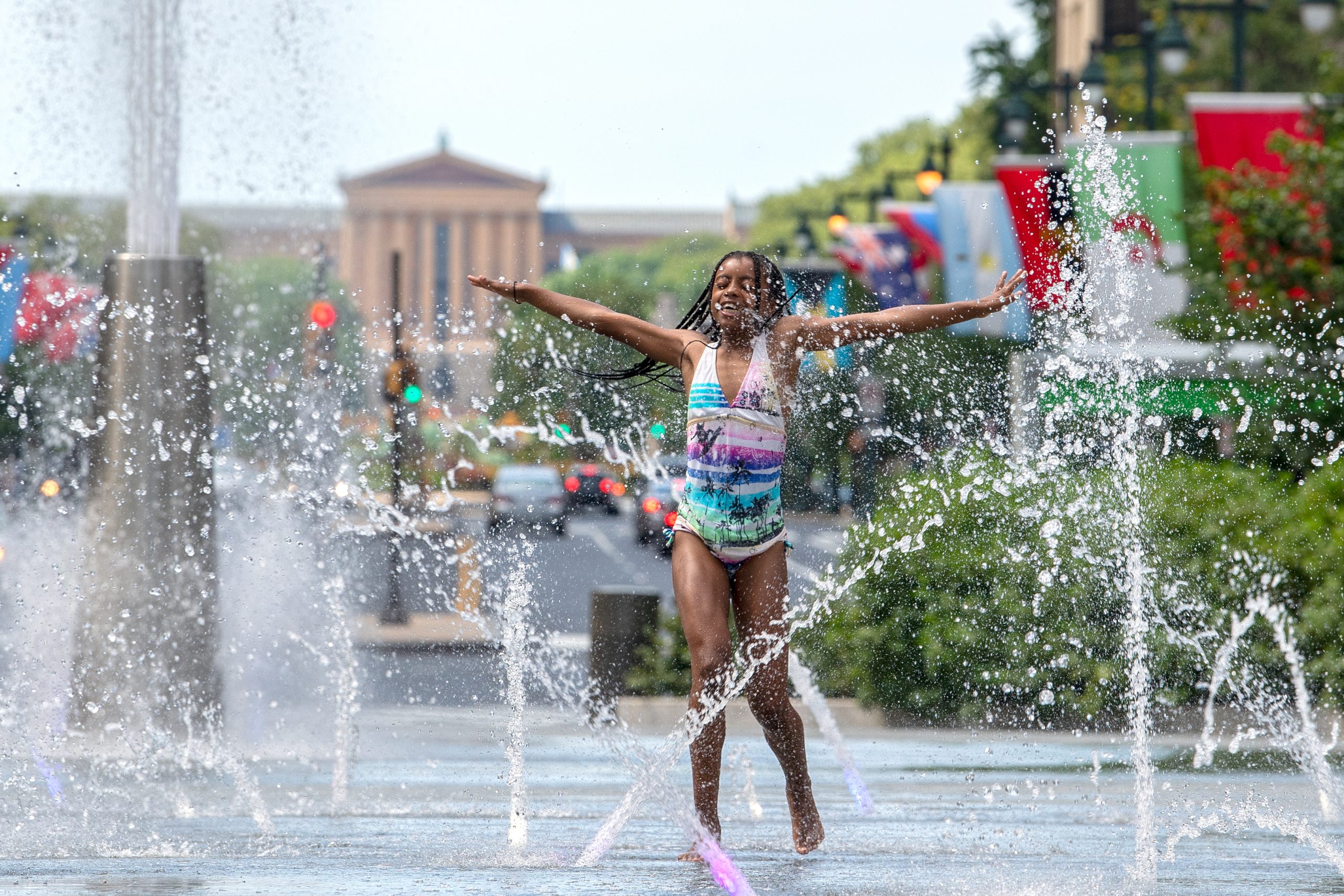
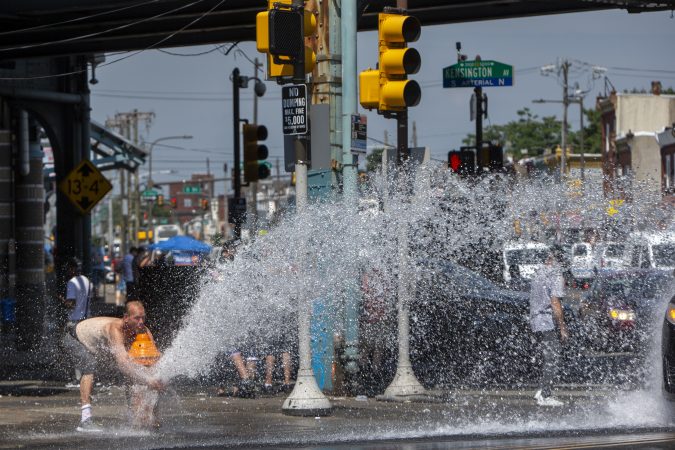
    Beating the heat in Love Park fountain, during a hot summer day in Philadelphia.JOSE F. MORENO / Staff Photographer

    How to cool down your house

    Use fans wisely. Fans can be one of the best ways to keep cool — but there are right and wrong ways to use them. The city, for example, says you should never use a fan with your windows closed, which can create an “oven effect” by circulating hot air inside your home.

    Fans can be more effective when the heat of the day is over, and you can open your windows to allow the cool night air in, Teel says. One of the best ways to create airflow is to put a box fan in an open window at one end of your space blowing air in, and another fan in a window blowing air out at the other end.

    And if your home has ceiling fans, make sure the blades are rotating counterclockwise during hot weather. That way, the fan will push air down into your space to create a breeze. (Many ceiling fans have a directional switch on their motor that controls the direction in which they spin.)

    There are more ways to keep your home cool.

    Think about when you use your appliances. The Pennsylvania Utility Commission, for example, says that you should wait to use any appliances that generate heat — such as dryers, dishwashers, and ovens — until after 7 p.m. to avoid heating up your home unnecessarily. Turning off other nonessential appliances and lights is also a good idea.

    Keep your blinds closed during the day. The sun, Teel says, can heat up your home faster, like a greenhouse. The PUC recommends spending time in rooms that are not hit with direct sunlight during the day.

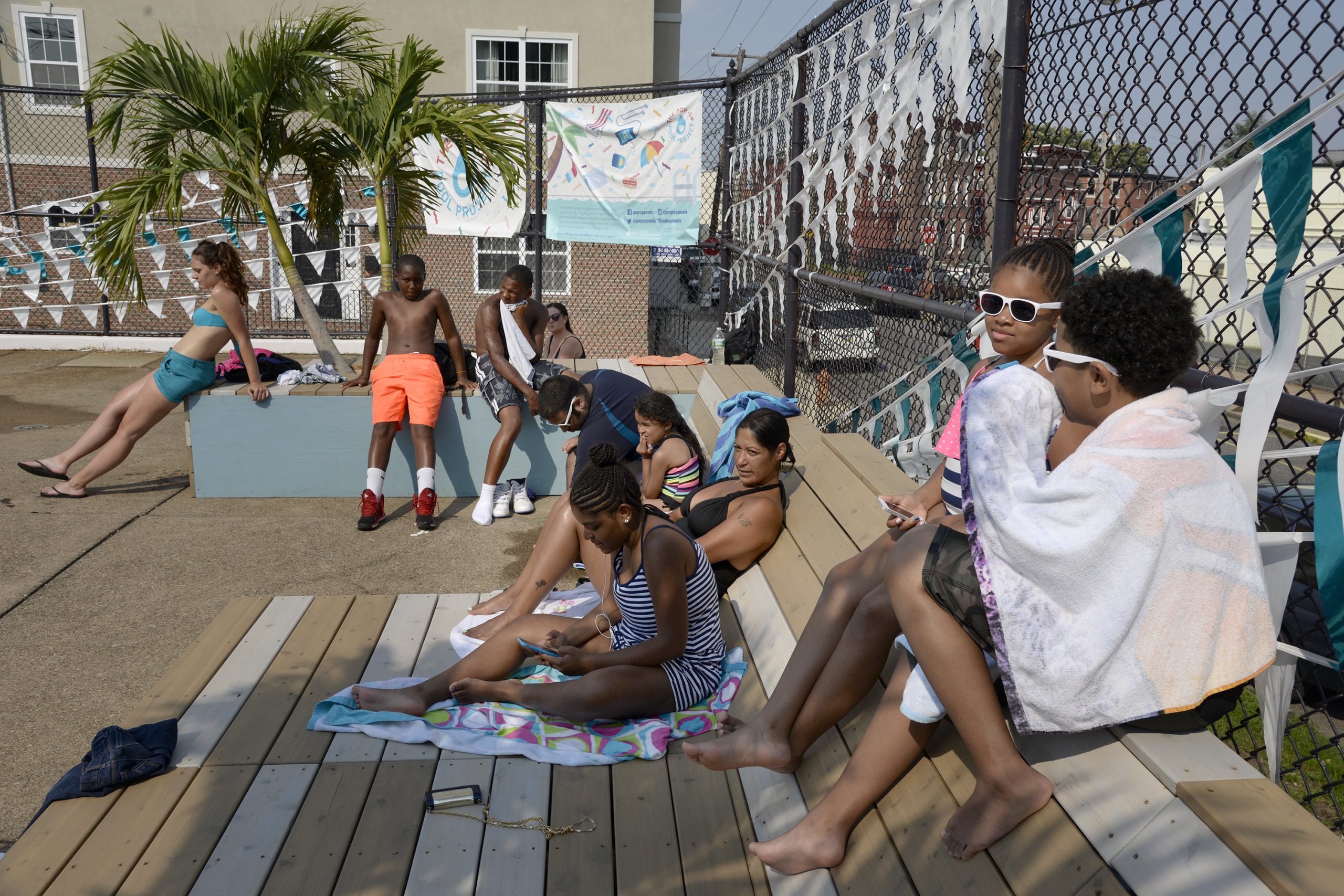
    City pools were closed in 2020, but will reopen for the 2021 summer.TOM GRALISH / Staff Photographer

    If you’re going to buy an AC

    Window air conditioners are much cheaper and more convenient to install than central air, and if you can afford one, it may be a good time. However, there are some things to consider when buying a window unit.

    As Consumer Reports points out, you will want to get an AC that is appropriately sized for the room you are trying to cool. If it’s too small, it will have trouble cooling the room; if it’s too big, it will cool the room quickly but leave too much moisture behind. A good rule of thumb is for the unit to have 20 BTUs (British Thermal Units) of cooling power for every square foot of space in the room.

    And if you need help with utility costs this summer, funding from the Low Income Home Energy Assistance Program is available for qualified residents, a city spokesperson says.

    Think about when you go out

    The health department recommends staying indoors as much as possible and limiting exercise during the hottest parts of the day, Mumma says. However, if you have to go out, stay in the shade as much as possible and wear sunscreen, a ventilated hat, and sunglasses.

    If you need to go shopping, Teel says, “look ahead in the week, and pick a cooler day. Avoid the time when you will be subjected to midday heat.”

    At home, Teel says, wear as little clothing as possible. When out and about, consider using light-colored, loose-fitting clothes made of breathable, light materials like cotton that let air to circulate around you.

  • Joe Frazier statue moves to the base of the Philadelphia Museum of Art

    Joe Frazier statue moves to the base of the Philadelphia Museum of Art

    “Smokin’” Joe Frazier is finally in his new home, just in time for the 250th birthday of the United States.

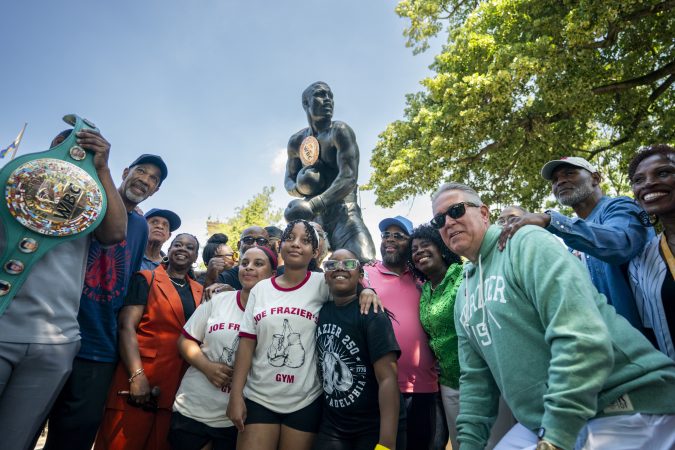
    City officials, alongside Frazier’s family, friends, and fans, on Monday unveiled the real-life heavyweight boxing champion’s statue at the base of the Philadelphia Museum of Art. Intended to be the statue’s new location in perpetuity, the spot was occupied by a monument to fictional boxer Rocky Balboa for two decades.

    “During this 250th celebration in the birthplace of democracy, we will forever remember that the city got right what it had gotten wrong for a long, long time,” Mayor Cherelle L. Parker said. “Now, Joe Frazier is attached, and connected to, and will permanently be here at our Philadelphia Museum of Art.”

    Monday’s unveiling was the culmination of months of planning. The Philadelphia Art commission in February approved a plan to move the statue from by Creative Philadelphia, the city’s office for the creative sector. Chief cultural officer Valerie V. Gay said Monday’s event was something of a “soft launch” for the statue’s new home, as a granite base will be installed in the future, along with more formal interpretive panels.

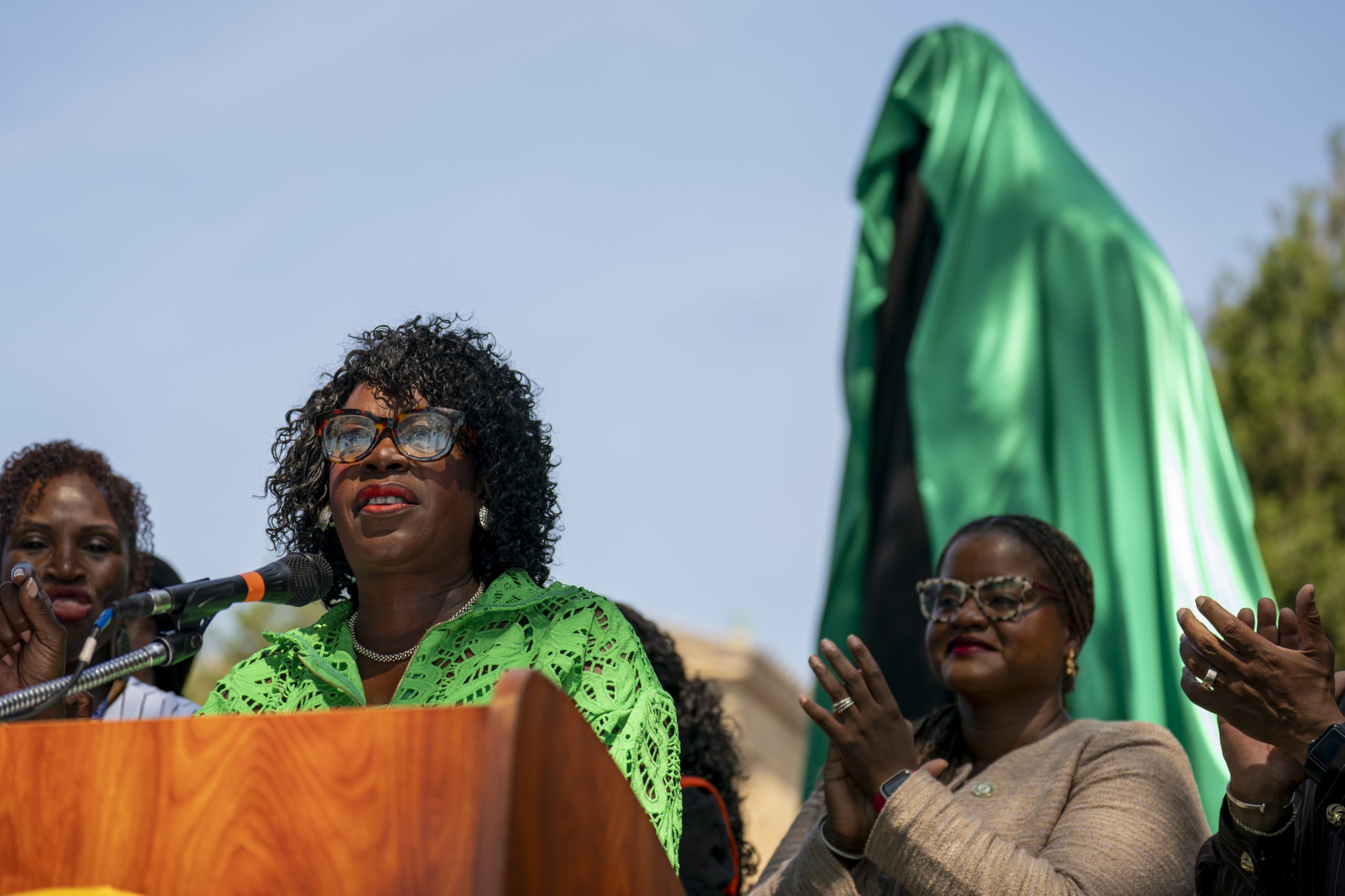
    Mayor Cherelle L. Parker speaks at the unveiling of the statue of former heavyweight boxing champion Joe Frazier at its new home outside the Art Museum. Jessica Kourkounis / For The Inquirer

    “Today, we did not want to wait,” Gay said.

    Frazier’s statue, after all, lived at the South Philadelphia sports complex for more than 10 years. Created by sculptor Stephen Layne, the statue was unveiled outside what is now Stateside Live! in 2015, four years after Frazier’s death in 2011 following a battle with liver cancer. Frazier, the undisputed heavyweight champion in 1970-1973, is probably best remembered for his three battles against Muhammad Ali in the 1970s.

    The city’s statue of Rocky had called the base of the Art Museum’s famed steps home since 2006. The monuments’ moves are part of a larger shuffling of statues at the Art Museum that began in March, when the Rocky statue was moved inside the museum for the first time as part of the ongoing exhibition Rising Up: Rocky and the Making of Monuments.

    That Rocky statue will be installed at the top of the Art Museum steps in the fall, when the statue of the Italian Stallion currently there will be returned to actor Sylvester Stallone’s private collection. Stallone, Parker said, was supportive of the Frazier statue’s new location.

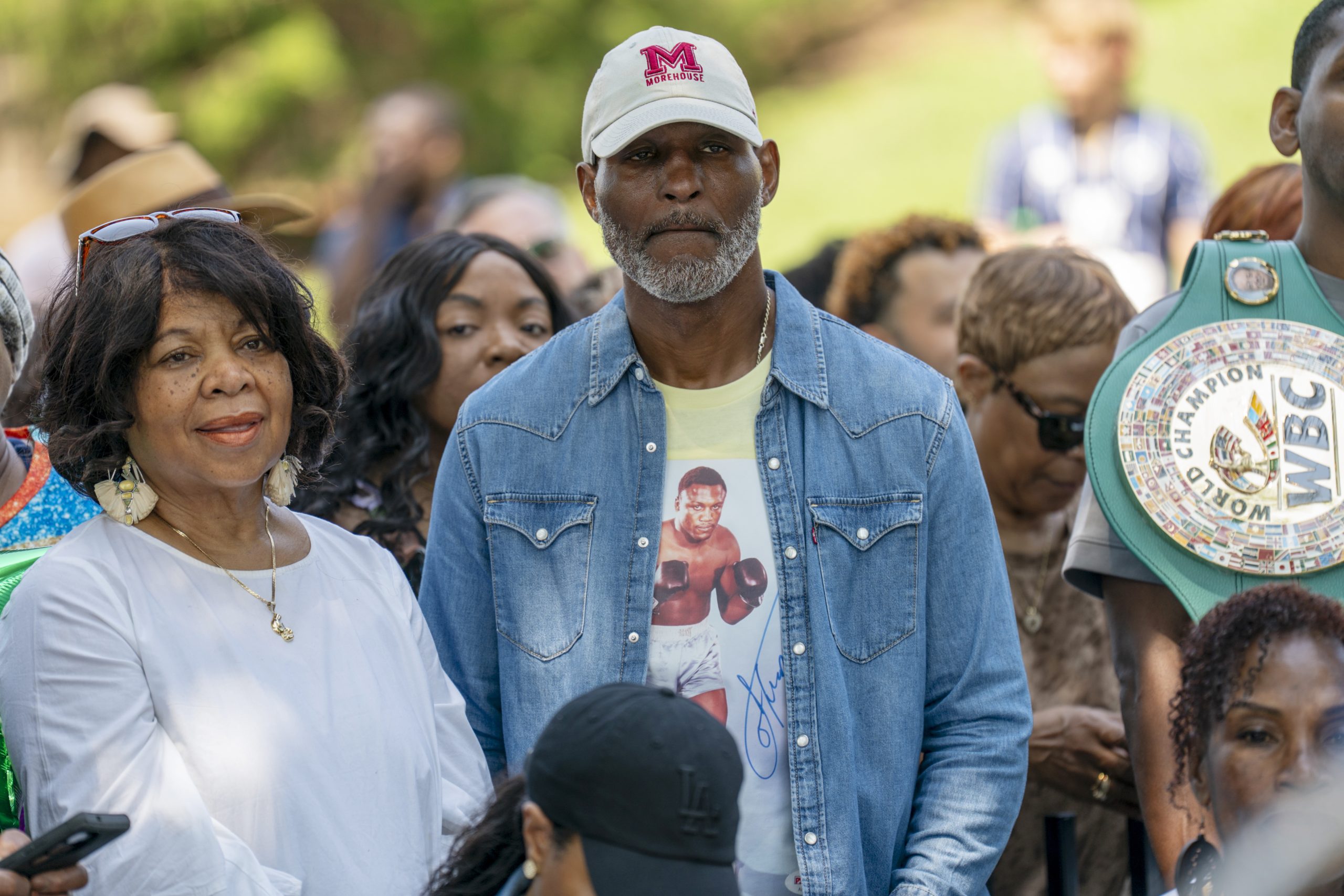
    Dozens of the boxer’s supporters attended on Monday, including Philadelphia boxer Bernard Hopkins who held world championships in two weight classes, promoter Joe Hand Jr., and Frazier’s daughter Jacqueline Frazier-Lyde. Frazier-Lyde, a retired boxer and current Municipal Court judge, said the the color of the shroud covering her father’s statue — green —was fitting.

    “My mother’s favorite color was green, because we’re from the South and we love green, because it represents life,” she said. “My father, Joe Frazier, liked it because it was the color of money.”

    Boxing legend Bernard Hopkins at the unveiling of the new home for the statue of heavyweight boxing champion Joe Frazier.Jessica Kourkounis / For The Inquirer

    To the end, the statue’s new location wasn’t the end of efforts in the boxer’s memory. Parker also announced plans for a capital campaign to restore the former Joe Frazier’s Gym on Broad Street above Glenwood Avenue in North Philadelphia. Now a discount furniture store, the building is a legendary location in Philadelphia boxing history, having served as a training location for not just Frazier but other famed fighters and community members.

    Parker said plans were underway to establish a way to accept donations for that effort via the Philadelphia City Fund. The amount of funds targeted be raised was not immediately clear.

    “It’s important to show the world who we are,” Gay said. “Joe Frazier was a humble underdog whose determination and grit inspires us all. What could be more [a] more Philadelphia story than that?”

  • A time capsule meant to be opened in 250 years will be buried in Philly next week

    A time capsule meant to be opened in 250 years will be buried in Philly next week

    Next week, Philadelphia will begin a centuries-long stint as the host of a time capsule that is not meant to be unearthed for a quarter of a millennium.

    Set to be buried on July Fourth at Independence National Historical Park, the time capsule comes to the city as part of the celebrations surrounding the United States’ Semiquincentennial. After its burial, it is not slated to be seen again until 2276.

    Known officially as “America’s Time Capsule,” it features items from every U.S. state and territory, as well as contributions from the three branches of government. Its creation was led by America250, a national, nonpartisan organization that Congress placed in charge of the 250th birthday celebrations.

    Weighing in at 900 pounds, the time capsule — a massive cylinder emblazoned with an “America250” logo on its side — was sealed shut last week at a ceremony in Gaithersburg, Md. Its unveiling 250 years from now is intended to show future generations “the care, pride, and optimism with which Americans marked our 250th anniversary,” said America250 chair Rosie Rios in a statement.

    Inside the capsule, which is constructed of stainless steel, archival contents sit organized largely in small boxes, with paper documents in a separate compartment. Many states submitted hundreds of letters, postcards, posters, poems, and other printed material for inclusion.

    America250 has posted a detailed list of all the items included in the time capsule. Pennsylvania, for example, contributed a letter from Gov. Josh Shapiro, as well as an archival booklet. New Jersey, meanwhile, ponied up a stainless steel plate inscribed with a greeting for the time capsule’s future openers. And Delaware sent in a set of a dozen notecards from residents detailing their thoughts on what the state means to them.

    There were some guidelines on what states could submit, as items that could degrade or rust were not allowed. Maryland, as a result, was not able to submit Old Bay seasoning, the Associated Press reported.

    Some items were innovative. A “molecular data storage device” from the Library of Congress was included, and it contains synthetic DNA encoded with copies of several items from the library’s collection — including a draft of the Declaration of Independence, handwritten lyrics for “The Star-Spangled Banner,” and a 3-D rendering of President Abraham Lincoln’s hand, America250 said.

    Items were sealed inside at 35% relative humidity to make sure they did not dry out or disintegrate, as well as to keep them from decaying due to moisture issues. The capsule is slated to be buried 10 feet below ground, which should keep it from being damaged by swings in temperature or storms.

    “Philadelphia would have to be six feet underwater in order for this time capsule to even possibly take on water,” Michael Berilla, director of fabrication technology at the National Institute of Standards and Technology, told the AP. ”And if Philly is six feet underwater, you’ve got way bigger problems in the world.”

    Congress dedicated the time capsule in a ceremony Wednesday. Thomas Austin, architect of the Capitol, said it includes a passage from the Declaration of Independence on its front.

    “For those who have the privilege to work here in the Capitol, you get a sense that you are just one chapter in a long history book,” Austin said. “The U.S. Capitol is a symbol of that history. In fact, it is the symbol of that American history.”

    This is not the first time capsule project undertaken by the United States. In 1976, President Gerald Ford opened a “Century Safe” that had been created a century before, and the country that year created a Bicentennial capsule that is to be opened in 2076.

    The time capsule set to be buried in Philadelphia on July Fourth, meanwhile, will be marked with a capstone that includes information about its contents and creation. Additional details about the time capsule’s burial were still forthcoming Friday, according to the America250 website.

    This article contains information from the Associated Press.

  • ‘A house from a scary movie’: Olney neighbors rattled amid rowhouse raid

    ‘A house from a scary movie’: Olney neighbors rattled amid rowhouse raid

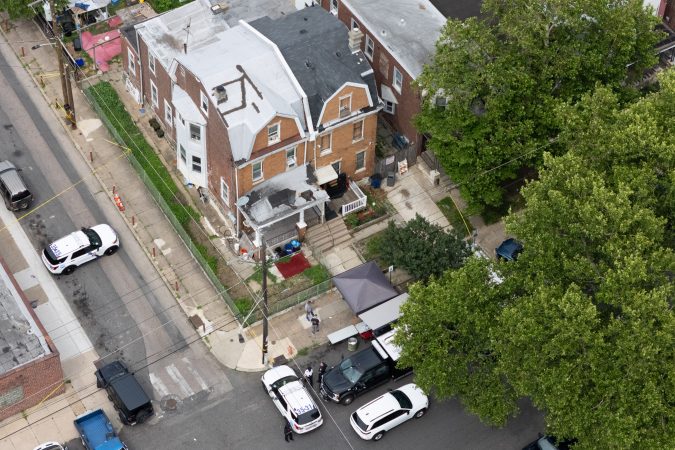
    The 400 block of West Chew Avenue in Olney was largely shut down Friday afternoon as Philadelphia and federal law enforcement officials searched a home on the block to determine if its owner had connections to at least two missing women.

    Residents of the block had effectively been sealed in as caution tape and Philadelphia Police Department vehicles cordoned off the street. Some residents gathered on their porches or sidewalks as federal officials produced equipment from the back of a black, unmarked utility truck.

    “I have been living here all my life,” Larry Alosi, 56, said. “It used to be a safe place, but it changed with time.”

    Consisting largely of rowhouses and small businesses, the North Philadelphia neighborhood of Olney is among the city’s most diverse, with large Korean American and Latin American populations calling the area home.

    The search had been ongoing for nearly a week, and came after U.S. Park Police encountered Eugene Albert Horsch, 44, acting suspiciously in a black BMW near Sixth and Market Streets on June 19, police said. Investigators recovered two firearms with obliterated serial numbers from Horsch’s vehicle, as well as cocaine, fentanyl, and marijuana — along with a baton, a cattle prod device, a switchblade, and a falsified U.S. Drug Enforcement Administration badge with Horsch’s photograph depicting a falsified name.

    Officials took Horsch into custody following the stop, and charged him with illegal gun possession and drug crimes. Searches of his home began last week.

    Horsch was being held Friday at Curran-Fromhold Correctional Facility with bail set at $500,000.

    A passerby called the West Chew Avenue residence “a house from a scary movie,” with boarded-up windows on its second and third floors. A camera on the exterior points to the street. The windows on the first floor have bars from top to bottom. Pink flowers remain on the lawn, decorated with pieces of broken glass from the door.

    Neighbors on Horsch’s block said the area is a quiet one, though it occasionally has its issues. Fabin Ingram, an area resident, said he never saw anyone coming or going at the corner of West Chew near Horsch’s home, and he largely worked to avoid the intersection.

    “I’m big on energy and feelings,” Ingram said. “If I get an eerie feeling, I act on it.”

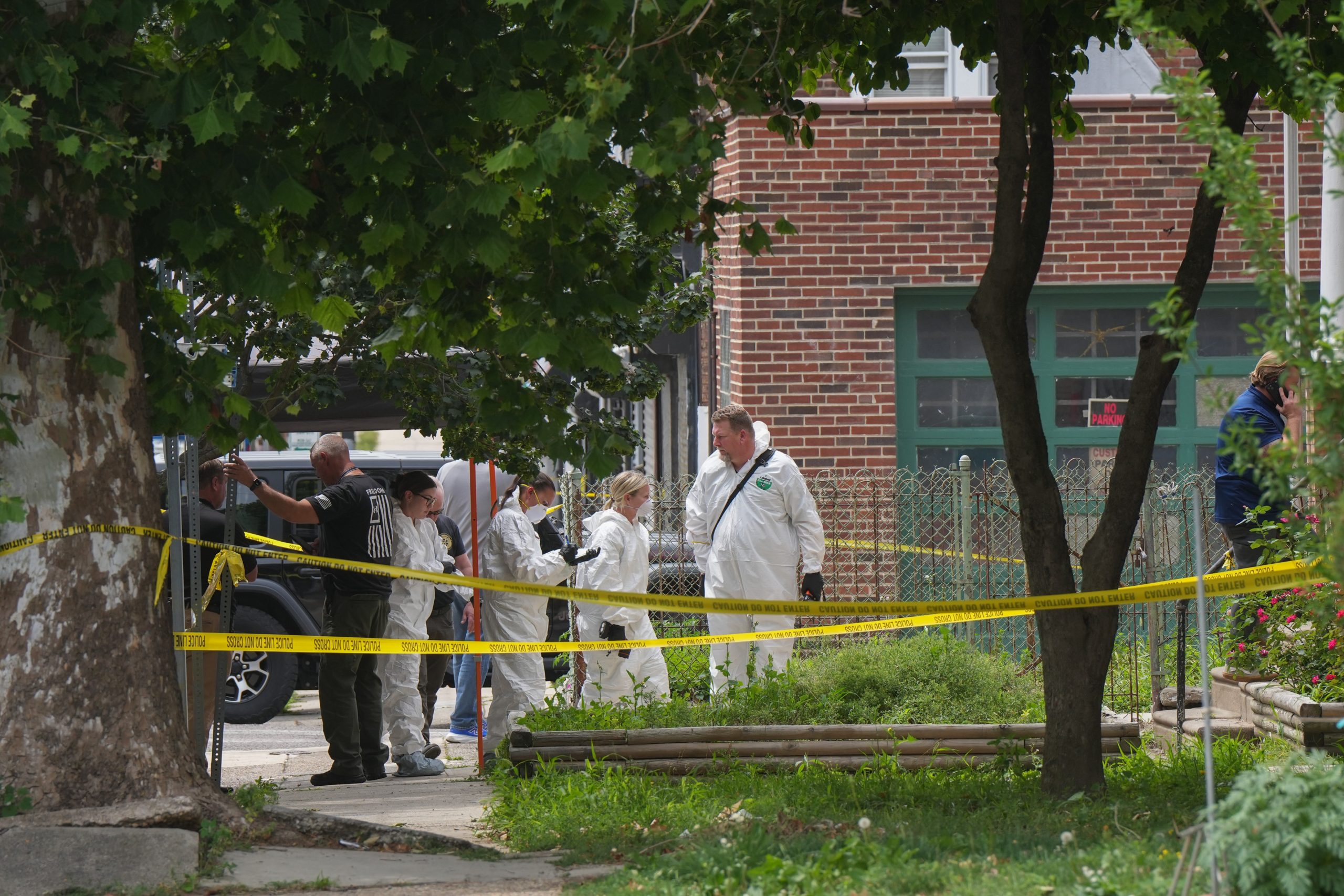
    Investigators at 417 W Chew, searching a home in Olney neighborhood in Philadelphia, June 26, 2026.Jessica Griffin / Staff Photographer

    One neighbor, Sid Brunson, who used to cut Horsch’s grass, described Horsch as a quiet, jittery man who “had a lot on his mind.” Brunson said that Horsch’s father, R.C. Horsch, a convicted drug manufacturer and erotic filmmaker, died in 2025, leaving a pall over the home.

    “You will never see a man other than him coming or leaving the house after that,” Brunson said. “If there was visitors at the home, it was always a female, never a male.”

    Another neighbor, who asked not to be identified for fear of reprisal, said Horsch was someone who got into disagreements with neighbors over parking and trash. He had long driven an impeccably maintained gold 1980s Lexus, and in recent years had started driving a new black BMW — and was often seen bringing women home with him, the neighbor said.

    The ongoing search of Horsch’s home this week was the latest in a series of odd developments at the property, with investigators saying that several urns had been found inside the home, including one that was labeled with the name of a deceased relative. Officials also discovered a 55-gallon drum with connections to water lines leading into a hole in the ground, as well as materials to grow marijuana, though it was not immediately clear if the items in the home were connected to drug manufacturing or more violent purposes.

    On Friday, law enforcement officials wearing hazmat suits were seen entering and exiting the property.

    During Horsch’s arrest last week, a woman falsely identified herself using the name of a 38-year-old woman who had been reported missing in Kensington in February 2023, sources told The Inquirer. Deputy Police Commissioner Frank Vanore declined to identify the woman who had been reported missing, but reports indicate that Horsch’s father had been questioned in the 2016 disappearance of his ex-wife, Amy McHale, of South Philadelphia.

    By late Friday afternoon, the investigation into Horsch’s home had not ceased, but a large FBI truck was spotted leaving the scene. Late in the day, the area had been largely left quiet, with the crime-scene tape on the home’s door serving as conspicuous evidence of the day’s events.

    Staff writer Andrea Padilla contributed to this article.

  • Former 6abc reporter Annie McCormick’s new book details South Jersey socialites’ 1929 deaths

    Former 6abc reporter Annie McCormick’s new book details South Jersey socialites’ 1929 deaths

    In the summer of 1929, Moorestown was rocked by the tragic shooting deaths of two young socialites in what officially was ruled a murder-suicide. The saga resulted in a scandal rife with money, alleged corruption, and death, and it captured sensational headlines for years.

    Nearly a century later, though, the case has been all but forgotten. In fact, former 6abc reporter and Moorestown native Annie McCormick had never heard of it — until a 2021 New York Daily News article. Now, with the release of McCormick’s Restless Ghosts: Murder, Suicide, and the Case that Wouldn’t Stay Buried by Camino Books, the specters of Ruth Wilson and Horace “Reds” Roberts Jr. may yet stir again.

    “It’s crazy I never heard of it, growing up in Moorestown and doing what I do,” said McCormick, who left 6abc in December after 13 years at the station. “I started looking into it and got hooked. I thought, ‘How many legs does this case have?’”

    Many, it would turn out. And they range from bootlegging and political corruption to the unspoken truths of high society in South Jersey and the desperation of Depression-era America. Even Ellis Parker, the famed Burlington County detective once known as “America’s Sherlock Holmes,” plays a role.

    The deaths of Ruth Wilson and Horace Roberts Jr.

    At its core, McCormick’s Restless Ghosts has its roots in a case that dates back to June 1929. Early one morning that month, Wilson and Roberts — wealthy, twenty-something socialites from two of South Jersey’s most prominent families who until recently had been engaged to be married — were found dead in Wilson’s bedroom in her family’s Moorestown home.

    Wilson’s father, John Wilson, a prominent attorney and real estate developer, found the pair, nude and apparently suffering from gunshot wounds to their heads. Both died a short time later, with an investigation led by Parker later finding that the fatal shots came from a .22-caliber handgun discovered at the scene.

    Ruth Wilson, investigators found, had been shot in the head twice. Roberts, meanwhile, had at least three gunshot wounds to his head — and officials quickly ruled that the situation was a murder-suicide that occurred in the wake of Wilson calling off the engagement. According to official reports, Roberts shot Wilson in the head before firing multiple shots into his own while distraught over the state of their relationship.

    No autopsies were initially conducted. In the days and weeks that followed, rumors and speculations about the pair’s deaths cropped up in news coverage, with some reports insinuating that the situation was a double murder — one that involved Wilson’s father, though no such claims were ever substantiated.

    https://www.newspapers.com/article/the-philadelphia-inquirer/199199692/

    Article from Jun 3, 1929 The Philadelphia Inquirer (Philadelphia, Pennsylvania) <!— –>

    A coroner’s inquest

    While McCormick runs down the tragic history of the deaths in Restless Ghosts, she is careful to not take a particular side on what may have happened back then. Instead, the circumstances are thoughtfully, meticulously recounted from multiple perspectives, leaving the readers to decide. Still, some inconsistencies and details, McCormick said, give her pause.

    “It doesn’t make sense that someone could fire into their head multiple times,” McCormick said. “But at the same time, who else was there?”

    In 1929, officials and members of the public had similar questions — so much so that a coroner’s inquest was launched that resulted in the exhumation of Wilson‘s and Roberts’ bodies weeks after their deaths. But even after the extensive questioning of investigators, relatives, and friends and the coroner’s discovery that Roberts had four bullet wounds to his head, the original conclusion was upheld.

    And so, it seemed Wilson‘s and Roberts’ ghosts were left to rest for eternity, victims of a tragic murder-suicide over unrequited love. At least, until the death of Bradway Brown, a similarly high-profile socialite who died from gunshot wounds he suffered at his home in nearby Cinnaminson in 1933.

    https://www.newspapers.com/article/the-philadelphia-inquirer/199199753/

    Article from Jan 17, 1933 The Philadelphia Inquirer (Philadelphia, Pennsylvania) <!— –>

    The death of Bradway Brown

    Brown, a childhood friend of the victims and a former suitor of Wilson’s, was found dead in his home with multiple gunshots. Parker also headed up the investigation in this case, and initially told the press it was a suicide — a tactic McCormick reports was a method to throw the media off and prevent Brown’s actual killer from becoming too alarmed.

    Brown’s death stoked the fires of conspiracy, with rumors abounding that he had confessed to acquaintances that he had known who Wilson’s and Roberts’ true killer was. The rumor mill even said Brown had likely been behind anonymous phone calls to Wilson’s father accusing him of being the perpetrator.

    Again, though, none of these allegations were officially substantiated. And despite Brown’s death resulting in another investigation into Wilson and Roberts’ deaths, this time a grand jury probe, the original conclusion was again upheld: Roberts killed Wilson, and then himself.

    As the investigation into Brown’s death wore on, Parker gradually backed away from his suicide theory. Ultimately, three men were arrested — a group of gangsters Parker called the “After Dinner Burglars.” The trio, reports from the time indicated, had targeted Brown’s Cinnaminson home for a robbery, but were surprised by his arrival. One man who was found to have pulled the trigger was sentenced to life in prison, and had no known connection to the Wilson and Roberts deaths.

    Parker, meanwhile, ultimately died of a brain tumor in federal prison after having been convicted of masterminding the abduction of an attorney in order to coerce a confession in the 1932 kidnapping and murder of Charles Augustus Lindbergh Jr., otherwise known as the Lindbergh baby.

    https://www.newspapers.com/article/the-philadelphia-inquirer/199199831/

    Article from Apr 15, 1934 The Philadelphia Inquirer (Philadelphia, Pennsylvania) <!— –>

    No one left to ask

    In 2026, meanwhile, McCormick’s Restless Ghosts has the benefit of hindsight, and faithfully recreates the case largely from archival newspaper accounts. McCormick remains surprised that she had never learned of the case until starting work on the book, noting that the families involved had a lasting impact on Moorestown. The homes where the murders occurred, she said, remain in pristine condition.

    “These were all places I know and have driven by a million times,” she said.

    Still, while she didn’t necessarily set out to solve the case once and for all, its mystery remains intriguing for the author. After all, with the crime so far in the rearview mirror of history, virtually all of the people directly impacted are long gone. As a journalist, McCormick is particularly perturbed by that aspect of the project.

    “The most frustrating part is that I can’t ask anyone,” she said. “I have questions, and I don’t have anyone I can follow up with. I wonder if this was a present-day case if there would be more finality.”

  • Police identify pizza delivery driver killed in North Philadelphia

    Police identify pizza delivery driver killed in North Philadelphia

    Philadelphia police on Monday identified the pizza delivery driver killed while dropping off food to an unoccupied North Philadelphia property Friday.

    Anshul Kuncha, 28, was found with a gunshot wound to the back of his head on the 2300 block of Edgley Street just after 12:30 a.m. Friday, police said. Kuncha, was an Indian national living in the city at the time of his death, according to the Consulate General of India in New York.

    “Our thoughts and heartfelt condolences to his family during this difficult time,” the consulate said in a statement on social media. “The Consulate is in touch with Anshul’s family and is extending all possible assistance.”

    Kuncha’s family, who are located in Hyderabad, India, are working to repatriate Kuncha’s remains, according to the Press Trust of India, an Indian news agency.

    Police responded to Kuncha’s shooting early Friday morning in Strawberry Mansion, and took him to Temple University Hospital. He was pronounced dead there at about 12:45 a.m.

    At the time of the shooting, Kuncha was making a delivery to a vacant apartment at the Raymond Rosen Homes, a Philadelphia Housing Authority-owned property in North Philadelphia. Surveillance footage from the area showed two people following Kuncha as he walked to the property’s door, Philadelphia Police Chief Inspector Scott Small told 6abc.

    Police were later able to identify the phone number associated with the order Kuncha was delivering, and said that the food was found untouched inside the property.

    No arrests have been made in Kuncha’s killing, and no weapon was recovered at the scene, police said. Investigators are offering a $20,000 reward for information that leads to an arrest and conviction in the case. Anyone with information can contact the homicide unit at 215-686-3334, or the police department’s tip line at 215-686-TIPS. Tips can be made anonymously, police said.

    Police statistics indicate that as of Sunday, 62 homicides were reported in the city this year, representing nearly a 35% drop over 2025.

  • Police ID pizza delivery man shot and killed in North Philadelphia

    Police ID pizza delivery man shot and killed in North Philadelphia

    The pizza delivery driver who was shot and killed while dropping off food to an unoccupied property in North Philadelphia last week was identified by police Monday as Anshul Kunsha.

    The shooting happened just after 12:30 a.m. Friday on the 2300 block of Edgley Street in Strawberry Mansion. Responding officers arrived to the scene to find Kuncha lying on the ground with a gunshot wound to the back of his head.

    He was taken to Temple University Hospital, where he was pronounced dead at about 12:45 a.m., police said.

    No weapon was recovered, and no arrests have been made.

    At the time of the shooting, Kuncha was making a delivery to a vacant apartment at the Raymond Rosen Homes. Surveillance footage from the area showed two people following him as he walked to the property’s door, Philadelphia Police Chief Inspector Scott Small told 6abc.

    Police were later able to identify the phone number associated with the order Kuncha was delivering, and said the food was found untouched inside the property.

    Investigators are asking anyone with information about the incident to contact the Homicide Unit 215-686-3334, or the PPD tip line at 215-686-TIPS. Tips can be made anonymously, and a $20,000 reward is available for information leading to an arrest and conviction in the case, police said.

    Staff writer Jesse Bunch contributed to this article.

  • Authorities arrested 25 people at a cockfight in Delco and rescued 52 live birds

    Authorities arrested 25 people at a cockfight in Delco and rescued 52 live birds

    Law enforcement officials arrested 25 people and rescued more than 50 birds after breaking up a cockfight in Delaware County over the weekend.

    The Pennsylvania SPCA Animal Law Enforcement Team, along with local authorities including the Pennsylvania State Police and Central Delaware County Organized Crime Unit, interrupted the cockfight Saturday night at a home on the 500 block of Franklin Street in Chester, officials said. There, investigators removed 52 live birds and discovered three dead roosters while serving a search warrant on the property.

    “Cockfighting is one of the most brutal forms of animal cruelty; these birds are forced to fight to near death one cut at a time, suffering devastating injuries in the process,” Nicole Wilson, director of animal law enforcement and shelter operations at the PSPCA, said in a statement.

    PSPCA officials received a tip about the cockfight on Thursday, the organization said. Investigators went on to surveil the property, and noted a number of people entering and exiting it — some of whom were carrying “animal transport carriers,” the PSPCA said.

    After securing a warrant, PSPCA investigators received support in serving it from the Central Delaware County Organized Crime Unit because of the number of people involved in the cockfight.

    The animals rescued from the property were taken to the PSPCA’s Philadelphia headquarters, where they were to receive exams and medical care. The birds will remain in PSPCA custody until their owners surrender them, or a court case related to the incident is adjudicated, the organization said.

    Officials did not identify the people arrested.

    Cockfighting, the PSPCA said in its statement, is a felony in Pennsylvania. The investigation is continuing.

    The PSPCA asked that anyone with information contact its animal cruelty hotline at 866-601-SPCA (7722) or email cruelty@pspca.org. Tips may be left anonymously.