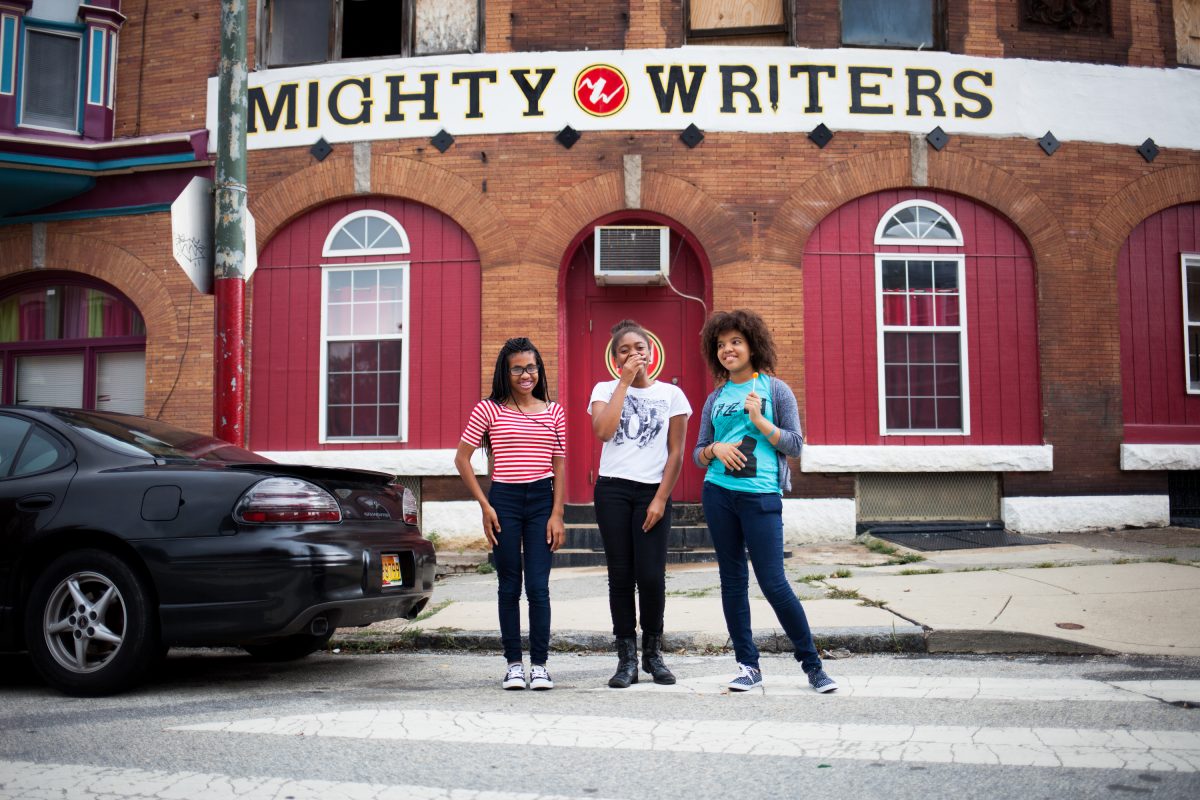
Educational nonprofit Mighty Writers has suspended its programming and services and furloughed dozens of staffers on what the organization has said is a temporary basis amid funding difficulties.
“Mighty Writers is not closing. We are writing a new chapter,” said CEO and executive director Corinne Green in a video message posted to the nonprofit’s website. “Our path forward is clear, and we remain deeply committed to restoring services that our community depend on.”
Mighty Writers announced the furlough period via its website and email list this week, noting that it was effective starting Tuesday, Sept. 1. In her message, Green said the pause on services impacts programming at the organization’s Philadelphia, Kennett Square, Camden, and Atlantic City locations.
Green said 26 staff members were impacted by the furlough, and 11 workers remained active to “stabilize the organization, secure resources, communicate with our partners, and prepare programs to return.”
The organization did not indicate how long the furlough period might last, and it could not immediately be reached for further comment.
In a statement, the organization noted that, like other nonprofits, it is reliant upon philanthropic support, grants, government funding, and reimbursement-based contracts to operate. A 2025 annual report indicated Mighty Writers was experiencing a “notable decline in institutional giving,” and saw fewer awarded grants from state agencies, corporate entities, and foundations that year.
As a result, the report noted, the organization projected a $1.9 million budget deficit, and estimated a $2 million reimbursement-related cash flow shortage through 2027.
“We have responded by reducing expenses, restructuring operations, strengthening our financial management, and pursuing new funding opportunities and partnerships,” Green said. But once those options were exhausted, the organization said, the furlough period became the “most responsible step” to ensure Mighty Writers’ future operations.
The furlough period, the organization said, is intended to allow some time to “stabilize” its finances to eventually begin providing services again.
In a followup email on Friday, Green said the furlough period is “could last up to approximately 12 weeks.” However, she said the organization is actively working to resume services sooner and do not necessarily expect every program to remain paused for that entire period.
“Our transition team is working daily to secure funding, address outstanding receivables, and establish pathways for programs to return as resources become available,” Green wrote. “Programs and services will likely be reactivated incrementally.”
Regarding staffing, employees will also be recalled based on the programs, sites, and operational functions that are reactivated, Green wrote. “Because this process will be incremental, we are not in a position today to provide specific timelines or make commitments regarding individual positions.”
Founded in 2009, Mighty Writers provides a number of services to vulnerable families, including food distribution efforts, summer camp, and after-school and literacy programming. In its 2025 annual report, the group said it served more than 5,800 students, and made 110,000 family distribution visits.
Green said Mighty Writers would provide additional information in the coming days via its website and email list. The organization is seeking donations from individuals, as well as new funding relationships, corporate partners, and other financial sources, she added.
“We are writing the next chapter for an organization that has been a staple in the community for nearly two decades,” Green said, “and we invite you to help us write that next chapter and finish the story with us.”
Green added on Friday: “The most important message we want the community to understand is that Mighty Writers is not closing. This is a temporary operational pause while we work to strengthen the organization and responsibly reactivate our programs and services.”
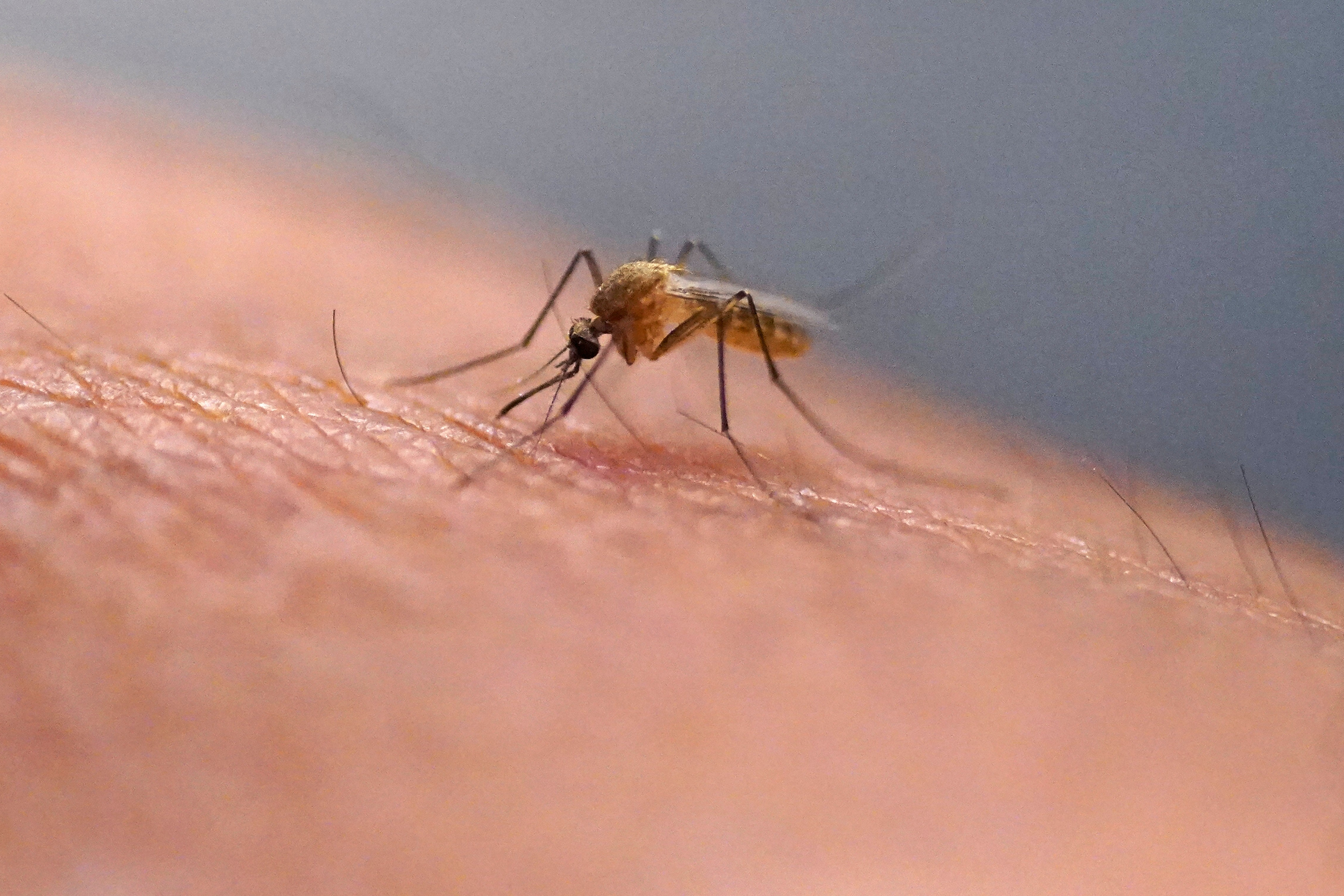
Philadelphia health officials confirmed the city’s first four human cases of West Nile virus for the year Friday, and asked residents to take some simple actions to help stop the disease’s spread.
“We all have a role in preventing the spread of West Nile Virus,” said Health Commissioner Palak Raval-Nelson in a statement. “And it’s easy to do: Wear mosquito repellent and dump out standing water.”
Spread by bites from infected mosquitoes, West Nile virus is a neurologic infection that often presents no symptoms in people, health officials said. However, it can result in a fever and flu-like symptoms in about 20% of cases, and rarely may cause swellings of the brain and spinal cord.
Officials said that people aged 50 and older have the highest risk of developing severe disease. Those experiencing symptoms such as unexplained fatigue, weakness, and headaches should contact their doctor. There is no specific treatment or vaccine for West Nile virus, though rest, fluids, and pain medication can ease symptoms.
Health officials did not provide further information about the human cases of the disease it had identified.
West Nile virus is common in Pennsylvania, and has been detected in mosquitoes in a majority of the state’s 67 counties, according to the state Department of Environmental Protection’s website. Two human cases of the ailment were previously identified in Allegheny County, city health officials said.
Mosquitoes breed in standing water, and their spread can be lessened by periodically emptying any container outdoors — such as flowerpots, birdbaths, and buckets — that may become a breeding site. Additionally, health officials recommended that residents clear clogged rain gutters and aerate ornamental ponds, among other steps.
Residents, officials said, should also wear insect repellent when outdoors, wear long-sleeved shirts and long pants when possible, and limit outdoor activity at dawn, dusk, and the early evening.
The health department’s Vector Control Services program, meanwhile, works to keep the spread of mosquitoes down by treating public areas and storm drains with insecticide. This summer, workers have treated more than 50,000 storm drains with larvicide to keep mosquitoes from breeding, officials said.
Mosquito-related complaints can be reported to the health department’s mosquito hotline at 215-685-9000.
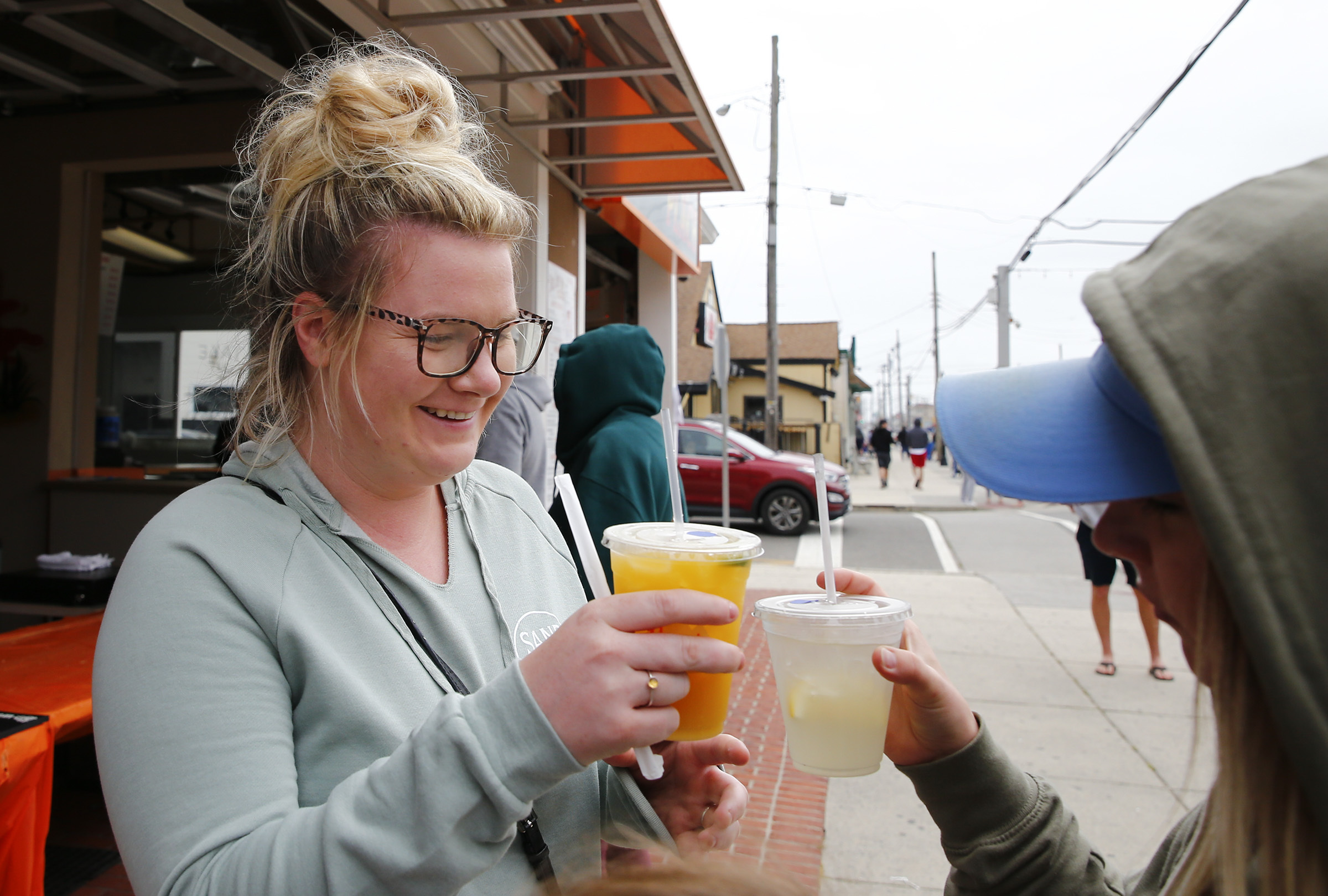
In New Jersey, “to-go” alcoholic beverages are officially here to stay.
Gov. Mikie Sherrill on Friday signed legislation making permanent the COVID-era provisions that allowed bars, restaurants, and other permitted businesses to sell and deliver alcoholic beverages for off-premises consumption. Intended to be temporary, those allowances were previously set to expire Sept. 1.
Moving forward, the legislation allows certain establishments to sell and deliver mixed cocktails in closed, sealed containers, and alcoholic beverages in their original containers, to be consumed away from their locations. Craft distillery licensees will also be able to sell and deliver their products under certain conditions.
“New Jersey’s small businesses shouldn’t have to navigate outdated rules just to serve their customers and grow,” Sherrill said in a statement. “Cocktails to-go worked, customers liked it, and small businesses told us it was another way to bring in revenue. Today, we’re making it permanent.”
The bipartisan legislation making those to-go alcohol changes permanent passed both New Jersey houses in late June.
In addition to restaurants and bars, under the law, other permitted businesses with retail consumption licenses, such as hotels, may also sell alcoholic beverages for delivery and off-site consumption. Deliveries can be made by the licensed business itself, or a permitted third-part delivery company.
New Jersey distilleries, meanwhile, can sell mixed drinks for on-site consumption when the beverages are made using alcohol manufactured on premises. Those businesses can also sell mixed drinks using their own distilled alcohol for off-site consumption, though the beverages must be sold in containers with a tamper-evident seal. And distilleries can also sell their own products accompanied by nonalcoholic beverages and food items that enable customers to make their own mixed drinks.
“During the pandemic, this commonsense policy helped restaurants survive one of the toughest periods in their industry’s history,” said state Sen. Declan O’Scanlon, a Republican from Monmouth County. “I’m proud that the flexibility we gave these businesses will now be permanently available to them with the signing of this law.”
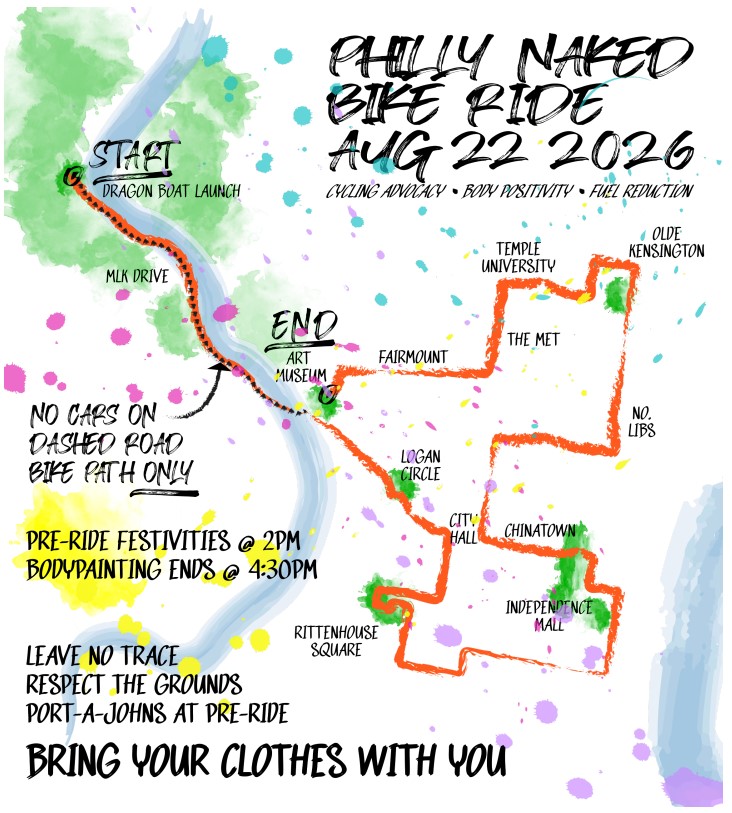
Saturday sees the return of the Philly Naked Bike Ride, which brings cyclists to a 12-mile route of bare-as-you-dare city riding for the event’s 17th edition.
This year, the ride is slated to kick off at 5 p.m. at the Dragon Boat Dock along Martin Luther King Drive, with a slightly different route than in previous years. For 2026, riders will head toward Eakins Oval and use the Benjamin Franklin Parkway to make their way around Logan Square to get to City Hall before heading to Rittenhouse Square and South Philly and making their way back north.
It all wraps up at the Iroquois statue on the Benjamin Franklin Parkway, a work created by artist Mark di Suvero that the city has owned for nearly two decades. The route’s finish stands just east of the Philadelphia Museum of Art, roughly two miles from its start.
That’s a slightly different route from 2025, which had riders start at Lemon Hill and end at the art museum itself. Lemon Hill also served as the ride’s starting point in 2023 and 2022.
The 2026 Philly Naked Bike Ride will start at the Dragon Boat Dock at 1233 Martin Luther King Jr. Dr.Philly Naked Bike Ride
Traditionally, pre-ride festivities like body painting sessions start a few hours before the ride.
Held annually with the exception of the pandemic year of 2020, the Philly Naked Bike Ride began in 2009 as a four-mile course that attracted roughly 400 riders. Now, it often brings out thousands of participants for the clothing-optional festivities. No fee or registration is required.
As per usual, this year’s event aims to promote cycling advocacy, body positivity, environmentalism, and safe cycling infrastructure. Nudity is not required to participate, organizers note online, and the ride is designed to be “safe and enjoyable for everyone.”
According to a code of conduct posted to the event’s website, organizers expect that participants not participate in “any form of sexual or physical harassment,” and refrain from any “unwelcome behavior.”
“Ultimately, one of the goals of the Philly Naked Bike Ride is to desexualize nudity and to encourage everyone to embrace nudity as a normal, enjoyable way of life,” the code of conduct reads. “Following this policy will help further this goal and teach all of us how to be better people in general.”
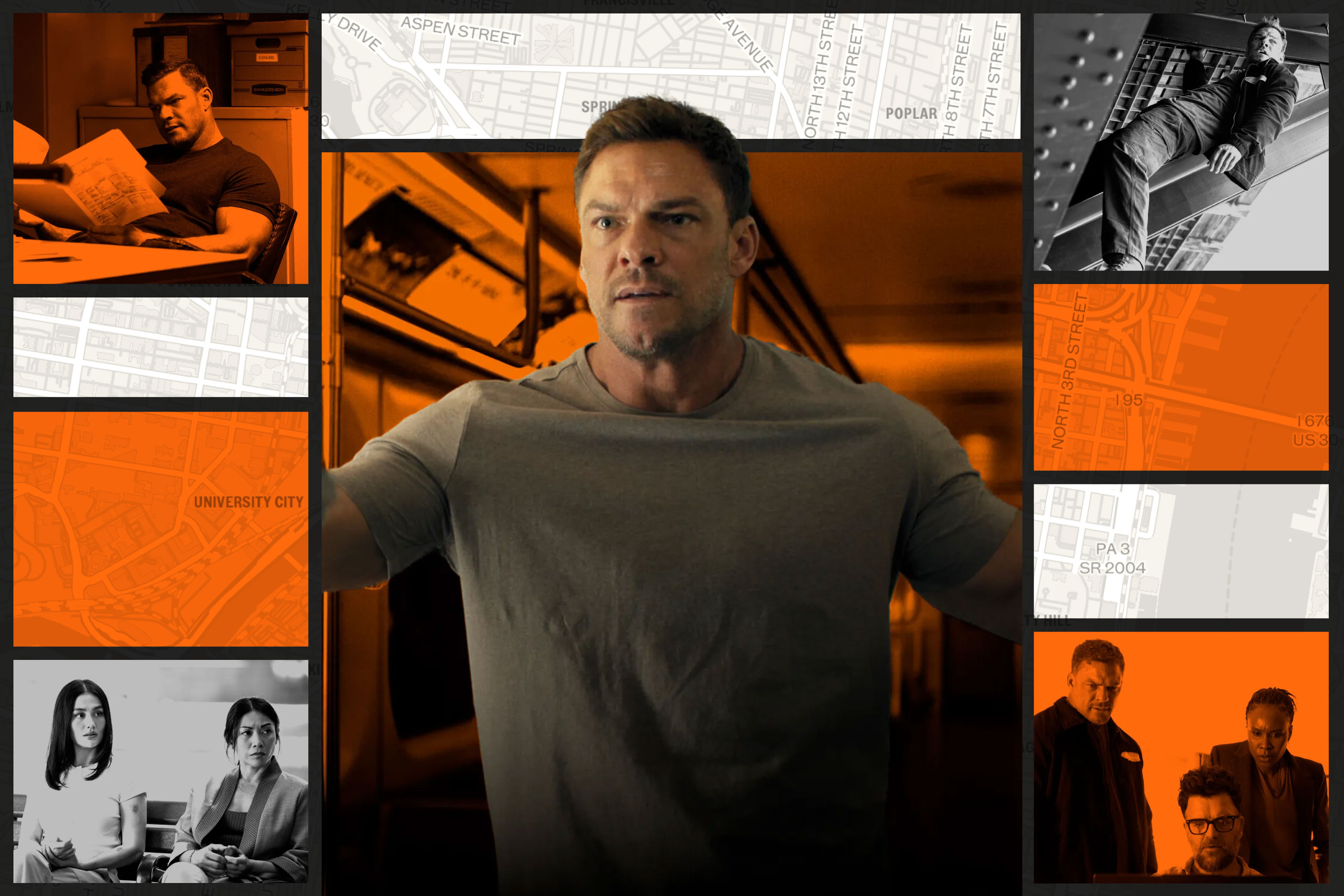
Philadelphia is the latest locale for vigilante Jack Reacher's shadowy dealings in season four of Reacher, streaming now on Amazon Prime. The show, which stars actor Alan Ritchson as the hulking retired Army investigator, was spotted filming around town last year.
Based on Lee Child's 2009 novel Gone Tomorrow, this season has Reacher facing off against the CIA, federal agents, and international mercenaries following a woman's suicide. And while much of the on-screen action appears to have been filmed elsewhere — namely Toronto, which looks a lot like Philly, but with space — the City of Brotherly Love does show up quite a bit.
Here, we'll be rounding up all the Philly spots we can identify this season. Check out the map below for where Reacher and his cohorts took them in the city.
story continues after advertisement
Loading…
Philadelphia
City Hall
Michael Bryant / Staff P
Reacher's fourth season immediately sets the scene with a shot of the William Penn statue atop City Hall as a nightscape of Center City shines in the background.
Philadelphia
Uptown Beer Garden
Erin Blewett / For The Inquirer
We catch our first glimpse of our hero, Jack Reacher (Alan Ritchson), as he exits Uptown Beer Garden, who walks out of the establishment silently with a beer in hand.
Philadelphia
LOVE Park
MICHAEL BRYANT / Staff Photographer
Reacher speaks for the first time this season, ordering a "wiz wit" from a nondescript food truck in Love Park.
Philadelphia
Avenue of the Arts
JESSICA GRIFFIN / Staff Photographer
Here, Reacher strolls down the sidewalk on the west side of Broad Street, chomping on his cheesesteak. Canonically, it is just after 2 a.m., and the street is deserted as he descends into the Walnut-Locust entrance B line, which runs along Broad Street.
Philadelphia
Walnut-Locust Station
Alejandro A. Alvarez / Staff Photographer
As he enjoys his cheesesteak, Jack Reacher (Alan Ritchson) heads down into the Broad Street Line at this Center City station. Several interior shots of the station are shown, including one in which a rat munches on a hot dog.
Philadelphia
Benjamin Franklin Bridge
Thomas Hengge / Staff Photographer
Philly is again shown off in all its nocturnal glory with a low-light shot of Center City from the Ben Franklin Bridge.
Philadelphia
Benjamin Franklin Parkway
For the first time in the season's first episode, the sun rises on Philadelphia. And it does so in this stunning aerial shot showcasing many of the Ben Franklin Parkway's gems — Logan Circle, the Philadelphia Museum of Art, the works.
Philadelphia
Parkway Central Library
Tom Gralish / Staff Photographer
We get a great glimpse of the exterior of the Parkway Central Library before heading inside, where Jack Reacher (Alan Ritchson) and Jacob Merrick (Christopher Rodriguez-Marquette) do research on Congressman John Sampson (Marc Blucas), a North Carolina representative who is launching a presidential bid.
Philadelphia
Parc
Courtesy of HughE Dillon
Parc briefly plays host to Reacher, Lila Hoth (Agnez Mo), and Jacob Merrick (Christopher Rodriguez-Marquette) as the trio settles in at an outdoor table to evade police.
Philadelphia
Walt Whitman Bridge
Tom Gralish / Staff Photographer
Reacher and his cohorts travel back into Philly via this bridge after escaping Washington, D.C. In the background, the old Southwark Generating Station is clearly visible.
Philadelphia
Schuylkill Expressway
Tom Gralish / Staff Photographer
As Reacher and his crew traverse Philly at night, the action leads to a shot of the west end of Center City near 30th Street Station from the Schuylkill Expressway.
Philadelphia
Schuylkill Expressway
Monica Herndon / Staff Photographer
Here, we get another nightscape shot of Philly's skyline, again from I-76 near 30th Street Station looking east. In the foreground, Locust on the Park is lit up green and is featured prominently.
story continues after advertisement
That was every location we could spot in the opening three episodes. Explore the map of all locations featured. Tap onHover overa pin to learn more.
Staff Contributors
Design and Development: Garland Fordice and Sam Morris
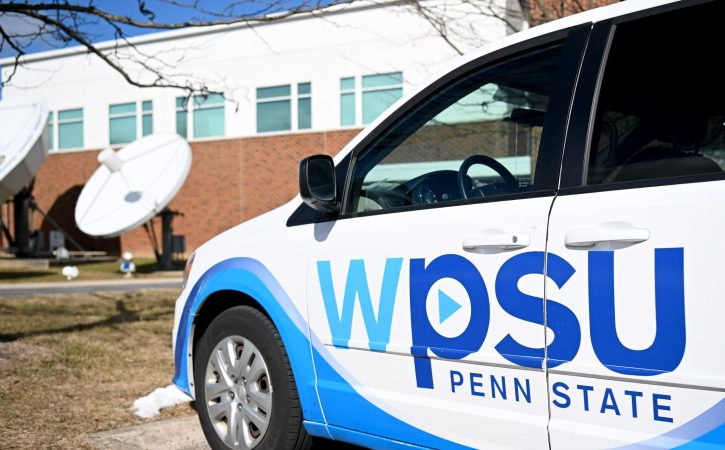
WHYY is one step closer to taking ownership of Pennsylvania State University’s public radio and television station, WPSU, with a new Federal Communications Commission filing.
WHYY and Penn State filed an application with the FCC late last week to transfer WPSU-FM and WPSU-TV, among other properties, to WHYY for a sale price of $1, according to commission records. The station said in a statement that it was “pleased to have reached an agreement with Pennsylvania State University that marks an important milestone.”
“We are appreciative of Penn State’s partnership throughout this process, as they have been integral to ensuring uninterrupted service for WPSU’s viewers, listeners and communities,” the station added. “Our shared goal is to preserve and strengthen WPSU’s longstanding mission of providing trusted local journalism, educational programming and community storytelling for the enjoyment and enrichment of generations to come.”
The FCC needs to approve the deal before it can be completed, the station said. It was not immediately clear how long that process could take, but the review period typically includes a 30-day window during which the public may submit comments.
The application’s submission marks the latest step in a lengthy process. In October, Penn State trustees unanimously approved a revised proposal to sell WPSU’s operating assets to WHYY, which itself revived a path to keep the station alive following a previous failed deal.
Under the approved agreement, WHYY is to continue operating WPSU for at least three years following the station’s sale, and give current employees the opportunity to interview for roles under the new leadership. About 44 employees remained at the station following layoffs in June last year, The Inquirer previously reported.
Previously, WHYY said it was working to raise funds to support WPSU to allow it to continue broadcasting.
In September, WPSU’s days appeared to be numbered, with Penn State saying it planned to wind down the station’s operations and lay off employees by the end of June. The station’s annual budget was funded largely by the university coupled with federal dollars, the latter of which had been slashed after President Donald Trump’s administration stripped away federal funding for public media, The Inquirer previously reported.
School trustees in September unanimously voted down a plan for WPSU’s sale to WHYY, largely citing concerns about $17 million in subsidies Penn State would have to provide to WHYY over five years as part of that deal. Under the plan approved in October, the university said last year, WHYY agreed to raise funds itself.
WPSU began broadcasting more than 70 years ago. When it was faced with a possible closure last year, university leaders said that they received about 1,300 public comments about the station, many of which urged the school to reconsider its decision to wind down operations. WHYY president and CEO Bill Marrazzo later said WPSU would “continue to be here” for listeners.
“WHYY and WPSU are joining forces to expand what is possible — strengthening local journalism, creating new educational opportunities, and developing innovative ways to deliver the content people value most,” Marrazzo said last year.
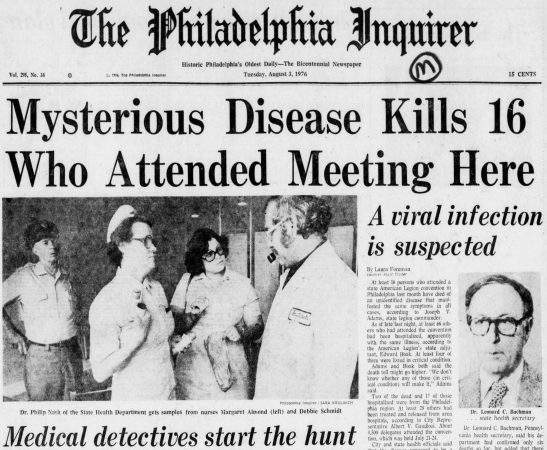
Weeks later, dozens of them were dead from a mystery ailment, and scores of others were sickened. The victims, authorities said, returned home to develop respiratory infections that in some instances progressed to fatal cases of pneumonia.
For more than half a year, local and federal health authorities were unable to determine what killed them, resulting in a web of fear, paranoia, and frustration that gripped not only Philadelphia, but also the nation at large.
This was the infamous Legionnaires’ disease outbreak of 1976, perhaps the blackest of marks on Philadelphia’s record for the year. Today, the disease — known as legionellosis, caused by Legionella pneumophila bacteria — still crops up, most recently in a 50-building outbreak in Manhattan that has so far caused at least seven deaths.
Philadelphia was not the last, or even the first, city to experience the disease. But that outbreak half a century ago is how it got its name. Here is how The Inquirer and Daily News covered it:
Article from Aug 3, 1976 Philadelphia Daily News (Philadelphia, Pennsylvania) <!— –>
The initial outbreak
About 2,000 American Legion delegates came to town for a convention that ran from July 21 to 24, 1976, at the iconic Bellevue-Stratford Hotel. There were no signs of trouble during the convention, or for several days afterward.
But by early August, about a week after the convention’s end, 14 Pennsylvania American Legion members were dead of an unclear illness, with their deaths involving “some type of respiratory problem,” reports from the time indicate. Roughly 50 others were reportedly hospitalized.
Many of the initial victims were from Western Pennsylvania and had traveled to the city, though some Philadelphians were among the sick and dead. All had attended the American Legion convention the month before, officials said.
Article from Jul 17, 1977 The Philadelphia Inquirer (Philadelphia, Pennsylvania) <!— –>
As officials mounted an investigation that cost the state $25,000 a day, the death toll continued to increase. By mid-August, 29 people were dead and about 200 were sickened, reports indicate.
The Centers for Disease Control said at the time that the outbreak was “without precedent” in the agency’s 30-year existence, and began conducting laboratory work to determine the cause.
“We have not seen anything like this take place in such a short period of time,” said Jay Satz, chief virologist with the Pennsylvania Department of Health. “This is something to be quite concerned about.”
Article from Aug 9, 1976 Philadelphia Daily News (Philadelphia, Pennsylvania) <!— –>
Conspiracies reign
Health officials largely expected the cause to be a then-long-awaited epidemic of swine flu, which had killed a soldier at Fort Dix in New Jersey earlier in the year, and focused much of the investigation on identifying that disease, reports indicate. Other possible causes, including toxins such as nickel carbonyl, were also considered.
But public speculation about the cause, as well as how the disease arrived in the city, ran rampant. Or, as The Inquirer put it at one point, there were more people who had “their own ideas on what is causing the mysterious disease than there are Kennedy assassination conspiracy theories.”
Inquirer readers wrongly blamed everything from pigeon droppings to contaminated ice. One person claimed the trash piling up on city streets, thanks to a municipal worker slowdown at the time, was the reason. Another contended shellfish was the cause, noting that “mostly men had been stricken because women don’t like shellfish.”
Others believed the cause was more nefarious. Surely the disease had come from communists from Ecuador or Poland, who intentionally spread it to American Legion members. No, it was a sneak attack staged by the potentially disruptive activist groups Mayor Frank Rizzo had warned about.
The American Legion, meanwhile, did not believe foul play was involved — nor did investigators, who said no evidence supported any of these theories. The truth, it seemed, was far less salacious.
As worry over the illness wore on, the Bellevue-Stratford hotel itself also fell victim to the disease’s impacts, closing in November 1976.
Though investigators avoided directly implicating the hotel early on, it suffered severe financial damage. Reservations collapsed into single-digit occupancy percentages, resulting in losses of up to $10,000 per day, reports from the time indicate. William G. Chadwick, the hotel’s vice president and general manager, said business had been devastated.
Article from Nov 10, 1976 Philadelphia Daily News (Philadelphia, Pennsylvania) <!— –>
“We have found it impossible any longer to withstand the economic impact of the worldwide adverse publicity which has been associated with the Legionnaires’ disease,” he said.
By then, the Bellevue had operated for more than 70 years and was considered a jewel in the city’s hospitality crown. Its closure, Rizzo said, was a “great loss,” and he vowed the property would host a new, modern hotel to fill the gap. Today, it is a mixed-used development at 200 S. Broad St. that includes a hotel portion.
Philadelphia’s Bicentennial tourist business also suffered, with several conventions canceling their bookings over fear of the illness, significantly affecting what was expected to be a banner year for visitors. Public perception erred on the side of avoiding the city, which some local officials tried to rebut.
Article from Aug 19, 1976 Philadelphia Daily News (Philadelphia, Pennsylvania) <!— –>
“We are still a safe city,” said Eugene Hosmer, director of the Philadelphia Convention and Visitors Bureau, noting the disease struck just as low civic self-esteem seemed to be fading. And then, “we’re hit with this.”
Robert Jacob, manager of the Penn Center Inn and head of the Greater Philadelphia Hotel Association, put the illness’ impact more dramatically.
Investigators searched for months for the disease’s cause to no avail, facing substantial criticism — including a congressional subcommittee hearing during which their efforts were labeled an “embarrassment,” according to reports from the time.
But in January 1977, after tens of thousands of tests, investigators identified the culprit. The deadly Legionnaires’ disease, the CDC found, was caused not by a toxin or virus, but a bacterium. One so strange and unknown, lab workers and scientists had missed it for months.
Article from Jul 17, 1977 The Philadelphia Inquirer (Philadelphia, Pennsylvania) <!— –>
Credited with its discovery was Joseph McDade, then a CDC microbiologist in the agency’s leprosy and rickettsia laboratory. On a hunch after receiving a routine report, McDade reexamined slide samples and decided to look for unfamiliar microbe shapes. And he found them — and they appeared not only in samples from Philadelphia, but also in past unsolved outbreaks.
The disease was found to be present in samples from a 1965 pneumonia outbreak at St. Elizabeth’s Hospital in Washington, in which 18 people died, and a 1968 one that sickened 144 people at a Pontiac, Mich., health department building. Additionally, the illness had struck a 1974 Independent Order of Odd Fellows convention in an outbreak that killed two people — also held at the Bellevue-Stratford.
Article from Jul 17, 1977 The Philadelphia Inquirer (Philadelphia, Pennsylvania) <!— –>
Investigators later determined the 1976 outbreak had been spread via airborne water mist from the hotel’s air-conditioning cooling towers. The towers allowed the bacteria to grow and be spread to convention attendees, as well as some individuals who had traveled near the hotel, investigators found.
“We are dealing with a very real phenomenon which has been present in the past but has never been recognized,” said CDC director David Sencer in 1977. “We now know what to look for.”
Philadelphia is now officially under the rule of King James. And his newly minted subjects, it seems, couldn’t be happier.
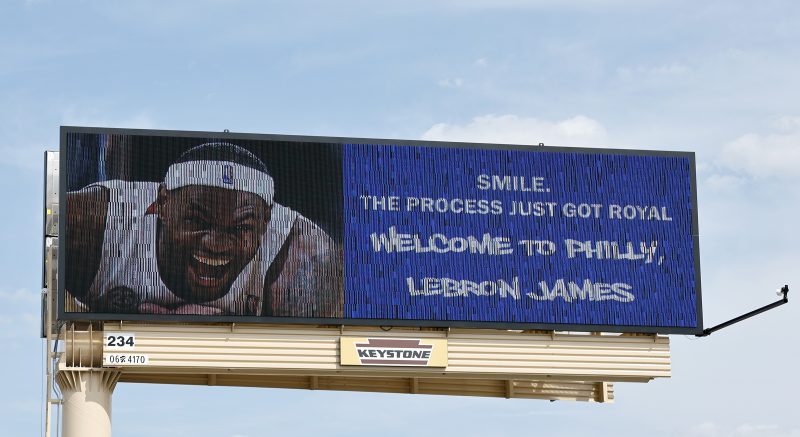
LeBron James, the legendary NBA player and one of the most famous humans on the planet, is coming to Philly after having agreed to a two-year contract with the Sixers on Friday. The move, though one of the more improbable roster additions in franchise history, is real — and officially commemorated at the highest levels of state government.
“Pennsylvania is honored to welcome LeBron James to our Commonwealth as he joins the Philadelphia 76ers for his best season yet,” Gov. Josh Shapiro wrote in a proclamation declaring Friday, July 24, 2026, as LeBron James Day. The day, he added, would honor James’ “bright future in Philadelphia,” among other achievements and anticipations.
Philadelphia Mayor Cherelle L. Parker likewise welcomed the news, writing in a statement that the city would welcome James “into our One Philly Family with open arms and electric energy.”
“Trust me when I say: We are rolling out the welcoming mat starting Day One!” Parker said. “We cannot wait to see you shine on the court.”
Though months away from that debut on the court as a Sixer, James’ arrival to the team prompted a flurry of shock and support from fans and players alike, with seemingly every local establishment, institution, and celebrity offering a meme or message of disbelief. In fact, Philly’s pro athletes seemed among the most excited about James coming to town.
Eagles running back Saquon Barkley, for example, almost immediately extended a golf invite to James after the news broke, asking via social media when the forthcoming Sixer wanted to “tee up.” Sixers point guard Tyrese Maxey had a more primal reaction, simply posting a video of him screaming in excitement in a gym.
James himself, meanwhile, was more staid in explaining his decision via social media. After nearly two-dozen seasons in the NBA, James wrote, he thought he was done playing, but decided he continued to love the game and had more to give.
“I still want to sacrifice. I still want to work. I still want to grind. I still want to compete, to win and to have a chance at the feeling of winning another championship,” James wrote. “I believe I can help make the Philadelphia 76ers a championship team and I am so excited to energize a new fan base and start this incredible journey one last time.”
Some Sixers fans were beside themselves, with at least one ordering a Chantilly cake from Whole Foods to celebrate. Lydia Victor, a Northeast Philly graphic designer and sports content creator, had the bakery write “Trust the Process 23” in red frosting on top of the confection, and planned to cut it later in the day with her father, who went to college in Ohio, and is James’ biggest fan, she said.
Whether a James-led Sixers squad can actually win a championship was almost inconsequential Friday, though Victor already was designing plans to celebrate on Broad Street. The fact that James chose Philadelphia brought her more happiness than a championship (or potentially getting married or having kids) might. She likened the moment to Meredith Grey’s iconic monologue in the TV show Grey’s Anatomy imploring Derek Shepherd to choose her.
“It’s just the mindset that Philly isn’t always considered a big market and the national media usually counts us out when it comes to acquiring big-name free agents,” she said. But this time, things were different.
“We were picked!” she said.
Darnell Butts, 56, said there’s no way the Sixers would have landed James had former general manager Daryl Morey still been in charge. Butts was optimistic about the Sixers’ championship chances, and excited for the team’s younger stars to learn from a player he calls the greatest of all time. Butts said he wants to welcome James in Philly fashion.
“Get a Philly cheesesteak, it’s on Darnell Butts. Meet me at Reading Terminal,” he said.
The historic nature of the day was seemingly reflected in professional sports’ enduring fan barometer — merchandise sales. By early Friday afternoon, Fanatics said it was already sold out of some Sixers-branded James jerseys.
Within two hours of the news breaking, all first editions of the No. 23 jerseys were sold out on the Fanatics website. The adult royal blue, white, and red Swingman premium jerseys had been selling for $124.99, in line with the price of similar jerseys for other Sixers stars. Youth jerseys had also been available to preorder for $69.99.
Fanatics was also selling James’ 2026-2027 Topps trading card, the one he signed and posted on Instagram after announcing his decision to come to Philly. The cards were selling for between $11.99 for a single card and $169.99 for a 20-pack. Fanatics acquired Topps in 2022.
The company planned to add additional James merchandise in short order Friday.
July 24, however, would live on as a historic date, some fans said.
Raymond Davis took the train into 30th Street Station to play basketball at Schuylkill River Park. Before leaving his home in Mount Airy, he put on his Tyrese Maxey jersey to hoop in — not knowing James would sign with his favorite team shortly after.
Davis met up with a few friends on the way to Schuylkill River Park. One of them, Christopher Gaines, was just as excited as Davis and ready to write the day down in history books.
“The king of basketball’s coming to Philly — the city of sports — and this is like a great day, a great moment,” Davis said. “You know what? July 24, I will always remember as ‘King Bron Day’ — the day LeBron came to Philly.”
Staff writers Gabriela Carroll, Erin McCarthy, Gina Mizell, Matt Mullin, and Andrea Padilla contributed to this article.
Think you know your news? There’s only one way to find out. Welcome back to our weekly News Quiz — a quick way to see if your reading habits are sinking in and to put your local news knowledge to the test.
Question 1 of 10
Nike’s newest Air Force 1 shoes, called “Horse of a Different Color,” feature pony hair in a certain colored hue. They, in turn, look a lot like this Philly icon:
CorrectIncorrect. XX% of other readers got this question right.
Nike's new "campfire orange" pony hair sneaker is basically Gritty's doppelgänger, writes Inquirer reporter Maggie Prosser. Social media users agree. “Gritty force 1s,” one user on X dubbed the new shoes.
Question 2 of 10
South Street bar Tattooed Mom is unable to host events with music — ranging from drag shows and burlesque performances to karaoke — indefinitely, following an order from the Department of Licenses & Inspections. The required license for events would take at least this long for the business to procure:
CorrectIncorrect. XX% of other readers got this question right.
The license procurement process requires a public meeting followed by a separate hearing with the delay-plagued Zoning Board of Adjustment. As of March, the wait time for a hearing was 180 days — or roughly six months — according to a manual from the City of Philadelphia. (A $750 expediting fee cuts the wait time down to 140 days, or 4.5 months.) Tattooed Mom has yet to apply for the special exception.
story continues after advertisement
Question 3 of 10
A grassroots parallel parking competition in Philly already has more than 400 applicants. But organizers are only allowing for how many competitors?
CorrectIncorrect. XX% of other readers got this question right.
There are only 20 slots available to compete in the parallel parking competition. Contestants will be judged on speed, clearance length, and closeness to the curb. The winner will get bragging rights and a $76 cash prize to cover a PPA ticket.
Question 4 of 10
Kurt Vile has never repped his hometown so hard as on his new album, Inquirer music critic Dan DeLuca wrote in a recent profile. The album, which came out in May, includes shout-outs to Lincoln Drive, the Schuylkill, and Sun Ra, and an infectious single “Chance to Bleed” that features Philadelphia gangsta rap pioneer Schoolly D in a video shot at Kung Fu Necktie. What is Vile’s album called?
CorrectIncorrect. XX% of other readers got this question right.
Vile, whom DeLuca calls a “Philadelphia fixture” celebrated his new album, Philadelphia’s Been Good to Me with a vegan cheesesteak giveaway at South Philly’s Triangle Tavern.
Question 5 of 10
The Phillies will play in the MLB’s third Field of Dreams game, played at a ballpark (complete with cornfields) based on the movie and constructed next to the field used in the 1989 film. The game will air on Netflix. The team’s throwback uniforms for the special game were unveiled this week. What color hats will the team will wear?
CorrectIncorrect. XX% of other readers got this question right.
The Phils will wear navy hats with a bold red “P” on the front. The jerseys — a sharp gray top with red and navy “Phillies” script across the chest — were unveiled Monday along with the uniforms that will be worn by Minnesota on Aug. 13 in Dyersville, Iowa.
Subscribe to The Philadelphia Inquirer
Our reporting is directly supported by reader subscriptions. If you want more journalism like this story, please subscribe today.
What local connection do the famous hedge maze scene in The Shining and the Rocky run sequence up the Philadelphia Museum of Art steps have in common?
CorrectIncorrect. XX% of other readers got this question right.
Oscar-winning cinematographer Garrett Brown — a Philadelphia native — invented several camera systems, most notably the Steadicam, a wearable camera rig that allows for stable running shots without any shakiness. The Steadicam was used on The Shining and Rocky, and now, Brown's story is the subject of a documentary Thank You, Mr. Brown.
Question 7 of 10
Philly restaurant Middle Child's BLT is its hottest selling summer sandwich, with locations in Center City and Fishtown preparing 200 to 250 of them per day — and quickly selling out. Each BLT sandwich costs customers:
CorrectIncorrect. XX% of other readers got this question right.
At $16 each, Middle Child’s classic BLTs consist of tomatoes from Urban Roots Farm in Newtown Square, five pieces of Leidy’s bacon, Duke’s mayonnaise, and locally grown arugula dressed with tomato vinaigrette all sandwiched on slices of rye bread from Merzbacher’s bakery. There are about $2.60 worth of tomatoes on each sandwich.
Question 8 of 10
Comedian Shane Gillis recently set two Guinness World Records with a performance at Lincoln Financial Field, one of which was the largest audience for a comedian. What was the other record?
CorrectIncorrect. XX% of other readers got this question right.
Gillis' show sold 77,047 tickets, and was billed as the largest headlining performance of the comedian's career. Previously, North Philadelphia native Kevin Hart packed the stadium in 2015, but only sold 53,000 tickets.
Question 9 of 10
This Pennsylvania snack company went public six years ago, but is now set to become a private company again as part of a $2.9 billion deal with a German acquirer:
CorrectIncorrect. XX% of other readers got this question right.
When the latest deal is done, Utz’s founding families, the Rices and Lissettes, will own 50% of the company, and Intersnack Group, a snack maker in Europe and the Pacific, will own the other half. Since 1921, Utz has produced its trademark chips and other snacks from Hanover, York County, about 120 miles west of Philadelphia.
Question 10 of 10
The Delaware River stretches some 330 miles between Delaware and New York, and is home to about how many islands across its lengthy run?
CorrectIncorrect. XX% of other readers got this question right.
The federal government, states, counties, corporations, and private individuals all own Delaware River islands that are used for recreation, industry, or, in most cases, nothing at all. Some islands are mere shoals or sandbars, while others span hundreds of acres. Some are no longer true islands after reattaching to mainland via nature or human engineering.
Your Results
You have skipped .
You scored XX out of 10.
The average reader scored XX out of 10
Seems like you’ve been skimming more than reading there, buddy. There’s always next week.
You’ve read some articles (or made some educated guesses) but we wouldn’t come to you first for our local news recaps. Better luck next week!
Do you work here? You’re a local news stan with the latest updates on Philly happenings. Your friends definitely ask you for summaries on what’s going on and it shows.
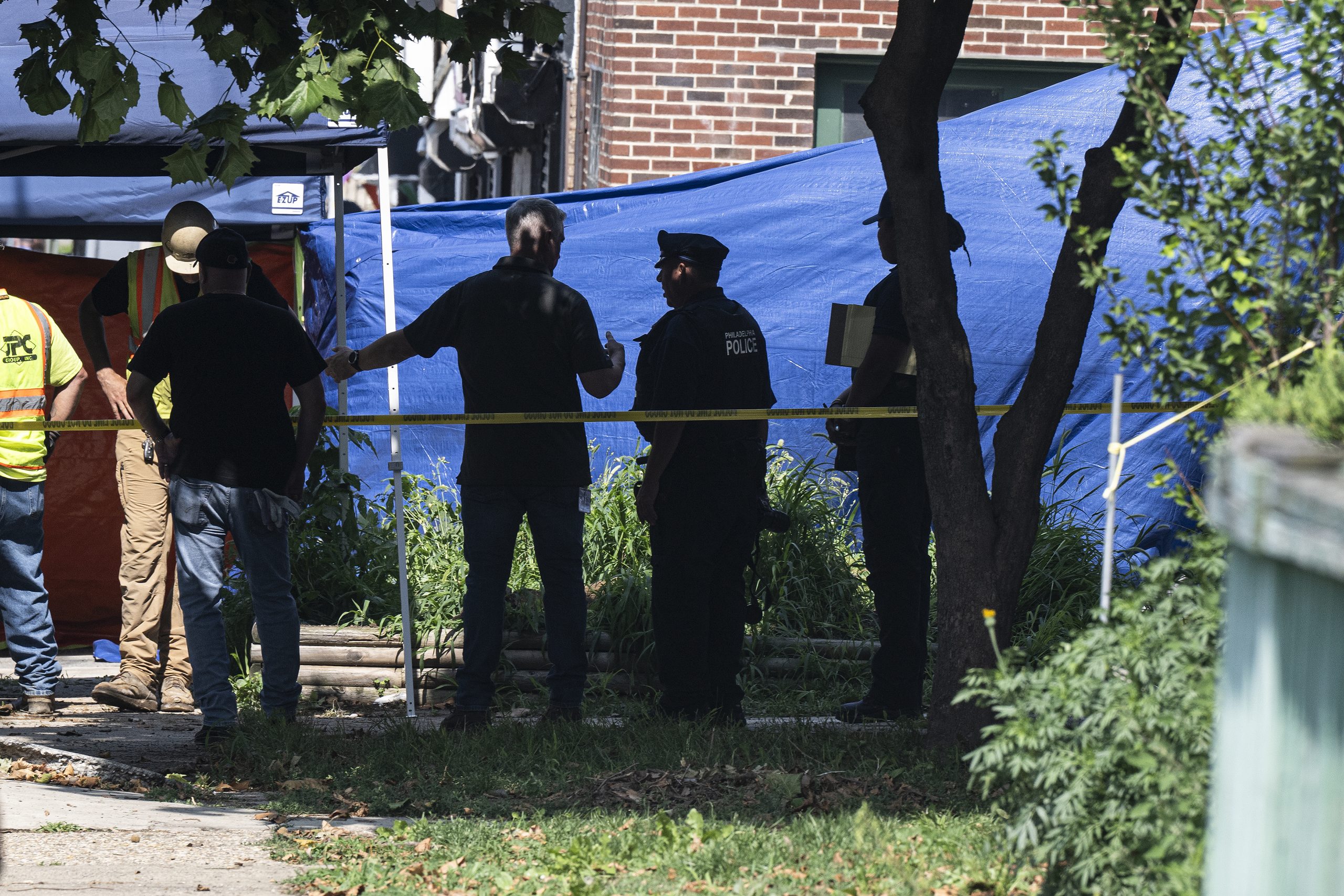
Breaking concrete, beeping trucks, and the hum of heavy machinery signaled movement Wednesday in the monthlong investigation into two missing persons last seen at a house on the 400 block of West Chew Avenue in Olney.
With that cacophony of construction sounds, the Philadelphia Police Department and the FBI began a planned excavation at the home of Eugene Albert Horsch, 44, who faces charges of carrying illegal firearms and fake federal law enforcement credentials following a June arrest. Horsch’s dilapidated twin home on West Chew Avenue has since been connected to the disappearances of at least two women in the last 10 years.
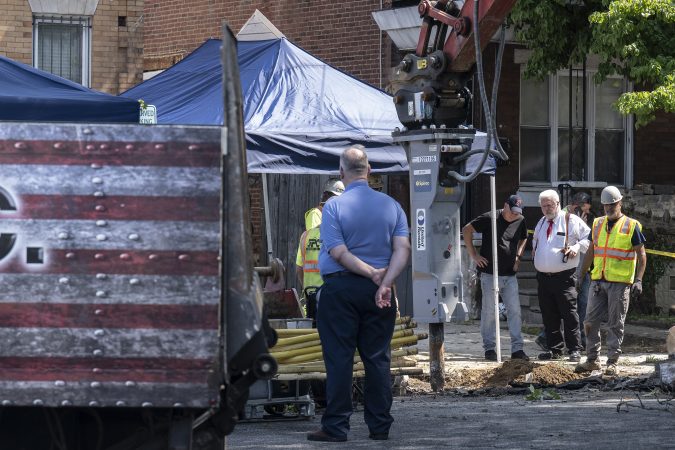
Authorities said they would excavate a portion of Horsch’s property with assistance from the Philadelphia Water Department. Investigators, officials said, were intent on unearthing and examining a pipe under the house as part of a widening probe.
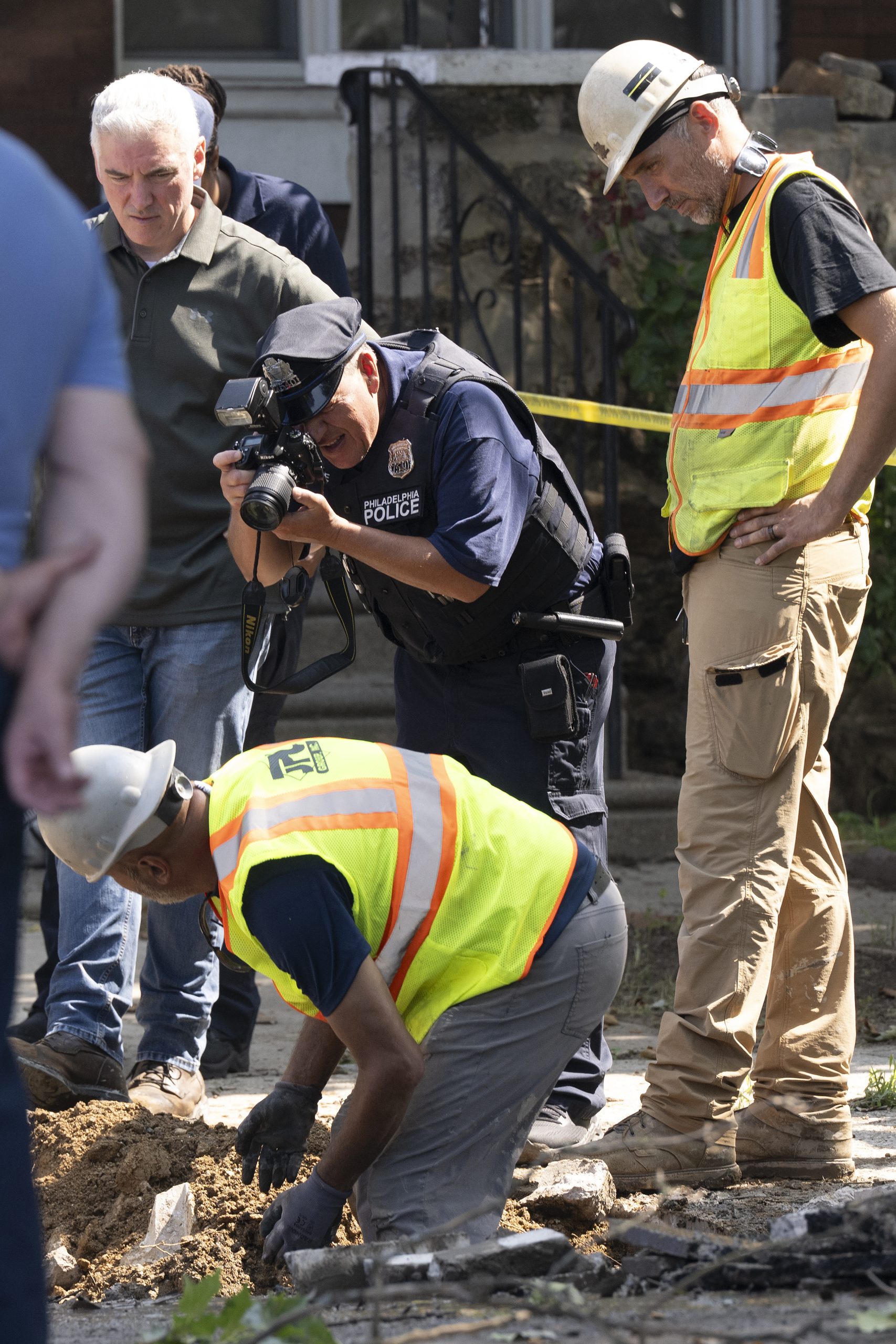
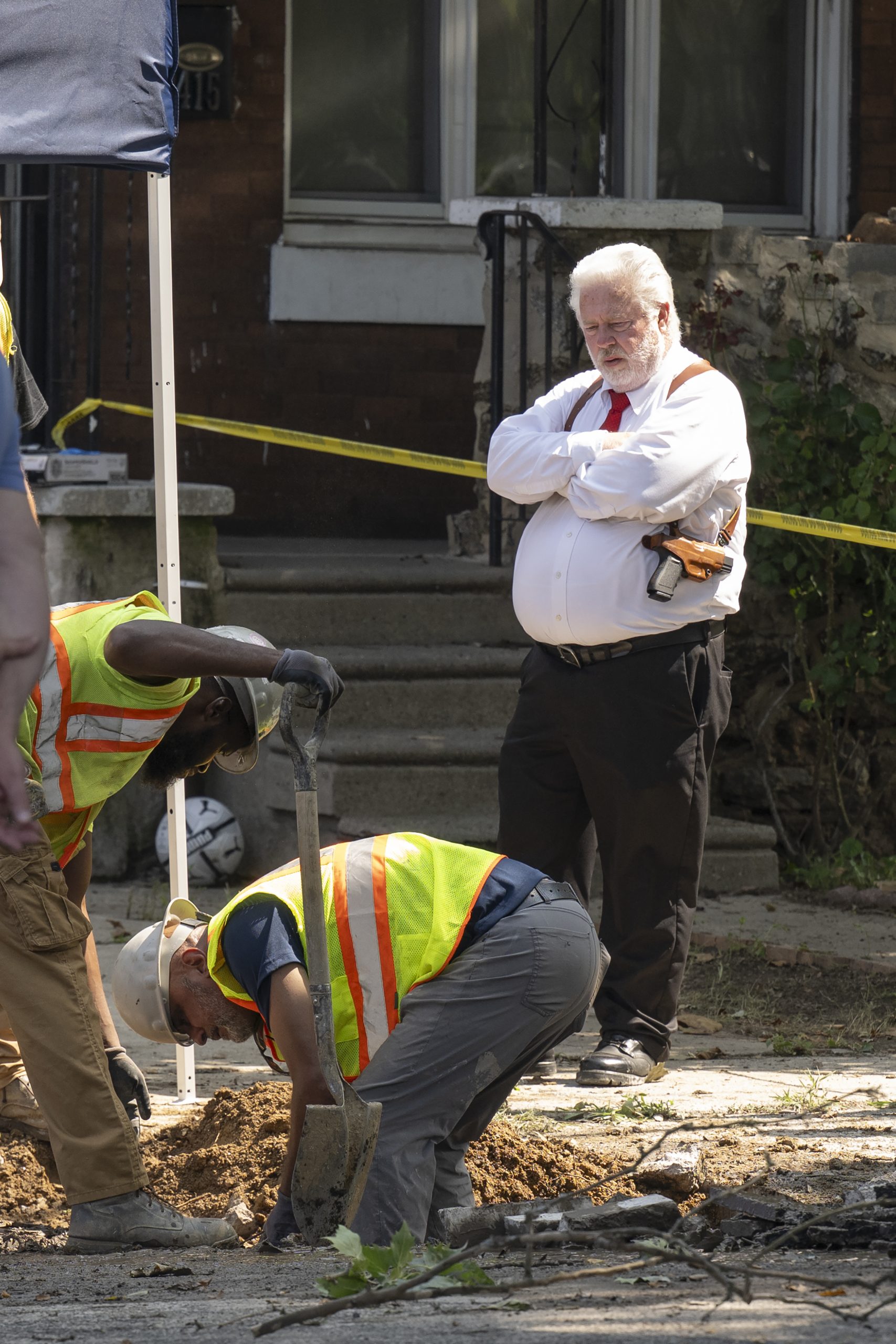
Workers and police investigators dig and inspect a hole while removing pipes and debris at the entrance to the home of Eugene Albert Horsch on West Chew Avenue.Jose F. Moreno / Staff Photographer
“The general scope of the dig is to excavate and remove a pipe that will be subsequently examined by FBI and PPD forensics for any evidence that may be present,” Sgt. Eric Gripp, a police department spokesperson, said Monday.
That effort began in earnest before 9 a.m. Wednesday morning, with crews digging up what was once a small, overgrown garden in front of Horsch’s home, as well as the sidewalk and street in front of the property. Trucks and tents cropped up throughout the morning as investigators walked the block. Periodically, investigators inserted a white pole into the earth, measuring the depth of a hole.
Later in the morning, workers pulled a piece of pipe from the ground and took it inside the home.
Wednesday’s excavation was the latest development the case that began June 19, when Horsch was arrested near Independence Mall with drugs, guns, and other weapons, as well as a counterfeit U.S. Drug Enforcement Administration badge. A woman was with him at the time, and she was carrying a fake ID in the name of Blair Tonzelli, who was last seen at Horsch’s home in 2022.
Workers and police investigators dig and inspect a hole while removing pipes and debris at the entrance to the home of Eugene Albert Horsch.Jose F. Moreno / Staff Photographer
Since then, investigators have discovered a swath of evidence, authorities have said. Among the items found at the West Chew Avenue home were vats of chemicals, a 55-gallon drum with connections to water lines in the house’s basement, and what police sources called “a significant amount” of blood.
Forensic testing is continuing, and it has not yet been announced whether the blood is human. Horsch does not currently face charges involving violent crimes.
Additionally, authorities have found other fake IDs in Tonzelli’s name, as well as the missing woman’s bank card. Investigators have also said that Amy McHale, the ex-wife of Horsch’s late father, Raymond Horsch, was last seen at the Olney home in 2016, according to the woman’s family.
It was unclear Wednesday if investigators had linked any evidence to the disappearances of Tonzelli or McHale.
Workers and police investigators dig and inspect a hole while removing pipes and debris at the entrance to the home of Eugene Albert Horsch on Wednesday.Jose F. Moreno / Staff Photographer
The midweek excavation surprised some neighborhood residents. Cheri Smith lives two blocks from the site of the investigation, but still felt its effects. Smith, who has lived nearby for two decades, said she has felt unsettled since news of the investigation broke last month, and has seen little communication among police, the city, and neighbors.
“It’s a shame what happened,” Smith said. “It would be nice if they notified us that this work is going to be happening, but the city is going to do what they are going to do.”
Laurenza Moise said that when she arrived Wednesday to open her braiding business, the corner of Fifth Street and Chew Avenue had already been blocked off. Since the investigation began, she said, she has seen a reduction in business.
“When they close the street, my business goes down, and there’s no parking for customers,” Moise said. “What can I do other than mind my business?”


 –>
–>  –>
–>  –>
–>  –>
–>  –>
–>  –>
–>  –>
–>