New Jersey State Police have identified the remains of a man found off the coast of Atlantic City 45 years ago.
Glen Napoleon Burbage, a retired U.S. Coast Guard officer from South Carolina, was last seen in March 1981. Burbage, who was 59 when he disappeared, had flown to Atlantic City that month, and was never heard from again, officials said in a statement.
Two months later, on May 22, 1981, a group of boaters found a human body in the ocean about a mile off Raleigh Avenue in Atlantic City. At the time, investigators believed the man had died several weeks before his remains were recovered.
Police, however, were unable to immediately identify the remains. Previous DNA testing did not reveal any matches in the Combined DNA Index System, a national, federally managed DNA profile database. And lacking further leads, the case went unsolved for decades.
In April, authorities enlisted the help of Ramapo College’s Investigative Genetic Genealogy Center. Founded in 2022, the Mahwah center specializes in training students in an increasingly utilized field of DNA-based investigative technology that uses data from commercial genetic testing to identify previously unidentified victims and suspects.
That month, the center said, it had undergraduate students and law enforcement officials attending a weeklong boot camp examine the then-unidentified body’s DNA. Students built family trees and examined genealogical records in an effort to identify the man.
Following the boot camp’s end, they found a lead in Burbage, who had been missing since March 23, 1981. New Jersey State Police later conducted what they called a “one-to-one familial DNA comparison” with DNA collected from one of Burbage’s living children. South Carolina authorities also assisted in the case.
“For 45 years, Glen Burbage had a name and a family, even though investigators did not yet know who he was,” said centerdirector Cairenn Binder in a statement. “Investigative genetic genealogy gives us a way to revisit cases that once seemed to have reached the limits of available technology.”
Burbage’s case is not the first solved with help from Ramapo’s center. Perhaps most notably, in June last year, it identified through similar means the remains of Henry Goodsell, the captain of a schooner that wrecked off the coast of Brigantine in December 1844.
When it was solved, Goodsell’s case was among the oldest closed using investigative genetic genealogy, at more than 180 years old. Goodsell, having been unidentified for so long, and his remains discovered along a wide swath of the New Jersey coast, had become known colloquially as “Scattered Man John Doe.”
Investigative genetic genealogy differs from traditional DNA testing in that it is more expansive, and is able to identify more distant relatives. Regular DNA testing, meanwhile, looks at relatively little DNA information, Binder told The Inquirer last year.
With that additional information, genetic genealogists are able to reverse-engineer an unidentified person’s family tree to home in on the identity.
That investigative technique became widely known in 2018, when it was used to identify the Golden State Killer in California. Since then, it has been employed in notable cold-case identifications locally, including in identifying the so-called “Boy in the Box” and the Fairmount Park rapist.
Burbage’s death, however, remains under investigation, as authorities have not determined what led to his disappearance or demise. Officials have asked anyone with information about the case to contact the New Jersey State Police Missing Persons Unit at missingpinformation@njsp.gov.
An Idaho man scammed Pennsylvania residents and businesses into paying for bogus spotted lanternfly containment training and permitting, according to a newly filed lawsuit from the state attorney general’s office.
Kevin Wardell and his company Diverse Solutions LLC allegedly operated the scheme under the banner of the “Spotted Lanternfly Commission” between last year and this year, sending deceptive, official-looking letters to at least 80 residents. The letters threatened recipients with civil and criminal penalties if they did not comply with the training, according to the lawsuit, which was filed in Dauphin County Court this week.
According to the filing, the letter included a logo that was designed to look like the Great Seal of the United States, and referenced an “order by the Department of Agriculture” that “required compliance.” All the targets had to do, the letter said, was pay for the permitting at a website allegedly operated by Wardell.
At least 80 Pennsylvania residents and businesses received the correspondence, but it was not immediately clear how many paid. The lawsuit alleges “numerous businesses” were alarmed by the letter, and added that “there may be consumers” who did not contact authorities.
“Pennsylvania is working hard to stop the spread of invasive species such as spotted lanternflies, but they aren’t the only pests that are harming Pennsylvanians,” Attorney General Dave Sunday said in a statement. “Scammers peddling fraudulent trainings and fake permits do not help anyone keep their crops safe from this destructive species.”
The Keystone State has a quarantine related to the insects active in most counties, and businesses moving products into or within those areas are required to be trained and permitted, according to Penn State Extension. But the permitting and training are offered free by the Pennsylvania Department of Agriculture and Penn State Extension.
Wardell, the lawsuit alleges, charged $59 to $139 for his fraudulent training and permitting service. The trainings offered, the attorney general’s office said, consisted of three videos totaling seven minutes combined, and featured Wardell himself speaking generally about spotted lanternflies without providing information about preventing their spread. The legitimate training runs about three hours.
The lawsuit alleges Wardell had no authorization from the state to offer the trainings, and could not issue legitimate permits. In doing so, Sunday’s office said, Wardell violated the Unfair Trade Practices and Consumer Protection Law.
The attorney general is asking the court to bar Wardell and Diverse Solutions from doing business in Pennsylvania and to order restitution for victims who paid for the fraudulent permits and training.
In more official terms, that makes Wilkins, 29, a MacArthur Fellow — the youngest member of his class. All fellows will receive $800,000 in unrestricted funding over the next five years, with the awards giving financial flexibility to recipients for their artistic and scholarly visions.
“I was just outside,” he said. “Which was nice because then I could yell as loud as I wanted to and celebrate.”
In a video introducing the 2026 fellows, Wilkins described himself as a saxophonist and composer who anchors “original compositions in history and spirituality.” He added that as a performer, he was “looking to escape the gaze that might be on me and direct my creative energy inwards and upwards.”
Presented by Ars Nova Workshop, “RECESS” featured the musicians playing on a stage modeled into a combination playground and bandstand, which Wilkins earlier told The Inquirer was a way to inspire “radical play.”
“I started thinking about the landscape of Philadelphia as functioning as a kind of abstracted play space,” Wilkins said in a May interview.
Wilkins’ debut album, Omega, was released in 2020, and connects the 1918 lynching of a pregnant Black woman, Mary Turner, to the 2014 fatal police shooting of a Black teenager, Michael Brown. The abstraction of music, Wilkins told the AP, allows him to represent these stories without “recreating the violence of them.”
“Although it is some of the most painful material, the music itself feels so good,” Wilkins said in the MacArthur Foundation clip.
Most recently, Wilkins released Immanuel Wilkins Quartet: Live at the Village Vanguard Vol. 1, a three-volume recording of performances at the iconic New York City jazz club.
In addition to Wilkins, two other MacArthur Fellows this year have ties to the Philadelphia area. Both are Princeton University professors.
Ellora Derenoncourt, an associate professor in the university’s economics department, told the AP that she would use the award to translate issues of economic justice for the broader public and interested policymakers. And Elizabeth Ellis, an associate history professor, hopes to support research projects focusing Native American history, the university said.
This article contains information from the Associated Press.
New Jersey officials are investigating a shooting that involved police in Middle Township, Cape May County, that left a person dead Friday morning.
The incident occurred near Route 9 and Satt Boulevard just before 10:30 a.m. Friday, the New Jersey Attorney General’s Office said in a statement. One man was killed, though officials did not identify him publicly.
The Cape May County Prosecutor’s Office said no further details about the circumstances of the incident or the people involved were immediately available. Officials said the shooting involved police but did not specify who fired the shot that killed the man, or how many officers were involved.
There was no ongoing threat to the public, the prosecutor’s office said in a statement. The area where the shooting took place was closed as the investigation progressed Friday afternoon, the Middle Township Police Department said in a social media post.
Prosecutors noted the scene had been secured, and the New Jersey Attorney General’s Office was investigating the incident.
Middle Township police referred requests for comment to the prosecutor’s office, which referred requests to the state attorney general’s office.
New Jersey law requires the attorney general’s office to conduct an investigation when a person dies during an encounter with law enforcement. The results of the investigation are to be presented to a grand jury, the prosecutor’s office said.
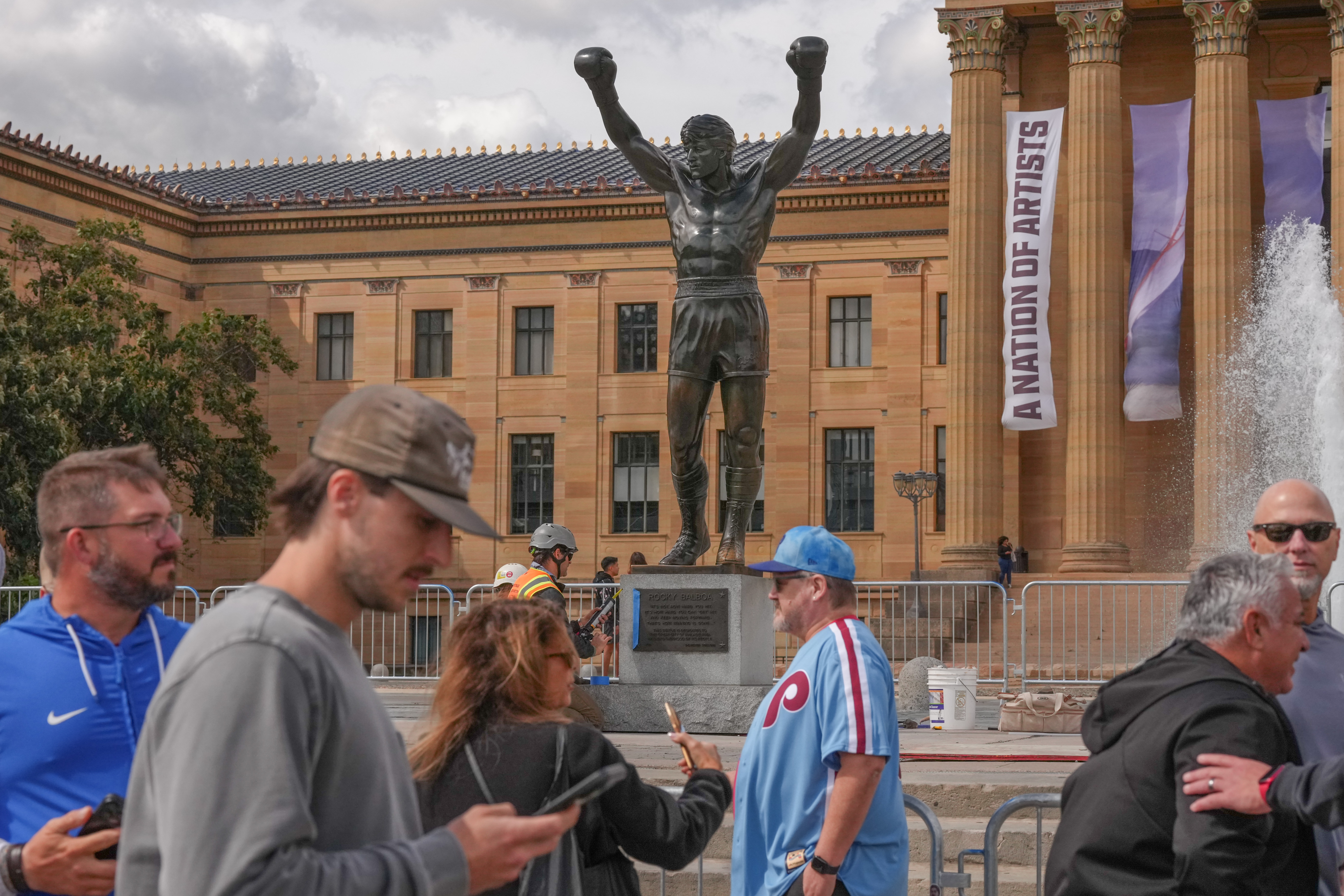
At long last, Rocky Balboa has come back home. Again.
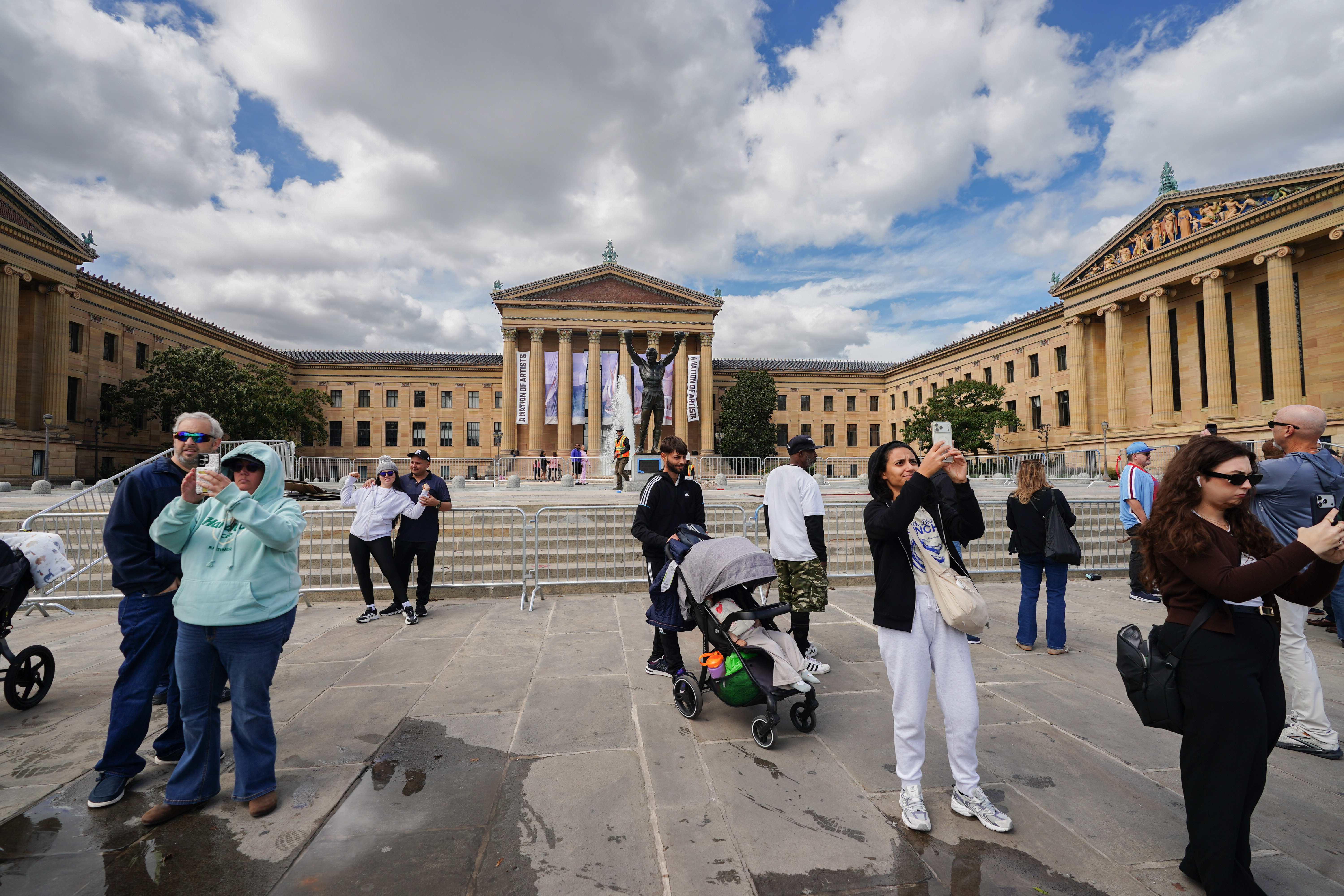
The city’s famed statue of the Italian Stallion was installed atop the Philadelphia Museum of Art’s iconic steps Wednesday. Its installation marks the most visible step yet in getting the fictional boxer’s monument into what has been billed as its permanent place.
Creative Philadelphia, the city arts office behind the statue’s move, said the monument was affixed to its pedestal at the top of the steps about 11:30 a.m. Additional cleanup work was slated to take place Thursday, and barricades around the statue were to be removed Friday, marking the installation’s completion.
After that, no additional work is scheduled, the office said.
The statue’s move, which officially began on Sept. 11, caps a monthslong series of monumental moves at the Art Museum. Since 2006, it sat at the bottom of the institution’s steps, and was then housed inside the museum for the exhibit “Rising Up: Rocky and the Making of Monuments” starting in March.
The original statue, which Stallone commissioned for Rocky III, has long been a controversial piece of public art in the city. It arrived in town in 1981, and has since been moved about a half dozen times — including previous stints at the top of the steps.
Visitors at the newly installed Rocky statue on the Art Museum steps.Jessica Griffin / Staff Photographer
Now, the statue stands about 14 feet back from the edge of the top step, adjacent to where Rocky’s shoe prints are embedded into a walkway.
Last fall, an Inquirer survey found that 46% of respondents believed there should not be a Rocky statue at the top of the steps. About 20% of respondents said there should not be a Rocky statue in the city’s quiver of monuments at all.
That perspective has been present among Philadelphians since the statue arrived more than four decades ago, when some local officials referred to it as “unnecessarily strident.” At least one Inquirer columnist called it a “monument to schlock, chutzpah, and mediocrity” following its debut.
Since then, debates over its merits — as well as whether it is art or merely an iconic structure — have cropped up periodically. Still, in January, the Art Commission voted to approve a plan for the statue’s installation at the top of the steps.
“We are pleased that after months of planning, the city’s Rocky statue is permanently installed at the top of the Philadelphia Museum of Art steps, where it was first unveiled in 1982,” public art director Marguerite Anglin said in a statement. “It now stands in conversation with the Joe Frazier statue, the real life Philadelphia boxer who inspired the Rocky story.”
A Turkish man died at Second Avenue and the beach in North Wildwood Thursday afternoon, police said.
Authorities on Friday identified the victim as Ahmet Yimenici, 21, noting in a statement that he was transported to Cooper University Hospital Cape Regional after officials responded to a call for a swimmer in distress at around 2 p.m. Thursday.
Officials from the North Wildwood Fire Department and North Wildwood Beach Patrol began lifesaving efforts at the scene after receiving the call, authorities said. However, Yimenici was pronounced dead at the hospital a short time later, authorities said.
No foul play in Yimenici’s death was identified.
“Our hearts go out to Mr. Yimenici’s family during this incredibly difficult time,” said North Wildwood Police Chief Katherine Madden in a statement. “I also want to recognize the quick actions of the surfers and civilians on scene. Their willingness to act without hesitation gave this young man the best possible chance, and we’re grateful for their courage.”
Officials urged beachgoers to swim in areas under the watch of on-duty lifeguards.
Anyone who may have information about the incident is asked to contact the North Wildwood Police Department Detective Bureau at 609-522-2411.
The case of Eugene Albert Horsch has captured national attention after he was arrested at what seemed like a routine traffic stop near Independence Mall.
And for weeks, it has only gotten stranger.
story continues after advertisement
Police say they believe that at least three women were killed in Horsch's Olney home — a dilapidated, mysterious property at the center of the investigation. Horsch, 44, remains in federal custody on illegal gun possession and related charges, and has not been charged with any violent crimes.
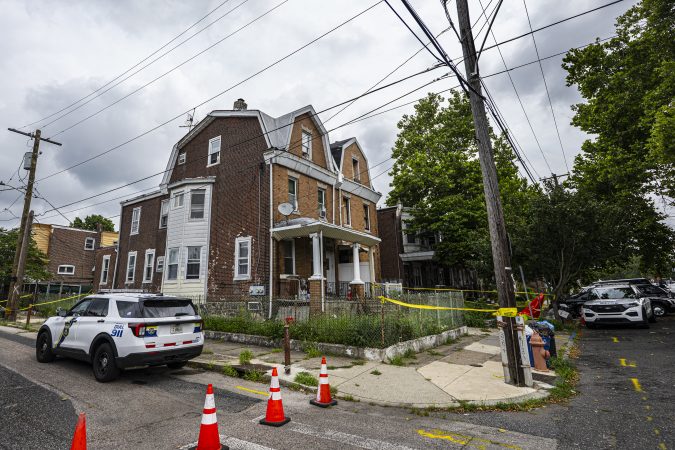
For weeks, federal and local authorities have been searching his house on the 400 block of West Chew Avenue, turning up mountains of bizarre evidence. At least two other women connected to Horsch and his late father, Raymond "R.C." Horsch, were last heard from at the property.
Unknown chemicals, falsified law enforcement credentials, urns, and disturbing writings have been uncovered in the home since searches began two months ago. Answers into what exactly was going on there, however, remain elusive as the investigation continues.
Horsch's initial arrest in the case came after what started as a routine traffic stop near Independence Mall. A U.S. park ranger saw Horsch's black BMW stopped on Sixth Street in a restricted area, and approached the vehicle to speak with the driver.
The ranger, police said, heard a woman in the vehicle say, "You're going to hurt me." She then produced an ID identifying herself as Blair Tonzelli, a 38-year-old woman who was reported missing in February 2023 — an alias the passenger said she used because of open warrants for her arrest, sources told The Inquirer.
Police searched Horsch's vehicle, and recovered two firearms with obliterated serial numbers, along with cocaine, fentanyl, and marijuana, according to an affidavit. Police, sources said, also found a fake U.S. Drug Enforcement badge with Horsch's photo on it next to the name "Eugene Frederick Steiner," as well as switchblade knives, a cattle prod, and a collapsible baton.
Horsch was arrested and charged with illegal gun possession and drug crimes, and was held on $500,000 bail at Curran-Fromhold Correctional Facility. Federal drug enforcement officers, with assistance from Philadelphia police, began searching his Olney home that day.
Eugene Albert Horsch, 44, of Philadelphia.Courtesy of Philadelphia police
story continues after advertisement
June 26
Searching the Chew Avenue house
After a week of searching, investigators had uncovered a trove of bizarre items. Among them, Inspector Raymond Evers later said, were a home lab in the basement, a marijuana grow operation valued at about $280,000, and a number of containers filled with an unknown oily substance.
Investigators also found an illegal gun, a fake FBI badge with Horsch's photo, five urns containing what police believe are cremated human remains, bottles of liquid investigators could not immediately identify, and a 55-gallon drum with water lines leading to a hole in the ground, according to an affidavit. Additionally, the search revealed bank cards in Tonzelli's name, and an unsigned handwritten document that referenced serial killer Ted Bundy, among other items.
“We just don’t know what he’s doing, if he’s producing something, if he’s making something, if he’s irrigating something," said Deputy Police Commissioner Frank Vanore at the time. "We don’t know."
As the search continued, suspicions were renewed about Horsch's late father, Raymond Horsch, who died last year. The elder Horsch's ex-wife, Amy McHale, was reported missing in 2016, and, like Tonzelli, was last heard from at the Chew Avenue house. Police, however, said that it was too early to say whether any of the evidence recovered would reveal anything related to Tonzelli or McHale.
“This is much ado about nothing,” said Horsch’s attorney, Jerome Brown, of the missing persons investigation at the time. "They're barking up the wrong tree."
Investigators search the home of Eugene Albert Horsch on West Chew Avenue in Olney on June 26.Gabriel Coffey / Staff
June 30
Horsch held in federal custody
Horsch was arraigned on a federal firearms charge in connection with his June 19 arrest. Previously, city prosecutors charged him in the case, but with the federal charge, Horsch would be unable to post bail and would remain detained until trial.
During an appearance in federal court, Horsch spoke little beyond responses to routine legal questions.
“We believe Mr Horsch is innocent," Brown, Horsch's attorney, said in July.
July 22
Excavation at Horsch's home
In the month that federal and local authorities had been examining Horsch's house, investigators used a number of tools, including canine teams from the New Jersey State Police. But by late July, the focus turned to what was beneath the property.
Authorities announced they would unearth a pipe under the house, and examine it for "any evidence that may be present," said Philadelphia police spokesperson Sgt. Eric Gripp. That pipe, Evers later said, was a sewer line.
On the day of the excavation, investigators began digging early, tearing through a small, overgrown garden, as well as the sidewalk and street in front of the property. In the late morning, investigators, with assistance from the Philadelphia Water Department, pulled a piece of pipe from the ground and took it to be examined.
Workers and police investigators excavate a pipe at the home of Eugene Albert Horsch on West Chew Avenue on July 22.Jose F. Moreno / Staff Photographer
Days later, Evers said, more than 20 containers of an unknown substance found in the house were delivered to a lab in Chicago for testing and analysis.
Early August
Two new victims identified
During the search of Horsch's home, investigators discovered about 50 hard drives and other electronic devices, and sent them to the Regional Computer Forensic Lab. In total, those devices contained more than 60,000 images, 70,000 videos, and 10,000 pages of writings and drawings.
In early August, during the search of a hard drive, investigators found what Evers described as images and video of "what appeared to be two deceased females." Those women have been identified as Maribel Fresses, who was 27 when she went missing in February 2018, and Gabrielle Amarando, who was 22 when she went missing in September 2012.
Neither woman had previously been linked to the case, but police believe they were killed inside the Horschs’ Olney home. Investigators, however, had not recovered human remains in the home, Evers said. Police are trying to determine when the women died. They have stopped short of blaming either Horsch.
Evers added that after reviewing the photos and video, the Philadelphia Office of the Medical Examiner said that "if the images and the video are real and not altered in any way," the women were dead.
Gabrielle Amarando, (left) missing since 2012 and Maribel Fresses, 27, reported missing in 2018. Police believe they were killed inside the Olney home.Obtained by The Inquirer
Horsch had been in federal custody for more than a month at this time following his arrest in June. Neither Horsch nor his attorney appeared in court during the hearing where Assistant District Attorney Alyssa Amoroso withdrew the charges.
Hours before a news conference announcing the new developments, authorities contacted the women's families, Evers said. The "graphic and dark" depictions of what appeared to be their dead bodies, he added, seemed to confirm their deaths.
Ricardo Fresses, 61, said that deep down, he knew his daughter Maribel Fresses was dead.
“She called me every day. Absolutely every day she called me, and one day she stopped calling me,” he said. “And as the years went by I knew she was gone.“
Lora Timmons, Amarando’s stepmother, said she was devastated by the news.
”I always hoped I’d see her again," she said. “I didn’t want to think the worst.”
Because their bodies had not been found, the medical examiner's office cannot declare the two women dead. Authorities expect a "protracted" investigation, Evers said, and any declaration of their deaths would likely have to go through Orphans' Court.
In total, Evers said, authorities had served more than 95 search warrants on the property to discover an "astonishing" amount of evidence. Investigators, he added, had only reviewed about 5% of the digital materials, and it was not yet clear when the women died.
“Eugene lived there. He lived there for a long time. His dad lived there for a long time,” Evers said.
Inspector Raymond Evers speaks during an Aug. 12 news conference.Jessica Griffin / Staff Photographer
Aug. 28
Fifth missing woman linked to Olney house
As investigators continued to review digital evidence from the home on Chew Avenue, they found what they believed was video footage showing Raymond "R.C." Horsch killing a woman on camera, law enforcement sources said.
The footage, which police found on a hard drive inside Horsch's house in Olney, appeared to show the older Horsch strangling the woman at his home. Police did not disclose the woman's identity, but notified a relative, the sources said.
Investigators had not recovered the woman's body, and it was unclear when the footage was taken. But with the video's discovery, the woman became the fifth known missing person tied to the Chew Avenue property.
Sources told The Inquirer that police expected the number of missing women connected to the home to grow as the investigation continued.
An unidentified woman in what appears to be Raymond "R.C." Horsch's home on Chew Avenue in Olney. The image is among several photographs in his book "Eroto: To The Prurient Interest,” Volumes I & II.Obtained by The Inquirer
Sept. 11
Latest victim publicly identified
Family members identified the fifth missing woman tied to the Chew Avenue house as Nicole Amanda Fusaro, who had been missing since July 2018.
Fusaro was 27 when she went missing, and was last seen in Kensington. She was raised in Northeast Philadelphia, and attended George Washington High School, according to her Facebook page. A family member told The Inquirer that Fusaro's parents both struggled with addiction, and that she began using drugs in her late teens before drifting to Kensington.
Investigators previously recovered a video on a hard drive taken from Horsch’s home while in search of clues for other missing persons linked to the property. Law enforcement sources said they believed the video shows the older Horsch strangling Fusaro to death.
“Hopefully more attention will be made to missing persons so this doesn’t happen again,” said Jonathan Halloran-Koren, Fuscaro's cousin.
Nicole Fusaro was reported missing in 2018 when she was 27. Police believe she was killed by Raymond "R.C." Horsch in his Chew Avenue home.Courtesy of Jonathan Hallo
Sept. 16
Seven dead or missing women linked to Olney house
The number of dead or missing people linked to Horsch's Olney home increased to seven after investigators recovered images that appeared to show two more women dead inside the property, Deputy Police Commissioner Frank Vanore said.
Among the images, Vanore added, were photos that showed a 25-year-old woman unconscious inside the home with injuries on her body. Vanore declined to identify the woman at her family's request.
Additional images showed another woman who appeared to be dead inside the property, and investigators have not yet identified her. She appeared to be in her mid-20s, Vanore said.
In total, investigators identified 58 people in digital evidence collected from the home, Vanore said. Of those, 16 were located and interviewed by police, and 25 others were located but not yet interviewed.
FBI Philadelphia Special Agent in Charge Wayne Jacobs (center) looks to Deputy Police Commissioner Frank Vanore (left) during a press conference.Elizabeth Robertson / Staff Photographer
Staff Contributors
Reporting: Nick Vadala, Max Marin, Ellie Rushing, Barbara Laker, and Ryan W. Briggs
Editing: Molly Eichel, Dan Rubin
Copy Editing: Brian Leighton
(()=>{var Q=(e,t)=>()=>(t||e((t={exports:{}}).exports,t),t.exports);var A=Q(r=>{var X={0:”Jan.”,1:”Feb.”,2:”March”,3:”April”,4:”May”,5:”June”,6:”July”,7:”Aug.”,8:”Sept.”,9:”Oct.”,10:”Nov.”,11:”Dec.”};function L(e){return e===void 0&&(e=new Date),X[e.getMonth()]}var ee={0:”Jan”,1:”Feb”,2:”Mar”,3:”Apr”,4:”May”,5:”Jun”,6:”Jul”,7:”Aug”,8:”Sep”,9:”Oct”,10:”Nov”,11:”Dec”};function b(e){return e===void 0&&(e=new Date),ee[e.getMonth()]}function s(e){return e==null}function T(e){return typeof e==”number”&&isFinite(e)}function f(e){return T(e)&&Math.floor(e)===e}var te=[“one”,”two”,”three”,”four”,”five”,”six”,”seven”,”eight”,”nine”],ne=[“million”,”billion”,”trillion”,”quadrillion”,”quintillion”,”sextillion”,”septillion”,”octillion”,”nonillion”,”decillion”],S=[“th”,”st”,”nd”,”rd”,”th”,”th”,”th”,”th”,”th”,”th”],oe=[11,12,13];function M(e){if(s(e))return””;var t=+e;return f(t)?oe.indexOf(t%100)>-1?S[0]:S[t%10]:””}var ie=[“first”,”second”,”third”,”fourth”,”fifth”,”sixth”,”seventh”,”eighth”,”ninth”],re=new RegExp(/s+([^s]*)s*$/);r.apdate=function(e){return e===void 0&&(e=new Date),L(e)+” “+e.getDate()+”, “+e.getFullYear()},r.apdatetab=function(e){return e===void 0&&(e=new Date),b(e)+” “+e.getDate()+”, “+e.getFullYear()},r.apmonth=L,r.apmonthtab=b,r.apnumber=function(e){if(s(e))return””;var t=+e;return f(t)?t=10?e.toString():te[t-1]:e.toString()},r.aptime=function(e){e===void 0&&(e=new Date);var t,n,o=e.getHours(),i=e.getMinutes(),u=i===0;if(u){if(o===0)return”midnight”;if(o===12)return”noon”}return o0?o:12):(t=”p.m.”,n=o===12?o:o-12),u?n+” “+t:n+”:”+(i<10?"0"+i:i)+" "+t},r.capfirst=function(e){if(s(e))return"";var t=String(e);return""+t.charAt(0).toUpperCase()+t.slice(1)},r.intcomma=function(e){if(s(e))return"";var t,n=+e;return T(n)?((t=n.toString().split("."))[0]=t[0].replace(/B(?=(d{3})+(?!d))/g,","),t.join(".")):e.toString()},r.intword=function(e){if(s(e))return"";var t=+e;if(!f(t))return e.toString();var n=Math.abs(t);if(n<1e6)return e.toString();var o=Math.ceil(Math.log(n+1)/Math.LN10)-1,i=o-o%3,u=t/Math.pow(10,i);return(u=Math.round(10*u)/10)+" "+ne[Math.floor(i/3)-2]},r.ordinal=function(e,t){if(t===void 0&&(t=!1),s(e))return"";var n=+e;return f(n)?t&&n/Android|webOS|iPhone|iPad|iPod|BlackBerry|IEMobile|Opera Mini/i.test(navigator.userAgent);var g=(e,t=null,n=null)=>{n||(n=document.querySelector(“head”));let o=document.createElement(“script”);o.type=”text/javascript”,o.src=e,t&&(o.onload=t),n.appendChild(o)},q=()=>(window.PMNdataLayer?.[0]!==void 0&&window.PMNdataLayer[0])?.analytics?.user?.state===”Subscribed”,k=()=>{let t=(window.PMNdataLayer?.[0]!==void 0&&window.PMNdataLayer[0])?.analytics?.user?.state;return window.location.host.includes(“zzz-systest”)||window.location.host.includes(“pmn.arcpublishing.com”)||window.location.host.includes(“stage.fusion.inquirer.com”)||typeof t>”u”},j=()=>{let t=(window.PMNdataLayer?.[0]!==void 0&&window.PMNdataLayer[0])?.analytics?.user?.hasAdsFreeReading;return!!(t&&t==1)},v=()=>window.location.host.includes(“localhost”);var se=()=>{j()&&document.querySelectorAll(“.js-adbox”).forEach(t=>{t.classList.add(“is-hidden”)})},H={init:()=>{se()}};var a,y=!1,ae=()=>{a=document.querySelector(“.js-appendix”)},C=()=>{let e=document.querySelector(“.js-appendix-static-content”),t=e.querySelector(“.js-appendix-static-items”).getBoundingClientRect().height;e.classList.remove(“is-collapsed”),e.style.maxHeight=t+”px”},B=()=>{a.classList.contains(“js-appendix-sticky”)&&(a.getBoundingClientRect().top{y=document.querySelector(“.js-appendix-static-content”).getBoundingClientRect().bottom{y&&document.querySelector(“body”).classList.toggle(“is-open-appendix”)},ce=()=>{window.addEventListener(“scroll”,()=>{B(),D()}),window.addEventListener(“resize”,()=>{B(),D()}),document.querySelector(“.js-appendix”).addEventListener(“click”,()=>{P()}),document.querySelectorAll(“.js-appendix-expand-static”).forEach(e=>{e.addEventListener(“click”,()=>{C(),window.addEventListener(“resize”,()=>{C()})})}),document.querySelectorAll(“.js-appendix-link”).forEach(e=>{e.addEventListener(“click”,()=>{P()})})},N={init:()=>{ae(),ce()}};var m,le=(e,t)=>{m=m||window.PMNdataLayer,m?m.push({event:”misc_event”,eventAction:e,eventLabel:t}):window.location.hostname.includes(“localhost”)?console.log(“Analytics event:”,e,t,”(not actually being sent due to localhost)”):console.log(“Failed to push analytics event”,e,t)},I={event:(e,t)=>{le(e,t)}};var de=()=>{document.querySelectorAll(“.js-card-show-more”).forEach(e=>{e.addEventListener(“click”,()=>{ue(e)})})},ue=e=>{let t=e.closest(“.js-card”),n=t.querySelector(“.js-card-body”),i=n.querySelector(“.js-card-body-content”).getBoundingClientRect().height;t.classList.remove(“is-collapsed”),n.style.maxHeight=i+”px”,setTimeout(()=>{n.style.maxHeight=”none”},1e3),I.event(“expand_card”,`${t.dataset.id}`)},F={init:()=>{de()}};var c,$,pe=()=>{c=document.getElementById(“js-inno-toast”)},fe=e=>{if(!c)return;c.innerHTML=e,c.classList.add(“is-active”);let t=()=>{c.addEventListener(“transitionend”,me,{once:!0}),c.classList.remove(“is-active”)};clearTimeout($),$=setTimeout(t,5e3)},me=()=>{c.innerHTML=””},l={init:()=>{pe()},showToast:fe};var h,z=!1,he=async()=>new Promise(e=>{setTimeout(()=>{console.log(“simulating createShareLink for localhost”),e(“https://inquirer.com/interactives”),ge()},100)}),ge=()=>{let e=document.querySelector(“.js-gift-toast-receiver”);!e||!(e instanceof HTMLElement)||setTimeout(()=>{let t=e?.querySelector(“span”);t&&(t.innerHTML=”Gift link copied to clipboard“)},20)},ve=()=>{let e=window.services?.createShareLink;e&&(h=e),v()&&(h=he),h&&we()},ye=async e=>{let t=”text/plain”,n=async()=>{try{return await h(window.location.pathname)}catch{e.dataset.state=”error”,l.showToast(“Hmm, we couldn’t generate a gift link…”)}},o=new ClipboardItem({[t]:n()});await navigator.clipboard.write([o]).catch(i=>{console.log(i),l.showToast(“Couldn’t copy to clipboard, try again?”),e.dataset.state=”error”}),l.showToast(“Gift link copied to clipboard!”),e.dataset.state=”complete”},we=()=>{document.querySelectorAll(“.js-gift”).forEach(t=>{(q()||v()||k())&&t.classList.add(“is-available”)}),document.querySelectorAll(“.js-gift-button”).forEach(t=>{t instanceof HTMLButtonElement&&t.addEventListener(“click”,()=>{t.classList.contains(“disabled”)||(t.dataset.state=”loading”,z=!0,ye(t),setTimeout(()=>{t.dataset.state=”ready”},2e3))})});let e=document.querySelector(“.js-gift-toast-receiver”);!e||!(e instanceof HTMLElement)||xe(e)},xe=e=>{new MutationObserver(n=>{for(let o of n){let i=[…o.addedNodes].at(0);if(!(i instanceof HTMLElement))return;z&&l.showToast(i.outerHTML)}}).observe(e,{subtree:!0,childList:!0})},O={init:()=>{ve()}};var Le=()=>{window.addEventListener(“message”,e=>{if(e.data[“datawrapper-height”]){let t=e.data[“datawrapper-height”];for(let n in t)document.querySelector(`#datawrapper-chart-${n}`).setAttribute(“height”,t[n])}})},be=()=>{document.querySelectorAll(“.js-datawrapper-graphic”).forEach(e=>{g(`https://datawrapper.dwcdn.net/${e.dataset.id}/embed.js`,null,e)})},Se=()=>{window.addEventListener(“message”,e=>{let t=e.data;document.querySelectorAll(`iframe[src*=”${t.id}”]`).forEach(o=>{o.style.height=`${t.height}px`})},!1)},Me=()=>{document.querySelectorAll(“.js-pym-graphic”).forEach(e=>{if(typeof window{new window.pym.Parent(e.id,e.dataset.iframe)};typeof window.pym>”u”?g(“https://pym.nprapps.org/pym.v1.min.js”,t):t()}})},R={init:()=>{Le(),be(),Me(),Se()}};var p,Te=()=>{document.querySelectorAll(“.js-hover”).forEach(e=>{e.addEventListener(“click”,()=>{J(e)}),e.addEventListener(“mouseenter”,()=>{J(e)}),e.addEventListener(“mouseout”,()=>{V(e)})}),window.addEventListener(“scroll”,()=>{p!==null&&Ae()})},Ae=()=>{(p>window.scrollY+100||p{V(e)})},J=e=>{e.classList.add(“is-visible”),p=window.scrollY},V=e=>{e.classList.remove(“is-visible”),p=null},G={init:()=>{Te()}};var Ee=()=>{},W={init:()=>{Ee()}};var d,w,x=!0,qe=()=>{d=document.querySelectorAll(“.js-video-autoplay”)},ke=()=>{window.addEventListener(“resize”,()=>{Y()}),window.addEventListener(“scroll”,()=>{Y()}),d.forEach(e=>{e.addEventListener(“volumechange”,t=>{e.muted!==x&&!E()&&(x=e.muted,je())})})},Y=()=>{let e;d.forEach((t,n)=>{let o=t.getBoundingClientRect(),i=o.height/2;o.y-i&&(e=t)}),e!==w&&(w=e,d.forEach(t=>{t.pause()}),e?e.play():w=null)},je=()=>{d.forEach(e=>{e.muted=x})},_={init:()=>{qe(),d&&ke()}};var U={init:()=>{H.init?.(),N.init?.(),F.init?.(),O.init?.(),R.init?.(),G.init?.(),W.init?.(),_.init?.(),l.init?.()}};var He=()=>{},Z={init:()=>{He()}};var Ce=document.querySelector(“.js-inno”),K=()=>{U.init(),Z.init()};Ce?K():new MutationObserver((t,n)=>{if(document.querySelector(“.js-inno”)){n.disconnect(),K();return}}).observe(document,{attributes:!0,childList:!0,subtree:!0});})();
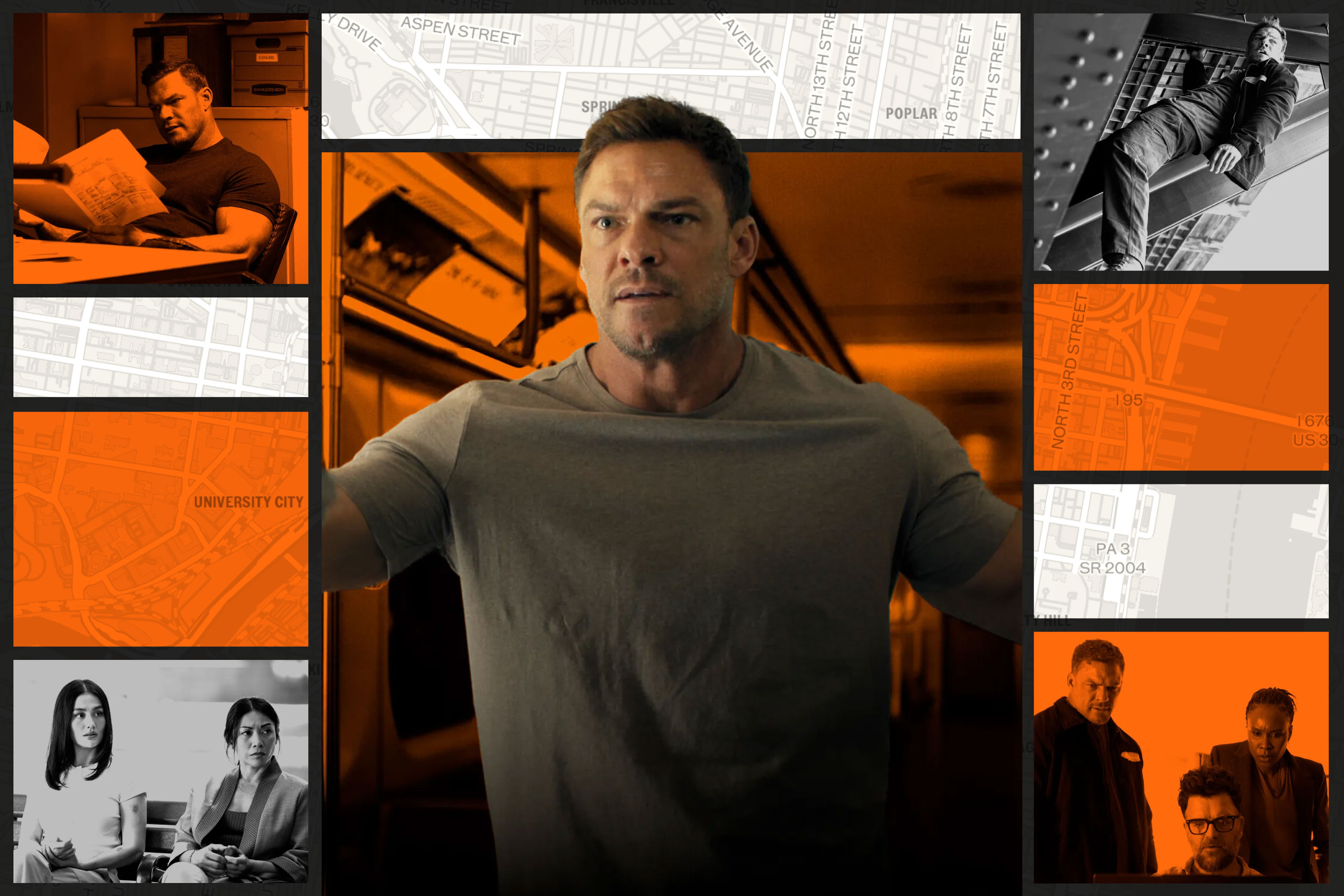
Vigilante Jack Reacher's shadowy dealings spilled out across Philadelphia for the Reacher’s fourth season, which is now available in full on Amazon Prime. Starring actor Alan Ritchson as the hulking retired Army investigator, the series was spotted filming around town in 2025.
Based on Lee Child's 2009 novel Gone Tomorrow, the fourth season of Reacher has its titular character facing off against he CIA, federal agents, and international mercenaries following a woman's suicide. And while much of the on-screen action appears to have been filmed elsewhere — namely Toronto, which looks a lot like Philly, but with space — the City of Brotherly Love does show up quite a bit.
Here, we've rounded up all the Philly spots we could identify in season four. Check out the map below for where Reacher and his cohorts went in the city.
story continues after advertisement
Loading…
Seen in episode 1
City Hall
Michael Bryant / Staff Photographer
Reacher's fourth season immediately sets the scene with a shot of the William Penn statue atop City Hall as a nightscape of Center City shines in the background.
Seen in episode 1
Uptown Beer Garden
Erin Blewett / For The Inquirer
We catch our first glimpse of our hero, Jack Reacher (Alan Ritchson), as he exits Uptown Beer Garden, walking out of the establishment silently with a beer in hand.
Seen in episode 1
LOVE Park
Michael Bryant / Staff Photographer
Reacher speaks for the first time this season, ordering a "wiz wit" from a nondescript food truck in Love Park.
Seen in episode 1
Avenue of the Arts
Jessica Griffin / Staff Photographer
Here, Reacher strolls down the sidewalk on the west side of Broad Street, chomping on his cheesesteak. Canonically, it is just after 2 a.m., and the street is deserted as he descends into the Walnut-Locust entrance of the B line, which runs along Broad Street.
Seen in episode 1
Walnut-Locust Station
Alejandro A. Alvarez / Staff Photographer
As he enjoys his cheesesteak, Jack Reacher (Alan Ritchson) heads down into the Broad Street Line at this Center City station. Several interior shots of the station are shown, including one in which a rat munches on a hot dog.
Seen in episode 1
Benjamin Franklin Bridge
Thomas Hengge / Staff Photographer
Philly is shown off in all its nocturnal glory in episodes one, and seven with a low-light shot of Center City from the Ben Franklin Bridge. Episode five features a skyline shot from the bridge, showing the One Water Street Apartments building.
Seen in episode 1
Benjamin Franklin Parkway
Tom Gralish / Staff Photographer
For the first time in the season's first episode, the sun rises on Philadelphia. And it does so in this stunning aerial shot showcasing many of the Ben Franklin Parkway's gems — Logan Circle, the Philadelphia Museum of Art, the works.
Seen in episode 1
Parkway Central Library
Tom Gralish / Staff Photographer
We get a great glimpse of the exterior of the Parkway Central Library before heading inside, where Jack Reacher (Alan Ritchson) and Jacob Merrick (Christopher Rodriguez-Marquette) do research on Congressman John Sampson (Marc Blucas), a North Carolina representative who is launching a presidential bid.
Seen in episode 1
Parc
Courtesy of HughE Dillon
Parc briefly plays host to Reacher, Lila Hoth (Agnez Mo), and Jacob Merrick (Christopher Rodriguez-Marquette) as the trio settles in at an outdoor table to evade police.
Seen in episode 3
Walt Whitman Bridge
Tom Gralish / Staff Photographer
Reacher and his cohorts travel back into Philly via this bridge after escaping Washington, D.C. In the background, the old Southwark Generating Station is clearly visible.
Seen in episode 3
Schuylkill Expressway
Tom Gralish / Staff Photographer
As Reacher and his crew traverse Philly at night, the action leads to a shot of the west end of Center City near 30th Street Station from the Schuylkill Expressway.
Seen in episode 3
Schuylkill Expressway
Monica Herndon / Staff Photographer
Here, we get another nightscape shot of Philly's skyline, again from I-76 near 30th Street Station looking east. In the foreground, Locust on the Park is lit up green and is featured prominently.
Seen in episode 4
Benjamin Franklin Parkway
Monica Herndon / Staff Photographer
The Philly skline is again featured in a sprawling shot from the Parkway. In the lower left, the Parkway House is visible.
Seen in episode 4
City Branch tunnel
Ed Hille / Staff Photographer
Fresh off a victory over some goons following a battle in the subway, Reacher makes his way back above ground here as he evades police.
Seen in episode 5
Philadelphia’s Magic Gardens
Margo Reed / Staff Photographer
While on the run from the police, Reacher and Tamara take refuge here, only narrowly avoiding capture in the Gardens' maze-like interior.
Seen in episode 5
The Rail Park
Yong Kim / Staff Photographer
Reacher and Tamara continue to evade capture, cutting through the Rail Park before dangling from its side to hide.
Seen in episode 6
12th and Market Streets
Alejandro A. Alvarez / Staff Photographer
Reacher and Tamara's mugshots appear on a screen at the corner of 12th and Market, which they see after passing by the Hard Rock Cafe.
Seen in episode 6
Italian Market
Alejandro A. Alvarez / Staff Photographer
Yet another Philly skyline shot, but this time from South Philly. If you look closely, you can see St. Paul Parish, as well as the seating area for the Di Bruno Bros. 9th Street Bottle Shop.
Seen in episode 7
56th and Market Streets
Kate McCann / Staff Photographer
This skyline shot looks east along the Market-Frankford El line, with one of Steve Powers' "A Love Letter For You" murals clearly visible.
Seen in episode 7
Highmark Mann Center for the Performing Arts
Jessica Griffin / Staff Photographer
The Mann becomes a plot point as a potential demonstration site for a toxin being sold on the dark web thanks to an orchestral concert of movie scores.
Seen in episode 8
Schuylkill Expressway
Tamara, Reacher, and Jacob travel along I-76 in South Philly, with a clear view of Kindy's Christmas Factory Outlet in the background. Reacher and his cohorts continue their journey on I-76, getting off at exit 349 and crossing over Packer Avenue. If you squint, you can just make out the Chickie's & Pete's sign in the background.
Seen in episode 8
Philadelphia Museum of Art
Tom Gralish / Staff Photographer
We get another aerial shot of the Parkway zooming into City Hall, but this time the camera travels over the roof of the Philadelphia Museum of Art. The building's bronze winged horses and griffins are the stars of the shot.
Seen in episode 8
45th and Market Streets
The season closes out on, you guessed it, an aerial shot of Center City. This one looks east from West Philadelphia as Reacher rides the subway to parts unknown, Drexel University's Vidas Field barely visible to the left.
story continues after advertisement
That was every location we could spot in this season of Reacher. Explore the map of all locations featured. Tap onHover overa pin to learn more.
Staff Contributors
Design and Development: Garland Fordice and Sam Morris
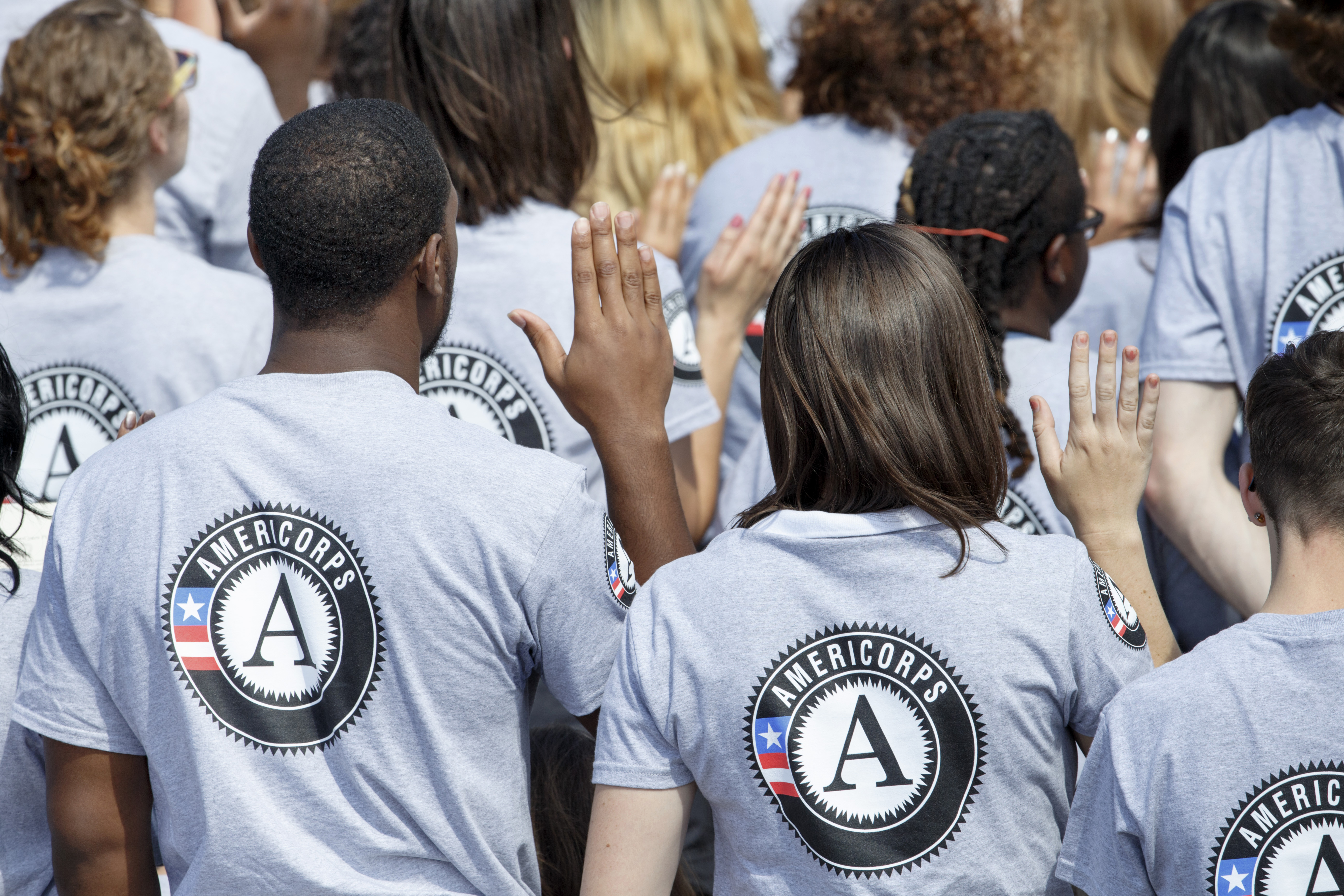
Pennsylvania Gov. Josh Shapiro and 24 other state leaders have reached a settlement in a federal lawsuit that keeps President Donald Trump’s administration from making significant changes to AmeriCorps without prior warning and justification.
The settlement announced last week stipulates that AmeriCorps must provide at least 30 days’ notice before making changes to its services, and protects funding for the organization through fiscal year 2026. The settlement comes more than a year after Shapiro and other governors and state attorneys general challenged a 2025 move to discontinue about $400 million worth of AmeriCorps programs and wipe out a vast majority of the organization’s staff.
Created in 1993, AmeriCorps is a federal community service program that oversees thousands of volunteers, and acts as a domestic version of the Peace Corps. It provides services that include natural-disaster relief with the Red Cross, building homes with Habitat for Humanity, and providing instructors in underserved schools.
The lawsuit’s outcome, Shapiro said in a statement, protects “critical funding the Commonwealth relies on to help communities respond to natural disasters, support seniors and veterans, keep our trails clean, and teach children to read.”
“While this disruption never should have happened in the first place, I am pleased that by uniting together, states were able to not only stop these unannounced and drastic cuts to these important programs, but also to take steps to prevent this from happening again,” Davenport said.
The lawsuit was filed in April 2025, after the Department of Government Efficiency recalled hundreds of members of the organization’s National Civilian Community Corps and placed a majority of its federal employees on administrative leave. DOGE also ordered AmeriCorps to terminate grants to more than 1,000 community service programs nationwide, including several in Pennsylvania.
Now, under the settlement, AmeriCorps has said that it “does not anticipate mass terminating grants on a scale comparable to what happened in Spring 2025,” or conducting mass layoffs during fiscal year 2026. If those actions, among others, were to take place, it must provide the coalition of state lawmakers who brought the lawsuit with at least 30 days’ notice, and explain its legal authority to make the changes.
Additionally, the settlement pauses litigation in the lawsuit through February, after which point the case will be dismissed so long as the terms of the agreement are upheld, Shapiro’s office said in a statement.
In Pennsylvania, PennSERVE is the designated state service commission for AmeriCorps, and it distributes about $16 million in federal money annually to more than two dozen programs, Shapiro’s office said. There were 655 active AmeriCorps volunteers serving in 41 counties across the state at time the grant terminations were announced.
“The federal government made a commitment with the Commonwealth of Pennsylvania to support these programs,” Shapiro said. “It’s my job as Governor to protect the interest of Pennsylvania taxpayers — and this settlement agreement ensures that these programs are protected for another year.”
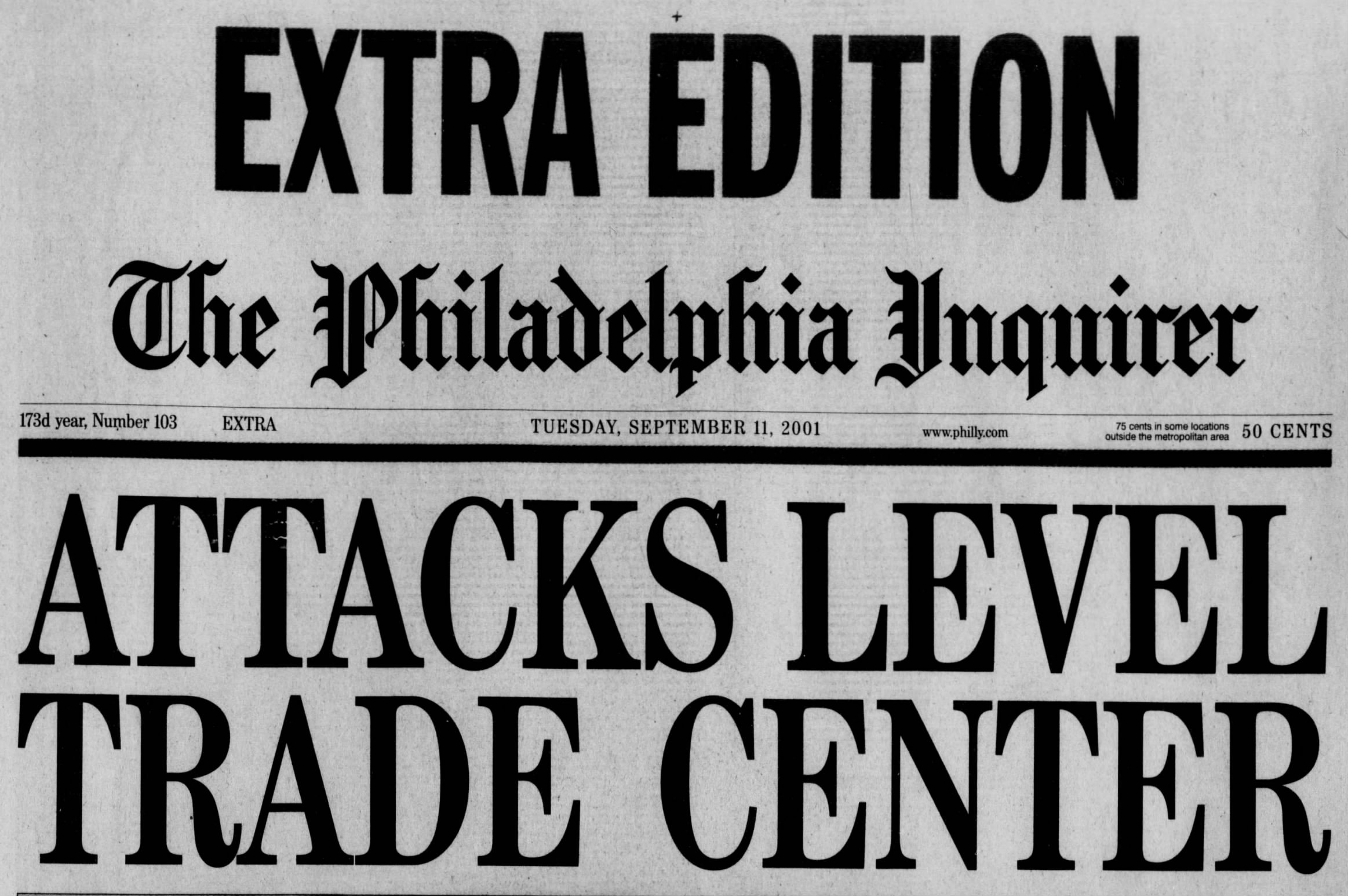
As the sun set on Philadelphia on Sept. 11, 2001, the city, like the nation, was in shock. Its citizens raged and wept, confronted with unprecedented acts of violence in New York City; Washington, D.C.; and Shanksville, Pa.
It wouldn’t be known for quite some time, but the attacks that rocked the East Coast that day took about 3,000 lives. Among them were dozens of people with local connections, including several crew members on the doomed flights.
But in the immediate aftermath of the 9/11 attacks, Philadelphia was focused on survival, and worried that the birthplace of the nation could be the next target. We evacuated, took refuge in religion, worried for the future, gave our blood and time to help, and focused our anger and confusion on our neighbors.
Now, 25 years later, the impacts of 9/11 continue to reverberate. And though society continued on, in the first few days after the tragedy, it seemed as if it could not.
Here is how The Inquirer and Daily News covered it:
Article from Sep 12, 2001 The Philadelphia Inquirer (Philadelphia, Pennsylvania) <!— –>
Panic in Center City
In the wake of the attacks, panic set in on Philadelphia. Fears the city could be the next target spread quickly, prompting the closure of city government offices, federal buildings, businesses, schools, and historic landmarks by noon.
“We are taking every reasonable precaution to ensure the safety of our citizens,” Mayor John F. Street said at a late morning news conference.
Thousands of people began a frantic commute home, gridlocking Center City’s streets and sidewalks. An estimated 50,000 SEPTA Regional Rail passengers were likewise stuck, with several lines suspended. Like all airports nationwide, Philadelphia International Airport was shut down.
By midafternoon, Center City was essentially a ghost town. Subway lines were all but deserted. Streets were eerily still and empty of cars. Philadelphia’s high-rises largely sat devoid of workers. And as the day wore on, the trauma continued to set in.
“I feel more shocked today,” said Southampton resident Paul Brown, 81, who survived the attacks on Pearl Harbor 60 years before. “I’m despondent, bewildered, and confused.”
Article from Sep 12, 2001 Philadelphia Daily News (Philadelphia, Pennsylvania) <!— –>
Blood and flags
Almost immediately, horror and sadness turned to anger. Though the enemy was not yet clear or confirmed, there were loud calls for retribution — including from the Daily News.
In its Sept. 12 issue, under a cover that read “Blood for Blood,” in an editorial headlined “Now, It’s Our Turn,” the People Paper wrote: “Revenge. Hold on to that thought. Go to bed thinking it. Wake up chanting it. Because nothing less than revenge is called for today.”
Others were more charitable, donating blood to help victims who may have survived. Thousands of people, in fact, streamed into blood donation centers to such a degree that the facilities were overwhelmed. Officials asked that anyone thinking of donating to wait to ease the crush.
“I feel pretty helpless, and I just wanted to do something,” said Andy Hartlove, 45, of Exton. “Giving blood seemed to be the only thing I could do.”
Then, there were the flags. So many people bought them to show their support that stores — specialty shops to big box stores alike — sold out completely, and manufacturers began running overtime shifts to make more.
“Nothing’s going to make anybody feel all that better, but it makes everyone united,” said Jim Whitehead, 22, who worked at National Flag & Banner.
Article from Sep 17, 2001 Philadelphia Daily News (Philadelphia, Pennsylvania) <!— –>
A turn to God
Faced with such monumental violence, many Philadelphians turned to the only being who they felt could provide answers: God.
Though schools, businesses, and government buildings shut down, many sanctuaries and religious institutions remained open. The city even organized an interfaith prayer service held at Dilworth Plaza on Sept. 13, which thousands attended.
Many religious leaders reported swellings of their congregations not seen since the bombing of Pearl Harbor. Religion, it seemed, was poised to regain a more prominent place in American lives.
“People realize when all is said and done that faith in God is the only thing that somebody else cannot take away from them,” said Msgr. John T. Conway, Archdiocese of Philadelphia vicar.
Many religious leaders took the opportunity to encourage reconciliation instead of revenge. Imam Shamsud-Din Ali, formerly of the Philadelphia Masjid, even encouraged worshipers to pray for the attacks’ perpetrators, noting that in order to perpetrate such a violent act, they must have been badly injured and were in need of God’s mercy.
The Jewish holiday of Rosh Hashanah arrived as the first religious holiday after the attacks. Paul Bender, the leader of Congregation Ner Tamid in Cherry Hill, sounded a shofar — a ram’s horn blown to sound the start of the Jewish New Year — at a ceremony, likening it to the sounds of wailing of those who lost loved ones. The “sudden, nightmarish anarchy” of the tragedy, he prayed, would soon give way to peace among all people.
Article from Sep 14, 2001 The Philadelphia Inquirer (Philadelphia, Pennsylvania) <!— –>
Faith and race targeted
Philadelphia’s Muslim and Arab American communities were on high alert, and immediately condemned the violence. Federal, state, and local leaders urged the public to not blame those groups, but violence and threats against them were prominent.
A week after 9/11, officials said, at least 20 bias crimes were reported against Jews and Arabs in New Jersey, and an “untold” number in Pennsylvania. Many people who weren’t Arab or Muslim were also targeted, their attackers believing them to be somehow associated with the tragedy.
“Apparently, all you need to be right now is brown,” said Emily Hornaday, spokesperson for the New Jersey Division of Criminal Justice.
Among the most prominent crimes in the area was an incident in which two off-duty Philadelphia police officers pulled a gun on a Lower Merion Township 7-Eleven store clerk at about 3 a.m. the night after the attacks. The clerk, who was from Pakistan, was unharmed, and one of the officers was charged with reckless endangerment and other offenses.
Taxicab drivers were pulled from their cars and threatened. Islamic religious centers boarded up their windows. A Palestinian flag was pulled down from the wall of Lincoln High School in Northeast Philadelphia, resulting in two arrests. A SEPTA bus passenger threatened a Moroccan man, and begged police to let him “kill the Pakistani.”
“Are we going after the perpetrators,” asked Amin Elarbi, president of the Al-Aqsa Islamic Society, “or are we targeting an entire faith and race?”
Article from Sep 17, 2001 Philadelphia Daily News (Philadelphia, Pennsylvania) <!— –>
Vanishing normalcy
Even in the early days of the aftermath, it was clear life was about to change. By midweek, city schools reopened, the local government began operating again, and, though curtailed and under new rules, flights began coming and going from PHL. Normalcy, however, was nowhere to be found.
Large public activities for the weekend after the attacks, such as a Mexican Independence Day festival at Penn’s Landing and a festival celebrating Philly’s connections with Italy known as the Splendor of Florence, were canceled.
Experts, meanwhile, predicted a swift, lasting change to daily life in the U.S. As Philadelphia Police Commissioner John Timoney put it, we needed to “reexamine how we go about our business.”
Among those changes, said Geoffrey Herrara, a Temple professor of political science who specialized in post-Cold War security, were an ever-greater electronic surveillance apparatus that would surely be stepped up. Cameras, he said, would be linked with biometrics, and tracking of our movements was to be expected in the future. Some of our privacy, he said, “may disappear.”
City leaders, however, focused on strategies to get tourists and workers back in town, and back in the high-rises they had quickly come to fear. Occupancy rates at area hotels fell to an abysmal 60%, and the sense that big-city life would be on the decline was palpable. Ultimately, though, we had to keep going, they said.
“I think we need to communicate to the hearts and minds of Philadelphians that we need to get on with life,” said George Burrell, the mayor’s secretary of external affairs. “The things that attracted you here are still here.”




 –>
–>  –>
–>  –>
–>  –>
–>  –>
–>