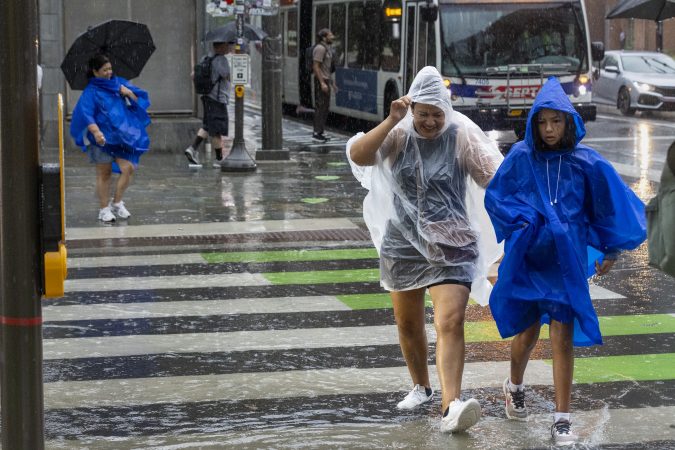
Severe storms were moving through the Philadelphia region Tuesday, bringing with them the potential for flooding and tornadoes.
The National Weather Service office in Mount Holly issued a flash flood warning for the area that was slated to be in effect through 8:45 p.m. Tuesday, as thunderstorms and heavy showers made their way to the region. Forecasters had predicted potentially unsettled weather that was expected to bring “several rounds” of rain.
“Even the first round we get could result in flooding,” said Paul Fitzsimmons, lead meteorologist at the weather service’s Mount Holly office. “With successive rounds, that results in an increased threat.”
The idea, Fitzsimmons added, is that once the ground is saturated with rain, the precipitation from future rounds of rain will have few places, if any, to go.
On Tuesday afternoon, the weather service also issued a tornado watch for the Philadelphia region and beyond. That tornado watch, which the weather service said applies to parts of Pennsylvania, New Jersey, Delaware, New York, and Connecticut, is in effect through 9 p.m. Tuesday.
The tornado watch impacts more than 32 million people, and covers possible tornados, scattered, ping pong ball-sized hail, and wind gusts of up to 70 miles per hour, according to the weather service.
Additional, more organized rounds of rain were expected to arrive later in the day, with multiple storms potentially hitting the region into the overnight period, according to the weather service. Rainfall rates could push into the neighborhood of one to two inches per hour at times.
The most severe weather, which could bring damaging winds, hail, and a possible tornado, was expected to arrive between 2 p.m. and 8 p.m., Fitzsimmons said.
Tuesday saw high temperatures in the 80s, but with very high humidity to start out. The storms were expected to alleviate some of that humidity, opening the way for cooler, drier days to come later this week.
It is not uncommon for weather setups to arrive with similar impacts in this way, Fitzsimmons said. It is, however, hard to say how long those patterns might last.
“There is something to the idea where you can get into patterns that repeat themselves,” he said.
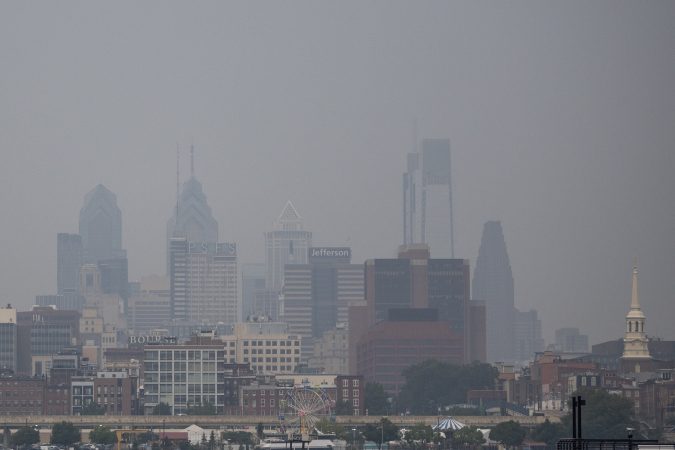
Impacts from Canadian wildfire smoke increased throughout the Philadelphia region Friday, degrading air quality enough to prompt a code purple alert, and force the closure or suspension of some city amenities and services.
It was the latest bad weather event in Philadelphia’s run of tough luck in July, which has so far resulted in record-setting heat and destructive storms that have marred back-to-back weekends. Smoky conditions arrived Thursday, and were bad enough Friday to prompt the closure of city pools and spraygrounds, and temporarily stop trash pickup.
“Our worsening air quality is a dangerous development,” Palak Raval-Nelson, commissioner of the city Department of Public Health, said in a statement. “I strongly encourage all residents to take action to protect themselves by staying indoors, unless they need to be outdoors.”
Likewise, the Philadelphia Zoo remained closed Friday, saying in a statement that its animals were being “closely monitored.” The city, however, stopped short of recommending the cancellation of outdoor events, and large productions like comedian Shane Gillis’ performance at Lincoln Financial Field and a Death Cab for Cutie performance at the Highmark Mann Center for the Performing Arts were still set to go on as of late afternoon.
Officials said that venue owners had been advised of the conditions, and were able to make their own decisions as to whether those events would happen.
Trash collection in the city was expected to cautiously resume Saturday, officials said. Resumption of services was contingent upon improvement in air quality conditions, which vacillated between code purple and the comparatively less severe code red Friday.
“We will make judgment decisions as to when we will resume collections in terms of a start time tomorrow,” said Carlton Williams, director of the Philadelphia Office of Clean and Green Initiatives. “But we do plan on working all day Saturday and Sunday to ensure that last week’s trash and recycling is collected in time for our services to be on a regular schedule starting Monday.”
Pools would reopen Saturday if air conditions were code red or below, said Susan Slawson, commissioner for Philadelphia Parks and Recreation.
The Pennsylvania Department of Environmental Protection said the Philadelphia region would be under a code orange air quality alert Saturday, marking a decrease in smoke pollution. That alert level, described as “unhealthy for sensitive groups,” is the lowest it has been since the wildfire smoke arrived this week.
Air quality conditions in the area were poor Friday morning. The city’s air quality index stood at about 267 as of 7 a.m. Friday — a figure that put it solidly in the “very unhealthy” range, meaning the general public was at risk for serious health effects. It later moved into the code red — or “unhealthy” — range, but stood to potentially again become more severe as the day wore on, Raval-Nelson said.
The city of Chester, however, recorded an air quality index of 312 early Friday, putting it in the “hazardous” range — the highest on the U.S. Environmental Protection Agency’s scale. It later dipped into the “very unhealthy” range.
The region’s smoky conditions were expected to last at least until Saturday afternoon, the National Weather Service office in Mount Holly said. The sky’s hazy appearance, according to meteorologists, came from northwest winds that blanketed the region with particulate-filled air that was expected to stick around through the start of the weekend.
However, by Saturday, an anticipated storm system should clear the smoke out — though that development would likely come with its own risks. That system, said weather service meteorologist Joe DeSilva, could also bring “multiple rounds” of showers and thunderstorms, as well as the potential for flash flooding and possibly damaging winds — as well as a potential tornado.
“It definitely looks like damaging winds will be the primary hazard type,” he said.
City officials warned residents to prepare for potential flooding due to heavy rainfall Saturday. A flood watch will be in effect from 10 a.m. Saturday through 2 a.m. Sunday, the city’s Office of Emergency Management said, as storms could produce up to 2 or 3 inches of rain per hour.
Philadelphia is not the only area at risk this weekend. Berks, Carbon, Delaware, Chester, Montgomery, Lehigh, Bucks, Monroe, and Northampton Counties also face dangers from the storm, as do portions of northern Delaware and parts of New Jersey including Camden and Gloucester Counties.
“Excessive runoff may result in flooding of rivers, creeks, streams, and other low-lying and flood-prone locations,” the city said. “Creeks and streams may rise out of their banks. Flooding may occur in poor drainage and urban areas.”
The risk of storm damage Saturday comes a week after high winds and four “microburst” storms downed nearly 300 trees in the city, and left tens of thousands of residents without electricity. As a result of that storm, Philadelphia still remains under a disaster emergency declaration amid its ongoing recovery.
On Friday, officials encouraged city residents to “do what you have been doing since last week’s storm” in the face of renewed threats.
“As Mayor Parker constantly reminds us, we are one Philly,” said Adam Thiel, managing director of the city of Philadelphia. “We are a united city, as our entire city workforce, along with our residents, our neighbors, our communities, continue to move us forward through this unprecedented year.”
Staff writers Rob Tornoe and Emily Bloch contributed to this article.
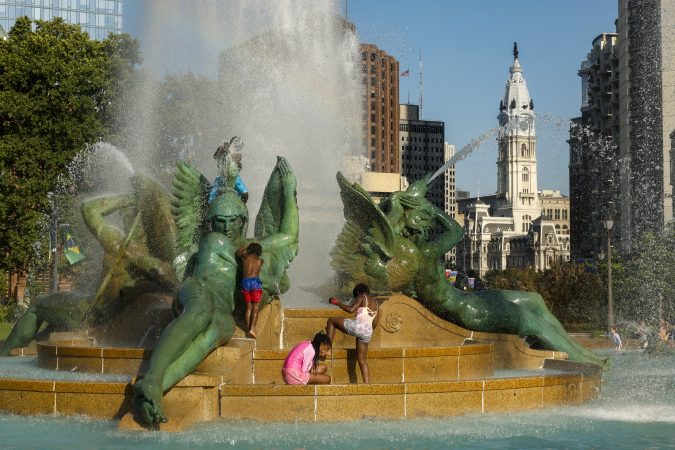
The Philadelphia region on Wednesday will be under an extreme heat warning, with high temperatures expected to once again hover around the 100-degree mark. But, on the bright side, at least it’s not likely to be record heat for the date.
That dubious honor for July 15 belongs to 1995, when the mercury hit a scorching 103 degrees. Still, Wednesday will be markedly hotter than normal, with typical highs for the date around 86 degrees, according to the National Weather Service.
“Any time we put a warning out, it’s telling people this is significant, and you need to take precautions and be aware of this,” said Paul Fitzsimmons, lead meteorologist at the weather service’s Mount Holly office. “Stay in the air-conditioning, do not exert yourself during the hottest parts of the day.”
It will likely also be noticeably hazy, thanks to smoke from wildfires in Western Ontario, weather service forecasts said.
Wednesday’s forecast high marks yet another hot day in an already steamy summer, with 2026 posting 21 days at 90 degrees or higher so far — and three 100-degree days, just two shy of the record number of century-mark days set in 1988, weather service data indicate. If Wednesday hits 100 degrees, we would only need one more similarly hot day to tie the record.
The record number of 90-degree days in a year, meanwhile, stands at 55, set in 2010. But in general, the region typically has only 13 90-degree days by mid-July, and 30 for the entire year, according to weather service data. The area’s temperatures have been about 3.2 degrees above average this month, Fitzsimmons said.
“That’s certainly noticeable,” Fitzsimmons said. “It’s been quite warm to hot.”
So, no, you’re not imagining things — it has been plenty hot for us around here lately.
We’re not in for much relief in the latter half of the week, either. Weather service forecasts indicated a cold front was expected to pass through the area late Wednesday, dropping temperatures slightly, but highs could stretch into the low to mid-90s Thursday and Friday.
And then, the weekend storms may come. Again.
Weather service forecasts indicate another cold front is likely to approach the area Friday, bringing with it the chance for weekend storms. It remained too early to tell Tuesdayhow it would shake out, but early forecasts said that there was potential for severe weather threats Saturday, with a possible risk of heavy rain and flash flooding, similar to what the area has seen the last two weekends.
Meteorologists have said that it is not uncommon for storms to come in seven-day cycles because of the spacing between atmospheric waves that move weather systems across the country, The Inquirer has reported.
“The overall setup is not that different — we’re going to have hot conditions and humidity,” Fitzsimmons said. “And we are at a time of year where severe weather is favorable, so it’s possible.”
Wednesday’s heat serves as yet another day of record-territory temperatures this month. Less than two weeks ago, during the Fourth of July, Philadelphia saw three consecutive days hit 101 degrees or higher, marking the first time that has happened in records dating to 1873, the weather service said.
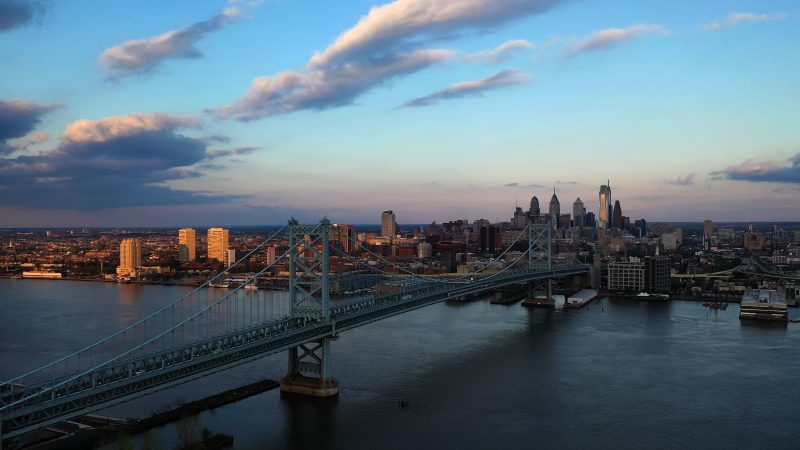
Severe storms also hit the region late on Independence Day, bringing heavy rain and wind that caused significant delays to the holiday celebrations, which wrapped up around 3 a.m. A week later, severe weather cropped up once again in the form of several microbursts of winds up to 70 mph that toppled trees, damaged buildings, and knocked out power around the area Saturday — and affected the celebration of the Ben Franklin Bridge’s 100th anniversary.
Even the FIFA World Cup festivities have been affected, with the FIFA Fan Fest closing early on a few occasions because of heat and storms since it launched in June.
The heat has also had deadly effects in Philadelphia, as city officials earlier this month confirmed eight heat-related deaths for the season.
Heat deaths in Philadelphia have averaged about five a year for the last decade. That figure is down significantly from the 1990s; in 1993, the city recorded 118 heat-related deaths. But the number of heat deaths this year so far is the most since Philadelphia recorded eight in 2022, health department records indicate.
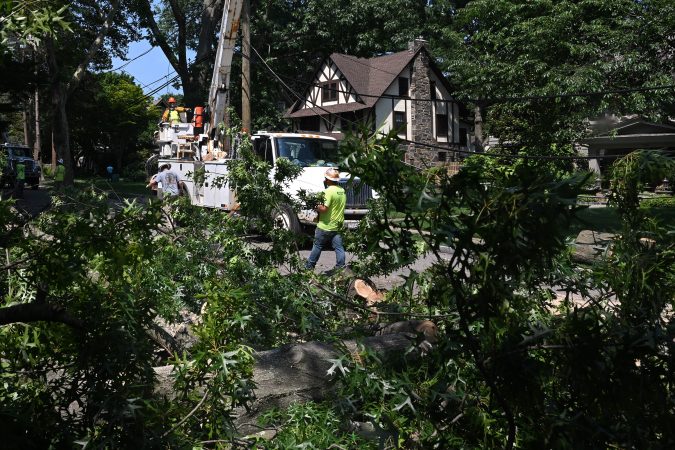
Hundreds of trees fell in Philadelphia within a matter of minutes during a weekend storm that left a narrow but destructive band of what one official called “unprecedented” damage in its wake in the region.
“We’ve never seen anything like this,” Parks and Recreation commissioner Susan Slawson said. “We’ve never seen a 15 and 20 minute storm come through an isolated area and take down that many trees.”
Those downed trees came following a series of four “microbursts,” which brought wind gusts traveling 60 to 70 mph. Those isolated instances of high winds primarily impacted parts of Philadelphia and Montgomery County.
Microbursts, the National Weather Service said, happen when a thunderstorm experiences a rapid increase in updraft. When that updraft stops, the mass of the storm system comes crashing back down, resulting in severe winds that sent trees tumbling into homes and vehicles, damaged public parks, and left neighborhoods grappling with cleanup efforts days later.
Slawson’s department, which handles downed trees in the city, had responded to at least 340 emergency requests as of Monday afternoon, and inspected about 220 trees. The hardest hit areas, she added, were in South Philadelphia, Wynnefield, and Southwest Philadelphia.
The harsh winter’s heavy caps of ice and snow that lasted for weeks likely left some trees weakened or damaged, Slawson said, making them more vulnerable to being toppled. Those that fell were being taken to the city’s Fairmount Park Organic Recycling Center in West Fairmount Park.
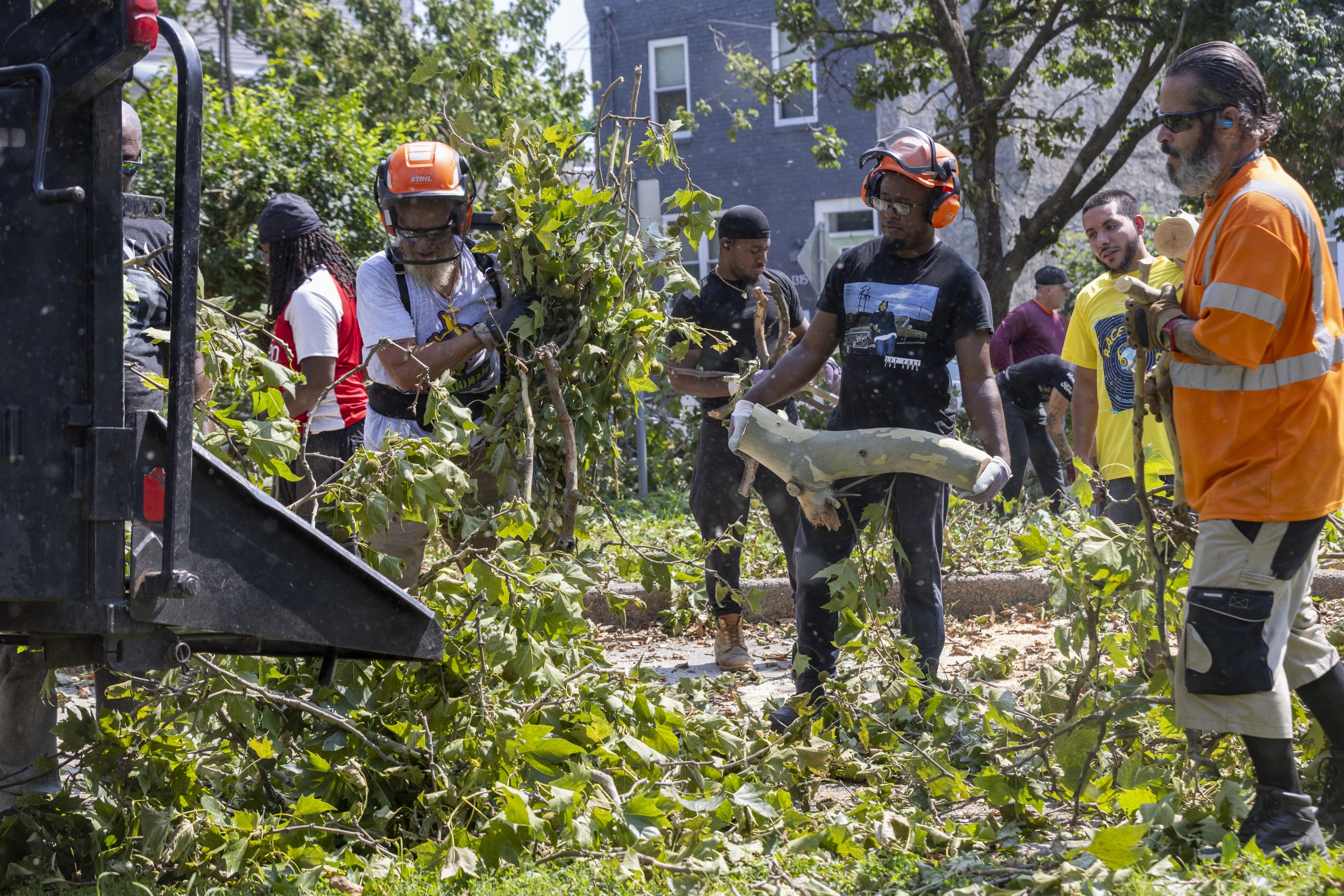
Evidence of the damage was apparent around the region Monday. In Malcolm X Park in West Philadelphia, piles of giant fallen trees, cut into large chunks, sat waiting for disposal. And nearby on Spruce Street, a downed tree blocked a busy two-way road between 53rd and 54th Streets, its corpse resting atop a crushed red pickup truck.
“They need to cut these trees down, they’re too tall,” said Schonder Pickney, 61, who lives across the street from the wreckage. She and her neighbors had asked the city to remove some of the old trees that appeared dangerous, but she said nothing came from it.
Philadelphia Parks and Recreation workers throw debris into an auxiliary chipper at Wharton Square Playground in Point Breeze, on
Monday.Aidan T. Gallo / Staff Photographer
Private tree management companies, like Rapid Tree Care in Grays Ferry, were inundated with service requests following the storm. Caleb Coome, the company’s founder, said that the storm’s intensity knocked down large trees across densely populated city blocks, and across multiple homes.
“It’s definitely unprecedented in terms of the amount of volume over a couple-day span,” said Coome, whose company has been in operations for three years.
Homeowners impacted by fallen trees, he said, were largely concentrated near FDR Park and the stadiums in South Philly, as well as the Cobbs Creek and Cedar Park neighborhoods in West Philly. Homeowners face logistical and financial hurdles for cleanup, as much of the damage occurred in areas with tight rowhouses.
In those tight quarters, a single fallen tree can span up to six properties, creating liability issues and disputes among neighbors over who is responsible for removal costs. A downed tree spanning multiple properties must be removed all at once, rather than limb-by-limb, for safety reasons, Coome said.
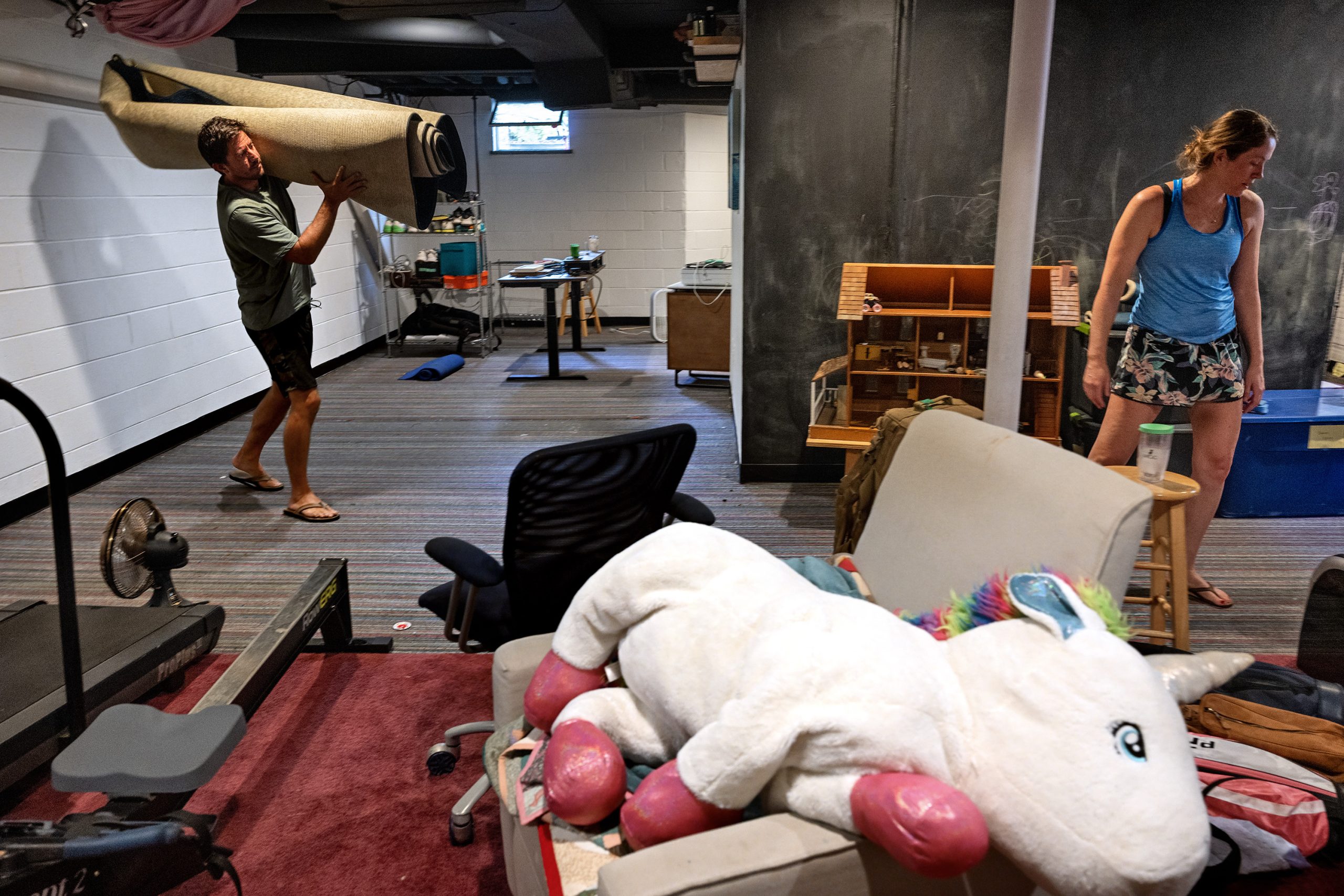
Some parts of the suburbs also saw shared tree damage. For example, in Narberth, Hugh Parker and his family hurried home from the Shore Saturday after they heard from neighbors that a 40-foot tree had been knocked down in their front yard.
Hugh and Grace Parker continue the cleanup in the basement of their Narberth home Monday. It flooded during weekend’s storm.Tom Gralish / Staff Photographer
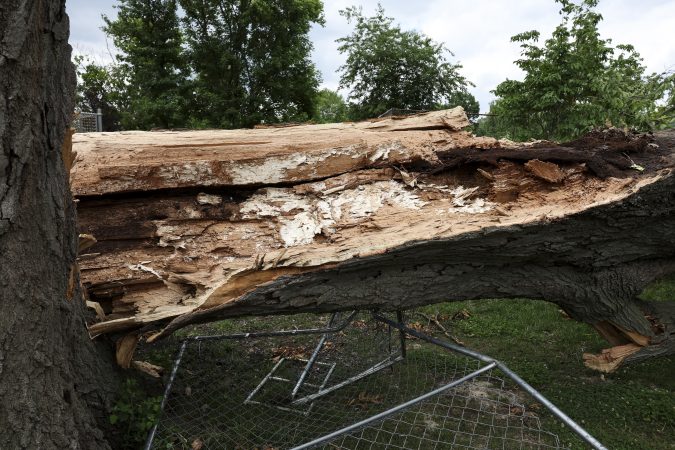
Located on their neighbor’s property, the tree landed to cover their driveway, as well as a car belonging to Parker’s wife, Grace. As it came down, the tree’s canopy also took down power lines and blocked the street, and the damage it did to the vehicle remained unclear Monday.
A day later, Peco reconnected their power, which Parker said had been out for a little more than 24 hours. Then, he smelled smoke, thanks to a power line that started a fire after power had been restored. After about 30 minutes, the fire went out, but no one from the utility had come to check the power lines as of Monday morning.
“It was like something from a movie scene — there were sparks flying 10 to 15 feet in the air,” said Parker.
In Lower Merion Township, the local fire department responded to 98 incidents over the weekend, including numerous water rescues. Montgomery County communities were some of the hardest hit.
“It became apparent that nearly every street in Narberth had a tree down, a substantial tree on a car,” said Narberth Council Vice President Cyndi Rickards said.
The episode also highlights what many local officials have said is a need to further discuss improving local infrastructure and resources for extreme weather events.
“I think this is the reality of storms now,” said Lower Merion Commissioner Ray Courtney. “They are hard, they are intense, and they dump a lot of precipitation in a short period of time, and all local governments, and our state and federal government, need to be thinking about improvements to our infrastructure, and the resiliency against this kind of weather event.”
In addition to downed trees in the area, roughly 1,500 Peco customers remained without power across 119 reported outages as of late Monday afternoon. That number is down significantly from the height of the storm, when some 60,000 customers experienced extended outages. Overall, 105,000 Peco customers experienced some loss of power during the course of the storm, the company said.
Power for all customers in the region, Peco added, was expected to be restored by 11 p.m. Monday.
Among those impacted were West Philadelphia resident Lisa Phillips, who lives on the 5100 block of Hazel Avenue. A tree on her block went down Saturday, taking power lines with it. Electrical workers arrived Monday to take care of the downed lines, but she was still waiting for the city to clear the tree from her street.
“Never in my life have I experienced anything like this,” she said.
Staff writers Isabel Maney, Olivia Prusky, and Fallon Roth contributed to this article.
Cleanup from Saturday’s storm was continuing Monday, as communities around the Philadelphia region deal with aftermath of fallen trees, flooding, and high winds.
A series of four “microbursts” brought severe damage to a limited area Saturday, with wind gusts traveling up to 60 to 70 miles per hour. Those isolated bouts of high winds, which ripped through parts of Philadelphia and Montgomery County, toppled hundreds of trees and damaged or collapsed several buildings, while sudden and severe rains caused floods around the region.
Microbursts, the National Weather Office said, occur when there is a rapid increase in the updraft of a thunderstorm. Once that updraft stops, the mass of the storm system crashes back down, resulting in severe winds.
As of early Monday afternoon, Peco continued to restore power to affected customers, with more than 170 outages impacting nearly 2,400 people. And though a comprehensive account of damages was not immediately available, damage reported to the weather service and select other entities indicated dozens of recorded incidents.
(function() {
var l2 = function() {
new pym.Parent(‘july_11_storms’,
‘https://media.inquirer.com/storage/inquirer/projects/innovation/arcgis_iframe/july_11_storms.html’);
};
if (typeof(pym) === ‘undefined’) {
var h = document.getElementsByTagName(‘head’)[0],
s = document.createElement(‘script’);
s.type = ‘text/javascript’;
s.src = ‘https://pym.nprapps.org/pym.v1.min.js’;
s.onload = l2;
h.appendChild(s);
} else {
l2();
}
})();
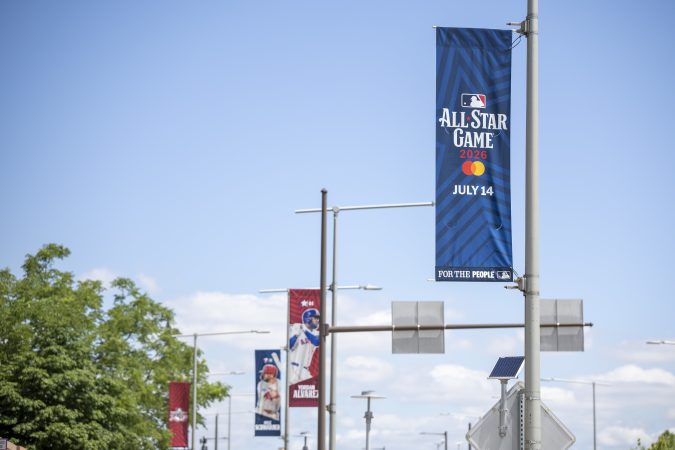
Philadelphia’s packed summer slate continues with MLB All-Star Week, a five-day run of baseball events in South Philly and Center City that caps off with All-Star Game at Citizens Bank Park next week.
And in addition to crowds of baseball fans, the occasion is also slated to bring a number of road closures and parking restrictions over the next few days.
Officially, it all kicks off Friday at Citizens Bank Park with the HBCU Swingman Classic, a game that features 50 players from Division 1 historically Black colleges and universities. Events will run throughout the weekend and Monday ahead of the main event Tuesday.
Here is what you need to know:
Planned road closures
Road closures kick off Friday afternoon in the area of Sixth and Market Streets for the Budweiser Clydesdales Hitch Parade. That event will close Sixth Street between Market and Chestnut Streets from 3 p.m. to 6 p.m., and additional rolling closures are expected to be implemented along the parade route between Sixth and Seventh Streets, and Walnut and Market Streets.
Sunday brings a nighttime drone show that will see road closures on and around Eakins Oval from 9 p.m. to 10 p.m. Those closures will affect:
All lanes of Eakins Oval
Kelly Drive from Eakins Oval to Fairmount Avenue
Anne d’Harnoncourt Drive
The I-76 eastbound off-ramp at Spring Garden Street
On Monday, Independence Mall will see road closures starting at 5 a.m. to accommodate building out the MLB Red Carpet Show. Set to be in place through midnight, those closures will impact:
Fifth Street between Market and Chestnut Streets
Ludlow Street between Fourth and Fifth Streets
Randstead Street between Fourth and Fifth Streets
Independence Mall will remain tied up Tuesday for the MLB Red Carpet show itself, with closures again in place from 5 a.m. to midnight. Those closures will affect:
Fifth and Sixth Streets from Arch to Walnut Streets
Market and Chestnut Streets from Fourth to Seventh Streets
Ranstead and Sansom Streets from Sixth Street to Seventh Streets
Philadelphia police, the city said, may institute additional closures in the interest of public safety.
Parking restrictions
All roads affected by closures will also be temporary no-parking zones, the city said. If vehicles are parked in those locations during the times they are closed, the vehicles will be moved.
Drivers who may have had their cars moved should contact the police district of the area where their vehicle was parked, the city said.
Other closures
The Autopark parking garage at Independence Mall, located near Sixth and Arch Streets, will be closed starting at 11:59 p.m. Monday, the city said. Its Fifth Street exit will stay open for vehicles to leave and move, and all vehicles must be moved by 5 a.m. Tuesday.
Additionally, the Philadelphia Independence Visitor Center will be closed to the public starting at noon on Tuesday, the city said.
Public transportation
To accommodate fans heading to Citizens Bank Park, SEPTA will run six additional express trains on the Broad Street Line, also known as the B Line, to NRG Station before and after the Home Run Derby and All-Star Game Monday and Tuesday.
Free rides on the line from NRG Station will also be available at select times during those events. Free rides begin after the second round of the Home Run Derby on Monday, and after the sixth inning of the All-Star Game Tuesday, the city said.
With Philadelphia’s Fourth of July festivities for the United States’ 250th birthday having come and gone, this weekend will mark a celebration for a newly minted centenarian. And with any luck, that party won’t run so late.
The party will feature interactive historical displays, food trucks, music, and other activities. It’s open to the public and free to attend, and while not required, advance registration via the DRPA website is encouraged, officials said.
“For 100 years, the Ben Franklin Bridge has stood as more than a crossing over the Delaware River. It is a public promise,” John T. Hanson, DRPA chief executive officer, said in a statement. “We are proud to invite the public to celebrate its past, recognize those who have preserved it, and look ahead to the next 100 years.”
Here is what you need to know:
Closed to cars
Due to the event, the bridge will be closed to vehicular traffic in both directions from 8:30 a.m. to 4 p.m. Saturday, DRPA officials said in a statement.
Road closures around the Benjamin Franklin Bridge, officials said, should be expected during the event. However, the Walt Whitman and Betsy Ross Bridges will remain open for motorists.
While the bridge travel lanes will be open to foot traffic, the pedestrian walkway will be closed during the event. It will reopen at 2:30 p.m., and continue to operating until 9 p.m., the usual closing time.
Additionally, PATCO trains will continue to operate across the bridge Saturday, with enhanced service instituted to allow trains to run every 15 minutes throughout the bridge celebration.
How to get there
For those looking to get to the Camden side’s main party area, DRPA officials advise using the PATCO option from Philadelphia, which can get you to Camden’s City Hall station nearby.
There will also be a complimentary shuttle service operating continuously throughout the event. One shuttle route runs between the Camden City Hall station and the event entrance, and another from PATCO’s Franklin Square Station at 7th and Race Streets in Philly to the event site in Camden, DRPA spokesperson Mike Williams said.
And, of course, from Philly, you could just get to the Jersey side by walking across the bridge. Starting from the main event area in Camden is not required
“The bridge walk is really the centerpiece of the celebration, and we hope attendees take advantage of this rare opportunity,” Williams said.
Bikes are permitted on the roadway but are not permitted in the main party area.
For those who plan on driving, parking areas will be available on the Jersey side. They include free lots at Rutgers University, on-street metered parking, and a paid parking garage at Camden Technology Center, DRPA said.
What if it rains?
Saturday’s event will go on rain or shine, and there is no rain date, Williams said.
Officials had announced a rain date of July 12, but the event logistics made a rain date impractical, Williams said.
Things to do
In addition to the food trucks and vendors, the event will feature dance performances and special guests.
A “Winged Victory” statue, one of four that originally sat atop the bridge at its opening in 1926, will also be on display.
A family fun zone will offer an inflatable obstacle course and oversized yard games, as well as face painting and other entertainment, organizers said. And attendees will also be able to get up-close views of the vehicles that work on the bridge, such as a barrier mover known as a “zipper machine,” as well as front-end loaders, and dump trucks.
Two children were removed from a Northeast Philadelphia home and two adults were arrested after federal authorities discovered hazardous living conditions at the property Tuesday.
The FBI was conducting “court-authorized law enforcement activities” about 11 a.m. Tuesday, and discovered the children, an 8-month-old and a 5-year-old, inside the home on the 7100 block of Whittaker Avenue in Castor Gardens, the Philadelphia Police Department said. The home was deemed unsafe due to “deplorable living conditions,” and the children were taken to a local hospital for evaluation.
Megan Bach, 44, and Thomas Bach, 43, were taken into custody at the scene, and have been charged with offenses including endangering the welfare of a child, criminal conspiracy, and possession of an instrument of crime. It was not immediately clear what prompted the search of the home, and authorities did not immediately respond to a request for comment about the adults’ relationships to the children found at the property.
The PSPCA said the FBI called in its Animal Law Enforcement team, which discovered the home was housing multiple animals in unsanitary conditions. PSPCA investigators found feces, urine, empty food bags and boxes, and an “overabundance of belongings” in the home, the organization said in a statement.
Though it remains unclear how many animals were on the property, PSPCA workers have removed 48 cats and one dog since arriving on the scene Tuesday. A majority of the rescued cats were removed Tuesday, with 10 more rescued Wednesday after workers set humane traps at the home. Animal rescue efforts are continuing, and it is not uncommon for cases involving large numbers of cats to go on for several days, the group said.
Animals from the property were taken to the PSPCA’s Philadelphia headquarters, where they were slated to undergo forensic examinations and receive medical care, the organization said. The rescued animals, it added, have not been signed over to the custody of the PSPCA, but will remain in its care until the case is resolved.
“Our Animal Law Enforcement team sprang into action yesterday upon learning that animals were living in deplorable and unsanitary conditions inside this home,” said Nicole Wilson, director of the PSPCA’s animal law enforcement and shelter operations. “It is our hope that, in time, each of them will find the loving new homes and new beginnings they deserve.”
Additional information about the FBI’s activity at the home was not immediately available. A spokesperson for the bureau’s Philadelphia office did not immediately respond to a request for comment.
After decades of dashed grand plans, months of unmeetable expectations, and weeks of fearmongering over political violence that never materialized, Philadelphia had little chance to live up to the hype that the Bicentennial carried with it in 1976.
And in the end, we didn’t. Not by a long shot.
Up to 20 million people were projected to travel to the city for the United States’ 200th birthday throughout the year — but in reality, only about 7 million came. We were supposed to build a massive suspended platform at 30th Street Station to house an international exposition, and never got either.
And instead of receiving due recognition as the birthplace of American democracy, we were given Legionnaires’ disease.
Understandably, the result in ’76 was a level of municipal malaise that rivals any since. We threw a party all summer, we thought, and no one came. No one liked us, but we did care — a lot.
Now, with five decades of hindsight, and another national anniversary this summer, perhaps the Bicentennial wasn’t as bad as Philadelphians say it was. It didn’t go off exactly as expected, sure, but maybe it wasn’t the abject failure we historically have believed it to be.
After all, in some ways, it did give us some of the Philadelphia we know today. Here is how the Inquirer and Daily News covered it.
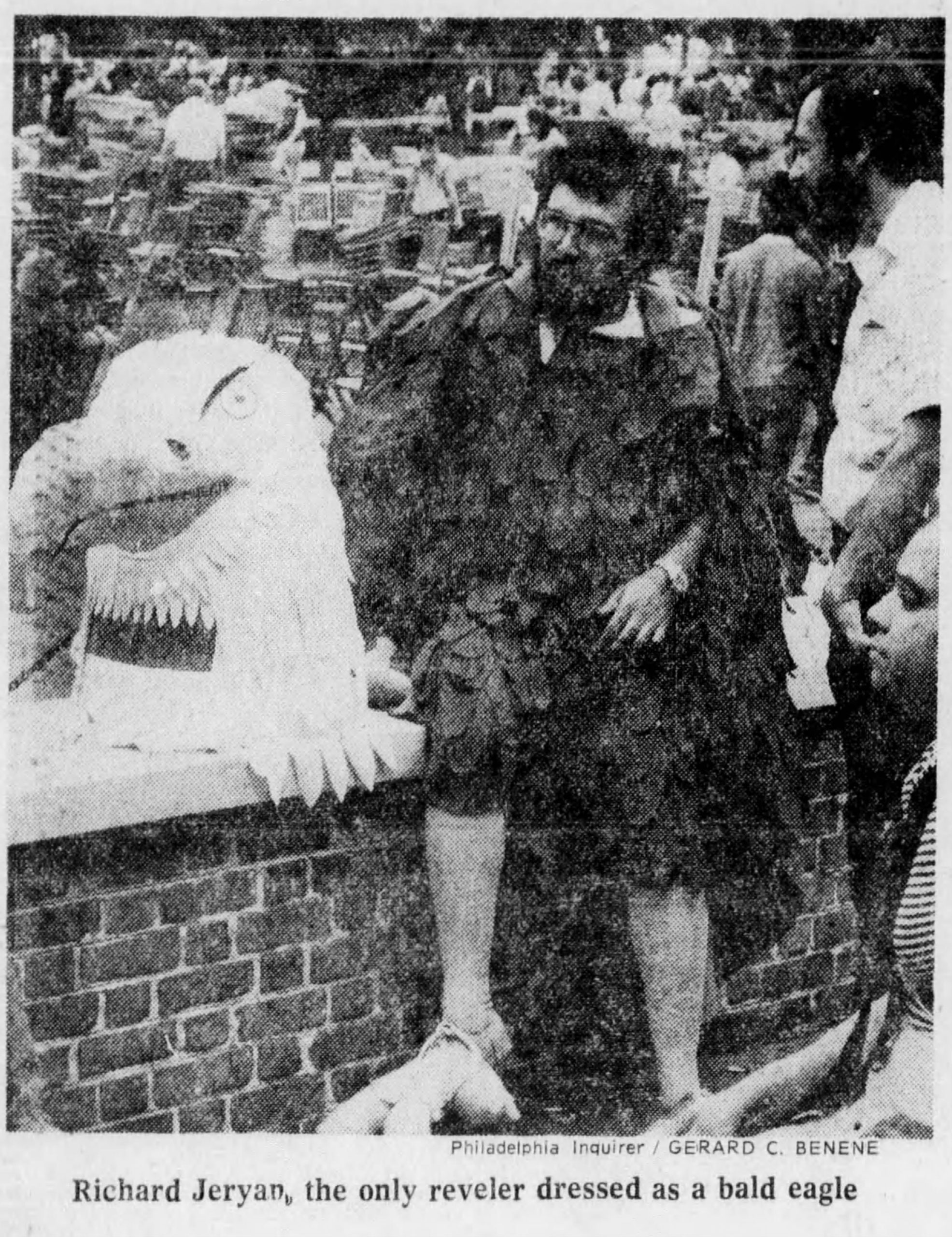
An Independence reveler celebrates the holiday in 1976 dressed as a bald eagle, as shown in an Inquirer photo from the time.Inquirer/Daily News Archive
False starts and unrealized projects
Philly had big dreams for the Bicentennial as early as the 1950s, when planning tied the occasion to an international exposition that would bring travelers from all over the world. Some proposals ran into the neighborhood of $2 billion and had the exotic and impractical vision to match the price.
Among them was an $8 million plan for a flower-focused theme park in Fairmount Park known as “Philaflora” that was quickly abandoned.
Later, city planners proposed gimmicks like a large elevated platform over 30th Street Station that was to stretch more than four miles to West Philadelphia, the construction of concrete islands in the Delaware River, and converting swampland to solid ground in Eastwick to host the exposition.
None of these grand plans came to fruition. And by 1972, the entire idea for an international exposition was dead, having been “scotched” by President Richard Nixon, The Inquirer reported at the time. The city’s Bicentennial corporation, Philadelphia ’76 Inc., however held fast to plans for a large celebration, but was left with relatively little time to plan one — and no idea of what it would look like.
The result was a series of what The Inquirer in 1976 called “bread and circuses” efforts — essentially parades around town, plus a number of events and attractions on the Benjamin Franklin Parkway throughout the summer. These efforts, The Inquirer reported, were designed to give the illusion of tourist activity and interest, but without all the guff of actual planning and logistics.
And while we did have a Bicentennial celebration, it sadly did not “live up to 20 years of empty visions,” The Inquirer reported. And only months after July 4, 1976, we were left with “this feeling of promises unkept, hopes unfulfilled,” reports from the time said.
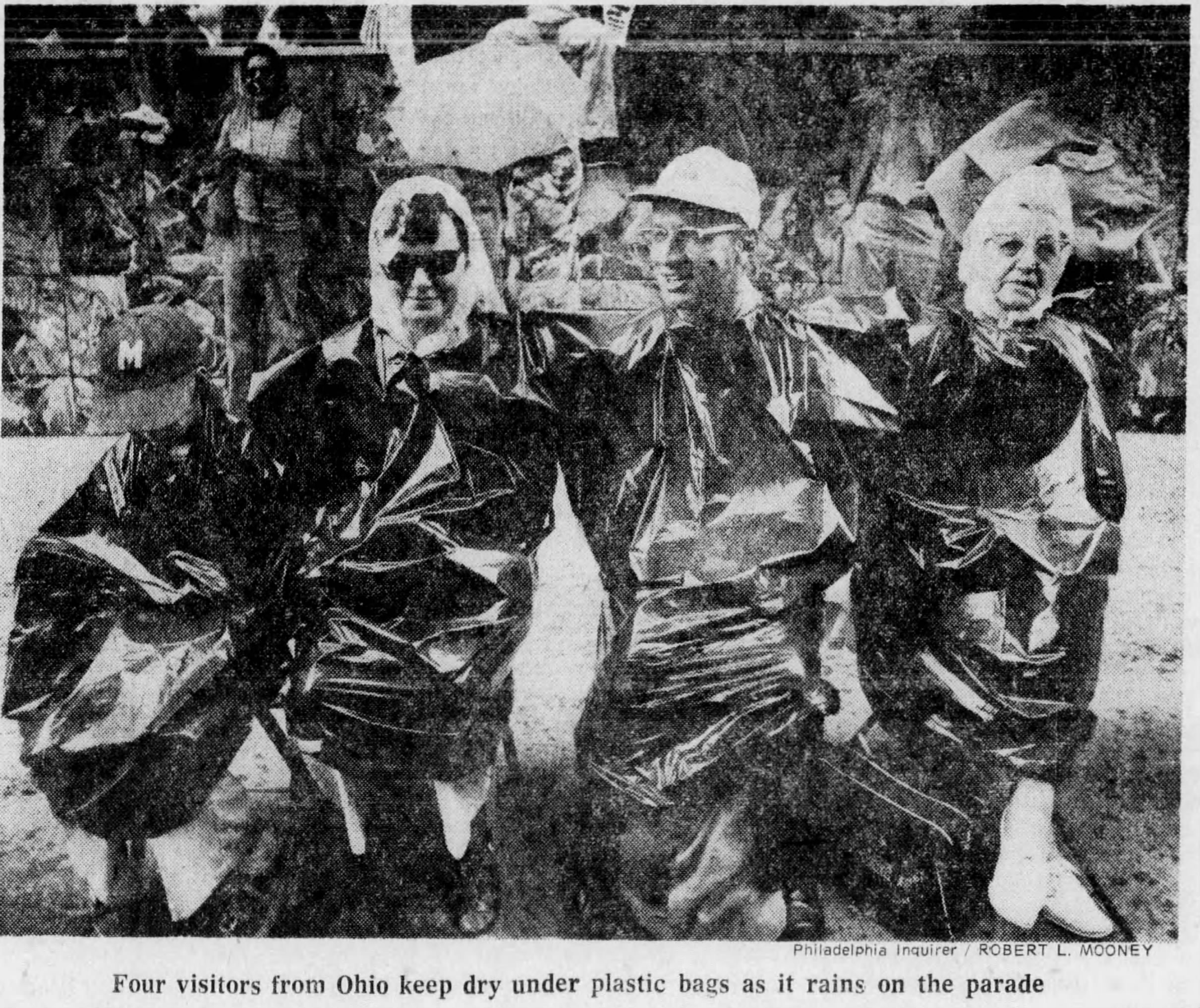
July 4, 1976 celebrants stave off the day’s rain under plastic bags during the day’s parade, as shown in an Inquirer photo from the time.Inquirer/Daily News Archive
An under-attended party
Early estimates for tourism in Philadelphia in 1976 predicted 14 million to 20 million visitors for the year — figures that came from Sindlinger & Co., a Swarthmore-based research firm the city hired. The company conducted nationwide polling to determine the number of Americans who planned to visit Philadelphia in 1976.
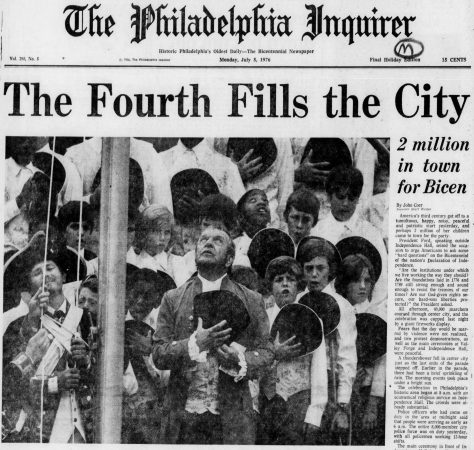
They were way off. By October ’76, roughly 7 million visitors had come, reports from the time indicate. Some 2 million toured the city on July 4 alone, with the rest coming amid a myriad of conventions throughout the rest of the year. According to reports from the time, tourism numbers didn’t pick up until post-Independence Day — a welcome development for hotel operators, who expected a sell-out season that never arrived.
But that doesn’t mean Philadelphia fared poorly.
At least compared to 1975. As of December 1976, Philadelphia showed a 300% increase in visitors over the year before, The Inquirer reported — a proportion that placed us “better than any other American city in attracting Bicentennial visitors.”
The next closest city was Boston, which saw a mere 68% increase in tourism. No one else even came close.
In fact, no one really did well nationwide. According to a Christian Science Monitor article from the time, every city that expected an influx of Bicentennial tourists — Philly, Boston, D.C., and the like — said tourism numbers were way below predictions. Experts attributed that to the country’s economic state.
But tourism travel in the United States was high for the year, even though the Bicentennial boom never really arrived. The issue, experts said at the time, was that too much was expected. As Discover America Travel Organizations president William D. Toohey said at the time, the travel industry would have otherwise been “well-pleased.”
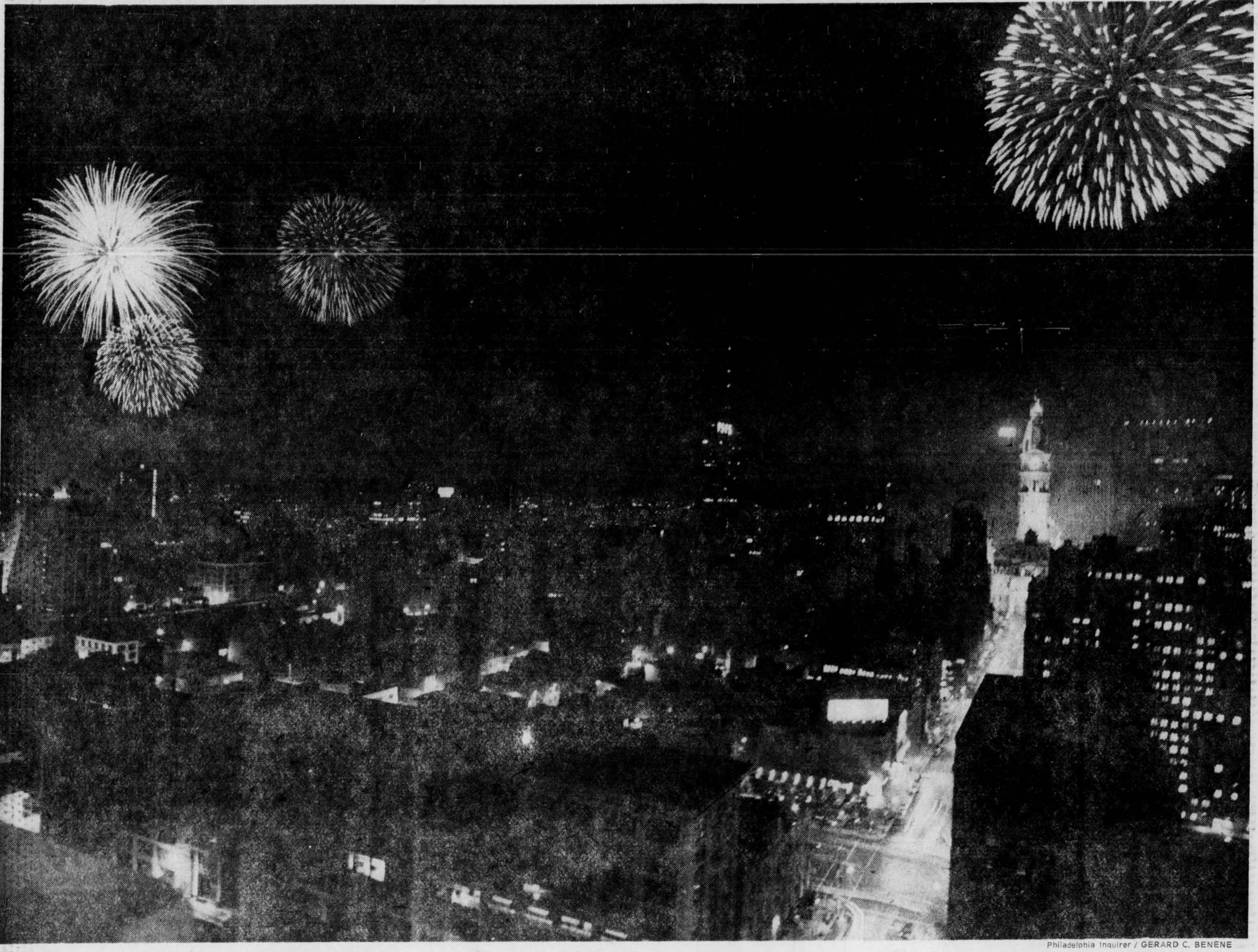
Fireworks over Philadelphia on July 4, 1976, as shown in an Inquirer article from the time.Inquirer/Daily News Archive
Why Philly fell short
Philadelphia, however, was not blameless in its failure in 1976.
Chief among the factors was Mayor Frank Rizzo’s insistence that political violence would erupt on July 4, thanks to a contingent of protesters who planned to demonstrate in North Philadelphia — miles away from the day’s primary celebrations in Center City.
Rizzo was so worried that he called for thousands of federal troops to be earmarked to protect the city — a request that was ultimately not granted, primarily because investigators were unable to determine that a credible threat ever existed. And yet, when the holiday rolled around, the damage was already done.
By late June 1976, some 30,000 participants scheduled for the July 4 parade had canceled their trips to Philly, with most citing fear of political violence as the reason for backing out, reports from the time indicate. Rizzo had been essentially telling tourists not to come, and they largely listened.
Rizzo, however, wasn’t our only worry. In July, a slowdown by municipal workers caused trash to pile up in the streets for weeks. Workers refused to take overtime hours pending contract negotiations for a modest wage increase, and the dispute was not settled until early August.
And then, there was the Legionnaires’ Disease outbreak — a famous, but sometimes overlooked, factor impacting tourism for the year. The late-July outbreak severely impacted tourism due to concerns over potential illness, but didn’t entirely crush the influx of visitors.
“It was very clear that the Legionnaire’s Disease had a very sharp impact on tourism,” Philadelphia ’76 Inc. head William Rafsky said at the time.
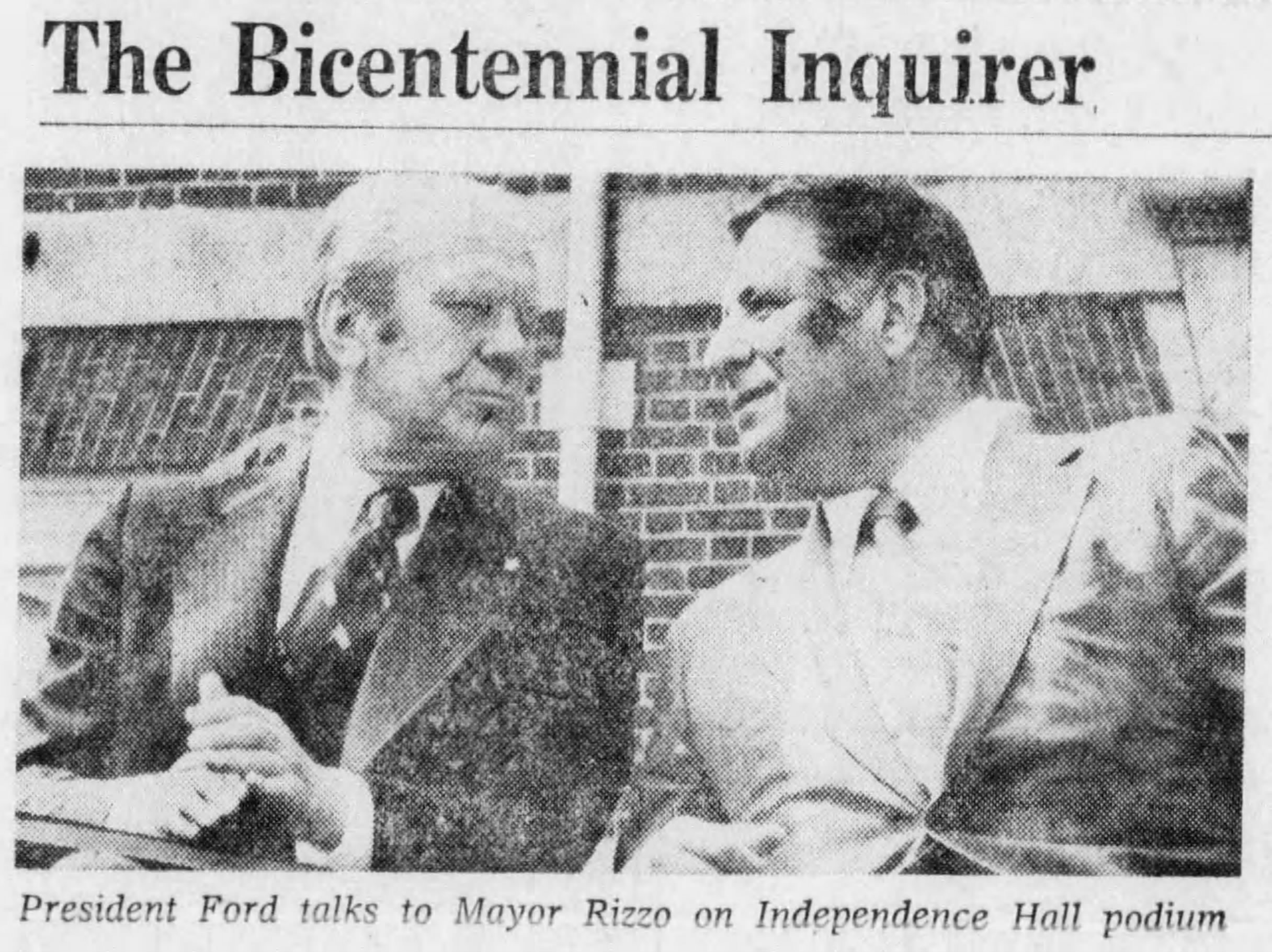
President Gerald Ford talks with Mayor Frank Rizzo at Independence Hall on July 4, 1976.Inquirer/Daily News Archive
Benefits abound
Though the Bicentennial may have been something of a tourism bust, we didn’t walk away with nothing. In some ways, the city was enduringly altered — Philadelphia received an estimated $165 million in improvements for the country’s 200th birthday, a good bit of which was federal money that was not likely to be spent otherwise, reports from the time indicate.
The National Park Service, for example, spent an estimated $30 million on what we know today as Independence National Historical Park, The Inquirer reported. Those federal dollars bought a new Liberty Bell pavilion, extensive repairs and improvements to historical buildings, the construction of City Tavern and the Graff House, and the creation of Franklin Court.
Other improvements were also palpable. A number of subway stations were painted and rebuilt, institutions like the Philadelphia Museum of Art were improved, and places like the Mummers Museum and the Afro-American Museum (now the African-American Museum of Philadelphia) were established. Roughly 10,000 trees were planted in Fairmount Park.
These lasting municipal improvements had an impact, even if the Bicentennial itself did not live up to contemporary expectations. By the time 1976 hit, virtually nothing could quell the public’s want for advancement in light of the country’s 200th birthday. And so, it was deemed a failure.
But now, half a century later, perhaps we are overcoming that disappointment, or are at least willing to see what comes next — after all, the United States is 250 years old in 2026. And though tourism expectations for this year have been quieter, the city still stands, with hoards of visitors now reminiscent of our Bicentennial year.
“The Bicentennial Year will be a great year for the United States,” Rizzo said in 1976. “And particularly for Philadelphia, where our nation was born.”
Months before Philadelphia was set to celebrate the United States’ 200th birthday in 1976, Mayor Frank Rizzo was worried.
The city, he said, stood to face massive unrest and potential violence during the Bicentennial parade on July 4. There were, he believed, cadres of radical leftists plotting to disrupt what should be a day of jubilance two centuries after the country’s founding in the place where it was born.
They would come in droves from around the nation, Rizzo said. And to combat them, Philadelphia authorities didn’t just need to be vigilant — they needed thousands of federal troops to patrol the streets and quell the impending chaos.
Those troops, despite Rizzo pursuing their deployment, never arrived. Nor did the bedlam he feared would come. And neither did the throngs of tourists the city expected for the Bicentennial, at least in part because of Rizzo’s warnings.
The city, did, however, get plenty of leftist protesters — tens of thousands who held large, peaceful demonstrations in North Philadelphia on Independence Day of 1976. No blood flowed in the streets, and Rizzo, the man who claimed it would, that year became the first mayor in Philadelphia’s history to face a recall effort.
Here is how The Inquirer and Daily News covered it:
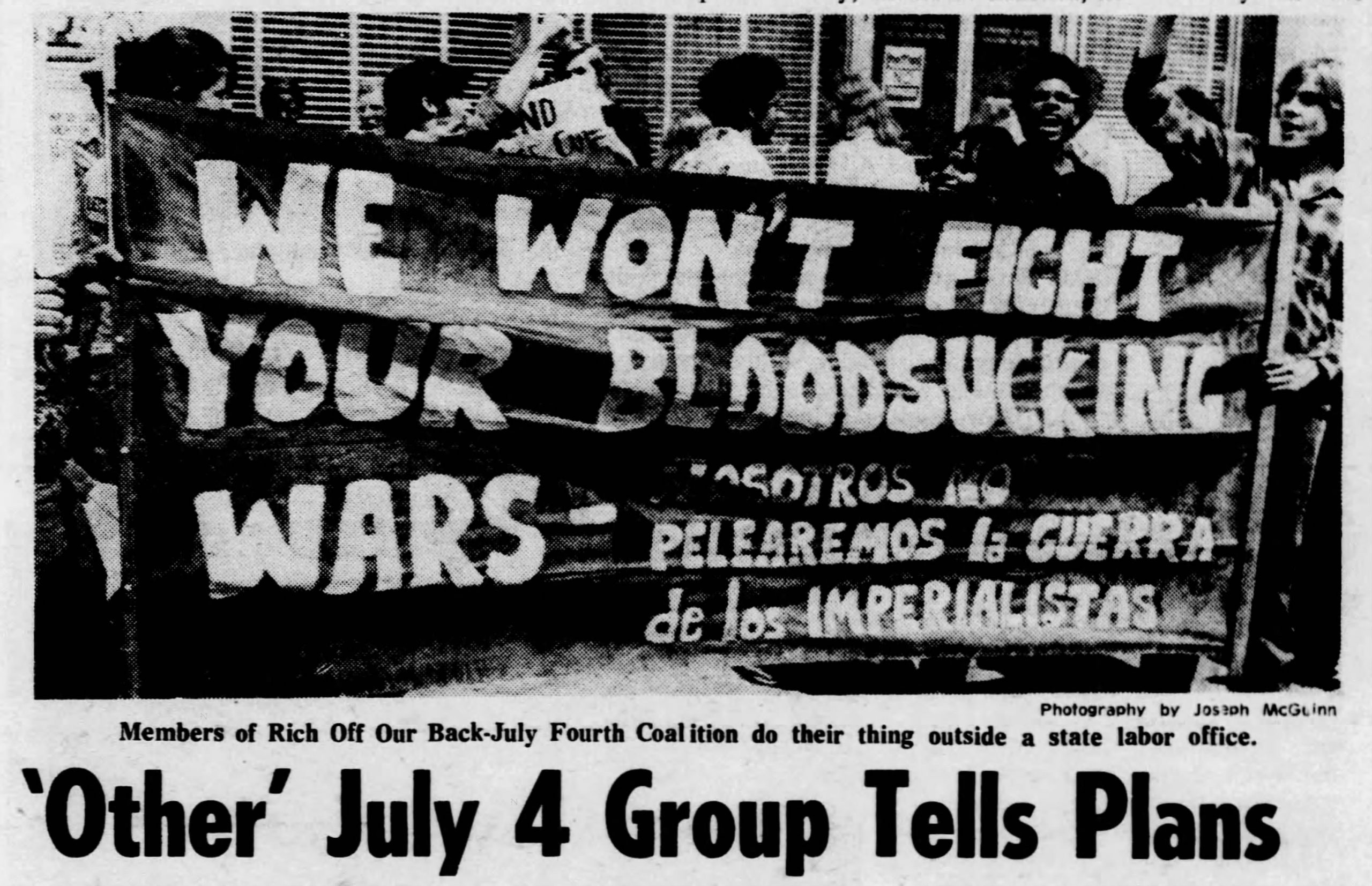
Members of Rich Off Our Backs demonstate outside a state employment office in Germantown in June 1976, as shown in an issue of the Daily News from the time.Inquirer/Daily News Archive
Two groups plan protests
Rizzo’s perceived threat of chaos came from two similarly named, yet totally distinct, groups that planned demonstrations for Independence Day. Those were the July 4 Coalition and the Rich Off Our Backs-July 4th Coalition, two organizations that consisted largely of anti-war, socialist civil rights activists who hoped to offer some counter-programming for the holiday.
The July 4 Coalition was larger, with some 100 subgroups making up its ranks, which it claimed would bring 60,000 marchers to Philadelphia for the Bicentennial. Rich Off Our Backs, meanwhile, expected only 5,000 people to show up for its Independence Day demonstration, but was the larger concern for the Rizzo administration because it was considered the more radical group.
Ahead of the holiday, the city had reached an agreement with the July 4 Coalition, which planned to protest dozens of social ills ranging from racism and sexism to unemployment and military spending. Its demonstration would take place in North Philadelphia, miles away from the main festivities in Center City.
Rich Off Our Backs, meanwhile, wanted to hold its demonstration in Center City and was believed to be “dominated by a tiny, one-year-old Marxist splinter called the Revolutionary Communist Party,” The Inquirer reported at the time. The group, reports said, planned to focus on unemployment.
Those plans would have brought the group into direct conflict with the city’s Bicentennial activities, including Philadelphia’s official parade. But after a weekslong court battle, Rich Off Our Backs was denied a permit to parade in Center City, and agreed to an alternate route that would take the march through North Philly.
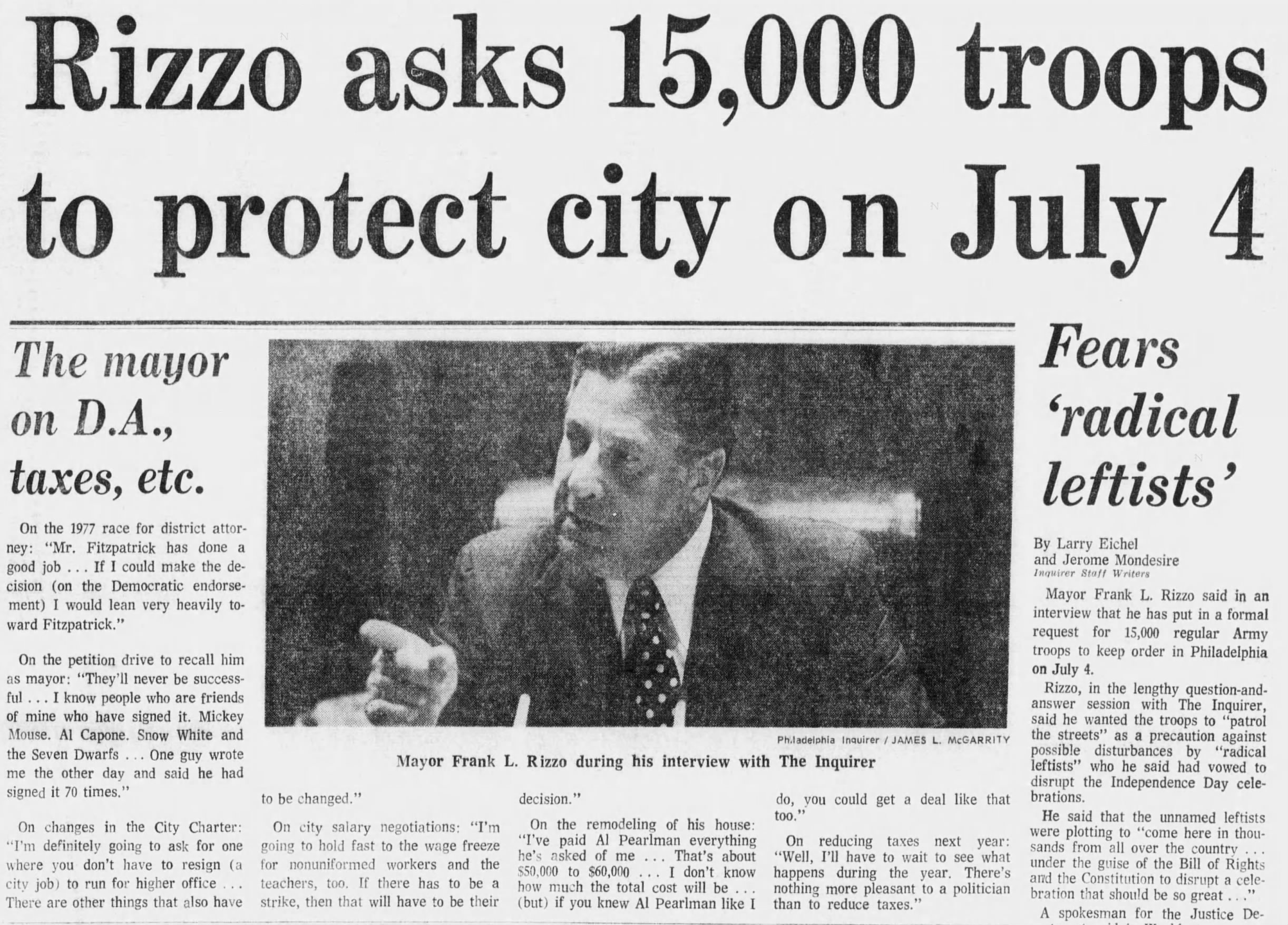
The front page of the May 30, 1976, Inquirer details Mayor Frank Rizzo’s request for 15,000 federal troops to protect Philadelphia on Independence Day that year.Inquirer/Daily News Archive
Rizzo’s call for federal troops
In late May 1976, Rizzo told The Inquirer he would call for 15,000 Army troops to keep order in Philadelphia due to concerns over the planned protests and potential violence.
Federal troops, Rizzo said, would supplement the city’s police force, which would be “spread too thin” due to the number of planned festivities on July 4. Bolstering the police, he added would not included armored vehicles or heavily armed forces, but would consist merely of “bodies” carrying sidearms to quell dissent.
Deployment of federal troops, The Inquirer reported, would require approval from then-Gov. Milton J. Shapp, who supported the effort. And the FBI’s Philadelphia office said it was unaware of any federal investigation into the matter at the time of Rizzo’s announcement.
Both the July 4 Coalition and Rich Off Our Backs called Rizzo’s move “fascist,” and insisted demonstrations would be peaceful. One activist, the Rev. David Gracie, known for anti-Vietnam War protests in the 1960s, said Rizzo’s request harkened back to the city’s treatment of anti-war demonstrators.
And in late June, the Justice Department denied Rizzo’s call for troops, saying it failed to find substantive evidence of the radical activity the mayor feared would occur. There was, the FBI said, no “hard core” indication of impending terroristic activity, and no additional enforcement efforts were necessary.
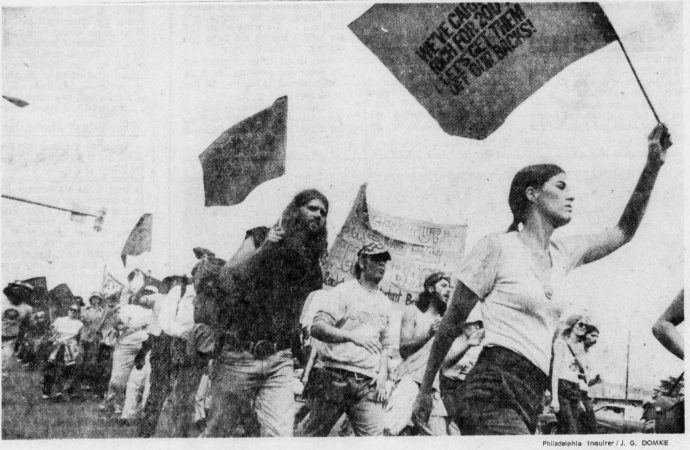
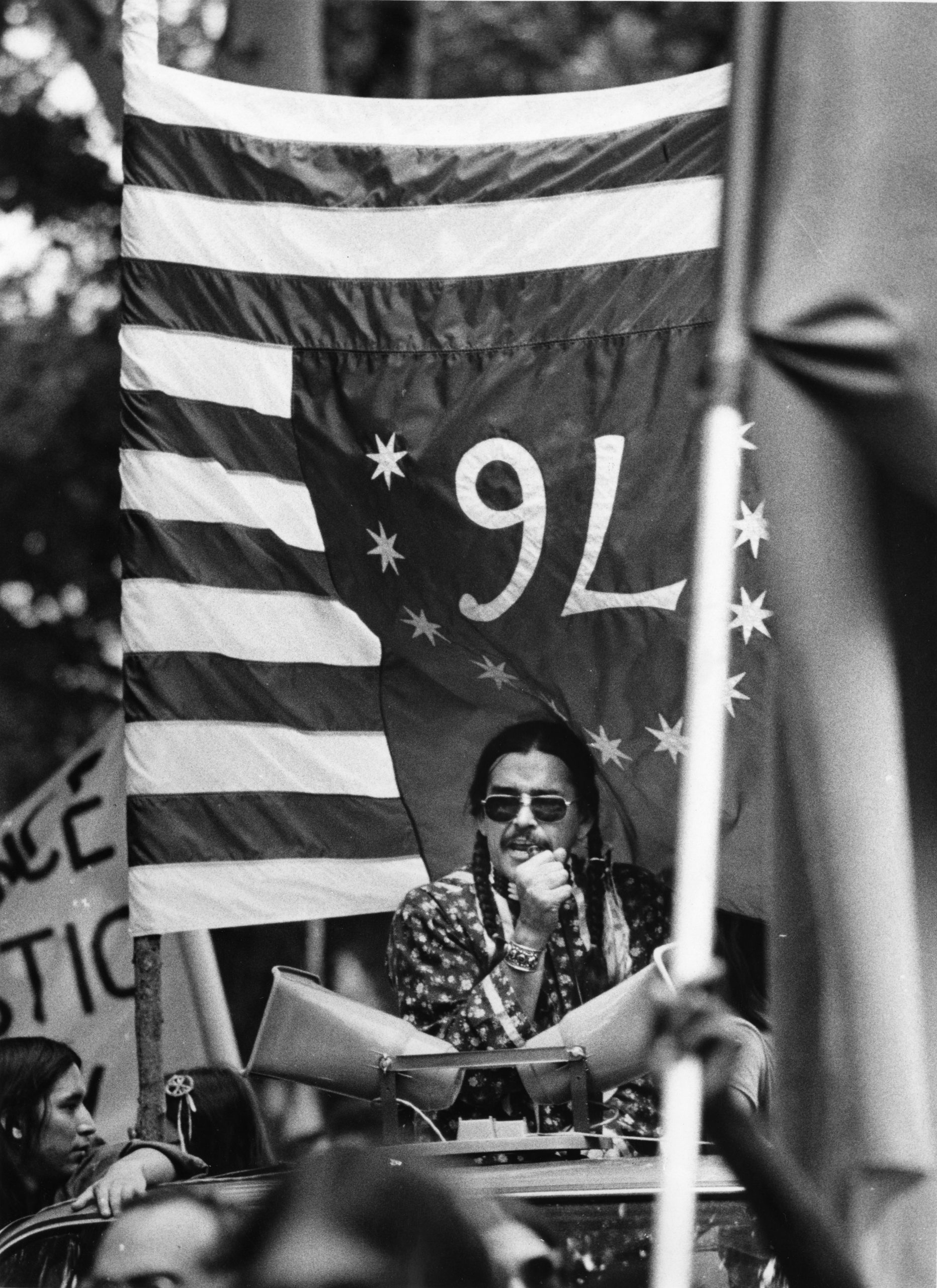
A group of Native Americans lead a “July the Fourth Coalition” protest parade at 33rd and Diamond Streets in Philadelphia, on July 4, 1976.George D. McDowell Philadelphia Evening Bulletin Photographs
The day of
On Independence Day 1976, both groups marched through North Philadelphia without incident, The Inquirer reported at the time. There was not a single arrest or reported disturbance, with the only snafu being late starts to both marches.
Rich Off Our Backs, despite the fervor over its planned activities, managed to attract about 4,000 participants, all of whom marched east along Girard Avenue from Broad Street before convening in Norris Square Park in Kensington. The July 4 Coalition held an 18-block demonstration along Lehigh Avenue ahead of a rally at 33rd and Oxford Streets in Fairmount Park.
The coalition claimed to have drawn some 58,000 protesters, but Philadelphia Police, estimated the crowd at about 25,000 people, and observers pegged it at half that size.
“We did it,” Rich Off Our Backs spokesperson Nick Unger said in 1976. “Thousands of working people walking through the city for miles where you couldn’t see the front of the march or the rear of the march.”
Neither demonstration, meanwhile, resulted in any of the bloodshed, destruction, or disruption the Rizzo administration advertised. In fact, The Inquirer reported, both protests “drew little response from onlookers” along their routes, and the police who were deployed — clad in riot gear — were ultimately not needed.
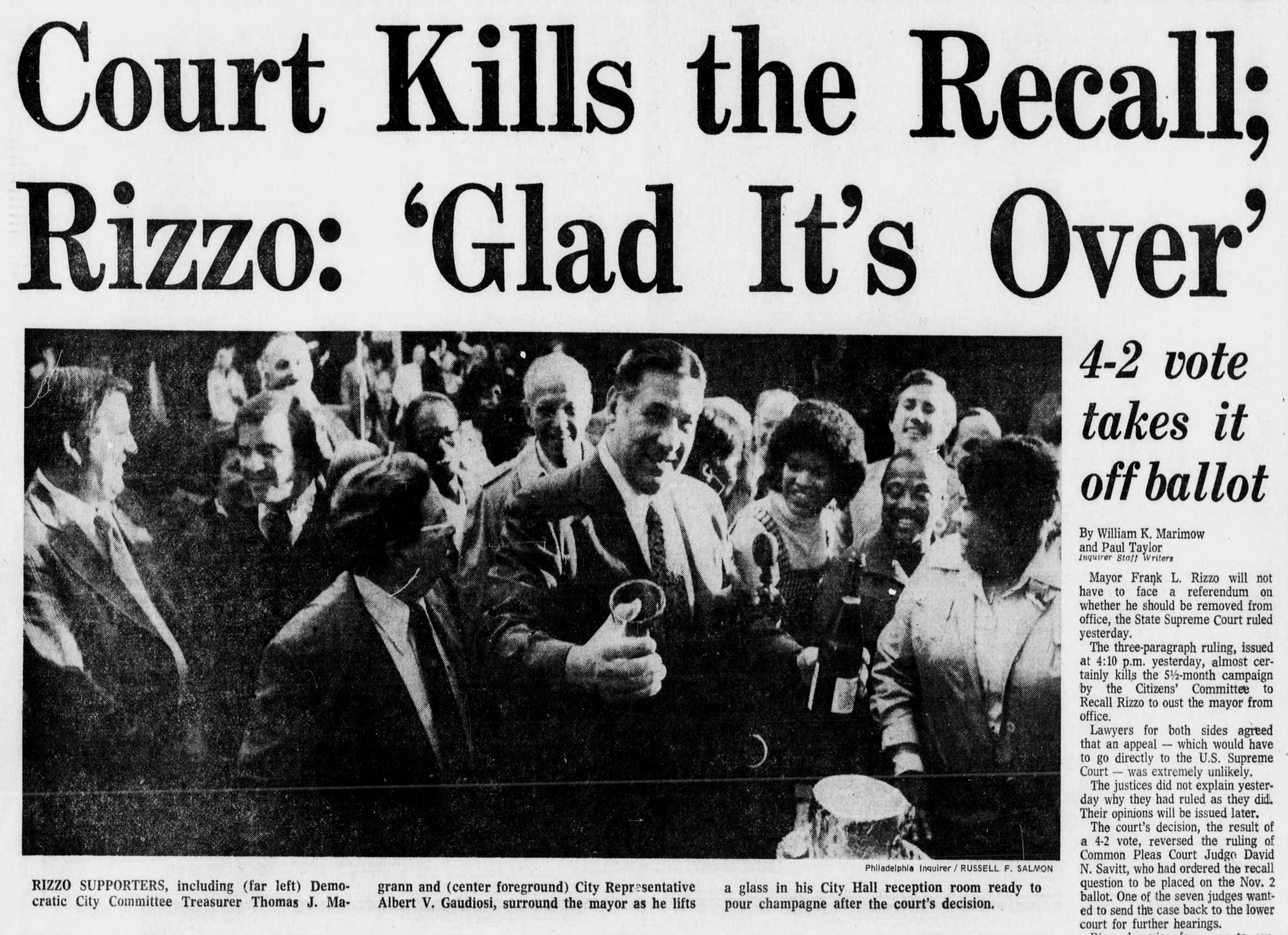
An Oct. 1, 1976 edition of The Inquirer details Mayor Frank Rizzo’s reaction to the defeat of the recall effort that year.Inquirer/Daily News Archive
Rizzo’s recall
Rizzo’s treatment of the July 4 protests did not directly lead to efforts to recall him, but it certainly emboldened his critics. The mayor seemed to realize the error at the time, with Rizzo rarely showing his face publicly around Independence Day — a strategy largely believed to have been instituted by his top advisers.
In fact, efforts to recall Rizzo stretched back to April 1976, weeks before his pursuit of federal troops ever surfaced. The recall move was largely due to Philadelphia’s flagging economy, as well as tax increases and a city budget deficit.
An organization known as the Citizens Committee to Recall Rizzo organized a petition, garnering some 145,000 signatures by mid-April 1976. That figured swelled to more than 200,000 signatures following the Bicentennial, but only about 89,000 were found to be valid.
In September, a Common Pleas Court judge found that Rizzo would need to face a recall — a decision later struck down by the Pennsylvania Supreme Court. Rizzo, as a result, was never officially recalled, and the summer of 1976 would be remembered as a “Buycentennial that wouldn’t sell” amid a “call for federal troopers that neither came nor were needed,” The Inquirer reported.
And by late 1976, Rizzo expressed relief that the situation seemed to be resolved.
“I never had any doubts that it would rule in my favor. The law is on my side,” he told The Inquirer. “I’m glad it’s all over.”