Author: Susan Snyder

  • Under pressure from its accreditor, University of Valley Forge offers students information on transferring

    Under pressure from its accreditor, University of Valley Forge offers students information on transferring

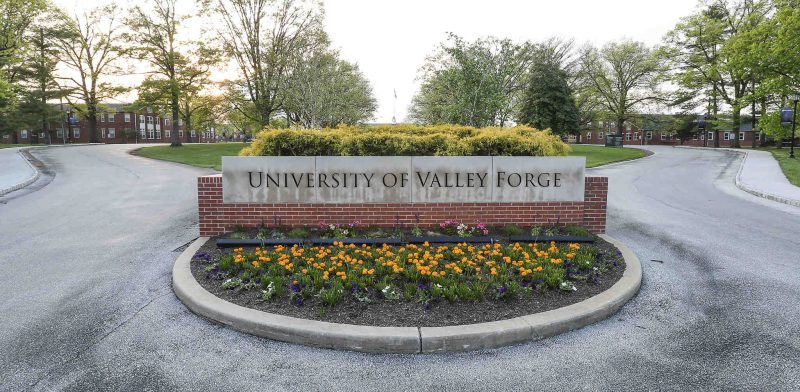
    Under pressure from its accreditor, the University of Valley Forge is offering students and families information on how to transfer to other colleges.

    The move comes as the Phoenixville-based college — which enrolls 589 students, according to the National Center for Education Statistics — faces the possible loss of its accreditation by the Middle States Commission on Higher Education. Colleges need accreditation to keep their students eligible for financial aid.

    Middle States last month issued its most serious warning — “show cause” — to the small Christian college that prepares students for leadership in the church and the world. It cited concerns about finances, planning, and governance.

    The university is among the latest institutions in the region to face the threat of closure amid a declining pool of high school students and increased competition. The University of the Arts and Cabrini University closed in 2024. Rosemont College’s campus has been purchased by Villanova University, and the college plans to conclude its operations in 2028. Peirce College has been merged into Lackawanna College, a process that has been approved by the U.S. Department of Education and was sanctioned by Middle States this month.

    University of the Sciences and Philadelphia University were phased out in previous mergers with St. Joseph’s University and Thomas Jefferson University. Pennsylvania State University plans to close seven of its Commonwealth campuses next year.

    On its website, the University of Valley Forge says that it is not closing, but that it has established several colleges as “teach-out partners” that would streamline admission of University of Valley Forge students in the event of a closure. The school was required under the Middle States process to develop “teach-out plans” that would provide students with options to complete their education if the school were to close.

    “Although this process does not require the university to provide students with teach-out options at this time, we understand that students may wish to consider alternative pathways for completing their academic programs during this period of uncertainty,” the school wrote in an email to students.

    The school, according to its website, plans to charge $41,020 in tuition, fees, and room and board for next academic school year, which is scheduled to start Aug. 30.

    The school held an event on campus earlier this month with representatives from the partner institutions — Eastern University in St. Davids, Messiah University in Mechanicsburg, and Southeastern University in Florida — so that students could get information. All three schools are private, Christian universities.

    But the University of Valley Forge on its website, which was updated as recently as Tuesday, said it is “actively pursuing strategies to strengthen enrollment, finances, partnerships, and operations.”

    “While no institution can guarantee future outcomes,” the school said, “leadership remains committed to preserving and advancing the university’s mission.”

    The challenges appear to be substantial.

    Earlier this month, the school said that it planned to soon communicate decisions about staff furloughs and that it would have to delay payroll for up to one week, according to emails obtained by The Inquirer from a source close to the university who was not authorized to discuss the matter and requested anonymity.

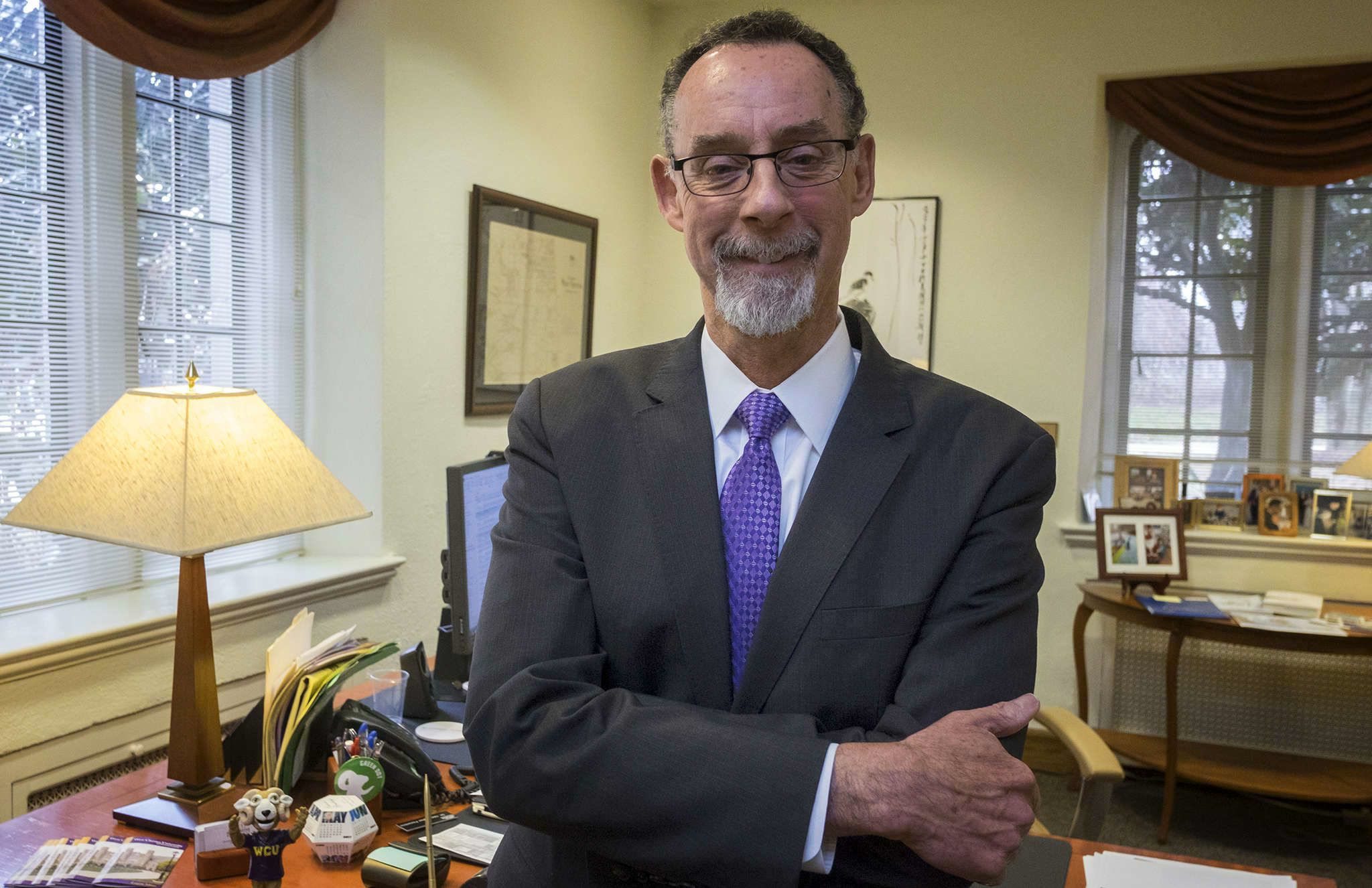
    “I am deeply sorry for the disruption and for the hardship this may cause,” university president David Kim wrote, according to the email.

    Kim, board members, and several other administrators and faculty have not responded to a request for comment. The emails did not indicate if furloughs occurred, how many, or for what period.

    The school employed 419 people in calendar year 2021, according to the school’s most recently filed Form 990. With expenses of $20.2 million, the school operated with a $1.9 million loss that year, the tax document shows.

    The Rev. Don Immel, a member of the University of Valley Forge board, addressed the Middle States action in responding to a July 11 Facebook post asking why the college was requesting “urgent prayer.” The university held a day of prayer and fasting on July 8 following the Middle States’ action.

    “The need is financial,” Immel wrote. “We have a donor who has the capacity and has expressed the willingness to step in. Please pray that the donations is released.”

    In other public Facebook posts, parents of students, alumni, and others have expressed concern.

    “I have a daughter enrolled at UVF right now, and is supposed to be starting her sophomore year come this fall,” one parent wrote. “I don’t know at this point what to do concerning her returning to campus in the fall, or do we need to look at transferring now.”

    An alumnus also had questions.

    “Should we be doing anything to secure duplicate degrees or official transcripts (in the event that we lost ours or anticipate needing copies in the future)?” the alum wrote.

    The school has until Sept. 1 to “show cause” to justify why it should not lose accreditation, according to Middle States. The commission will review the university’s submission, the school said on its website, and take its next action — which could include up to revocation of accreditation — in November.

    In issuing the show-cause decision, the commission cited “insufficient evidence that the institution is in compliance” with standards involving planning, resources, and institutional improvement, and governance, leadership, and administration.

    The university must document in its show-cause report “financial resources, funding base, and plans for financial development to support its educational purposes and programs and to ensure financial stability,” the commission said. The school also must provide information on long-range financial planning that includes “realistic enrollment projections and the assumptions on which they are based,” the commission said.

    The university started in 1939 as the Eastern Bible Institute, which was aimed at training pastors, evangelists, missionaries and Christian educators, and lay workers, according to the school’s website. It became a college in 1975 and the University of Valley Forge in 2014. The university is part of an international network of Assemblies of God colleges and universities and offers more than 60 degree programs, according to its website.

  • Pennsylvania’s state universities will consider offering three-year bachelor’s degrees

    Pennsylvania’s state universities will consider offering three-year bachelor’s degrees

    Pennsylvania’s 10 state universities, facing declining enrollment, will consider offering some three-year bachelor’s degrees as a way to make college more affordable and allow students to get into the workforce more quickly.

    The Pennsylvania State System of Higher Education would join a growing number of colleges nationally launching accelerated bachelor’s degrees that reduce the required credits for graduation from the standard 120 to between 90 and 100.

    The development comes as colleges continue to face criticism over costs and some schools try to stem declining enrollments. PASSHE has lost 30% of its enrollment since 2010, though it recorded an increase last fall for the first time in 15 years.

    For a long time, the four-year bachelor’s degree has been the norm. Some students certainly have completed their degrees more quickly, but only by taking all the required credits at an accelerated rate.

    The new approach, which PASSHE’s board of governors plans to discuss in October, would reduce the number of credits needed.

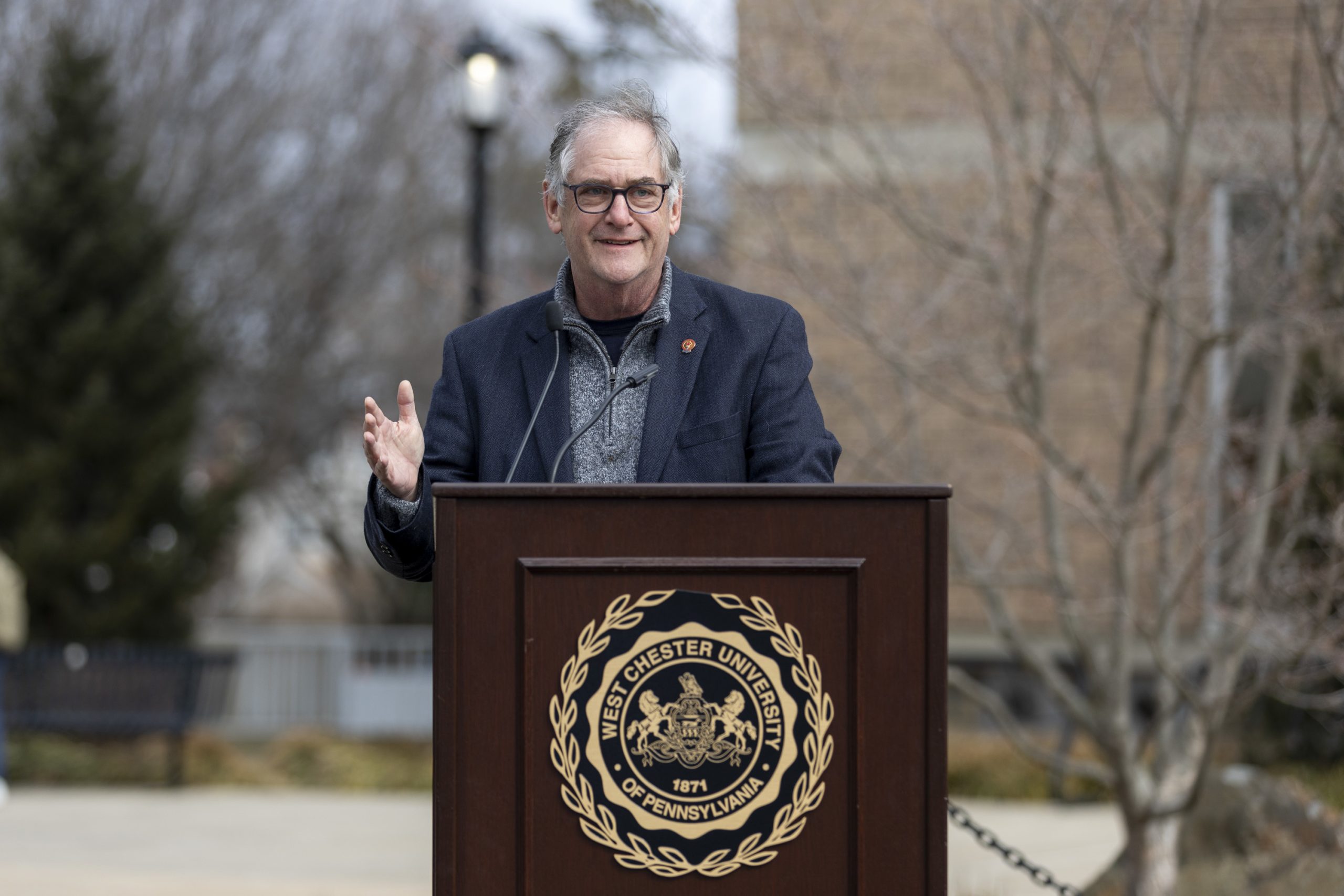
    “This initiative would provide more options,” said system Chancellor Christopher Fiorentino. “A three-year degree focuses on essential competencies while preserving the liberal arts core. We can reach more students who don’t fit into the traditional path.”

    Three-year degrees emphasize what students should know and be able to do by the time they finish, said Madeleine F. Green, executive director of the College-in-3 Exchange, which is pushing for three-year degrees to become “a widely accepted path” to a bachelor’s.

    “The benefits are reduced cost and time to degree and equal or better learning outcomes than those resulting from a four-year degree,” Green said. “… It is widely accepted in higher education that time does not equate to learning.”

    But the movement already has garnered detractors. The American Association of University Professors and American Federation of Teachers have blasted the idea as more states, including Ohio, Massachusetts, Indiana, and Virginia, explore, plan for — and in some cases even mandate — three-year degrees.

    The three-year degree movement “threatens academic integrity by substituting for a comprehensive education a stripped-down curriculum that prioritizes speed over essential intellectual development,” the two groups said in a joint statement in response to new accelerated degree programs at Suffolk and Merrimack Universities in Massachusetts.

    “Compressing or reducing the curriculum threatens to narrow students’ education at precisely the moment when society needs graduates with stronger critical thinking, communication skills, scientific literacy, and civic understanding,” they said.

    There is no comprehensive inventory of colleges nationally that offer three-year degree programs, Green said. A June study by the Rand Corporation cited 119 programs that had been “publicly announced” as of May 2026, she said. Those programs are in fields such as business, cybersecurity, criminal justice, health administration, public health, and design, the report said.

    The Higher Learning Commission, the nation’s largest college accrediting body, had approved 58 reduced-credit bachelor’s degree programs at 26 institutions, none of them in Pennsylvania or New Jersey, said Laura Janota, a spokesperson for the commission.

    The Middle States Commission on Higher Education, which accredits colleges in the Pennsylvania and New Jersey, does not require special approval for three-year degrees.

    But PASSHE likely would have to get approval from the state. Green, of College-in-3, said both Pennsylvania and New Jersey have regulations that state a bachelor’s degree is 120 credits.

    “We are reviewing all regulatory questions as part of this effort and will share what we learn with the board in October,” said Kevin Hensil, PASSHE spokesperson.

    Robert M. ZemskyCourtesy of the University of Pennsylvania

    ‘Product rejection’

    Robert M. Zemsky, an emeritus professor at the University of Pennsylvania’s Graduate School of Education who co-started College-in-3, said he’s aware of more than 90 colleges planning to or considering offering reduced-credit bachelor’s degrees. The idea attracted quite a bit of attention in 2009 when he first floated the idea — even a cover story in Newsweek — he said, but accrediting bodies were not on board at that time.

    But now, he said, colleges are beginning to realize that their product is being rejected by students who drop out or transfer after their first year or fail to enroll at all.

    “What’s different is the key people in higher education are beginning to figure out that it really is product rejection,” he said, “and they’re going to have to redesign what they do top to bottom.”

    He estimated by 2027 that there would be 200 colleges offering three-year degrees and 500 by December 2028.

    “After you get to 500, it will be everywhere,” he said.

    Christopher Fiorentino, PASSHE chancellor.ED HILLE / MCT

    Fiorentino, the PASSHE chancellor, said he planned in the coming months to propose ways PASSHE could begin to offer a limited number of three-year degrees. PASSHE’s 10 universities are West Chester, Cheyney, Commonwealth, Indiana, Penn West, Shippensburg, Slippery Rock, Kutztown, East Stroudsburg, and Millersville.

    He said adults with some college credits and no degree may be interested, or partnerships in which students attend community college for two years and then finish their bachelor’s in one-year at PASSHE.

    Four-year degrees would remain the norm, he said.

    ‘Less-than degrees’

    Kenneth M. Mash, president of the Association of Pennsylvania State College and University Faculties.Tyger Williams / Staff Photographer

    The move was harshly criticized by faculty union head Kenneth M. Mash, as providing substandard education.

    “Too many students that we are admitting are underprepared for the college experience,” Mash, president of the Association of Pennsylvania State College and University Faculties, said at the board of governors meeting earlier this month. “Well, if they’re underprepared coming in, and we’re telling them you only have to be here for three years, how are they ever going to be ultimately prepared for their future?”

    He said the nation’s elite universities and top research universities aren’t the ones promoting three-year degrees, but rather those that serve large numbers of first-generation students and students of color.

    “I can’t help but wonder why it’s OK to offer these less-than degrees to these students,” he said.

    Federal and state aid programs should be expanded to make college more affordable, according to faculty union groups.

    Cynthia Shapira, chair of the Pennsylvania State System of Higher Education board of governors. Courtesy of the Pennsylvania State System of Higher Education

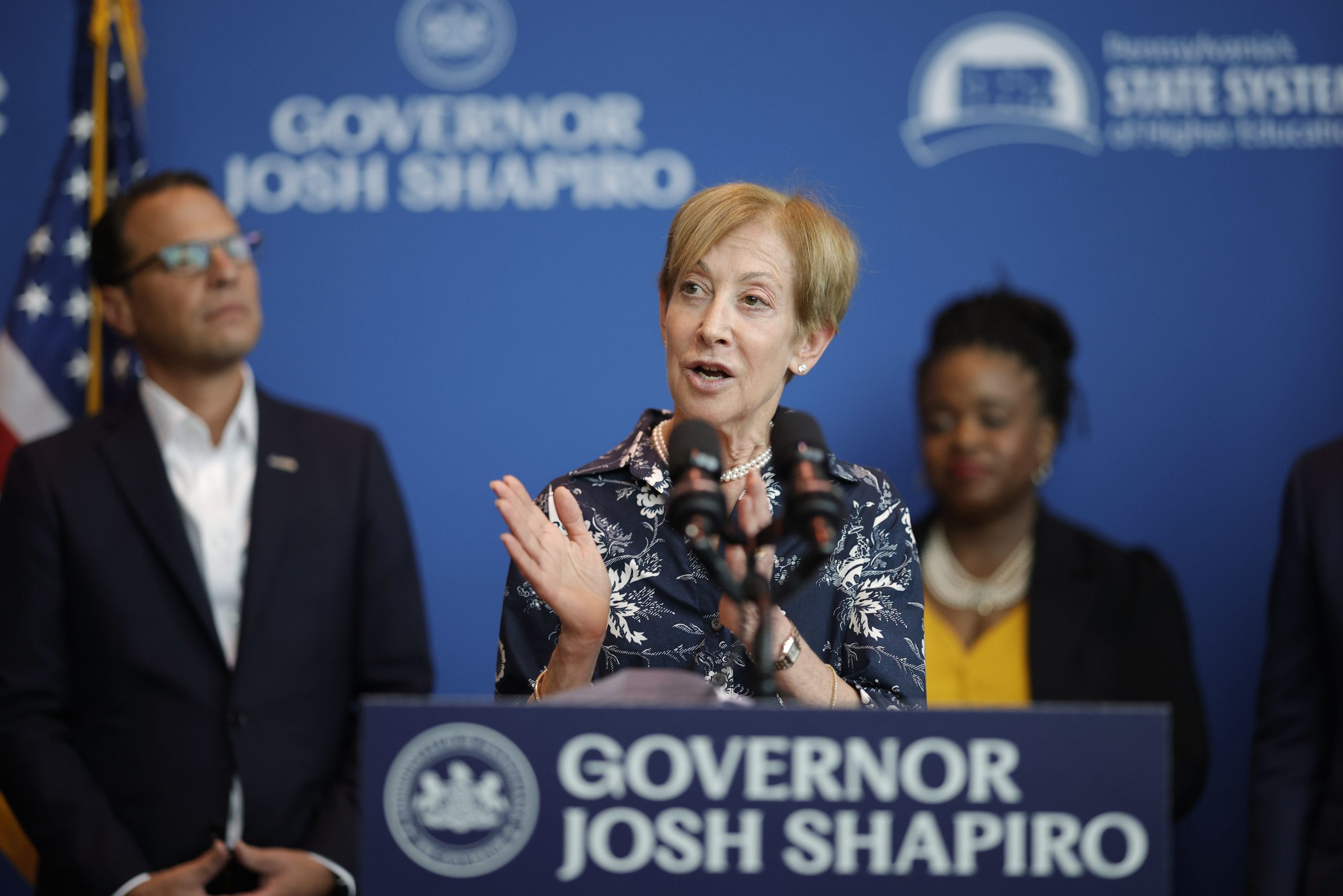
    But Cynthia Shapira, PASSHE’s board chair, said some states already are home to institutions offering or considering three-year degrees and PASSHE has an obligation to consider doing the same.

    “The idea to not even consider [it] … would be to put our heads in the sand,” she said.

    Eliminate some general education courses and electives

    Fiorentino said the same kind of criticism was leveled at online programs and community colleges when they first started. Pennsylvania was slow to embrace online programs and now lots of Pennsylvania residents are enrolled in programs out of state, he said. He said he doesn’t want PASSHE to be left behind again.

    “We owe it to our students,” he said. “We owe it to the commonwealth, and we owe it to our institutions to at least take a hard look at these three-year degree opportunities.”

    In an interview earlier this year, Fiorentino said that eliminating 30 credits from the four-year degree would be the equivalent of removing 10 courses. Schools would have to explore what to eliminate, he said. They could choose to get rid of some general education courses, general elective courses, and electives in the major, he said.

    The system, he said, will look at “how do you make adjustments to get students out more quickly and still have them prepared to perform effectively in the world.”

    Zemsky, the Penn professor, said general education courses, which have been criticized by some students as a waste of time and money, could be scaled back.

    Eventually, he said he thinks more students will opt for three-year degrees as opposed to four-year degrees.

    How employers will react is uncertain. Three-year degree programs are too new for data on how graduates will fare in the job market or graduate school admissions.

    “We’re looking at 2028, 2029 before there’s going to be any real graduation of three-year degree people,” Zemsky said.

    Green said most colleges pursuing three-year degrees have had conversations with employers.

    “Employers are more interested in students’ skills than in the number of credits they earned in obtaining the degree,” she said.

    Moving to three-year degrees will affect university budgets, and colleges will have to adapt, Zemsky said.

    “Right now, we spend a lot of money on things that the customer doesn’t want,” he said.

  • Pope Leo XIV will present inaugural Villanova University sustainability award created in his name

    Pope Leo XIV will present a new Villanova University-created award in his name that recognizes outstanding leadership in sustainability at a conference in Italy in October, another sign of the school’s close ties to the pontiff.

    It will be several weeks before Villanova and Notre Dame officially open their basketball seasons in Rome with a men’s and women’s doubleheader on Nov. 1.

    While Villanova has had a longstanding relationship with the Vatican, including an internship program that sends students there every year, both events signify the Catholic university’s deepening relationship with the Vatican and Italy since Pope Leo, a Villanova graduate, became pope last year.

    In 1977, Pope Leo, then known as Robert Prevost, earned a bachelor’s degree in mathematics from Villanova and in 2014 received an honorary doctorate from the university.

    The medal winner — an international honor — will be announced in September and then presented in October at the university’s International Sustainability Conference, Responding to the Cries of the Earth and the Poor, in Castel Gandolfo near Rome, the school said. The conference, which is expected to draw 300 participants including academics, church representatives, and leaders from the public and private sectors, will be held Oct. 12 to 15.

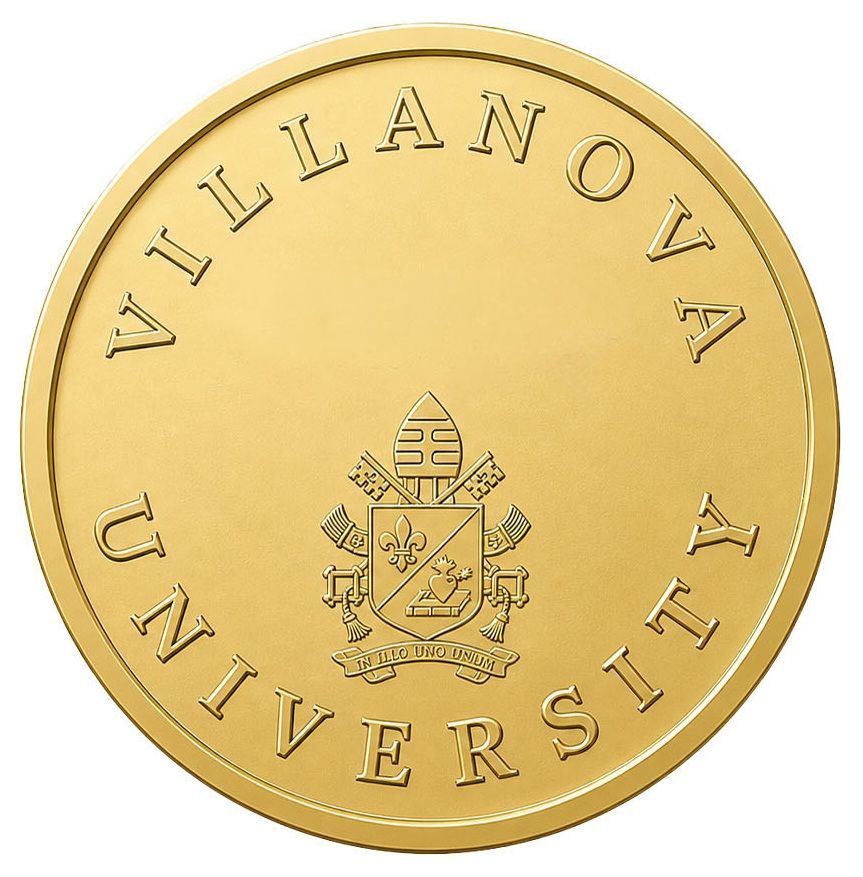
    The front side of a new international medal recognizing leadership in sustainability that Villanova University will award in Italy in OctoberCourtesy of Villanova University

    It is the university’s second sustainability conference, the first to be held in Italy. Its first conference in 2024 was on Villanova’s campus.

    “The Pope Leo XIV Sustainability Medal reflects a deeply held belief at Villanova University: that care for our common home and care for one another are inseparable,” the Rev. Peter M. Donohue, Villanova University’s president, said in a statement. “By recognizing leaders whose work advances both environmental stewardship and the common good, we hope to inspire meaningful and lasting impact in communities around the world.”

    The back of the new international medal that Villanova University will award for the first time in Italy in OctoberCourtesy of Villanova University

    The award, which will be a biennial honor, will recognize those who have advanced “sustainability, ecological responsibility and integral human development,” the school said. It specifically will highlight those who excel at “integrating care for the environment, social justice, concern for vulnerable populations, and responsible stewardship of economic and natural resources.”

    The winner can come from any field or discipline and will be selected by a committee of members of the university’s Sustainability Leadership Council. The award includes a monetary component, but details are still being determined, a university spokesperson said.

    The medal will feature Pope Leo on one side and Villanova University’s name on the other and is meant to highlight the pope’s commitment to sustainability, the school said.

  • Penn State board awards president top performance bonus

    Penn State board awards president top performance bonus

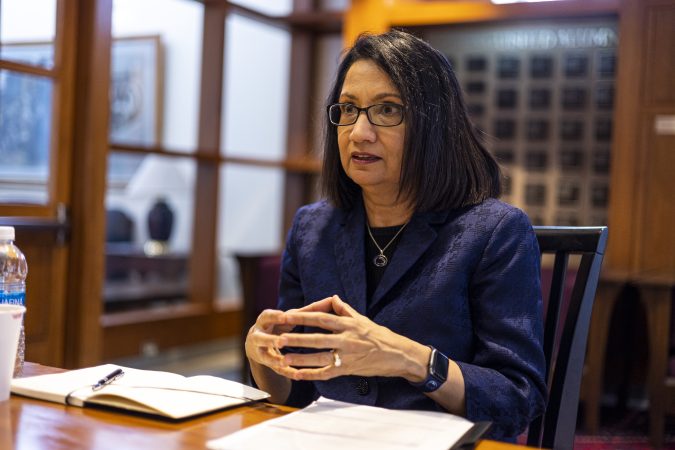
    The Pennsylvania State University board of trustees on Friday unanimously approved a 15% performance bonus for president Neeli Bendapudi for the 2025-26 academic year — the top amount available under her new contract approved last September.

    Under the resolution, the percentage is on her base salary, which was $1.4 million. That would make her bonus $210,000.

    Board chair David M. Kleppinger praised Bendapudi’s leadership, noting the second consecutive year of a balanced budget, a $1.44 billion research enterprise, the integration of the health system and College of Medicine, and efforts to improve the Commonwealth campus system — seven campuses are set to close at the end of the next academic year.

    “Throughout all this, Neeli, you’ve led with optimism, with purpose, and an unwavering commitment to Penn State’s mission,” Kleppinger said at the meeting. “You’ve challenged the university to think boldly, and we’ve tried … We’re proud of what we’ve done under your leadership and we’re excited about what lies ahead.”

    Bendapudi oversees two dozen campuses across Pennsylvania including a health system and the Hershey Medical Center and a major research enterprise. The state flagship university enrolls 86,500 students.

    She is one of the highest paid public college presidents in the country. In 2024, she ranked seventh in total compensation among public university presidents, according to The Chronicle of Higher Education. Schools with presidents who earned more included the University of Houston, Ohio State University, and University of Kentucky.

    The board last September voted to give Bendapudi, who has led Penn State since 2022, a $1 million increase in compensation and extend her contract to 2032. That increased her total compensation for 2025-26 to $2.8 million, up from $1.8 million. The performance-based incentive, which allows the board to award Bendapudi up to 15% of her base salary if she meets mutually agreed upon goals, was part of the new contract.

    In supporting the vote, board member Jay Paterno noted the short tenure of presidents in the Big Ten Conference.

    “Retention of presidents is vital,” he said. “It’s important that we understand the marketplace that we are in and why these things are meaningful and important to do … We’re fortunate that we have a president who’s been here for four years already because that’s not the norm.”

    Kleppinger agreed.

    “It’s clear that stability in leadership is very important right now in a higher education space, which is changing rapidly, and we’re fortunate to have a president that’s committed to being with us for the long term,” he said.

    The board also voted to accept Bendapudi’s performance goals for the coming year, but those were not made public.

    Also at the meeting, the board approved tuition and room and board increases for 2027-28. The finance committee approved the rates on Thursday and recommended them to the full board. Penn State sets its rates a year in advance.

    Among the rates approved was a 2.5% tuition and room and board increase for undergraduates on the University Park campus.

    Under the plan, undergraduate freshmen and sophomores at University Park would pay $21,400 in annual tuition for 2027-28, up $522 over last year. Room and board would rise 2.5% to $15,896 annually.

    During remarks, Bendapudi said the university raised $662.7 million in 2025-26, more than the average annual amount of $360 million raised in the last fundraising campaign.

    “That I would say is a wonderful commitment,” Bendapudi told the board.

    Penn State had been planning to publicly launch a multibillion-dollar fundraising campaign in April, its largest ever and first under Bendapudi. But the school decided to delay that public launch amid a change in leadership in its development office.

    No new date has been given for the launch.

  • Temple University says a record number of first-year students submitted deposits for fall

    Temple University says a record number of first-year students submitted deposits for fall

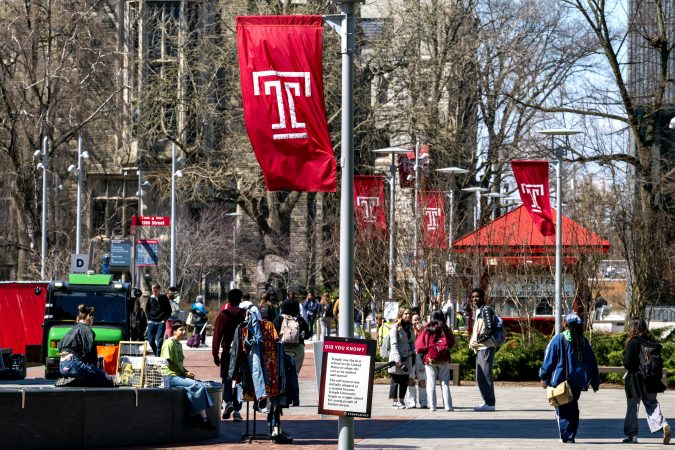
    Temple University officials say the school has seen more first-year students commit to attending in August than it has seen in recent past summers — a promising signal after several years of enrollment decline.

    The university received 6,682 deposits from first-year undergraduate students as of last Monday, up 4.7% over the same time last year and a university record, the school said. Students pay a deposit of $200.

    And more than 3,700 students of those students — more than half — already have registered for classes. That’s up 7.8% over the same time last year, the school said.

    Of first-year students who have submitted deposits, 57.8% are from Pennsylvania, including 23.5% from Philadelphia, the school said. Deposits from out-of-state students are up 3.8%, the school said.

    “While the start of the fall semester is still several weeks away, this is a tremendous accomplishment and an indication that we will once again be positioned to welcome a strong class of highly qualified, talented first-year students this fall,” Temple president John Fry said in a statement.

    The North Philadelphia-based university has struggled with enrollment loss in recent years. The school enrolled 29,503 students last academic year, excluding its international campuses. That’s down 27% from less than a decade ago when the university enrolled more than 40,000 students. The school lost an average of $200 million annually during that period, according to an internal Temple report obtained by The Inquirer in April.

    Its freshman to sophomore retention rate also has slid from 90% to 82% last fall, and the internal report showed there is concern the percentage will slip below 80% this fall.

    The school last year brought in a record number of first-year students and had been predicting it would experience an overall enrollment increase for the first time since 2017. The school also showed a record number of deposits last July.

    But that projection fell short by about 700 students and the school’s overall enrollment declined by about 500 students.

    The university acknowledged that some students will likely fall away this year too, known as “summer melt.”

    “The challenge for us is to keep up the momentum,” Fry said. “A number of institutions — I’d say the majority probably — are worried and struggling with deposits, and we’ve worked so hard to produce what I think … is an incredibly good year.”

    Temple officials earlier this month said student retention would be a focus this academic year, with new programming for the first-year student experience and other efforts. The university plans more coordinated orientation, advising, communication, and student support.

  • Penn State board committee votes to raise tuition, room and board 2.5% for in-state University Park students in 2027-28

    Penn State board committee votes to raise tuition, room and board 2.5% for in-state University Park students in 2027-28

    A Pennsylvania State University board of trustees committee on Thursday voted to recommend a 2.5% tuition and room and board increase for undergraduates on the University Park campus in 2027-28.

    That’s a larger increase than the 2% tuition hike already approved for 2026-27. Penn State sets its costs a year ahead of time; rates for 2026-27 were set last year.

    Meanwhile, in-state undergraduates at the Commonwealth campuses would see no tuition increase for the fifth consecutive year and smaller increases for room and board than those at University Park.

    The full board will vote on the proposed rates on Friday.

    Under the plan, undergraduate freshmen and sophomores at University Park would pay $21,400 in annual tuition for 2027-28, up $522 over last year.

    For those out-of-state, the annual tuition rate would rise 4% to $46,356, up $1,782.

    Room and board for both would rise 2.5% to $15,896 annually, which the university said was its lowest increase in the last nine years.

    The proposed tuition increases will raise $59 million in additional revenue, said Sara Thorndike, senior vice president for finance and business.

    While the proposal was passed unanimously by the committee, several board members raised questions.

    “I’m going to reluctantly support the tuition increase,” said board member Brandon Short. “We’re dealing with an existential crisis, and it’s not unique to Penn State that the cost of education is increasing at a … faster rate than what people think the value of a college diploma is … We all hold our noses and vote for the increase, but at some point, it’s not an easy answer, but we’ve got to come together and figure it out.”

    The university needs to make tough decisions and engage in “outside-the-box” thinking, he said.

    “Doing the same thing over and over again and expecting different results is the definition of insanity,” he said.

    Thorndike said the university has been cutting costs and continues to look for more efficiencies as it maintains a balanced budget.

    “We’re doing individual unit budget cuts,” she said. “We’re doing budget cuts associated with inflation, finding new revenues, and then asking for a modest tuition increase, so it’s a combination of all of those things to get to this point.”

    New board member Joseph S. DeRenzo questioned if in-state tuition increases could be kept lower at the expense of larger hikes for out-of-state students, or if larger increases could be charged for high-demand degrees in business and engineering.

    “Our out-of-state rates are actually very similar or high compared to our peers, and we’re already seeing an impact again on how much they’re discounting compared to what we’re discounting and how that’s affecting enrollments,” Thorndike said. “If we start to see a decline in out-of-state enrollments, that will not help us be able to keep our in-state rates low. It will actually have the opposite effect.”

    Thorndike also said that tuition revenue is projected to be $37 million under budget this year because of lower enrollment at the Commonwealth campuses, as well as international and graduate enrollments.

    Other local colleges also are raising tuition. The Pennsylvania State System of Higher Education, which oversees 10 universities including West Chester and Cheyney, last week raised tuition 4.3% — the largest percentage increase in a decade. Also last week, Rutgers University increased tuition 3% for in-state and out-of-state students, which the school touted as its lowest increase in four years. Meals and housing on average were increased 4%.

    And Temple University voted to raise tuition an average 3.4% for both in-state and out-of-state students.

    Earlier this year, the University of Pennsylvania increased its total costs by 3.8% for 2026-27.

    The 2027-28 budget includes a 3% pool for merit-based salary increases for employees and 4% for graduate assistant stipends, the university said.

    Undergraduate tuition for students from out of state would increase by 4% at University Park and 1% at the Commonwealth campuses.

    As for graduate students, those in-state at Commonwealth campuses would pay a 1% increase in tuition and 2% for those out of state. At University Park, in-state students will see a 2% hike and out-of-state students 4%.

  • Penn State, Temple to receive first installment in performance-based funding under state new budget

    Penn State, Temple to receive first installment in performance-based funding under state new budget

    Pennsylvania State University, Temple and the University of Pittsburgh will split $10 million in the state’s first allotment toward performance-based funding under the new budget.

    It’s the first time since the legislature passed the new performance-based formula last November that the three so-called state-related universities are receiving the funding in addition to the general appropriation they received last year. The formula considers overall enrollment, graduation rates, number of lower-income students as measured by those receiving federal Pell grants, students receiving degrees in high demand areas, and other factors.

    For Penn State, the new funding will amount to a little over $4 million, raising its general education subsidy to $246.1 million, the school said in a news release. The school said it was its first increase in state education funding since 2019.

    “This initial investment is an important first step that recognizes the essential role higher education plays in strengthening our commonwealth,” Penn State president Neeli Bendapudi said. “The metrics at the heart of this model align closely with Penn State’s mission and values.”

    Temple said it would receive a little over $2 million in performance-based funding, in addition to its $158.2 million general appropriation. The North Philadelphia-based university also is set to receive $500,000 for its “University College,” which helps adult and non-traditional students and lifelong learners pursue degrees. A university spokesperson said the money is for the school’s bachelor of general studies program.

    The performance-based funding grew out of a longstanding battle between the legislature and state-affiliated universities over transparency and accountability. State-related universities received hundreds of millions in state funding, yet have a quasi-public status exempting them from much of the state’s open records laws, a fact that has long been criticized by some legislators.

    Gov. Josh Shapiro, a Democrat, signed the $50.8 billion budget deal Sunday, applauding leaders from both parties for their work on the issue. He specifically highlighted House Minority Leader Jesse Topper (R., Bedford), who has led the charge to create the new performance-based funding model.

    “That’s something that leaders in Harrisburg have talked about for years and years and years, but we came together and we got it done,” Shapiro said during a news conference before signing the budget deal into law.

    Meanwhile, the system that oversees Pennsylvania’s 10 universities including West Chester and Cheyney will receive $626.1 million, up about $5 million over last year. The Pennsylvania State System of Higher Education had been seeking a $31 million or a 5% boost in order to roll back a 4.3% tuition increase its board approved last week.

    System spokesperson Kevin Hensil said Monday that the tuition increase would stay in place.

    In-state students, who make up the vast majority of the system, will pay $8,338 annually, up $344 from $7,994.

    The extra $5 million from the legislature, Hensil said, was “due to the expiration of funds related to a transfer workforce development partnership initiative” and would not impact the tuition increase.

    The budget also included $78 million for debt relief in the system, but Hensil said that also would not impact the tuition increase.

    “We are determining how it will be used, as we have in the past when such money was provided,” he said. “That analysis is underway.”

    By the state covering the PASSHE debt, Shapiro said it would enable the state’s 10 state-owned universities to “shift those dollars into more funding for our faculty, more funding for our students, and more funding for our academic programs.”

    In addition to West Chester and Cheyney, the other universities in the 83,005-student system include: Commonwealth, East Stroudsburg, Indiana, Kutztown, Lock Haven, Millersville, Penn West, and Shippensburg.

    Lincoln University, which also is a state-related school, is not included in the performance-based funding plan, but it received a $1.1 million boost.

    Funding for the state’s community colleges was held flat.

  • Temple University lost returning students at a high rate last year. This year, first-year students will see changes.

    Temple University lost returning students at a high rate last year. This year, first-year students will see changes.

    Temple University will make student retention a focus in the year ahead with new programming for the first-year student experience and other efforts in the works as it seeks to reverse troubling trends in enrollment and matriculation.

    Temple president John Fry and former interim provost David Boardman discussed the moves in an interview after the executive committee of the board of trustees approved a budget Wednesday that included a tuition increase and about 40 layoffs, the latest in a string of staff reduction efforts.

    “We really want to mitigate any issues that we have around retention and really improve the success of our students through their journey through Temple,” said Boardman, who remains dean of Temple’s College of Media and Communication and the university’s chief strategy officer.

    The move comes as the university copes with a slide in freshman retention. A decade ago, about 90% of freshmen returned for their sophomore year. By last fall, that percentage was 82%, and an internal Temple report that The Inquirer obtained in April showed there is concern the percentage will slip below 80% this fall.

    Temple experienced a 27% decline in its U.S. enrollment over the last eight years, and falling retention is part of the problem. The school lost an average of $200 million annually during that period, the internal report said.

    Employees from student affairs, enrollment management, and academic affairs have worked on the redesign of the first-year experience with support from the National Institute for Student Success, Fry said.

    “This work has helped us identify barriers and create a more coordinated approach to orientation, advising, communication, and student support,” he said in a message to the campus Wednesday.

    Boardman said the single biggest barrier is financial.

    “There’s a very strong correlation here between the financial pressures on students and their ability to persist and graduate,” he said.

    Academic success in the classroom early on is another, he said.

    “There’s … a very strong correlation between first-year, even first-semester, GPA and their ability to persist,” he said. “That is tied directly to these other sorts of strategies that we’ve been talking about in terms of making sure that students have the proper preparation when they go into the classroom and the proper support around them.”

    The new first-year experience is still under development, Boardman said.

    “It’s just a more coordinated approach to how we bring students on board, making sure that they have the right and ample advising even before they get here,” he said.

    Fry said the university is awaiting results from an audit by the institute, which began as a result of Temple’s involvement in the University Innovation Alliance, a national group aimed at graduating more students from low-income families. The results are expected in early to mid-fall, he said, which likely will kick off a university-wide discussion on retention.

    “That’s going to help us think about first-year experience, but many other topics beyond that regarding retention,” he said. “It’s going to be a real moment for us.”

    Several new leaders who will be integral to improving student retention are joining Temple this summer, he said. They include Evelyn Thimba as vice president for enrollment management; Elizabeth “Libby” Wentz as provost; and Heather Servaty-Seib as vice provost for undergraduate education. They will join Jodi Bailey Accavallo, vice president for student affairs, who has been working on the issue.

    The university also has aimed at improving its recruitment, admission, and support of transfer students, and that also has shown results, Boardman said. The university is using a more streamlined process for the transfer of credits, primarily from community colleges, he said.

    “In this enrollment cycle, our transfer enrollments are up almost 100% from the previous year,” he said.

  • The state system that runs West Chester and 9 other Pa. colleges votes to raise tuition 4.3%

    The state system that runs West Chester and 9 other Pa. colleges votes to raise tuition 4.3%

    Students in the Pennsylvania State System of Higher Education will face a 4.3% tuition hike — the largest percentage increase in a decade — if the system does not get a boost in state funding.

    PASSHE’s board of governors voted unanimously Thursday on the plan, which would enact the tuition increase if the system does not receive a 5%, or $31 million, increase in its state appropriation, which currently stands at $625 million. Gov. Shapiro has proposed flat funding for the system, and budget negotiations are continuing.

    Tuition would rise to $8,338 annually, up $344 from $7,994.

    “We’re all disappointed to … have to make this motion,” board chair Cynthia Shapira said. “We hope we do get the increase.”

    The 10 universities in the system are Cheyney, West Chester, Commonwealth, East Stroudsburg, Indiana, Kutztown, Lock Haven, Millersville, Penn West, and Shippensburg. Collectively, they enrolled 83,005 students last academic year, when the system experienced its first enrollment increase in 15 years. About 90% of students are Pennsylvania residents.

    The vote to increase tuition came one day after Temple University approved a budget that increased tuition an average of 3.4% for next year.

    Rutgers University also on Thursday voted to increase tuition 3% for in-state and out-of-state students, which the school touted as its lowest increase in four years. Tuition for a typical in-state, full-time arts and sciences undergraduate will increase on average $448 for the year, rising from $14,933 to $15,381, the school said. Meals and housing on average will rise 4%, from $15,332 to $15,945.

    Earlier this year, the University of Pennsylvania increased its total costs by 3.8% for 2026-27. Pennsylvania State University, which approves tuition increases a year in advance, hiked tuition 2% for in-state students at University Park for 2026-27 and froze it for those attending Commonwealth campuses.

    The resolution approved by the PASSHE board calls for the increase to be rolled back “if sufficient funding in state appropriation is received.”

    System chancellor Christopher Fiorentino said the tuition increase would cover the $31 million gap if the system does not get the increase. The board of governors took the same action last year and did not roll back a 3.6% tuition hike because the state held its funding flat.

    “We’re still really the most affordable four-year option that’s out there,” Fiorentino said in an interview before the meeting, comparing PASSHE schools to state-related universities like Temple and Penn State where tuition is more than twice that amount.

    Until 2025, the system had kept tuition at the same rate for seven years; if it had enacted inflationary increases, tuition would be $1,800 higher now, Fiorentino said. Preceding the freeze, tuition hikes were 2.5% in 2016-17, 3.5% in 2017-18, and 3% in 2018-19.

    Fiorentino said he continues to make the system’s case to legislators for more funding.

    “Our graduates earn 65% more over their careers than people without college degrees, which is about a million dollars in lifetime earnings,” he said. “Ninety percent of our students are from Pennsylvania, and 80% of them take their first job in Pennsylvania after they graduate. Investing in the PASSHE system … is truly an investment in the workforce of the Commonwealth of Pennsylvania.”

    System to launch new ‘last dollar’ scholarships

    The system also announced that beginning in fall 2027, it would provide “last dollar” scholarships to all Pennsylvania students who receive federal Pell and state Pennsylvania Higher Education Assistance Agency grants. For many students from the lowest-income families, the grants cover full tuition, but some families in the middle range who receive smaller amounts of aid are still on the hook for part of the cost, the chancellor said.

    “They’re the ones that tend to get caught in a bind, and they’re the ones that we’ve been worried about,” he said. “We’re going to cover the balance of their tuition” and make sure they are not affected by future tuition increases.

    Fiorentino said he hopes that donors will want to contribute to the effort so the level of aid can be expanded.

    The new scholarship program, called the PASSHE Pledge, will not cover room and board or fees.

    He did not have an estimate of how many students would qualify, but said system officials have been worried about losing them. And that would add to the enrollment decline at a time when the system, like other colleges, already is challenged by a shrinking pool of available high school students.

    “We’re hoping this is going to increase our enrollment numbers,” Fiorentino said.

    It is too early to predict fall enrollment, he said, but some of the system’s 10 universities are doing better with deposits than last year, some the same, and some a little worse.

    “We’re cautiously optimistic that we’re going to be stable,” he said.

    The system is partnering with community colleges to streamline the transfer process and concentrating on bringing students with some college credits and no degree back into the system, he said.

    “We will continue to work hard to maintain and grow our enrollments,” he said.

  • Temple University will lay off employees and raise tuition for the second consecutive year

    Temple University will lay off employees and raise tuition for the second consecutive year

    Temple University approved a $1.3 billion operating budget Wednesday that includes an average 3.4% tuition hike for both in-state and out-of-state students and plans for about 40 layoffs.

    Both the average tuition increase — which is for undergraduate and graduate students — and the number of layoffs are smaller than those implemented last year. The university raised tuition an average of 3.6% in 2025 and laid off 50 employees.

    The layoffs, which will occur this week, constitute less than 1% of the university’s workforce. Temple officials did not elaborate on who was affected or which positions but said jobs across the university from senior levels to the operational ranks were considered. An effort was made to limit the impact on “student-facing” roles, said chief strategy officer and former interim provost David Boardman.

    “The decision-making overwhelmingly was made at the local level, at the schools, colleges, and administrative units,” said Boardman, who is also dean of Temple’s College of Media and Communication.

    Fry said last month that layoffs were “inevitable” as the university works to close a projected $85 million budget deficit for 2026-27. Temple, along with many peer institutions, faces enrollment declines and financial pressures as the available pool of high school students drops, public attitudes toward higher education change, and the number of international students declines following changes in federal policy.

    The budget, approved without public discussion by the executive committee of Temple’s board of trustees, includes a projected deficit of $25.5 million.

    “We have met our savings target, which is obviously imperative,” Fry said in an interview after the board meeting.

    Fry had asked schools, colleges, and administrative units to cut a total of $60 million, a significant portion of which was accomplished through the elimination of 236 positions, he said. That is on top of 190 positions that were eliminated last year.

    More than 80% of the positions cut this year came through voluntary retirements, including a faculty program that netted more than 70 takers, as well as resignations and the elimination of vacant positions. Layoffs accounted for the rest.

    “Implementing these targeted budget reductions and undertaking other organizational realignments is a critical first step toward returning the university to a balanced budget over the next three years,” Fry said in a message to the campus community.

    The university is working under a new budget model that will “allow us to better align our resources with our strategic plan,” Fry said.

    While the majority of the $60 million reduction was due to the position eliminations, schools, colleges, and administrative units are implementing other efficiencies. Some of the colleges, for example, have reduced doctoral student admissions, Boardman said.

    The university’s 27% decline in domestic enrollment since 2017 and increased financial aid costs have been the most significant factors causing the school’s budget pressures, Fry said. The loss of students has amounted to an average of more than $200 million in lost revenue annually, according to an internal Temple report obtained by The Inquirer in April.

    That report said the school anticipated falling below an 80% retention rate this fall.

    Temple’s U.S. enrollment stood at 29,503 last fall; projections for this fall are not yet available.

    But Fry said in his campus message that the school has received a record number of deposits for first-year enrollment compared with last year and that deposits from transfer students are up over last year.

    The school also plans to roll out a new “first-year experience” program to help improve the school’s freshman-to-sophomore retention rate, which fell from a high of 90% about a decade ago to 82% last fall.

    Employees from student affairs, enrollment management, and academic affairs have worked on the redesign with support from the National Institute for Student Success diagnostic, Fry said.

    “The teams have taken a comprehensive look at how students transition to Temple and identified where we can better support their success,” he said. “This work has helped us identify barriers and create a more coordinated approach to orientation, advising, communication, and student support.”

    The efforts already are having an impact. Because of changes to orientation, 3,268 first-year students were registered for the fall as of July 5, compared with 2,407 students the same time last year, Fry said.

    With the tuition increase, the new base rate for full-time students from Pennsylvania will rise to $20,376 annually and to $36,600 for out-of-state students. (Excluding Temple’s Japan campuses, 62% of students are Pennsylvania residents.) While the average increase is 3.4%, percentage increases fluctuate across Temple’s schools and majors, from a low of 2.9% to a high of 3.9%.

    Tuition increases are typical; the University of Pennsylvania increased its total costs by 3.8% for 2026-27. Pennsylvania State University, which approves tuition increases a year in advance, hiked tuition 2% for in-state students at University Park for 2026-27 and froze it for those attending Commonwealth campuses.

    At Temple, fees will rise $42, or 3.9%, to $1,098 annually. And room and board will increase 4%. Students in a typical double-occupancy room at Johnson and Hardwick residence hall with 12 meals per week will pay $15,094 for the year.

    Temple said it also would increase its financial aid budget by nearly 7% over last year, to $196.1 million, to help students with need afford the university.

    “We know that financial barriers can impact our students and prevent them from persisting,” David Marino, interim chief operating officer, said in a statement. “This year’s historic investment in financial aid is an investment in the success of our students.”

    Correction: This story was updated to correct the number of first-year students who registered during last year’s orientation, due to incorrect information from Temple.