Author: Susan Snyder

  • Drexel University and the Academy of Natural Sciences may be headed for a split, sources say

    Drexel University and the Academy of Natural Sciences may be headed for a split, sources say

    Officials from Drexel University and the Academy of Natural Sciences were scheduled to meet Friday to continue discussing a path forward — with a potential split of the two organizations hovering over talks as one possibility.

    “That’s certainly a [potential] outcome,” said one source familiar with the situation who requested anonymity because they weren’t authorized to speak on the matter.

    But there likely also will be “reconciliation attempts,” the source said. “We either abide by the terms that we have been talking about or don’t.” If both sides abide by the terms, they said, “then everything continues peacefully.”

    The Academy and Drexel announced an affiliation in 2011, merging aspects of their operations but keeping separate boards. The Inquirer reported in April that Drexel told the Academy to either fully merge with the university or it would move to disaffiliate, and the two have been negotiating a new affiliation agreement.

    Neither the Academy nor Drexel returned calls early Friday evening seeking comment on whether the meeting had ended and its outcome.
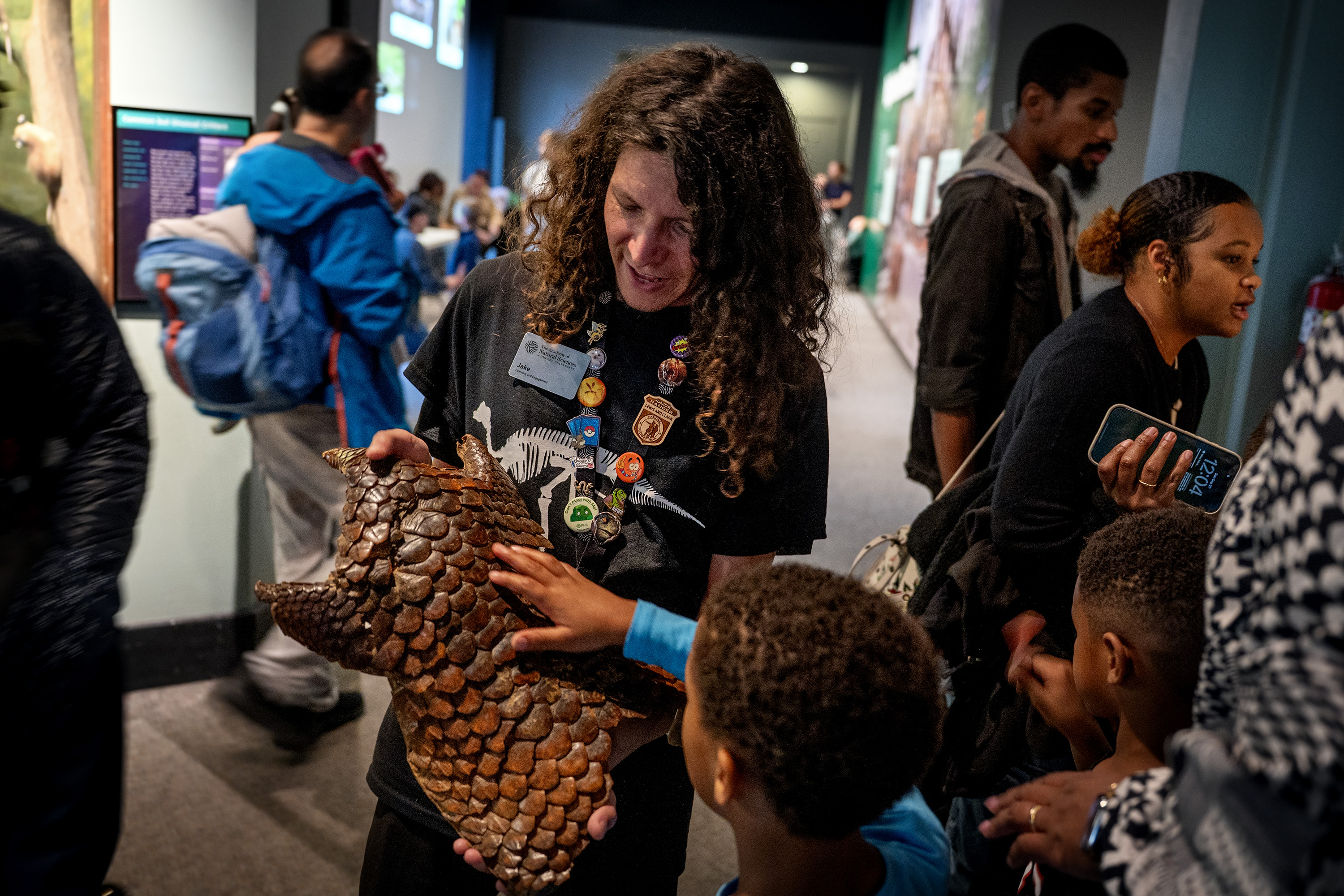
    Science educator Jake Cook lets visitors feel the skin of a pangolin — a scaly anteater — at the Academy of Natural Sciences of Drexel University on Sunday.Tom Gralish / Staff Photographer

    Drexel and the Academy disclosed plans in September to close the Academy museum, move the 19 million specimens in the collection, and eventually sell the building at 19th Street and the Benjamin Franklin Parkway.

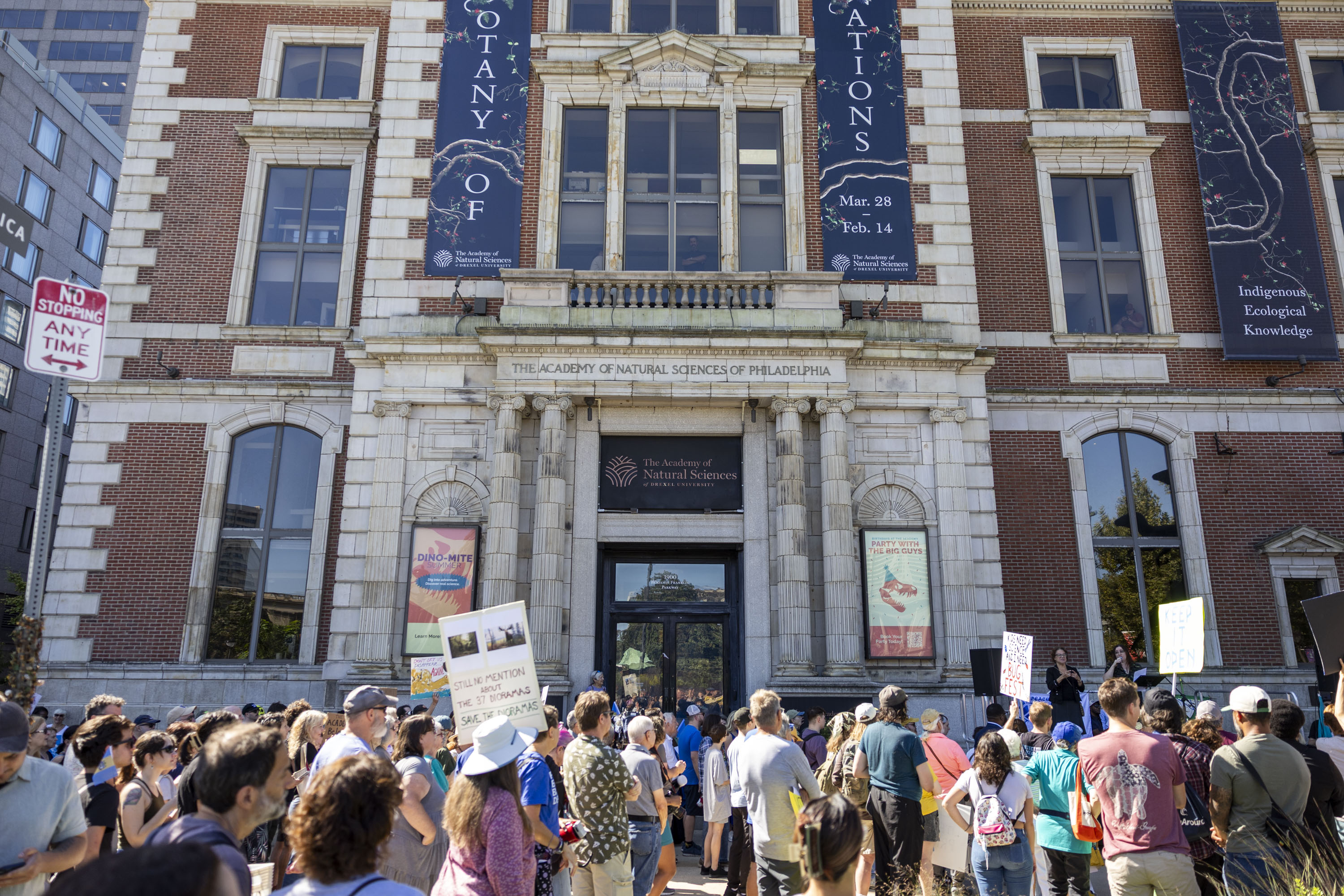
    A group of protesters earlier this week gathered at the same time as a Drexel board meeting and called on the university to disaffiliate and give the Academy a chance to negotiate what’s best for it.

    Drexel spokesperson Niki Gianakaris said earlier this week that the university had offered the Academy a path to disaffiliation.

    “We have been, and remain, open to that possibility,” she said. “We continue to engage in good-faith discussions with the Academy about its future.”

    Her comments came days after the William Penn Foundation made public its offer to underwrite operating costs for at least a year and keep the museum’s doors open while a permanent solution can be worked on.

    William Penn said the goal was to “provide time to test the interest of other funders and supporters who have not been engaged so far,” and the Academy leadership said it was open to the reprieve.

    The Academy, founded in 1812, has operated a museum since 1828, and its announced closure has generated street protests, more than 100,000 petition signatures, editorials, and the scheduling of City Council hearings for next week.

    The museum was shuttered to the public at the end of the day last Sunday, following large numbers of visitors in recent weeks but prior years of declining attendance. In the 2025 fiscal year, it brought in 126,000 visitors — down from 2014 when it welcomed 208,000 science fans to its “dioramas, dinosaurs, butterflies, live animals, and the renovated Children’s Nature Discovery Center, Outside In,” according to the Academy’s tax return from that year.
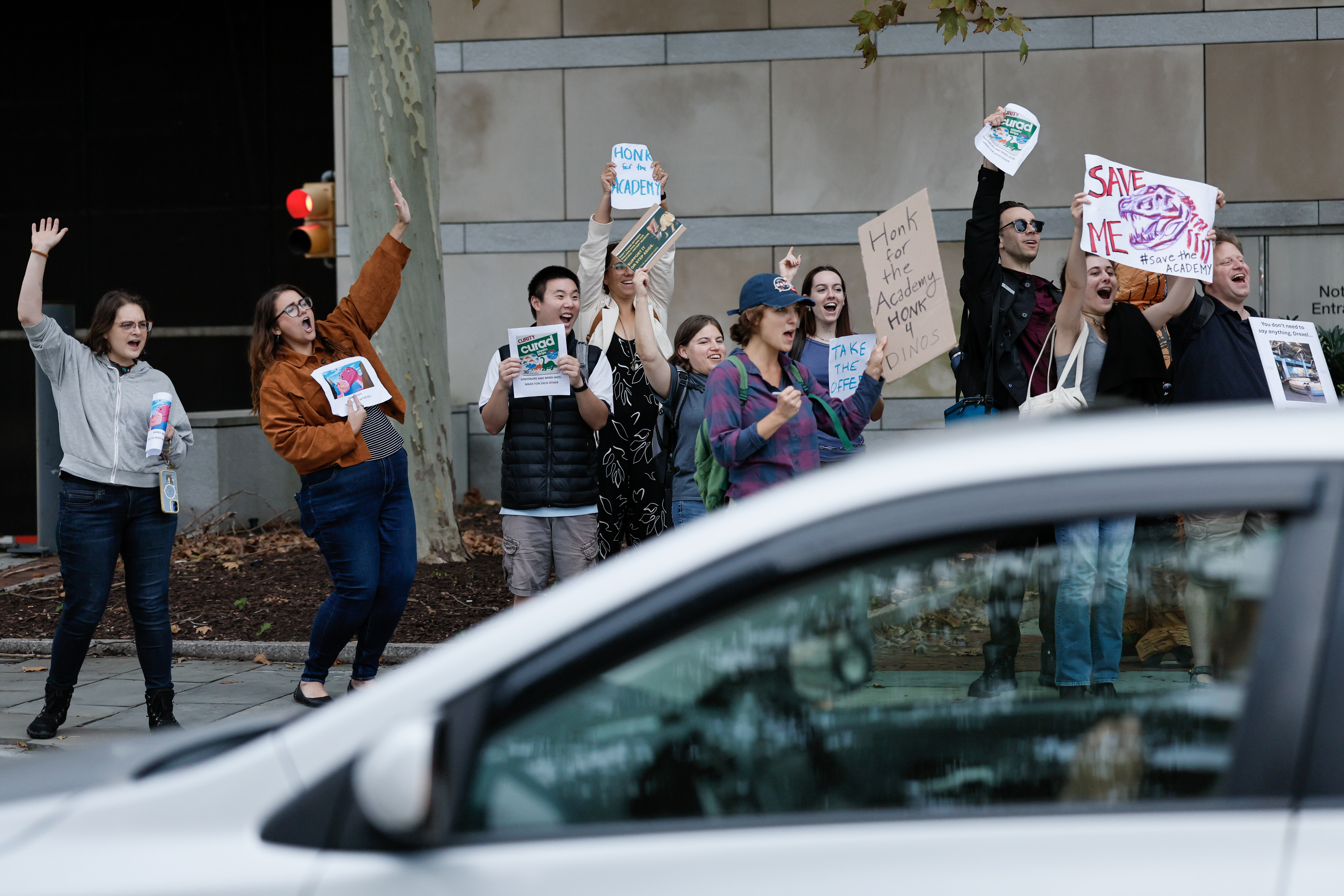
    The “Save the Academy” coalition gather outside of the National Constitution Center on Tuesday in an effort to keep the Academy of Natural Sciences museum open.Elizabeth Robertson / Staff Photographer

    Since the beginning of the Drexel-Academy affiliation a decade and a half ago, “our goal has always been to improve the financial position of that museum and the Academy of Natural Sciences as a whole, the research and the collections,” said a Drexel source familiar with the matter who was not authorized to speak publicly about it. “That was written into the original affiliation, and as we moved forward in time we hit snags and different things we never quite achieved that financial resilience then. And then COVID hit and that became even more challenging for the museum.”

    Drexel said that it had not received a formal proposal from William Penn but that it would be open to talking with the foundation about the matter.

    Gianakaris did not comment Friday on whether talks had been held or scheduled.

    “What William Penn has put forward is not enough,” said the first source, who had noted that a split was a possible outcome. “That wouldn’t do it.”

    Gianakaris said Drexel’s focus is on “safeguarding the Academy’s collections and research enterprise” while developing a “long-term model” that allows the public to engage with its collections.

    Drexel’s board of trustees earlier this week discussed the matter during a two-day meeting that was scheduled months ago. The meeting, the second held since Antonio Merlo became Drexel’s president July 1, 2025, was for the board to “focus on the university’s long-term future, strategic priorities and governance effectiveness,” Gianakaris said.
  • William Penn Foundation offers funding to keep Academy of Natural Sciences museum open

    William Penn Foundation offers funding to keep Academy of Natural Sciences museum open

    Drexel University has received an offer from the William Penn Foundation that would underwrite operating costs at the museum at the Academy of Natural Sciences of Drexel University while its survival could be studied.

    The money would float the continued operation of the museum for at least a year while questions about the Academy’s viability could be examined — matters such as how much money would be required to cover deferred maintenance on the building, how much it would cost to adequately fund and run the museum, and what the potential fundraising capacity would be.

    On Sept. 1, Drexel and the Academy announced the closure of the museum as of Sept. 30, with Sunday being the last day open to the public.

    Shawn McCaney, executive director of the William Penn Foundation, one of the largest and most influential funders of arts and culture groups in the region, said in a statement that the foundation values the “importance of the Academy of Natural Sciences and its deep history, its presence on the Parkway, what it contributes to critical scientific research, and its public facing museum which has engaged generations in science learning for hundreds of years.

    “We have offered to cover the cost of the operating subsidy Drexel has been providing to keep the museum open for at least another year so that the full range of options for the future of the museum could be properly explored, and to provide time to test the interest of other funders and supporters who have not been engaged so far.”

    A Drexel spokesperson did not specify whether the university had declined the offer, but said: “No proposal has been presented that would provide a permanent, sustainable path forward for the Academy’s museum. We sincerely appreciate the many ideas and expressions of support.

    “At this time our efforts remain focused on securing a permanent, financially sustainable future for the Academy, one that protects its collections and research enterprise and provides meaningful opportunities for public engagement over the long term.”

    Academy of Natural Sciences board chairperson Suzanne Biemiller said the Academy was supportive of the idea of staying open beyond Sunday.

    “The Academy has learned of an offer to keep the museum open for an interim period of time and give us some breathing room to reimagine a path forward working with the philanthropic community and the larger community. Certainly as a board we are open to the idea and are truly grateful.”

    That said, as of Friday afternoon, Biemiller said she was operating under the assumption that the museum would be closing for good to the public at 5 p.m. Sunday.

    A second rally by the Save the Academy coalition is planned for Saturday afternoon and a candlelight vigil and march to City Hall on Sunday, beginning at 5 p.m. A rally was held earlier this month shortly after the Sept. 1 announcement.

    The plans for the museum come after weeks of public shock and dismay from a broad swath of government officials, civic leaders, science advocates, and families.

    City Council members have called for public hearings. Petitions calling on Drexel and the Academy to reverse the decision have drawn tens of thousands of signatures. And families, children, and others have taken to their feet. Attendance at the museum last weekend was about 14,000 over three days — a sum that, if it could be repeated every weekend of the year, would bring more visitors to the Academy annually than almost any other cultural attraction in the city.

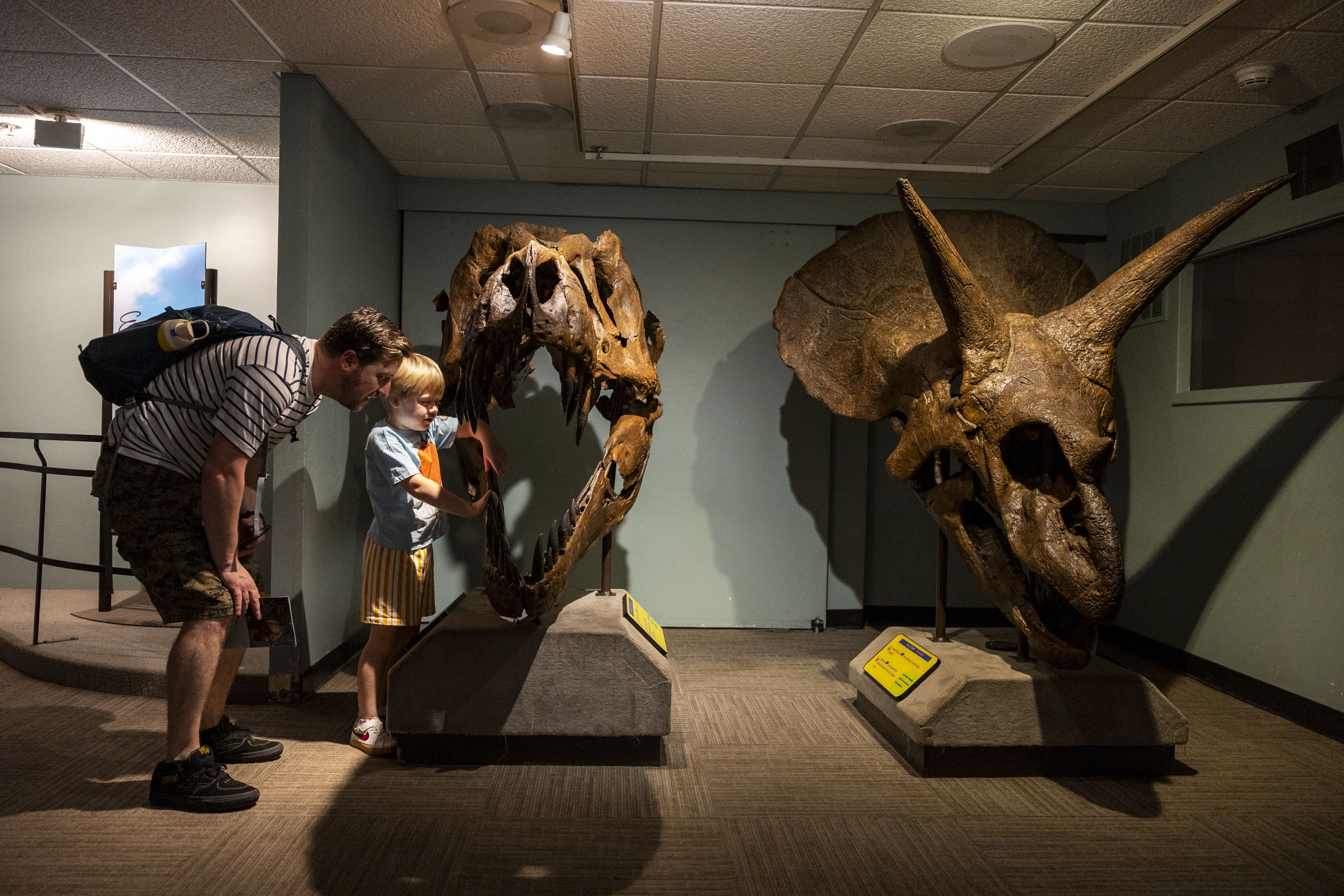
    Michael Ashleigh, of Phoenixville, Pa., with his son Otto, 5, looking at the Tyrannosaurus Rex Skull in the Dinosaur Hall at the Academy of Natural Sciences of Drexel University on Sept. 4, 2026. Michael wanted to give his son the experience he had 20 years ago when he first visited the Academy.Tyger Williams / Staff Photographer

    Former Comcast executive and U.S. Ambassador to Canada David L. Cohen, who has been involved in the talks between Drexel and the Academy at the behest of Gov. Josh Shapiro, said on Friday that the museum cannot survive in its current location, which has far too many deferred maintenance needs. The better approach, he said, is to find an alternative museum or exhibition space and then seek funders to support the plan.

    “When we have a plan, it likely will require some funding,” he said. “And then we’ll go to the philanthropic community, which seems so eager to write a check with a real plan where money can actually accomplish something and accomplish something that would be valuable.”

    Cohen said the agreement between Drexel and the Academy preserves the research and education components of the Academy and the third leg — coming up with a plan for a new museum space — is still being worked on.

    “We need to have a real plan which is likely to be a community-based plan, that is, with multiple institutions coming to the table,” he said. “We just need the time to put that together and no one is helping things by offering Band-Aids.”

    While Cohen said he was aware, and appreciative, of various offers from the philanthropic community, they are “premature,” he said, and “not founded in the true facts of what’s going on here.”

    He did not specifically address the William Penn Foundation offer.

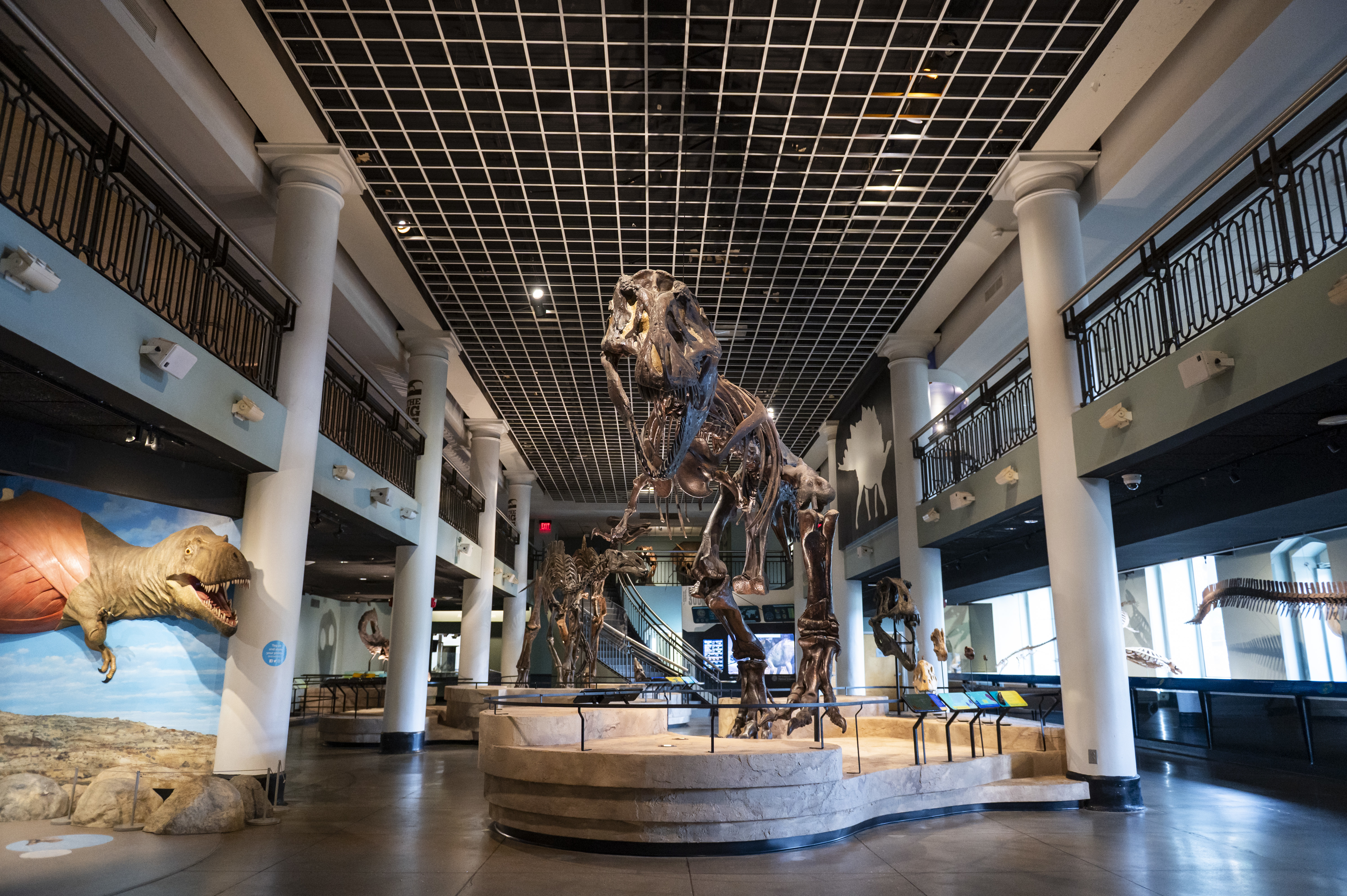
    Dinosaur Hall at the Academy of Natural Sciences Aug. 5, 2026.Allie Ippolito / For The Inquirer

    At-large City Council member Nina Ahmad said on Thursday she is continuing to explore what can be done to help the academy both with its capital and operational needs and to be sure its endowment is protected.

    “We are taking some steps to do our due diligence to understand where we are,” she said. “We are getting hundreds and hundreds of emails with concrete suggestions. We are going through those suggestions.”

    She said one thing to explore is whether the PIDC, Philadelphia’s public-private economic development corporation, could provide a bridge loan that would help secure other financing. The Preservation Alliance for Greater Philadelphia also is applying to get the Academy building on the National Historic Register, which might open up other funding streams, she said.

    A hearing on the Academy also will be held before City Council, but the date hasn’t been set. Ahmad said the resolution authorizing the hearing included subpoena powers so that Drexel officials will be required to testify.

    “It should not have come to this,” Ahmad said. “Somebody has just been moving along without addressing problems in a timely way,” she said.

    A spokesperson from the mayor’s office declined to comment on the offer put forward by the William Penn Foundation.

    Drexel and the Academy earlier this month reached a tentative agreement that will continue their affiliation and maintain Drexel’s financial support of the Academy. Negotiations continue on final terms.

    Niki Gianakaris, the Drexel spokesperson, said the Academy and Drexel are continuing discussions and “nearing an agreement that will establish a new framework for the relationship between the two institutions and support the Academy’s path forward.”

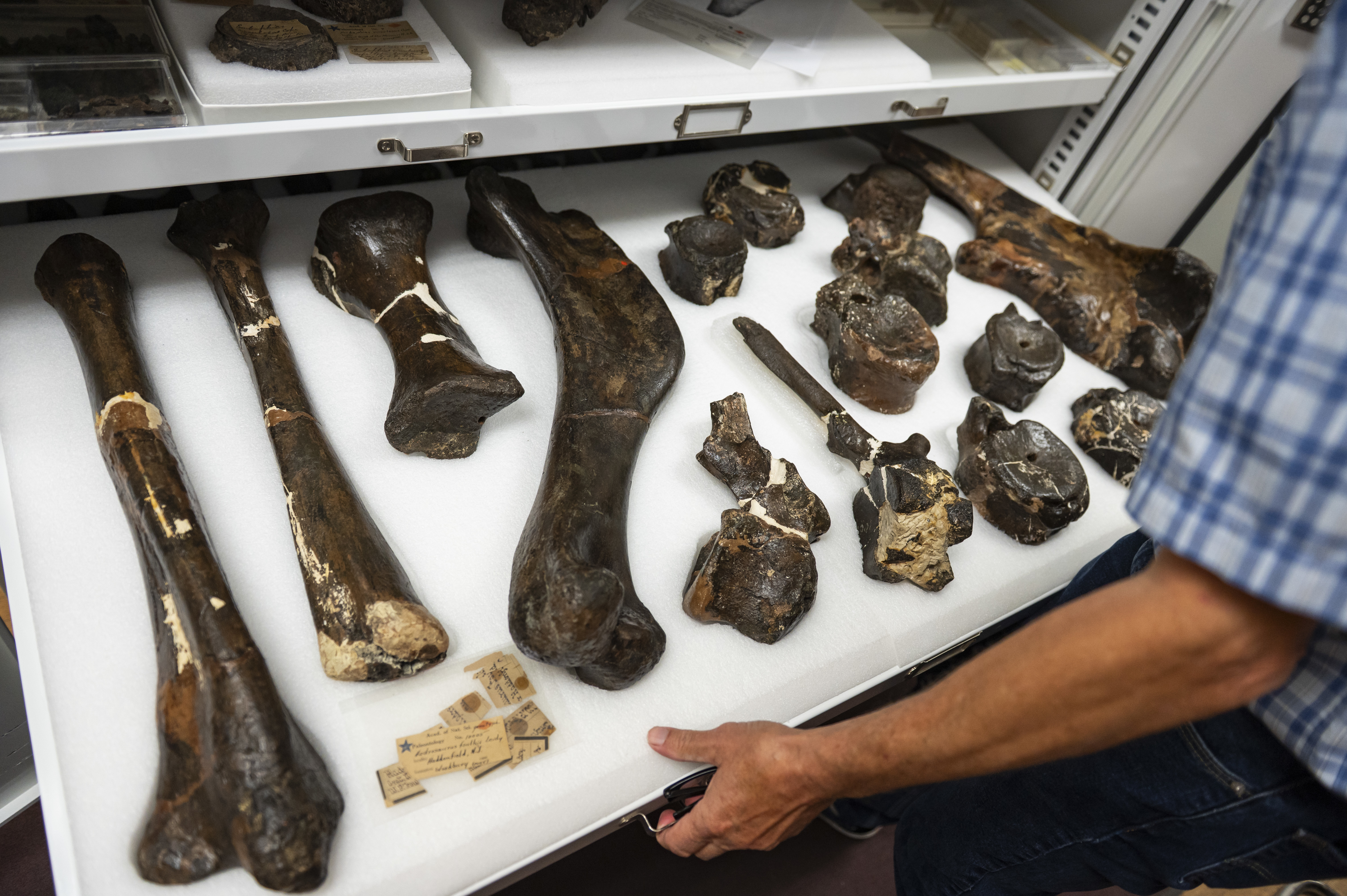
    Ned Gilmore, collection manager for vertebrate paleontology, pulls out a drawer filled with bones from a Hadrosaurus at the Academy of Natural Sciences of Drexel University, Aug. 5, 2026. The Hadrosaurus fossils were found in Haddonfield.Allie Ippolito / For The Inquirer

    The Academy’s collections, research activities and exhibit materials will remain in the building “while Drexel and Academy leadership consider potential pathways forward,” she said.

    William Penn’s McCaney said that a creative solution was possible given the challenges that the arts and culture sector has faced down before.

    “This is a city that can do great things — we saved Eakins’ The Gross Clinic and Parrish’s Dream Garden when they were in jeopardy of leaving Philadelphia. We built an incredible new museum on the Parkway — Calder Gardens. The partnership between the Free Library and the Rosenbach kept a cultural treasure accessible to the public. Those efforts took strong leadership and bringing together partners with the political, intellectual, and financial capital to keep our city at the forefront of arts, culture, and science. We are ready to contribute to an effort with similar thought, ambition, and collaboration.”

  • Penn endowment increases 27.4%, or more than $6 billion. It’s the largest dollar jump in the university’s history.

    Penn endowment increases 27.4%, or more than $6 billion. It’s the largest dollar jump in the university’s history.

    The University of Pennsylvania’s endowment jumped 27.4% or $6.3 billion in the year ending June 30, 2026, university officials said Thursday.

    The university’s endowment, which supports financial aid, research, teaching, patient care, and other projects, increased from $24.8 billion in 2025 to $31.1 billion, said Mark Dingfield, Penn’s executive vice president.

    “The major story here was our exceptional endowment performance,” Dingfield told members of the university budget and finance committee Thursday, “… which leads to significant growth in our total net assets.”

    It’s the largest one-year dollar jump in the university’s history and compares to 12.2% or $2.5 billion in 2025. The largest percentage increase in the endowment was 50% in 1983, followed by 41.1% or $5.6 billion in 2021, a university spokesperson said.

    Dingfield noted that much of the endowment is restricted for specific uses, and that some of the gains will be absorbed by an increase in the federal excise tax on Penn’s endowment earnings. The tax rate increased on July 1 from 1% to 4%.

    “So even though the endowment performance is exceptional and we’re celebrating, some of that will need to be going to paying off that tax liability under the new tax policy,” he said.

    The endowment’s performance capped an overall strong fiscal year for the university, Dingfield said. That follows an earlier period of fiscal uncertainty. The university in January made another round of budget cuts in response to President Donald Trump’s administration’s actions that threatened future federal funding and revenues, and because of rising legal and insurance expenses.

    Penn’s schools and centers were directed to cut 4% from certain expenses and keep in place financial cutbacks instituted the prior year, including a staff hiring freeze and freezes on midyear adjustments in staff salaries.

    But the financial report on Thursday was bright.

    “The bottom line here is that we ended the year with really strong, both balance sheet and operating performance, which does give us some flexibility heading into FY27,” Dingfield said at the meeting.

    Yet, he said, “we are very much still focused on managing the risks that exist in our current environment.”

  • Penn receives $22.5 million gift for endowed scholarship, professorships

    Penn receives $22.5 million gift for endowed scholarship, professorships

    The University of Pennsylvania’s College of Arts and Sciences received a $22.5 million gift for an endowed scholarship for undergraduates and endowed professorships across history, political science, and economics, the university announced Tuesday.

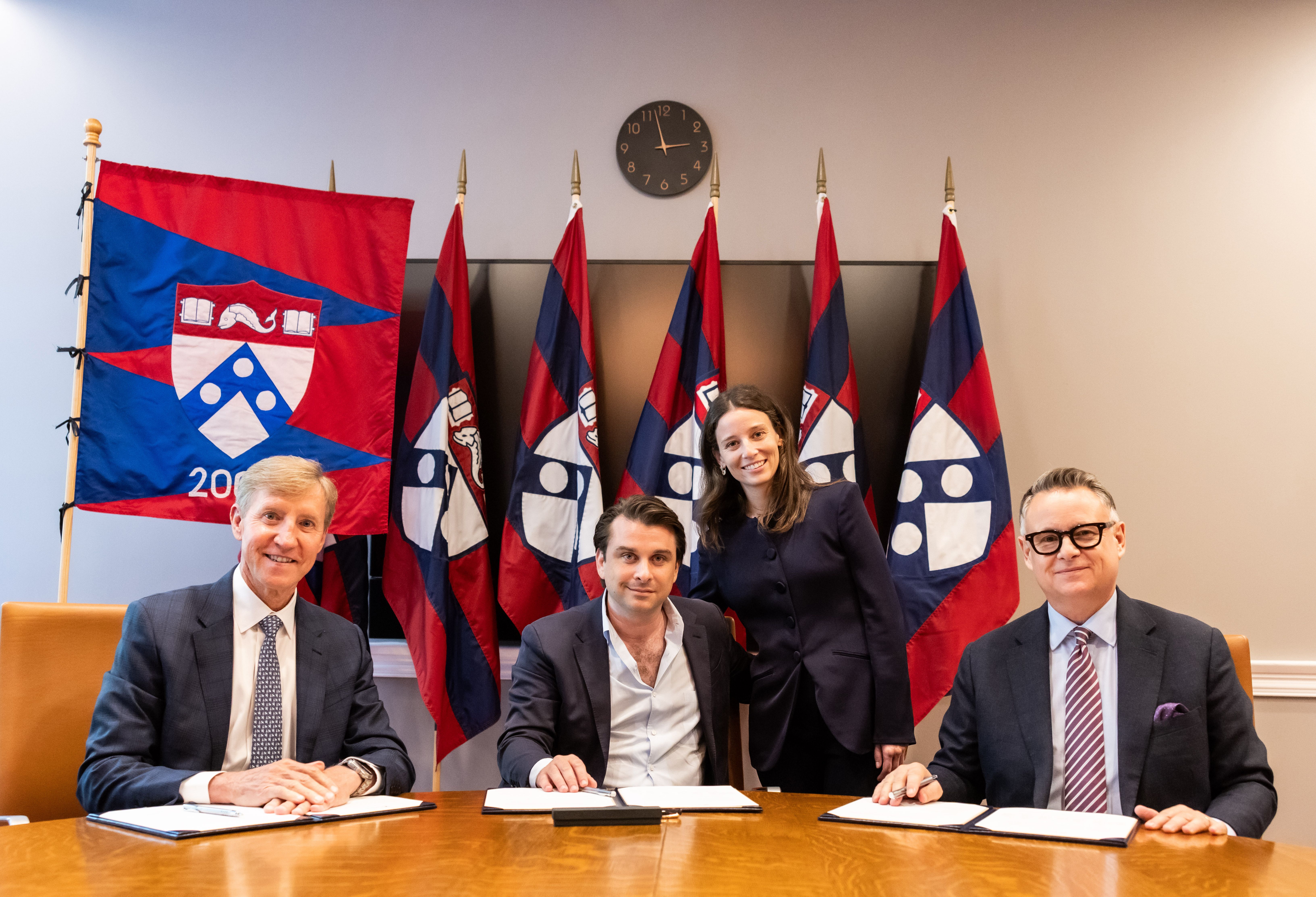
    The gift comes from Gabriel Gilinski, a 2008 graduate, and his wife, Stephanie Gilinski.

    It will help more students afford a Penn education and advance academics, university officials said.

    “Penn is at its best when we bring talented students together with outstanding faculty and give them the opportunity to learn from one another,” Penn president J. Larry Jameson said in a statement. “Gabriel and Stephanie’s generous commitment expands access to a Penn education while investing in the scholars whose outstanding teaching and research enrich our academic community.”

    The gift specifically will support undergraduate students financially, including those educated in Latin America, and it will establish two professorships and a visiting professorship, the school said.

    Gilinski, who obtained his degree in political science with a minor in economics, chairs the board of Grupo Nutresa, a Latin America food company with more than 50,000 employees and 45 factories in 17 countries. Gilinski and his wife live in Miami.

    “Across Latin America, access to education creates lasting change for families, and I’ve seen the ripple effect it can have, shaping not just one life but an entire community,” Gilinski said in a statement. “Penn gives international scholars a place to bring their own perspectives and experiences, and they leave shaped by everything they’ve learned from the classmates around them. That’s part of what makes a Penn education so special to me.”

    He also emphasized the importance of the liberal arts and critical thinking skills he acquired at Penn.

  • Swarthmore College renames hall for two prominent Black scholars with Philadelphia ties

    Swarthmore College renames hall for two prominent Black scholars with Philadelphia ties

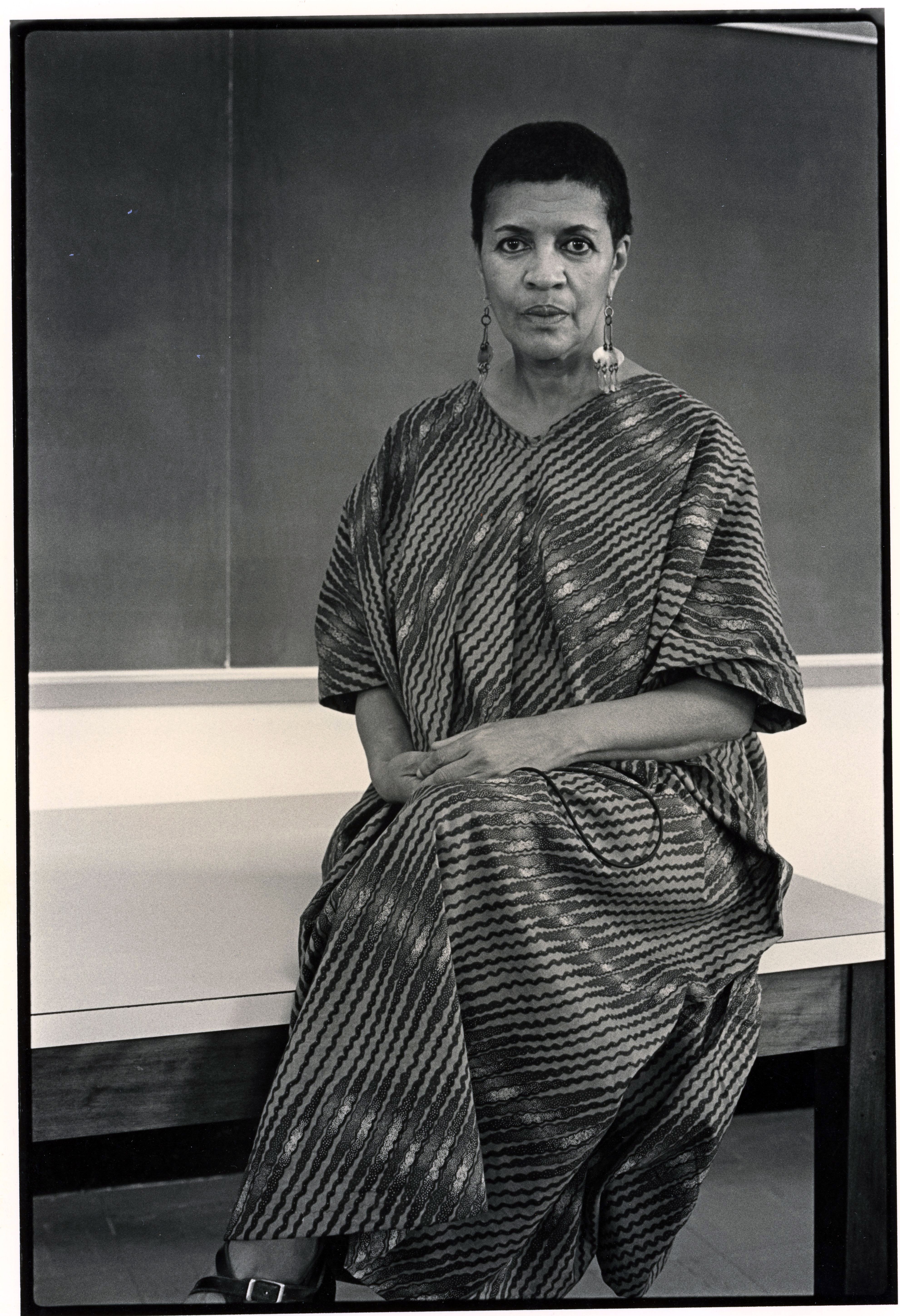
    Swarthmore College has renamed the former Trotter Hall and its adjacent lawn for two Black scholars who feature prominently in its history: the school’s first African American professor and an alumnus who served as a policy adviser to several U.S. presidents and formerly led the University of California, Berkeley School of Law.

    The move comes after the college last year stripped former professor Spencer Trotter’s name from the hall after the school learned Trotter had dug up a Native American burial ground in Chester County in 1899 and displayed human remains on campus.

    Effective immediately, the hall and its adjoining lawn will be known as Edley-Morgan Hall and Edley-Morgan Lawn, named for Kathryn L. Morgan, the late Swarthmore professor emerita of history, and Christopher F. Edley Jr., the late legal scholar and proponent of affirmative action who worked closely with three Democratic presidents and with six presidential campaigns.

    “This renaming is an important milestone, but not the end of this work,” Swarthmore president Valerie Smith said in a message to campus Monday. “Our further efforts will also ensure that this reckoning with the past is appropriately documented and acknowledged so our community can continue to learn and heal.”

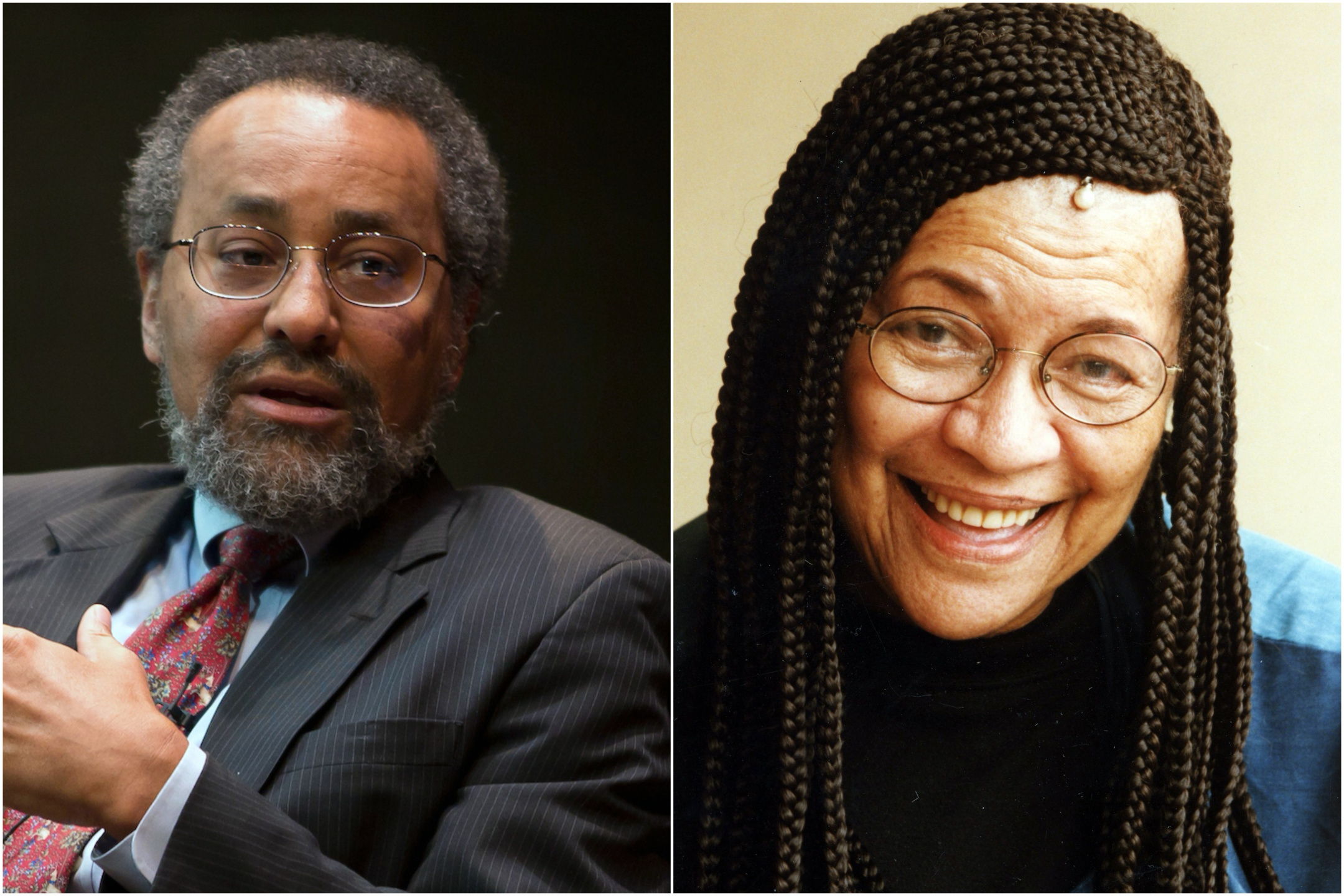
    The late Christopher F. Edley Jr. is a legal scholar and Swarthmore College alumnus. Swarthmore announced it is naming the former Trotter Hall and its adjoining lawn for Edley and Kathryn L. Morgan, the late Swarthmore professor of history, who was the college’s first African American professor.Courtesy of Swarthmore College

    The college undertook an extensive process that included input from more than 500 students, faculty, and staff through a campus survey, a panel discussion with other college leaders who had gone through renaming processes after controversies, a session with a leader of the Delaware Tribe of Indians, and research on potential new namesakes.

    Through the process, the community concluded the new namesake or namesakes should be someone with a direct connection to the college and honor departments based in the building — history, political science, classics, and the writing associates program. The community also wanted the new namesake or namesakes to be “consistent with or expand the diversity of representation on campus.”

    When the process began, of Swarthmore’s 70 primary buildings, 67% were named for people, and of those, 53% were named for one or more men, 26% for one or more women, and 21% for both, the college had said. All but two of the namesakes were white and about half were Quakers.

    More than 75 names were considered for the hall, which initially opened in 1882, the college said.

    Swarthmore hired Morgan in 1970, and she joined the history department as its first folklorist, according to a 2011 Swarthmore story about her passing in 2010. She got her bachelor’s degree from Virginia State University, a master’s degree from Howard University and another master’s degree and doctorate from Penn.

    She taught classes including Folklore and Folklife Studies, History through Folklore and Literature, Black Women in Historical Perspective, and Black Culture and Consciousness, according to the college. Though she initially was denied tenure, she eventually became the first Black woman to get it at Swarthmore and talked about tensions in her department in a 2000 Swarthmore College Bulletin interview, the college said in its piece.

    Her work Children of Strangers: The Stories of a Black Family (1980), was the first work of African American family folklore by a folklorist.

    In 2000, a scholarship was established in her name and a poetry festival in her name was held in 2009.

    “One of the first things I tell my students,” Morgan said, according to the Swarthmore piece, “is to go home, look to your families, to the stories you were told as children. They’re the most important stories in the world.”

    Morgan, who was born and raised in Philadelphia, was described in the Swarthmore piece as “a wise, charismatic woman who intellectually bridged the gap between W.E.B. Du Bois and Malcolm X, a militant yet gentle soul who embraced everything of interest with intensity, and a radiant presence who drew on lessons learned from her ancestors as others draw breath.”

    The late Kathryn L. Morgan, professor emerita of history at Swarthmore College, was the first African American professor at the school. The college is renaming the former Trotter Hall and its adjoining lawn for Morgan and legal scholar Christopher F. Edley Jr., a Swarthmore alumnus.Courtesy of Swarthmore College

    Edley, who died in 2024 and spent part of his youth in Philadelphia, got a degree in mathematics and economics from Swarthmore in 1973 and later a master’s in public policy and a law degree from Harvard. Before serving as law school dean at Berkeley from 2004 to 2013, he was a professor at Harvard. He served on Swarthmore’s board of managers from 1982 to 1993.

    He worked for the White House domestic policy staff in the 1970s when Jimmy Carter was president, advising on issues including food stamps, child welfare and disability, according to an article on the Swarthmore website. During Bill Clinton’s administration, he worked in the Office of Management and Budget and served as special counsel to the president. And in 2008, he worked on Barack Obama’s successful presidential campaign and served on his presidential transition board. Obama had been a student of Edley’s at Harvard, according to Edley’s obituary in the Washington Post.

    When he received an honorary degree from Swarthmore in 1999, Edley talked about what he learned at the school.

    “I learned to face the limits of my intelligence, without fear,” he said, according to the Swarthmore piece. “I learned what it means to really understand something hard, only to realize that I was dead wrong, or that there was another, perhaps better way to understand it … And I learned that when there is trouble, find a grove of lilac bushes, lie down, get drunk on the fragrance, and think about important things.”

    Swarthmore’s renaming process started after a 2022 article in The Inquirer that mentioned how a former Swarthmore professor and student had dug up a burial ground and moved a skeleton and objects buried with it to the college.

    Swarthmore researched and discovered the professor was Trotter. The college first checked to make sure there were no remains from Trotter’s collection being improperly handled at the school; there were not. Officials found a collection of unidentified human bones that the college likely had obtained legally — but probably were initially acquired unethically — and moved them into storage.

    The college renamed the building Old Science Hall last December when Smith named a task force of students, faculty, and staff members to consider the next steps.

  • Penn State is selling its Wilkes-Barre and Shenango campuses

    Penn State is selling its Wilkes-Barre and Shenango campuses

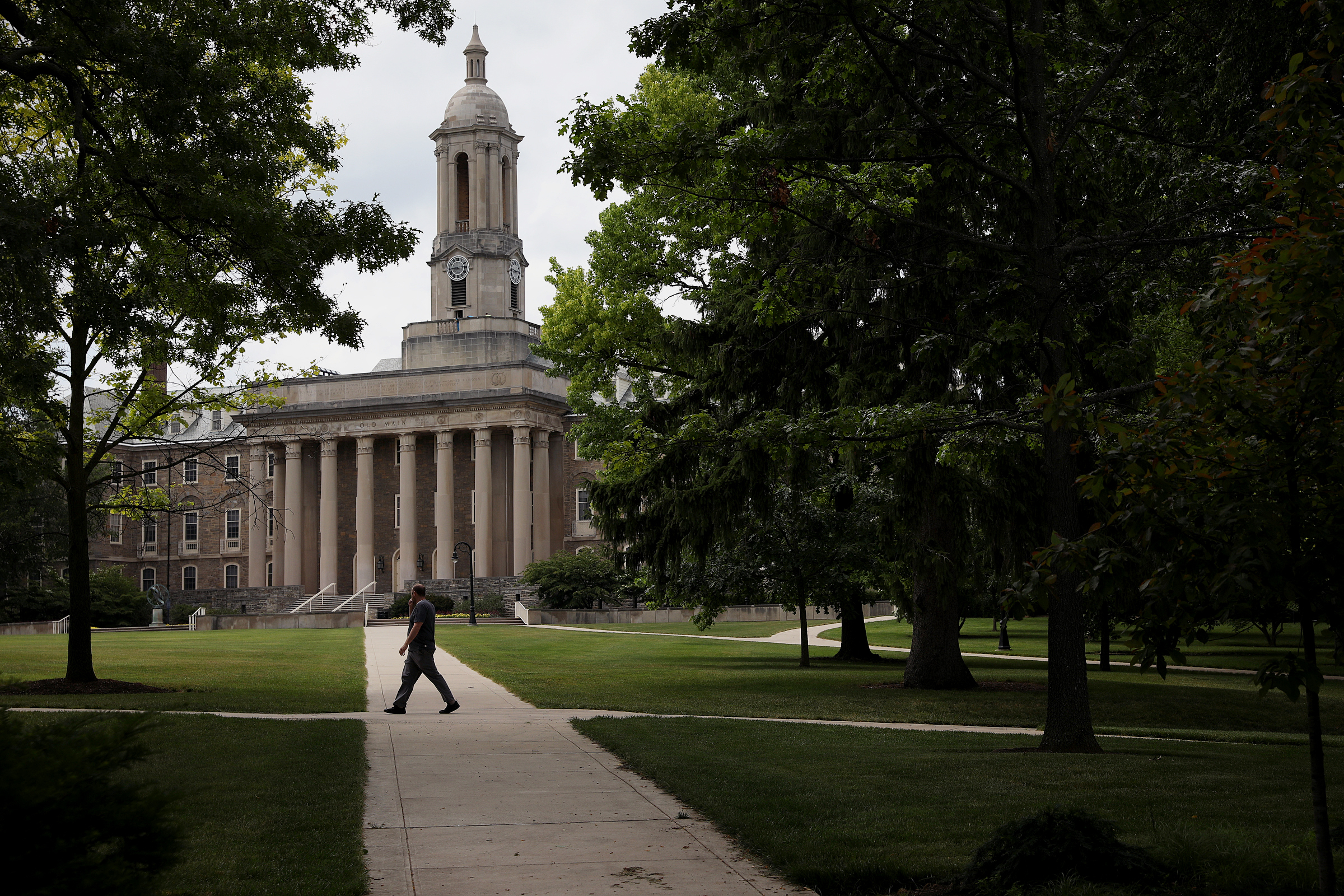
    Pennsylvania State University’s board of trustees agreed Friday to sell two of its closing Commonwealth campuses to developers for more than $6 million.

    Plans call for the Wilkes-Barre campus in Northeastern Pennsylvania to be developed into event and conference space for a nearby golf course and space for educational programming, while the Shenango campus in Northwestern Pennsylvania will be used for educational, cultural and workforce training purposes. The Shenango campus enrolled 309 students in 2024 and the Wilkes-Barre campus 329 students, according to a Penn State report on the closures.

    Sara Thorndike, Penn State’s senior vice president for finance and business and chief financial officer, told trustees at a committee meeting Thursday that discussions continue on the future use of the other five campuses: Dubois, Fayette, Mont Alto, New Kensington and York. The seven closing campuses are spread from Northeastern Pennsylvania to Western Pennsylvania. The campuses in the Philadelphia region — Abington, Brandywine, and the graduate education-focused campus at Great Valley — are not impacted.

    “Every campus is on its own path and own time line,” Thorndike said of the closing campuses. “Our goal is to find a positive path forward.”

    Penn State in May 2025 voted to close the seven campuses at the end of the 2026-27 academic year due to precipitous enrollment declines, marking the largest remake of the Pennsylvania flagship university’s Commonwealth campus system in its history.

    Since then, Penn State has been conducting meetings at each of the campuses with elected officials and others in the community to hear concerns about future uses, Thorndike said.

    The board approved the sale of the 13-acre, 12-building Shenango campus in Mercer County to JCL Development LLC for $1 million. It will be used for education, workforce training, economic development and cultural enrichment, Thorndike said.

    Penn State Wilkes-Barre’s 57-acre, 17-building campus in Luzerne County will be sold to HGC Development LLC for $5.25 million. HGC is a subsidiary of the Huntsville Golf Club, which is next to the campus. The property will be used for event space “complementary to the golf club,” the university said, and educational purposes, including a planned partnership with the nearby Misericordia University.

    Thorndike said the university considered community benefits, appraised values, deferred maintenance and the costs Penn State would have to pay if it held on to the campuses. Though both offers were below the value of the properties, she said the university determined they were the best overall offers.

    “Both proposals outline a vision for preserving the community-facing qualities of these properties while building on the educational impact the campuses have had for decades, and that’s an outcome we’re pleased to see reflected in each plan,” Renata Engel, vice president for Commonwealth Campuses and executive chancellor, said in a statement.

  • Pope Leo will present Villanova University’s first-ever sustainability medal to a cardinal who founded an AIDS network

    Pope Leo will present Villanova University’s first-ever sustainability medal to a cardinal who founded an AIDS network

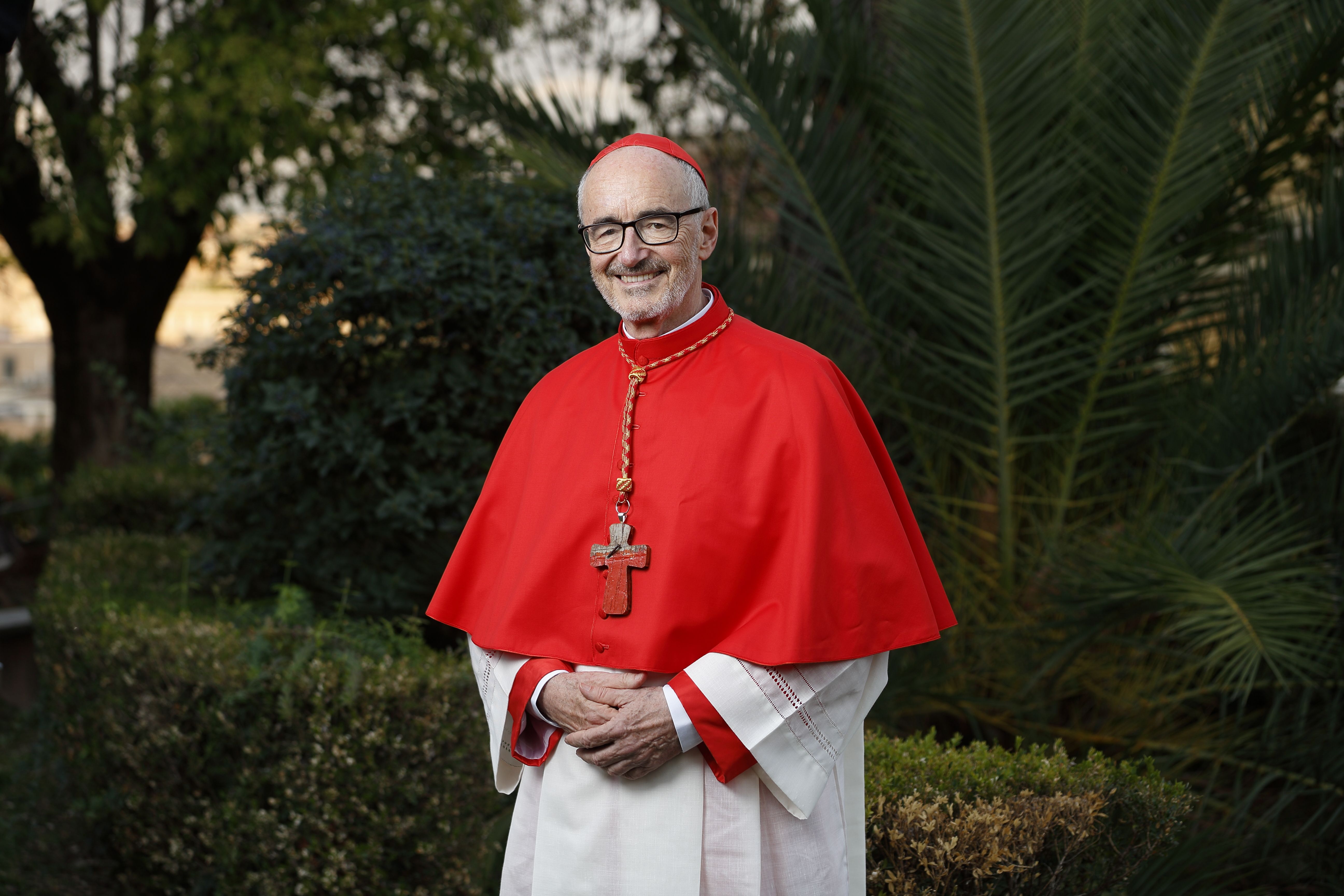
    A Czechoslovakian-born cardinal who is based at the Vatican will receive Villanova University’s inaugural sustainability medal for his work “at the intersection of human dignity, social justice, care for vulnerable communities and care for creation,” the university announced Monday.

    Pope Leo XIV, a Villanova alumnus, will present the medal named for him to Cardinal Michael Czerny on Oct. 13 at the university’s international sustainability conference in Italy.

    Villanova established the award earlier this year to honor someone whose work shows “exceptional commitment to ecological responsibility, social justice, care for the most vulnerable and responsible stewardship of economic and human resources.”

    The award is in part inspired by Pope Leo’s call to serve the poor and marginalized, said the Rev. Peter M. Donohue, Villanova’s president, who announced the winner at a news conference in Rome. Taking care of the environment and the poor are inextricably linked, Villanova said.

    “The Medal reflects a deeply held belief at Villanova: care for our common home and care for one another are inseparable,” Donohue said in a statement. “Cardinal Czerny’s work has shown us that care for creation cannot be separated from care for people.”

    The medal features Pope Leo on one side and Villanova University’s name on the other and is meant to highlight the pope’s commitment to sustainability, the school said. The winner can come from any field or discipline and is selected by a committee of members of the university’s Sustainability Leadership Council.

    The medal carries a $25,000 award to be used toward continued work in sustainability, the university said.

    Born in 1946 in the former Czechoslovakia, Czerny, 80, moved to Montreal with his family as a small child. His mother was Jewish and the family had converted to Catholicism, but several members of his family had died at the hands of Nazis, according to the National Catholic Reporter, which featured an article on Czerny in 2022.

    “My mother’s family — both parents and two brothers — were also Catholic but shared the Jewish origins that the enemy abhorred,” Czerny said in a homily, quoted by the National Catholic Reporter. “My maternal grandmother Anna, my grandfather Hans and my uncles Georg and Carl Robert, were all interned in Terezín, where Hans died… My grandmother and uncles were transported to Auschwitz. From here my uncles were sent to labor camps and eventually murdered there.”

    His mother and father were forced to work as farm laborers because of her Jewish ancestry and his unwillingness to divorce her.

    Czerny became a Jesuit priest in 1973 and got a doctorate in human sciences, social thought and theology from the University of Chicago in 1978. He was named a cardinal by Pope Francis in 2019.

    Over the last five decades, his work was focused on helping vulnerable people worldwide, the university said. In 1979, Czerny founded and led a center for faith and social justice in Toronto. He volunteered to be based in El Salvador during the country’s civil war, and from 2002 to 2010, he worked in Africa and founded the African Jesuit AIDS Network in Kenya.

    “That organization he led brought in a lot of hope,” said the Rev. John Abubakar, Villanova’s chief sustainability officer, who is from Nigeria. “It made a massive, massive influence or difference in the lives of people.”

    From 2022 until Sept. 1, Czerny headed the Vatican’s Dicastery for Promoting Integral Human Development as Prefect, a role in which he led the Church’s work on justice, migration, health and care for creation. Pope Francis in 2022 sent him to Slovakia to greet refugees fleeing Ukraine following the Russian invasion.

    Czerny said he was grateful for the medal and the honor it brings.

    “What’s most important I think is the commitment the university is making to include sustainability in how it is forming the future leaders of our church and in this case the United States,” he said in a video on the Vatican news site.

  • Temple terminates $55 million gift from school’s largest donor amid federal investigation into his company

    Temple terminates $55 million gift from school’s largest donor amid federal investigation into his company

    Temple University will terminate a $55 million gift — the largest donation in the school’s history — from alumnus Christopher M. Barnett, whose company is under federal criminal investigation over allegations of money laundering, wire fraud, and other crimes.

    Barnett, a behavioral healthcare business leader whose company, ABA Centers of America, provides services to children with autism, has resigned from Temple’s board of trustees, Temple president John Fry said Tuesday.

    The gift, largely intended for Temple’s College of Public Health, was announced with much fanfare last October, but none of the payments had yet been made to Temple under the gift agreement schedule, Fry said.

    The decision to terminate the gift was mutual, Fry said, and came as Barnett is “recovering from a life-threatening medical event.” Particularly difficult was that the federal allegations concern healthcare fraud and the gift was intended for the public health college, the president said.

    “We have to think about our values,” Fry said in an interview Tuesday. “We have to think about our reputation. Given the nature of the allegations, we felt that the best thing to do was to separate ourselves from this … as painful as that is.”

    Fry said that he became aware of the allegations Thursday from recently unsealed court documents in the case and that Temple reached out to Barnett, who resigned from the board Saturday. Temple decided to announce its intention to terminate the gift after the board of trustees got a briefing on Monday, Fry said.

    The College of Public Health will no longer bear Barnett’s name, nor will the dean’s title in the College of Liberal Arts or an “essential needs hub” that Temple recently opened on campus to help improve student success, Fry said.

    Barnett has not been charged. He “strenuously denies” the allegations and intends to “vigorously defend” against them, Fry and Mitchell L. Morgan, chair of the board of trustees, said in a message to the campus community, but the university “believes the actions outlined here are necessary.”

    “After careful deliberation we believe that moving forward with the gift would not be in the best interest of Temple,” Fry and Morgan said.

    Barnett’s company did not immediately respond to a request for comment Tuesday.

    What federal investigators are looking at

    Federal investigators in December obtained a search warrant for Barnett’s Microsoft accounts, as well as those of other company executives, court records show. The warrant application, unsealed in July in federal court in New Hampshire, says evidence suggests ABA Centers of America billed insurance companies for unnecessary treatments and falsified records to justify the higher reimbursement.

    The federal investigation and documents were reported last week by Behavioral Health Business, an industry publication.

    The warrant was the second a federal judge in New Hampshire approved last year as part of the investigation by the Department of Health and Human Services’ Office of Inspector General.

    Investigators allege that Barnett executed the scheme through a web of interlinked companies he founded, including ABA Centers of America, ICBD Holdings, and Exact Billing Solutions. His archived biography on ICBD Holdings’ website, which was removed in recent days, said Barnett is “actively involved” in the companies and served as the chairman of ABA Centers of America.

    The company misrepresented the location in which services took place to get the higher reimbursement costs, investigators said, and “billed for services that did not qualify as legitimate medical treatment, such as when a client is napping or watching television,” according to the affidavit accompanying the warrant request.

    ABA Centers of America was a “giant billing mill,” one former employee told federal investigators, according to court records. ABA has affiliated companies providing services in Pennsylvania, including in the Philadelphia area, and New Jersey.

    Barnett, who has no medical training, personally set minimum hours of treatment for patients and gave bonuses to employees who billed according to those goals, emails obtained by investigators show.

    The fraudulently obtained payments funded Barnett’s “lavish lifestyle,” which included a fleet of rare cars, a lease for a $20 million waterfront home in Fort Lauderdale, Fla., and a $9.95 million private jet decked out with Hermès goods, according to court records.

    A brochure for the private jet Christopher Barnett purchased using funds ABA Centers of America fraudulently obtained, according to federal investigators.Court records

    The autism-services provider also faces multiple civil lawsuits, including a suit over allegations of inflated billing practices in Florida. A federal judge overseeing that case said last month that if evidence produced in the litigation corroborates the allegations, “ABA Centers have engaged in criminal conduct.”

    Historic contribution and its impact on Temple

    Barnett’s historic contribution to Temple was announced last October, less than a year after Fry became president of the university. Barnett met with Fry before Fry took the helm at Temple in November 2024, the president said, and Barnett joined the Temple board in May 2025.

    About $20 million of Barnett’s gift was targeted for an autism center at the public health college. Fry said Tuesday that initiative now would have to be “rethought.” The essential needs hub will continue, and Fry said he will seek another donor to support it.

    Barnett had made other, smaller gifts previously, Fry said, and Temple will be reviewing those. He did not elaborate.

    When announcing the gift, Barnett told The Inquirer how he initially had been rejected by Temple but bought a plane ticket and showed up unannounced at the office of the director of transfer admissions, waiting hours until she finally agreed to see him.

    “I said I need you to take a chance on me, and if you do that, I promise you I will graduate with a 4.0 and I’ll be a prominent alum and I’ll give back to the university,” Barnett said in an interview last October.

    Barnett’s gift surpassed the $27.5 million given by philanthropists Sidney and Caroline Kimmel earlier that year. That gift now stands again as Temple’s official record.

    “I believe in Temple University,” Barnett, who has homes in Fort Lauderdale and Philadelphia, said in October. “Temple took a chance on me when the odds were uncertain. And it helped shape who I am and what I’ve been able to do for my communities.”

    Temple officials on Tuesday indicated Barnett was continuing to think about Temple.

    “Mr. Barnett has expressed a desire to avoid any negative impact on Temple and, in keeping with such desire, has cooperated with the university through this difficult process,” Fry and Morgan said.

    Fry acknowledged the loss of the gift would be disappointing to students, faculty, staff, and alumni at the public health college. And it is a gut punch to the university at a time when the school has been making cuts to close a budget deficit and dealing with enrollment declines.

    “This is clearly a setback,” Fry said.

    But he noted that even without Barnett’s gift, the university experienced the biggest fundraising year in its history in fiscal 2026, taking in $159 million.

    “This action does not diminish the philanthropic momentum and strength of Temple,” Fry and Morgan wrote in the campus message.

    The university will look at its practices for accepting gifts, Fry said.

    “We will go back and we’ll scrutinize ourselves over this, and, if there are practices we need to tighten up, we’ll tighten up those practices,” he said.

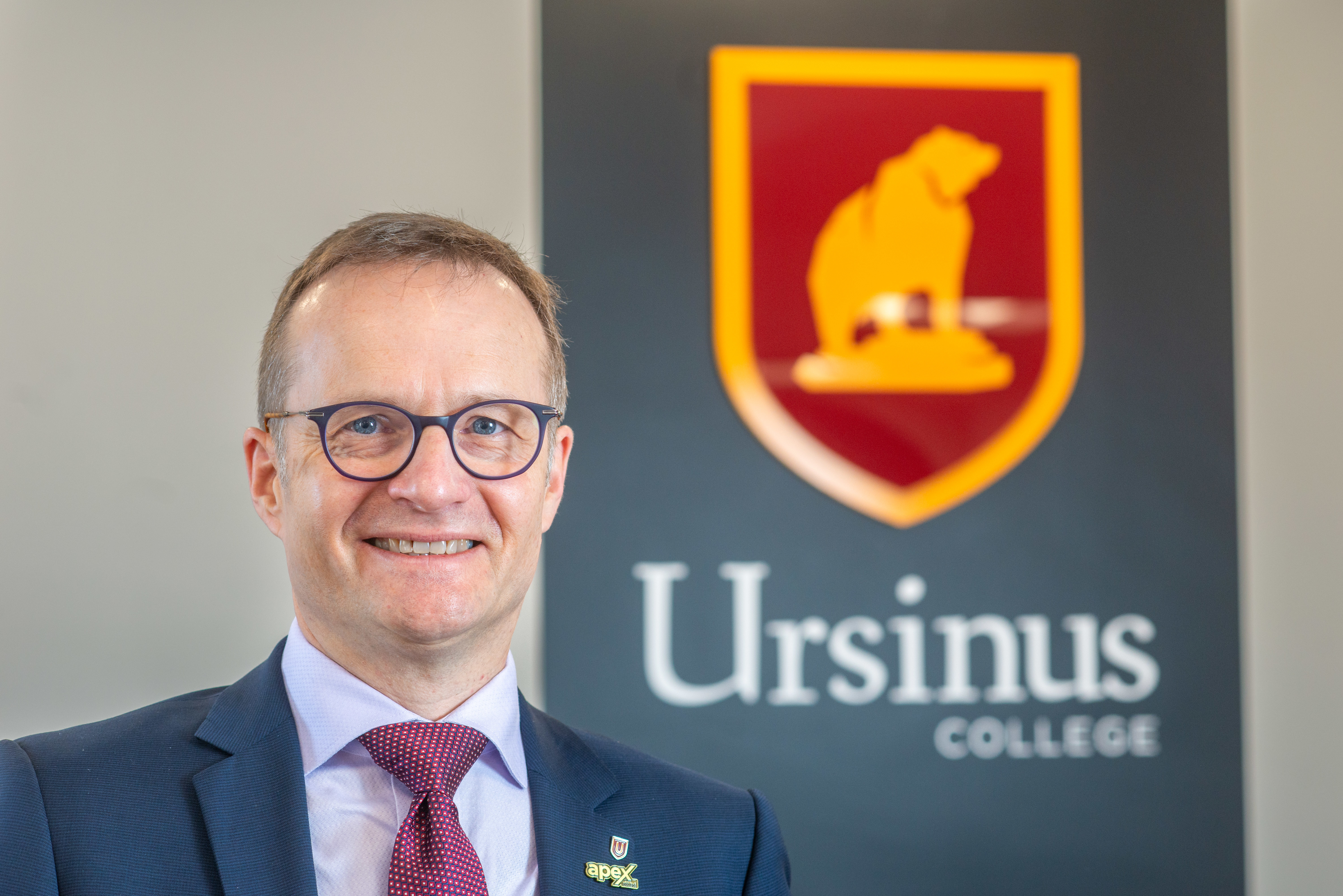
  • Ursinus College starts its first graduate program

    Ursinus College starts its first graduate program

    For its 157-year-history, Ursinus College has educated only undergraduates. But that will change next year when the school starts its first graduate program.

    About 85% of faculty voted in favor of the move into graduate education on Thursday, and the small liberal arts college, which enrolls about 1,370 undergraduates and is based in Collegeville, will start a master’s in exercise and sport science next May.

    The move comes as colleges around the country are coping with a drop in the available pool of high school students, and consequently undergraduates and increasing financial pressures. As part of an ongoing effort to close a budget deficit, Ursinus in June eliminated 26 full-time and 10 part-time employees, representing 15% of the school’s nonfaculty staff. And last December, the school announced it would cut 29 full-time faculty positions — nearly a quarter.

    Most four-year colleges in the region already offer graduate programs, with few exceptions such as Haverford and Swarthmore Colleges, both small, highly selective liberal arts schools.

    “This is an important moment in the history of Ursinus College and a natural next step in our evolution as an applied liberal arts institution,” Ursinus President Gundolf Graml said in a statement. “Our first graduate program builds on the strength of our health sciences programs and, importantly, extends the applied, professional and experiential approach at the heart of an Ursinus education to graduate study.”

    Graml said the college is planning to eventually offer more graduate programs and that a second one already is in the works, but he declined to provide further details. The college has appointed a new director of graduate studies.

    Ursinus’ new master’s will be a 30-credit, 15-month online program, costing about $600 per credit for a total of $18,000, the school said. That is below the new annual federal cap on loans for graduate programs, Graml noted.

    The college said it will give students currently enrolled in its undergraduate program in that field a direct path into a graduate program.

    From 2020 to 2024, the college’s health sciences department awarded 188 undergraduate degrees, and more than half of those graduates pursued a graduate degree or certification at other colleges, the school said.

    “We know that there’s student demand,” Graml said. “We see our students going out after graduation and continuing, and so we want to offer them an opportunity to continue that path at Ursinus.”

    Serving as a potential enticement to stay at Ursinus, the program will allow undergraduates to take up to two graduate courses if they are preliminarily accepted into the program, the school said.

    That means Ursinus undergraduates who enroll in the program might be able to finish more quickly than 15 months, said Kyle Beyer, associate professor of health sciences.

    “We recognize this is something we could offer that would enhance our students’ learning and make them more competitive in the job market,” Beyer said.

    An alum already emailed him, he said, asking how to enroll in the program.

    The move into graduate programming will not require an increase in faculty, Graml said. Over time, it could boost revenue.

    Ursinus has been running total operating losses for most of the last nine years, reaching $13.4 million in 2024 but falling to $4 million in 2025, financial records show.

    Ursinus experienced a 10% decline in first-year enrollment last fall and a 6.4% decline in overall enrollment.

    Graml said this year’s overall and freshman enrollment numbers won’t be available until after census later this month.

  • The Academy of Natural Sciences museum is closing. What happens to memberships and planned events?

    The Academy of Natural Sciences museum is closing. What happens to memberships and planned events?

    Drexel University and the Academy of Natural Sciences announced Tuesday that the museum would close for good on Sept. 30. Its last day open to the public with regular hours will be Sunday, Sept. 27.

    While the Academy’s research and collections will be unaffected by this closure, here’s how things will change for the museum’s members and its events.

    Will museum members get refunds?

    Most recently, memberships for the Academy museum cost $65 for individuals. $135 for families.

    “Members will receive direct communication in the coming days with information about their memberships, including benefits, expiration dates, and transition options,” Drexel said in a statement.

    The Franklin Institute, the university said, will honor Scademy memberships through their expiration dates, so members can visit the institute situated only about a block away from the Academy.

    Members could also “adjust the tax-deductible portion of their membership or request a prorated refund for the remaining membership period,” the university said.

    The university said it will provide information to members and also post it on the Academy’s website when it becomes available.

    What will happen to events scheduled at the museum?

    “All programs and events scheduled to take place before the closure will continue as planned,” the university said. The university did not respond to what will happen to events that are rescheduled after Sept. 30 or if there are any.

    What happens to the interns and students currently working in co-ops at the museum?

    “Five Drexel students are currently working at the Academy in co-op positions. Their roles support the Academy’s research and collections’ activities and are not affected by the closure of the museum,” the university statement said.

    Will hours be expanded if the closure announcement drives a high turnout?

    The university said visitors should come to the museum through Sept. 27 “and participate in programs and events offering opportunities to experience and celebrate the museum during its final weeks.”

    The Academy of Natural Sciences of Drexel University, 1900 Benjamin Franklin Parkway, is open Friday to Sunday 10 a.m. to 5 p.m. ansp.org