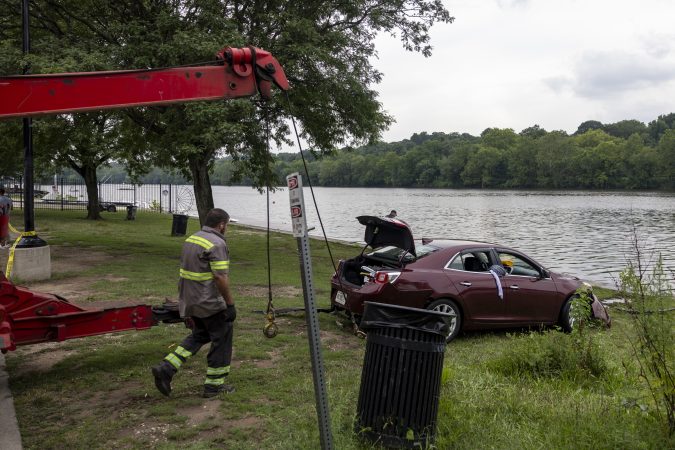
Two elite rowers and a couple of bystanders jumped into action — and into the water — Friday afternoon to rescue a man who drove his car into the Schuylkill.
Libby Peters, a 43-year-old former college rowing coach from Fairmount, was being interviewed for a documentary near the St. Joseph’s University boathouse when she heard a crash.
“I saw water up in the air, and I looked and saw a vehicle, pretty far off — it was strange how far into the river it had gotten,” Peters said. She ran to the dock and dived into the water.
As she swam, she saw the car beginning to sink, Peters said. She reached the car and shouted at the driver to wake him up. The doors were locked, she said, so she began pulling him through the window.
“The car was sinking, and he was going in and out of consciousness, so I just kept trying to keep him awake,” she said. “And I was pretty worried that once the car went down I wouldn’t be able to hold on to him anymore.”
As the car went underwater, Peters realized she was not alone: A man and a woman who had seen the crash had retrieved life jackets from the boathouse and swam out to help.
“I just thank God that just as the car went under, they got there, the two other swimmers, and they had life jackets,” Peters said. “The three of us together were able to keep him afloat.”
Temple University’s head coach for women’s rowing, Rebecca Grzybowski, was also at the river for the documentary. When she saw her former teammate from the U.S. Women’s National Rowing Team dive into the river, she fired up one of the small motorboats used by rowing coaches and headed onto the water.
”It was almost like we both knew what we needed to do,” Grzybowski said.
Grzybowski estimated that Peters and the good Samaritans swam about 200 meters (about 650 feet) in water that was about 10 feet deep.
When they got back to shore, emergency medical personnel took over.
“Our job was getting him out of there, responding quickly,” she said. “I’m really glad that we were in the right place in the right time.”
A police captain at the scene said he was unsure of the man’s status. A tow truck lifted the burgundy Chevrolet sedan from the river Friday afternoon. Divers with the police department were seen coming to shore.
Peters said she had been told the man was “OK,” and said she was grateful for everyone who helped.
“I feel a ton of gratitude,” Peters said. “I think that there were a lot of factors and had one thing not been in place, it would have been a really different outcome.”
Philadelphia’s late-night fireworks display was prompted by concerns over safety and a poor long-range weather outlook, city officials said Sunday morning, as work crews were busy cleaning up Philadelphia’s Benjamin Franklin Parkway from the July Fourth celebration.
A massive Liberty Bell display still hung over the stage near the Philadelphia Art Museum, where hours earlier Meek Mill, Will Smith, and backing band the Roots were the last to perform at the One Philly: Unity Concert for America. Gone were the fireworks and revelers, but the white tents, chain-link fencing, and long rows of porta-potties were reminders of a concert that lasted until nearly 2:45 a.m.
It wasn’t supposed to go that long. But a summer storm around 9 p.m. rolled in with intense wind gusts, rain, and lightning, leading the city to evacuate the Parkway.
The city didn’t have an official number, but estimated that “thousands” of concertgoers returned, just after midnight, to get the party started again. So did the performers, with the exception of Christina Aguilera.
Items from last night’s festivities on the Ben Franklin Parkway wait to be picked up in Philadelphia on Sunday, July 5, 2026.David Maialetti / Staff Photographer
Mayor Cherelle L. Parker said she trusted the experts and welcomed people back to the concert venue once it was safe.
“I want to thank the Roots and all of their incredible guests for their relentless energy and for delivering an incredibly inspiring performance worthy of America’s 250th birthday,” Parker said in a Sunday news release.
The decision to proceed with the fireworks was made by city experts, led by Managing Director Adam K. Thiel, and the mayor was informed, said Parker spokesperson Joe Grace.
The weather forecast factored into the decision, Grace said. The city will be under a flood watch starting at 2 p.m., and rain and storms are likely over the next 10 days, so postponing the fireworks to another day did not make sense, he said.
“Once fireworks are loaded, they cannot be safely unloaded,” Grace said. “From a safety and operational standpoint, completing the fireworks display was the right decision.”
Some detractors of the late fireworks display turned to online forums to complain about the noise.
“Ok so I wasn’t dreaming. I was actually awakened by an officially sanctioned fireworks display at 2:30 a.m.,” one Reddit user wrote.
Mykola Kosyk of Fairmount said it was disappointing that the city waited until nearly 3 a.m. — far too late for children — for a show that lasted only about 10 minutes.
“It was the worst fireworks display ever,” Kosyk said. He called it a “basic display” that wasn’t on par with the historical significance of the Semiquincentennial.
Kosyk says he collects fireworks memorabilia dating back to the 1800s, and he and his wife travel the state visiting fireworks displays. He said the company putting on the show, Pyrotecnico, is “well-renowned,” and he blamed the city for not planning a better show.
As the smoke from the fireworks show settled around 3 a.m., the city’s Department of Sanitation sent out approximately 100 laborers and 50 trucks to clean up the Ben Franklin Parkway and the surrounding area, the city said in the news release.
By morning, much of the mess was gone. Security magnetometers sat in a pile, ready to be picked up and taken away, while dozens of staff from Imperial Events Services worked to keep runners and curious onlookers out of what was supposed to be a secure area.
“The joggers are mad at us,” said one staffer, as his team found a gap in the fence that allowed people into the closed-off area.
Workers dismantle the stage from last night’s concert along the Ben Franklin Parkway in Philadelphia on Sunday, July 5, 2026.David Maialetti / Staff Photographer
One visitor was disappointed that the stage breakdown temporarily blocked the front of the Art Museum.
“We want to see the Rocky steps, but we can’t,” said Angelika Gamez, who flew in from Bogota, Colombia, for the France-Paraguay soccer match Saturday.
Still, Gamez said her visit to Philly was amazing, weather aside.
“It was very hot. In Colombia, we don’t have seasons like this.”
A law enforcement search continued Saturday at a dilapidated three-story brick twin in Olney, where police are investigating the homeowner’s connection with at least two missing women.
The house belongs to Eugene Albert Horsch, 44, who was arrested June 19 and charged with illegal gun possession and drug-related crimes.
Horsch’s initial arrest sparked questions: Why did he have a fake ID showing himself to be a DEA agent? Why did a woman with Horsch identify herself as someone else who was reported missing in 2023?
More questions unspooled as city police investigators and federal agents looked inside Horsch’s house, where they found hidden compartments, a 55-gallon drum, chemicals, unknown liquids, a woman’s death certificate, and a handwritten letter that seemed to describe hurting people.
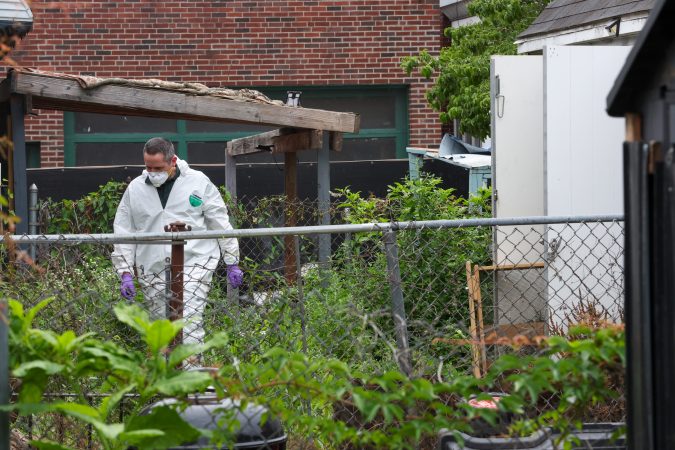
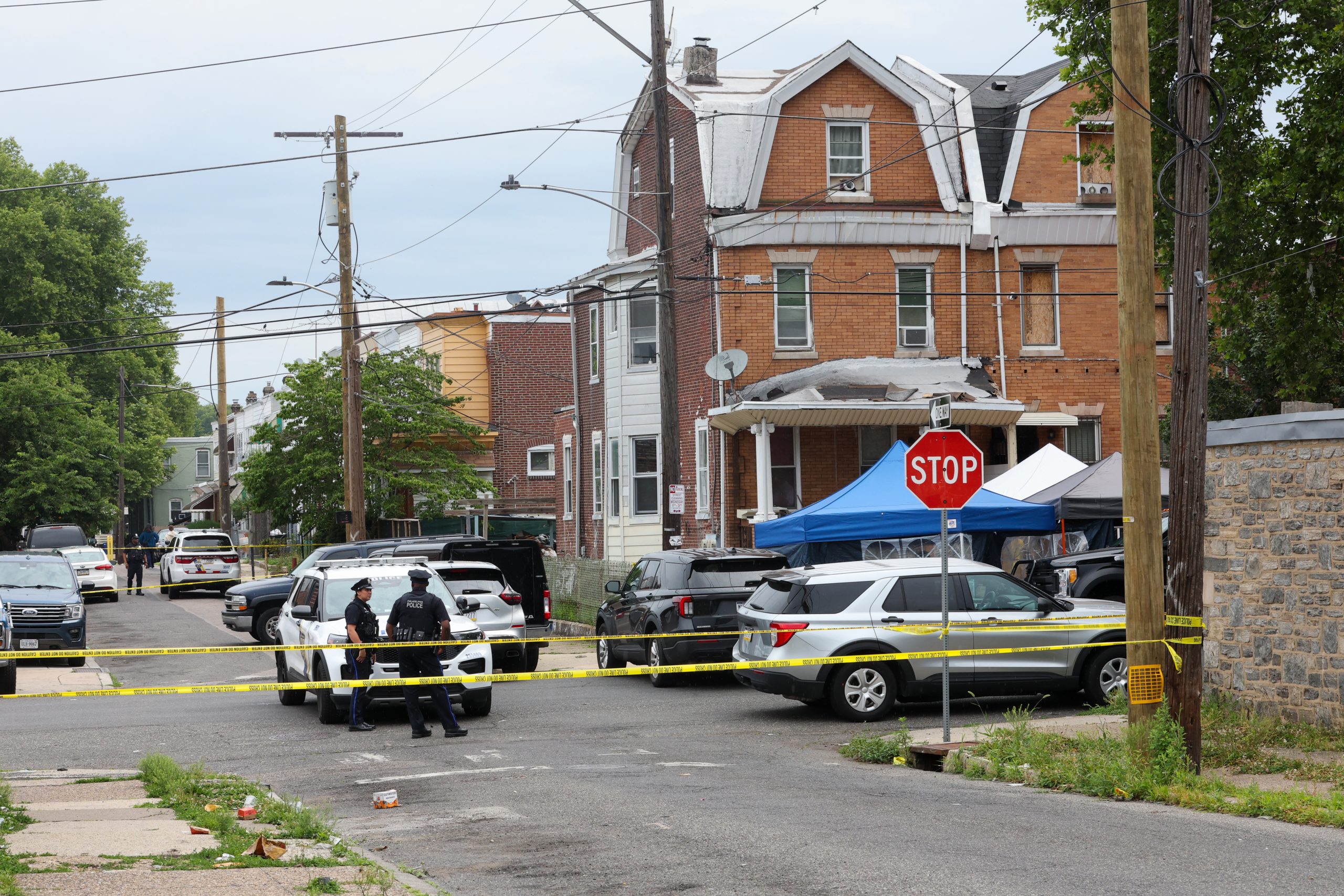
On Saturday, Philadelphia police closed off the block and FBI forensic experts entered the property in hazmat suits.
In addition to these questions, there’s an older mystery — the June 2016 disappearance of Amy McHale.
Here’s what we know so far.
What prompted the investigation?
The morning of Friday, June 19, a U.S. park ranger near Independence Hall in Old City heard “a disturbance” coming from a black BMW, Philadelphia Police Department Deputy Commissioner Frank Vanore said Friday.
The ranger heard a woman say she was concerned that Horsch was going to hurt her, Vanore said.
The woman gave the ranger an identification card bearing her photo but the name of another woman who had been reported missing, Vanore said.
“And the park ranger felt that there was illegal drug activity going on inside the vehicle,” Vanore said.
Other law enforcement officers in the area were called to the scene, he said. In the car, police found cocaine, fentanyl, marijuana, two firearms with serial numbers removed, a collapsible baton, a cattle prod, and switchblade knives, sources told The Inquirer Friday.
Eugene Albert Horsch, 44, of Philadelphia.Courtesy of Philadelphia police
Why did Horsch have fake DEA credentials?
Law enforcement also found a fake U.S. Drug Enforcement Agency badge with Horsch’s photograph under the name “Eugene Frederick Steiner” in the car, sources told The Inquirer.
Police haven’t spoken publicly about why they believe Horsch had the fake ID. However, they soon brought real DEA agents to the scene, Vanore noted.
Soon, those agents were among those searching his Olney home.
What did police find inside the Chew Avenue house?
Police searched Horsch’s home on the 400 block of West Chew Avenue, where they found a 9mm firearm, ammunition, and a marijuana grow operation on one of the floors, Vanore said.
“The further search of this property produced some other things that we have a lot of questions about,” Vanore said.
Police brought in homicide investigators — who are now leading the investigation with FBI assistance — due to their experience and because several urns, possibly from deceased family members, were found, Vanore said.
Investigators found at least one more fake ID presenting someone as federal law enforcement, Vanore said, as well as “computer evidence” that the DEA took for analysis.
They also found bank cards in the name of the woman who went missing in 2023, and recovered what appeared to be a death certificate for another woman who died last year, The Inquirer reported Friday.
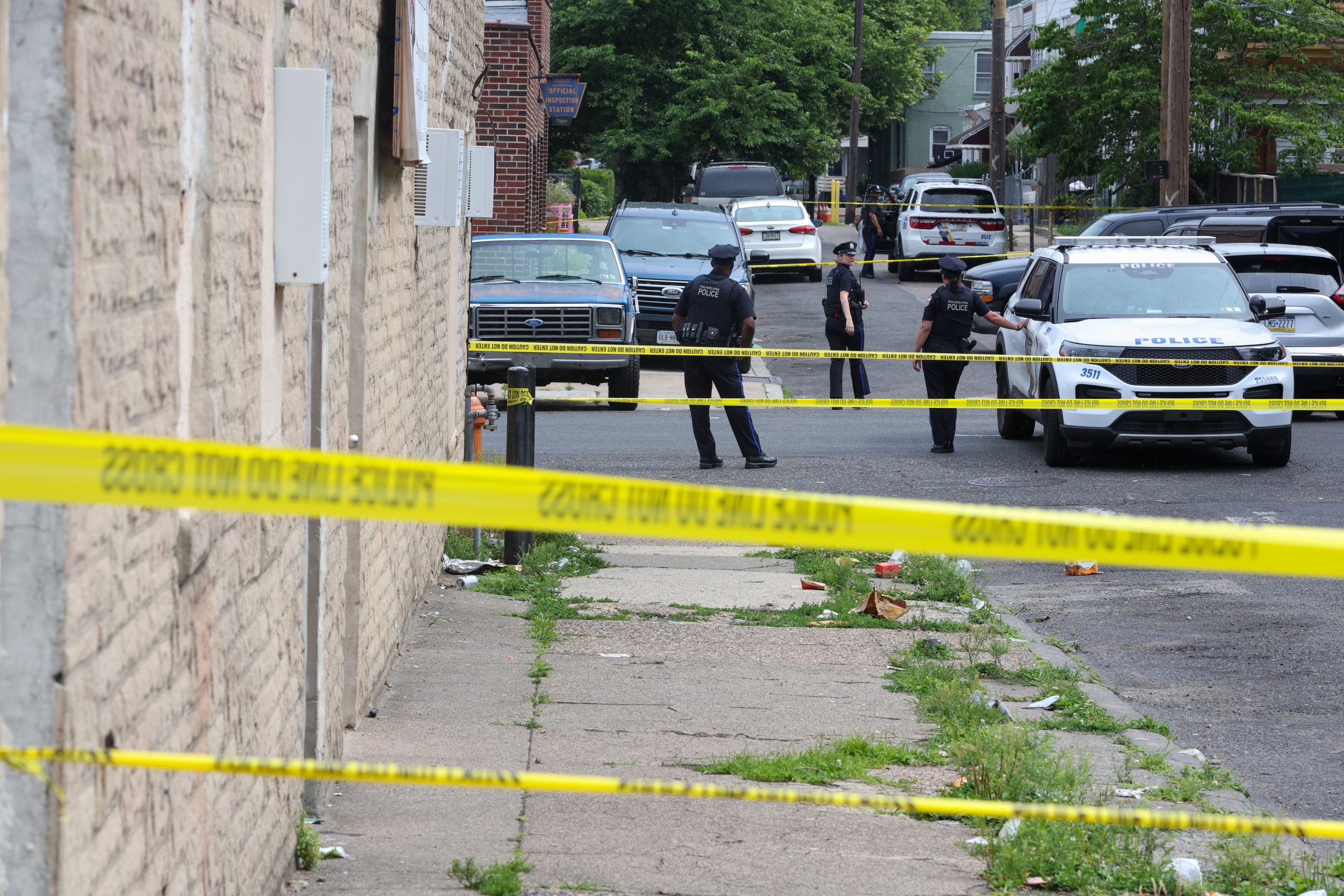
Police have officially blocked off access to the street at 417 W Chew, in Olney home in Philadelphia, June 27, 2026. Residents in the area are unable to access the street since Saturday morning.Aidan T. Gallo / Staff Photographer
Why is the FBI involved?
Investigators also found hidden compartments, “hoses coming from barrels,” and bottles containing chemicals and unknown liquids, Vanore said.
Some of the chemicals, if combined and ignited, could pose hazards, he said. The chemicals are what led investigators to ask for help from FBI experts, Vanore said.
“There’s chemical work being done, but we just don’t know if he was trying to produce narcotics, or some other work,” Vanore said.
What is the handwritten letter investigators found?
Federal investigators also found an unsigned handwritten letter that described references to hurting unspecified people, and references to the serial killer Ted Bundy, The Inquirer reported Friday.
“Acting on emotion is where problems occur. What I don’t think I told you was that the first time it was planned ahead of time. The threat was made before you know who came over and I already had a 2ft zip tie in my pocket and a drum set up,” the letter said.
“I had been ready and waiting and I damn sure showed no hesitation. And it was fun,” the letter said, according to an affidavit of probable cause for a search of the home obtained by The Inquirer.
Law enforcement sources said investigators were working to learn who wrote the letter and whether it may be part of a work of fiction.
Have police found bodies at the house?
Rumors spread quickly online Friday, with one of the most widespread ones being that human bodies or remains had been found at the house.
Speaking to reporters, Vanore dismissed these rumors.
“There’s no apparent bodies inside the house,” Vanore said. “Now, we’re going to further search. There’s a sump pump that looks like a hole in the ground, but there’s no bodies.”
Who are the missing women?
Police have not released the names of any missing women connected to Horsch.
The woman whose name was on the fake ID went missing in February 2023 from the Kensington area, sources told The Inquirer Friday. The woman who was with Horsch when he was arrested told police she used the fake ID because she had outstanding arrest warrants. She didn’t know the missing woman, but feared that something bad happened to her.
Vanore said he didn’t know if the missing woman had known Horsch.
“I have nothing to say she was ever inside the house, but of course, that’s why we’re still holding it and we’re still going to look,” Vanore said.
Vanore noted that Horsch had enough information about the missing woman to create a convincing fake ID.
Another woman who disappeared was Amy McHale, of South Philadelphia, who went missing in June 2016. McHale was the ex-wife of Horsch’s father, R.C. Horsch. Police questioned R.C. Horsch about the disappearance at the time.
Who is Eugene Albert Horsch?
Horsch has a long criminal record including a May 2025 arrest for possession of marijuana and amphetamines, which got him three years’ probation.
In March, he was charged with aggravated assault after police said he stabbed a man in the stomach at Eighth and Market Streets. Prosecutors withdrew the charges in May after a witness failed to appear in court, court records show.
Horsch had at least 10 previous arrests for drug possession, dealing, assaults, and drunken driving. He was sentenced to four to eight years in prison after police discovered $1.9 million worth of cannabis inside the Chew Avenue home in 2013, court records show.
Horsch appeared to be living at his house on Chew Avenue, despite its boarded-up windows and rundown look. Vanore said Friday that the woman who had the fake ID also was believed to have been staying there.
What do we know about R.C. Horsch, Eugene Horsch’s father?
R.C. Horsch, born Raymond C. Hoersch, was an erotic photographer and filmmaker who was convicted of forgery and drug manufacturing. R.C. Horsch changed the spelling of his last name.
R.C. Horsch pleaded guilty to passing bad checks in South Carolina in 1973 and the following year was charged in Doylestown by the Secret Service with passing nearly $180,000 in fake 10-dollar bills and possessing phony drivers’ licenses.
In 1977, federal agents raided what was described as R.C. Horsch’s home laboratory, seizing equipment they alleged was meant to manufacture and distribute methamphetamine. But R.C. Horsch absconded to New Zealand, later returning to California, and operating under the alias “Richard Harris.”
Eugene Horsch was born in 1981, while his father was still a fugitive.
R.C. Horsch was captured by authorities in Florida 1985. A psychologist hired by his defense attorney said he had an 140 IQ but had “deep rooted emotional problems.”
He was sentenced to three years imprisonment, plus probation, and settled into a home in Chalfont, Bucks County.
What was R.C. Horsch’s connection to the Chew Avenue house?
R.C. Horsch acquired the Chew Avenue house after the death of his sister, Helen M. Hoersch, in 2004. In 2007, R.C. Horsch used power of attorney to legally transfer ownership of the property to his son for $1.
In 2009, R.C Horsch was indicted in Chalfont for growing 455 marijuana plants. Investigators also seized two shotguns. The feds seized his suburban home and he was sentenced to 54 months in prison.
Federal inmate records show he was released from prison in 2013.
Are investigators examining R.C. Horsch’s role?
R.C. Horsch died in 2025, and Vanore told reporters Friday that investigators were looking at a lot of different angles. Vanore declined to go into specifics about R.C. Horsch, and said he wasn’t going to name “other missing people” potentially connected to the house.
“We’re certainly looking into the activities that went on at the house, even before he was there,” he said, referring to Eugene Horsch.
Police have officially blocked off access to the street at 417 W Chew, in Olney home in Philadelphia, June 27, 2026. Residents in the area are unable to access the street since Saturday morning.Aidan T. Gallo / Staff Photographer
What’s the latest from the investigation?
Under a gloomy sky Saturday, about 15 FBI agents went in and out of the boarded-up home, some wearing protective suits.
Next to the tent installed Friday outside Horsch’s home were four portable fabric shelters, with all sides shielded from public view.
Neighbors walked around the sealed perimeter asking for information, while men in protective suits came and went from Horsch’s backyard shed.
“They’ve begun processing the scene,” Vanore said Saturday. Forensic experts now are determining what evidence had to be sent away for scientific analysis, he said. “It’s going to take some time.”
Inquirer staff writers Max Marin, Ellie Rushing, Barbara Laker, Michelle Myers, Chris Palmer, and Isabel Maney contributed to this article. For more details, read this story.
Unionized staff at Warwick Hotel Rittenhouse Square Philadelphia have reached a deal with hotel management for a new labor contract, avoiding a strike that would have begun Friday.
The hotel workers unanimously ratified an agreement that will deliver a $30 minimum wage by 2028, easier access to healthcare for their children, pension increases, and new regulations protecting immigrant workers, union officials said Thursday. It covers 50 union workers, including housekeepers.
It’s the latest win for union hotel workers in Center City pushing for a pay and benefits package their union, Unite Here Local 274, calls “the citywide standard.”
“Last year, people thought it was crazy that hotel housekeepers could make $30 an hour,” said union president Rosslyn Wuchinich at an event Thursday supporting union Peco employees, who are planning a work stoppage for July 4.
The hotel union has shown it will go on strike to achieve its goals, Wuchinich said.
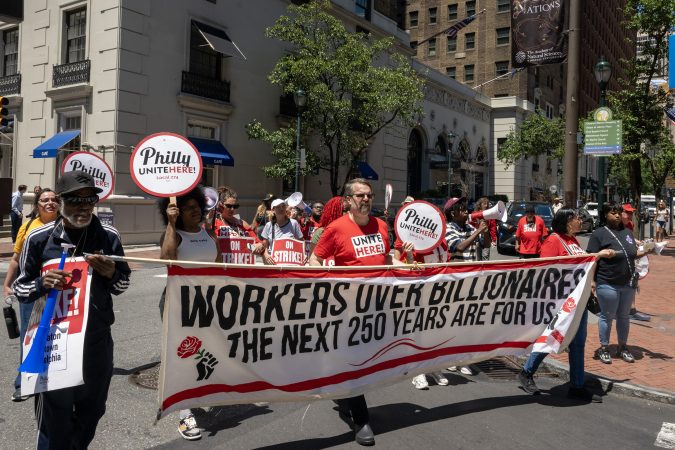
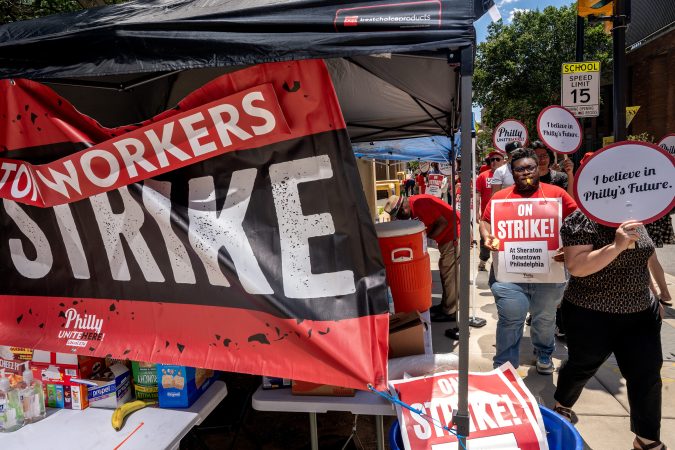
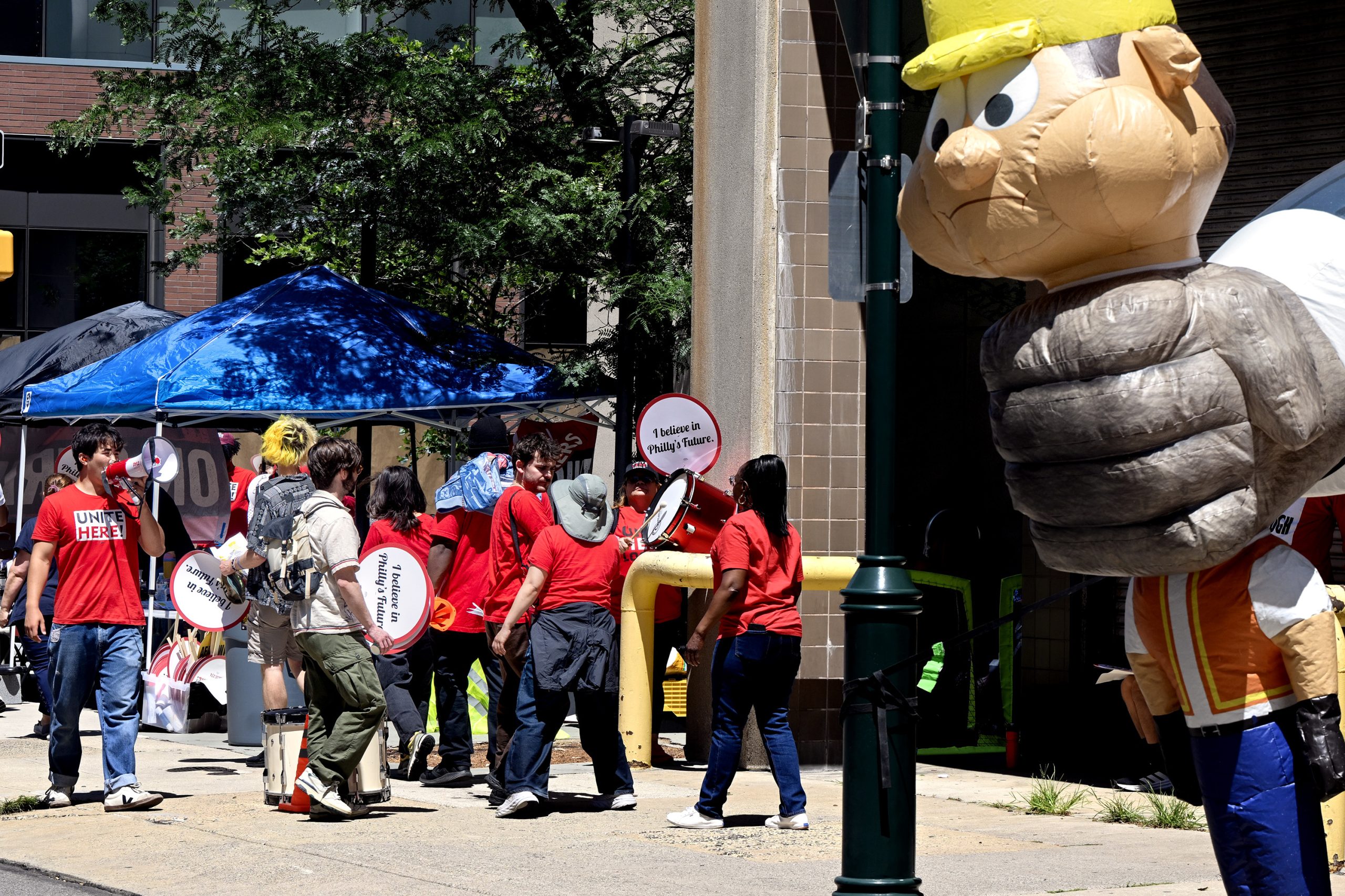
The nearby Sheraton Philadelphia Downtown has been on strike since June 21. On Wednesday, some of its striking workers paraded around the Warwick, playing drums and singing union songs — giving Warwick management a sense of what could be in store.
“We have been fighting these greedy hotel companies, private equity companies, real estate investment trusts, since last year for justice for hotel workers,” Wuchinich told a crowd of union members Thursday.
New York-based Bluesky Hospitality Solutions, which manages the hotel, did not respond to requests for comment Thursday. Property owner Navika Capital could not be reached.
The contract expires in January 2028, according to Mat Wranovics, an organizer with Unite Here Local 274. In addition to the changes to wages and benefits, the contract lowers the maximum number of hotel rooms that housekeeping workers can clean per shift from 16 rooms to 15 rooms, he said.
The contract also includes protections for immigrant workers, Wranovics said. The new rules set limits to how much information the employer may share information with law enforcement.
Six unionized Center City hotels have now bargained similar contracts:
The Warwick Hotel Rittenhouse Square Philadelphia
Hilton Philadelphia at Penn’s Landing
Wyndham Philadelphia Historic District
Sonesta Philadelphia Rittenhouse Square
Sheraton Philadelphia University City Hotel
Hampton Inn Philadelphia Center City-Convention Center
That leaves the striking Sheraton Downtown workers, as well as those at Hilton Garden Inn Center City, who are not on strike and continue to work under an expired contract. Both are pushing for a similar wage raise to $30 an hour, Wranovics said.
“We are in negotiations, but there is a real possibility of strike there,” he said of the Hilton Garden Inn Center City.
Unionized hotel workers at Sheraton Philadelphia Downtown went on strike and walked off the job Sunday morning after the union and management failed to come to an agreement.
The union, Unite Here Local 274, is bargaining for a $30 per hour minimum wage to be established by 2028, as well as improved benefits, including healthcare coverage for workers’ family members.
The strike comes just one day before France and Iraq compete in a FIFA World Cup soccer match at Lincoln Financial Field (aka “Philadelphia Stadium” for soccer fans) and a few days before another match between Curacao and Ivory Coast. Previous World Cup matches have flooded the city with tourists from around the world.
“These hotel rooms are selling, and they’re charging exorbitant rates,” said Unite Here Local 274 Vice President Briheem Douglas.
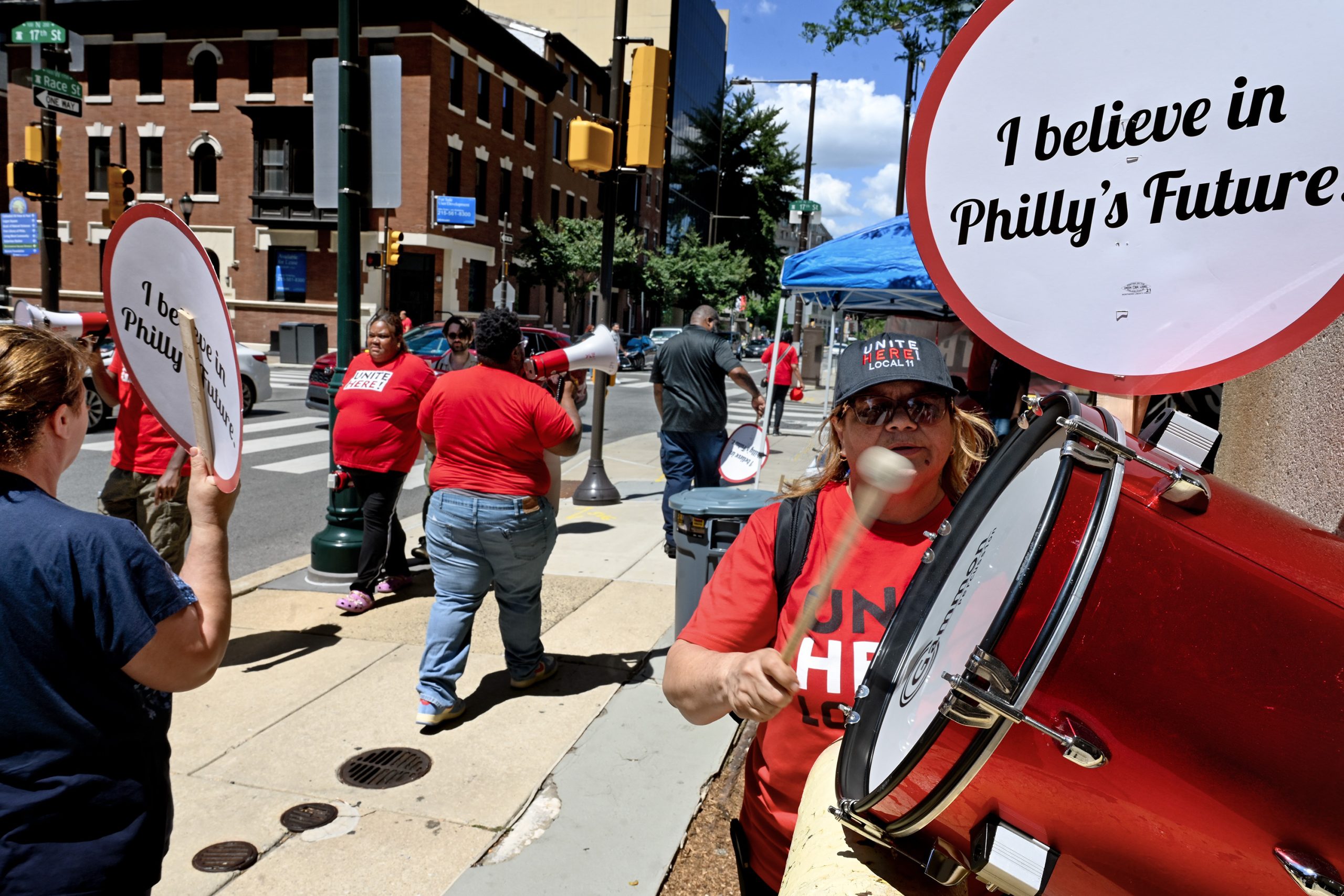
Priscilla Vasquez bangs a drum as employees at the Sheraton Philadelphia Downtown hotel represented by Unite Here Local 274 picket outside the hotel Sunday morning, June 21, 2026, after they walked off the job demanding $30 per hour wages by 2028, additional healthcare resources, and other benefits that would put them on par with what other hotel workers have recently gotten in new union contracts.Tom Gralish / Staff Photographer
The prospect of a busy summer tourist season provided the union with leverage to get hotel owners to agree to contracts at five other unionized hotels in the city, Douglas said.
“Workers have bargained in good faith with this company way before the World Cup started,” Douglas said. “Other hotels have gotten there, and this place hasn’t.”
Eight unionized hotels in Center City had been without a contract since 2024, Douglas noted. However, within the last year, workers have successfully bargained contracts, locking in the $30 hourly wage and improved benefits, at the Hilton Philadelphia at Penn’s Landing, Wyndham Philadelphia Historic District, Sonesta Philadelphia Rittenhouse Square, Sheraton Philadelphia University City Hotel, and Hampton Inn Philadelphia Center City-Convention Center.
Douglas noted that the Sheraton Philadelphia Downtown is the biggest unionized hotel in the city, with about 200 Unite Here employees.
“For our workers to not be at the standard is disrespectful,” Douglas said.
Douglas said workers face added pressure to secure healthcare after the Trump administration’s “One Big Beautiful Bill” reduced access to Children’s Health Insurance Program (CHIP) benefits.
Francine Eason, a unionized housekeeper at the Sheraton Philadelphia Downtown, said nearly every union employee at the hotel has children.
Eason has an adult daughter, a grandchild, and a teenaged niece in her household in Wilmington. But swelling gasoline prices and spiking grocery bills have eaten away at the buying power of her $22 per hour wage over the last year.
“Everybody is on hard times,” Eason said. With gas prices backing off, she said this weekend was the first time in a while she’d been able to fill the gas tank on her 2017 Kia Optima — she’d been in the habit of only filling it halfway, in case she needed money for food.
“Oh, my gosh, it was lovely,” Eason said, and recalled musing, “This is a full tank.”
The union also is seeking a reduction in the number of rooms housekeeping staff are required to prepare per shift for guests, from 16 to 15.
The hotel is owned by Miami-based CL Hotels and is run by Aimbridge Hospitality.
In a statement, the Sheraton’s management said: “We respect our team members’ rights to engage in legally protected activities and look forward to reaching a fair contract. While discussions are ongoing, we remain committed to ensuring our guests enjoy their stay.”
In addition to this summer’s surge of World Cup fans and tourists, Sheraton’s regular business includes flight attendants, said Keturah Johnson, the international vice president for the Association of Flight Attendants, a union.
Johnson participated in the strike as a show of solidarity with the hotel workers. She said the flight attendants’ union made the decision to have flight attendants stay elsewhere in the city during the strike as a show of support.
“We don’t cross picket lines,” Johnson said. “We join them.”
Employees at the Sheraton Philadelphia Downtown hotel represented by Unite Here Local 274 picket outside the hotel Sunday morning, June 21, 2026, after they walked off the job demanding $30 per hour wages by 2028, additional healthcare resources, and other benefits that would put them on par with what other hotel workers have recently gotten in new union contracts.Tom Gralish / Staff Photographer
A 38-year-old woman who was working for a rideshare service was hospitalized after being shot during an attempted robbery in Fairmount just after midnight Saturday, police said.
Around 12:30 a.m., police responded to a call on the 2800 block of Poplar Street, where they found the victim suffering from a gunshot wound to the shoulder. She is in stable condition at Temple Hospital, police said.
The woman was working as a driver and waiting for her passenger to show up when two young men approached her, police said.
“One of the suspects tapped on her driver-side window with a small handgun,” police said in a statement. “Without a word exchanged, the victim immediately attempted to drive away to escape, prompting the suspect to fire a shot through her window, striking her shoulder.”
Police said the two men fled west toward 29th Street, while the injured driver drove to 28th Street to wait for an ambulance.
Police said the men are in their late teens to early 20s with slim builds, wearing all-black clothing and masks. The motive was robbery, police said.
As a U.S. Army soldier in Afghanistan in 2013, Dan Kovalik got used to the adrenaline rush of bullets whizzing by while on patrol. Risking his life was part of his job as he radioed in Apache helicopters to protect other soldiers.
But by the time he retired from the Army in 2018, his 23 years of military service had taken their toll. He had been diagnosed with post-traumatic stress disorder and was rated 80% disabled by the U.S. Department of Veterans Affairs. Kovalik moved back to his hometown of Johnstown, Pa., where he struggled to find the sense of purpose and camaraderie that had come so easily in the military.
“I was looking for ways to be part of the community,” Kovalik said. “Church. The VFW. Then I tried jiujitsu.”
Kovalik, 49, shared his story Saturday from the deck of the USS New Jersey, the decommissioned Navy battleship in Camden. The battleship was host to dozens of fans of and participants in Brazilian jiujitsu — a martial art that uses grappling and leverage to subdue opponents — for a day of competition.
It was part of a two-day jiujitsu seminar and fundraiser put on by the We Defy Foundation, a Texas-based nonprofit that provides qualified combat veterans with free local jiujitsu classes and mentors who help them reintegrate into civilian life. Veterans must have been honorably discharged and have a VA disability rating of at least 80%.
“The physical execution and mental chess game helps me to focus,” Kovalik said. “That, and just going out for a beer or dinner with friends afterwards.”
Omar Feliciano, a 33-year-old Marine Corps veteran from Brooklyn, wins his match against Matthew Castillo, with Prodigy BJJ, at the We Defy Foundation jiujitsu event at the USS New Jersey in Camden on Saturday, June 20, 2026.Tyger Williams / Staff Photographer
The program has over 500 veterans currently enrolled, We Defy Foundation executive director Kevin Linderman said. About 70% of those who enroll complete the one-year program.
“What makes it so different is, you have to do it with someone else,” Linderman said of jiujitsu. “When you’re grappling, you’re connecting with someone deeply. You’re both getting better through the process. It’s physical, and you’re learning how to operate under stress.”
It’s also one more way to fight an ongoing crisis, Linderman said. Though military veterans made up 7.6% of the U.S. population in 2020, they accounted for 14% of suicides, according to research published in the National Library of Medicine. The suicide rate among veterans is 1.5 times higher than that of the overall population, after adjusting for age and sex, researchers noted.
Though prevention efforts have shown some success, nearly 6,400 veterans died by suicide in 2023 — the most recent year for which data were available — according to the Department of Veterans Affairs.
Omar Feliciano of Brooklyn, N.Y., said he found Brazilian jiujitsu after struggling to process a traumatic event he witnessed while in the Marines.
“It really affected my sleep, my relationships with people,” Feliciano said. “I was irritable for no particular reason.”
After another Marine recommended the We Defy Foundation, Feliciano applied. Now, Feliciano benefits from the structure of attending jiujitsu class twice a week, keeping him physically active and building camaraderie with other people in his community.
The 33-year-old mechanical engineer said jiujitsu is helping him be a better father. He fought — and won — a jiujitsu match Saturday.
“We’ve seen that it has a significant impact in reducing PTSD, depression, and anxiety,” said Linderman, 52, who came to the sport in 2015 while dealing with multiple deaths among his family and friends. Much like the veterans he helps, Linderman said, he was caught in a “rumination cycle,” and he quickly learned that an evening of grappling with opponents was a great way to break that cycle.
Ethan Wanner, 21, of Williamsport, Pa. and Tried and True Gym, celebrates after winning his match against Josh Newhart, with 10P Bethlehem, at the We Defy Foundation jiujitsu event at the USS New Jersey in Camden on Saturday, June 20, 2026.Tyger Williams / Staff Photographer
The foundation was formed in 2015 by Army veterans Alan Shebaro and Joey Bozik. Though Bozik lost part of one arm and both legs from the blast of a roadside bomb in Iraq, he learned how to adapt his body to the martial art. In the process, Bozik regained much of the community he had been missing, Linderman said.
As the COVID-19 pandemic waned, interest in the group accelerated, Linderman said. The organization has gotten $250,000 a year in financial backing from Facebook head Tom Alison. With 2,000 people moving through the program so far, interest is only growing. Linderman estimated that there are hundreds of thousands of Iraq or Afghanistan veterans who qualify for the program — including some who are struggling to find connection in civilian life.
“I think that a way for people to stay connected to each other is one of the most important things right now,” Linderman said.
Three people were shot outside a pizzeria near Widener University in Chester on Wednesday night, police said.
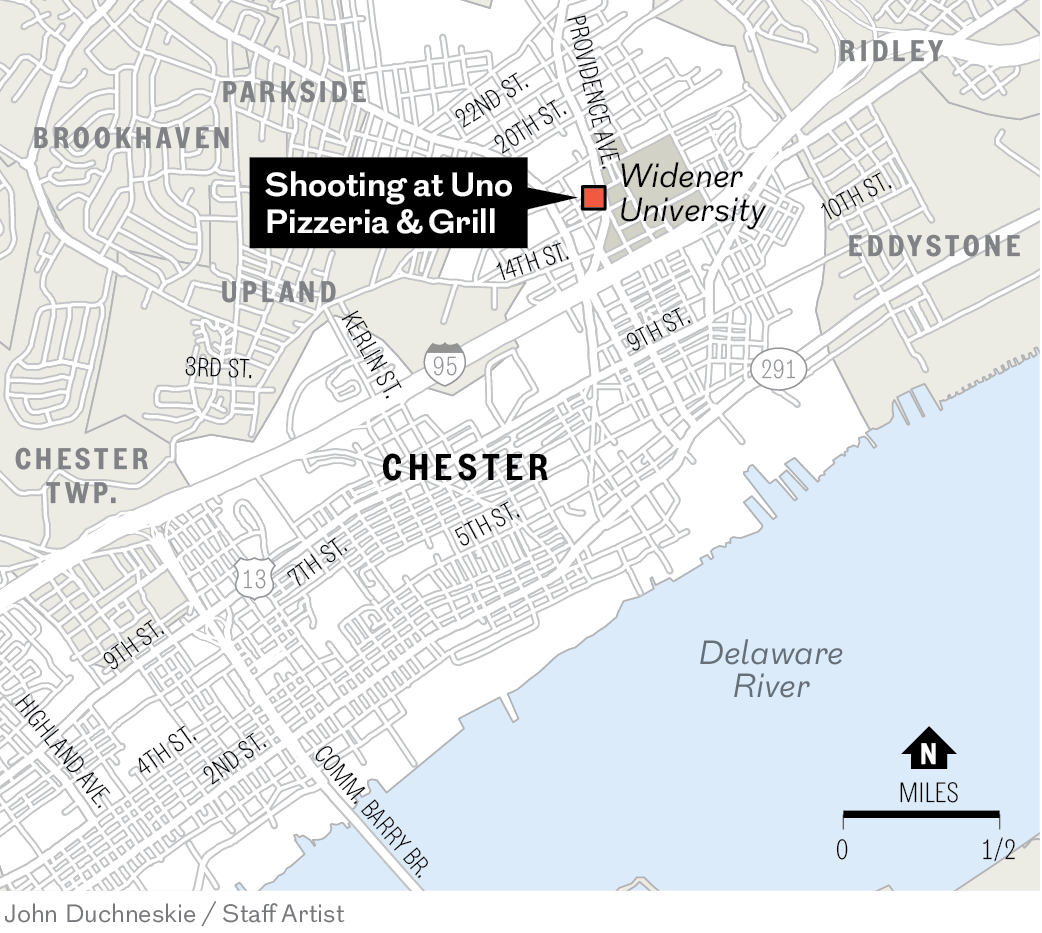
The incident happened outside the Uno Pizzeria & Grill on Providence Avenue, a Widener University spokesperson said.
Chester police and criminal investigators with the Delaware County District Attorney’s Office are investigating the shooting, police said in a statement provided by city spokesperson Adriene Irving. No arrests have been made.
Map of the Pizzeria Uno on Providence Avenue in Chester where a shooting occurred on Wednesday night.John Duchneskie
Police arrived around 10:45 p.m. Wednesday night and found a man, a woman, and a boywith gunshot wounds, police said. Emergency responders took them to area hospitals, police said.
“While we are relieved that none of the victims suffered life-threatening injuries, this senseless violence is unacceptable and has no place in our community,” Chester Mayor Stefan Roots said in a news release.
Roots said police are reviewing security cameras from nearby businesses to determine who was involved.
“Because of the density of cameras in the area, we are confident that these assets will significantly aid the investigation, and we expect to identify and apprehend the suspect or suspects quickly,” Roots said.
The university was in its summer session. A Widener spokesperson said the school is cooperating with law enforcement in the investigation.
Chester is in the middle of its annual “Safe Summer” program, which provides children and teens with summer camps and other programs that keep them “active, engaged, and on a positive path,” according to a city website. The program has been credited with helping lower crime in the city: In 2025, Chester had no fatal shootings in the summer and saw a decline in overall shootings.
The city will continue that and other efforts “to help curb gun violence and keep our neighborhoods safe,” Roots said.
On a weekend when World Cup soccer was drawing people from all over the world to Philadelphia, Ashley Elder was the exception. She came to play dodgeball.
“Honestly, it’s amazing,” said Elder, 28, from Vernon, Conn. “I love being able to represent my state. This is history. For us, this is a pretty big deal.”
Elder is one of 217 adult recreational league dodgeball players from Boston, Connecticut, New York, D.C., Pittsburgh, Ohio, and Philly who converged on the indoor gym at Ben Franklin High School in Philadelphia Saturday.
Representing 27 teams, they competed in the “Beast Coast” championship — five rounds of fierce round-robin play, followed by a final four tournament in each of two divisions: one for women, transgender, and nonbinary players and the other open to any player, which in practice was mostly men.
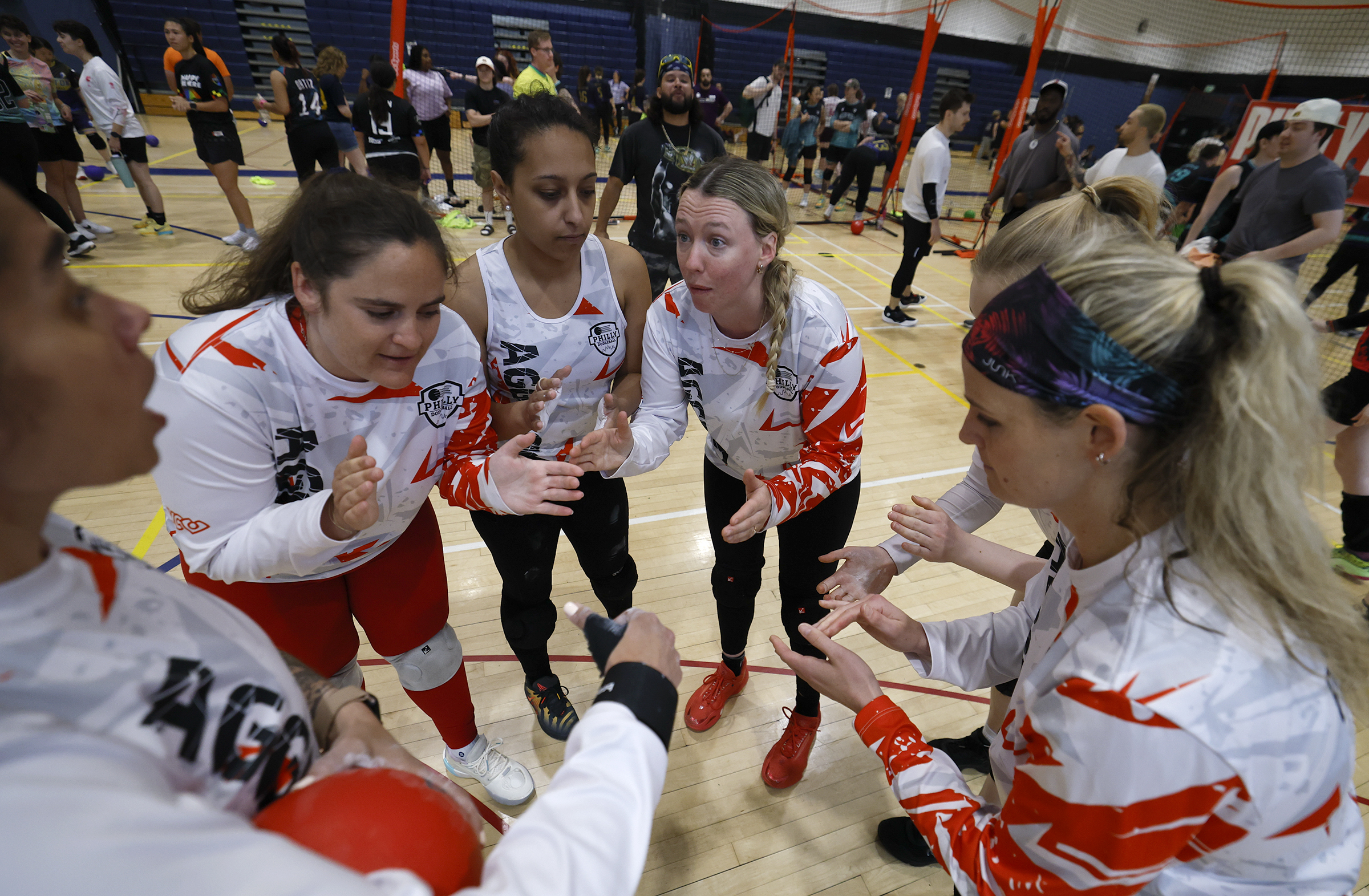
Members of the Aggression, a WTNB (women, trans, and nonbinary) dodgeball team gather before they played the Duckin’ Savages during the “Beast Coast” championship Saturday at Ben Franklin High School.Yong Kim / Staff Photographer
The game is six-on-six, with six balls on the court, and teams win the round after hitting all opposing players with a ball. For the first three minutes of a round, players can use a ball to block one that is thrown at them. After that, no blocking. The team that wins the most rounds within 20 minutes wins the match.
Gameplay in the women’s, transgender, and nonbinary division was intense. During the “opening rush” where players scramble to grab one of the six balls at the center of the court, one of Elder’s Connecticut teammates took a ball to the face, point blank, from her opponent on the Philadelphia team. Elder’s teammate shouted, laughed it off, and left the court.
“Yeah, one tactic is to rush the ball, pass to your teammate, and get that opponent out right away to get that quick advantage,” Elder said after the game.
Recreational league dodgeball is nothing new, and is a popular way for people in their 20s and 30s to make friends in new cities. But one league, Philly Dodgeball, has grown over the past four years as it organized what its promoters say is the premier competition on the East Coast.
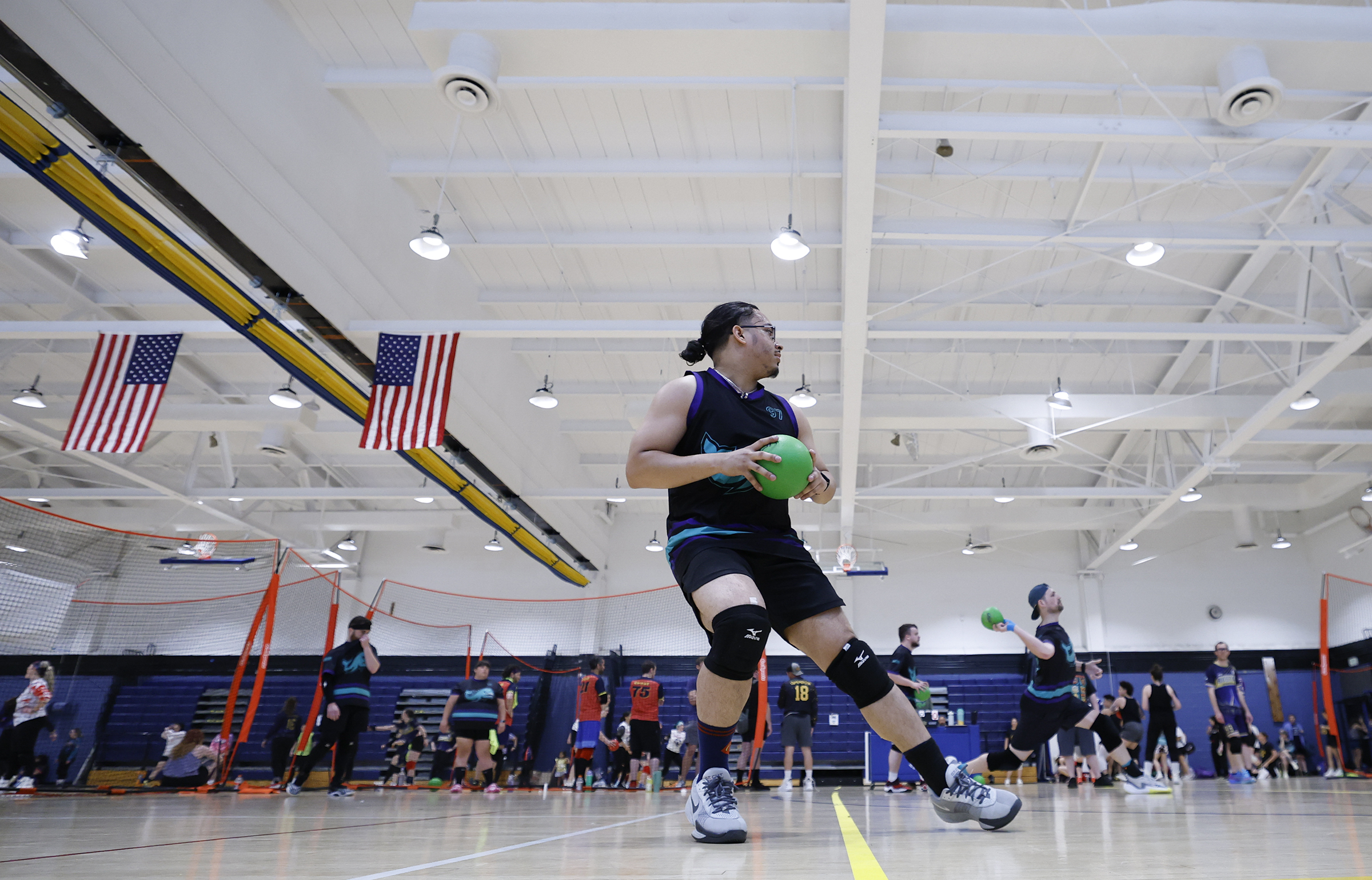
Samantha Sayward (center) of the Aggression, a WTNB (women, trans, and nonbinary) dodgeball team, throws a dodgeball against the Duckin’ Savages during the “Beast Coast” championship.Yong Kim / Staff Photographer
In the process, it’s brought in elite players from around the country — Elder certainly fits that bill. Elder played basketball and track and field during high school, competed in shot put and discus at Southern New Hampshire University, and was named an NCAA Indoor Track and Field All-American in 2020.
Elder said that after graduating, she powerlifted her way through the worst of COVID-19 isolation. Once she got a chance to join a dodgeball league, she threw her energy into the game.
What started as a way to stay active and have fun led Elder to Graz, Austria, with Team USA for the 2024 world championships. (The Austrians won.) Now, she is one of 10 players at the Beast Coast competition who is headed to Bangkok this winter to compete for the biennial world championship.
It’s a rare sport, Elder said, where casual players can play alongside some of the best out there.
“If you stick to it, you’re going to get better,” she said. “We want people to have fun.”
Members of the Splooters from Connecticut play team Bostonian during the “Beast Coast” championship.Yong Kim / Staff Photographer
Philly Dodgeball
Samantha Sayward got her start when she moved to Philly from Boston in 2018 and was looking to make friends. But Sayward said she wanted to play in a league that followed USA Dodgeball rules, which she said are regarded as the standard rules and keep the games competitive and fair.
When she couldn’t find one, she launched Philly Dodgeball in 2022. As the league grew, she formed an LLC and hired three staffers to help run the league. In 2024, Sayward competed for Team USA in the World Dodgeball Championships.
Sayward, who is 35 and lives in Manayunk, said participation in Philadelphia has blown up in the past two years, from about 40 players to around 500.
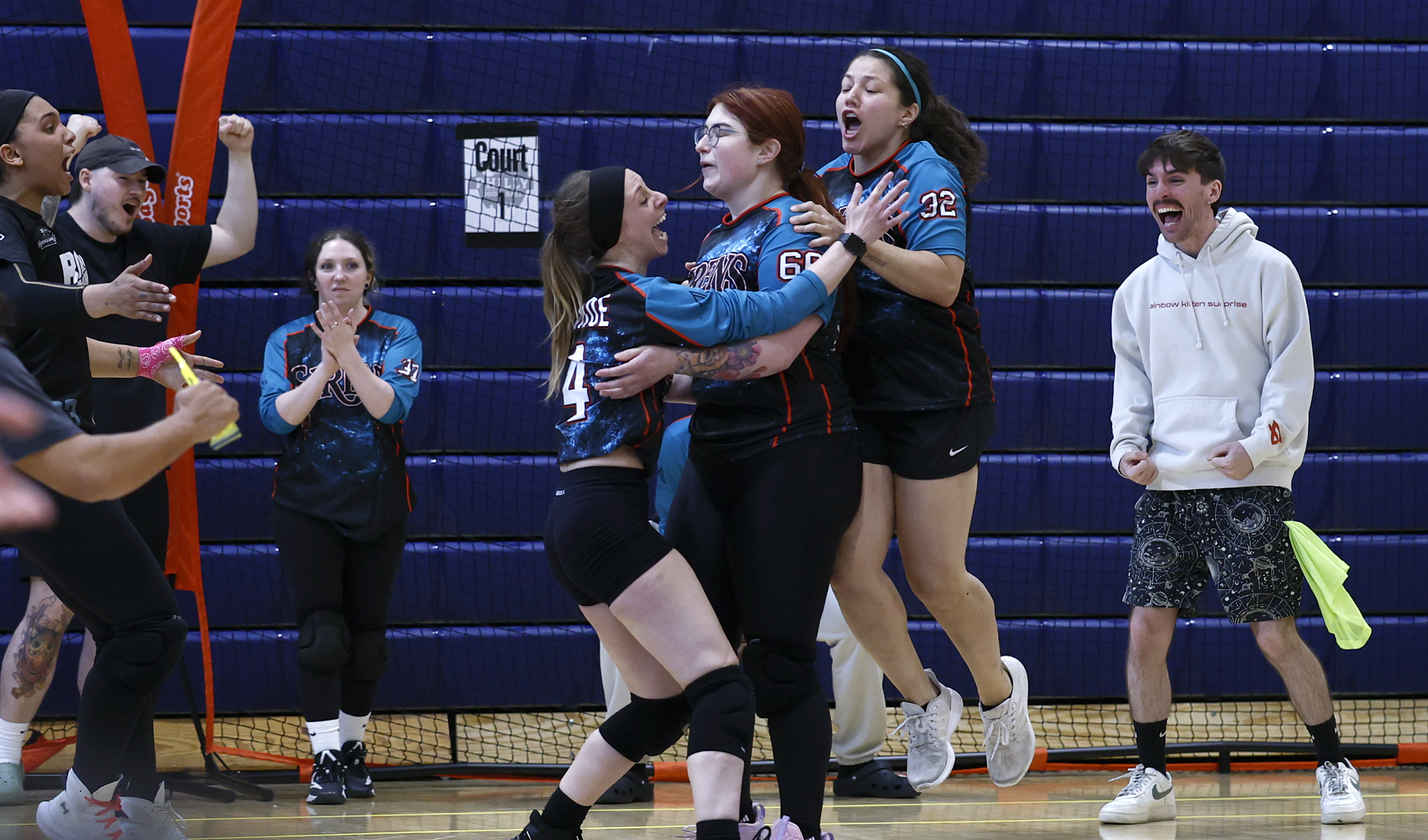
Members of the Sirens celebrate after beating team Empire in a WTNB (women, trans, and nonbinary) dodgeball quarterfinals game.Yong Kim / Staff Photographer
She said most players are like her, “transplants” to the city in their 20s and 30s, looking to meet people in an inclusive community. Many identify as part of the LGBTQ+ community, she said, and the league hosts a women, transgender, and nonbinary “Lavender League” every Thursday.
“It is one of the most inclusive sports out there,” said John Michael Szczepaniak, 35, a casual player who came to the league after playing dodgeball in the LGBTQIA+-oriented Stonewall Sports. “There’s men and women, there’s every walk of life, respecting each other, cheering each other on. Even though we’re competitive, we’re the most supportive community.”
But as participation grew, Sayward drew on her experiences as a former Navy hospital corpsman and event planner in the nonprofit world to improve the league: Players have jerseys, regulation gear, referees, and a scoring system. There are custom medals. There’s even a commissioner. And that, she said, has helped bring in similar-minded leagues from across the East Coast for the Beast Coast competition.
By midafternoon, Elder and Sayward’s teams were both knocked out of the competition, with Long Island winning the tournament after beating the D.C., Maryland, and Virginia team in overtime.
Still, eight years after Sayward threw her first dodgeball in Philadelphia, the sport has changed her life. Her boyfriend — they met playing dodgeball — proposed to her in Dublin, Ireland, this year, just before she had to fly to Arizona to attend the Team USA combine. She said yes. And then she made the team.
“It builds friendships, relationships,” she said. “All the girls in my wedding, besides my sisters, I met them in dodgeball.”
More Philadelphians struggling to pay their water bills would be able to apply for help under new legislation from City Council.
Others would see higher water bills to pay for the plan.
The unanimously approved legislation, introduced by District 3 Councilmember Jamie Gauthier, expands who is eligible for the Philadelphia Water Department’s tiered assistance program. The program gives people a fixed, income-based monthly payment, offers debt forgiveness for some past-due water bills, and protects residents from having their water shut off.
“Without running water, our constituents can’t wash their hands, clean dishes, or prepare food,” Gauthier said during a Council meeting Thursday. “It’s unsafe, unsanitary, and unacceptable.”
Currently, people earning up to 150% of the federal poverty line qualify for the program. Under the new rules, households earning up to 200% of the poverty line would qualify, Gauthier’s office said. This means a single person earning $31,920 would be eligible; so would a family of four earning up to $66,000, per federal data.
Households earning up to 300% of the federal poverty limit would qualify for structured payment plans, rather than having to pay off the past-due amount all at once, Gauthier’s office said.
Another provision protects people from receiving surprise bills from the water department as a result of past errors in calculating water usage. Gauthier said one of her constituents had gotten an $8,000 water bill after having an old water meter replaced in her new home.
“For too long, this city has made residents pay for faults in government infrastructure,” Gauthier said.
The legislation comes after a 9.4% water rate increase last September and with a 5.5% rate increase set to take effect this year, Gauthier’s office said. The average bill is currently $89.42 per month.
“At the same time, nearly half of renter households are cost-burdened, spending more than they can afford on housing,” the Council member’s office said in a news release.
About 42,000 households used the tiered assistance program in 2024, Gauthier’s office said, and thousands more would be eligible with the new law.
City Revenue Commissioner Kathleen McColgan estimated that 70,000 households may use the tiered assistance program next year. On average, each household would save $63 per month.
To pay for these subsidies, however, increased costs would have to be passed on to everyone else who lives in the city, McColgan said.
“This is because the anticipated revenue loss to the Water Fund would need to be restored,” McColgan said during a June 2 meeting of City Council’s Transportation and Public Utilities Committee. “Any expansion of the TAP [tiered assistance program] population would further reduce the non-TAP population, increasing cost‐recovery pressures and amplifying rate impacts.”
McColgan said residents are already paying $2.10 per month to subsidize others. She estimated that this would rise to above $5 per month under the new law.
McColgan estimated that the water department would need to recoup between $22.1 million and $127.6 million over the next five years, mostly because of the 200% eligibility rate.
“We recognize this is a large range, but this range reflects the anticipated number of new TAP enrollees to be between 4,000 and 40,000,” McColgan said.
The legislation goes to Mayor Cherelle L. Parker, who can sign the two bills into law, veto them, or let them become law without her signature. If she were to veto, Council could override it with a two-thirds vote. Parker’s office did not respond to a request for comment Friday.