After being closed for more than eight decades, the Lynnewood Hall mansion in Elkins Park is open, briefly, to the public. And if Friday morning was any indicator, people want in.
Spectators poured into the mansion for the first day of a 10-day flower show that offers a rare chance to view the second-largest surviving Gilded Age mansion in the U.S.
“I just love big, old, fancy houses,” said Karen Lacki, 47, who drove from Reading.
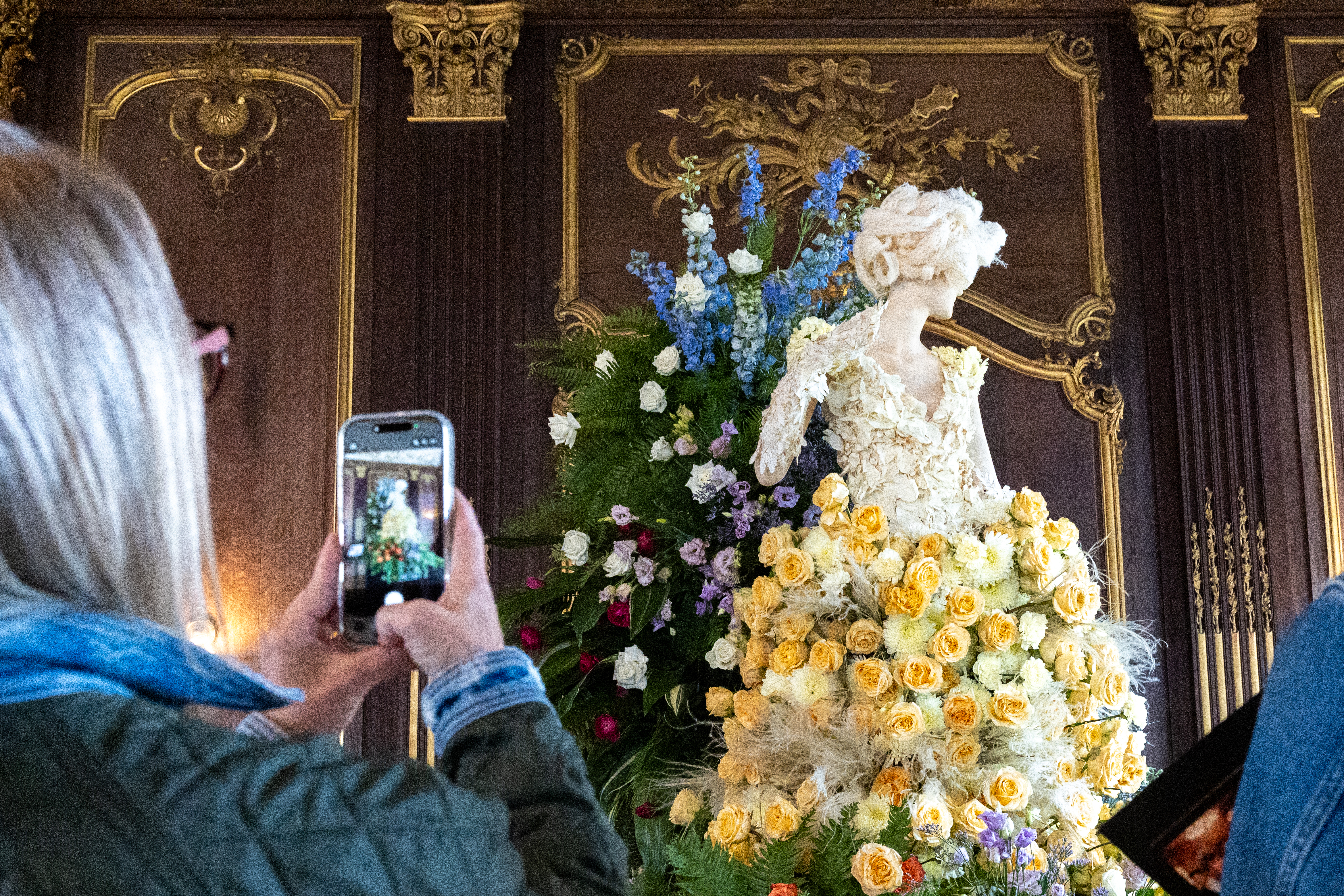
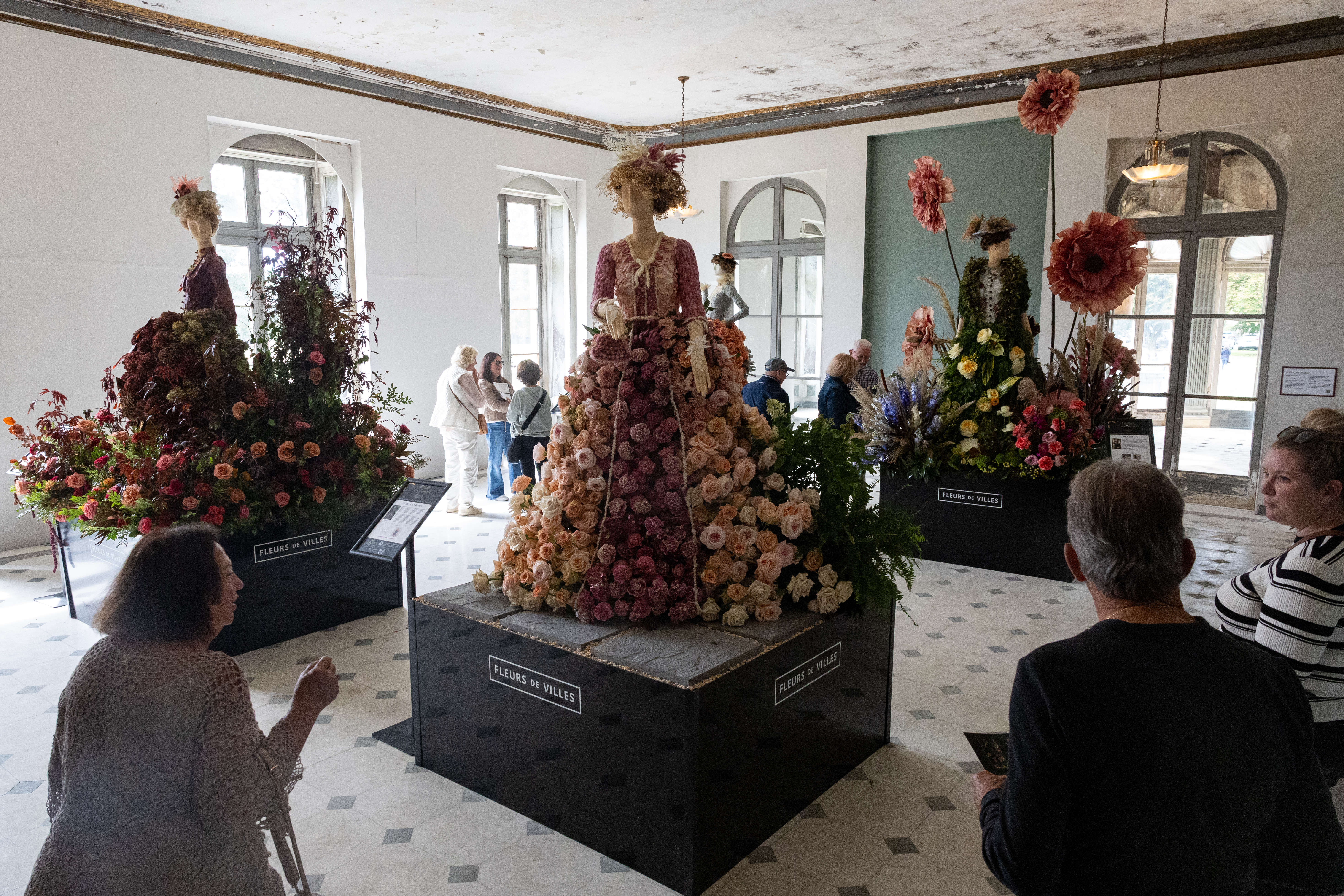
Lacki showed up early to snap photos of flower-adorned mannequins staged at the mansion, part of an exhibit by the floral display company Fleurs de Villes as a tie-in with the HBO series The Gilded Age.
Marcy Abhau, 76, of Mount Airy, looks up to view the old ceiling in the west hallway of the Lynnewood Hall mansion in Elkins Park on Friday, Sept. 25, 2026. The mansion is in dire need of restorations.Aidan T. Gallo / Staff Photographer
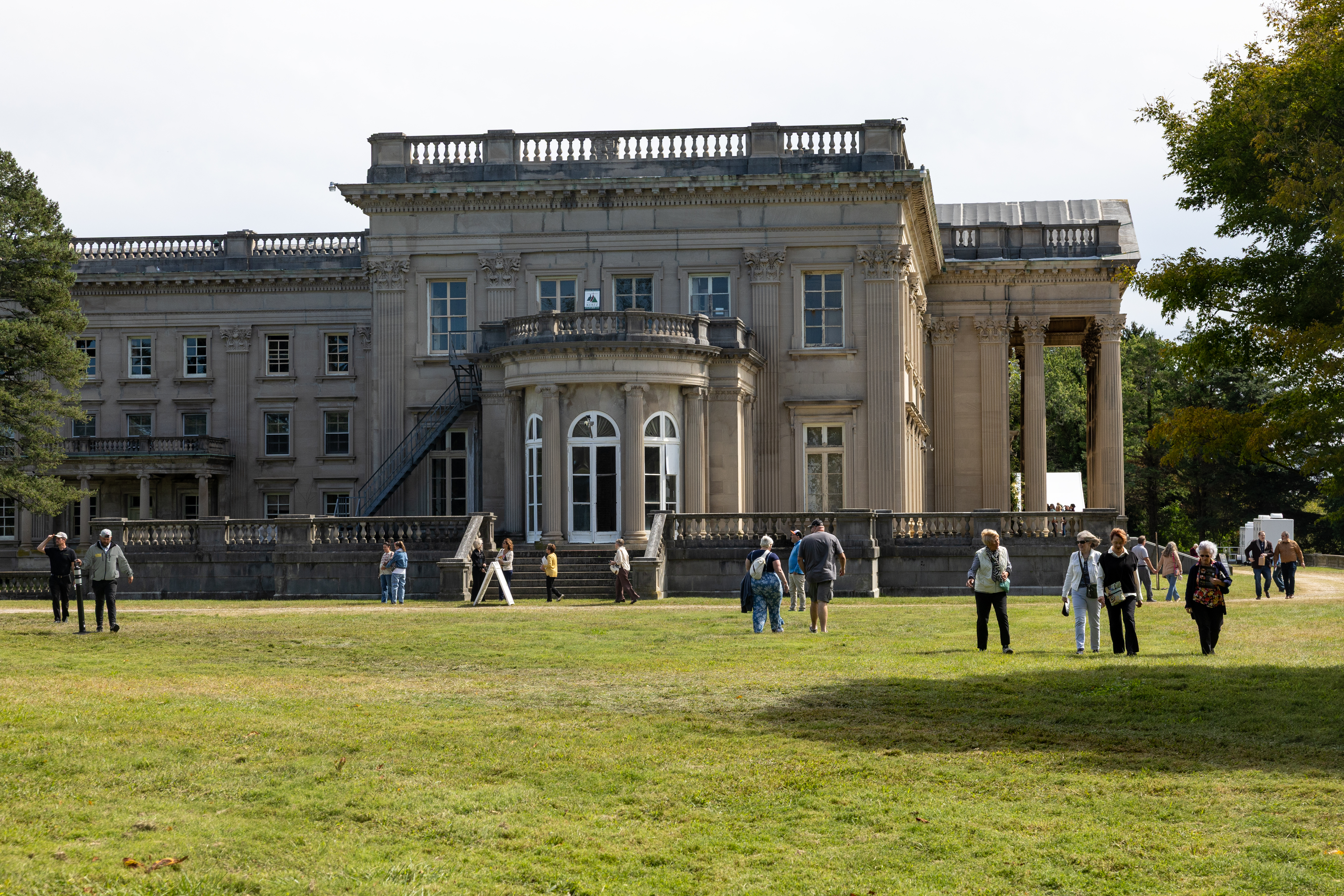
Though the TV show is fictional, the 100,000-square-foot Lynnewood Hall could very well have been part of the story. Peter A.B. Widener, a West Philadelphia bricklayer’s son-turned-transit tycoon, built the neoclassical revival mansion around 1899. The architect was Horace Trumbauer, whose firm designed the Philadelphia Museum of Art.
The history behind Lynnewood Hall Mansion
Widener family history is what drew author Kelly Skwarcan to the flower show. Skwarcan wrote a book about the sinking of the RMS Titanic. She explained that Widener had sent his son George, daughter-in-law Eleanor, and grandson Henry on the Titanic’s doomed 1912 voyage. George and Henry died in the disaster.
“It was heartbreaking for Peter,” Skwarcan said, adding that Widener died three years later.
After his death, the estate, which housed an extensive art collection, was open to the public until 1940. But the art collection was moved, and in 1944, the family sold Lynnewood Hall.
The Lynnewood Hall mansion in Elkins Park on Friday, Sept. 25, 2026.Aidan T. Gallo / Staff Photographer
By the time Karen Brown and Cameo John were children in Elkins Park, the 110-room mansion had fallen into disrepair. On Friday, the best friends, both in their mid-40s, showed up so that they could finally go inside.
“I always hoped that they’d try to do something with it,” John said. She hopes it could be a wedding venue and something educational foryounger people.
As they and others walked onto the mansion lobby’s checkerboard floor, they were encouraged to vote on favorite flower installations.
Visitors walk around the floral mannequin exhibition inside the Lynnewood Hall mansion in Elkins Park on Friday, Sept. 25, 2026.Aidan T. Gallo / Staff Photographer
“The flowers are gorgeous,” said Ellin Jones of Chestnut Hill.
But for Jones, and others on a guided tour Friday, the building itself was the main draw — and in every room, the long-neglected mansion’s problems were evident. A placard described how a failing downspout had caused rainwater damage.
Elsewhere, plaster had peeled from walls and ceilings, revealing rusted mesh lath and holes. In the high-ceilinged Van Dyck Gallery, ornamental molding had shorn off, revealing brick. In a dark alcove nearby, a ragged pipe organ jutted out from the wall.
“It’s absolutely amazing, but it’s also so terribly sad,” Jones said. She said it will take a lot of “money, and love,” to restore the building.
It’s going to be an expensive restoration project
Angie Van Scyoc, chief operating officer of the Lynnewood Hall Preservation Foundation, said sheis dedicated to making that happen.
The first step, Van Scyoc said, is to stabilize the structure by fixing the roof, downspouts, and other urgent issues that cause water damage. That will cost about $10 million.
From there, she said, the foundation will seek a full restoration of the mansion.
“When you take on a project of this magnitude, you have to shoot for the stars, or it’s not going to take off,” Van Scyoc said.
The foundation has received $9 million from an angel investor, she said, and is working to secure grants and donations.
The site has already been used as a movie set, and Van Scyoc said she sees opportunities to raise considerable funds through film agreements and other leasing opportunities.
She noted that Highclere Castle in England was restored usingrevenue from the hit TV series Downton Abbey, which was filmed there. Another example is Wentworth Woodhouse, a 250,000-square-foot country house in England, where filming was a primary revenue source, she said.
To be sure, the restoration bill will be massive. Edward Thome, executive director of the foundation, said repairs will cost $300 million over 25 years.
In the near future, he expects to see increased work on the roof, as well as improvements to the grounds. The foundation also recently got $1 million to stabilize Lynnewood Lodge, an 18,000-square-foot building on the grounds.
But for Thome, it is worth it — for history, and for the community. Thome said he has been drawn to the mansion ever since he discovered it online at age 11. Now 28 — the same age, he noted, that Horace Trumbauer was when the mansion was completed — he feels a thrill at seeing people walking in.
“It’s fabulous. This house was built to entertain. It’s built to host.”
The floral exhibition runs Sept. 25-Oct. 4, open daily from 10 a.m.-6 p.m. Adult tickets are $30.50. lynnewoodhallpreservation.org.
Correction: This article has been updated to correctly characterize the musical instrument in an alcove.
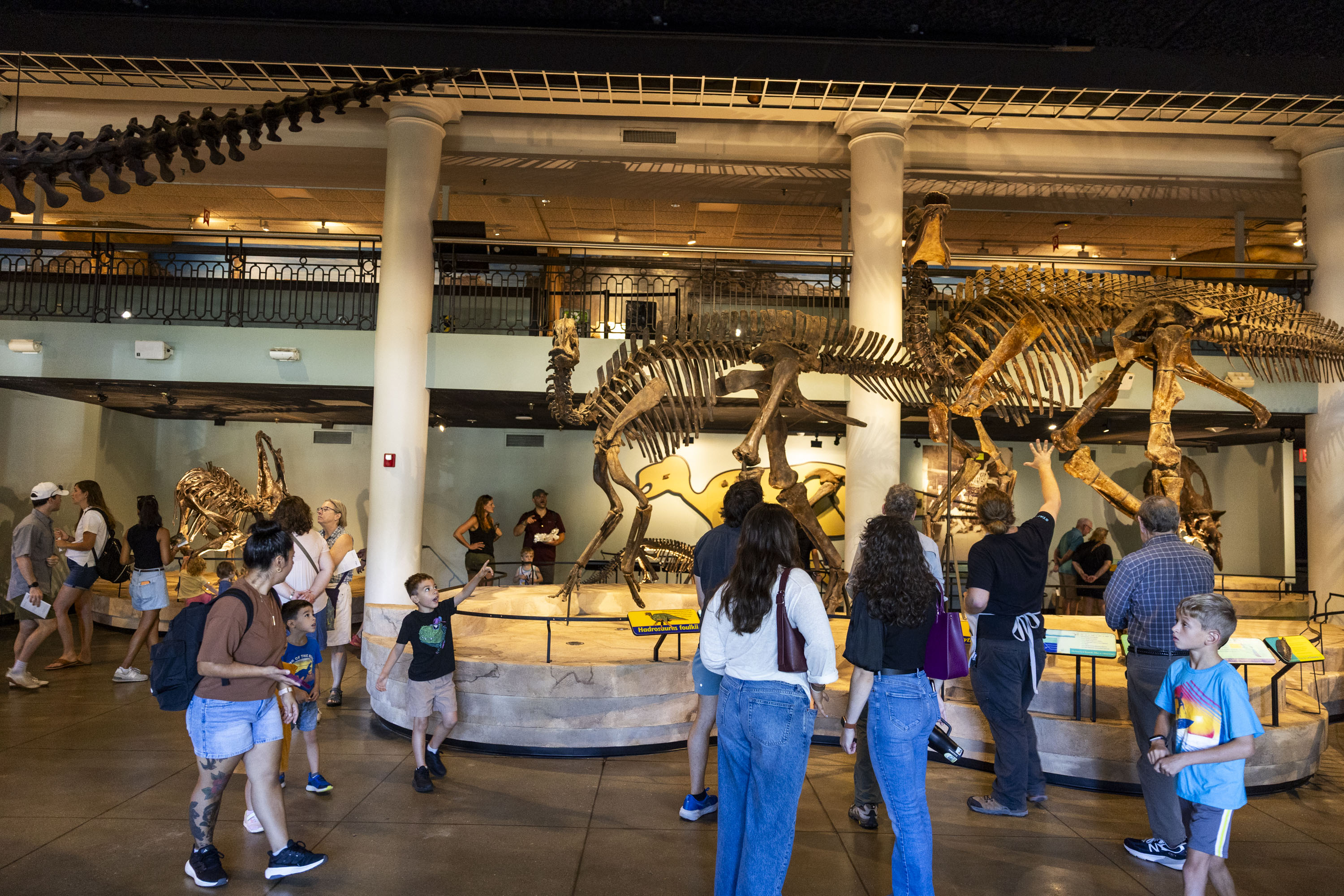
This weekend may be the last chance to see the Tyrannosaurus rex fossil replica and other exhibits at the Academy of Natural Sciences. Unless Drexel University and the academy respond to growing protest, the museum is set to permanently close.
Its closure to the public, set for Sunday at 5 p.m., will end nearly 200 years of public science exhibits that have thrilled children and adults alike. The academy, which became affiliated with Drexel in 2011, announced in a joint statement with the university earlier this month that they are closing the museum due to financial struggles and low attendance in recent years. (The museum itself will close at the end of day on Sept. 30, but Sunday is the last day it will be open to visitors.)
Despite public outcry, an effort to mobilize elected officials, and a rally that drew hundreds to the museum, Drexel and the academy have not announced any plans to keep the museum open.
What’s happening this weekend?
The museum will be open during its regular hours, 10 a.m. through 5 p.m., Saturday and Sunday, said Drexel spokesperson Britt Faulstick.
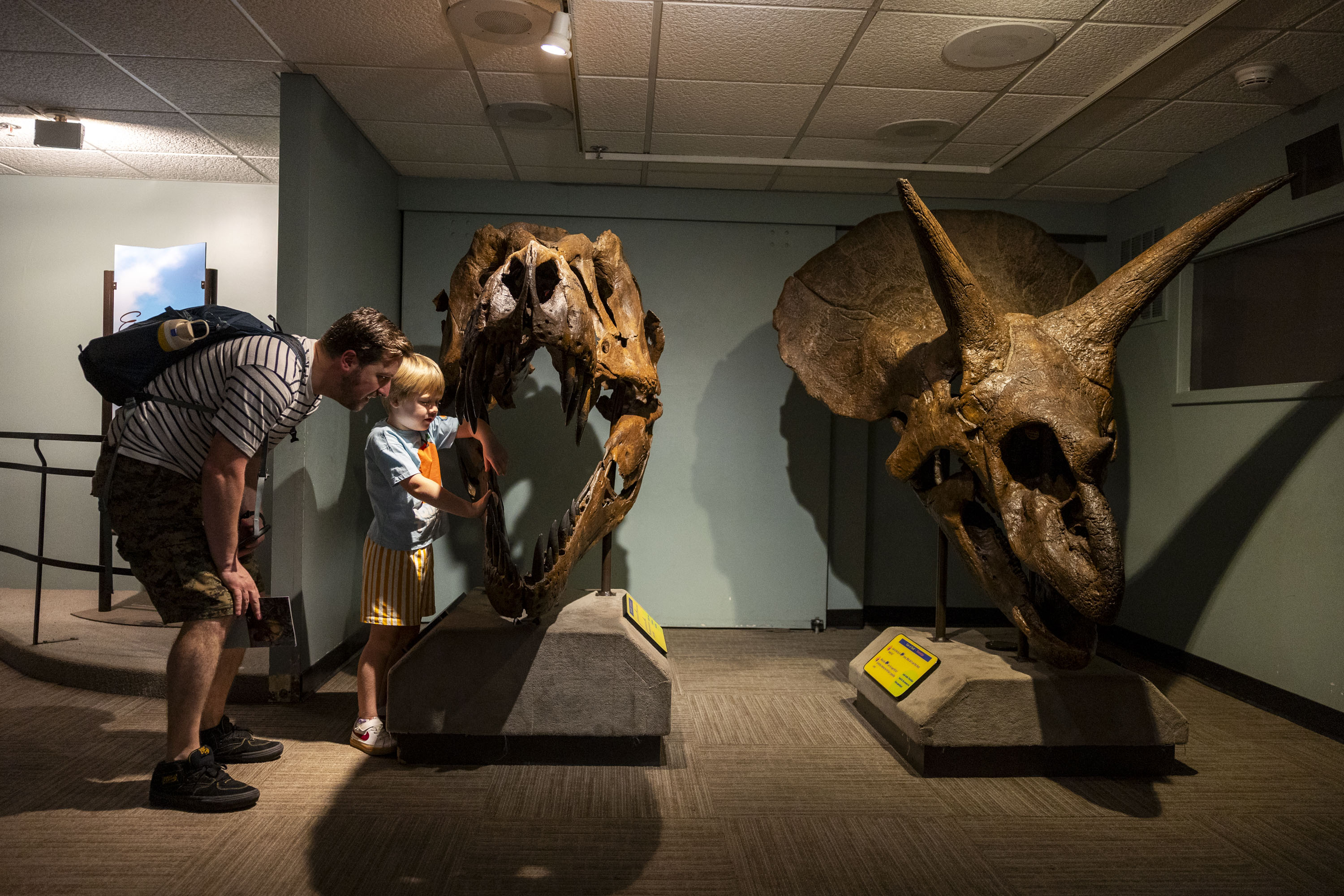
Michael Ashleigh, of Phoenixville, Pa., is with his son Otto, 5, looking at the Tyrannosaurus rex skull in the Dinosaur Hall at the Academy of Natural Sciences of Drexel University on Friday, Sept. 4, 2026, in Philadelphia, Pa. Michael wanted to give his son the experience he had 20 years ago when he first visited the Academy of Natural Sciences.Tyger Williams / Staff Photographer
Attendance has been high the past few weekends, drawing about 41,000 guests, Faulstick said, and that’s likely to be the case this weekend, too.
Walk-up tickets remain available. Ticket prices range from $18 for children to $22 for adults, with discounts for students and military. Children under 2 get in free.
Are people protesting?
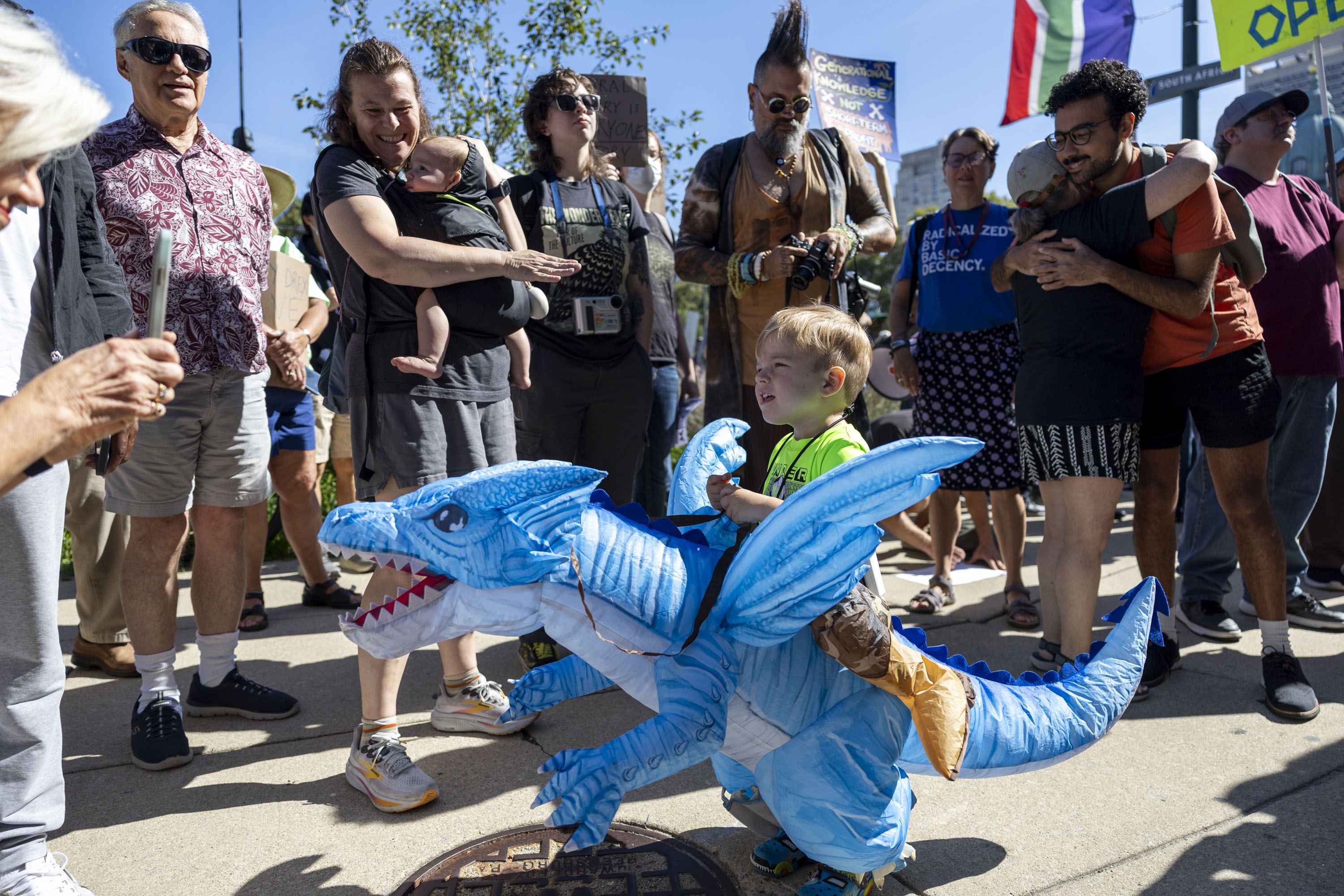
Hundreds of people gathered outside the museum earlier this month to protest its closing. Around the same time, a group called Save the Academy formed.
Visitors Saturday and Sunday may be met by volunteers from the group handing out fliers to keep the museum open.
In addition, Saturday, from 2 p.m. to 6 p.m., the group has scheduled “an afternoon of arts and crafts, bubbles, face painting, music, dancing and more, right in front of the museum we love, to show how much this community wants the Academy to stay open.”
And on Sunday, protest organizers are planning to hold a candlelight vigil and march to Philadelphia City Hall.
Braxton Huminski, 3, is wearing a costume to show his support for the Academy of Natural Sciences of Drexel University on Tuesday, Sept. 8, 2026, in Philadelphia, Pa.Tyger Williams / Staff Photographer
On its website, the group argues that if the Barnes Foundation art museum could be successfully moved to Center City, then the city could help keep the museum alive.
“How many Philadelphians remember being awed by first seeing the dinosaur skeletons, either on a school trip or on a visit with family?” the group wrote on its website. “How many young people grew up to be scientists because they regularly spent time at the Academy?”
As of Thursday, nearly 56,000 people signed the group’s petition to keep the museum open. It hopes to have city council discuss the matter at an upcoming meeting.
What about all the specimens?
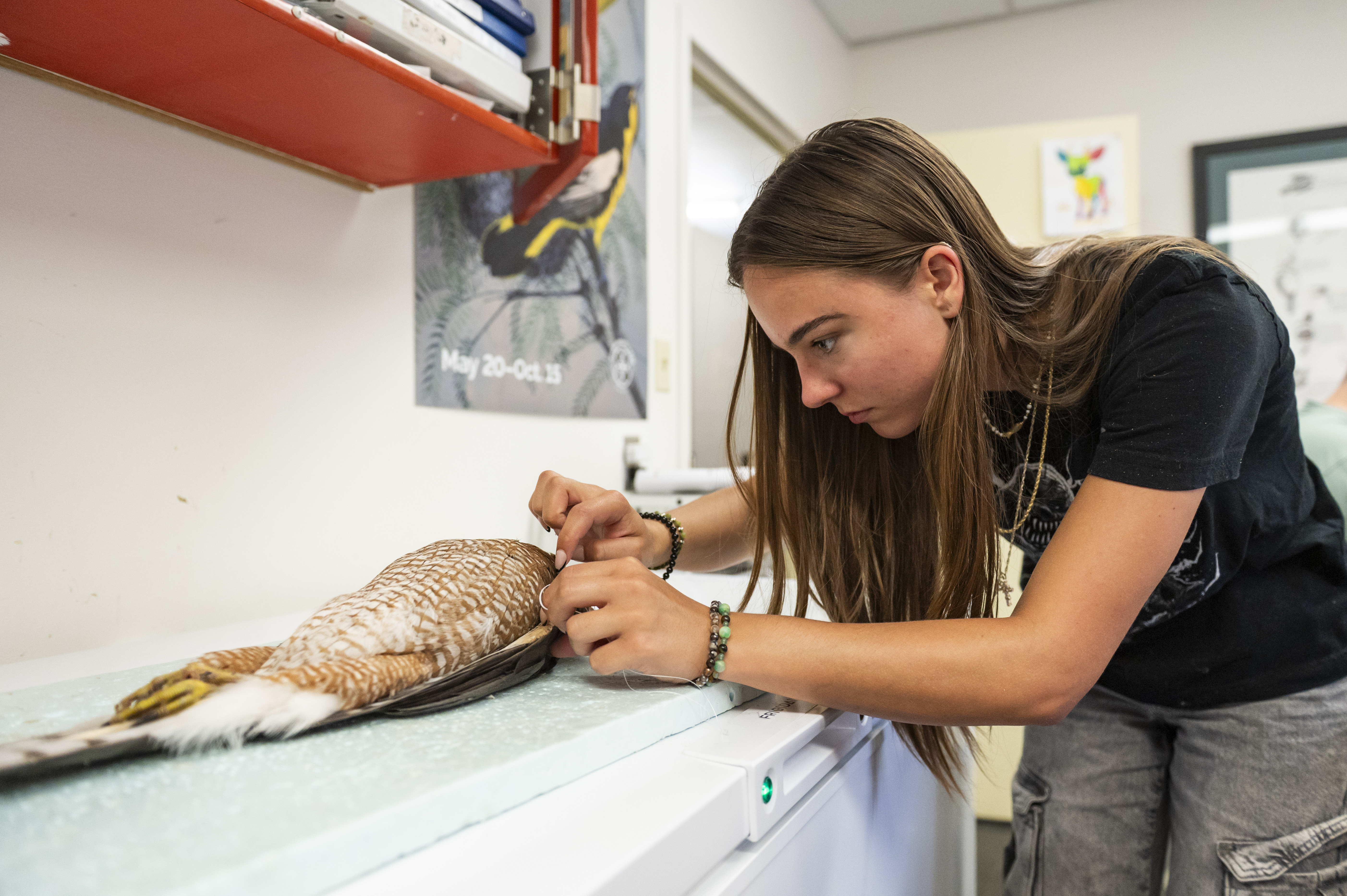
Even if the museum closes, the bulk of the academy’s scientific research work will continue. Its some 19 million biological specimens — seen as essential by scientists around the world — will remain preserved.
The academy owns one of the largest collections of scientific specimens on the planet, including birds, fish, mollusks, and bones. These remain important for scientific research — in particular, when looking at how the natural world has changed, one expert recently told The Inquirer.
Sophie Bonner, intern and rising senior from Drexel University, puts the finishing touches after preserving a Cooper’s hawk at the Academy of Natural Sciences on Wednesday, Aug. 5, 2026.Allie Ippolito / For The Inquirer
“But these collections were made at specific times in history. We can never go back to collect more of these voucher specimens. They tell us how our world is changing,” said Robert McCracken Peck, curator of art and artifacts and senior fellow emeritus of the Academy of Natural Sciences of Drexel University. “It is by definition irreplaceable.”
Drexel and the academy have reached a tentative agreement that includes moving its collections and selling the building.
As Philadelphia rounds the corner into spooky season, fans of all things gothic, literary, or historical may be disappointed to learn that the Edgar Allan Poe National Historic Site remains closed.
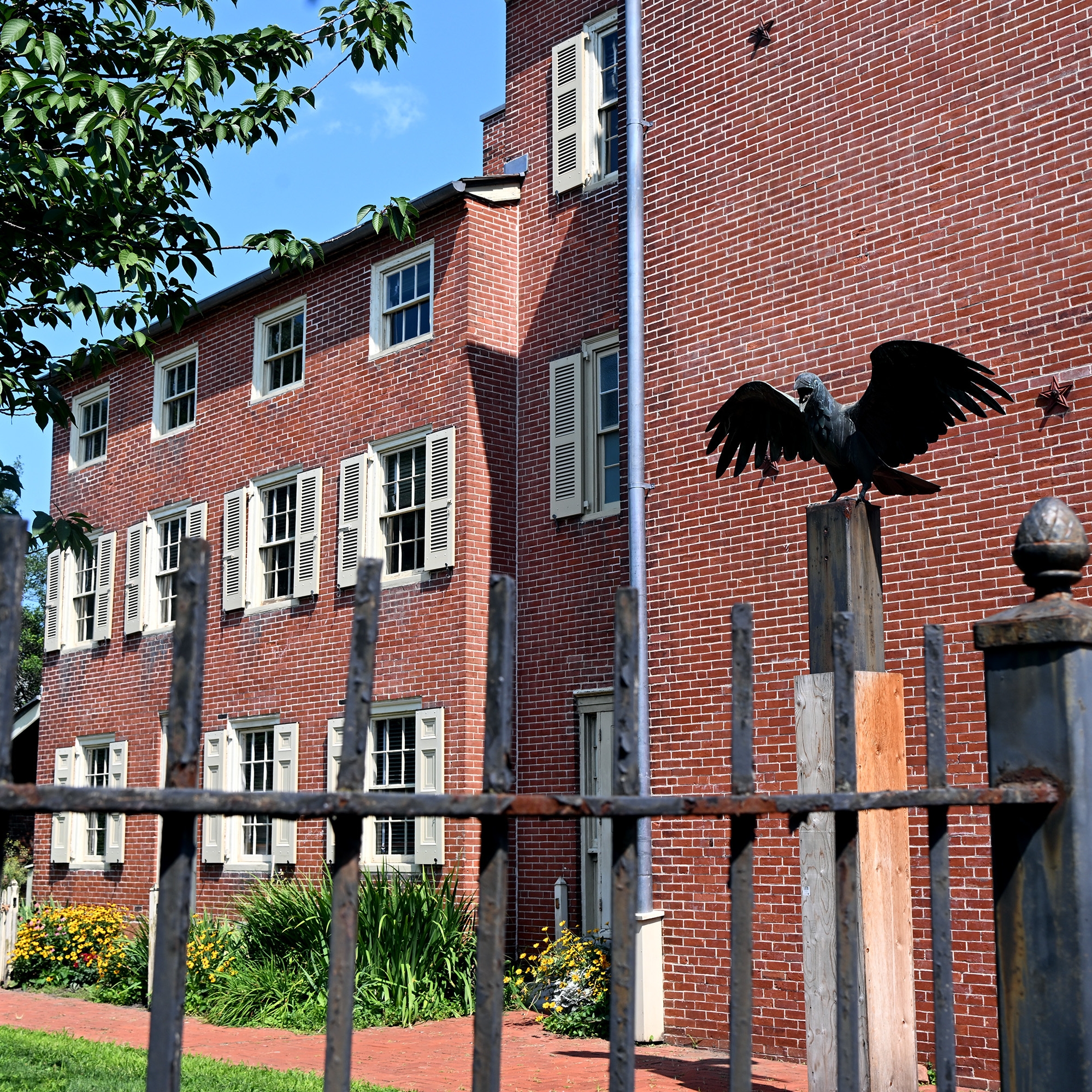
The three-story brick building at 532 N. Seventh St. shuttered in summer 2024 for fire safety upgrades costing over $931,000. It was initially slated to reopen that fall, but renovations grewinto a broader improvement project, according to the National Park Service.
More recently, Philadelphia’s tourism agency had said the site was expected to open this fall, and an Oct. 31 event celebrating Poe as the father of the modern detective novel is planned at the site.But the National Park Service says there is still no official reopening date for the public.
“I can tell you that we can offer no date for when the house will reopen,” said park service spokesperson John Warren.
Calls to a supervisor at Independence National Historical Park, which manages the Poe house, went unanswered Thursday and Friday.
Warren said park service officials did not provide more details to him on the timeline, adding that there were “multiple, complex infrastructure projects going on at the site all at once.”
“If you have ever owned an old home, you know that repair projects often lead to discovering more issues, so it’s wisest not to speculate on an end date,” Warren said.
What’s holding things up?
At the site Friday, volunteers tended to flowers and plants while National Park Service workers wrapped up another day renovating the building’s first floor.
National Park Service plasterer and painter Joe Palumbo said the house’s issues should have been addressed a decade earlier. He said when he started working there,the property “smelled awful” from likely water damage.
Palumbo said construction crews redid the restrooms, replastered and painted the first floor, and rehabbed the woodworking.
He estimated it would take another week to complete first-floor renovations. From there, outside contractors are set to replace the carpets and blinds.
Palumbo said a plan to renovate the building’s exterior is “on hold,” and he is not sure why.
What’s the significance of the site?
Built in the 1800s, the home is the only remaining residence where Poe lived during his six years in Philadelphia from 1838 to 1844.
Retired National Park Service worker Helen McKenna spent 25 years at the site, educating people about Poe and his ties to Philadelphia. During her time working there, the house had exhibits, poetry recitations, a short biographical film, and a reading room styled after one of Poe’s published articles.
Back then, the house still had the original plaster, which was moldering and falling away from its lath. Of course, she said, the walls would have been gleaming white when Poe lived there in 1843 and 1844.
The neighborhood was not even part of the city at that time, she said, and Poe would have traveled on horse-drawn omnibuses. These kinds of details help people imagine Poe, she said, not just as a literary figure, but as a person.
To her, the house captures thecontrast between Poe’s literary stature — with his influence stretching across detective fiction, science fiction, poetry, and short stories — and the alcoholic, struggling writer who lived there with his mother-in-law and his wife, who had tuberculosis.
“There’s that sense of place. This grand, admired author was living in really humble circumstances on the outskirts of the city,” she said. “He didn’t own the place, he was paying rent, and he wasn’t always able to pay the rent.”
What did Poe do while in Philly?
Many cities have memorials to Poe, McKenna said. That is because he traveled. He was born in Boston, grew up in Richmond and in England, lived twice in New York, had a stint in Delaware, and died in Baltimore.
Poe’s time in Philly, however, marked acreative high-water mark, McKenna said.
He moved to Philly after failing to find success with a novel in New York City and turned his attention to short stories. While in Philly, he published “The Murders in the Rue Morgue,” “The Black Cat,” and “The Tell-Tale Heart,” McKenna said. He also became known as a charismatic speaker and an acerbic critic.
At his best, McKenna said, Poe was “a genius of compression,” creating haunting, memorable stories at a time when interest in American writers was growing.
“I won’t say that Poe is the best writer that America ever produced, but he’s certainly had a ton of impact, globally,” McKenna said.
Leah Santos still wears a mask during her daily Regional Rail commute into Philly.
The 35-year-old nurse from Springfield, Delaware County, never stopped implementing COVID-19-era precautions. And she’s just as careful with her 1-year-old son.
So when Santos learned in May about the growing measles outbreak in nearby Lancaster County, she started asking a new question of friends and family who regularly make excursions around the region for shopping and dining: Have you been to Lancaster lately?
“I have a child to protect at all costs. So I’m making sure I’m not in contact with anyone who’s been traveling out to Lancaster,” Santos said.
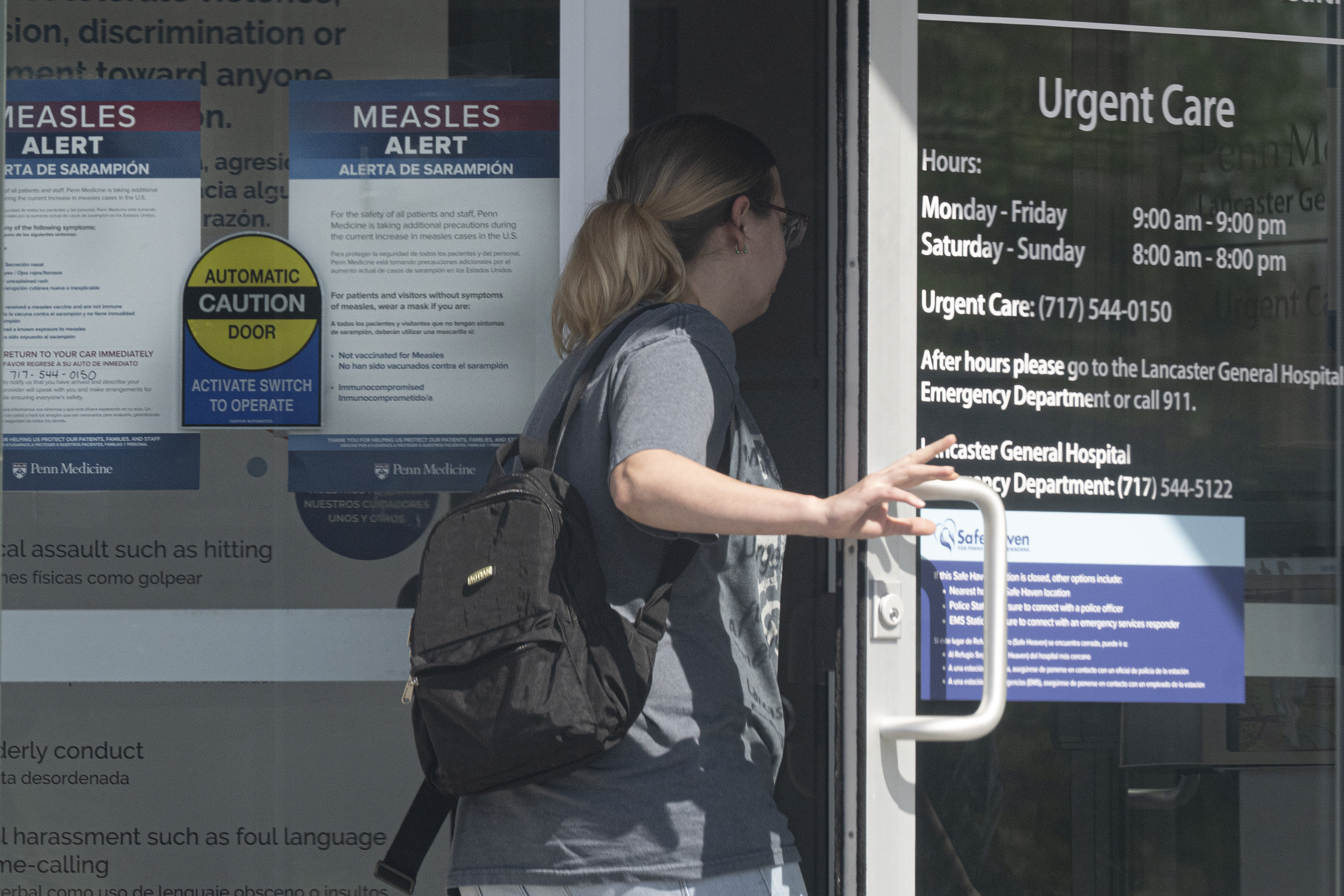
Measles alert signs in English and Spanish are posted on the front doors of an urgent care facility this month in Lancaster County amid a measles outbreak that has affected local Amish and Mennonite communities.Jose F. Moreno / Staff Photographer
A spreading measles outbreak in Pennsylvania has sickened 767 people already this year, and hospitalized 45 children under age 18. State officials have announced fourdeaths related to the outbreak: two infants in Lancaster County, a 40-year-old in Jefferson County, and an 18-year-old in Mifflin County.
Chester County remains the only Philadelphia-area county with confirmed cases — more than 65 this year, the third-highest in the state.
But in a densely populated region where crossing county lines for work and socializing is the norm, someworried parents are vaccinating babies early, delaying daycare, and weighing the risks of attending crowded festivals with their kids or visiting family in affected areas.
Measles can be more dangerous for some
Young children are especially at risk from the vaccine-preventable disease, which in severe cases can cause pneumonia, blindness, and brain swelling that can lead to brain damage.
None of the Pennsylvania residents who died were vaccinated against a virus so contagious that it will infect nine in 10 unvaccinated people who are exposed.
Measles deaths are rare,and the four deaths confirmed as “measles-associated” by Pennsylvania health officials, sparked a political standoff between Democratic Gov. Josh Shapiro and President Donald Trump’s Health Secretary, Robert F. Kennedy Jr., a longtime anti-vaccine activist.
Experts say that life shouldn’t change much for families whose children are vaccinated and otherwise healthy. But it’s important to take the disease seriously at a time when declining vaccination rates have left communities across the state increasingly vulnerable, including in the Philadelphia region.
Even as countywide immunization levels in the area remain relatively high, hundreds of kindergartens across Philadelphia and four surrounding suburban counties dropped below the “herd immunity” threshold — a vaccination rate of 95% or higher — for the 2025-26 school year, an Inquirer analysis of state data found.
This is the level at which a given population must be fully vaccinated against measles to prevent the spread of disease. In the Philadelphia region last school year, about 40% of kindergartens failed to meet that threshold, up from about a third the year before.
What are the pediatric guidelines to protect against measles?
Pediatricians typically recommend a child’s first vaccine for measles, mumps, and rubella at 1 year old, unless the child is likely to travel overseas, and then a second between 4 and 6 years old.
But Pennsylvania health officials are now encouraging a “dose zero” for children as young as 6 months old in counties affected by the state’s worst outbreak in three decades. Children can then get a second dose at 1 year old and another at 4 to 6 years old. The state is also recommending that children older than 1 who haven’t started their MMR vaccine series get two doses of the vaccine at least 28 days apart.
Santos said her son recently had his first vaccination, and her son’s pediatrician recommended he get his next shot at just 15 months old.
“We have gotten so far from knowing what vaccinations have done for us that we have no idea how terrifying this disease is,” Santos said.
‘One of those things you never think would affect you’
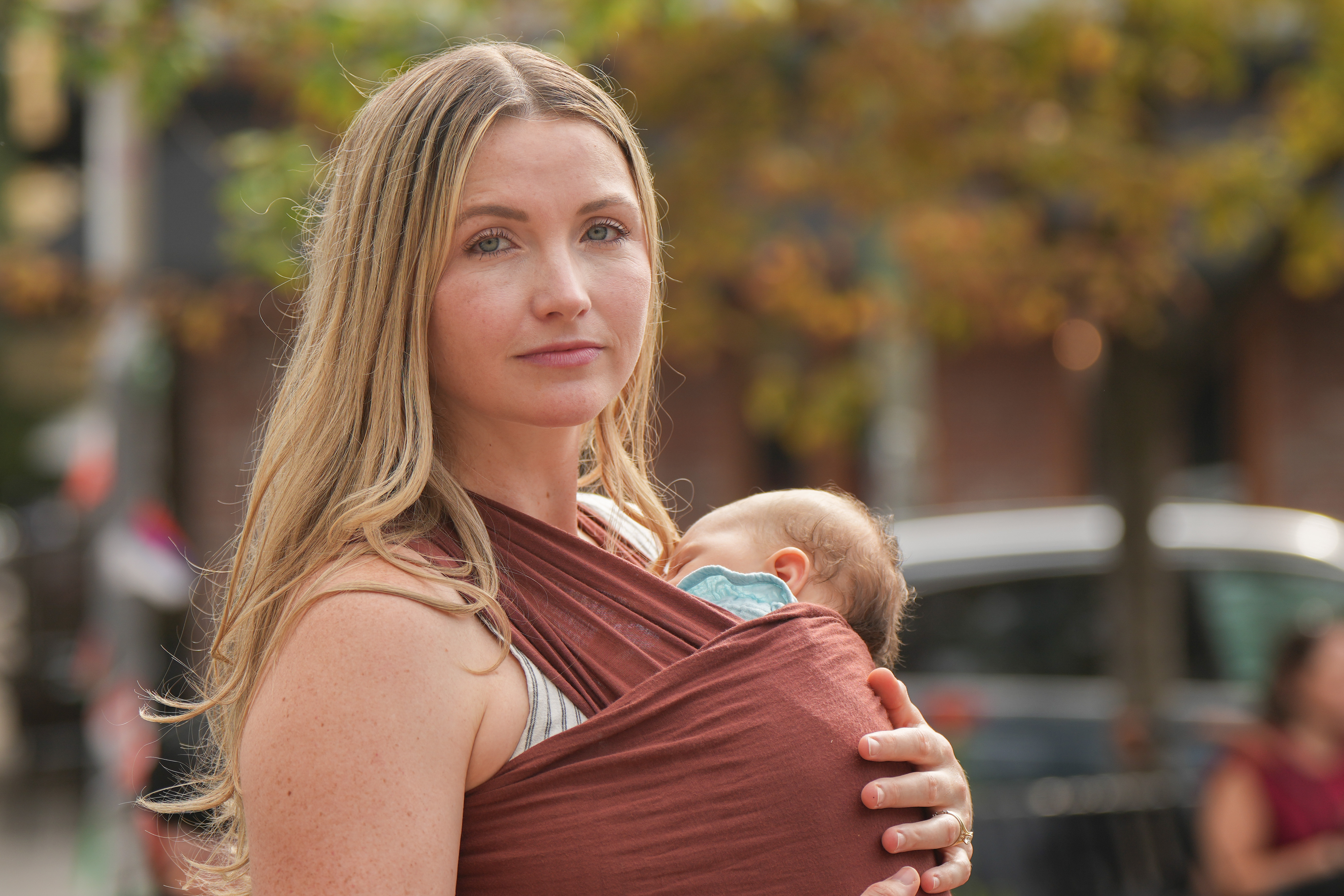
Caitlin Buttery of Kennett Square, in Chester County, recalls her trip, earlier this summer, to Lancaster when she was nine months pregnant, only to regret it after learning about the measles outbreak.
Now, with a healthy 6-week old baby, as well as an 18-month old, she’s avoiding the Lancaster area and also monitoring cases in her own county, where measles is circulating.
She worries about taking her children to public spaces like the YMCA or Kennett Square’s annual Mushroom Festival, which earlier this month drew thousands to the rural town.
“Measles is definitely one of those things you never think would affect you,” she said. “Now, I need to be a lot more cognizant of the chance that it could.”
Caitlin Buttery in East Passyunk with her daughter this month. The Chester County mother is avoiding the Lancaster area, the epicenter of the state’s outbreak, and also monitoring cases in her own county, where measles is circulating.Jessica Griffin / Staff Photographer
The 33-year-old said she plans to get her youngest the measles, mumps, and rubella vaccine at 6 months old.
Public health experts have warned that there are likely far more measles cases circulating in Pennsylvania than have been recorded by the state. And the disease doesn’t confine itself to county or state borders. Across the United States, more than 3,100 people this year have tested positive for the disease, the CDC said last Thursday.
(function(){function e(){window.addEventListener(`message`,function(e){if(e.data[`datawrapper-height`]!==void 0){var t=document.querySelectorAll(`iframe`);for(var n in e.data[`datawrapper-height`])for(var r=0,i;i=t[r];r++)if(i.contentWindow===e.source){var a=e.data[`datawrapper-height`][n]+`px`;i.style.height=a}}})}e()})();
Amina Lowery lives in Upper Darby. No cases have been reported in Delaware County, but health officials there did identify measles in a wastewater sample earlier this summer, meaning someone with the disease used a bathroom connected to the county’s public water supply.
Lowery opted to get her 6-month-old daughter vaccinated early. She alsoquit her job in the insurance industry to keep her daughter out of daycare, “since we can’t control what other parents decide.” She said the plan now is to enroll her child when she’s closer to 2 years old.
She feels safer having her child vaccinated ahead of a family trip later this year to Florida, which is also dealing with a measles outbreak.
“We have the research and documentation to show that vaccines work and are for the greater good. It feels like we are in the midst of societal decline,” Lowery said.
Like Lowery, Shelby Steele of Springfield opted to keep her daughter out of daycare. Her daughter is now nearly 2 years old, but Steele, a consultant who works from home, isn’t any closer to enrolling her.
“We obviously worry about the socialization aspect of things, but measles is no joke. We’d rather find more creative ways to socialize her safely for now,” Steele said.
Steele and her partner want to have another child if possible. But she said the measles outbreak “and just the current state of things overall” makes them think twice about the risks a child could face.
Steele said she’d like to send her daughter to school, but the outbreak even has her considering homeschooling. “We are having to reconsider a lot of things, schooling being one of them,” she said.
Physicians advise parents on navigating the outbreak
Pediatrician Katie Lockwood says parents coming to her Children’s Hospital of Philadelphia practice in Montgomery County say they’re changing childcare and vacation plans to avoid measles exposures.
Montgomery County has reported three measles cases this year.
“If you’re fully vaccinated and healthy, I don’t think there’s a change in how you need to operate right now,” Lockwood said.
“But if you have someone in your family who is particularly vulnerable, if they’re immunocompromised, pregnant, or unvaccinated because they’re too young, then you may want to change your behaviors.”
She advises parents to talk to school officials and daycare providers about their vaccination policies, keep sick kids home to avoid spreading illness, and make sure children are up to date on all recommended vaccines.
“It’s awful that now parents are having to make a decision between work and childcare for something that we can prevent safely with vaccination,” she said. “Not everyone has the ability to quit their job or stay home, and they may not have an alternative childcare resource.”
Like many practicing physicians today, most schools and daycares have never had to deal with a measles case. Lockwood recently had several childcare providers refer children with rashes to her practice, worried about measles.
None of the children had the disease, but “I would rather a school or a daycare overreact,” she said, explaining that keeping a child out of school to evaluate a rash that proves harmless prevents “potentially exposing a bunch of kids to measles.”
(function(){function e(){window.addEventListener(`message`,function(e){if(e.data[`datawrapper-height`]!==void 0){var t=document.querySelectorAll(`iframe`);for(var n in e.data[`datawrapper-height`])for(var r=0,i;i=t[r];r++)if(i.contentWindow===e.source){var a=e.data[`datawrapper-height`][n]+`px`;i.style.height=a}}})}e()})();
In Bucks County, pediatrician Toni Richards-Rowley often counsels parents frustrated about having to navigate the outbreak.
She also serves as president of the Pennsylvania chapter of the American Academy of Pediatrics, which has been working to educate doctors about measles and how to recognize it.
In her own practice, Richards-Rowley is also offering “dose zero” shots for children whose parents work or plan travel to affected counties.
“If a parent asks for it, even though there’s not community spread in Bucks yet, we’re not going to turn a family away,” she said.
“Measles doesn’t respect borders. Just because we don’t have an index case doesn’t mean it’s not going to happen. You do have to be fairly vigilant wherever you go.”
Correction: This story has been updated to delete an incorrect reference to Upper Darby’s geography in the region.
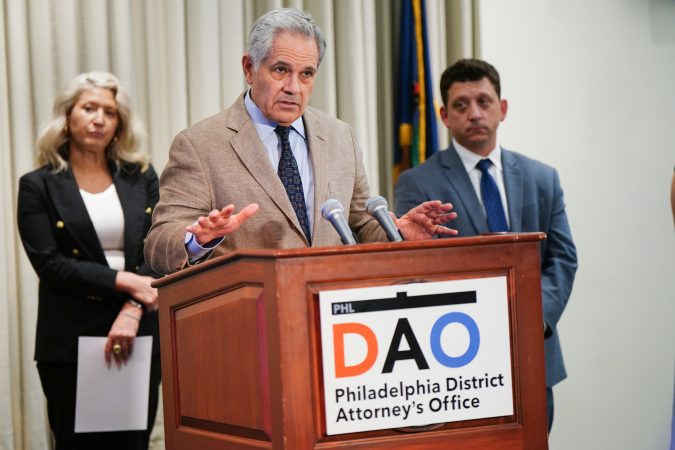
The Philadelphia district attorney’s office has charged a woman with murder and other crimes for her alleged involvement in a fire in February in the city’s Kingsessing neighborhood.
Chardae Sapp, 34, was charged with murder, attempted murder, aggravated assault, arson, causing or risking a catastrophe, and two misdemeanors, District Attorney Larry Krasner’s office said Friday.
The charges date back to a fire at a house on the 5400 block of Regent Street on Feb. 4 around 1:40 a.m., prosecutors said. Four people were taken to the hospital for treatment. Twenty-six-year-old Raymond Bell, found unresponsive in a bedroom, died as a result of the blaze.
Fire marshals determined that the fire was deliberately set and began in a second-floor bedroom “when an open flame was applied to available combustibles consisting of bedding and mattress materials,” the District Attorney’s office said.
“This is a terrible tragedy that should have never happened and could have been even deadlier if the fire had spread faster,” Krasner said in a statement, thanking first responders for their roles in the investigation. “Our office looks forward to pursuing a fair and just outcome in this case and continuing to support the co-survivors.”
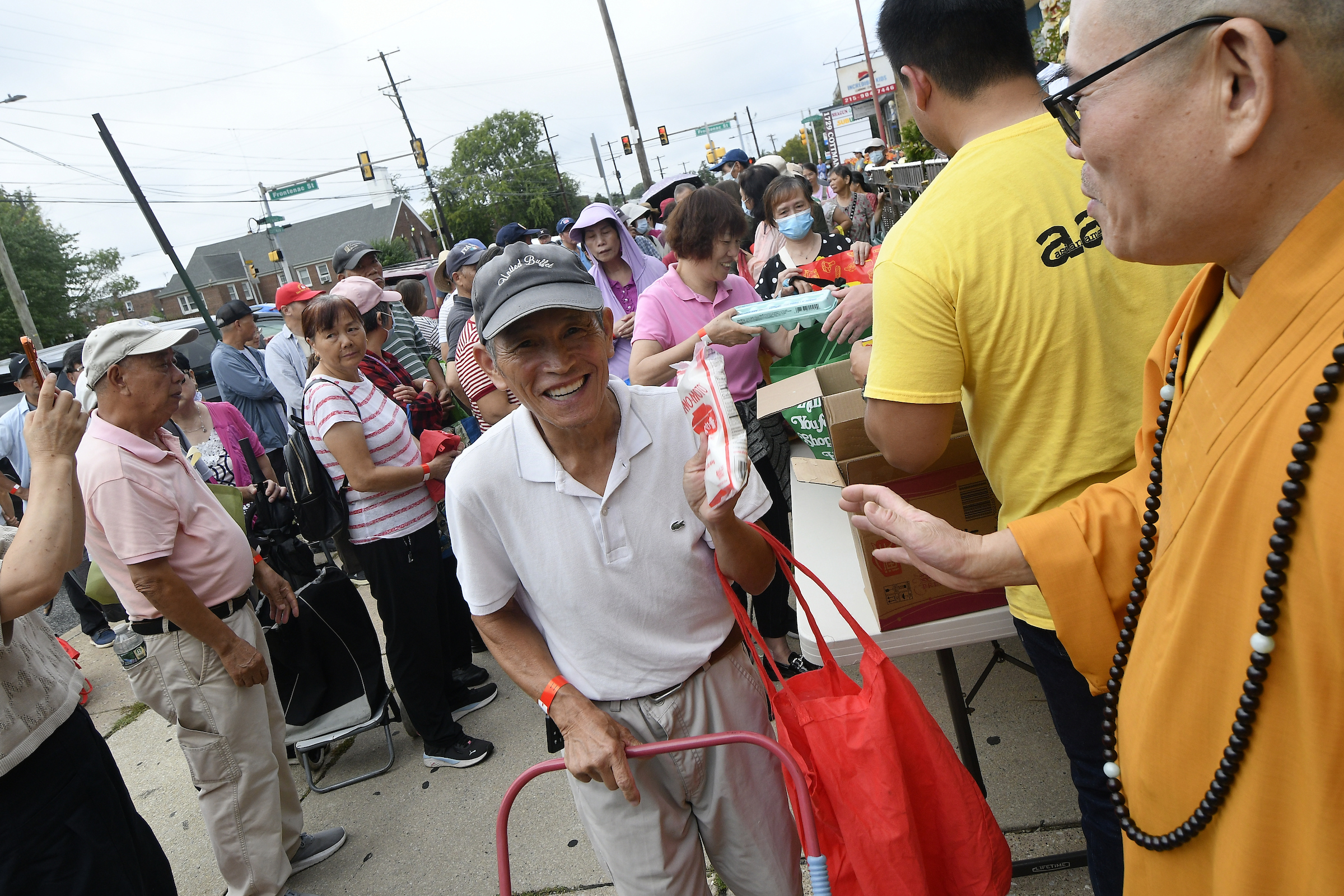
The line formed early, and by noon more than 200 people stood outside the Kai Yuan Temple in Northeast Philly, waiting to receive food.
This wasn’t a typical food pantry. The food drive was organized to provide familiar grocery staples to the city’s sizable Chinese immigrant community.
“It really shows the need for culturally relevant food — and food access in general,” said Sunhee Volz, an organizer.
The food drive was a grassroots response to the city’s affordability crisis at a time of rising food insecurity, fueled by federal cuts to the Supplemental Nutrition Assistance Program. Some immigrant families also fear seeking government assistance, according to Asian Pacific Islander Political Alliance, which organized the event. The food drive was part of the group’s awareness campaign to tax corporations and the very wealthy.
Community members receive culturally appropriate food aid at the Kai Yuan Temple on Cottman Avenue, on Sunday afternoon.Bastiaan Slabbers/ For the Inquirer
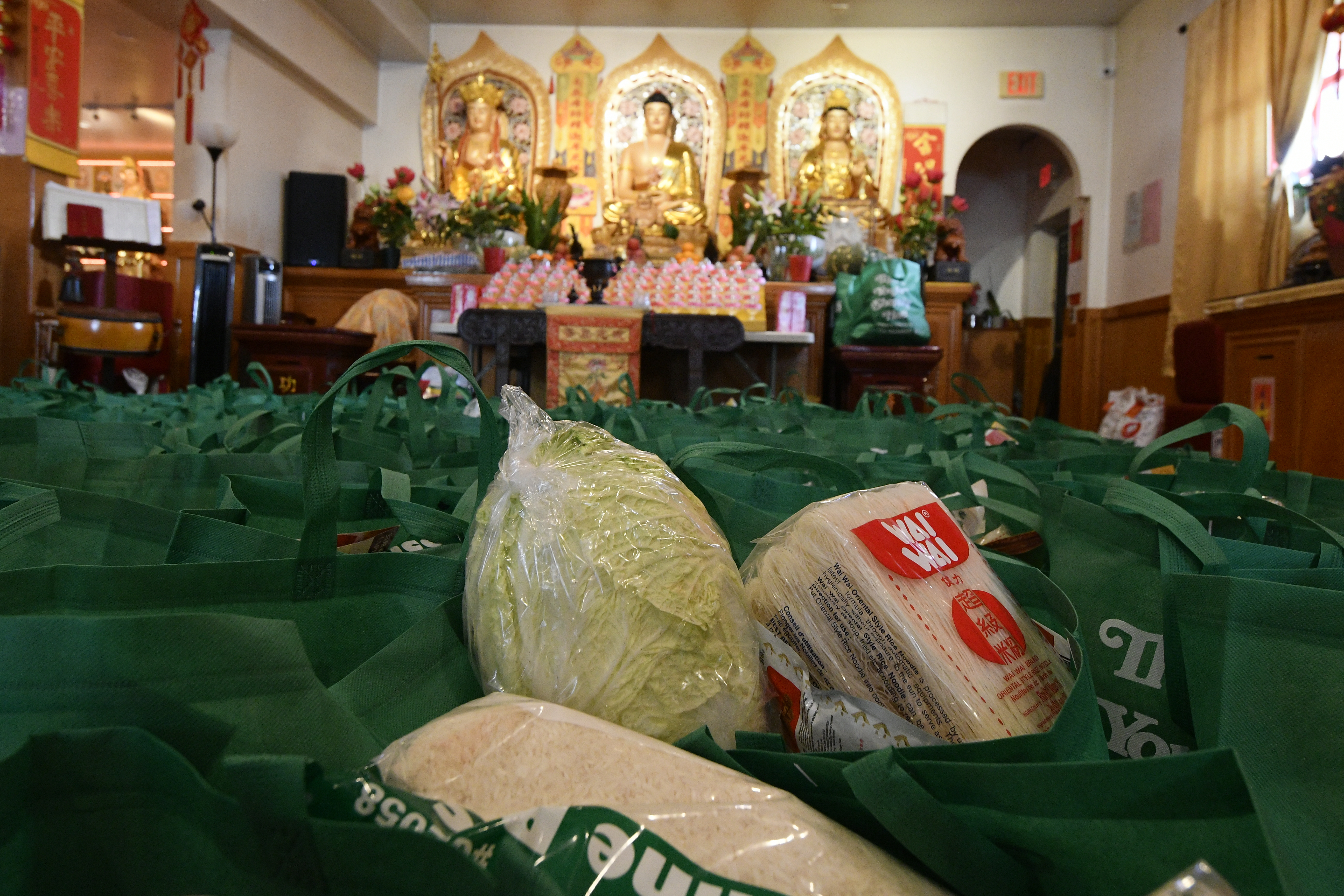
An anonymous donor footed the bill for 200 bags of groceries ordered from Heng Fa food market in Chinatown, organizers said. Rice noodles, napa cabbage, sweet potato starch, MSG, and fruit were among the food items packaged into large, green bags for distribution.
Eggs were kept outside the temple for religious reasons, organizer Jenny Zhang said. Large glass bottles of soy sauce were handed out separately from the bagged items to prevent them from breaking.
In a way, those soy sauce bottles were the inspiration for the food drive, said Hanna Kim of Asian Food Collective. At previous food distributions, Kim had noticed how excited people became when they received a particular brand of soy sauce.
The family of Joyce Yan and Bobby Lin (not pictured) of Northeast Philadelphia receive culturally appropriate food aid outside Kai Yuan Temple on Cottman Avenue on Sunday afternoon.Bastiaan Slabbers/ For the Inquirer
Kim held up a yellow bottle of Haday premium soy sauce, which she said is immediately recognizable to many Chinese immigrants.
“When you have that familiarity, it’s a feeling of home, too,” Kim said.
Wei Chen, civic engagement director of Asian Americans United, explained that the Buddhist temple had recently completed its annual Hungry Ghost Festival. The 30-day celebration honors ancestors and the dead, and giving away food is part of the tradition, Chen said.
Centuries ago in China, the government prohibited food distribution for the those experiencing hardships. But under the pretense of giving food away to “hungry spirits,” the temples were able to circumvent the rules, Chen said.
These days, Sunhee Volz said, the government has made it harder for immigrants in need of food to get help. Recent ICE deportations have made it worse, she said.
“Some people aren’t even applying because they’re afraid. That fear is intentional, to keep people from even trying,” Volz said.
The food was distributed with flyers from the group, printed in both English and Chinese, explaining that in 2025 Congress cut $187 billion from the Supplemental Nutrition Assistance Program. New work requirements and rules have made it harder for people, especially noncitizens, to qualify for assistance, the flyer states.
Ven Zhi Lai of Kai Yuan Temple helps hand out snacks to children of families in the line that formed waiting to receive culturally appropriate food aid at the Buddhist temple on Cottman Avenue on Sunday afternoon.Bastiaan Slabbers/ For the Inquirer
“Step one is just awareness,” Volz said. “A lot of people don’t even know why funding is being cut.”
From there, the group hopes to build relationships with people and plan more actions. “The affordability issue is affecting everybody, of course,” Volz said.
APIPA is one of about 30 political groups pushing a plan called “Tax Billionaires, Fund PA,” Volz said. That plan seeks to add state revenue by closing corporate tax loopholes, instituting a digital advertisement tax, and adding a tax on “unearned income” such as stock dividends, according to its website.
Democratic State Rep. Sean Dougherty met with the group before the food drive and helped hand out cartons of eggs. Dougherty cosponsored one legislative proposal supported by the group, which would tax online advertisements from tech companies. The bill stalled in the Republican-controlled state Senate.
“Just look at this line. It also shows that affordability and the cost of living is a real issue,” Dougherty said.
As families lugged the heavy tote bags full of groceries from the Buddhist temple Sunday, many expressed their gratitude.
Through a translator, Rong Chen said that she was “very excited” to receive food for her family. Chen has been in Philadelphia since 2019 after moving from Fujian, China.
Bobby Lin said the free food helps offset the rising costs of living expenses and gas prices.
Lin’s partner, Joyce Yan, said some people waited three hours in the line, but it was worth it.
“This kind of food is very good,” Yan said, as she held her infant daughter in her arms.
Within weeks of the Sept. 11 terror attacks, the U.S. government launched airstrikes and sent American troops to Afghanistan. In March 2003, spurred by claims that Iraq possessed weapons of mass destruction, the U.S. bombed and invaded the country.
In the two wars that followed, hundreds of thousands of Iraqis and Afghans died, with civilians making up a significant number of the dead.
On the U.S. side, more than two million American military personnel served in Iraq or Afghanistan, and over 7,000 died in these conflicts. Hundreds of thousands more live with service-related disabilities, and according to Brown University research, more than 30,000 post-9/11 veterans have since died by suicide.
Over 117,000 Pennsylvanians served in the military since 9/11, according to 2023 state data, and 295 died in Iraq and Afghanistan. At least 50,000 hailed from New Jersey, including 163 who died.
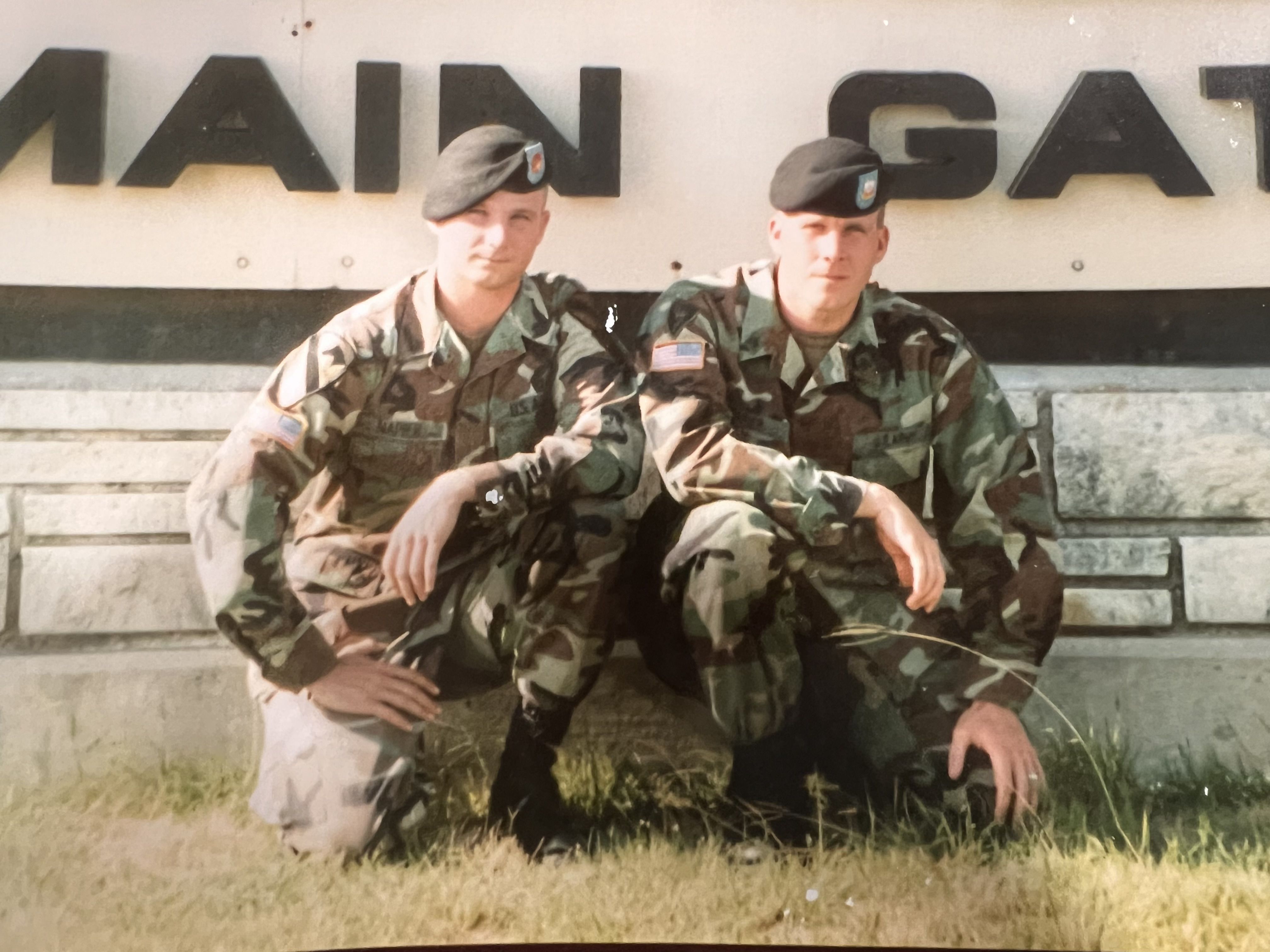
Benjamin Napier (right) and Brian Napier crouch for a picture in front of the main gate at Fort Hood, an Army base in Texas, in 2005. The brothers enlisted two days after Sept. 11 and were deployed to Iraq in 2004.Courtesy of Benjamin Napier
“I think it’s important, regarding the veteran population, to understand the diversity of experience,” said West Chester University historian Robert Kodosky, who has interviewed hundreds of post-9/11 veterans. “Some struggle. Some don’t. Some look back on their experience with pride. Some don’t want to talk about it at all.”
As the nation marks the 25th anniversary of the Sept. 11 attacks, the stories of these four military veterans from the Philadelphia region offer a glimpse into the experiences of countless others whose lives have been shaped by the wars that followed.
‘I can’t believe I made it home’
Benjamin Napier was 25 and living in Drexel Hill when 9/11 happened. The following evening, Napier and his younger brother, Brian, were gathered with friends in Upper Darby to attend a candlelight vigil, and Napier remembers noticing that the normally steady flow of air traffic had completely ceased. The skies were empty. That’s when he shared his thoughts with Brian.
“And I kind of turned to him, and I was like, you know, I think I’m going to do it. I’m going to join. And he was like, if you do it, I’m going to do it,” Napier said.
They enlisted in the Army on Sept. 13. Both were stationed at Fort Hood, Texas, and deployed to Iraq in 2004.
After riding in a convoy for three days from Kuwait to Baghdad, Napier, whose specialty was setting up computer and telephone networks, was sent to Abu Ghraib Prison.
The prison was not yet known for the horrific mistreatment of prisoners by Americans. But the squalid, cinderblock-walled compound, which had been a site of mass killings and torture under the Saddam Hussein regime, felt like “pure evil” to Napier.
“The place just had a vibe to it,” Napier said. “And we’re thinking, we don’t have running water. We don’t have toilets. I’m sleeping on a cot. And you’re just thinking to yourself, what in the world is going on over there.”
Soon, Iraqi insurgents began launching ferocious mortar attacks on the prison, Napier said.
Only when the U.S. soldiers got access to a TV did they learn that Abu Ghraib had become infamous. Widely shared photos of tortured Iraqis, flanked by smiling American soldiers, had became a rallying cry for war opponents.
The news also made the prison a target, and for the rest of Napier’s deployment, he said he witnessed sniper fire, shelling that killed and wounded prisoners, and the intervention of U.S. Apache helicopters that saved the prison from a hostile Iraqi takeover.
“I can’t believe I made it home,” Napier said.
It took him three years of intensive therapy to process his trauma, as well as extensive support from his wife and family, he said. Brian survived an improvised explosive device blast that left him disabled from the military due to post-traumatic stress disorder. The brothers now live in Delaware County and remain close.
Napier said despite all that he and Brian went through, he’s still glad they enlisted.
“A lot of the veterans that I talk to have that same sort of feeling. You raise your hand for something bigger than you. You’re kind of doing something for the greater good. And I think we still kind of feel that way,” Napier said.
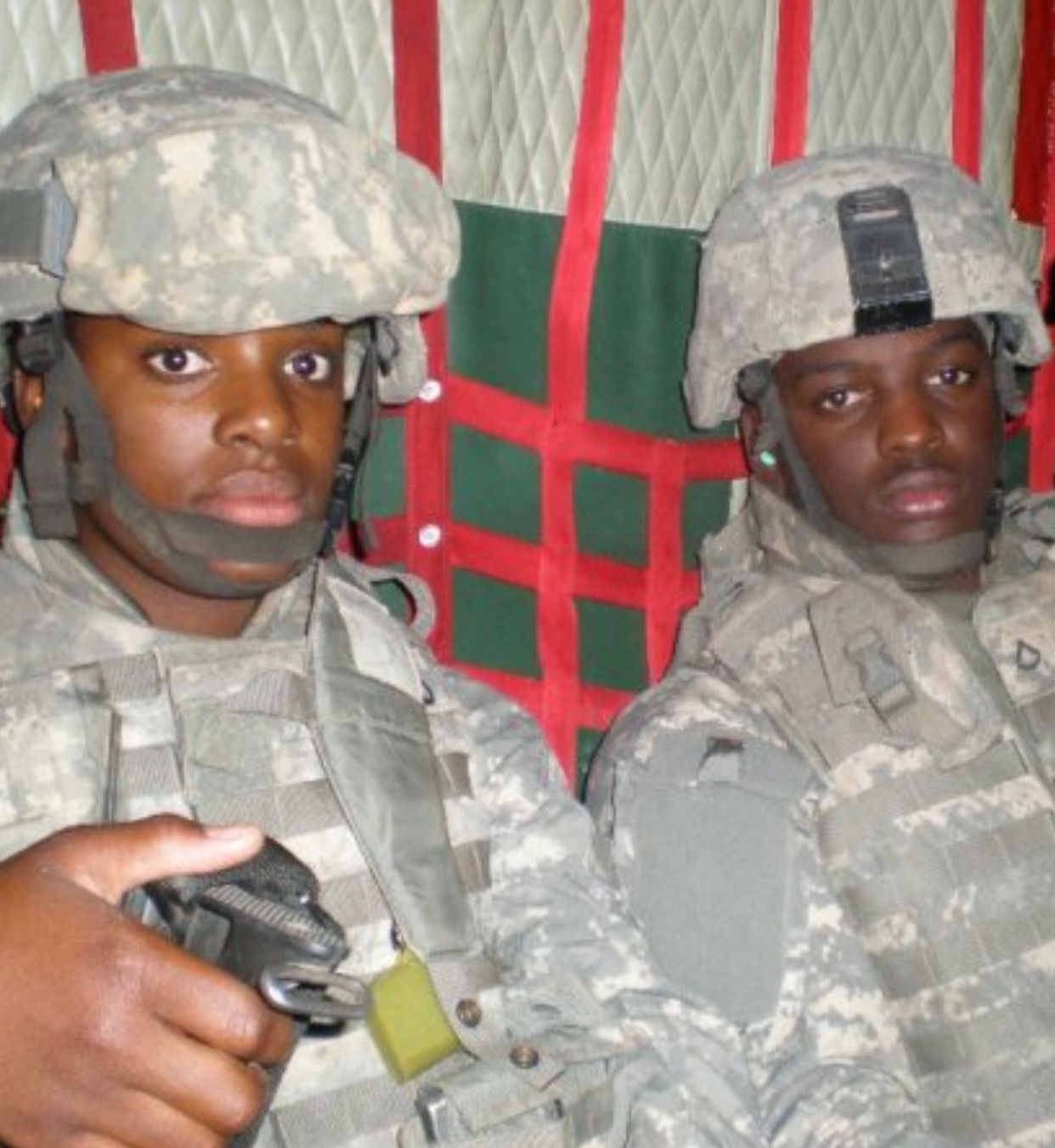
Keshina Bouie (left) on board a C-130 aircraft, preparing to fly from Kuwait to Iraq in 2007. At right is her future husband, Anthony.Courtesy of Keshina Bouie
‘I wanted to do something positive’
Keshina Bouie, 43, remembers being sent home from South Philadelphia High School on Sept. 11. Ironically, she said, her junior ROTC class is what got canceled.
Bouie’s parents had been in the Air Force, but Bouie hadn’t planned to follow their path. However with no college scholarships lined up, she enlisted in the Pennsylvania Army National Guard to pay for school.
“At that point in my life, I wanted to do something positive. And I wanted to get a degree and break generational cycles, and I was determined to be successful,” Bouie said.
Bouie earned her degree at Cheyney University in 2007. One day before her college graduation ceremony, she received deployment orders to Iraq.
Bouie was stationed at Balad Air Base, about 40 miles north of Baghdad. There, she guarded a secret Special Forces base that was embedded within the military installation. Exploding mortars and the rush of incoming wounded soldiers became part of her routine.
“When I was in Iraq, I just wanted to focus on doing my job and getting home safe,” Bouie said.
While on deployment, Bouie met Anthony, a soldier who grew up just blocks away from her Point Breeze home.
A romance blossomed in the spare hours, though they remained separated by their jobs. When they returned home, they got married. They’ve since had two children.
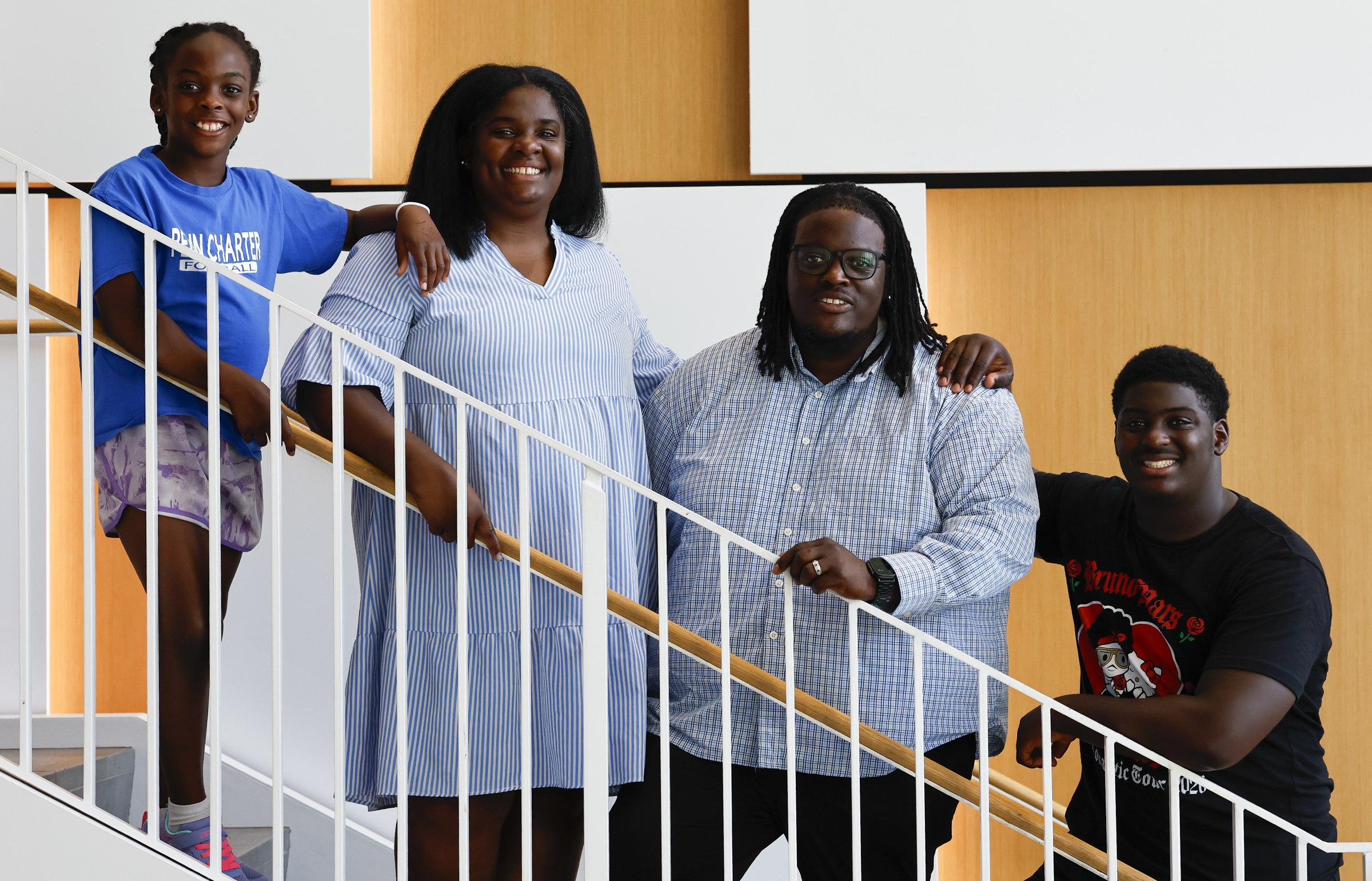
The Bouie family (from left to right): daughter Savannah Bouie, mother Keshina Bouie, father Anthony Bouie Sr., and son Anthony Bouie Jr., at William Penn Charter School on Sept. 3. Army veteran Keshina Bouie grew up in Philadelphia and was in high school ROTC on Sept. 11, 2001. She joined the Army, which helped her reach personal educational goals and give her children a good life, and played a big role in her being who she is today.Yong Kim / Staff Photographer
Bouie stayed in the Guard for 16 years, earned a master’s degree from La Salle University, and worked for the Department of Veterans Affairs and the Defense Logistics Agency. Her military service, she said, ultimately helped her provide a better life for her son and daughter.
She said there are things she’s not proud of about her country, but she’s always proud of the people she served with in Iraq and glad she enlisted.
“It was literally the best decision I made in my life. And I know not everyone can say that.”
‘What are we protecting?’
Michael Miller, 52, grew up in City of Chester with seven brothers and one sister.
“We grew up pretty poor. But being a child, you don’t know that you’re poor. We had fun. We did all the things that kids do,” Miller said.
Already a father at 19, Miller joined the Marine Corps in 1994 to provide for his family. He returned home after eight years, but missed military life. He joined the Army National Guard in 2007 and deployed to Bagram Air Base, Afghanistan, in 2010.
“For the first six months, it was like being on a weird vacation,” Miller said. “But let me tell you something: When the snow melted off those mountains, things totally changed.”
Three of his comrades died in an IED blast that summer, and of the 370 people serving with him, about 300 returned home with Combat Action Badges, a designation given to soldiers involved in ground combat.
Miller’s main job entailed driving a large truck known as a wrecker and using it to retrieve destroyed Army vehicles and cargo.
But it was while on a mission delivering supplies that an IED detonated under his truck, launching it into the air “like it was a piece of paper.”
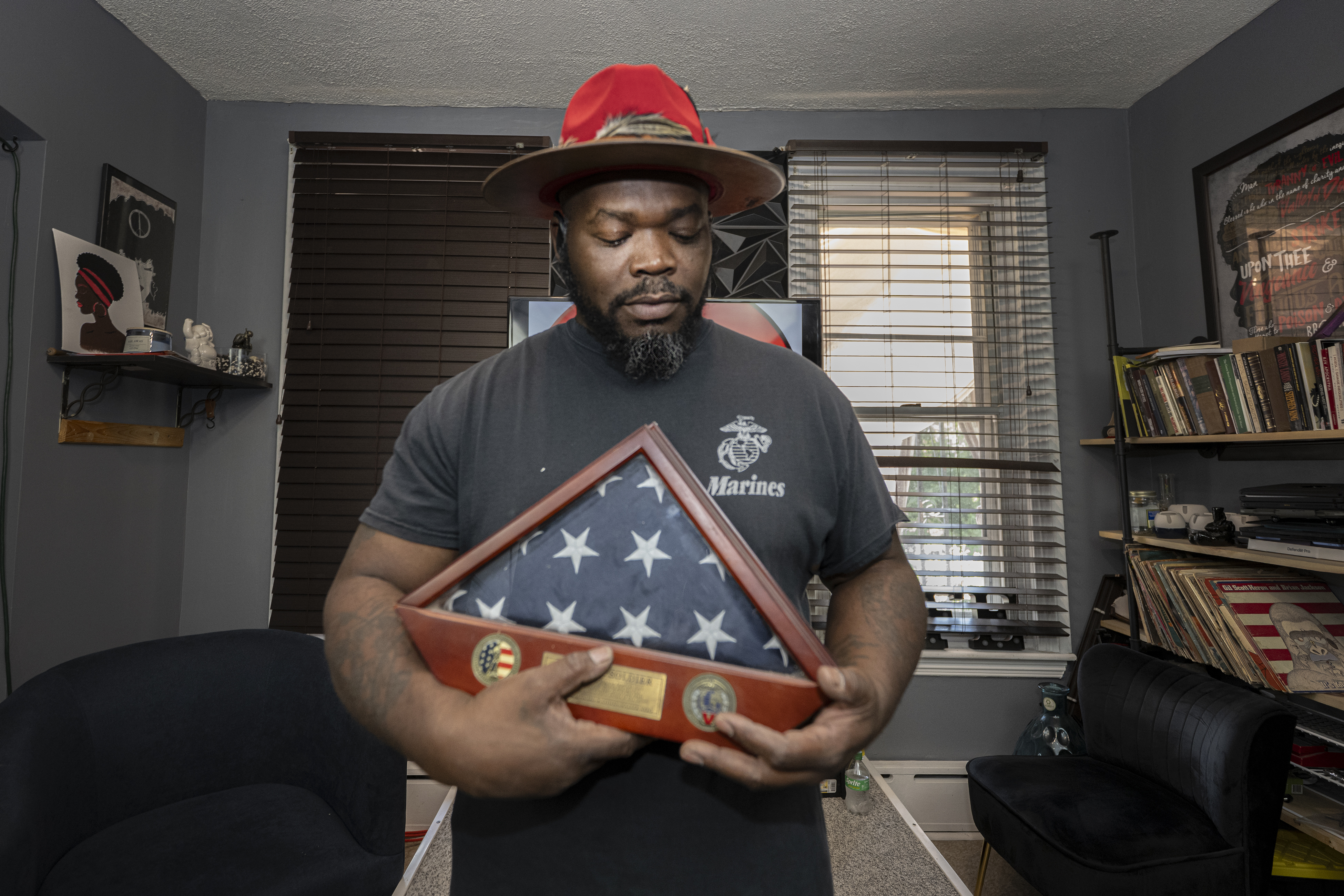
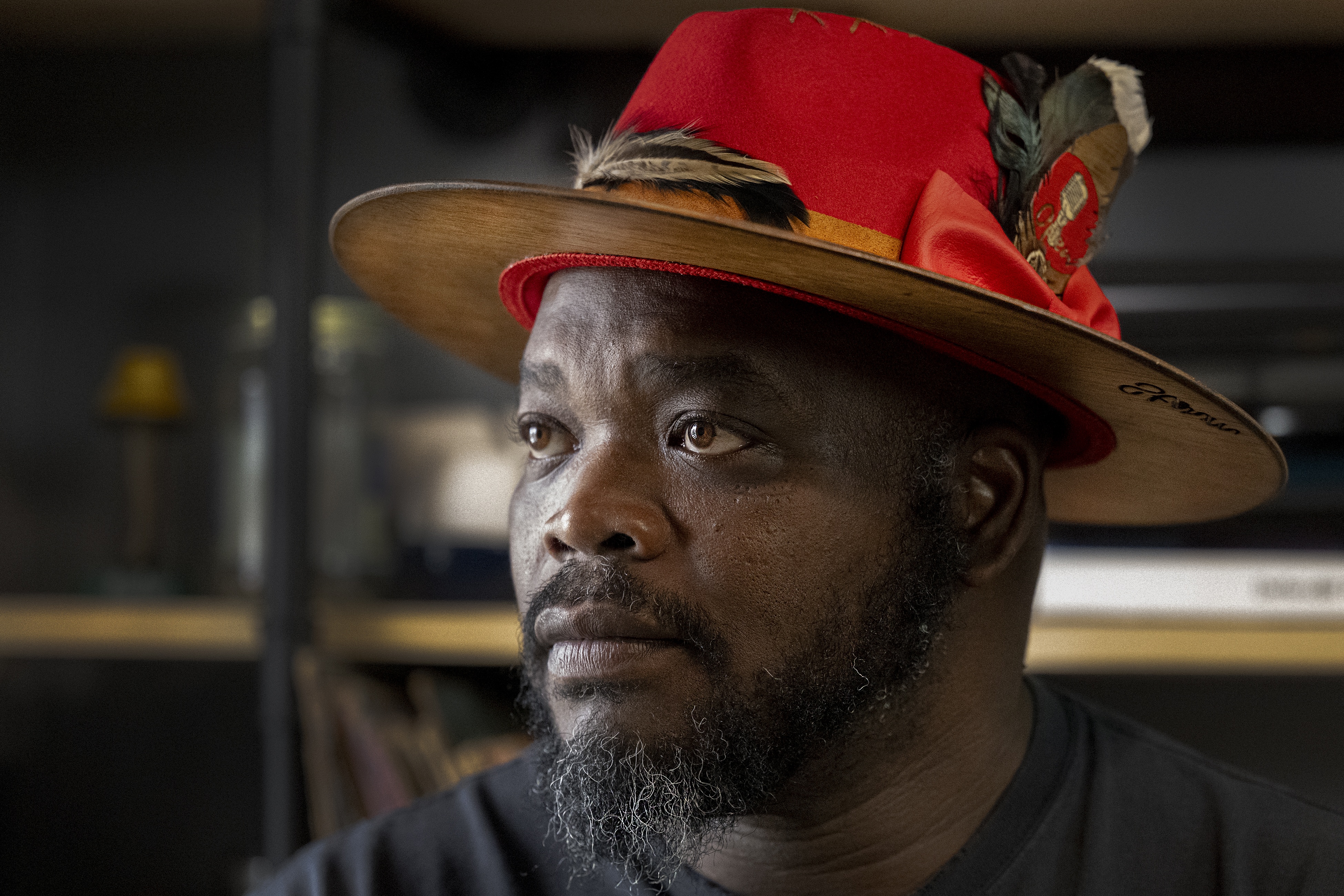
Marine veteran Michael Miller holds an American flag given to him for his military service in Afghanistan as he poses for a portrait at his home in Chester on Aug. 31. Miller deployed to Afghanistan in 2010 and survived an IED blast that caused a traumatic brain injury. After returning home, he was diagnosed with PTSD and an anxiety disorder. Miller has turned to poetry, writing, and podcasting to help cope with his experiences and the loss of three comrades who died by suicide after returning home.Jose F. Moreno / Staff Photographer
A doctor told Miller he had a concussion, he said, and he finished his deployment. It was only when he returned home that the extent of his traumatic brain injury and PTSD became clear. Panic attacks made him a “frequent flyer” at local emergency rooms.
“I used to go to sleep fully dressed, because I wanted to make everything convenient for the paramedics, because I was sure I was dying,” Miller said.
Miller joined Warrior Writers, a group of veterans who process their experiences through writing.
“Honestly? I do poetry. I learned to express myself,” Miller said.
What he struggles with now, Miller said, is that despite his efforts, three people he served with have since died by suicide. That’s left him feeling that the war wasn’t worth fighting.
“Because, honestly, what are we protecting when the wealth gap gets so much larger? What are we protecting, when we have so many homeless? It’s a bunch of stuff that in the grand scheme of things wasn’t worth the blood that was left there.”
‘Shona ba shona’
Milan Moncilovich, 62, said he learned about the Sept. 11 attacks while on duty at Methodist Hospital in South Philadelphia. By then, the pharmacist and hospital administrator was also a seasoned officer in the U.S. Navy Reserves.
“My first thought was, this is the beginning of something that’s going to be big, and that’s going to take a while, and most likely I am going to be part of this, and be deployed at some point,” Moncilovich said.
In 2010, the Navy sent him to Afghanistan to train Afghan medical personnel. He recalled seeing a stunning sunrise as his plane performed a tactical landing in Kandahar to avoid rocket attacks.
“To me it was like a personal, spiritual kind of sign that said, ‘Hey, anything that’s going to come in the future, just take this in, take this beauty in, and remember where your inner soul is,’” Moncilovich said.
In the northern Afghanistan city of Mazar-i-Sharif, Moncilovich and other American medical professionals worked closely with Afghan doctors and nurses, he said. As they got to know one another, their motto became “shona ba shona,” a Dari phrase that meant “shoulder to shoulder” or “together.”
In this advisory role, Moncilovich’s team supervised treatment of Afghan soldiers and civilians who had been struck by IEDs or gunfire.
“I can close my eyes at any time, and I can see those soldiers in that trauma bay and on those tables,” he said. “It’s not ever going to go away. I won’t say I’m OK with it. It’s just going to be there.”
Moncilovich said he saw the positive side of the U.S. missions there, such as the construction of schools and medical facilities.
The U.S. exit from Afghanistan in August 2021 angered him, he said.
“Just to see 13 more American lives lost, it really, really upset me. That’s probably the only thing that really probably brought my rage up pretty high. Especially seeing everything we left behind,” he said.
Moncilovich, who now works for Shriners Children’s hospital in North Philadelphia, said he would jump at a chance to return and get closure.
“I know that it’s completely changed now, and I understand a little more how the Vietnam vets feel now. Time will kind of change things. I know how angry they were. But now, I know what our mission was, but at the end of the day, things kind of went back to the way they were.”
A man was killed early Saturday when he walked onto the road and was struck by an SUV in the Logan section of Philadelphia, police said Saturday.
The Philadelphia Police Department said it is investigating the fatal crash, which happened at 20th Street and Belfield Avenue. The Y-shaped intersection is located near La Salle University.
Around 1:50 a.m., a white Jeep Cherokee driven by a 41-year-old man was traveling south on 20th Street, police said.
The Jeep was attempting to go around a stopped vehicle when a pedestrian stepped into the roadway, police said. It struck the 36-year-old man, “causing critical injuries.”
Fire department medics took the man to Jefferson Einstein Philadelphia Hospital, where he was pronounced dead.
Police have not released the name of the driver or the pedestrian. The police crash investigation division is leading the inquiry into the circumstances around the incident.
With the midterm election nearing — and months of inactivity behind him — New Jersey U.S. Rep. Tom Kean Jr. hit the campaign trail Friday, speaking to a few dozen people at a breakfast fundraiser held at a private golf club.
It was one of Kean’s first known campaign stops since he returned to Congress at the end of June following a long absence, which he said was due to depression. Though the congressman at times has sought to avoid media attention, he attracted just that as someone at the event called police on a New York Times reporter.
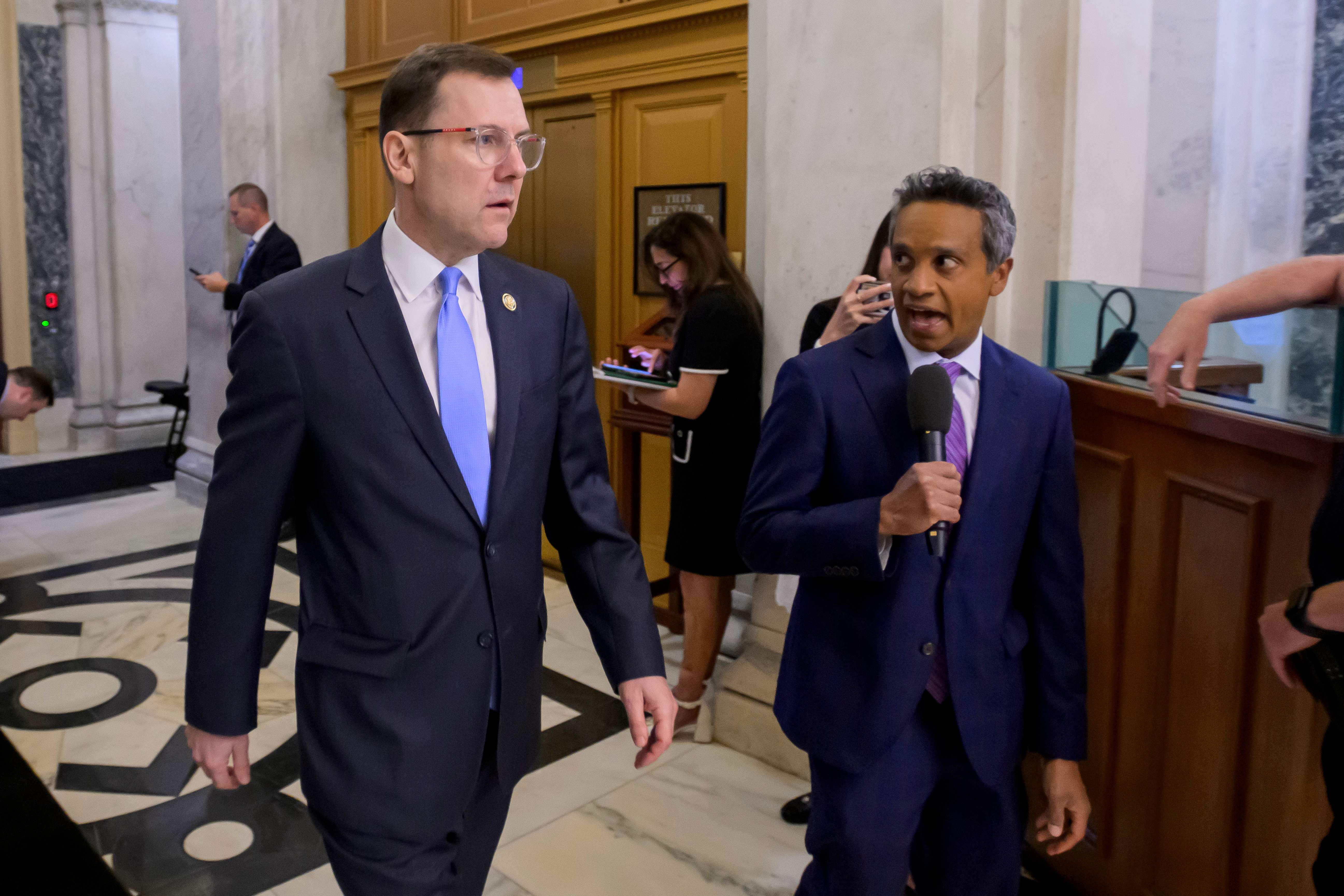
Kean, a Republican, represents New Jersey’s 7th District, widely seen as a key race in the battle for control of the House of Representatives. House Speaker Mike Johnson (R., La.) attended the breakfast, seeking to boost support for the congressman.
FILE — House Speaker Mike Johnson (R-La.) speaks to reporters in Washington on July 22, 2026. Johnson joined Rep. Tom Kean Jr. (R-N.J.) on his campaign trail on Friday, Aug. 21, 2026. A reporter for the New York Times, trying to cover Kean’s fundraising event in New Jersey, was blocked at the door. (Alex Kent/The New York Times)ALEX KENT
Kean’s reelection bid got a late start: Beginning in March, he was absent from Congress for 116 days and missed about 140 votes. As calls for an explanation mounted, Kean stated in a speech on the House floor in June that he had been seeking treatment for depression.
Friday at the Hawk Pointe Golf Club in northwestern New Jersey, Kean talked about his issues with WFMZ-69, an Allentown, Pa.-based TV station.
“I’m feeling great,” Kean said. “I had to focus on my mental health. I had depression. I’m back, feeling stronger than ever. And I’ve been helping people throughout the entirety of the year.”
Police called on New York Times reporter
WFMZ and Fox News each had a reporter present at the country club, according to the New York Times. However, Kean spokesperson Harrison Neely barred a Times reporter, Tracey Tully, from entering the event.
Tully reported that as she waited in the parking lot for a chance to interview Johnson or Kean, she was approached by a local police officer.
“Someone apparently had called the police from inside the club to report that there was a trespasser — this reporter — on the premises,” Tully wrote, adding that New Jersey State Police and Johnson’s security detail were already outside the venue.
A police officer spoke with people inside the event and told Tully that it was OK for her to remain in the parking lot, the report states.
Kean’s Democratic challenger, former Navy pilot and healthcare executive Rebecca Bennett, weighed in Saturday morning by email.
“Tom Kean Jr. is doing what he’s always done: serving his D.C. party bosses and prioritizing his stock portfolio while hiding from anyone who wants to hold him accountable, whether that’s the press or his constituents,” Bennett said.
Messages and calls to Kean’s office and spokesperson were not returned Saturday. On social media, Kean shared his TV appearance along with a message saying Bennett is hiding behind a campaign script.
I do the most local press engagements of any NJ Member of Congress. Meanwhile, my opponent @RebeccaForNJ07 stays hidden from voters behind a campaign script.https://t.co/7ZUVlggK6W
While Democrats face an uphill battle in winning a majority in the Senate, they hold more favorable odds of seizing the House, according to pollsters.
With all 435 House seats up for reelection, few are seen as more competitive than Kean’s district. Political analysis sites Cook Political Report and Sabato’s Crystal Ball each rated the race as a “toss up.”
In 2022, Kean ousted Rep. Tom Malinowski, the district’s Democratic incumbent, and won reelection in 2024. In 2025, Democrat Mikie Sherrill won the district by 2% in her successful bid for governor.
Authorities have identified the pilot of a small plane who died Wednesday after colliding with a Pennsylvania State Police helicopter.
Paul Sokoloski, 57, of Hershey, died in the crash, the Cumberland County Coroner’s Office said Thursday morning.
Sokoloski was an emergency room doctor at Penn State Health, according to the health system, which described him in an emailed statement as a valued member of its team.
“We are focused on supporting Dr. Sokoloski’s loved ones and the members of our care teams who worked alongside him and are grieving his passing,” the statement said.
Sokoloski worked as an emergency physician since 1999, according to his LinkedIn profile. Since 2022, he had worked at three Penn State Health hospitals around Harrisburg and Lancaster. From 2017 through 2021, he was an assistant professor of emergency medicine at the Pennsylvania State University College of Medicine.
The crash happened at Carlisle Airport, a small public-use airport about a half-hour southwest of Harrisburg.
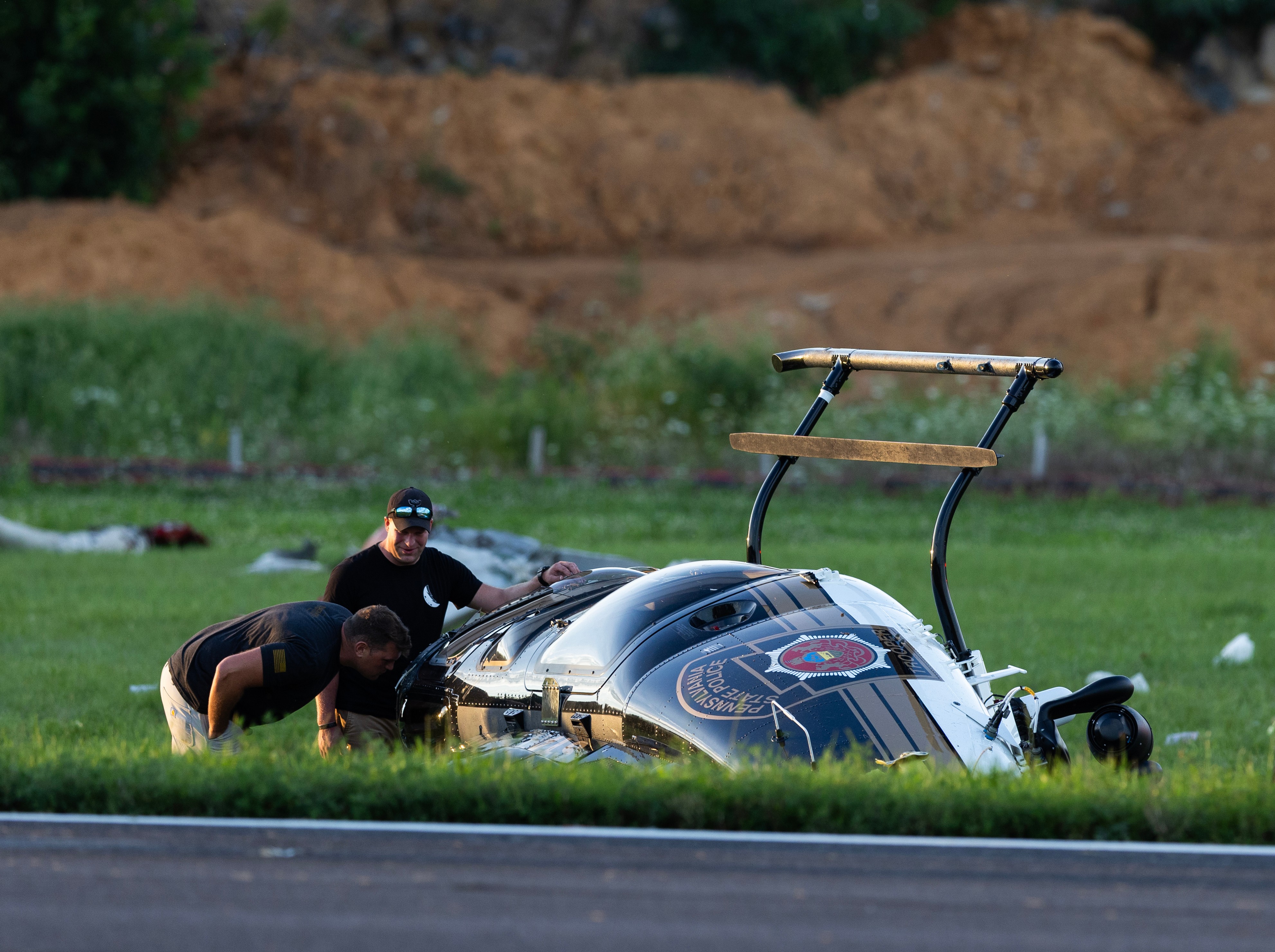
Pennsylvania State Police were conducting a training exercise in a helicopter when it was struck by the Cessna 150 airplane piloted by Sokoloski, state police said Thursday.
“The Cessna 150 was attempting to land when, for an unknown reason, it veered off the north side of the runway and collided with the rear of the PSP helicopter, which was hovering in mid-air,” state police said in a statement.
Sokoloski was the only person in the plane, state police said.
Aaron McCarter, aviation accident investigator with the NTSB, confirmed at a Thursday afternoon briefing that a video clip circulating on social media did capture the collision. The video shows the helicopter hovering above a grassy area when the Cessna veers from the runway path and sheers off the top main rotor blade and the tail blades of the helicopter. The Cessna immediately breaks apart after contact.
A witness saw the Cessna pilot, who was a certified flight instructor, earlier performing maintenance on his plane, McCarter said. The pilot earlier on Wednesday then flew south before returning to Carlisle Airport in the evening.
McCarter said pilots who fly at small airports that do not have control towers, such as Carlisle, use a designated radio frequency known as CTAF, or common traffic advisory frequency.
The pilot of the Cessna, who was a certified flight instructor, “was made aware” of the helicopter’s activity at the airport, McCarter said.
On Friday, crews will transport the wreckage of the plane and the helicopter to a secure hangar in Clayton, Del., where investigators will work to find out “what brought those two vehicles together in such a violent way,” McCarter said.
Two state police troopers in the helicopter, Cpl. Bryce Corman and Trooper Jason Mills, were airlifted to Penn State Health Milton S. Hershey Medical Center in Hershey, police said.
Corman has since been released, and Mills remained hospitalized in stable condition, police said.
Pennsylvania Gov. Josh Shapiro on Wednesday night called the injured state police troopers “heroes” and expressed his sympathy to their families.
“They are people who are absolutely essential to the operations of the Pennsylvania State Police, and we are so grateful they are going to be OK,” Shapiro said.
State police, the Federal Aviation Administration, and the National Transportation Safety Board are investigating the incident, police said.
Staff writer Robert Moran contributed to this article.