Author: Chris Palmer

  • The landmark Jan. 6 criminal case against former Philly Proud Boys leader Zach Rehl was officially dismissed by a judge

    The landmark Jan. 6 criminal case against former Philly Proud Boys leader Zach Rehl was officially dismissed by a judge

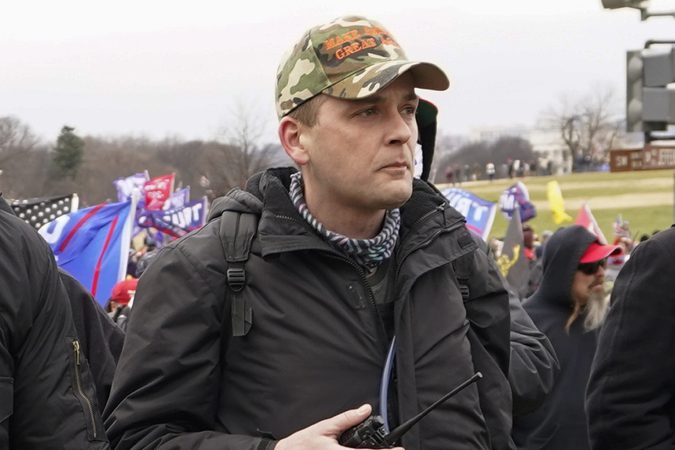
    A federal judge has officially dismissed the seditious conspiracy case against former Philadelphia Proud Boys leader Zach Rehl, putting an end to a landmark prosecution that had at one point served as a leading example of the Justice Department’s effort to seek criminal consequences for people who attacked the U.S. Capitol on Jan. 6, 2021.

    U.S. District Judge Timothy Kelly wrote in a memorandum Friday night that he effectively had no other choice but to dismiss the case against Rehl and his three codefendants, Proud Boys Ethan Nordean, Joseph Biggs, and Dominic Pezzola.

    An appeals court earlier this year had already granted a Justice Department request to vacate the men’s convictions because prosecutors said they no longer believed in them, Kelly said.

    And in 2025, President Donald Trump — the intended beneficiary of the Jan. 6 melee — also signed an executive order that prohibited prosecutors from continuing to pursue any cases against Jan. 6 defendants in court.

    Against that backdrop, Kelly wrote, he had “no grounds” to rule that the case against Rehl and his codefendants remain open, and he granted the government’s request to dismiss all charges.

    “President Trump’s views about the prosecution of those who attacked the U.S. Capitol on January 6 — whether those views are based on fact or fiction — are well known, as is his intention to extend clemency to them through the Executive Order,” Kelly wrote. “The Government’s request to dismiss this case is consistent with that general approach.”

    Rehl celebrated the ruling on social media, writing: “Finally, it’s ALL OVER! January 6th can now be a thing of the past for me!”

    Kelly’s ruling serves as the latest example of how Trump has consistently sought to rewrite the history of what occurred at the Capitol more than five years ago — and how he has attempted to use the levers of power since he returned to the White House last year to effectively undo any consequences for those who participated in it.

    Rehl, of Port Richmond, was one of the most prominent figures from the attack. A jury in 2023 concluded that he and his codefendants had spearheaded a plan to try to block Congress’ certification of Joe Biden’s win in the 2020 presidential election by riling up a mob that went on to violently storm the Capitol.

    The verdict served as one of the most significant examples of a sprawling Justice Department investigation. Prosecutors charged more than 1,500 people in connection with the attack, some of whom faced only misdemeanor trespassing offenses while others were accused of serious felonies, including assaulting police officers.

    Rehl, his codefendants, and several other leaders of the Proud Boys and Oath Keepers were convicted of the rarely used sedition charge and cast as ringleaders. And when Rehl was sentenced to 15 years behind bars, prosecutors at the time said a lengthy sentence was warranted because he had “threatened the bedrock principles of our country.”

    But in the years after the attack, Trump consistently downplayed the gravity of what happened that day, and he said the Justice Department’s investigation into it was politically motivated and corrupt.

    Then, last year, just hours after he was sworn back into office to begin his second term, Trump issued blanket pardons to nearly everyone who was charged in connection with the riot. He also ordered the Justice Department to to drop and dismiss hundreds of other cases that were still pending.

    Rehl was one of the few defendants who received a commutation instead of a pardon, meaning his prison sentence was cut short but his conviction remained intact.

    But Kelly’s decision last week — made at the urging of Trump’s Justice Department — has now wiped out Rehl’s conviction as well, effectively clearing him of all criminal culpability from the episode.

    Kelly — who was appointed by Trump during his first term — did not shy away from describing Jan. 6 in stark terms, writing in his memorandum that it was “a perilous event,” and an “attack” on people, police officers, Congress, and the peaceful transfer of power.

    “Moving forward,” the judge wrote, “if this Nation’s experiment in self-government is to last another 250 years, the American people — no matter their partisan preferences — will have to act together to preserve, protect and defend that miracle through our constitutional framework.”
  • Trump’s DOJ said Pa. election officials could be criminally charged if they let noncitizens vote

    Trump’s DOJ said Pa. election officials could be criminally charged if they let noncitizens vote

    The Justice Department sent a letter this week threatening criminal charges against Pennsylvania’s top election officials if they allow votes by noncitizens to be counted in forthcoming elections — a largely nonexistent phenomenon that is already prohibited by law.

    The letter, addressed to Pennsylvania Secretary of State Al Schmidt and obtained by The Inquirer, was part of a nationwide effort by the Justice Department to say it is cracking down on what President Donald Trump has inaccurately described as a variety of problems with how ballots are cast and counted across the country. Similar letters were sent to election officials in all 50 states this week, the Justice Department said in a statement.

    An agency spokesperson said the letters were “asking for voluntary compliance in a timely manner with [officials’] obligations under federal law to ensure only citizens vote in federal elections.”

    The outreach came after Trump’s administration, during his second term, took other steps to target states’ election practices or voter rolls.

    A spokesperson for the Pennsylvania Department of State said in a statement that the state “is in compliance with federal and state election law.”

    “We will continue our nonpartisan work to ensure elections in the commonwealth remain free, fair, safe, and secure,” said Geoff Morrow, the department’s deputy communications director.

    Last month, a federal judge in Pittsburgh dismissed a Justice Department lawsuit that sought to obtain Pennsylvania’s entire unredacted voter database. Federal judges have rejected similar efforts by the Trump administration in at least 10 other states, although the Justice Department recently filed an appeal of the decision in Pennsylvania.

    The FBI, meanwhile, is reportedly assisting with a sweeping investigation into alleged irregularities in the 2020 election in Fulton County, Ga. — a key jurisdiction that contributed to Trump’s loss in that year’s presidential contest.

    Trump has repeatedly refused to acknowledge his defeat to Joe Biden that year, and he has long fueled evidence-free conspiracy theories about widespread and brazen fraud in elections, particularly in jurisdictions that tend to vote for his opponents. Experts generally agree that although voter fraud does happen, it has not historically occurred at rates that would tip the scales in high-profile contests.

    The effort also comes as Trump has been again pressuring congressional Republicans to pass the so-called SAVE America Act, a controversial bill that could require voters to provide proof of citizenship when registering or to show approved forms of identification when voting. Prior efforts to pass the bill into law have failed amid bipartisan resistance.

    As for the subject of the Justice Department’s most recent letter — which was signed by Assistant Attorney General Harmeet K. Dhillon — noncitizens are already barred from voting in federal and state elections under a law passed by Congress 30 years ago.

    Studies in a variety of states since then have found some instances of noncitizens being registered to vote or voting, but almost no evidence that the issue is widespread or common. In Utah, for example, officials said earlier this year that they had reviewed records of the state’s more than 2 million voters and found one person who was confirmed as a noncitizen.

    And in 2024, the director of U.S. Citizenship and Immigration Services wrote in a letter to Ohio’s secretary of state that “it is extremely uncommon for noncitizens to vote in Federal elections,” and that many of those who do are identified by authorities and prosecuted.

    Dhillon, in her letter, acknowledged that noncitizen voting is already illegal. But she nonetheless listed several provisions under which election officials could be criminally charged if it occurred.

    And she said Schmidt should reply within five days to describe “how the state of Pennsylvania intends to ensure it is complying with these federal laws,” a deadline the Pennsylvania Department of State said it intends to meet.

    Schmidt, a Republican who was chosen by Democratic Gov. Josh Shapiro to serve as the state’s top election official, has been at the forefront of addressing noncitizen voting dating back to his time as a Philadelphia city commissioner.

    In 2017, when he worked for the city, Schmidt discovered that the Pennsylvania Department of Transportation’s so-called motor voter system, which allows eligible citizens to register to vote when they get or renew a driver’s license, had a glitch dating back to the 1990s and was allowing legal residents who were noncitizens to register to vote, too.

    Schmidt found that the glitch had allowed at least 168 noncitizens in Philadelphia to register to vote. And he found that an additional 52 noncitizens in the city had registered by other means.

    Collectively, that group of people cast a total of more than 225 ballots in Philadelphia during the years they were registered, Schmidt’s office reported at the time. Schmidt said it was critical to rectify the issue, and all of the improper registrations were canceled. PennDot fixed the glitch in 2017.

    Still, the largest number of votes cast by noncitizens in the city during the affected time period occurred in the 2008 general election, when 47 such people submitted ballots — representing about .0065% of the city’s vote tally that year.

    “One thing that became very clear through that research and all evidence suggests that noncitizens voting in elections in the United States occurs very rarely,” Schmidt told Votebeat earlier this year. “It doesn’t mean that it’s not important. Like I said before, every vote is precious, and we want to make sure that we do everything we can to safeguard and strengthen election integrity. But there’s no evidence to suggest that it happens in any widespread way whatsoever.”

    Lauren Cristella, president of the Committee of Seventy, a Philadelphia-based nonprofit that advocates for good governance, said the Justice Department’s letter “represents another attempt to undermine faith in our elections without presenting any evidence or even allegations of wrongdoing.”

    The country’s elections have routinely been shown to have been conducted freely and fairly, Cristella said. And in Pennsylvania, she said, Schmidt has been “the person who’s been leading the charge to clean up our voter rolls.”

    State Auditor General Tim DeFoor, a Republican, found in an audit released earlier this year that the reforms made to the motor voter system after Schmidt’s exposures of PennDot’s systemic failures had been largely successful.

    The Justice Department’s effort to threaten election officials not only clouds that reality, Cristella said, but it “completely lacks integrity and is part of the distrust that is leading to the erosion of our democracy.”

  • A former Defense Department employee pleaded guilty to laundering money for Nigerian scammers

    A former Defense Department employee pleaded guilty to laundering money for Nigerian scammers

    A former Department of Defense employee from Oreland pleaded guilty Monday to helping Nigerian scammers launder millions of dollars they collected during phishing or extortion operations.

    Samuel D. Marcus, 33, was arrested earlier this year and charged with crimes including conspiracy and money laundering. Prosecutors said he served as a “money mule” for fraudsters who used aliases to target victims in schemes including cyber or tax fraud, romance fraud, or attacks on business email addresses.

    The FBI said those types of crimes cost Americans more than $20 billion last year, with scammers targeting vulnerable people using a variety of tactics designed to exploit or steal peoples’ personal information and money. The Pew Research Center said nearly three-quarters of American adults have been subjected to some form of online fraud, such as credit card fraud, ransomware, or unwittingly giving away personal information.

    Marcus knew that the fraudsters he was interacting with — who used the names “Rachel Jude” and “Ned McMurray” — were committing sophisticated digital crimes, prosecutors said, in part because he was first targeted by those same fraudsters in an online romance scam.

    Still, Marcus went on to help the scammers collect and transfer millions of dollars through bank accounts he created and into overseas accounts or cryptocurrency exchanges between 2023 and 2025.

    Prosecutors did not say how much Marcus was able to keep for himself, but said in court documents that he was able to collect small amounts from each transaction. At the time, prosecutors said, he was also working as a logistics specialist for the Department of Defense.

    He continued committing his crimes even after FBI agents told him that money passing through his accounts had been stolen from other people, prosecutors said.

    Marcus said little in court Monday beyond responding to routine legal questions from U.S. District Judge Joel H. Slomsky, and he has been held in federal custody since earlier this year.

    He is scheduled to be sentenced in October.

  • The Olney man being investigated for his connections to missing women will be held in federal custody

    The Olney man being investigated for his connections to missing women will be held in federal custody

    The Olney man at the center of a sprawling investigation into the disappearance of at least two women in recent years was taken into federal custody Tuesday and will be detained until trial.

    Eugene Albert Horsch, 44, was arraigned Tuesday on a federal firearms charge — a case that relates to his alleged actions on June 19, when a U.S. Park Police officer near Independence Hall reported seeing a black BMW parked in a restricted zone and next to a fire hydrant.

    The officer reported hearing a woman in the vehicle express fear of being injured and then seeing pairs of scissors in the front seat area. A search of the vehicle, in part based on Horsch’s actions, led to the discovery of a switchblade and a glass pipe in Horsch’s pants and two firearms under the car’s front seat.

    Horsch — who was not allowed to possess guns because of felony convictions — had been charged for that same conduct last week by the Philadelphia District Attorney’s Office and he was being held in a city jail on $500,000 bail. City prosecutors also charged him with having cocaine, heroin, and marijuana in his car.

    But the federal gun charge — and the decision by U.S. Magistrate Judge Pamela A. Carlos to detain him until trial — effectively ensures that Horsch will not be able to post bail or secure his release as his case proceeds. And that will give authorities time to continue investigating him in connection with questions potentially far more serious than illegally possessing guns.

    In the days after Horsch was arrested with the firearms in Center City, investigators who searched his decrepit rowhouse in Olney found another gun and materials to grow marijuana.

    But more concerning, they also discovered a variety of more unusual materials — including barrels of chemicals in the basement, urns holding the cremated remains of at least one of his relatives, documents tied to at least two women who have been missing for years, and a handwritten letter that described hurting people and mentioned the serial killer Ted Bundy.

    Officials have said police have not discovered any human remains in the house. But investigators did find a significant amount of blood inside, sources told The Inquirer this week, although it was not clear whether it was human blood. And authorities have been testing a variety of materials they’ve recovered from the house, such as the chemicals in vats stored in his basement.

    The probe is also seeking to learn more about potential connections between Horsch and at least two missing women with ties to his home.

    One is Blair Tonzelli, who might have worked there as a home health aide and who was reported missing in Kensington in 2023. Some of Tonzelli’s friends told police after she disappeared that they worried that something bad had happened to her and that they had told police that Horsch was a “sociopath,” according to police documents obtained by The Inquirer.

    In addition, when Horsch was arrested in Center City earlier this month, a woman who was with him falsely identified herself as Tonzelli and later told police that she did so because Horsch had given her a fake identification with Tonzelli’s name.

    The other missing woman is Amy McHale, the ex-wife of Horsch’s father, who was last heard from at the Olney property in 2016. Horsch’s father, Raymond “R.C.” Horsch — now deceased — was an erotic photographer and drug manufacturer who had published several works of fiction, including one described as an “autobiographical memoir of a caring, empathetic serial killer.”

    Eugene Horsch, during his brief appearance in federal court Tuesday, said little beyond responding to routine legal questions. He will likely be held at Philadelphia’s Federal Detention Center as his case proceeds toward trial.

    His attorney, Jerome Brown, said afterward that he didn’t believe Horsch had harmed any of the women at the center of the investigation.

    “As far as I know, I’d be shocked if [police] found any harm related to those missing persons at that location,” Brown said.

  • Knives, drugs, and guns: A police report obtained by The Inquirer shows what officers found inside Eugene Albert Horsch’s car

    Knives, drugs, and guns: A police report obtained by The Inquirer shows what officers found inside Eugene Albert Horsch’s car

    A U.S. park ranger last week conducted what seemed like a routine traffic stop near Independence National Historical Park, approaching a black BMW that was parked in front of a fire hydrant and asking to speak with the driver.

    But just moments into the encounter, the ranger discovered a series of alarming pieces of evidence inside the car, according to a police report obtained exclusively by The Inquirer: switchblade knives, drug materials, a cattle prod and, eventually, two loaded guns.

    The car’s occupants, too, were displaying troubling behavior, the report said — a woman inside said the driver was going to hurt her. And she then produced a fake identification that included her photo, but had the name of another woman who had been missing for three years.

    The episode kicked off what has since become a weeklong investigation into the car’s owner and a variety of unsettling materials police have since found in the man’s Olney rowhouse.

    And the probe has only intensified in recent days, growing to include Philadelphia homicide detectives, FBI agents specializing in chemical analysis, and unsubstantiated rumors spilling across social media about corpses being found in a basement.

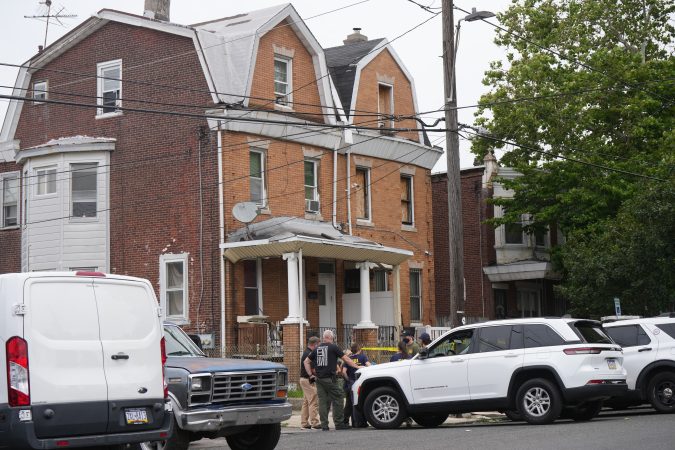
    Officials said Friday that they had no indication that Eugene Albert Horsch, 44 — the man who owns the BMW and the home in Olney — had actually stored human remains in his house on the 400 block of West Chew Avenue. But Deputy Commissioner Frank Vanore cautioned that the investigation remained ongoing, and that law enforcement agents were examining a host of unusual evidence connected to Horsch and his home.

    Horsch, in the meantime, remains jailed on gun and weapons charges that were filed after his initial encounter with the park ranger last Friday.

    The police report obtained by the Inquirer, as well as the affidavit of probable cause for Horsch’s arrest, gave this account of how that episode unfolded:

    Around 8 a.m. on June 19, a park ranger patrolling the area noticed Horsch’s BMW stopped on Sixth Street in a restricted area, and the ranger walked up to the car to speak with the driver.

    When Horsch rolled down his window, the ranger heard a woman inside the car yell out that the man inside was going to hurt her. The ranger also noticed signs of potential drug use by the occupants of the car, including a butane lighter and tweezers, and he asked both people in the vehicle for identification.

    The woman then provided an ID that had her photo but the name and other details of a woman who had been reported missing several years ago.

    And when the ranger asked Horsch to step out of the car, he noticed Horsch had scissors, a switchblade knife, and a glass drug pipe. The ranger’s partner then searched the car and found more troubling signs under the floorboards: two loaded firearms.

    The rangers then handcuffed Horsch and the woman, but Horsch told police the guns were not hers. He also then said he had crack cocaine in a compartment near his steering wheel.

    Both Horsch and the woman — whom The Inquirer is not identifying because she has not been charged with a crime — then began hyperventilating, and were taken in separate vehicles to Jefferson Hospital.

    Officers continued searching Horsch’s car and found more apparent drug materials, a baton, a cattle prod, another knife, and fake credentials that purported to identify Horsch as an agent with the Drug Enforcement Administration.

    After being released from the hospital, Horsch and the woman were taken to DEA headquarters. Horsch declined to speak with investigators.

    The woman, however, said she’d met Horsch a few months ago, and provided enough details about their interactions at his house that investigators applied for a search warrant.

    Vanore, of the police department, said investigators were continuing to sort through a mix of guns, drugs, chemicals, and even urns they’d found inside — including during searches Friday.

    The possibilities of why such materials could have been on hand include drug manufacturing, explosive production, or other activities, he said, adding: “We’re certainly going to look into the activities that went on at that house.”

  • A West Philly man was sentenced to up to 40 months in prison for seeking to make bombs in support of a terror group

    A West Philly man was sentenced to up to 40 months in prison for seeking to make bombs in support of a terror group

    A West Philadelphia man who was convicted last year of seeking to build bombs in support of Islamic extremist groups was sentenced Thursday to 20 to 40 months in prison and six years of probation.

    Muhyyee-Ud-din Abdul-Rahman, 20, was found guilty in September of charges including attempting to possess weapons of mass destruction after jurors concluded he had experimented three years ago in and around his Wynnefield home with dangerous chemicals often found in high-volume explosives.

    Authorities said that Abdul-Rahman had done so after he communicated with Syrian extremists on Instagram, and that their arrest of Abdul-Rahman in 2023 had prevented him from unleashing a terror attack on the region.

    Jurors, however, found Abdul-Rahman not guilty of the more serious charge of possessing weapons of mass destruction, suggesting they believed he intended to build a bomb but had never succeeded. Common Pleas Court Judge Michele Hangley also threw out a conspiracy charge after ruling that prosecutors had not proved Abdul-Rahman had been working with anyone else.

    Abdul-Rahman told Hangley after being convicted that he had matured during his time in custody, much of it spent in a juvenile facility because he was arrested as a teen. And he said he had come to reject the radical beliefs promoted by the group he was following, Katibat al Tawhid wal Jihad, or KTJ.

    Still, District Attorney Larry Krasner said Thursday that he was “deeply concerned” by what he cast as an insufficient penalty for a would-be terrorist. Krasner said his office had asked that Abdul-Rahman serve at least 10 years behind bars because prosecutors believe he remains “an extreme danger” to the city.

    “We ought to be able to live in a city where a terrorist is kept off the streets for a reasonable amount of time,” Krasner said.

    Federal investigators looking into KTJ’s activities in the United States in 2023 found that Abdul-Rahman was the only person in the country exchanging messages with some of its key online propagandists. Further investigation later revealed that Abdul-Rahman, around that time, had also applied for his first passport, tried to reach out to a Syrian border-crossing office, and purchased or possessed wires and chemicals common in homemade bombs.

    When authorities went on to conduct surveillance of Abdul-Rahman, officials said at trial, officers tailing him at a Lowe’s store saw him buy muriatic acid, a key component in a violent explosive dubbed TATP, also known as “the mother of Satan.” And a review of his internet search history around that time showed he had been looking up Philadelphia parade routes, trash can bombs, and nuclear power plants — something authorities said was consistent with “target and tactic” research.

    When federal agents questioned Abdul-Rahman inside a police station, an official testified, he admitted conducting bomb tests near his house and said he wanted to become a “bomb guy” for KTJ in Syria.

    Authorities arrested Abdul-Rahman in August 2023, just as he was to begin his senior year in high school. At the time, he was a promising wrestler with a college scholarship offer, and his father, Qawi Abdul-Rahman, is a well-known criminal defense lawyer who has mounted unsuccessful campaigns to become a city judge.

    Abdul-Rahman’s attorneys said at trial that he had made mistakes, but that he was an impressionable teen who had fallen down a “rabbit hole” of online propaganda. They also said he had never succeeded in building a bomb and did not take serious, in-person steps to advance the radical views he expressed online or in his house.

    At a hearing last month, one of his attorneys, Donald Chisholm, urged Hangley to consider that Abdul-Rahman’s path to the crime began when he was 16 years old.

    “Even at the age he is now,” Chisholm said, “he’s not fully matured.”

    Chisholm, said Thursday that he thought the sentence was fair, and that Krasner’s continued insistence on casting his client as dangerous was “disingenuous” and did not account for factors such as his client’s age at the time of arrest, or his growth over the last several years.

    The case attracted attention in part because it was a rare example of the district attorney’s office seeking to convict someone it described as a would-be international terrorist. Although federal counterterrorism agents were heavily involved in the investigation, juveniles are rarely prosecuted in federal courts.

    Krasner said Thursday that Abdul-Rahman likely would have faced a significantly harsher penalty if he had been convicted of similar conduct in the federal system, and he criticized the state’s sentencing guidelines, which prosecutors said Hangley cited when imposing her penalty.

    Abdul-Rahman has already served about 34 months in custody, meaning he will face a maximum of another six months in prison under the penalty Hangley imposed.

    Krasner said his office was weighing whether to appeal the sentence.

    Staff writer Jillian Kramer contributed to this article.

  • A Philly woman pleaded guilty to voting twice in the 2024 presidential election

    A Philly woman pleaded guilty to voting twice in the 2024 presidential election

    A Philadelphia woman pleaded guilty Monday to voting twice in the 2024 election — first in northern New Jersey, then in the city.

    Miya Pack, 40, said little beyond responding to routine legal questions as she pleaded guilty to a charge of voter fraud before U.S. District Judge Joshua D. Wolson.

    Pack has been registered to vote since 2004 in Bergen County, N.J., prosecutors said in court documents, and she’s also been registered to vote in Philadelphia since 2016. She is not affiliated with any political party, voter records show.

    On Oct. 26, 2024, prosecutors said, Pack cast a ballot in that year’s presidential election in Bergen County. Then, 10 days later, prosecutors said, she cast a ballot in the same contest in Philadelphia on Election Day.

    They did not say whom she voted for, and she declined to comment as she left the courtroom Monday.

    President Donald Trump has repeatedly made questionable or false statements about the prevalence of voter fraud, particularly in places like Philadelphia, where Democrats heavily outnumber Republicans. Election officials and experts who study the issue generally agree that voter fraud has not historically occurred at widespread rates.

    Pack was charged by federal prosecutors last September. Prosecutors announced her indictment alongside the indictment of another man, Matthew Laiss, who was separately charged with voting twice in the 2020 election.

    Laiss later said in court documents that he voted twice for Trump, and unsuccessfully sought to claim that his actions were covered by pardons Trump extended to people who tried to help him overturn the results of the 2020 election.

    Laiss was convicted of voter fraud earlier this year at trial and is awaiting sentencing.

    Pack is scheduled to be sentenced in October. She faces the possibility of prison time, although prosecutors said in court that federal guidelines suggest a term of no jail time to six months.

  • Philly feds charge two with running a cryptocurrency money laundering scheme that tried to conceal nearly $400 million

    Two men living in the Republic of Georgia have been charged by federal authorities in Philadelphia with running an international money laundering scheme that tried to use cryptocurrency exchanges to mask the source of nearly $400 million, prosecutors said Thursday — including at least $20 million that came directly from accounts associated with illicit actors on the dark web.

    Igorevich Tkachuk, 37, of Ukraine, and Alexander Vladimirovich Ledenev, 25, of Russia, were arrested Wednesday in Georgia, where both live in the coastal city of Batumi, according to U.S. Attorney David Metcalf. Prosecutors will seek to extradite them to Philadelphia to face money laundering charges.

    Metcalf said the two men were part of an organization that dubbed itself “AudiA6.” The group had two primary functions, prosecutors said: managing a cybercrime forum known as Dark2Web, where users could strike deals to commit crimes against targets for money, and running a cryptocurrency-based money laundering service, through which users could have their virtual currency “mixed” into different streams that would make the origins harder for authorities to trace.

    Prosecutors said Dark2Web was an online forum that allowed users to discuss deals about committing crimes.Court filings, U.S. Attorney's Office

    Over the last five years, prosecutors said in a criminal complaint, AudiA6 received $389 million from customers to launder, which the group would “mix” in exchange for a commission fee.

    About $20 million of those deposits came from accounts prosecutors said were known for committing illicit activity, including groups that perpetuated ransomware attacks or people who were known to have received stolen funds online. Millions more appeared tied to similarly suspicious groups through indirect transactions, they said.

    Over the course of the scheme, prosecutors said, AudiA6 received at least $10 million in profit. The group would often charge higher commission fees for smaller transactions.

    According to the complaint, federal authorities conducted six undercover transactions with AudiA6 between December 2022 and May 2026. In each, the document said, agents said in messages — typically in Russian — that they wanted to exchange “dirty” digital currency, such as Bitcoin, and AudiA6 took the funds, “mixed” them, and returned the washed proceeds, minus a commission.

    In one case this April, an agent in Philadelphia sent a message to the AudiA6 exchange saying: “is [Bitcoin] from scam OK? Stolen bitcoin…”

    According to the complaint, the person running the exchange replied: “don’t care.”

    AudiA6 then mixed about $5,000, the complaint said, keeping a fee of about $300.

    A few weeks later, the document said, an agent in Philadelphia reached out to the exchange again and asked about laundering proceeds from selling cocaine online.

    “Is it ok or are the risks too high?” the agent asked, according to the complaint.

    “Everything like that needs to go through a mixer,” the operator wrote back, before laundering about $5,100 worth of bitcoin and keeping $400 as a fee.

    Despite AudiA6’s promises to customers that the mixed transactions would make funds untraceable, investigators said, the group “was not actually sending and receiving from distinct, unconnected sources.”

    “Instead,” they said, “transactions could be directly traced through exchange records.”

    Neither Tkachuk nor Ledenev had attorneys listed in court records Thursday.

    Each could face up to 20 years in prison if convicted, prosecutors said.

  • In a striking reversal, the Philly DA’s office said it no longer supports a man’s bid to overturn his murder conviction

    In a striking reversal, the Philly DA’s office said it no longer supports a man’s bid to overturn his murder conviction

    The Philadelphia District Attorney’s Office is attempting to withdraw a recommendation it made in federal court that a man’s murder conviction should be overturned, saying the prosecutors who oversaw that request did so by filing court documents that were “not supported by the record” or “legally erroneous.”

    The about-face, made in a motion filed last week, represents a striking reversal of a posture that could have led a judge to wipe out a guilty verdict in a deadly shooting.

    The filing was all the more unusual because the prosecutors who signed it named the colleagues who they said had made “material misstatements” about witness testimony in the case, and took a position the office no longer supports. Prosecutors now believe the conviction should be upheld.

    “The Commonwealth respectfully requests leave to withdraw its prior response and apologizes to the Court for the errors,” said the new motion, which was signed by four prosecutors: David Napiorski, Steven Wildberger, Peter Andrews, and Katherine Ernst.

    The filing was submitted Friday, just months after a panel of federal judges took the rare step of voting to ban another prosecutor in the district attorney’s office from practicing in federal court — one of the most serious penalties a lawyer can face. In that case, the judges accused the lawyer, Paul George, of being “misleading and dishonest” while seeking to overturn an inmate’s death sentence, and they were extremely critical of what they called George’s repeated misrepresentations on behalf of his office, saying the conduct threatened the integrity of the legal system.

    “Lies like those George told … are even more problematic when asking a federal court to disturb a state-court conviction,” the judges wrote in a sternly worded opinion.

    One of the judges involved in that disciplinary decision, U.S. District Judge Paul S. Diamond, is the person who will now have to decide what to do with accusations of misstatements in the most recent case. An evidentiary hearing is scheduled for next month.

    Diamond had initially ordered that hearing to learn more about the strength of the evidence against Dennis Johnson, who was convicted of second-degree murder in the 2007 killing of Kenyatta Smith outside a corner store in North Philadelphia.

    It was not clear whether Diamond would follow through with his plan to hear witness testimony about Johnson’s role in the crime — or if he might use the hearing to instead ask prosecutors how and why their office had urged him and a federal magistrate judge to undo a conviction based on assertions they now say were wrong.

    The assistant district attorney who signed that original request, Jaclyn Mason, resigned on June 2, according to court documents. She declined to comment.

    Her supervisor in 2022, when she filed the request, was Matthew Stiegler, who has since become the chief of the office’s Conviction Integrity Unit. He did not respond to a request for comment.

    A spokesperson for District Attorney Larry Krasner did not respond to questions about the situation or the office’s change of heart.

    A flawed conviction?

    The crime for which Johnson was convicted occurred on Aug. 17, 2007, when Smith was fatally shot while being robbed outside a convenience store near 30th Street and Lehigh Avenue, court documents say.

    Several witnesses identified Johnson as the shooter, and he was convicted of second-degree murder and sentenced to life in prison.

    Johnson appealed his conviction and said his lawyer had been ineffective for failing to object to a detective’s testimony that a witness who did not testify, and who could not be cross-examined, had also identified Johnson as the shooter.

    In 2022, Mason — then assigned to the district attorney’s Federal Litigation Unit — agreed, writing in court documents that the detective’s testimony was improper and had “tipped the scales” toward a conviction.

    She also said the office had discovered problems or inconsistencies with testimony from other key witnesses, and asked a federal magistrate judge to recommend that the conviction be thrown out.

    “The case against Johnson was not overwhelming from the outset and his counsel was constitutionally ineffective,” Mason wrote. “The post-trial investigation unearthed additional factors that highlight weaknesses in the prosecution and confirm a low level of confidence in the outcome of Johnson’s trial.”

    The magistrate, Judge Lynne A. Sitarski, agreed with Mason and recommended that Johnson’s conviction be overturned. Still, her decision was not binding.

    Diamond, the district court judge, was the one with the power to reverse Johnson’s conviction. And he did not seem inclined to accept the assertions made in Mason’s briefing.

    ‘Material misstatements’ in court documents

    Last month, Diamond scheduled an evidentiary hearing at which he ordered all of the witnesses who testified against Johnson to take the stand in his courtroom and testify again.

    Prosecutors from the district attorney’s Law Division said they then began working with Mason to prepare for the proceeding. But as they did, they said in their motion, they discovered that Mason’s filings “contained material misstatements” about the case.

    Most of the issues concerned ways in which they said Mason characterized witness testimony at trial. In one example, prosecutors said, Mason wrote that a key eyewitness “did not visually identify Johnson” as the shooter while on the witness stand.

    But the trial transcript shows that the witness did so “repeatedly,” prosecutors said, and the witness also said he had “known Johnson for at least five or six years.”

    That issue and several others led the Law Division staffers to conclude that the office’s earlier filing seeking to undo the conviction was flawed — and they also concluded that the case against Johnson was stronger than Mason contended, and that “relief on Johnson’s claim was not warranted.”

    It remains unclear what Diamond might do in the case, or how it might affect any of the lawyers involved.

    Johnson’s fate is also unclear. One of his lawyers, Nilam Sanghvi of the Pennsylvania Innocence Project, said she and her colleagues will continue advocating for his freedom.

    “We believe in Dennis Johnson’s innocence, and that Magistrate Judge Sitarski’s recommendation that Dennis receive habeas relief based on the violation of his constitutional rights is thorough and well-reasoned,” Sanghvi said.

    The evidentiary hearing currently remains scheduled to take place in July.

  • Former Philly union leader Chris Woods found not guilty of fraud

    Former Philly union leader Chris Woods found not guilty of fraud

    Christen “Chris” Woods, the former leader of one of Philadelphia’s largest labor unions, was acquitted of theft and conspiracy charges Wednesday by a judge who rejected prosecutors’ allegations that he used a union-funded renovation project to secretly funnel money into local political campaigns.

    In delivering her verdict, Common Pleas Court Judge Tracy Brandeis-Roman said prosecutors had failed to prove beyond a reasonable doubt that Woods — who once led District 1199C of the National Union of Hospital and Healthcare Employees — acted criminally when he hired longtime political operative Tracy Hardy to oversee the renovation of a bar inside the union’s Center City headquarters in 2019. The case against him, she said, relied on circumstantial evidence that did not definitively tie Woods to any wrongdoing.

    As the judge declared Woods, 41, not guilty, he lowered his head toward the defense table, overcome with emotion. Behind him, family members and friends sprang to their feet, raising their hands toward the ceiling and shouting in celebration until Brandeis-Roman restored order by rapping her gavel.

    The verdict brought to an end a protracted prosecution by the Pennsylvania Attorney General’s Office that accused Woods of orchestrating a plot to covertly channel money into Philadelphia’s 2019 Democratic primary elections.

    Prosecutors alleged that Woods used a bar renovation project as a vehicle to steer more than $100,000 in union funds toward political consulting and campaign work benefiting candidates he supported, including one of Woods’ closest friends, Isaiah Thomas, who won a City Council seat.

    Rather than rely on traditional campaign contributions, prosecutors said, Woods hired Hardy — who owned bars but did not work in construction — to develop fake and inflated estimates for the renovation project, then got one of those bloated proposals approved by the union’s board. Then, they said, Hardy took the excess money and used it to surreptitiously support the candidates.

    Woods, who now owns a consulting firm and medical transportation business, was once viewed as a rising star in city political circles, and dozens of supporters sat in the courtroom to watch the case unfold. Thomas was among those who attended the proceedings, making a brief appearance during the trial’s opening phase in February. Brandeis-Roman conducted the nonjury trial over the course of months, before hearing closing arguments in May and issuing her verdict Wednesday.

    During the trial, Woods’ attorneys blamed Hardy for any issues with the renovation’s cost or the accuracy of its invoices. Woods never intended to use the union’s funds for anything other than construction, they said, and if Hardy overbilled the union, he did so on his own — and to line his own pockets.

    Hardy pleaded guilty in federal court last year to charges stemming from the bar renovation, as well as a separate scheme in which he fraudulently obtained $2 million in pandemic relief funds.

    He is scheduled to be sentenced in September.

    “This isn’t a case about theft from a union,” Woods’ attorney, Keir Bradford-Grey, said in court. “This case is about a fraud between Hardy and [his contractors].”

    Among the evidence presented were financial records and witness testimony that prosecutor James Price said showed the renovation project’s cost ballooned from an initial estimate of about $47,000 to nearly $150,000 by the time the board approved it. Price said that was because Woods and Hardy were secretly using the arrangement to fund political consulting by Hardy for candidates of Woods’ choosing.

    “You cannot spend union money just because you think it’s for the best,” he said in his closing argument.

    But Woods’ attorneys said that the initial estimate for the construction project was unrealistically low, and that Hardy did ultimately renovate the bar.

    If Hardy was a sloppy bookkeeper or dubious project manager, they argued, that did not make Woods guilty of knowingly misdirecting his union members’ funds to another purpose.

    Woods’ trial also included testimony by Ryan Boyer, head of the politically influential Philadelphia Building and Construction Trades Council and one of the city’s most powerful political figures. Boyer spent half a day on the witness stand answering questions about his relationship with Woods and Hardy, as well as his assessment of the bar renovation’s costs.

    Although Boyer served as a prosecutors’ witness, he delivered testimony that appeared to bolster Woods’ case: He said Hardy was a shady operator who cut corners and spread himself too thin, and suggested that any issues with the bar renovation likely stemmed from Hardy’s conduct.

    On Wednesday, Brandeis-Roman said the evidence left room for competing interpretations, with facts that felt as if they “could go both ways.” Combined with testimony from 19 character witnesses who vouched for Woods’ integrity, she said, the uncertainty convinced her that prosecutors had not met their burden of proof.

    “Sometimes,” she added, “all you have is your good name, and that should mean something.”

    Among those in the courtroom was Woods’ mother, Valencia, who jumped from her seat after the verdict and repeatedly shouted, “Thank you, Jesus. Thank you, God,” until she embraced her son in the hallway outside the courtroom.

    There, surrounded by loved ones, Woods said the verdict meant “I’m finally able to move on with my life.”

    Bradford-Grey added: “I am glad people will finally get to see he is not the person he was portrayed originally in the paper. It’s time to put this to bed and let Chris be the man we know he is.”