Author: Chris Palmer

  • Par Funding’s fraudster founder has a website lobbying for a pardon from President Trump

    Par Funding’s fraudster founder has a website lobbying for a pardon from President Trump

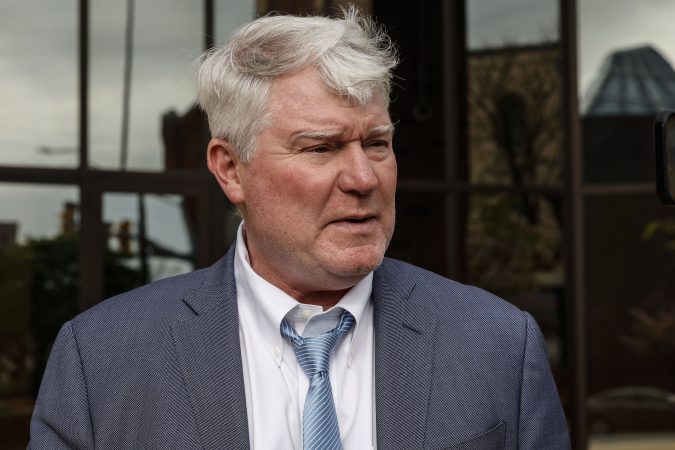
    Joseph LaForte was once the charismatic head of Par Funding, a Philadelphia-based lending firm that collapsed in spectacular fashion as prosecutors said he misled investors to the tune of $400 million and resorted to brutish loan shark tactics to collect on unpaid debts.

    Now, despite the fact that LaForte pleaded guilty to racketeering and wire fraud charges, a website has been set up to lobby President Donald Trump to free him from a 15½-year prison sentence — part of a campaign that describes LaForte’s prosecution as a “witch hunt.”

    “Stand Up for What’s Right, Free Joe LaForte,” says a scrolling banner on the website, FreeJoeLaForte.com. The site’s homepage also prominently features several images of Trump and says the goal is to “fight for [LaForte’s] presidential pardon through activism and exposing the truth.”

    Websites dedicated to overturning convictions are not unusual. But the existence of the LaForte campaign comes as Trump, in his second term, has shown a willingness to grant clemency to political allies or people he believes have been unfairly prosecuted — including those convicted of fraud. And well-connected lobbyists and lawyers have reportedly started charging defendants eye-watering sums for promises of presidential relief.

    LaForte does not have an official clemency application pending with the Office of the Pardon Attorney, according to that agency’s website. But the LaForte website is clear about its intent to lobby Trump for freedom.

    How the campaign came together — and whether LaForte has a role in it — is something of a mystery.

    LaForte’s lawyer in his criminal case, Joseph Corazzo, said he didn’t know of the site until he was contacted by The Inquirer and said he’s had no role in any potential efforts to seek clemency from Trump for LaForte.

    LaForte, meanwhile, is incarcerated at a federal prison in Fort Dix, N.J., and is not scheduled to be released until 2035.

    Unidentified creators

    The LaForte website, FreeJoeLaForte.com, does not say who owns or runs it. And phone messages and emails left through its contact pages in recent weeks went unanswered.

    One of the calls was directed to a number associated with John Sirmans, of Fanwood, N.J. And Sirmans’ name is listed as an author on dozens of PDFs that were published on the LaForte site.

    It is not clear how or if Sirmans and LaForte know each other, and Sirmans did not respond to requests for comment.

    PDFs on the site list another author as “Lisa Mac.” LaForte’s wife, Lisa McElhone, was sentenced to one day in federal custody for her role in the Par Funding scandal, and the Justice Department said LaForte sometimes used the alias “Joe Mack” while working at Par Funding.

    Attempts to reach McElhone — including by visiting Lacquer Lounge, the nail salon she owns in Old City — were unsuccessful.

    Meanwhile, a petition on change.org — which urges people to visit FreeJoeLaForte.com — is even more forceful its views on LaForte’s case, calling his imprisonment “unlawful” and saying he is “an innocent man targeted by a weaponized justice system that bends to partisan agendas.”

    But the creator of the petition, which has 40 verified signatures, is listed only as “Truth Seeker,” and attempts to reach that person through change.org were unsuccessful.

    Extensive coverage

    One of the more prominent sections on LaForte’s website, meanwhile, is a list of more than a dozen news articles written by Milton Allimadi, a New York-based journalist who runs an outlet called Black Star News.

    On LaForte’s site, Allimadi’s stories are labeled as being part of a series “dedicated to exposing the truth and corruption involved in the wrongful persecution of Joseph LaForte.”

    Allimadi said via email that he did now know who started FreeJoeLaForte.com or how the Black Star News articles ended up being highlighted there.

    He said he learned of LaForte’s case after speaking with the father of an inmate housed alongside LaForte. He declined to identify the person.

    Allimadi said he wrote about LaForte for Black Star News because the Par Funding founder’s story had “many interesting angles.” He said he’s never spoken to anyone associated with FreeJoeLaForte.com and was not paid by anyone connected to the site for writing or publishing his articles.

    Still, he said, he didn’t mind having his work promoted by LaForte’s site because that had already led to what he said was a modest but noticeable uptick in traffic and donations to Black Star News.

    “Our site’s major support comes from readers who donate … and some of his supporters who read and like the articles also definitely contributed, because there was a little spike,” Allimadi said.

    Another case that Allimadi covered extensively in recent months led to a sizable legal judgment against him.

    Last month, a jury in Michigan awarded more than $12 million to a doctor who said Allimadi and Black Star News targeted him with a “relentless, vindictive, and malicious online smear campaign” centering on allegations of domestic abuse and sexual assault of his ex-wife.

    Allimadi said his journalism was solid, and he is trying to get the verdict thrown out.

    As for LaForte, Allimadi said his coverage included references to LaForte’s history of criminal convictions, and he said it was “clear from [LaForte’s] background that he’s no saint.”

    But Allimadi said he also explored angles that hadn’t received much attention as Par Funding collapsed, including by raising questions about the conduct of the Securities and Exchange Commission and the court-appointed receiver in the case, which each contributed significantly to LaForte’s downfall.

    “I can see why [LaForte’s supporters] would want to post such articles on their site,” he said.

    Newsroom researcher Ryan W. Briggs contributed to this article.
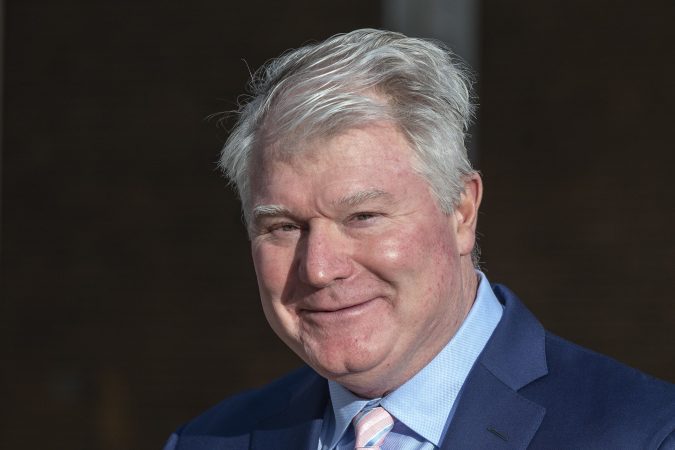
  • Johnny Doc will remain in prison after a judge again denied his request to be released on house arrest

    Johnny Doc will remain in prison after a judge again denied his request to be released on house arrest

    Convicted former Philadelphia labor leader John Dougherty will remain in prison after a federal judge again denied Dougherty’s request to be released on house arrest to provide care for his gravely ill wife.

    U.S. District Judge Jeffrey L. Schmehl wrote in a memorandum filed Thursday that Dougherty and his lawyers had failed to demonstrate that he was the only person who could provide adequate care for his wife, Cecelia, who for years has suffered from a debilitating brain injury.

    In addition, Schmehl wrote, Dougherty did not sufficiently specify when a trust fund established to support his wife’s care would run out of money. Those factors, coupled with the “minimal amount of time” Dougherty has served in his six-year sentence, Schmehl wrote, “do not weigh sufficiently in favor of relief.”

    The decision was a blow to Dougherty, 66, who for months has been contending in court documents and in testimony before Schmehl that his wife’s condition has significantly worsened while he has been imprisoned, and that if he is not released to care for her, she will likely die.

    Dougherty’s attorney, George Bochetto, said in an interview Thursday that he was “deeply, gravely disappointed” by the ruling, and that he disagreed they had not shown the acute nature of the emergency that should qualify Dougherty for release.

    “I thought the evidentiary hearing we had in front of Judge Schmehl was extraordinary, and it left no doubt in anybody’s mind” about the merits of Dougherty’s petition, Bochetto said.

    The ruling followed another rejection in Dougherty’s ongoing bid for freedom. Earlier this month, President Donald Trump denied Dougherty’s request for a commutation, a legal avenue that could have cut Dougherty’s prison term short.

    Schmehl, in his memorandum, did say that Dougherty could file a renewed motion in the future, “should the facts materially change.”

    Bochetto said he would not wait that long. He was already working on his notice of appeal to the U.S. Court of Appeals for the Third Circuit, he said, and he intended to ask the court to consider the case on an emergency basis.

    “This is why God invented appellate courts,” Bochetto said.

    Dougherty was sentenced in 2024 to six years in prison after being convicted in separate bribery and embezzlement trials that centered on actions he took while serving as the head of his politically powerful union, Local 98 of the International Brotherhood of Electrical Workers.

    But last year, Dougherty — known colloquially as Johnny Doc — filed emergency motions asking Schmehl to allow him to serve the remainder of his prison term on house arrest so he could be his wife’s primary caregiver.

    In his first request, filed in the summer, Dougherty said that the trust fund established to pay for her care was about to run out of money, and that his daughters and other relatives were unable to provide the kind of around-the-clock assistance she needed.

    Then, in December, he filed another motion, saying the situation had become more dire after the death of his father-in-law, who had been serving as the primary caregiver in his absence.

    Prosecutors opposed Dougherty’s requests, saying that although they were sympathetic to his wife’s plight, they did not believe he had served enough of his sentence to merit release.

    And in January, Schmehl denied Dougherty’s request, writing that he, too, recognized the significant health challenges, but that they did “not outweigh, at this point in time, the need for punishment that has been adjudged.”

    Bochetto appealed that ruling. And in May, Schmehl held an evidentiary hearing to learn more.

    At the hearing, Dougherty took the stand for more than an hour, and occasionally choked back tears as he described his wife’s myriad complications and detailed the efforts he had made in prison to help her, including by sending her dozens of letters and using all of his allotted monthly phone minutes to call her.

    But prosecutors argued that Dougherty and his relatives had not sufficiently looked into alternative care arrangements that might be covered by Medicaid or other insurance. And they said that while many families across the country could benefit from having an incarcerated defendant released to help care for their relatives, Dougherty had not shown that he was the only person who could do so for his wife.

    Schmehl, in his order, said that Dougherty’s wife is being cared for by private nurses and her two daughters, and that “neither party suggests that her current care is inadequate.” Beyond that, the judge said, Dougherty did not sufficiently specify when her trust fund would run out of money and did not adequately explain what would happen once it did.

    The ruling will leave Dougherty, for now, to serve out the remainder of his term, which he is serving at a federal prison in Lewisburg, Pa. His projected release date is in June 2029, according to the Bureau of Prisons website.

  • A guard at the Fort Dix federal prison had a yearlong sexual relationship with a prisoner, feds say

    A guard at the Fort Dix federal prison had a yearlong sexual relationship with a prisoner, feds say

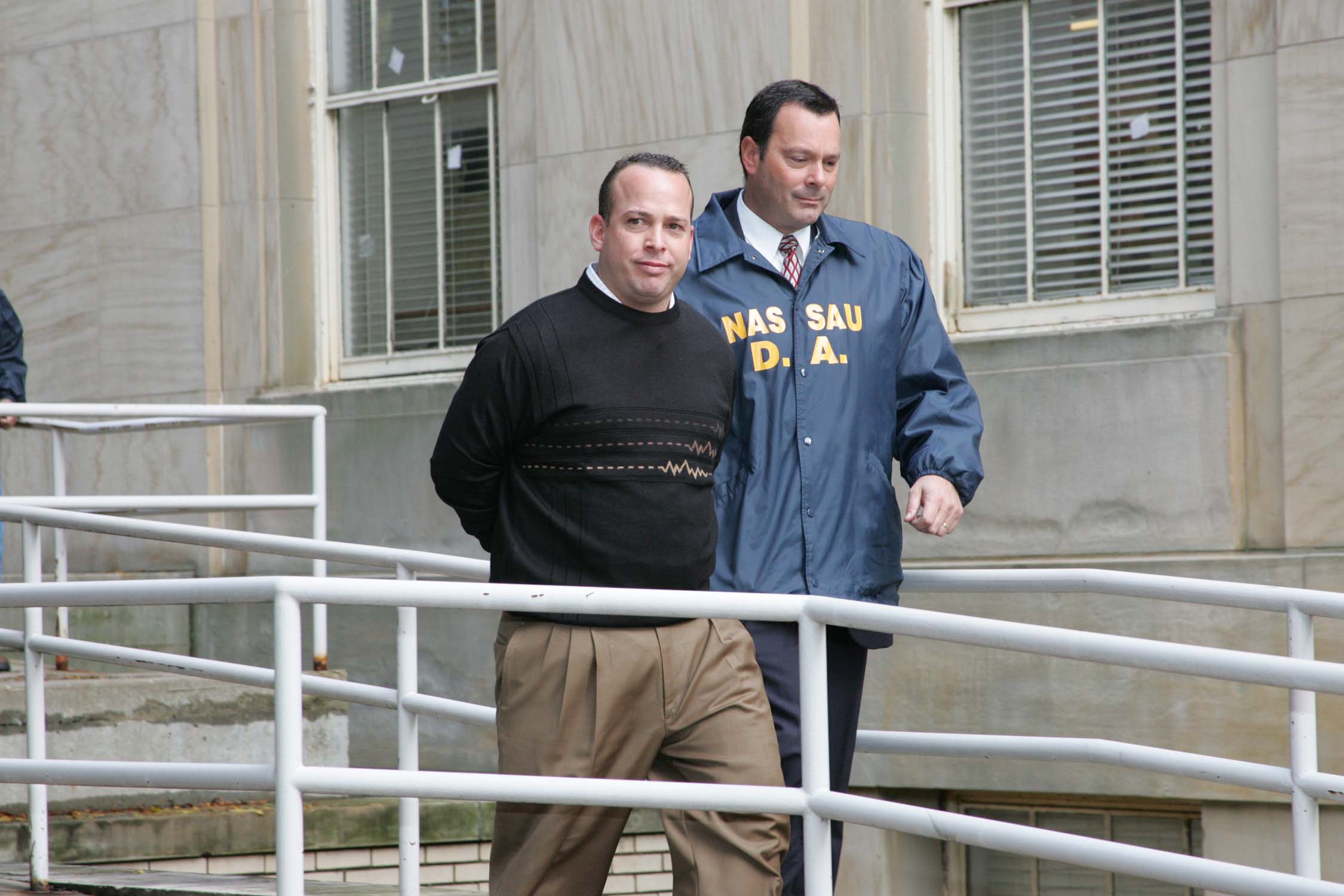
    A guard at a federal prison in Fort Dix, Burlington County, had a lengthy sexual relationship with a prisoner and sometimes paid other inmates to act as lookouts while the two had sex in an office, according to federal authorities.

    Jordan Pensak of North Brunswick was charged this week with sexual abuse of a person in custody, court records show.

    Pensak’s relationship with the prisoner — whom authorities did not identify — began after she started working on his unit in 2024, according to a criminal complaint. A witness reported the pair’s suspected encounters to law enforcement, the complaint said, saying Pensak and the man had sex “multiple times” in an office as the paid lookouts stood nearby and watched for other corrections officers.

    Investigators found more than 100 sexually explicit photos and messages that Pensak and the prisoner shared on Instagram and on cell phones the man apparently possessed while behind bars, the complaint said.

    At times, the document said, Pensak was overt in the messages about her relationship with the prisoner, writing in a January message to an unidentified recipient that she had been in the relationship “for the past year” and that she didn’t intend to end it.

    A month later, the complaint said, when someone else asked Pensak if she knew she could be criminally charged and go to jail for her actions, she wrote back: “Yes I know.”

    Pensak also sent messages to people earlier this year in which she detailed a pregnancy scare, the complaint said. At one point, she said that if she were pregnant, the baby would be a different race than her husband, and that it “ain’t good for this investigation.”

    A spokesperson for the Bureau of Prisons declined to comment on the allegations against Pensak, but did say Pensak had been placed on administrative leave.

    Attempts to reach Pensak’s lawyer for comment Wednesday were not immediately successful.

  • A Nigerian man who laundered money in a ‘sextortion’ scheme targeting a Kutztown U student sentenced to five years in prison

    A Nigerian man who helped launder money in the twisted online extortion of a Montgomery County college student — a plot that led the 20-year-old to kill himself by walking in front of a train — was sentenced Friday to five years in federal prison.

    Afeez Olatunji Adewale, 27, was one of two men who helped collect money and mask its source while a third man orchestrated the tormenting of Abington native Jack Sullivan, prosecutors said.

    The scheme took place on social media in 2023, when one of the co-defendants, Imoleayo Samuel Aina, began communicating with Sullivan using fake social media accounts under the moniker “Alice Dave.” Aina, posing as the woman, convinced Sullivan, a student at Kutztown University, to share intimate photos of himself, and then demanded money to keep the images private.

    Sullivan ultimately turned over more than $3,000, prosecutors said, and Adewale helped try to hide the source of those funds, including by having money sent to what they called “compromised American banking accounts” as well as accounts in Nigerian banks.

    But on Jan. 4, 2023, only about 18 hours after Aina had begun messaging Sullivan, the harassment reached a tragic end.

    Aina reached out to Sullivan to demand more money, prosecutors said, but Sullivan sent a message back saying: “I don’t think I have enough for it.”

    Three minutes later, prosecutors said, he walked onto the tracks near the Jenkintown SEPTA station, where he was struck and killed by a passing train.

    The case is an example of what authorities have come to call “sextortion,” a crime in which perpetrators, typically based in other countries, strike up flirtatious online relationships with victims, primarily teenage boys. The harassers then try to lure their victims into sending compromising photos of themselves, and go on to demand money to keep the images private.

    The FBI says the crime has skyrocketed in recent years, with more than 54,000 cases reported in 2024, a 60% increase from the year before. And authorities believe the crime is undercounted because many victims feel shame and embarrassment about what happened.

    The men involved in Sullivan’s harassment were purportedly associated with the so-called Yahoo Boys, a network of West African scammers who use the internet to try to swindle people out of money.

    Adewale was arrested in Nigeria three years ago, and, after being extradited to the United States, pleaded guilty earlier this spring to wire fraud and money laundering charges.

    In court Friday, he cried while apologizing to Sullivan’s relatives, saying he didn’t know the money he was trying to launder had been collected as part of a sextortion scheme, and that he wishes he’d never taken part in it.

    “I didn’t wish for this to happen,” he said. “I’ll never do anything like this again.”

    Sullivan’s parents, meanwhile, said Adewale played a key role in their son’s torment, and that his crimes had robbed them of a future with a young man who was caring, curious, and thoughtful.

    “He was a beacon of light in any room he would enter,” said his father, Jim.

    Adewale’s co-defendants were sentenced last year: Aina, the plot’s mastermind, was ordered to serve six years in prison, while Samuel Olasunkanmi Abiodun, another money launderer, was sentenced to five years behind bars.

    In imposing a five-year sentence on Adewale, U.S. District Judge Joel H. Slomsky said it was “astounding” that cybercrimes committed a continent away could have fatal consequences in the United States.

    “The damage done to a family by these kinds of crimes,” he said, “is incalculable.”

  • A new federal judge for Philadelphia was confirmed by the U.S. Senate

    A new federal judge for Philadelphia was confirmed by the U.S. Senate

    A partner at one of the city’s largest law firms who once worked as a federal prosecutor was confirmed Thursday by the U.S. Senate to become the Philadelphia region’s newest federal judge.

    Antonio Pozos’ nomination to join the region’s U.S. District Court was approved by a vote of 49-44. There was no discussion as the Senate voted to approve his nomination, which earns him a lifetime seat on the bench.

    Pozos, 44, most recently a partner at Faegre Drinker Biddle & Reath, is the first person appointed to the region’s district court since President Donald Trump began his second term last year. During his first term, Trump had five judges confirmed to the region’s federal bench.

    Pozos will fill a vacancy created by last year’s retirement of U.S. District Judge Mitchell Goldberg, giving the court 22 district judges and eight senior judges.

    District court judges oversee a variety of criminal and civil cases each year, and typically issue the first rulings on legal questions that can sometimes reach the U.S. Supreme Court.

    Although some of Trump’s recent nominations to judicial posts across the country have been controversial — including his decision to nominate his former personal lawyer, Emil Bove, to the Philadelphia-based U.S. Court of Appeals for the Third Circuit — Pozos’ candidacy received some bipartisan support.

    Shortly after his nomination was announced, Pennsylvania’s Democratic senator, John Fetterman — who, under Senate rules, had the ability to block Pozos’ candidacy from advancing — decided to allow the process to move forward, the first time any Democrat had done so for a district court nominee during Trump’s second term.

    Fetterman also voted Thursday to confirm Pozos.

    During a confirmation hearing last month, U.S. Sen. Dave McCormick (R., Pa.) called Pozos a “successful attorney, a strong Pennsylvanian, a decorated public servant, and he’s eminently qualified for this role.”

    Pozos was criticized by some Democratic senators during the hearing for hesitating to use the word attacked when describing the riot at the U.S. Capitol on Jan. 6, 2021. He instead said it “appeared that there was violence and trespass” that day, and called the events “profoundly troubling.”

    Pozos lives in Bryn Mawr and is a graduate of Harvard College and the University of Michigan Law School, according to a questionnaire he submitted to the Senate Judiciary Committee.

    Before he became a partner at his firm in 2018, the questionnaire said, he spent three years as a prosecutor in the Justice Department’s criminal fraud section in Washington, where he often worked on cases involving healthcare fraud. He previously worked as an associate in a Washington-based firm and clerked for U.S. District Judge Anthony J. Trenga in Virginia.

    In Philadelphia, Pozos has served as a lecturer at the University of Pennsylvania’s Carey Law School and is on the board of Drexel University’s Kline School of Law.

    With Pozos’ confirmation to the bench, Trump has now appointed six of the Philadelphia region’s district judges, who handle cases that arise from the city, its suburbs, and counties in and around Reading and Allentown. Former Presidents Joe Biden and Barack Obama each appointed seven judges to the bench, and two were appointed by George W. Bush.

    Trump has had a more outsize impact on the region’s appellate court, where he has appointed six of the court’s 14 members across his two terms.

  • President Donald Trump denied Johnny Doc’s request to be let out of prison early

    President Donald Trump denied Johnny Doc’s request to be let out of prison early

    Convicted former Philadelphia labor leader John J. Dougherty has taken a variety of steps to try to cut his six-year prison term short, including by taking the witness stand this spring to tell a federal judge about the unique health challenges faced by his wife.

    But one other avenue he pursued last year — an appeal to the White House for mercy — apparently hit a dead end.

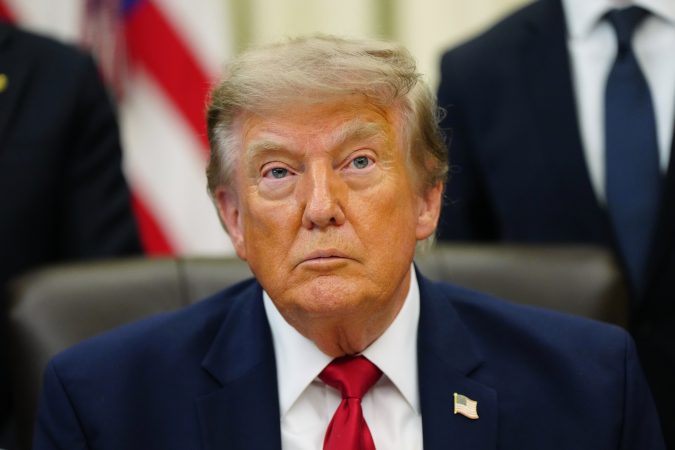
    President Donald Trump earlier this month denied Dougherty’s request for a commutation, according to the Office of the Pardon Attorney’s website, meaning Trump — at least for now — will not use his broad powers of clemency to clear the way for Dougherty’s early release.

    Dougherty — who, nicknamed Johnny Doc, was once a singular power broker in the city’s Democratic Party — was one of about 5,600 people whose commutation applications were denied on July 10, according to the pardon attorney’s site. A commutation keeps a defendant’s conviction intact but ends or reduces their sentence.

    Trump, a Republican, also denied about 300 applications for a pardon, a broader form of relief that is added to the record of the case and reverses any restrictions stemming from a conviction, such as limitations on voting or seeking public office. The New York Times first reported on the wave of denials this week.

    Presidents have broad authority to issue pardons and commutations in federal cases, and Trump has shown a willingness to grant them to political allies during his second term in office.

    One of his first actions after being sworn in again last year was to issue pardons to nearly every person charged with participating in the riot at the U.S. Capitol on Jan. 6, 2021. Trump has also bestowed clemency on political figures convicted of corruption and those he maintains were “persecuted” by the Justice Department under former President Joe Biden.

    Biden also used his clemency powers in unique ways, granting nearly 1,500 commutations during his final weeks in office, commuting dozens of death sentences, and, controversially, granting a wave of preemptive pardons to family members and allies.

    Dougherty’s attorney, George Bochetto, said Tuesday that he was not involved in the effort to petition for a commutation and did not know about it. It was not immediately clear if Dougherty submitted an application himself or if he had another associate help with its preparation.

    The pardon attorney’s website made basic information about Dougherty’s application available through its case search system, showing Dougherty’s name and his Bureau of Prisons register number and saying his application was filed last year.

    Bochetto has been overseeing a different relief effort: Dougherty’s attempt to have a judge grant him compassionate release.

    In court documents and in testimony before U.S. District Judge Jeffrey L. Schmehl, Dougherty has been saying for months that his wife, Cecilia — who has long suffered from a debilitating brain injury — has seen her condition worsen while he has been imprisoned. Dougherty has asked to serve the rest of his sentence on house arrest in order to oversee her care, saying if he is not allowed to do so, his wife will likely die.

    Schmehl denied that request earlier this year, but has been reconsidering after Bochetto appealed.

    Dougherty, 66, was sentenced in 2024 to six years in prison after being convicted in separate trials — the first after a jury found that he had spent years bribing former Philadelphia City Councilmember Bobby Henon, the second over nearly $600,000 he and others embezzled from his union, Local 98 of the International Brotherhood of Electrical Workers.

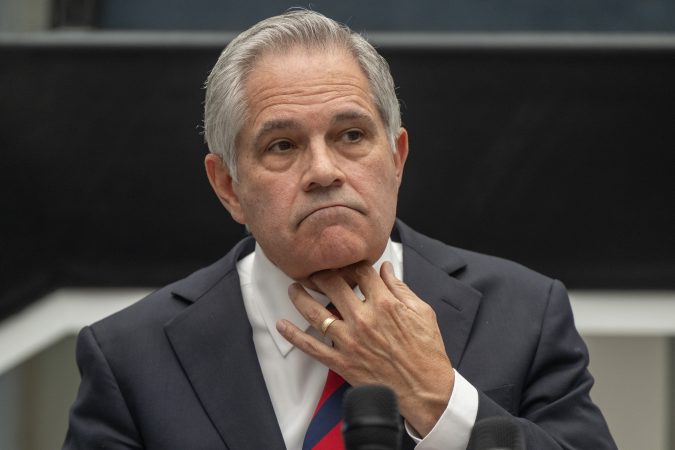
  • Two Philly prosecutors accused DA Larry Krasner of telling them to ‘protect the office’ in a controversial appellate case

    Two Philly prosecutors accused DA Larry Krasner of telling them to ‘protect the office’ in a controversial appellate case

    Two Philadelphia prosecutors have accused District Attorney Larry Krasner of instructing them to litigate a controversial appellate case in a manner that would “protect the office” — a highly unusual assertion that effectively accuses the city’s top law enforcement official of telling his staff to act in a way they now say was “incompatible with their ethical obligations and the interests of the Commonwealth.”

    In a court document filed late Monday, Assistant District Attorneys Katherine Ernst and Steven J. Wildberger wrote that Krasner’s directive came after they had been seeking to persuade him to allow the state attorney general’s office to take over the appeal of Dennis Johnson, who is seeking to have his murder conviction overturned.

    That case — which the district attorney’s office has been handling — has become a flash point in an ongoing debate about whether Krasner’s office has behaved improperly in its efforts to overturn flawed convictions.

    And it received renewed attention last week, when a former prosecutor who was once assigned to Johnson’s appeal, and who had recommended that the conviction be overturned, said she had done so only at the direction of her boss. She also said she was encouraged to lie about aspects of the case in court to try to minimize scrutiny on the way the office handled it.

    According to Ernst and Wildberger, they experienced similar pressures from Krasner.

    As the office was weighing how to handle aspects of Johnson’s appeal this spring, they wrote, they tried to persuade Krasner to refer the case to the state attorney general’s office because of issues that had arisen internally over its handling.

    One example, they said, was that a supervisor who was initially involved with the appeal — and who they believed had made mistakes while overseeing it — was still offering legal advice about it from a different role in the office, which Ernst and Wildberger viewed as self-interested and “inappropriate.”

    But the district attorney’s office kept the case. And during the deliberations about how to move forward, Ernst and Wildberger wrote, they “received instruction from DA Krasner to litigate the case in a manner to ‘protect the office.’”

    Then, in late June, Ernst and Wildberger wrote, they again asked Krasner to refer the case to state prosecutors, but “DA Krasner stated that there would be ‘consequences’ for anyone who notified the court of the conflict issues.”

    Ernst and Wildberger nonetheless filed a notice in federal court saying they believed their office was beset by conflicts and should no longer handle Johnson’s appeal. Their filing Monday expanded on their reasons.

    The accusations they lodged against Krasner represent a striking display of discord between line prosecutors and the city’s district attorney. And they come at a moment in which Krasner is under court scrutiny over his office’s actions in cases involving post-conviction review.

    Krasner said in an interview Monday that although he had “a lot to say” about the latest filing, he was largely unable to comment because the case remains pending in federal court. A hearing at which many of the issues were being aired was cut short last week, and U.S. District Judge Paul Diamond has not yet scheduled the next portion of the proceeding.

    “The DA’s office will be responding to the recent filing in the ethically appropriate way — on the record, because it is generally viewed as inappropriate and possibly unethical to comment during a pending hearing,” Krasner said.

    The case on which the saga is centered is Johnson’s conviction for second-degree murder. A jury found him guilty in 2009 of having fatally shot Kenyatta Smith during a robbery outside a North Philadelphia convenience store two years earlier, and he was sentenced to life in prison.

    Johnson appealed his conviction, in part because he said his trial attorney was ineffective. And in 2022, then-Assistant District Attorney Jaclyn Mason filed court documents agreeing with that assertion and saying Johnson’s conviction should be overturned.

    But earlier this spring, Ernst and Wildberger signed on to a brief that tried to walk that recommendation back. They said that Mason’s filing had been filled with “material misstatements” and that they could no longer support it.

    And according to Ernst and Wildberger’s latest brief, as they were having internal discussions in recent weeks about how to proceed with the case, the supervisor who had approved Mason’s work, Matthew Stiegler, was continuing to offer his thoughts on what to do. That included speaking to Krasner — which Ernst and Wildberger viewed as a clear conflict of interest because of his potential interest in seeking to clear his name rather than evaluate the case on its merits.

    That development and others led the pair to “repeatedly” implore Krasner to refer the case to the attorney general’s office, Ernst and Wildberger wrote, which he did not do.

    Krasner’s subsequent instructions to “protect the office” only deepened the degree of their office’s conflicts, they wrote, because such statements could lead to questions about whether prosecutors were acting primarily out of self-interest.

    It was not immediately clear how or if Monday’s filing might affect Johnson’s appeal. Ernst and Wildberger said they were prepared to testify before Diamond about the situation, and they are expected to take the stand as the case proceeds.

    Diamond has not yet set a timetable for when that testimony might occur.

  • A former prosecutor said DA Larry Krasner’s Office colluded with defense attorneys to try to overturn a murder conviction

    A former prosecutor said DA Larry Krasner’s Office colluded with defense attorneys to try to overturn a murder conviction

    A former Philadelphia prosecutor who recommended that a man’s murder conviction be overturned said she did so at the direction of her boss — who she said had done no meaningful review of the evidence and instead was “colluding” with defense attorneys to find the most effective way to have the case thrown out.

    While testifying at a unique hearing Friday in federal court, former Assistant District Attorney Jaclyn Mason said supervisors in the district attorney’s office had effectively abandoned their responsibility to independently investigate Dennis Johnson’s appeal and determine if he should be freed from prison.

    Instead, Mason said, her supervisor, Matthew Stiegler, held routine meetings with Johnson’s lawyers, including the Federal Community Defender Office and the Pennsylvania Innocence Project, to strategize the most effective paths to secure Johnson’s release. And neither she nor Stiegler reviewed key evidence in Johnson’s case, she said, including trial transcripts, homicide files, or witness interviews.

    “Matt told me: ‘If it’s good enough for the Innocence Project, it’s good enough for me,’” Mason said.

    Just as strikingly, she said, earlier this spring, when it became clear that that process might be exposed in court, another set of supervisors asked her to lie to a federal judge.

    As Mason recalled, the supervisors were worried that if the judge found out the full extent of the office’s actions in the case, it would exacerbate the already intense public scrutiny the office was under for the way it had acted in other murder appeals.

    According to Mason, the supervisors suggested she simply tell the judge that any mistakes in the case were hers, and hope that that would be enough to avoid a more thorough inquiry.

    Mason said she declined and resigned.

    “I said, ‘I’m not going to go to court to lie to protect the district attorney’s office,” Mason said. “How come telling the truth isn’t an option?”

    The extraordinary testimony came as part of Johnson’s appeal, which has taken an unusual path through the courts and remains pending before U.S. District Judge Paul S. Diamond.

    It also served as the latest chapter in a series of developments that have raised questions about one of District Attorney Larry Krasner’s key policy initiatives: his office’s willingness to review old convictions and seek to overturn those that prosecutors believe were marred by legal problems.

    Just last month, the Pennsylvania Supreme Court ruled that Krasner’s office had misled judges so consistently and flagrantly in appellate matters that moving forward, any time his office recommends that a conviction be overturned, the state attorney general must be brought in to review the matter as well.

    Diamond was also involved in disciplining two top supervisors in Krasner’s office in recent months, finding that they had been “misleading and dishonest” while seeking to overturn an inmate’s death sentence.

    Krasner has made post-conviction review a central part of his reform-oriented agenda, touting the fact that his office has helped free 59 people — mostly Black men — from what he’s called wrongful convictions.

    But judges in both state and federal court have raised pointed questions in recent months about whether Krasner’s office has been sloppy or even intentionally misleading while seeking to advance that agenda.

    And during Friday’s hearing, Diamond expressed occasional bewilderment at some of Stiegler’s admissions on the stand — including that while he led the office’s Federal Litigation Unit, his staff generally did not reinterview witnesses or speak to previous prosecutors before deciding whether to recommend that a conviction be overturned.

    “It’s a smorgasbord of error — and we’re just gonna pick one?” Diamond asked.

    A ‘pawn’ in a preordained process

    The case around which Friday’s hearing was nominally centered was Johnson’s conviction for second-degree murder.

    In 2009, a jury found him guilty of fatally shooting Kenyatta Smith during a robbery outside a North Philadelphia convenience store two years earlier. He was sentenced to life in prison.

    Johnson appealed, in part because he said his trial lawyer was ineffective.

    And in 2022, Mason filed court documents agreeing with that assertion — and saying the error was so pronounced that his conviction should be thrown out.

    “The case against Johnson was not overwhelming from the outset and his counsel was constitutionally ineffective,” Mason wrote. “The post-trial investigation unearthed additional factors that highlight weaknesses in the prosecution and confirm a low level of confidence in the outcome of Johnson’s trial.”

    In court Friday, however, Mason said she was effectively doing Stiegler’s bidding when she filed that brief.

    She’d only been in the office for about four months when Stiegler assigned her Johnson’s case, she said. And she’d never before worked as a prosecutor or handled similar federal appeals.

    The office also gave her close to no training, she said. And from the moment she was assigned Johnson’s case, she said, she got the impression that Stiegler knew how he wanted the matter to go.

    “The decision to concede had been made, and then I was his pawn,” she said. “I was his scribe.”

    In the months that followed, Mason said, she and Stiegler did almost no independent examination of the evidence in Johnson’s case. But they did have meetings with Johnson’s attorneys, she said, at which the two sides sometimes collaborated on legal strategies for how to ensure his petition would succeed.

    When Mason did actually draft the brief supporting the appeal, she said, Stiegler offered edits — all of which made it into the document. Another supervisor, Nancy Winkelman, the onetime head of the Law Division, also made suggestions that were included in the final brief, Mason said.

    Stiegler testified Friday as well, and said he believed that when Mason was assigned the case, she would review it and provide her best assessment to him. That review, he said, was expected to include an examination of key evidence, including trial testimony or witness statements.

    But under questioning by Diamond, he acknowledged that his unit at that time did not regularly reinvestigate cases, either by re-interviewing witnesses or reexamining primary evidence — an admission that seemed to baffle the judge.

    “You did no investigation on your own?” he asked at one point.

    “No,” Stiegler replied.

    As for the decision to agree that Johnson’s conviction should be overturned, Stiegler said: “My recollection is it was a collaborative decision between Ms. Mason and me.”

    But Mason said that wasn’t true.

    “He met and conferred with the Federal Defender and the Innocence Project to decide how it was going to go before it was assigned to me,” she said.

    A sudden resignation

    Still, none of that discord surfaced until this spring, when Diamond — who will ultimately decide whether to overturn Johnson’s conviction — scheduled an evidentiary hearing. At the time, he said he wanted to hear from several key witnesses to evaluate the strength of the evidence against Johnson.

    He also asked the attorney general’s office to review the case, apparently wary that the district attorney’s office was simply agreeing with Johnson’s lawyers.

    At that point, Mason said, a set of different supervisors in the Law Division “started to panic.”

    And after she told them the “collusive” manner in which the appeal had been handled, she said she was told, in essence, to fall on her sword.

    As Mason recalled it, the supervisors told her to tell Diamond that any mistakes in the office’s brief were hers, “and if we do that, the court might get angry, but it won’t find out how this concession got put together — which is what we really want to avoid.”

    “The whole goal [was] that the process by which that concession came to be not be revealed,” Mason said.

    Within days, Mason said, she resigned.

    A few days after that, the supervisors in the Law Division — David Napiorski, Steven Wildberger, Peter Andrews, and Katherine Ernst — filed a motion with Diamond seeking to undo the position that Mason and Stiegler had once recommended, saying the pair’s brief had been based on “material misstatements.”

    Mason said she was “blindsided” by that filing, and that she believed she was being used as a scapegoat to protect the office and its actions in the case.

    “The whole scheme was designed to cover up how that brief was put together,” she said.

    Friday’s hearing ended before the supervisors she accused of wrongdoing had time to testify or respond to her assertions. Diamond said he would schedule another hearing to hear from them.

    Johnson’s fate also remains undecided with the legal issues unresolved.

    Stiegler, meanwhile, denied that he’d pushed Mason to take a specific position in the case, or that he’d had improper interactions with Johnson’s defense lawyers as the office worked on the appeal.

    Mason was definitive in her view of Stiegler’s testimony.

    “Nothing Matt said was true,” Mason said. “Nothing he said was true.”

  • Former Bucks County man who voted twice for President Donald Trump in 2020 sentenced to six months of house arrest

    Former Bucks County man who voted twice for President Donald Trump in 2020 sentenced to six months of house arrest

    A former Bucks County man who voted twice for President Donald Trump in the 2020 election was sentenced Wednesday to six months of house arrest and three years of probation.

    Matthew Laiss was found guilty by a jury earlier this year of casting two ballots in the 2020 election: first by mail in Pennsylvania, where he had once lived in Ottsville, and then again in person in Florida, where he was living at the time.

    Laiss, 32, said in court Wednesday that his actions were “stupid” and a mistake. And his lawyer said that Laiss never meant for both votes to actually count — that he had wrongfully assumed election officials would identify he had voted twice and only count one of his ballots.

    “In hindsight, it wasn’t good judgment,” Laiss said.

    Prosecutors, however, said they did not believe that, in part because they said Laiss misled FBI agents about his actions when he was confronted years later. And Assistant U.S. Attorney Mark Dubnoff said Laiss had shown a “striking” lack of remorse for what he did, repeatedly saying it was the result of his age or mental health at the time, as opposed to realizing he had committed a crime.

    “Mr. Laiss has not accepted ownership of what he did,” Dubnoff said.

    U.S. District Judge Joseph F. Leeson Jr. said Laiss’ crimes were serious and had affected “all citizens of this country.”

    But he declined to send Laiss to prison, noting that Laiss had already lost his job as an insurance salesman as a result of the case, and that he would have the felony conviction on his record for the rest of his life.

    The U.S. Attorney’s Office charged Laiss last year with crimes including voter fraud and voting more than once in a federal election.

    Prosecutors said records showed that Laiss had filled out and returned a mail-in Pennsylvania ballot in October 2020. And less than a week later, they said, he went to a polling place in Florida and voted again.

    Laiss later said in court documents that he voted twice for Trump. And as his case progressed toward trial, he sought to claim that his actions were covered by pardons Trump extended to people who tried to help him overturn the results of the 2020 election, which Joe Biden won.

    Leeson denied Laiss’ motion, and in March, Laiss, now a resident of Bethlehem, was found guilty by a federal jury in Allentown.

    Prosecutors announced Laiss’ case alongside the indictment of a Philadelphia woman, Miya Pack, who was separately charged with voting twice in the 2020 election. She pleaded guilty last month and is awaiting sentencing.

    Still, attorneys said cases involving people casting multiple ballots were relatively rare in eastern Pennsylvania. Laiss’ lawyer said the only other comparable case in the region that unfolded in recent years was that of Philip C. Pulley, a Philadelphia landlord who voted in the city, Montgomery County, and Florida in 2020 and 2022. He was also sentenced to probation.

    Trump has nonetheless made frequently questionable or false statements about the prevalence of voter fraud, particularly in instances where his opponents or Democrats have won. Election officials and experts generally agree that voter fraud has not historically occurred at widespread rates or in ways that could lead to incorrect outcomes.

  • A Main Line man who brought guns to a ‘No Kings’ protest was sentenced to more than 3 years in prison for having bombs at his house

    A Main Line man who brought guns to a ‘No Kings’ protest was sentenced to more than 3 years in prison for having bombs at his house

    A Malvern man was sentenced Tuesday to more than three years in prison for having a collection of homemade bombs at his house — a discovery police made after he was arrested for bringing guns to a “No Kings” protest in West Chester last year.

    Kevin Krebs, 32, apologized for his actions, saying he had let his family down and adding: “I really screwed up, and I regret everything that I did.”

    His family said in court that Krebs — who was adopted from a Lithuanian orphanage as a toddler — had suffered from lifelong developmental disabilities, including autism. And they believed his interest in bombs and firearms was part of an obsessive nature that he also displayed in other, non-threatening technical areas, such as electrical work, which he performed professionally.

    Krebs told U.S. District Judge Mary Kay Costello that he had built the bombs only to blow up pumpkins in the Poconos, calling his pursuit “purely recreational.”

    Costello said she was not sure that was true. And in any case, she said, his possession and interest in building such devices was a threat to himself and others.

    “Just having these bombs in your home posed a grave danger to other people,” Costello said.

    In addition to imposing a 37-month prison sentence, Costello ordered Krebs to serve three years of supervised release. He had pleaded guilty in December to a charge of possessing unregistered devices.

    A firearms case remains pending in Chester County, with a trial scheduled to begin next week, according to court records.

    The events that led to Krebs’ arrest began last June, when attendees at a “No Kings” protest in West Chester told officers they thought Krebs had been carrying a gun.

    Police who stopped Krebs found him carrying a loaded handgun, extra rounds of ammunition, and other weapons including a knife and bayonet, prosecutors said. He also had an AR-15 rifle in his car.

    He did not have a concealed carry permit, and Chester County prosecutors charged him with illegal gun possession.

    Two days later, police searched his home on Conestoga Road and found 13 homemade pipe bombs, prosecutors said, some of which contained nails or screws, which can make the devices more violent when they detonate. Investigators also found components used to make detonators and tactical vests, which prosecutors said demonstrated that he was not simply experimenting with explosives — he was building an “arsenal” of dangerous weapons.

    County prosecutors charged Krebs with new crimes including possessing weapons of mass destruction and causing a catastrophe, and federal prosecutors went on to adopt the portions of the case that related to explosives.

    Krebs’ case attracted attention in part due to its connection to the No Kings demonstration, one in a series of recurring events at which protesters across the country rally against President Donald Trump. But prosecutors said Krebs’ beliefs and potential motives were not particularly clear.

    Krebs was a registered Democrat but had previously been registered as a Republican and said online that he had voted for Trump. Writing online, Krebs later said he came to regret that vote, and before the No Kings event, he had been posting violent rhetoric about Trump and police.

    Krebs said in court Tuesday that he attended the protest “in support of the rally” but did not elaborate.

    Krebs’ parents told Costello, the judge, that they harbored deep remorse and shame for failing to recognize their son’s drift toward dangerous habits.

    But Costello said they had done everything they could to provide their son a better life — welcoming him into a safe home, providing him structure and support, and seeking to connect him with therapy and medications throughout his life.

    “This is not your fault,” Costello said. “This was Mr. Krebs’ doing, and he’s going to have to face the consequences of that.”