A former Philadelphia woman who voted twice in the 2024 presidential election was sentenced Thursday to three years of probation.
Miya Pack, 40, who now lives in Georgia, pleaded guilty earlier this year to voting more than once in a federal election after prosecutors said she cast ballots in 2024 in Bergen County, N.J. — where she grew up — and in Philadelphia.
Pack was not affiliated with any political party at the time, according to Pennsylvania voter records. And prosecutors did not specify which candidate she voted for.
Pack also did not name her preferred candidate Thursday while addressing U.S. District Judge Joshua D. Wolson. Instead, she simply said she was “nervous” about the election’s outcome, but recognizes now that that was no excuse for voting twice.
“I was wrong,” she said. “I’m very, very sorry.”
Pack voted in-person in North Jersey on Oct. 26, 2024, court documents said, and then cast another ballot in-person in Philadelphia 10 days later, on Election Day.
Assistant U.S. Attorney Nancy Potts said Pack’s crime “violates the trust that we have in one another to abide by the basic rules of society.”
And Wolson, the judge, said Pack’s offense “strikes at the heart of democracy in many respects.”
“There’s a degree of honor code in voting, and breaches of that undermine the public confidence in elections,” he said. “And our elections function in no small part because they rely on a public perception of confidence.”
Pack said she understood. And both she and her attorney said Pack has been left “mortified” and “embarrassed” by the case, which has been covered by a variety of news outlets, making her name and background easy to find online.
Election officials and other experts generally agree that voter fraud has not historically occurred on a large scale, or at rates that might undermine electoral results — particularly in national elections, such as presidential contests.
Pack’s indictment was announced last year alongside the indictment of another man, Matthew Laiss, who voted twice for Trump in 2020. Laiss was sentenced earlier this year to six months of house arrest and three years of probation.
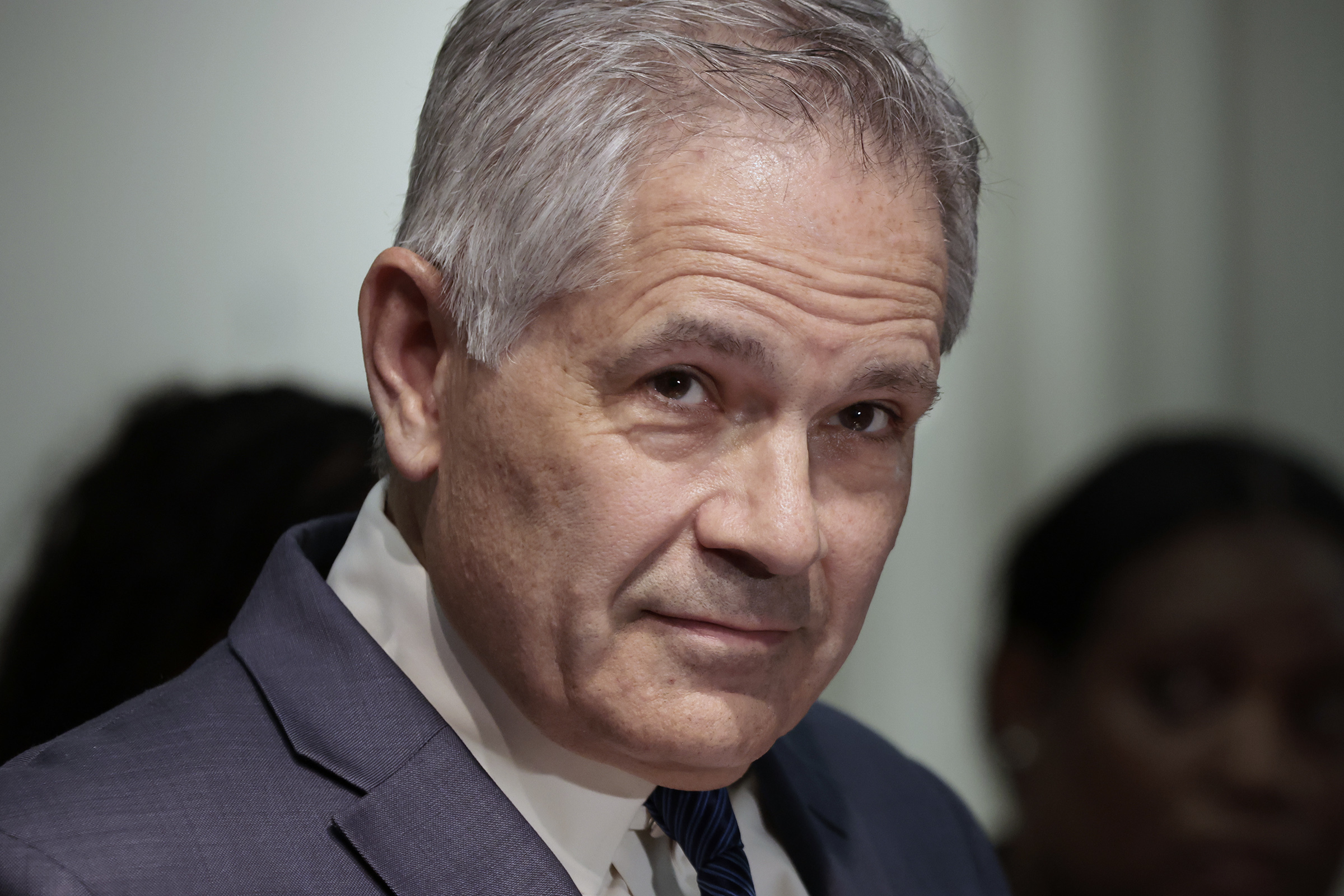
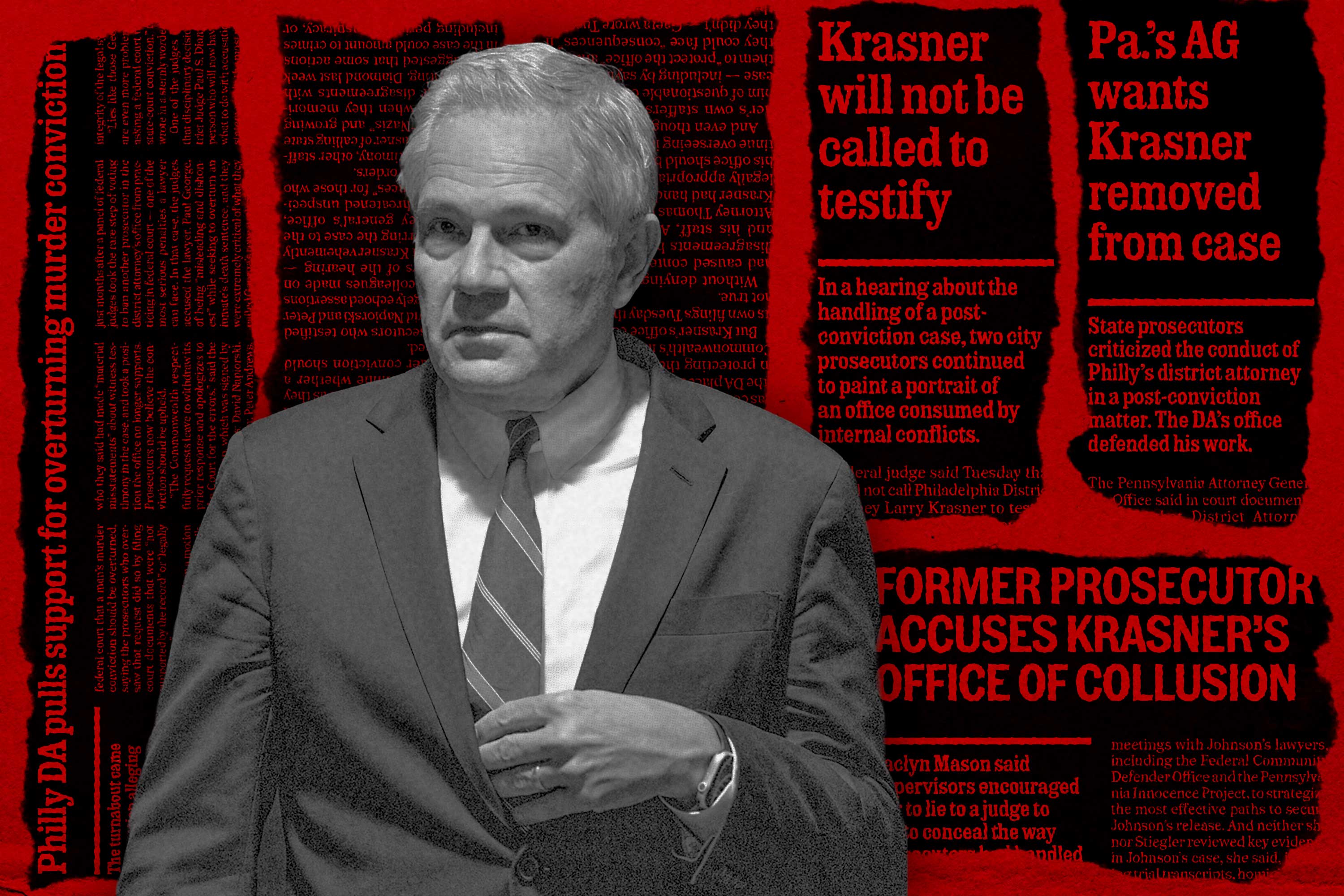
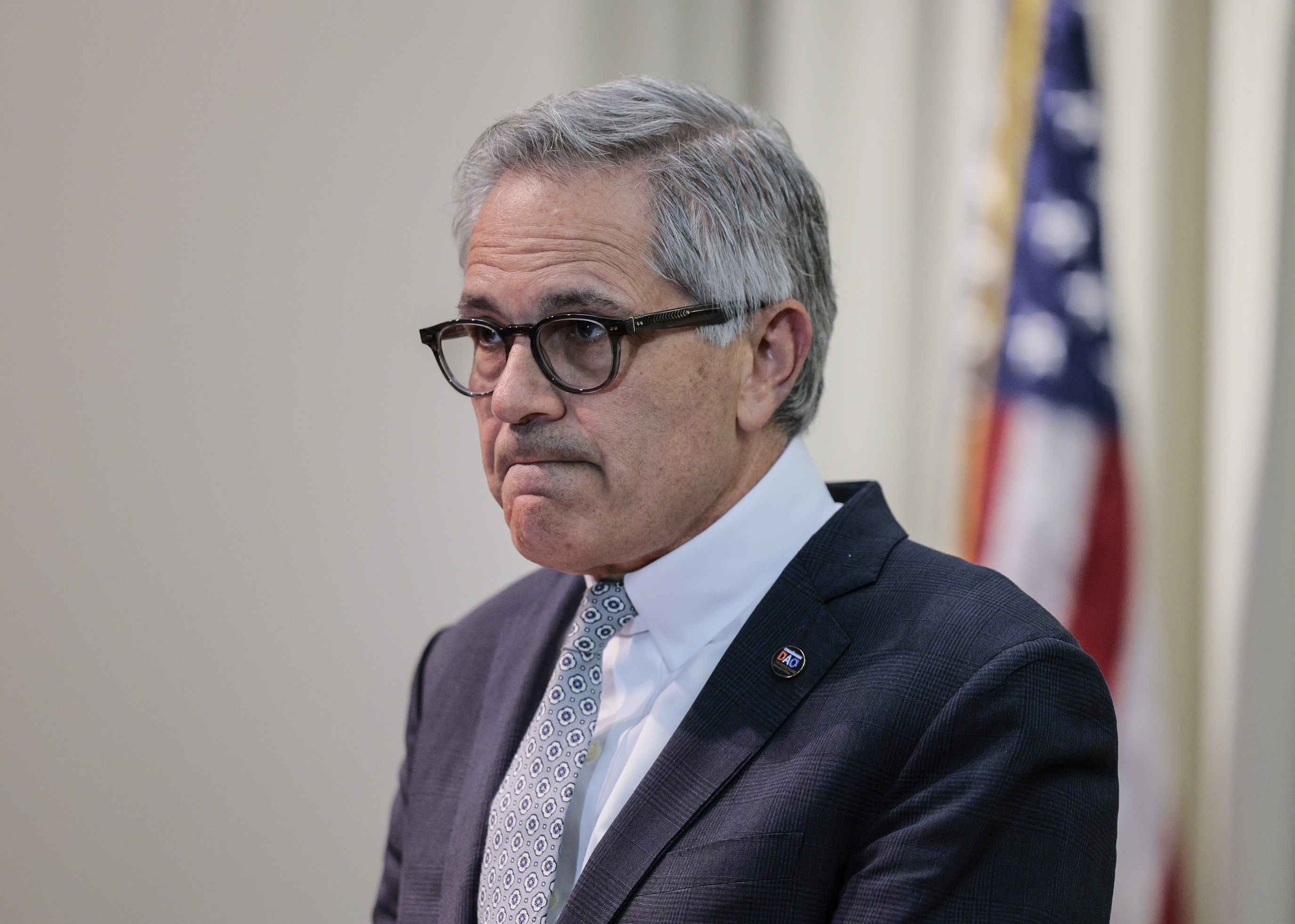
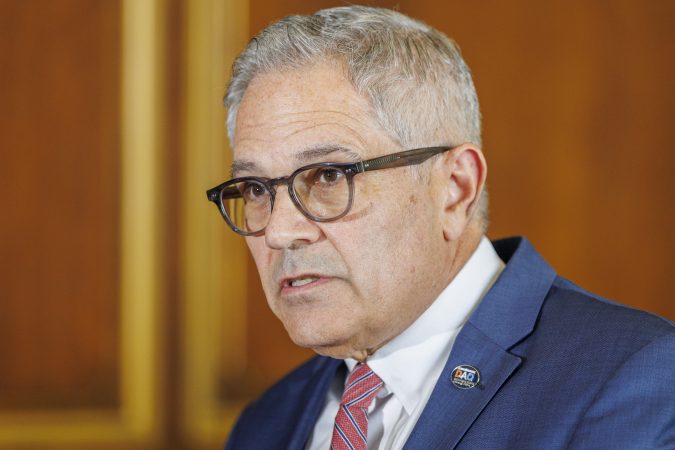
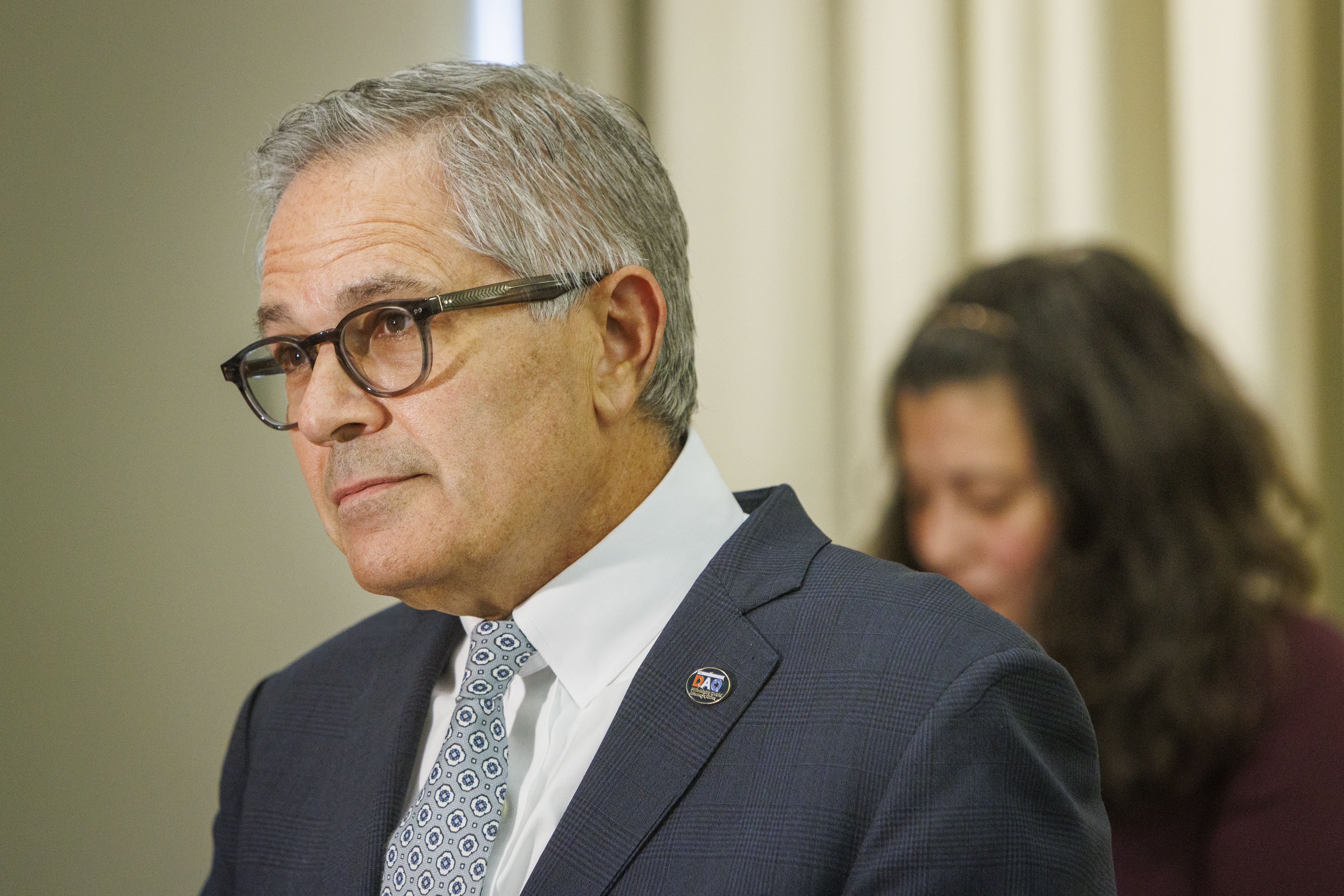
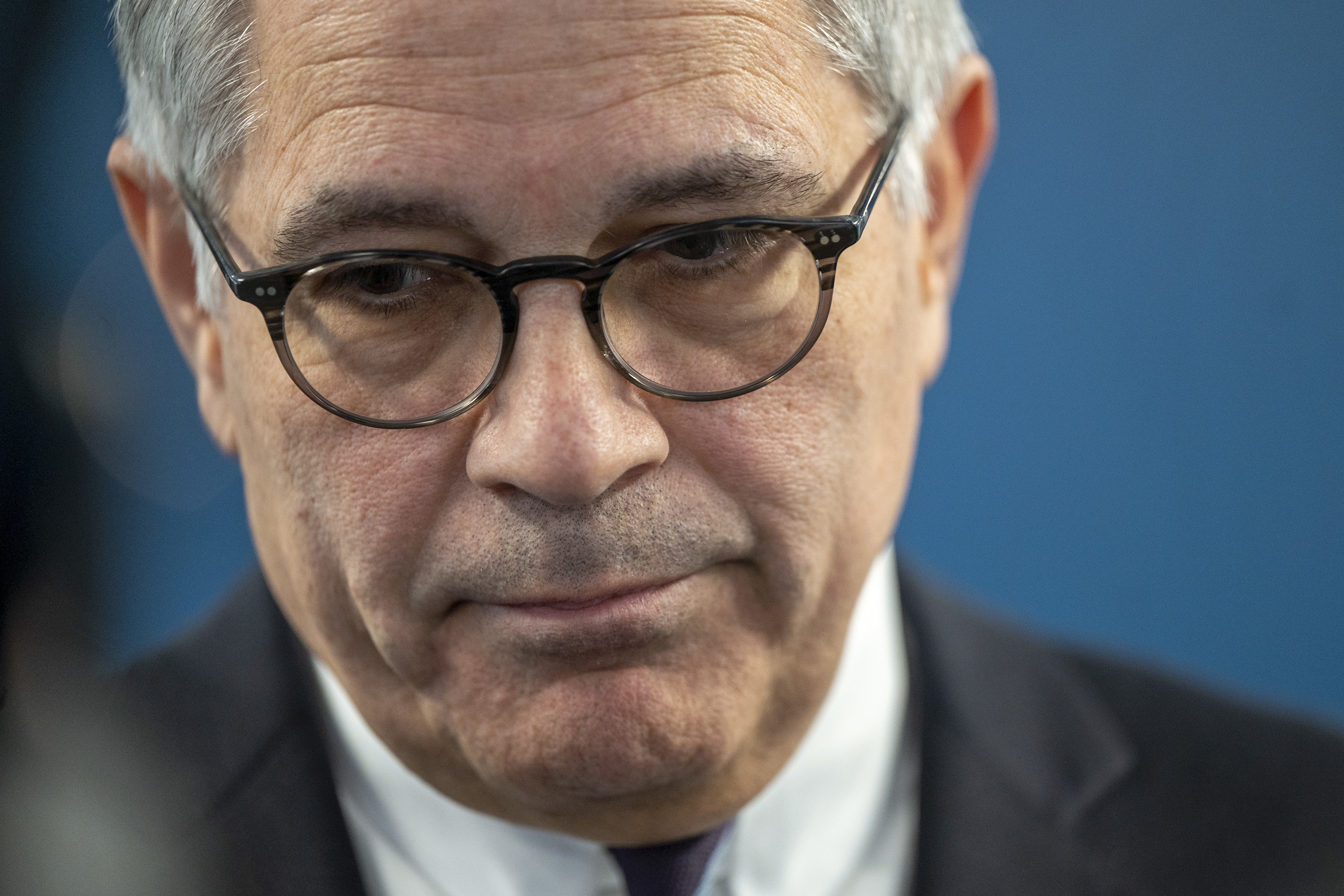
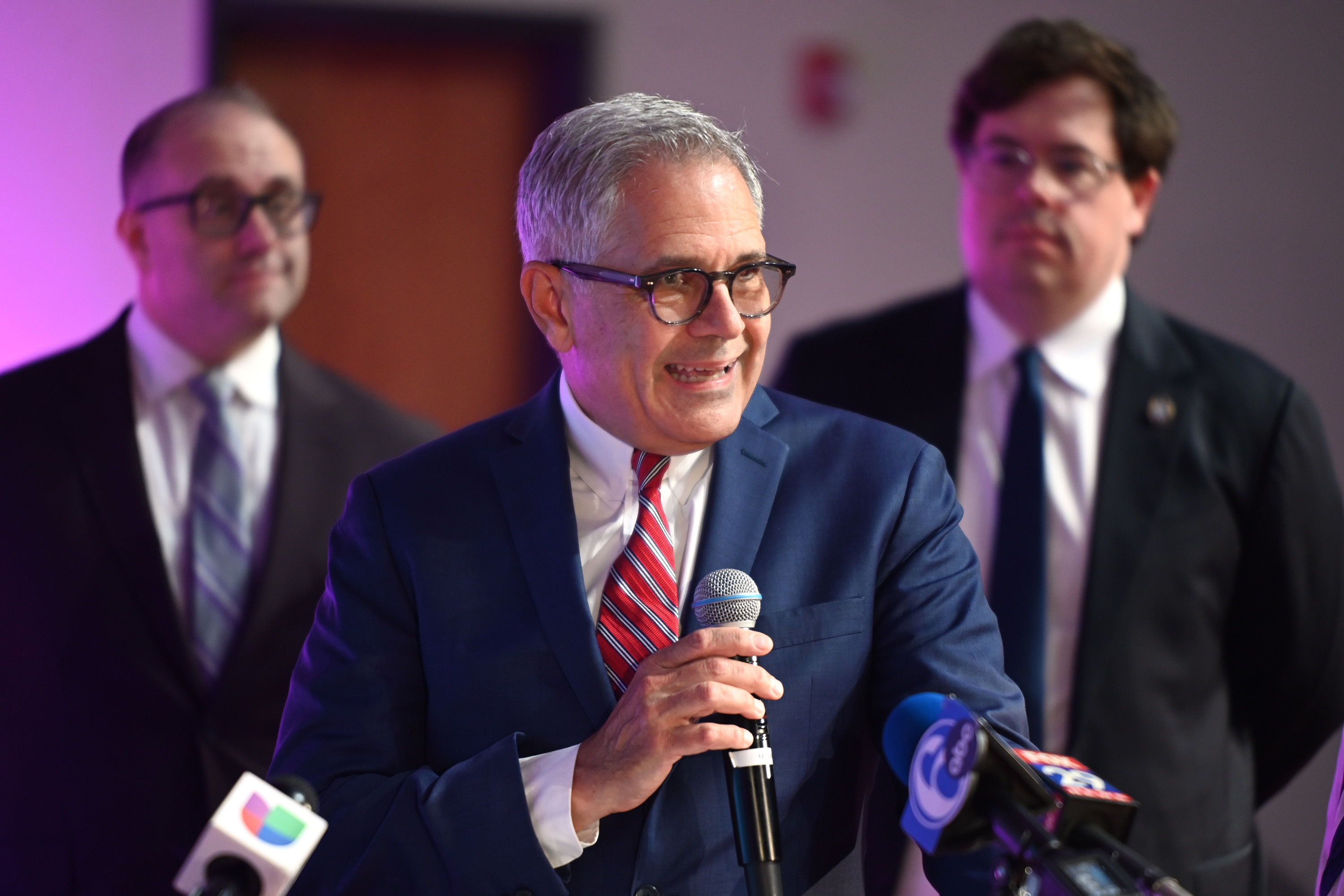
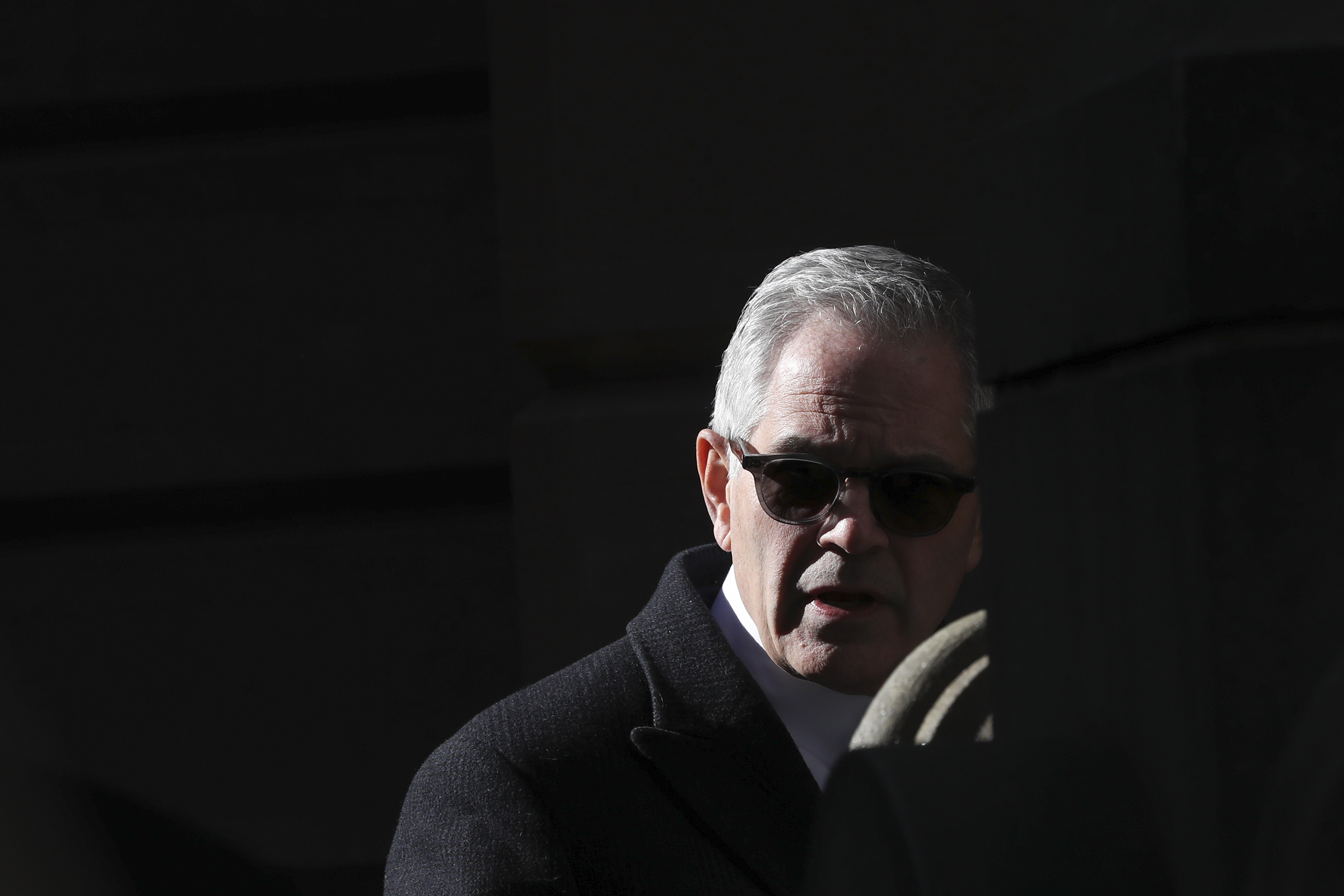
Philadelphia District Attorney Larry Krasner said Wednesday that the federal judge who accused him of potentially breaking the law while overseeing a post-conviction case had reached “baseless,” illogical, and legally unsupported conclusions — and that the judge should be removed from the case because he had acted more like “an advocate against DA Krasner” than an impartial arbiter.
In a series of documents filed in federal court overnight, Krasner took the unusual step of openly criticizing U.S. District Judge Paul S. Diamond — sometimes using strikingly pointed language.
In one brief, signed by Krasner and a subordinate, the district attorney said Diamond’s suggestion that Krasner might be guilty of criminal conspiracy relied on allegations “more closely resembling fever-dream conspiracy theories than evidence.”
Other suggestions of criminality by Diamond — which revolved around actions Krasner took while overseeing the case and his staff — were equally wrong, Krasner wrote.
“When it comes to all of these nominally-serious-but-actually-wafty accusations of criminal conduct, tempered by ‘coulds’ and ‘mights’ and ‘may haves,’ [Diamond’s] analysis rests on nothing of substance,” he wrote.
Then, in a separate nine-page letter signed only by Krasner, the city’s top prosecutor said Diamond’s “factual findings and accusatory legal conclusions twist the truth to the point of breaking in ways that defy logic and employ Orwellian language.”
And if Diamond’s assertions had been made in a setting other than a court case, Krasner said, “these accusations could be litigated as civil claims of defamation, slander, or libel.”
Finally, in a third document, Krasner and Assistant District Attorney Thomas Gaeta wrote that Diamond’s actions had been so out of line that he should no longer oversee the case. At one point, they said the proceedings had become a “circus,” with Diamond the “ringmaster.”
And they said Diamond — who was appointed by President George W. Bush, a Republican — had displayed his biases against Krasner, a Democrat, in a number of ways, including by asking improper questions of witnesses, reaching inconsistent conclusions about which witnesses were credible, and improperly blaming and discrediting Krasner for not testifying — even though Diamond had never asked him to.
Diamond’s conduct, they wrote, “provides a clear and obvious view into the type of unfair and improper proceedings and decisions [Diamond] deigned to make.”
The filings served as the latest chapter in a saga that has been marked by a series of explosive developments about Krasner’s office in recent months. The episode has also raised legal and political questions about Krasner’s future.
Most recently, in mid-September, Diamond filed a stunning memorandum in which he said Krasner and one of his top supervisors, Matthew Stiegler, may have committed crimes including conspiracy, obstruction of justice, or perjury while participating in the underlying case. Diamond also said he had referred the matter to the U.S. Attorney’s Office for potential investigation. Federal prosecutors have declined to comment.
Krasner has consistently disputed the notion that his actions were improper and appealed Diamond’s ruling, which also disqualified him and Stiegler from participating in the case moving forward.
The underlying matter is centered on Dennis Johnson’s attempts to have his 2009 murder conviction overturned; Krasner’s office had once supported that effort, but reversed course earlier this year after some of his staff discovered that a previous prosecutor had made mistakes in her handling of the appeal.
Wednesday’s filings served as Krasner’s most extensive response yet to accusations that he had committed misconduct while his staff tried to rectify those errors in court.
In Krasner’s view, the fact that his office was seeking to correct its own mistakes in open court was just one example of how Diamond’s conclusions — including that Krasner may have conspired to concoct a false cover story about the episode — “cannot logically be reconciled with each other.”
“I know many of the facts found by [Diamond] and conclusions inferred by [Diamond] are not correct from personal knowledge,” Krasner wrote. “I lived it.”
Dispute over ‘false narrative”
The roots of the controversy date to 2022, when then-Assistant District Attorney Jaclyn Mason filed a brief supporting Johnson’s bid to have his conviction overturned.
Krasner was unaware of the case at that time, he said in his new filings. But he became involved this spring, when some of Mason’s supervisors in the law division concluded that she had made significant errors in her brief, and that they needed to try to withdraw it.
Krasner approved a document alerting Diamond to the mistakes and apologizing for Mason’s errors.
Mason, meanwhile, resigned and said Stiegler — her former boss — was most at fault.
Diamond, in his Sept. 15 memorandum, said that in the aftermath of Mason’s resignation, staff in Krasner’s office discussed how the errors occurred. And in those discussions, he said, Krasner and Stiegler worked to create a “false narrative” to blame Mason, including by considering a Stiegler proposal: to review all of Mason’s old cases and find additional errors they could use to cast Mason as a “rogue” prosecutor.
Diamond said such an effort could amount to criminal conspiracy.
But Krasner, in his filings, called that conclusion “baseless,” saying Stiegler’s proposal was to review Mason’s old cases to see if there were additional errors — not to manufacture problems they could improperly attribute to her.
“Nothing in the record supports the Court’s determination that providing a broader account of their competence would have advanced a ‘false narrative,’” Krasner wrote. “They either had or had not made errors in other cases, and there was absolutely no testimony indicating that DA Krasner (or Stiegler, for that matter) suggested submitting false allegations of error.”
In addition, he said, Stiegler’s proposal was never actually pursued once other law division supervisors voiced opposition to it — further diluting any notion that Krasner was seeking to force his staff into lying to Diamond.
“Stiegler proposed a strategy that DA Krasner considered, but DA Krasner also considered and accepted the Law Division supervisors’ advice that it was inadvisable,” Krasner wrote. “This is not misconduct.”
‘Reasonable’ consequences?
Diamond, in his Sept. 15 memorandum, also took issue with Krasner threatening “consequences” for prosecutors who told the judge about another issue roiling the district attorney’s office: whether to refer Johnson’s case to the state attorney general’s office.
The law division supervisors handling the case after Mason’s resignation — Katherine Ernst, Steven Wildberger, David Napiorski, and Peter Andrews — generally agreed that was the appropriate course of action because of the inner-office drama consuming the matter. And they repeatedly urged Krasner to refer the case to avoid what they viewed as a conflict of interest.
But Krasner disagreed. And in his filings, he said that as the referral discussions took place over several weeks, he had consulted with several ethics experts who generally agreed there was no conflict necessitating a referral.
As for the threat of consequences, he said, he was not seeking to prevent his staff from telling Diamond the truth about their deliberations — which the judge later said could amount to obstruction of justice. Instead, Krasner said, he was seeking to prevent them from submitting court documents without his approval.
“That is particularly so where, as here, those pleadings are premature, legally incorrect, and unnecessary,” Krasner wrote. “It is reasonable to expect consequences for filing a pleading the District Attorney disapproves of while he is still examining the issue and determining the correct course of action.”
Seeking the judge’s recusal
In addition to disputing Diamond’s conclusions about his actions — and whether they constituted crimes — Krasner went on to say the judge should no longer oversee the case, which remains pending.
He said Diamond’s “apparent bias is evident from a number of remarkable circumstances,” all of which should lead to his removal, according to the district attorney.
One example, Krasner said, was that as Diamond questioned witnesses in his courtroom this summer about what happened in the case — including asking questions of lawyers who still work in Krasner’s office — the judge “departed from [his] role as a neutral arbiter and undertook an active inquisitorial and advocacy role.”
“The Court’s questions and assertions reflected the Court’s apparently preconceived view that the DAO’s conduct in all cases is inherently suspect,” Krasner wrote.
Diamond also made “selective credibility determinations” about which witnesses he believed and which ones he discredited, the DA wrote. And he took particular issue with what he cast as Diamond’s reluctance to criticize Mason: Krasner, in his filing, said there were “many additional reasons to question the honesty of Mason’s testimony, all of which were ignored by the Court.”
Then there was the issue of Krasner’s failing to testify.
Diamond, in his memorandum, blamed Krasner for not taking the stand. But Krasner, in his filing, said Diamond — who scheduled the hearings and set the witness list — “appears to have taken pains to avoid having DA Krasner testify.”
In any case, he said, it was improper for Diamond to assume that Krasner’s lack of testimony was somehow “concession by silence.”
Overall, Krasner said in his motion, the judge “served as a prosecutor for DA Krasner and his office,” thereby requiring his recusal from the matter.
In his nine-page letter, Krasner went even further, saying he believes Diamond should be recused “from this matter and every other matter involving the Philadelphia District Attorney’s Office for the foreseeable future.”
It was not immediately clear how Diamond might respond to such a request. On Wednesday, he said any additional paperwork on that issue must be filed within a week.
Philadelphia District Attorney Larry Krasner’s office has been roiled by controversy in recent months after a federal judge said Krasner and one of his supervisors may have committed crimes while overseeing a post-conviction case.
It could be months — or longer — before it’s clear if federal prosecutors agree that Krasner should face charges including conspiracy and obstruction of justice.
story continues after advertisement
But the events that led to that striking conclusion from U.S. District Judge Paul S. Diamond were laid out in testimony that unfolded in his courtroom this summer, as well as in a 40-page memorandum he filed in the case in September.
Krasner has disputed Diamond’s findings, and said he plans to file an appeal of the judge’s ruling, which also barred Krasner and one of his supervisors, Matthew Stiegler, from participating in the underlying case.
Here’s a recap of how the situation evolved from a routine legal matter into a contentious saga that could lead to consequences for the city’s top prosecutor.
In 2009, Dennis Johnson was convicted of second-degree murder after a jury found that he fatally shot Kenyatta Smith two years earlier during a robbery outside a North Philadelphia convenience store.
The case was largely built on the testimony of eyewitnesses, whose credibility Johnson sought to dispute at trial. Even after being sentenced to life in prison, Johnson maintained he did not commit the crime.
He filed several unsuccessful appeals in Pennsylvania courts. Then, in 2015, he filed a petition seeking to overturn his conviction in federal court. The case landed in front of Diamond.
story continues after advertisement
2022
The case is assigned to Jaclyn Mason
Prosecutors opposed Johnson’s petition for years. But in 2022, they changed course when it was assigned to a new assistant district attorney: Jaclyn Mason.
Mason had only joined Krasner’s office a few months earlier, and Johnson’s case was her first in her new role in the federal litigation unit. Although she had extensive experience as a lawyer — working primarily on patent and trademark cases — she’d never before worked as a criminal litigator, and she said she received almost no training in the DA’s office before being asked to handle cases.
Her boss was Stiegler, who had a controversial history working for Krasner. Over the course of a few years, he’d joined and left the office twice. And in one of those stints, nearly everyone under his supervision requested a transfer. One prosecutor later told Diamond that Stiegler did “not have the best reputation” among his colleagues.
When it came time to decide how to handle Johnson’s petition, Mason said, Stiegler had already made up his mind. Although he’d done nothing to independently review Johnson’s claims, Mason said, Stiegler had conferred with Johnson’s attorneys — including the Pennsylvania Innocence Project and federal defenders — and decided his conviction should be reversed.
“Matt told me: ‘If it’s good enough for the Innocence Project, it’s good enough for me,’” Mason said later. “The decision to concede had been made, and then I was his pawn.”
Mason also acknowledged that she reviewed almost nothing before submitting and signing off on her brief recommending Johnson’s conviction be thrown out. But at that point, she said, she believed she had to follow her boss’ orders.
“I didn’t know anything enough to push back,” she later testified. “I’d been at the office for four months — I’d never done this kind of work before.”
Once Mason did actually draft the brief, she said, Stiegler offered edits, and all of them made it into the final document. Another supervisor, Nancy Winkelman, the onetime head of the Law Division, also made suggestions that were included in the final brief, Mason said.
Mason’s name, however, was the only one that ended up on the document.
May 2026
Discovery of errors
A federal magistrate, Judge Lynne A. Sitarski, eventually agreed that Johnson’s conviction should be overturned, based in part on the findings in Mason’s brief.
But Sitarski’s decision was not binding — the final call would fall to Diamond. And in May, rather than accepting Mason’s conclusions, he decided to schedule an evidentiary hearing to hear testimony and weigh the pieces of evidence before issuing a ruling.
As the hearing approached, Mason reached out to a group of supervisors in the law division to prepare: Katherine Ernst, Steven Wildberger, David Napiorski, and Peter Andrews. And Ernst said when she reviewed Mason’s brief, she discovered it contained “significant errors” — issues that, in her view, contradicted the notion that Johnson’s conviction should be overturned.
Asking a judge to do so — and admitting a document was filled with mistakes — is a significant step for a lawyer to take.
But Ernst said the office had no choice: Lawyers are duty-bound to be honest with courts, and there was no ethical way to proceed with a document containing such errors.
The supervisors first decided to break the news to Mason. And in a meeting, they said, they asked her to sign on to the withdrawal with them.
But Mason declined. She told the supervisors the situation was Stiegler’s fault — and that his downfall was “a long time coming.” The supervisors later said she didn’t offer more specifics, and that at that point, none of them knew the extent of Stiegler’s role in the brief’s preparation.
Mason, however, felt the supervisors were setting her up to take the fall. She decided to resign, and said in her resignation letter that Stiegler had “used me to further his personal agenda” — and that he should be forced to “submit and swear in an affidavit that he erred and that he was responsible for what was filed in this case.”
She said she was prepared to stay until the end of June to wrap up any outstanding obligations, but that Krasner’s chief of staff, Jennifer Lin, told her that wouldn’t be necessary. Mason’s email was cut off, she said, and her badge granting her access to the office was disabled.
story continues after advertisement
Early June 2026
Mason resigns, and Stiegler tries to assign blame to her
After Mason resigned, her former supervisors began drafting the motion to withdraw her brief.
Stiegler, meanwhile, took on a different assignment: Seeking to blame Mason for the errors.
According to Ernst, in the days after Mason quit, Stiegler told colleagues she must have “purposefully inserted false facts” into her brief, and that it was “100% her fault and 0% his fault.”
And he came up with a plan to try to support that narrative, proposing that her colleagues review all of her work to find other cases with errors, so that the office could file a brief with Diamond casting Mason as “an ADA who went rogue, basically.”
The supervisors said no. Beyond viewing the proposal as inappropriate, Ernst said, she also pointed out to Stiegler that it would not help his reputation to show the court that one of his employees made consistent mistakes.
But Stiegler persisted — and even proposed the idea to Krasner.
And during a meeting on June 5, during which the supervisors were seeking Krasner’s approval on the motion to withdraw Mason’s brief, the DA repeated Stiegler’s proposal, describing it as “a really good idea.”
The supervisors again said no. Wildberger told Diamond he found the notion “tremendously inappropriate.”
Diamond, in his September memorandum, said it was more serious than that.
“In urging that others lie to me,” he wrote, “Stiegler might be liable for obstruction of justice.”
He also said Stiegler’s testimony about the episode contained enough omissions and “falsehoods” that it “may well amount to perjury.”
And he said Krasner’s attempt to work with Stiegler and urge others to present a false narrative to Diamond “might amount to criminal conspiracy.”
In the same June 5 meeting, meanwhile, Krasner did approve the supervisors’ motion to withdraw Mason’s brief, which they filed that afternoon.
But another dispute emerged — one that would linger well beyond that meeting.
Late June 2026
A potential conflict of interest
In Ernst’s view, the internal turmoil over the case — particularly the attempts to assign blame about what happened — had compromised the office’s ability to handle Johnson’s petition appropriately.
The internal discussions had become consumed by the office’s inner-workings, Ernst said, and not the merits of Johnson’s appeal, creating, in her view, a conflict of interest.
As a result, Ernst said, she told Krasner the case should be referred to the state attorney general’s office, the typical process if the DA’s Office has a conflict.
But Krasner disagreed.
In the supervisors’ telling, Krasner was consistently and sometimes angrily opposed to sending the case to state prosecutors. During meetings over the next several weeks, the supervisors said, Krasner repeatedly expressed disdain for the people who worked there, describing them as “Nazis” and saying he “hated” them.
The views are not new; Krasner, during his first week in office in 2018, fired 31 prosecutors, some of whom went on to join the attorney general’s office. And in 2019, Krasner said some people in his office had jokingly come to describe the AG’s Office as “Paraguay,” a South American country where Nazis took refuge after World War II.
Beyond the war criminal reference, however, the supervisors said Krasner expressed other reasons for opposing the referral.
One was that he wanted his staff to “protect the office,” the supervisors said. And according to Ernst, Krasner said: “We need somebody in the room so that [we] can control the proceedings.”
Ernst said she pushed back, telling Krasner: “A person can’t both protect the office and competently handle this case.”
But Krasner was insistent, they said. And he told them he was consulting with legal ethics experts — whom he did not name — to ensure there was no issue with keeping the case in-house.
Over the next several weeks, the supervisors said, they began putting their thoughts in writing. That practice led to additional disputes on June 24.
That day, according to Napiorski, he emailed Krasner a draft memorandum outlining the various issues the supervisors believed created a conflict. Napiorski said he emailed it to Krasner’s personal and work e-mail addresses because Krasner rarely responds to messages from his government account.
Two hours later, the supervisors said, an email response came from Lin, Krasner’s chief of staff. But the message opened by saying that Krasner had written it, and that he took issue with many of the assertions in the group’s memo.
In a meeting that afternoon, the supervisors said, Krasner also said he was angry that the supervisors had sent the memo by email because doing so created a record that could be discoverable in potential litigation.
The next day, Napiorski said, he spoke with his own ethics expert, who agreed that the case should be referred to another office. As a result, he said, he and Wildberger brought Krasner another new piece of writing: A draft of a letter that would refer the case to state prosecutors.
Krasner was “apoplectic,” Wildberger said. And he went on to threaten “consequences” for anyone who told Diamond about the conflict discussions — a reference that both Wildberger and Napiorski took to mean losing their jobs.
The two men called Ernst, who said the threat made it clear: They needed to recuse themselves from the case.
Ernst and Wildberger filed a memo before Diamond withdrawing their appearances that day. Napiorski and Andrews followed suit a day later.
Diamond, meanwhile, said in his September memo that Krasner’s threat to fire people who were seeking to tell the truth in court “could amount to obstruction of justice.”
July 2026
Examining attorney conduct
On July 17, Diamond held an evidentiary hearing in the case — which he decided to limit to issues concerning attorney conduct, rather than the merits of Johnson’s petition. He said he would address that later.
Mason took the stand first, describing what she viewed as an attempt to scapegoat her on Stiegler’s behalf. She also accused the law division supervisors of urging her to lie to Diamond — something the supervisors would later deny.
Stiegler also testified, saying he believed Mason had — and should have — conducted a full investigation into Johnson’s claims before filing her brief.
Behind the scenes, meanwhile, turmoil was continuing in the office.
On July 20, Wildberger stepped down from his supervisory role in the law division, later saying he did so because he had “lost faith in the administration of the Philadelphia District Attorney’s Office.”
And after Mason accused the supervisors of wrongdoing from the stand, Ernst and Wildberger filed a more detailed memo with Diamond about why they had stepped off the case, including by saying that Krasner had asked them to “protect the office” and potentially violate their ethical oaths.
Three days later, Krasner responded with a filing of his own, saying Ernst and Wildberger’s assertions were both unauthorized and “ill-informed.”
And although he did not — and has not — denied saying he wanted to “protect the office,” he said in a later filing that he “plainly did not appreciate [his subordinates’] repeated, unsolicited, and wavering advice” to refer the case to state prosecutors, and that their recommendation was “inexpert and legally unsupported.”
He also said he’d hired an expert who agreed with him — Bruce Green, a professor at Fordham Law School — and later attached a memo written by Green to one of his filings. Diamond would go on to call Green’s memo “a disorganized mess and largely useless.”
In addition, Krasner said, as a measure of extreme caution and to ward off any suggestion of a potential conflict, he hired an outside attorney to handle the case on his office’s behalf: Jean Peters-Baker, a longtime prosecutor from Missouri who previously led the prosecutor’s office in the county that includes Kansas City.
Diamond later disqualified her, saying that because Krasner had been hampered by the conflict issues months before he reached out to Peters-Baker, his decision to bring her aboard was invalid.
story continues after advertisement
September 2026
‘Often contradictory, evasive, or outright dishonest.’
All of the law division supervisors went on to testify before Diamond, and he said in his Sept. 16 memorandum that he found their testimony, as well as Mason’s, “compelling and corroborated by contemporaneous documents.”
Although Mason had accused her supervisors of encouraging her to lie in court, Diamond found that they hadn’t done so, saying they’d sought to truthfully tell him about the issues in her brief, and that her “understandable dismay caused her to misunderstand” their intentions.
The judge took a dimmer view of Stiegler, calling his testimony “often contradictory, evasive, or outright dishonest.”
And although Diamond did not call Krasner to testify about the saga, he nonetheless criticized the DA in his memorandum for not taking the stand, saying Krasner “chose” not to testify, and noting he didn’t submit an affidavit to offer his version of events.
Diamond’s decision to alert federal prosecutors about the case, and say they should investigate potential crimes by Krasner and Stiegler, was practically unheard of, legal experts said. The U.S. Attorney’s Office has declined to comment, and any investigation it might pursue would likely take months.
Johnson’s petition, meanwhile, remains in limbo. Diamond said the district attorney’s office could continue to litigate it — but with Krasner, Stiegler, and the law divisions’ supervisors removed from the case, it was not clear who might do so.
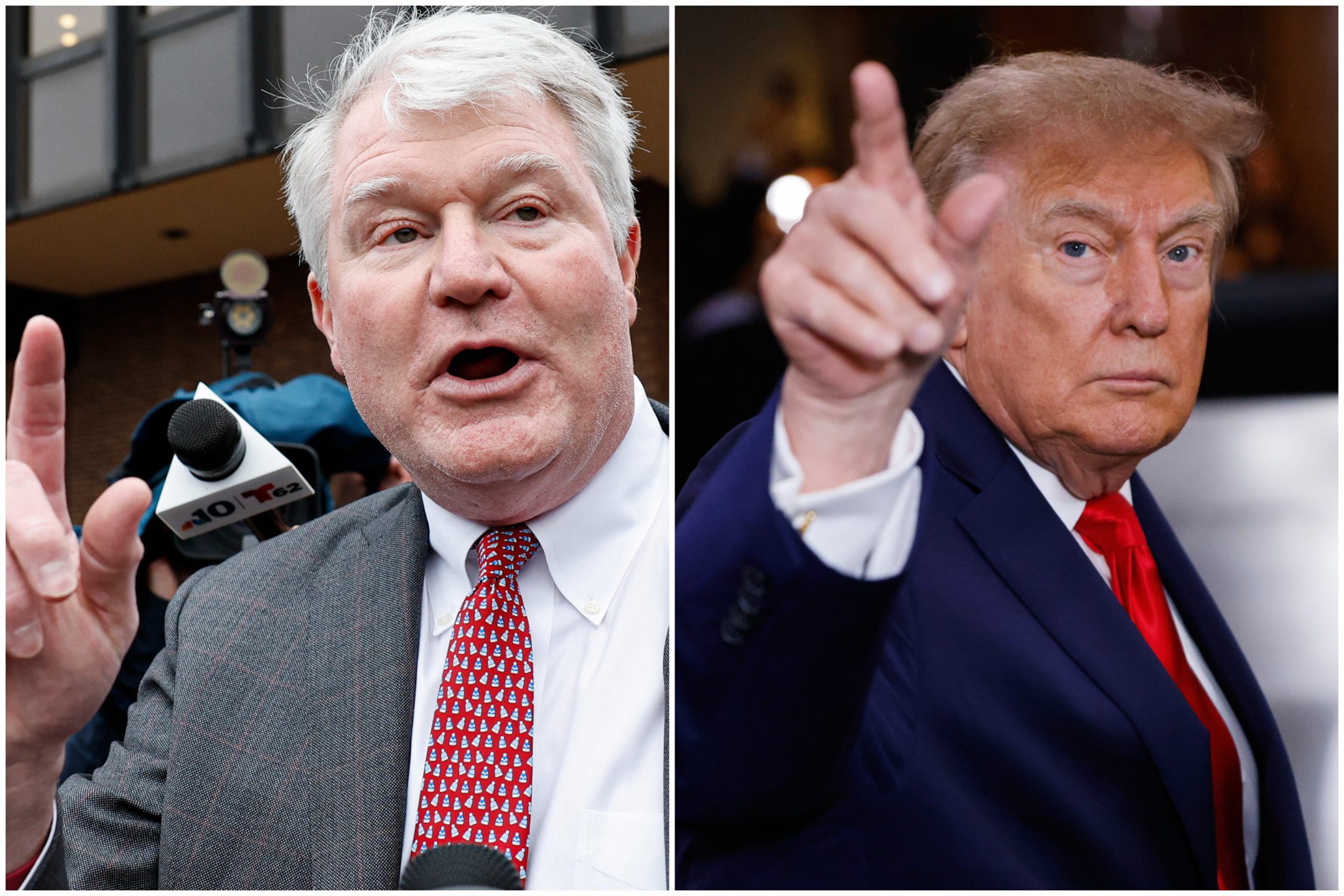
John Dougherty was for years an unparalleled kingmaker in Philadelphia’s Democratic Party — a charismatic labor leader and fundraiser who helped anoint a generation of future mayors, City Council members, state and federal legislators, judges, and governors.
Some of Dougherty’s key supporters in his clemency push, The Inquirer has learned, included two former Republican congressmen; Dougherty’s lawyer, who once ran as a Republican for mayor and, later, for U.S. Senate; and a onetime candidate for Philadelphia City Council with ties to organized labor, who said he was one of Trump’s earliest local backers.
All had relationships with Dougherty, owing to his years of political activism as head of Local 98 of the International Brotherhood of Electrical Workers — even if his support mostly benefited fellow Democrats.
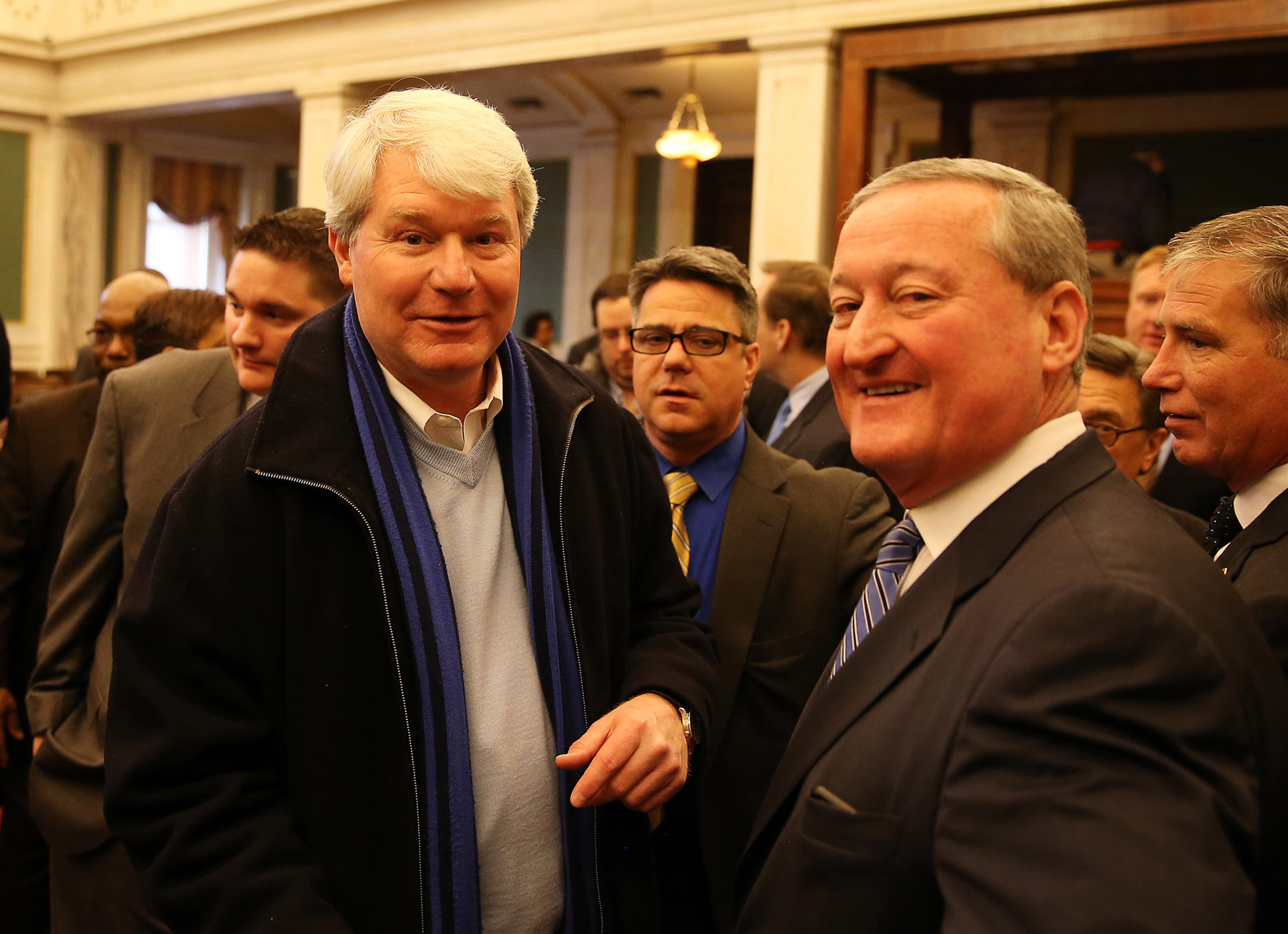
John Dougherty in 2015 with then-City Councilmember Jim Kenney. The two were childhood friends, and Dougherty helped support Kenney’s successful mayoral campaign.
The former Council candidate, Daniel Pellicciotti, said his efforts to help Dougherty included meeting with Trump at the White House and speaking with him over the phone. Pellicciotti said that he told Trump about the significant health challenges faced by Dougherty’s wife, Cecelia, and that Trump was sympathetic to Dougherty’s situation — and willing to send him home.
“He just said, ‘This is crazy.’ Exact words,” Pellicciotti said. “‘He needs to be home with his wife, taking care of her. Besides, it would be cheaper for the government.’”
Former U.S. Rep. Lou Barletta, meanwhile, said he signed a letter to Trump last year and contacted anyone he could “just to try to get this on the president’s radar.”
He said that he had been following Cecelia Dougherty’s health situation closely and that advocating for her husband “became a personal thing for me.” Earlier this year, he attended a court hearing in Reading at which Dougherty begged a judge to be released.
“I’m very thankful that the president had the compassion to put politics aside and do the right thing,” said Barletta, who met Dougherty in the early 2000s as mayor of Hazleton.
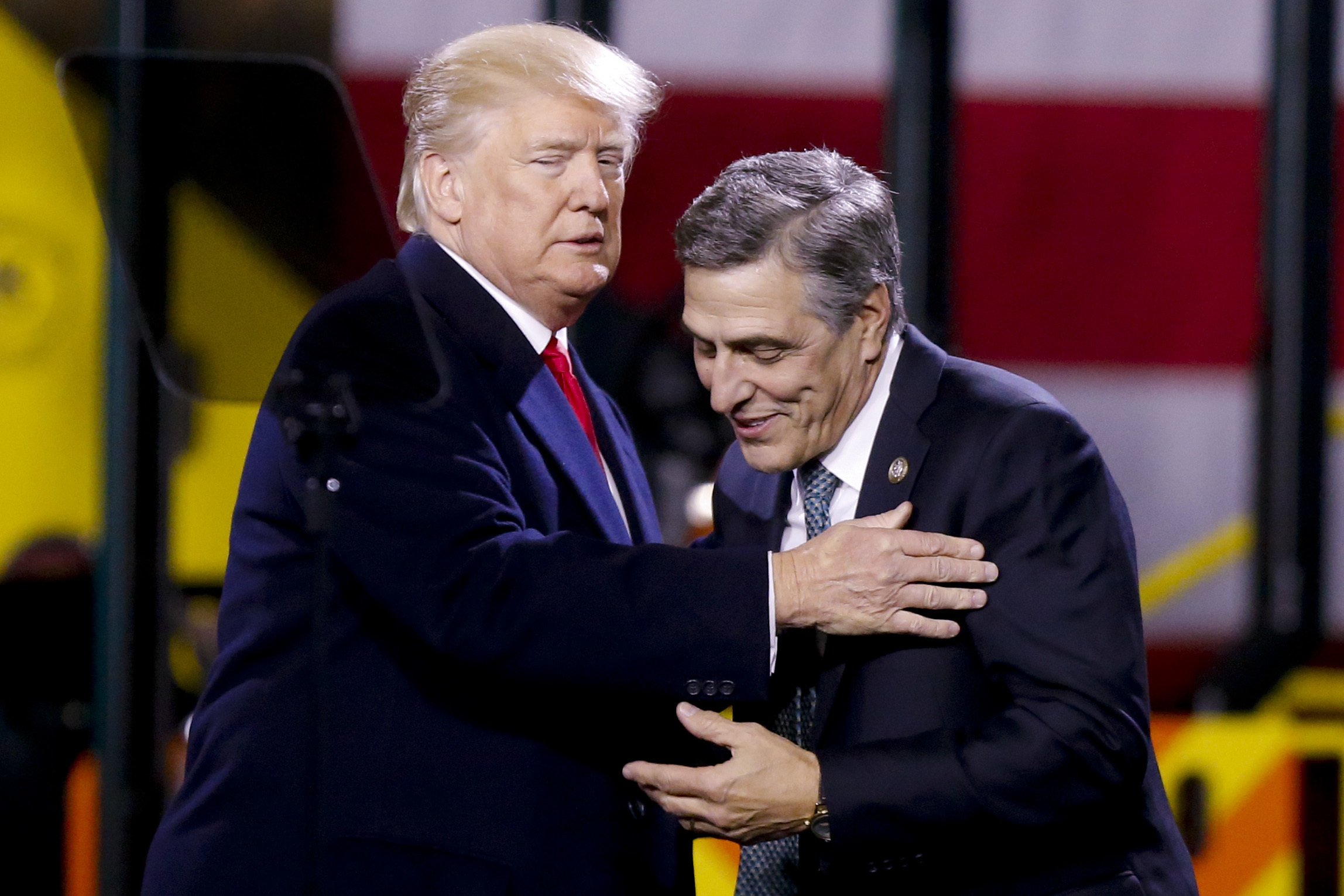
President Donald Trump with then-Rep. Lou Barletta in 2018.Keith Srakocic
And Rick Santorum, a former U.S. senator who competed against Trump for the GOP’s presidential nomination in 2016, said he “did what he could to be helpful” in supporting Dougherty’s efforts.
“Those two years Dougherty spent in jail away from his wife were probably 20 years because I know how much he loves her and how much he was really hurting,” Santorum said. “So to me, this was the humanitarian thing to do, and I supported it.”
The backing from GOP pols may help explain how Trump — a famously partisan president — ended up granting clemency to a longtime Democrat in one of America’s bluest cities. Trump was soundly defeated in Philadelphia in each of his three elections, and some of Dougherty’s longtime Democratic allies were among his fiercest critics.
The Republican lobbying might also add context to Dougherty’s decision to change his voter registration and join the GOP. Dougherty — long known as Johnny Doc — switched parties not long after being released this month from a federal penitentiary in Lewisburg, Pa.
Dougherty has not spoken publicly since his release, and his lawyer, George Bochetto, said Dougherty was focused on caring for his wife.
Bochetto, who ran for Philadelphia mayor in 1999 and U.S. Senate in 2022 — both times as a Republican — generally declined to discuss details about the lobbying effort. He did say he had been in regular communication with White House aides about Cecelia Dougherty’s health challenges, and he called Trump’s decision “a magnificent gesture of compassion.”
The White House press office did not respond to questions about who was involved in advocating for Dougherty. A spokesperson said only that the commutation was granted to let him “care for [his] terminally ill wife.”
Multiple attempts at release
Dougherty and Bochetto had taken several paths to try to secure an early release from his six-year sentence, which began in 2024 after Dougherty was convicted in separate bribery and embezzlement trials.
A few months after Dougherty reported to prison, Bochetto filed emergency motions asking U.S. District Judge Jeffrey L. Schmehl to allow Dougherty to serve the remainder of his term on house arrest so he could be his wife’s primary caretaker.
Schmehl denied those requests twice — including after a hearing in May at which Dougherty testified about how he was the only person who could provide the type of round-the-clock assistance his wife needs. She has long been paralyzed and largely nonverbal after suffering a debilitating brain injury.
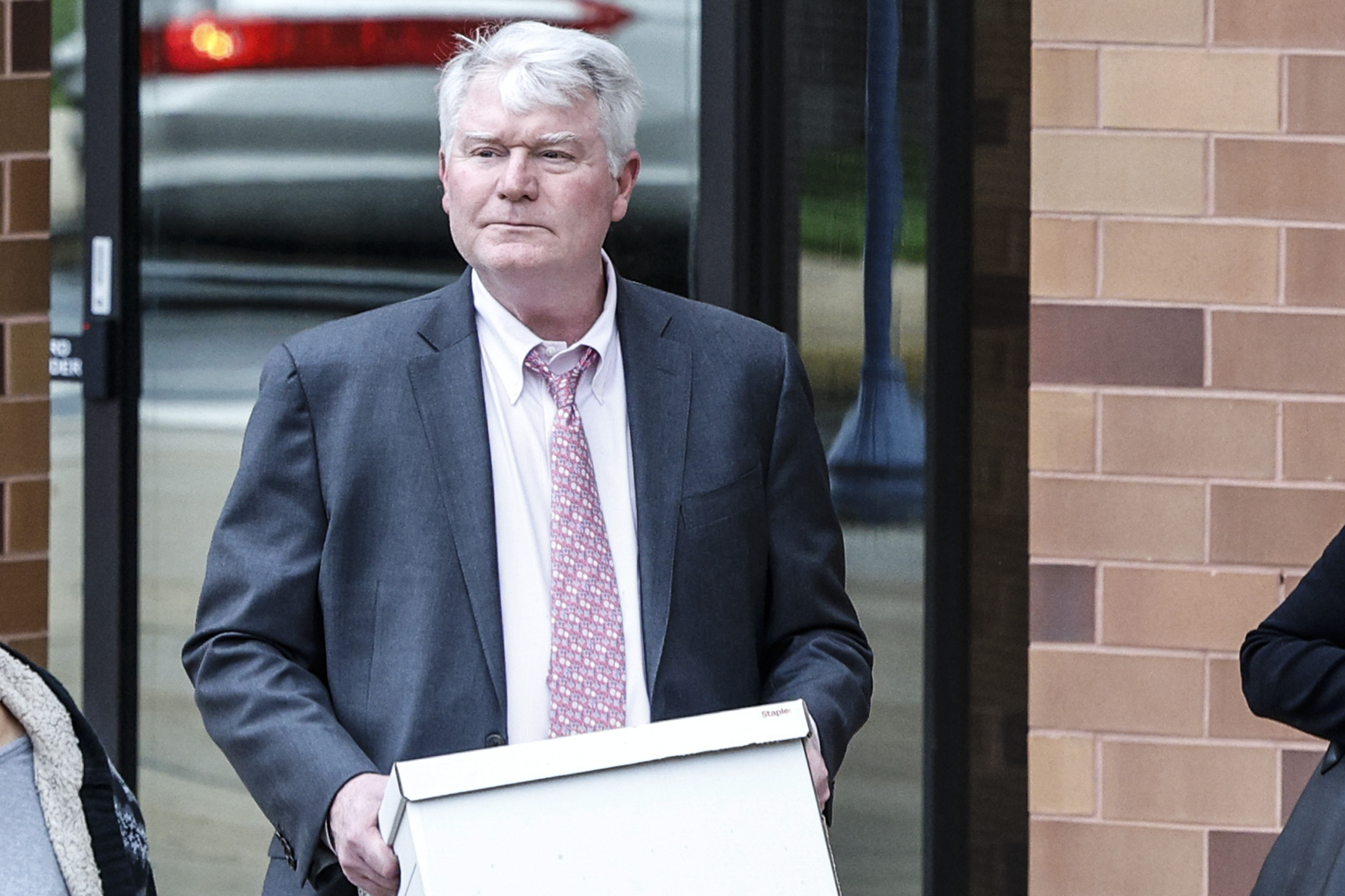
John Dougherty in 2024.Steven M. Falk / Staff Photographer
After failing to persuade the judge, Dougherty turned to others in his orbit as the request pivoted toward the White House — where Trump, as president, has wide latitude to commute sentences and grant pardons in federal cases.
But his allies, including Pellicciotti, persisted. A former business agent for the laborers union, he said he was friends with Cecelia Dougherty before he knew her husband, and he has known both for decades.
A former Democrat and nephew of the late Councilmember Francis Rafferty, Pellicciotti ran unsuccessfully for Council in 2003 with backing from Dougherty’s electricians union. He said he switched his registration to Republican when Trump ran for president and backed his 2016 campaign.
“Nobody in Philly was really backing him. I have a lot of respect for him. He don’t forget his friends,” Pellicciotti said.
In addition to their politics, Pellicciotti, 64, of Roxborough, shared something else with Trump: a felony conviction. Pellicciotti pleaded guilty in 2005 to bribing a Philadelphia public official with cash in exchange for obtaining a designation for his demolition company as a woman-owned business.
When Pellicciotti was sentenced to probation and a fine the following year, Dougherty and other union members were in the courtroom to pat him on the back.
That experience with the criminal justice system did not come up in Pellicciotti’s conversations with Trump, however. “I really think it had strictly to do with him doing the right thing for John and Celi,” he said.
Help among friends
Barletta and Santorum declined to provide many details about the depths of their advocacy but agreed that their central motivation was support for Dougherty and his wife.
In addition to Dougherty’s long friendship with Barletta, his ties to Santorum date to 2006, when his former union, Local 98, backed Santorum’s unsuccessful reelection campaign against Democratic challenger Bob Casey.
Santorum said Dougherty was always uncharacteristically gracious about acts that benefited his members — despite the senator’s political affiliation.
“Johnny cared enough that he said, ‘Well, look, this guy has done more for my workers and those families than anybody, and we’re going to support him,’” Santorum said.
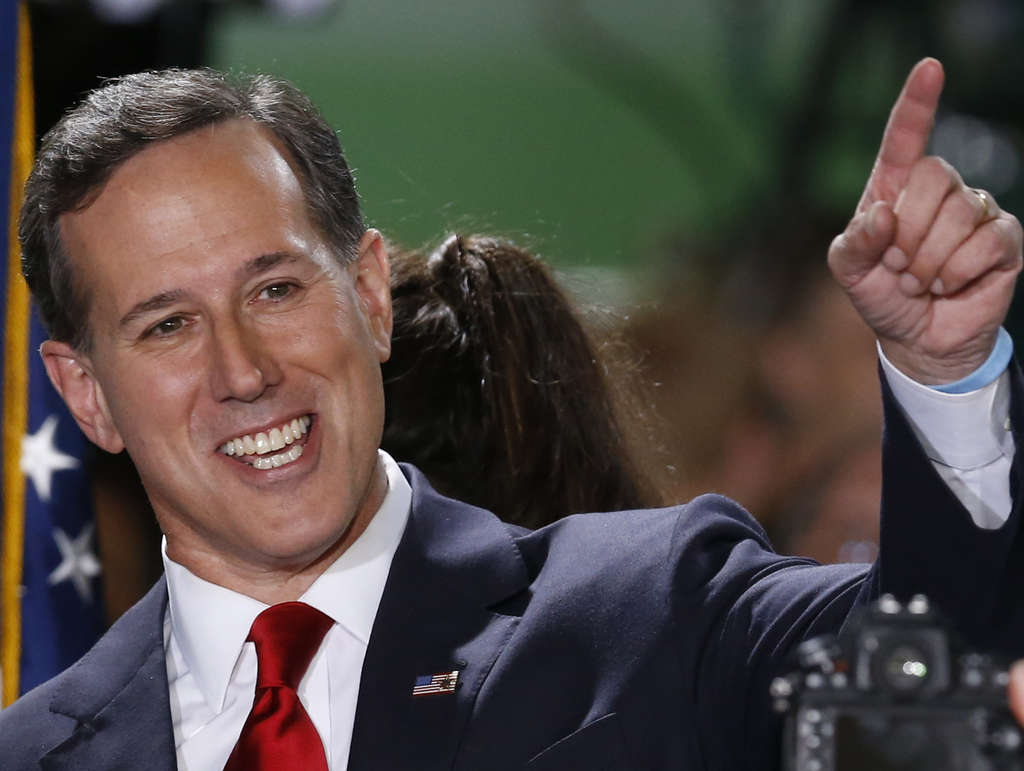
Former U.S. Sen. Rick Santorum announcing his candidacy for the 2016 presidential race.KEITH SRAKOCIC / Associated Press
Other local figures with ties to Trump who were rumored to have helped Dougherty’s lobbying — such as Philadelphia lawyers Michael van der Veen and William J. Brennan, who represented Trump during his second impeachment trial — declined to say if they were involved.
In any case, Trump made Dougherty’s release official earlier this month. In addition to cutting his prison term short, the commutation erased Dougherty’s obligation to pay about $1.6 million in restitution.
Pellicciotti, for his part, was glad that Trump bestowed mercy on his longtime associate.
“All credit goes to God,” he said. “We did a lot of praying about it.”
Staff writers Gillian McGoldrick and Anna Orso contributed to this article.
Delta Air Lines will begin operating a new daily flight between Philadelphia and Los Angeles next summer.
The airline will debut the nonstop route between Philadelphia International Airport (PHL) and Los Angeles International Airport (LAX) on June 7, officials said in an announcement last week. Tickets are already available for purchase.
The addition comes as Delta said it was also adding or increasing flights to LAX from several other destinations. Delta is PHL’s third-largest carrier by passenger volume, having carried nearly 2 million passengers through the airport in 2025. It currently offers nonstop service from PHL to five U.S. cities.
PHL’s largest carrier, American Airlines, also offers several daily nonstop flights to Los Angeles.
The airport is in the midst of a nearly $2 billion renovation, having spent significant amounts in recent years on upgrades to bathrooms, landscaping, painting, and more.
The airport has nonetheless continued to rank poorly in a prominent traveler satisfaction survey: Last week, JD Power said that for the sixth year in a row, PHL received the lowest score among large U.S. airports in its annual passenger satisfaction rating.
The stunning remarks by U.S. District Judge Paul S. Diamond — that Krasner may be guilty of conspiracy or obstruction of justice, and that federal prosecutors should investigate — triggered uncertainty over the future of one of the city’s top elected officials, who is a nationally recognized leader of the progressive prosecutor movement.
Legal experts said Diamond’s decision to refer actions by Krasner and one of his supervisors to the U.S. Attorney’s Office would almost certainly lead to an inquiry of some kind. But the fate of any possible probe into Krasner not only was difficult to predict, they said, but could take months or longer to determine.
Political repercussions could arise as well.
While Krasner’s Republican enemies reiterated their long-held disdain for the reform-oriented prosecutor, no elected Democrats immediately came to his defense. And some Democrats in the city have quietly begun discussing potential contingency plans if Krasner is forced from office before the end of his third term in 2030.
Krasner, for his part, has denied wrongdoing, and said in a statement that he planned to appeal Diamond’s ruling, in which the judge also disqualified Krasner and a lawyer in his office, Matthew Stiegler, from participating in the underlying case — a matter in which a man is seeking to have his murder conviction overturned.
Here is a recap of what led to Diamond’s scathing filing, and what might be next for Krasner.
What happened in the underlying case?
The case at issue began in 2015, when Dennis Johnson — found guilty in 2009 of second-degree murder — filed a petition in federal court seeking to have his conviction overturned.
For years, the district attorney’s office opposed Johnson’s bid for relief. But in 2022, then-Assistant District Attorney Jaclyn Mason filed a brief reversing course and agreeing that his trial counsel had been ineffective.
This spring, while preparing for a hearing before Diamond about the case, Mason said, she reached out to new supervisors in the law division: Katherine Ernst, Steven Wildberger, David Napiorski, and Peter Andrews. And Ernst said when she reviewed Mason’s brief, she discovered it contained “significant errors,” and the supervisors decided they needed to try to withdraw it.
Mason thought they were setting her up to take the blame, so she quit. And in her resignation letter, she said that Stiegler — her onetime boss — had forced her to file a faulty brief and that she would not lie or mislead the court to protect him.
After that, the supervisors testified, Stiegler proposed an unusual path forward, effectively suggesting they find a way to cast Mason as a “rogue” prosecutor prone to making mistakes.
Stiegler also shared his proposal with Krasner, the supervisors said, and the district attorney told them he thought it was a “really good idea.”
But the supervisors rejected it, they said. Wildberger told Diamond he found the notion “tremendously inappropriate.”
From internal disagreements to potential crimes
Krasner ultimately did agree to let the supervisors try to withdraw Mason’s brief. But he and the supervisors then got into heated arguments about whether to refer the case to state prosecutors — something the supervisors thought was appropriate because of the internal drama consuming their office.
As the referral debate raged on, the supervisors said, Krasner told them the case needed to stay in-house so someone could “protect the office” and “control the proceedings.” He also threatened “consequences” if any of them told Diamond about their discussions — which they took to mean being fired.
Diamond, in his memorandum, said threatening people’s jobs when they are trying to tell the truth to a judge could amount to obstruction of justice, as could attempting to conceal the truth about Stiegler’s role in the drafting of Mason’s brief.
He also said Krasner’s attempts to work with Stiegler to create a false narrative about Mason could amount to conspiracy.
And while the judge said he found the supervisors and Mason to have testified credibly, he said Stiegler may have committed perjury, calling his testimony “often contradictory, evasive, or outright dishonest.”
Will Krasner actually face charges?
For those reasons, Diamond said, he sent the case to the U.S. Attorney’s Office to investigate if Krasner or Stiegler should be charged.
Diamond, as a judge, does not have the power to prosecute the case himself. And how or if prosecutors decide to proceed remains an open question — and one that might remain unclear for some time.
Legal experts said it is rare, though not unprecedented, for judges to refer potential wrongdoing to prosecutors. And any time that happens, they said, prosecutors take it seriously — reviewing any materials the judge disclosed, deliberating paths forward, and potentially empaneling a grand jury to begin calling witnesses.
Still, full criminal investigations often take months or years to conduct. And such probes — conducted in secret — can go in unexpected directions. Sometimes that might mean a broader discovery of wrongdoing than was initially expected. Other times, investigations can close without charges.
Also unclear is whether the local U.S. Attorney’s Office would oversee any potential investigation into Krasner — or if staffers from elsewhere in the Justice Department might be called on to handle it, since Philadelphia-based federal prosecutors often work on cases with lawyers in Krasner’s office.
A spokesperson for the U.S. Attorney’s Office declined to comment on Diamond’s memorandum.
Krasner has made no secret of his antipathy for President Donald Trump, and Trump, in his second term, has been unabashed about asking the Justice Department to prosecute political foes. It was not clear how or if that might influence prosecutors’ course of action in this case.
Whatever might happen, experts said, one thing was generally clear: A referral from a federal judge targeting an elected district attorney was practically unheard of.
“I really cannot think of an equivalent situation,” said Lauren Ouziel, a Temple University Beasley Law School professor and former federal prosecutor.
Michael Levy, who worked as a federal prosecutor in Philadelphia for nearly 40 years before retiring in 2019, said: “For a judge to do this, it’s really unusual.”
Could Krasner face other consequences?
Even if Krasner and Stiegler are not criminally charged, they could still face additional consequences.
If the case is referred to the federal court’s disciplinary committee, for example, a panel of judges could seek to determine whether any of the prosecutors involved behaved in a way that would warrant a suspension or disbarment from practicing in federal court.
That would likely be detrimental to Stiegler, who has spent much of his career working on federal cases. But it would be even more problematic for Krasner — and could raise questions about whether he could continue to serve as the city’s district attorney.
Still, similar to any criminal investigation, the disciplinary process — which is largely confidential — would also likely be lengthy. When some of Krasner’s deputies were disbarred or suspended in federal court in 2025, those outcomes came about three years after a federal judge said he was sending the case out for a disciplinary review.
Diamond did not specify if he was referring the matter to the region’s chief federal judge, the first step in a potential disciplinary inquiry. Legal experts said prosecutors — if they investigate — would likely prefer to have their probe take precedent over any potential disciplinary proceeding.
Will there be political fallout?
Outside of the legal realm, Krasner, a Democrat, has faced political attempts to oust him before.
In 2022, the Republican-led Pennsylvania House voted to impeach Krasner, saying he had not adequately enforced state laws and, by extension, had contributed to the city’s gun violence crisis.
State Rep. Martina White, a Republican from Northeast Philadelphia who led the impeachment drive against Krasner, on Wednesday called for him to resign, saying in a statement that “Philadelphia needs a reliable DA, not a defendant-in-waiting.”
Few top Democrats defended Krasner.
Mayor Cherelle L. Parker declined to comment this week, as did City Council President Kenyatta Johnson, who supported Krasner’s bid for reelection last year.
Some activists on the progressive left said they still support Krasner and see Diamond’s referral as politically motivated. Diamond was appointed by former President George W. Bush, a Republican, in 2004.
“This is unfortunately a continuation of the right’s assault on DA Krasner and the policies that he’s implemented,” said Robert Saleem Holbrook, executive director of the progressive political group Straight Ahead. “This is a judge using an internal conflict in the office to further the objective of removing Krasner from office.”
Krasner has proved politically resilient over the years, winning three terms despite the impeachment drive and opposition from elected officials in his own party, said Sergio Cea, political director of the progressive group Reclaim Philadelphia.
Krasner, he said, is “like Teflon.”
“He is somebody that has consistently, without the Democratic establishment support, won primary after primary,” he said. “And that is because he is wildly popular with Philly voters who are tired of status quo district attorneys who are more focused on filling jails than achieving justice.”
A ‘devastating’ environment
Krasner, meanwhile, is not in the office this week, according to people familiar with his whereabouts. First he was on a recruiting trip in Washington, they said, then he was headed on a pre-planned personal trip to Ireland.
Inside the office Wednesday, staffers said they were sharing feelings of dismay and fatigue from years of upheaval and political headlines under Krasner’s leadership. Several prosecutors, who spoke on the condition of anonymity to speak candidly about a sensitive matter, said they have endured the impeachment saga, mass firings, and the departure of veteran staffers.
And although some said Diamond’s ruling was not entirely surprising — the judge had signaled at a previous hearing that he might refer the matter to federal prosecutors — they also anticipated that any investigation could stretch on for months or even years.
One longtime prosecutor called the allegations “devastating” and said the reputation of the office “has been reduced to rubble.”
A federal judge said Tuesday that District Attorney Larry Krasner may have broken the law while overseeing a contentious post-conviction case, and he said he referred the matter to the U.S. Attorney’s Office to investigate whether Krasner should be charged with crimes including conspiracy or obstruction of justice.
U.S. District Judge Paul S. Diamond made those stunning statements in a memorandum in which he also ruled that Krasner and one of his top supervisors, Matthew Stiegler, could no longer participate in the case — a matter in which a man is seeking to have his murder conviction overturned.
Diamond wrote that over the last several months, as he conducted hearings to learn more about how attorneys in the district attorney’s office handled that case, testimony from some of Krasner’s staffers revealed actions by Krasner and Stiegler that Diamond called “troubling,” “disturbing” — and potentially illegal.
Those actions, he wrote, included pressuring other staffers to take steps to protect Stiegler and blame one of his subordinates, urging staffers to lie to Diamond in court, and threatening “consequences” for those who did not follow Krasner’s orders.
“I have thus reluctantly concluded that Philadelphia’s highest law enforcement official and one of his top assistants may have violated the law,” Diamond wrote. “In these circumstances, with the issuance of this Memorandum, I refer the DAO, Mr. Krasner, and Stiegler to this District’s United States Attorney’s Office for investigation and other appropriate action.”
In a statement Tuesday, Krasner said, “I respectfully and vigorously disagree” with Diamond’s findings, adding: “I look forward to appealing to the higher court as soon as the law allows.” He said he could not comment further because the case is pending.
Stiegler did not respond to a request for comment. A spokesperson for the U.S. Attorney’s Office declined to comment. That office would have to determine whether to open an investigation or file charges. Diamond, as a judge, cannot do so himself.
The filing was the latest explosive development in the case, which is centered on Dennis Johnson’s 2009 conviction for second-degree murder. Johnson has been fighting to have that conviction overturned, and the matter before Diamond began years ago as a routine petition in federal court.
But in recent months, the case has led to a series of unusual revelations about the inner workings of the district attorney’s office as various lawyers have worked on aspects of the case. And it comes as Krasner’s office has faced increasing scrutiny over the way it has acted in other murder appeals — including a forceful opinion from the Pennsylvania Supreme Court, which said Krasner’s office had misled judges so frequently and flagrantly in such matters that state prosecutors must now review instances when his office says a conviction should be overturned.
Diamond, in his filing Tuesday, said the assertions in his courtroom — made primarily by members of Krasner’s staff — were not only proof of significant internal disagreements about Johnson’s case, but also “evidence of possible criminal wrongdoing by Mr. Krasner and Stiegler.”
Contentious internal discussions
The origins of the controversy began to take shape in 2022.
That year, after the district attorney’s office had spent years opposing Johnson’s bid for freedom, then-Assistant District Attorney Jaclyn Mason filed a brief changing course.
In her filing, Mason agreed with Johnson’s lawyers that his trial counsel had been ineffective. She also said the office had discovered additional problems with the case while reviewing it again, and she recommended that Johnson’s conviction be overturned.
A federal magistrate — relying on Mason’s brief — agreed, but Diamond was the judge with the power to accept or reject the recommendations. And this spring, he scheduled an evidentiary hearing to evaluate some of the evidence before deciding how to proceed.
That led to a series of contentious developments within the district attorney’s office, prosecutors have since testified.
First, Mason’s supervisors in the law division reviewed her brief and found a series of what they called “material misstatements.” They decided they needed to try to withdraw Mason’s filing and apologize to Diamond for the mistakes.
They asked Mason to sign on to the filing with them, but she declined and resigned instead. She has since said she filed her brief only because Stiegler pressured her to do so, and she thought her supervisors, in preparing an apology, were angling to make her a scapegoat on Stiegler’s behalf.
During testimony before Diamond in recent months, her supervisors said that was not true. But the supervisors — Katherine Ernst, Steven Wildberger, David Napiorski, and Peter Andrews — said Stiegler and, eventually, Krasner did try to persuade them to direct blame toward Mason.
Potential crimes?
In the supervisors’ telling, Stiegler asked them to review every case Mason had handled to find other errors in her work. That way, Stiegler suggested, Mason could be painted before Diamond as a “rogue” prosecutor who was routinely making mistakes in problematic filings.
Krasner echoed that potential course of action, and even described it as a “good idea,” the supervisors testified.
Diamond said those actions were “troubling.” He wrote that Krasner “did not simply learn of the Stiegler proposal; he urged the Law Division supervisors — who serve at Mr. Krasner’s pleasure — to implement it and to present a false narrative to the Court.”
And Stiegler, he said, was “urging the DAO to present the Court with a false account to shield himself.” Diamond said that he found all of Stiegler’s testimony “contradictory, evasive, or outright dishonest” and that Stiegler may have committed perjury while on the stand.
In addition, Diamond said, as internal discussions continued about how to proceed in the case, Krasner repeatedly rejected requests by the law division supervisors to refer it to the attorney general’s office. The supervisors generally agreed that was the appropriate course because the inner-office drama surrounding the matter was hampering their ability to handle it properly.
But Krasner, they testified, was vehemently opposed — in part because of his disdain for people who worked in the attorney general’s office. And during some meetings, they said, Krasner said he wanted to “protect the office”; expressed opposition to telling Diamond about the referral deliberations; and said they would face “consequences” if they did so, which they took to mean being fired.
Diamond, in his memorandum, said such a threat “could amount to obstruction of justice.” And he said the efforts by Krasner and Stiegler to present a false narrative to the court “might amount to conspiracy.”
It was not immediately clear Tuesday if federal prosecutors would agree with Diamond’s assessment, or if they would seek to empanel a grand jury to evaluate it.
Johnson’s petition, meanwhile, remains on hold. Diamond said the district attorney’s office could continue to handle the case moving forward, but it was not clear who might do so.
All of the law division supervisors have already recused themselves, and Diamond said Tuesday that neither Krasner nor Stiegler could have any role in the matter. He also said he also would not allow an outside attorney selected by Krasner to handle the matter on his behalf.
The Pennsylvania Attorney General’s Office said in court documents Tuesday that District Attorney Larry Krasner should be barred from continuing to oversee a controversial post-conviction case in federal court — and that his office should be kicked off the case as well.
In a brief filed with U.S. District Judge Paul S. Diamond, state prosecutors said Krasner’s office should not be allowed to continue to weigh in on whether a man’s murder conviction should be overturned. In recent months, prosecutors wrote, inner-office drama about the case has consumed Krasner’s office, and “the DA placed his personal interest in protecting the office above the Commonwealth’s interest.”
But Krasner’s office countered in its own filings Tuesday that that was not true.
Without denying that the case had caused contentious internal disagreements between Krasner and his staff, Assistant District Attorney Thomas Gaeta wrote that Krasner had handled the matter in legally appropriate ways, and that his office should be allowed to continue overseeing it.
And even though some of Krasner’s own staffers have accused him of questionable conduct in the case — including by saying he told them to “protect the office” and that they could face “consequences” if they didn’t — Gaeta wrote Tuesday that Krasner had taken pains to ensure the case was handled “with competence and integrity.”
“DA Krasner has taken no action inconsistent with his obligation to fairly represent the Commonwealth on behalf of the people of Philadelphia, despite the intemperate comments witnesses claimed he made,” the document said.
The dueling filings came a week after the end of testimony in a multiday hearing in front of Diamond, during which the judge sought to learn more about how various attorneys connected to the case have behaved while it has been moving through federal court.
The underlying case began as a routine post-conviction matter, as Dennis Johnson — found guilty of second-degree murder in 2009 — sought to have his conviction overturned.
But in recent months, the case has led to a series of explosive revelations about the inner workings of the district attorney’s office. Many of the accusations have come from four prosecutors who said they advised Krasner to refer the case to the attorney general’s office, which, in their telling, led Krasner to respond angrily, or by suggesting tactics they thought were legally inappropriate.
Those tactics, they said, included keeping the case in-house, potentially seeking to assign blame to a line prosecutor while protecting her supervisor, and taking steps to “protect the office” in court.
Diamond, at one point during the proceedings, suggested he viewed the allegations as potentially criminal, saying if they were true, they could amount to perjury, conspiracy, or obstruction of justice. He did not specify who he believed might be at fault.
The attorney general’s office wrote Tuesday that the testimony from Krasner’s staff in the case demonstrated that he had acted in ways that were self-motivated or otherwise disconnected from the merits of the underlying petition — a situation that, in court cases, is considered a conflict of interest.
And that conflict, wrote the state prosecutors — Susan E. Affronti and John J. Boscia — would inevitably extend to anyone working for Krasner, particularly after his threat of “consequences” for those who did not follow his orders.
“At that point, any attorneys working under DA Krasner would themselves be subject to the conflict, knowing that they were required, on the one hand, to do what the boss wanted, and, on the other hand, to do what professional ethics required,” they wrote.
Krasner, in his office’s filing, said that was not so.
Although the filing acknowledged that Krasner “plainly did not appreciate [his staffers’] repeated, unsolicited, and wavering advice” to refer the case to state prosecutors, he said their recommendation was “inexpert and legally unsupported.” And he said he had consulted with legal experts who agreed with him, including one whose written opinion his office attached to Tuesday’s brief.
He also reiterated that he had hired an outside attorney to handle the case on his office’s behalf: Jean Peters-Baker, a longtime prosecutor from Missouri who previously led the prosecutor’s office in the county that includes Kansas City.
In addition, Krasner’s filing said, “as the elected chief prosecutor, the decision on whether or not to refer the case was entrusted to him. It was not a decision for his employees to make, or attempt to force him into making, via unauthorized and legally inappropriate public pleadings.”
His office’s brief did not deny another notable allegation from his staff: that when they suggested he refer the matter to the attorney general’s office, he described that office’s lawyers as “Nazis.”
While the filing did not address the use of that particular term, it did say Krasner had “general mistrust” of many people working in that office “based upon decades of observing their work” in the legal system — including, in his view, people who sought to secure or defend wrongful convictions. Some lawyers who now work in that office were fired by Krasner just days after he took office in 2018.
“DA Krasner’s view (i.e. that illegally and willfully acting to convict and incarcerate an innocent person for decades is akin to kidnapping, torture, or other war crimes) is well known,” the filing says. “But any animus he may have towards individual employees of that office based upon their own actions and inactions has nothing to do with whether he correctly declined to refer a case.”
The attorney general’s office, in its filing, said Krasner’s refusal to send the case to an office he disliked was another demonstration of how his judgment in the matter had been flawed.
“His actions, and his words, thus demonstrate that he acted on the basis of personal animus, not the interests of the Commonwealth,” the filing said.
Johnson’s attorneys, meanwhile, also filed a brief Tuesday in which they took no position on who should serve as the prosecutor in his ongoing case. Their only request was that Diamond appoint only one agency to handle it moving forward, rather than forcing him to litigate his petition against prosecutors from both the city and the state.
The decision on whether to allow Krasner’s office to continue handling the case will now fall to Diamond. The judge has not indicated how quickly he might rule.
Nearly a decade ago, when U.S. District Judge Paul S. Diamond was asked to determine the fate of a prosecutor who admitted breaking the law, he did not hold back.
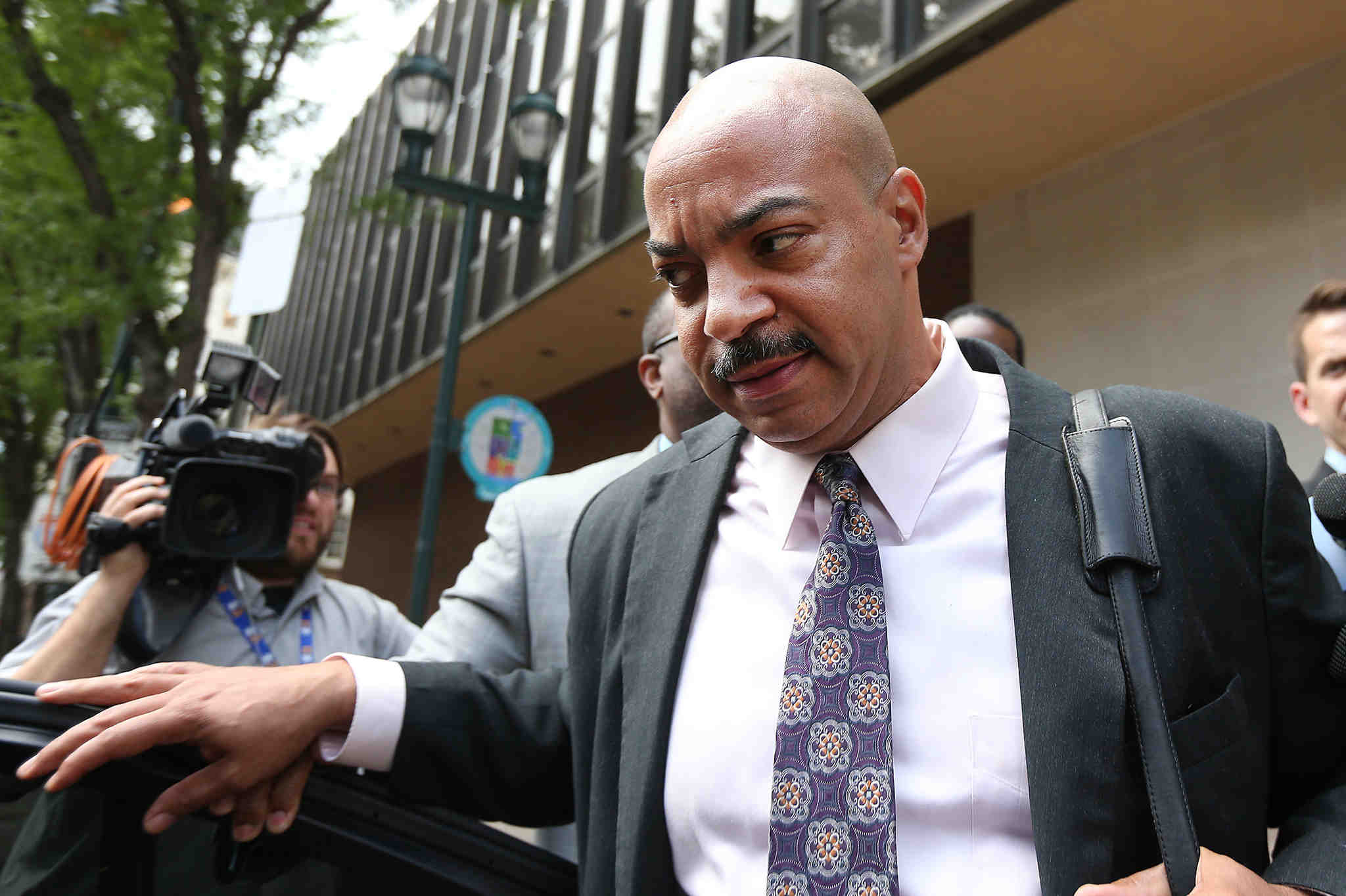
Just moments after then-Philadelphia District Attorney Seth Williams pleaded guilty in a public corruption case, Diamond had Williams handcuffed and hauled off to jail to await sentencing.
Then, a few months later, Diamond imposed the maximum prison term allowed by law — five years. And he upbraided Williams as a “criminal” who surrounded himself with “parasites” and “fed his face at the trough” of public money.
Then-District Attorney Seth Williams leaves the federal courthouse in 2017.DAVID MAIALETTI / Staff Photographer
Now, Diamond is overseeing a new case with a new set of accusations against a different district attorney.
The allegations against top prosecutor Larry Krasner have come as part of a dispute with staffers over how to handle a case, and Diamond has already made clear that he views the assertions as serious — suggesting in a hearing last month that he believed some could amount to federal crimes.
“If what they say is true, potential wrongdoing abounds,” Diamond said, listing off offenses including perjury, conspiracy, and obstruction of justice.
To some area legal observers, the pointed remarks were reflective of Diamond’s reputation as a stern, no-nonsense jurist — particularly when it comes to assessing the conduct of fellow lawyers.
Then-Assistant District Attorney Paul George (back left) was disbarred in federal court in 2025.JESSICA GRIFFIN / Staff Photographer
In 2017, while the case against Williams was still pending, he ordered it to proceed to trial just months after the indictment was unsealed — a highly unusual timetable for a federal case, but one the judge said was necessary because of its “obvious and possibly calamitous effect on the city’s criminal justice system as well as the city itself.”
And even in a comparably trivial legal dispute in 2014, Diamond was unabashedly critical of a lawyer who sued over the rights to a song by the R&B artist Usher, writing: “It is difficult to convey the poisonous atmosphere created by [the lawyer’s] continual belligerence.” The lawyer was ultimately suspended from practicing in the region’s federal courts for three months.
Samuel Stretton, a veteran defense lawyer who often handles legal ethics cases, said Diamond “has high standards. And if someone violates, in his mind, those high standards, he takes a very tough position on them and voices that opinion quickly.”
Still, Stretton said he thinks Diamond’s principled views are sometimes expressed in overly harsh ways.
“He has a strong belief in ethics, and lawyers having those especially, and he feels he must enforce them,” Stretton said. “But sometimes his manner of enforcing them is overstated, and he’s abrupt and a little bit of a bully.”
The question now facing Krasner is what actions Diamond might take in the post-conviction case pending in his courtroom — and whether any could lead to consequences for the city’s DA.
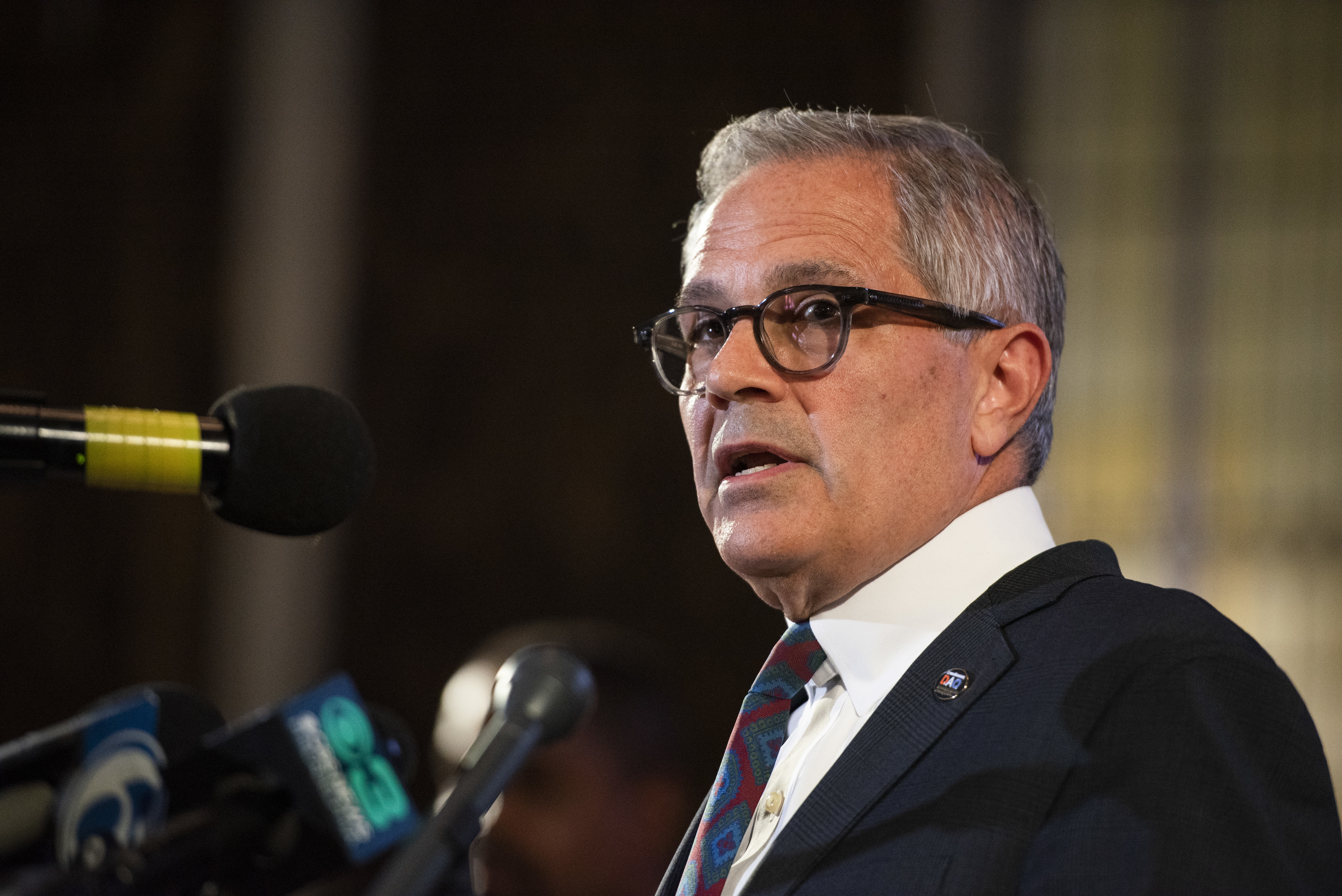
District Attorney Larry Krasner in a file photo from 2023.Allie Ippolito / Staff Photographer
Who is Paul Diamond?
Diamond, 73, was appointed to the region’s federal bench in 2004 by then-President George W. Bush. He was unanimously confirmed by the U.S. Senate.
Before his judicial nomination, he spent nearly two decades in private practice. He began his career as an assistant district attorney in Philadelphia in the late 1970s, and graduated from the University of Pennsylvania law school and Columbia University.
While he worked in private practice, Diamond focused on civil litigation, white-collar criminal cases, and disciplinary matters, according to an online biography. And his clients were sometimes unique.
In 1994, he represented a South Philadelphia candy making company that pleaded guilty to safety violations after an unguarded taffy-pulling machine killed one of its workers.
A few years later, he represented Lower Merion Township when the Barnes Foundation sued and accused township officials of using racism and discrimination to try to hurt the foundation. The suit was dismissed, and a defiant Diamond was later quoted in The Inquirer saying he planned to bill the Barnes around $1 million to cover the township’s legal fees.
“This is a claim that should never have been filed; it’s outrageous that it was ever filed, and now the Barnes is going to see the mother of all fee petitions,’’ he said.
A consistently exacting judge
Like all federal court judges, Diamond oversees a mix of criminal and civil cases. And even though not all receive significant public scrutiny, Diamond is viewed by some as a consistently exacting judge.
In 2012, for example, he ordered a 60-year-old grandmother jailed for using her dead mother’s Social Security checks to support her grandchildren.
“Did it ever occur to you to go out and get a job?” Diamond asked the woman. “Did it ever occur to you that the way to help your grandchildren is not to commit a series of endless federal frauds?”
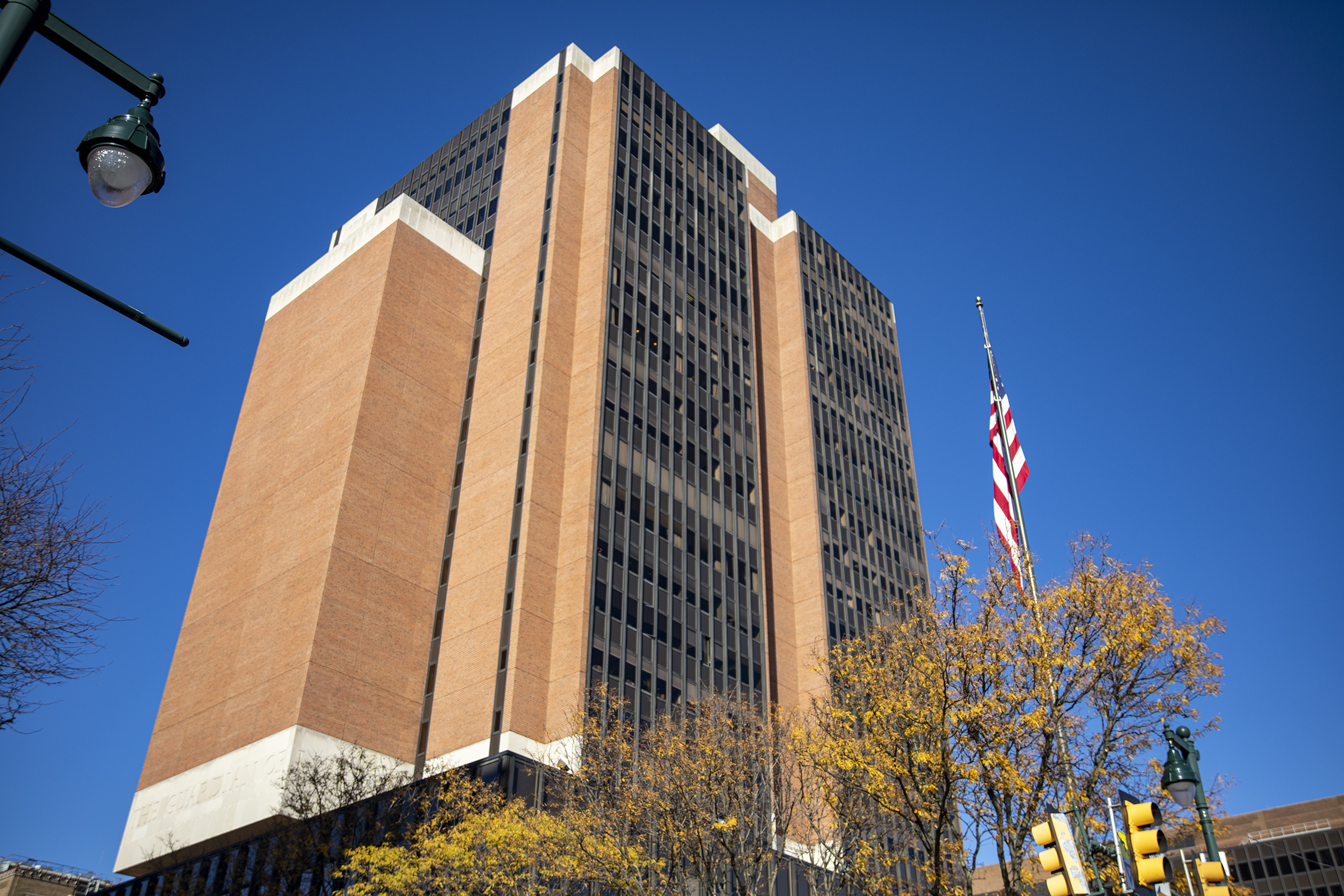
The federal courthouse in Philadelphia.TYGER WILLIAMS / Staff Photographer
Last year, he was subtly critical of the Trump administration in court documents, writing that it was using competing interpretations of the law to try to justify its policy to detain nearly all undocumented immigrants.
It is “difficult to credit the Government’s squarely contradictory position here,” Diamond wrote.
The Krasner matter that ended up in his courtroom arrived as a routine post-conviction case: Dennis Johnson, who was found guilty of second-degree murder in state court in 2009, filed a petition in federal court seeking to have his conviction overturned.
The petition was filed more than 10 years ago, but it wasn’t until 2022 that the origins of the current controversy would begin to take shape.
A frenzy within the DA’s office
That year, after the district attorney’s office had spent years opposing Johnson’s bid for relief, prosecutors changed course.
Then-Assistant District Attorney Jaclyn Mason filed a brief agreeing with Johnson’s lawyers that his trial counsel had been ineffective. And she said her office had discovered problems or inconsistencies with testimony from key witnesses, leading her to recommend that the conviction be overturned.
The case was first sent to a federal magistrate to review, and Judge Lynne A. Sitarski — relying on Mason’s brief — agreed with her position.
But Sitarski’s recommendation was not binding — the final call would fall to Diamond. And this spring, Diamond signaled he was not inclined to accept the assertions in Mason’s brief. He scheduled an evidentiary hearing to hear testimony that could corroborate — or undercut — the office’s conclusion.
That triggered a frenzied sequence of events inside the DA’s office, prosecutors have since testified.
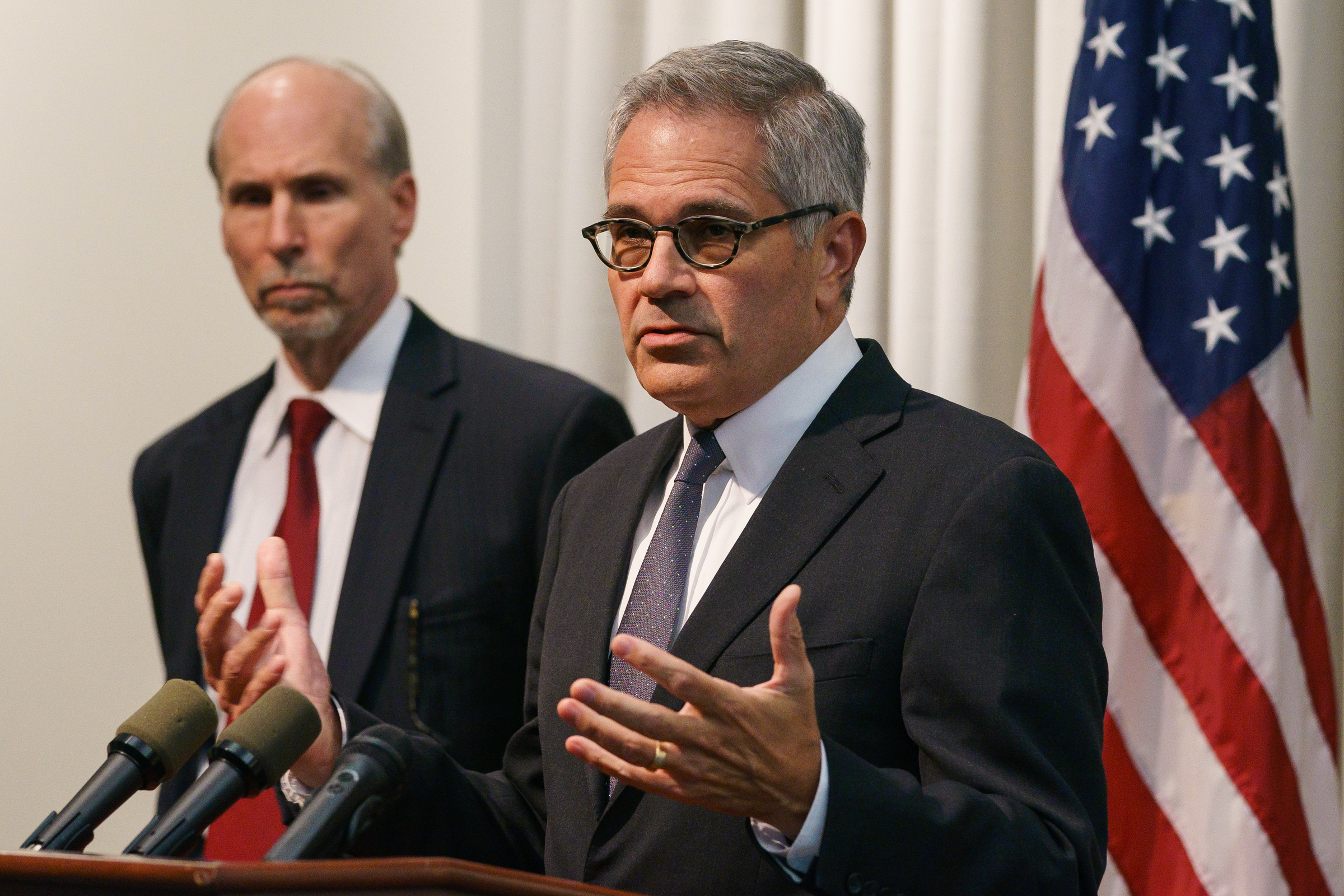
District Attorney Larry Krasner speaks at a news conference while flanked by two prosecutors who have since testified about actions he took in a controversial post-conviction case: David Napiorski (left) and Peter Andrews.Tom Gralish / Staff Photographer
To prepare for the hearing, Mason’s supervisors in the law division reviewed her brief and found a series of what they called “material misstatements.” They decided they needed to try to withdraw Mason’s filing and apologize to Diamond for the mistakes. And they asked that Mason sign on to the new filing with them.
But Mason declined and resigned. She’s since said she only filed her brief at the urging of her then-boss, Matthew Stiegler, who she said had done nothing to review the case himself but instead was “colluding” with Johnson’s defense attorneys to secure his release from prison.
Mason said she didn’t want to become a scapegoat for Stiegler or the office. And she accused her colleagues of attempting to force her to lie to protect the institution.
Her former supervisors have denied that, saying that once they noticed the errors in her brief, they were ethically obligated to correct the record in front of Diamond.
But as they strategized their approach, they said, they encountered consistent resistance from an unusual source: Krasner.
In their telling, Krasner was ardently opposed to asking the state attorney general’s office to take over the case — something the supervisors generally agreed was appropriate because of the drama surrounding the matter within their office.
Assistant District Attorney David Napiorski, head of the office’s law division.Alejandro A. Alvarez / Staff Photographer
And according to the supervisors — Katherine Ernst, Steven Wildberger, David Napiorski, and Peter Andrews — Krasner made a series of notable statements during their discussions, including that he wanted to handle the case in a way that would “protect the office,” that those who didn’t follow his orders would face “consequences,” and that he wanted to keep the matter from the attorney general’s office because he viewed its staffers as “Nazis.”
Several potential paths forward
All of those assertions were aired in Diamond’s courtroom in recent weeks, after the judge decided the evidentiary hearing in Johnson’s case would, for now, focus on the conduct of the prosecutors involved, rather than the merits of his petition. The judge said he’ll evaluate that aspect of the case later.
The attorney conduct portion of the hearing concluded last month, leaving Diamond with several choices about what to do with their startling testimony, legal observers said.
The most immediate issue is whether he’ll allow the DA’s office to continue handling Johnson’s case. Given the dysfunction prosecutors testified to, he could ask the attorney general’s office to take over instead.
But Krasner — who was not called to testify and who has said he can’t comment on the case while it’s pending — will likely have the opportunity to propose his own solution in court documents. In earlier filings, he said he engaged an outside lawyer to handle the matter on the office’s behalf — which, in his view, would insulate the case from the issues roiling his office, and preclude the need to involve state prosecutors.
Beyond that question, however, the testimony about conduct by the DA’s office could, in theory, lead to other consequences.
District Attorney Larry Kranser was not called to testify in front of U.S. District Judge Paul S. Diamond in the post-conviction case that Diamond is overseeing.Heather Khalifa / Staff Photographer
Stretton, the defense lawyer and ethics expert, said Diamond could refer the matter to the federal court’s disciplinary committee. There, a panel of judges could seek to determine if any of the prosecutors involved — including Krasner — behaved in a way that might warrant disciplinary action, such as a suspension or disbarment from practicing in federal court.
That process, which is largely confidential, would also likely be lengthy: In an earlier federal case that led to sanctions for two supervisors in Krasner’s office, a federal judge said he was seeking to initiate the disciplinary process in 2022, and punishments were not decided for another three years.
After that, Stretton said, if discipline is imposed in federal court, the matter would likely be forwarded to the state’s disciplinary board, which would make its own determination of possible penalties. That could also be an extended process.
And in what would likely be the most serious scenario, Stretton said, Diamond could refer the matter to federal or state prosecutors — or prosecutors could decide to pursue it themselves — to determine if crimes were committed. That, too, would almost certainly not be resolved quickly.
Stretton said any of those processes — and any potential outcomes — could also be further delayed or complicated because of inevitable disputes or competing interpretations over what lawyers did. In his view, for example, ethical rules generally allow a supervisor such as Krasner to pursue a legal strategy opposed by his subordinates as long as he had a “reasonable” argument for doing so.
And the testimony that unfolded before Diamond has already demonstrated that different lawyers had different recollections of what occurred: Mason accused her bosses of encouraging her to participate in a cover-up, but the supervisors said that wasn’t true.
The supervisors, meanwhile, accused Krasner of trying to get them to violate their ethical obligations, a contention he has similarly denied.
For now, the case remains on hold as Diamond weighs how to move forward. He has asked lawyers in the case to file additional briefings by Tuesday about how they believe the case should proceed.
Beyond that, Diamond has not indicated how quickly he might rule on the matter.
Convicted former Philadelphia labor leader John Dougherty was released Friday afternoon from a federal penitentiary in Lewisburg, his lawyer said, capping a surprise outcome that was the result of President Donald Trump’s decision to commute the remainder of Dougherty’s six-year prison term.
Dougherty’s lawyer, George Bochetto, said he was released around 3 p.m. Attempts to reach Dougherty for comment Friday were unsuccessful.
For much of the past year, Dougherty had been petitioning U.S. District Judge Jeffrey L. Schmehl to release him on house arrest so he could provide care for his gravely ill wife. But Schmehl had repeatedly denied those efforts.
Trump’s decision to commute Dougherty’s sentence instead will result in a more sweeping form of relief: His conviction will remain intact, but he will not be subject to any monitoring or house arrest, and he will no longer have to pay about $1.6 million in restitution to the union he was convicted of defrauding.
Bochetto called Trump’s decision “a magnificent gesture of compassion.” And he said it came after he’d been in regular communication with White House staff members about the dire and longstanding health challenges faced by Dougherty’s wife, Cecilia.
A White House official said Friday that those circumstances figured into Trump’s decision — particularly because Dougherty’s father-in-law, who had been serving as the primary caretaker, died last year.
Bochetto said there was “absolutely no reason” to keep Dougherty behind bars while his wife’s health was continuing to decline.
Dougherty, while testifying before Schmehl earlier this year, said he had done everything he could from prison to lift his wife’s spirits — mailing her letters, routinely calling her, and even singing to her over the phone.
But he said he was desperate to get home and help her manage a set of challenges that have left her paralyzed and largely nonverbal. He said his adult daughters and private aides were struggling to provide the type of intensive, round-the-clock care she requires.
“I just want to take care of Celia,” he said.
The U.S. Attorney’s Office had opposed Dougherty’s efforts to be released. A spokesperson said the office had no comment on Trump’s decision to set Dougherty free.
Beyond caring for his wife, it was not immediately clear Friday what Dougherty’s future might hold — or whether he’d use his newfound freedom to try to return to the political stage.
Before he was prosecuted, Dougherty was a bona fide power broker while running Local 98 of the International Brotherhood of Electrical Workers, which he turned into the biggest independent source of campaign money in Pennsylvania. That funding helped elect mayors, City Council members, and members of Congress. It also helped bolster the judicial candidacy of Dougherty’s brother, Kevin Dougherty, who won a seat on the Pennsylvania Supreme Court in 2015.
Even if John Dougherty did want to seek a return to the spotlight, it would have to come from a different perch.
Not only is Local 98 under new leadership, Dougherty’s convictions on counts of bribery and embezzlement make him ineligible to hold an elected union office for 13 years under U.S. Department of Labor laws.
Labor leader Ryan Boyer, who replaced Dougherty as chair of the Philadelphia Building and Construction Trades Council, said he nonetheless expected Dougherty to end up back in the mix in some fashion.
“If I know John the way I know John,” he said, “he’s not going to sit on his hands.”
Staff writers Sean Collins Walsh and Maggie Prosser contributed to this article.