Author: Chris Palmer

  • Johnny Doc’s prison sentence was commuted by President Donald Trump, his lawyer says

    Johnny Doc’s prison sentence was commuted by President Donald Trump, his lawyer says

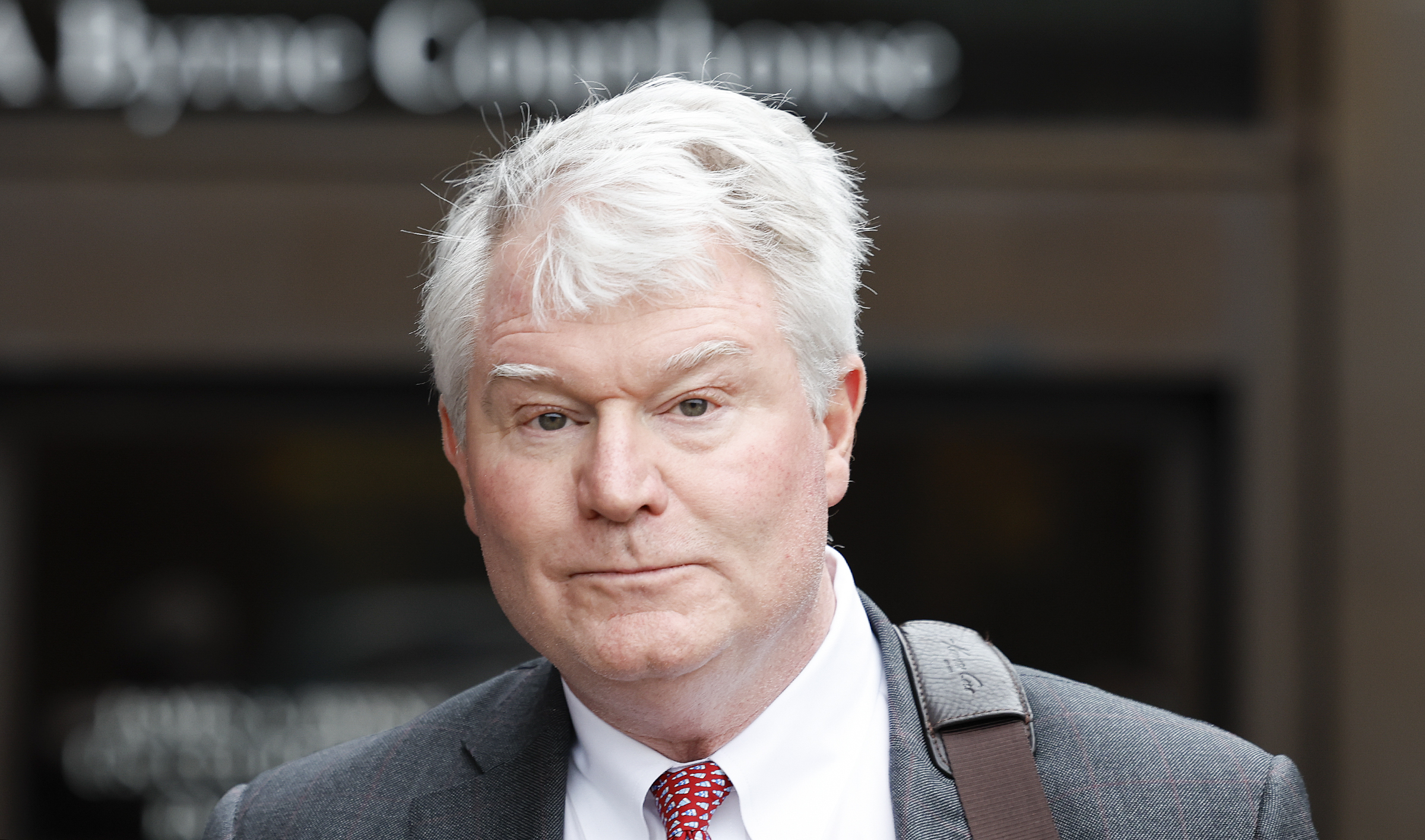
    Convicted former Philadelphia labor leader John Dougherty will have his six-year prison term cut short after President Donald Trump agreed to sign a commutation ending the rest of Dougherty’s sentence, according to Dougherty’s lawyer.

    George Bochetto said in an interview Thursday night he’s hopeful that Dougherty, the former city power broker known as Johnny Doc, could be freed from a federal penitentiary in Lewisburg as soon as Friday.

    Bochetto called Trump’s decision “a magnificent gesture of compassion.” He said Trump had signed the commutation Thursday afternoon.

    Records on the Office of Pardon Attorney’s website did not yet reflect a commutation approval as of Thursday night. And the White House press office did not immediately respond to a request for comment.

    Outgoing Pardon Attorney Ed Martin shared a news story about Dougherty’s impending release on social media and added: “Mercy granted by the Mercy President, Donald J. Trump.”

    Trump had denied Dougherty’s bid for a commutation earlier this year, according to that agency’s website. It was not immediately clear why circumstances changed this week.

    For months, Dougherty had been petitioning U.S. District Judge Jeffrey L. Schmehl to be released on house arrest to provide care for his gravely ill wife. But Schmehl had repeatedly denied those efforts, saying in part that Dougherty had failed to demonstrate he was the only person who could serve as an adequate caretaker.

    Prosecutors had opposed Dougherty’s request for similar reasons, and said the two years he spent behind bars of his six-year sentence was not enough time to merit release. A spokesperson for the U.S. Attorney’s Office did not immediately respond to a request for comment Thursday night.

    A commutation will keep Dougherty’s conviction intact, but allow him to return home to his wife, Cecilia, who Bochetto said was in “a desperate situation.” Bochetto said the act of clemency would also relieve Dougherty of having to pay about $1.6 million in restitution, and that Dougherty would not be subject to any monitoring or house arrest, saying Dougherty, upon release, would be “a free man.”

    Presidents have broad authority to issue pardons and commutations in federal cases, and Trump has shown a willingness to grant them to political allies during his second term in office. But Bochetto said Trump, a Republican, was being particularly gracious in this instance by commuting the sentence of Dougherty, a longtime Democratic stalwart.

    “Our criminal justice system needs to have some compassion,” Bochetto said. “There’s absolutely no reason to keep John Dougherty housed in a country club environment facility in Lewisburg when his wife so desperately needs him.”

    Bochetto said he’d been in regular communication with White House staff members in seeking to free Dougherty, and that his arguments focused on the same issues he used in the bid to receive compassionate release from Schmehl: That Dougherty’s wife, who has long suffered from a debilitating brain injury, has seen her condition worsen significantly since her husband was imprisoned, and that he is the only person equipped to provide the care she needs.

    Dougherty’s prosecution was one of the more significant local criminal cases in recent memory. For years, Dougherty had served as the head of his politically powerful union, Local 98 of the International Brotherhood of Electrical Workers. And from that perch, he was a certified political kingmaker — an organized labor leader with connections in City Hall and Harrisburg, and a man with the ability to raise funds or impart influence on a variety of issues across the state.

    But in 2024, he was sentenced to six years in prison after being convicted in separate trials — the first in 2021, after a jury found that he had spent years bribing former Philadelphia City Councilmember Bobby Henon, the second in December 2023 over nearly $600,000 he and others embezzled from the union.

    Earlier this year, while testifying before Schmehl, Dougherty revealed just how far away he was in prison from his life as a political power player: He told the judge that nearly all of his time now revolved around his wife, including sending her dozens of letters, using all of his allotted monthly phone minutes to call her, and singing her lullabies over the phone.

    Ryan Boyer, who replaced Dougherty as chair of the Philadelphia Building and Construction Trades Council, said he was happy for Dougherty.

    “I don’t think that John should have been arrested for what he did,” Boyer said in an interview Thursday night. “It’s correcting an injustice, and he’ll be welcomed home by a lot of people in the Philadelphia building trades, as well as Philadelphia in general.”

    Boyer said he expects Dougherty will be prohibited under the terms of his release from jumping back into labor and politics right away.

    “With him having a commutation, I think there will be some prohibitions with him getting back involved with labor,” Boyer said.

    But, he added, he doesn’t expect Dougherty to stay away forever.

    “John has a sharp mind,” Boyer said. “If I know John the way I know John, he’s not going to sit on his hands.”

    City Councilmember Jimmy Harrity said in an interview Thursday night he was happy Dougherty would be able to return home to take care of his wife.

    “I’m just happy that he’s going to be able to take care of Celia. I’m just happy for his family,” Harrity said. “I never want to see anybody go to jail, but the bottom line is everybody must pay their dues back. He got in trouble, he went to jail, he did some time.”

    As for whether Dougherty’s release would have an influence on Philly politics going forward, Harrity declined to say.

    “Oh, I don’t even want to speculate on that,” he said. “I have no idea.”

    While some labor leaders cheered the news of Dougherty’s release, one was notably less enthusiastic: Mark Lynch Jr., who succeeded Dougherty as business manager of the International Brotherhood of Electrical Workers Local 98.

    “We don’t spend our time focused on that,” Lynch said in a statement Thursday night, referring to Dougherty’s commutation. “Our focus is on the future of IBEW Local 98 and delivering results for our members.”

    While Lynch often appears at news conferences and Local 98 is still politically influential, he has taken a more under-the-radar approach than his predecessor.

    “Today, our members are working at essentially full employment,” Lynch said in his statement. “We have secured better health, dental and vision benefits while lowering costs to our members. We have negotiated some of the strongest wage increases in the country.”

    Another change: Lynch has lowered the amount that electricians pay into the union’s political committee. Dougherty, on the other hand, was able to build Local 98 into a political powerhouse in no small part by convincing his members to increase their contributions.

    “We are proud of the direction of the organization, and we intend to keep moving forward,” Lynch said.
  • DA Larry Krasner will not be called to testify about a case that has roiled his office

    DA Larry Krasner will not be called to testify about a case that has roiled his office

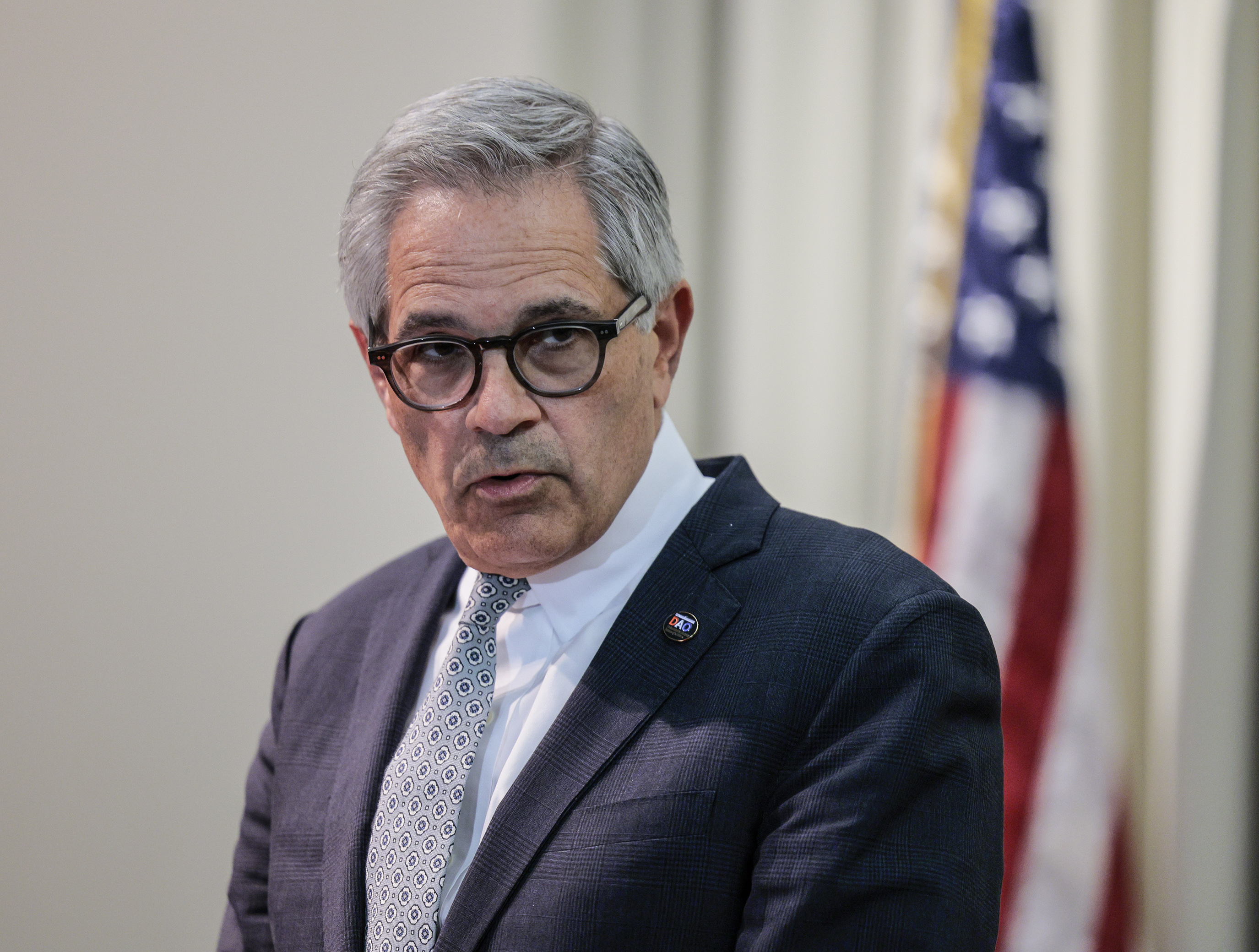
    A federal judge said Tuesday that he will not call Philadelphia District Attorney Larry Krasner to testify about his actions in a controversial post-conviction case — despite the fact that some of Krasner’s own staffers have accused him of overseeing the matter in ways they viewed as inappropriate.

    The decision by U.S. District Judge Paul S. Diamond came at the end of a multiday hearing at which two of Krasner’s prosecutors testified about the discord that emerged among lawyers in the office as they worked to determine whether a man’s murder conviction should be overturned.

    Both prosecutors who testified Tuesday, David Napiorski and Peter Andrews, largely echoed assertions two of their colleagues made on previous days of the hearing — including that Krasner vehemently opposed referring the case to the state attorney general’s office, and that he threatened unspecified “consequences” for those who didn’t follow his orders.

    In earlier testimony, other staffers accused Krasner of calling state prosecutors “Nazis” and growing “apoplectic” when they memorialized their disagreements with him in writing. Diamond last week also suggested that some actions in the case could amount to crimes including perjury, conspiracy, or obstruction of justice.

    Napiorski and Andrews continued to paint a portrait of an office consumed by internal conflicts over its actions in the matter. And they accused Krasner of sometimes amplifying the drama.

    Despite that, Diamond said at the conclusion of the hearing that he did not intend to hear from any other witnesses, including Krasner. Instead, Diamond said, his next step would be to determine whether Krasner’s office should be allowed to continue participating in the case moving forward. He did not specify how quickly that ruling might come.

    Krasner declined to comment Tuesday. He has previously declined to talk about the matter, saying it would violate ethical rules to do so while it remains pending.

    The underlying case is the conviction of Dennis Johnson, who was found guilty of second-degree murder in 2009 for fatally shooting Kenyatta Smith outside a North Philadelphia convenience store.

    Johnson appealed his conviction, in part because he said his trial attorney was ineffective. And in 2022, a newly hired prosecutor in Krasner’s law division, Jaclyn Mason, filed court documents agreeing with him and saying his conviction should be overturned.

    But this spring, some of Mason’s colleagues began reviewing the case and took the opposite view — in part because they said she’d made clear and important mistakes in her brief supporting Johnson’s position.

    That set off a sequence of events that has gone on to roil Krasner’s office.

    First, Mason’s supervisors said they had to withdraw her brief and apologize to Diamond for her mistakes — an unusual step for lawyers to take in court.

    And although they said they offered Mason a chance to join that effort, she resigned instead, saying she’d only filed her brief because her boss, Matthew Stiegler, had pressured her to do so, and that she didn’t want to be used as a scapegoat for the office.

    In the weeks that followed, prosecutors testified, Krasner became involved in a series of disputes with those who remained on the case, including Napiorski, Andrews, and two of their colleagues: Katherine Ernst and Steven Wildberger.

    All four went on to testify that they believed their office should recuse itself from handling Johnson’s case because their internal discussions had veered into areas of self-preservation rather than the merits of Johnson’s claims.

    But Krasner disagreed, they said, at times angrily. He said he would not refer the case to the attorney general’s office because he viewed their staffers as “Nazis,” according to Ernst and Wildberger. And they and Napiorski said Krasner also wanted to keep the case in-house to “protect the office.”

    By mid-July — about six weeks after Mason resigned — Ernst, Wildberger, Napiorski, and Andrews filed documents with Diamond saying they could no longer participate in the case due to the behind-the-scenes drama.

    Krasner, in a court document of his own, called their assertions unauthorized and “ill-informed.”

    As Diamond weighs how to sort out the turmoil, Roy Clark, Johnson’s father, said he’s become demoralized by how attention has shifted away from whether or not his son should be released from prison.

    “With all the in-house fighting and stuff for the DA’s Office, it takes the human component out of the case,” he said outside the courthouse Tuesday. “We’re trying to get my boy home.”

    Staff writer Jesse Bunch contributed to this article.

  • A federal judge suggested actions by DA Larry Krasner’s office in a controversial case could amount to crimes

    A federal judge suggested actions by DA Larry Krasner’s office in a controversial case could amount to crimes

    A federal judge on Thursday said actions city prosecutors took in a controversial post-conviction case could ultimately amount to perjury, conspiracy, or obstruction of justice — a stunning suggestion that inserted the threat of potential criminal consequences into a matter that has already roiled District Attorney Larry Krasner’s office.

    U.S. District Judge Paul S. Diamond did not say whom he was referring to when he made that remark during an unusual hearing in his courtroom. But he raised the issue while an assistant district attorney was testifying about conversations she had with Krasner about the case, in which she said Krasner told her to “protect the office” and, by extension, violate her ethical obligations as a lawyer.

    “If what they say is true,” Diamond said, “potential wrongdoing abounds.”

    Diamond, as a judge, does not have the ability to file criminal charges himself. But his remarks from the bench were another new development in the case, which had already featured a host of explosive accusations about how prosecutors have behaved while determining whether a man’s murder conviction should be overturned.

    And it was not the only notable moment during Thursday’s hearing.

    During a full day of testimony, three prosecutors made a series of striking statements about the interoffice drama behind the case. And some of their assertions directly accused Krasner of questionable conduct.

    Assistant District Attorney Katherine Ernst said Krasner repeatedly told her and others to protect the office and avoid additional scrutiny from the courts. She and colleague Steven Wildberger also said Krasner threatened “consequences” — which they believed to be potential firings — for those who resisted his preferred method of handling it.

    Krasner also rejected their advice to ask the state attorney general’s office to take the lead on the matter, they said, because, according to Ernst, Krasner “hated” everyone in that office and said “everybody in that [office] is Nazis.”

    And all three prosecutors said Krasner and another supervisor, Matthew Stiegler, tried to persuade them to effectively find a way to protect Stiegler’s reputation at the expense of a prosecutor he supervised, Jaclyn Mason.

    As Ernst recalled it, Stiegler said he wanted to make it seem as if any mistakes in the case were “100% [Mason’s] fault and 0% his fault.”

    In Ernst’s view, the events demonstrated that Krasner cared “more about the reputation of the office than competently handling this case.”

    Wildberger said he was so disillusioned that he stepped down as a leader of the law division to move to a different unit because “I have lost faith in the administration of the Philadelphia District Attorney’s Office.”

    The testimony from Ernst, Wildberger, and their colleague David Napiorski served as an extended rebuke of the office where all three still work. Ernst at one point acknowledged that some of her relationships in the office have become “icy.”

    Ernst and Wildberger accused Krasner in court documents last month of some of the conduct they testified about Thursday.

    Krasner’s office responded by saying their filings were unauthorized and “ill-informed.” He also said that he had taken steps to alleviate their concerns with how the case was being handled, and that they were in no position to comment on behalf of his office.

    The prosecution at issue is the conviction of Dennis Johnson for second-degree murder. In 2009, a jury found Johnson guilty of fatally shooting Kenyatta Smith during a robbery outside a North Philadelphia convenience store two years earlier. He was sentenced to life in prison.

    Johnson appealed, in part because he said his trial attorney was ineffective. And in 2022, Mason filed court documents agreeing with one of his post-conviction petitions and saying Johnson’s conviction should be overturned.

    But this spring, Ernst and some of her colleagues reviewed the case and took the opposite view, saying they had discovered clear and important errors in Mason’s brief. They then took the unusual step of filing another brief to ask that Mason’s recommendation be withdrawn.

    In the days after that development, Mason resigned, a decision she later said was an attempt to protect herself from what she viewed as a plot to turn her into a scapegoat.

    Ernst and her colleagues denied that they were seeking to blame Mason. And in the weeks after Mason’s resignation, Ernst said, she and other supervisors got into an extended series of arguments with Krasner over how to handle the situation — which is what formed the basis of much of their testimony Thursday.

    Most of the disputes concerned whether the office should recuse itself from handling Johnson’s case at all. Ernst said she repeatedly tried to get Krasner to let the attorney general’s office take over the case because the internal discussions had veered into areas of self-interest rather than the merits of the case.

    Krasner consistently refused, she said. And Wildberger said Krasner once grew “apoplectic” when they attempted to memorialize their concerns in writing, because that would make their memos and emails potentially discoverable in future litigation.

    Wildberger said Krasner threatened “consequences” if they continued to resist his preferred method of proceeding, which was to hire an outside lawyer to handle the matter on the office’s behalf.

    But neither Wildberger nor Ernst saw that path as appropriate, and last month both signed on to a brief before Diamond saying they could no longer participate in the case because of their ongoing debates with Krasner.

    Diamond paused Thursday’s hearing in the middle of Napiorski’s testimony. He plans to continue the proceedings next week.

    He has not ordered Krasner to testify.

    Krasner said it would violate ethical rules to comment while the hearing remains ongoing.

    “As much as I would like to speak right now,” he said, “my comments will have to come at a later time.”

  • A man who tried to hire a hit man to kill a rival was sentenced to more than 15 years in prison

    A man who tried to hire a hit man to kill a rival was sentenced to more than 15 years in prison

    Not long after Xin Guang-Go’s skill game business in North Philadelphia collapsed — a development that led to tension between him and his onetime business partner — Guang-Go decided he wanted his former colleague to die.

    To follow through on his threat, Guang-Go sought to hire a hit man — supplying the man with his target’s address, pictures of his intended victim’s car and home, as well as a cash deposit and a tip about where his rival might be storing about $100,000 in a safe.

    Guang-Go said the hit man could keep that money as long as the murder was carried out. And he also asked that his target’s girlfriend be killed in the process. For both killings, Guang-Go was willing to pay $30,000.

    But unknown to Guang-Go, the hit man he tried to hire was working as a confidential informant for the Bureau of Alcohol, Tobacco, Firearms, and Explosives. Guang-Go was arrested before either of his victims was harmed.

    In federal court Monday, Guang-Go, 48, of Plymouth, N.C., was ordered to serve more than 15 years in prison for seeking to carry out his scheme — a plot that U.S. District Judge Harvey Bartle III said was one of the most serious crimes a person could commit.

    “It’s totally unacceptable to settle a business dispute by entering into a contract to have your opponent murdered,” Bartle said.

    Guang-Go apologized, saying he had been consumed by impulses he now recognizes were wrong.

    It was “as if there was evil in my heart,” he said through an interpreter. “Evil was controlling my brain.”

    Neither of Guang-Go’s victims appeared in court Monday. Assistant U.S. Attorney Amanda McCool said both remain traumatized by his attempt on their lives.

    She said Guang-Go was not simply an unlucky or bumbling criminal who made a deal with the wrong source. He fully intended for his victims to die, she said — and in court documents, prosecutors said he had asked his would-be hired killer to provide photographic proof that the victims had been slain.

    “This is not some one-off of the defendant, that [he] ran into someone who suggested” the plot, McCool said. “Throughout the course of a week, he made multiple proactive steps to further his plan.”

    Guang-Go — who pleaded guilty this spring to murder-for-hire offenses — said that he had brought shame to his entire family through his actions, and that he regretted his prison sentence would take him away from his children and his aging mother.

    In addition to ordering Guang-Go to 188 months behind bars, Bartle imposed a three-year term of supervised release.

    Guang-Go, a native of China and a legal permanent resident of the United States, is likely to be deported whenever his term of incarceration is finished.

  • A man who stole $1 million in cryptocurrency was sentenced to seven years in prison

    A man who stole $1 million in cryptocurrency was sentenced to seven years in prison

    A 24-year-old Portuguese man was sentenced Monday to seven years in federal prison for stealing more than $1 million in cryptocurrency from unwitting victims, including a resident of Montgomery County — crimes prosecutors said the man committed while he was associated with an international cybercrime network.

    Ruben Filipe Gabriel Martins pleaded guilty last year to wire fraud and identity-theft charges for using sophisticated phishing tactics to obtain victims’ cryptocurrency account information, then stealing their investments.

    Prosecutors said Martins committed his fraud while he was part of a group called “the Com,” a global network of people who use technology to commit a variety of crimes across the world, including extortion, theft, and even incitements of violence.

    Last year, a teen who was associated with a subset of the Com made hoax active-shooter calls targeting Villanova University and other colleges, prosecutors have said, crimes that led to massive police responses and inspired widespread panic.

    Martins, meanwhile, was associated with a subset known as “CryptoChameleon,” a group that uses a variety of deceptive tactics to obtain account information from cryptocurrency holders. In Martin’s case, prosecutors said, he pretended to be a customer support representative for Coinbase, a cryptocurrency exchange, and told his victims he could offer support for their compromised accounts — tactics he used to get into the accounts and steal the victims’ funds.

    Martins then went on to transfer the proceeds into other cryptocurrencies, prosecutors said, and ultimately spent his ill-gotten gains on luxury goods, traveling, and gambling.

    His scheme began to unravel in 2024, when prosecutors said a man from Towamencin Township told police that more than $60,000 had been stolen out of his cryptocurrency account after he’d replied to text messages and calls about its security. Authorities were ultimately able to link that activity to Martins, who was born in Portugal and went on to live in Scotland.

    Martins’ lawyer said in court documents that Martins had never intended to become “a career criminal.” But after being raised in modest circumstances — including by working in a fish factory as a teenager — Martins was introduced to a host of wealthy benefactors due to his skill in online gaming, his lawyer said, and some of those people then flew him to Paris and recruited him to participate in their digital exploitation operation.

    In court Monday, Martins apologized for his actions, saying he was in debt when he committed his crimes and viewed the scheme as a way to make “really easy money.”

    “I made a mistake when I was really down,” he said, “and I’d just like to have another chance at life.”

    But U.S. District Judge Gerald J. Pappert said it was a significant understatement to describe the crimes as a “mistake ” — saying Martins had used his computer skills and desire for money to turn himself into a “dangerous” person who stopped only when he got caught.

    “Not one thing you did in two years was a mistake,” Pappert said. “You needed money. You saw what for you was an easy way to get a lot of money. … And I don’t know to what extent, if at all, you ever felt bad about it, because these people were all behind a computer, and you never had to look them in the eye.”

    One of Martins’ victims has seven children, Pappert noted, and others were intelligent people who lost significant portions of their life’s savings.

    Martins is expected to be deported to Portugal once he finishes his prison sentence. But Pappert said his victims may never get over the shame and financial hardship he caused them.

    “These were horrible crimes,” Pappert said. “None of these people deserved this.”

  • Three Philly men stole government checks worth $68 million and then resold them online, feds say

    Three Philly men stole government checks worth $68 million and then resold them online, feds say

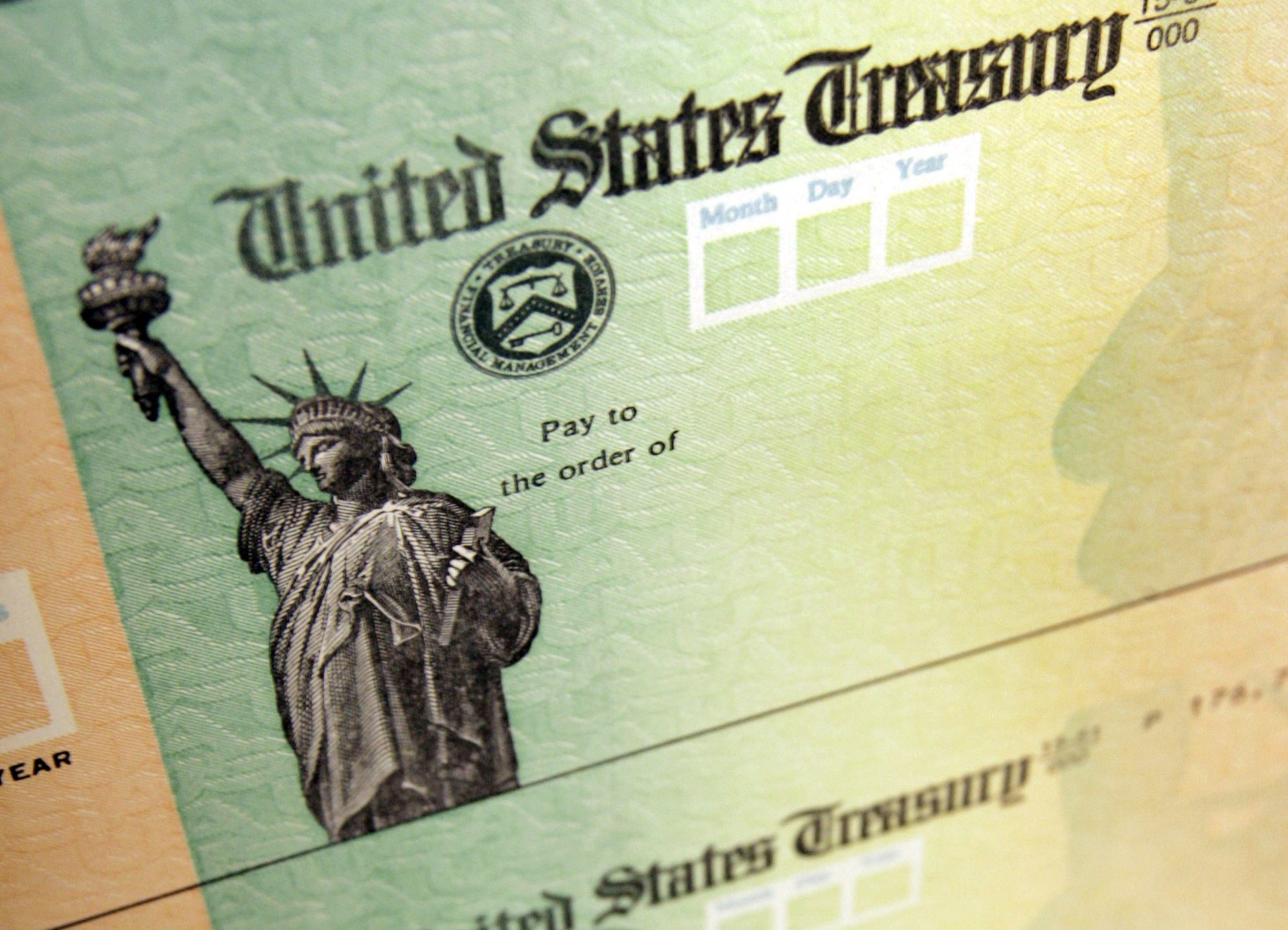
    Three Philadelphia men worked together to steal about $68 million worth of government-issued checks out of the mail and then reroute them to buyers they found online, according to federal prosecutors.

    The U.S. Attorney’s Office said in an indictment filed last month that Nyeem Anderson stole hundreds of Treasury Department checks between 2024 and 2026 — checks that were printed and to be mailed from a facility in Philadelphia, and that were intended for people expecting payments from the Internal Revenue Service, Social Security Administration, Department of Veterans Affairs, or other federal agencies.

    Prosecutors did not specify how Anderson came to possess the checks, saying only that he received them “from an unknown source.” But once he had them, they said, he advertised them for resale online, including on a Telegram channel he oversaw, where he would post pictures of the checks and large piles of envelopes containing others.

    Once he negotiated a sale price, prosecutors said, Anderson worked with Zaahir McGough and Qadir Pettus to mail the stolen checks to their chosen buyers, who would often send payments to accounts he had with systems such as Cash App or Zelle.

    Prosecutors did not say how much the trio made from their scheme. But they said the checks were often sold for a fraction of their face value. Last May, for example, Anderson agreed to sell a check worth nearly $11,000 to an unidentified buyer for $299.

    And sometimes Anderson would advertise multiple checks for sale at once, with the checks’ face values occasionally exceeding $200,000, prosecutors said.

    Anderson’s attorney declined to comment Friday. Attempts to reach McGough’s lawyer were not immediately successful, and Pettus did not have an attorney listed in court records.

    In a document filed this week, prosecutors said that when Anderson was arrested last week, he appeared to realize he was facing significant trouble.

    Authorities found him holding $16,000 in stolen checks, prosecutors said. And as he was taken into custody, they said, he made a parting remark to onlookers.

    “They finally got me,” Anderson said, according to prosecutors. “Tell everyone I am going away for a long time.”

  • Half the 26 people charged in an NCAA gambling scandal have now pleaded guilty or admitted wrongdoing

    Half the 26 people charged in an NCAA gambling scandal have now pleaded guilty or admitted wrongdoing

    Two people charged with participating in an international scheme to rig basketball games for professional gamblers pleaded guilty in Philadelphia’s federal court Wednesday — the latest development in a scandal that shook the sports world when prosecutors unveiled a sprawling set of indictments earlier this year.

    The pleas entered by Bradley Ezewiro and Alberto Laureano mean that half the 26 people charged with participating in the scheme have admitted their crimes in court or have signaled in paperwork that they intend to do so before trial.

    None of the defendants has been sentenced, and cases remain pending against some of those charged with taking more active roles in the conspiracy — including Shane Hennen, a former Philadelphia resident and prolific sports bettor whom prosecutors have described as a key organizer.

    Still, Wednesday’s guilty pleas — which proceeded with little fanfare — served as a notable moment in a case that has attracted widespread attention as federal authorities across the country in recent years have increasingly been unveiling charges in sports gambling-related prosecutions.

    The U.S. Attorney’s Office announced the charges in January, saying it had arrested 26 people, including 20 basketball players, for participating in a multiyear scheme to fix games in the NCAA and the Chinese professional league.

    The scam was relatively straightforward, prosecutors said: Professional gamblers and some basketball trainers bribed players to underperform in games, and bettors then wagered against the players’ teams at various sportsbooks. The conspiracy involved dozens of games and millions of dollars in fraudulent bets, prosecutors said.

    Some of the bets were placed by Hennen or others in Philadelphia, prosecutors said, including a six-figure wager on a Chinese basketball game at Rivers Casino’s sportsbook in Fishtown.

    And some of the NCAA players charged with participating in the scheme spent time in the Philadelphia area, although none was accused of accepting bribes while playing for a local university.

    Ezewiro and Laureano each pleaded guilty Wednesday to bribery-related charges. Both were accused in court documents of playing supporting roles in the scheme.

    Laureano served as a “fixer” who recruited players into the conspiracy and sometimes delivered them bribe money, prosecutors said.

    Ezewiro joined the operation in 2024 while playing for St. Louis University, and also worked with another fixer to identify other players to bribe, prosecutors said.

    Their pleas came several days after other accused coconspirators also pleaded guilty.

    Over the last week, two former players at the University of New Orleans — Cedquavious Hunter and Dyquavion “Jah” Short — admitted accepting bribes while they played on that team.

    And last week, Shawn Fulcher pleaded guilty to taking bribes while playing at two schools, prosecutors said: the State University of New York at Buffalo and Alabama State University.

    U.S. District Judge Nitza I. Quiñones Alejandro has scheduled sentencing hearings in the coming months for the people who have pleaded guilty.

    A trial for the remaining defendants, meanwhile, is currently scheduled to take place early next year.

  • A Lancaster County man pleaded guilty to fraud after the feds accused him of running a $400 million Ponzi scheme

    A Lancaster County man pleaded guilty to fraud after the feds accused him of running a $400 million Ponzi scheme

    A Lancaster County man pleaded guilty Monday to defrauding investors in his ATM businesses out of more than $400 million, a long-running scam that federal authorities have characterized as a Ponzi scheme.

    Daryl Heller, 56, of Lititz, was indicted last year after prosecutors said he deceived thousands of people who had invested in several businesses he owned that he used to buy and operate ATMs.

    As he sought to raise money for his firms, prosecutors said, Heller promised investors guaranteed monthly returns, which he said would be the result of operating the ATMs. And he also courted investors by using forged or fraudulent financial documents to inflate the purported health of his businesses, prosecutors said.

    Once Heller got cash infusions, prosecutors said, he used them to pay back old investors. He also spent some of the money on personal expenses or business debts.

    The scheme began to fall apart in 2023, when one of his companies, Paramount Management Group, began struggling to raise new money. Several months later, prosecutors said, Paramount stopped making payments to its older investors.

    Heller later filed for bankruptcy protection — which remains pending — and the U.S. Attorney’s Office in Philadelphia indicted him last August.

    In all, prosecutors said, Heller raised about $770 million from 2,700 people between 2017 and 2024, causing his investors to lose about $400 million. (Heller’s attorneys said Monday that they don’t agree with that number and plan to dispute it in court before he is sentenced.)

    Heller said little in court beyond responding to routine legal questions while pleading guilty to a securities fraud charge. He declined to comment after the hearing.

    U.S. District Judge Catherine Henry is scheduled to sentence Heller in December. He faces a maximum sentence of 20 years in prison.

  • A Mayfair man faces an additional civil rights charge for trying to burn down a Northeast Philly mosque, feds say

    A Mayfair man faces an additional civil rights charge for trying to burn down a Northeast Philly mosque, feds say

    A Mayfair man accused of trying to set fire to a Northeast Philadelphia mosque is now also facing a federal civil rights charge, according to the U.S. Attorney’s Office.

    Vincent Lang was arrested last month and charged with a federal arson-related offense for allegedly throwing an incendiary device into the Northeast Philadelphia Islamic Center on July 5.

    On Thursday, prosecutors announced that they’d also moved to indict Lang on a count of damaging religious property, something U.S. Attorney David Metcalf said “demonstrates our resolve to protect our core constitutional liberty of religion.”

    Lang, 60, has been in federal custody since he was arrested for the arson offense, which carries a five-year mandatory minimum prison sentence if he’s convicted.

    The new charge means Lang faces a maximum possible prison sentence of 40 years, prosecutors said.

    His federal defender declined to comment Friday.

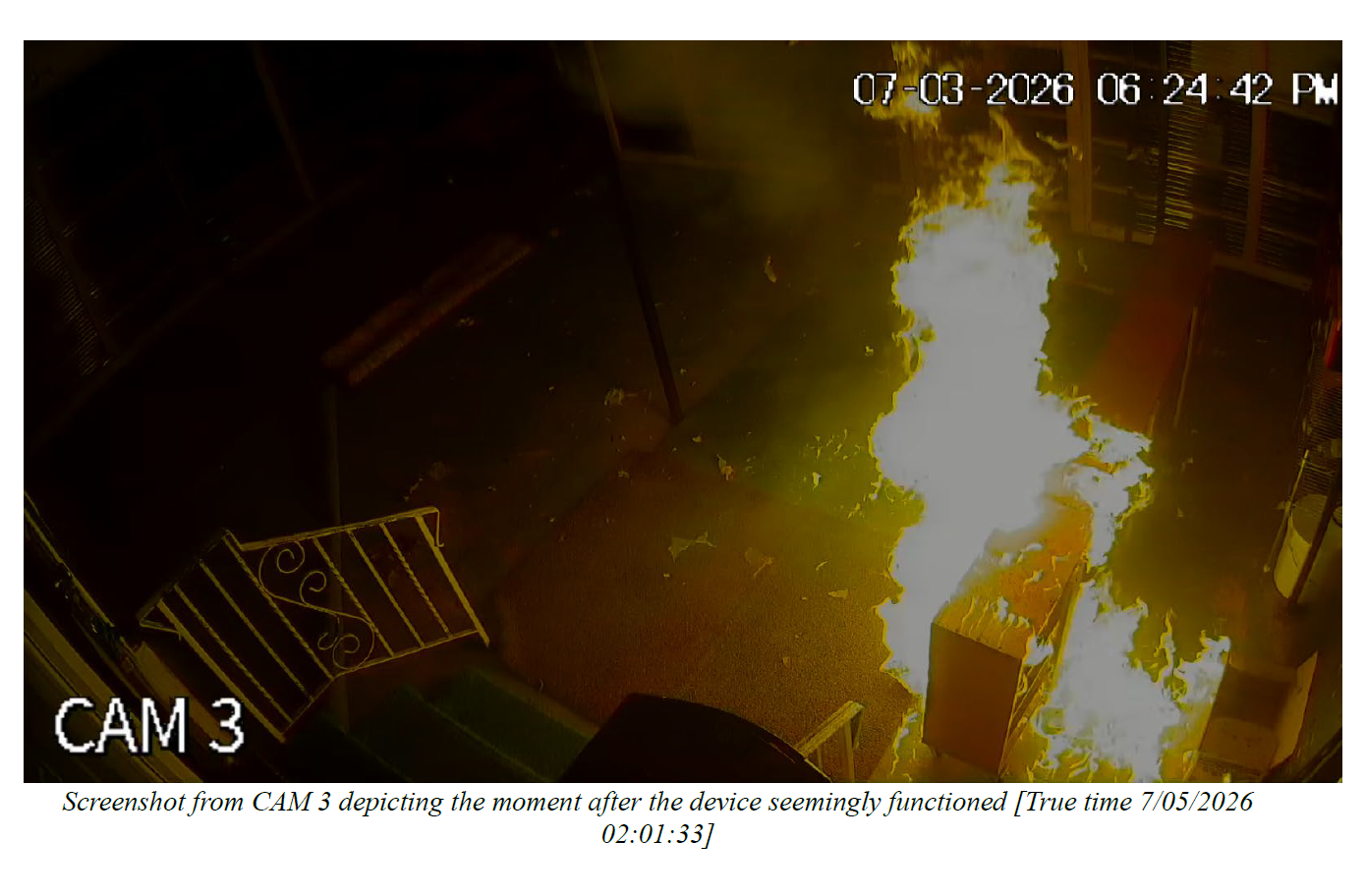
    Image from security video of fire started by an incendiary device on July 5 at the Northeast Philadelphia Islamic Center.U.S. Attorney's Office

    Lang is accused of attacking the mosque, on the 1400 block of Tyson Avenue, on July 5 around 2 a.m. The building was unoccupied at the time and no injuries were reported, but its front porch sustained significant damage.

    Two days after the attack, authorities received a tip that Lang was involved. Investigators who surveilled his house found his black SUV with handwritten messages and stickers saying things like “White Pride” “F- Islam,” and “Federal Terrorist Hunting License,” prosecutors said.

    On social media, investigators also found what they believed to be accounts linked to Lang that had expressed anti-Islamic views as well as comments on the arson investigation, prosecutors said. One of the posts about the investigation said: “How can it be a hate crime they might have done it out of love,” prosecutors said.

    The local chapter of the Council on American-Islamic Relations, or CAIR, applauded what it called a thorough and meaningful investigation into the attack.

    “This indictment sends an important message that attacks targeting houses of worship because of their faith are not ordinary crimes, they are assaults on the fundamental civil rights and religious freedom of entire communities,” said Dr. Ahmet Tekelioglu, executive director of CAIR-Philadelphia.

  • Chris Rabb’s former campaign treasurer was charged with wire fraud for routing money into her own bank account

    Chris Rabb’s former campaign treasurer was charged with wire fraud for routing money into her own bank account

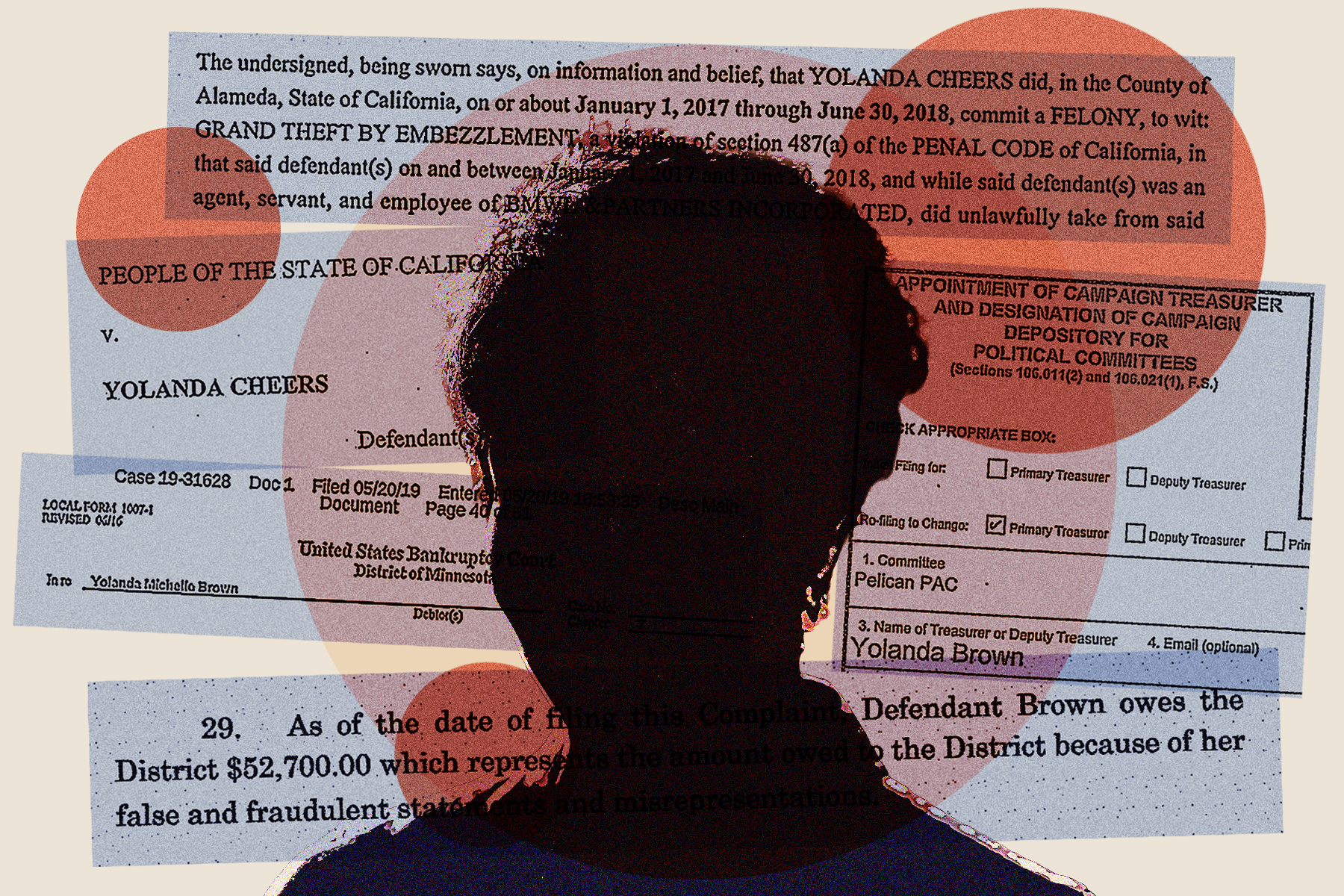
    A Florida-based political consultant who once worked as the campaign treasurer for Philadelphia congressional candidate Chris Rabb was charged Friday with wire fraud after she defrauded more than 20 clients out of about $1 million, according to federal prosecutors.

    Yolanda Brown was charged in federal court in Philadelphia with one count of wire fraud, according to documents unsealed Friday. She was charged by information, which typically indicates a person intends to plead guilty.

    She did not have an attorney listed in court records, and attempts to reach a lawyer who previously represented her were not immediately successful.

    Brown had been under scrutiny for months over allegations from campaigns in several states that she had mismanaged, embezzled, or taken unauthorized withdrawals from accounts meant to support political candidates.

    And Rabb accused her earlier this year of making unauthorized withdrawals from his campaign accounts, saying he had fired her and reported the allegations to federal authorities.

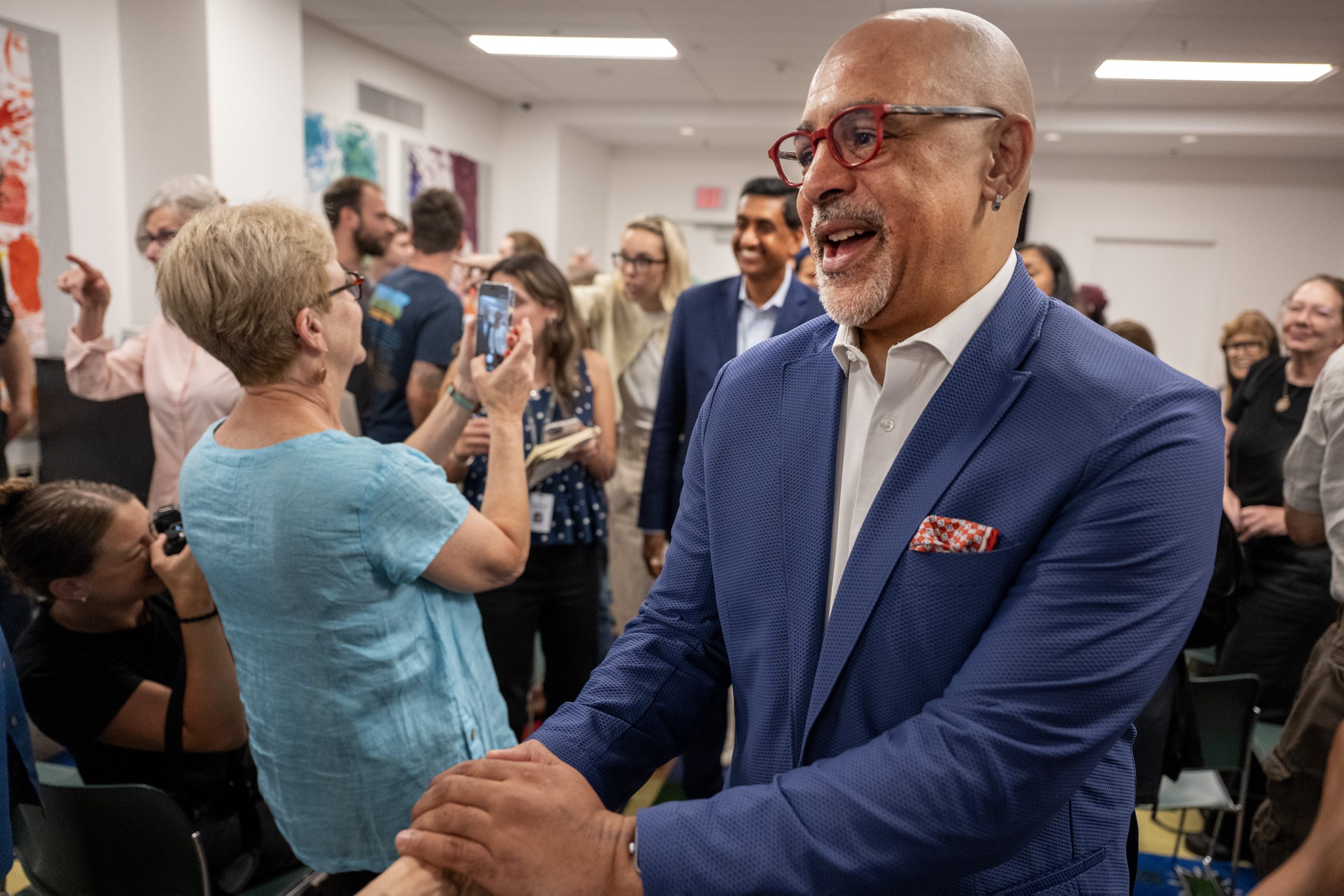
    State Rep. Chris Rabb greets supporters on Tuesday, July 28, 2026.Tom Gralish / Staff Photographer

    While Brown worked on Rabb’s campaign in 2025 and early 2026 — identified in court documents only as “Political Campaign #1″ — prosecutors said she set up new bank accounts on which she could serve as a signatory. She then transferred $19,000 into one of those accounts, they said, and went on to steer about $6,000 into her personal bank account without Rabb’s knowledge.

    In April, Rabb’s campaign said it identified about $160,000 that had been routed into the account Brown had set up. But it was not clear Friday how much of that may have been embezzled for Brown’s personal use, and it is also not uncommon for prosecutors to formally charge a more limited scope of wrongdoing if a defendant has agreed to plead guilty.

    Still, in charging documents, prosecutors said Brown, who ran Brown Financial & Consulting Services Group and worked primarily with Democrats, committed her fraud against Rabb actions as part an “overall scheme” in which she defrauded about 20 clients out of more than $1 million. Prosecutors did not name the other victims, or offer details on how the other cases unfolded.

    Brown has been accused of other wrongdoing in recent years.

    Earlier this year, Ken Welch, the mayor of St. Petersburg, Fla., said Brown embezzled more than $200,000 from his campaign committee. Another Florida-based political consultant also accused Brown of wiring $25,000 out of PAC’s bank account.

    And in 2024, Brown — who also used different surnames, including her married name, Yolanda Rumph — pleaded no contest to felony embezzlement in California, where prosecutors said she stole from two different companies, including a nonprofit. She was ordered to pay $330,000 in restitution but served no jail time.

    An attorney for Brown, Khambrel Davis, told The Inquirer earlier this year that one of Brown’s employees — not Brown — had actually committed the most recent fraud in Philadelphia and Florida.

    But the employee had since disappeared, Davis said, and “everyone’s just assuming [Brown] must have done this. They’re kind of putting together this narrative that she’s just this habitual thief.”

    Rabb — a longtime state representative who won a competitive Democratic primary this spring in the state’s 3rd Congressional District — declined to comment.