Author: Sarah Nicell

  • Monroe Township has requested the dismissal of a $300 million lawsuit against its data center ban

    Monroe Township has requested the dismissal of a $300 million lawsuit against its data center ban

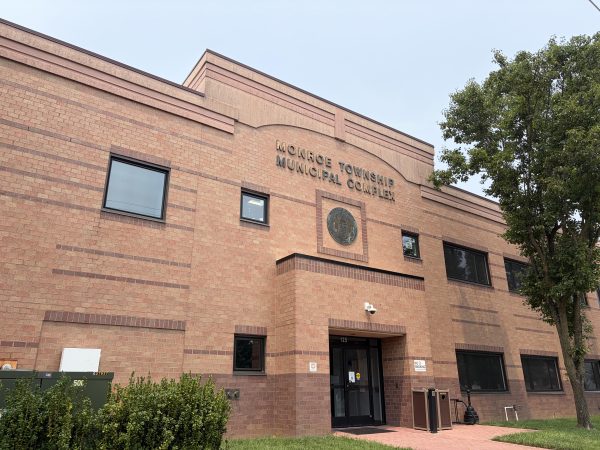
    Monroe Township officials requested in late July to dismiss a $300 million lawsuit by Princeton-based real estate developer Hexa Builders challenging the municipality’s data center ban.

    The Gloucester County case continues as other South Jersey municipalities consider and pass data center bans, including Cherry Hill, Millville, Medford, and, as of this week, Collingswood.

    The request for dismissal came less than a month after Monroe pushed Hexa Builders’ complaint from state to federal court under the claim that some of Hexa’s allegations fell under the U.S. Constitution and should be addressed federally.

    Some of the 20 counts alleged by Hexa include violations of the equal protection clause of the 14th Amendment and freedom of speech under the First Amendment.

    On July 28, Todd Gelfand, the attorney representing Monroe’s mayor and council, filed a four-page letter listing reasons that he said Hexa’s lawsuit against the data center ban is not valid.

    Gelfand rejected Hexa’s constitutional arguments, cited a lack of a physical contract promising data centers to Hexa, and argued Monroe had a right to amend a zoning ordinance based on public objections.

    “[The data center ban] does not regulate the content of speech, a speaker, a message, or Plaintiffs’ ability to engage in expressive activity. The fact that data centers support electronic communications does not transform a land-use regulation into a speech restriction,” Gelfand wrote.

    In response, Jim Maley, the attorney representing Hexa Builders, requested on Monday to push the majority of Hexa’s complaint — the parts that are not based on the Constitution — back to New Jersey state court. The next day, he asked the federal judge currently overseeing the case to reject Monroe’s request for dismissal.

    Maley said state courts have more expertise to consider the local land-use laws that affect Hexa Builders most, and Hexa’s federal claims should be considered second.

    “To further the federal claims, the constitutional claims, there has to first be determination of whether there was a violation of the land-use laws,” Maley said. “If land use wasn’t violated, that will hurt [our] federal claims.”

    U.S. District Judge Edward Kiel has not yet made official moves in reaction to the letters, which Maley said could take a while.

    Sandra Graise, Monroe Township’s solicitor, declined to comment and said the township does not speak about pending litigation.

    Hexa filed the original lawsuit on June 5 in New Jersey Superior Court shortly after Monroe officials denied its application to build a 1 million-square-foot data center and a warehouse at 3043 Black Horse Pike, a property the company has sought to develop since 2022.

    The denial followed months of public outcry at local government meetings after residents discovered that a change to Hexa’s redevelopment plan in early 2025 allowed the developer to propose a data center.

    Collingswood considers ordinance on data centers

    As the parties go back and forth, nearby municipalities have taken initiative to ban data centers before a proposal ever arrives.

    At a Monday night meeting in Collingswood, the Camden County borough’s three commissioners considered an ordinance amending Collingswood’s code to ban data centers and “computing nodes,” which the borough defines as modular units installed at residential or small commercial properties that supply computing capacity to third parties in exchange for payment or credits to the property owner.

    Maley, who represents Hexa in Monroe, is also a member of Collingswood’s board of commissioners.

    Two residents who attended the borough meeting brought up Maley’s connection to the Hexa case and asked whether Maley would recuse himself from the vote based on his employment as a private attorney supporting a potential data center nearby.

    In response, Collingswood solicitor Caitlin Harney Norcia said she could not find evidence that would disqualify Maley from voting under New Jersey’s Local Government Ethics Law, since Maley’s job as an attorney does not directly affect his work in Collingswood.

    While Maley decided to abstain from the vote, he said the borough should have a six-month waiting period to allow the borough planner time to consider standards for data centers, called the move “a ban of reaction,” and said the borough does not have room for a data center anyway.

    “We don’t prohibit airports. OK, that’s a permitted use. We don’t do that because there’s no place you can put an airport. There’s no place in this town you can put a data center,” Maley said in a live recording of the meeting on Facebook. “But the nodes are another issue.”

    When reached for comment Wednesday, Maley said he did not have to abstain from the vote, but he still chose to for nonlegal reasons.

    “Folks in the crowd, they’re working really hard to beat me up on a lot of different things. It’s a group that’s been against me for years. … Whatever my vote would have been, they would have been yelling and screaming about it and impacting my work,” Maley said.

    Collingswood’s two other commissioners voted to approve the data center and computing node ban on its second reading. The ordinance took effect immediately.
  • A South Jersey wildlife refuge cares for thousands of animals each year. For the first time, it now has a full-time vet.

    A South Jersey wildlife refuge cares for thousands of animals each year. For the first time, it now has a full-time vet.

    In its 69 years as a wildlife refuge, Woodford Cedar Run in Medford has never had a staff veterinarian to care for the thousands of animals that come through its doors annually.

    The Burlington County rehabilitation center isn’t alone. Mike O’Malley, Cedar Run’s executive director, said he doesn’t know of any New Jersey wildlife refuges with staff vets. The shortage is a money problem.

    Yet less than two weeks ago, Amanda Cameron joined Cedar Run as one of very few full-time wildlife veterinarians in the tristate area. O’Malley said he hopes Cameron’s hiring will improve Cedar Run’s patient survival rates.

    “These animals are experiencing some of the most intense traumas you can imagine,” O’Malley said. “This will allow us to take on really complex cases and advance the care we’re providing to all of the animals.”

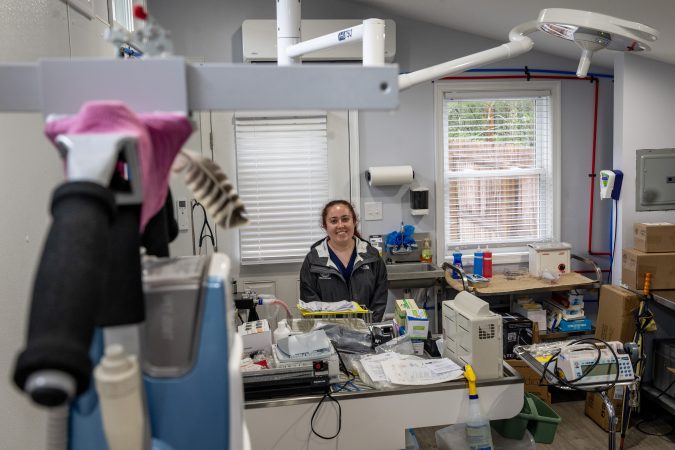
    Cameron, 27 and a Massachusetts native, doesn’t yet have a fully operational space to do exams and procedures on the 8,000 birds, raccoons, rabbits, turtles, and more that cycle through Cedar Run annually. Her main responsibility right now is ordering a laundry list of supplies to furnish a medical suite that has sat half-finished for years in the hopes that Cedar Run would someday have a doctor to use it.

    On Monday, items awaited sorting in the small clinic. And while Cameron has mostly been on desk duty, she’s already managed to get her hands on a few cases.

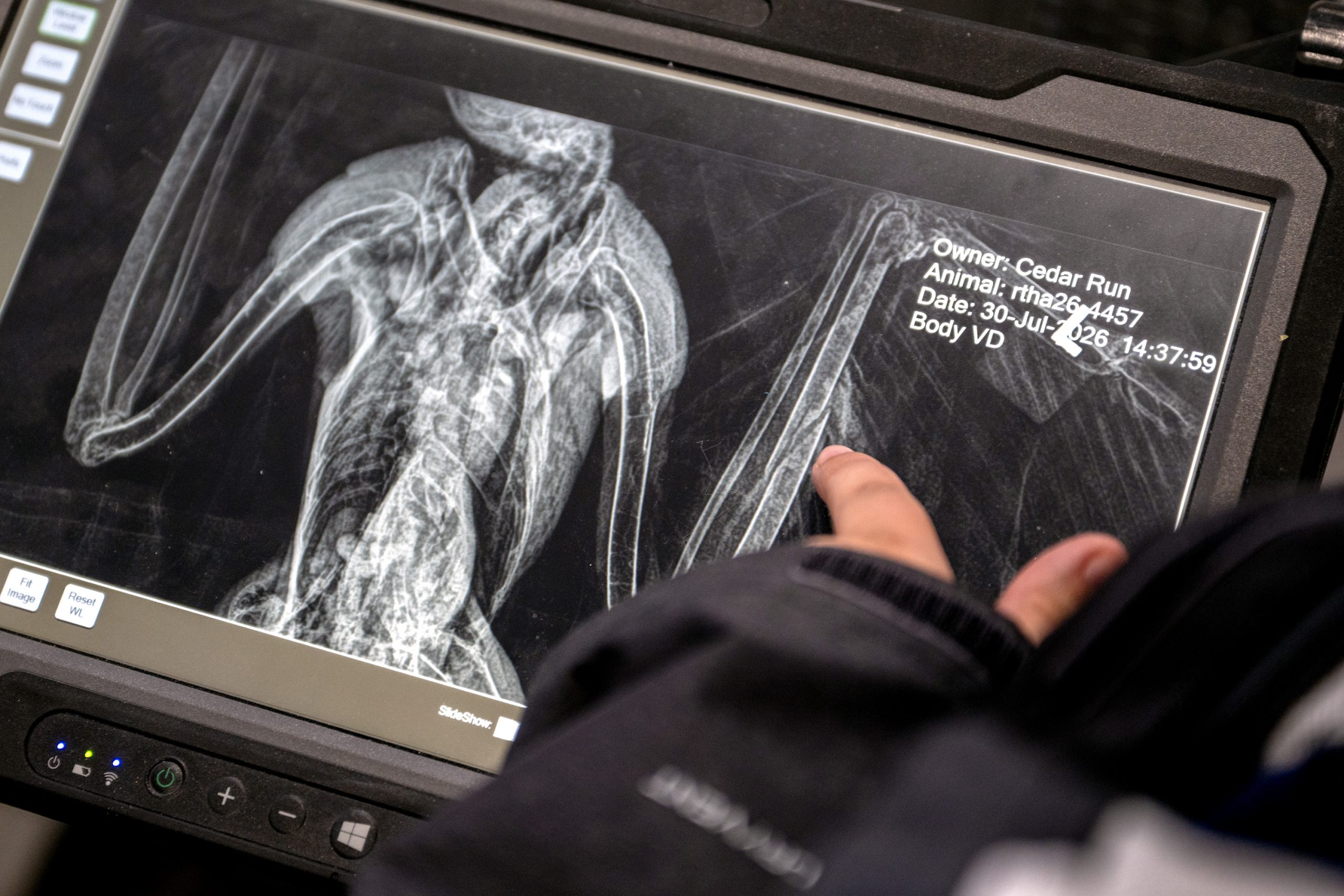
    In rain boots and scrubs, Cameron reached across the X-ray table to show the fractured wing of a red-tailed hawk. He’s not out of the woods yet, she said, but he’s on the right track. To survive in the wild, the wings of raptors need to be close to perfect.

    “Fortunately that is not surgical,“ Cameron said. ”So we’ve been able to just wrap them and give them some time with pain meds, and he’s doing really well.”

    Veterinarian Amanda Cameron looks over the X-ray of a red-tailed hawk with a broken wing bone that would not heal by itself in the wild.Tom Gralish / Staff Photographer

    ‘Not just today’

    Nonprofit wildlife centers often can’t afford to pay the salary of a full-time doctor, O’Malley said, nor buy expensive equipment to support them. Wildlife rehabs already have to foot the bill for the animals’ medical expenses since they don’t have owners to pay them. Plus, Cedar Run maintains 171 preserved acres in the Pinelands and pays to offer wildlife education services to the public.

    About 18 licensed wildlife rehabilitators serve New Jersey, and most specialize in a limited number of species. Only three are located in South Jersey, and O’Malley said Cedar Run is the tristate area’s “biggest and busiest.”

    In 2025, Cedar Run spent $710,000 on wildlife rehabilitation-related expenses, $172,000 more than the previous year, according to a 2025 audit provided to The Inquirer by O’Malley. Total salaries and wages were nearly $850,000, and O’Malley said the addition of Cameron will cost the center six figures annually. He declined to share the exact number, but said the cost to the nonprofit is “nothing to sneeze at.”

    To support Cameron’s salary, Cedar Run will have to keep a steady fundraising pace, but O’Malley said that shouldn’t be a problem with donor support and creative revenue streams, like hosting weddings.

    “We feel confident and able to raise the resources needed, not just today but tomorrow,” O’Malley said.

    Last year, Cedar Run earned $1.7 million in contributions, grants, and donations, a $780,000 boost from 2024.

    Rather than hiring full-time vets, places like Cedar Run typically outsource their medical needs through volunteer doctors, or transport animals to exotics vets nearby. Cedar Run partners with Animal & Bird Health Care Center in Cherry Hill, along with Rancocas Veterinary Associates in Mount Laurel and Rowan University’s new Shreiber School of Veterinary Medicine.

    But the extra stress from transport creates unnecessary risk, Cameron said. Some species, like rabbits, can’t handle loud noises. Other animals can injure themselves in panic.

    The rehabilitation center takes in almost any wildlife native to New Jersey, aside from black bears and domestic animals. When Jersey residents find an injured raptor, rabbit, or raccoon, Cedar Run’s 12 staff members and more than 200 volunteers do their best to make sure they are treated and released back into their native environments.

    Nonreleasable resident raccoons at Woodford Cedar Run Wildlife Refuge. The 12 staff members and more than 200 volunteers care for thousands of animals each year, including many who are unable to be returned to the wild.Tom Gralish / Staff Photographer

    Success is not easy to define. About 20% to 30% of all patients brought to Cedar Run survive, O’Malley said, a statistic exacerbated by bird flu and the fact that many animals brought to the center have endured traumatic incidents.

    Unlike domestic veterinarians, Cameron is not providing annual checkups, diabetes treatments, or allergy medications to her patients.

    “These animals are getting severed by lawnmowers. They’re getting poisoned. … If you remove those animals that need immediate euthanasia off the top, we’re more like 50%, which is obviously much better,” O’Malley said. “So there’s a lot of nuance.”

    ‘Now we can do this’

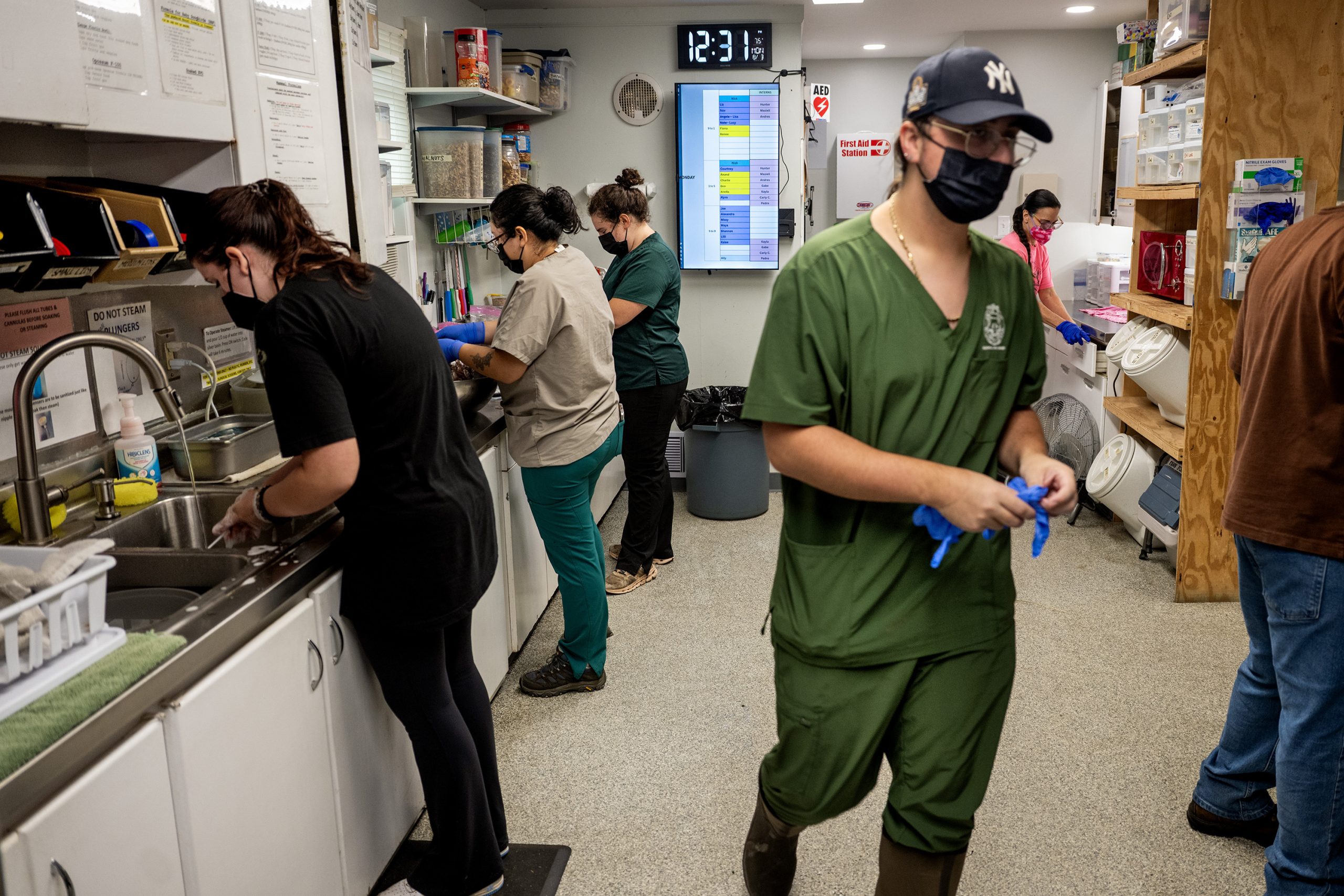
    Lori Swanson, director of wildlife rehabilitation, has worked at Cedar Run for more than 20 years. On Monday, Swanson stepped out of a fishy-smelling hospital to greet Cameron. Volunteers were preparing fresh seafood in the hospital kitchen for their patients, donated by an intern’s dad.

    “Heather is in there with an opossum,” Swanson said. “Which you’ll need to look at.”

    The staff at Woodford Cedar Run Wildlife Refuge in Medford in the busy kitchen Monday, Aug. 3, 2026, preparing lunch for all the animals in their care.Tom Gralish / Staff Photographer

    As the only veterinarian on-site, Cameron will care for a variety of species with a vast range of traumas, from broken bones to blindness, along with helping to manage the health concerns of Cedar Run’s 60 nonreleasable residents. Cameron has already taken a first look at a resident skunk with heart disease, and a resident red fox with a cloudy eye.

    When the Shreiber School’s first round of vet students reach their externship year, students will shadow Cameron at Cedar Run, making Rowan one of only a handful of vet schools in the U.S. to have a wildlife center affiliate.

    Cameron grew up about a half hour from Tufts University in Massachusetts. During her undergraduate career at Purdue University, she found time to volunteer at Tufts Wildlife Clinic, and Cameron said her interest in wildlife grew from there. She graduated with her doctorate of veterinary medicine from Tufts in 2025 and finished her internship at the wildlife clinic a few weeks ago, before moving to Marlton, a short commute to the Medford refuge.

    She’s been working hard to teach Cedar Run’s rehabbers a bit of what she knows, and she said everyone is hungry to learn.

    “We’ve all gotten a little bit too excited,” Cameron said. “They’ve had me look at a couple of animals already, and everyone’s just like, ‘Oh, my gosh, now we can do this.’”

    Swanson is one of the excited ones. She said she hopes Cameron’s addition will mean less strain on the animals and on rehabbers’ time.

    “Well, this has been my dream for about 15 years,” Swanson said.

    It’ll take a while for Cameron to meet all the wildlife at Cedar Run. Monday was her first time encountering the refuge’s resident raccoons, Charlie and Gus, who were raised illegally by humans. But after decades of waiting, O’Malley and the rehabbers are eager to see what Cameron can do.

    “If we had our way, we would’ve had a vet 20 years ago, but it required many years of planning,” O’Malley said.

    “Sorry, Mike, I was too young,” Cameron said.

    “Yeah, you would have been in diapers, I think,” O’Malley said. “It’s taken quite a while to lay that groundwork.”

  • The Spirit Halloween opening brought thousands to Egg Harbor for animatronics, costumes, and community

    The Spirit Halloween opening brought thousands to Egg Harbor for animatronics, costumes, and community

    Clowns, grim reapers, witches, and vampires ventured down the Shore on Saturday morning to welcome spooky season a little early.

    Spirit Halloween, the retailer best known for its costumes, animatronics, and creepy dolls, hosted the annual grand opening of its 20,000-square-foot flagship store in Egg Harbor Township, N.J. Preregistration for the event was capped at 2,000 people, but a company spokesperson estimated that an additional 1,000 showed up for general admission.

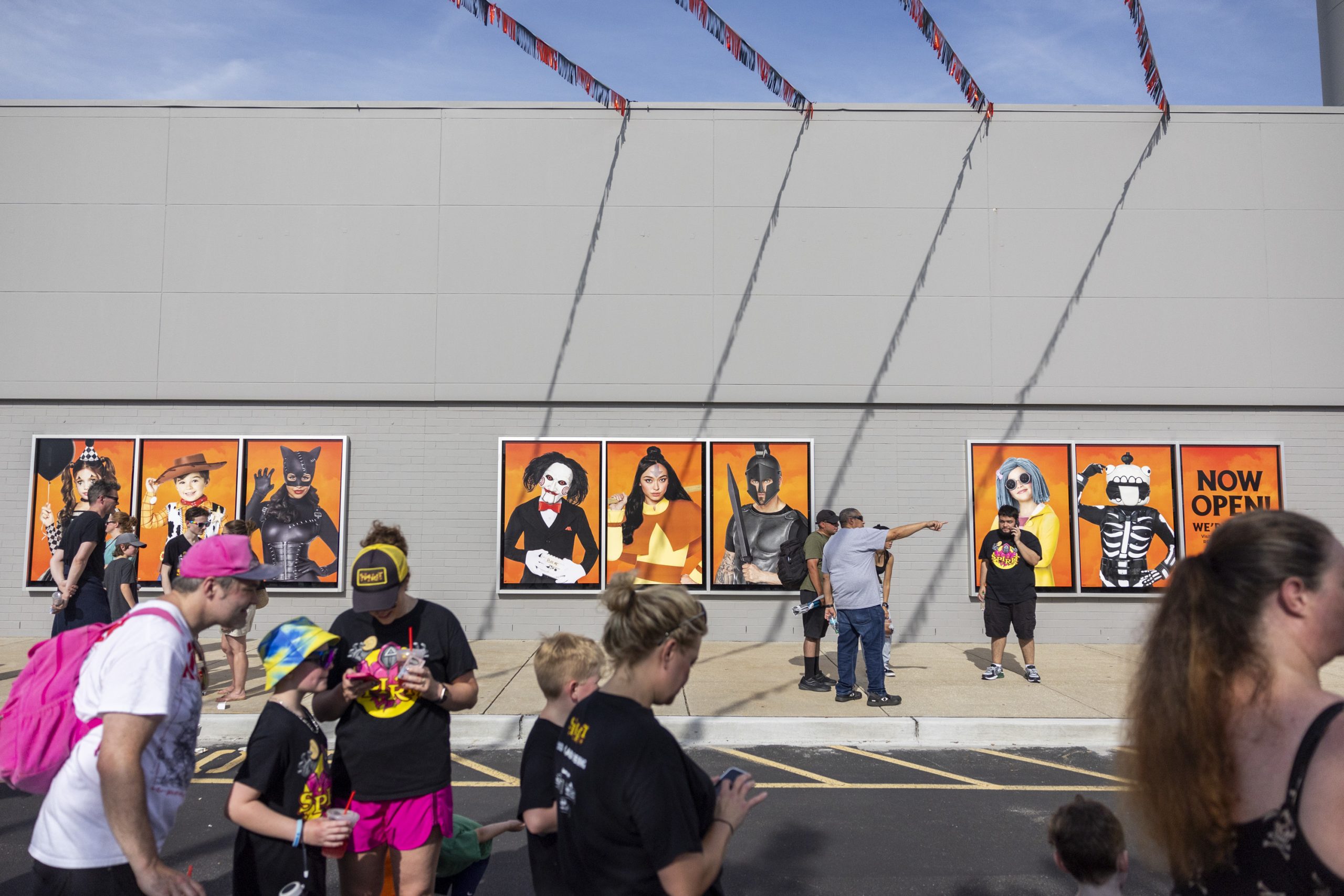
    By 9 a.m., the line snaked around Harbor Square Mall despite the heat. Seagulls circled. Food trucks, music, face-painting, outdoor games, and freebies awaited those who made it through. Children and adults alike varied in dress, from shorts and T-shirts to bloody character costumes.

    Cesar and Adrianna Balmaceda, with son Cesar, were among the attendees who made it through. They gathered near the entrance as Jack the Reaper, Spirit’s mascot, parachuted out of a blimp overhead.

    A skydiver jumps out of the Goodyear blimp wearing a Jack the Reaper costume for the newly opened Spirit Halloween flagship store in Egg Harbor Township, N.J., on Saturday, Aug. 1, 2026.Tyger Williams / Staff Photographer

    When Cesar Balmaceda, 31, asked the first person in line when they arrived and where they came from, he was not too surprised by the answer: 5 a.m., from Ohio.

    “I don’t think it’s as bad as previously,” Cesar Balmaceda said. “People used to camp out for days.”

    That obstacle had kept the Balmacedas, Atlantic City locals, from braving the line previously, even though 8-year-old Cesar makes YouTube videos featuring vintage Spirit animatronics. His favorite is Hugz the Clown, a discontinued 6-foot, purple-haired robot.

    But this year, Spirit banned camping out and used the preregistration system instead, which allowed the Balmacedas to get free tickets after the deadline from a kind Facebook user. Young Cesar won a swag bag and quickly changed into themed Spirit gear.

    Naoki Sanchez, 15, stood with her family nearby. They live in Atlantic City, too, and came to meet people with similar interests, since Sanchez also makes animatronic YouTube videos. On Saturday, she wore a zombie baby toy in a chest harness.

    “It’s part of the Spirit Halloween community,” Sanchez said of gathering for the store opening. “We live here, basically.”

    Jump scares and costumes galore

    From bedazzled Michael Myers masks to dog costumes to a pop-up trash raccoon animatronic, visitors to the flagship store had no shortage of options.

    When the doors opened at 10 a.m., employees called out numbers to welcome in small groups of customers one at a time. A life-size Freddy Fazbear animatronic, new to Spirit and sold only in person, sold out in 10 minutes.

    But attendees outside awaited that news anxiously. Employees chatted that the first one was nabbed by a family from Canada, and they weren’t sure how they would get the 6-foot-6, $499.99 robot back home.

    “Are there Freddys still?” a child shouted through the open doors.

    Lori Tesoro, a Spirit spokesperson, said several other animatronics sold out, including a life-size Jason of Friday the 13th and Michael Myers of Halloween fame, along with a line of horror-themed teddy bears.

    Nineteen staffers, including four from other stores, managed the frenzy.

    A limit of one animatronic per person, from Art the Clown of Terrifier to Harmonica Hank (a skeleton scarecrow who can play your music via Bluetooth), kept things from getting too chaotic, as customers leaned on boxes to claim them. Staff wore “Camp Harbor Lake” T-shirts, the 2026 store theme, inspired by campground horror movies. One employee said the company spent about a year planning the celebration.

    The chain, which operates more than 1,500 stores across the U.S. and Canada from August through early November, is headquartered in Egg Harbor in the same office as its parent company, Spencer’s.

    The flagship location, which looks much like every other Spirit store, is owned by the chain year-round but is used for research and development during the offseason, Tesoro said.

    About 400 Spirit stores opened on Aug. 1, while the rest will open in the coming weeks. Still, a company spokesperson said people came from hours away, including from California and the South, to get the earliest possible glimpse at Halloween.

    ‘Life’s too short’

    Back in line, Anthony and Jessica Trabolse and their four kids, all under 8 years old, waited in the sun. They came to Jersey from Staten Island, N.Y., and already have their Halloween costumes planned out, which will likely include wardrobe changes.

    During the Halloween season, Anthony Trabolse said, he works at Spirit to support his son Lucas and his horror obsession. They host an annual Summerween party, featuring years’ worth of Spirit animatronics. This year, Lucas, 7, said he hopes to expand his haunted collection with a 4-foot-10 evil clown, Wind-Up Wally, and meet his favorite Halloween YouTubers.

    “‘Cause I really like Halloween,” Lucas said, sporting a Mohawk and a camera around his neck.

    People gathering for the new Spirit Halloween flagship store in Egg Harbor Township, N.J., on Saturday, Aug. 1, 2026.Tyger Williams / Staff Photographer

    Ashley Giordano, 23, and Aliah Roseman, 36, both work as special effects makeup artists for Reaper’s Revenge Haunted Hayride in Scranton. They drove more than four hours for the Egg Harbor event with Giordano’s son, Nico, to celebrate his birthday.

    “He’s only 3, and he can name Spirit animatronics back to 2008,” Giordano said, fake blood spattered on her face. “That’s our Miss Rachel.”

    Roseman said Saturday was their first time coming to Spirit’s annual flagship opening. After recent health issues and a cancer battle, Roseman said people should not deny themselves a good time, including a long Spirit Halloween road trip.

    “Life’s too short to not do fun things,” Roseman said.

  • A coffee shop hidden inside a Vineland library creates opportunity for adults with disabilities

    A coffee shop hidden inside a Vineland library creates opportunity for adults with disabilities

    It wasn’t until Noel Perez vented on Facebook that he was able to help his son, Victor Perez, find a job in South Jersey.

    Noel Perez, 42, of Vineland, Cumberland County, said local employers expected Victor Perez, 19, to donate his time rather than get paid. Because his son is a student with autism in the Salem County Special Services School District, Noel Perez said people wanted him to just be a volunteer.

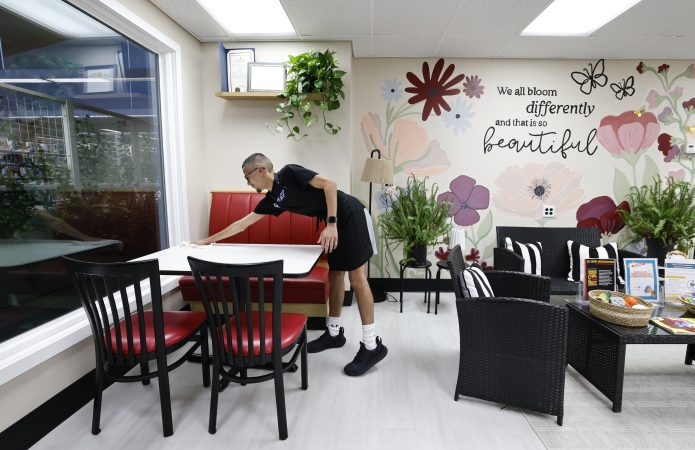
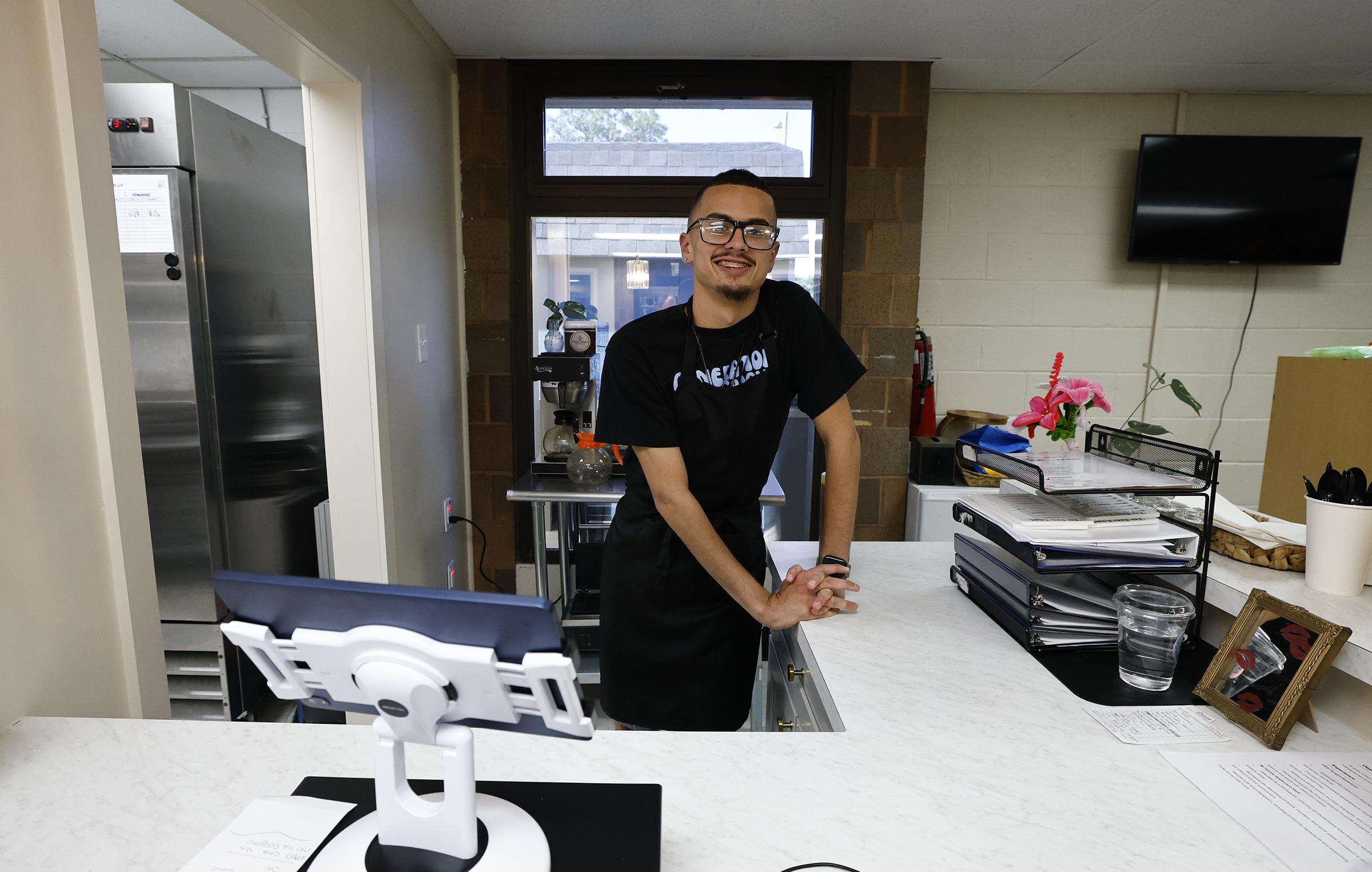
    But his social media post led to the suggestion that Victor Perez apply for a role at Inclusion Cafe — a new nonprofit coffee shop tucked away in Vineland Public Library employing adults with disabilities.

    “I love it so far,” Victor Perez said. “I go in and clock in, get my apron. … I like the caramel hot coffee.”

    Barista Victor Perez,19, at the Inclusion Cafe inside the Vineland Public Library in Cumberland County, N.J. on Thursday, July 23, 2026. The cafe seeks to create jobs for adults with disabilities in a supportive environment.Yong Kim / Staff Photographer

    Inclusion Cafe at 1058 E. Landis Ave., which opened in early May, is an offshoot of Inclusion Coffee Shop in Elmer, Salem County, which opened in 2022.

    The cafes were founded by Amanda Vellon, 38, who grew up in Vineland and now lives in Elmer. Both focus on career development for adults with disabilities, and Vellon said the coffee shops have hired 15 staff members with disabilities and seven without. Vellon said employees make $16 an hour, plus tips.

    Victor Perez said he’s made five friends on the job since he started in May and works about two-and-a-half days per week. He said he likes when the nonprofit features him in TikTok videos.

    “It’s inviting for people like Victor,” Noel Perez said. “It gives him opportunity and chances for people to interact with him and for him to interact with people.”

    In 2021, after a surprise pregnancy, Vellon found out her son had a heart defect during an ultrasound appointment, and later Down syndrome at 32 weeks. Vellon said the diagnosis brought on “a roller coaster of emotions,” and she wanted to find a way to spread joy and keep people from feeling scared about their children’s futures.

    “My husband said, ‘We want to own a restaurant. Why don’t we try a coffee shop?’” Vellon said. “After some thought, I said, ‘Let’s do it, but let’s do it with a purpose.’”

    Vellon’s son, Rome, is 5 years old now. The Elmer location, a business at 119 S. Main St., has kept on, and after registering Inclusion Cafe as a community and economic development nonprofit in 2025, Vellon moved to work with Vineland Mayor Anthony Fanucci and other officials to incorporate the coffee shop there.

    “The Inclusion Cafe is about creating opportunities and making sure everyone in our community feels welcome and valued,” Fanucci said in an emailed statement. “The Vineland Public Library has always been a place where people come together to learn, connect, and access important resources, so it was a natural fit for a program that promotes inclusion and independence.”

    Luis Amberths, business manager at Vineland Public Library, said the library serves about 600 people every day. As a community hub for Vineland’s 60,000 residents, staff have been seeking ways to expand its services, including in the form of an esports room. The new cafe was a mutually beneficial way to expand upon those offerings, Amberths said.

    Despite the cafe leasing a nontraditional space toward the back of the library, Amberths said customers are still finding their way there and checking out books, too.

    “In spite of all that, it’s being found. … We were pretty busy already because of what we offer and the programming we have, but it’s been tenfold because of what [the cafe] has done,” Amberths said.

    The coffee shop offers coffee flights, specialty lattes, homemade syrups, and breakfast items, influenced by what Vellon’s own children like. Rome’s favorite, a plain bagel with cream cheese, made the cut. Staples from her two other kids, including a bacon, sausage, egg, and cheese on a strawberry bagel with strawberry jam, are featured, too.

    “I was very anxious before opening. … It’s not a storefront. We don’t necessarily have foot traffic. It’s not very visible to the road,” Vellon said. “I had a lot of reservations, but none of that has stopped the community from coming to support us.”

  • Two Sweet Boutique, known for its viral Kelce Klusters, is busier than ever after a move to Washington Township

    Two Sweet Boutique, known for its viral Kelce Klusters, is busier than ever after a move to Washington Township

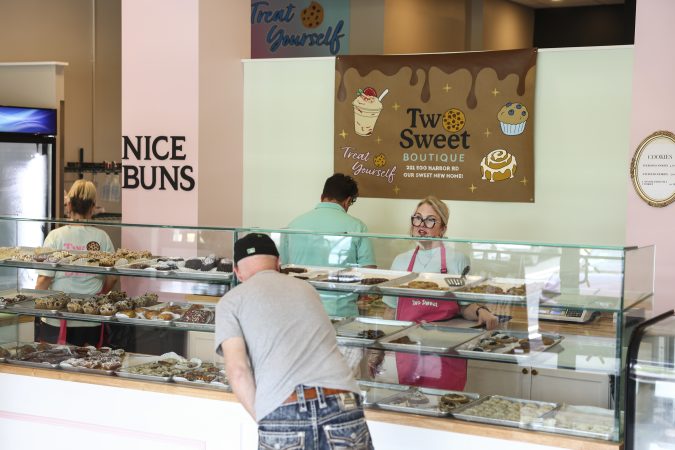
    South Jersey dessert lovers looking for banana pudding, cinnamon rolls, cookies, and more sweets just gained a new stop in Washington Township.

    Two Sweet Boutique, named for its founding by a mother-daughter duo, moved to their new location at 201 Egg Harbor Rd. and opened on July 8.

    Jeanne Centrone, who runs the bakery with her daughter Alex Centrone Coyle and husband, Rocco Centrone, said the store has stayed busy since its launch. Some days, floods of customers have wiped their shelves clean, forcing Two Sweet to close early. People have been waiting outside before the store opens.

    “Everything is homemade,” Centrone said. “We bake from 5 a.m. until 5 at night. Sometimes we’re here later. I think we pride ourselves in that.”

    The opening came weeks after Two Sweet closed its former spot at 1526 Hurffville Rd. in Deptford, where it served patrons for nearly a decade.

    The former Deptford location, now for sale for nearly $275,000, had a visit from Gov. Mikie Sherrill in February to promote small businesses and sample pastries. Sherrill picked out treats inspired by the Kelce brothers for her teenagers during the stop. The bakery still sells Kelce Klusters.

    Following the visit, Two Sweet received an influx of negative voicemails and boycott threats from critics of the Democrat, along with boosted support from regulars. Centrone said those reactions have since died down.

    “We got a lot of new customers out of it. Something that started out devastating turned around and worked in our favor. We haven’t heard anything since,” Centrone said. “It was an honor that the governor wanted to come here to our little shop.”

    The original business began when a neighbor offered to rent out his vacant property to Centrone and her daughter so they could sell their sweets.

    At the time, Centrone was making chocolate-covered fruit trays, and Alex Centrone Coyle baked cakes. They started Two Sweet with cupcakes, cookies, and chocolates in a 900-square-foot space with no air-conditioning. But as time went on, the Centrones, Washington Township residents, experimented with more recipes and grew their staff and customer base.

    “Through trial and error, it’s exploded,” Centrone said.

    Two Sweet’s new location, which neighbors tanning salon Glow Lab in a local shopping center, is more than 1,800 square feet and will soon feature a coffee bar with hot coffee, cold brew, lattes, and iced tea, Centrone said. The larger space, which formerly housed The Color Room beauty salon, has given the family more room to bake and store their ingredients.

    Centrone’s other two daughters are helping out at the bakery, too, along with about five bakers and a few employees working the counter. The Centrones are looking for new hires to support the recent rushes.

    “I hope that things continue on a positive note and we continue to grow, with the shop and with the community,” Centrone said. “We’re extremely grateful the way that we’ve been welcomed here and the way people continue to show up every day.”

  • Del Buono’s Pastry Shop set for August opening at former McMillan’s Bakery in South Jersey

    Del Buono’s Pastry Shop set for August opening at former McMillan’s Bakery in South Jersey

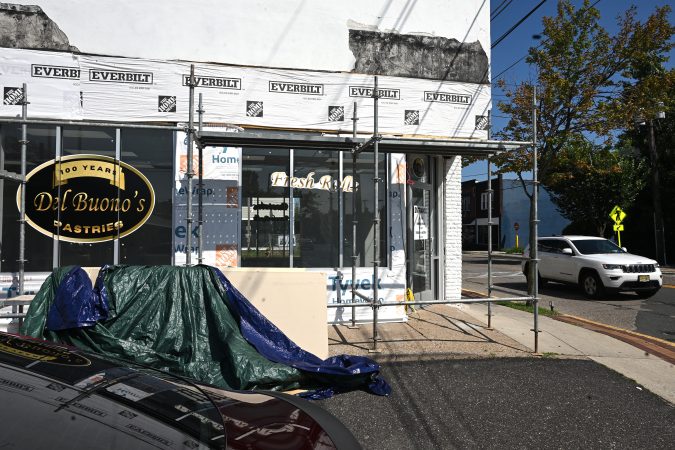
    The former McMillan’s Bakery in Haddon Township will reopen as Del Buono’s Pastry Shop in late August after months of extensive renovations, featuring the expertise of a McMillan family member and a Food Network alum.

    Construction is still underway, but entrepreneur and Haddon Heights resident Tom Whitman, 63, said he plans to host a grand opening on Aug. 29.

    Whitman, who also owns 100-year-old Del Buono’s Bakery in Haddon Heights and all three Carmen’s Deli locations, said he and his team took the South Jersey staple, once known for its cream doughnuts and holiday cakes, down to the studs.

    “We’re going to build upon that legacy,” Whitman said. “We’ll have some of the original flavor of the business, and hopefully make it better.”

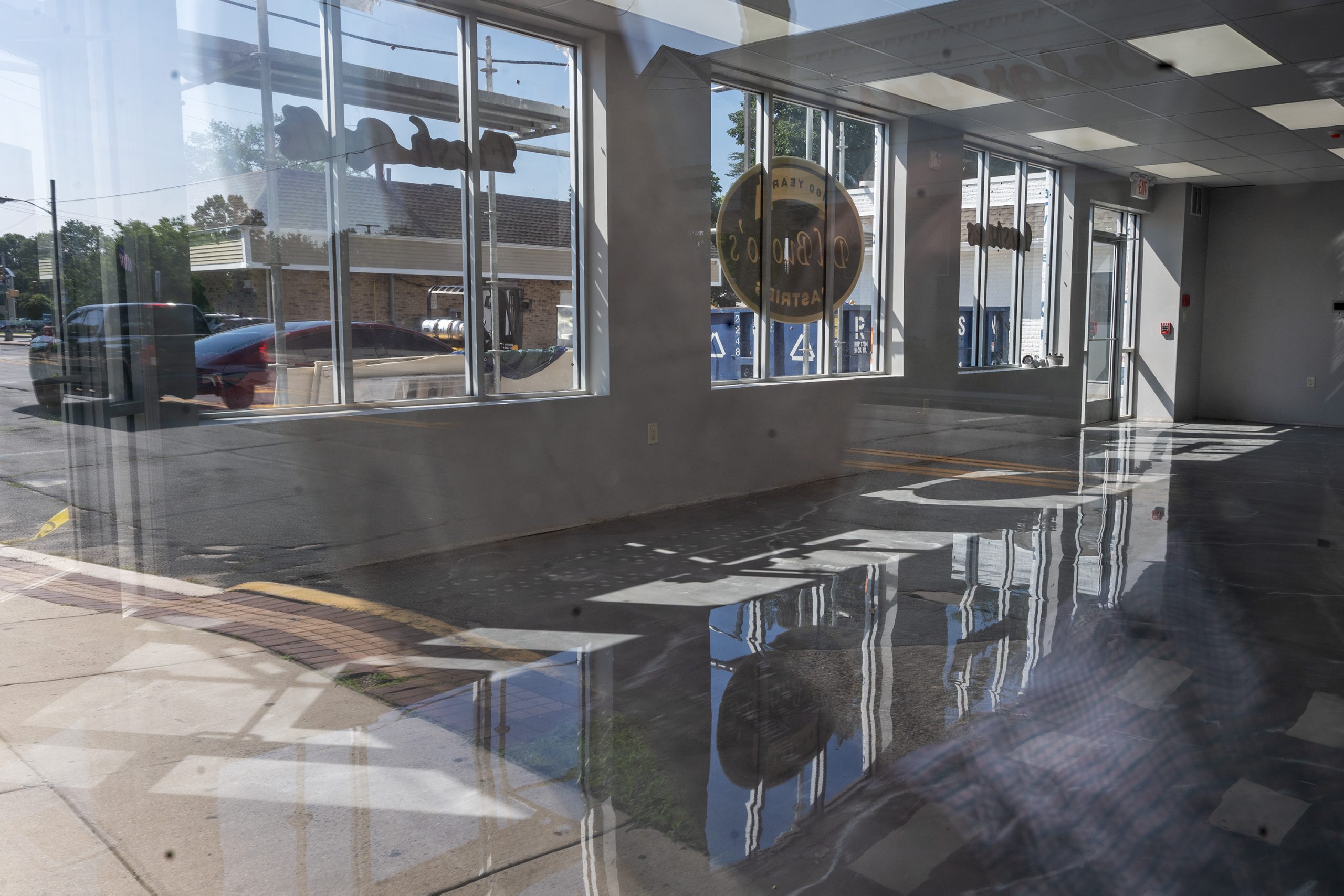
    Construction continues July 20, 2026 on the former McMillan’s Bakery on Haddon Avenue in the Westmont section of Haddon Township. The family business closed in May 2025 after 86 years. It will be a new bread-and-pastry shop operated by the local Del Buono’s chain.Tom Gralish / Staff Photographer

    The new pastry shop, set to open seven days a week, will be 2,000 square feet, more than double the size of McMillan’s Bakery. It will feature doughnuts, pastries, desserts, specialty coffee, and bread and rolls sourced from Del Buono’s Bakery. Whitman said he hopes the products at Del Buono’s Pastry Shop will also be sold at his other storefronts.

    “I combine legacies and use the strengths of each of the businesses and try to combine them,” Whitman said.

    The pastry shop will use 900 square feet of the new space to host DiBartolo’s Kakery, a cake shop led by Woolwich resident Al DiBartolo.

    DiBartolo, 51, has long baked for South Jersey residents and made his name in years past as a winner of Food Network’s Halloween Wars and as a contestant on TLC’s Next Great Baker.

    Whitman, a former Domino’s Pizza franchisee, plans to employ between 20 and 40 workers, including part-time and full-time staffers. Some employees who worked at McMillan’s for decades will return, Whitman said.

    One returning employee is Doug Biemiller, a grandson of McMillan’s founders George and Evelyn McMillan. Whitman said Biemiller, DiBartolo, and other bakers have worked together to compile 400 of their recipes to start the pastry shop off.

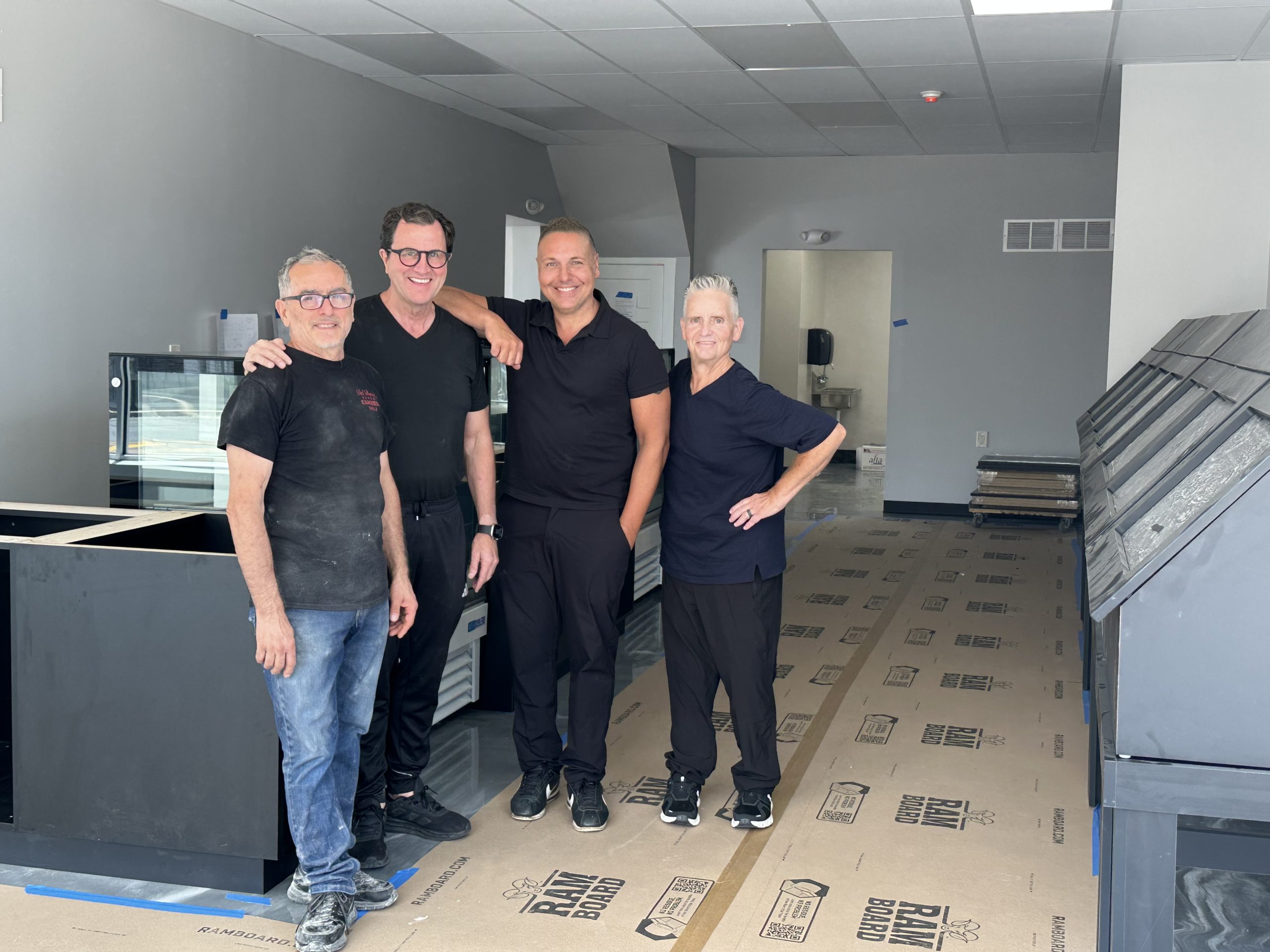
    From left to right, Atilla Baysal, Tom Whitman, Al DiBartolo, and Doug Biemiller stand in Del Buono’s Pastry Shop at 15 Haddon Ave. on Friday, July 24, 2026, in Haddon Township, N.J.Robin Lange

    The founding family of McMillan’s Bakery, a fourth-generation business at 15-17 Haddon Ave., put the shop up for sale in 2024. Whitman purchased the building for $500,000 last September from Grake Homes Construction, according to deed records, to pursue his third revival of a family-owned South Jersey food destination.

    In October, Whitman said he planned to spend $1.5 million to $2 million on the project, including the real estate purchase and the construction of two apartments above the pastry shop. Weeks before the August opening, Whitman declined to share the total spent, but he said the ticket price was over $2 million, after rebuilding the property from scratch.

    He had initially expected the shop to open in February, but construction has taken longer than Whitman anticipated.

    “It was extremely expensive, but I just want to do it once, and I want to do it right,” Whitman said.

    Until recently, DiBartolo served as chief baking officer for Cherry Hill’s Classic Cake.

    But after moving between three jobs in the last two years, DiBartolo said, he jumped at the chance to finally bake with his own recipes again and work with Del Buono’s, where his family members are regulars.

    “It’s still nice to be in your 50s and make your parents proud,” DiBartolo said.

    DiBartolo’s Kakery will have grab-and-go cakes, including fan favorite rum and pound cakes, along with a consultation area where customers can discuss options for custom specialty and wedding cakes.

    Del Buono’s Pastry Shop currently plans to have a soft opening in mid-August. In the meantime, renovations to the property are still in progress, and with the Aug. 29 grand opening looming, Whitman said he thinks the shop will meet the deadline to serve locals looking to rediscover their neighborhood “mental health food” destination.

    “I’m like a little kid waiting for Christmas,“ Whitman said. ”I want to see it as much as anybody else does.”

  • Audubon has opened its new history museum. Here’s what you’ll find there, from a New Century Theater seat to ‘Mudubon’ photos.

    Audubon has opened its new history museum. Here’s what you’ll find there, from a New Century Theater seat to ‘Mudubon’ photos.

    More than a century’s worth of varsity jackets, trophies, civic documents, photos, and more memorabilia from Audubon Borough have made their way into Camden County’s newest museum.

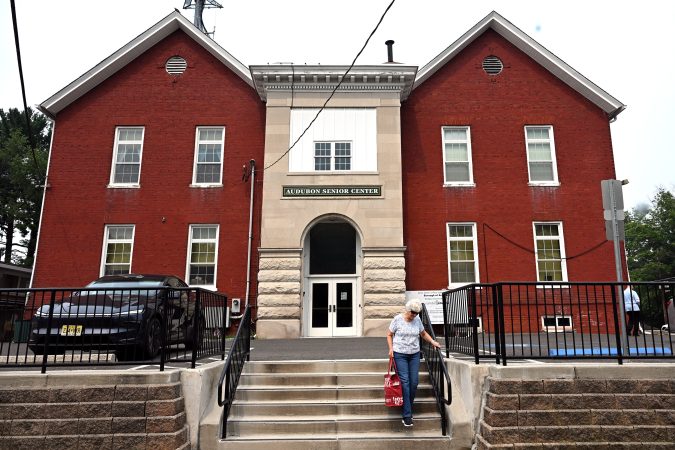
    The Audubon Historical Society Museum takes up much of Audubon Senior Center’s second floor, a red brick building that once served as Audubon School No. 1. The collection includes donated items from Audubon residents, including from the historical society’s own members, found in basements.

    Even though there are still more artifacts to put on display, from a 45-star American flag to thousands of pictures, Audubon’s rich history is already well represented. There’s memorabilia repping Joe Flacco, an NFL player and Audubon High School grad; an Audubon-themed Monopoly board created for a fundraiser; outdated land use maps; and an old police radio. A large section of the museum covers Audubon’s military history, including information about the borough’s three medal of honor recipients and two naval vessels named in their memory.

    The museum hosted its first public open house on July 4, and about 60 people came despite the heat, said Rob Jakubowski, Audubon’s mayor. Starting Aug. 8, the historical society will open the museum from 2 to 4 p.m. on the second Saturday of every month.

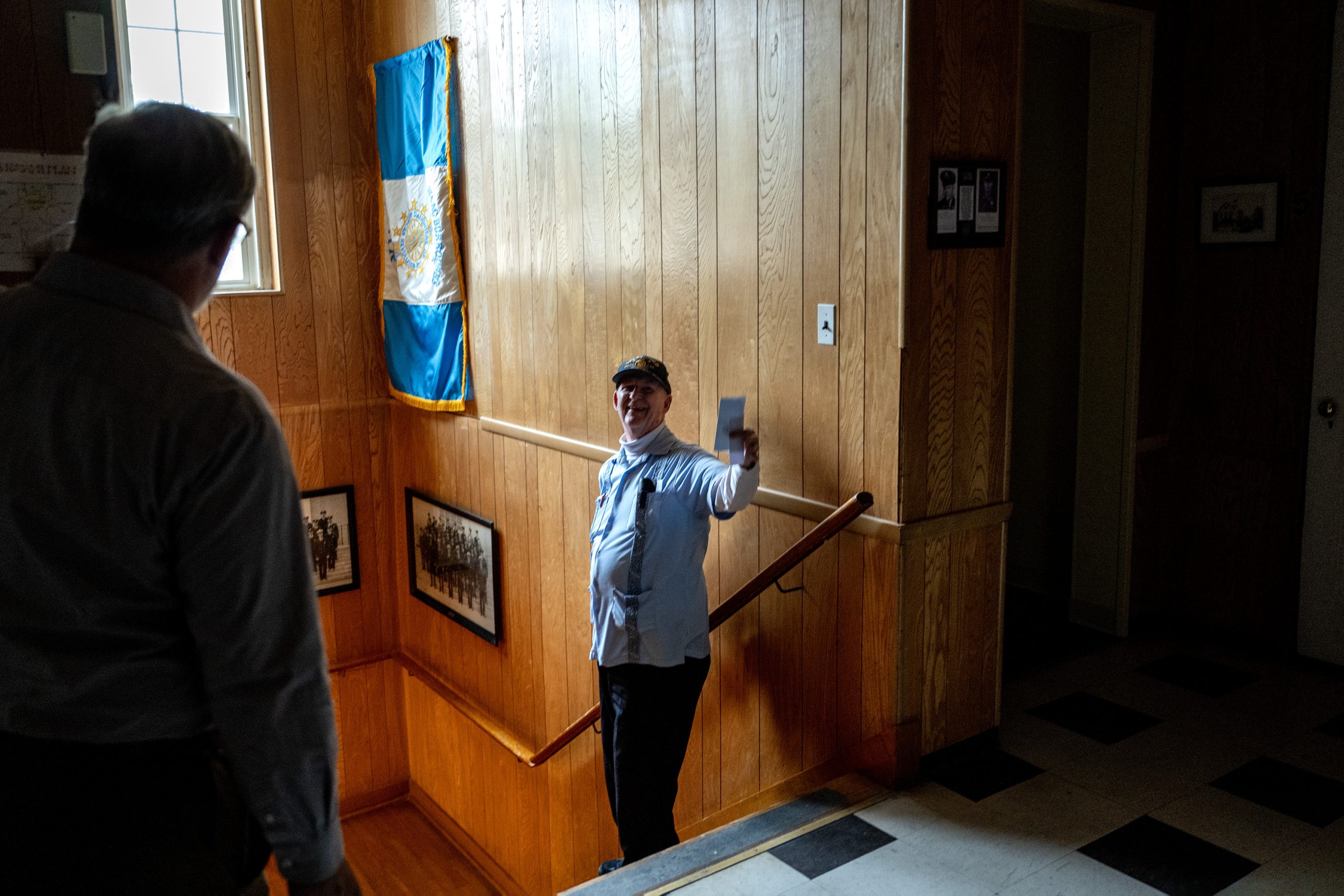
    Mayor Rob Jakubowski (left) and Craig E. Burgess on the stairs at the newly opened Audubon Historical Society Museum. They plan to use the wall space for more displays.Tom Gralish / Staff Photographer

    Jakubowski worked to develop the museum with a small group of Audubon Historical Society members, kept on task by corresponding secretary and longtime Audubon resident Nancy Whalen, 80. The museum, the brainchild of the late Walter Casebeer, a founding member of the society, came together 18 years after his death. Members sorted through four full closets of donated relics to establish the museum’s initial displays.

    “We were able to set up what is a really beautiful museum with a lot more work to do,” Jakubowski said.

    Though the senior center isn’t a schoolhouse anymore, the museum, funded by $40,000 in Camden County grants, was clearly once two classrooms, divided through the middle by chalkboard panels that pull out from the wall. The seniors running the museum hope to rotate the items on display as time passes, but for now, the group is proud to show off their hard work.

    Here are a few of the standouts.

    New Century Theater

    New Century Theater, founded in 1921, is no longer standing. The theater, renamed the Coronet in the ‘60s, was demolished in 2003. The space is currently being developed by a car wash company.

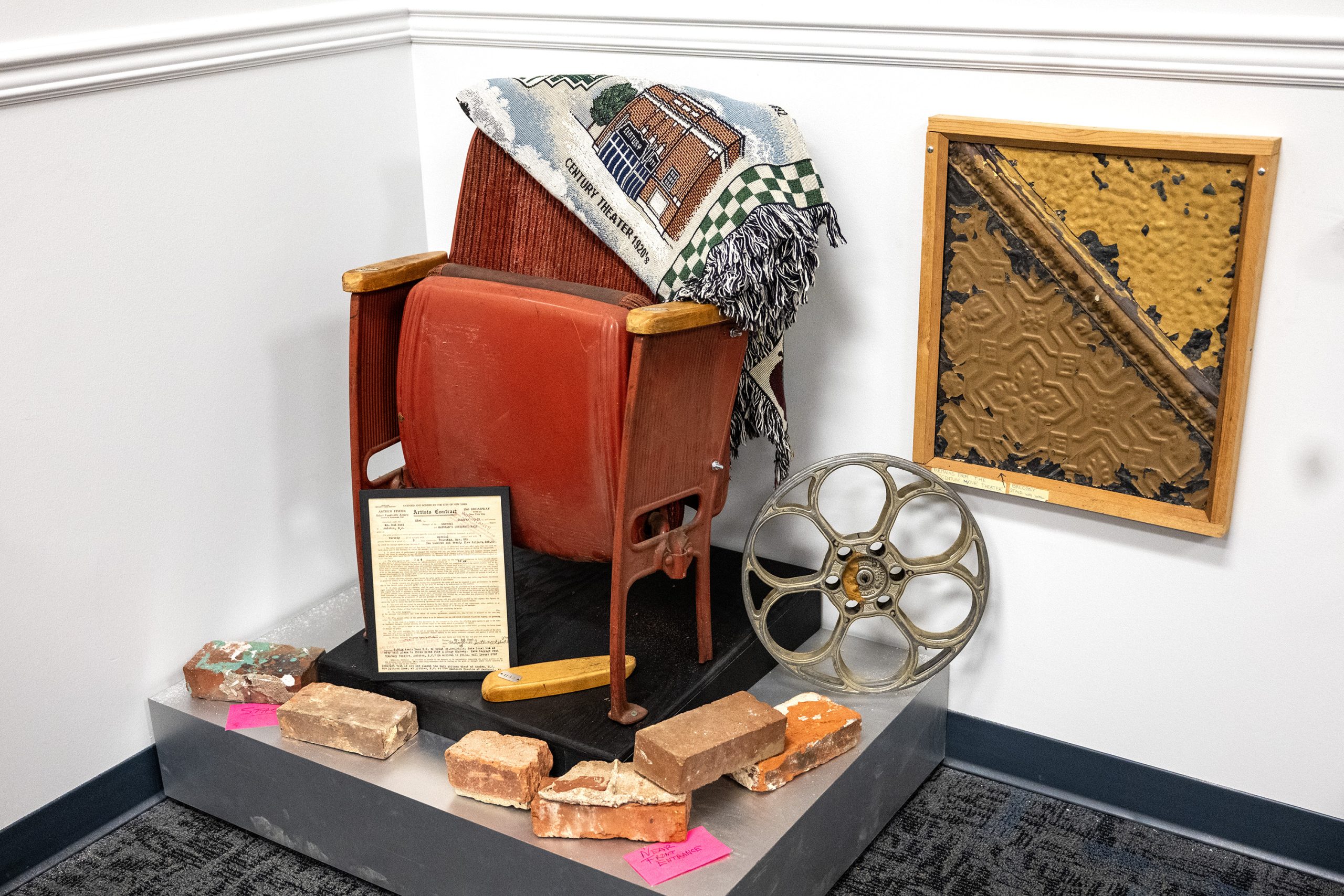
    But the historical society managed to acquire many keepsakes to remember the theater’s past. They have a seat someone rescued before the building got knocked down, a part of the wall, bricks, faint blueprints, and a movie reel Jakubowski said he found on eBay. A 1931 vaudeville contract is propped against the seat.

    Craig E. Burgess, 81, remembers when he could see a movie, a newsreel, a serial, and get candy, all for 10 cents at New Century Theater. When he found out the Audubon staple was going to be torn down, Burgess, who lived in the same house in Audubon for 73 years before moving to Collingswood, didn’t let the theater die without a last trip.

    “I stood in front of the door and said, ‘You don’t get in here until I get in to get some photos and get some video. If you won’t do that for me, then I will stay here, and you’ll have to push me over into the rubble,’” Burgess said. “And they believed me. I got in.”

    A theater seat and other memorabilia from the New Century Theater that opened in 1921, on display at the newly opened Audubon Historical Society Museum. Tom Gralish / Staff Photographer

    ‘Mudubon’

    Audubon, a part of Haddon Township until residents voted to become a borough, was incorporated in 1905. That was a couple of decades before paved roads boomed in the U.S., which made for a lot of wet dirt streets in the early 20th century in Camden County. Some photos at the new museum show those mucky roadways.

    Thus, the nickname Mudubon. It came from the mouths of delivery drivers trekking Audubon after bad weather, Jakubowski said.

    Burgess said ice trucks and milk trucks, along with the horses pulling them, used to get bogged down in the mud when it rained. He likes to tell a story about a boy who spent the summer away with his grandparents in the early 20th century, and returned home to paved roads — and confusion.

    “Mom took him out to visit his grandparents, came back on the bus to get off at Merchant Street. And he refused to get off the bus,” Burgess said. “He said, ‘This is not Audubon. I know my hometown.’”

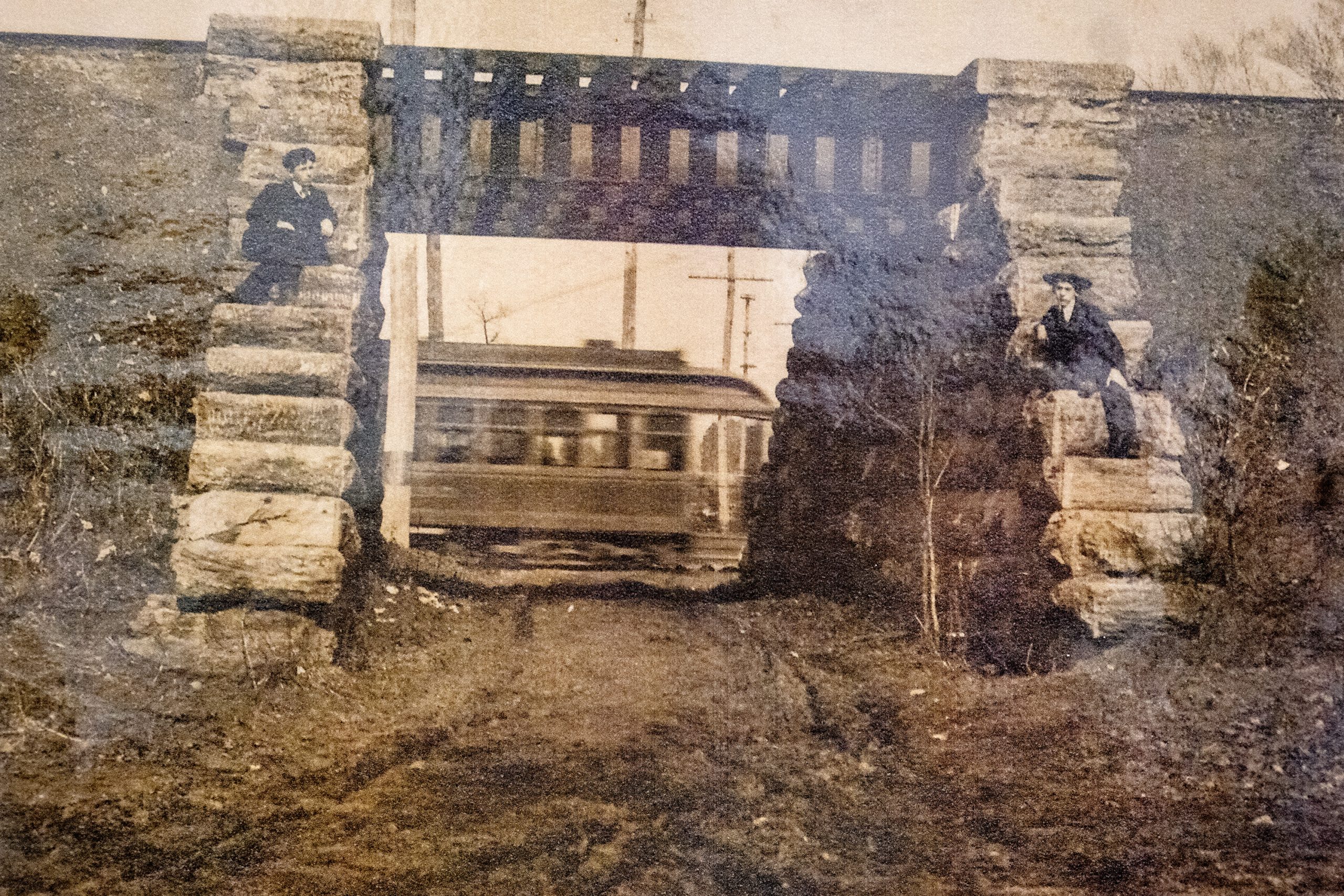
    An early 20th-century photo showing an unpaved Nicholson Road and the train overpass on display at the new Audubon Historical Society Museum. The trolley passing behind was on the line between Camden and Clementon Park that ran along East Atlantic Ave. The train line is no longer active, but Nicholson Road still goes under the bridge.Audubon Historical Society

    Nancy Ryan, 79, moved back to her native Audubon nine years ago to retire. She recalls stories from her father about the pavers coming in when he was 4 years old, watching the steam shovels digging up Cedar Croft in 1917 or 1918.

    Now, Ryan said, the only people who call the borough Mudubon are non-natives who like to make fun, like her husband. But Audubon residents know the borough has grown far beyond its muddy origins, Burgess said.

    “We’ve come a long way in the last 110 years, more or less,” Burgess said.

    100 years at Audubon High School

    Nearly a century ago, about 500 students took the first classes offered at Audubon High School on Edgewood Avenue in September 1926.

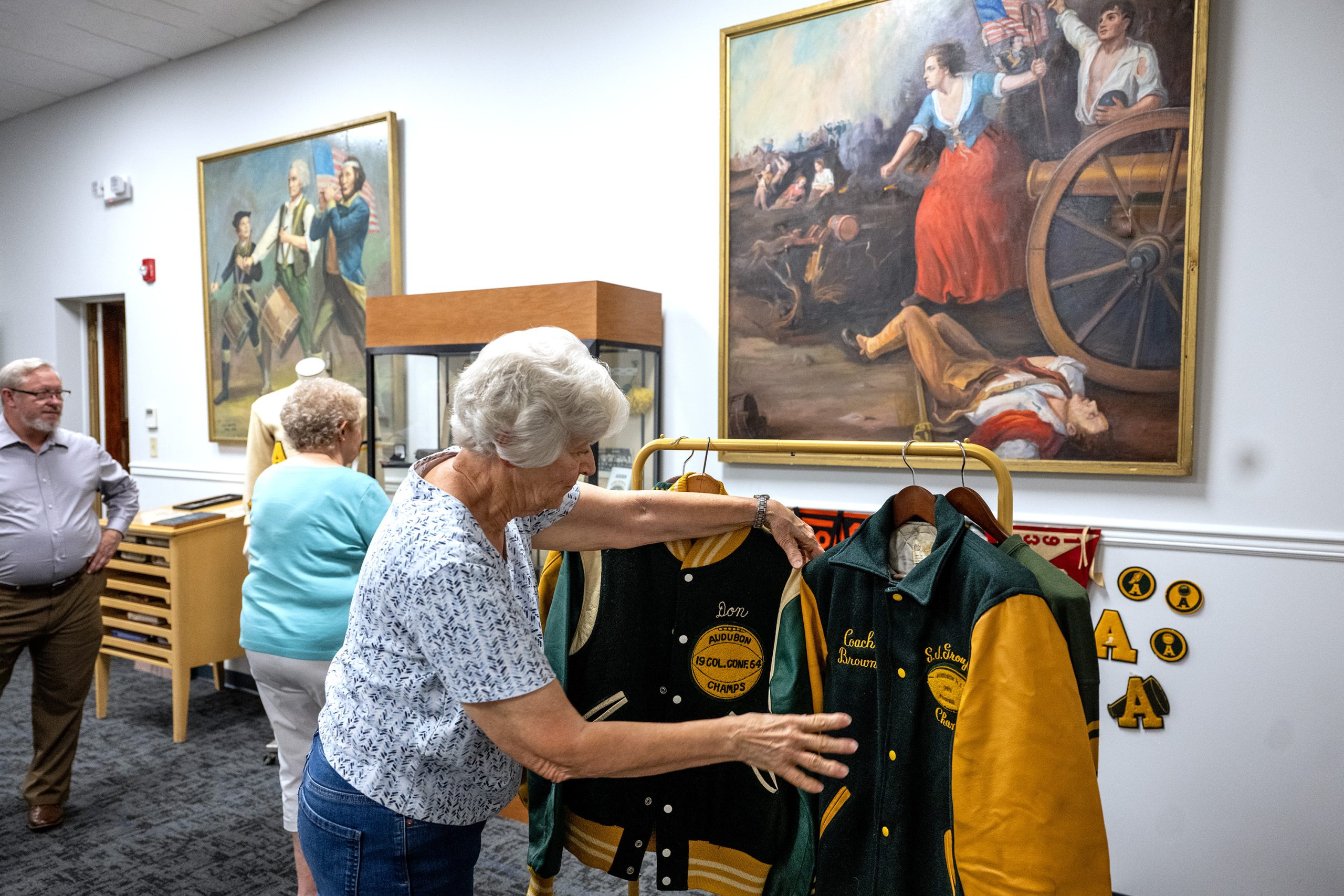
    Today, items spanning the high school’s history are on display: a booklet teaching children the 20th-century Palmer Method to learn cursive, pennants, a rack of letterman jackets, school handbooks, admission cards, and a cream varsity cardigan from 1966. A candlestick telephone used by the school’s first principal, Grace Kramer, sits at the bottom of a display case.

    Mayor Rob Jakubowski (from left), Nancy Whalen, and Nancy Ryan at the newly opened Audubon Historical Society Museum.Tom Gralish / Staff Photographer

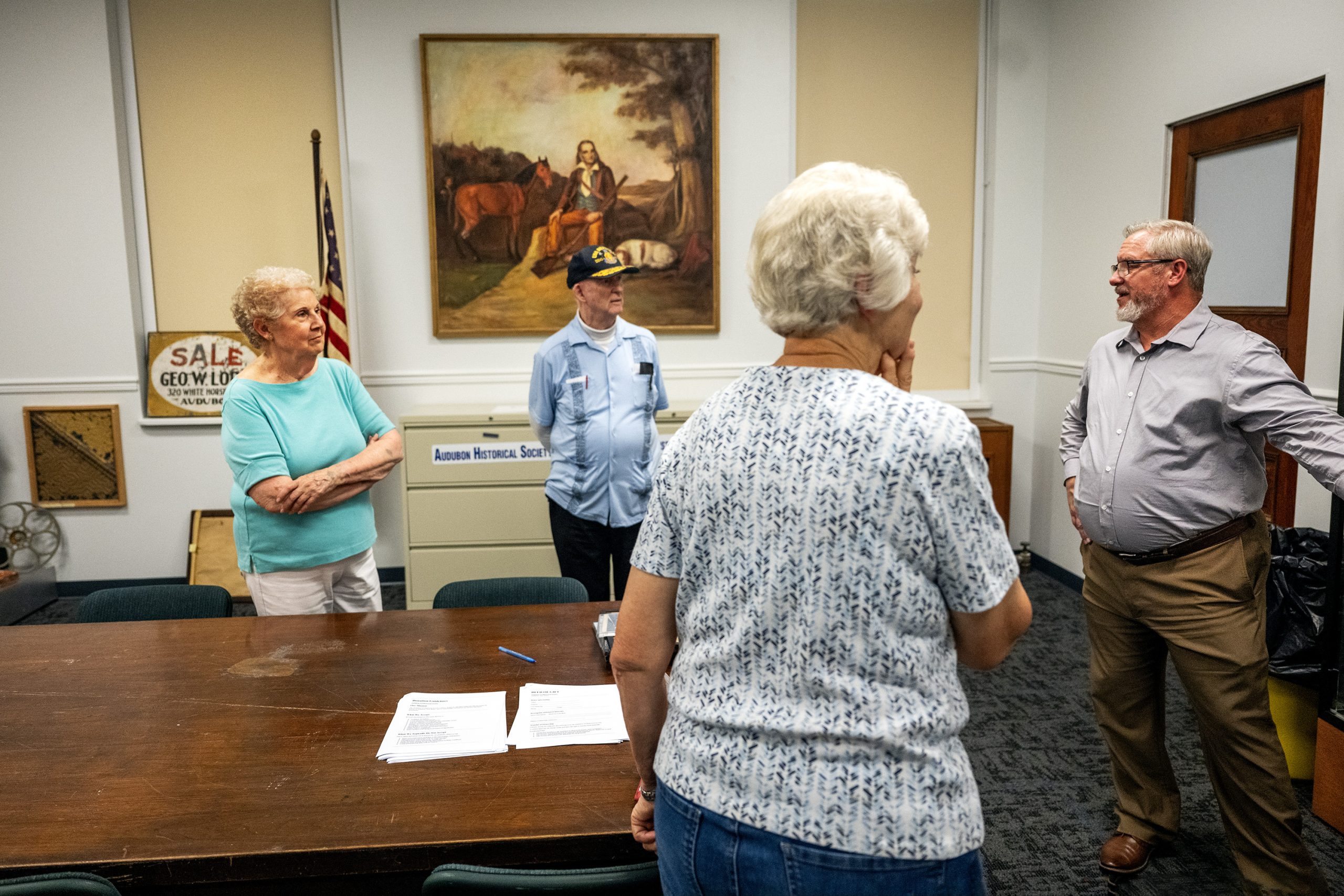
    Three replica oil paintings recreated by the late Michael J. Miceli, a Mount Ephraim local, hang on the walls, too. They picture military drummers, fictionalized American Revolutionary War heroine Molly Pitcher, and French American artist and ornithologist John J. Audubon, the borough’s namesake. Their previous home was the Audubon High School auditorium, but when they were removed during recent renovations, a history teacher saved them, Jakubowski said.

    Plus, every high school yearbook available since the school’s founding line a bookshelf in a back room, in case anyone comes looking to do archival research.

    From left: Nancy Whalen, Craig E. Burgess, Nancy Ryan, and Mayor Rob Jakubowski at the newly opened Audubon Historical Society history museum on the second floor of the Audubon Senior Center Thursday, July 16, 2026. Behind them is a painting of naturalist, ornithologist, and painter John James Audubon, for whom the town was named. Tom Gralish / Staff Photographer

    The group is still open to taking donated artifacts, though with their large existing collection, they’re not afraid to decline duplicates. In the meantime, the historical society will continue sorting their archives. It’s a lot of work, all volunteer.

    “But that’s what makes it fun,” Burgess said.

  • South Jersey’s Spencer’s, armed with lava lamps and band tees, plans for a future beyond the mall

    South Jersey’s Spencer’s, armed with lava lamps and band tees, plans for a future beyond the mall

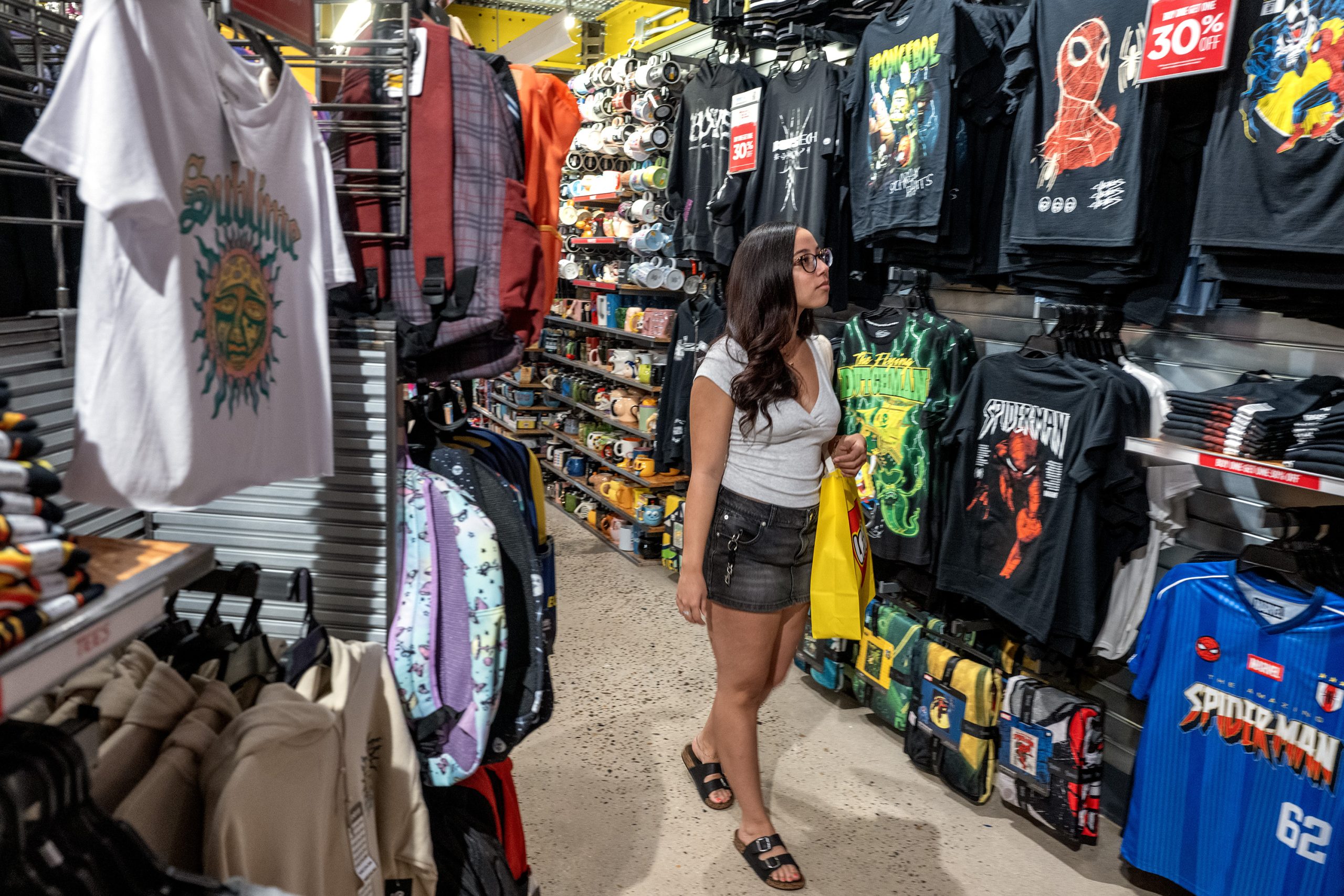
    Pink cheetah-print beer bongs. Fugglers. Studded belts. A fridge full of Red Bull. Band T-shirts and lava lamps galore.

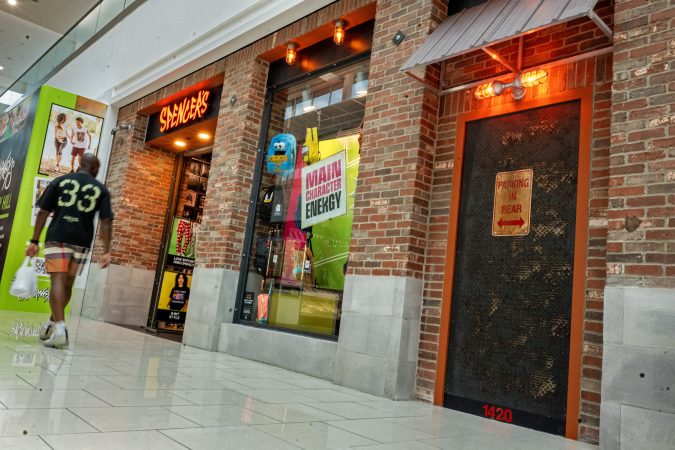
    It’s hard to predict what you’ll spot when you round a corner at Spencer’s, or more specifically, what expletive, hit TV show, or meme will be featured on the next rolling tray. The novelty item retail chain recently moved into a new spot, 1,000 square feet bigger than its last one, in the JCPenney wing of the Cherry Hill Mall.

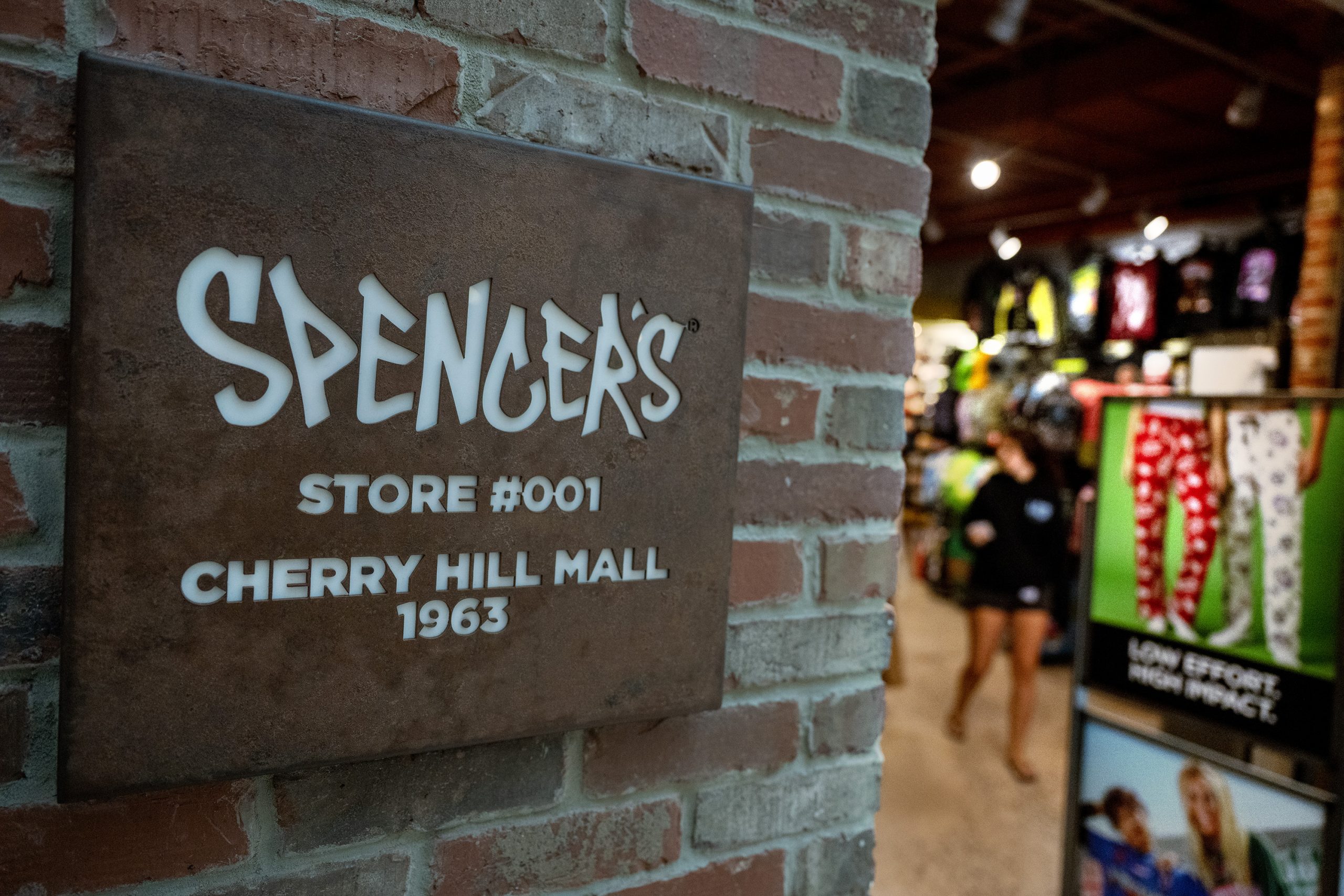
    In 1963, the South Jersey mall gave Spencer’s its first in-person retail store after 16 years as a mail-order catalog.

    Now, Spencer’s is one of Cherry Hill Mall’s last remaining early tenants, and though the gag gifts have changed over the years, the chain remains alive and well, even as mall culture and the ways people shop change across the country.

    The Cherry Hill location is one of hundreds of Spencer’s stores across the U.S. and Canada. While CEO Steven Silverstein declined to share how much Spencer’s made in 2025, he said the company’s revenue has grown 50% since 2019 and benefited from a spike in shopping interest post-pandemic.

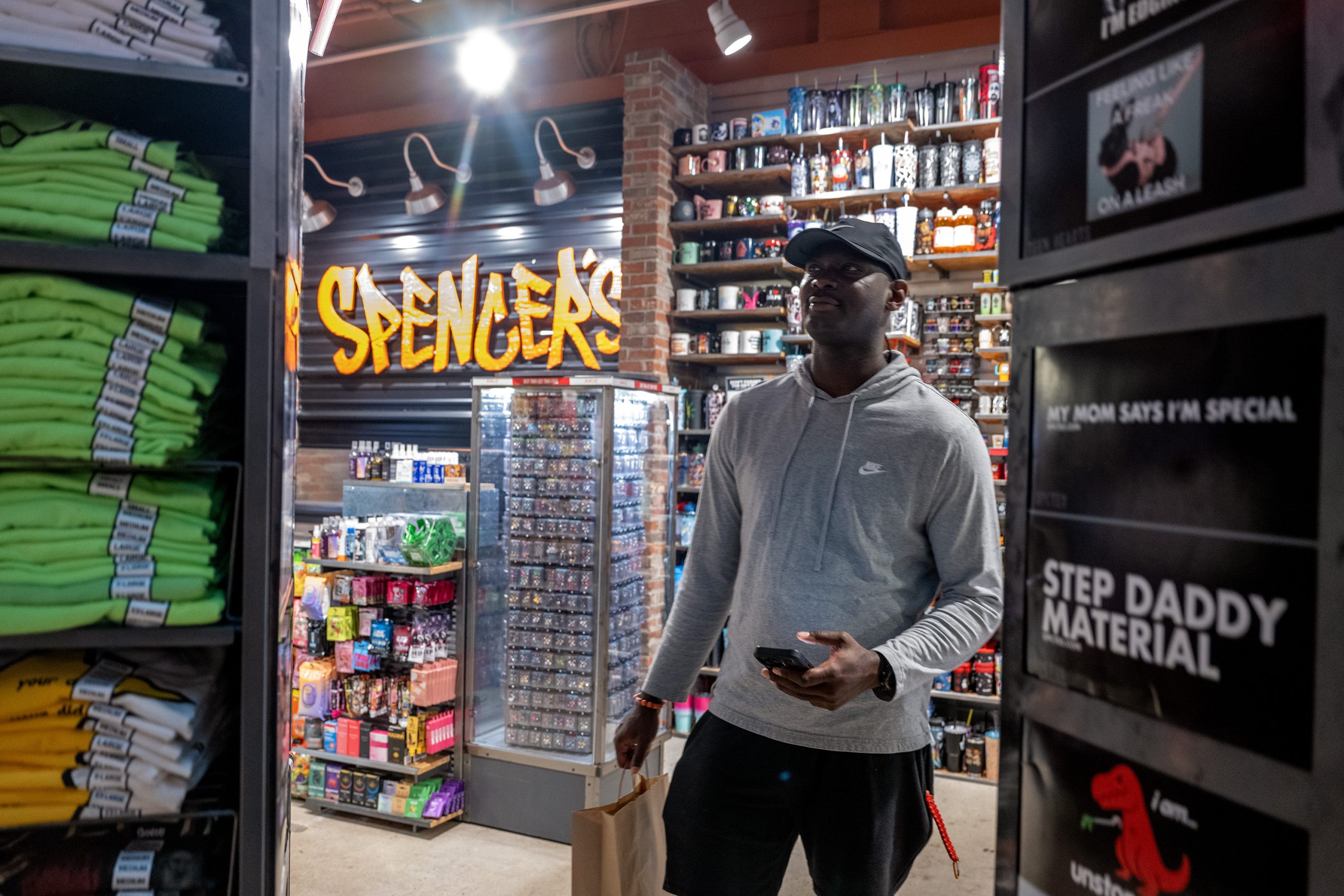
    On a rainy Thursday afternoon in July, the store was mostly quiet. Eddie Frazier of North Philadelphia looked for a new T-shirt. One woman bought a lingerie set, and a grandmother stopped in to browse.

    Alex Williams of Mount Laurel said she and her friends have shopped at Spencer’s for years. Since she recently turned 21, Williams said she likes to hunt for novelty shot glasses. Last time she visited, she bought a mini Playboy-themed tumbler.

    “I just like how comfortable everybody is,” Williams said. “They don’t make you feel weird.”

    Alex Williams of Mt. Laurel shops at Spencer’s in the Cherry Hill Mall on July 9. She says she and her friends have shopped at the store for years. Tom Gralish / Staff Photographer

    Silverstein agrees. He has run the parent company of Spencer’s, which also owns Spirit Halloween, since 2003. Spencer’s Spirit Holdings is headquartered in Egg Harbor Township, Atlantic County, a short drive away from the Shore, and has been since the ‘70s. It counts about 700 employees.

    “We’re a South Jersey-based company,” Silverstein said. “I say that with a lot of pride because I think that we belong here.”

    ‘A rite of passage’

    Max Spencer Adler, a U.S. Army Corps bombardier once imprisoned by Germany during World War II, founded Spencer Gifts in Atlantic County in 1947 with “$200 and an idea.”

    That idea, in alignment with the Spencer’s of today, was a bit outrageous. A catalog from 1956 featured “imitation shrunken heads” ($1, or 2 for $1.49 if you were seeking a deal) and a “magic stump remover” ($1.50), a powder that claims to quickly dissolve tree stumps of any size.

    Giant rubber feet and golf tees (spelled “tease”) in the shape of a woman’s body were also available.

    By 1963, the novelty business had bloomed. Adler sent about 14 million copies of the Spencer’s Christmas catalog across the country and opened his first retail store in Cherry Hill, store #001.

    A plaque in the Cherry Hill Mall marks the store as the very first Spencer’s retail shop, #001. Then called Spencer Gifts, it opened in 1963 in the then-brand-new mall. Now Spencer’s has moved to a bigger storefront.Tom Gralish / Staff Photographer

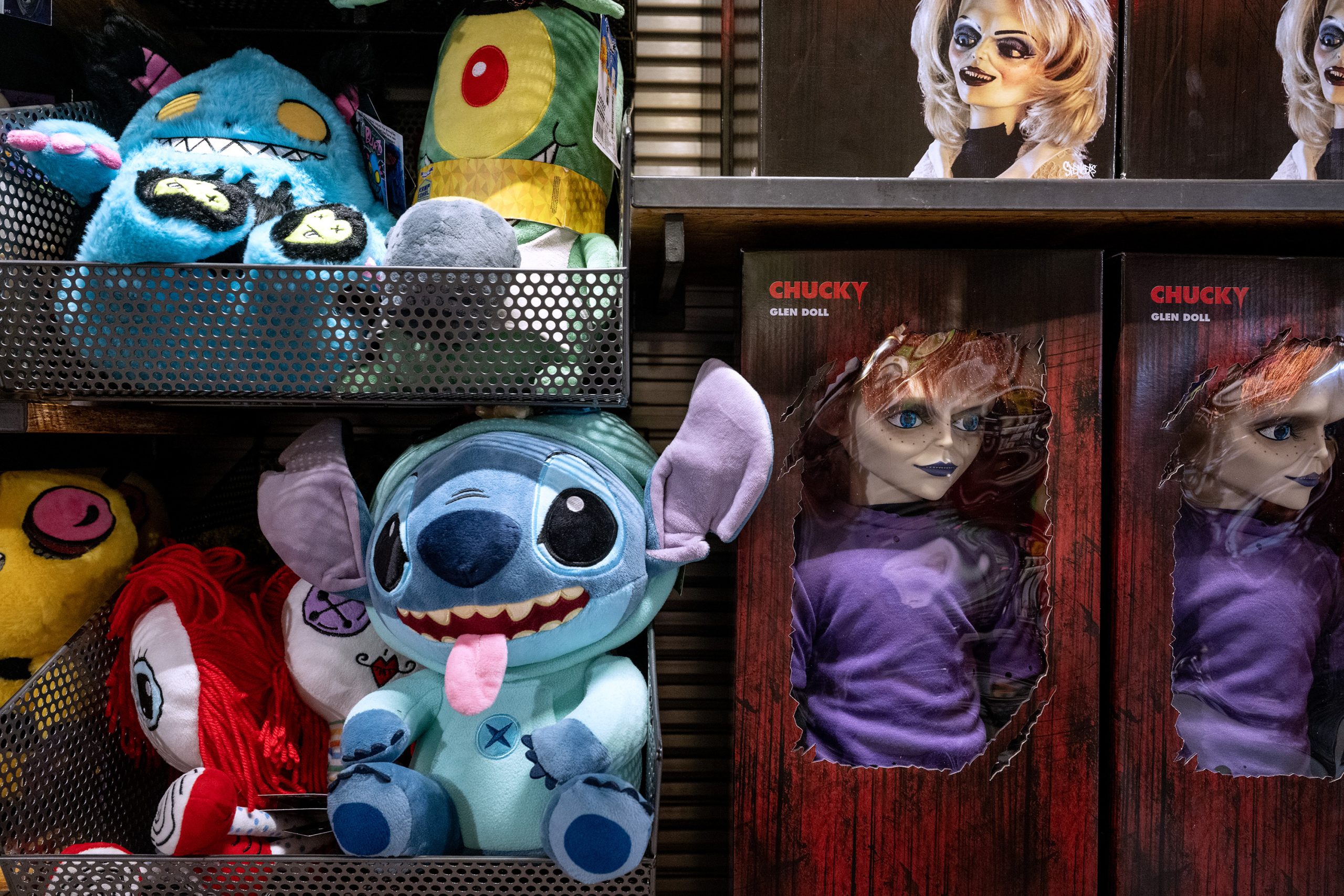
    Since then, Spencer’s physical presence has moved well beyond South Jersey, and teens and young adults have continued to shop for sparkly lava lamps, body jewelry, horror movie dolls, and whatever is trending at the moment. During the July visit, the store featured Dubai chocolate, blind boxes, and plushies from popular TV series.

    “It is a rite of passage,” Silverstein said. “You remember the first time when your mom said, ‘OK, you can go in there, but I’m not going in there with you.’”

    Today the chain has 661 stores across the U.S. and Canada, Silverstein said, a number not dramatically different from previous years. Spencer’s will open 20 stores this year and will likely close the same amount. Its most popular products tend to be its T-shirts, accessories, jewelry, and objects from the sex and wellness section.

    The Cherry Hill location gets about 100 customers on a regular weekday, but more people flood in on weekends and at night, said Danielle Voelkel, the district store manager. Voelkel, who has worked there for 11 years, said sometimes people are hesitant to enter.

    “You don’t always know what you’re coming into the store for, but at the end of the day, there’s something for everyone,” Voelkel said.

    Eddie Frazier of North Philadelphia shops at Spencer’s in the Cherry Hill Mall in early July.Tom Gralish / Staff Photographer

    How Spencer’s survives

    While American mall culture isn’t dead, it has certainly changed, at least in the Philly region. The pandemic turned some malls into ghost towns, and the popularity of online shopping has grown immensely.

    “You could never invent Spencer’s today,” Silverstein said. “It’s just really been that tree that’s been pruned in so many different directions … but somehow works.”

    Spencer’s has found ways to keep moving forward, Silverstein said, by building up in malls that are thriving, such as the Cherry Hill Mall, and reevaluating its place in struggling markets. Spencer’s, like other retailers, has an online store for shoppers who can’t or won’t go in person.

    To stay embedded in the community, employees volunteer at the Community Food Bank of New Jersey, and the chain’s anti-cancer campaign, “Boobies Make Me Smile,” has raised $16.5 million since 2008, Silverstein said. In April, the chain launched a sex education tour to Temple University, Stockton University, and Rowan University. Stockton and Rowan students currently make up half the company’s interns.

    Items for sale at Spencer’s in the Cherry Hill Mall include Chucky dolls and a Stitch plushie from the “Lilo & Stitch” Disney movies. Tom Gralish / Staff Photographer

    Plus, Spencer’s is no longer just for mall rats.

    The chain recently expanded to strip malls and shopping centers, where Spencer’s can’t rely on the fleeting curiosity of mall walkers for revenue.

    “The power of our brand has to be strong enough to be its own destination. … Can we attract an intentional shopper?” Silverstein said.

    Spencer’s has discovered it can, at least right now.

    The chain has opened 50 non-mall locations, Silverstein said, though it’s unclear how they’re performing financially. There are no strip mall spots in Jersey so far, though Spencer’s intends to open a location at Consumer Square in Mays Landing, Silverstein said, about 10 minutes from its Atlantic County headquarters. And some outlets down the Shore already feature Spencer’s, including Jersey Shore Premium Outlets.

    Despite the move beyond malls, Silverstein said the rumors of mall death are greatly exaggerated. Mall culture will keep pushing Spencer’s forward, so long as the chain keeps coming up with original ideas, whether that’s alien-duck shot glasses or Pennywise lava lamps.

    “Retailing is like being a shark,” Silverstein said. “You constantly have to be moving or you die.”

  • Gloucester County just turned a vacant T-ball field into its first playground designed for children with disabilities

    Gloucester County just turned a vacant T-ball field into its first playground designed for children with disabilities

    Anthony Iovino, a lifelong resident of Williamstown, realized during the COVID-19 pandemic that Gloucester County needed a new playground.

    His son, Finn, was diagnosed with autism at 2 years old, and with the world shut down, Iovino’s family quickly taught themselves how to support Finn from home.

    “So then you learn that one of the most essential therapies for kids with special needs is play,” Iovino, 51, said. “And there really wasn’t a space for kids with special needs.”

    Now Finn is 8, and an accessible playground named in his honor has finally opened to the public. It sits between the baseball fields and basketball courts off Church Street in Monroe Township, by Pfeiffer Community Center.

    Finn’s Friends Park hosted its ribbon-cutting on June 29, where Finn gave a speech to thank families for coming.

    “I’m very happy that this park is done because, like, it’s a special memory I think I’m going to remember forever,” Finn said.

    Lindsey Truong (rear) pushes her daughter Amelia, 3, on the swing in the newly opened Finn’s Friends Park in Williamstown Thursday, July 16, 2026. Tom Gralish / Staff Photographer

    The project to revamp an old T-ball field into an autism and mobility-friendly playground was a collaborative effort between Monroe Township and Finn’s Friends, an autism awareness nonprofit run by Iovino and founded in 2024.

    Iovino, a local real estate broker and owner of Cocaboni’s Cafe in Williamstown, said he approached Monroe Township Council a few years ago about the project, and Monroe officials agreed right away.

    Mayor Greg Wolfe said Monroe has some other parks with limited-accessibility features, but none to the scale of Finn’s Friends.

    The new playground uses rubberized flooring rather than mulch to allow mobility aids, wheelchairs, and strollers to move smoothly, along with concrete pathways throughout. For children with sensory needs, the playground features musical equipment, canopies for shade, and lots of texture and color. Educational panels built into the playground teach kids sign language and Braille. The playground is fenced in, a first for Monroe, to keep children who tend to wander inside.

    Arnold Patten III, 8, pushes his dad, Arnold Patten II, who is holding his little sister, Jaliyah, 2, in a swinging sled in the newly opened Finn’s Friends Park in Williamstown on Thursday, July 16, 2026.Tom Gralish / Staff Photographer

    “I hope that everybody utilizes it,” Wolfe said. “I hope that it draws children from other communities who might not have access to a park like this.”

    Most of the $1 million project was funded by a $750,000 state grant awarded in 2024 by the New Jersey Department of Environmental Protection’s Green Acres Program. The rest of the money came from the township’s capital improvement fund budgeted for parks.

    Jake’s Law, a 2018 state law supporting all-inclusive parks, made the grant possible. Jake’s Place, an accessible playground in Cherry Hill named after Jacob Cummings-Nasto of Voorhees, inspired the law. Cummings-Nasto, who enjoyed the playground despite his own physical limitations, died at 2 from a cardiac medical condition.

    On Thursday morning, the humidity and air quality warnings didn’t stop about a dozen children from playing at Finn’s Friends Park. Lindsey Truong, 29, of Deptford, hung out with her family at the park for about a half hour after a visit to the local farmer’s market. She said her kids, Amelia, 3, and Tristan, 1, enjoyed the musical elements and the shade, and felt safe there as compared to other playgrounds in the region.

    Teresa Casey, 65, of Williamstown, brought her four grandkids to the playground, too. Even though Casey lives down the street from Mary Mazza Duffy Memo­r­ial Park, she said she’s started bringing the kids to Finn’s Friends instead.

    “We used to go there, but everybody comes here now, so there’s hardly any kids there to play with,” Casey said. “If there’s a playground around, we’ve hit it, but right now, this is their go-to spot.”

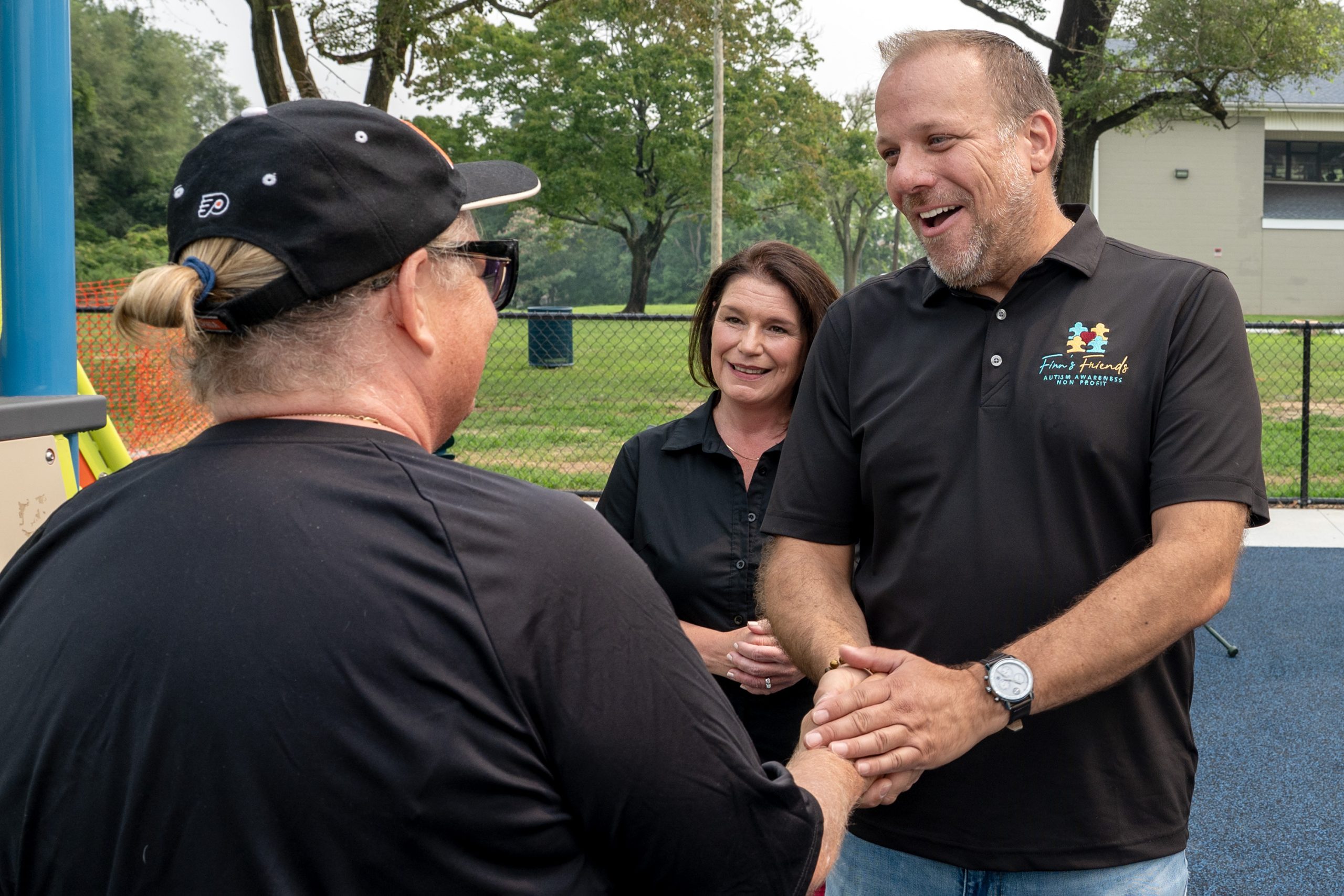
    Teresa Casey thanks Anthony Iovino (right) and Kim Bidinger (center) with Finn’s Friends in the newly-opened Finn’s Friends Park in Williamstown on Thursday, July 16, 2026. Tom Gralish / Staff Photographer

    There is still work to do. Finn’s Friends is fundraising through sponsored golf outings and engraved brick sales to build an archway at the entrance, and the nonprofit is hoping to eventually add a pavilion and bathrooms by the playground. So far, Iovino said Finn’s Friends has raised about $50,000 for the park.

    To maintain the park, Wolfe said the nonprofit is also raising money to go into a trust account through the township.

    Other Jake’s Law-funded playgrounds already exist in South Jersey, but Wolfe said the park is a first for Gloucester County.

    Washington Township received the same grant as Monroe in 2024 for an all-inclusive park project at Washington Lake Park, but that work is still in progress.

    “Hopefully when they’re there, we can get over there and support them,” Iovino said. “The more the merrier.”

  • A real estate developer has sued a South Jersey township for $300 million over its data center ban

    A real estate developer has sued a South Jersey township for $300 million over its data center ban

    A real estate developer sued local officials in Monroe Township for $300 million shortly after the Gloucester County municipality banned data centers. Now, the case has moved to federal court.

    Hexa Builders, a Princeton-based real estate developer, has long sought to develop a property at 3043 Black Horse Pike. Hexa filed a lawsuit on June 5 in New Jersey Superior Court after Monroe officials denied its application to build a 1 million-square-foot data center and a warehouse on the property.

    The ban, put in place by two ordinances approved by the township on April 22, followed months of public outcry against Hexa’s potential project. Even after the ban was passed and officially took effect on May 13, Monroe Township residents packed the room when Hexa presented its application that still included a data center at a rowdy Special Planning Board meeting on May 22.

    In the filing against Monroe’s mayor, township, and planning board, Hexa claimed the application rejection and data center ban are arbitrary, violate freedom of speech rights and the 14th Amendment, and more. The Woodbury Warbler, a local news site, reported on the filing last month.

    Jim Maley, Hexa’s lawyer and a partner at Maley Givens in Collingswood, said he expects the ban to be overthrown, since he believes the ban in Monroe stems from trending public disdain for data centers.

    “Nobody is giving any testimonial, any scientific reasons for the good of the community. Everybody’s doing it,” Maley said. “It’s just a thing.”

    Debate around data centers, which opponents claim will lead to environmental problems and noise, are not new in South Jersey. A massive data center in Vineland is set for completion by the end of the year, while Medford Township passed an ordinance banning data centers in June. Millville in Cumberland County banned large-scale data centers in May after promotions for a new 66-acre “Millville Energy & Data Center Campus” circulated online. Cherry Hill‘s council scheduled a public hearing for July 27 to potentially adopt a ban across the township.

    For now, Maley said Hexa is at a standstill. But the company still wants to complete the project, even with the public’s pushback and what could be a lengthy court process.

    On July 6, the township moved for the case to be pushed to federal court, closing the Superior Court case, and no federal proceedings are on the docket yet.

    “The Township is committed to vigorously and zealously defending this lawsuit while remaining steadfast in its commitment to protecting the interests of the Township, its residents, and its taxpayers,” said Sandra Graise, solicitor for Monroe Township, in an email.

    Graise declined to further comment on the case or the data center ban, but the township wrote in a Facebook post last month that the lawsuit wasn’t a surprise.

    How the ban came to be

    Hexa, led by CEO Dipal Patel, officially obtained the property in a $5 million transfer of about 170 acres of farmland back in 2022. The township has included that land in a resolution for commercial redevelopment since 2019.

    The site was previously approved for the construction of hundreds of homes when Hexa bought it, Maley said, but the township ended up moving in a different direction. In 2022, the township approved a redevelopment plan that set the grounds for Hexa to build warehouse, storage, and distribution facilities on Black Horse Pike, but not data centers.

    That changed in early 2025, when the township passed an ordinance amending the redevelopment plan to allow data centers.

    It didn’t take long for residents to speak out about the impact a data center could have on water quality, pollution, and noise in their neighborhoods, even before Hexa officially added a data center to their plan.

    A planning board meeting in January 2026 dragged on for more than four hours because of resident objections, but the township still voted to approve a preliminary site plan for Hexa to move forward with its warehouse and distribution center project. The proposal didn’t include a data center at the time, though the lawsuit filed in June claims that Hexa had already expressed interest in developing one, and residents made it clear they weren’t fans of the possibility.

    The township drafted an ordinance in March to set standards for data centers, including noise restrictions and a closed loop cooling system to avoid groundwater withdrawal, but that ordinance was tabled and never moved forward.

    Instead, in April, Monroe passed two ordinances: one banning data centers altogether, and another repealing the 2025 ordinance that allowed data centers on Hexa’s property.

    “At the end of the day, this Township has now banned any data center use from ever coming to Monroe Township. I thank those residents who attended the many meetings and expressed their concerns. The process worked,” Mayor Greg Wolfe wrote in a May township newsletter.

    Two weeks before the ban was adopted, though, Hexa’s legal complaint claimed it submitted an amended application to the township to turn one of its proposed warehouses into a data center.

    Maley said the amendment was driven by “interest from the marketplace that began before Township passed the ordinance” that allowed data centers at 3043 Black Horse Pike last year.

    When Hexa sought approval for the new application on May 12, the township deemed the company’s application incomplete, prompting Hexa’s lawsuit.

    The lawsuit

    The $300 million sought by Hexa Builders accounts for financial losses related to the stunted data center project, Maley said.

    “The damages all come from real, actual commercial realities here. … It’s the loss of the value of the project,” Maley said.

    In its 102-page complaint, initially filed in Gloucester County court on June 5, Hexa claimed that Monroe violated the 14th Amendment by treating Hexa’s plan differently from similarly sized projects, like warehouses and other high water usage facilities, that it claims would have similar environmental and aesthetic impacts.

    Hexa also claimed that banning data centers violates the First Amendment and free speech rights, since the facilities could support artificial intelligence and social media communications in the area.

    Maley said the data center ban will have “an adverse effect on communications,” and the argument is an effort to adapt constitutional law to today’s tech.

    “Data centers are a medium of expression and banning data centers would impose a significant burden on the free speech rights of all citizens in the United States,” the complaint reads.

    Those are just some of the 20 counts alleged by Hexa, including that the township didn’t give the company ample notice of its ban as it prepared data center plans. Monroe Township officials have publicly shared their intention to keep mostly silent on the litigation as the case moves forward.

    Some residents have continued to speak out at meetings and ask questions about potential loopholes in Monroe’s ordinances to ensure their neighborhoods remain data center-free.

    At the township’s planning board session on July 9, Williamstown resident John Romano asked who allowed Hexa’s application to get so far in the first place, and whether Monroe will be able to hold a case against Hexa in court. He said the data center would be right in his backyard.

    “I’d like to sit out in my backyard and enjoy a stogie and a cold one and not hear noise and pollution and this and that,” Romano said. “I would like to be able to stay in Monroe Township, live out my golden years here, which was the plan. This has got my wife and I really concerned.”