Mantua Township in Gloucester County was hit hard by storms Tuesday night that swept through the Philly region, causing damage to homes, electric outages, and school closures.
By 2 a.m., the Mantua Fire Department had reported downed trees and wires, road closures, and power outages, with its crews working into the morning to make fixes.
The fire department has responded to 75 incidents since Tuesday night, with about a quarter of the township impacted by the storms, said Mantua Fire Chief Brian Hauss.
No major injuries have been reported, Hauss said, though one person suffered a minor injury after a tree fell through their house, leaving them stuck inside. That person is now staying with family in the neighborhood, he said.
Hauss said the township hoped to clear major roads by Wednesday night, and auxiliary roads within the next couple of days. About 25 roadways in Mantua were impacted, and two “cut crews” are working with Atlantic City Electric to cut down power lines intertwined with trees to get the streets operational again.
Mantua Mayor Bob Zimmerman posted Wednesday afternoon that residents without electricity should regain power by 11 p.m. Wednesday, though some areas may take longer. Zimmerman reported that the Mantua municipal building is closed due to the outages, and the township’s trash and recycling services are delayed due to debris.
The impacts forced Mantua Township School District to close Wednesday.
“We will reassess regarding school on Thursday, September 3rd,” a school district social media post reads.
The storm also took down the internet service for Mantua’s police department, meaning police could not provide copies of police reports or process firearms permits. The outage won’t impact emergency calls, according to a social media post.
Rick Sanderson, 43, just bought a home in Mantua last month. Now, the storms have left his sunroom and basement flooded, windows damaged, and his wood floors and couch ruined. He drove to his sister’s house to shower Wednesday morning, through powerless traffic lights, after dragging half a tree across his lawn to the curb. His neighbors have been working to clear their street of debris.
“I would just avoid Mantua altogether,” Sanderson said.
More Gloucester County municipalities posted about the storms’ impacts to their roadways and power lines. Deptford Township police said on social media that their department received multiple calls Tuesday night in the Oak Valley and Pine Acres sections of the township, and neighboring West Deptford Township reported “numerous” impacted roads.
“Please use caution when traveling, as there may be significant road debris, downed trees or tree limbs, low-hanging utility lines, and traffic light outages impacting our roadways,” the township posted.
There was also a chance of thunderstorms Wednesday after 8 p.m. and on Thursday, according to the National Weather Service.
Barrington has introduced three ordinances that would expand, regulate, and tax sales for cannabis businesses.
Kyle Hanson, Barrington’s mayor, said the legislative moves are an effort to make the borough’s International Paper facility, which was set to close Monday, attractive to cannabis companies that could move in.
The Memphis-based company with nearly 200 facilities across the country announced this summer that its Barrington plant would close in the third quarter of 2026 as part of its restructuring plan and lay off 126 workers.
Amy Simpson, an International Paper spokesperson, said Monday was the last production date for the Barrington facility.
While no cannabis business (or others) have approached Barrington about taking over the facility, Hanson said he brought the idea to the borough’s council in the hope that broadening permitted uses could bring more economic development to the closing facility and vacant properties in the district.
“The decision was more about being proactive with our zoning and giving ourselves additional options as we prepare for the loss of a long-time town business,” Hanson said by email.
The package, which had its first reading by Barrington’s council on Aug. 11, would allow cannabis cultivators, manufacturers, distributors, and delivery establishments, along with cannabis wholesalers and retailers already permitted in the borough, to operate in the manufacturing district. The proposal would allow cannabis delivery companies to work in the business commercial district, too.
The borough would apply a 2% municipal transfer tax to sales by those businesses, except cannabis wholesalers, which would get a 1% tax. One ordinance also sets conditions, including that the facilities would be more than 200 feet away from educational buildings and other cannabis plants and more than 50 feet from residential neighborhoods.
International Paper has other facilities in South Jersey, including in Bellmawr, West Deptford, and Vineland.
Simpson said the site at 100 E. Gloucester Pike isn’t currently on the market, but a sale should come in mid-2027. She did not answer whether an agreement is currently in place for the property.
The ordinances are scheduled for a public hearing and vote on Sept. 8. at a borough council meeting. Hanson said council unanimously agreed to move forward with the ordinances for a vote, so he expects all members to approve.
Woodbury residents John Wagner and Colleen Gibson never planned to own a brewery.
But when the husband-and-wife duo heard that their local drinking spot, Eight & Sand Beer Co. at 1003 N. Evergreen Ave., was up for sale last September, Wagner said they didn’t want to see a place so close to home shut down for good. They spoke with their neighbor, Woodbury’s former mayor Peg Hertrich, who connected them with the 10-year-old brewery’s owners.
The exterior of the new Freckled Jawn Brewing on Thursday, Aug. 27, 2026 in Woodbury, NJ.Monica Herndon / Staff Photographer
“We never got an answer or a reason why not… so here we are,” Wagner, 53, said. “Fast forward almost a year later, and we’re getting ready to open.”
The couple, together for 12 years, officially closed on the 4,300-square-foot brewery (that includes the brewhouse) in Gloucester County in early August, months after Eight & Sand closed. The $730,000 sale, Wagner said, included brewery equipment and a vacant lot behind the building, which will help the couple expand the property’s beer garden come spring.
The in-progress interior of Freckled Jawn Brewing.Monica Herndon / Staff Photographer
Wagner and Gibson hope to open Freckled Jawn Brewing in the first week of October. An official date will come in the next couple of weeks, as they continue $40,000 of renovations and add new furniture to make the space feel less industrial and more inviting. Details will include leather and wood accents, an electric fireplace, dim lighting, and hopefully a touch of Philly sports.
“I just want the community to have somewhere they can go that they’re excited and proud to have in the neighborhood,” Wagner said.
The new brewery acquired Eight & Sand’s liquor license within 17 days of closing on the property, Wagner said, so Freckled Jawn has been clear to brew beer since Aug. 21.
The in-progress interior of Freckled Jawn Brewing on Aug. 27, 2026, in Woodbury, N.J.Monica Herndon / Staff Photographer
Three years ago, before their recent venture, the couple installed a basement bar in their South Jersey home for friends and family. They like to host St. Patrick’s Day parties.
They affectionately called the bar “Freckled Jawn Tavern,” Wagner’s 2 a.m. brainchild. The name was inspired by Gibson’s own freckles and the way she pronounces her husband’s name, John, as the multipurpose Philly term “Jawn,” a symptom of her Jersey accent. The new brewery kept it.
A Freckled Jawn Brewing tap in the in-progress brewery.Monica Herndon / Staff Photographer
“He calls me his ‘freckled jawn’ because I’m his anything and everything,” Gibson, 44, said.
Plus, the couple has two freckled dogs, Neo and Trinity, adoptees named after The Matrix characters, who will be welcome in the brewery’s pet-friendly beer garden when it opens next year.
Neo (top) and Trinity (bottom) are the unofficial mascots of Freckled Jawn Brewing in Woodbury, Gloucester County, set to open in October 2026.Colleen Gibson
The brewery’s indoor tasting room has capacity for 77 people, while the expanded patio area will fit between 150 to 200 people, Wagner said.
Wagner and Gibson plan to run the brewery while continuing their jobs as managers in supply chain distribution and in transportation, respectively, in the Philly region, Gibson said. They’ll manage a staff under 10 to start, which will include some of their children, and head brewer Matt Karg.
The in-progress interior of Freckled Jawn Brewing.Monica Herndon / Staff Photographer
Karg, 37, moved to Philadelphia with his partner in July to be closer to family, and the head brewer position happened to open at the perfect time. He started brewing when he got out of the U.S. Coast Guard and went to North Carolina’s Asheville-Buncombe Technical Community College to learn brewing, distillation, and fermentation.
He previously brewed for Hickory Nut Gorge Brewery in Chimney Rock, North Carolina, before the spot was destroyed by Hurricane Helene in 2024, and then for Hi-Wire Brewing in Asheville. He said he’s eager to introduce people to Freckled Jawn’s Oktoberfest beer, made just in time for the fall opening.
“The New Jersey brewing scene is a close-knit community, which we’ve learned and loved. But everyone knows everyone,” Wagner said. “They almost know every brewer, so it’s exciting that nobody knows this guy.”
Ready for something new, Karg said his hope for the brewery is simple.
“Good beers and a good environment to sit and hang out for awhile,” he said.
The brewery started on an Oktoberfest lager, Wagner said, since it takes the longest to brew. Freckled Jawn will also serve a light lager, an IPA, a blonde ale, and a stout.
“We’ll continue to expand,” Wagner said. “But we don’t want to wait too long to open.”
Freckled Jawn Brewing’s hours will be 4 p.m. to 9 p.m., Monday through Thursday; noon to 10 p.m., Friday and Saturday; and noon to 7 p.m. on Sunday.
The ACLU of New Jersey has urged the Bellmawr Police Department to investigate its officers’ conduct after local protesters alleged the department gave out citations while attendees engaged in “free-speech activities.”
The letter, sent by email Tuesday, said ACLU-NJ had been contacted by several members of Cooper River Indivisible, a Camden County-based grassroots organization, after members alleged that they were targeted by Bellmawr police officers during months of summer protests against President Donald Trump and his administration despite sidewalks and streets being “traditional public forums.”
“As I understand the facts, officers have been issuing traffic and criminal citations — for honking, jaywalking, and other offenses — to participants and supporters during lawful roadside rallies,” the letter reads.
Rebecca Uwakwe, ACLU-NJ’s criminal law reform advocacy director, said Cooper River Indivisible members told her that Bellmawr police have been targeting them since at least June, but that the citations have ramped up this month. She could not confirm how many citations have been given out but said she is representing “a good amount of people” affected by the citations in municipal court.
“No one’s freedom of speech should be chilled because they’re afraid of getting a citation,” Uwakwe said.
The letter asks the police department to investigate officers’ conduct and requests that the department respond by Sept. 11.
The Bellmawr Police Department declined to comment. Uwakwe said she has not heard from police yet.
Cooper River Indivisible, a South Jersey affiliate of nonprofit Indivisible, hosts weekly roadside rallies at an intersection in Bellmawr Borough, Camden County, where people gather to “joyfully disturb the peace” to protest fascism and actions taken by the Trump administration.
Neither Cooper River Indivisible nor its founder, Craig Strimel, immediately responded to requests for comment.
It was unclear who was arrested or whether charges were filed after the recent rally.
If the police department is not receptive to dialogue, Uwakwe said, the ACLU will continue to defend protesters and drivers against citations. ACLU-NJ is still interviewing people affecting by the citations, she said, and investigating the situation.
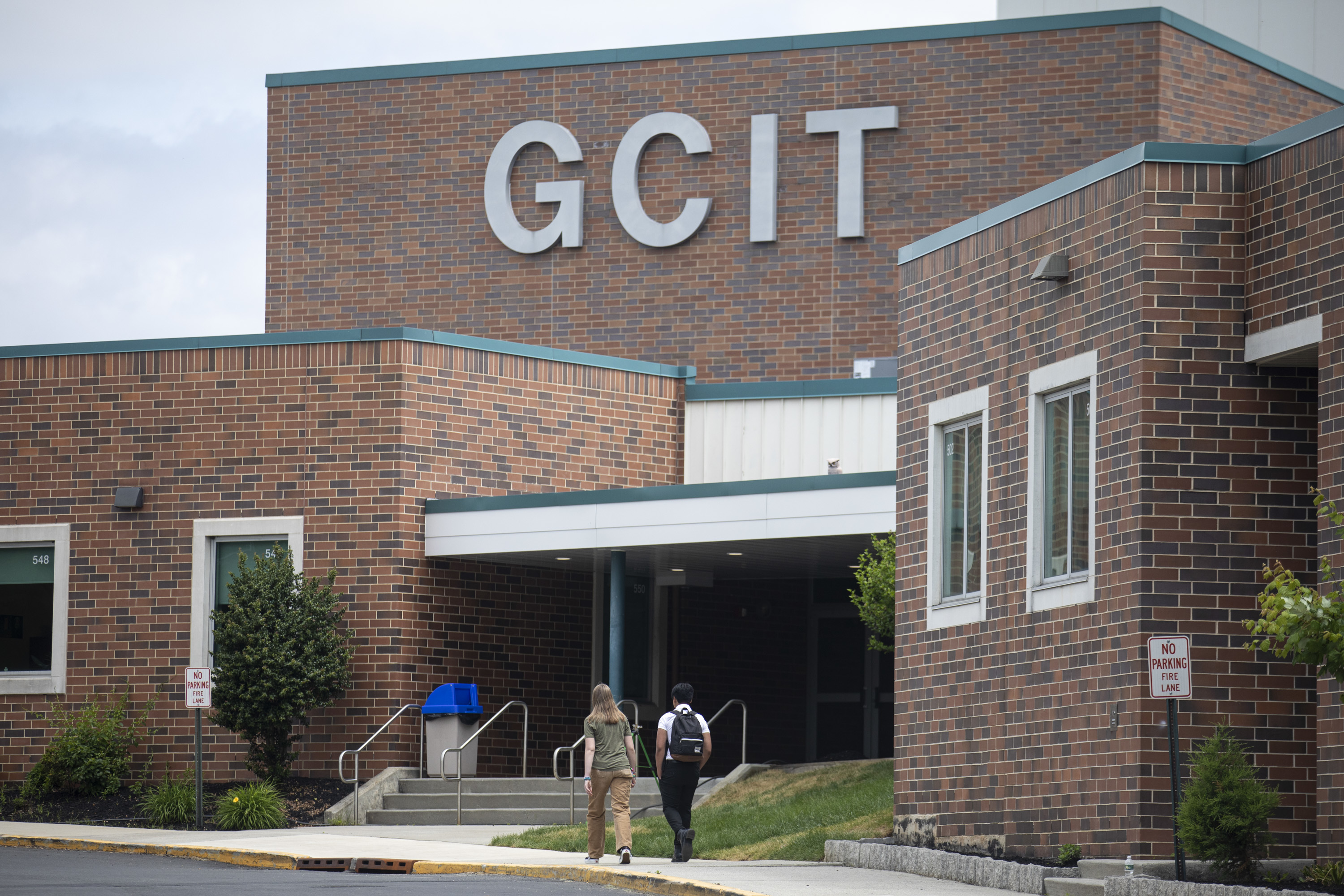
The Gloucester County Institute of Technology and its superintendentare facing multiple lawsuits after the school’s former principal and the administrator who replaced her filed complaints alleging the schooldiscriminated against them and mishandled its recent staff cuts.
Two lawsuits, filed in June weeks after GCIT first voted on the cuts, are the latest in a series of legal actions against GCIT alleging retaliatory and discriminatory behavior.
GCIT, the sole school in the Gloucester County Vocational-Technical School District, did not renew the contract of former principal Sybil Girard and two teachers. The school also cut the positions of former vocational education director Gina Mateka, another teacher, and the aquatics coordinator in a reduction of force.
The cuts, a response to a $500,000 budget shortfall that was only partially supplemented by the county, came down in a unanimous vote first in May and then again in August, according to meeting minutes approved last week. They follow budget struggles across South Jersey school districts.
Girard, who was hired in 2020 and was the district’s only Black administrator as well as the first Black principal in GCIT’s 55-year history, according to the complaint, sued the Deptford tech school and its superintendent, Susan Heiken, about four weeks before the school first voted not to renew her contract. She alleged racial- and gender-based microaggressions, negative performance reviews, and exclusion from staff hiring processes.
In a separate lawsuit filed in June, Girard alleged the school board voted not to renew her contract without providing the 48-hour notice required by New Jersey’s Open Public Meetings Act.
That case closed in state court Thursday, after GCIT’s school board hosted a special meeting, only two minutes long, to redo the personnel vote with proper notice.
Mateka, meanwhile, alleged in another June lawsuit that the district cut her administrative position and demoted her to principal to retaliate against a suit she filed last year alleging age and gender discrimination.
Mateka’s position was the only administrator role cut by August’s reduction in force, and the only tenured administrator position eliminated, according to her lawsuit.
Both Girard and Mateka declined to comment due to ongoing litigation. Heiken did not return repeated requests for comment, nor did Assistant Superintendent Amy Capriotti, who sits on the GCIT school board. Two board members also did not return requests for comment.
Students and others in the district community have spoken out against the staff reductions by defending the impact Girard and their teachers have had on their lives.
“For us GCIT students, our teachers and staff serve as parental figures, inspirations, support systems, and outlets; it would be a grave disservice to them, the students, the school, and morale to let them go,” former student Serena Smithwrote in a Change.org petition to call for the protection of staff. The petitiongarnered more than 1,600 signatures.
At board meetings leading up to the cuts, dozens spoke in defense of Girard and other employees at risk. At one March meeting, 58 people spoke, according to meeting minutes, and those comments took up more than 2½ hours.
A longtime district employee, who declined to be named for fear of retaliation, said recent actions taken by Heiken have hurt staff morale.
“Nobody is feeling secure,” they said.
Mounting complaints
Mateka’s beef with Heiken and the Gloucester County Vocational-Technical School District began in 2022.
The district had long shared its school board and administration with the Gloucester County Special Services School District, which educates children with disabilities, down the street.
But county officials restructured the district in 2022 and split the Deptford education campus back into two separate entities, meaning each school had to find its own staff.
Heiken became the temporary superintendent at the special services district while the school sought a permanent option.
According to an April 2025 complaint, Mateka saw herself as that option. She worked for the vocational technical school district since 1997 and became a shared chief academic officer in 2014.
With her teaching and administrative experience, Mateka applied for the superintendent opening at the special services school district, but the district’s board of education chose to hire James Dundee, a principal at GCIT, instead. Dundee is still superintendent.
Mateka sued GCSSSD, its school board, Dundee, and Heiken. She claimed the district did not handle the hiring process equitably, due in part to her age — she was 66 years old when she applied — and gender.
She alleged that Dundee did not have teaching experience, had never been a superintendent or assistant superintendent, and was not certified by the state to be a school administrator. That lack of experience, the complaint alleges, meant Dundee required a mentor when he was hired.
The same day, Brian Shakespeare, who held several roles at GCSSSD since 1992, also filed a lawsuit alleging age-based discrimination, since Shakespeare — 10 years Dundee’s senior — had applied for the position and lost out, too.
Both lawsuits are ongoing in state court.
Girard’s discrimination lawsuit came in April 2026, about a year after the complaints by Mateka and Shakespeare.
In its 20 pages, Girard alleges Heiken sought “dirt” on her and another Black administrator (who had her own racial discrimination lawsuit seeking $300,000 against GCSSSD, Heiken, and Dundee until the case was settled this summer), demoted Girard but not her white colleagues, refused to call her by her professional title, and constantly left Girard out of the loop.
After she first reported Heiken’s discrimination to the district’s human resources department, the complaint alleges, Heiken began to try to force Girard out of her position, including cutting Girard’s speech from the 2025 GCIT graduation program.
When GCIT did investigate Girard’s discrimination allegations, no one ever asked why she felt discriminated against, the lawsuit reads, and GCIT’s counsel notified Girard that her complaints were “unsubstantiated.”
This is the second consecutive year that GCIT had to pursue a reduction in force due to rising costs and cuts to state education funding, Heiken said during a spring budget hearing.
“[The rising costs are] primarily everything that we need to run a school,” Heiken said in the meeting recorded by the Woodbury Warbler. “Our energy costs, our medical infrastructure costs have risen double digits.”
Carl Heil, GCIT’s teachers union president, said in an interview that the district was ”going through tough waters.”
“My hope is that we navigate it together rather than someone just making decisions and us just dealing with it,” Heil said.
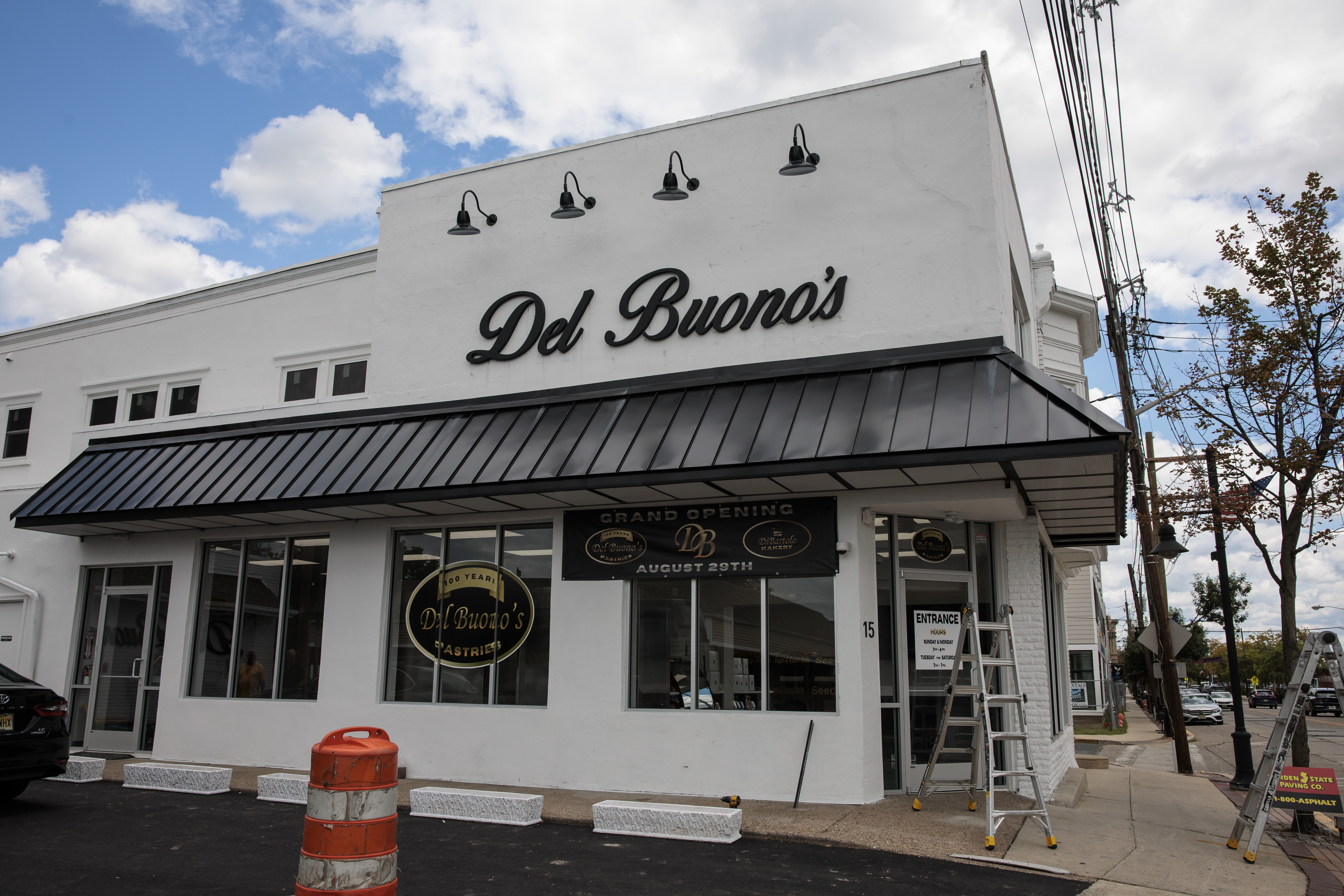
The opening comes as renovations, which took the bakery down to the studs and expanded the space after its 86-year legacy, wrap up.
Other thana few final finishing touches to the space, “what’s really left to do is to bake,” said Robin Lange, the shop’s social media director.
Trays of donuts at Del Buono’s Pastry Shop on Tuesday, Aug. 25, 2026, in Haddon Township.Monica Herndon / Staff Photographer
The shop’s most popular items, which include cream doughnuts reminiscent of the ones McMillan’s once sold, pizzelles, biscottis, and more, are already for sale, according to Lange.
But no one seems to know the place is open yet, owner Tom Whitman said. His daughter was the first customer.
The grand opening is scheduled from 7 a.m. to 10 p.m. on Saturday, Aug. 29, coinciding with the township’s music festival on the same street.
Owner Tom Whitman poses for a portrait in the kitchen at Del Buono’s Pastry Shop on Tuesday, Aug. 25, 2026, in Haddon Township.Monica Herndon / Staff Photographer
Whitman and his 30 employees will give out 1,000 free cream doughnuts, swag, and a chance to win a cake by Al DiBartolo, the South Jersey baker and Food Network alum working at the pastry shop.
DiBartolo’s Kakery, which sells custom and ready-made cakes and baked goods, takes up half the 2,000-square-foot bakery in what was once McMillan’s storage closet. By 10 a.m. on Tuesday, DiBartolo had fully stocked his two display cases after baking late into the night and early in the morning. He eventually plans to host monthly themed cake decorating classes there.
Al DiBartolo speaks with a reporter at Del Buono’s Pastry Shop on Tuesday, Aug. 25, 2026, in Haddon Township.Monica Herndon / Staff Photographer
DiBartolo flipped through an old notepad featuring decades of his family’s recipes, as employees worked on a cannoli filling created by his uncle. He showed off the original McMillan’s ovens, which Whitman had refurbished rather than replaced.
“You’re really getting authentic, old-school baking in here,” DiBartolo said. “But with a modern twist.”
The DiBartolo family recipe book at Del Buono’s Pastry Shop on Tuesday, Aug. 25, 2026, in Haddon Township.Monica Herndon / Staff Photographer
Del Buono’s Pastry Shop is the latest in a series of food destinations Whitman, 63, has developed over the years. Whitman, once a Domino’s Pizza franchisee, owns 100-year-old Del Buono’s Bakery in Haddon Heights and all three Carmen’s Deli locations in South Jersey. He purchased the shop for $500,000 last September and said he has since spent millions in renovations. Two apartments Whitman is building over the shop, which he said could rent for more than $3,000 a month, are still in progress and don’t have confirmed tenants.
The new pastry shop will have specialty coffee in addition to doughnuts, pastries and other desserts, all made in house, and Whitman said he hopes to sell products made there at his other stores.
While bread and rolls and a few other items will be sourced from Del Buono’s Bakery, Whitman is carrying on McMillan’s legacy in other ways.
Doug Biemiller, a grandson of McMillan’s founders George and Evelyn McMillan, has returned to the new building as a Del Buono’s employee.
Two more McMillan’s alumni sped around the kitchen Tuesday afternoon, maneuvering around sheet pan racks and icing doughnuts. Both said their current work isn’t much different from their time at the now-closed bakery.
Juan Cutz works on a batch of donuts at Del Buono’s Pastry Shop on Tuesday, Aug. 25, 2026, in Haddon Township.Monica Herndon / Staff Photographer
Juan Cutz, a mixer and baker, worked at McMillan’s for two years after 12 years at Classic Cake Bakery in Cherry Hill. He said he does pretty much everything but decorate, and he hasn’t changed his technique since working for McMillan’s.
“It’s the same,” Cutz said.
Longtime McMillan’s Bakery employee Ed Skotnicki stands in the kitchen at Del Buono’s Pastry Shop on Tuesday, Aug. 25, 2026, in Haddon Township.Monica Herndon / Staff Photographer
Ed Skotnicki, 73, worked at McMillan’s for 53 years. He now plans to help out at Del Buono’s for at least a few months as the pastry shop gets settled.
”The only reason I’m here is to see this place come back to life,” Skotnicki said.
Armando Roberto Perez goes by many names. Armand. Bob. Opa. Mr. Soupy.
Perez, 70, is the longtime caretaker for Soupy Island, a public pool and park in West Deptford, best known for its century-old carousel, free soup, and the tall, enclosed slide guests glide down, crashing into sand.
Before Perez took the job 28 years ago, his father-in-law was caretaker, and before that, his grandfather-in-law. Managing the former 25-acre haven for sick and hungry kids has long been a family affair.
Soupy Island is open and free to the public three days a week from July to mid-August. For the rest of the year, it’s Perez’s job to keep the tuberculosis treatment center-turned-playground standing come summertime.
Lifeguard Alexandria Bright, 22, watches over swimmers in the main pool at Soupy Island. She is a niece of caretaker Bob Perez.Tom Gralish / Staff Photographer
He puts the picnic tables away, disconnects the piping and toilets, drains the pool, boards up the carousel, collects leaves, cuts the grass, weed-whacks, handles repairs, and takes on whatever else happens.
“If you’re not self-motivating, nothing’s going to get done,” Perez said.
On Wednesday, the second-to-last day of Soupy Island’s summer and what could be one of Perez’s last seasons as caretaker, 329 people had arrived by lunchtime.
At 11:45 a.m., the park’s amenities close like clockwork for lunch, until 1 p.m. Its 18 staff members ushered children and their families toward the middle of the park for Soupy Island’s controversial intermission: free hot soup, crackers, and milk, enjoyed (or not) in the August heat.
Syreeta Minor, 47, brought her daughter and her group of friends to Soupy Island for the first time after hearing about the destination on YouTube. Minor had no idea the park existed despite living in West Deptford, but she said she’ll likely be back.
A soupy history
Driving his golf cart across Soupy’s campus, Perez explained the park’s complicated history, in brief.
He pointed out the old European carousel, an early 20th-century relic that the National Carousel Association has been working to restore, and all the structures he’s fixed over the years. A chalk drawing made by his granddaughter, Izzy, on the wall of the soup house depicts Perez, “Opa,” at the top of a family tree with his wife, Denise.
Perez with a family tree drawn in chalk by his granddaughter Izzy when she was young.Tom Gralish / Staff Photographer
The park’s roots trace back to 1877, when the Sanitarium Association of Philadelphia purchased land to create a playground and treatment center for kids with tuberculosis.
The hospital no longer exists, but remnants of its history remain. A public pool has replaced the hospital’s former basement. A brick building from the late 19th century still serves hot soup and snacks from its three windows. The medical staff quarters is where Perez now lives with his wife, free-of-charge, different from the life Perez imagined growing up in North Philly. He graduated from Frankford High School, didn’t go to college, and moved to Jersey when he got married in 1976.
“I came from nothing,” Perez said. “We had government food. We had government housing.”
Perez’s home is an old five-bedroom white house at the front of the park, paid for through an endowment set up by Soupy Island doctors more than a century ago. It’s spacious enough for Perez’s grand and great-grandkids when they visit.
The endowment is what keeps the park alive and has kept it going through decades of turmoil.
During the Great Depression, the Sanitarium Playground fed thousands per day. It was often the only place city children could get a hot meal, by taking a river boat from Penn Treaty pier down the Delaware River. For fun, Perez said, children swam on the river in wool bathing suits and overalls.
In the 1940s, during World War II, the U.S. military took over Soupy Island to protect the nearby shipyard, before the playground returned to its park and soup kitchen roots.
‘Working with my hands’
Despite its history, Perez said the island (which isn’t an island at all) has kept under the radar. When staff have to call the police to report vandalism or an incident, they don’t always know where to go.
“A lot of people don’t know about it. They say, ‘I never knew you were here,’” Perez said. “I got people around the corner who don’t even know we’re here.”
In many ways, that has been to Soupy’s benefit. The summer playground doesn’t have the staffing or space to accommodate huge crowds, and Perez does much of his work solo. Over the years, he’s had to keep up certifications as an amusement ride operator, a pool manager, a lifeguard, and a diver, on top of the mechanical skills he developed over his 24 years at Cherry Hill Volvo.
It was his father-in-law who pestered him to apply for Soupy Island, a career he didn’t want.
“I like working with my hands,” Perez said.
His grandson, Lucas Ngo, plans to take over when Perez retires. A mural of Ngo, now 22, is on the wall over by the big kid pool, painted by Perez when Ngo was still a child.
Lucas Ngo, now 22, and an employee at the at Soupy Island in West Deptford, N.J. is depicted on a mural at the swimming pool Wednesday, Aug. 12, 2026. Tom Gralish / Staff Photographer
On Wednesday, Ngo, who originally planned to pursue car mechanic work, prepared the daily soup, chicken noodle, in a giant vat as visitors trickled toward the house. An unfamiliar clanging came from the soup area.
“Now that noise? Open the valve,” Perez instructed, then laughed. “There you go. You get to know the sounds of the things.”
‘A rite of passage’
Lifeguard Ali Bright, 22, placed spoons as Perez scooped soup during Soupy Island’s daily lunchtime ritual. Fellow lifeguard Madi Hogan, 17, carried the trays to a cooling rack, then to the windows to serve a line of people outside.
“It’s like a rite of passage in this family,” said Bright, Perez’ niece. She’s worked at Soupy every summer since she was 14. “This is my little oasis away from my real life.”
Perez in the kitchen of the original building where the camp still serves free soup lunches every day. The kettles are at right and the same shelves for cooling the soup are at left. Kids still line up for lunch at the windows in rear. Tom Gralish / Staff Photographer
The lifelong connection to the playground is typical for staff. Hogan’s great-grandmother used to come to Soupy Island as a child. Marielle Lewis, 17, used to come to the park for soup when she was little, since her aunt lives nearby. Now, she’s worked as a lifeguard for two years.
“It’s kind of weird now that I get to see everything that I wanted to see when I was a kid,” Lewis said.
For now, the group is using their remaining soup supply donated by The Campbell’s Company last year. In the 2000s, the company paid for a new jungle gym, volleyball court, basketball court, and more at Soupy Island and continued its contributions through food since, even though Campbell’s has no true affiliation with the playground despite its name.
But this season, Campbell Soup didn’t donate goods, Perez said, who added that one season’s worth of soup costs the park more than $8,000.
The Food Pantry of South Jersey in Pennsauken has stepped up, though, by providing Soupy Island with thousands of shelf-stable meals to distribute to visitors.
“Sometimes a lot of these people go through trials, and come in here just to chill a little bit,” Perez said. “You don’t know what the other person’s going through.”
Once Ngo takes over, Perez still plans to help out where he can, just with less physical labor. Plus, he’ll hopefully get to do more home remodeling on the side, and take more consistent naps, his favorite part of the day.
“I try to do it around three,” Perez said, a dream. “But it doesn’t happen.”
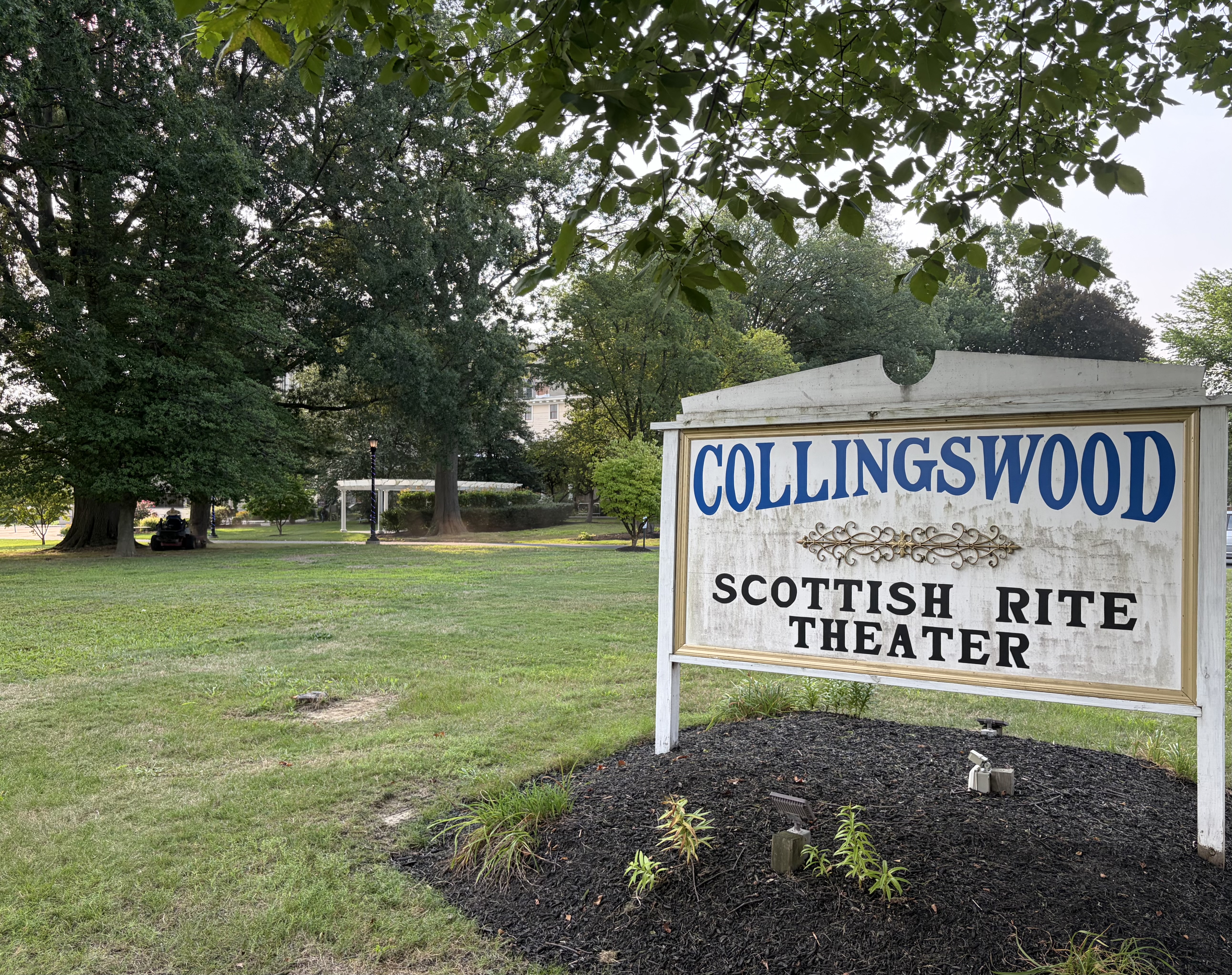
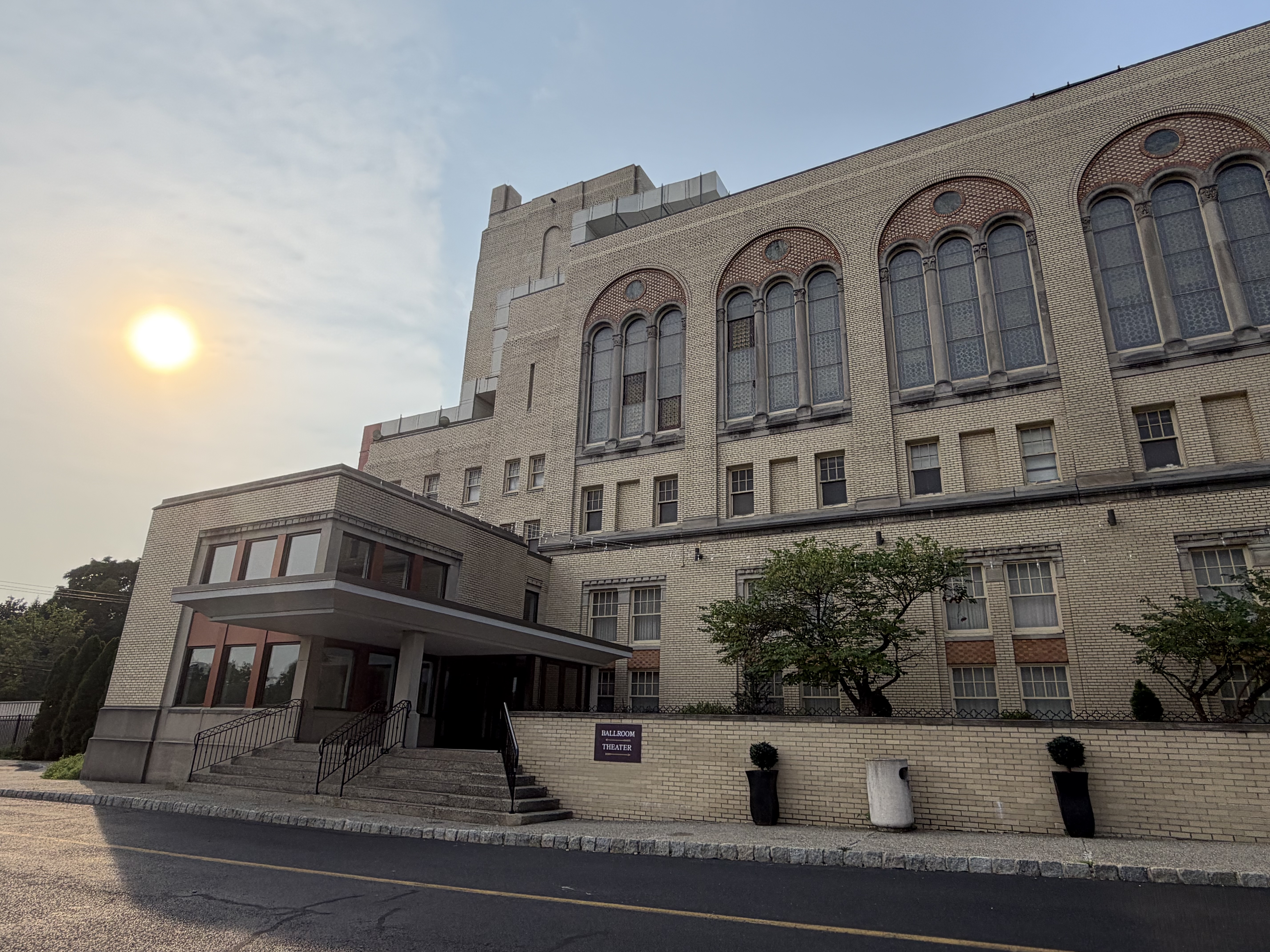
The financial struggles of a once-popular theater in Collingswood have spiraled into debate over who runs it in the first place and whether taxpayers should have paid millions of dollars to keep it afloat.
Collingswood Borough has rented the property housing the Scottish Rite Auditorium, which seats 1,050, for $1 annually from the Scottish Rite Freemasons for 23 years.
But Collingswood officials say they are looking to transfer management of the Scottish Rite — one of the largest theaters in South Jersey and once host to major touring acts like Kansas, David Crosby, and America — to Camden County after declining ticket sales left the onus on Collingswood to pay for expenses in recent years.
Commissioner Jim Maley, a former mayor and a Democratic member of borough government for the last 37 years, said post-pandemic theater losses have cost the borough $505,000 since 2020.
Maley helped found the nonprofit that manages the Scottish Rite property, Collingswood Foundation for the Arts, with the help of two former officials back in 1999. The foundation, which Maley said was created to secure arts grants for Collingswood, has long received the borough’s financial support without question.
That changed recently.
At a heated meeting of Collingswood’s three-person board of commissioners on Aug. 3, the public demanded to know who runs the Scottish Rite, whether it is really part of the borough, and, if not, why taxpayers are paying for it, especially when Collingwood schools are struggling.
Now, residents and at least one commissioner are scrambling to find answers, while Maley says the new round of questioning is just another effort by naysayers to undermine him.
What changed?
On July 31, a website by an anonymous user went live: “The Scottish Rite. Who actually runs it?”
The site, with a corresponding Google Drive of public documents, alleges that Maley and other officials created a conflict of interest by authorizing millions in payments and loans to Collingswood Foundation for the Arts, Maley’s brainchild, since 2003.
The conflict-of-interest accusation is not the first in Collingswood.
Maley said the theater issue is another example of meaningless attacks against him. The foundation managing the Scottish Rite is part of the borough, he said, and thus deserves its dollars.
Who runs the Scottish Rite?
Maley begins his account of the theater in 2003, when the Collingswood Foundation for the Arts gained control of the Scottish Rite. That is also when the borough secured a lease for the property and entered into a management agreement for the theater with the nonprofit.
The Collingswood Foundation for the Arts, which manages the Scottish Rite Auditorium and the Collingswood Grand Ballroom at 315 White Horse Pike, was the subject of recent confusion at a Collingswood commissioners meeting on Aug. 3, 2026.Sarah Nicell
Maley and his fellow commissioners passed an ordinance at that point to borrow $5 million in bonds to fund a loan to the foundation for renovations to the Scottish Rite. The loan was never paid back, Maley said, since there was no expectation the nonprofit would do so.
At first, Maley said, borough employees ran the theater.
But when the nonprofit made more money, its staff — one full-time employee and four regular part-timers, with 20 or more brought in specifically for events — switched to the foundation’s payroll, a change confirmed by Elizabeth Pigliacelli, Collingswood’s chief financial officer.
The borough allocated hundreds of thousands of dollars in its annual budgets for the theater’s operating expenses, insurance, and utilities, and the nonprofit repaid Collingswood at the end of each year.
That is, until the pandemic hit.
Deficits at the theater left the borough paying $250,000 and $55,000 in 2020 and 2021, respectively. The theater managed to power through for the next three years, but the borough had to pay the theater $200,000 in 2025 to keep it afloat, along with $100,000 to apply for a state grant for renovations to the property. That grant has not been awarded.
A 2007 management agreement on the borough website, the most recent available, says the foundation should pay for its own operations. Still, Maley said, the borough “has always been ultimately responsible.”
A duty to understand
Some residents say public records muddy Maley’s picture.
Unlike other borough entities, the foundation has not hosted regular board meetings for two years, according to Maley. Those meetings have never been public.
And while the borough rents the Scottish Rite property, the municipality’s public works department does not maintain it. On an Aug. 14 visit to the theater, Jimni Kricket, a South Jersey landscaping business, was doing outdoor work. The company is owned by Paula Lara, the executive director of Collingswood Foundation for the Arts.
“Public works does all municipal properties,” Commissioner Amy Henderson Riley said in a text, “except you’re correct that her company has the contract for that property. why? I don’t know.”
When the commissioners were asked on Aug. 3 who sits on the board, no one could answer.
Maley later told The Inquirer the board is made up of Collingwood’s current elected officials, but Mayor Solano-Ward and Henderson Riley, both Democrats elected last year, said they were not aware of that arrangement.
“If I don’t understand the relationship, how the heck is the public supposed to understand what this is?” Henderson Riley said.
Henderson Riley said she started questioning the nonprofit when she spotted a bill in the treasurer’s July report for the foundation’s “legal fees,” more than $2,300. The meeting minutes are not yet public, but Henderson Riley said she voted against the payment, and the bill was not paid.
The nonprofit was sued in January by Chammings Electric, a Vineland-based company, for thousands in unpaid bills for work at the Scottish Rite. The lawsuit, the second against the foundation since 2024, is ongoing.
Henderson Riley said she sought legal advice from the borough solicitor, Caitlin Harney Norcia, but Harney Norcia told her she could not answer because the nonprofit has paid her for attorney services.
“I just want to understand,” Henderson Riley said. “If it’s part of the Borough, I have a fiduciary duty to protect our assets, to understand what this is.”
In the meantime, Henderson Riley said, she has sought special counsel to help resolve the problem, which she said will likely take weeks.
The foundation’s nonprofit status also complicates the puzzle.
The foundation’s tax-exempt status was revoked by the IRS in 2024, since the nonprofit had failed to file its annual reports since 2020. Maley said that the missed deadlines were mistakes and that he has since filed them to hopefully re-up the foundation’s tax exemption.
New Jersey law confirming whether a municipality can create and run a nonprofit is hard to find.
But in a 2017 notice, the New Jersey Division of Local Government Services published its view, after some officials raised questions about whether a government can establish a charity. Municipalities are not allowed to create or operate nonprofits, and while local officials can facilitate the creation of a local nonprofit, the notice states they cannot “control its operations” by using taxpayer dollars.
The notice also said local officials cannot appoint government officials or staff as the majority of the nonprofit’s board.
Still, Maley said the nonprofit’s creation was facilitated by municipal lawyers. Several South Jersey attorneys specializing in municipal government declined to comment or said they could not due to their work with Collingswood Borough.
Lara did not return requests for comment.
‘Pass the buck’
Kate Delany, president of South Jersey Progressive Democrats and a Collingswood resident since 2007, was one of several people to demand answers at the Aug. 3 commissioners meeting.
“There are better ways to spend that money if we could get some of that back in our community,” Delany said.
Schools are one clear area in need of money, Delany said.
Maley said Collingswood has started conversations with Camden County to shift ownership “because they have a greater ability to handle the expense.”
Dan Keashen, a Camden County spokesperson, said nothing has been decided yet, since preliminary conversations have not begun. But some Collingswood residents do not want the theater to trade hands, since they worry about losing their chance at answers.
Delany, whose polling place is at the Scottish Rite, said Collingswood should not “pass the buck” to the county.
“That’s something we want to stop,” Delany said. “It’s a Collingswood issue, and we want it to stay in Collingswood.”
Mark Tatulli doesn’t know what made this year different from the last 12 times the National Cartoonists Society nominated him for one of the highest honors in his field.
But something did, since the creator of long-running comic strips Liō and Heart of the City finally won the biggest award of the annual celebration.
He had not expected his name to be called this time around, so the Gloucester County resident and Willingboro native didn’t bring his reading glasses for his acceptance speech. While it was an honor to have been nominated so many times, Tatulli said, he felt relieved to finally be off the docket.
“I’m looking forward to not being nominated this year and drifting back into the shadows,” Tatulli, 63, said.
The National Cartoonists Society gathered on Aug. 7 in Columbus, Ohio, for the 80th Anniversary Reuben Awards, named after cartoonist and Pulitzer Prize winner Reuben “Rube” Goldberg.
The Reuben Award has gone to the most outstanding cartoonist of the year since 1954 (and has been retroactively awarded to those who won the award under its original name, the Billy DeBeck Memorial Award, from 1946 on) chosen by a secret ballot of NCS members. The late Pogo creator Walt Kelly, a Philly native, was one of the first.
This year, there were seven nominees, including Dave Blazek, a Philly resident and creator of comic strip Loose Parts, and Dav Pilkey, creator of Dog Man and Captain Underpants.
Tatulli won the honor on his 13th consecutive nomination, joining the likes of Peanuts creator Charles Schulz and Bill Watterson of Calvin and Hobbes.
“I don’t even include myself in this group,” Tatulli said. “I’m a byproduct of what they already achieved.”
His wife, Donna Tatulli, and fellow members of the NCS Philadelphia chapter were present to celebrate the win. When Tatulli shouted out his home chapter, an attendee responded with a familiar “Go Birds!,” said Jamar Nicholas, a member of the NCS board of directors and chair of the Philly chapter.
Mark Tatulli, 63, of Pitman, poses front and center with his Reuben Award for 2025 Outstanding Cartoonist of the Year, which the National Cartoonists Society awarded him at a ceremony in Columbus, Ohio, on Aug. 7, 2026. He stands with his fellow members of the NCS Philadelphia Chapter.National Cartoonists Society, Philadelphia
Nicholas, author of the graphic novel series Leon the Extraordinary, said he believes Tatulli is the first NCS Philly member to win the Reuben since the chapter was formed in 2014.
“Even though this is his accomplishment, we all win,” Nicholas said.
Blazek, who has seven nominations of his own, won the Divisional Silver Reuben Award in the newspaper panel category.
Tatulli, a Willingboro High School alumnus, was 26 years old when his first comic strip debuted in the Burlington County Times. Mr. Fipps told the story of a new teacher and his experiences with junior high school students.
While Tatulli said he cannot speak for everyone, South Jersey was a good place to grow up drawing comics.
“You can literally write comics from everywhere,” Tatulli said. “My experiences in South Jersey predominantly feature in all of my comics.”
Since Mr. Fipps, Tatulli has won three Emmy Awards, become an internationally syndicated cartoonist (including features in The Inquirer), created a graphic memoir, written and illustrated several middle-grade books, and had two of his longtime comic strips explode in popularity.
Liō, a pantomime comic that shares the adventures of a young boy who treats the monstrous as everyday happenings, recently hit its 20th year running in newspapers, and Tatulli does not plan to end it until he stops having fun.
Mark Tatulli, 63, of Pitman, poses with his Reuben Award for 2025 Outstanding Cartoonist of the Year, which the National Cartoonists Society awarded him at a ceremony in Columbus, Ohio, on Aug. 7, 2026.Mark Tatulli
“If I’m not totally excited about what I’m doing, the readers will know,” he said.
Tatulli launched Heart of the City, a strip about a girl named Heart living in Philadelphia, in 1998. Six years ago, Tatulli passed the Heart baton to fellow cartoonist Steenz, who has kept the comic going since.
As for what comes next for Tatulli, he said he hopes to one day create a long-form version of Liō and keep writing middle-grade graphic and illustrated novels. He will continue to spend time with family, a benefit of moving to Pitman a year and a half ago from Washington Township. The Reuben Award — a bronze, abstract statuette designed by Goldberg — will live either on the mantle over his fireplace or down in his office, depending on where his wife wants it.
“I’m going to keep drawing until I drop,” Tatulli said.
Battleship New Jersey will soon undergo another facelift through a $24.25 million redevelopment project tackling work on and off the ship.
The project, which could take about two years to complete, includes an expanded visitor center, double the parking, and a new event space.
Marshall Spevak, Battleship New Jersey’s CEO, said it is the biggest capital investment in the ship since it opened its doors 25 years ago.
Big J, nearly 2½ football fields long, returned to the Camden waterfront in June 2024 after the World War II-era vessel was dry-docked in Philadelphia for 78 days while it received multimillion-dollar routine maintenance, repairs, and a paint job for the first time in three decades.
Back on the water, the Battleship New Jersey Museum and Memorial announced plans Wednesday for infrastructure improvements to the ship, along with landside renovations, that are scheduled to start during the second or third quarter of 2027.
The visitor center at 62 Battleship Place has not changed much since the USS New Jersey went public in 2001, Spevak said.
Camden Mayor Victor Carstarphen finishes his talk on the Battleship New Jersey during a news conference Wednesday, Aug. 12, 2026 to announce the museum’s multimillion-dollar renovation. Tom Gralish / Staff Photographer
At the time, the center was deemed temporary. At less than 4,000 square feet, Spevak said, the structure was comparable to a Butler building — a cost-effective, ready-made storage warehouse — and to a shipping container.
But after 25 years, the nonprofit is looking to build something permanent.
“Right now, we do what we can,” Spevak said. “But this entire project is building a campus that’s worthy of the ship.”
The new $9.5 million visitor center, at the same address, will be about 8,700 square feet, more than double its current size. The facility, three stories with a roof deck, will include a new store, a small cafe with a commercial kitchen, exhibit and collection spaces, and offices for staff.
The plan will also add a level to the current parking lot at Wiggins Marina, which will double visitors’ parking options to 240 spaces.
Battleship New Jersey’s new visitor center, set to start construction in 2027, will sit along the Camden waterfront in South Jersey. This rendering by PS&S shows the northeast aerial view of the upcoming center.PS&S
That $5 million parking project will allow all visitors to park in one place, Spevak said, and hopefully resolve confusion drivers currently face when their GPS devices lead them to various spots along the waterfront.
Battleship New Jersey will also undergo $6 million in upgrades on board, including a new private event space on the main deck, painting and repairs to the ship’s superstructure, new exterior lighting, accessibility improvements, a better generator system, more than $1 million in bathroom renovations, pier repairs, elevator shaft fixes, and more.
The U.S. Army Corps of Engineers is also set to dredge Big J’s berth, or remove sediment and silt from where the ship currently sits. Spevak said that likely will not take place until the second half of 2027, when the ship will close for a couple of weeks while it temporarily relocates during the dredging process.
PS&S, an architectural and engineering firm based in Cherry Hill, is leading the project, Spevak said, with help from engineering firm Pennoni. A general contractor has not been assigned to the project yet, though Spevak said that decision could come later this year.
Battleship New Jersey’s new visitor center, set to start construction in 2027, will sit along the Camden waterfront in South Jersey. This rendering by PS&S shows the west elevation of the upcoming center.PS&S
The New Jersey Economic Development Authority will support the project with $19.9 million in tax credits awarded through its Cultural Arts Facilities Expansion program, according to Camden County officials. The program incentivizes capital projects at arts and culture spots statewide.
Because Battleship New Jersey is a public charity and does not pay taxes, the nonprofit has a buyer lined up to purchase the tax credits, Spevak said, which will allow the organization to pay down its debt service on the project.
Spevak said the nonprofit could not have pursued the renovations, which he hopes will help revitalize the Camden waterfront, without the state program.
“This project is what will keep us growing on the waterfront,” Spevak said.
After the tax credits, the outstanding project costs come from “a mix of Battleship funds, revenue, and investments along with a grant from the Camden County Open Space & Historic Preservation Fund,” Spevak said in an email.
Camden County will help out, too.
Spevak said the county will support the structure by giving the nonprofit a long-term lease for the parking garage, provide some cash equity, and guarantee the bond required for the project, which allows Battleship New Jersey to borrow using the county’s bond rating and get better interest rates.