Author: Sarah Nicell

  • Appel Farm, the beloved South Jersey arts camp, is closing after 66 years

    Appel Farm, the beloved South Jersey arts camp, is closing after 66 years

    Rachael Socha first learned to make her bed, clean the toilet, and act, in the Spanish tragic drama Blood Wedding, in sprawling farmland in Salem County.

    “My parents would always laugh when they would come,” Socha said. “They would say to me, ‘This is definitely an Appel Farm show.’”

    Socha attended Appel Farm Arts & Music Center in Elmer for summer camp during her preteen and early teen years. She majored in theater and made lots of weird art with her friends, and later worked at the camp and trained young theater nerds to be themselves. Socha, 37, had hoped to send her daughter to Appel next summer.

    Now, Socha won’t have that chance as the 66-year-old arts camp and education nonprofit closes its doors. The shutdown was announced Thursday.

    “It’s just sad to see a place that was such an upstanding believer in the arts to just go away,” said Socha, now the education director for Music Theatre Philly and a drama therapist.

    The closure means the end of Appel Farm’s camps and arts programs, along with the dismissal of all its staff as of Friday. Appel Farm reported having 146 employees in 2024, according to tax documents.

    Appel Farm’s board of trustees posted a statement explaining the decision.

    “After numerous attempts to achieve a workable budget, we are currently facing an insurmountable funding deficit from which we are sorry to say we cannot recover,” the statement said.

    Heather Yelle, Appel Farm’s executive director, did not respond to requests for comment. There was also no response to messages left with Appel Farm’s general phone number or email.

    Appel Farm began as an arts camp for children in 1960, when Albert and Clare Appel used their 176-acre farm in Elmer, with thousands of chickens running around, to train children in the arts.

    Before that, in the 1940s, the Appels had brought friends and family to the farm for music and arts lessons. The couple built an art studio next to the farmhouse, a theater, and a pool, according to The Inquirer’s archives. Over the decades, Appel Farm grew into a regional arts center and a hot spot for music festivals. Its camp roster has featured a fair share of talent, including Stephen Oremus, a Broadway musical director, and opera singer Amy Burton.

    The camp allowed children to major in several forms of art, including theater, music, dance, photography, writing, and more. Socha remembers helping with clowning classes, puppetry, and sketch comedy.

    In its most recent fiscal year, Appel Farm made more than $2.3 million but spent $2.6 million, leaving the nonprofit to make up the difference. The last time Appel Farm reported that it was not in a budget deficit was four years ago.

    Last year, the nonprofit reported spending $1.1 million on scholarships for at-risk youth in Newark, Camden, Philadelphia, New York, and the South Jersey region, and $750,000 on arts education programs in local school districts.

    It is unclear how those programs will be affected by Appel Farm’s closing.

    Appel Farm spent months talking to banks, partner organizations, and legislative and state agencies to find a solution to the financial hole, but the board said in its statement that it could not find “a viable option for moving forward.”

    The board cited “individual, corporate and foundation funding” decreases, partnered with spikes in utilities and insurance costs, as a problem over the last five years. The board said the aging farm facilities have required repairs and maintenance, which have grown too expensive.

    Socha, who still texts her friends from camp every day, said she hopes Appel Farm finds a way to preserve its decades of archives, including recorded theater performances.

    Rachel Jacobs, 46, is also mourning the loss.

    A New York resident, Jacobs said she struggled to find people who enjoyed the same things she did growing up, like punk and riot grrrl music. Appel Farm gave her the chance to explore that passion, leading to a career in her 20s as a touring musician.

    She went to Appel Farm for summer camp in the ’90s and explored theater, photography, and music. She and her friends formed a feminist punk band at camp called Cherry Dilate, and then another called Spider Bite. She got to perform for her peers at Friday night concerts. Her friends helped dye her hair red with Kool-Aid and pick four-leaf clovers.

    Jacobs, now a mother and a therapist, remembers bawling when she had to leave.

    “This was a place, in many ways, that kept me going when it was very tough. Being a tween and a teen in the ’90s, [society] was not as accepting as it is now of people who were different,” Jacobs said. “It’s always going to hold a very special place.”
  • ‘That was our boy’: South Jersey mourns 12-year-old athlete Xavier Taylor who died after a baseball injury

    ‘That was our boy’: South Jersey mourns 12-year-old athlete Xavier Taylor who died after a baseball injury

    When Lisa Duvall hosted a sixth birthday party for her son three years ago, she had to make sure Xavier Taylor, her best friend’s kid, was last in the piñata line.

    “I knew when he swung, it was going to bust open!” wrote Duvall, a Tabernacle resident, in a text Thursday recalling that moment. “I wanted to give the other kids a chance because he swung so hard.”

    That’s because Xavier, then 9, was a Maple Shade Youth Baseball player, and a good one at that, Duvall wrote.

    Now, she is thinking back on those memories as Maple Shade mourns Xavier’s death, months after the 12-year-old boy was struck in the head by a baseball before one of his youth games in May.

    Xavier, a brother, son, and athlete, died Wednesday after months in the hospital. His 13th birthday would have been next week. People in South Jersey and beyond are sharing their grief and Xavier’s impact on their communities.

    Xavier Taylor, of Maple Shade, poses with his family.Yvonne McCall

    The All Things Foundation, a Christian nonprofit created by Xavier’s family after his injury, aims to connect local baseball players to faith. Gregory Taylor, Xavier’s father and a retired firefighter, is the chair.

    The foundation posted a statement Wednesday evening about Xavier.

    “To every person who prayed, to every family who left a porch light on, to every child who placed a baseball bat outside their front door, to every church, every friend, every stranger, every believer who stood with the Taylor family, thank you,” the post read. “You became part of a story that only God could write.”

    People in Maple Shade and beyond have spent the last five months hosting prayer vigils, raising money, and displaying yard signs and T-shirts honoring Xavier’s name and the number 6, his jersey number. In June, the Ben Franklin Bridge lit up blue for him, and professional athletes, from Phillies catcher Garrett Stubbs to the Tampa Bay Rays, have posted videos in support.

    Now, Xavier’s loved ones and his community members are continuing that support after his death.

    Yvonne McCall, a longtime family friend who lives down the street from the Taylors, has been Xavier’s honorary aunt, Titi Von, since he was born. McCall remembers his “little round face,” his “little butt chin,” and his tendency to drool as an infant.

    Xavier Taylor, of Maple Shade, as a baby.Yvonne McCall

    She teased him for years for all the bruises on his legs in the summertime, earned from sports and tripping over himself while bouncing off the walls. He played hockey and football, too, but baseball was the activity that really stuck.

    He knew everything about baseball trivia, McCall said, and even created an LLC with his brother to collect and sell baseball called Big Jawn Sports Cards.

    Xavier liked to make people laugh, too. When McCall and her husband planned to renew their vows, they recruited Xavier to teach his uncle to dance. On a recent 4 a.m. flight to Tulsa for his oldest brother’s wedding, Xavier wore a red, white, and blue sequined cowboy hat on the plane.

    When the sun came up, it reflected on the ceiling, and McCall had to beckon him to take it off to avoid waking up his fellow passengers.

    Xavier Taylor, 12, poses with family in a red, white, and blue cowboy hat on a family trip for his older brother’s wedding.Yvonne McCall

    “He was an absolute ham. He was funny. He was silly. He was charming,” McCall said. “You know people, when they smile, their whole face smiles? That was our boy.”

    About a week before Xavier’s injury, Mai-Lin Taylor, Xavier’s mother, texted Duvall to let her friend know that she had finally gotten to see Xavier hit a home run. It was her first time watching. His mom reacted so loudly Xavier could hear her from the outfield, Duvall wrote.

    “The void he leaves is enormous,” Duvall wrote. “But my hope is that his life will be an example to others what it means to love the Lord, live with joy, and make the most of the time we’re given.”

    Xavier Taylor (right) poses with his friend Lucia Duvall shortly after their baptisms in Lucia’s pool.Lisa Duvall

    Bill Galloway, Xavier’s baseball tournament coach for the last six years, is still in shock. He said Xavier never knew how to sit still and would feign throwing and catching balls during slow moments while playing shortstop on the field. During breaks, he would fill his mouth with gum to amuse his friends.

    When he wasn’t at a tournament, he could not sit still, either. Since Xavier was friends with Galloway’s son, Xavier would wander back and forth past their Ring camera until they had to check the door and say hello.

    “You don’t know what your son did for me,” Galloway remembers telling Xavier’s dad recently. “Keeping me grounded on the baseball field. When things got serious, it was just a game.”

    The Maple Shade Township Council released a statement Thursday inviting community members to illuminate their properties, windows, and porches blue through Nov. 27 to honor Xavier’s life.

    “Xavier brought our community together in ways that words cannot adequately describe,” council members wrote.

    A yard sign supports Xavier Taylor in Maple Shade.Mia Messina / Staff

    The Maple Shade Youth Baseball Association also posted a tribute for Xavier and directed people to provide the Taylor family with gift cards for meals as they take time to grieve.

    “Our baseball family is grieving alongside the Taylor family. While we know there are no words that can take away this pain, please know that our thoughts, prayers, and love are with them,” the association wrote in the statement. “Xavier was one of our own, and this loss will forever leave a hole in our baseball community.”

    No details were available on funeral services for Xavier.

    Sarah DiPhillipo, a family friend of the Taylors’ and a spokesperson for All Things, said the nonprofit plans to host worship clinics for local athletes this winter and hopes to someday build sports facilities and fields in honor of Xavier.

    When he played baseball, Xavier’s mom always reminded him, “You can do all things.” The mantra was written on his hat and his glove, and is now part of the nonprofit.

    “Xave would be on board. He lived and breathed Jesus and baseball. What other way to honor him than doing this?” DiPhillipo said. “I know he’s cheering us on from heaven.”

  • A man killed his girlfriend in Gloucester County only a month after his release from prison, police say

    A man killed his girlfriend in Gloucester County only a month after his release from prison, police say

    Ricardo Ferrera had been out of state prison for 33 days when, police say, he shot and killed his girlfriend at his sister’s Franklin Township home earlier this month and fled.

    He now faces murder and weapons charges and is being held at the Salem County Correctional Facility. The allegations cap a decade’s worth of assault and firearms convictions in South Jersey, state records show.

    Ferrera, 32, was taken into custody Nov. 2, hours after the killing of Christina Cruz, 30, of Vineland, at his sister’s house. When Ferrera was arrested, he was only a month into a three-year parole term for shooting two people in Atlantic City in 2022. He had been convicted of aggravated assault, sentenced to five years in prison, and released on Sept. 30, state records show. It is unclear how long Ferrera and Cruz were together.

    Prosecutors said at a pretrial hearing last Thursday that Ferrera, a former Vineland resident, had moved into his sister’s basement weeks before shooting Cruz.

    Police arrived at the home on the 1200 block of Porchtown Road just past midnight on Nov. 2 after reported gunshots.

    Ferrera’s sister, who was in an upstairs bedroom in the home, told police she had heard Ferrera and Cruz arguing earlier in the night and, two hours later, two gunshots. Her three children were also in the home at the time.

    Ferrera is not legally allowed to possess a firearm due to his past felonies.

    When his sister went downstairs after hearing the loud noises, Ferrera guided her through the rear door to prevent her from seeing Cruz, prosecutor Steven Salvati said. Ferrera kept repeating that he had to go, then took her car keys and left the property in her vehicle, Salvati said.

    When she went back inside, Ferrera’s sister found Cruz motionless, Salvati said. Ferrera unexpectedly returned soon after, told his sister he loved her, and left in her vehicle again. His sister then called the police.

    His sister’s eldest child, who was playing video games during the shooting, told police they heard Ferrera and Cruz arguing, followed by two gunshots, a thud, a woman screaming, and what they believed was Cruz “gasping for air.”

    When police arrived, they found Cruz in the living room, face down with two gunshot wounds to the chest, according to the affidavit for Ferrera’s arrest. Cruz was declared dead at the house.

    Police found Ferrera with his sister’s vehicle in Vineland hours after the shooting.

    Ferrera’s lawyer, Christina Long, said at Thursday’s hearing that he had been trying to contact a lawyer and was not trying to flee. Long also said that no weapon was found on Ferrera, and that because there were no witnesses to the shooting, people should question what actually happened.

    Before his arrest for the 2022 Atlantic City shooting, Ferrera served time in state prison on various charges beginning in 2017, court records show. He spent two years behind bars for illegal gun possession and assaulting a law enforcement officer.

    In 2015, police were called to a Vineland home for a family dispute. When police tried to calm Ferrera down, he tried to punch an officer. Then he spat on an officer and an EMS worker, court records from the case show.

    Less than a year later, Ferrera had an argument with a supervisor at Atlantic Coast Freezer, where he was working temporarily. He told his coworker he had a handgun in his car and moved toward his vehicle. Police found a loaded revolver on Ferrera while arresting him, the Cumberland County Prosecutor’s Office wrote in an email.

    In 2017, Ferrera was sentenced to prison for both incidents, on weapons charges and aggravated assault on a police officer.

    And in 2024, he was sentenced to three years for endangering the welfare of a child. He was released shortly after his sentencing due to time already served as the case was pending.

    Court records from that case show that Elinette Muñiz, described by the Cumberland County Prosecutor’s Office as Ferrera’s “paramour,” had struck her 4-year-old daughter in the head and knocked her unconscious in 2021. It took the couple several hours to get the child to the hospital, and Ferrera stopped at a liquor store and a gas station along the way. The child had a brain bleed and chest injuries.

    Ferrera also served time last year for a January 2022 Vineland incident in which he shot at a vehicle with two people in it, a Cumberland County Prosecutor’s Office spokesperson wrote in an email. He was found guilty of unlawful possession of a weapon and spent four months in state custody, court records show.

    Only a month after the Vineland shooting, authorities say, Ferrera injured two people in an Atlantic City shooting and fled. He pleaded guilty to aggravated assault.

    Superior Court Judge Kevin Smith, who oversaw Thursday’s hearing, said the new charges mark “a failure of our system of criminal justice in New Jersey” because Ferrera had been convicted of repeated second-degree offenses without increases to his sentences.

    “There’s no recognition [of] the continued felonious criminal activity, guns, and violence by an increase in the sentence with the hope to deter him,” Smith said. “So it’s very concerning in this regard that these deterrence efforts by state prison terms, to encourage him not to continue to engage in such conduct, is not happening.”

  • Camden could see another 10-story hospital as part of Cooper Norcross Health’s $3 billion expansion

    Camden could see another 10-story hospital as part of Cooper Norcross Health’s $3 billion expansion

    Cooper Norcross Health wants to move ahead with another phase of its $3 billion expansion in Camden, a new 10-story hospital.

    If approved, it will join another 10-story hospital tower under construction on the same Haddon Avenue campus.

    Developers are scheduled to go before Camden’s planning board on Monday to get approval for the proposed Benson Pavilion, which would have 110 beds for patients, site plans show.

    A Cooper spokesperson was not able to say Friday when they hope to break ground or open the new hospital.

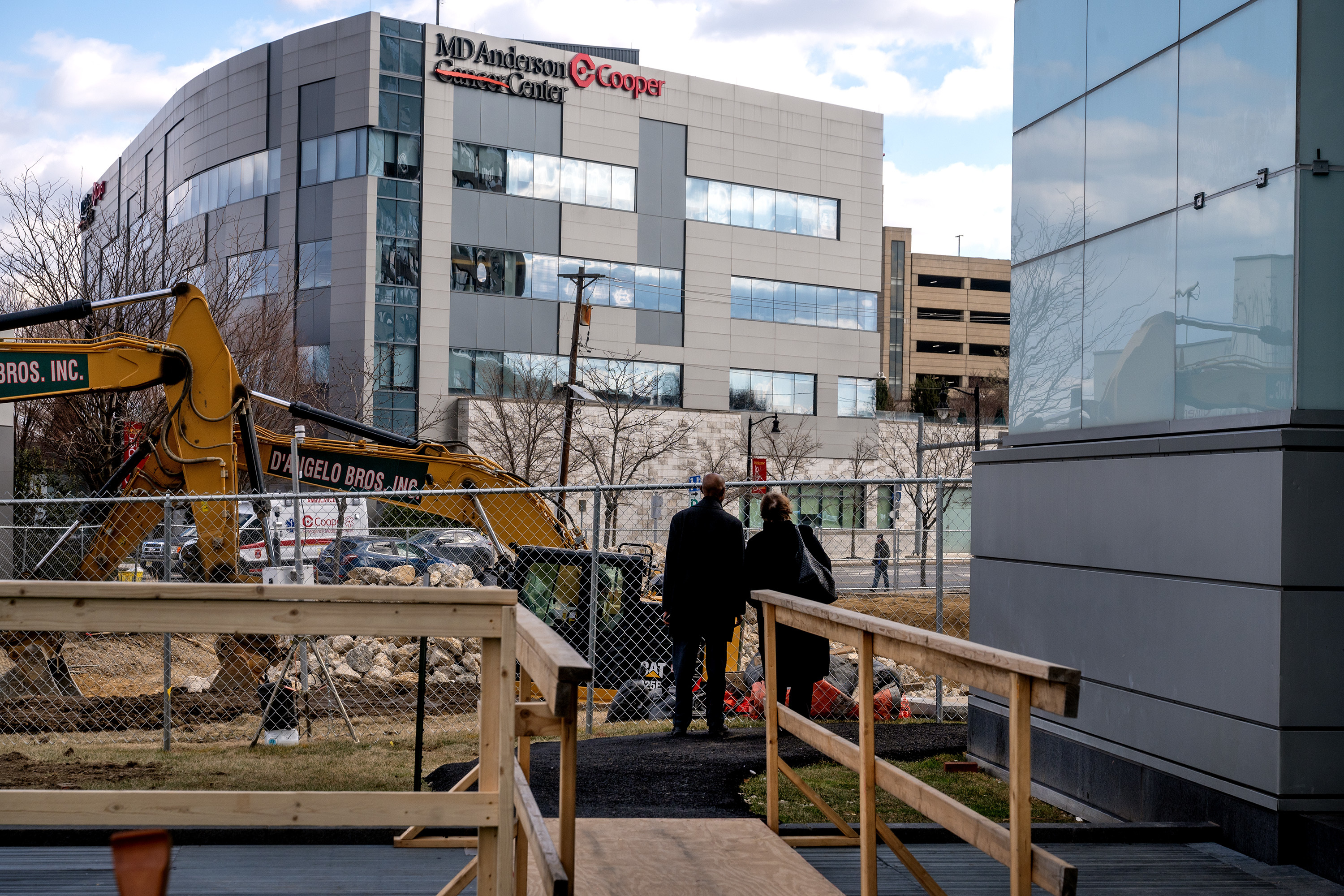
    Cooper University Health Care, which has campuses across South Jersey, changed its name this year after George Norcross, a New Jersey power broker and the chairman of Cooper’s board of trustees, donated $100 million to the health system and its MD Anderson Cancer Center at Cooper.

    The proposed Benson building, which would be at the corner of Haddon Avenue and Benson Street, is one of three patient towers included in Cooper’s “Project Imagine” expansion plan, first announced four years ago.

    Workers broke ground on the first 10-story, 125-bed tower in January 2025. Tower A, which will connect to the cancer center via a pedestrian bridge over Haddon Avenue, isn’t set to be completed until 2028.

    During its busiest shifts, Benson Pavilion will accommodate 428 employees and 40 doctors. The pavilion will be nearly 30,000 square feet, taking up more than 315,000 square feet across its 10 floors.

    The proposed area for the Benson building is currently used as a drop-off loop for the health system’s emergency department, but site plans show the project includes a new drop-off.

    Construction will happen in two phases, according to site plans, first to build the lower six floors and allow the hospital to operate at partial occupancy, and then the remaining four floors will be constructed.

    Cooper will lease nearby parking spaces to account for the increased demand and shuttle employees from an off-site parking area near the Camden Waterfront, the site plans show.

    Vincent Basara, a spokesperson for the city, said Cooper is Camden’s largest employer and “a tremendous community partner.”

    “While their investments are numerous, the $3 billion expansion is the largest investment in Camden. This project is yet another testament to Cooper Norcross Health’s unwavering commitment to Camden and the city’s revitalization,” Basara wrote in an email.

  • $450M project could bring Hollywood and hundreds of homes to Gloucester County

    $450M project could bring Hollywood and hundreds of homes to Gloucester County

    A $450 million television and movie studio and hundreds of new homes could fill a long-vacant Sony manufacturing plant in Gloucester County over the next three years. The project is moving forward, developers say, even after an executive of the studio died this month.

    The proposed 76-acre Americana Studios District is in early stages in Pitman. Developer SORA Northeast plans to purchase the property — at 400 N. Woodbury-Glassboro Rd., just minutes from Pitman Jr./Sr. High School and Rowan University — in 2027, according to the firm’s founder Gregory Filipek.

    Americana Studios, a new media company registered in New Jersey in September, will have six 32,000-square-foot soundstages on campus. It is led by Lou Fusaro, a Jersey native and Los Angeles resident who helped produce shows including Californication, House of Lies, and Miami Vice.

    The studio will be open to hosting all types of productions, Fusaro said.

    A rendering shows a preliminary design of Americana Studios District, a proposed campus looking to take up 76 acres at 400 N. Woodbury Rd. in Pitman.GLASX

    Mark Roling, a former Warner Bros. executive, was the new company’s studio operations president until he died on Nov. 3, days after Pitman announced the studio proposal. Fusaro met Roling while they worked on The Drew Carey Show together.

    “To our team he brought phenomenal expertise and shaped how Americana Studios will come to be. As the studio continues to be developed, his memory will be in its DNA,” Fusaro wrote in an email.

    It will likely take months before the project breaks ground, and Filipek estimated it will take about three years before Gloucester County residents see something resembling a finished product.

    In addition to a production studio, the campus will feature a hotel, restaurants, about 65 single-family homes, 80 townhouses, 50 condos, and 300 apartments, including workforce housing for employees. Those numbers are still estimates, Filipek and his SORA partner Jeff Sublinsky said. SORA will likely demolish the majority of the current building on the property, where workers once made CDs.

    “This is a real-estate development project that has a studio component to it,” Filipek said. “Not a studio project with real estate. That’s how it gets financed.”

    Pitman’s Sony plant hasn’t operated since 2011. The electronics company sold the property to Tony Argento, a Brooklyn businessman known for production studio company Broadway Stages, for $3 million in 2013.

    The building has sat mostly unused, Mayor Michael Razze said. Pitman, which lost jobs and tax revenue from the Sony plant’s closure, was desperate to fill the space with something profitable.

    Razze said the project will likely bring about 400 temporary and 400 long-term jobs to the borough and give local high school and Rowan students an inside look into the film industry. A presentation on the project proposed internship and training opportunities, and Razze said he’s already had conversations about adding a film curriculum to Pitman’s high school.

    “Coming off of Route 55, this is a gateway to our community,” Razze said. “We wanted to do something worthy of that status.”

    Over the years, Pitman has included the property in redevelopment plans and consulted with nearly two-dozen developers with varying ideas for a takeover of the building. But nothing ever stuck, Razze said.

    That is, until Americana Studios was pitched. Filipek said Argento will likely have a stake in the business as part of the deal.

    Argento did not return requests for comment through his production company. It’s unclear exactly how Argento used the property.

    The housing expansion aspect is a win for Pitman, too. As a borough of 8,700 with little room for new homes, the property is a unique opportunity for both new and longtime Pitman residents, Razze said.

    “We have a lot of residents in the community that have raised their families and don’t want to continue to maintain a 4-bedroom, 3-bedroom house. They want something smaller but don’t want to leave Pitman,” Razze said. “They could sell their home, maybe to a young family coming in with kids in the school system. It’s a great benefit across the board.”

  • Rowan University is ending its 40-year MLK Day breakfast in a cost-cutting move

    Rowan University is ending its 40-year MLK Day breakfast in a cost-cutting move

    For the last 40 years, Rowan University has celebrated Martin Luther King Jr. Day with an annual breakfast and speeches by the country’s leading civil rights leaders. It once included King’s son, Martin Luther King III.

    But in a cost-cutting measure, the public university is ending its breakfast tradition, said Joe Cardona, a university spokesperson. Some Black community members who have long attended the breakfast say the change is a loss.

    The breakfast is one of several cuts the university is making to prepare for a future with a potential shrinking student body and tighter budgets, Cardona said. Other “internal and external events” were also scaled back, he said, but did not name them.

    “We’re looking at expenses because we don’t know what’s going to happen tomorrow,” Cardona said. “We see a decline in the next 15 years of the amount of students coming to higher education. … What are the things we need to do now to prepare ourselves for the future? The breakfast fell into that category.”

    Last year, the breakfast cost $79,600, Cardona said, and made about $53,300. The university was responsible for filling the gap, with various college departments volunteering money to help out.

    It has also been harder to recruit recognizable names for the breakfast, especially people affiliated with King, which has hurt attendance.

    Last year, 259 people attended the breakfast, Cardona said, fewer than in prior years, and 70 of those tickets went to students for free. When comedian and actor Dick Gregory spoke in 2004, 400 people were there to listen, The Inquirer reported at the time.

    Tickets for the breakfast, $75 each, went toward the William H. Myers scholarship endowment fund, which supports high-achieving students. Myers, who died in 2003, was assistant dean of students, a mentor for numerous student groups and student leadership programs, and a recipient of Rowan’s Joseph A. Barnes Award, a recognition for outstanding service to the college.

    “We were passing the hat around the college more than in the past just to make ends meet and keep money flowing to the scholarship fund,” Cardona said.

    Instead of the breakfast, Rowan, which has an $814 million budget for 2026, will host community service events on the Saturday after the holiday. The university will ask corporate donors to support the Myers scholarship fund, including the breakfast’s longstanding sponsors, PSE&G and Atlantic City Electric.

    The school announced the change in a September email. The Rowan University Black Alumni Network, one of Rowan’s largest affinity groups, was not notified in advance, which Cardona said led to an influx of messages to university administration.

    Jeannine Frisby LaRue, an activist, Rowan alumna, and chair of the university’s Education Advisory Board, said she understands that the school is under financial pressure, but she wishes that the university had notified Black alumni well in advance.

    Now, LaRue said she and others want to host their own Gloucester County King breakfast with more affordable, local speakers. She said she would pitch in $5,000 to get them started.

    “I believe there will be an event in January,” LaRue said. “We have 60 days to make a tradition, to find other donors.”

    ‘The spirit of Dr. King’

    The Rev. Keith Dickens, who retired from Rowan’s admissions department in 2025, helped lead the breakfast for more than two decades.

    Dickens remembers securing Civil Rights Movement legends — the Rev. Walter Fauntroy, entertainer and activist Harry Belafonte, and lawyer Clarence B. Jones, King’s friend and draft speech writer — to speak to the hundreds who would attend the breakfast.

    Rowan’s breakfast was one of the best King celebrations in the country, Dickens said, adding that it provided an opportunity to hear stories from people who knew King, like Fred Shuttlesworth, who had invited King to Birmingham, Ala., in 1963, and Gregory, an activist who confronted racism with his comedy.

    “People are not paying $75 for shrimp and grits. They’re paying $75 to see Dick Gregory, Martin Luther King III,” Dickens said. “They wanted to be able to feel the spirit of Dr. King and be inspired and encouraged to continue their work.”

    Community service is not new to Rowan’s annual King celebrations. In recent years, service activities have immediately followed the breakfast, but Cardona said Rowan struggled to get people to show up because many students leave campus for the long weekend. He hopes moving the community service event to the following weekend will boost attendance.

    Dickens said while service events play an important role, they should not be the only acknowledgment of King.

    “It’s not an ‘either-or.’ It’s a ‘both-and.’ Dr. King was about word and deed,” Dickens said. “I don’t want to throw that out the window, but people can do good things without Dr. King.”

    Hopes for the future

    Edith Myers Spearman, the sister of William Myers, whose name is on the scholarship fund, said her main hope is preserving her brother’s legacy.

    “I’m sorry to see any celebrations change, but … I know things are changing financially, and I’m cognizant of that. It’s their decision,” said Spearman, who graduated from Rowan in 1972 when it was Glassboro State College.

    The scholarship fund currently has $175,000 in it, and the fund continues to grow through investments every year, Cardona said. Rowan spends 4.5% of the fund annually for scholarships.

    Cardona said the school should have no problem giving out the scholarship “in perpetuity.”

    For some, the breakfast was about more than raising money.

    Loretta Winters, president of the Gloucester County NAACP, has not gone to Rowan on the holiday in recent years because she volunteers at Habitat for Humanity, collecting bags of winter clothes and dropping them off at local shelters.

    But she said South Jersey needs events that keep history alive and offer a sentiment of inclusion.

    “You have to find somewhere to cut, but it’s sad that they’re cutting things under the umbrella of diversity, equity, and inclusion,” Winters said.

    Winters said she hopes Rowan includes local activists like herself in ongoing conversations about what a day of service in Gloucester County should look like.

    “I’m anxious to find out what they’re doing,” Winters said, “and I would love to be a part of it.”

  • Kids were asked to name Camden County’s robot dog. Here’s what they recommended.

    Kids were asked to name Camden County’s robot dog. Here’s what they recommended.

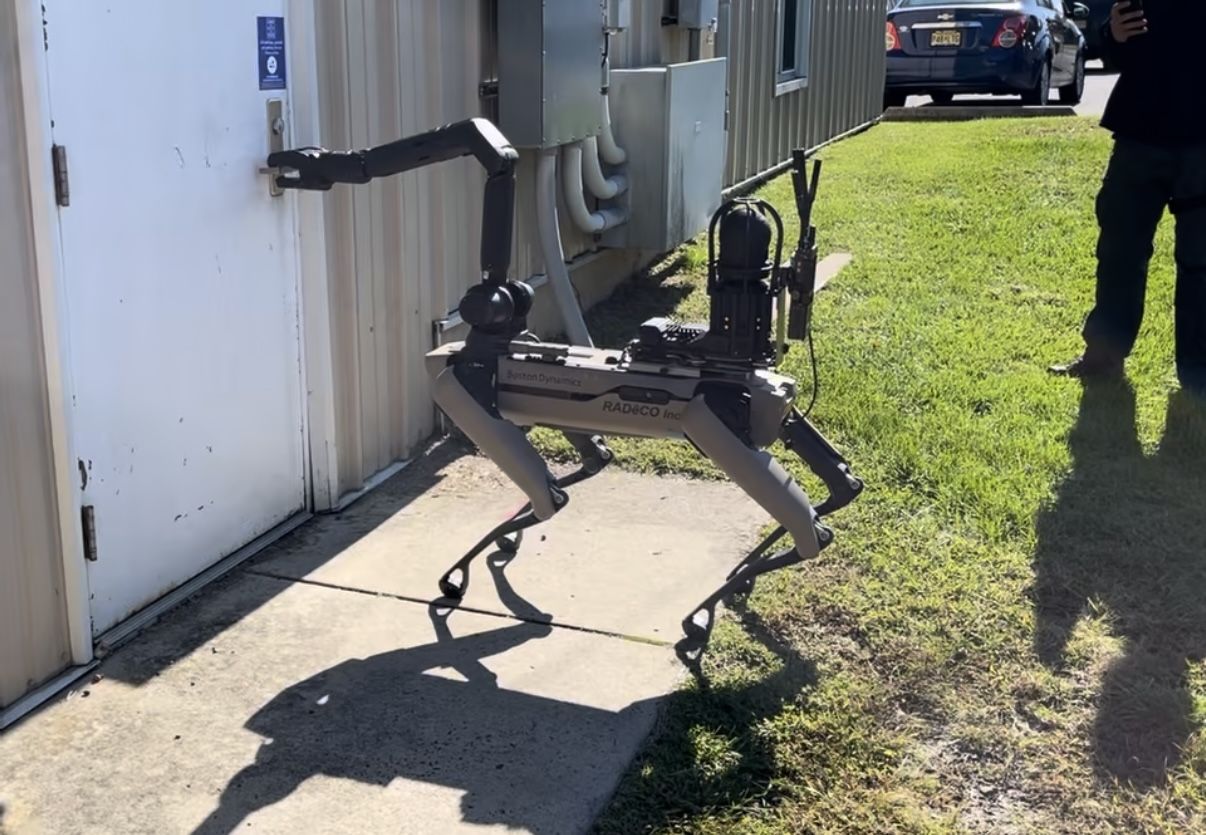
    One of the newest recruits to Camden County’s emergency response team is not a person or a K-9.

    It’s a robot dog, and it’s still waiting on a name. The grant-funded robot joined the Camden County Sheriff’s Emergency Response Team last year. Camden County and Gloucester County’s Office of Emergency Management share custody of the robot.

    The robot dog cost $293,300, with 75% coming from a federal grant. The remaining cost was split between Camden and Gloucester Counties, said Dan Keashen, Camden County’s public affairs director.

    The robot, remotely controlled with an Android tablet, has helped the emergency response team with more than 20 investigations, Camden County officials said in a statement. The bot has multiple cameras, a two-way microphone, a thermal imaging camera, a portable gas detector, grippers, and lights. In action, those tools help the dog assist with hostage situations, barricades, and identifying hazardous materials, according to the statement.

    The robot was manufactured by robotics company Boston Dynamics, owned by Hyundai Motor Group, with some mechanisms added to the machine by RADēCO, an energy and military supplier.

    Last month, after Camden County put out a call to its youngest residents, the sheriff’s office received more than 100 name suggestions. The office recently chose its 10 favorites from the bunch.

    The final contenders are, in alphabetical order:

    • Bob
    • Buster
    • Chase
    • Cookie Monster
    • Debo
    • Donut
    • Jersey Joe
    • Jetson
    • Rover
    • Rufus

    The sheriff’s office is expected to reveal the dog’s name this week, said Morgan Callan, a county spokesperson.

  • Camden County voted for a tax hike to protect water, reduce flooding, and update its sewer systems

    Camden County voted for a tax hike to protect water, reduce flooding, and update its sewer systems

    Camden County voters on Tuesday overwhelmingly supported a one-cent increase to an annual tax protecting the county’s natural areas.

    The tax will help fuel a $400 million plan unveiled in July to improve water quality in the Cooper River, a tributary of the Delaware River that runs through Camden County, and other local rivers, lakes, and streams.

    In the county’s final unofficial returns as of Wednesday, 79% of Camden County voters who responded to the ballot question, or nearly 92,000 people, had voted “yes” to boosting the county’s Open Space Trust Fund.

    The tax increase will cost the average Camden County homeowner $1.83 per month. The vote increases the existing open space tax to $.03 per $100 of assessed property value, still one cent lower than in Burlington and Gloucester Counties.

    The county will start collecting that money in 2027, said Dan Keashen, the county’s public affairs director.

    “Now that the referendum has passed we can get to work improving and enhancing our community,” Keashen wrote in a text.

    The ballot question also puts dollars toward protections for the county’s drinking water sources, wetlands, parks, water recreation, and prevention of development in natural areas.

    Don Baugh, president of nonprofit Upstream Alliance, said the new tax will reduce how often his group has to cancel its free paddling and other educational trips through Camden’s waterways. It will also, he said, improve the ecosystem for aquatic life.

    “It will boost the quality of life and economic development of Camden County, where more people will say, ‘I love to live here,’” Baugh wrote in an email.

    County officials are still discussing which projects the levy will fund first, but Keashen said the increase will immediately support fixes for outdated sewer pipes leaking into the county’s waterways and improvements to Camden City’s combined sewer system.

    Those efforts would help reduce flooding in the city and eliminate liquid waste flowing into the Cooper and Delaware Rivers, Keashen said.

    “This referendum reflects a shared commitment to environmental stewardship, and preserving our natural resources for years to come,” wrote Jeffrey Nash, a Camden County commissioner, in a statement.

    In addition to the one-cent tax hike, the county plans to shore up those projects with state and federal funding, philanthropy, and other funding sources.

    Voters approved Camden County’s first open space tax 28 years ago with a referendum establishing a $2 million trust fund for environmental protections. Today, all 21 counties in New Jersey have an open space tax. Camden County raised more than $12 million through the tax last year.

    On Election Day, some voters at the polls supported the new levy, but others were concerned about the extra cost.

    Nicole Fahnestock, 52, has lived in Cherry Hill for nearly two decades. Her main concern at the ballot box was the cost of living.

    “I voted ‘no’ because, honestly, I’m just tired of all the taxes,” Fahnestock said, noting that she has recently been impacted by property tax increases.

    But other Camden County voters, like Shawn Acosta, said they were willing to pay a little more to help the planet.

    “I’m a kayaker, so I’ve noticed our waterways are getting cloudier and cloudier,” said Acosta, a 61-year-old Etsy shop owner and longtime Cherry Hill resident. “I grew up fishing and we ate the fish. I take my grandson fishing and can’t eat the fish. That’s a problem to me.”

    Rudolph Williams, director of climate and culture at the Philadelphia School District, also supported the measure.

    “Anything that’s going to increase the [water] purity needs to happen,” Williams said. “Can you really put a value on purification of the things that we need?”

  • A Gloucester County man was arrested after he allegedly shot and killed his girlfriend

    A Gloucester County man was arrested after he allegedly shot and killed his girlfriend

    A Franklinville man was arrested Monday after he allegedly shot and killed his girlfriend and fled the scene, police said.

    Ricardo A. Ferrera, 32, is charged with first-degree murder and other charges related to possession of a weapon, the Gloucester County Prosecutor’s Office said in a statement.

    A witness called Franklin Township police at about 12:36 a.m. Monday to report a shooting at a home on Porchtown Road in Franklinville. While upstairs with her three children, she heard gunshots and went downstairs to find Christina Cruz, 30, lying in the living room.

    She told police that Ferrera and Cruz, his girlfriend, had argued two hours before the shooting.

    Ferrera drove off after the shooting, she told police.

    Police did not specify the witness’s relationship with Ferrera, and prosecutors could not share Monday who lived in the Franklinville home.

    Police found Cruz with two gunshot wounds. She was pronounced dead at the scene, according to the complaint.

    A second witness, who was in a first-floor bedroom at the time of the shooting, told police the argument was followed by “two gunshots and a thud.”

    Ferrera was also charged with possessing a firearm with the purpose to use it unlawfully against another person and knowingly having a firearm despite a previous gun-related conviction, according to the prosecutor’s office.

    Ferrera had previously been convicted of unlawfully possessing a firearm, according to the complaint.

    Rebecca Forand, public information officer for the Gloucester County Prosecutor’s Office, declined to discuss Ferrera’s previous charges.

  • A Voorhees Holocaust survivor fled Germany with his family in 1938. As he turns 100, his hometown will honor him.

    A Voorhees Holocaust survivor fled Germany with his family in 1938. As he turns 100, his hometown will honor him.

    It has been decades since Fred (formerly Fritz) Behrend returned to his hometown of Lüdenscheid, Germany, where his family once owned a textile store.

    The Behrends fled the city in western Germany after Nazis torched synagogues in 1938 during Kristallnacht, an anti-Jewish attack across the Nazi regime, and arrested Fred’s father. They sent him to a concentration camp, and he was released on the condition that the Behrends leave the country immediately.

    “I was 12 years old when we escaped from Germany,” Fred said from his South Jersey home. “My father came from the concentration camp, onto the boat that took us to Cuba.”

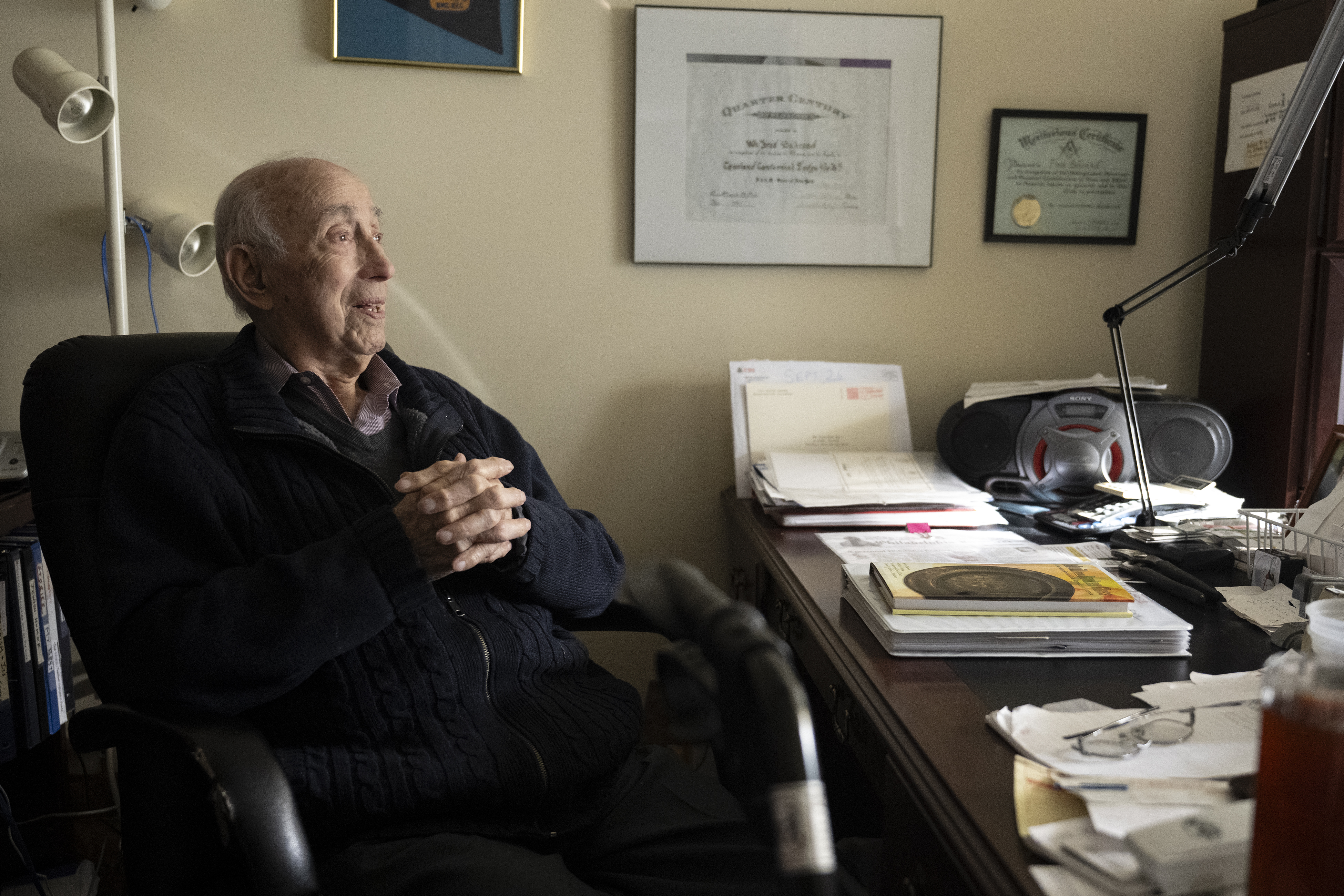
    Holocaust survivor Fred Behrend, a Voorhees resident who is turning 100, talks about his life in America and his childhood escape from Nazi Germany during an interview at his home on Oct. 15. Behrend will be honored by his German hometown with Stolpersteine, or brass memorial stones, bearing the names of him and his parents outside the former family store they left behind when they fled Germany after Kristallnacht, the Night of Broken Glass, in 1938.Jose F. Moreno / Staff Photographer

    The family, expelled for being Jewish, fled to the Caribbean, then the United States.

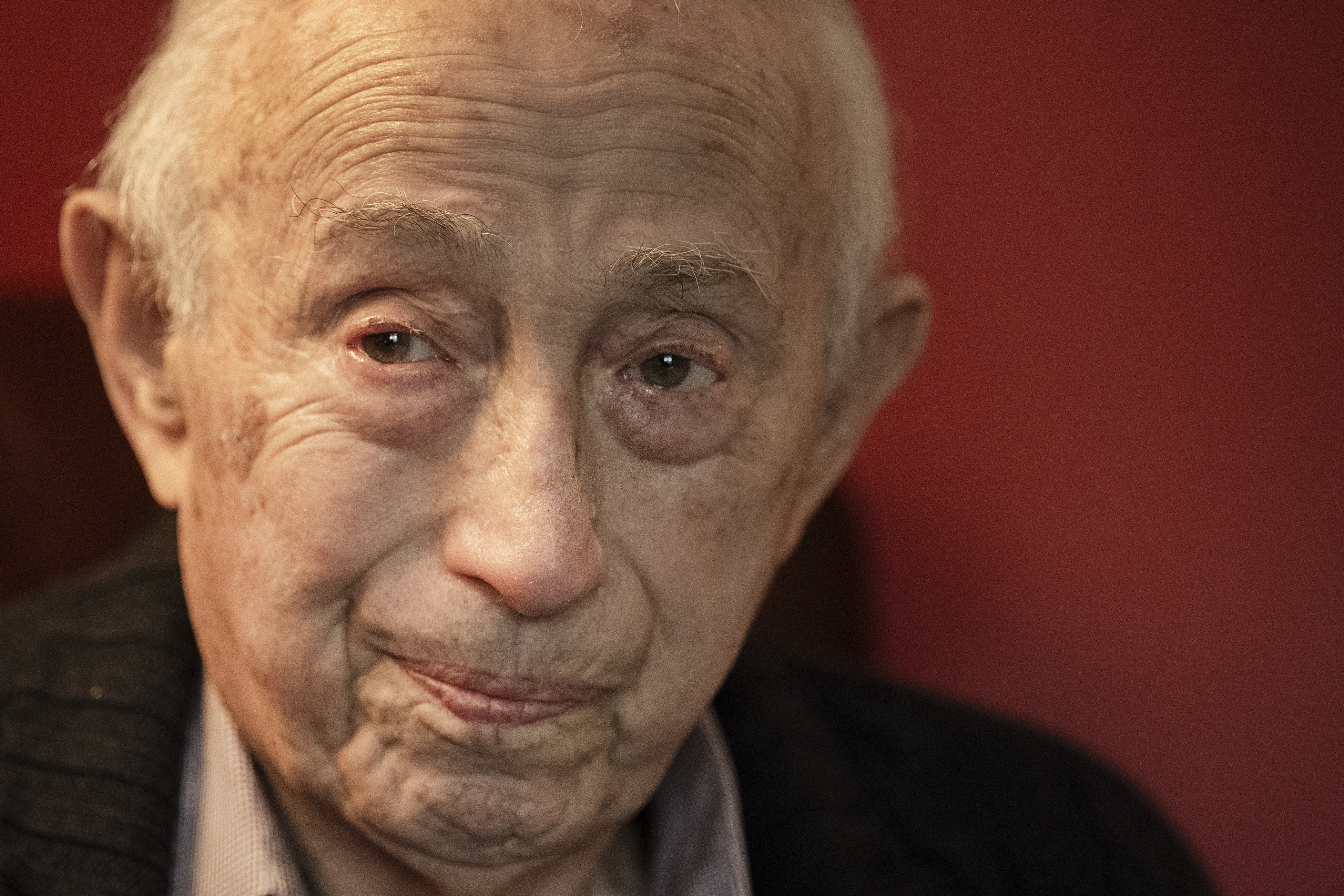
    Today, Fred, a Holocaust survivor and retired air conditioner and TV repairman, lives in Voorhees in Camden County. He turns 100 years old on Nov. 3.

    He has lived an adventurous life. He taught democracy to German prisoners of war at a Virginia military base at 19. He went to high school in New York with former U.S. Secretary of State Henry Kissinger. He befriended the late Ruth Westheimer, the famous German American sex therapist. He has given countless presentations to schoolchildren about the Holocaust and traveled much of Asia and Europe.

    “We joke that he’s like the Forrest Gump of Holocaust survivors,” said Larry Hanover, who cowrote Fred’s 2017 memoir, Rebuilt from Broken Glass.

    Fred’s home city in western Germany will honor his life next week.

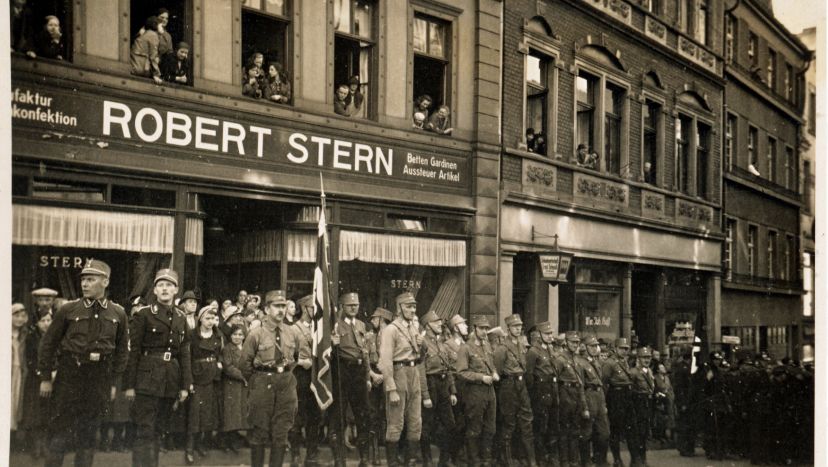
    Three plaques will be placed in front of the Behrends’ former store building in Lüdenscheid, which is now a brunch spot called Café Moon 2. They will honor Fred, along with his mother, Else Behrend, and his father, Herman Behrend. The memorials, called Stolpersteine, or “stumbling stones,” are created by artist Gunter Demnig for victims of Adolf Hitler’s Nazi regime, whether they died, fled, or survived.

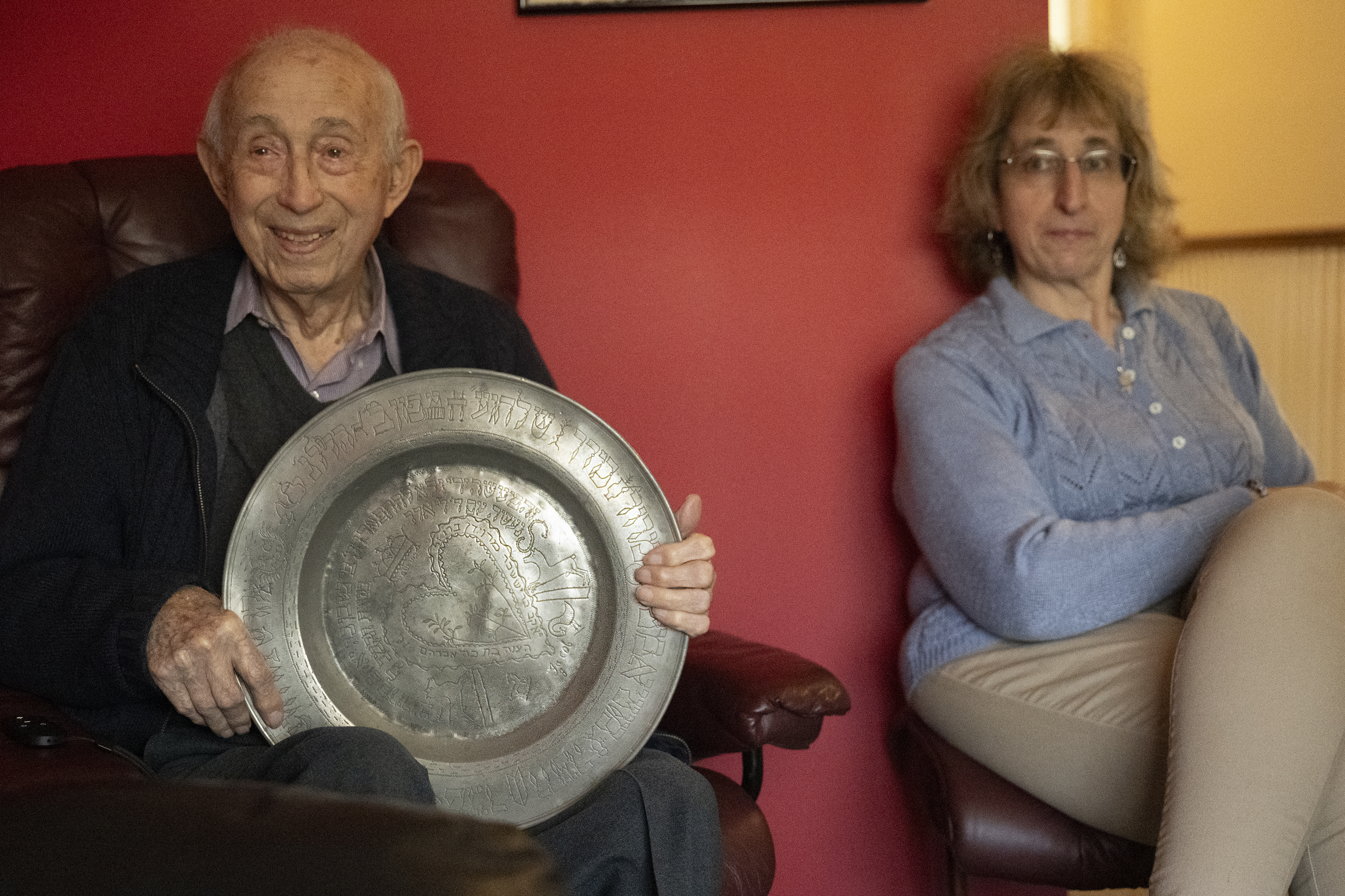
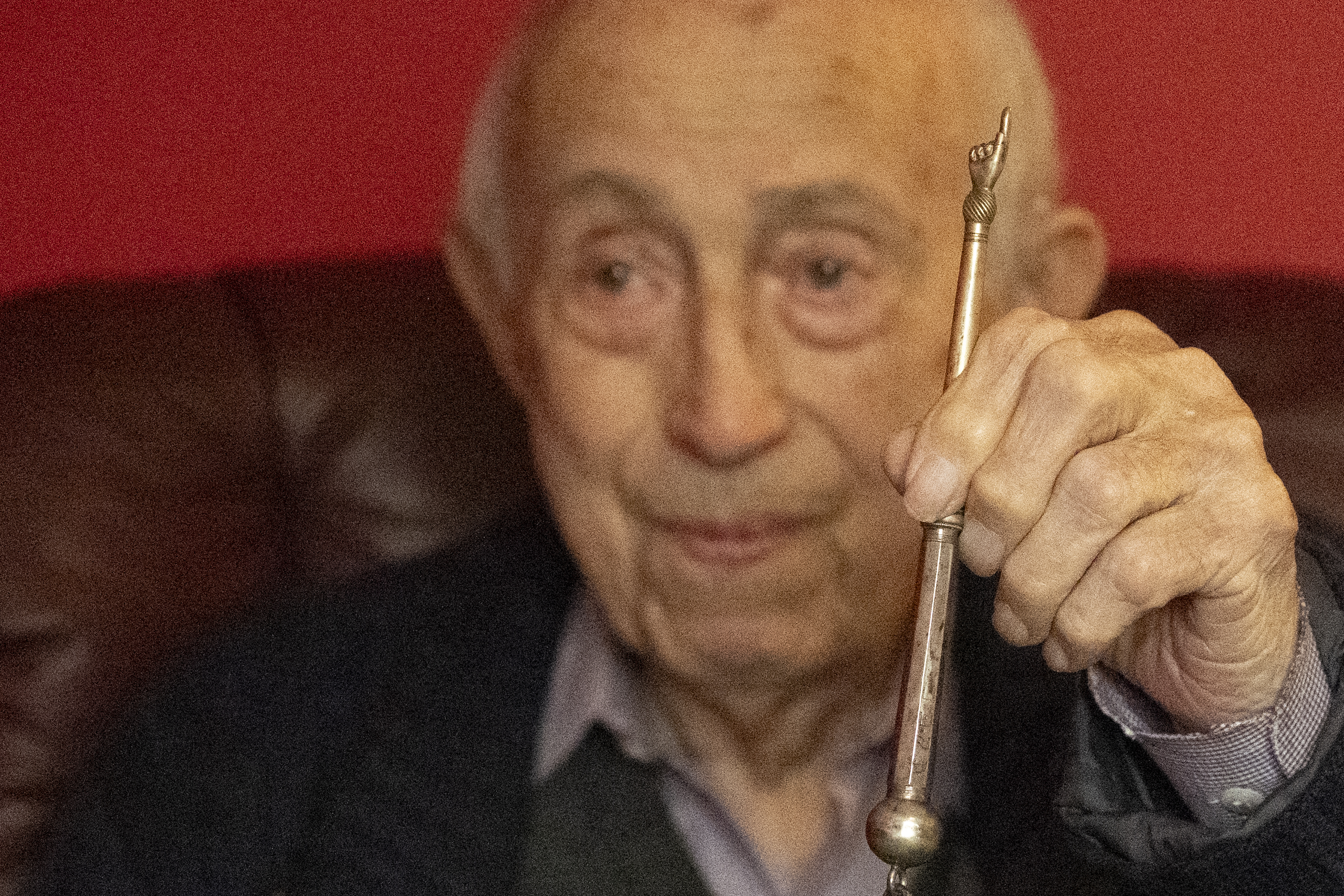
    Fred’s children, Evelyn and Andrew Behrend, will fly to Germany with Hanover for the ceremony. Fred will watch on Zoom from home, seated beside relics he has collected over the years: a 500-year-old Seder plate for Passover, created by one of his forefathers before his family had recorded surnames, and a yad, a pointer for reading the Torah, extracted from the ashes of a synagogue by Fred’s father in the days before they fled Germany.

    Holocaust survivor Fred Behrend, who is turning 100, sits next to his daughter, Evelyn Behrend, during an interview at his home in Voorhees.Jose F. Moreno / Staff Photographer

    Fred held the yad as he spoke, the same tool that he used during his bar mitzvah, and that Evelyn and her daughter used when they turned 13.

    “My family that I trace back was an exceptional family because not many people have a background like this,” Fred said. “How did they live? How did Jews live?”

    ‘Still living’

    Hans-Ulrich Dillmann, a retired German journalist, has long covered Holocaust survivors and their families who came from Lüdenscheid. He wrote a biography of about 280 people with ties to the city who were impacted by the Holocaust.

    Fred is one of the last people in that group alive, Dillmann said.

    “So when I found out that Fred Behrend was still living, I tried to make contact with him,” he said, to make sure Fred’s family could be remembered.

    Nazis paraded in front of the Robert Stern textile store in 1933 in Lüdenscheid, Germany. The shop was the last place where Fred Behrend and his family voluntarily stayed before being forced to leave the country by the Nazi regime in 1938. Today, the building is occupied by a brunch spot.History Museum of the City of Ludenscheid

    Herman Behrend, Fred’s father, was the last president of Israelitische Synagogengemeinde Lüdenscheid, the city’s Jewish community group, before he was sent to Sachsenhausen concentration camp, according to Dillmann, a member of Lüdenscheid’s historical society who has researched the Behrend family.

    When Herman was arrested, the store, like others held by Jewish families, had to be sold, Dillman said. Jewish Germans could not access those assets to profit from the sales because German banks refused to work with Jews, Dillman said.

    The Behrends’ Stolpersteine join 120,000 other stones across the world and more than 40 in Lüdenscheid informing passersby about the final voluntary locations of Holocaust victims.

    Fritz Fred Behrend, who turns 100 on Nov. 3, 2026, will have his name featured on one of three Stolpersteine installed at his old family textile store in his hometown of Lüdenscheid, Germany. Behrend, a Holocaust survivor, is a Voorhees resident.Arnhild Scholten

    The waitlist for the concrete plaques, less than 4 inches by 4 inches, can be years long because local authorities have to give permission to install the stones in the sidewalk. In past years, Stolpersteine have honored the family of Fred’s mother in another German town.

    “I appreciate the fact that they recognize they killed 6.5 million people,” Fred said. “It’s the least they can do.”

    Tracing their roots

    Evelyn, Andrew, and Hanover will arrive to Germany on Saturday to see all the places where the Behrend family once frequented, in good times and bad. The trip will give them a chance to trace their roots as far back as they can, and Hanover will see everything he has referenced in his writings about Behrend and his life story for years.

    On their trip, the family will also place a plaque on the unmarked grave of Fred’s older brother, who died shortly after birth, to finally name him publicly as Hans Behrend.

    “My grandparents, if you think about it, had to leave behind not only their house and their store,” Evelyn said. “They left behind the grave of their firstborn child.”

    Holocaust survivor Fred Behrend, a Voorhees resident who is turning 100, holds up the yad that his father, Herman Behrend, saved from the ashes of a synagogue that Nazis burned down in 1938.Jose F. Moreno / Staff Photographer

    They will visit the jail where Herman was kept, the site of Fred’s former home, and a school Fred once attended in Cologne after the Nazis banned Jews from public school. Evelyn plans to walk the path her father took on the morning of Nov. 10, 1938, when synagogues in Cologne were set aflame during Kristallnacht.

    When they return home, Evelyn knows they will continue to hear their father’s countless stories of the tragedies, joys, and strange encounters he has endured in his 100 years. He can’t stop talking about them, including the terrible times, even though his busy life on the Holocaust lecture circuit ended long ago.

    “I’ve seen what I’ve seen, and that was much too much,” Fred said. “And it was a very interesting life.”