Author: David Murphy

  • Lane Kiffin, a former Eagles undrafted free agent, and a fitting episode for our times in college sports

    Lane Kiffin, a former Eagles undrafted free agent, and a fitting episode for our times in college sports

    Maybe the best thing that can happen to college sports’ integrity is everything that is happening to its integrity right now. It would be ironic, in a way. The NCAA and its member institutions are where they are because they spent decades adhering to a policy of inertia. Only now does it look like a viable strategy, after their world is already burning around them. Sometimes, in order to gain back what was lost, one must lose what little remains.

    Very little remains. Let’s be clear about that. That was true even before last weekend’s news that former Eagles undrafted rookie free agent Dae’Quan Wright was planning on returning to the college ranks after being waived by the Browns. In fact, the hand-wringing that has accompanied the tight end’s reported agreement with LSU is mostly an admission of naiveté or ignorance on the part of the hand-wringers.

    The NCAA is more than a decade into a series of logical premises and conclusions that was always going to lead power conferences like the SEC and Big Ten to where they are right now. The university presidents who operate behind the NCAA’s bureaucratic anonymity chose this path when they allowed the almighty dollar of television contracts and the vanity of a news cycle monopoly to become the primary goal of collegiate sports rather than sports played by, for, and among collegiates. They are living in a reductio ad absurdum of their own creation.

    The best thing any of us can do for our sanity is to lean back and enjoy watching them lose theirs. It no longer makes sense to react to each development as if university athletic departments are tethered to some sort of ethical baseline that sets them apart from any other major professional sports organization. They pulled up that anchor long ago. The ship has sailed.

    Frankly, the idea of an undrafted athlete moving from the bottom of an NFL training camp roster to a college football starting lineup pales in comparison to the legion of current college football starters who are making bigger bank than they would as NFL players on rookie contracts. The average Power 4 quarterback is currently signed to a name, image, and likeness deal worth $3.1 million, according to Sportico. It always made sense that there would come a day when a player would ask out of a contract from the Browns for a more competitive offer funded by Big Willy’s Jeep-Chevy of Baton Rouge. That’s the way NIL was always going to work.

    The ridiculousness is the real sport, now. We should treat it as such. For years, the NCAA chose to address the logical implications of its profit drive with a weird and counterintuitive combination of hope, avoidance, and authoritarian dictates. They fully recognized that the genie would one day escape the bottle. Now, they’re left to hope that Ja’Marr Chase and Joe Burrow already have plans for their bye week, when LSU plays Mississippi State.

    Lane Kiffin’s central role in the latest lunacy is fitting. College football’s Kendall Roy has spent the early part of this week channeling the exact sort of ends-based nihilism so sublimely satirized by HBO’s Succession. He did the same last year when he left his Ole Miss team on the eve of the college playoffs in order to sign a mega contract with LSU. Nick Saban, his former boss at Alabama, leveraged the full power of the media-sports industrial complex to absolve him of responsibility.

    “We need to take a better approach to the business aspect of what we do in college athletics,” Saban said on ESPN’s pregame studio show after Kiffin left Ole Miss. “In the NFL, you can’t leave your team until you are finished playing. You can’t talk to another coach in the regular season. There’s a defined time when you can talk to them if they are in the playoffs. We should match the academic calendar with the football calendar.”

    Well, yeah. You should. But there are a whole lot of competing self-interests standing between ought and is. Like any system, it is first and foremost a reflection of those who agree to its framework. Major college football has become nothing more than Boar on the Floor in pads. Any television news segment on NCAA should conclude with a clip of Logan Roy smirking at all the piggies at the trough.
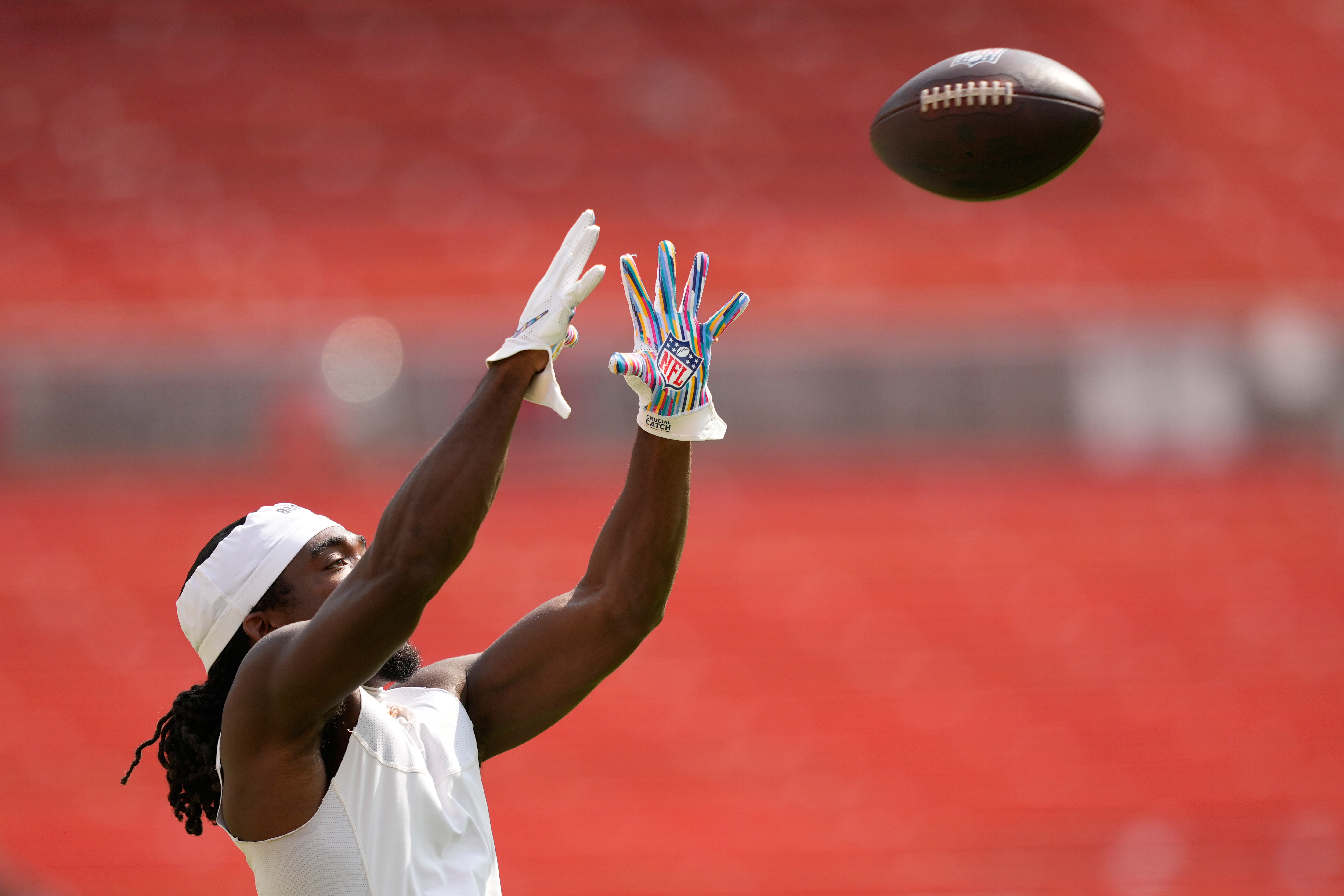
    Dae’Quan Wright is among the NFL players trying to play another season of college football.Carolyn Kaster

    “In general, should NFL players come back to college? I believe — it doesn’t matter necessarily what I believe — that answer would be no,” Kiffin said in a Monday news conference while defending his recruiting of at least two former Ole Miss players who’d spent the summer in NFL training camps.

    Focus on Kiffin’s interjection.

    It doesn’t matter necessarily what I believe.

    You’ll struggle to find seven words that more accurately summarize both the current state of college sports and its contributing factors. In a more principled world, they would be written off as the words of a coward. In our current world, they might as well be written in Latin beneath the flag or family crest or company logo of a disconcerting number of tech titans, politicians, and Fortune 500 firms, not to mention the hundreds of university presidents who have long embraced the plausible deniability of the concept of shareholder value. The best thing you can say about the system of higher education in the United States is that it remains steadfastly by and of the system at large.

    The only hope is that it burns itself as quickly and completely as possible. The inevitable end game for the major football-playing schools won’t look much closer to the mandates of their university charters. The big schools will break away, impose a salary cap, hiring and transfer restrictions — all of the things major sports leagues long ago did as a result of similar competitive inevitabilities. They will sign their own television contract, sell their own licensing agreements, consolidate the revenues. The nonpower schools will exist mostly as a counterweight to any antitrust claims. Meanwhile, the rest of us will continue to contemplate the question: Do we really care about college sports if they are no longer about the college?
  • There’s one big reason to think that Andrew Painter’s transformation is for real

    There’s one big reason to think that Andrew Painter’s transformation is for real

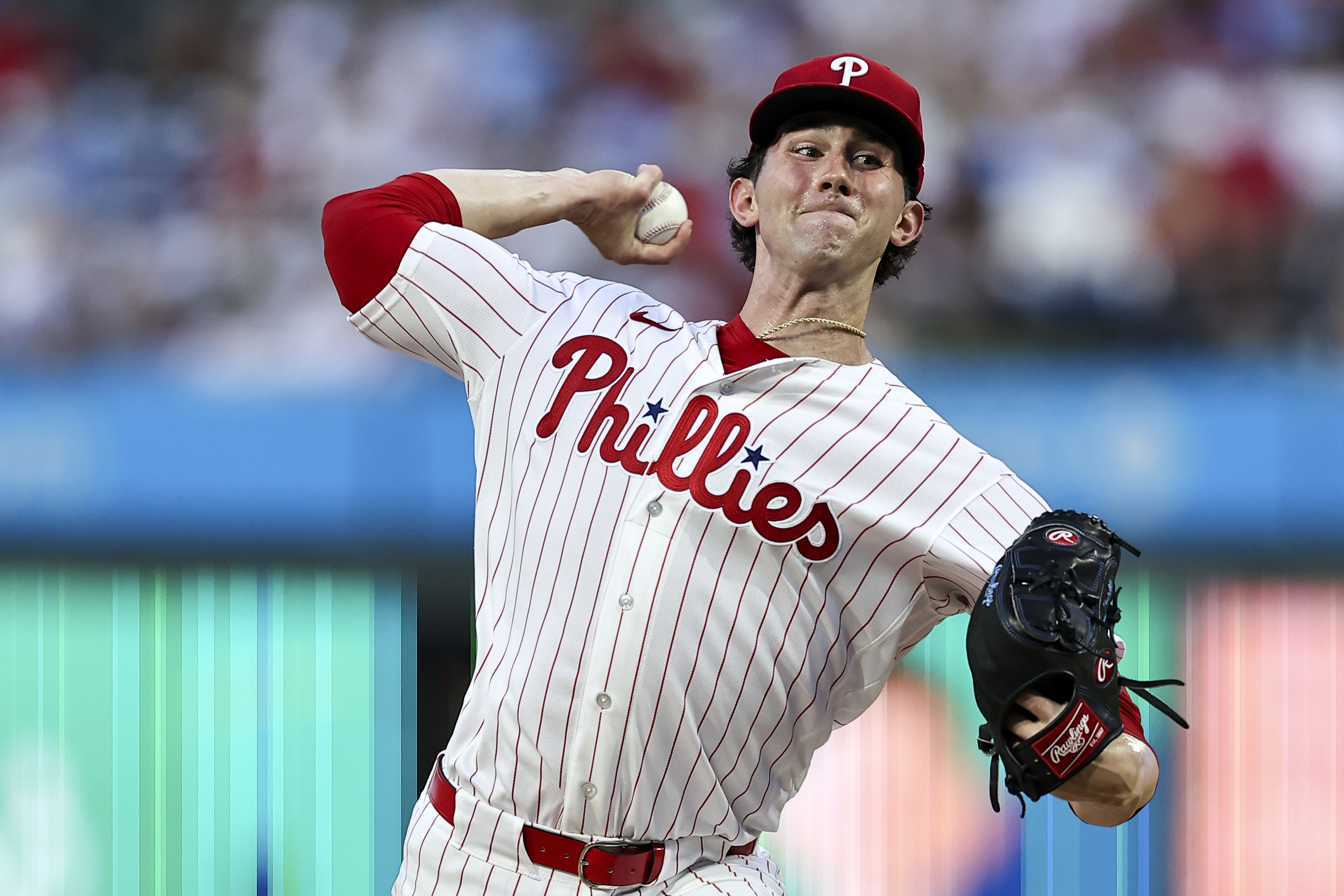
    A little past 6 o’clock on Saturday evening, Andrew Painter delivered a couple of pitches that could have some serious implications for the Phillies. Both of them were four-seam fastballs that registered 97 mph on the gun and crossed home plate at the sternum of Cardinals leadoff hitter JJ Wetherholt. The important thing is where those pitches ended up: inside the mitt of Phillies catcher J.T. Realmuto, rather than in play, or in the seats. Wetherholt swung at both. He did not make contact with either.

    That two-pitch sequence may sound like a small thing. It mostly was, at least within the context of the game. But it was a very big thing with regard to the futures of both the Phillies and their prized pitching prospect. It was a reason to believe.

    The top-line numbers suggest that Painter is a young man in the midst of a renaissance. Since returning from a six-week stint in the minors on July 31, the 23-year-old righty has posted a 3.62 ERA with 26 strikeouts, 10 walks, and two home runs allowed over 27⅓ innings. His most recent start was his finest yet: 103 pitches, seven innings, one run allowed, eight strikeouts, no walks.

    That his season-long ERA is still 6.02 speaks to the extent of the struggles he endured during the first 14 starts of the season. It also warrants a skeptical eye. Yet the deeper you pore through the entrails of Painter’s recent performances, the more evidence you’ll find that suggests the rookie really is in the midst of a radical transformation.

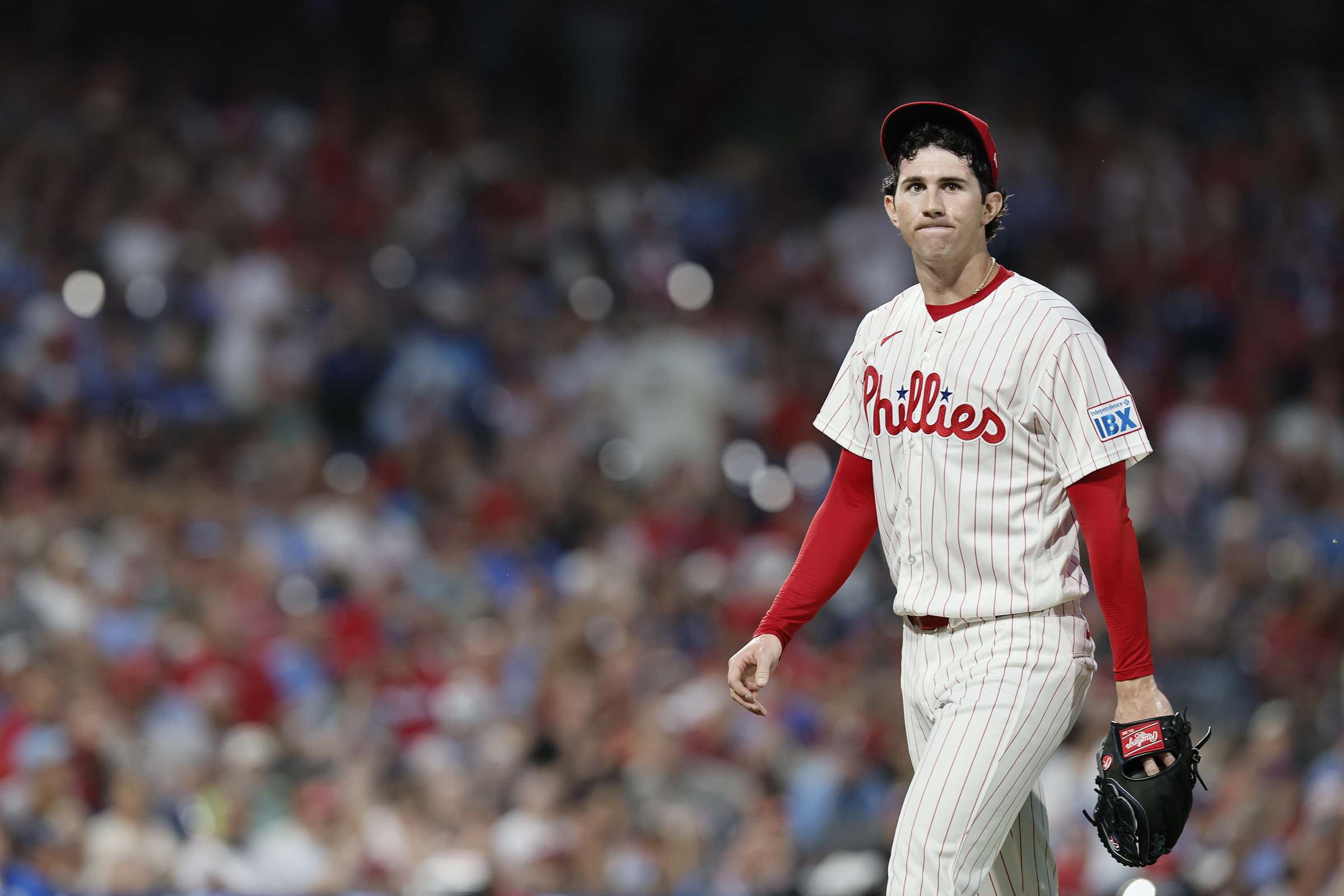
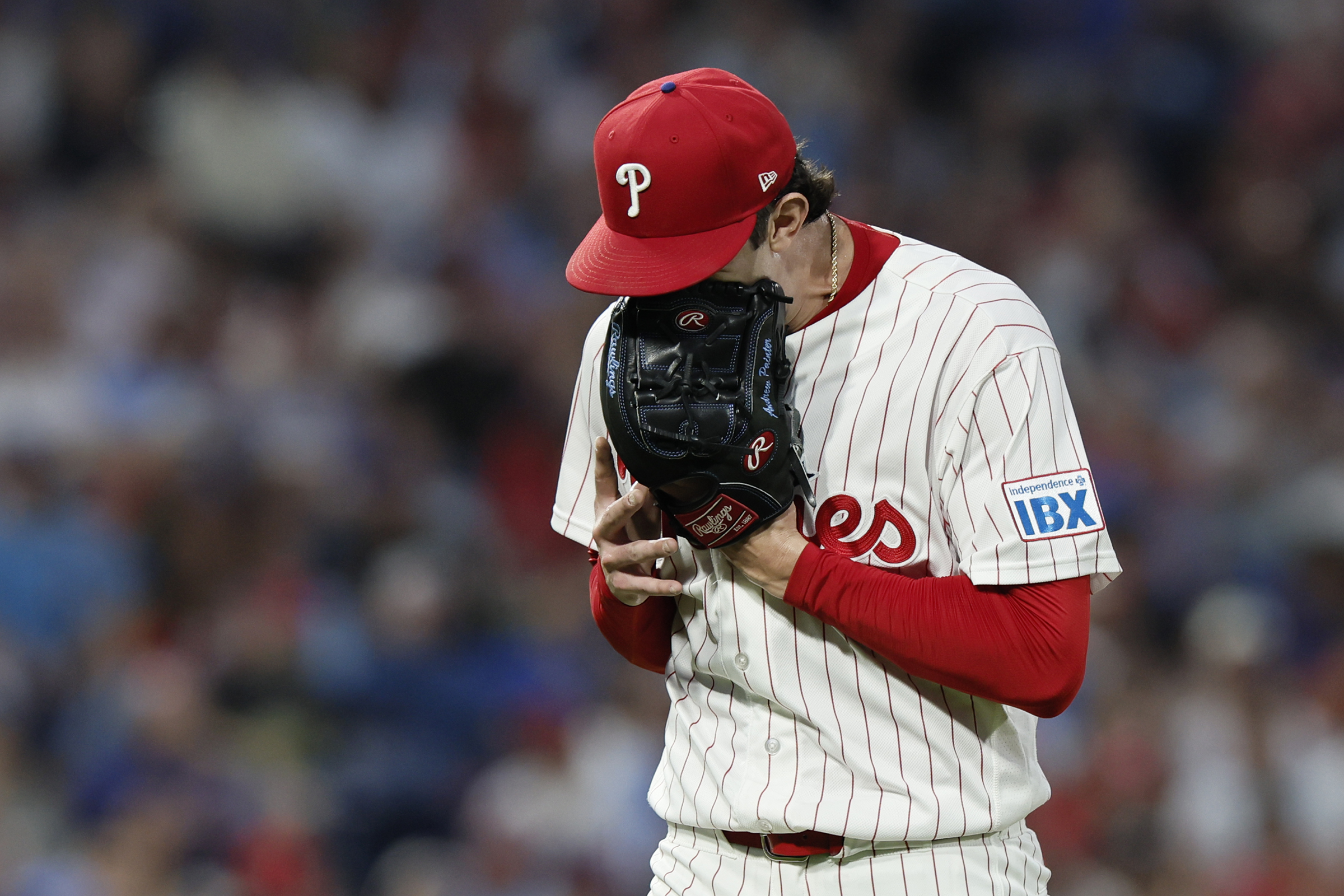
    Phillies pitcher Andrew Painter yells into his glove after striking out Cardinals slugger Jordan Walker for the final out of the sixth inning Saturday.Elizabeth Robertson / Staff Photographer

    It all starts with four-seam fastballs like the ones that prompted Wetherholt’s whiffs in the first inning on Saturday. By the end of the game, Cardinals hitters had failed to make contact on five of their 15 swings against Painter’s four-seamer. That may not sound like a lot, but consider this: In Painter’s last two starts before his demotion in June, he generated just three whiffs on 23 swings at his fastballs.

    The numbers are staggering. When the Phillies sent Painter down to the minors in June, his four-seam fastball ranked as one of the least effective in the sport. He wasn’t missing bats with it: His whiff percentage ranked 276th out of 278 pitchers who’d thrown at least 200 pitches. Opponents had 38 hits against the pitch in just 12 starts. Their .404 batting average against Painter’s four-seamer was higher than against any other pitcher’s. He ranked among the bottom 4% in slugging percentage (.763), strikeout percentage (7.65%), and wOBA (.481). Only one pitcher in the majors had a four-seamer rated lower than Painter’s per FanGraphs’ Pitch Value metric.

    Now, suddenly, Painter’s four-seamer has become one of baseball’s most difficult to hit. Of the 84 pitchers who have thrown at least 100 four-seamers since July 31, only seven have a higher whiff percentage inside the strike zone than Painter’s. Opposing hitters are making contact with just 78% of his fastballs in the strike zone. That’s lower than even Brewers fireballer Jacob Misiorowski. It is a massive difference from Painter’s 93.2% zone contact percentage in his first 14 starts. Painter isn’t generating out-of-zone swings-and-misses on the level of the Miz, but his overall contact rate still ranks in the top 25% of pitchers since July 31.

    Andrew Painter’s four-seamer has gone from liability to strength in his return to the Phillies.Monica Herndon / Staff Photographer

    It’s a lot easier to believe in real change when there is a logical explanation for it. With Painter, the four-seamer is the thing. His spin rate is up by about 6%. In his last two starts, the induced vertical break on his fastball was better than in any previous start, with an increase of about 10% over his predemotion baseline. Against the Cardinals on Saturday, he threw nine pitches at 98-plus mph, two of them at 99-plus. Sixteen of his 33 sinkers and four-seamers clocked at 97-plus mph. Compare that to his last start before his demotion, when Painter didn’t touch 98 and only reached 97 on five pitches.

    “There’s a presence out there,” Phillies interim manager Don Mattingly said. “He’s on the attack. He looks confident. Obviously, the stuff has to be good, or all that doesn’t matter if you’re not getting anybody out.”

    You saw it on Saturday. In the third inning, Jose Fermin struck out on a foul-tipped four-seamer. In the fifth, Jimmy Crooks swung and missed at a 1-2 four-seamer that registered 98.2 mph on Statcast. In the sixth, Alec Burleson swung and missed at another 98 mph four-seamer.

    Painter still has plenty of work to do to reach the level of dominance many envisioned when he was rated as one of the top pitching prospects in the sport. But the improvement is very real. Make no mistake about that.

  • Bryson Stott’s historic tear and Zack Wheeler’s slump are among the key Phillies subplots

    Bryson Stott’s historic tear and Zack Wheeler’s slump are among the key Phillies subplots

    Three big questions for the Phillies as they look to do to the Cardinals what they just did to the Marlins …

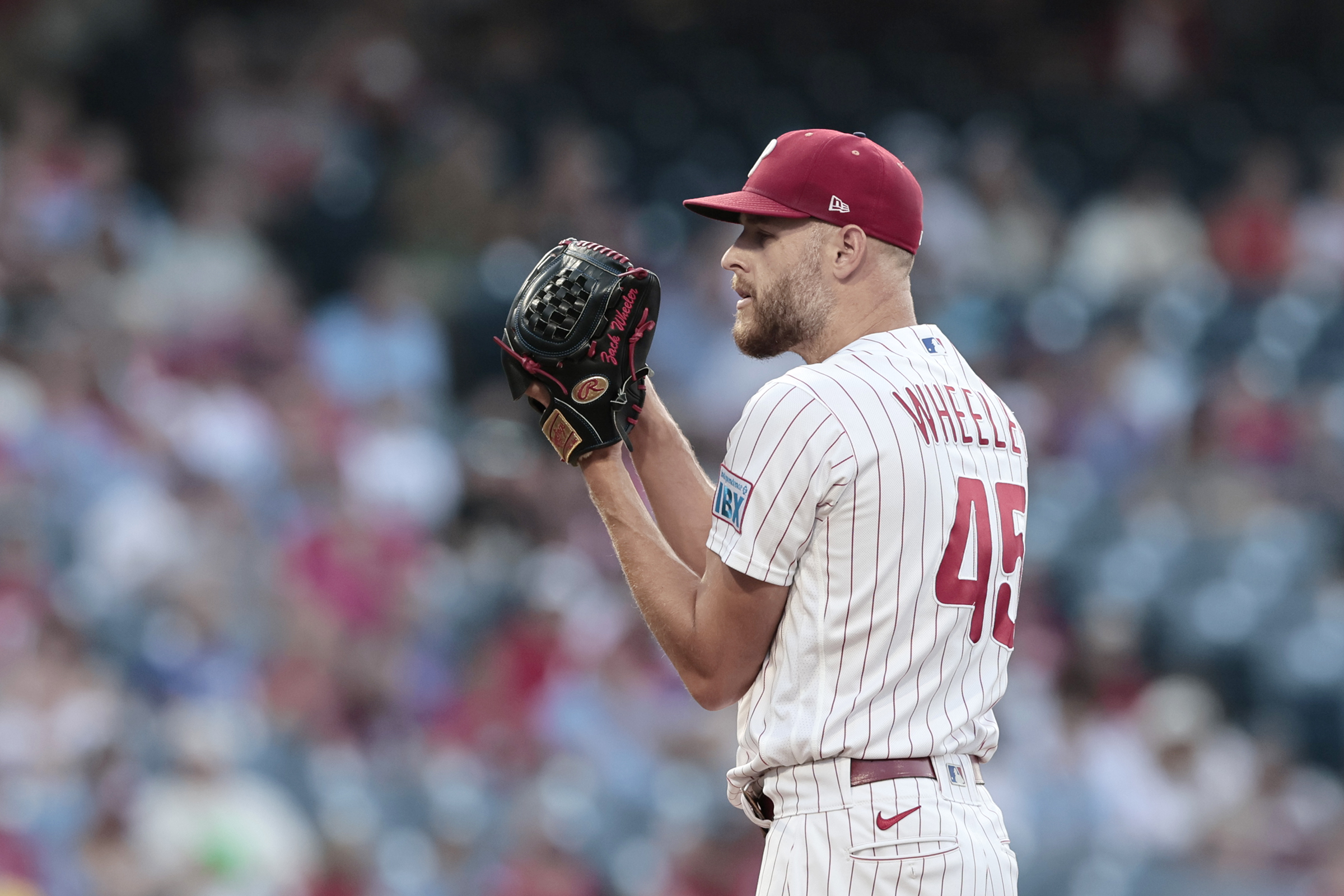
    Zack Wheeler is going to be OK, right?

    Only once in Wheeler’s seven years with the Phillies had he gone more than two consecutive starts without pitching at least 5⅔ innings. Never had he gone more than three. His current streak now stands at five, a career-high and by far the most important subplot of the Phillies’ stretch run.

    The top-line key performance indicators suggest something more than bad luck is responsible. Wheeler’s ground ball ratio over his last five starts is half of what it was in the first two-plus months of this season. His soft contact percentage is down, while his hard contact percentage is up. His 10 walks over his last three starts are his most in a three-start span since 2019, his last season with the Mets. His strike percentage on Tuesday was his second lowest of the season.

    The Phillies don’t sound too concerned. Wheeler’s pitch-level metrics don’t set off any health alarm bells.

    His fastball velocity remains in line with his overall season average: 95.5 mph on the four-seamer and 95 on the sinker in his most recent start, per Statcast. Both are marginally above their season-long baseline. Wheeler’s spin rates haven’t changed much at all. He is simply struggling to locate.

    Can Bryson Stott keep this up?

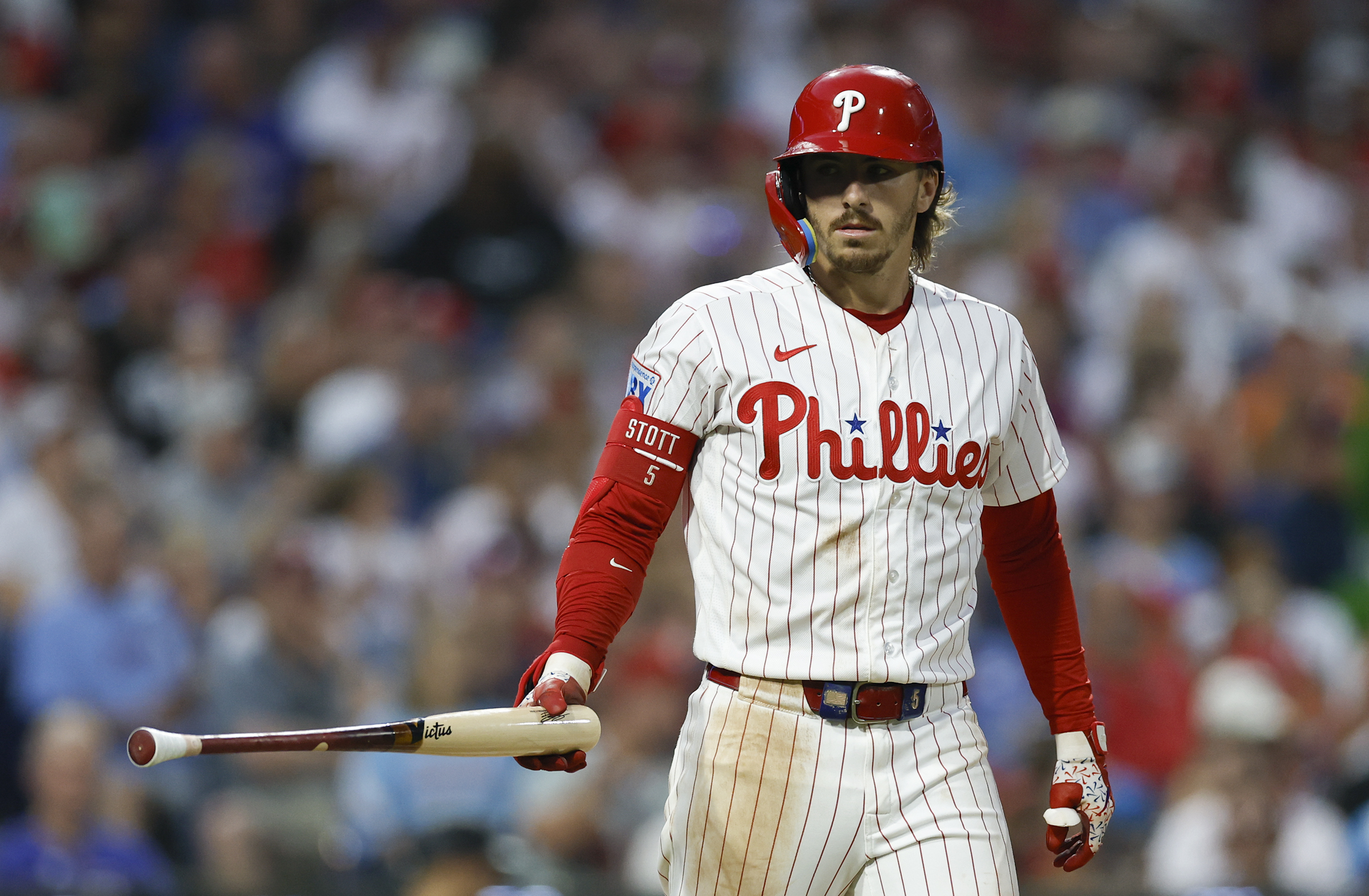
    The Phillies don’t need Stott to be Albert Pujols, but it’s always a good thing when a player does something that nobody since Pujols had done. In Stott’s case, that something was walking 21 times with just four strikeouts in a 19-game on-base streak that ended earlier this week with an 0-for-4 outing against the Marlins.

    The Phillies’ formula for a late-season surge has always required somebody in the bottom-third of the lineup to get hot. They are a completely different team when somebody at the bottom of the order is reaching base consistently. Few hitters have been hotter than Stott in recent weeks. Less than a month ago, his OPS was .692. As of Thursday, it was .755. That’s a remarkable jump this late in the season. The encouraging thing is what preceded it.

    In his last 81 games, Bryson Stott is hitting .284 with a .375 OBP and a .429 slugging percentageYong Kim / Staff Photographer

    Stott has been a well-above average big league hitter for half of a season now. In his last 81 games, he is hitting .284 with a .375 OBP and a .429 slugging percentage. That’s an .804 OPS, with 52 strikeouts and 41 walks in 326 plate appearances.

    If Stott continues at this pace for the rest of the season, there is a conceivable world where Bryce Harper and Kyle Schwarber both get hot at the same time and the Phillies score runs with enough consistency to rattle off the kind of winning streak that can pressure the Braves.

    Can the Phillies avoid overworking Jonathan Bowlan?

    This is one of those questions that would have sounded like a foreign language at the start of the season. Not only has Bowlan worked his way to the back of the bullpen, the Phillies might not be able to survive without him. It’s worth noting, then, that the 29-year-old right-hander threw a combined 62 pitches in his last two outings with one day of rest between them.

    Bowlan fits the profile of a guy who can handle the rigor of intensive bullpen action. With the Royals last season, he threw 63 pitches in a three-day stretch and 96 over four days and showed no ill effects. He was optioned to the minors but continued pitching regularly and returned to the big leagues later in the month, posting a 2.55 ERA in 17⅔ innings from late August through the end of last season.

    All that said, the Phillies will need to exert some willpower with Bowlan, who has emerged as the most dependable arm in the bullpen this side of Jhoan Duran. He has walked just seven batters in 19⅓ innings since moving into a high-leverage seventh- or eighth-inning role on July 7. He has a 2.33 ERA during that stretch, even after allowing a couple of runs to the Marlins on Monday. Bowlan’s has been the kind of unforeseen emergence that a team needs to get where the Phillies want to go. Interim manager Don Mattingly and his athletic training staff are going to need to walk the perilous line that always exists when a manager trusts one reliever above all others.

  • The Eagles defense has immense upside, though questions about Jonathan Greenard and Riq Woolen linger

    The Eagles defense has immense upside, though questions about Jonathan Greenard and Riq Woolen linger

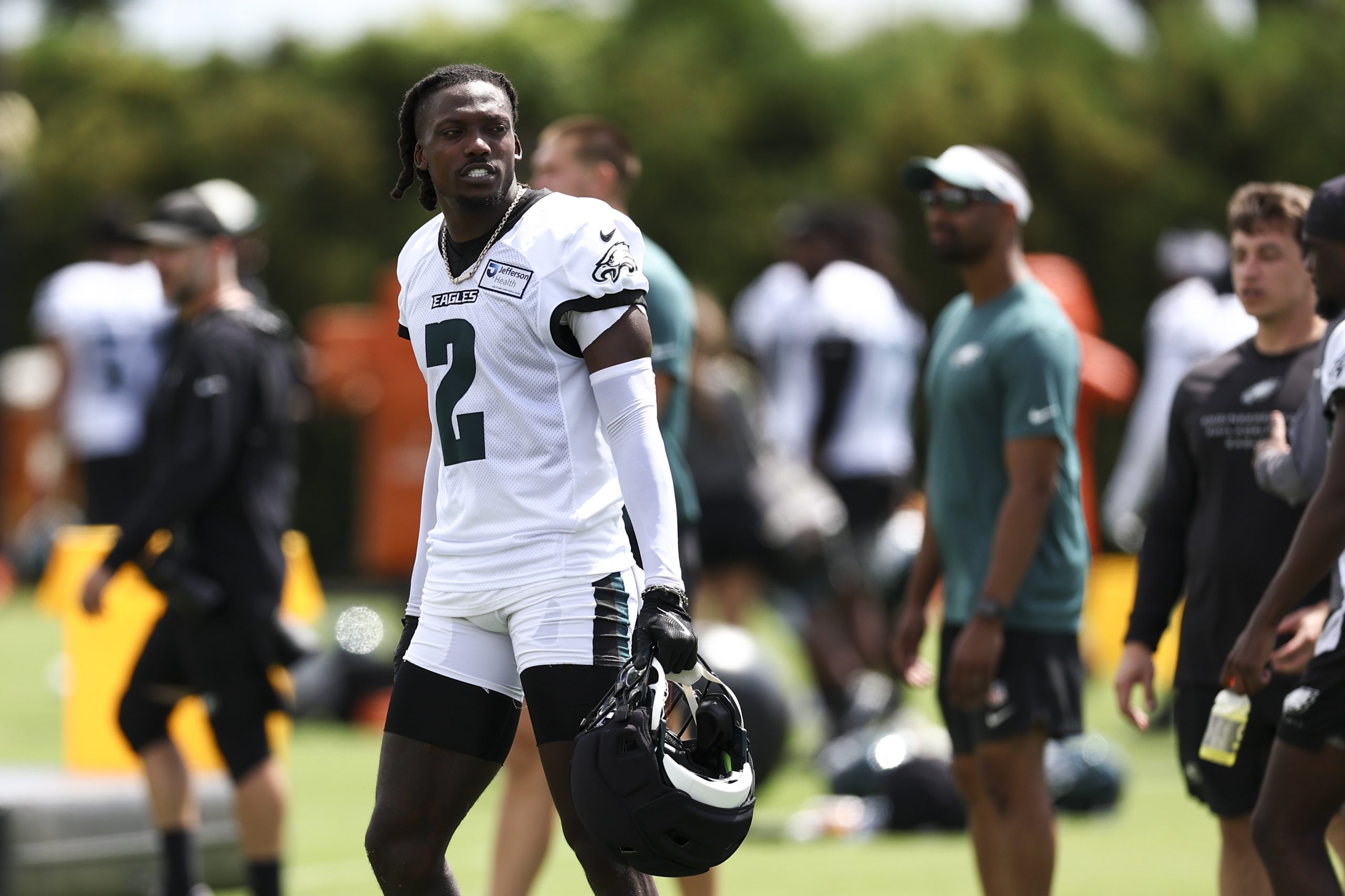
    The most notable thing about the latest round of Eagles’ press conferences was Vic Fangio’s cautious tone when asked about the two newcomers who will determine the ceiling of his defense.

    The first instance concerned Jonathan Greenard, whom the Eagles handed a four-year, $98 million contract extension after losing Jaelan Phillips to the Panthers. While the team has betrayed little concern regarding the pectoral strain that has sidelined the veteran defensive end since before training camp, Fangio didn’t go out of his way to reassure fans that Greenard will be ready for the season opener.

    “We aren’t going to see him for another couple of weeks, at least,” the defensive coordinator said last week.

    Your interpretation of that statement depends a lot on how you weigh the phrase, “at least.” Some might hear a coach who is timing Greenard’s return for the start of the week leading up to the Eagles’ Sept. 13 season opener against the Commanders. Others might instead train their angst on the uncertainty. Rarely does the phrase “at least” carry a hopeful connotation.

    Even less clear is where Fangio’s heart was in assessing new cornerback Riq Woolen. The Eagles’ signing of Woolen to a one-year, $12 million contract spoke volumes about their assessment of last year’s disappointing campaign. While the vast majority of the public attention has focused (rightly) on an offense that looked like a shadow of its previous year’s self, the Eagles clearly felt the same about the downgrade from Darius Slay to Adoree’ Jackson in the secondary. While $12 million is a small price to pay relative to the potential market worth of Woolen’s talent, it is also a lot more than Jackson was paid last season on a veteran minimum deal worth up to $5 million, per reports.

    General manager Howie Roseman consistently operates with the notion that potential salary cap dollars should be measured by how good you are at one position now vs. how much better you will become given expenditure X or Y. That logic precipitated the Eagles’ decision to sign Saquon Barkley to a contract that didn’t necessarily adhere to the current groupthink about running back value. The move to sign Woolen was an admission of how much better the Eagles think they would have been last year, and how much better they will be this year, with a legitimate outside cornerback to start opposite Quinyon Mitchell. That tells you all you need to know about Woolen’s importance to this team.

    “At times he can get a little lazy or sloppy with his technique and have a bad down or two, but he’s still showing everything that I think he can do,” Fangio said of Woolen. “He’s just got to get in such great shape and calloused to football that those don’t happen.”

    You could write off the comment as innocuous if it didn’t echo a lot of what came out of Seattle during the end of Woolen’s tenure there. One need spend only a day in the presence of Woolen to walk away convinced that Roseman and Fangio landed themselves a steal this offseason. The 26-year-old is as imposing a physical specimen as has ever played cornerback at a chiseled 6-foot-4 and 210 pounds with remarkable limb length. His All-Pro selection as a rookie in 2022 wasn’t a fluke.

    Riq Woolen was an All-Pro corner in 2022, but fell out of the Seahawks’ starting lineup last season.Monica Herndon / Staff Photographer

    At the same time, one would be foolish to completely discount what the market says when it values such a player for what the Eagles were able to sign him. Woolen is coming off a season in which the eventual Super Bowl champs jettisoned him from the starting lineup and then, after said Super Bowl victory, let him walk as a free agent for a pittance.

    Woolen is as big of a wild card as exists on the Eagles roster. That’s not a criticism. What makes his range of outcomes so broad is the high-end potential. Woolen at his best has been more of an impact player than Slay was at the tail end of his Eagles career, when he was good enough to start for a dominant Super Bowl defense. The Eagles are coming off a season in which they allowed an opposing receiver to gain 99 or more yards in five of their first seven games. That CeeDee Lamb, Puka Nacua, Courtland Sutton, Emeka Egbuka, and Jordan Addison were all able to accomplish the feat is even more remarkable given the level Mitchell played at last season.

    Greenard factors in here, too. The Eagles were desperate enough on the edge last season that Brandon Graham came out of retirement to become a true value add. The acquisition of Phillips at the trade deadline was a massive stabilizer, particularly defending the run. The Eagles defense was still one of the best units in the NFL. But their playoff loss to the 49ers was a microcosm of the season. That is, a game that was decided by a handful of plays that the 2025 defense was not in the habit of allowing.

    There are lots of reasons to think this year’s Eagles will be closer to 2025, even given the questions about Woolen and Greenard. Their decision to hand Jalen Carter a massive contract extension is a good indication in their confidence that the fourth-year defensive tackle will be back to his dominant self after some midseason shoulder troubles. Edge Jalyx Hunt looks poised to take another big leap forward. Mitchell and Cooper DeJean are still in the exponential growth phases of their careers.

    That said, in today’s NFL, a team is only as good as its weakest link, particularly when a weak link in the secondary is paired with a less-than-elite pass rush.

    There is no need to raise alarms with either Greenard or Woolen. Roseman’s recent decision-making has earned him the benefit of the doubt. Fangio’s first two years have shown his brilliance in making things work as the season unfolds. The schedule sets up nicely in that regard.

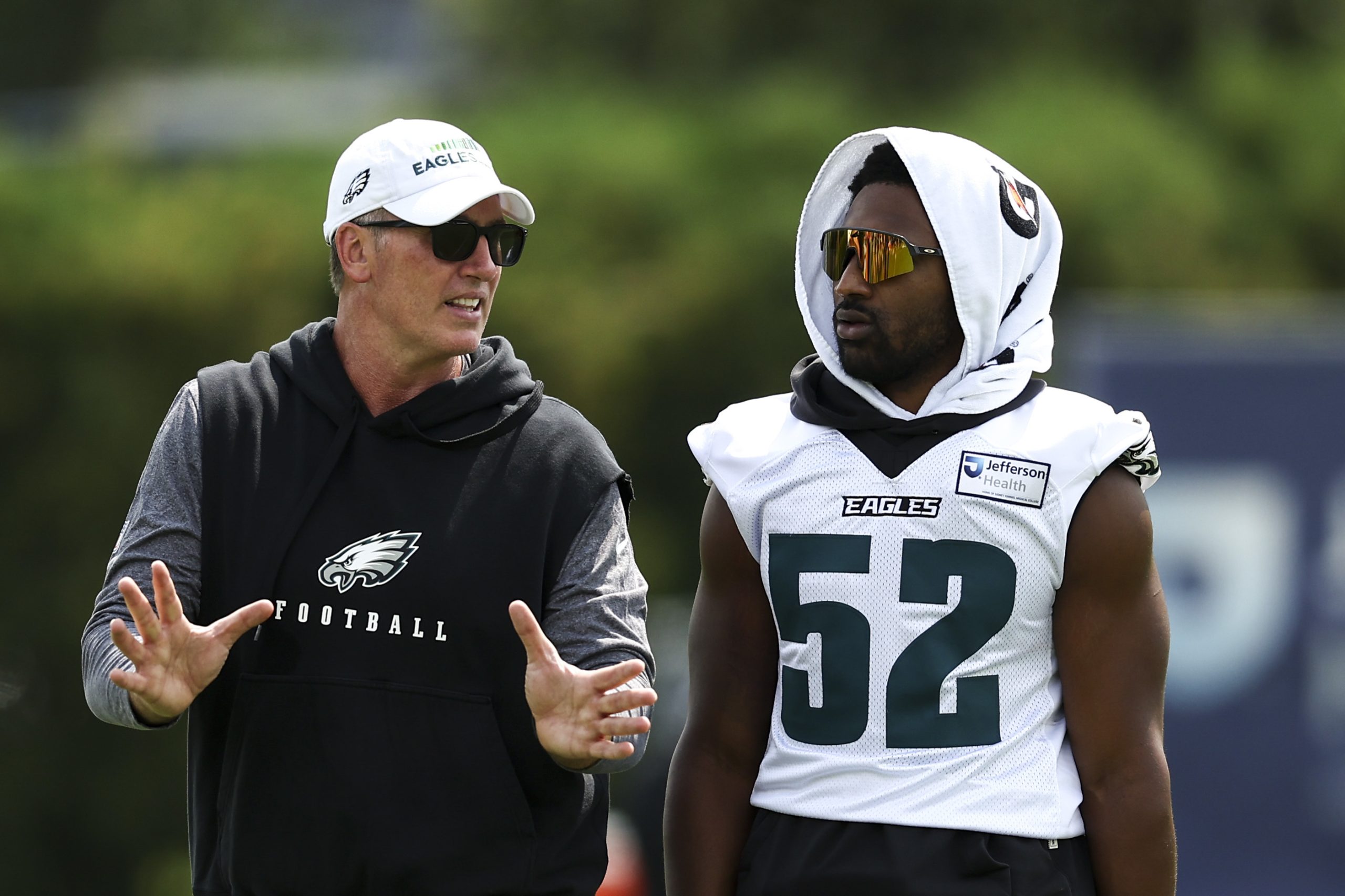
    Eagles defensive ends/outside linebackers coach Jeremiah Washburn (left) talks with edge rusher Jonathan Greenard, who has not yet practiced since joining the team in a trade.Monica Herndon / Staff Photographer

    The Commanders will enter the season with a new offensive coordinator and a quarterback who will have played just five games in the previous calendar year. They could also potentially have a new left tackle, after five-time Pro Bowler Laremy Tunsil suffered a triceps tear in practice last week.

    Washington has done surprisingly little to build on Jayden Daniels’ promising rookie season in 2024. The last Commanders receiver besides Terry McLaurin to gain 800 or more yards in a season was Pierre Garçon, who did it in 2016, three years before the Commanders drafted McLaurin. There are high school graduates who weren’t born when Garçon was a rookie. Newly signed Stefon Diggs still carries name value, and he is coming off a 1,000-yard season with the Patriots. But there is a reason the 33-year-old was available until the last moment and only then landed a contract with slightly more of a one-year guarantee than Juaun Jennings landed to be the Vikings’ third receiver.

    In Week 2, the Eagles travel to Tennessee, where they’ll face another new coaching regime. Titans offensive coordinator Brian Daboll inspired little fear in the Eagles during his tenure with the Giants. This time, he has even less talent, with quarterback Cam Ward entering his sophomore season as likely to get Josh Rosen’ed as to get a contract extension down the road.

    The immediate schedule means the Eagles defense will have a comfortable margin for error while easing into 2026. Granted, there are few unofficial bye weeks in the NFL. But the Eagles’ opening weeks are about as favorable as a team can hope when coming off an 11-6 season. They opened last season at home against the Cowboys and faced the Rams sandwiched around a road Super Bowl rematch in Kansas City. Two years ago brought the Packers in Brazil followed by the Falcons — maybe not a gauntlet, but a couple of teams with enough talent to rack up 400 or more yards of offense against an early-season defense.

    Given the health questions about Greenard and uncertainty inherent in Woolen, Fangio could need another few weeks of runway before his defense reaches its full stride. But the upside is immense, and Greenard and Woolen are two of the biggest reasons to bet on the Eagles reaching their potential. Perhaps Fangio’s understanding of this is the real source of his caution.

  • The Phillies’ playoff chances are complicated by one of MLB’s toughest remaining schedules

    The Phillies’ playoff chances are complicated by one of MLB’s toughest remaining schedules

    The biggest reason to wonder about the Phillies’ playoff chances isn’t their pitching or the heart of their lineup.

    It’s their schedule.

    Only five teams in the majors will play a tougher slate than the one the Phillies face from here on out. Of their 37 remaining games, only 12 will come against teams that entered Sunday with a losing record. The Phillies have won about 60.5% of their games against losing teams. Even if they take two of three in each of those four series, they would need to go 15-10 against winning teams in order to reach 90 wins. They are 23-30 against such teams.

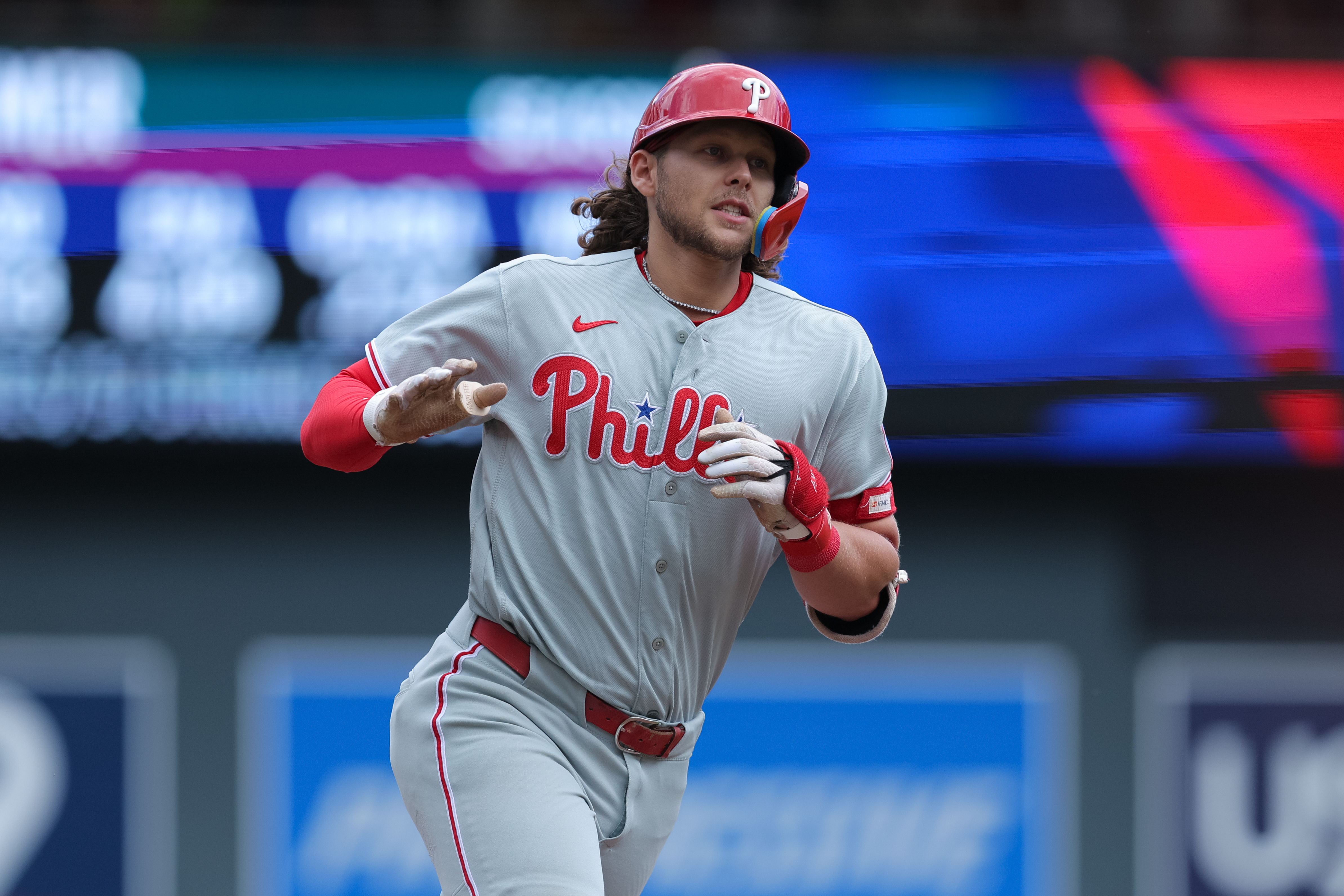
    Maybe it’s a stretch to say that Alec Bohm saved the Phillies’ season when he hit a three-run home run in the eighth inning to lift them to a 7-5 win over the Twins on Sunday. But they are at a point of their season when they desperately need to stack up wins. At the very least, Bohm’s blast put them back on the safer side of a daunting bit of math.

    Alec Bohm hit a three-run homer against the Twins on Sunday.Bailey Hillesheim

    No team in baseball history has ever won a World Series after losing more than 42 of its final 81 games. The Phillies are now 22-22 since the midpoint of their schedule. If they maintain their current winning pace against both winning and losing teams, they would finish the season with 20 losses in their last 37 games, which would give them 42 losses in their last 81 games.

    The Phillies face two issues here. The first is making the playoffs. They had a 65% chance to do so heading into Sunday’s game against the Twins. They are three games up on the Marlins and 3½ games up on the Cardinals. Both of those teams have tougher schedules than the Phillies. Except, both of those teams are in town this week for three-game series at Citizens Bank Park. The Cardinals took two of three from the Phillies last week. The Marlins swept them three weeks ago.

    Long story short, there’s a decent chance that this week ends up deciding the Phillies’ fate. Win both series, and suddenly their cushion is four games on Miami and 4.5 on St. Louis with 31 to play. The flip side is perilous. Lose four of six, and suddenly the Phillies have lost ground on the competition with 13 of their remaining 31 games coming against the Rays, Braves and Brewers, who have the three best records in the majors. Not to mention a three-game series in Arizona against the Diamondbacks, who are 21-12 in their last 33 and who entered Sunday tied with the Phillies and Padres for the last two NL wild-card spots.

    The second issue is a more abstract one. Only five teams in big league history have advanced to the World Series after losing more than half of their final 81 games. The Diamondbacks did it in 2023, when they lost 45 of 81 to finish the regular season but ended up beating the Phillies in the NLCS. That year, Arizona lost in the World Series to the Rangers, who were 41-40 in their last 81. It helps to be playing well this time of year. You are who you are most recently.

    The Phillies are who they’ve been all season, save that torrid stretch that had everybody ready to give Don Mattingly a seven-year contract extension. Since June 27, they have one winning streak longer than two games. They haven’t won more than four in a row since May 18, and they haven’t won more than five in a row all season. Of the nine NL teams that entered Sunday with a winning record, only the Phillies do not have multiple winning streaks of five-plus games.

    The time is now. Jonathan Bowlan needs to be a big part of it, too. He picked up a hold on Sunday, pitching a scoreless eighth inning two days after recording his first save of the season. The right-hander has allowed three runs in 16⅓ innings with 18 strikeouts and four walks since moving into a consistent high-leverage role.

    The Phillies need to look at the next month and a half as an opportunity. In their last 41 games, they’ve won exactly three games against teams that had a winning record at the time. They haven’t won a series against such a team since taking three of four from the Nationals in late June. They’ve lost nine of their last 12 against teams that had a winning record as of Sunday.

    They are going to play a lot of teams that happen to be the kinds of teams they need to beat. It starts on Monday.

  • The Sixers’ schedule release and the new challenge they face in a radically changing NBA

    The Sixers’ schedule release and the new challenge they face in a radically changing NBA

    The problem with most conspiracy theories is they assume a level of intelligence, cooperation, discretion, and selflessness that is completely at odds with the track record of large groups of humans. There may only be five people on planet Earth who possess the requisite skill set, let alone five who share a motivation to plot some nefarious deed.

    That being said …

    If you are the kind of person who tends to believe in dark, mysterious forces working in concert, you might want to give a little thought to the shifts in the NBA’s competitive environment over the last couple of years.

    The Luka Doncic and Jaylen Brown trades have plenty in common. Both were traded from teams less than two years removed from an NBA Finals appearance. Both for a pittance, and both to conference rivals. Of far greater significance is their dual place among the prime movers of a league that could be in the beginning stages of a renaissance.

    The Lakers’ acquisition of Doncic two years ago not only positioned a marquee franchise for a seamless transition into life after LeBron James, it effectively, if improbably, positioned the Mavericks to land the No. 1 overall draft pick that they used to select a generational talent in Cooper Flagg. Meanwhile, the Sixers’ acquisition of Brown was effectively coupled with the acquisition of James, whose minimum contract free-agent deal with the Sixers completed the organization’s wild and near-instant transformation from borderline irrelevance to legitimate title contender.

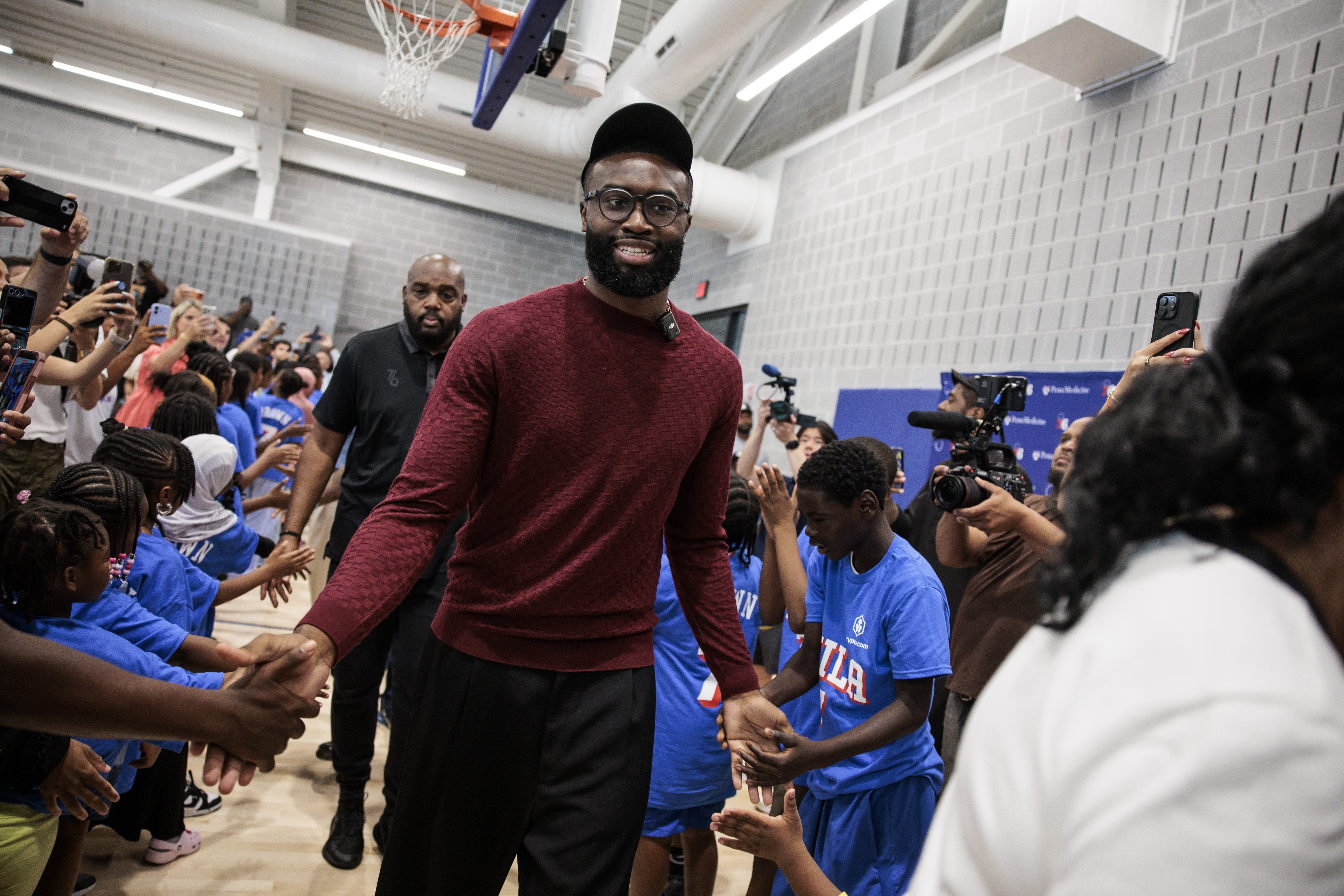
    New Sixer Jaylen Brown arrives for his introductory press conference at the Francis Myers Recreation Center on Aug. 6.Monica Herndon / Staff Photographer

    Doncic and Brown are just two of the deals that have dramatically flattened the NBA’s competitive landscape heading into the 2026-27 season. From perennial MVP finalist Giannis Antetokounmpo’s trade to the Heat to the Raptors acquisition of Kawhi Leonard to Flagg and Victor Wembanyama’s presence in the West, the league is suddenly chock full of potential counterweights to its behemoths in New York, Oklahoma City, and Boston. The league’s release of its schedule on Thursday crystalized this. It also crystalized the challenge that will confront the Sixers as they embark on a season unlike any they’ve experienced prior. In fact, one need only look at the first 10 days of the season.

    Five of the Sixers’ first six games will come against the Knicks (twice), Cavs, Pistons and Pacers. That group includes the last two teams to advance to the NBA Finals from the Eastern Conference, plus two teams who have won 60+ games in one of the last two regular seasons.

    The schedule is full of these sorts of stretches. A month into the season, the Sixers will have played just four games against teams that didn’t win a first-round playoff series in either of the last two seasons. Mid-January brings Anthony Edwards’ Timberwolves to Philadelphia before a home/road back-to-back against the Hawks and Pacers, followed by a trip to Boston two days later. Really, you can pick any two or three-week stretch and find a preponderance of must-see matchups. On paper, at least.

    This is a good thing. For the NBA. For its fans. For commissioner Adam Silver, who has grown increasingly proactive in both word and deed regarding the on-court product during the regular season. It’s not premature to say that we are already seeing the impact of the NBA’s second apron penalties and its soon-to-be-instituted lottery reforms. Both played a role in the Sixers’ acquisition of Brown, whom they acquired for a package of draft picks that included a 2028 Clippers first-rounder that gained immense value from the new draft odds.

    This is also a good thing for the Sixers. Not just from an entertainment standpoint. After a six-year stretch where every NBA Finals featured either the Heat against the Spurs or the Warriors against the Cavs, eight different teams have appeared in the last four Finals. The Celtics are the only team to appear in more than one NBA Finals since 2022. When the league released its schedule on Thursday afternoon, half its teams had a Vegas win total over/under of at least 44.5. A healthy percentage of those teams will enter the season with a valid argument as a title contender. The Sixers are one of those teams.

    Whether they reach those heights will depend on plenty of factors even beyond their obvious health and age-related concerns. Basketball is a sport where rhythm, synergy and on-court chemistry play a huge role in differentiating talented teams from each other. The gauntlet of Eastern Conference rivals the Sixers will face in their first week-and-a-half only underscores the time crunch they’ll face once all of the new faces are on the court together in training camp.

    One way or another, it will be fascinating to watch.

  • Two (deep and arguably arcane) underrated numbers that matter for the Eagles in 2026

    Two (deep and arguably arcane) underrated numbers that matter for the Eagles in 2026

    A couple of numbers that have jumped out at me during the number-crunching portion of my annual Eagles/NFL cram sessions …

    When Jalen Carter was on the field, the Eagles were a top–five run defense. When he was off the field, they were a bottom–five run defense.

    What makes a defensive tackle worth $40 million per year? Well, have a look at the Eagles’ first-and-10 rushing splits with and without Carter.

    In 107 snaps without him, opponents averaged 5.1 rushing yards per attempt. Only the Dolphins and Bengals allowed more yards per carry on first-and-10 plays.

    On 130 snaps with Carter on the field, opponents averaged just 4.08 yards per carry. Only six teams in the NFL allowed a lower average on first-and-10 plays.

    Carter’s impact goes deeper than the yards an offense fails to gain. There are also the yards an offense doesn’t even try to gain. Last season, opponents ran the ball on nearly 60% of the snaps for which Carter was on the sideline. When he was on the field, they ran the ball on 52% of their snaps (on first-and-10).

    Keep in mind, 2025 was a season when Carter was less than 100% for a stretch.

    One of the underrated storylines of last season was the overall struggle of the Eagles’ run defense. I use that term relatively. In 2024, Fangio’s unit was top-10 in both total yards and yards per carry. In 2025, they ranked 22nd and 20th, respectively.

    Quantifying run defense is an imperfect science, of course. Both total yardage and yards per carry are heavily influenced by game situation. Which is why I chose first-and-10 as a sample rather than overall numbers for the Carter on/off splits. That being said, there was nothing situational about the Bears’ 281 rushing yards on Black Friday, after which Carter decided to undergo surgical treatment on his shoulders. The Chargers ran for 169 yards the following week.

    Jalen Carter (center) will be key in the Eagles’ run defense in 2026.Yong Kim / Staff Photographer

    Carter aside, the Eagles clearly suffered from the loss of Milton Williams last season. Their on/off splits with and without Carter were far less drastic the two seasons prior. There are two big reasons to hope that the Eagles have a better run D this season. One, Carter will be healthier and more available. Two, Jonathan Greenard will be here for the whole season. Jaelan Phillips was excellent against the run, but he was only here post-trade deadline. The flip side is this: The Eagles were at their best with Phillips, and they will also be attempting to replace a starting safety in Reed Blankenship and a starting linebacker in Nakobe Dean. One way or another, it will be a big subplot to this season. Carter, as always, will play the biggest and most important role.

    DeVonta Smith led the Eagles with 19 first–down catches on third down. He led the NFL in yards per catch on those conversions.

    Here’s a list of the wide receivers who have finished a season averaging 20 yards per reception on at least 40 third-down targets over the last three seasons.

    • Nico Collins
    • Puka Nacua
    • Tyreek Hill
    • DeVonta Smith

    Those first three players had stretches where they have been on the short list for best receivers in the game. Smith has a fine reputation. The NFL is well aware of how good he is. But you’ll rarely hear him mentioned among that small group of WR1s who create their own receptions and dictate opponents’ game plans.

    The deeper you look under the hood, though, the more favorably Smith’s numbers compare to the best of the best.

    Eagles wide receiver DeVonta Smith led the team in third down catches with 19 last season.Yong Kim / Staff Photographer

    Last year, he ranked 11th in the NFL in Tough Catch Percentage, a metric that I totally ham-and-egged using the nflfastR data package. It measures a receiver’s share of contested catches and receptions created (as determined by For the Numbers Fantasy) and catches in traffic (as determined by me, using YAC and tackling data, among other variables). Here are the other players who rank ahead and just behind Smith: Courtland Sutton, Jaxon Smith-Njigba, A.J. Brown, Nacua, Amon-Ra St. Brown, Trey McBride, Collins, Justin Jefferson, George Pickens, Chris Olave, and Ja’Marr Chase. Whatever the metric signifies in abstract, those players are pretty good company to keep.

    The presence of Brown on that list is significant, of course. Few players in the NFL have performed better in true 50-50 (or worse) situations than Brown has since joining the Eagles. Therein lies the real question about the Eagles’ receiving corps. It isn’t whether Smith can replace Brown as Jalen Hurts’ WR1. The question is whether the guys behind Smith can be anything close to the player he was as WR2. It’s not coincidence that the Eagles traded up for a receiver in Makai Lemon whose most impressive tape is his physicality and consistency in traffic. Hurts needs him on the field, sooner rather than later.

  • Don Mattingly needs to figure out his bullpen. Are there any answers?

    Don Mattingly needs to figure out his bullpen. Are there any answers?

    It is officially audition season in the Phillies’ bullpen.

    Are there any candidates?

    It is a daunting question. It is also the question that will end up defining Don Mattingly’s stint as interim manager.

    The Phillies somehow managed to sneak out a 7-6 win over the Blue Jays on Sunday, but it took them 12 innings, and they made a whole lot of not-so-good memories along the way.

    At the top of that list was Orion Kerkering’s latest implosion. This one occurred in the eighth inning, almost immediately after Jesús Luzardo put a bow on one of the finer starting pitching performances you’ll see. The Phillies lefty looked like he did last postseason: seven innings, five baserunners, 12 strikeouts, two runs. Most importantly, he held a 5-2 lead. It would have taken a drastic turn of events to dampen the buzz at Citizens Bank Park. The Phillies bullpen rose to the challenge.

    Sunday was Orion Kerkering’s fourth outing allowing two-plus runs in his last 20 appearancesMonica Herndon / Staff Photographer

    Two batters into the eighth, Kerkering was one out away from delivering a three-run lead to Jhoan Duran in the ninth. Four batters later, the game was tied. There was some bad luck involved, with Ernie Clement’s RBI double the only extra-base hit. Still.

    This was Kerkering’s fourth outing allowing two-plus runs in his last 20 appearances. Opposing batters are now reaching base at a .360 clip against him in high-leverage situations. Only five relievers have averaged as many pitches per plate appearance (4.17) in as many or more innings (45⅓) as Kerkering. The same is true of José Alvarado, who is averaging 4.18 pitches per PA in 43⅔ innings.

    In fact, everything you can say of Kerkering is true of Alvarado. On Saturday, the lefty blew a save situation that sunk the Phillies against Toronto. He has allowed multiple runs in seven of his last 28 outings. The peripheral numbers have begun to catch up to his 5.77 ERA. In his last 13 games, he has 13 strikeouts against 10 walks/HBPs.

    Mattingly needs to figure this thing out. If you believe the odds, the Phillies remain in the driver’s seat for one of the six NL playoff spots up for grabs. If you believe your eyes, it won’t matter if they get to October.

    Even if righthander Jonathan Bowlan continues to perform in his new high-leverage role, that still leaves Mattingly one dependable arm short of avoiding offseason ulcer surgery.

    Tim Mayza isn’t an option. Before Sunday’s scoreless inning, the journeyman lefty had faced just 48 batters in high-leverage situations over the last three seasons. Nearly half had reached base, including 11 of 27 in 2026.

    Caleb Kilian might not be an option after suffering an oblique injury at some point in the top of the 11th.

    “It didn’t look good,” Mattingly said afterward.

    The Phillies’ one hope might be newly acquired lefty Brooks Raley, who pitched a scoreless 11th on Sunday. Raley last pitched in the postseason in 2022 while with the Rays. He retired three of the five batters he faced and did not allow a run in extra innings of a tie game.

    Good luck finding any relevance there. Same goes for his earlier postseason action with Houston. Four of the seven earned runs he allowed came in a couple of outings where the Astros were down six. Otherwise, he has allowed one earned run in 8⅔ innings since the start of the 2020 ALCS. That’s not much of a sample upon which to render judgment.

    But that’s more than we can say for Kerkering. His sample size is robust enough to leave little doubt that Mattingly can’t continue to factor him into his high-leverage decision-making.

    The Phillies have plenty of other headaches. Bryce Harper and Kyle Schwarber combined to reach base seven times on Sunday. They combined to score two runs, both of them driven in by Schwarber himself. It’s a good thing that Schwarber snapped the second-longest homerless streak of his career, and that he did it exactly how you’d expect.

    But Sunday was another answer to the question that so many had asked over the previous 17 games. What’s wrong with Schwarber? Well, what’s wrong is that the Phillies can rarely afford for him to not hit home runs. The problem wasn’t that he hadn’t hit a home run in over two weeks. The problem was that it was so conspicuous.

    Kyle Schwarber hit two homers against the Blue Jays on Sunday.Monica Herndon / Staff Photographer

    Same goes for Harper. After striking out in the first inning, the Phillies’ new right fielder drew a walk in four of his last five plate appearances. Three of them came with less than two out. He reached second base once, on a double steal on a Luis Arraez strikeout. J.T. Realmuto struck out to end the inning. In the 11th, Harper drew a one-out walk to load the bases, then watched right fielder Nathan Lukes gun down pinch-runner Garrett Stubbs at the plate on an Arraez fly-out to end the inning. The lack of punch in the middle of the order is nothing new.

    Compounding matters are the defensive concerns in the wake of the Phillies’ attempt to accommodate their deficiencies in the middle of the order. Bryson Stott has been excellent at third base, and maybe that will ultimately make up for Harper in right field and Alec Bohm at first base. But Bohm was charged with another error on Sunday.

    Plenty of teams have won playoff series, even championships, with bullpens that looked as leaky as Mattingly’s does right now. One needn’t look any further than the 2023 Diamondbacks, who slopped it together well enough to overtake the Phillies in seven games in the NLCS. Baseball is a sport where the odds are overwhelmingly in the favor of even an average-to-below pitcher. It isn’t unreasonable to hope that those odds string themselves together in the right order in the postseason. But it is a much tougher ask when a pitcher is backed by a defense that gives away outs and a lineup that has all of the balance of a fat man on a seesaw.

    Mattingly’s challenge right now is to find out who his pros are, assuming he has any. Raley and Bowlan in the seventh and eighth isn’t how the Phillies would have hoped to be drawing it up at this stage of the game. The odds are hardly healthy that it will end up looking much better than what they’ve seen thus far. But they at least must look.

  • For the Sixers, ego concerns are secondary to Jaylen Brown and Joel Embiid’s fit on the court

    For the Sixers, ego concerns are secondary to Jaylen Brown and Joel Embiid’s fit on the court

    There are two sets of questions for these 76ers. Maybe it feels like that’s always been the case. Except that it hasn’t.

    The questions used to be: Will Joel Embiid be healthy? How often? To what extent? At what level of effectiveness? Nothing beyond these things mattered. Without Embiid, the Sixers weren’t a team you could even pretend to take seriously.

    Things aren’t what they used to be. With or without Embiid, the Sixers feel like they have a team that will have an identity. More than that, they feel like they have a team that will have a chance. If they didn’t make that clear when it traded for Jaylen Brown, they certainly did when they formally introduced him.

    The only things missing from Thursday’s press conference at Francis J. Myers Recreation Center in Southwest Philly were a marching band and a vice-presidential nominee. Upward of 100 people packed into the rows of plastic folding chairs that covered most of the width of the rec center’s indoor court and three-quarters of its length.

    In addition to the ownership group and most of the front office and Brown’s family and reporters from both Philly and Boston, there were cheerleaders and game day event staffers and security guards and a DJ and a gaggle of youth from the local community.

    New Sixer Jaylen Brown arrives for his introductory press conference at the Francis Myers Recreation Center on Thursday, Aug. 6, 2026 in Philadelphia.Monica Herndon / Staff Photographer

    While it was Brown who keenly requested that the event be held at a local rec center, the proceedings were just as much a show of force from the Sixers that left little room for doubt about the gravity they expect their newly acquired superstar to impart on the organization.

    “What an event,” Sixers first-year president of basketball operations Mike Gansey said. “It’s a special, special day to be a 76er.”

    While it would be easy to sit here and wonder about Embiid’s thoughts on all of the hoopla surrounding Brown, the much more relevant question concerns their coexistence on the court. Feelings? Sure. Everyone has them. But they require political capital to matter. For much of his tenure, the Sixers adhered to a doctrine of appeasement. Several different front offices and coaching staffs operated as if they lived in fear of a trade demand. Now, the Sixers couldn’t trade Embiid if they wanted. Both sides are surely aware of that.

    Besides, we’ve seen and heard plenty to suggest that Embiid is at the very least receptive to having another superstar on board. On Thursday, Brown said that the Sixers center reached out to him shortly after the trade went down. The team has an active group chat. Yes, LeBron James is a part of it.

    “Me and Joel have been friends throughout the years,” Brown said. “I love soccer, so we talk about that a lot. He reached out, too, when I got traded. He reached out the same day. I talked to him on the phone. I’m looking forward to earning everybody’s trust and respect and grinding and impacting winning. That’s what I’ve done my whole career, and that’s what I plan on doing here.”

    That’s all that counts in the chemistry department, for the time being. Even if Brown and Embiid have some aspects of their personalities that make you wonder about the occasional friction, the decade of close quarters competition between the two has generally revealed a healthy mutual respect. The two players shared a long one-on-one moment near midcourt in the aftermath of the Sixers’ win over the Celtics in Game 7 of April’s first-round playoff series. The two most important personality traits in any professional relationship are to mean well and to want to win the task at hand. Both Brown and Embiid have those fundamentals. That’s enough for now.

    The success and failure of the Brown-Embiid partnership will be determined by how well it works on the court. That, in turn, will determine whether the Sixers have the potential to become a truly great team. Brown and Embiid are both the ceiling and the floor. Tyrese Maxey and VJ Edgecombe both have the skill profile and willingness to adapt their roles to those around him. James did it even in his prime. Now, he is at an age where one generally accepts who he needs to be. The big question marks are Brown and Embiid.

    This isn’t a question of personality as much as it is a question of technical fit. There are a lot of parallels between Brown and Embiid, at least from a critical perspective. Shot selection, tunnel vision, decision-making, possession time, efficiency, pace in the half court, all have offered ample fodder for skeptics. Of the 20 players with a usage rate of at least 29% over the last eight seasons, only two have averaged fewer than four assists per game. You guessed it. Embiid and Brown.

    Whether or not these criticisms are prescient or fair, Brown and Embiid are clearly the two players who have the potential to clunk the operation up to a point of dysfunction. Don’t interpret that as a disservice to either. It’s just the style of their games. Whether the Sixers reach their ceiling will depend overwhelmingly on how well Brown and Embiid adapt their games to what optimizes the collective. Each has the ability to be the player they need to be. It is not a complicated thing. Drive when you have a lane. Shoot when you have a shot. Otherwise, keep the ball moving.

    “To win, you’ve got to be able to have sacrifice,” Brown said. “You’ve got to be able to have communication.”

    The presence of James as a connector and secondary playmaker should help. So, too, should the presence of Maxey and Edgecombe, two of the more likable, earnest and adaptable young players in the game. But if we are going to assume that Embiid’s outlook is as promising as the reports suggest, the Sixers’ fate will ultimately be determined by his synergy with Brown.

    It’s a great question to have.

  • Dave Dombrowski’s no good, very bad year (tenure?) continues at the MLB trade deadline

    At some point, Dave Dombrowski is going to have to start being right.

    A .333 batting average might get you into the Hall of Fame as a hitter, but it’s a recipe for disaster as an executive.

    To understand why the Phillies were where they were on Monday afternoon, you need only look at the president’s scorecard.

    Justin Crawford as the everyday centerfielder?

    Whiff.

    Adolis García as the everyday right fielder?

    Whiff.

    Andrew Painter as the No. 4 or No. 5 starter?

    Whiff.

    Brad Keller as the bridge to Jhoan Duran?

    Whiff.

    What does disaster look like? Well, let’s start with what it sounds like, because it sounds a lot like Dombrowski’s voice.

    “Our first goal is to make the playoffs,” the Phillies president said Monday, prefacing an answer about the potential postseason impact of a day headlined by the acquisition of free-agent-to-be Luis Arraez for fast-rising pitching prospect Ramon Marquez, “so, I hope we’re dealing with clubs in the postseason.”

    Luis Arraez has won three batting titles and is leading the National League with a .324 average going into Monday’s games.Jeff Chiu

    The words that followed don’t really matter. What matters is the qualification. I have written this plenty of times before. Hope is not strategy. It is a lack of options, one that is usually a function of decisions made prior.

    Dombrowski has been the man in charge of making the Phillies’ baseball decisions for five-and-a-half years. Five-and-a-half years into Andrew Friedman’s tenure with the Dodgers, he was en route to his first World Series win, after having already lost two, one in seven games. He’d salvaged Max Muncy from the scrap heap, signed Justin Turner and Chris Taylor, traded for Kiké Hernandez, and then Mookie Betts, drafted Will Smith, Andy Pages, and Walker Buehler. Just as important, he’d swung a series of minor league trades that helped lay the groundwork for the Dodgers’ recent acquisition of two-time defending AL Cy Young Award winner Tarik Skubal.

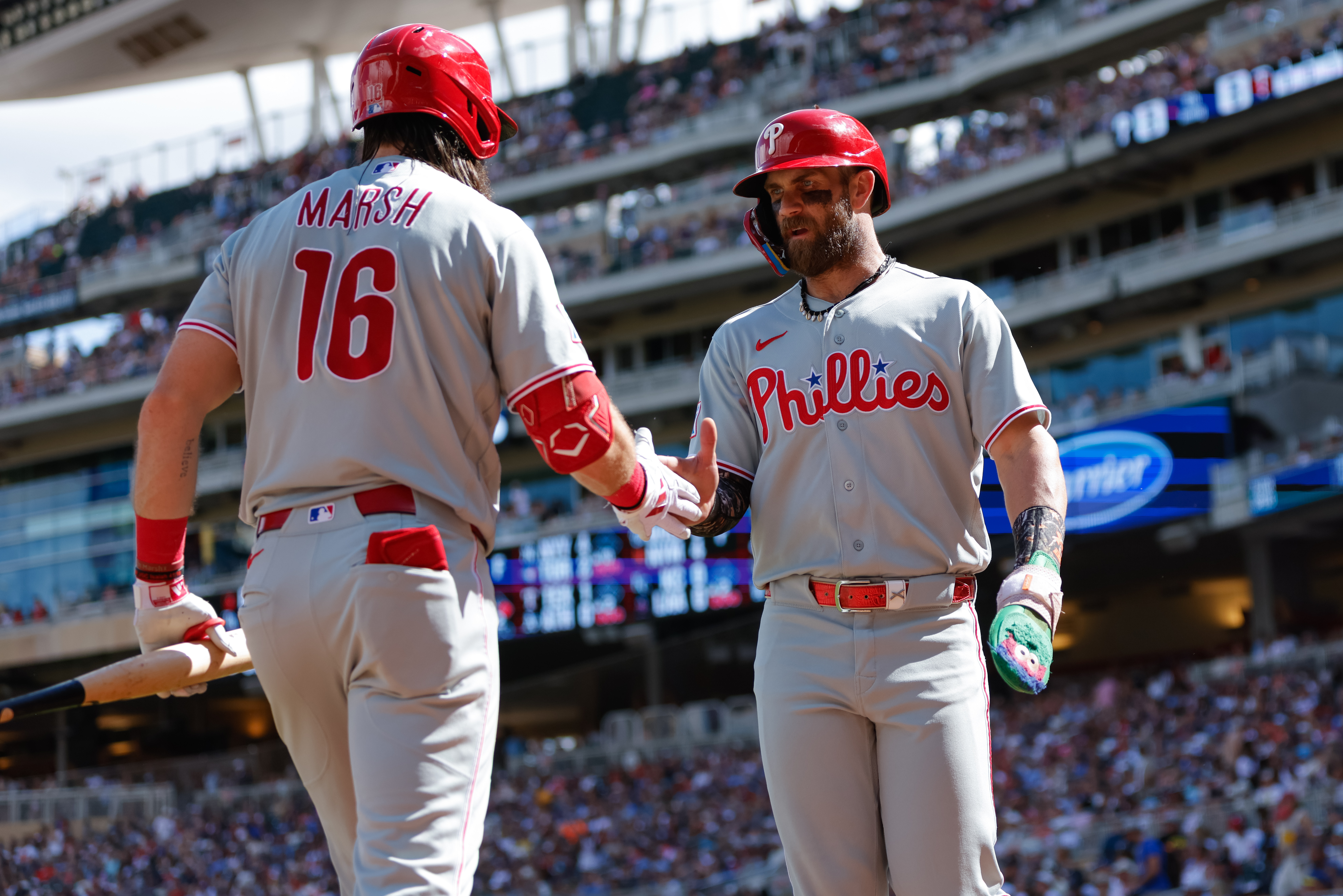
    Long story short, Dombrowski has reached a point where the problems he must solve are all of his own making. He did not draft Alec Bohm or Bryson Stott, but he did not pivot off them, either. He signed Trea Turner to a $300 million contract. He oversaw the move of Harper from right field to first base. Four years ago, he could have leveraged top prospect Logan O’Hoppe in a trade for a young, cost-controlled right-handed hitter, or a young, cost-controlled pitcher instead of Brandon Marsh. He did not lose the trade. But, in the grand scheme of things, given the circumstances, did he win it?

    The circumstances are this:

    It isn’t necessarily a disaster to ask three-fourths of your infield to change positions midseason so that two players can continue to play a position where they aren’t the best defensive option.

    As a result of the trade for Luis Arraez, Phillies first baseman Bryce Harper will move back to right field.Yong Kim / Staff Photographer

    It isn’t necessarily a disaster to move one of those players from the infield to the outfield, where he hasn’t played more than eight games since 2021. Nor is it to move another of those players (Stott) from second base to third base, a position where he has started just 12 games since high school.

    It isn’t even necessarily a disaster to do all of these things in order to add another lefty bat to a lineup that already suffered from a glut of them. Nor it is necessarily a disaster that the new left-handed bat is a top-of-the-order bat, and thus does little to remediate the lack of middle-of-the-order thump behind Harper and Kyle Schwarber.

    Don’t get me wrong. Any one of these things could be a disaster. One might argue that, in sum, the odds are strong that they will be a disaster. But these are perfectly defensible moves in isolation, and maybe even in sum. The Phillies can, did, and will continue to argue that Arraez is exactly the kind of bat their lineup needed. They can, did, and will continue to argue that he can play good enough second base to warrant the downgrade there along with the question marks at third base and in the outfield.

    The real disaster is that the Phillies found themselves in a predicament where they needed to make these moves. The real disaster is that these moves so preoccupied their energy and resources that they failed to address what were arguably their two greatest needs. The real disaster, above all else, is the desperation premium that the Phillies and Dombrowski were forced to pay just for the hope that it might somehow work.

    Marquez may never amount to anything as a major leaguer. As devastating as his changeup is — the minor league strikeout rate is absurd — the fastball and the health are what matter first and foremost. He is 20 years old. He is befuddling class-A hitters. But the success or failure of the Arraez trade isn’t just a matter of who Marquez will be as a major leaguer. It is also matter of who else the Phillies might have traded him for.

    This past offseason, Arraez signed a one-year contract with the Giants worth $12 million. That’s roughly $2 million more than the Phillies paid to Garcia, for whom nobody would be trading, even if healthy. They did the same thing last season, albeit at a far lower price, acquiring Harrison Bader to help replace free agent mediocrity Max Kepler. In fact, the Phillies have done the same thing every season of Dombrowski’s tenure, to one degree or another. They are the little boy at the leaking dam, their fingers outnumbered by the holes they must plug. It is losing math, even before you factor in the market.

    Second baseman Bryson Stott will move over to third to make room for Luis Arraez in the Phillies’ infield.Yong Kim / Staff Photographer

    Dombrowski and his minions will argue that they could not have simply signed Arraez for $12 million. They had Stott at second base, after all. And they had Bohm at third. They couldn’t move either because they had Turner at shortstop and Harper at first. And yet, here they are.

    For nearly six years they’ve been here. Each of the last three have been as obvious as the last. Bohm, Stott, J.T. Realmuto, Justin Crawford, Marsh, Garcia — none of them has underperformed any realistic expectations. And yet, here they are.

    “We added the top hitter in the league to the offense, a different type of hitter than we have,” Dombrowski said of Arraez. “Somebody that gets on base, sets the stage for some of our big guys, doesn’t strike out as often, who can do things with the bat.”

    These are helpful things, no doubt.

    More helpful is to build an organization that avails you with those things before the panic sets in.