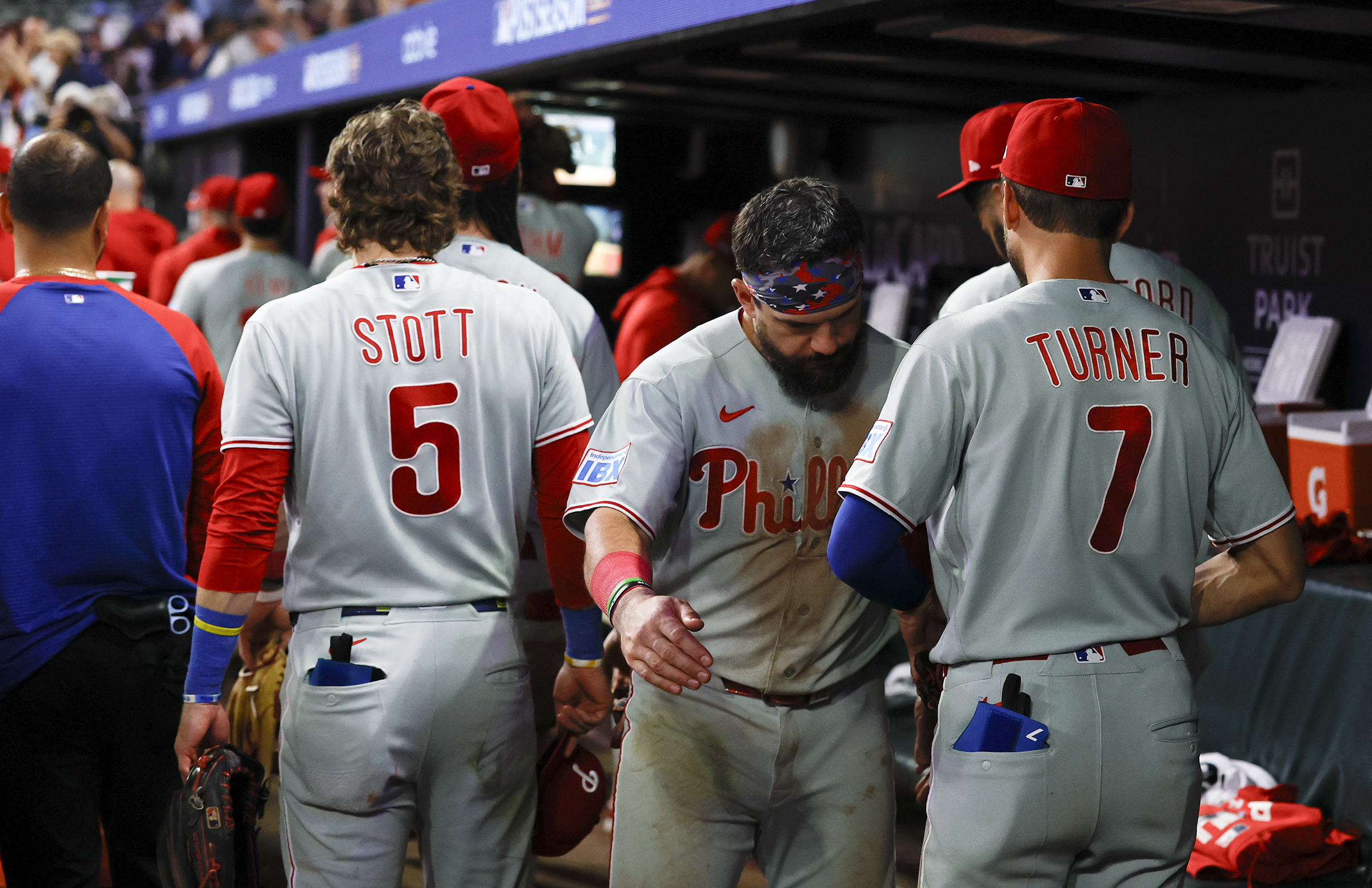
Author: David Murphy

  • The same structural failures cost the Phillies again in the playoffs. The onus falls on Dave Dombrowski

    The same structural failures cost the Phillies again in the playoffs. The onus falls on Dave Dombrowski

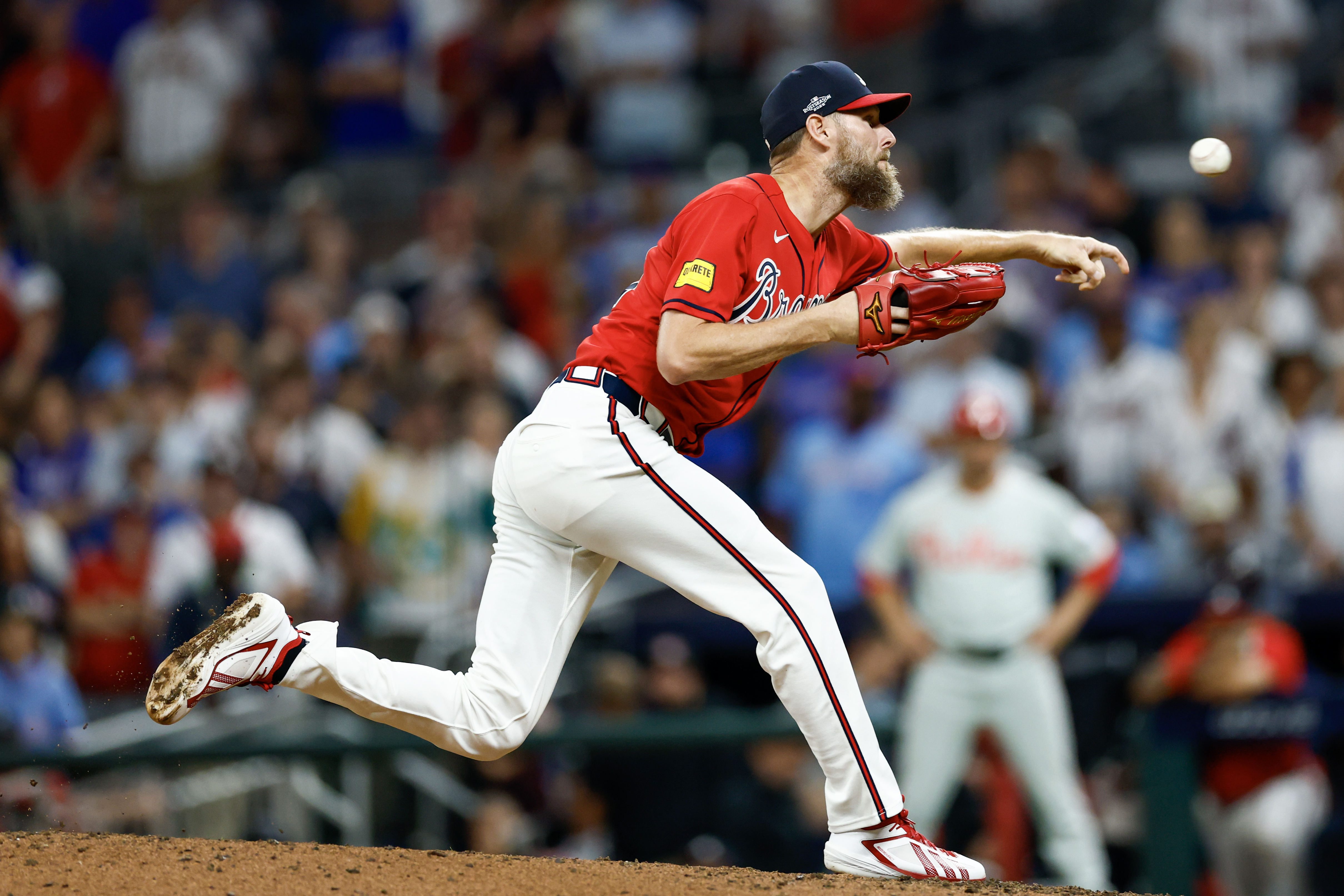
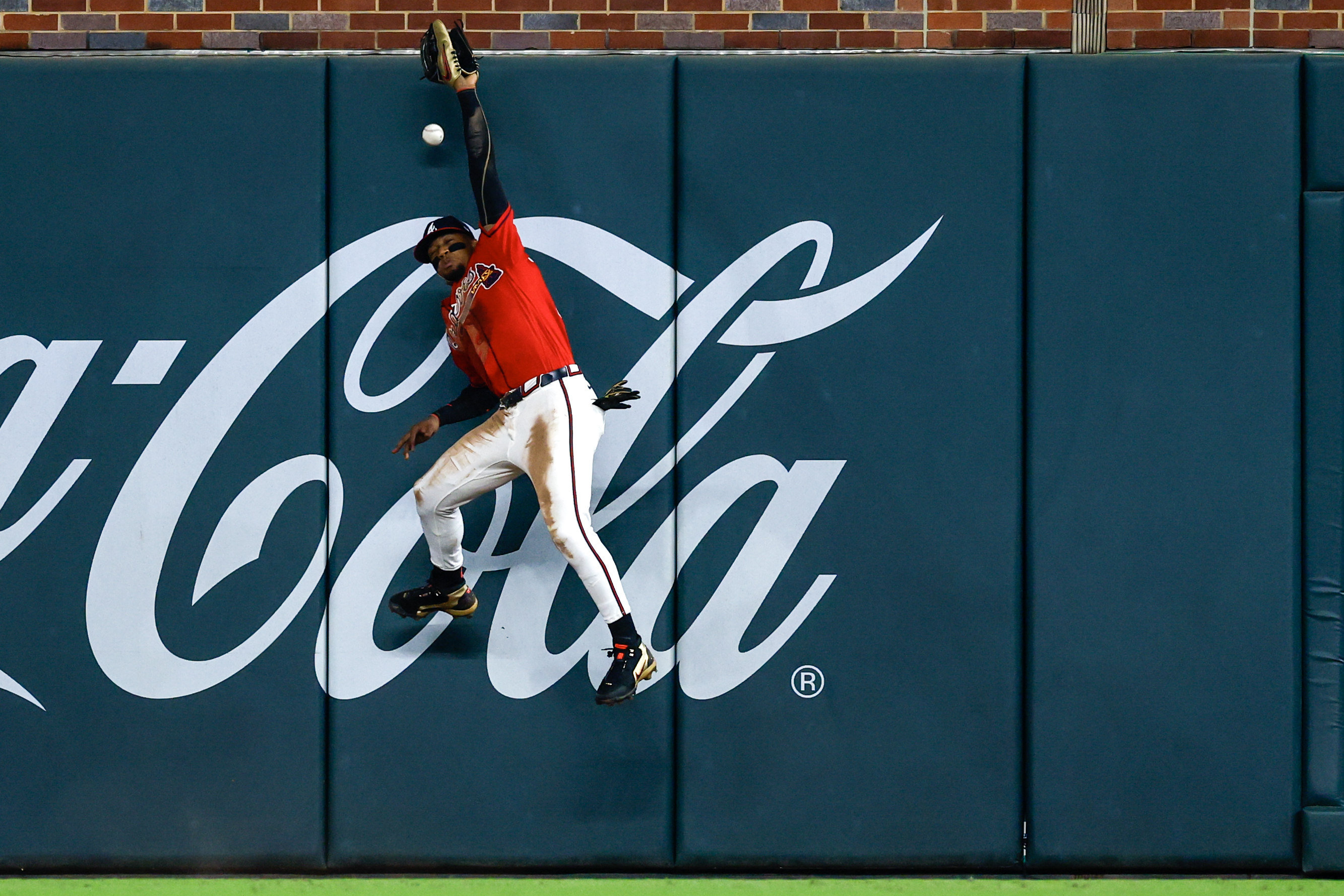
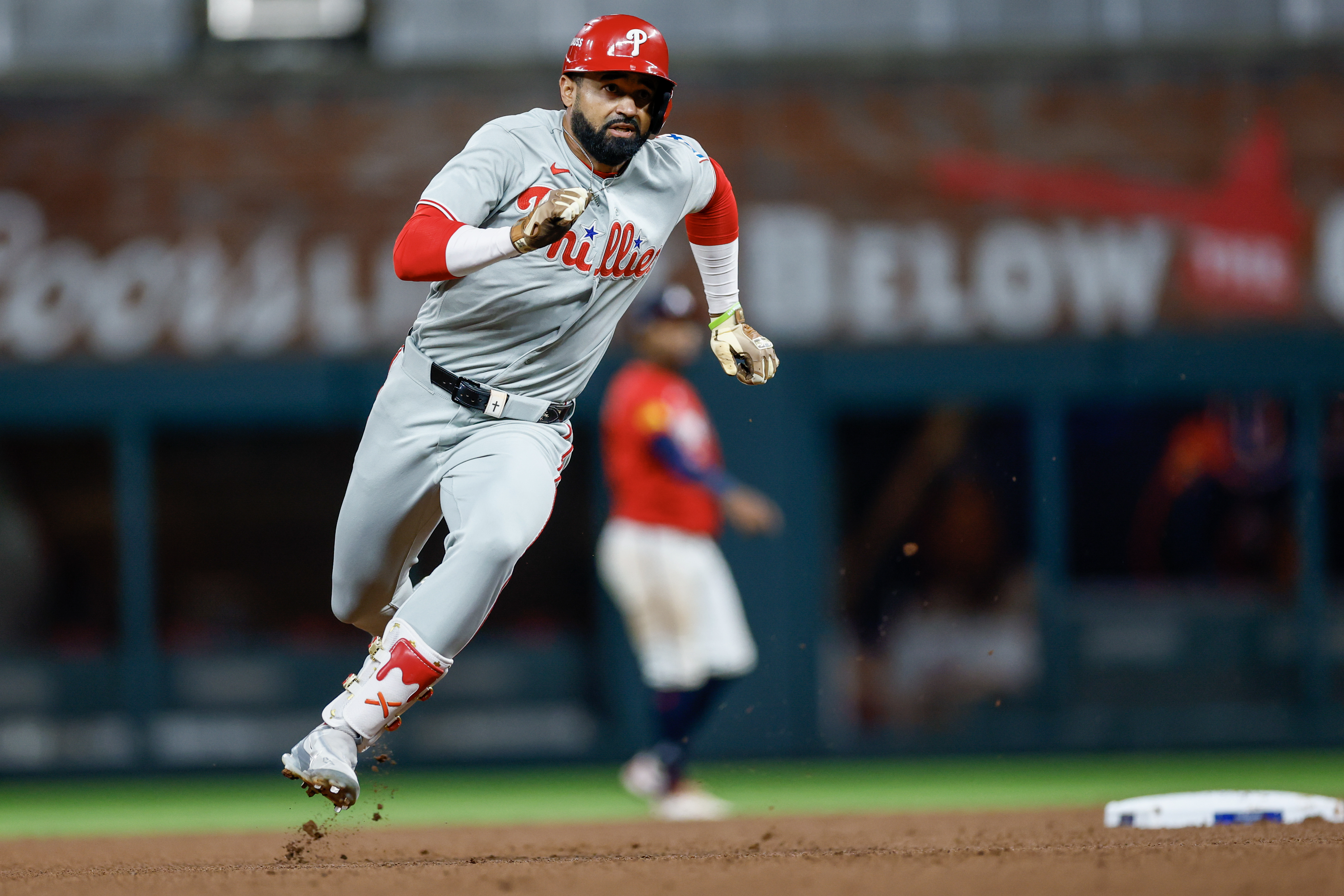
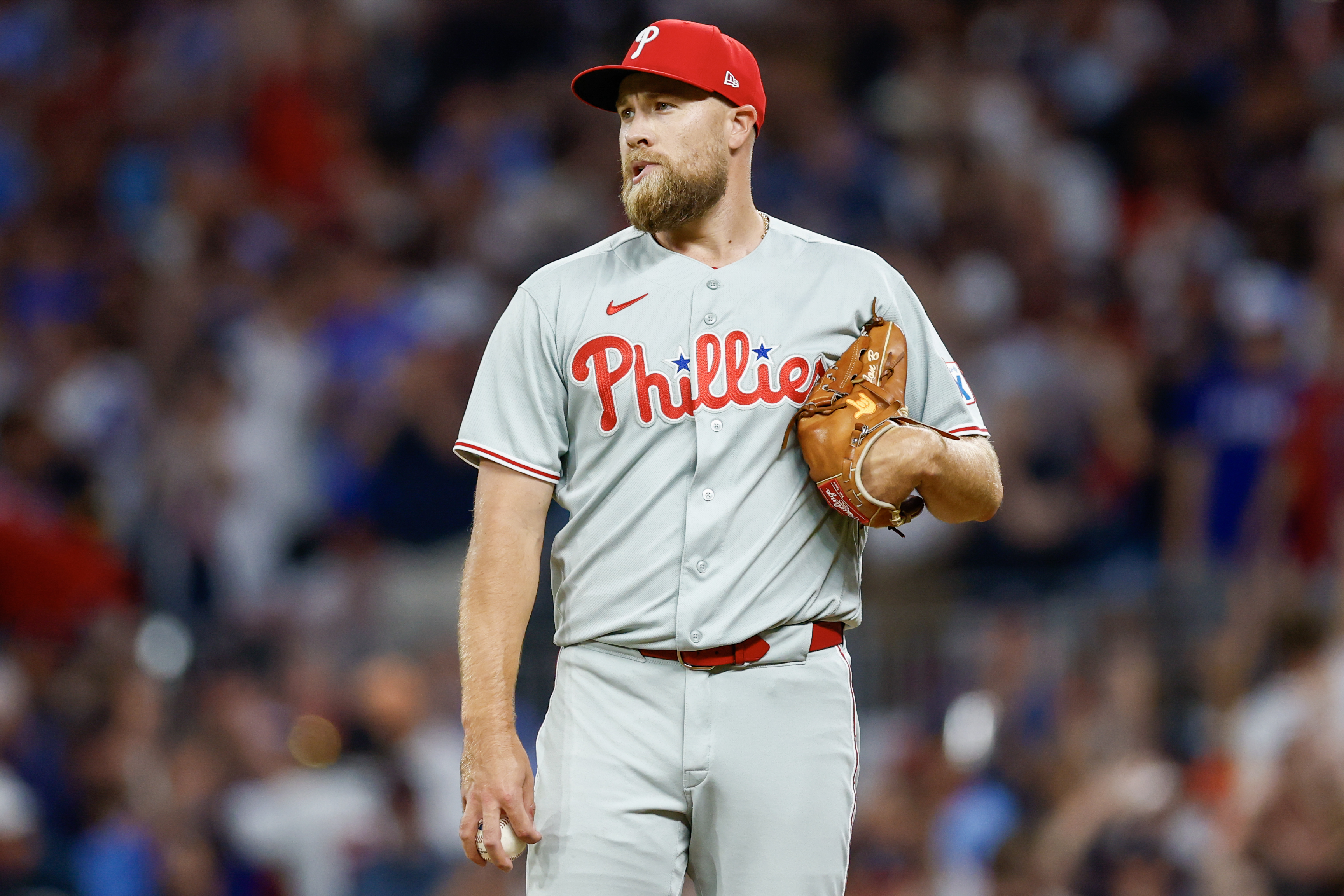
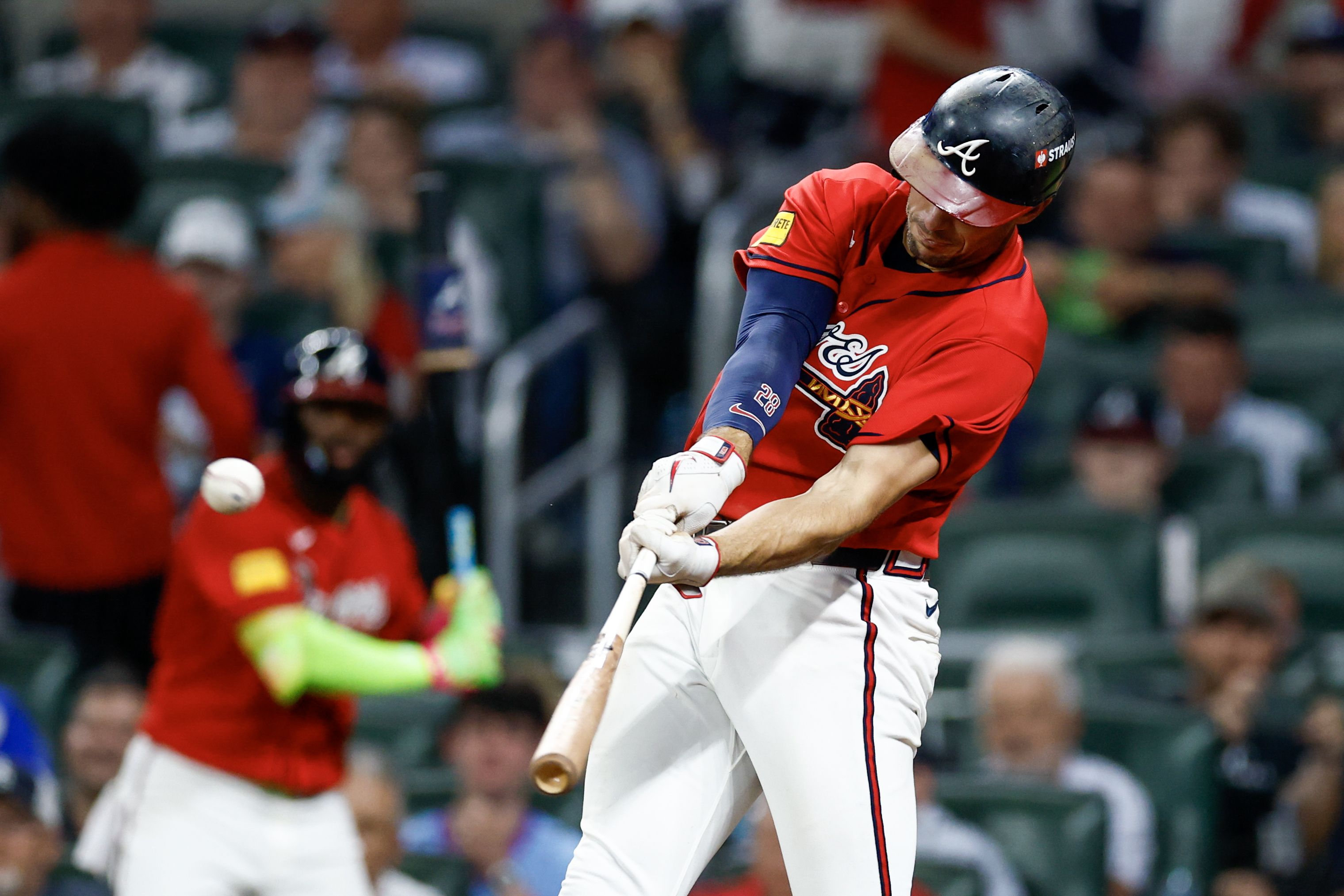
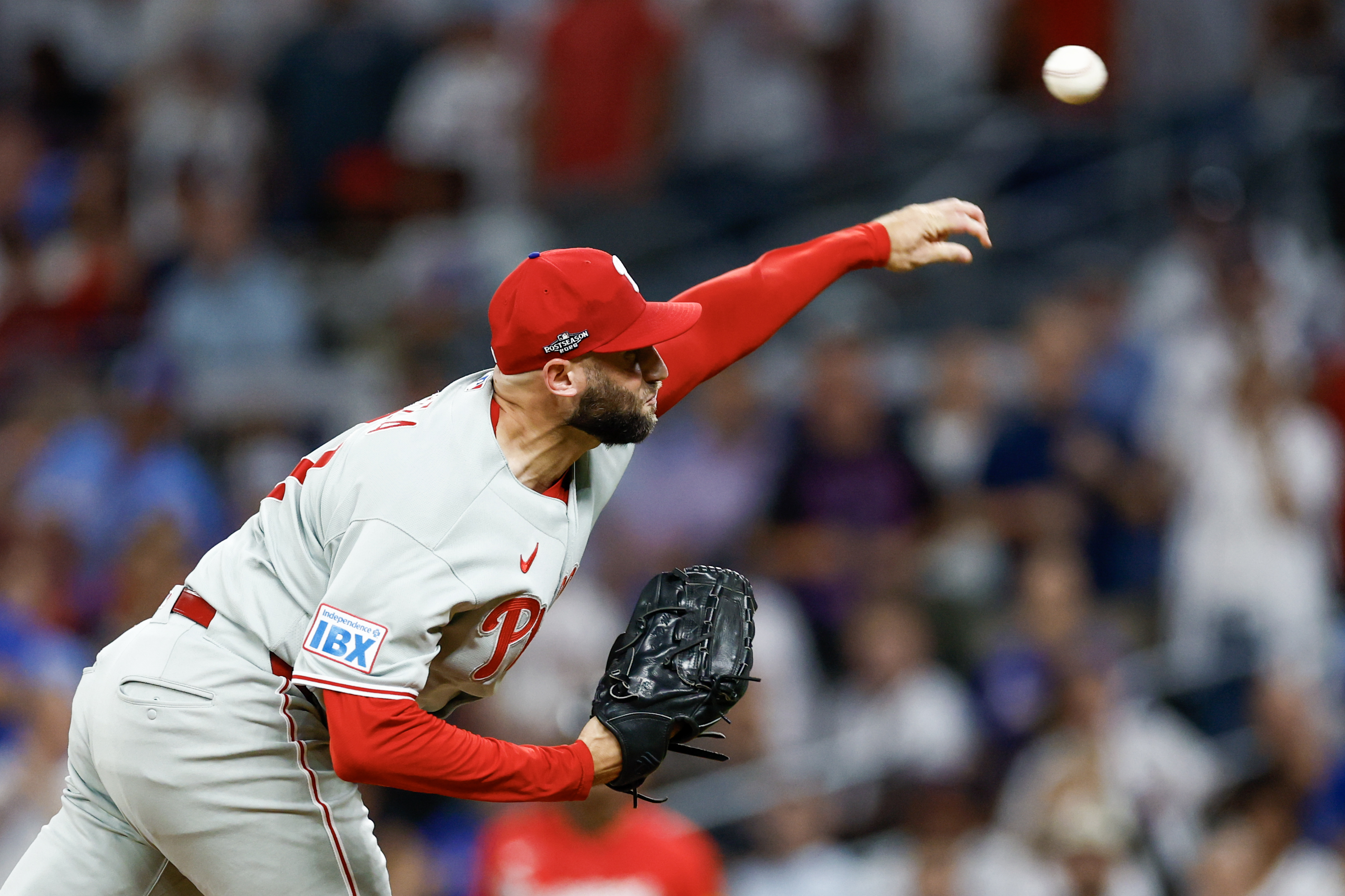
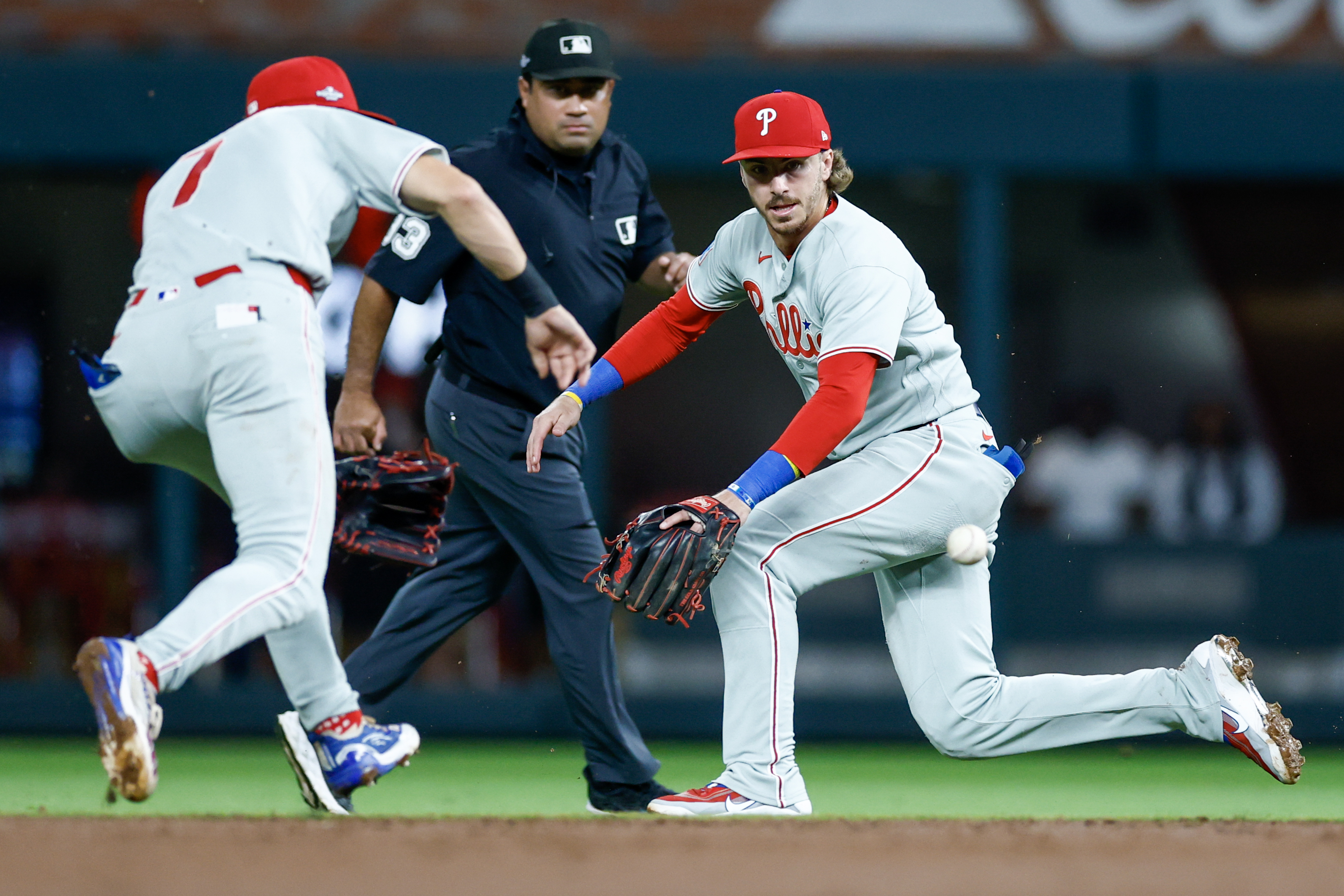
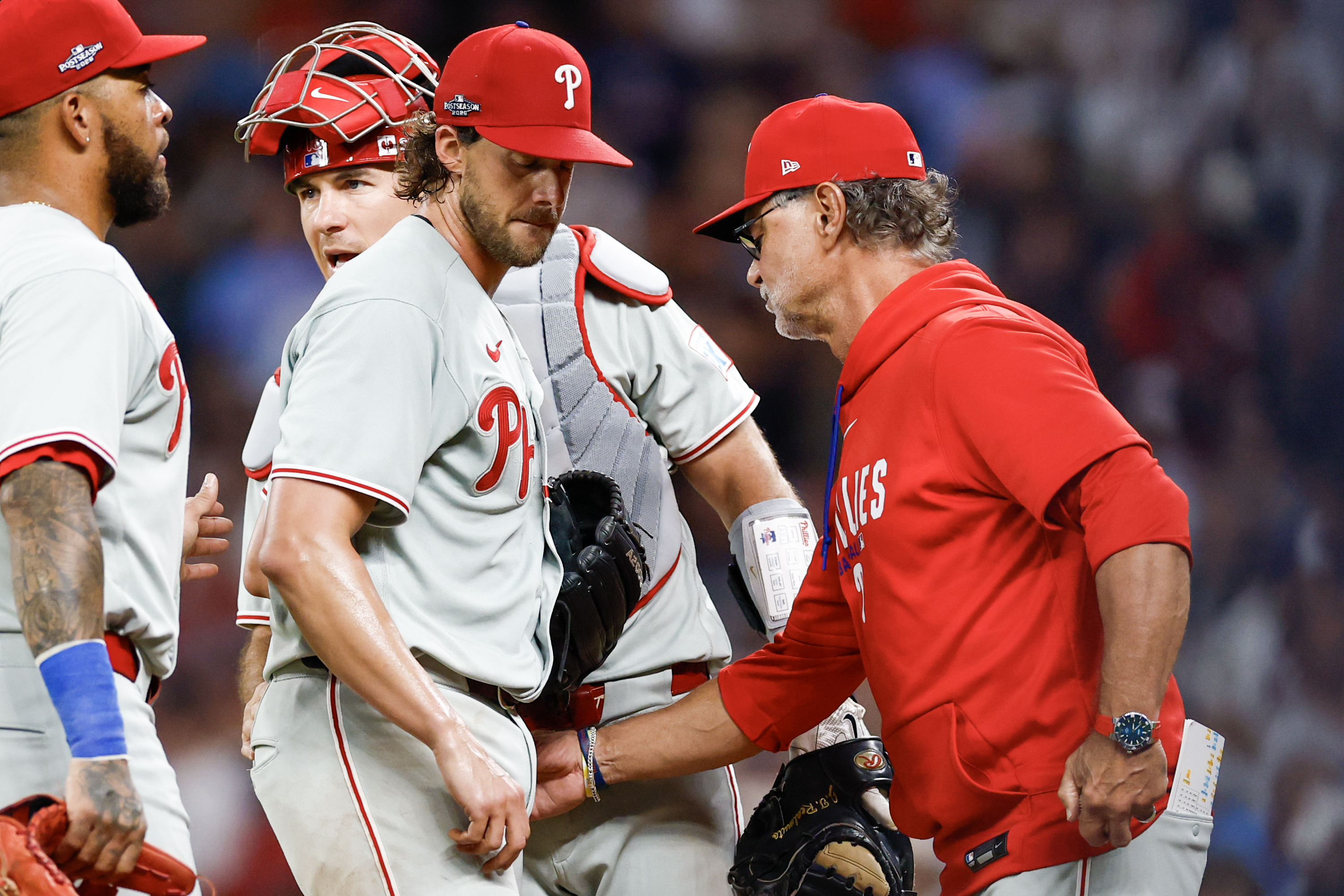
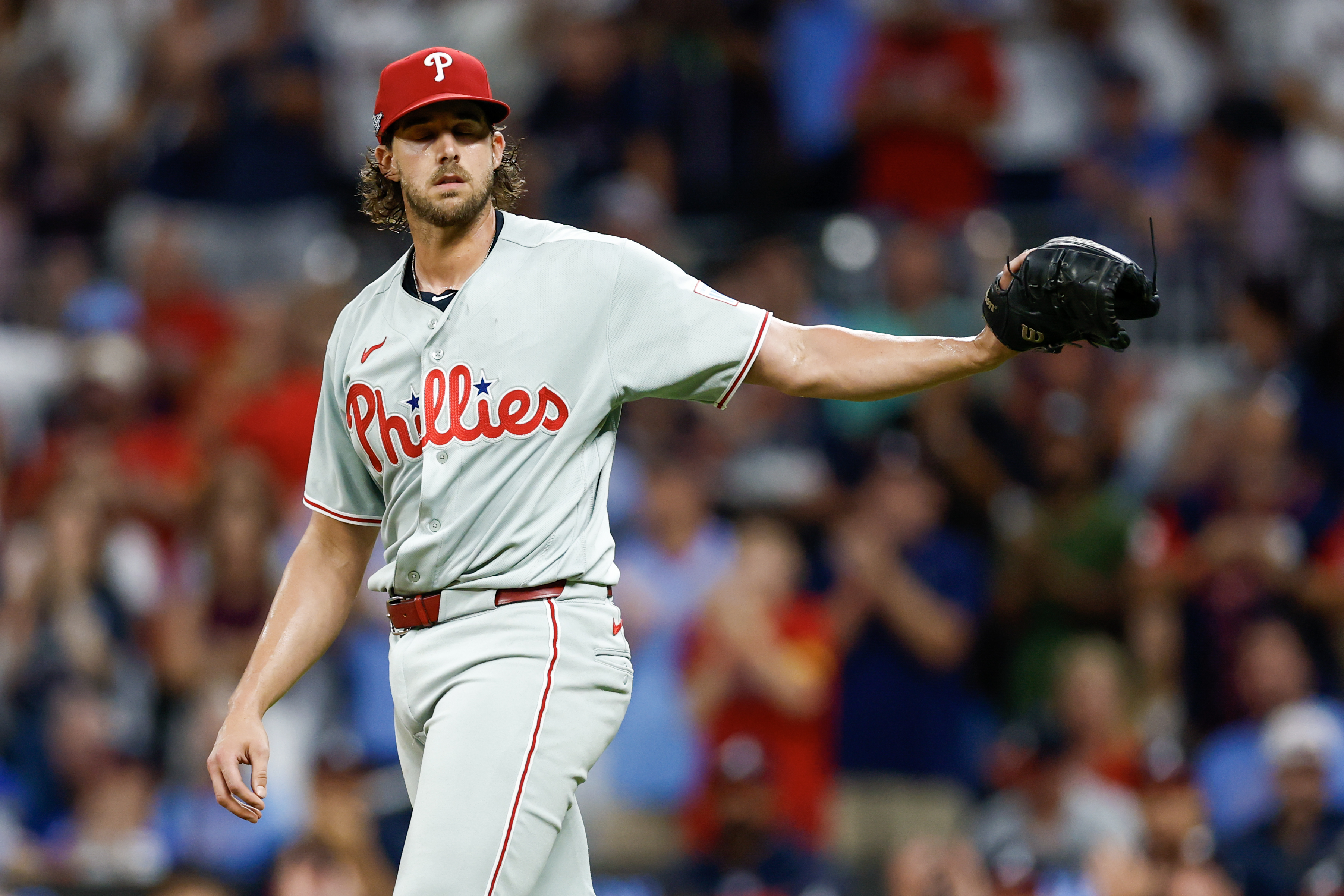
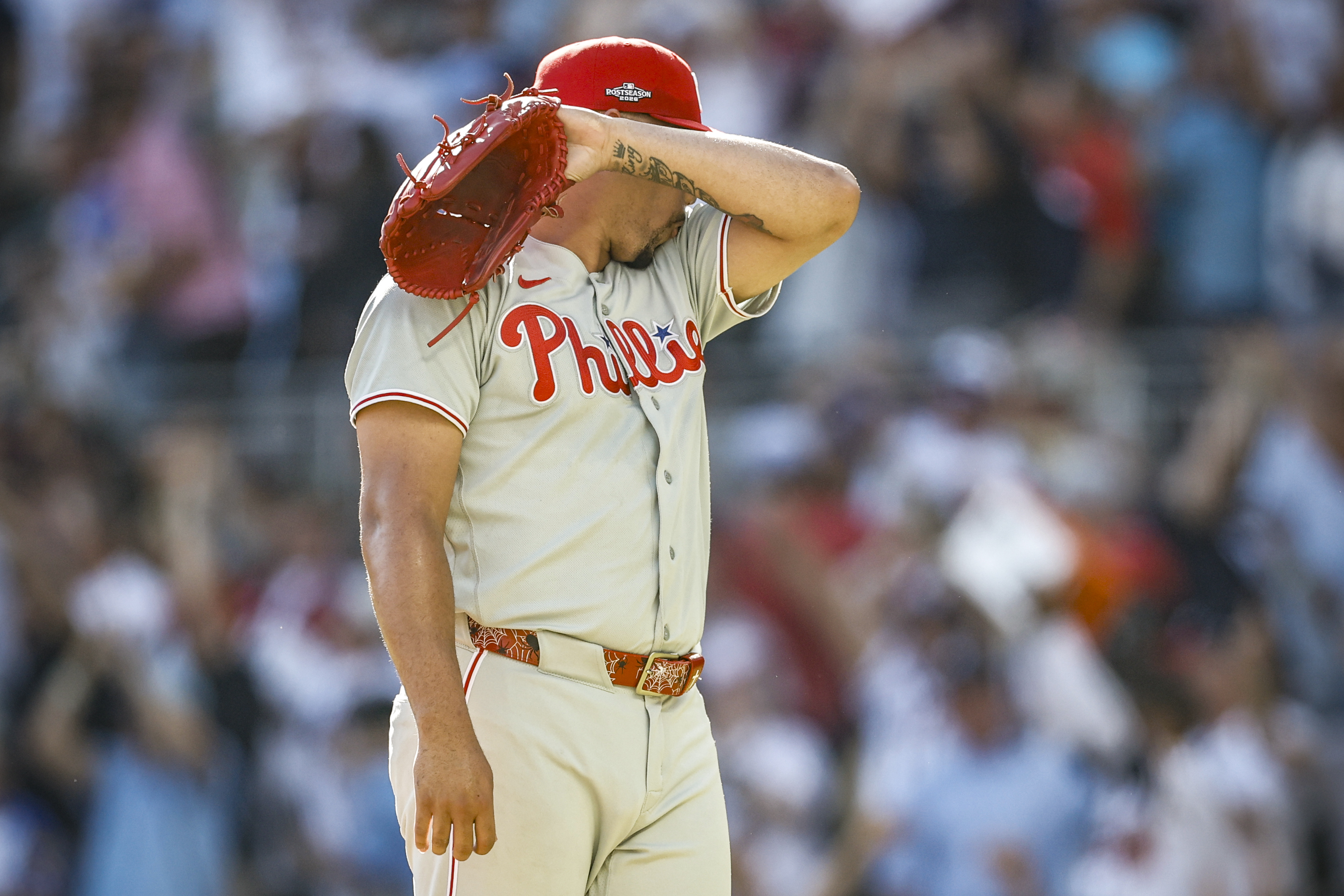
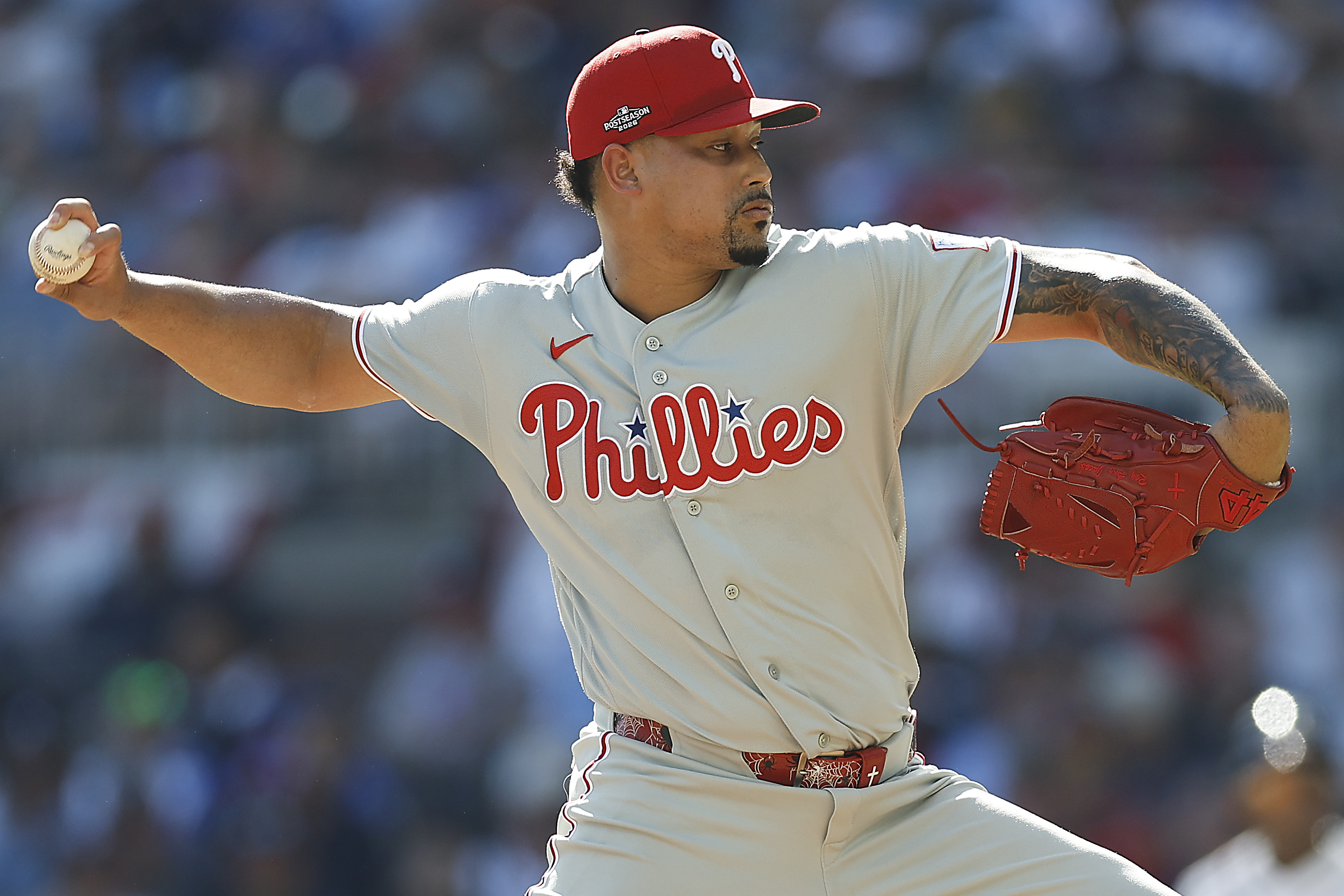
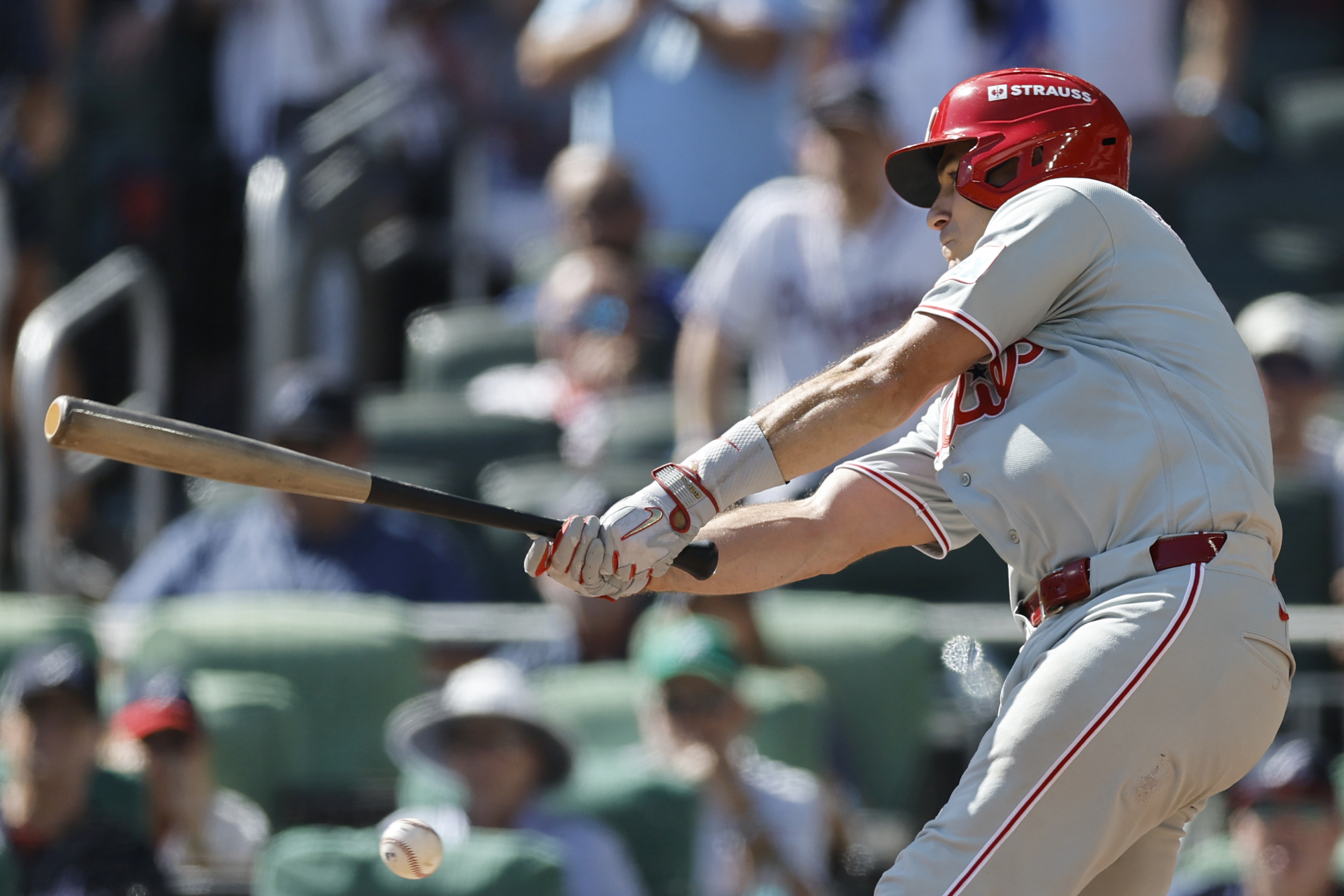
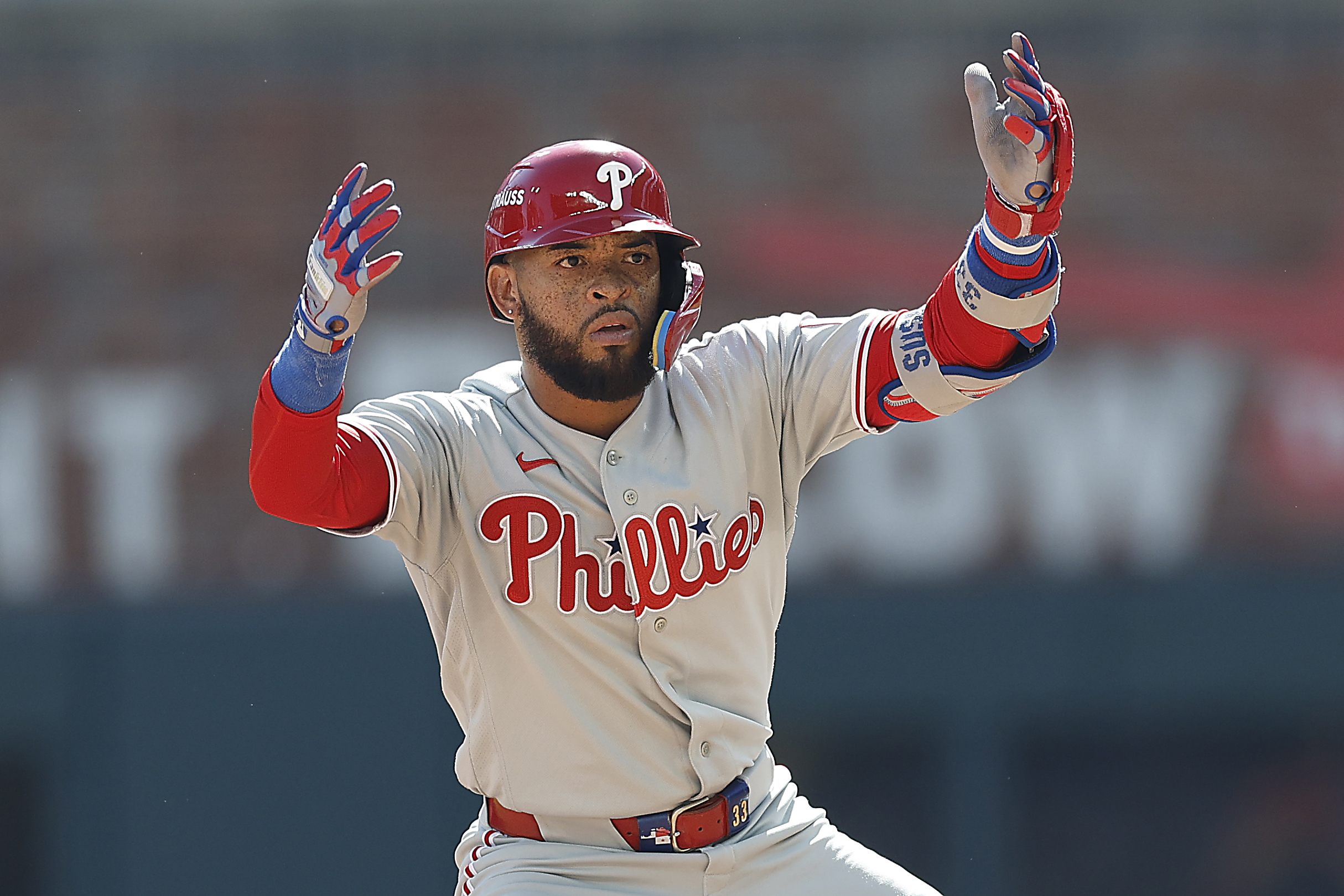
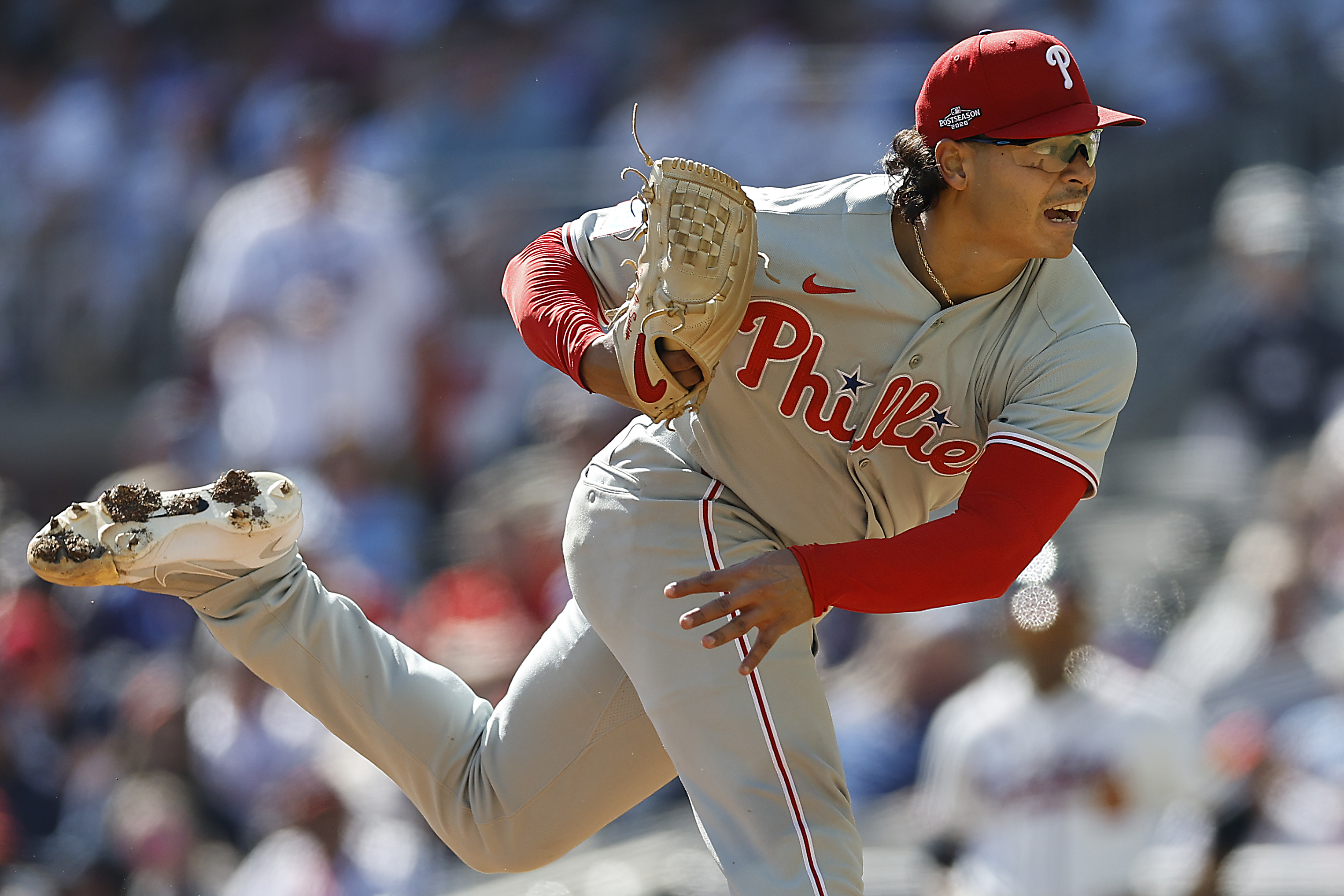
    ATLANTA — You can blame the manager for his handling of the pitching staff. You can blame the front office for forcing him to handle a grenade. I suppose you can blame the pitchers themselves: Jhoan Duran for giving up the decisive three-run home run in Game 1, Aaron Nola for doing the same in Game 3.

    But before we blame anybody for the way the Phillies’ season ended, a 6-2 loss in a decisive Game 3 at Truist Field on Thursday night, let’s at least take a moment to acknowledge what they accomplished.

    A baseball season is a maddening, fluky, grind of a thing. Qualifying for the playoffs in five straight seasons is an extraordinarily difficult task. The Phillies are one of only nine franchises in major league history who have ever done it. Their current streak is the second-longest active one in the majors, behind only the Dodgers (14). That’s not apologetics. It’s reality.

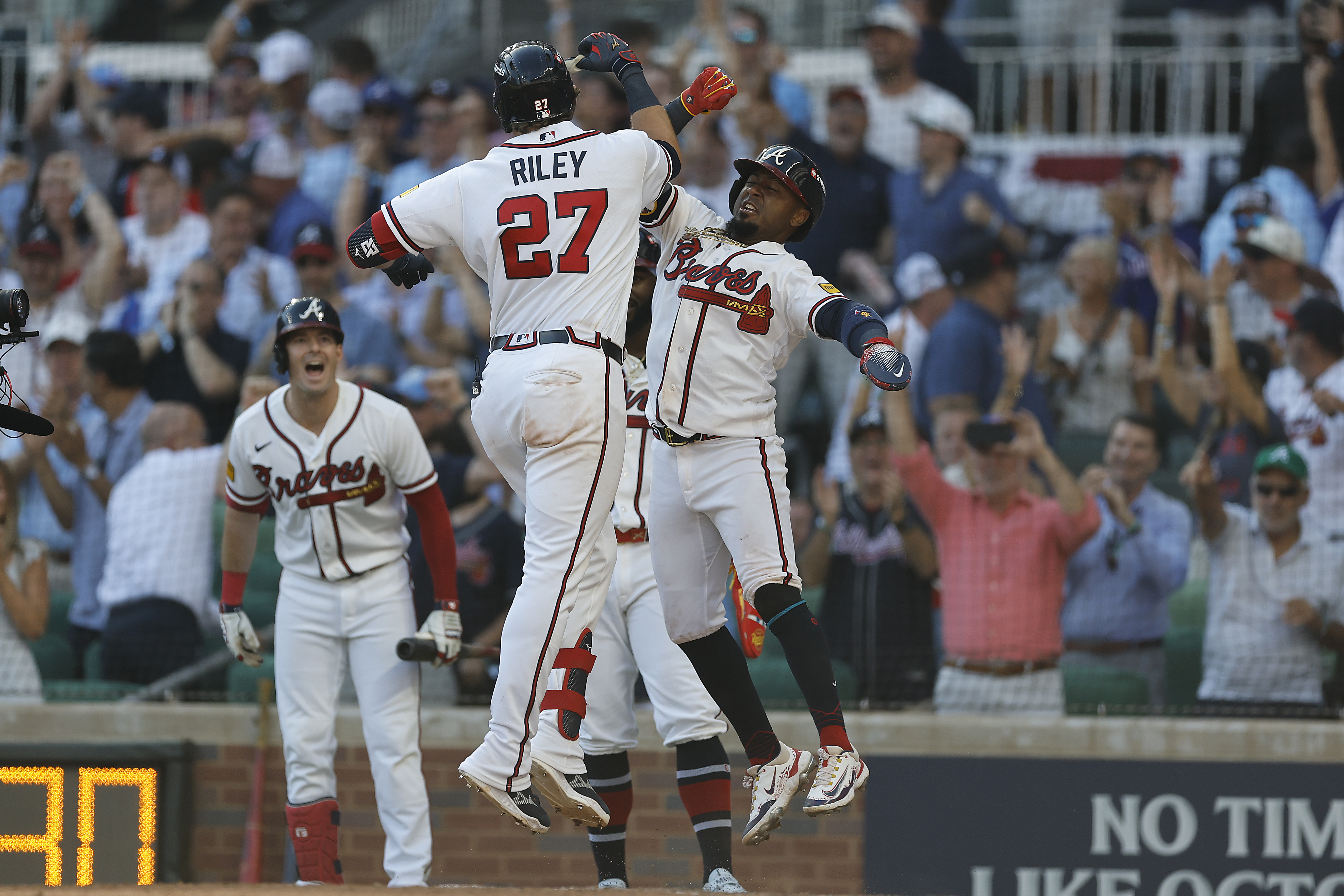
    Just ask the Braves, who were down to their last four outs in Game 1 when Austin Riley homered off Duran. Or, heck, ask the Dodgers. Los Angeles made the playoffs seven straight times without winning a World Series before finally breaking through in 2020. That initial stretch included three National League Division Series losses. They’ll be favored against the Braves in this year’s NLDS, which starts Saturday. They know how little it means.

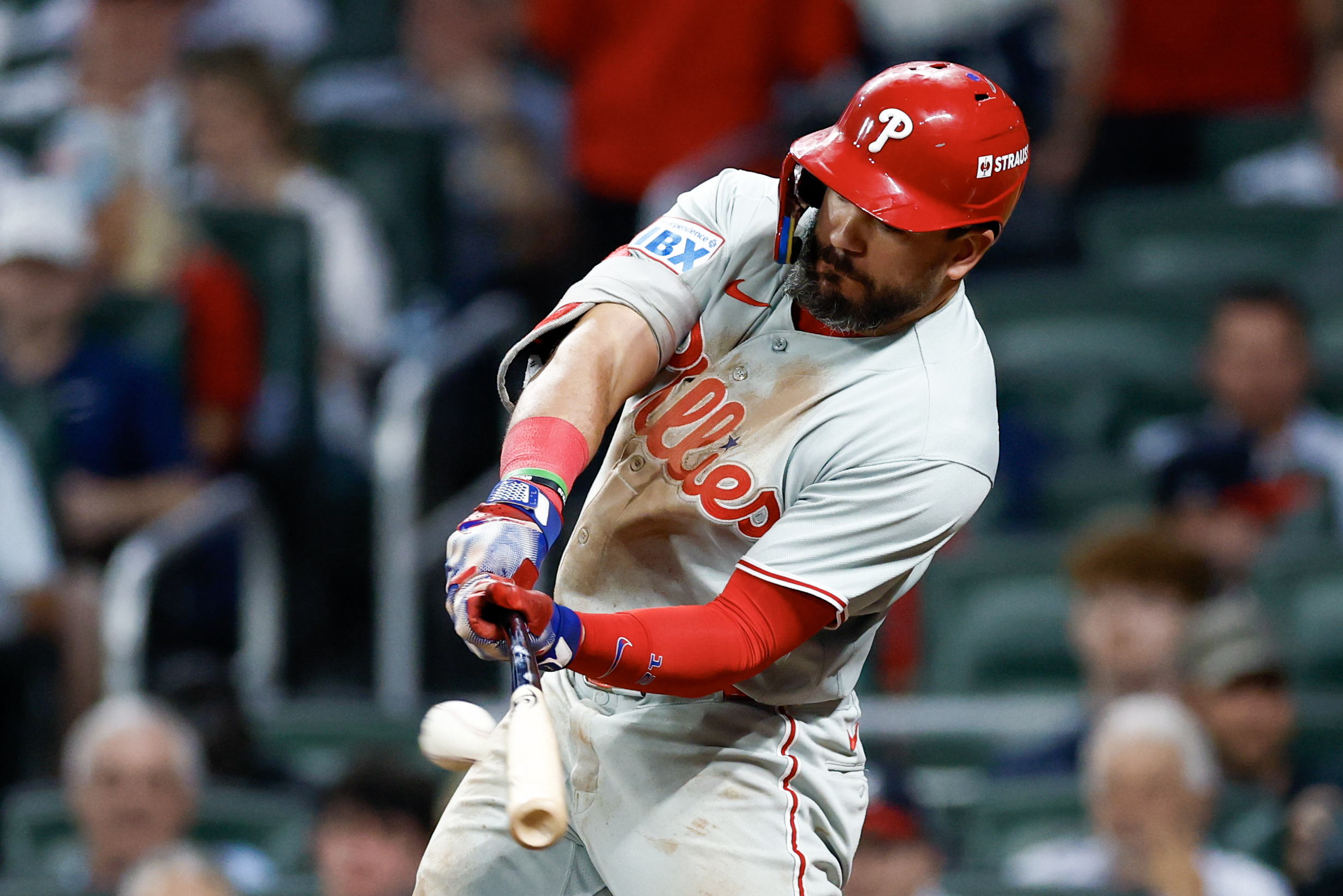
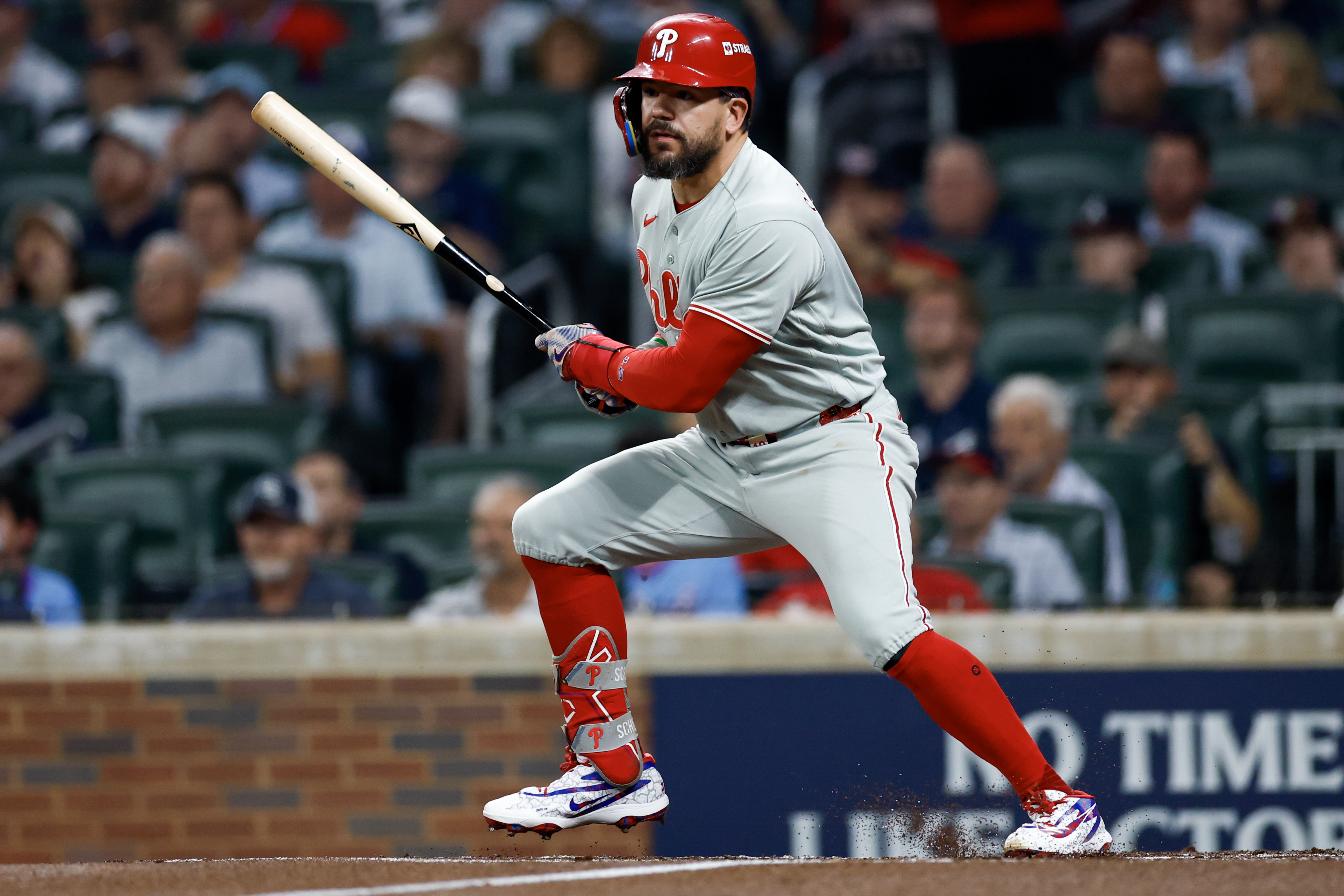
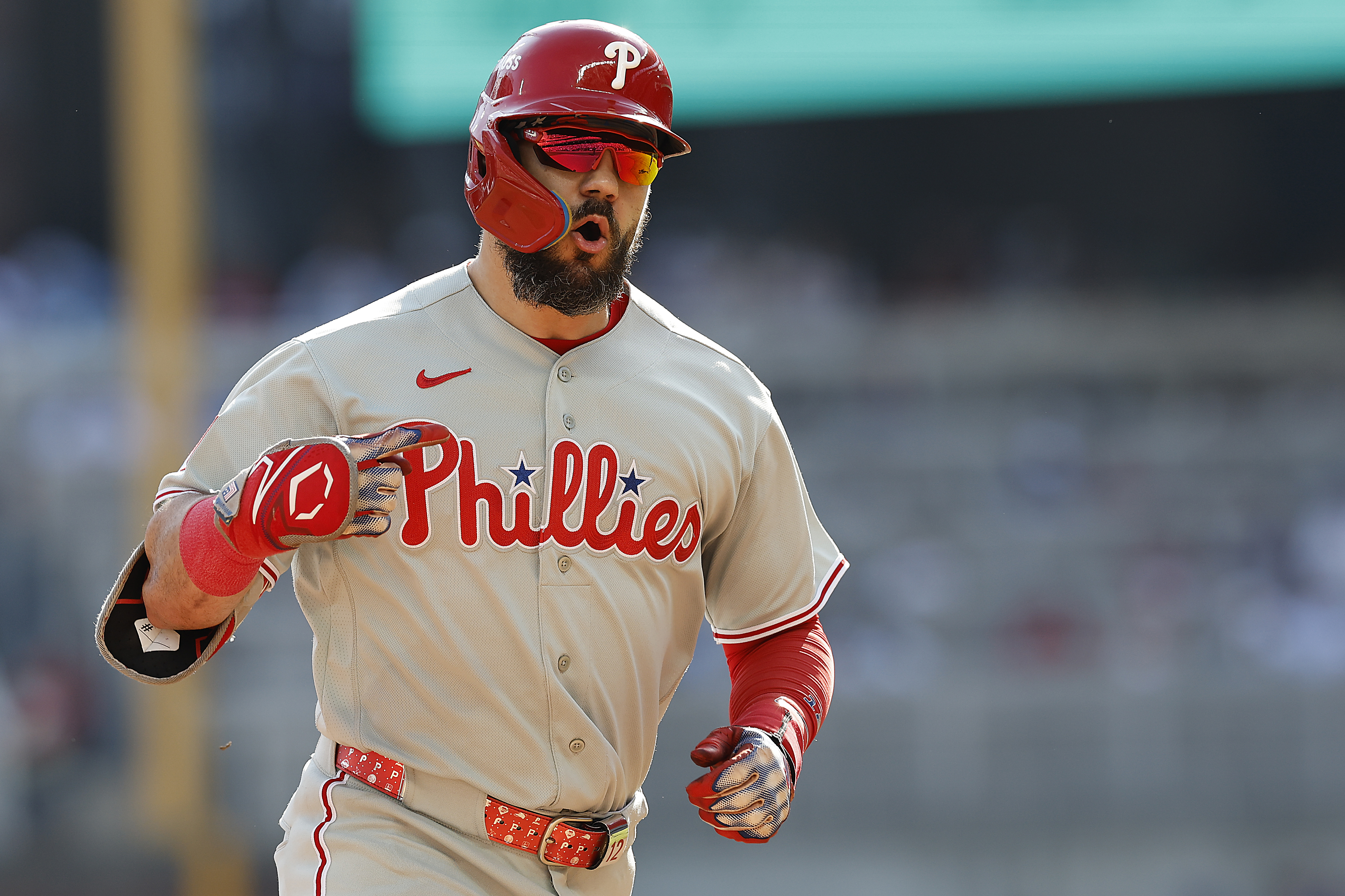
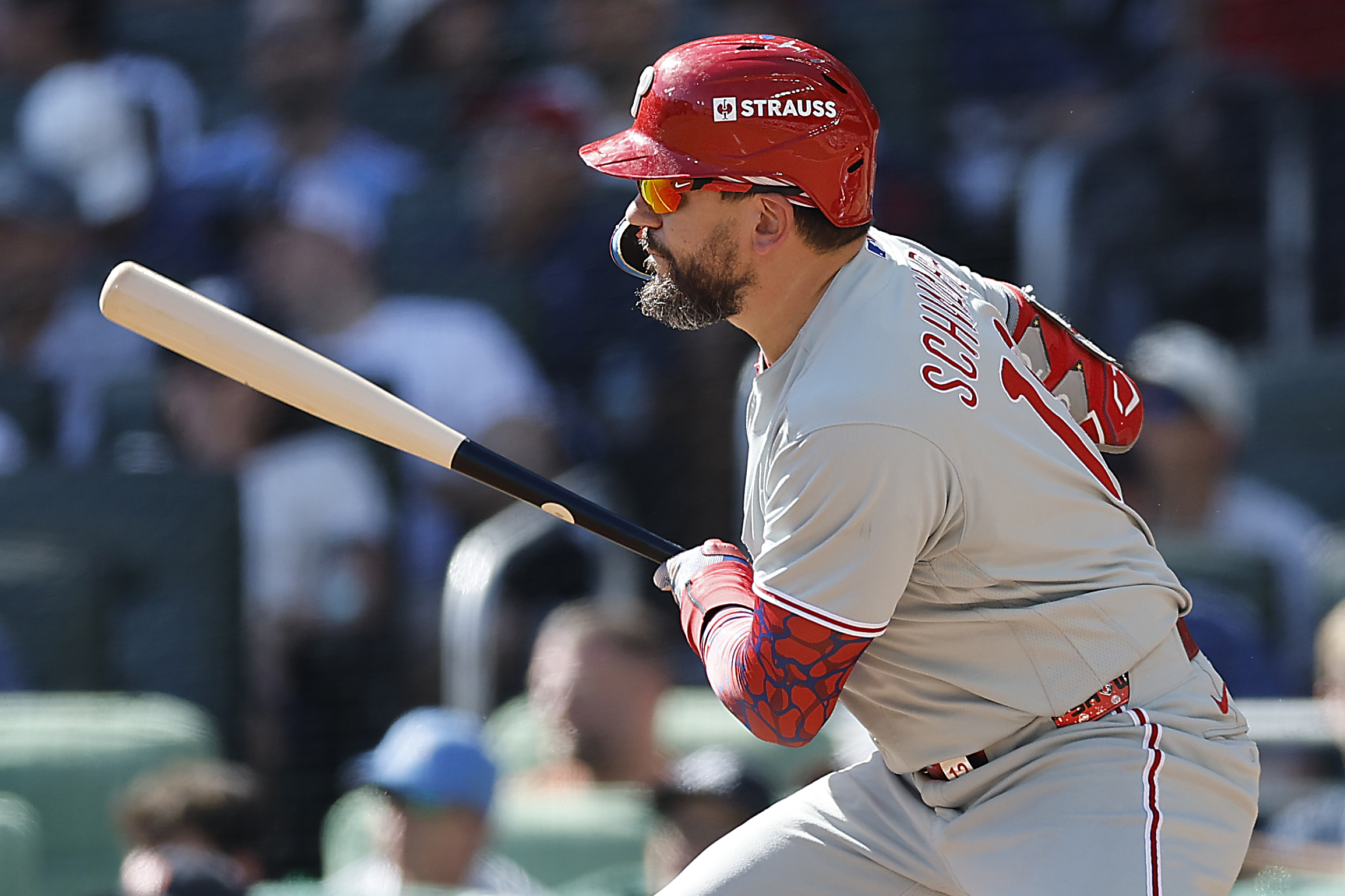
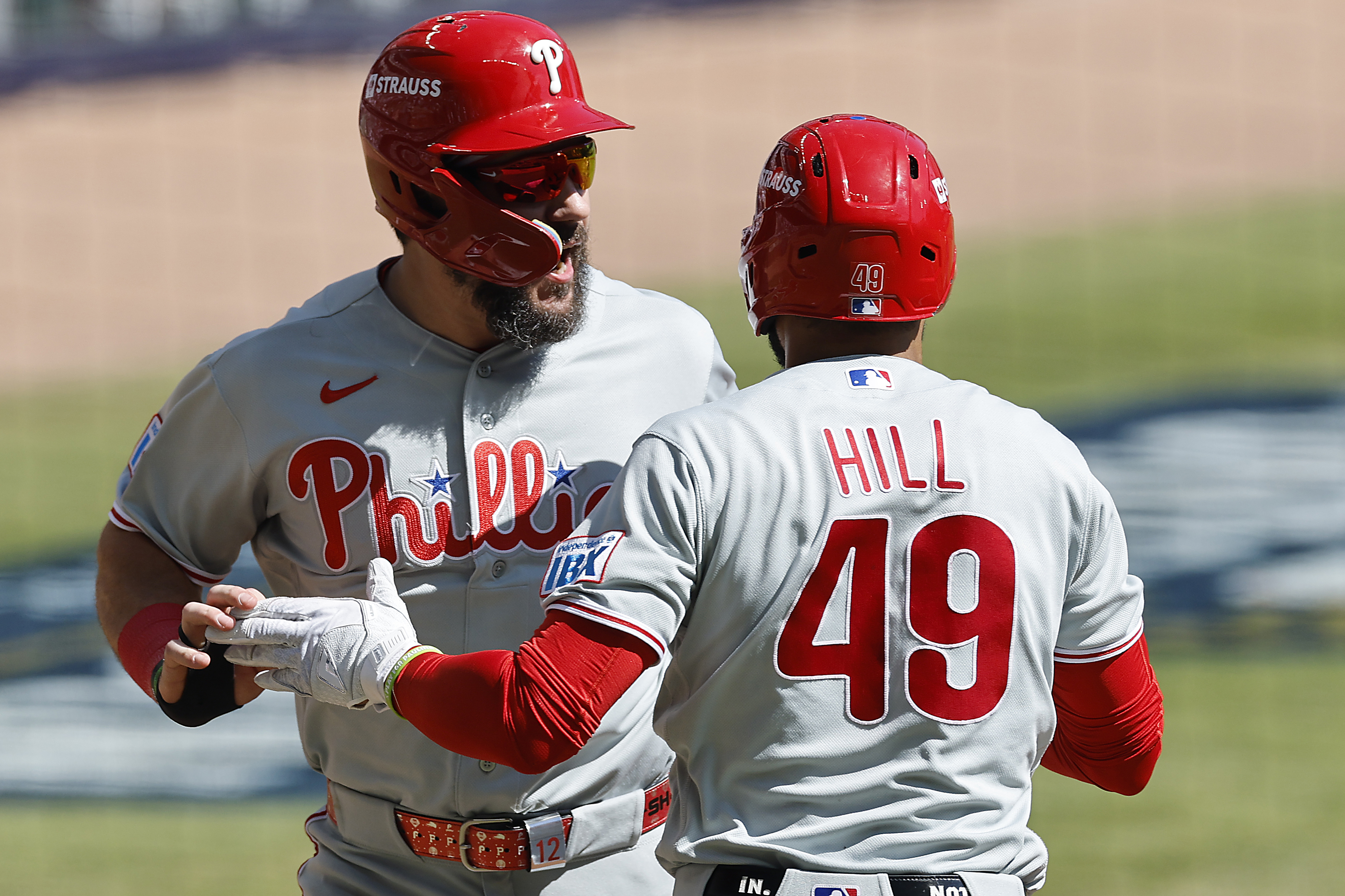
    “It’s just as frustrating as last year, and the year before that,” said Kyle Schwarber, who had two of the Phillies’ six hits against a Braves team that used six pitchers, none for more than 10 outs. “We have to keep finding ourselves in position, first off, to be in this position. Because it’s never going to be a guarantee that you’re in a postseason. You have to keep fighting to be in those spots and when you are in the postseason, keep trying to find a way to win a game.”
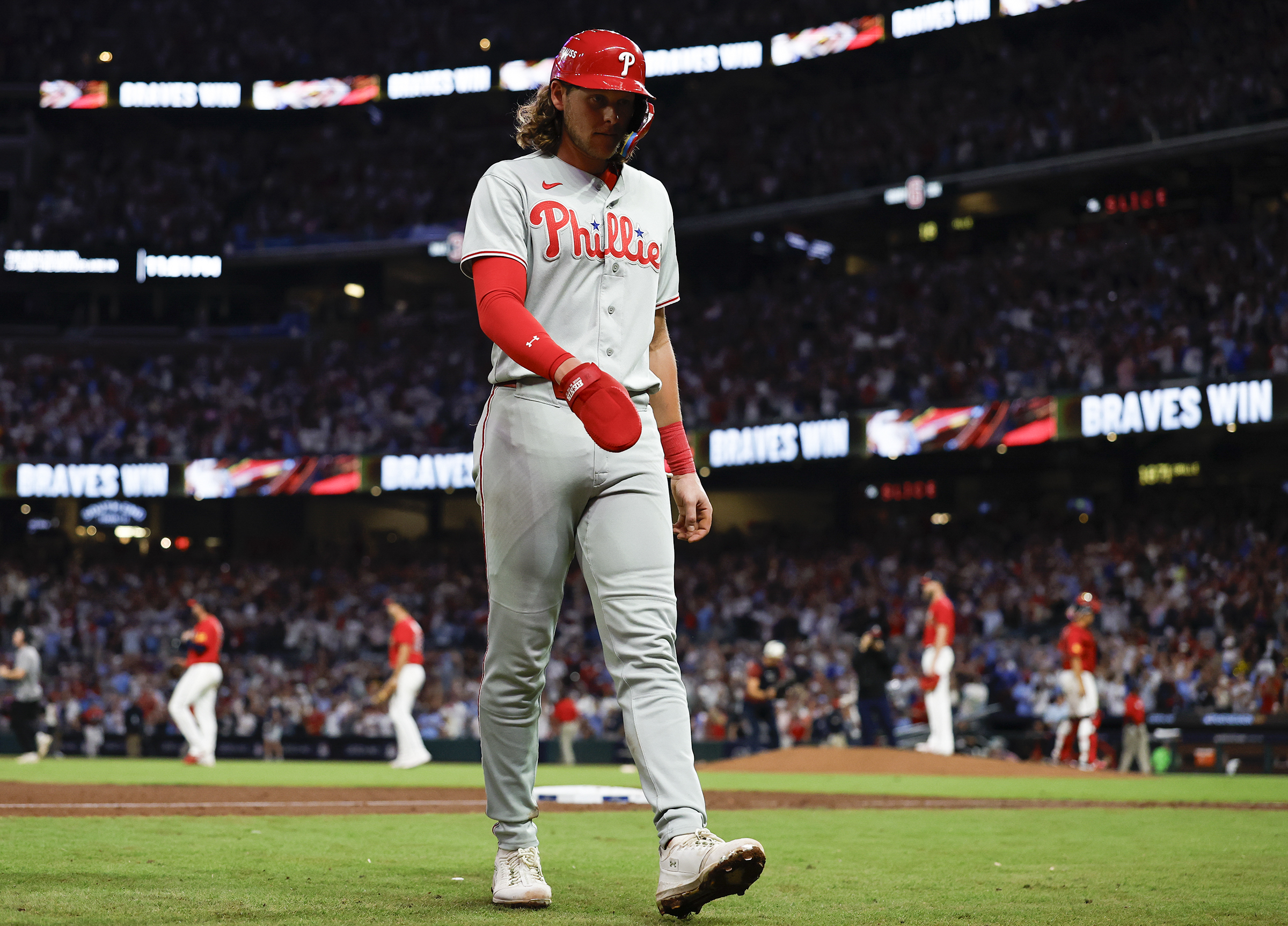
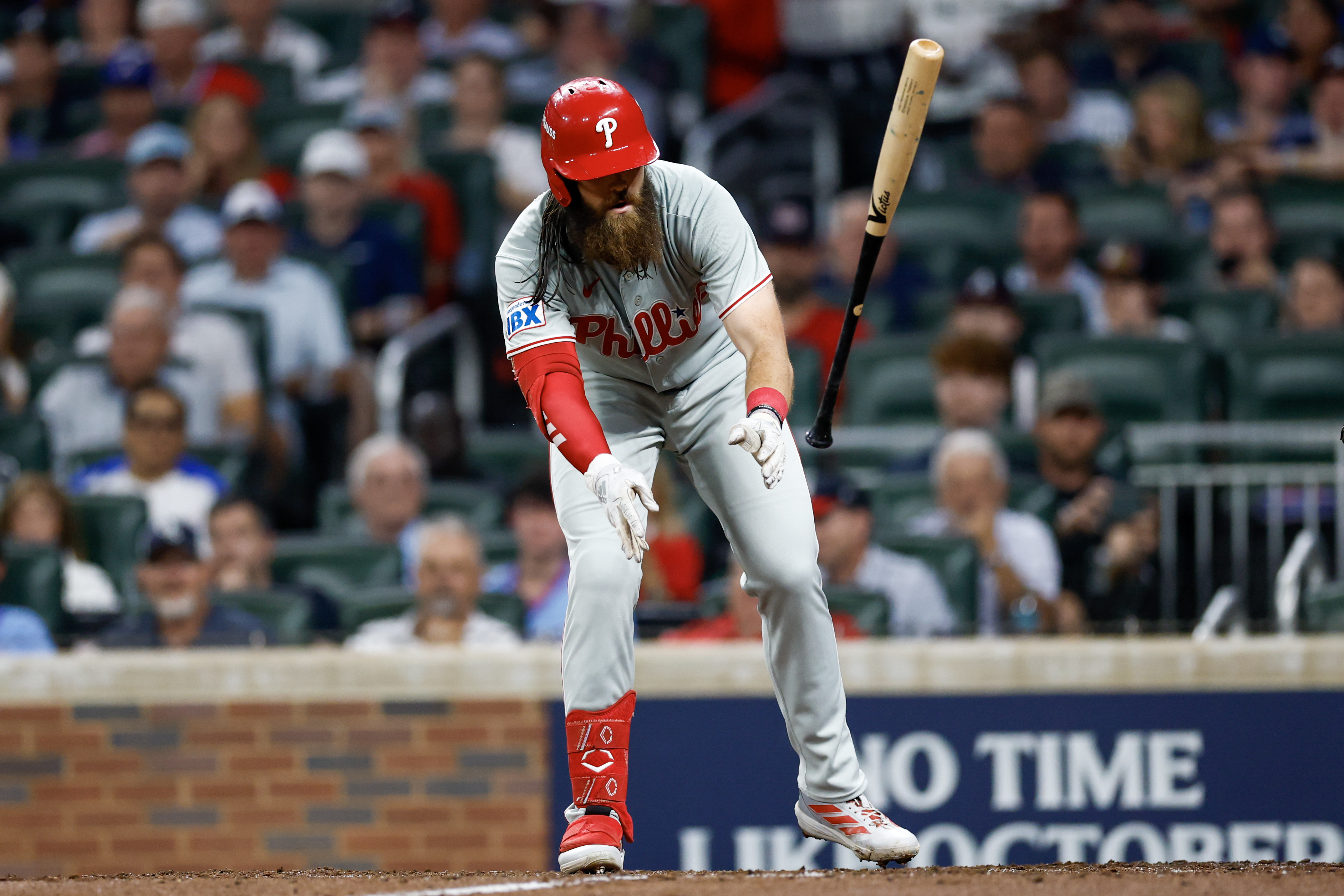
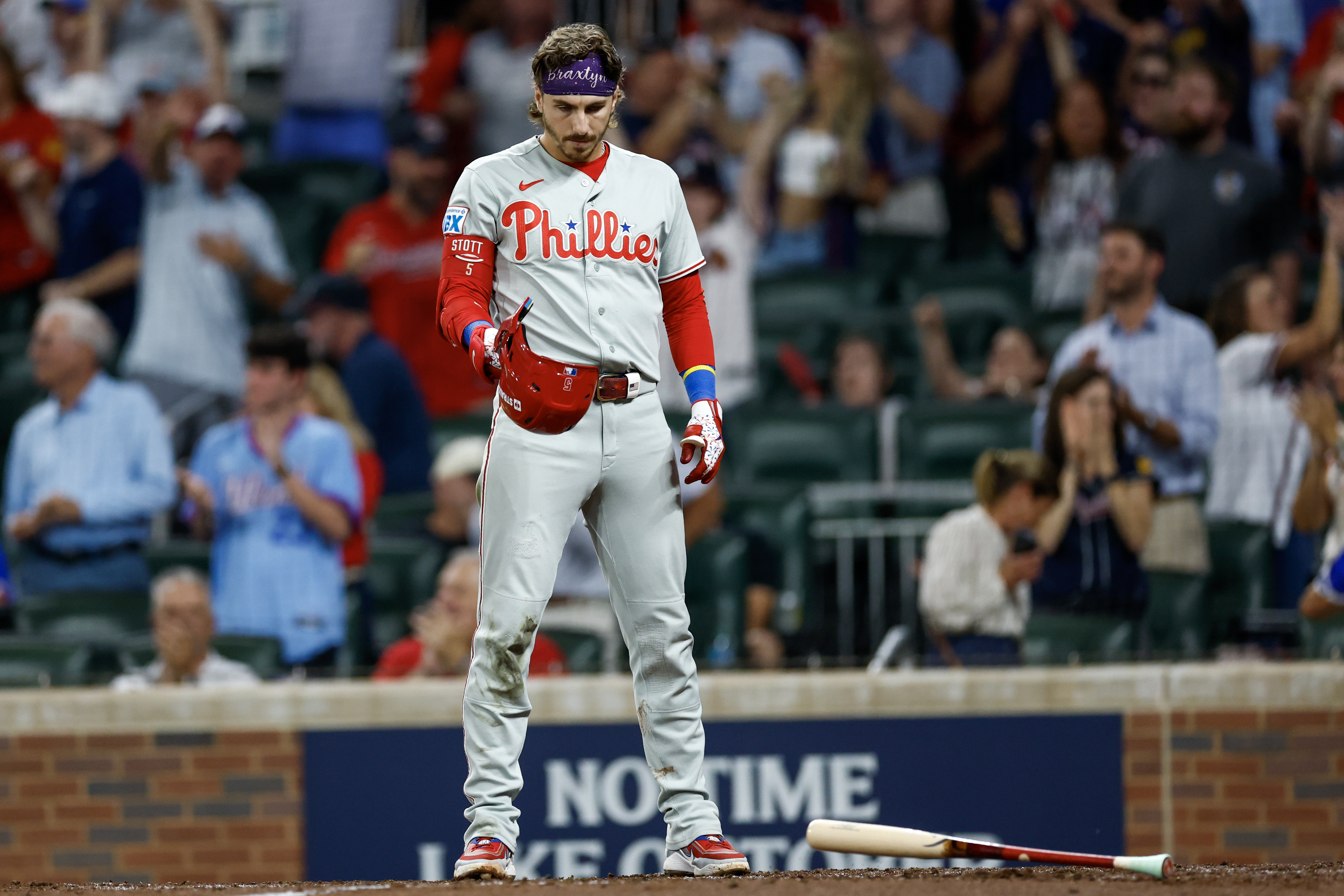
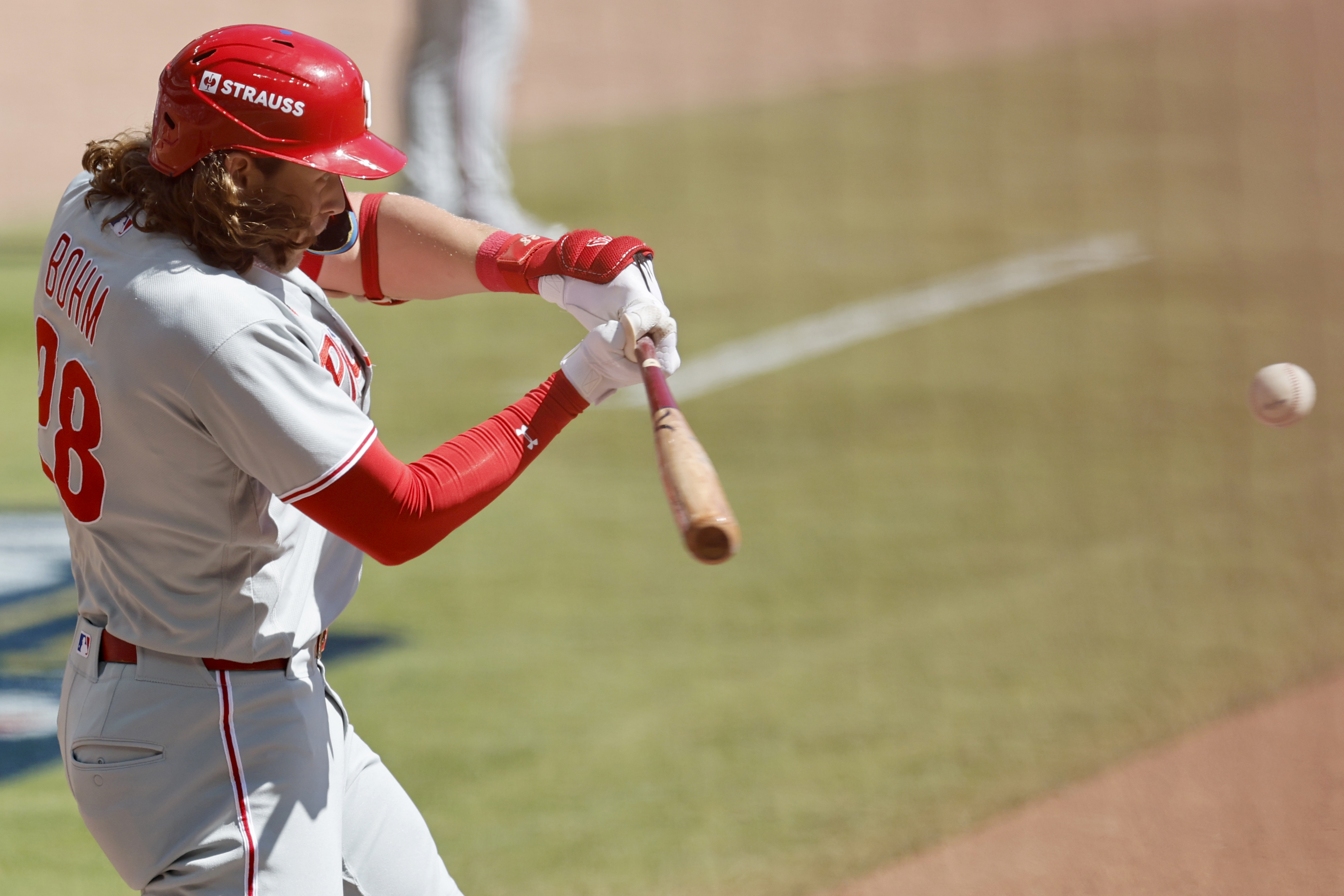
    Alec Bohm walks off the field after the Phillies lost to the Braves in Game 3 on Thursday.Yong Kim / Staff Photographer

    None of this is meant to serve as consolation. Nor does it nullify the litany of criticisms one can and should direct at these Phillies. As difficult as it is to make five straight postseasons, it is nearly as difficult to lose four straight postseason series on luck alone. There are clearly some structural issues here.

    • In their last nine postseason games, the Phillies have scored a total of 10 runs in the first six innings. About a third of those runs came in one inning, when they scored three off Shohei Ohtani in Game 1 of last year’s NLDS loss to the Dodgers.
    • In those same nine postseason games, the Phillies have allowed a remarkable 19 runs in the seventh inning or later.

    Just as obvious as these KPIs are their underlying causes. The Phillies are a top-heavy team in both phases of the game. Dave Dombrowski’s biggest failure over the last three-plus years has been his inability to address either.

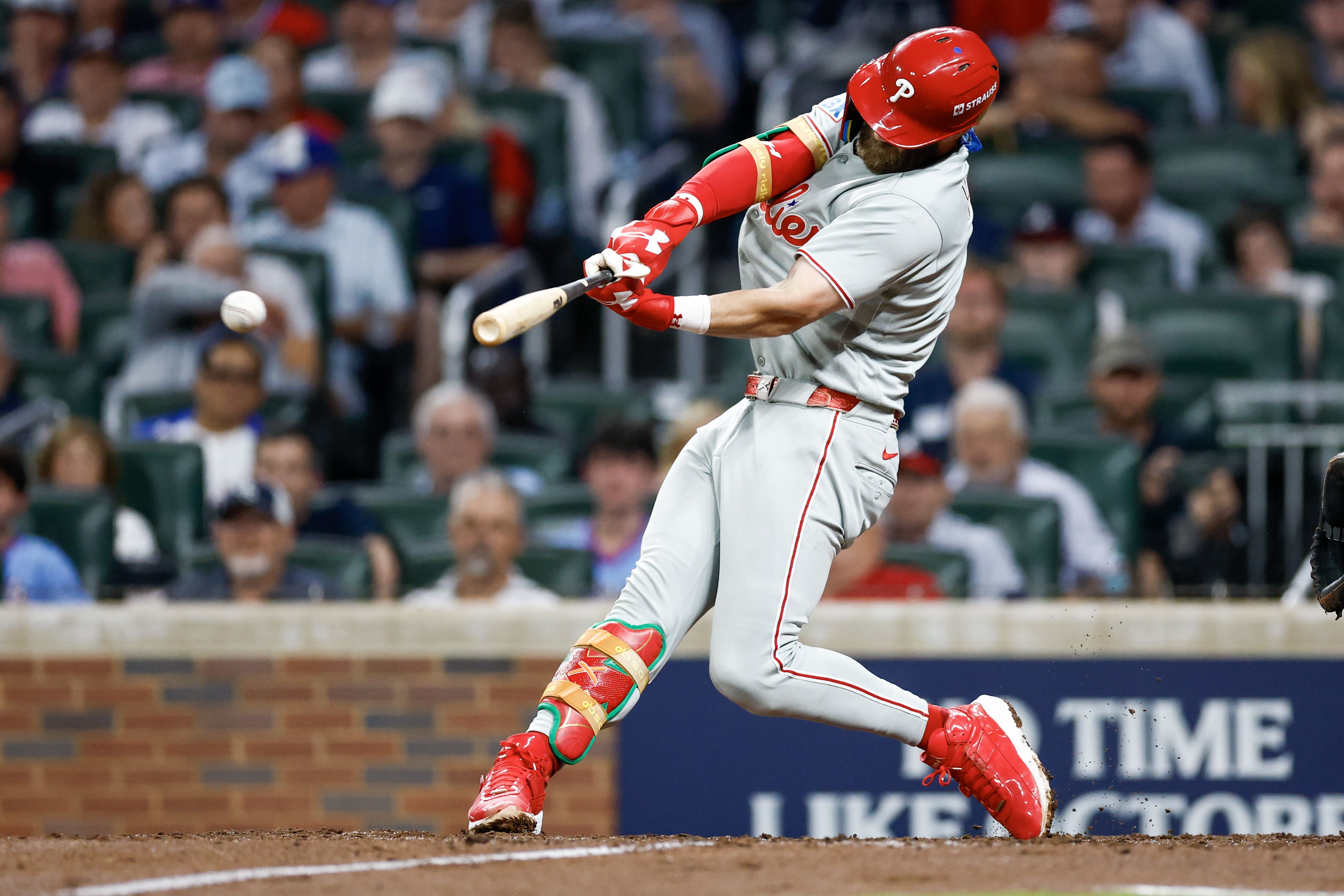
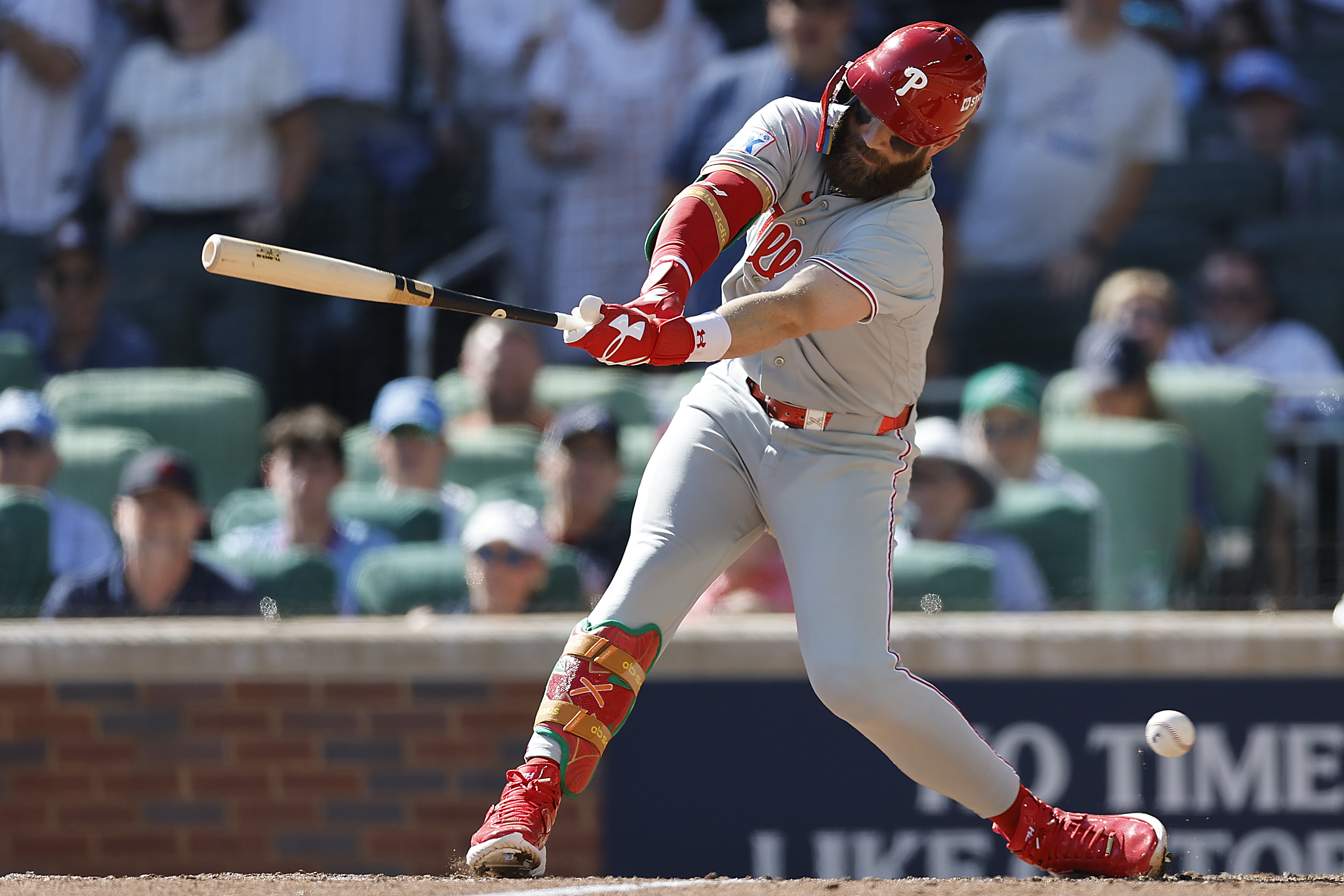
    The last time the Phillies won a playoff game where neither Bryce Harper nor Kyle Schwarber homered was Game 4 of the 2023 NLDS. In fact, the duo has combined for at least two home runs in five of the six wins since. It is neither sustainable nor reasonable to place that much responsibility on two members of a nine-man lineup.

    Same goes for the pitching staff, which has leaned so heavily on its key members that you can’t help but wonder about the cumulative effects.

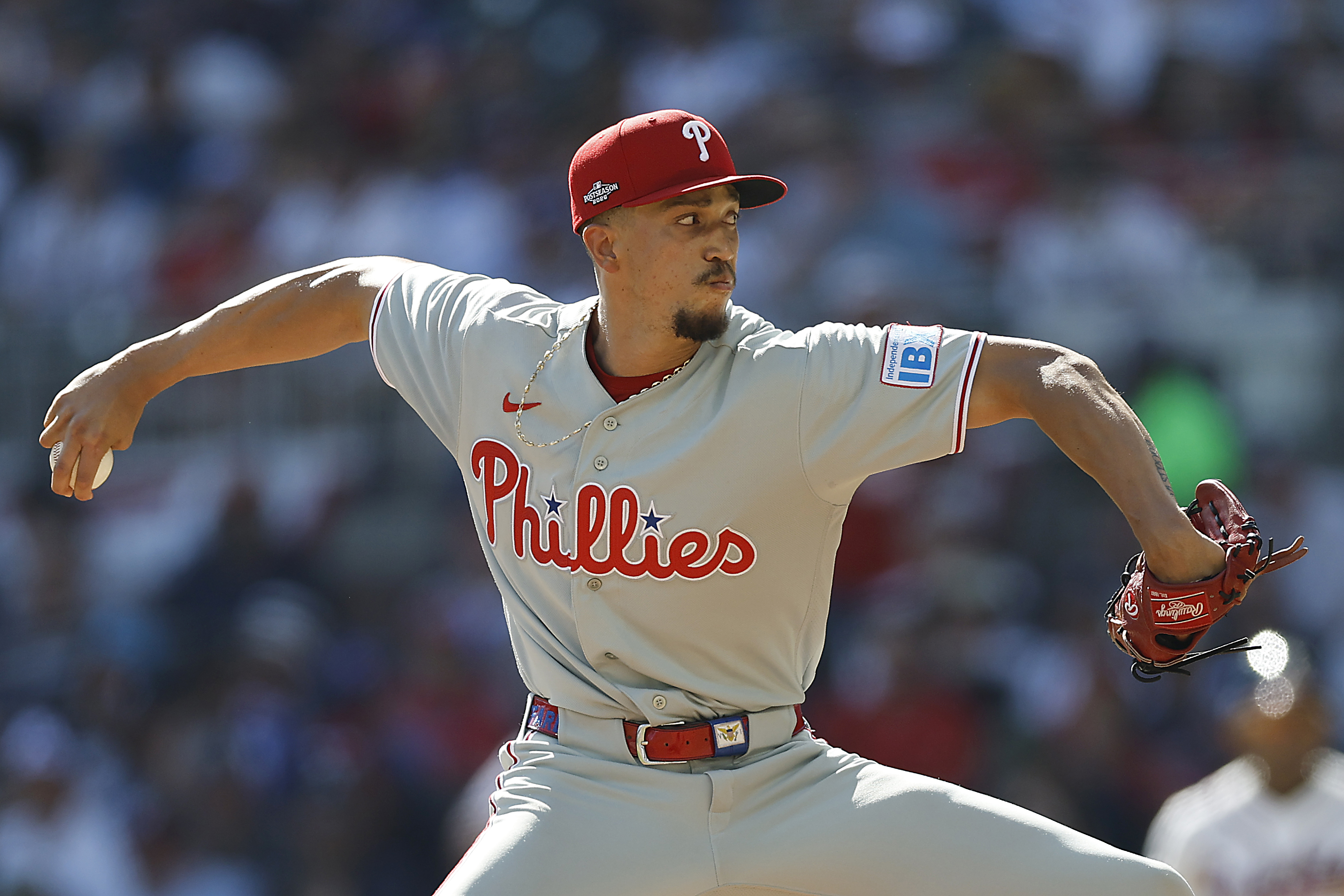
    In Game 3, 36-year-old Zack Wheeler was out there throwing 68 pitches on three days rest. This was two days after Jesús Luzardo threw 77 pitches in his first start off a three-week stint on the injured list. Which was the same day Duran threw 27 pitches in the seventh and eighth innings and wasn’t heard from again.
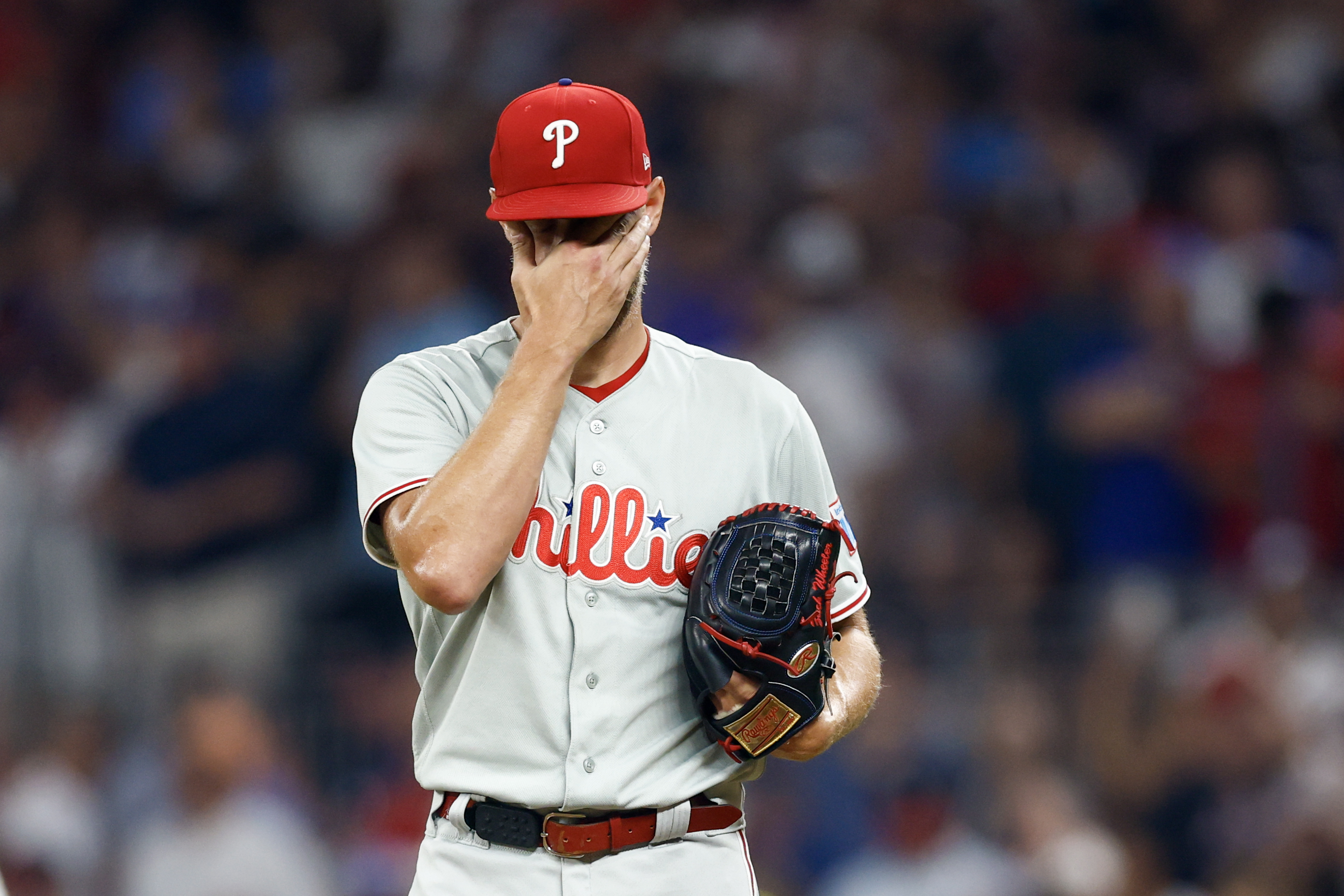
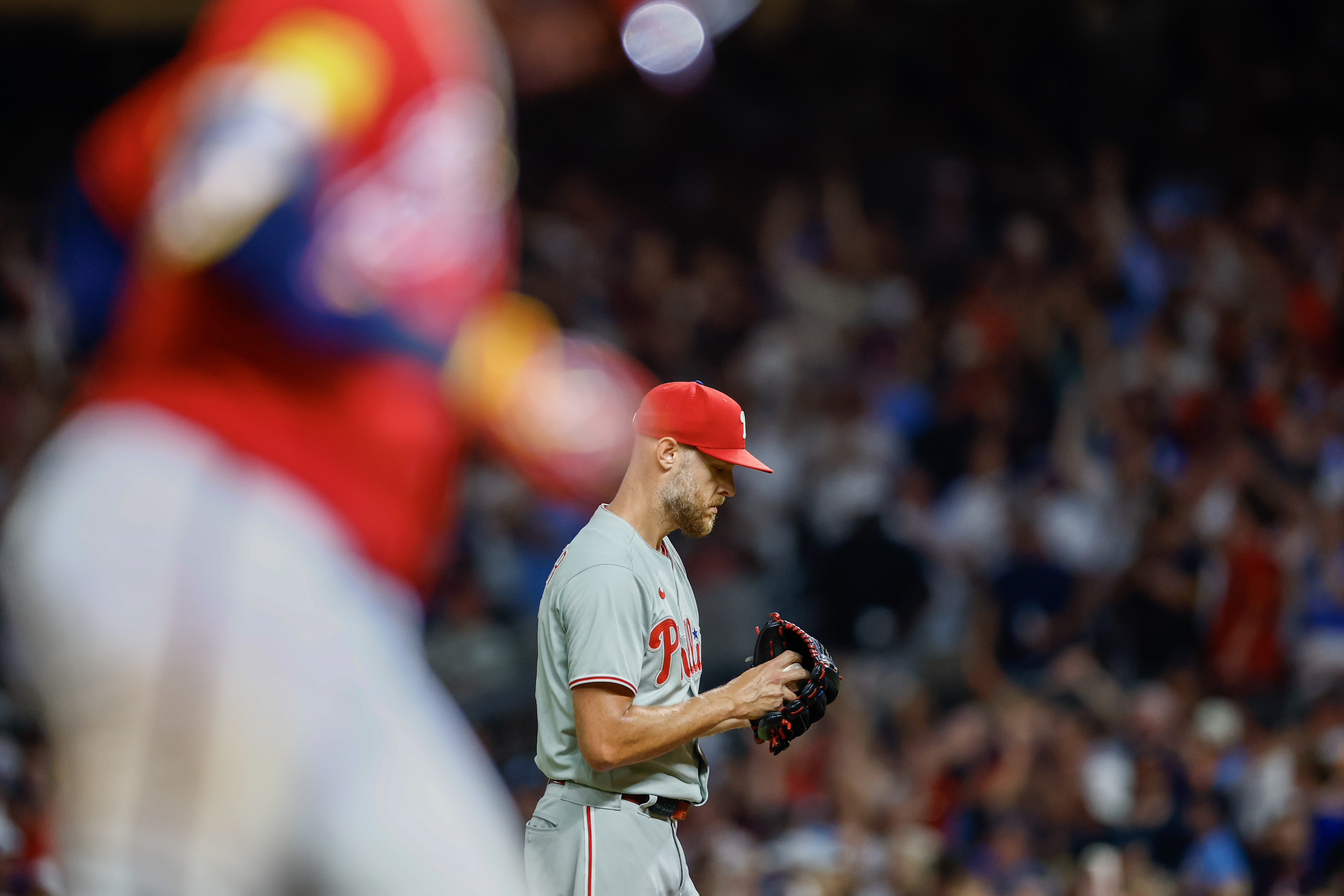
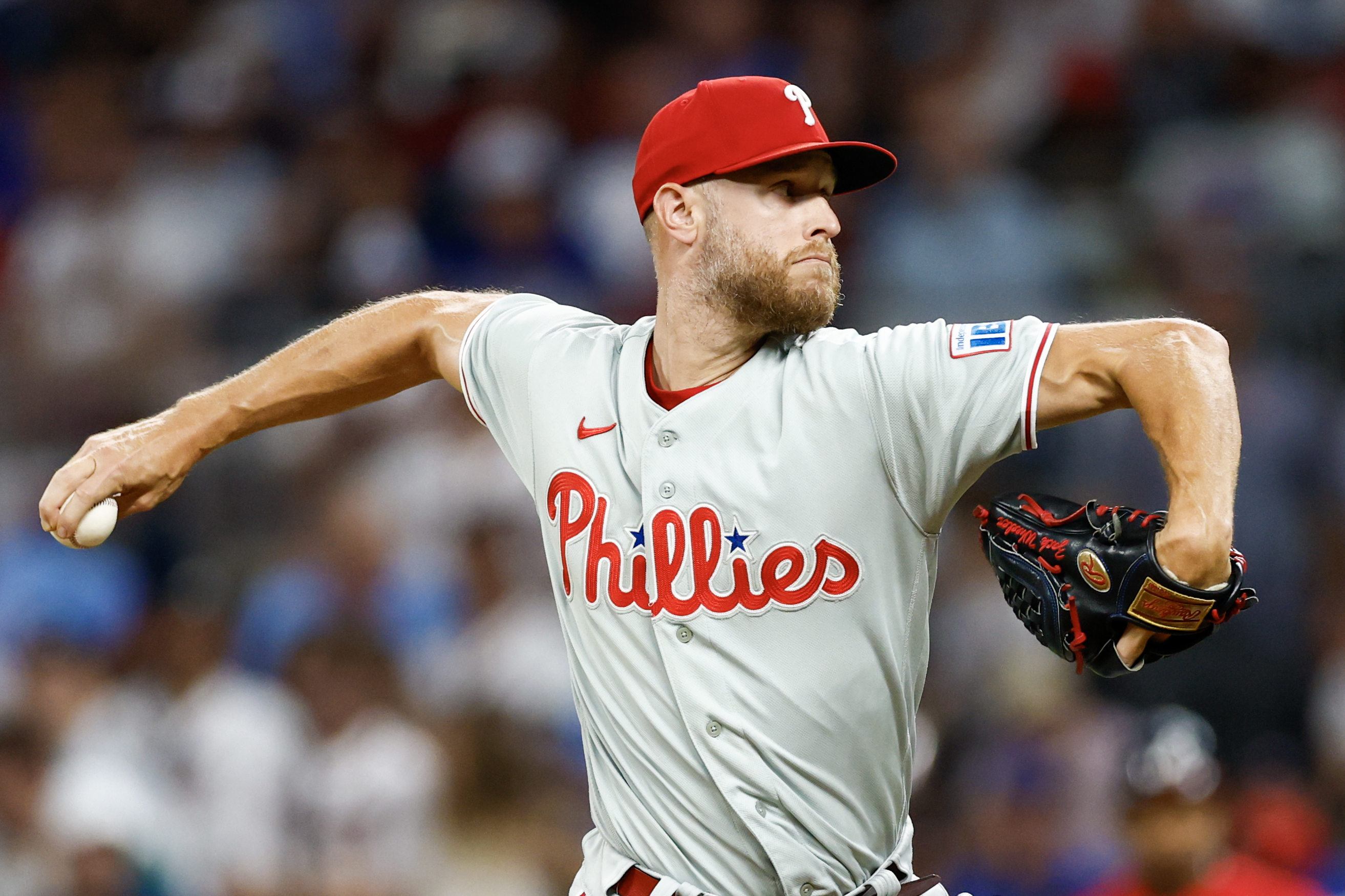
    Zack Wheeler threw 68 pitches in Game 3 on three days’ rest.Yong Kim / Staff Photographer

    You can second guess some of what interim manager Don Mattingly did with his pitching staff against the Braves. Bringing Duran into Game 1 when he did, allowing him to throw as many pitches as he did, starting Nola in Game 3. None of these decisions looked much different from the ones the previous guy would have made. This is how it looks when a manager feels like he does not have enough options.

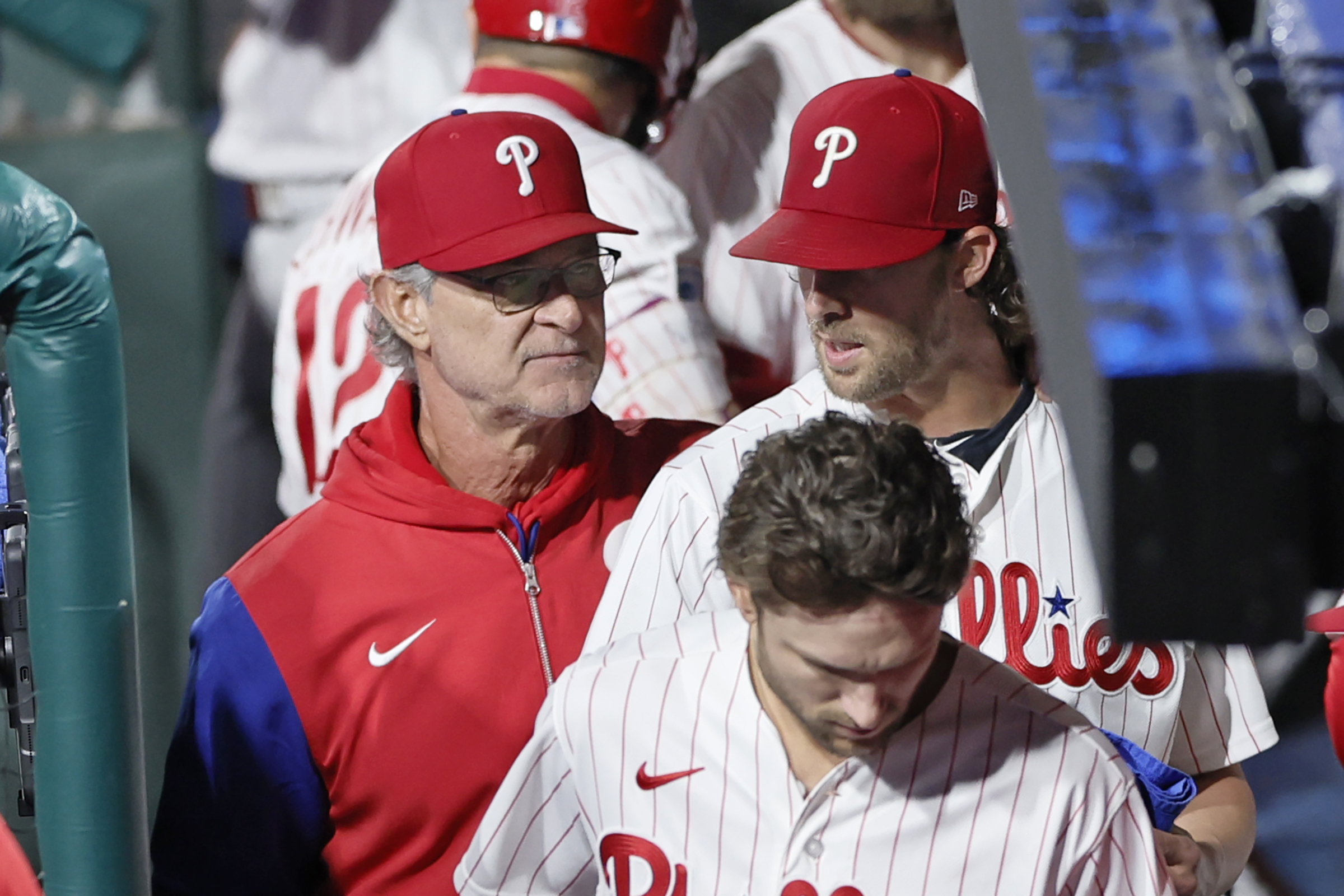
    “I don’t think it’s the time right now to try to evaluate why or whatever happened, what’s good, what’s bad,” Mattingly said after the loss. “It’s like any situation. You look at your club, you evaluate it, what went wrong, what went right, what’s the positive, what’s the negative, how do you move forward.

    “But again, that’s not my place to talk about that. I think that’s the organization’s place. It’s Dave’s spot to — how they build the club. I’m sure those are things they’ll be thinking about over the winter.”

    Mattingly is right to defer to his boss. The onus is clearly on Dombrowski, obviously. Credit him for drafting Alex McFarlane in the fourth round in 2022. The rookie setup man is the kind of arm the Phillies needed to find to have any hope at solving their longest running issue. Of course, we once said the same of Orion Kerkering.

    You can’t fault Dombrowski’s effort. He’s taken plenty of swings. The whiff rate is the issue. Neither of the two relievers he acquired at the trade deadline was on the playoff roster: Caleb Kilian due to injury, Brooks Raley due to ineffectiveness. Same goes for Dombrowski’s biggest offseason acquisition. Setup man Brad Keller went down in early July with an elbow injury that will likely sideline him through next season. Kerkering finished the season in triple A, capping a steady downward slide from his promising debut in late 2023. Dombrowski’s best move of the year was acquiring righty Jonathan Bowlan from the Royals for lefty Matt Strahm. But Bowlan, too, spent most of the series on ice, appearing only after the Braves had taken a 5-0 lead in Game 3.
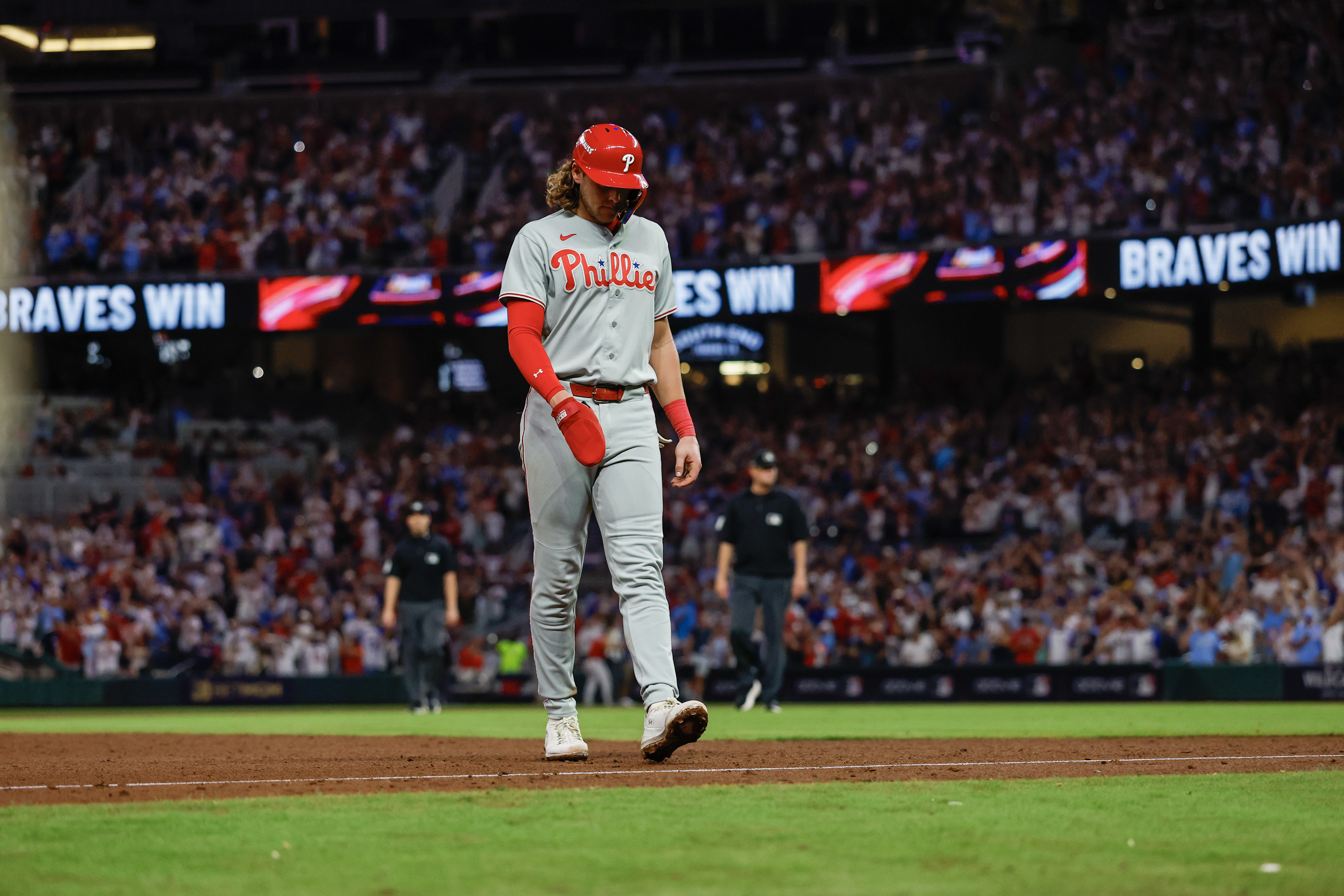
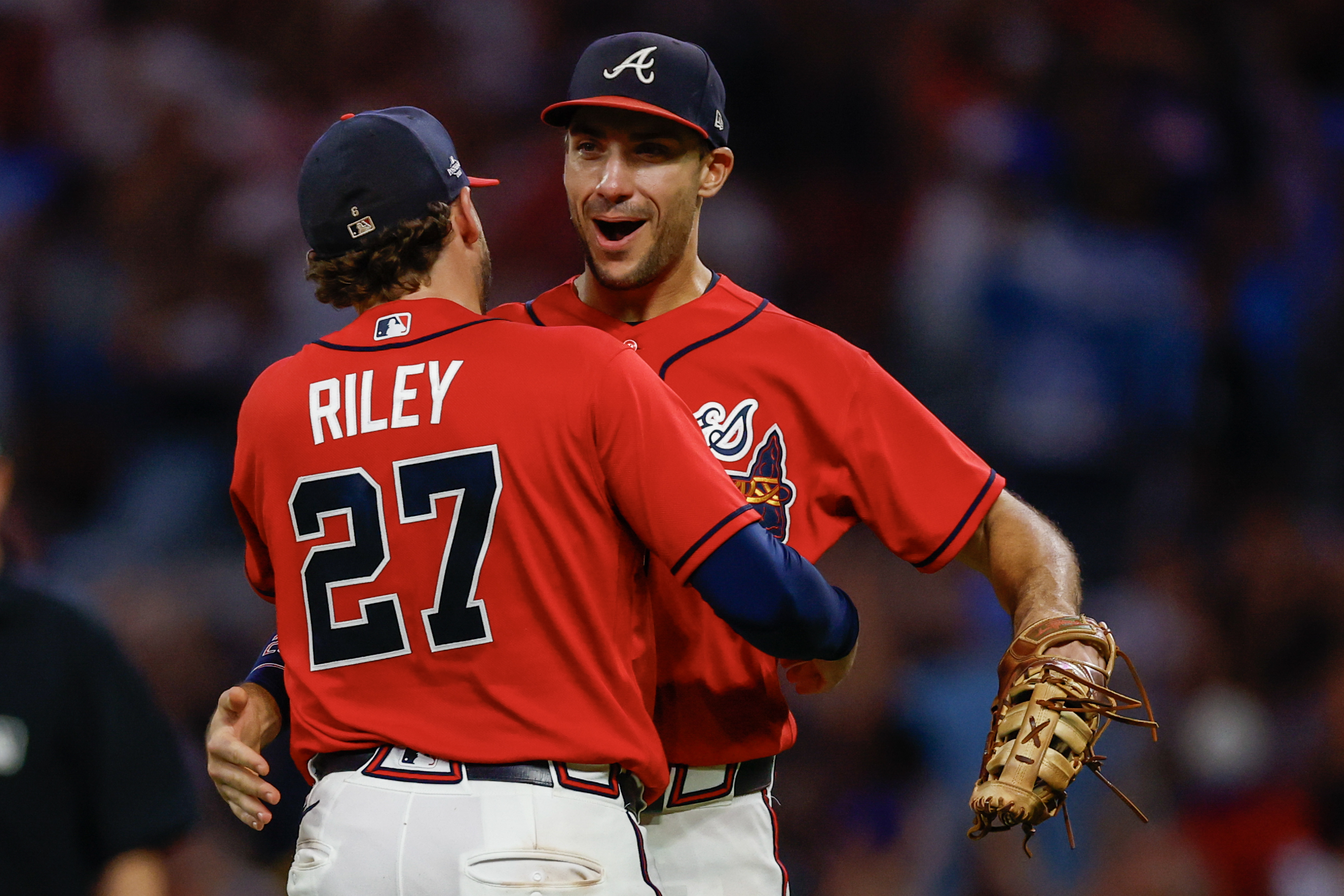
    The issues with the lineup will be even more difficult to solve. The Phillies still haven’t found a replacement for Rhys Hoskins behind Schwarber and Harper. Whit Merrifield, Austin Hays, Adolis García, none even managed to offset the decline and fall of Nick Castellanos.

    These aren’t just nitpicks. These are issues that will almost certainly need to be solved before the Phillies are capable of winning three or four straight playoff series, let alone one. And, really, they transcend whatever transaction-level pass-fail grades you assign to Dombrowski’s moves. The Phillies’ structural issues extend to their payroll. For the most part, their big-money guys performed about as well as can be expected, at least when grading against typical aging curves (i.e. in the case of J.T. Realmuto and Nola).

    The one significant exception is shortstop Trea Turner, who has seven years and roughly $190 million remaining on his contract and is coming off a 33-year-old season in which he posted a career-low .675 OPS. He went 1-for-11 with no walks in three games against the Braves. Turner is 8-for-55 in his last 14 playoff games dating back to Game 5 of the 2023 NLCS.

    “I think it starts with me,” Turner said of the offense’s struggles. “I take a lot of responsibility for it.”
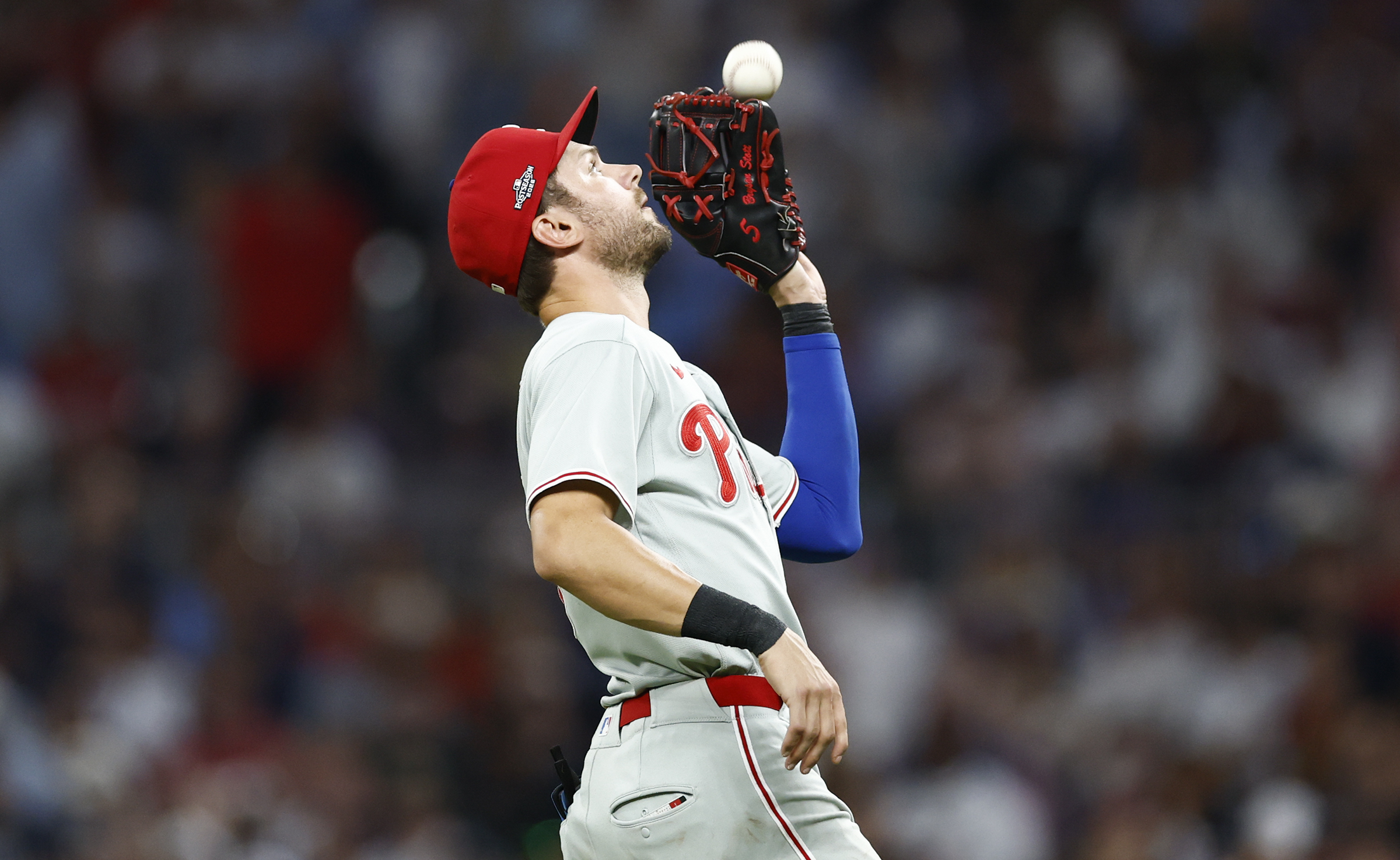
    Phillies shortstop Trea Turner has seven years left on his $300 million contract.Yong Kim / Staff Photographer

    Even with some improvement from Turner, Dombrowski will need to take a careful look at every level of his organization and consider how to better balance this team beyond spinning the roulette-wheel of mid-level free agents and living trade deadline to trade deadline. He will need to explore the offseason trade market. He will need to come up with an accurate assessment of top hitting prospect Aidan Miller’s short- and long-term future after he missed most of the year with a back injury. He may need to consider whether Brandon Marsh can be swapped for a better lineup fit as the outfielder heads into his walk year.

    These are difficult decisions. But they are the reason Dombrowski’s job exists.

    The issue with the Phillies is not their heart, or their brains, and it certainly isn’t their grit. It isn’t their age, or their two best hitters. They came back from a disastrous start that earned their beloved manager a pink slip. They came back from a disastrous seventh inning in Game 2, one day after a victory slipped away from them late. Schwarber and Harper were as good a tandem as any in the league, all the way through this loss to the Braves.

    The hardest general managin’ is taking a roster from good to great. Here we are, seeing it once again.
  • Three Phillies conquered a game of failure, saved their season, and summoned the spirit of 2022

    Three Phillies conquered a game of failure, saved their season, and summoned the spirit of 2022

    ATLANTA — While it may be overly reductive to call baseball the most individual of the team sports, it sure can be the most isolating. That’s true with regard to the physical proximity between teammates on the field of play, and also to the psycho-emotional weight a player must bear when things go awry. In baseball, it is almost always clear where the blame lies.

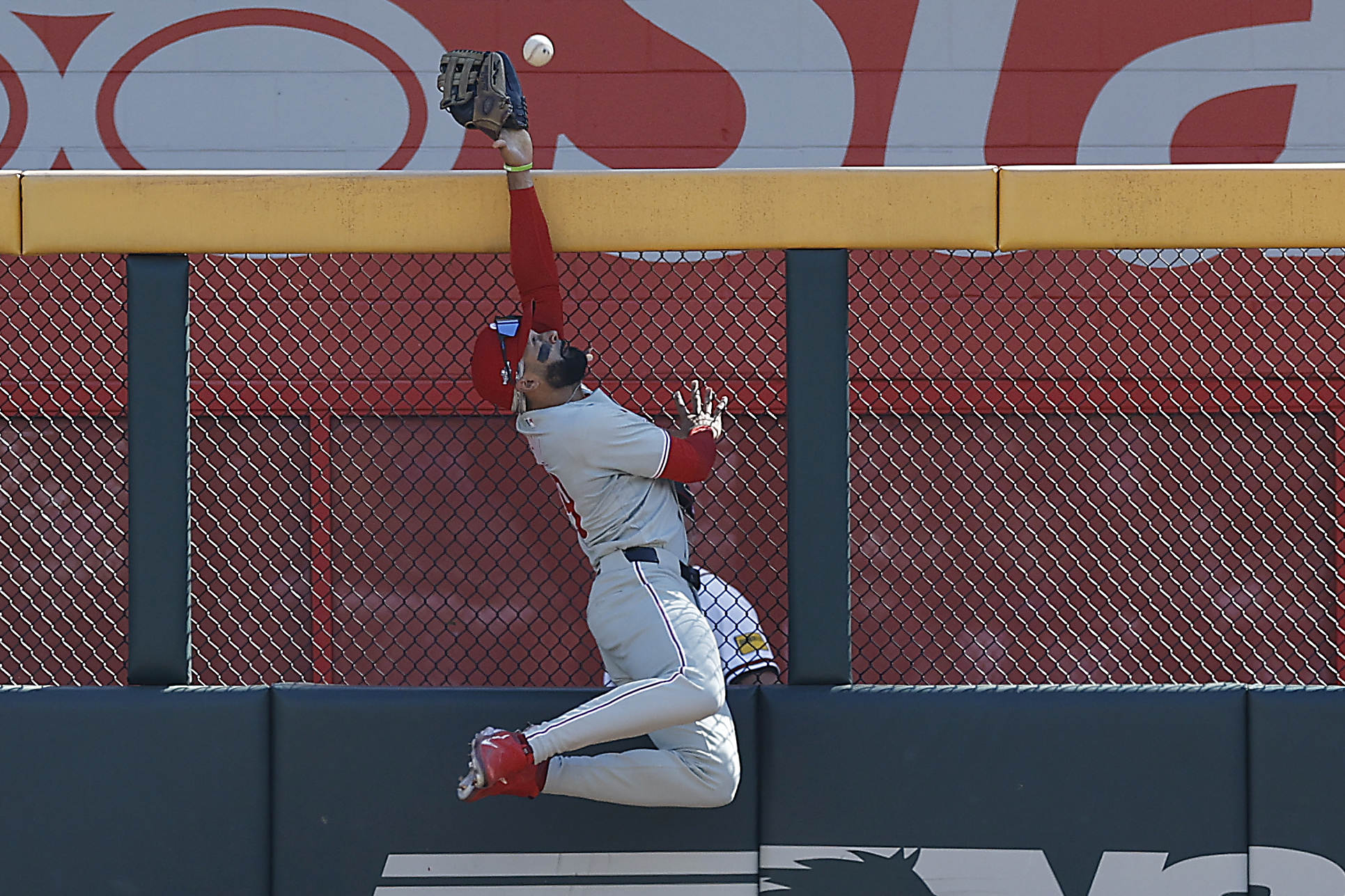
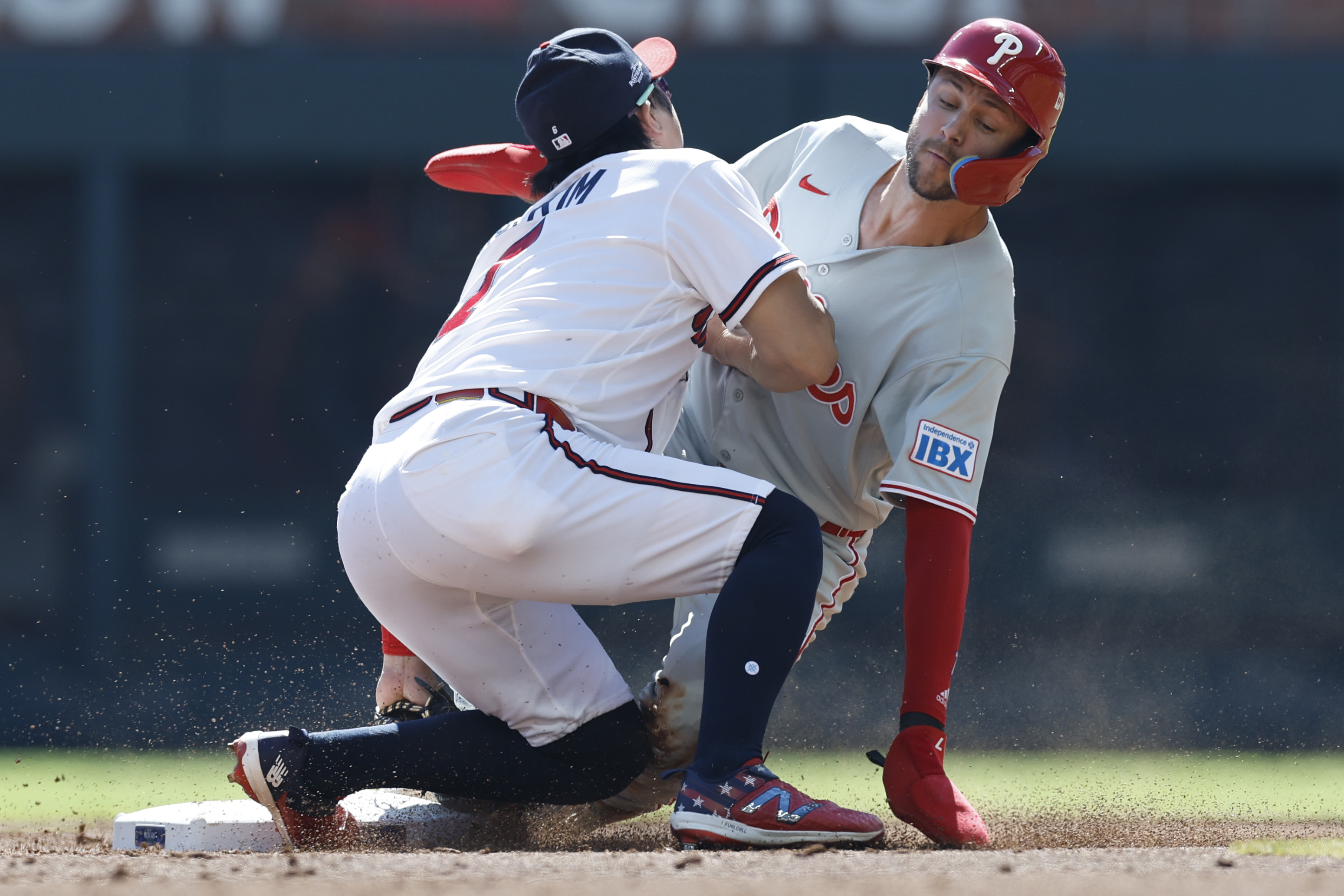
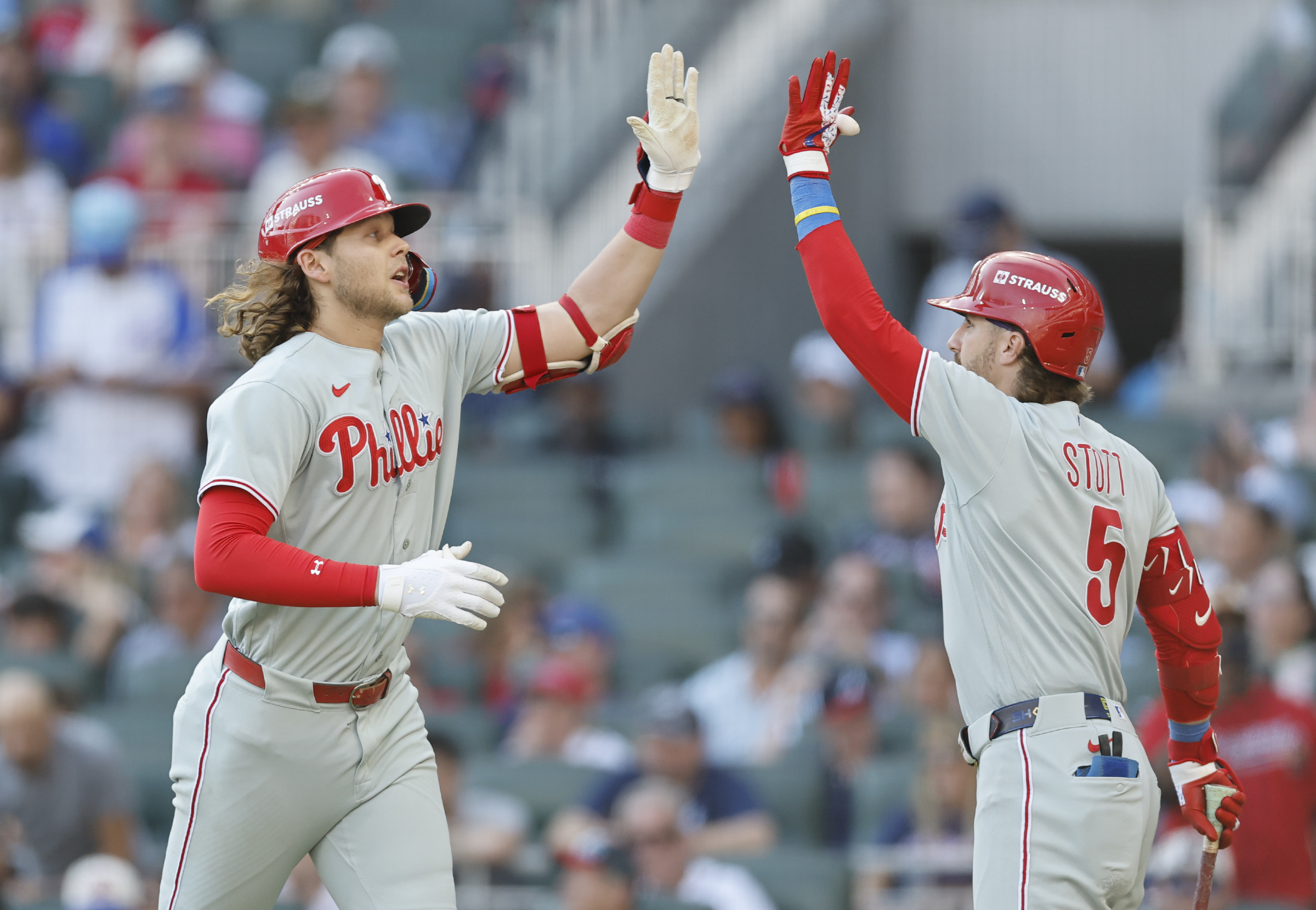
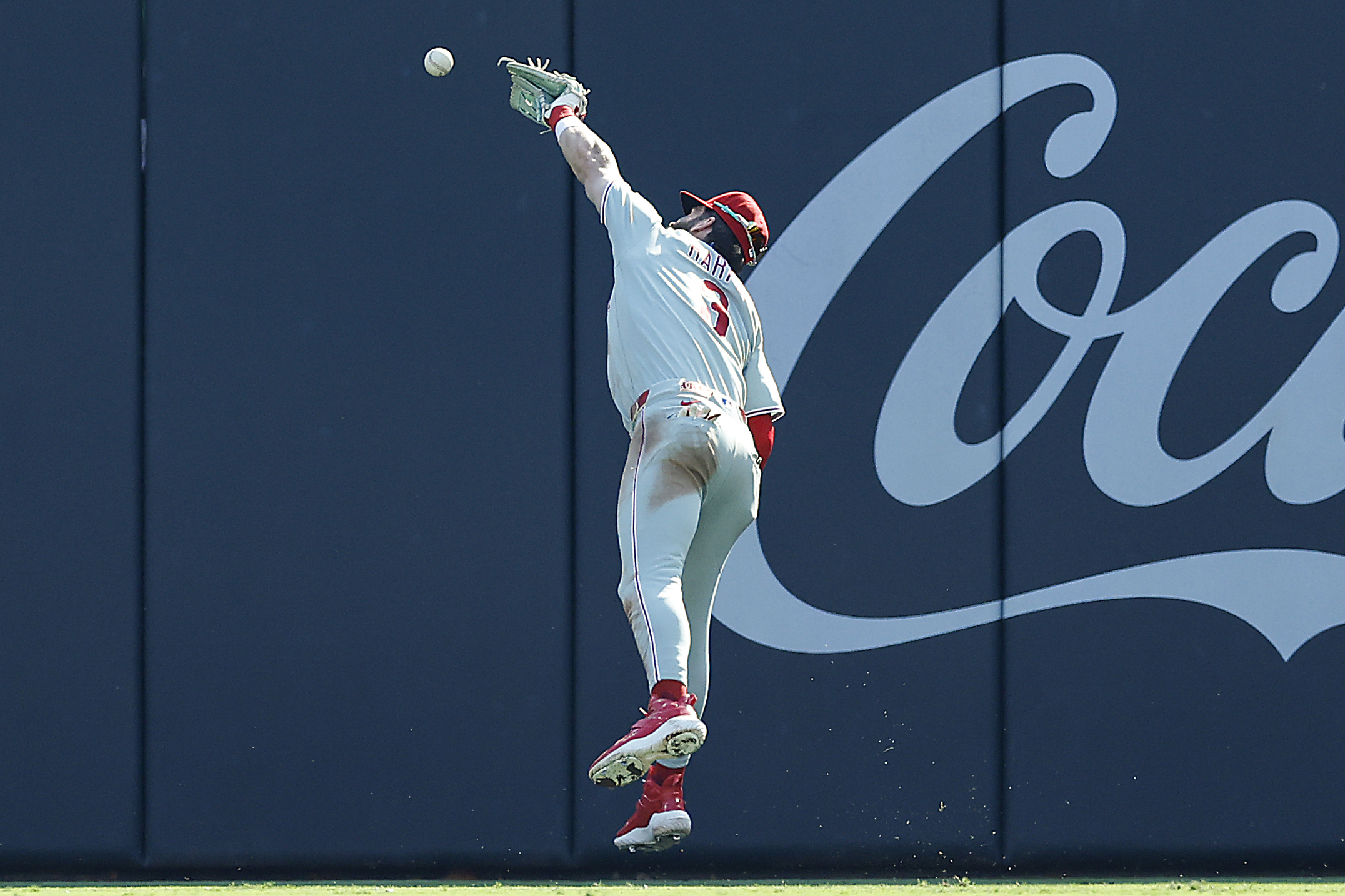
    There was a time in Alec Bohm’s career when he carried more of this baggage than could fit in the overhead bin. Andrew Painter accumulated enough of it in such a short period of time that the Phillies shipped him to the minors without a return ticket. Bryce Harper? He beat a different path to Truist Field and this best-of-three wild-card series. But there he was on Wednesday afternoon, in the seventh inning of a game the Phillies needed to win, making the lonely walk back from the warning track with the slow, confused strides of a man whose misplayed fly ball had just allowed the go-ahead run to score.
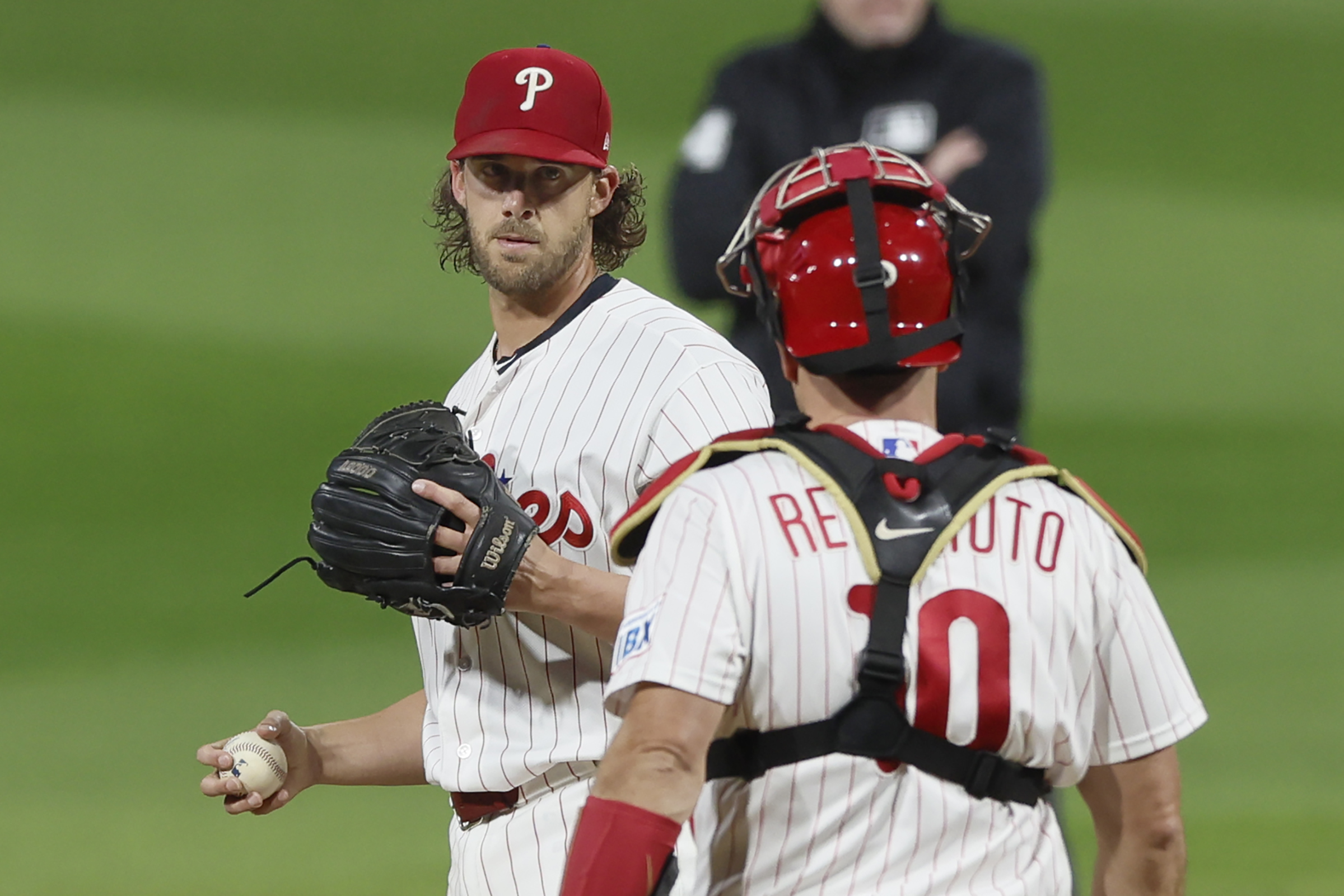
    “Obviously,” Harper would say later, “a world of emotion there.”

    The Phillies’ 4-3 victory in 10 innings over the Braves in Game 2 on Wednesday was a lot of different things.

    It was playoff baseball at its finest, not to mention its most hazardous to a fan’s cardiac health.

    It was a showcase: of the razor-thin margins that will determine which of these two teams advances, and of the strengths that once again have the Phillies on the verge of an NLDS berth.

    Phillies right fielder Bryce Harper couldn’t catch a ball off the bat of the Braves’ Drake Baldwin in the seventh inning.Yong Kim / Staff Photographer

    Mostly, though, Game 2 was a story. First, of failure. Then, of overcoming it.

    Whether the story endures is a question that will be decided on Thursday in a decisive Game 3. The winner will move on to face the Dodgers in a best-of-five series. The loser will move on to face the haunting what-ifs of an early offseason.
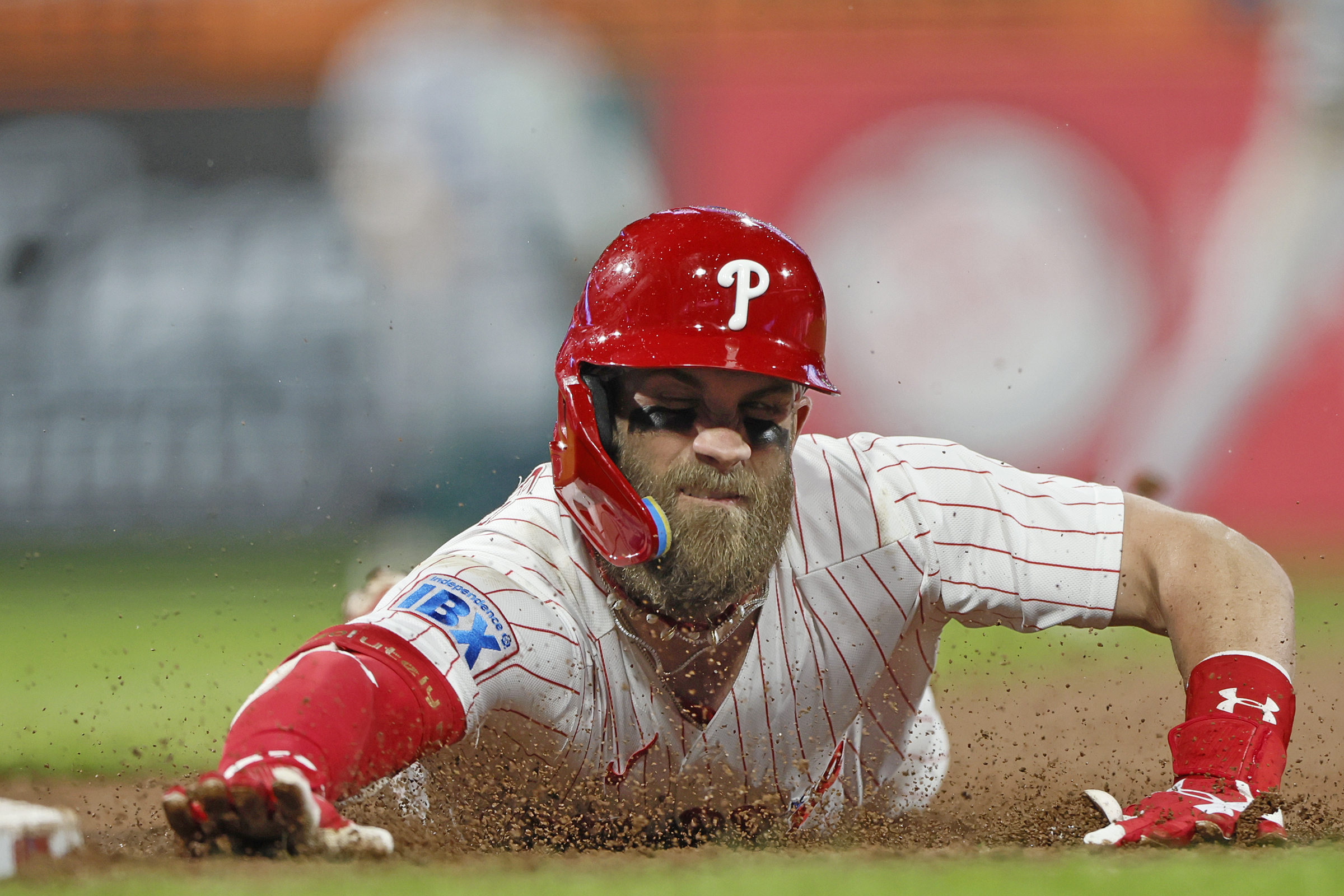
    “I expect them to come out [Thursday] and it to be a similar game,” Braves manager Walt Weiss said. “Like I said [Tuesday], this is usually what it looks like when these two teams play. So yeah, that’s what’ll happen [Thursday]. We’ll come out and we’ll be ready.”
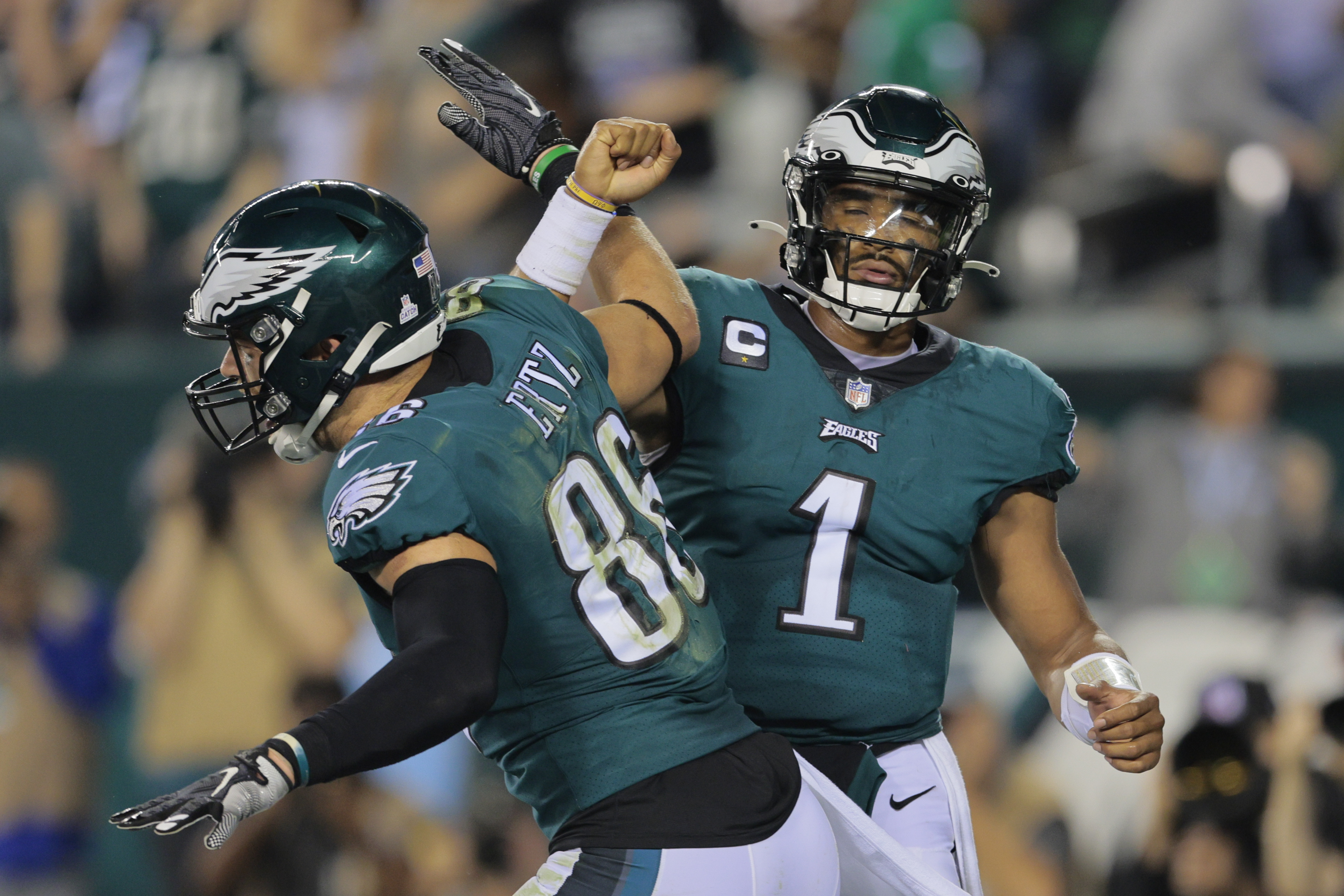
    But if momentum is real, and if adversity is a buoy, the Phillies have to like their chances, whatever the odds say.

    “It’s in our DNA,” Phillies slugger Kyle Schwarber said. “We’re not going to quit.”

    It was Schwarber who set the redemption arc in motion in the eighth. The Phillies were reeling from what had been a disaster of a seventh inning in the field. After leadoff hitter Sean Murphy drew a walk against a tiring Cristopher Sánchez, Bohm unwisely threw to second on a sacrifice bunt attempt by Ha-Seong Kim instead of taking the out at first.

    Kyle Schwarber got the Phillies’ comeback started with a solo home run in the eighth inning.Yong Kim / Staff Photographer

    Then, two batters later, Harper misjudged a line drive off the bat of Drake Baldwin and could not secure the catch. The play plated Murphy with the go-ahead run and set up a sacrifice fly by Matt Olson that gave the Braves a 3-1 lead. The lead was brief.

    Schwarber took care of the first run, belting a 3-2 pitch from Braves lefty Dylan Lee into the right-center field seats to cut the deficit to one run. That set the stage for Harper, who atoned for his fielding miscue by hitting a 1-1 slider from Lee over the wall in right-center. Bohm, too, would get his chance. First, he needed Painter to take advantage of his own.

    Entering the series, interim manager Don Mattingly was murky about his plans for Painter, the one-time top prospect whose first stint in the majors lasted just 14 starts, 11 of them Phillies losses. The rookie had rebounded nicely from his midseason demotion, rediscovering his fastball and his confidence while posting a 3.65 ERA and averaging more than a strikeout per inning in 11 starts down the stretch. But Mattingly entered the postseason planning on using Painter out of the bullpen, something the righty had never previously done. When Schwarber and Harper tied the game at 3 in the top of the eighth, the kid’s time had come.

    Six pitches into Painter’s outing, there was a runner on first and he had not thrown a strike. Things changed drastically after a meeting on the mound and a brief pep talk from catcher J.T. Realmuto. Michael Harris II took a called strike and then hit Painter’s 2-1 pitch directly to Bohm, who started and finished a 3-6-3 double play. Murphy then popped up the first pitch to Bohm to end the inning. From six pitches, no strikes, to three pitches, three outs.

    After a scoreless ninth from Painter, Bohm gave him the only run he’d need to close out the game. With two out in the top of the 10th, the Phillies corner infielder and soon-to-be-free agent took a ball and then a strike and then drilled a 99 mph fastball from Didier Fuentes over the right-field wall.

    “Everybody is fighting for every out, every at-bat,” Mattingly said. “It’s not going to stop.”

    Phillies catcher J.T. Realmuto celebrates with Andrew Painter after their 4-3 victory in 10 innings over the Braves in Game 2 on Wednesday in Atlanta.Yong Kim / Staff Photographer

    This was one of those wins that meant more than the final score, more even than a season prolonged for another day. It was a revelation. The Phillies entered this postseason riding a string of three straight playoffs series defined by failure. Nick Castellanos being thrown out on a sacrifice bunt. Orion Kerkering short-circuiting. The no-show against the Mets. Two straight home losses needing a win to reach the World Series. Once upon a time, this Phillies team had a mojo that forced you to believe, regardless of circumstance, that they would overcome.

    In Game 2, they overcame, three individual triumphs stitched together into a collective in that peculiar baseball way. The old saw that says baseball is a game of failure is not entirely correct. It is a game of bouncing back from failure. More often than not, the last team standing is the team that bounces back the best.

  • Cristopher Sánchez is the reason to believe in the Phillies after a stunning Game 1 loss to Braves

    Cristopher Sánchez is the reason to believe in the Phillies after a stunning Game 1 loss to Braves

    ATLANTA — The only thing dead in the Phillies dugout was the stare from the guy who is now their brightest hope. All around him, Cristopher Sánchez’s stunned Phillies teammates gathered their belongings and shuffled toward the clubhouse tunnel in the wake of a come-from-behind 5-3 win by the Braves. But Sánchez remained, his eyes locked on the pitching rubber at Truist Park.

    “Just looking out at the mound,” Phillies designated Kyle Schwarber said later, a gleam in his eye.

    The Phillies competitive advantage in this best-of-three wild-card Series was always going to be Game 2. That was true before they nearly stole Game 1 with a two-run go-ahead triple by J.T. Realmuto off Didier Fuentes in the seventh inning. It remains true now, even after Austin Riley stole the game back with a three-run home run off Jhoan Duran in the eighth.

    Win Game 2 with your ace on the mound. Find a way in Game 3. That was the most likely formula heading into the series. It is the only formula now.

    “We knew we had to win two out of three, we knew it wasn’t going to be easy,” Realmuto said. “Losing Game 1 isn’t going to deter us at all.”

    The history is daunting, sure. Since MLB expanded its playoff format to include the best-of-three wild-card series, the winner of Game 1 has gone on to win the series 21 out of 24 times.

    Yet few of those teams had a pitcher like Sánchez starting Game 2. The veteran lefty enters the postseason fresh off a second straight Cy Young-caliber season, with a 2.91 ERA in 207 innings and a career-best strikeout rate of 10.0 batters per nine innings. Sánchez has faced the Braves twice this season, holding them to three runs in 12 innings with 13 strikeouts and four walks. Over the last two seasons, he has posted a 2.19 ERA in four starts against Atlanta.

    That Sánchez has never faced Atlanta in the postseason is a testament to his meteoric rise over the last few seasons. In 2022 and 2023, when the Phillies twice knocked off the Braves in the National League Division Series, Sánchez pitched a total of 2⅓ postseason innings, all of them in the 2023 NL Championship Series against the Diamondbacks. By last October, he had become their ace, holding the Dodgers to three runs in 12 innings with 13 strikeouts and three walks in the Phillies’ four-game NLDS loss.

    This year, there is nobody they’d rather have on the mound.

    “The playoffs are momentum-based it seems like, and really momentum starts with your starting pitcher,” interim manager Don Mattingly. “It’s just a game at that point.”

    Clearly, Game 1 was an opportunity squandered. It could very well prove decisive, especially if Duran’s 27-pitch workload in the seventh and eighth innings impacts his availability or effectiveness moving forward. Both Mattingly and Duran said afterward that they would wait and see about his availability for Game 2. Therein lies the most valid criticism of the manager’s strategy in Game 1. If you are going to risk Duran being unavailable behind Sánchez in Game 2, you’d better make sure you win Game 1.

    They could have. That was surely Mattingly’s mindset, even if it would have left him still needing some other pitcher to save the game in the ninth.

    The Braves had their guy on the mound, having won five of Chris Sale’s last six starts against the Phillies, all primarily because of him. The Phillies were forced to start Jesús Luzardo rather than Zack Wheeler, who would have been on the mound had they clinched a playoff berth sooner than Game 162. They nearly transcended those circumstances.

    Luzardo was magnificent, facing the top of the Braves’ order three times and throwing 77 pitches in five innings despite entering the game having thrown just four pitches since returning from a 20-day stint on the injured list. The Phillies took a 1-0 lead in the first inning on an RBI double by Alec Bohm. Luzardo gave up a leadoff double to Mauricio Dubón in the bottom of the second, which eventually led to a game-tying run. It was the only run Luzardo allowed.

    While the Braves briefly retook the lead on an Ozzie Albies triple off rookie setup man Alex MacFarlane in the sixth, the Phillies answered loudly with Realmuto’s two-run triple to the right field corner in the seventh.

    Jesús Luzardo delivered five innings for the Phillies on Tuesday in Atlanta.Yong Kim / Staff Photographer

    It sure felt like we’d seen this sort of thing before. For eight innings, all of it was there. The demon lurking in the corners of their minds, memories of postseasons past. Three losses in four games in 2022. Three losses in four games in 2023. Orlando Arcia poking the bear. Realmuto racing around the bases for an inside the park home run in 2022. This was the postseason and it was the Phillies and it was the Braves and thus, all of it felt as if it’d already been written.

    And then it didn’t. One swing of the bat was all that it took. It came in a manner that, from the other dugout, felt like an exorcism. Two on, two out, one-run lead, Duran on the mound, the Phillies four outs away from stealing a Game 1 win on Tuesday in which everything seemed to be going right.

    “You know, everyone walks away from that game and everyone says what if,” Schwarber said. “The what ifs go away when you leave here. Everyone’s focused on the task at hand tomorrow.”

    The guy on the mound will help.

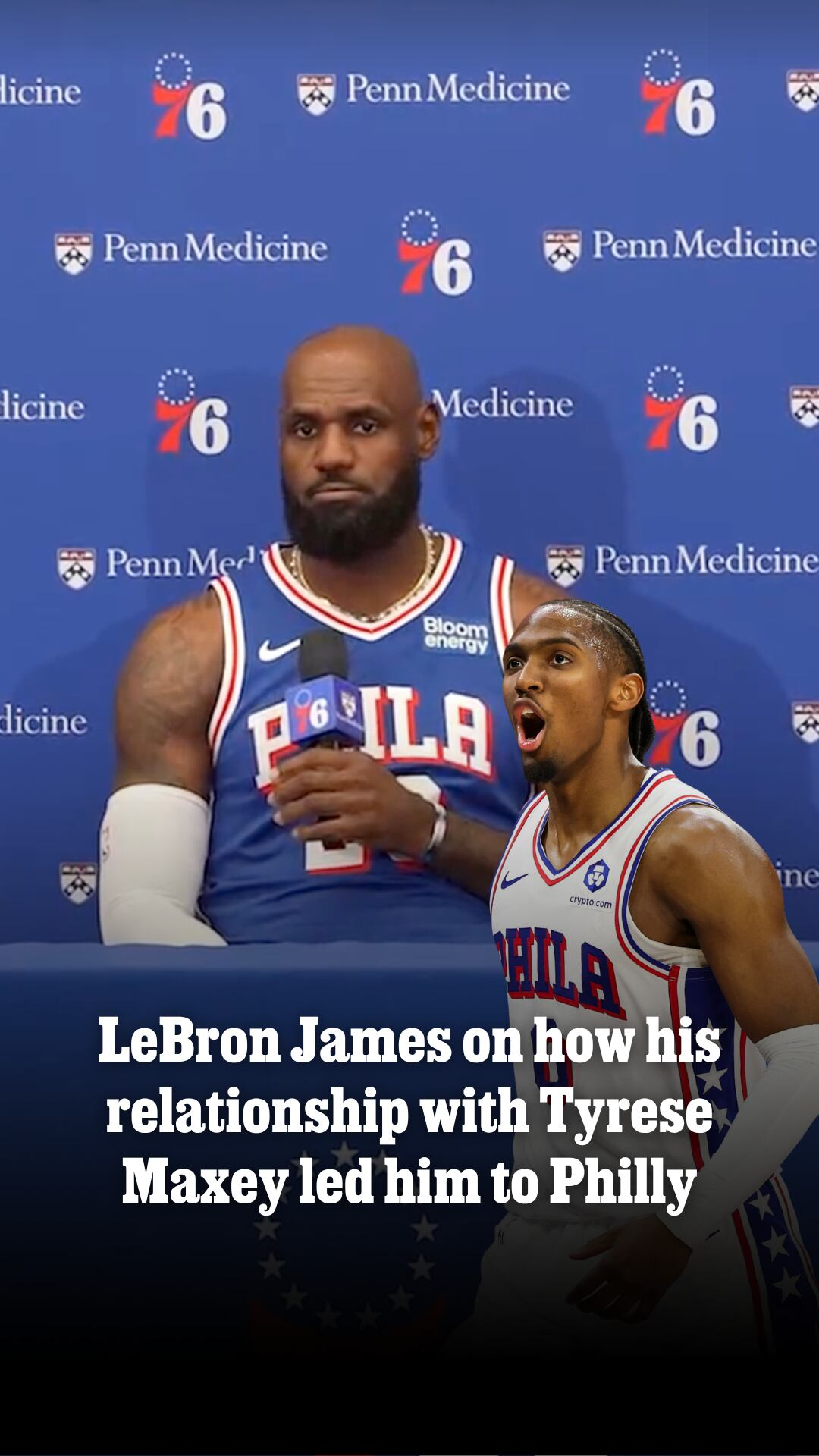
  • LeBron James is here because of Tyrese Maxey. That says something about both of them.

    LeBron James is here because of Tyrese Maxey. That says something about both of them.

    The three words that have long defined Tyrese Maxey were also the ones that landed LeBron James with the 76ers. They were spoken a little more than six years ago by Rajon Rondo, the longtime NBA point guard who’d starred at the University of Kentucky before embarking on a pro career that saw him win a championship and make four All-Star teams with the Celtics.

    This was the summer of 2020, and the world was on hiatus, and Rondo found himself sharing the court with a 19-year-old kid who was about to become the latest in a long line of first-round draft picks from his alma mater. Maxey liked waking up early, and he liked working late, and the kid could ball a little bit. Rondo was impressed enough that he mentioned Maxey to James, his then-teammate on a Lakers team that would go on to win the NBA title once play resumed that summer.

    “He works hard,” Rondo told James.

    In hindsight, maybe we shouldn’t have been so floored three months ago when James announced that he would be continuing his Hall of Fame career with the Sixers. Those of us who’d witnessed Maxey’s rise over the last seven years were well aware of his irrepressible good nature and earnest commitment to his craft. There may not be a more likable player in all of professional sports, let alone the NBA. It isn’t just his magnetism and work ethic, but also the genuineness with which these traits express themselves. What we didn’t know was the extent to which James, too, valued such things. Turns out, he values them a great deal.

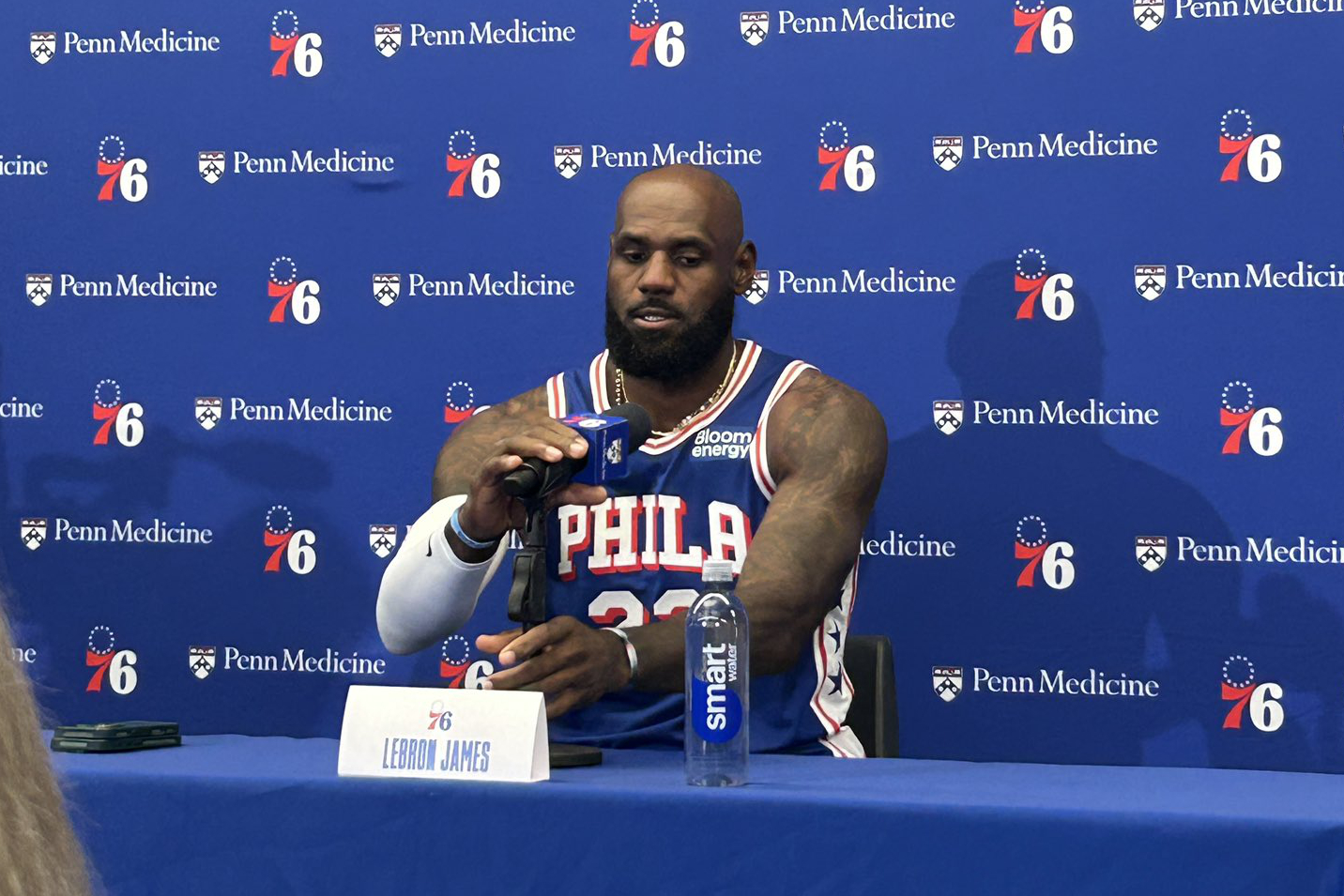
    “Our relationship, when I broke a lot of the teams and franchises down I could possibly play for, he was one of the main deciding factors,” James said Monday in his first official public appearance as a Sixer.

    LeBron James on how much Tyrese Maxey played a factor in his decision to choose Philly
    Video: LeBron James on how much Tyrese Maxey played a factor in his decision to choose Philly

    It’d be easy to interpret that solely as an endorsement of Maxey. But, in a funny way, James’ relationship with Maxey speaks as much to his own character as vice versa. Most of us here in Philadelphia know James only from afar, which means our impressions of him are inevitably shaped more by secondhand narratives than by firsthand witness.

    In the weeks leading up to his decision to sign with the Sixers, local airwaves and social-media feeds crackled with skepticism from a contingent of fans who not only doubted James’ intentions but also recoiled at the idea of seeing him in a Sixers uniform. However genuine some of those skeptics were, others were undoubtedly reacting to a heroes-and-villains caricature that develops with all superstars who reach a certain stature. James’ relationship with Maxey doesn’t necessarily square with that caricature.

    “He’s worked for everything he’s gotten,” Maxey said. “He was put on a pedestal where a lot of guys don’t succeed. And he probably surpassed expectations. For myself, I kind of had the opposite start of my career. I was put on a different pedestal, and I felt like I had to work my way up to where I am.

    “But still, at the end of the day, both of us had to work to get to where we were. I believe in the work, he believes in the work. Like I’ve been saying for years, we’ve got to get one percent better [every day], and not just on the court, but as a group, the camaraderie. It’s gonna be new. It’s gonna be different … But it’s gonna be good.”

    The most striking thing about James’ first news conference as a Sixer was both his maturity and the way in which it echoed Maxey’s.

    “You got to try to stay even-keeled, understand that the noise is gonna be noise, what happens outside of this building is gonna consistently happen, and it’s going to be doubled and tripled and quadrupled now that I’m here,” James said. “And it just comes with the territory, I understand it. So the work that we put in in this building, the work that we put in when we’re on the road, watching film, the work that we put in, will take care of itself. …

    “Guys will hold each other accountable. We put the work in, we have honest conversations, things of that nature. So, you know, just staying even-keeled and everything that’s going on out there does not matter. It does not matter at all, it’s about the results and the things that happen in this building for us. And if we do that, we’re a really talented team, but the talent will only get you so far.

    “But if you put the work in, and you continue to be better and better every day, and you have this championship approach every day to get one percent better, and then it definitely will work in our favor.”

    LeBron James dons a Sixers jersey for the first time as he speaks to reporters on Monday in Camden, N.J.Gabriela Carroll /

    Whatever your preconceived notions about LeBron, he is clearly an athlete who treats his craft with the utmost sincerity. As Maxey said, plenty of athletes have begun their careers on pedestals similar to the one James occupied as a generational schoolboy star at Akron’s St. Vincent-St. Mary and the eventual No. 1 overall pick in the 2003 NBA draft. The dividing line between the greats and the coulda-been-greats is more often than not an internal will that manifests itself in both work ethic and competitive drive. Both are evident in the words James speaks and the manner in which he speaks them. One suspects his new teammates will have no choice but to listen.

    Maxey wasn’t blessed with the same raw physical gifts as James. He had the misfortune of entering college the year the world shut down, which limited his exposure and precipitated his fall to the Sixers at No. 21. But there is clearly something kindred between the two players. Listening to them talk, seeing them side-by-side wearing the same uniform, it suddenly seemed obvious why James ended up with the Sixers. That says something about Maxey. It says more about James.

  • The Phillies haven’t avoided disaster yet. They’ve merely postponed it … for now

    The Phillies haven’t avoided disaster yet. They’ve merely postponed it … for now

    They haven’t avoided disaster yet. For now, all they have done is postpone it.

    That’s a good thing, of course. Much better than the alternative. The Phillies arrived at Citizens Bank Park on Sunday with a chance to irrevocably damage their legacy by completing one of the must sudden and improbable late-season collapses in baseball history. In avoiding that fate, they looked a lot like the team that set a standard they’ve so consistently fallen short of. They scored early, and they scored often, with contributions up and down the lineup. The Phillies’ 7-3 win over the Rays was the kind of performance we once expected from this team in October. The confounding thing is that they needed it just to get there.

    All we can say right now is that their destiny is back in their hands. They will determine the final words that end up written about these last 10 days. Were they a harbinger? Or were they a rallying point? They will decide.

    It would be lovely to say that the Phillies are exactly where we thought they’d be. That, after all the drama, after the four straight losses, and the six in eight games, after the Aaron Nola start on two days’ rest, and the three runs scored in 36 innings, after all of that, all that really matters is that the Phillies are in the playoffs and that the calendar starts anew.

    It would be even lovelier to say that there could be some upside in the way they ended up earning their playoff spot. J.T. Realmuto was 0-for-34 before he yoked an RBI double to left field in the second inning to give the Phillies a 2-0 lead. Bryce Harper hadn’t homered in 12 games before crushing a solo shot to right field in the fifth to put the Phillies up 5-1. Every member of the lineup either reached base or had an RBI. In their final tuneup before the playoffs, everything worked the way it was supposed to. If it really does matter who the hottest team is this time of year, and if you are only as good as your last game, well, who is hotter than the Phillies right now?

    The Phillies’ Edmundo Sosa celebrates his homer in the fifth inning.David Maialetti / Staff Photographer

    That’s not reality, of course.

    Not with Chris Sale looming.

    Not with Zack Wheeler unavailable to start a game against the Braves on normal rest.

    Not with Don Mattingly’s options to counter Sale in Game 1 limited to inconsistent rookie Andrew Painter and possibly a rusty Jesús Luzardo fresh off the injured list.

    The Phillies entered the final week of the regular season with a chance to set themselves up for success in October. They could have been where the Padres are, hosting a best-of-three wild-card series on their home turf. They could be playing a team whose No. 1 starter has not held them to seven runs in 32 innings over his last five starts. They could have Wheeler on the mound in Game 1 instead of some combination of inconsistent rookie Painter and fresh-off-the-injured-list Luzardo.

    The Phillies don’t have any of that. Which means they could still end up paying a steep price for the late-season swoon that saw them enter Sunday with a chance at completing the most (mathematically) dramatic collapse in the city’s history.

    Most consequential is the lack of Wheeler. Against the Rays on Sunday, the 35-year-old veteran was exactly the pitcher you should have expected. With the Phillies needing a win in Game 162 to clinch a playoff spot, Wheeler held Tampa Bay to one run in six innings with five strikeouts and a walk. He threw an efficient 97 pitches, 68 of them for strikes. It was the perfect performance in the perfect spot.

    Now, imagine if that spot had been Game 1 against the Braves instead of Game 162 against a Rays team with little to play for.

    It will be a shame if Sunday was the last we saw of Wheeler this season. If it is, the Phillies will have only themselves to blame.

    They need to win two more games in order to fully erase the disaster they’ve been over the last week-plus. With Game 1 in Atlanta slated for Tuesday, they still must win two more games just to get to the month of October.

  • The Phillies are on the verge of the worst collapse in the city’s sports history. That says something.

    The Phillies are on the verge of the worst collapse in the city’s sports history. That says something.

    The goal is no longer to make the playoffs.

    The goal is to avoid making history.

    The Phillies are on the verge of it. Know that. It can be difficult to recognize when you are living through it. Think of the worst you ever heard. Make it worse. This is it.

    For the vast majority of us whose sports consciousness had not yet dawned in 1964, the year has always been one that occupied the same narrative spaces as walking to school in the snow uphill both ways. As bad as things were when they were worse than we ever had it, we never had it that bad. The great Phillies Phold of ‘64 wasn’t an urban legend as much as it was an origin story.

    To watch sports is to suffer.

    Well, here we are. The 1964 Phillies had a 6½-game lead with 12 games to play. The 2026 Phillies had a five-game lead with eight games to play. It does not get worse than this.

    However it plays out, whatever happens on the final day of the regular season, whether the Phillies win, or see the Diamondbacks lose, or the inverse occurs, they have already accomplished something in the least sense of the word. They have forced us to consider what was long held to be the epitome of impossible.

    By the end of a 12-1 loss to the Rays on a cool, wet, desperate Saturday night in South Philadelphia, the current era of Phillies baseball had been reduced to the hollow sound of bat on ball that echoed through a near-empty stadium that had long before lost its will.

    Pitching on two days’ rest, Aaron Nola gave up three runs in his one inning on Saturday.Elizabeth Robertson / Staff Photographer

    Embarrassment is not nearly a strong enough word to describe the precipice upon which the Phillies currently stand. It may not even be an emotion they are collectively capable of feeling, given the lack of soul they’ve displayed over the last two-plus seasons. And maybe that’s what you get when you build a team full of players who are here primarily because you offered them more money than anybody else. Maybe that’s your soul.

    Maybe.

    There have been many instances over the last several years where the Phillies have appeared to be better than that. Much better, at times. They played the first two months of last season at a 106-win place. They played the eventual world champion Dodgers close to even before bowing out in a National League Divisional Series. Nobody can question the individual competitive integrities of guys like Bryce Harper and Zack Wheeler and Kyle Schwarber and J.T. Realmuto. And, yet, the totality of what we’ve seen since mid-October 2023 suggests there is something lacking in the collective. Whatever that thing is, isn’t there right now.


    window.addEventListener(“message”,function(a){if(void 0!==a.data[“datawrapper-height”]){var e=document.querySelectorAll(“iframe”);for(var t in a.data[“datawrapper-height”])for(var r,i=0;r=e[i];i++)if(r.contentWindow===a.source){var d=a.data[“datawrapper-height”][t]+”px”;r.style.height=d}}});


    The goal now is to avoid infamy. It is to preserve legacy. It is to summon the last shred of political capital they earned in 2022 and escape from Game 162 with a reason to believe. It will be one thing to make the playoffs. It will be another to do so and also offer a reason to believe that they’ve accomplished anything greater than delaying the start of their offseason by another few days.

    The biblical tone is warranted. The Phillies are on the precipice of a disaster that transcends even their own lengthy track record of misery. Barely more than a week ago, the math said they had a 99% chance at making the playoffs. With eight games to play, they had a five-game lead for the final NL wild-card spot. They entered Wednesday needing some combination of two wins and Diamondbacks losses to clinch a playoff berth. That number will still sit at one when they take the field Sunday for Game 162.

    The Phillies’ Bryce Harper dives safely back to first base after briefly trying to stretch a single into a double in the eighth inning.Elizabeth Robertson / Staff Photographer

    It will sit there in spite of — because of? — their understanding that Game 161 was one they needed to win. Interim manager Don Mattingly’s decision to start Aaron Nola on two days’ rest backfired in a manner as spectacular as it was predictable. By the time a lot of folks realized the Nor’easter-delayed game had started, the Rays were up 3-0, courtesy of a loud home run by Tampa Bay’s Junior Caminero. The conditions did not improve.
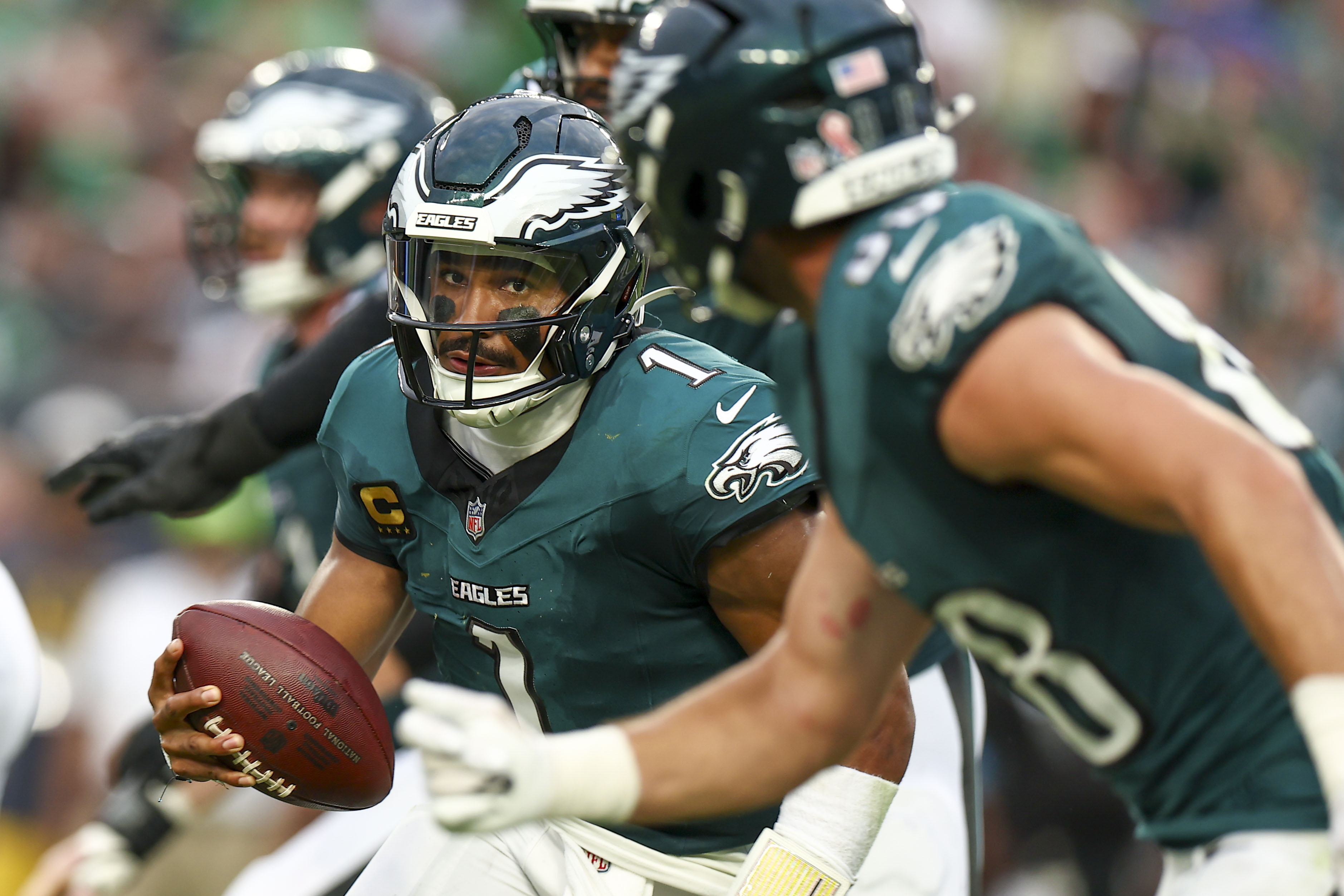
    By the start of the seventh inning, the Phillies needed a touchdown and an onside kick and a field goal just to tie the game. They had the bases loaded in the seventh and eighth. They ended up getting an extra point. Long before then, the focus had turned to Sunday, with an inch of rain predicted to fall.

    The metaphors write themselves. As do the hypotheticals. We needn’t dive into them now. They’ll be actualities soon enough. Even if the Phillies win on Sunday, how can we possibly believe in a team that failed to win a game in its most desperate moment? Worse still, what if they lose and still sneak into the playoffs because of a Diamondbacks loss? Does any of it matter now that Mattingly is treating his pitching staff like they are playing Game 7?

    Questions like these are what Monday is for.

    Mattingly, Gene Mauch, 2026, 1964 …

    The only thing to do right now is watch the story unfold.

  • With tight ends hurt and blockers struggling, the Eagles need Zach Ertz to be more than a good story

    With tight ends hurt and blockers struggling, the Eagles need Zach Ertz to be more than a good story

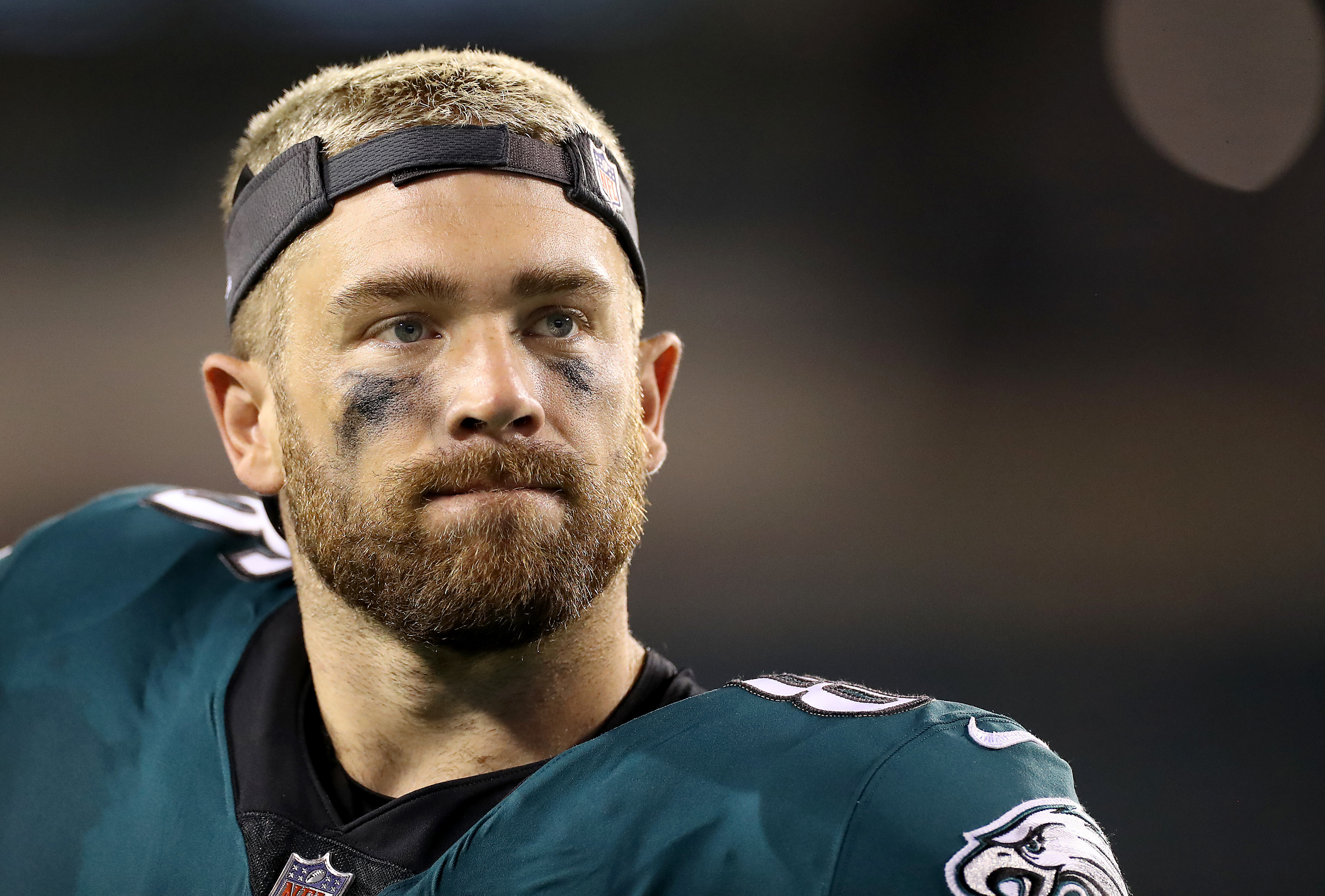
    It’s simultaneously hard to believe that Zach Ertz has been gone for five years and easy to forget that his Eagles tenure overlapped with Jalen Hurts’. Time is funny like that, I guess. The question is whether Ertz can still play football. It’s a crucial one for the Eagles.

    It’s a decent bet that Ertz can still run and catch. He sure could before he tore his ACL last December. Even at 35 years old, in a subpar Commanders offense, Ertz was on pace for 70 catches and 700 yards before injuring his knee against the Vikings in Week 14. In his year-plus with the Commanders, he was averaging nearly four catches and 40 yards per game. Travis Kelce and Tony Gonzalez are the only tight ends in NFL history to average those numbers at age 36+. But, then, Ertz was one of only six to do it at age 35+.

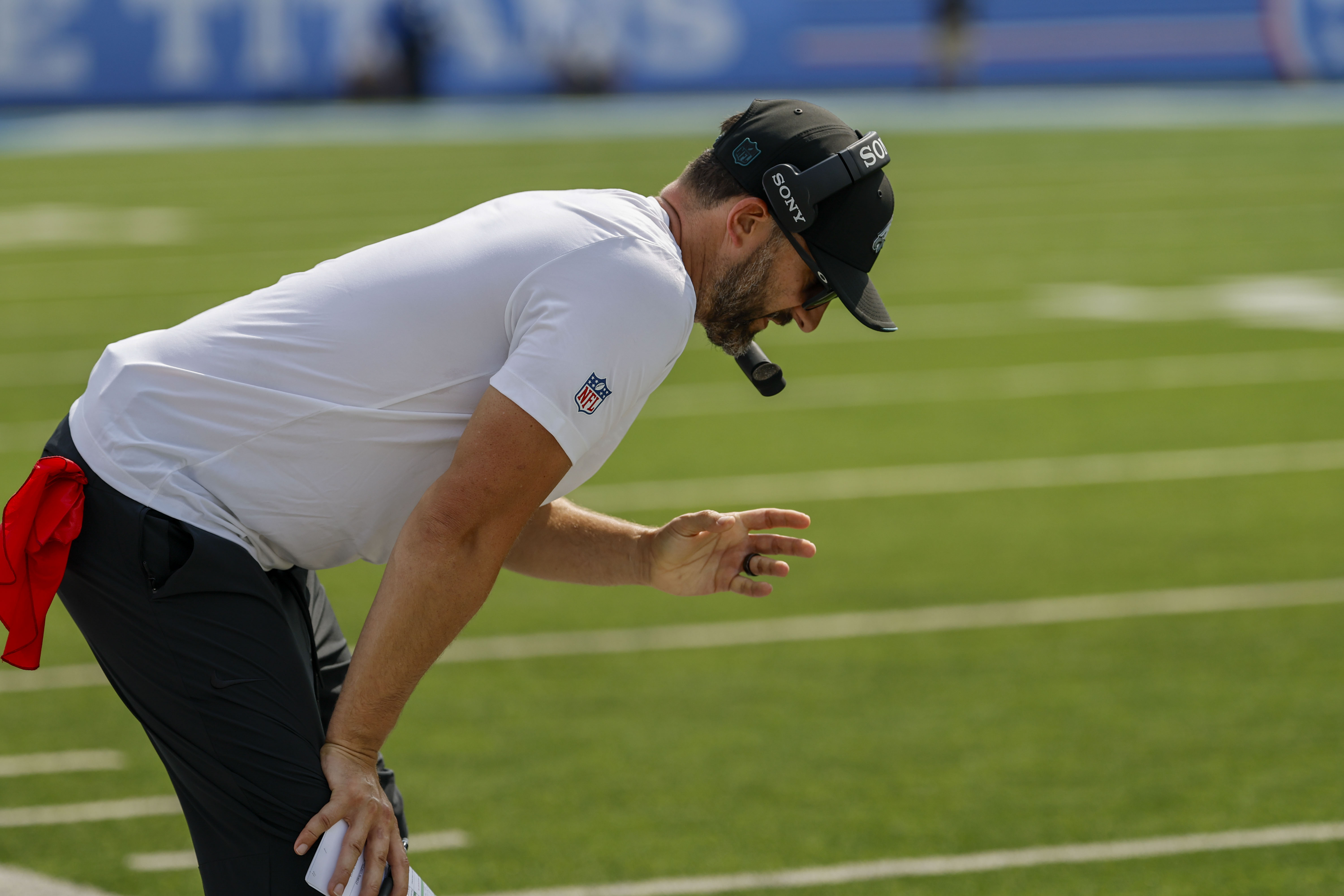
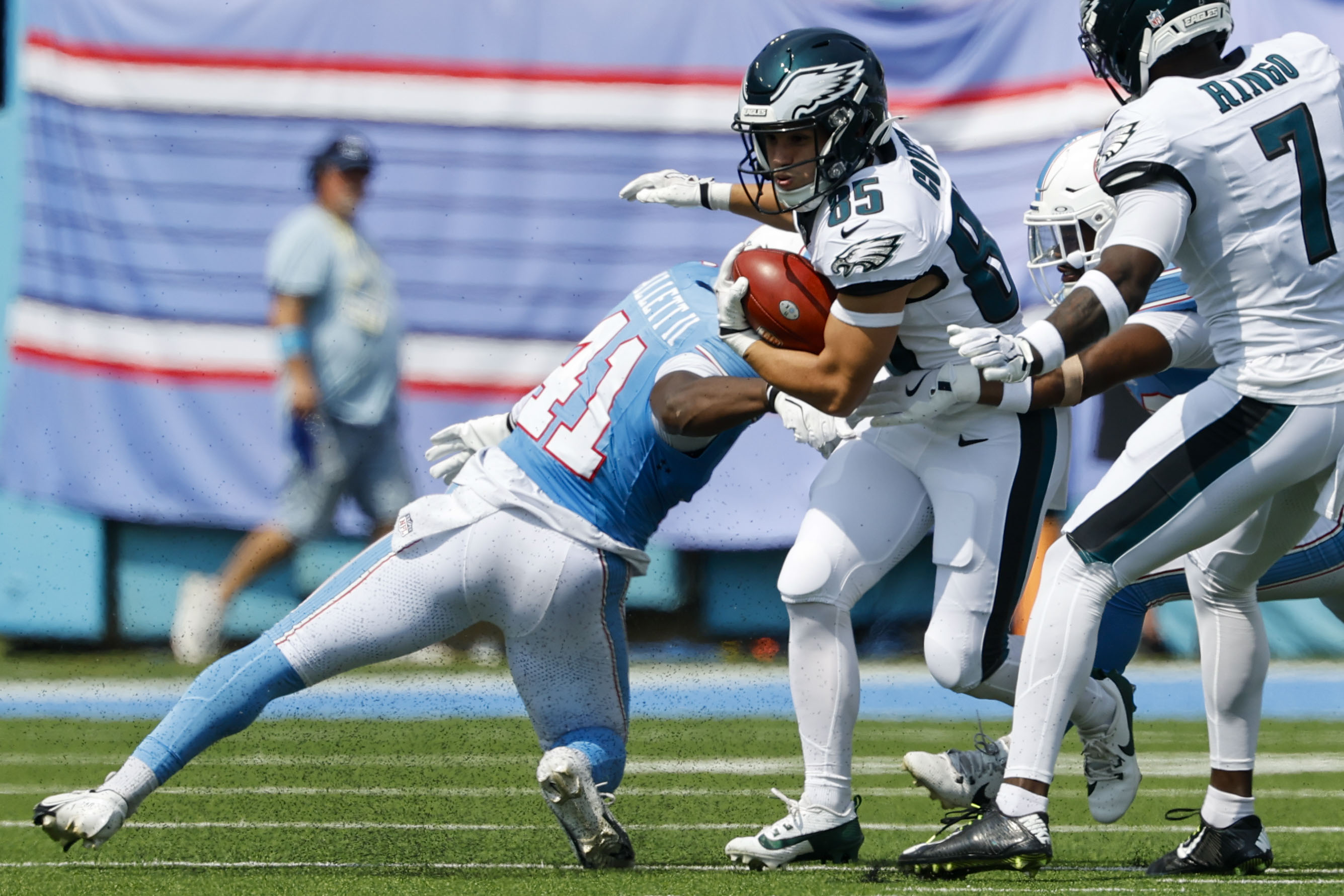
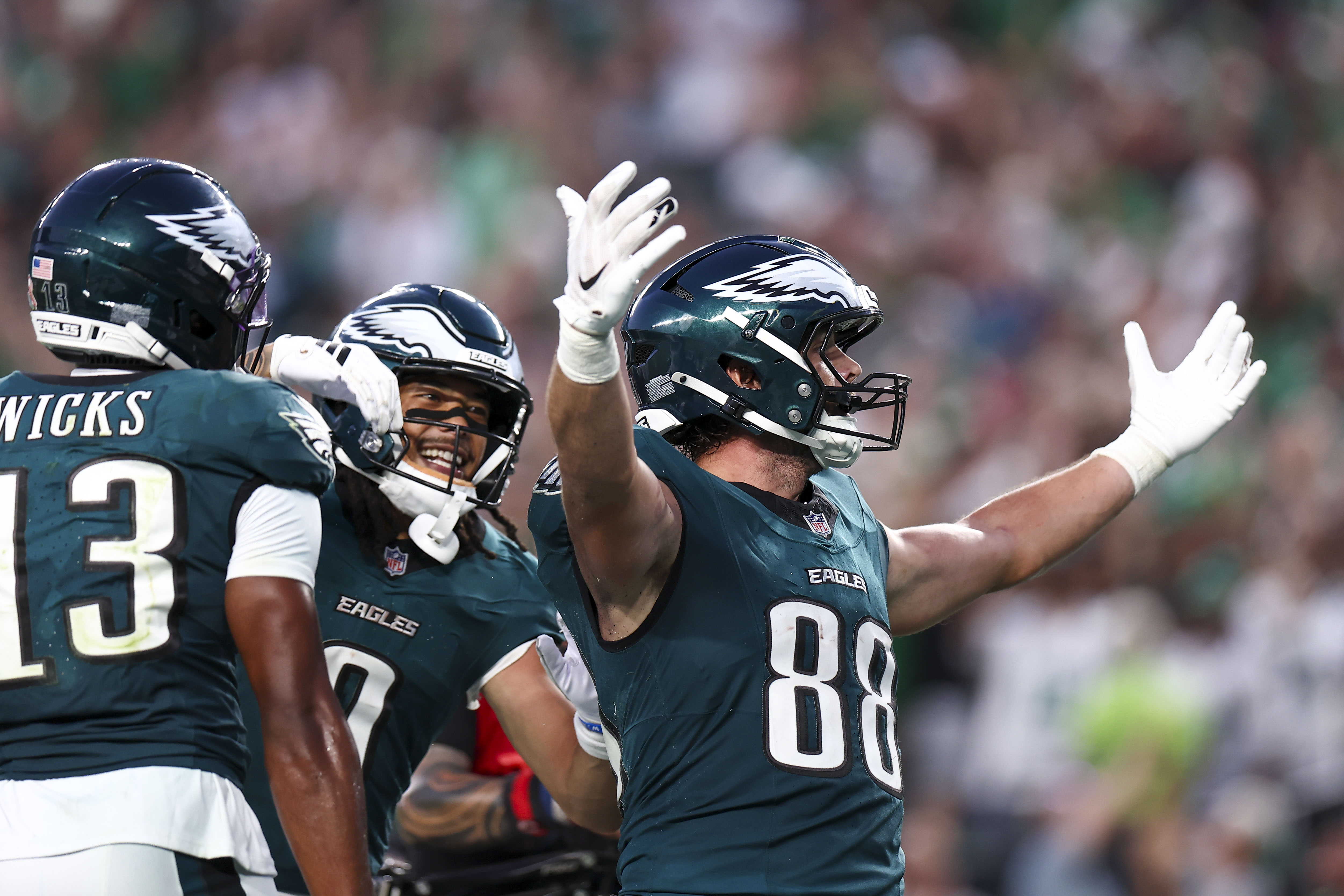
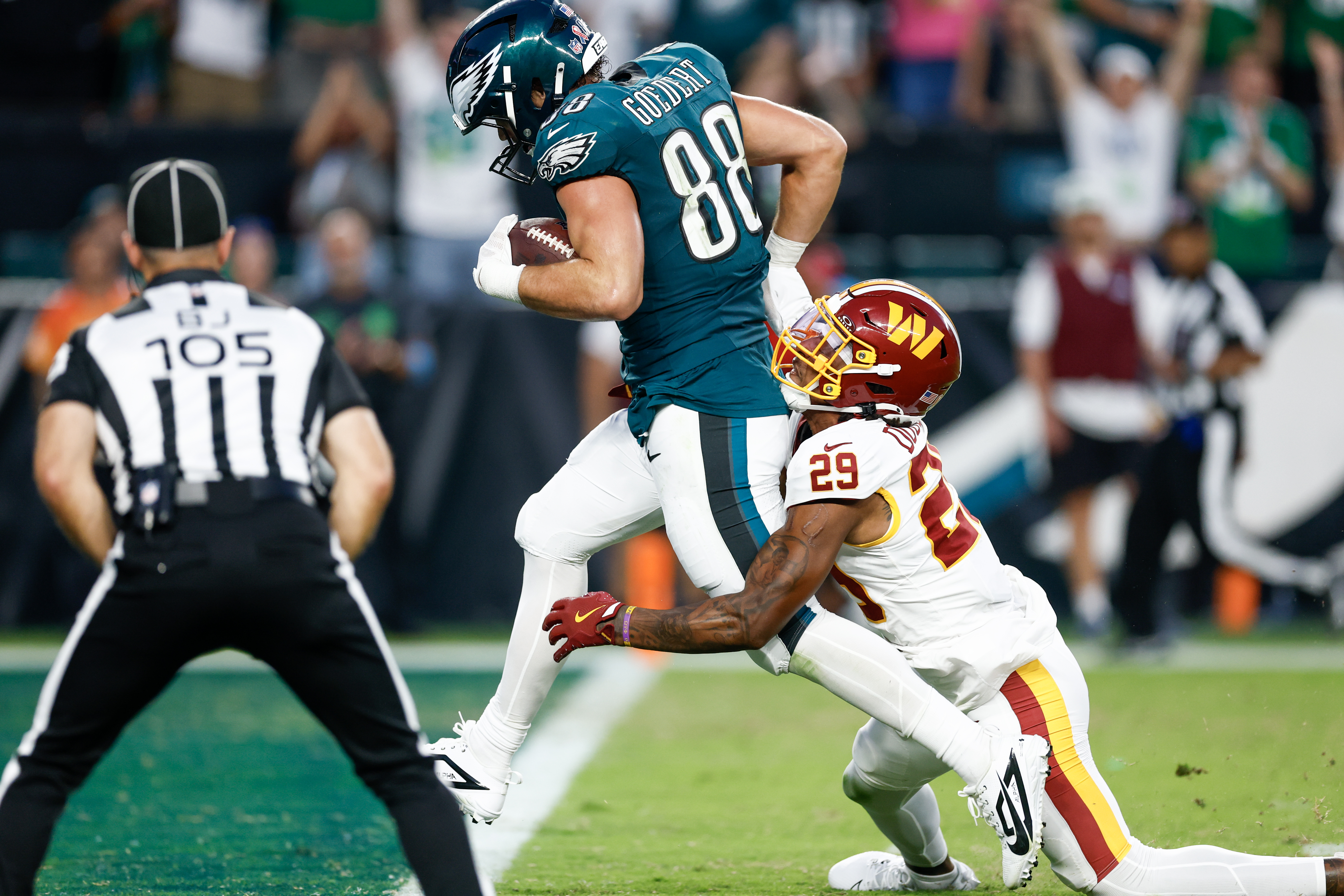
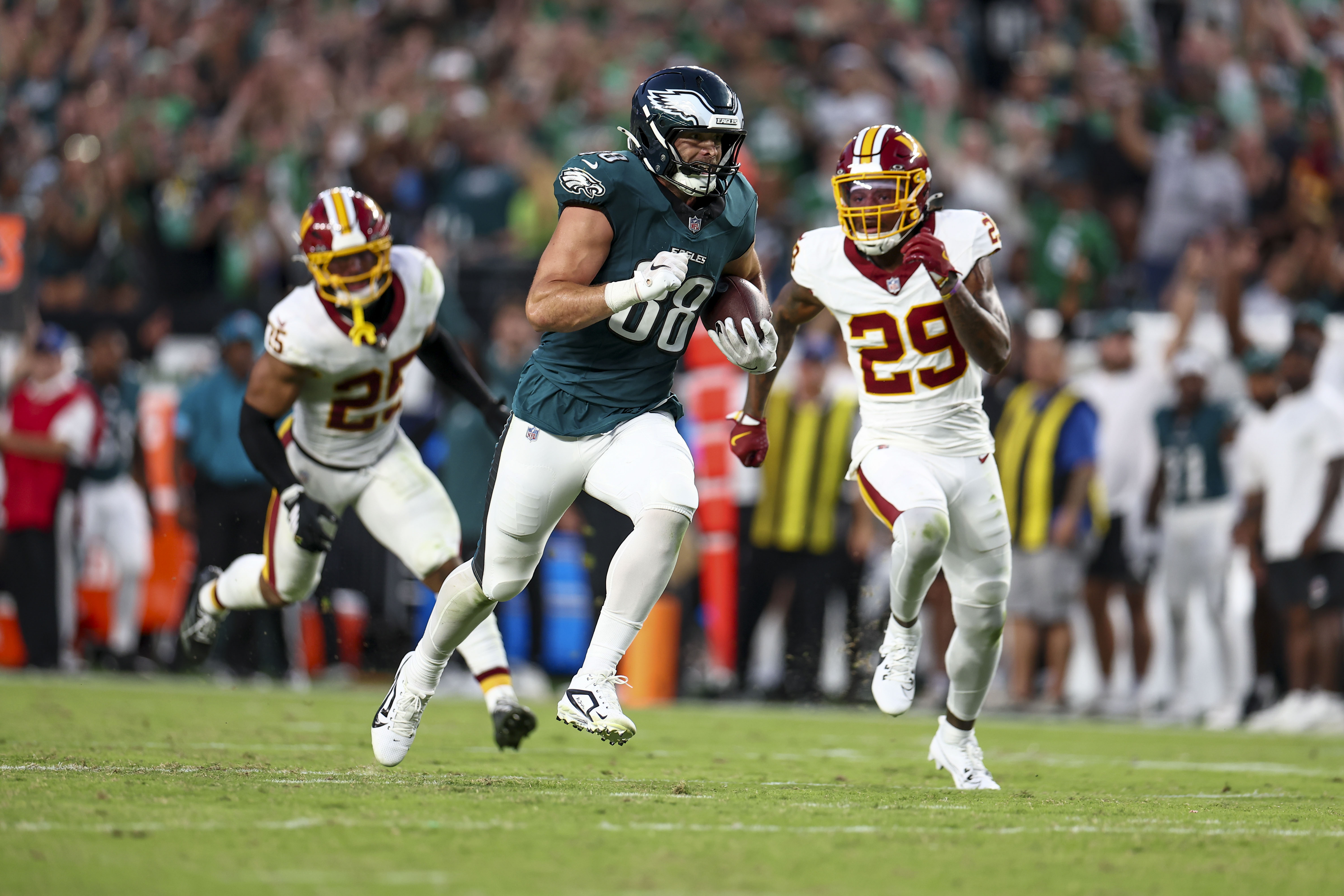
    The bigger unknown is whether Ertz can help replace all of the other things Dallas Goedert did before spraining his MCL in the Eagles’ 24-20 win over the Titans on Sunday. Goedert has played a central role in offensive coordinator Sean Mannion’s scheme through two weeks, with Mannion moving his 31-year-old tight end all over the field to take advantage of his abilities as both a receiver and as a blocker in the run and short-passing game.

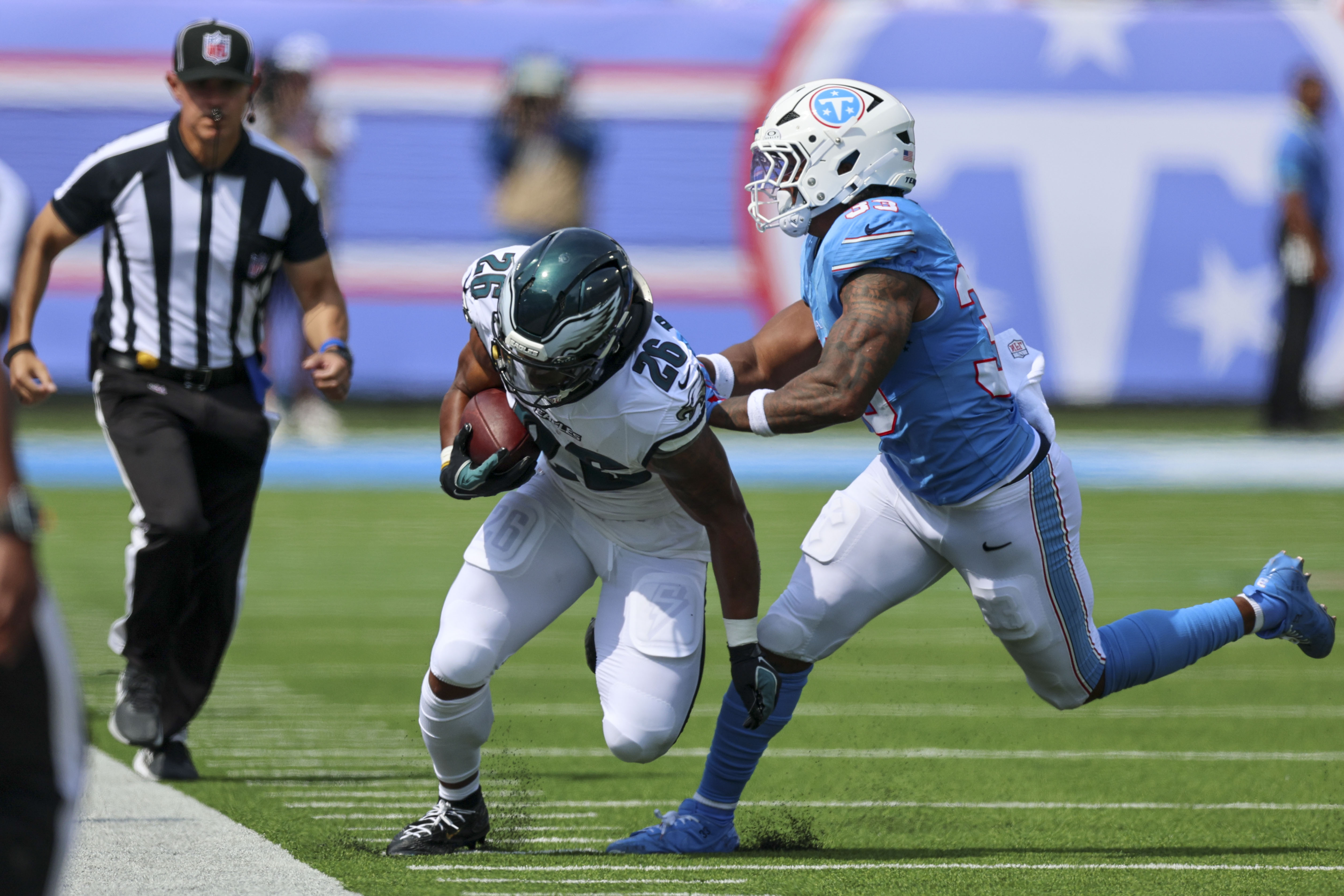
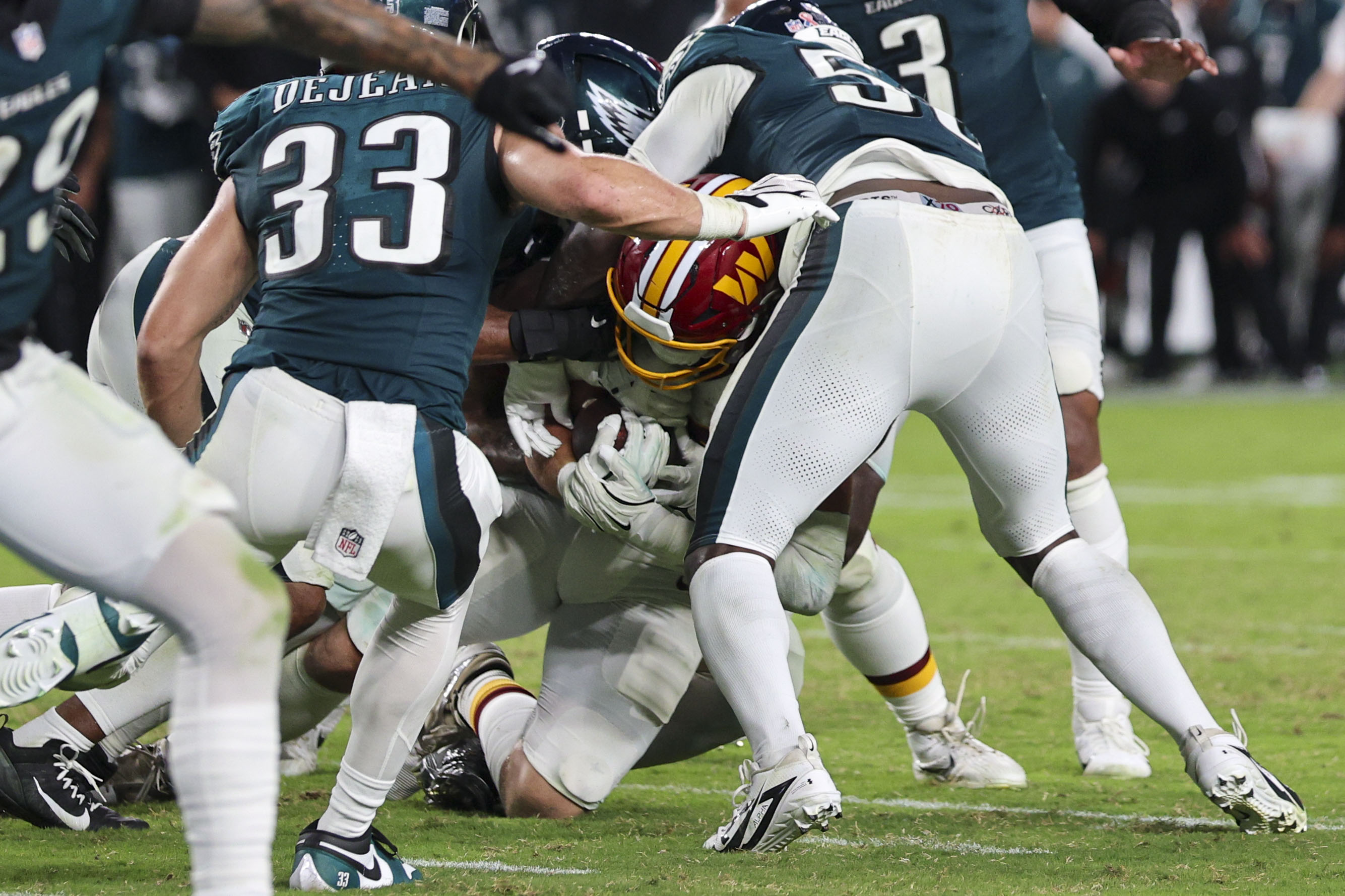
    Goedert’s absence is a particular concern given the blocking struggles that have plagued them as a team. The Eagles rank among the NFL leaders in zero and negative yardage plays. Through two weeks, they’ve seen 18 runs and passes go for zero or negative yards. That’s 14.6% of their touches from scrimmage, more than all but three teams (Raiders, Patriots, Colts).

    Ertz was never regarded as a great blocker, even in his prime. The Eagles don’t need him to be great. But it would sure help if Ertz could be good enough to expand Mannion’s options for replacing Goedert while also fixing the overall run/short-passing game. It’d also be a great story.

    If Zach Ertz can reclaim his old Eagles magic, he’ll have a chance to ascend to the top of the franchise’s receptions list. DAVID MAIALETTI / Staff Photographer

    When the Eagles traded Ertz in 2021, midway through Hurts’ first full season as a starter, he was 11 catches shy of becoming the franchise’s all-time leader in receptions. His 579 catches are 10 behind Hall of Fame receiver Harold Carmichael and 127 more than Hall of Fame tight end Pete Retzlaff. Ertz might only keep the record for a year, given DeVonta Smith’s rapidly rising career total (398 at the moment). Still, it would tie a nice bow on a career that began in Chip Kelly’s first season as coach.

    Most of the heavy lifting will need to be done by Mannion and general manager Howie Roseman. The Eagles have leaned heavily on veteran blocking tight end Johnny Mundt thus far. His current 52.7% snap share is dramatically higher than the rate he logged in any of his first nine NFL seasons. One option is to make heavier use of Mundt in “11″ personnel paired with Darius Cooper, the Eagles’ best blocker at wide receiver. But, again, Mundt has never been a full-time player. His career-high single-season receiving totals are 19 catches and 172 yards.
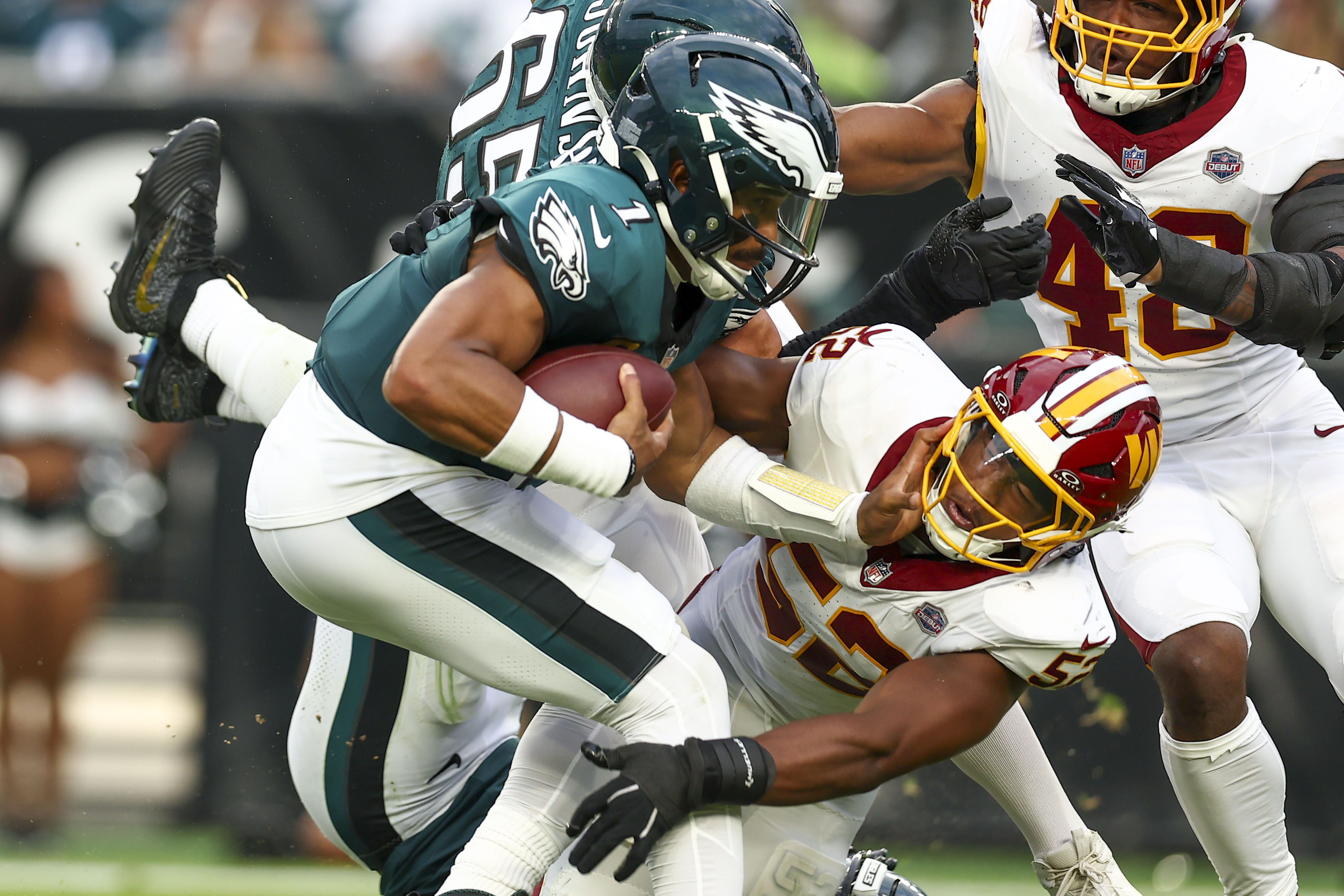
    However Mannion decides to handle his personnel groupings, there will be tradeoffs. There is a reason why a legitimate two-way tight end has become one of the NFL’s more valuable commodities. There might not be another position in sports where the paradigm has shifted as dramatically as it has since Ertz entered the league. When the Eagles selected him at No. 35 overall in 2013, the previous four drafts had seen just seven tight ends go in the first or second rounds. That’s less than half the number of tight ends that went in the first and second rounds in the most recent four-year window (18, including Eagles rookie Eli Stowers).

    The renewed emphasis on the position has been evident through the first two weeks of the NFL season. Of the 14 players with 12+ receptions, five are tight ends. Buffalo’s Dalton Kincaid, Houston’s Dalton Schultz and Kelce all rank among the top 12 in receiving yards. Last season, the Rams had four tight ends rank among their top seven target-earners for a team that led the league in scoring.

    With teams increasingly relying on nickel and three-safety defensive packages, and with defensive coordinators prioritizing versatility, tight end is a position that can decide which team has the matchup advantage on any given play. The question isn’t how close Ertz is to the player he was. It’s how close can he be to the players the Eagles suddenly need.

  • The story of Jalen Hurts’ heroics in win over Titans starts with Robert Saleh, not Jeffery Simmons

    The story of Jalen Hurts’ heroics in win over Titans starts with Robert Saleh, not Jeffery Simmons

    NASHVILLE — The name on Jalen Hurts’ mind wasn’t the one you might’ve expected.

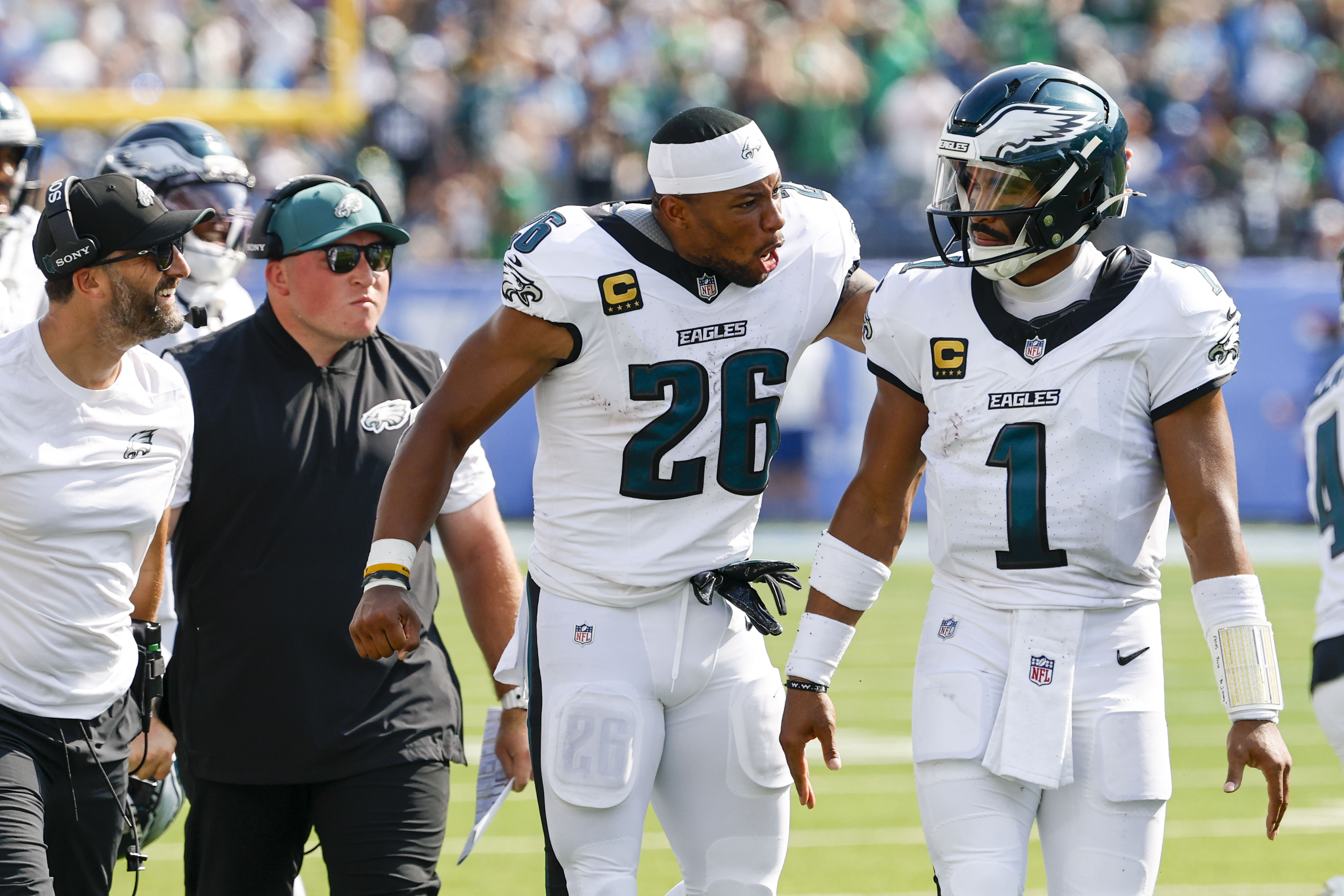
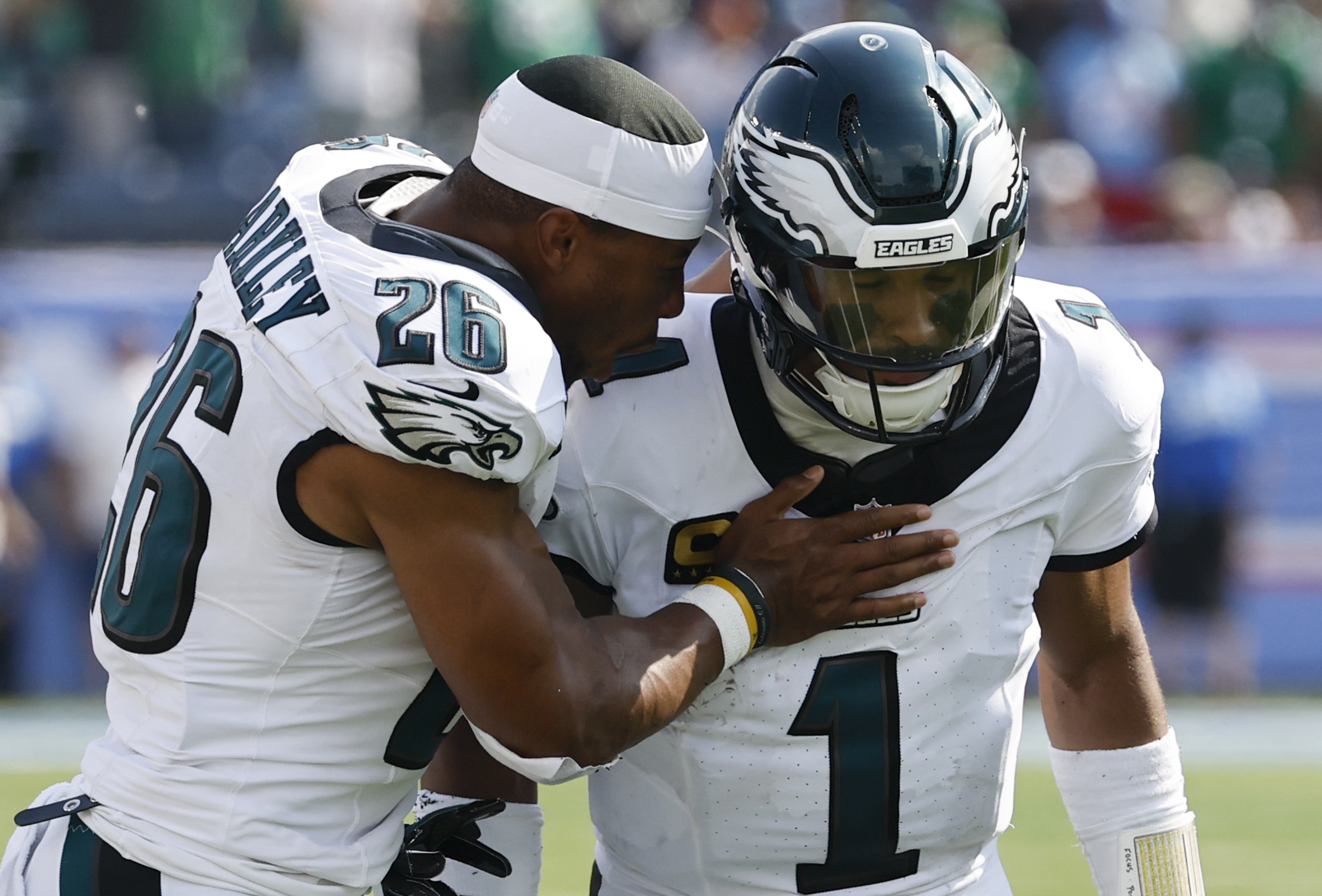
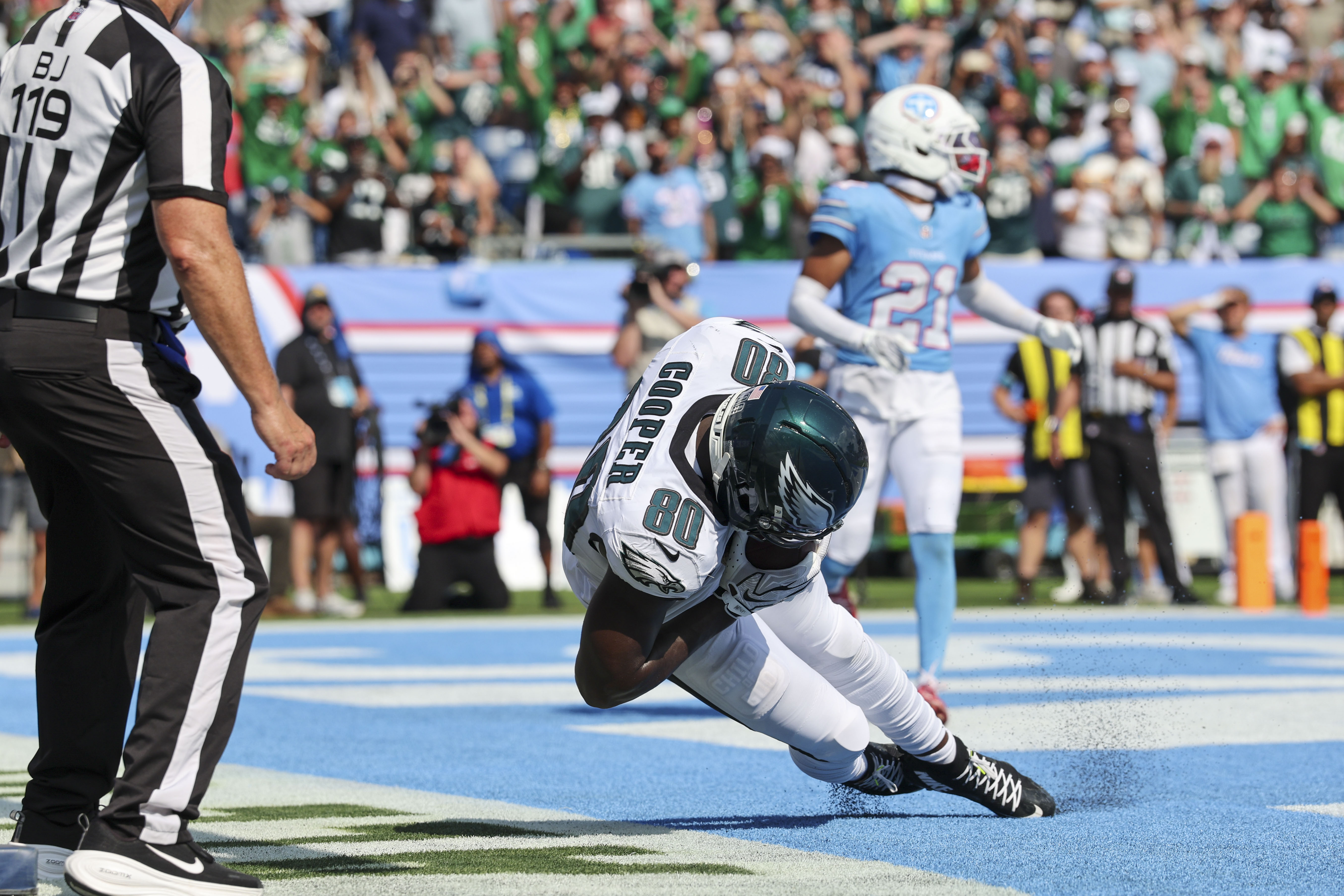
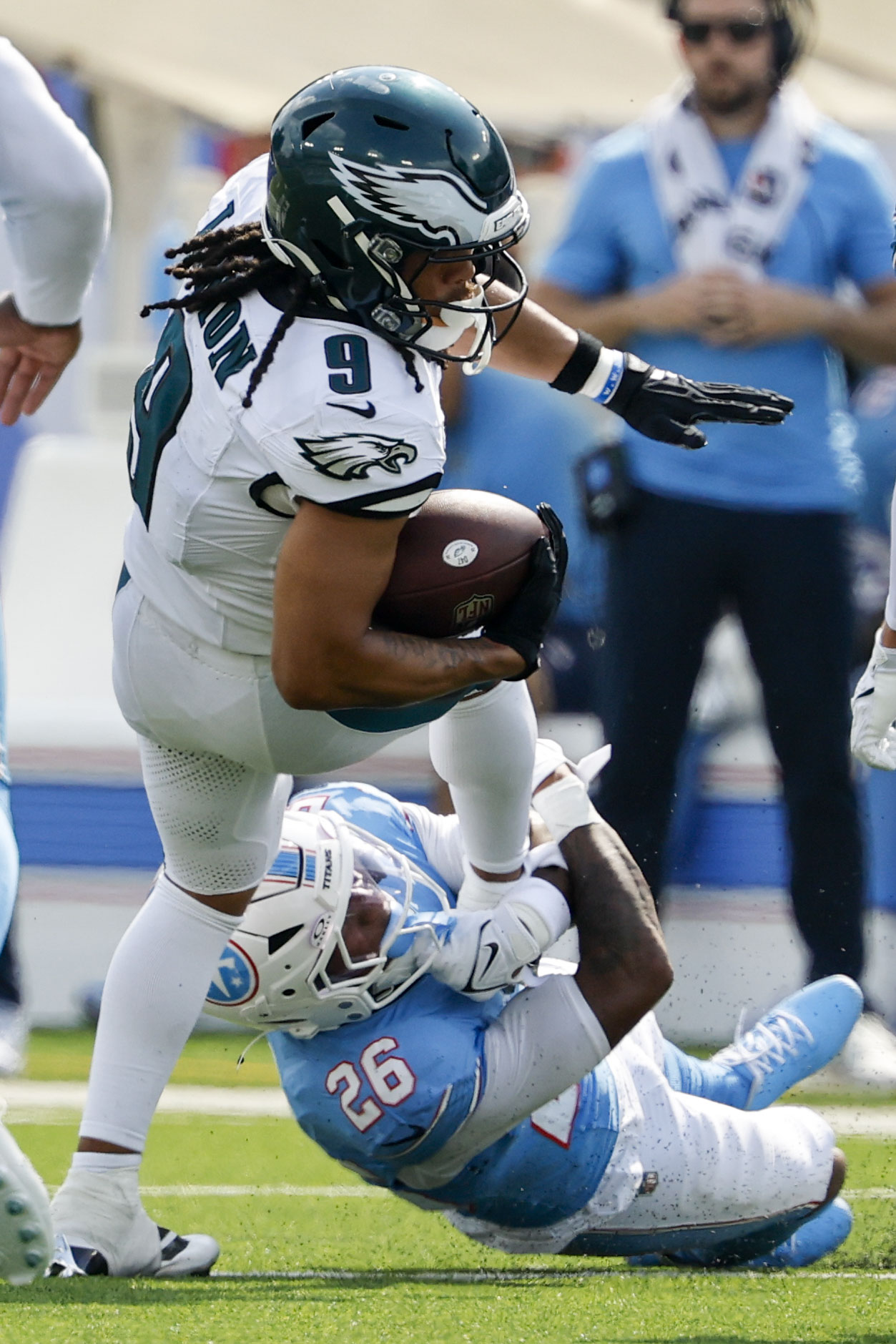
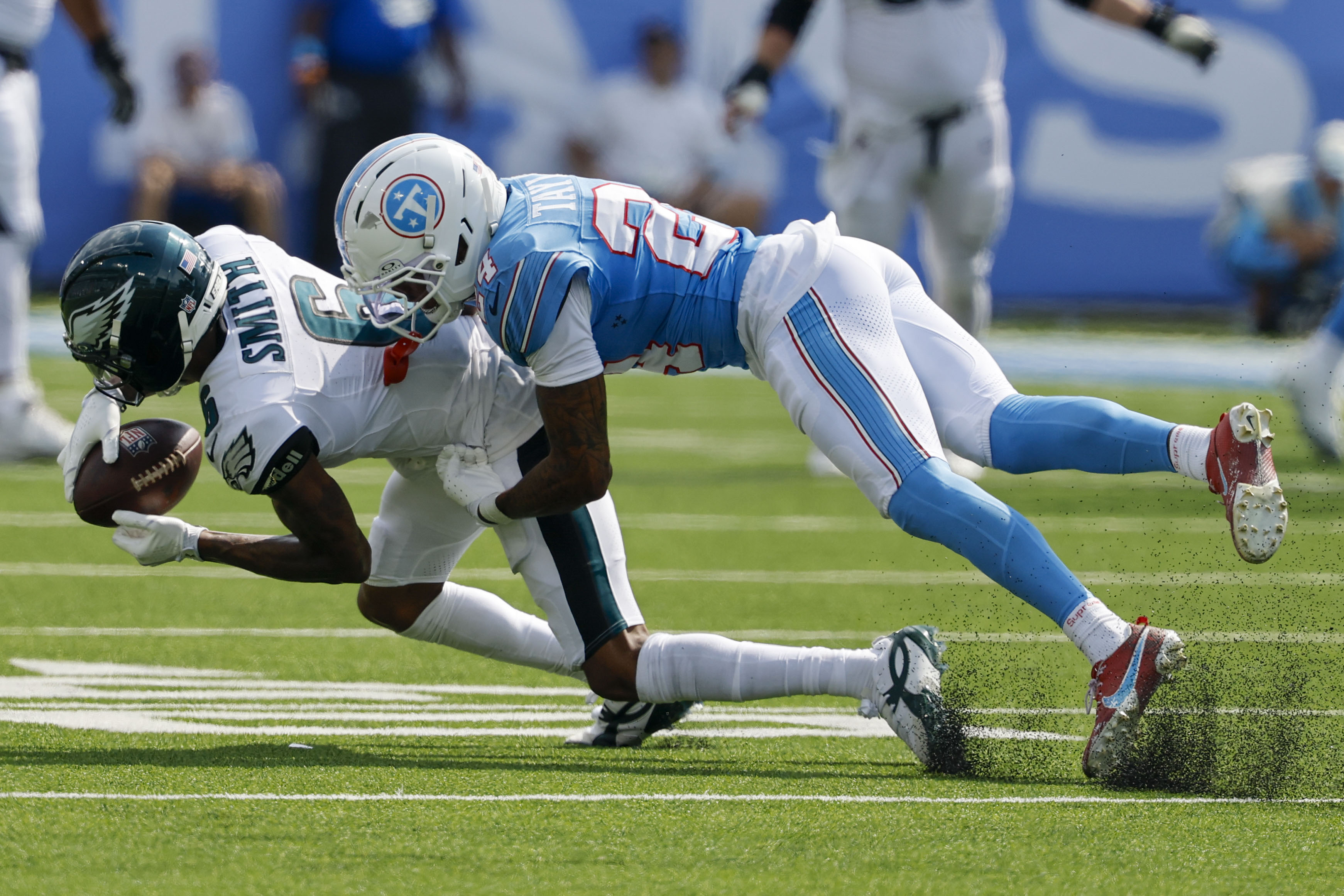
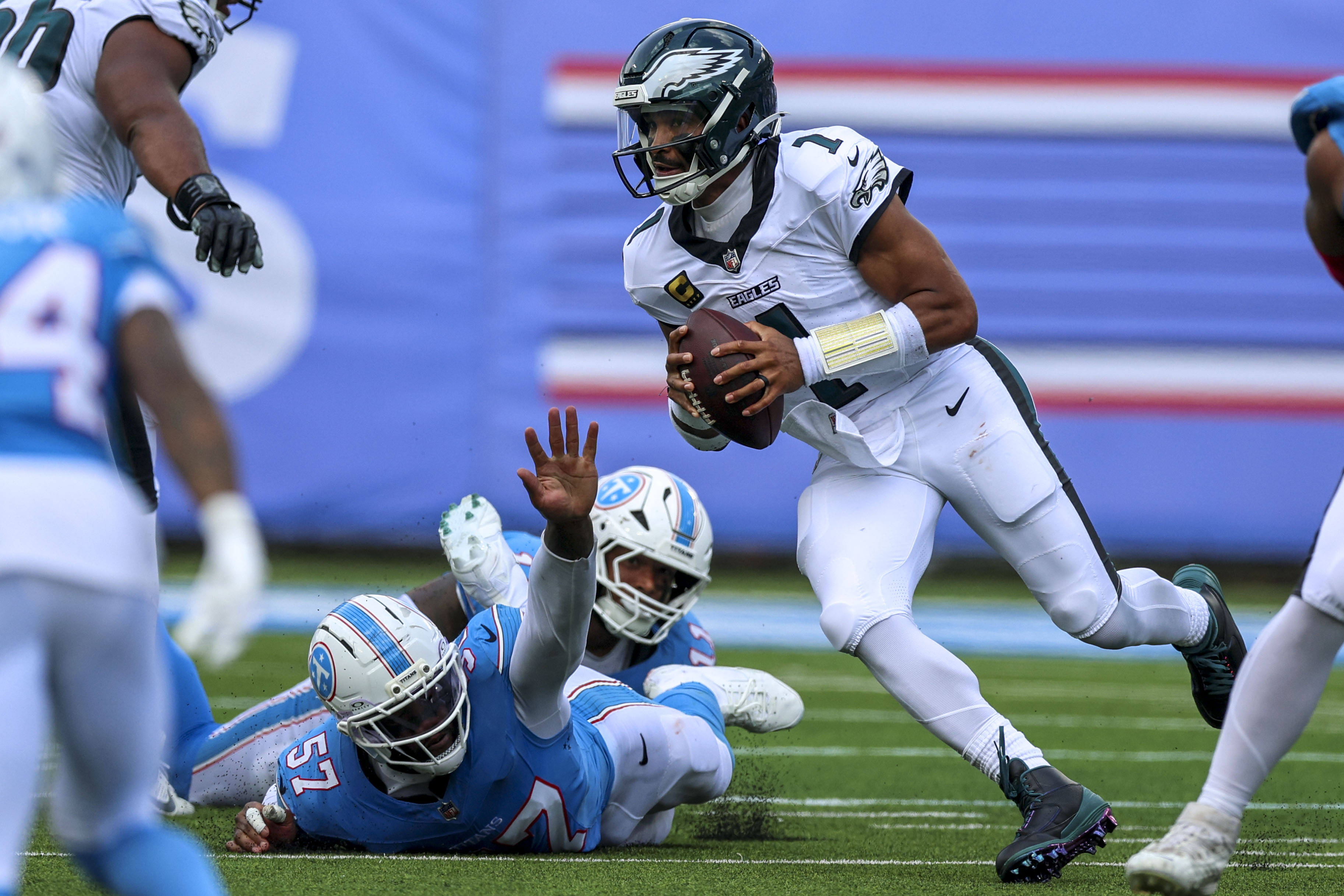
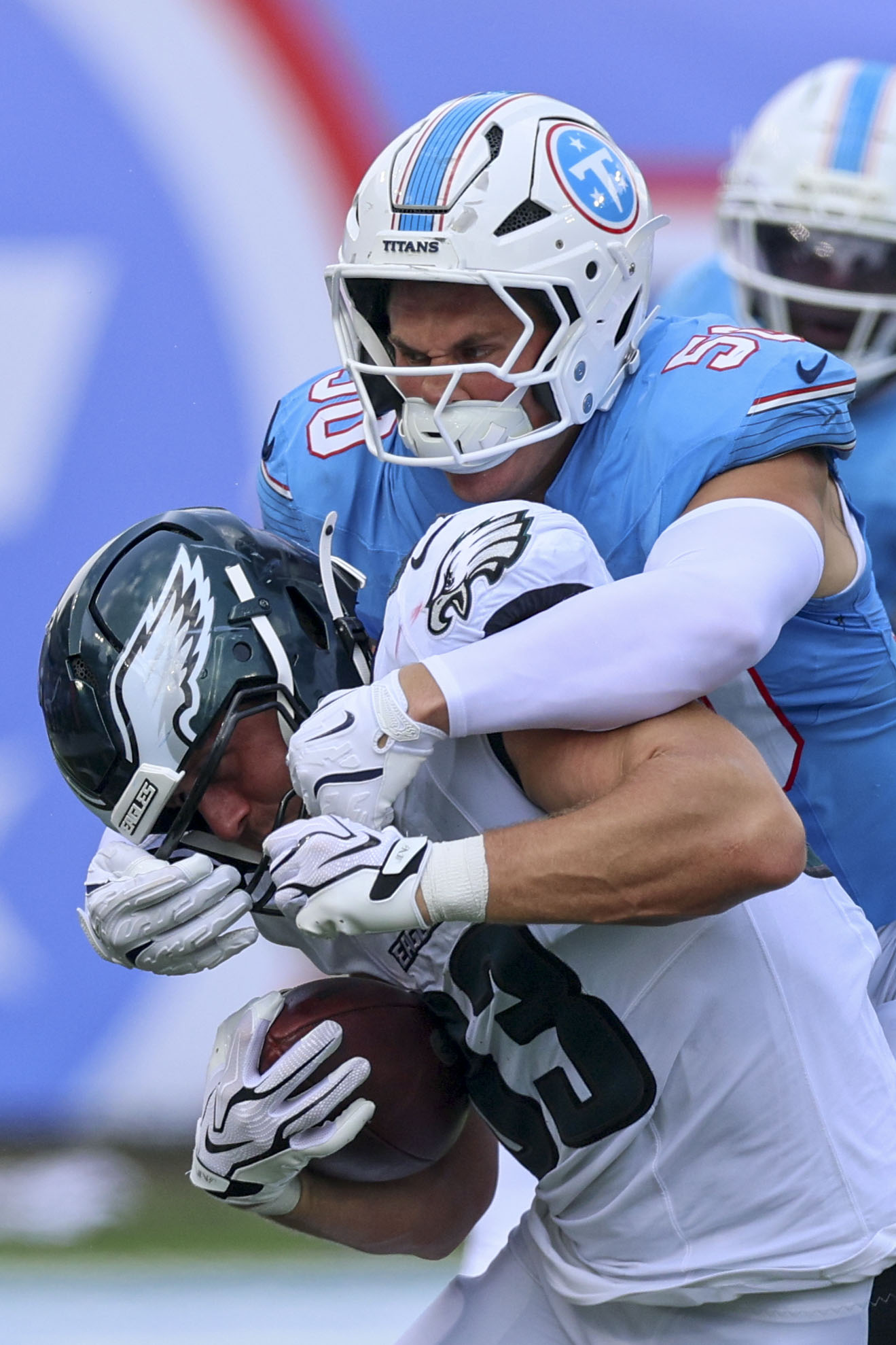
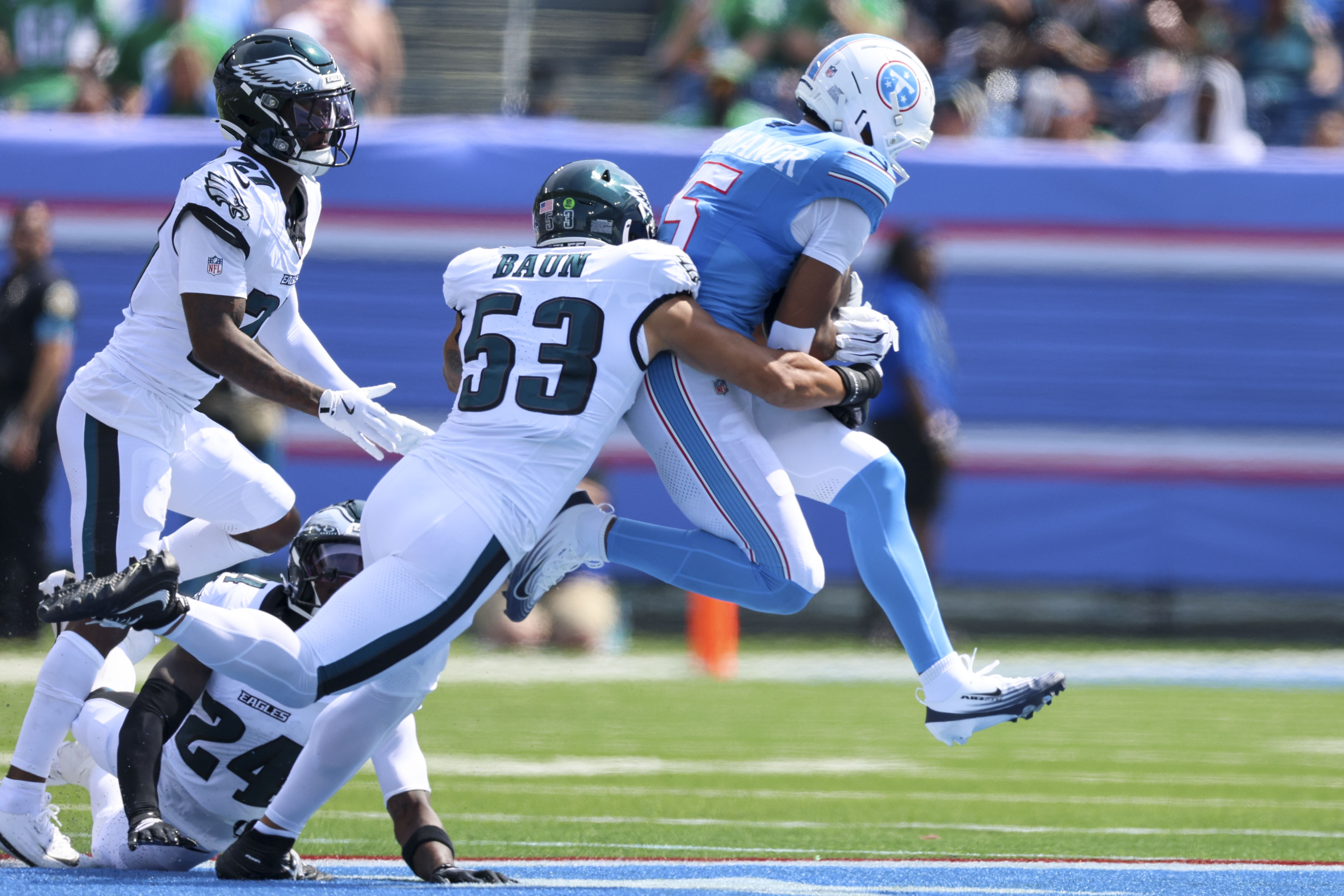
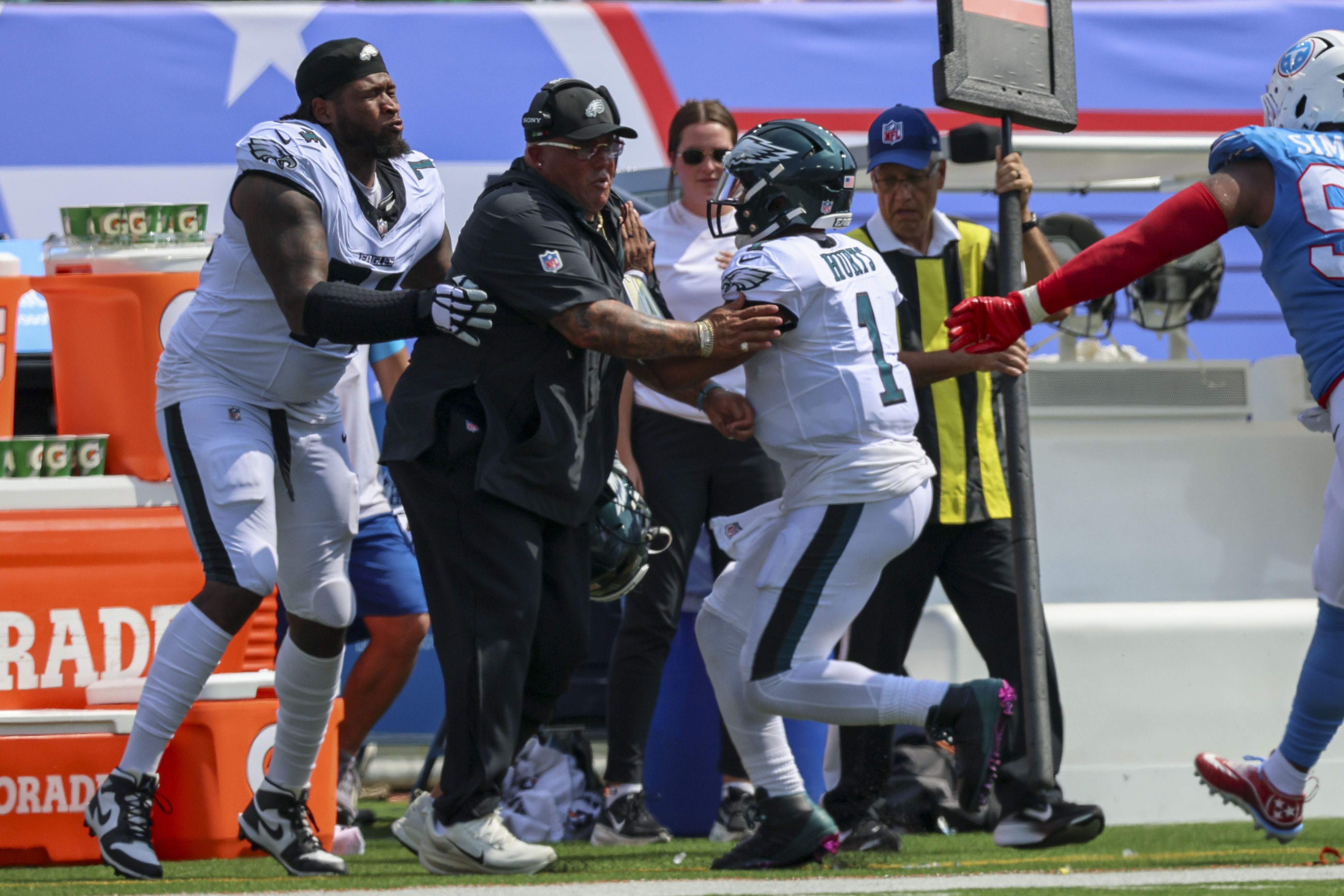
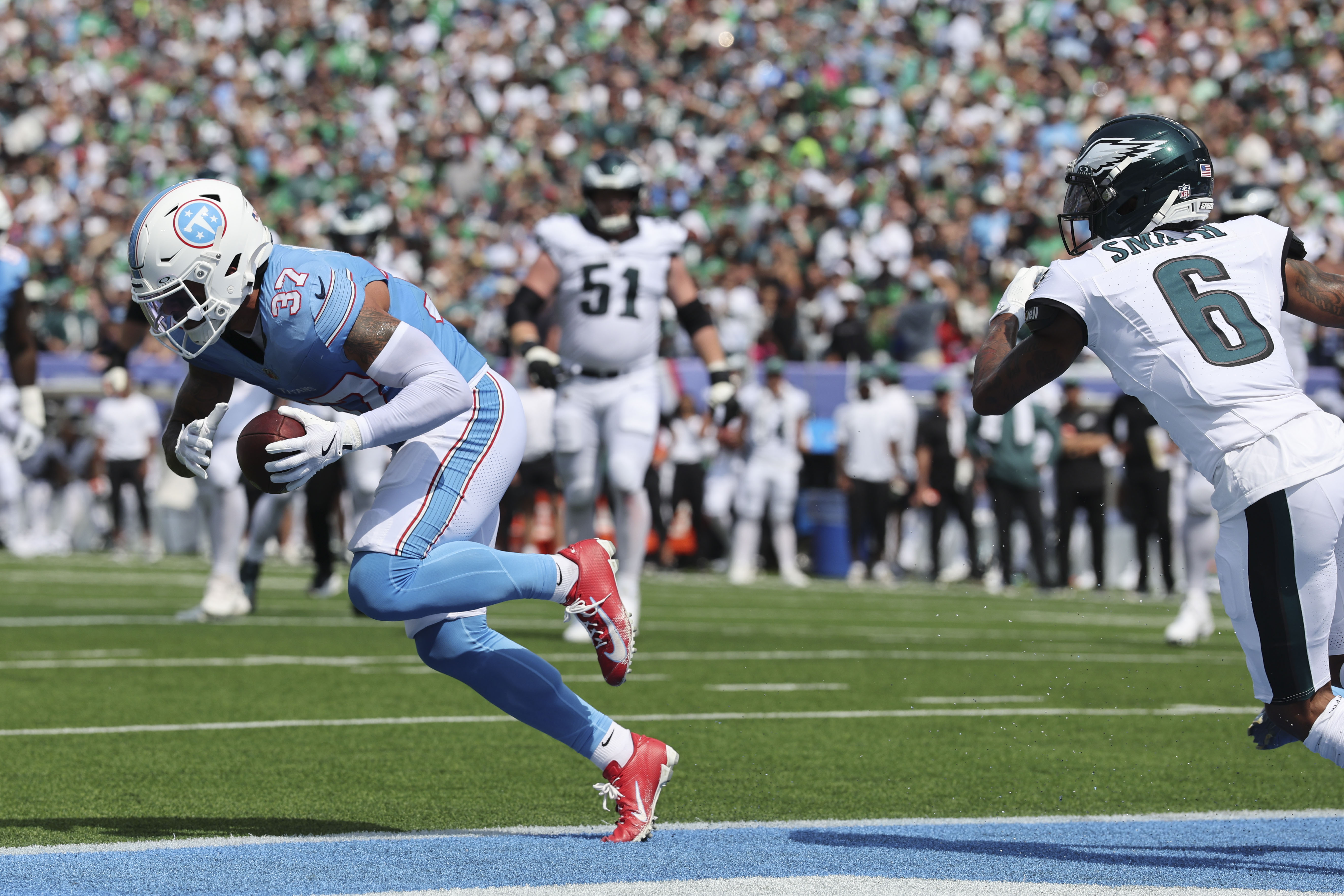
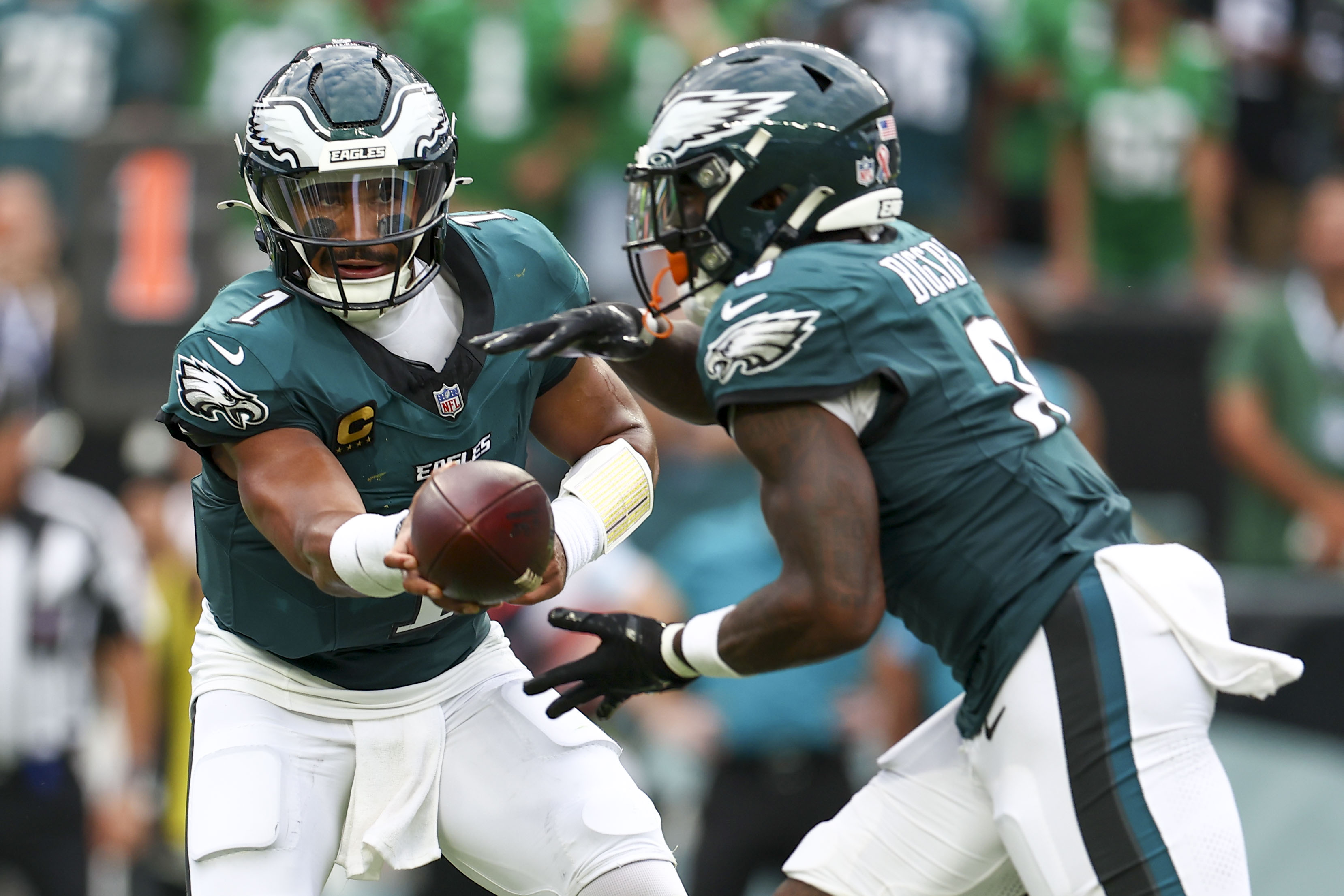
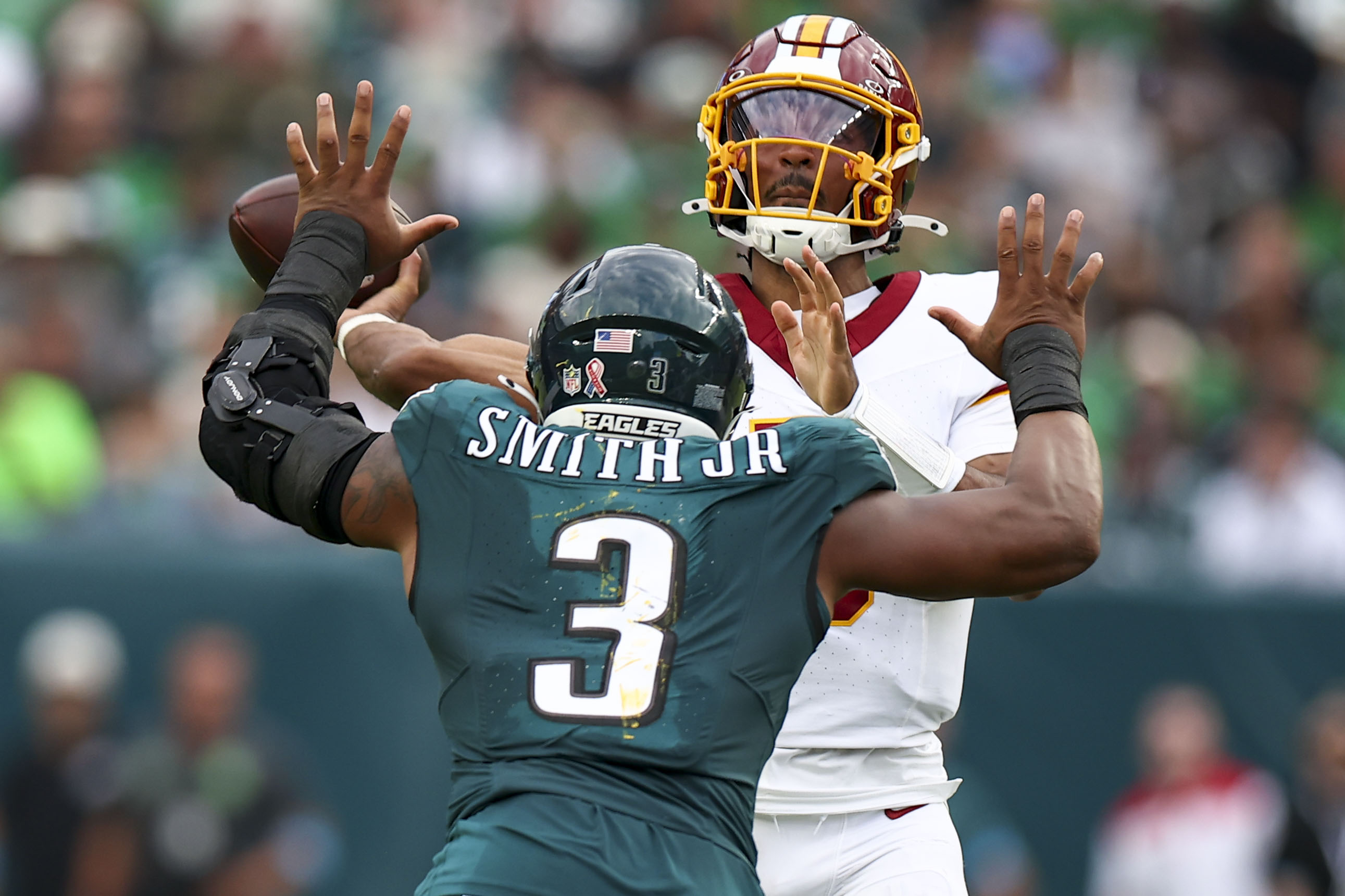
    An hour after the Eagles quarterback uploaded the latest clip to his resumé tape with a 3-yard game-winning touchdown pass to Darius Cooper to lead the Eagles to a 24-20 win over the Titans on Sunday, he settled into a chair in a cramped interview room and spoke like a man who felt like he’d proven something. Hurts had spent the previous several days aware that his quarterbacking abilities had once again become grist for the NFL’s talk show circuit. The genesis of the debate — this time, at least — was a comment by Titans star defensive tackle Jeffery Simmons, who said that the key to beating the Eagles was to “make Jalen Hurts be a quarterback.” Tennessee achieved that objective, limiting Hurts to 16 yards on five mostly inconsequential carries. The quarterbacking they wanted to force proved lethal.

    Yet it wasn’t Simmons who was at the forefront of Hurts’ mind. Though he admitted he’d heard the lineman’s comment, and though he strongly implied that he’d been motivated by the ostensible slight, it was Titans head coach Robert Saleh who drew a couple of unprompted mentions from Hurts in the wake of the wild win.

    “It felt good to get him,” Hurts said. “He’s posed some great challenges, but I kind of checked that off.”

    It was an interesting admission. One of the more undercovered story lines leading up to the game was the track record of success that Saleh’s defenses have had against the Eagles during Hurts’ tenure as QB1. Most notable was Saleh’s architecting of the 49ers’ wild-card win at Lincoln Financial Field last January, when his injury-ravaged unit limited Hurts to 168 yards on 20-of-35 passing. But Saleh was also at the scene of the crime in Week 6 of 2023, when the Jets picked Hurts off three times en route to a 20-14 upset win, a performance that prompted the Packers to enlist him as a consultant the following season as they were preparing to face the Eagles in the playoffs.

    “Coach Saleh is always known for having a really good front, and it starts with Jeffery Simmons in the middle, and the disruption he brings,” Hurts said. “He was definitely disruptive and I think for the most part we managed it well. A lot to learn from. A lot to build forward on.”

    Here, it seemed, was the actual window into Hurts’ competitive psyche on a Sunday afternoon that saw him overcome two interceptions and will the Eagles down the field on a masterful nine-play, 65-yard scoring drive after the Titans had taken a 20-17 lead with 1 minute, 56 seconds remaining. While everyone else focused on Simmons, and while Hurts happily played his part in that game, he drew a much deeper pregame motivation from the memory of his failures. Sure, Sunday’s game was a chance to stick it to Simmons and by extension to those who share his sentiments. But it was much more substantively an opportunity to deploy the lessons he’d learned in his previous go-rounds against a defensive scheme the Titans now featured under Saleh as their first-year head coach. As Hurts himself might say, there is no motivator as powerful as an opportunity to show growth.

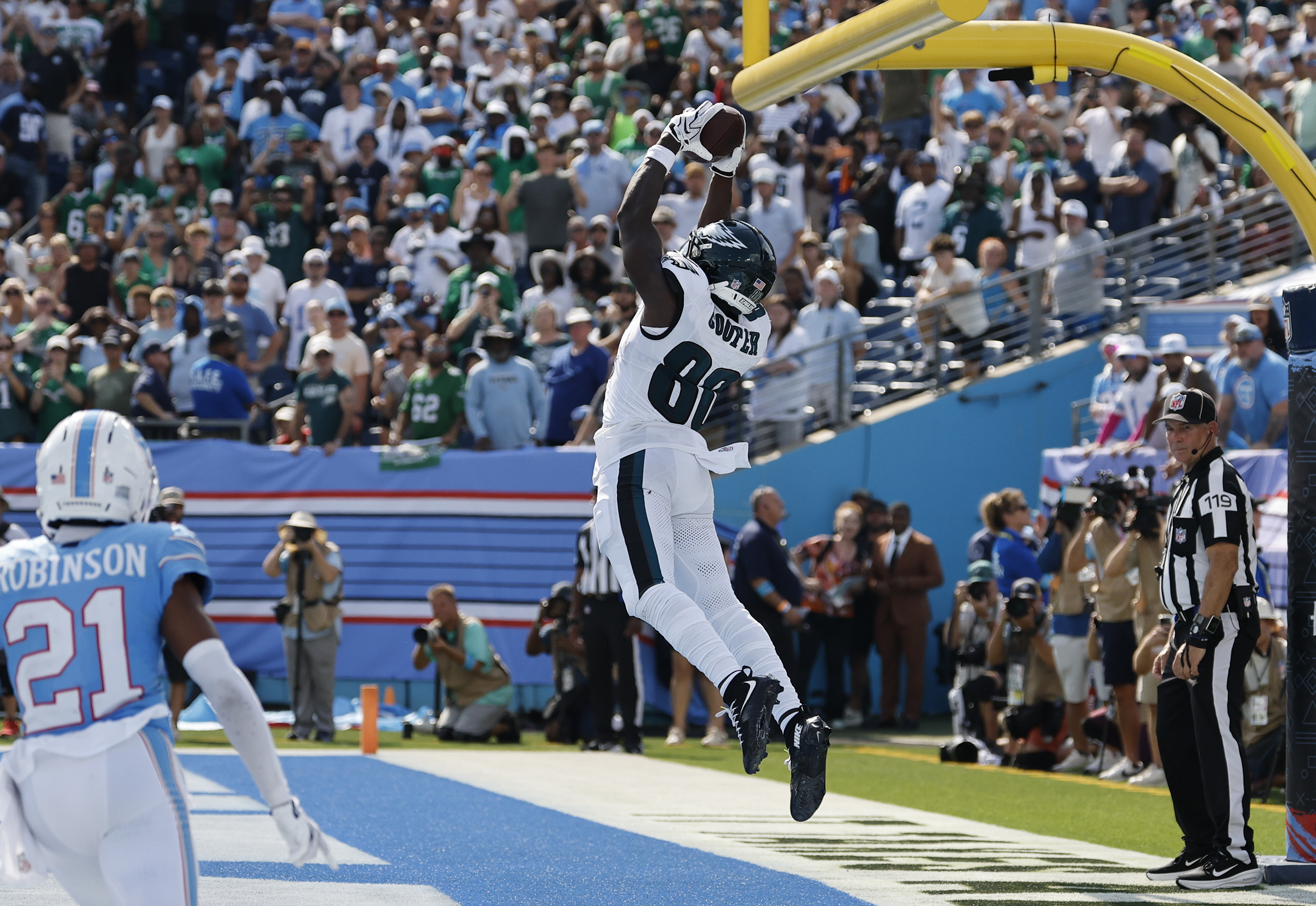
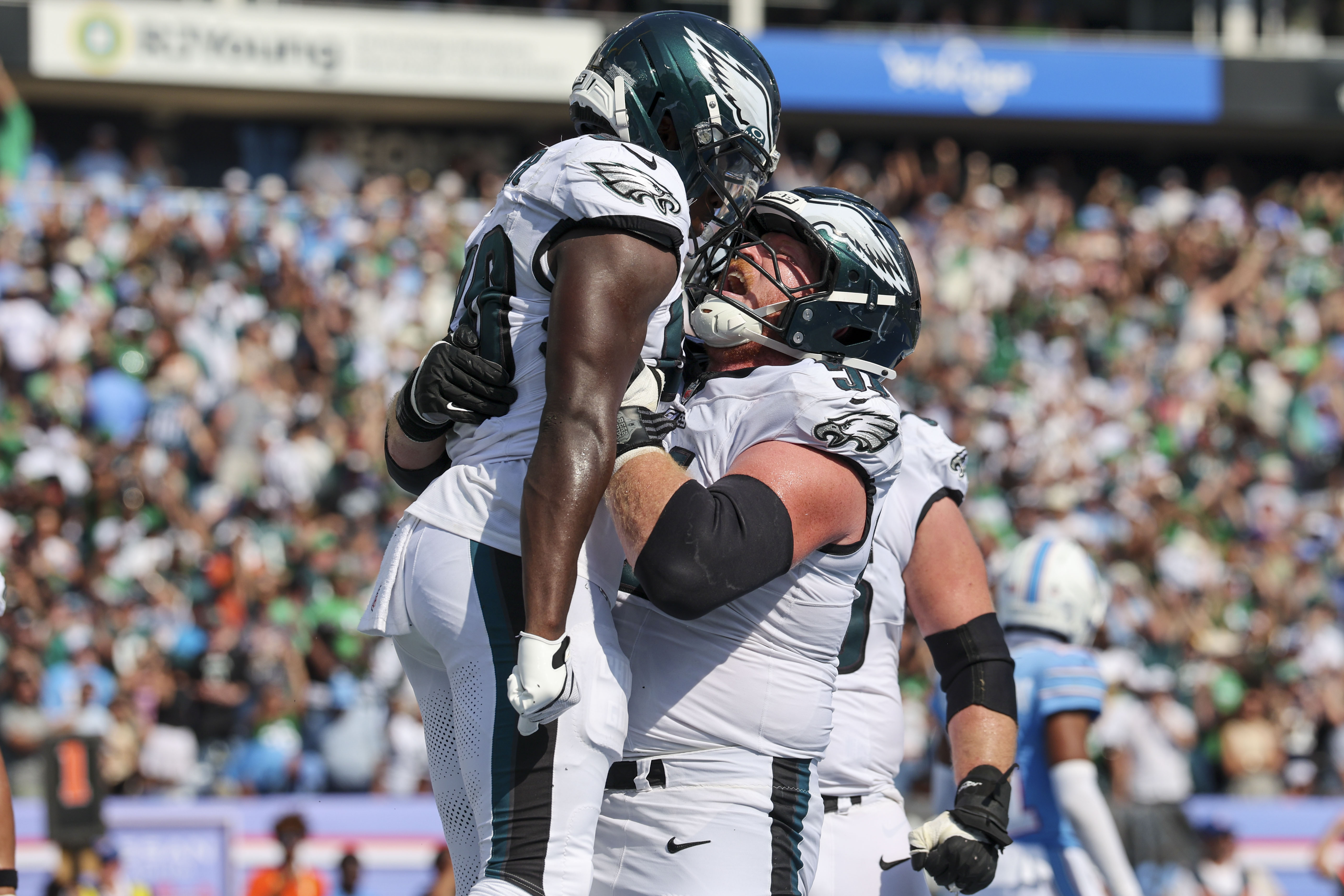
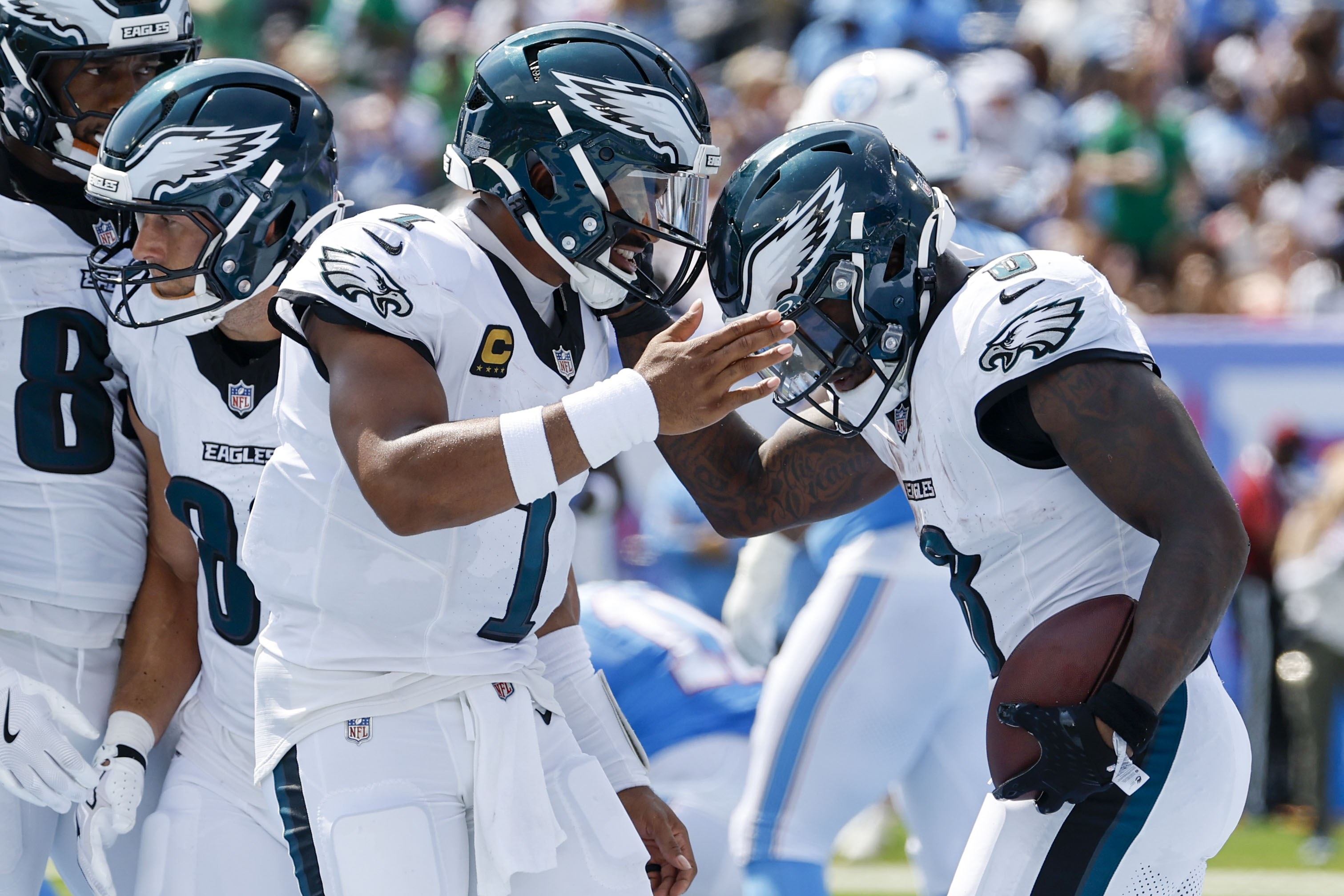
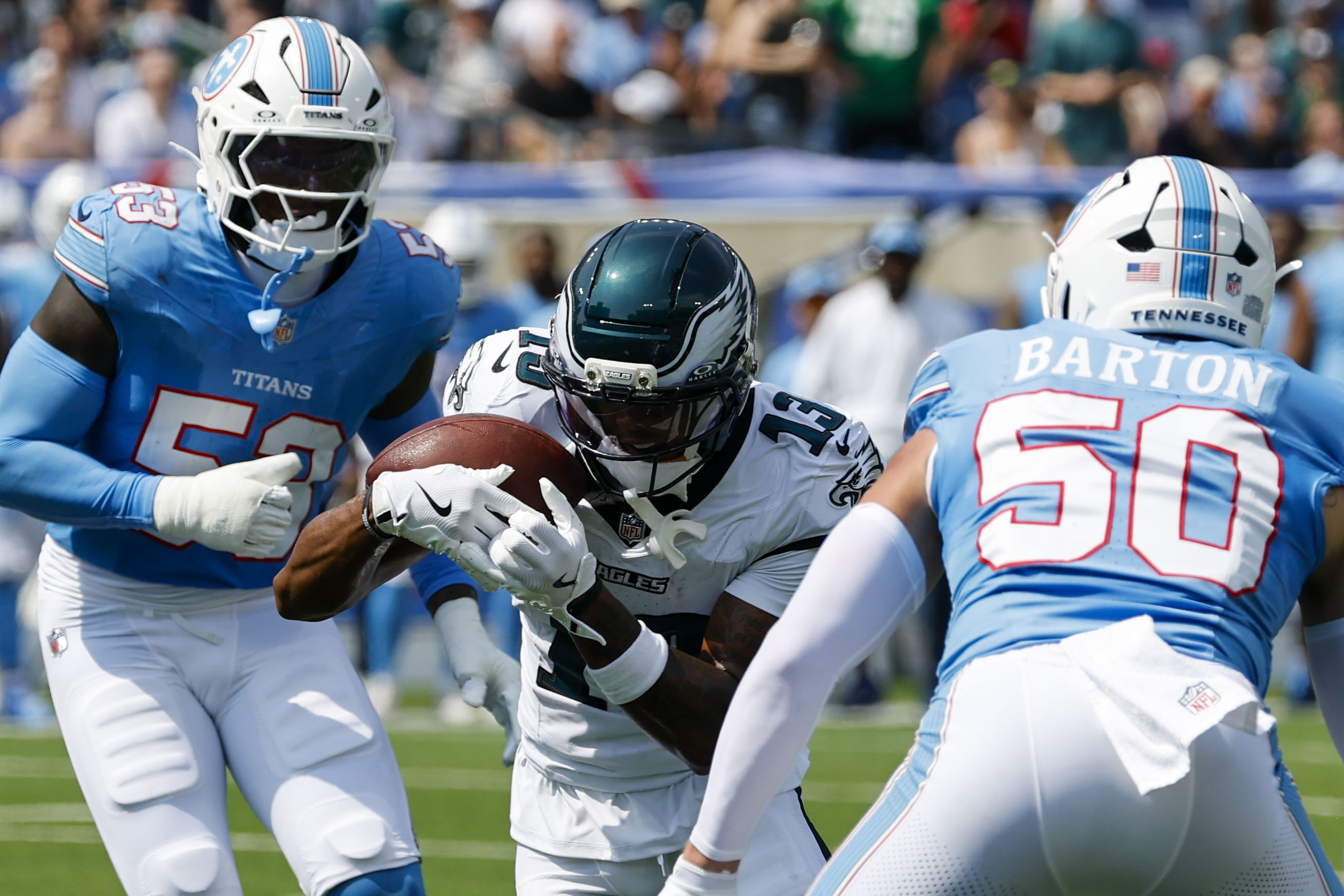
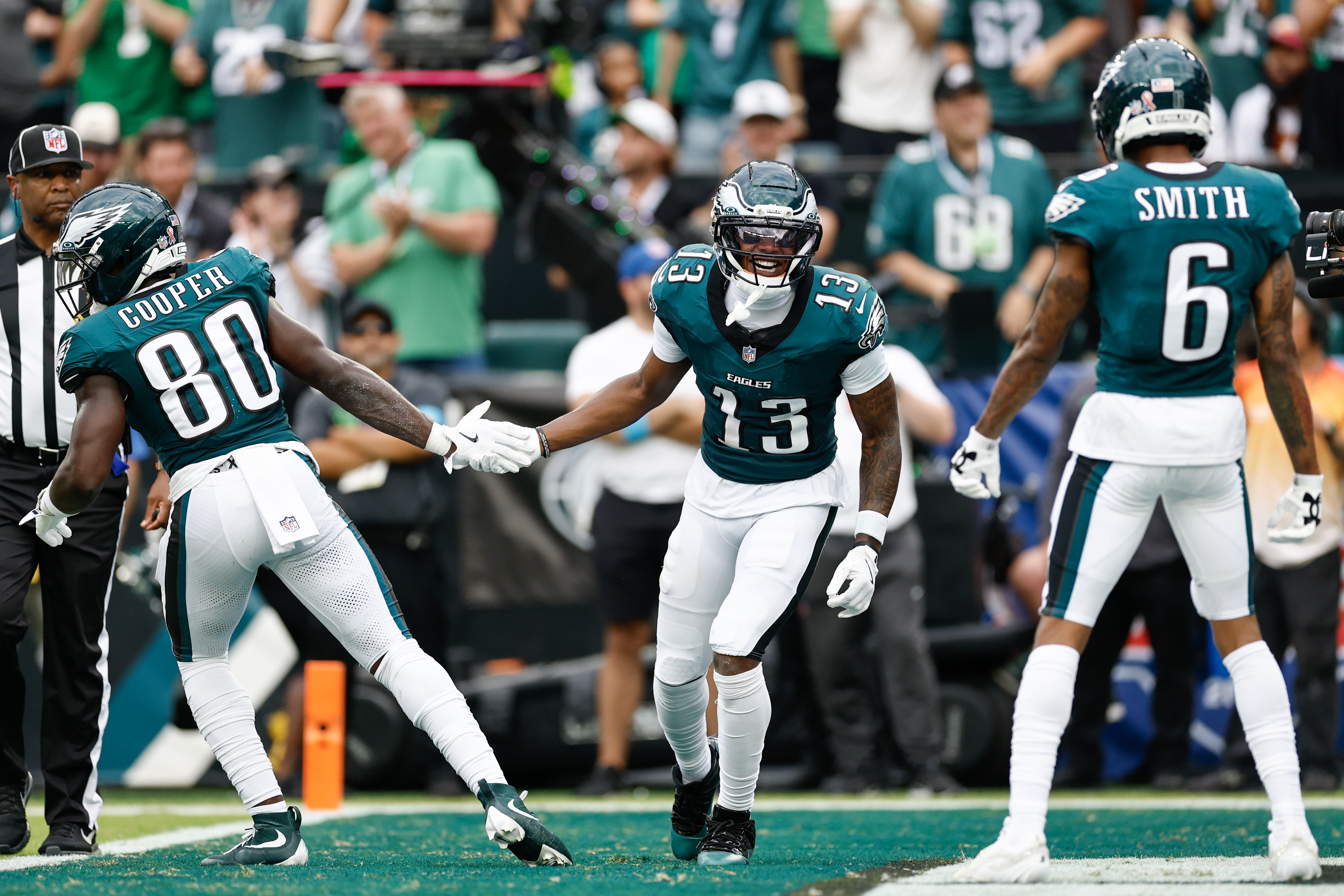
    Darius Cooper catches the game-winning touchdown late in the fourth quarter.Yong Kim / Staff Photographer

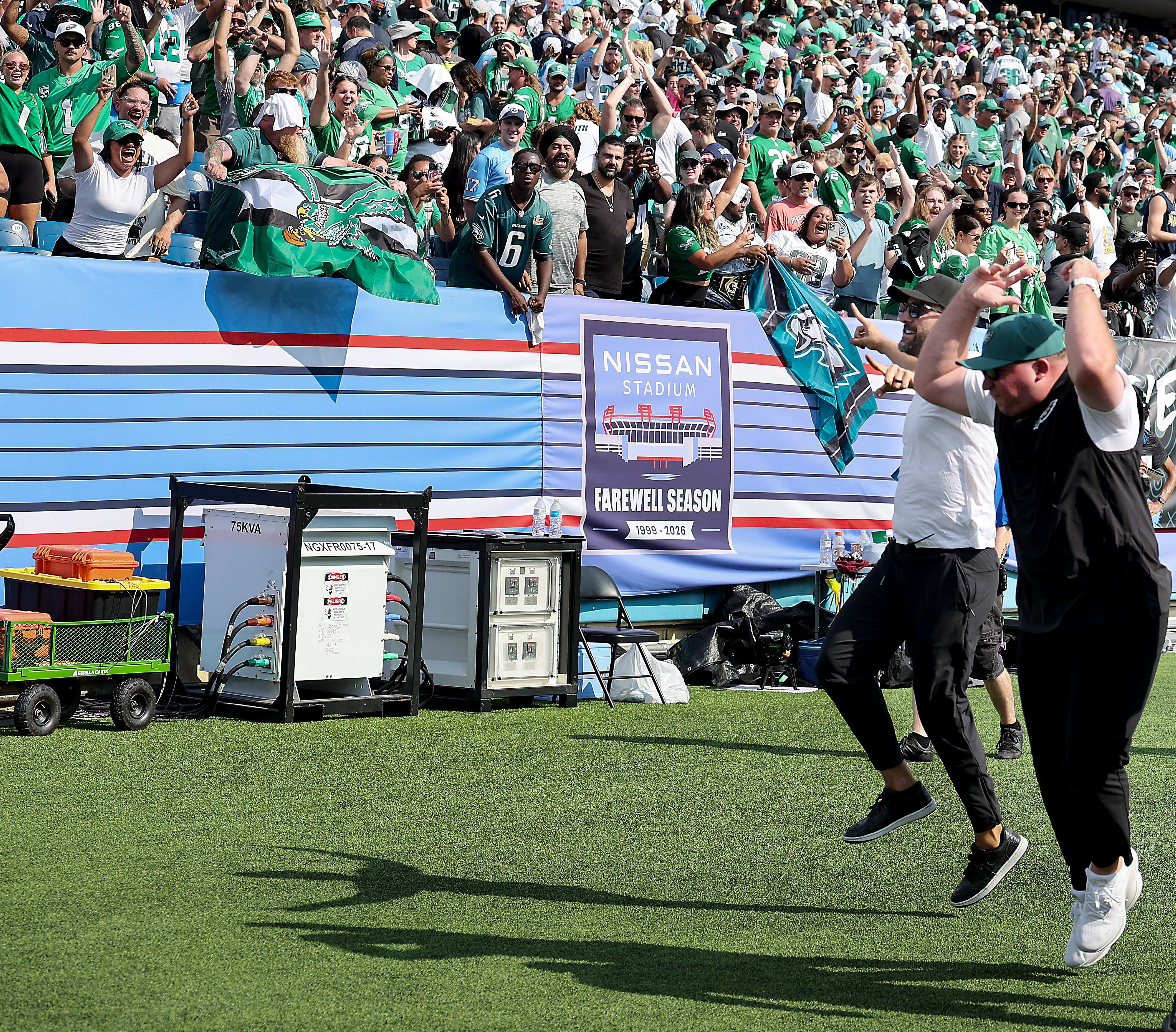
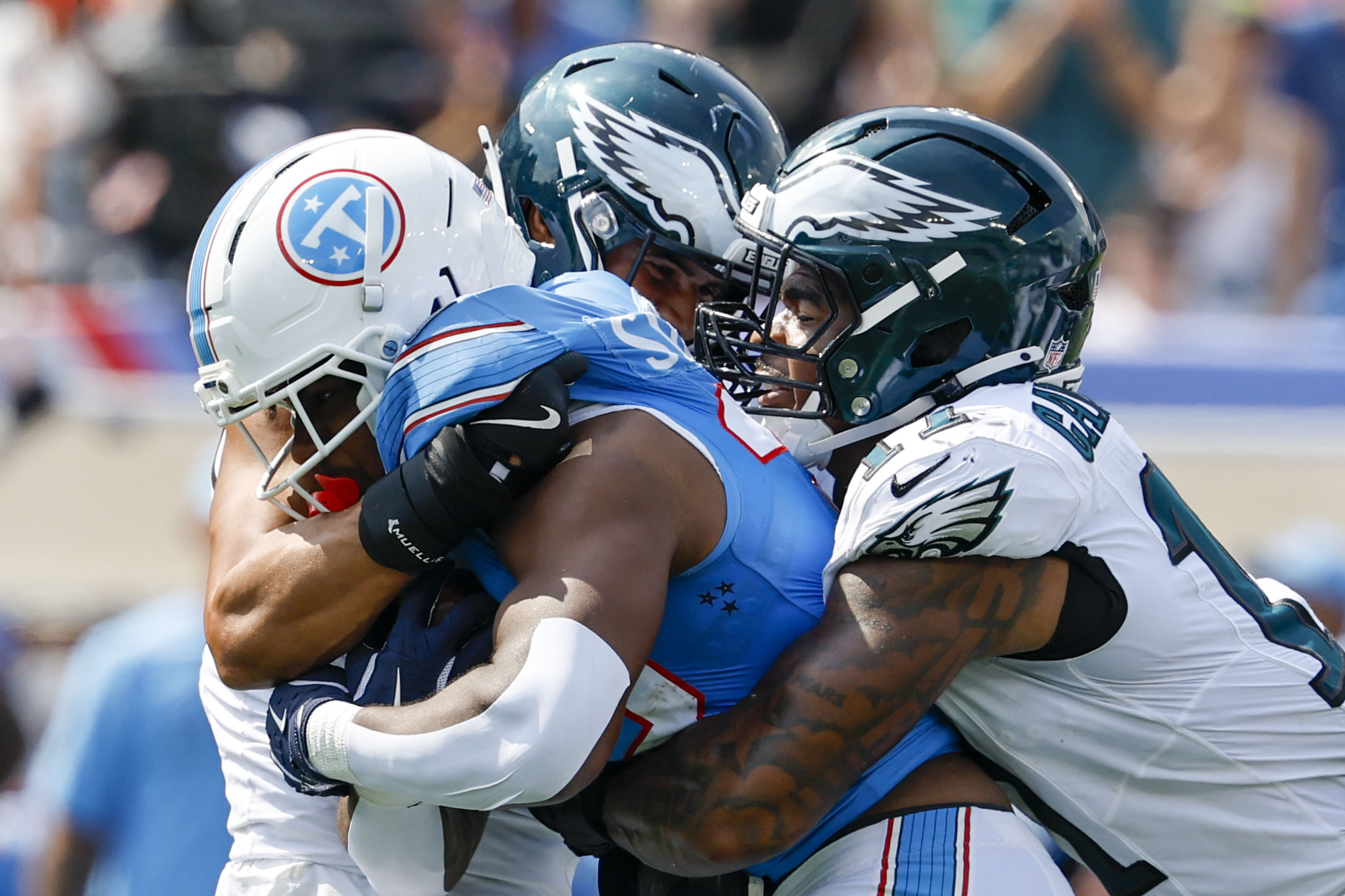
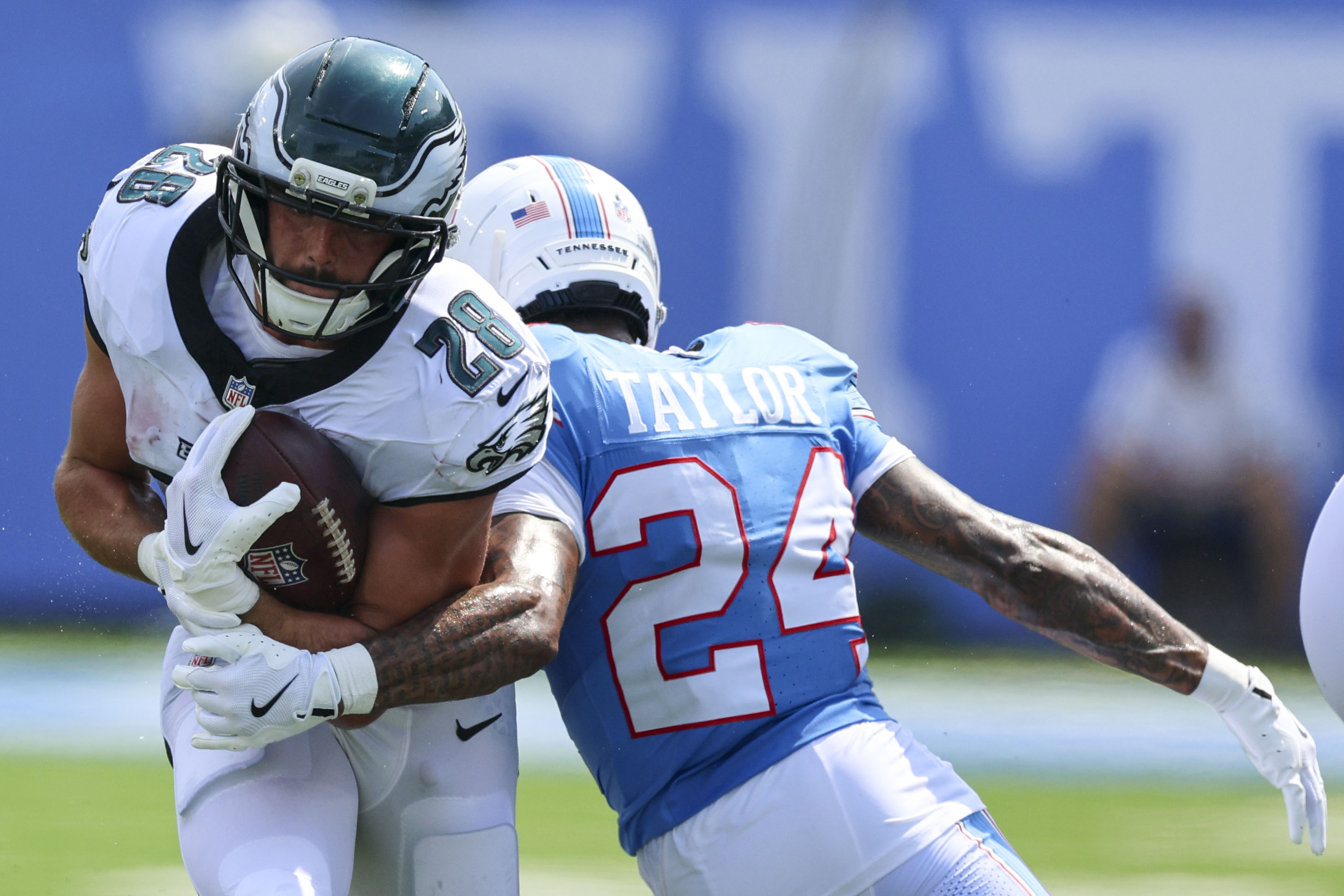
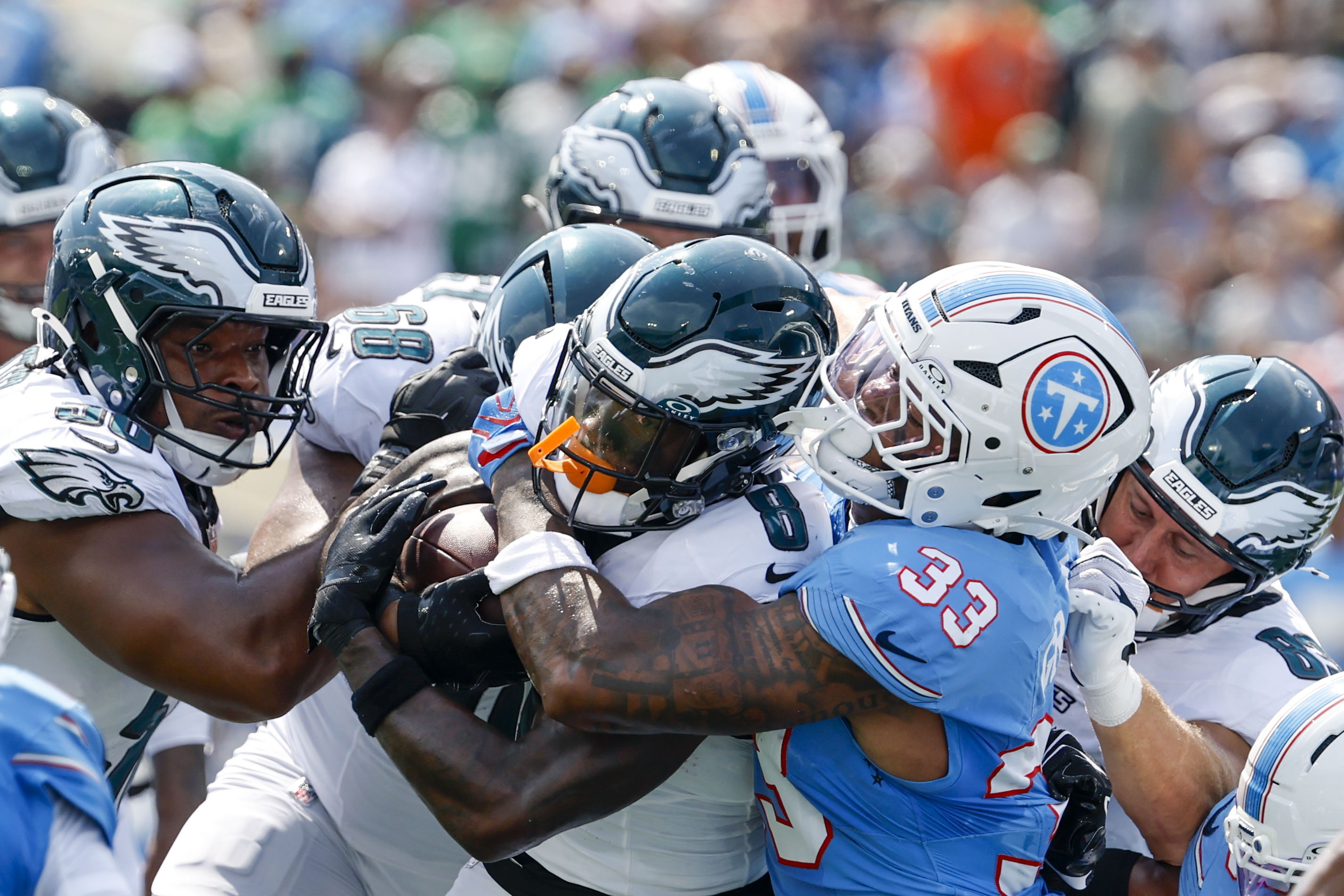
    Both he and the Eagles showed it on Sunday, albeit in an unconventional manner. They spent most of the first half looking every bit the superior team they were believed to be. Hurts was remarkably calm, poised and accurate with the football while dealing with a patchwork interior offensive line and dysfunctional running game amid a suffocating blanket of heat and humidity amplified by the artificial turf at Nissan Stadium. The Eagles entered halftime having run 40 plays: 15, 11 and 14 on three possessions covering 210 yards. That they led 14-10 rather than 21-3 was a function entirely of Hurts’ lone miscue: an end zone interception that Titans safety Amani Hooker returned 92 yards to set up a touchdown.

    It would be easy to focus on the Eagles’ second half struggles, when Hurts was off-target on a number of big throws and thus left the Eagles at the mercy of their ineffective running game and a startlingly vulnerable defense. Except, those things ultimately set the stage for two of the finest minutes of Hurts’ career.

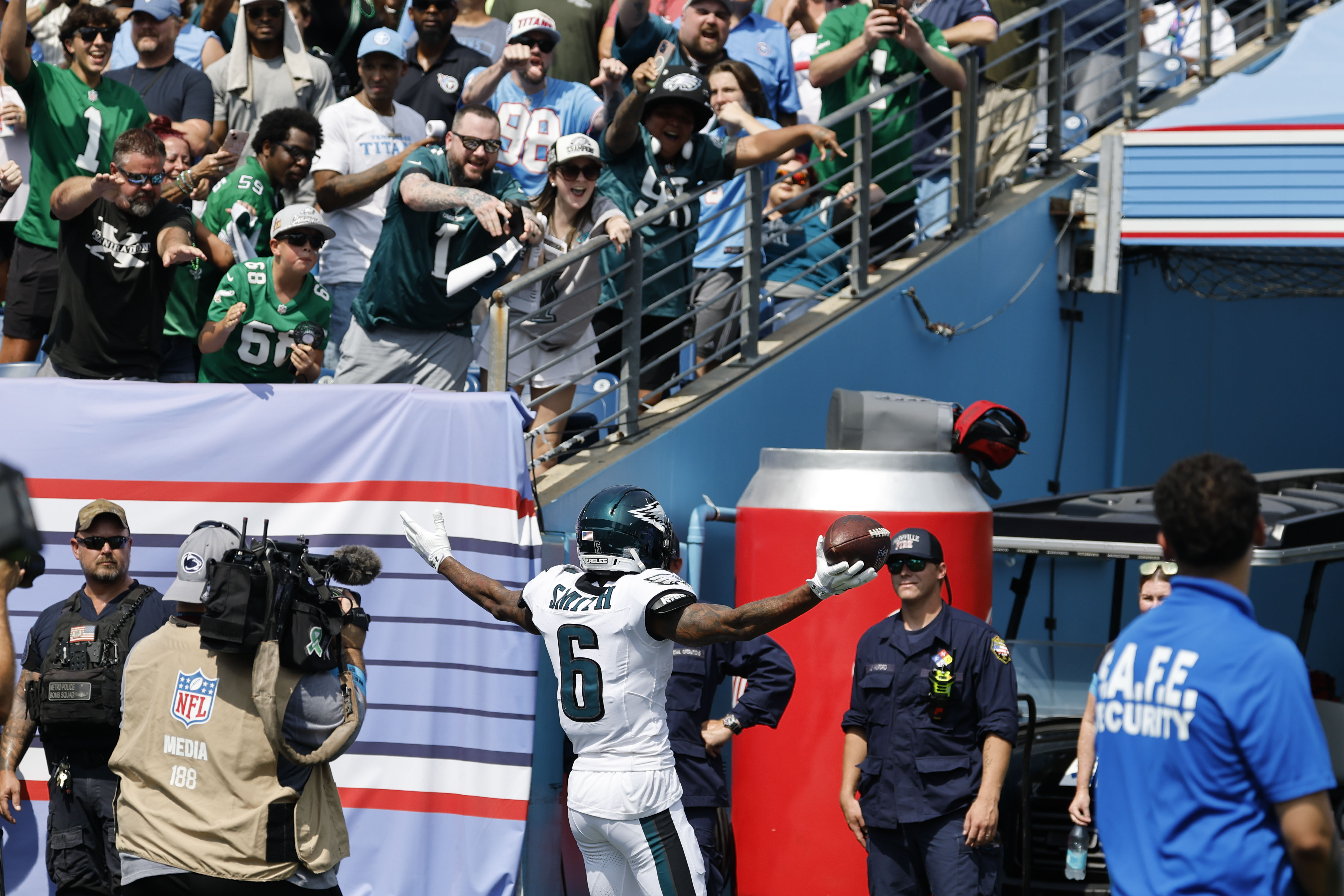
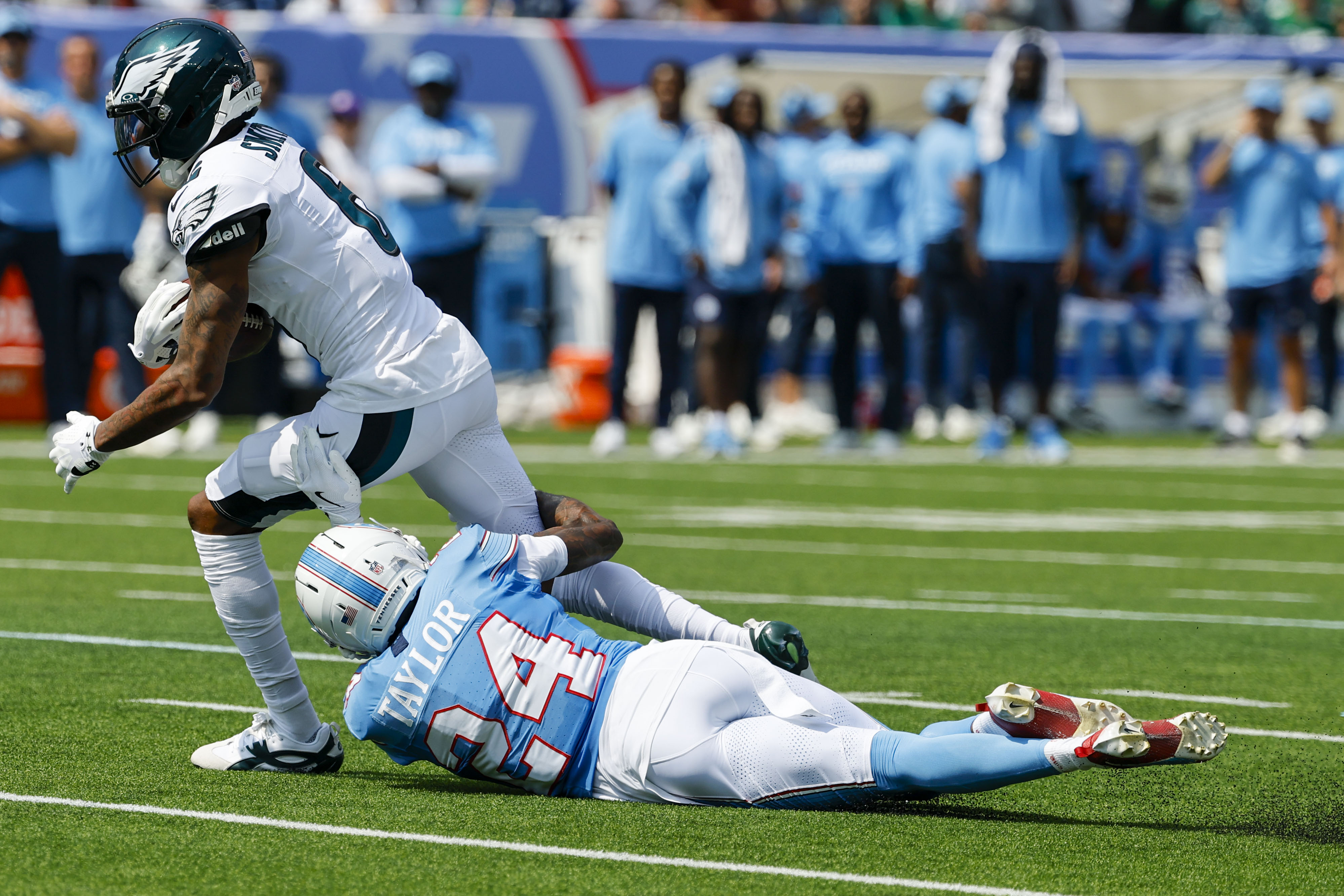
    Rarely will you see a quarterback make a more consequential series of throws than the ones Hurts made while marching the Eagles 65 yards down the field. The headline, highlight, and game-ender was a 3-yard toss to Cooper in the back of the end zone with 9 seconds left. It was also a formality by that point. On the previous play, Hurts had hit DeVonta Smith with a 19-yard throw to convert a third-and-6. Two plays before that, he somehow managed to muscle himself outside of the tackle box and throw an incompletion while wrapped up by Titans defensive end Jacob Martin for what would have been a significant loss to push the Eagles back toward the fringe of field-goal territory.

    “Huge,” was how left tackle Jordan Mailata described that moment.

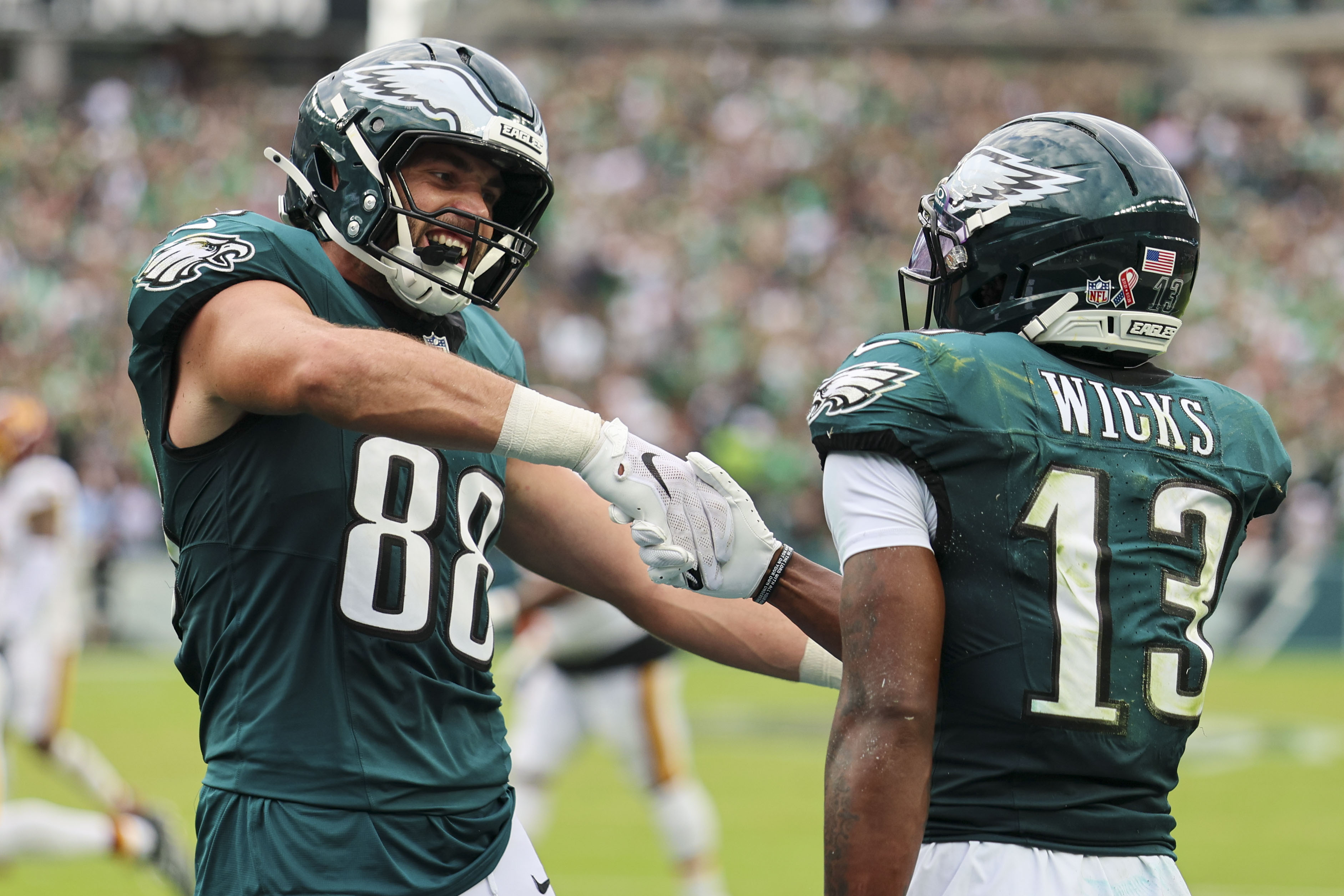
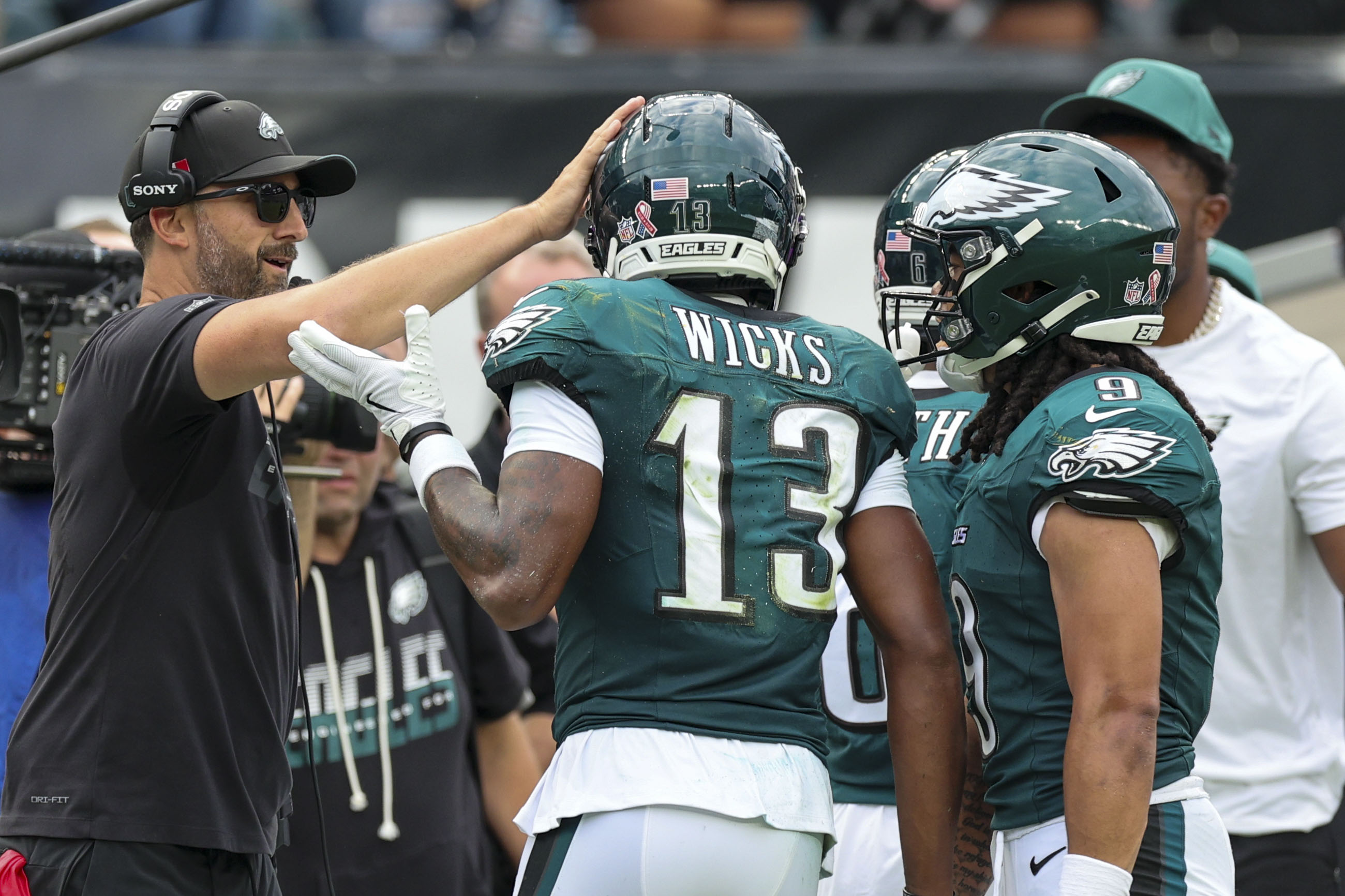
    Just as huge was Hurts’ 20-yard completion to Dontayvion Wicks on third-and-6 at the beginning of the drive.

    Take away any one of these moments, and the Eagles would have been trying to explain the inexplicable instead of shrugging off another flawed victory over a vastly inferior team.

    Instead, we can focus on that which is perfectly explicable.

    “He didn’t flinch,” Smith said.

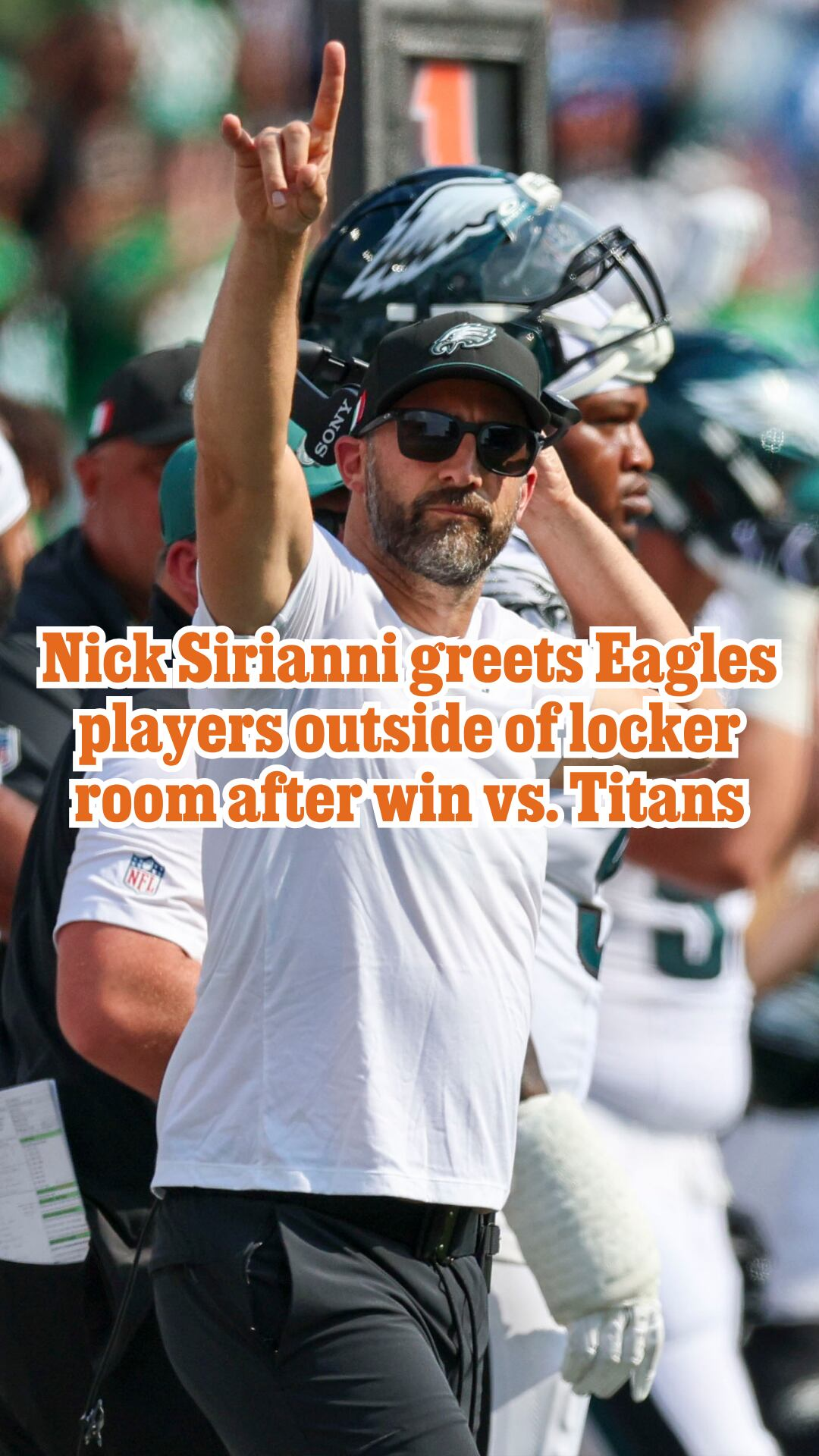
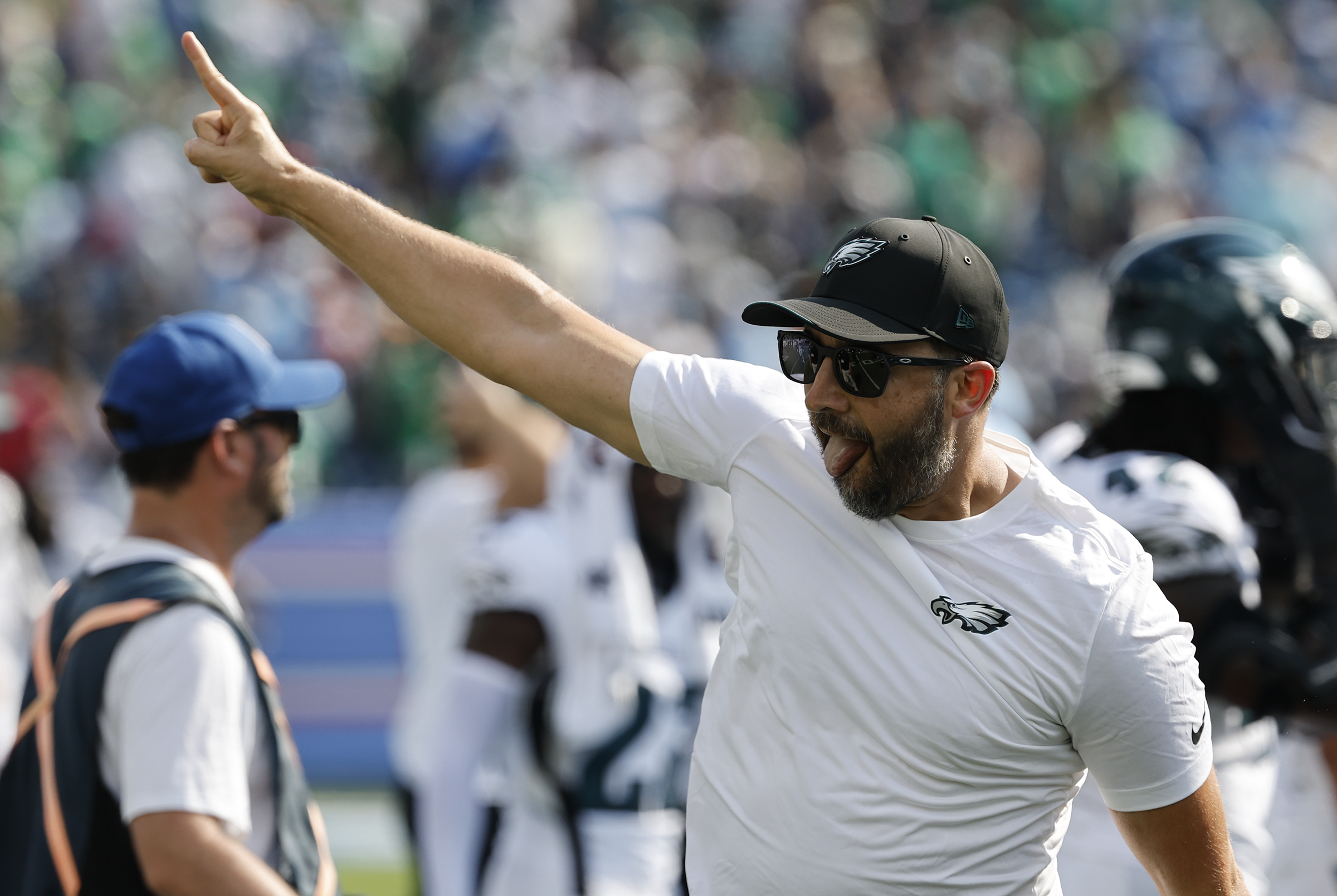
    Nick Sirianni greets Eagles players outside of locker room after win vs. Titans
    Video: Nick Sirianni greets Eagles players outside of locker room after win vs. Titans

    The best thing you can say about Hurts, the highest compliment you can give him, is that he has shown us that we should expect everything that we saw in the closing minutes on Sunday. The calm, the rhythm, the blankness of mind. Apart from his self-evident physical gifts, his greatest competitive advantage has always been a near-total self belief that prevails regardless of circumstance. He has shown it time and again at every level of football, from Alabama to Oklahoma to the second round of the NFL draft to the questions that seem to swirl around his future on a weekly basis, with Simmons’ comment as the most recent example.

    “It’s a sense of belief,“ Mailata said. ”It’s more like a knowing. I know he’s going to go down and lead us, I know he’s going to make the right reads, I know he’s going to make the right throws.”

    More often than not, the talent prevails. The poise prevails. The unflinching self-belief prevails.

    You can say a lot of things about Hurts. The list starts with those three truths.

  • An old-fashioned Eagles blowout would be good for the team’s soul. The terrible Titans present that opportunity.

    An old-fashioned Eagles blowout would be good for the team’s soul. The terrible Titans present that opportunity.

    Reasonable humans will enter Week 2 careful not to get carried away with the talent disparity between the Eagles and the Titans.

    They will remind themselves of the relatively thin margins that separate teams in the modern NFL.

    They will note the Eagles’ struggles in their last two games against a Robert Saleh defense. They will remind themselves of the disruptive potential of Titans All-Pro defensive tackle Jeffery Simmons going against an Eagles interior offensive line that will be missing stud guard Landon Dickerson. They may even point to last year’s 34-17 Week 6 loss to a Giants team that featured play-caller Brian Daboll and wide receiver Wan’Dale Robinson, both now with Tennessee.

    All of which is great. If you happen to be a reasonable human.

    The rest of us will be over here expecting a 40-spot.

    Is that really too much to ask?

    There once was a time when watching an Eagles game didn’t leave you feeling the need to invest in one of those Guardian helmets. It was something you could do without completely dissociating from the world around you. You could watch an Eagles game and still do things that normal humans do: Laugh at jokes, eat potato chips at a reasonable pace, respond politely to innocent non-football-related questions from loved ones. The game would end and you would turn off the TV and you would say to yourself, “Hey, that was fun.”

    I’m sure there have been a few moments like that since the Eagles won the NFC championship and Super Bowl in 2025 by a combined score of 95-45. But you will have to remind me of them.

    Most of the Eagles games that I remember from the last year-plus involve fourth quarters like the one we endured last week. A two-possession game becomes a one-possession game and then a one-possession game becomes a potential loss. The false sense of security evaporates but doesn’t take with it the feeling that the Eagles are still the better team.

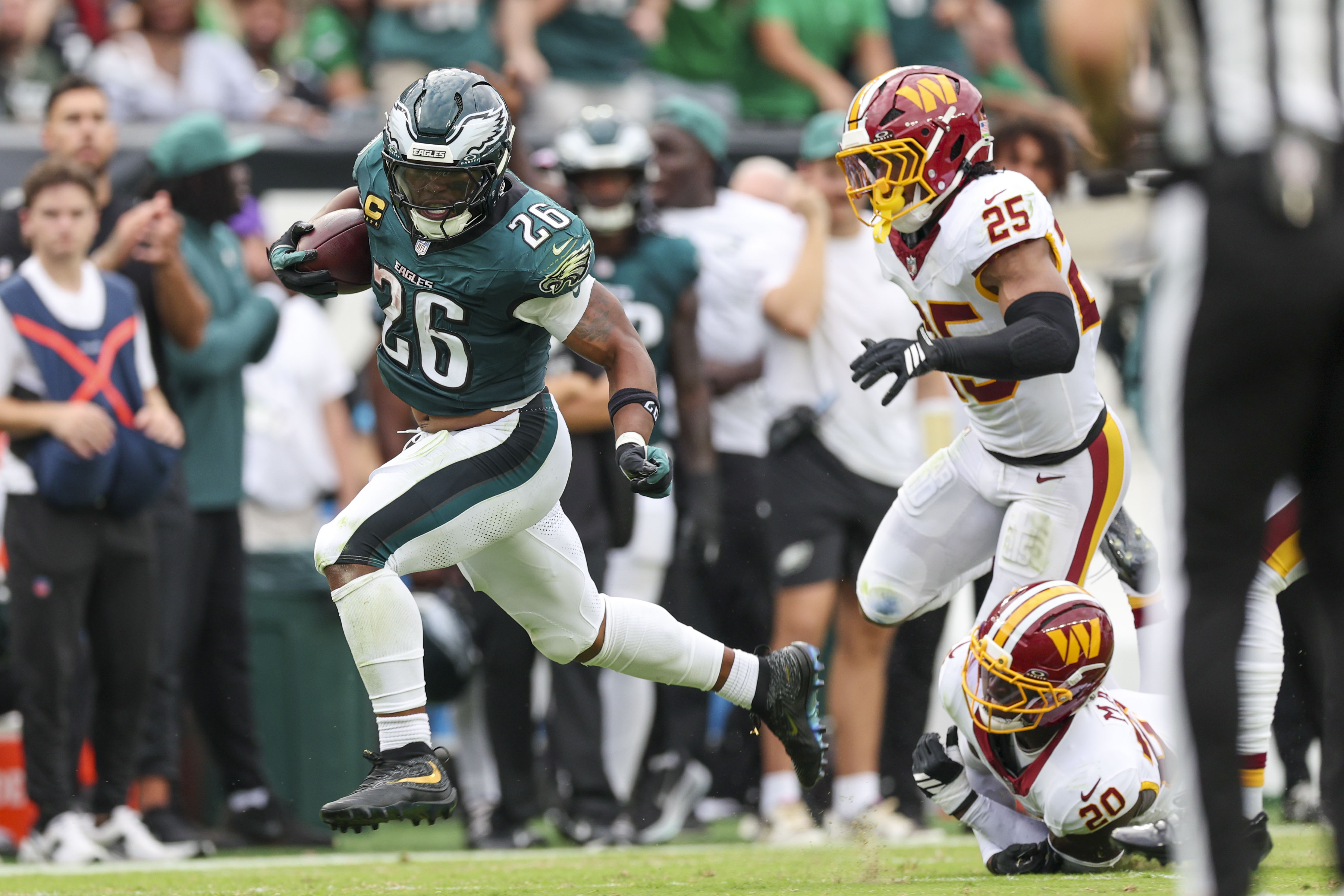
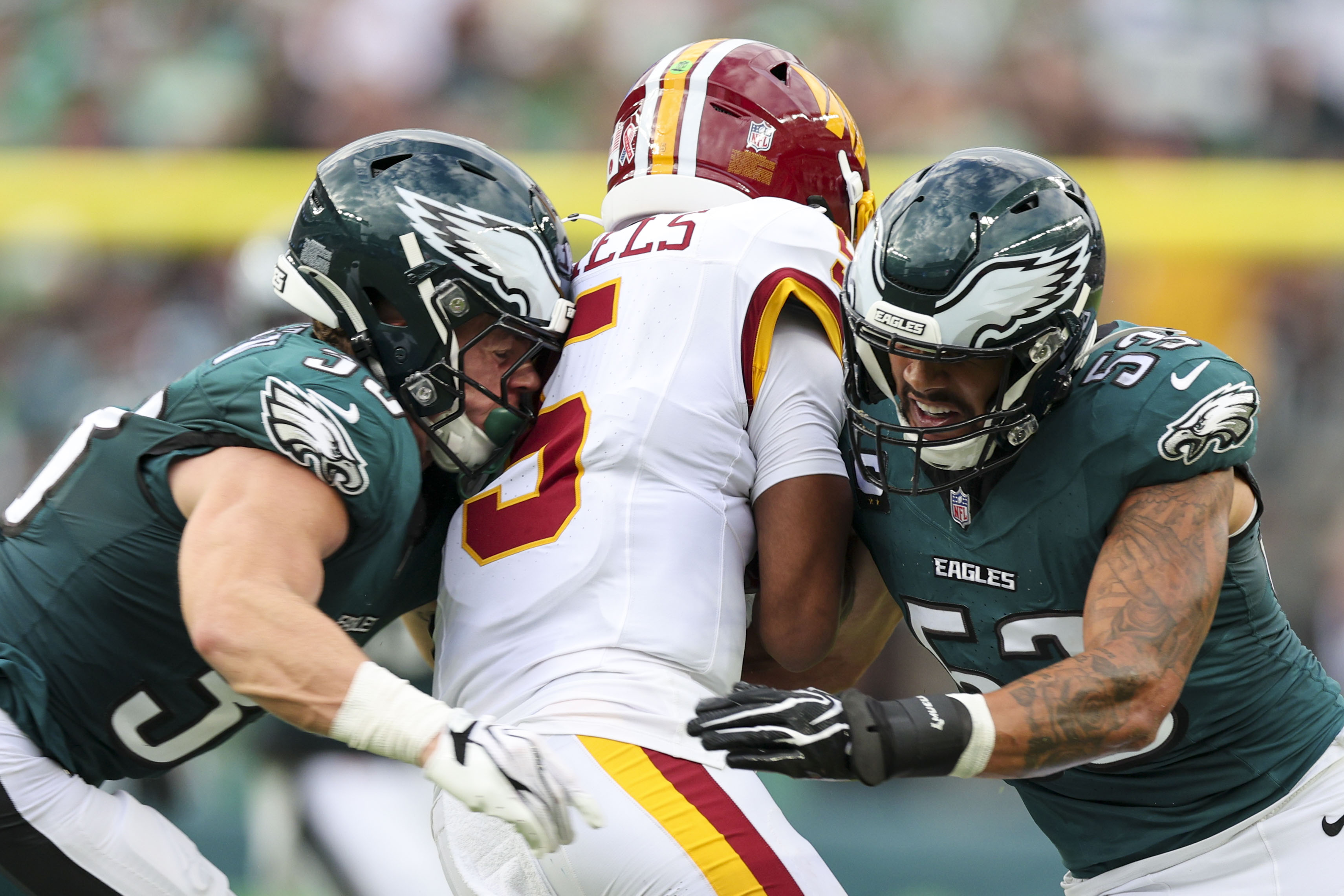
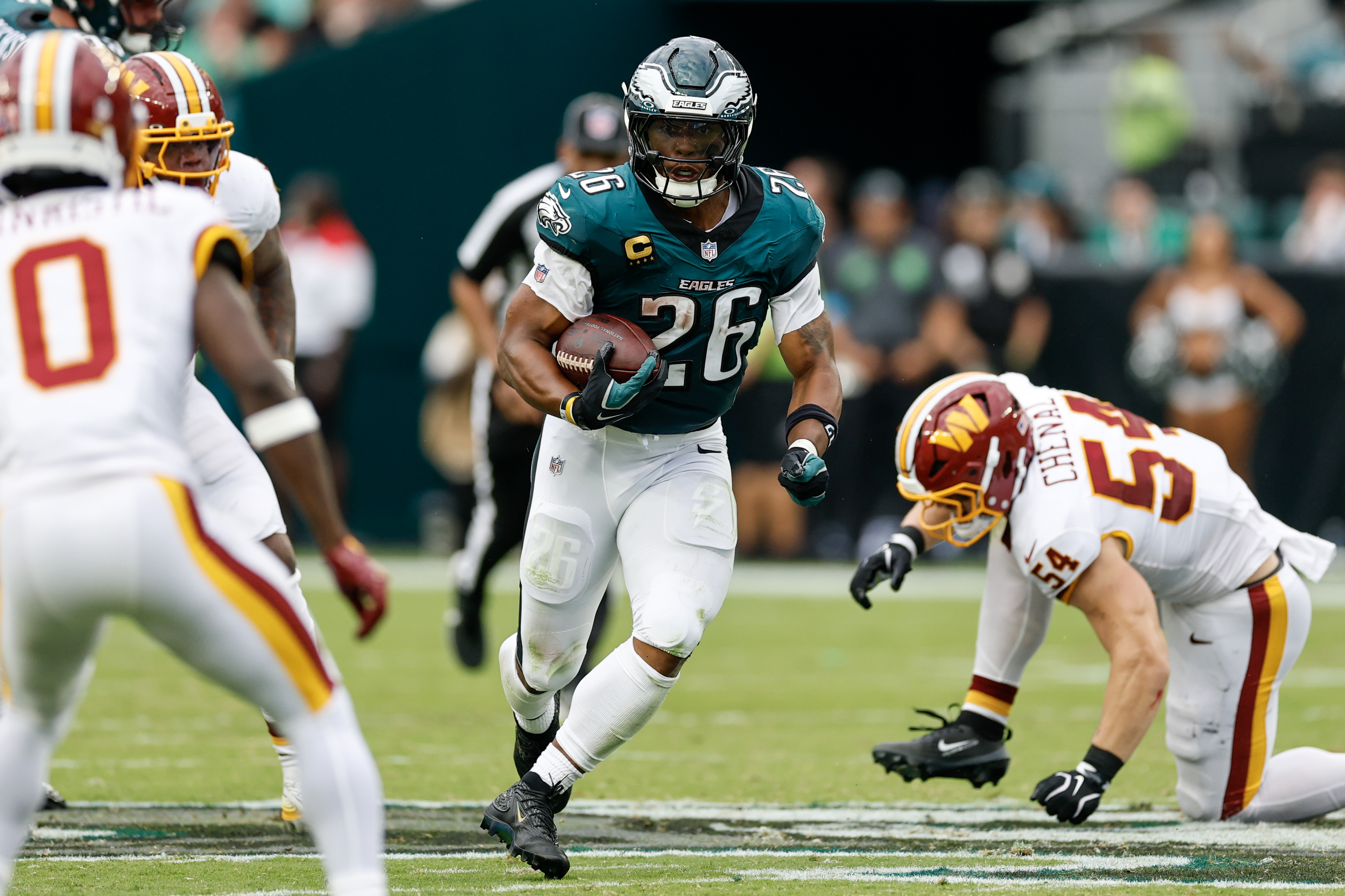
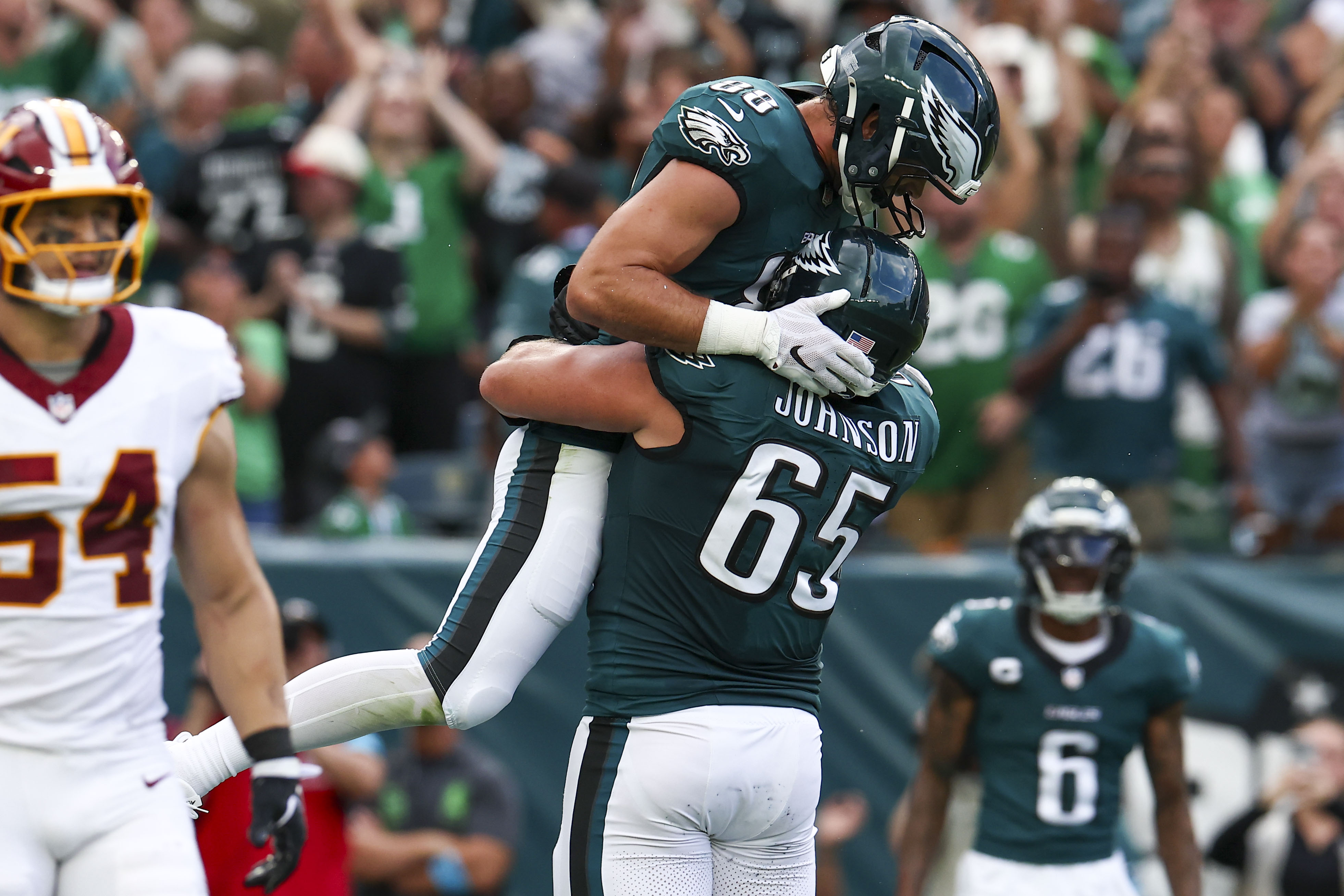
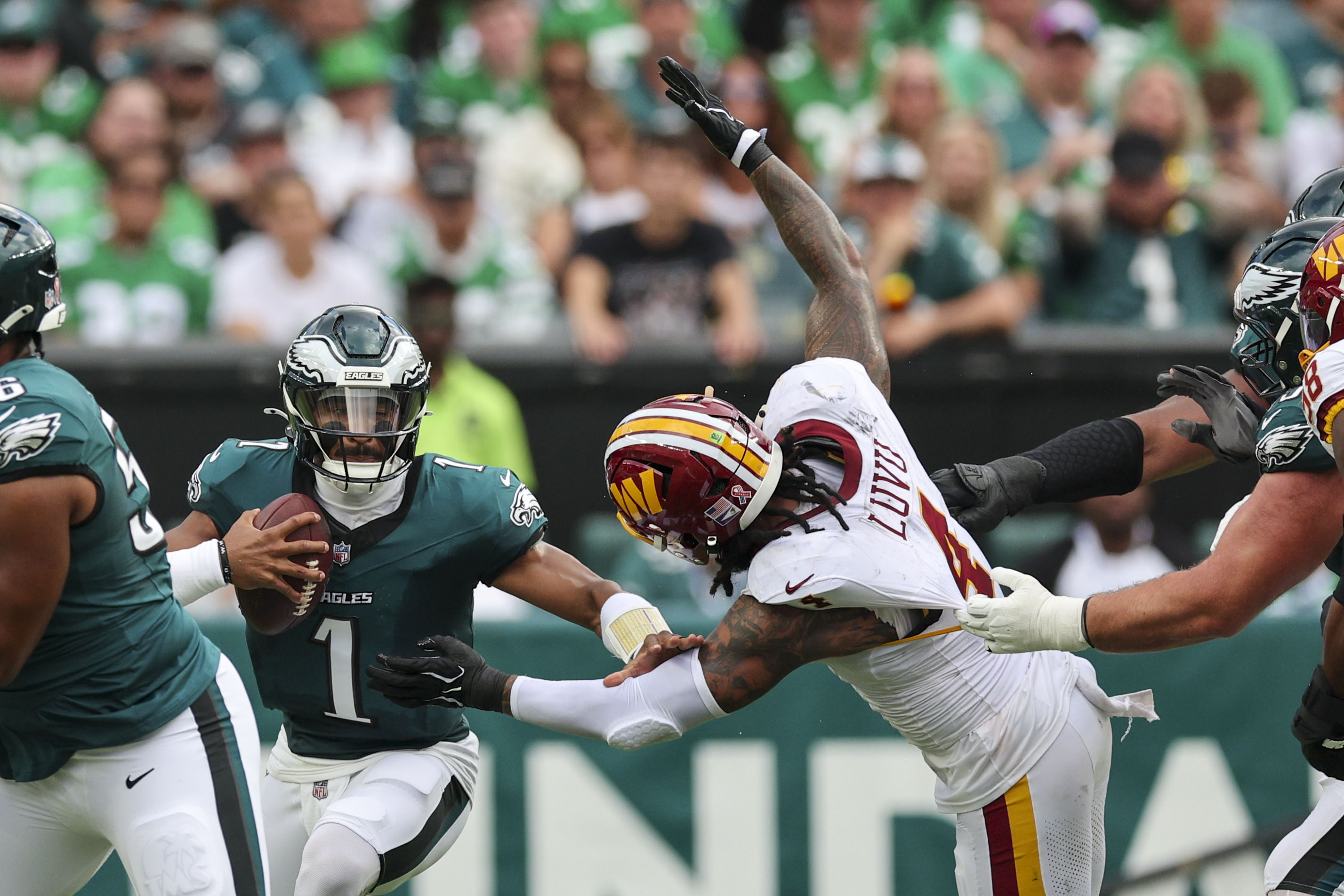
    Sunday’s win over the Commanders mirrored many Eagles games over the last year, which required Moro Ojomo (left) to make a stop on a Washington two-point conversion attempt.Yong Kim / Staff Photographer

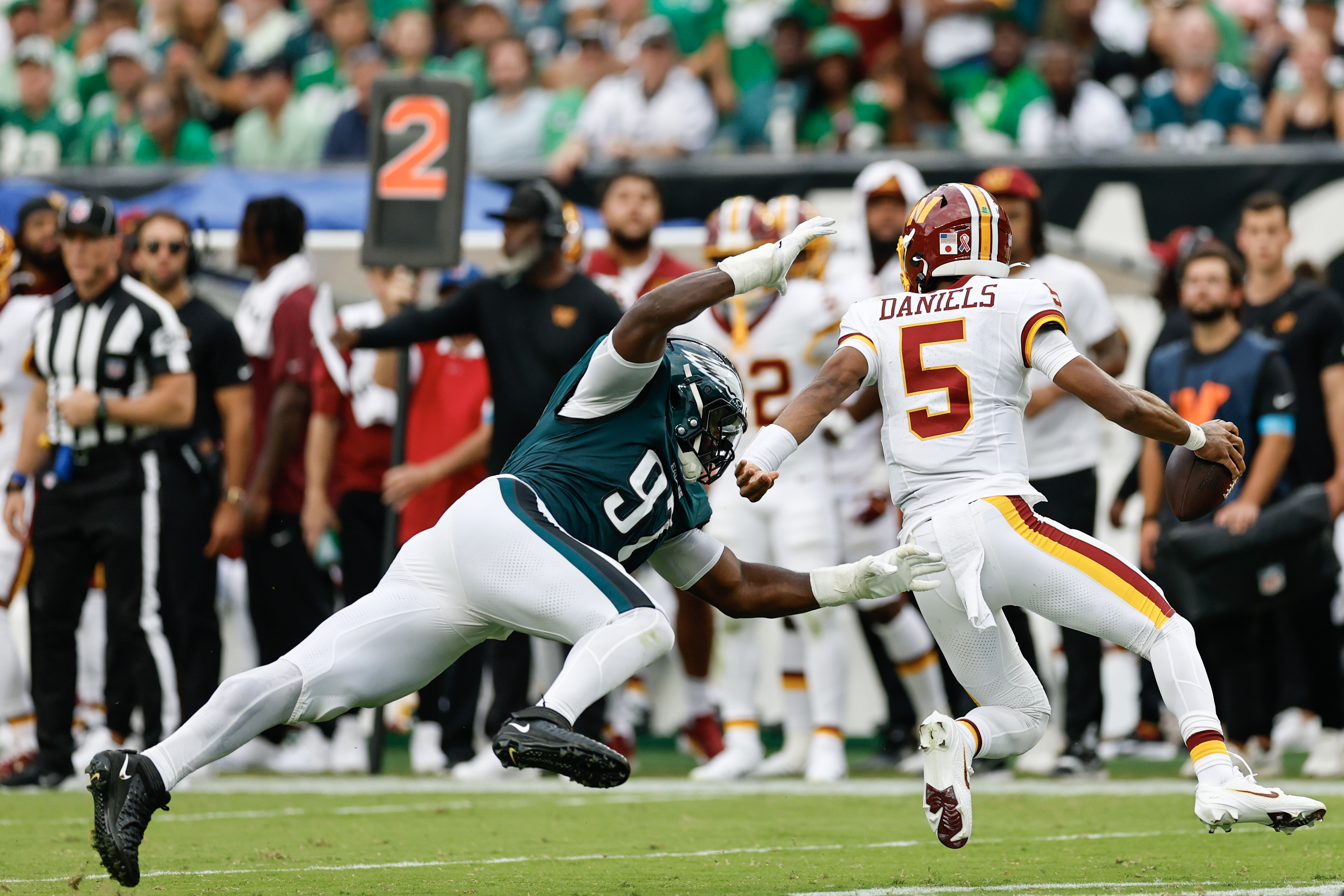
    This isn’t an illusion. I went back and looked. In each of the last four games the Eagles have played, including the playoffs, an opponent has scored a potential game-winning or game-tying touchdown in the last three minutes of regulation. Two of those games broke in the Eagles’ favor because of failed two-point conversions. Last week it was Moro Ojomo spinning into the path of an attempted shovel pass after Antonio Williams pulled the Washington Commanders to within two on a 1-yard touchdown pass from Jayden Daniels. In Week 17 of last season, it was Josh Allen plunging over right guard with eight seconds left and then throwing incomplete for Khalil Shakir on the two-point try as the Eagles pulled out a 13-12 win. In between those two wins came squandered late-fourth-quarter leads against the Commanders (in an irrelevant game) and the San Francisco 49ers (in the playoffs).

    Before the current stretch of squeakers, we saw:

    Week 10: A game the Eagles lead 10-0 with 10 minutes left is eventually decided by a failed fourth-and-1 play with 1 minute, 26 seconds remaining near midfield and the Packers driving down 10-7. Somehow, Green Bay still got a chance at a 64-yard field goal attempt with two seconds left.

    Week 11: Eagles lead 16-6 with 10 minutes left in the fourth quarter, but come dangerously close to giving the Detroit Lions the ball down 16-9 with 1:51 remaining (pass interference on a third-and-8 incompletion to A.J. Brown).

    Week 12: Eagles lead the Dallas Cowboys 21-0 early in the second quarter. They lose on a game-winning field goal by Brandon Aubrey with no time left.

    Week 14: Eagles were up 19-16 against the Los Angeles Chargers with 2:16 remaining. Cameron Dicker hits a game-tying FG with eight seconds left and then a game-winner in overtime.

    Every week, Nick Sirianni reminds us that winning is hard in the National Football League. Every victory is like a delicate child, something to nurture and cherish. And, look, Sirianni is right. Few coaches in NFL history have won games as often as he does. No coach has a better record than Sirianni’s 6-0 mark in Week 1. It says something about the coach and his team that they are as unconvincing in losing as they often are in winning.

    But, please, convince us. Forget all of that mumbo jumbo about a win being a win on any given Sunday. Wins are great. They’re much better when you feel good about them. That’s not only true from an entertainment standpoint. Look at the energy flowing out of Chicago and Baltimore. Imagine how a locker room feels when its head coach says he wants to set the single-season scoring record and then the team backs him up by hanging 59 points on a playoff team on the road in Week 1? Whatever their faults, Ben Johnson’s Bears have a self-replicating swagger. Same goes for the Ravens under Johnson acolyte Declan Doyle. A very good way to build political capital as a 30-year-old first-time play-caller is to rack up 506 yards and 41 points in your debut. Wins matter most of all. But the manner of victory isn’t irrelevant.

    As somebody who has spent plenty of time in Eagles postgame locker rooms across a wide-ranging gamut of seasons, I will tell you I firmly believe the team would benefit greatly from one of those god-that-felt-good kind of victories. Not that they doubt themselves. Not that they lack confidence. It’s simply good for the soul to blow a team out of the building now and then.

    The Titans are an opportunity. They allowed 30+ points in nearly half their games last season. Among the teams that scored 30 with 350+ total yards were the Seattle Seahawks, New England Patriots, Los Angeles Rams, and San Francisco 49ers. Good teams take advantage of these opportunities. It is an opportunity for DeVonta Smith to cook as WR1. It is an opportunity for Jalen Hurts to do as he pleases from the pocket. It is an opportunity for Sean Mannion to give everyone the peace of mind that Doyle instilled in Ravens fans last week.

    Sure, a win would be great. Signs of improvement would be nice. But what everybody really needs is a crooked number and a blowout.

  • A (Makai) Lemon of a debut, but maybe not really … and here’s your annual Week 1 disclaimer

    A (Makai) Lemon of a debut, but maybe not really … and here’s your annual Week 1 disclaimer

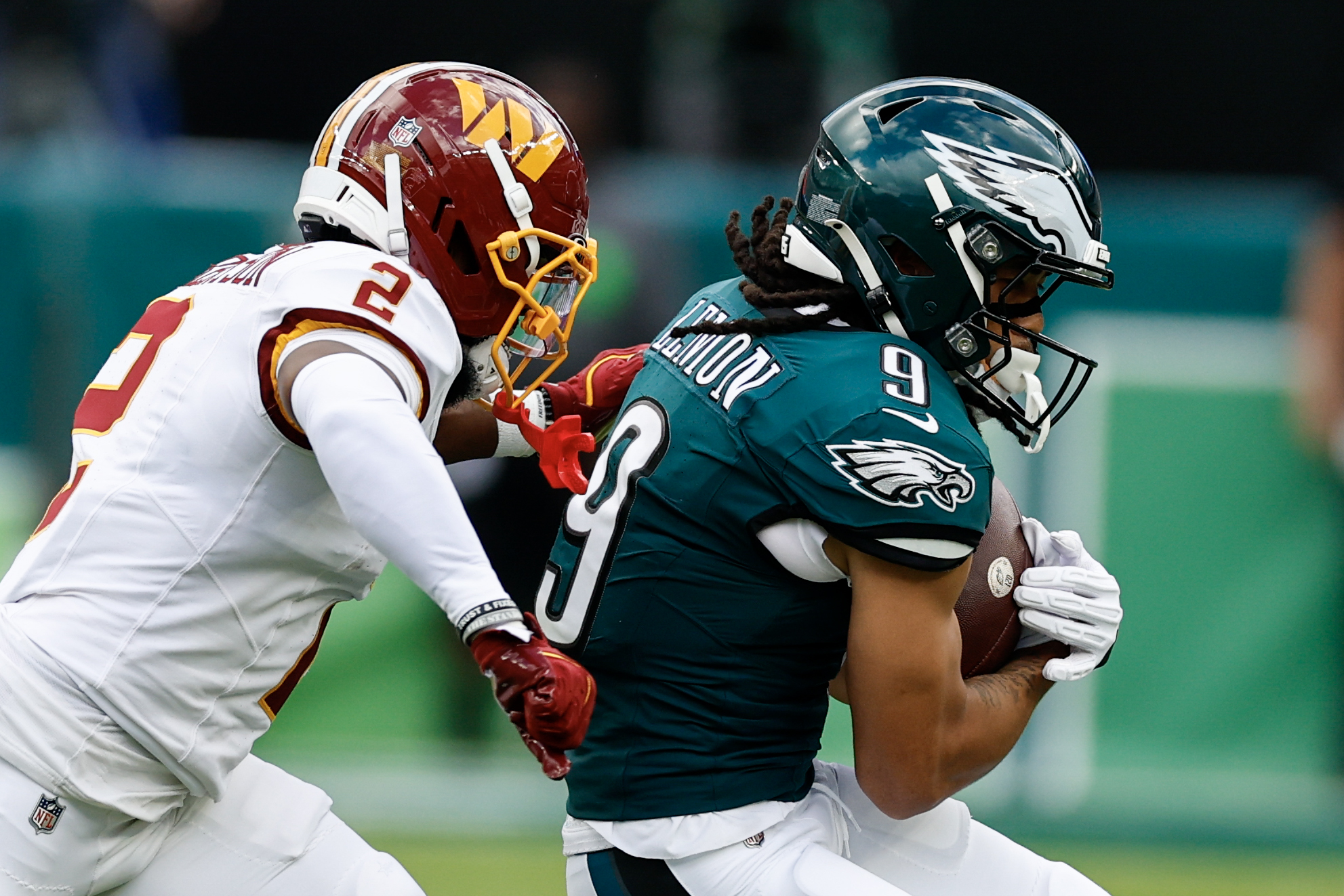
    Two plays from Sunday illustrate the blurry line between results and reality. Both involve Makai Lemon, the rookie wide receiver who is currently threatening the integrity of the space-time continuum with a career average of minus-1.7 yards per reception on three catches. Yes, Lemon somehow managed to emerge from his NFL debut tied for the team lead in receptions among wide receivers but also 5 yards shy of his previous career high in receiving yards, which was zero. But the postgame narrative could easily have been different.

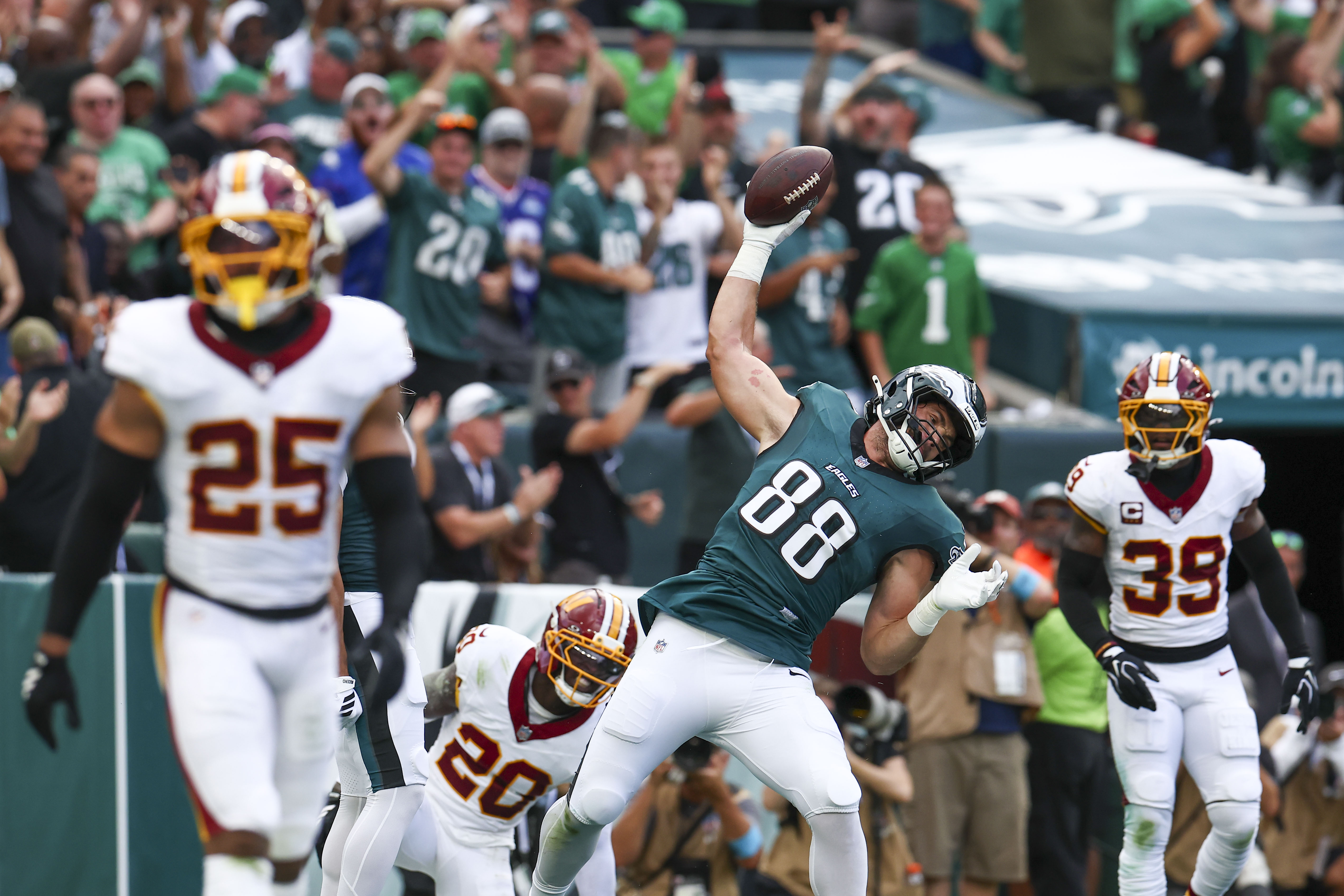
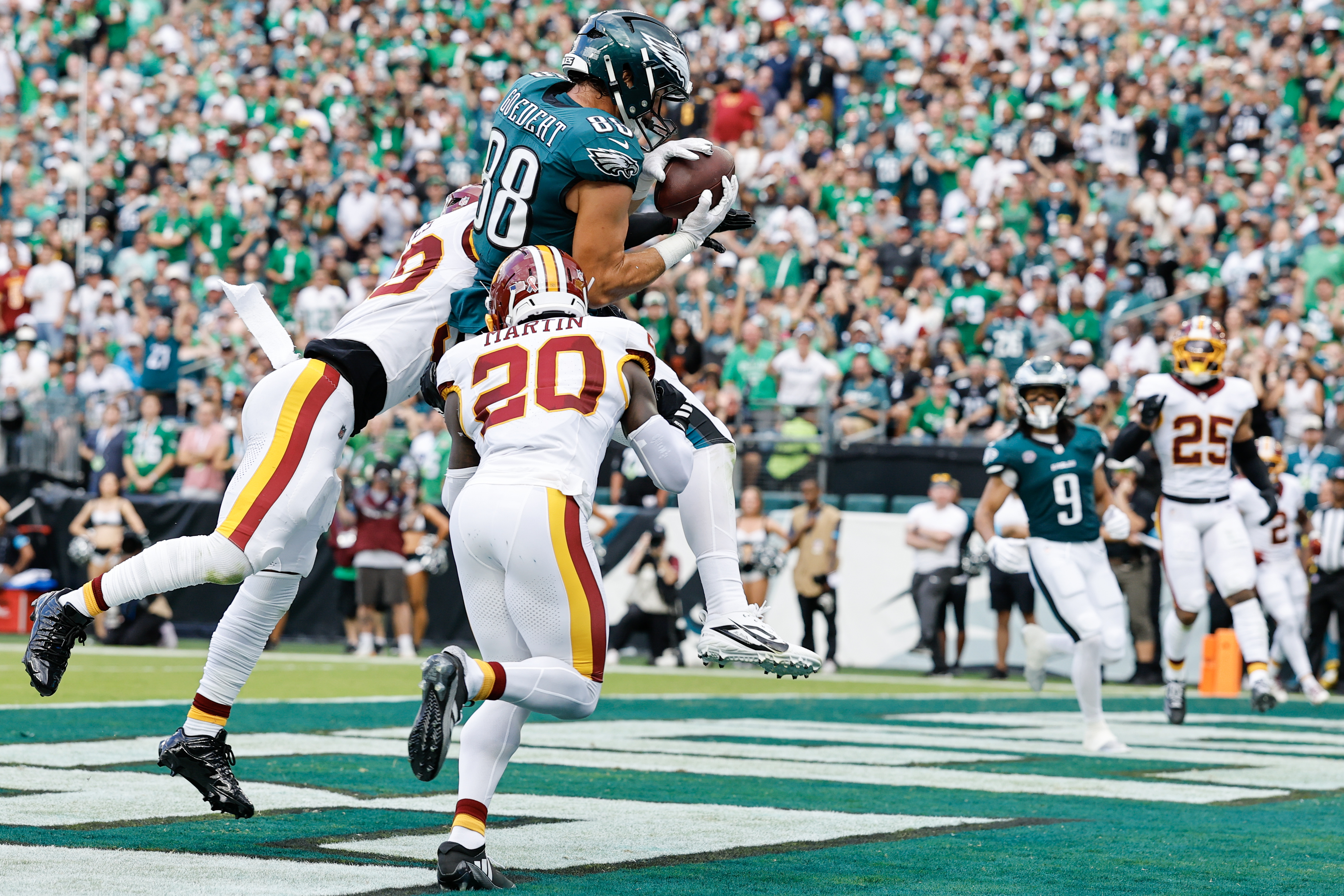
    The first play was also the first of several high-level throws from Jalen Hurts. You can probably guess which one. Third-and-goal from the 17-yard line. Four verticals. Early second quarter. The degree of difficulty was off the charts for both thrower and catcher on Dallas Goedert’s touchdown catch that gave the Eagles a 7-3 lead. The easier play might’ve been to his left, where Lemon was mirroring Goedert down the opposite seam, with the safety shaded toward Goedert. Would Lemon have made the catch? Would the safety have made a play? Who knows?

    Later in the second quarter, Hurts had the rookie open on a corner/flag route 15 yards downfield with one defender between him and the end zone, a safety who was 10 yards over top of him and sitting on the seam/post route. Every defender in front of him was occupied and at least 7 yards away. Watch the replay and what you see is Lemon looking back at the quarterback, bursting out of and away from a triangle of defenders, none in position to make a play on the ball. If Lemon had been the primary read on the play — assuming he wasn’t — an easy throw would have picked up at least 18-20 yards. Instead, Hurts played pitch-and-catch with Goedert to his right for a 5-yard completion on one of those much-maligned hitch routes.

    I don’t bring up either of these plays to criticize Hurts. One resulted in a touchdown, on a tremendous throw. The other resulted in a first down, albeit on a drive that ended with a punt. I don’t mean to imply that Hurts should have done something different. I’m simply pointing out that he could have done something different. And if he had done something different, we would be talking about Lemon debuting with two or three catches for 50 yards and a touchdown at minimum. Instead, Lemon is on pace to finish his rookie season with 51 catches for negative 85 yards.

    Rarely is it the case that results are completely detached from reality. In this case, though, the reality isn’t necessarily that Lemon’s debut is representative of who he is as a player or of what the Eagles can expect from him this season. The pertinent reality could just as easily be that Lemon missed a huge number of summer reps due to a hamstring injury, and that he spent Week 1 as an afterthought, either to the quarterback or to the man designing the quarterback’s progressions. If so, one of the biggest challenges for Lemon in his rookie season will be developing a chemistry with his quarterback.

    A few more reminders of the predictive nature of Week 1 …

    The only thing we can say for sure about Week 1 in the NFL: Nobody ever remembers Week 1 in the NFL. Zay Flowers catches five passes for 150 yards and the Ravens scoring 41 points is a sure sign of new offensive coordinator Declan Doyle’s genius. It could just as easily be a reminder of Week 1 of 2025, when Flowers caught seven passes for 143 yards and the Ravens scored 40 points against the Bills.

    A list of some other things that happened in Week 1 of 2025:

    • Aaron Rodgers threw for 244 yards and four touchdowns. He finished with 3,322 yards and 24 touchdowns.
    • Keon Coleman caught eight passes for 112 yards and a touchdown. He finished with 38 catches, 404 yards and four touchdowns.
    • DeVonta Smith and A.J. Brown combined for four catches and 24 yards, while Hurts rushed 14 times for 62 yards.

    Now, back to our regularly scheduled overreactions …

    Are the Giants good?

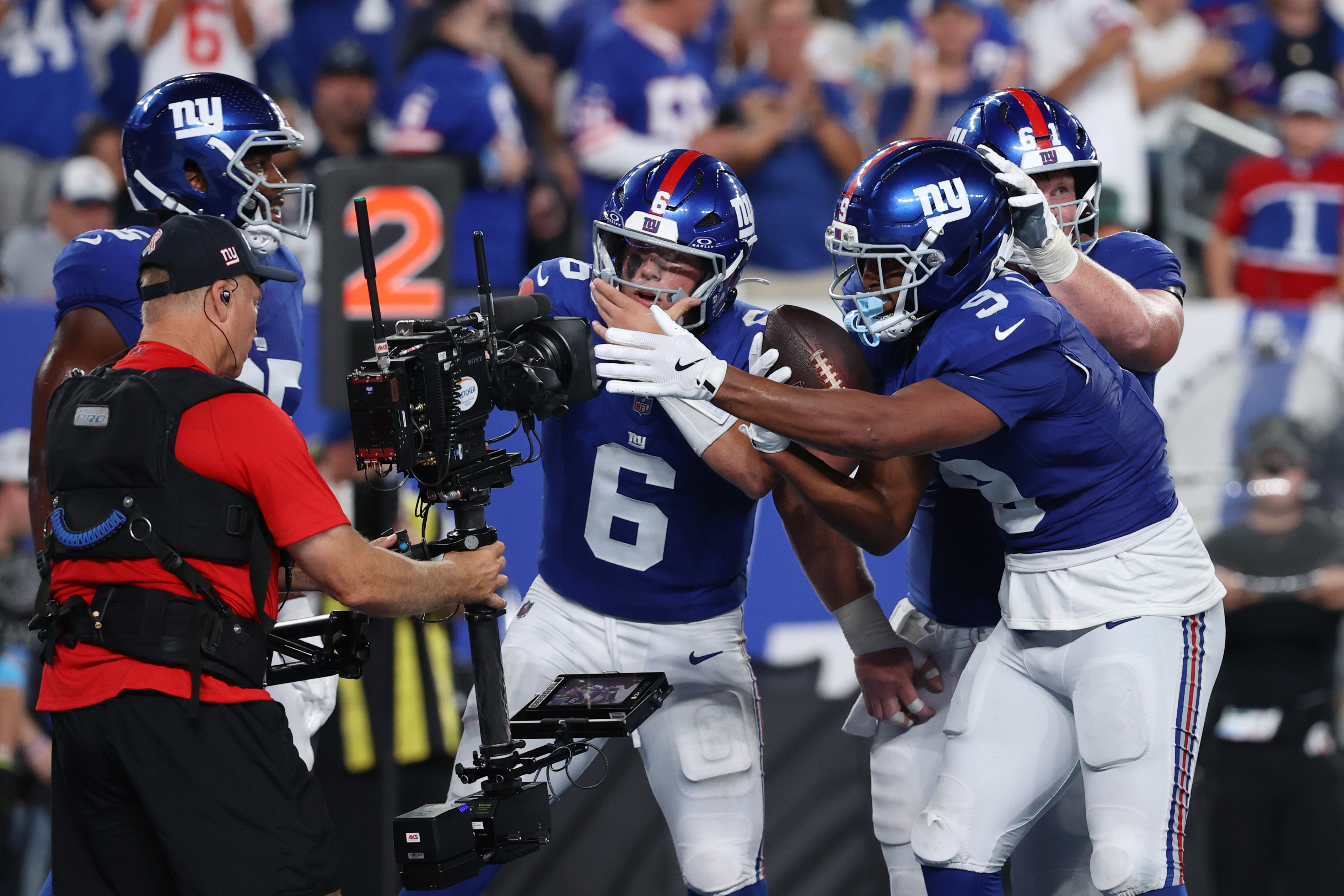
    The chicken-and-egg component of Week 1 was in full force in the Giants’ 28-20 win over the Cowboys on Sunday night. Same ol’ Cowboys? Or brand-new Giants? I’m leaning toward the latter, assuming Jaxson Dart doesn’t habitually seek out contact as a ball carrier. The most impressive thing about the Giants wasn’t a defense that held George Pickens and CeeDee Lamb to a combined eight catches for 72 yards. Nor was it Malik Nabers’ return from a serious knee injury. It was Dart’s footwork in and feel for the pocket while keeping his eyes downfield.

    The Giants have a brutal situation in Week 2 on the road against an 0-1 Rams team. But they’ll be favored in Weeks 3 and 4 at home against the Titans and Cardinals and then will travel to Washington in Week 5. Then they’ll have a winnable game at home against the Saints before a Week 7 road game in Houston heading into the bye week. The 5-2 Giants visiting Lincoln Financial Field in Week 9? That’d be fun.

    New York Giants quarterback Jaxson Dart (center) looked much improved in their season opening win over the Cowboys.Pamela Smith

    Week 1 in perspective

    Even beyond the Giants, it’s hard to overstate how much the Eagles’ outlook in the NFC depends on how real Week 1 proves to be. We may have to wait at least two more weeks to find out more about the 49ers, who host the Dolphins and Cardinals before facing the Broncos and Seahawks in Weeks 4 and 5. If their defense continues to be what it was in a 27-7 win over the Rams in Australia, look out.

    Meanwhile, it’s a shame we’ll have to wait until December to see the Eagles against the Seahawks, who continue to redefine NFL defense. The biggest question in the NFC West: Are the Rams the new 2012 Eagles Dream Team?

    The NFL is show biz. Week 1 is all about character development and the setup.