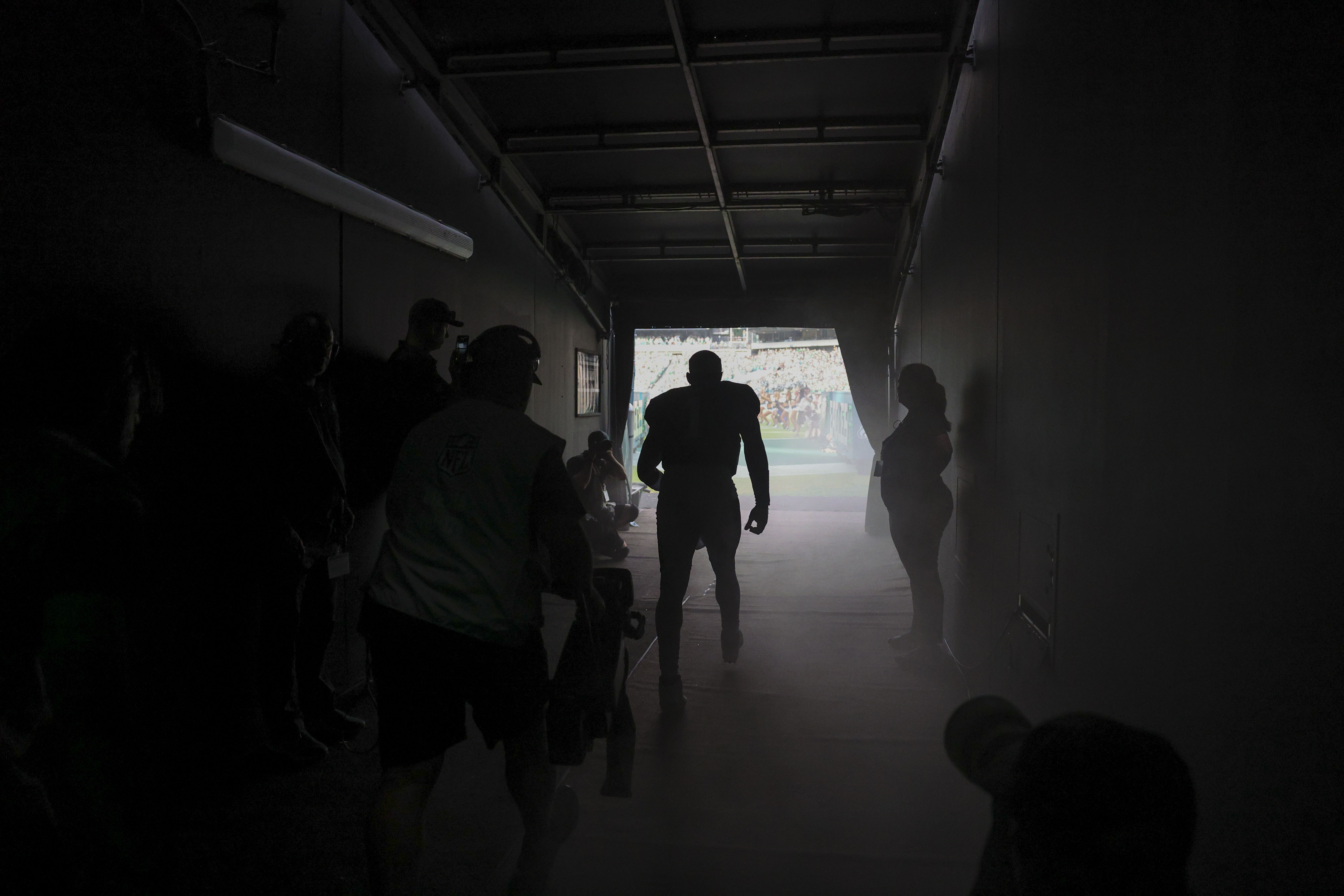
Author: David Murphy

  • This better not be the new normal for the Eagles offensive line

    This better not be the new normal for the Eagles offensive line

    There are lots of words one could use to soft-pedal a critique of the Eagles’ offensive line in Week 1.

    Uneven. Inconsistent. Uncharacteristic.

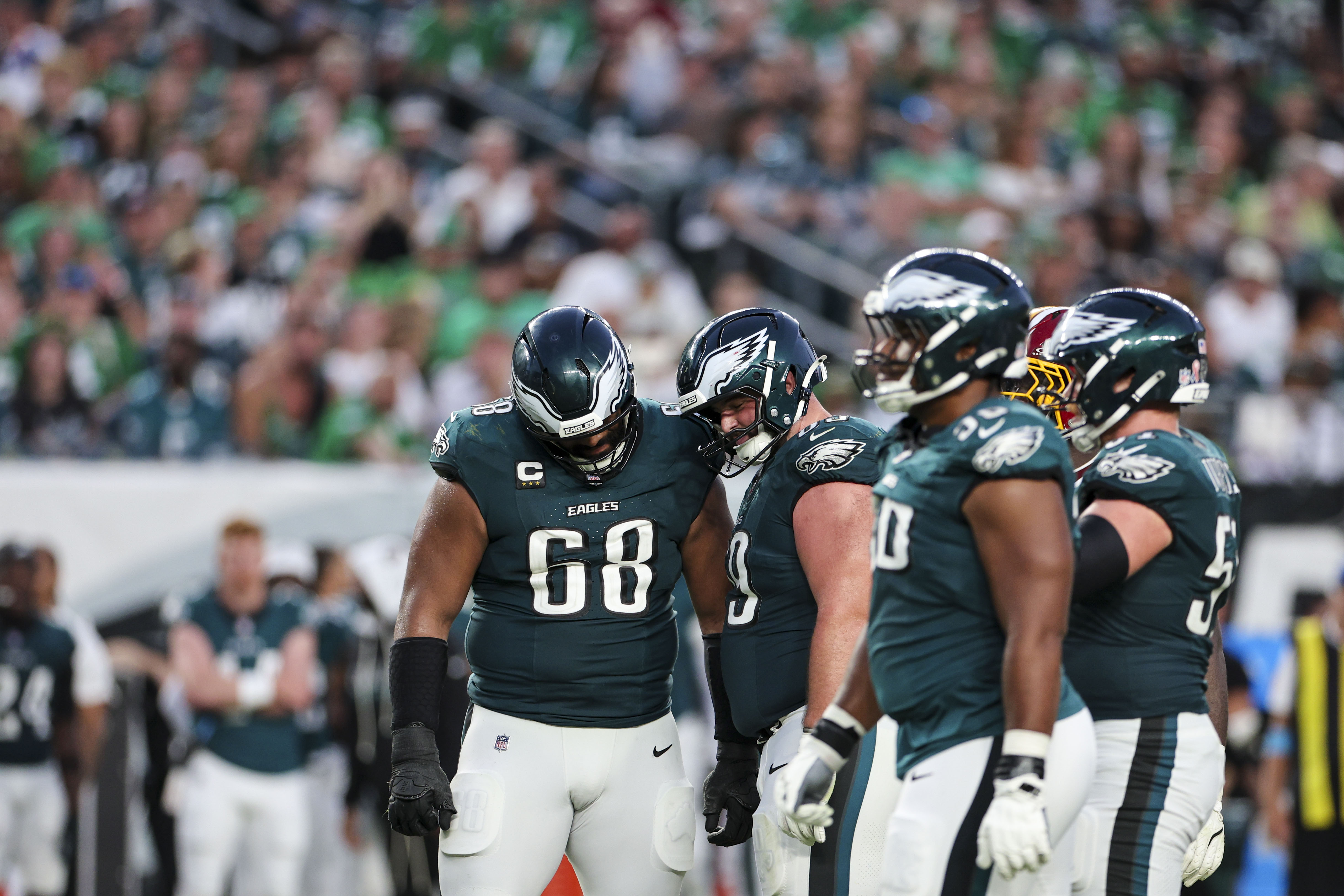
    They are words that allow a little leeway, words that grant some level of benefit of the doubt. That is to say, they are words that one may feel desperate to err toward after a performance like that of the Eagles’ run and pass blockers in their 24-22 season-opening win on Sunday. Landon Dickerson, Cam Jurgens, Jordan Mailata, Lane Johnson — these guys deserve every ounce of the political capital they’ve accrued during their time together as a unit. Let ye who hath never paved the way for a 2,000-yard rusher en route to a Super Bowl cast the first stone.

    And yet …

    The surest sign of the bottom line is the dancing you do around it. The bottom line for the Eagles run- and pass-blockers is this: They were not good enough in Week 1. Not even close.

    The final numbers don’t do it justice.

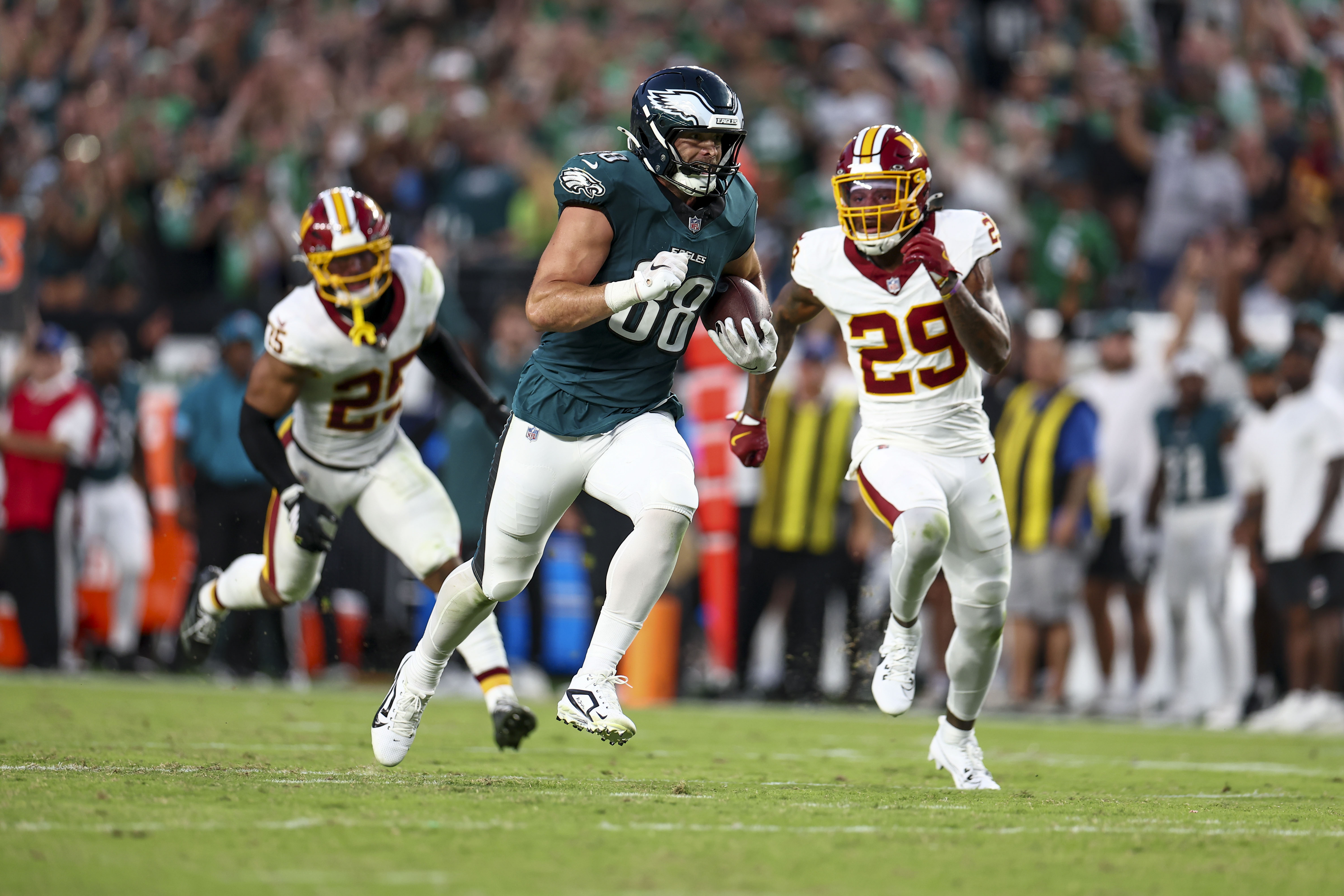
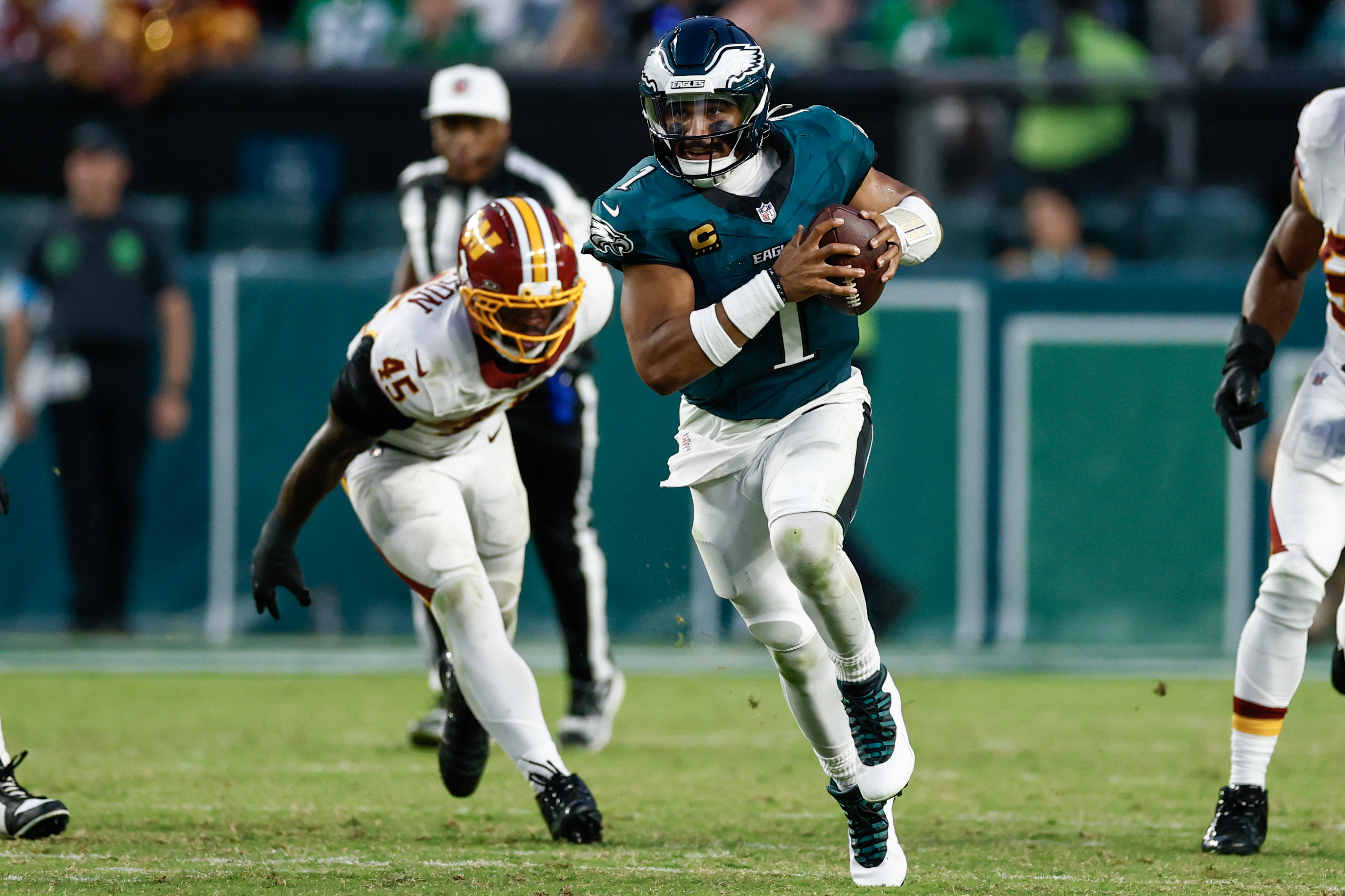
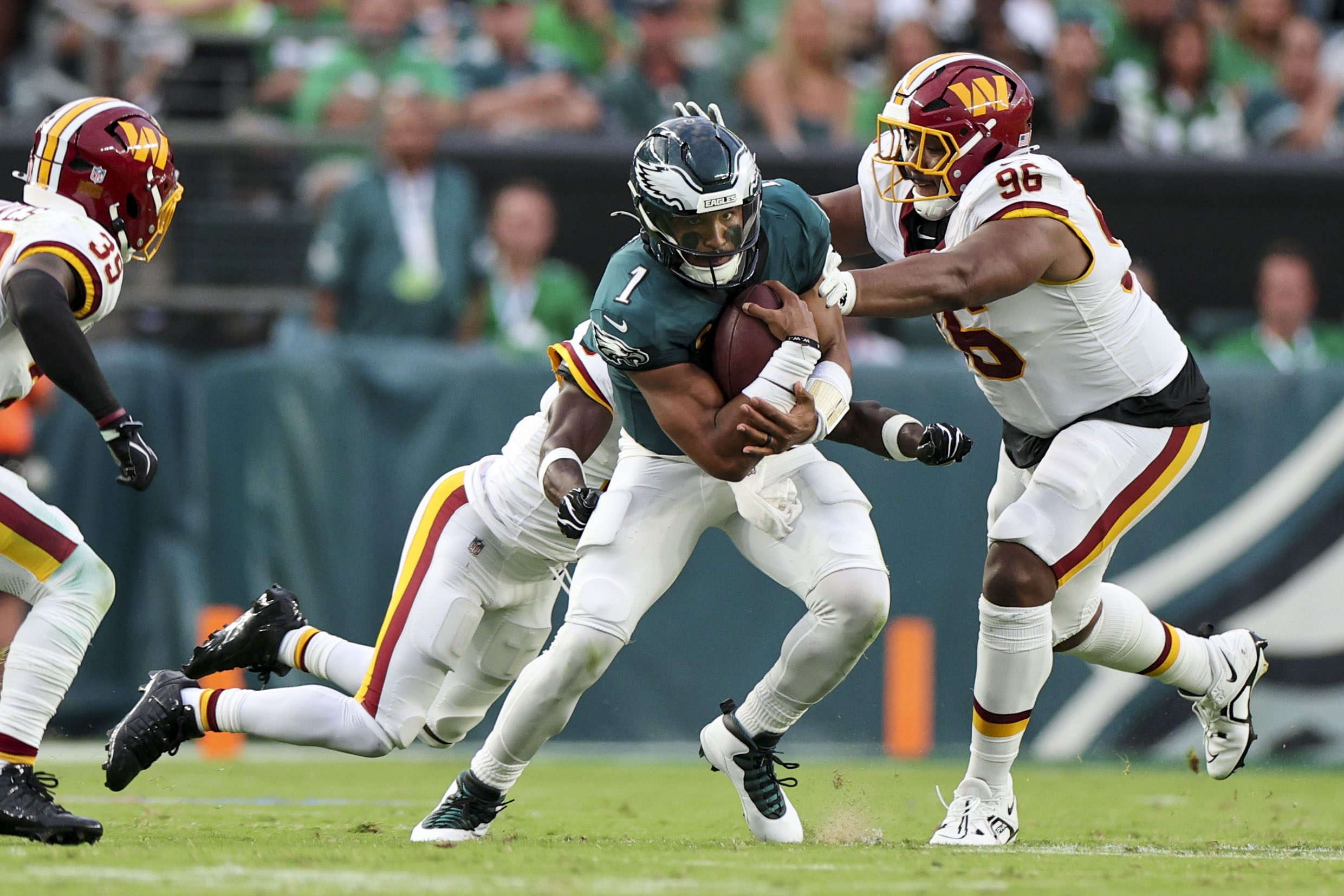
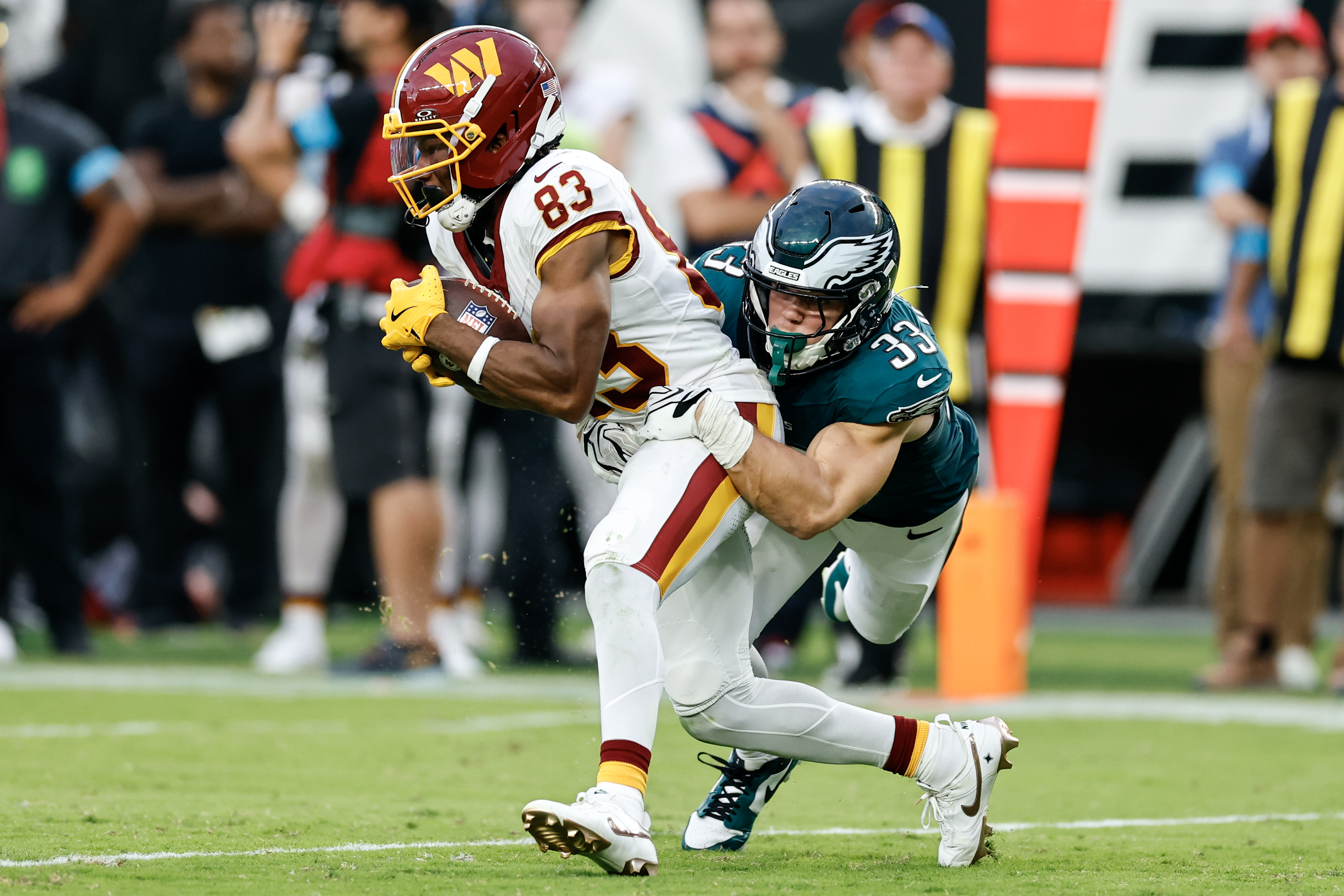
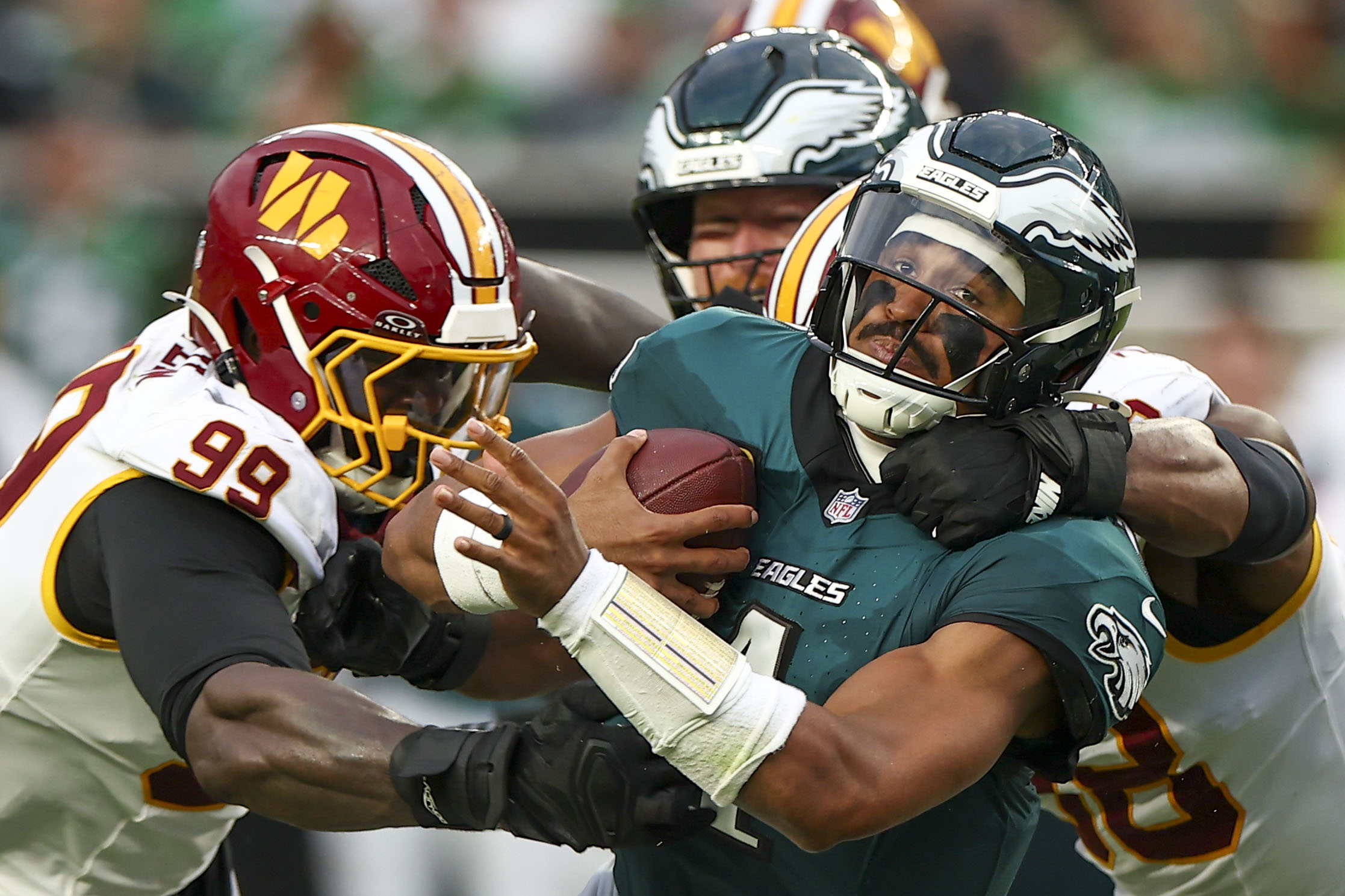
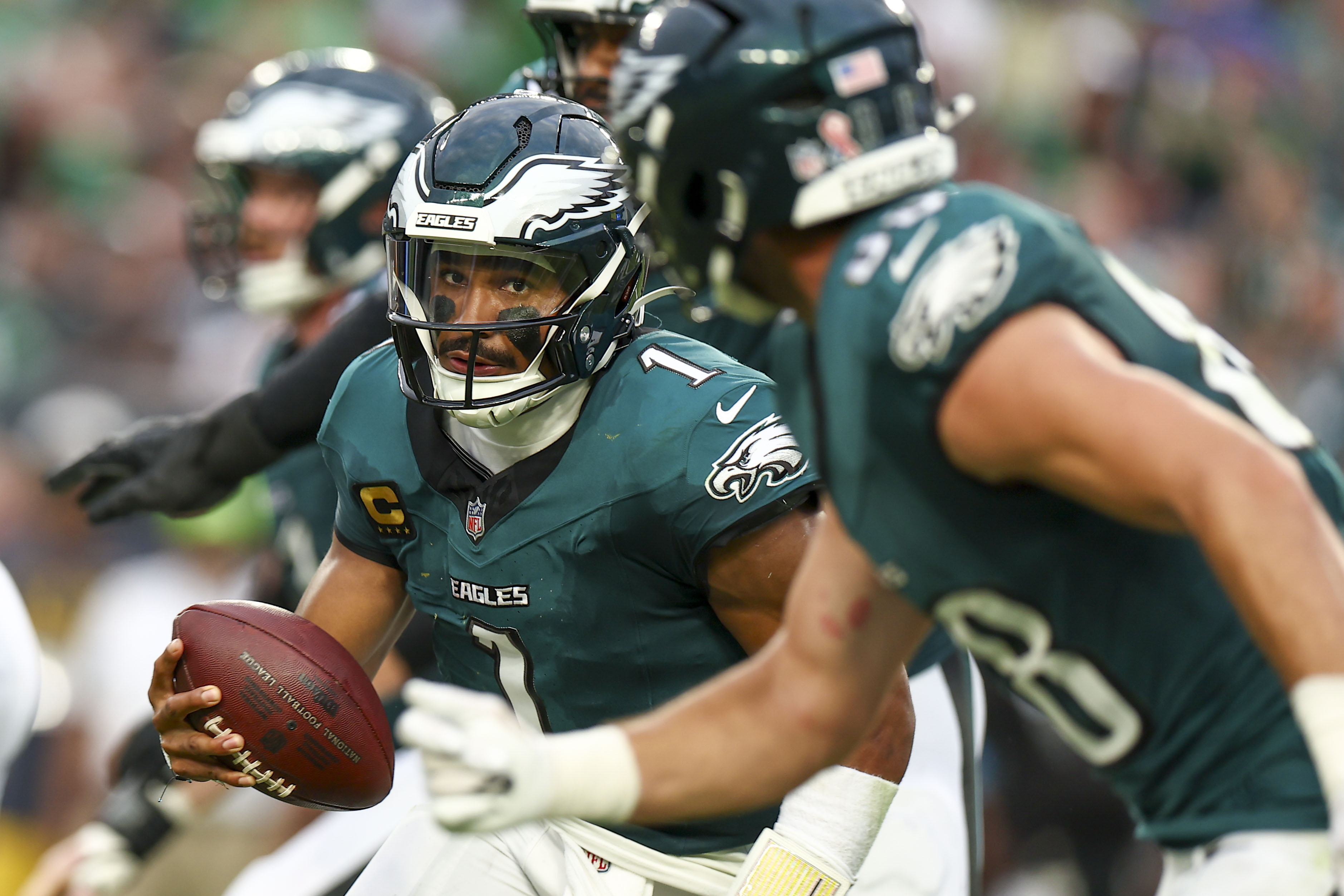
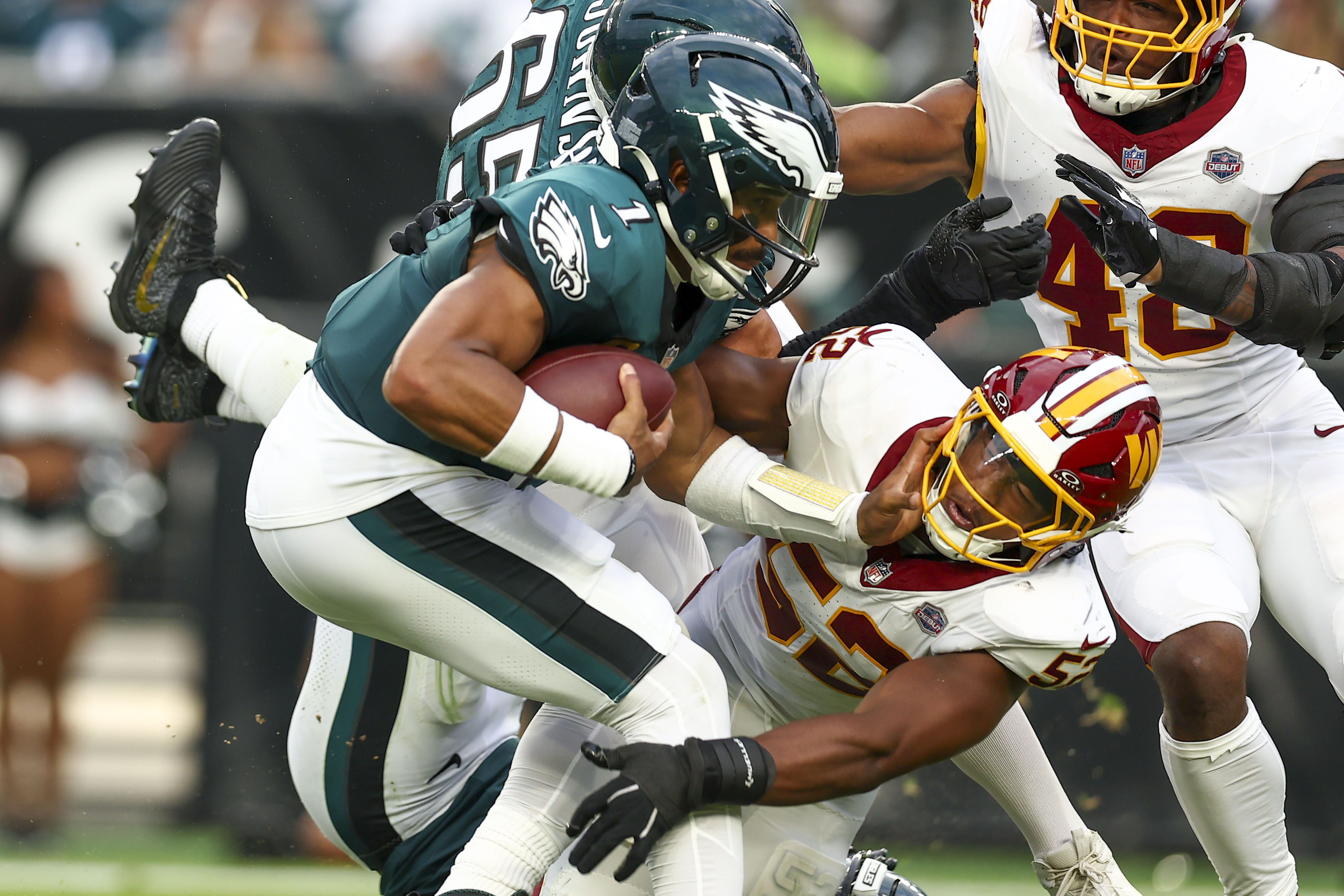
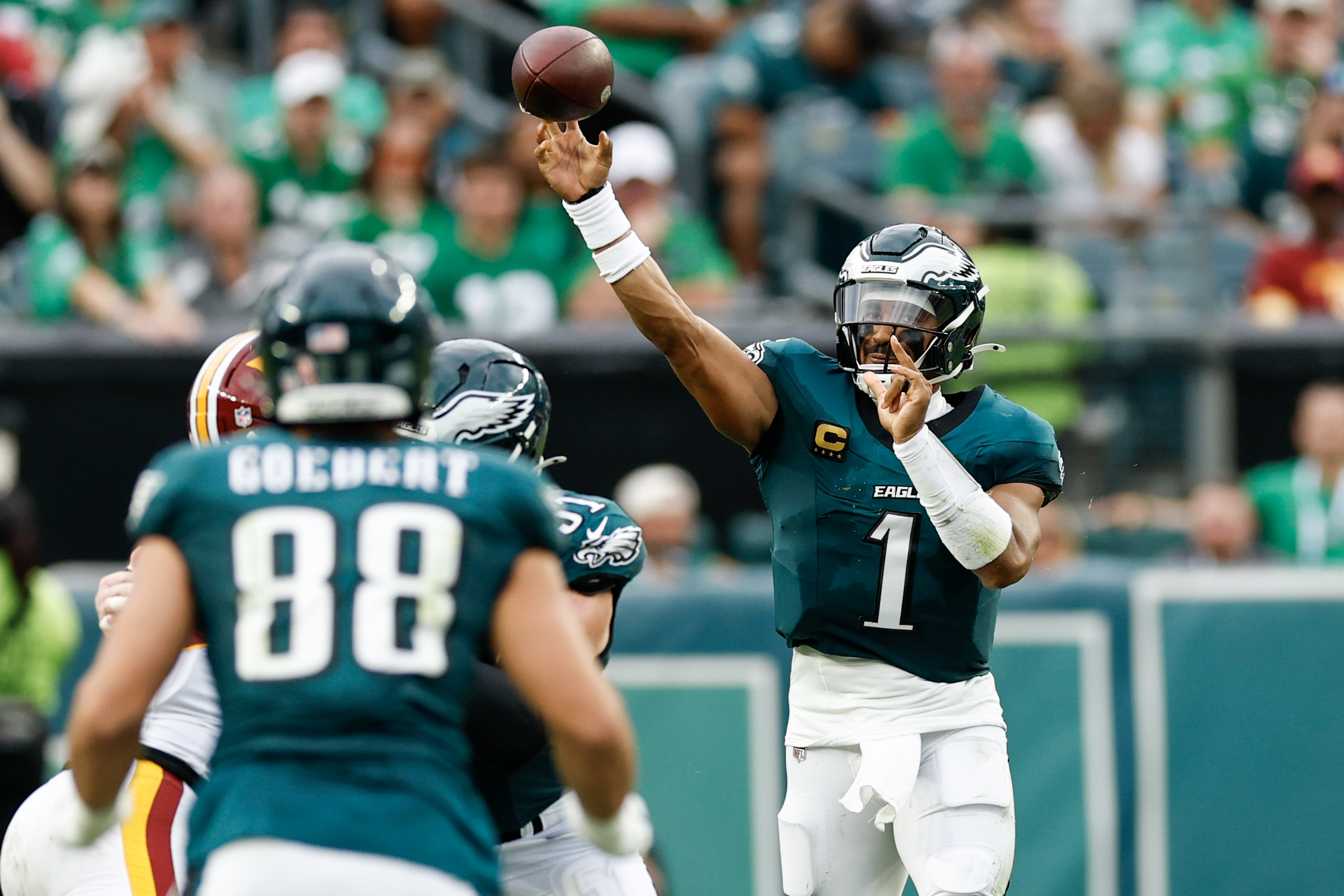
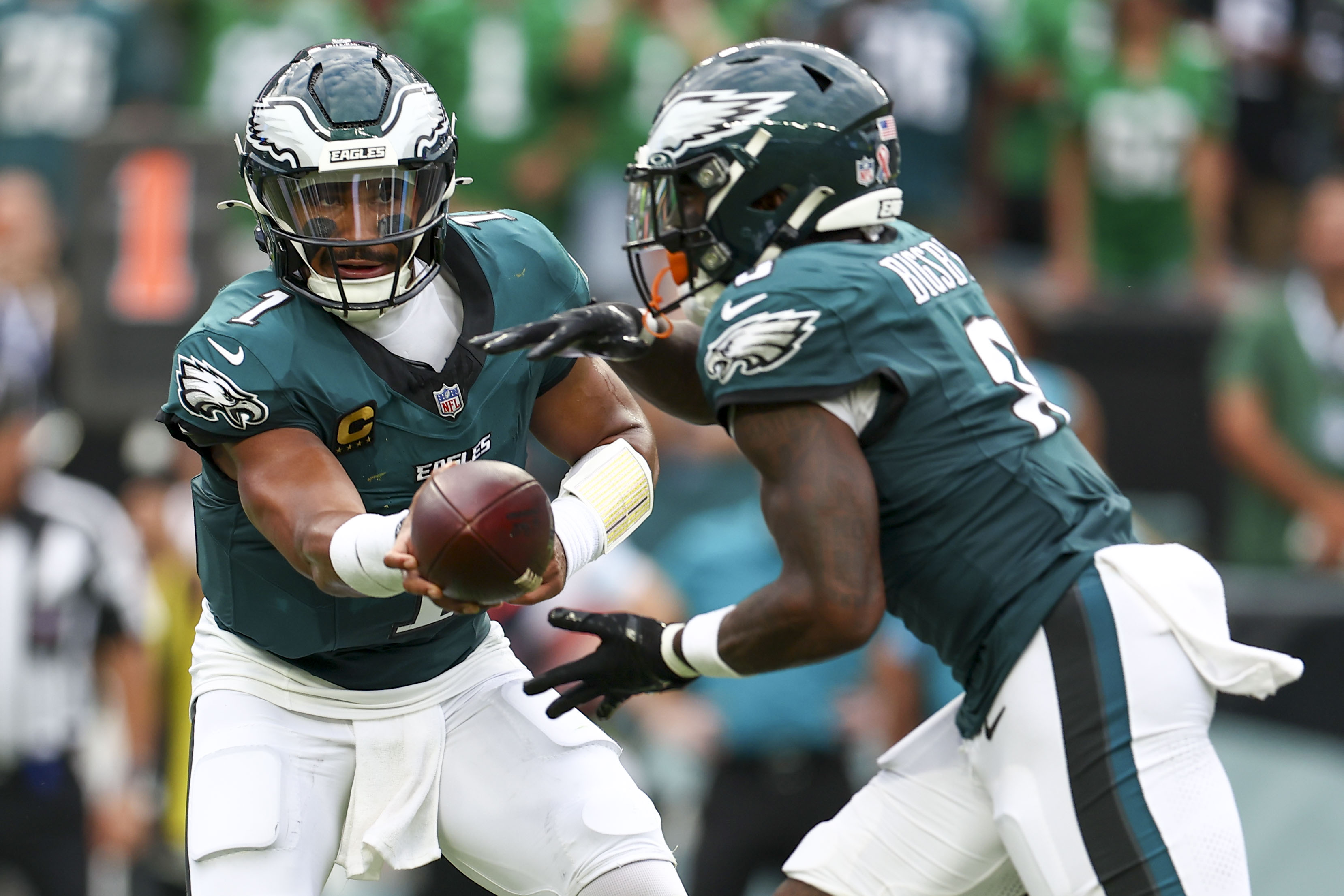
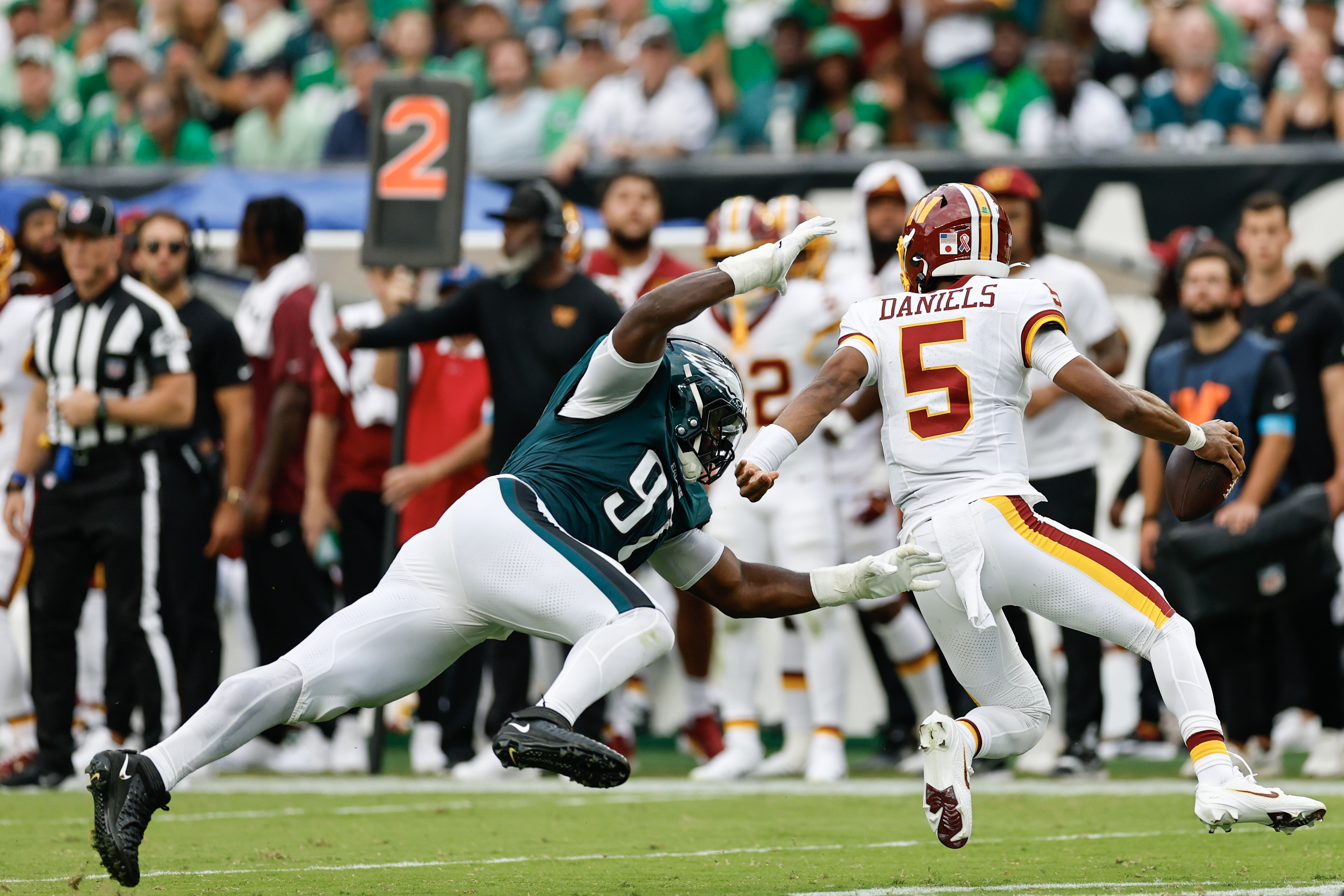
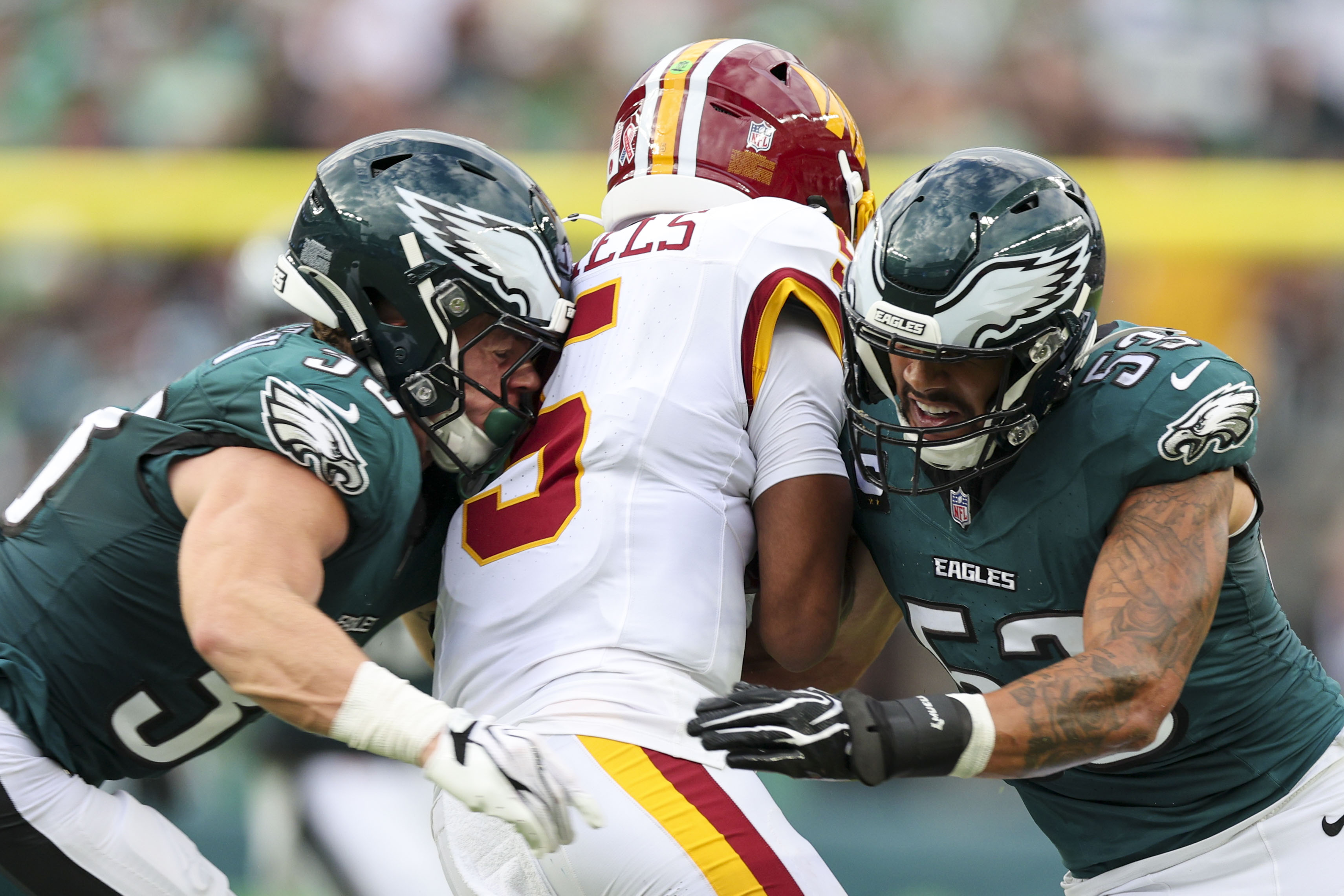
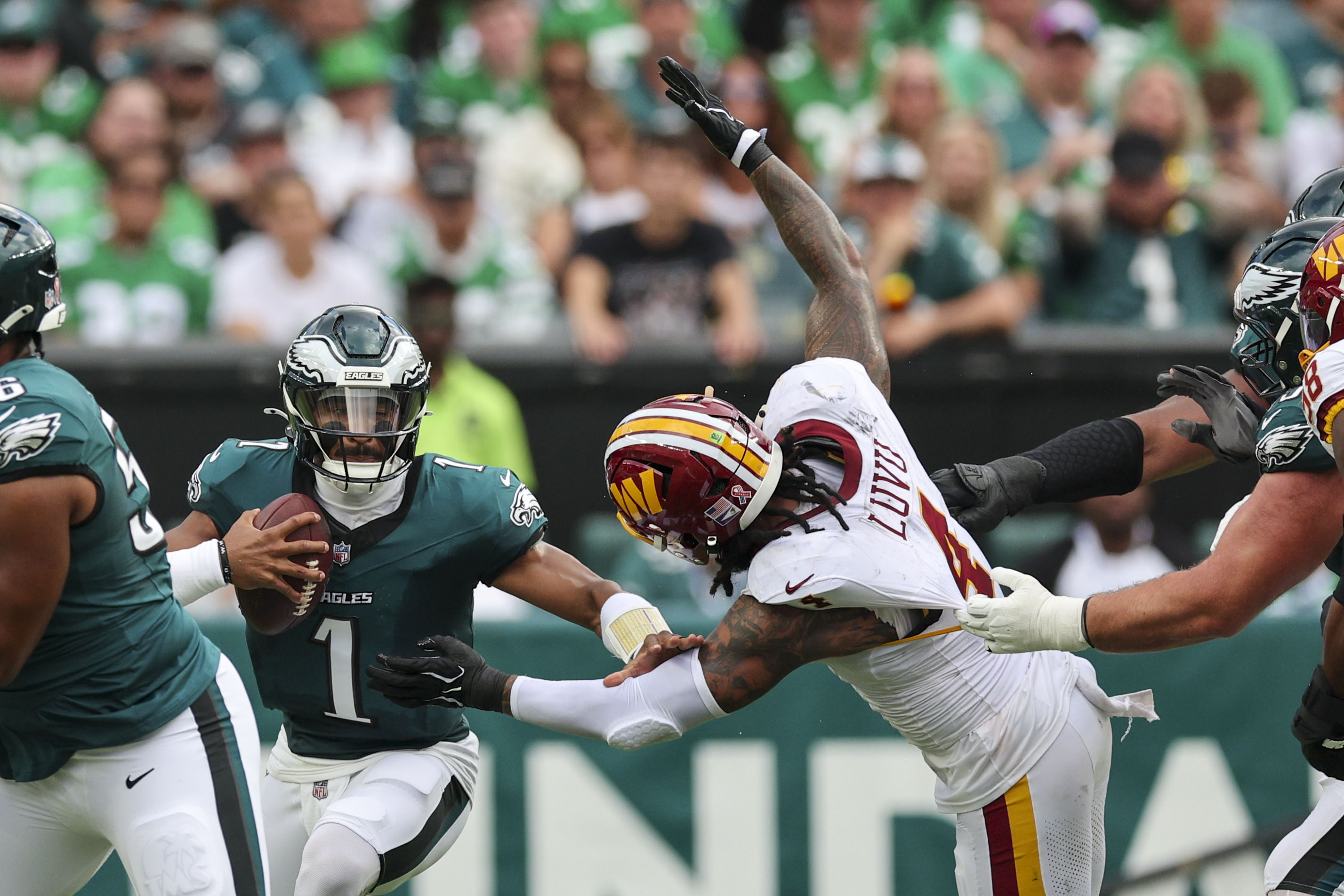
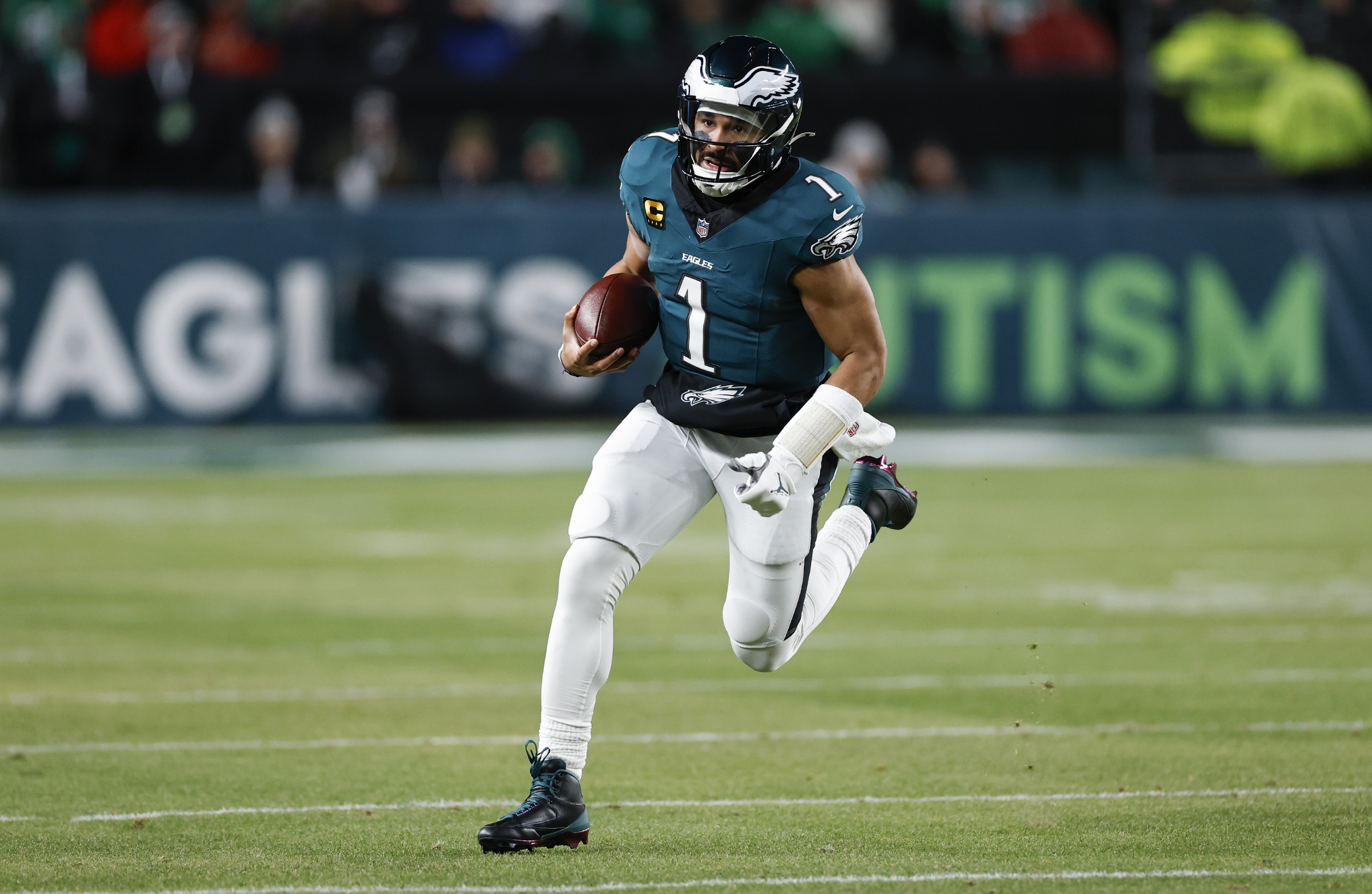
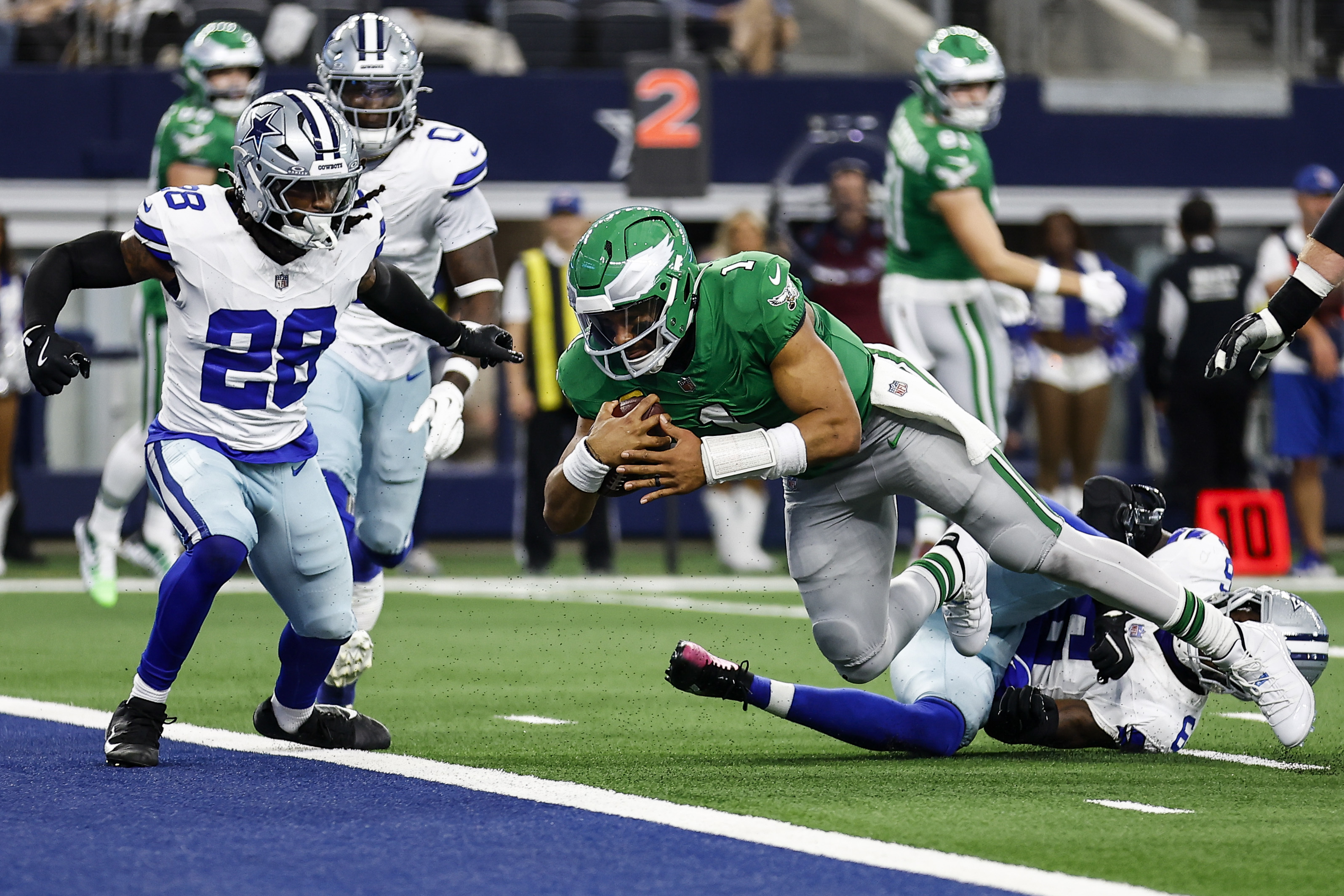
    Jalen Hurts was sacked three times, a total the Eagles surpassed in seven games even in 2024. But that total doesn’t come close to capturing the pressure the Commanders were able to generate throughout the game. Hurts scrambled seven times for 46 yards, mostly out of necessity.

    “I thought Jalen did a great job of making plays, especially when something wasn’t going right,” Jurgens said.
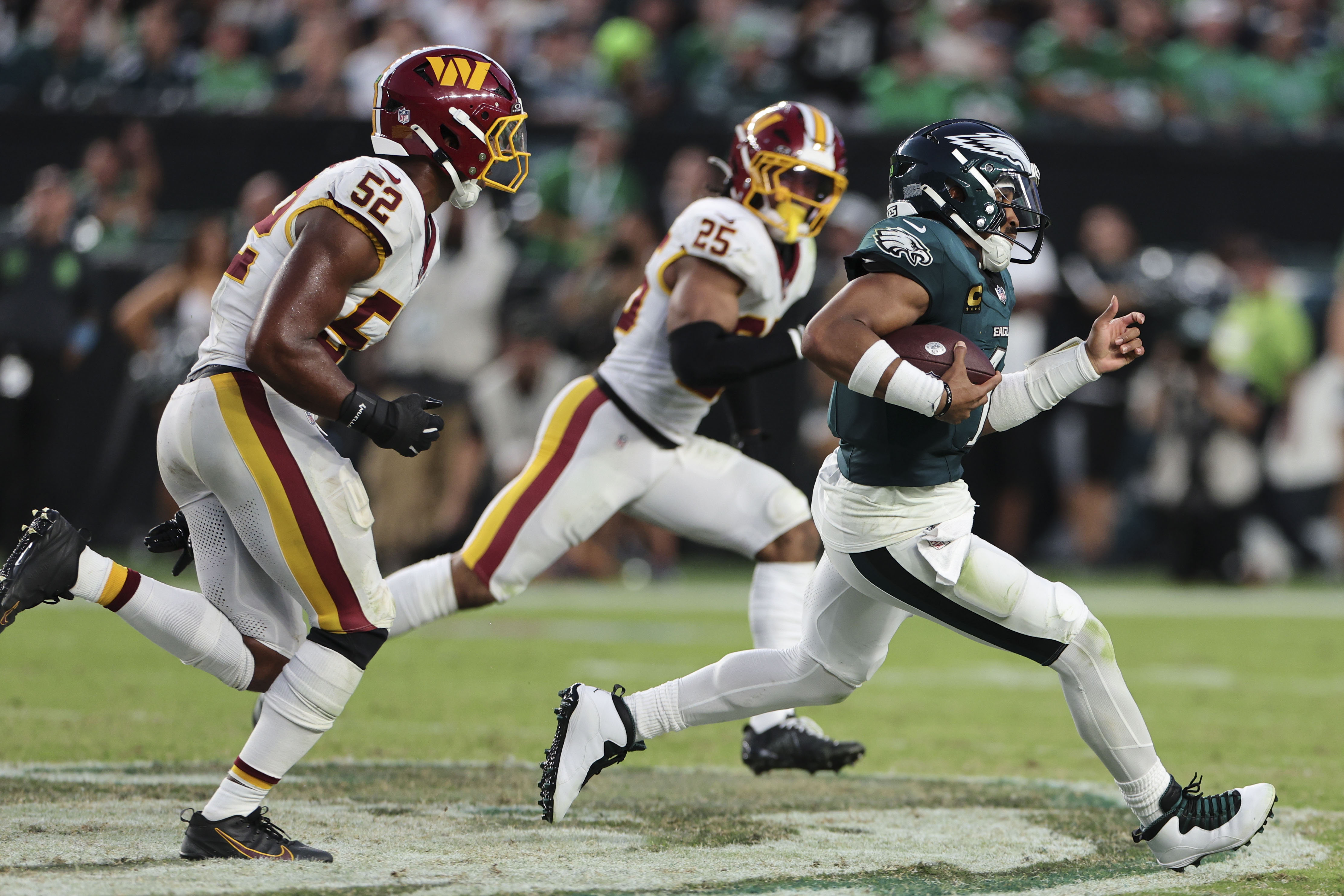
    Jalen Hurts (right) was on the run a significant amount in Week 1. David Maialetti / Staff Photographer

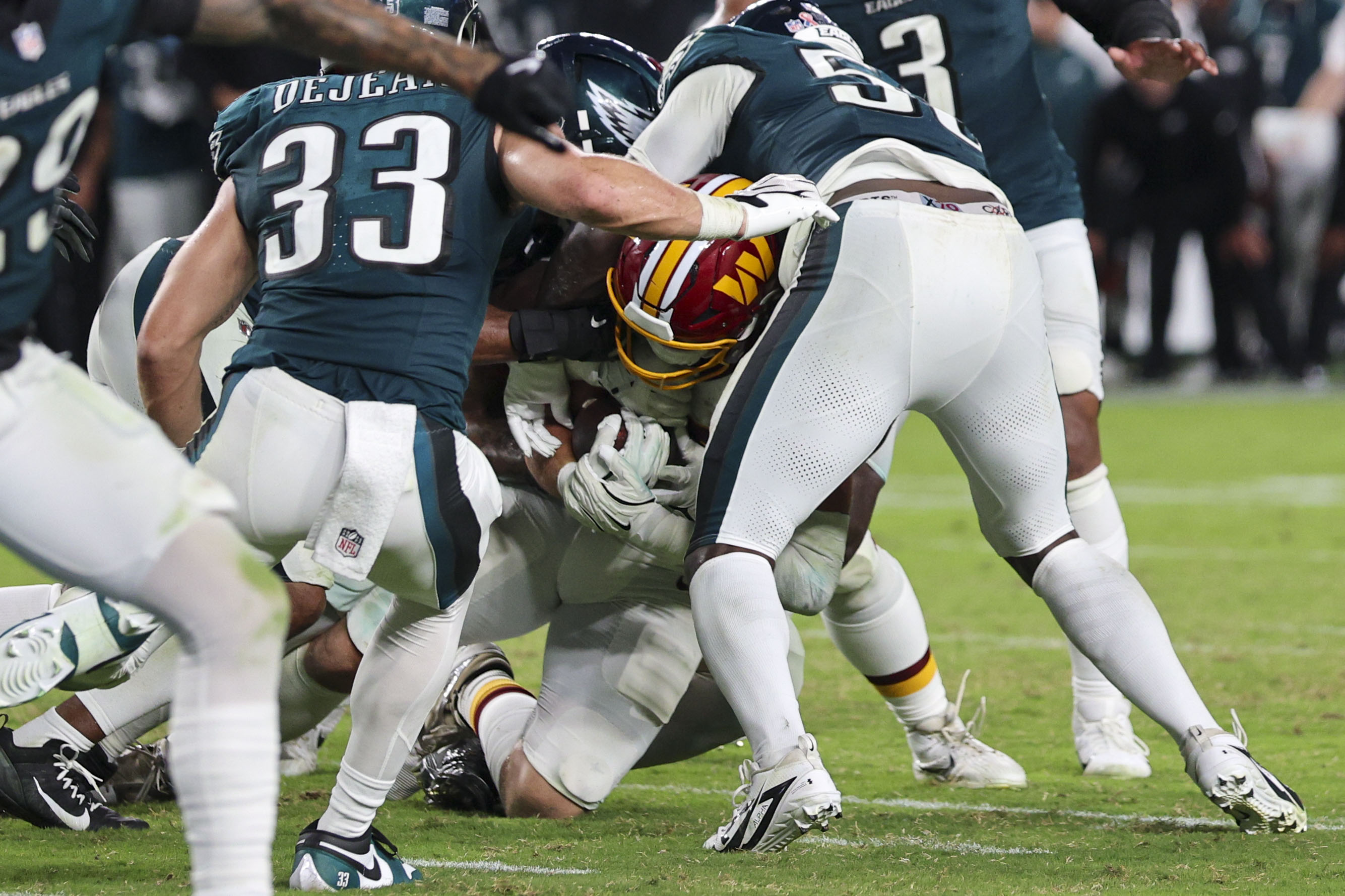
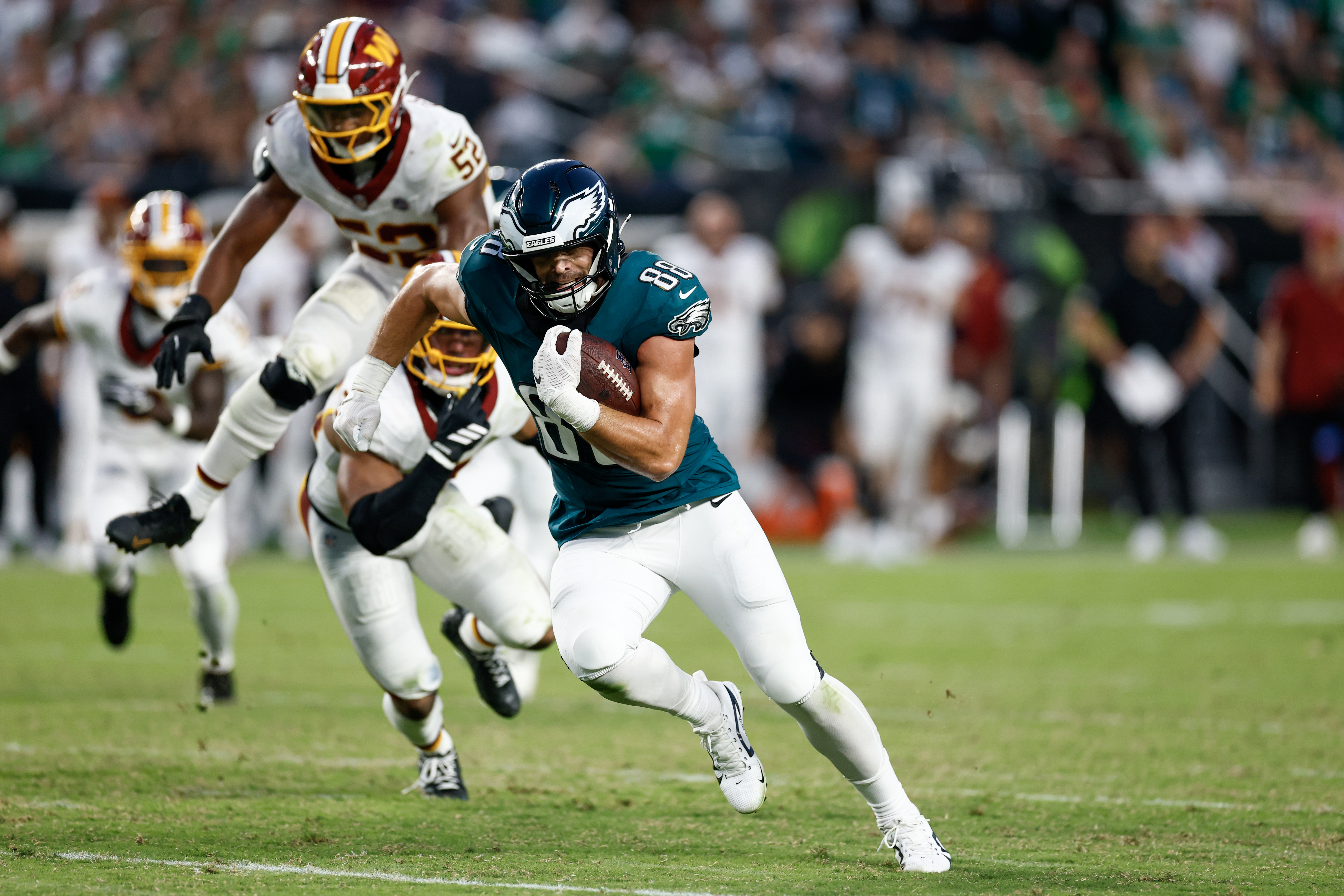
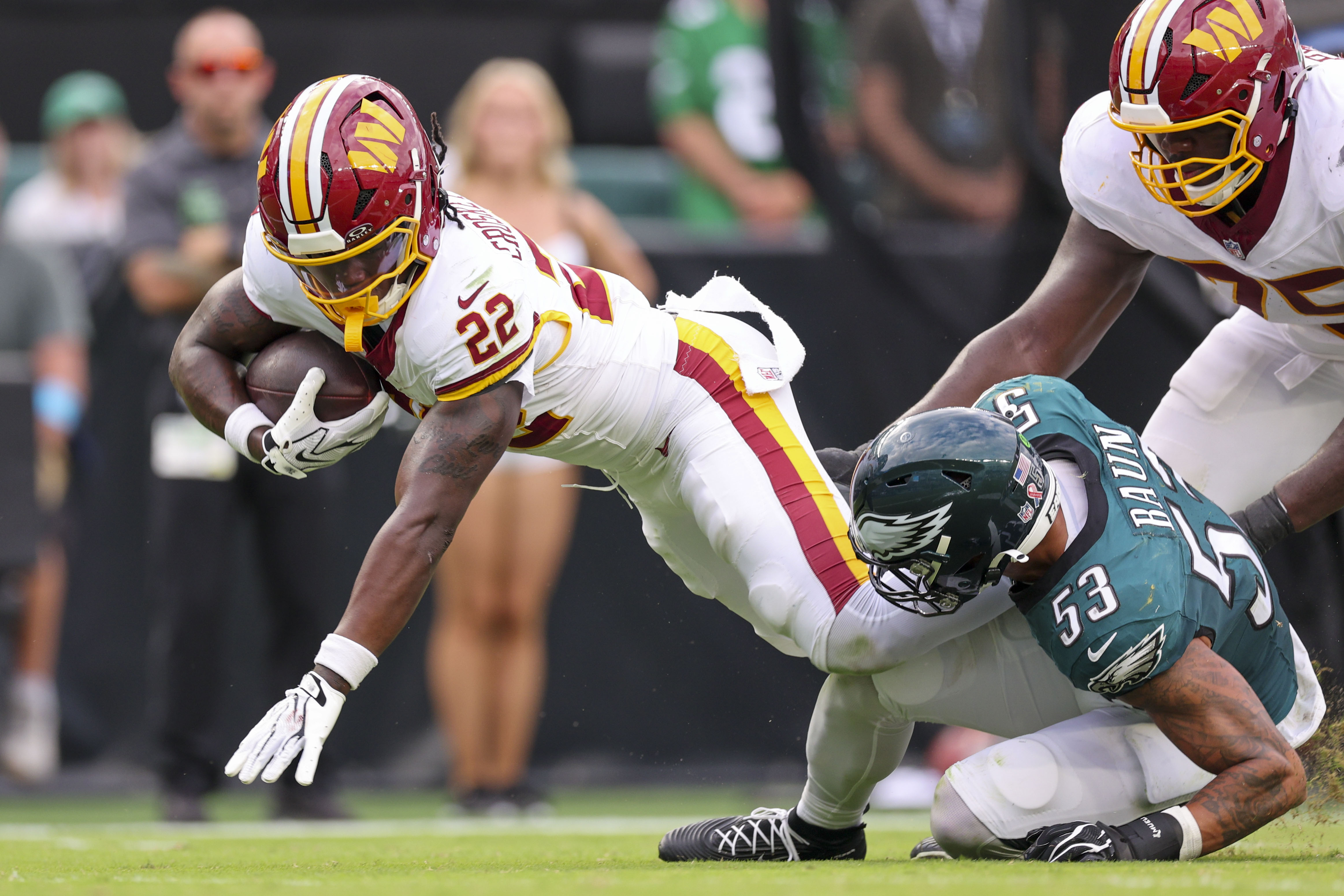
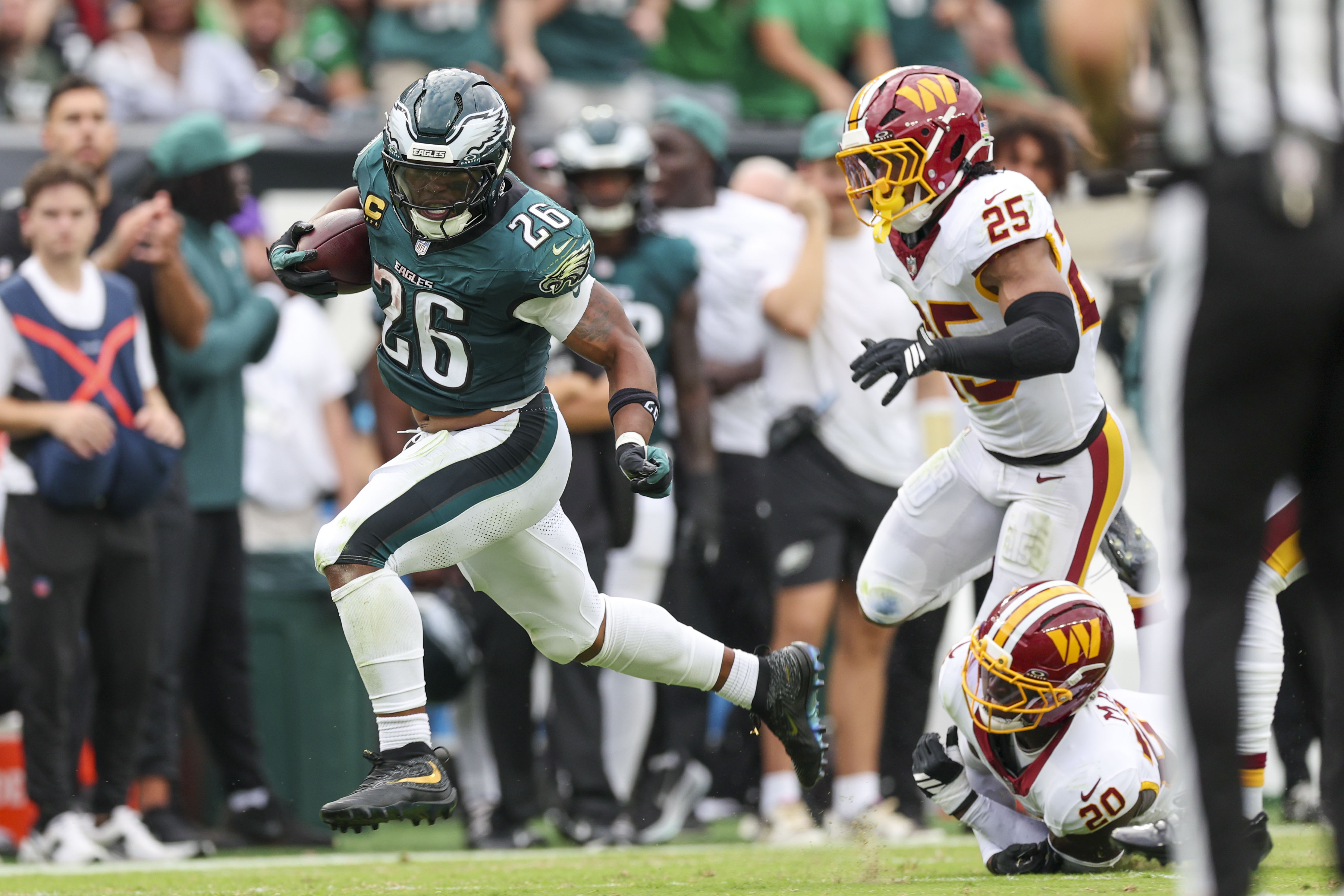
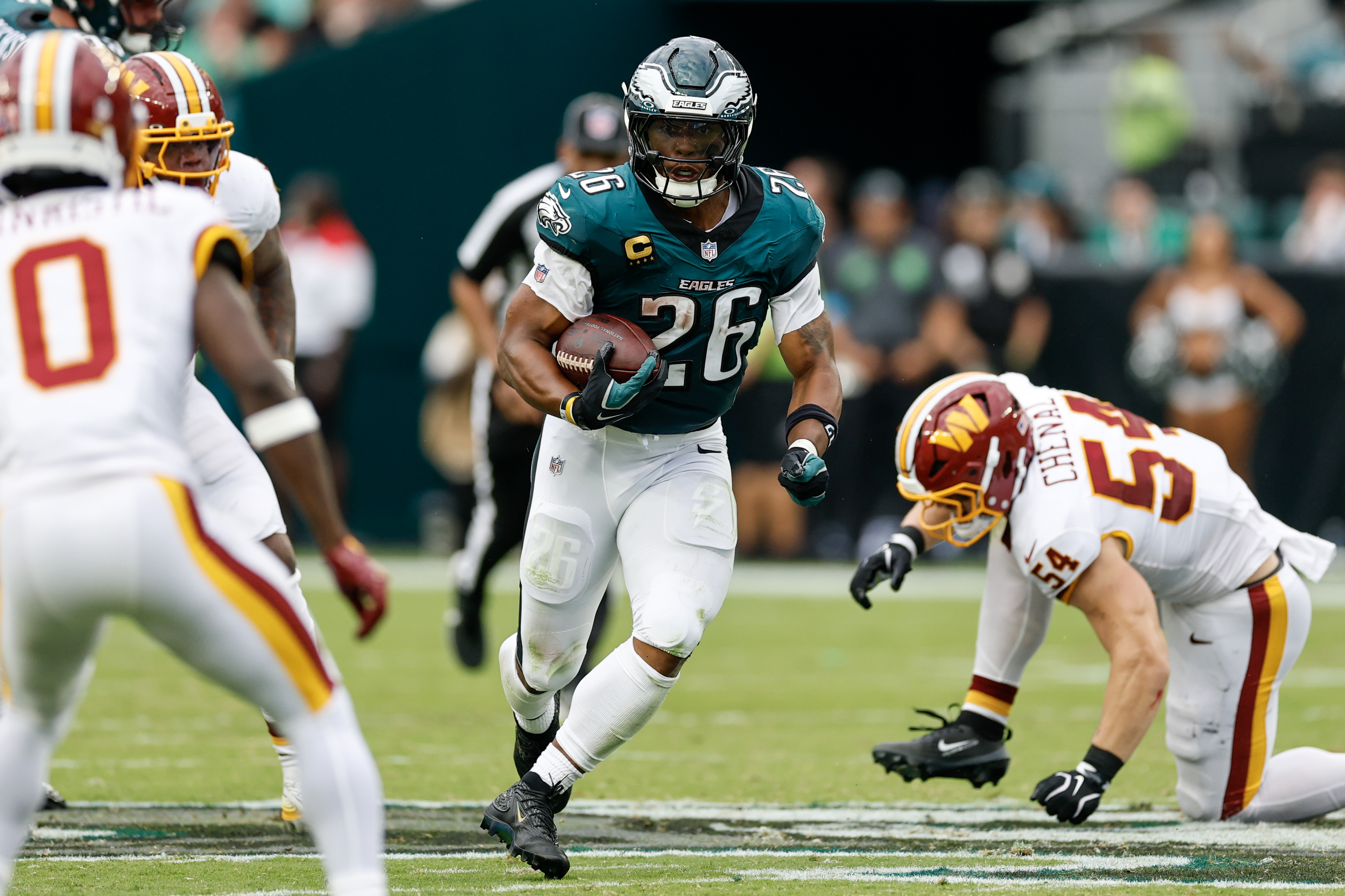
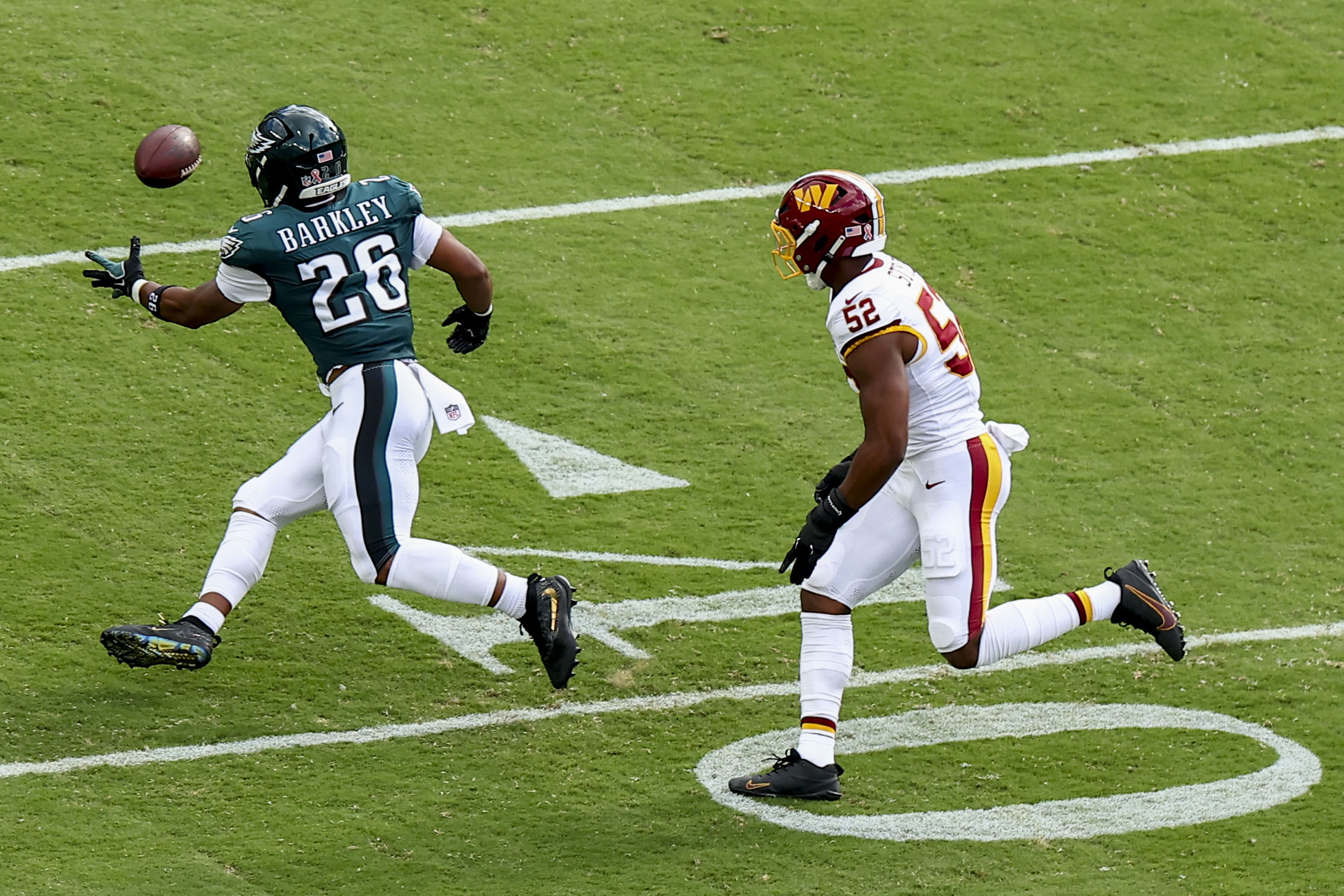
    Saquon Barkley averaged 5.5 yards per carry, which is something he did in just three games all of last season. But his 42-yard run off a vintage jump-cut in the first half is doing more than its fair share of work in padding the average. On his other 14 carries, he gained 41 yards.

    If you didn’t watch the game, all of this might sound like cherry-picking numbers and mathing the math to match a preexisting narrative bias. That’s not the case. If anything, the preexisting bias goes in favor of this offensive line. This was a game flow thing. It is a second-and-long, third-and-long thing. The Eagles faced way too many of those situations throughout Sunday’s win.

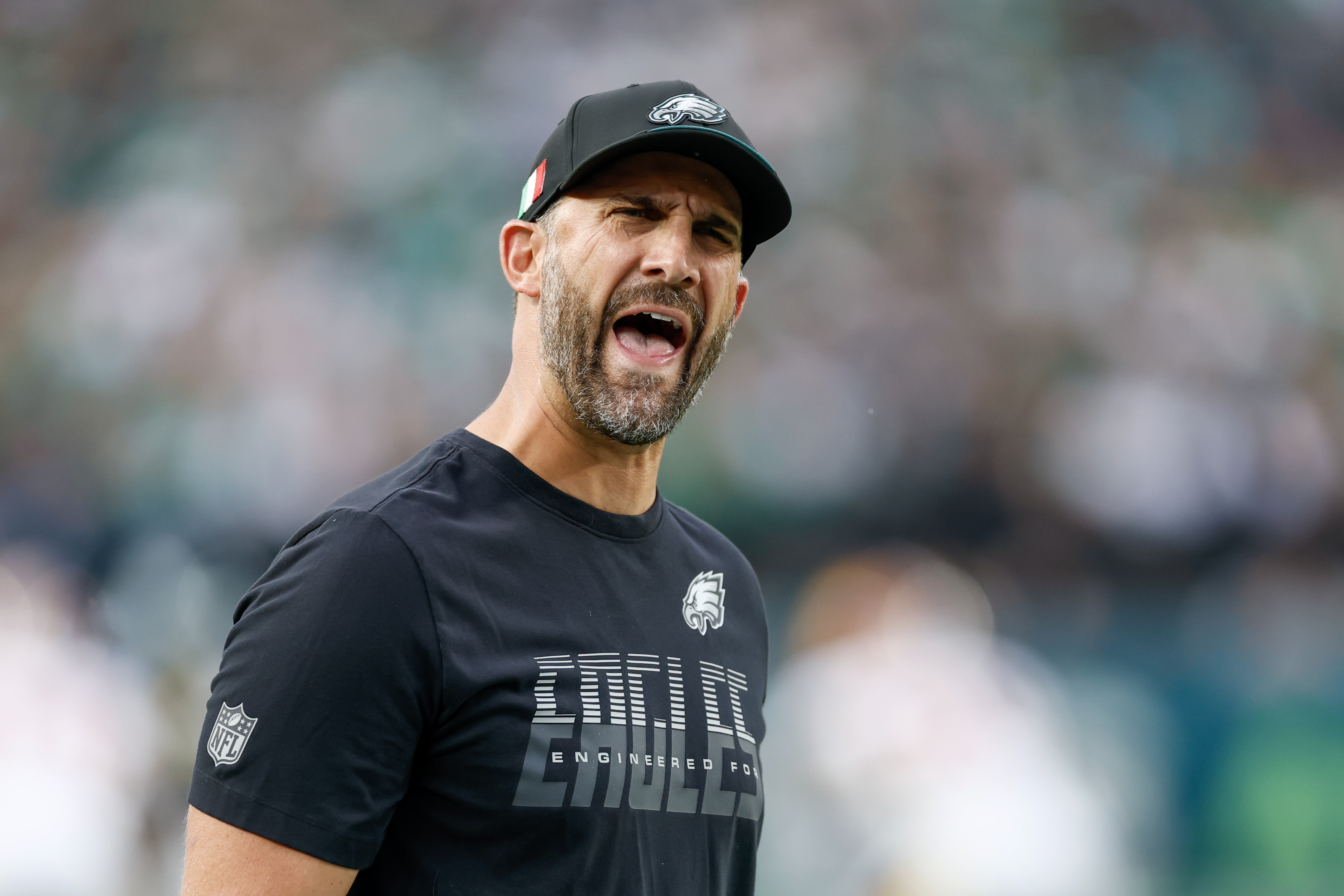
    “It’s tough to be in those situations,” Eagles head coach Nick Sirianni said. “We’ll look at the tape and see and evaluate that thing. But no doubt, to do everything you want to do as an offense, whether that’s some tempo that we did on the ball, whether that’s being able to take some deep shots down the field, get multiple guys carries. You’ve got to get into the flow of the drive. We know that’s important and we’ll be working like crazy to do everything we can do to get that fixed.”

    Hurts put it more succinctly.

    “We shouldn’t be in third-and-17,” the Eagles quarterback said.

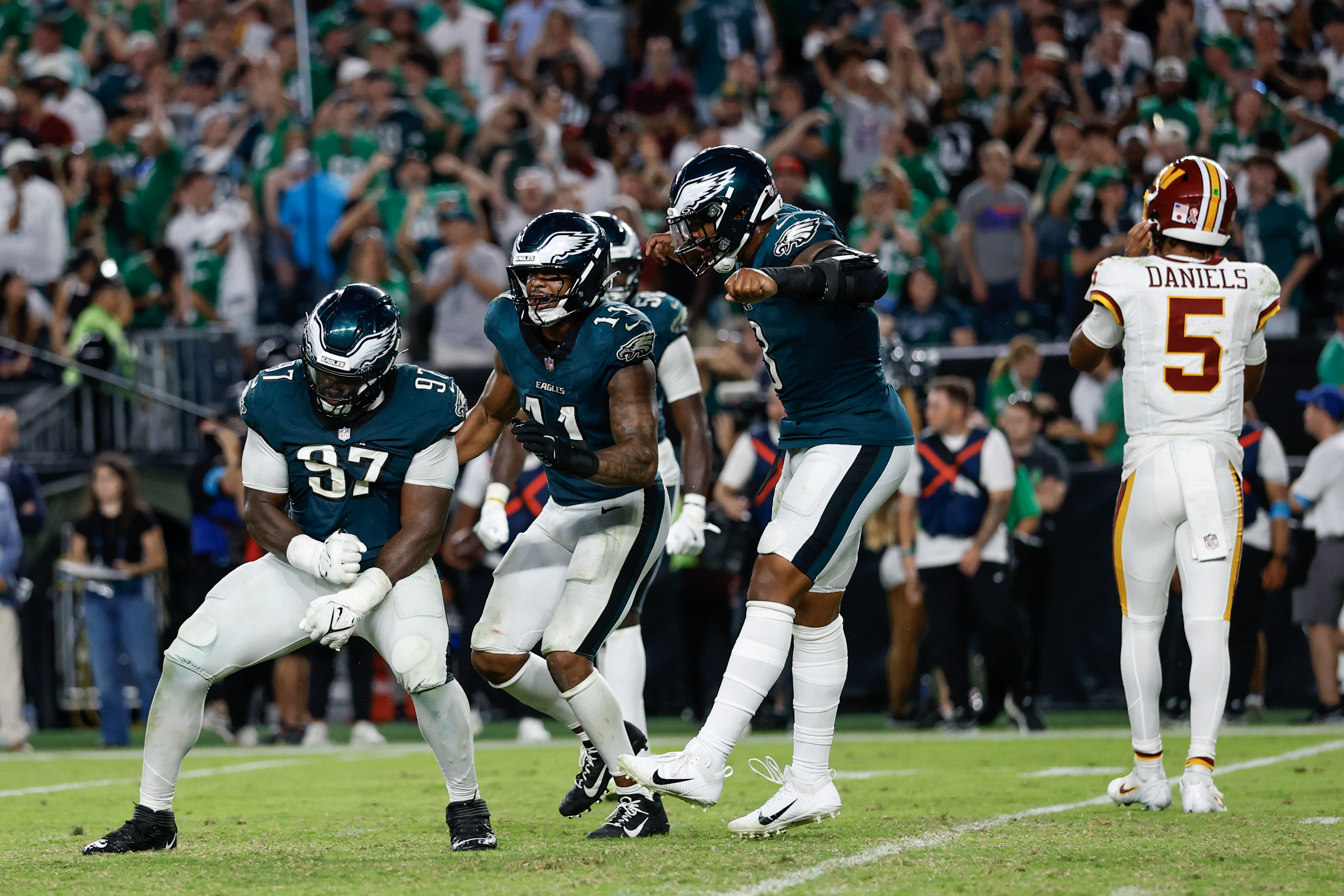
    Unsaid was why they were there. Almost exclusively, it began up front. Two holding penalties on Jurgens. One on Dickerson. A false start on Mailata. Add in the sacks. Add in the negative runs. It adds up.

    You want to talk numbers? Here was the craziest one. One team had 10 tackles for loss. The other team had two. The team that had 10 was not the team with the vastly better defense.

    The funny thing about critiquing the Eagles offensive line is that it can be difficult to remember what fallibility looks like. Most of the NFL lives a life much worse than the one the Eagles lived on Sunday. At the same time, we judge this offensive line by the standard it has set, and we do it because that standard has been the foundation of their formula.

    This is an important point. The Eagles are a good team. It would take a heck of a lot of unforeseen circumstances for the season to truly go sideways. In today’s NFL, a team can lose only so many games when it has a dominant defense and a competent quarterback who doesn’t make mistakes and can make big plays. We saw that throughout Sunday’s win. As close as the score was throughout, as theoretically “in-the-game” the Commanders were, was there ever more than a fleeting doubt about the end result?

    Even when Washington was driving for a potential game-tying touchdown in the closing minutes of the fourth quarter, the odds still said somebody would make the play that Moro Ojomo did in stuffing Washington’s shovel-pass on the woulda-coulda-shoulda two-point conversion to even the score at 24-24. You only get that peace of mind by drafting superstars and pairing them with great coaching, The Eagles have done both of those things. Because of it, and a soft schedule, their bare minimum win total should be enough for a playoff berth. The floor of this team is set by its defense.
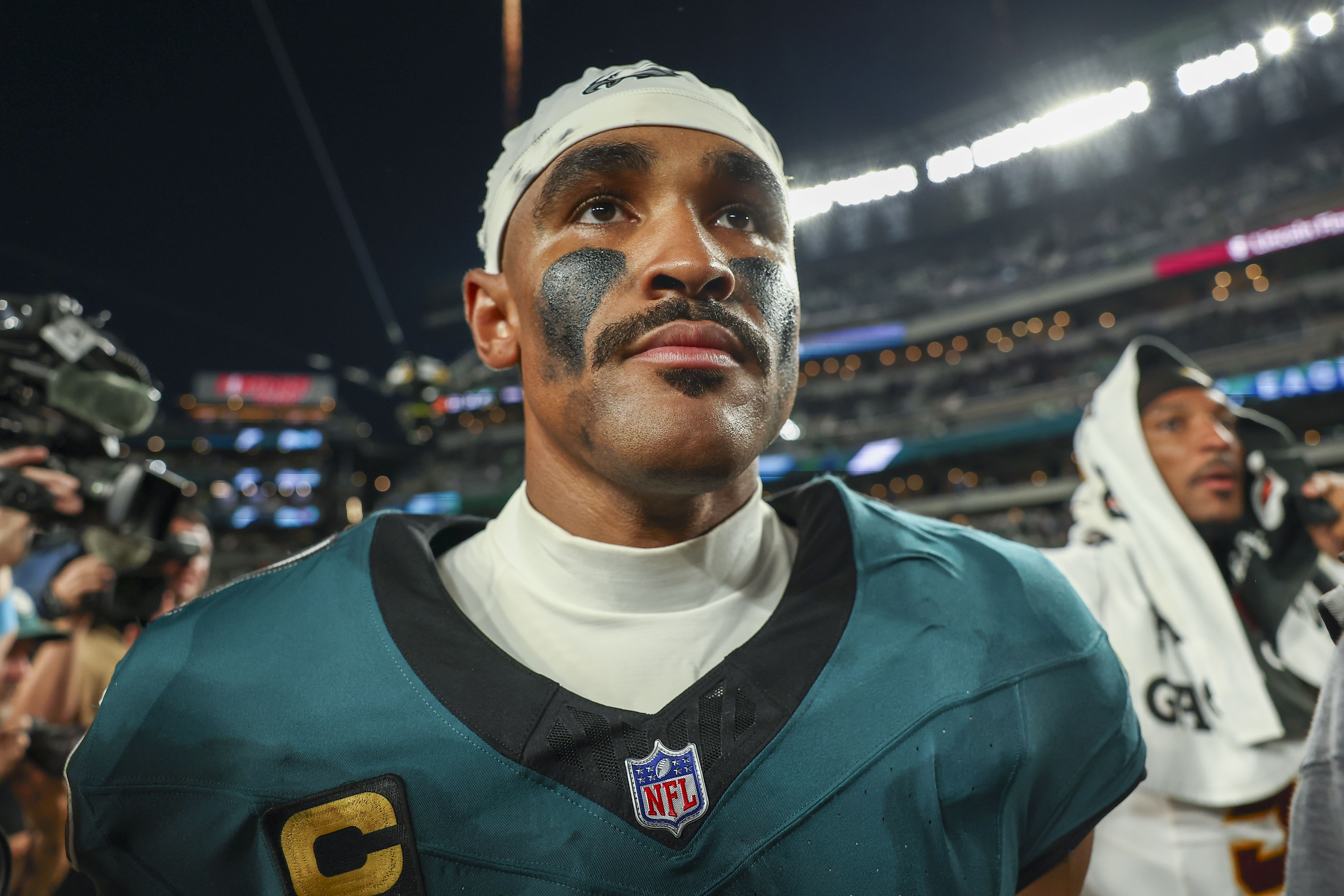
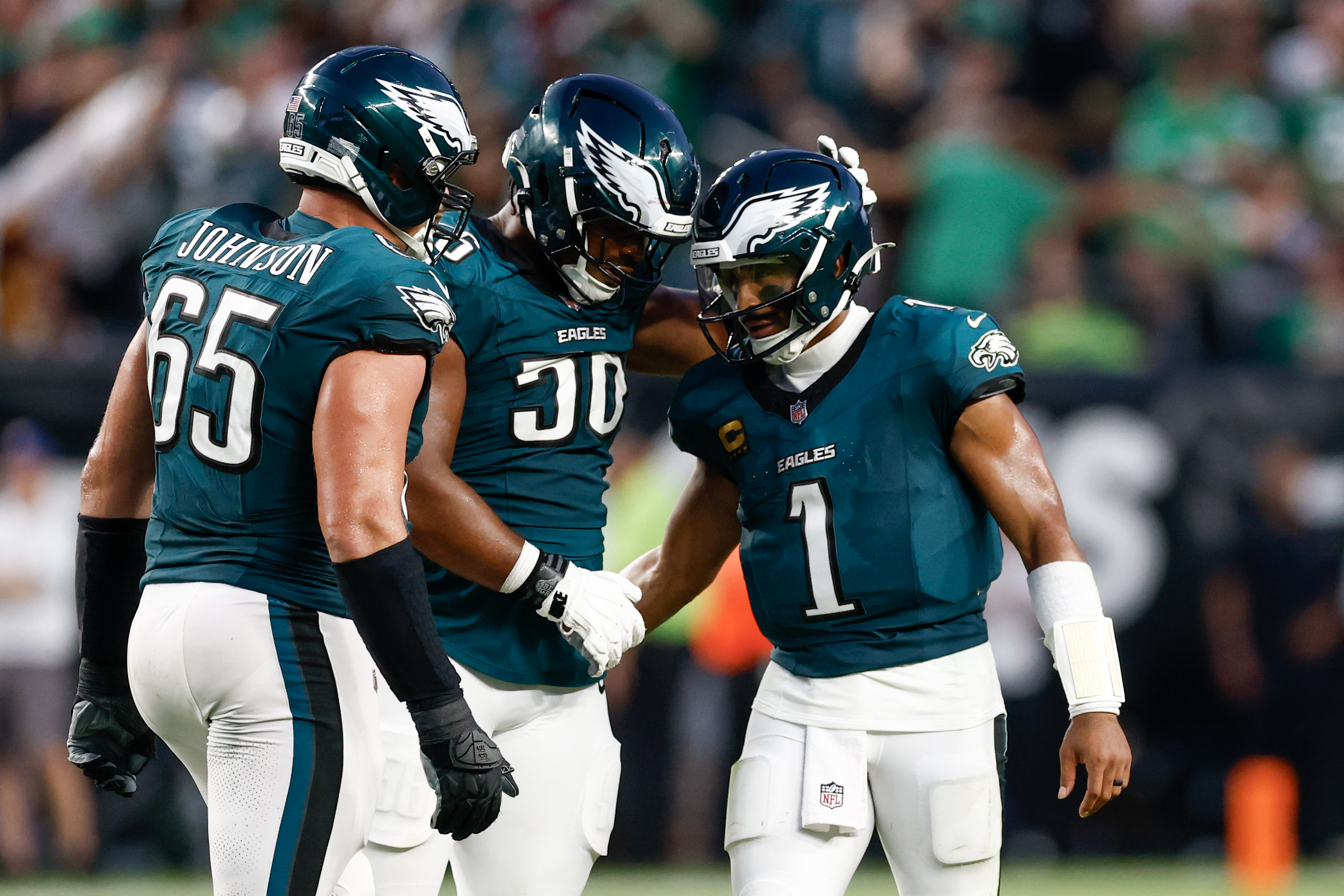
    The ceiling? That will be set by the offensive line. For as long as Hurts has been QB1 and Sirianni has been head coach, the Eagles offensive identity has been the same. The quarterback will manufacture a certain number of big plays on his own accord. The rest of the time, the offensive line will wear you down with a steady stream of four- and five-yard carries on first and second down. As smart as new offensive coordinator Sean Mannion may be, as needed as some of the ongoing changes to this offense are, it is naive to think that everyone can simply snap their fingers in unison and become a team with an identity dramatically different from what it has always been.

    To be clear, nobody inside the locker room seems to think that is what they are attempting. Sirianni, Hurts, Mailata — all understand what they need to be. The Eagles’ genius as an organization has always been their understanding of and prioritization of football’s longest-standing fundamental.

    “I really do think we can get back to where we were two years ago,” Mailata said. “We’re going to keep evolving this offense as we go. Today was a good start.”

    Let’s hope he can speak it into existence.

  • Why the Phillies should prioritize avoiding the Braves in the wild-card round. And one other baseball thought.

    Why the Phillies should prioritize avoiding the Braves in the wild-card round. And one other baseball thought.

    The Phillies are exactly where we probably should have expected them to be, which is exactly where they were a week ago. That is, four games behind the Braves with 15 to play heading into this weekend’s three-game series in Atlanta. That’s not necessarily a bad thing, believe it or not. Treading water is as important as making up ground.

    Right now, the Phillies number one goal shouldn’t be winning the National League East. It should be avoiding the Braves in the wild-card round. The NL playoff picture has changed considerably with the Dodgers winning seven straight and the Braves losing four of six.

    Now that L.A. has a 3½-game lead over Atlanta for the NL’s second bye, it’s looking increasingly likely that the eventual NL East division champs will end up hosting a best-of-three series against the No. 6 seed. Which means the Phillies should be just as focused on maintaining or growing their current 3½-game lead over the Padres, who entered Friday with a half-game lead over the Diamondbacks for the NL’s final playoff spot.

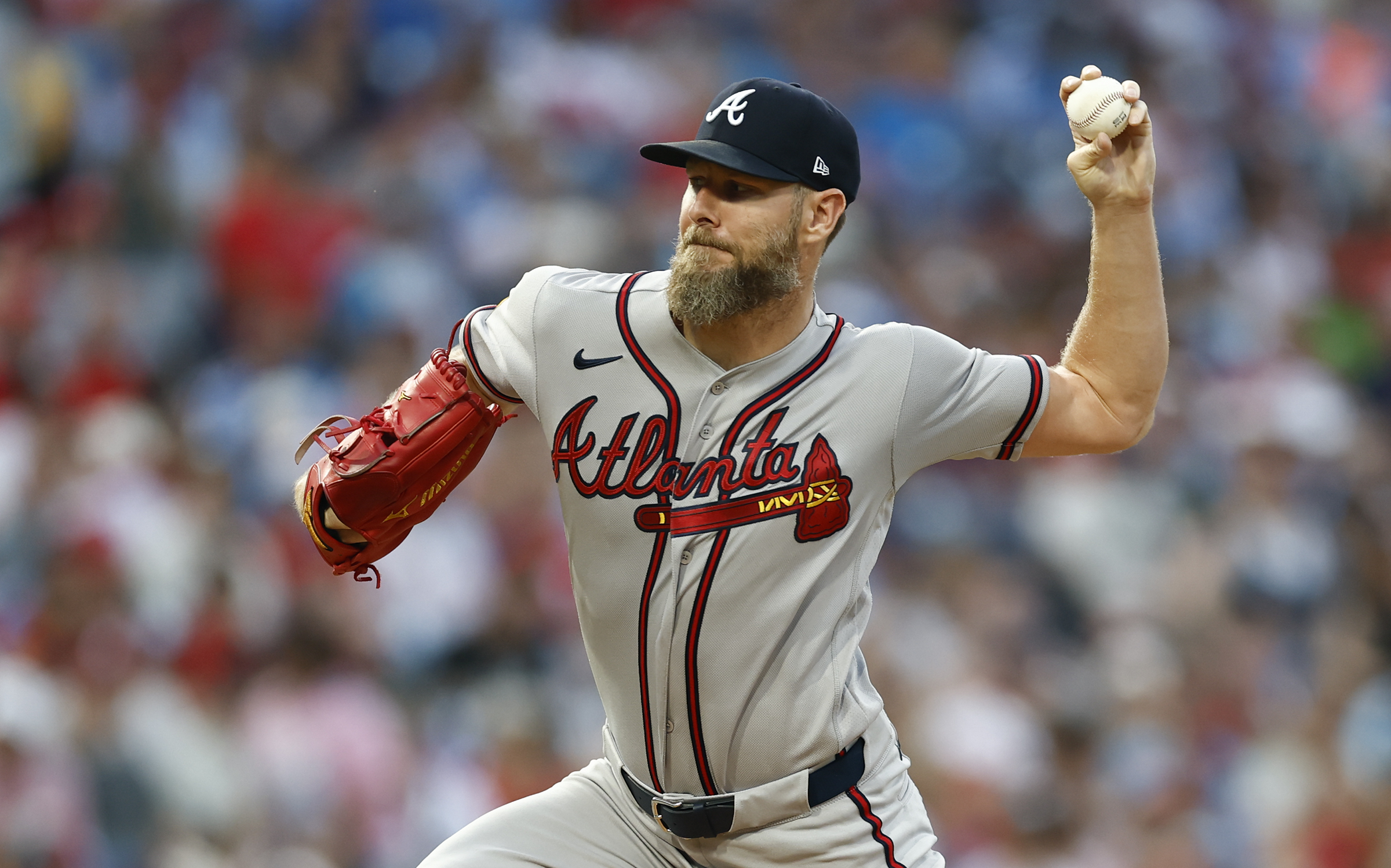
    Some folks will scoff at the idea of the Phillies fearing the Braves in an October series. But best-of-three is barely a series. This isn’t about fearing the Braves. It’s about fearing Chris Sale.

    Last weekend, the Phillies took their latest dose of medicine from one of the game’s all-time greats when Sale held them to two runs in six innings of a 5-2 Braves win. Atlanta’s presumptive Game 1 starter is not a problem the Phillies are magically going to solve just because the leaves are falling off trees.

    The Braves are 3-0 in Sale’s three starts against the Phillies this season and they’ve won five of his seven since joining the team in 2024. His numbers should make you gulp. In his last five starts against the Phillies dating back to May of last season, Sale has allowed a grand total of four runs in 31 innings. He has struck out 40 of the 118 batters he has faced. That’s 33.9%.

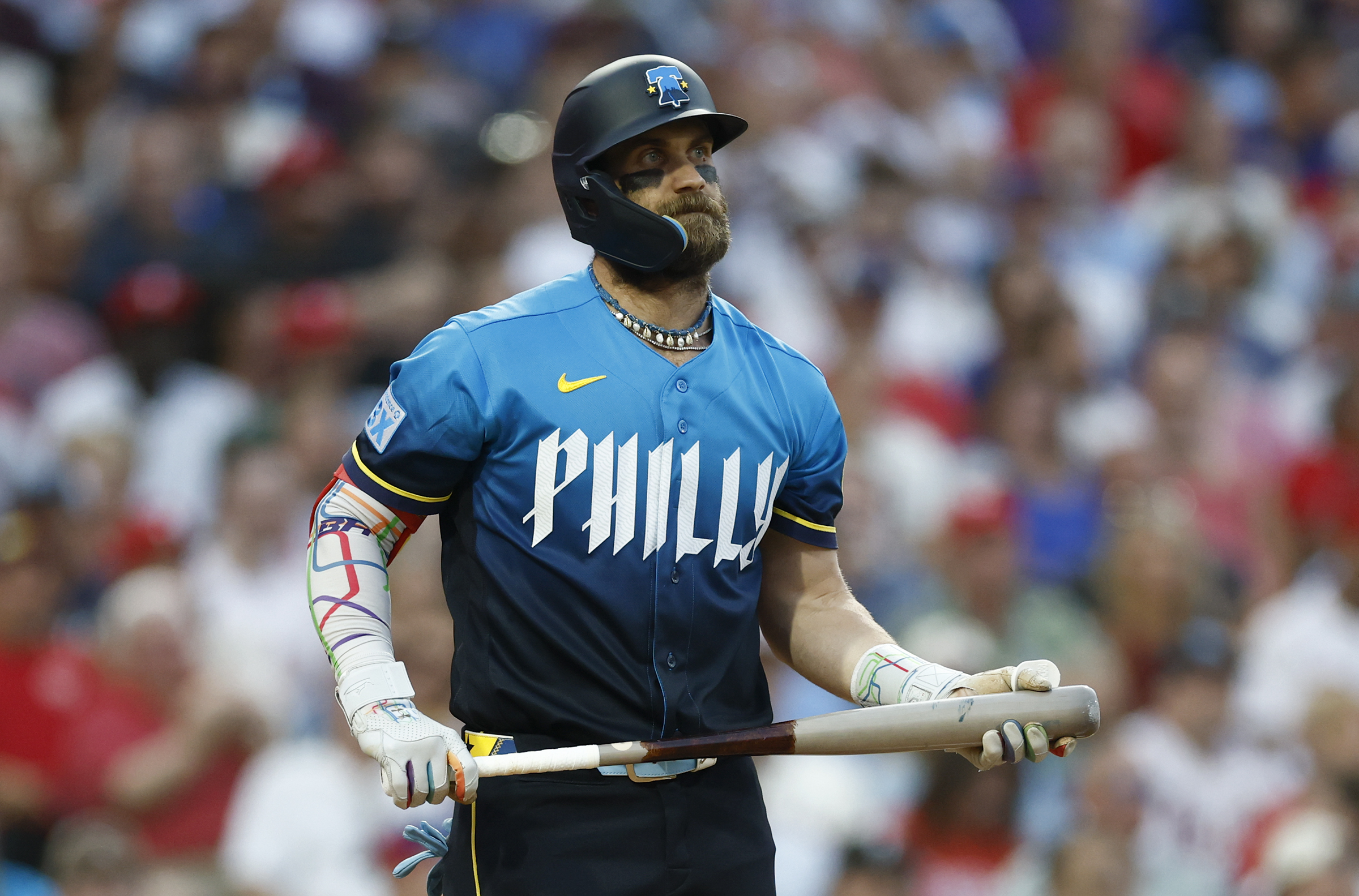
    Bryce Harper is one of the Phillies with bad career numbers against Chris Sale. He has just two hits in 18 at-bats against the lefty (.111).Yong Kim / Staff Photographer

    In a longer series, the Phillies would have a clear starting pitching advantage over the Braves. Grant Holmes and Tyler Mahle have both had some success against the Phillies, most recently holding them to a combined two runs in 12 innings of last weekend’s series. Holmes has allowed just five runs in 20⅔ innings against the Phillies over the last two seasons, while Mahle held them scoreless in seven innings and 5⅔ innings in two of his three starts prior to last weekend (albeit dating back to 2021). Regardless, the Phillies would have a significant advantage in three of the first four games of a five-game series.

    In a three-game series, Sale in Game 1 is a monumental equalizer of the odds. They’d much rather take their chances against the Cubs, who would presumably start Clay Holmes and Shota Imanaga, followed by a spin of the roulette wheel in Game 3.

    A sigh of relief

    Now, about that bullpen …

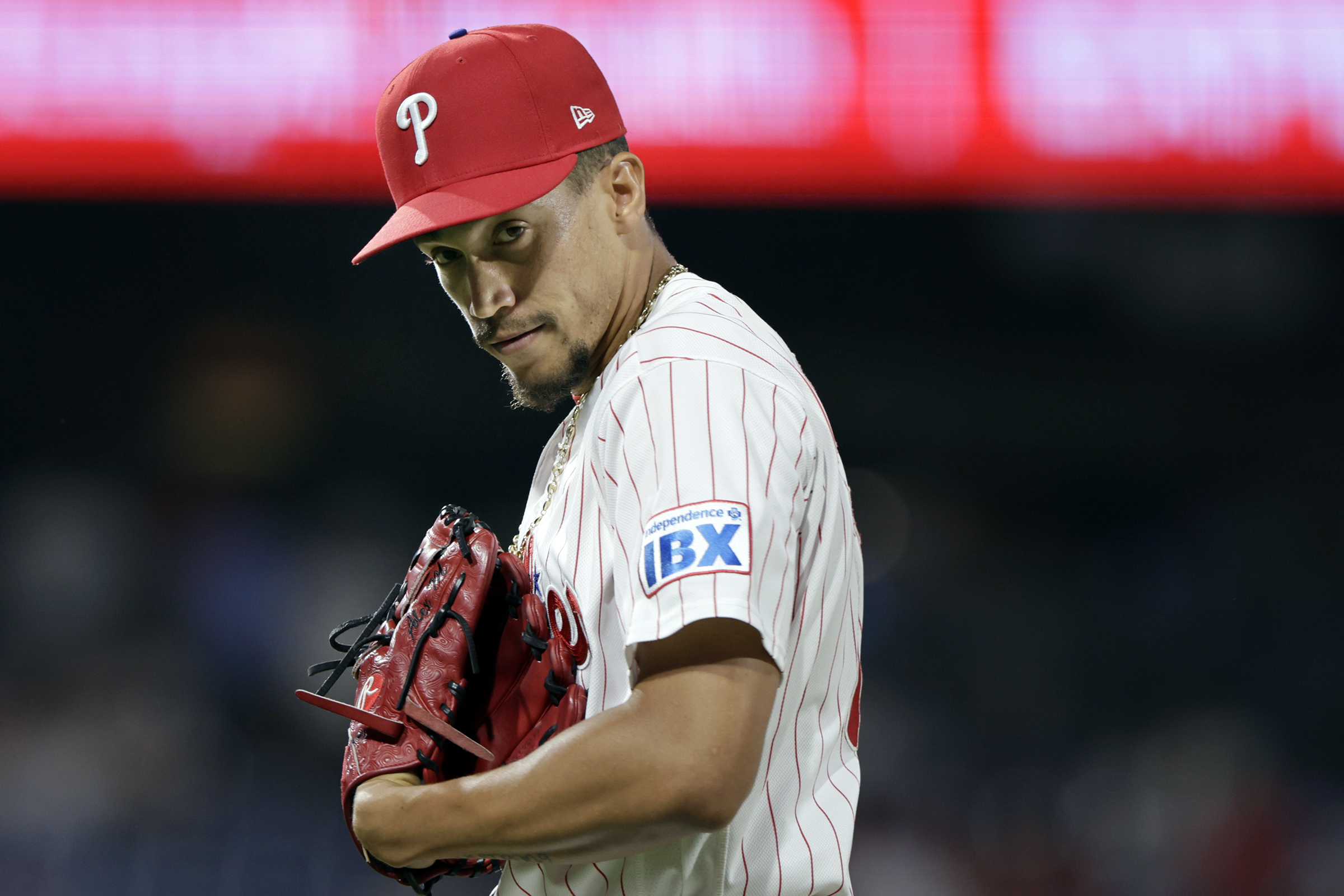
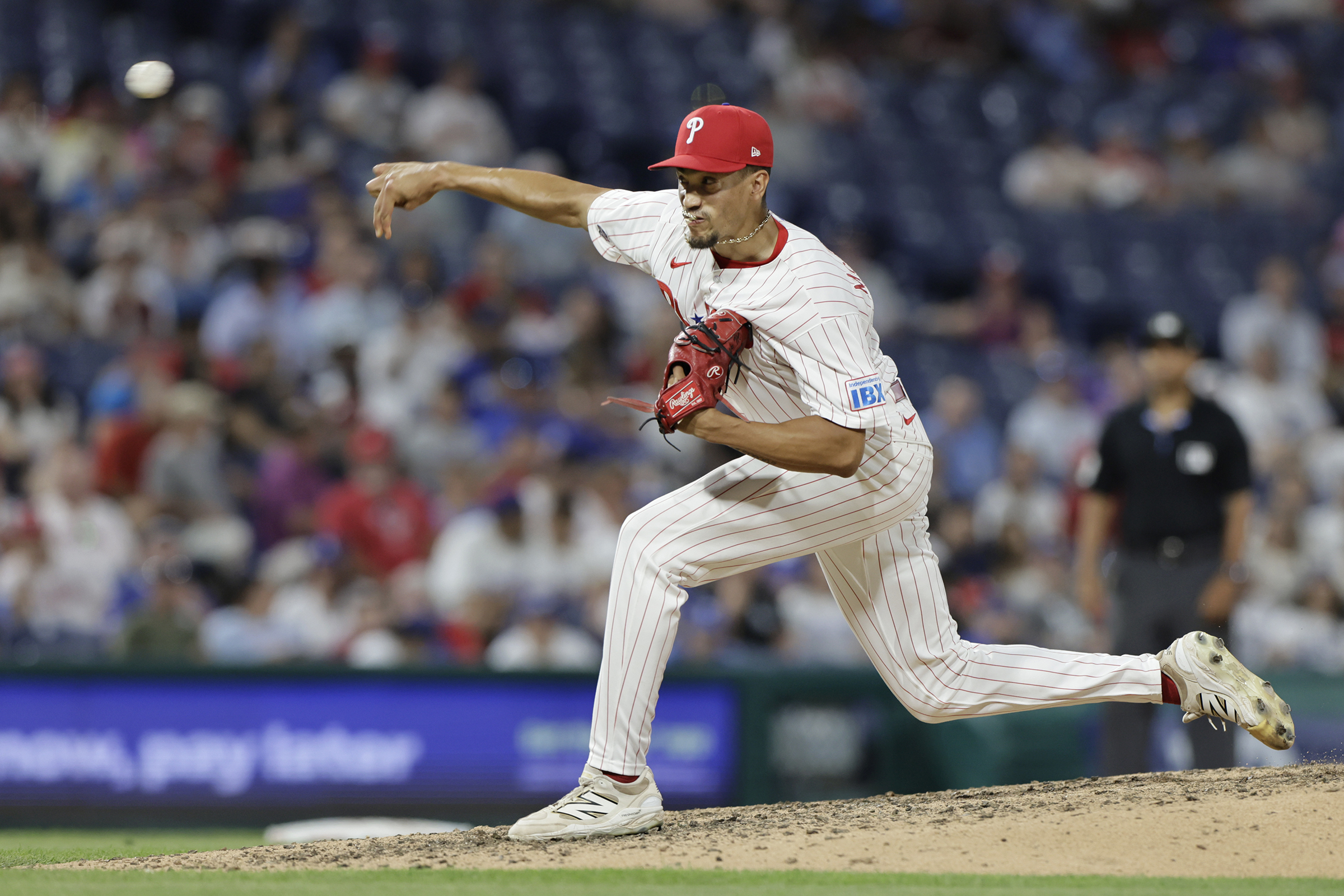
    Give interim manager Don Mattingly credit for getting Alex McFarlane back on the mound in the eighth inning on Wednesday. The 25-year-old right-hander got ground balls from three of the four Astros batters he faced to deliver an 11-7 lead to Jhoan Duran in the ninth. McFarlane didn’t record a strikeout but threw strikes on 12 of his 15 pitches. This wasn’t exactly a high-leverage situation, at least not compared to the last time he walked off the mound. But it was a situation where a true set-up man gets the ball, and Mattingly gave it to him. Which is exactly what the Phillies manager should be doing.

    Despite the homer he surrendered to Ronald Acuna Jr. last weekend, Alex McFarlane remains the Phillies’ greatest hope in the eighth inning.Elizabeth Robertson / Staff Photographer

    The underdiscussed aspect of McFarlane’s welcome-to-the-bigs moment against Ronald Acuna Jr. and the Braves on Sunday was the fact that he was on the mound at all. Mattingly easily could have pivoted after McFarlane allowed a one-out single to Mike Yastrzemski and a double to Drake Baldwin to bring Acuna up as the tying run in a 4-1 game with a base open. He had a lefty warming and Braves lefties Matt Olson and Michael Harris due up after Acuna. Conventional baseball wisdom says you don’t put the tying run on base. Still, it said something about the Phillies’ estimation of McFarlane that he both remained on the mound and challenged Acuna Jr. throughout the seven-pitch at-bat.

    It also says something that Mattingly didn’t flinch after McFarlane allowed a three-run, game-tying home run to Acuna.

    “I don’t think you learn anything yet,” Mattingly said after the Phillies’ eventual 5-4 loss. “I think we see how he responds. I feel about the way he’s going to respond. When everything’s going good it’s pretty smooth sailing. Everybody’s going to struggle, what happened to him today is going to happen to everybody if you play long enough. So we’ll see. I think he’ll be fine. He’s been a kid that’s handled everything. The disposition’s been good.”

    The Phillies are doing exactly what they should be doing with McFarlane. The first goal is to get to the postseason with an eighth-inning option that is something better than a flip of the coin. The second goal is to get there with somebody who actually gives them a significant advantage like the one they have in the ninth inning with Duran. On both counts, McFarlane is their best hope. Overwhelmingly so. There is nothing like exposure therapy for a big-league reliever. There will be plenty of big spots in October. The Phillies need McFarlane to become a guy who thrives in them.

  • Three numbers that matter for the Eagles, from the schedule to Jalen Hurts’ running

    Three numbers that matter for the Eagles, from the schedule to Jalen Hurts’ running

    Diving deep into the data to look at three trends that will help determine the Eagles’ fate in 2026 (with an assist from pro-football-reference.com and nflfastR).

    23rd

    That’s the average ranking from last season of the 14 pass defenses the Eagles will face in 2026. It is the softest schedule in the league by a wide, wide margin. The Eagles couldn’t have handpicked a better setup for Jalen Hurts and first-year offensive coordinator Sean Mannion. Right out of the gate, they’ll face a Commanders defense that finished tied for 30th in yards per pass attempt allowed, then a Titans defense that finished dead last. In fact, nine of their 14 opponents finished lower than 20th in yards per attempt.

    A big factor in the Eagles’ good fortune is a division that includes two of the three worst pass defenses from a year ago in Dallas and Washington, plus a Giants team that finished in the bottom half of the league. The Cowboys also finished in the bottom 10 in sack rate while ranking 27th in their rate of passing plays of 20 or more yards, two categories in which the Eagles schedule also ranks among the most favorable.

    The nondivision slate will likely play a little tougher than it looks on paper. The Rams (tied for 11th in YPA) rebuilt their secondary while adding Myles Garrett and Aaron Donald to the pass rush. The Colts could be better in their first full season of cornerbacks Charvarius Ward and midseason trade acquisition Sauce Gardner. That said, no team in the NFL has a more favorable schedule top to bottom. The Eagles’ opponents had an average rank of 22.9 in passing yards per game and 20.2 in yards per attempt allowed last season. Both are the highest in the NFL.

    The sequencing is as beneficial as the actual opponents. The two toughest defenses on their schedule don’t come until Weeks 15 and 16, with just five days separating the Seahawks on Dec. 19 and the Texans on Christmas Eve. Both games are at home.

    The early-season schedule is soft enough to counteract whatever learning curve that will exist for Hurts and the rest of the offense in Mannion’s scheme. The expectations should be high.

    3.98

    That was the average yards per carry of Eagles running backs when they had multiple tight ends on the field last season in neutral game script situations. That ranked in the bottom half of the league and well behind the teams that made it to their conference championships.

    A sampling …

    Running-back yards per carry in multi-tight-end sets (first and second down outside the 10-yard line)

    • Bills: 5.25 (4th in NFL)
    • Rams: 5.23 (5th)
    • Seahawks: 4.56 (9th)
    • Bears: 4.52 (10th)
    • Broncos: 4.44 (11th)
    • Patriots: 4.30 (17th)
    • Eagles: 3.98 (20th)
    Johnny Mundt (center) was brought in to help the Eagles’ blocking in multiple tight end sets.Tyger Williams / Staff Photographer

    Johnny Mundt didn’t get a ton of coverage in training camp. Blocking tight ends rarely do. But the Eagles signed the 31-year-old veteran for a reason. With Cameron Latu lost to waivers and Grant Calcaterra on injured reserve, the Eagles will enter the season without two of their top three tight ends from last year. Add to that the steep learning curve awaiting rookie second-round draft pick Eli Stowers and tight end is one of the bigger question marks on this 2026 roster.

    The question is especially relevant given the leaguewide paradigm shift. Teams like the Rams and Seahawks have spent considerable resources accumulating talent at the tight end position in recent seasons. Seattle drafted AJ Barner and Elijah Arroyo in the fourth and second rounds in back-to-back seasons, while the Rams just added second-round pick Max Klare to a stable of tight ends that already included 2025 second-rounder Terrance Ferguson, high-priced free agent Colby Parkinson, 2023 fifth-rounder Davis Allen and veteran Tyler Higbee.

    It remains to be seen how central a role multi-tight-end sets will have in Mannion’s offense. Last year, his Packers team finished in the top half of the league in both RB yards per carry and pass yards per attempt.
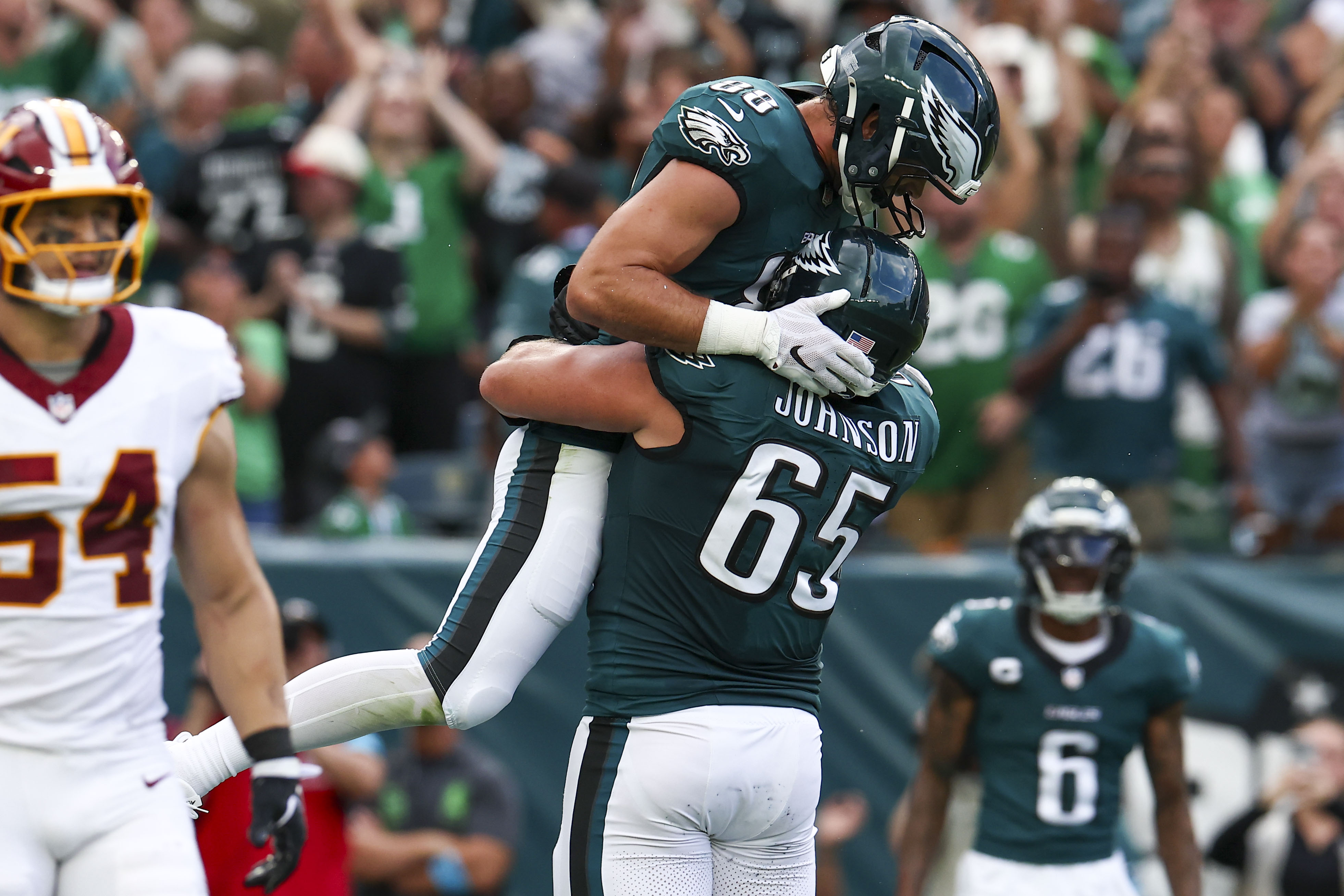
    Zero

    That’s how many quarterbacks rushed for 600-plus yards last season. The last time the NFL had a regular season where no quarterbacks reached 600 yards was 2017. At least two had done it in each of the previous five seasons.

    Hurts’ rushing production has garnered plenty of attention, and deservedly so. The Eagles were a dramatically different offense in 2022 when he averaged 50.7 rushing yards per game compared to the one they’ve been over the last three seasons, when Hurts has averaged just 34.5 yards. It’s certainly reasonable to think that he can and should be well north of the 26.5 yards he averaged last season. But it isn’t all on him.

    The natural trajectory of a dual-threat quarterback is to see a year-to-year decline in rushing production. It has happened to virtually every quarterback who has done the things Hurts did early in his career. The league adjusts quickly. It’s no coincidence that virtually every scrambling quarterback saw a significant decline in his rushing production last season.

    New Eagles OC Sean Mannion could utilize Jalen Hurts’ running ability more in 2026.Yong Kim / Staff Photographer

    Jayden Daniels missed 10 games, but in the seven games he played, he averaged just 39.7 yards, down from 52.4 the year before. Lamar Jackson’s 26.8 yards per game was barely half of the 52.6 he averaged over the two years prior. Bo Nix’s per-game rushing yardage fell by more than 20% (25.3 yards to 20.9). Drake Maye’s was down 18.5%. Josh Allen has averaged 32 yards per game over the last three seasons after averaging 46.2 yards per game in 2021 and 2022.

    “I think [Hurts has] really operated through all facets of the offense comfortably,” Mannion said earlier this summer. “But the piece of him as an athlete in the running game is something unique. Those are elements we can lean into a little bit as well.”

    Mannion should be thinking that way. But quarterbacks who have running ability will almost always see that running ability limited by defensive coordinators’ awareness of said running ability. The league has seen enough of it in recent years that it is getting better at stopping it.

  • In the wake of Ronald Acuña’s blast, Phillies rookie Alex McFarlane remains the bullpen’s best hope

    In the wake of Ronald Acuña’s blast, Phillies rookie Alex McFarlane remains the bullpen’s best hope

    The worst thing the Phillies can possibly do is allow Sunday’s misfortune to impact their handling of Alex McFarlane.

    They have 22 days until the NL wild-card round begins. They will play 19 games before then. They don’t have any other options.

    In a perfect world, McFarlane would not have been the guy standing on the mound in the eighth inning on Sunday afternoon. He would not have been the one watching his 100 mph, 1-2 fastball disappear over the outfield wall. He would not have suffered the indignity of seeing, feeling Ronald Acuña Jr. circle the bases, arms out like an airplane, dive bombing the Phillies’ division title hopes with a three-run home run that lifted the Braves to a 5-4 win.

    It is not a perfect world. McFarlane was there for two reasons. One, he has the stuff to warrant it. Two, he is their best hope.

    Nothing else matters at this point. With less than a month to go before the playoffs begin, the back of the Phillies bullpen consists of Jhoan Duran, Jonathan Bowlan, two guys who have shown that they can’t be trusted, and one guy who needs to show he can.

    Interim manager Don Mattingly has no choice but to err on the side of the third guy. He needs to find out if McFarlane can handle the role.

    There is a fun bit of trivia about McFarlane that is more quirky than significant but nevertheless provides an entry point to state the obvious: that the Phillies owe it to themselves, their clubhouse and their fans to spend the next month preparing McFarlane for a major postseason role.

    Twelve games into his career, the 25-year-old reliever has already picked up four big-league wins. He ranks sixth on the team in that department — two behind Aaron Nola, one ahead of Andrew Painter — despite having yet to celebrate his first full month of major league service. McFarlane also has a page in the history books. Before him, no Phillies reliever had ever won four games in his first 11 appearances. In fact, over the last 60 years, only three had won two.

    While McFarlane’s accomplishment is first and foremost a testament to the fluky nature of pitcher wins and their inadequacy as a measure of individual performance, deeper under the hood lies something real. It isn’t just his fastball that sits at 100 mph and has touched 102. By practically every measure of stuff and performance, McFarlane has been the second or third best arm in the Phillies bullpen since his promotion on Aug. 11. More importantly, those measures rank him among the upper tier of all big-league relievers, the realm in which legitimate postseason bullpens are constructed.

    To get a sense of who a pitcher really is, you have to look at three different levels: the stuff itself, the hitters’ reaction to that stuff, and the end result. McFarlane has looked solid on all three levels.

    Opposing hitters have swung and missed at 22% of Alex McFarlane’s pitches in the strike zone. Elizabeth Robertson / Staff Photographer

    1. The stuff

    You don’t need numbers to see true sizzle. But, good golly, McFarlane’s numbers are impressive. Only two relievers in the majors have bettered his 100.2 average fastball velocity since his promotion. One of those relievers is the Dodgers’ Edgardo Henriquez. The other is Jhoan Duran.

    The spin rate on McFarlane’s fastball and slider both rank among the top 10 in the majors among relievers.

    2. Hitters’ reactions

    Herein lies the biggest reason to be excited about McFarlane. That paradox of pitching is that you have to avoid hard contact while also avoiding walks. Plenty of guys throw hard. The real question is whether a pitcher’s stuff is putting hitters at a disadvantage. Are they getting good swings? Are those swings producing good contact?

    The pitchers who have the advantage are the ones who can throw their pitches in the strike zone and still miss a bat. McFarlane has done it better than almost everyone in the majors over the last month. Opposing hitters have swung and missed at 22% of his pitches in the strike zone. That ranks 12th among relievers, just ahead of the Astros’ Josh Hader.

    Contact in the zone is an important metric for McFarlane, in particular. One legitimate question about his eventual bullpen ceiling is his lack of a pitch that hitters will consistently chase outside the zone. Take Duran, for example. This season, hitters have swung at 35% of his pitches outside the strike zone. Hader is at 41%. McFarlane’s chase rate is about 29%, which is middle of the pack among relievers. His slider has played quite well overall, generating a 50% whiff rate on swings. But hitters have been laying off roughly two of every three pitchers outside the zone. All of this is per Fangraphs’ pitch split data.

    3. The results

    You can get results without having stuff, and you can have stuff without getting results. But the most sustainable bullpen arms generally do both. That’s what McFarlane has done in his limited sample of big league innings. His strikeout rate is rather ordinary at 11 of 34 batters, considering his fastball. But he has yet to allow an extra-base hit, thanks in large part to his ability to keep the ball on the ground. His 56% ground ball percentage ranks 19th among 96 big league relievers who have thrown at least 10 innings over the last four weeks. Two of the six hits he’s allowed have been infield hits. In general, the quality of contact has been a big positive.

    Likewise with his situational performance.

    Before Alex McFarlane, no Phillies reliever had ever won four games in his first 11 appearances.Elizabeth Robertson / Staff Photographer

    Toward the end of the Phillies’ recent West Coast trip, Mattingly and pitching coach Caleb Cotham decided to begin the McFarlane experiment in earnest. One night after they called on him to protect a one-run lead in the seventh inning against the Angels, the Phillies gave McFarlane his most significant opportunity yet. Leading the Diamondbacks 2-1 in the sixth inning, Aaron Nola allowed the first two batters he faced to reach base. That prompted a call to the bullpen. McFarlane was the choice.

    Three batters later, the Phillies were onto the eighth. McFarlane gave up a long fly ball to Lars Nootbaar before striking out Nolan Arenado and getting Tim Tawa to ground out weakly to third base.

    These are exactly the sorts of situations that Mattingly and Cotham should be seeking for McFarlane between now and the end of the regular season. They are the exact sort of situation they thrust him into on Sunday. Three-run lead. Must-win game.

    It didn’t work out this time. McFarlane came on to face the 8-9-1 hitters. Austin Riley lined out, and then Mike Yastrzemski singled to center to bring the top of the order to the plate. Drake Baldwin doubled. Acuña did what he did. It happens. The key is finding out how McFarlane responds.

    For most of the year, the biggest reason to doubt the Phillies has been their lack of a solution for Jose Alvarado’s regression and Orion Kerkering’s implosion. Kerkering may have rendered himself unplayable after a two-run eighth inning against the Braves in Friday’s 5-2 loss. In his last six appearances before Sunday, he’d allowed 12 of 30 batters to reach base with seven runs allowed and just four strikeouts.

    At this point, Mattingly has little choice but to operate as if McFarlane will be the man who will fill the vacuum in the postseason. A lot will depend on his ability to continue to throw strikes. But for a team that has no other options, McFarlane is one that could break right in a big way.

  • Against the Braves, the Phillies’ mission is much bigger than the NL East

    Against the Braves, the Phillies’ mission is much bigger than the NL East

    Call it the curse of Michael Martínez.

    Fifteen years ago this month, the Phillies closed out a 102-win season by beating the Braves in 13 innings in their regular season finale to cap off a three-game sweep in Atlanta. There was one problem: The Phillies had already locked up the No. 1 seed in the National League, while the Braves needed just one measly win to make the playoffs over the Cardinals, the Phillies’ longtime nemesis. Thanks in large part to Martinez’s game-saving catch in the 10th inning of Game 162, the Phillies wound up playing St. Louis in the divisional round. It didn’t end well.

    The intervening decade and a half has yielded a surprising dearth of memorable late-season series between the Phillies and Braves. As rich as the recent October history is between these two teams, it isn’t a stretch to say that Friday night will mark the start of the biggest regular season matchup between these two teams in at least five years. The last time the Phillies and Braves faced each other this late in the season while this close to each other was 2021, when the Phillies traveled to Atlanta down 2½ games with six games to play. The Braves won all three of those games.

    That 2021 series is worth some consideration as the Phillies carry a four-game deficit into this weekend’s four-game series at Citizens Bank Park. One can argue that the present era’s origin story actually begins there instead of a year later, when the Phillies beat the Braves in the National League Division Series en route to their first World Series appearance since 2009. The magnitude of 2022 was its improbability, and its improbability had every thing to do with 2021.

    Remember Aug. 8, 2021? Zack Wheeler pitched a shutout against the Mets, holding his former team to just three base runners while striking out 11. The victory was the Phillies’ eighth straight and left them with a two-game lead over the Mets and a 2½-game lead over the Braves atop the NL East. In less than a week, Atlanta was in first place. In less than two months, the Braves were World Series champions.

    The Phillies’ eventual postseason victories over the Braves in 2022 and 2023 would have been sweet even without the disappointments that preceded them. But they would not have signified what they did. The Phillies turned out to have a roster that was the exact opposite of what it had steadily led us to believe. They were a team that, regardless of circumstances, demanded that you give them the benefit of the doubt.

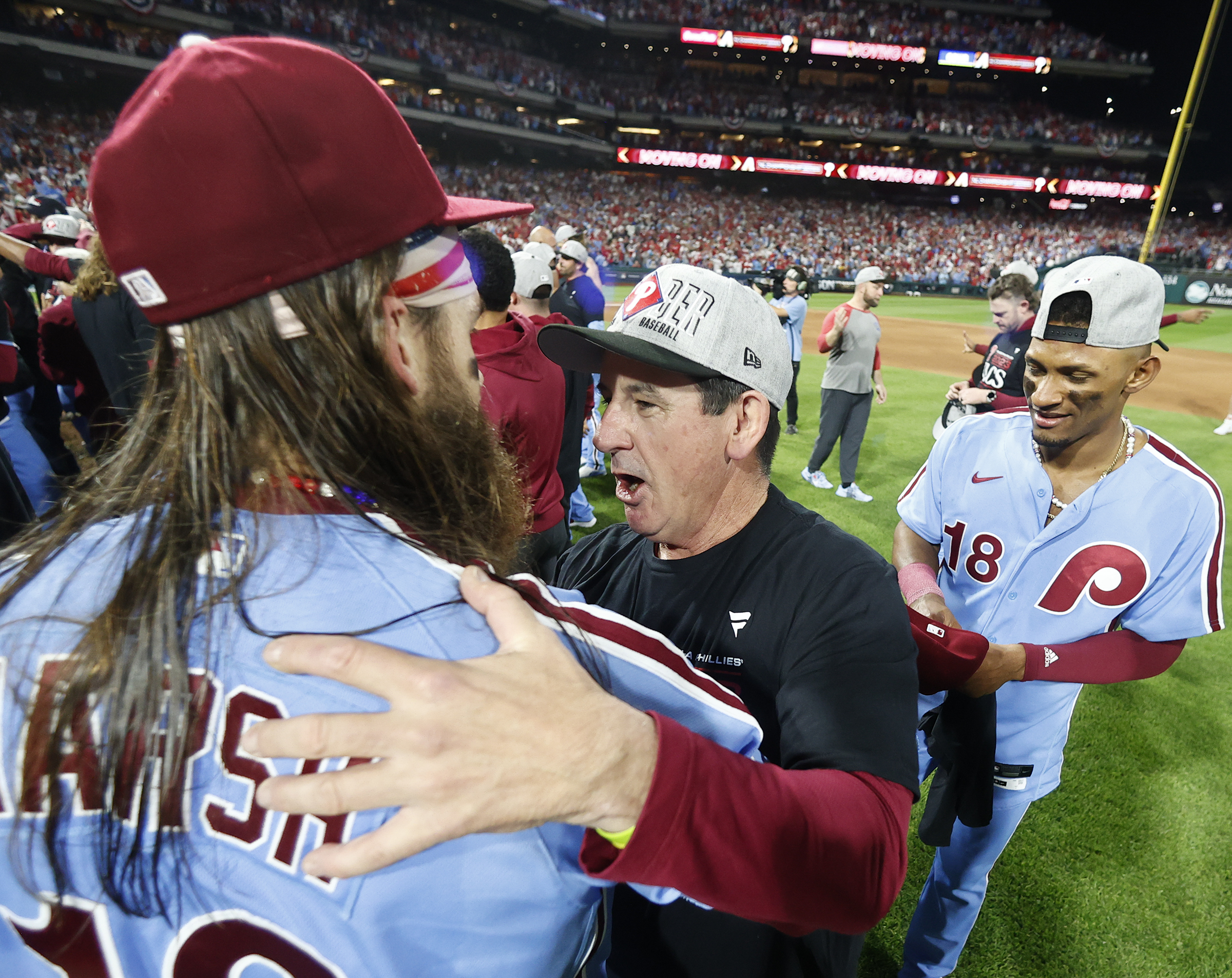
    Brandon Marsh (left) celebrates with Rob Thomson after the Phillies’ 2023 NLDS win over the Braves.Yong Kim / Staff Photographer

    Therein lie the stakes of this weekend’s series and the one that will follow in Atlanta next weekend. The most pressing concern is the concrete one: Seven games against a team that holds a four-game lead for both the division title and one of the NL’s two wild-card-round byes. Although it would take six wins in seven games, there is at least a chance the Phillies could be in first place in the NL East before the Eagles kickoff in Week 1. There’s also a chance they could be virtually eliminated from that possibility.

    The bigger drama is the existential stakes.

    Five years after that 2021 disappointment, which itself came three years after the Fightin’ Gabe Kaplers held onto first place for a month only to lose 31 of 43 and watch the Braves celebrate, the Phillies can become a team that has come full circle in one of two opposite directions. In the minds of many, their trajectory since the 2023 NLDS playoff win over Atlanta has been a regression toward who they were in September of 2021, and for much of the four seasons prior. Such a characterization drastically undersells what they have accomplished. They are trending toward five straight playoff berths, two straight division titles, and an improved regular season win total throughout. But it also speaks to the maddening nature of this team that it has spent the entire time yo-yoing between the bottom falling out and the top blowing off and neither of them ever happening. Maddening, but also impressive.

    Therein lies the intrigue of the next 10 days. The Phillies have arrived at a moment where both outcomes will feel equally possible in every game they play. That is usually the way the vibe feels in a true prove-it moment.

    “Hopefully the weather starts cooling down, get a little bit of fall weather feel, and it starts feeling playoff-y, and the fan base is going to be rocking and rolling, and look forward to a rowdy weekend,” Phillies slugger Kyle Schwarber said after they wrapped up an interminable West Coast swing that saw them win six of their last seven games.

    This next week and a half is as much about setting a tone as it is about winning the NL East or securing a first-round playoff bye. It is an opportunity to summon ghosts, of either Red October or Black September.

  • The Cowboys aren’t any closer to contending. But are they closer to the Eagles?

    The Cowboys aren’t any closer to contending. But are they closer to the Eagles?

    The only good thing about preseason football is that it eventually ends. Except, this year, the NFL is forcing us to wait until the middle of September until the real games begin. Blame Roger Goodell, or blame the Romans for inventing the Julian Calendar. One thing is for sure: A lot of us will need to find somebody to blame when our significant others find out the Super Bowl is on Valentine’s Day. That, or we should all start casually dropping random comments about the romance inherent in a candlelit breakfast.

    The surest sign that summer needs to end is when people start talking themselves into the Cowboys being anything different than what they are every year. In other words, it needed to end two weeks ago, when NFL.com ran a story from longtime analyst Bucky Brooks with a headline that declared: “Cowboys are True Super Bowl Contenders in 2026.”

    Brooks isn’t alone. Consider the following heading that ran in the Dallas Morning News a couple of days ago: “Difficulty of Cowboys’ roster cuts signifies they’re back to being contenders in 2026.”

    Apparently, the Eagles’ practice squad got a good one in Jaydon Blue.

    There is a long list of reasons to doubt whether the Cowboys are, in fact, a contender. But before we dive further, let’s first remind ourselves of why it matters. For the last several years, the Cowboys have served as a bellwether of sorts for the Eagles.

    Jalen Hurts and the Eagles lost in Dallas 33-13, the second of five losses in their last six games to close the 2023 regular season.Heather Khalifa / Staff Photographer

    Back in 2023, it was the Cowboys’ 33-13 win over the 10-2 Eagles in Dallas that served as the unofficial pronouncement that things really were going south.

    You can say the same of Dallas’ 24-21 win last season, the first of a three-game losing streak that left nobody surprised when the Eagles again failed to get out of wild-card weekend.

    Both of those losses were canaries in a coal mine. They also happen to be Jalen Hurts’ only two losses to Dallas since his first year as a starter. Compare them to 2024, when the Eagles won two games over the Cowboys by a combined score of 75-13, both in the midst of a stretch where they won 12 of 13 games. They won the Super Bowl that season, you may remember.

    The Cowboys have always played a role in defining the Eagles’ season. I would argue the bulk of the emotional component of the rivalry has its roots back when Dallas was America’s Team and the Eagles were searching for an identity in the wake of the Buddy Ryan Era. James Willis, Mike Mamula, etc. Beating the Cowboys felt awfully good when they were a team full of talkers like Michael Irvin and Deion Sanders and Jimmy Johnson. How many Eagles from those teams do you still see on national television every week?

    The dynamic has shifted. The Eagles have two Super Bowl berths in three years, two Super Bowl wins in eight. They have appeared in eight conference championships since the last time the Cowboys appeared in one. It is now Dallas that can look back on a 7-9-1 season and say that at least they helped show that the Eagles weren’t as good as everyone thought they were.

    Which brings us to 2026. There are plenty of intriguing story lines confronting these Eagles as they head into another post-Super-Bowl hangover season. Hanging over all of them is one overarching question: Are they still a team that should be expecting to win games against teams like the Cowboys?

    That is the litmus test, after all. The longer you look at the Eagles’ schedule, the more you realize that the strength of it depends on how you evaluate the other three teams in the division. The Eagles are 16-8 against NFC East opponents over the last four seasons. Three of those losses have come against the Cowboys, one of them with Gardner Minshew at quarterback.

    The Commanders stink. If the Eagles are anything less than convincing in Week 1, we will know they have problems. The Giants suddenly have an adult in the room in John Harbaugh. But he may be the only one. The first barometer of that we can still pencil in three wins and possibly four right there. If that does not prove to be the case, then it will say something.

    Cooper DeJean (right) and the Eagles’ defense will likely have to stop another formidable Cowboys offense in 2026, led by wide receiver CeeDee Lamb.David Maialetti / Staff Photographer

    The real question is whether the gap has closed or will soon close between the Eagles and Cowboys. If so, it will be due more to the lowering of the tide than the rising of it. Of the Cowboys’ seven wins last season, six came against teams that won fewer than seven games. The combined record of those teams was 21-64. The lone exception was their win over the Eagles.

    Nothing about the Cowboys’ roster or coaching staff suggests they are anything different than what they have been the last five years. Twice they have finished with the NFL’s highest-scoring offense. They have been top five in either points or yards in four of those five years. Three times they have finished with a top seven scoring offense and scoring defense in the same season. Their run defense is better after the midseason addition of defensive tackle Quinnen Williams. But the secondary still stinks. And the pass rush is questionable.
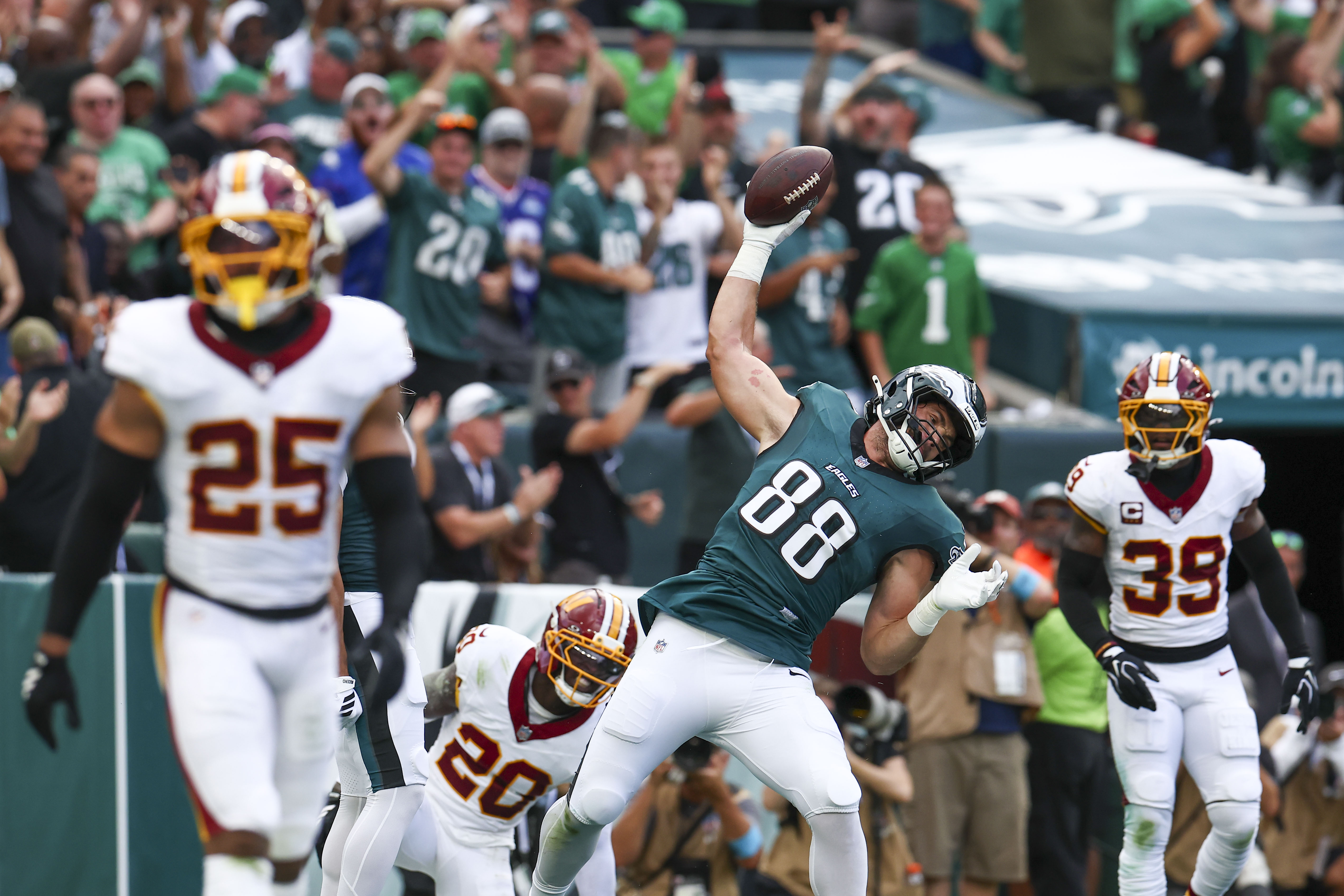
    I suppose it says something that the gap between the Eagles and Cowboys is an open question. How can it not be after a near-loss in Week 1 and then the loss in Week 12?

    Put it this way: If the Eagles are the team they should be, then it won’t be a question for long.

  • The QB2 fallacy, the need for a dynamic RB2, and other (initial) Eagles roster thoughts

    The QB2 fallacy, the need for a dynamic RB2, and other (initial) Eagles roster thoughts

    Thinking our way through the least climactic day on the NFL schedule. . .

    The Eagles backup QB discourse has been a thrill ride over the last couple of years. We’ve gone from nothing-less-than-a-second-round-pick-for-Tanner-McKee to the Eagles trading for Andy Dalton to both-these-guys-stink to the Eagles keeping both quarterbacks plus rookie Cole Payton on their initial 53-man roster.

    The only meaningful takeaway isn’t really a takeaway at all. More so, it’s a reminder of the longest-standing conventional wisdom in the game. In a league where half the teams don’t have a capable starting quarterback, nearly every team is going to have worse than that as its backup quarterback. It’s silly to suggest that the Eagles could have a better backup quarterback if only they looked outside of McKee or Dalton. What you see is what you get.

    The devil is in the definition, as always. Gardner Minshew and Kenny Pickett were at the extreme upper end of capability among backups. Minshew has posted a .500 or better record in both of his seasons where he made at least 12 starts. Pickett (somehow) is 16-11 in his career. Yet, in their combined three seasons as Jalen Hurts’ backup, the Eagles lost three of the four games in which they attempted at least 16 passes.

    Virtually every team in the NFL will be screwed if its starting quarterback goes down for an extended period of time. The only somewhat reliable exceptions are those teams that have invested significant draft capital or significant cap dollars in the No. 2 man on the depth chart. Nick Foles was an outlier. Even then, the Eagles were paying him more than triple what they are paying McKee and Dalton.

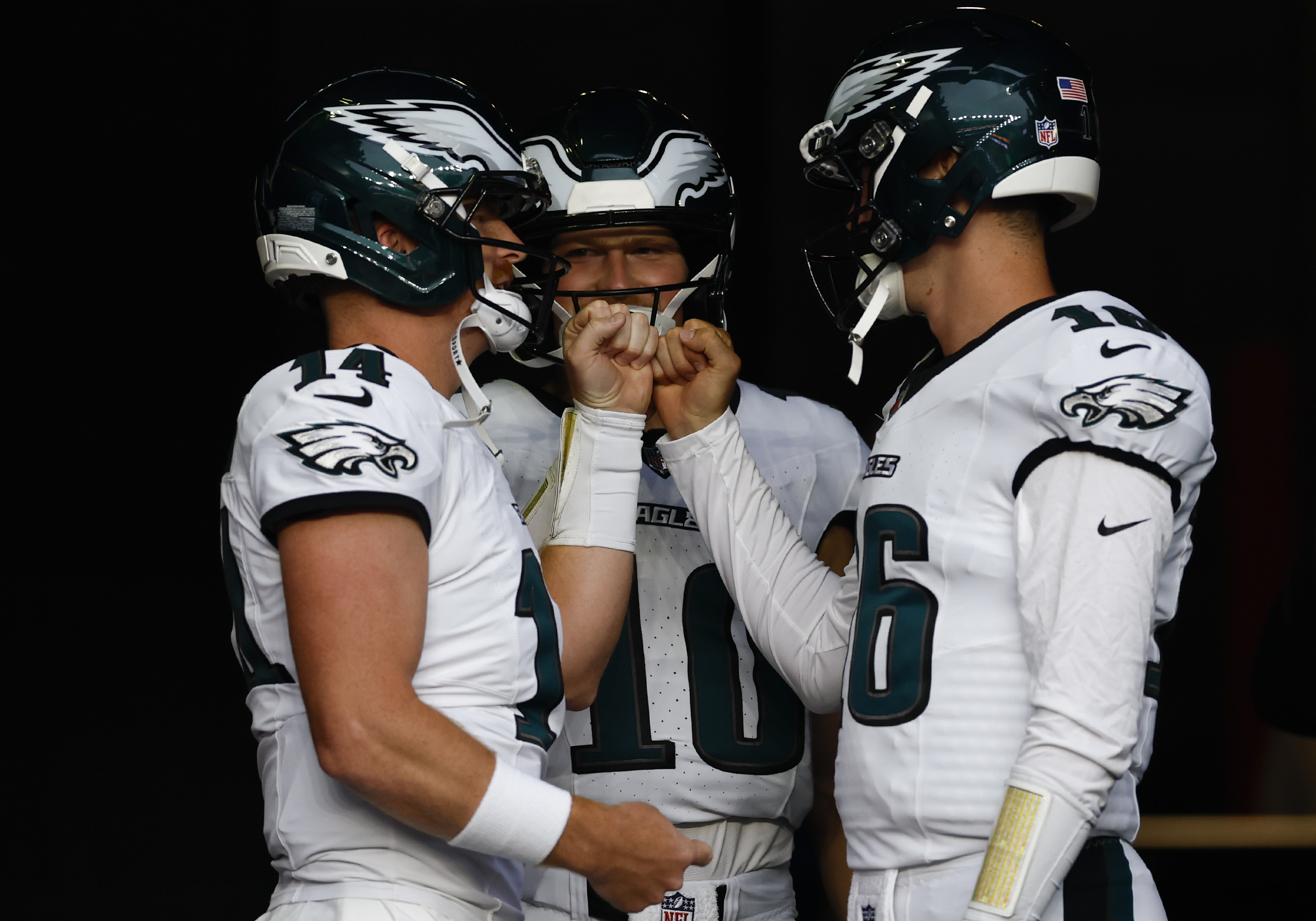
    Eagles quarterbacks (from left to right) Andy Dalton, Cole Payton and Tanner McKee are all on the roster … for now. Yong Kim / Staff Photographer

    The Eagles are at a point in their competitive and financial cycle where they can’t afford to be throwing around that Chase Daniel cheddar. The trade for Dalton was a workaround somewhat similar to the trade for Pickett. He is in the second-year of a two-year, $8 million extension, but the Eagles are responsible for a fraction of it.

    In a best-case scenario, they get a backup QB who has shown the ability to, at the very least, give a team a chance at remaining relevant through a short- or medium-term absence. Dalton is just 2-6 in his starts since going 6-8 as a 35-year-old with the Saints in 2022.

    But all of those starts were in relief of Bryce Young, who is just 14-30 himself over that span. That would be the equivalent of an additional three to four wins over 17 games compared to Dalton. Such a pace could be the difference between sneaking into the playoffs and giving up on the season for a team like the Eagles, who are expected to win 10-12 games with an upside well beyond that.

    The actual calculus of Dalton versus McKee versus keeping both is far too marginal to be conveyed in an expository sentence. At such a minuscule level, the expected value between the lines must be compared to a variety of factors outside of the lines, including the expected value in practice or the film room of Player X versus Player Y.

    That the Eagles have decided, at least for the moment, to keep both Dalton and McKee speaks to their regard for both. Ultimately, that regard, and the factors that compose it, will need to be weighted against the value of the additional roster spot that one of them will occupy. The real question isn’t Dalton versus McKee. It’s the other versus the lineman or defensive back or linebacker who isn’t currently on the roster because of them.

    On that note. . .

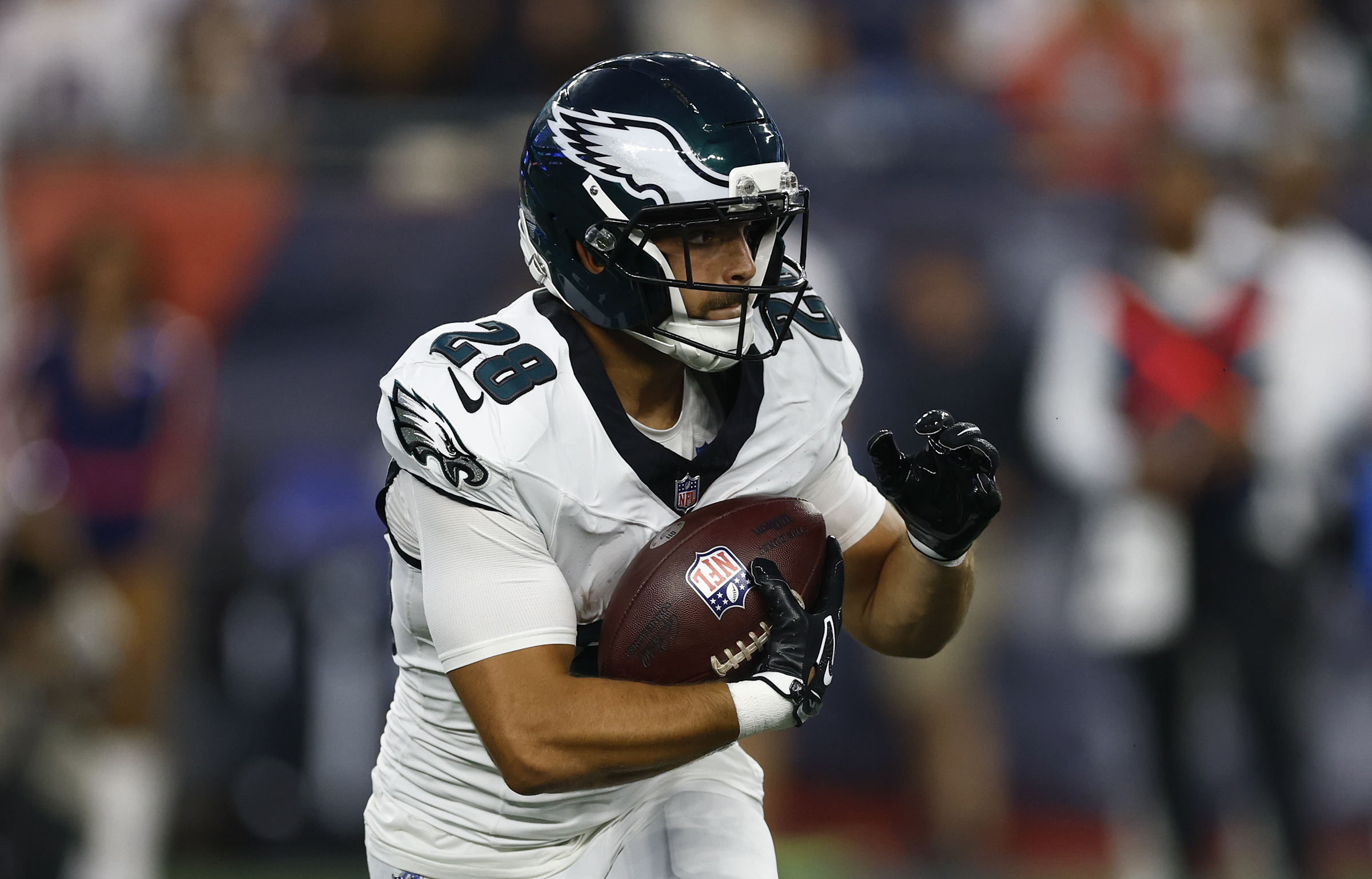
    Dollar for dollar, the biggest improvement the Eagles could make to their roster would be adding a running back who can do something different than Saquon Barkley and Tank Bigsby. Unless Will Shipley is that guy.

    Will Shipley has caught only nine passes with the Eagles.Yong Kim / Staff Photographer

    The most glaring anomaly on the Eagles roster is one that hasn’t gotten much attention over the last couple of years. Very few teams in the league have a less diverse running back room than they do. For the sake of the argument, let’s reduce it to a generalization that is overly broad and thus not entirely accurate. The Eagles don’t have a complement to Saquon Barkley, at least not one you’d classify as “pass-catching” or “change-of-pace.”

    Unless Will Shipley is that guy.

    I don’t necessarily think they need such a guy. I’m not even sure that such a guy would be attainable even if they thought they needed him. All I know is that they don’t have him. And, also, that his absence is worth contemplating for a team that should be looking for creative ways to distribute the touches that previously went to A.J. Brown.

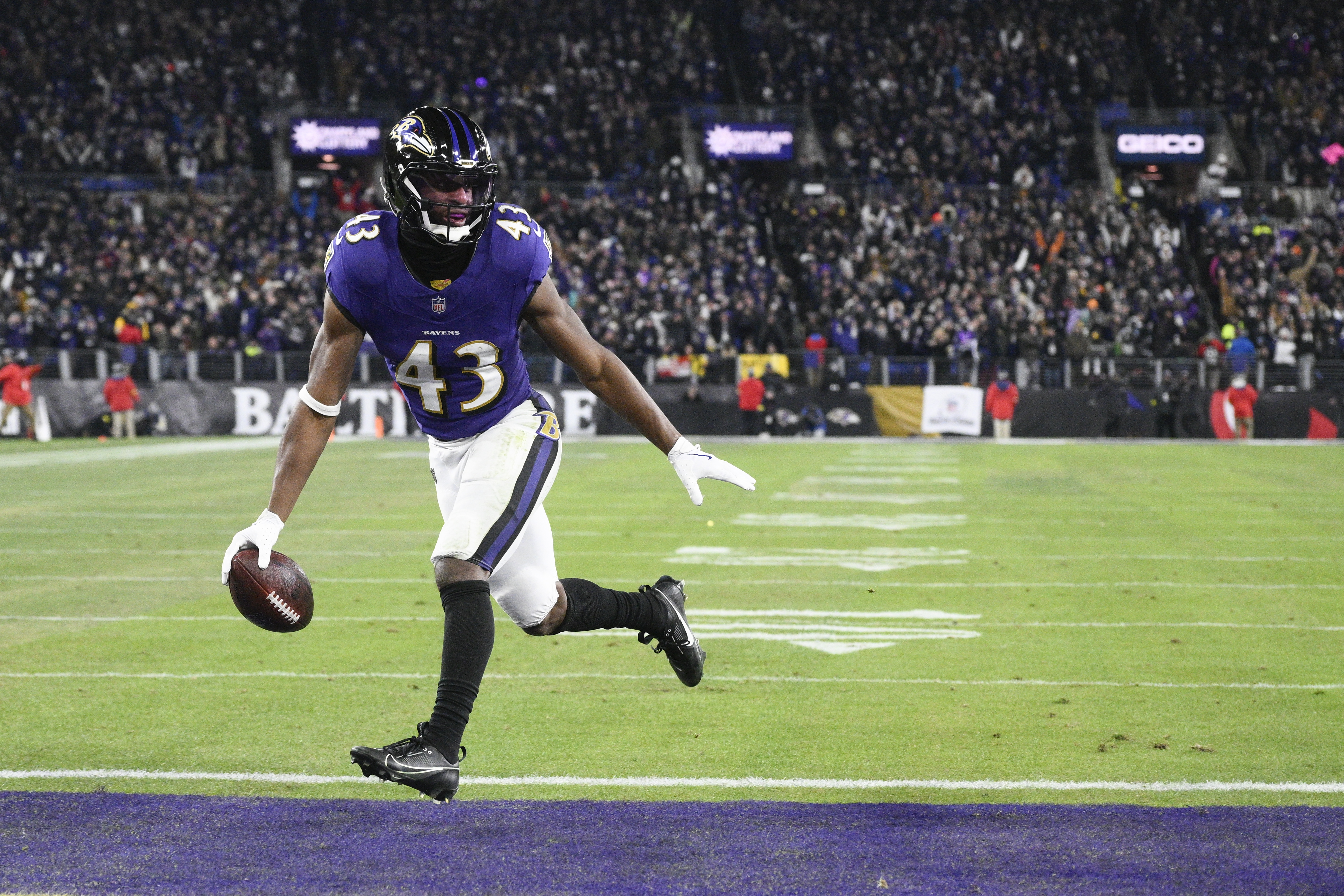
    The Ravens’ Justice Hill is the guy I think of when I think of a guy the Eagles could use. Two years ago, he touched the ball 89 times and gained 38 first downs with an average of 6.9 yards per touch. To put that in perspective, Bigsby gained 17 first downs on 61 touches with an average of 6.2 yards per touch in 2025. Meanwhile, Shipley has touched the ball a total of 57 times in the two years since the Eagles drafted him in the fourth round. That, with 13 first downs and 3.9 yards-per-touch.

    Justice Hill caught 21 passes for the Ravens in 2025.Nick Wass

    Is it a big thing? Maybe not. But it’s certainly an area where the Eagles can improve. Last season, they were one of only four teams in the NFL who didn’t have multiple running backs catch at least 10 passes. That’s not necessarily a bad thing. The Rams scored the most points in the league without a traditional pass-catching running back.

    But the Eagles are clearly bucking convention in their backfield. We don’t even need to compare them to the rest of the league. Just look at their recent history. Even in 2024, when Barkley led the league with 345 rush attempts and 2,005 yards, Kenny Gainwell managed to catch 16 passes for 116 yards while carrying the ball 75 times for 290. Gainwell and Boston Scott were both members of the 2022 Super Bowl team. Go back to 2017. Think about Corey Clement’s touchdown catch.

    The modern NFL game is all about mismatches, both between and within personnel groups. Tight ends are in vogue because they thrive on those margins. While Shipley brings top-end speed, he has yet to display the feel, shiftiness or receiving chops that would make him a competitive advantage in a dedicated package. Bigsby is the ideal back-up to Barkley, a power runner who you’d be comfortable handing off to 15-20 times a game. But he has 11 receptions in three NFL seasons. It just feels like the Eagles are missing an element.

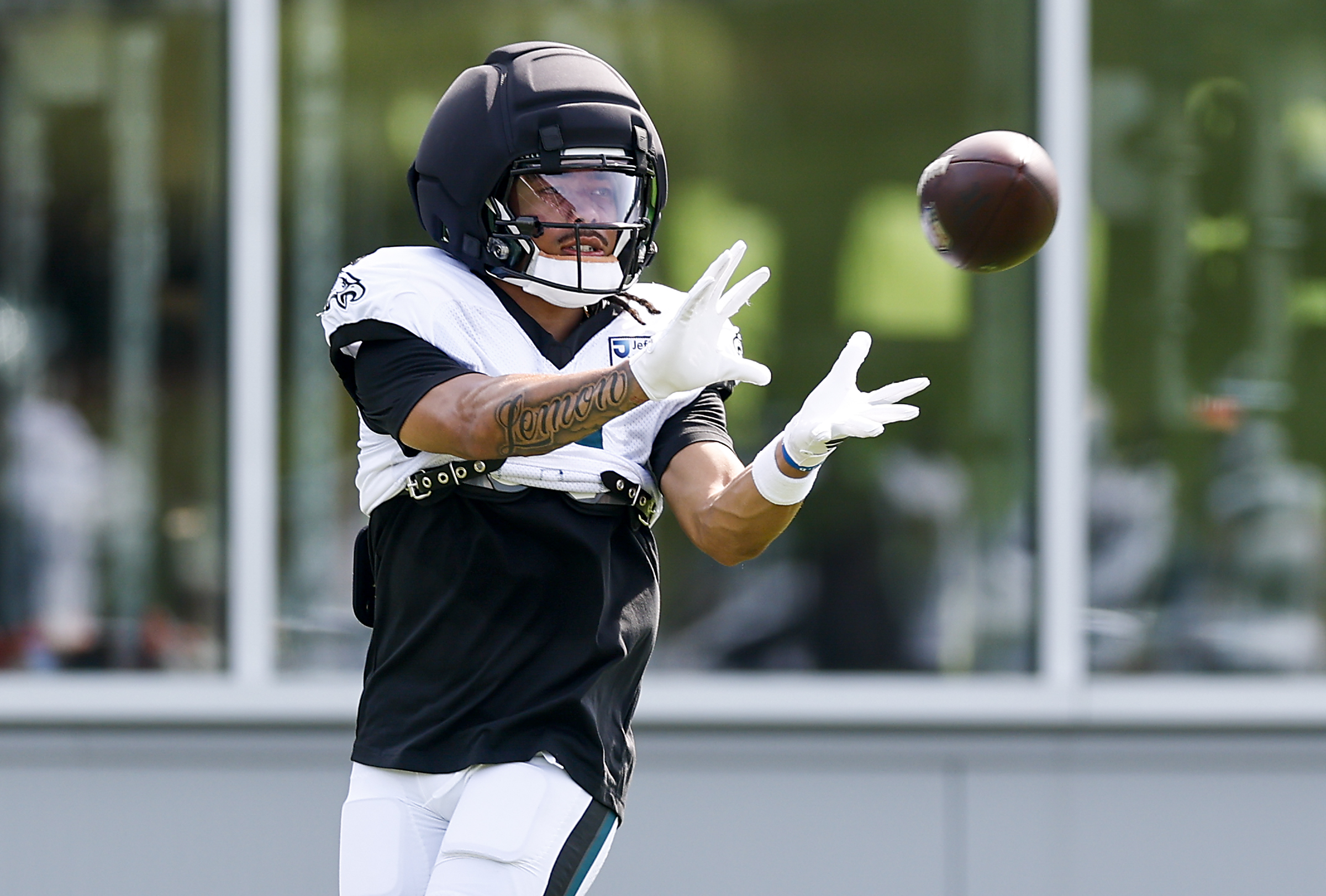
  • Makai Lemon has all of the opportunity in the world. The Eagles need him to seize it.

    Makai Lemon has all of the opportunity in the world. The Eagles need him to seize it.

    There is a piece of math that makes it awfully difficult to assume anything about Sean Mannion’s offense.
    It’s a piece of math that is either working in strong favor of or in strong disfavor of Makai Lemon. It depends on how the rookie feels about pressure.
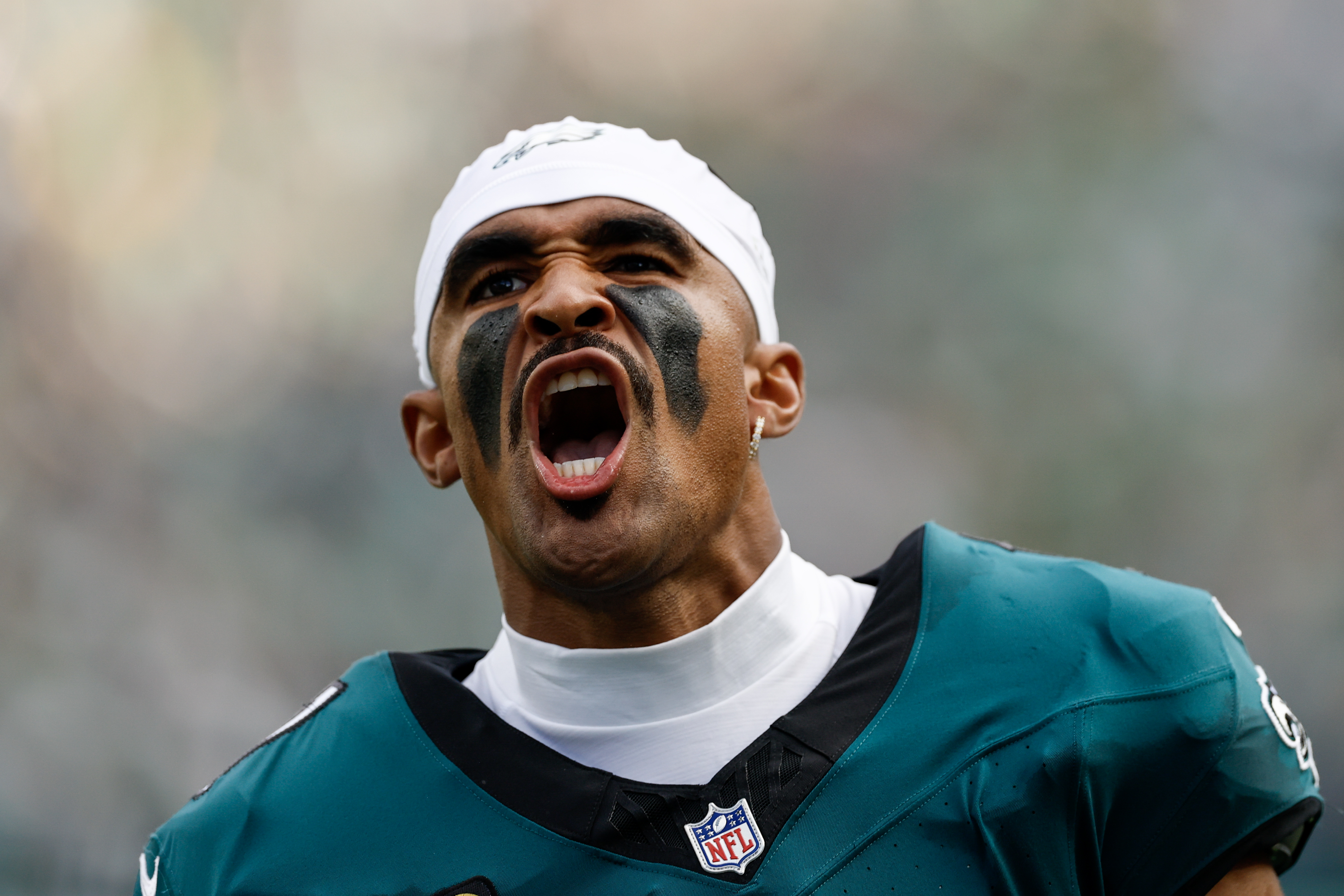
    The expectations for the Eagles’ 2026 first-round pick should be a lot higher. Because the bar is high. And he is the only one who has the skill set to clear it.
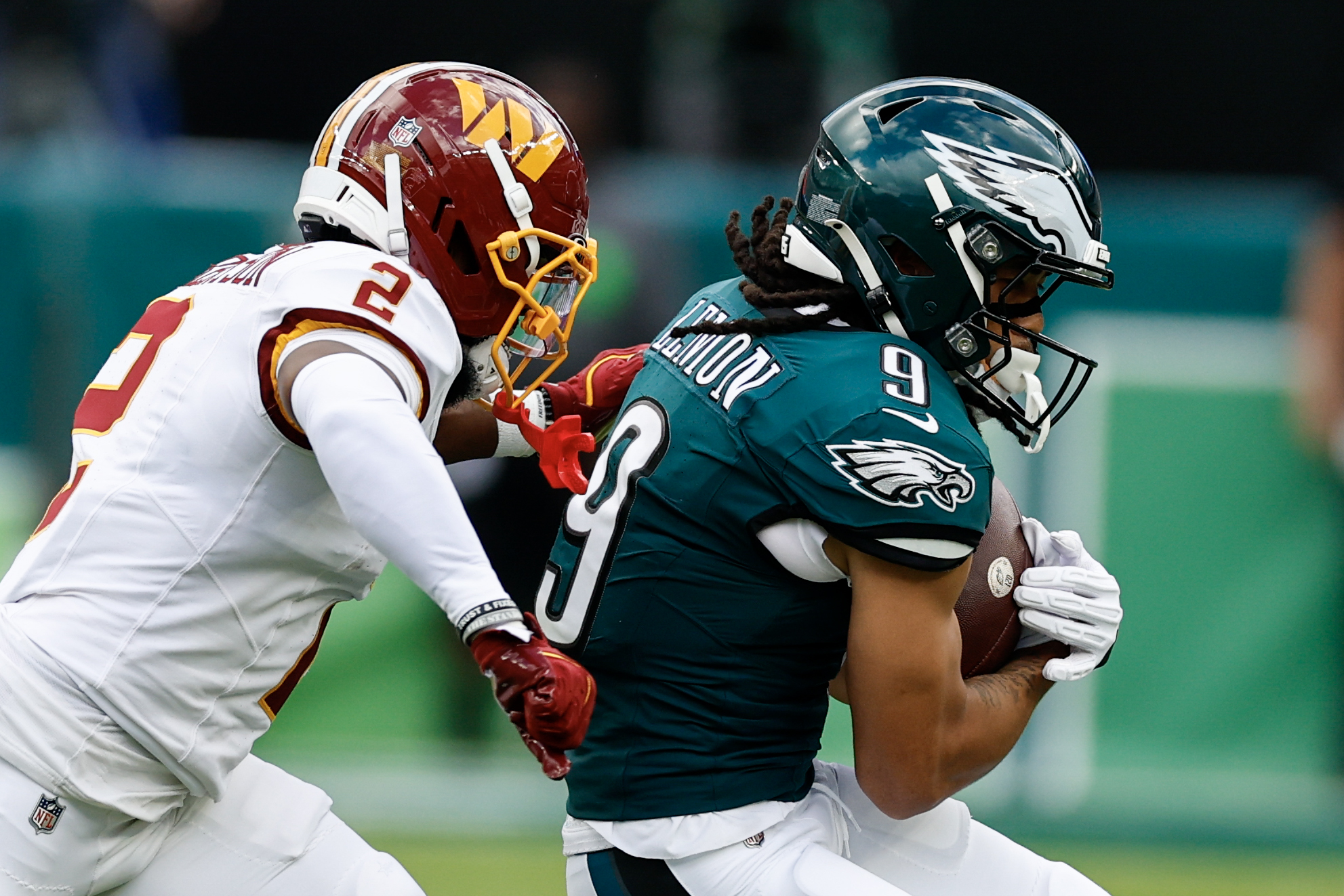
    Let’s start with the math. Specifically, with the number 142.9. That’s how many targets A.J. Brown averaged per 17 games during his four seasons with the Eagles.

    Add to that 34.5, the number of targets that Jahan Dotson averaged per 17 games in his two seasons with the Eagles.

    Our total is 177.4.

    Which brings us to the most critical number: 66.5.

    That’s how many targets Dontayvion Wicks has averaged per 17 games in three NFL seasons.

    As the signs will say in London in Week 5: Mind the gap!

    One thing you can safely say about the Eagles offense in its first year under Mannion: some wide receiver is going to have a breakout season, or the defense is going to need to win them a lot of games.

    The other options are outliers. Even if the offensive line recaptures the bodily spirit of 2024, are the Eagles really going to average nearly 5 yards per carry without somebody drawing Brown’s level of gravity opposite DeVonta Smith? If not, are they really going to run the ball 621 times while passing it only 448? If not, are the Eagles really going to put up championship-caliber point totals with Smith accounting for a third of the targets and yards?

    DeVonta Smith figures to be the main beneficiary among Eagles receivers after A.J. Brown’s departure.Elizabeth Robertson / Staff Photographer

    The breakout certainly could be Smith’s. Plenty of folks inside and outside of the Eagles organization have murmured Jaxon Smith-Njigba and DK Metcalf when hypothesizing about Smith in his post-Brown chapter. Last season, after the Seahawks traded Metcalf to the Steelers, Smith-Njigba’s target share jumped from 137 to 163 and his yardage from 1,130 to 1,793. In other words, he turned from Smith into a supersized Brown.

    In the event of such a breakout from Smith, the Eagles wouldn’t necessarily need anything greater than replacement-level production from the rest of the Eagles’ receiving corps. Last season, the only Seahawks receiver other than Smith-Njigba with more than 26 targets or 188 yards was the ghost of Cooper Kupp, who finished with 47 catches and 593 yards.

    But, like we said, that’s an outlier.

    One can argue that the Denver Broncos, Buffalo Bills, and Kansas City Chiefs offer alternate hypotheticals for life without a true No. 2.

    Denver made it to last year’s AFC championship game with Troy Franklin’s 65 catches and 709 yards in the second chair behind Courtland Sutton’s 74 and 1,017.

    The Bills had the second-highest scoring offense in the NFL in 2024 with Khalil Shakir leading the way at 100 targets and 821 yards. That was the year after they parted ways with Stefon Diggs.

    The Chiefs had the NFL’s highest-scoring offense in 2022, the year after they traded away Tyreek Hill. Their top wideout was JuJu Smith-Schuster, who had 101 targets and 933 yards.

    The rebuttals are easy.

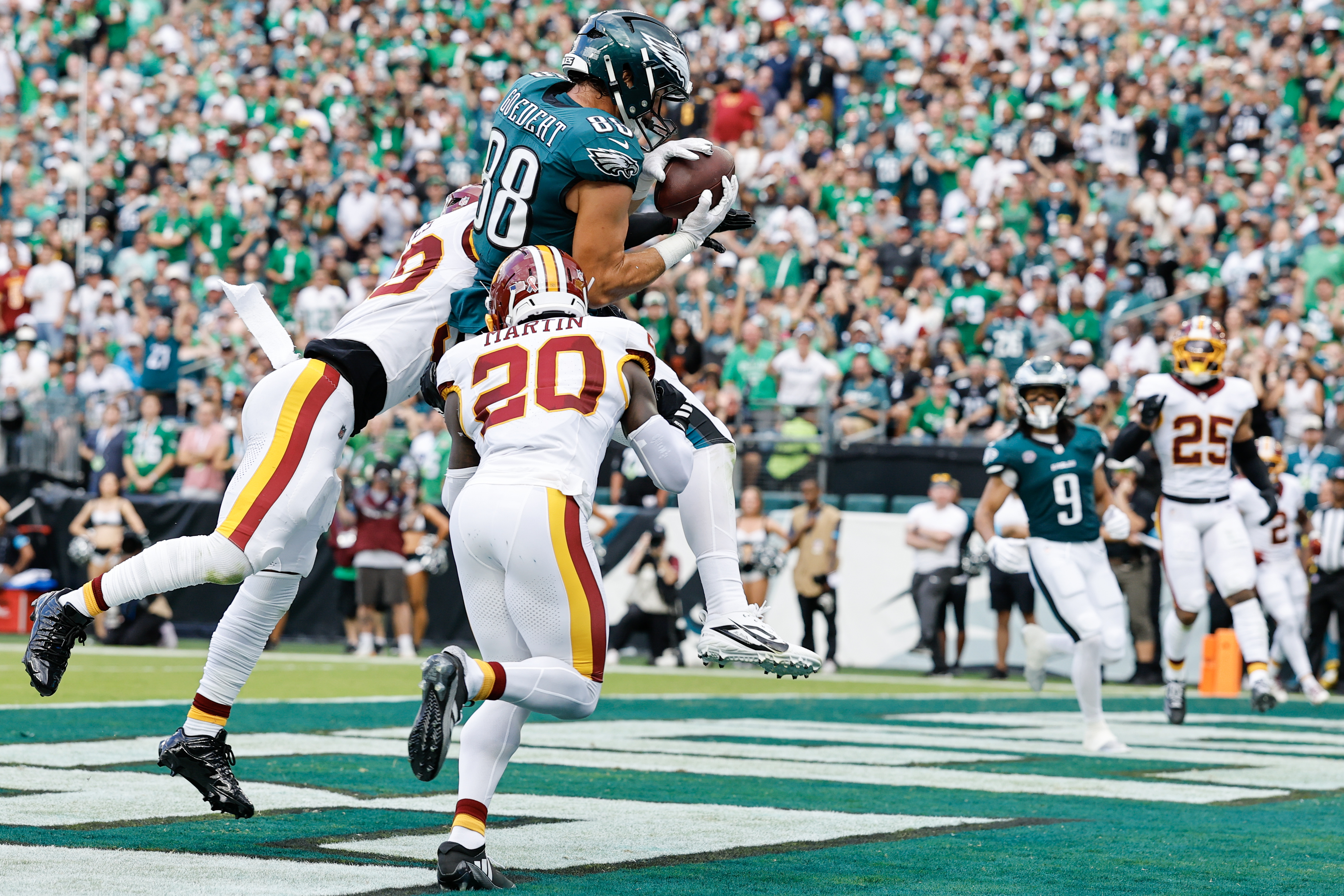
    The Chiefs had Travis Kelce, who filled the Hill vacuum with a career-high 152 targets and 110 catches for 1,338 yards. If Dallas Goedert does that, great. He’s the breakout. Otherwise, Smith-Schuster’s 933 yards would be a heck of a season for Lemon or Wicks.

    The Broncos and Bills traded significant draft capital for receivers this offseason; Jaylen Waddle headed to Denver from Miami, and D.J. Moore went to Buffalo from Chicago. Both served as verdicts on a by-committee approach at wide receiver.

    There’s a lot we don’t know about Mannion and how his scheme will express itself. There’s even more we do not know about how Jalen Hurts and the rest of the Eagles’ talent will play without a generational wide receiver on one side of the field and Smith on the other.

    But we can venture to say that nobody besides Lemon or Smith has the potential to maintain the Eagles’ aggregate WR1/WR2 production. Ours is not the first fan base or media contingent to sell themselves on best-case scenarios for Wicks, Marquise “Hollywood” Brown, or Elijah Moore. Those players are here for a reason. Their sample sizes are more than large enough.

    That’s one of two reasons Lemon is the player most integral to the Eagles’ 2026 hopes. The second is that he has the ability.

    The Eagles traded up a spot and snaked the Steelers for a reason. He isn’t your typical late first-round receiver. There is plenty of maturity and present-day NFL value evident in his game tape. He doesn’t have the outlier physical or athletic measurable of a potential generational performer like Brown. But he has the technical skills and toughness that play immediately in the NFL.

    We have not heard much of Lemon this last month. Summer-long soft tissue injuries have a knack of doing that to rookies. The big question is whether the time he has lost can quickly be regained.

    That’s true for Lemon individually. It’s just as true for the Eagles’ offense overall.

  • Lane Kiffin, a former Eagles undrafted free agent, and a fitting episode for our times in college sports

    Lane Kiffin, a former Eagles undrafted free agent, and a fitting episode for our times in college sports

    Maybe the best thing that can happen to college sports’ integrity is everything that is happening to its integrity right now. It would be ironic, in a way. The NCAA and its member institutions are where they are because they spent decades adhering to a policy of inertia. Only now does it look like a viable strategy, after their world is already burning around them. Sometimes, in order to gain back what was lost, one must lose what little remains.

    Very little remains. Let’s be clear about that. That was true even before last weekend’s news that former Eagles undrafted rookie free agent Dae’Quan Wright was planning on returning to the college ranks after being waived by the Browns. In fact, the hand-wringing that has accompanied the tight end’s reported agreement with LSU is mostly an admission of naiveté or ignorance on the part of the hand-wringers.

    The NCAA is more than a decade into a series of logical premises and conclusions that was always going to lead power conferences like the SEC and Big Ten to where they are right now. The university presidents who operate behind the NCAA’s bureaucratic anonymity chose this path when they allowed the almighty dollar of television contracts and the vanity of a news cycle monopoly to become the primary goal of collegiate sports rather than sports played by, for, and among collegiates. They are living in a reductio ad absurdum of their own creation.

    The best thing any of us can do for our sanity is to lean back and enjoy watching them lose theirs. It no longer makes sense to react to each development as if university athletic departments are tethered to some sort of ethical baseline that sets them apart from any other major professional sports organization. They pulled up that anchor long ago. The ship has sailed.

    Frankly, the idea of an undrafted athlete moving from the bottom of an NFL training camp roster to a college football starting lineup pales in comparison to the legion of current college football starters who are making bigger bank than they would as NFL players on rookie contracts. The average Power 4 quarterback is currently signed to a name, image, and likeness deal worth $3.1 million, according to Sportico. It always made sense that there would come a day when a player would ask out of a contract from the Browns for a more competitive offer funded by Big Willy’s Jeep-Chevy of Baton Rouge. That’s the way NIL was always going to work.

    The ridiculousness is the real sport, now. We should treat it as such. For years, the NCAA chose to address the logical implications of its profit drive with a weird and counterintuitive combination of hope, avoidance, and authoritarian dictates. They fully recognized that the genie would one day escape the bottle. Now, they’re left to hope that Ja’Marr Chase and Joe Burrow already have plans for their bye week, when LSU plays Mississippi State.

    Lane Kiffin’s central role in the latest lunacy is fitting. College football’s Kendall Roy has spent the early part of this week channeling the exact sort of ends-based nihilism so sublimely satirized by HBO’s Succession. He did the same last year when he left his Ole Miss team on the eve of the college playoffs in order to sign a mega contract with LSU. Nick Saban, his former boss at Alabama, leveraged the full power of the media-sports industrial complex to absolve him of responsibility.

    “We need to take a better approach to the business aspect of what we do in college athletics,” Saban said on ESPN’s pregame studio show after Kiffin left Ole Miss. “In the NFL, you can’t leave your team until you are finished playing. You can’t talk to another coach in the regular season. There’s a defined time when you can talk to them if they are in the playoffs. We should match the academic calendar with the football calendar.”

    Well, yeah. You should. But there are a whole lot of competing self-interests standing between ought and is. Like any system, it is first and foremost a reflection of those who agree to its framework. Major college football has become nothing more than Boar on the Floor in pads. Any television news segment on NCAA should conclude with a clip of Logan Roy smirking at all the piggies at the trough.

    Dae’Quan Wright is among the NFL players trying to play another season of college football.Carolyn Kaster

    “In general, should NFL players come back to college? I believe — it doesn’t matter necessarily what I believe — that answer would be no,” Kiffin said in a Monday news conference while defending his recruiting of at least two former Ole Miss players who’d spent the summer in NFL training camps.

    Focus on Kiffin’s interjection.

    It doesn’t matter necessarily what I believe.

    You’ll struggle to find seven words that more accurately summarize both the current state of college sports and its contributing factors. In a more principled world, they would be written off as the words of a coward. In our current world, they might as well be written in Latin beneath the flag or family crest or company logo of a disconcerting number of tech titans, politicians, and Fortune 500 firms, not to mention the hundreds of university presidents who have long embraced the plausible deniability of the concept of shareholder value. The best thing you can say about the system of higher education in the United States is that it remains steadfastly by and of the system at large.

    The only hope is that it burns itself as quickly and completely as possible. The inevitable end game for the major football-playing schools won’t look much closer to the mandates of their university charters. The big schools will break away, impose a salary cap, hiring and transfer restrictions — all of the things major sports leagues long ago did as a result of similar competitive inevitabilities. They will sign their own television contract, sell their own licensing agreements, consolidate the revenues. The nonpower schools will exist mostly as a counterweight to any antitrust claims. Meanwhile, the rest of us will continue to contemplate the question: Do we really care about college sports if they are no longer about the college?

  • There’s one big reason to think that Andrew Painter’s transformation is for real

    There’s one big reason to think that Andrew Painter’s transformation is for real

    A little past 6 o’clock on Saturday evening, Andrew Painter delivered a couple of pitches that could have some serious implications for the Phillies. Both of them were four-seam fastballs that registered 97 mph on the gun and crossed home plate at the sternum of Cardinals leadoff hitter JJ Wetherholt. The important thing is where those pitches ended up: inside the mitt of Phillies catcher J.T. Realmuto, rather than in play, or in the seats. Wetherholt swung at both. He did not make contact with either.

    That two-pitch sequence may sound like a small thing. It mostly was, at least within the context of the game. But it was a very big thing with regard to the futures of both the Phillies and their prized pitching prospect. It was a reason to believe.

    The top-line numbers suggest that Painter is a young man in the midst of a renaissance. Since returning from a six-week stint in the minors on July 31, the 23-year-old righty has posted a 3.62 ERA with 26 strikeouts, 10 walks, and two home runs allowed over 27⅓ innings. His most recent start was his finest yet: 103 pitches, seven innings, one run allowed, eight strikeouts, no walks.

    That his season-long ERA is still 6.02 speaks to the extent of the struggles he endured during the first 14 starts of the season. It also warrants a skeptical eye. Yet the deeper you pore through the entrails of Painter’s recent performances, the more evidence you’ll find that suggests the rookie really is in the midst of a radical transformation.

    Phillies pitcher Andrew Painter yells into his glove after striking out Cardinals slugger Jordan Walker for the final out of the sixth inning Saturday.Elizabeth Robertson / Staff Photographer

    It all starts with four-seam fastballs like the ones that prompted Wetherholt’s whiffs in the first inning on Saturday. By the end of the game, Cardinals hitters had failed to make contact on five of their 15 swings against Painter’s four-seamer. That may not sound like a lot, but consider this: In Painter’s last two starts before his demotion in June, he generated just three whiffs on 23 swings at his fastballs.

    The numbers are staggering. When the Phillies sent Painter down to the minors in June, his four-seam fastball ranked as one of the least effective in the sport. He wasn’t missing bats with it: His whiff percentage ranked 276th out of 278 pitchers who’d thrown at least 200 pitches. Opponents had 38 hits against the pitch in just 12 starts. Their .404 batting average against Painter’s four-seamer was higher than against any other pitcher’s. He ranked among the bottom 4% in slugging percentage (.763), strikeout percentage (7.65%), and wOBA (.481). Only one pitcher in the majors had a four-seamer rated lower than Painter’s per FanGraphs’ Pitch Value metric.

    Now, suddenly, Painter’s four-seamer has become one of baseball’s most difficult to hit. Of the 84 pitchers who have thrown at least 100 four-seamers since July 31, only seven have a higher whiff percentage inside the strike zone than Painter’s. Opposing hitters are making contact with just 78% of his fastballs in the strike zone. That’s lower than even Brewers fireballer Jacob Misiorowski. It is a massive difference from Painter’s 93.2% zone contact percentage in his first 14 starts. Painter isn’t generating out-of-zone swings-and-misses on the level of the Miz, but his overall contact rate still ranks in the top 25% of pitchers since July 31.

    Andrew Painter’s four-seamer has gone from liability to strength in his return to the Phillies.Monica Herndon / Staff Photographer

    It’s a lot easier to believe in real change when there is a logical explanation for it. With Painter, the four-seamer is the thing. His spin rate is up by about 6%. In his last two starts, the induced vertical break on his fastball was better than in any previous start, with an increase of about 10% over his predemotion baseline. Against the Cardinals on Saturday, he threw nine pitches at 98-plus mph, two of them at 99-plus. Sixteen of his 33 sinkers and four-seamers clocked at 97-plus mph. Compare that to his last start before his demotion, when Painter didn’t touch 98 and only reached 97 on five pitches.

    “There’s a presence out there,” Phillies interim manager Don Mattingly said. “He’s on the attack. He looks confident. Obviously, the stuff has to be good, or all that doesn’t matter if you’re not getting anybody out.”

    You saw it on Saturday. In the third inning, Jose Fermin struck out on a foul-tipped four-seamer. In the fifth, Jimmy Crooks swung and missed at a 1-2 four-seamer that registered 98.2 mph on Statcast. In the sixth, Alec Burleson swung and missed at another 98 mph four-seamer.

    Painter still has plenty of work to do to reach the level of dominance many envisioned when he was rated as one of the top pitching prospects in the sport. But the improvement is very real. Make no mistake about that.