Author: Frank Kummer

  • Philly area set to receive record-breaking $322M in state and federal money for trails

    Philly area set to receive record-breaking $322M in state and federal money for trails

    Philadelphia and its surrounding counties are set for what could be a record-breaking $322 million in federal and state funding to go toward building new trails segments, say trail advocates.

    Projects in line for funding include the much-anticipated Spring Garden Connector in Philly. And it would include the Newtown Rail, Chester Creek, and Parkside-Wynnefield-Cynwyd trails in the suburban counties.

    The money is part of a larger $8.2 billion pool of transportation funding updated through the federal Transportation Improvement Program (TIP) for 2027 and spread over four years.

    “We consider this to be potentially record breaking,” said Patrick Monahan, vice chair of the Circuit Trails Coalition in Pennsylvania. “It’s proof that the trails are being treated as essential infrastructure, making it safer and easier to walk and bike in the region.”

    In 2024, Pennsylvania received $200 million for trails under TIP.

    Pennsylvania gets its TIP plan updated every two years and the majority of money goes to highways, bus and rail systems, trolleys, and ferries. It is part of an agreed-upon list of priority transportation projects. That list includes 344 projects.

    In all, this year’s proposed $322 million in funding for trails would advance 27 bike and pedestrian projects across Philadelphia, Bucks, Chester, Delaware, and Montgomery Counties.

    The Delaware Valley Regional Planning Commission (DVRPC) is set to vote on approving the allocations in July.

    The trails, either begun or being planned, are part of the Circuit Trails, a network of hundreds of miles of multiuse trails throughout the Philadelphia region including southern New Jersey, which updates its TIP funding in alternate years.

    A sample of the trail projects in line for funding include:

    • $11 million for the second phase to extend the Schuylkill Banks trail in Philadelphia south from near 61st Street to Passyunk Avenue that would include a new park at the base of the Passyunk Avenue Bridge.
    • $58.5 million for Philadelphia’s Spring Garden Connector project that would link trail systems along the Delaware and Schuylkill rivers and make Spring Garden Street safer for cyclists and pedestrians.
    • $50 million to improve safety for roadway users, including pedestrians and cyclists, on PA 291 from Irving Street to Ridley Creek. The project includes building a multiuse side path that will be designated as part of the East Coast Greenway, a trail system linking Maine to Florida.
    • $8.5 million for the Chester Valley Trail, a multiuse trail along the alignment of the former Philadelphia and Thorndale Branch, a former freight train route, including renovation of the Whitford Bridge and Downingtown Trestle Bridge for bicycle and pedestrian use.
    • $10 million to develop a segment in Whitemarsh Township, Montgomery County, that would run from the existing Wissahickon Trail in Fort Washington State Park to the existing Cross County Trail near SEPTA’s Fort Washington Station.

  • Mutant mice resistant to pest control found in Philly, its suburbs, and NYC. Are rats next?

    Mutant mice resistant to pest control found in Philly, its suburbs, and NYC. Are rats next?

    Pest control companies routinely use traps baited with rodenticide to kill rats and mice found in homes, restaurants, and businesses throughout the Philadelphia area, but a recent Rutgers University study suggests those companies face a gnawing problem.

    Researchers discovered that mice in Philadelphia, Trenton, and suburbs like Levittown and New Hope harbor genetic mutations that shield them from standard chemical baits.

    In fact, a majority of house mice sampled from Northeast urban areas, including Manhattan and other New York City boroughs, carried at least one mutation linked to rodenticide resistance — a clear sign that pests are actively evolving to survive common poisons.

    Rats presented a different problem. While they lacked the chemical-resistant mutations found in mice, the study’s author suggests they possess the cognitive sophistication to outsmart and evade traps entirely.

    Lead author Jin-Jia Yu, a postdoctoral researcher in Rutgers’ entomology department, said the findings indicate that pest control companies might need to develop different strategies.

    Yu conducted his research with the supervision of another of the paper’s authors, Changlu Wang, an entomologist in the same department.

    Published in the April issue of Pest Management Science, the peer-reviewed study was launched after frustrated pest control professionals repeatedly approached the Rutgers lab, reporting that rodents routinely survived multiple treatments.

    “For the house mouse, we saw much more mutations rather than Norway rats,” Yu said. Norway rats are the common brown rat often seen in sewers. “Genetic mutation is not that special in these creatures. But we found that the house mouse shows a lot of genetic mutations related to rodenticide resistance.”

    Rodents are a bigger problem in cities

    This study focused on urban rodents. It found that mice in big cities such as Philly and New York had a high frequency of mutations of a certain gene.

    Rodents are a bigger problem in cities than more rural areas. Data cited in the study indicate that an average of 12% of all households experience rodent sightings. But major metropolitan areas reporter higher rates, including Philadelphia (29%), Washington (20%), and Manhattan (15%).

    Yu said that similar studies of mutations in house mice and Norway rats were conducted in Europe and that research in the U.S. has been limited. One study in 2009 did find some rats in England with mutations that made them resistant.

    However, Yu said there had been no such studies in the Northeast.

    It has long been known that rodents developed resistance to the rodenticides developed in the 1950s. So more potent compounds were created in the 1970s and include brodifacoum, bromadiolone, difenacoum, and difethialone.

    The poisons contain anticoagulants that interfere with the activation of vitamin K reductase (VKOR), an enzyme essential for blood to clot. Eating the bait leads to fatal internal bleeding.

    The Rutgers team looked for mutations in the gene known as VKORC1 that makes the enzyme.

    Pest control companies, as well as the Philadelphia Department of Public Health, sent the researchers the tails of caught rodents. Yu said his research was possible only with their help.

    A rare mouse mutation in Philly

    The researchers analyzed DNA from 147 house mice and 143 Norway rats collected in New York, New Jersey, Pennsylvania, and Washington, D.C.

    Among house mice, 84% carried at least one mutation in the VKORC1 gene. Nearly 70% carried mutations known to help mice survive rodenticides.

    Of 24 mice collected in Philadelphia, the majority had a mutation and five had two. One mouse had a rare mutation.

    Of 20 mice collected in Trenton, 10 had two mutations. Lansdale, Levittown, and New Hope had one mouse each with a mutated VKORC1 gene.

    About 35% of the Norway rats also carried mutations. However, scientists do not yet know whether those mutations result in resistance in the rats.

    Mice, Yu said, might be genetically adapting faster than rats because they are curious and more likely to eat unfamiliar food, including rodent bait.

    However, rats will avoid new objects, including live traps, and learn from their encounters.

    In other words, not only are mice mutating to survive, but rats may be learning to avoid entrapment.

    “They’re pretty smart,” Yu said of rats.

  • 13-acre Villanova estate to be preserved in $13M deal

    13-acre Villanova estate to be preserved in $13M deal

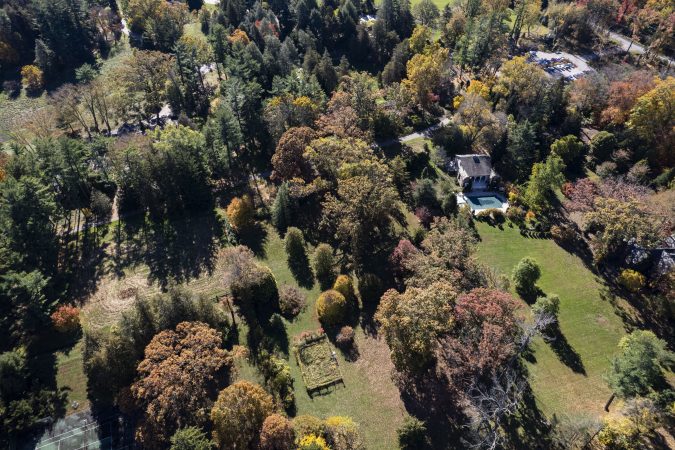
    The 13-acre Oakwell estate, which Lower Merion School District once hoped to turn into school athletic fields, has been preserved after being purchased by two nonprofits.

    The $13 million deal was authorized by the district in 2024 to sell the lush estate in Villanova that contains 700 trees, many of them old growth. The sale closed Friday.

    Under the arrangement, the conservation nonprofit Natural Lands purchased 10 acres of land for roughly $10 million, and the nonprofit Wyncote Foundation purchased three acres that contain the Oakwell mansion for about $3 million.

    John Bennett, a retired medical doctor who owned the estate before the district, said he was relieved.

    “Beneath those magnificent oak trees, some of which have stood for more than 200 years, rest my son’s ashes,” Bennett said. “Those trees were already old when America was young. They have survived wars, economic depressions, hurricanes, and generations of families who walked beneath their branches.“

    Bennett, who has moved from the area, said he feels “an overwhelming sense of gratitude.”

    (function() { var l = function() { new pym.Parent( ‘oakwell__graphic’, ‘https://media.inquirer.com/storage/inquirer/ai2html/oakwell/index.html’); }; if(typeof(pym) === ‘undefined’) { var h = document.getElementsByTagName(‘head’)[0], s = document.createElement(‘script’); s.type = ‘text/javascript’; s.src = ‘https://pym.nprapps.org/pym.v1.min.js’; s.onload = l; h.appendChild(s); } else { l(); } })();

    The district’s agreement to sell Oakwell to the nonprofits came after furious pushback by Bennett, neighbors, and even some students who banded together in protest.

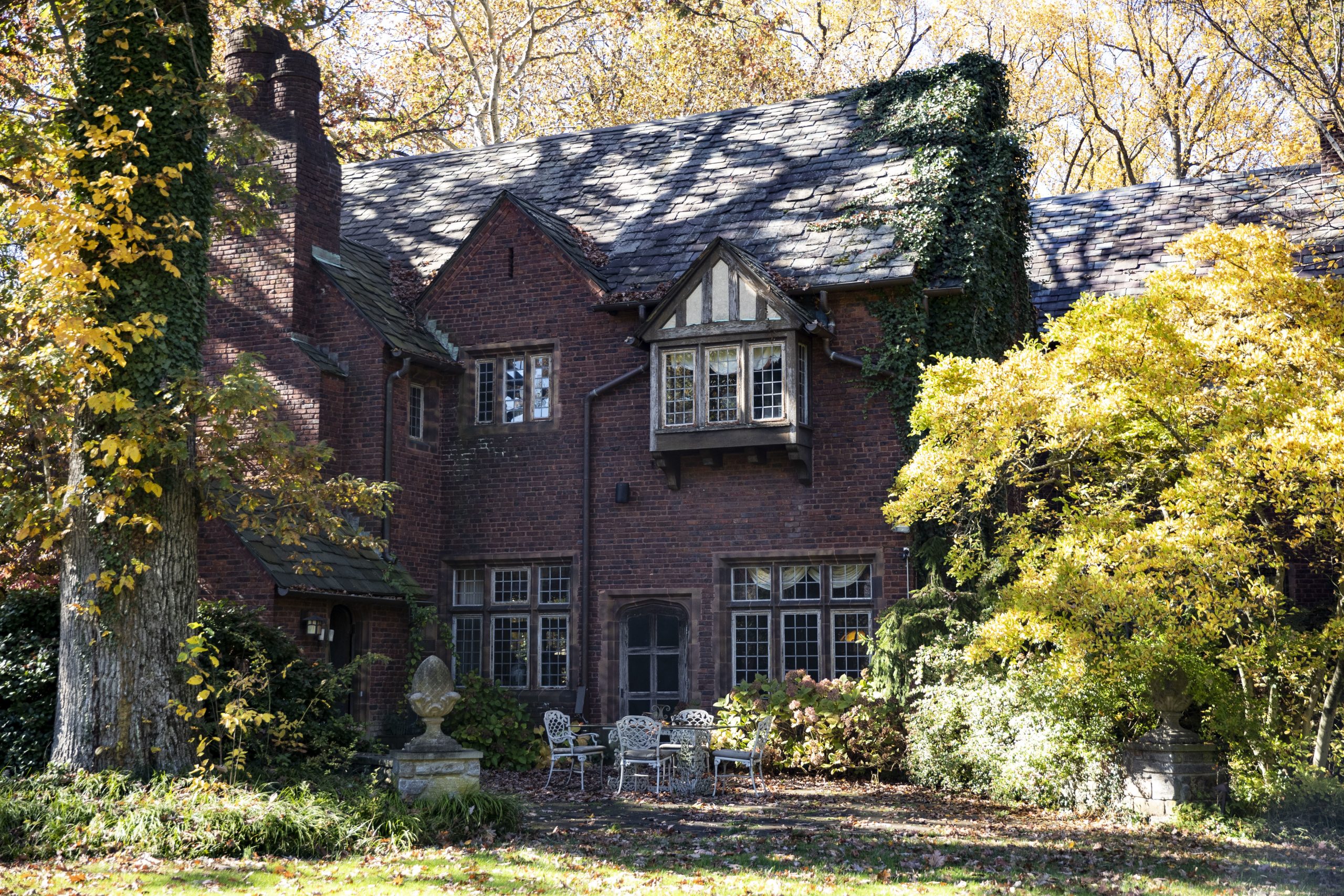
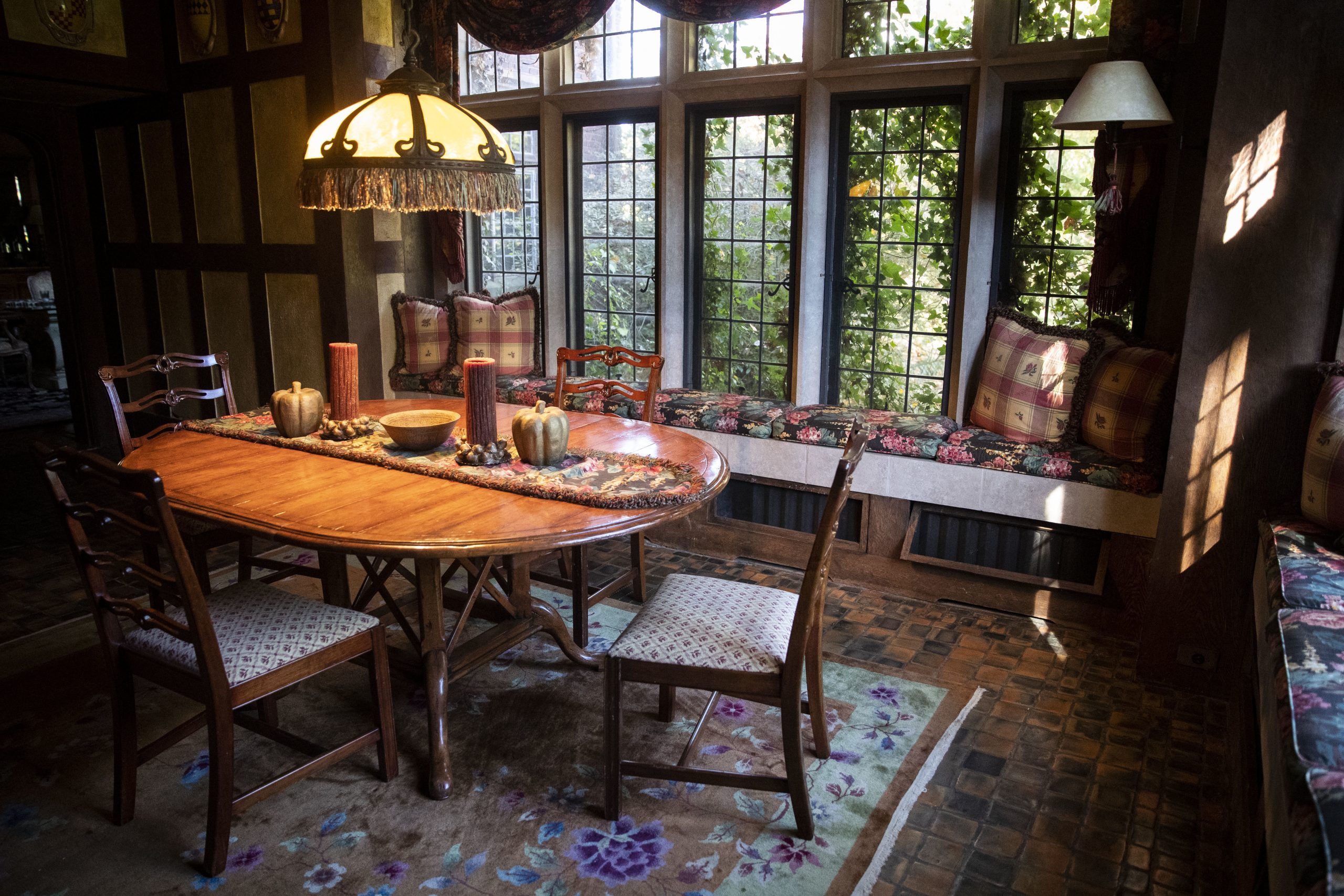
    Besides trees, Oakwell contains a 20,000-square-foot brick Tudor Revival mansion replete with heavy wooden doors, a wainscoted library, and Mercer floor tile. The Wyncote Foundation plans to restore and preserve the mansion.

    The property also contains a pool house, a teahouse once watched over by a terra-cotta warrior, stone fencing, and a brick-walled garden complex all dating back at least 120 years. That will all be owned by Natural Lands.

    Frank Ranelli, superintendent of the Lower Merion School District, said in a statement that the sale “will enhance the quality of life for members of the Lower Merion community.”

    “It feels really like a dream come true,” said Oliver Bass, president and CEO of Natural Lands.

    A portion of the Oakwell mansion in Villanova in 2022.Monica Herndon / Staff Photographer

    Becoming part of Stoneleigh

    Bass noted it had taken years of planning to acquire the tract after the Lower Merion School District purchased Oakwell in 2018 from Bennett.

    The district purchased Oakwell under condemnation with the goal of transforming it into a large athletic complex for the then-new Black Rock Middle School. However, Bennett had originally wanted to sell it to Villanova University.

    The 10 acres that Natural Lands just purchased will become part of the organization’s neighboring 42-acre Stoneleigh public garden. Oakwell was once part of Stoneleigh but was subdivided in the late 1920s and early 1930s.

    Now, the properties will be reunited, Bass said.

    The interior of the Oakwell Estate in Villanova, Pa. Monica Herndon / Staff Photographer

    Bass said that Natural Lands never envisioned that the entire tract would be saved when discussions first started with the school district years ago. The deal was helped by money from the Wyncote Foundation, Bass noted, and the William Penn Foundation provided leadership support.

    Natural Lands has a master plan for the new parcel, but Bass said it could take years to complete work and integrate it fully with Stoneleigh. He said Natural Lands is working with an architect and a landscape architect and will likely have to raise additional money. When finished, the Oakwell tract will be open to the public.

    “It will become one holistic experience with Stoneleigh,” Bass said, “just larger and grander.”

    “The fact that we’ll be able to unite two properties separated by nearly a century is pretty remarkable,” Bass said.

  • 2025 was a wild year for fires in New Jersey, nearly all due to human mayhem

    2025 was a wild year for fires in New Jersey, nearly all due to human mayhem

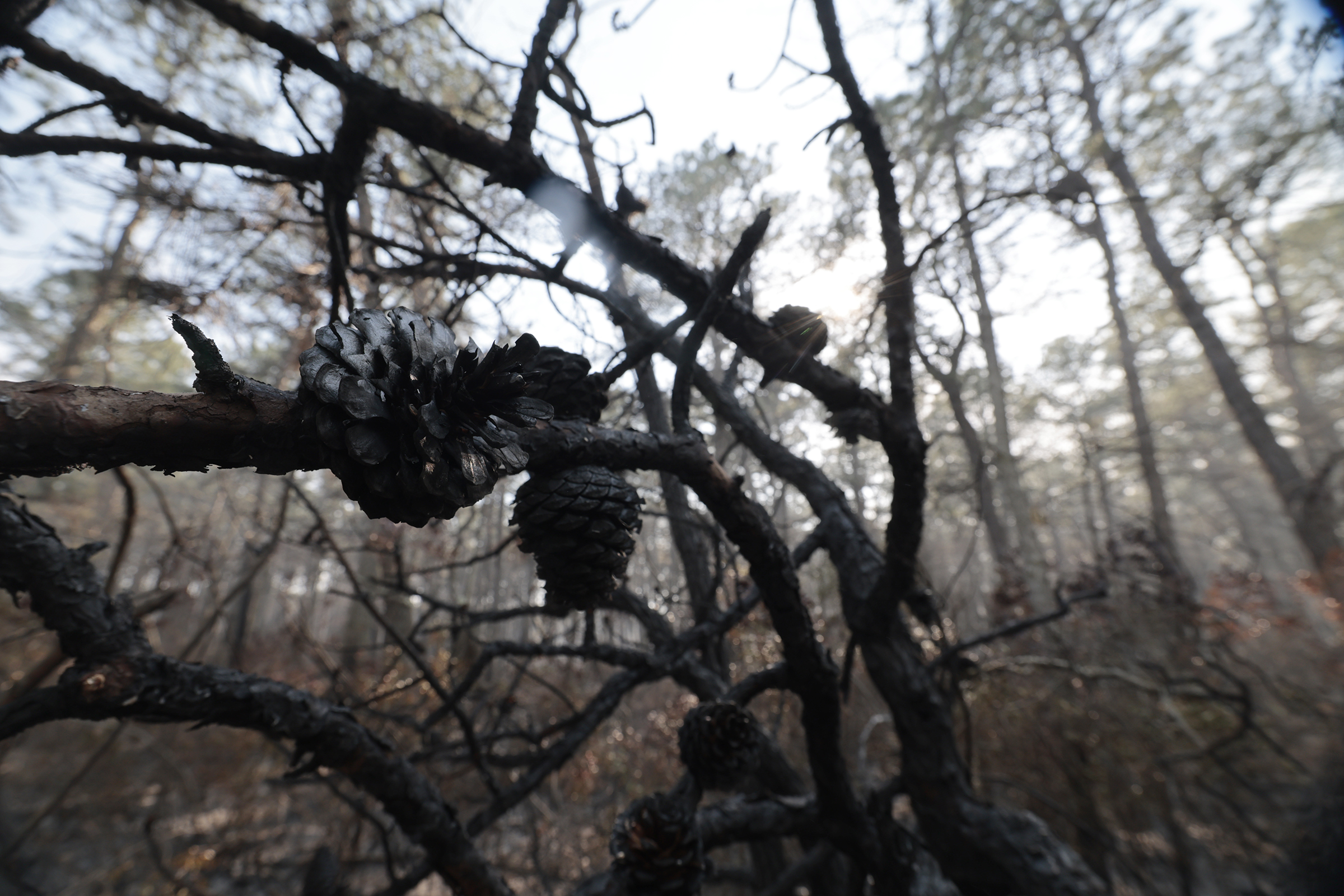
    Conditions worsened by a drought last year, which continues in 2026, had a dramatic impact on wildfires in New Jersey, according to the state’s inaugural wildfire report.

    However, of 1,322 wildfires that burned 27,229 acres statewide in 2025, nearly all were caused by humans, according to the report. That includes the massive Jones Road Wildfire in Ocean County that took 20 days to contain as the result of a bonfire set by youth.

    The figures represent a 22% increase in the number of wildfires and an eye-popping 116% increase in acreage burned compared with the 20-year average.

    To date in 2026, New Jersey has logged 589 wildfires that burned 648.5 acres.

    Overall, the New Jersey Forest Fire Service’s first wildfire report details a historic, challenging, and highly destructive 2025 for the state’s wildlands.

    That came after a demanding fall fire season in 2024. Severe blazes in 2025 not only stretched firefighting resources but also forced thousands of residents from their homes.

    “Our wildland firefighters responded to an increased number of wildfires and spent weeks at a time battling fires, often under challenging weather conditions,” Bill Donnelly Sr., chief of the New Jersey Forest Fire Service, wrote in the report, which was released Thursday.

    A major wildfire in New Jersey is classified as any blaze reaching or exceeding 100 acres. While the state typically averages 4.75 major fires annually, crews battled nine major wildfires in 2025.

    The drought had a big impact as it created tinderboxes in areas such as the Pinelands. Not only did the dryness help spread fires, but it also forced the forest fire service to drastically reduce the amount of acres it intentionally burns in advance.

    Firefighters use those prescribed fires, or controlled burns, in strategic areas to reduce dry brush and other vegetation, thus denying future fires fuel.

    The drought continues into this June despite some recent heavy downpours. Data from the National Weather Service’s Middle Atlantic River Forecast Center show that Camden County is running a 13-inch rain deficit over the last 12 months.

    Residents of the state are living amid a prolonged drought warning — the third of four levels of dryness monitored by officials. Parts of South Jersey have been under a drought warning since fall 2024.

    But the biggest issue has been people.

    Human activity was responsible for an overwhelming 99.6% of New Jersey’s wildfires in 2025, stemming from both accidental and intentional acts, according to the report.

    “Whether through accident, carelessness, or even at times intentional acts, human behavior continues to be the primary driver of wildfire activity in our state,” Donnelly said.

    Equipment use was the leading cause of fires by volume, sparking 486 individual wildfires that collectively burned 527.5 acres. Lawnmowers, weed trimmers, chain saws, welding tools, grinders, and agricultural harvesting machinery can all create sparks that ignite brush.

    However, illegal and improperly managed campfires were responsible for the most devastating destruction, scorching a massive 15,263.75 acres statewide.

    The largest incident of the year, the Jones Road Wildfire in Ocean and Lacey Townships, burned 14,949 acres and prompted the evacuation of 7,000 people.

    Triggered by an illegal bonfire, the massive blaze threatened more than 1,300 structures and forced the closure of major thoroughfares, including the Garden State Parkway and Route 9. It destroyed a commercial building and triggered power outages affecting 30,000 residents.

    Other large incidents included the Mines Spung Wildfire in Burlington County, which consumed 6,610 acres and closed portions of the Batona Trail, and the California Branch Wildfire in Camden County, which burned 2,336 acres.

    Firefighters faced increasingly difficult environmental conditions throughout 2025. The report noted a growing trend of prolonged emergency operations, stating that 44% of the major wildfires in 2025 required more than five days to contain due to persistently dry weather.

    In response to the escalating wildfire threat, the state’s fiscal year 2026 budget allocated an additional $1 million to the New Jersey Forest Fire Service, funding that is expected to be maintained in future budgets. That allowed the addition of six full-time positions.

    The remaining $700,000 was used to buy equipment, including a bulldozer and fire engines, and to expand air base operations. The service is also upgrading its communication network by transitioning to a 700 MHz radio system to improve coordination with local and state agencies.

    Additionally, the state opened the new Veterans Fire Tower in Jackson Township.

    The $2 million, 133-foot structure replaces the decommissioned Lakewood tower and will serve as a vital vantage point to protect nearly 200,000 homes and more than 516,000 residents across Ocean and Monmouth Counties.

  • After 18 months and traffic snarls, Market Street improvements in Old City are complete

    After 18 months and traffic snarls, Market Street improvements in Old City are complete

    Brothers Allen Joseph and Anser Bhatti own Liberty Scoops ice cream and Coffee Tea & Co., both in Old City.

    They concede that the past 18 months of construction for improvements to Market Street were often tough on business, especially the coffee shop, because of fencing that had to be erected.

    Now, with the $16 million renovation of Market Street complete, and the fencing gone, Joseph said it was worth it.

    “It looks much better now,” Joseph said.

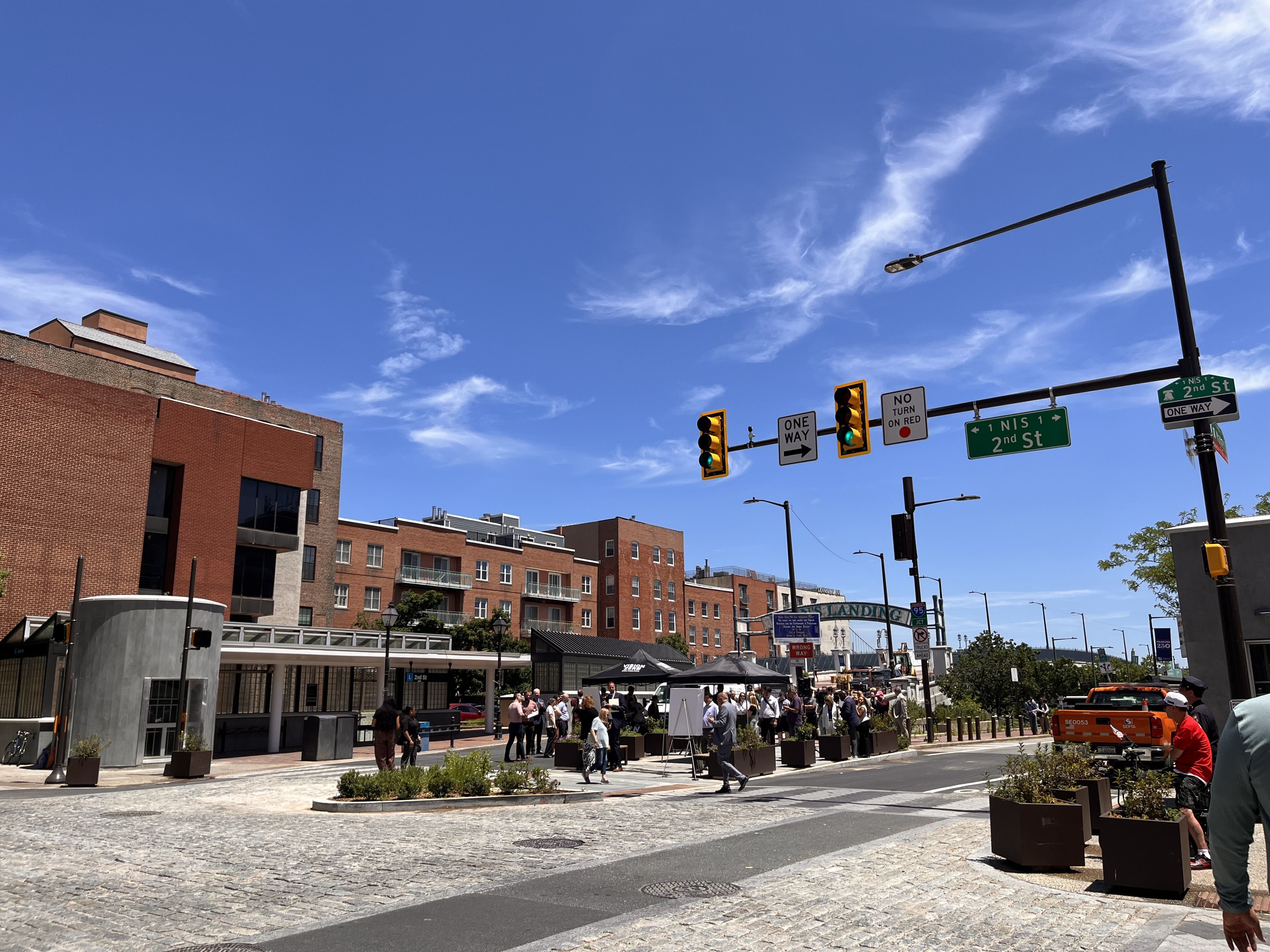
    Philadelphia officials unveiled the new look Tuesday in time for the nation’s 250th anniversary. The transformation permanently narrowed vehicular traffic, added bike lanes, and built a new public plaza.

    “As you can see, walking around the neighborhood is greatly improved,” said Job Itzkowitz, executive director of the Old City District, a business improvement organization.

    Itzkowitz noted more open space for pedestrians, shorter distances to cross the street, and new street trees and planters, among other improvements.

    “Residents, visitors, and business owners alike have already felt the impact as the fences started to come down over the last few months,” he said.

    Officials launched the overhaul in December 2024 to rebuild the corridor from Second to Sixth Streets and transform the historic stretch into a more inviting place to walk, bike, and dine.

    The work was to timed for the Semiquincentennial, which marks the 250th anniversary of the signing of the Declaration of Independence. Several other nearby landmarks have also been spruced up, such as Elfreth’s Alley, which recently unveiled a new pocket park, and the long-shuttered First Bank of the United States, set to reopen to the public on July 1 after a $27 million renovation.

    Philadelphia city officials celebrated the completion of a $16 million renovation of Market Street, from Sixth to Second Streets. Improvements include wider sidewalks, protected bike lanes, Belgian block streetscape, and new plantings.Frank Kummer

    What’s new?

    As part of Market Street’s “road diet,” vehicles have been reduced to one lane in each direction, clearing way for protected bike lanes and adding dedicated left turn lanes at key intersections.

    Among other improvements:

    • A new curbless plaza at Second and Market Streets at the base of the ramp to Penn’s Landing, allowing easier access for pedestrians.
    • Concrete bump outs at bus stops were lengthened to make boarding easier. The raised bike lanes were installed between parking lanes and sidewalks.
    • Wider sidewalks.
    • Belgian block streetscaping.
    • 44 new street trees and 68 shrubs.
    • 55 bike racks.
    • SEPTA also improved the look of the headhouses for the Market-Frankford Line subway at Second Street.

    Officials say the transformation will reduce traffic-related injuries and deaths and better serve tourists, walkers, cyclists, transit users, and motorists.

    ‘New plaza rocks’

    The project was initiated a decade ago by Itzkowitz and the Old City District. It was managed by the city’s Department of Streets and Office of Transportation and Infrastructure Systems. The work was done by Deptford-based C. Abbonizio Contractors.

    Also taking a lead was the nonprofit Independence Historical Trust, as part of a larger plan to create better ways for tourists to navigate on foot through Independence National Historical Park, Old City, and other historic or local neighborhoods.

    “The new plaza rocks,” said Mayor Cherelle L. Parker.

    Parker said the just-completed project fits in with broader efforts to extend improvements on Market Street from City Hall to the Delaware River.

    Bill Marrazzo, chair of the nonprofit Independence Historical Trust, called completion of the Market Street project key, given its location in Old City and near Independence National Historical Park.

    “No other American city has as many cultural assets per capita as we do here in the city of Philadelphia,” Marrazzo said, “and a very high percentage of those are organized here within this one square mile of history.”

    “These improvements are truly transformational,” noted Mike Carroll, the city’s deputy managing director for transportation and infrastructure.

  • ‘We’ve moved on’: Chester mayor and environmentalists object to LNG terminal proposal

    ‘We’ve moved on’: Chester mayor and environmentalists object to LNG terminal proposal

    Chester Mayor Stefan Roots came up with an idea as he waited to testify Wednesday during a Pennsylvania legislative committee hearing on a proposed gas export terminal.

    “I’m introducing a new initiative,” he said, “WMO — we’ve moved on .… This dangerous facility does not belong in a densely populated urban area like Chester. I’m calling on this committee to do the right thing: Protect some of the most vulnerable people in this commonwealth and say no to an LNG terminal in this region.”

    Roots spoke in response to a yearslong plan by Penn LNG to build a liquefied natural gas (LNG) export terminal in Chester or nearby in southeastern Pennsylvania along the Delaware River. The terminal would tap in to an existing pipeline to carry gas from the Marcellus and Utica formations to a site on the river. There, it would be compressed into liquid gas for export and capitalize on soaring global demand for LNG after Russian’s invasion of Ukraine.

    The hearing, held by the Pennsylvania House Environmental & Natural Resource Protection Committee, was stacked with opponents of the plan, saying it would create pollution and be highly dangerous to surrounding communities. Democratic State Rep. Greg Vitale, the committee chair from Delaware County, said proponents, including Franc James, CEO of Penn LNG, and union leaders were invited but declined.

    Penn LNG has not specified a location but has said it plans to develop a new plant to export 1 billion cubic feet per day of gas from the Marcellus Shale to Europe.

    At previous hearings held by Republican State Rep. Martina White, chair of the Philadelphia LNG Export Task Force, proponents spoke of the economic change the facility would bring, including jobs.

    Vitale said he convened Wednesday’s hearing because he feared the project would “proceed under the radar without sufficient public scrutiny.”

    Indeed, the mood Wednesday was strikingly different from past hearings as opponents told legislators an LNG facility would pose serious health, safety, and environmental justice issues.

    What are the plans for the LNG facility?

    In 2024, former President Joe Biden put a pause on LNG export approvals in 2024 to further study the issue. This year President Donald Trump has made reviving fossil fuel energy projects a priority.

    Reuters reported in June that James, the Penn LNG CEO, had met with officials at the White House over the project.

    Penn LNG wants to export 7.2 million tons a year of LNG from a site near Philadelphia to markets in Europe and Asia and is considering several locations other than Chester, such as in Trainer, Marcus Hook, and Eddystone, the news service reported.

    What are the issues regarding an LNG facility?

    Opponents believe such a facility would pose a major threat if there is an explosion or fire in an area already densely populated with people and polluting industrial sites. They noted that Delaware County’s Crozer-Chester Medical Center and Springfield Hospital were closed this year amid a bankruptcy auction.

    If there is a catastrophic explosion, they said, the nearest hospital would be 30 minutes away.

    Tracy Carluccio, an advocate with the nonprofit Delaware Riverkeeper Network, said the area is too densely populated for the facility, emphasizing that a major concern is the lack of a sufficient safety buffer, which the federal government advises for LNG terminals.

    She noted that similar facilities in the South are situated in areas with thousands of acres of buffer. She said a new site in the area would likely be around 100 acres.

    “There is no location within the Delaware River watershed, including the bay all the way down to the ocean, for any LNG facility to be located,” Carluccio said.

    Lauren Minsky, a visiting professor of health studies at Haverford College, said an LNG facility would exacerbate existing public health issues in the region.

    She said southeastern Delaware County has already been given a grade of “F” for particle pollution and a grade of “D” for ozone levels by the American Lung Association.

    She cited 2025 research by Johns Hopkins University showing that high levels of volatile organic compounds have been measured in communities near the fence lines of LNG facilities. She also said there are elevated cancer rates in adults living in the area’s riverfront communities, citing the People’s Cancer Incidence Screening Tool, which calculates average annual cancer incidence rates in Pennsylvania.

    “If we value the health of our families, our friends and neighbors, and throughout the commonwealth, we need to build a different future, one in which we can all thrive,” she said.

    Already industrialized

    Zulene Mayfield, an activist with Chester Residents Concerned for Quality Living, said older residents she knows have suffered heart conditions and cancers that she links to living in an already heavily industrialized area.

    Mayfield is a longtime opponent of the Delaware Valley Resource Recovery Facility owned by Reworld, formerly Covanta. The facility burns trash and converts it to energy.

    She said Chester, rimmed by heavy industry, lacks many things other communities take for granted, such as primary-care physicians or entertainment for children.

    “We are being told that we have to accept other industries” that no other communities want, Mayfield said.

    “I’m sitting here right now trying to contain my rage,” she said. “The jobs are temporary, but death is forever.”