Author: Frank Kummer

  • Fairmount Park has become a favored target of illegal tire dumpers with U-Hauls

    Fairmount Park has become a favored target of illegal tire dumpers with U-Hauls

    Michael Glatfelter routinely encounters giant piles of tires as he spins through Fairmount Park on his daily bike rides.

    Glatfelter, 74, started spying the illegal dumps in secluded areas two years ago. Now he says he encounters them at least once a month and is disgusted by their persistence — even as the city clears the piles within days.

    “There has to be a way of catching these people,” he said.

    Philadelphia officials say they are also frustrated by the tire whack-a-mole and are strategizing to prevent it. They say there have been at least 40 large-scale illegal dumping incidents on parkland citywide just this year. More than one-third involved tires, with dumpers frequently bringing them in via rented U-Haul trucks.

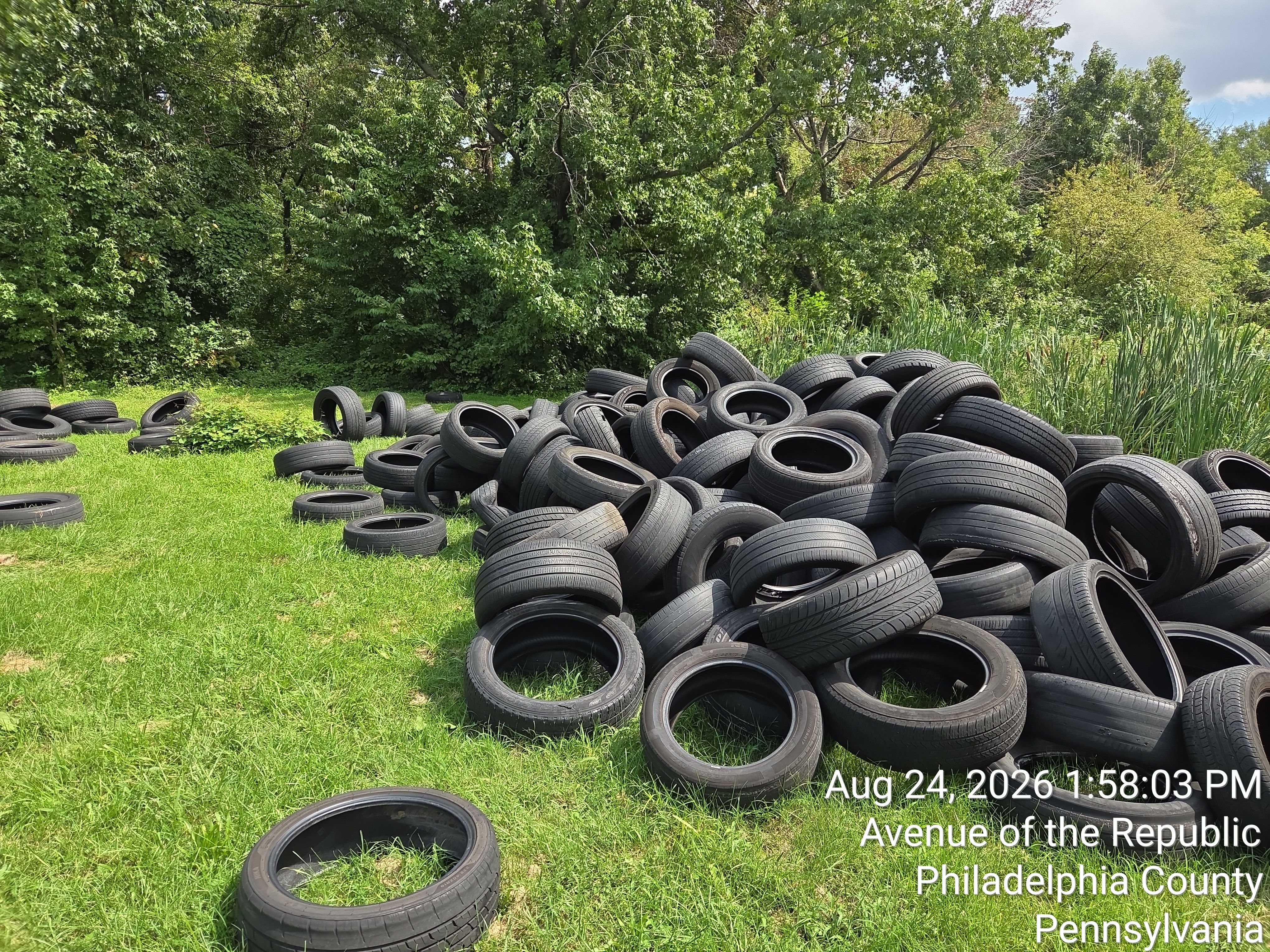
    On Tuesday, crews from Philadelphia Parks and Recreation cleared 800 tires from Fairmount Park brought in by someone driving a U-Haul. The truck and tires were abandoned near Centennial Arboretum off Avenue of the Republic.

    “This is part of a broader trend,” said Ra’Chelle Rogers, a spokesperson for parks and recreation.

    If caught, the dumper faces millions in fines.

    For his part, Glatfelter doesn’t blame officials. He posted a video to his Facebook page earlier this month of construction trucks cleaning up a massive pile of tires, with a caption describing how sick he was of living in a dirty city.

    “I blame our citizenry. I’m sorry to say, but I think we are totally worthy of that ‘Filthadelphia’ moniker,” he said in an interview.

    The tires dumped illegally Tuesday in Fairmount Park were brought in via a U-Haul truck.Philadelphia Parks and Recreation Department

    ‘So wide-open’

    Fairmount Park is considered a jewel of Philadelphia, with more than 2,000 acres split between the east and west sides of the Schuylkill. But its sprawling network of roads and remote areas also make it easy for dumpers to access undetected.

    “Fairmont Park is so wide-open, which is the beautiful thing about it,” said Natalie Walker, sustainability director for parks and recreation. “The challenge is keeping it beautiful while also preventing the kind of activity that degrades the park and takes away staff time.”

    Officials are asking the public to report any instances via the 311 system and to call 911 if they spot live dumping. They are also asking the public to share information that could identify dumpers if they feel safe doing so.

    The city has installed cameras in various park areas known for persistent dumping, Walker said.

    Violators face fines of up to $5,000 per illegally dumped item. Over the past three years, parks and recreation has issued $1.3 million in violations for illegal dumping on parkland.

    One strategy is to fortify park perimeters by blocking vehicle access without sacrificing the welcoming green space for pedestrians and cyclists, Walker said.

    For example, parks and recreation has installed three new gates near George’s Hill in West Fairmount Park, a dumping hot spot.

    The city has also organized cleanups and installed fencing, gates, and guardrails at other chronic dumping sites. They’ve installed bollards and boulders, as well as lock covers engineered to thwart bolt cutters.
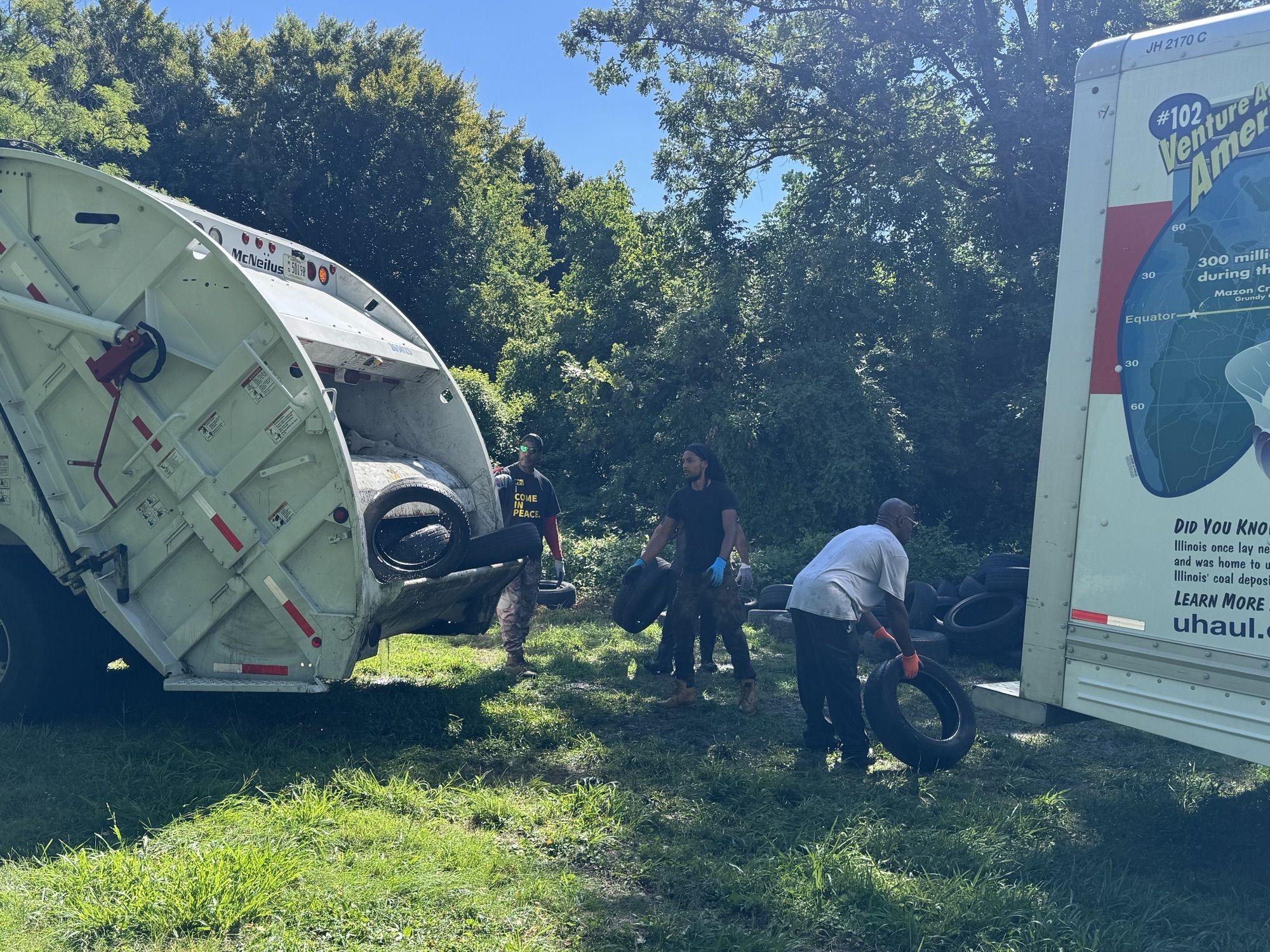
    City crews removing about 800 tires illegally dumped in Fairmount Park near Centennial Arboretum off Avenue of the Republic.Philadelphia Parks and Recreation Department

    A $4 million fine?

    Parks and recreation is working with police to identify the dumper in Tuesday’s incident.

    That cleanup was triggered when park rangers and local partners spotted a stuck U-Haul truck abandoned next to several piles of tires. Officials determined the dump consisted of 8.4 tons of debris, translating to an estimated 800 tires.

    Although the U-Haul was reported stolen, investigators are looking into whether the driver got stuck and possibly falsely reported the theft to escape liability, Walker said.

    Walker said the dumper faces fines of up to $5,000 per item, amounting to about $4 million.

    Illegal dumping occurs when unscrupulous shops pay people to dispose of tires cheaply and avoid disposal costs of about $100 per ton, Walker said.

    The city routinely issues civil notices of violations, Walker said. She noted a 2023 incident when a repeat offender was fined $380,000 after being caught on camera dumping near Ormiston Mansion on Reservoir Drive.

    Walker said parks and recreation has a grant from the William Penn Foundation to implement part of its strategy. For example, park ambassador Dan Lidon conducts daily inspections, maps hot spots, and coordinates with community groups.

    On Aug., 25, 2026, crews from Philadelphia Parks and Recreation removed about 800 tires illegally dumped in Fairmount Park near Centennial Arboretum off Avenue of the Republic. The tires were brought in via a U-Haul truck.Philadelphia Parks and Recreation Department

    Dumping beyond Fairmount

    Residents, community nonprofits, and parks groups say dumping is widespread in other parks, vacant lots, and remote areas.

    In 2024, an estimated 4,000 tires choked a wooded ravine off Newtown and Adams Avenues, a stretch of debris sprawling more than 100 feet through Tacony Creek Park. The city used its own workers as well as a chain of volunteers to remove them.

    And this year, The Inquirer reported on what’s possibly the city’s largest illegal dump off Pennway Street in Northeast Philadelphia, which spans more than a city block and spills down a treacherous slope that’s difficult to access.

    In July, a group of 75 Philadelphia residents representing neighborhood groups and nonprofits gathered at the Discovery Center in Fairmount Park to map, by hand, illegal legacy dumps throughout the city.

    The group is still compiling information and a map that will eventually be posted online.

    Yet despite these efforts, it hasn’t made much of a difference to Glatfelter’s eyes, at least.

    “I know the mayor says, ‘cleaner, greener’ …but I know the city is not clean. It’s just not,” he said.
  • New trail connector lets bikers ride 70 miles from Philly to Reading. It’s ‘a really, really big deal.’

    New trail connector lets bikers ride 70 miles from Philly to Reading. It’s ‘a really, really big deal.’

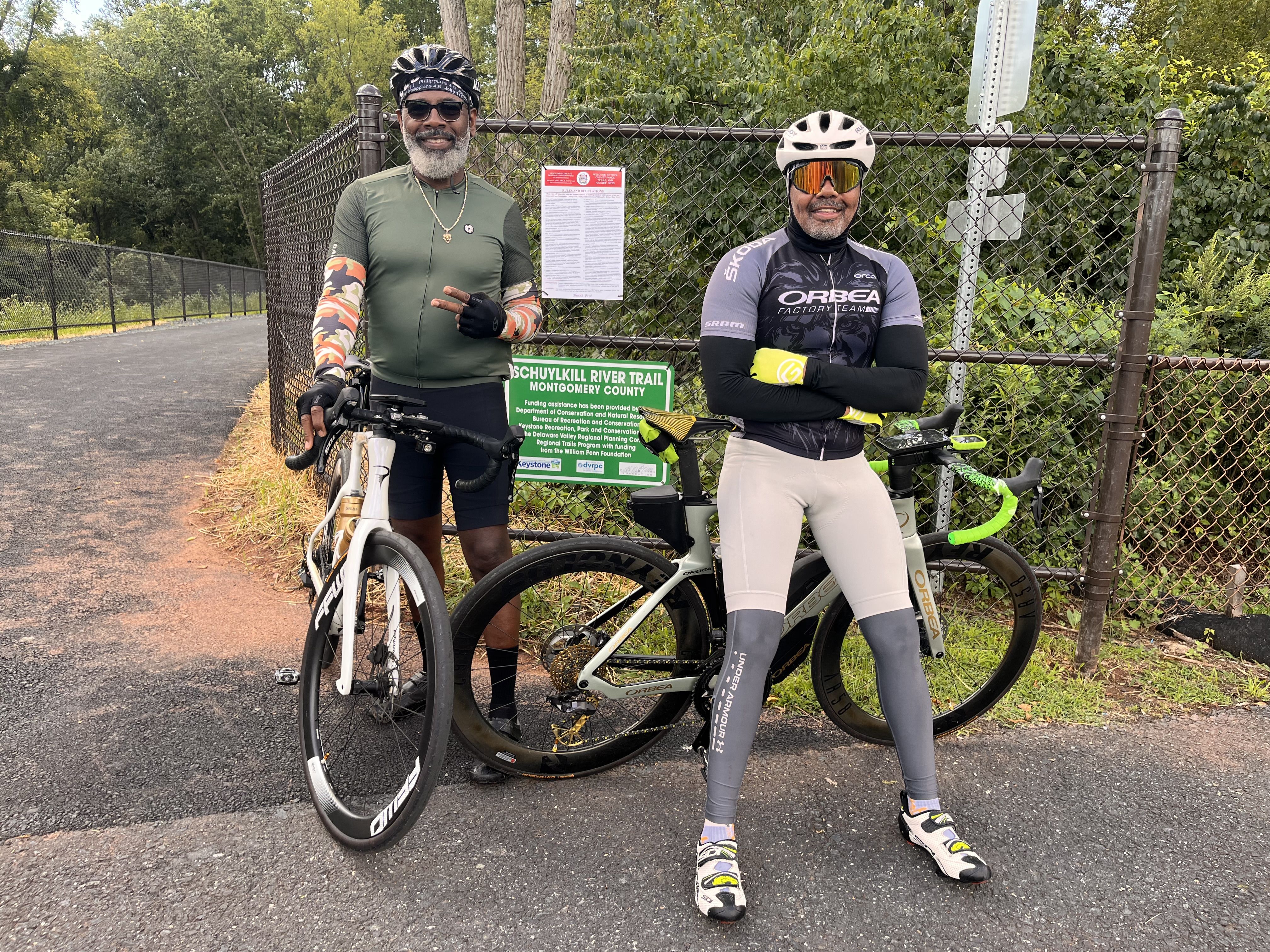
    Cyclists Alvin Morris and Rick Young departed Philadelphia via Shawmont Avenue on the Schuylkill River Trail on Tuesday morning for a heart-pumping, 75-mile round trip ride.

    On previous trips, they, like thousands of other riders, had to stop at a gate where the trail abruptly ended near Pottstown and decide whether to risk traveling a busy alternate route.

    No more.

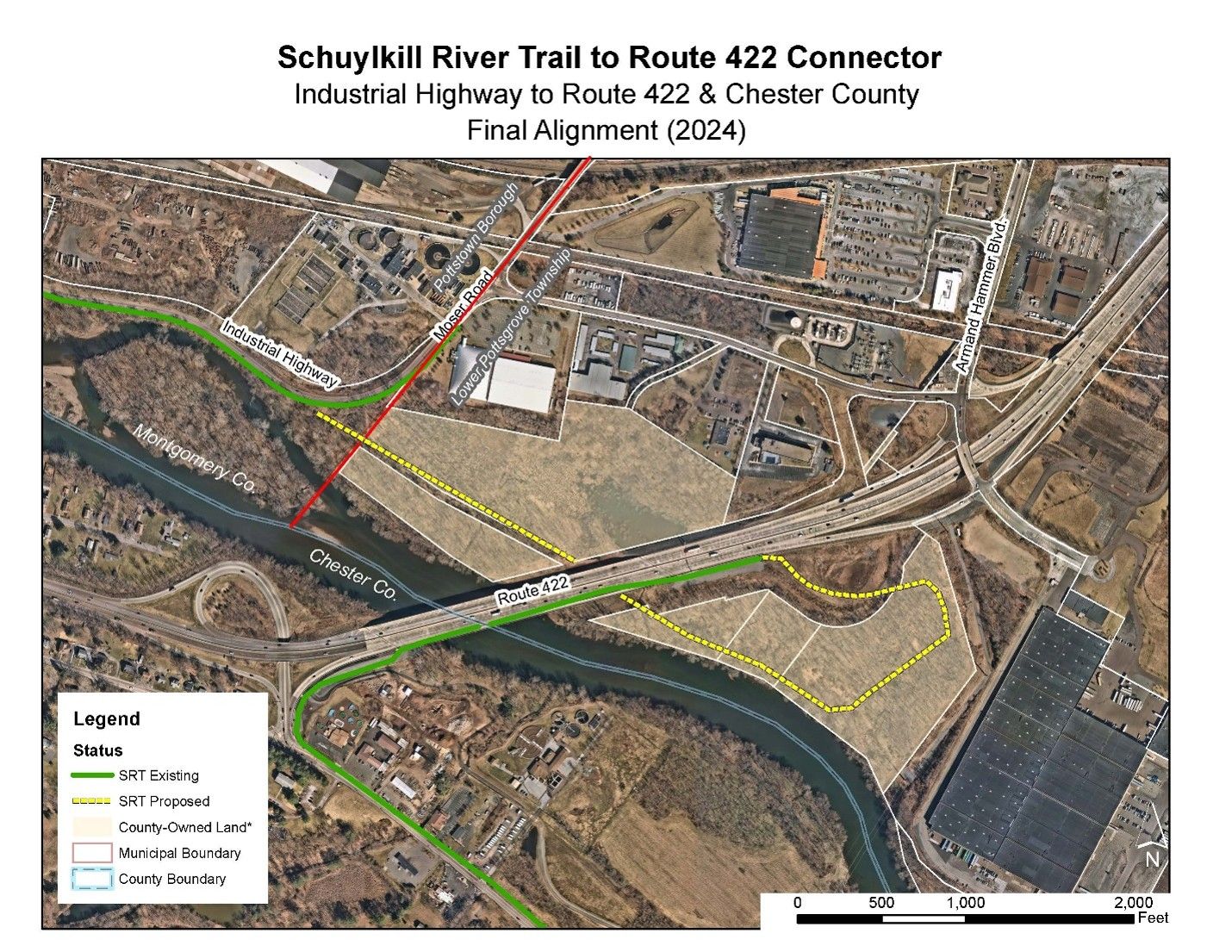
    Schuylkill River Trail organizers are celebrating the completion of a nearly one-mile connector in Montgomery County that gives cyclists a clear 70-mile path from Philly to Reading. The connector took about 10 years from planning to its Aug. 19 opening.

    “I just found out about the connector Sunday,” Young said. “I love it. I told Al about it. We’re preparing for the [city-to-Shore] MS ride, so we need to get in some distance.”

    The duo planned to continue on the Schuylkill River Trail for a few more miles past the connector before returning to Philly.

    A Montgomery County Planning Commission map of the new Schuylkill River Trail connection between Industrial Highway and the Route 422 bridge near Pottstown. The 0.9-mile section of paved asphalt trail is now open, providing an unbroken path from South Philadelphia to Reading.Frank Kummer

    ‘A really, really big deal’

    Elaine Paul Schaefer, executive director of the nonprofit Schuylkill River Greenways, says the connector is more than just a new trail segment.

    “It’s a really, really big deal,” Schaefer said. “On many, many levels.”

    Schaefer and others believe the unbroken 70-mile stretch could be a tipping point for cycling tourism because it is long enough for cyclists to plan trips that allow them to linger in towns for brews and food, or overnight stays, she said.

    “At that point, the economic impact to towns along the way really exponentially increases,” she said.

    Her group manages the Schuylkill River Greenways National Heritage Area, connecting people to the river and trail. Schuylkill River Greenways has its office in Pottstown, but manages 40 miles of the trail in Berks and Schuylkill Counties, raising money to help maintain it.

    The new connector allows riders pedaling south from Chester County to ride parallel to Route 422 in Pottsgrove Township, Montgomery County, then loop under the busy highway and continue into Pottstown Borough.

    “The trail now connects the population centers of Philadelphia to Montgomery County and Reading,” Schaefer said. “Soon, it will connect beyond that.”

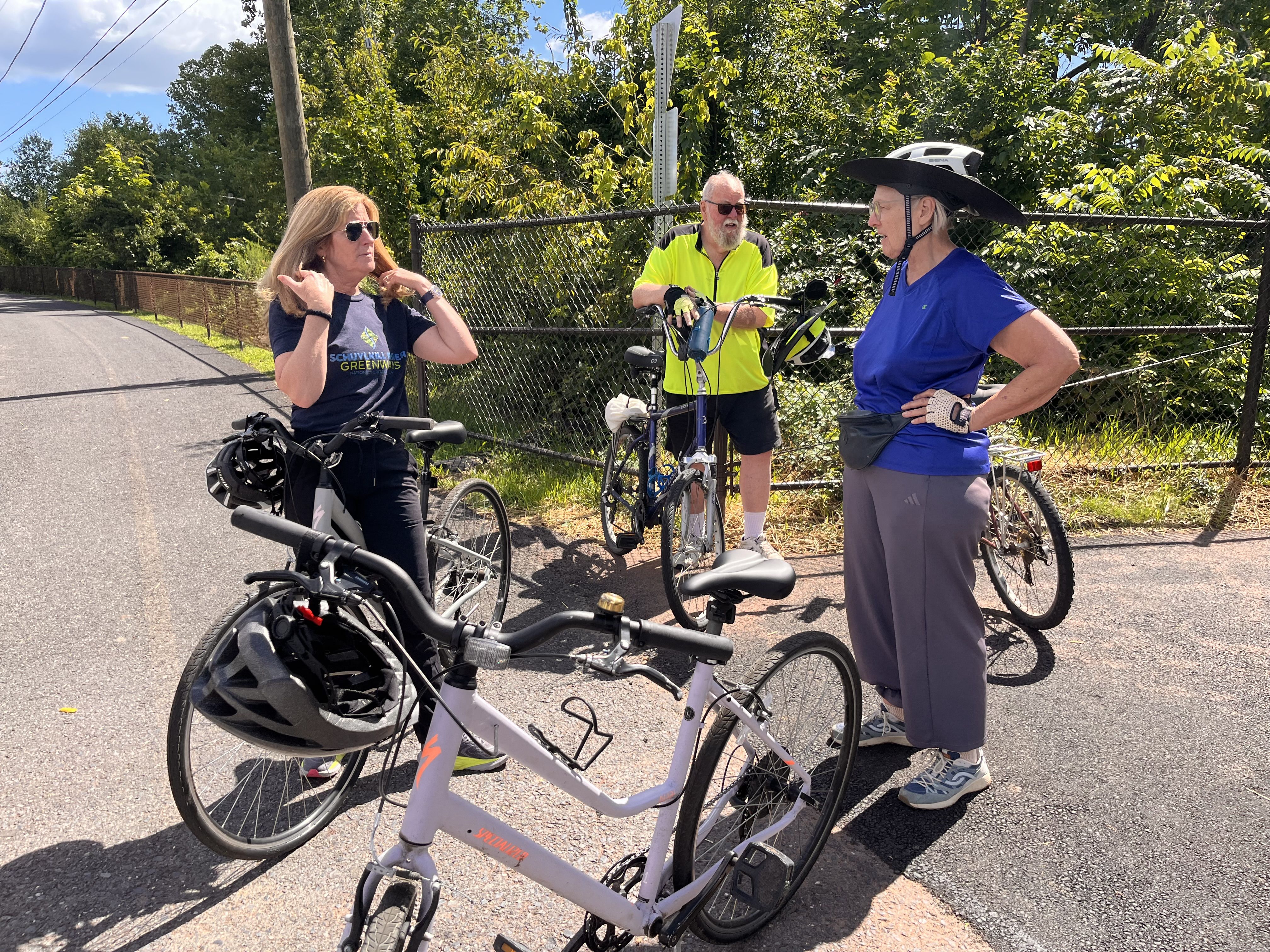
    Elaine Paul Schaefer, executive director of the nonprofit Schuylkill River Greenways, speaks with Sue Shellman, foreground, and her husband, Bill Shellman, in yellow, both of Skippack, at the new connector.Frank Kummer

    A boost for Pottstown?

    Schaefer believes the new connector will lure cyclists willing to stop and spend money in Pottstown, a former steel town whose sizable downtown contains restaurants, inns, and breweries. Pottstown’s Riverfront Park along the trail is already widely used.

    Peggy Lee-Clark, executive director of the nonprofit Pottstown Area Economic Development Inc., said it is too early to judge the impact of the connector, but there is “excitement.”

    “I think that always any connection for the trail is an economic boost,” she said.

    Commuting workers also use the trail, Lee-Clark noted.

    “The river is an important asset to us, as is the trail,” Lee-Clark said. “The connector is just one more thing that brings people to the area and exposes them to all of the other opportunities here in Pottstown.”

    When complete, the Schuylkill River Trail will run about 120 miles from Fort Mifflin near Philadelphia International Airport to Frackville, Schuylkill County. About 80 miles of paved and crushed stone trail are currently open. A swing bridge connecting Grays Ferry to Bartram’s Garden is nearing completion.

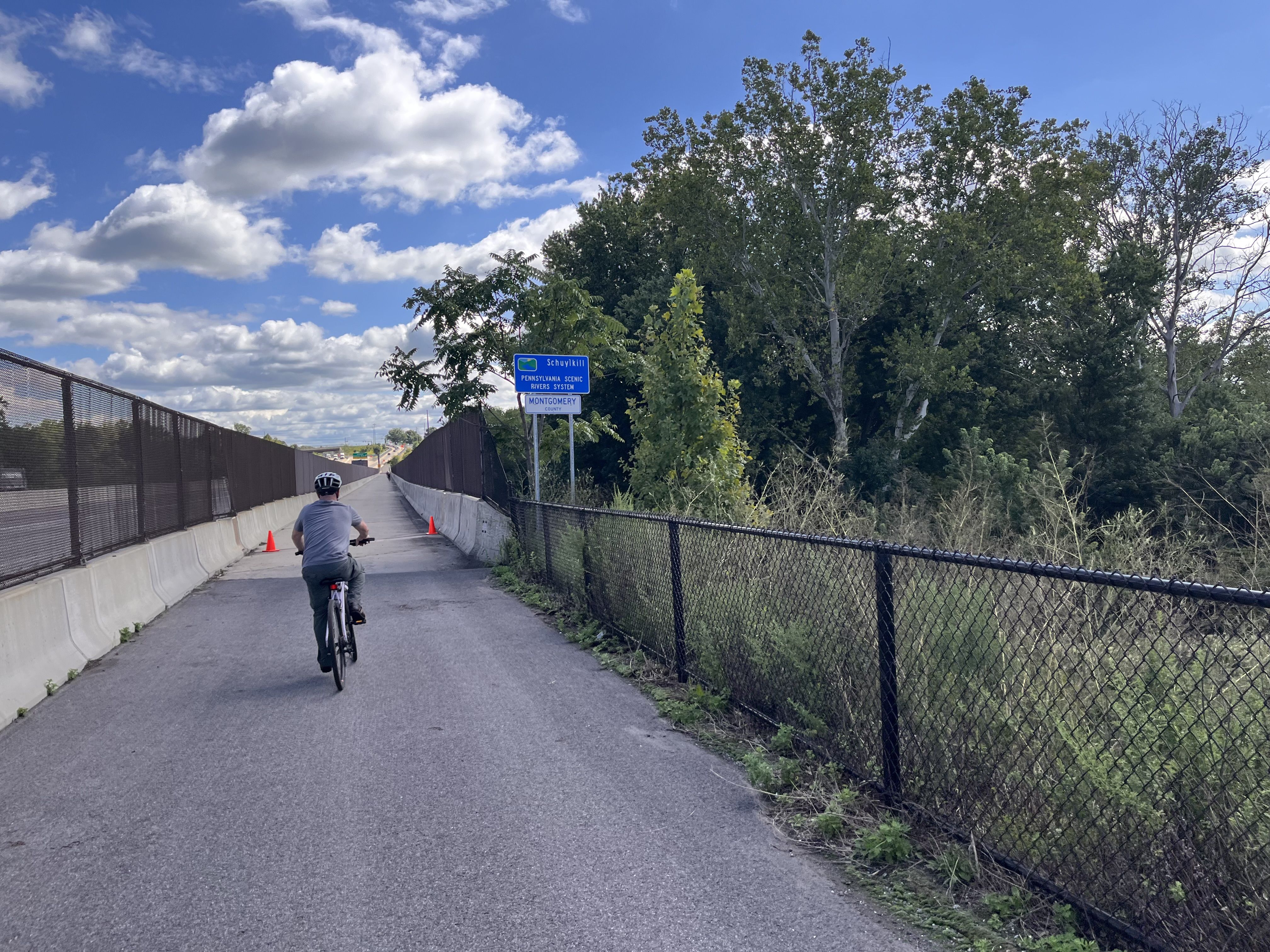
    Jason Brudereck, of the nonprofit Schuylkill River Greenways, rides new the Schuylkill River Trail connector as it crosses from Chester County into Montgomery County.Frank Kummer

    How the connector got built

    Montgomery County is planning a formal ribbon-cutting on Sept. 29 for the connector, which is already popular. On Tuesday, dozens of cyclists were riding at midday.

    Scott France, executive director of the Montgomery County Planning Commission, said the county started trying to acquire rights-of-way to the land a decade ago.

    “We are super excited this is open,” France said. “It’s been a long time in the works. This has had its share of challenges, but the fact is that we got there.”

    The connector cost $1.28 million, France said. Most of it was paid for from a $550,000 grant from the Pennsylvania Department of Conservation and Natural Resources, and a $542,000 grant from the William Penn Foundation. The county funded the balance.

    Although the connector is less than a mile, it was a challenge, France said.

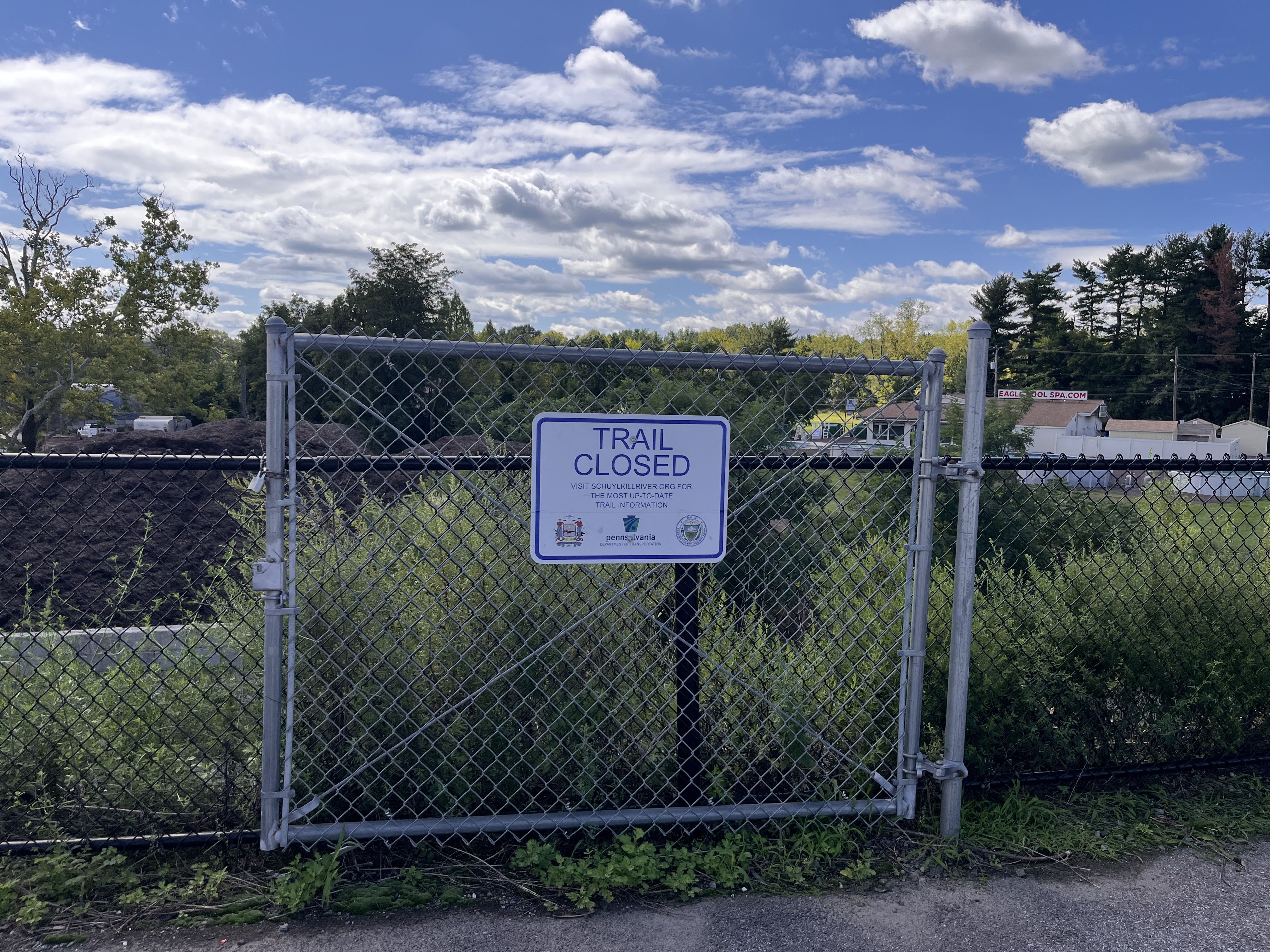
    This is the sign cyclists and pedestrians once had to stop at before the connector was finished.Frank Kummer

    The county had to build around a state-owned bridge, work with Peco and Verizon to move utilities, and obtain permits to build in a flood zone. Additionally, crews had to stop work during the breeding season of the northern red-bellied turtle, a threatened species common in the area.

    Bill Hartman, trails and open space planning manager for the commission, said the connector serves another key role.

    “It provides full access to a number of other trails,” Hartman said, including the Cross County and Perkiomen Trails.

    Further, Montgomery County Commissioner Neil Makhija noted that the connector and Schuylkill River Trail are also part of the much wider Circuit Trails network, a planned 850 miles of interconnected trails in the Philadelphia region, including South Jersey.

    Makhija said he plans to celebrate his 40th birthday on Sept. 13 by riding the inaugural Tour de Montco, a 40-mile ride from Pottstown to Bala Cynwyd.

    The new trail segment, Makhija said is, “not just a trail in the woods — it’s a connection, bringing us closer to Philly and Reading and connecting the two.”

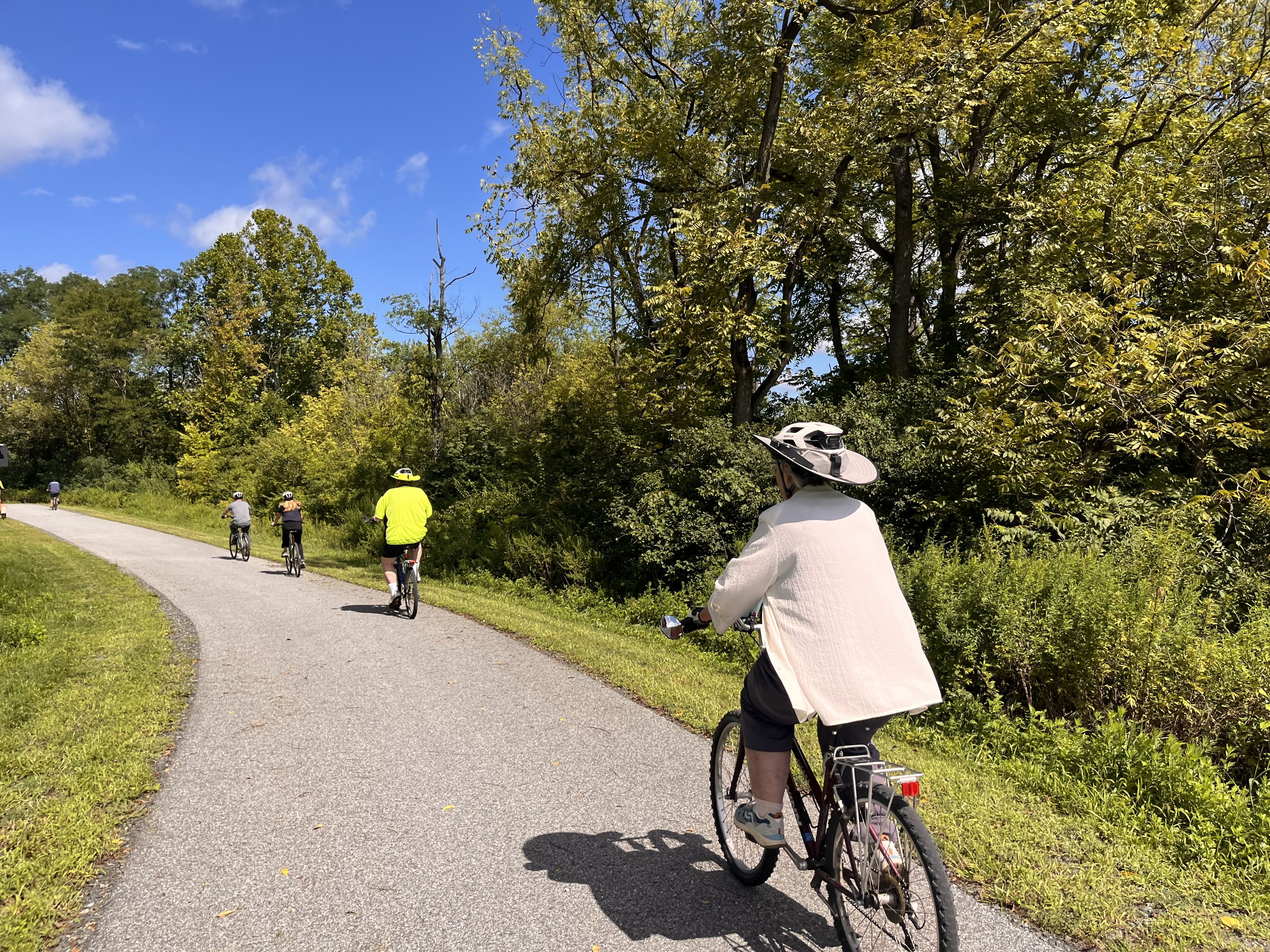
    Sue Shellman, foreground, and her husband, Bill Shellman, in yellow, both of Skippack, ride from Chester County onto the new Schuylkill River Trail connector into Montgomery County.Frank Kummer
  • Phillies installed artificial turf at FDR Park field without environmental permit, record shows

    Phillies installed artificial turf at FDR Park field without environmental permit, record shows

    The Philadelphia Phillies installed artificial turf at Ashburn Field in FDR Park in July but still have not obtained a required state permit, according to Pennsylvania Department of Environmental Protection records.

    Major League Baseball and Phillies Charities Inc. held a ribbon-cutting for the renovated field, named after Hall of Famer Richie Ashburn, on July 10. It was part of festivities leading up to the MLB All-Star Game.

    The renovation of the decades-old field included removing natural grass in favor of a “high-performance synthetic turf system and upgraded drainage” at the five-acre complex, according to an MLB news release.

    However, documents from the Pennsylvania Department of Environmental Protection (DEP) show that the Phillies never obtained the required permit designed to address erosion control and stormwater release at the site.

    Under Pennsylvania law, anyone disturbing more than one acre of ground is required to obtain a permit for stormwater discharges before beginning the work and explain how the work will affect drainage going forward.

    DEP spokesperson Robyn Briggs said in an e-mailed statement that the agency is “currently reviewing the Phillies’ permit application and the compliance situation at the site. Because this matter is still under review, DEP cannot comment on whether any enforcement action or penalty will be taken.”

    The permit review is listed as “paused,” the statement said, because the DEP is still waiting for the Phillies to address outstanding issues.

    “Once the necessary information is received, DEP can continue its review,” the statement said.

    City approval?

    Bonnie Clark, a spokesperson for the Phillies, said in an e-mailed statement that “the recent upgrades to Richie Ashburn Field were undertaken in coordination with the city and relevant governmental agencies.”

    Clark said the city authorized the work to proceed while permit applications were in process so the upgraded field could host All-Star Week events.

    “We expect to obtain all necessary final approvals as early as next week,” Clark said.

    Clark did not specify who at the city, or what department, the Phillies were working with. City officials did not respond to requests for comment.

    When asked if this was proper procedure, Briggs reiterated that the DEP is “reviewing the compliance situation at the site” and noted the state law that requires the stormwater permit for construction-related earth disturbance.

    Typically, state law supersedes city authority.

    What is Ashburn Field?

    Ashburn Field was part of an investment MLB made in Philadelphia’s youth baseball community for the 1996 All-Star Game. The field, owned by Philadelphia as part of its park system, is managed by the Phillies. It is the first large turf field installed at FDR Park.

    MLB said the newly renovated field will serve about 8,000 participants in the Phillies Reviving Baseball in Inner Cities and Youth Academy programs, “while providing a weather-resistant playing surface in an area where rain often forces cancellations.”

    ‘Deficient’

    The Phillies notified the DEP they were applying for a permit on May 13.

    On May 27, the DEP sent a letter to the Phillies notifying the team that it needed additional information and logged 32 items that needed to be addressed, according to documents obtained by The Inquirer. That letter noted that final plan drawings had not been submitted, other drawings failed to include the project’s boundary, and not all water discharge areas were noted.

    A local engineering firm hired by the Phillies responded in June to each point.

    On July 7, the DEP sent another letter to the Phillies again noting technical deficiencies. And it sent another letter on July 24, about two weeks after the ribbon cutting, noting an outstanding deficiency and telling the Phillies to resubmit information in coordination with the Philadelphia Water Department.

    The permit is still listed as pending on the DEP website.

    The fight against artificial turf at FDR Park

    Adding artificial turf to Ashburn Field is the latest in a yearslong debate about changes to FDR Park.

    In 2019, the city’s parks and recreation department released a master plan to overhaul FDR Park, including the installation of 12 artificial turf fields in the footprint of a former golf course. (Those fields are separate from Ashburn Field.)

    The department said average rainfall left sections of the park unusable for days because of frequent flooding. Officials predicted that flooding would only worsen because of climate change and said artificial turf fields would provide better flood control. The plan would require cutting down dozens of trees.

    But that was pre-pandemic.

    As COVID restrictions shut down the world, the golf course returned to a wild state and became a beloved space by dog owners, hikers, and birders. They nicknamed the space “the Meadows.”

    Local opposition to the city’s plan grew, with critics objecting to the use of artificial turf amid natural lands. A grassroots group of South Philadelphians formed the Coalition to Save the Meadows, which has been vocal in its efforts to stop the park overhaul.

    At the same time, the fields drew support from youth athletic clubs.

    In March 2024, 11 South Philly residents filed suit calling for a stop on all work across FDR Park.

    In May, Orphans’ Court Judge Sheila Woods-Skipper denied the critics’ request to temporarily stop work on the park as the trial played out.

    In a recent social media post, the Coalition to Save the Meadows asked why the Phillies were allowed to move forward on Ashburn Field without the permit.

    “PA DEP regulations and permitting requirements exist for a reason: to protect our waterways, watershed, and the people and wildlife that depend on them,” the post read. “So how was this project allowed to move forward without a permit — and will there be consequences?”

    A legacy of artificial turf

    Although Citizens Bank Park, the home of the Phillies, has a natural grass field, the team is no stranger to artificial turf.

    The Inquirer reported in 2023 that six former members of the Phillies who played on the artificial turf field at the former Veterans Stadium died of brain cancer.

    The article noted that the death of former Phillie David West in 2022 came at a time when there was growing scientific concern about the perils of PFAS, known as “forever chemicals” because of their resistance to breaking down.

    PFAS were used to make the AstroTurf that was used at Veterans Stadium. The Vet opened in 1971 and was demolished in 2004.

    For Ashburn Field, the Phillies also installed AstroTurf. However, AstroTurf says on its website that it now uses a PFAS-free formula. A company news release on Ashburn Field said the infill for the new turf uses an organic material made from cork and olive.

  • Could a Bucks County Amazon data center be affected by Gov. Shapiro’s order?

    Could a Bucks County Amazon data center be affected by Gov. Shapiro’s order?

    Amazon has proposed installing hundreds of backup natural gas generators for the hyperscale data center it is building in Falls Township, Bucks County, just off the Delaware River.

    The generators require permission from the Pennsylvania Department of Environmental Protection, which has green-lighted five other environmental permits for the project.

    But on Tuesday, Shapiro issued sweeping new guardrails on data centers, including removing Amazon from the state’s fast-track permitting process.

    The move was a stark shift from Shapiro’s position on data centers in June 2025, when he championed the Amazon deal as part of a $20 billion Pennsylvania data center investment. Since then, public pushback to data centers has reached a fever pitch.

    Tuesday’s announcement raises questions about the DEP’s decision on the Falls Township project, one of the few hyperscale data center developments nearing completion in the region to meet the power-hungry computing needs of artificial intelligence.

    Robyn Briggs, a DEP spokesperson, said that as of Thursday, the agency’s air quality team was still reviewing the latest permit application for the generators. The process includes a 30-day public comment period that ended Monday. The DEP has not said when it expects to make a decision.

    Briggs said that the DEP received 1,236 comments about the permit and that each would be given “equal weight and consideration.”

    It was widely expected that many residents had written to oppose the approval, given the large amount of social media posts on the topic. Nearly 5,000 people have signed a petition calling for a moratorium on data centers in the township.

    What the DEP is deciding

    Amazon Data Services Inc. is developing a 250-acre campus within the Keystone Trade Center in Falls Township on a site formerly occupied by U.S. Steel.

    Amazon plans 2 million square feet of data center space across 10 buildings for cloud computing and AI.

    It already has both local and state approvals for the first of two expected phases of the project’s build-out. The DEP requires permits to ensure companies meet state and federal standards when sending pollution into the air or water.

    To date, Amazon has been approved for five environmental air and water discharge permits. That includes approval last year for 72 diesel-fired emergency engines.

    Amazon has also applied to install 280 natural gas-fired “critical backup generator engines” at 4,287 horsepower each.

    It also wants to install three more diesel backup generators.

    The generators and pollution

    The company says the generators would provide backup power in the event of a main utility power supply interruption and would not be used to meet peak demand.

    The generators would have pollution controls to lower nitrogen oxide, carbon monoxide, and volatile organic compound (VOC) emissions, including formaldehyde and ammonia, according to the company. Emissions would be restricted to below allowable maximum levels.

    The DEP is reviewing public comments before making a decision on Amazon’s permit.

    If the permit for the backup generators is approved, Amazon would still need additional permitting for a planned second phase of the project.

    Shapiro’s new guardrails

    Shapiro signed an executive order on Tuesday dramatically restricting data center development in Pennsylvania. He had been an early champion of data center development, including a $20 billion commitment from Amazon to build the Falls Township data center, as well as one in Luzerne County.

    Now he is taking a hard-line stance against the industry as proposed projects draw bipartisan backlash. Although his order does not include a moratorium on data center development, it requires local approval for projects to receive state permits, which may block development.

    The order removes all data center developments, including those by Amazon, from the fast-track permitting program, and no data centers will be considered for the program moving forward.

    The DEP said the governor’s new permit review process would compel all data center projects going forward to enter into consent orders, which are legally binding agreements for environmental requirements, such as wastewater conservation standards.

    A big welcome for the data center — at first

    When Amazon announced plans to build the data center in 2025, Falls Township officials welcomed the project as a boost to the 1,800-acre Keystone Trade Center being redeveloped by NorthPoint Development on the old steel mill grounds. NorthPoint is working with Amazon.

    Shapiro also hailed the data center as a job creator and tax revenue generator. He said his team had worked with Amazon on the deal and would help to garner local support, develop infrastructure, and ensure “our permitting processes move quickly and efficiently.”

    Data center opposition

    Opposition to data centers has gained critical mass over the last year, with local groups fighting against each proposal. Critics fear air and noise pollution and the amount of electricity and water the centers would need. The data centers are also the target of a chorus against rising electricity prices, much of which can be attributed to utility companies’ and regional grid operator PJM’s struggle to keep up with the demand for power.

    Falls Township has been no different, but its data center is the closest to completion.

    After a particularly contentious community meeting in July, the Falls Township Board of Supervisors approved a resolution declaring a portion of a zoning ordinance used for data centers “substantively invalid.” The board said staff would review sections of the ordinance for possible amendment.

    “We heard the people,” Falls Supervisor John Palmer said in a statement.

    However, the amendment would have no impact on Amazon’s data center, which the township approved in March 2025 before the public announcement with the governor.

    Staff writers Jake Blumgart and Gillian McGoldrick contributed to this article.

  • Rowdy residents at Plymouth Township zoning meeting draw rebukes as they push back on big data center plan

    Rowdy residents at Plymouth Township zoning meeting draw rebukes as they push back on big data center plan

    The crowd at a raucous Plymouth Zoning Hearing Board meeting on Thursday repeatedly shouted down an attorney and expert witness representing developer Brian O’Neill’s plans for a hyperscale data center on the site of a closed steel mill.

    The hoots and hollers, which included some expletives, provoked repeated pleas for order from the board’s solicitor David Sander, who said the outbursts interfered with the court reporter’s ability to make accurate transcripts of the meeting.

    Although the two-and-a-half hour meeting was largely procedural, it was emblematic of flaring tempers throughout the region when it comes to data centers.

    The hearing, the first of at least several quasi-judicial proceedings, was held at Colonial Middle School to accommodate the number of residents expected to attend. Many have expressed fears about potential power and water usage, and pollution by a data center.

    The hearing also came on the heels of a recent social media post by Pennsylvania Gov. Josh Shapiro calling O’Neill’s plans “the exact wrong way to do development,” and public opposition by township council and Montgomery County commissioners.

    O’Neill, stung by the attacks, went on the offensive in the days before the meeting, releasing a study showing the economic might he says the data center will flex. In an interview with The Inquirer, he called his proposal the “opportunity of a lifetime” for the township, and said officials have bowed to political pressure by residents misinformed by social media.

    But residents at Thursday night’s meeting weren’t interested in the economic argument, which was set to establish who could testify and which experts could be admitted as the township considers zoning for the site.

    Frances Wood, who lives on West Elm Street, about 400 feet from the steel mill, was allowed to testify after outlining her personal health concerns regarding the data center’s potential air emissions.

    “I walk my dog every day by that building,” she said. “I also have respiratory distress and asthma related to my health as well. I will be breathing the air immediately because it is right there.”

    Residents interjected so frequently during Thursday’s meeting that Sander admonished them, especially after someone shouted an epithet.

    “We can’t get a record, and the zoning board can’t decide this case if we can’t hear the questions and answers because someone’s screaming and yelling at everything that the witness says or the counsel says,” Sander said.

    O’Neill’s lawyer, Edmund J. Campbell Jr., suggested there should have been security at the meeting.

    “I would ask that those who repeatedly disrupt the proceedings be removed,” Campbell said, to more jeers.

    What is O’Neill’s data center proposal?

    O’Neill wants to build a 2 million-square-foot data center at the shuttered Cleveland-Cliffs steel mill at 900 Conshohocken Rd., a 66-acre site along the Schuylkill. It would sprawl over 10 existing buildings as part of a reuse of a current industrial-zoned site.

    O’Neill, who did not testify at Thursday night’s meeting, cited Alan Wood, who founded what became the now-closed Cleveland-Cliffs steel mill, as an example of a job creator. That’s the same site where O’Neill wants to build a data center.

    And he noted John Ellwood Lee, who founded the nearby Lee Tire and Rubber Company, the site of which O’Neill has since developed into an office park. Both the steel mill and tire company once employed thousands.

    O’Neill said he hoped to kick-start thousands of construction jobs.

    “We’re bringing new technology to town, and we’re bringing it in a way that is sensitive to our neighbors and sensitive to the town,” he said.

    The hyperscale AI data center just outside Conshohocken would generate $21.11 million a year in taxes, according to a report O’Neill commissioned by 4Ward Planning. And it would create 5,000 construction jobs a year over a three-year period, the report said. It would result in 371 “direct data center jobs” and 468 “indirect and induced jobs,” according to the report.

    But opponents of the plan are concerned about light, noise, and air pollution. They worry about emissions from on-site power generation that’s been proposed, water use, and the impact on electricity costs, as well as the proximity to existing homes.

    O’Neill has said the facility would provide its own on-site electricity generation via natural gas-fired turbines. The operation, he has said, would be cooled by a closed-loop system that does not require outside water.

    O’Neill said the facility would utilize “dark sky standards” to ensure there is not light pollution, with outdoor lighting “less than a single soccer field.”

    He asserts that the proposed data center would not violate local noise ordinances and that his team has hired sound consultants.

    O’Neill has not named an operator or tenant, but said he is “negotiating with multiple large tenants.” He has indicated those tenants would be related to life sciences.

    (function(){function e(){window.addEventListener(`message`,function(e){if(e.data[`datawrapper-height`]!==void 0){var t=document.querySelectorAll(`iframe`);for(var n in e.data[`datawrapper-height`])for(var r=0,i;i=t[r];r++)if(i.contentWindow===e.source){var a=e.data[`datawrapper-height`][n]+`px`;i.style.height=a}}})}e()})();

    Who decides whether to allow a data center?

    O’Neill has applied for a special zoning exception so the data center can be built in the township’s heavy industrial zoning district. He argues that zoning should include data centers.

    The township zoning code allows a warehouse or laboratory, but does not specifically cite data centers.

    The township council has taken the position that a data center is not the same use as a warehouse. They said O’Neill’s application for a special exception must be decided by the zoning hearing board.

    If that exception is granted, the project would move onto the township’s land development process, which includes additional reviews, public meetings, and approvals.

    Richard Roseberry, an engineer at Colliers Engineering & Design who O’Neill hired, testified during Thursday’s zoning meeting that data centers fit in with other heavy industrial uses.

    But Charles Campbell, an attorney representing nearby property owners, said O’Neill’s team has not supplied enough information to make informed decisions, including a drawing of what’s being proposed.

    “It’s clear as day that this application is insufficient,” Campbell said. “It does not include what the applicant intends to put on the property. It talks generally about a data center … but does not provide a scale plan as required.”

    What does O’Neill say?

    Under Pennsylvania law, O’Neill argues, municipalities must have zoning for all legitimate land uses, and data centers have been recognized by the courts as a legitimate commercial or industrial use. Developers have, as a result, targeted industrial or commercial zones for data center proposals.

    A municipality cannot ban data centers under Pennsylvania law. As a result, many municipalities have raced to craft ordinances to limit their impacts.

    But municipalities are allowed to treat a land use not specifically mentioned in a zoning ordinance as a special exception or conditional use. That requires a developer to go through a zoning hearing board.

    If a municipality refuses to classify data centers as a legitimate use, a developer can file what’s known as a “substantive validity challenge,” which O’Neill says he has done because some township officials are on record as saying they don’t support his application.

    “If they don’t work with us in good faith, we’re going to get it by right,” O’Neill said.

    Sander, the zoning hearing board solicitor, ended Thursday’s hearing without setting a date for the next, saying it would likely continue in September.

    This story has been updated to say that developer Brian O’Neill did not testify at the meeting, and clarified the estimated number of jobs that would be associated with the data center.

  • New Hope-area estate with ‘magical’ gardens hits market for $5 million

    New Hope-area estate with ‘magical’ gardens hits market for $5 million

    The sprawling Paxson Hill Farm, with its extensive, protected gardens, goes on sale this week for $5 million in Solebury Township, Bucks County.

    Located at 6764 Paxson Rd., with a New Hope mailing address, the farm spans about 31 acres. It features a 6,700-square-foot stone farmhouse dating to the 1830s but expanded with significant upgrades.

    The estate of David R. McShane, who died in 2023 at age 82, owns the property. McShane operated McShane Enterprises, a business started by his father, according to his obituary.

    He also served as president of Paxson Hill Farm, which he bought in 1997, according to county records, and where he built professionally designed gardens on a farm field.

    The gardens were open to the public as Paxson Hill Farm Nursery and Gardens but closed in 2024 after McShane’s death.

    “The gardens are exceptional,” said Nicholas Esser, managing partner at Addison Wolfe Real Estate. Overall, he calls the property “magical” for its gardens, buildings, and location.

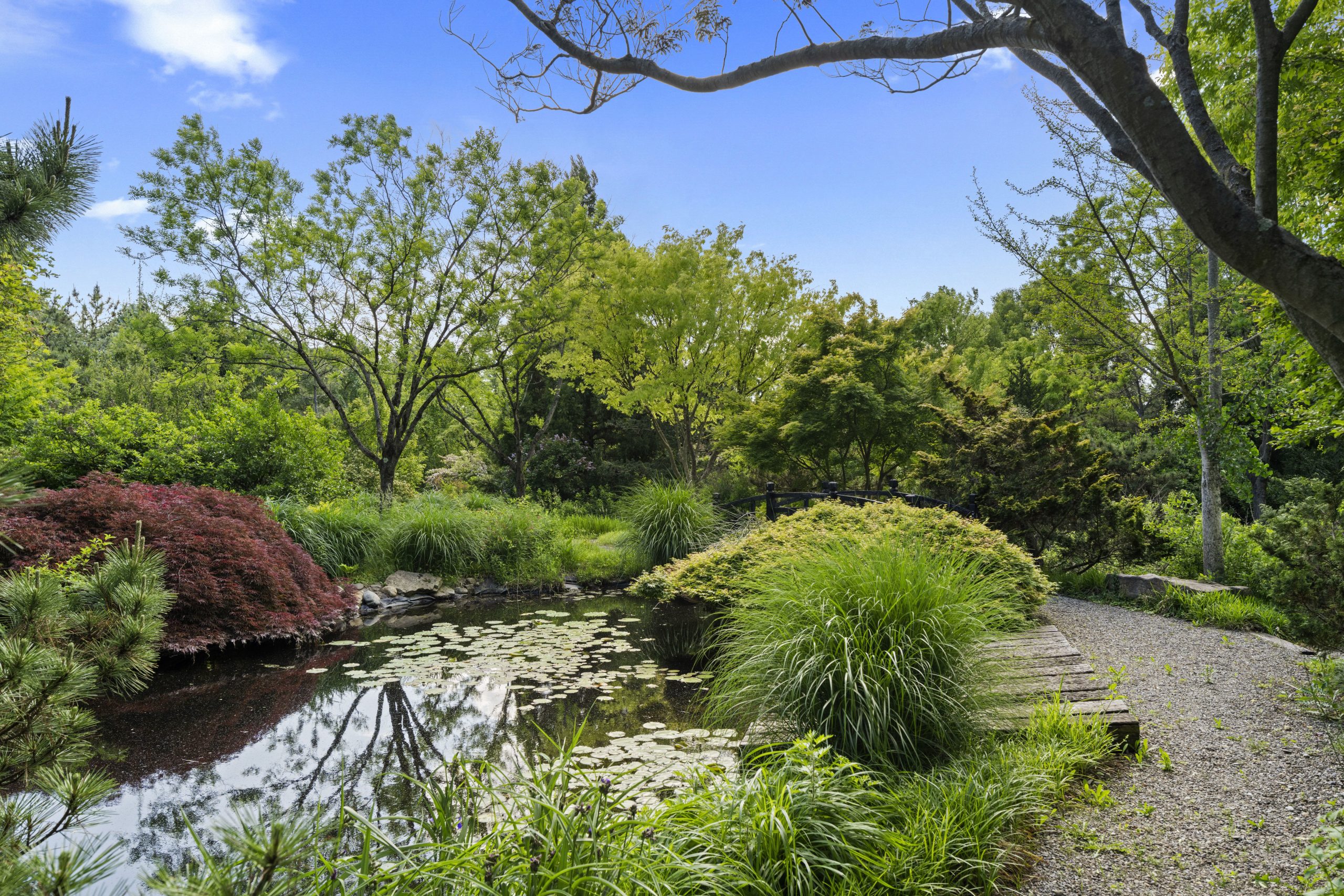
    A view of the koi pond and gardens at Paxson Hill Farm in Solebury Township, Bucks County, complete with extensive gardens, which is for sale for $5 million.Oscar Mikols / OM media

    The property, which sprawls across four parcels, will be sold with conservation easements that protect it and the gardens from development.

    Esser said the proceeds of the sale will go to McShane’s foundation, which will then donate the money to different charities.

    The farmhouse

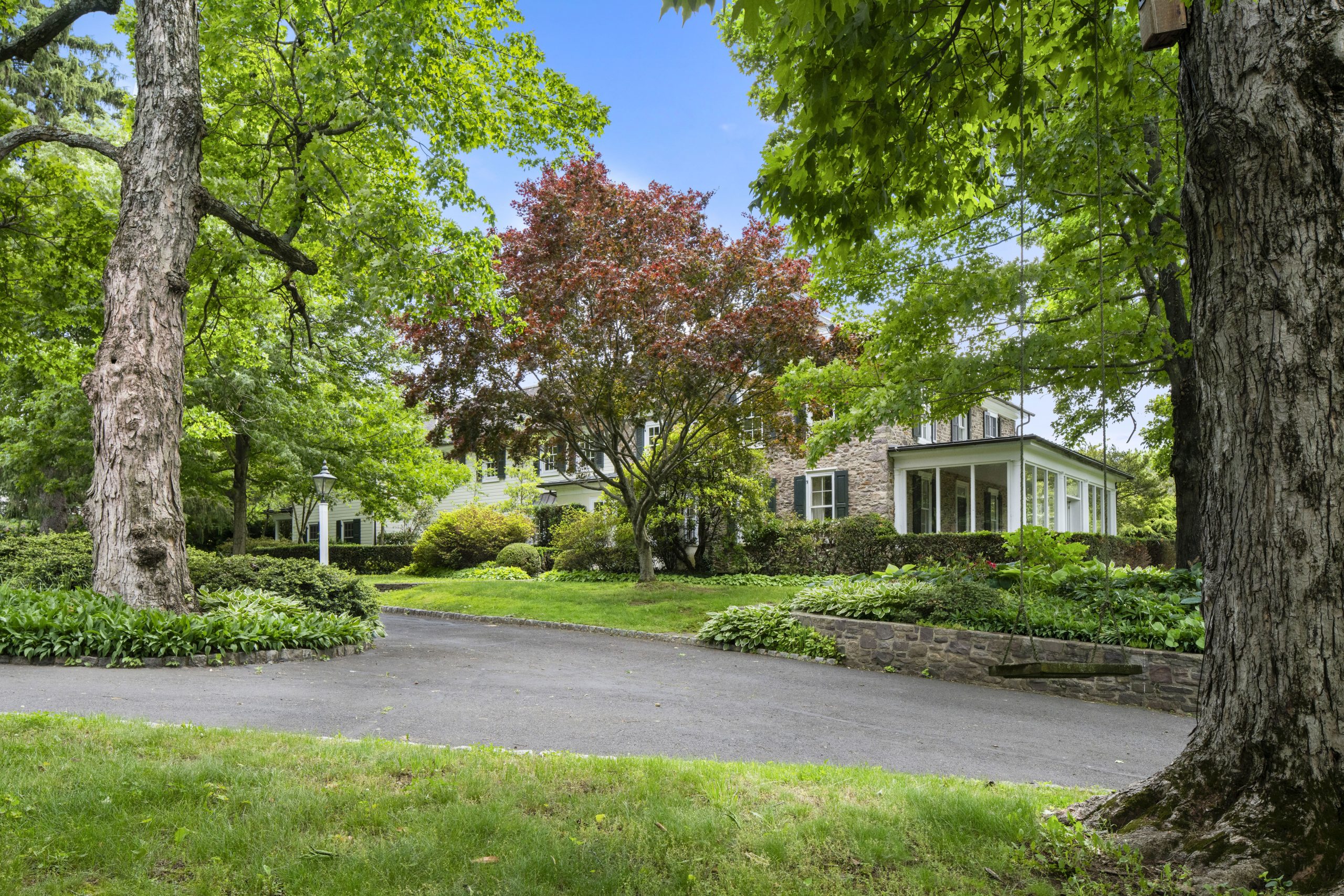
    He said the estate’s residential centerpiece is the “gracious” farmhouse built in 1830. It was expanded starting in 2000, according to property records.

    It has four bedrooms, three full bathrooms, and two half baths. The gathering space features vaulted ceilings and an enclosed stone porch that overlooks ponds with panoramic views of the estate.

    The house has a geothermal heating and cooling system.

    The kitchen in the farmhouse at Paxson Hill Farm in Solebury Township.Oscar Mikols / OM media

    Unlike many historic Bucks County farmhouses characterized by low ceilings and cramped spaces, Esser noted that the main Paxson house offers expansive, airy rooms, including a dining room that can seat 20, Esser said.

    An addition features a large kitchen with a large island, and a basement reinforced by steel structural beams.

    A view of the main farmhouse at the Paxson Hill Farm in Solebury Township, Bucks County, complete with extensive gardens, which is for sale for $5 million.Oscar Mikols, OM Media

    The property includes three one-bedroom guest houses with their own kitchens and bathrooms. It also has a detached five-car garage, and a large greenhouse with heated radiant floors.

    A large barn features horse stalls and a reinforced concrete main floor designed to accommodate vehicle parking.

    The gardens

    But Esser said a defining feature of the 30.6-acre property is its botanical gardens, which feature trails that wind through ponds, across bridges, and in view of sculptures.

    The gardens were designed starting in 1997 by landscaper Bruce Gangawer, a friend of McShane.

    “It really was organic,” Gangawer said of how the gardens evolved without a central theme.

    Gangawer said the gardens, are distinct “rooms” that include a koi pond, conifer garden filled with dwarf species, and maze.

    A landscaped maze on the grounds of Paxon Hill Farm in Solebury Township, Bucks County.Oscar Mikols / OM media

    Aside from the gardens, the property also includes a private yard around the main house featuring reflection ponds and a bocce ball court with cherry trees.

    Esser said he envisions that a buyer could be someone who wants to create a family compound, an equestrian, or buyers from Philadelphia and New York seeking a quiet retreat.

    “It’s such a special property,” Esser said. “We hope that somebody will fall in love with it because it’s so beautiful and unique. To re-create these gardens to the scale with the mature trees that are there now — I’m not sure you could do it now, not without writing a big check.”

  • Philly schools could get A/C and heat from geothermal energy, study says

    Philly schools could get A/C and heat from geothermal energy, study says

    A new study shows it is possible to tap the earth for more efficient heating and cooling for two Philadelphia School District buildings at once, providing a potential path to cleaner energy.

    If such a system is ever installed, it could serve as a template for other clean energy efforts.

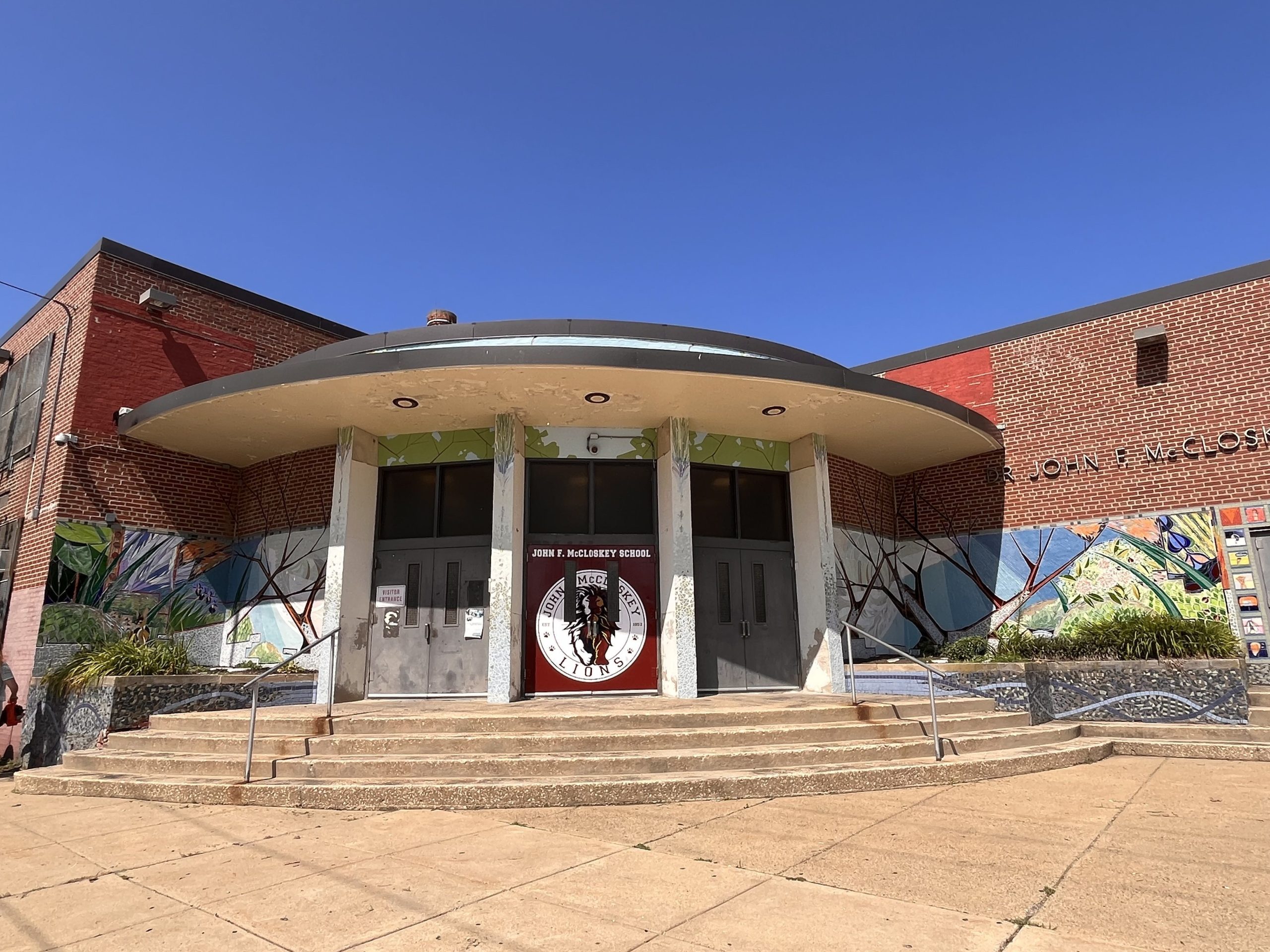
    Philadelphia Gas Works set out last year out to examine whether it was technically possible to build a geothermal HVAC system that would serve both the John F. McCloskey Elementary School and the Dorothy Emanuel Recreation Center in East Mount Airy.

    Findings were released on Wednesday.

    The study estimated that a closed-loop geothermal system for these facilities would cost about $19 million. But that could drop to $11 million with federal tax credits.

    With the tax credits, a geothermal system would be less expensive to install than a traditional HVAC system for the two properties.

    Kensington High School for the Creative and Performing Arts, built in 2010, has geothermal heating and cooling. Although PGW supplies gas to the school, it was not involved with the geothermal system.

    At McCloskey, PGW paid for the study and worked in collaboration with the school district and Philadelphia Parks and Recreation. PGW, which is owned by the city, is the largest municipally owned gas utility in the country.

    “PGW is committed to helping the City of Philadelphia lead to a clean energy future,” said Elliot Gold, vice president of corporate planning at PGW.

    The McCloskey school, which was built in the early 1950s, and Emanuel rec center are next to each other on the same roughly six-acre property with a combined 77,000 square feet of interior space. Though Philadelphia Parks and Recreation operates the rec center, it is on district property.

    A closed-loop geothermal system is essentially a big heat pump that uses the constant underground temperature through buried pipes. A mixture of water and environmentally safe antifreeze is pumped through the loop, creating a large heat exchanger that can be used to heat and cool a building. The heat exchanger is set to either absorb or eject heat.

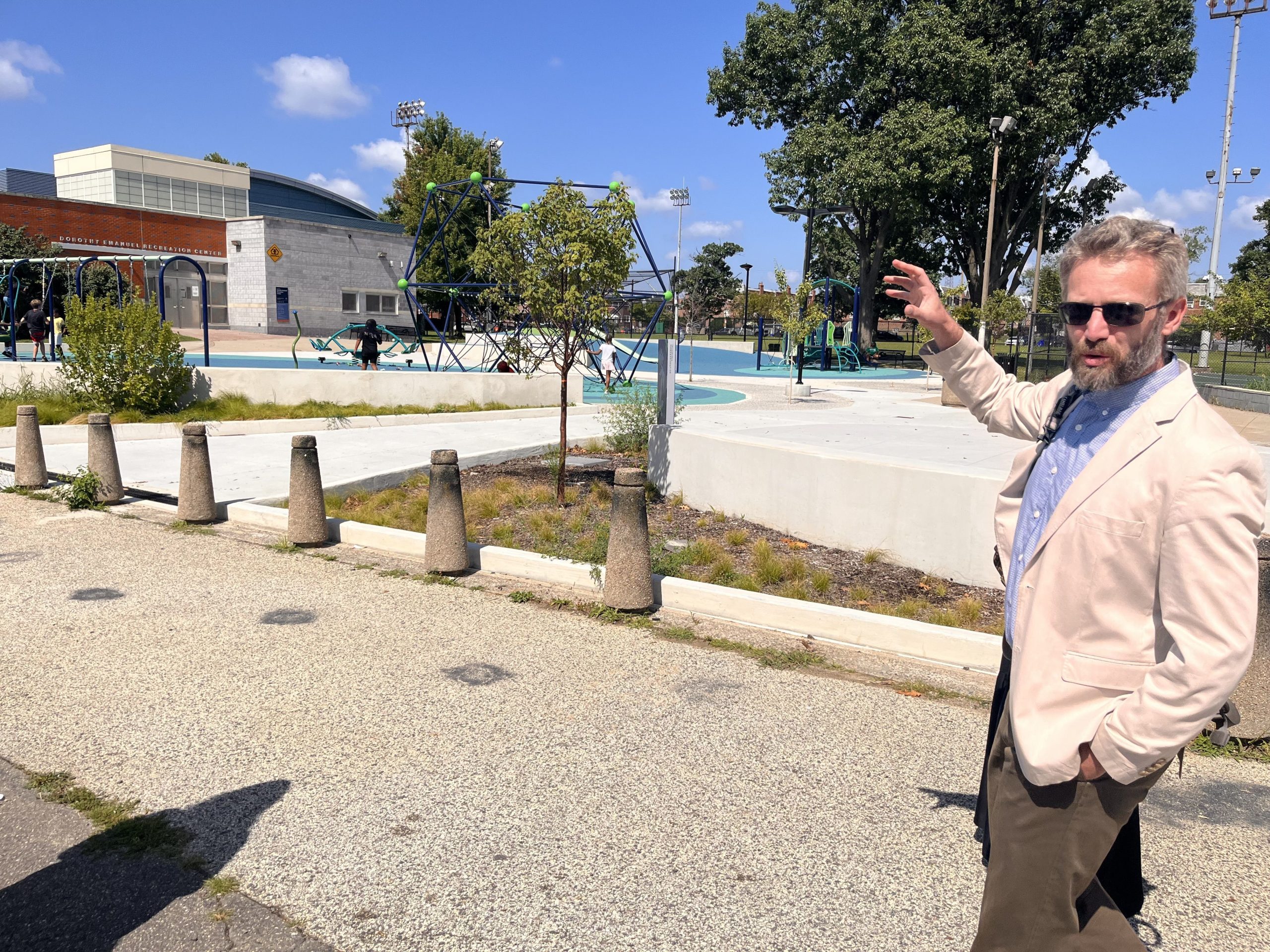
    A new study shows that it is feasible to install a new geothermal HVAC system to serve the John F. McCloskey Elementary School and the Dorothy Emanuel Recreation Center in East Mount Airy. Frank Kummer

    An ‘ideal partnership’

    Victoria Flemming, executive director of the school district’s office of environmental management and services, said the study is a positive step that aligns with the district’s GreenFutures Plan.

    The McCloskey school currently has an aging oil-based heating system and no central air-conditioning, she said.

    “It is using heating oil, which has low energy efficiency and has a high impact to air quality,” Flemming said. “So I think those were the two things that made this kind of an ideal partnership.”

    During periods of extreme heat, the school is forced to pivot to virtual learning and cancel student activities, she said.

    The shared property between the school and rec center would give a geothermal project an even higher impact, she noted.

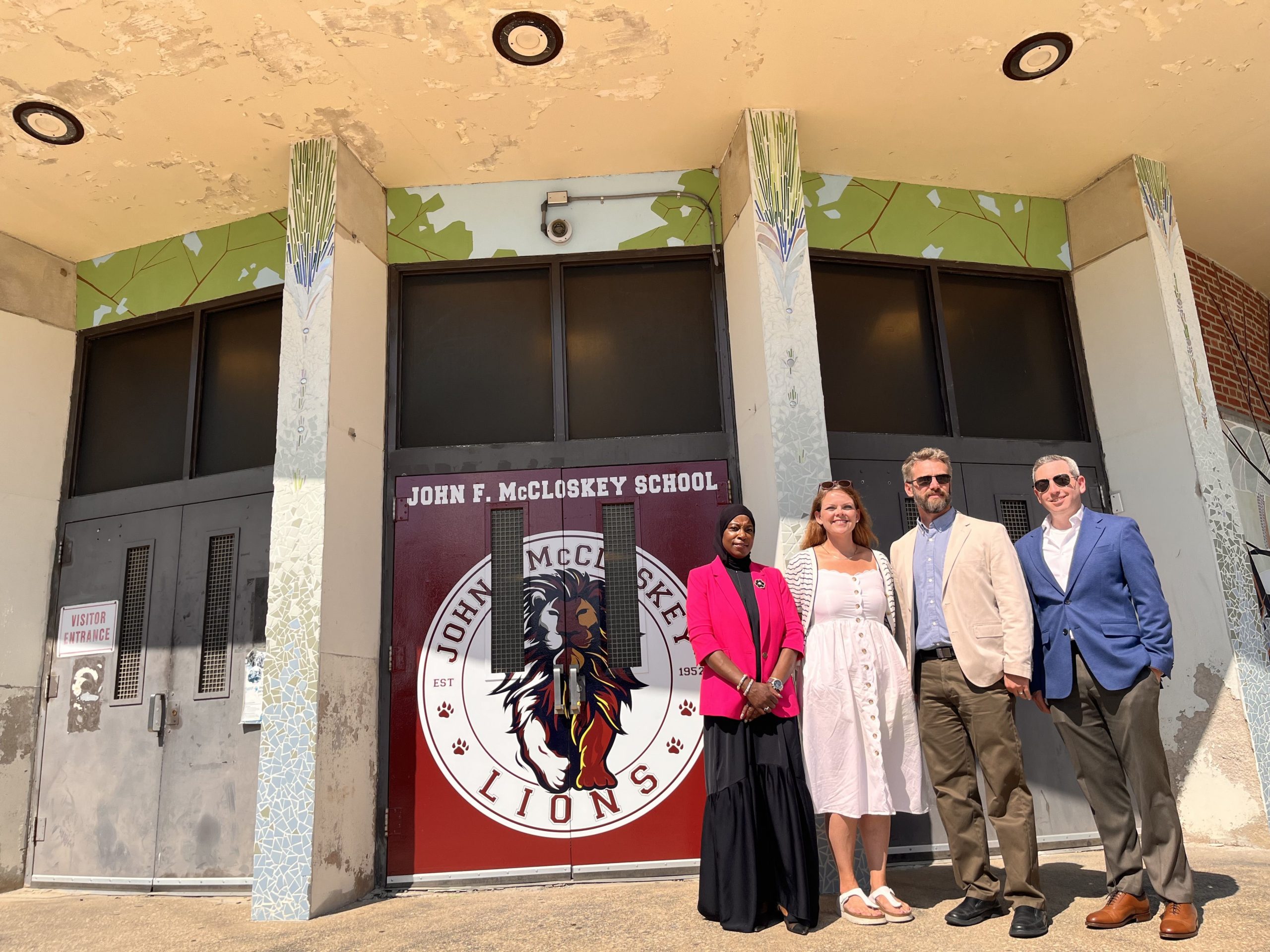
    Seen at the John F. McCloskey Elementary school are (from left) Teresa Fleming, COO of the School District of Philadelphia; Victoria Flemming, executive director of the office of environmental management and services for the district; Neal Babcock of Alderson Engineering; and, Elliott Gold vice president of corporate planning for PGW.Frank Kummer

    Less expensive than a traditional system

    Bucks County-based Alderson Engineering conducted the study.

    To install a geothermal system, conditions underground need the right combination of thermal conductivity and geology. Neal Babcock, a principal with Alderson Engineering, said the site meets those conditions.

    Geothermal systems might be more expensive up front, he said, but in the long run are less expensive to operate and maintain.

    Currently, geothermal systems are eligible for the federal Investment Tax Credit. The One Big Beautiful Bill Act of 2025 terminated credits for solar and wind projects but preserved credits for geothermal systems.

    “Geothermal systems reduce the total energy consumption to heat and cool the building,” Babcock said. “Instead of burning fossil fuels like natural gas, they use the cool temperature of the ground to be less extreme than the air temperatures or needing to burn fossil fuels.”

    Compressors for the geothermal system studied would be powered by electricity, not natural gas.

    Environmental and advocacy groups have been critical of PGW’s reliance on natural gas, saying the utility needs to diversify its energy portfolio and reduce greenhouse gases that help heat the earth.

    PGW said the study is part of its efforts to do that.

    Neal Babcock of Alderson Engineering discusses the feasibility of installing a new geothermal HVAC system to serve the John F. McCloskey Elementary School and the Dorothy Emanuel Recreation Center in East Mount Airy.Frank Kummer

    Will it ever get built?

    The study was just a first step. There is no time frame to install such a system, nor is funding in place.

    And it is unclear who would own the system. That is important because the tax credits would apply only to a single-owner system.

    Gold, the PGW vice president, said that although some of the challenges might seem steep, the utility is serious about clean energy projects.

    “We’ve completed the feasibility study, which is good news,” Gold said. “It tells us that this is favorable and that there are no definite technical showstoppers.”

    He said the next steps include addressing who would own the system, the cost, and a timeline.

    That timeline would likely include the tax credits for geothermal units, which are set to phase out in 2034 and 2035.

    (function(){function e(){window.addEventListener(`message`,function(e){if(e.data[`datawrapper-height`]!==void 0){var t=document.querySelectorAll(`iframe`);for(var n in e.data[`datawrapper-height`])for(var r=0,i;i=t[r];r++)if(i.contentWindow===e.source){var a=e.data[`datawrapper-height`][n]+`px`;i.style.height=a}}})}e()})();

    Who would pay for it?

    The school district typically finances such projects through its capital spending plan for its 300 buildings.

    If it owned the geothermal system and had to pay for it, that could mean balancing it against the needs of making fixes at other schools.

    The district has said it wants to spend $3 billion on upgrading facilities but can pay for only $1 billion now.

    For instance, conditions at Southwark Elementary in South Philly are so dire that kids are begging City Council and the district for fixes, such as working bathrooms and pest control. They are supposed to get them in 2032.

    Teresa Fleming, the district’s chief operating officer, said the district is still evaluating the study and must consider the long term.

    She said a program like geothermal has the potential to “yield energy savings and greater efficiencies throughout the district.”

    Editor’s note: This story has been updated to change the date the findings were released.

  • Biggest project yet planned for Manayunk’s Venice Island with more than 800 homes

    Biggest project yet planned for Manayunk’s Venice Island with more than 800 homes

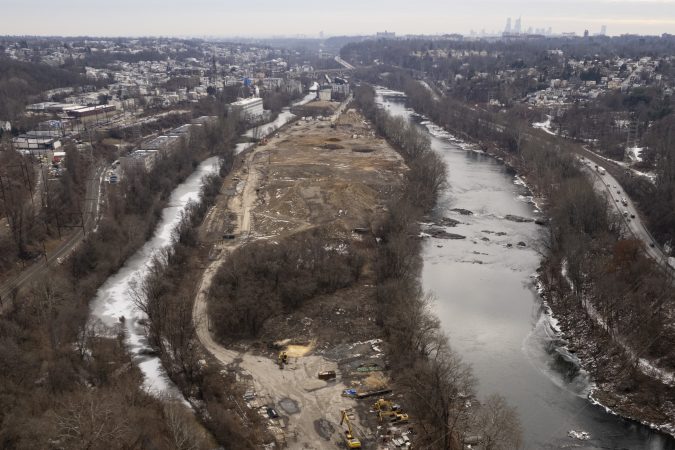
    A developer is planning to build 807 housing units on 30 acres of Manayunk’s Venice Island, bringing an end to years of questions by residents about what would become of the land.

    Manayunk Renaissance LLC told members of local neighborhood groups about the plan during an informal meeting Wednesday. Councilmember Curtis Jones Jr., who represents Manayunk, also attended.

    The company confirmed the plans to The Inquirer on Thursday.

    “Venice Island is one of the most unique areas in Philadelphia, with water views on both sides, proximity to trails and outdoor space, and easy access to both SEPTA and I-76, all within walking distance of one of Philadelphia’s great neighborhoods — Manayunk,” Hercules W. Grigos, an attorney for the company, said in a statement.

    The meeting with community leaders was meant to solicit feedback on the project, which is on the former PaperWorks mill site. Neighborhood input would then be used to “refine the proposal,” Grigos said.

    Manayunk Renaissance LLC said in a statement that it plans to build multiple types of housing at what it calls The Flat Rock at Venice Island. The proposal includes 159 townhouses, 126 duplexes (with 252 units), and 396 apartments.

    John Hunter, an architect and zoning chair of the Manayunk Neighborhood Council, who attended the briefing, has long argued at community meetings against more waterfront housing because he’s concerned about flooding and overdevelopment.

    “It’s unfortunate. It follows a trend,” Hunter said of the plan. “It’s more suburbanization of Manayunk, more residential. There’s no commercial there; it’s not balanced.”

    The company noted that it would be the fifth residential project on Venice Island, although it would still require a zoning change.

    Flat Rock would also be its largest development, by far.

    Apex Manayunk has about 128 units, the Locks has 60 townhouses, and the Isle has roughly 160 apartments. A 181-unit project is also planned by Rock Urban Development, a scaled down version of an earlier proposal.

    Where would the new housing be built?

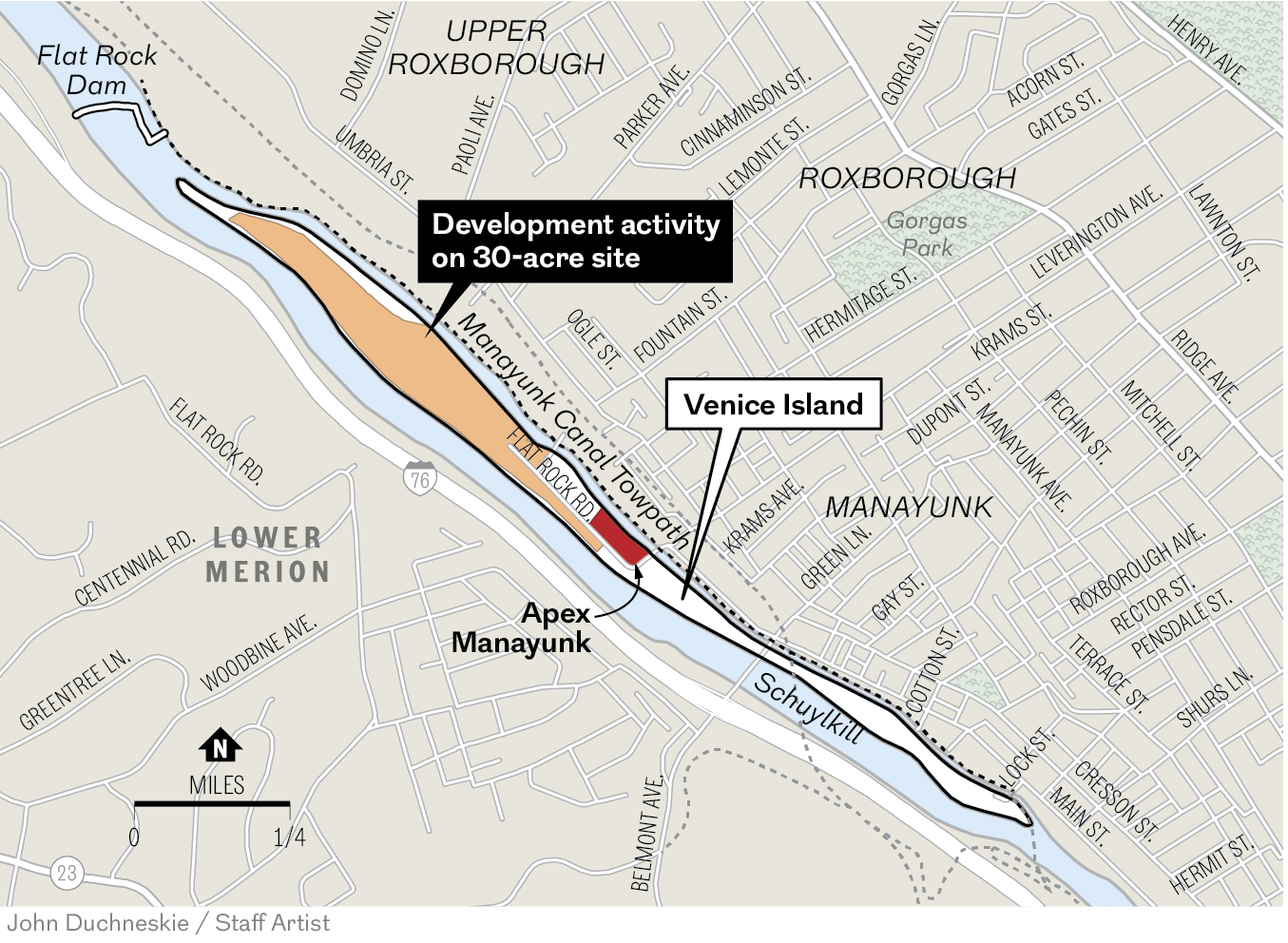
    The 30-acre site at 5000 Flat Rock Rd. lies on the northwestern side of the island. Manayunk Renaissance LLC purchased the property in 2021 for $23 million, according to city records. The property takes up about 45% of the island’s land mass.

    Some area residents had been hoping for either open space or less dense development with commercial uses mixed in.

    The developer plans 500 parking spaces for the 800 proposed residential units, according to Hunter. That would fall short of the typical one-to-one standard in Manayunk, he noted.

    Manayunk Renaissance LLC did not respond to a question about the parking.

    Who is behind the project?

    It was not immediately clear who is backing Manayunk Renaissance LLC. The company shares an address with A.P. Construction, a South Jersey-based construction company, with an office at the Navy Yard.

    A.P. Construction boasts a portfolio of big projects in the region, including work on bridges, stadiums, and the Manayunk Bridge Connector Trail and Park.

    Hunter said the developer told residents at Wednesday’s meeting that Philadelphia-based Varenhorst would be the architect. The company also designed the Locks, an earlier residential project on the island.

    Map of planned development on a 30-acre site on Venice Island in Manayunk.John Duchneskie

    Flooding concerns

    Hunter said residents are particularly concerned about flooding. Hurricane Ida in 2021 hit Manayunk hard and inundated some of the buildings on the island.

    Hunter and others fear more building will leave Venice Island residents trapped in another big storm, while contributing to even more flooding as runoff flows into the river and canal.

    The 5000 Flat Rock Rd. property lies just below the Flat Rock Dam.

    Venice Island, one of the lowest-lying areas of the city, is a narrow wedge of land, just shy of 70 acres and roughly 1.7 miles long between the Schuylkill River and Manayunk Canal.

    The island falls within a high-risk, 100-year-floodplain designated by the Federal Emergency Management Agency (FEMA), meaning it has a 1% chance of flooding in any given year.

    In September 2021, as Manayunk experienced flooding from Hurricane Ida, people take in the view from Rector Street of the fast running water at the canal that runs along Main Street and feeds into Schuylkill River.ALEJANDRO A. ALVAREZ / Staff Photographer

    In a statement — also shared with neighbors — Manayunk Renaissance LLC said it had hauled in 400,000 cubic yards of soil to raise the site between 9 and 11 feet, bringing it at least 18 inches above flood elevation.

    The company said it had approvals from FEMA, the Pennsylvania Department of Environmental Protection, and the Philadelphia Water Department for the new grading and height.

    Manayunk Renaissance also said it razed a dilapidated 512,000-square-foot mill building and is working to clean up lead and asbestos.

    Manayunk Renaissance said in its statement that it is finalizing an agreement with SEPTA to create an emergency exit from the island via Umbria Street, where the Ivy Ridge railway station is. The company said it would pay all construction costs.

    Hunter said he and others were told during the meeting that the route includes building a bridge over the canal that leads to an on-grade crossing at the railway equipped with three gates. That new road would be reserved for emergencies.

    Zoning is an issue

    The property is zoned for industrial uses, so the developer would either need City Council to change the land use rules legislatively or seek relief from the Zoning Board of Adjustment.

    “After five-plus years of work and planning, Manayunk Renaissance is ready to present its vision to the community and seek city approval to change the zoning,” the company statement said.

    Community support would be a boon for the developer in either case. Having the backing of neighborhood groups is often a positive factor at the zoning board and could sway Councilmember Jones if they go the legislative route.

    The company argues that the existing zoning allows warehouses, data centers, and other projects that “would be inconsistent with the community’s direction.”

  • Waymo, now being tested in Philly, has a safer track record than people, new study says

    Waymo, now being tested in Philly, has a safer track record than people, new study says

    Buckle up, Philly, because new research suggests what could be the rise of the machines — at least on area roads.

    A new study by the nonprofit Insurance Institute for Highway Safety (IIHS) reveals that Waymo’s fully autonomous vehicles are significantly less likely to be involved in traffic collisions than human drivers.

    The paper indicates that the self-driving vehicles of Alphabet Inc.’s robotaxi service, which is testing the service in the city, are not only safer, but much safer than humans.

    “The results provide further evidence that Waymo’s current L4 vehicles have lower crash involvement rates than human drivers,” the authors stated.

    Such findings could help lessen fears around the vehicles, which are already ubiquitous in California and headed that way in some other states.

    Philadelphia was not part of the study, but Waymo has been testing vehicles in the city without yet offering riderless service.

    “We welcome this new research from IIHS, which confirms our previous peer-reviewed analyses and reinforces the significant safety benefits of the Waymo Driver,” Waymo spokesperson Ethan Teicher said in an emailed statement.

    Teicher called the study “an important contribution to a growing body of research on AV [autonomous vehicle] safety data” and said more high-quality data like it would help build public trust.

    The study’s findings

    The authors found that the highly automated Level 4 (L4) vehicles operating without a human driver had a police-reportable crash rate 68% lower than human drivers in comparable areas.

    The research also looked specifically at crashes resulting in injuries. Autonomous vehicles performed even better, boasting an 81% lower injury crash rate compared against the human benchmark.

    Data indicate that Waymo vehicles were rarely instigators in collisions.

    To draw their conclusions, the authors analyzed 736 autonomous vehicle crash reports submitted to the National Highway Traffic Safety Administration (NHTSA) between July 2021 and December 2024.

    They found that the autonomous vehicles’ rate of rear-ending another vehicle was 91% lower than that of human drivers, and their rate of being rear-ended was 40% lower.

    Furthermore, they were involved in 85% fewer single-vehicle crashes per mile traveled.

    The IIHS, which conducted the study, is an independent, nonprofit scientific and educational organization, with the goal of reducing deaths, injuries, and property damage from motor vehicle crashes.

    The same organization has been performing crash tests on regular vehicles since the 1990s to rate their safety.

    Comparing the safety of robotaxis to human drivers has historically been difficult because of differences in how crashes are reported. Federal regulations require automated vehicle operators to report even the most minor incidents, such as scraping an undercarriage or hitting small road debris.

    In contrast, human drivers typically only report crashes that meet state damage thresholds — often $1,000 — or involve injuries, and even then, over half human crashes go unreported.

    To overcome that bias, IIHS researchers manually evaluated the descriptions of property damage and injuries. They estimated whether a “reasonable person” would have called the police.

    The study found that 78% of the reported automated vehicle incidents were too minor to meet typical police-reporting standards.

    Researchers then compared the adjusted crash data from Waymo — which voluntarily publishes its autonomous mileage — against police-reported human crash data from California, Arizona, and Texas. The analysis covered approximately 50 million miles of Waymo driverless operation and 222 billion human-driven miles.

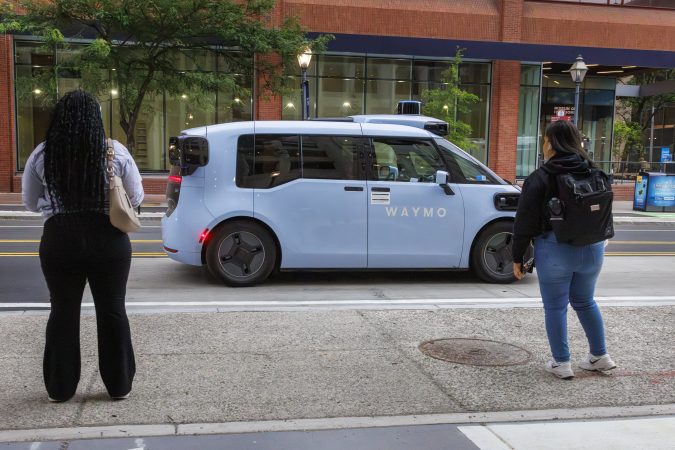
    A Waymo car navigates North Broad Street in Philadelphia in May.Elizabeth Robertson / Staff Photographer

    The study’s limitations

    Despite the promising safety record, the researchers acknowledged several limitations.

    First, Waymo did not operate its driverless vehicles on interstates or freeways during the study period, environments that account for 22% of human drivers’ police-reported crashes.

    Second, because autonomous vehicles often drive empty, fewer humans are exposed to injury risk during collisions, which can artificially lower the overall injury rate.

    As self-driving fleets continue their rapid expansion, the study’s authors warn that manually reading crash narratives is an unsustainable method for monitoring public safety.

    The study only looked at Waymo, not other self-driving vehicles. Waymo is the largest such company to offer robotaxis, but Tesla is also testing driverless vehicles.

    The IIHS is calling for a standardized, national reporting system for automated vehicle crashes and mileage, arguing that streamlined data are essential for accurate and timely safety evaluations.

    Waymo said it supports an industry-standard reporting system that would include air bag deployments and an injury scale.

    When will Waymo be available in Philly?

    Despite the limitations, the study could reassure Philadelphians hesitant to ride in an autonomous vehicle.

    Waymo slowly began introducing the vehicles last summer, but they were driven manually by specialists in the most complicated to navigate parts of the city. They fanned out at all hours across various neighborhoods.

    In December, Waymo began autonomous testing in the city but still with a specialist behind the wheel with permission from PennDot.

    Teicher, the company spokesman, said Tuesday that Waymo is still currently testing. The next step would be to operate fully autonomously with employee-passengers, he said.

    If the feedback is positive, Waymo would be ready to begin taking on public riders.

    However, the company has declined to discuss timing and still needs regulatory approval to carry passengers in Pennsylvania.

    The robotaxi service has received intense local political scrutiny.

    The Inquirer reported in May that some City Council members and a coalition of religious leaders, labor unions, and rideshare drivers urged PennDot to halt Waymo until safety and job-loss concerns were addressed.

    Philly does not have the power to directly regulate Waymo.

  • Is building a data center on a Superfund site safe? Construction has started on one in Chester County.

    Is building a data center on a Superfund site safe? Construction has started on one in Chester County.

    Kelly Donia was seated in her Malvern Hunt home when she spotted dust plumes rising from construction vehicles combing the site of a planned data center complex in East Whiteland Township.

    She immediately drove to the site, across Swedesford Road from her development, to watch that day in June, anxious about the safety of building a 1.5 million-square-foot data center directly on top of a Superfund site in Chester County.

    “No one seems to be concerned, but I mean, we live right here, we work right here, there are children — there’s a daycare,” Donia said. “I don’t understand. I don’t understand our officials, and I don’t understand the developer, and I don’t understand the general contractor.”

    Donia is not alone in her fears. She and many of her neighbors, who had packed into East Whiteland meetings about the project for months, have continued to raise concerns about the safety of the building on the former 79-acre Cyprus Foote Mineral Co. property, which was contaminated over decades by a range of chemicals such as lithium, arsenic, and hexavalent chromium.

    Not long after Donia saw those plumes, the township issued a stop-work order until it gathers more information on the environmental impact of construction.

    While the developer says the site is safe, and the township has approved the plans, some residents believe that documents filed with the township and U.S. Environmental Protection Agency show that the site is still contaminated from its years as an industrial site, and they worry about what impact the construction will have on their community.

    Here is what The Inquirer knows about the Foote Superfund site.

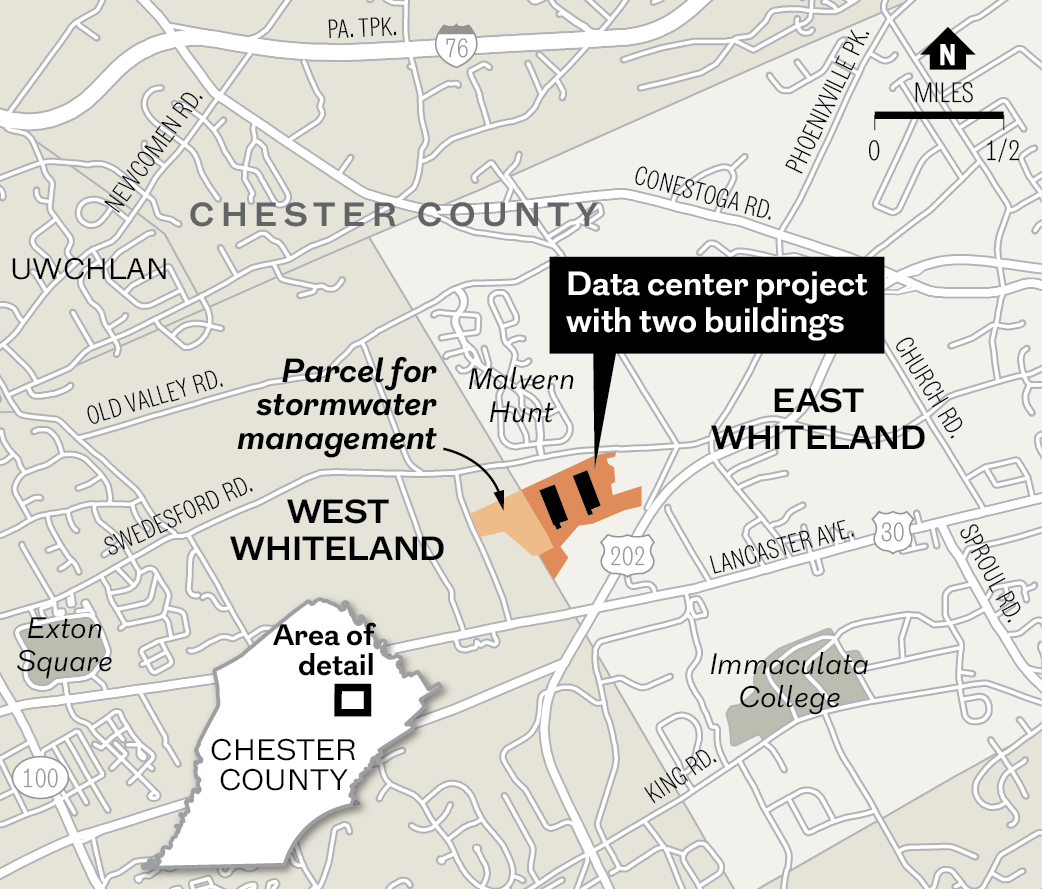
    Location of the two-building data center project in East Whiteland, Chester County.John Duchneskie

    What is proposed?

    Green Fig LLC and Sentinel Data Centers plan to build a 1.5 million-square-foot data center on the 79-acre former site of Cyprus Foote Mineral Co.

    Green Fig LLC first proposed a data center in 2018 and secured early zoning board approvals. The plans were greenlit by the township’s supervisors in 2024, drawing little pushback from the community.

    Residents have been more engaged since the plan came back before the township earlier this year, first with ambitions to scale it up, then with a proposal to shrink it to appease outraged residents.

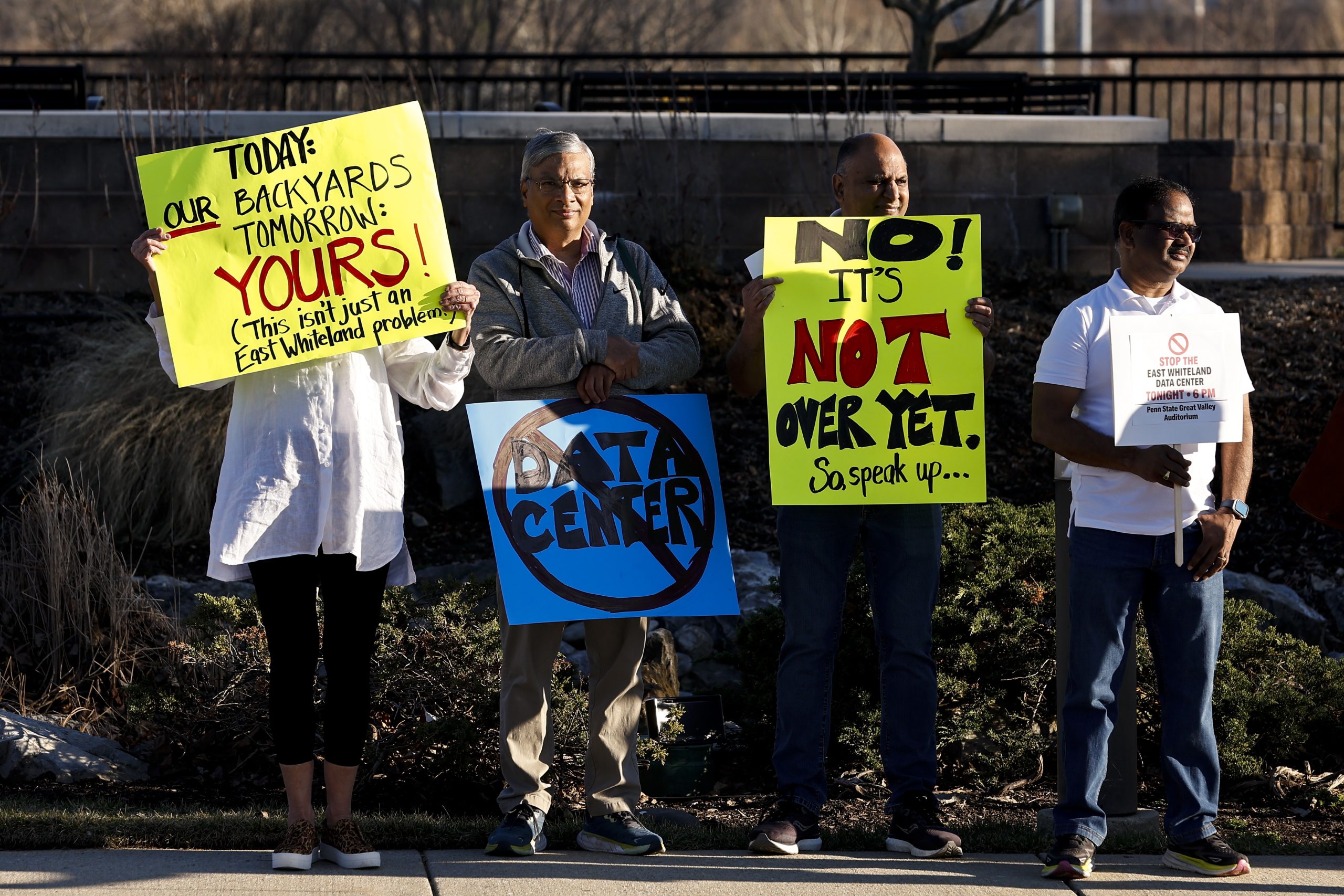
    People protest the expanded data center before the East Whiteland Planning Commission meeting held at Penn State Great Valley on Monday, March 9, 2026 in Malvern.Monica Herndon / Staff Photographer

    What are residents concerned about?

    Residents fear that construction work on the site will kick up pollution in the air and release contaminants into the drinking water. They worry that there has not been ongoing testing of the soil on the site, especially knowing that contamination exists below.

    How did the site become polluted?

    Pollution at the Foote Mineral Co. likely started as soon as 1941 when the company began crushing ores and minerals.

    Foote closed in 1991 with two quarries, a pit where solvents were burned, a lined wastewater basin, and more than 50 buildings and processing areas. Three unlined lagoons were backfilled.

    At the time, public and private wells within four miles of the site had supplied drinking water to approximately 42,300 people. Several private wells near the site were found to be contaminated and were closed. A public water-supply well one mile away was also shuttered.

    Cleanup, led by the EPA, has included capping contaminated quarries, stabilizing waste areas, and maintaining a long-term monitoring program for an evolving groundwater plume. Pollutants included lithium, boron, and low-level radiation.

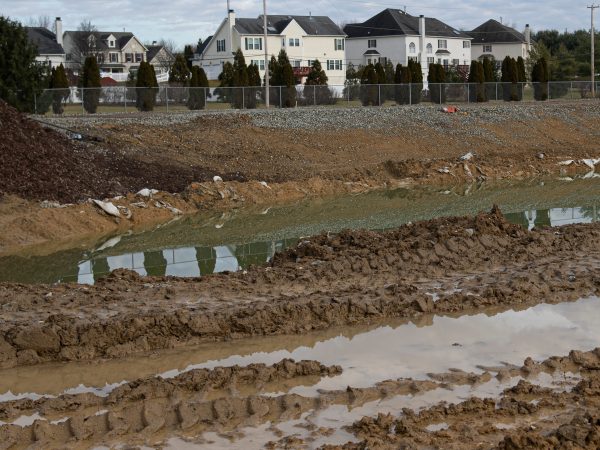
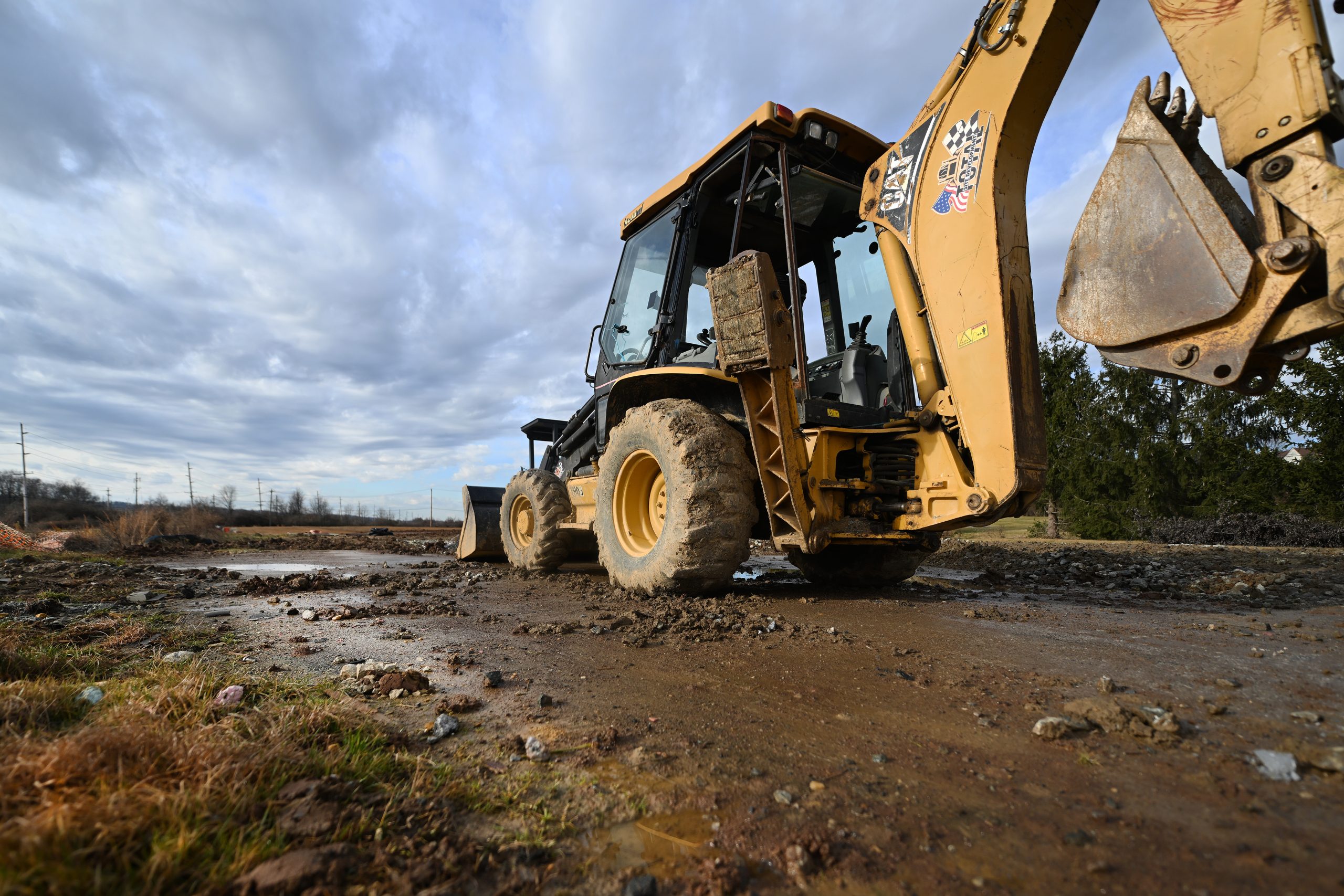
    An open land site is shown in East and West Whiteland Townships in Chester County on Thursday, January 5, 2023, where Green Fig LLC has proposed its data center project.Jose F. Moreno / Staff Photographer

    What is a Superfund site, and how did it become one?

    A Superfund site is a contaminated location in the United States designated by the federal government as a severe health or environmental hazard. Foote was added to the federal Superfund list in 1992.

    In a 2023 letter to East Whiteland Township officials, a contractor hired on behalf of the developers incorrectly said that the site had been removed from the U.S. Environmental Protection Agency’s National Priorities List, an inventory of the nation’s most serious hazardous waste sites.

    As of Friday, Foote Mineral Co. remained on the list posted on the EPA’s website. The EPA says because of the ongoing pollution, there is no proposal to remove the Foote site from the National Priorities List, nor any timeline for remediation to be complete.

    What does the EPA recommend?

    It’s complicated.

    A 2024 EPA report, the most recent environmental evaluation of the site, found concentrations of certain pollutants have decreased over time, but an excessive amount of volatile organic compounds, or VOCs, remained. VOCs are gases that contain a variety of chemicals that may adversely affect human health. VOCs tend to be much more concentrated when contained indoors.

    The EPA recommended updated land-use restrictions and further data collection to ensure the site remains safe during future redevelopment.

    On its website, the EPA wrote that the “hazardous substances, pollutants or contaminants remain at the site above levels that allow for unlimited use and unrestricted exposure.”

    Days before the 2024 findings were released, an EPA engineer filed a report known as a “Superfund Checklist for Retracting the Sitewide Ready for Anticipated Use Measure (SWRAU)” that said the site “no longer meets” standards for human exposure.

    The EPA said in an emailed statement that SWRAU forms are only for guidance.

    SWRAU “designations are not required for redevelopment,” the statement said. “So long as all land and groundwater use restrictions continue to be met and redevelopment does not interfere with EPA’s cleanup or future investigations, sites can be reused and redeveloped.”

    “Based on a careful review of construction plans by EPA subject matter experts, the agency does not anticipate the development to impact the remedy at the Foote Mineral Co. Superfund site,” Mike Bastasch, an EPA spokesperson, said in June. The EPA “remains engaged and will continue monitoring redevelopment progress to ensure the remedy remains intact,” he said.

    What do experts say?

    If a site is properly cleaned up, there are “potential ways that a data center could be a better use, environmentally, of the land,” said Noah Kittner, associate professor in the Department of Environmental Sciences and Engineering at the University of North Carolina Gillings School of Global Public Health.

    But that is contingent on how it uses water, what kind of systems are in place, what types of energy and electricity are being used, and whether diesel generators are being used in the construction, development, and operation of the site, he said.

    The documentation from the EPA showing remaining contamination “certainly raises some red flags” about redeveloping the site, he added. And whether the project does more harm than good is “highly dependent on plans for construction.”

    “You could have a poorly executed project, and it causes a lot more problems for the community,” Kittner said. “Or you could have a really well-designed remediation project that builds in sustainability principles and other factors that could really transform that area from what was once highly polluting to something that is environmentally positive.”

    Scott Lambert, chair of the East Whiteland board of supervisors, left, confers with township officials about the data center proposal on April 14, 2026.Bob Williams / For The Inquirer

    Who decides?

    The EPA said in a statement to The Inquirer that it does not “recommend, propose, or approve specific Superfund redevelopment plans.” The agency reviews proposed uses and checks if there are “any potential conflicts with the selected remedy (including cleanup standards) or any issues that could reduce protection of human health and the environment,” the statement said.

    The EPA’s goal is that most Superfund sites will be cleaned enough for commercial or industrial use. However, in some cases, the EPA can impose near permanent, severe restrictions on potential uses. Most Superfund sites undergo evaluations every five years to make those determinations until a site is removed from the National Priorities List.

    Beyond that, it falls to the township to make final decisions on what the project will ultimately look like, and whether it could be built. Municipal leaders have said previously that, due to state law, they feel their hands are tied to allow for uses such as data centers.

    What’s next?

    The project remains in limbo: The developers have returned to the township seeking to amend their plans and alter the final design for the project. Supervisors tabled their decision at their last meeting on July 8, saying they needed more information about proposed changes.

    Residents remain concerned about long-term construction at the site.

    This suburban content is produced with support from the Leslie Miller and Richard Worley Foundation and The Lenfest Institute for Journalism. Editorial content is created independently of the project donors. Gifts to support The Inquirer’s high-impact journalism can be made at inquirer.com/donate. A list of Lenfest Institute donors can be found at lenfestinstitute.org/supporters.