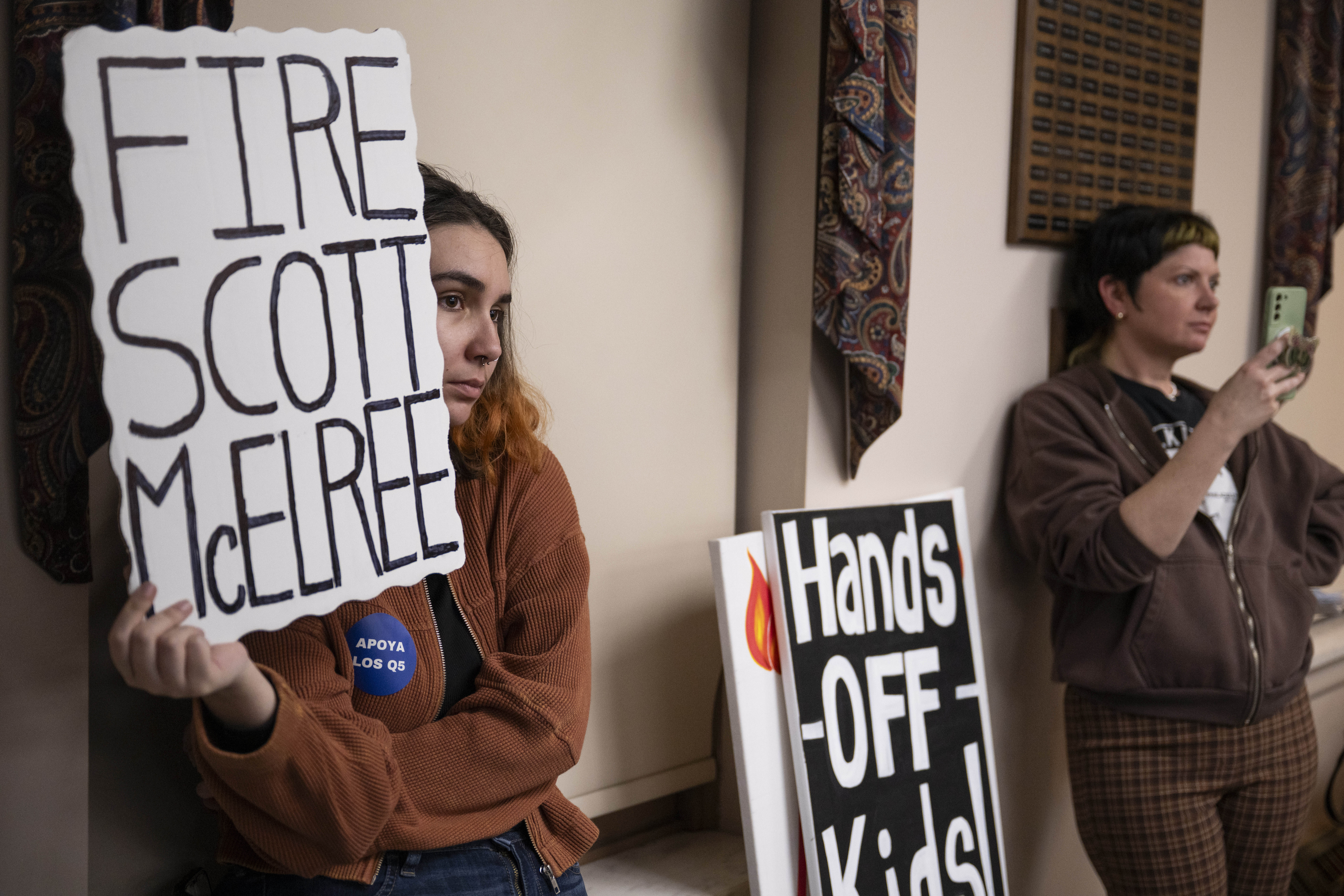
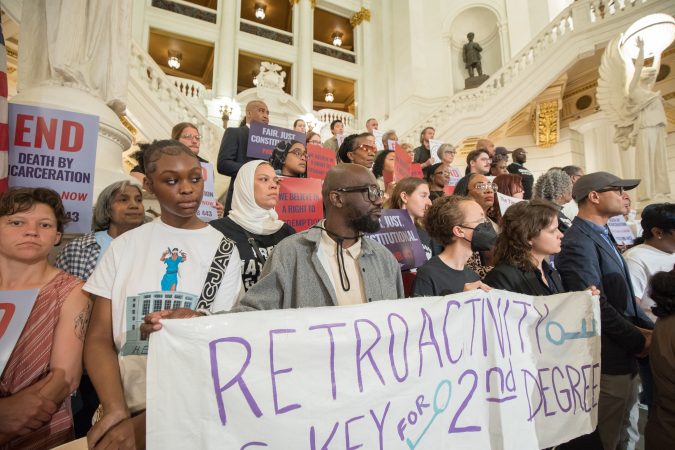
A leader of the Bucks County NAACP and a state legislator on Friday called for reforms in the Quakertown Borough Police Department, saying an investigation that cleared Police Chief Scott McElree of criminal wrongdoing for placing a teenage protester in a choke hold during a confrontation with students earlier this year should not end scrutiny of the incident.
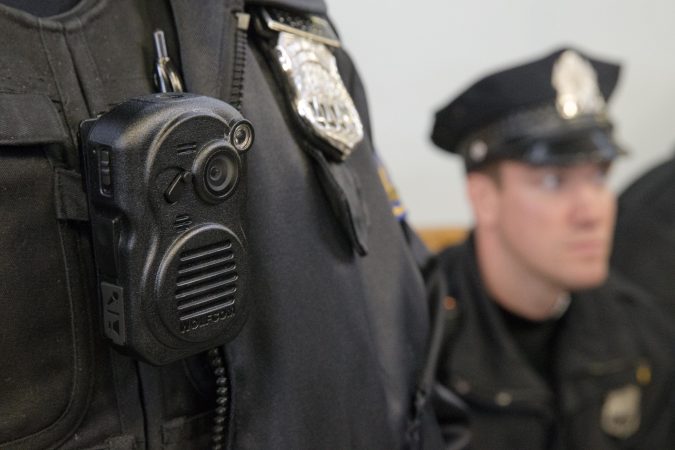
NAACP president Adrienne King joined State Rep. Napoleon Nelson in urging Quakertown police to adopt stronger use-of-force policies to prevent a similar response in the future. Nelson, a Montgomery County Democrat, also said he plans to introduce legislation establishing statewide restrictions on choke holds and expanding the use of body-worn cameras, among other aims.
The calls for change came a week after the Bucks County District Attorney’s Office concluded its almost six-month independent investigation into a Feb. 20 brawl that broke out as students protested ICE enforcement. The investigation concluded that while McElree was the “precipitating factor” in the violence — and confirmed that he held a 15-year-old girl in a choke hold for at least eight seconds — he neither committed a crime nor violated his department’s policies.
In a 20-page report, investigators noted that Quakertown police have no policy restricting choke holds or other neck restraints and that Pennsylvania law likewise places no limits on their use. But investigators said McElree’s decision to engage with the students was “calamitous” and “led to confusion and trauma for an entire community.”
A panel of four members of the Police Chiefs’ Association of Bucks County had previously concluded that McElree had acted reasonably during the incident. On Friday, the group issued a statement saying it disagreed with investigators’ characterization of McElree’s actions as “calamitous.”
Investigators also concluded that several students continued assaulting McElree after it became apparent he was a police officer. McElree, who was 72 at the time, suffered what investigators described as “extensive and serious bodily injury,” including fractured ribs, multiple cuts, and a concussion.
On Friday, King and Nelson said Quakertown’s lack of policies governing choke holds underscored the need for reform, regardless of the district attorney’s conclusion that McElree had not acted criminally. “No criminal charges,” King said, “cannot mean no accountability.”
After George Floyd’s death at the hands of Minneapolis police in 2020, then-Bucks County District Attorney Matt Weintraub announced that all 39 law enforcement agencies in the county had committed to adopting use-of-force policies that met nationally recognized best-practice standards, including restrictions on choke holds.
But by the start of this year, King said, 13 agencies — including Quakertown’s police department — had yet to update their policies.
In a statement Friday, borough attorney Peter Nelson said the NAACP’s characterization of Quakertown’s policies was incorrect, saying that the department had adopted the proposed standards before Weintraub announced the countywide initiative. He said borough officials had reached out to the NAACP “to discuss their misunderstanding of our policies.”
Separately, the district attorney’s office said Friday that Quakertown’s police department does not currently have updated policies in place and that District Attorney Joseph Khan is urging the borough to adopt them.
Khan considers the adoption of the standards by all law enforcement agencies in the county“a matter of unfinished business” that he “is committed to helping complete,” spokesperson Manuel Gamiz said.
McElree, who also serves as the borough’s manager, did not return a phone call seeking comment Friday.
Nelson, the state representative, said the legislation he plans to introduce would include “commonsense measures to help ensure what happened” in Quakertown does not “continue to go unanswered.”
Meanwhile, the Peace Center of Bucks County plans to host four “listening circles” in Quakertown, where residents will be invited to discuss how the conflict affected their lives.
Barbara Simmons, the organization’s executive director, called the gatherings an “opportunity to cultivate empathy” in a community that has remained deeply divided since the confrontation.
The sessions are expected to begin next week, with dates, times, and locations to be posted on the center’s website.
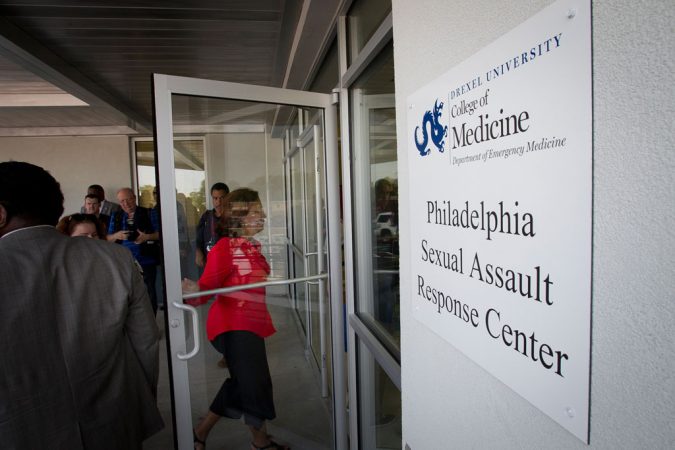
Philadelphia’s only free sexual assault exam center was so strapped for funding last spring that Drexel University, its former operator, started drafting a closure announcement.
The school was facing financial strain of its own, and state funding to rape crisis nonprofits was tied up amid a prolonged budget impasse in Harrisburg. Emergency funding from the city was tangled in City Hall’s lengthy contracting process.
At the time, there was no plan for who would run the Philadelphia Sexual Assault Response Center (PSARC), where roughly 300 rape survivors a year go for the sexual assault exams used to collect forensic evidence that are commonly known as “rape kits,” which often play a key role in prosecuting assaults.
Fast-forward to this month, when Mayor Cherelle L. Parker’s administration announced the city’s public health department will assume all control of PSARC. Officials presented the news as the culmination of a careful, collaborative handoff, and one city staffer framed the transition in a news release as “seamless.”
But hundreds of emails obtained by The Inquirer through a right-to-know request and a review of public records tell a far messier story. The emails show that for more than a year the fate of PSARC lurched from one near-miss to the next and that a failed bid process forced the city to take over the center’s operations when no one else would.
Taken together, the records offer a granular view of how a critical piece of the city’s safety net for sexual assault survivors nearly broke. And they portray a chaotic process in which the city for months sought to transfer control of the center from Drexel to the nonprofit WOAR Philadelphia Center Against Sexual Violence, even as WOAR faced its own budgetary implosion.
Over the course of the last year, the exam center never shut its doors to patients. But it came close on several occasions, a collapse that would have had ripple effects in hospital emergency rooms across the region that typically route sexual assault patients to the center.
If PSARC suspended operations, hospitals would have to find specially trained staff — of which there are few — to perform the exams.
“Philadelphia emergency rooms were not ready for that,” said Lila Slovak, director of the Philadelphia office of the Women’s Law Project, who spent months warning city officials that PSARC was in danger. “They did not know that [the center] was at risk of closing. It was not on anybody’s radar.”
Crystal Yates-Gale, the city’s deputy managing director for health and human services, said in a statement that the final outcome — the city running the center — is ultimately what is best for sexual assault survivors.
“We are proud to have secured the continuity of vital services for victims of crime in a dignified, victim-centered, culturally-competent atmosphere in Philadelphia,” she said.
The exam room at the Philadelphia Sexual Assault Response Center, in Philadelphia, Pa., on Friday Dec. 6, 2024.Tyger Williams / Staff Photographer
She said WOAR was transparent with the city about its financial position.
“Like most Commonwealth-funded providers, we planned on the assumption that funding would resume,” Anthony said. “The impasse instead ran 135 days. By the time it ended, we had drawn down our reserves.”
A lifeline center on a shoestring budget
PSARC, located at 300 E. Hunting Park Ave. in North Philadelphia, has two full-time staff members and a network of about 15 contracted nurses trained to perform sexual assault forensic exams, provided free under Pennsylvania law. The procedures are intended to gather physical evidence, such as DNA left behind by an assailant, and to document injuries that may aid investigators in a future criminal investigation.
Many hospitals lack the specialized staff required to perform sexual assault forensic exams, so they refer patients to PSARC or work with PSARC to have a trained nurse dispatched to the hospital.
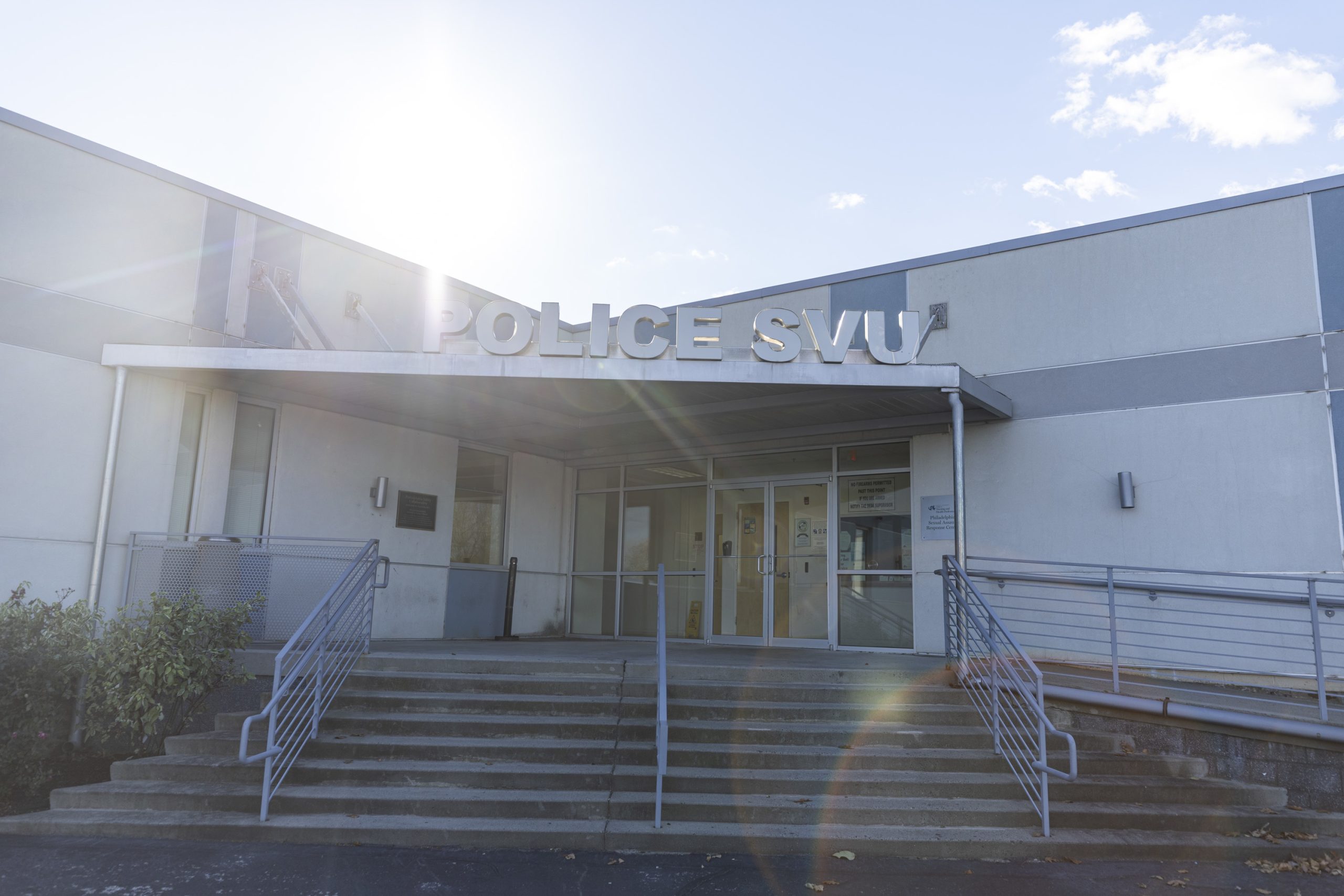
The center is located next to the Philadelphia Police Special Victims Unit, but patients are not required to report the assault to law enforcement in order to have the free exam performed.
The Police SVU where the Philadelphia Sexual Assault Response Center, in Philadelphia, Pa., on Friday Dec. 6, 2024.Tyger Williams / Staff Photographer
Founded in 2011 and initially operated by the now-shuttered Hahnemann University Hospital, PSARC has been run since 2019 by Drexel University’s College of Nursing and Health Professions. For most of that time, the operation ran on a shoestring budget.
Until last year, PSARC received no dedicated city funding. The state reimbursed Drexel about $1,000 for each patient treated, with Drexel absorbing substantial losses, according to records. The exam reimbursements can take months to flow from the state.
Brian Keech, then Drexel’s senior vice president for government relations, shared a financial analysis with city officials last year that laid out an annual shortfall averaging more than $175,000.
As Drexel cut staff and benefits across the university last year amid declining enrollment and a $63 million annual operating loss, its leaders told the Parker administration that the school could no longer manage PSARC on its own.
In a series of emails last spring, Keech pressed the city for a funding commitment for the center and warned that, without one, the university would have to tell hospitals to stop referring patients for sexual assault exams.
“We’ve begun to prepare the closure announcement,” Keech wrote in a May 20, 2025, email to Adam Geer, the city’s chief public safety director. “Obviously we’re hopeful we can avoid this scenario, but we do have to adequately prepare area hospitals that they will have to begin providing sexual assault services come July 1 if PSARC closes.”
By early June, the city had found the money.
The scramble to save PSARC
Yates-Gale, the city’s deputy managing director, said in a June 2025 email to Drexel officials that the administration had identified $250,000 in emergency funding to keep the center running.
The plan was for WOAR — the nonprofit formerly known as Women Organized Against Rape — to operate PSARC. The city would support its efforts by routing those funds to WOAR through an existing health department contract.
Meanwhile, WOAR was itself under severe financial strain amid the state budget impasse that left community organizations across Pennsylvania unfunded. WOAR’s leaders told city officials that they could not make payroll without the check from the city.
PSARC was left in limbo. The handoff deadline from Drexel to WOAR was moved from Aug. 1 to Sept. 1, with Drexel agreeing to cover an extra month of payroll to bridge the gap. Then, on Aug. 28 — three days before the already delayed transfer — WOAR’s board chair, Joanne Strauss, wrote in an email to city officials that the organization “will not be acquiring” PSARC.
She provided no reason other than saying the organization was “further evaluating the proposed transaction.”
City officials were alarmed. Within an hour, the city’s victim advocate, Adara Combs, emailed Drexel officials to say she was “deeply troubled” by the sudden shift.
Two weeks later, WOAR appeared ready to operate the center again. The group’s board of directors voted unanimously to approve the acquisition, and money from the city began flowing to WOAR to operate the rape exam center — more than $80,000 in total.
Anthony, of WOAR, said in a statement the board’s approval of the acquisition of the sexual assault center came as the nonprofit thought the state budget impasse would come to an end and was “contingent on conditions related to funding and our ability to responsibly take control of PSARC.”
“It became clear that those conditions were not resolved,” she said.
Drexel continued to pay to operate the rape crisis center, and WOAR wired the university the city funding it had received. Drexel operated PSARC, with an additional $167,000 in help from the city, until June 30.
The 15th Street entrance to Drexel University College of Nursing and Health Professions Feb. 19, 2020. The college has the largest bachelor program in the three-state region.TOM GRALISH / Staff Photographer
The back-and-forth saga highlighted a central question: Why did the city seek to transfer a critical service to WOAR despite the nonprofit’s existing financial problems?
Slovak, of the Women’s Law Project, said it made sense that WOAR stepped up to take over the center’s operations, given its mission to treat and prevent sexual violence. It is common in other cities for rape crisis centers to manage forensic exam facilities.
But overseeing hundreds of sexual assault exams each year, she said, would have been a major expansion of WOAR’s scope because it “is about more than just providing emotional support or accompaniment for survivors.”
Yates-Gale said WOAR was a natural choice to assume operations of the center. The group had an existing contract with the city and its mission aligned with that of PSARC.
“Drexel agreed to continue operations until another suitable alternative organization could be identified,” she said, “and the entirety of the funds for the program were transferred back to them.”
Britt Faulstick, a Drexel University spokesperson, said the school “worked closely with city leadership to ensure a smooth transition.”
Another failed effort to find an operator
The city’s $250,000 in emergency funding bought PSARC time. But the same question remained: Who would run it long-term, and where would they find the money?
This spring, Parker’s budget proposal, which was approved by City Council in June, included $300,000 for the center. The city put the operation out for bid, seeking an outside organization like another hospital or nonprofit to run it.
City officials met on April 13 with potential operators, including representatives from area hospitals that depend on the center, such as Temple University, the University of Pennsylvania, and Jefferson Einstein Philadelphia. Several expressed concerns about PSARC’s finances.
According to a public recording of the meeting, multiple attendees suggested that $300,000 a year in city funding would not be enough to cover PSARC’s operations and salaries for medical staff who must be available 24-7.
The exam room and desk space when patients are in at the Philadelphia Sexual Assault Response Center, in Philadelphia, Pa., on Friday Dec. 6, 2024.Tyger Williams / Staff Photographer
“This has never been something that’s been profitable, so it’s always needed another source of funds to keep it stable,” one hospital representative said. “It’s the money, right, to keep it open and to be able to run this as a service for the city and keep it maintained so you’re not back in this ‘we don’t have it’ in six months.”
Combs, the city’s victim advocate, told potential bidders that they were welcome to “reimagine” how PSARC operates and propose new funding streams.
But hospital representatives remained skeptical and pressed the city to find a different solution, citing a moral urgency.
“It would be a tremendous tragedy if we lost the resources of PSARC in the city,” said a representative from Jefferson Einstein Philadelphia Hospital.
“I think we all agree,” said Azucena Ugarte, director of the Philadelphia Office of Domestic Violence Strategies. “That’s why we’re doing this.”
But following the meeting, no one bid.
The city takes over
With no outside bid to operate Philadelphia’s only free rape exam center, the options in front of city officials were either to let it close or to take control themselves.
The city chose the latter. Parker administration officials framed it as a lasting solution.
Faulstick, of Drexel, said the school will continue to train nurses in sexual assault examination to help ensure the care is available. He said PSARC is “positioned for continued growth and long-term sustainability.”
Others have questions about the stabilization plan.
City Councilmember Nina Ahmad, who represents the city at-large and held a hearing earlier this year about PSARC funding, said that the $300,000 annual allocation to the center is likely inadequate and that she will push for more dollars in future city budgets.
Councilmember Nina Ahmad in chambers as City Council meets Dec. 11, 2025.Tom Gralish / Staff Photographer
Ahmad also said she expected more buy-in from hospitals, noting they would have been saddled with the responsibility of providing sexual assault exams if PSARC had shuttered.
“I am not surprised,” she said in an interview, “but I’m still disgusted that we have not come together on this. … This is evidence being collected, [and] this is how we prevent future rapes.”
Slovak said ensuring PSARC’s financial survival will take more than a change in management. It will require cooperation, including from hospitals, the city, and the state, to work together “so that survivors aren’t sacrificed in the budget gamesmanship.”
Still, she said, the city “can really be this positive, central, coordinating force.”
“And I do feel confident at this point,” Slovak added, that the center “is going to move in a good direction from here.”
The phone rang at lunchtime, the way it did every day. Carisia Magobet answered within seconds.
An automated voice spoke first: This call is from a Pennsylvania state correctional institution.
Then his.
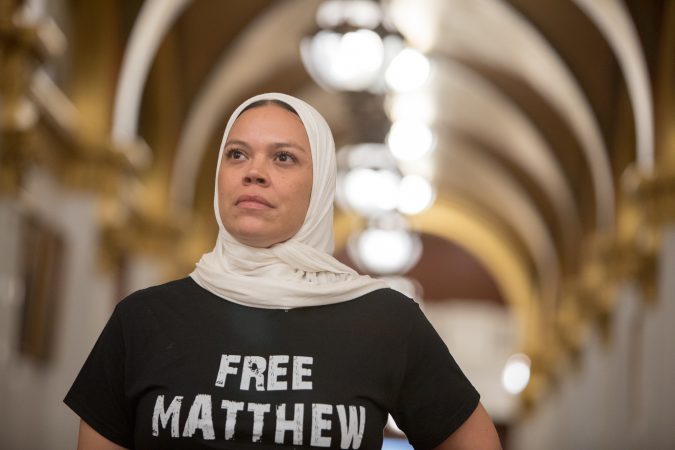
“May the peace, mercy, and blessings of Allah be with you, my love,” Matthew Garcia said in Arabic.
They had only 15 minutes, and for once, Magobet did not spend the first of them on small talk. There was no good way to tell him what she knew: State lawmakers had gone home the night before without taking the vote that the couple had hoped would bring him home.
Garcia was 18 in 1998 when he and four friends set out to rob a Hunting Park bar. He said he was the lookout and did not have a gun.
One of the teens pointed a sawed-off shotgun at a bartender and demanded cash. A retired Philadelphia police officer, Frank King, was inside the bar and grabbed for the gun. Another teen shot him with a pistol. King died on the floor.
By that time, Garcia said, he had already run.
It didn’t matter.
All five were convicted of second-degree murder — a killing committed during a felony, no matter who pulled the trigger — and sentenced to the only punishment Pennsylvania law allowed: life without the possibility of parole.
Magobet, who had known Garcia since they were kids in Hunting Park, was in the courtroom on June 21, 2000, the day he was sentenced. For decades, they did not see each other again.
Then, about two years ago, she found Garcia’s Facebook account, where he shared his writing and his work inside State Correctional Institution-Chester, the prison he called home. She reached out.
Garcia told her about a case before the Pennsylvania Supreme Court that could mean freedom for people serving life sentences in cases like his.
Derek Lee, a Pittsburgh man sentenced to life in prison for his role in a fatal robbery in which a coconspirator fired the fatal shot, had challenged the mandatory punishment as unconstitutional, saying it failed to account for individual culpability.
In March — six months after Magobet and Garcia wed in a prison visiting room — the high court struck down mandatory life sentences for second-degree murder.
It gave lawmakers until July 24 to write new sentencing guidelines for future cases and determine how, or whether, the ruling would apply to the roughly 1,100 Pennsylvanians already serving that sentence.
The stalemate places in limbo everything Magobet, 40, and Garcia, 45, have spent the last two years assembling in anticipation of a freedom both yearn for but neither can control.
Building together
She loved him first.
Magobet was 13 when Garcia’s sister got married and they were both in the wedding party. He was supposed to walk her down the aisle. But at the last minute, the pairs were swapped, and she walked with his brother instead. Magobet decided, quietly, that she was owed that walk one day.
She never told him. Not before his arrest, not for years after he went to prison. She found his social media accounts and saw what his life had become in prison.
He had earned college credits, started programs for young people, and launched a podcast to share his story.
In a prison foster-cat program, Garcia adopted a calico, named her Lil Mama, and fed her until the name stopped fitting. “It’s not Lil Mama now,” he said in a recent interview. “It’s Fat Mama.”
Prison reform advocate Carisia Magobet shows photos of her husband, Matthew Garcia, who is serving a life sentence for second-degree murder, at her home in Northeast Philadelphia.Sarah Silbiger / For The Inquirer
The orange-and-black foster fail appeared often in Instagram photos. In one, a full-bearded Garcia wrote: “Me and Lil Mama, patiently waiting on our moment.”
By then, Magobet had four children, a house, a dental office she managed by day, and a commercial cleaning business she ran at night. Yet she found herself thinking often about Garcia. Seeing him there — older, broader, smiling beside a chubby cat — made him less a memory and more real. She emailed him.
Not long after, she took over his social media accounts.
Together, they began building a growing audience for Garcia’s work, a network of supporters, and, eventually, a life that felt shared despite the prison walls that separated them.
She posted his poetry. She built a website explaining the Lee case and a guide to contacting lawmakers about sentencing reform. He wrote children’s books, including one about Lil Mama that Magobet’s 21-year-old daughter, a digital arts student, illustrated.
A chance for ‘FREEDOM’
Garcia proposed on Aug. 1, three months after they reconnected. But it didn’t feel fast to Magobet. She had been carrying that moment since the wedding party.
They wed on Aug. 23. She is still waiting on prison paperwork to make it legal. But to them, Magobet said, it’s official.
Matthew Garcia and Lil Mama.Courtesy of Carisia Magobet.
He calls at least four times each day — when his cell door opens at 7 a.m., at lunch, after his work shift at the prison’s reentry program, at night. Each call lasts 15 minutes, the maximum allowed under prison policy, plus six video calls and four in-person visits a month.
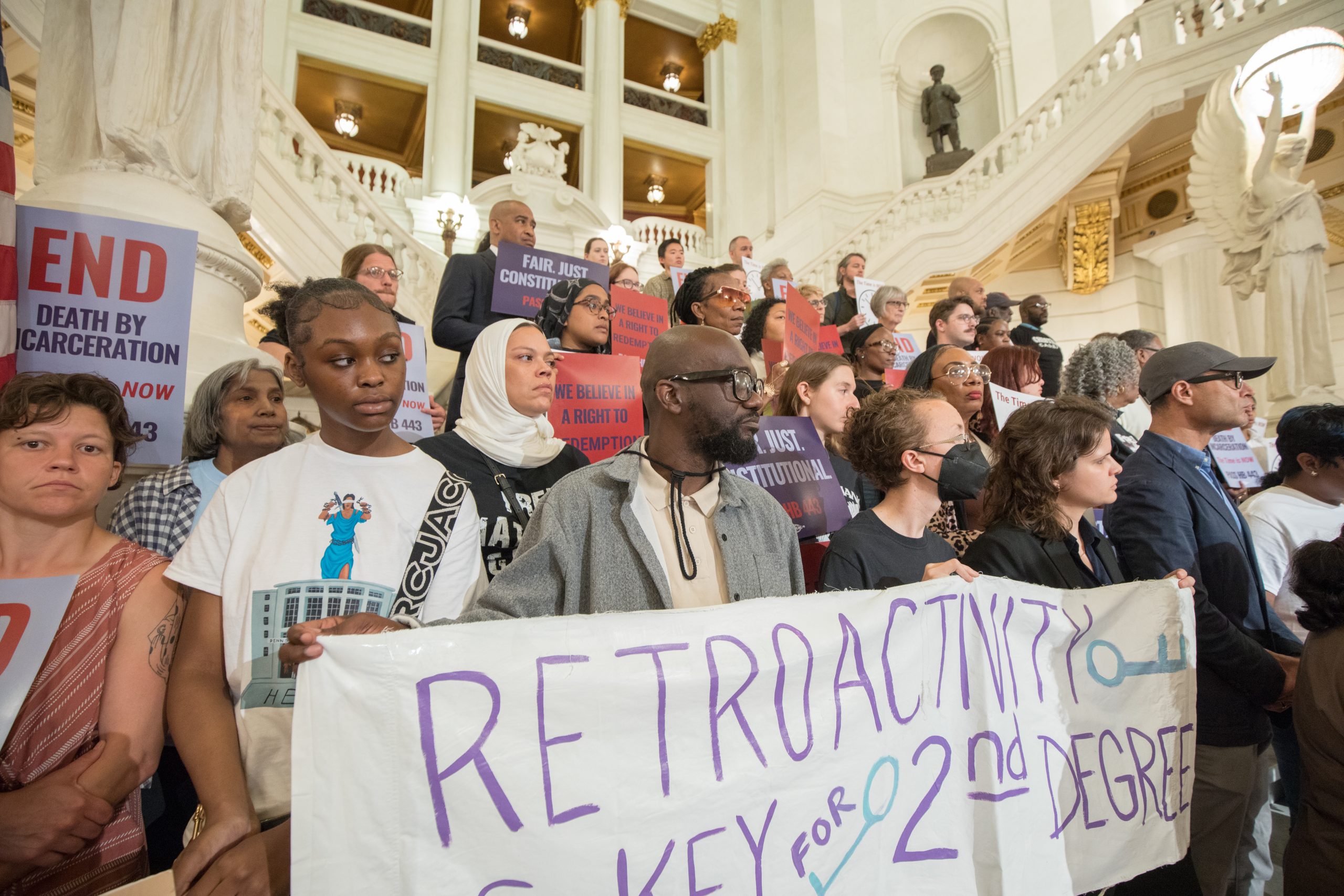
On a video call last month, the couple discussed Magobet’s plan to join other families, formerly incarcerated people, and advocates in Harrisburg to support legislation in response to the high court’s decision that would allow people like Garcia to seek parole after serving at least 25 years. Not guaranteed release, but a chance to make their case.
She told him about a poster she had printed to bring, with a photo of him holding Lil Mama and “FREEDOM” written in all capital letters. She had ordered a custom T-shirt, too, but it had not arrived yet.
“Will it come in time for Monday” for the trip to the Capitol? Garcia asked.
The call cut out before she could answer.
‘Do your job and legislate’
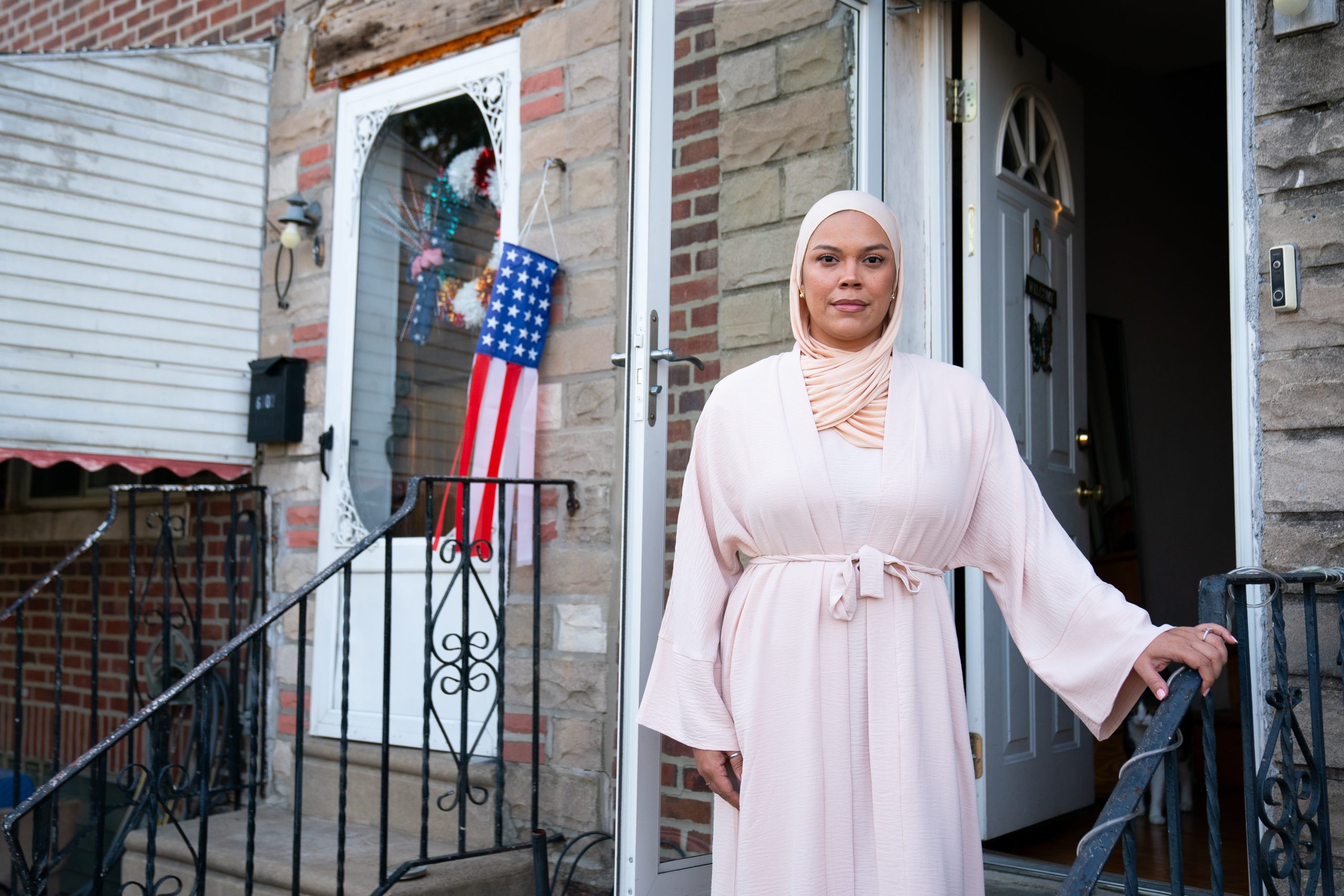
Carisia Magobet participates in a rally at the state Capitol in Harrisburg.Kalim A. Bhatti / For The Inquirer
Magobet wore the T-shirt to Harrisburg two days later.
Beneath the Capitol rotunda, Magobet met Saleem Holbrook, the executive director of the Abolitionist Law Center, which represented Lee before the Supreme Court. He told Magobet he knew Garcia from their years in prison together.
“If there’s a person who’s earned being able to come home,” he said, “it’s Matt.”
In State Rep. Nikki Rivera’s office, Magobet read a speech from her phone. Her voice broke only once, when she told Rivera (D., Lancaster) that Garcia was her husband.
In the lobby of House Majority Leader Matt Bradford’s office, Magobet joined several others in a chant — “the time is getting late, do your job and legislate!” — that prompted the Montgomery County Democrat’s chief of staff to take Magobet and another person back to her office. The staffer had listened, Magobet said, promised nothing, and blamed the other side.
But Lil Mama made her laugh.
“The cat gets everyone,” Magobet said afterward. “We gotta get Lil Mama T-shirts for next time.”
Holding onto hope
Five weeks later, there was no next time to plan for.
Magobet learned that lawmakers adjourned July 12 without voting on the Democratic-sponsored measure she had supported, or the stricter Republican proposal.
She told Garcia on a phone call, and before the 15 minutes were up, he told her he couldn’t keep talking. It was the first time he had ever done that, she said.
A new measure, introduced by Democrats in an emergency session last week, did not earn a vote in the Senate.
The Supreme Court’s 120-day stay on new sentencings in second-degree murder cases expired on Friday, and judges can again hand out life sentences to people convicted of second-degree murder, but only in limited circumstances. But without a new law, there are no mandatory minimums or clear guidelines.
In the meantime, the next chapter will likely unfold in the courts for the more than 1,000 people already serving mandatory life sentences.
Bret Grote, an attorney with the Abolitionist Law Center who represented Lee in the Supreme Court case, said the high court has been asked in a separate case to determine whether the ruling applies retroactively.
He called the situation “a constitutional crisis.” But even under the most optimistic timeline, he said, a resolution could take years.
In the meantime, attorneys expect a wave of challenges from incarcerated people seeking relief. More than half of those serving the sentences are from Philadelphia.
Garcia said he will meet with his attorney to determine his next steps.
Prison reform advocate Carisia Magobet poses for a portrait at her home in Northeast Philadelphia.Sarah Silbiger / For The Inquirer
Magobet said she is holding on to hope — for the smaller things.
Walks together.
Coffee he brewed waiting for her in the morning.
Afternoons at a pool. (Garcia has not been in water deeper than a shower in nearly three decades.)
For months they talked about those plans as though they were approaching.
A Philadelphia man has been charged with fatally gunning down another man three years ago on a North Philadelphia street, authorities said Thursday.
A grand jury on Wednesday indicted Richard Pridgen, 21, on charges of murder, attempted murder, and related crimes for the 2023 shooting death of George Smith, according to the Pennsylvania Attorney General’s Office.
The case marks the third time state prosecutors have charged Pridgen with murder. He is currently serving a 17-year federal prison sentence for a separate crime.
In a news release Thursday, state prosecutors said Pridgen is a member of the “Backblock” gang, a violent North Philadelphia group that has been at the center of joint investigations by the attorney general’s office, the Philadelphia Police Department, and the federal Bureau of Alcohol, Tobacco, Firearms and Explosives for years.
Just before midnight on April 22, 2023, two people attacked Smith, 27, in the 2400 block of North 17th Street, state prosecutors said. Surveillance cameras captured the killing, and showed one of the men — whom state prosecutors identified as Pridgen — firing multiple shots into Smith’s body before fleeing in a vehicle driven by a third person.
That vehicle, state prosecutors said, had been stolen at gunpoint the day before in the 2500 block of East Monmouth Street, less than four miles away.
The two other homicides Pridgen is accused of committing also occurred in 2023 in Philadelphia, state prosecutors said.
In one case, Pridgen is accused of shooting Hassan German, 31, and another man, who survived, on May 24, 2023, at the intersection of North Gratz Street and Susquehanna Avenue in North Philadelphia. The details of the other case were not immediately available on Thursday.
“There are public dangers, and then there is Richard Pridgen — for whom killing, stealing, and harming people is a way of life,” Pennsylvania Attorney General Dave Sunday said in the news release.
Pridgen has pleaded not guilty in both prior murder cases.
A spokesperson for the Defender Association of Philadelphia, which is representing Pridgen in those cases, declined to comment.
In February, Pridgen was convicted in federal court of two carjackings and sentenced to more than 17 years in federal prison.
In the carjackings — which also took place in 2023 in Philadelphia — Pridgen robbed two men of their vehicles at gunpoint, federal prosecutors said. Neither man was injured.
A handyman who worked in homes across southeastern Pennsylvania raped and sexually assaulted children and unconscious women, and produced a vast collection of photographs and videos documenting his crimes, Chester County prosecutors said Monday.
David Vincent Rosa, 54, faces more than 300 charges, including rape of a child, aggravated indecent assault of a child, and hundreds of counts tied to creating and disseminating child pornography, according to the affidavit of probable cause for his arrest.
Rosa, a transient handyman and housepainter whose last known address was in Chester County, used his work to gain entry into homes and prey on the people inside them, investigators said.
He recorded the attacks, they said, amassing a digital trail of evidence that spans a period of several years.
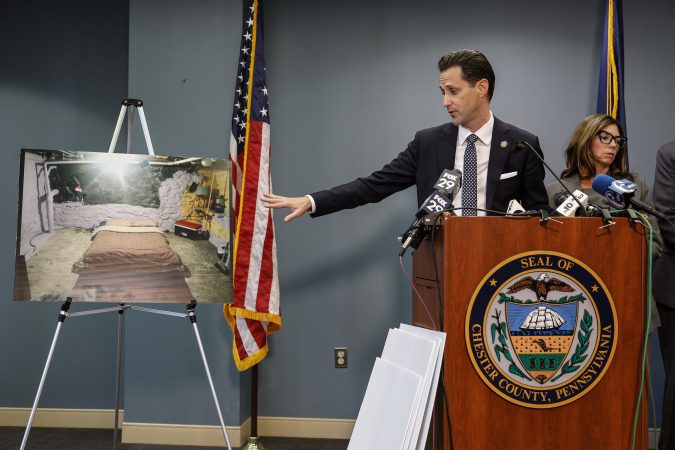
“It is one of the most terrifying sexual assault cases that we have come across in some time,” Chester County District Attorney Christopher de Barrena-Sarobe said in a news conference Monday.
Chester County District Attorney Christopher de Barrena-Sarobe holds a news conference on Monday to announce charges against David Vincent Rosa.Steven M. Falk / For The Inquirer
The charges stem largely from two videos investigators discovered on a phone they said belongs to Rosa. In one, a man investigators identified as Rosa filmed himself touching a young girl. A second clip, also of Rosa, they said, depicts the rape of a child.
But the case has widened beyond those recordings: Stored on Rosa’s devices and in his accounts, de Barrena-Sarobe said, investigators also found videos of him sexually assaulting additional children and women.
The women “appear to be unconscious” in the videos, de Barrena-Sarobe said, and “they may not know that they have been victimized.”
The children in the videos appear to be younger than 10 years old, he said. De Barrena-Sarobe declined to say exactly how many victims appear in the recordings, saying only that they showed “multiple” women and children. The videos and images are dated from 2017 to 2024, he said.
Investigators traced recent logins to a Comcast account in West Whiteland Township, where records indicated Rosa lived, according to the affidavit. They also identified Rosa as the man seen in multiple images, the document said.
Chester County and West Whitefield Township authorities began investigating Rosa in March, after receiving three dozen cybertips that child sexual abuse materials had been uploaded to Google accounts. The tips — reported by Google and routed through a regional Internet Crimes Against Children task force — involved six email accounts containing hundreds of images and videos depicting the sexual abuse of girls as young as 2, investigators said.
In April, authorities searched Rosa’s home, where they found a cell phone with a video matching the materials reported in the cybertips, according to the affidavit.
Rosa was arrested April 2 and charged with 100 counts of child pornography, court records show.
He has been held in Chester County Prison since then, unable to post bail, de Barrena-Sarobe said.
Prosecutors filed hundreds of additional charges last week, after investigators extracted files from Rosa’s phone and interviewed witnesses who identified one of the children.
More than 1,000 still images captured from the videos were recovered from Rosa’s phone, investigators said, and records provided by Google showed the videos were shared more than 50 times on the company’s chat app.
Investigators also said in the affidavit that they recognized Rosa’s voice in both videos after speaking with him during his arrest and in a recorded interview.
Detectives identified the first child victim in early June, after interviewing a woman who identified Rosa and the child from still images, according to the affidavit. The woman told investigators that Rosa had stayed for about a week at a Wind Gap home where she and the child lived in 2022. He was doing painting work at the house, she said.
She described two incidents that had alarmed the household: Rosa was once discovered in a basement crawl space with the child, she told investigators, and another time, the girl was found in bed with him under a blanket. It was unclear whether anyone had reported either incident to authorities at the time.
That account matches the pattern investigators now fear extends further. Rosa lived throughout the region and has previous arrests in Philadelphia, Allentown, Malvern, and Saylorsburg, de Barrena-Sarobe said.
Investigators are asking anyone who hired him — or knows someone who did — over the last 10 years to come forward.
David Vincent Rosa is pictured in photos shared by Chester County prosecutors on Monday.Steven M. Falk / For The Inquirer
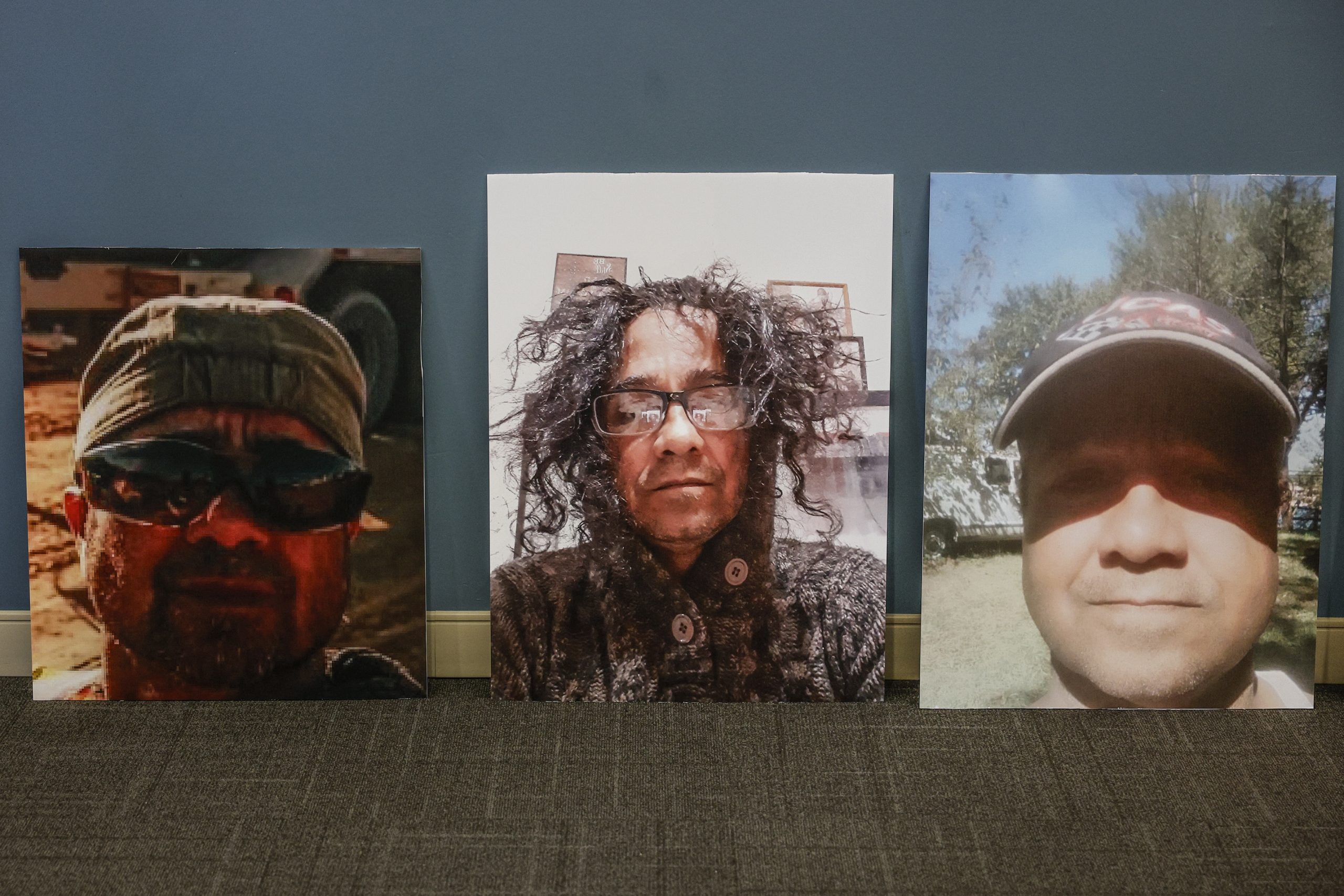
Prosecutors released a series of photographs showing Rosa’s changing appearance over the years, along with an image of a room they are trying to locate: what appears to be an unfinished basement with a bed covered in rust-colored bed linens, where investigators say some of Rosa’s crimes were committed.
Authorities described Rosa as 5-foot-4 and weighing about 150 pounds.
Although de Barrena-Sarobe said Rosa is presumed innocent until proven otherwise, he added that “we strongly feel like this was a predator that was out in our region creating and destroying lives.”
Rosa’s attorney did not return a phone call Monday afternoon.
Anyone with information is asked to contact the Chester County Detectives at 610-344-6866.
The Philadelphia District Attorney’s Office has asked a state appeals court to block the Pennsylvania Attorney General’s Office from reopening a case that freed three men who spent nearly 30 years in prison for murder, saying state officials are overstepping their authority.
The request is the latest chapter in a legal fight over the scope of the attorney general’s newly expanded power in Philadelphia post-conviction cases. The dispute could determine whether the office can step in only before a judge acts — or whether it can challenge closed cases that are still within the window for appeal.
Common Pleas Court Judge Jennifer Schultz vacated the convictions of Marc Brittingham, Jermal Shuler, and Rasheed Turner in the 1997 killing of Essie Mae Thomas in May, after Philadelphia prosecutors and defense attorneys presented newly uncovered evidence that she said undermined confidence in the jury’s verdict.
The district attorney’s office declined to retry the men, and they were released from prison after 28 years.
Weeks later, after the Pennsylvania Supreme Court issued a landmark decision expanding the attorney general’s role in Philadelphia post-conviction cases, state prosecutors sought to intervene and appeal Schultz’s ruling.
In a motion filed Friday, the district attorney’s office said state prosecutors are twisting the high court’s decision and trying to bypass longstanding rules.
The decision gives the attorney general’s office the chance to weigh in before a judge grants a request supported by prosecutors to change a past conviction or sentence.
But Schultz issued her ruling in the men’s case weeks before the high court’s decision, and the window for state intervention had already closed, prosecutors Matthew Stiegler and Rebecca McDonald wrote in Friday’s filing.
In that interview, Sunday said that cases in which people have already been released from prison “are done.”
Attorneys for Brittingham, Shuler, and Turner made similar arguments in separate filings. They have also argued that reopening the case would unfairly upend the lives the men have begun rebuilding since their release.
The men were convicted of murder in 1998, a year after Thomas, 73, was found stabbed to death in her North Philadelphia home. But the testimony of the lone witness who placed them at the scene was discredited after new evidence upended Thomas’ time of death.
A spokesperson for the attorney general’s office did not immediately respond to a request for comment Friday.
In earlier court filings, the attorney general’s office has taken a different view, writing that the high court’s decision gave state prosecutors the right to independently review Philadelphia cases — even if a judge ruled before the office had an opportunity to participate.
And in his interview with the Inquirer, Sunday also said his office would “have to take a look” at “cases that are still going through the appellate process.”
Philadelphia prosecutors contend that the Supreme Court has already rejected that reasoning, citing past decisions in which justices said that a case is closed with a judge’s final order — regardless of whether the deadline to appeal has expired.
The attorney general’s office has not challenged the newly discovered evidence that prompted the district attorney’s office to support vacating the convictions.
That evidence included information about the disciplinary history of Bennett Preston, a former assistant medical examiner whose trial testimony about Thomas’ time of death helped to corroborate the account of the only witness who linked the men to the killing. Two independent forensic pathologists later concluded Preston had incorrectly estimated when Thomas died. The experts said Thomas was likely killed as many as two days later than Preston had said.
State prosecutors, however, said they found “troubling inconsistencies” between the findings of Preston and the other pathologists, and believe the case warrants review.
A bus program that shuttles families to Pennsylvania’s far-flung state prisons will soon resume a full schedule of trips after lawmakers approved $600,000 for the service in the state budget, restoring a level of operation the program had not seen since before the pandemic.
The funding followed months of behind-the-scenes lobbying by the Pennsylvania Prison Society, the nonprofit that runs the program. The organization said the money will allow buses to travel to every state prison every other month, a substantial expansion from the patchwork of limited pilot routes it has operated in recent years with short-term funding. The money will also allow the society to add departures from Pittsburgh for the first time, beginning next year.
For nearly two decades, the buses have carried thousands of relatives to prisons scattered across rural Pennsylvania, many of them hours away and virtually impossible to reach without a car. Advocates say restoring the service will preserve those family connections while expanding access to people in Western Pennsylvania.
“Keeping your family whole is really challenged by incarceration,” said Claire Shubik-Richards, the prison society’s executive director. “This program keeps families connected.”
Still, the funding covers only one year, meaning advocates will likely have to fight for it again next budget season. “This is a victory for today,” Shubik-Richards said, “but we always need to be working to ensure that it can go forward into the future.”
The program had operated continuously with funding from the Pennsylvania Department of Corrections. But during the pandemic, the prison system suspended in-person visits and stopped paying for the bus program. When visits resumed, the money for the buses did not.
For Yvonne Newkirk, 72, the service had become a lifeline. She began riding the buses about a dozen years ago to visit her daughter, Stacey, at the state prison in Muncy, three hours from her West Philadelphia home. Stacey Newkirk, 55, is serving a life sentence for third-degree murder, and her mother said she took the bus to visit her six times a year — every route offered to that prison.
When the service was suspended, Newkirk said, she relied on relatives to drive her. The trips required them to take time off work, and Newkirk paid for gas, tolls, and their lost wages — far more than the bus fare she had once paid.
Newkirk said she was overjoyed to learn the service had been funded for another year. She has not told her daughter yet. Instead, she said, she plans to share the news in person later this month on one of the program’s trips. “I know she’s just going to be really ecstatic,” she said.
Her daughter, she said, often tells her not to visit so frequently because of the long journey.
“But at my age, I told her, ‘I’m going to come as much as I can because there’s going to be one point in time where I will not be able to make it up there,’” Newkirk said.
Four trips from Philadelphia to prisons are scheduled for the fall. Shubik-Richards said service will expand gradually, with the first Pittsburgh routes expected in early 2027.
Families take a three-and-a-half-hour bus ride to visit their love ones at SCI Benner in Bellefonte, Pennsylvania. Jose F. Moreno / Staff Photographer
Even with funding secured, the expansion poses logistical hurdles. The society must find a coach company willing to operate the Pittsburgh routes, a task its staffers say has become difficult as the number of bus operators has shrunk and costs have risen.
The bus trips also create challenges inside the prisons. On bus-visit days, visitation resources are largely devoted to the program’s families — dozens of visitors at once.
Kirstin Cornnell, the prison society’s family and community support director, said she is working with prison officials to schedule trips on days with lighter visitation and determine the most “responsible way to scale up.”
While the prison system has faced staffing shortages, its spokesperson, Maria Bivens, said Thursday that “existing resources” would be used to make the program work.
Pennsylvania prisons facilitated more than 1 million visits last year — most of them virtual, she said. “While research has shown that video visits provide the same recidivism-reducing benefits as in-person visitation,” she said, ”this program eliminates a barrier to in-person visitation for families who lack the resources, reliable transportation, or ability to travel long distances to correctional facilities.”
Lawmakers carved the $600,000 from a larger appropriation to the Pennsylvania Commission on Crime and Delinquency. Advocates called it a hard-fought win during a budget season marked by intense scrutiny of state spending.
Two of the program’s strongest supporters, State Reps. Jordan Harris (D., Philadelphia) and Emily Kinkead (D., Pittsburgh), said in interviews that they backed the funding because maintaining family ties improves public safety. Research has found that incarcerated people with strong family connections are less likely to commit violence in prison or return after release, they said.
Harris, the House Appropriations Committee chairman, said the consequences of incarceration extend beyond the person convicted.
“It also affects their family,” he said.
He added that the program helps preserve relationships and gives people returning home the support they need to successfully reenter their communities.
“While I make no apologies for a crime that may have been committed, that doesn’t mean that we dehumanize that person,” he said. “It doesn’t mean that person’s family doesn’t still feel the brunt of that pain. And it doesn’t mean that we still shouldn’t allow children to have relationships with their parents who may be behind bars.”
State lawmakers left Harrisburg on Sunday without approving a new sentencing structure for second-degree murder convictions, all but ensuring Pennsylvania will miss a court-imposed deadline to replace a law the state’s highest court struck down as unconstitutional because it barred judges from weighing individual culpability.
The legislature’s failure makes it exceedingly likely that judges across Pennsylvania will soon have to sentence people convicted of second-degree murder without a legislatively enacted sentencing range to guide them. It also sets the stage for what is expected to be years of litigation over the roughly 1,100 people already serving mandatory life-without-parole sentences.
The political stalemate leaves thousands of people — incarcerated Pennsylvanians, victims’ families, and attorneys — waiting to learn what happens next.
“In the absence of a law, there’s going to be a lot of chaos and a lot of confusion,” said Sean Damon, director of strategic partnerships for Straight Ahead, a decarceration advocacy organization.
Gov. Josh Shapiro said Sunday that he agreed with the Supreme Court’s decision striking down the mandatory sentencing law as unconstitutional, but had hoped lawmakers would reach a compromise before leaving Harrisburg.
Shapiro said he spent much of the final two days of session trying to bridge the divide between House Democrats and Senate Republicans. Though no agreement emerged, he said that House procedural maneuvering left a legislative vehicle available should negotiators eventually strike a deal before a July 24 deadline to rewrite thelaw.
“I’d like to see the legislature act on this and not just leave it up to every individual county to act,” Shapiro said.
‘Someone’s going to need to act’
Until the Pennsylvania Supreme Court ruling in March, the state was one of only two that still required life without parole for every second-degree murder conviction — a category of homicide that generally applies to deaths committed during certain felonies, including cases in which a defendant played a role in the crime that led to the death.
In their decision, the justices said courts must consider the facts of each case and the defendant’s culpability before deciding on a punishment.
But the high court stopped short of deciding whether its ruling applies retroactively to people already serving those sentences. And it delayed implementing its decision for 120 days to give lawmakers time to rewrite the law.
Since March, judges across the state have postponed sentencing defendants convicted of second-degree murder while awaiting action from the General Assembly.
That action never came.
Lawmakers adjourned for the summer with 12 days remaining before the Supreme Court’s stay expires and with no realistic path toward a compromise. Republicans and Democrats spent months advancing competing visions for replacing the unconstitutional law but failed to bridge deep disagreements.
Senate Republicans twice approved legislation that would replace the mandatory sentence with a minimum term of 35 years to life, allowing parole eligibility after 35 years — or after 20 years for prisoners at least 70 years old.
House Democrats backed legislation that would cap future second-degree murder sentences at 50 years while allowing many people already serving mandatory life-without-parole sentences to seek parole after 25 years. The proposal, supported by the Philadelphia Bar Association, the Defender Association of Philadelphia, and District Attorney Larry Krasner, never advanced to a vote in the House.
House Majority Leader Matt Bradford (D., Montgomery) said Sunday that Democrats have a legislative path prepared, so when they reach an agreement they can swiftly pass it and send it to Shapiro’s desk.
Asked whether that could happen before July 24 despite no additional voting days currently scheduled, Bradford replied: “We’re hoping to get something accomplished.”
Republican Attorney General Dave Sunday urged lawmakers this weekend to reach an agreement before the deadline, warning that failing to enact a new sentencing law would leave courts without clear guidance and could allow some people now serving life-without-parole sentences to become immediately eligible for release.
“It is dangerously inadequate for the House to allow the deadline to pass without a substantive and realistic proposal that includes sensible sentencing ranges with the option of a life sentence for the most serious offenders and protections for the victims of these horrible crimes,” Sunday said.
Sen. Wayne Langerholc (R., Cambria) voiced similar concerns during a committee meeting Saturday.
“Someone’s going to need to act in the House, or else this risks 1,100 violent offenders being released onto the streets of our commonwealth that we cannot afford to have,” he said.
A ‘free-for-all in the courts’
The Supreme Court cannot create a new sentencing range itself because establishing criminal penalties is the legislature’s responsibility. But advocates say Pennsylvania has already faced a similar situation.
After the U.S. Supreme Court ruled in 2012 that mandatory life-without-parole sentences for juveniles were unconstitutional, Pennsylvania enacted a new sentencing law that applied only to future cases. Four years later, when the high court ruled that decision applied retroactively, judges had to resentence hundreds of incarcerated people without legislative guidance.
Many attorneys expect a similar pattern after July 24. Judges will continue sentencing people convicted of second-degree murder on a case-by-case basis until lawmakers or appellate courts provide clearer direction. At the same time, attorneys representing people already serving mandatory life-without-parole sentences are expected to begin seeking new sentencing hearings.
Because the Pennsylvania Supreme Court did not decide whether the decision applies retroactively, that question is also expected to return to the justices.
“We reasonably believe that if this matter is brought to them [the justices] again, they will mandate mass resentencing,” said Damon, of Straight Ahead.
Some criminal justice advocates argue that individualized sentencing hearings before judges are preferable to replacing one mandatory sentencing scheme with another because judges are better positioned to weigh a person’s role in a crime, rehabilitation while incarcerated, and risk to public safety.
“Even though it will be a free-for-all in the courts,” said Celeste Trusty, a consultant for criminal legal reform organizations and former state legislative affairs director of FAMM, “people serving the now-unconstitutional mandatory life-without-parole sentences would also likely fare better” under individualized resentencing than under the failed bill.
Even so, the absence of a statewide framework is likely to place enormous demands on courts, prosecutors, and public defenders, particularly in Philadelphia, where more than 500 people are serving mandatory life-without-parole sentences for second-degree murder — about half the statewide total.
Keisha Hudson, chief defender of the Defender Association of Philadelphia, estimated each resentencing would require about $40,000 in attorney time, investigators, mitigation specialists, and other resources — roughly $24 million if every potentially eligible Philadelphia case returned to court.
She said defenders are expected to shoulder much of that work but lack the resources to handle the oldest cases, including about 30 that predate the creation of the office’s homicide unit in 1993.
Philadelphia District Attorney Larry Krasner did not respond to an interview request.
Police officers in one of Philadelphia’s largest districts frequently failed to activate their body-worn cameras during encounters that department policy required them to record, according to a new audit by the Citizens Police Oversight Commission.
The commission’s review of a random sample of 125 police incidents in North Philadelphia’s 22nd District found that officers recorded only 23 of 83 encounters that required camera footage.
The findings, released Wednesday, mark the final report in a series of audits examining body-worn camera compliance in four police districts across Philadelphia. Of the districts reviewed, the 22nd had the lowest rate of required recordings, raising concerns about whether one of the department’s primary accountability tools is being used consistently in the field, the commission said.
Janine Zajac, the commission’s director of auditing, policy, and research, said body-worn cameras are intended to provide accountability for both officers and the public. “It feels concerning when a really important tool for accountability isn’t being used,” she said.
The 22nd District, which spans neighborhoods includingYorktown, Strawberry Mansion, and Brewerytown, was selected alongside the 24th, 18th, and 15th Districts as part of an audit series designed to examine camera use across different parts of the city. The districts were chosen for their geographic diversity, activity levels, and the volume of complaints the commission receives from residents, Zajac said.
The audits looked at several measures of compliance with the department’s policy, including whether officers activated cameras when required, whether all officers on a scene recorded, and whether footage captured the full encounter.
Performance varied across the districts, said Michael Tooley Jr., a senior analyst for the commission. But the 22nd District stood out, he said: Officers recorded only 28% of incidents requiring footage, compared with 62% in the 18th District and 73% in the 15th District, and 88% of vehicle stops in the 24th District.
The commission reviewed incidents from April and June 2025 in the 22nd District, while the other audits examined a single month. Tooley said the commission expanded its review in the 22nd District because so few camera recordings were available from the first month requested.
The missed recordings occurred most often during investigations of premises — a category that includes domestic incidents, minor disturbances, and weapons-related calls — the review found, while vehicle stops and safety checks made up the second-largest share of incidents with absent videos.
The audit found that once officers turned their cameras on, they generally followed department procedures. Of the recordings reviewed, 91% captured the full duration of the encounter, 88% showed proper activation from standby mode, and 97% were correctly labeled and categorized.
Sgt. Eric Gripp said, a police spokesperson, the department takes the findings seriously. “Any instance in which an officer fails to activate a body-worn camera when required is inconsistent with department policy and our expectations,” he said.
Gripp noted that the 22nd District is one of the city’s busiest police districts, generating tens of thousands of body-worn camera recordings each year as officers respond to a high volume of calls and other interactions. While “that workload does not lessen our expectations for policy compliance,” he said, “it does highlight the scale of the body-worn camera program” and the demands placed on officers in the district.
City Councilmember Jeffrey Young, whose district includes much of the area served by the 22nd District, said the audit’s findings underscore the importance of adhering to body-worn camera policies, which “exist to protect everyone involved.”
He added: “I have confidence in [the department’s] ability to address these findings with transparency and professionalism.”
The audits of other districts revealed different weaknesses. In the 24th District, the commission found that nearly four in 10 videos failed to capture the entire traffic stop and that backup officers frequently did not record. In the 15th District, auditors found that officers often powered cameras completely off instead of leaving them in standby mode.
The 18th District in West Philadelphia posted some of the strongest results, with 98% standby-mode compliance and no video-labeling errors.
Joseph Giacalone, an adjunct professor at John Jay College of Criminal Justice and a retired sergeant with the New York City Police Department, said officers often arrive at chaotic scenes where remembering to activate a body-worn camera might not be their first instinct.
“It’s just not a natural thing,” he said.
But he also said departments must find ways to make camera activation routine because the footage can benefit both officers and the public. “Those videos provide better insight into what the police actually do — and most of the time, they’re right when they’re doing it,” he said.
Paula Sen, who coleads the Defender Association of Philadelphia’s police accountability unit and has conducted reviews of officers’ body-worn camera usage, said the footage is equally important for defendants and defense attorneys.
“Every attorney in this office watches hundreds to thousands of body-worn cameras each year,” Sen said. The recordings provide objective evidence that can contradict an officer’s account of an incident, she said, and help defense attorneys successfully challenge evidence in court.
Zajac said police department officials were receptive when the commission shared its findings and recommendations in May, with district leaders expressing interest in better understanding what might be preventing officers from properly using the cameras.
Gripp said the department continues to reinforce its body-worn camera policy through roll-call reminders, additional training, and supervisory oversight. Supervisors are expected to review footage, reinforce compliance, and address deficiencies when they are identified, he said.
Since launching its body-worn cameras more than a decade ago, Gripp said, the department has recorded millions of interactions. “Like any large-scale accountability program, our responsibility is to continually evaluate performance, identify opportunities for improvement, and strengthen compliance,” he said.
Clarification: A quote about the number of body-worn cameras viewed by the Defender Association of Philadelphia has been updated.
Federal prosecutors on Thursday formally indicted Eugene Albert Horsch, the Olney man at the center of a widening investigation into the disappearance of at least two women, on charges that he illegally possessed firearms and fake federal law enforcement credentials.
The two-count indictment accuses Horsch, 44, of possessing two loaded firearms despite having been convicted of a prior felony, which bars him from having guns. It also alleges that he had “fraudulent identification documents” that appeared to have been issued by the Drug Enforcement Administration and the Federal Bureau of Investigation, but that neither agency had produced.
The indictment stems from Horsch’s arrest on June 19. On that day, U.S. Park Police officers recovered two loaded firearms — a .38 Special revolver with an obliterated serial number and a Taurus .40-caliber semiautomatic pistol — from beneath a front seat of his black BMW, which was parked in a restricted area near Independence Hall in Center City, according to court records.
Officers said they also recovered counterfeit DEA credentials from the vehicle. And later, during a search of Horsch’s home in the 400 block of West Chew Avenue, federal and local authorities uncovered fraudulent FBI credentials and a desktop computer that may have been “used to facilitate” the fake documents, according to the indictment.
Horsch has remained in federal custody since his initial appearance in U.S. District Court last month, after a magistrate judge ordered him detained pending a trial.
Horsch’s attorney, Jerome Brown, said this week: “We believe Mr Horsch is innocent.”
The federal case has unfolded alongside a broader investigation that began after Horsch’s arrest. Authorities searching his deteriorating twin home found another firearm, equipment used to grow marijuana, barrels of chemicals, ashes of least one relative, documents connected to two women who have been missing for years, and an unsigned, handwritten letter describing violence and referencing serial killer Ted Bundy, officials have said.
Investigators have said they have not found human remains at the property, but found a “significant” amount of blood. They have continued examining evidence recovered from the home as they search for any possible links between Horsch and the disappearances of Blair Tonzelli, who was reported missing in 2023, and Amy McHale, his father’s former wife, who was last heard from at the Olney property in 2016.
Brown previously said he did not believe his client had harmed either woman.
“I’d be shocked if [police] found any harm related to those missing persons at that location,” Brown said after Horsch’s detention hearing.
Staff writer Ryan W. Briggs contributed to this article.