Author: Jillian Kramer

  • Two dead in weekend shootings, even as city’s homicide decline continues

    Two dead in weekend shootings, even as city’s homicide decline continues

    Two men were killed in separate shootings over the weekend in Philadelphia, police said, adding to the homicide toll in the city even as it continues to see a sharp decline in deadly violence.

    The killings occurred within hours of each other late Saturday and early Sunday. Investigators have not publicly identified the victims or released a motive in either shooting. No arrests have been made.

    Police continue to investigate, said Officer Shawn Ritchie, a police spokesperson.

    The first shooting was reported shortly before midnight Saturday near Wakeling and Jackson Streets in the Frankford section of Northeast Philadelphia. Responding officers found a 64-year-old man with a gunshot wound to the face, police said.

    He was pronounced dead at the scene.

    Officers detained a 39-year-old man for questioning and recovered two handguns at the scene, police said. The man had not been charged as of Monday afternoon, according to police.

    Several hours later, shortly after 5 a.m., officers were called to the 3200 block of Kensington Avenue for a report of a person with a gun. When they arrived, police said, they found a 35-year-old man with multiple gunshot wounds to his back, chest, and right leg.

    The man was taken to Temple University Hospital, where he was pronounced dead, police said.

    The Kensington shooting occurred along a stretch of the avenue that has long been associated with the city’s open-air drug trade, but police have not said whether the killing was connected to any activity in the area.

    Despite the two weekend killings, Philadelphia’s homicide total remains significantly lower than in recent years. By the same time last year, the city had recorded 146 homicides, and 176 in 2024, according to police data. As of Sunday, the data show, the city has logged 117 homicides this year.

    Both shootings remain under investigation, police said. Anyone with information about either killing is asked to contact the police department’s tip line at 215-686-8477 (TIPS). A reward of up to $20,000 is available for information leading to an arrest and conviction, police said.

  • Masked men used an AR-15-style rifle to rob three people in Center City this weekend, police say

    Masked men used an AR-15-style rifle to rob three people in Center City this weekend, police say

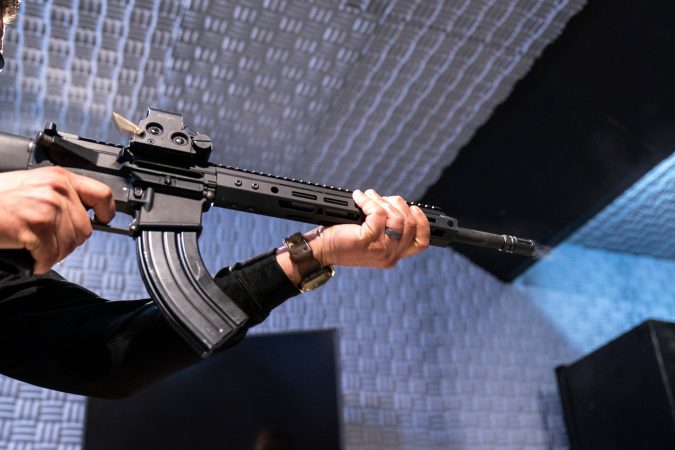
    Masked men armed with handguns and what appeared to be an AR-15-style rifle robbed three men early Sunday morning in Center City, forcing at least one of the victims to his knees at gunpoint, according to police.

    The victims — ages 27, 35, and 36 — were talking on the sidewalk around 3 a.m. on the 1500 block of Locust Street when three robbers stepped out of a gray Hyundai sedan and demanded the men’s belongings, said 9th District Capt. Anthony Ganard.

    Two of the men complied, police said, but the third resisted, and one of the robbers hit him in the face with a handgun. He was taken to an area hospital with injuries that were not life-threatening, Ganard said.

    The assailants took cell phones, watches, car keys, wallets, driver’s licenses, and cash, police said.

    No arrests have been made.

    Surveillance video reviewed by investigators shows one of the victims on his knees on the sidewalk as two of the robbers pointed guns — including what appeared to be an assault rifle — at his head. The video shows the victim handing over cash and the watch on his right wrist before the robbers ran back toward the Hyundai, Ganard said.

    “It’s always concerning, any type of robbery involving a firearm, [but] especially when you have a high-powered-style firearm,” Ganard said at a news conference Monday.

    Police believe a fourth man acted as the getaway driver and remained in the Hyundai during the robbery.

    The Hyundai had been circling the area for about three hours before the robbery, Ganard said. It was unclear Monday whether the men were targeted or victims of a random crime, he added.

    The sedan, which police recovered early Monday morning, had been stolen from Cheltenham Township on Wednesday, Ganard said. He declined to say where the car was found.

    Detectives are examining the vehicle for evidence and searching for additional surveillance footage that may have captured the robbery. Investigators have not linked the men to any other similar robberies, Ganard said.

    The investigation remains active, police said.

    Anyone with information is encouraged to contact investigators at the department’s tip line, 215-686-8477 (TIPS).

  • Video shows altercation before off-duty Philadelphia officer was killed

    Video shows altercation before off-duty Philadelphia officer was killed

    Seconds before an off-duty Philadelphia police officer was shot and killed outside a Southwest Philadelphia nightclub, he was involved in a confrontation with the man who police believe fired the fatal shot, according to a surveillance video under review by department investigators.

    The video captures a previously unseen part of the encounter that preceded the Aug. 16 killing of Officer Alhassane Barry, 29. But it does not show the shooting itself, leaving critical questions unanswered.

    Police spokesperson Sgt. Eric Gripp confirmed Friday that the department is reviewing the video as part of its investigation. But he declined to comment further, citing an “active homicide investigation.”

    No charges had been filed against the alleged shooter as of Friday afternoon.

    The newly surfaced video footage, which was obtained and reviewed by The Inquirer, appears to show Barry leaving Nipsey’s Hookah Lounge with the man police have identified as a suspect in the killing and a third man who has not been publicly identified.

    Barry is seen in the video moving toward the alleged shooter, who is then struck twice in the head by the third man. The blows appear to knock him out of the camera’s view.

    Barry and the third man then run in the same direction, also disappearing off screen.

    A few seconds later, Barry comes back into view, falling onto the sidewalk outside the nightclub. He appears to be bleeding from a gunshot wound to his abdomen.

    Police had said they responded to a report of gunfire shortly before 4 a.m. Aug. 16 on the 7200 block of Elmwood Avenue. Officers found Barry and a 35-year-old man suffering from gunshot wounds.

    Both were taken to Penn Presbyterian Medical Center, where Barry was pronounced dead at about 8 a.m. The other man, who had been shot multiple times, was critically injured.

    It was unclear Friday whether the 35-year-old victim was one of the men in the surveillance camera footage.

    The footage comes as investigators try to determine what led to the shooting of the off-duty officer and whether the circumstances warrant criminal charges against the man police believe fired the fatal shot.

    Two law enforcement sources with knowledge of the investigation said Friday that self-defense had become part of the discussion about whether charges would be appropriate. The sources, who were not authorized to speak publicly about the case, said the investigation had also not yet been referred by police to the Philadelphia District Attorney’s Office for review.

    Police previously said that Barry, the other critically injured victim, and the suspected shooter had been inside the after-hours lounge before the shooting. The men exchanged words inside, Deputy Commissioner Frank Vanore said earlier this week, and the verbal confrontation continued after they went outside. Police said the altercation then became physical before the men were separated and the suspect opened fire.

    The newly surfaced video appears to capture at least part of that physical confrontation. The video does not show what happened before the men exited the club. And because the shooting occurs off camera, it does not show the moments in which the man fired his gun.

    Investigators recovered a firearm and eight spent 9mm shell casings at the scene.

    Barry had been a Philadelphia police officer for two years and was assigned to the 12th District in Southwest Philadelphia. Before joining the department, he served for a decade in the Pennsylvania National Guard, including a two-year deployment to Egypt’s Sinai Peninsula, and left the Army as a sergeant, according to an Army spokesperson.

    His killing prompted a funeral attended by more than 100 people at the Fouta Islamic Center of Philadelphia on Monday. Mourners and fellow officers remembered Barry as a young man devoted to public service.

  • Two men convicted of first-degree murder in 2020 killing of Philadelphia teen rapper

    Two men convicted of first-degree murder in 2020 killing of Philadelphia teen rapper

    Six years after an up-and-coming teenage rapper was shot to death outside a West Philadelphia home, two of his killers have been convicted and sentenced, prosecutors said.

    Donovan Williams, 24, was found guilty last week of first-degree murder in the killing of Aamir Johnson-Daye, known as D4M Skiano, and of the attempted murder of a man who was with him, the Philadelphia District Attorney’s Office announced Tuesday.

    A judge on Friday sentenced Williams to life in prison without the possibility of parole, plus 46 to 92 years, court records show.

    Williams’ codefendant, Bahij Dini, 28, pleaded guilty earlier this month to third-degree murder, conspiracy, and firearms offenses, and was sentenced to 13½ to 42 years, prosecutors said.

    But the two convictions have not closed the case. Prosecutors said that three gunmen climbed from a car on July 5, 2020, and opened fire on the family’s home, but that the third shooter has not yet been identified. Nor was a possible fourth participant, they said, who may have stayed in the vehicle.

    “We don’t have all the answers here,” District Attorney Larry Krasner said, appealing for the public’s help.

    Johnson-Daye’s parents stood with prosecutors at the news conference, just days before what would have been their son’s 25th birthday, they said.

    His mother, Latoya, thanked investigators, saying: “This is a perfect happy birthday for him.”

    But she also pressed the public for information on the people being sought who have not yet been identified. “Please just come forward,” she said. “We’re still not done yet.”

    One night, two killings

    Johnson-Daye was part of a West Philadelphia rap collective whose videos drew hundreds of thousands of views online. His songs were also played on the radio.

    Prosecutors said it was possible that his killing on the 1400 block of North 61st Street grew out of an earlier death the same night. A 15-year-old football player, Angelo Walker, was fatally shot nearby on Nassau Road, said Assistant District Attorney Jeff Hojnowski, who helps lead the office’s homicide unit and prosecuted the case against Williams and Dini.

    Walker was affiliated with Williams and Dini, and word of his death spread quickly, Hojnowski said. He said a long-running feud between two neighborhood groups — one Williams belonged to and a rival that Johnson-Daye rapped with — may have also played a role in the fatal shootings.

    About two hours after Walker was killed, he said, Williams, Dini, and a third gunman drove to the North 61st Street house. Johnson-Daye was on the front porch with another man when the gunmen approached and opened fire, killing him, Hojnowski said. No one else at the home was hit, he said.

    Detectives recovered 14 spent casings, Hojnowski said, and determined three guns were used — one for each shooter.

    The case against Williams and Dini was built almost entirely from surveillance video, cell phone location data, and digital records rather than eyewitnesses, Hojnowski said. Cameras captured a tinted Buick registered to Williams parking on the block with its lights off, then three figures walking toward the porch and the flashes of discharged bullets.

    Prosecutors said the gunman they identified as Williams fired with his left hand — Williams is left-handed — and wore clothing later recovered from his home and car. Cell phone records placed him and Dini at the scene, and tracked them afterward to a hotel near Philadelphia International Airport.

    Williams’ attorney did not immediately return a phone call Tuesday.

    Dini had initially been charged with first-degree murder. Coley Reynolds, Dini’s attorney, called the plea to third-degree murder “an extremely competitive offer that resolved the case without looking at a possible life sentence.” Cooperation with the ongoing investigation, Reynolds said, was not part of Dini’s deal with prosecutors.

    ‘We can get these things done’

    Johnson-Daye’s 2020 killing came in a year of increasing violence in the city. The conviction of his killers, Krasner said, comes during one where homicides are down about 18% from last year — when such killings reached a decades-long low.

    “We can get these things done,” he said. “But we can’t do anything without the support of the public.”

    Anyone with information is encouraged to contact the Philadelphia police tip line at 215-686-TIPS (8477).

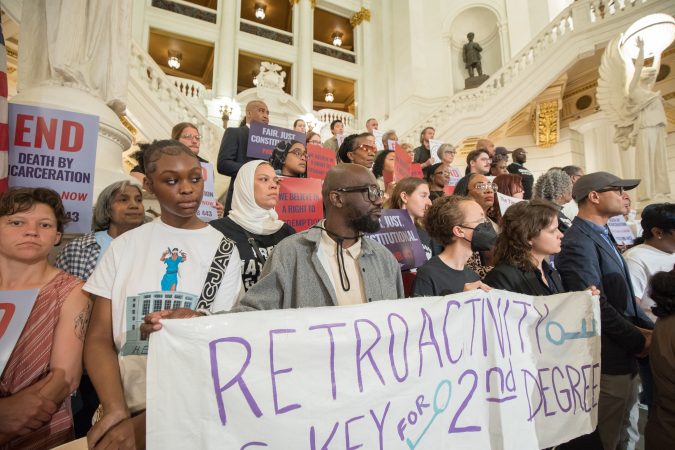
  • Pennsylvania ended automatic life sentences for felony murder. Here’s what happens next.

    Pennsylvania ended automatic life sentences for felony murder. Here’s what happens next.

    For decades, a second-degree murder conviction in Pennsylvania meant an automatic sentence of life in prison — even for people who did not kill anyone.

    But in March, the Pennsylvania Supreme Court ruled that punishment unconstitutional in the case of Derek Lee, a Pittsburgh man who argued the mandatory nature of the sentence violated constitutional prohibitions against cruel punishment.

    The high court gave the state legislature 120 days to devise an alternative and decide whether to apply it to those already serving the sentence.

    That deadline passed without a resolution on July 24. And in early August, the high court rejected a bid by several district attorneys to give lawmakers more time.

    So what happens now? Here’s what to know.

    What was the maximum sentence for second-degree murder — and what is it now?

    Before the ruling, the punishment was life without parole. Now there is no clear answer.

    Setting criminal penalties is the legislature’s job, and lawmakers have not put in place a replacement.

    The high court’s ruling did not abolish life without parole for felony murder; it only barred making the punishment automatic. A judge may still impose such a sentence, but only after weighing a defendant’s role in the crime.

    The justices declined to say whether the ruling applies retroactively to people already serving those sentences, leaving that question to lawmakers, too.

    How will judges sentence second-degree murder now that there’s no mandatory penalty?

    With no law to guide them, judges are left to their own decisions. And without statewide guidelines, similar cases could end differently depending on the county in which a defendant is tried and on the judge who hears the case.

    Philadelphia District Attorney Larry Krasner has expressed little concern about the lack of guidelines.

    In an interview this week, Krasner, a Democrat who has forged a path as a progressive prosecutor, said “there’s nothing unusual” about asking judges to weigh the facts and use their discretion. “I’ve always believed that mandatory sentencing is problematic at best, usually a terrible idea, and that individual justice is what the system is supposed to be about,” he said.

    But at a joint GOP policy committee meeting in Hazleton last week, several Republican prosecutors and lawmakers voiced concern about the lack of uniformity across the state.

    Luzerne County District Attorney Sam Sanguedolce pointed to a case in which a defendant recently asked to plead guilty to second-degree murder.

    “I can’t properly advise the defendant what the consequence might be,” Sanguedolce said. “Second [-degree murder] sounds like it’s better than first, but is it? We don’t even know.”

    What happens to the people already serving life in prison?

    For the nearly 1,100 people serving life for second-degree murder, nothing changes automatically.

    The ruling made only one person eligible for resentencing: Lee. And even he could again receive life without parole, if a judge finds his role warrants it.

    Others who wish to have their life sentences reconsidered have to go to court and ask to be resentenced. Bret Grote, a lawyer with the Abolitionist Law Center who represented Lee, said such petitions are likely to be denied by trial courts until retroactivity is settled.

    Hundreds are expected to try anyway.

    That flood could overwhelm courts and public defenders. Statewide, handling the cases could cost more than $34 million, the Public Defender Association of Pennsylvania estimates. In Philadelphia — home to more than 500 people currently serving such sentences — Chief Defender Keisha Hudson puts her office’s share at $40,000 per defendant, or $24 million total.

    “We are going to need substantial funding,” she said last week, adding that she hopes to meet soon with city officials about how to pay for it.

    Legal experts expect the question of retroactivity to reach the state Supreme Court again, either through an appeal of a lower court’s denial or a so-called King’s Bench petition asking the justices to take up the issue directly.

    Lawmakers could also provide a quicker alternative by writing legislation that allows people serving second-degree murder sentences to seek parole, rather than requiring individual resentencing.

    Can lawmakers still pass a fix, and what might that look like?

    Lawmakers say negotiations will resume when they return in September. Each chamber has passed its own bill, but the two are far apart, with no compromise in sight.

    The bill in the Republican-controlled Senate would set a 35-year mandatory minimum for most second-degree murder convictions, while keeping life without parole as an option. Current lifers would become eligible for parole after 35 years — or 20 years, if they are at least 70.

    The measure in the Democratic-led House sets no mandatory minimum, instead directing the Pennsylvania Commission on Sentencing to write guidelines while keeping life without parole available. It would make current lifers parole-eligible after 30 years and add a medical parole option for the terminally ill.

    Sen. Lisa Baker (R., Luzerne), who wrote the Senate proposal, said she is still hopeful that her caucus and House Democrats will reach a deal. But the parties remain far apart, she said.

    “It’s difficult when you’ve got people whose priorities are no mandatory minimums for any crime,” she said. “I understand that we want to keep nonviolent first-time offenders [out of prison], give people second chances. But there needs to be accountability for these crimes.”

    Few expect action before November’s midterm elections. “We can’t, unfortunately, make Harrisburg move any more quickly than they already are,” said Hudson, of the Defender Association. “And in the meantime, there are a lot of questions.”

    What does all this mean for victims’ families?

    Victims’ families are caught in a limbo of their own, said Melany Nelson, executive director of Northwest Victim Services, a Philadelphia nonprofit that assists crime victims.

    Those whose loved ones’ killers have not been sentenced are now waiting to learn what punishment will come, and whether it will feel like justice. Those whose cases closed long ago face now the prospect of being summoned back — to a courtroom or a parole hearing — to confront the killer again and potentially watch them set free.

    Nelson urged families to contact prosecutors’ offices and victim-advocate services now, rather than be caught off guard, and to weigh in with their state lawmakers.

    “We do not want them to be blindsided by anything,” she said.

    Correction: A previous version of this article incorrectly described what could happen to people who wish to appeal their sentences. Bret Grote, a lawyer with the Abolitionist Law Center, said such petitions are likely to be denied by trial courts until the question of whether a recent Pennsylvania Supreme Court ruling applies retroactively is settled.

  • Philadelphia man found guilty in string of groping incidents around Rittenhouse Square

    Philadelphia man found guilty in string of groping incidents around Rittenhouse Square

    A judge on Friday found a man guilty of assaulting seven women in separate incidents last year near Rittenhouse Square, in a string of attacks prosecutors called “remarkably similar” that left the women shocked and scared.

    Dynel Walker, 38, was found guilty of more than a dozen crimes tied to the incidents, spanning from indecent assault to forcible compulsion, harassment, simple assault, and related offenses, Common Pleas Court Judge Nicholas Kamau decided following a two-day trial.

    Kamau also acquitted Walker of more than a dozen charges, including unlawful restraint, harassment, and simple assault, among others, finding that prosecutors had not presented sufficient evidence to support them.

    Prosecutors said Walker targeted women who were alone and walking in the early-morning hours in the Rittenhouse Square area, approaching them on the street before groping them, exposing himself, or masturbating in their presence. In several of the incidents last July and August, Walker followed the women before confronting them. Once, he pushed a woman to the ground when she fought back, prosecutors said.

    In one incident, prosecutors said, Walker approached a woman walking her dog near 19th and Spruce Streets and groped her, then fled.

    In another incident, Walker made eye contact with a woman in the 1600 block of Pine Street, then masturbated on the sidewalk while he watched her, prosecutors said.

    Walker knocked one woman down as she fought him off, leaving her with minor scrapes on her arms and one leg, prosecutors said.

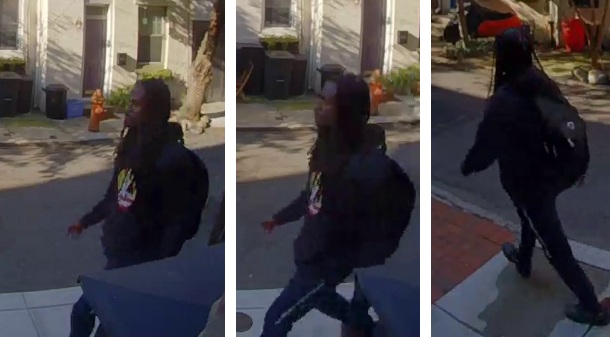
    At least three of the assaults were captured on surveillance video, which showed clear images of Walker wearing a distinctive black hooded sweatshirt with a chicken on its front, said Assistant District Attorney Megan Odonnell.

    Philadelphia detectives began searching for Walker after screenshots from the surveillance videos were shared with local media and led to an anonymous tip identifying Walker. Detectives later found images on Walker’s cell phone showing him wearing the same hooded sweatshirt as the assailant, prosecutors said. All seven women eventually linked Walker to their assaults through photo arrays.

    The women’s identification of Walker became a point of contention for his defense attorney, Ryan Ivins, who argued that the women picked Walker only after images had been widely disseminated by the media, including The Inquirer.

    Even then, Ivins said, about half of the women were not completely certain that Walker was the man who had accosted them.

    One told police she was 60% sure, Ivins said, while another gave Walker a seven out of 10 chance of being her attacker. That, Ivins argued, “casts significant doubt” on the reliability of the women’s identification of Walker and whether the photo arrays were tainted by the media coverage.

    Before rendering his verdict, Kamau also had the opportunity to watch Walker’s initial interview with detectives, in which he acknowledged the images shown in the news were, in fact, of him.

    In the video of the interview, Walker also told detectives that he was homeless and often slept in the area of Rittenhouse Square because “I felt safe in that area.” Because of that, Walker said, he was not surprised that surveillance cameras had captured him nearby.

    But Walker denied committing the assaults, telling detectives: “I don’t have any involvement in that. … I wouldn’t get any enjoyment from that.”

    Walker is slated to be sentenced by Kamau in November.

  • Shooting of Philly couple was likely retribution for earlier killing, sources say

    Shooting of Philly couple was likely retribution for earlier killing, sources say

    The gunfire that killed a North Philadelphia woman and wounded her husband as the couple sat on their porch Sunday night may have been an act of retaliation for an earlier homicide, law enforcement sources said.

    Shariff Perry, who police say killed Michelle Wilson, 61, and shot her 67-year-old husband, is the brother of a man authorities say was killed by the couple’s son, Evans, in 2022, according to the sources.

    Authorities have not publicly disclosed a motive for the crime, but sources, who spoke on the condition of anonymity to discuss an ongoing investigation, said retribution was the likely cause.

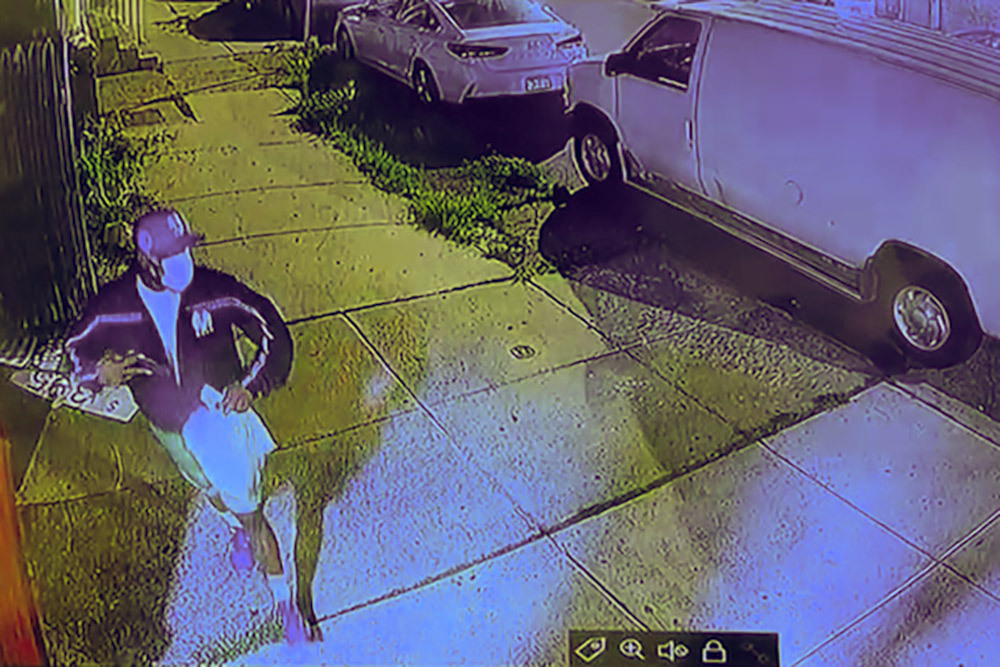
    Surveillance video obtained from a business near Wilson’s home showed a man wearing a surgical mask and a hat approach the couple’s front porch, pull out a handgun, and open fire just before midnight. Wilson was pronounced dead moments later. Her husband survived.

    On Wednesday, police identified Perry, 35, as the suspected shooter. He remained at large Thursday.

    Reached by phone, Wilson’s husband tearfully declined to be interviewed, as did his daughter.

    The Wilsons’ son, Evans, is one of three people charged in the death of James Dunbar, 20, who was shot in the head on the 2800 block of North Taylor Street, less than a mile from where the Wilsons were shot, sources said.

    Another man was also shot, but survived, police said.

    Witnesses told detectives at the time that they heard a barrage of gunshots, then saw two armed men fleeing in a Hyundai Sonata. Detectives recovered 17 bullet casings from the scene, authorities said.

    Wilson and two teenagers were charged with murder and related crimes, court records show. Wilson has pleaded not guilty and is awaiting trial.

    Wilson’s attorney, David Mischak, did not return a phone call on Thursday.

    Dunbar’s death came during a wave of crime in the city following the pandemic.

    Michelle Wilson’s killing was one of six homicides in Philadelphia between Friday morning and Sunday night, a burst of bloodshed in what has otherwise been one of the city’s least violent years in decades.

    Hours before her death, Wilson’s family had gathered for a Sunday afternoon barbecue, with children and relatives on the porch, a neighbor said. The neighbor — who asked not to be identified for fear of retaliation — said the couple were “quiet” and “friendly.”

    Police have offered a $20,000 reward for information leading to Perry’s arrest and conviction and have asked anyone with information to contact the department’s homicide unit at 215-686-3334 or its tip line at 215-686-TIPS (8477).

    Staff writer Ellie Rushing contributed to this article.

  • Police searching for man accused of shooting a Philadelphia couple over the weekend

    Police searching for man accused of shooting a Philadelphia couple over the weekend

    Philadelphia police are searching for a man they say walked up to a couple sitting on a porch and opened fire late Sunday night, killing the woman and injuring the man before fleeing.

    Shariff Perry, 35, is charged in an arrest warrant with murder, possession of an illegal firearm, and related crimes in the killing of Michelle Wilson, 61, and the shooting of her 67-year-old husband.

    Surveillance video from a business on Sunday captured a man wearing a hat and surgical mask — who police now say is Perry — walking to Wilson’s home in the 2800 block of North 24th Street in North Philadelphia. There, the video showed, the man pulled out a gun and fired repeatedly.

    Wilson was pronounced dead at Temple University Hospital shortly after the 11:49 p.m. shooting. Her husband was also taken to the hospital, where, police said, he was stable.

    Police described Perry as a male, 5 feet, 8 inches tall, and weighing 170 pounds. Anyone with information about Perry or the killing is asked to contact the department’s homicide unit at 215-686-3334 or its tip line at 215-686-TIPS (8477). A $20,000 reward is being offered for information that leads to Perry’s arrest and conviction, police said.

    Staff writer Ellie Rushing contributed to this article.

  • Teen sought in Penn State student’s killing in South Philly surrenders to police

    Teen sought in Penn State student’s killing in South Philly surrenders to police

    A teen sought in connection with the killing of a Pennsylvania State University student in South Philadelphia surrendered to police on Tuesday, the U.S. Marshals Service said.

    Kadafi Fleming, 19, is also a suspect in the theft of a Philadelphia police officer’s car during a Monday morning robbery that ended in a shootout, according to the U.S. Marshals Service.

    Fleming surrendered around 6 p.m. Tuesday at the Philadelphia Police Department’s headquarters at 400 N. Broad St., the U.S. Marshals Service said.

    Authorities previously charged Azzubair Outen-Fleming, 16, and Kaiseem Smith, 16, with murder, robbery, and related crimes in the killing of 22-year-old William “Billy” Schmidt, who was robbed of his cell phone and shot on June 6 on the 1900 block of Durfor Street. This week, the marshals announced that they were seeking Fleming on a robbery charge in connection with the killing.

    Fleming is Outen-Fleming’s older brother, authorities said.

    The announcement of the marshals’ manhunt for Fleming came after another crime in South Philadelphia: About 3:15 a.m. Monday on the 6900 block of Grosbeak Place, authorities said, thieves stole a green Dodge Charger belonging to an off-duty police officer.

    Supervisory Deputy U.S. Marshal Robert Clark said the officer found the thieves a few blocks from where his car had been stolen and exchanged gunfire with them before they fled.

    Fleming has been named a person of interest in that theft, Clark said.

    It was unclear Tuesday whether anyone had been injured in the shootout. Philadelphia police did not respond to requests for information about the incident.

    .

    Clark added that he did not expect the search to last long, noting that marshals had captured Fleming’s brother in June more than 1,700 miles away at a home in Colorado Springs, Colo.

    Smith, who is accused of being the triggerman in Schmidt’s killing, turned himself in to authorities shortly after Outen-Fleming’s arrest. Outen-Fleming’s stepfather, Donte Abdulmalik, 35, has also been arrested and charged with helping his stepson evade the authorities.

  • Six killed, more wounded in wave of weekend violence in Philadelphia

    Six killed, more wounded in wave of weekend violence in Philadelphia

    Six people were killed in Philadelphia between Friday morning and Sunday night — five shot and one stabbed — in a wave of violence across the city, according to police.

    At least two others were wounded in the spate of attacks, a jarring stretch of violence in a year that has otherwise been among the least deadly Philadelphia has recorded in decades.

    At a news conference on Monday, District Attorney Larry Krasner acknowledged the weekend’s toll but pointed to the city’s steep drop in killings, arguing that a brutal few days had not erased months of historic progress.

    “We had a bad weekend,” Krasner said. “We’re not having a bad year.”

    As of Monday, Krasner said, there had been 108 homicides so far this year in the city — 29 fewer than at the same time last year.

    Even so, the six deaths amounted to more than 5% of the city’s homicides this year, a striking toll for a single weekend. The victims ranged in age from 26 to 70.

    The bloodshed began shortly after 9 a.m. Friday, when officers responded to a report of a gunman on the 2100 block of North 20th Street in North Philadelphia West and found Savion Young, 31, shot in the chest and arm. He was pronounced dead at Temple University Hospital about 20 minutes later, police said.

    That same evening, Felix Serrano, 70, was found shot inside a BMW on the 4300 block of North Seventh Street in Hunting Park, according to police. Investigators believe Serrano’s vehicle may have traveled a short distance after he was shot before his car struck a parked vehicle. He was also pronounced dead at Temple University Hospital.

    The killings resumed before dawn Sunday. At about 3:20 a.m., police who were called to the 800 block of West Oxford Street in Ludlow found Rafi Colón-White, 30, shot in the head inside a Subaru Outback.

    Colón-White was pronounced dead at Temple University Hospital. A 34-year-old man who arrived separately at the hospital with gunshot wounds to his legs was in critical condition, police said. That man, whom police have not identified, was also a victim in the shooting, said police spokesperson Cpl. Jasmine Colón-Reilly.

    Sunday evening brought three more killings in as many hours. About 8:20 p.m., a man was fatally stabbed on the 500 block of West Courtland Street in Logan, and pronounced dead at Einstein Medical Center, police said. He has not been publicly identified.

    Less than an hour later, DaJuan Coffee, 26, was shot multiple times on the 2000 block of East Lehigh Avenue in East Kensington and pronounced dead at Temple University Hospital, police said.

    The weekend’s final killing came at about 11:49 p.m. Sunday. Officers sent to the 2800 block of North 24th Street in Strawberry Mansion for a report of a person with a gun found Michelle Wilson, 61, on a porch, shot in the neck and back, police said. She was pronounced dead moments later.

    Wilson’s husband was also on the porch and was shot, but survived, police said. They did not share the man’s condition, but said he was stable.

    Loved ones lingered on the sidewalk in front of the North 24th Street house Monday afternoon, hugging, trying to find comfort in one another amid their grief. They declined to be interviewed.

    A 71-year-old neighbor said the family has lived on the block for decades.

    “They were quiet people,” said the woman, who asked not to be identified for fear of reprisal. On Sunday afternoon, she said, Wilson’s family had a barbecue, with children and extended family playing on the porch.

    Surveillance video from a business on the block, reviewed by The Inquirer, showed a man wearing a hat and surgical face mask walking down the street when he appeared to take a black handgun from his bag and slip it into his jacket. The video showed him then calmly walk up to the porch and open fire.

    Police have not shared the video with the public, nor identified the man captured in it as a suspect.

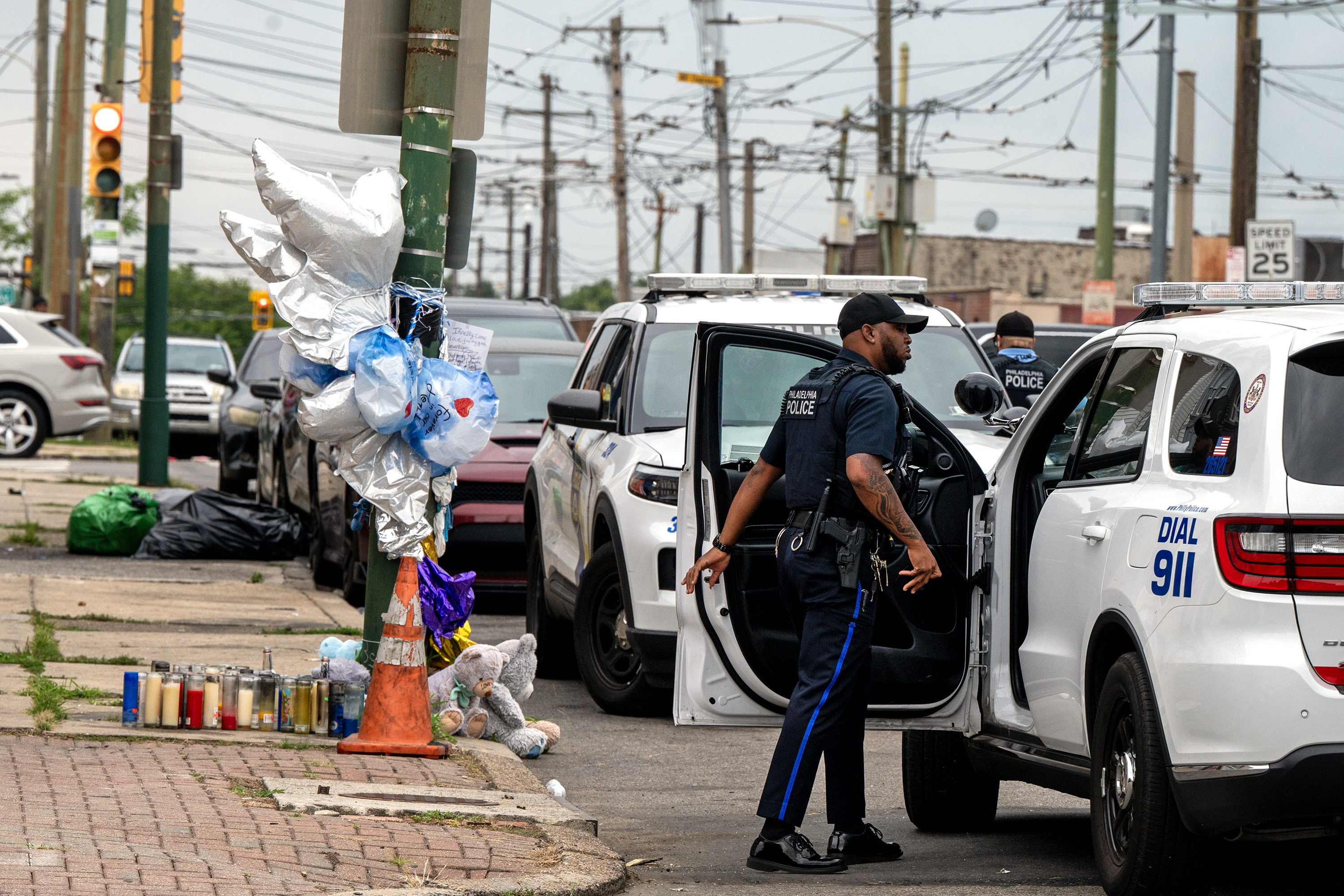
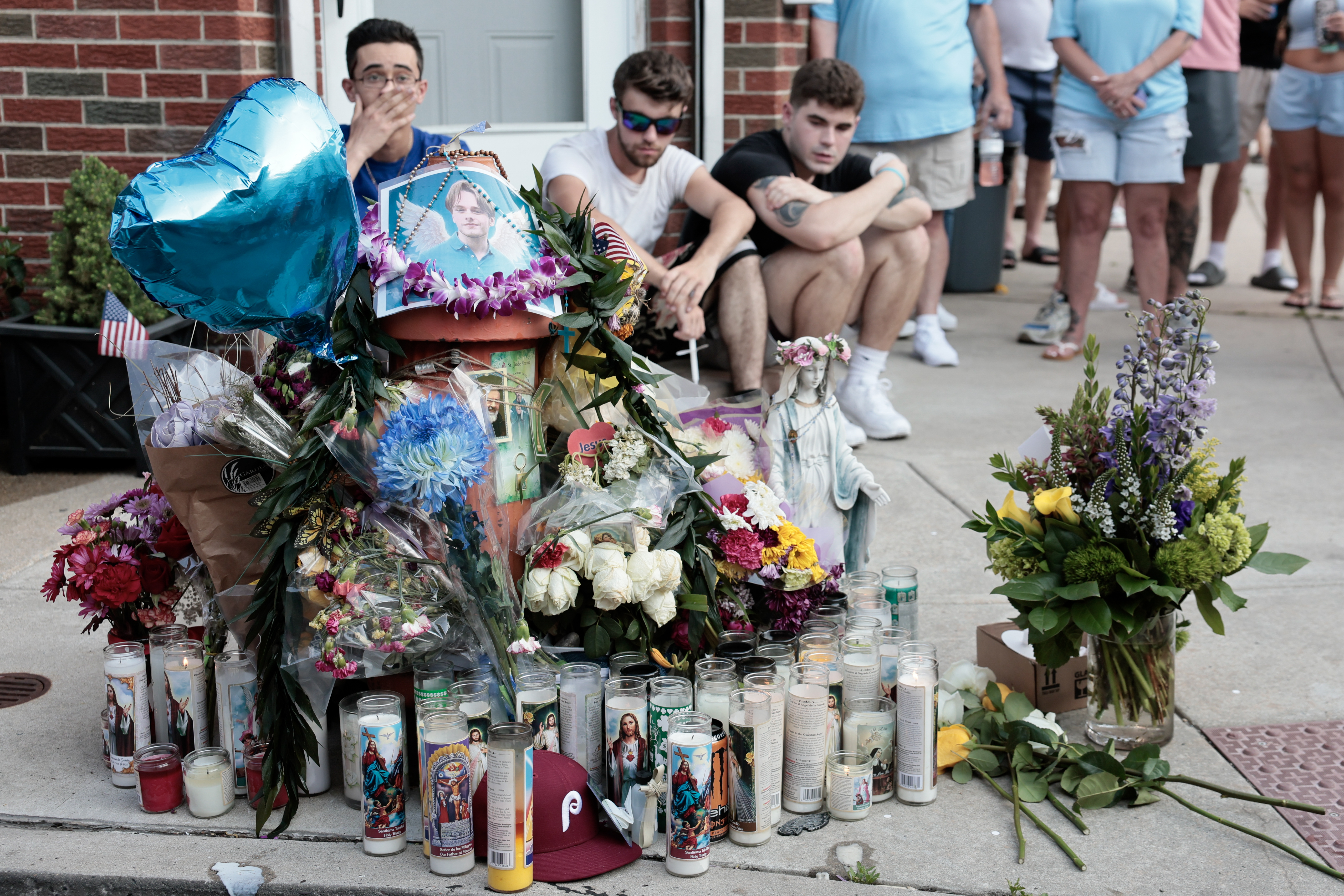
    Nearby, on North 20th Street, an array of candles, stuffed teddy bears, and handwritten posters lay Monday across the sidewalk where Young was killed Friday morning.

    Police said Young and his girlfriend were arguing outside the apartment around 9:10 a.m. when the woman’s 16-year-old brother pulled a gun and shot Young multiple times, police said. He died at the hospital.

    The teen is wanted for murder.

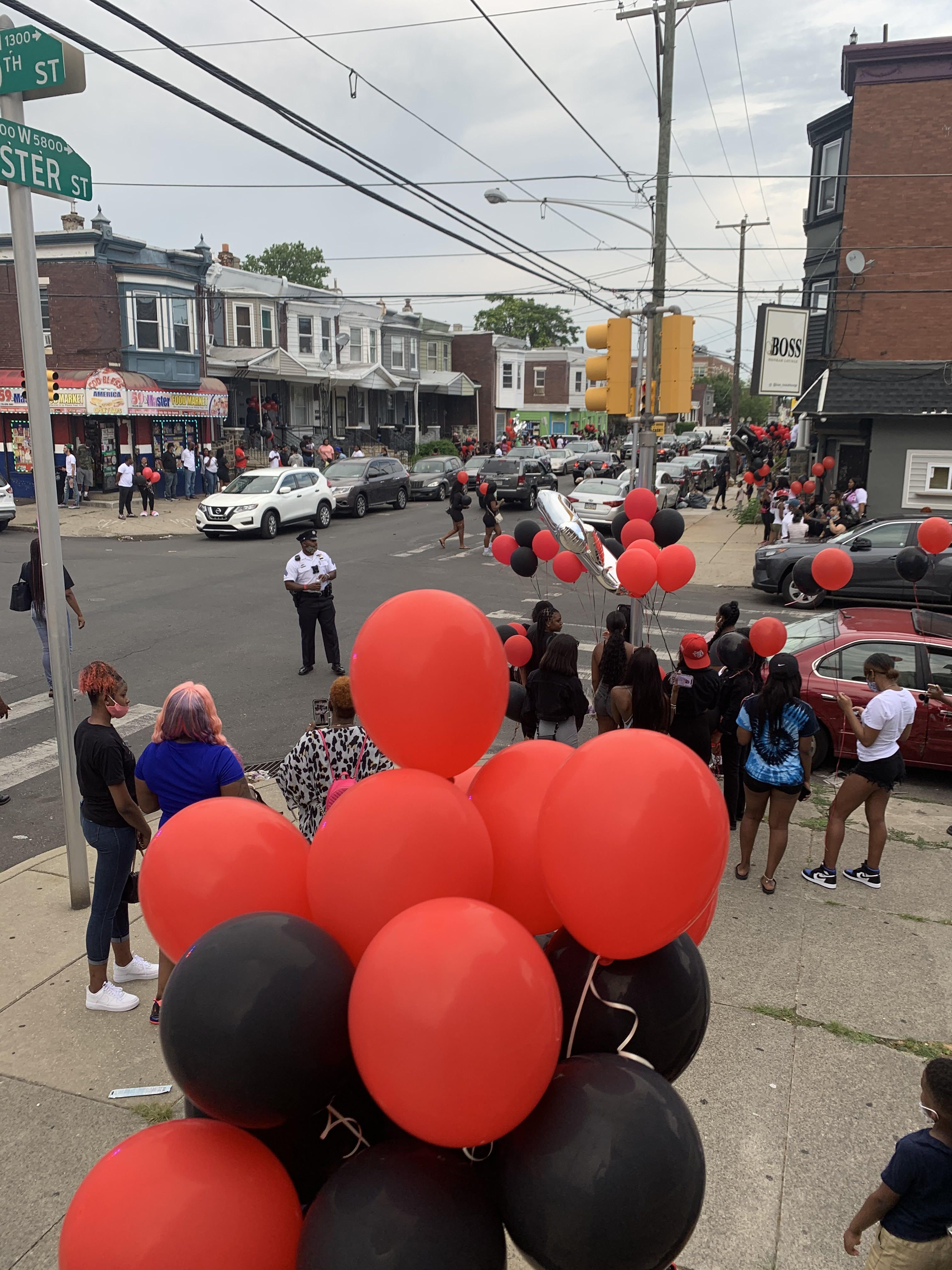
    Tributes for Young, also known as Apex, poured across social media over the weekend, and hundreds gathered in North Philadelphia for a balloon release.

    Young had a daughter and large family scattered across the city, friends said. He had just started a clothing brand called Bad English, and neighbors said he was frequently seen lifting weights and working out outside his rowhouse.

    “This was his Planet Fitness,” a man who trained with him said Monday on the block. The man, who declined to give his name for privacy reasons, looked down at the dozens of candles melting into the sidewalk beneath a collection of silver balloons. “He will be truly missed,” he said.

    William Fritze, chief of the district attorney’s office Gun Violence Task Force, declined to provide additional information on the incidents, citing ongoing investigations.

    No arrests have been made in any of the cases, said Colón-Reilly. Police are asking anyone with information to contact the department’s homicide unit at 215-686-3334, or its tip line at 215-686-TIPS.

    Last year marked Philadelphia’s fewest homicides in nearly six decades, with 222 people killed. The last time the city’s homicide numbers fell below that mark was in 1966, when there were 178 murders.

    During Monday’s news conference, called to announce grants awarded to more than 20 anti-violence organizations in the city, Krasner called the weekend’s violence a tragedy that “no one would ever celebrate,” even as he stressed that the city remained far safer than in years past.

    “The facts are clear: Homicides are way down,” he said. “In almost every category, crime is down.”