Author: Jillian Kramer

  • A Philadelphia man was charged with killing his two brothers. Prosecutors dropped the charges two years later.

    A Philadelphia man was charged with killing his two brothers. Prosecutors dropped the charges two years later.

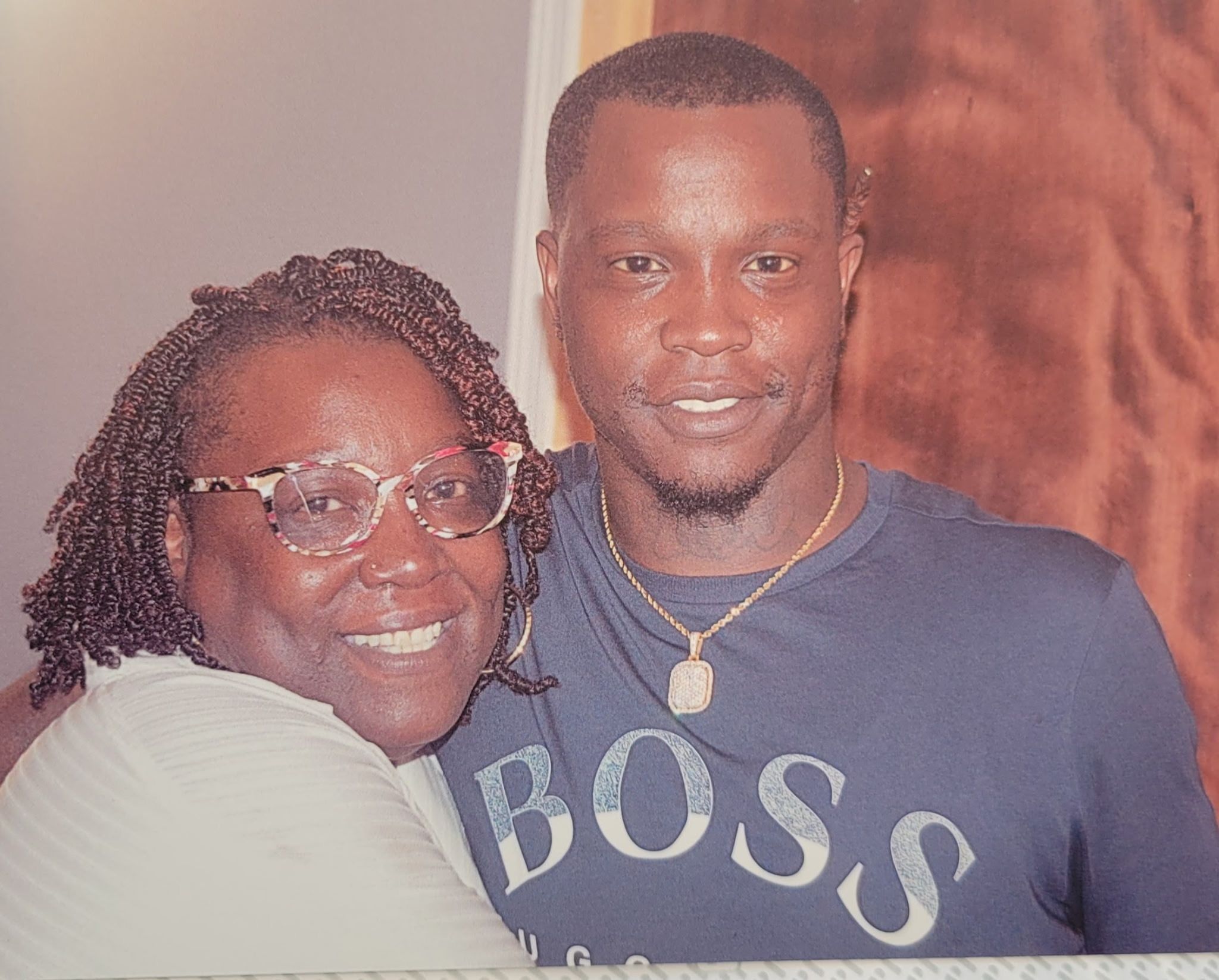
    Fatima Jones had already buried two of her sons when she sat in a courtroom and heard prosecutors accuse a third son of killing them.

    Amir Jones, 33, was among several men who opened fire when a brawl broke out at a West Philadelphia block party on July 21, 2024, prosecutors said. They charged him with murder in the deaths of his brothers, Akil, 33, and Rashie, 29, and a friend, Sekayi Robinson, 23, and with aggravated assault and other crimes for wounding four others on North Alden Street.

    Last week, that case fell apart.

    On the morning Jones’ trial was set to begin, prosecutors dropped the murder and aggravated assault charges, saying he had acted in defense of his brothers. And by the end of the trial, a judge had acquitted him of everything else.

    The reversal lets Fatima Jones finally grieve alongside her surviving son, she said in an interview. But it leaves open a question authorities have been unable to answer: If Amir Jones didn’t kill his brothers, who did?

    When Jones was arrested, his mother said, ”I felt like I lost three sons. Amir was alive, but incarcerated and accused of killing his two brothers — something I knew he would never do.”

    Now, she said, “I want the men who killed my sons held accountable. Like, where are they at?”

    The only person convicted in the shooting is Jones’ codefendant, Tahir Shoatz, 30. Before she acquitted Jones, Common Pleas Court Judge Roxanne Covington found Shoatz guilty of third-degree murder in Robinson’s death, along with attempted murder and other offenses, but acquitted him of killing the Jones brothers.

    Chaos on a crowded block

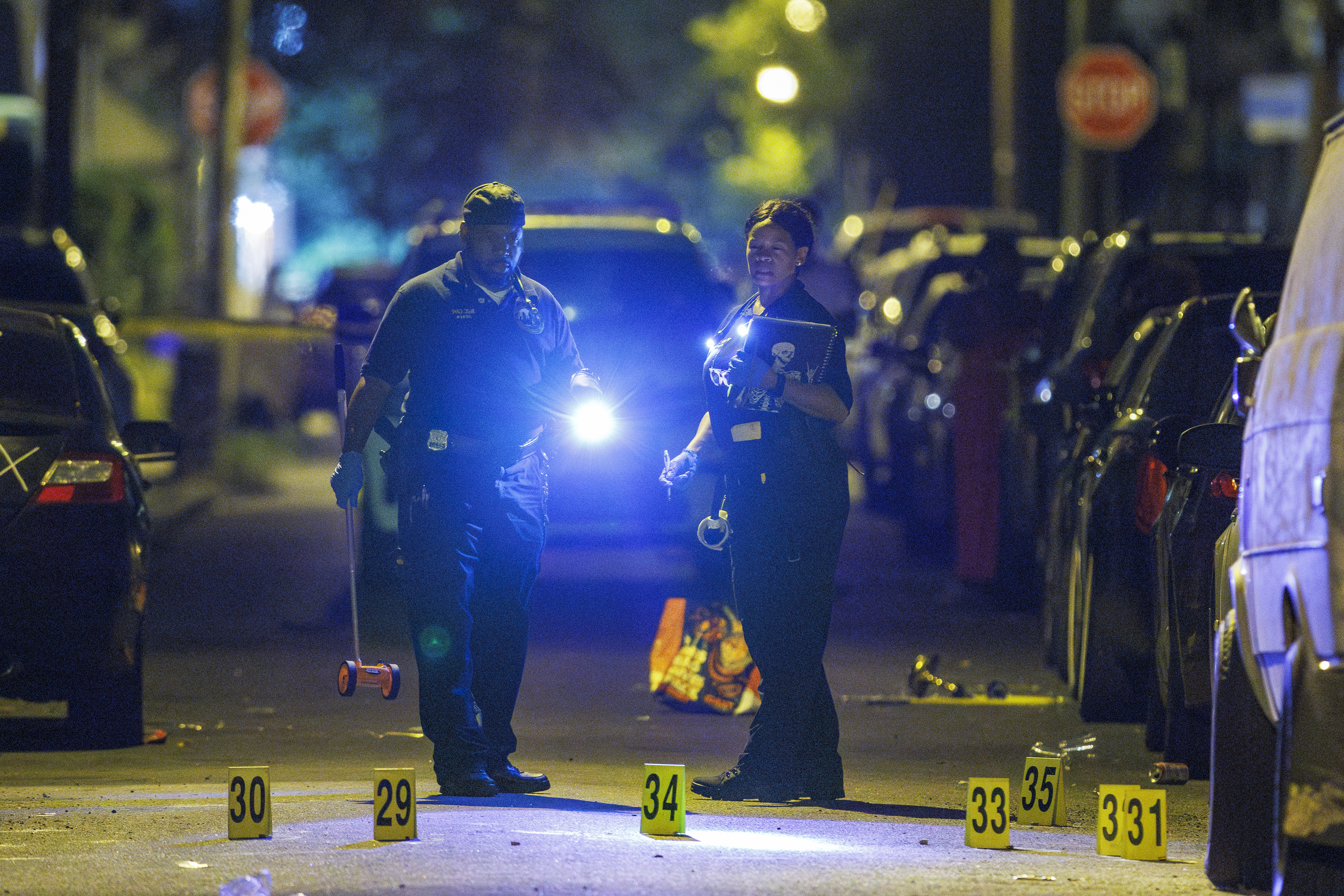
    The shooting turned the block party into a sprawling, chaotic crime scene, video footage played at the trial showed.

    Officers who arrived five minutes after the first gunshot found wounded victims scattered across the block, people shouting, and cars still passing down the road.

    They found Akil Jones dead in the street, his torso pierced by a bullet.

    Seconds later, after a woman screamed, “He’s not dead!” officers discovered Rashie Jones bleeding and crawling in an alleyway, a 9mm handgun in his hand. Shot once in the torso, at close range, he was pronounced dead soon after at a hospital.

    Inside a North Alden Street house, officers followed a trail of blood to Shoatz, who had been shot in the abdomen, right shoulder, and right knee. Four other victims — a 26-year-old woman and three men ages 26 to 29 — were also shot, but survived.

    Neither Jones, who was struck by two bullets on his left side, nor Robinson, who had been shot in his leg and chest, was at the scene when officers arrived. Both had already been taken to a hospital, where Robinson later died.

    Surveillance video captured how the shooting began, Assistant District Attorney Cydney Pope said at trial. Shoatz reached for a gun during an argument with Akil Jones, and the two wrestled over it, tumbling to the ground.
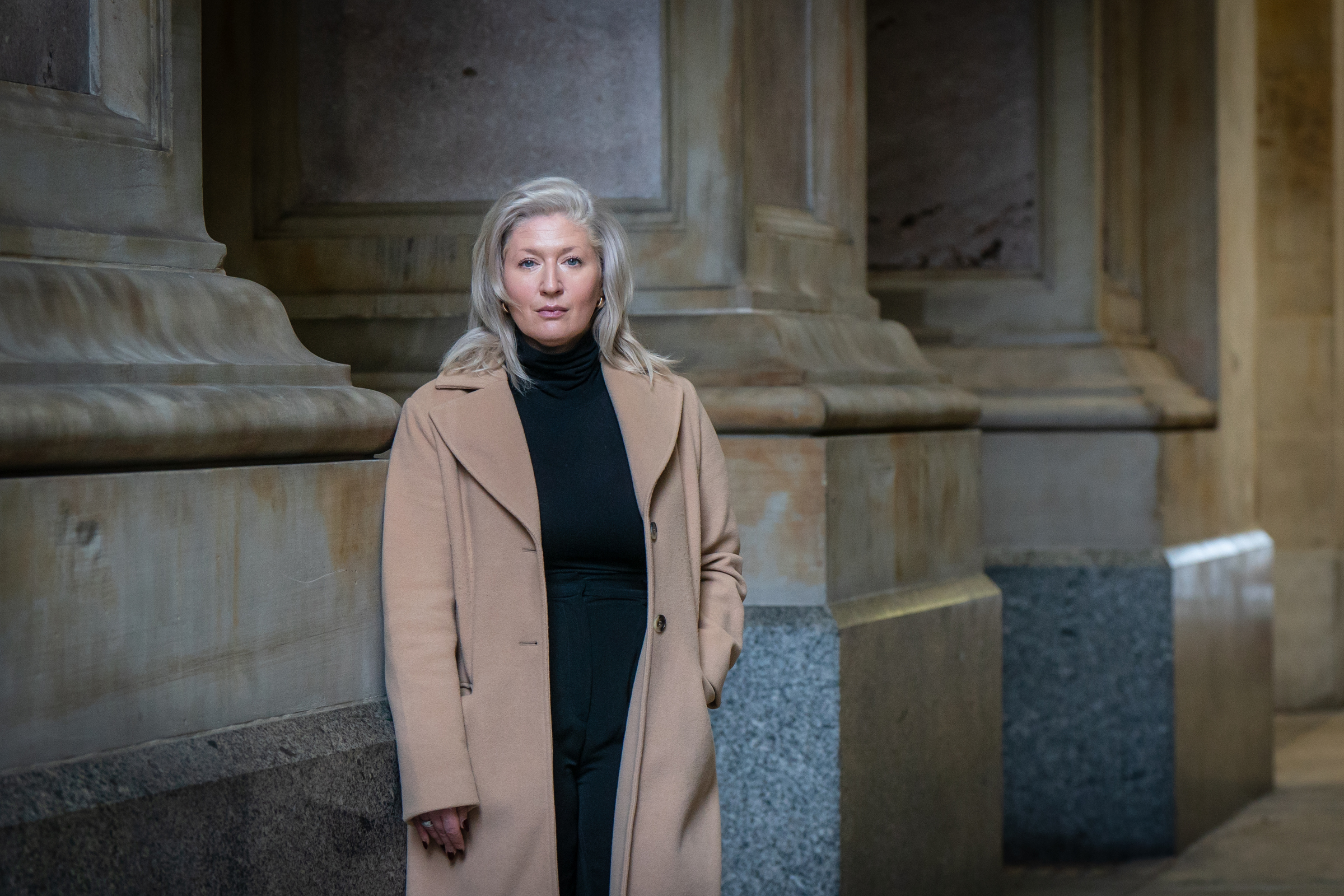
    Assistant District Attorney Cydney Pope outside City Hall in Philadelphia.Jessica Griffin / Staff Photographer

    Amir Jones jumped in, Pope said, and came out of the scrum holding a gun.

    Gunfire came from several directions, from at least six shooters, including Jones and Shoatz, firearms experts testified. Some, however, have not been identified.

    One gunman, taking cover behind a van across the street, fired repeatedly toward the men on the ground. As the judge delivered her verdict last week, she said it was clear that this gunman killed Akil Jones. Covington also found that one of the other shooters — not Jones or Shoatz — killed Rashie Jones.

    It was the verdict Loretta Jones, grandmother to all three brothers, said she had prayed for.

    As she sat in the courtroom awaiting it, she said, she made one request: “I said, ‘God, don’t nobody know the story but you. You was the only one there to see the whole thing. So please, let the judge see the same thing you saw and let my grandson go.’ And God made the judge see what He saw: that Amir had nothing to do with it.”

    Attempts to reach Jones were unsuccessful.

    What the videos showed

    Prosecutors built their case largely on videos. But the footage could not answer everything, and little else could fill the gaps.

    Police recovered 41 casings and bullet fragments and three guns, but none of the weapons could be linked to the killings.

    More than 100 people were at the party, and some may have disturbed evidence before police secured the scene, Pope acknowledged at trial. None of the partygoers — including the four other people who were shot — testified as witnesses.

    “We always knew there were people we could identify, and people we couldn’t,” Pope said in an interview. The shooter who fired from behind the van, “never gets close enough to the camera for us to be able to identify him,” she said.

    Jones’ attorney, David Nenner, raised the issue of the unidentified gunmen from the start, asking a judge to dismiss the case at a preliminary hearing — a request the judge rejected.

    Pope contended that Jones was responsible even if he didn’t fire the fatal shots.

    “This is a tragedy, there’s no question,” she said at the time. “But … the number of people who were ultimately killed would not have been what it was had it not been for the conduct of the defendant.”

    Pope said the decision to drop the murder and aggravated assault charges against Jones last week followed a “very intensive review of the videos” and a firearms examiner’s findings. Jones was “acting in defense of others,” she said, until after his brothers were hit.

    After that, cameras showed Jones firing several shots up North Alden Street, which Pope said she believes were aimed at Shoatz. Because of that, she said, prosecutors did not dismiss reckless endangerment and other charges against Jones.

    ‘An incredibly sad’ case

    Nenner, Jones’ lawyer, called the case “an incredibly sad situation” and said Jones had struggled with the weight of being accused of killing his brothers. Jones spent 14 months behind bars after he was arrested by U.S. marshals in July 2025, nearly a year after the shooting.

    Before acquitting Jones, Covington told him, “I am very sorry for your loss.” She said she believed he had acted to defend his brothers, and more than a dozen relatives applauded.

    Jones wiped tears away with a tissue. Then, as soon as he could, he rose from the defense table and walked quickly toward a holding cell, never turning to face his family.

    Amir, his mother said, was “always the quiet one.”

    Akil Jones had an entrepreneurial streak and owned a West Philadelphia daycare, his family said. Rashie was a free spirit who loved to rap, his mother said.

    Robinson owned a West Philadelphia water ice and ice cream shop and had played basketball in high school and college. He would do anything for anyone, his father, Vernon Robinson, said.

    “He was the glue to this family,” he said.

    Although Shoatz was convicted of Robinson’s murder, Robinson’s father said he doesn’t believe Shoatz fired the shot that killed his son. Citing the video evidence and the angle of the wound, he said he believed Shoatz hit his son in the leg and another gunman shot him in the chest.

    Like Fatima Jones, Vernon Robinson said he wants prosecutors to keep pursuing the other shooters.

    “I want my son back. But I need answers,” he said. “And I want justice.”

    Pope said investigators are still working to identify the other gunmen, and she urged anyone with information to contact police or prosecutors. The police department’s homicide unit can be reached at 215-686-3334 or 215-686-3335, and tips can be submitted anonymously to 215-686-TIPS.

    “We don’t believe that any case is closed until all suspects are identified,” she said.
  • Judge orders new trial for former Philadelphia officer over juror’s ties to DA’s office

    Judge orders new trial for former Philadelphia officer over juror’s ties to DA’s office

    A Philadelphia judge has ordered a new trial for a former city police officer who was convicted of perjury, finding that one of the jurors on the case failed to disclose ties to a law firm representing the district attorney’s office — an association she said deprived the officer of a fair trial.

    Daniel Levitt, 52, was found guilty of perjury in June for lying under oath about how he recovered a gun during a 2021 traffic stop. But on Thursday, Common Pleas Court Judge Natasha Taylor-Smith vacated the conviction and ordered that Levitt be retried.

    Her ruling centered on the jury foreman, a personal injury lawyer who did not disclose that his law firm was representing the Philadelphia District Attorney’s Office in ongoing civil litigation against opioid manufacturers and distributors.

    The foreman’s relationship to the law firm became public moments after the jury returned its verdict. Taylor-Smith questioned the jurors and concluded that the foreman’s affiliation had not affected the verdict.

    In a letter to the court earlier this month, Levitt’s attorney, Coley Reynolds said he would have exercised a peremptory challenge to strike the juror had he known about the firm’s work for the district attorney’s office.

    On Thursday, Taylor-Smith reversed her earlier decision and granted Levitt a new trial.

    Reynolds welcomed the ruling, saying, “We believe he did not get a fair trial.”

    District Attorney Larry Krasner said Friday that his office would appeal the ruling and if necessary, retry the case.

    Prosecutors said Levitt found an illegal firearm inside a bag that he did not have probable cause or a warrant to search during an April 2021 traffic stop. Then, they said, he lied about how he found it during the prosecution of the man he arrested.

    Levitt, a 12-year veteran of the force, was the first officer charged after a department review raised concerns that some officers had conducted unlawful searches of people and vehicles before recovering guns. He was fired following his arrest.

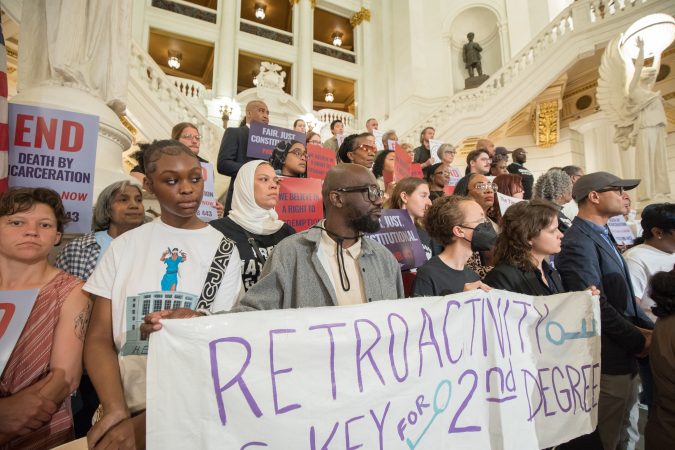
  • Pa. Supreme Court to decide whether ban on mandatory life terms for second-degree murder is retroactive

    Pa. Supreme Court to decide whether ban on mandatory life terms for second-degree murder is retroactive

    The Pennsylvania Supreme Court agreed Tuesday to decide whether its March ruling striking down automatic sentences of life without parole for second-degree murder applies to the people already serving them.

    The high court will rule in the case of Jerome Coffey, a Philadelphia man convicted in a 1992 killing in which prosecutors said a group of men posing as law enforcement officers boxed in a man’s car and shot him.

    The court’s decision will reach well beyond Coffey. It will settle whether roughly 1,100 people — including more than 500 convicted in Philadelphia — can ask judges for new sentences, or will remain bound by a punishment the state’s highest court has ruled unconstitutional.

    In a unanimous decision in March, the justices said Pennsylvania’s mandatory life sentence for second-degree murder violates the state constitution’s ban on cruel punishments.

    Second-degree murder covers killings committed during another felony — even when the defendant did not kill anyone. The high court held that judges must weigh a person’s individual role before imposing a punishment that lasts a lifetime.

    But the high court did not say whether its ruling applied to people who had already been sentenced. Instead, it put the decision on hold for 120 days so the General Assembly could write a new sentencing law and, if lawmakers chose, decide the question of retroactivity themselves.

    The legislature did neither, as measures introduced in both the Republican-controlled Senate and Democratic-controlled House failed to advance.

    Tuesday’s order in Coffey’s case comes weeks after four other people serving life sentences asked the court to take up the same question.

    Coffey was convicted in 1994 in the death of Johnny Moss two years earlier. According to court records, three men got out of two cars that had pinned Moss’ vehicle near 24th and Thompson Streets in North Philadelphia. One man shouted “task force” and pulled Moss from his car.

    Moss was shot in the head. His brother, who was standing beside the car, was shot in the arm.

    At trial, prosecutors said Coffey was the man who shouted “task force,” while Coffey’s mother and sister testified that he was at home that night. The jury convicted him of second-degree murder, conspiracy, and related crimes. It acquitted his codefendant, Lee Smith, of all charges.

    No physical evidence tied Coffey to the killing, his lawyers have said, and a key prosecution witness recanted before trial. The lawyers also said prosecutors withheld evidence that could have helped Coffey, but the state Superior Court rejected those contentions.

    And on Tuesday, the state Supreme Court declined to review them, limiting the scope of his appeal to the sentencing question alone.

    Even so, Bret Grote, the legal director of the Abolitionist Law Center, which represents Coffey, praised the court’s decision to hear the case.

    “This is what those who have been serving this sentence have been waiting for,” said Grote, who also represented Derek Lee, the Pittsburgh man whose appeal of his life sentence for his second-degree murder conviction led to the court’s decision in March.

    Grote said Coffey, who founded the grassroots Human Rights Coalition from prison, will be “well able to demonstrate” why the decision “should apply to people like him who need to be home with us out here in our communities.”

    Because Coffey’s case began in Philadelphia, the district attorney’s office will argue for the state in his appeal. In an interview Tuesday, District Attorney Larry Krasner reiterated his support for retroactivity, saying, “We cannot have a legal system where people sit in jail for the rest of their lives for an unconstitutional sentence.”

    He added that “this office, consistent with its obligation to seek justice and uphold the Constitution, will support retroactivity” in Coffey’s case.

    Prosecutors elsewhere have signaled resistance, however. In August, the Pennsylvania District Attorneys Association’s communications chair, Berks County District Attorney John Adams, said prosecutors would not concede that the high court’s ruling applies retroactively without a new sentencing law.

    Coffey’s case is unlikely to be resolved quickly. And in the meantime, lawmakers could still act.

    Some stakeholders have predicted that legislative agreement on how to handle such cases is more likely after the Nov. 3 elections. A law that applies to people already serving the sentence could make the court’s answer moot.

    But the outcome was always likely to land back with the high court without action by lawmakers, said Ben Lerner, a former Philadelphia Common Pleas Court judge and former chief defender.

    “I’m not surprised,” Lerner said Tuesday. The high court, he said, was going to give the legislature “the first crack” at reforming the system. But if it failed, “the court was always going to have to step in and do what needs to be done.”

    “It’s too important an issue,” he added. “Too basic a right.”

  • Man convicted of murder in West Philadelphia shooting that left three dead, injured several others

    Man convicted of murder in West Philadelphia shooting that left three dead, injured several others

    A man who fired shots during a gun battle in West Philadelphia that left three men dead and wounded several others two years ago was convicted of murder this week.

    Tahir Shoatz, 30, was found guilty of third-degree murder in the death of Sekayi Robinson, 23, as well as attempted murder, aggravated assault, simple assault, four counts of reckless endangerment, and three firearms offenses, following a bench trial in Common Pleas Court.

    But Judge Roxanne Covington on Thursday acquitted Shoatz of murder in the deaths of brothers Akil Jones, 33, and Rashie Jones, 29, concluding that he did not fire the shots that killed them on July 21, 2024.

    That night, gunfire shattered a block party on the 1200 block of North Alden Street, where more than 100 people had gathered, prosecutors said. In addition to the three killings, six people were injured by bullets — including Shoatz, who was shot in the abdomen, shoulder, and knee, and his co-defendant in the case, Amir Jones, who was struck by two bullets on his left side.

    Covington also acquitted Shoatz of 15 other charges, including attempted murder, aggravated assault, simple assault, and other offenses.

    The mass shooting stemmed from an argument between Akil Jones and Shoatz that turned physical when Shoatz reached for a handgun at his waistband, Assistant District Attorney Cydney Pope said during the trial. Amir Jones — who is the brother of Akil and Rashie Jones — intervened in the fray to help his brother, Pope said, seconds before the first shot rang out.

    Prosecutors initially charged Jones with three counts of murder and four counts of aggravated assault, as well as multiple counts of reckless endangerment and firearms offenses. But they dismissed the murder and aggravated assault charges against him at the start of the trial.

    And on Thursday, Covington acquitted Jones of the remaining charges against him.

    The prosecution’s case relied heavily on surveillance and police body-worn camera footage that captured the shooting and its aftermath. Pope said the footage showed multiple shooters, including Shoatz, Amir Jones, Robinson, and another man. Police recovered 41 bullet casings and fragments from the scene, she said, and determined Rashie Jones had also fired a gun.

    After watching the footage several times, the judge said “it is clear” that the other man — whom prosecutors said has not been identified by police — killed Akil Jones. But it was unclear who shot Rashie Jones, she said, because “that is never seen on video.”

    Shoatz’s attorney, Robert Gamburg, contended that Shoatz had been disarmed by Amir Jones during the brawl, then shot multiple times. “He was a victim in this case,” Gamburg said. “He has always been a victim.”

    Shoatz is scheduled to be sentenced in December.

  • Parents accused of driving teen charged in Penn State student’s killing to Colorado ordered to stand trial

    Parents accused of driving teen charged in Penn State student’s killing to Colorado ordered to stand trial

    The parents of one of two teenagers charged with killing a Pennsylvania State University student in June drove him from Philadelphia to Colorado Springs, Colo., within hours of local television stations airing surveillance footage of the suspects police were seeking in the case, prosecutors said Thursday.

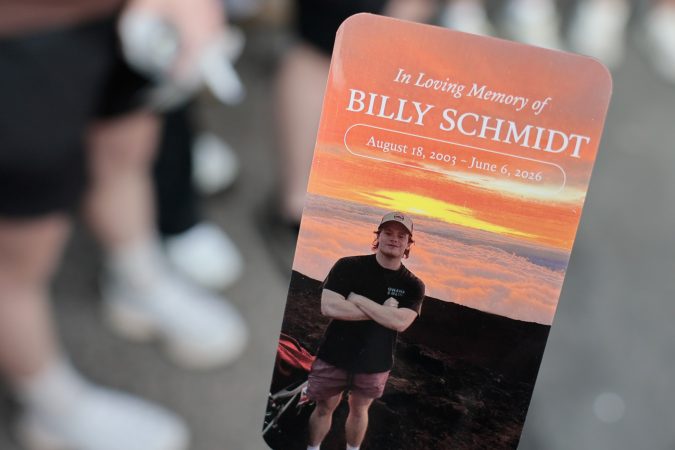
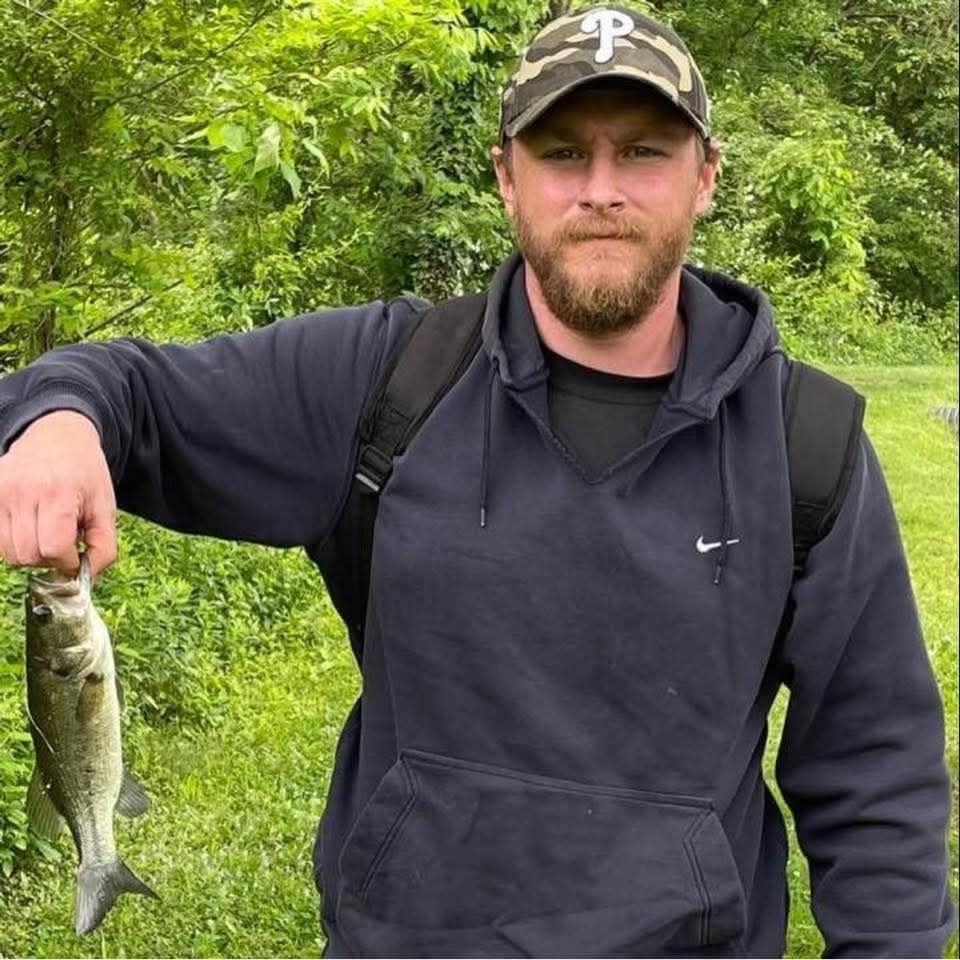
    Kaiseem Smith, 16, and Azzubair Outen-Fleming, 16, are charged with murder, conspiracy, and related offenses in the shooting death of William “Billy” Schmidt, 22, who was killed June 6 after a robbery on a South Philadelphia sidewalk turned deadly.

    Philadelphia police and the U.S. Marshals Service searched for Smith and Outen-Fleming for weeks before taking them into custody. Marshals found Outen-Fleming on July 1 in Colorado Springs. Smith surrendered to Philadelphia police the following day.

    At a preliminary hearing Thursday, prosecutors detailed how Outen-Fleming’s stepfather, Donte Abdulmalik, 35, and mother, Milika Abdulmalik, 45, allegedly drove him more than 1,700 miles to Colorado Springs — a roughly 45-hour trip spanning several states — and how police detectives traced the journey through cell phone records and license plate reader data.

    Donte Abdulmalik was arrested June 30 and Milika Abdulmalik on July 3. Both are charged with hindering apprehension, obstruction of justice, and related offenses.

    After hearing the evidence Thursday, Common Pleas Court Judge Gregory Yorgey-Girdy ordered the parents to stand trial.

    Detective Thorsten Lucke testified that the couple’s cell phone records showed they began the drive around 10:30 p.m. June 10, after surveillance videos and images of the suspects aired during local 10 p.m. newscasts.

    That night, a phone registered to Milika Abdulmalik called and texted a Colorado Springs number, Lucke said, before beginning to travel west in tandem with a phone registered to Donte Abdulmalik.

    The phones arrived in Colorado Springs on the evening of June 12, Lucke testified, and began heading east again June 14 before returning to Philadelphia.

    Detective Frank Mullen, who also testified Thursday, said police arrested Donte Abdulmalik near a black Mercedes-Benz that investigators believe was used to drive Outen-Fleming to Colorado Springs. License plate readers captured the vehicle near the home where Outen-Fleming was later found, Lucke said.

    Defense attorneys for the parents argued, however, that the evidence was thin and failed to connect their clients to the alleged crimes.

    Donte Abdulmalik’s attorney, Carmen C. Nasuti III, made plain what he thought of the case during a cross-examination of Lucke: “So, essentially, what you showed us was two phones took a trip to Colorado Springs?” Nasuti asked.

    “Yes, that’s correct,” Lucke replied.

    Smith, Outen-Fleming, and Fleming also appeared in court Thursday but waived their preliminary hearings.

    Schmidt, a Penn State senior, was walking home from a neighborhood bar where he had watched the NBA Finals when the two teenagers approached him near 20th and Wolf Streets around 1:30 a.m., according to prosecutors and surveillance footage described in court records.

    Prosecutors have said Outen-Fleming grabbed Schmidt’s cell phone, punched him, and rifled through his pockets before the pair knocked him to the ground. As the teens walked away, Outen-Fleming threw the phone down the block.

    A neighbor’s surveillance camera recorded Schmidt running after them, police have said. Smith then turned and fired a single shot into Schmidt’s chest, prosecutors said.

    Authorities also connected Donte Abdulmalik to the case through a woman who was inside a South Philadelphia home searched by police while they were looking for Outen-Fleming’s brother, Kadafi Fleming, according to an affidavit of probable cause for Donte Abdulmalik’s arrest.

    Fleming, 19, is accused of stealing the SUV the teens took to and from the area before and after the killing.

    The woman, identified in the affidavit only by her initials, told detectives she recognized Outen-Fleming from news coverage of the case and identified the second suspect — whom she said was the shooter — as his cousin. She also told investigators that Outen-Fleming’s stepfather had driven him to Colorado, according to the affidavit, and showed officers a speeding ticket that had arrived in the mail: a citation for a June 14 infraction in Simla, Colo., issued to a Mercedes-Benz registered to a deceased family member.

    Hours later, detectives interviewed the woman again while Donte Abdulmalik waited outside on the porch, according to the affidavit. She stood by her identification of the two teenagers but retreated from the rest of her account, telling them she did not know who had driven Outen-Fleming to Colorado.

    Prosecutors did not call the woman as a witness Thursday or introduce evidence from those interviews.

    In his closing argument, Nasuti said records showing a phone in Colorado did not necessarily place his client there. Donte Abdulmalik, he argued, could have handed the phone to his stepson.

    “No one who can place my client in the car,” he said. “No one who can place that phone number in his hand. They need to do that, even at this level.”

    Yorgey-Girdy, the judge, said he found the evidence persuasive, however. He also denied requests from Nasuti and Scott Gessner, Milika Abdulmalik’s attorney, to reduce the couple’s bail after Assistant District Attorney Lauren Crump argued they posed a “severe flight risk.”

    “This whole case,” Crump said, “is about flight.”

    The parents are each being held on $250,000 bail, court records show.

    Smith and Outen-Fleming are scheduled to return to court in October, along with Donte Abdulmalik, Milika Abdulmalik, and Fleming.

  • Assailants attack, steal handgun from off-duty Philadelphia police officer, authorities say

    Assailants attack, steal handgun from off-duty Philadelphia police officer, authorities say

    An off-duty Philadelphia police officer was beaten by multiple people and robbed of his gun late Thursday, police said.

    The gun — the officer’s service weapon — had not been recovered as of Friday, they said.

    The officer, whose name was not released by police, was taken to Temple University Hospital with cuts to his head and scrapes on his legs and feet. Police did not disclose his condition, but said the officer was stable Friday afternoon.

    Officer Tanya Little, a police spokesperson, said police were called to help the officer at about 11:45 p.m. Thursday on the 700 block of North 10th Street, between Brown Street and Fairmont Avenue in the West Poplar section of North Philadelphia, after the officer said he had been attacked by three people who stole his firearm.

    Little said that investigators took two people into custody for questioning, but charging information was not available.

    The investigation is ongoing, police said.

  • Philadelphia man convicted in killing of homeless man whose mother says she never stopped fighting for him

    Philadelphia man convicted in killing of homeless man whose mother says she never stopped fighting for him

    For the seven months he lived on Manayunk’s streets before he was shot and killed, Joshua Daywalt’s mother said she tried to persuade him to come back to the life waiting for him.

    Jennifer Daywalt, of Phoenixville, ticked off the list: She regularly brought him bottled water, chips, and other easy-to-carry snacks at the encampment he frequented. She brought reassurance, too, reminding him that his family — three sisters, one brother, and two children — loved him and wanted him back home.

    Authorities recovered Daywalt’s body from the frigid waters of the Schuylkill near Kelly Drive and Midvale Avenue on Feb. 7, 2025. A day later, a city medical examiner determined he had been shot at least once in the head, just behind his right ear, turning what had been a death investigation into a homicide.

    And on Thursday, a Philadelphia judge found Roger Gosson guilty of killing Daywalt, 35, delivering the outcome his mother said she had been advocating for since the day she learned her son was gone.

    “I need people to know that not everyone who is homeless is unloved,” Jennifer Daywalt said. “I never stopped trying. I never stopped begging. I never stopped fighting for him.”

    Gosson, 63, was convicted of third-degree murder and related crimes in Daywalt’s shooting death, following the two-day bench trial in Philadelphia Common Pleas Court.

    Gosson — a homeless man living in an intricate, multilevel setup inside a hole in the Green Lane Bridge — became detectives’ lead suspect in part because of body-worn camera footage from a patrol officer who encountered him a month before the killing. In the video, Gosson complained that “somebody [has] got to do something about” Daywalt, whom he accused of stealing from other homeless people in the area.

    Later, inside Gosson’s living space, police recovered the gun they say was used to kill Daywalt .

    Gosson’s fingerprints and DNA, however, were not found on the handgun. And without cellphones to track his movements or street cameras to capture the shooting, prosecutors’ case against Gosson was, as Assistant District Attorney Ashley Toczylowski acknowledged during her closing argument on Thursday, anything but typical.

    “But,” she said, “that doesn’t mean we don’t know what happened.”

    Judge Charles Ehrlich spent less than 10 minutes deliberating before returning a guilty verdict Thursday afternoon. Even so, a case built largely from the testimony of other homeless men created obstacles for prosecutors and, at one point, threatened to unravel before it ever reached trial.

    The witnesses had told police in the weeks after Daywalt’s body was found that Gosson confessed to the killing in a series of conversations and, in one case, a note written on a napkin that was never recovered. But on Thursday, one of those witnesses disputed his previous account, blaming a drug-induced haze for his loose lips and claiming he couldn’t recall his videotaped interview with police.

    And last month, Gosson’s trial was postponed for the fifth time after prosecutors said police had been unable to locate that same witness. The delay prompted Gosson’s defense attorney, Gina Amarillo, to ask the judge to dismiss the case, arguing that prosecutors had already taken more than the 365 days allowed by law to bring Gosson to trial.

    Ehrlich denied her motion. And to ensure the trial could begin on Thursday with the key witness, prosecutors held him in jail on a material witness warrant ahead of the court date.

    At the delayed August trial date, Detective Craig Coulter testified that he’d tried to find the homeless witness for three weeks without success, calling him “a constant moving target.”

    “It’s like trying to find a squirrel in the woods,” he said. “That’s what all the witnesses in this case have been like.”

    Amarillo argued on Thursday that prosecutors had relied on speculation to accuse Gosson of a killing for which no hard evidence had been found implicating him. Changing unreliable witness testimony, she said, was “not enough to say Mr. Gosson did this beyond a reasonable doubt.”

    “My client was hoping for a different verdict based on the evidence presented,” Amarillo said in a phone interview Thursday night. She added that they will likely appeal the judge’s verdict.

    Outside the courtroom, Jennifer Daywalt remembered her son as a “brilliant artist” who’d first picked up pencils to draw at 4, she said. He gravitated toward portraits in pencil and charcoal, often of his favorite hard-rock bands, she said.

    Before he began living on the streets of Manayunk, Daywalt left four psychiatric hospitalizations intended to stabilize him after he stopped taking medication for his diagnosed paranoid schizophrenia and multiple personality disorder, Jennifer Daywalt said. His illnesses, she guessed, may have caused him to steal. “It made him feel as if he couldn’t conform to society,” she said.

    Jennifer Daywalt said she has appealed to lawmakers to change the state’s laws on hospital commitments, and will continue to fight for mandatory holding periods and follow-ups that she believes could have saved her son.

    For now, she said: “It felt good that the judge saw what the rest of us saw. It felt like Joshua’s voice was heard.”

    Gosson is scheduled to be sentenced in December.

  • Prison lifers asked Pennsylvania’s top court to change how unconstitutional sentences are undone

    Prison lifers asked Pennsylvania’s top court to change how unconstitutional sentences are undone

    Nearly six months after Pennsylvania’s highest court struck down automatic life sentences for second-degree murder, four prisoners have asked the justices to extend that ruling to everyone still serving one — and to change how the state handles unconstitutional punishments going forward.

    The court’s landmark ruling in March ended a practice most other states had abandoned or never adopted, and it required judges to weigh a defendant’s role in the crime in every second-degree murder case moving forward. But it left unanswered a consequential question: Does it also apply to the roughly 1,100 people already serving these sentences?

    The four requests, filed Thursday in petitions to the court, are a coordinated effort to force an answer.

    But the prisoners want more. They are also asking the justices to adopt a statewide rule that any sentence the court strikes down as cruel punishment would automatically become void for everyone already serving it.

    As things stand, even after the state Supreme Court has declared a sentence unconstitutional, people whose cases closed long ago have no legal path to a new one until the high court declares its ruling retroactive or lawmakers pass a law that covers them — a process that can take years.

    The proposed rule would eliminate that wait.

    That broader request is, “in the most literal sense of the word, an extraordinary request for relief,” said Marsha Levick, cofounder of the Juvenile Law Center in Philadelphia, an organization at the center of a similar fight after the U.S. Supreme Court struck down mandatory life-without-parole sentences for juveniles but did not say whether the ruling applied retroactively.

    The Pennsylvania Supreme Court’s ruling striking down the mandatory sentences came in the case of Derek Lee, a Pittsburgh man convicted in the 2014 killing of Leonard Butler, who was shot by Lee’s accomplice during a home-invasion robbery. Lee argued the automatic sentence violated the state constitution’s ban on cruel punishments. The justices agreed, saying a judge must weigh each person’s individual role before imposing life without parole.

    The court, however, did not say whether the decision applied to people who had already been sentenced. Instead, it put the ruling on hold for 120 days to give lawmakers time to write a new sentencing law and, if they chose, to settle that question themselves. The deadline passed July 24 without a new law.

    The four prisoners argue lawmakers’ inaction has left the courts as the only branch of state government able to resolve the issue. And, so that prisoners are not stranded like this again, they want future rulings of this kind to take effect for everyone automatically.

    “The legislature has made it manifest that they are not going to be prioritizing fixing this constitutional injustice,” said Bret Grote, a lawyer with the Abolitionist Law Center who represented Lee before the state Supreme Court and now represents the four petitioners, along with lawyers from the Pennsylvania Innocence Project and the law firm Phillips Black. “So it is now on the courts to do that.”

    A punishment the state constitution forbids, Grote said, cannot be imposed on anyone — including, he argued, people already serving it. A rule recognizing that from the start, he said, would spare prisoners a separate legal fight that “only prolongs a constitutional crisis.”

    The prisoners filed their requests as what are known as King’s Bench petitions, invoking a power that lets the state Supreme Court take up a case directly, skipping the lower courts, when a matter of public importance cannot wait. In June, the court used that power to require the Philadelphia District Attorney’s Office to notify the state attorney general whenever it declines to oppose a prisoner’s bid to overturn a conviction, giving the attorney general a chance to step in, after allegations of widespread malfeasance.

    King’s Bench petitions are rarely filed and even more rarely taken up, said David Rudovsky, a senior fellow at the University of Pennsylvania Carey Law School. Still, he said, these petitions have a real chance: The circumstances are exceptional, the issue is urgent, and courts statewide need a uniform answer.

    And the prisoners making the request, he added, present compelling cases.

    The prisoners — Cecil Holmes, 70; Lori Ann Lassiter, 62; John Marshall Payne III, 70; and Marsha Scaggs, 62 — have served about 160 years combined.

    Of the four, only Payne has been accused of killing the victim himself. At his 1986 trial, prosecution witnesses testified he had admitted to beating Elsie Rishel, 90, with a telephone during a 1981 burglary of her York County home. No physical evidence tied him to the crime, however, and he has long maintained his innocence. The other three were convicted related to crimes in which, prosecutors said, someone else killed the victim.

    At least two of the petitioners — Holmes and Scaggs — have faced serious medical problems that underscore the urgency of resolving the question, Grote said.

    Holmes, a Philadelphia man, was convicted in 1980 in the death of Joseph Melvin, a taxi driver who was fatally stabbed at a gas station during an attempted robbery the year before. Prosecutors said Holmes had served as an unarmed lookout across the street.

    He now has advanced dementia and is confused about where he is, said Jennifer Merrigan, a Phillips Black lawyer who represents Holmes. Without action from the high court, Merrigan said, his future “looks really bleak.”

    Two of the petitioners’ cases come from Philadelphia, one from Lawrence County, and one from York County. If the court takes up the petitions, prosecutors in those counties would typically argue the state’s side.

    District Attorney Larry Krasner, whose office supported Lee’s challenge, said Thursday that while “retroactivity is necessary,” prosecutors would need to review the four prisoners’ petitions before taking a stance on them. More than 500 of the roughly 1,100 people serving the sentence were convicted in Philadelphia.

    Other prosecutors have signaled resistance. For example, John Adams, the Berks County district attorney and communications chair of the Pennsylvania District Attorneys Association, said in August that district attorneys would not concede the ruling applies retroactively without a new sentencing law. Attorney General Dave Sunday, a Republican, backed a Senate bill that would have made most people already serving the sentence eligible for parole only after 35 years. He warned in July that legislative inaction would be “dangerous.”

    It was unclear whether Sunday’s office would weigh in on the petitions. The attorney general’s office did not immediately respond to questions Thursday.

    Even if the court agrees to hear one or more of the petitions, a decision could be months away, Rudovsky said. That would leave time for lawmakers to act, which some stakeholders predict could be more likely after the Nov. 3 midterm elections.

    The Republican-controlled Senate passed a bill in June that would have set a 35-year mandatory minimum for second-degree murder. The Democratic-controlled House passed its own version in July, which would have made people already serving life eligible for release after 30 years. Neither bill, which made it the state parole board’s responsibility to determine whether a prisoner was fit to be released, cleared both chambers.

    “We’ve no substantive preference as to whether the remedy is through the courts or the legislature,” Grote said. “If something changes in the legislature and they pass a law that applies to everybody … then we would welcome that.”

    If the state Supreme Court considers the petitions and rules in the prisoners’ favor, trial judges would have an opportunity to resentence them and everyone else currently serving the life sentences. But they would do so without sentencing guidelines on Pennsylvania’s books — until lawmakers act.

    That could produce starkly different resentencing outcomes in otherwise similar cases, depending on the county where a case is heard and the judge who hears it, some stakeholders have warned.

    Levick, the attorney whose work helped end life sentences for juveniles, said that although some people may prefer letting the parole board decide, the high court’s ruling requires judges to weigh individual culpability.

    With juvenile lifers, she said, judges “did a great job.”

  • A Philly man was convicted of murder for shooting his pregnant girlfriend 11 times in the head, then fleeing the city

    A Philly man was convicted of murder for shooting his pregnant girlfriend 11 times in the head, then fleeing the city

    Justin Smith was grasping for the gun that his pregnant girlfriend had pressed to her temple, he told a Philadelphia jury last week, when the weapon accidentally went off, firing 12 shots in a matter of seconds — 11 of them into her head.

    Smith, 28, took the stand at his trial on murder and related charges in the death of Dianna Brice, 21, in Southwest Philadelphia and said the shooting was an accident.

    But a jury rejected Smith’s account and convicted him of first- and third-degree murder on Friday in the 2021 death of Brice and her unborn child. Smith was also convicted of abuse of a corpse, arson, and related crimes after he admitted to committing those acts to cover up the killing.

    Common Pleas Court Judge Anthony Kyriakakis sentenced him to life in prison without the possibility of parole.

    During closing arguments, Assistant District Attorney Lauren Crump cast doubt on Smith’s explanation of how his girlfriend died, saying it was impossible for that many shots to have fired into a concentrated area if the gun accidentally went off during a struggle over the weapon, as he suggested.

    She pointed to other problems with Smith’s defense, urging jurors to reject his contention that the Glock handgun modified with a semiautomatic “switch” was Brice’s, not his.

    And she dismissed Smith’s argument that he covered up the crime and fled Pennsylvania after the killing because he was scared, bidding jurors to recall his swift actions — setting his car on fire and disposing of Brice’s body in trash bags — before heading to Florida in an attempt to reach Cuba.

    “That is not panic,” Crump said. “That is premeditation.”

    Brice, 21, of Upper Darby, was 14 weeks pregnant with Smith’s child when she died on March 30, 2021, Lindsay Simon, chief medical examiner for the Philadelphia Medical Examiner’s Office, testified during the trial.

    Prosecutors said she was last seen with Smith that day driving from a Delaware County laundromat to Philadelphia, where the couple got into a volatile argument after Brice learned she had tested positive for herpes and accused her boyfriend of giving her the sexually transmitted infection.

    It was the last time Brice was seen alive.

    Police discovered her body seven days later in a wooded area near 58th Street and Eastwick Avenue in Southwest Philadelphia, covered in black trash bags and wrapped in a tan blanket.

    She had been shot in the head 11 times at close range and struck once in her right shoulder. Simon, the medical examiner, said the shots would have almost certainly killed Brice instantaneously.

    Philadelphia police quickly identified Smith as a suspect: Cell phone records from the day Brice died showed her phone traveling the same path as Smith’s phone — until 1:38 p.m., when the phone’s trail went dark, said Anthony Vega, a former Philadelphia police detective who testified at the trial as a cell site expert.

    Police also found Smith’s dark gray Ford Fusion, burned to a blackened shell, near 59th Street and Florence Avenue, about a mile from where Brice’s body was discovered.

    Investigators traced the vehicle to Brice’s makeshift grave site, and to where it was found burned, using video footage from street surveillance cameras, Philadelphia Detective Thorsten Lucke testified.

    But the cameras did more than capture the Fusion’s path: It also showed Smith and an accomplice, Tylydia Garnett, wearing gloves and loading what appeared to be a large object into the back of a Hyundai, which police traced to the same locations and to a gas station where its driver purchased a canister of fuel used to set the Fusion ablaze, prosecutors said.

    While detectives soon suspected Smith was involved, he was not arrested until 2025, when Atlanta police took him into custody after he gave an officer a fake name during a routine traffic stop and fled.

    Meanwhile, Philadelphia police arrested his accomplice, Garnett, in April 2021. She pleaded guilty to arson, abuse of a corpse, and related crimes, and was sentenced to 11½ to 23 months.

    Last week, Garnett, 27, told jurors at Smith’s murder trial that he had confessed to her that he shot Brice.

    She testified that she had helped him flee to Florida before he moved to Georgia, though Smith’s attorney, Samuel Stretton, suggested the woman had inflated details of her story to earn a more lenient sentence.

    When Smith testified, he told jurors Brice’s death was a tragic, shocking accident.

    During their argument in the car, he said, the exchange escalated as he drove. He denied cheating on her, he said, but Brice became agitated and held a gun to his head before turning the weapon on herself.

    “I tried to hurry up and pull it from her,” he testified. Instead, he said, “it went off, and she died.”

    In fear for what might happen to him, Smith said, he hatched a plot to dispose of her body and burn the car with the gun still inside it. The gun was never found, prosecutors said.

    “Why didn’t you come to your senses and call for help?” Stretton, his attorney, asked.

    “I just felt like this wasn’t going to go my way,” Smith said.

    Following the jury’s verdict, Brice’s family, who had lined three rows of the courtroom during the three-day trial, expressed relief for the guilty verdict.

  • DA Larry Krasner asks victims of Chucky-style mask incidents to come forward

    DA Larry Krasner asks victims of Chucky-style mask incidents to come forward

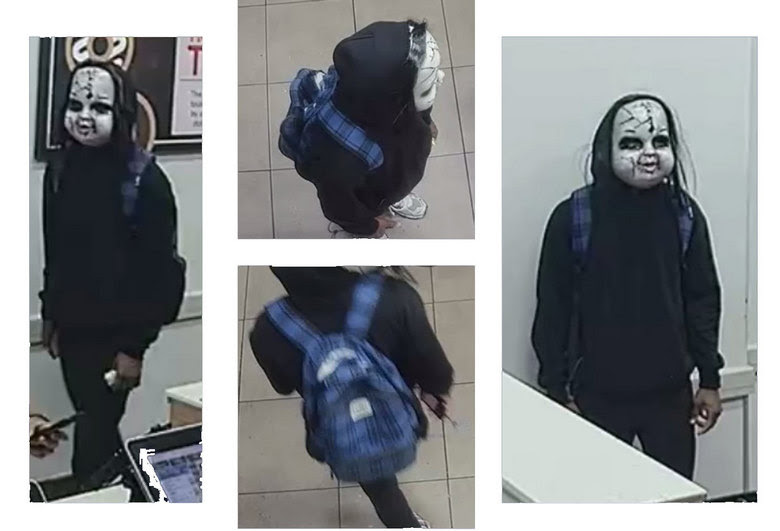
    A day after U.S. marshals captured the man accused of menacing pedestrians in Center City while wearing a Chucky-style mask, Philadelphia District Attorney Larry Krasner urged victims to come forward, saying prosecutors are eager to pursue additional charges against the man whose antics terrorized people and went viral.

    Zymire Hughes, 22, was taken into custody on Tuesday night in Las Vegas by marshals who tracked him across the country. Authorities said Hughes wore a frightening mask to harass and scare more than a dozen people, including a woman he approached while she was jogging near City Hall earlier this month and asked, “Are you ready to die?”

    As the 40-year-old woman ran from him, Krasner said, she fell and suffered injuries that required hospitalization and weeks of recuperation.

    Hughes faces aggravated assault and other charges in connection with that incident, the district attorney said, and prosecutors are reviewing as many as 15 other reported incidents involving the masked man that same morning.

    “If more victims are identified,” Krasner said, “we look forward to prosecuting him in other cases as well.”

    He added: “Who’s scared now?”

    Authorities have not identified most of the people who appear to have been confronted or frightened by the masked man. But in a widely publicized incident, Jameka Wilson, a 25-year-old actress, told several news outlets that a man wearing a similar mask approached her on her way to an exercise class near City Hall and that she kicked him in the chest.

    Philadelphia police said that Hughes did not display a weapon during the incidents and that the woman who fell was the only person known to have been injured. Investigators have said they believe he may have been frightening people to create social media content.

    On Wednesday, Krasner dismissed the idea that Hughes could characterize the crimes as online entertainment.

    “You can’t just say, ‘I’m an influencer,’ and commit crimes,” he said. “You can’t just terrorize people, terrorize a community, because the reaction of someone who believes she might die at any second, you find funny.”

    Hughes remained in custody Wednesday in the Clark County Detention Center in Las Vegas, court records show, and was scheduled for a court hearing Thursday.

    After Hughes is extradited to Philadelphia, prosecutors will seek “very high bail” in an effort to keep him in custody while the case proceeds through court, Krasner said.

    “One of the questions that bail answers is: Will this person run?” Krasner said. “I mean, yes. Obviously, he already has. … Running away is the ultimate way to high bail.”

    Hughes’ extradition could take as little as a week or stretch into months, depending largely on whether he contests his return, Krasner said.

    Hughes’ flight from Philadelphia took him from New Jersey to Florida and then Nevada, authorities said.

    He left the Philadelphia area Aug. 19 from Trenton-Mercer Airport in Ewing, N.J., according to the U.S. Marshals Service. He flew to Orlando and then to Las Vegas.

    Philadelphia and Las Vegas deputy marshals began working together Friday, said Robert Clark, a supervisory deputy U.S. marshal, and spent the weekend trying to locate him.

    Investigators eventually tracked Hughes to an apartment complex in southeast Las Vegas, where they believe he had been staying for about five days, Clark said.

    Marshals arrested Hughes about 8 p.m. Tuesday. Clark said Hughes tried to pull away from his handcuffs and had to be subdued by deputy marshals.

    Hughes’ arrest followed a week of intense public attention after Philadelphia police released images of him and asked residents for help in finding him. The case had already gone viral because of photographs and videos showing a man wearing a cracked, baby-faced mask resembling the horror character Chucky from the movie Child’s Play.

    Prosecutors are continuing to review evidence, Krasner said, and “will be pursuing all charges that apply.”

    Anyone who was approached or menaced by the masked man can contact the district attorney’s office at 215-686-8000.