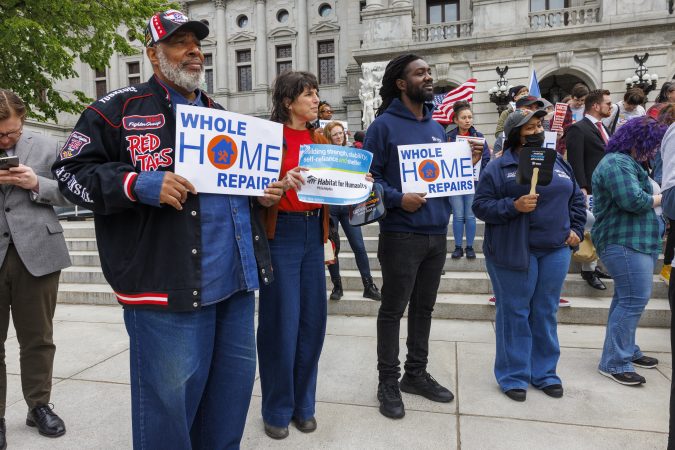
WASHINGTON — A Pennsylvania program that assists homeowners and small landlords by financing repairs was on track Wednesday to expand nationwide, after Congress this week passed a bill that both Republicans and Democrats are celebrating as the first major federal housing law in decades.
Tucked into the 374-page omnibus legislation is a pilot version of a federally backed Whole-Home Repairs program — an idea that was originally sponsored by State Sen. Nikil Saval (D., Philadelphia) and passed in Pennsylvania in 2022.
The program offers grants or loans to address safety, habitability, and efficiency concerns.
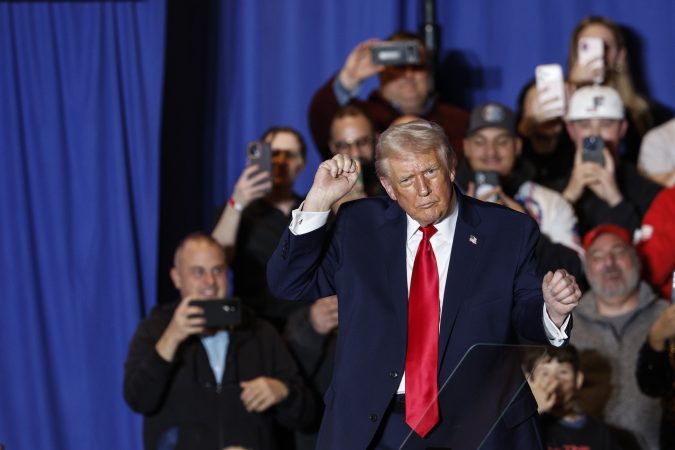
But despite wide bipartisan support for the program and dozens of other housing reforms in the larger bill, final approval was derailed on Wednesday when President Donald Trump canceled the bill-signing ceremony in an attempt to force Congress to first pass more restrictive voter-ID laws.
Democrats and some Republicans quickly rebuked the president, who still made a rare appearance on Capitol Hill to meet with Senate Republicans. The intraparty meeting turned contentious, according to multiple reports, while Democrats noted they had enough votes to overturn Trump’s veto if he holds out long enough.
“It’s a mess,” said U.S. Sen. Andy Kim (D., N.J.). “Finally, we’re doing something that the American people want. We got bipartisanship. We worked on it forever. … Then he just parachutes in and just blows it all up here at the end.”
The 21st Century ROAD to Housing Act aims to incentivize housing construction, restrict large institutional investors from buying single-family homes, improve financial literacy, and more.
More than a year in the making, it includes a separate stand-alone Whole-Home Repairs Act that U.S. Sen. John Fetterman (D., Pa.) had introduced in each of the last two sessions of Congress. Fetterman’s bill merged last year into the larger bill while keeping many of the same provisions as the Pennsylvania-level program.
Households that earn less than 80% of the area median income are eligible for grants, while small landlords with affordable units can access loans, including forgivable loans.
Saval said he expects the national version to also reflect that level of “immense demand” — particularly as the program starts small and as homeowners across the country face higher costs to maintain their residences.
“This is a huge issue. There are some 200,000 homes in Pennsylvania alone that have moderate to severe deficiencies,” Saval said. “Everyone is dealing with rising energy costs. Everyone’s dealing with the cost of materials and labor and the inability to pay for all that.”
Addressing those kinds of affordability concerns, which have become a top-of-mind political issue during this year’s high-stakes midterm elections, is a rare bipartisan effort to emerge from the U.S. Capitol.
Philadelphia-area lawmakers on both sides of the aisle had spent months advocating for the bill.
U.S. Sens. Dave McCormick (R., Pa.) and Lisa Blunt Rochester (D., Del.) — members of the Senate committee that advanced the legislation — both celebrated the final passage by talking about its impacts on affordability and “cutting red tape.” Kim called it a “historic” move to bring costs down.
“This package comes at a critical moment,” Blunt Rochester said in a statement, noting a nationwide housing shortage of as many as 7 million units. Five bills she separately sponsored — to accelerate building, increase investment in community development projects, develop zoning and land-use policies, and more — were featured in the final law.
The Whole-Home Repairs provision of the legislation was not a guarantee as negotiations developed over the last year. House Republicans were generally skeptical of creating a new government program, and specifically critical of the policy’s tenant protections, according to a source familiar with the negotiations. But their counterparts in the Senate, and Democrats in both chambers, helped keep it in the larger bill.
Fetterman said in a statement that Whole-Home Repairs “ensures families can stay in their homes” and that passing it had been a priority since he entered the Senate in 2023.
“I’ve consistently maintained that our housing crisis needs real solutions that help address the problems at the center,” Fetterman said.
Saval, who said he made multiple trips to Capitol Hill to work with sponsors and lobby for Whole-Home Repairs, said he was “thrilled” by the inclusion of a program that he and the coalition of advocates who helped push the idea had always envisioned as a model that could be replicated.
He said he expects the pilot program to prove successful in “a few states” where it is able to launch. Unlike previous version of the federal bill that would have allocated $30 million to the pilot, there is no specific funding number for Whole-Home Repairs in the 21st Century ROAD to Housing Act.
The legislation calls for the secretary of the U.S. Department of Housing and Urban Development to identify between two and 10 “implementing organizations” every year during the pilot, which is set to run through October 2031. The organizations will be local or state governments that administer the programs.
Saval said that no matter how much funding is allocated, it “will undoubtedly fall short of the need,” but that its effectiveness will spur further investment.
“It repays itself,” Saval said. “It repays itself in stabilized communities. It repays itself in stabilized property values, in people remaining in their homes rather than in unsafe or unhealthy homes, or rather than abandoning them.”
Staff writer Jake Blumgart contributed to this article.
President Donald Trump is scheduled to speak Tuesday at a truck manufacturing facility in the Lehigh Valley, where a competitive race for Congress this year could determine which party controls the U.S. House for the second half of his term.
Trump will deliver remarks at Mack Trucks in Macungie in Lehigh County, according to the White House and two local members of Congress.
The visit will mark Trump’s fourth Pennsylvania appearance in his second term and his first this year ahead of November’s high-stakes midterm elections.
Pennsylvania has four competitive U.S. House districts — the most of any state — and the Lehigh Valley-based 7th District is widely considered one of the most likely in the nation to flip from Republican to Democrat.
GOP U.S. Rep. Ryan Mackenzie won that seat by 1 percentage point in 2024 as Trump defeated Democrat Kamala Harris statewide. Bob Brooks, a union leader and retired firefighter whom many prominent Democrats rallied behind before last month’s competitive primary, is facing Mackenzie in November.
The event Tuesday is scheduled as an official White House event, not a campaign event, and it could be the first of several trips by the president to the region and across Pennsylvania in the coming months.
“We’re looking forward to joining President Trump at Mack Trucks — one of our nation’s most iconic manufacturers,” Mackenzie wrote on social media.
“By investing in American workers and supporting domestic manufacturing, President Trump and Republicans in Congress have helped to put the Lehigh Valley and the Poconos at the forefront of our nation’s industrial revitalization. We appreciate President Trump coming to the region to help us highlight the work we’ve done together to support American workers, families, and industries.”
Mackenzie spoke Friday at a different Mack facility outside of Allentown to highlight part of a contract the company won from the U.S. Army last year to produce heavy dump trucks. The deal is worth up to $221.8 million, and Mack Defense said it received $47 million in the latest Department of Defense appropriations act.
A White House spokesperson said Trump will “stand with the American workers he has fought for” during his visit.
“Under the President’s leadership, key domestic industries are being revitalized, historic investments are pouring back into communities like Macungie, and families across the country are securing new, high-paying jobs,” Liz Huston said. “Pennsylvanians placed their trust in President Trump, and he has delivered for them.”
Former President Joe Biden visited the same Mack facility in 2021 for a speech focused on supporting American manufacturing.
Trump last appeared in Pennsylvania in December for a rally at the Mount Airy Casino Resort in Mount Pocono, which is in the neighboring 8th Congressional District where another freshman Republican is looking to fend off a Democratic challenger. Pitched as a speech to address voters’ concerns about affordability, the president repeatedly veered off script and called affordability concerns a “hoax.”
Some of the president’s former supporters in the region have since said they regretted voting for him, and national Democrats have made the area a priority as they look to win back a seat that Mackenzie flipped two years ago. Brooks, the Democratic nominee, has leaned into his working-class background while saying he understands voters’ financial concerns.
U.S. Rep. Dan Meuser, a Republican who represents a different neighboring district, said Trump’s visit signals the president’s support for workers.
“Mack Trucks are a symbol of America’s manufacturing strength,” Meuser said on social media. “Their Lehigh Valley operations are a pillar of the local economy, employing Pennsylvania workers and driving the nation’s trucking industry. Thank you, President Trump, for supporting American workers.”
WASHINGTON — As lawmakers on Capitol Hill grapple with President Donald Trump’s deal toend the war in Iran, the New Jersey Democrat who spent years weighing national security issues in the Middle East described the agreement as a “mind-boggling” move that will have damaging reverberations across the globe.
“It’s like setting your own house on fire, a good chunk of it burning. You put it out. And then you start clapping, celebrating yourself. That’s what Trump is like right now,” U.S. Sen. Andy Kim, the only career diplomat in the Senate, said of the memorandum Trump signed Wednesday night.
Democrats representing the Philadelphia region on Thursday blasted the terms outlining the end of a conflict that many of them repeatedly described as a strategic failure from the start.
Some prominent Republicans echoed those concerns — criticizing Trump’s removal of U.S. sanctions on Iran and his promise to help pull together a $300 billion fund to rebuild the country’s infrastructure after months of bombings — while Pennsylvania lawmakers who supported the war, like U.S. Sens. Dave McCormick (R., Pa.) and John Fetterman (D., Pa.), remained silent or defended Trump.
“Reagan is rolling over in his grave,” U.S. Sen. Bill Cassidy, a Louisiana Republican, wrote on social media.
Kim, who worked at the National Security Council under President Barack Obama and spent time as a civilian adviser in Afghanistan, said it was difficult to imagine what will happen next.
He said the Trump administration had lost all forms of leverage by agreeing to end hostilities, reopen the Strait of Hormuz, and provide financial benefits to Iran without securing any new or firm commitments around the country’s nuclear program. Though the countries vowed to continue negotiating over the next 60 days, Kim said, Iran will already be in a “position of strength” with the financial relief and thus have little incentive to follow through on its pledge not to pursue a nuclear weapon, which was the primary justification for the war by Trump and his allies.
“I have no confidence in any aspect of this,” Kim said in an interview.
Kim said he feared not just prolonged issues between the U.S. and Iran — issues that look almost the same as before the war began — but “reverberations everywhere” as the administration signals how it would handle other foreign conflicts, like Russian President Vladimir Putin’s aggressions in Ukraine or Chinese President Xi Jinping’s moves toward Taiwan.
“We’re just at such a weak point now. We’re still strong enough that we can muscle other countries, but they see through it now,” Kim said.
Trump has continued to project strength, including with threats to resume attacks if Iran does not comply with the peace deal.
“It’s a memorandum of understanding, and if I don’t like it, we’ll go back to shooting at them, dropping bombs on their head,” Trump said Wednesday.
McCormick, who served in the Army during the Gulf War and has described the war in Iran as one of the most effective military campaigns in history, did not agree to an interview with The Inquirer on Thursday as other Republican senators like Cassidy and U.S. Sen. Ted Cruz of Texas raised concerns. In multiple television interviews, McCormick said he had “a number of questions” about the memorandum.
“If it has the two things the president’s talked about, I think we’re in good shape,” McCormick said on Newsmax. “One thing is that there can be no path to a nuclear weapon or not giving up the enriched uranium. … That has to happen for this to be successful. And the second thing was the president’s words that you have to pay for performance. You can’t lift the sanctions or give them real economic relief on the sanctions until they take tangible steps toward eliminating that nuclear capability.”
A spokesperson for U.S. Rep. Brian Fitzpatrick, a Bucks County Republican who has voted for more congressional oversight of the war but has not criticized its mission, referred to a statement from before the terms were announced this week. Fetterman, the only Senate Democrat who has fervently supported the war, did not respond to a request for comment.
Democrats representing the Philadelphia area, meanwhile, were quick to call the deal a symbol of a conflict that was entirely a failure.
“Now, after billions of taxpayer dollars spent and 13 American service members’ lives lost, we are no better off in Iran than we were before the war began,” said U.S. Rep. Chrissy Houlahan of Chester County, an Air Force veteran.
U.S. Rep. Mary Gay Scanlon of Delaware County said she was hopeful that the agreement was a step toward peace while calling the conflict damaging to the U.S. economy and embarrassing on the global stage.
“The war did not accomplish any of the administration’s alleged goals, and has instead only strengthened Iran’s strategic ambitions,” she said.
In a post on social media, U.S. Rep. Brendan Boyle of Philadelphia called it “total humiliation.”
Public surveys showed the war was never popular with the majority of Americans, and at least one new poll released this week showed Pennsylvania voters were continuing to sour on Trump’s handling of foreign policy.
“This was just really a lose-lose everywhere,” said Kim, who helped lead a roundtable on Capitol Hill this week to highlightthe economic impact of the war, like increasing fuel and fertilizer costs due to the shipping decline. “We need to move on. But this is going to have such a negative impact on America for so long, and in so many different ways.”
Staff writer Michelle Baruchman contributed to this article.
Three weeks after members of Congress listened to and then publicly shared concerns from inside Pennsylvania’s largest immigrant detention center for the first time, U.S. Rep. Madeleine Dean said she was blocked from speaking with detainees while visiting the same facility on Wednesday.
Dean (D., Montgomery) said she was given “a relatively complete tour” and gathered information at the Moshannon Valley Processing Center — a 1,900-bed facility in Clearfield County that is the largest of its kind across the entire Northeast.
But while attempting to speak with detainees, as she has done during other oversight visits, Dean said, she was told that required advance permission from the detainees themselves.
Dean questioned the credibility of that prohibition — especially, she said, after she had informed the facility of her plans ahead of time, and after two of her colleagues were recently permitted to speak with detainees during a similar, but unannounced, oversight trip.
“Let’s put it this way, I got a scoop of the BS,” Dean said in an interview.
The four-term lawmaker’s fact-finding trip came after several weeks of escalating tensions around the conditions facing undocumented immigrants in detention centers such as Moshannon Valley and Delaney Hall in Newark, N.J. Both facilities are privately run by the same company, GEO Group, and have faced allegations of providing inadequate medical care and nutrition while allowing little outside oversight.
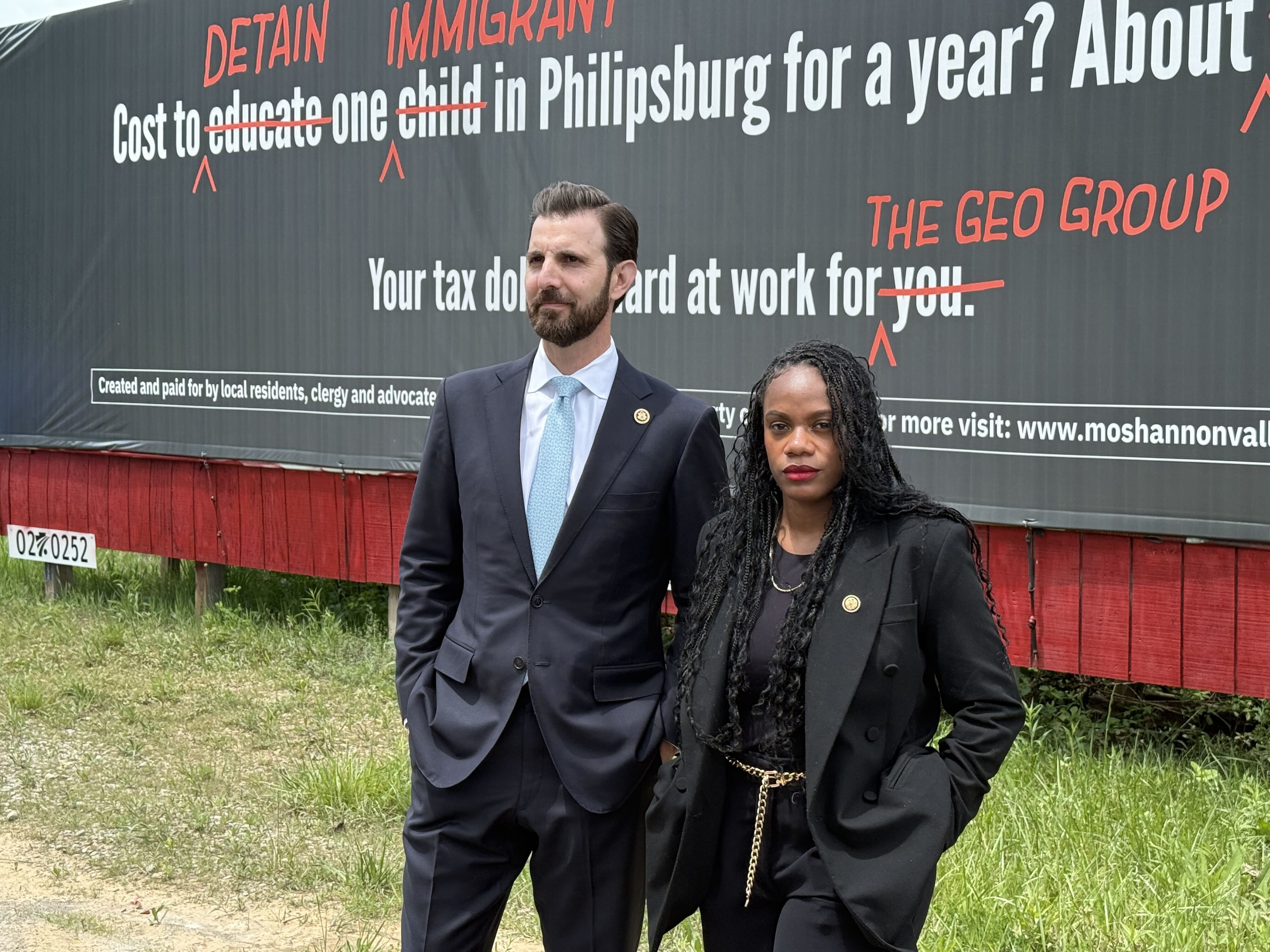
U.S. Reps. Summer Lee and Chris Deluzio, both Pittsburgh-area Democrats, said they heard “real concerns” after emerging from Moshannon Valley on May 28.
Their roughly two-hour tour and discussion with detainees was the first time any member of Congress had successfully entered the facility since President Donald Trump took office. It also followed reports of both poor medical care and a hunger strike led by detainees to protest the food.
Lee and Deluzio said women in particular approached them to say they had not received proper prenatal care. At least one told them she had been sexually assaulted at the center. And watching lunches of chicken, rice, and beans being served did not make them less concerned about the quality of the food, the lawmakers said.
A spokesperson for the Department of Homeland Security, which oversees Immigration and Customs Enforcement, later said that ICE “welcomes congressional oversight” and that it provides all detainees with comprehensive medical care as well as proper meals and living conditions.
Dean said Moshannon Valley appeared to be clean and spacious during her trip Wednesday. The medical unit was active — unlike a larger facility in Dilley, Texas, that, after she visited earlier this year, she called “inhumane” for its lacking treatment of both adults and children.
But Dean said she questioned what the facility would have looked like if she had not announced her visit ahead of time, and she was not dissuaded from her position that the facility should be closed.
“This administration has just so successfully, cancerously dehumanized certain populations that we warehouse them now,” Dean said. “And we allow others to profit from it using our taxpayer dollars.”
GEO Group referred a request for comment to ICE, which did not immediately respond.
Dean said she was particularly alarmed that the GEO Group’s contract with ICE, as well as Republican-sponsored federal budget language, appears to incentivize filling detention center beds rather than targeting those charged with violent crimes, as Trump pledged to do. She said a copy of the contract she obtained Wednesday explained GEO Group is paid $10 per individual every day they are detained, up to the first 800 detainees. The cost goes up to $40 per individual per day for every additional person detained, she said.
“It is so perverse. It says nothing about need, nothing about detaining the worst of the worst,” Dean said. “It says pick up as many people as you can, regardless of what they have done or haven’t done, so that every bed is charging and collecting from U.S. taxpayers to keep these people in that population.”
With Clearfield County commissioners expected to vote in September on whether to renew the contract with ICE and GEO, Dean said she hopes the commissioners choose not to extend the facility and instead shut it down.
Lee, who has gone further than other Pennsylvania Democrats by calling for the elimination of ICE entirely, also said last month she hoped the Moshannon Valley facility would close. One of the three Clearfield County commissioners, meanwhile, said he was inappropriately denied entry to the facility and said he does not believe the county should be part of the contract, WJAC reported.
Shutting down immigrant detention centers, however, is rare and difficult. More than 200 centers hold about 60,000 people, and Trump has been determined to increase capacity rather than reduce it.
Dean said there were 1,666 individuals detained at Moshannon Valley on Wednesday, which is more than the 1,417 that Deluzio reported on May 28. According to Deluzio, about 1,100 of those were classified as “low security.”
Pennsylvania is set to have a presence at an upcoming two-week “Great American State Fair” on the National Mall, one of the signature 250th anniversary events hosted by President Donald Trump celebrating America’s founding.
What that presence will look like for Pennsylvania — the state where the nation’s independence was declared — is still up in the air.
All 50 states and six U.S. territories are expected to be represented with booths showcasing aspects of their culture and history.Some blue states, however, are opting out of sending their own staff to participate, citing a partisan tilt to the event and the cost to participate.
Pennsylvania, a quintessential swing state led by Democratic Gov. Josh Shapiro, is still preparing to participate in an exhibit, according to a person familiar with the planning. But state officials have struggled to find a Pennsylvania business that wants to associate with the Trump-affiliated event.
The Great American State Fair has hit numerous roadblocks in its planning in recent weeks. More than half of the acts announced to perform at a Semiquincentennial concert series withdrew shortly after its announcement over concerns the nation’s birthday planners were politically motivated. Trump then replaced the concert series with a political rally, which he will headline on June 24 and he billed as “A Rally to end all Rallies!” in a Truth Social post.
Freedom 250, the nonprofit organization behind the 16-dayevent kicking off June 24, has deemed it a “first-of-its-kind world’s fair” while some Democratic officials have railed against it as a waste of taxpayer money.
Unlike other states, Pennsylvania’s state government did not commit to sponsoring a booth. But Shapiro’s office has been trying to connect Freedom 250 with organizations and companies that could represent the state, according to federal and state sources familiar with the planning.
It was not clear what type of Keystone State company or group would fill the gap.
Freedom 250 was still finalizing plans with several states’ tourism boards, cultural and heritage groups, and other organizations as of Friday — less than two weeks before Trump was scheduled to headline the fair’s “kick-off celebration.”
The event is set to include remarks by Trump and members of his cabinet, fighter jet flyovers, and a performance of “God Bless the USA” by Lee Greenwood, a staple of Trump’s major campaign events over the years. Each day of the fair from June 25 through July 10 will have a theme — including “land & prosperity,” “military & veterans appreciation day,” “faith, values and inspiration” and “MAHA Monday.”
At least a half-dozen states have opted not to participate, according to NOTUS and other news outlets.
“He invited all the states to participate and wants to charge us. Charge us to go down and put something on his exhibit, whatever he’s creating for Freedom 250. It’s just ridiculous,” Democratic Gov. Maura Healey, of Massachusetts, said in a Boston Public Radio interview earlier this month.
Shapiro — a Democrat who’s also frequently challenged Trump and is widely considered a potential contender in the 2028 race to succeed him — has not similarly criticized the fair. The governor has been involved in other 250-focused events in Pennsylvania, such as the Commonwealth Concert Series that includes concerts in five cities across the state.
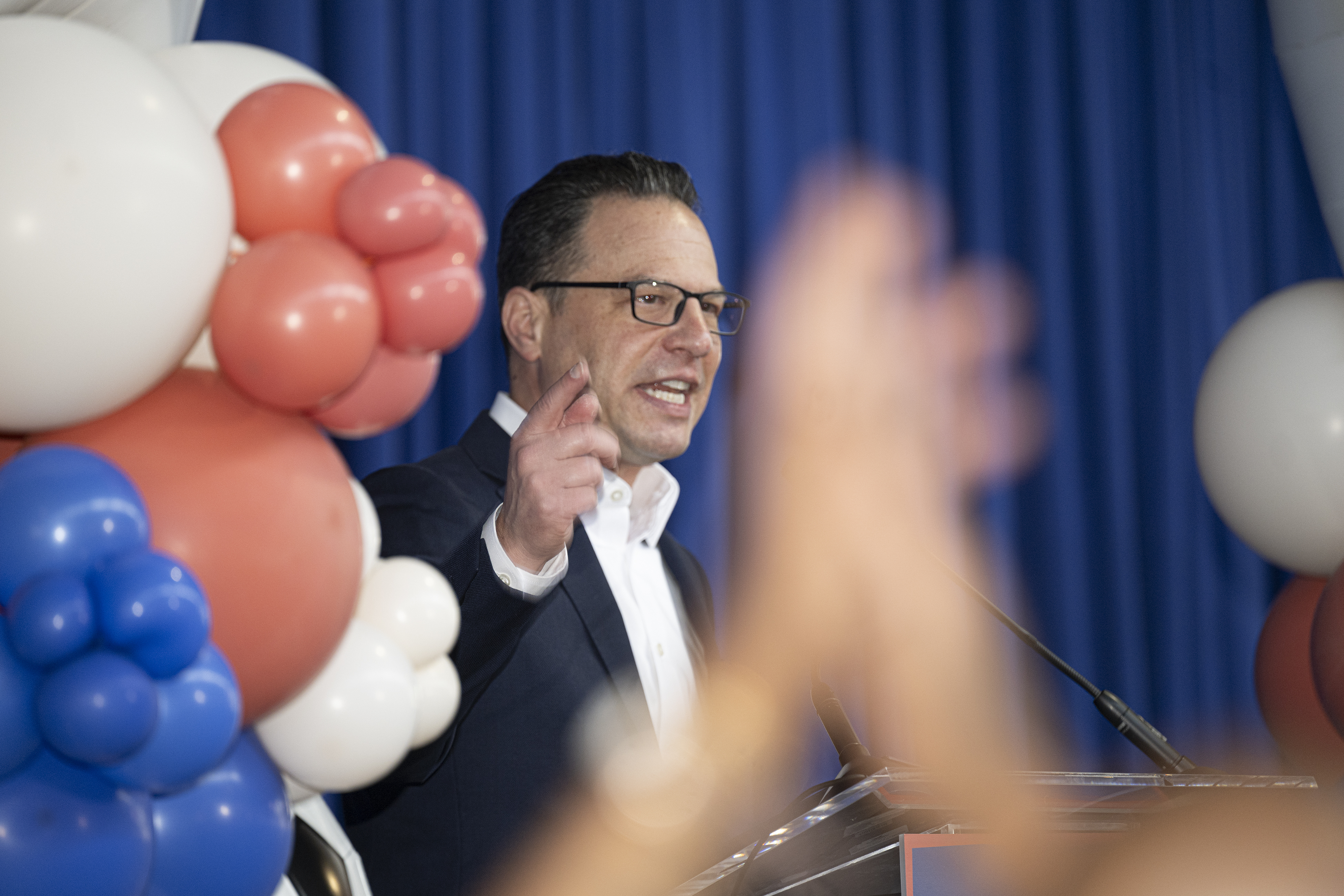
Pennsylvania Gov. Josh Shapiro speaks during a Visit PA pep rally Tuesday, March 31, 2026, ahead of the nation’s 250th anniversary and other major events in the state. Jose F. Moreno / Staff Photographer
Freedom 250 has pushed back against the idea that the fair and other anniversary celebrations are partisan.
“The idea that a president’s presence at America’s 250th birthday is somehow a political act is not a serious argument — and frankly, it is not serious journalism to treat it as one,” Freedom 250 spokesperson Rachel Reisner said. “No one suggested the Biden-Harris administration would have kept the president away from this moment, nor should they have. We proudly welcome President Trump, who has shown genuine enthusiasm for celebrating America and its patriotic traditions, just as we would have welcomed any sitting president. Freedom 250 looks forward to celebrating America together and hosting once-in-a-generation events.”
The organization has announced several pieces of the program, including “classic state fair” elements like livestock competitions and interactive experiences with companies such as John Deere and Northrop Grumman, the aerospace and defense company.
It has not detailed the focus of each state’s designated section on the mall.
An instructional pamphlet directed to state officials explains that every state and territory can “tell its own story” by “presenting a pavilion that reflects their history, culture, and contributions to the nation.” It does not include pricing, though a source familiar with the planning said states or organizations are only responsible for covering the cost to fill the space.
Some states are sponsoring their exhibits directly through their state agriculture or tourism departments. For example, Arizona and Colorado are planning interactive experiences that highlight their states’ scenic outdoors, and New York’s “I Love NY” tourism campaign will showcase the state’s vacation areas, according to USA Today.
The Freedom 250 pamphlet suggests other ways states can celebrate the Semiquincentennial — through flags and signage, or “projection experiences” to light up buildings like a state Capitol. It recommends governors issue official proclamations to recognize the moment, as well as foster civic and educational opportunities like student art contests and field trips.
“The true power of this anniversary will not come from Washington alone,” Freedom 250 CEO Keith Krach wrote to state and local officials in the document. “It will come from you.”
WASHINGTON — As U.S. Rep. Brian Fitzpatrick’s fiercest reelection battle in years got underway in the last two months, the moderate Bucks County Republican has called to restrict President Donald Trump’s war in Iran and prohibit a so-called “anti-weaponization fund” that could reward the president’s allies.
He’s talked up Democratic Gov. Josh Shapiro’s potential run for president, and he’s said he would “100%” become an independent if Pennsylvania didn’t have closed primaries.
He went even further this week — deriding House Republican leadership for opposing a process that allows lawmakers like him to force a vote on issues like the weaponization fund.
“Leadership of both parties have been guilty of this for years… just further evidence of the brokenness of the two-party system — and the rise of Independent voters is a direct manifestation of this,” Fitzpatrick wrote on social media.
Behind the scenes, though, Fitzpatrick has started to lean on his party’s vast resources to help win his reelectionand, Republicans hope, keep the narrowly divided 435-member House in GOP control.
In a newly scheduled television ad campaign that will begin later this month, Fitzpatrick is teaming up with the National Republican Congressional Committee — the official campaign arm of House Republican leaders — to launch ads aimed at boosting his campaign in the 1st Congressional District against Democratic nominee Bob Harvie, a Bucks County commissioner who won last month’s primary with support from Shapiro and national Democrats.
The $120,000 worth of cable TV ads represent the first foray by the NRCC in any Pennsylvania district so far this year, according to the tracking firm AdImpact.
Both parties are competing heavily over four Republican-held seats in Pennsylvania, making the state one of the centerpieces in the fight to win the House majority during this year’s high-stakes midterms.
The NRCC and other Republican groups have promised to help reelect all four incumbents. And with the new ads benefiting Fitzpatrick, the NRCC is spending first on the candidate who’s been the most publicly critical of their leadership and even gotten some blowback from Trump as a result.
“Trump can say whatever Trump wants,” Robin Kolodny, a Temple University political science professor, said of the president’s accusations that Fitzpatrick is insufficiently loyal. “But you get to 218 by adding one race at a time. And if you have an incumbent who’s been successful, the party has every incentive to support them until they find that the polling says it’s the lost cause.”
Fitzpatrick has won five terms in a nearly evenly divided Bucks County-based district with what observers have called a specific brand of politics. He votes with his party and supports Trump’s priorities the vast majority of the time, though he’s broken with them in instances like the final passage of the One Big Beautiful Bill and the expiration of COVID-era Affordable Care Act tax credits that kept costs lower for individuals using the public marketplace.
His recent opposition to the anti-weaponization fund has echoes of that healthcare debate in December, when Fitzpatrick joined with Democrats in trying to use a process called a discharge petition to force a vote that Republican House Speaker Mike Johnson declined to set up.
Fitzpatrick’s office and campaign did not respond to requests for comment for this story.
But earlier this week, thePennsylvania lawmaker and U.S. Rep. Tom Suozzi (D., N.Y.) said they would launch a discharge petition to prevent Trump from creating a fund to compensate people who claim to be victims of a weaponized federal government, Punchbowl News reported. The idea for the $1.8 billion fund emerged from a settlement between Trump and the Department of Justice in a case about the leak of Trump’s tax returns.
Republican lawmakers who have often acquiesced to the president’s demands voiced deep concerns. Acting Attorney General Todd Blanche responded by saying the administration was walking away from the idea. Still, Trump officials have quietly worked to keep it alive and have not ruled out payments going to individuals previously charged with attacking the Capitol on Jan. 6, The Atlantic reported Thursday.
“The statement’s not satisfactory,” Fitzpatrick said on CNN earlier this month while discussing Blanche’s comments. “We need both a legal avenue here and a statutory legislative avenue. That’s what Tom and I have introduced, and that’s what we’re going to force to the floor.”
He called the fund an “abuse” of the law. In a post on X this week, he also disparaged Republicans leaders’ “poorly managed House Floor” for preventing a discharge petition to squash it.
Johnson, the Louisiana Republican who leads the chamber, headlined a fundraiser earlier this year for Fitzpatrick, who generally does vote for GOP priorities — including this week’s successful effort to provide additional funding for immigration enforcement within the Department of Homeland Security.
Fitzpatrick and Suozzi had not yet launched the discharge petition as of Thursday evening, after Punchbowl reported that Republican leadership was frustrated with the idea. Some even proposed pulling back campaign contributions from NRCC “patriots” who signed on to a discharge petition, according to Punchbowl.
Fitzpatrick is one of 15 Republicans in the NRCC’s “patriots” program that prioritizes sending resources to competitive districts.
Also on the list are U.S. Reps. Scott Perry, in a Harrisburg-based district; Ryan Mackenzie, in the Lehigh Valley; and Rob Bresnahan, in a Scranton-based district. Each of those races are considered more of a “tossup” than Fitzpatrick’s, and Kolodny said it’s likely the NRCC will invest in advertising and campaign operations to help them as well, possibly a little later in the summer.
She said the earlier spending on behalf of Fitzpatrick is likely a sign they found him to be “newly vulnerable” after the May 19 primary, when Harvie was nominated.
Widely considered the most formidable challenger to Fitzpatrick so far, Harvie has already been elected by voters twice in a majority of the district and both national and state Democrats have coalesced around him.
Kolodny called the size of the NRCC’s ad-buy “modest” but said that “they’ve done anything at all means that their polling has shown them they’ve got a problem.”
“They have a new level of concern that they didn’t have before,” Kolodny said.
Harvie, who is expected to benefit from outside spending by the NRCC’s counterpart, the Democratic Congressional Campaign Committee, said in a statement that the ads are proof Republican leaders “can count on [Fitzpatrick’s] vote when they need it most.”
“We are tired of politicians like Fitzpatrick talking out of both sides of their mouth,” Harvie said. “He claims to be ‘independent,’ but he’s seeking a bailout from Trump’s Republican Party because he is one of their own.”
Charlie Gerow, a Republican strategist with a Harrisburg-based public affairs firm, said he didn’t view Fitzpatrick’s latest moves as much different from any other instance in which he’s successfully walked a “political tightrope” in his district,which is one of only nine GOP-held districts in the country that went for Kamala Harris in 2024.
He said the assist from the NRCC also makes sense because of how large Fitzpatrick’s district looms in a House that’s currently split 218 Republicans to 212 Democrats, with one independent and four vacancies.
“Leadership has an absolute interest in making sure that Brian Fitzpatrick gets reelected, despite their displeasure from time to time with what he says and does,” Gerow said.
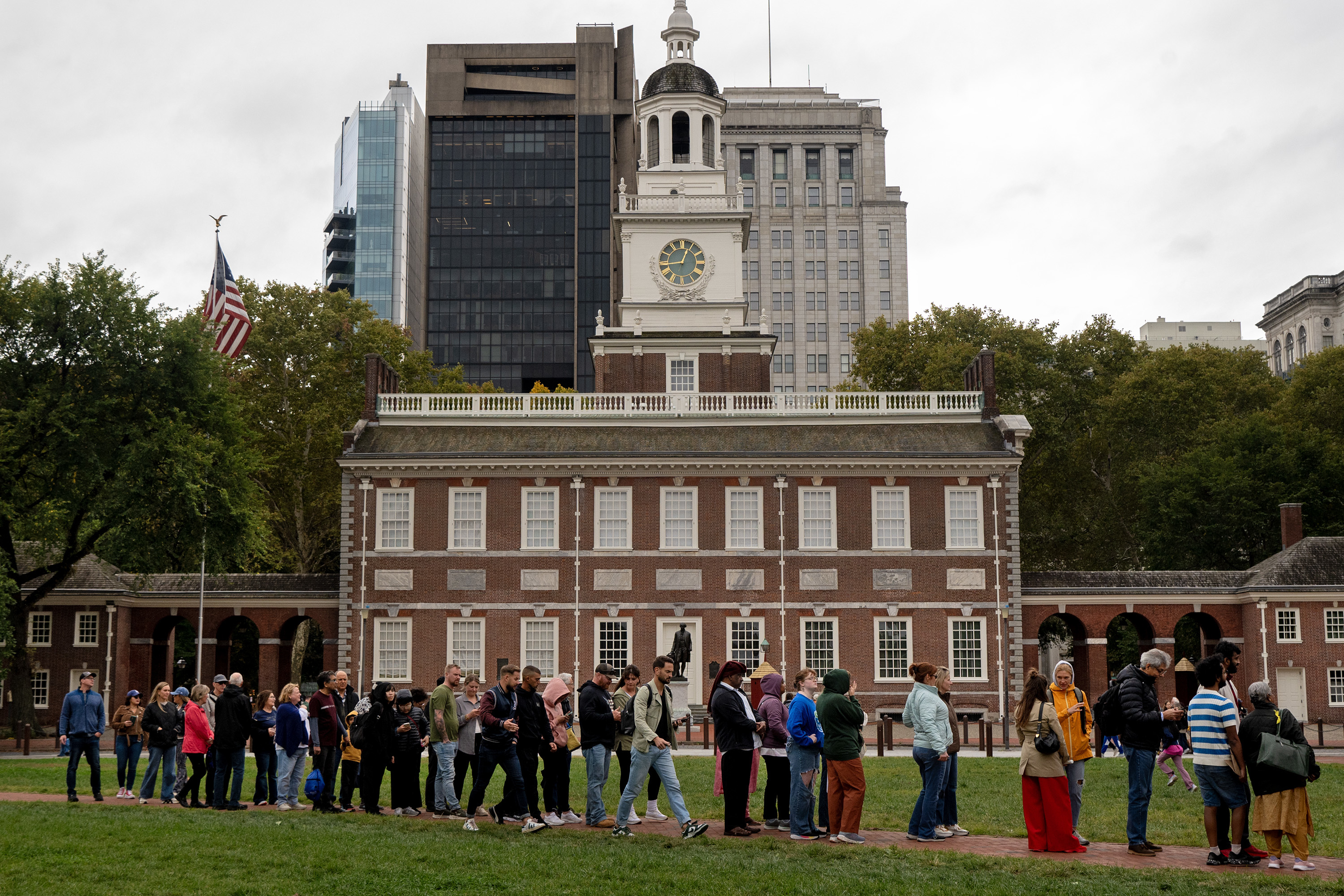
A ceremonial event with members of Congress will convene at Independence Hall during the upcoming celebration of America’s 250th anniversary, the first such gathering in Philadelphia since a ceremonial joint session in 1987 to mark the bicentennial.
The event, set for July 2, will feature visits from members of Congress but is not expected to include all 535 members in a building that, when it was in use in 1776, held only 56 delegates.
It will fall on the anniversary of the day that the Second Continental Congress voted to adopt a resolution for independence. The Declaration of Independence was drafted and formally approved on July 4.
The gathering is years in the making. U.S. Rep. Brendan Boyle, a Democrat whose district includes the national historic site, introduced legislation starting in 2024 that called for a joint session at the site on July 2.
Congress has convened for a ceremonial session outside of Washington, D.C. on only two other occasions — a 1987 event in Philadelphia with 55 lawmakers, and in September 2002, when more than 300 met in New York City for the one-year anniversary of 9/11.
The congressional event comes as the City of Philadelphia and the Trump administration are engaged in an ongoing legal battle over the federal government’s efforts to remove slavery exhibits from the President’s House, an adjacent site which memorializes the nine people George Washington enslaved in Philadelphia during the nation’s founding.
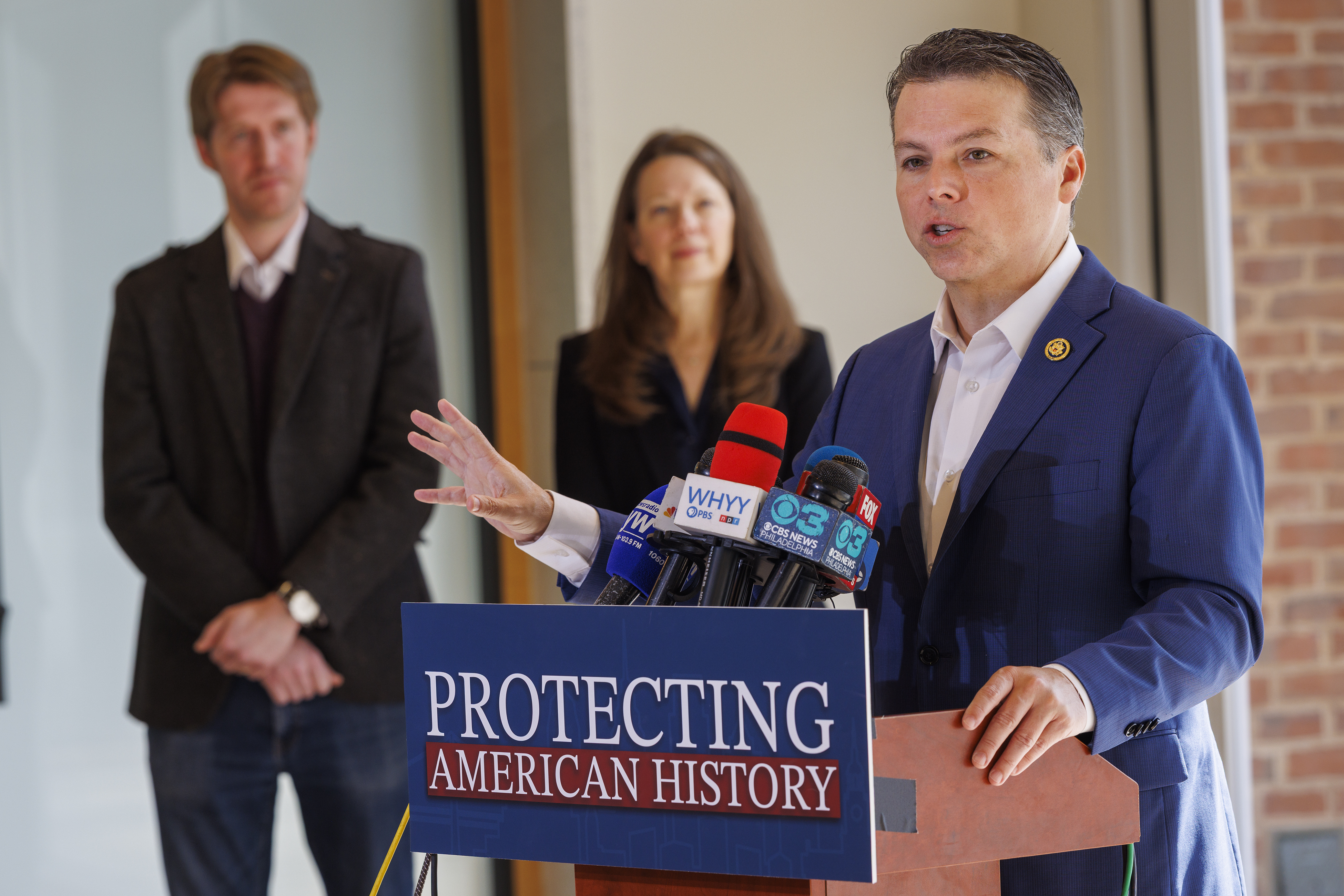
U.S. Rep. Brendan Boyle holds a news conference about legislation intended to protect the President’s House in Philadelphia. Alejandro A. Alvarez / Staff Photographer
Boyle, whose legislation did not pass, announced this year’s event in a statement that did not describe it as a ceremonial joint session but as a “ceremonial event.” Details about participants and programming would come later, his office said Thursday.
“Exactly two years ago I launched this effort to bring Members of Congress, both Democrats and Republicans, back to the place where it all began 250 years ago: Independence Hall,” Boyle said in a statement. “I am very proud and excited this historic and special event is happening. It will be a unifying moment for the Congress and our country, at a time when we need it most.”
WASHINGTON — Antonio Pozos, a Philadelphia lawyer nominated by President Donald Trump to become a federal judge in the Eastern District of Pennsylvania, told a Senate panel on Wednesday that former President Joe Biden won the most Electoral College votes in 2020 — though he declined to say whether Biden won the popular vote or if the Capitol was “attacked” two months later.
In a confirmation hearing alongside three other judicial nominees, Pozos said Biden was certified as the president in 2020 and that he’d seen videos from Jan. 6, 2021 in which it “appeared that there was violence and trespass.”
“It’s profoundly troubling and I abhor violence,” said Pozos, a partner at Faegre Drinker Biddle & Reath and a lecturer at the University of Pennsylvania’s Carey Law School.
But in the back-and-forth with U.S. Sen. Richard Blumenthal (D., Conn.), Pozos said he would “hesitate to characterize what occurred at the Capitol” when the senator asked directly if the building was “attacked” during the certification of votes.
“You hesitate to tell the truth here,” Blumenthal responded before shifting to the next nominee.
The line of questioning has become many Democrats’ main litmus test for those nominated by Trump for lifetime judicial appointments.
For years, the president has insisted without evidence that widespread voter fraud led to his defeat in 2020, despite Biden winning the popular vote by more than 7 million votes that year on top of his Electoral College win.
Trump’s history of spreading misinformation about elections has fueled fears that he’ll do it again during November’s midterm elections — as he did after the California primary just last week — and that his judicial appointees will undermine a system of checks and balances.
When all of the nominees facing the Senate Judiciary Committee on Wednesday echoed each other in only saying Biden won the Electoral College, Blumenthal accused them of having “a new script, a new pre-negotiated effort to thread the needle [and] avoid the question.”
“You are protecting the lie by failing to acknowledge the truth,” Blumenthal said. “If you’re unwilling to show us you’re independent of the president at this early stage of your service, you disqualify yourself as judicial nominees.”
At least one Democrat who has signaled he doesn’t believe Pozos should be disqualified is U.S. Sen. John Fetterman.
The Pennsylvania Democrat decided against blocking his nomination during a traditional process that gives senators the opportunity to approve or reject a federal judicial nominee in their state.
It was the first time any Democrat declined to use that courtesy — in a process known as a “blue slip” — since Trump’s second term began in January 2025.
Two other Democratic senators, Elissa Slotkin and Gary Peters, of Michigan, however, followed Fetterman in returning a blue slip for a separate nominee in their state before Wednesday’s hearing. They said their decision was in part because of the nominee’s assurances to them that Biden won in 2020, that there was an attack on the Capitol, and that Trump cannot run for a third term.
Pozos also acknowledged during the hearing that Trump could not constitutionally win another term, which is something the president himself has declined to say.
Fetterman, from the 2020 election through Trump’s second election in 2024, frequentlyand forcefully rejected Trump’s claims of election fraud in Pennsylvania. His office did not provide a comment in response to questions from The Inquirer about why he allowed Pozos’ nomination to advance. The senator has also not said whether he will vote to confirm Pozos when the Republican-controlled Senate decides on the appointment.
But Fetterman’s move so far in the process was the latest in a series of high-profile moments in which he sided with Trump and the Republican Party while infuriating parts of his own base.
Demand Justice, a Washington, D.C.-based organization that is critical of Trump’s nominees because of their statements on the 2020 election, joined in the criticism of Fetterman and promised to launch a six-figure ad campaign against him because of the blue slip.
“John Fetterman just cleared the path for a Trump lifetime judicial nominee,” one of the digital ads states alongside an image of Trump and Fetterman with hearts around them.
“Our message to Senate Democrats is clear: greenlight Trump’s puppet judges, and we will call you out. No exceptions,” it continued.
That threat elicited bipartisan criticism at the beginning of the hearing Wednesday.
U.S. Sen. Katie Britt, an Alabama Republican speaking on behalf of committee chair U.S. Sen. Chuck Grassley, called Demand Justice a “progressive dark money group” that “sought to undermine the blue slip practice and sew further division in our country.”
U.S. Sen. Dick Durbin of Illinois, the top Democrat on the committee, also said the group was wrong to target senators who work toward agreement across party lines.
Each of the committee leaders commended Fetterman, Slotkin, and Peters for their decision — with Durbin praising them for “working in good faith with the White House.”
U.S. Sen. Dave McCormick (R., Pa.) also thanked Fetterman and said Pozos was nominated because of a recommendation from a commission that the pair of Pennsylvania senators put together to vet judicial nominees.
“Tony’s a successful attorney, a strong Pennsylvanian, a decorated public servant, and he’s eminently qualified for this role,” McCormick said during the hearing.
Pozos, 44, is a graduate of Harvard College and the University of Michigan Law School who worked as federal prosecutor before becoming a partner at Faegre Drinker in 2018.
As a trial attorney in the Criminal Fraud Section of the Department of Justice, he focused on corporate and individual healthcare fraud cases. McCormick said he had a “formidable track record of rooting out fraud, prosecuting those who abuse taxpayer dollars, and protecting Americans from predatory healthcare systems.”
In a questionnaire published by the Senate Judiciary Committee, Pozos also listed active memberships in the Federalist Society — the legal organization that has sought to appoint conservative judges across the country — as well as the Union League of Philadelphia and the Merion Cricket Club.
In addition to the election-focusedinquiries, Pozos also faced questions about applying the False Claims Act — which penalizes individuals and companies from defrauding the government — and the controversial Section 230 of the Communications Decency Act that protects online platforms from liability for what their users post.
U.S. Sen. John Kennedy (R. La.) grew frustrated when he believed Pozos was not fully answering his question about whether, under Section 230, Facebook should be protected and if it should have the ability to decide what users see. Pozos, like other judicial nominees who say they cannot weigh in specifically on the types of cases they may have to rule on, began answering when Kennedy said he had “no idea what you’re talking about.”
“You’re better off just answering the question, you really are,” Kennedy said.
Asked by the Democratic chair about the importance of diversity — which Trump has widely sought to diminish — Pozos said he has mentored young lawyers “from a wide range of backgrounds” and that it was important to “get all pockets of talent wherever they may be in our country and welcome them into the legal profession.”
Pressed by Durbin if diversity is important in filling positions in the legal system, Pozos said, “If we are true to seeking out excellence wherever it may be, that question will be moot.”
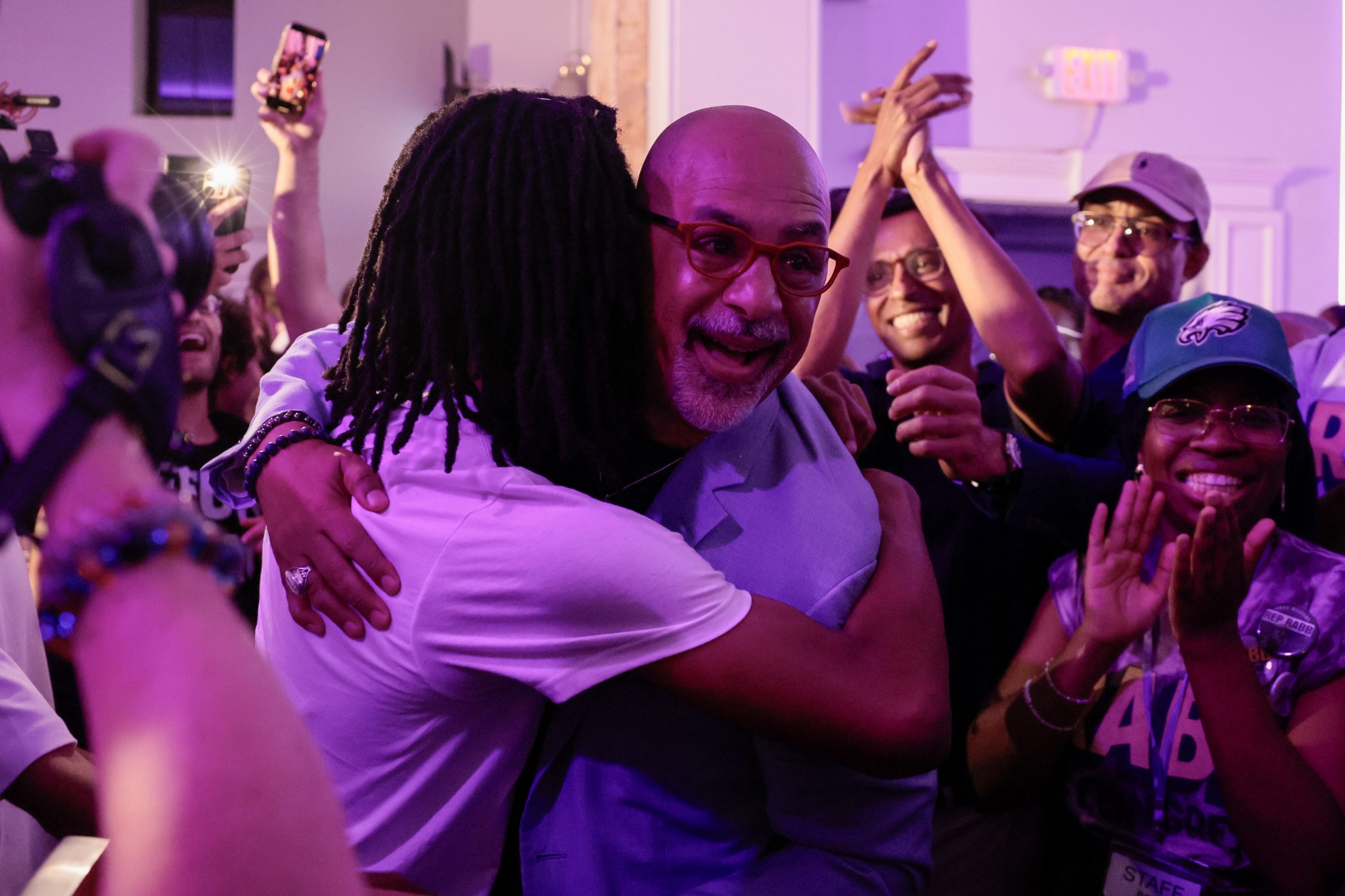
The euphoria at Chris Rabb’s election night party last month hadn’t even started to wane before the democratic socialist and his supporters — dancing and hugging after capturing a rarely open Philadelphia seat in Congress — spoke of setting their sights even higher.
Taking on the city’s Democratic establishment to defeat a pair of more centrist candidates in the heated 3rd Congressional District race was a momentous win on its own. But the reckoning, they promised, wouldn’t be confined to Philadelphia’s borders.
“It’s going to change not just our city, but our entire commonwealth,” Rabb said in an interview amid the celebration at a Germantown banquet hall.
It was a sentiment echoed that night by key figures in Rabb’s coalition — from the head of the Working Families Party to Pittsburgh’s U.S. Rep. Summer Lee, the only other democratic socialist representing a part of Pennsylvania.
With the 2026 Pennsylvania Democratic primary in the rearview mirror, that conversation has broadly and quickly turned to the next biggest prize in the state: the U.S. Senate seat held by Democrat John Fetterman.
The senator has not said whether he will run for a second six-year term in 2028. But in an unusual situation for an high-profile elected official, a robust intraparty competition to replace him is expected to start either way in the next year as Fetterman increasingly sides with Republicans and as polls show that his support among Democratic voters has nose-dived.
State Rep. Chris Rabb is hugged by his son, Issa Rabb, during his primary election night event at Victorian Banquet Hall on May 19.Elizabeth Robertson / Staff Photographer
Some Democrats who watched Rabb emerge from a competitive race, notching one of the left’s biggest wins yet in Pennsylvania, see an opportunity — one that extends the energy and momentum to boost a well-organized, progressive, anti-establishment candidate in the Senate primary.
Other strategists and activists say that’s a tall task, particularly in a swing state that rarely strays from electing more centrist politicians statewide.
“Anytime you have success, it breeds enthusiasm, which translates into more volunteers, into more money — everything you need to run a campaign,” said Mike Mikus, a Pittsburgh-based Democratic strategist. “But every election cycle is different. Every campaign’s different. The quality of candidates are different. And anybody who says that any one race signifies a permanent change within a party is mistaken.”
‘A huge impact on the political landscape of Pennsylvania’
In his campaign to succeed U.S. Rep. Dwight Evans, Rabb, a five-term state lawmaker, won 44% of the vote. He was up against State Sen. Sharif Street, who had the backing of the city Democratic apparatus, and physician Ala Stanford, a political newcomer endorsed by Evans.
That progressive infrastructure — the coming together of different groups to knock doors, make calls to voters, and unleash a significant independent advertising campaign in a way that rivaled the official Democratic Party organization — is likely the most important way that the left can use the experience of Rabb’s campaign to replicate its success elsewhere, strategists said.
It’s a template that could have “a huge impact on the political landscape of Pennsylvania,” said Rotimi Adeoye, a Philadelphia-based Democratic strategist who worked in the office of former U.S. Sen. Bob Casey.
In a district packed with Democratic voters, Rabb’s ability to turn out progressive voters should draw the attention of anyone looking to win the state’s Democratic Senate primary in 2028, Adeoye said.
“If a Democrat running statewide can learn from some of these organizational groups to build a strong, relational and community-based organizing campaign in Philadelphia and the surrounding suburbs in Montgomery County, Bucks County — they’re going to have a really big chance of winning,” Adeoye said.
In a sign that those efforts could coalesce around a Senate candidate, one of the groups that helped usher Rabb to victory remains the only major Democratic entity in the state to have publicly started laying the groundwork for a challenge to Fetterman.
The Working Families Party, which backed Fetterman in the 2022 general election after originally endorsing State Rep. Malcolm Kenyatta in the primary, said in November it would organize an effort to oust him. A “Primary Fetterman” website launched in January is equipped with a “Fetterman sell-out tracker” — highlighting his votes for Trump’s cabinet nominees and opposition to war powers resolutions that would rein in his military strikes, for example — and instructions for donors on how to request a refund from his campaign.
The website remains the extent of the group’s efforts so far to rally public support and back a new candidate, though its work is expected to pick up after this year’s midterm elections. For now, the party is looking forward to bringing new members who worked to elect Rabb into its fold.
“Our goal is always to keep building on the work we do each cycle and the success we have each cycle,” said Nick Gavio, the Working Families Party’s Mid-Atlantic communications director.
One PA, another statewide group in that progressive coalition, has not yet had internal discussions about the Senate race but it supports the Working Families Party’s position as a member of its steering committee, executive director Steve Paul said. He said more than 150 members of One PA mobilized for Rabb by talking to thousands of voters.
Winning a high-profile congressional race only helps add to that organizational infrastructure, making them “sharper for the next thing,” Paul said.
“I think it shifts what’s possible, politically — what people can envision,” he said.
Potential progressive roadblocks
Mikus said progressives have increasingly surpassed “more establishment Democrats” in their ability to run strong campaigns, including in his area of Western Pennsylvania where candidates like Lee have emerged in the last decade.
Democratic primary voters are also more progressive than they were 10 years ago, he said. But campaigning on a far-left — or a far-right — platform doesn’t often equate to success on a statewide level in Pennsylvania, a swing state where successful candidates tend to walk a “fine line” that appeals to both swing voters and a message that excites their partisan base, Mikus said.
“You’ve seen this time after time in presidential elections here in Pennsylvania,” Mikus said. “Hillary Clinton versus Bernie Sanders. Joe Biden versus Bernie Sanders. The vast majority of voters in Pennsylvania will go with the more mainstream Democrat.”
J.J. Balaban, a Philadelphia-based Democratic strategist and ad maker, said the party runs the risk of “drawing too big of a conclusion” based on a single election — particularly one like Rabb’s where candidates only needed to appeal to Democrats.
“Democrats really need to think hard about what it will take to win statewide in a purple state, which Pennsylvania clearly is,” Balaban said. “What it will take to win a general election in Pennsylvania is very, very different than what it will take to win in literally the most Democratic congressional district in the country.”
After recent years of tough losses — including the ousting of Casey by now-U.S. Sen. Dave McCormick, a Republican — Democratic voters will likely have a “tremendous thirst for candidates who have a credible case to make that they can win the general election,” Balaban said.
Fetterman, whose office did not comment for this story, has insisted that Pennsylvania’s purple state status means he should appeal to both sides of the aisle and not demonize the other side.
“Look at the people that are winning the primaries in our party right now, and look at their views on Israel,” Fetterman said at an American Jewish Committee conference in Washington this week.
On stage with McCormick and the head of the Jewish advocacy organization, Fetterman painted Graham Platner, the expected Democratic nominee for a U.S. Senate seat in Maine, as a “Nazi sympathizer” and connected him to Rabb.
“People also in our state, too. Rabb, he won, and he ran on being a very, very anti-Israel guy,” Fetterman said. “It’s actually a virtue [in the modern Democratic Party] … It’s heartbreaking for me. And if it isolates me, then so be it.”
Who might run?
Of the Democrats widely considered to be eyeing a campaign to replace Fetterman, the public jockeying has so far been limited to criticisms of the incumbent.
Former U.S. Rep. Conor Lamb, a moderate who represented a suburban Pittsburgh district before Fetterman beat him in the 2022 Senate primary, has frequently lambasted him.
Conor Lamb speaks to the crowd at a town hall-style event organized by progressive groups at Central Penn College on June 22, 2025, in Enola, Pa. Marc Levy
And U.S. Rep. Chris Deluzio, who succeeded Lamb and leaned into progressive economic populism, has taken a less direct tack while noting the differences between himself and Fetterman over issues like Trump’s military interventions abroad. Deluzio has occasionally reposted others’ criticisms on social media — including one from Gavio, the Working Families Party spokesperson, last week that called Fetterman’s reversal on eliminating the filibuster “a new low” and “an indescribably massive backtrack from everything he ran on.”
None of the three have ruled out running.
Boyle is expected to weigh a Senate campaign vs. staying in the House to take a rare opportunity to lead the powerful budget committee if Democrats win the majority in November. Lamb, who’s remained highly active in Pennsylvania politics, said in an interview that he’s hoping to serve again and would run for office if he feels he “can be of service to the state.” Deluzio, who is also heavily involved in helping Democratic candidates across the state, said he’s focused on his reelection this year and that “we’ll see what 2028 holds.”
“I am not at all interested in seeing us lose this Senate election, and I certainly have gotten a lot of encouragement to look at 2028,” Deluzio said.
Progressives have also mentioned Lee, the Rabb ally who’s been a vocal member of the leftist wing on Capitol Hill while taking leadership roles in areas like securing the release of the Jeffrey Epstein files.
U.S. Reps. Summer Lee and Chris Deluzio, both Pittsburgh-area Democrats, speak outside the Moshannon Valley Processing Center in Clearfield County on May 28 after getting a tour of the facility, the largest detention center for undocumented immigrants in the Northeast.Sam Janesch / Staff
With potential candidates still several months away from making their decisions, it’s unclear who might try to take up the progressive mantle if Lee does not run, strategists say.
The field could also grow considerably. Other potential candidates could jump in, including the three other current Pennsylvania Democrats in Congress or former lawmakers like Susan Wild, who lost a swing congressional district in the Lehigh Valley in 2024. Wild said she’s “not ruling out” a run but she’s more interested in thinking about good female candidates in general since no woman has ever won a Pennsylvania U.S. Senate seat.
On the prospects of a battle between different factions of the party, Lamb said he believed Democrats had broadly learned a lesson — from Fetterman’s election in 2022, where he ran on being a reliable Democratic vote in the Senate — that was beyond ideological policy tests.
“Fetterman taught Democrats in Pennsylvania that you have to have a character test. Anybody can run around the state promising you these further left solutions, and that they’re going to be a thumb in the eye of the establishment, and they’re going to channel all your anger and dissatisfaction. And then that person can turn on you on a dime,” Lamb said. “The fact is that we have to evaluate our candidates based on whether they have integrity and they’re going to keep their word and, honestly, whether they have the work ethic to be a senator day in, day out.”