Author: Sam Janesch

  • Chris Rabb was one of 11 Democrats to vote ‘no’ on Hakeem Jeffries for House speaker

    Chris Rabb was one of 11 Democrats to vote ‘no’ on Hakeem Jeffries for House speaker

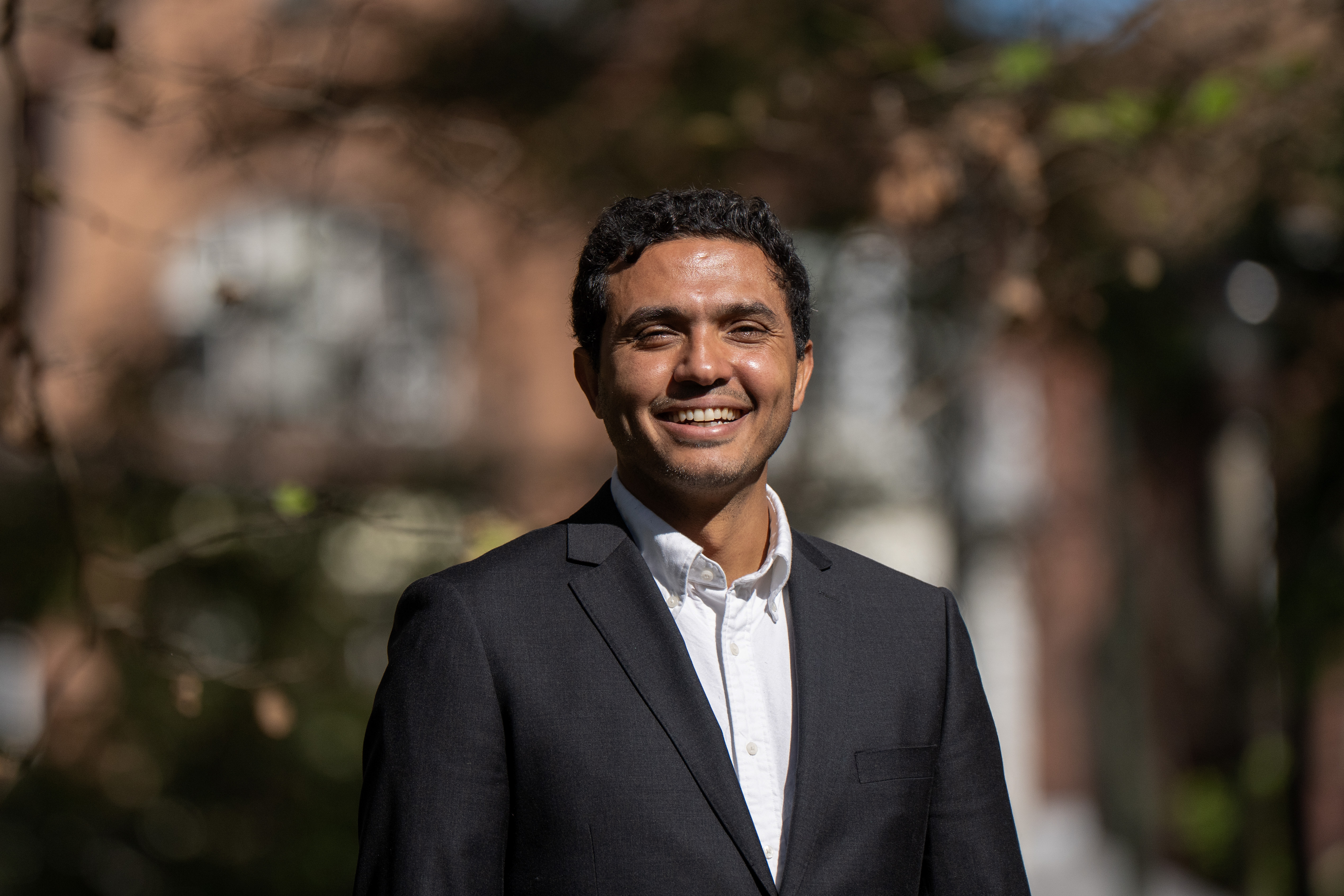
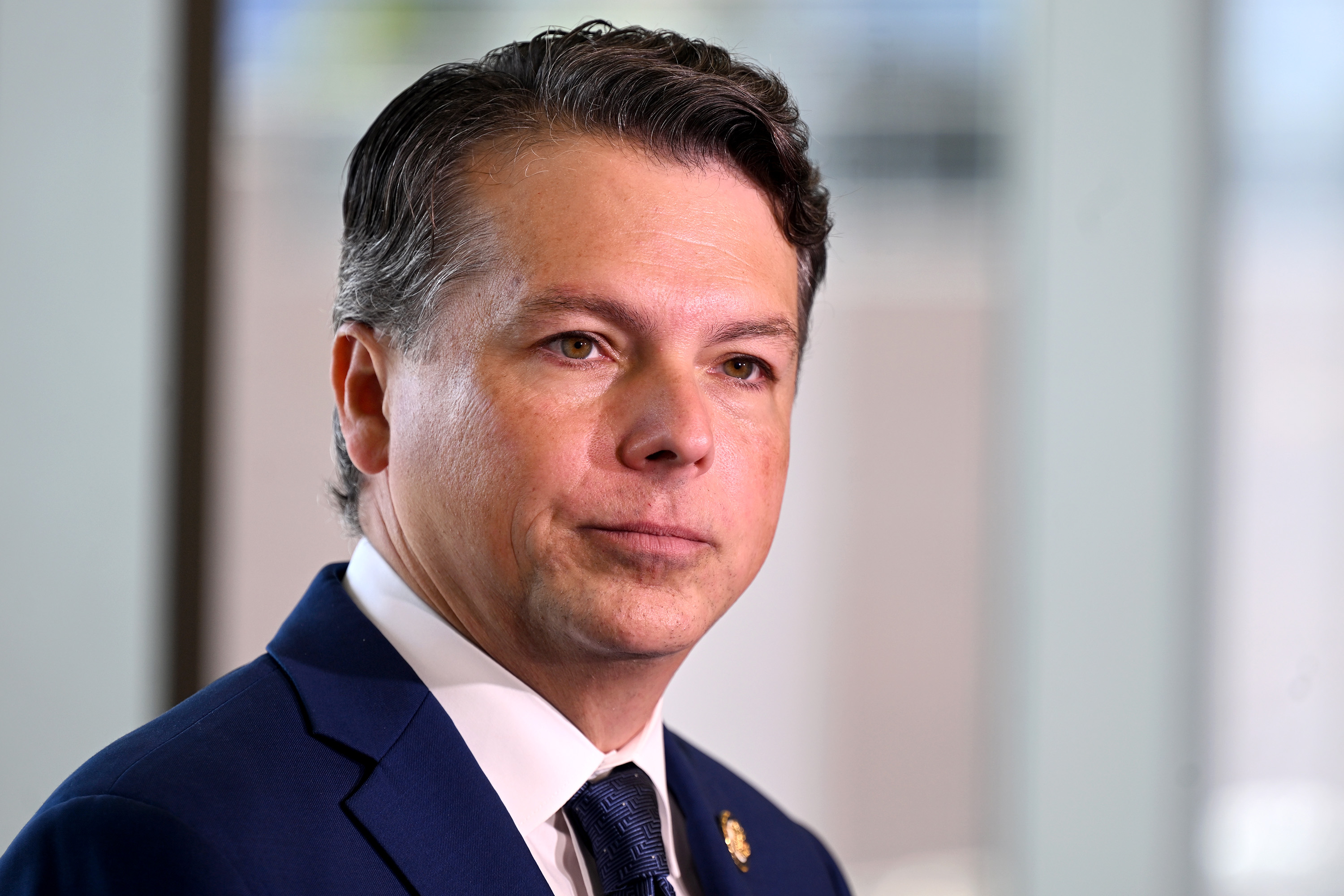
    WASHINGTON — U.S. Rep.-elect Chris Rabb voted against elevating Democratic leader Hakeem Jeffries to be speaker of the House on Wednesday, joining a small group of progressives who said they were still seeking commitments on their priorities.

    Democrats voted overwhelmingly to nominate Jeffries, all but ensuring the New Yorker will become the first Black speaker when the new Congress convenes on Jan. 3. The closed-door vote was 251-11 as new members were in the Capitol for orientation.

    Rabb, a democratic socialist from Northwest Philadelphia elected to succeed retiring U.S. Rep. Dwight Evans, had not committed to supporting Jeffries and did not publicly support an alternative candidate.

    He and other progressives have pushed leaders to go further on issues like healthcare and the war in Gaza. The leadership vote was an early indication of how that bloc could challenge more establishment leaders in Washington in the next two years, though Democrats’ large House majority could diminish the leftist bloc’s leverage.

    Rabb was part of a group of seven Democrats who issued a statement after voting “no” on Jeffries. While they have “seen meaningful progress, there is work to be done to ensure that the direction our party takes this coming Congress reflects what our constituents are demanding of leadership,” they said.

    “Whether on Medicare for All, stopping ICE terror, getting money out of politics, or ending the genocide in Gaza, our constituents sent us to Congress with a mandate on these issues,” the group said. “We have worked to secure commitments from Leader Jeffries in good-faith conversations.”

    Rabb voted against Jeffries after meeting with him this week for both a one-on-one conversation and for a larger group meeting, according to a source familiar with the meetings who was not authorized to talk about them publicly.

    Rabb said in an interview with CBS News’ Major Garrett last week that he had not met with Jeffries or decided on how he would vote.

    “I don’t make up my mind until I talk to the candidate, and we have not had a one-on-one,” Rabb said at the time. “And also, it’s bigger than any one person. … Whoever holds the gavel, whoever that person is, how are they leading in ways that are aligned with this mandate for real change? And those are questions I don’t have answers to, and I’m looking forward to hearing what he has to say.”

    Rabb had declined to support Jeffries throughout his antiestablishment campaign that captured a rarely open seat in one of the bluest districts in the country. His primary victory over State Sen. Sharif Street and Ala Stanford was a blow to the city’s Democratic establishment.

    It also became part of a wave of progressive wins across the country — including in many races where Rabb endorsed and worked to elect like-minded candidates. Democratic socialists have celebrated the success while acknowledging they still represent a relatively small slice of the Democrats in Congress.

    In a sign of the changing tide for one of Philadelphia’s two congressional seats, Evans, the outgoing lawmaker, quickly credited “future Speaker Hakeem Jeffries” for the widespread Democratic wins after Election Day, while Rabb declined to commit to Jeffries. Street and Stanford had also endorsed Jeffries’ bid for speaker during the primary as Rabb said he would be “nobody’s rubber stamp.”

    The group of incoming Democrats who joined in the statement Wednesday featured those with whom Rabb aligned himself during their campaigns — Darializa Avila Chevalier and Claire Valdez of New York; Adam Hamawy of New Jersey; Frederick Haynes of Texas; Melat Kiros of Colorado; and Donavan McKinney of Michigan.

    This article contains information from the Associated Press.

  • Josh Shapiro says running for president will be a ‘personal decision’ as he joins potential rivals at Denver gathering

    Josh Shapiro says running for president will be a ‘personal decision’ as he joins potential rivals at Denver gathering

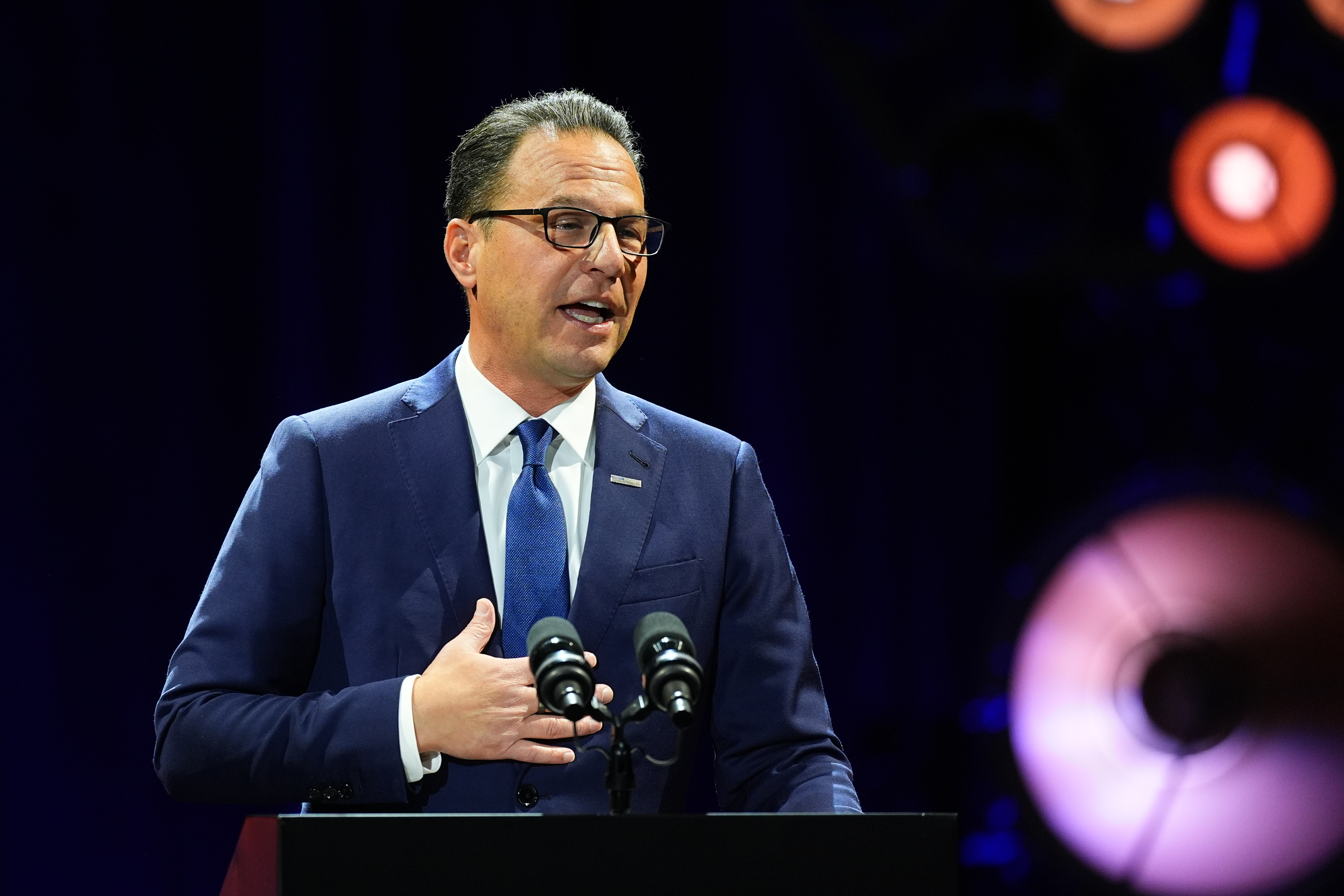
    DENVER — For months leading up to last week’s election, Gov. Josh Shapiro waved off the speculation.

    He was focused on his reelection as others prepared to run for president in 2028, he said, while also forecasting a fierce debate over what the Democratic Party stands for — a national conversation he expected to be a part of in some way.

    That conversation, at last, has begun.

    Shapiro, reelected in a blowout and taking credit for expanding the blue tsunami’s reach in Pennsylvania, acknowledged at a gathering of Democratic Party heavy hitters in Denver on Friday that he will decide whether to jump into the 2028 presidential race.

    “That’ll be a personal decision my wife and my kids and I make, and when we’re ready to say something, we’ll let you know,” he told reporters when asked about his prospects of running.

    Shapiro’s comments followed a speech at Majority Democrats’ “What’s Next” conference, a first-of-its-kind event designed to build on Democrats’ success in the midterm elections and look ahead to 2028.

    Surrounded by others who could be on a presidential primary debate stage with him within the next year, Shapiro made his pitch.

    “Leadership today has to be about how big we can think together, how tough we can fight, and whether Democrats have the discipline and know-how to actually deliver for the American people,” he told a crowd of several hundred. “That’s what we’ve done in Pennsylvania.”

    It was the second time in the last week that Shapiro, whose rumored presidential ambitions go back decades, appeared at a high-profile gathering of Democratic Party faithful. Over the weekend, he sat down with former Barack Obama speechwriter Jon Favreau at “Crooked Con” in Washington. He also appeared on NBC’s Meet the Press, weighing in on national issues including the attempted impeachment of Defense Secretary Pete Hegseth.

    Shapiro has not said that he’s actively planning a national campaign. But his increased involvement on the national stage and his resounding performance in a key swing state have further fueled the expectations.

    Shapiro’s 12-point increase over Kamala Harris’ performance in Pennsylvania in 2024 was the largest improvement over the last presidential nominee among six other prospective 2028 candidates who ran in statewide elections this year, an Inquirer analysis found. In October, he launched a federal political action committee to help Pennsylvania’s federal candidates and those around the country, a key signal for those looking to raise the massive amount of money needed for a presidential bid.

    A poster showcasing Gov. Josh Shapiro hangs at the Majority Democrats’ “What’s Next” conference in Denver on Friday on the day Shapiro spoke at the gathering of national Democrats.Sam Janesch / Staff

    The conference in Denver was unmistakably angled toward the 2028 presidential contest in addition to the more pressing agenda in Congress when Democrats take control in January.

    Beyond Shapiro, other potential candidates who attended included U.S. Sens. Cory Booker, Ruben Gallego, Elissa Slotkin, Raphael Warnock, and Chris Van Hollen; U.S. Rep. Ro Khanna; and former Transportation Secretary Pete Buttigieg. Other current and potential future party leaders — like expected House Speaker Hakeem Jeffries and Govs. Mikie Sherrill and Abigail Spanberger — were also there.

    Booker, a New Jersey Democrat who ran for president in 2020 and is already making visits to the first-primary state of South Carolina, did not address the 2028 question directly in a rousing speech that called for “bold doers” rather than “small thinkers.”

    “This is not a moment. It has to be the beginning of a movement,” Booker said, pleading for the small army of Democratic officials and staff in attendance to capitalize on the blue wave and “moral outrage” during the current administration.

    Sherrill, the state’s first-term governor, also spoke on a panel Friday, and U.S. Sen. Andy Kim (D., N.J.) used his own appearance to push for Democrats to focus on healthcare when they regain the majorities on Capitol Hill in January.

    In a personal and emotional speech, Kim spoke of his family’s increasing struggles to take care of his father with Alzheimer’s, and about his MediKids bill for universal healthcare for kids (Jeffries endorsed the legislation in a separate panel).

    U.S. Rep. Jake Auchincloss, a Massachusetts Democrat who chairs the group that hosted the conference, was explicit about the ongoing shadow of the presidential primary and how the nominee should embrace a new track for the party.

    “My challenge to everyone running in 2028, which might also be every person in this room, is, tell us, which ideas you will stop giving permission to, the ones that defy common sense or don’t work,” Auchincloss said. “Tell us which privileges you’ll confront, even if your donors or allies object. Tell us which opportunities you’ll promote so every child can share in the American promise. Voters did not tell Democrats, we get it. They told us we get a chance.”

    Shapiro — in a segment titled, “The Next Era of the Democratic Party” — laid out a broad vision similar to his stump speeches in his latest run for governor. And like others, he challenged his party to think big as it gains back control at different levels of government.

    “The question is, what kind of force are we going to be?” he said.

    Peppered with questions about 2028 by reporters later, Shapiro said he’s only “decided to be a loud voice in this process that we’re going through right now as a party to put ourselves in the best position to compete, and most importantly, put ourselves in the best position to be able to do good things for the American people.”

    Asked specifically about California Gov. Gavin Newsom saying he will decide whether to run in January, Shapiro said “no one’s decision has any bearing” on him.

    “I wish Gavin and everyone else the very best as they go through the process,” he said.

    Other potential candidates for the Democratic nomination also stressed the need for the party to deliver, embrace a new generation of leaders, not get caught up in liberal ideological battles, and not fall prey to learning the wrong lessons from the midterms.

    “This isn’t a blank check. If anything, it’s a short-term loan,” Gallego, a first-term senator from Arizona, said while talking about Latino voters who helped Trump win in 2024 but swung back to Democrats this year.

    Slotkin, a freshman senator from Michigan, stressed voters’ desire for younger leaders and avoiding Democratic infighting before ending with a line that could’ve fit into the closing pitch on a presidential debate stage.

    “I will do everything in my power to be the principled leader that you all deserve,” she said.

    Pennsylvania Gov. Josh Shapiro speaks during a Democratic conference Friday, Nov. 13, 2026, in Denver. (AP Photo/David Zalubowski)AP Photo/David Zalubowski

    Shapiro also made a reference to the 2028 race — opening his short speech by saying Pennsylvania suddenly has some competition in its role as the nation’s largest swing state. With Democratic wins across Texas, Georgia, Ohio, South Carolina, and more, there are other states “looking pretty swingy right now.”

    “Our party is ready to take on some big swings, too — not just going out and scrapping for 270 he said, referencing the Electoral College votes needed to win the White House, ”But fighting hard to swing for 370.”

  • Newly elected Pa. Democrats Bob Brooks, Paige Cognetti help their party chart its path forward on national stage

    Newly elected Pa. Democrats Bob Brooks, Paige Cognetti help their party chart its path forward on national stage

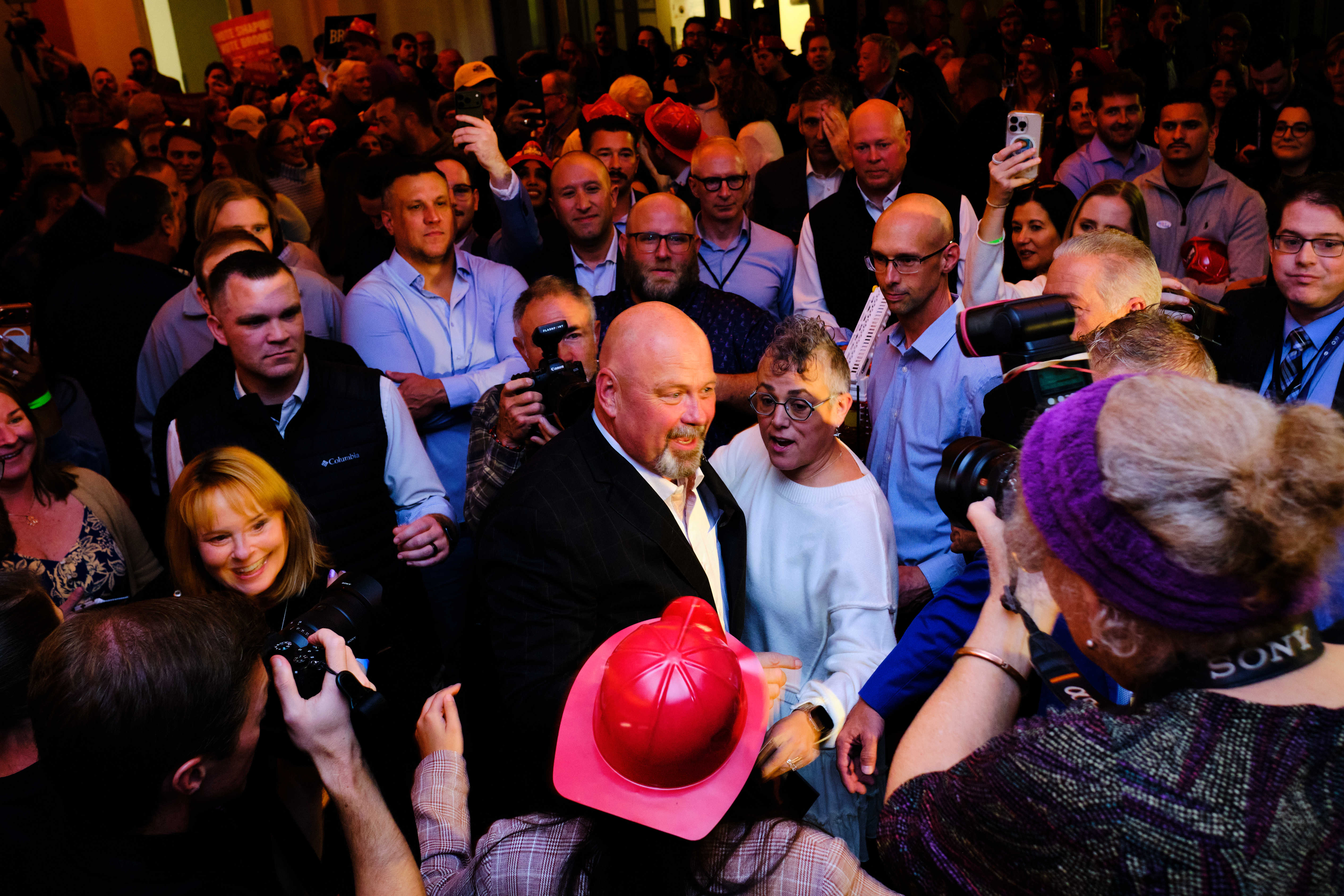
    DENVER — Paige Cognetti and Bob Brooks were elected to Congress last week in two key Pennsylvania swing districts, reclaiming seats that Democrats lost in 2024 as President Donald Trump returned to the White House.

    As they are set to join a large Democratic majority in a legislative body that values seniority, it’s unclear how much sway they — or anyone in their sizable freshman class — will have as the party charts its path forward with newfound momentum.

    But halfway across the country and amid some of Democrats’ top power brokers and rising national stars on Thursday, they were already part of the conversation.

    “The people that are coming in in January all want reform and it’s very, very exciting,” Cognetti said at the appropriately named “What’s Next” conference hosted by Majority Democrats in Denver.

    On a panel with Brooks and two other incoming Democrats who flipped red seats, Cognetti said she’s already talking to colleagues about setting in motion the anti-corruption agenda she and many others ran on.

    “We won’t get every single thing we want right away, but I have very high hopes that we’re going to push through a lot quickly,” she said. “And then we’re laying the groundwork over these years for [even more].”

    A mix of victory tour, agenda-setting and — at least for some attendees — testing of the waters for the 2028 presidential primary, the two-day conference was a first-of-its-kind post-election gathering as Democrats transition into what they hope will be a post-Trump era.

    It kicked off Thursday by highlighting some of the biggest winners in last week’s midterm elections and key players when Democrats take control of Congress in January.

    Brooks and Cognetti followed U.S. Sen.-elect James Talarico, of Texas, and Iowa Gov.-elect Rob Sand — who flipped Republican states for the first time in decades — as well as incoming House Judiciary Committee Chair Jamie Raskin, a Maryland Democrat poised to take a leading role in investigating the Trump administration.

    Friday’s agenda was set to feature a who’s who of likely presidential contenders — including Gov. Josh Shapiro and U.S. Sen. Cory Booker. Pennsylvania’s U.S. Reps. Brendan Boyle and Chris Deluzio, each set to see their national profiles skyrocket in the next two years, were also scheduled to attend.

    Brooks and Cognetti are among five freshman lawmakers poised to join Pennsylvania’s 17-member U.S. House delegation. Already thrust into the national spotlight, they talked on stage about the lightning-speed transition (they’ve been on Capitol Hill for orientation since last weekend) and what they want to see come out of the largest U.S. House majority since 2009.

    “People are tired of the status quo,” Brooks said, noting the high cost of living that was central to his campaign.

    In an interview with The Inquirer afterward, Brooks said it was “fun” and he appreciated being a part of the forward-looking conversation for the party, though he quickly turned it back to what he said is his mission.

    “This is all about people struggling and getting down to the root of the problem and fixing life for them and making things better,” he said, noting he believes Democrats will coalesce quickly around policies like raising the federal minimum wage and campaign finance reform.

    The duo spoke alongside U.S. Sen.-elect Josh Turek, of Iowa, and U.S. Rep.-elect Jamie Ager, of North Carolina, during a short panel discussion hosted by comedian and actor Alex Edelman.

    The conversation was mostly lighthearted after the group flew in from Washington that afternoon because of orientation on Capitol Hill. Cognetti said she’s getting a two-bedroom apartment in Washington with U.S. Rep.-elect Rebecca Bennett, who defeated Republican Tom Kean in New Jersey’s 7th Congressional District. Brooks said he’s going solo after a career spent in close-quarters with other firefighters.

    In a moment that underscored the changing generation and euphoria about the next era of the party, all four incoming lawmakers laughed when Turek joked that the advice former House House Speaker Nancy Pelosi gave them wasn’t about where to live or where to eat but about what stocks to trade — a reference to criticisms of Pelosi’s growing wealth during her decades in office.

    Speeches earlier in the day were generally brief and few in number compared to much larger political gatherings like the Democratic and Republican national conventions. Socializing, networking and media hits — as hundreds of Democratic officials and staffers celebrated and talked about the future — were as much a part of the two-day gathering as the speeches under a giant disco ball in a darkly lit 4,000-person max-capacity venue.

    “There’s only one thing I’ve wanted, and I’ve wanted it for 10 years. And that was to burn MAGA to the ground and salt the earth with its ashes,” Sarah Longwell, publisher of The Bulwark, a publication heavily critical of Trump, said as she tried to rally the crowd of hundreds while hundreds more stood outside mingling, drinking and celebrating the midterms.

    Cognetti, the mayor of Scranton since 2019, defeated U.S. Rep. Rob Bresnahan by 9 percentage points in the most Trump-friendly swing district in Pennsylvania. Brooks, a statewide union leader and retired firefighter in Bethlehem, took down U.S. Rep. Ryan Mackenzie by more than 12 percentage points in a Lehigh Valley district that had been widely considered the most likely to flip because of the Republican’s 1-point win margin in 2024.

    Like other Democrats in Pennsylvania and across the country, their campaigns focused relentlessly on cost of living issues, opposing the war in Iran and what they consider widespread corruption in Trump’s Washington. Cognetti leaned into Bresnahan’s stock trading while in office. Brooks railed against Mackenzie for voting nearly 100% of the time with Trump and Republican leaders.

    Now about to join at least 255 Democrats in the majority, it’s unclear how much sway they’ll have in Washington, or where they’ll fit in amid a massive freshman class.

    Brooks has signaled he will draw heavily from his experience to focus on labor issues. Cognetti said she wants to tap her background managing Scranton’s budget to make a push for the Appropriations or Budget committees as well as Transportation and Infrastructure.

    The larger Democratic agenda remains to be seen as the leaders navigate ideological divisions in their ranks.

    House Democratic Leader Hakeem Jeffries is expected to make history as the first Black speaker. Senate Democratic Leader Chuck Schumer, who served as majority leader when Democrats last controlled the Senate, faces a challenge from the left from U.S. Sen. Chris Van Hollen of Maryland for the role this time.

    At least in the few days since the election, both moderate and progressive factions of the party have appeared aligned on tackling affordability concerns first and foremost. That includes plans to restore upcoming cuts to Medicaid and recent cuts to SNAP food assistance, bring back the Affordable Care Act tax credits that expired nearly a year ago, eliminate Trump’s tariffs and wind down the hostilities in Iran.

    Cognetti, in an interview after her panel, said even if a stock-trading ban is part of that agenda after receiving widespread support among Democrats, she will keep pushing for other heavier lifts, like term limits.

    “You can see in the class, this really is a generational shift,” Cognetti said. “There are a lot of new folks coming in. I think we can set rules and expectations for ourselves and each other that will show that we’re serious about reforming this body and making sure it’s responsible to the American people.”

    Democratic officials and campaign operatives who spoke at the conference offered few specific policy prescriptions, though strategists whose job it is to pore over election data emphasized the consensus — voters were fed up with Trump and rising prices.

    Stephanie Valencia, cofounder and president of a firm that focuses on research and polling of Latino voters, spoke of the election as a definitive example of Latino voters being a key swing constituency now and into the future. About a third of Latino voters “sit in the persuadable middle” and don’t fit into traditional ideological categories, she said.

    Talarico, the first Democrat elected to the U.S. Senate in Texas since 1988 in large part because he won over Latinos who voted for Trump, in his speech compared the moment to the time of President Lyndon Johson, who once held the seat that Talarico is about to step into.

    Johnson passed generation-defining laws to create the modern social safety net and civil rights laws. Now Democrats have a “mandate the size of Texas” to do something similar, Talarico said. He said the list includes legislation that will deter political corruption, ban gerrymandering, enact universal healthcare, spur housing development, regulate data centers and give every American a financial stake in the artificial intelligence gold rush.

    “We are within striking distance of a supermajority,” Talarico said, referring to Democrat’s new optimism to capture more than 60 U.S. Senate seats in the 2028 election. “And a supermajority requires a super agenda. We must deliver immediate, bold relief during this affordability crisis.”
  • A Main Line lawyer is building a team to defend Trump from an expected ‘subpoena-palooza’

    A Main Line lawyer is building a team to defend Trump from an expected ‘subpoena-palooza’

    As Democrats in Washington prepare to launch a flurry of investigations into President Donald Trump and his allies once they assume control of Congress in January, one Philadelphia-area lawyer is gearing up for battle.

    Wally Zimolong, a Main Line attorney who has worked for Republican causes including the unsuccessful efforts to overturn the president’s loss in the 2020 election, said his firm is assembling a team of trial lawyers to defend Trump administration officials when Democrats take control of Congress in January.

    Incoming Democratic leaders have vowed to hold Trump and his cabinet accountable. Their sweeping wins in the midterm elections, they have said, give them a broad mandate to act not just on voters’ top-of-mind affordability issues but also on what they have described as the most corrupt administration in history.

    Warning of an unprecedented “subpoena-palooza,” Zimolong, a longtime Trump supporter, said the situation is all-hands-on-deck.

    “Anybody that had any interaction with the Trump administration is going to be a potential target,” he said. “That’s certainly how we’re treating it.”

    Less than 12 hours after the “blue tsunami” became apparent last week, Zimolong and his Wayne-based firm announced the plan they had been discussing for months: a Congressional Investigations and Lawfare Defense Task Force.

    The group’s intention is to defend Trump officials as well as private third parties associated with the White House. Those include businesses that have come under scrutiny for working with the government or donating to the president’s projects.

    The top Democrat on the House Natural Resources Committee, for instance, on Monday sent letters to nine federal agencies and 27 private companies to preserve records that may be relevant to congressional inquiries. The list included major corporations like Chevron, United Airlines, and TikTok, which Democrats have said may have received special treatment after donating to this year’s 250th anniversary events.

    “[T]o every agency official and corporate executive receiving these letters: save everything,” U.S. Rep. Jared Huffman, a California Democrat who is poised to become the committee’s chair in January, said in a statement. “The American people deserve to know what you did with their government and their money, and we intend to get them answers.”

    U.S. Rep. Robert Garcia, another California Democrat set to chair the powerful House Committee on Oversight and Government Reform, had a more succinct election night message: “Lawyer up.”

    Zimolong said he believed Garcia’s statement showcased an intention by Democrats not to engage in legitimate investigations that fulfill their legislative and oversight duties but to take an illegal and “prosecutorial” approach that the public does not want.

    He pointed to the failed attempt, initiated by an outgoing Republican and supported by House Democrats, this week to impeach Defense Secretary Pete Hegseth. Democrats promised to try again when they have a sizable majority in January, revisiting accusations that Hegseth violated the Constitution while waging the war in Iran, ignoring laws intended to limit civilian casualties, and more. Zimolong said the idea that Hegseth committed high crimes or misdemeanors by following the commander in chief’s orders was “ridiculous” and “political retribution, plain and simple.”

    “If Democrats want to spend their perceived legislative mandate on investigations and subpoenas rather than focusing on the wants and needs of the American people … then it’s going to be a short reign for Democrats,” Zimolong said. “In some ways, if that’s how they want to spend their time, I welcome it because it’s the quickest way for Republicans to regain control of Congress.”

    Zimolong has represented Republican clients in some high-profile Pennsylvania election cases.

    In 2020, he worked outside the Trump campaign to invalidate ballots cast in the Pennsylvania election as the president spread false claims that widespread fraud led to his loss. Four years later, he represented the Trump campaign as well as Republican Dave McCormick’s U.S. Senate campaign and the Republican National Committee in lawsuits around election administration — including a successful move in Bucks County to extend a deadline for voters to apply for, receive, and cast mail ballots in person.

    This year, he has represented Democratic Gov. Josh Shapiro’s Abington Township neighbors in a land dispute, as well as a Lehigh Valley congressional candidate who made a last-ditch effort to get on the ballot in a highly competitive race as a Green Party nominee but who Democrats believed was part of a disguised GOP effort to draw votes from the Democratic nominee, Bob Brooks, who went on to win the seat.

    Zimolong, in an interview with The Inquirer, said that he did not “coordinate with anybody” in the congressional race and that the Shapiro situation was not “a Republican thing.”

    “People think it’s sort of coordinated and we all get together and plan these things out,” he said. “That’s not the way the world works.”

    Zimolong said he and his colleagues began considering the task force in the spring when it looked like Republicans might lose control of Congress in the midterms. He said they spoke “to a wide range of stakeholders that may be affected by this,” though he declined to name any individuals or groups because of confidentiality concerns. The team of lawyers is still being built out, and he said he is confident that both outside counsel and those working in the Department of Justice are equipped to handle the coming investigations, whether he is part of the defense or not.

    “I’m not worried about anything. I don’t think it’s going to get very far,” he said.

    Still, he said, he expects a robust court battle that will “test the limits of executive privilege” — possibly unlike anything since Watergate, when President Richard Nixon unsuccessfully fought to keep White House recordings private. Zimolong said the Trump administration is “correctly” signaling that it will take “a very aggressive view on executive privilege” that protects its communications and those of cabinet officials.

    In a clear sign of the clash ahead, White House counsel William Scharf sent a letter to Garcia on Monday that claimed Democrats had issued “abusive and capricious threats,” and that their actions to issue “unlawful subpoenas … may warrant further investigation.” One of the comments the White House noted was from U.S. Rep. Analilia Mejia (D., N.J.), who wrote on social media, “We’re going to toss out subpoenas like Mardi Gras beads.”

    Garcia responded in a statement, saying the new Congress “will not be deterred by baseless threats from a weaponized DOJ or from the president’s lawyers.” The lawmaker has indicated he will pursue investigations into Trump’s family’s business dealings — which he has referred to as the “Trump Crime Family” — as well as the handling of the Jeffrey Epstein investigation files and immigration enforcement “abuses” by Immigration and Customs Enforcement and the Department of Homeland Security.

    Another investigation topic could be Trump’s personal settlement with the Department of Justice this year. The deal included a $1.8 billion anti-weaponization fund that Trump launched to compensate individuals whom the administration believed to be the victims of political prosecution, though both Democrats and Republicans raised deep concerns and it was blocked by the courts. Zimolong and his firm applauded its creation in May.

    Democrats have also raised alarms about Trump’s use of the Justice Department to investigate and indict his perceived political enemies, such as former FBI Director James Comey.

    Democrats are set to begin their investigations around the sixth anniversary of another Philadelphia-area attorney stepping into the spotlight to defend Trump. After the Jan. 6 attack on the Capitol, Trump selected former Montgomery County District Attorney Bruce L. Castor Jr. to lead his defense team during his impeachment trial in the U.S. Senate. Castor’s performance was panned by some of the president’s allies, though Trump was acquitted and made a historic comeback in 2024.

    After an additional boundary-pushing two years, Zimolong said Democrats are preparing to unfairly target Trump and nearly anyone in his orbit.

    “I like to say that if you look at the White House, you’re a potential target,” Zimolong said. “Obviously, that’s in jest. But, depending on which member you speak to or … which member statements you read, it’s not that far off.”

  • ‘You failed our country’: Pa. lawmakers vote along party lines in failed move to impeach Pete Hegseth

    ‘You failed our country’: Pa. lawmakers vote along party lines in failed move to impeach Pete Hegseth

    Pennsylvania’s federal lawmakers voted along party lines Tuesday in an unsuccessful effort to impeach Defense Secretary Pete Hegseth over his handling of the war in Iran, accusations of international war crimes, and more.

    Republican leaders in the U.S. House sidestepped the mostly Democrat-backed move, likely setting up another attempt to remove Hegseth when Democrats take control of the chamber in January.

    The vote fell one week after Democrats swept four competitive swing races in Pennsylvania, unseating Republicans in a nationwide blue wave driven in large part by frustrations with President Donald Trump’s handling of the war.

    U.S. Rep. Brian Fitzpatrick (R., Bucks), who lost his bid for a sixth term to Democratic Bucks County Commissioner Bob Harvie, was the only one of 11 Pennsylvania House Republicans to previously vote for war powers resolutions to end Trump’s unilateral ability to attack Iran.

    But Fitzpatrick had also not criticized Trump for beginning the war, which many Democrats said was illegal from the start because it didn’t receive congressional approval.

    Fitzpatrick ultimately joined his Republican colleagues in voting to defer a final, official vote on the impeachment resolution.

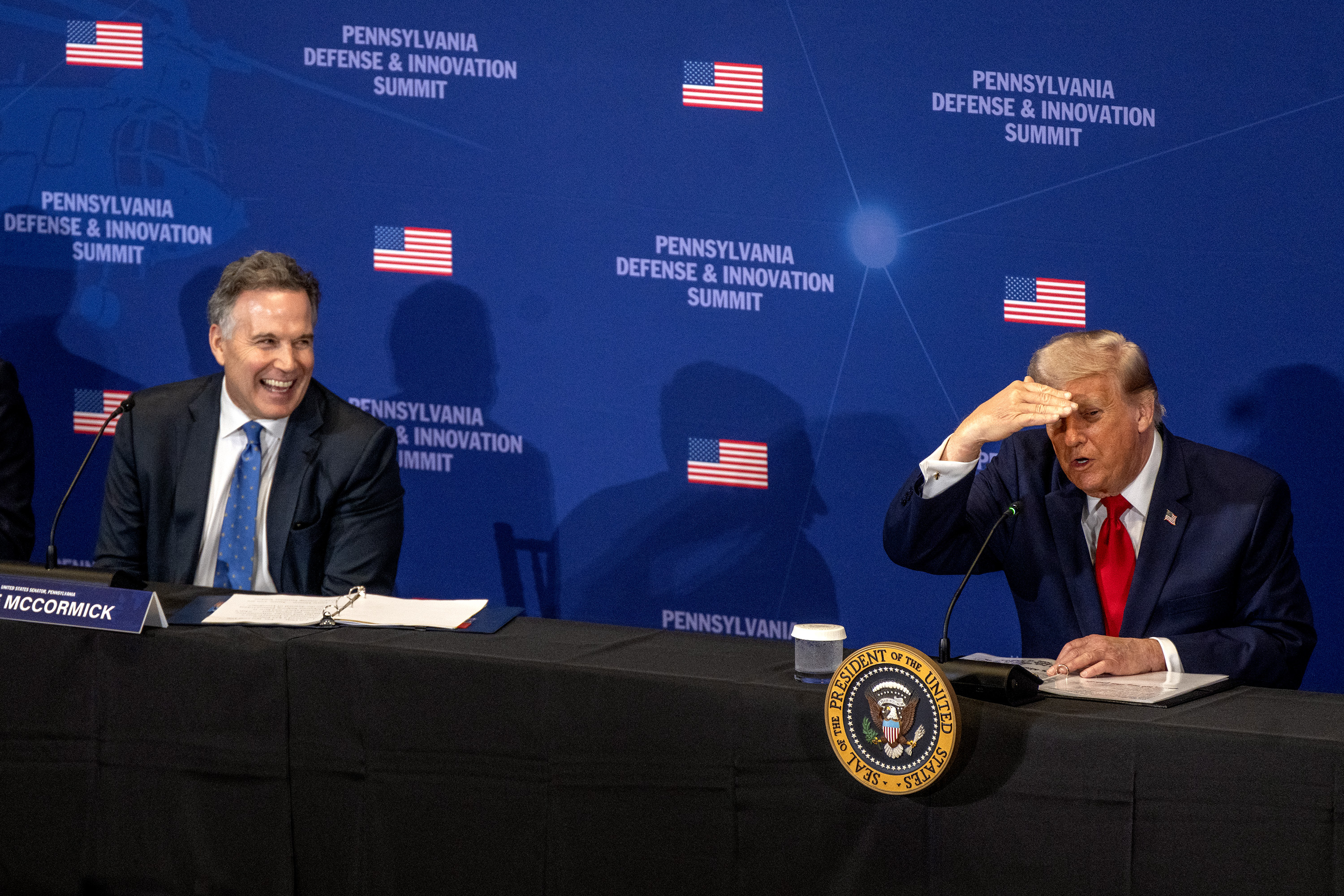
    President Donald Trump greets Secretary of Defense Pete Hegseth (right) following their appearance at a Defense and Innovation Summit hosted by U.S. Sen. Dave McCormick at the US Army War College in Carlisle Wednesday, July 15, 2026.Tom Gralish / Staff Photographer

    Another Pennsylvanian who lost his seat after making a last-minute push to put some distance between himself and the war — U.S. Rep. Rob Bresnahan (R., Luzerne) — also voted against considering the impeachment. Bresnahan, who lost to Democratic Scranton Mayor Paige Cognetti after serving just one term, said during a late October debate that “the mission has been accomplished and the war absolutely needs to end,” though he also said withdrawal had to be “pragmatic.”

    The resolution with eight separate articles of impeachment was filed Monday by outgoing U.S. Rep. Thomas Massie, a Kentucky Republican who lost his seat after becoming a vocal critic of Trump and the war.

    The articles accused Hegseth of high crimes and misdemeanors for starting the war in Iran, continuing to wage it after the passage of war powers resolutions and ignoring laws aimed at minimizing civilian casualties.

    Massie was the only Republican who ultimately voted to advance the resolution while Democrats, who have for months called for Hegseth’s removal, united behind it. Entering the majority in January, they had promised to impeach the secretary then if Republicans wouldn’t help to do it now.

    “We’re coming for you because you failed our country,” U.S. Rep. Chris Deluzio, an Allegheny County Democrat and Navy veteran, said in a video featuring veteran Democratic lawmakers, released earlier Tuesday by the nonprofit Vet Voice Foundation.

    U.S. Rep. Chrissy Houlahan, a Chester County Democrat and Air Force veteran, was also featured in the video — criticizing Hegseth’s leadership and, specifically, the episode in 2025 when he shared classified information in a Signal group chat that accidentally included a reporter. The incident risked the safety of service members, an independent review found.

    Both Houlahan and Deluzio were also among the group of six veterans serving in Congress who last year called on service members to “refuse illegal orders” from the administration. Trump and Hegseth lashed out in response, leading to an investigation that failed to indict the lawmakers. And the Pentagon’s retaliation against U.S. Sen. Mark Kelly, of Arizona, for the same message was the justification for one of the impeachment resolutions against Hegseth on Tuesday.

    “He wants to pretend that calling out his failures, his incompetence and his zealotry is an attack on our men and women in uniform,” Houlahan said on the House floor. “And he has done so while preening and peacocking all over the world, in push up contests and PT stunts, using our service members as props. Our nation deserves a real secretary of defense who will not be laughed out of every room in the Pentagon, in Brussels and in Congress.”

    Neither U.S. Sens. Dave McCormick, a Republican, or John Fetterman, a Democrat, immediately reacted to the impeachment vote. If Democrats make another attempt in 2027 and pass a resolution with their large majority, the Senate would have to vote to convict Hegseth. Both Pennsylvanians have been staunch supporters of the war effort. Fetterman has been the only senator from his party to vote against the war resolutions while echoing Trump’s justifications for the war.

    Hegseth, meanwhile, defended his record Tuesday as Trump and Vice President JD Vance said they stood by him.

    “This isn’t about Iran, this is about the fact that Pete took on the bureaucracy at the Pentagon,” Vance said on social media.

    Democratic Gov. Josh Shapiro, whose election to a second term last week has further fueled speculation that he will launch a campaign for the White House in 2028, called Hegseth “completely incompetent” during an interview on Meet the Press over the weekend.

    “He is like an 8-year-old playing with toy soldiers every day,” he said while declining to say if he supported impeachment specifically. “He is someone who I think is making America less safe, and there has to be real accountability.”

  • Sen. Dave McCormick said the GOP needs more time to digest the ‘worst election results in decades’

    Sen. Dave McCormick said the GOP needs more time to digest the ‘worst election results in decades’

    WASHINGTON — Pennsylvania’s top elected Republican said his party needs time to digest what just happened.

    After Republicans lost control of both chambers of Congress in a rout last week, U.S. Sen. Dave McCormick has urged his party to take a close look at its mistakes and not rush to select new leadership on Capitol Hill.

    “One of the things I learned in business and the Army is that after a failure, you have to start with honesty, transparency, and accountability,” McCormick said in a statement Sunday night. “A week ago, we had the worst election results in decades. We need a discussion about what went wrong, how we fix it, what we stand for, and how our agenda must focus on the concerns of the American people.”

    McCormick said he had spoken with Senate Majority Leader John Thune (R., S.D.) to tell him that Senate Republicans should not move forward with their internal leadership elections as scheduled on Tuesday.

    “We need leadership in place fast,” but not until “we have digested and debated the lessons of the midterms and how to move forward,” McCormick said.

    McCormick’s statement — his first public comment about the midterm election results — came as federal lawmakers started gathering in Washington to begin transitioning from Republican to Democratic control. Both parties were set to meet to elect their leaders in the Senate and House while also voting on legislation that would otherwise expire at the end of the year.

    Thune has said he will seek to remain the Republican leader when his party shifts to the minority — unlike House Speaker Mike Johnson (R., La.), who said he would not try to remain in GOP leadership.

    McCormick has not said if he will support an alternative to Thune. U.S. Sens. Ron Johnson of Wisconsin and Jim Banks of Indiana also did not immediately propose another leader as they sought to delay the vote, following Democratic wins in every competitive Senate race as well as some additional and stunning upsets, such as in South Carolina.

    In a statement after the losses, Thune said his caucus would “not stand idly by” as Democrats “unwind everything we’ve done.” He indicated President Donald Trump would act as a backstop, though he and the president have clashed over parts of the White House’s agenda, such as election changes. Trump has not said whether Senate Republicans should keep Thune as their leader.

    Two races — in Alaska and Mississippi — had not yet been called on Monday. If the Democratic nominees keep their leads in those states, their party would enter 2027 with a 56-44 majority.

    President Donald Trump looks into the audience as he appears at a Defense and Innovation Summit hosted by U.S. Sen. Dave McCormick (left) at the US Army War College in Carlisle Wednesday, July 15, 2026.Tom Gralish / Staff Photographer

    Republicans have had a 53-47 majority in the last two years. The significant swing is widely seen as a repudiation of Trump, the war in Iran, and the economy.

    McCormick is a staunch Trump ally who has supported the war and the president’s economic agenda. Ahead of Election Day, he campaigned for other Trump-aligned candidates in Pennsylvania. He also campaigned in Michigan for Republican U.S. Senate nominee Mike Rogers, whose Democratic opponent — now U.S. Sen.-elect Abdul El-Sayed — McCormick referred to as radical and “anti-American.”

    When the new session begins and the newly elected Democrats are sworn in on Jan. 3, McCormick will be in the minority for the first time. He was elected in 2024, narrowly beating longtime Democratic U.S. Sen. Bob Casey as Trump won Pennsylvania and returned to the White House.

  • Ahmed Moor, a Gaza-born Philadelphian, is John Fetterman’s first 2028 challenger

    Ahmed Moor, a Gaza-born Philadelphian, is John Fetterman’s first 2028 challenger

    Ahmed Moor, a Palestinian American writer who was born in Gaza and worked in international development, on Monday became the first candidate for U.S. Sen. John Fetterman’s seat in 2028 — launching an early and progressive campaign set to reflect the polar opposite of Fetterman’s view of Israel and the war in Gaza.

    A 42-year-old West Philadelphia resident, Moor has never held or run for political office aside from a recent stint as a committeeperson within the Philadelphia Democratic City Committee.

    But in an interview with The Inquirer ahead of his campaign launch, he said he was inspired to mount an outsider bid for one of Pennsylvania’s top elected positions because of what he considers a series of national “crises” — around corruption, the cost of living, constitutional authority, and foreign policy.

    “The truth is, I’m not really running against Fetterman,” Moor said. “I’m running for good government. I’m running for the rule of law. I’m running because I believe in America. And I believe in our capacity for renewal. I believe in our capacity for redressing wrongs in our midst.”

    The end of the 2026 midterms last week marked the unofficial start of the 2028 election cycle, and Fetterman has not said whether he will seek a second six-year term.

    Though campaign launches this early are rare, Fetterman’s widespread unpopularity among his party’s voters — because of his staunch support for Israel’s military actions, his shift to sometimes voting with Republicans, and his absenteeism in his role — has galvanized Democrats who want him out of office.

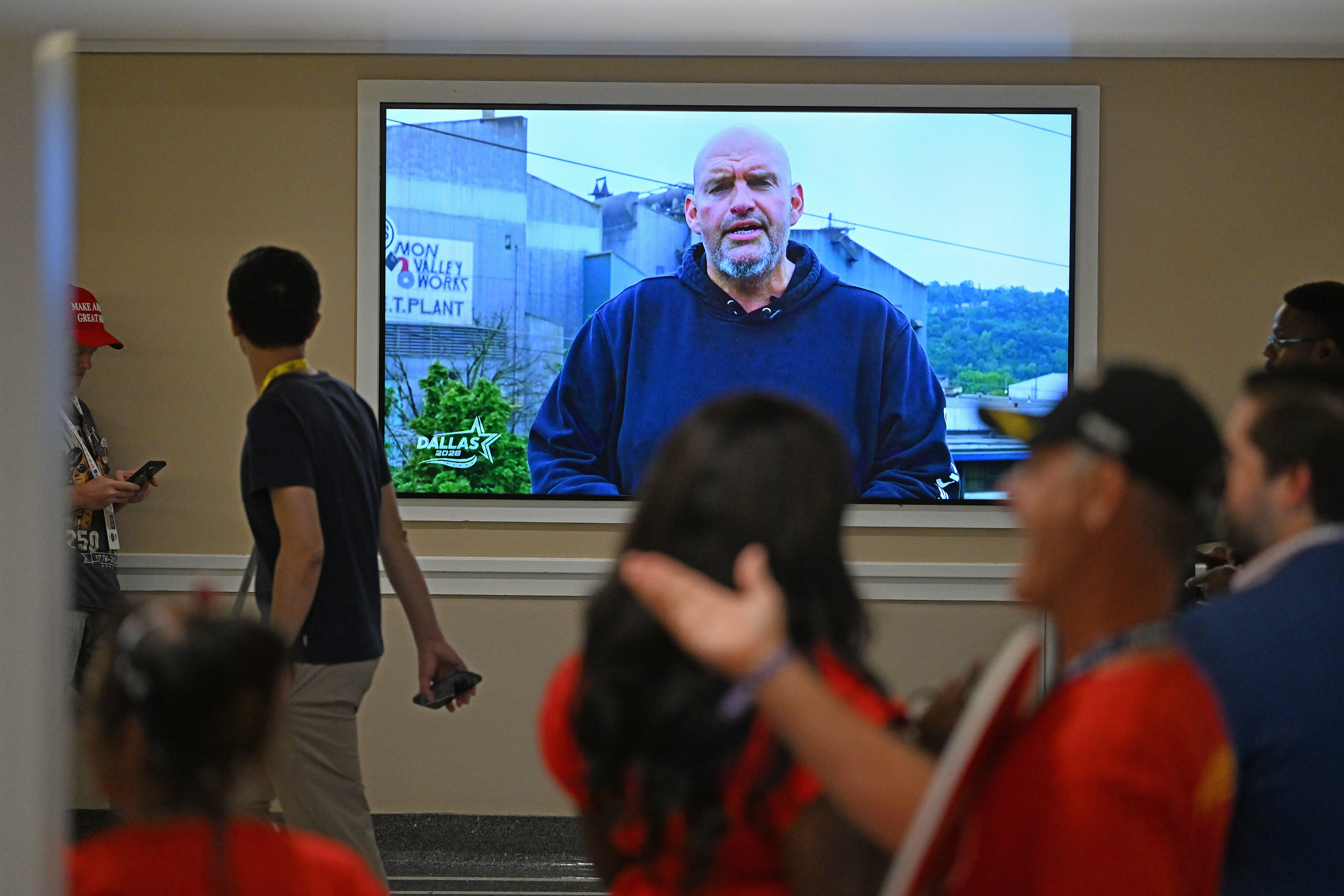
    A video of Sen. John Fetterman (D-Pa.) introducing his Republican colleague in Pennsylvania, Sen. David McCormick, is played at the Republican Party’s midterm convention in Dallas, on Wednesday, Sept. 9, 2026. Kenny Holston

    Several Democrats have openly weighed campaigns. U.S. Rep. Chris Deluzio of Allegheny County has cultivated a statewide network as he considers jumping in the race.

    U.S. Rep. Brendan Boyle of Philadelphia consulted with senators about a possible run but said Wednesday he would opt to remain in the House as chairman of the powerful Budget Committee.

    Moor said he knows he is facing an “uphill battle” in what could be a field of experienced candidates with more fundraising and political experience. It’s why he is getting in early — filing with the Federal Election Commission on Monday, hosting a launch event at Renata’s Kitchen next week, and making hires like Rasha Mubarak, a finance director who has worked on the campaigns of U.S. Rep. Rashida Tlaib (D., Mich.) and former U.S. Rep. Cori Bush (D., Mo.), progressives who have been outspoken about the war in Gaza.

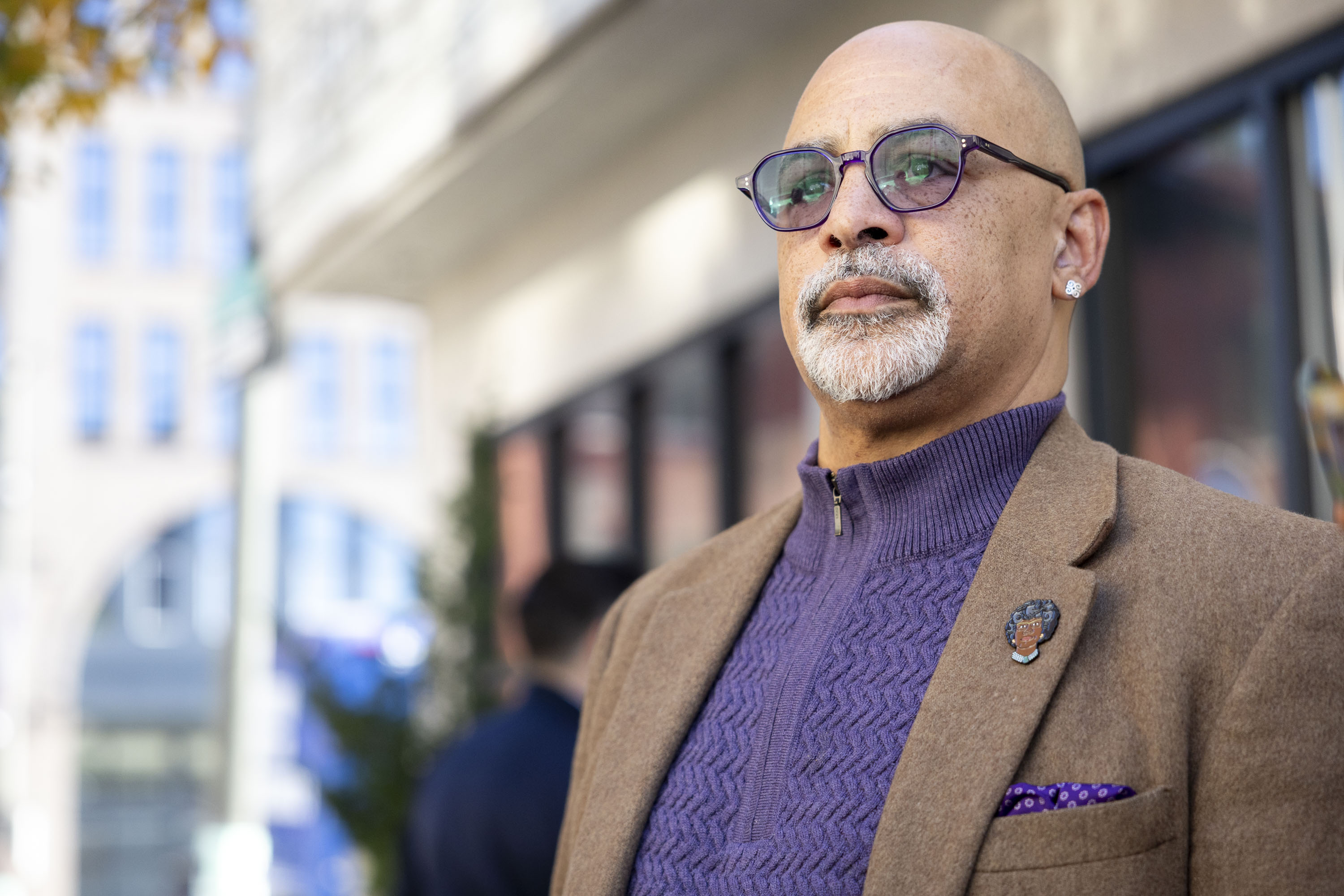
    He said he has been inspired by the success of other like-minded candidates this year, including State Rep. Chris Rabb, whose win to become Philadelphia’s first democratic socialist in Congress spurred conversations about a potential progressive challenger to Fetterman.

    Moor, with a platform that has echoes of Rabb’s, said he wants to take his message on the road to all 67 counties.

    “I’m hoping I can be a part of the movement that reignites ordinary people’s passion, ordinary people’s commitment, to American democracy and for a better quality of life,” he said.

    Who is Ahmed Moor?

    Born in Rafah — a city in southern Gaza that was largely destroyed in the latest conflict with Israel — Moor moved to Philadelphia with his family when he was a child and his father was working for the American Friends Service Committee, the Quaker-founded social justice organization. The family moved back to the region, in Ramallah in the West Bank, for three years but left after the second intifada started in 2000.

    Moor graduated from Roxborough High School and the University of Pennsylvania and later earned a master’s degree in public policy from Harvard University. Before graduate school, he worked in New York at Swiss Re Capital Markets, a global reinsurance firm. A career change from finance to journalism led him to Beirut, where he covered the 2011 revolution in Egypt as a freelancer for the Guardian and other outlets.

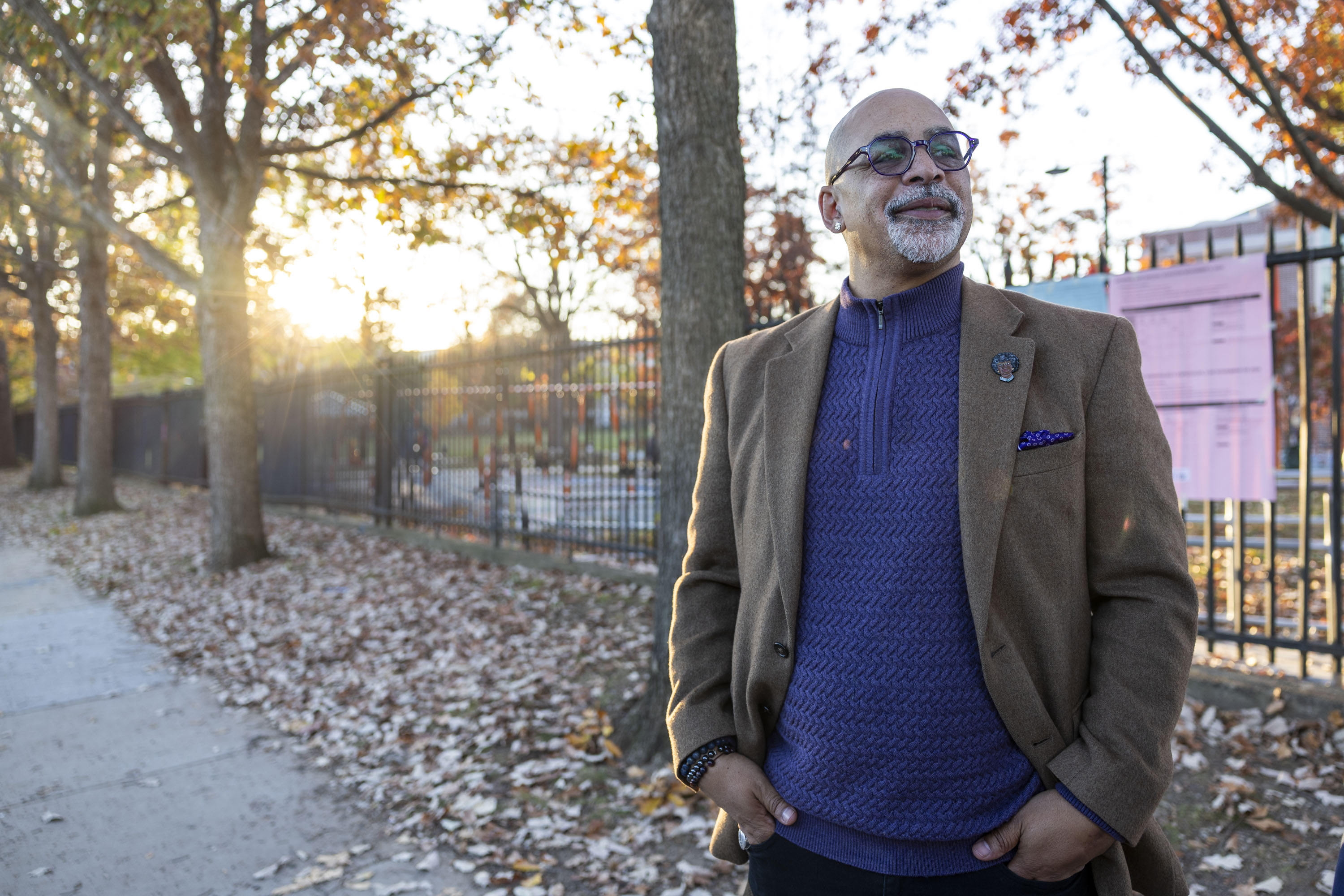
    Ahmed Moor, a Philadelphia writer and businessman who was born in Palestine, is announcing a 2028 Senate campaign.Jessica Griffin / Staff Photographer

    Before returning to Philadelphia five years ago, he spent eight years in Jordan — launching and running a venture capital-backed lending organization for small businesses in Jordan and Egypt. He and his wife moved back to the city to raise their three daughters while Moor weighed in on foreign policy in op-eds and served on the boards of local community organizations, like the People’s Media Fund and the Parent Infant Center in West Philadelphia. He has also served as a fellow at the Foundation for Middle East Peace.

    After the Oct. 7, 2023, attack by Hamas in Israel — which killed about 1,200 Israelis and sparked a war that has left more than 74,000 Palestinians dead — Moor also became a dues-paying member of the Philadelphia chapter of the Democratic Socialists of America.

    The organization “took on a strong, values-based position” against what Moor calls a genocide that led to the deaths of his family members.

    He supports not just withdrawing U.S. military aid to Israel — which polls show most Pennsylvania voters support — but imposing aggressive sanctions against Israel until Palestinians “have equal rights in that country.”

    “We need to do away with the idea that Israel is a place where Jews have superior rights relative to Palestinians,” Moor said. “That is not consistent with my values as an American. I think it’s also a recipe for endless conflict. As Americans, we’re deeply implicated in Israeli apartheid. We fund it. We sustain it. We protect it.”

    Moor said he would support a bill similar to the Comprehensive Anti-Apartheid Act of 1986, which imposed significant economic sanctions on apartheid-era South Africa. The law blocked the import of South African products, prohibited the South African government from having U.S. bank accounts, and banned all U.S. loans and investments in the country.

    “We just need to copy and paste the legislation,” Moor said. “Just apply it to 2026. Here we are, 40 years later. The problem rhymes. The resolution rhymes.”

    For Moor, the first candidate to run for Fetterman’s seat, his position is a striking departure from that of the incumbent.

    Fetterman has spent much of his time in the public eye since the Oct. 7 attacks defending Israel and supporting its military efforts in Gaza. He has talked about the conflict relentlessly in interviews, appeared more frequently with Jewish groups, and met more times with Israeli Prime Minister Benjamin Netanyahu than he has with Philadelphia Mayor Cherelle L. Parker. He has acknowledged that his unwavering view could cost him his seat and — while also drifting further from his party on a number of other issues — said he would abandon his lifelong association with the Democratic Party if it makes opposing Israel its official view.

    “That’s a problem for Pennsylvania. It’s a problem for me as a constituent. It’s a problem for America,” Moor said of The Inquirer’s reporting about his meetings with Netanyahu and Parker.

    Moor said his decision to enter the race, though, was more about a broader need for “systemic structural change.”

    His platform includes universal free childcare, Medicare for All, a nationwide version of the California wealth tax on billionaires that failed in the election last week, rejecting the influence of corporations and other special interests in government, and holding President Donald Trump’s administration accountable for corruption. Paying $5,000 per month for childcare expenses when his kids — now 8, 7, and 5 — were younger made him think deeper about early childhood education as a “market failure” and made him want to get involved in finding solutions in a more meaningful way, he said.

    Like other democratic socialists, he is highly critical of the current Democratic Party and said he has “no faith” in U.S. Sen. Chuck Schumer or U.S. Rep. Hakeem Jeffries, the New York Democrats who are in line to become the leaders of the new Democratic-controlled Congress after last week’s “blue tsunami” election.

    “We’re facing a fight, which will define whether we continue to be a constitutional republic or not. So we need to fight. It’s a fight,” Moor said. “I don’t believe that the current leadership of the Democratic Party has what it takes to meet the needs of the moment.”

    A fan of Rabb’s campaign this year, he said he also admires progressives like U.S. Sens. Chris Murphy of Connecticut and Chris Van Hollen of Maryland, as well as U.S. Reps. Alexandria Ocasio-Cortez of New York and Ro Khanna of California. New York Mayor Zohran Mamdani’s win in 2025 and Michigan U.S. Sen.-elect Abdul El-Sayed’s successful campaign this year also served as inspiration.

    Whether Pennsylvania voters — who tend to elect more centrist candidates statewide — are ready for that kind of candidate in a Senate race is an open question. An Inquirer/New York Times/Siena University poll in September found 56% of likely voters had an unfavorable view of socialism and 57% of Democrats said they did not consider themselves democratic socialists.

    But with momentum on the left this year, Moor said, he thinks “it’s wise and sensible to embrace all of the energy coming out of the DSA and to incorporate the best ideas.”

    “The DSA is the most earnest — the best — chance, I think, for renewing a certain type of grassroots politics in American life,” he said.

  • Democrats are ‘on probation’ as they tackle affordability agenda and navigate party divides

    Democrats are ‘on probation’ as they tackle affordability agenda and navigate party divides

    Democratic lawmakers will return to Capitol Hill on Monday after the massive “blue tsunami” with a short but complicated question: Now what?

    The 2026 midterms have set the Democratic Party up to take back the gavels in January with its largest majorities since 2009, giving it a mandate to act on voters’ intense affordability concerns and frustrations with President Donald Trump.

    Even after a year that showcased deep ideological divides in their ranks, both the incoming progressives and traditionally moderate Democrats have said in the days since the election that reducing the cost of living must drive their agenda.

    How they go about doing that — and how much they can realistically lower the price of gas, groceries, electricity bills, housing, and more — are other questions entirely.

    “We’re giving Democrats a chance. But they’re on probation,” Allentown Mayor Matt Tuerk, a Democrat and the first Latino mayor of Pennsylvania’s third-largest city, said in an interview at the election night party for Bob Brooks in the Lehigh Valley’s congressional district.

    Tuerk said he believes Brooks and the other incoming Democrats in Pennsylvania’s congressional delegation recognize the stakes. He said Latino voters in particular who swung toward Trump in 2024 and back toward Democrats this year are watching for them to do everything they can to lower costs and fight the administration, including on immigration enforcement.

    “That’s what we expect out of Bob. That’s what we expect out of Paige Cognetti,” who unseated a Republican in a Scranton-based district, Tuerk said. “That’s what we expect from our congressional leaders across the country.”

    U.S. Rep. Brendan Boyle, the Philadelphia Democrat set to become chair of the powerful House Budget Committee, said his party’s lawmakers are already gearing up to prove themselves “from the very first day, from the very first week.”

    He said he is optimistic that the large, ideologically diverse caucus “will all be able to be on the same page about the affordability agenda.” And the places to start, he said, are rolling back Trump’s tariffs, restoring previous and forthcoming healthcare cuts, and bringing an end to the war in Iran — three major drivers of inflation. It will take time to get results.

    “I don’t think this economy is getting better anytime soon, unfortunately,” said Boyle, who closely tracks economic forecasts and will have a key role in crafting his party’s approach. “The consensus is even if we’re able to reverse these things, we won’t immediately see prices drop right away.”

    Each of Pennsylvania’s five incoming Democratic U.S. House members has stressed some of the same Day One priorities — from Chris Rabb, Philadelphia’s first democratic socialist elected to Congress, to Janelle Stelson and Cognetti, who both beat Republican incumbents, in part, by claiming their independence from either party.

    U.S. Rep.-elect Chris Rabb stops by at Kingsessing Recreation Center on Election Day. Tyger Williams / Staff Photographer

    Rabb, asked during a postelection CNN interview about his more transformational goals like universal basic income and expanding the U.S. Supreme Court, said the first step is affordability. Stelson, who hammered her opponent in a Harrisburg-based district over the Iran war’s impact on gas prices, said during her victory night speech that ending the war would be her foremost goal.

    Brooks, in his own victory speech after unseating a Republican, mentioned the cost of diesel, tariffs, and healthcare cuts before rattling off a list of other priorities — ban congressional stock trading, stop corporate money in campaigns, implement term limits, release the Epstein files.

    “If we’re going to fix D.C., we’ve got to put the fire out first,” the former Bethlehem firefighter said. “That means ripping out the corruption from its roots.”

    It was the type of message that appeared to strike a chord on all sides of the Democratic spectrum. After Election Day, Brooks was one of just three Democrats mentioned in congratulatory statements from both the moderate Blue Dog PAC and U.S. Sen. Bernie Sanders (Ind., Vt.), the democratic socialist who has championed Medicare for All.

    Sanders indicated Brooks’ win was among the “great progressive victories.” The Blue Dog PAC lumped him in with Zack Mullock, the Cape May mayor who said he beat Republican U.S. Rep. Jeff Van Drew as a pragmatist rather than replicating “the socialist kind of things” elsewhere.

    But bridging that divide when Democrats take control and battle over the details of their agenda could be a challenge.

    Dan Parker, cochair of the Philadelphia chapter of the Democratic Socialists of America, said Democrats have a clear mandate to provide immediate relief to people struggling to afford everyday costs.

    “What happens next, beyond that, is still going to be a fight as to how far we can take things,” Parker said.

    The chapter is “elated” by Rabb’s victory, Parker said. He was one of five nationally endorsed DSA candidates who will now join the “largest bloc of socialists in Congress in its history,” according to the national organization.

    But that is a small faction in a large caucus, making them unable to challenge Hakeem Jeffries, the Democrat in line to become House speaker. Parker said DSA members believe Jeffries is “probably the very last person fit for this moment” because they see him as too closely aligned with corporate interests. They may not have the votes now to challenge Jeffries, Parker said, but they intend to keep pushing.

    “Our star is ascendant — and as a socialist and progressive force are not going to be able to be swatted away in the coming congressional term,” Parker said. “So, many of our demands are going to need to be met, and we’re going to continue to build our movement to ensure that they are.”

    Early indications of how Democrats plan to come together will begin in the coming weeks as they choose their leaders and preview their agenda. On Thursday, a long list of high-profile Democrats — including rumored 2028 presidential contenders — will gather in Denver for discussions about what just happened and, in the name of the conference itself, “What’s Next.” Among the planned attendees: New Jersey’s U.S. Sens. Cory Booker and Andy Kim, Gov. Mikie Sherrill, and U.S. Rep. Chris Deluzio, an Allegheny County Democrat considering running for U.S. Sen. John Fetterman’s seat.

    In another similarly named “Now what?” conversation on Friday, U.S. Rep. Madeleine Dean (D., Montgomery) told the historian and author Timothy Snyder that she was looking forward to a diverse Democratic caucus that was motivated to make the most of its opportunity in Congress.

    “We have to come in and be aggressive, but really competent. We can’t just flail,” Dean said. “We have to really be competent around affordability, what matters, what’s hurting Americans right now — what they responded to — and accountability. We’ve got to go down both rails.”

  • Philly’s U.S. Rep. Brendan Boyle said he won’t run for Sen. John Fetterman’s seat in 2028

    Philly’s U.S. Rep. Brendan Boyle said he won’t run for Sen. John Fetterman’s seat in 2028

    U.S. Rep. Brendan Boyle (D., Philadelphia) said Wednesday he would not run for U.S. Sen. John Fetterman’s seat in 2028, opting instead to focus on serving as chair of one of the most powerful committees in Congress after Democrats’ dominant victories to regain control of the U.S. House.

    Boyle, who will begin his seventh term in January, is set to take the reins of the House Budget Committee, the first Pennsylvanian to do so in nearly four decades.

    His decision takes a potentially formidable candidate off the board as Fetterman’s seat becomes the highest-profile Pennsylvania election after this year’s midterms. The senator has not said whether he will seek a second six-year term, though he has alienated his former voter base and Democratic allies while being largely absent from the job.

    Boyle, Pennsylvania’s longest-tenured House Democrat and one of the most outspoken against Fetterman, had not ruled out a 2028 campaign. One of his colleagues, U.S. Rep. Chris Deluzio (D., Allegheny), has more openly positioned himself to run.

    Boyle said in a statement Wednesday that he had weighed both options and now believes he can be most effective in the House.

    “For months, many of my supporters have urged me to consider running for U.S. Senate in 2028. I have always said that after the November 2026 election, I would make a decision based on one simple question: where can I have the biggest impact on public policy?” Boyle said. “After months of consulting many whom I respect, including current senators and past committee chairs, it is quite clear that I can have a much bigger impact on policy as Budget Committee Chairman rather than as a freshman member of the Senate.”

    As the top Democrat on the committee while it was under Republican control for the last four years, Boyle would still have to be selected by his colleagues to serve as its chairman, though he is not expected to face opposition. Lawmakers and incoming members of Congress will return to Washington in the coming weeks to organize ahead of the next session in January.

    Boyle will likely become the first Budget Committee chair from Pennsylvania since U.S. Rep. Bill Gray, another Philadelphia Democrat, led it from 1985 to 1989.

    The group has critical sway over annual spending bills and economic issues — putting Boyle in charge at a time when voters have seemingly elected Democrats with a mandate to focus on affordability issues. Boyle has consistently focused on those topics, becoming one of his party’s “best messengers,” Hakeem Jeffries, the New York Democrat in line to be the country’s first Black speaker of the House, said last year.

    Jeffries credited Boyle for pushing back against President Donald Trump’s One Big Beautiful Bill Act — which enacted tax cuts while trimming spending on Medicaid and food assistance — and the expiration of Affordable Care Act tax credits, which raised premiums for millions of Americans this year.

    Boyle has also used his leadership position on the committee to take an early lead on Democrats’ messaging that tied the war in Iran to larger affordability issues as gas prices spiked. In September, a nonpartisan analysis he requested found the war was costing American taxpayers up to $3 billion per month. Voters on Tuesday repeatedly mentioned the war as a motivating factor when they rejected Republican candidates, and Democrats who won have promised to make ending the war a top priority moving forward.

    “I look forward to utilizing my position as Budget Committee Chairman to finally get this nation’s fiscal health back on track, and bring more resources back home to our community,” Boyle said.

    Boyle, 49, of Somerton, won an easy reelection Tuesday in a heavily Democratic district that stretches from Center City through Northeast Philadelphia.

    When the new Congress starts, he will have served longer than all but two of Pennsylvania’s 17 federal lawmakers and be the dean of a much larger Democratic bloc. Four challengers to Republican incumbents — including U.S. Rep. Brian Fitzpatrick, the last Republican serving in the Philadelphia area — won in the massive blue wave, tipping the final ranks of the Keystone State delegation in the House to 11 Democrats and six Republicans.

    Deluzio, who was elected to a third term in a district outside Pittsburgh, was the incumbent Democrat who campaigned the most aggressively to flip those seats, including fundraising and events for candidates like Bucks County Commissioner Bob Harvie, who beat Fitzpatrick. His additional fundraising and messaging have fueled expectations that he will run for Senate, a prospect he said he is considering.

    Fetterman, meanwhile, said in September that his future would become more clear after the midterms. As of Wednesday afternoon, he had not yet commented on his party’s generational victories the day before, which likely eliminated the possibility of him being a regular, and powerful, swing vote for the next two years.

  • Democrats ‘Fetterman proofed’ the Senate with wins in longtime red states, Pa. senator’s critics say

    Democrats ‘Fetterman proofed’ the Senate with wins in longtime red states, Pa. senator’s critics say

    Now that Democrats have won at least 54 seats in the U.S. Senate, the new majority party likely won’t have to rely on Pennsylvania Democratic U.S. Sen. John Fetterman to be a reliable vote for their agenda.

    And if he switches parties, it will have no bearing on who controls the chamber.

    For months, some Democrats had voiced concerns that Fetterman — who has broken with the party in high-profile moments since President Donald Trump took office — could be a powerful swing vote if they either tied or won a one-seat majority.

    But as many online commenters pointed out Tuesday night, their gains will likely leave them with a “Fetterman-proof” margin.

    “You know who doesn’t matter anymore? John Fetterman,” wrote Adam Jentleson, Fetterman’s former chief of staff, who has become an outspoken critic of the senator.

    State Rep. Malcolm Kenyatta, a Philadelphia Democrat who lost the 2022 primary to Fetterman, added: “We just Fetterman proofed the US Senate.”

    Democrats scored wins in traditionally Republican states, including Texas, where Democrats had last won a Senate race in the 1980s, and Kansas, where Democrats snapped a 94-year losing streak in Senate races.

    Those wins give Democrats a solid majority regardless of how Pennsylvania’s two senators vote. And the majority could grow if Democrats maintain their leads in Alaska and Mississippi.

    Fetterman has repeatedly promised to remain a Democrat, though his assurances had not fully limited concerns that he would become an independent or Republican depending on what happened in the midterm elections.

    On Tuesday, he did not comment publicly on his party’s massive wins, though he did post a straightforward message earlier in the day about polls being open.

    He also did not campaign for any Democrats this year — in Pennsylvania or elsewhere — or advocate for them to regain the majority in the Senate.

    At times, he and some of his party’s nominees were openly antagonistic toward one another — including Abdul El-Sayed, who is now set to join Fetterman in the Democratic caucus with his win in Michigan.

    In the summer, El-Sayed referred to Fetterman privately as an “ogre” while saying he would support a primary challenge against him in 2028, according to Politico.

    Fetterman responded by criticizing El-Sayed’s alliance with progressives, said he had “little man syndrome,” and — when a last-minute feud erupted between El-Sayed and U.S. Rep. Haley Stevens right before Election Day — supported Stevens.