Author: Maddie Hanna

  • The Spring-Ford school district is moving to fire a Spanish teacher supported by community members

    The Spring-Ford school district is moving to fire a Spanish teacher supported by community members

    The Spring-Ford Area School District is moving to fire an eighth-grade Spanish teacher over protests from parents and students who say she is being unfairly terminated.

    The school board voted Monday to approve a statement of charges surrounding the dismissal of an employee, who was not identified in board documents. The statement of charges was not made public, which is typical procedure for school district personnel matters.

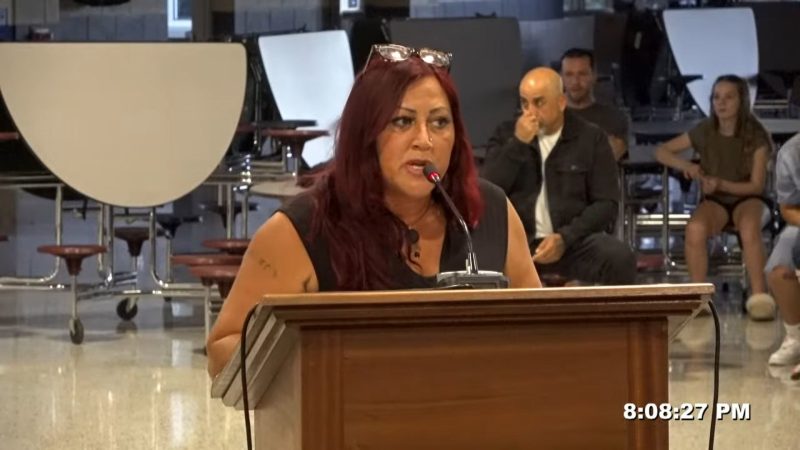
    But numerous supporters of Jasmine Ewing, including her husband, spoke out at Monday’s meeting against the dismissal, describing “Señora Ewing” as a passionate and dedicated educator who had positively impacted their lives.

    They also urged the board not to fire her over what some characterized as false accusations.

    “What foundation are we setting for the kids to know that they can retaliate against a teacher who is trying to hold them accountable for extremely inappropriate actions?” said Miranda Dombrosky, a 2010 Spring-Ford graduate and district parent.

    Dombrosky, who described herself as a friend of Ewing’s, referred to a student who had “bragged about getting a teacher fired” and accused the district of punishing “an innocent teacher.”

    Tamika Jeter, a district parent who credited Ewing with fostering her son’s enthusiasm for learning Spanish, told the board “it would be a big mistake to let a small thing that was considered playful among students cause her to lose her job.”

    Erin Crew, a district spokesperson, said Tuesday that “out of respect for the students and families involved, and because this is an ongoing personnel matter, the district will not comment on matters related to an individual’s employment.”

    The resolution approved by the board Monday “authorizes moving forward with a statement of charges while providing all due process rights required by law,” Crew said.

    As a result of the board’s vote, Ewing plans to request a public evidentiary hearing, her husband, Brian Ewing, said at Monday’s meeting.

    Brian Ewing told the board that he and his wife had “statements and factual information that directly dispute these claims against Jasmine, and raise serious concerns about this process.”

    “If the district insists on dragging this forward, the public will see what was done, who did it, and why it never should have happened,” said Ewing, who said his wife was not present Monday because she was leading students on a trip to Costa Rica.

    At a school board meeting the week before, at which supporters also spoke on her behalf, Jasmine Ewing said it was “devastating to stand here facing termination” after devoting herself to her teaching career.

    As a Latina, she said, “Spanish has always meant something deeper to me,” and she viewed her job as not just an educator, but a “cultural ambassador.” She said the support shown by community members was a “legacy I will carry with pride for the rest of my life.”

    Some supporters told the board that Ewing was an asset to the district as a teacher of color, providing valuable representation.

    Former students like Sofia McClintock said Ewing had broadened their horizons through international trips she had led.

    “Teachers who truly care are not easy to replace,” McClintock said. “They are the teachers that students remember years after leaving their classrooms because of the difference that they made, and that is Señora Ewing for me.”

    While supporters of Ewing dominated the school board meetings Monday and last week, one former student spoke out against the teacher, accusing Ewing of participating in antisemitic bullying.

    The student, Kayla Woodman, who graduated from Spring-Ford earlier this month, said that when she had Ewing for Spanish in eighth grade, boys repeatedly harassed her for being Jewish, including through a “Heil” chant.

    Ewing, Woodman said, not only did not tell the boys to stop, but “joined in and laughed.”

    It was not clear whether Woodman’s accusations were connected to the reasons the district is now seeking to dismiss Ewing.

    Woodman, who described the experience as “some of the darkest times in my life,” said that she had been afraid to go to administrators and that her parents had had a private conversation with Ewing.

  • The Norristown school board plans to hire Delaware’s Superintendent of the Year

    The Norristown school board plans to hire Delaware’s Superintendent of the Year

    The Norristown school board plans to vote Monday to hire Delaware’s Superintendent of the Year as the district’s next leader.

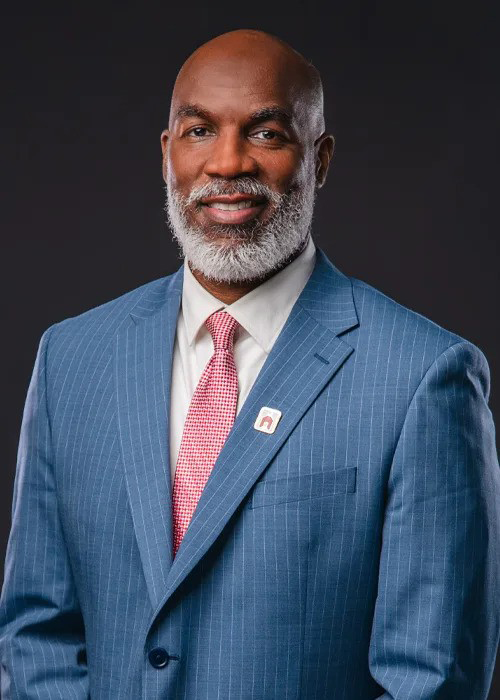
    The board announced Sunday that it had selected Dorrell Green, the superintendent of the Red Clay Consolidated School District in New Castle County as its pick for superintendent.

    Green is expected to start as superintendent in the Norristown Area School District on July 20, under a five-year term with an initial salary of $270,000, according to an agenda for Monday’s meeting.

    Dorrell Green, the superintendent of the Red Clay Consolidated School District in New Castle County, Del., is to join Norristown Area School District as superintendent on July 20, 2026.Red Clay Consolidated School Dis

    Green’s selection comes after the board, which has a new majority after November’s school board elections, moved this spring to oust Superintendent Christopher Dormer, citing poor test scores. The board has since sparked controversy with other changes, including eliminating its DEI director.

    Throughout the superintendent search process, “our community made it clear that they were seeking a visionary leader who is committed to student achievement, educational excellence, and meaningful engagement with all stakeholders,” the board’s president, Jeremiah Lemke, said in a statement.

    He said Green’s “experience, leadership record, and commitment to serving diverse school communities” set him apart during a search process that was led by a consulting group and attracted 88 applicants.

    Green has worked in public education for more than 25 years, including as a teacher, principal, and assistant superintendent.

    In Red Clay, Delaware’s largest school district with 15,000 students, Green has served as superintendent since 2019. He expanded early childhood education during his tenure there and increased access to advanced course work, according to the Norristown board.

    Before that, Green was the first executive director of the Delaware Department of Education’s Office of Innovation and Improvement, an office created by former Delaware Gov. John Carney to support the state’s neediest schools.

    Green has a bachelor’s degree in elementary education and master’s degree in educational leadership from the University of Delaware. He has a doctoral degree in organizational leadership from Wilmington University.

  • How Haverford High’s national teacher of the year is coaching aspiring teachers, on topics from racism to connecting with students

    How Haverford High’s national teacher of the year is coaching aspiring teachers, on topics from racism to connecting with students

    As the newly appointed National Teacher of the Year, Haverford High School’s Leon Smith has been celebrated on television: from CBS Mornings and Good Morning America to the Kelly Clarkson Show.

    But as the lone Black teacher when he started teaching at Haverford 25 years ago, Smith got a different reception. He experienced racism, he told a group of young people interested in teaching, and if it weren’t for a Black vice principal that listened and supported him, he might not still be teaching today.

    “She would just be very honest with me, and be like, ‘First of all, you’re an excellent educator. … Keep being you. Somebody calls and says something crazy, I’m just hanging up,’” Smith told teaching fellows gathered in Germantown on Wednesday with Breakthrough of Greater Philadelphia, a nonprofit that trains aspiring teachers to lead enrichment programs for middle-school students.

    The event, sponsored by the Equitable Foundation, was just one of many for Smith during his yearlong stint as Teacher of the Year, a platform he was awarded in April by the Council of Chief State School Officers. In that role, he’s spending the year traveling the country to advocate for the teaching profession and growing its ranks.

    Smith, who teaches Advanced Placement U.S. History and Advanced Placement African American Studies at Haverford, spoke passionately to the fellows Wednesday about his motivation to be the teacher he didn’t have growing up, and the immense impact teachers can have on students’ lives — presenting the profession as a deeply rewarding opportunity to help kids recognize their talents.

    But he was also honest about the challenges. Fielding questions about his career from fellows gathered in an auditorium on the Germantown Friends School campus, Smith said he had struggled to find his way as a new teacher, staying up too late trying to perfect lessons.

    He described the sometimes lonely experience of being his predominantly white high school’s only Black teacher, and how he developed strategies to respond to racism, including learning when to walk away and when to speak out.

    He told fellows to find supportive colleagues and to be selective when they considered job offers.

    “Do your research. Make sure it’s a space that’s going to take care of you,” he said.

    Smith also described feeling self-conscious when he was younger about some of his lessons — worrying that students would say, “‘Oh, all he does is talk about Black history,’” Smith said. But he began hearing from students about how grateful they were to have learned about subjects that hadn’t been covered in other classes; an audit later identified African American studies as a class community members wanted to see added.

    ‘My why’

    His comments resonated with the teaching fellows, some of whom said they’re committed to careers in education.

    Dominique Sidae, a 23-year-old rising senior at Florida A&M University, is planning to become a special-education teacher. She said she was inspired by her appreciation for a teacher who helped her younger brothers, who have autism.

    Sidae said she is often the only Black person in teaching spaces. “It feels good to know this isn’t only happening to me,” she said. “You don’t really learn that in college.”

    Dominique Sidae, 23, a fellow with the Breakthrough of Greater Philadelphia, listens to a talk by Leon Smith last week.Jessica Griffin / Staff Photographer

    Miles Baldwin, an 18-year-old graduate of Harriton High School in Lower Merion, isn’t sure he wants to become a teacher. But he enjoyed working with students last summer in the Breakthrough program — “a lot of kids came in hating it, and left wanting more,” he said — and Smith’s pitch about being a mentor was compelling to him.

    “Honestly, yeah,” he said, when asked if hearing from Smith made him more interested in teaching.

    That’s part of the goal of Smith’s role as Teacher of the Year, as a dwindling pipeline has challenged recruitment efforts.

    Smith’s agenda this summer includes attending the National PTA Convention in Pittsburgh and giving a keynote speech at the Smithsonian’s National Education Summit. He also will be joining other state teachers of the year at Space Camp in Alabama and participating in professional development.

    But addressing the Breakthrough teaching fellows Wednesday “reminds me of my why,” Smith said in a brief interview. He said the fellows’ eagerness to ask questions “shows they want to be the best they can be,” and reflects qualities of good teachers: “You have to be curious, sometimes silent … often humbled,” Smith said.

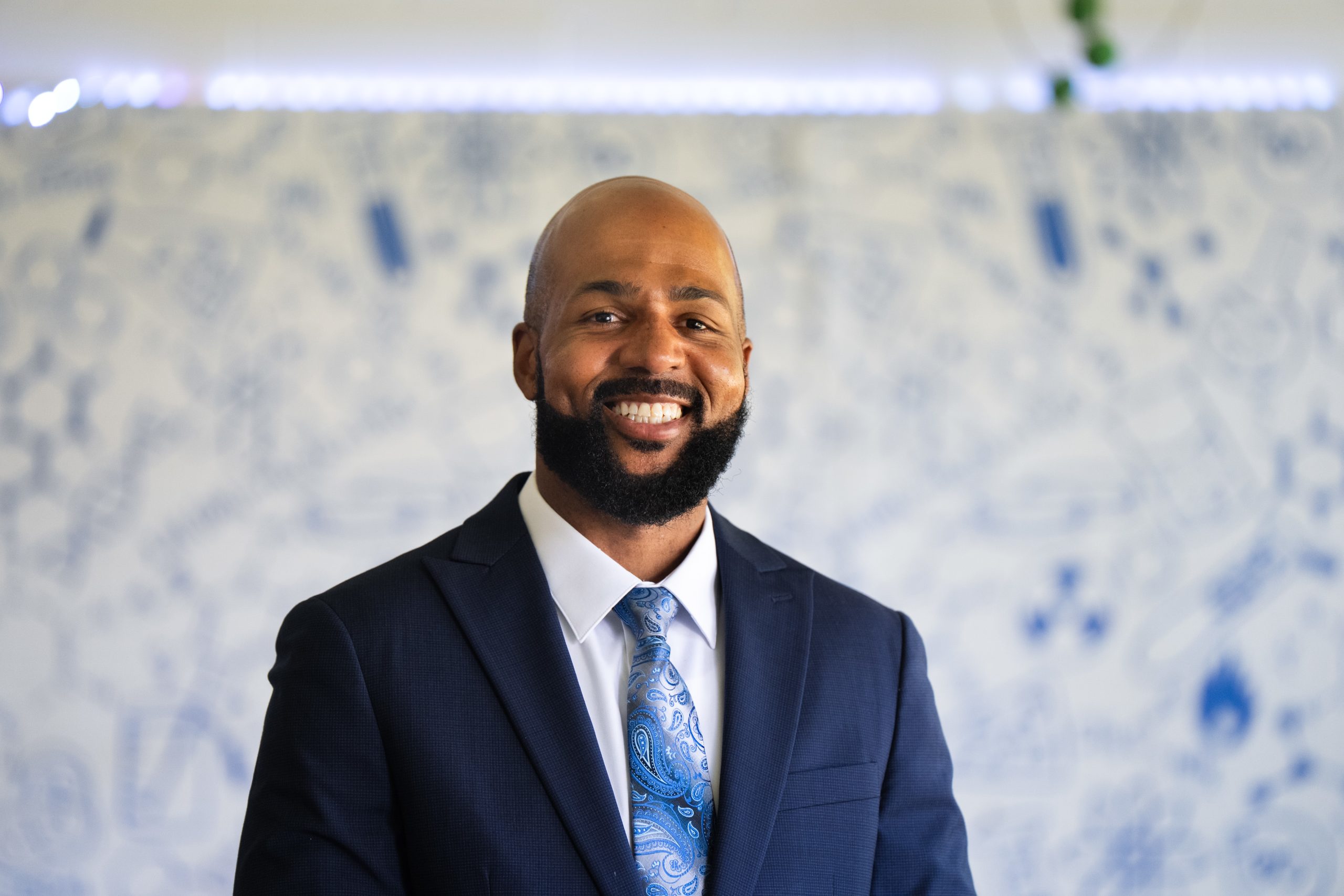
    Leon Smith, a teacher at Haverford High School, was named National Teacher of the Year this spring.Jessica Griffin / Staff Photographer

    Teaching students to lead

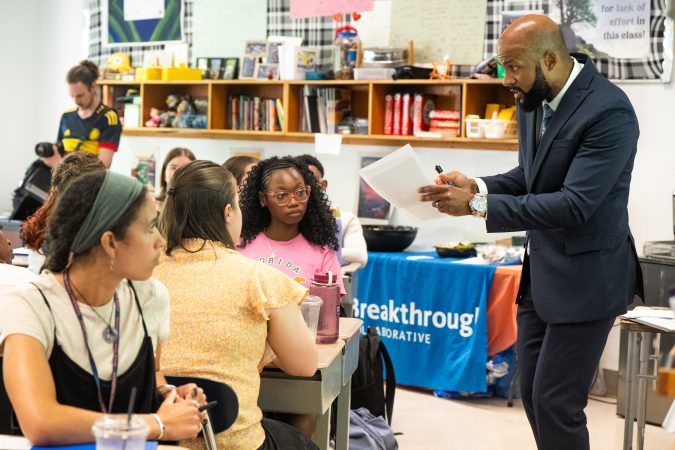
    In a model lesson after his talk, Smith put some of those skills on display. He started by gathering the 34 fellows in a circle, asking them each to share their name and a brief story about it; the group periodically broke into laughter at humorous anecdotes.

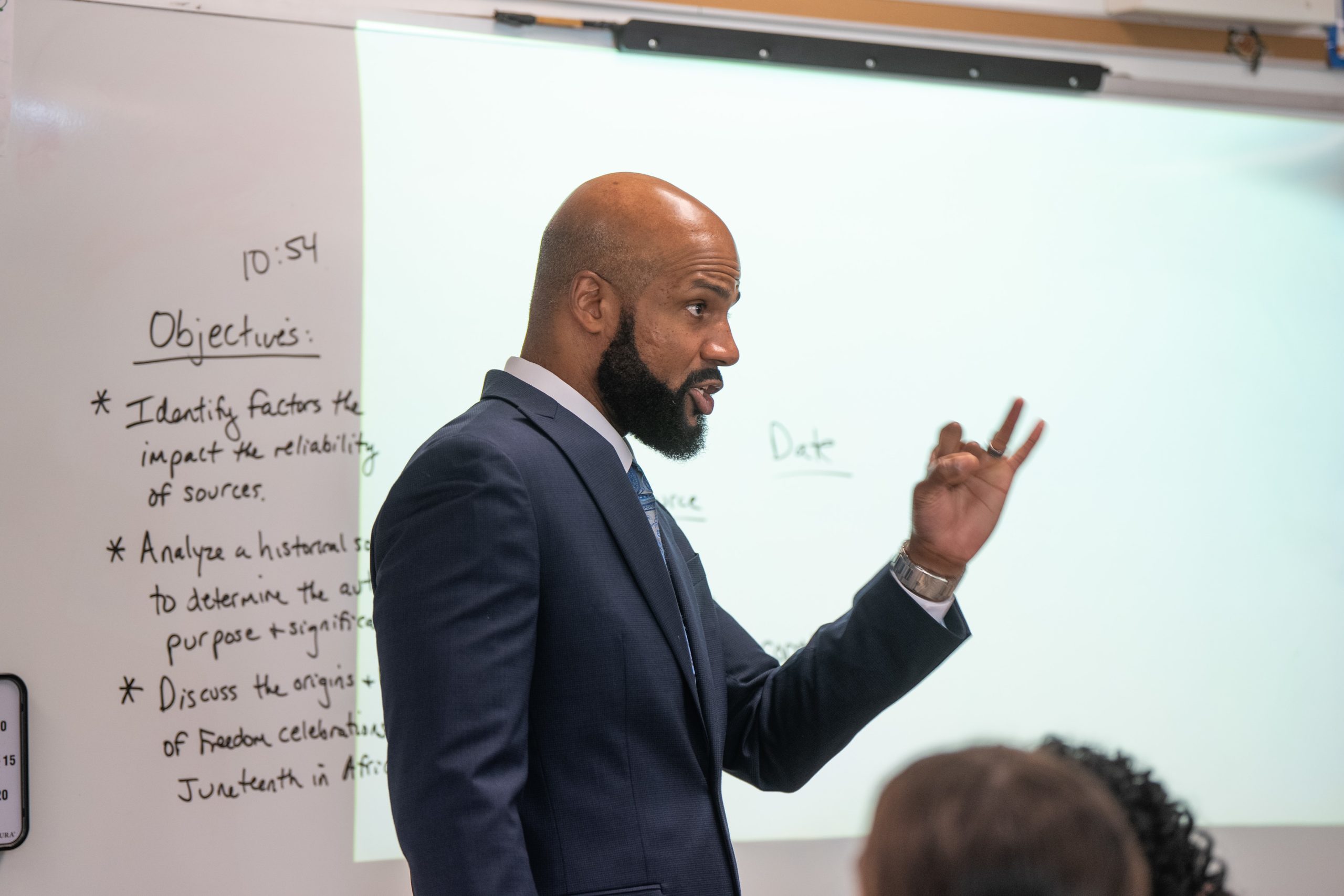
    Smith then outlined the objectives for his lesson about assessing the credibility of sources. He passed out copies of a photo, asking fellows to silently write and then discuss in small groups whether it provided strong evidence of the Fukushima power plant explosion.

    “I always tell my students, you want to be a leader,” Smith said, encouraging fellows to stand by their analyses, even if others disagreed. He then called on people, asking them to explain their thinking while challenging some of their points.

    Leon Smith talks to fellows at Breakthrough Collaborative last week.Jessica Griffin / Staff Photographer

    Matt Greenawalt, co-dean of faculty for the Breakthrough summer program and a teacher at Germantown Friends — which supports Breakthrough — was planning to breakdown Smith’s approach for the fellows after the lesson. He noted how Smith was walking through the room, engaging with the fellows as they talked, and Smith’s ability to affirm and redirect them when an answer wasn’t on point.

    Smith’s visit came on day three of a two-week orientation for the fellows, before they would begin teaching students during Breakthrough’s six-week free summer program.

    While access to academics is key for the program’s students, many of whom come from Germantown, “a big piece of it too is having role models,” Greenawalt said.

    Smith told fellows that when the students arrived, “they’re going to just admire you so much.”

    “You’re going to be able to see the light inside of them, and sometimes it just takes someone else to notice, right? … They’ll just kind of be doing their work, and then as you get to know them, you’ll notice certain characteristics and you’ll just pour into it.”

    What really helps make a connection with kids, Smith said, is “just you being yourself.”

    “You walking in there and walking in your own life, and bringing your passion and all the reasons why you wanted to become a teacher,” he said. “Your students are going to feel that.”

  • The Philly school board voted to nonrenew a charter run by a veteran administrator

    The Philly school board voted to nonrenew a charter run by a veteran administrator

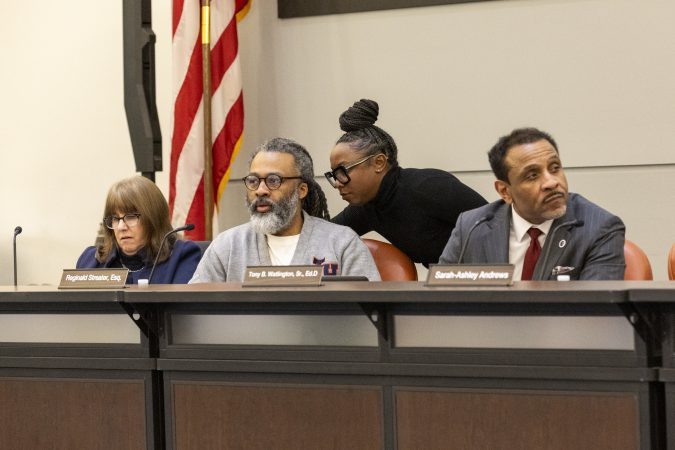
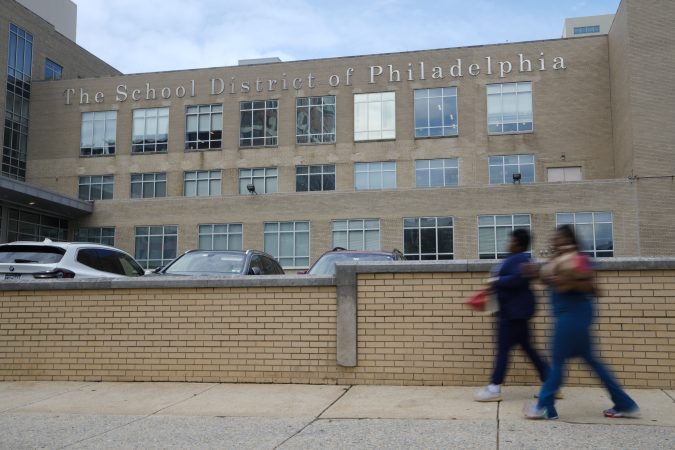
    The Philadelphia School Board voted Thursday to nonrenew a charter school run by a veteran former district administrator, pointing to poor test scores and operational problems.

    The board voted 8-0 to nonrenew Global Leadership Academy Southwest at Huey, a charter run by Naomi Johnson-Booker, who operates another GLA charter in West Philadelphia. Board member Whitney Jones abstained, citing personal reasons.

    Charter schools are publicly funded but independently managed. In Philadelphia, about one-third of public school students attend brick-and-mortar charters.

    “We have a responsibility that is clear … to protect every child’s right, civil right, to a high-quality public education,” said the board’s president, Reginald Streater. He noted that GLA Southwest, a K-8 enrolling close to 600 students at 52nd and Pine Streets, has posted poor academic performance, with only 7% of students scoring proficient or advanced in math on the Pennsylvania System of School Assessments in 2025.

    The school also has poor student attendance, and has not met district governance and financial standards, with conflicts of interest in counsel representation, insufficient cash on hand, and “questionable financial payment plans,” Streater said.

    Noting GLA Southwest’s status as a Renaissance school — a former district school handed over to charter management a decade ago as part of an initiative to turn around failing schools — Streater said it was the board’s obligation “to do everything we can to create seats or incentivize seats that truly support student achievement, and as a Renaissance school, to complete the turnaround.”

    The board’s vice president, Sarah-Ashley Andrews, said the fact that the charter didn’t meet academic, operational, or fiscal standards on the district’s evaluation was “a clear red flag.”

    The vote doesn’t mean GLA Southwest will close, but triggers public hearings on the school’s performance.

    Supporters of the charter said the school’s test scores weren’t a full reflection of its value to students and the community.

    Zenobia Story, the school’s principal, said students had been improving, with proficiency on the state’s English language arts tests growing from 9.6% in 2022 to 22.4% in preliminary 2026 results.

    The results tell “a story of progress, not stagnation,” and “a school community moving in the right direction,” Story said. “The response should not automatically be closure.”

    Nutina Martin, the school’s director of climate and culture, said the school had inherited “significant climate and safety challenges.” But she said it had transformed since it became a charter in 2016, when there were 147 out-of-school suspensions in a single school year, Martin said. Now, she said, there were fewer than 30.

    Streater said the charter’s nonrenewal hearings would give the school “an opportunity under oath with evidence” to support statements made by staff Thursday.

    The board pulled a planned vote to nonrenew Philadelphia Montessori Charter School, in light of a Common Pleas judge’s order Wednesday to delay the vote following a lawsuit brought by the charter.

    Philadelphia Montessori’s executive director, Amanda Wilson, said the board had “created needless uncertainty” for the school’s families and staff.

    Streater said the board was “simply trying to do our duty, in being responsible charter school authorizers” and fiscal stewards.

    Spending on SEPTA

    In other business, the school board agreed to spend up to $34 million on SEPTA fare cards for students in the 2026-27 school year. Officials estimate 62,000 district, charter, and parochial school students are eligible for free fare cards — but that money is reimbursed through a state transportation subsidy.

    SEPTA, with district cooperation, is warning students that they have to use those cards. It’s launching a crackdown on student fare evasion in the coming school year.

    Transit system officials, who said they’re losing an estimated $11 million annually on students not swiping their fare cards.

    Under the new fare diversion system, any student caught not swiping their card — technically a theft of service offense — will begin receiving formal warnings that will also be sent to transportation liaisons at their schools.

    After a student’s third warning, they would receive a theft of service citation and court referral.

    Money for technology and to fix a closing school

    The board also voted to spend $4.1 million on technology — an advanced Google system officials said was “foundational to the district’s educational and operational objectives” and GoGuardian, an internet-filtering service.

    The contract for both services lasts through 2029.

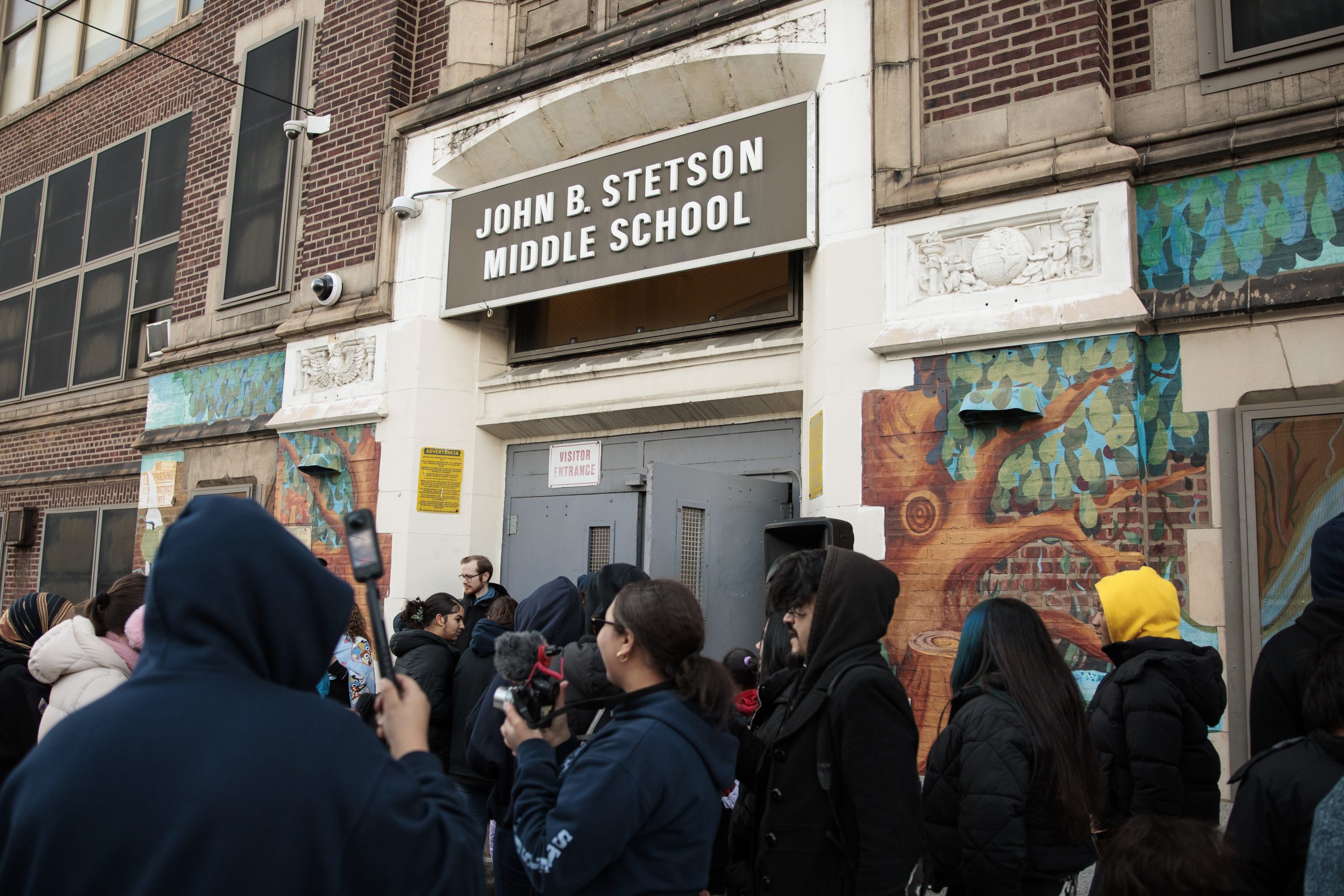
    Also approved was $3.4 million worth of repairs to John B. Stetson Middle School in Kensington, one of the 17 schools the board voted earlier this year to close.

    Students, teachers and supporters rally before a community meeting at John B. Stetson Middle School on Thursday, Feb. 12, 2026 in Philadelphia. Stetson is one of 20 Philly public schools facing closure.Monica Herndon / Staff Photographer

    Stetson is getting a new roof and masonry repairs, work that’s necessary, according to board documents, “to preserve and protect the building’s structural integrity and long-term functionality.”

    According to the facilities plan the board adopted in April, the school will begin phasing out grades, eventually closing in the 2029-30 school year. Stetson will remain in district hands, used as “swing space” — a place to house district students or programs that need a temporary spot to learn.

    Members of the Stetson community fought to keep their school open, objecting to the district’s years of neglect of their building.

    Some schools closed by the board are mostly empty; Stetson is about 60% full, but its building was judged to be in “unsatisfactory” condition.

    Memphis Street back to the district

    The board also moved to formally return a Port Richmond charter school back into its fold.

    Memphis Street Academy at J.P. Jones, a former district school run by the nonprofit American Paradigm since 2012, was ordered by a judge last year to surrender its charter after a long legal battle.

    The board first moved to close Memphis Street in 2022 after the school missed the mark on meeting conditions it had previously agreed to.

    To make the reabsorption of the school official, the board had to vote to report “Memphis Street Middle School” to the Pennsylvania Department of Education as a new district school opening in the fall. The school will serve students in grades 6 through 8; the current Memphis Street Academy also educates fifth graders.

    In its first go-round as a district school, the building was known as John Paul Jones Middle School.

  • A judge told the Philly school board it can’t vote to close a charter school Thursday

    A judge told the Philly school board it can’t vote to close a charter school Thursday

    A judge has blocked the Philadelphia school board from voting to close a charter school Thursday amid a legal fight over the school district’s treatment of charter schools.

    Common Pleas Court Judge Damaris Garcia had previously barred the district from moving forward with nonrenewal proceedings against Philadelphia Montessori Charter School, which in a lawsuit last month claimed the school system violates state charter law. But on Tuesday, the board appealed that decision and added votes on Philadelphia Montessori and Global Leadership Academy Southwest Charter School to its Thursday meeting agenda.

    Philadelphia Montessori filed an emergency motion Wednesday to stop the vote, and Garcia granted its request — ordering the board to delay its vote on the charter’s future.

    “It is further ordered and decreed that all actions related to the subject matter of the motion, including but not limited to the vote currently scheduled before the Board of Education of the School District of Philadelphia on June 18, 2026, are temporarily stayed pending further order of this court,” Garcia said in the order.

    It was not immediately clear what would happen Thursday. Wanda Odom, a spokesperson for the board, said it does not comment on litigation. Two charter votes, including on Philadelphia Montessori, remained on Thursday’s publicly posted agenda after the ruling was released.

    Philadelphia Montessori, a K-4 school in Southwest Philadelphia, sued the district in May, arguing that it should be barred from closing any charters due to “shifting standards, inconsistent methodologies, and procedures that do not provide fair notice or a neutral adjudicative structure.”

    The city’s charters, which are publicly funded but independently run and educate about one-third of Philadelphia public school students, have long argued they are subject to an unfair evaluation process.

    Following those complaints, the district is revising its evaluation framework; charter advocates have called on the board to pause renewal decisions until new standards are complete.

    District officials recommended nonrenewal for both Philadelphia Montessori and Global Leadership Southwest last month, citing significant academic concerns.

    Philadelphia Montessori, which enrolls about 250 students, lags similar schools and the district as a whole in academics, according to district officials. The charter has called the district’s assessment methodologies “flawed” and “unreliable.”

    In its emergency motion Wednesday, the charter accused district officials of a “transparent and deliberate tactic” in adding the nonrenewal vote 48 hours before Thursday’s meeting, despite Garcia’s earlier order on June 9.

    The district “waited until the last possible moment” to file its notice of appeal while also scheduling a vote on Philadelphia Montessori “that directly violates the court’s order,” the charter said in the filing. Garcia had previously scheduled a court hearing for July 27.

    If the board votes to start nonrenewal proceedings for Philadelphia Montessori on Thursday, it will cause “immediate and irreparable” harm, likely prompting families and teachers to leave the school even if a court later reverses the decision, the charter said in its filing.

  • The Lower Merion school board repealed its technology policy over outcry from parents who don’t want kids on laptops

    The Lower Merion school board voted Monday to repeal its existing technology policies, over outcry from parents who accused the board of stripping their right to opt their children out of district-issued laptops and iPads.

    During a contentious meeting — the board summoned security after interruptions from the crowd in the Lower Merion High School auditorium — parents demanded answers on why the district was denying families the ability to reject devices they said were threatening their kids’ education, and even their lives.

    “A parent’s right to opt out of one-to-one educational technology to do what is best for their children” is “life and death for their development and learning,” said parent Meredith Brisco-Bacik, a cardiologist who likened the district’s use of educational technology to giving kids a risky medical procedure without their parents’ consent.

    By repealing the existing policies, which contain language requiring administrators to accommodate students whose families do not sign electronic device use agreements, “you stand ready to remove the proverbial defibrillators from the room,” Brisco-Bacik said.

    Parents in Lower Merion have been battling the district since the spring over concerns about excessive screen time in school, saying the district is relying too heavily on educational technology programs and failing to stop kids from accessing distracting or inappropriate content.

    District officials have responded to the criticism by advancing a new technology policy that would end the assignment of personal devices to K-2 students and set guidelines for technology use by grade level.

    But officials say it is not possible for families to opt out of devices entirely, despite hundreds of parents signing a petition supporting the ability to do so.

    “That is not an option in Lower Merion School District, nor has it ever been an option in Lower Merion School District to opt out,” said Anna Shurak, the chair of the board’s policy committee.

    She said the policy repealed Monday — which dates to when the district adopted one-to-one devices in 2011 — has been misinterpreted by parents, and was related to families who did not sign agreements about taking electronic devices home.

    But parents said the district had failed to explain why technology was so integral to the curriculum that it was not possible to opt out of personal devices.

    “If there were direct payoffs or dirty money exchanging hands, it would make sense, but to think that our kids and teachers have been sold out for simple ideological capture by tech corporations … is incredibly depressing,” parent Eleanor Stanford said.

    Numerous parents expressed frustration, saying they felt the district had not listened to them.

    Brian Nealis, a parent of children finishing seventh and fourth grades in the district, said that when he tried to talk to his sons’ assistant principal about his concerns, “his response to me was, ‘The kids need to learn self-control.’ And my reaction was like, oh, should we just hand out nicotine packets in middle school? … That is the most asinine thing to hear from an educator.”

    The board voted 7-2 to repeal the current technology policies, with members Sarah Thomas and Abigail Lerner Rubin voting no.

    Rubin said she was uncomfortable with repealing existing policies before the district had adopted new ones, and asked fellow board members to “pause unless and until we can provide the evidence that people have asked for, that these devices are safe, effective, and legal.”

    Shurak said the board needed to repeal the existing policies to allow administrators and teachers to move forward with planning for adoption of the proposed replacement policies for the coming school year.

  • Many Pa. colleges aren’t properly training future teachers how to teach reading, a report finds

    Many Pa. colleges aren’t properly training future teachers how to teach reading, a report finds

    Nearly half of educator preparation programs are failing to adequately train future teachers in how to teach reading, according to a new report, even as states across the country have passed laws to overhaul reading instruction.

    And in Pennsylvania, even more teacher preparation programs may be falling short, according to the National Council on Teacher Quality, which released a report this week reviewing whether colleges and universities had aligned their instruction for future teachers with the so-called science of reading.

    Of 23 graduate and undergraduate programs evaluated in Pennsylvania, five received A’s, according to the report. Just as many received F’s.

    Pennsylvania is “among the lowest-performing states in this analysis,” said Ron Noble, NCTQ’s director of teacher preparation.

    Most of the state’s programs declined to participate in the review — including some, like the University of Pennsylvania, that were ranked poorly when the group last released a report in 2023.

    Some colleges have criticized the group’s methodology, and literacy advocates had mixed reactions to the findings.

    Still, progress has been made since 2023, Noble said, as more states have made changes to how reading is taught amid fierce debate over best practices and deepening concern about poor reading scores. Here is what the group found, and how Pennsylvania universities and colleges fared:

    How reading instruction is evaluated

    For decades, the predominant approach to reading in many schools, balanced literacy, sought to foster a love of reading in children by focusing on stories and de-emphasizing skills-based instruction.

    But literacy experts say most kids need explicit instruction in connecting sounds to letters to learn how to read. In recent years, a growing movement has successfully pushed states, including Pennsylvania, to require schools to adopt structured literacy, which aims to teach kids to read with evidence-based practices.

    The National Council on Teacher Quality scored education programs on how well they prepare teachers in the “five core components” of scientifically based reading instruction: phonics, fluency, vocabulary, comprehension, and phonemic awareness — the ability to identify units of sounds in spoken words.

    The group, which evaluated course syllabi, curricula, and lecture schedules, also considered whether programs taught debunked practices, including “three-cuing” — prompting students to guess words based on context clues — and running records, an assessment that involves listening to a child read aloud to determine what level of book is appropriate.

    Programs that earned A’s are adequately covering all five core components, Noble said, while not teaching more than three practices “that run counter to the science of reading.” Those that received F’s, meanwhile, are not adequately covering more than one of the core components, or teaching enough contrary practices that their letter grades were reduced, Noble said.

    How Pa. colleges scored

    Nationally, the percentage of programs receiving A’s more than doubled from 2023, from 26% to 53%.

    In Pennsylvania, the number of programs receiving A’s grew from two in 2023 to five.

    (function(){function e(){window.addEventListener(`message`,function(e){if(e.data[`datawrapper-height`]!==void 0){var t=document.querySelectorAll(`iframe`);for(var n in e.data[`datawrapper-height`])for(var r=0,i;i=t[r];r++)if(i.contentWindow===e.source){var a=e.data[`datawrapper-height`][n]+`px`;i.style.height=a}}})}e()})();

    Among them was East Stroudsburg University. Brooke Langan, dean of the university’s College of Education, said the school had produced more records in this review.

    East Stroudsburg also reviewed its coursework after Pennsylvania required structured literacy competencies to be embedded in teacher preparation programs in 2022, Langan said.

    “It really made us take a moment and think about: Did we structure those correctly? Are they scaffolded well for our students developmentally?” Langan said.

    Other schools getting top grades were Carlow University, Millersville University, Pennsylvania Western University, and Shippensburg University.

    At the other end, Cheyney University, the Commonwealth University of Pennsylvania, Lincoln University, West Chester University, and Widener University’s graduate education program received F’s.

    Julie Stellfox, a spokesperson for Commonwealth University, said the school “does not subscribe” to NCTQ’s research methodology. She noted a statement about the report from the American Association of Colleges for Teacher Education, which voiced concern about relying “primarily on document review as a proxy for the quality of educator preparation.”

    Nancy Gainer, a spokesperson for West Chester, said that school also disagrees with NCTQ’s methods. She noted that West Chester complied with an “open source request” from the group in 2023 and received a B in its report then; this time, the school did not receive such a request, and West Chester did not supply information, she said.

    An NCTQ spokesperson said the group submitted a formal records request to West Chester.

    Mary Allen, a Widener spokesperson, said the university had asked NCTQ to reassess the graduate education program “and include additional courses that focus on reading instruction, which were not included in their review.”

    “Academic rigor and student success are our top priorities, and we have aligned our teacher education programs to all the required competencies related to structured literacy and the science of reading outlined in Pennsylvania Department of Education guidelines,” Allen said.

    Noble acknowledged the criticism of a review process limited to records. But, he said, NCTQ is evaluating whether colleges adequately cover foundational reading skills, and it was “highly unlikely that something that doesn’t appear in course materials” is being taught.

    Fewer Pennsylvania programs agreed to be evaluated by NCTQ this year — the program reviewed 33 in 2023, compared with 23 in the latest report. Overall, 63% of Pennsylvania teacher preparation programs did not participate.

    Of schools nationally that declined to be reviewed after participating in 2023, NCTQ said, more than 60% had received F’s previously.

    It also said that it identified textbook requirements for more than 80% of nonparticipating programs, and found they used textbooks misaligned with the science of reading at the same rates as programs receiving D’s and F’s.

    Noble noted that the four largest teacher preparation programs in Pennsylvania either did not participate in this year’s review — Pennsylvania State and Temple Universities — or received F’s, in the case of West Chester and Commonwealth.

    “It’s even more concerning: The places producing many of Pennsylvania’s newest teachers are either a black box for us or did not perform well,” Noble said.

    Calls for more state oversight

    Rachael Garnick, Pennsylvania Literacy Coalition manager with the Teach Plus group, which advocates for structured literacy implementation, said there was value in the report’s effort to evaluate how well colleges are preparing future teachers.

    But “I don’t think it’s a conclusive verdict,” including about schools that did not participate, Garnick said, noting that one university she had spoken with said NCTQ had sent its request for information to the incorrect administrator.

    Pennsylvania itself needs to do more to hold teacher preparation programs accountable for reading instruction, Garnick said. While the state now requires structured literacy in teacher preparation programs, it does not set requirements for the number of courses or hours of instruction.

    And the state’s certification exam for new teachers has not been aligned with the science of reading. For instance, it still includes questions on three-cueing, Garnick said — even though Pennsylvania has banned that practice. The coalition is pushing the state to adopt a standalone exam to test teaching candidates on reading.

    The failure of teacher preparation programs to adopt the science of reading has ripple effects, said Kate Mayer, a consultant with Keystone Structured Literacy Partners. Mayer, who has advocated for many Philadelphia-area families whose children are struggling with reading, said she sees area school districts working with universities to make changes to their reading instruction that still are not best practices.

    “In my experience, the bar is even lower than it should be for what we’re looking at,” said Mayer, who served on a committee that worked with NCTQ on its scoring rubric in 2019. She said “there should be no excuses” for universities that are not adequately covering the five reading components.

    Some states, including Ohio and Indiana, have significantly improved teacher preparation programs through new accountability measures, including audits and the prospect of revoking accreditation, Noble said.

    “When you’re providing teacher preparation programs with really clear standards” and consequences for not meeting them, “that’s a recipe for pretty dramatic” changes, Noble said.
  • Wallingford-Swarthmore may lay off teachers and increase class sizes amid tight budget outlook

    Wallingford-Swarthmore may lay off teachers and increase class sizes amid tight budget outlook

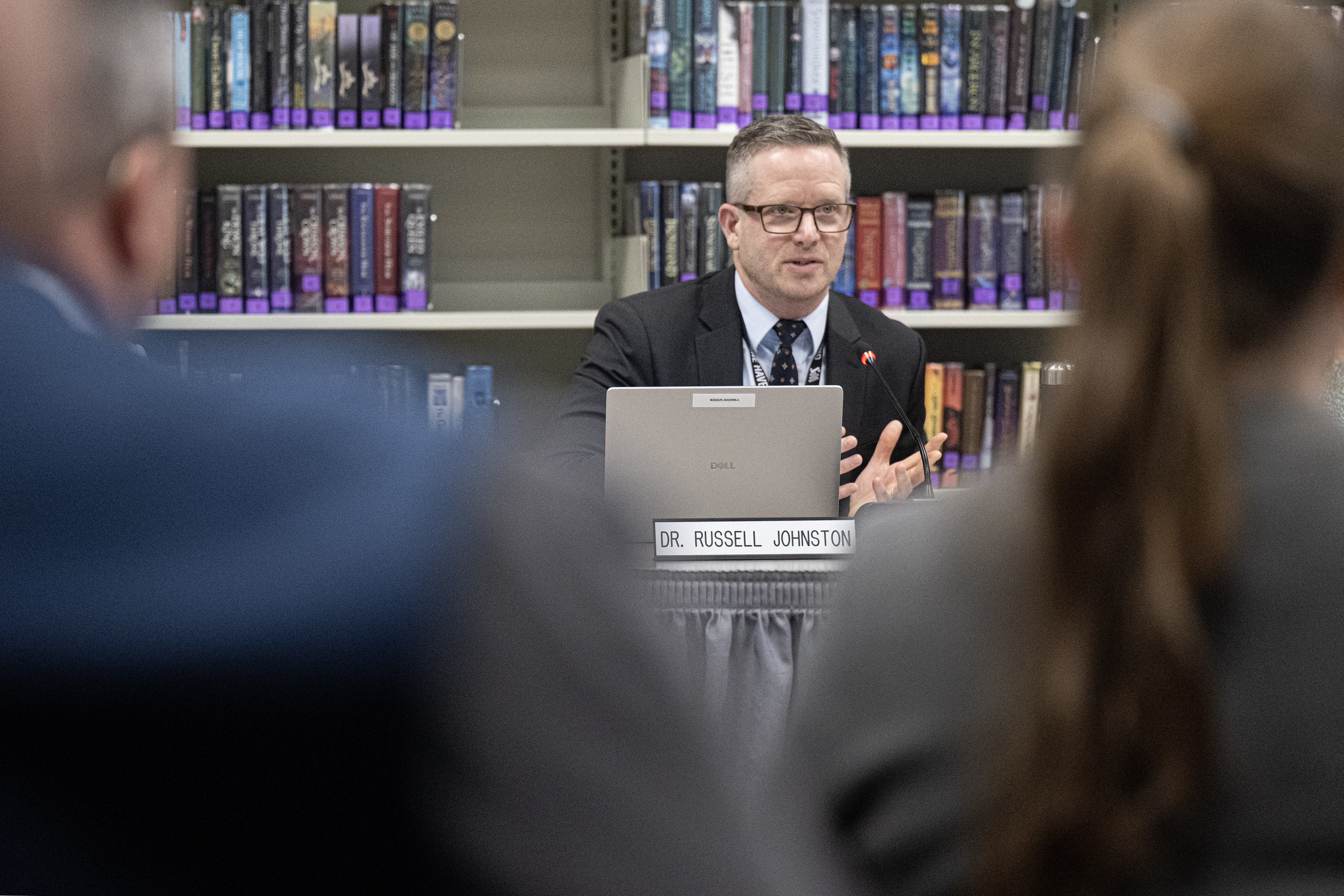
    The Wallingford-Swarthmore School District is planning to reevaluate class sizes next school year, and layoffs are a possibility if the district cannot trim its budget in other ways, its superintendent said at a meeting Tuesday.

    At a school board finance committee meeting, Russell Johnston said that with the district’s expenses projected to rise next year at double the rate of revenues, the district will have to continue to reduce staffing, even after implementing a reorganization plan this year that eliminated about 20 positions and losing four more through attrition.

    The district will also look at which classes have the smallest enrollments, Johnston said, and might “scale back” on certain offerings.

    Johnston said cuts would be necessary. Otherwise, Wallingford-Swarthmore would be on pace to use more than 30% of its reserves to balance the budget, he said.

    Here is what the superintendent said about possible cuts coming to the affluent district:

    Retirement incentives, attrition and layoffs

    District leaders have said Wallingford-Swarthmore cannot sustain its current staffing levels, which grew significantly in recent years.

    Of the projected $6 million growth in the district’s $106 million budget next year, nearly $4 million is coming from salaries and benefits for the district’s 541 employees, officials said.

    Laying out options for cutting those costs, Johnston — who became superintendent last year — said the district could offer staff an incentive to retire early, though he was not sure whether that would generate enough savings.

    The district will also evaluate whether it needs to fill positions that become vacant as someone retires or resigns, Johnston said.

    “If we do have to invoke layoffs,” Johnston said, the savings likely will not be as great as by reducing staff through attrition, because more junior and less costly employees will be laid off due to union seniority protections.

    Board members voiced concern about rising benefits costs in particular: Prescription costs for district employees are projected to grow by 50% next year, a $1.8 million increase.

    Johnston, who noted that benefits are part of a collective bargaining agreement that does not expire until 2028, said the district was in “ongoing dialogue” with its teachers union.

    Bigger class sizes, fewer offerings

    Johnston said the district would be looking “hard at class size and enrollment” as it tries to find areas to cut.

    While the district has an “amazing array” of offerings for students, it could ”perhaps scale back where we don’t have enrollment to justify that,” Johnston said.

    He did not offer specifics but said the district would perform a class size analysis at the start of the coming school year.

    Reduced capital projects

    District officials indicated Tuesday they intend to move forward with a reduced scope for the planned Strath Haven High School renovation — down from $99 million to less than $70 million — with a focus on fixes to keep the building “safe, warm, and dry,” and fewer interior renovations.

    The district will also look to cut back other aspects of its capital plan, which board members said would reduce a $1.5 million increase in debt service projected for next year.

    Parental concerns

    Some parents have started to raise concerns about the budget cuts.

    Lindsay Doyle, whose children attend Nether Providence Elementary, said she was dismayed to learn that class sizes at her children’s school would be increasing in fourth and fifth grades due to the district not filling two teaching positions.

    Doyle, who said class sizes would grow from about 20 students to 26 or 27, is worried that core instruction will suffer.

    “It’s no longer about administrative inefficiencies and discretionary spending,” Doyle said. “When I see we’re now cutting back on teachers, that’s when I’m like, red flag.”

  • Lower Merion is advancing a policy to eliminate iPads and laptops for K-2 students

    The Lower Merion school board plans to stop assigning personal laptops and iPads to kindergartners, first graders, and second graders after facing intense pushback from parents who say kids are getting too much screen time in school.

    Members of the school board’s policy committee announced the plan during a meeting Monday, along with other proposed limits on technology use. Under policy changes going before the full school board for review next week, third and fourth graders would use electronic devices stored on carts in classrooms, while fifth and sixth graders would be permitted, but not required, to bring devices home.

    “This is a huge movement forward,” said the board’s president, Kerry Sautner, describing revisions made to the proposed technology policy in response to community feedback.

    But parents who have accused the district of overusing educational technology said the proposed changes did not go far enough — leaving too much room for interpretation around when technology should be used, and failing to adequately restrict kids’ access to inappropriate websites.

    Some parents also expressed anger that the board is moving forward with repealing the current technology policy, which contains language accommodating families who opt out of district-issued devices.

    “You are removing the escape hatch,” said David Smyth, a parent from Merion Station, who said the district had produced no data supporting its use of technology. “You know that ed tech is failing, it’s suboptimal, and you don’t want to be embarrassed.”

    Here is what to know about the tech debate in Lower Merion, the board’s latest policy proposal, and what happens next:

    Lower Merion at the center of ed tech backlash

    As backlash to technology in schools has spread across the region and nationally, Lower Merion has become an epicenter of parental opposition.

    At meetings this spring, dozens of parents have voiced concerns about weakened attention spans and classroom distractions, and expressed fear that the quality of their kids’ education is declining as a result.

    More than 800 parents have signed a petition asking for the right to opt out of one-to-one devices, according to parent organizers in Pencils Over Pixels. The group, which started a GoFundMe campaign, has distributed lawn signs and enlisted a public relations firm as part of its advocacy efforts.

    But district officials have repeatedly said that the technology policy’s language is dated, stemming from when Lower Merion first introduced one-to-one devices, and that it is not possible for families to opt out.

    Instead, the board has been reworking the technology policy to address when and how devices should be used in classrooms.

    A revised policy after meetings with parents

    The latest policy proposal outlines guidelines for technology use at different grade levels, rolling back one-to-one devices for Lower Merion’s youngest students.

    “Technology shall not be used for routine classroom instruction in these grades,” the policy says. “Any use shall be minimal, highly structured, and limited to specific educational purposes such as diagnostic testing or for teacher-directed, whole-class demonstration, visual display, or state testing preparation.” (Pennsylvania’s standardized tests, which start in grade 3, are required to be administered on computers.)

    In grades 3-4, the policy says, students “shall have supervised, teacher-directed access to technology resources” that stay in classrooms, while in grades 5-6, students will be permitted to bring their devices home, but not allowed to use them between classes or at lunch.

    The policy describes students in grades 7-8 and 9-12 as having increased responsibility for independent technology use, but says devices should be used only for school-related work.

    The policy changes are “meaningful responses” to community feedback, said Anna Shurak, the chair of the board’s policy committee, who said board members had met with concerned families.

    But some parents said the policy — which says teachers should use technology “only when doing so serves a clear educational purpose” — would not adequately limit an overreliance on screens in classrooms.

    “The verbiage of this policy is very carefully crafted to say nothing,” said Eleanor Stanford, a parent and a writing professor at Bryn Mawr College, who also questioned why the district was still “dragging its feet” on imposing a bell-to-bell ban on cell phones in its high schools, even as legislation advances in Harrisburg to do so. (Shurak said the district would fully ban cell phones in 2027-28.)

    Parent Matthew Posey quoted the policy’s language that technology belongs in the classroom when it “genuinely amplifies human curiosity.”

    “Did Albert Einstein need Kahoot or iReady?” Posey said, referring to two educational technology programs. “Is this a public policy document, or a corporate marketing brochure?”

    Some parents also questioned proposed administrative regulations that include suggested time ranges for technology use by grade level. In grades K-4, the guidelines are less than 30 minutes a day; by high school, they increase to less than 120 minutes a day.

    Calculating the high school upper limit as about 40% of daily instructional time, “to me, that’s way, way too high,” said Sam Handlin, a parent and a professor at Swarthmore College. He said the only way teachers would approach that time limit was either by using technology “as a babysitting device” or letting students take notes on computers, “which is just a recipe for distraction.”

    Shurak did not comment on the time frames specifically but told Handlin the administrative regulations still need to be revised.

    When will changes take effect?

    The committee endorsed sending the revised technology policy to the full board for review next week, along with a recommendation to repeal the current technology policy.

    While the board may repeal the current policy at next week’s meeting, the new policy would need to be considered a second time to before it could go into effect.

    The goal is to have the new policy in place in August, Shurak said. She said the board would be directing administrators to implement changes in time for the coming school year.

    Board member Jason Herman, a member of the policy committee, said some of the new policy’s language should be revised to limit “ambiguity and subjectiveness.” He also questioned why the district could not move to a content filtering model where only certain websites were permitted for students to access, rather than restricting sites after problems are reported.

    Officials did not address questions around content filtering Monday, or calls from the Pencils Over Pixels group for the release of district contracts with educational technology companies and a technology advisory board that would include parents.

    Sautner said the board had more work to do, including around technology questions related to the district’s curriculum.

    But “we cannot micromanage” administrators through policy language, she said.

    Some expressed concern that the board could overreact in response to anti-tech opposition.

    “Banning technology isn’t going to be the way to ensure that our kids critically think,” said Emma Benn, who urged the board to “take a step back” before passing a new policy. “This world is a technology-driven world, and we need to make sure our children can function within it.”

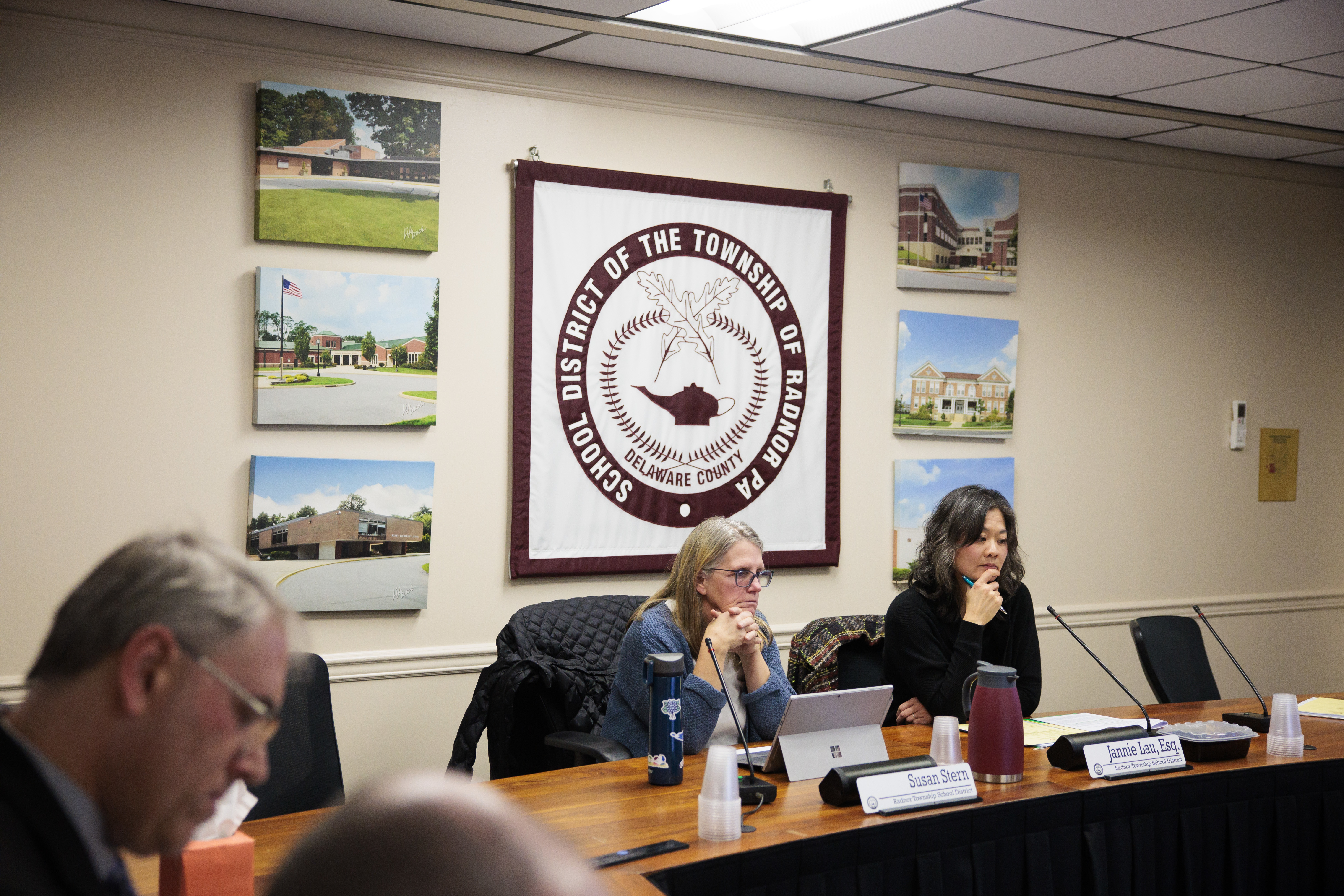
  • Radnor school district is looking to enlist outside experts to prepare for future deepfake incidents

    Radnor school district is looking to enlist outside experts to prepare for future deepfake incidents

    The Radnor Township School District is preparing for a possible repeat of a so-called deepfake incident last year that targeted freshman girls, looking to enlist outside help on how to better support victims.

    At a school board policy committee meeting Tuesday, administrators presented updated regulations around bullying and harassment, including that using artificial intelligence to create or share “sexualized, indecent, demeaning or intimate content involving another person” was prohibited.

    The new rules — which follow policy changes passed last month — also say the district will consider who should be present while interviewing students, in light of a student’s age, sex, and background and the issues being investigated. Parents had complained about many aspects of the district’s handling of last year’s incident, including that girls victimized by deepfakes were interviewed alone by male administrators.

    But more changes are possible, administrators said Tuesday. Scott Hand, the district’s director of technology innovation and instructional design, said Radnor “will be engaging outside professionals beginning this summer into fall” to review its policies and practices.

    Some board members also suggested the district retain outside help to be ready for another incident.

    “The statistics say, something like this will happen again,” said Susan Stern, who asked administrators to consider hiring “a resource we could have on hand.”

    “We’re going to work really hard to educate our kids that it doesn’t happen here in Radnor, but our best response is to be prepared,” Stern said.

    Schools have increasingly been forced to grapple with deepfakes as students use generative AI to manipulate photos of their peers — sometimes with tools that can convert clothed photos into naked ones. Pennsylvania has criminalized explicit AI-generated images as child sexual abuse material, and another measure advancing in Harrisburg would require schools to immediately notify law enforcement about AI incidents.

    Radnor drew intense criticism from some victims’ parents for its handling of the deepfakes, which came to light in December and resulted in a student being charged with harassment.

    District officials said no images were ever discovered. But parents said the district had failed to adequately investigate boys’ reports of pornographic videos and downplayed the incident in community messages, further harming victims.

    Parents also accused the district of failing to initiate a Title IX harassment investigation, arguing it was wrong to characterize the incident as “off-campus.”

    Radnor parents are organizing a panel discussion Thursday in King of Prussia, with deepfake victims from Radnor and Lancaster Country Day School, advocates, and state officials, including Attorney General Dave Sunday, describing risks and how schools can better respond.

    The rules presented to Radnor’s policy committee Tuesday specify that the district has authority over off-campus behavior when it “materially and substantially disrupts the operations of the school” — a common legal standard.

    Jannie Lau, the committee’s chair, said that given how online kids are, any online harassment would seem to meet that threshold.

    “That’s my takeaway — it would be extremely rare for this conduct to happen, and for us to come to the conclusion it doesn’t impact our operations,” Lau said.

    Lau said the district should consider hiring an outside law firm to conduct future Title IX investigations, to ensure more impartiality.

    “It’s just human nature — you don’t want to bite the hand that feeds you,” Lau said, noting that a district solicitor might have an interest in siding with the district, to avoid jeopardizing that relationship.

    In comments Tuesday, Audrey Greenberg, a parent of one of the victims, said she appreciated the rule changes, but that they didn’t go far enough. If a student reports AI-generated sexual content, she said, the district’s Title IX coordinator and central administrators should be notified immediately.

    She also said the description of “off-campus” behavior was too vague — saying deepfakes harm students’ attendance, friendships, and mental health — and argued that the rules wouldn’t prevent a poor administrative response.

    “It was so painful to get those emails calling the event rumors and speculation, when a crime occurred,” Greenberg said, referring to messages from Superintendent Ken Batchelor, including one that described the deepfakes as images made “to move and dance.”

    “For crying out loud, this is pornographic material,” Greenberg said.

    Stern, the board member, said earlier in the meeting that Radnor would be dealing with the fallout for a long time.

    “I don’t think that there’s anyone in this district who will ever hear the words ‘generative AI’ again, and not feel a little tug,” she said. “We had children who were harmed.”