Author: Maddie Hanna

  • Cheltenham School District faulted by prosecutors in locker-room assaults: ‘It put every young man … at risk’

    Cheltenham School District faulted by prosecutors in locker-room assaults: ‘It put every young man … at risk’

    When prosecutors unveiled charges this week against Cheltenham football coaches and players in connection with two violent locker-room attacks on a teammate involving a broomstick, they did not reserve blame only for the criminal defendants.

    The Cheltenham School District’s “level of incompetence didn’t just fail one child — it put every young man on the football team at risk,” the Montgomery County grand jury that recommended the charges against four coaches and six players said in a report released Wednesday.

    The August and September 2025 assaults threw the football program into turmoil, with the district canceling last year’s season in October and announcing this spring that the forthcoming fall season would also be scrapped. While district officials shared little about what happened in the locker room, videos were widely circulated within the school community depicting one of the attacks, the grand jury found.

    Yet the district did not punish any players; a Title IX investigation that could result in discipline is still underway. The two players charged as adults, Isaiah Simpson and Josiah Peeler, both graduated from Cheltenham High School this year, district officials said. While the district parted ways with all of its football coaches, at least one charged this week had been hired by another local school: Neumann Goretti tapped Benjamin Johnson as head football coach in January, but on Wednesday the school announced he no longer had the job.

    Released nearly a year after the student reported his injuries to his mother and she told a school official, the grand jury report offers a window into a district response that the grand jury described as mishandled from the start.

    When the mother of the 15-year-old who was attacked reported to the high school administration that her son had been jumped by his Panther football teammates in the locker room last September, injuring his genitals, an employee who texted two other employees about the allegation said the student had “a chip on his shoulder” from not making the varsity team, the grand jury report said.

    District employees took the team’s then-head coach, Terence Tolbert, at his word and included him in “every step” of their investigation, according to the report. Tolbert, whose lawyer did not return a request for comment Thursday, was charged Wednesday with endangering the welfare of a child and conspiracy.
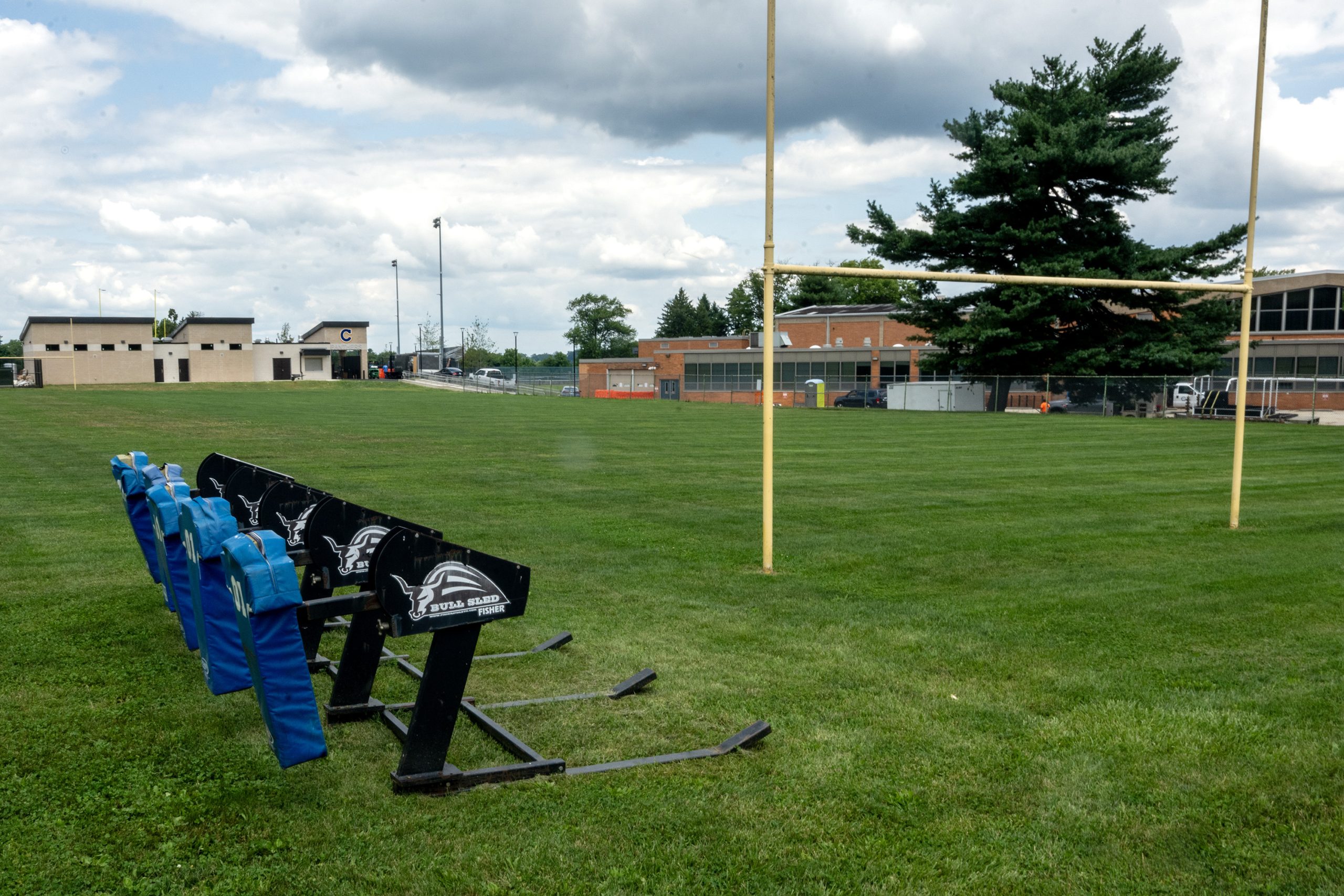
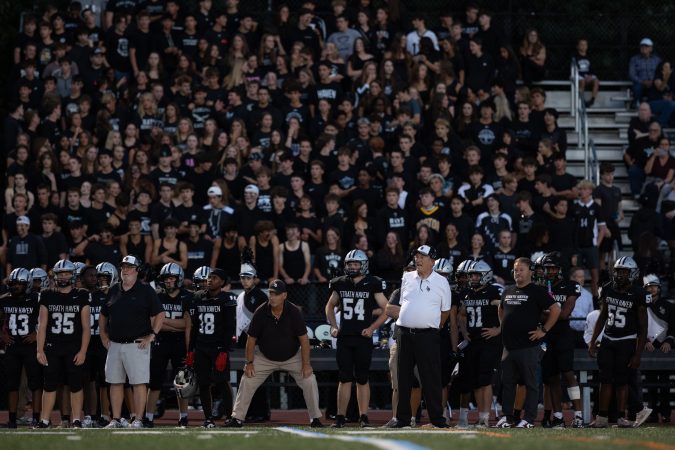
    The football practice field and stadium at Cheltenham High School in Wyncote, Montgomery County, Wednesday, July 29, 2026.Tom Gralish / Staff Photographer

    Employees were also confused about their requirements to report child abuse allegations to law enforcement, the report said.

    And the district’s three investigations were “so flawed they failed to even identify that two separate instances of hazing took place in the locker room,” the report said. The district in January released a summary of findings to the public of an investigation that said it had confirmed “a student-on-student assault” took place Sept. 3, witnessed by nearly 20 students.

    Cheltenham Superintendent Brian Scriven said in a statement Wednesday that “every report brought to the district’s attention was addressed based on the information available at the time.” He also noted that “individuals did not cooperate with the investigative process.”

    On Thursday, Scriven addressed some additional questions about the district’s response. “At no point in time was Coach Tolbert involved in planning or executing any investigation,” he said in a written response to questions.

    He also said the Montgomery County District Attorney’s Office had directed the district to pause its Title IX investigation into the allegations while it was investigating.

    Now that charges are filed, the Title IX investigation “has resumed and will be concluded promptly,” Scriven said, with possible “school-based” discipline.

    ‘Backed her off coming to the building’

    In addition to issuing findings supporting criminal charges, the grand jury released a separate report focused on the school district that included recommendations for new legal requirements for schools to report hazing allegations to law enforcement.

    The report described the actions of three employees at the high school, identified only as Employee #1, Employee #2, and Employee #3.

    The mother of the student who was attacked told The Inquirer earlier this month that she had texted Mark Hoff, then the assistant vice principal at the high school, on Sept. 7 after learning that her son had been jumped in the locker room. Hoff was named vice principal at Wyncote Elementary School in the district on July 20. Hoff could not be reached for comment Thursday.

    The high school’s principal, Benjamin Hammond, referred a reporter to the district’s spokesperson Thursday.

    The person identified as Employee #1 in the grand jury report, who texted two other employees about the student having a “chip on his shoulder,” also suggested in the text exchange that the administration was trying to keep the mother from the school.

    “I THINK I backed her off coming to the building in the AM,” Employee #1 texted, according to the report.

    Employee #2 called Tolbert that same day, and texted the other two employees that the coach denied that anyone told the student not to tell his mom.

    “At this point in the conversation, all three employees vouched for Tolbert’s credibility,” the report said.

    Employee #2 began his investigation by interviewing Tolbert, who said he did not know anything, according to the report.

    He also spoke to other coaches and took them at their word because he “thought that they would be forthcoming, mature adults and do the right thing and not lie to him,” the report said.

    Scriven did not address a question Thursday about employees’ response to the mother. But he said they appropriately went to Tolbert to ask “what he knew of the situation.”

    “At the time, there was no reason to believe Coach Tolbert was being untruthful,” he said.

    Tolbert had previously served as head coach of the varsity team at Abington Senior High School for the 2023-2024 season. An Abington spokesperson said on Thursday that the district had opted not to renew his appointment after one year.

    Insufficient supervision

    The grand jury also found fault with Cheltenham’s supervision of the football program.

    While there was an office for coaches in the football locker room, “they rarely used it,” the report said. (Tolbert had become the head coach in June 2025; coaches had used the office the season before, according to the grand jury.)

    Employee #2 testified to the grand jury that he did not do anything to ensure that football players were supervised, the report said.

    The grand jury also found that “at least” five paid Cheltenham football coaches were not up to date on Act 126 clearances. The Pennsylvania law requires schools to provide employees who have direct contact with children with at least three hours of child abuse recognition and reporting training, every five years.

    In releasing findings from its investigation in January, the district acknowledged “insufficient student supervision in the locker room by the coaching staff” and “a failure to prioritize student safety by the coaching staff” and volunteers.

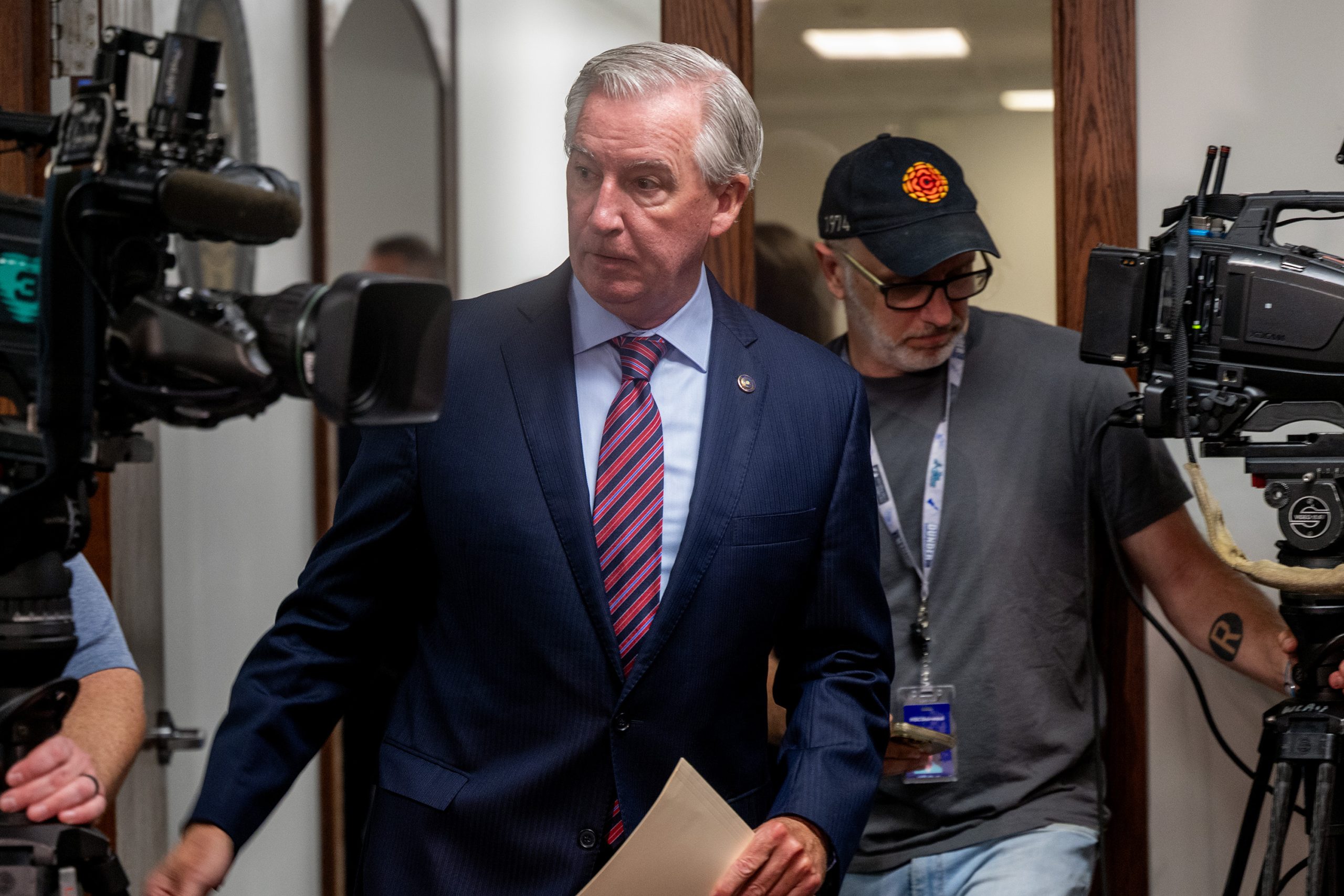
    Montgomery County District Attorney Kevin Steele announces at press conference Wednesday, July 29, 2026 multiple charges in connection with two assaults in Cheltenham Township High School locker room that injured a 15-year-old player and led to the cancellation of the 2026-2027 football season.Tom Gralish / Staff Photographer

    Circulating video footage

    There were two videos taken of the Aug. 15 assault, prosecutors said. The grand jury findings characterized the footage — which it said depicted a student moving a broomstick toward the bottom of the student’s shorts while at least one player chanted “broomstick him” — as circulating widely within the school community.

    One witness told the grand jury there was a TikTok video “going around where two boys were making fun of the juvenile victim with a Meek Mill video playing in the background.”

    The victim testified that he believed many people had seen a video, because “random people” approached him about it in the cafeteria and hallway. Another student, who was not on the football team, told the grand jury she had been shown a video at school of the victim being kicked by multiple people.

    While the district had been aware only of an incident on Sept. 3, questioning of one of the players by the grand jury in January led to the discovery that the video footage depicted an Aug. 15 assault.

    Players told the grand jury that an administrator, identified only as “Administrator #2″ in the grand jury findings, met with the team after the Sept. 3 incident.

    One player reported that “days” later, the administrator “addressed the team about ‘stuff’ and warned the players if there’s ‘another one,’ the season would be canceled,” according to the grand jury findings.

    Another told the grand jury that the administrator met with the team while coaches were present, and told players not to fight with one another and that there would be consequences “if anything else occurred.”

    That player said neither the coaches nor the administrator “encouraged anyone with information about the incident to come forward,” according to the grand jury findings.

    ‘Consistent confusion’ about reporting requirements

    Prosecutors said the district contacted Cheltenham police after an anonymous Sept. 18 tip through the state’s Safe2Say hotline. The mother previously told The Inquirer that the tip was how she learned a broomstick was involved.

    The grand jury report said district employees were unclear on their requirements as mandatory reporters.

    “There was consistent confusion about what type of assault allegation would prompt an immediate report to ChildLine and the police,” the report said. It said the unidentified Employee #3 displayed “especially concerning judgment” by concluding that coaches never told the student not to tell his parents “simply because a coach said it never happened.”

    Mandatory reporting laws currently do not require that allegations of hazing, committed by a child on another child, be reported as suspected child abuse — unless sexual assault is alleged, the grand jury report said.

    Acts of hazing that “fall short of a completed sexual assault, touching or exposure, such as the threatened sexual assault in this case,” do not meet the mandatory reporting threshold, the report said.

    It recommended that hazing be incorporated into mandatory reporting requirements. If it had been, the report said, “the Cheltenham High School administration would not have had the opportunity to mishandle the juvenile victim’s disclosure and the ensuing investigation as poorly as they did.”

    In his statement Wednesday, Scriven said the district would welcome additions to the mandatory reporting laws. But he said hazing would not necessarily be immediately identifiable to school staff, noting that the law defines the offense as “for the purpose of initiating, admitting or affiliating a minor or student into or with an organization.”

    Scriven did not address questions Thursday about employees’ understanding of reporting requirements.

    Asked why the district did not contact police after the mother’s Sept. 7 report of an assault, Scriven said Thursday that it was “not reported as a sexual assault.”

    “A ChildLine report was properly made when the district learned that a reportable offense may have been committed,” Scriven said.

    In testimony, the player who was attacked described being stomped in the head and groin with cleats during the September assault, and being “tucked up” on the floor as teammates tried to poke him in his butt with a broomstick, according to the grand jury findings.

    “He said that he feared for his life and did not want to go back to school or play football for the team anymore,” the findings said.

    Staff writers Jess Rohan and Vinny Vella contributed to this article.

  • Four Cheltenham High School football coaches, six players charged in assaults on teammate

    Four Cheltenham High School football coaches, six players charged in assaults on teammate

    Four Cheltenham High School football coaches and six players have been charged in connection with two assaults in the school’s locker room that injured a 15-year-old player and led to the cancellation of two football seasons, Montgomery County prosecutors said Wednesday.

    In two violent assaults, District Attorney Kevin Steele said, multiple football players attacked a sophomore on the team, stomped on his chest and groin while wearing cleats, and used a broomstick to poke at his buttocks.

    “The assaults on this victim were not typical goofing around by teammates, or horseplay, as some of the coaches in this case called it,” Steele said at a news conference Wednesday. “They were crimes.”

    After the attacks, which took place last August and September, Steele said, coaches tried to cover them up.

    Head coach Terence Tolbert, 55; associate head coach Darian McFadden, 42; assistant coach Benjamin Johnson III, 45; and volunteer coach Ralph Burnley, 60, have been charged with endangering the welfare of a child and conspiracy. The coaches are no longer with the district.

    Two football players, Isaiah Simpson, and Josiah Peeler, both 18, have been charged as adults — Simpson with conspiracy to commit aggravated assault, simple assault, reckless endangerment, and related crimes for his role in the September assault, and Peeler with false swearing for being untruthful to police. The two were 18, Steele said, when the crimes they are charged with took place.

    The four other players have been charged as juveniles, and were not identified by prosecutors or named in court records. Two of them face charges of conspiracy to commit aggravated assault and related crimes, because authorities say they took part in the attacks. The other two players are charged with false swearing.

    Tolbert, McFadden, Johnson, and Peeler were released on $5,000 unsecured bail. The two other adults had not been arraigned as of Wednesday afternoon. Only two of the defendants, Johnson and Peeler, had attorneys listed in court records.

    Johnson’s attorney, Richard J. Fuschino, said his client “has been humiliated by what occurred and absolutely had nothing to do with it.”

    “I do believe there is a cover-up, and I absolutely do not believe Benjamin Johnson had anything to do with it,” he said. “In fact, quite the opposite: He went out of the way to cooperate with every investigator.”

    Peeler’s attorney, Jessica Mann, did not respond to a request for comment. Attempts to reach the other defendants were not successful Wednesday.

    Cheltenham Superintendent Brian Scriven said Wednesday that the district appreciated prosecutors’ work on the case and the filing of criminal charges. “While no legal outcome can erase the harm that was experienced,” he said, “we appreciate that after nearly a year, charges have been announced and those responsible are being held accountable through the criminal justice system.”

    Prosecutors say coaches wanted incident ‘kept quiet’

    Steele said the charges followed a grand jury investigation in which witnesses described two violent assaults.

    The coaches are criminally liable for the assaults, Steele said, because, while they were not present, they learned of the September incident and encouraged the victim not to tell his parents.

    Montgomery County District Attorney Kevin Steele at a press conference Wednesday.Tom Gralish / Staff Photographer

    Privately, the coaches sent incriminating text messages to one another, Steele said, expressing concern that the incident “has to be handled and kept quiet.”

    McFadden, the former assistant coach, wrote “if this gets out we are [expletive]. They will cancel the whole season,” according to the grand jury presentment.

    The incidents did lead the district to cancel last year’s football season in October, citing hazing allegations. And in May, it announced the forthcoming season would be canceled as well.

    The assaults occurred Aug. 15, after a preseason practice, and Sept. 3, Steele said. He said video footage of the August incident showed several students restraining the victim, while another student poked at his legs and buttocks with a broomstick.

    Players are laughing and yelling in the video, and “at least one player is chanting, ‘broomstick him,’” Steele said.

    A football player who witnessed the assault, but is not charged in the case, told the grand jury that the use of a broomstick was an apparent reference to a TikTok video featuring a Meek Mill song with the lyrics “broomstick all in his butt, tell him take that,” according to the grand jury presentment.

    Steele said there was no evidence that it constituted sexual assault.

    Players didn’t take the incidents seriously

    Several football players who testified before the grand jury characterized the behavior as “horseplay” and said they did not take it that seriously. Others said the victim had a difficult relationship with his teammates and was viewed by them as “someone who did not follow the rules during practices.”

    The Sept. 3 assault, witnesses said, happened after the teen took a pair of shoulder pads from another player’s locker after misplacing his own, an infraction for which the entire team had to do extra conditioning as punishment.

    Steele said that investigators did not have a video of the Sept. 3 assault but that multiple players, including Simpson and two of the juvenile defendants, kicked and stomped the victim.

    The teen reported told investigators that his teammates were “trying to poke him in the butt with the broomstick,” and that they made contact with his buttocks, Steele said. He said the assault broke up when school buses arrived, and teammates left to board them.

    Burnley, one of the coaches, drove the victim home after the attack, and the teen broke down in tears, telling the assistant coach he had been jumped by teammates, the district attorney said.

    Burnley then texted coaches in a group chat and called Tolbert, Steele said. McFadden and Tolbert called the teen and “told him not to tell his mother about the incident because they would handle it,” Steele said.

    He said the coaches were deliberate and calculating in their decision not to report the assault.

    ‘Serious concerns about the response’

    The incident came to light four days later, when the teen’s mother said he told her he had been jumped by teammates and had pain in his genitals. She said she took her son to an urgent care center and texted the high school’s assistant principal, who called her later that day.

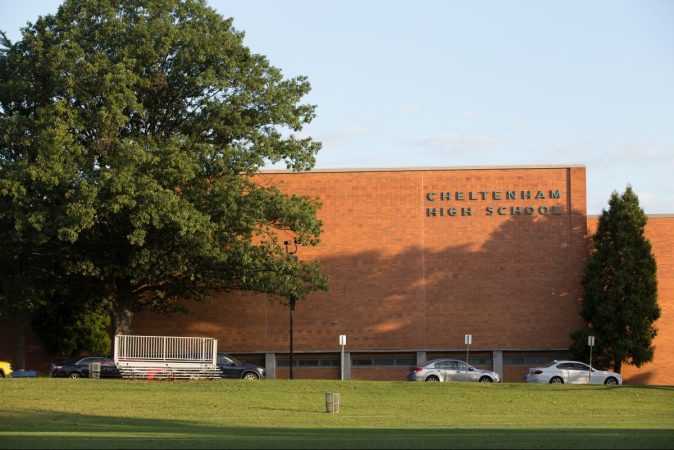
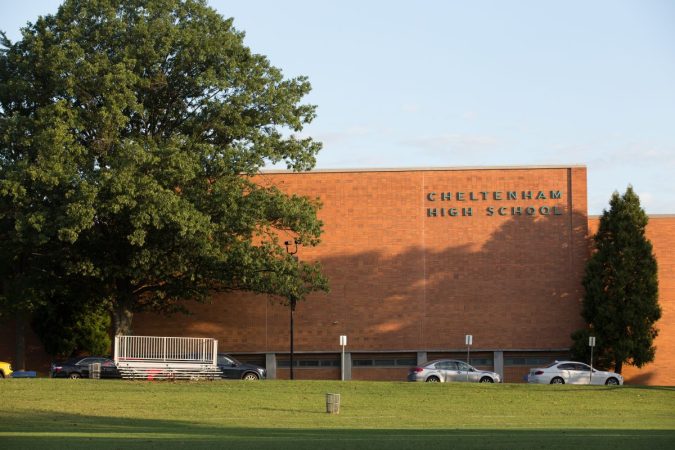
    A front view of Cheltenham High School in Wyncote.Tom Gralish / Staff Photographer

    The teen did not tell his mom that his teammates used a broomstick in the attack. He was embarrassed and reluctant to share that detail, the mother said in an interview with The Inquirer in which she spoke on the condition of anonymity to protect the identity of her son.

    She said her son told her that his teammates had tried “to mess with his manhood.”

    She learned about the broomstick later in September, when Cheltenham Township police called to tell her that someone had called Pennsylvania’s Safe2Say hotline to anonymously report that students had used a broomstick during the attack, according to the teen’s lawyers, Alan Yatvin and Gabrielle Turley.

    Sometime in October, the district obtained a video that had been circulating in the community and depicted an assault of the student with a broomstick, the lawyers said.

    Investigators initially believed that footage was from the Sept. 3 assault. It was discovered during grand jury testimony in January that the assault was from August, prosecutors said. The teen, who said he was not shown the video until this spring, also identified it as being from August, revealing for the first time that he had been assaulted more than once, according to the lawyers.

    “Our client and his family are grateful to the Montgomery County District Attorney’s Office, law enforcement investigators, and the grand jury for their careful and thorough work in bringing these deeply troubling events to light and pursuing charges,” Yatvin said in a statement Wednesday. He added that the grand jury investigation “also raises serious concerns about the response by some within the Cheltenham High School community.”

    District accused of failing victim

    The school district said in January that an outside investigator had confirmed that a “student-on-student assault” had taken place in the locker room on Sept. 3. The assault was witnessed by nearly 20 students, according to the district, which did not provide details of the attack.

    The district faulted inadequate supervision in the locker room, “a failure to prioritize student safety” by coaches and volunteers, and “a toxic and negative culture” within the football program.

    District officials have said a Title IX investigation, required by law when sexual assault or harassment is alleged, is ongoing.

    Scriven, the superintendent, said in a statement Wednesday that “every report brought to the district’s attention was addressed based on the information available at the time.” He noted that law enforcement and the grand jury had the power to issue search warrants and compel testimony, which “brought information to light.”

    In April, the district approved separation agreements with Tolbert and McFadden. Officials say none of the coaches from last season is still affiliated with the district.

    The victim, who switched to virtual school after being harassed by peers after the attacks, has continued to struggle, according to his mother. She said he avoids going outside because he fears being taunted about what happened.

    During Wednesday’s news conference, Steele criticized the school district and said it had failed the victim.

    In its report, the grand jurors noted that they — not the school district’s Title IX investigator — discovered that two separate assaults had taken place.

    “I believe the Cheltenham School District has taken the position that they don’t want police in their schools or school resource officers, and so it’s on them to address these issues,” Steele said. “So the grand jury took care of what the school did not.”

    Montgomery County District Attorney Kevin Steele arrives at a press conference Wednesday to announce multiple charges in connection with two assaults in a Cheltenham High School locker room.Tom Gralish / Staff Photographer

    In addition to recommending criminal charges against the players and coaches involved in the case, the grand jury filed a separate report calling for a change in state law that would require teachers and coaches to report incidents of hazing as a form of child abuse.

    “While the school district claims to ‘protect and prioritize safety and well being,’ their actions in this case say otherwise,” the grand jury report said. “The administration carried out three school-led investigations that were so flawed they failed to even identify that two separate instances of hazing occurred in the locker room.”

    News researcher Ryan W. Briggs contributed to this article.

  • He was assaulted by teammates in Cheltenham High’s locker room. Nearly a year later, his mom says he ‘can’t escape the situation.’

    He was assaulted by teammates in Cheltenham High’s locker room. Nearly a year later, his mom says he ‘can’t escape the situation.’

    The mother knew something was wrong the night her son came home from football practice last September and quietly went to his room.

    Four days later, she took him to the doctor after he told her his teammates had jumped him inside the Cheltenham High School locker room after that practice, injuring his genitals.

    It was not until she got a call from police later that month that the mother learned that teammates had used a broomstick in the alleged attack, an act his lawyers described as attempted sexual assault.

    Her son, who was 15 at the time, told her teammates had tried “to mess with his manhood,” the mother said.

    He told her that the school’s football coaches, who knew that his teammates had jumped him, had called him that night and told him not to tell his parents.

    “He didn’t want to talk about it,” said the mother, who spoke to The Inquirer on the condition of anonymity to protect her son’s identity. Her son, she said, “was trying to put it in the back of his head. He was traumatized.”

    Cheltenham abruptly canceled its football season last October, citing hazing allegations. In January, the district said it had confirmed that a “student-on-student assault” took place in its football locker room on Sept. 3, and that nearly 20 students had watched without trying to stop it.

    A video of a locker room attack that investigators thought matched the student’s description of the alleged attack in September surfaced in the fall and was obtained by the district. The teammates who assaulted the student are identifiable in the video, said Gabrielle Turley, a lawyer representing the student. She said the student provided their names to Cheltenham police.

    But this spring, detectives determined the footage actually had been taken in August, according to the student’s lawyers — prompting the student to reveal he had been assaulted more than once.

    Eleven months later, no charges have been filed. A spokesperson for the Montgomery County District Attorney’s Office said it is still investigating but declined to comment further.

    The incidents have reverberated throughout the suburban community, even as the school district has provided few specifics about what happened in the locker room.

    The district announced in May it was canceling the forthcoming football season for the Panthers, but has not disciplined any students.

    A Title IX investigation — which schools are required by federal law to conduct into sexual misconduct allegations — is ongoing. “Unfortunately, the district received extremely limited cooperation from students,” Superintendent Brian Scriven said in a statement in response to questions from The Inquirer about the assaults. Any discipline for students will be imposed once the investigation is done, Scriven said.

    The district in April approved a separation agreement with the team’s head coach, Terence Tolbert, who had been Cheltenham’s top football coach since June 2025.

    Scriven noted that the district also in April approved a separation agreement with another football coach, Darian McFadden. None of the coaches from the 2025-26 season are still affiliated with the district, the superintendent said.

    Scriven declined to address specific questions about the alleged assaults, saying the district attorney’s office had asked school officials not to comment.

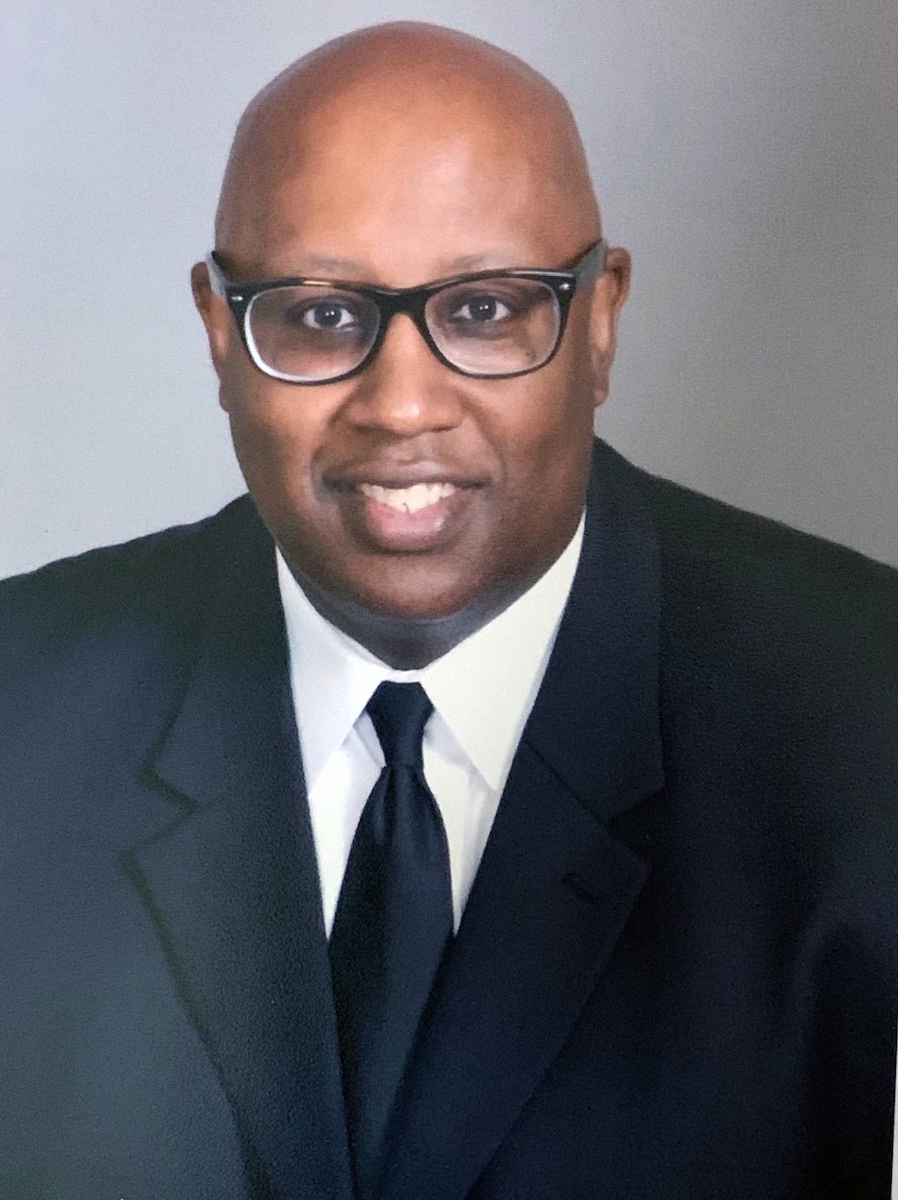
    Brian Scriven, superintendent of the Cheltenham School District.Courtesy of Cheltenham School District

    As the new school year approaches, some football players and their families have criticized the district’s cancellation of another season as unfair punishment for a situation they had no part in.

    But students who participated in or witnessed the alleged assaults have been able to move on with their lives, graduating from the 1,450-student Wyncote school or transferring to other schools, the mother of the victim said. Her son has not.

    He was taunted by peers after the September assault and switched to virtual school in the district, where he struggled and was isolated, his mother said. After getting harassed by kids at his local basketball court, he avoids going outside, she said.

    “He can’t escape the situation,” she said.

    Inside the locker room

    Video footage from the August incident after a football training camp at Cheltenham High School shows the student being dragged by his shirt on the floor of the locker room, according to his lawyers.

    About “seven or eight students are making physical contact” with him, while other students are standing by lockers, some with their phones out, said Alan Yatvin, one of the lawyers.

    The video shows one young man holding a broomstick, which is being “poked or thrust at [the student’s] genitals and backside,” Yatvin said.

    Turley, the other lawyer representing the student, said the video shows teammates trying to pick the student up by his shirt, which is ripped, while the student tries to remain seated on the floor.

    “There’s no other reason to be in that area, unless you’re trying to sexually assault somebody,” Turley said of the broomstick she saw in the video of the alleged attack.

    The student did not tell anyone about the August incident because he was embarrassed, his lawyers said.

    But then on Sept. 3, he was assaulted again. The student had taken someone’s shoulder pads because his were missing. Coaches made players run as a punishment, and they blamed the student, the lawyers said.

    Yatvin said that as the student tried to leave the locker room, he was thrown on the floor and punched and kicked in the head and testicles. He said the student reported there were “three main people hitting him.”

    The altercation lasted about five minutes, and the student heard someone say, “‘Get the broomstick,’” Yatvin said. He said the student tried to ball up on the ground and “sat in such a way to avoid the broomstick being stuck in him.”

    A couple of teammates intervened, and the fight broke up, Yatvin said. He said one player went to get a trainer, while another got the student ice.

    A volunteer coach drove the student home. That same night, three coaches, including then-head coach Tolbert, called the student, according to Yatvin.

    “They told him that he shouldn’t tell his mom, because they would handle it. He believed that,” Yatvin said.

    Reached by phone earlier this month, Tolbert declined to comment.

    A mother pushes for answers

    The student’s mother recalls taking her son to an urgent care center four days after the Sept. 3 incident because he was “complaining his pee was burning a little bit,” she said.

    She texted the vice principal, Mark Hoff, to let him know what had happened. “I was very upset,” the mother said. Hoff called her; the school opened an investigation the next day, Yatvin said.

    It was about 12 days later when Cheltenham police called her about a tip that had been submitted through the state’s anonymous Safe2Say line, about a broomstick being used during an assault.

    “I know that’s like a sexual assault — trying to sodomize somebody,” the mother said, noting she works at a prison. “What was going through my mind was, ‘Where did these kids get this from?’”

    At the end of September, lawyers said, the district contacted the mother to ask if she wanted to open a Title IX investigation, given the sexual nature of the allegations. She said yes.

    At the time, the mother did not know her son had been attacked more than once.

    No one had shown her and her son the video of the alleged assault that the district obtained — which had circulated through the school community, Yatvin said — until the spring. Had they seen it earlier, he said, they would have known it was from August, based on the student’s hairstyle at the time.

    The mother said her son was “scared to come forward.”

    “He didn’t want to go through none of this,” she said. “But I kind of pushed the issue.”

    Waiting for accountability

    On Oct. 17, a Friday, Cheltenham announced that it was postponing that night’s football game.

    “Today, the district received anonymous information regarding allegations of hazing in the football program,” Scriven said in a statement. The season was temporarily suspended, he said, and the district had “engaged an external investigator.”

    By that Sunday, Scriven had announced that the season was canceled. The district had received a report “approximately three weeks ago” of a locker room assault, he said in the announcement, and that Friday, it “received additional information, including reports indicating multiple team members engaged in hazing through physical contact.”

    Asked why it took until Oct. 17 for the district to suspend the season when the mother had reported the assault Sept. 7, Scriven drew a distinction between hazing and a “singular incident of assault.”

    The district’s external investigation, which was completed in January, determined there was insufficient supervision in the locker room and “a failure to prioritize student safety by the coaching staff and/or adult volunteers,” as well as a “a toxic and negative culture within the current football program.”

    Scriven said he expected the Title IX investigation to be completed “in the near future.”

    Yatvin believes more students know what happened to his client than have come forward.

    “If all the necessary information was available, there probably would have been something happening with the school’s investigation, and something happening with the district attorney’s investigation,” he said.

    The student’s mother, who is considering filing a lawsuit, said she wants people held accountable for what happened to her son. No one from his school has called and checked on his well-being, she said.

    “You’ve got parents on the news, worrying about their football team, but not necessarily worried about what happened,” she said. “Nobody is focused on what happened to him.”

  • Access to high school sports in Pa. depends on where you live, a new report finds. Here’s a breakdown.

    Access to high school sports in Pa. depends on where you live, a new report finds. Here’s a breakdown.

    More than 30% of high school students in the affluent Radnor and Wallingford-Swarthmore districts played sports in the 2024-25 school year.

    In the Philadelphia school district, less than 10% of high school students did.

    The disparities are part of a pattern, with fewer students playing sports in lesser-resourced urban schools, according to Research for Action, a Philadelphia-based educational research organization that released a report Thursday analyzing high school sports participation rates across Pennsylvania.

    The report, which looked at sports as another barometer of opportunities available to students, found participation varies widely — as does school spending on sports programs.

    It also found a link between funding and sports participation, with more students on average playing in higher-spending districts.

    “The degree to which a student may have access to school athletics really depends on what district they’re in,” said Maja Pehrson, the report’s lead author.

    Here’s what the report found — and what questions it raises about access to high school sports in Pennsylvania.

    There are big differences in sports participation rates

    Participation in school sports “hasn’t really been looked at very much,” Pehrson said. Research for Action analyzed data that school districts and charter schools are required to report to the Pennsylvania Department of Education on athletic opportunities.

    The report found participation rates in the 2024-25 school year ranging from 5% in some school districts, to a handful of districts with rates above 40%.

    Topping the list locally were Jenkintown School District, at 35%, and Springfield Township School District in Montgomery County at 34%; followed by Radnor and New Hope school districts, at 31%; Wallingford-Swarthmore, at 30%; West Chester, at 28%; and Upper Dublin, at 27% — all majority white, relatively affluent districts.

    Below the Philadelphia school district’s 9.6% rate were Upper Darby, at 9%; William Penn and Norristown, at 8%; and Chester-Upland, at 6% — all districts that are majority non-white and high-poverty.

    Overall, large, urban districts tended to have the lowest participation rates, meaning “almost half of Pennsylvania high school students are enrolled in districts where the likelihood of participating in a school athletics team is relatively low,” the report said.

    Those “very low” participation districts — with 5% to 17% of students participating — also offered fewer sports per 1,000 students than high-participation districts, the report found.

    Naima DeBrest, a spokesperson for the Philadelphia district, said the district had expanded athletic opportunities in recent years “by introducing new sports such as girls wrestling and girls flag football” and creating intramural programs at the elementary and middle school levels.

    Despite “common challenges” faced by urban districts, “the district remains committed to expanding access to high-quality athletic opportunities and ensuring students have meaningful opportunities to participate in sports that support their academic success, well-being, and overall development,” DeBrest said, noting that the district’s rate is comparable to other urban districts.

    <iframe title="Sports Participation and Athletics Spending Among Local School Districts" aria-label="Table" id="datawrapper-chart-dyc1W" src="https://datawrapper.dwcdn.net/dyc1W/1/" scrolling="no" frameborder="0" style="width: 0; min-width: 100% !important; border: none;" height="971" data-external="1"></iframe><script type="text/javascript">(function(){function e(){window.addEventListener(`message`,function(e){if(e.data[`datawrapper-height`]!==void 0){var t=document.querySelectorAll(`iframe`);for(var n in e.data[`datawrapper-height`])for(var r=0,i;i=t[r];r++)if(i.contentWindow===e.source){var a=e.data[`datawrapper-height`][n]+`px`;i.style.height=a}}})}e()})();</script>

    There are also big gaps in spending

    The report found a relationship between money and sports participation rates. Among the 10% of school districts deemed most underfunded by a state formula calculating what schools need to adequately educate students, more than half had “very low” sports participation rates, while more than two-thirds had “very low” or “low” participation, according to the report.

    And looking at what districts spend on athletics, it varied widely, the report found. Districts with “very low” participation reported spending an average of $409 per high school student on athletics, while “very high” participation districts — with 28.2% to 61.6% of students participation — spent an average of $939 per student.

    Locally, the Jenkintown, West Chester, Phoenixville, and Colonial school districts reported spending more than $1,100 per high school student on athletics, compared with $145 per high school student in Philadelphia.

    The report noted that those figures don’t fully reflect spending on school sports. Many districts didn’t report any spending on athletic facilities, for instance; Pehrson said it was likely hard for schools to calculate how much of their overall facilities spending was tied to athletics.

    The data also don’t reflect any activities fees paid by students.

    Charters have lower participation rates — but in line with Philly

    Statewide, brick-and-mortar charter schools, which are publicly funded but independently run, reported lower rates of sports participation. On average, 8.4% of charter high school students participated in sports, compared with 18.1% in district schools. (Cyber charter schools reported no participation; charter students who participate in district programs are counted by districts.)

    Rather than a difference between the charter and district sectors, however, the gap could largely be a product of school district conditions, the report said. Half the state’s charter high schools are located in Philadelphia, where the charter sports participation rates largely mirror the district’s, the report said.

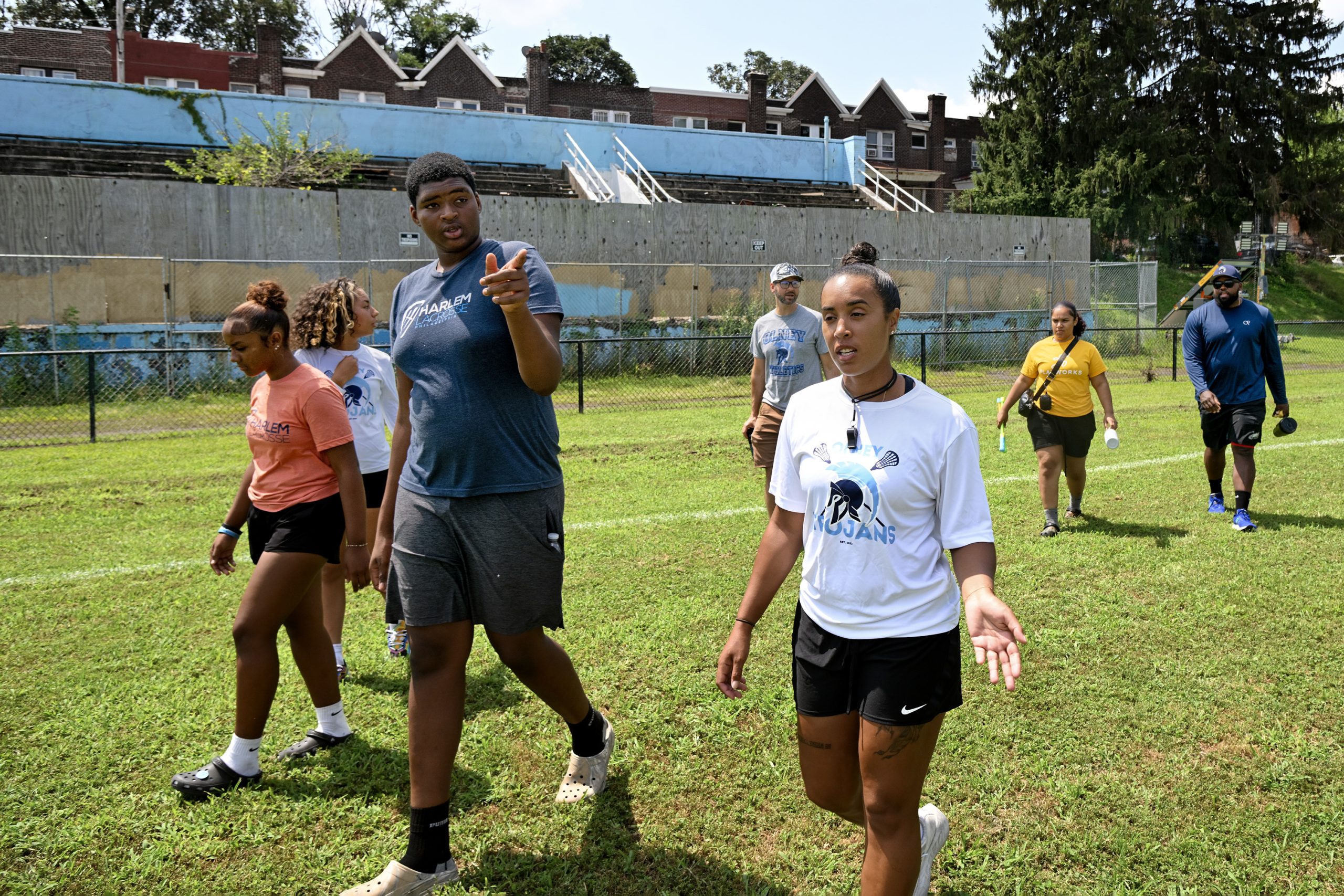
    In front of their boarded up dilapidated stadium, Olney High School athletes Cindi Lizardo (from left), Emma Blanco, Sidi Traore; and principal Michael Roth, coach Siena Childs, recent graduate Ysis Rivera, and athletic director Jorge Gonzalez point out the deplorable condition the sports facilities are in July 24, 2025. Olney High School, which spent a decade under charter management, was turned back over to the Philadelphia school district in 2022.Tom Gralish / Staff Photographer

    Gender gaps persist

    Boys participated in sports in 2024-25 at a higher rate than girls — at an average rate of 20.3% compared with 15.8%, the report found.

    And those gaps persisted across different types of school districts, the report found. For instance, in districts with “very low” overall sports participation, 14% of boys participated, compared with 10% of girls. In districts with “moderate” participation, 24% of boys participated, compared with 19% of girls. And in “very high” participation districts, 35% of boys participated, compared with 30% of girls.

    What’s driving the disparities?

    The report found that access to high school sports in Pennsylvania “is not evenly distributed and is strongly shaped by structural conditions.”

    “Districts with fewer athletic opportunities are more likely to be urban districts with large high schools and more students of color, and they tend to offer a narrower range of teams and spend less per student on athletics, limiting the extent to which students can engage,” the report said.

    But district funding alone isn’t responsible for disparities, the report noted. The gender gap, for instance, is found in well-funded and poorly funded districts.

    The pattern of higher-spending districts seeing more participation “doesn’t line up neatly for every district,” Pehrson said, noting that the data can’t fully answer questions about what’s driving differences in participation.

    Other possible factors could include transportation and sports outside of schools, Pehrson said.

    DeBrest, the Philadelphia spokesperson, noted that urban districts may also have limited athletic facilities, and practice space “and the need for some students to balance academics, work, or family responsibilities.”

    Pehrson hopes the findings prompt more investigation into the availability of school sports, which “are a key part of students’ educational opportunities,” Pehrson said — from boosting physical and mental health, to promoting social-emotional skills and building community.

    “There are clear disparities in terms of sports opportunities students are having,” Pehrson said. “Why is that, and how can we move forward and try to figure out these differences?”

    Editor’s note: This story has been updated to reflect that Jenkintown and Springfield Township were the local districts with the highest sports participation rates.

  • Cheltenham, Gloucester Township schools under investigation as federal officials target sexual abuse by teachers

    Cheltenham, Gloucester Township schools under investigation as federal officials target sexual abuse by teachers

    The Cheltenham School District is being investigated by the U.S. Department of Education as federal officials target sexual misconduct by teachers that they say schools nationally have been too lax in addressing.

    Cheltenham is one of 20 public school districts under investigation by the DOE’s Office for Civil Rights based on responses the districts provided to a federal civil rights data collection survey in 2023-24, which “suggest that districts might not be addressing staff on student sexual misconduct appropriately,” the Education Department said in a statement Friday.

    The department did not specify which districts were under investigation, but Cheltenham informed community members of the probe Sunday.

    The Gloucester Township School District in Camden County is also under investigation, according to a list obtained by ProPublica. Officials in the district, which enrolls about 6,600 students, did not immediately respond to a request for comment Tuesday.

    The investigations were announced as part of a broader initiative by the Education Department “to protect students from adult sexual predators in schools,” with guidance sent to all school districts outlining federal legal requirements for responding to sexual harassment and abuse.

    In its statement Sunday, Cheltenham said it would cooperate fully with the Office for Civil Rights.

    “To be clear, the district is not aware of any instances where allegations of sexual assault or abuse by district employees have not been properly investigated and handled — for the 2023-2024 school year or any other year,” the district said in the statement.

    It was not clear what Cheltenham, a district of 4,100 students in Montgomery County, reported as part of the federal survey that triggered the investigation. The Education Department did not respond to questions Tuesday about the investigation.

    The department’s website indicates it collects data from school districts about offenses that occurred at schools, including documented incidents or allegations of sexual assaults by staff members, as well as the outcomes of sexual assault allegations — whether staff members were determined to be responsible, and whether they resigned, retired, or had duties reassigned before a final determination.

    Kevin Kaufman, a Cheltenham spokesperson, said the district was not aware of any assaults or alleged sexual assaults of students by district staff in the 2023-24 school year.

    In a “Dear Colleague” letter to school leaders Friday, U.S. Education Secretary Linda McMahon said there was a “a troubling and recurring pattern in schools across the nation of credible reports of sexual abuse and harassment by adults in positions of authority going uninvestigated, institutional cultures that protect employees over students, and administrative indifference that allows predatory conduct to fester.”

    The letter cited research from 2003 finding that close to 10% of eighth- to 11th-grade students had experienced sexual misconduct by an educator.

    It also pointed to a ProPublica report from May, finding that California had not revoked the professional licenses of at least 67 educators after school districts determined they had committed sexual misconduct.

    The letter told school leaders that the federal Elementary and Secondary Education Act conditions federal funding on rules that prohibit schools “from helping a school employee or contractor obtain a new position when there is knowledge or probable cause to believe that the individual engaged in sexual misconduct involving a student.”

    It also said Title IX requires schools “to respond appropriately and address claims of sexual harassment,” independently investigating claims even if it also reports them to law enforcement.

    “Institutions that fail to comply with federal law may face the loss of federal funding,” McMahon said in the letter. She said the department ”will fully enforce federal law and employ every resource at its disposal to protect children from sexual predators.”

    In its statement, the Education Department said the investigations into Cheltenham and other districts — which it did not name — “will determine if the districts have appropriate policies and procedures in place to ensure accurate data collection and reporting of these incidents occurs and if their handling of allegations of sexual harassment, including sexual assault by district employees, complies with federal law.”

    Cheltenham’s statement said the district has policies that prohibit sexual harassment and abuse “and outline the investigatory steps that the district will follow in the event that any such allegations are made.”

    Cheltenham and Gloucester Township are not the only local districts facing federal Office for Civil Rights probes. Earlier this year, the office announced that it was investigating the Great Valley School District for a policy allowing transgender girls to participate on girls’ sports teams.

  • Some Philly special-needs students are waiting hours this summer for buses that never come

    Some Philly special-needs students are waiting hours this summer for buses that never come

    Brent Rose and his 9-year-old son, Alexander, were ready for the bus on the first day of the program Alexander is attending at De Burgos Elementary in North Philadelphia this summer for kids with special needs.

    Alexander, who is on the autism spectrum, was told to be ready for the bus to pick him up at 8:08 a.m. But when it still had not come by 9:30, Rose’s wife drove their son from their home in Center City.

    The episode was not an anomaly. Three weeks into the Philadelphia School District’s extended school year program, Rose said that on more than half of the days, his son’s bus simply has not shown up.

    “It’s a huge inconvenience,” said Rose, who works for the IRS and has had to show up late or call out due to the problems. “You couldn’t just leave any 9-year-old out there and say good luck, but certainly not one on the spectrum, and say it’s going to be OK.”

    Rose said the district has directed him to call dispatch for First Student, the company that operates his son’s bus route.

    But often no one answers that line, Rose said, making it impossible to know whether a bus will eventually show up or not.

    A spokesperson for the school district said the district is aware that “some families have experienced transportation delays and service disruptions for the Extended School Year (ESY) programming,” which schools nationally are required to offer to students with disabilities at risk of regressing over the summer.

    “While the majority of routes are operating as scheduled, we recognize that some students have experienced significant delays, and we understand the impact this has had on families,” said the spokesperson, Naima DeBrest.

    DeBrest attributed the delays to “staffing and operational issues affecting a portion of the transportation services provided by First Student.” She said the district had been working with First Student “to improve reliability,” including by reassigning 10 of the company’s routes.

    Brenna Rudisill, a spokesperson for First Student, said the company recognized that “some families experienced transportation delays early in the program, and we apologize for the inconvenience and frustration that caused.” She said First Student had taken on additional routes after other vendors left the district.

    “Our team has been working every day to stabilize and improve service,” Rudisill said.

    For Rose, though, the issues have not resolved. On Thursday, after the bus was an hour and 20 minutes late, he called dispatch and was told a bus would arrive in half an hour. Rose did not see whether it eventually came; he had to pick up his wife from the hospital, taking his son with him.

    On an earlier occasion when he was able to reach the bus dispatch, Rose used his phone to Google Translate for another parent who did not speak English and was also waiting at the stop: “The bus isn’t coming.”

    Noting that First Student advertises an app with real-time updates on bus locations, Rose questioned why parents do not have access to that information.

    That way, “you could contact work before you’re really behind,” said Rose, who also has gotten calls from De Burgos some days telling him he needs to pick up his son because no bus will be coming.

    Brent Rose stands at the bus stop where his nine-year-old son, who has autism, waits for the bus to travel to Philadelphia’s Extended School Year program for kids with special needs, in Philadelphia, July 10, 2026. The problem is that his bus often never shows up to take him there.Jessica Griffin / Staff Photographer

    DeBrest said the district is “in the early stages of implementing a new routing software system that will include a parent-facing application allowing families to track buses in real time.” In the meantime, she said, First Student has an automated text messaging service that can update parents.

    Rose said that, despite many calls to First Student and messages to the district about the buses, he was unaware of that service.

    He noted that the extended school year programming is not convenient for working parents: The day ends at 1:30, and it’s not easy to find aftercare for the rest of the afternoon.

    But he and his wife have rearranged their schedules and enrolled their son for the last three summers because they think the program is important for his progress, “and we think the teachers do a good job,” Rose said.

    When “the buses aren’t even doing what they’re supposed to do,” though, “it gets really frustrating,” Rose said.

  • Downingtown high school students were drinking while supervising a youth football camp, district says

    Downingtown high school students were drinking while supervising a youth football camp, district says

    Two Downingtown high school students admitted to drinking alcohol while supervising a football camp at Downingtown East High School last month, district officials said Friday.

    The students, who were minors, were removed from the Blue & Gold camp after the district learned about the incident June 18, said Downingtown spokesperson Jennifer Shealy.

    The camp, which ran from June 15-19 by the Downingtown East football team’s booster club with the help of high school volunteers, was open to students in first through ninth grades. The club did not immediately respond to a request for comment Friday.

    Shealy said an adult volunteer “partially responsible” for supervising the students was also removed from the camp.

    In a statement, district officials said that “district staff were present and overseeing camp operations at all times, ensuring that campers remained supervised and safe during the camp.”

    The district said in the statement that it had “addressed the matter promptly in accordance with district policies and Student Code of Conduct,” but couldn’t comment on specific allegations “or any disciplinary actions that may have occurred.”

    In a letter the district said was sent to parents of campers, Downingtown High School East principal Paul Hurley and athletic director Corey Sigle said they were “shocked and deeply disappointed” by those involved in the incident.

    “The trust placed in our students by younger campers, families, coaches, and community members makes this behavior especially disappointing,” Hurley and Sigle said in the letter.

    Hurley and Sigle also apologized “for not communicating the initial report immediately.” It wasn’t clear when the letter was sent.

    The students who admitted to drinking did not have drivers’ licenses and did not drive drunk, Shealy said.

  • Haverford parents are worried about chatbots in classrooms after a vote to buy AI tools

    Haverford parents are worried about chatbots in classrooms after a vote to buy AI tools

    A move by the Haverford Township School District to buy artificial intelligence tools for students and teachers has been met with protest from parents who fear the technology will erode learning.

    At a meeting last week, the Haverford school board voted 5-3 to approve contracts with School AI, which features AI “tutors,” and Brisk, which automates tasks for teachers, like developing quizzes and giving students feedback.

    While administrators said the tools wouldn’t supplant teaching and learning, critics said it was inevitable that AI would be used inappropriately — making it easier for kids to avoid work.

    “The idea of putting chatbots on computers — I don’t even care what age. I’m pretty disgusted by that,” said Christine Seewagen, a district parent of rising 12th and 7th graders.

    The district already struggles to manage technology in the classroom, said Seewagen, who said her older child has observed students run math questions through an AI tool on their phones. Her younger child, meanwhile, had a teacher who directed students to upload essays to an AI tool to get feedback, Seewagen said.

    “They’re just using AI, and not really being instructed on how to do it,” Seewagen said in an interview.

    Administrators said they were recommending buying AI tools in part because teachers are already using freely available versions, and they want to “eliminate free roaming around platforms,” Robert Anderson, the district’s technology director, said at the June 18 board meeting.

    Haverford’s superintendent, Matthew Hayes, said the School AI contract would “allow us to have a resource so that as we go through the process of the strategic plan and looking at all the implications down the line,” the district could begin teaching AI “thoughtfully, responsibly, ethically.”

    He added: “And also reducing screen time,” without providing further details.

    The controversy around AI in Haverford is the latest example of area parents pushing back on what they see as excessive and unchecked technology use in schools.

    In Lower Merion, parents have pushed to opt their kids out of district-assigned laptops or tablets; the district is planning changes to reduce usage for younger students, but has told parents they cannot opt out entirely. Parents in other districts are also raising concerns about too much Chromebook use.

    In Haverford, some parents said they were caught off guard by the proposal to adopt technology they felt posed risks to their kids.

    Patrick Burland, the parent of an incoming 10th grader and 6th grader, noted he’d had to sign numerous permission slips for his younger child to participate in end-of-year celebrations.

    “Apparently, sugar requires a signature, but cognitively rewiring her brain does not,” Burland told the board.

    Anderson said Haverford had been considering how to incorporate AI for years. He said the district sought feedback from teachers, including through an AI working group, before proposing the contracts.

    Board members who voted for the AI tools, meanwhile, said kids needed to learn how to use the technology responsibly.

    “Not acknowledging that it’s here … we don’t gain anything, right? We actually lose and we put ourselves farther behind because it’s not going anywhere,” said board member LaTonia Lee.

    But some raised questions about what the district was planning to do with the tools.

    Dave Schwartz, another board member, said he would support teaching kids about AI. But the district hasn’t said how it plans to do that, he said.

    “We’ve been talking very much in vague terms, and I can’t vote for something that I don’t understand,” Schwartz said.

    A district spokesperson did not respond to a question this week about examples of how School AI might be used.

    Board member Chris Shelton asked Anderson about criticism that the tool’s “historical figure” chatbots were giving students inaccurate information. (Last year, School AI acknowledged that responses from an Anne Frank character “didn’t provide critical historical details about the Nazis’ role in the Holocaust.”)

    Anderson called it “unfortunate” that the company had promoted the historical figures feature, but said the district “would have the option to potentially not use something like that.”

    John Flagler, a board member and English teacher, said he understood the burdens placed on teachers, “but I also believe there are lines that should not be crossed.”

    The suggestion that grading papers is a “menial task” that could be offloaded to AI “is an insult to both the teacher and the student,” Flagler said, calling grading essential to teachers learning about students.

    Administrators said Brisk wouldn’t be used for grading, but would provide “first-level feedback” — informing students they’re missing a topic sentence, for instance, said Meridith Herne, the district’s technology integration coordinator.

    “We insist that our teachers read it over and modify it so it’s in their own voice,” Herne said of Brisk’s feedback. Hayes said that 97 district teachers already use a free version of the tool.

    He said the tool was not meant to replace teachers.

    “That’s not my intent at all,” Hayes said, describing Brisk as “an option for individuals who want exposure to it.”

    He noted that the contracts with Brisk, for $22,260, and School AI, for $12,999, were each limited to one year.

    Teachers will be trained on the School AI platform, Anderson said; it will be up to them to decide whether they want to use it. He said the district envisions the platform being used in high school and “potentially” middle school, but isn’t planning for it to be used in elementary schools.

    Parents like Burland and Seewagen, who said like-minded parents have been organizing on social media, weren’t persuaded.

    “It does not feel like to me they have put any guardrails on,” Burland said in an interview. He questioned whether the district would have considered turning off School AI chatbots, for instance, had it not been asked at the board meeting.

    Seewagen said many parents who have learned about the AI plans aren’t happy.

    “It did not go under the radar,” she said.

  • An Upper Darby student was honored at the White House for a proposal to use AI to fight human trafficking

    An Upper Darby student was honored at the White House for a proposal to use AI to fight human trafficking

    As a student at Upper Darby High School, Khandakar Mahin was intrigued when the school installed a weapons detection system two years ago.

    Mahin, who was interested in the artificial intelligence behind the system, wrote email newsletters to the student body, describing how it worked.

    “I had fun doing that,” describing “how AI algorithms were working on a microscopic level,” Mahin said.

    Now an Upper Darby graduate, Mahin, 18, was honored at the White House earlier this month for a proposal he created for another use for AI: to combat human trafficking.

    First lady Melania Trump praised Mahin and the other five winning teams of the inaugural Presidential AI Challenge at a June 9 ceremony.

    “You saw AI’s potential and created ideas that will shape America’s future in many areas, including healthcare, nutrition, public safety, and beyond,” Trump told the winners, who were chosen from a field of 20,000.

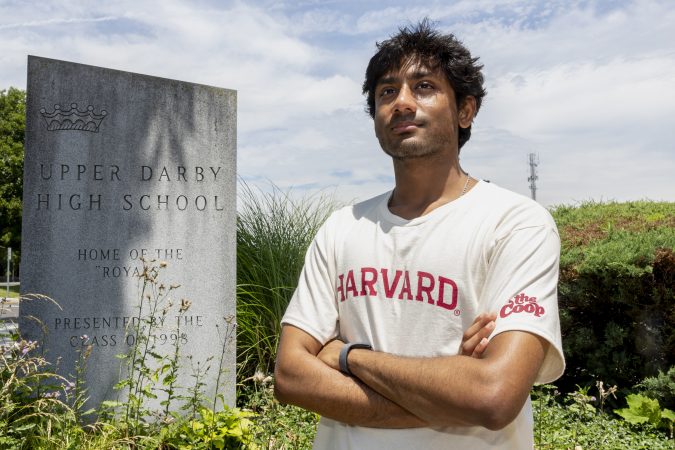
    Upper Darby graduate Khandakar Mahin, right, poses for a picture with First Lady Melania Trump at a June 9 ceremony honoring Mahin and other winners of the Presidential AI Challenge.Courtesy of Khandakar Mahin

    Mahin — who said he got to see the Oval Office and “network with many different types of people” — won for a proposal to use computer vision to match photos from the dark web to a database of 64,000 hotels.

    The tool would identify details like carpet designs or headboard features in photos depicting trafficking, then match them to known hotels, using images scraped from the internet. Mahin created a framework and demonstration of the tool, and said his proposal included ideas for how it could be scaled to be used by law enforcement nationwide.

    The award, which Mahin said came with a $22,500 prize, was yet another achievement for Mahin, who will attend Harvard University this fall; he was also accepted to Yale and Princeton.

    While at Upper Darby High School, he took 16 Advanced Placement classes and won an array of awards and scholarships, including being selected for the Amazon Future Engineers and the Disney Dreamers Academy earlier this year.

    “This is a very bright kid who’s been looking into things like this for a long time,” said Dan McGarry, the superintendent of the Upper Darby School District.

    Mahin immigrated to the United States with family from Bangladesh 12 years ago and has attended Upper Darby schools since then.

    Mahin has been “heavily invested in being a contributor in a positive way to his school community,” McGarry said, noting that the recent graduate was involved in setting up local libraries. “It’s not just artificial intelligence. He’s also a good kid.”

    But Mahin has a particular interest in AI. Mahin, who recently served as a student representative on Upper Darby’s school board, was among a group of students who joined school leaders in meeting with company representatives about the weapons detection system.

    The students made a video about the system, which McGarry said was critical in getting student buy-in.

    The district also sends students to the Delaware County Intermediate Unit to share their perspectives; Mahin has addressed other superintendents about AI, “the good and the bad,” McGarry said.

    At Harvard, Mahin hopes to study political science and government with an aim toward creating “more ethical AI policies,” he said.

    Mahin, who has already participated in programs at Princeton and MIT, credits teachers in Upper Darby — not just in computer science and math, but English, he said — with teaching him “how to have the grit to do research.” His award-winning AI project was supervised by Roseann Burns, an Upper Darby teacher who McGarry said works with gifted students.

    Despite being an underfunded district, Upper Darby “has a lot of opportunities,” Mahin said. “As a student, you really have to seek out the opportunities if you really want it.”

    While Mahin may stand out for the level of recognition he has received, McGarry said Upper Darby has many “amazingly talented, bright” students.

    “That’s often overlooked, unfortunately,” McGarry said. He said Mahin “represents what I think makes this country great. … Every opportunity that was there, he took it.”

  • Abington schools are reviewing security after a man charged with trying to rape a girl repeatedly entered the high school

    The Abington School District is reviewing security procedures after police charged a 25-year-old man with trying to rape a student who repeatedly let him into Abington Senior High School.

    Police charged Raeem Grange-Allen of Philadelphia on Friday with attempted rape by force and attempted statutory sexual assault, among other charges. The student, a 14-year-old girl, told police she had met Grange-Allen at the high school.

    Grange-Allen initially identified himself as a student and began communicating with the girl through text messages and social media, according to a police affidavit.

    Grange-Allen later asked the girl to let him into the school “and requested she perform oral sex on him behind a stairwell,” according to the affidavit. The girl told police she “saw him or let him into the school approximately three to four times.”

    In a message to families Tuesday, Abington Superintendent Jeffrey Fecher said the girl let Grange-Allen into the high school on two occasions in March, opening a back door during the school day.

    “Video footage shows he was wearing a hoodie and was able to briefly blend in as a student while moving in the hallways,” Fecher said.

    On March 27, Grange-Allen came to the girl’s home in Abington Township, where he held her down and attempted to rape her, according to the police affidavit. The girl screamed, and her mother caught Grange-Allen, according to the affidavit. The girl went to the police the next day.

    Fecher said there were “numerous unresolved questions about this man’s presence in the high school, as well as, where and when he initially encountered the victim.”

    The district is “launching a third-party internal investigation” and reviewing security protocols, Fecher said. While exterior doors are locked throughout the school day, “building occupants always have the ability to open them from the inside for evacuation purposes, as required by law,” he said.

    Fecher said the district would be working with the Montgomery County Department of School Safety “to determine whether additional security measures can be put in place.”

    “We share in the concern and shock that this information causes, and we are committed to addressing it effectively,” Fecher said.

    As of Wednesday, Grange-Allen was being held at the Montgomery County Correctional Facility on $250,000 cash bail.