Author: Maddie Hanna

  • The Pennsbury School District hid a student’s gender identity from parents, a Christian legal group alleges

    The Pennsbury School District hid a student’s gender identity from parents, a Christian legal group alleges

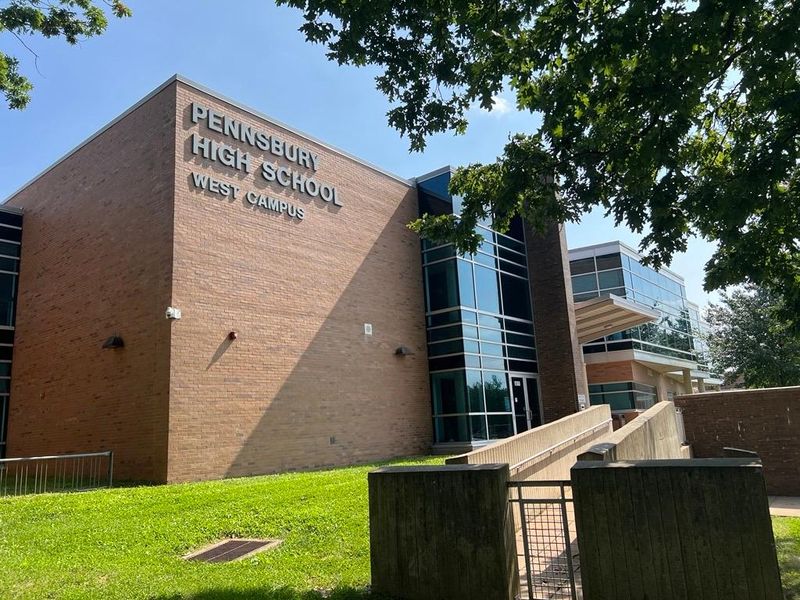
    A conservative Christian legal group is asking the U.S. Department of Education to investigate the Pennsbury School District, after a mother and father said the district violated their rights by hiding their child’s use of a different name and pronouns for nearly three school years.

    After parents confronted the Bucks County district last year, it agreed to use the student’s given name at graduation, but did not change its policy to require that parents be notified of a student’s name change, according to the complaint filed last week by the Orlando-based Liberty Counsel.

    “Parents have the right to know when their child is struggling with an issue, and are the first line of defense for their child,” said Richard Mast, a staff attorney with Liberty Counsel, which has brought cases favoring religious liberty and opposing LGBTQ+ rights.

    A Pennsbury spokesperson declined to comment Monday. The K-12 district enrolls about 9,400 students from Yardley Borough, Lower Makefield Township, Falls Township, and Tullytown Borough.

    The complaint comes as President Donald Trump’s administration has escalated pressure on school districts over policies protecting transgender students. The U.S. Department of Justice earlier this month sued the Kansas City, Kan., school district, alleging it violated parents’ rights by facilitating “gender transitions” for students without informing their parents.

    The Education Department also this month opened an investigation into a Massachusetts school district for using a male name and pronouns for a student without parents’ knowledge.

    Conservative legal groups are also taking aim at schools: The Chester County Intermediate Unit this month rescinded a policy that barred staff from disclosing a student’s transgender status to parents without the student’s permission after receiving a letter from the Alliance Defending Freedom and the Harrisburg-based Independence Law Center, the groups said Monday. A spokesperson for the intermediate unit said it recommended the policy’s repeal “as part of its ongoing review of board policies and in recognition of the evolving legal landscape regarding transgender students.”

    “There is absolutely a targeted attempt by the administration, and those aligned, to try to erase trans students from our schools and elsewhere from our culture,” said Kristina Moon, a senior attorney with the Education Law Center, a Philadelphia-based group that advocates for LGBTQ+ students. The Education Department earlier this year opened an investigation into the Great Valley School District in Chester County for a policy allowing transgender girls to participate in girls’ sports teams.

    Students “need to feel safe and be able to be themselves in school,” Moon said, adding that she worries schools are getting a “very harmful message … that if you care about trans students having a sense of belonging, then you too will be targeted by the Trump administration.”

    Name changes and ‘a right to privacy’

    The complaint filed Sept. 21 by Liberty Counsel against Pennsbury alleges that the mother and father did not learn until the end of their child’s junior year that Pennsbury High School staff had been calling the student by a male name and pronouns since ninth grade. The complaint does not identify the student, who has since graduated, or the parents.

    The district used a “false male name” and pronouns for the student in both personal interactions and electronic information systems, according to the complaint.

    In one handwritten note included in the complaint, a coach wrote to the student in October 2025: “My son! My boy! It’s finally senior night! … Your high school years may not have always been like you dreamt it would be, but it’s okay! … I could not be more grateful and honored to be your coach/mom.”

    While the student’s mother had heard other students referring to her child by the name during sophomore year, the student brushed it off, saying, “‘It’s just a silly name,’” Mast said in an interview Monday. The mother “didn’t pry further,” Mast said.

    But when the student brought home a memory book during junior year, the mother saw a male name was used for her child, Mast said. She then went back and reviewed other memory books and saw they also used the name.

    Had the parents known sooner, “they would have helped the child get the counseling she needed to be comfortable with her natal sex,” said Mast, who said the parents’ relationship with their child has suffered. “No girl should be made to feel like she is born in the wrong body.”

    On Nov. 17, the parents demanded that Pennsbury use their child’s given name and female pronouns, according to the complaint. After a Dec. 1 meeting, the district said it would do so going forward, the complaint said.

    But it did not fulfill all of the parents’ requests, leading Liberty Counsel to issue a demand letter on March 6, according to the complaint.

    The district agreed to use the student’s given name at graduation and on the student’s diploma, but said it could not control what appeared in the memory books, because those were issued by a booster club, the complaint said.

    And it has not updated its policy related to transgender students, according to the complaint. The parents had asked the district to require principals to communicate with parents before a student could be called by a different name.

    The district’s policy says it will accept a student’s asserted gender identity, and “all persons, including students, have a right to privacy. This includes the right to keep private one’s transgender status or gender expansive presentation at school.”

    The policy also includes a section about “parental consent” that says that if a parent or student requests a name change without proof the name has been changed legally, “the parent/guardian and student will be provided” with a form. That did not happen in this case, according to the Liberty Counsel complaint.

    Pennsbury is ‘not unique’

    Pennsbury’s policy is “not unique” among Philadelphia-area districts, said Jeffrey Sultanik, a solicitor for numerous districts in the region.

    Lower Merion’s policy, for instance, says “school personnel should not disclose information about a (transgender or gender diverse) student’s gender identity and expression to others, including the student’s parents/guardians and/or other school personnel, unless legally required to do so or unless the student has authorized such disclosure.”

    The Pennsbury complaint “may dictate what other school districts end up doing,” depending on how the Education Department responds, Sultanik said.

    The complaint alleges violations of the Family Educational Rights and Privacy Act, a federal law protecting the privacy of student educational records.

    The law “prohibits a federally funded school district from maintaining a policy that denies or effectively prevents a parent from inspecting and reviewing a minor child’s education records,” according to the complaint, which also alleges violations of the Protection of Pupil Rights Amendment — a federal law governing surveys administered to students on sensitive topics — and Title IX.

    Moon, of the Education Law Center, said “there is currently no law that schools have to notify parents about students sharing to their counselor, or a trusted teacher, that they identity as transgender.”

    In cases Moon is familiar with, she said, school counselors ask students if they have told their parents about their gender identity.

    “I really don’t think in the vast majority of cases, this is anything like teachers trying to avoid, or counseling students to avoid, conversations with their families,” Moon said.

  • Lower Merion picks a new school board member after 17 people applied for the vacant seat

    Lower Merion picks a new school board member after 17 people applied for the vacant seat

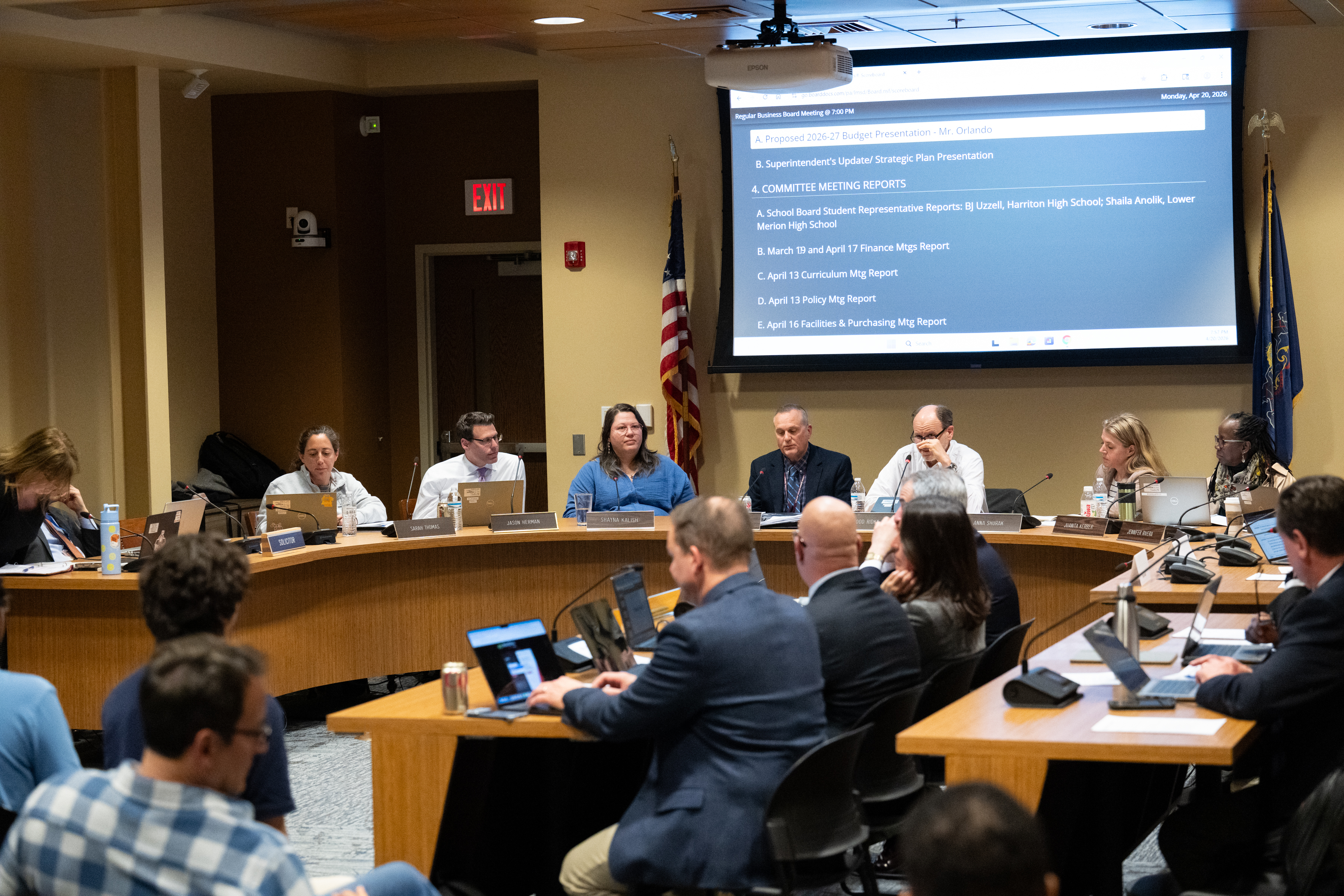
    The Lower Merion school board on Tuesday selected a Tredyffrin/Easttown teacher and former Narberth Borough Council member to fill a seat left vacant by a school board member who was arrested.

    The board picked Muna Elshakhs from a group of 17 applicants, after interviewing her and fellow applicant Andrea Gosfield during a special meeting Tuesday. The board had selected four candidates to be interviewed Tuesday, but two withdrew their names from consideration before the meeting.

    The board did not release their names, or the names of the other candidates who had applied to fill the seat. The position became vacant after Jen Rivera resigned after she was arrested last month on charges of stealing more than $50,000 from her employer.

    Some community members accused the board of a lack of transparency in appointing a new member to the term, which runs until December 2027.

    “Table this appointment, give the full list of applicants, and enter them into the public record,” Matthew Posey, who is among a group of parents challenging the district over its use of technology, said during public comment Tuesday, as he accused the board of “backroom deliberations.”

    District spokesperson Amy Buckman said before Tuesday’s meeting that the eight board members had “individually notified the board secretary of their top choices from among the applicants to be publicly interviewed.” The secretary tallied the selections, and “the applicants with the most selections” were scheduled to be interviewed, Buckman said.

    Those who were not selected included at least two people who ran for the Democratic-led board unsuccessfully in 2025: Rich Lester, who ran as a Democrat but was not endorsed by the local Democratic Party, and Deena Pack, who ran as a Republican.

    In an interview Tuesday, Lester said he was unsure how board members had made their selections for filling the vacant seat. He said he was told there was no scoring rubric used.

    “To have no sort of what we’re looking for is disappointing,” said Lester, who had proposed more accountability and financial analysis from the board.

    Pack, who addressed the school board during public comment Tuesday, said she was the only applicant who had received more than 7,000 votes, and had already been scrutinized by community members during the campaign process.

    “Should the board change its mind, I’m ready,” she said.

    When it was time for the board to nominate candidates, board president Kerry Sautner nominated Pack. But she did not vote for her.

    Sautner voted for Elshakhs, as did board vice president Todd Ridky and members Shayna Kalish and Sarah Thomas. Board members Anna Shurak, Juanita Rivera, and Jason Herman voted for Gosfield.

    Board member Abby Rubin, who has clashed with board leaders, including around the district’s technology policy, nominated and voted for Lester.

    That gave Elshakhs four votes, but five were needed for a majority. The board voted again with the same result.

    Elshakhs then withdrew her application, though some board members told her she did not have to do so, and solicitor Kenneth Roos told board members they could still vote for her.

    “There’s nothing wrong” with the board’s split, Sautner said, calling the debate “healthy tension.”

    “This is a good problem to have,” Ridky said, later adding, “I wish we had more seats to offer tonight.”

    Shurak said that Gosfield, a lawyer, had been involved in the district’s equity policy and had children in district schools that were not currently represented by other board members.

    Thomas credited Elshakhs’ perspective as a current teacher, though some board members questioned her ability to attend daytime committee meetings given her job. Sautner said the board could be flexible with scheduling.

    Shurak ultimately switched her vote to Elshakhs, saying she wanted to respect the majority of the board. Kalish accused Lerner of obstructing the process by continuing to vote for Lester; Lerner said she had a different opinion.

    After Elshakhs files a financial statement of interest, she will be sworn in and officially join the board, Roos said.

  • Bensalem school district selects a longtime administrator as its next superintendent

    Bensalem school district selects a longtime administrator as its next superintendent

    The Bensalem Township School District has selected longtime district administrator Victoria Velazquez as its next superintendent, after its previous superintendent resigned this spring amid a budget shortfall.

    Velazquez, who has worked for the district for 12 years, is expected to be appointed superintendent at a school board meeting Sept. 23, the Bucks County Intermediate Unit said in a statement Friday.

    “I am deeply honored and grateful for the opportunity to continue serving the Bensalem Township School District as district superintendent,” Velazquez said in a statement.

    Noting that her daughter graduated from Bensalem, Velazquez said, “It is my home, and it is a community I care deeply about and am incredibly proud to serve.”

    Velazquez was selected to lead the 6,400-student district after a search led by the Bucks County Intermediate Unit that drew 27 applicants from five states, according to the intermediate unit.

    Deborah King, the Bensalem school board president, said in a statement that she had watched Velazquez “lead with humility, diligence, integrity, and a genuine love for Bensalem.”

    “She knows this community, she believes in this community, and she understands that our students must remain at the heart of every decision we make,” King said.

    Velazquez has worked in Bensalem as assistant to the superintendent for K-12 administration, director of elementary curriculum and instruction/federal programs, and supervisor of data and assessment/federal programs.

    She has served as interim superintendent since April, after the district’s former superintendent, Samuel Lee, resigned amid a $12 million budget shortfall. The district eliminated more than 30 positions to help fill the gap .

    As interim superintendent, Velazquez worked with the board on organizational systems and fiscal stewardship “during a consequential period for the district,” the intermediate unit said in the statement.

    Before coming to Bensalem, Velazquez worked as a principal in the School District of Philadelphia and the Norristown Area School District. She received bachelor’s and master’s degrees from Temple University, a principal certification from Drexel University, and a doctorate in educational leadership, management, and policy and superintendent certification from Seton Hall University.

    If approved on Sept. 23, Velazquez will be sworn in as superintendent on Oct. 1 at Bensalem High School, the intermediate unit said.

  • Lower Merion asks court to deny parents’ ‘fearmongering’ request to opt out of computers

    Lower Merion asks court to deny parents’ ‘fearmongering’ request to opt out of computers

    The Lower Merion School District has urged a federal judge to deny a request from parents to opt their children out of school-assigned computers, accusing them of “fearmongering” about technology in schools and abusing the legal process to get their way.

    In a filing in U.S. District Court, lawyers for the district and school board said seven families who sued the district last month were trying to force the district to align with their preferred approach to instruction.

    “There is no constitutional right for a parent to choose which technology their child uses in a public school,” the district said in the Monday filing. It called the lawsuit “just the latest attempt by a small — but vocal — minority of the district community to pressure the duly-elected members of the board of school directors to kowtow to their peculiar views on technology in the classroom.”

    The affluent Montgomery County district has been a focal point of a national battle around technology use in schools. Since the spring, Lower Merion parents have been raising concerns about how much their kids are on screens — from worries about children gaming and accessing inappropriate content on their district-issued laptops to complaints about the quality of the educational software programs used by the district and fears that kids’ cognitive abilities are diminishing.

    The district revised its technology policy last month, specifying that students in kindergarten through second grades would no longer be assigned individual electronic devices. It also implemented guidelines for screen time by grade level and announced new tools for monitoring what kids are accessing on their laptops.

    But the new policy did not include a provision that had previously existed, which specified that district officials would work to accommodate students whose parents did not consent to being issued electronic devices. Parents organized under a Pencils Over Pixels group had pleaded with the board not to eliminate that provision, which was repealed in June.

    In their lawsuit filed last month — which one of the plaintiffs’ lawyers said he believed was the first of its kind — seven families accused the district of forcing a “digital free-for-all” on students, and violating their parental rights by requiring their children to use internet-connected computers to access their education without adequate safeguards.

    They also filed a motion for a preliminary injunction, asking a judge to order the district either to allow them to opt their kids out of personal devices or to pay for them to attend private schools. Three of the families who sued withdrew their kids from the district.

    In its response Monday, the district said parents had mischaracterized its former policy. Families were never permitted to opt out of technology entirely, the district said. While the policy had said officials would make their “best efforts” to work with students whose families declined personal devices, they were not guaranteed specific accommodations, the district said.

    The district accused parents of trying to force the school system to bend to their beliefs — and said the court would be setting a dangerous precedent if it sided with them.

    “This court should decline plaintiffs’ invitation to convert the American public school educational system into a private school, whereby each parent has the right to hand-select each and every aspect of their child’s education,” the district said.

    A debate around parents’ rights

    In asking Judge John M. Younge to deny the families’ request for a preliminary injunction that would allow them to decline an internet-connected computer, the district said families had not made their case on a number of grounds.

    Six of the seven families do not have standing to sue, the district said. It said four of the families did not have children enrolled in district schools at the time the new technology policy was adopted.

    Two families, meanwhile, only had children in elementary schools, where they “would not have been eligible to receive a district-issued electronic device under the one-to-one electronic device initiative because they are not in 5th grade or above,” the district said.

    While elementary school students in Lower Merion have had access to personal electronic devices, the district said that its one-to-one program was “never formally extended” to those grades. A district spokesperson did not immediately respond to a question Tuesday about how the iPads and Chromebooks previously assigned to elementary schoolers were not considered part of the one-to-one program.

    Families also have not shown the district is permanently harming them, the district said. Although several of the families are now sending kids to private school or homeschooling, those decisions do not constitute “irreparable harm” warranting a preliminary injunction, the district said. It noted that families could be compensated with monetary damages if the court ruled in their favor.

    The district also said the harms of using computers alleged by the families were “vague and speculative.” In their lawsuit, families had described risks to physical and mental health, citing manipulative practices by technology companies, the dangers of artificial intelligence chatbots, and warnings from the U.S. surgeon general and the FBI about youth social media use and groups targeting minors online.

    While the district has revised its policies and placed more restrictions on what kids can access, Andrew Liddell, a lawyer for the parents, said in a recent interview that the changes “aren’t even the bare minimum of what the district should have been doing in the 20 years they’ve been giving internet-connected computers to children.”

    Liddell, an Austin, Texas-based lawyer whose wife founded the EdTech Law Center, said he believed the lawsuit was the first that had been brought alleging school computers were violating parents’ constitutional rights. Lower Merion still is not adequately restricting screen time, he said, and is “putting more burden on parents” to monitor what kids are doing online.

    While Lower Merion is a wealthy suburb, and some of the suing parents are doctors who can afford private school, Liddell said, “you have a right to a public education.”

    The parents “just want our kids to be able to go back to school,” Liddell said.

    In its response Monday, the district said parents do not have the right to dictate what is taught in public schools.

    “At most, the district’s new technology policy (Board Policy 141) only incidentally interferes with a parent’s limited right to direct their child’s education,” the district said.

    It also said that granting the parents’ request would cause a “logistical and financial hardship for the district,” requiring it “to develop a non-technological curriculum for each of plaintiffs’ children.”

  • Three Wallingford-Swarthmore schools locked down Monday during a police search outside

    Three Wallingford-Swarthmore schools locked down Monday during a police search outside

    Students at Strath Haven High School and Middle School and Wallingford Elementary School sheltered in place Monday morning as police searched the area for a suspect who had fled during a traffic stop.

    The incident began when a Nether Providence Township police officer stopped an Acura at 9:07 a.m. Monday on South Providence Road, police said in a statement. The driver fled in the car, which police determined was stolen, and the officer lost sight of it.

    Then at 9:41 a.m., a resident contacted the police to report a car abandoned in a backyard on Hickory Lane, near the high school, police said. Officers determined the car was the same one that had been driven by the suspect, and police began searching the area.

    Police said they worked with school officials to place the three Wallingford-Swarthmore schools, which enroll about 2,600 students, “in a ‘Teach in Place’ status while officers searched the surrounding area.”

    Wallingford-Swarthmore Superintendent Russell Johnston said the lockdown “kept the kids safe inside the buildings” during the police search. Classes continued during that time, he said.

    “What we did was out of an abundance of caution,” Johnston said. He said school officials believed police had guns drawn during the search.

    Police reviewed video surveillance that showed the suspect “fleeing toward the rear of Strath Haven High School” before being picked up by another car. The schools returned to their normal status after it was clear the suspect had left the area, police said.

    Nether Providence Township police are still investigating the incident, and are asking anyone with information to call the department’s detective division at 610-892-2875.

  • Schools around Philly are no longer giving laptops to kindergartners and scaling back on screen time. It’s a tech backlash.

    Schools around Philly are no longer giving laptops to kindergartners and scaling back on screen time. It’s a tech backlash.

    As her children start second and third grades in the Colonial School District, Elise LaChapelle expects they will spend no more than 20 to 30 minutes a day on their Chromebooks — limits the Montgomery County district has announced to parents.

    Colonial also no longer allows elementary school students to take their laptops home at night. “That seemed to be an acknowledgment on the district’s end that changes were needed,” LaChapelle said.

    Amid a spreading backlash to screens in classrooms, public school districts across the Philadelphia region are placing more limits on technology use — including by pulling back on one-to-one device programs once touted as critical for ensuring every student had access to technology.

    The Tredyffrin/Easttown School District has stopped assigning iPads to kindergartners, and students across the district’s elementary schools will no longer take their tablets home at the end of the day.

    In Methacton, the district has transitioned from individual devices to a shared model for kindergartners and first graders, with Chromebooks available for center-based activities, according to a district spokesperson.

    The Phoenixville Area School District has ended its one-to-one device program for kindergarten through third grade, while in Wallingford-Swarthmore, kindergartners through second graders will take fewer online assessments, and kids up to fifth grade are no longer able to search and browse YouTube.

    Parents who have been pushing schools to scale back on computer use are applauding the new restrictions as a step in the right direction of promoting teacher-led instruction and reducing screen-based distractions.

    But they also question how much will change in practice, because children will still have access to devices in many classrooms. Some parents who have been battling for less screen time want schools to go further to address what they see as excessive reliance on technology at older grade levels.

    In Lower Merion, which adopted a new technology policy last month that no longer assigns personal devices to kindergartners through second graders, seven parents are suing the district for rescinding their ability to opt out of computers entirely. The parents argue the district is violating their constitutional rights by requiring their kids to use internet-connected computers without adequate safeguards.

    Yair Lev, a parent who opposes Chromebook use in Lower Merion schools, speaks at a March 23 forum at Harriton High School about technology use in the school district.Maddie Hanna / staff

    For many districts, reducing computer usage in elementary schools “seemed like the low-hanging fruit,” said Alex Bird Becker, a Wallingford-Swarthmore parent active in PA Unplugged, a statewide group with about 5,000 supporters that advocates for limits on educational technology. But “when you get to middle school, the device culture has become really ingrained with curriculum. That’s where it gets harder to disentangle.”

    Wallingford-Swarthmore, a 3,700-student district, has been soliciting applications from parents to join a new Technology Advisory Council that will advise the district on further changes, including related to device use in grades six to 12. (In Lower Merion, parents have been pressing the district to create a technology review committee that includes parent representation.)

    “We know there’s even more we want to do in this area,” said Russell Johnston, Wallingford-Swarthmore’s superintendent.

    Johnston said the district was trying to ensure its use of technology was “focused” — posting online for parents to see which portions of the district’s elementary curriculum will incorporate technology, with lessons connected to Pennsylvania standards.

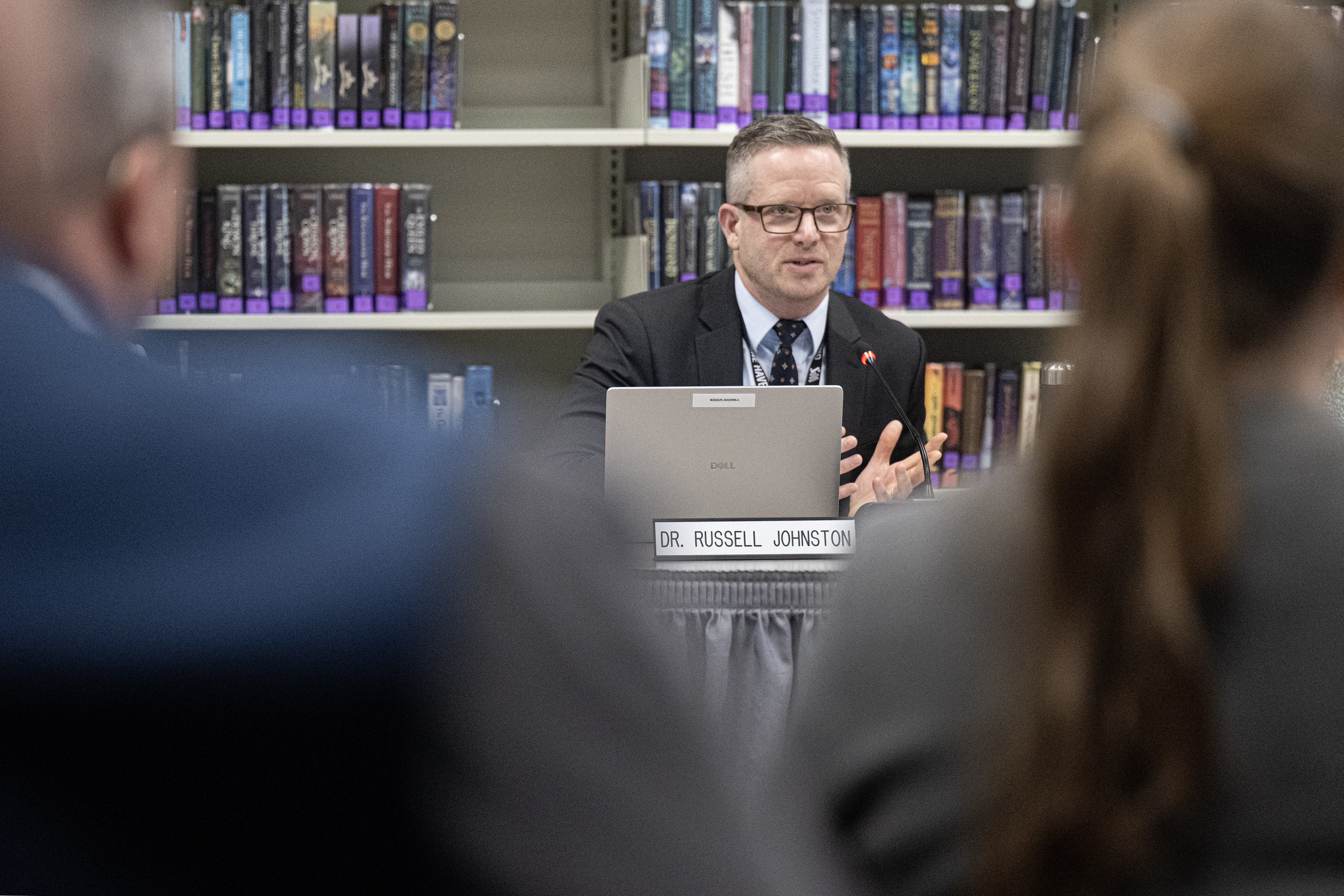
    Wallingford-Swarthmore School District Superintendent Russell Johnston speaks during a Feb. 24 school board meeting in Wallingford.Jose F. Moreno / Staff Photographer

    Wallingford-Swarthmore is also reevaluating how laptops are used during “curriculum enrichment” time, Johnston said, when students are broken into small groups to receive extra help.

    In Phoenixville, which ended its one-to-one device program for kindergarten through third grade, “students will continue to have access to appropriate and approved educational technology for academic purposes only,” district spokesperson Nicole McClure said.

    Alair Southerton, a Phoenixville parent who has been pushing the district to make changes, said the school board had approved “strong language” around when devices should be used in classrooms.

    But “we’re still kind of crossing our fingers with the rollout,” Southerton said. She questioned whether teachers had clear guidance from administrators, and whether the district would consider educational technology apps that some parents object to as “gamified” as essential for learning.

    “We want to really fine-tune what needs to be done on a device on a screen,” said Southerton, who is a member of a new district Edtech Advisory Council.

    Alair Southerton, pictured at her home in May with the Phoenixville Area School District website on her laptop. Southerton is leading a group of Phoenixville parents who are calling on their district to reduce screen time in school.Steven M. Falk / For The Inquirer

    While Phoenixville this fall adopted a new program, Qustodio, to let parents monitor their child’s device usage, Southerton said it has been less revealing than she hoped. The program reports which websites students accessed at 15-minute intervals throughout the school day but does not say how long they actually spent online, she said.

    In Colonial, LaChapelle is awaiting the district’s launch of a different program, Securly, that will also allow parents to monitor what their kids accessed.

    While the district has placed limits on screen time — 20 to 30 minutes in kindergarten through third grade, 40 to 50 minutes in grades four and five, and 2½ to three hours in grades six through 12 — “accountability and transparency are key,” LaChapelle said.

    Colonial spokesperson Jessica Lester said the district had “done more this year to try to communicate what our approach is” to technology.

    LaChapelle noted that in order to register her children for school, she had to consent to a list of more than 100 software programs used by the district; officials have since told her they plan to revise that, she said.

    LaChapelle hopes the district will continue to make changes. Taking an intentional approach to technology use could be a selling point for districts trying to show leadership, she said.

    “We’re doing and saying a lot of the right things,” she said. But “this isn’t a one-and-done conversation.”

  • Black winemakers are few and far between. These Philly-area business owners are working to boost their ranks.

    Black winemakers are few and far between. These Philly-area business owners are working to boost their ranks.

    Four years ago, Keyanna Wilson’s family opened a winery in Hatboro to develop new wines and cultivate a new generation of Black winemakers.

    Through Cyrenity Sips Winery, Wilson’s family aims to boost the number of Black winemakers in Pennsylvania by 15 in the next 15 years. To accomplish this mission, they are identifying entrepreneurs and supporting their entry into the industry through a nonprofit.

    “It’s making those connections, teaching people how to make wine, the process of it, the social skills,” said Wilson, who owns Aurora’s Vines, a brand launched by Cyrenity Sips.

    People browse the offerings at Aurora’s Vines during the annual Philly Black Wine and Spirits Fest held at Girard College Saturday.Bastiaan Slabbers / For The Inquirer

    She was among the sellers at the fourth Philly Black Wine and Spirits Fest at Girard College in North Philadelphia Saturday.

    Inside Founders Hall and outside at booths sprawled across the boarding school’s lawn, guests sipped wines, bought bottles and sampled food from different vendors, while a DJ spun music from a stage.

    Sonia “Sunny” Blount, the event’s founder and owner of Kabila Events, said she launched the festival four years ago in part to promote Black-owned businesses in a white-dominated industry.

    Inspired by the “history and richness” of a wine tasting event at a vineyard in Barcelona, Blount, a Mount Airy native and Temple University graduate, said she wanted to bring that experience to Philadelphia, while also spotlighting Black-owned wine and spirits makers.

    Black ownership remains rare in the wine business

    As of 2020, fewer than 1% of American winemakers and winery owners were Black, according to the Association of African American Vintners.

    Some of that is due to challenges faced by many Black-owned businesses, Blount said.

    “There’s a lot of bureaucracy, a lack of resources and access to capital,” she said.

    But it also reflects a less tangible barrier, related to perceptions of the wine industry and inclusivity, she said.

    People want to experience wine “in a way that is approachable,” Blount said. “If it’s all historically been one way, there has been a bit more of a challenge in trying to get people interested.”

    Saturday’s event, however, had an eager audience. Many dressed up in purple, gold, and green in keeping with the event’s Mardi Gras theme, “From Bourbon Street to Broad Street.”

    “We needed a weekend out,” said Shavonne Carter, who attended with her friend April Howard. The Brookhaven residents were enjoying tasting the variety of wines and shopping. Carter bought perfume, while Howard bought a craft syrup for cocktails.

    While the friends said they had gone to other festivals featuring Black-owned businesses, Saturday’s was on “a larger scale,” Howard said.

    “It’s a work of love,” Howard said of the vendors. “These are regular people. This is their dream, and it’s nice to be able to support them.”

    Attendees including April Howard, far right, and Shavonne Carter, second from right, outside Founder’s Hall at the Black Wine and Spirits Fest at Girard College.Bastiaan Slabbers / For The Inquirer

    Charles and Lakisha Honesty, who live in Washington, D.C., said they bought tickets to the event after seeing an Instagram post.

    “We’re not wine-every-day people,” Charles Honesty said, but they were drawn by the promise of a fun event. The couple were enjoying samples from Hedon State Wines, a business also from Washington, D.C., that had a booth set up.

    Michael Goode, Hedon State’s managing partner, said he started getting interested in wine after going out to eat and feeling intimidated by a restaurant wine list.

    He started going to wine school after work, where he was “the only brown person in the room,” he said.

    Blount hopes the festival will expand to different cities and eventually “provide some space for education and resources for people who want to get into the industry.”

    Jenear Monts, Raymond Lynn, and Shayna Cassel of Philadelphia attend the Philly Black Wine and Spirits Fest at Girard College Saturday.Bastiaan Slabbers / For The Inquirer

    There’s a “lack of knowledge” around what it takes to start a winery, Wilson said, including navigating the liquor laws in Pennsylvania.

    But it’s doable, said Wilson, who specializes in wines with unconventional flavors — like blackberry and mango green tea. “I would come up with these crazy concepts and ideas, and my family was like, ‘You should start a business around that,’” she said. On Saturday, attendees were lining up to try her new sangrias, including a strawberry watermelon version.

    Wilson, whose business sources fruit from New Jersey and grapes from California, said she often encounters people who don’t think they like wine, but as she introduces them to “more fruity flavors, everybody’s palates usually open.”

    She hopes more Black winemakers will open their minds to the possibilities of joining the industry.

    “If you have the ambition to come behind it, we’ll get you there,” Wilson said.

  • Police are investigating a North Philadelphia shooting as a murder-suicide

    Police are investigating a North Philadelphia shooting as a murder-suicide

    Police are investigating after a man and a woman were shot and killed in North Philadelphia early Saturday evening, police said.

    Police said they are investigating the incident as a “domestic-related murder-suicide.”

    The shooting happened on the 2300 block of North 18th Street around 5:31 p.m. Saturday, according to police.

    Officer Tanya Little, a spokesperson for the police department, said police took the man and woman to Temple University Hospital, where they were pronounced dead at 5:54 p.m.

    A firearm was recovered at the scene, Little said. No further details were available, and the investigation is ongoing.

  • Cheltenham will pay more than $266,000 to the superintendent who resigned amid football scandal

    Cheltenham will pay more than $266,000 to the superintendent who resigned amid football scandal

    The Cheltenham School District will pay more than $265,000, plus compensation for sick and vacation time, to former Superintendent Brian Scriven, who resigned last month amid outcry over the district’s handling of alleged assaults in a football locker room.

    Under a settlement agreement the Cheltenham school board unanimously approved Tuesday night, Scriven will get $266,884.60 — a little less than the $270,000 annual salary the district had agreed to pay him under a five-year contract that took effect July 1.

    He will also receive payment for “earned but unused vacation leave, sick leave and personal leave,” according to the agreement.

    Asked what the amount of that payment would be, school board president Leah Mulhearn said in a statement earlier Tuesday that Scriven’s “separation agreement and general release follows Pennsylvania Public School Code, and the settlement is standard.”

    “We appreciate Dr. Scriven’s service to Cheltenham schools, and we look forward to the coming year with Dr. Christopher McGinley now in place as interim superintendent,” Mulhearn said.

    Scriven resigned Aug. 6, a week after Montgomery County prosecutors announced charges against four Cheltenham football coaches and six players in connection with two assaults the year before on a teammate in a high school locker room.

    Former Cheltenham superintendent Brian Scriven

    Prosecutors said the players had stomped on and poked a broomstick toward the buttocks of their 15-year-old teammate during the August and September 2025 assaults, while coaches later instructed the teen not to tell his parents what had happened.

    But prosecutors also faulted the district, describing its investigation into the incidents — one of which was filmed and circulated in the school community — as flawed from the start. The district, which canceled last year’s football season in October, also came under fire from other parents with safety concerns, including at Cheltenham Elementary School, where parents said the district had failed to adequately respond to assaults by students.

    Scriven, a 1983 Cheltenham graduate, was tapped as Cheltenham’s superintendent in fall 2021 after working in Baltimore County Public Schools.

    He had received a new five-year contract in December, and the school board had voiced support for his leadership in May.

    In resigning last month, Scriven said that the last year had “tested our community in ways none of us anticipated,” and that he had “come to believe that the district is best served by a fresh start under new leadership.”

    Before the board vote Tuesday, Daniel Schultz, a school board member, said the settlement with Scriven followed “a lot of thought and discussion around what the options were and what the trade-offs were.”

    “A severance agreement is not a performance evaluation,” Schultz said. He called the agreement “necessary to allow our district to move forward, heal and rebuild.”

    The school board last month hired McGinley, a veteran administrator and former Cheltenham superintendent, to serve as interim superintendent this year. It also commissioned an outside lawyer to review its policies and the grand jury’s findings.

    Changes ‘ensuring students are safe’

    In a report at the start of Tuesday’s meeting, McGinley said the district had made “some important changes in practice” as the new school year began, “all focused on ensuring students are safe, supported, and inspired academically.”

    Among other changes, he said the district had been “revising the overall administration of high school athletics,” and training coaches on “new protocols for locker room monitoring.” The district also “enhanced” training for coaches on policies for mandated reporting of suspected child abuse, as well as student discipline, McGinley said.

    Football coaches were not supervising players in the high school locker room last year, according to the grand jury report, which also said that five coaches lacked clearances related to mandated reporting requirements.

    McGinley said the district had also installed new building access management systems, reorganized its reporting and supervision structure for school security personnel, and added a new dean of students position “for enhanced supervision and follow-up.”

    But, McGinley noted, there are “many issues that still require attention.” The outside review of district policies is ongoing, and the district is still working to implement recommendations from the Center for Safe Schools for improving building security, he said.

    Interim Superintendent Chris McGinley listens as speakers address the crowd after a community march at Cheltenham High School Aug. 29, before the new school year began.William Thomas Cain / For The Inquirer

    The proposed settlement agreement with Scriven specifies that the former superintendent would make himself available to consult with the district on legal matters, and would be paid if the time spent exceeds 40 hours. If Scriven is named as a defendant and legal representation is provided by the district, however, he would not be compensated for time spent, the agreement says.

  • In the wake of alleged hazing incidents, Cheltenham parents and officials marched to support students before school starts

    In the wake of alleged hazing incidents, Cheltenham parents and officials marched to support students before school starts

    After a football hazing scandal led to criminal charges for coaches and players, about 35 Cheltenham School District parents, students, and school board members marched across town Saturday morning to show their support for students.

    The purpose of the march, just days before school starts, was to show students that the community cares about what they are going through, and is calling on the school board to make needed changes, organizers said. Marchers also said it is important to portray the district in a positive light.

    “We need to come together as a community, address needed changes, and also push back against some of the false information out there,” said Ikysha Dearry, president of the Cheltenham African American Alliance.

    Dearry said the school has faced a barrage of negative attention online from opportunists who want to bring issues like race and the region’s changing demographics into the discussion. “That can have an impact, not just on how our district is viewed, but on how our students are viewed,” she said.

    School board director Caroline Watts was one of the first to arrive in the parking lot behind the Cheltenham School District building Saturday morning. She wore athletic shoes for the nearly two-mile walk to the high school. Watts said the message of the march was a “delicate balancing act.”

    ”We’re addressing what happened, making sure it doesn’t happen again, and we’re starting the school year,” Watts said.

    Participants listens as Ikysha Dearry, president of Cheltenham African American Alliance (not shown), addresses the crowd after a community march was held as residents are banding together before the new school year begins to advocate for students, Saturday, Aug. 29, 2026, on Ashbourne Road near the Cheltenham School District Administration Building in Elkins Park. Dr. Brian Scriven resigned as superintendent of the Cheltenham School District in the aftermath of Cheltenham High School football coaches and players being charged with assault in a locker-room hazing incident. Dr. Chris McGinley recently took over as interim superintendent.William Thomas Cain / For The Inquirer

    Montgomery County prosecutors in July charged four football coaches and six players in connection with two 2025 assaults in a Cheltenham High School locker room that led to the cancellation of last year’s football season. During the assaults, prosecutors said, a 15-year-old was beaten by teammates who poked a broomstick toward his buttocks.

    “It’s horrific, what happened,” board vice president Jenny Lowman said before the march. “To think that it happened more than once, it’s also horrifying. Those coaches were responsible for these children. And two of the coaches were parents of students on the football team.”

    According to prosecutors, the coaches urged the player not to tell his parents. And according to a grand jury report, high school employees downplayed a complaint from the player’s mother and took then-head coach Terence Tolbert at his word that he had not instructed the boy not to tell his mom.

    The report faulted the district’s handling of the situation from the start, saying employees had included Tolbert in their investigation and failed to discover there were two assaults. Employees were also confused about their duties to report child abuse, and at least five football coaches did not have clearances related to mandatory-reporter training, according to the report.

    A community march was held as residents are banding together before the new school year begins to advocate for students Saturday, Aug. 29, 2026, on Ashbourne Road near the Cheltenham School District Administration Building in Elkins Park. Dr. Brian Scriven resigned as superintendent of the Cheltenham School District in the aftermath of Cheltenham High School football coaches and players being charged with assault in a locker-room hazing incident. Dr. Chris McGinley recently took over as interim superintendent.William Thomas Cain / For The Inquirer

    Cheltenham parent Aubria Nance said the alleged assaults have “absolutely shaken” the students. Nance, a board member of the Cheltenham African American Alliance, said students need to know their concerns are being taken seriously.

    “We want the board and the interim superintendent to know that we are advocating for the safety of our students,” Nance said.

    Cheltenham parent Kisha Rodwell-Green said the type of hazing she believes to have happened is called “broomsticking.” Searching online, she said, she learned that many other schools had dealt with this.

    Rodwell-Green wants the board to approve funding to work with an advocacy group called Stop Hazing. She said the athletic department needs to build a “culture of trust,” one where athletes feel comfortable speaking up if something does not seem right.

    “We know we have a lot to correct in our community, and we are starting to see that work being done,” said Rodwell-Green, who also serves as president of a parent-teacher organization called United Parents Group.

    Jackson Scott, a student at the high school, speaks to a reporter after a community march was held as residents are banding together before the new school year begins to advocate for students Saturday, Aug. 29, 2026, on Ashbourne Road near the Cheltenham School District Administration Building in Elkins Park. Dr. Brian Scriven resigned as superintendent of the Cheltenham School District in the aftermath of Cheltenham High School football coaches and players being charged with assault in a locker-room hazing incident. Dr. Chris McGinley recently took over as interim superintendent.William Thomas Cain / For The Inquirer

    Still, she said, the issues Cheltenham High faces are not unique to the school, and media attention from the hazing incidents has cast an unfair light on a good school.

    “Comments on Facebook got very nasty,” Rodwell-Green said. “There’s a microscope on Cheltenham, and we want to take that microscope off.”

    For some community members, the criminal charges added fuel to complaints that the district has not been taking safety seriously enough. Parents of football players said they had urged the district not to hire Tolbert, citing concerns he let bullying go unchecked during his one-year stint as Abington’s head football coach.

    At Cheltenham Elementary School, parents said they have been battling with the district after repeated assaults by students against peers and teachers, and pointed to the football charges as proof of a systemic problem in the district.

    The district, which in May canceled the forthcoming football season, has responded to the charges by commissioning an outside investigation and hiring a new superintendent. Chris McGinley, a veteran educator who had served as Cheltenham’s superintendent two decades ago, was approved by the board on Aug. 18 to lead the district under a one-year contract. He replaces Brian Scriven, who resigned last month.

    The changes also have forced high school students to grapple with the fallout.

    Cheltenham senior Jackson Scott, 17, had mixed feelings. Scott, a soccer player, said it was unfair that his friends on the football team had their seasons canceled. Steps must be taken to stop such incidents from happening again, he said, but he also wondered if some of the details of the hazing incidents had been exaggerated.

    Senior Isabella Pero, 17, said she was disgusted that other students said nothing despite knowing about the hazing.

    Pero said she was shocked to learn that Tolbert, who taught one of her classes and seemed like a nice person, was involved. The same goes for the students involved in the alleged assaults, she said. She struggled to square her impression of the students with the violence.

    “In my opinion, in the moment, you’re so hopped up in wanting to win a game, and have a good season, that you make those tainted, not good decisions,” Pero said.

    Parent Michelle Gregorio said she hopes athletic director Sam Sheridan will help the district move forward. “And we don’t want to sweep under the rug what happened, but we want to let students know we’re addressing it.”