Author: Kristen A. Graham

  • A PSSA delay means Philly kids may have to take an alternative test to get into special admission schools. Here’s why.

    A PSSA delay means Philly kids may have to take an alternative test to get into special admission schools. Here’s why.

    Call it the mystery of the test scores.

    Philadelphia School District officials said this week that because of a delay in Harrisburg, they cannot use the latest state test scores to judge whether the school system’s academics are improving.

    The apparent bureaucratic delay could have real-world consequences for Philadelphia students who rely on the state test scores for admittance into selective magnet schools. And because the 2025-26 PSSA and Keystone results now will not be part of the closely watched school selection process, district officials said, some kids may need to take an alternate assessment if they want a chance to attend a magnet school.

    But the situation seems murky, with Philadelphia walling off its data in ways that other districts have not.

    Districts across Pennsylvania — including Philadelphia — received preliminary school-level scores from the Pennsylvania Department of Education in the spring, as is typical, sources confirmed to The Inquirer. And though some Philadelphia principals and teachers did see limited data for some incoming students for rostering purposes in August, most of the student- and school-level data remain hidden.

    Here is what we know, and what we don’t know, about the score release.

    PSSA administration was online, and glitchy, this year

    Pennsylvania moved in the spring to fully online administration of the Pennsylvania System of School Assessment, the state’s standardized test for third through eighth graders. Research shows that a shift from paper tests to online exams typically yields drops in student test scores.

    Many districts experienced technical glitches early in the PSSA assessment window, with some students unable to log in to complete their exams. Some canceled testing for a day, shifting assessment schedules because of the problems with the online system.

    PDE just weighed in

    The Pennsylvania Department of Education usually releases preliminary statewide results to districts in August or September, to give educational leaders time to crunch the numbers and prepare for a fall public release of the data.

    But PDE officials, in a letter sent to districts on Tuesday, said there would be a delay because a “review of the preliminary data is still underway.”

    No reasons for the shift were given, and no information was shared about whether the public release, which usually happens in the late fall, will be pushed back.

    Philly took a different tack

    While other districts and charters still have access to school- and student-level data from the 2025-26 PSSAs and Keystones, Philadelphia kept the vast majority of its data hidden from principals and teachers.

    Though some other data, like the results of periodic benchmark tests, are still available, PSSA and Keystone figures are often used to help pinpoint student needs.

    The Philadelphia School District Office of Evaluation, Research and Accountability told principals in June that “state test data are embargoed and not available until they are verified by the Pennsylvania Department of Education,” district spokesperson Monique Braxton said in a statement Wednesday.

    That review was expected to be completed by Tuesday, Braxton said, but has been pushed back.

    “Until this process is complete, assessment data will not be released,” Braxton said. “Additional information will be shared after PDE completes its review and the official statewide results are released.”

    It remains unclear why most Philadelphia data are still inaccessible to school staff.

    Questions around school selection and more

    Philadelphia’s school selection window, when students can apply to the city’s 37 sought-after criteria-based schools, opens Sept. 8.

    But the questions around the state data mean that the district “cannot use the 2025-26 assessment results to evaluate year-over-year student achievement or as the required criterion for school selection,” Braxton said. “In the interim, students will have the opportunity to take an alternative assessment in the fall and submit those results instead.”

    The district did not address questions about what assessment will be given, when it will be offered, whether it will be mandatory for school selection, or what will happen if students want to apply for criteria-based schools but not take the alternative assessment. It also did not answer questions about whether there will be an additional cost for the new assessment.

    Fastest-improving large urban district?

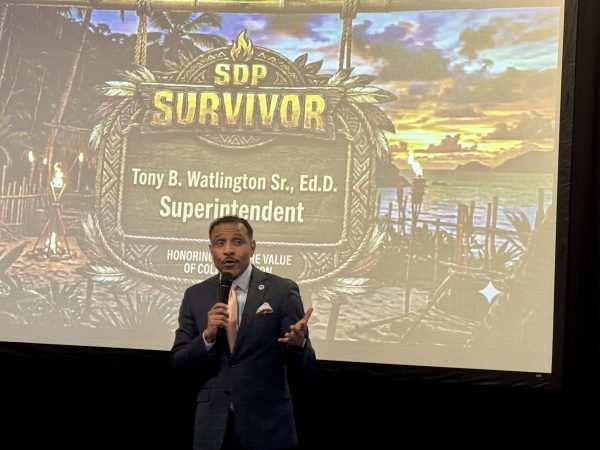
    Superintendent Tony B. Watlington Sr. has staked his reputation on Philadelphia being the “fastest-improving large urban district in the country,” and the district has posted promising, if incremental, gains during his tenure. Philadelphia students’ learning post-pandemic was best in the nation, according to recent research out of Harvard and Stanford Universities, though district students still perform 2.46 grade levels below the pre-pandemic national average.

    District-wide, 34% of students score at grade level in English and 23% in math, as judged by 2024-25 standardized tests.

    Braxton said in the statement that after consulting with PDE, “the district cannot use the 2025-26 assessment results to evaluate year-over-year student achievement.”

    More information will be shared, Braxton said, “as it is received from the PDE.”
  • Kensington High School teachers brace for a challenging year amid asbestos remediation measures

    Kensington High School teachers brace for a challenging year amid asbestos remediation measures

    Summer break ended Monday for 9,000 Philadelphia School District teachers, counselors, nurses, and other school staff.

    But instead of heading back to their own building, 90 Kensington High educators and support staff were rerouted to a school more than seven miles away — the former Austin Meehan Middle School in the Northeast — because of concerns over an HVAC project that led to damaged asbestos in the Kensington facility.

    Staff and students are expected to remain at Meehan for the rest of the calendar year while an asbestos remediation project is completed.

    Philadelphia Federation of Teachers officials expressed frustration Monday over the way the district initially handled the project, the inconvenience to staff and students, and the potential for further complications.

    “People are angry,” said Arthur Steinberg, PFT president. “They’re upset.”

    PFT staff were on hand Monday at Meehan, he said, answering staff questions: “Unfortunately for the staff and kids and the community, it’s going to be a chaotic year.”

    ‘It did not get followed’

    The Kensington closure comes a year after the district was criminally charged over its past handling of asbestos management at city schools. After a yearslong secret probe, the school board signed off in June 2025 on a deferred prosecution agreement that comes with strict federal scrutiny of its environmental management.

    Philadelphia was the first school district in the U.S. that faced criminal charges for environmental violations.

    Steinberg and Jerry Roseman, the PFT’s longtime director of environmental science, said at a news conference Monday that the trouble at Kensington High traced back to mid-July.

    Workers were installing a new heating and cooling system at Kensington, a 100-year-old school on East Cumberland Street, when a contractor inadvertently disturbed some asbestos.

    The asbestos was then removed “in a non-regulated way by someone who’s not certified to remove asbestos,” Steinberg said. “They then traipsed it all over the building.”

    Steinberg said the district initially told the PFT the damage was limited and could be completed in time for teachers to return to Kensington High by Monday.

    “We thought that was unrealistic all along, and insisted that certain protocols be put in place before they decide to open,” Steinberg said. “Lo and behold, we get to maybe the end of last week. Guess what? It’s not going to open, you know, they don’t have time to abate the asbestos properly, clean it, test the air, and then complete the renovation that was going on.”

    The district has agreed to remove all remaining asbestos inside the Kensington building, and developed a remediation plan in conjunction with Roseman, the PFT’s environmental expert, Steinberg said. It has also agreed to additional environmental oversight.

    “In light of the publicity that they’ve received, they agreed to remove it all, which means it will be safer when folks go back in,” Steinberg said.

    Asbestos, commonly used in building projects for most of the 20th century, is considered safe when undisturbed. But when it is damaged, asbestos can be toxic, releasing microscopic fibers that may cause lung disease and cancer.

    Steinberg and Roseman said the Kensington mishap underscores an ongoing problem: The district has a vast stock of aging buildings, many of which have environmental issues.

    “There was a plan” to deal with known areas of asbestos, Roseman said, and “it did not get followed.

    A lack of proper oversight and management “is an ongoing problem,” Roseman said, “and as the [district’s $3 billion facilities master plan] gets put in place, this is one of our concerns.”

    Naima DeBrest, a district spokesperson, said the Kensington situation differs from instances when schools have been closed because of observed asbestos damage.

    “In this case, a third-party contractor is suspected of improperly removing asbestos containing material during demolition, which was being conducted in support of a school upgrade project,” DeBrest said in a statement. “The district immediately and transparently prioritized the health and safety of workers and stopped the project to assess the scope of the potential lapses. The subcontractor was removed from the job and has no other work with the district.”

    ‘A disruption for everybody’

    José Lebrón, Kensington’s veteran principal, said in a letter sent to families this weekend that school and district staff have been “working around the clock to create a safe, vibrant, and welcoming space where our students can thrive from day one.”

    Meehan is a closed district building often used to house school communities that need a temporary home.

    Necessary educational materials are being brought from Kensington to Meehan, officials said, and when school opens next Monday, the district will provide shuttle service to Meehan.

    For some staffers who had expected to drive to work in Kensington, commuting to the Northeast creates challenges around childcare, public transit, and commute times, Steinberg said.

    “Make no mistake about it, it’s a disruption for everybody,” he said. “It’s not an ideal situation, to say the least.”

    Oz Hill, the district’s deputy superintendent for operations, said in a letter to Kensington staff and families that “other options closer to Kensington were considered, but did not meet the space or accessibility needs for Kensington’s more than 400 students and 90 staff.”

  • Philly just shifted its rules for how kids with disabilities can get into special admissions schools. A lawsuit threat prompted the change.

    Philly just shifted its rules for how kids with disabilities can get into special admissions schools. A lawsuit threat prompted the change.

    The Philadelphia School District is changing a policy that effectively barred some qualified students with disabilities from gaining admission into certain magnet schools.

    But it did so only after a Philadelphia family — whose child with disabilities was not admitted to a school for which they met academic criteria — notified the district that it intended to sue over the old policy under the Americans with Disabilities Act.

    The school system’s policy has traditionally worked this way: Students are eligible to apply for admission to up to five of the 37 district schools for which they meet academic, behavioral, and attendance criteria.

    Because of a long-ago agreement resulting from another legal challenge, students with disabilities who meet two of the three criteria for a certain school could request an individualized review, known in the system as the LeGare process, to determine if they could succeed at that school if provided with reasonable accommodations.

    If a review panel judged the child eligible, the child entered the lottery for that school, but was required to waive their rights to enter lotteries for any schools where they met all three criteria.

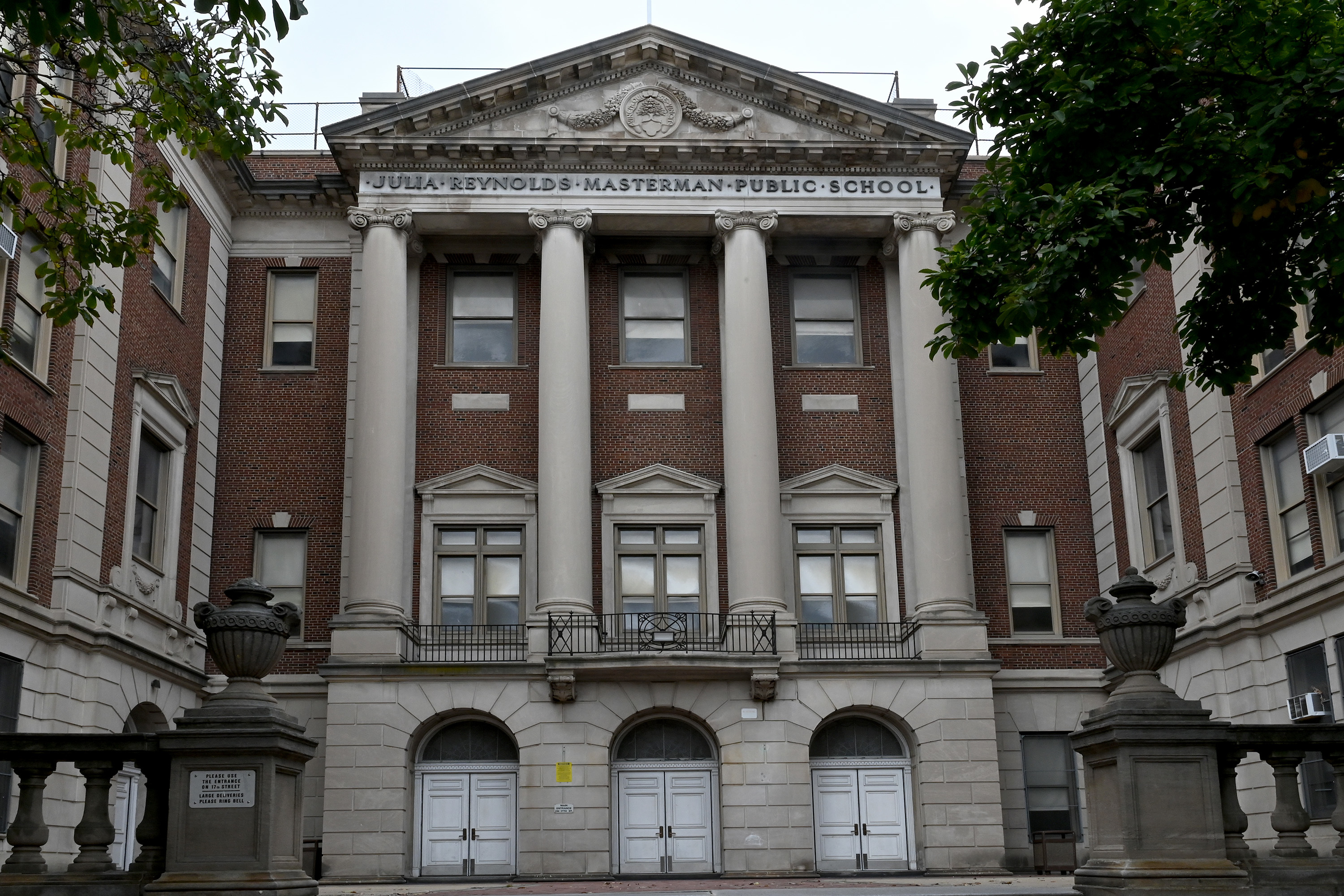
    That is: If a student meets entry requirements for the Philadelphia High School for Girls but only two out of three requirements for Masterman, they could opt for an individualized review for their Masterman application — but only if they gave up the right to be considered for Girls’ High.

    If their Masterman application failed, Girls’ High was off the table.

    Dan Urevick-Ackesberg, an attorney with the Public Interest Law Center, which represented the family that threatened to sue the district this year, in a statement, called it the “double bind,” and said the district for years punished children with disabilities for asking for accommodations they were legally guaranteed.

    Exact numbers are not known, but it’s expected the change will affect hundreds of Philadelphia students annually. The application process for the 2027-28 school year is expected to open sometime this fall, though the district has not yet announced a date.

    Far-reaching impact

    The parent who threatened the lawsuit said when they heard about the policy, they thought they must be an oversight.

    “But the district doubled down” when they inquired about it, the parent said in a statement. The Inquirer is not naming the parent, child, or school to keep the child’s identity private. “It felt punitive.”

    With no other option, the child moved through the admissions process for the school to which they met two out of three academic criteria, but was denied admission in the review process.

    Because they had to forego applications to other criteria-based schools for which they did meet requirements, the student was out of luck.

    “The painful either-or of the policy effectively ruined my child’s eighth-grade year and has far-reaching impacts on their academic confidence, self-esteem, and social experience,” the parent said.

    When the Law Center notified the district of its intent to sue, the district asked to enter settlement negotiations, and agreed to change the policy.

    Going forward, students who are English learners or those with disabilities — either those with individualized education plans or 504 plans — will be able to apply for magnet schools for which they meet criteria and those for which they meet two out of three criteria.

    There will be no penalty for asking for an individualized review. Students will not need to waive their applications to schools for which they meet criteria.

    “I am beyond relieved that this awful policy has been ended,” said the parent whose lawsuit threat prompted the change. “The district should want to have engaged and talented students with disabilities in our top schools, not push them out.”

    Urevick-Acklesberg said the policy change means that “one small barrier is down” to students receiving the free, appropriate public education that’s their right under federal law.

    The district can still change its school selection process

    The new individualized review policy is an appeal process, not a first-line application, and does not guarantee students’ admission into any school.

    The agreement “does not prevent the district from modifying its school selection process, including individualized reviews, or eligibility criteria, nor does it require the district to maintain its current processes for any set period of time,” it reads. “However, to the extent the district’s school selection process continues to allow students to apply to more than one school, the district will provide a mechanism for the subject students to apply to a school where they meet the then applicable criteria, and to additionally seek review of their eligibility where they do not.”

    The district also announced other changes to the process earlier last week, including:

    • Changing the zip codes for preferential admission to Masterman, Central, Carver High School for Engineering and Science, and the Academy at Palumbo: 19132, 19133, 19135, 19138, 19140, or 19141. New to the list are 19138 — Germantown — and 19141 — sections of North Philadelphia including Logan and East Oak Lane. No longer on the preference list are 19121 — parts of North Philadelphia including Brewerytown and Sharswood — and 19136, Holmesburg and Torresdale. The zip codes chosen for preference are the most underserved at the four magnet schools.
    • Limiting the grades that count toward a student’s GPA for admission to magnets. Now, just English, math, and science grades are counted. Social studies grades also used to count.
    • Granting preference for kindergarten admission to students who attend prekindergarten at the school to which they’re applying.
    • Granting preference for career and technical education program admissions to students who participate in a district CTE summer program.
  • Philly school principals were asked about their jobs. Here’s what they had to say.

    Philly school principals were asked about their jobs. Here’s what they had to say.

    Most Philadelphia principals believe the city’s district and charter schools are moving in the right direction, though they are also frustrated with punishing workloads and inadequate access to resources.

    And while the majority of principals are satisfied with their leadership roles, Philadelphia School District school leaders are less likely to feel positive about their levels of support and autonomy. Only about half of district principals reported feeling backed by central administration, and about the same number said felt they had the authority to make decisions about school policies and practices.

    Two-thirds of principals citywide have considered leaving their jobs, with most contemplating K-12 jobs outside Philadelphia or in the education sector but not in a school or district.

    The results come via a new survey commissioned by the Philadelphia Citywide Talent Coalition, a group asked by the Philadelphia Mayor’s Office of Education to design and implement strategies to hire and retain more effective teachers and teachers of color.

    Elevate 215, a Philadelphia-based education nonprofit, commissioned the study on the talent coalition’s behalf, surveying 135 district and charter school principals this spring.

    Here are some takeaways from the recently released report:

    There are some reasons to be optimistic

    Most principals have spent more than a decade in Philadelphia schools, district or charter.

    Both charter and district principals said they think Philadelphia schools are going in the right direction — 64% of charter principals and 55% of district principals. (In all, 36% and 45%, respectively, believe the sectors are going in the wrong direction.)

    Charter and district principals report a satisfaction gap in some areas

    While charter and district principals report similar levels of satisfaction in areas like relationships with students (95% for district principals and 96% for charter principals), there were areas of disparity.

    More than three-quarters, 80%, of charter principals felt they had access to adequate funding, supplies, and support staff. Just 23% of district principals were satisfied with their level of resources.

    Facilities satisfaction was a key area of difference, too — 83% of charter principals said they were satisfied with their access to adequate facilities, while 34% of district principals did.

    Only 32% of district principals said they were satisfied with their workload; 54% of charter principals reported workload satisfaction.

    In all, 51% of district principals said they felt supported by their central office administrators, while 88% of charter principals did. The same percentage of district principals said they felt they had autonomy to make decisions regarding school policies and practices; 81% of charter principals did.

    Principals’ top challenges are consistent

    Principals across sectors reported that staff shortages, workload, inadequately prepared teachers, and expectations around student achievement are top challenges.

    Principals sound off

    Asked what policymakers should know, the principals — who were not identified in the report by name or school — had much to say.

    “One piece of advice I would give policymakers is to listen directly to school leaders who are doing the work every day,” one principal wrote. “Retention will improve when leaders are not expected to carry the weight of academics, culture, staffing, family engagement, safety, and community concerns without adequate support.”

    Another principal was succinct, writing: “do not micromanage!”

    “People need to be paid more, especially teachers. We also need to be able to enforce truancy policies. It’s frustrating for all involved,” another principal said.

    “Attract, support, and help retain high-quality educators,” wrote another principal. “We can’t [hire large numbers of teachers without permanent certification] and expect miracles. Hold parents more accountable for school attendance — other states do.”

    Another principal focused on a lack of experienced educators: “Offer veteran teachers a higher salary to commit to working at schools such as mine in Kensington where the only applicants are just out of college with no experience. The children continue to fall further behind even with [academic coaches] in our building.”

    “Schools in hard to fill locations require veteran teachers with heart who understand their skills are needed desperately,” the principal said.

  • A sweeping audit of the Philadelphia School District’s management and operations is coming, at City Council President Kenyatta Johnson’s request

    A sweeping audit of the Philadelphia School District’s management and operations is coming, at City Council President Kenyatta Johnson’s request

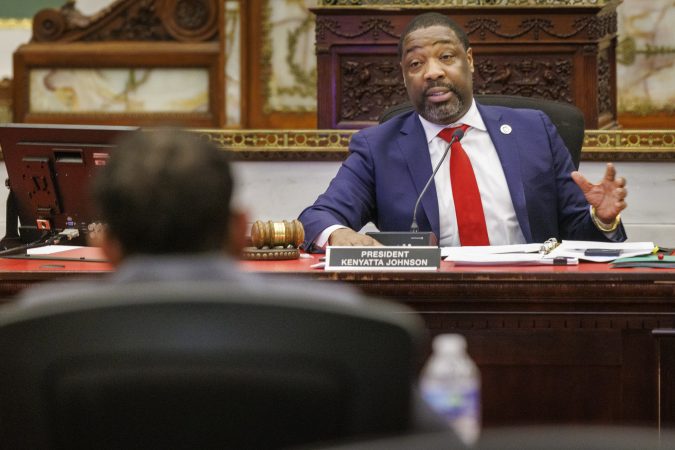
    The Philadelphia School District is about to face significant new scrutiny, with City Council President Kenyatta Johnson asking for a sweeping performance audit of the school system’s management and operations.

    City Controller Christy Brady has agreed to the request, which came via a letter in recent weeks signed by all 17 Council members, Johnson’s office told The Inquirer. The comprehensive review will go beyond the audit Brady’s office performs annually, delving into areas such as staffing and outside contractors.

    Council laid out no deadline for the audit but made clear it is expecting the results in time for next budget season, which will begin in the new year and ramp up in the spring.

    The district, one of the largest in the United States, has a $4.6 billion budget, which funds education for 113,000 students in 213 district schools and 65,000 in 81 charters. About $2 billion of that money comes directly from the city.

    “While the SDP is subject to regular financial statement audits that examine the accuracy of financial reporting and compliance with applicable accounting standards, this request seeks a performance audit focused on evaluating the efficiency, effectiveness, and management of financial and operational practices, including budgeting decisions, resource allocation, internal controls, and long-term fiscal planning,” Johnson said in a statement Thursday.

    The news comes during a period of heightened tensions between Council and the district, spurred by members’ frustration over the school board’s move to close 17 schools and a separate $300 million structural deficit that took Council by surprise.

    Last week, at a news conference where several members “begged” the district to come to the table to negotiate over school closings, Councilmember Curtis Jones Jr. said Council has “tools in our tool belt that we will use” if the board does not change its mind about some building closures.

    Jones has sponsored legislation to hold hearings on creating an independent financial authority, like the Pennsylvania Intergovernmental Cooperation Authority, to oversee the district’s finances.

    Council sources told The Inquirer that there is no indication that the district has conducted malfeasance, but that given the billions that flow to the district from city coffers, Philadelphia officials want a closer accounting of how the money is being spent.

    After the board voted to begin the closure process in April, multiple members of the public also called for increased financial scrutiny of the district.

    Reginald Streater, the school board president, said in a statement Thursday that the board and district will work with the controller’s office “to continue strengthening our financial processes and procedures.”

    Streater said the audit squares with the board’s approach to governance.

    “Good governance is not about assuming we have all the answers; it is about asking the right questions, using evidence to guide decisions and being willing to improve. We look forward to understanding the proposed scope of the audit and ensuring that the examination is constructive and focused on helping the district work well for students, families and educators,” Streater said.

    Superintendent Tony B. Watlington Sr. stressed the district’s academic strides, history of audits with no material weaknesses, and moves to solidify its credit rating.

    Frustration over a budget deficit and school closings

    Johnson, in his statement, said that the audit will reassure Council that “resources are being managed effectively and operations are functioning efficiently by the SDP,” and that he believes its findings will help inform priorities for next fiscal year’s budget.

    This year’s budget season was chaotic.

    After Mayor Cherelle L. Parker introduced her initial budget, Watlington ordered $225 million in cuts, including some school cuts, with 300-plus teachers, counselors, and climate staff slated to lose their positions.

    The problem, Watlington underscored in remarks in March, was “not because we’re not good stewards of the dollars, but because of historic underfunding.” (The district achieved its highest credit rating ever under Watlington, who has said he wants to be the superintendent to retire the system’s structural financial issues permanently.)

    Philadelphia’s school system cannot raise its own revenue but instead depends on the city and state to bankroll it, unlike every other district in Pennsylvania.

    City Hall seemed shocked at the news of the deficit and job cuts, despite the fact that Watlington had warned officials in 2025 that a budget gap was coming. The school district spent $300 million in reserves that year to avoid layoffs and program cuts as federal COVID-19 funds dried up.

    After Watlington said he would be forced to make the school cuts, Parker then upped her proposed 20-cent-per-trip rideshare tax to a $1-per-trip levy. That frustrated a Council already catching heat from city residents anguished over plans to close schools.

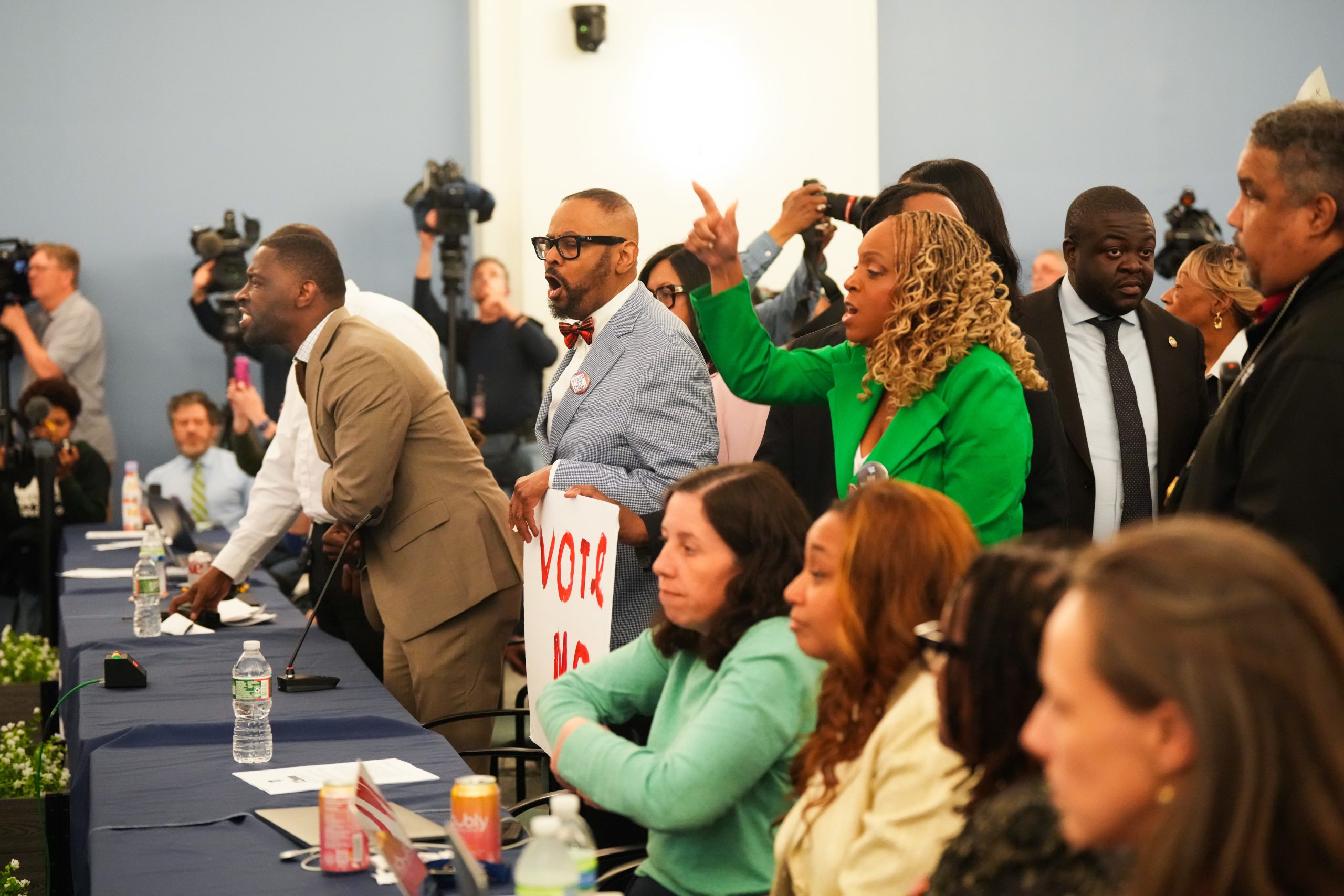
    (Left to Right) Councilmembers Isaiah Thomas, Curtis Jones Jr., and Jamie Gauthier protest at Thursday’s school board meeting as the board prepared to vote on the facilities plan.Jessica Griffin / Staff Photographer

    In April, several Council members took the dramatic step of repeatedly disrupting the school board’s vote in an attempt to get it to reconsider the closures of a handful of schools, including Lankenau and Robeson High Schools and Overbrook Elementary.

    The school board proceeded anyway — Council approves school board members, who are appointed by the mayor, and the city’s budget, but had no formal authority over the closures.

    The rideshare tax ultimately died.

    Eventually, Parker, Watlington, Council, and the school board worked out a deal to save the 300 jobs, with the city promising $216 million over five years from yet-unspecified sources.

    But it quickly became clear that some Council members remained frustrated with the school system and were looking for a way forward.

    Councilmember Isaiah Thomas has said he will not vote to reconfirm any school board member who voted for the closings; he and others have also said they believe it is time to rethink the school board’s governance structure.

    The city, as a primary funder of the district, needs a clearer picture of what is going on, they say.

    “Given the SDP’s current budget challenges, requests for additional public revenue, and recent proposals involving school closures and operational reductions, City Council believes a comprehensive performance and management review is warranted to ensure transparency, accountability, and informed public decision-making,” Johnson said in the statement. “The City of Philadelphia has a responsibility to ensure that all available revenues, expenditures, obligations, and funding strategies have been thoroughly reviewed before significant decisions affecting students, families, educators, neighborhoods, and public assets are implemented.”

    What will the special audit examine?

    City Controller Christy Brady (second from left, standing next to Mayor Cherelle L. Parker) is seen in this January file photo. Alejandro A. Alvarez / Staff Photographer

    Brady, in a statement, said the audit will “ensure resources are being managed effectively, operations are functioning efficiently and students are receiving the support they deserve. We’ve been encouraged by the SDP administration’s response to our previous audits and the steps it has taken to implement our recommendations. We expect this audit will continue that collaborative approach and continue to produce positive results for the benefit of students, educators and taxpayers.”

    Council has asked Brady to go deep, from probing into the current structural deficit and the projections used to get there to the status of Philadelphia Parking Authority revenues, both expected and received.

    Brady will also look at the district’s use of reserves and its administrative costs, and she will explore “the effectiveness and efficiency of administrative and operational expenditures, including central office functions, non-instructional spending and other costs not directly tied to classroom instruction.”

    She will look into how the district’s budgeting methods and long-term planning square with industry best practices, and examine contract management and consultant utilization to try to find areas “for improved accountability, transparency, and cost efficiency.”

    Brady is also charged with a deep dive into the financial effects of forthcoming school closings, and the potential ramifications of the closings on surrounding neighborhoods.

  • The rules for Philly’s school selection process are changing again — here’s how

    The rules for Philly’s school selection process are changing again — here’s how

    The guidelines for how students are admitted to Philadelphia’s magnet schools are changing.

    Philadelphia School District officials announced a number of shifts Wednesday that will be put into place for the application window for the 2027-28 school year, opening this fall.

    It is not yet clear when the school district will open the 2027-28 application process for its 37 criteria-based schools.

    The changes are:

    Only students’ grades in math, English, and science will count toward students’ eligibility for criteria-based schools. Social studies grades will no longer count.

    The zip codes that guarantee admission to four of the city’s top magnet schools to students are shifting. Children who live in 19132, 19133, 19135, 19138, 19140, or 19141 who meet academic criteria are now guaranteed admission to Masterman, Central, Carver High School of Engineering and Science, or Academy at Palumbo.

    New to the list are 19138 — Germantown — and 19141 — sections of North Philadelphia including Logan and East Oak Lane.

    No longer on the preference list are 19121 — parts of North Philadelphia including Brewerytown and Sharswood — and 19136, Holmesburg and Torresdale.

    The zip code list is recalculated annually based on which sections of the city were most underrepresented for admissions to Philadelphia’s selective schools.

    Students who attended a prekindergarten program at a district school now get preference for admission to that school’s kindergarten class.

    Students who attended a district summer career and technical education program now get preference for admission to a career and technical education program.

    More students will receive individualized review, or consideration for admission to criteria-based schools, as long as they meet eligibility requirements for any of the five schools they apply to. Individualized review applies to any student who is an English learner, or who has an Individual Education Plan or qualifies for a federal 504 plan.

    The change is “to allow more students with disabilities or who are English learners to access magnet schools,” officials said.

    The changes come weeks after a judge signed off on a $650,000 settlement in a lawsuit brought by three families challenging the special-admissions policy.

    The families, backed by lawyers from America First, an organization formed by Stephen Miller, a top aide to President Donald Trump, alleged that the school system had shifted to a “blatantly unconstitutional, race-based” admissions system.

    Each of the families had children who met academic criteria for the magnets of their choice in 2022, but who did not get in. The litigation came after Philadelphia overhauled its special-admission system in the name of equity.

    The settlement forced no changes to the process, which has evolved since its inception in 2021. Though zip code preference is still in place, the district no longer uses a computer-scored writing exam. It gives some sibling preference, and it guarantees admission to high school programs attached to magnet middle schools as long as students maintain high grades.

  • ‘The most incredible profession on the planet’: 500-plus new Philly educators kick off their school year

    ‘The most incredible profession on the planet’: 500-plus new Philly educators kick off their school year

    The school year started Wednesday for the 500-plus new Philadelphia School District teachers and counselors who will welcome 113,000 students back to school on Aug. 24.

    Inside the cavernous gymnasium at School of the Future in Parkside, Superintendent Tony B. Watlington Sr. pumped up the 575 new hires, telling them he was honored they chose Philadelphia.

    “We’re working hard in this school district to be the fastest-improving large urban district in the entire United States of America,” Watlington said.

    District officials said that they have 94% of teacher jobs filled system-wide, with just under three weeks to go before the beginning of the school year. The district has 100% of principal jobs filled.

    The lowest “fill rate” for school-based jobs across the system is 77%, for building engineers, followed by special-education assistants at 79%.

    This has been a chaotic hiring season for the district, with projected budget cuts forcing staff reductions in the spring, then a scramble to restore hundreds of school-based jobs after Mayor Cherelle L. Parker promised millions to stave off the cuts.

    Some of those 340 teachers, counselors, and other school-based workers whose jobs were cut have been restored to the positions they were initially directed to leave; others have taken new jobs within or outside the system, or are “over-appointments” who do not yet have permanent Philadelphia assignments.

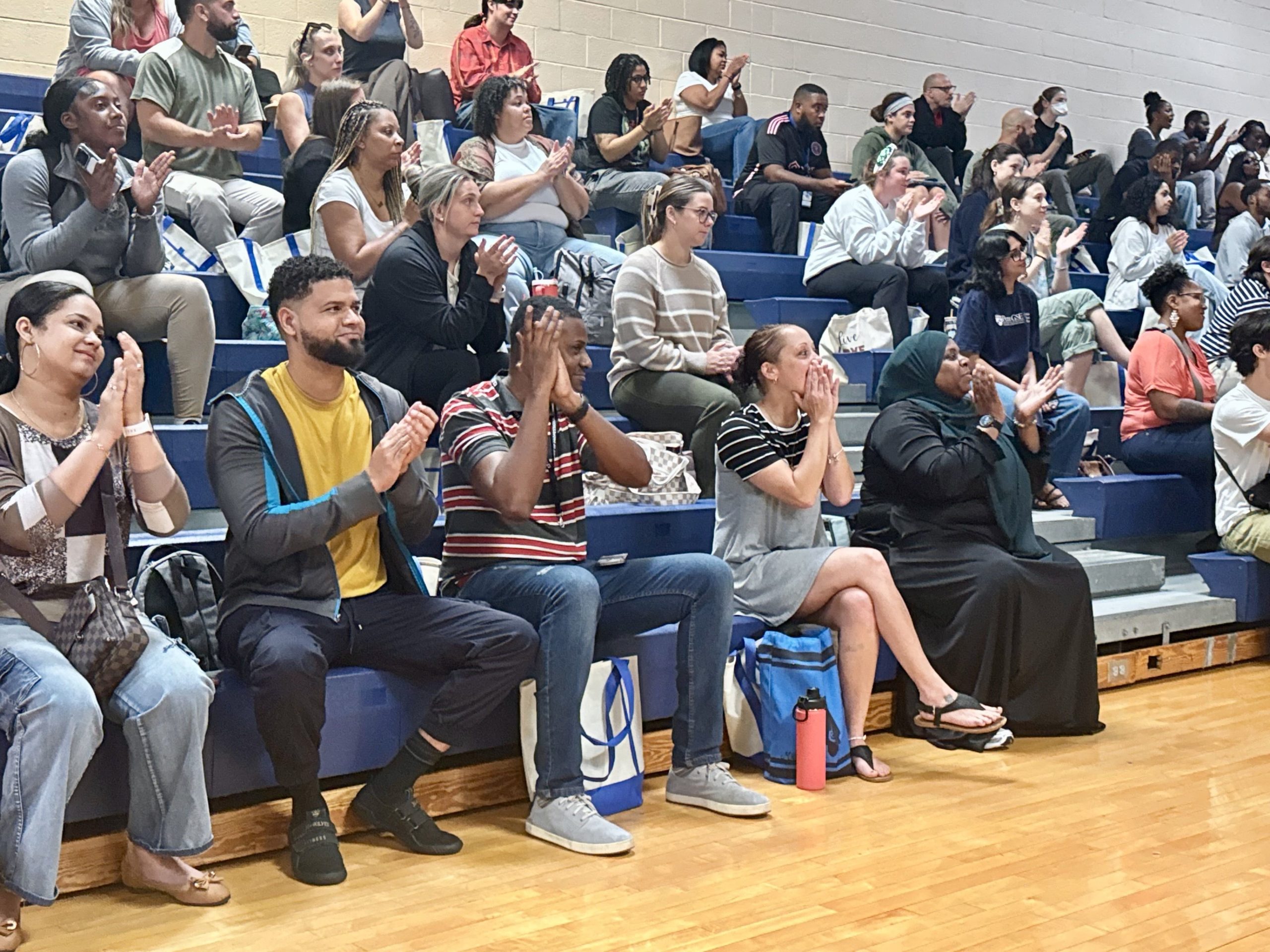
    New teachers and counselors applaud a performer at the Philadelphia School District’s 2026 new hire orientation at School of the Future in Parkside.Kristen A. Graham / Staff

    ‘They saw potential’

    Debora Carrera told the new teachers she would not have risen to become Mayor Cherelle L. Parker’s chief education officer if not for people like them.

    Carrera, the daughter of parents who did not finish elementary school, grew up as one of six kids in a single-parent family. Sometimes she was hungry. Sometimes she was unable to bathe.

    But “there were teachers who didn’t use those things as obstacles or barriers,” Carrera said. “But you know what they saw? They saw talent, and they saw potential in me.”

    Research shows that the top factor influencing a child’s academic progress is having a well-supported, stable teacher. And the first few years of educators’ careers are crucial: Nearly half of all teachers leave the profession within the first five years.

    Don’t give up, Carrera said.

    “Being a teacher is the most amazing incredible profession on the planet — don’t let anyone ever tell you differently,” she said. “Are you going to feel like you’re great every day? No? But guess what: Stick with it.”

    After the pep talk, Kwaku Ansah was charged up.

    Ansah, who will teach students with disabilities at Philadelphia Military Academy, a small district high school in North Philadelphia, has a decade of teaching in his native Ghana under his belt. He knows there will be tough days in Philly classrooms, Ansah said.

    “But,” Ansah said, “I’m ready.”

  • After allegations of a ‘toxic climate’ at Frankford High, the school will have a new principal for the first time in a decade

    After allegations of a ‘toxic climate’ at Frankford High, the school will have a new principal for the first time in a decade

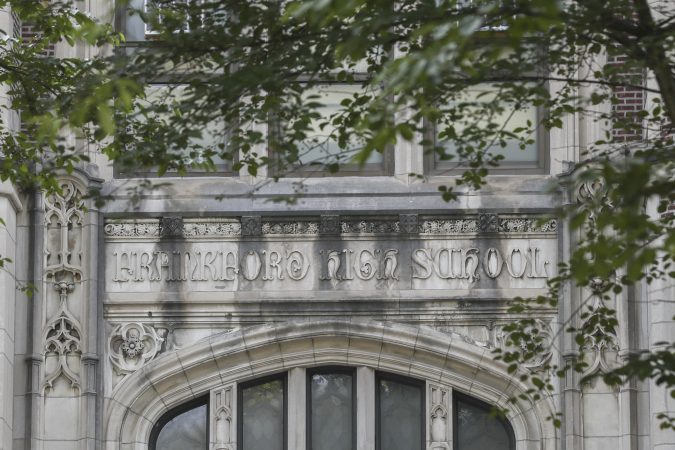
    For the first time in more than a decade, Frankford High is getting a new principal.

    Michael Calderone, who has served as Frankford’s principal since 2015, told the staff on Friday that he’s leaving to become the interim principal of Dobson Elementary in Manayunk.

    Calderone’s move comes after the district conducted an audit of what some staff said was a “toxic” climate at the school and serious allegations about Calderone, including that he struck a student and retaliated against teachers who spoke out against him.

    District officials did not comment on the results of the climate audit, but typically do not discuss personnel matters.

    Calderone said, in a letter sent to Frankford staff and obtained by The Inquirer, that the move to Dobson “holds tremendous personal and professional significance for me” because he began his career there, as teacher and dean.

    “Returning to lead the school where I first developed my passion for educational leadership feels very much like a homecoming and has always been a dream of mine,” Calderone wrote.

    Noah Tennant, the interim associate superintendent for secondary schools, said in an email to Frankford staff that Calderone “is a school leader with a proven track record of improving student outcomes, leading school transformation, and building collaborative systems. His leadership and contributions to the Frankford High community will leave an indelible impact on all he served.”

    Mary Jackson, a retired Philadelphia principal who’s served as Frankford’s interim leader in the past, will be “guest principal” while the district searches for a replacement for Calderone, Tennant said in the letter.

    “In the coming months, the district will initiate a process to identify the next permanent principal who will continue the important work underway and ensure every student and staff member is supported,” Tennant wrote.

    A Frankford climate audit

    The first public hint of controversy happened in early 2026, when Frankford’s budget, like spending plans across the school system, was shrunk because of district-wide cuts. Calderone ordered a number of teachers’ jobs cut out of seniority order, a move that was protested by the Philadelphia Federation of Teachers, and ultimately overturned.

    The PFT and teachers say the targeted educators — whom Calderone said he moved to advance academic goals — were ones who had spoken out against him, they told The Inquirer.

    At the same time, a number of current and former Frankford staff raised allegations about significant culture issues at the school, and the district conducted the audit.

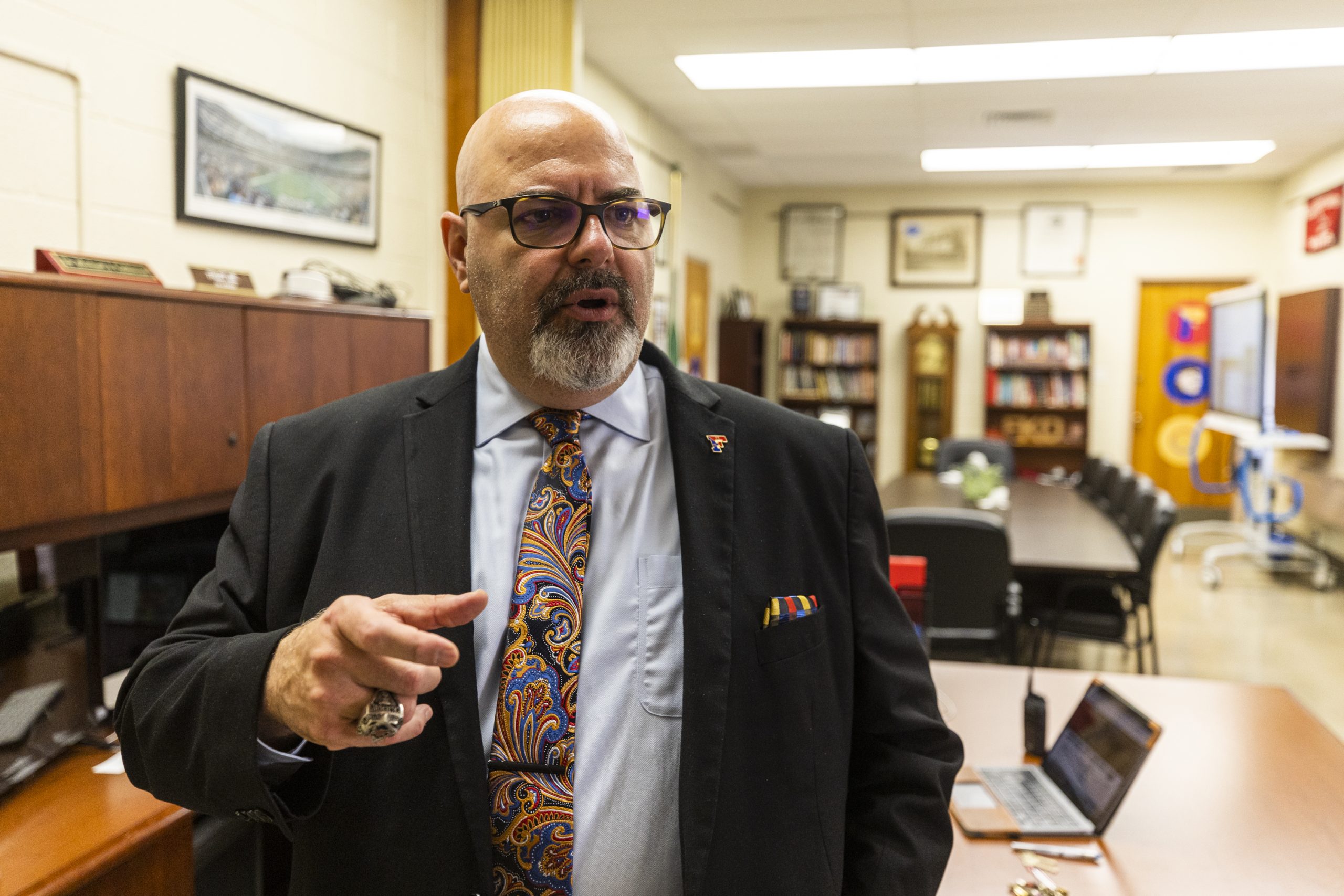
    Michael Calderone is shown in his office at Frankford High in this 2023 file photo.Tyger Williams / Staff Photographer

    According statements from multiple staffers made to the district and PFT and obtained by The Inquirer, Calderone, who earned citywide recognition for his work at the comprehensive high school, was a volatile leader who forced out many capable staffers.

    Some staff said the principal screamed at adults and students on multiple occasions. They also said he made improper requests, including asking teachers to provide grades for students in classes they did not teach.

    Others said he spoke openly about intentions to get rid of staff members who were not allies, to force out staff who he believed were opposed to him.

    Two staffers also told the district that Calderone punched a student who had assaulted multiple Frankford staffers. The staff did not report the assault when it happened because they were afraid for their jobs, they said.

    Other Frankford staffers agreed that there was widespread discord at the school, but say those who opposed Calderone contributed to the toxicity.

    Arthur Steinberg, PFT president, who had previously said that he did not believe Calderone was fit to run Frankford “or any school at all,” in a statement Monday commended the Frankford staff who brought concerns to the administration.

    “Thanks to their bravery and persistence, Frankford will be a healthier, more positive place to learn and work for all,” Steinberg said. “It is our hope that whoever is assigned to replace Dr. Calderone is able to reset the working environment for staff, so that Frankford is once again the warm, welcoming school community it was before he arrived.”

    ‘Thank you for your trust’

    Calderone, in his letter to Frankford staff, said he was particularly grateful for the community’s resilience during a tough time — the hulking main Frankford building was shut for multiple years because of asbestos issues, with students scattered between multiple buildings. He said he was also proud of Frankford’s aviation and hospitality programs, launched during his tenure at the school.

    “Thank you for your trust, your partnership, and the memories we have shared,” Calderone wrote. “I have every confidence that Frankford High School will continue to thrive and achieve great things. I wish you all the absolute best. Frankford will always be the ‘Home of Champions’. But never forget: every champion was once just a contender who refused to give up. I ask you to carry that relentless, unbroken spirit with you into every new day. Thank you for letting me walk this path alongside you.”

    Calderone will be moving to a very different school than the one he’s led for 11 years.

    Frankford educates about 900 students in its massive Oxford Avenue building. Dobson, a K-8 on Umbria Street, educates about 250, though both have large populations of students with disabilities.

    Dobson’s former principal, Khloe Williams-Lawani, accepted another job in the school system.

  • Philly school district promotes some administrators, changes principals elsewhere. Here’s a rundown.

    Philly school district promotes some administrators, changes principals elsewhere. Here’s a rundown.

    Superintendent Tony B. Watlington Sr. has announced a flurry of Philadelphia School District shifts in recent weeks, from promotions and principal changes to additional responsibilities for some of his senior officials.

    Changes are common at this point in the school calendar, but this year is particularly busy. The district’s 113,000 students return to school August 24.

    The changes include:

    A new human resources chief

    Kristy Baldwin was named chief talent officer. Baldwin had previously held the position on an interim basis. The district has cycled through a number of talent executives during the Watlington administration.

    Baldwin is the former longtime human resources executive in Prince George’s County, Maryland, where she was credited with lowering teacher vacancies and recruiting a more diverse educator workforce.

    Watlington, in a release, said Baldwin was “battle-tested” and collaborative.

    “Dr. Baldwin brings a wealth of experience and knowledge to the district, as well as a demonstrated track record of effectively staffing schools with high-qualified teachers, increasing the number of Black and Latine educators, and working with union leaders,” Watlington said.

    Baldwin officially in her new role on July 27, and will be paid $235,000.

    Changes in assistant superintendents, salaries announced

    Also announced last week was a new role for Kahlia Johnson, who had worked as deputy chief of talent management and recruitment selection. Johnson, the former principal of Overbrook High, is moving to become interim assistant superintendent for a network of district high schools. Johnson will be paid $197,302.

    Johnson replaces Noah Tennant, who was previously announced as associate superintendent for secondary schools. Tomás Hanna, who was associate superintendent for secondary schools, moved over to become associate superintendent for student life and school operations. Hanna will be paid $221,658 per year, and Tennant’s salary will be $215,202.

    In other recent changes that the district identified in recent weeks, Brenda Elliott was named deputy superintendent of academic services. Her salary is $285,488.

    Michael Farrell, chief academic officer, is paid $221,658. Nathalie Nérée, chief of special education, diverse learners and wellness, has a salary of $221,658. Nyshawana Francis-Thompson, senior adviser for strategic initiatives and innovation, is paid $208,627.

    Jamina Clay, assistant superintendent of school management and organization, makes $197,302. Kelly Espinosa, assistant superintendent for Learning Network 4, makes $197,302.

    Interim assistant superintendents Wilfredo Ortiz and Lucy Feria, who will run Learning Networks 8 and 9, respectively, will also be paid $197,302 annually.

    Additional responsibilities for Watlington deputies

    Two of Watlington’s top deputies are also taking on additional responsibilities.

    Alexandra Coppadge Wright is now supervising the operations, external and community affairs departments. Coppadge Wright, the chief of communications and customer service, was already supervising the Office of Communications, Office of Customer Service, and the Family and Community Engagement Office.

    Sarah Galbally, Watlington’s chief of staff, will add the School Transitions Office to her portfolio. Galbally also handles Board Relations, Government Relations, Grants Development, Strategic Partnerships, and Strategic Planning.

    Both Coppadge Wright and Galbally are paid $225,096 annually.

    Naima DeBrest, a spokesperson for the district, said in a statement that the changes were necessary as the district remains “focused on balancing the budget while recruiting and appointing talented individuals who have a demonstrated track record of improving student outcomes, as we continue to drive towards becoming the fastest-improving, large urban school district in the nation.”

    Principal changes

    A number of district schools have new principals. They are:

    Adaire Elementary, Amanda Strain. Strain had been principal of Waring Elementary.

    Bridesburg Elementary, Louis Depa. Depa had been assistant principal at Pennell Elementary.

    Clemente Middle School, Regina Barr. Barr had been assistant principal at Bluford Elementary.

    Edison High, Albert Sniezevage. Sniezevage had been assistant principal at the school.

    Benjamin Franklin Elementary School, Ryan Sullivan. Sullivan had been assistant principal at Penrose Elementary.

    Heston Elementary, Kamia Smith. Smith had been assistant principal at Heston.

    Lawton Elementary, Michelle Todd-Coleman. Todd-Coleman had been assistant principal at Forrest Elementary.

    Memphis Street Academy, Wayne Diggs. Diggs had been assistant principal at Mastbaum; Memphis Street Academy is reverting back to district control after being a charter school for years.

    Northeast High, Andrew Lukov. Lukov had been principal of Southwark Elementary, he also has experience as a Northeast assistant principal.

    Southwark Elementary, Mason Luksch Wilson. Luksch Wilson had been assistant principal at Elkin Elementary.

    Bayard Taylor Elementary, Claire Charles. Charles had been assistant principal at the school.

    Tilden Middle School, Jessica Culp. Culp had been assistant principal at Comegys Elementary.

    Waring Elementary School, Cathryn Anderson. Anderson had been assistant principal at Bache-Martin Elementary.

    Philadelphia principals are typically paid between $153,296 and $172,636 annually, with salaries set by union contract. Principals are represented by the Commonwealth Association of School Administrators, Teamsters Local 502.

  • Philly parents will be able to track some school buses in real time — for the first time ever

    Philly parents will be able to track some school buses in real time — for the first time ever

    Coming soon to some Philadelphia school bus stops: technology that allows parents and schools to track their kids — and their buses — via an app, in real time.

    That represents a sea change for families on up to 200 yellow bus routes throughout the city.

    Most Philadelphia school buses are decidedly analog — some companies still provide written turn-by-turn directions for drivers, rather than equip buses with GPS. Families generally have no information on when their buses might show up.

    A school bus driven by Aaliya Horn is reflected in the rearview mirror during a training session aboard one of the Philadelphia School District’s new school buses in Philadelphia on Tuesday, July 28, 2026. The district’s new bus vendor is introducing high-tech buses equipped with air conditioning, onboard cameras and GPS technology that allows parents to track their children’s buses in real time.Jose F. Moreno / Staff Photographer

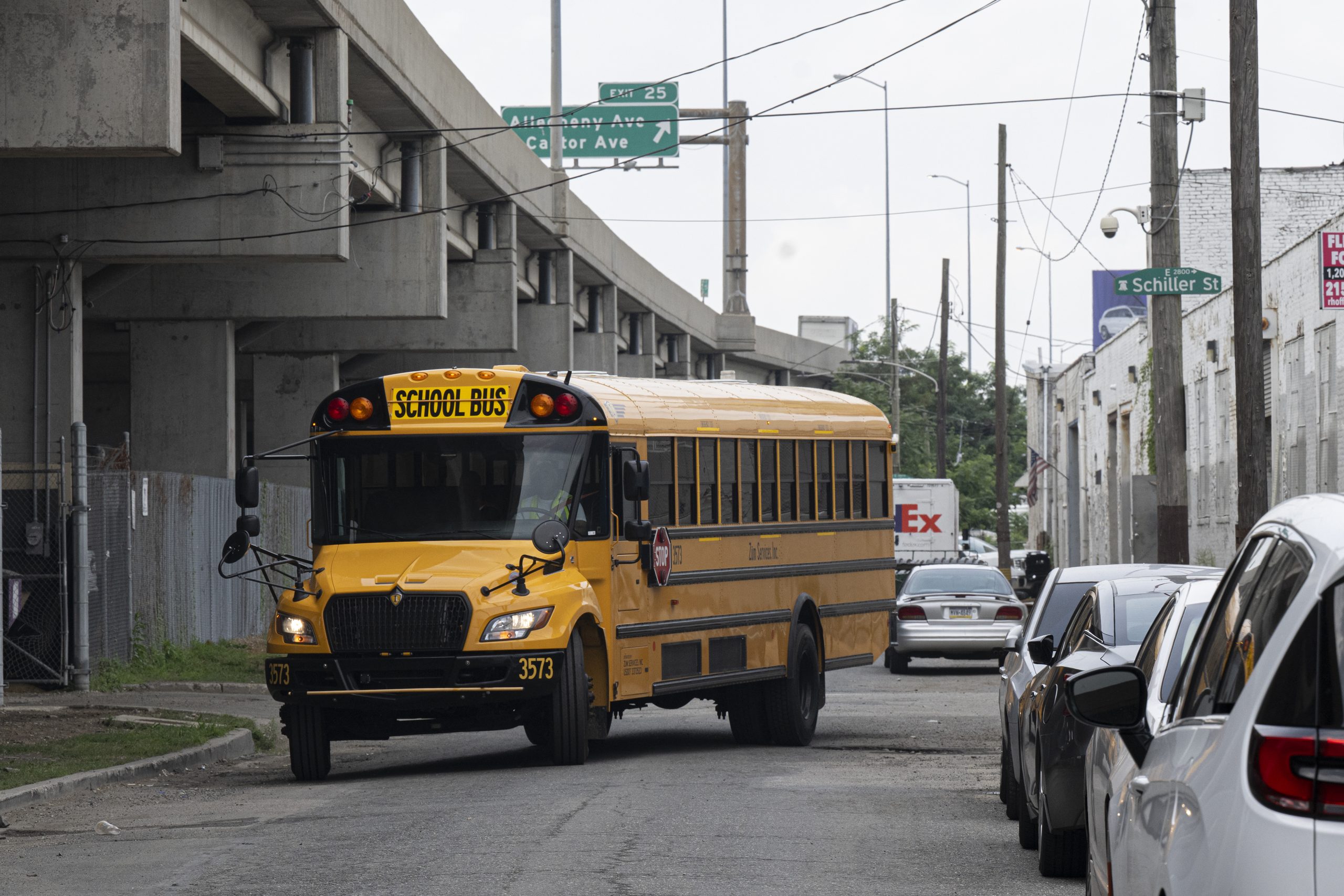
    But the district recently selected Zum Inc., a Silicon Valley-based tech-and-transportation company, as one of its vendors, awarding it part of a massive $483 million contract for yellow bus services through 2031. Zum, which runs routes in 18 states and 6,500 districts nationwide, including Los Angeles Unified, Kansas City, Mo., Howard County, Md., and Boston, will operate at least 200 Philadelphia routes, though exact figures and contract totals have not yet been settled.

    With its new, five-year contracts, awarded in April, the district dropped Durham School Services, a longtime vendor that had experienced some service and other issues amid a national bus-driver shortage.

    Students who live more than 1.5 miles from their assigned school are eligible for free transportation from the district.

    The school system transports only a fraction of its own elementary school students via district-owned yellow buses; the rest of the routes are serviced by providers that now include Zum.

    Philadelphia students in grades seven through 12 who are eligible for transportation to school are issued SEPTA passes.

    Zum, which has hired a number of former Durham drivers, is hoping to attract workers with competitive pay — drivers’ hourly rate starts at $30 per hour, and bus monitor pay at $20 per hour — and benefits.

    Route assignments have not yet been announced, so it is not clear which yellow bus routes will have Zum buses.

    What’s different about Zum?

    Zum officials promise a different experience before students even step onto a bus, said Missy Lash, the company’s senior location manager for Pennsylvania.

    “It’s comfort — but it’s also technology,” Lash said.

    Families whose children are assigned to Zum routes will be encouraged to download a free app that gives them real-time notifications and information about their child’s bus — who the driver is, when the bus will arrive, when their child is dropped off at school and arrives at the bus stop in the afternoon.

    Bus driver Aaliyah Horn drives her bus during a training session aboard one of the Philadelphia School District’s new school buses in Philadelphia on Tuesday, July 28, 2026. The district’s new bus vendor is introducing high-tech buses equipped with air conditioning, onboard cameras and GPS technology that allows parents to track their children’s buses in real time.Jose F. Moreno / Staff Photographer

    The tablet computer mounted at the driver’s fingertips provides directions, but also the location of each individual student’s pickup point and, if families choose to share them, student photos that help drivers identify whom they are picking up.

    When they step onto the bus, children either scan Zum-provided IDs or provide their names, which the driver types in. Once they do, parents receive a notification — your child has been picked up.

    “They’ll also get a notification when my child gets dropped off at school,” or if there’s traffic and the time of pickup or arrival is adjusted, Lash said.

    On the comfort piece, all Zum buses are air-conditioned — not a given system-wide. Only buses that transport students with disabilities must have guaranteed air-conditioning.

    That is a big upgrade for drivers and students, said Nicole Dukes, who worked as a driver and trainer with another bus company in Philadelphia for six years before switching over to Zum, where she will train drivers.

    “Just the buses themselves make you want to come to work,” said Dukes, who lives in North Philadelphia. “I never had air-conditioning on a bus.”

    The technology is also a plus, Dukes said — “it’s great to have that for the parents to keep an eye on their children,” and having tablets providing directions is a serious improvement over her old system.

    “We had turn-by-turn sheets, and if you had to go a different way, you had to call dispatch, who had a map,” Dukes said.

    School district officials say that while no district yellow buses have had tracking capability for parents, Everdriven, which provides some alternative district transportation services, like vans, does allow families to track their vehicles.