Author: Joseph N. DiStefano

  • U.S. refinery accidents, including in Pa., raise questions about cost impact as fuel demand rises

    U.S. refinery accidents, including in Pa., raise questions about cost impact as fuel demand rises

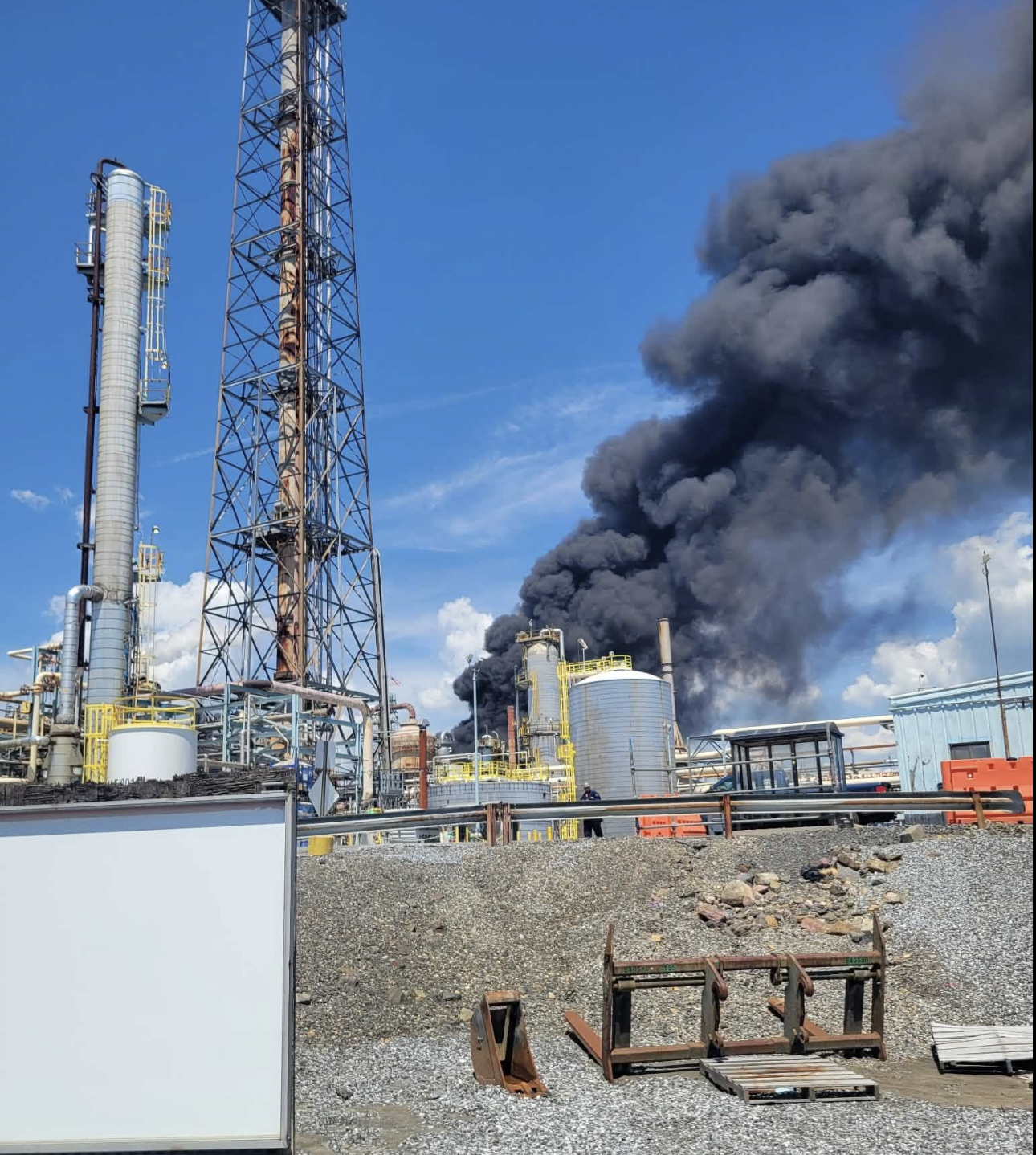
    A leak and then a fire that stalled production at Delta Air Lines’ Monroe Energy oil refinery in Delaware County is just one of several unplanned stoppages that have dented U.S. oil production this summer, even as companies work to keep up with shifting supply and demand from the Iran war.

    A welcome drop in U.S. gas prices “masks” a string of U.S. supply issues that put stress on fuel markets, Industrial Info Resources told clients in a note last week.

    Beyond the stoppage at the 200,000-barrels-a-day Trainer plant, problems include:

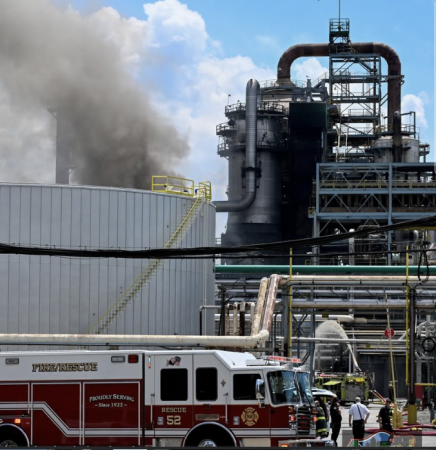
    Fire at Delta Air Lines’ Monroe Energy refinery in Trainer, Delaware County, on Friday.Lower Chichester Volunteer Fire Co.

    In all, U.S. refineries can produce up to 18 million barrels a day.

    Refinery margins tripled after the U.S. and Israel attacked Iran in February and the Strait of Hormuz closed, and refineries felt pressure to boost production during what is normally the spring “maintenance season” of reduced production, said Stephen Schork, cofounder of the daily Schork Report on energy markets, based in King of Prussia.

    During the missile attacks, “crude oil went as high as $120-$130 a barrel; jet fuel traded at $180-$190 a barrel,” tripling the usual profit margins, Schork said. “More than half the jet fuel on the East Coast comes from the Monroe refinery.”

    Gasoline and diesel was also in high demand, he said.

    “When you can make $50 [in profit] a barrel, you will be running that refinery as hot as you can,” Schork said. But “when you run as complex a piece of engineering as a refinery at nearly 100% capacity, the risk of unscheduled maintenance is increased.”

    With prices now dropping, pressure from short-term shutdowns should be less, he said.

    Overall, petroleum prices that spiked during the war have dropped since the U.S.-Iran ceasefire began bringing back oil refining and shipping in nations that had been attacking each others’ oil infrastructure.

    The Brent crude benchmark price of oil fell to near prewar levels for the first time since the U.S. and Israel attacked Iran at the end of February and Iran retaliated with attacks on U.S. allies.

    U.S. gasoline prices fell below $4 a gallon in late June, according to AAA.

    But with the U.S. Strategic Petroleum Reserve half depleted to prevent prices from rising higher in the near future and oil-thirsty countries scouring the globe for new supplies, the industry is sensitive to slowdowns. President Donald Trump’s energy adviser, Kevin Hassett, has said he’s confident reserves are adequate.

    Monroe confirmed an internal leak at the Trainer facility on Tuesday, six months after addressing a long-running gasoline leak at its Aston tank farm.

    Industry sources say the plant leak shut the plant’s distilleries, which process up to 200,000 barrels of oil a day, much of it for jet fuel, to help Delta control the cost of keeping its commercial jets flying.

    According to a Monroe Energy statement, a process pump at the Trainer plant caught fire Thursday, injuring a worker. County officials said two others were treated for heat effects after refinery staff and volunteer fire companies mobilized to fight the blaze. Monroe said air monitoring showed no risk to people outside the plant. The fire is under investigation.

    Firefighters outside the plant noticed smoke rising from the refinery at 11:30 a.m. Tuesday, even before reports began flowing in from neighboring fire companies and Delaware County emergency workers, who urged residents to shelter in place, according to a statement by the Upper Chichester Volunteer Fire Co.

    The fire was declared under control, and the shelter order lifted at 2:54 p.m.

    In line with company policy not to discuss operations, a Monroe spokesperson declined to estimate when the plant would be fully back online.

    The earthquake this week in Venezuela, an oil source for East Coast U.S. refiners, did not disrupt production at the nation’s main Paranagua oil complex, but the second-largest concentration, at Morón, was temporarily stopped, Reuters reported. The loss of electric power and other infrastructure damage across Venezuela is expected to slow tanker shipments out of the stricken nation.

  • Incyte is built to grow, says the company’s CEO, who sold previous biotechs for billions

    Incyte is built to grow, says the company’s CEO, who sold previous biotechs for billions

    Bill Meury got the call early last year after the last company he ran got sold for $3 billion. Billionaire biotech investor Julian C. Baker asked Meury: Would you be interested in running Incyte, a 2,800-person, publicly traded drug developer in Wilmington with $5 billion in yearly sales?

    Under its previous CEO, Hervé Hoppenot, Incyte had multiplied sales of its breakout drug Jakafi (“JACK-ah-fye”), which treats blood cancers and transplant conditions. The company plowed revenues into hiring scientists, building labs, buying smaller businesses, and testing new products against the day Jakafi’s key patent runs out in 2028.

    But new Incyte products were coming to market slowly. Shares peaked at over $130 in 2017, then fell into the $50s by early 2025, when Meury took over that June.

    Meury’s signing-year compensation at Incyte was valued at over $30 million, mostly in stock grants and in options vesting over six years. (Hoppenot was given $17 million for his retirement year.)

    With Meury as CEO — and Baker, whose firm is its largest investor, succeeding Hoppenot as board chair — Incyte shares have again topped $100 a share. Investors are hoping that Incyte delivers the drugs it has been readying for market — or that the company gets sold at a premium price like Meury’s previous employers Anthos, Karuna, Allergan, and Forest Labs.

    Baker is also a director and investor in Madrigal Pharmaceuticals, a $1 billion (yearly sales), $12 billion (stock value) company based in Conshohocken, best known for Rezdiffra, which treats liver disease.

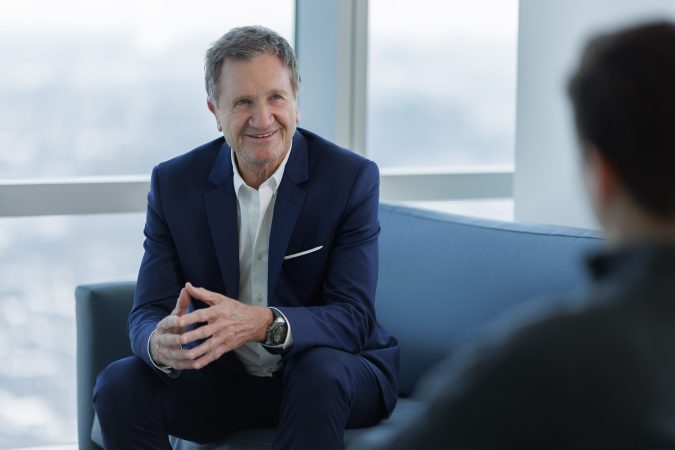
    Meury, who has been building a top management team with new chief financial, human-resources, and strategy officers, took questions from The Inquirer in his office atop Incyte’s glass-fronted hillside headquarters near U.S. Route 202.

    The interview has been edited for clarity and brevity.

    Why did you take this job?

    I did a great deal of diligence. I found their pipeline [of new therapies] was fundamentally under-appreciated. The company has excellent R&D and commercial capabilities. It has excellent potential products in three of the strongest areas of biotech — oncology, hematology, immunology — really good areas for long-term growth.

    That’s ultimately what companies solve for. When you have products, you win.

    Don’t all big pharma companies have that?

    Incyte has top-10 pharma scientists without the bureaucracy. Our researchers punch above our weight. Incyte is not a diversified giant, but it’s not a small start-up either. We avoid the downsides of both.

    Just for one example, Patrick Mayes, our chief scientific officer, is out of the University of Pennsylvania. We have a very capable group of scientists — biologists, chemists, translational researchers, drug developers. We are able to colocate here in Wilmington, which results in faster iteration.

    We have a lot to prove over the next couple of years. If we can advance half our assets through Phase 3 [clinical trial] to FDA approval of some scientifically and medically important products, Incyte will be much larger.

    I believe we have the potential to double or triple [sales] in five to seven years.

    For example?

    We are developing the first oral-targeted treatment for pancreatic cancer, which has been considered an undruggable target for decades.

    This is the Everest of oncology. Our scientists designed a small molecule to target KRAS G12D, a protein that causes [cancerous] cells [to reproduce uncontrollably]. We are in a race to be No. 1 with an approved treatment.

    And we have therapies for a group of blood cancers and for colorectal cancer. These are first-in-class molecules that can make a pronounced difference for those cancers.

    How can anyone avoid the ‘bureaucracy’ you say slows successful organizations?

    You can’t solve bureaucracy through structure and process. You have to solve through the attitudes of exceptional leaders. Hervé built a great culture on good hiring decisions. You have a bunch of people that trust each other.

    Failure is always right around the corner. Management has to be self-aware, to know the strengths and weaknesses of the employees. We are not running the company from 30,000 feet.

    Do you expect your board and major shareholders will want you to sell Incyte, like your previous companies?

    In general, companies can have two value-creation paths: There’s the independent path, and then there’s merger and acquisition.

    The only path that a management team controls is the independent path. We are focused on running the company, building a great business for the employees, customers, physicians, and patients — and for the shareholders.

    It hurts companies when there is a merger and acquisition theme all around them. If [buyers with offers] approach us, we have to listen. But we are building this company for the next decade. Most people want to work with a company that wants to be around in 10 years.

    You’re not antimerger. On June 16, you agreed to buy Vega Therapeutics for up to $2 billion.

    Vega has a novel compound [a treatment for an inherited blood disease] that we believe has potential sales of over $1 billion. If we can do several deals like this that fit one of our categories, in this case hematology, we will do them. These will never be more important than internal R&D, but each can be a multiplier for our business, with the right risk-and-reward profile.

    By the time Jakafi loses exclusivity in December 2028 — and it may go beyond that — we will have $3 billion to $4 billion in non-Jakafi revenues.

    Americans aren’t happy with the cost and availability of medical care, including drugs. Do you see any hopeful signs?

    Three things have to be in place for biopharma to thrive: First, patent and trademark laws have to be predictable. Second, pricing policy has to be balanced. Third, FDA has to run effectively. There have been headwinds, but I think those pillars will be in place as disruption settles.

    Are U.S. consumers and employers subsidizing world drug development with our high prices?

    It’s true there’s an imbalance. But Americans have access to the best medical care in the world, such as novel cancer treatments.

    But we have to get a better framework for global pricing. You’d like to see prices outside the U.S. come up, if they are going to moderate inside the U.S.

    Can the U.S. compete with China?

    China will be a source of innovation and competition. We have four or five major biotech centers in the U.S. They have 15. China is here to stay. For the U.S. to remain the leader, we have to create an environment where biotech can continue to thrive.

    Incyte was founded in 2002 by scientists from Wilmington-based DuPont, but recent plans to grow your space stalled. Will Incyte keep growing here?

    In the last two years we have added more than 150 [in Delaware] and anticipate adding another 250 [by 2031]. We will be here for as long as I’m here. The biotech labor market is not as strong as Boston, but it is strong here, with Thomas Jefferson and Penn in Philadelphia, and Johns Hopkins in Baltimore.

    We’ll grow somewhere else if we have to. I’m not religious about it. But the base of this company is here in Wilmington.

  • Engineer accused of using insider information on Three Mile Island nuclear plans to make $1.5 million

    Engineer accused of using insider information on Three Mile Island nuclear plans to make $1.5 million

    A nuclear power plant engineering manager for Constellation Energy has been indicted on federal insider trading charges of using advance knowledge that his company planned to reopen a uranium-powered electric plant at Three Mile Island to collect illegal profits on the stock options market.

    Casey Muggleston, of Marshallton, Del., worked on the license renewal team applying to the Nuclear Regulatory Commission for permits to restart the plant. According to a Delaware grand jury indictment, Muggleston made $1.48 million from his “scheme to obtain illegal profits” using “material nonpublic information” before Constellation announced its decision.

    Following an investigation by FBI agents in Maryland and Delaware, Muggleston was charged Wednesday by the U.S. Attorney’s Office for Delaware with securities fraud and four counts of insider trading.

    The charges carry a maximum sentence of 105 years, if he is convicted. However, white-collar sentences are typically a fraction of guideline terms. The government also wants Muggleston to forfeit the $1.48 million.

    Neither Muggleston, who worked for Constellation or its former owner Exelon Corp. from 2008 until 2025, according to a related SEC complaint, or his attorney returned a call seeking comment.

    “Constellation is aware of the government’s indictment,” company spokesperson Paul Adams said in an email. “As Mr. Muggleston is no longer an employee, we have no further comment.”

    According to the indictment, Muggleston bought call options on the company’s shares, a cheap way to collect gains in a stock’s share value, without having to pay the shares’ entire trading cost.

    Three relatives also bought options but have not been charged, according to the indictment.

    In a separate civil complaint, the Securities & Exchange Commission alleged Muggleston also shared information on other confidential Constellation deals as late as June 2025. He left the company that year, according to the SEC.

    Here’s what the indictment alleges:

    As early as April 2024, Constellation had said publicly that it was looking at restarting the reactor but hadn’t made a decision. Before going public with the news, Constellation had employees such as Muggleston refer to the restart as “Project Tetris.”

    A May 21 email to staff, including Muggleston, which was part of correspondence cited by both federal prosecutors and the SEC in their complaints, told employees to keep the licensing team’s progress “very confidential.”

    Three days later, Muggleston sent his cousin, who lives near the plant, an email noting “the restart is building steam. I’m trying to think of how to profit off this …” He added that there were “no guarantees.”

    Eight days later, on June 1, he gave the cousin a heads-up that a decision would likely be made later that month.

    By June 8, Muggleston had begun buying Constellation options in his Delaware brokerage account, betting the stock would rise, mostly by dates in July or August. By Aug. 14, he had accumulated 195 options contracts.

    But Constellation hadn’t announced the reopening. The share price for a time drifted lower, and some of his initial options expired and became unprofitable.

    Then on Aug. 15, two colleagues told Muggleston the restart was approved, and he was summoned to a restart planning meeting.

    Starting the next day, he bought another 150 options, then another 360. In early September the stock rose to over $200, making more of his options profitable.

    On Sept. 20, when Constellation made its announcement, the stock closed at $255, and he sold his 550 remaining options for a total profit of $1.48 million.

    Muggleston had taken Constellation’s annual training reminding employees, board members, and contractors that they and their family members are barred from trading on insider information and from “tipping” outsiders with that information, the indictment says. Insider trading is also illegal under federal securities law.

    The nuclear restart would help Constellation, a Baltimore-based power plant operator, supply data centers under a contract with Microsoft, among other customers. The plan is supported by President Donald Trump, Gov. Josh Shapiro, and other government officials. Environmental critics say the process is being rushed and could raise the likelihood of contamination.

    Constellation’s plan focuses on Three Mile Island’s reactor that closed in 2019 for economic reasons. It was not damaged in the 1979 partial nuclear meltdown.

    Constellation says it’s on track to load uranium into the reactor next spring and begin to supply electric power later in 2027.

  • PSERS outsources $20 billion in investments

    PSERS outsources $20 billion in investments

    In one of the biggest outsourcing moves in Pennsylvania investment history, the board of the $84 billion-asset state teachers’ pension plan, PSERS, voted last week to outsource investments worth $20 billion to BNY Investments Mellon, replacing work now done by members of PSERS investment staff.

    “We are trying to be more efficient,” Benjamin Cotton, PSERS’s chief investment officer, said in an interview Thursday. PSERS staff “have done a good job” managing that money, he said, but commercial index fund fees have fallen so much, and Wall Street managers’ ability to match benchmark indexes has improved to where it’s best to hire outsiders.

    At Wednesday’s meeting, Cotton told trustees that BNY, which is based in New York and has investment offices in Pittsburgh, is already a PSERS contractor and “wants to be an index fund manager for PSERS as well.”

    He declined to estimate how much PSERS would pay the bank, adding that a final contract is under negotiation.

    The resolution passed by the PSERS board calls on BNY to invest $16 billion in a “passive” (index-fund) portfolio of stocks “benchmarked to the S&P 1500.” BNY Mellon does not currently manage an S&P 1500 index fund, though the measure is used as a benchmark for BNY funds combining other indexes.

    BNY documents show the bank charges institutional investors between 0.2% to 0.7% of assets per year for other index funds, which could result in PSERS payments to the bank of at least $32 million a year. But fund managers sometimes negotiate significantly lower rates with multibillion-dollar clients like PSERS.

    PSERS also agreed to invest $4 billion with BNY in a foreign stocks fund, its performance to be measured against the Morgan Stanley Capital International (MSCI) World Ex-U.S. benchmark.

    Cotton said no PSERS staffers would be laid off as a result of the outsourcing moves, with investors responsible for buying and selling stocks for the current portfolio reassigned to other work. He declined to estimate how many PSERS staffers managed the funds BNY will take over.

    The board voted to approve the transfer, with only State Sen. Katie Muth (D., Chester) dissenting.

    Muth has opposed or abstained from supporting scores of PSERS investments, citing the lack of fee information and other details she says are provided to the trustees.

    The agency’s investment contracts often include fee formulas managers say are available to trustees like Muth on request but redacted from public viewing, though the annual sums paid to contractors have been published in separate reports without explanation of how the payments were calculated.

    Manufactured housing profits

    Also at Wednesday’s meeting, Cotton said PSERS would collect nearly $700 million from selling a major investment. People familiar with that investment confirmed it is a stake in Yes Communities, which has owned and developed hundreds of U.S. trailer parks with amenities such as swimming pools and clubhouses.

    Cotton says PSERS invested a total of $230 million, starting in 2008, and including the new payout has received around $1 billion back, with another $500 million still invested in the same asset, currently through the Brookfield private investment group. Cotton said that return has been higher than if PSERS invested that money in the S&P 500.

    That’s better than the results PSERS realized on some of its other “direct” real estate investments from that period, including a handful of Southern hotels and shopping malls, and vacant Harrisburg industrial properties.

    The board also approved investments in TPG Peppertree Fund XI-A, an infrastructure fund, and PAI Mid-Market Fund II, a European private-equity fund.

    The board did not consider two other investments recommended by staff, in a pair of private-credit funds.

    Given poor results and variations in asset valuations reported by private-credit managers, Cotton said, PSERS needs to review its existing private-credit investments, and what’s happening to the high-risk loans that private-credit funds finance before buying more.

  • Philadelphia’s former top lawyer, now a corporate defender, says national companies need Philly lawyers

    Philadelphia’s former top lawyer, now a corporate defender, says national companies need Philly lawyers

    As Philadelphia’s city solicitor, heading a staff of more than 200 lawyers, Sozi Pedro Tulante sued some of the nation’s biggest corporations, accusing them of loan discrimination and pushing lethal painkillers.

    Now he’s a partner at Dechert LLP, a Philadelphia-founded, international corporate law firm, where the work includes defending big national corporations from the kinds of complaints he used to file.

    Corporate targets during his 2016-18 stint as the city’s top civil lawyer included Wells Fargo & Co., the third-largest U.S. bank, which settled his lending-discrimination complaint for a promise of $10 million in donations to housing programs, and six pharmaceutical companies, four of which were major Pennsylvania employers, for promoting addictive opioids. The city later got a nearly $200 million share of a national settlement.

    Tulante’s job also included routine legal reviews. He defended the city’s soda tax and its sanctuary city immigration status.

    After leaving his city position in 2018, Tulante — son of a refugee, a Northeast High School and Harvard University graduate, and a former federal prosecutor — lectured at the University of Pennsylvania’s law school.

    He joined Dechert’s litigation department the next year, then spent 2022 to 2025 as general counsel at Boston-based Form Energy, which builds iron-based batteries for data centers and other clients at its plant in Weirton, W.Va.

    Last year, Tulante moved back to Philadelphia and was named co-managing partner of Dechert’s Philadelphia office. He agreed to talk to The Inquirer about practicing law in Philadelphia.

    This interview has been edited for clarity and brevity.

    Does Philadelphia’s reputation as a “judicial hellhole” full of billboards urging citizens to sue businesses scare companies away?

    When a company is deciding to locate in a particular place, they do look at the tax structure and how red is the red tape and the legal climate.

    The Inquirer has reported how in Philadelphia [a plaintiff] can pursue a case in Philadelphia Court of Common Pleas even if they aren’t here. There have been these “nuclear verdicts” for millions of dollars.

    More companies are now aware of the risk. They adjust.

    There are extreme cases where litigation ends a company. But for the most part you factor it in.

    Who gains from a litigious climate?

    Sophisticated national companies have clients everywhere. They know they are going to get sued. They study to minimize litigation. For example, don’t use flip messaging. Just be familiar where the threats may come from. Know what litigation the city is pursuing.

    Many of the big companies facing litigation in Philadelphia are more likely to engage counsel that is locally respected and recognized in the area. In Philly, if you can’t answer the question, “Where did you go to high school?” [with a name the parties recognize], it’s a disadvantage. Here, we fight the plaintiff attorney, but we also serve on the same board and attend the same continuing legal education [CLE] classes.

    There are great lawyers on the other side, at [plaintiffs’] firms like Kline & Specter and Ross Feller Casey, sophisticated counsel who walk into court and get instant respect.

    Part of my role at Dechert is to represent clients in Philadelphia and nationally who are thinking about how Philadelphia has changed as a place of litigation and how that litigation impacts business.

    Businesses are saying, “We have the tax burden, the regulatory burden, we’ll comply, but you are pushing on the edges.”

    What recent laws have changed the legal climate for business?

    The new consumer protection ordinance, passed in 2024, has given the city more power to bring some major cases [through national law firms] that are broader than before. Life sciences cases. Firearms liability. Fair workweek litigation. They may go after [national] retailers in certain cases. The city can go forward and get penalties up to $2,000 per violation.

    As city solicitor, I was reminded that government has the broadest power of regulation at the local level. The police authority government has is really broad. Unless there’s some preemption by state or federal government. It’s something folks pay attention to.

    Is part of Philadelphia’s affordability a result of its failure to attract private-sector employers?

    I live in West Philly. I work at the law school. I have three children in public schools. I want the city to have a secure tax base. I want to make sure investment goes where it needs to.

    It’s challenging. One of the biggest challenges is getting people from Temple, Penn, Drexel, and St. Joe’s to stay.

    There are instances, like Chubb’s new office, where the city has persuaded [a longtime city employer] to stay.

    In Philadelphia the strength ultimately is in eds and meds. We have doctors and nurses, lab technicians, people with a high level of training. Philadelphia takes credit for helping solve COVID by our Nobel Prize winners Drew Weissman and Katalin Karikó at Penn, which has led to investments in gene therapy.

    What was the most satisfying thing you did as city solicitor?

    Working to get local control of the school district and disbanding the state’s School Reform Commission. It was humiliating, the way the state was running our schools. We should have a stake. The most important thing we can do is educate our children and prepare them for businesses that want to hire talent.

    Why did you choose the law?

    It’s not the ability to argue that makes a good lawyer. You have to solve problems. You have to be really good at writing. And you have to be able to talk to people — to be personable, to make the hard stuff simple, to help them understand.

    I like a career where people ask you to help them solve really big problems. They can be CEO of a major company or a pro bono client that needs a habeas petition. They require the same level of skill.

    How did you come to be a Philadelphian?

    I came here at age 8 in 1983 [after his father, a military official in Angola, fled to Congo following a change in government, was imprisoned, then was resettled in North Philly by a refugee agency].

    It was a difficult time to grow up here. I graduated in 1993 from Northeast High School. I got into Harvard, then Harvard Law School.

    Eight years ago, I left the city, to be general counsel at a startup.

    But it came back to family and affordability. Philadelphia is that place for me, within the larger Northeast corridor.

    What gives you hope?

    My dad drove a cab when he came here. My mom worked in the prison system. Now here I am, a Black attorney from the public school system.

    I am a big booster of today’s public schools. My children are at Central, at Masterman — I couldn’t get into those, I still hold a grudge! — and at Penn Alexander in West Philly.

    I want my children with other children who really want to achieve. I motivate them, the teachers motivate them, they are self-motivated, but the friends they are with have more of an impact on them.

    And I think we are finally putting into place an infrastructure for understanding government. You know Philadelphia has more political ads and advertising than almost anyplace, a big city in a swing state. But we have not always centered our education on civics. Now my son understands more than I did.

    I’m glad to be back at Dechert. I can see a lot from this perch.

    This story has been updated to correct some biographical information about Sozi Pedro Tulante.

  • Why Philly longshoremen say the city’s ports are the fastest in North America

    Why Philly longshoremen say the city’s ports are the fastest in North America

    Philadelphia’s ports ranked as the fastest in North America for the third year in a row, according to the latest annual Container Port Performance Index, sponsored by the World Bank and Standard & Poor’s as a way to encourage improvements to terminals that handle global trade and pack goods moving from the ocean to road and rail for delivery.

    The survey gave Philadelphia the highest ranking of more than 50 ports in the United States, Canada, and Central America.

    Boston and Jacksonville, Fla., ranked second and third. Philadelphia’s nearest neighbors — the New York area and Baltimore ports — ranked far behind. The list measures the time ships spend at port berths, the time from a ship docks until it is unloaded, crane availability, ship size, and other measures.

    No North America port ranked among the 20 fastest of more than 200 surveyed worldwide. That list was dominated by ports in China and other parts of East Asia, in Arab and North African countries, plus Algeciras, Spain, and Posorja, Ecuador.

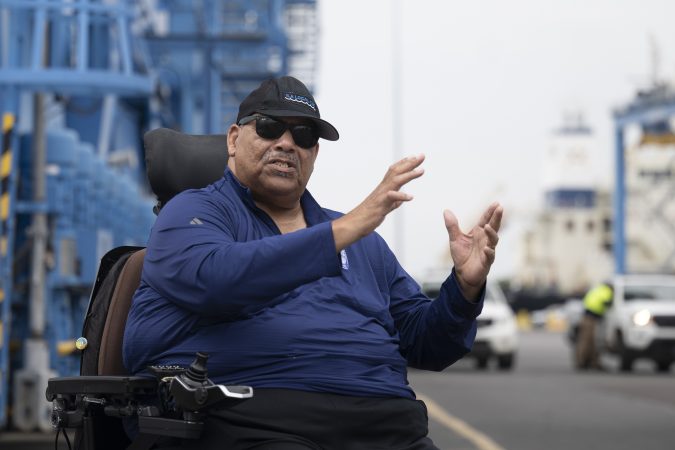
    “This sometimes looks like chaos, but it’s organized chaos. It’s about teamwork,” said Boise Butler, president of Local 1291 of the International Longshoreman’s Association.

    ILA is the main East Coast port labor union group, claiming more than 1,400 members on the Philadelphia docks, plus more in New Jersey and Delaware.

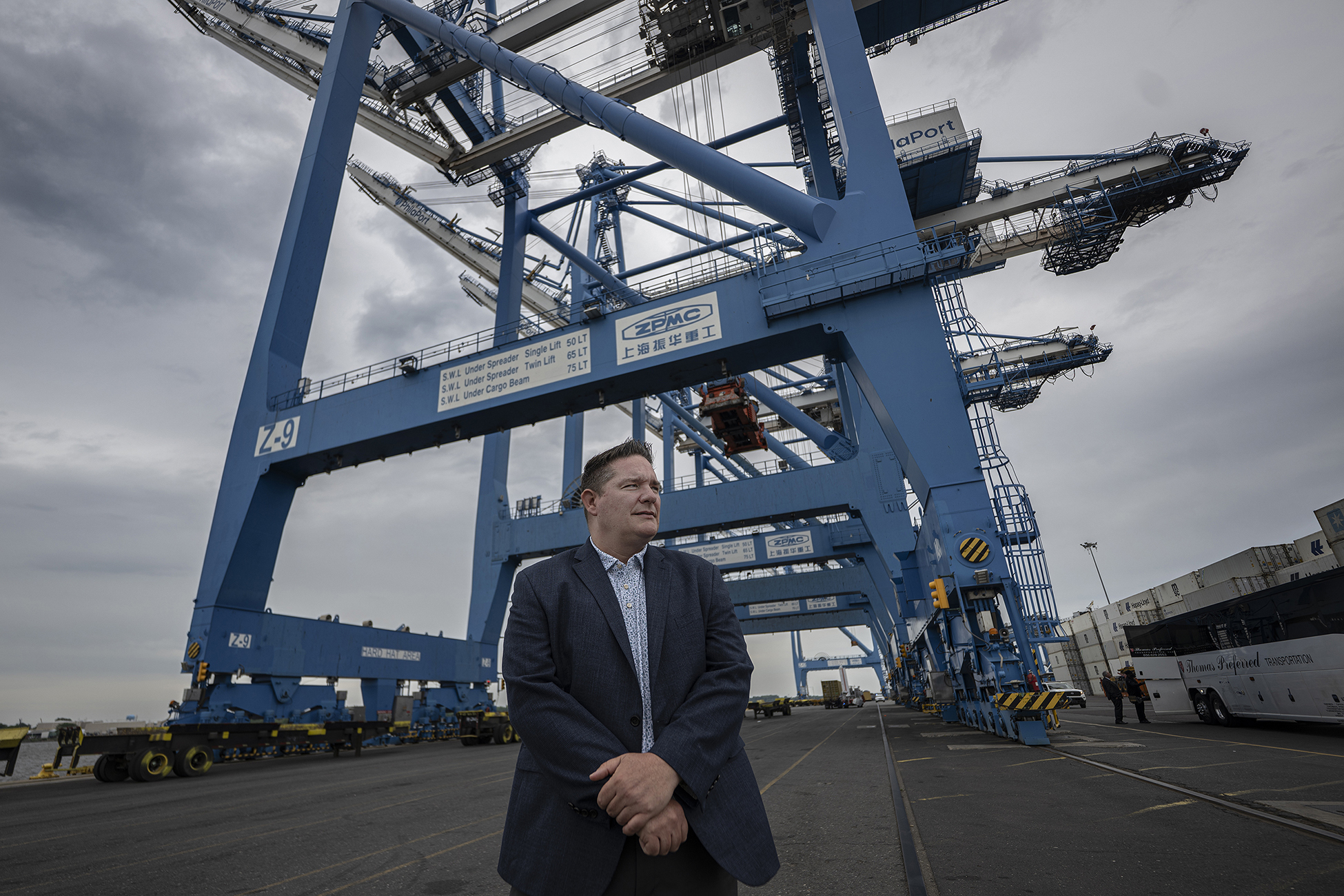
    Philadelphia ports are some of the most flexible, offering shippers start times, on average, every hour from 7 a.m. until 1 a.m. the next day, and guaranteeing that Longshoremen and truckers will show up to take off loads, said Richard Lazer, the port’s new chief executive officer and executive director.

    Butler said Philadelphia had long ago expanded its hours to attract shippers who were concerned that the terminals far up the Delaware estuary were more vulnerable to any delays.

    Lazer credited “our very skilled labor” for handling large loads efficiently with minimum damage reports, according to commodity and container shippers.

    Richard Lazer, CEO of PhilaPort, near cargo cranes at the PhilaPort terminals. Lazer credits “our very skilled labor” for handling large loads efficiently with minimum damage reports.Jose F. Moreno / Staff Photographer

    It is premium work. The Longshoremen’s contract currently pays experienced workers $50 an hour, rising to $54 in October, with overtime pay after five hours, Butler said. “If they’re not making $200,000 after five or six years, something’s wrong.”

    But the ranking is “not just about labor,” Butler said. “It starts with the Commonwealth of Pennsylvania, what they have built, and their vision for this port.”

    Leo Holt, whose family-owned shipping company operates on the Packer Avenue docks and at its own Gloucester City port terminals, said the latest high score is “credit to all parties.”

    “It’s a partnership between labor and management that has taken a long time to refine,” Holt said, referring to last year’s report, which also put Philly at the top of North American ports. “We work hard at it.”

    Butler said the port needs to expand beyond the recent record hauls of nearly 1 million containers a year if it is to challenge ports like Savannah, Ga., which he said shipped five times as many containers.

    “We need more warehouses,” Butler said.

    The state built or helped finance many of the port’s improvements and has pledged to lead expansion into part of the former Philadelphia Naval Base and the Norfolk Southern freight yard in South Philadelphia. Four cranes larger than any currently on the area dock and two new 1,000-foot berths are planned, Lazer said.

    Philadelphia cargoes through the Tioga Marine Terminal near the Betsy Ross Bridge include wood pulp and cocoa beans moved and, recently, ship propellers and sheet and structural steel imported by Korean industrial giant Hanwha for transfer by barge back down the Delaware to Hanwha Philly Shipyard.

    Besides containers, the South Philadelphia port that once handled iron and coal now ships fertilizer and cement. Korean cars from Hyundai and Kia also land in the port.

    South American fruit, which once formed a significant part of the Philadelphia and Wilmington port totals, now goes mostly to ports in New Jersey, Butler said.

  • Delta’s Monroe Energy refinery in Delco shuts due to internal leak

    Delta’s Monroe Energy refinery in Delco shuts due to internal leak

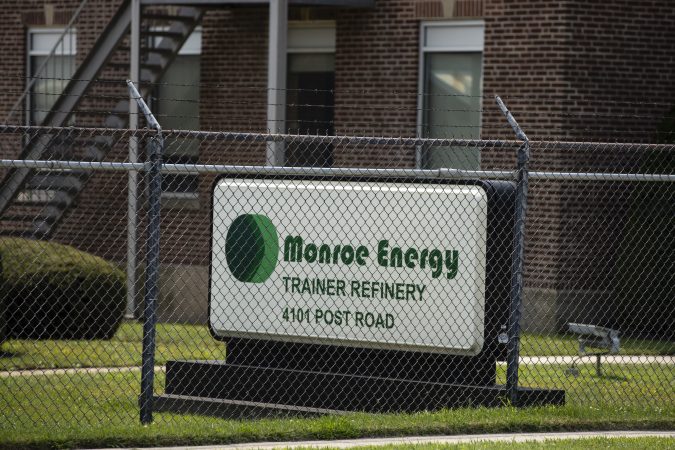
    The Monroe Energy refinery on the Delaware River in Trainer, Delaware County, stopped its two 100,000-barrels-per-day crude-oil distilleries Tuesday due to a leak inside the facility, Industrial Info Resources (IIR), a Texas-based energy research service, told clients Wednesday.

    Delta Air Lines owns the refinery and uses much of its capacity to make jet fuel. A Delta spokesperson said he could not comment on daily operations at Monroe Energy, adding there is no danger to the public.

    The stoppage was reported in other energy media and noted on Delaware River Shipping, a 7,000-member Facebook group frequented by people who work for shipping-related businesses and others with an interest in river traffic.

    Even before the war with Iran disrupted shipping and delayed oil deliveries, causing a spike in world energy prices, U.S. refinery closings had reduced supplies of gasoline, fuel oil, and jet fuel, according to the U.S. Energy Information Administration. The shutdowns reflect lower demand for gasoline as Americans drive more energy-efficient vehicles.

    But the reduced supply makes prices more vulnerable to plant shutdowns and other supply disruptions, according to the agency.

    Delta bought the former ConocoPhillips refinery in Trainer in 2012 to insulate itself against swings in oil prices by producing its own jet fuel and other refined products for trade to jet fuel suppliers in other cities. Fuel is airlines’ largest single expense, according to the International Air Transport Association, which represents airlines that carry most of the world’s passenger traffic.

    The Trainer facility was among the larger U.S. importers of Russian crude oil before Russia attacked Ukraine in 2022 and U.S. refiners stopped buying Russian crude.

    Monroe Energy, which employs around 500 union workers, managers, and other professionals and contractors, is one of three similarly sized oil refineries remaining on the Delaware River since the closing of the former Sunoco refineries in Westville, N.J. (2010), Marcus Hook (2011), and South Philadelphia (2019).

    The other remaining refineries in Delaware City, Del., and Paulsboro, Gloucester County, are owned are operated by publicly traded PBF Energy, based in Parsippany, N.J.

    In a separate incident, neighbors of Monroe’s tank farm in Aston, Delaware County, which relies on well water, were issued bottled water last year after 378,000 gallons of gasoline leaked through a quarter-inch hole in one of the 12 tanks on the site over a period of several months before the leak was found last December.

  • FMC boss says the company could be sold by July

    FMC boss says the company could be sold by July

    Workers, shareholders, and farm customers of pesticide giant FMC, whose red-lettered logo glows atop its University City headquarters, should know in a month if they’re likely to get a new owner.

    The process for talking to potential buyers of FMC, the world’s fifth-largest pesticide maker, “is still going on. The number of parties we are discussing with is getting smaller,” CEO Pierre Brondeau told investors Wednesday at Wolfe Research’s yearly chemical-industry conference in New York.

    “It’s always very distracting for an organization” when a sale is under consideration, Brondeau said, adding he expects that “by the time we get to the end of July, to the earnings call for the second quarter, that we can close this process.” Shares briefly rose 10% after his remarks.

    It has been Brondeau’s goal to keep FMC independent since he returned as CEO in 2024 after a four-year retirement from daily management. The company’s share value plunged from above $120 in early 2023 to under $10 last winter, as farm sale growth remained in a post-COVID slump.

    But in February, with FMC’s credit rating fallen to junk-bond status, the company cut its dividend and said it planned to raise $1 billion from asset sales and licensing deals to pay down debt. Executives also hired bankers to talk to potential buyers in case the company could draw an offer shareholders might find more attractive than years of rebuilding.

    Brondeau said Wednesday that FMC was more than halfway to its billion-dollar target, following the sales of operations in India and a smaller business line in Europe, and a licensing deal with Wilmington-based Corteva, the largest U.S.-based pesticide company. Other deals are in the works, he added.

    Brondeau has chaired FMC’s board since 2010. He is the architect of the company’s reorganization into a multinational pesticide business, from a diverse industrial holding company.

    FMC employs around 5,500 workers, including around 300 at its headquarters, and 330 at its Stine research center near Newark, Del., which the company acquired from DuPont in 2021.

    At the conference Wednesday, Brondeau affirmed FMC has products “in the pipeline” that should boost sales and profits in the coming years, balancing its pesticide focus with new herbicides and insecticides to move year-round sales to farmers of many different crops.

    Mergers in the 2010s produced a handful of pesticide multinationals — such as BASF, Bayer, Corteva, Syngenta — as well as FMC. But Brondeau noted the global farm chemical industry remains competitive and fragmented.

    Brondeau said the expense of getting some of its pesticides distributed to more farmers had spurred a deal announced Tuesday to license its rimisoxafen herbicides for Corteva to sell to corn and soybean farmers in the U.S., Brazil, and other Western Hemisphere countries plagued by certain pesticide-resistant weeds.

    Under terms of the deal, Corteva agreed to pay FMC $200 million up front, as well as a cut of the sales.

    FMC was the only one of the five largest global pesticides companies that did not design its chemicals to work with particular genetically modified seeds.

    Corteva, based in Wilmington, was spun off from DuPont and last year announced it was turning its seed business into another separate company.

    Last month Corteva said it would name the new seed company Vylor and move the headquarters of both its pesticide and seed company successors to Indiana. The company will keep an office in Delaware.

  • This Philly-based steel stock has rocketed as SpaceX shot up

    This Philly-based steel stock has rocketed as SpaceX shot up

    It’s not just SpaceX on the rise.

    Elon Musk’s company that runs the Starlink communications network, launches rockets for NASA, and develops artificial intelligence software raised more than $75 billion from investors last week — a record initial public stock offering (IPO) for a company fast-burning through billions in investor dollars in hopes of future profit.

    SpaceX is just the flashiest of a string of industrial stocks that have soared as orders for missiles, drones, and other war machines, as well as civilian aircraft and rockets, pile up. S&P’s Aerospace and Defense Select Industry Index is up 44% over the past year vs. 24% for the broader S&P 500 stocks, even with Google, Nvidia, and other AI-linked stocks leading the 500.

    The share price for Philadelphia-based Carpenter Technology is up 125%, almost three times as much as that index of aerospace and defense stocks.

    Carpenter does $3 billion in annual sales, melting or grinding iron, tungsten, cobalt, and other metals into super hard or relentlessly flexible alloys used in stainless steel and other specialty parts by military, commercial airliner, medical, industrial, and space equipment makers.

    The company operates plants in Reading, Berks County; Latrobe and other Western Pennsylvania towns; and around Athens, Ala. It has a finishing plant in China and distributors worldwide. Carpenter’s large customers include passenger jet and military aircraft maker Boeing and European aerospace giant Airbus.

    CEO Tony Thene has said space is a fast-growing growing part of Carpenter’s customer base, exciting some investors into expecting the company will share SpaceX’s gains.

    Thene, who is stepping down at the end of the month, hasn’t said SpaceX is a customer. Chief operating officer Brian Malloy will take over leading the company.

    Investor Louis Navellier was quoted last month as saying he’d rather own Carpenter, which makes the metals used by SpaceX and other aerospace companies, and its larger customer, Pittsburgh-based Howmet Aerospace, than SpaceX itself, at recent valuations.

    In an article in Barron’s, also last month, polled analysts predicted Carpenter stock would rise into the high $500s — as it has in the four weeks since.

    That price is above the targets set by analysts at Bala Cynwyd-based Susquehanna International Group and Wall Street brokerages after Thene reported earnings at the end of April. At that time, Carpenter officials predicted stronger than expected sales and higher profits, to be split between investor dividends and new furnace equipment.

    Carpenter at recent valuations is worth around $30 billion, roughly as much as Hershey or Kraft Heinz, whose sales are much larger, and almost as much as gas-drilling giant EQT, based in Pittsburgh.

    Shares of area aerospace manufacturers such as Ametek, which has its headquarters in Berwyn and plants around the world, and Innovative Aerosystem, of Exton, are also up significantly over the past year.

    Triumph Group, an aerospace manufacturer based in Radnor, was bought by private equity companies last year. Growth at privately held Piasecki Aircraft has slowed after delays in private and government contracts.

    Howmet, with $8 billion in yearly sales to Carpenter’s $3 billion, hasn’t boosted its share value as fast in past year, but it has risen enough to become the most valuable company in Pennsylvania, the only company whose shares are worth over $100 billion on the stock market.

    That’s more valuable than companies with much larger sales, such as Philadelphia-based media giant Comcast; mega-drug distributor Cencora of Conshohocken, or Pittsburgh’s PNC, the nation’s fifth-largest bank.

    At today’s share prices, many times earnings or projected future profits, investors are gambling that suppliers like Carpenter and Howmet — and SpaceX, the spaceship builder — will grow a lot faster than the economy as a whole.

  • TMI owner says Pa. nuclear plant is on track to reopen next year

    TMI owner says Pa. nuclear plant is on track to reopen next year

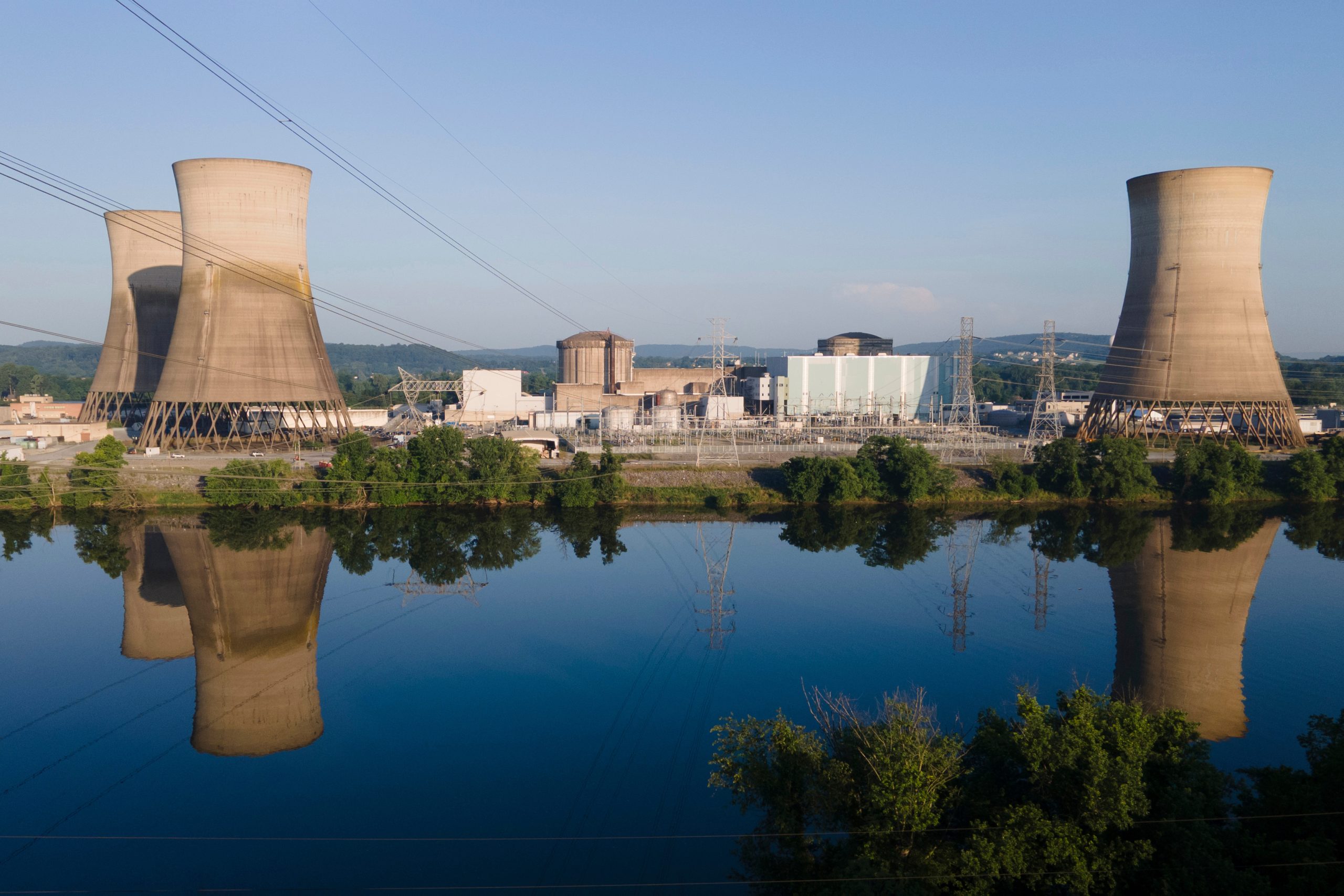
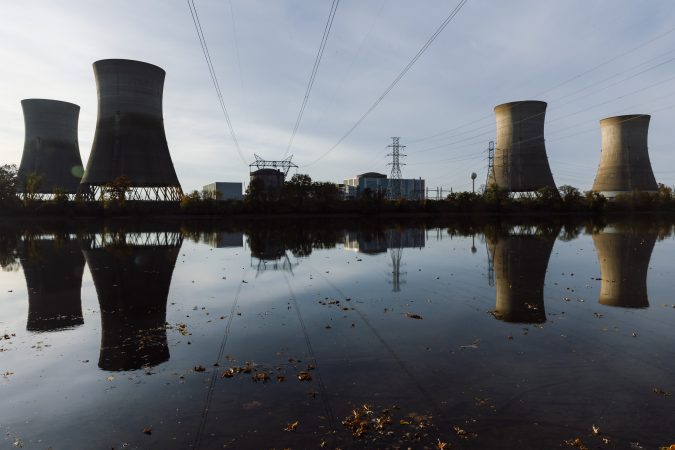
    Constellation Energy crews have been laboring since 2024 to reopen Three Mile Island’s Unit 1 nuclear plant to meet spiking electricity demand. Planned data centers and other new demands have materialized since 2019, when the plant was shut because generating power there was too expensive to compete with cheap natural gas.

    Now Constellation has moved up its own deadlines and says it’s approaching its goal to load uranium next spring and add electricity to the grid later in 2027.

    That’s despite naysayers such as Neil Chatterjee, President Donald Trump’s former Federal Energy Regulatory Commission chair.

    “It will never work” because of TMI’s aging technology and the complex U.S. and Pennsylvania energy bureaucracies, Chatterjee wrote in January in The Hill, which neglected to note Chatterjee had become a solar-power lobbyist.

    In testimony submitted to regulators, environmental groups, including Eric Epstein’s TMI Alert, called the utility’s plans rushed and incomplete. Montgomery County-based PJM, which oversees power distribution for 13 states and the District of Columbia, warned it could be 2031 before the plant could connect to the power grid, Constellation chief executive Joe Dominguez told analysts and investors in March.

    But Dominguez minimized that warning. “Normally, they start off with a pretty long timeline and shorten that up,“ he told investors in a conference call May 11, adding that he would work with states to speed connections.

    Dominguez has moved up the original 2028 target date to next year, in part because of supporters like President Donald Trump and Pennsylvania Gov. Josh Shapiro, and because Microsoft has promised to buy as much power as the plant produces to run a growing array of data centers.

    So Constellation is paying an army of builders, lawyers, and plant operators to prepare the plant.

    Earlier this month, PJM agreed to speed up its process for connecting new power plants in states where regulators agree to approve sites faster.

    Here’s an update on what’s happening at TMI:

    At Constellation’s nuclear power plant on Three Mile Island near Middletown, Pa., in June 2025. Ted Shaffrey

    New equipment

    Constellation bought three building-sized replacement transformers from manufacturer Hyundai in South Korea, to be delivered later this month, after reinforcing the bridge to the island to bear their weight. Two will be installed “later this year,” one kept as a spare, said spokesperson Paul M. Adams.

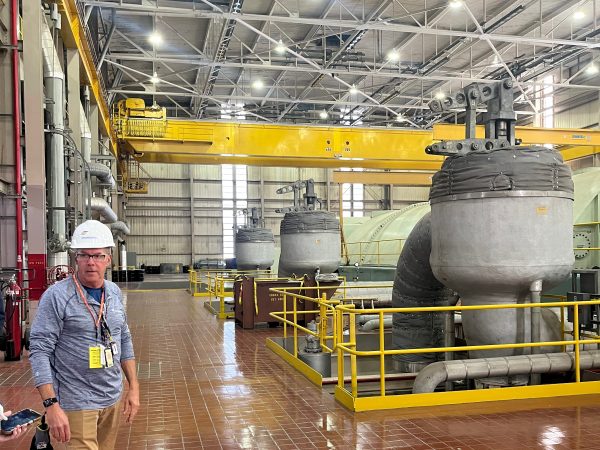
    The company says crews are repairing the partly dismantled Bravo cooling tower and inspecting the reactor building and diesel motors on the site. They are restoring controls — originally analog systems made by manufacturers in Reading and other Pennsylvania cities.

    The company has scheduled enriched-uranium fuel assembly deliveries from its supplier Framatome in Richland, Wash., later this year, so fuel can be loaded into the reactor core next spring. The uranium is sourced from U.S. and foreign mines.

    The deal with Microsoft

    Microsoft has promised to buy power equal to the plant’s entire production at prices above today’s levels for 20 years.

    But that doesn’t mean the software and data-center giant is going to run wires to new, power-burning facilities in the neighborhood.

    The Microsoft deal supports Constellation’s regulatory and investor arguments in favor of reopening. It confirms this major data-center operator will need more power in years to come.

    Jobs for construction and plant workers

    Constellation says more than 3,000 construction workers will help bring the plant, which it now calls the Crane Clean Energy Center, into service.

    The company also has hired hundreds of permanent workers for the plant, named after the late Exelon Corp. CEO who spun off Constellation and championed nuclear power. More than 550 full-time employees are on site, including the current class of 80 operators being trained in federal Nuclear Regulatory Commission procedures.

    About 145 of those employees are “boomerang” staff who worked at Three Mile Island before its 2019 shutdown, according to Constellation.

    More than 400 hires live within 25 miles of the plant. They include about a dozen recent graduates of the Penn State Harrisburg campus nearby.

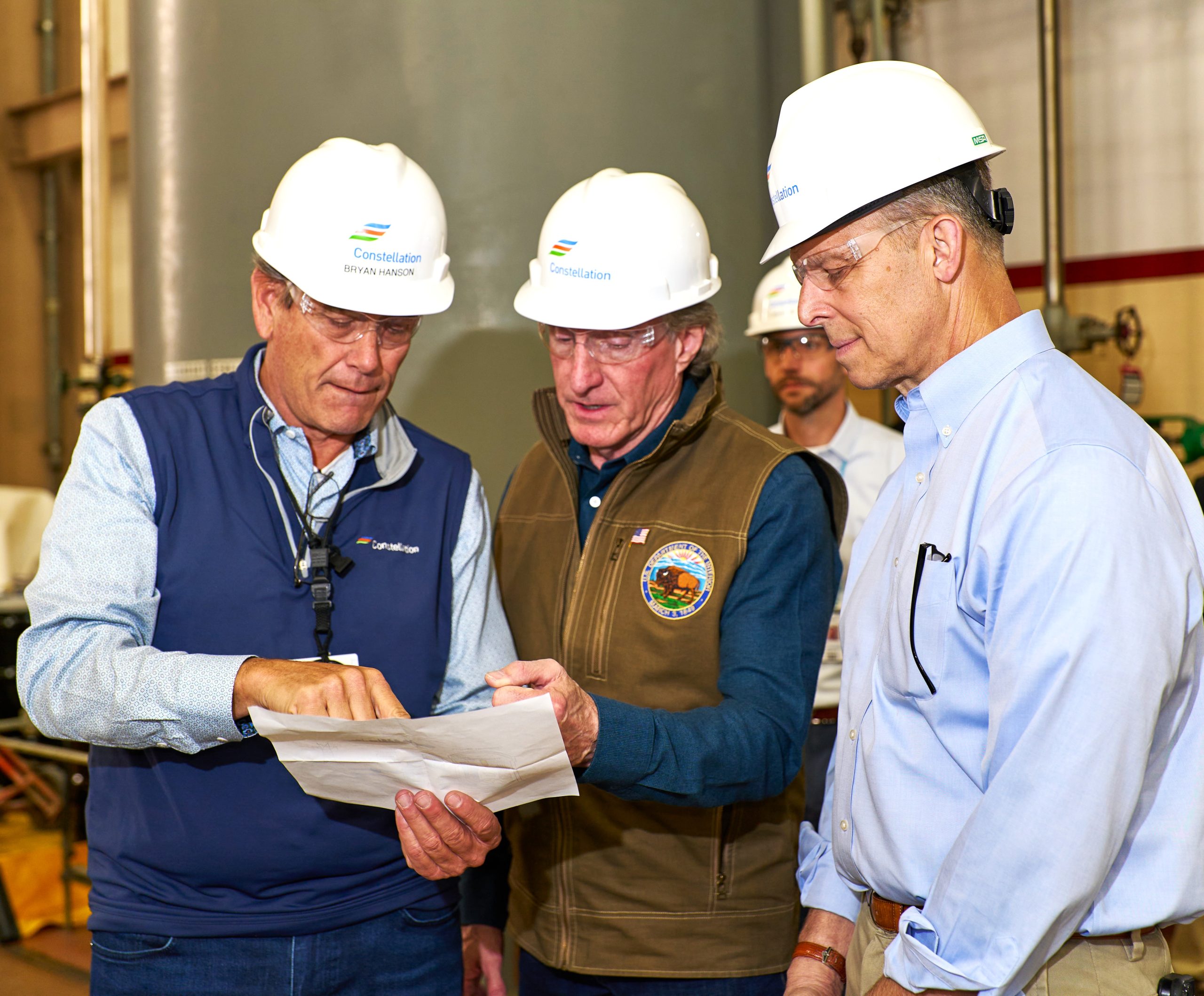
    U.S. Secretary of Energy Doug Burgum (center) with Constellation Energy staff on May 1 at the Three Mile Island nuclear power complex Unit 1, which Constellation Energy plans to reopen as the Crane Clean Energy Center uranium-powered electric plant in 2027.Constellation

    Financing for the advance work

    In November, the U.S. Department of Energy Loan Programs Office approved a $1 billion low-interest government loan to help Constellation reopen the Three Mile Island plant.

    Supporters of nuclear loan and subsidy programs say federal money ensures long-term operation at reasonable financing costs. Critics such as the Cato Institute, which generally opposes subsidies, say the government shouldn’t help pay for power that would otherwise be unprofitable.

    Supporters of the TMI reopening

    Shapiro, U.S. Energy Secretary Chris Wright, U.S. Interior Secretary Doug Burgum, U.S. Sen. Dave McCormick (R., Pa.), U.S. Rep. Scott Perry (R., Pa.), state legislators, and local officials have toured the plant to tout job and energy creation.

    With permit applications pending before the NRC and other agencies, Constellation says it is “on track” to restart the plant next spring and deliver energy into the grid by summer or fall.

    U.S. Sen. Dave McCormick with Tori VanderMeersch, senior manager, operations support for the Crane Clean Energy Center, in the control room at Three Mile Island Unit 1 nuclear power plant in early 2026.Constellation Energy

    A workaround for PJM’s warning on connecting to the grid

    In early June, the Federal Energy Regulatory Commission agreed to an unusual switch: It will let Constellation transfer “Capacity Interconnection Rights” from its diesel- and natural gas-burning electric power plants at Eddystone, Delaware County, to Three Mile Island, to speed the process of bringing the nuclear plant back online.

    Constellation says it can do this without having to shut the Eddystone complex because the Trump administration gave the company special permission to keep Eddystone open, along with other fossil-fuel plants that were earlier scheduled for closing under a long-term program to reduce carbon-burning. It no longer needs the rights at Eddystone and can apply them at Three Mile Island.

    An agreement on using water from the Susquehanna River

    The Susquehanna River Basin Commission in early June approved Constellation’s plan for using river water at the restarted Three Mile Island nuclear plant.

    Constellation plans to pull 73 million gallons per day from the river to control temperatures at the plant. That’s about one-third of 1% of the river’s average flow; an equivalent volume of water will be released and won’t, on average, cause “significant adverse impact to the ecosystem and other users,” notes commission spokesperson Stacey Hanrahan.

    “Of course, we do not review a project based on average daily flow,” but on days the river is low, for example during a drought, she added. If the river gets too low for too long, Constellation could be ordered to stop using it.