Author: Jake Blumgart

  • Temple professor delves into America’s long and troubled history with public bathrooms

    Temple professor delves into America’s long and troubled history with public bathrooms

    The first public bathroom in the United States opened in 1869 in New York City. The controversies began not long after that.

    Since then, the debate over the government’s role in providing public accommodations has reflected America’s political movements and controversies.

    In the Progressive Era of the early 20th century, “comfort stations” were opened as an example of what good government could do. In the Jim Crow South, they were racially segregated. During the rise of the modern conservative movement in the 1980s, they were branded a typical failure of big government and closed.

    More recently, opinions of public restrooms have ranged from fear of disease during the COVID-19 pandemic to a sanitary necessity for people living on the streets to targets of the backlash against trans rights.

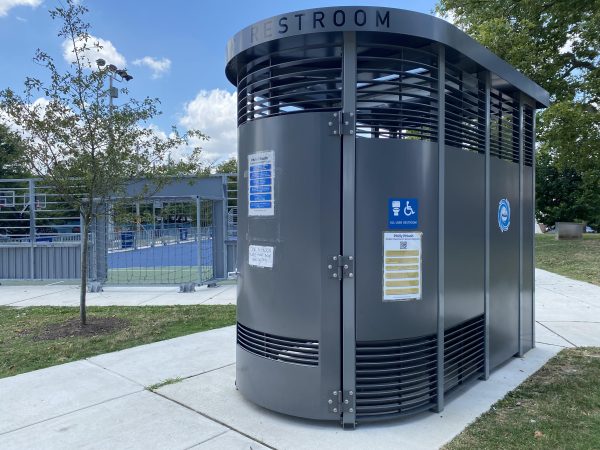
    Cities like Philadelphia are experimenting with bringing public toilets back in the form of the Philly Phlush: stainless steel contraptions that are easily cleaned but have limited privacy to keep people from sleeping or using drugs in them.

    The Inquirer talked with Temple University history professor Bryant Simon about his new book For Customers Only: Public Bathrooms and the Making of American Inequality and the debate over government’s responsibility to provide accommodation.

    This conversation has been edited and condensed for space.

    When did public bathrooms first emerge?

    What we understand as public bathrooms happened in the late 19th century, as privacy gets redefined and the scale of cities gets bigger. There’s a technology question here, too. You get the development of flush toilets and a really extensive sewer system.

    The other important thing is there’s a shifting notion of government built around the Progressive Era. There were public-ish bathrooms before fully public bathrooms, but they were all maintained by private structures [mostly taverns]. They want to solve a problem that they think is both personal, scientific, and social, and they recognize that the private sector can’t handle it.

    How long did it take for public bathrooms to become controversial?

    That is the part of the story that surprised me the most. The answer is: almost immediately.

    They offered privacy away from home. The public bathroom is seen by the middle and upper classes as an extension of the home. But privacy at home was exactly what working people, for the most part, didn’t have. Many working people lived in tenements with two or three brothers and sisters, their parents, and maybe their grandparents.

    This is an opportunity. And they immediately seize it to drink, do drugs, sleep, do their hair. Most ominously, for those in control, they seize on it to have sex, particularly men.

    As early as 1899, people in New York are complaining about men having sex in public bathrooms.

    By 1905, Long Beach hires two out-of-work actors to entrap men in public bathrooms.

    But [the authorities] can’t arrest their way out of it, and as early as the 1930s, public officials are beginning to advocate closing public bathrooms to scrub queer sex. The closing of public bathrooms becomes a way to edit people out of the public.
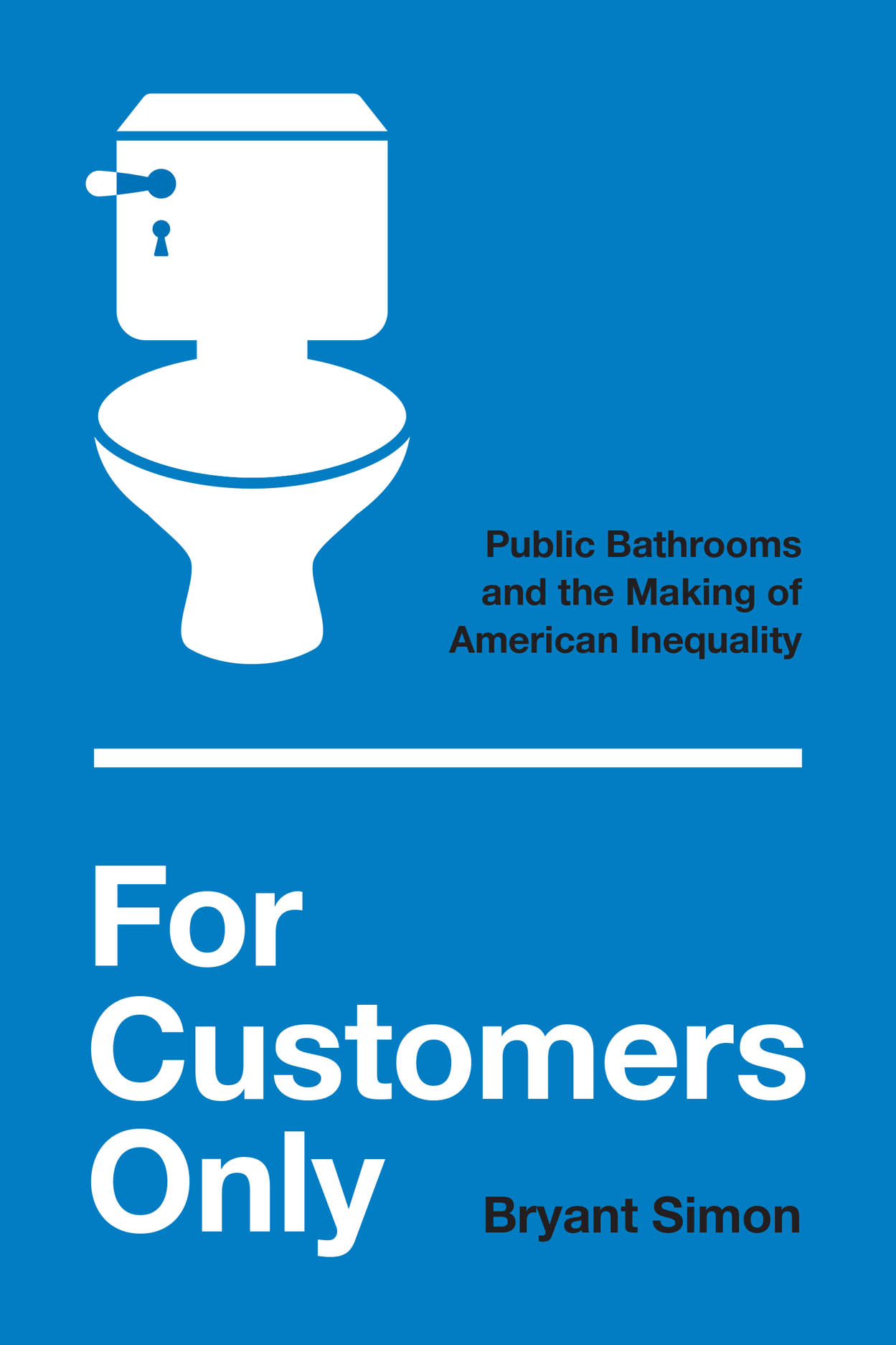
    The cover of Bryant Simon’s new book.University of Chicago Press

    Later, when segregation breaks down, southern leaders close public bathrooms. When mass homelessness first appeared, almost every single city closed public bathrooms. That’s what’s happening in the current moment with trans people.

    But that leads to our current problem, where now no one really has access to public facilities away from home.

    Why do public bathrooms seem to reflect major pressure points of our society?

    I would slightly reframe it and say they help to make these inequalities.

    Segregation is the most clear example. [White policymakers] are using the bathroom to not just divide people up but to really make them feel unequal.

    There was one other story I found that blew me away, where a Black janitor [in the Jim Crow era] is told to deliberately not clean Black bathrooms in the Atlanta bus station. It makes [Black Americans] feel the neglect of the state, but it also creates a smell that they know white segregationists will read as Black inferiority, which they are manufacturing.

    More recently, with the homeless, taking away public bathrooms is essentially denying their entire existence, their bodily needs. There’s a part in the book where I talk about Washington Square 20 years ago [where the public restroom was deliberately kept in a state of bad repair].

    We want them to feel their inequality in a profound sort of way. This is insulting; it’s humiliating; it’s uncomfortable; it’s cruel. There is an element of cruelty that runs through the book.

    Are paid toilets a policy solution?

    If I were building an ideal society, I wouldn’t want paid toilets, but we’re so far from an ideal that the question is would it be able to provide more people with more access? And would pay toilets also guarantee maintenance along the way?

    In a political fight, you have to know what you ultimately want and then what you’re willing to accept. [In Europe often] they’re just putting paid toilets in places where there’s wealthier people, or they’re servicing travelers only. They’re not really in service of the larger community.

    This is why what’s happening in Philly is interesting. Of the first Philly Phlush toilets, two of them are in neighborhoods. There are not a lot of parallels to that. It helps to build them in parks.

    What the past has taught us, and I think we know this in Philly really well, given the Starbucks incident downtown [where two Black men were arrested while sitting in a Starbucks and not purchasing anything] is that leaving things up to the private sector guarantees you inequality.

    Bryant Simon is a history professor at Temple University.University of Chicago Press

    In fact, if I were a progressive candidate, I would redefine sewer socialism to bathroom socialism. There was a Progressive Era reformer who said that these things show people in the most intimate way that government can work, and it actually could probably provide us leverage to do more.

    It seems like a hard idea for politicians to champion because by its very nature, it evokes shame and disgust.

    You’re right for another reason. Bathrooms are better at creating inequality than equality. The conundrum for politicians is the lack of public bathrooms is a place in which some really deep policy failures come into view. The housing problem, addiction, the collapse of the state, the fear of others.

    And public bathrooms are pretty expensive now. So when politicians invest in them and they don’t immediately yield results, then it’s hard to argue for [bathroom] funding over a new roof for a public school or a new clinic in a neighborhood or extended library hours.

    The really hard sell of the public bathroom is it’s the place that makes visible so many other problems that can’t be solved even with an investment of $300,000 for a public toilet.

    But if you don’t solve them, you become San Diego [which had a major hepatitis an outbreak in 2017] or San Francisco, which is dealing with problems of open defecation and health problems for everyone.

    It has the potential to affect all of us because of the health issues implied in not having enough public facilities.
  • Historic church at 42nd and Pine to become apartments after Penn declined to buy the building

    Historic church at 42nd and Pine to become apartments after Penn declined to buy the building

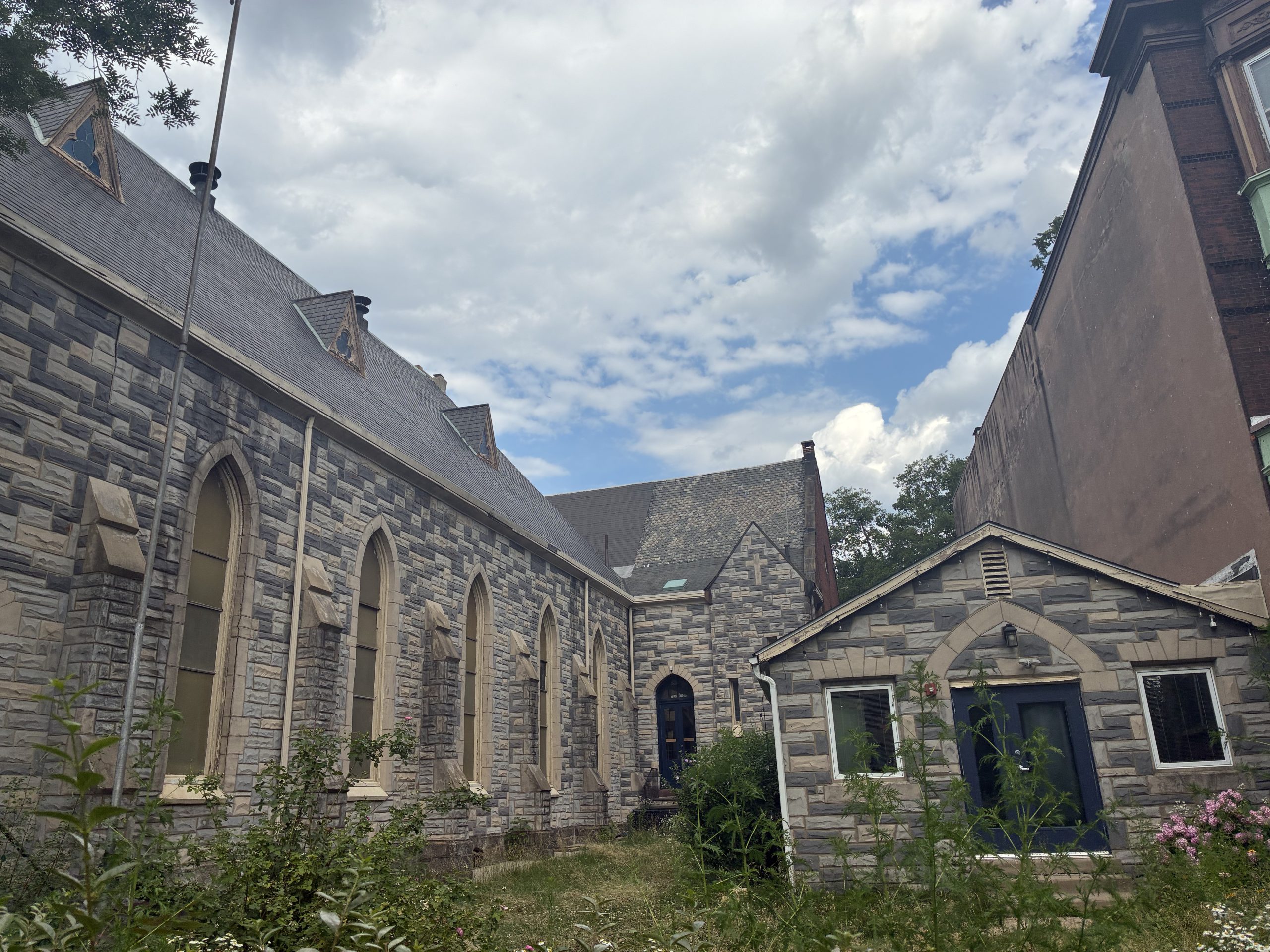
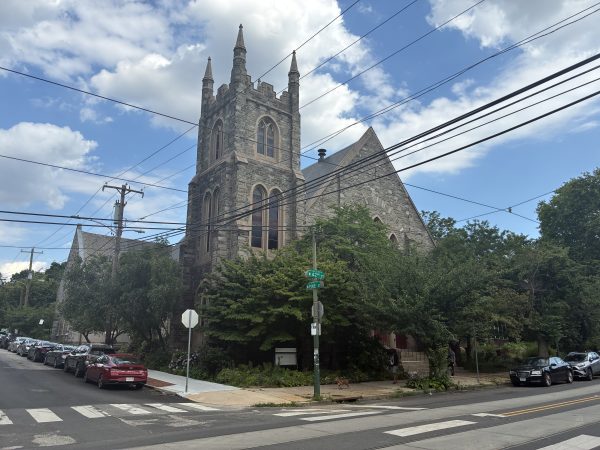
    The former Woodland Presbyterian Church at 401 S. 42nd St. is being converted to 35 apartments, mostly studios, with seven set aside at affordable rents.

    The oldest parts of the church complex date to 1871. But after the COVID-19 pandemic and with a shrinking membership, Woodland Presbyterian merged with several other Philadelphia congregations in a Center City building.

    They decided to sell the 42nd Street building after determining it would cost millions to rehabilitate.

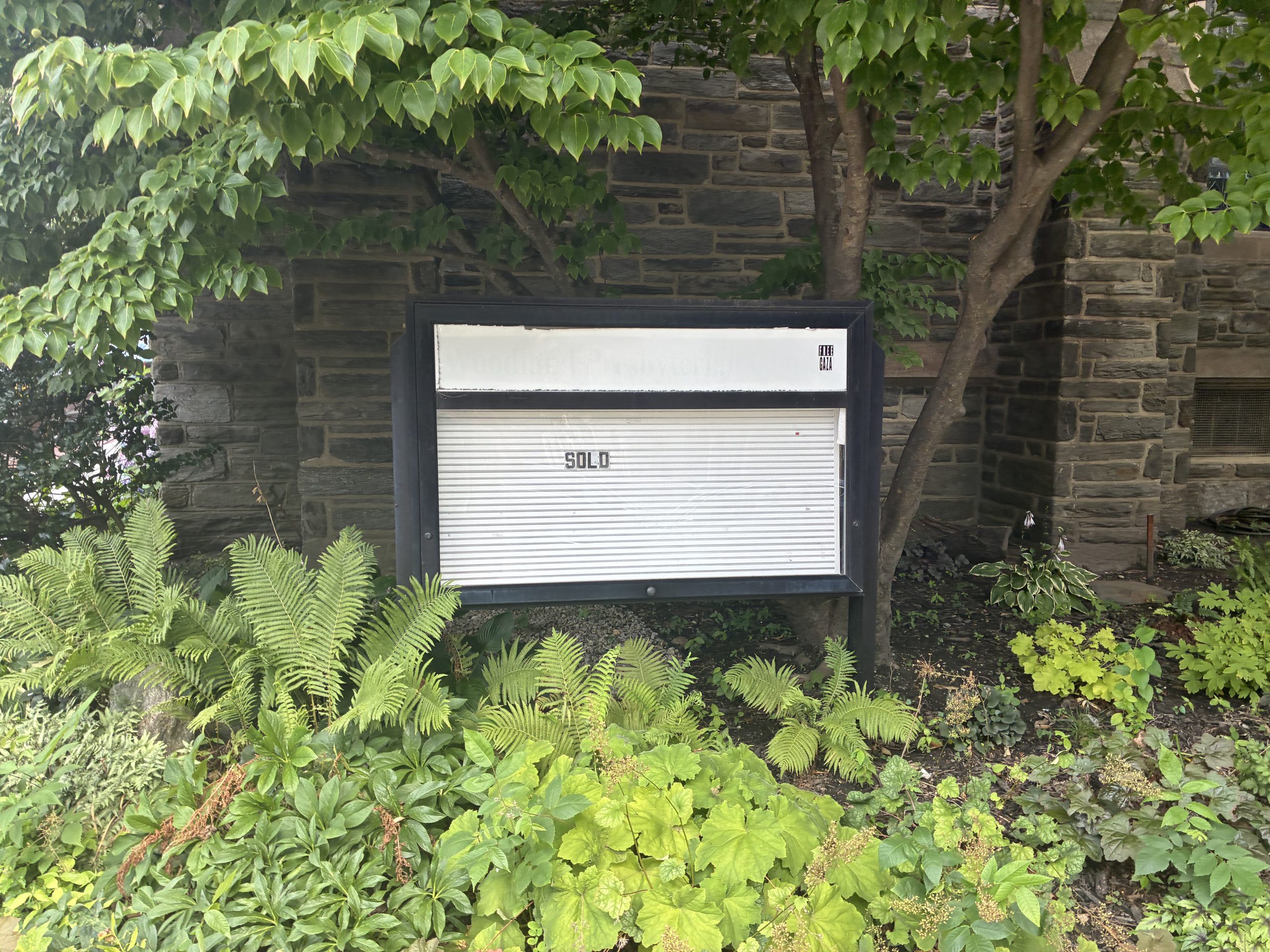
    In November the property sold for $1 million to a limited liability corporation that shares the address of Bala Cynwyd-based Finch Development.

    The company has extensive rental property holdings in Philadelphia and on its website boasts a 37-unit redeveloped former church building at 1629-39 S. 28th St. in Grays Ferry.

    “It was the highest offer, and they did have a track record of one or two conversions of a house of worship,” said David Brindley, a Reformed Church leader involved with the sale. “They seemed to be people that could get things through to the finish line.”

    The building sold for $1 million at the end of last year.Jake Blumgart

    The company did not respond to requests for comment. The project’s design firm is Raymond F. Rola Architecture.

    The former Woodland Presbyterian Church is three blocks from the University of Pennsylvania’s campus. At first Brindley sought to interest other congregations, including those who cater to college students, but when those efforts failed, he approached Penn itself in 2024.

    The university made an offer in early 2025, he says.

    “It could be a space to bridge the gap between the town and the gown, and they were very interested,” Brindley said.

    “They were going to make it the new Rotunda,” a Penn-owned community space at 41st and Walnut, he said. “They were going to move the Rotunda and its activities there, the community art space there, and then be able to expand.”

    But as 2025 progressed — a year where Penn and the rest of the higher-education sector faced federal funding loss and other uncertainty — the university decided against moving forward, citing the expense of shoring up the building, Brindley said.

    “I don’t blame Penn at all, but at that time, they just couldn’t [take the] risk,” Brindley said.

    The university declined to comment.

    Plans on the Department of Licenses & Inspection’s website show units ranging from a smallest of 324 square feet to the largest at 848 square feet, which would be housed in a one-story annex on the south side of the property.

    The annex on the right-hand side of this photo will have the largest apartment in the new complex.Jake Blumgart

    Due to the proximity to the university, Brindley says he expects that renters will mostly be students associated with Penn.

    The project falls within Councilmember Jamie Gauthier’s mandatory inclusionary zoning overlay (MIN), which requires that one-fifth of units in large projects be set aside for those earning 40% or less of area median income. That’s roughly $35,000 for a one-person household.

    “Project will comply with MIN overlay affordability rules as necessary,” the apartment conversion’s June 25 zoning permit reads.

    The project is zoned for duplex construction. But the former church is within the Spruce Hill Historic District, which means that Finch Development can build without a zoning variance — due to a 2019 law passed by City Council that allows historically protected special buildings like churches to be redeveloped beyond their underlying zoning.

    The law was created in reaction to the controversy over St. Laurentius Church in Fishtown, where a handful of neighbors fought against the redevelopment for so long that the church deteriorated to the point it had to be demolished.

    The Spruce Hill Historic District, like many of the newly created historic districts, is being challenged in court by local property owners, including the major student housing companies in the area like Campus Apartments and University City Housing.

    After being rejected by a local judge, an appeal is pending in Commonwealth Court.

    “I’m very glad it’s not going to get demolished,” Brindley said. “It’s not a sad story about what the building will become from my perspective. We would have certainly loved for it to have had a community-centered use, but the building was just too far gone.”

  • The historic Conkling-Armstrong House in North Philly is poised for affordable redevelopment

    The historic Conkling-Armstrong House in North Philly is poised for affordable redevelopment

    They don’t make them like the Conkling-Armstrong House anymore. They never really did — except this once.

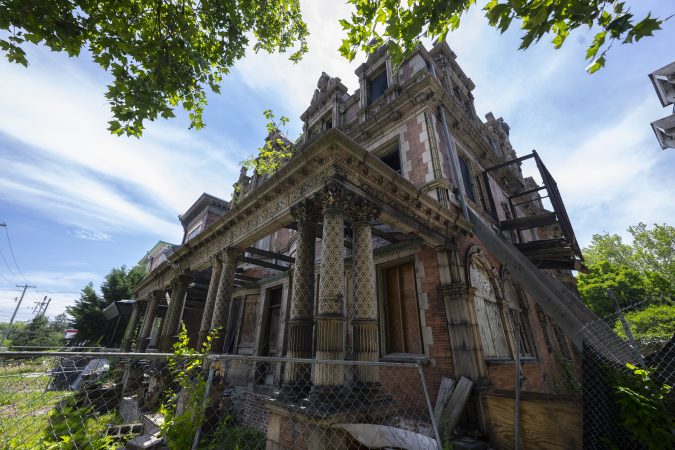
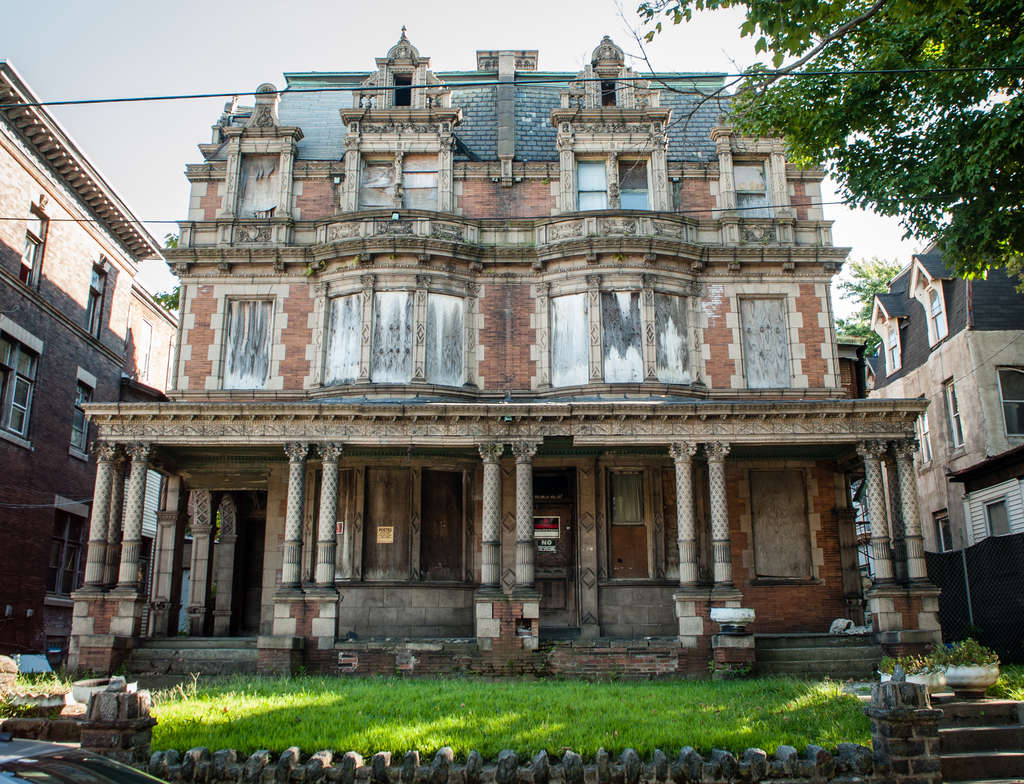
    Located at 2224-26 W. Tioga St., each of the two roughly 5,000-square-foot houses in this twin mansion are encrusted with terra-cotta flourishes that set them apart from their neighbors and from pretty much any other building in the city.

    That’s because this almost 130-year-old mansion in North Philadelphia was built as a towering advertisement for what the Conkling-Armstrong Terra Cotta Co. could offer late-19th-century developers and architects.

    They studded it with beautiful decorations and elaborate details to demonstrate what their products could look like on future buildings.

    When this one-of-a-kind house was built in 1898, the company’s factory stood mere blocks away. Now it is gone, demolished in 2011, and the house itself hasn’t been occupied in even longer.

    That period of vacancy will end soon, if local affordable housing developer Brian Wise gets his way. He’s already invested almost $1 million in bringing the Conkling-Armstrong house back from the brink of demolition.

    “When we first had the property, we could not even walk through it,” said Wise, managing partner of Wise Holding Group LLC. “There was so much deterioration from the roof all the way down to the basement.”

    Wise plans to build 12 apartments in the twin buildings and another 12 in two additions behind the twins, each over 4,000 square feet. They will extend into the vacant lot behind the Conkling-Armstrong house, fronting on Estaugh Street.

    The plan is to lease most of the units to tenants who use rent vouchers from the Philadelphia Housing Authority.

    “It’s a pretty ambitious job to do and something that will be a challenge, but sometimes we like challenges,” Wise said. “We’ll do everything we can to keep the building stabilized and bring it back to its original form, especially the exterior.”

    Earlier this month, the city’s Zoning Board of Adjustment gave Wise the go-ahead to begin the project.

    “This is one of these projects that you’ll remember over the course of your career,” Wise’s attorney, Alan Nochumson, said in his pitch to board members to preserve the building.

    Wise needed permission to build beyond the allowable density on the site, arguing that the rents from additional units were the only way to make the project economically feasible.

    The Conkling-Armstrong house on the 2200 block of West Tioga Street in 2018. MATTHEW HALL / Staff Photographer

    His case was supported by two local community groups, the Allegheny West Civic Association and the Swampoodle Neighborhood Parcels Association.

    Wise anticipates an 18-month to two-year timeline, given the final Historical Commission approvals he needs.

    Wise originally came to this block of West Tioga Street to try to buy one of the other venerable, if less ornamented, stone twin houses on the block.

    He decided against that purchase, but while he was in the neighborhood, he noticed the intricate design and decoration of the Conkling-Armstrong House, as well as its dilapidated state.

    After acquiring the building, Wise considered demolishing it. But the Conkling-Armstrong House is on the Philadelphia Register of Historic Places, which makes razing it a challenge. Instead, the developer decided to embark on his first adaptive reuse proposal. He needs a final Historical Commission approval to begin construction.

    “My first impression, obviously, was that the architectural nature of the property was unique,” Wise said. “It was something that we weren’t used to seeing … so instead of knocking it down, we said let’s try to bring this building back to life.”

    At the zoning board, Wise faced questions from commissioners who wanted him to add a porch to the new addition facing Estaugh Street, which he promised to do.

    The new buildings behind the Conkling-Armstrong house will be more modest, with a design that echoes other houses in the neighborhood.

    “We decided that trying to match all of these ornate features of the front building is not a tenable solution,” said Matt Masterpasqua of the Mass Architecture Studio, which is designing the project.

    “So we tried to take context from the rear street, as well as some of the more modest neighboring buildings to inspire our new design,” Masterpasqua said. “It’s a little more feasible for us to construct.”

    He anticipates the redevelopment of the Conkling-Armstrong Terra Cotta Co.’s house-and-showroom will cost at least $3 million, but he could be aided by federal Historic Preservation Tax Credits.

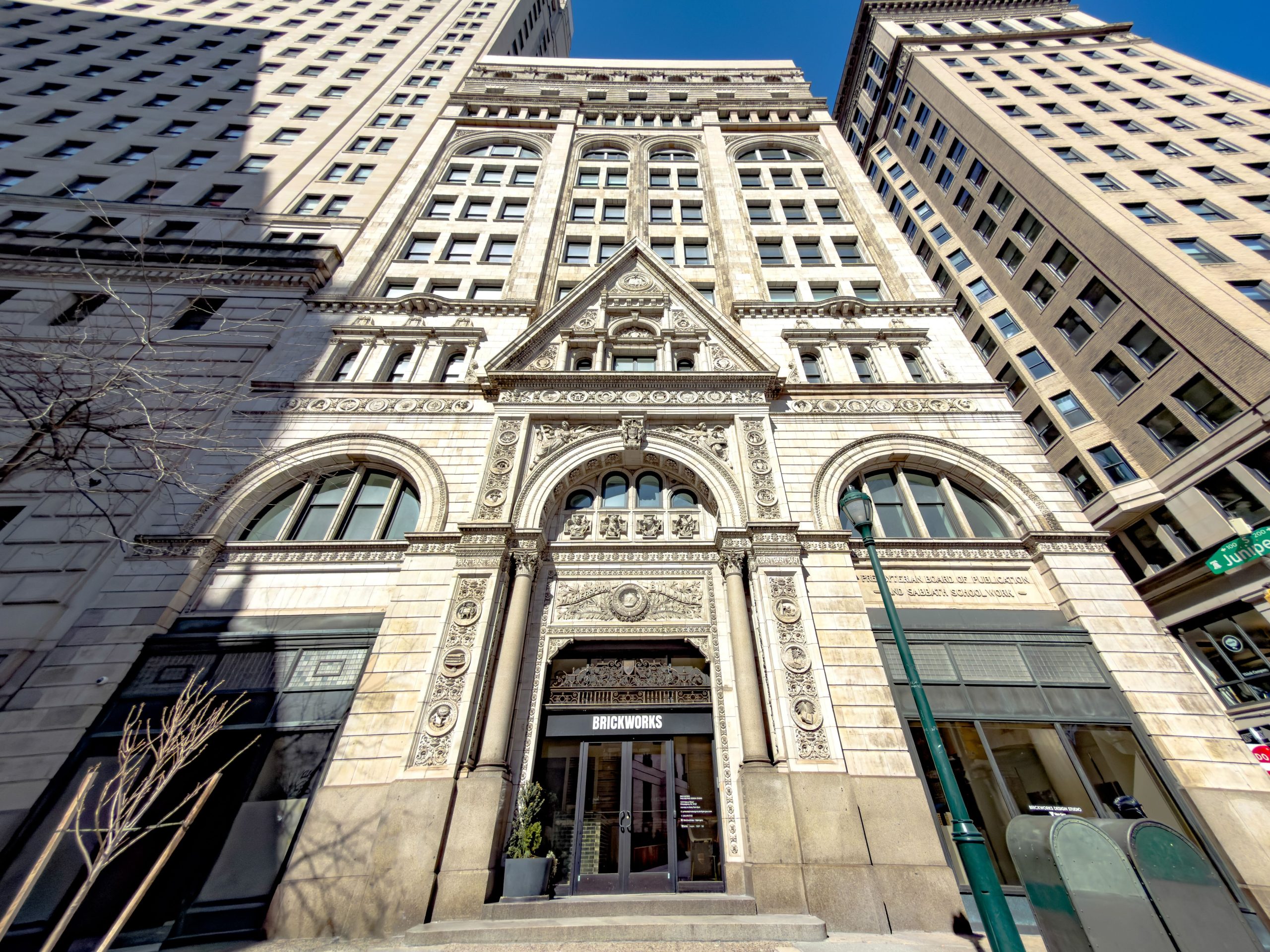
    The Witherspoon building, ornamented by the Conkling-Armstrong Terra Cotta Co. Neff

    The company’s historical legacy in Philadelphia includes ornamenting such structures as the Witherspoon building and the former Curtis publishing house. Like many historically protected gems, those buildings are in Center City, not residential North Philadelphia.

    “It was a showcase for the capabilities of their company, but it’s also just really an incredible building,” Masterpasqua said. “It’s really great to be part of something that’s going to be able to salvage the neighborhood and this piece of architecture.”

  • A 188-apartment building is the latest new development slated for North Broad Street area

    A 188-apartment building is the latest new development slated for North Broad Street area

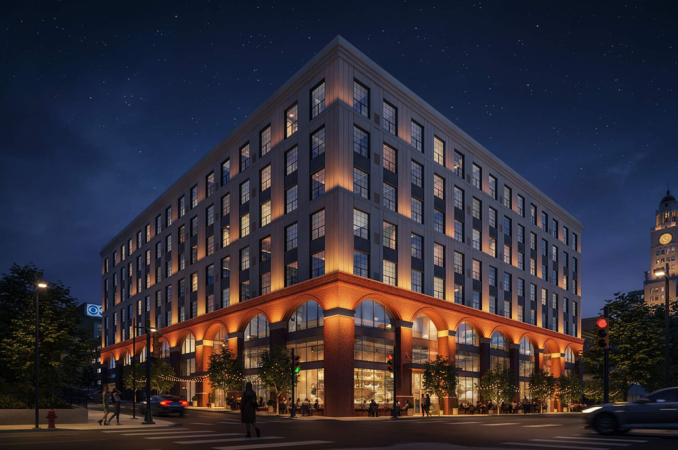
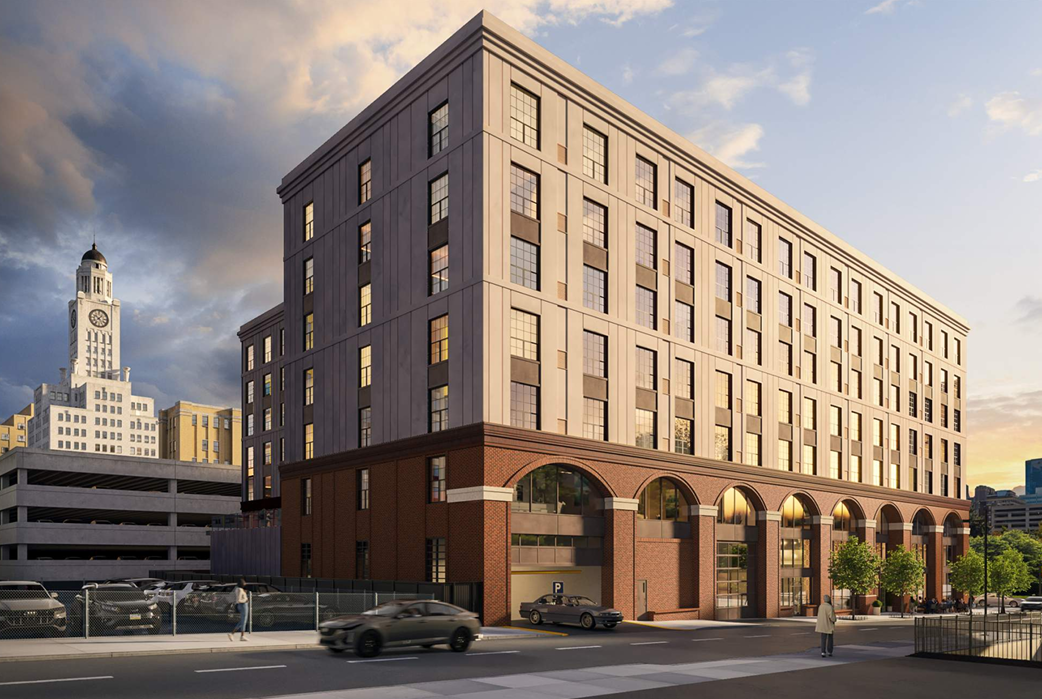
    A new 188-unit apartment building is the latest in a burst of development proposals around North Broad Street between City Hall and Temple University.

    The eight-story building at 1527 Callowhill St. is being developed by Philadelphia-based Omega Home Builders with architecture from locally based firm Designblendz.

    The project features 13,300 square feet of commercial space and 24 parking spaces accessible from 16th Street. The building will have a green roof, and the developer plans to plant additional street trees.

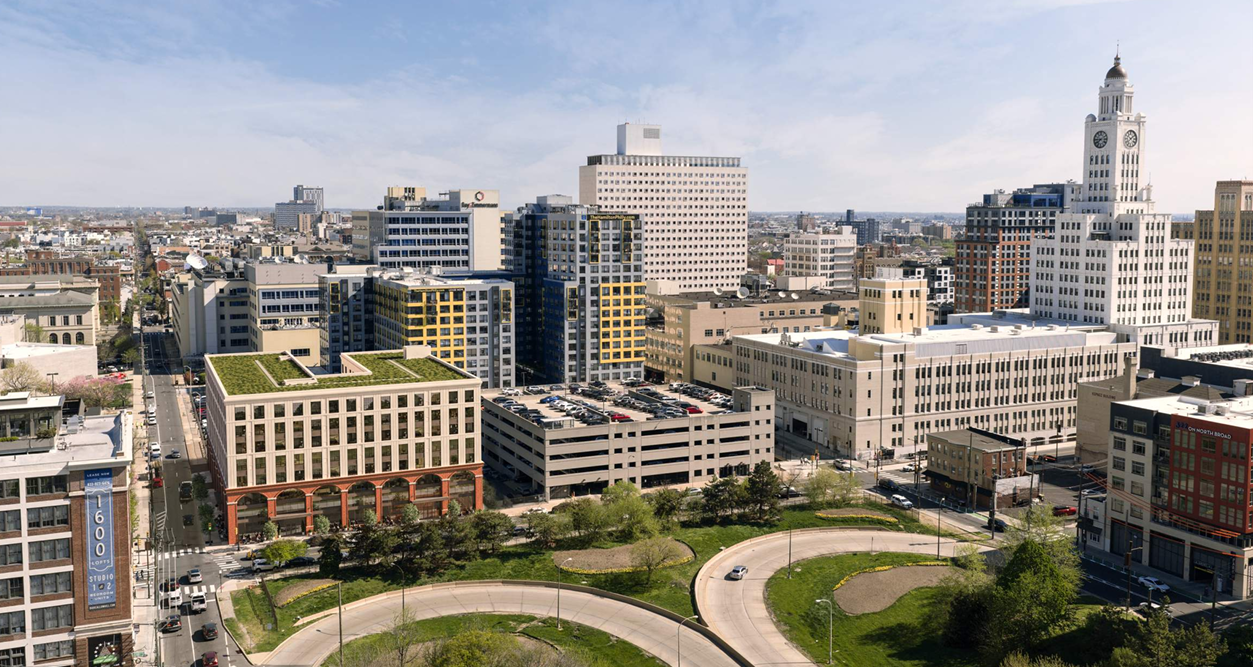
    The property is currently a surface parking lot that was once owned by The Philadelphia Inquirer, as an annex of the media company’s former 400 N. Broad St. offices. The building is now the Philadelphia Police Department’s headquarters.

    The Inquirer’s former properties were bought by Philadelphia developer Bart Blatstein 15 years ago. He sold the parking lot to Omega Homes’ Roman Ovrutsky at the end of last year for $5.6 million.

    “I think it’s [a] good location, next to cops, plenty [of] parking around,” Ovrutsky said in a text message, “so I think it’ll thrive with our finishes and competitive pricing.”

    Ovrutsky’s project is the latest development proposed for this area. In the past eight months, not including this project, at least 1,221 apartments have been permitted along this stretch of North Broad Street.

    The majority of the apartments in this Callowhill Street project, 111 units, will be one-bedrooms, which Ovrutsky says will rent for between $2,200 and $2,400.

    The building also will include 52 two-bedroom apartments, starting at $2,800, and seven three-bedrooms with two bathrooms each and over 1,000 square feet. Those will start at $3,400.

    There will be 18 studio apartments, although the development team wanted to minimize that number. They believe the market currently has too many small studios, which they argue do not incentivize long-term living.

    “We will have a little bit more space for residents to actually live here, not necessarily the kind of studio-esque [apartments] which Center City often gets hit with,” said Scott Woodruff of Designblendz Architecture.

    We are “sizing these units with more storage space and generously sized bedrooms, so it doesn’t feel like you’re living in a shoebox,” Woodruff said.

    Ovrutsky said that he hopes to start construction by this time next year and finish by early 2029.

    Woodruff said they have been asked why the project isn’t including more parking. He noted that the proposed apartment building is within a short stroll of the Broad Street subway line and on a number of bus routes.

    A rendering of the building’s garage entrance on 16th Street, with the police headquarters visible in the background.DesignBlendz

    It is also walkable to multiple grocery stores and restaurants, and the area has excess parking capacity.

    “With the access to public transit and where this is in the city, we didn’t feel like there was a great need to try and push a lot of parking,” Woodruff said.

    The commercial space could be ideal for a restaurant and could even be carved up between two tenants, he said.

    The property does not require zoning changes to move forward, but it is large enough to trigger consideration by the city’s advisory-only Civic Design Review committee on July 7.

    It was warmly received at a presentation to the Logan Square Neighborhood Association.

    “The group was very pleased with the building as described,” said Alan Williams of the association. “We liked the green roof, the focus on new street trees, sizing in line with neighboring buildings, and the overall aesthetics.”

    The proposed building is on the left side of this rendering.DesignBlendz

    The burst of development attention along this stretch of North Broad Street was partly spurred by a City Council bill that would have banned new housing around the former Hahnemann University Hospital campus.

    That pushed a number of property owners to try to secure permits for apartment projects before the bill went into effect, which means these units aren’t necessarily coming any time soon. Council eventually shelved the bill.

    The North Broad Street corridor’s popularity for developers also relates to the large parcels available at attractive prices. More residents will also activate the streets in the area, which are often devoid of pedestrians at present.

    “This is a big chunk of open parking lot right now, flanked by two parking garages, so it just ruins the fabric,” Woodruff said.

  • A new warehouse is proposed for a quiet street in Northeast Philadelphia

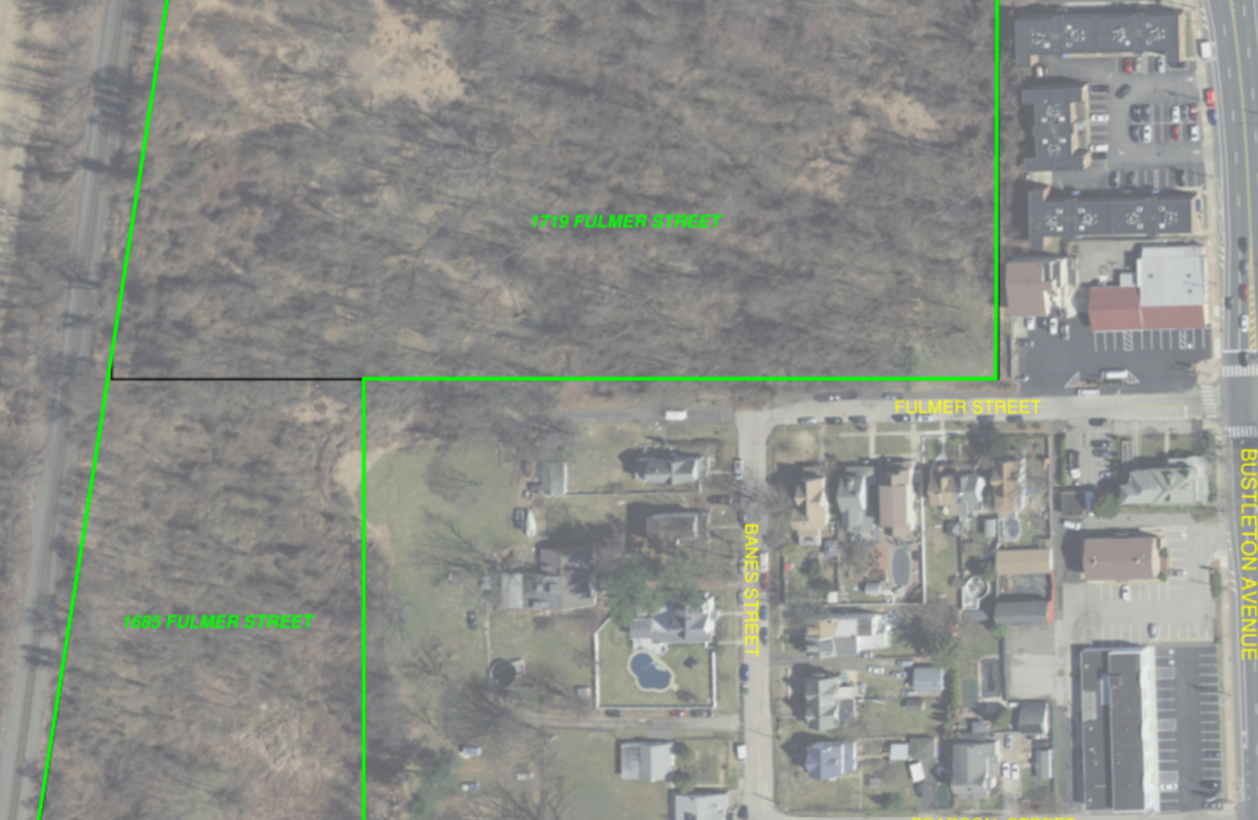
    Northeast Philadelphia’s Bustleton neighborhood is getting a new warehouse at 1685 and 1719 Fulmer St., a wooded area that was previously the site of a townhouse proposal.

    The over 123,000-square-foot warehouse proposal comes from Georgia-based developer Stonemont Financial Group and the global asset manager Nuveen.

    The 50-foot-tall warehouse would be built on land zoned for industrial uses, so it does not require zoning approvals. It is subject to community feedback only because it is large enough to trigger consideration by the city’s advisory-only Civic Design Review committee.

    In January, the Fulmer Street property was purchased for $2.75 million by a limited liability company associated with Nuveen’s industrial investment team in Dallas.

    The lot was sold by an LLC associated with Warminster-based County Builders, a suburban developer that hoped to build 60 townhouses or 48 duplexes on the wooded site.

    “I’m disappointed the residential developer decided not to go forward with this project,” said Jack O’Hara, president of the Greater Bustleton Civic League, who planned to support County Builders’ plans at the city’s Zoning Board of Adjustment. “The community greatly prefers residential over additional industrial.”

    An aerial view of the Fulmer Street site, which is heavily wooded.Ware Malcomb

    But while County Builders’ project had been embraced by the Greater Bustleton Civic League, a group of neighbors who live close to the site fiercely opposed the residential project during tense community meetings.

    “A small group of immediate neighbors were vocally opposed to basically any development, but they were especially opposed to the residential development,” O’Hara said. “And their comeback [to the residential builders] was we’ll take industrial. So, that’s what we’re left with.”

    When presenting the proposal to the Greater Bustleton Civic League, the warehouse developers told residents that they do not yet have a tenant for the proposed building but are marketing the location.

    The architect for the 1685 and 1719 Fulmer St. warehouse development is Ware Malcomb, a national design firm. A request for comment from the project’s zoning attorney was not returned.

    Recent years have seen a burst of new warehouse projects in Northeast Philadelphia, which contains large tracts of developable land. Much of that property has been zoned industrial and saw little interest from builders for decades.

    But as the recent surge in e-commerce and other kinds of new, nonmanufacturing industrial uses have grown, more of these properties have been seeing increased interest from developers.

    This story has been updated to correct the last name of the president of the Greater Bustleton Civic League. He is Jack O’Hara.

  • 35% of Airbnb and VRBO rentals in Philly don’t have the right licensing, new report finds

    35% of Airbnb and VRBO rentals in Philly don’t have the right licensing, new report finds

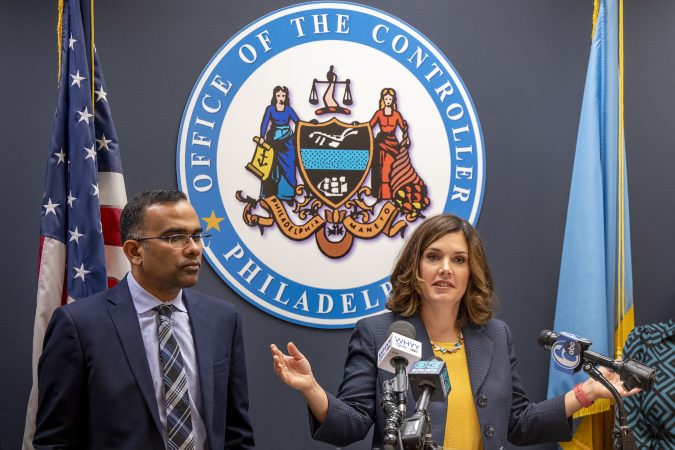
    More than a third of short-term rental properties like Airbnb and VRBO in Philadelphia have licensing issues, according to a new report from the City Controller’s office released Tuesday.

    The controller found that of 3,734 analyzed licenses associated with short-term rentals, 1,327 were expired or noncompliant.

    “Short-term rentals are an increasingly important part of Philadelphia’s lodging market, especially during major events that we’re experiencing right now,” City Controller Christy Brady said in a news release.

    “The industry’s growth requires a clear, efficient regulatory framework with strong licensing and enforcement tools to identify noncompliance,” her statement read.

    The city adopted licensing requirements in 2023, after coming under scrutiny for lack of regulation.

    In one case highlighted by the report, the controller found a host operating 50 listings in the city without any of the correct licensing.

    In other cases — including one property offering renters the chance to “Chill in Style Anime Themed Escape”— licenses were either absent or associated with unrelated uses like dumpsters or towing companies.

    Philadelphia’s short-term rental market has been in the spotlight this summer, as the city hosts major tourism events including the 250th anniversary of the Declaration of Independence, the World Cup, and Major League Baseball’s All-Star Game.

    The city has 121 registered hotels with 19,615 rooms and over 4,000 short-term rentals.

    That’s a large reduction from before the licensing regulations took effect in 2023, according to the Department of Licenses and Inspections (L&I).

    L&I says it has removed 10,452 unlicensed properties from rental sites since the beginning of 2024.

    Under the regulations adopted in 2023, short-term rental hosts who live in the properties they are renting have to get a zoning permit and a “Limited Lodging Operators License.”

    For those who do not live in the property, a zoning permit and a rental license with a hotel designation is needed. The licenses must be renewed annually.

    No short-term rentals are allowed in the Far Northeast section of Philadelphia, where City Councilmember Brian J. O’Neill, a Republican, banned them.

    The controller’s report recommends simplifying the “complicated compliance process for hosts” and switching to a more tech-oriented enforcement approach, which could monitor “noncompliant listing across multiple platforms.”

    The result, the report suggests, would help the system move away from “complaint-driven enforcement managed by a small staff” of L&I workers.

    Nashville and Mount Pleasant, S.C., have outsourced short-term rental regulation monitoring to third-party companies using automated tools to track listings across platforms.

    As a result, they both saw over 90% of rentals complying with local laws, a huge increase from the previous status quo.

    “The city can benefit from using technology-assisted monitoring tools that can support the identification of potentially noncompliant listings across multiple booking platforms,” Brady said in a statement. “Other cities are already utilizing this technology and significantly improving their enforcement measures.”

    In the run up to the World Cup, short-term rental hosts in Philadelphia — as well as hotel leaders — have expressed concern that the anticipated level of consumer interest before this summer’s festivities has not fully materialized.

    Just before the games began, the region’s short-term rental market had an occupancy of about 60%, according to AirDNA, which analyzes data from companies like Airbnb and VRBO.

  • Mayor Parker declares public safety emergency at Bartram Village after squatters cause major damage

    Mayor Parker declares public safety emergency at Bartram Village after squatters cause major damage

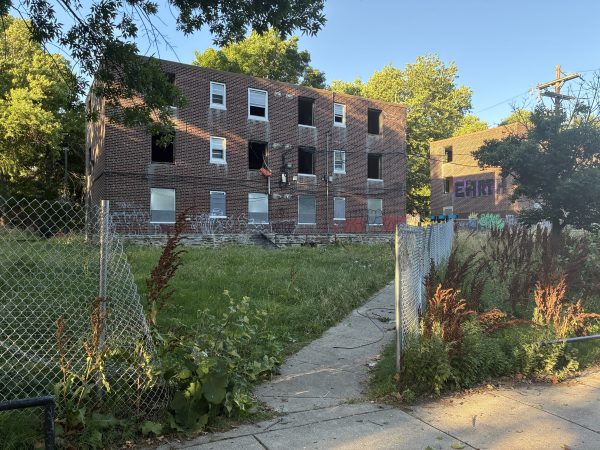
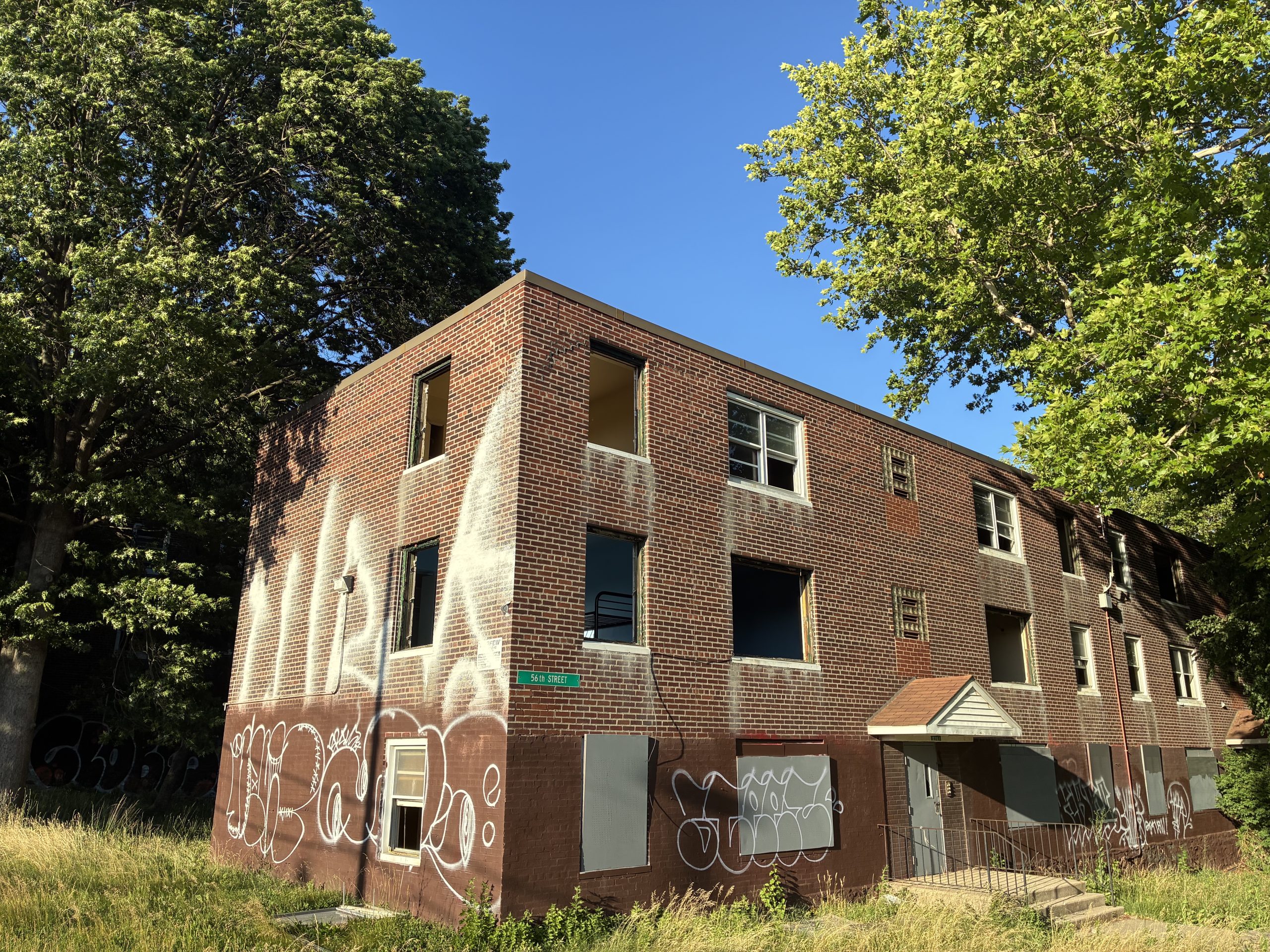
    Mayor Cherelle L. Parker has declared a public safety emergency at Bartram Village, a vacant Philadelphia Housing Authority (PHA) complex in Southwest Philadelphia, after squatters moved in and caused extensive damage.

    This declaration clears regulatory hurdles that had delayed PHA’s plans to rapidly demolish the 45-building complex, where the last tenant moved out in 2025.

    “For too long, these vacant buildings have posed serious safety risks to surrounding residents and the broader community,” Parker said in a statement Thursday. “This action clears the way to remove those hazards and replace them with new housing, new opportunity, and new investment.”

    Bartram Village dates to World War II, when it was built to host defense workers during the wartime industrial boom. The site was later transitioned to the traditional public housing program, providing affordable housing for up to 500 households.

    The complex is among the oldest in PHA’s portfolio. As federal funding for public housing declined precipitously in recent decades, the agency struggled to keep up with the maintenance of the aging structures. At the same time, drug dealing and other crime increased at Bartram Village.

    PHA has been planning a probable demolition for a major redevelopment since at least 2018, when it was estimated the buildings required repairs reaching almost $200 million in today’s dollars. Former residents would have a right to one of the 688 new units planned for the site.

    But after tenants were moved out, the 22-acre property attracted squatters despite PHA’s security patrols in the area. Beyond occupying the space, squatters tore copper wiring from the buildings and damaged the popular neighboring park and historic site of Bartram’s Garden.

    “We boarded it up, it was secured, and almost immediately we realized that folks were penetrating those areas in the back and coming in through Bartram’s Garden,” said Kelvin Jeremiah, president of the housing authority. “But because of the size … it became a real issue. The more we removed people, the more they came in.”

    Councilmember Jamie Gauthier’s office began raising alarms in February about the state of Bartram Village.

    “I warned that failing to act quickly would [exacerbate] safety issues and cost taxpayers’ money,” Gauthier said. “The buildings became hot spots for squatters and provided cover for inflicting over half a million dollars of damage to Bartram’s Garden.”

    An abandoned Bartram Village apartment, which will soon be demolished.Jake Blumgart

    Jeremiah said the housing authority couldn’t move to demolish the buildings immediately because Bartram Village is eligible for inclusion on the National Register of Historic Places. The mayor’s emergency declaration allows the agency to bypass a lengthy federal review process. The buildings are not protected by local preservation regulations.

    Following Parker’s actions Thursday, “we are now prepared to move forward on an expedited basis to have the site demolished,” Jeremiah said.

    PHA plans nine apartment buildings and over 150 townhouses for the Bartram Village site, supported in part by a $50 million grant from the federal government.

    It is a major part of Jeremiah’s aggressive plan to renovate all of the authority’s existing holdings while building 3,000 new units and buying at least 4,000 units from the private sector.

    The redevelopment has been years in the making because of tenant relocations and the federally mandated delay in demolition.

    “Southwest Philadelphians have waited far too long for promised improvements at Bartram Village,” said Gauthier, who represents the area.

    “I’m glad that Mayor Parker took the important step today of signing a public safety declaration giving PHA permission to demolish existing structures because they have been causing unsafe conditions to the community for a very long time,” Gauthier said in a statement.

  • Cracks spread through Northern Liberties rowhouses after developer built nearby

    Cracks spread through Northern Liberties rowhouses after developer built nearby

    Brian and Robyn Emmons can’t sell their 12-year-old, $900,000 rowhouse in Northern Liberties in its current state.

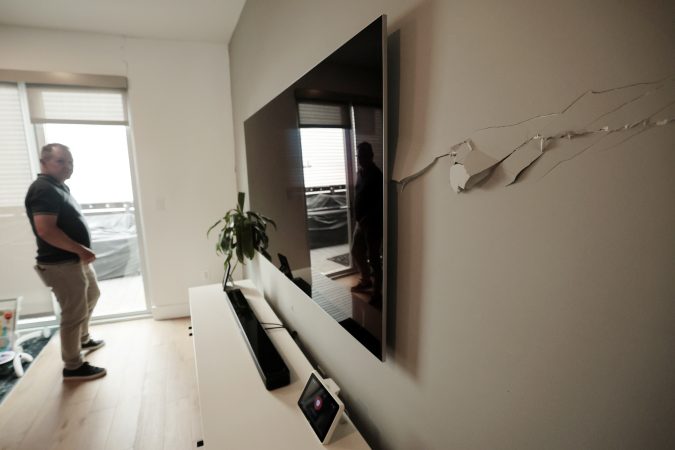
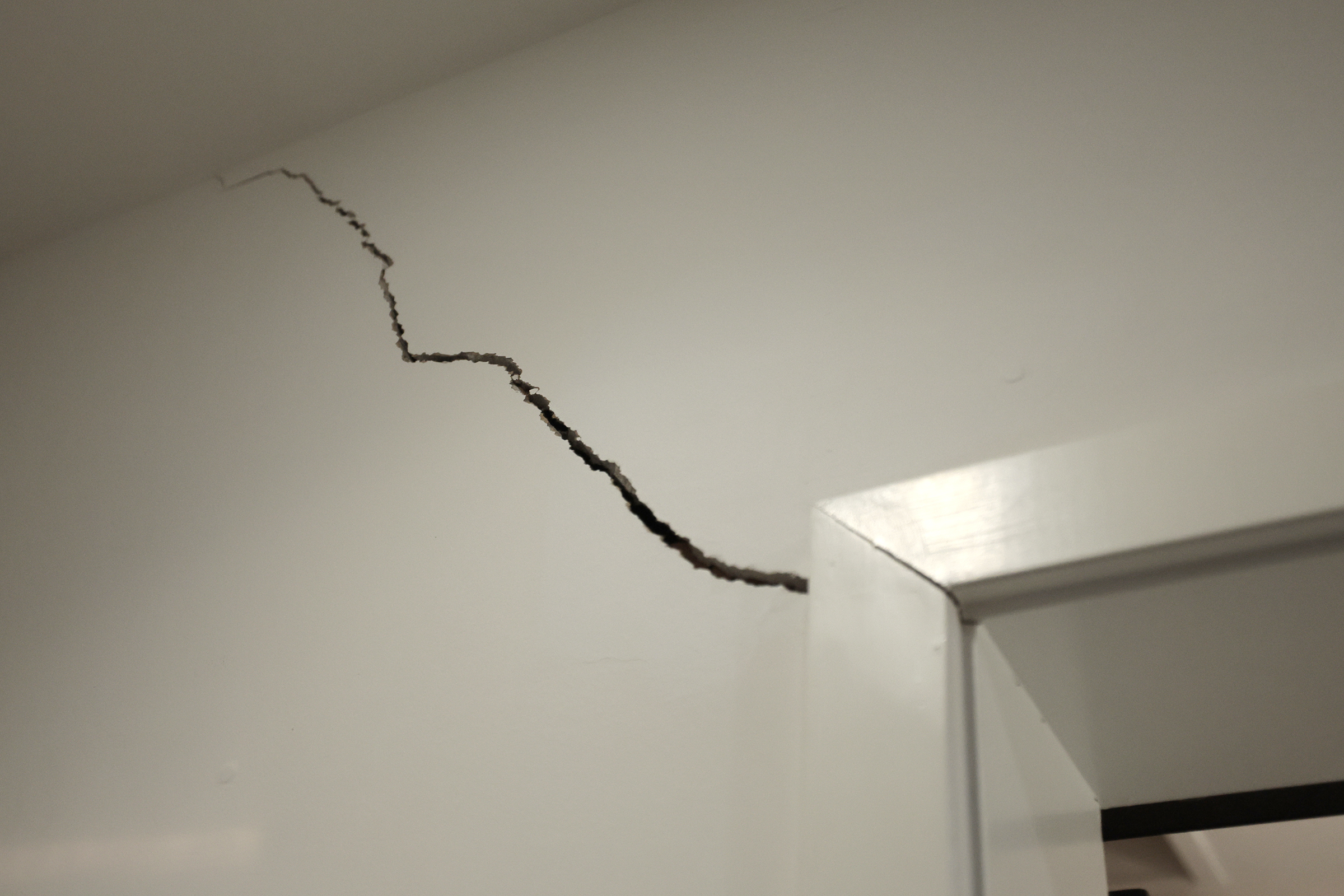
    Fissures have spread across some of the walls in their home — which was built in 2014 — and cracks radiate from many doors and windows.

    Three of their neighbors on Brown Street face similar issues. They say their homes were damaged by an apartment building constructed in 2023 that’s so close to the rear of their house they can almost touch it.

    One family moved out after the city Department of Licenses and Inspections declared their home unsafe in 2024.

    The Emmonses want to move to South Jersey, closer to family. Instead, as they wait for their second child to be born, they feel trapped.

    “The fact that my neighbor was issued an order not to occupy the house, and it’s attached to our house, it’s just really scary,” said Brian Emmons, who has been a real estate developer in Philadelphia for almost 20 years. “We are stuck.”

    Along with two neighbors, the Emmonses are suing the developer of the apartment building: Brian Zoubek, president and CEO of Zoubek Properties, who has built 250 houses in Philadelphia over his roughly decade-long career.

    Since graduating from Duke University in 2010, where he played basketball for the Blue Devils, including on the national champion team that year, Zoubek tried his hand at a few occupations before settling on development. He has expanded his business to the Jersey Shore, recently debuting 10 almost million-dollar townhouses at a news conference with New Jersey Gov. Mikie Sherrill.

    “I’m extremely proud of what we’ve built in Philadelphia,” Zoubek said in an email. “I put my own name on my work because I stand behind every project we build.”

    Zoubek faces lawsuits from the owners of three properties, all alleging that he damaged their Brown Street homes. An Inquirer review of court records found that Zoubek’s companies were similarly taken to court over allegations of sloppy construction practices by their contractors in at least three prior development projects.

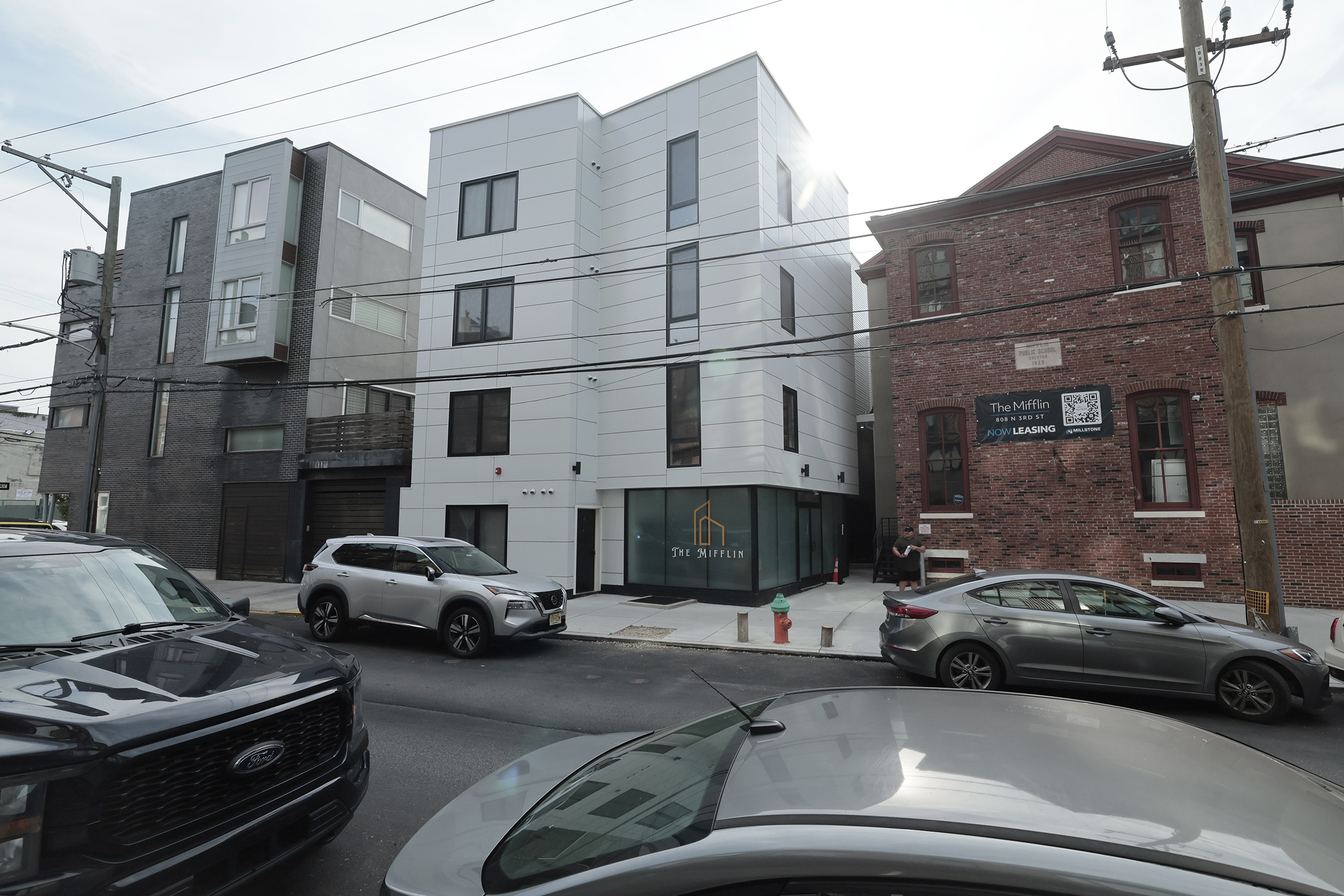
    The eastern end of Brown Street with rowhouses (gray), the new apartment building Zoubek built next door (white), and the former school he transformed into apartments (red brick). Elizabeth Robertson / Staff Photographer

    The Northern Liberties rowhouses

    Emmons and his neighbors sued last year alleging that the damage to their homes is the direct result of Zoubek’s redevelopment of the Mifflin School, built in 1825, just to the north of their homes.

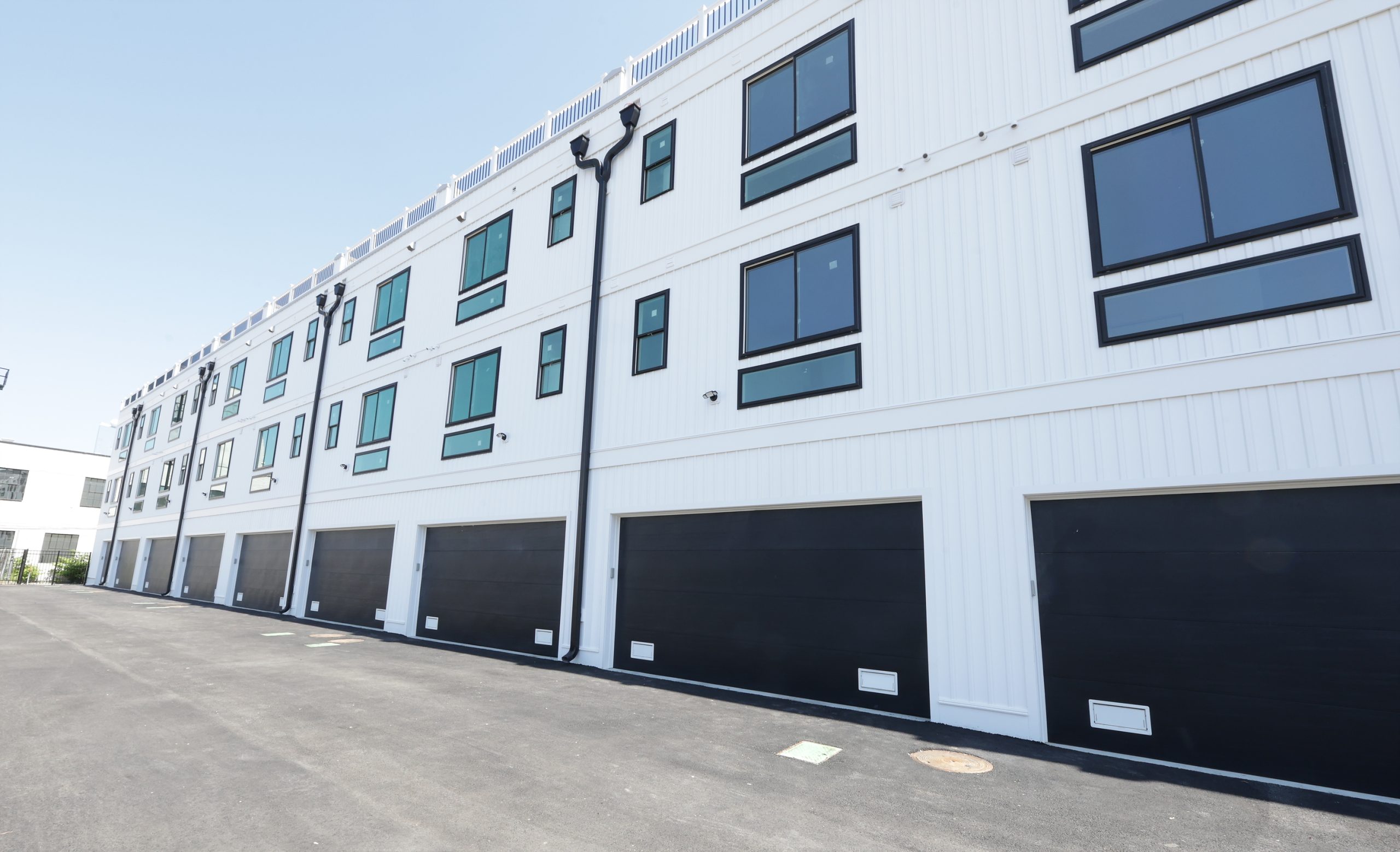
    In mid-2021, Zoubek purchased the property — the oldest surviving public school building in Philadelphia — and carved it into 15 apartments with 14 more wedged into a four-story addition on a small lot between the Brown Street homes and the historic structure.

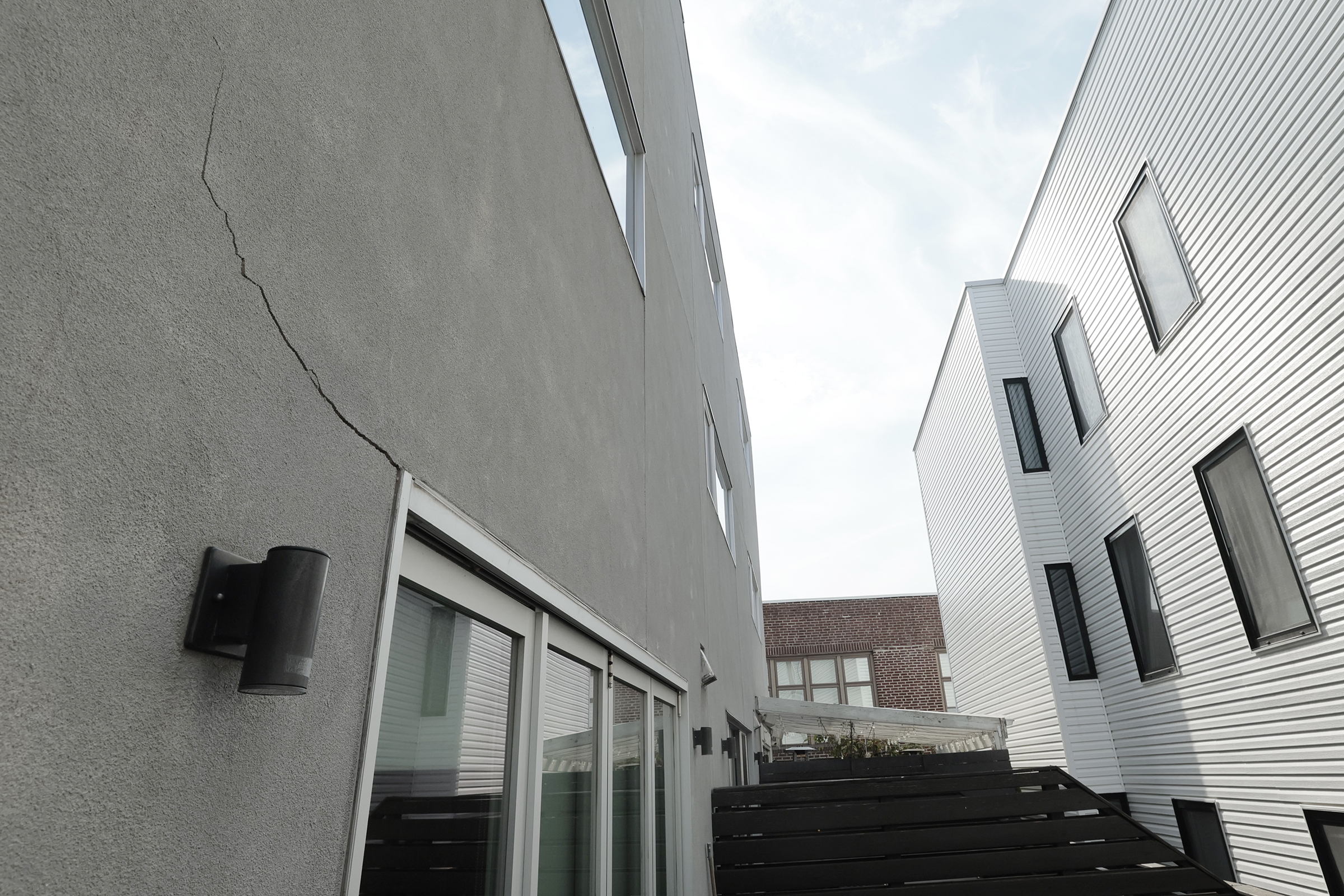
    The recent lawsuits contend that the developer dug too deep while excavating the basement of the new building and damaged their adjacent foundations. Within the three homes — which The Inquirer toured with Emmons — cracks grow in walls, floors slant, the shared garage leaks, and residents have struggled to open some windows and doorways.

    The other two homeowners declined to speak on the record, citing the ongoing lawsuits. The residents of a fourth house have resolved their case against Zoubek.

    “We are aware of the pending litigation and are actively defending these claims,” Zoubek said in an email. “Given the involvement of multiple parties, we are engaged in ongoing discovery and investigation and are confident the process will bear out the facts.”

    Zoubek was named in two earlier lawsuits that accused his construction crews of slapdash work that damaged neighboring properties. A third suit alleged that his company’s work triggered a floor collapse that injured two deliverymen.

    Zoubek said in a statement that all prior suits have been resolved.

    For Emmons, the experience on Brown Street has an irony to it. Ten years ago, he was the face of development in Philadelphia as president of the Building Industry Association (BIA) — a real estate advocacy group — and vice president of a development firm Toll Brothers runs in the city.

    Usually in the position of advocating for new development, Emmons counseled his neighbors when the project was announced that it was allowed by the property’s zoning and not worth resisting. But he did ask his fellow developer about his plans for the new apartment addition to the Mifflin School.

    A gaping crack in a first-floor wall in a home at 301B Brown St. in Philadelphia.Elizabeth Robertson / Staff Photographer

    “He clearly was doing things the wrong way,” Emmons said. “And I know that because I’m in the construction industry.”

    Zoubek contests Emmons’ assertion. He argues that many of his 30 building projects in Philadelphia involve basement excavation next to existing properties and that the Mifflin School project was fully permitted and supervised by skilled professionals.

    “That experience, combined with the engineering oversight on this project, reflects how seriously we take this work,” Zoubek said in an email. “After concerns were raised, the project was reviewed by L&I, which did not issue violations or take enforcement action.”

    A trail of lawsuits

    Zoubek has been building in the Philadelphia area for more than 10 years, mostly developing small apartment buildings or a handful of rowhouses in the city’s booming river ward neighborhoods.

    Zoubek, at 7-foot-1-inch, was a basketball star at Haddonfield Memorial High School and got into real estate after a stint running a cream puffery and, later, as a real estate agent for Cushman Wakefield.

    He started his own firm, Zoubek Properties, in 2014 and a related construction management company called Z Builds. He also cofounded another company, Catalyst City Development, with childhood friend Tyler McNeil.

    As his construction business grew, his enterprises were drawn into complex litigation alleging property damage or injury caused during construction.

    Brian Zoubek in his now defunct cream puff shop Dream Puffz, a pre-development venture, in 2012.ELISE WRABETZ / Staff Photographer

    According to one lawsuit, Catalyst, the company Zoubek cofounded, and Manayunk-based Grit Construction worked together on a small development on Hope Street in Northern Liberties in 2019. During construction, Grit ruptured a lateral pipe connecting a sewer main to a strip of nearby businesses facing an adjacent block of Front Street.

    Exhibits from that lawsuit show Zoubek proactively contacted the neighboring property owner, reassuring him that his crews had quickly rerouted the noxious flow by splicing in PVC piping until a more permanent fix could be made.

    “Broke some sort of line,” Zoubek texted to the adjacent property owner, along with a photo of the messy scene. “So we put in a temp one.”

    But a week later, business owners next door were complaining about chronic plumbing issues. The temporary line had become clogged with rubble and other debris from the ongoing construction.

    According to the suit, in June, the toilets and sinks at a packing business on Front Street erupted as sewage backed up and flooded into the commercial unit. The next day, a barbershop next door was inundated with filth.

    A plumber came out to snake out the line but discovered that Zoubek’s crews had capped the severed line. Eventually, tenants fled.

    “Our tenants cannot continue with sewage backed up into their space,” a property manager for the commercial units next door wrote to Zoubek, in a 2020 email.

    Zoubek said that the case had settled but offered few other details: “The matter was ultimately resolved between the parties.”

    Zoubek Properties had also hired Grit and contractor All-State Services to demolish a building under the El in Fishtown in 2019 and build several new apartments.

    In 2021, the owner of a neighboring apartment complex sued, saying that during teardown crews punched holes in the side of the adjacent building, damaging its roof, framing, and supports.

    According to that complaint, tenants told a property manager about “a big noise and shaking in the building” during the demolition process.

    After arriving on the scene a short time later, the manager “observed All-State Services employees drinking alcohol while on the job and stumbling down off of heavy equipment,” the complaint said.

    Zoubek said that his contractor eventually repaired the wall and that a claim for further damages was handled by the two insurance carriers.

    “The matter is fully resolved,” he said.

    The new luxury townhouses on Kentucky Avenue known as the Residences at Orange Loop in Atlantic City, which Zoubek revealed with New Jersey politicians earlier this year. Thomas E. Briglia / For The Inquirer

    As that suit unfolded, Zoubek had another project underway in Old City, again for a small apartment complex on the 100 block of North Third Street.

    In 2021, two deliverymen bringing in elevator counterweights for the construction project were told to use a rear entrance to deposit their cargo, according to a personal injury lawsuit filed the next year.

    The suit contends that both the delivery company and the workers quizzed Zoubek’s crews about whether the rear entrance of the partially constructed building was structurally sound enough to handle the extreme weight of their load. They were assured that it had been inspected and was safe.

    Instead, the floor collapsed, sending the men and their equipment crashing into the basement, injuring both delivery workers.

    The suit was later settled for $6.5 million default judgment against the subcontractor.

    “That matter was resolved through the appropriate legal and insurance processes,” Zoubek said.

    Construction damages 50 rowhouses a year

    Lawsuits and claims of construction damage are endemic to the real estate industry. And building in the tight confines of Philadelphia’s dense rowhouse neighborhoods can be especially contentious.

    A 2023 Inquirer investigation found that 50 rowhouses a year have been rendered unsafe by construction next door.

    In the case of Brown Street, a spokesperson for Zoubek pointed The Inquirer to the website of Fortis Construction & Design, which built the five rowhouses there in 2014 and is now suspended by the city for “unpermitted, potentially dangerous underpinning and excavation.”

    Cracks on the exterior of a home at 303A Brown St. in Philadelphia (left) on June 9. Elizabeth Robertson / Staff Photographer

    Emmons, however, argues that the fault lies with Zoubek: The extensive damage to the Brown Street homes appeared only after the basement was dug out for the expansion of the Mifflin in 2023.

    “He can point the finger all he wants, but I hope he lies awake at night praying nobody gets injured or killed,” Emmons said in an email.

  • A 100-unit apartment building with a rooftop pool is the latest new development slated for North Broad

    A 100-unit apartment building with a rooftop pool is the latest new development slated for North Broad

    A Long Island-based developer is planning a six-story, 100-unit apartment building — with a rooftop pool — at 639-53 N. Broad St.

    The property is owned by the Bill Wolf Petroleum Corp., which has expanded into retail and residential properties from its original focus on gas stations and other fuel-related real estate.

    The company has already redeveloped smaller buildings in Philadelphia at Fifth and South Streets and 12th and Walnut.

    The company acquired the Broad Street property in late 2021 for $6.9 million, according to city records. This week, Bill Wolf Petroleum obtained demolition permits for the existing auto-oriented and light industrial structures on the lot.

    The architect for the project is Stuart Rosenberg of SgRA Architects, who has worked with Bill Wolf Petroleum on its other Center City buildings.

    “They are looking for dense, urban, Center City development opportunities. They did not want to be on the outskirts like Northern Liberties or Port Richmond,” Rosenberg said. “They like Philadelphia. At the end of the day, you can build stuff here, so that’s why they’re investing in Philadelphia.”

    Documents posted on the Department of Licenses and Inspections website show a 72-foot-tall project, which includes the potential for over 4,500 square feet of bi-level commercial space fronting on North Broad Street.

    A parking garage is planned in the rear of the property with space for 33 vehicles as well as bike parking. It also sits directly above SEPTA’s Broad Street Line Fairmount Station.

    The property has some of the most flexible zoning in Philadelphia, allowing Bill Wolf Petroleum to move forward easily.

    The unit mixture will mostly be one- and two-bedrooms, with a few studio apartments. On the top floor will be between eight and 12 bi-level apartments.

    For the exterior, Rosenberg is planning designs in keeping with the surroundings on North Broad Street.

    “It’s going to be a classic, industrial type of vibe,” Rosenberg said. “It’s the aesthetic you’d see in a lot of New York or Philadelphia.”

    The acclaimed interior design firm Stokes Architecture & Design, which has worked on properties such as Parc and La Colombe’s Fishtown flagship, is being retained as well.

    The entrance to both the front lobby and garage will be on Wallace Street on the north side of the site. Retail will front on North Broad Street. In addition to the roof deck with a pool, there will be private balconies for the bi-level units on the top floor and a U-shaped courtyard on the second floor featuring additional outdoor space.

    Bill Wolf Petroleum’s project is just the latest in a burst of apartment developments proposed on North Broad Street.

    In the last eight months, 1,221 units have been permitted between City Hall and the southern border of Temple University’s campus. Much of the activity is clustered around the former Hahnemann University Hospital.

    “This part of the city [North Broad Street] is just really dynamic right now,” Rosenberg said.

    Some of the projects, however, are unlikely to break ground any time soon. Property owners like Brandywine Realty Trust obtained zoning permits after Councilmember Jeffery Young proposed a housing ban around the former Hahnemann campus.

    142-44 N. Broad St. is another property slated for apartment development. Tom Gralish / Staff Photographer

    Although that bill was put on hold in the face of opposition from most stakeholders in the area — no one outside Young’s office ever publicly spoke in favor of it — the legislation prompted a rush to secure 824 apartment permits before it was shelved.

    Bill Wolf Petroleum’s project, which is outside Young’s proposed ban area, stands out because it is one of the only efforts that would not involve redeveloping an existing medical, industrial, or office building for residential use.

    The current interest in the North Broad Street corridor comes after an earlier boom, which saw developers like Alterra Property Group, Eric Blumenfeld, and Bart Blatstein scooping up struggling properties and vacant lots after the Great Recession.

    Some of those projects came to fruition, such as Alterra’s 410-unit Tower Place at Broad and Spring Garden Streets. Others had a more circuitous fate.

    North Broad organizations are watching the new developments with wary optimism.

    “I’ve learned to not get excited until there are shovels in the ground,” said Shalimar Thomas, executive director at North Broad Renaissance.

    But “it’s the main thoroughfare; it’s a great transportation hub, easy walkable,” Thomas said. “The potential and the bones and the structure are there. Maybe now more developers are starting to see that.”

  • Philly has a new law to boost development around transit. Which neighborhoods will benefit?

    Philly has a new law to boost development around transit. Which neighborhoods will benefit?

    City Council approved a bill Thursday to encourage denser and taller development around Philadelphia’s transit stations.

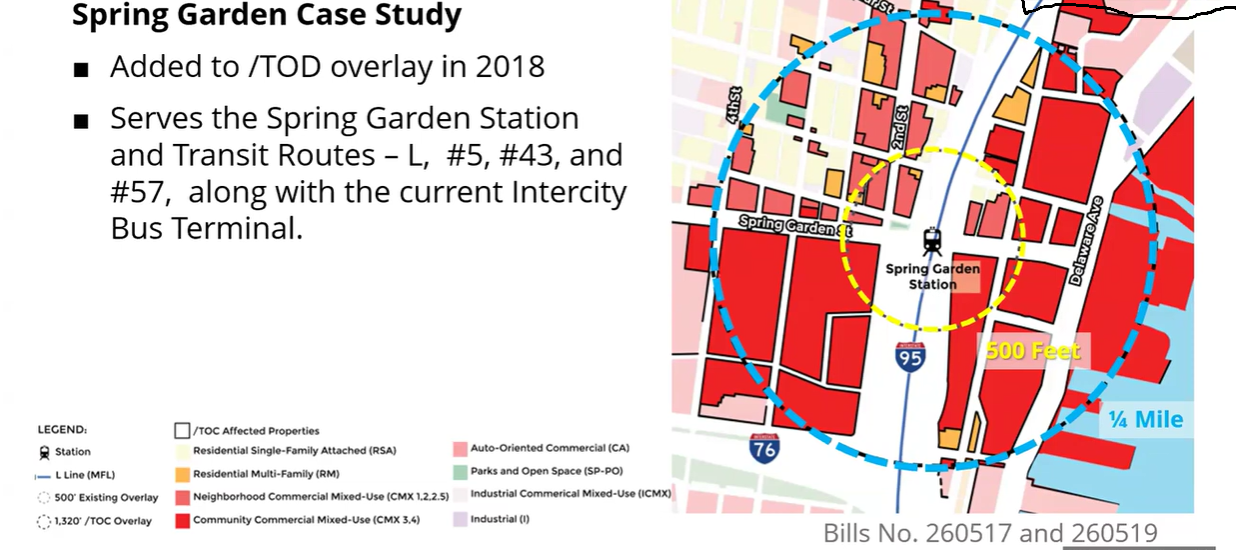
    The legislation, a part of Mayor Cherelle L. Parker’s housing agenda, expands an existing law that offers development incentives to most non-single-family properties within a 500-foot radius of transit stations. Thursday’s Council vote expands that radius to a quarter of a mile.

    It also boosts eligibility for the incentive, allowing it to include not only SEPTA rail stations but also intercity bus, PATCO, water taxi, and some bus or trolley stops.

    The legislation is meant to allow more people to live near transit and boost SEPTA ridership. Mass transportation works best when more people live within walking distance of stations.

    The law comes with a very Philadelphia caveat, however: City Council must opt stations into it. In most other states or cities that have this kind of transit-oriented development policy, it automatically applies to all eligible stations.

    “I have not heard of that for transit-oriented development laws,” said Yonah Freemark, a lead housing policy researcher at the Urban Institute, a Washington think tank.

    “If you look at what Chicago, New York City, or Los Angeles has, it’s across the city. There aren’t special exemptions for aldermen or council members” to control which stations are included, Freemark said.

    Under the existing law, Council members in West Philadelphia have opted in most Market-Frankford Line stations to the west of the University of Pennsylvania.

    Many of the stops in Northern Liberties, Fishtown, Kensington, and Frankford are included as well, although heavily used stations like Front-Girard, York-Dauphin, and the Arrott Transportation Center are left out.

    The stations already covered by the zoning incentive’s existing 500-foot radius will be automatically expanded to a quarter mile.

    No stations on the Broad Street Line are currently included. Those to the south of City Hall are half in Council President Kenyatta Johnson’s district and half in Councilman Mark Squilla’s district, complicating the politics of adding the stations.

    To the north, former City Council President Darrell Clarke and his successor, Jeffery Young, have not opted any of the stations on Broad Street into the transit-oriented development program and have often been skeptical of high-rise development.

    “The problem with this approach is that it essentially allows City Council members who are recalcitrant to allow development to block” the transit-oriented development law, Freemark said. “It entrenches that resistance.”

    Several Council members said in interviews that they hope to make use of the new law and add stations in their districts.

    Councilmember Mike Driscoll, who represents much of the Lower Northeast, said he plans to use it at the two Market-Frankford Line stops in his district that are not already covered, including the Arrott Transportation Center.

    Councilmember Jamie Gauthier, who represents much of West Philadelphia, has long championed the legislation and said she is studying the new language to see whether she can opt in more stations.

    Squilla, who opted in the Spring Garden station in Northern Liberties, said its application is more complicated on South Broad Street.

    A screen shot of a Philadelphia Planning Commission study showing how many more properties will be covered by the overlay under the new law.Philadelphia Planning Commission

    “Broad Street is tough because it is two separate Council districts, and [we] need to get input from the community on both sides,” Squilla said. “I would consider it but do my usual community outreach first.”

    But Council President Johnson said that he is interested in adding all the South Broad stations to the expanded transit-oriented development law.

    “I have no objection to transit-oriented communities, so all of mine will be in,” Johnson said. “It’s great for development and the surrounding area. I’ll probably look at it just to make sure … there’s a level of affordability.”

    On North Broad Street, Young is still studying the legislation and “assessing which stations would make sense to include,” the Council member’s spokesperson said.

    Properties zoned for single-family housing are not affected by the law. It also bans certain kinds of development from the area around transit stations, including one-story buildings, parking garages, and curb cuts.

    The urbanist group 5th Square had been meeting with City Council members in advance of Thursday’s final vote on the bill strengthening transit-oriented development.

    Council President Kenyatta Johnson says he is interested in including all of the South Broad Street subway stops in the transit oriented development law. Aidan T. Gallo / Staff Photographer

    Activists with the group say there is support for adding many more SEPTA stops to the law, although they think areas like North Broad Street will be much harder to get stations opted in.

    “The idea that all of the stations will be opted in at once is unlikely,” said Jay Arzu, housing organizer with 5th Square and the founder of the Roosevelt Boulevard Subway Movement.

    “They made the intention clear that they’ll look at it on an individual, case-by-case basis, which is disappointing for transit advocates,” Arzu said. “But we recognize it’s another step in the right direction. Sometimes you just got to take what you can get.”