Oroshi Sushi Omakase opened on Broad Street last month, with startlingly low prices for the elegant format, where chefs slice fish and gently coax rice into nigiri, one piece at a time. Each nigiri constitutes one course in omakase dining.
Oroshi, which means “grated” in Japanese, serves omakases at dinner service at $68 for 15 courses, and lunch, for $48 and 10 courses (prices throughout this article are not inclusive of tax and tip). Dinner takes precisely 90 minutes and lunch takes 60 minutes.
Omakase deals can also be had at Uchi, whose happy hour omakase (served between 4 p.m. and 6 p.m. daily) costs $60 for nine courses. Oroshi’s omakase is even cheaper than the one at Yuhiro in Fishtown, which costs $78 per person and also takes 90 minutes to serve 15 courses. Most sushi restaurants in Oroshi’s price range focus on rolls and takeout, neither of which is available there.
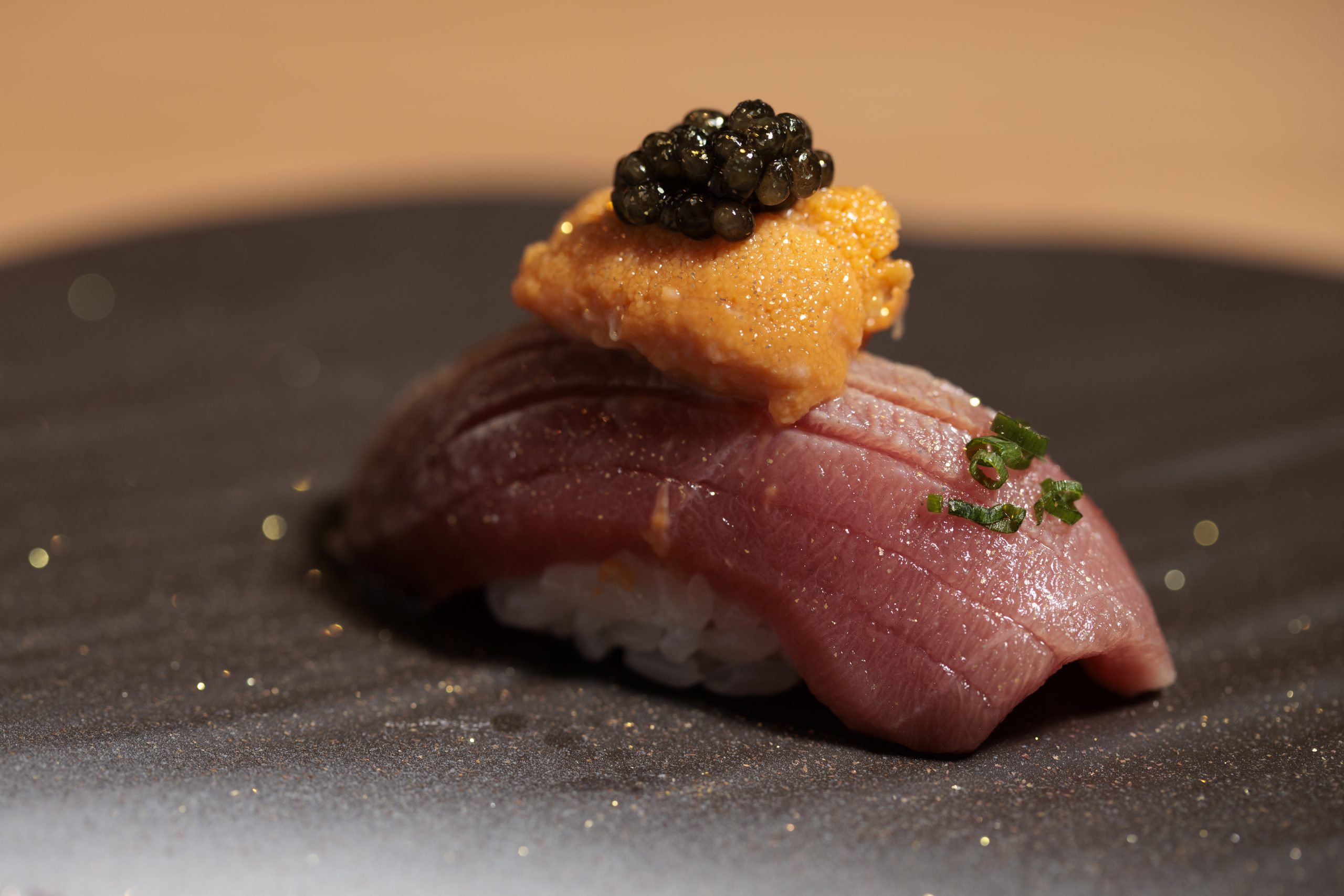
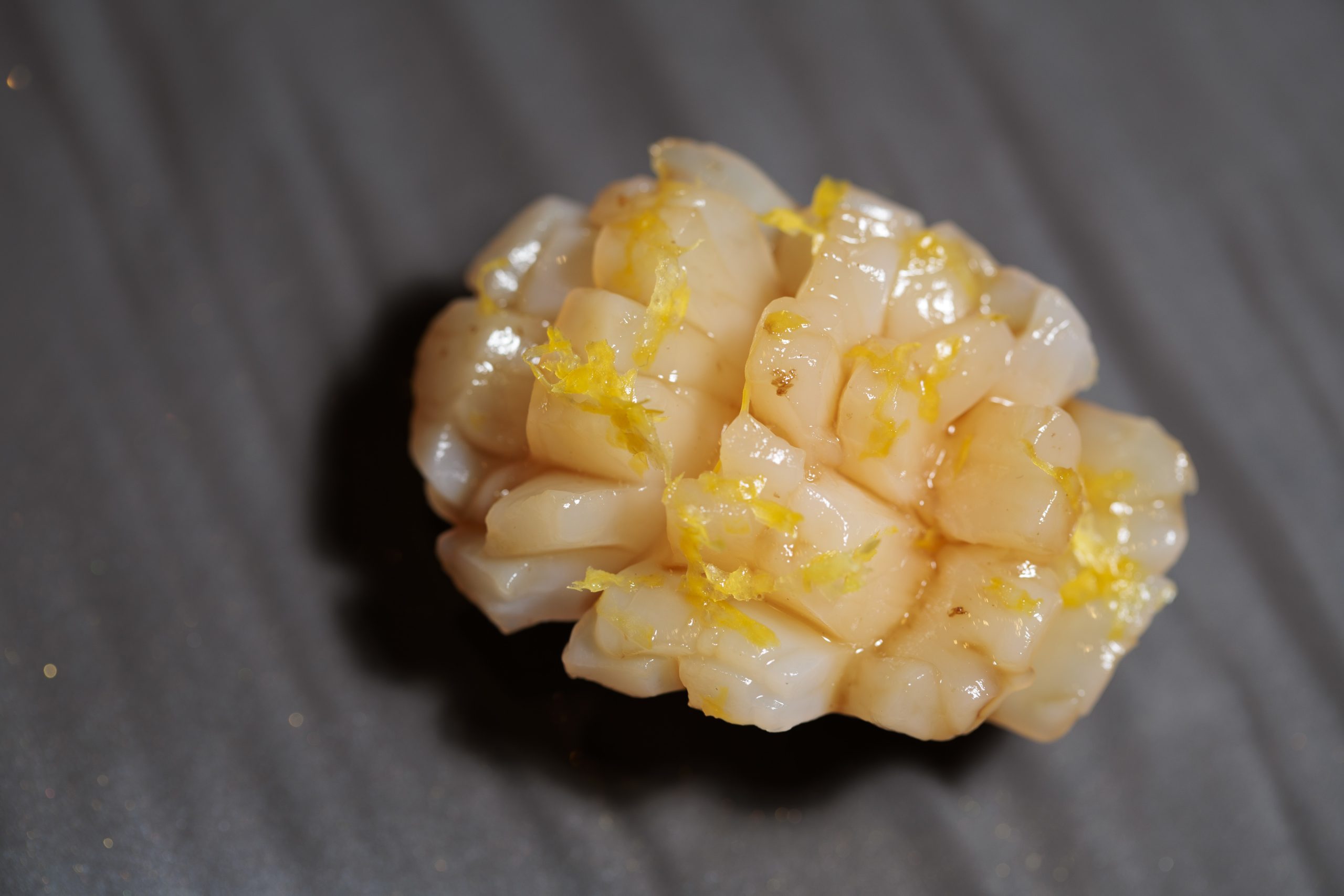
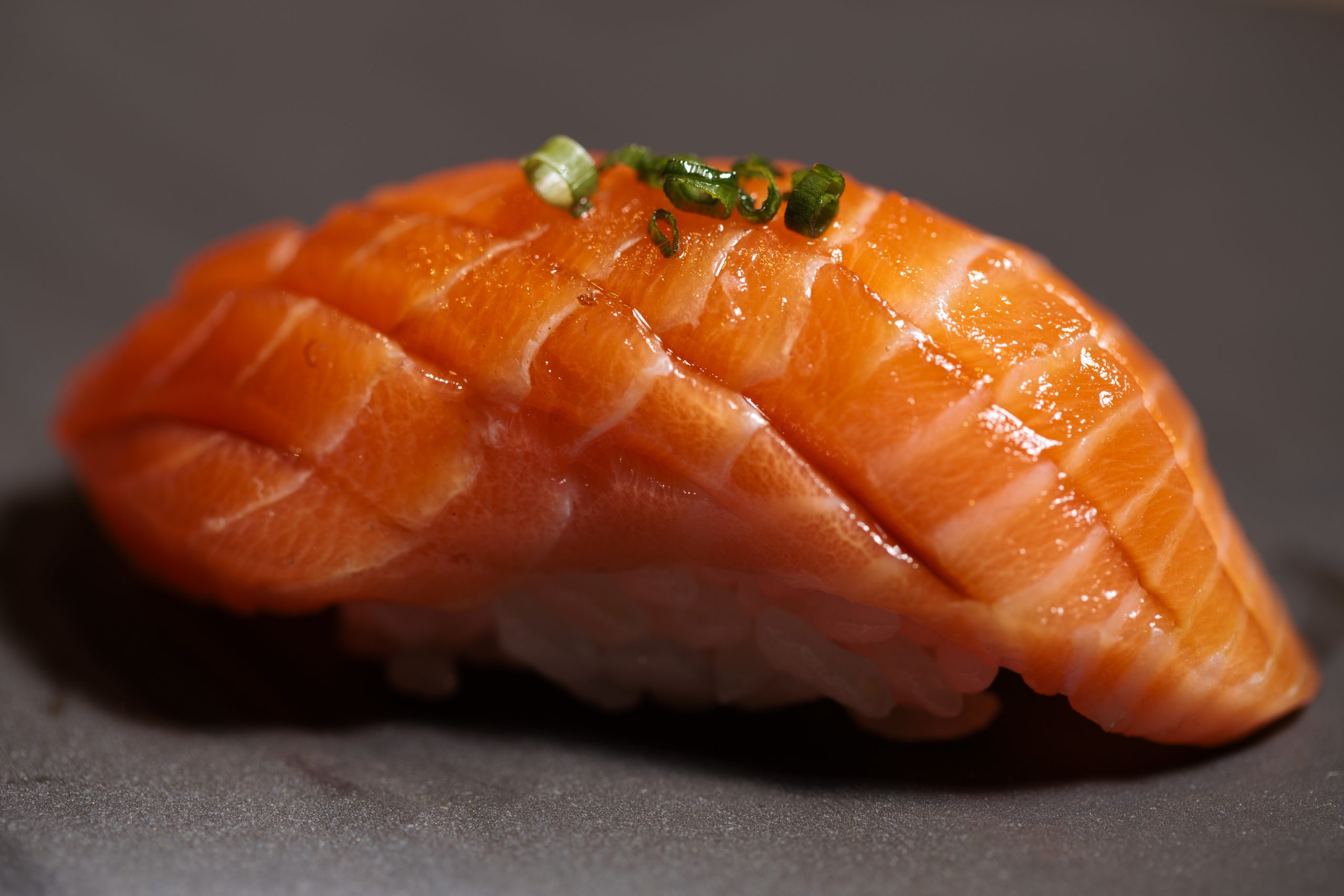
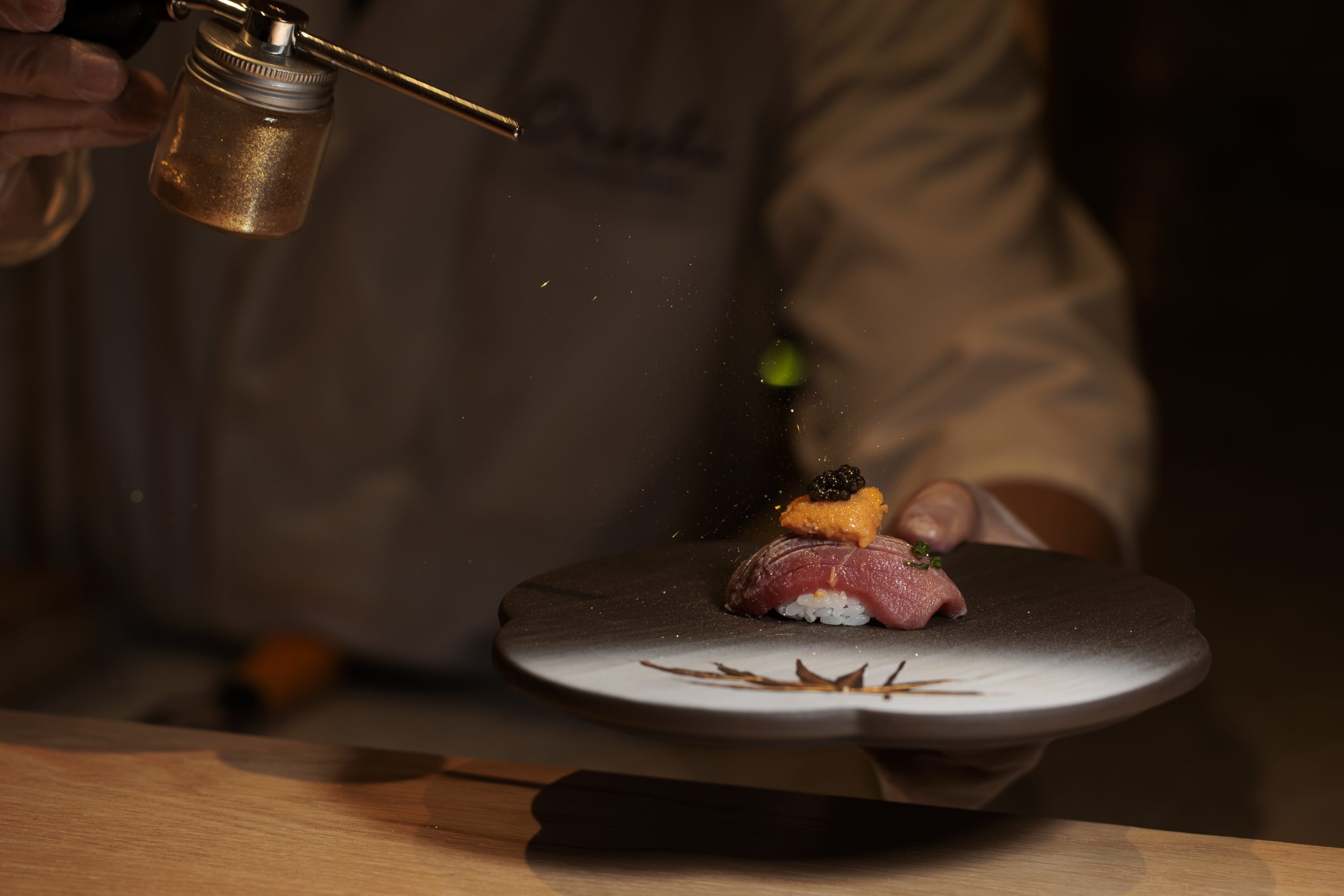
The Otoro with Uni and Caviar at Oroshi on Thursday, July 16, 2026 in Philadelphia. Oroshi offers a $68 omakase.Monica Herndon / Staff PhotographerThe Hotate scallop at Oroshi on Thursday, July 16, 2026 in Philadelphia. Oroshi offers a $68 omakase.Monica Herndon / Staff Photographer
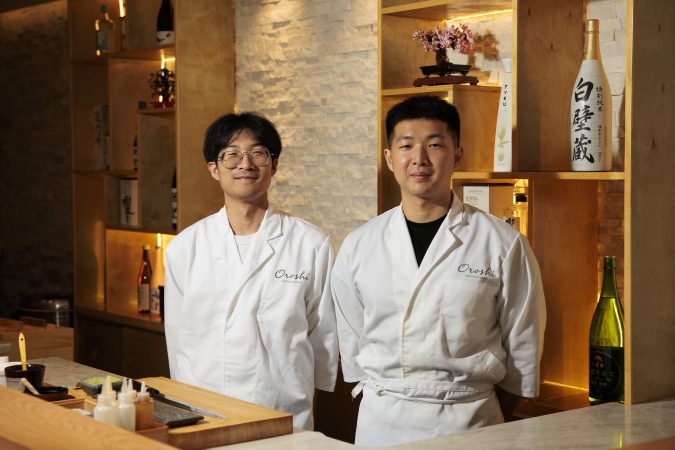
Yuhiro is also where Oroshi general manager Jahang Zhang, 29, met chef Leo Liu, 27. Together, they run Oroshi, along with recently hired 27-year-old sushi chef Ming Lee (he also goes by Leo), who just moved to Philadelphia from New York City two weeks ago.
Oroshi is funded by a private investor, who was also once a sushi chef.
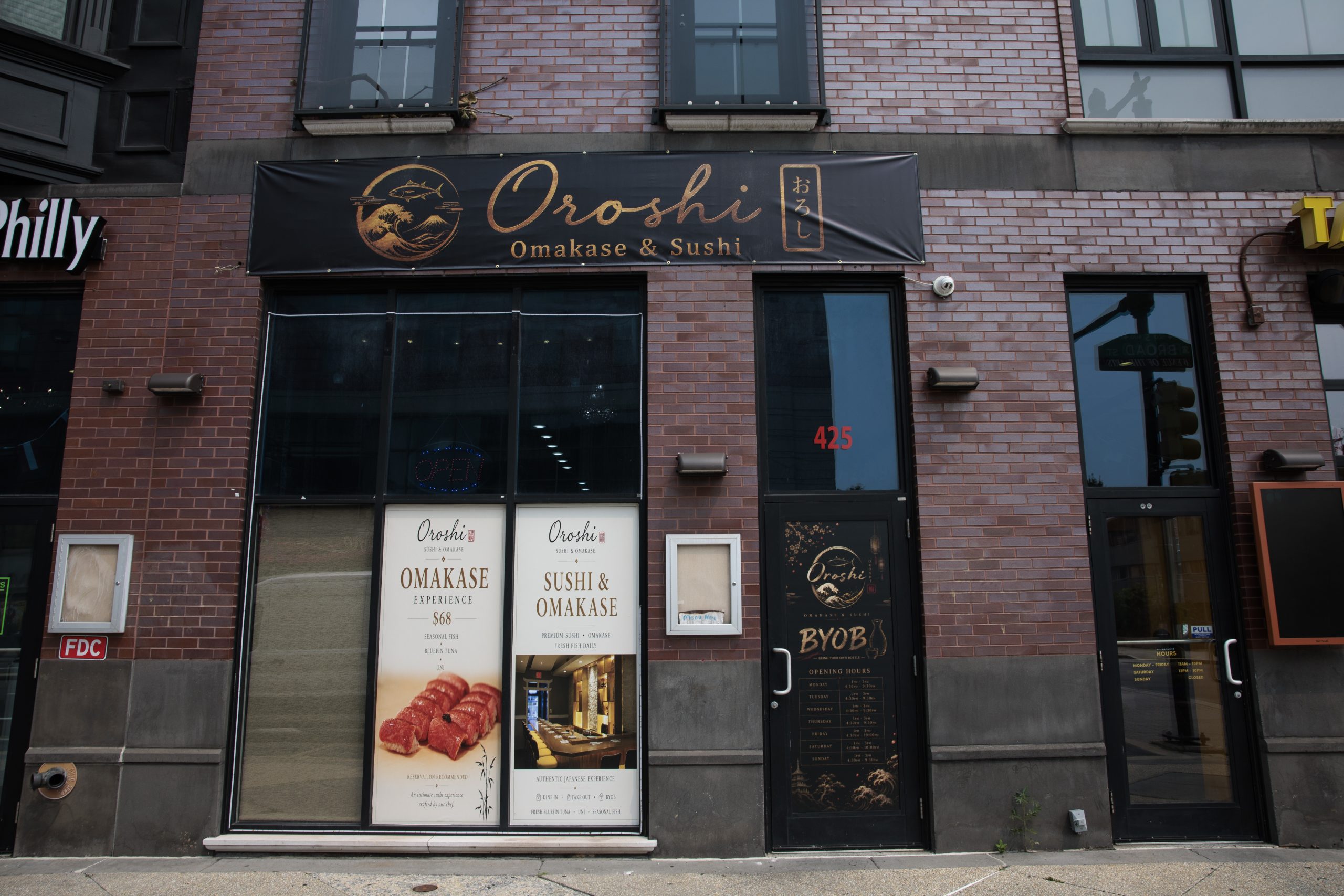
The exterior of Oroshi on Thursday, July 16, 2026 in Philadelphia. Oroshi offers a $68 omakase.Monica Herndon / Staff Photographer
Liu, whose father was also a sushi chef, most recently worked at Hiroki (where the omakase costs $195 before a mandatory 20% service charge). Both he and Zhang were determined to share the omakase format and make it more approachable.
“I have worked in sushi restaurants since I was a kid — since I was about 14 years old. My dream was to open a sushi restaurant,” said Zhang, who worked every position in family-owned sushi restaurants at places like Rayaki in Franklin Mills and Sushi Man in Huntingdon Valley before going to manage Yuhiro, where Liu was working as a sushi chef.
The “zoomakase” trend, where single pieces of nigiri are served at a rapid pace and at much lower prices than traditional omakases, has been pervasive in New York, especially on the Lower East Side. But here in Philly, it never really took off. Just like the hand roll or temaki trend overwhelmed New York, but exists only in pockets here.
The King Salmon at Oroshi on Thursday, July 16, 2026 in Philadelphia. Oroshi offers a $68 omakase.Monica Herndon / Staff Photographer
Oroshi isn‘t skimping on ingredients to make their pricing work, flying in fresh fish and wagyu from Japan like the other omakase-focused restaurants in Philly.
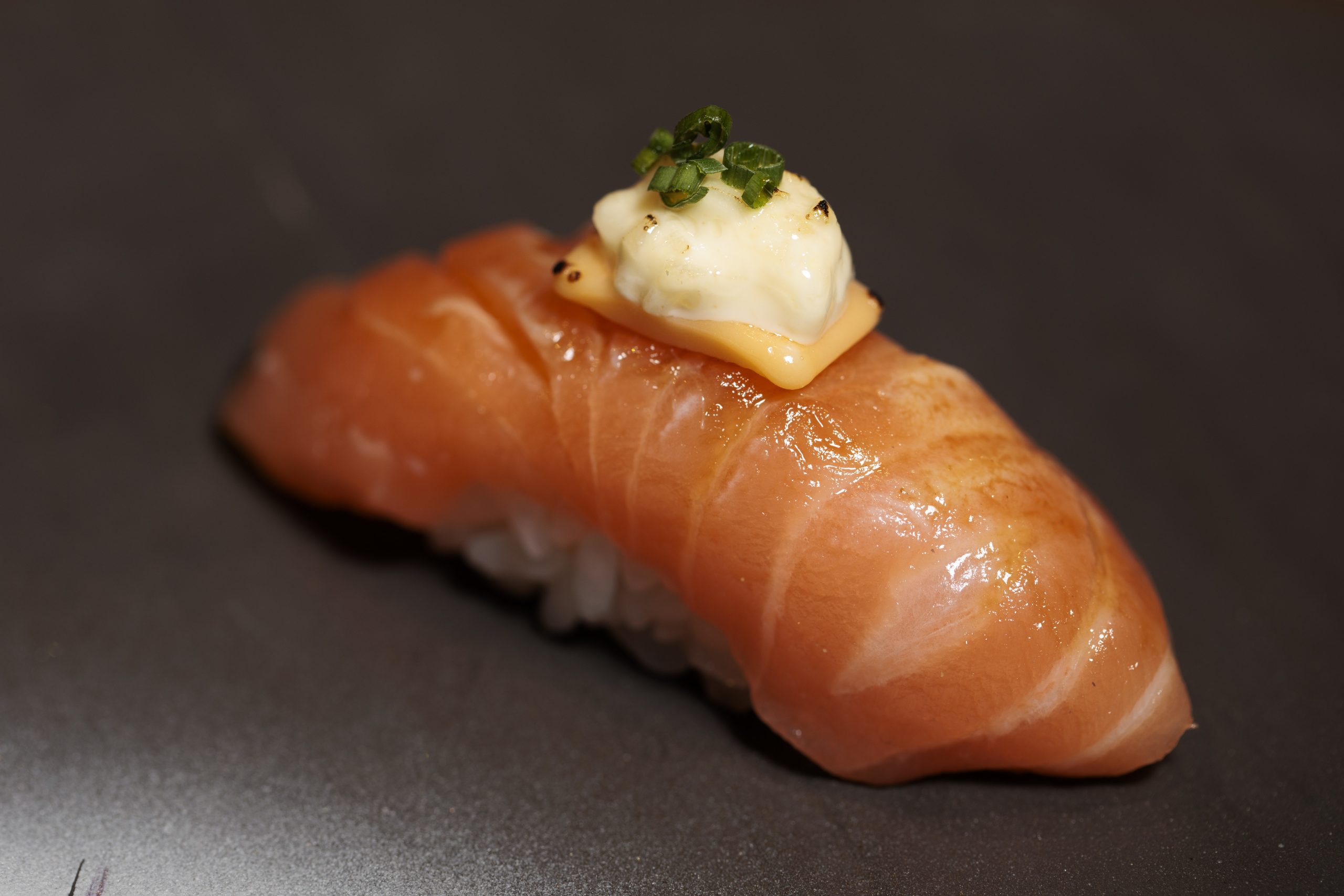
On a recent night, the mist of gold glitter that Liu sprayed upon the otoro nigiri with caviar met with gasps of glee. (Indeed, there is caviar at Oroshi, though a very small amount.) Oroshi is also playful: a nigiri on their opening menu that they’ve since phased out consisted of premium Bakkafrost salmon from Scotland, topped with mayonnaise and a tiny square of Kraft American cheese that was torched multiple times.
The salmon with American cheese at Oroshi on Thursday, July 16, 2026 in Philadelphia. Oroshi offers a $68 omakase.Monica Herndon / Staff Photographer
At Oroshi, the lights are bright and the decor is spare. There are sake bottles and framed wagyu certifications behind the sushi bar. The former is just for decoration, as Oroshi is a BYOB. The latter is legitimate, indicative of the quality of their ingredients.
The Otoro with Uni and Caviar at Oroshi on Thursday, July 16, 2026 in Philadelphia. Oroshi offers a $68 omakase.Monica Herndon / Staff Photographer
It’s not a place to linger, but they will allow for add-ons so you can repeat your favorite pieces of nigiri and these range between $7 to $14 per piece. Salmon, for instance, is $7. Otoro, or the most prized and fatty cut of tuna, is $14 a la carte. That same otoro nigiri add-on at Royal Sushi? $35.
Oroshi Sushi Omakase, 425 S Broad St., oroshisushiomakase.com. Hours: 1 p.m. to 3 p.m. Monday through Friday, 4:30 p.m. to 9:30 p.m. Sunday through Thursday, 4:30 p.m. to 10 p.m. Friday and Saturday.
Three major trends have dominated recent cultural discourse: charms, food and fashion collaborations, and mini totes. The tote from Wawa and Lands’ End harnesses all three into one sandwich-sized bag. And I’m obsessed with it.
Labubu bag charms took the world by storm in 2025, inspiring almost everyone with a handbag to personalize theirs with dangling dolls. The post-Labubu era isn’t so much a reaction to the somewhat cumbersome creatures dangling from key chains, but an evolution into a fixation with different charms, like a bracelet proclaiming one’s devotion to the World Cup, the cities in which games were played, and one’s willingness to wait for many hours in line to procure one from a Bank of America sponsor tent.
Lands’ End was paying attention to all three trends, leading to the Wawa and Lands’ End limited-edition tote. It debuted Wednesday on both the Lands’ End website, where it immediately sold out, and in select Wawa stores in New Jersey (which allegedly still have them in stock). This is an aggression toward the beautiful city of Philadelphia, but I digress.
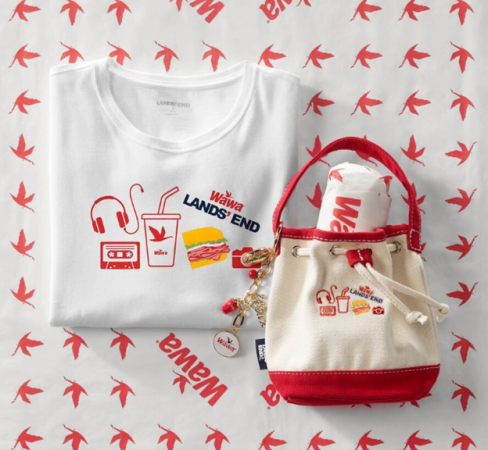
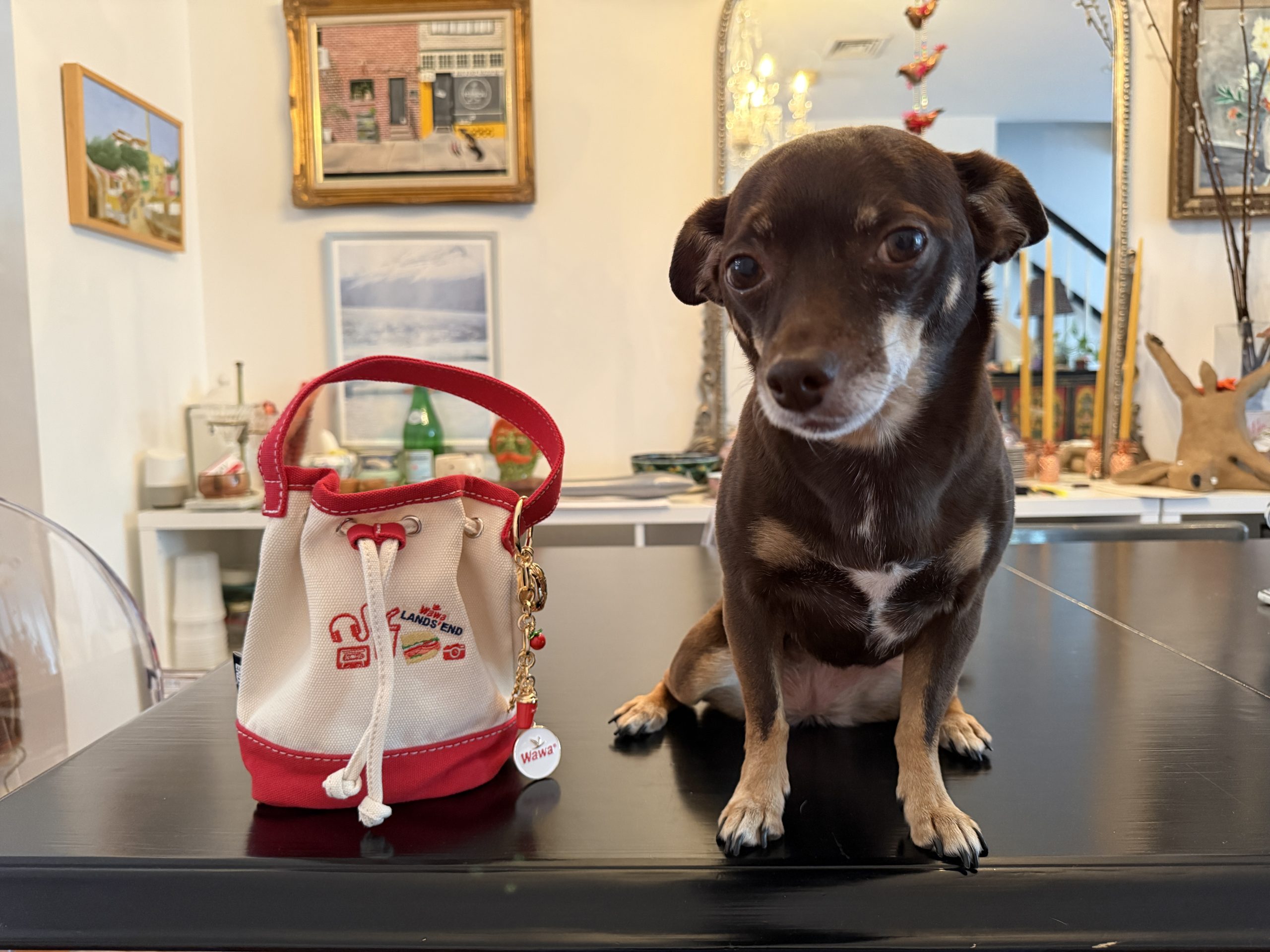
It’s called the Shorti® Tote. It costs $39.95 for the tote itself and a matching bag charm that features an enamel hoagie, tomato, Wawa coffee cup, and “East Coast” charm. The collaboration also includes a Wawa branded T-shirt from Lands’ End ($44.95) that comes wrapped up like a hoagie (of course). Wawa provided me with a sample bag for this review.
The collaboration celebrates the Jersey Shore and encourages you to take a Wawa hoagie to the beach, where it will be duly protected from the elements by the thick, high-quality cotton canvas of a dedicated bucket-shaped tote bag. As someone who does not ever go to the Jersey Shore, I found that the tote has numerous other merits: It’s perfectly sized for a small water bottle, my wallet, keys, flashlight (with which I snap food photos because I am a food writer), and other bits of detritus.
Unlike the Trader Joe’s tote, it has a drawstring opening that can keep all your belongings firmly inside. It’s entirely made of canvas (worthwhile to note because canvas totes with plastic handles are the absolute worst), with metal grommets to secure the drawstring. The embroidered graphic collage of cassette tape, wired headphones, a Shorti, analog camera, cup with straw, feels pretty ‘90s-coded (also so trendy right now), and the Wawa and Lands’ End logos are small and demure. True to its name, it also fits two hoagies very nicely.
It’s comfortable to hold on my forearm, and I have found that it’s also the perfect BYOB bag as it holds all the contents of my purse along with a bottle of wine. The only drawback I see is that it does not fit my Chihuahua, Coconut, whom I also generally like to throw into a tote bag.
The Shorti® Tote next to Coconut the Chihuahua, who does not fit inside the mini tote.Kiki Aranita / Staff /
But perhaps the greatest part of possessing this tote is the envy I have inspired.
“When you’re done reviewing it and need to give it to someone, I am available,” said my colleague Beatrice Forman as I slowly backed away from her.
Get your own.
Wawas that received totes are in Sea Isle City, Stone Harbor, Avalon, Somers Point, Cape May, Ocean View, Brigantine, Ship Bottom, Wildwood, North Wildwood, Ventnor, Marmora, Dorchester, Ocean City, Manasquan, Rio Grande, Normandy Beach, Margate, Villas, Long Beach Township, Barnegat, and Neptune.
Editor’s note: This article has been updated to correct the spelling of Lands’ End.
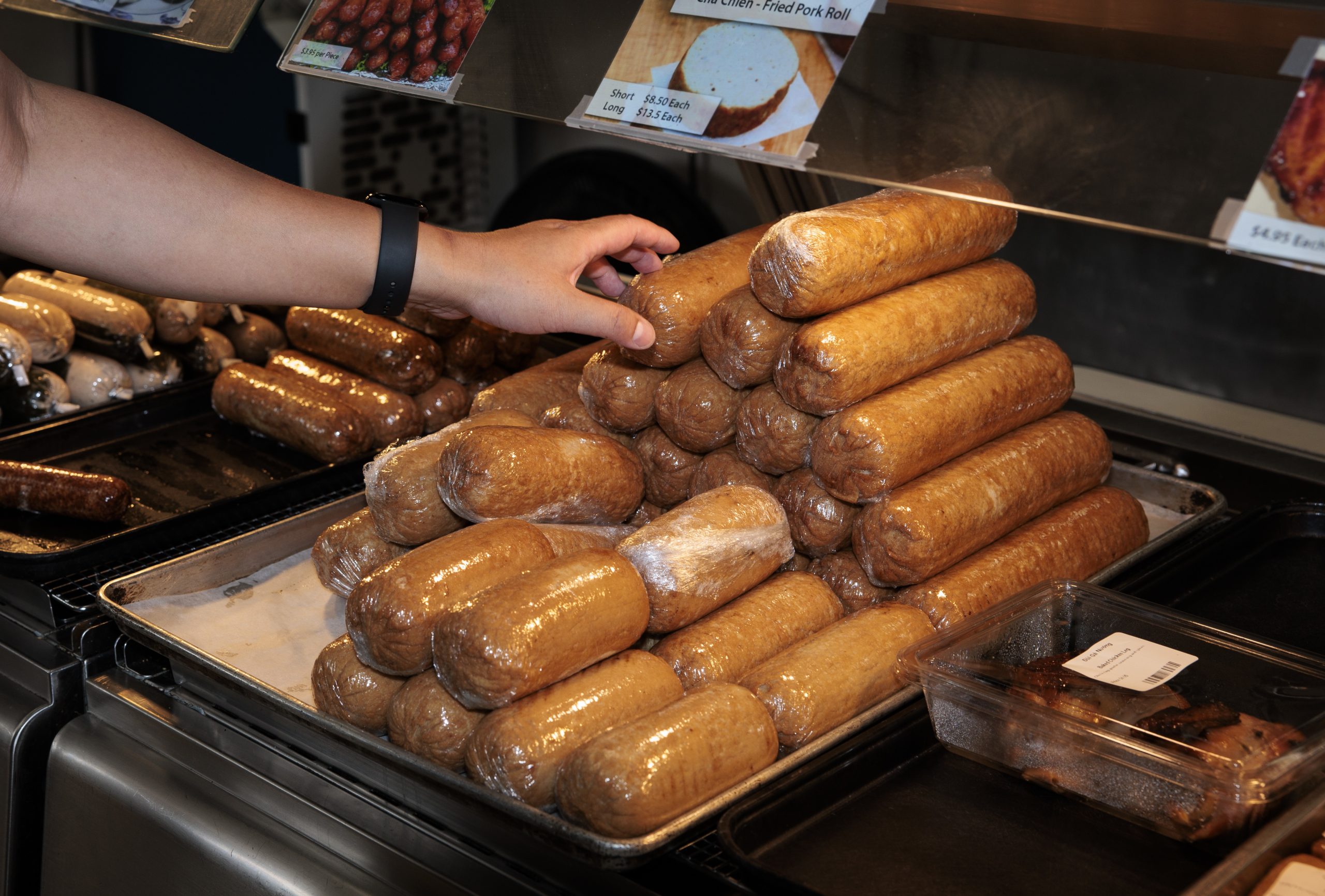
For decades, Washington Avenue’s Ba Le Bakery has been practically synonymous with bánh mì in Philadelphia, and not only for the beautifully composed Vietnamese sandwiches sold on-site. Ba Le has set the standard for bánh mìs elsewhere. The bakery supplies rolls, crisp with fluffy interiors, to dozens of wholesale customers as far away as upstate New York, and is also our area’s primary producer of Vietnamese bologna, which comes in many variations, from fried pork with pepper to steamed pork wrapped in banana leaves.
But this Philadelphia institution has siblings all over the United States, all operating independently of each other.There are Ba Les in Hawai’i, Illinois, Virginia, Maryland, and California. Each bakes its own bread and has the same core menu of bánh mìs, summer rolls, house-made pates, and girthy tubes of Vietnamese bologna and fried pork rolls. They all share the same origin story and founder, Le Vo, who went by the nickname “Ba Le.”
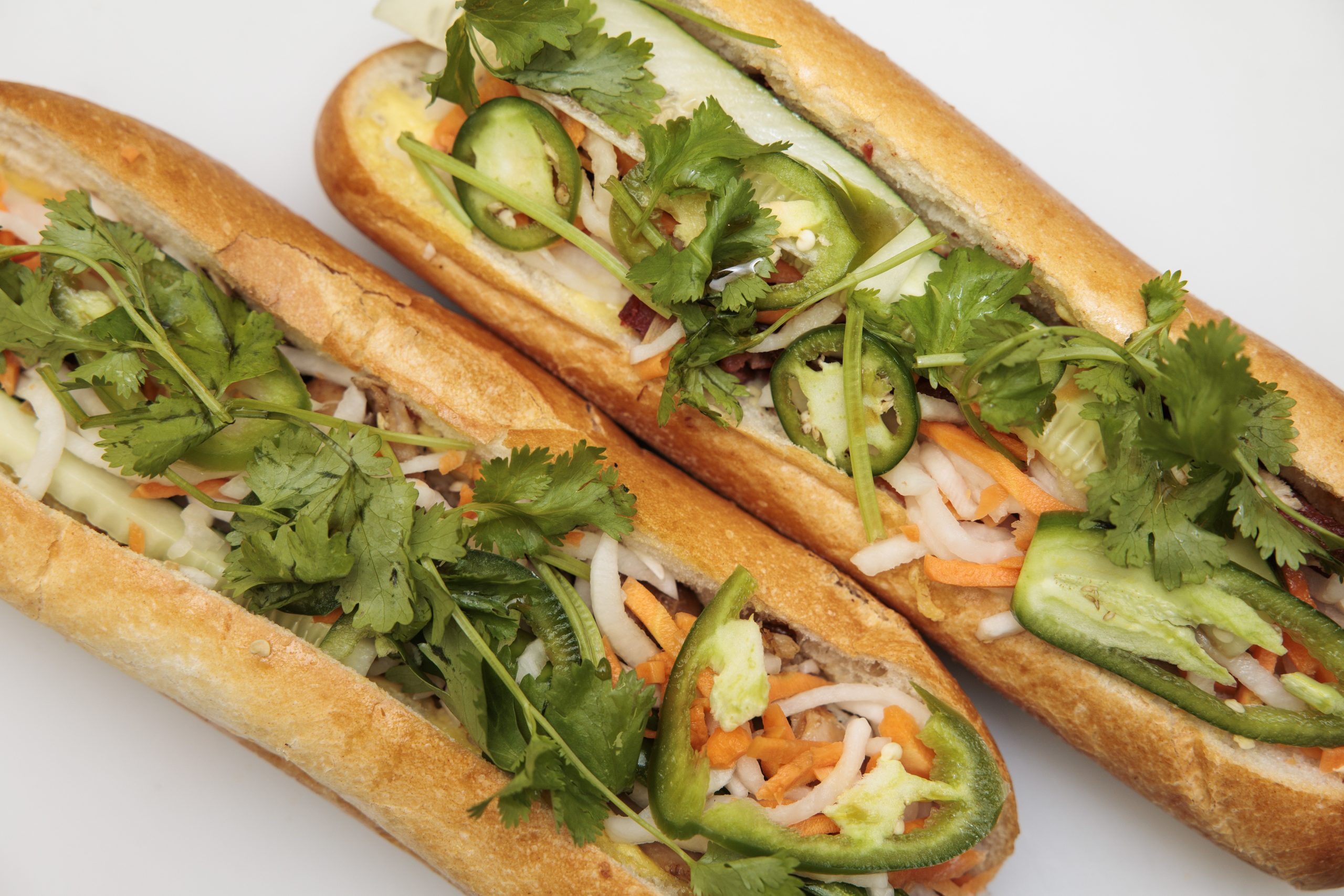
Lemongrass chicken and bbq pork bánh mìs at Ba Le Bakery on Thursday, July 16, 2026, in Philadelphia.Monica Herndon / Staff Photographer
Growing up in southern Vietnam, Le was the third of several siblings (“ba” means “three”).He launched the business that would become Ba Le as a Saigon sandwich cart in the 1950s, selling his bánh mìs prototypes.He grew the business to several carts before departing the country with his family in 1972 for San Jose, California, where he started the first stateside Ba Le in 1982. Le helped three of hisdaughters open Ba Le locations in different American cities over the next couple decades.
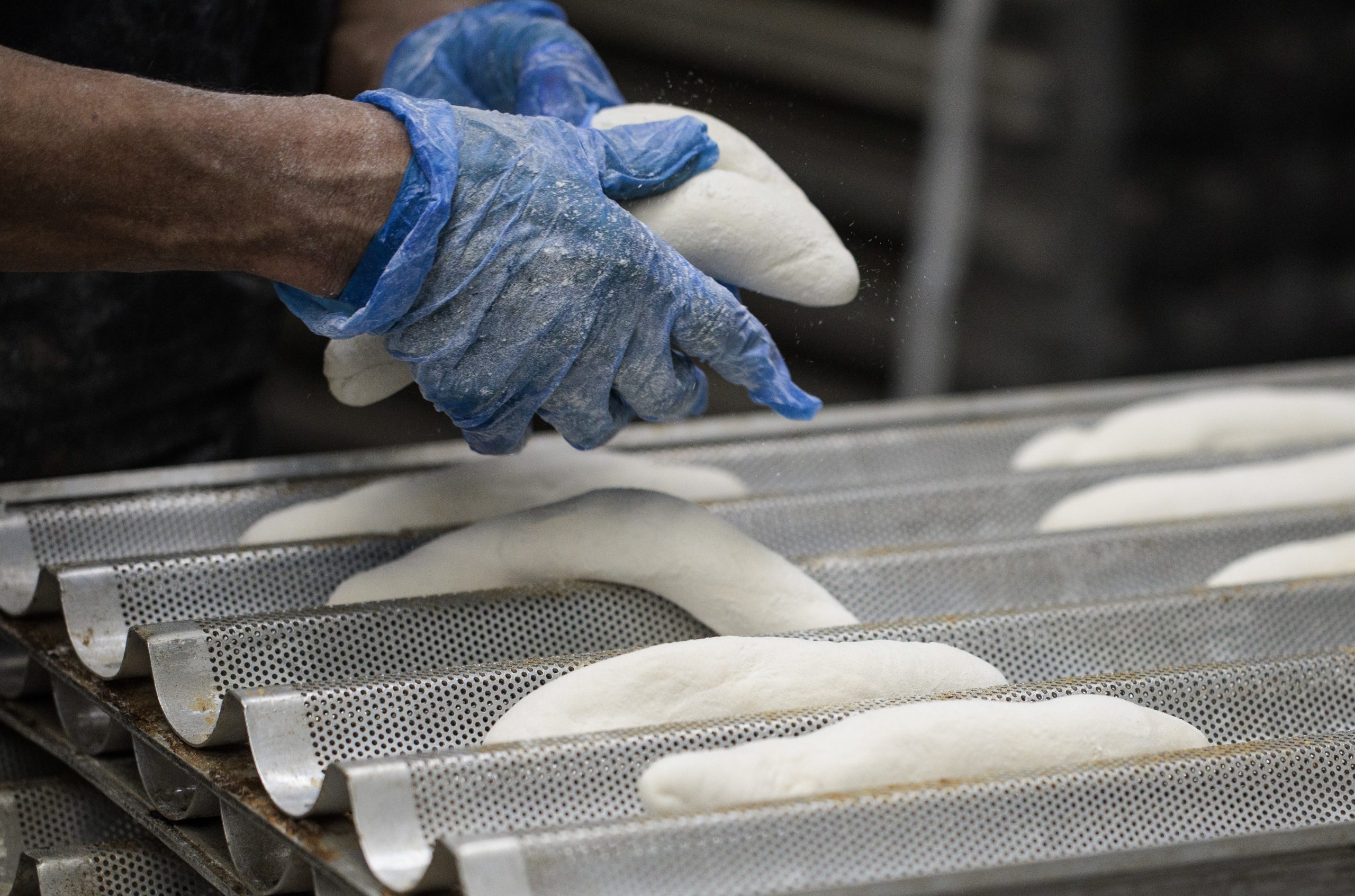
Workers shape rolls at Ba Le Bakery on Thursday, July 16, 2026, in Philadelphia.Monica Herndon / Staff Photographer
There are just a few regional differences among Ba Le menus across the country, a reflection of their geographic locations. The shrimp chips at the Ba Le in Falls Church, Virginia, are BBQ-flavored. In Alhambra, California, Ba Le Sandwich Shop sells smoothies and yogurt along with head cheese and vermicelli. The 20 or so Ba Le outposts in Hawai’i serve Spam, locally caught fish like opakapaka, and saimin, the islands’ beloved noodle soup.
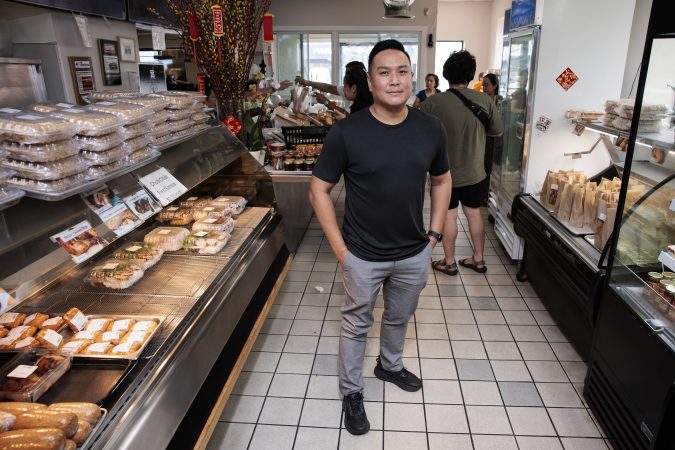
In Philadelphia, where Le and daughter Thi Nguyen opened Ba Le in 1998, grandson Victor Nguyen, 40, has just unleashed a veritable library of Vietnamese pantry items not found in any other branch of the family business. It’s not the only change the third-generation owner has made.
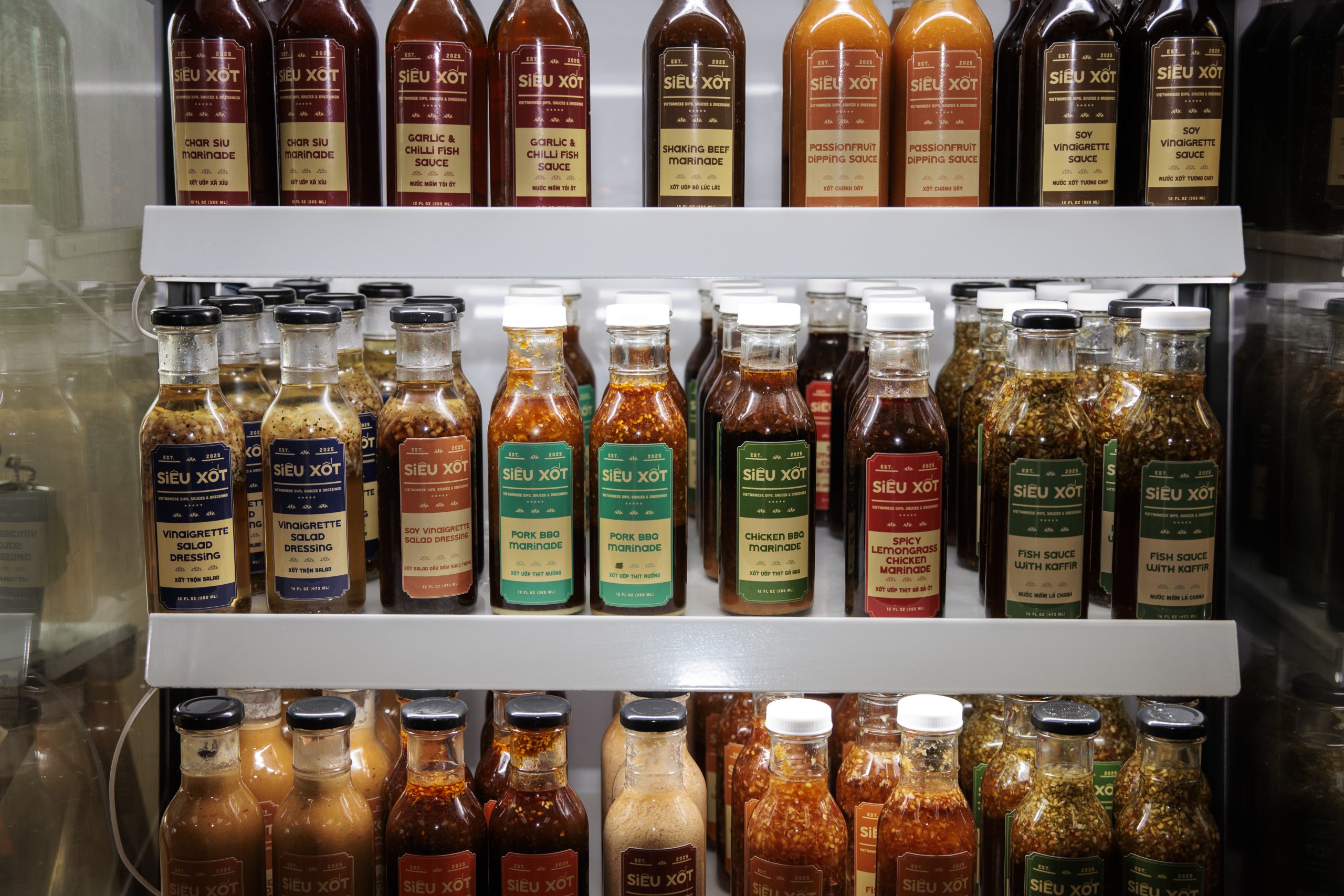
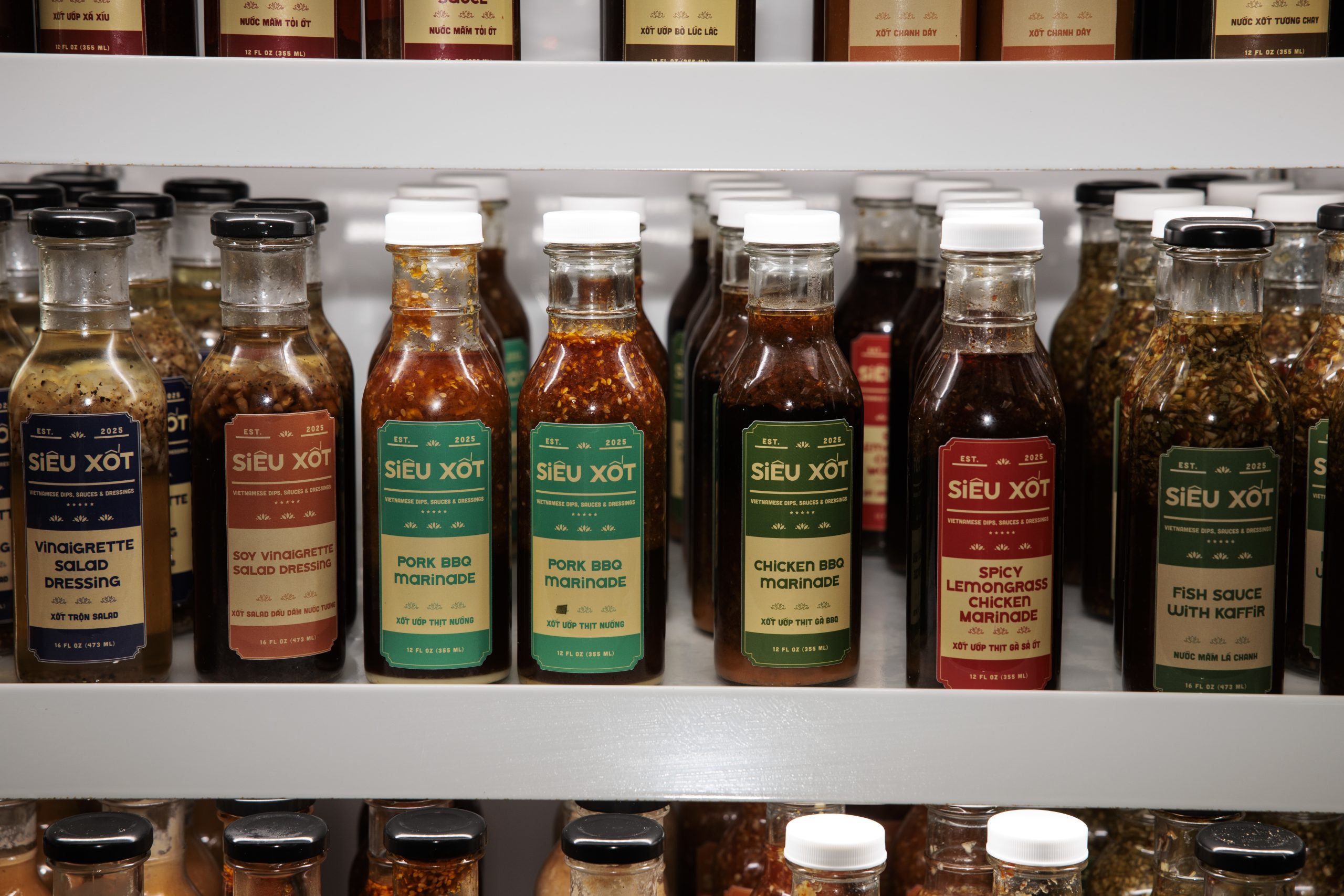
The new line of Sieu Xot sauces at Ba Le Bakery on Thursday, July 16, 2026, in Philadelphia.Monica Herndon / Staff Photographer
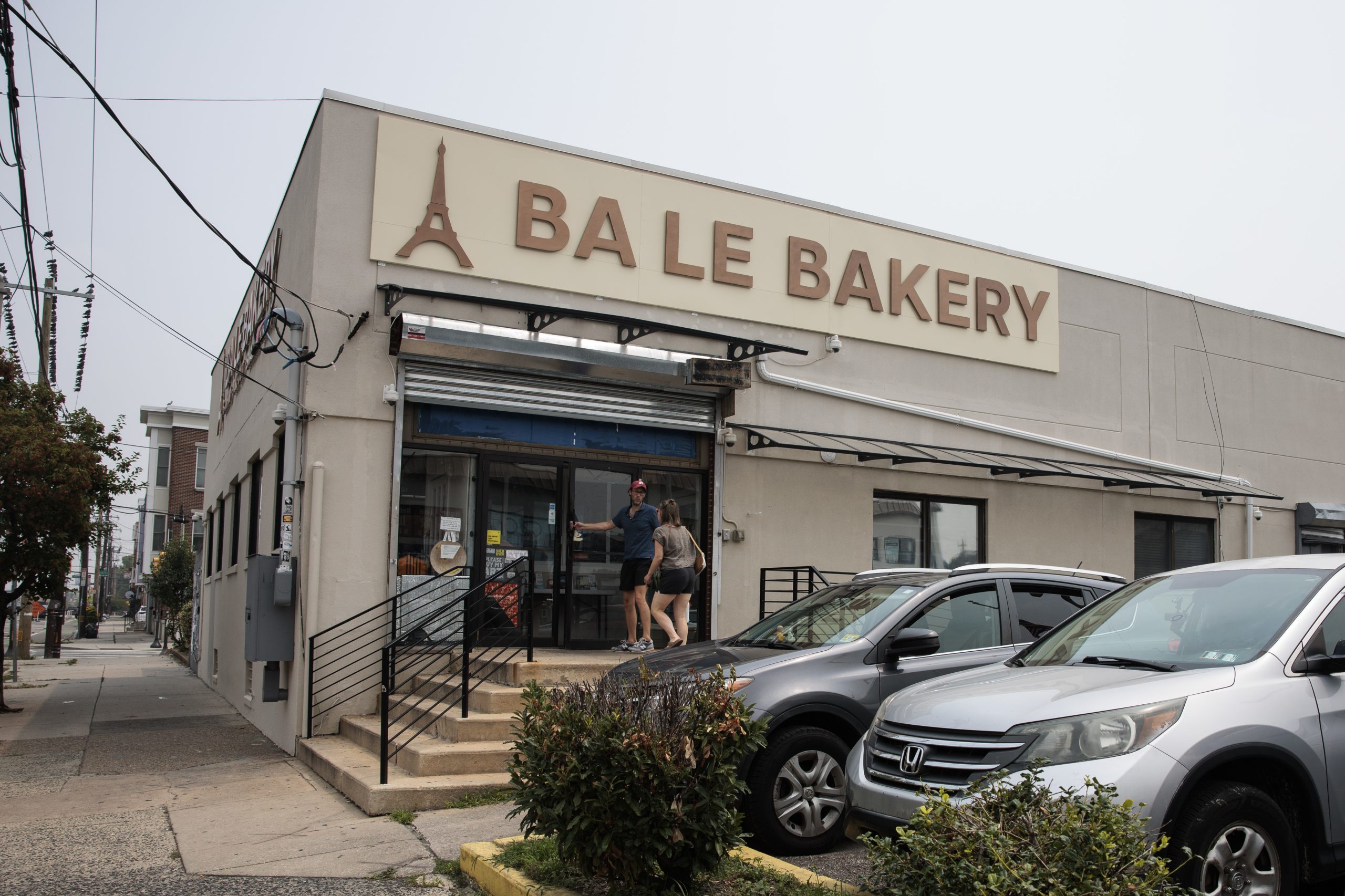
Victor Nguyen officiallytook the reins of Washington Avenue’s Ba Le in 2024. Perhaps you’ve seen the storefront’s brand-new caramel-colored signage — sporting an Eiffel Tower logo, as all Ba Le bakeries do — which can now be spotted from many blocks away. Or maybe you’ve noticed that, after years of resisting an online presence beyond a Facebook profile, Ba Le Bakery has a website. You might even be surprised to find a slew of new, hip matcha-based drinks joining the traditional Vietnamese coffees on the beverage menu, as well as gourmet snacks and “shoppy shop” products you’d expect at Biederman’s or Rittenhouse’s Cork.
The exterior of Ba Le Bakery on Thursday, July 16, 2026, in Philadelphia.Monica Herndon / Staff Photographer
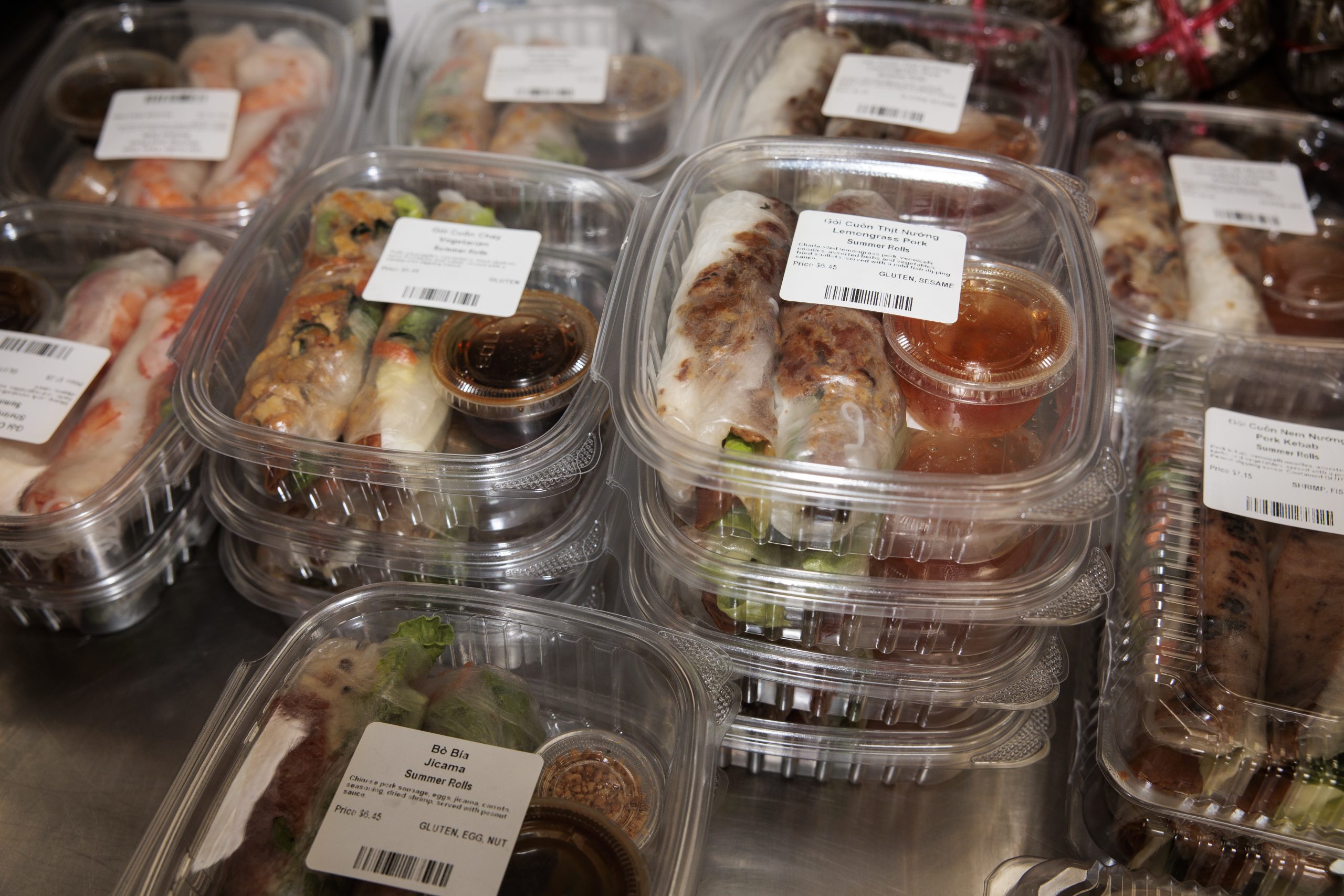
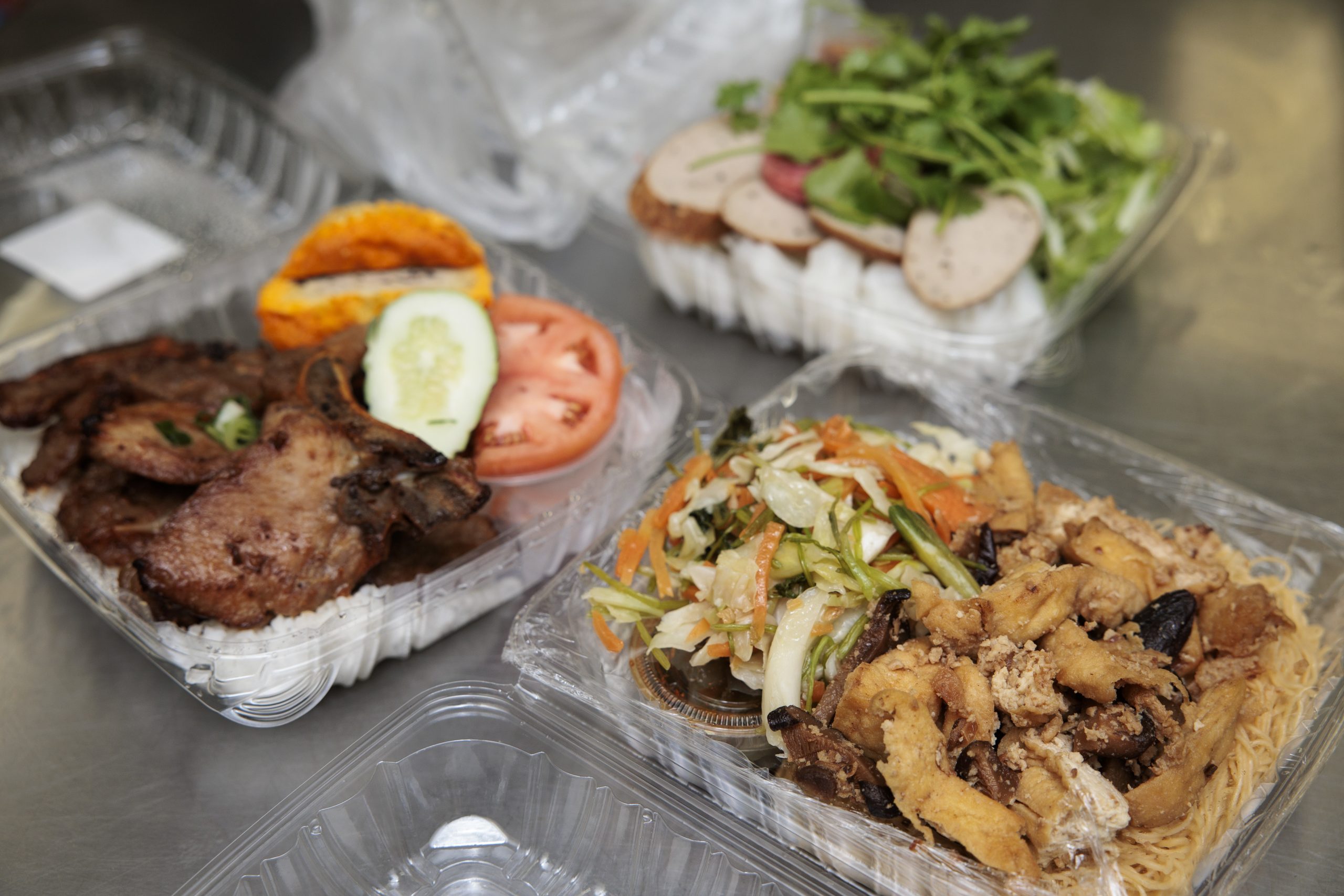
Today’s Ba Le Bakery stocks truffle- and brie-flavored potato chips imported from France andupmarket tinned fish alongside takeout containers of house-made bánh cuốn (rice rolls stuffed with pork). The selection appeals to a post-pandemic pantry-obsessed demographic, but it still has a firm hold on its old customer base.Before the lunch rush, you’ll still see Cantonese-speaking ladies clutching designer handbags stocking up on Vietnamese lunch platters that feature Chinese-style barbecue pork.
Summer rolls on display at Ba Le Bakery on Thursday, July 16, 2026, in Philadelphia.Monica Herndon / Staff PhotographerFrom left: Pork ribs, rice crepes with pork bologna, and a vegetarian stir fry at Ba Le Bakery on Thursday, July 16, 2026, in Philadelphia.Monica Herndon / Staff Photographer
Nguyen trained for more than half his life to take over Ba Le. From the age of 17, “I have filled every single position in the bakery, from serving customers, all areas of the kitchen, facility maintenance, and office management,” he said. His first job was making and wrapping many different types of bolognas (fried, steamed, mixed with sea snails on the weekend, and more), which he did for five years.
He has big plans to continue to pull Ba Le into the future, renovating the 6,000-square-foot store in stages over the next four years; moving some operations off-site, to another family-owned space on Columbus Boulevard; and expanding the bakery’s online business, which is currently run out of Ba Le’s former restaurant in the back of the building.
Pork bologna on display at Ba Le Bakery on Thursday, July 16, 2026, in Philadelphia.Monica Herndon / Staff Photographer
In a great departure from the family tradition of naming everything after its patriarch, Nguyen named his new line of sauces Sieu Xot (pronounced “see-yoo sot”), which means “super sauce.” The 20-sauce line includes sweet and savory dressings for salads, marinades for chicken, spicy garlic and chili-spiked fish sauces, zesty kaffir lime leaf-speckled sauces, and some funky fermented sauces that Nguyen’s Vietnamese customers have long had to make for themselves. “Making some of our traditional sauces can stink up your house,” Nguyen said with a laugh. “I think people are relieved to not make them at home now.”
“This has always been a dream of my mom’s,” he said. “Creating this sauce line makes introducing Vietnamese flavors into households more accessible and easy.” Nguyen also hopes that the sauces will encourage home cooks toexperiment.
The sauce line might be Nguyen’s mother’s dream, but the execution is all Nguyen’s, from the flavors to the branding, which evokes art deco Saigon (with zero Eiffel Towers), created by Tyler School of Art and Architecture student Zoe Nguyen (no relation). While many of the sauces are based on traditional Vietnamese recipes,about a third of the line is Nguyen’s own invention — his signature is kumquat-cilantro dipping sauce. Taken as a whole, the new line is part of Nguyen’s agenda to put his own stamp on the family legacy.
The new line of Sieu Xot sauces at Ba Le Bakery on Thursday, July 16, 2026 in Philadelphia.Monica Herndon / Staff Photographer
“All of my efforts, whether it’s within our store or through our online channels, is to usher in my own perspective of Vietnamese food,” he said.
Philadelphians know it’s officially peak summer thanks to a recent announcement: the beginning of BLT season at Middle Child, where the seasonalsandwiches draw lines down the block.
“We become Pat’s and Geno’s but instead of making cheesesteaks all day, we’re making BLTs,” said Matt Cahn, the owner of the Center City sandwich shop Middle Child and Fishtown’s Middle Child Clubhouse. You won’t see fresh tomatoes on the menu at any other time of the year, but come mid-July: “It’s just BLT, BLT, BLT,” said Cahn.
You could say tomato season is Middle Child’s Super Bowl.It is intense but short. BLTs are only made for about four weeks, when tomatoes are at their best. It starts Wednesday, July 22 at 11 a.m. (9 a.m. on ensuing days) until sell-out. Each location makes roughly 200 to 250 sandwiches per day.
While there are other top-tier tomato sandwiches in town — don’t miss the River Twice entry, adorned with gamtae and a quenelle of caviar, for example, or Loretta’s in Headhouse, with herbed aioli and the same vaunted produce as Middle Child’s — none stir up quite as much fervor.
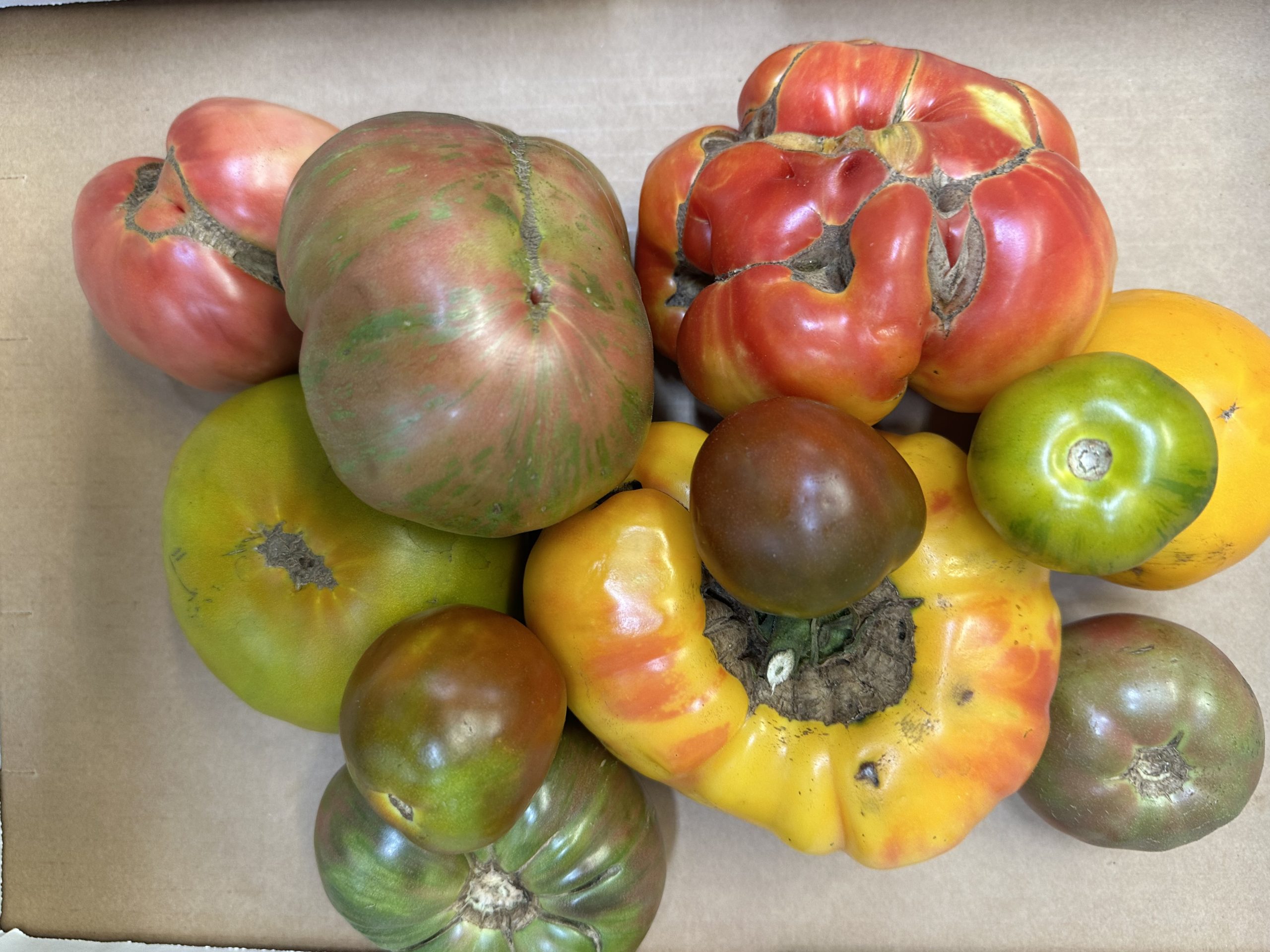
Middle Child’s tomatoes, cut into thick, rainbow-hued slabs, always come from Urban Roots Farm in Newtown Square. Tomatoes arrive at peak ripeness, and they only have a shelf life of about two days.
“These tomatoes are really expensive,” said Cahn. They’re about $38 to $40 per flat or case, which means there’s $2.60 worth of tomatoes on each sandwich. “It costs more than the turkey does on turkey sandwiches.”
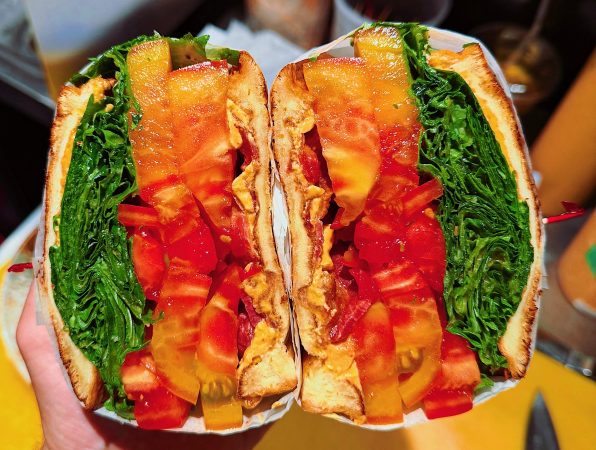
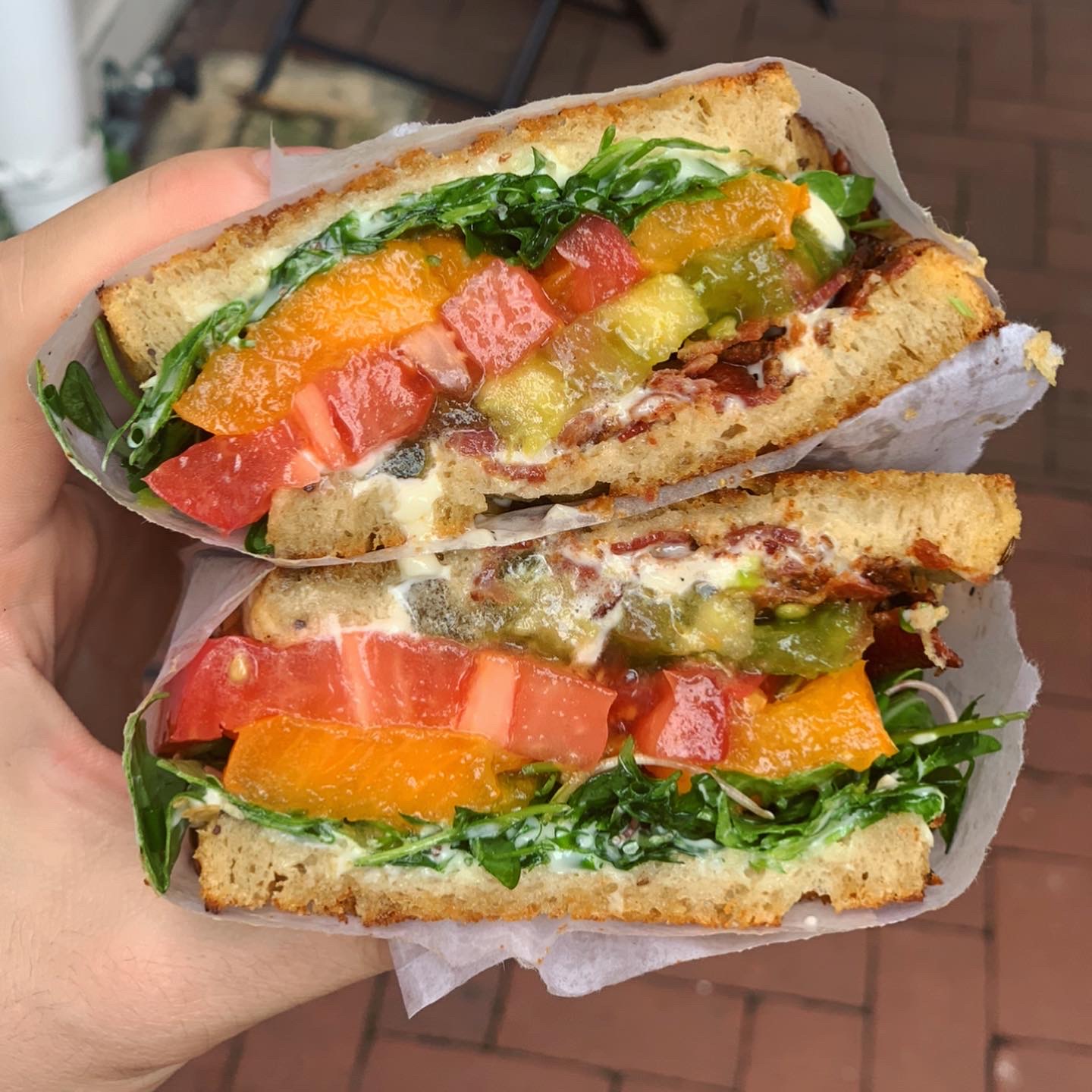
Their classic BLT ($16) consists of those tomatoes, five pieces of Leidy’s bacon (“Nothing fancy … because the sandwich is all about the tomatoes,” said Cahn), Duke’s mayonnaise, and locally grown arugula dressed with tomato vinaigrette all sandwiched on slices of rye bread from Merzbacher’s bakery. The sandwich can also be made vegetarian (substituting bacon for avocado), vegan (with avocado and veganaise), and gluten-free.
The famed BLT at Middle Child with local heirloom tomatoes at peak ripeness.Matt Cahn
The BBLT ($21) is served on a LeBus ciabatta, and that second “B” stands for a whole ball of Jersey-made burrata from Lioni Latticini. It also features a chili-tomato jam, made of tomato scraps and usually Calabrian chilis, though Cahn has been experimenting with red chili flakes and gochujang this year.
This year, for the first time, Middle Child Clubhouse will offer a slightly different evening BLT, with thick-cut slab bacon, for $18 — if Clubhouse’s tomato supply lasts till dinner service. Cahn said he expects even more tomatoes in a week or two, meaning more availability for dinner BLTs.
Waste not
This is Middle Child’s ninth tomato season since opening in 2017, and every year, the cult obsession with the sandwiches has grown. Every season, Cahn tweaks the processes of both selling and making thesandwiches.
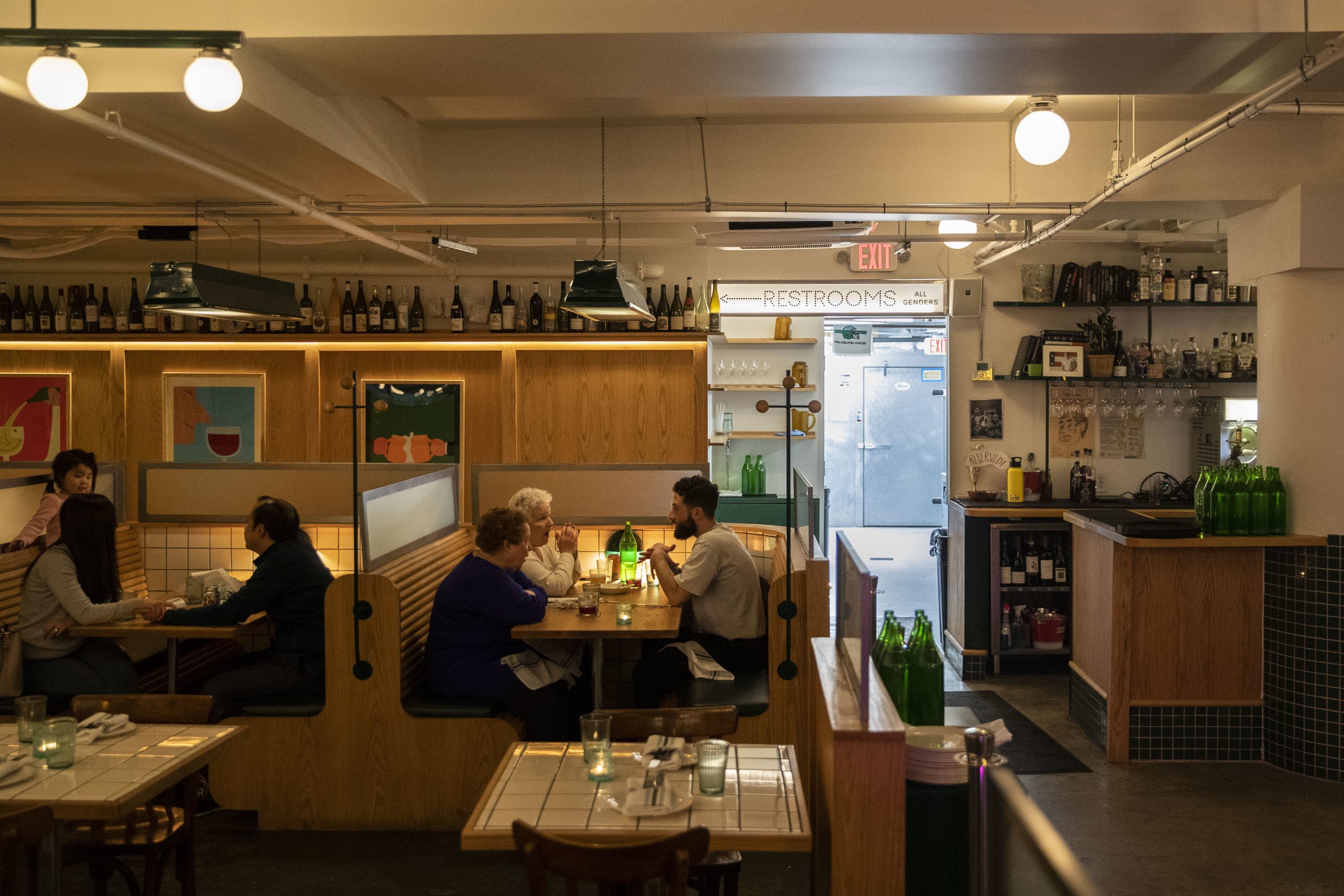
Diners at Middle Child Clubhouse, 1232 N Front St. in Fishtown in February 2022.MONICA HERNDON / Staff PhotographerTomatoes from Urban Roots Farm in Newtown Square, Pa.Matt Cahn
Tomatoes are particularly delicate. They’re perfectly ripefor only a day or two before they start turning to mush and growing mold. And because they’re cored and sliced to lie flat, they generate a lot of waste. The tomato scraps, along with tomato “seconds” — or tomatoes a little too soft to slice — go into that chili-tomato jam and the tomato vinaigrette that dresses the arugula.
The base for both of those sauces is tomato water, which Middle Child’s team collects every day.
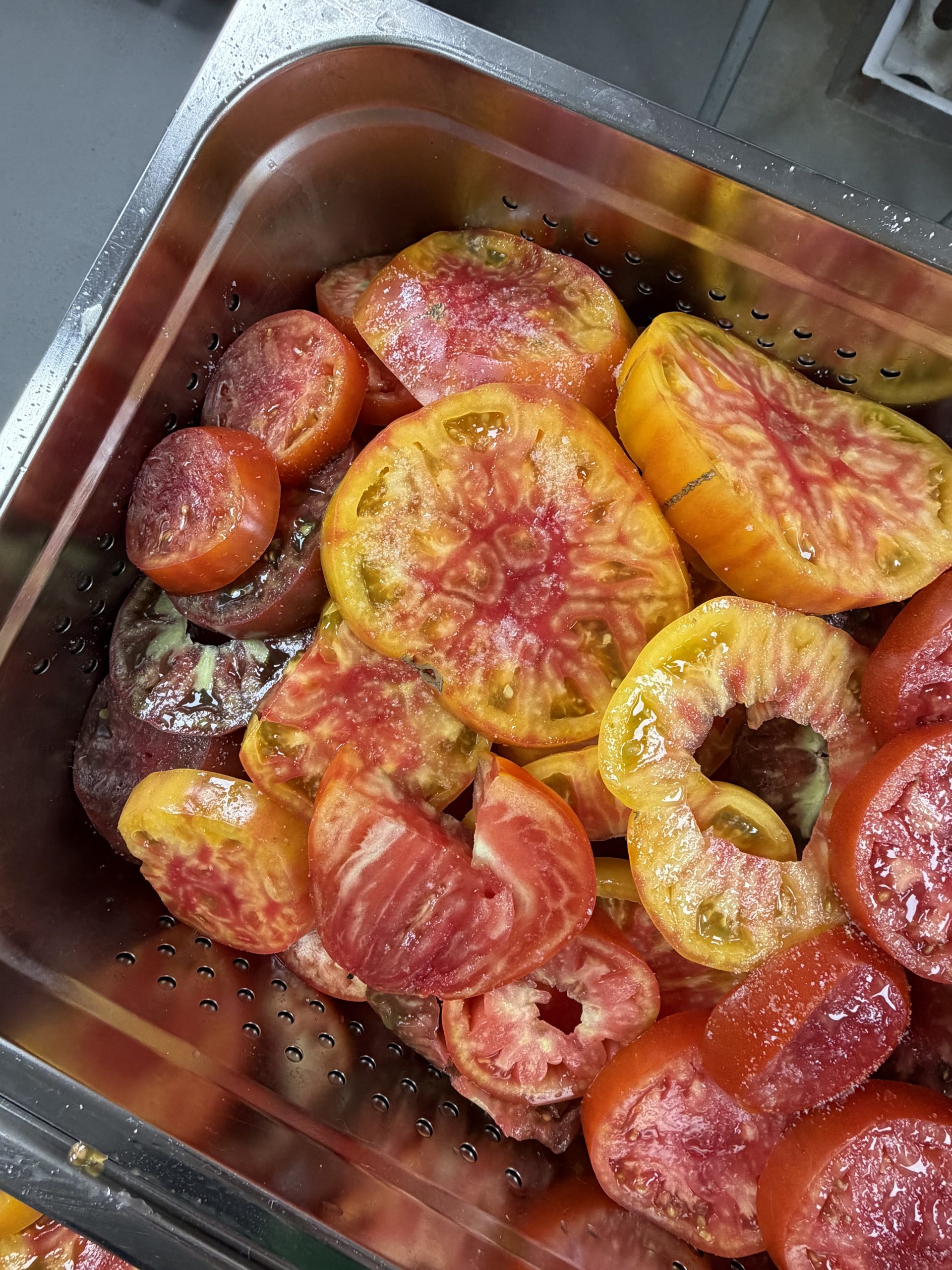
“Every morning we treat the tomatoes like steaks. We season them a couple hours before service with Diamond Crystal kosher salt, then shingle them on a perforated pan and layer the shingles,” said Cahn. Gravity presses down the layers and the tomato water accumulates below. It’s a boon to Middle Child Clubhouse’s bartenders:In past years, they have made tomato agua fresca, tomato water ice, frozen tomato pops, and tomato martinis with the salty tomato water.
Middle Child slices and salts the Urban Roots tomatoes before assembling them into sandwiches.Matt Cahn
What to expect
There are some loosely enforced “rules” during BLT season. First, you should eat the sandwich within 10 minutes of receiving it.
Second, embrace the wait. Middle Child will turn off online orders in the thick of BLT season to prevent customers from jumping the actual line. Cahn encourages customers toenjoy the madness. “Part of the fun is going and [waiting]. People are chatting and getting to know each other and there’s a lot of debate over whether or not it’s worth the hype,” said Cahn.
“The first week is really crazy, but in a couple weeks, once the tomato plethora has really come in,” the lines get more manageable, Cahn said. And they move quickly, thanks to a full week of BLT training, in which the staff practices until they’ve mastered every detail, down to meticulously wrapping the final product.
“The sandwich is a structural game of Jenga,” said Cahn.
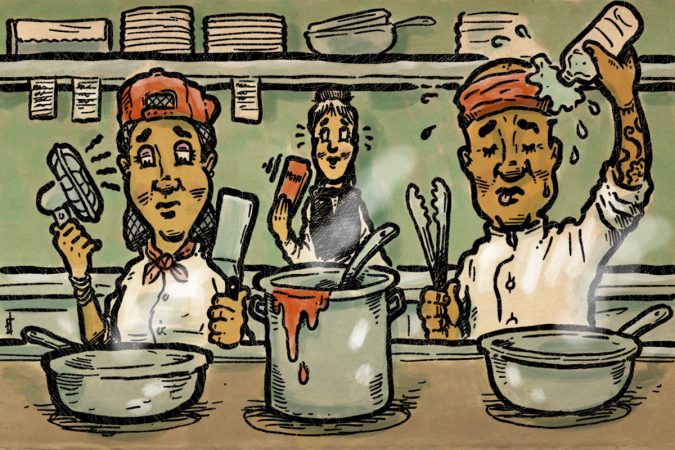
Even on 100-degree days, Philly’s chefs and cooks are still in the kitchen. For the most part, they only call it quits when the food they’re making can’t take the heat.
How do theymake it through their stifling shifts? The answer comes down to preparedness, hydration, and lots of icy treats to lower body temps and boost morale.
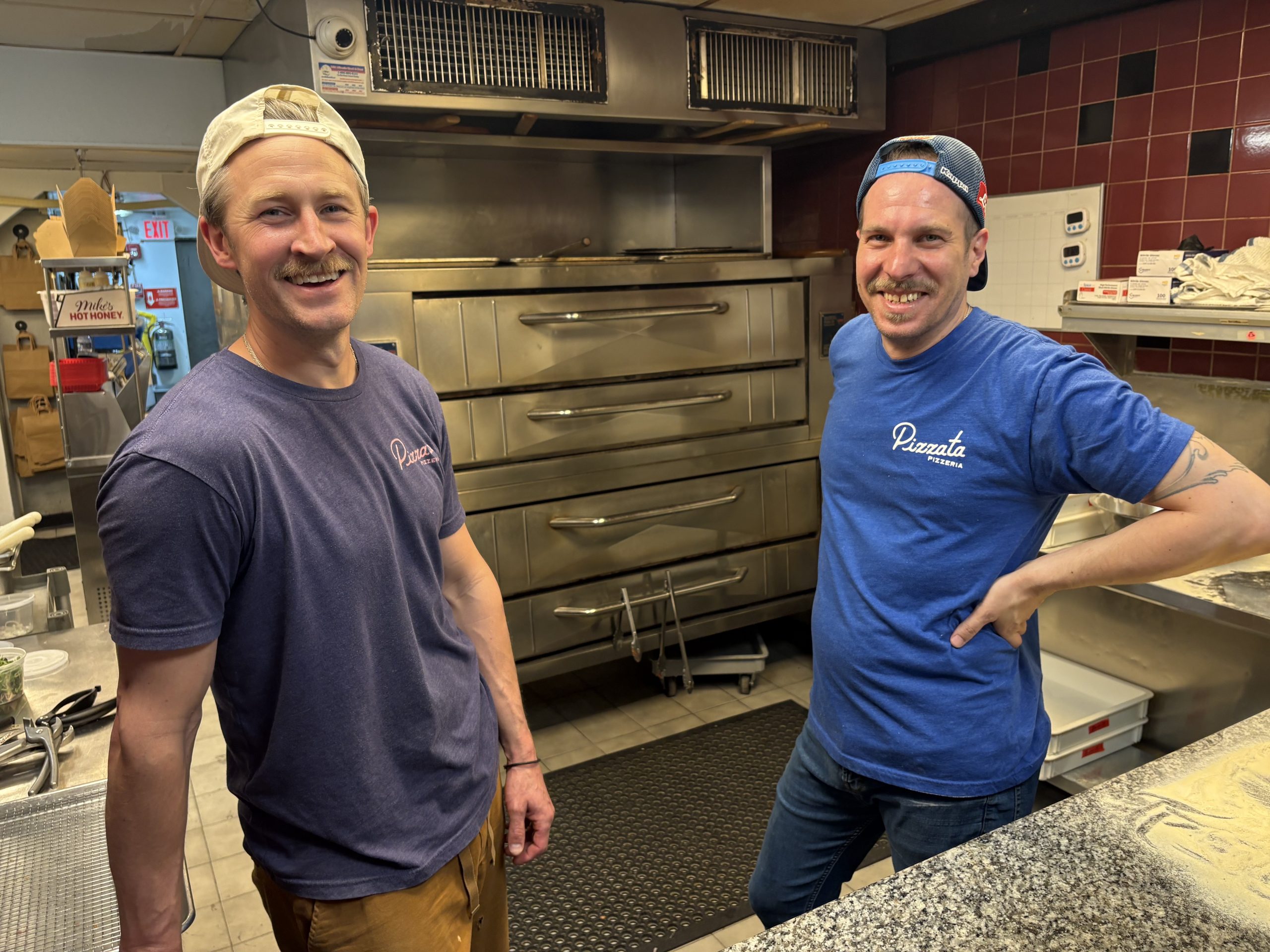
The planning for heat waves starts long before the mercury rises. At Pizzata Pizzeria‘s South Philly location, recently added split-unit air conditioners and commercial kitchen fans have kept temperatures moderate. “They have been tremendously beneficial and helpful to our staff,” said owner Davide Lubrano Lavadera. “For our Rittenhouse spot, we didn’t have a chance to install these units, so we added an evaporative air cooler there.”
Pizzata Pizzeria co-owners and chefs Vinny Gallagher and Davide Lubrano Lavadera pose in the kitchen of their original pizzeria location on 22nd Street near Fitler Square.Craig LaBan / Staff
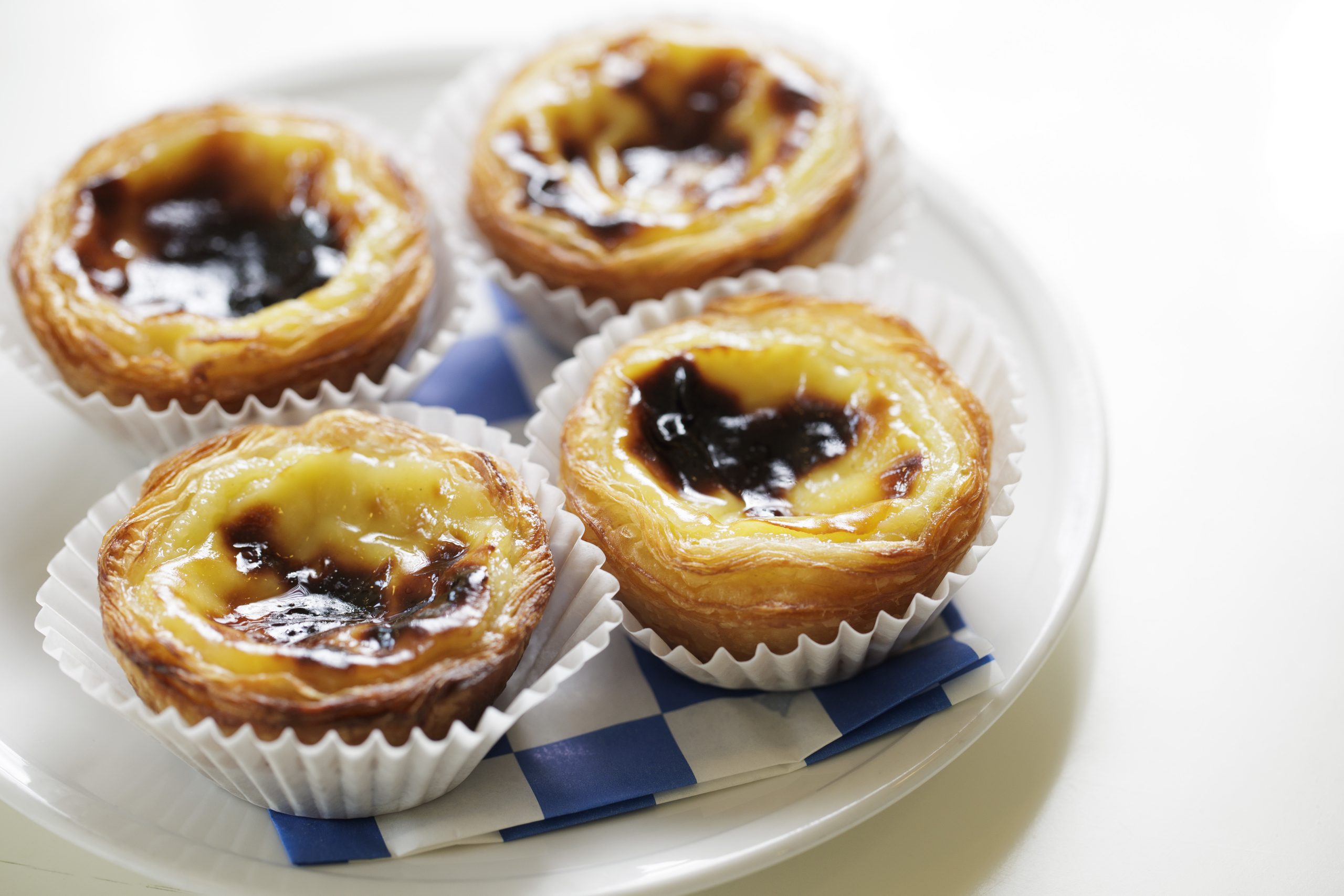
Two weeks ago, when temperatures spiked over 100 degrees three days in a row, Gilda chef-owner Brian Mattera warned customers on social media that the cafe would close if the heat tipped above 120 degrees in the kitchen — besides being uncomfortable, it would compromise the cooking. The flaky, laminated dough for Gilda’s signature pastéis de nata is notoriously temperamental, Mattera said.
“Our pastry chef, Sophia Fiorenza, is the star of the show. When she comes to me and says the temperature is one or two degrees up, she’s not being dramatic,” Mattera said. “The dough is tacky and difficult to work with. It’s unfortified and it can feel like papier mache.”
When the kitchen temperature is too high, the dough expands and falls off the sheeter, the machine that folds the dough into its many layers. “We say the dough is angry with us,” Mattera said.
The pastéis de nata at Gilda get harder to make in hot weather. Monica Herndon / Staff Photographer
Even in Gilda’s diminutive space,with just six gas burners and a flat-top, Mattera needs five separate HVAC units to maintain the perfect temperature for the dough, around 70 degrees. They weren’t enough to keep the kitchen open during early July’s heat waves: Gilda’s crew called it a day when the temperature behind the line reached 137 degrees.
When the heat’s that intense, Mattera has a trick. “I’ll get a deli container of ice water, bring it into the bathroom, pour it over my head, and go back on the line.”
Chefs in nontraditional kitchens also battle the heat. Josh Broder owns Root to Fruit, a vegan meal-delivery service that operates out of the Culinary Collective commissary space in the Bridesburg neighborhood.“We’ve basically become professional heat dodgers. We start cooking earlier, pack our delivery bags like they’re headed to the Arctic with insulated bags and extra ice packs, and everyone’s usually carrying a water bottle in one hand and a spatula in the other,” he said.
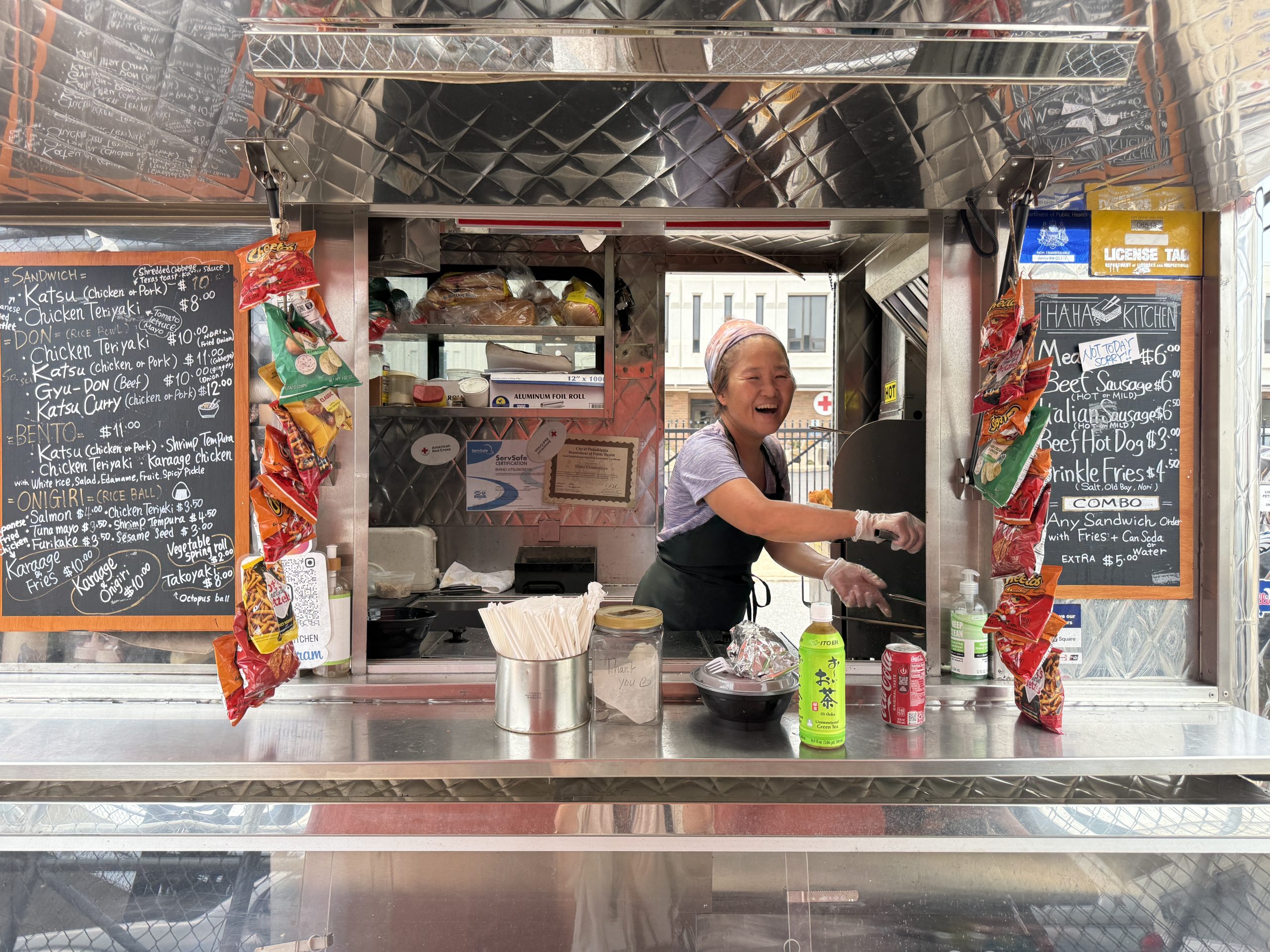
Shiho Utsonomiya, the chef operator of Haha’s Kitchen, rarely closes the tiny food cart she has operated at the corner of Seventh and Spring Garden Streets since 2018. But she was forced to break for a few days leading up to July 4 this year, when the heat became unbearable. She closed the cart Wednesday for the same reason.
Shiho Utsunomiya in her food cart during a heat wave.Kiki Aranita / Staff
“It’s been getting hotter every year,” she said. “Winter, I don’t mind! Minus 17 degrees, no problem. But the heat just kills me.” She’s surrounded by a burner, steam tables, a fryer, and rice cooker. She’s enhanced her setup this year with a rechargeable fan with a mister.
Utsonomiya’s location has a significant benefit: free ice from her best customer. United Refrigeration’s offices are nearby and her cart is popular with their workers.
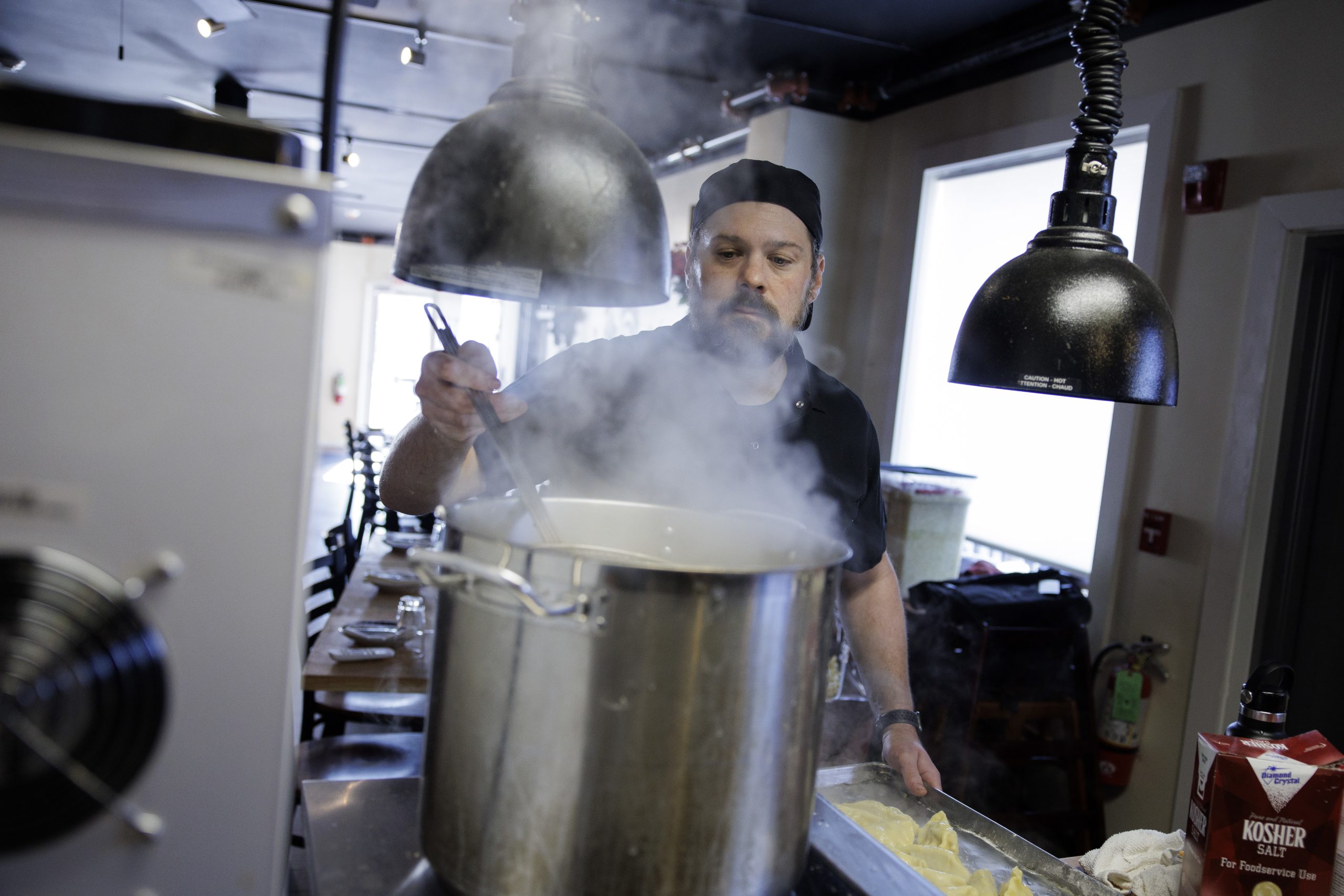
Extreme heat also prompted Little Walter’s — where the wood-fired grill casts off 120-degree heat, according to chef-owner Michael Brenfleck — to close in early July. Brenfleck said reservations were light during the holiday weekend, but the same could not be said of the following Friday, when the restaurant was nearly fully booked. That presents a challenge in itself: The busier the restaurant, the hotter it is inside.
Chef Michael Brenfleck cooks pierogi at Little Walter’s in Philadelphia on Wednesday, Sept. 4, 2024.Monica Herndon / Staff Photographer
“Every person’s body radiates a certain number of BTUs, both in the kitchen and in the dining room,” said Brenfleck. His solution:“We’re going to put some cold specials on the menu, like a chilled pickle soup.”
Brenfleck and Phila Lorn, the chef-owner of Sao and Mawn, were both amazed their respective staff endured the heat without complaint.
“The real ones plan for these times and problem-solve,” Lorn said. “It amazes me to see my chefs in the kitchen crushing it. They’re eating popsicles,[mopping themselves with]cold wet towels, using Gatorade powder, but I swear to you, not one complaint from the back of house.”
Liberty Kitchen staff trades tomato pie for soft serve on hot days. Monica Herndon / Staff Photographer
Heat waves tend to foster community among restaurants — especially when there’s an ice cream shop involved. On the hottest days, the staff at Liberty Kitchen trades boxes of tomato pie with 1-900-ICE-CREAM, according to Liberty Kitchen chef Beau Neidhardt. “They’ll give us individual cups of soft serve for our staff. It’s very neighborly.”
For many restaurant workers, it’s just part of the job.
“We aren’t doing anything that needs to be applauded,” said Mattera. “At the end of the day, we’re all professionals. This is what we do. We can handle the heat.”
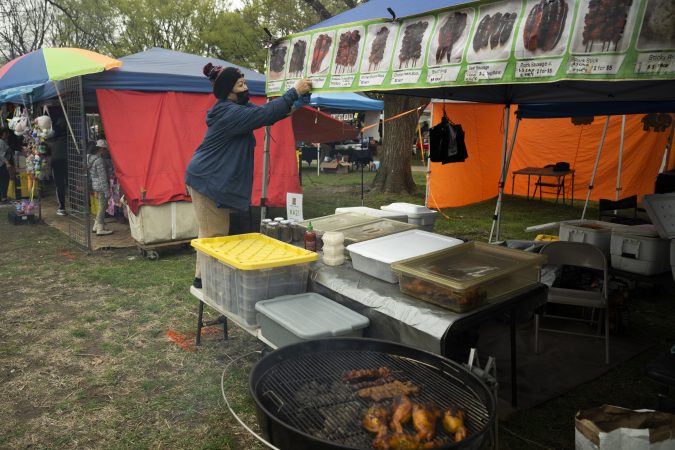
The Southeast Asian Market in FDR Park plans to operate on its regular schedule this weekend, though likely not at full capacity after last weekend’s storms caused damage and forced the market to close. The market’s Dolla Holla event, featuring items like barbecue sticks and light bites for $1, has been moved to this Sunday.
Saturday’s sudden microbursts closed the market early, wreaking havoc on all 53 vendors’ tents. The annual market, which operates on Saturdays and Sundays until Oct. 31, was also closed on Sunday as damage was assessed.
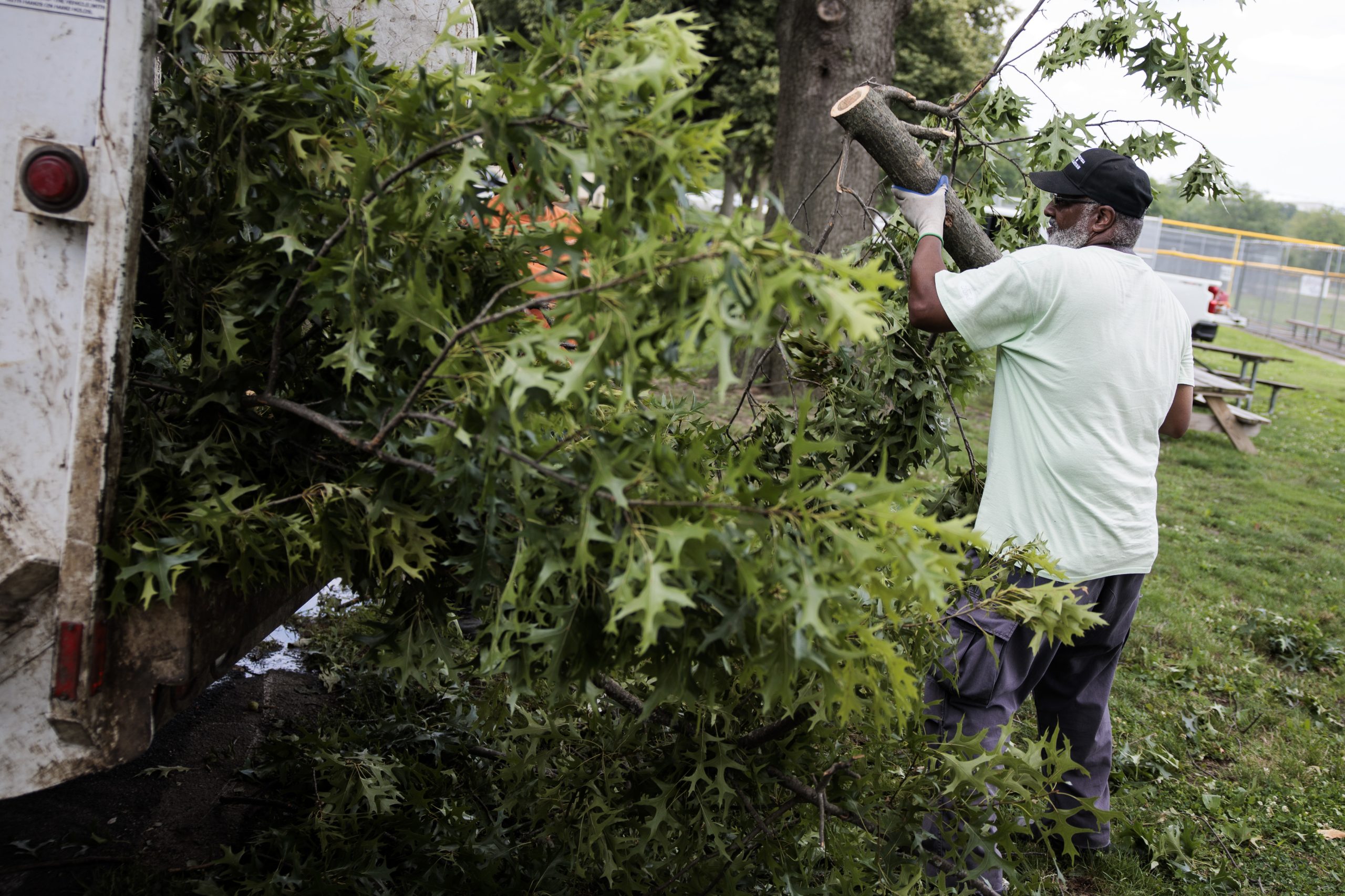
District 7 Parks and Recreation employee Luther Bennett throws part of a downed tree into a trash truck at FDR Park on Sunday, July 12, 2026 in Philadelphia. On Saturday severe thunderstorms caused damage across the region.Monica Herndon / Staff Photographer
Food inventory, merchandise, and tents were all destroyed. The storms were frightening. Catzie Vilayphonh, the market’s community cultivator, said she received photos from staffers “as they were hiding in the porta-potties.”
Vilayphonh was uncertain which vendors would be participating in this weekend’s market but said the hours, from 10 a.m. to 6 p.m., would be the same as usual.
After the storm, market organizers immediately looked to support the vendors, including soliciting community donations to fund the replacement of tents and other materials.
The timing of the storms made the vendors’ losses all the more difficult. “This is the middle of the season, not the end. It’s not like you’re preparing for bad weather. It was supposed to be like any other day,” Vilayphonh said. “Tents were completely ripped, some were inside out, some had nothing left but the frame.”
Vilayphonh, who has been fielding many messages and emails from the public, said the market’s fans have responded to the call for help. “It’s been really great hearing from people who have visited the market before and are now looking for ways to support.”
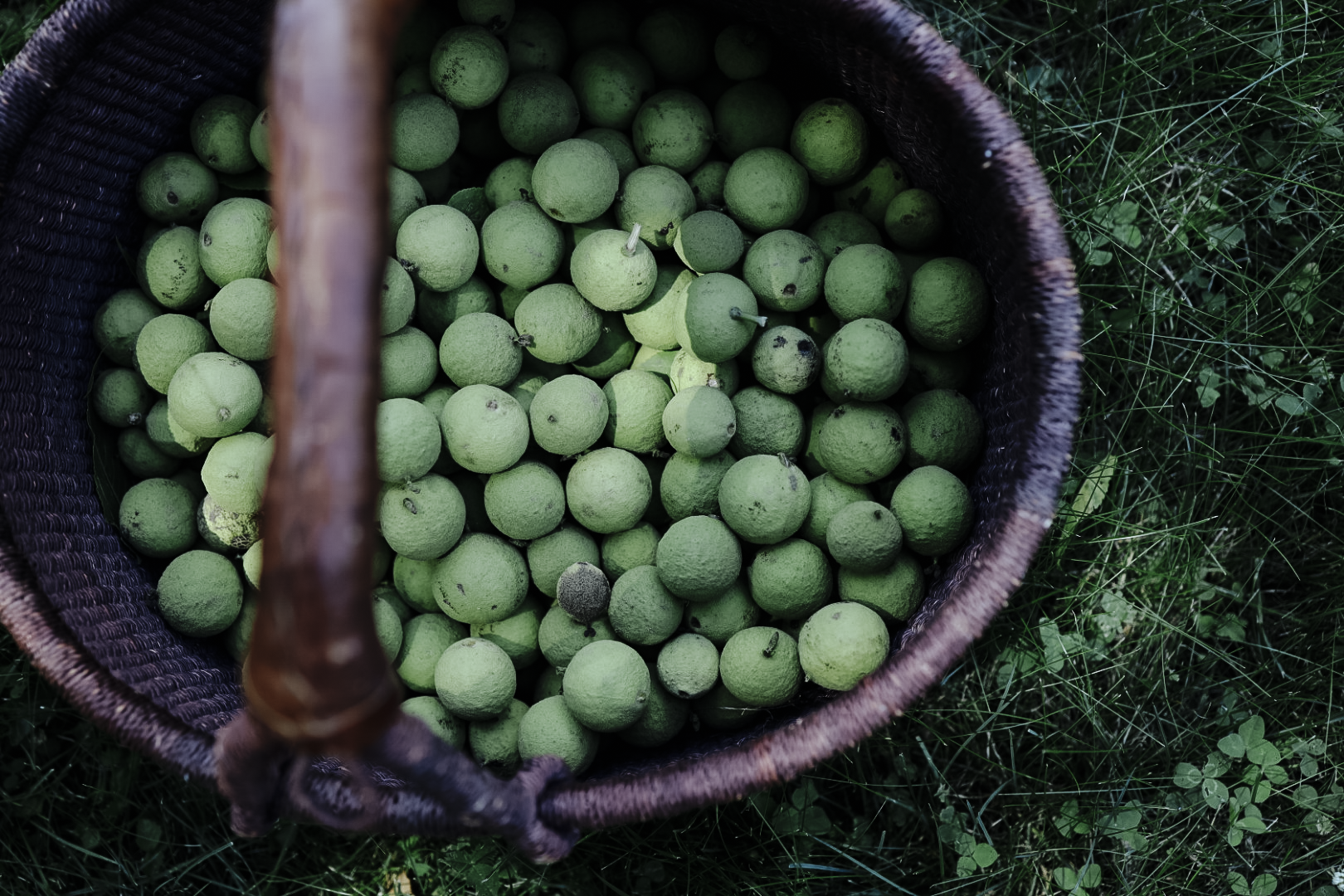
Right now, black walnuts look like small neon green tennis balls clustered on a branch. Their interiors are creamy and gelatinous.
Danny Childs, the founder of Slow Drinks — who is currently in the midst of opening his first cocktail bar, Field Day — uses black walnuts in this state for black walnut nocino, a variant of the bittersweet Italian liqueur known as amaro. “When I make amari in general, it’s always a way to showcase a certain place at a certain time,” said Childs, who forages his black walnuts from a running trail in Merchantville.
“When you’re making nocino, you pick them in June,” Childs said. “The knife can easily pierce the black walnut, as the actual nut hasn’t formed yet. It’s still a jellylike substance.”
Childs uses 151 proof vodka from Devil’s Springs in New Jersey to macerate his walnuts. His black walnut nocino is also on the menu at Almanac, featured in its cocktail the Juban District. It’s blended with Japanese whiskey, scotch, vermouth, Okinawan Kokuto brown sugar, and bitters. It’s funky and savory, and sweet without being cloying. And it has become a classic cocktail on Almanac’s menu.
And so, the Almanac team has also just gone foraging for black walnuts.
At Field Day, Childs’ black walnut repertoire will expand. “We’re going to start using the walnuts in other ways after nocino this year — to infuse wine to make nociato, and then use them to make black walnut miso.” He’s working with fermenter Jamaar Julal, previously of Honeysuckle, on these projects.
Danny Childs picks black walnuts in Merchantville.Katie Childs
Look closely, and you’ll start to see black walnuts everywhere, from shortbread cookies at Ellen Yin’s Bread Room to Randy Rucker’s sauces for seafood at Little Water.
Crisped up in a pan, the Heavy Metal Sausage’s mortadella, inlaid with cubes of smoked pork jowl and hard toasted black walnuts, emits a heady aroma of pork and socks. It is funky, distinctive, and heavenly; it tastes milder than its scent, like uncured bacon that had nestled next to a blue cheese for a few days in the fridge.
Pat Alfiero, Heavy Metal’s co-owner and butcher, sources shelled black walnuts from Ian Brendle of Green Meadow Farm in Gap, Pa., who has about 100 black walnut trees on his property. Brendle also functions as a middleman, shuttling nutmeats processed just south of Pennsylvania to chefs.
Jamaar Julal, Field Day’s director of fermentation, picks black walnuts in Merchantville.Katie Childs
“To me, black walnuts are unique, like pawpaws. If you had a hundred people eat them, half would like them and half would hate them. Pawpaws have the same unctuous floral perfume as black walnuts,” said Brendle, who now sells five to 10 pounds of shelled black walnuts every week, twice as much as when he started selling them two decades ago.
“They’re a misunderstood tree nut, for sure. But any nut or plant that can be foraged sustainably should be consumed. Anytime you can consume something that doesn’t require immense amounts of water or makes a negative impact is a step in the right direction,” said Brendle.
Black walnut trees are found in dense thickets in Fairmount Park, and on practically every farm and expansive backyard in and around Philadelphia. They’re native to the Mid-Atlantic, like hickory nuts and pecans. They swath the East Coast, growing as far north as the border with Ontario and as far south as Florida.
Every part of the black walnut contains juglone, which is toxic to many other plants, but perfectly safe for humans and animals to consume. For many gardeners and homeowners, black walnuts are a nuisance, staining hands if you gather them without gloves on, as well as the asphalt driveways on which they fall. The nuts get caught in lawn mowers and can also be dangerous projectiles, falling from great heights — the trees can grow up to 80 feet tall — denting car roofs and unlucky heads.
If nuts could talk, black walnuts would say, “No one likes us, we don’t care.”
For Alfiero, Brendle, and the others, there is an urgency to using black walnuts. Nut farming is water intensive, and the almond industry in California has repeatedly come under scrutiny for its groundwater consumption. The walnuts in a typical supermarket are the Persian or English variety. In the U.S., 99% of them also come from California. It takes about 26.7 gallons of water to grow an ounce of English walnuts.
“We’ve created so many problems for ourselves in the world, simply by being spoiled and being able to purchase, say, pistachios at the store. People grow almonds and other nuts in places that don’t naturally have a lot of water. We’ve created a market for things that don’t make sense,” said Jeremiah Langhorne of the Dabney in Washington, one of the chefs responsible for the black walnut’s current popularity on menus up and down the Northeast Corridor.
While the nuts, shelled and toasted or raw, may not be as snackable as the more common English varieties, they have a wide range of uses among Indigenous populations.
In Braiding Sweetgrass, Robin Wall Kimmerer, a member of the Citizen Potawatomi Nation, wrote, “The hickories, black walnuts, and butternuts of our northern homelands have their own specific names. But those trees, like the homelands, were lost to my people.”
Though Native Americans carried black walnuts and other related nuts with them as they were displaced, “The federal government’s Indian Removal policies wrenched many Native peoples from our homelands. It separated us from our traditional knowledge and lifeways, the bones of our ancestors, our sustaining plants,” Kimmerer writes.
Native peoples were divorced from their trees, and now, chefs, distillers, and foragers are trying to form new bridges with the same wild trees.
How to use black walnuts throughout the year:
Early spring to summer: Gather the leaves
“Use the leaves in early spring when they’re just the size of squirrel’s ears,” said Robert Gustafson, a Virginia-based specialist in wild foods. This is when they can be blended and fermented into sauces.
“Our entire goal is to find what grows well around us, and be receptive to working with it,” said Isaiah Billington, who along with Sarah Conezio, is the co-owner of Keepwell Vinegar and White Rose Miso, based in Dover.
“Our black walnut bay sauce is like a Worcestershire sauce with a base made from our own apple cider vinegar,” said Billington. The recipe was unearthed from a cookbook first published in 1879 and adapted by Langhorne. It’s aged for a year with ginger, garlic, horseradish, and black walnut leaves, which Billington harvests himself. The leaves give the sauce a mildly bitter, herbal flavor. Billington had become enamored with the sauce while working at the Dabney, which now purchases it from Keepwell instead of making it in house.
Early fall: Recognizably walnuts
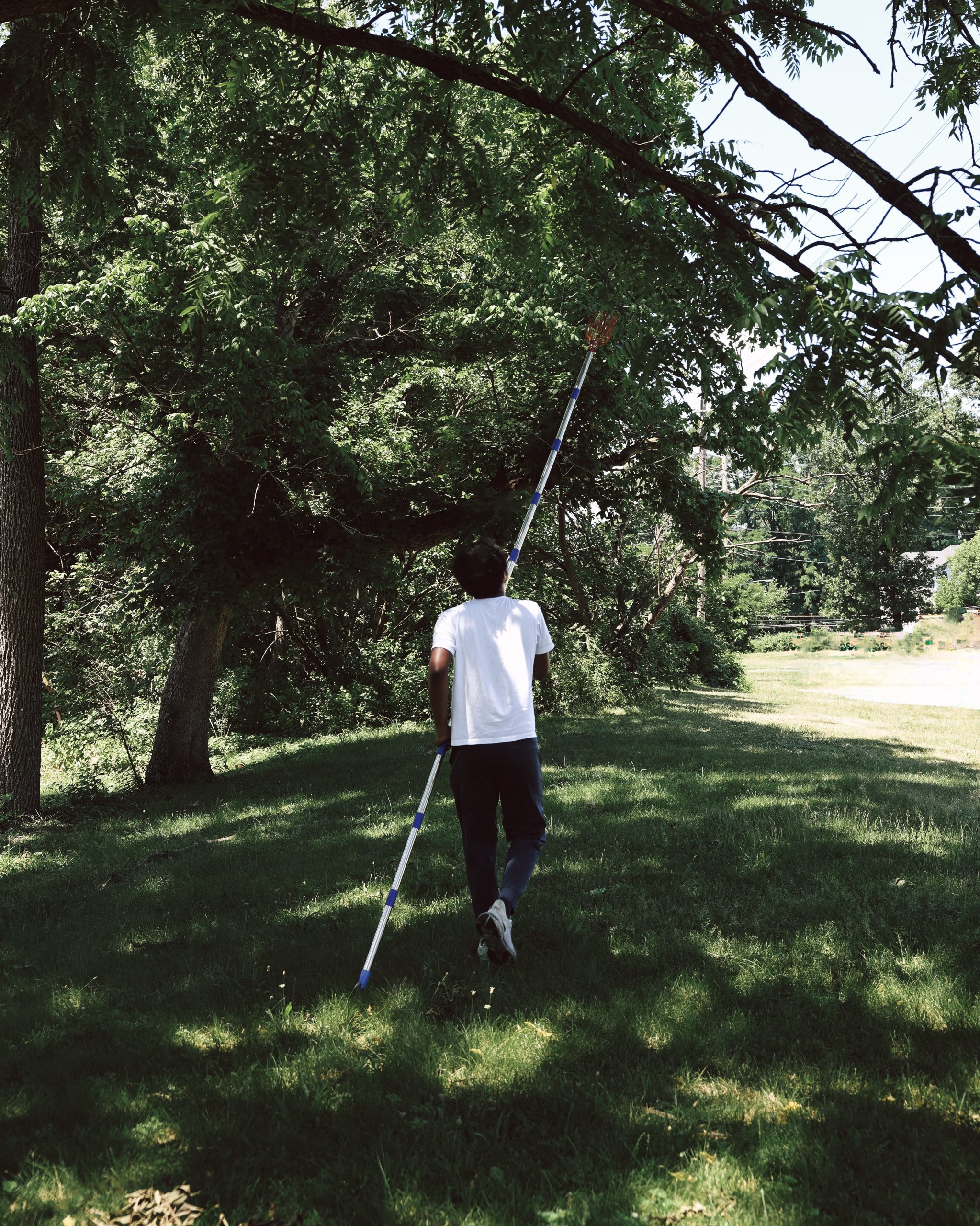
“This is harvest season for storehouse wild foods,” said forager Heather McMonnies, who collects the nuts using an apple picker. “This is the same time you’d collect chestnuts or hickory nuts.”
Late fall: Clogging up people’s driveways
Gardeners and homeowners are annoyed by them as far north as Canada. Making use of them culinarily can keep tons of them out of landfills.
Winter: Cheers!
It’s time to crack open that black walnut nocino that started in the summer and drink it.
Late winter and early spring: Tap the trees
“My kids got tired of homemade maple syrup and well, I have black walnut trees, and we may as well tap them and see what we get,” said McMonnies. After boiling 40 gallons of sap, sweet and molasses-like in color, she produced one gallon of black walnut syrup, incredibly light in structure and composition, with a tinge of the nut’s signature funk.
Black walnuts are divisive, but so is Stilton cheese, durian, fermented tofu, and any number of delicious things. Does divisiveness make black walnuts any less distinguished?
The golden age of brunch has arrived in Philadelphia, borne on the menus of chefs who are reinventing the genre.
All over the city, from Manong in Fairmount to dancerobot and Little Water in Rittenhouse and Rice & Sambal in South Philly, chefs who had long focused on dinner are turning their attention to brunch-specific menus, some available just one day a week. The results are dazzling.
Customers enjoying drinks and food at the bar at Manong.Tyger Williams / Staff Photographer
To many in the restaurant industry, the very word brunch conjures up feelings of dread. “Brunch menus are an open invitation to the cost-conscious chef, a dumping ground for the odd bits left over from Friday and Saturday nights or for the scraps generated in the normal course of business,” Anthony Bourdain wrote in his seminal memoir, Kitchen Confidential. And the stigma against the not-quite-breakfast, not-quite-lunch meal, often accompanied by endless mimosas, has endured. Until now.
For Chance Anies of Manong, brunch is an opportunity.
Wingko, cassava, and coconut pancakes on Rice & Sambal’s new brunch menu.Kiki Aranita / Staff
“I love that we’re making Spam,” said Anies. “It’s ironically the first food I got made fun of for eating at school because my dad would make me Spam and rice for lunch as a kid. I had kids calling me ‘Spam.’”
Anies is also making his own version of the processed meat, a highly labor-intensive activity compared to popping open a can. “We grind pork shoulder and smoked ham, and some other ingredients, then set the farce in a terrine mold to steam. After pressing overnight, we slice them into little Spam squares,” he said.
Manong’s house-made Spam is served on pandesal, a soft, buttery Filipino bread, in the breakfast sandwich at brunch, served seven days a week from 8 a.m. to 2 p.m. “Pandesal was the thing that got me into cooking, so having an outlet for the recipe I’ve been developing for over 10 years has been a cool full-circle moment,” said Anies.
Diana Widjojo’s Rice & Sambal on East Passyunk in South Philly has been open for two years, but only recently started serving Sunday brunch. Widjojo had toyed with starting brunch service last year, “but I didn’t market it very well.” She officially restarted brunch two weeks ago because “I thought it would be fun.”
Rice & Sambal’s brunch-specific snacks, savory items, and sweet dishes are extensive and only served on Sunday from 11 a.m. to 3 p.m. (a la carte, no reservations taken). They range from crispy tofu to lumpia (vegetable and bamboo-stuffed spring rolls) to a Sumatran rendang that is cooked far longer than her typical Javanese rendang, so that it’s “spicier and more fragrant — I cook the curry until the coconut milk turns into oil.”
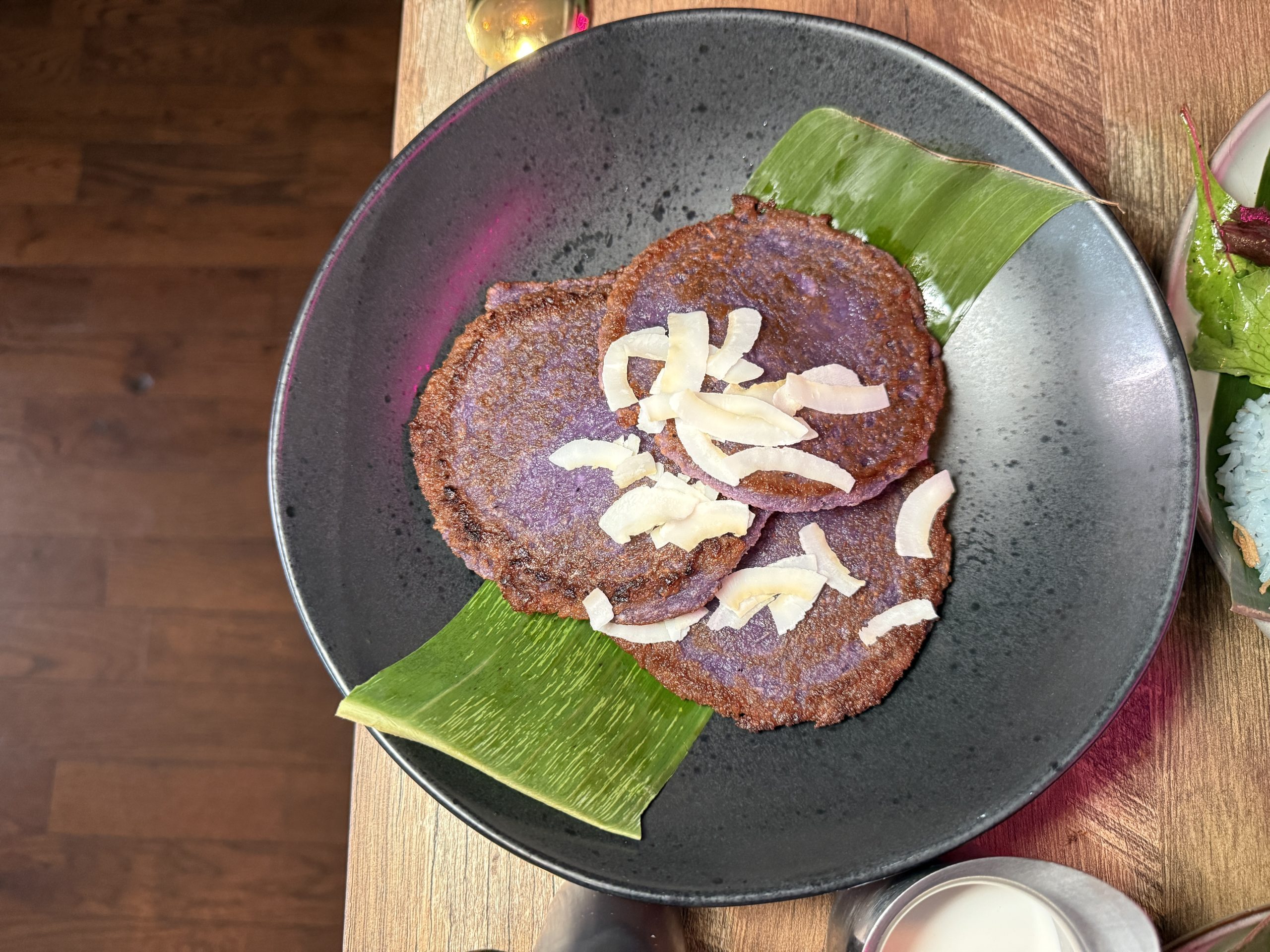
And then there are dishes like her Indonesian omelet ($17) and Wingko ($12). The omelet is stuffed with fragrant shallots and served with spicy sambal ketchup. The Wingko pancakes are made of cassava and shredded coconut and colored a deep purple with ube. No maple syrup here, but rather a little pitcher of coconut milk and a squeeze bottle of sweet palm sugar syrup are provided for you to decorate your pancakes.
There are also fun drinks like Happy Soda, served in a wine glass and consisting of coconut-pandan syrup, seltzer, and condensed milk, Indonesian coffee, and numerous tea drinks, including a deeply nourishing beras kencur ($7), made of ginger, turmeric, and rice. There’s excitement, creativity, and joy embedded in all these beverages — it’s a menu that dovetails with a rise in Indonesian cafes in Philadelphia.
In Rittenhouse, other previously dinner-focused fine-dining chefs are celebrating brunch. Little Water’s Sunday brunch (11 a.m. to 4 p.m.) is spectacular. On the menu, there’s a dish of fried oysters on beef tartare, blanketed in golden hollandaise and tucked in with pickled surprises, sometimes a gherkin, sometimes another pickled vegetable, that you discover through little bites. You can also add caviar to fancy seafood, like Sweet Amalia oysters slicked with Alabama white sauce.
La Jefa’s brunch is equally marvelous, served Wednesday through Sunday (10 a.m. to 2:45 p.m.). It features Guadalajaran twists on American brunch standards, like chilaquiles tucked into omelets or lengua given the pastrami treatment and layered into a sandwich. You get to wash it down with a beverage menu spiked with corn, tepache, and other fascinating ferments.
Also in Rittenhouse, dancerobot’s weekend brunch (Saturdays and Sundays 10:30 a.m. to 3 p.m.), has quietly become an incubator for incredible creativity, led by chef Justin Bacharach and sous chef Christina Betz, but featuring dishes from many other chefs and cooks on staff.
The sourdough pancake at dancerobot should be shared with everyone at the table.Kiki Aranita / Staff
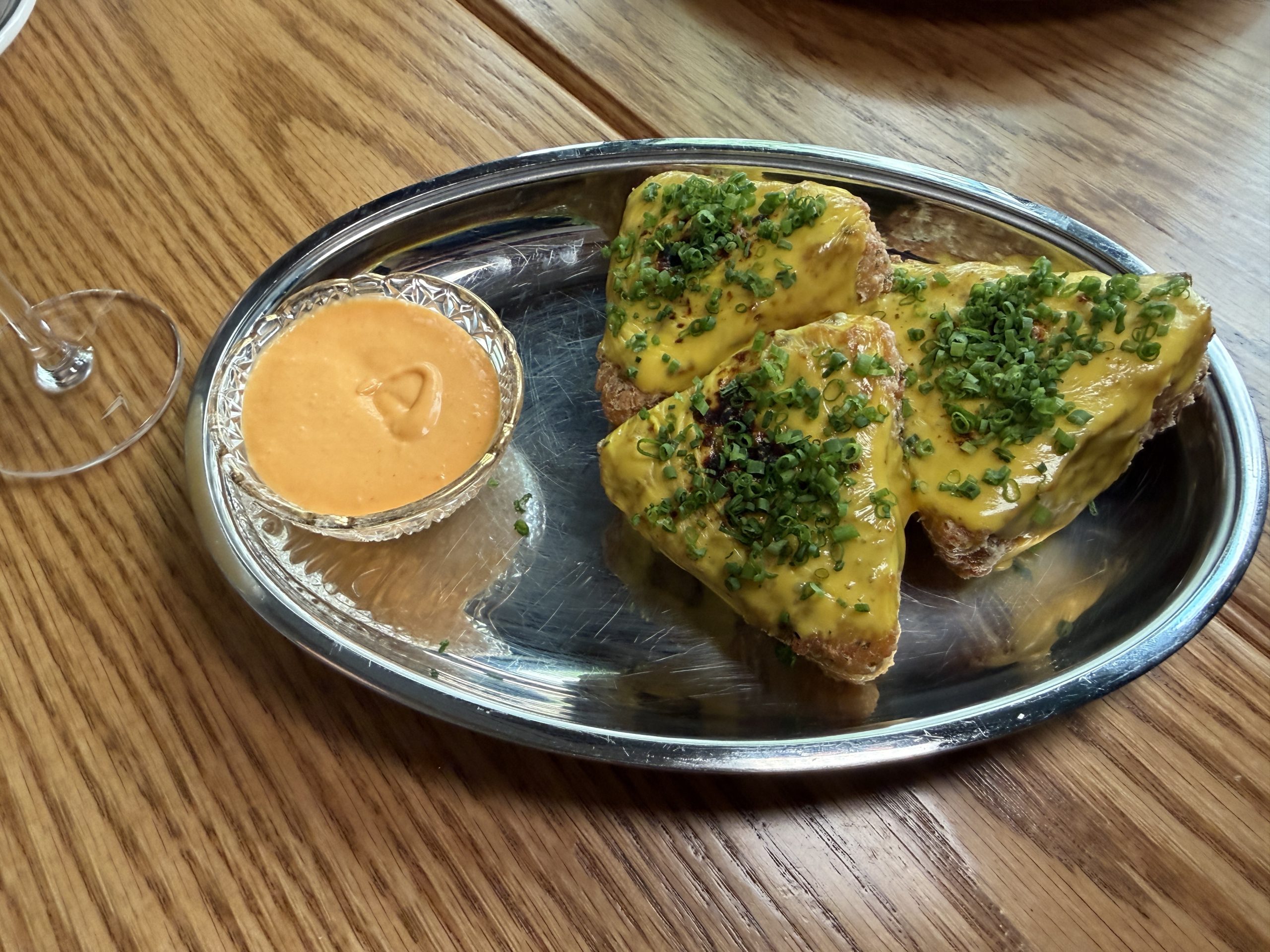
Bucks County native Bacharach grew up with classic diner omelets, pancakes, French toast, and bacon, egg, and cheese breakfast sandwiches, but these brunch stalwarts are completely scrambled up at dancerobot, where bacon, egg, and cheese are fashioned into crispy, crusted onigiri, and omelets are omurice, splayed open tableside into a blanket of egg curds, and pancakes are meant to be shared with the whole table.
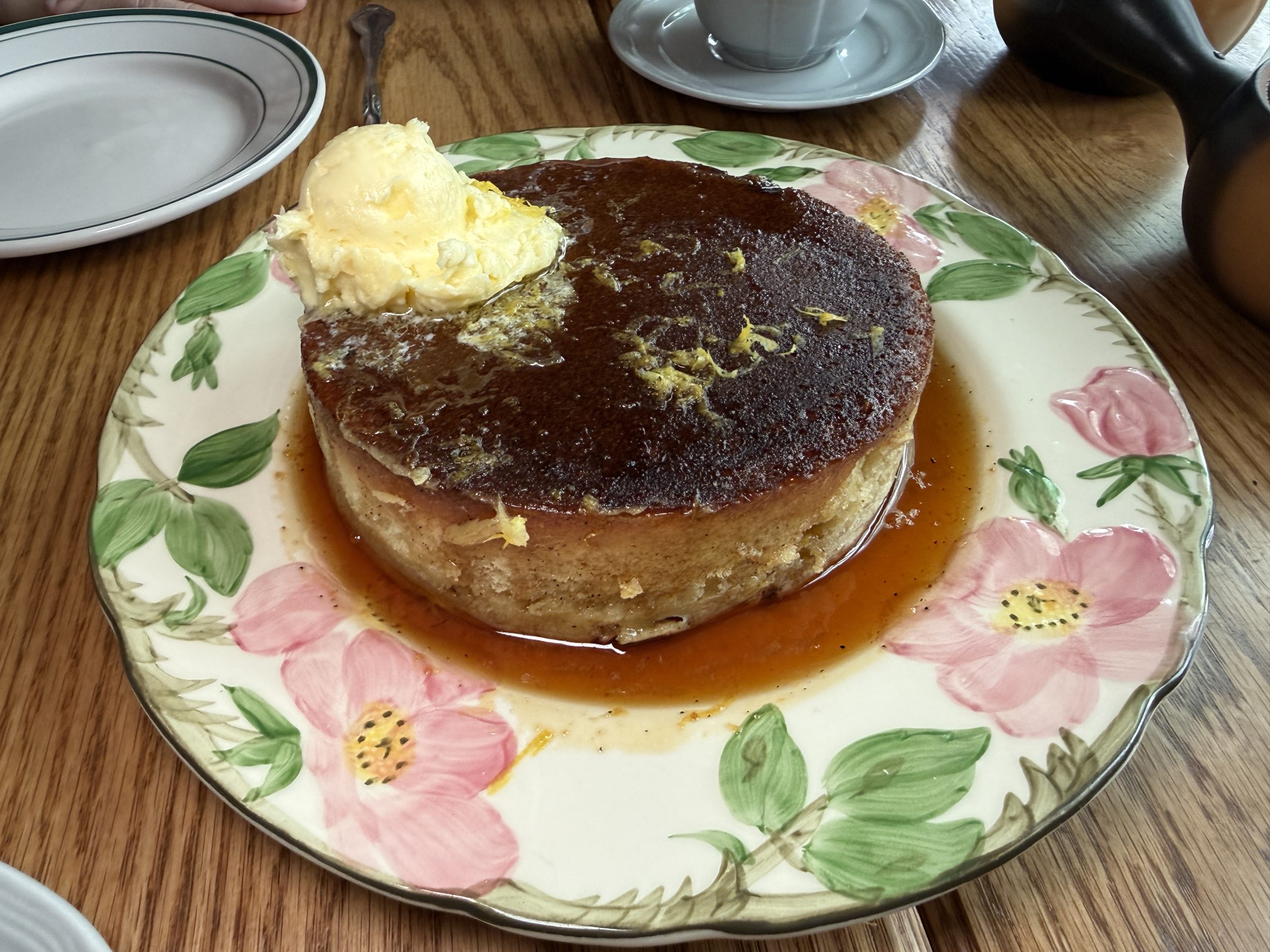
“It’s an homage to fluffy Japanese pancakes,” Bacharach said. But his have more depth and oomph. They also have delightfully crispy edges. His sourdough pancakes, by the way, are made with the starter Amanda Shulman, the Michelin star-earning chef who also recently opened a restaurant serving brunch, gave him five years ago.
The Caesar salad inari at dancerobot is a riff on the “girl dinner” trend.Kiki Aranita / Staff
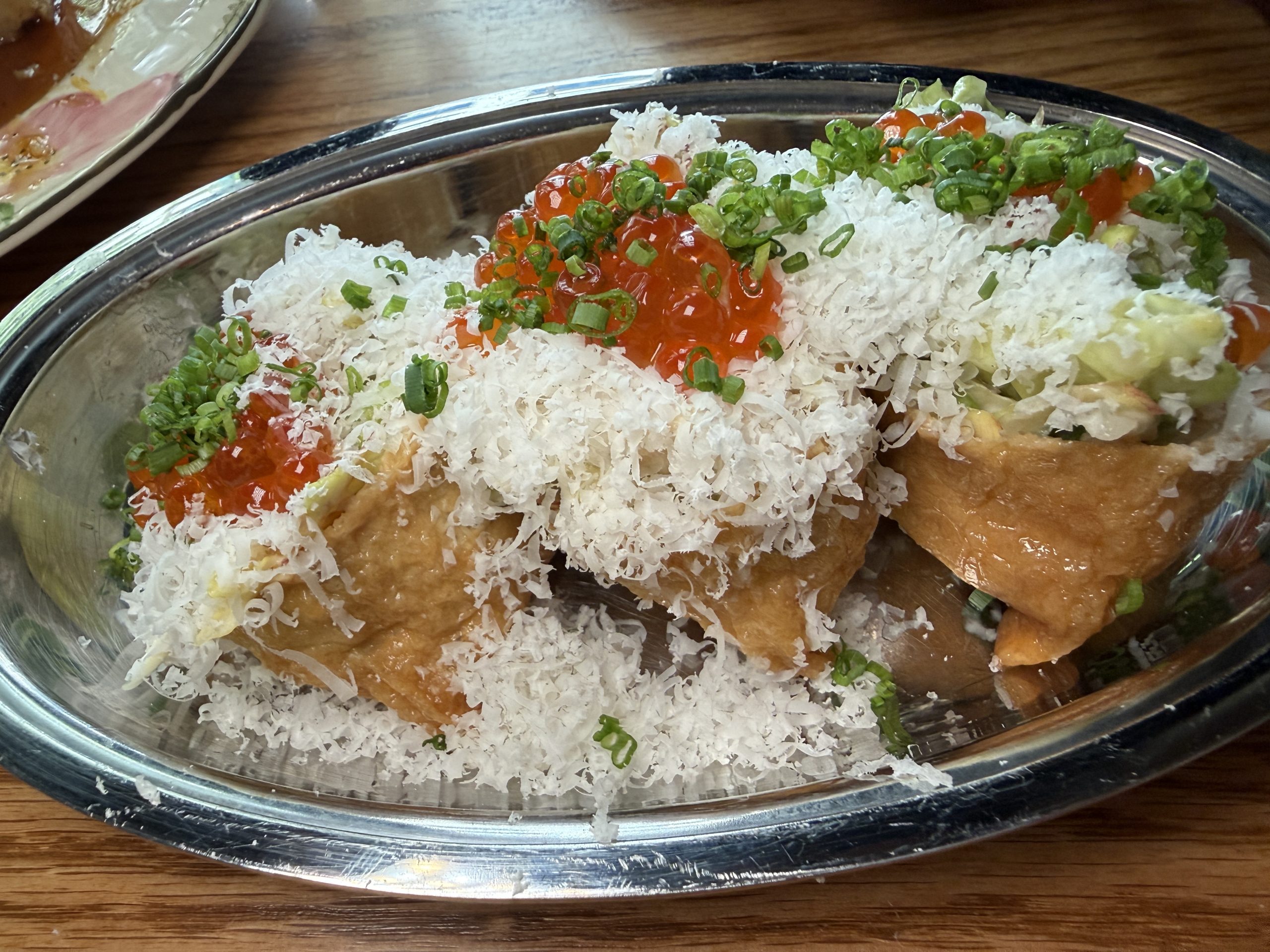
Pastry chef Sophie Wieber contributed cinnamon buns served with amazake-cream cheese frosting. Sous chef Drew Kornrumpff conceived a brilliant interpretation of “girl dinner” by stuffing pockets of aburaage, or fried tofu skin, with Caesar salad and topping them with ikura. Everything is original, delicious, and a little wacky.
Bacon, egg, and cheese onigiri at dancerobot.Kiki Aranita / Staff
“Brunch is a breath of fresh air,” Bacharach said. “The people are happier, the sun is out.”
Dancerobot is also leaning into the creativity brunch can offer by teaming up with chef friends in Philly and beyond, hosting brunch club events with Chicago’s Kasama and soon, Middle Child Clubhouse.
This new era of brunch is whimsical and riveting, a far cry from the dreaded services Bourdain once complained about.
All these chefs reinventing brunch have one more thing in common: They don’t have time to go out for brunch themselves. “Usually I am too tired to go to brunch,” Widjojo said. “I can’t remember the last time I did, but if I could, I would.”
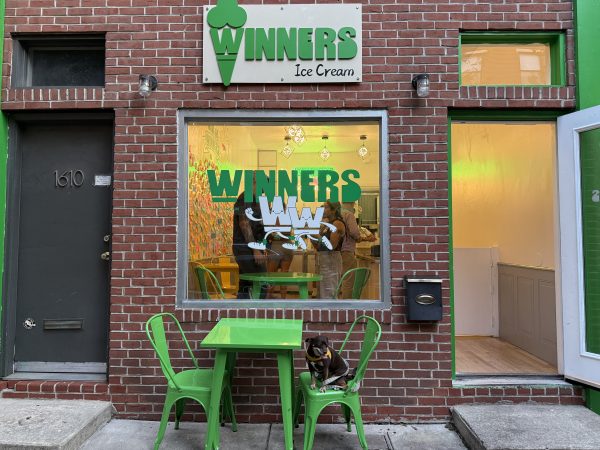
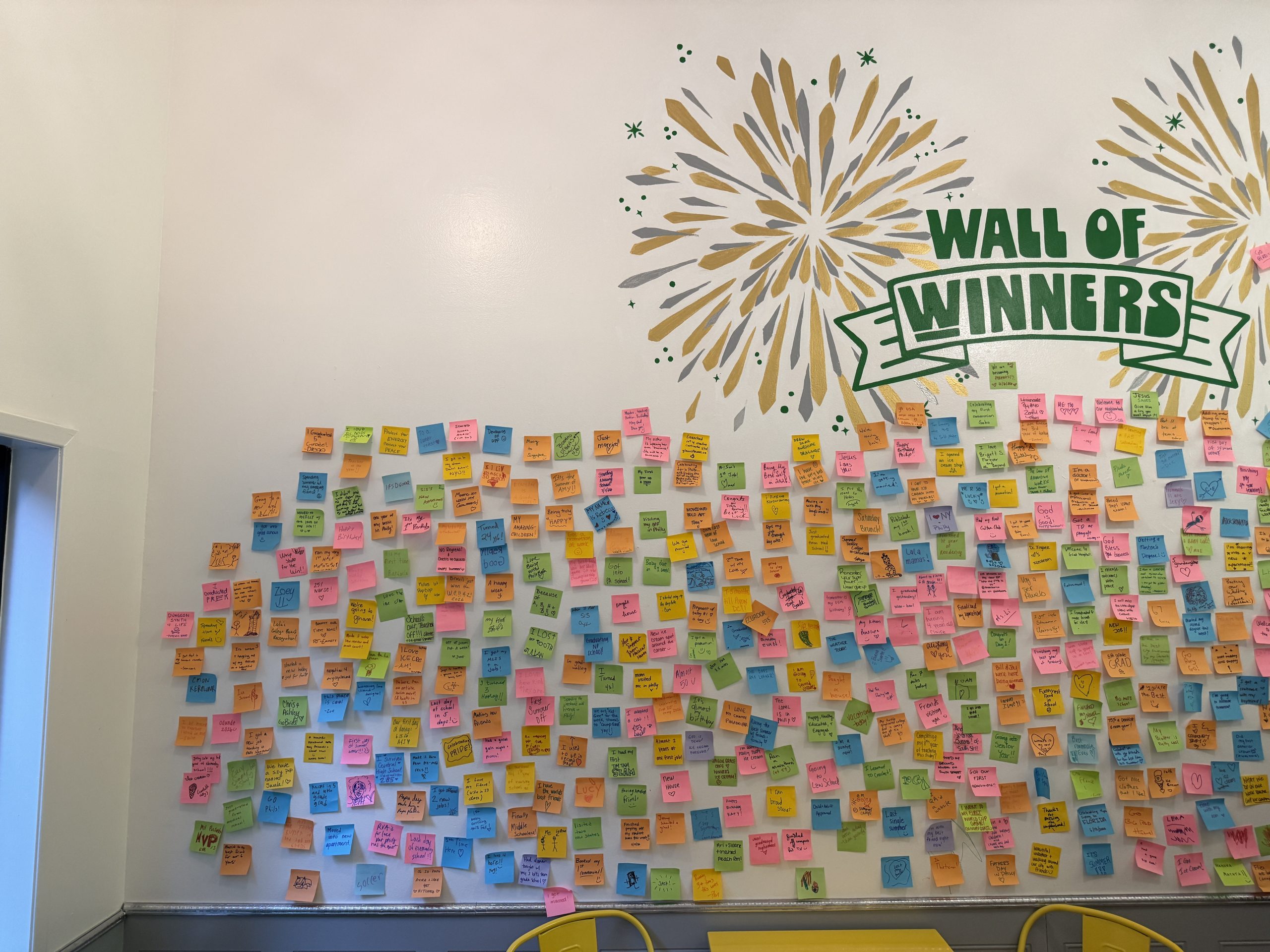
Winners Ice Cream has only been open three weeks, but its wall is already completely covered with notes from neighbors. The small shop was packed on a recent, hot Thursday evening, as customers of all ages lined up for scoops of nostalgic flavors with winning-themed names like “MVPeanut Butter Crunch,” “Champ Chocolate,” and “Sweet Success ‘Smores.” They were invited to leave Post-It notes on the wall that detailed their own personal wins.
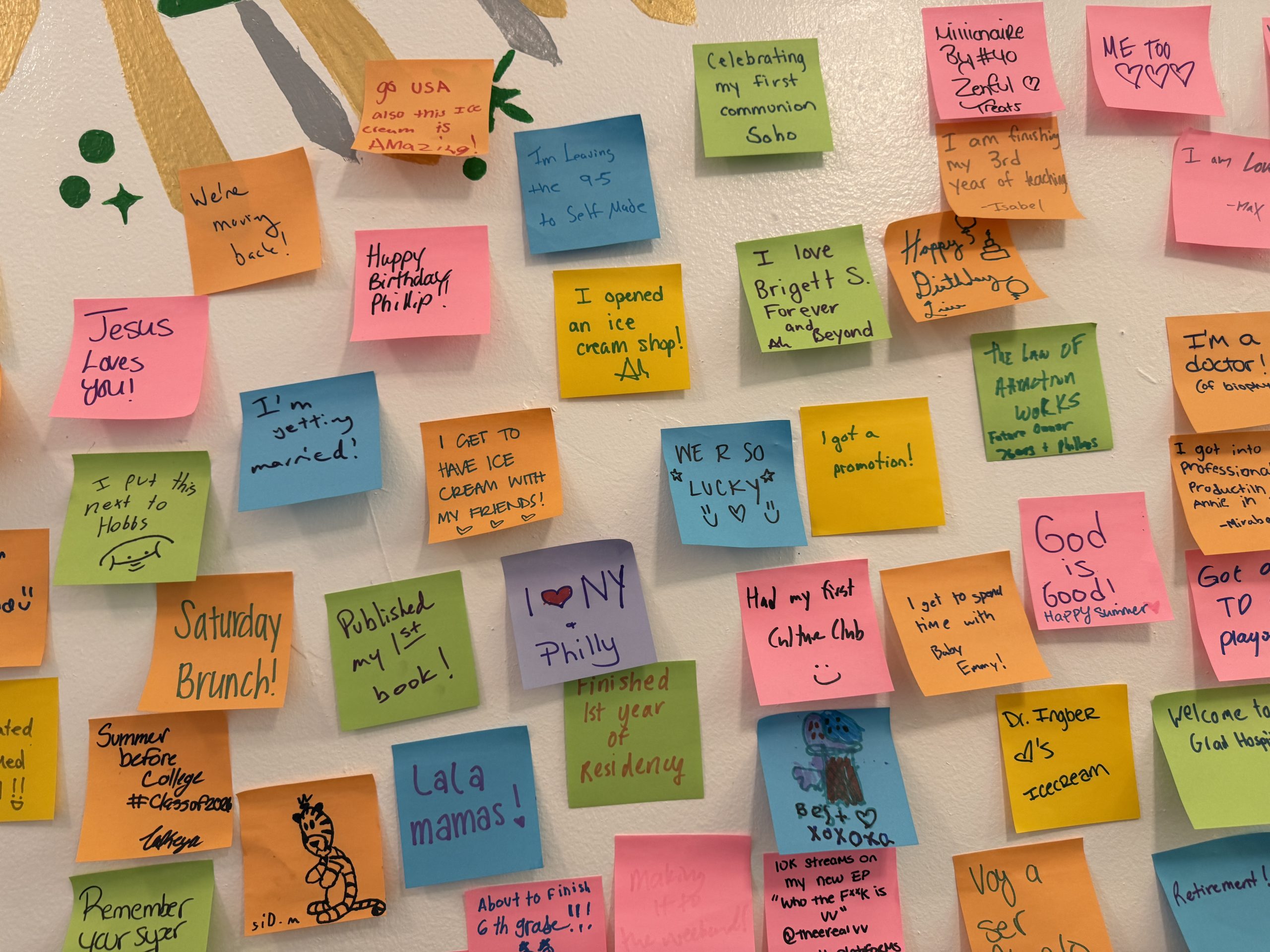
These notes ranged from “I’m getting married” to “Published my first book” to “I ate breakfast.”
This is owner Anh Nguyen‘s first shop. The 31-year-old, originally from Newark, Del., moved to Philly to manage branches of Surreal Creamery for the four years prior to his opening Winners.
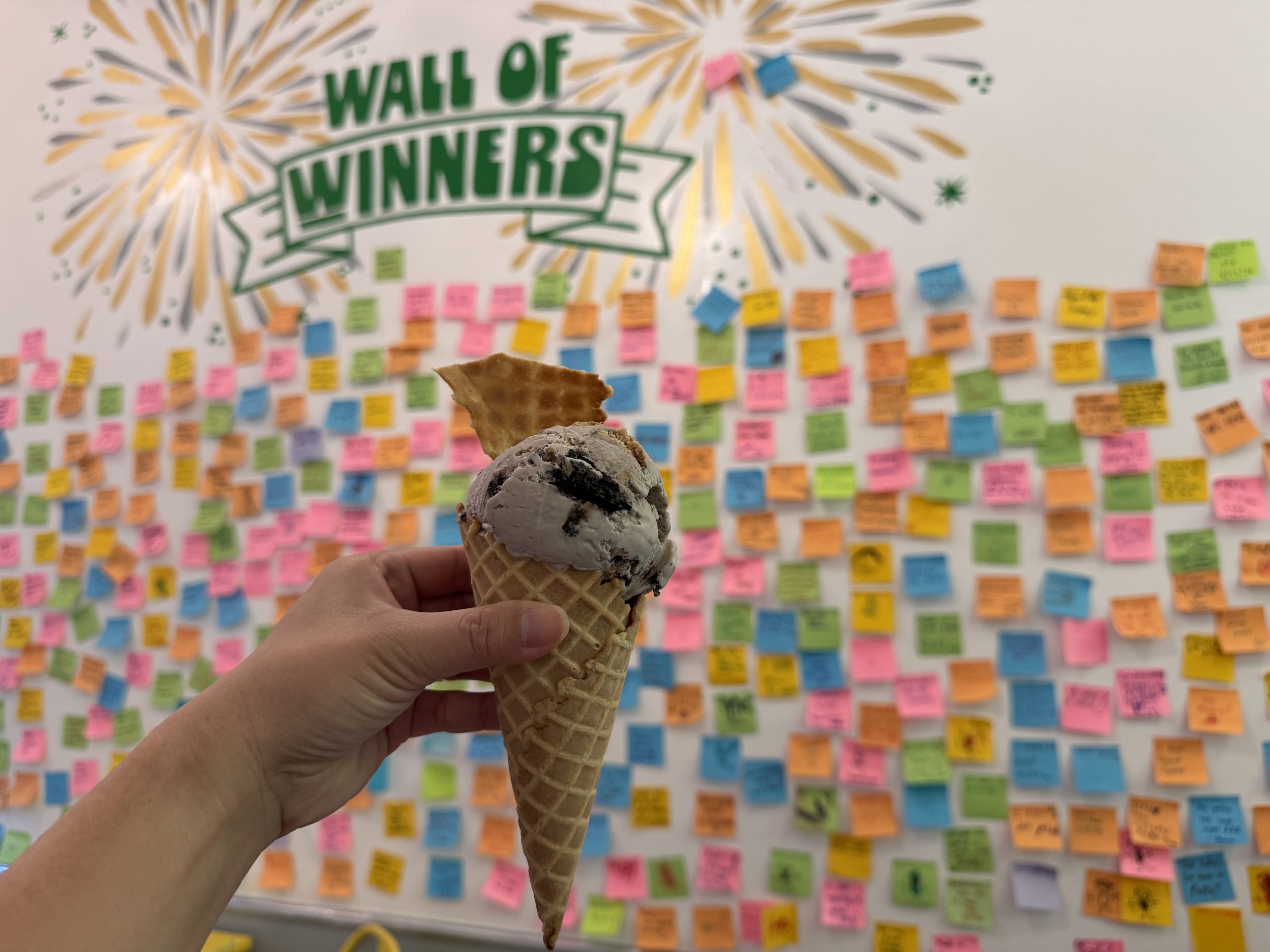
Cookies and cream dream in a waffle cone at Winners Ice Cream in Graduate Hospital.Kiki Aranita
Winners is so named because “we celebrate small wins, big wins, and all the wins in between with fantastic ice cream,” said Nguyen.
Nguyen built a production kitchen downstairs, where all his ice creams are made from a 14% buttermilk base. Although he is the sole proprietor, his family has been actively involved with helping him get Winners off the ground. His father helped with construction and his mother kept the crew fed while they spent hours at the shop “putting things together with hammer and nails. And since we’re Vietnamese, she always packed us jasmine rice with eggs, pork, or sautéed chicken.”
It took Nguyen and his father about a month and a half to build out the space. His three sisters have weighed in heavily, testing flavors and helping source ingredients. Nguyen currently makes 14 flavors of ice cream, with more in development, including “Match Point Matcha” (“All the flavors are winning themed,” he said) since the green tea flavor is so popular.
His current personal favorite? “Major Mint Chip, which I make by infusing fresh mint leaves into the ice cream base, and letting it steep overnight. I didn’t want to use extracts or food colorings in any of my ice creams.”
The flavor has crushed Girl Scout cookies (Thin Mints, of course) because Nguyen’s niece is a Girl Scout. To support her during cookie sales, he bought cases upon cases of cookies.
The wall of winners at Winners Ice Cream.Kiki Aranita
Winners, as well as Mod Spuds, which opened a week and a half prior to the ice cream shop, contributes greatly to “little treat culture” in the neighborhood. And they also share a similar aesthetic, because they share the same muralist. Nguyen peeked into Ange Branca’s Mod Spuds, a few feet away and also on South Street, noticed their painted walls, and asked to be connected with the artist, Hana Alshahab, who ended up painting the wall at Winners.
Winners is a dream come true for Nguyen, who has loved hard-scoop ice cream since he was a child. “You can add mix-ins to hard scoop and make flavors that are more out of the box, unlike with soft serve where the mix-ins won’t fit through the tube of soft serve machines.”
Most importantly, “I want Winners to be a community space to recognize and celebrate the moments in life that are often overlooked. Small wins can add up to big wins. I look at the wall and I get inspired and emotional,” said Nguyen.
The wall of winners at Winners Ice Cream consists of notes left by patrons.Kiki Aranita
In the sea of slips of paper denoting other peoples’ wins, one yellow one could easily be missed. It reads, “I opened an ice cream shop!”
“That one was mine,” said Nguyen.
Winners Ice Cream is at 1610 South St. It’s open from noon to 10 p.m. daily. Single scoops served in cups start at $5.75.
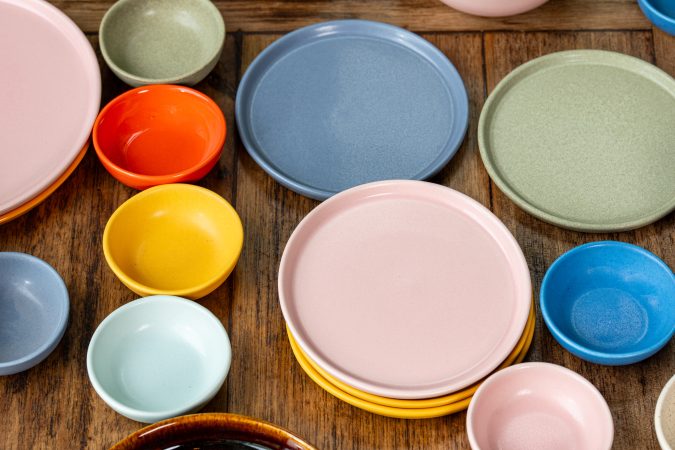
The vibrant, paint-flecked, confetti-esque glazed bowls are Philly icons. But at the end of January, these and hundreds of other ceramic dishes lay in ruins inside Felt and Fat’s kiln.
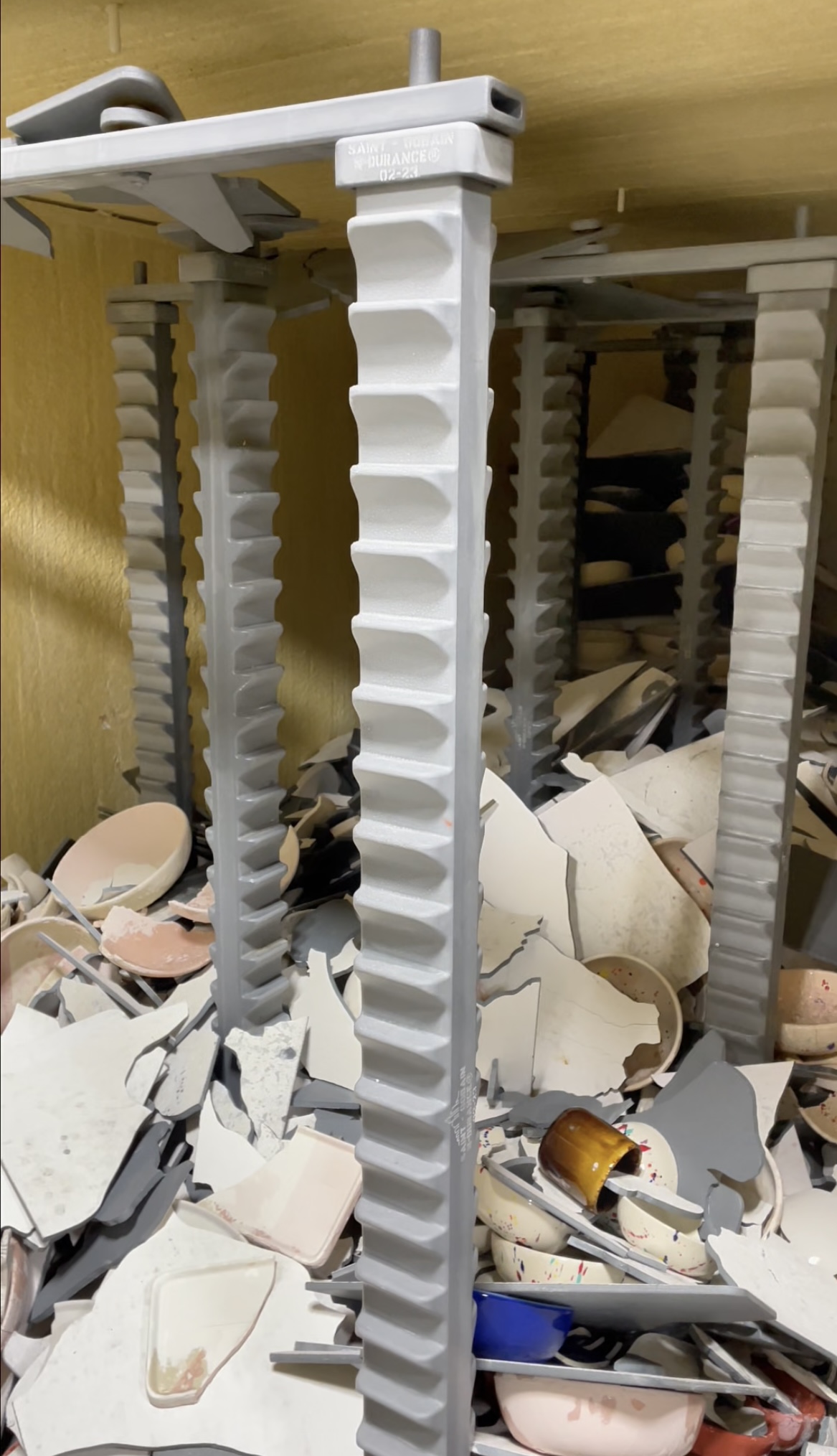
The wreckage after a winter cold snap destroyed Felt and Fat’s kiln in January 2026.Nate Mell
Philly’s back-to-back snowstorms and cold temperatures froze the ceramic producer’s warehouse’s sprinkler lines, causing sprinkler heads to crack.
Mist blanketed Felt and Fat’s kiln — and kilns are not supposed to ever get wet — for 12 hours. The kiln was just over a year old, custom-ordered from the Netherlands. It cost over $300,000 and was the keystone of founder Nate Mell’s plans for expansion.
The kiln took a year to arrive and was outfitted with a specialized rack system that made loading and unloading pieces — up to 250,000 per year — easy.
“The kiln company told us they couldn’t repair it and with high-pressure gas going into the kiln, even if they could, they couldn’t speak for it in terms of liability,” said Mell, 40. The electrical components were all soaked and frozen. The inside was completely destroyed. “We still haven’t quantified our revenue loss,” he said, despite getting his old kiln back in use about a month after the disaster.
The kiln explosion came on the heels of Felt and Fat filing for Chapter 11 bankruptcy. “We were really struggling in 2024 and 2025, which was a terrible time to raise money. The early 2020s for us were all about growth,” said Mell.
To get out of bankruptcy, Mell had to come up with a reorganization plan for his creditors. It required getting back to Felt and Fat’s roots.
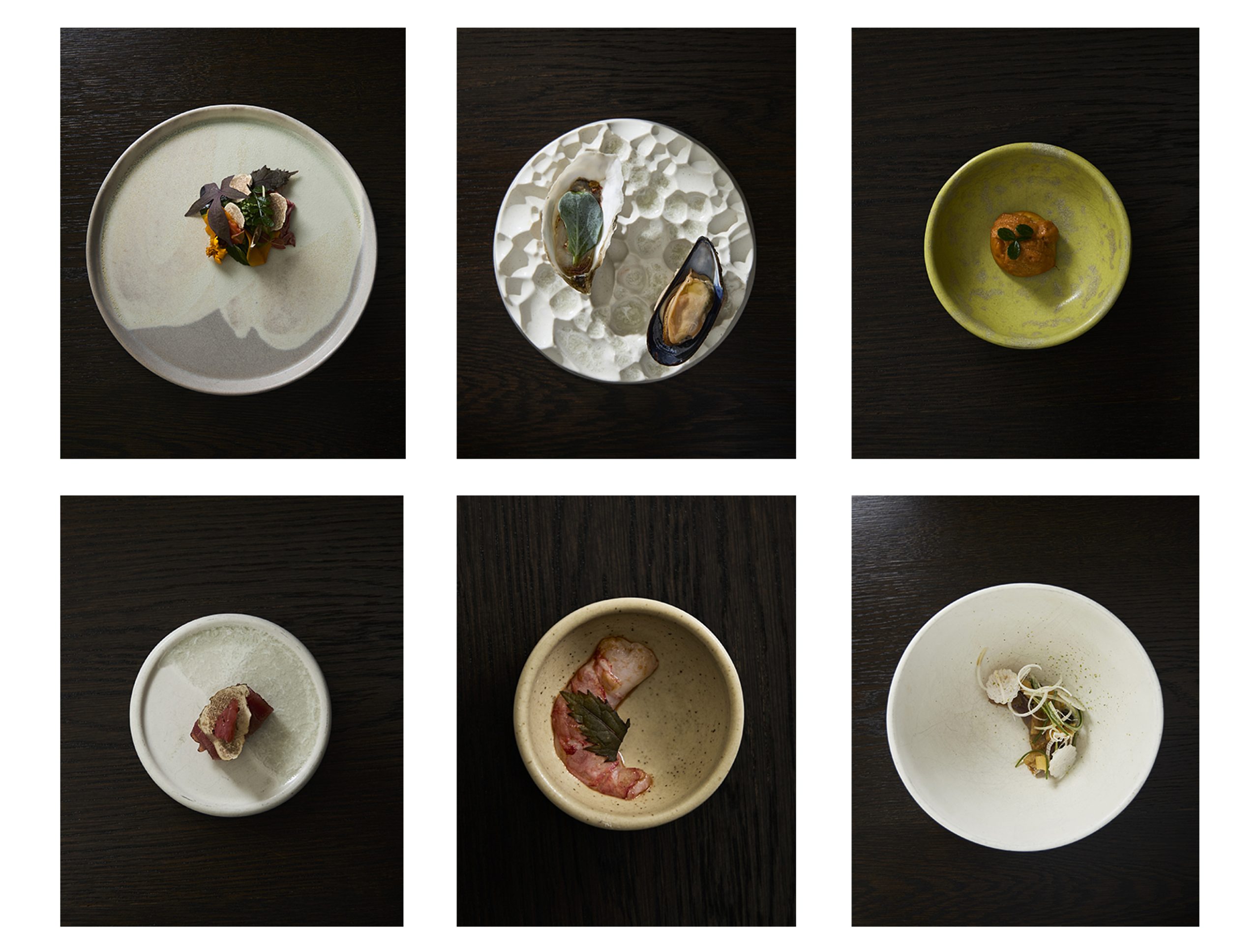
It all started in 2013, when Ellen Yin and Eli Kulp commissioned custom ceramics from Mell for the original High Street restaurant, which opened in September of that year. He officially formed the business in 2014, and over the next decade, Felt and Fat grew from a two-person ceramics studio — encompassing Mell and former business partner Wynn Bauer, who left the company in 2017 — into one of the region’s most recognizable dinnerware manufacturers. Their plates were seemingly at every award-winning Philadelphia restaurant, from River Twice to Tesiny to the now-closed Laurel.
“We had been growing the same way everyone else grows: build a factory, add people, add machines,” said Mell, a Temple grad who admitted that this trajectory had little to do with what he had been trained in. “I went to the Tyler School of Art and Architecture and studied glass but took classes in ceramics. I worked as a server in Philadelphia restaurants for eight years and started delving deeper into ceramics by working part-time at the Clay Studio back when it was in Old City.”
Felt and Fat provides Provenance with custom ceramic dinnerware.Nate Cluss
He realized that what he and his team does well is “great design, really interesting glaze work with relatively low minimum-order quantities, and interesting collaborations.” His expansion plans were taking him away from that design and glaze work. “The bulk of what we were doing, and what every other factory does, is taking clay and turning it into a shape.”
Collection of canapés served at Provenance in 2024 on Felt and Fat ceramic dinnerware.Yong Kim / Staff Photographer
He reached out to an old contact, the company Anfora, located outside of Mexico City, which has been making ceramics for over a century. “They do massive volume, making stuff the way we do. They treat their people well and make the same quality dinnerware with the same porcelain clay we use.”
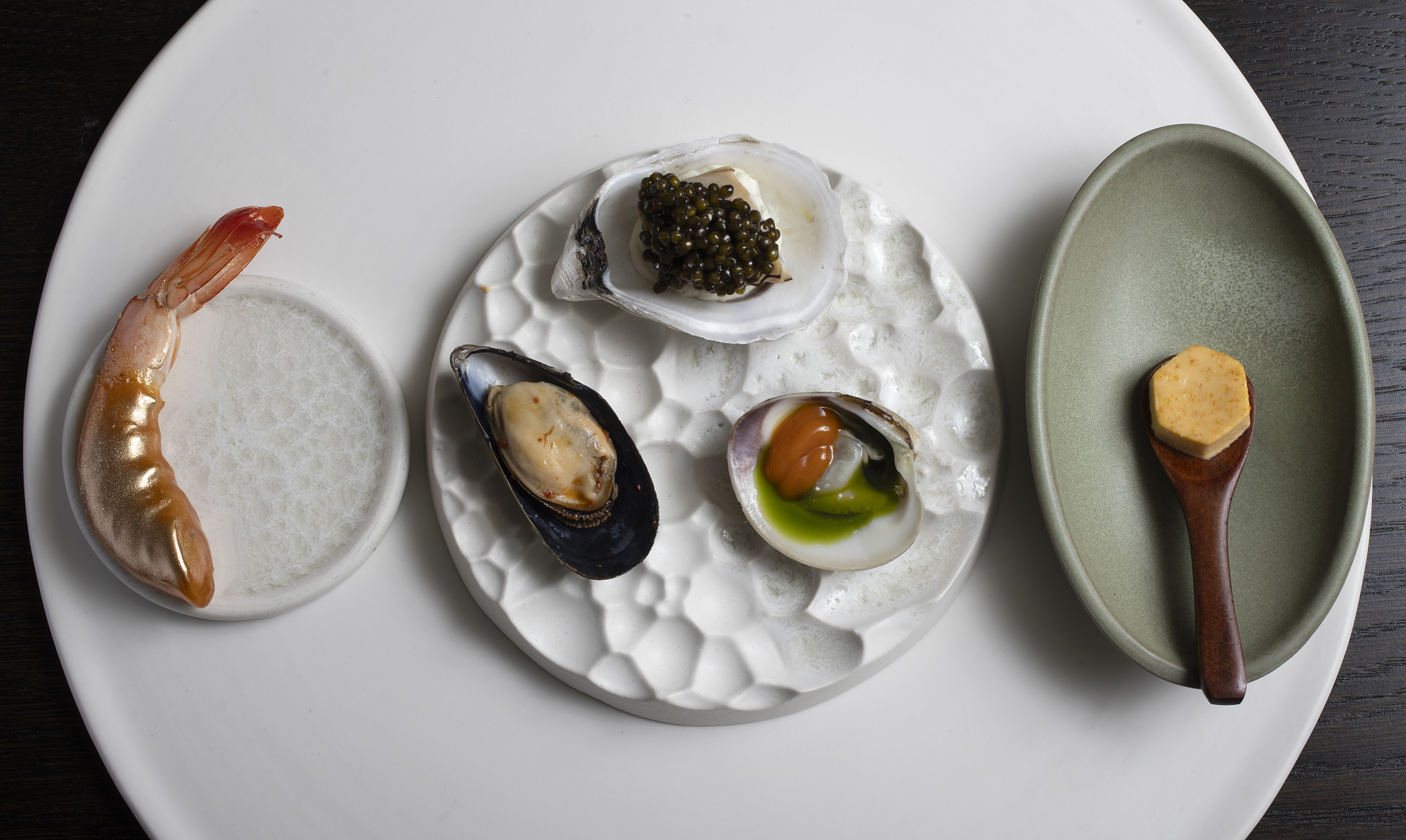
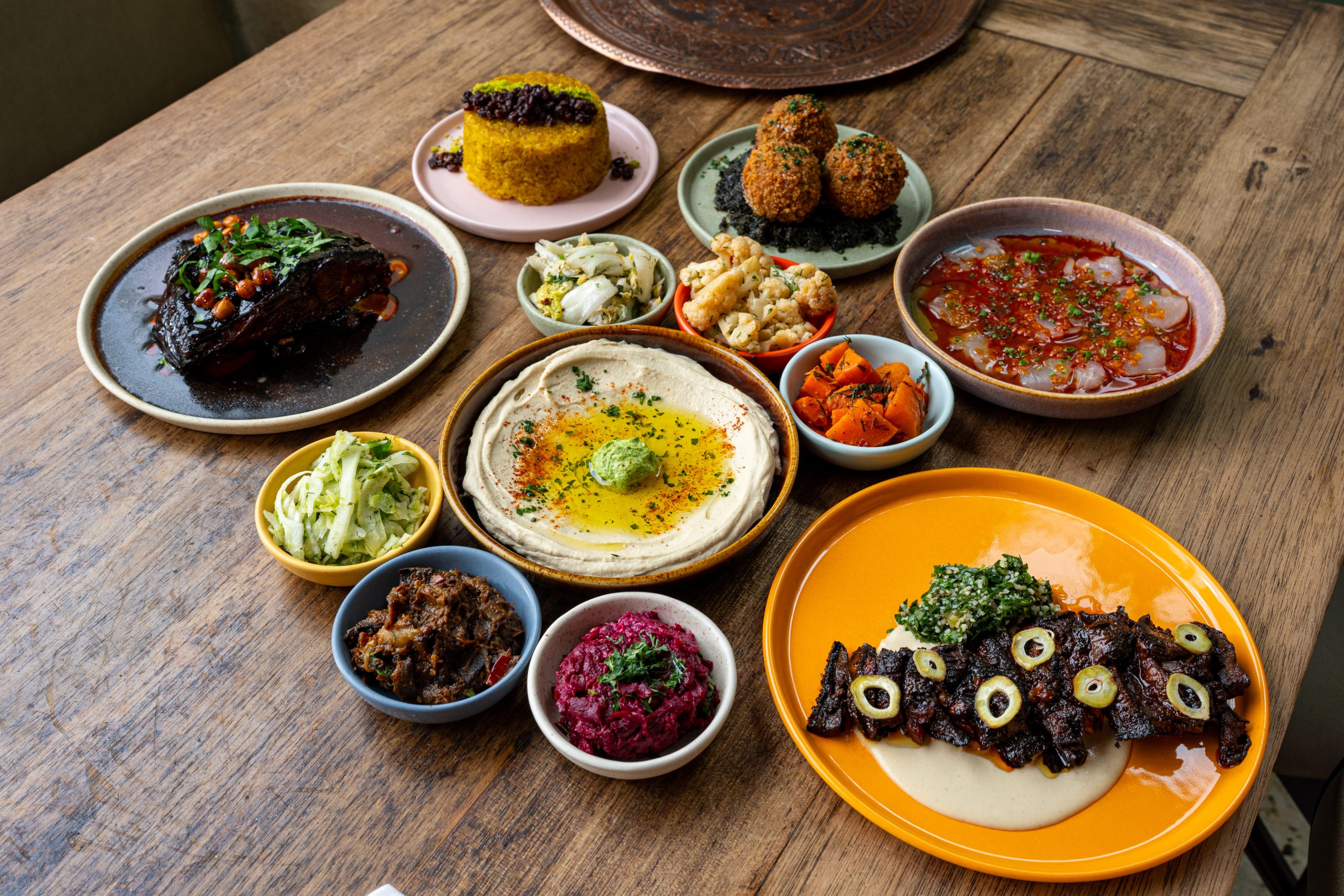
Food from Zahav on Felt and Fat dishes.Mike Prince
His restructuring plan meant Anfora would produce the shapes for Felt and Fat, and they would be glazed by hand in Philadelphia. Mell has just received the first of his shapes from Anfora, with more to come.
“We’re going to have our standard shapes formed at Anfora. But we’re going to expand our high-touch, low-output forming — hand thrown and slip cast,” he said. “We’re going to be even more handmade than we were before. And we’ll be able to lean into that. But we’ll also have the consistency of our standard pieces.”
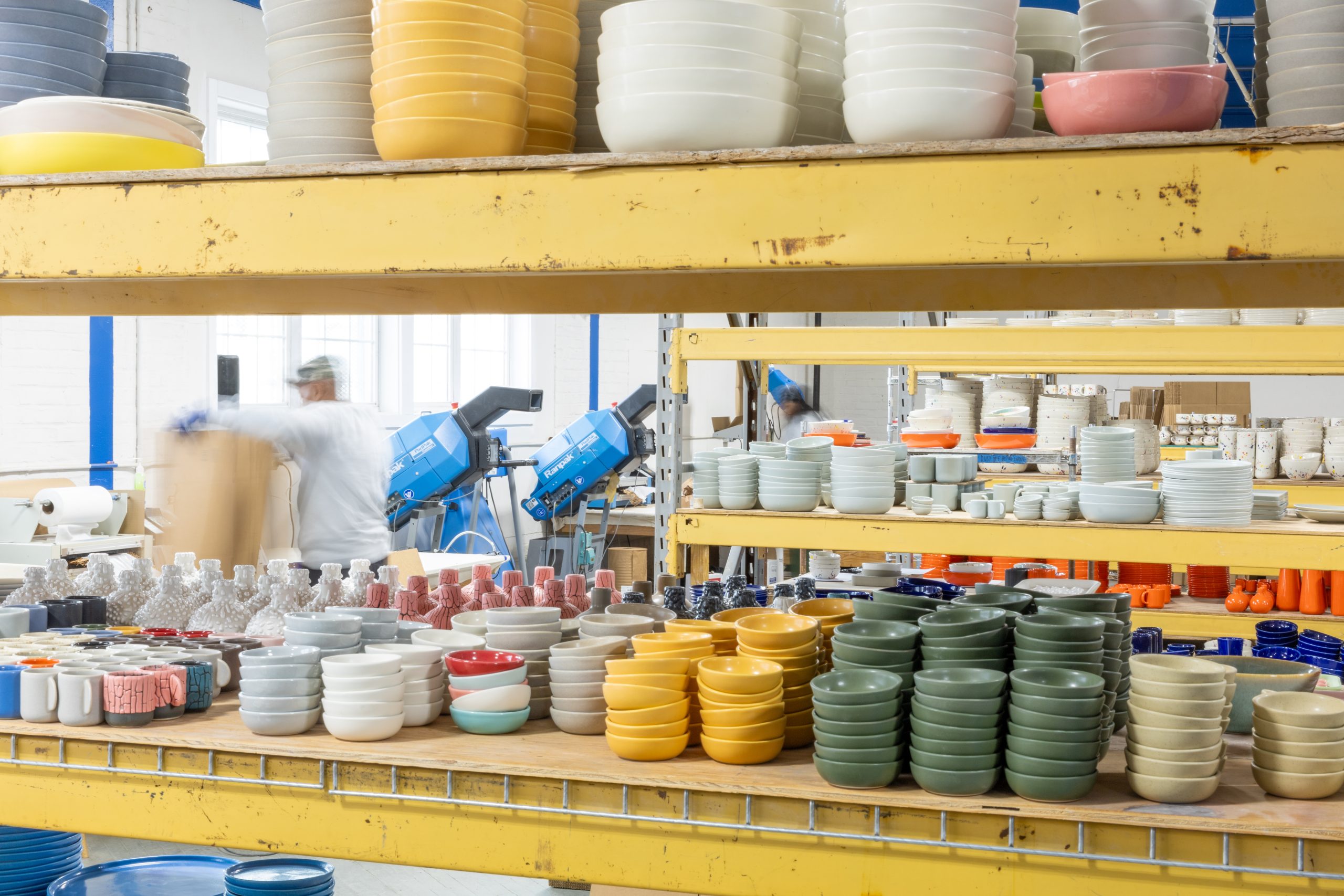
Felt and Fat dishes are stacked and lined up at the ceramic company’s Kensington facility.Graham Brosius
These days, Felt and Fat has just seven employees, including Mell. “Everybody gets their hands in everything. We’re a tight little team,” said Mell, though he hopes to add more employees at a more sustainable rate than before.
“The two years leading up to this were tortuous,” said Mell. But he hopes the future will be brighter, with slower, more purposeful growth.
Felt and Fat’s studio is open for browsing by appointment from Monday to Friday, 9 a.m. to 4 p.m. at 3750 M St., Philadelphia, Pa., 19124. To make an appointment, email support@feltandfat.com or call 215-259-8773. Orders can also be placed online at Felt and Fat’s website and picked up at the studio.