Author: Kiki Aranita

  • After six years, David’s Mai Lai Wah reopens its renovated dining room, complete with a new cocktail bar

    After six years, David’s Mai Lai Wah reopens its renovated dining room, complete with a new cocktail bar

    While the pandemic didn’t fully close Chinatown mainstay David’s Mai Lai Wah, it did shutter its dining room. First opened in 1982 by Hong Kong native David Chan, it became legendary over the years both for its food — in particular, its salt and pepper chicken wings, their spicy, crowd-pleasing adaptation of the classic Cantonese dish made with squid — and for catering to a sometimes rowdy late-night crowd, which started in 1992.

    Since 2020, David’s Mai Lai Wah has only operated as a takeout restaurant (with no delivery), despite its now-vintage neon sign proclaiming “Eat In Take Out” remaining lit up through the partial closure.
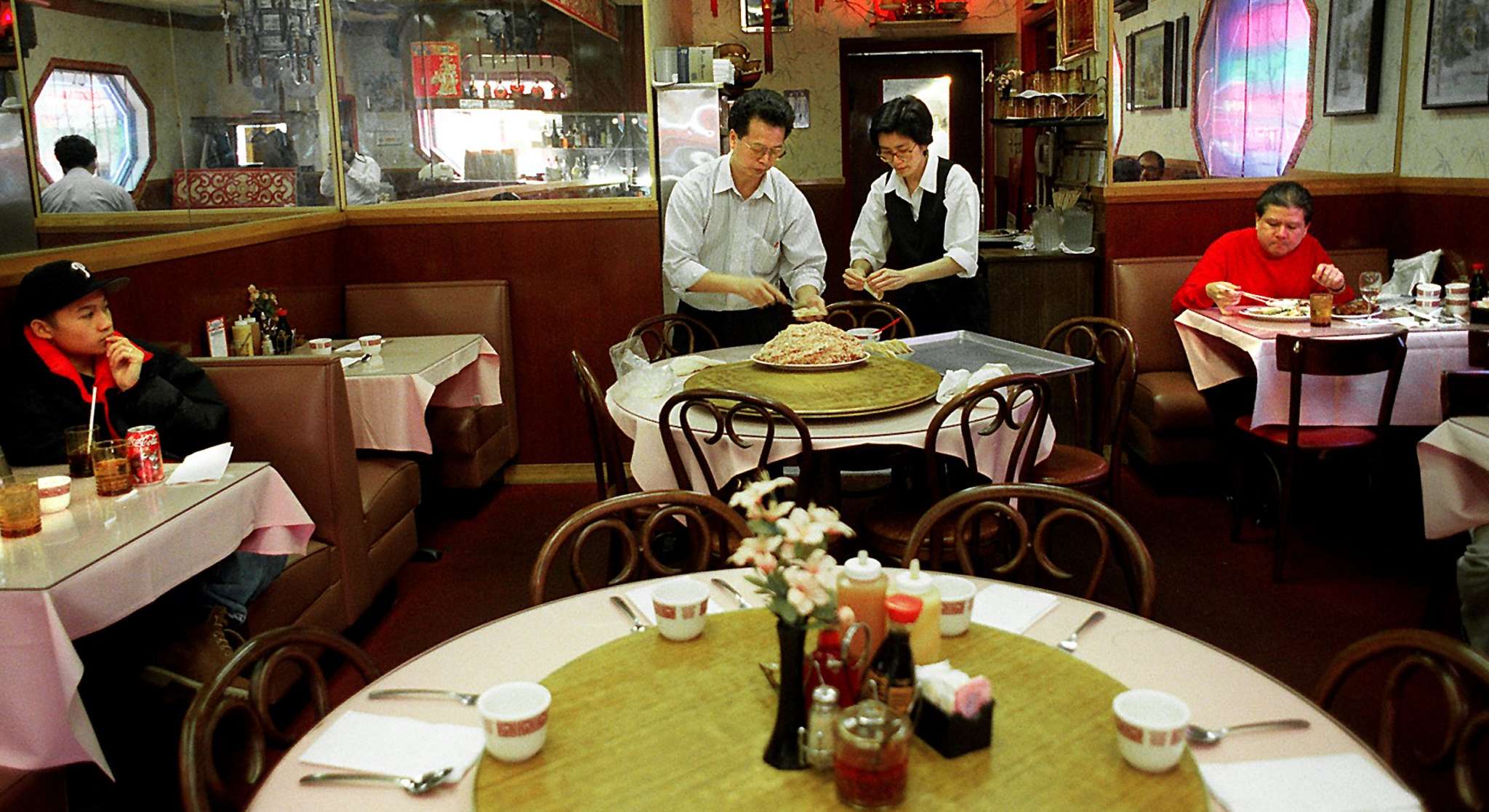
    In 1992, David’s Mai Lai Wah was among a small number of dining spots to stay open and serve late-night food. Here, David Chan, restaurant owner, and Ling Luong make dumplings in the dining room.ERIC MENCHER / File Photograph

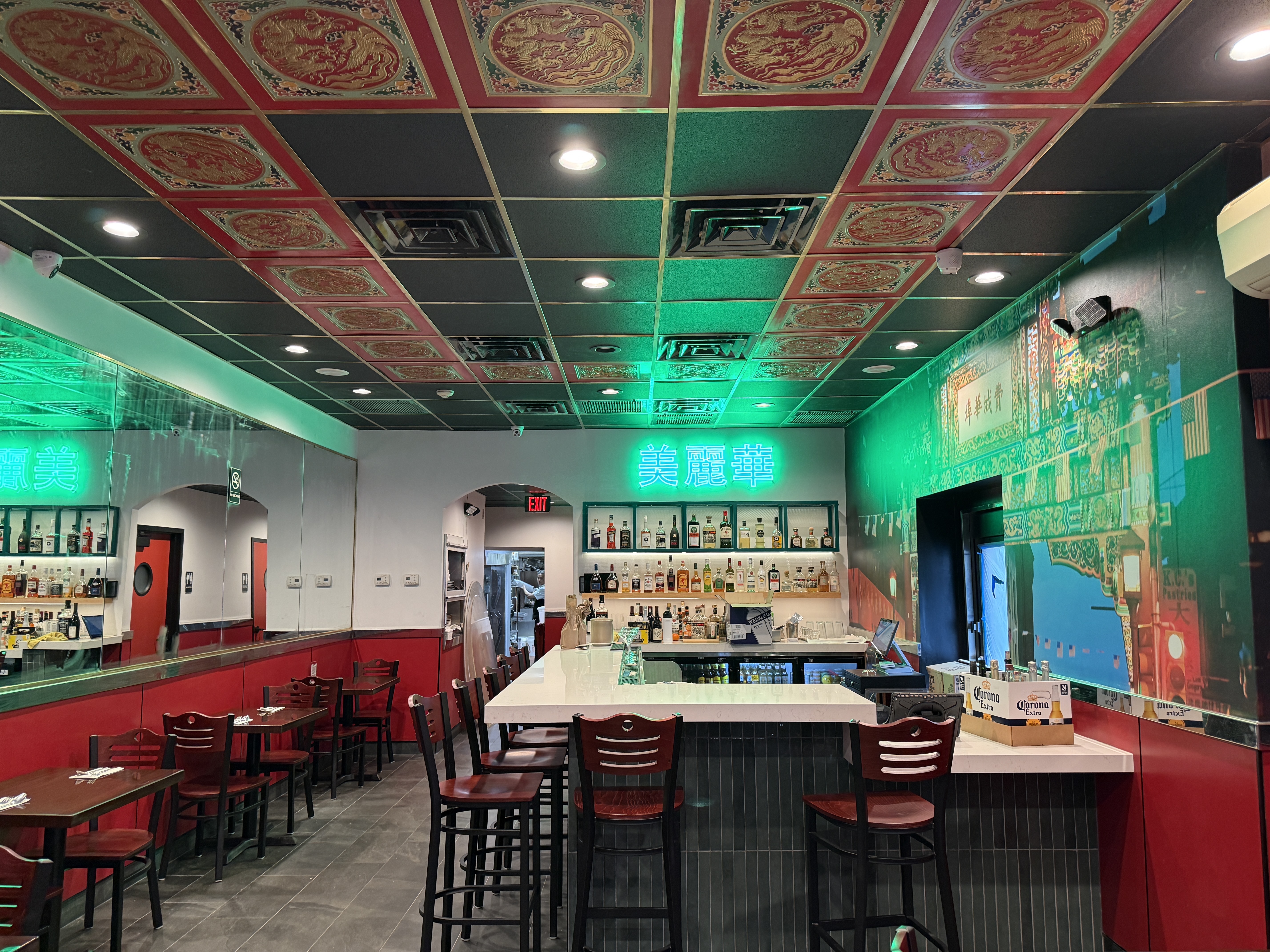
    But on Monday, David’s Mai Lah Wah quietly opened up its dining room again, and the renovations were significant. The uneven floor was leveled and completely replaced. Gone are the rickety dining tables covered in pink tablecloths and tamped down with glass table tops. They’ve been exchanged for rectangular tables (with no linens) that flank either side of the room. A new bar glows under a new green neon sign of the Chinese characters “Mai Lai Wah” — a phrase that means “beautiful magnificence.”

    Now, the interior lives up to the name.
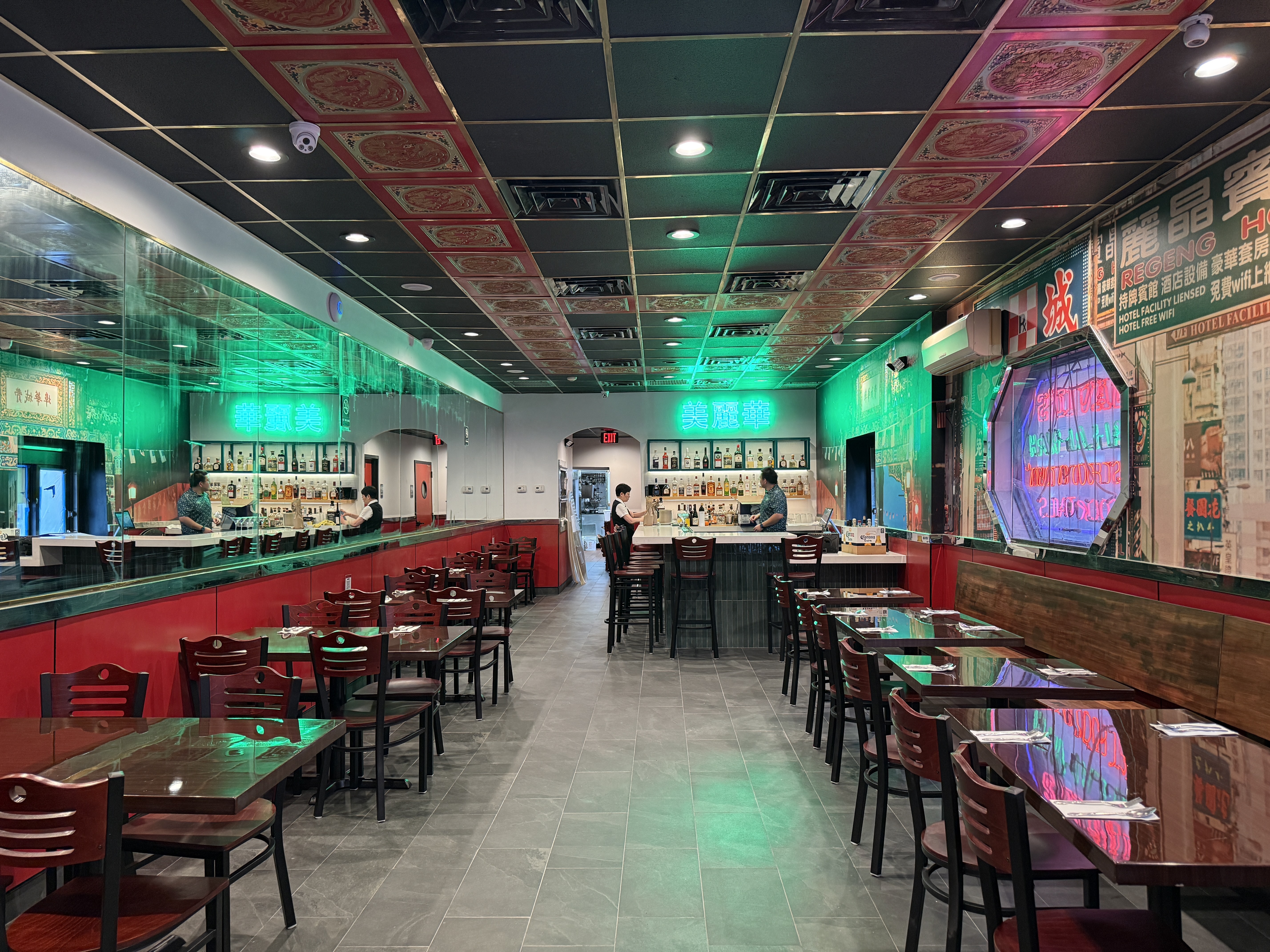
    The renovated dining room at David’s Mai Lai Wah, which reopened Sept. 28.Kiki Aranita / staff /

    The mirrored wall on one side of the dining room remains, but the other walls are papered over with vibrant photographs depicting many of Hong Kong’s famous neon signs. Walking in the door now feels like walking into a diorama of Hong Kong’s Wan Chai district, famous for its concentrations of classic neon.

    Another image shows Philadelphia’s Chinatown Friendship Arch. The real one is just a few steps outside of the restaurant’s door.

    “We had the photos made into wallpaper to create a mix of where [my father] was and where he is now,” said Priscilla Chan, 33. “When he came to Philly he was only 13 years old. His mom sent him here to stay with his uncle, who worked in restaurants and he’s been working in restaurants ever since.”

    And restaurant work took a toll. “During COVID, we closed for two weeks and then remained closed because we were still able to do business and at that point my dad was tired,” said Chan. The boisterous late-night crowds also took their toll. He was “sick of all the fighting that would happen at nighttime,” said Chan.

    Renovations on the restaurant didn’t start until this past February. Everything was done slowly as David’s Mai Lai Wah remained open for takeout.

    The renovated dining room marks a changing of the guard. “My dad is still the owner but he wanted me to start taking things on for him,” said Chan, who was working as a nurse until she and her engineer husband (who had also worked in restaurants), Barry Li, both left their jobs to run David’s.

    “We bought a house in July, got married in August, and now it’s September and we’ve reopened dine-in,” she said.

    Chan is now the restaurant’s general manager. She and Li overhauled their point-of-sale system as she familiarized herself with the operation. When she started, “They wrote everything down by hand and brought it to the kitchen. We slowly introduced new things.” She cast a critical eye on what items were selling and what items were not, and what cost too much in labor.

    “I know a lot of people really love the roast duck but it’s incredibly difficult and really expensive,” she said. “One day we might try to bring it back, but right now, we’re concentrating on opening, finding our flow, and focusing on the big staples, like the salt and pepper series.” (In addition to the famous chicken wings, David’s Mai Lai Wah serves salt and pepper shrimp and scallops.)

    Li designed a trendy cocktail menu with a yuzu margarita, a gingery take on an Old Fashioned, and an espresso martini made with Vietnamese coffee.

    “We’re excited to welcome in old regulars,” said Chan. “But please don’t fight in here.”

    David’s Mai Lai Wah is open for dine-in and takeout (no delivery) from 4 p.m. to 2:15 a.m. Last call for drinks is at 2 a.m.

    David’s Mai Lah Wah, 1001 Race St., 215-627-2610, mailaiwah.com
  • The best thing Kiki Aranita ate this week: Candy-shaped pasta from Fiorella

    The best thing Kiki Aranita ate this week: Candy-shaped pasta from Fiorella

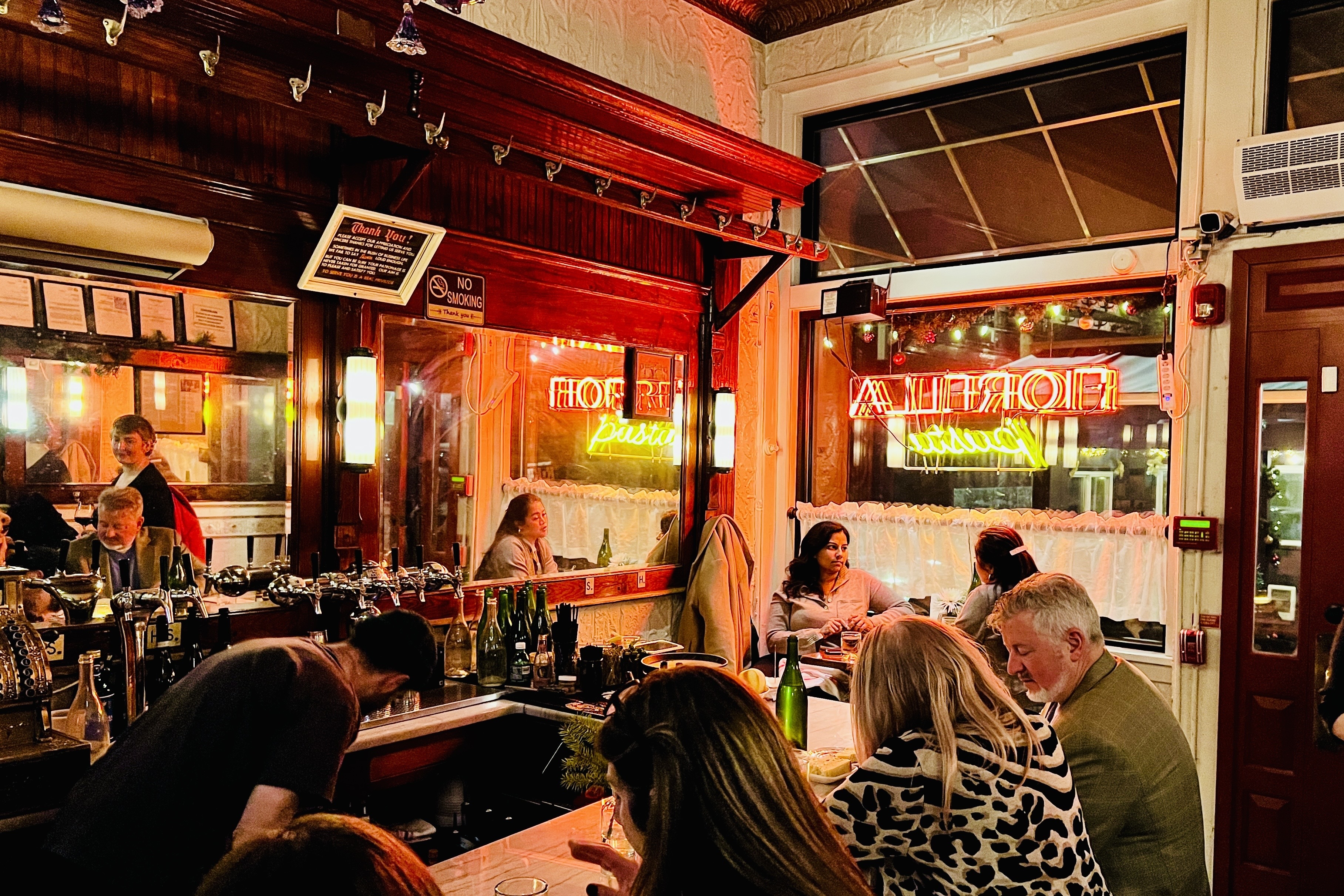
    The cleverest pastas tend to trick the eye and tease with wordplay. Are those postage stamps or francobolli? A plate of handkerchiefs or fazzoletti? Sorprese? Or surprise! It’s stuffed with nothing at all.

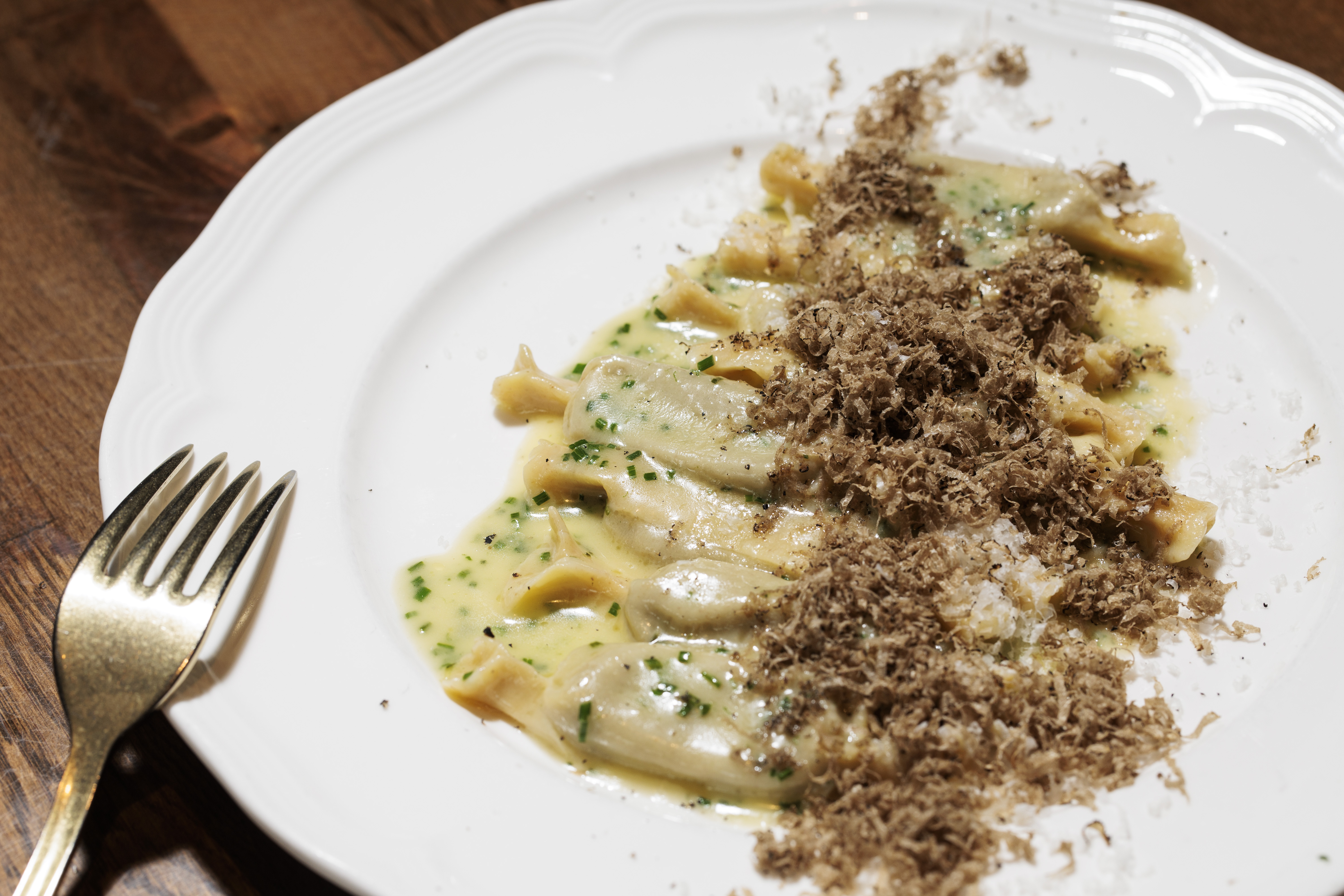
    But no pasta shape is more visually convincing than caramelle, which closely resembles oblong candies in wrappers, with both ends twisted to contain the fillings. Fiorella’s cooks add another layer of wit to their current variation on the classic shape: Their caramelle are undeniably sweet (something that pasta often is not).

    But the historic Italian Market butcher shop-turned-pasta bar isn’t sugaring its pasta. The caramelle’s sweetness comes naturally from late-summer corn simmered in butter and funked up with huitlacoche and black summer truffles.

    “Huitlacoche is known colloquially as the poor man’s truffle,” said chef Matt Rodrigue, who loved the duality of uniting it with conventionally expensive black truffle — and with the fungus’ host.

    “Pairing huitlacoche [corn smut] with corn isn’t reinventing the wheel but, again, it was simple. They grow together. It’s one of the few fungal infections that happen on a farm where the farmer is, well, not upset because of how much it can sell for,” he said.

    It’s unlikely you’d fly to Italy and get a plate of caramelle pasta made with huitlacoche, but it’s an essential ingredient in Mexican cuisine — and in Philly’s Italian Market, which now contains far more Mexican businesses than its namesake suggests.

    By cooking with locally available ingredients, Rodrigue is, in essence, hewing to Italian tradition and simplicity in his approach to making pasta, even if he’s not always sticking to ingredients from Italy.

    Fiorella Pasta, 817 Christian St., Philadelphia, on Dec. 27, 2025.Michael Klein / Staff

    “Simple is hard. It’s difficult to be restrained and to work within confines,” Rodrigue said. “But rules help you develop a vision.”

    And so his caramelle filling is simply corn, huitlacoche, butter, and onion simmered together, pureed until silken, then twisted up into pasta. The candy-shaped batons are cooked, then dressed with pasta water that’s emulsified with chives by vigorously tossing the caramelle in the pan. The dish is finished with a snowdrift of Parmigiano Reggiano and black truffle shavings. The result is a marriage of cultures, aromatic funk from two different sources, and the last breath of the season’s corn.

    “People pay for things. For truffles, for certain mushrooms. And I felt corn should be in that category and an all-star. Corn is perfect. It just needs butter and salt and you’re good to go,” said Rodrigue.

    And Fiorella’s caramelle is a perfect salute to corn and its smut. But also, of course, butter.

  • Espresso by day, cocktails and sushi counter by night: Palm Vintage brings Miami vibes across the street from City Hall

    Espresso by day, cocktails and sushi counter by night: Palm Vintage brings Miami vibes across the street from City Hall

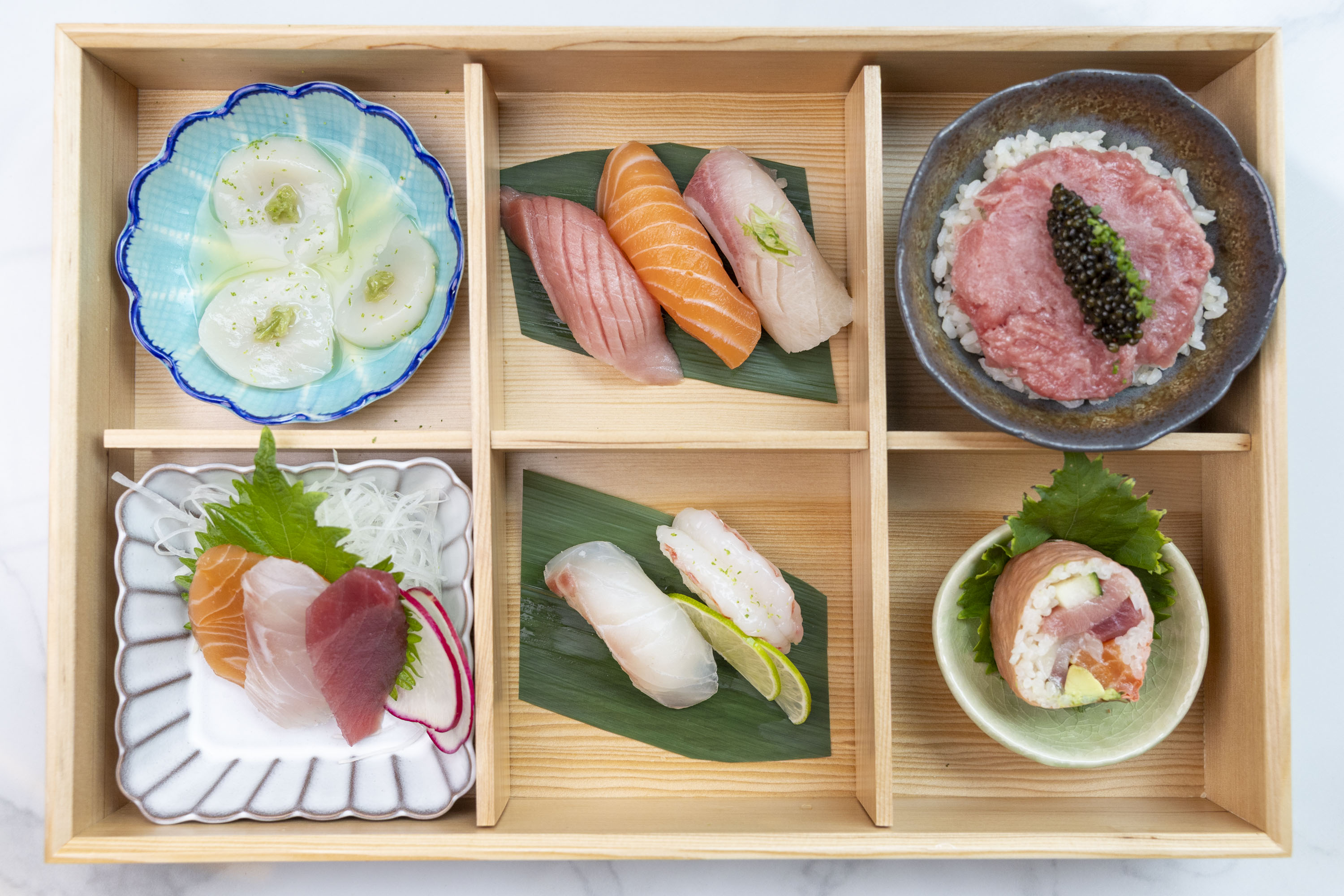
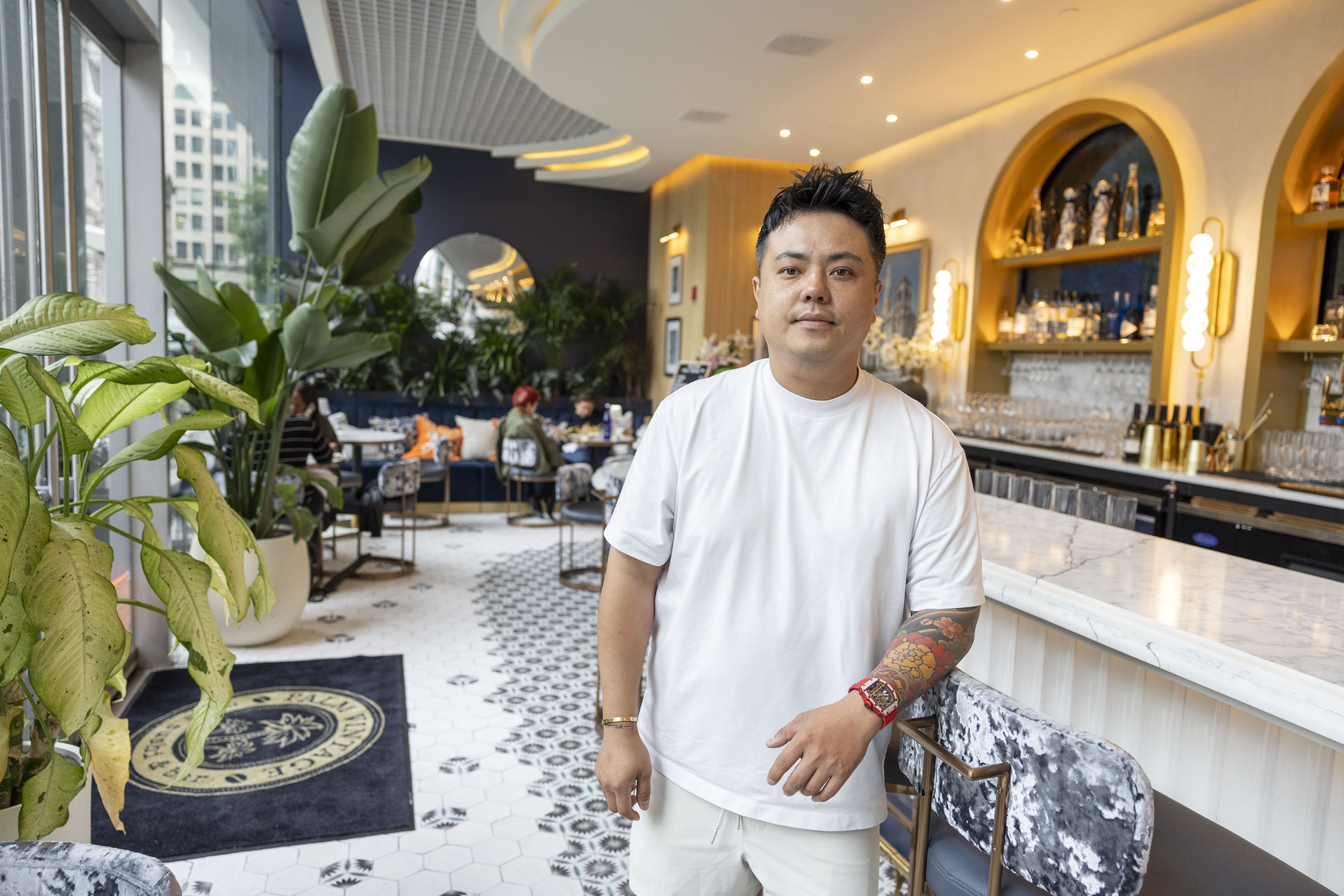
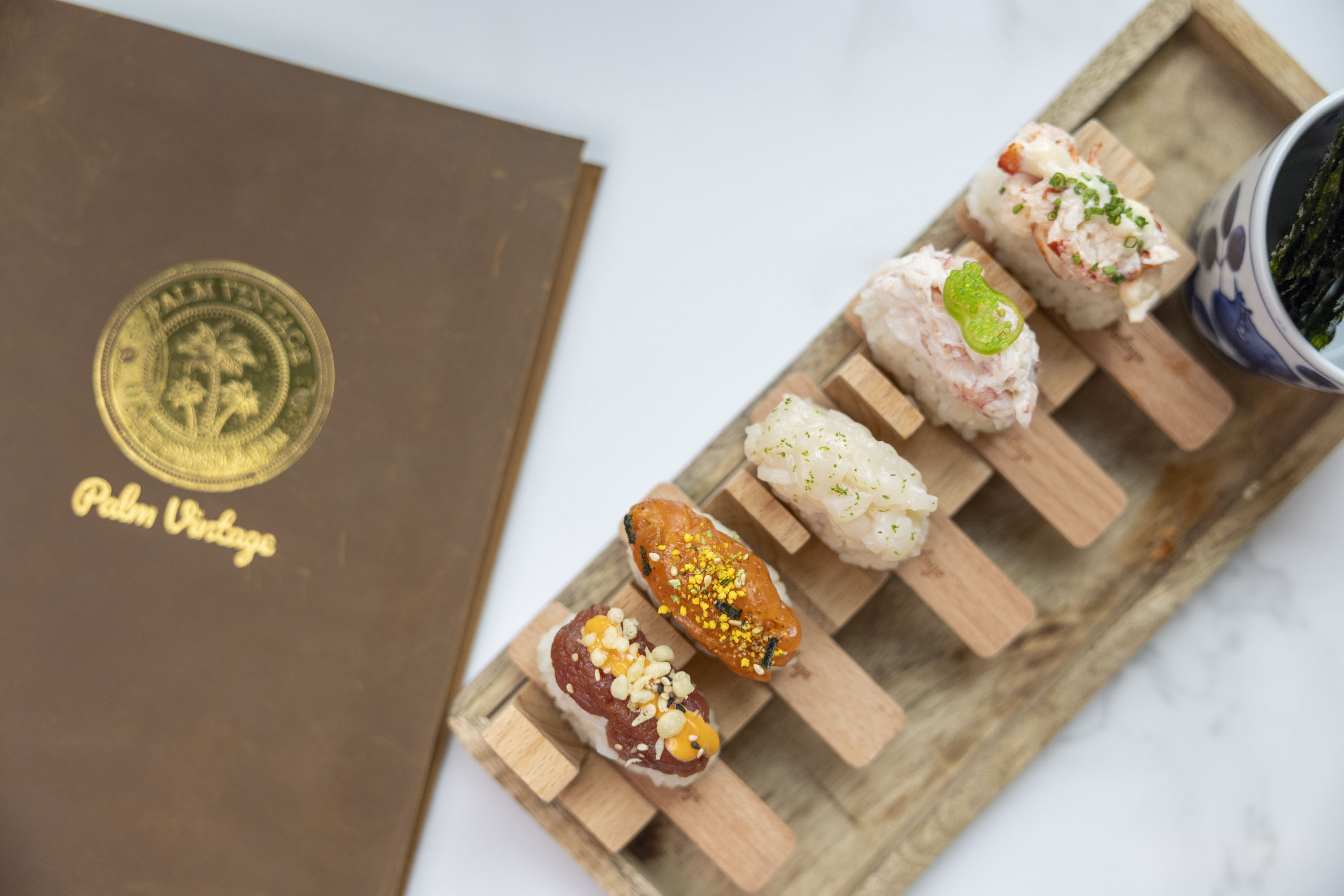
    Palm Vintage, located on the ground floor of the Ritz-Carlton Residences, contains two concepts within one space. During the day, it’s an airy, welcoming cafe that serves Lavazza espresso drinks, sandwiches, and bagels. For dinner, the space morphs into a cocktail lounge that serves sushi rolls and sashimi sets that rival some of Philly’s best sushi restaurants.

    Palm Vintage opened as a cafe in May and soft-opened dinner service last week, once it had obtained a liquor license. Its grand opening, which will highlight its evening offerings, is scheduled for Sept. 29. Until then, owner Houston Yang, 37, is tweaking the details of each dish and set.

    Owner Houston Yang, of Fishtown, poses for a portrait at Palm Vintage on Tuesday, Sept. 22, 2026, in Philadelphia.Tyger Williams / Staff Photographer

    The space’s name is meant to evoke Miami — where Yang loves to visit — and the old school, classic feel of its location.

    Palm Vintage does not have an omakase: The space can only accommodate one counter, and that is dedicated to the cafe-cocktail bar. But its menu reads like a high-end sushi restaurant’s. There’s a mini omakase for $65 and a “treasure of the sea” set for $99.

    The difference between sushi at Palm Vintage and, say, Oroshi, the nearby home of affordable omakase on Broad Street, is that at Palm Vintage, you receive all your pieces of nigiri and sashimi at once, rather than one by one.

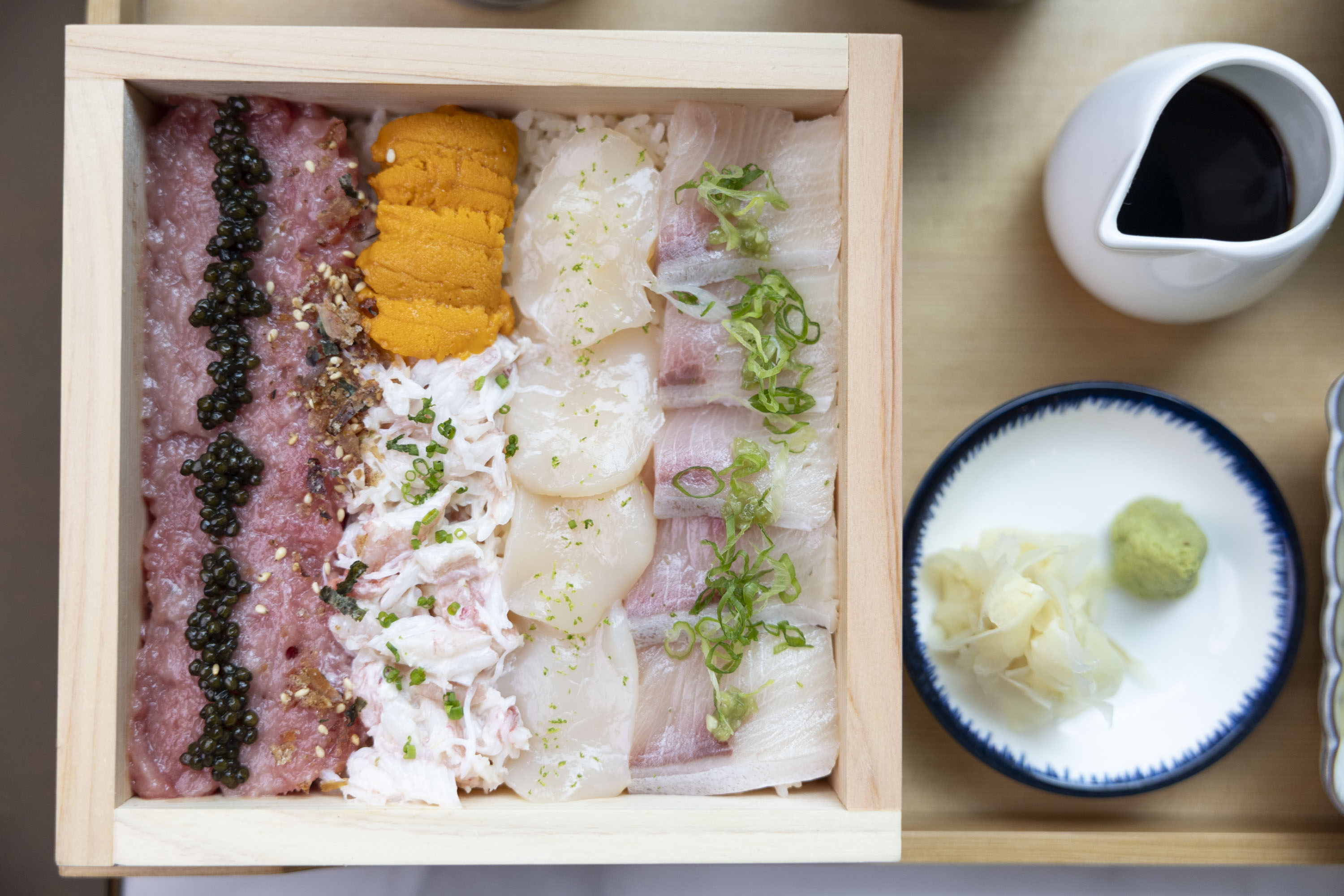
    The Hindi donburi set, which has toro, crab, scallop, yellowtail, oyster, caviar, and sushi rice at Palm Vintage.Tyger Williams / Staff Photographer

    The types of fish served are crowd-pleasers, like salmon, fatty tuna, uni, and hamachi. Both the fish sets and cocktails are frequently decorated with gold leaf and edible flowers, appealing to the Instagram set and setting Palm Vintage apart from other casual sushi restaurants in Philly, including the others owned by Yang.

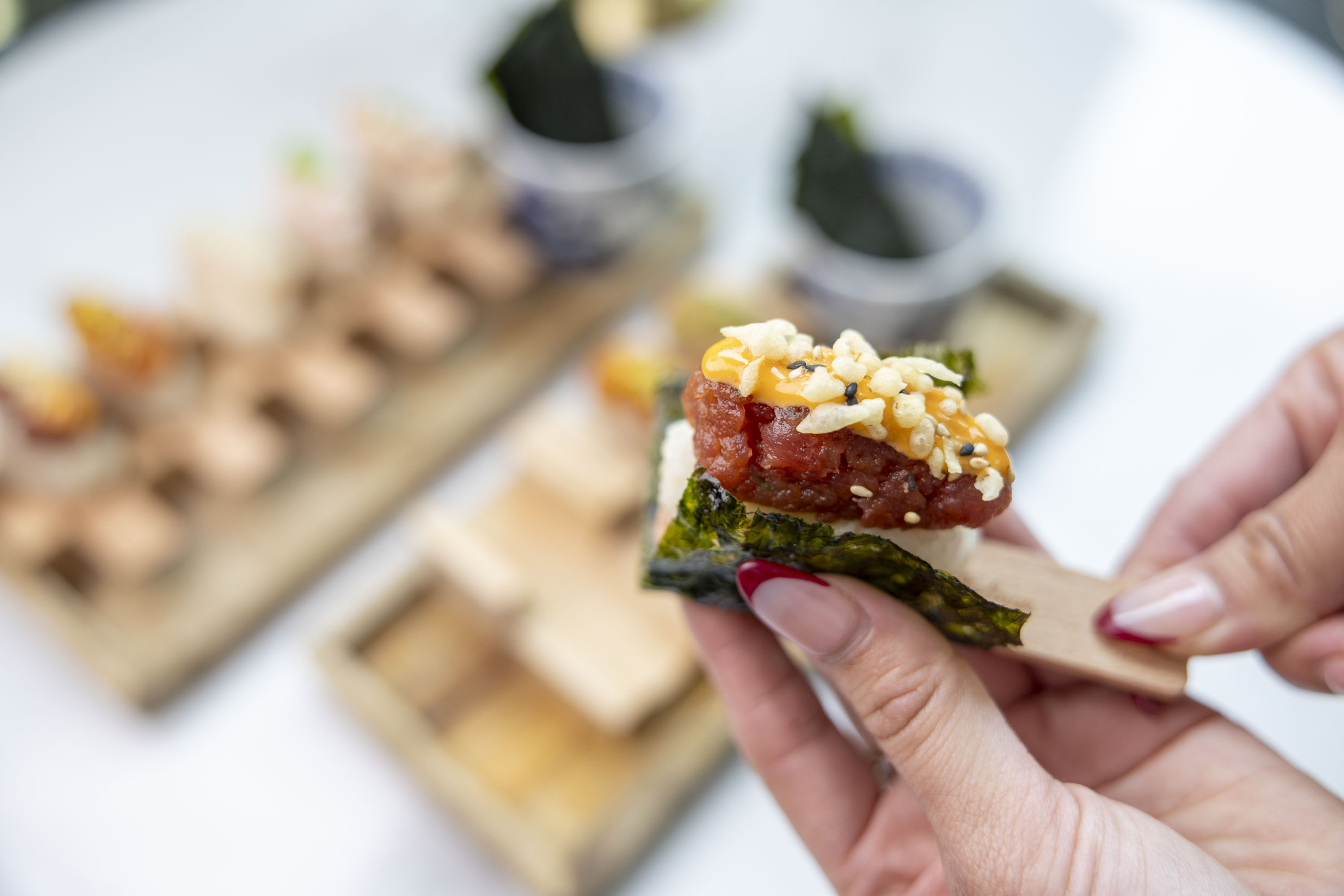
    The five-piece hand roll set with toro, salmon, sweet shrimp, lobster, and crab at Palm Vintage.Tyger Williams / Staff Photographer

    Yang is the entrepreneur behind Fuwa Teriyaki Grill and Fushimi, both located in the food court of the Shops at Liberty Place. Originally from Fuzhou, China, he moved to Philly as a child. Yang’s parents, who now help out at his food court sushi restaurants, owned a Chinese-American takeout restaurant in Delaware County that they sold a decade ago.

    Yang and his wife lived in the Ritz-Carlton residences between 2023 and 2025 and during that time, identified a need within the building for a spot that served healthy dinners but also cocktails. “My wife loves sushi,” he explained as one impetus behind Palm Vintage’s sushi-driven menu. “But she also loves drinking, so I had to open a bar along with a sushi place.”

    A toro hand roll from the five-piece hand roll set.Tyger Williams / Staff Photographer

    Yang was also inspired by how readily available fresh sushi can be in Japan. “Two years ago, I grabbed sushi at an airport in Japan and had it on a flight — it was so easy,” he said. This sparked the idea that high-end sushi could be a casual experience. For years, going out for sushi in Philly has meant either grabbing affordable takeout, or splashing out for an expensive omakase. More recently, the gap in between those options has shrunk significantly, with the openings of places like Oroshi, Yanaga Kappo Izakaya, and the upstairs of Kissho House.

    Palm Vintage took over the space that once belonged to Waterfront Deli and hired many of the former deli’s workers for their daytime cafe. This also means that they encounter the same regulars, many of them residents of the Ritz-Carlton Residences, on their morning coffee runs.

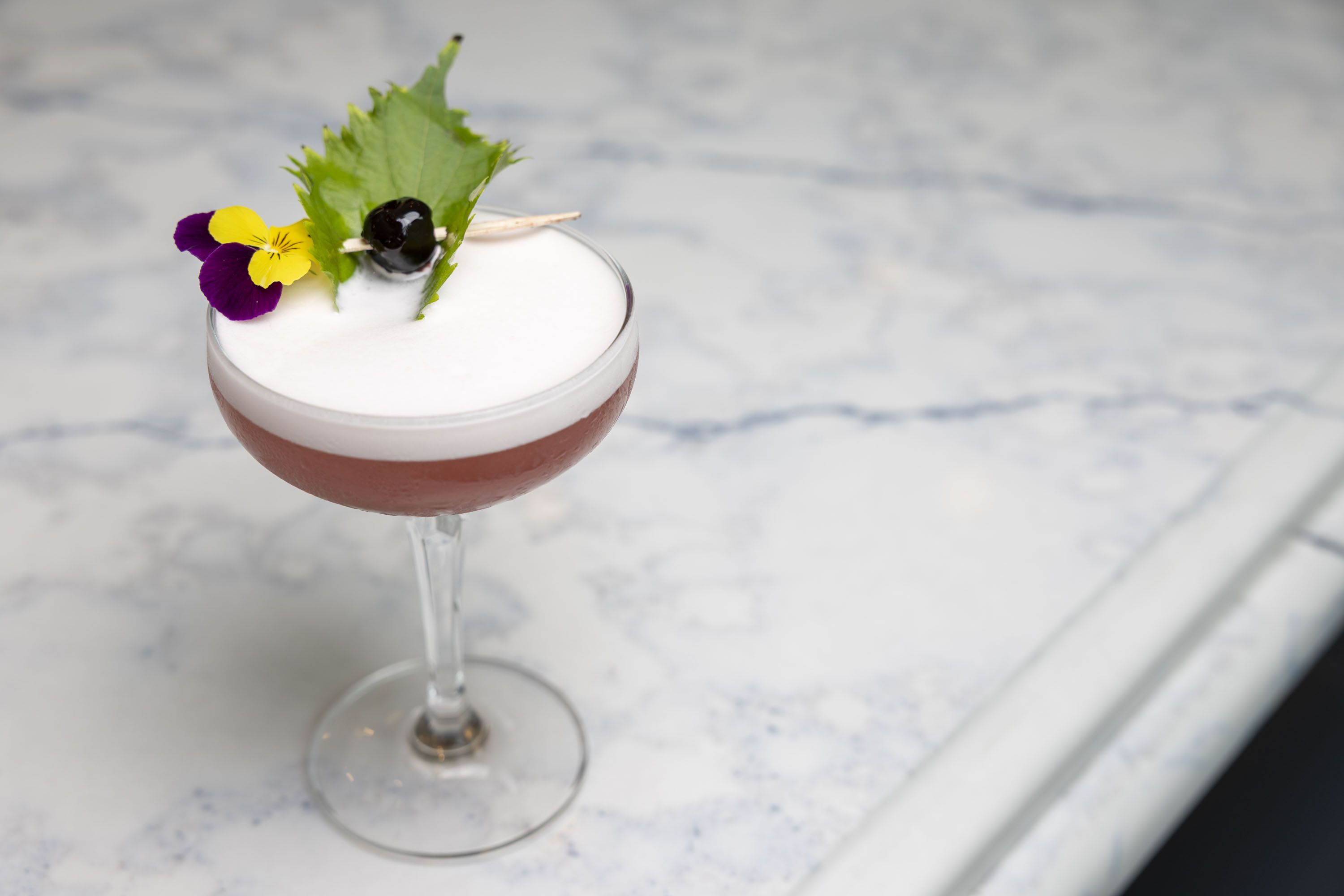
    The Shiso Blossom cocktail.Tyger Williams / Staff Photographer

    Palm Vintage’s craft cocktails are mellow and approachable and mostly within the $17 to $19 range. Like the sushi, they often are made of startlingly high-end ingredients, such as Hibiki Japanese whiskey.

    “It’s a place to get nice drinks, nice food, but that food just happens to be sushi,” said Yang.

    Palm Vintage is open every day from 8:30 a.m. to midnight. It operates as a cafe from 8:30 a.m. to 4 p.m. and the kitchen spends 4 to 5 p.m. flipping to sushi dinner service (the space remains open during this time). Dinner is served from 5 p.m. to midnight. Cocktails are served from 11 a.m. to midnight.

    Palm Vintage, 1414 S. Penn Square, 215-883-6690, thepalmvintage.com
  • This chef is making Philly’s most unique mooncakes

    This chef is making Philly’s most unique mooncakes

    Mooncakes often have a less-than-stellar reputation. They’re beautiful thanks to the intricate molds they’re made with, but they’re usually better to look at than eat. At the Mid-Autumn Festival, one of the four major Chinese holidays — which falls this year on Sept. 25 — people give and receive them much like fruitcakes at Christmas (without anyone actually eating them).

    One Philadelphia pastry chef is reversing mooncakes’ bad rap.

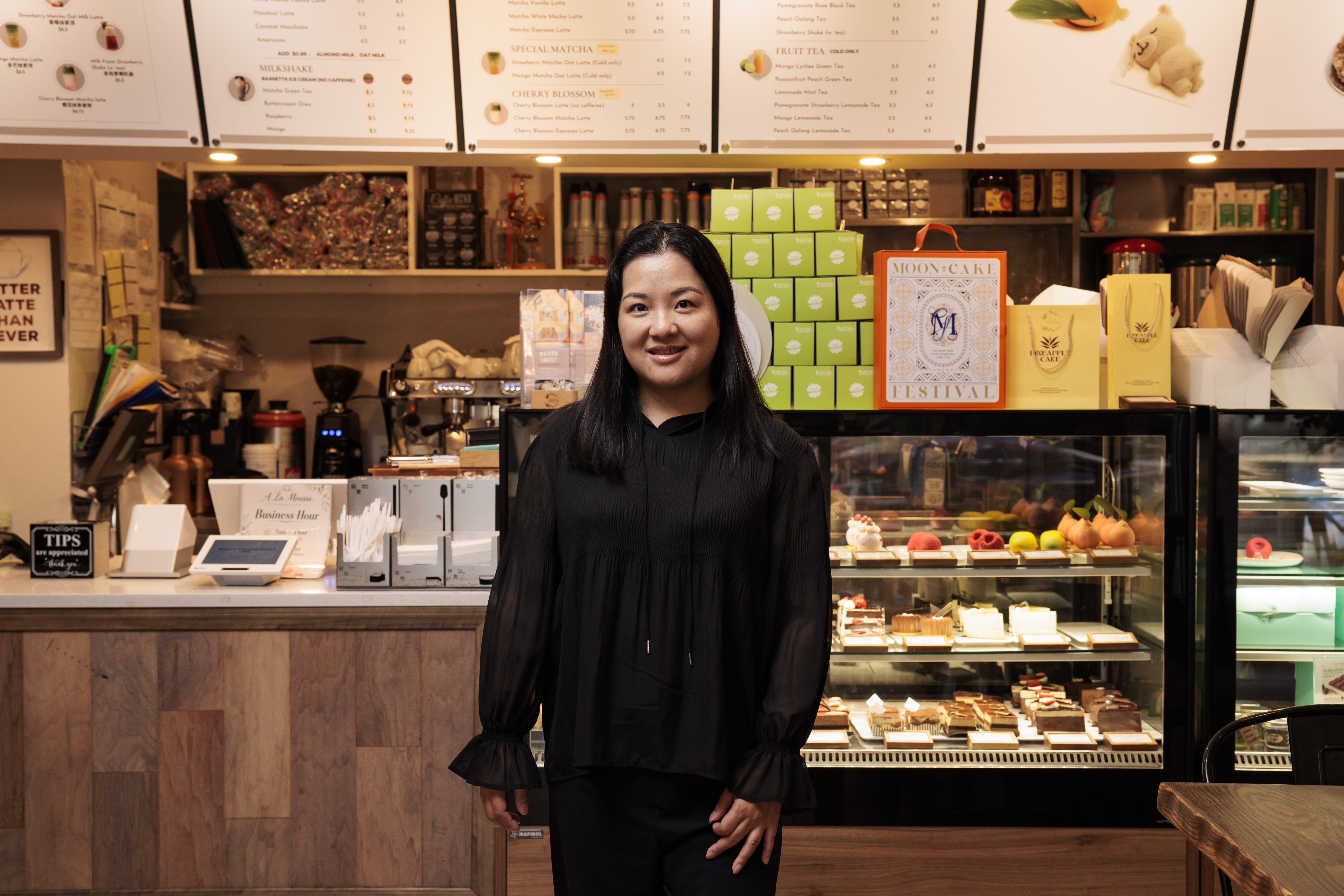
    Anna Chen posed for a portrait at A La Mousse on Tuesday, Sept. 15, 2026, in Philadelphia.Monica Herndon / Staff Photographer

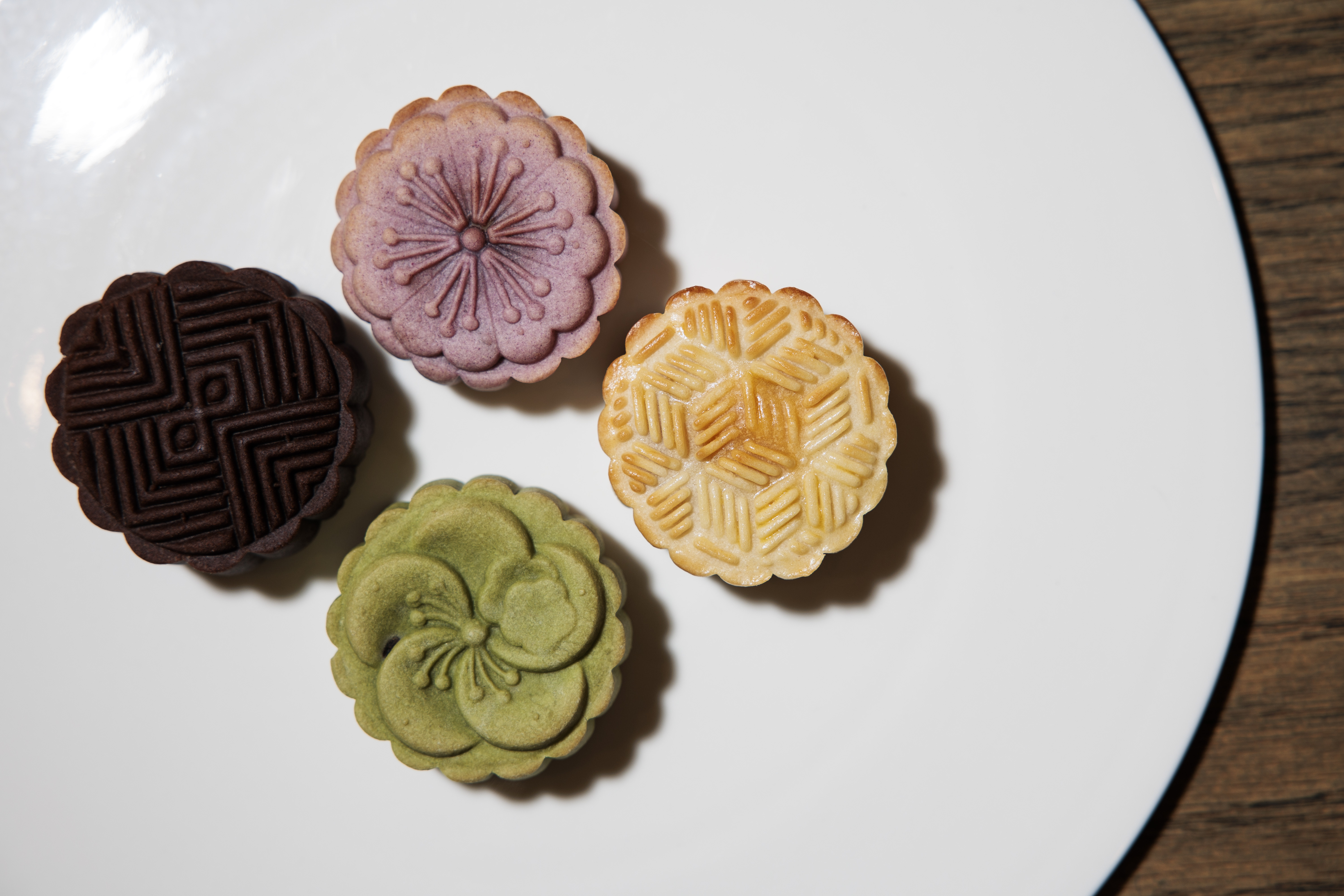
    Nobody in Philly is making mooncakes like Anna Chen, the owner of A La Mousse. While most Chinatown bakeries sell conventional versions — made from wheat flour, lacquered with egg wash, and stuffed with lotus bean paste and duck egg yolks — Chen’s are vibrantly colored and stuffed with a range of fillings that cross cultures and marry flavors. Think Oreo cookies with Hong Kong milk tea and Taiwanese pineapple cake with salted duck egg.
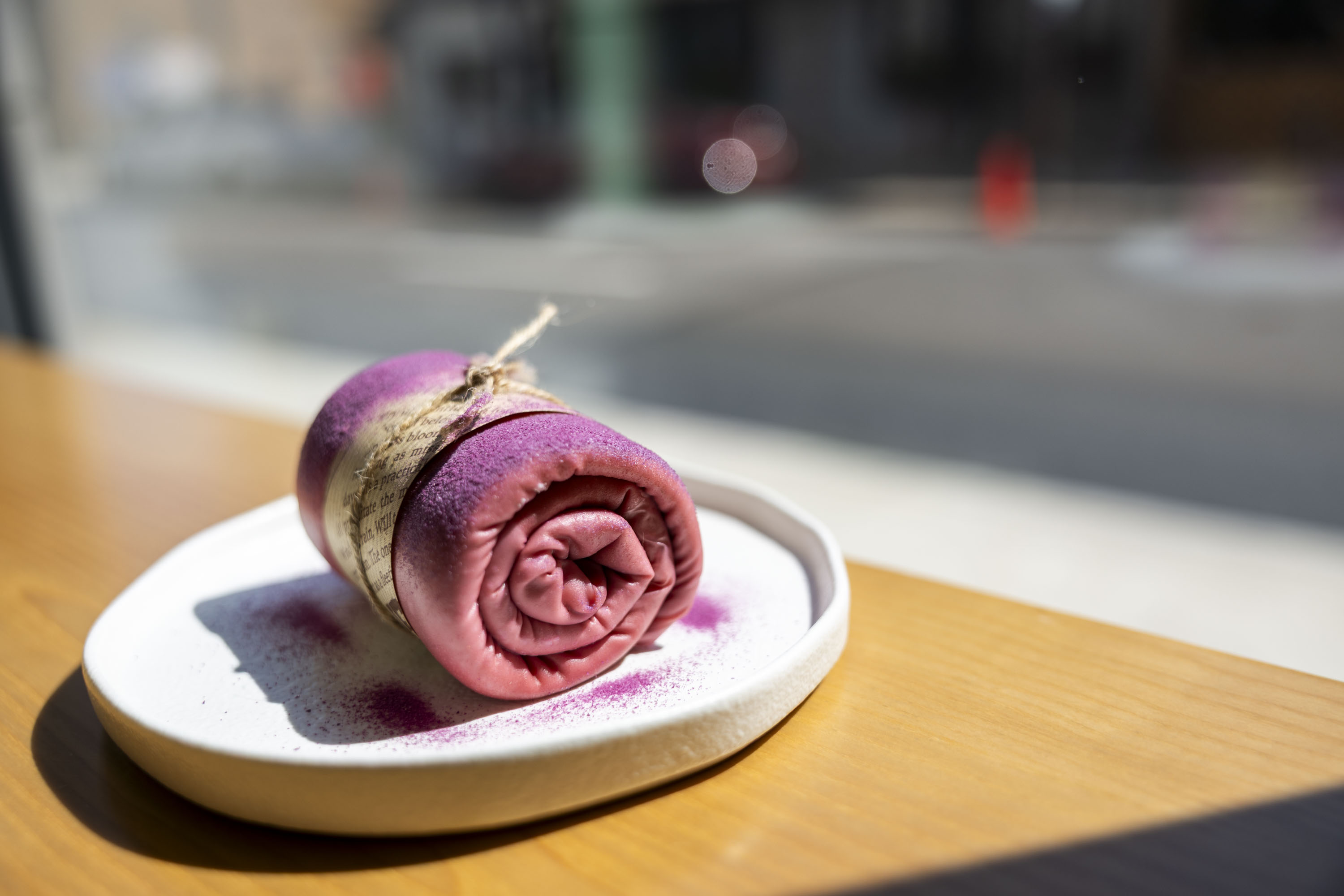
    Chen’s three bakeries — A La Mousse in Chinatown and Narberth, and Maison Sweet in University City — specialize in mousse cakes, but she and her staff prepare about 400 to 500 boxes of mooncakes every year before Mid-Autumn Festival.

    Chen’s approach aligns with an inventive, sometimes wacky strain of mooncake that has emerged in Asia in recent years, as mooncake makers abandon ultrasweet lotus- and winter melon-paste versions in favor of updated varieties stuffed with ice cream, matcha cream, and even beef. They sometimes also trade the traditional dough for flaky pastry or thin mochi skins (referred to as “snow skin”), which are more commonly made by Vietnamese pastry chefs.

    Chen takes inspiration from her travels around China, especially to cities like Shanghai and Guangzhou, as well as popular trends in Hong Kong, where she grew up and returns to visit every two years. “Every year we make different flavors, but we keep one or two mooncakes traditional, because that’s what people keep asking me for,” Chen said.
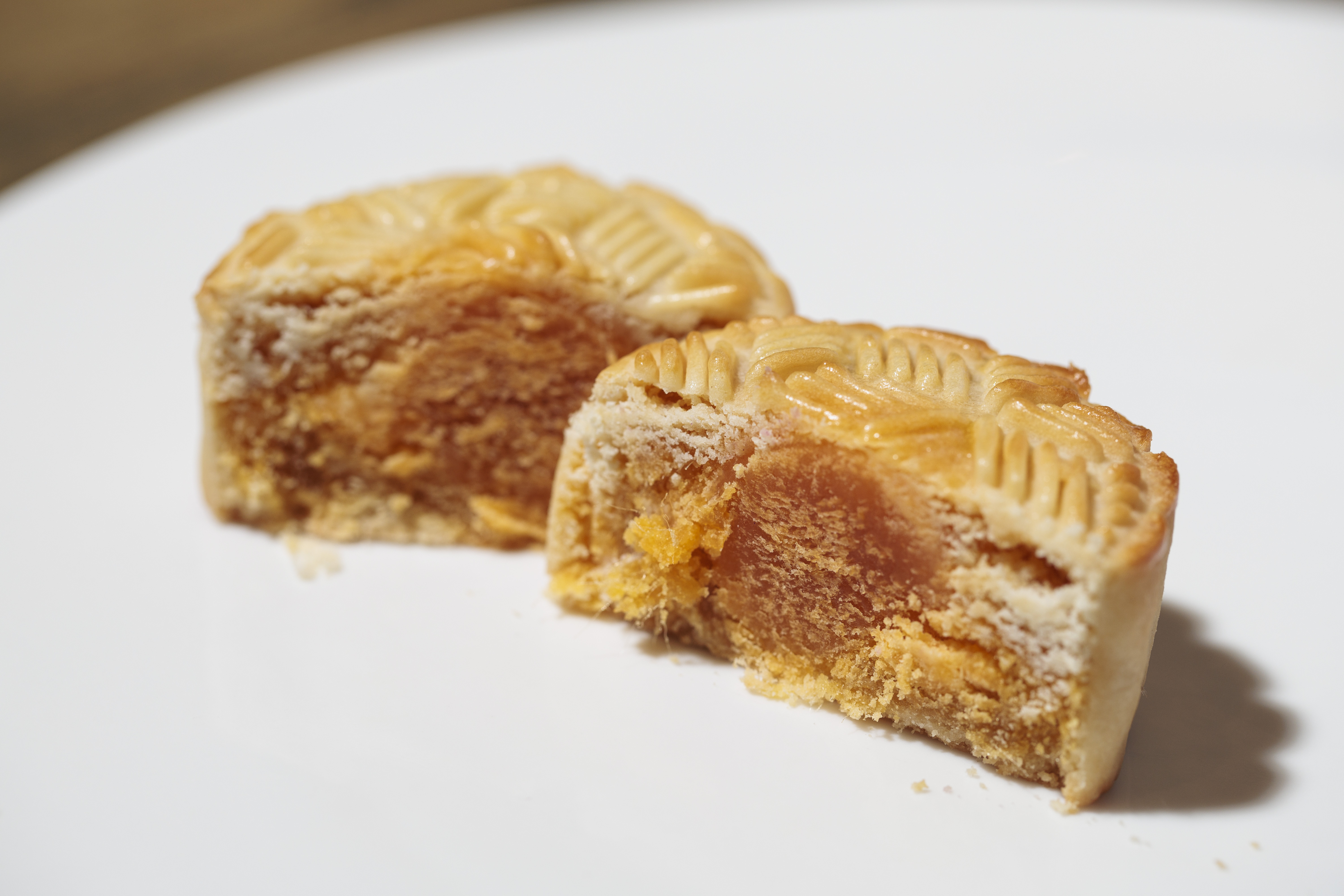
    The Mid-Autumn Festival salted egg yolk with pork floss mooncake at A La Mousse on Tuesday, Sept. 15, 2026 in Philadelphia.Monica Herndon / Staff Photographer

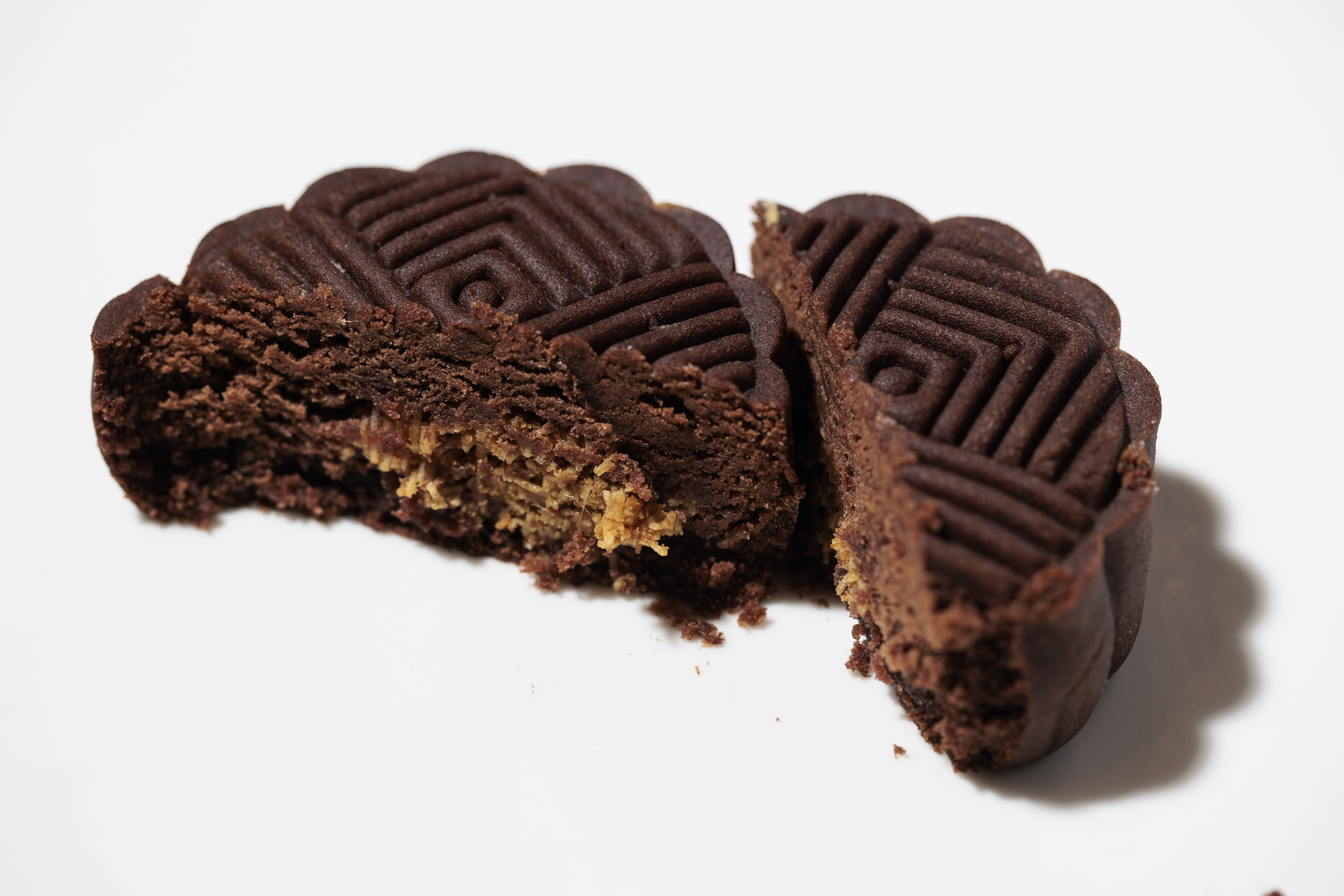
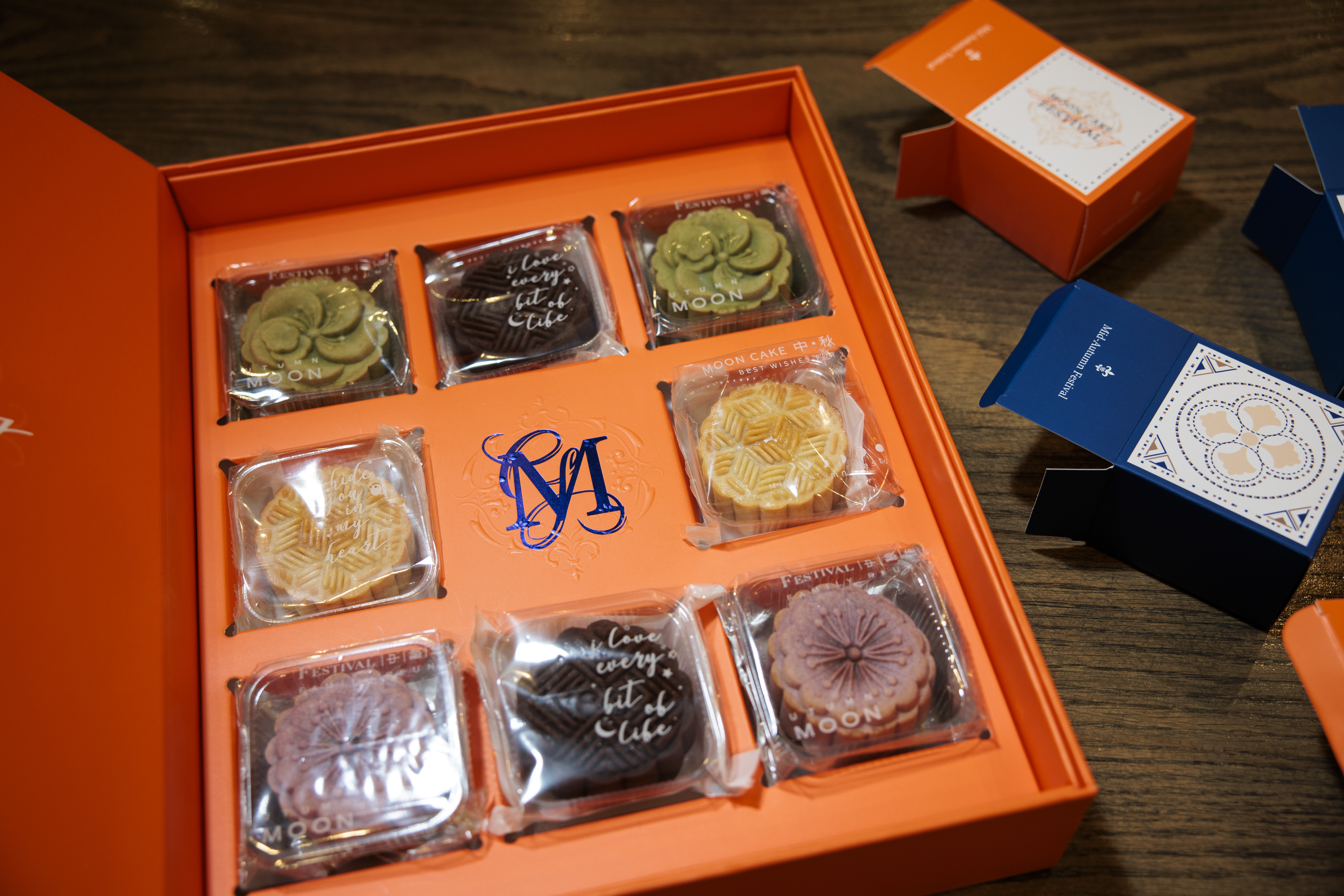
    This year, the traditional flavor is pork floss with salted egg yolk; hers is masterful, a delicate balance of savory and sweet — though none of her mooncakes are extremely sweet, in another departure from convention. The other flavors in this year’s box set of eight mooncakes, which sells for $65, include Dubai chocolate (Chen’s current favorite) and purple sweet potato with salted egg yolk.

    “We don’t want to follow anyone else’s style; we only want to create our own special mooncakes,” Chen said.

    The Mid-Autumn Festival Dubai chocolate mooncake at A La Mousse on Tuesday, Sept. 15, 2026 in Philadelphia.Monica Herndon / Staff Photographer

    Chen starts preparing for the season in early August, ordering items like mooncake sugar syrup (also known as golden invert sugar syrup), flowery molds, and specially designed mooncake packaging from China. Then, in September, she and her pastry chefs — along with daughter Joanne, a student at Drexel — get to work, rolling fillings into balls and stuffing them into rice flour-based skins before pressing them into molds.

    Chen, who opened Chinatown’s A La Mousse 13 years ago, has longtime customers who often order 30 to 40 boxes to give as gifts.

    Even as her creations are trend-driven, she does stick to one tradition: embedding whole egg yolks in most of her mooncakes. The yolks represent the full moon, one of the most important emblems of the Mid-Autumn Festival, symbolizing family reunions and the idea of wholeness.

    The Mid-Autumn Festival mooncakes at A La Mousse on Tuesday, Sept. 15, 2026 in Philadelphia.Monica Herndon / Staff Photographer

    Anna Chen’s mooncakes are available for pickup and must be preordered two to three days in advance via a Google form at bit.ly/4iwdZwu/..

    A La Mousse, 145 N. 11th St., 215-238-9100; A La Mousse, 920 Montgomery Ave., Narberth, 610-664-6888; Maison Sweet, 2930 Chestnut St., 215-387-1388, instagram.com/alamousse

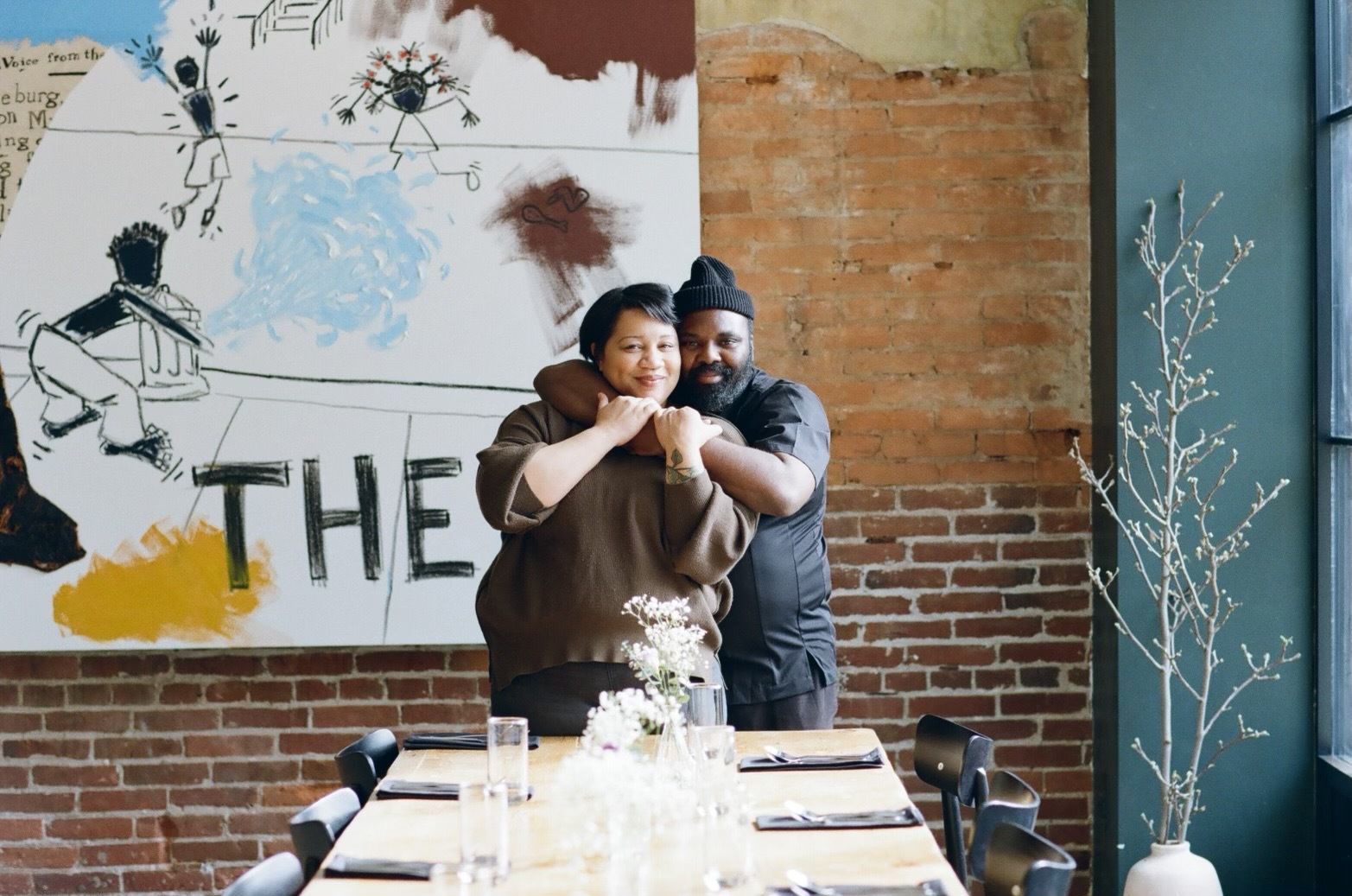
  • Honeysuckle’s Omar Tate and Cybille St.Aude-Tate named best new chefs by Food & Wine

    Honeysuckle’s Omar Tate and Cybille St.Aude-Tate named best new chefs by Food & Wine

    Honeysuckle chef-owners Omar Tate and Cybille St.Aude-Tate have been named to Food & Wine’s annual Best New Chefs class, joining a prestigious list of Philadelphia talent who’ve shared the designation over the past 37 years.

    Though the Food & Wine list recognizes “rising talent at a pivotal moment in their careers,” the Tates have been lauded in Philly’s food scene for years.

    The couple have transformed Honeysuckle many times over the years; each iteration of the project has met significant acclaim. It started in New York City as a pop-up in 2017, then became a residency at Blue Hill at Stone Barns, followed by a brick-and-mortar provisions store and supper club in West Philly. In its current life, it’s a sprawling restaurant whose bar program and tasting menu Inquirer critic Craig LaBan has called “thought-provoking, original — and totally delicious.”

    The Tates are artists and storytellers — identities that are integrated in their roles as chefs and restaurateurs. In every iteration of Honeysuckle, they have celebrated the culture and foods of the Black American diaspora.

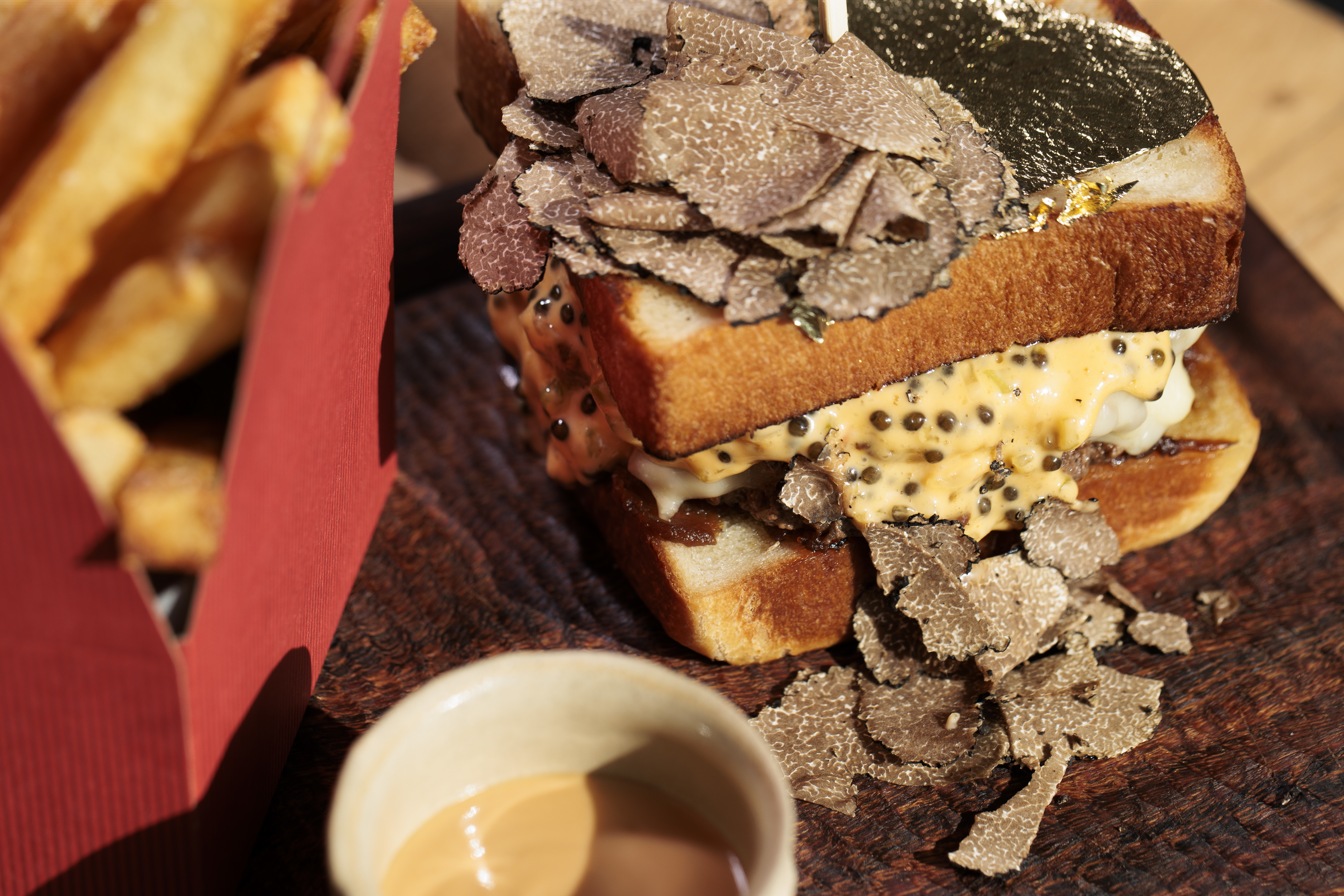
    Editorial director Melanie Hansche was particularly wowed by Honeysuckle’s McDonald’s Money burger: “As dinner unfolds, the couple show that they are wizards of surprise and delight,” Hansche writes. “Nowhere is that more evident than the McDonald’s Money burger, a ridiculous sandwich layered on slices of toasted shokupan, oozing with Cooper Sharp cheese, malt vinegar onions, and caviar remoulade, showered in gold leaf and shaved black truffles. It’s tangy, salty, sweet, and earthy and possibly the very best burger you’ll ever eat.”

    The McDonald’s Money burger at Honeysuckle on Thursday, June 26, 2025 in Philadelphia.Monica Herndon / Staff Photographer

    The Tates are among 14 chefs from 10 restaurants across the country to make this year’s list. They arrived in New York on Monday to participate in programming around Best New Chefs, including panel discussions, a luncheon with other alumni, and a mentorship workshop. The awards ceremony is scheduled for Tuesday night. They’ll be back in Philly on Wednesday, in time for dinner service at Honeysuckle.

    They learned they had made the list back in March. “We’ve had to keep this secret for a long time,” said St.Aude-Tate. “And this win feels different. We’ve both been in the industry for a really long time but this puts us on a national stage in a different way.”

    The Tates join a long roster of Philadelphia chefs named to Food & Wine Best New Chefs, including Susanna Foo (1989), Marc Vetri (1999), Jim Burke (2008), Eli Kulp (2014), Emily Riddell (2022), and Amanda Shulman (2023), to name a handful.

    St.Aude-Tate grew up reading Food & Wine and looking up to other chefs who had been named Best New Chefs by the magazine. “I used them as barometers as who to look up to in the industry,” she said.

    Honeysuckle has been racking up consistent awards since its ambitious opening on North Broad in April 2025. Last month, it was named to Bon Appétit’s Best New Restaurants list (along with Sao, which is owned and operated by fellow Food & Wine Best New Chef alum Phila Lorn). The Tates were also named as James Beard Awards finalists in the Best Chef: Mid-Atlantic category earlier this year (they were semifinalists in 2024). Honeysuckle also appeared on The Inquirer’s 2025 edition of The 76.

    “After our first Beard nomination, we didn’t know what to expect and we got slammed at the restaurant. It was crazy. We fell on our faces. There was no coaching on what to expect,” said St.Aude-Tate, adding that the mentorship and coaching provided by Food & Wine even before the awards were officially announced are what set the Best New Chefs program apart from other awards-granting institutions. “We talked to other people who had been in this position to understand how to navigate this moment,” she said.

    St.Aude-Tate hopes to apply those lessons to her own business. “But we are most excited about being able to scream from the rooftops about what we’re doing,” said St.Aude-Tate.

  • South Philly is celebrating chiles en nogada season, but not for long

    South Philly is celebrating chiles en nogada season, but not for long

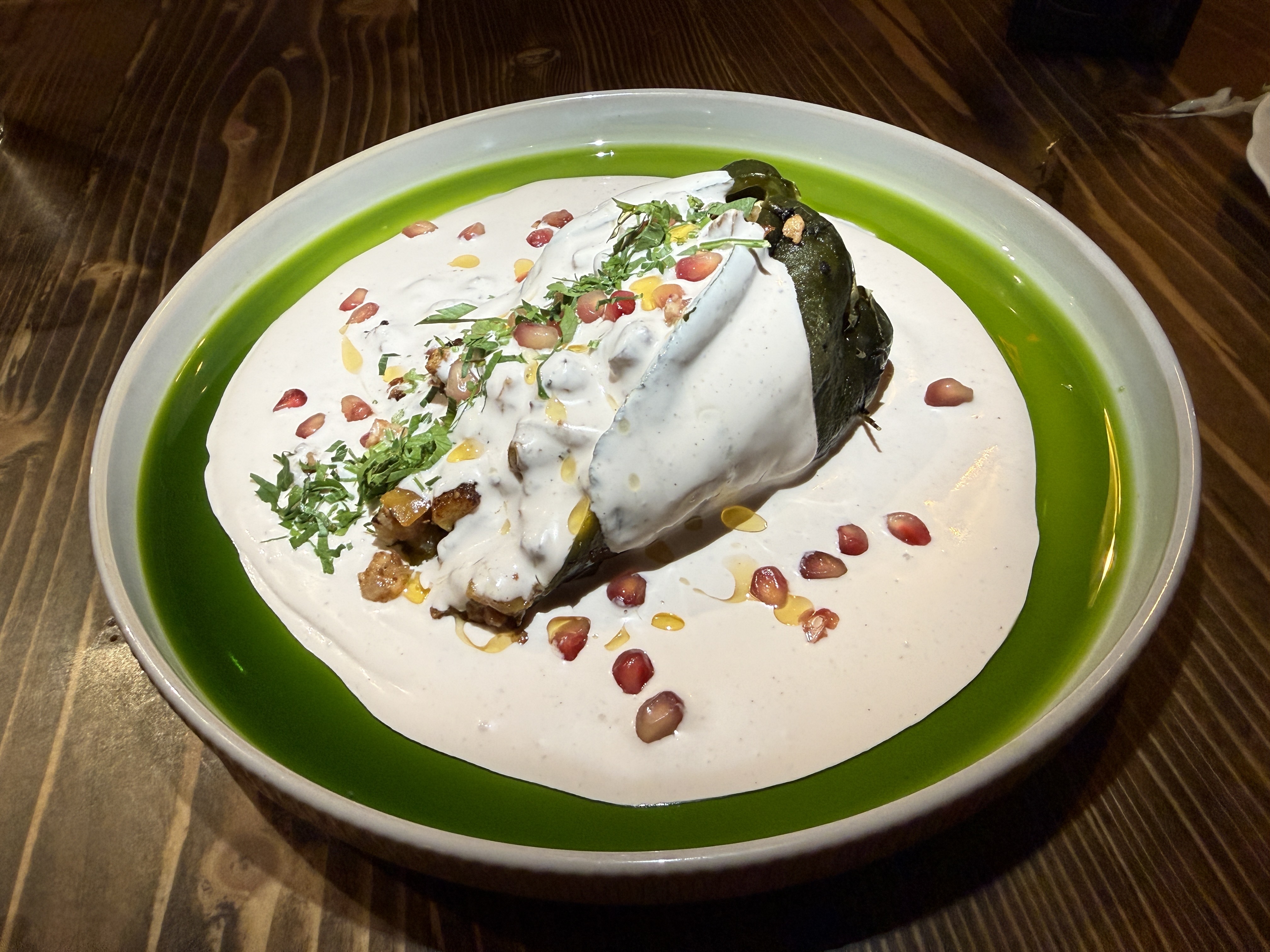
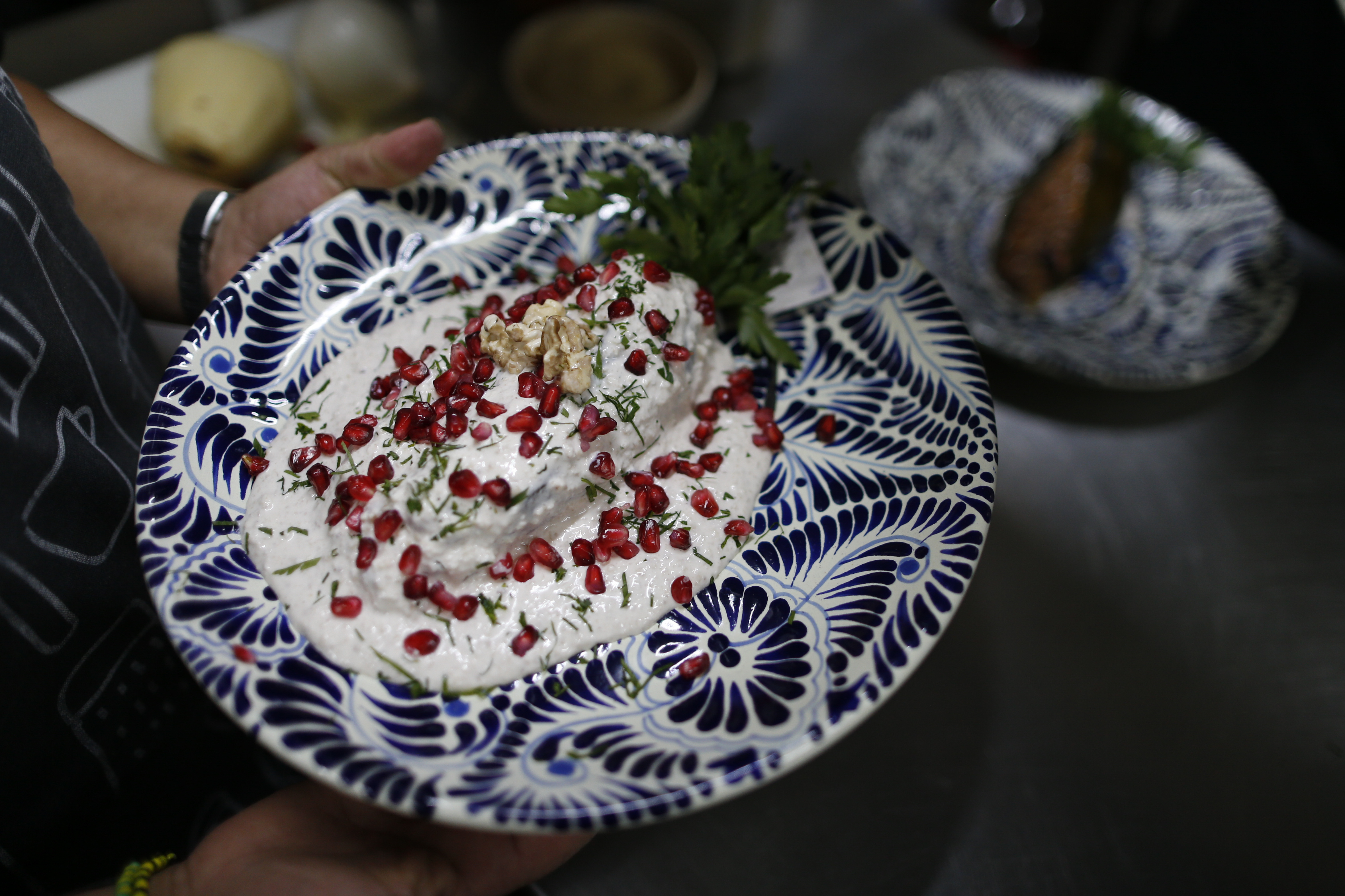
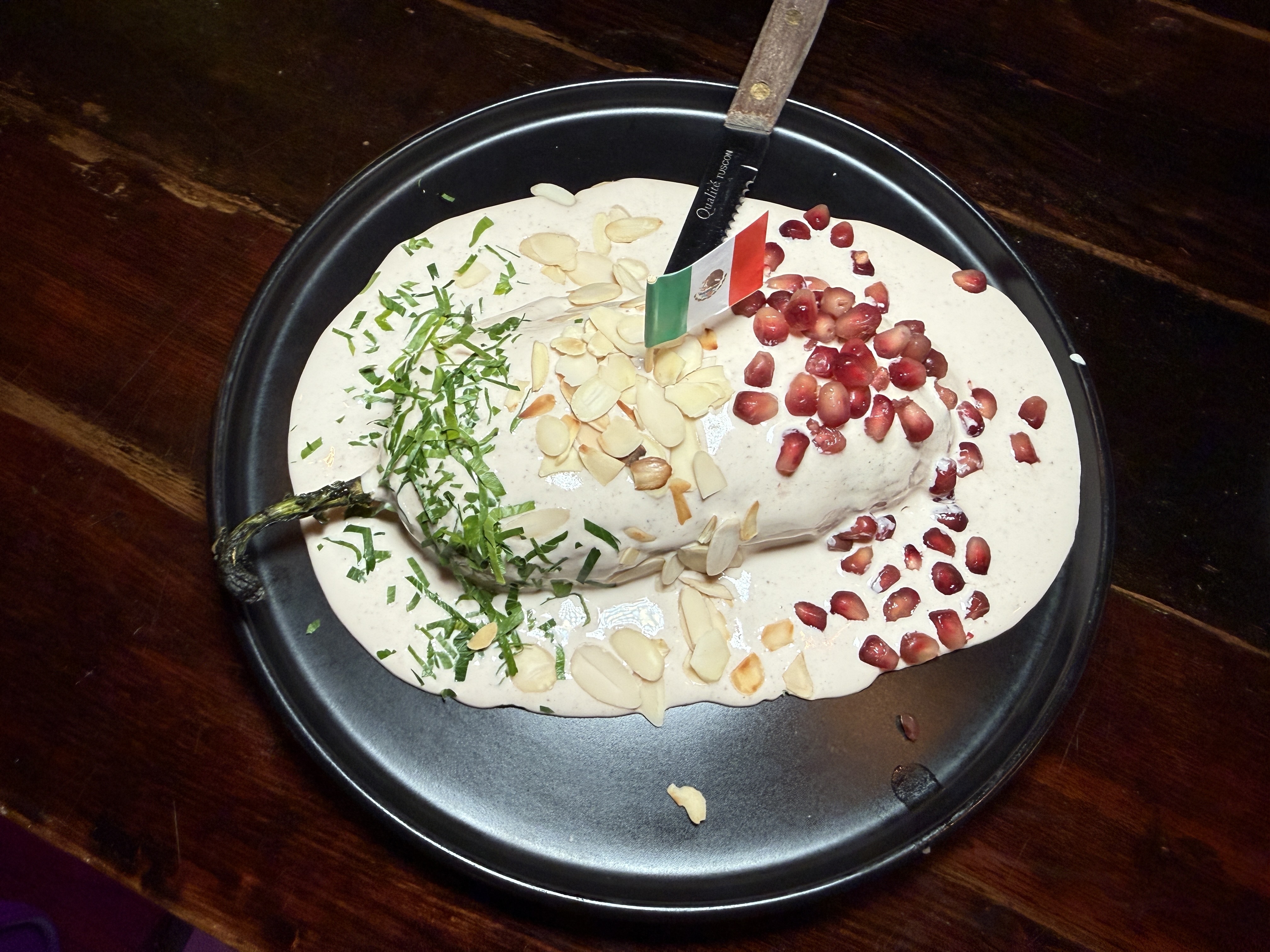
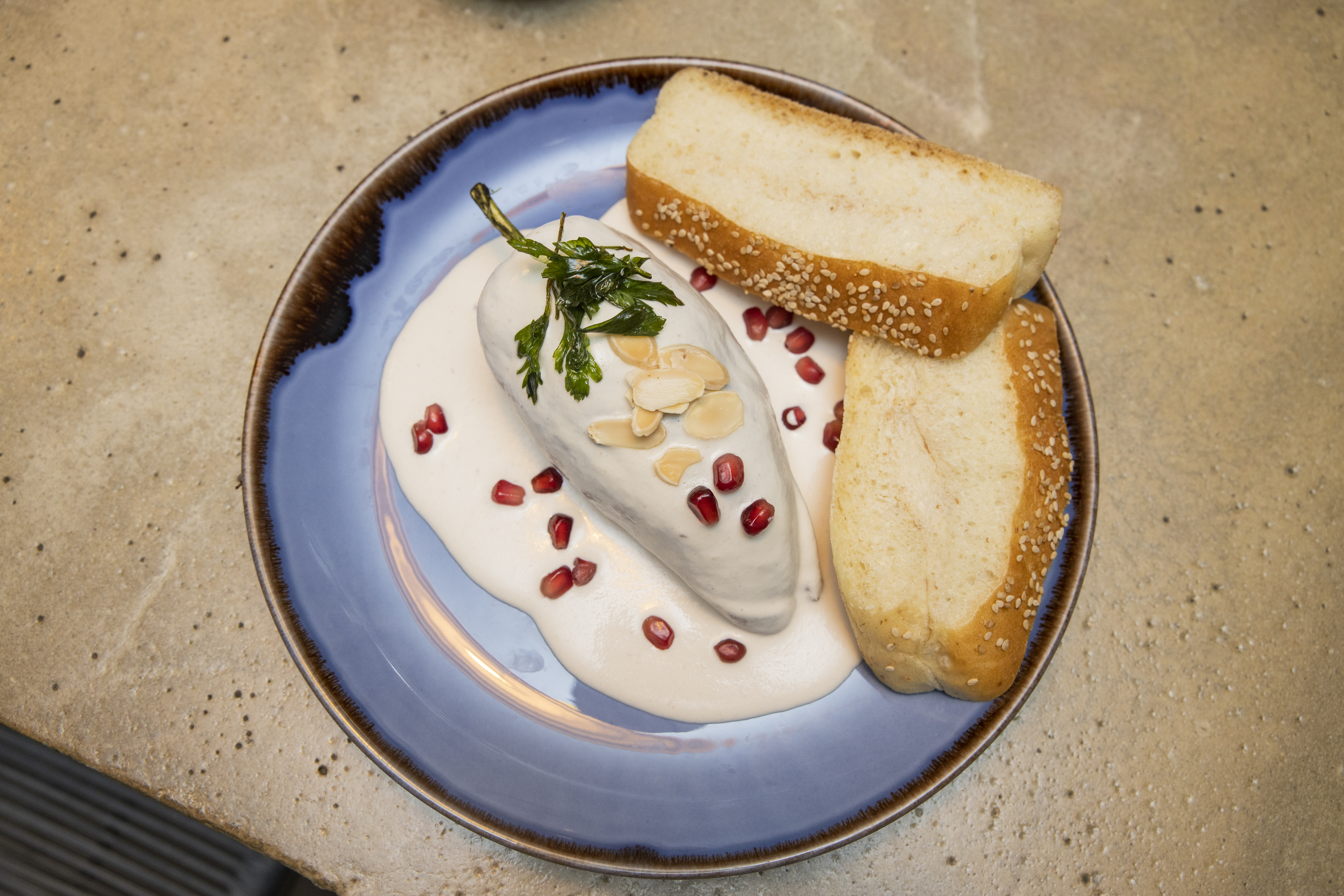
    Chiles en nogada, no matter who makes them, are visually arresting dishes. They’re distinctive for their colors: a base of a deep green poblano pepper, a blanket of creamy white walnut sauce (the titular nogada), traditional pops of red from fresh pomegranate seeds, and a sprinkling of more green from parsley. These components represent the colors of the Mexican flag. The poblano is stuffed with picadillo, a mix of ground meats and fruits that marry savory and sweet flavors and can often be time-consuming to prepare.

    Chiles en nogada season is fleeting, lasting just two to six weeks in late August and early September, when the dish’s main ingredients — poblanos and walnuts — are aligned and in season, along with the apples and peaches that are also at peak ripeness in Puebla, where the dish originated.

    In Mexico, chiles en nogada has become a national dish, treated with great reverence and ceremony. At fine-dining establishments in Mexico City, diners can select which poblano they’d like stuffed, just as one might select a fish from a tank to be cooked. But you don’t have to go to Mexico to eat it — there are several excellent versions found in Philadelphia.

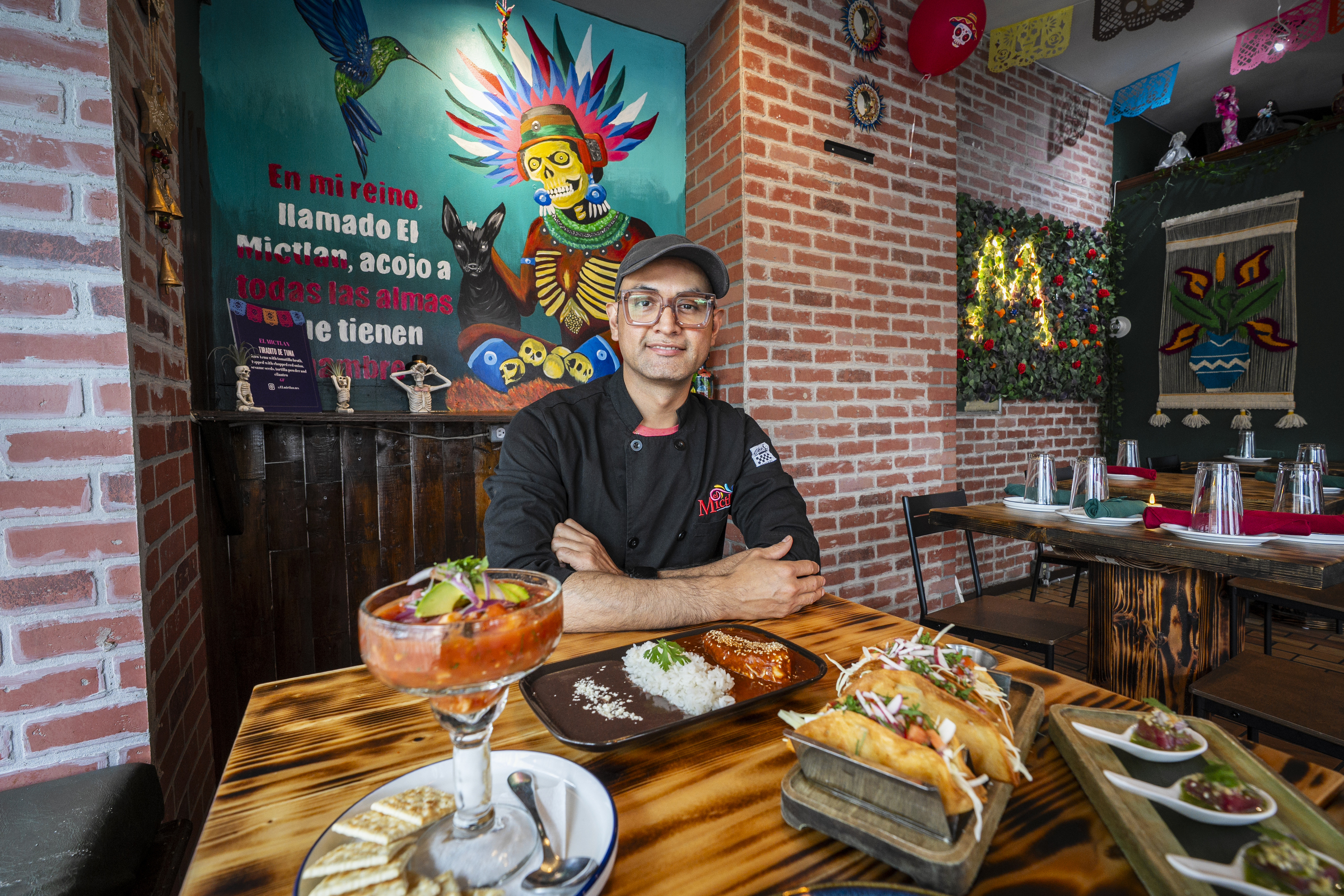
    Chelo Manzanarez, chef and owner at El Mictlan, where the menu brings a taste of Guerrero and Acapulco to South Philly.Jessica Griffin / Staff Photographer

    Chelo Manzanarez, the chef and owner of El Mictlan, which generally focuses on the food of Guerrero (the Mexican state located southwest of Puebla), has worked to make this fundamental Mexican dish his own.

    “It’s usually a sweet and heavy dish, but I’ve tried to make it more flavorful and more personal,” Manzanarez said of the chile en nogada at his South Philly BYOB at Beechwood and Snyder Streets.

    Manzanarez switched out beef in favor of a mix of pork and chicken, and he swapped raisins for dried dates. He seasons the picadillo with cinnamon, clove, and anise. He uses both green and red apples, “to get that contrast between sweet and sour.” He adds plantains and pineapples “for their tropical flavor.”

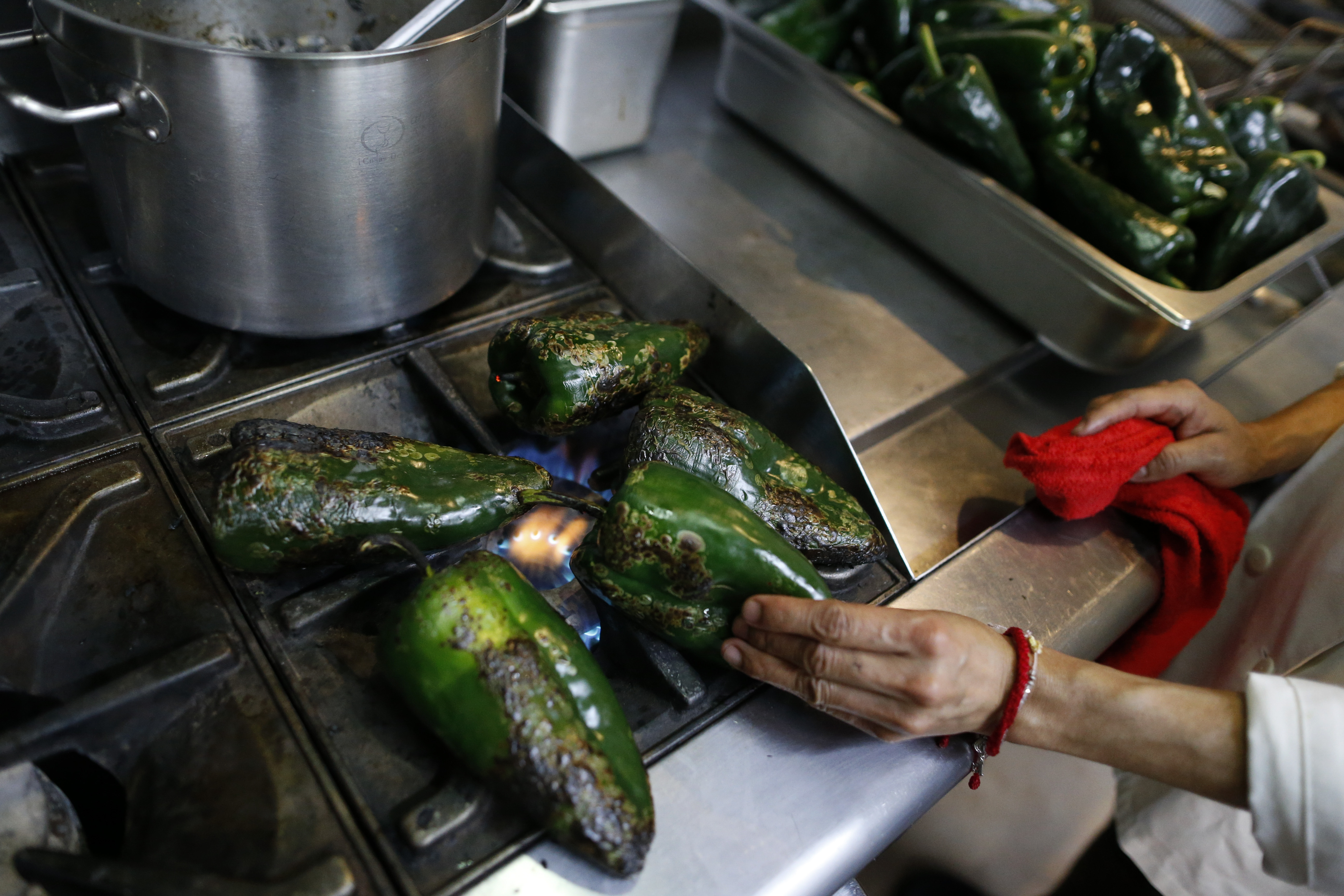
    Making his chile en nogada is truly a labor of love for Manzanarez. “I cook each fruit and vegetable individually and caramelize them separately. Most of the work comes from dicing everything very small.” After mixing all cooked components together for the filling, he still has to roast the peppers, which he does for three to four minutes on each side before letting them sweat in a plastic bag, making it easier to remove their skins. “It’s complicated — getting the poblanos to the right consistency so that they don’t lose their shape,” he said.

    For the white of the Mexican flag, Manzanarez eschews the traditional goat cheese, instead mixing cream cheese with queso fresco, walnuts, almonds, and a touch of milk. The result is creamy, luxurious, and not too rich.

    A plate of chiles en nogada at Testal restaurant in downtown Mexico City.Rebecca Blackwell

    Manzanarez finishes his chile en nogada with bright cilantro oil and red chili oil, doubling down on the colors as a deeper tribute to the Mexican flag.

    He first came up with his recipe while working at La Llorona, also in South Philly. It’s a dish customers ask for every year.

    A cook roasts poblano peppers on the stovetop in preparation for removing the skin, as kitchen staff make chiles en nogada at the Testal restaurant in downtown Mexico City in 2019. Rebecca Blackwell

    Restaurants traditionally stop serving chiles en nogada after Mexican Independence Day, on Sept. 16. “But now we celebrate Independence Day for the whole of September,” said Manzanarez, which is how long he plans on serving it at El Mictlan.

    More traditional iterations of the dish can also be found at La Llorona and El Chingon (usually only available at dinner).

    La Llorona serves a richer but very classic version with the roasted poblano battered in egg whites and gently sautéed before being blanketed in an especially rich and dense nogada. The pepper is stuffed with ground beef and pork, peaches, and apples. Its parsley, sliced almond, and pomegranate seed garnishes replicate the stripes of the Mexican flag precisely.

    The chile en nogada at La Llorona is stuffed with beef and pork and lightly battered in egg whites before being blanketed in nogada sauce.Kiki Aranita / Staff /

    The availability of chef Carlos Aparicio of El Chingon’s chile en nogada ($30) is entirely dependent on the fresh walnuts he flies in, one kilogram weekly, from his hometown of San Mateo Ozolco, located in the Calpan municipality of Puebla — the same municipality where, according to legend, chiles en nogada were first invented by Augustinian nuns. They created the dish in 1821 in honor of General Agustín de Iturbide, after he signed the treaty that recognized Mexico’s independence from Spain. He became the first emperor of Mexico, and the dish represents the colors of what was then the Mexican Army’s flag.

    The chile en nogada at El Chingon uses fresh walnuts flown in weekly from Puebla when they are in season.NaylaPolohovich

    “This year, [Puebla] had a lot of rain so the walnuts fell off the trees too soon,” said Aparicio. “They really have to be fresh, and we can’t preserve them. As soon as they get here, we wash and clean them and put them in milk immediately.” After their milk bath, the walnuts get mixed with goat cheese, cream cheese, cinnamon, and sugar.

    Aparicio’s chile en nogada is stuffed with beef, pork, and fruits, and garnished sparingly. Hewing to tradition, Aparicio’s serves it at room temperature.

    Aparicio is hoping that this year he will receive at least one or two more shipments of walnuts, which means he can serve chiles en nogada for one or two more weeks. (El Chingon sells about 12 to 15 per day when it is available.)

    Chiles en nogada season brings out the competitive nature in chefs and customers. “People will try to get every different chile en nogada in Philadelphia, make comparisons and [argue] about which one is the best,” said Manzanarez.

    You have one, maybe two weeks left to decide for yourself.

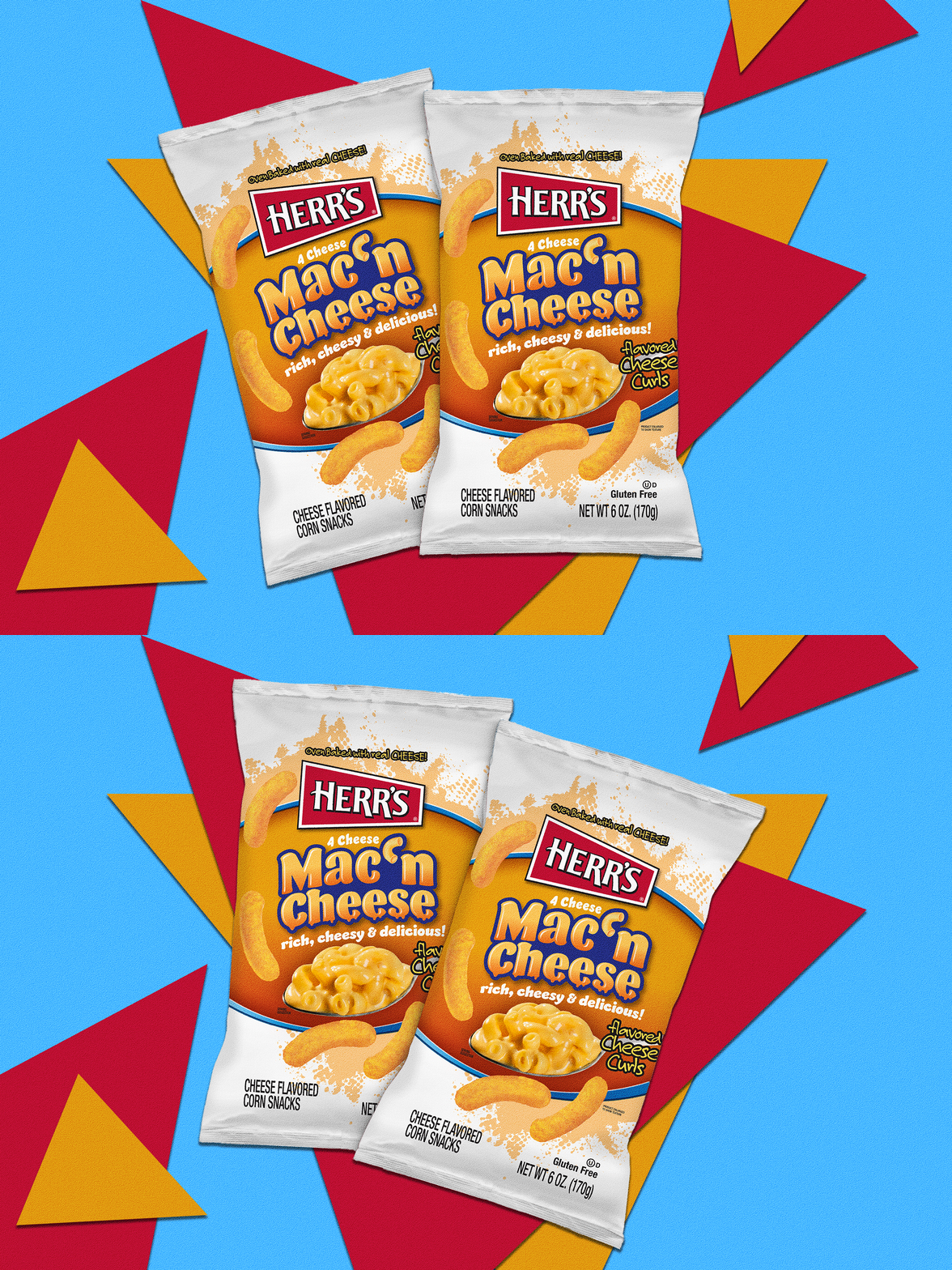
  • The new Herr’s mac ‘n cheese-flavored curls are not safe around me

    The new Herr’s mac ‘n cheese-flavored curls are not safe around me

    When the new Herr’s four cheese mac ‘n cheese curls first landed on my doorstep, I was skeptical. The last round of snacks Herr’s sent me found few fans in The Inquirer’s newsroom and left a range of Philly chefs scratching their heads. Would I be subjecting my colleagues once more to snacks that were more or less just fine?

    The answer was no. Because I did not share. The package was sent to me right before Labor Day weekend, which gave me too many days alone with the cheese curls for there to be any left to bring to the office.

    To my colleagues, I am sorry.

    These snacks have achieved what no other puffed cheese curl (including those peddled by a famous cheetah) has. They are incredibly cheesy, with lingering umami, thanks to the MSG in the ingredient list. They taste exceptionally rich, with a delightful bit of funk from actual blue cheese, noted in the nutrition facts label, but not in the snack’s branding.

    While mac ‘n cheese may not be the first inspiration that comes to mind, I get where Herr’s going. There’s a curious meltiness that comes from the curls’ blend of creamy and sharp cheeses: Parmesan, mozzarella, cheddar, and Romano.

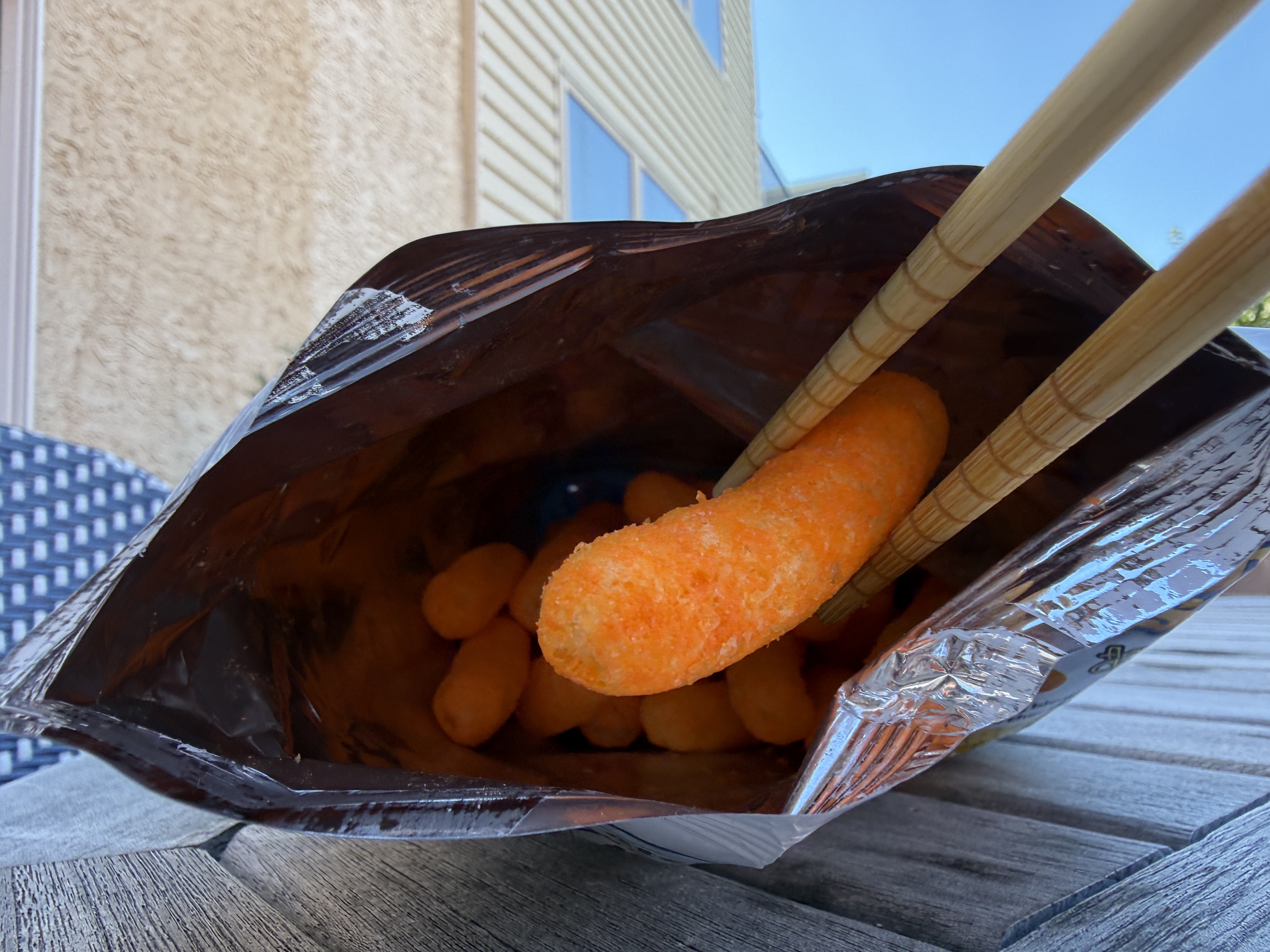
    The new Herr’s mac ‘n cheese curls are long rather than curly. Consuming them with chopsticks will prevent your fingers from turning orange.Kiki Aranita / staff /

    Texturally, they are similar to Cheetos puffs, but shape-wise, they are more elongated, with actually very little curl.

    They launched last week and are a permanent addition to Herr’s lineup of snacks. Herr’s first debuted their original cheese curls in 1976 and has introduced a few other flavored cheese curls in the last 50 years, including Old Bay-seasoned cheese curls and Stubb’s Sticky Sweet Bar-B-Q cheese curls.

    The curls come in a range of sizes, from a .875-ounce concession bag, to a family-size 7.5-ounces bag. You will want to buy more than one if you have anything like the same need for cheese that I do.

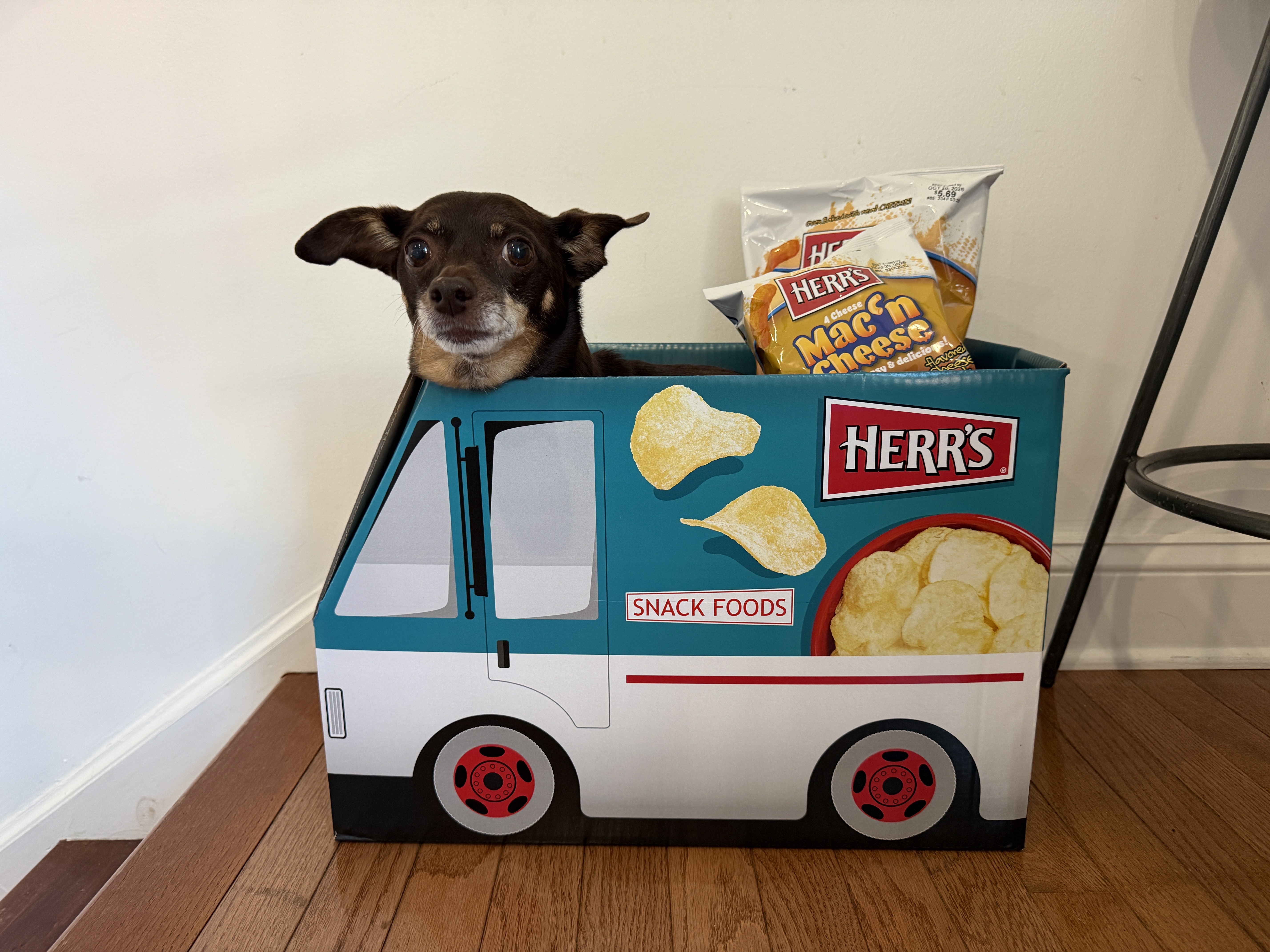
    The delivery of Herr’s mac ‘n cheese curls.Kiki Aranita / staff /

    I have already given myself a stomachache and possibly permanently stained my fingers orange. I regret nothing.

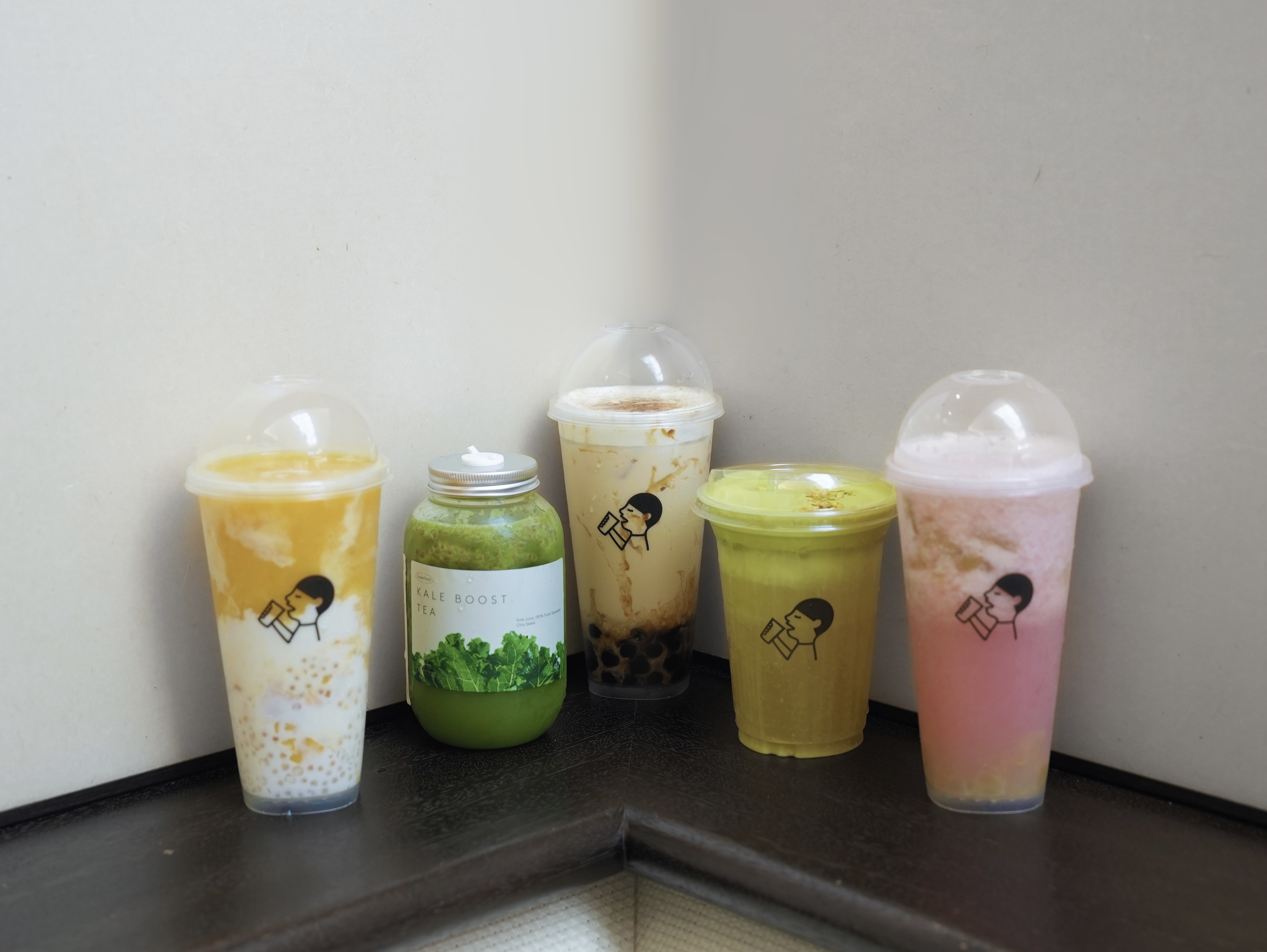
  • Move over, boba. A new wave of Chinese beverage brands is taking over Philly’s Chinatown.

    Move over, boba. A new wave of Chinese beverage brands is taking over Philly’s Chinatown.

    You may not have noticed it, unless you’re a teenager, a college student from China, or a Chinatown resident, but a slow wave has been sweeping through the storefronts of Philly’s Chinatown. There have been many openings in the past year that tap into both global food trends and scarcities in our local food scene that are changing the fabric of Chinatown.

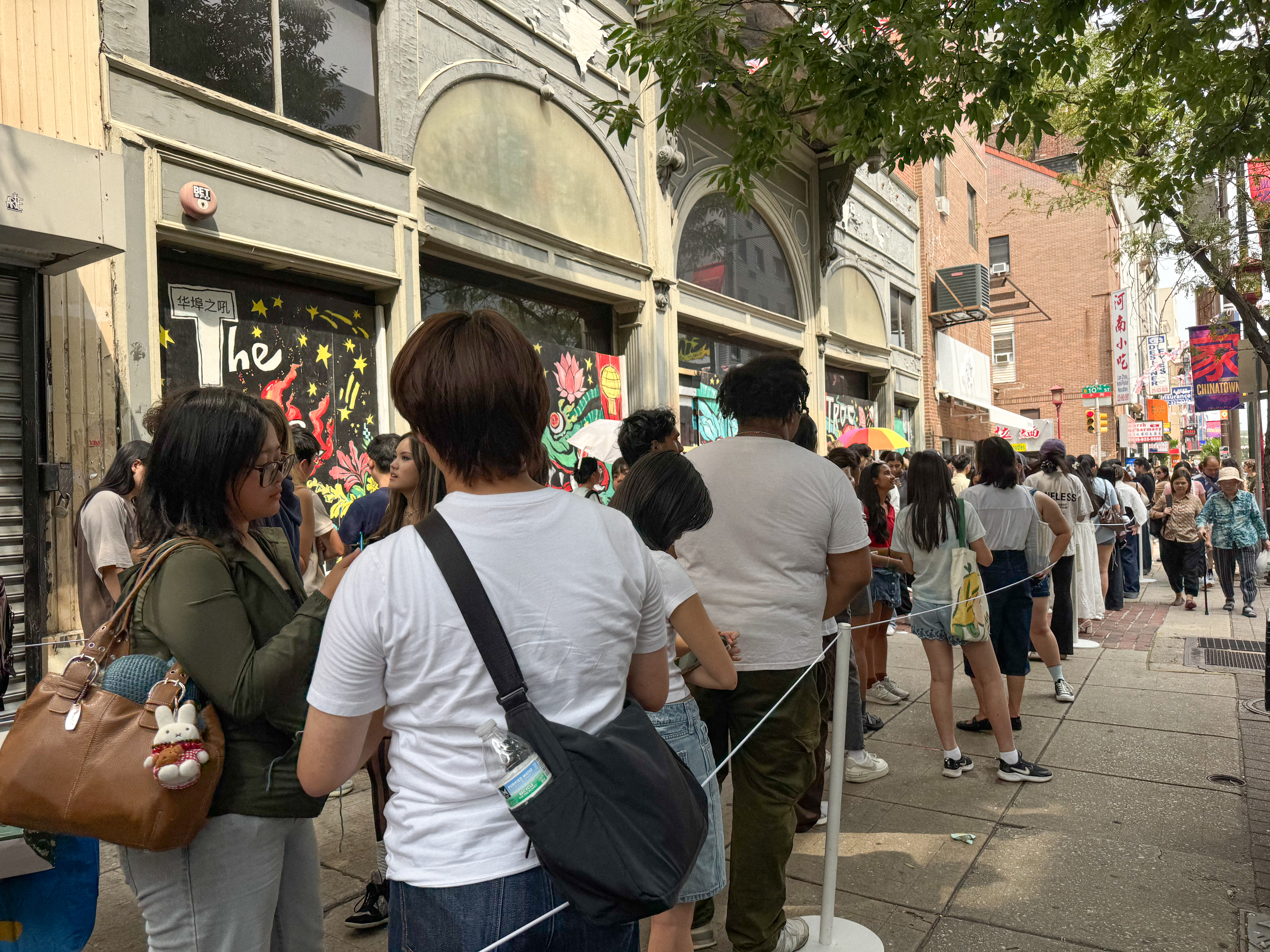
    The splashiest opening has been at the corner of 10th and Arch Streets, adjacent to the Chinatown Friendship Arch, where heytea opened its first Philly store. They’ve had to assign bouncers to monitor the line that has snaked back and forth down the block. Heytea, which was founded in Guangdong in 2012 and is headquartered in Shenzhen, China, operates more than 4,000 stores worldwide.

    It took 90 minutes to obtain one of its King Jasmine Guava tea beverages ($7.99) last month, during a thunderstorm that did not deter people from waiting in long lines to order. This is not unusual for the brand. According to heytea’s press representative, Yinnan Shen, when the chain opened its Upper West Side store in New York, a few weeks prior to Philly’s location opening, “more than 600 people were in line, stretching nearly three city blocks.”

    Heytea thus comes with its own built-in tailgate, populated in recent weeks by the tea company’s super fans (many of them teenagers), curious onlookers, and those lured by buy-one-get-one-free opening bargains. It seems to have found a sizable market for what it calls “new-style” tea, most of which pairs brewed, chilled Chinese tea (like oolong), mixed with fresh fruit.

    Opening day (and subsequent days) have drawn long lines outside of heytea in Philly’s Chinatown.heytea

    Heytea is just one of a slew of new Chinese beverage chains hitting Philly. Other markets have been whipped into a frenzy by these exports. But this wave has been relatively slow to reach Philly. For years, shops selling boba, or bubble tea, many of them franchises originating in Taiwan, have been plugging along in a relatively stagnant scene. But boba is waning. Chinese coffee, brewed iced tea, and yogurt drinks — all served cold — are on the rise.

    Taiwanese chain Vivi Bubble Tea (100 stores in 13 countries) opened in Philly’s Chinatown in 2015. The first Philly Chinatown Kung Fu Tea opened in 2016, and the first Mr. Wish franchise opened in 2017. And the first Teazzi Tea Shop, a few steps away from heytea on Arch Street, opened in 2023.

    Chinatown is home to many other now-familiar outposts of relatively smaller tea-focused chains, like the Chinese Tsaocaa and the Taiwanese Gong Cha, Chi Cha San Chen, and Tiger Sugar. Each of these brands have between 80 and 300 stores worldwide. In contrast with heytea, these chains are minuscule.

    Non-Asian cafes may have just discovered matcha and ube (Filipino purple yam) to the point where both are now constantly seeing global shortages, but these flavors are generally a footnote on the new beverage shops’ menus.

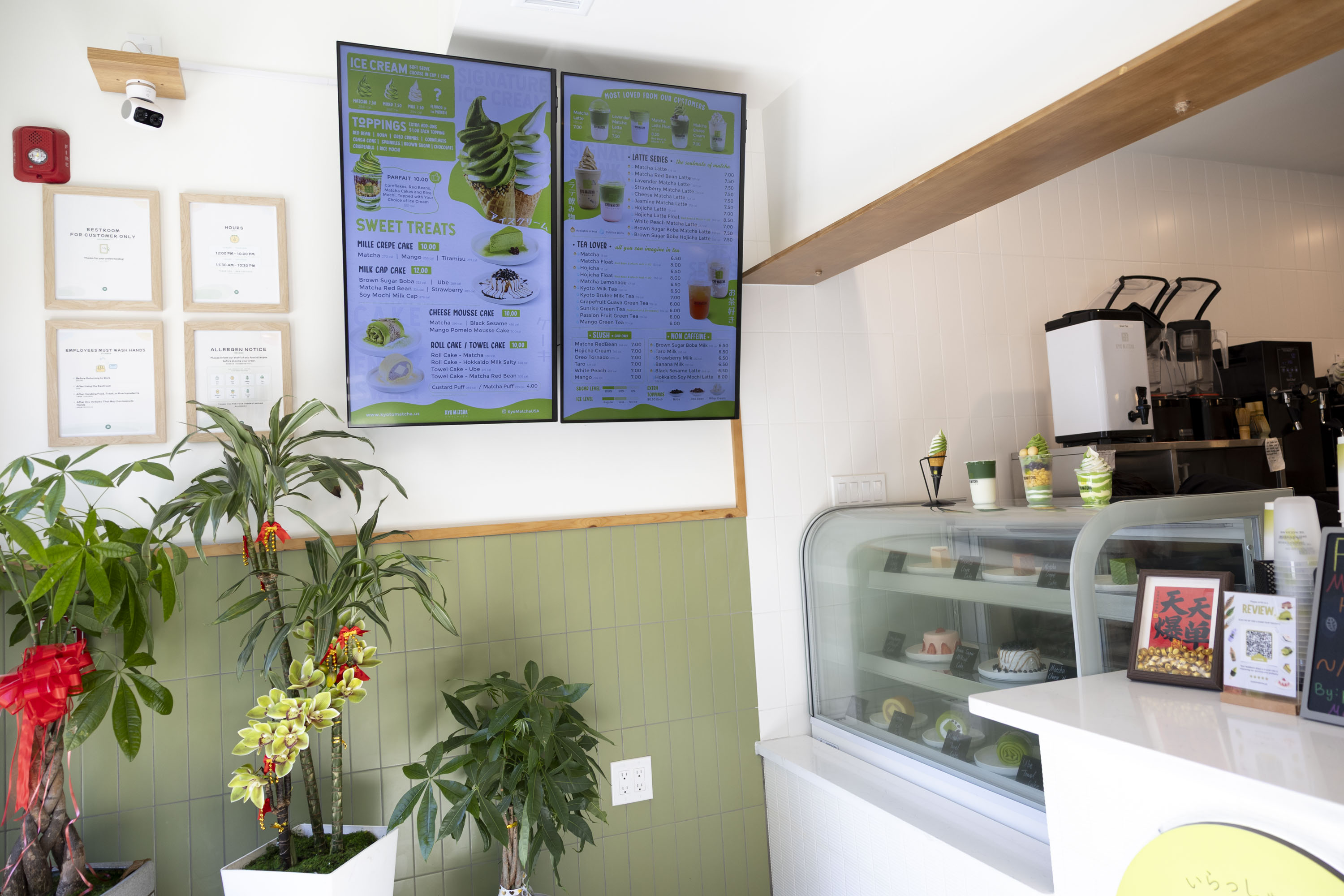
    The inside of Kyo Matcha on Wednesday, Aug. 26, 2026, in Philadelphia.Tyger Williams / Staff Photographer

    An exception to this is Kyo Matcha, which opened last month, also to dizzyingly long lines. At Kyo Matcha, matcha is, of course, the star, and ube plays second fiddle, appearing in both the shop’s desserts and beverages. It’s owned and operated by two young couples, originally from mainland China. When asked why they didn’t open their own, unique concept, one of the owners, Danya Li, said, “Starting a brand from scratch is so hard.”

    People aren’t really opening independent, uniquely branded shops in Chinatown these days, with the exception of Super Bao & Cake Girl, which took over KC’s Pastries, and Hen Ji Hou Wei Xuan Cheung Fun, which serves gossamer rice paper rolls and hearty bowls of congee.

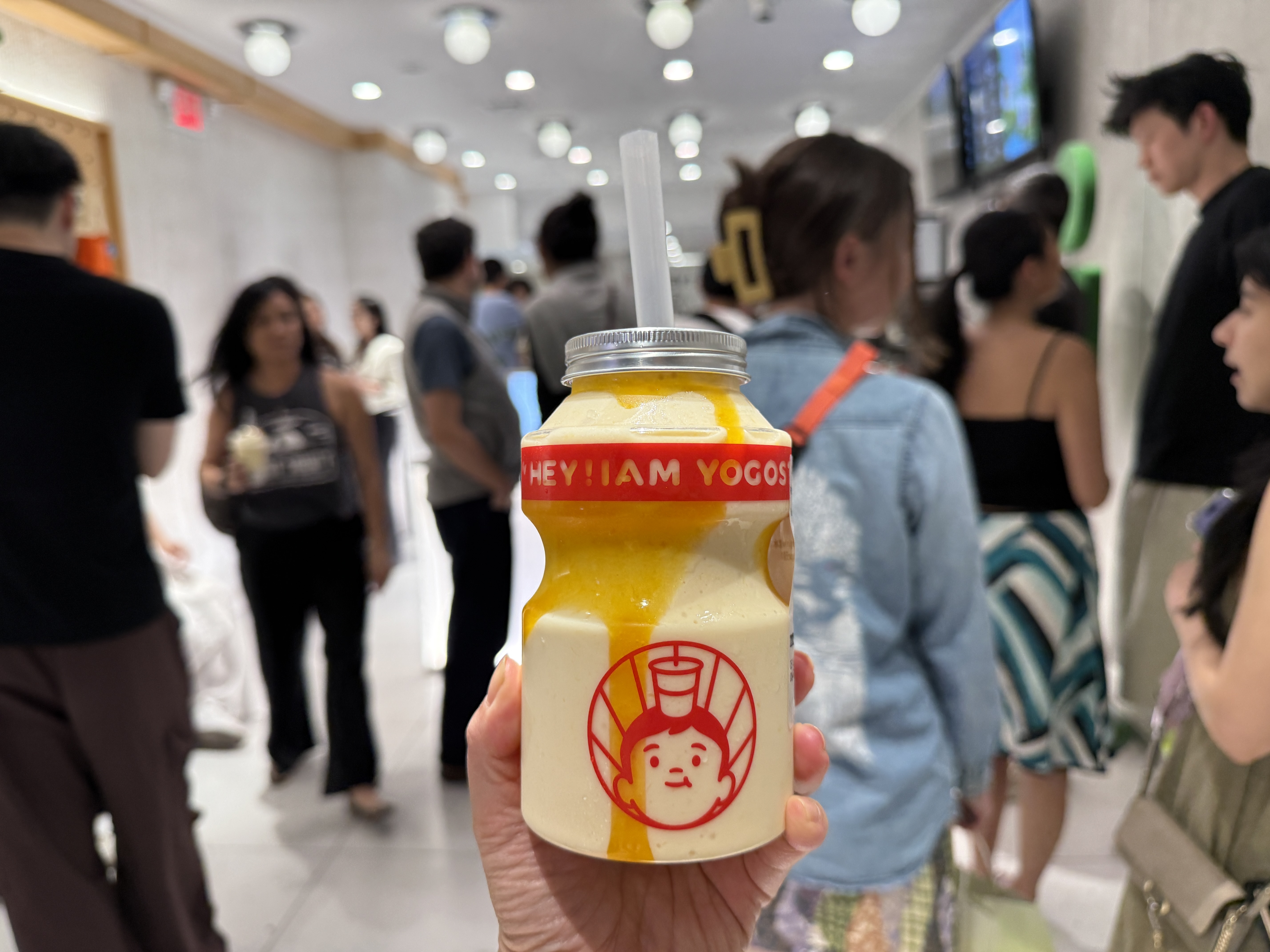
    The rest of the significant openings in Chinatown in the last year have all been franchises, from Yin Ji Rice Roll to Beard Papa’s to Hey I Am Yogost.

    The Mango Yakult yogurt drink at Hey I Am Yogost, 124 N. 10th St.Kiki Aranita / Staff

    And we’re probably going to see a lot more of them, especially as they spread through other Chinatowns in the tristate area.

    Luckin Coffee, China’s largest coffee brand, debuted in Manhattan just over a year ago. It now has 25 locations in New York City alone and 36,310 stores worldwide. The brand is so huge that earlier this year, it acquired pioneering coffee roaster Blue Bottle. There isn’t a Luckin location in Philly yet, but it’s only a matter of time.

    Luckin, along with fellow massive Chinese coffee chains Cotti (over 18,000 locations worldwide) and Mixue (almost 60,000 locations worldwide) have ingrained themselves into all of New York’s Chinatowns. All of them opened in New York in 2025. They are different in concept from quick service Taiwanese boba chains and cafes that promote lingering (like Starbucks). They prioritize scale, reaching as many people as possible.

    Having chains move into Chinatown is a double-edged sword. It is invigorating a neighborhood barely saved from arena-related destruction and now teems with young people lining up for wholesome beverages.

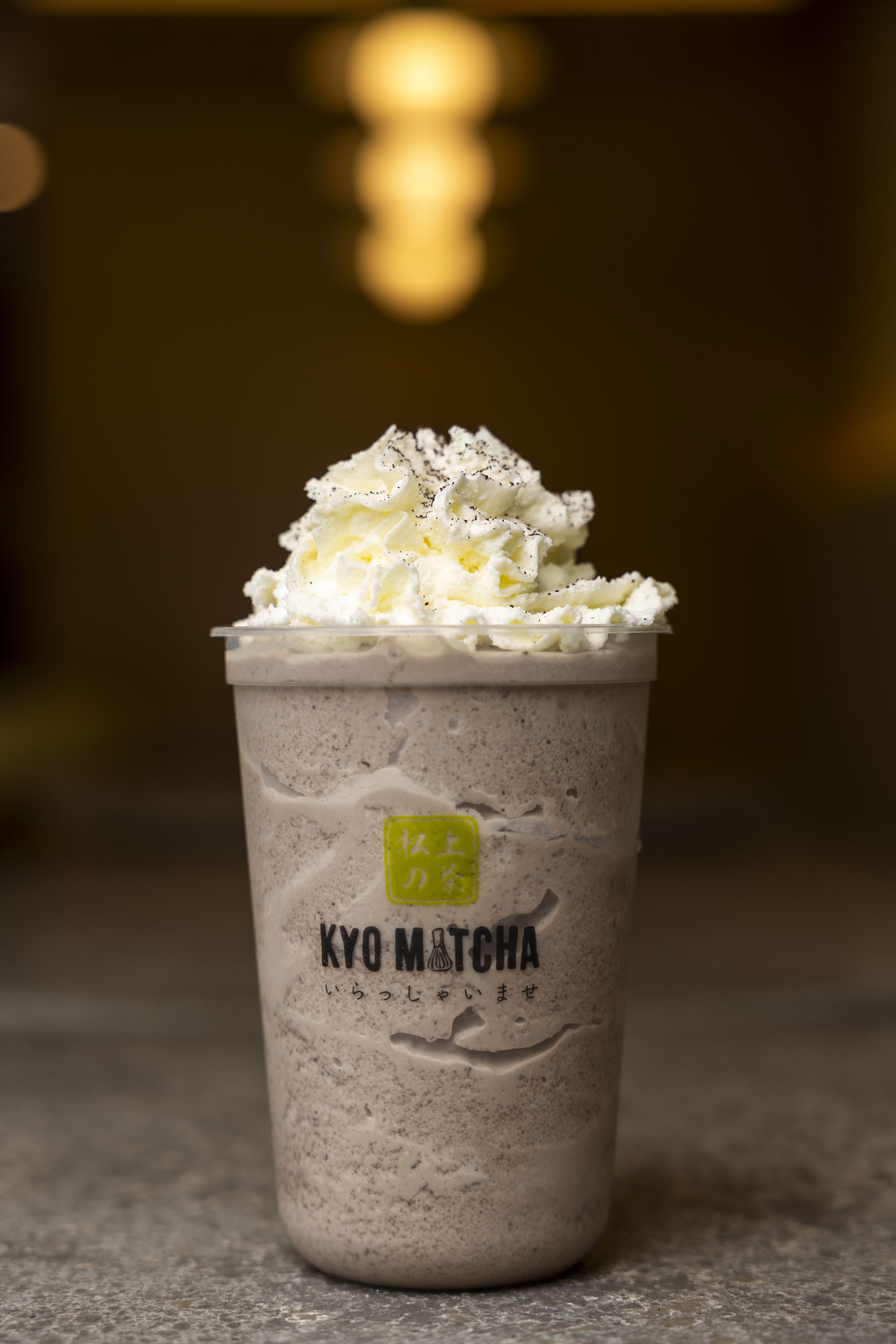
    A Oreo Tornado at Kyo Matcha on Wednesday, Aug. 26, 2026, in Philadelphia.Tyger Williams / Staff Photographer

    But in Manhattan, these chains have also been pricing out other businesses. It started years ago with boba chains — it has even been referred to as the “bobafication of Chinatown.” Boba chains were the first to supplant not only immigrant-owned restaurants, but housewares shops, pharmacies, salons, and other businesses.

    Grace Young, an advocate for Chinatowns nationwide, asked on Instagram, “At this rate, will Chinatown become Bubble Tea Town?” In the last year, “Bubble Tea Town” has evolved into “Chinese coffee and tea town.”

    Philly’s Chinatown has also experienced this form of gentrification; it has just, until now, been slower.

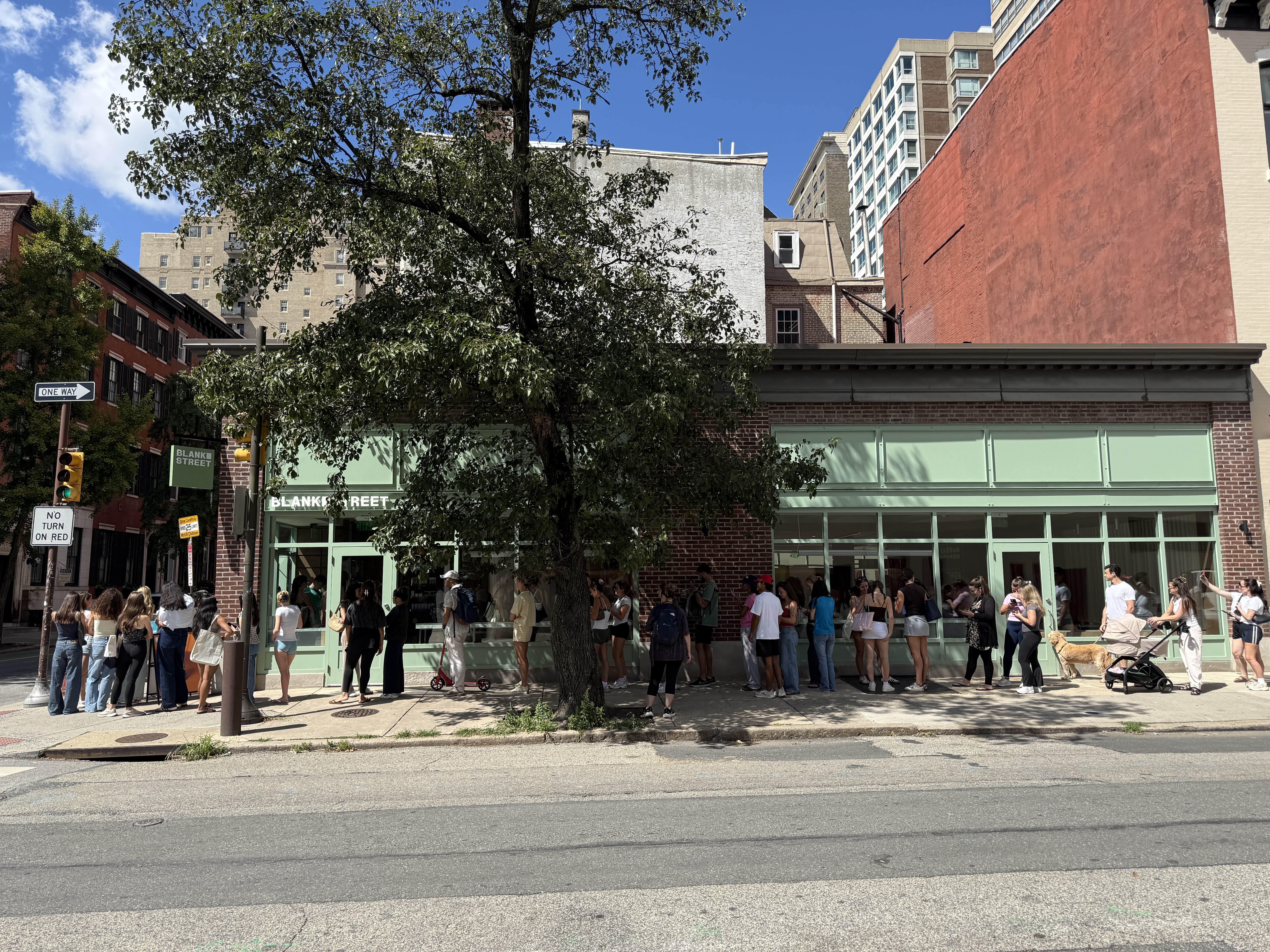
    All over Philly, the cafe scene is going through seismic shifts, largely bolstered by chains. Rittenhouse’s location of Blank Street, the New York-based chain that sells coffee and matcha, opened Monday, to lines as long as heytea’s.

    Blank Street’s first Philly location, at 1801 Spruce St., draws lines around the block on its opening day, Sept. 7, 2026.Kiki Aranita / Staff /

    Haraz Coffee Shop is soon to open its third location in Philly, adding to the wave of Yemeni coffee shops sweeping through Philly.

    We’re seeing more international outposts devoted to coffee in Philly neighborhoods, so that now Philadelphians have more options than ever, whether we’re looking for a Korean cafe or new wave Vietnamese coffee.

    But no neighborhood other than Chinatown has been subject, at the hands of cafe chains, to such a condensed, rapid rate of change. Their influx means Chinatown will see fewer independent businesses and consume more from multinational conglomerates.

    But it does make a younger generation, attuned to tea trends, happy. Like all forms of gentrification, it serves some communities while displacing other ones.

  • This Broad Street baked potato costs $88

    This Broad Street baked potato costs $88

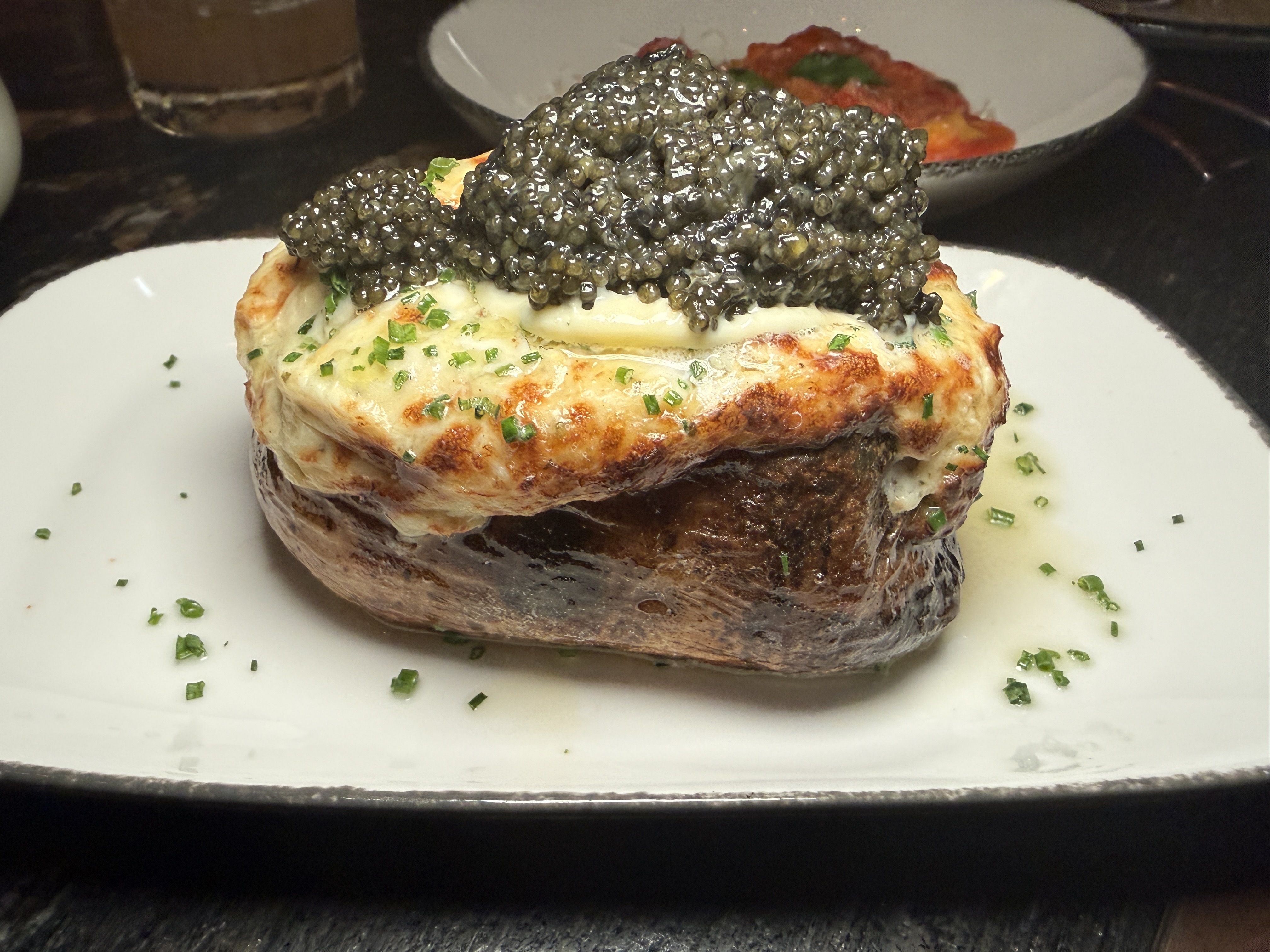
    When the baked, crab au gratin-stuffed potato with a caviar “blackout” was placed in front of me at Mr. Edison’s bar, the man sitting next to me looked upon it with wonder. His eyes were transfixed upon the spud, which spewed crab cream — lightly broiled, like the top of a classic French onion soup — and lots of fish eggs from its potato casing. After he watched me take one bite and then another, he leaned over and asked, “Is that as good as everyone says?”

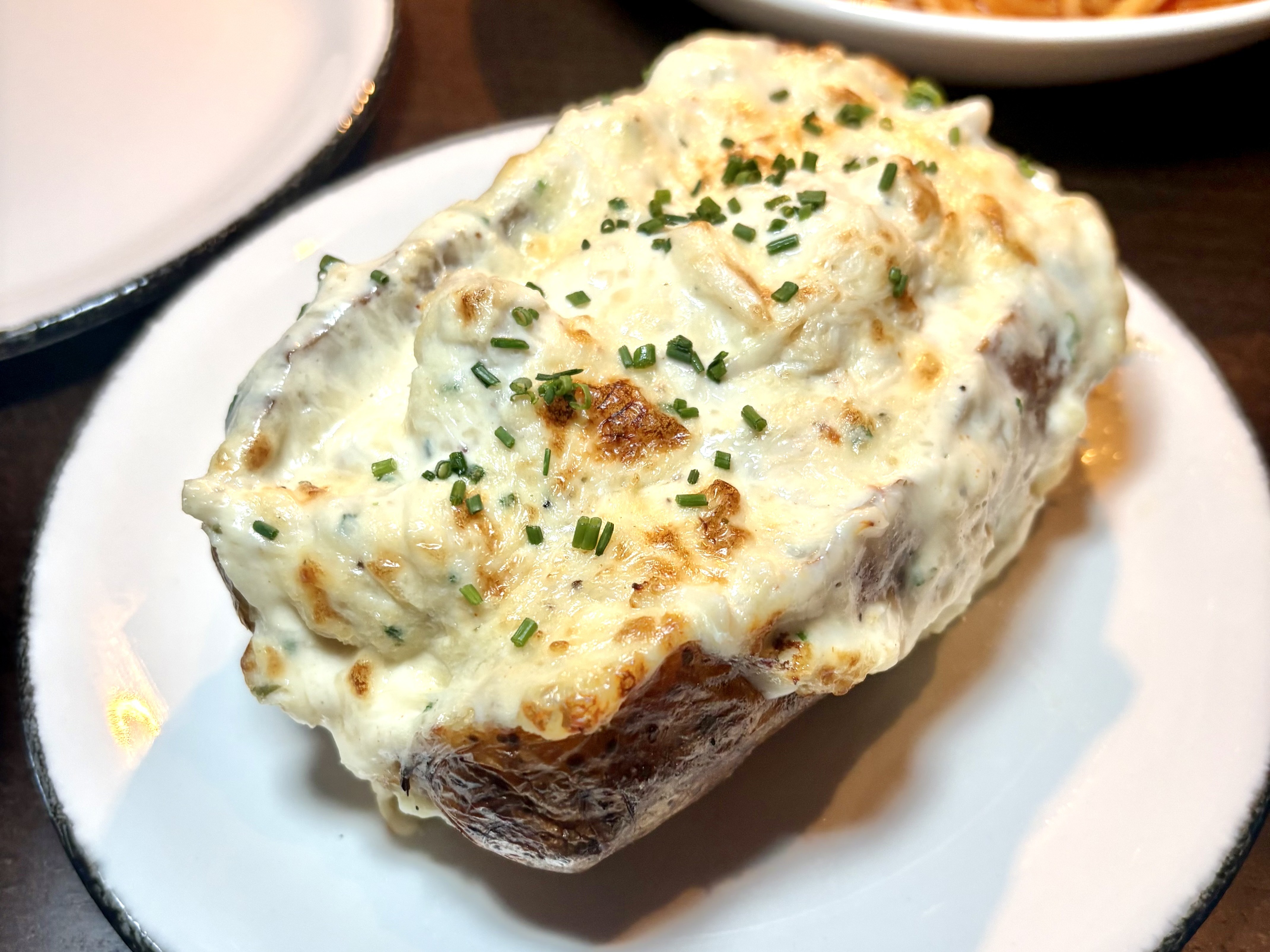
    The $48 baked potato at Mr. Edison comes stuffed with crab imperial.Craig LaBan / Staff

    Short answer: It is not. I wanted this absurdly expensive baked potato to be good. I love that baked potatoes, of all things, have been trending in the last year. And besides, my colleague, restaurant critic Craig LaBan, liked the non-caviar-topped version of it. It was one of the few bright points of his review of the splashy new restaurant in the Bellevue hotel: “The restaurant’s $48 baked potato, stuffed with nearly half a pound of sweet lump crab au gratin, was the most memorable thing I ate at Mr. Edison,” he wrote.

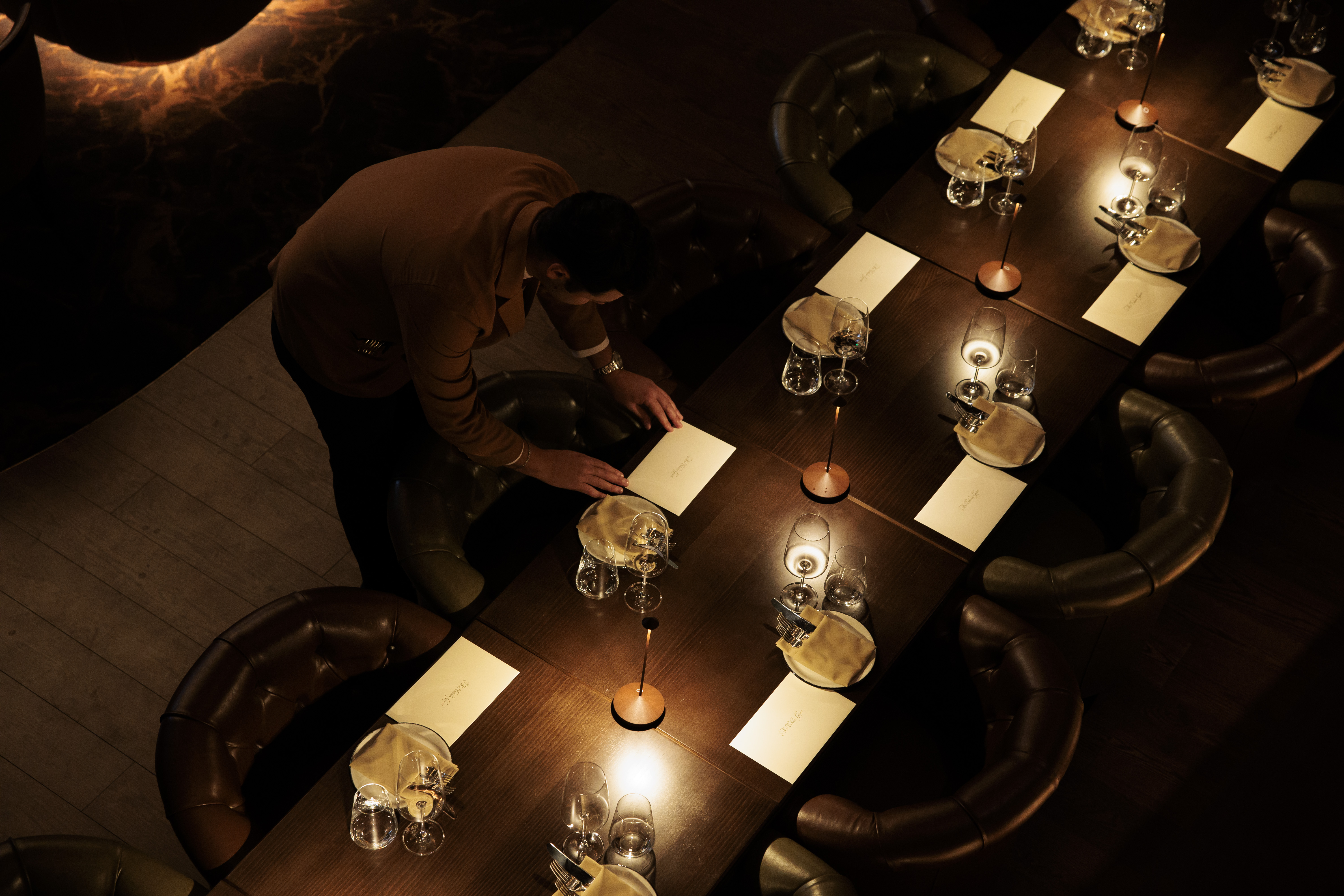
    Thomas Angelina straightens the menus during service at Mr. Edison in the Bellevue Hotel on Tuesday, Aug. 18, 2026 in Philadelphia.Monica Herndon / Staff Photographer

    The same restaurant can offer experiences that diverge widely, just as not all potatoes are created equal.

    Alas, the baked potato I was served at Mr. Edison was all mush. “Well, a baked potato is usually all mush,” you might say. But think about a classic baked potato. There’s the crisp and chew of bacon bits; the gooeyness of melted cheese; bright, tangy, cold sour cream; a sharp pop of chives, all before you even get to the potato part. Precisely the kind of baked potato that’s all-you-can-eat for $15 on Wednesdays at Wine Dive, not even two blocks from Mr. Edison.

    And if you’re eating a jacket potato from Mod Spuds in Graduate Hospital (five blocks away from Mr. Edison, with much better baked potatoes), you can trust great attention was paid to making sure the potato skin is crispy.

    The caviar-laden baked potato at Mr. Edison costs almost six times what a potato at Mod Spud’s costs. Is it six times better? It is not. There is always a chasm between cost and value. When it comes to the Mr. Edison’s baked potato, that chasm is very wide.

    The ideas behind the dishes at Mr. Edison aren’t terrible. Cream belongs on a baked potato, and so there it is. People love crab. So there’s crab in that cream. And people love caviar, so put that on there, too. But somewhere along the way, it seems that the kitchen forgot to make the final result delicious in addition to expensive.

    But we’re not really talking about an $88 potato here, are we?

    We’re talking about that upcharge, the caviar that catapults a $48 baked potato (still wildly expensive) into the stuff of legend — or at least, the stuff that makes food writers like me write articles about it, including a $55 slice of pizza (it comes with caviar), a $59 pancake (it also comes with caviar, but thankfully, it’s delicious even without it), or a $140 cheesesteak (it comes with truffles, foie gras, and champagne).

    My colleague Michael Klein, who wrote about that $55 slice of pizza from Marina’s Pizza, said that it felt like a stunt. Indeed, caviar is seemingly everywhere now. Give me all the high-quality caviar all the time. But caviar for caviar’s sake? It’s starting to feel like it’s going the way of truffle oil.

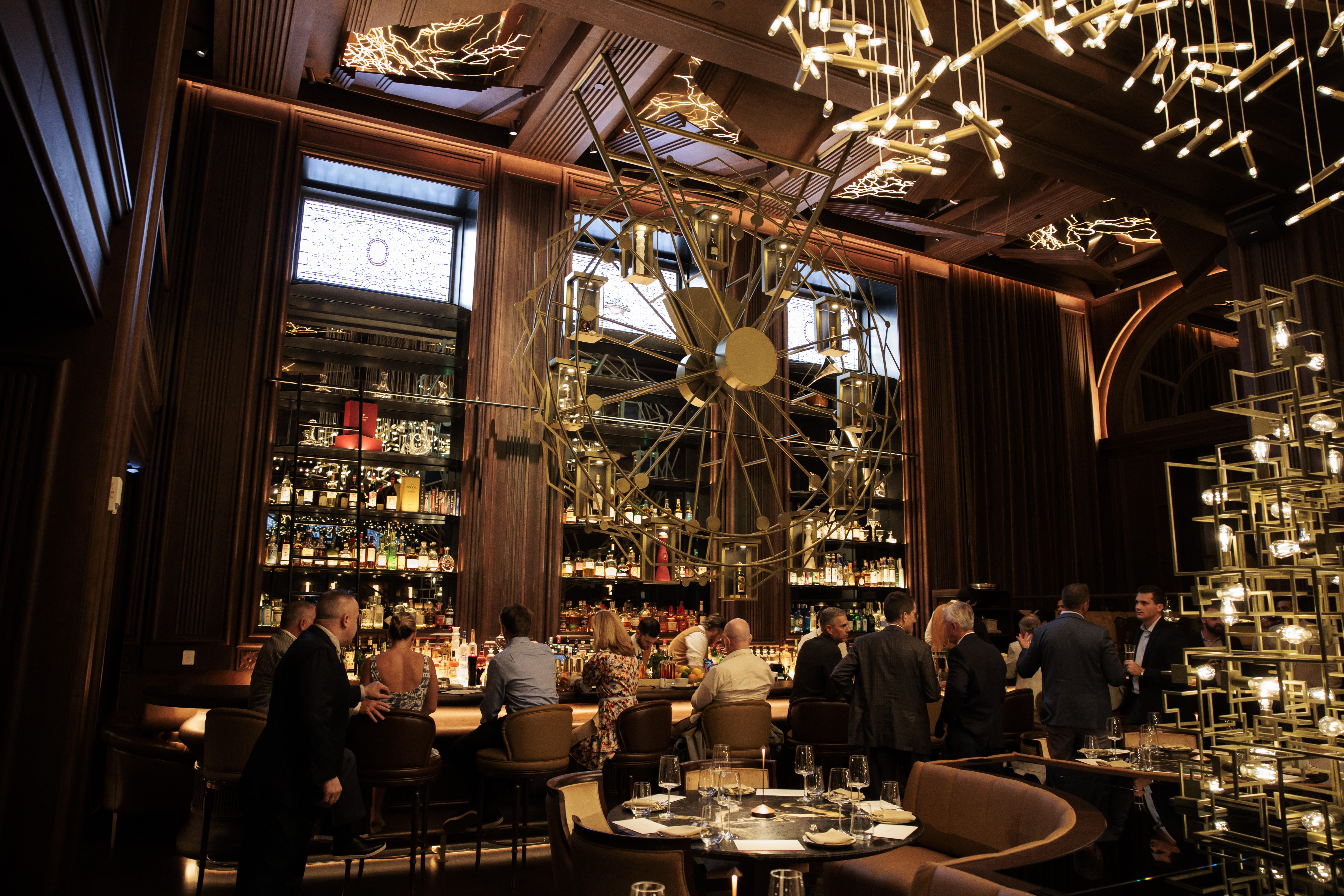
    The bar at Mr. Edison in the Bellevue Hotel on Tuesday, Aug. 18, 2026 in Philadelphia.Monica Herndon / Staff Photographer

    Beware: Caviar is great. Baked potatoes are great. But more caviar and/or money does not buy you a better baked potato. It does, however, buy you the privilege of eating a baked potato in the company of a live pianist, sitting under a Ferris wheel that houses equally astonishingly expensive bottles of liquor.

  • Philly’s first Kyo Matcha draws long lines in Chinatown

    Philly’s first Kyo Matcha draws long lines in Chinatown

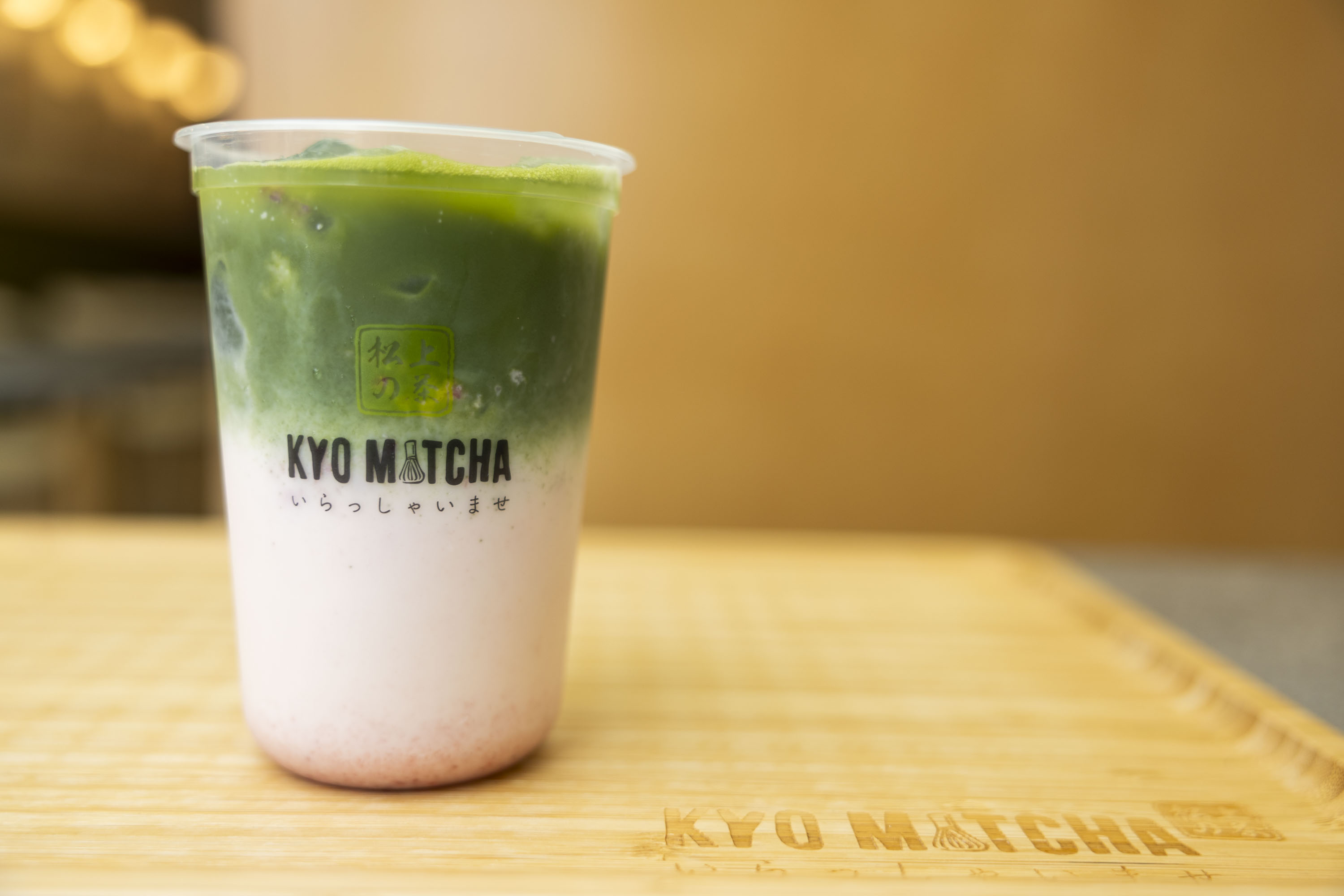
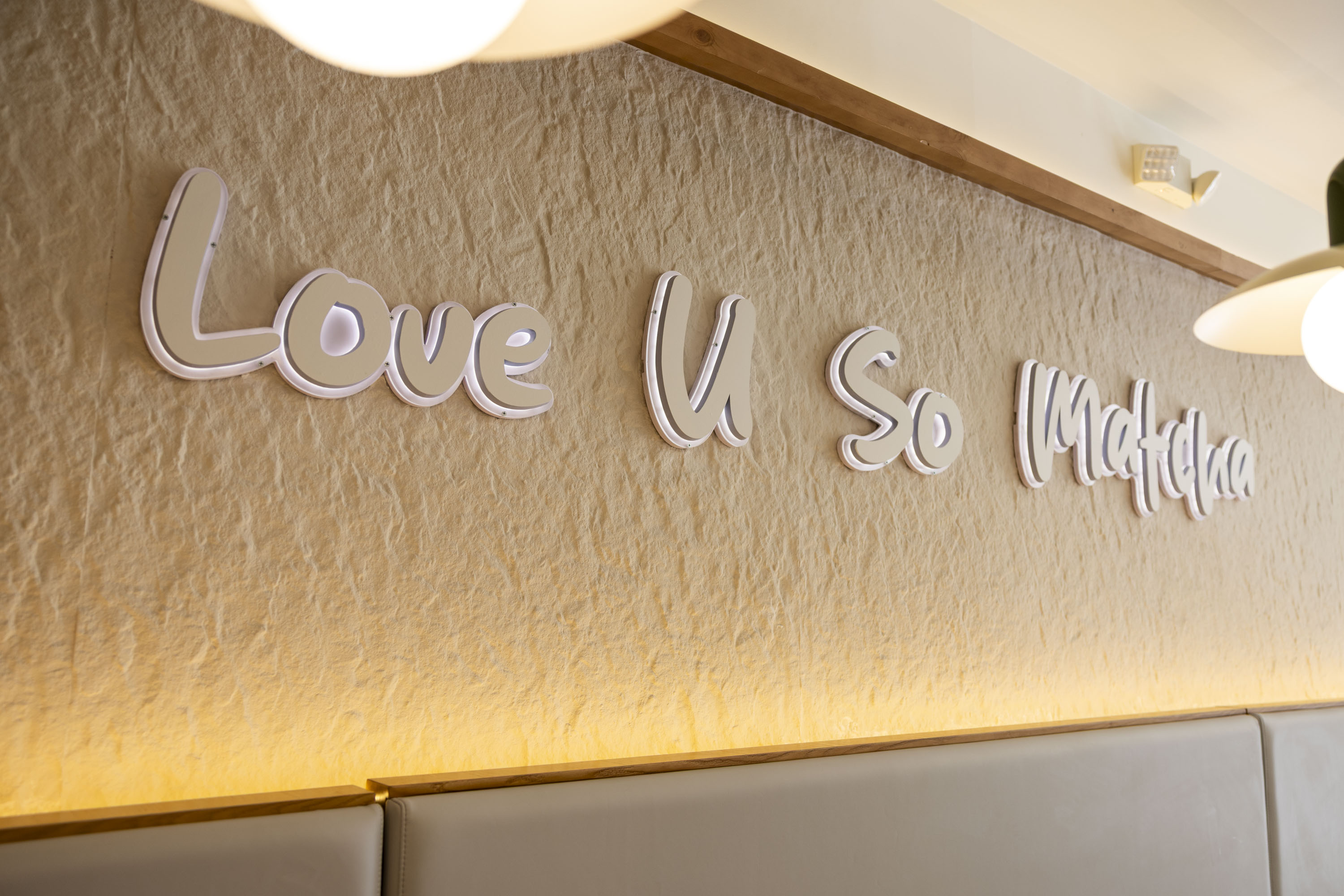
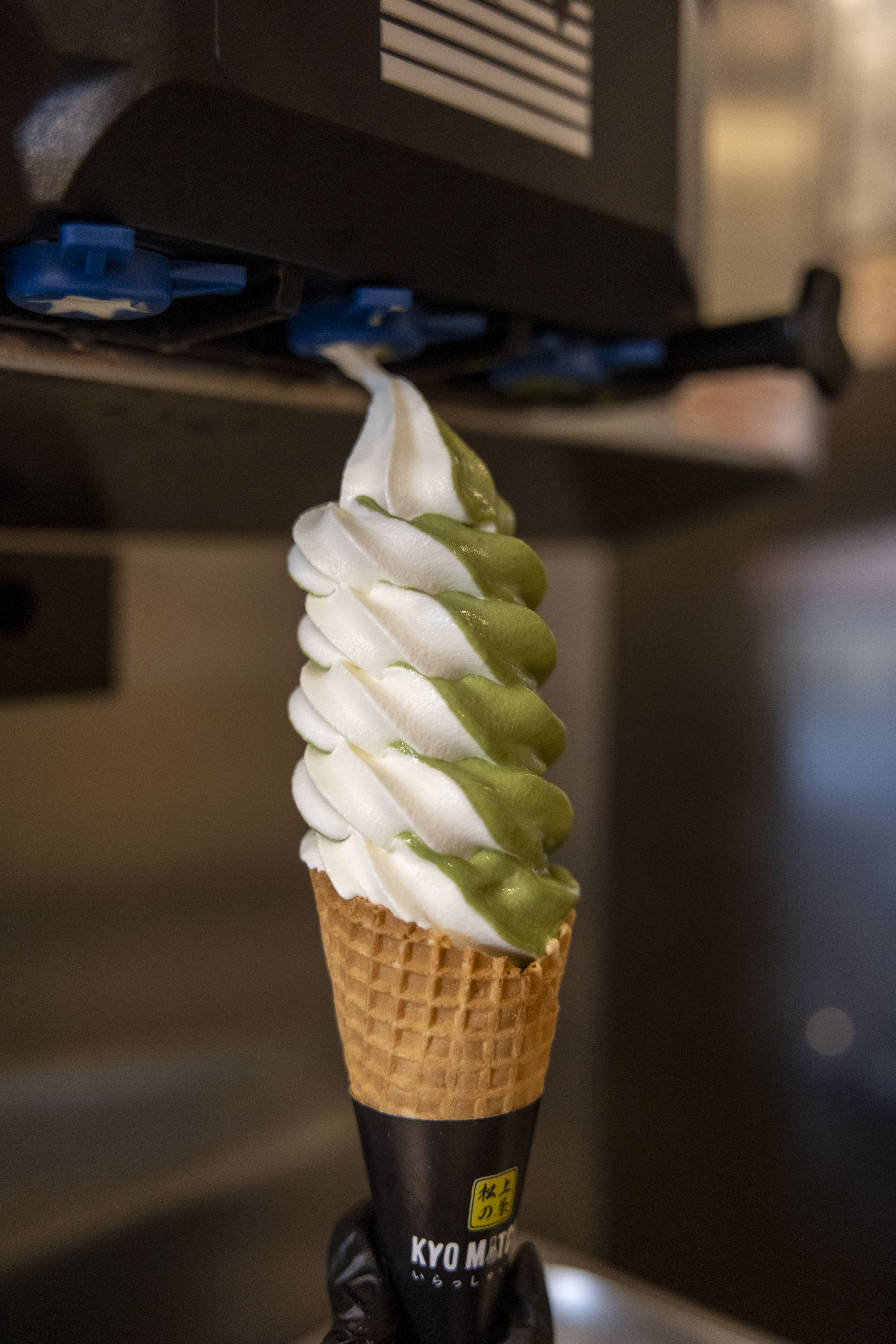
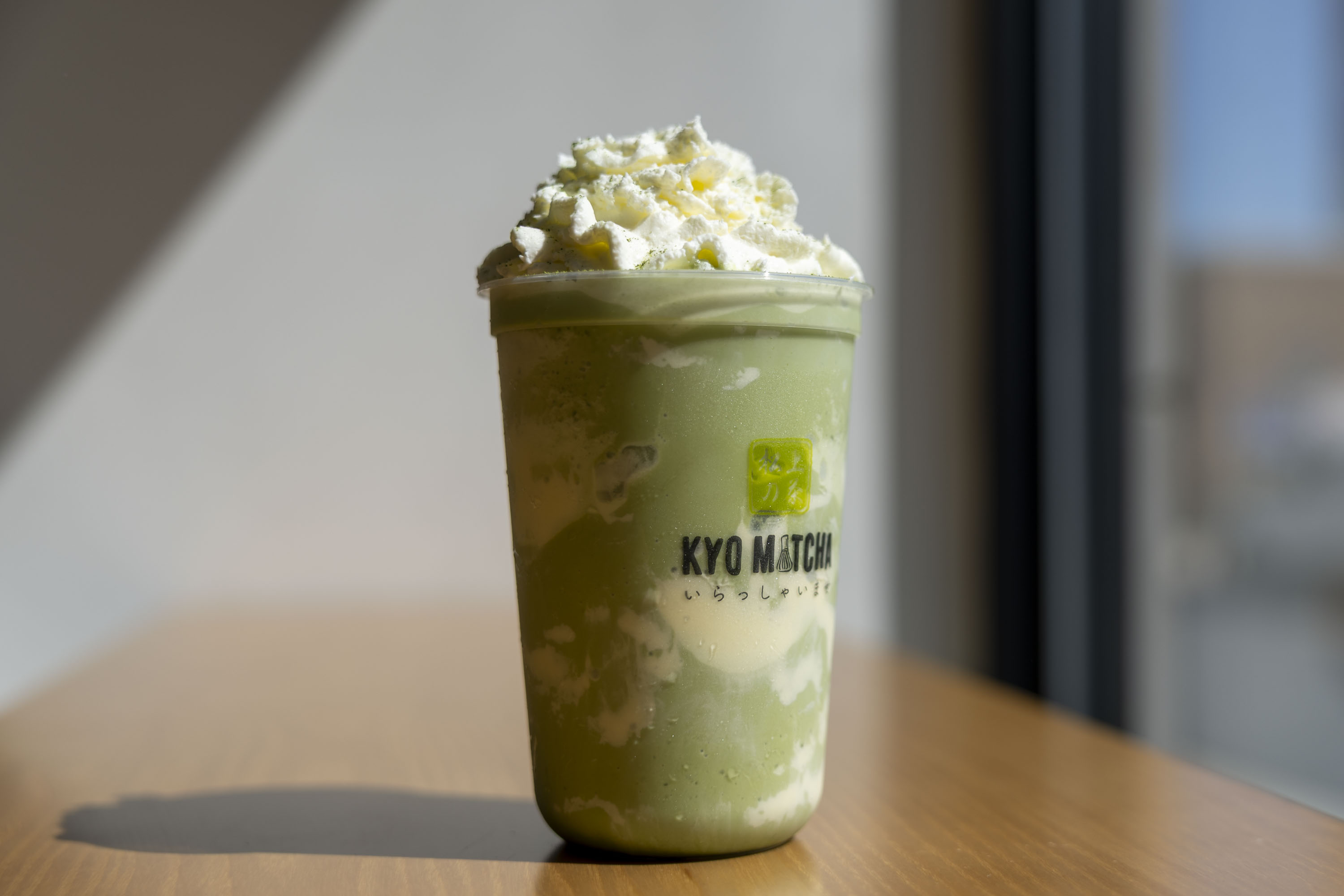
    The lines are long. The branding is adorable. The drinks are bright green, as are the lacy swirls of matcha-seasoned soft serve. This is the formula for Kyo Matcha, which opened in August in Chinatown.

    The same trappings can be found at both Matcha Panda Cafe, which opened in 2022, and Matcha Cafe Maiko, which opened in 2023 — years before high-end Japanese tea became so in-demand that suppliers couldn’t keep up. But there’s something a little curious about Kyo Matcha, a chain that is also known as Kyoto Matcha, with locations in Maryland, Pittsburgh, Virginia, and Massachusetts, as well as in Spain, Vietnam, and Turkey.

    The inside of Kyo Matcha.Tyger Williams / Staff Photographer
    A soft serve ice cream matcha mix at Kyo Matcha.Tyger Williams / Staff Photographer

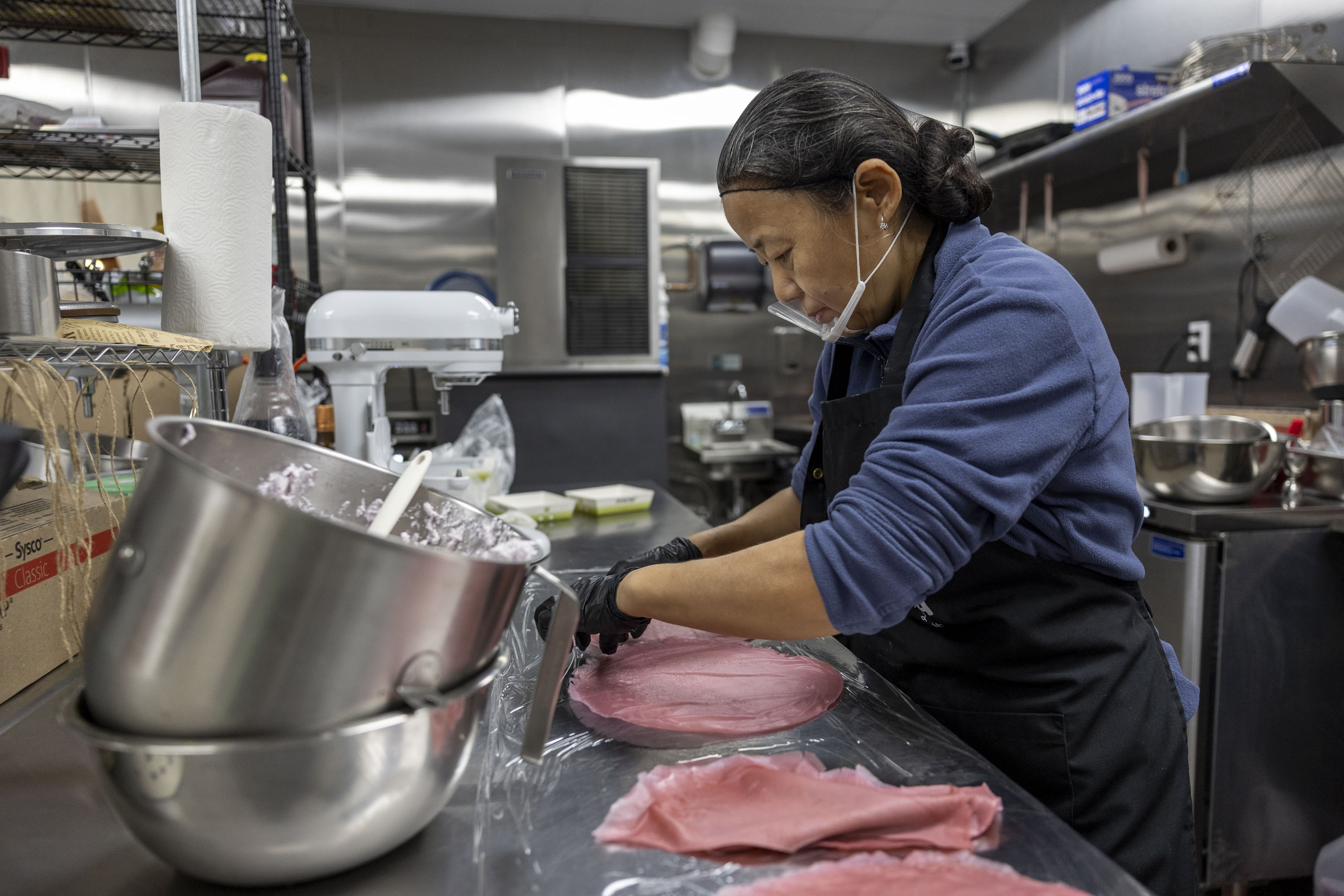
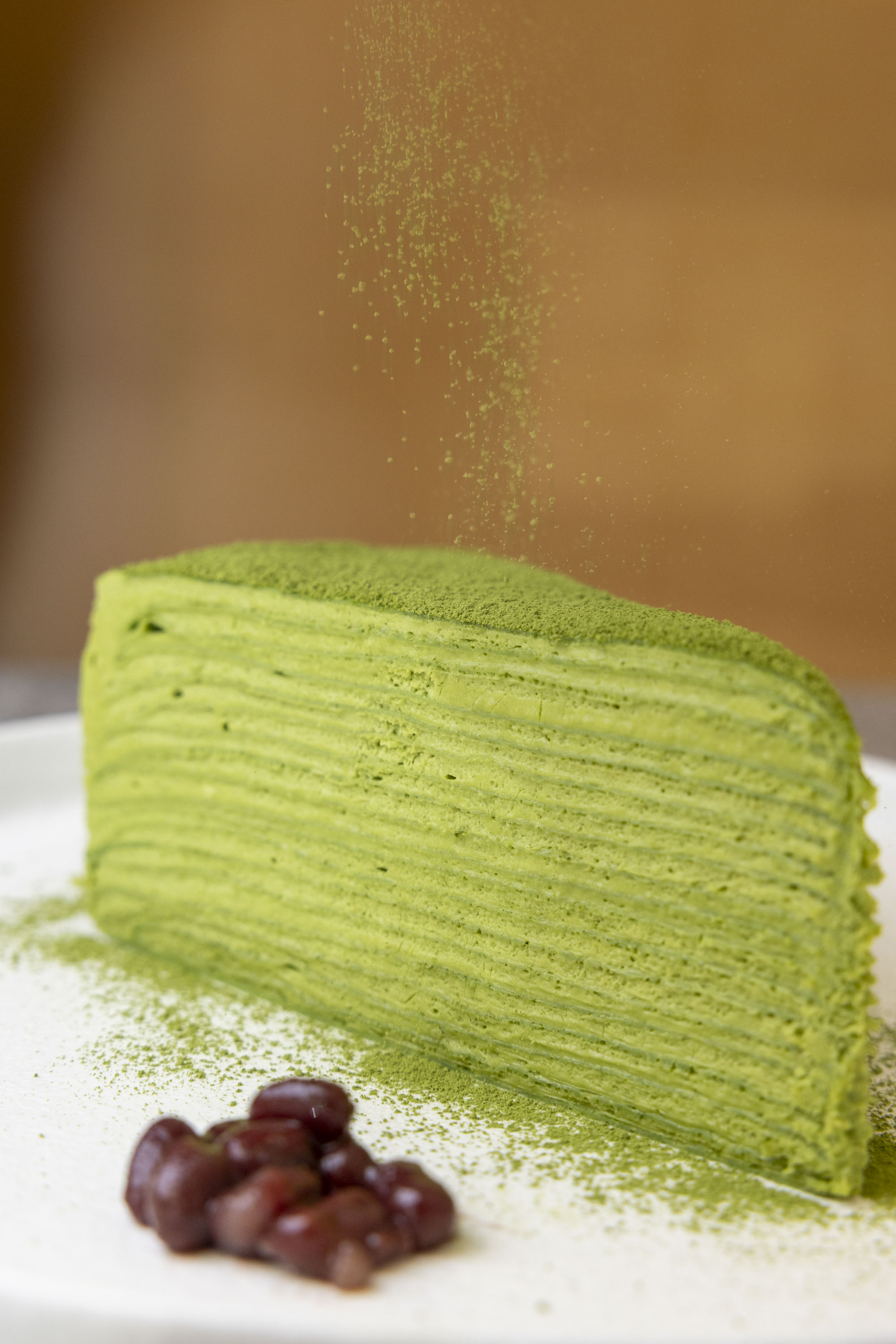
    Indeed, the students who work the front of house are just as bubbly as the ones who serve similar ice creams and tea drinks at the other matcha-focused shops in Chinatown. But in the kitchen at Kyo Matcha, a small crew of older Chinese chefs who previously worked at dumpling stores or preparing food in retirement homes are painstakingly making matcha and ube crepes, then layering them into cakes or rolling them into desserts by hand.

    The franchise is a project that brought two mainland Chinese couples into business together: Tom Kang, 34, and Danya Li, 30, who met studying hospitality at Temple University; and Alex An, 32, who also owns an international trading business, and Jing Xiong, 31, a UX lead designer.

    Mrs. Jiao is making a fresh Ube Tower Cake at Kyo Matcha on Wednesday, Aug. 26, 2026, in Philadelphia.Tyger Williams / Staff Photographer
    A Ube Tower Cake at Kyo Matcha on Wednesday, Aug. 26, 2026, in Philadelphia.Tyger Williams / Staff Photographer

    Kang also owns and operates Stay at Luna, a collection of 10 apartment hotels mostly clustered around Chinatown. (There’s a Stay at Luna located above Kyo Matcha.)

    Located on 11th Street between Race and Vine Streets, in the former Vietnam Palace space, Kyo Matcha is a little off Chinatown’s beaten path. “We felt that if we created a beautiful space and offered something a little different, it could become another reason for people to come to this part of Chinatown,” said Kang.

    A Creme Brûlée Matcha at Kyo Matcha on Wednesday, Aug. 26, 2026, in Philadelphia.Tyger Williams / Staff Photographer

    He became enamored with Kyo Matcha due to both its high-quality matcha powder and its menu, equally balanced between beverage and desserts.

    And why did four young people choose to open a franchise instead of creating their own brand?

    “Starting a brand from scratch is so hard,” said Li.

    While menu items all have to be approved by Kyo Matcha’s corporate office, the business arrangement still leaves room for the owners to innovate as they develop desserts for Philly customers.

    As at other beverage chains, you can specify your preferred level of sweetness when ordering a drink here. There’s only one option, a simple iced matcha, where you can try matcha unadulterated by milk or syrup, to appreciate its grassiness. All beverages are served cold.

    A Matcha Crepe Cake at Kyo Matcha on Wednesday, Aug. 26, 2026, in Philadelphia.Tyger Williams / Staff Photographer

    The matcha trend shows no sign of abating, though global shortages persist as the tea’s leaves take four to five years to mature. The obsession with the bright green Japanese tea has manifested in a slew of matcha-driven beverages and desserts in Philly’s Chinatown, where there’s also been a wave of beverage shop openings.

    Kyo Matcha opened the same week as Arch Street’s branch of Heytea, a Chinese brand operating over 4,000 locations worldwide. They join over a dozen tea-focused shops in the neighborhood.

    The inside of Kyo Matcha on Wednesday, Aug. 26, 2026, in Philadelphia.Tyger Williams / Staff Photographer

    But there still seems to be plenty of appetite for approachable matcha offerings. “Matcha is especially popular among younger customers, and we see a lot of students and younger professionals, but we’ve also seen families, tourists, Chinatown residents, and people who have never tried matcha,” said Kang.

    Kyo Matcha, 222 N. 11th St., kyotomatcha.us. Hours: Noon to 10 p.m. Monday to Thursday, 11:30 a.m. to 10:30 p.m. Friday and Saturday