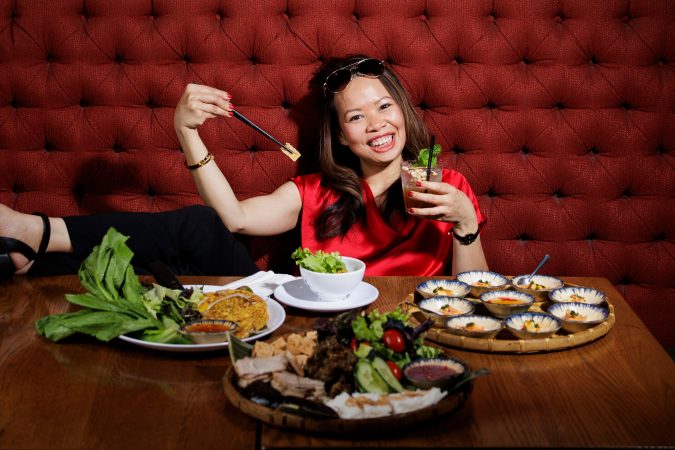
Author: Kiki Aranita

  • These Philly sushi chefs lift weights — and bluefin tunas — together

    These Philly sushi chefs lift weights — and bluefin tunas — together

    One of Fusion Gyms’ five locations is in a strip mall in deep South Philly, sandwiched between a children’s clothing shop and a wig store. In the neon-green glow of the gym’s bright lights, seven Philly sushi chefs stretched on rubber mats, preparing to lift weights set to be as heavy as a fully grown bluefin tuna.

    The crew — usually just four or five chefs — meets regularly on weekday mornings, loosely led by Albert Zheng, 34, and Dan Santana, 40, who co-own and run Kiku Sushi in South Philadelphia. (Zheng also owns Javelin in Fairmount and is a partner in the upscale Old City omakase restaurant Ogawa.)

    Zheng and Santana are there every weekday. The other chefs drop in weekly or monthly. They exercise to stay fit for their physically demanding jobs, but also just to hang out with each other.

    On a recent Tuesday morning, a larger-than-normal group gathered, including chefs from Kiku, Ogawa, and Javelin, as well as Kichi Omakase and Yanaga Kappo Izakaya, which houses the omakase counter 637 Sushi Club.
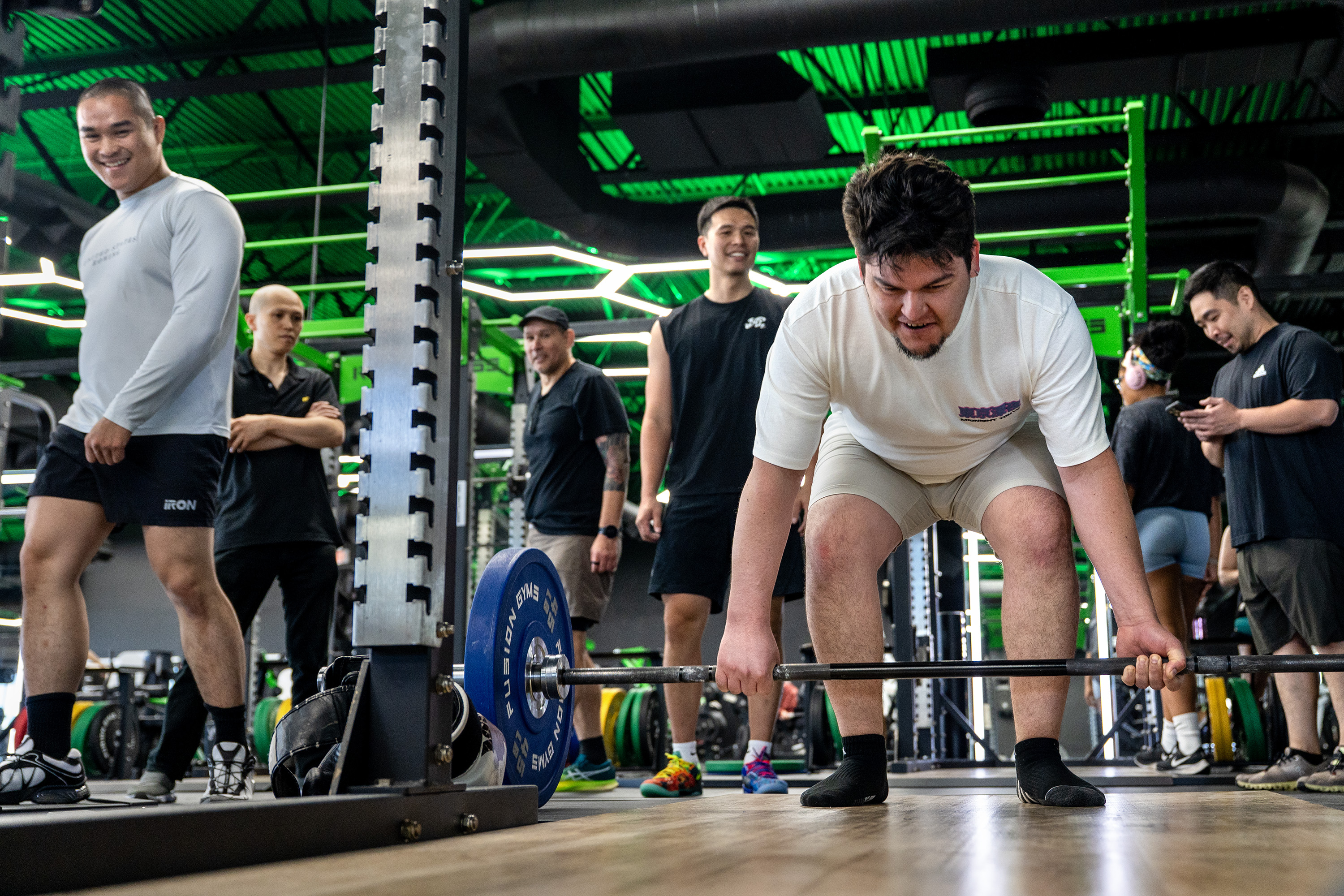
    Sushi chefs work out at Fusion Gyms in South Philadelphia in August. They get together regularly, trading both exercise tips and fish intel. From front to back are Dan Santana; Carlos Wills, Joseph Nguyen, Kevin Yanaga, Albert Zhang, Cai Li, and Alex Jiang.Tom Gralish / Staff Photographer

    They also count among their crew sushi chefs from Sagami and Nakama. “We’re less consistent in summer, when our kids are home from school,” Zheng said. “During the school year, we drop the kids off and meet at the gym right after.”

    They work out for two, sometimes three hours at a stretch. “The third hour is usually our jaw workout,” joked Zheng. “And it takes longer when there are more people.”

    As they wove through Fusion Gyms’ open-floor plan, they compared ingredient lists and traded tips about good restaurants and where to get salmon for a better price. These are regular topics of discussion, along with mise en place and sourcing.
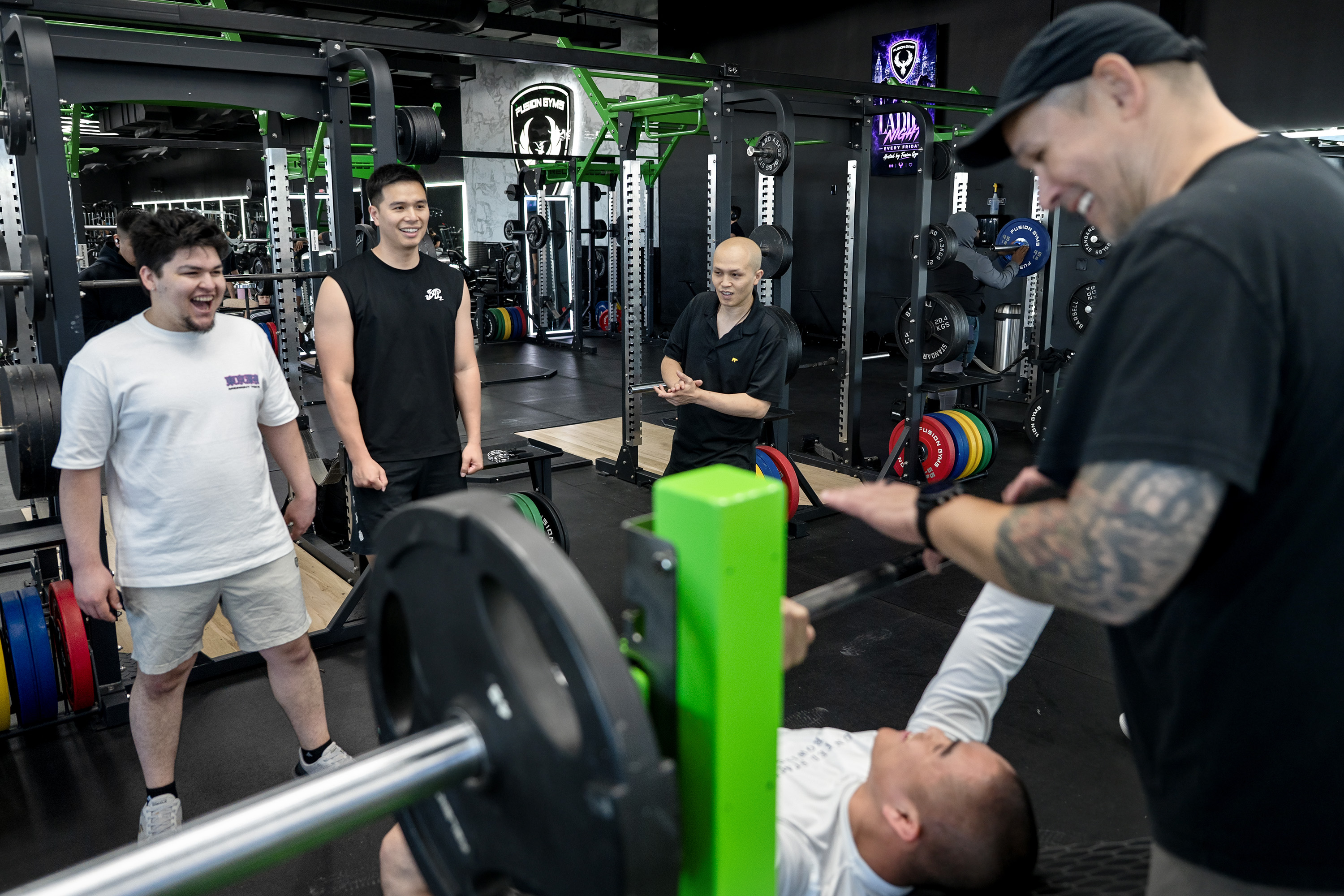
    Sushi chefs work out at Fusion Gyms in South Philadelphia in August. They get together regularly, trading both exercise tips and fish intel. Clockwise from left: Carlos Wills, Albert Zheng, Alex Jiang, Kevin Yanaga, and Joseph Nguyen (on bench).Tom Gralish / Staff Photographer

    Kevin Yanaga, 55, and Joseph Nguyen, 27 — partners in 637 Sushi Club’s Oma Cafe, which pairs fish with coffee — coached the others through Muay Thai moves while trying to convince the other chefs to join them on a November trip to Vietnam for a three-day Oma Cafe pop-up. “I need help prepping,” said Yanaga.
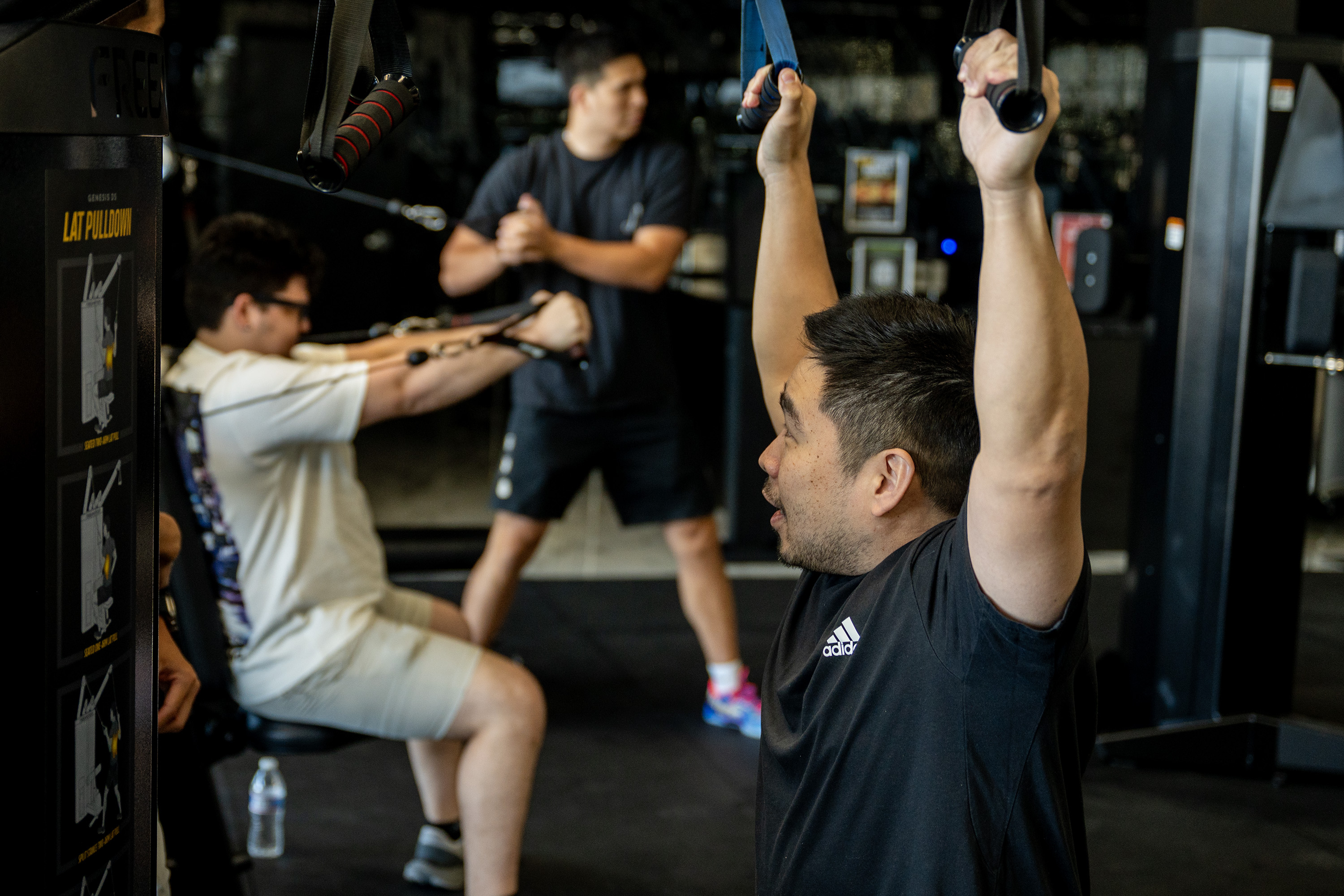
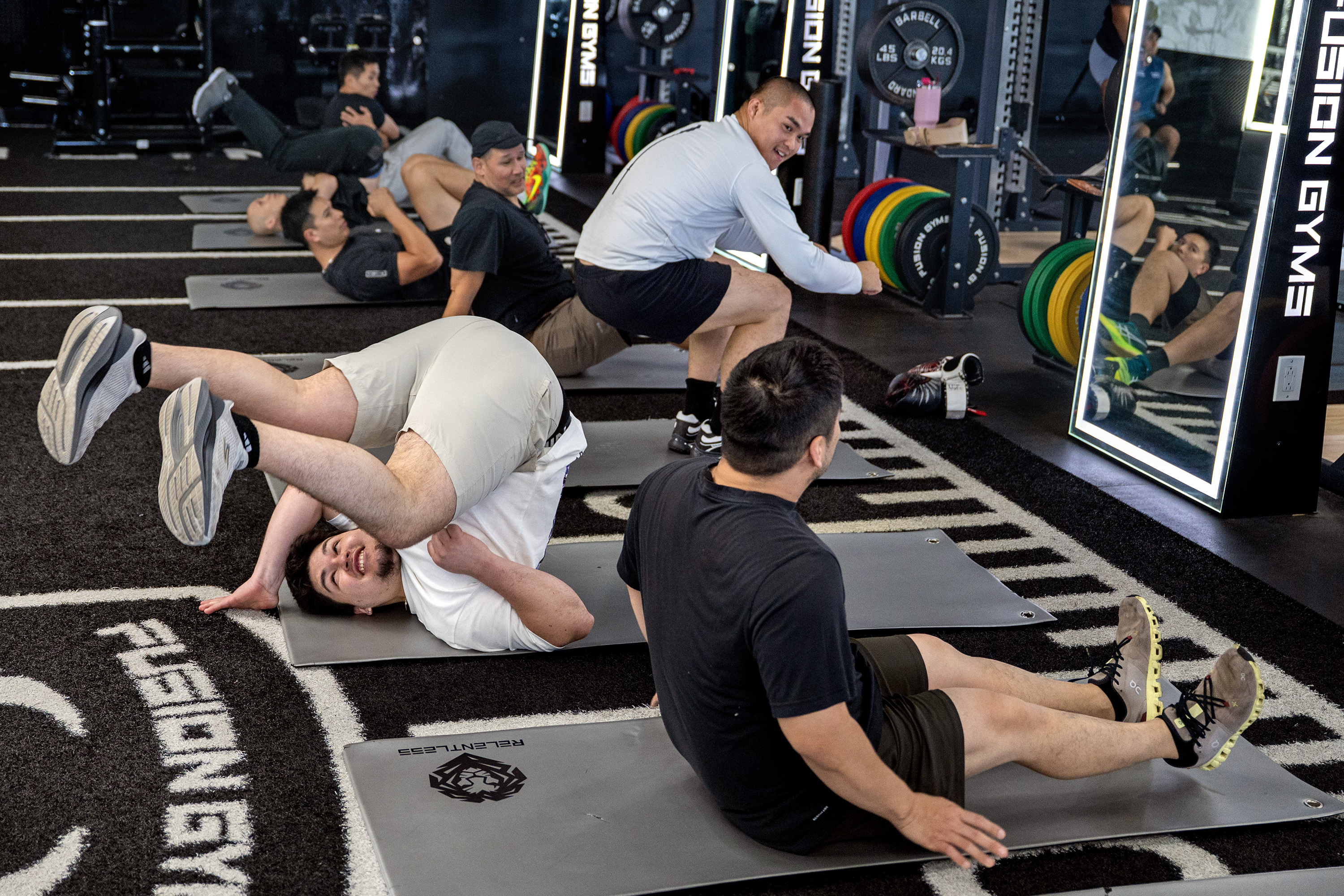
    Sushi chefs work out at Fusion Gyms in South Philadelphia. They get together regularly, trading both exercise tips and fish intel. From front to back are Dan Santana, Carlos Wills, and Albert Zheng.Tom Gralish / Staff Photographer

    At one point, Carlos Wills, 26, who helms the omakase counter at Ogawa, pulled up a list of available ingredients sent by his buyer from Japan’s Toyosu Market, the world’s largest wholesale seafood market, and showed Yanaga the $500 tray of uni and $55 60-sheet packet of nori that he was considering ordering once he was done working out.

    On this Tuesday, the chefs were also drinking some of the world’s most expensive coffee, brewed by Nguyen. “It’s Orange Geisha and it’s expensive because it’s so rare and it takes half a pound of beans for me to brew one bottle,” explained Nguyen, who also owns and operates the Coffee Connoisseur Club. The Instagram-based subscription club sources beans from Nguyen’s plots in Vietnam and small farmers in South America. “This is a $250 bottle of coffee,” Yanaga interjected.

    “I’m getting kumquat, jasmine, and orange notes coming from it,” said Nguyen. “I like saba [mackerel] paired with this, as the fattiness of it pairs with the bright citrusy notes. Saba with a little bit of wasabi.”

    There was no saba in sight as Nguyen held a punching bag while Zheng jabbed, gently coaxing him on where to aim his punches. He did the same for Alex Jiang, 42, from Kichi Omakase. “We have a heavy jab over here!” he proclaimed.
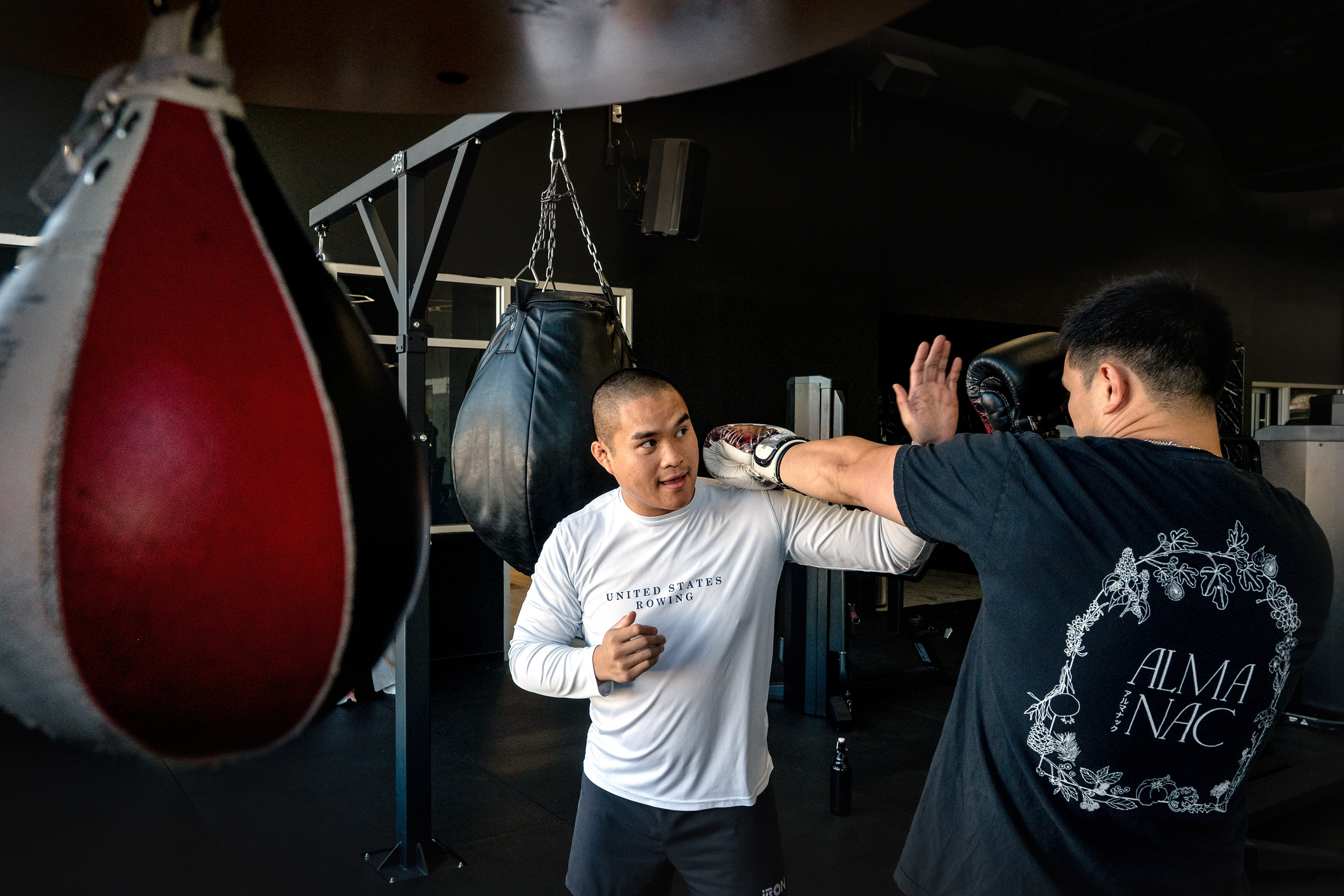
    Sushi chefs Joseph Nguyen (left) and Albert Zheng work on boxing at Fusion Gyms.Tom Gralish / Staff Photographer

    When the crew moved on to bench-pressing, Wills said, “You can tell people this is how I prepare to lift a tuna.”

    As Wills sat back on the weight bench and lifted the bar, he said, “This is a 60-pound tuna.”

    The sushi chefs spot one another and cheer each other on: “One more! Half a tuna more! You’re very strong!”

    “I thought about bench-pressing the 281-pound tuna we brought into Javelin for the tuna breakdown last week,” said Zheng. “But it was so slippery.”
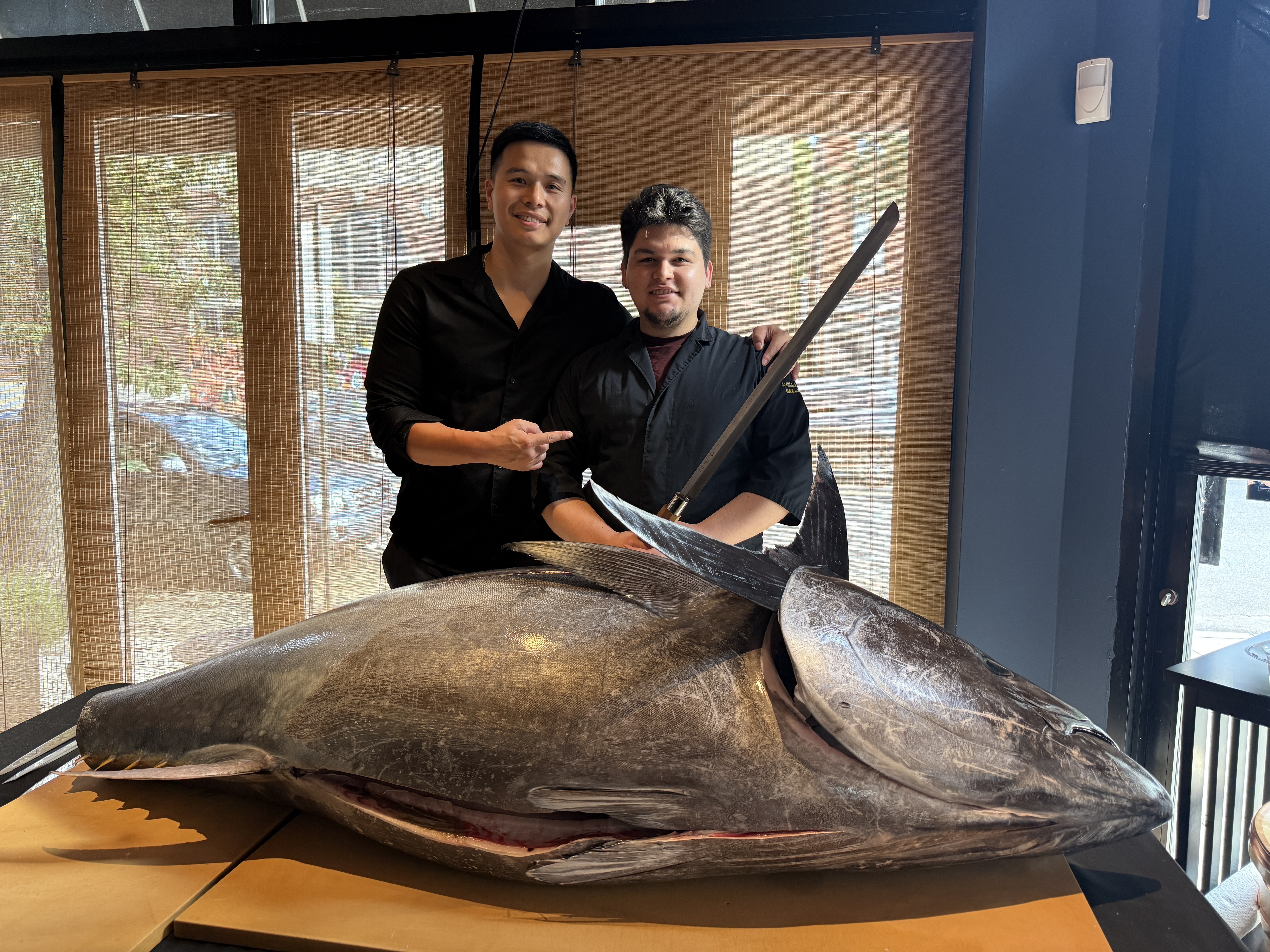
    Sushi chefs like Albert Zheng and Carlos Wills say they work out to stay in shape for lifting fish like this 281-pound Spanish bluefin tuna at Javelin in Fairmount.Kiki Aranita / Staff /

    “When we get a tuna like that, it takes eight of us to lift it,” said Yanaga.

    “We got a Spanish bluefin last week,” said Wills. “It was $23 per pound, so just over $6,600. Pretty cheap. The Japanese ones are $31 per pound right now.”

    “Who wants to do a whole tuna?” asked Zheng as he and Santana added more weights on to a bar for a round of dead lifts.

    Nguyen steps up and dead lifts 315 pounds. “We’re hiring him for the next tuna breakdown,” said Wills.
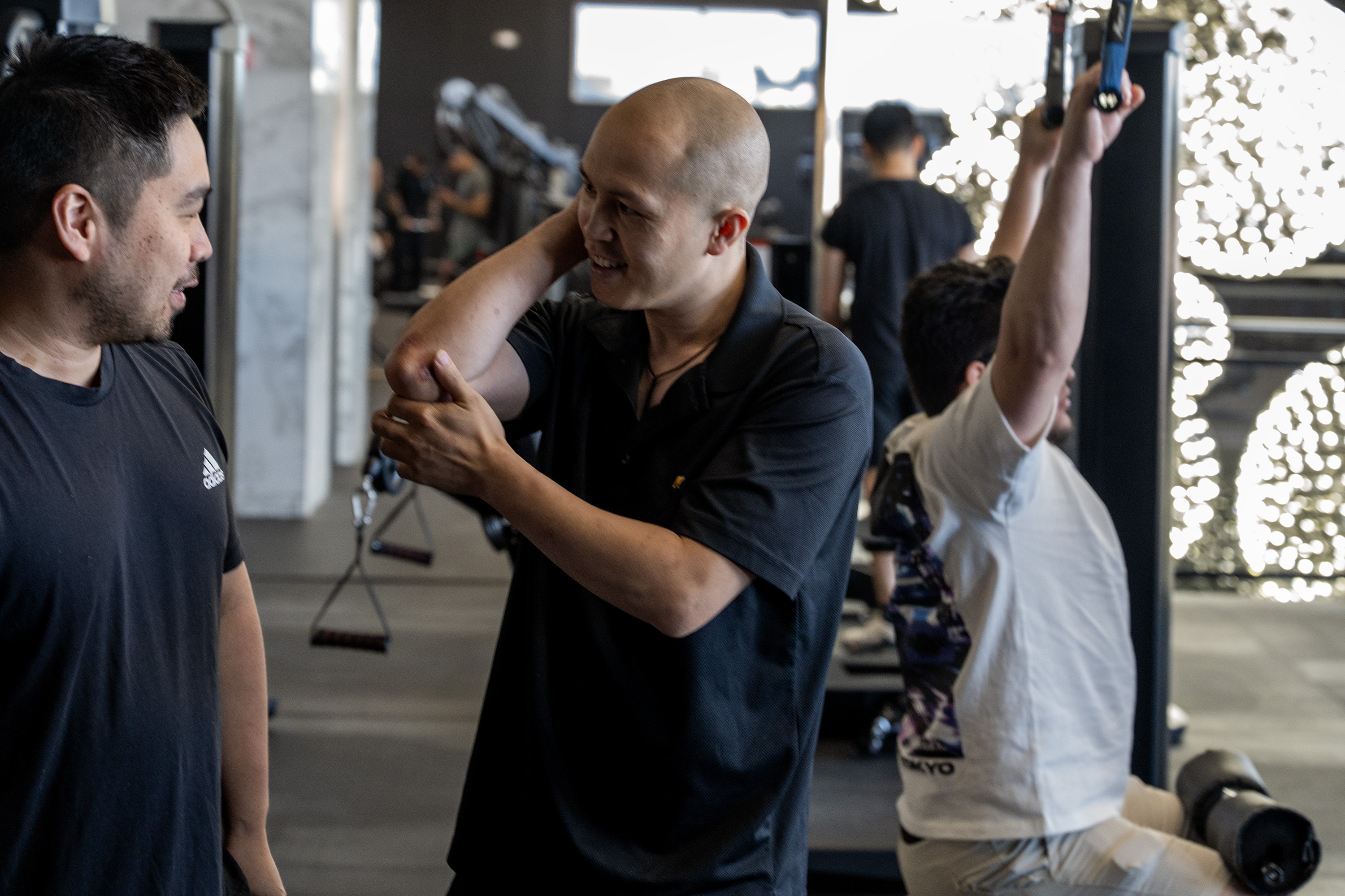
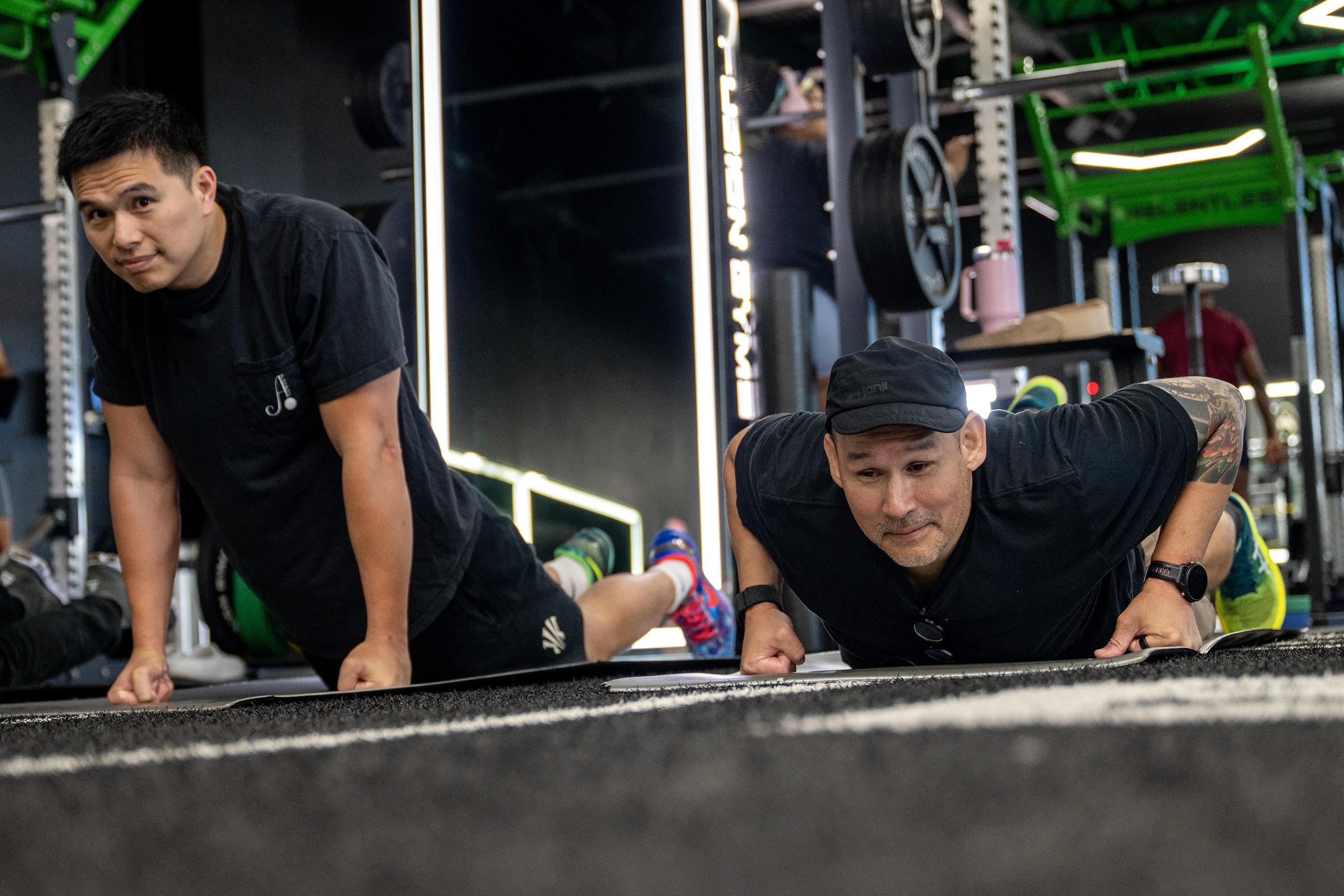
    Sushi chefs (from left) Dan Santana, Alex Jiang, and Carlos Wills work out at Fusion Gyms.Tom Gralish / Staff Photographer
    Sushi chefs Albert Zheng (left) and Kevin Yanaga work on planks at Fusion Gyms in South Philadelphia.Tom Gralish / Staff Photographer

    In fact, the chefs do often join up for tuna cuttings, helping one another out even if they aren’t in business together.

    But mostly, the crew keeps one another accountable at the gym, welcoming each other even if weeks or months pass between workouts.

    Once the coffee was consumed and their muscles were spent, the chefs dashed off in different directions, to their respective sushi counters.
  • 7th Street Burger, an NYC-based chain, opens its first Philly location

    7th Street Burger, an NYC-based chain, opens its first Philly location

    You’d be forgiven if you walk into any 7th Street Burger and think that the burger chain has been around forever. Its spare, almost bare-bones menu of smash burgers and fries is more classic than innovative, but perhaps its austerity is part of what is fueling its growth.

    The chain is growing at a breakneck pace. The New York-based chain opened its 35th location in Fishtown (1215 Frankford Ave.) earlier this week. It has three more Philly-area locations that are slated to open by the end of this year, in University City, Center City, and Conshohocken.

    On a Wednesday at 4 p.m., squarely between regular lunch and dinner hours, it was packed with people of seemingly every demographic, waiting in line for burgers.

    It was first opened on its namesake East 7th Street in New York’s East Village in May 2021 by entrepreneurs Kevin Rezvani and Paras Jain who “maxed out” their credit cards in order to do so. The burger joint took off. They quickly opened another location in Greenwich Village within a year. Venture capital firm Left Lane Capital invested in 7th Street Burger in 2023, and since then, the brand has been on an opening spree up and down the East Coast.

    Philly’s first location took nearly a year to open, from when the chain first took possession of the previously empty space in October.

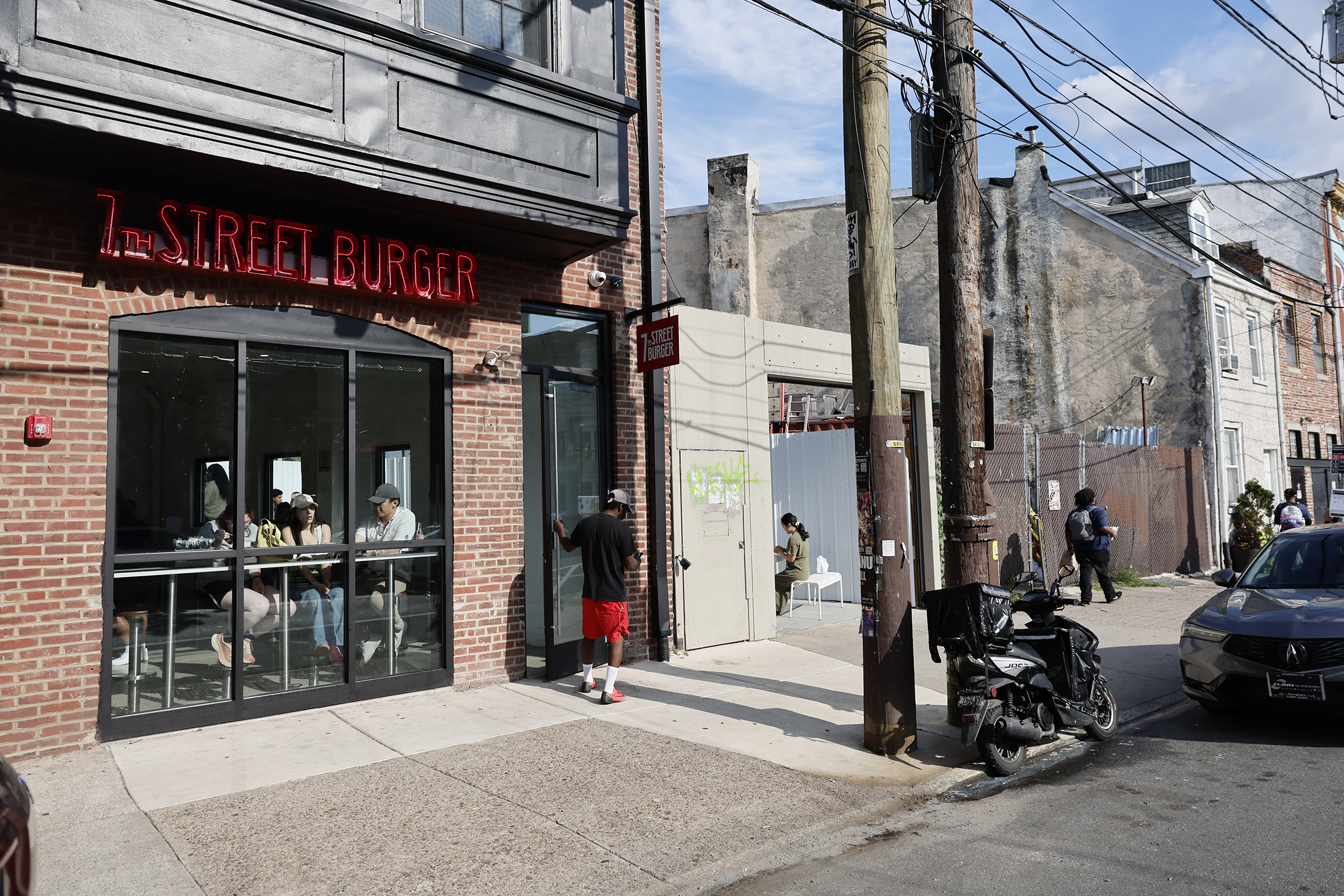
    7th Street Burger at 1215 Frankford Ave.Elizabeth Robertson / Staff Photographer

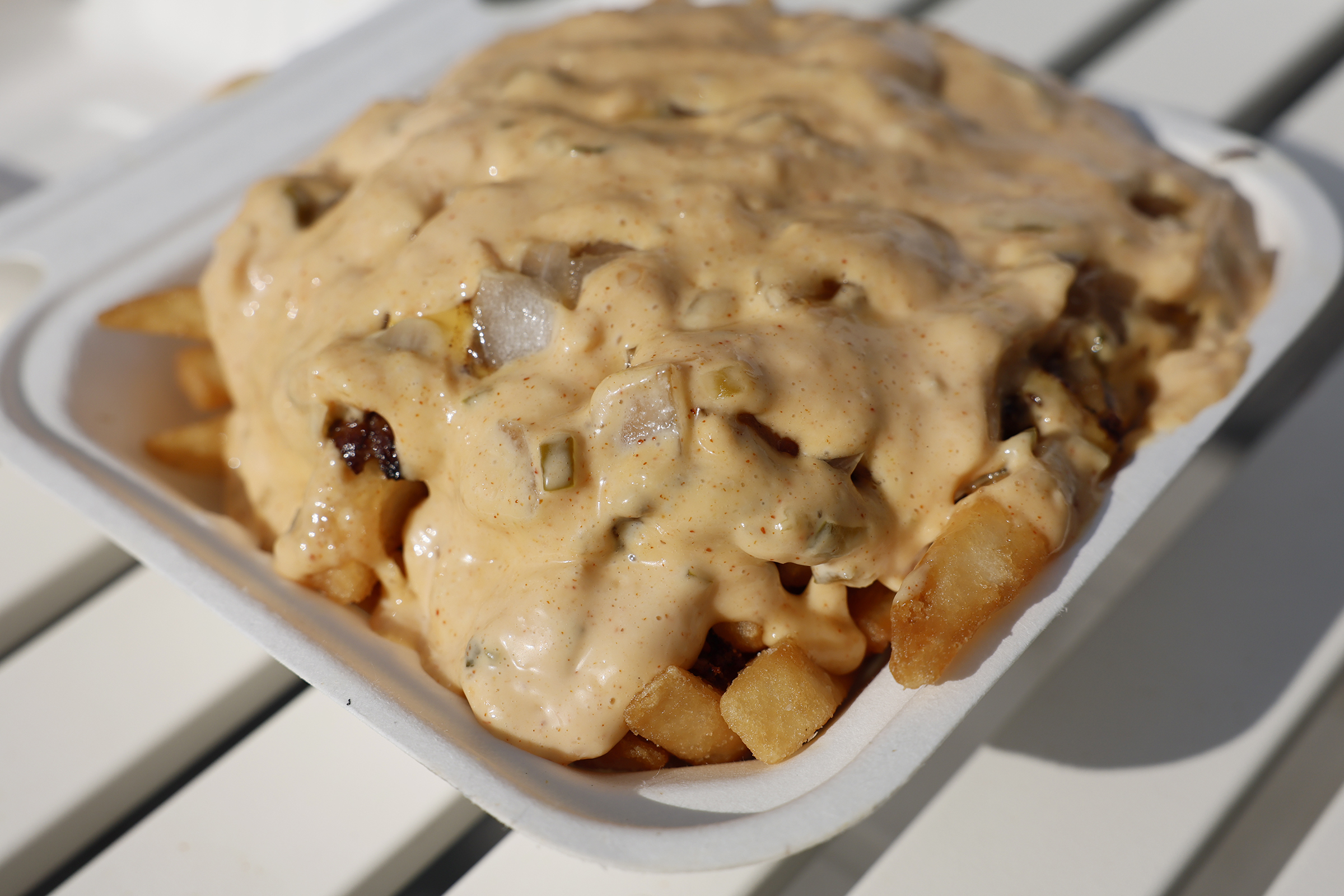
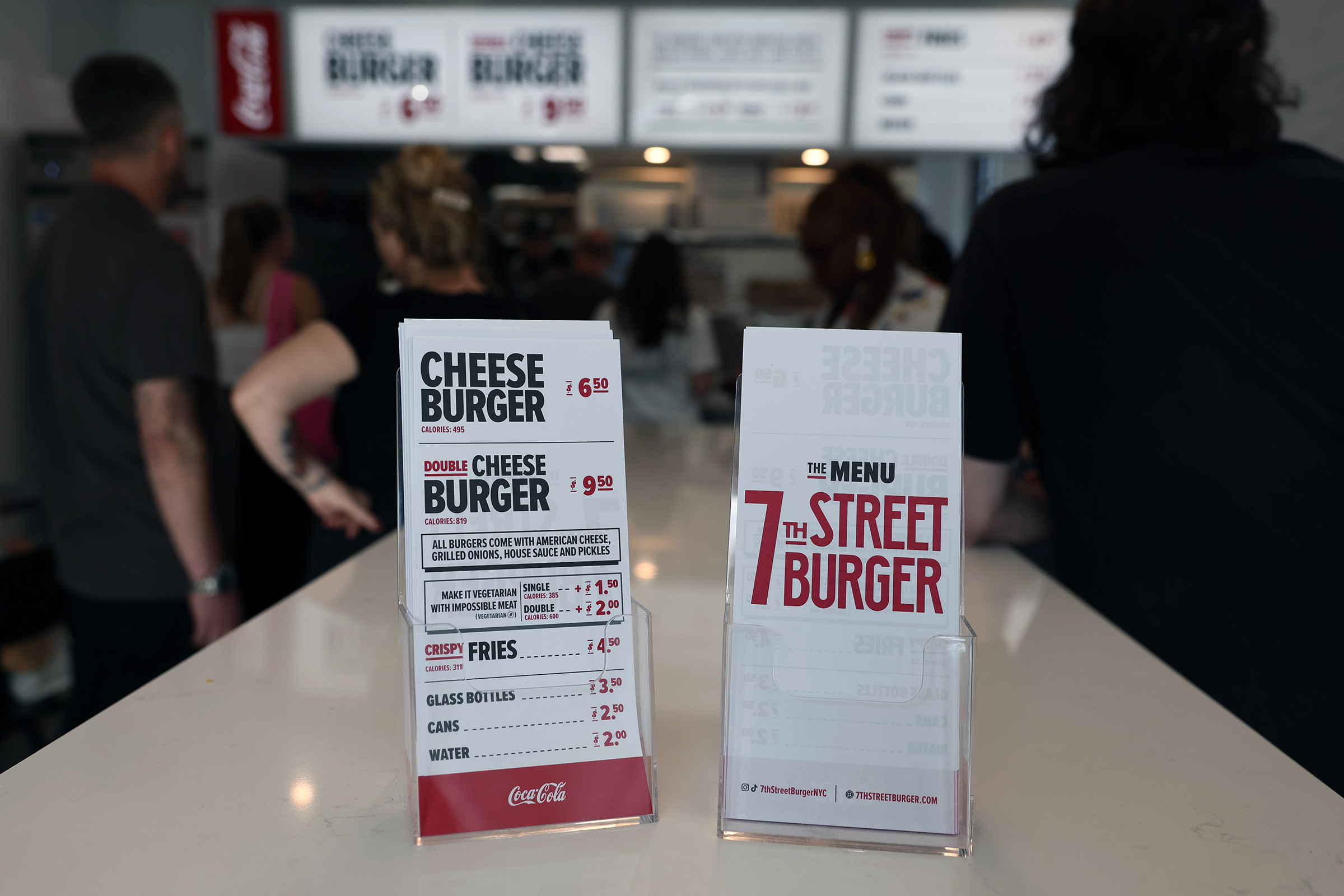
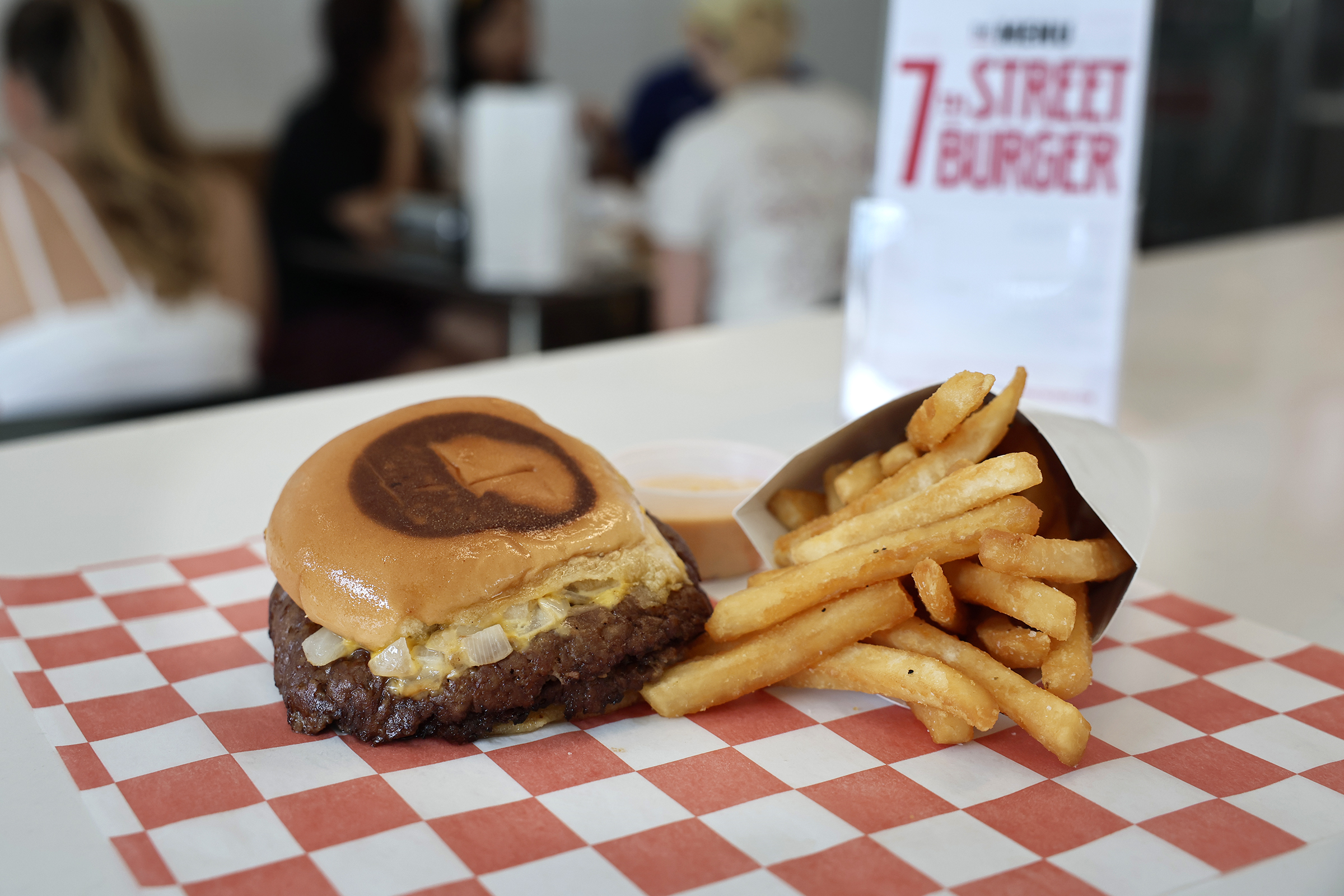
    All 7th Street Burger locations serve the same menu (at the same prices) consisting of a cheeseburger ($6.50), double cheeseburger ($9.50), and crispy fries ($4.50). Cheeseburgers and double cheeseburgers can be made vegetarian with Impossible Meat for an additional $1.50 and $2, respectively. Only Coca-Cola, Sprite, and water are available as beverages. All burgers are served on Martin’s potato rolls with American cheese, grilled onions, a mayonnaise-based house sauce that manager Frank Perez declined to give any other ingredients of, and pickles. There is a secret menu of Cajun fries and loaded fries that isn’t posted at any of their restaurants, but is rather written with a Sharpie on a takeout box at the register. Loaded fries are topped with the same ingredients as the burgers, with options to make them spicy (with a ghost pepper sauce and jalapeños).

    The loaded French fries at 7th Street Burger.Elizabeth Robertson / Staff Photographer
    The menu is limited and the same from location to location.Elizabeth Robertson / Staff Photographer

    Hours will likely change, as 7th Street Burger learns the Philly market’s demands and that of their locations’ surrounding neighborhoods. “For late night, we’ll probably extend Friday and Saturday to be closer to our New York shops,” said Perez. In New York, the locations are open until 3 a.m.

    Since opening, Philly’s 7th Street Burger has sold hundreds of burgers (Perez declined to state how many hundreds) but did note that they have sold far less Impossible Meat burgers here than in any other markets.

    7th Street Burger is at 1215 Frankford Ave. 877-428-2693, 7thstreetburger.com. Hours: 11 a.m. to midnight every day. Hours may change depending on demand.

  • Dîner en Blanc got canceled. Participants found ways to celebrate anyway

    Dîner en Blanc got canceled. Participants found ways to celebrate anyway

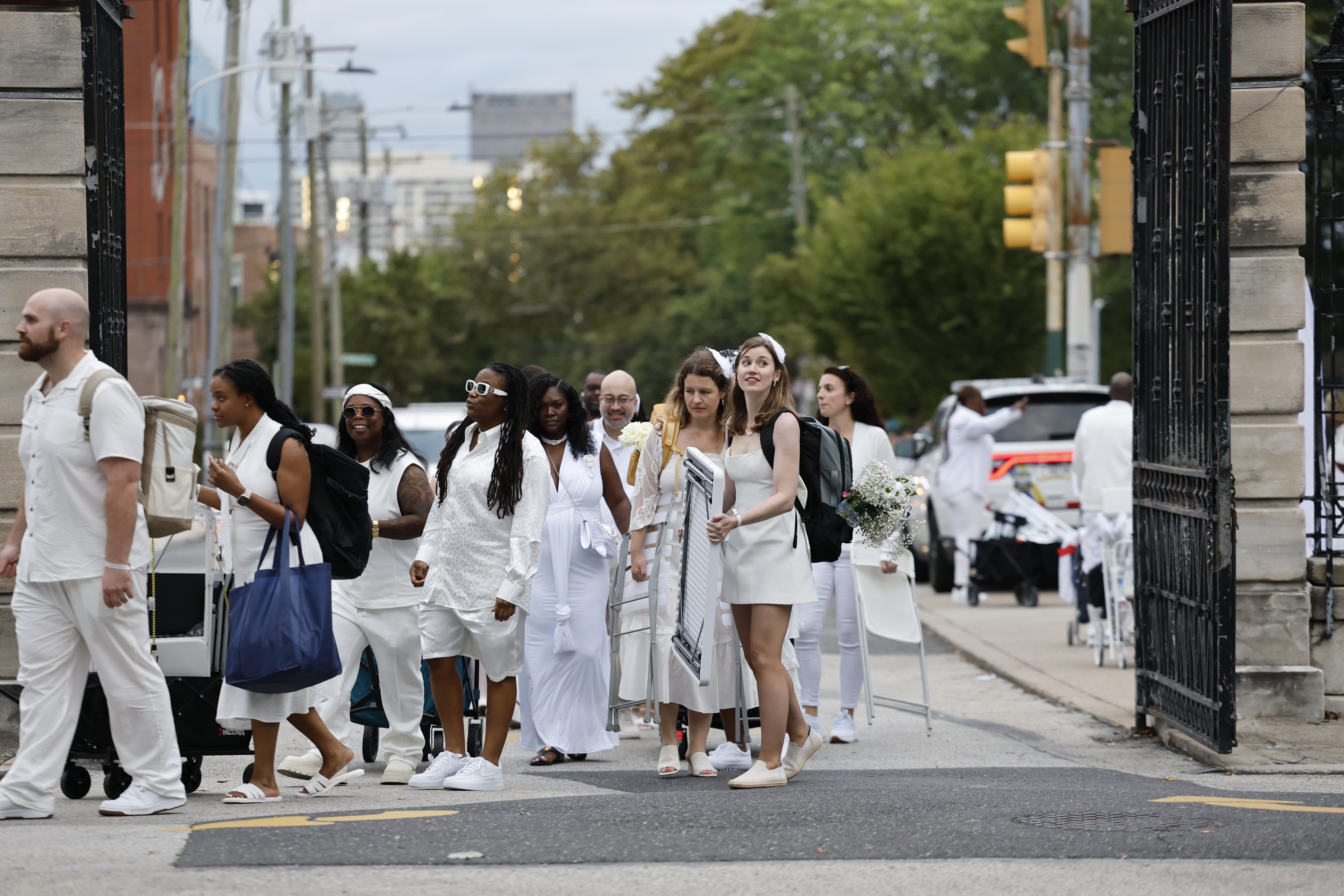
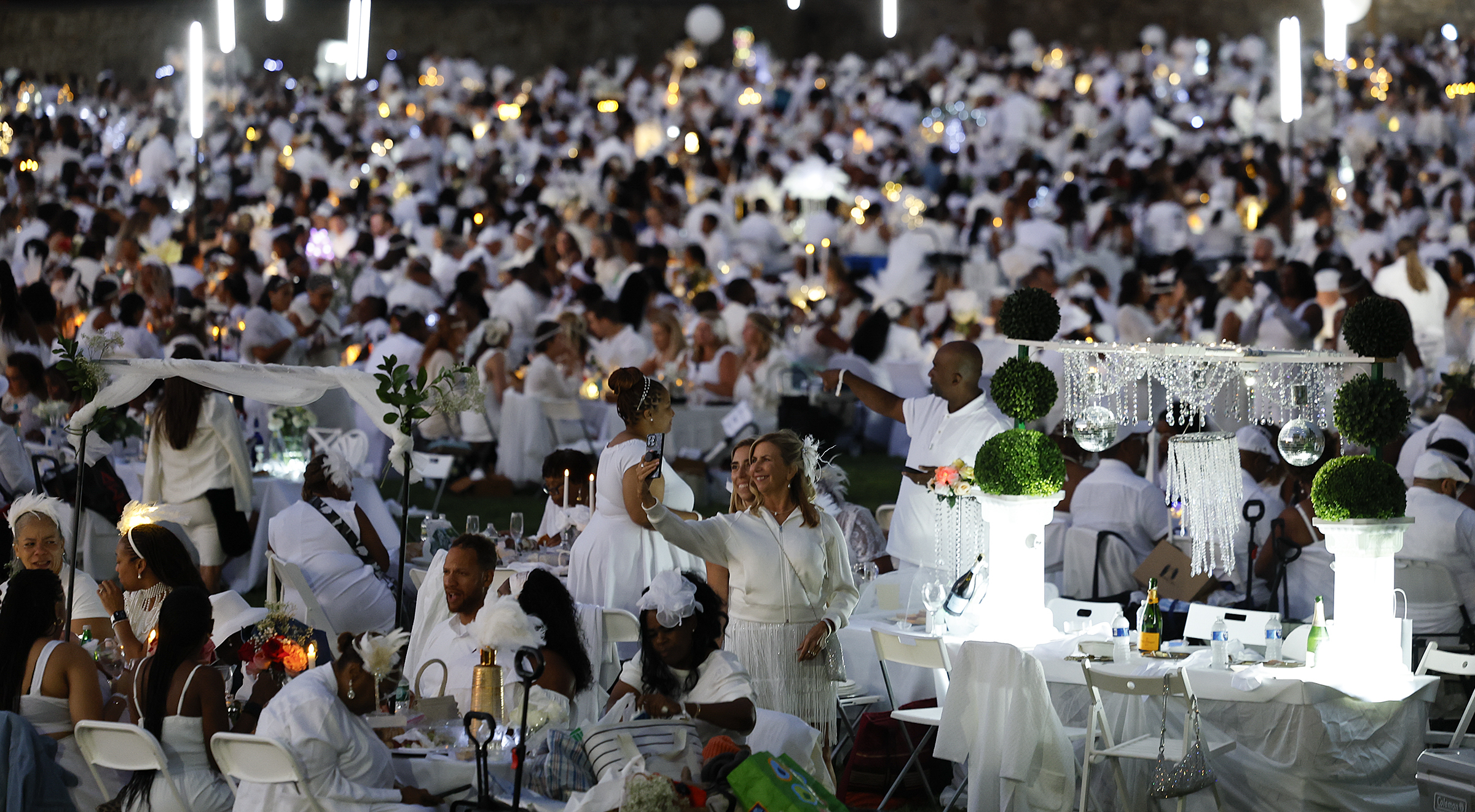
    When inclement weather prompted organizers to cancel Philly’s 14th annual Dîner en Blanc Thursday night, would-be revelers dealt with their disappointment and celebrated anyway.

    Attendees paid $146 per couple to attend the picnic, which attracts thousands of people. Every year, they bring their own white chairs, tables, tablecloths, food, and drink to a secret location, revealed hours before the event. Last year’s event had 5,000 participants. This year’s Dîner en Blanc was sold out and the location had not yet been disclosed to participants.

    The Inquirer asked Dîner en Blanc representatives if participants would be refunded, or if the event would be rescheduled, but has not yet received a response.

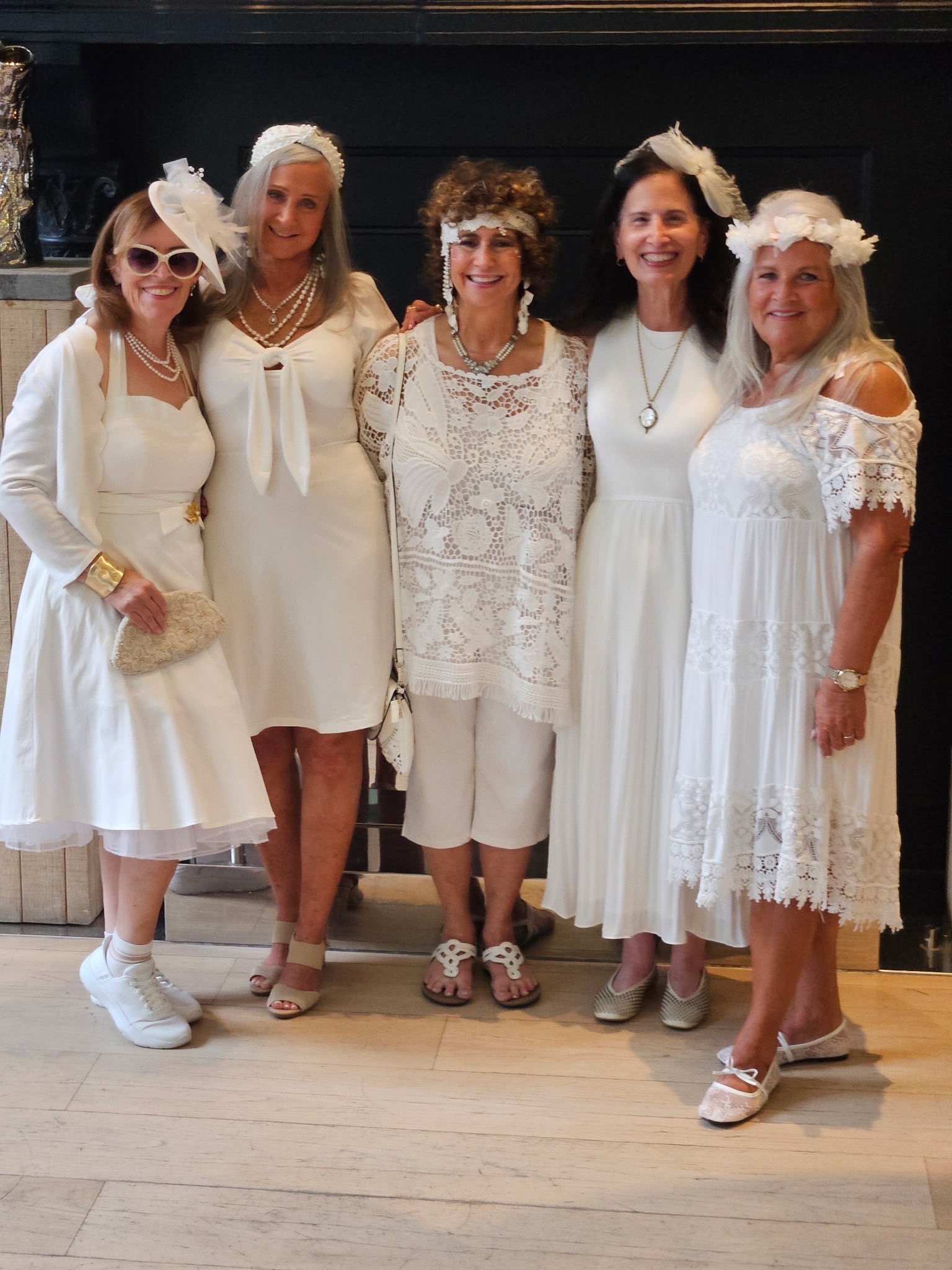
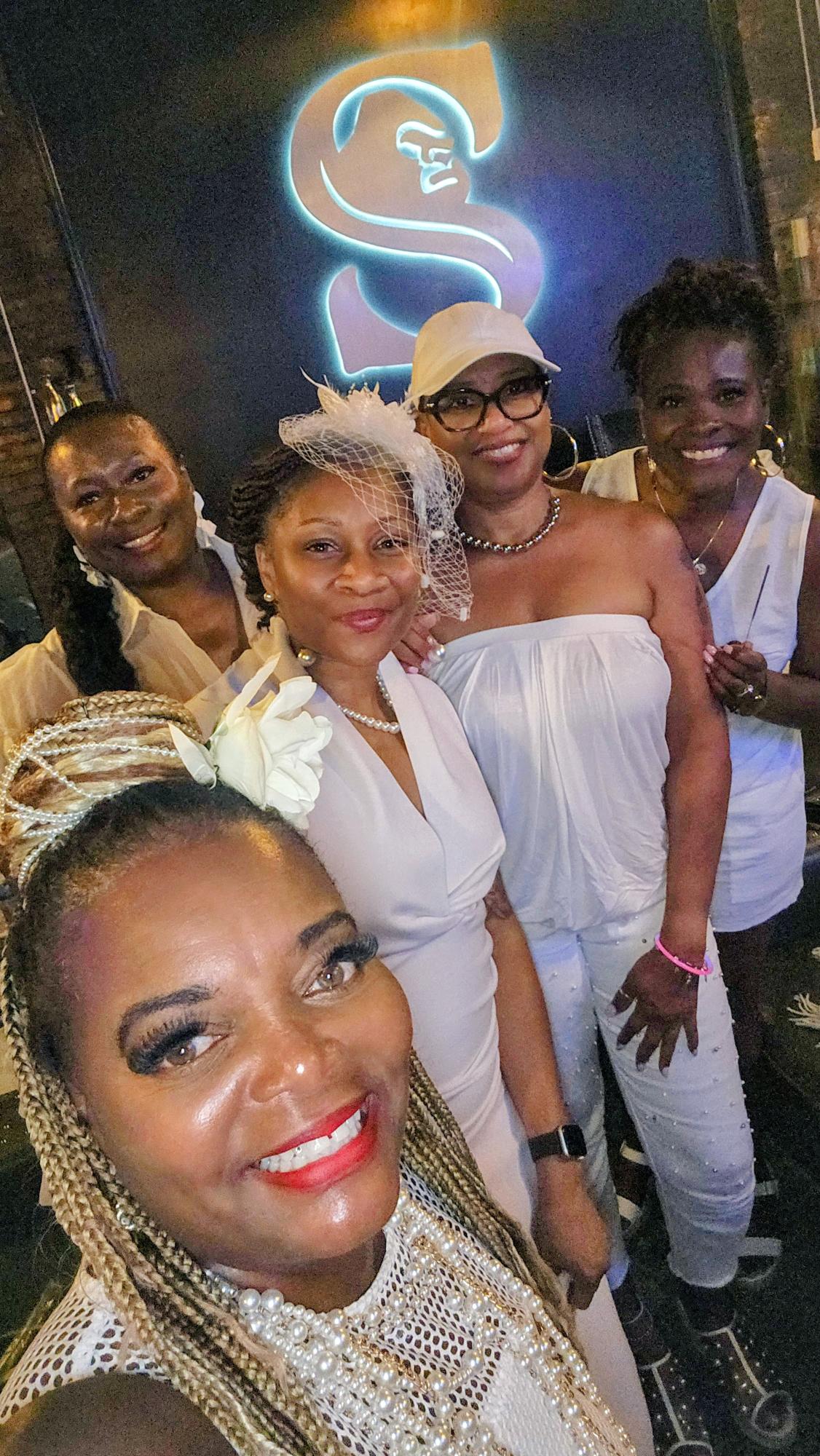
    Table leader Candy Rathsmill, who was set to lead 50 Dîner en Blanc attendees to the location, had already prepared for rainy weather, adjusting her outfit to include a poncho and white sneakers. But she and her friends still “dressed in our whites,” drank champagne, and dined at Spice Finch. “Many of my guests partied at hotels, others picked up the food they had ordered and celebrated at home with friends,” said Rathsmill.

    Karen Barach, Carolyn Blatstein, Candy Rathsmill, Adelyn Brecher, and Jill Shefsky, still dressed up and celebrated Dîner en Blanc on their own, despite the annual picnic being canceled.courtesy of Candy Rathsmill

    “We made lemonade out of lemons,” she said.

    TV host and style expert Jen Su was already dressed for the occasion before the cancellation announcement was made shortly before 4 p.m. on Thursday. “My dress was from [the brand] Akira and it was styled by Soku Massimo. And my hair was done by [red-carpet hair stylist] Linnternational,” she lamented. “My hubby ended up cooking dinner for me and we wore our white outfits by candlelight and drank champagne.”

    “[We had] Sichuan spicy chicken and rice as the rain poured outside. It ended up being a beautiful Dîner en Blanc,” said Su.

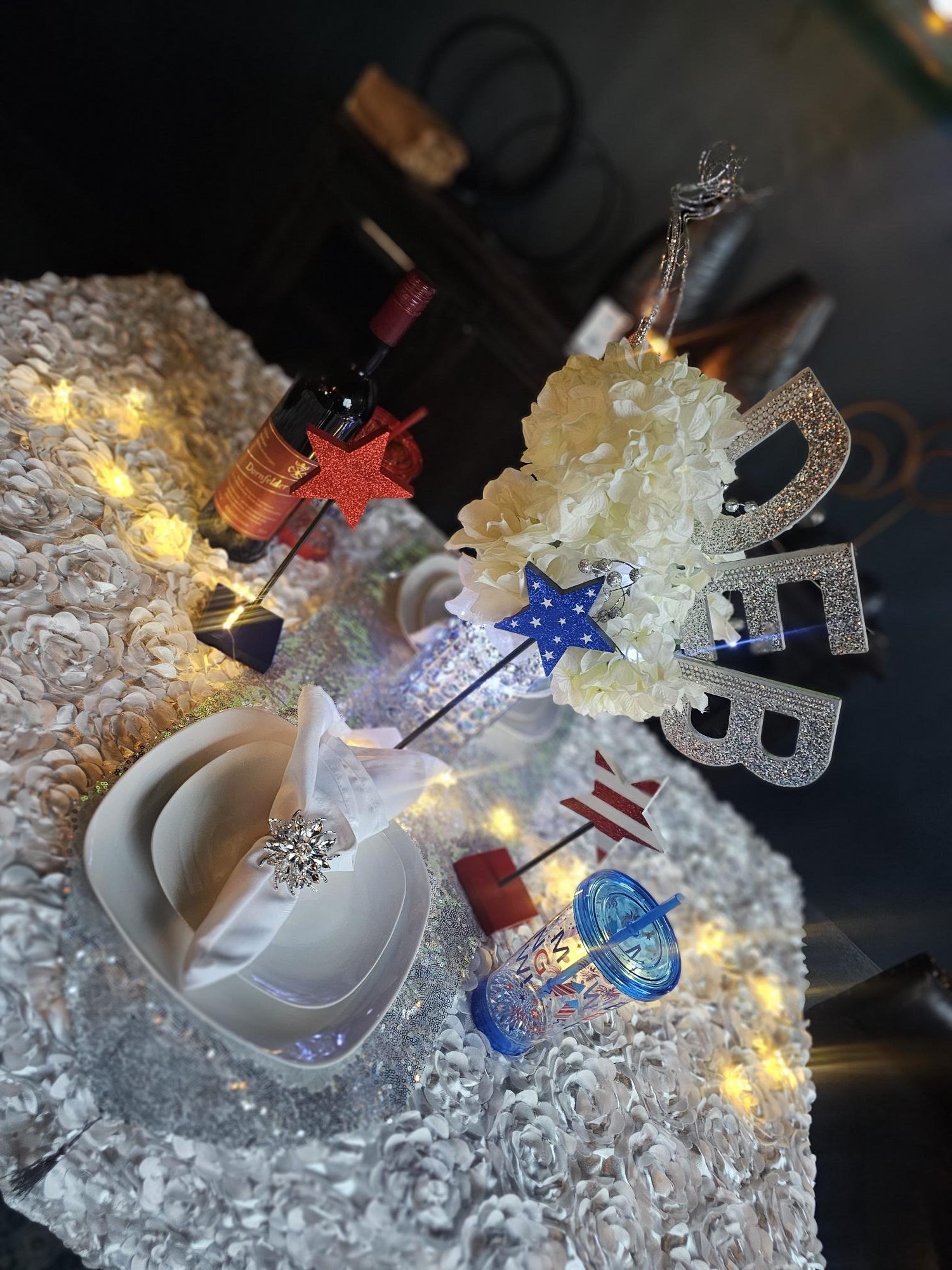
    Melissa Joyner, owner of Tangibles Salon & Beautique in Voorhees, and her friends also made the best of the situation. They were already dressed up and had packed their decor, so they headed to Smokin’ Silverbacks Cigar Lounge in Fishtown and set their tables up inside. ”Our Dîner en Blanc was born. From napkin-swinging to sparklers, good food, cigars, laughs, and unforgettable vibes, we had it all and we had a ball,“ said Joyner.

    Melissa Joyner, Malaika Guest, Jamel Lott, Marian Gordon, and Annetta Hall were already dressed up for Diner en Blanc, until the event was canceled and they rerouted to Smokin Silverbacks Cigar Lounge in Fishtown.Meliss
    Melissa Joyner’s impromptu Diner en Blanc table, set up inside a cigar lounge when the event was canceled.Meliss

    “The original plans may have been canceled, but the celebration definitely wasn’t. Sometimes the best memories come from the plans you never planned,” said Joyner.

    Meanwhile, Rathsmill is keeping the party going even longer and planning to meet up with members of her group today. “One of the best parts of Dîner en Blanc is making lifelong friends,” she said.

  • New openings fuel a little treat boom in Graduate Hospital

    New openings fuel a little treat boom in Graduate Hospital

    For years, Graduate Hospital — the Center City neighborhood roughly bounded by South Street and Washington Avenue, and Broad Street and the Schuylkill — has been sorely lacking in places to stop in for a snack, pastry, or ice cream cone.

    It didn’t seem to matter: Rittenhouse was so close that residents’ desires for little treats were generally met by walking a couple blocks north, where “little treats,” the culture of which has been surging worldwide, abound. On the 200 block of 20th Street alone, between Walnut and Spruce, you’ll find 1-900-Ice-Cream, which opened in 2022 and sees relentless lines down the block; All Aboard Candy, which opened last year and is one of two places you can buy adorable gummy candies; and Biederman’s, a seafood-centric “appetizing” shop that opened earlier this year.

    Now, Grad Hospital is seeing its own treat boom. In recent months, the neighborhood has seen an influx of treat sellers that shows no sign of stopping.

    The openings have been concentrated on South Street between 15th and 17th Streets, but other parts of the neighborhood are changing as well.

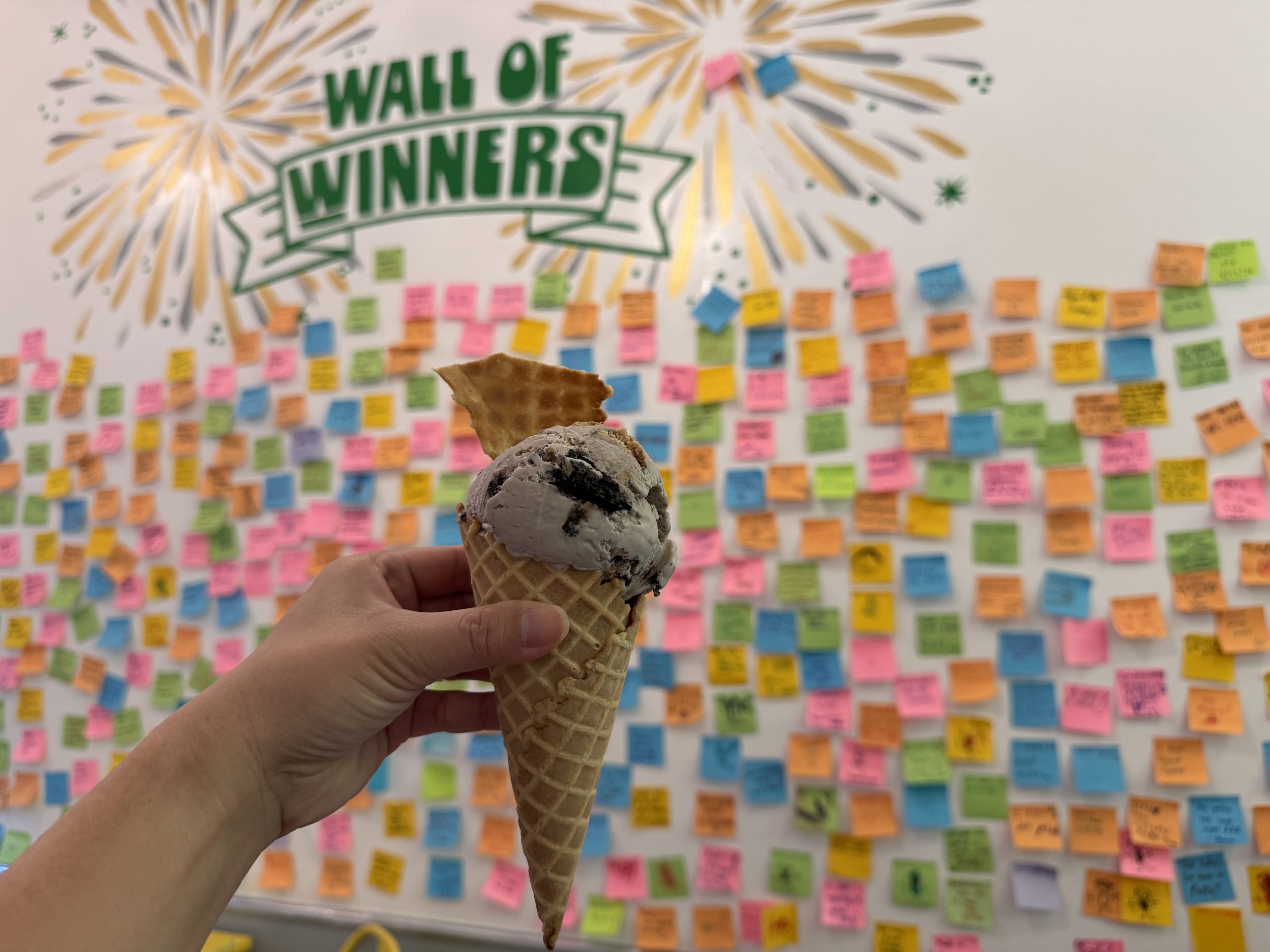
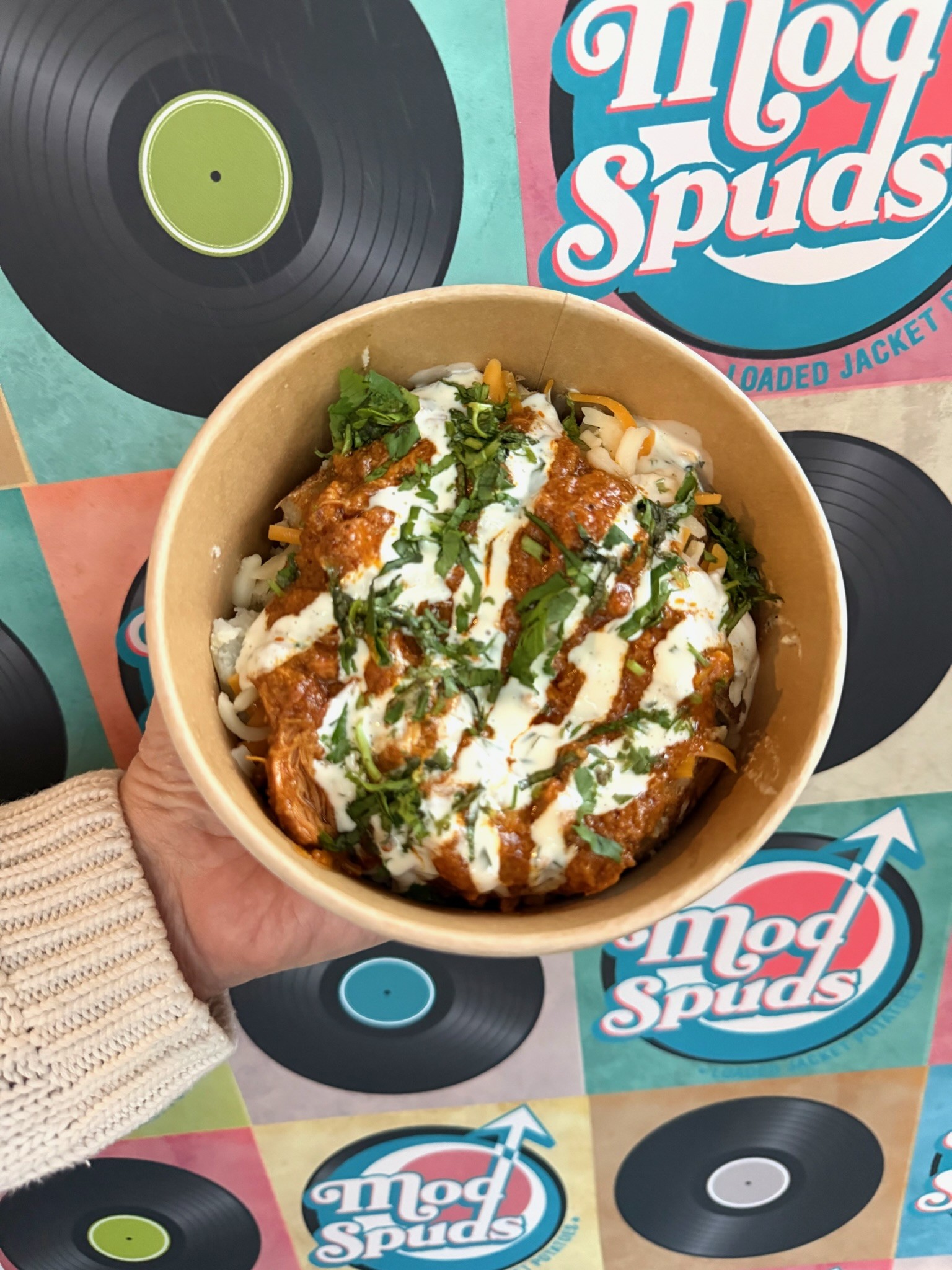
    Winners Ice Cream, Ange Branca’s jacket potato and creamsicle-driven operation Mod Spuds, Sandpiper Cafe (where you can get trendy matcha lattes), and Sweet Mousse (which sells even fancier beverages and mousse cakes) all opened within two blocks of one another on South Street between May and July this year. They are all Asian-owned — a notable aspect of little treat culture, as Asian flavors like matcha and ube have been extremely popular at little treat retailers. (Demand for both ingredients has been so high, both have seen global supply chain shortages.)

    The market for little treats, also known as treatonomics, is propelled by Gen Z but not at all restricted to that generation, as spending on “pick-me-ups” generally increases in recessions and in uncertain economic conditions, economists have found.

    Cookies and cream dream in a waffle cone at Winners Ice Cream in Graduate Hospital.Kiki Aranita

    The Grad Hospital boom is powered by nimble operators with no need for the ventilation systems required at most full-service restaurants. Thus, they are able to launch after footing comparatively light construction costs.

    “We’re two months in and it’s been awesome,” said Anh Nguyen, the owner of Winners. “Many are saying Grad Hospital needed an ice cream shop, so I’m happy we opened here.”

    Nguyen’s clientele consists mostly of neighborhood residents and families. He hopes to attract more customers from outside the area. “My aim is to win the block, then win the city. I love being the neighborhood ice cream parlor — somewhere for families to go celebrate and make memories.”

    Though Nguyen currently lives in Roxborough, he hopes to move. “I’ve fallen in love with Grad Hospital since being here and everyone I’ve met has been so welcoming and encouraging.”

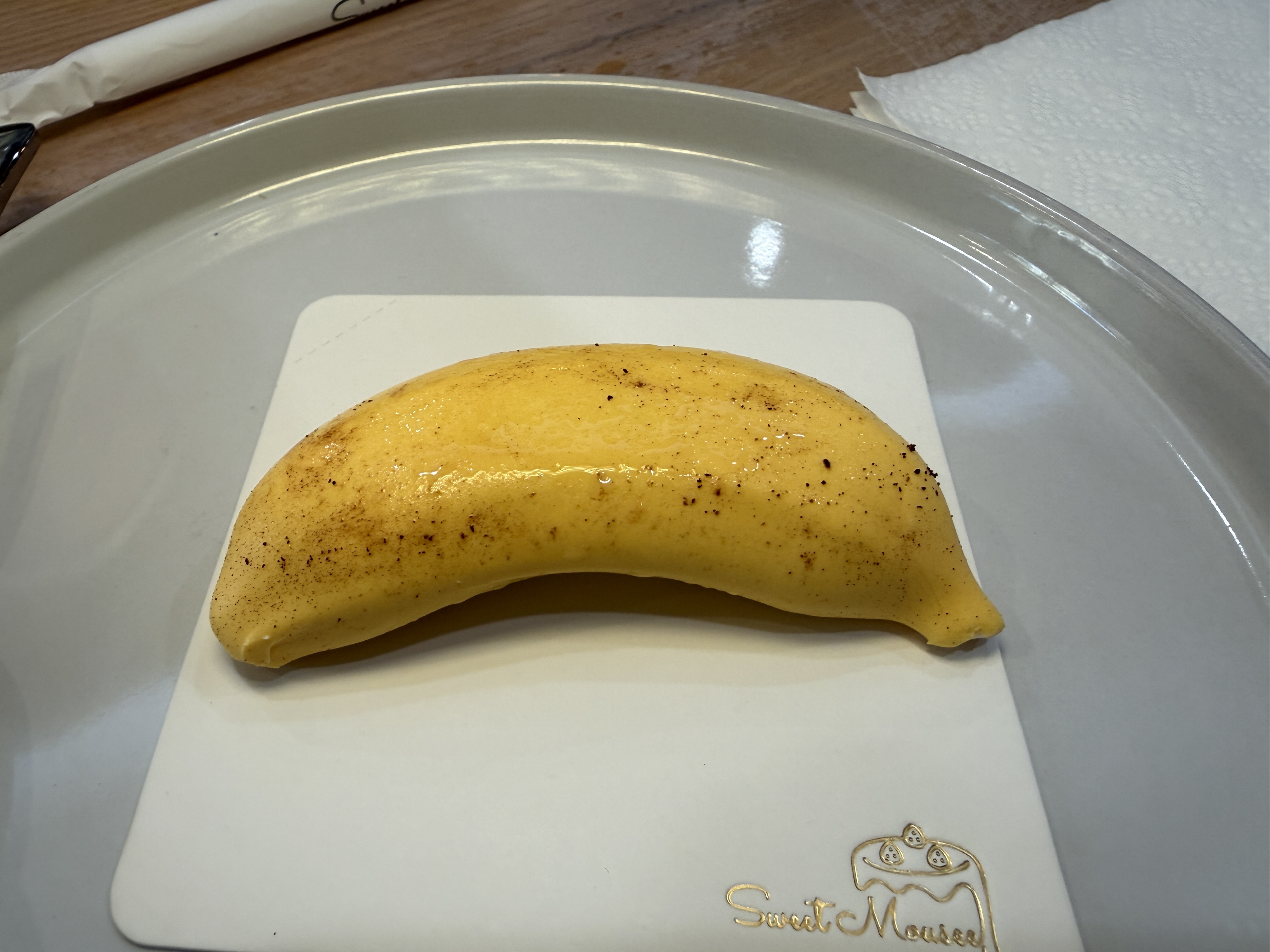
    The dark chocolate banana mousse cake from Sweet Mousse in Graduate Hospital.Kiki Aranita / Staff /

    Little treats are massively impacting a neighborhood that, until this year, was stalled in gentrification. Once primarily home to working-class Black residents, Grad Hospital fell into disrepair when the manufacturing industry declined in Philadelphia. The neighborhood gentrified rapidly between the late 1990s and early 2010s due to city tax abatements and proximity to University City and Center City. According to a study by Pew Charitable Trusts, Graduate Hospital experienced the most dramatic changes in racial composition in Philadelphia in the early aughts: “[Graduate Hospital’s] total Black population fell from 7,793 in 2000 to 3,450 in 2014. During the same period, the number of white residents more than tripled in the neighborhood.”

    The wave of redevelopment, new construction, and gentrification brought comparatively few small businesses and restaurants. Unlike South Philly and Fishtown, Grad Hospital has no established restaurant corridor.

    A Malaysian spud from Mod Spuds.Courtesy of Mod Spuds

    “Mod Spuds [on the 1400 block of South Street] needed a place that is a fine balance between good traffic, neighborhood-y, and affordable,” said Branca, who said that the location was perfect despite (or even because of) being a “less desirable block.” Its limited kitchen space, which does not allow for an exhaust hood, kept her rent down. It was only after Mod Spuds opened that Branca realized she was right on Grad Hospital residents’ commute home from jobs in Center City.

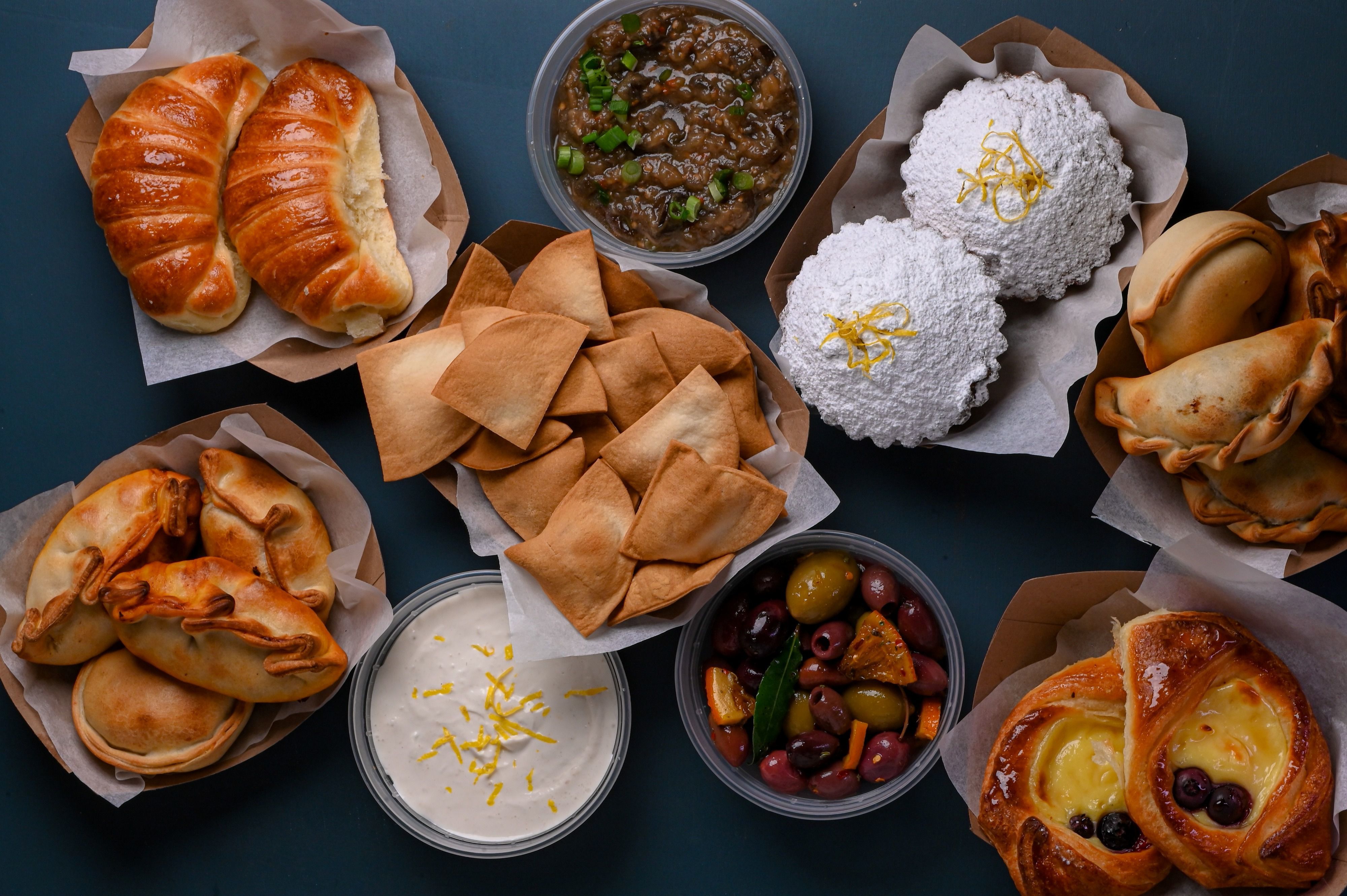
    The neighborhood has also beckoned “empanada queen” Jezabel Careaga, who had left as a business owner, but not as a resident, in 2018. Technically, Careaga’s original Argentine bakery, Jezabel’s, was in Fitler Square, but now she is reopening it at 617 S. 24th St., right on the cusp of Grad Hospital. Careaga’s empanadas and alfajores helped define Philly’s little treat scene long before the culture acquired its tagline.

    “Graduate Hospital has changed so much since I first came to this neighborhood, but what is really special to me is seeing the generations grow up here,” said Careaga, who has lived in the neighborhood since 2010. “It feels like I’m creating a little piece of the memory I had with my grandmother, right here in my own neighborhood.”

    Assorted dishes from Jezabel Careaga, including empanadas, medialunas, escabeche, ricotta cake, facturas, olive oil crackers and preserved lemon labneh.Lucas Careaga / Innprodev Agency

    The same children who would stop at her bakery after school are now grown up — some have even asked her for jobs. “And now I’m seeing them with children of their own, stopping by our bake sales with their little ones,” said Careaga. “It makes me so happy to think that the traditions we started years ago can continue with another generation.”

  • Dîner en Blanc canceled due to severe weather forecast

    Dîner en Blanc canceled due to severe weather forecast

    Philadelphia’s 14th edition of Dîner en Blanc — the annual picnic where participants wear white and bring their own food, chairs, and tables to a surprise location announced just hours before the event — was set to take place Thursday night. But severe weather predicted for this evening changed those plans. This is the first time the event has ever been canceled.

    Dîner en Blanc organizers had sent an email update to ticketed participants this morning. According to the email, organizers “are closely monitoring the weather and are in active discussions with the city, venue, and weather services. We are carefully evaluating the conditions, and we will keep you posted as we learn more.”

    Before 4 p.m., they issued a statement on Instagram that read: “We are devastated to inform you that amid weather-related concerns and after discussions with the city, weather services, venue, and vendors, we will not be moving forward with tonight’s Dîner en Blanc Philadelphia 2026. The decision to cancel was not made lightly, as we know how much time, excitement, and effort go into this event on the guest side. The safety of our guests, volunteers, and vendors is of the utmost importance. The current weather forecast for lightning, high winds, flash flooding, hail, and tornado threat makes it impossible for us to proceed as planned.”

    Thursday’s forecast called for heavy rain and flash foods between 1 and 10 p.m.

    Dîner en Blanc has traditionally been a rain-or-shine event. “We’ve definitely partied through the rain!” said Kate Marlys, the PR representative for Philadelphia’s Dîner en Blanc.

    “The Navy Yard year [2015] had rain, and we were still able to continue with the event. The year we were at Boathouse Row [2019], there was a severe storm with lightning that came through during the event, and we did have to end the event early that year,” said Marlys, who said the forecast for Thursday night seemed more severe than in previous years.

    In the past, rain did not deter table leaders — who meet 50 other attendees apiece at predetermined locations throughout the city to help navigate setting up tables, then collect all trash and belongings at the end of the night — like Candy Rathsmill, 71, who has so far attended all but one of Philadelphia’s Dîner en Blanc occurrences.

    “Rain makes it uncomfortable but it brings a new dimension to the experience,” said Rathsmill. “When it rained at the Navy Yard, my plate filled up with water and I couldn’t eat my food, but this year I’m prepared.”

    She was planning on wearing white sneakers instead of sandals, and packing a poncho and a plastic tablecloth to layer on top of her white linen one. “It’s always fun to be soaking wet and wearing white,” she joked. “And I bring everything in white trash bags.”

    “Even when it rains, it’s a celebration of life. It’s the best party I’ve ever gone to.”

    Last year, Dîner en Blanc was held on the Girard College campus, with 5,000 people in attendance. Tickets, sold in pairs, cost $146 per couple.

  • Philly’s cocktails and coffee drinks are going bananas

    Philly’s cocktails and coffee drinks are going bananas

    Bananas are both tropical and ubiquitous — an ingredient that couldn’t be less local to our region, but found in every grocery store. They’re mundane yet polarizing, especially when ripened and rendered into syrup. They’re summery, due to their cultivation in hot climates, and soul-warming.

    The fruit has long been taken for granted, until now. Its popularity is suddenly booming: It’s a featured ingredient in protein bars, gummy bears, coffee creamer, lip balms, and body washes. Even Wendy’s launched a Minions-themed Banana Frosty Swirl last month.

    But bananas’ recent prevalence in Philadelphia’s bars and cafes has little to do with the little yellow cartoon characters. Banana beverages have been a long time coming, hot on the heels of other wildly popular, vibrantly colored, Asian-inflected flavors like matcha and ube.

    (Unlike matcha and ube, we’re probably not going to see a shortage of banana. But you never know. The bananas we buy at most grocery stores are of the Cavendish variety, but artificial banana flavoring was engineered with the Gros Michel variety in mind. And sometime in the 1950s, after a devastating fungal blight or “bananapocalpyse” called Panama disease, Gros Michel bananas mostly disappeared.)

    “Little treat” cafes are utterly enamored with the banana, as evidenced by banana milk, a classic Korean beverage that has made it onto several cafe menus lately. The cafe crush doesn’t stop there: At the just-opened Sweet Mousse on South Street in Graduate Hospital, you can get a tiny trompe l’œil banana mousse cake ($6) with a dark chocolate center.

    The dark chocolate banana mousse cake from Sweet Mousse in Graduate Hospital.Kiki Aranita / Staff /

    But bananas are not the easiest ingredient to work with.

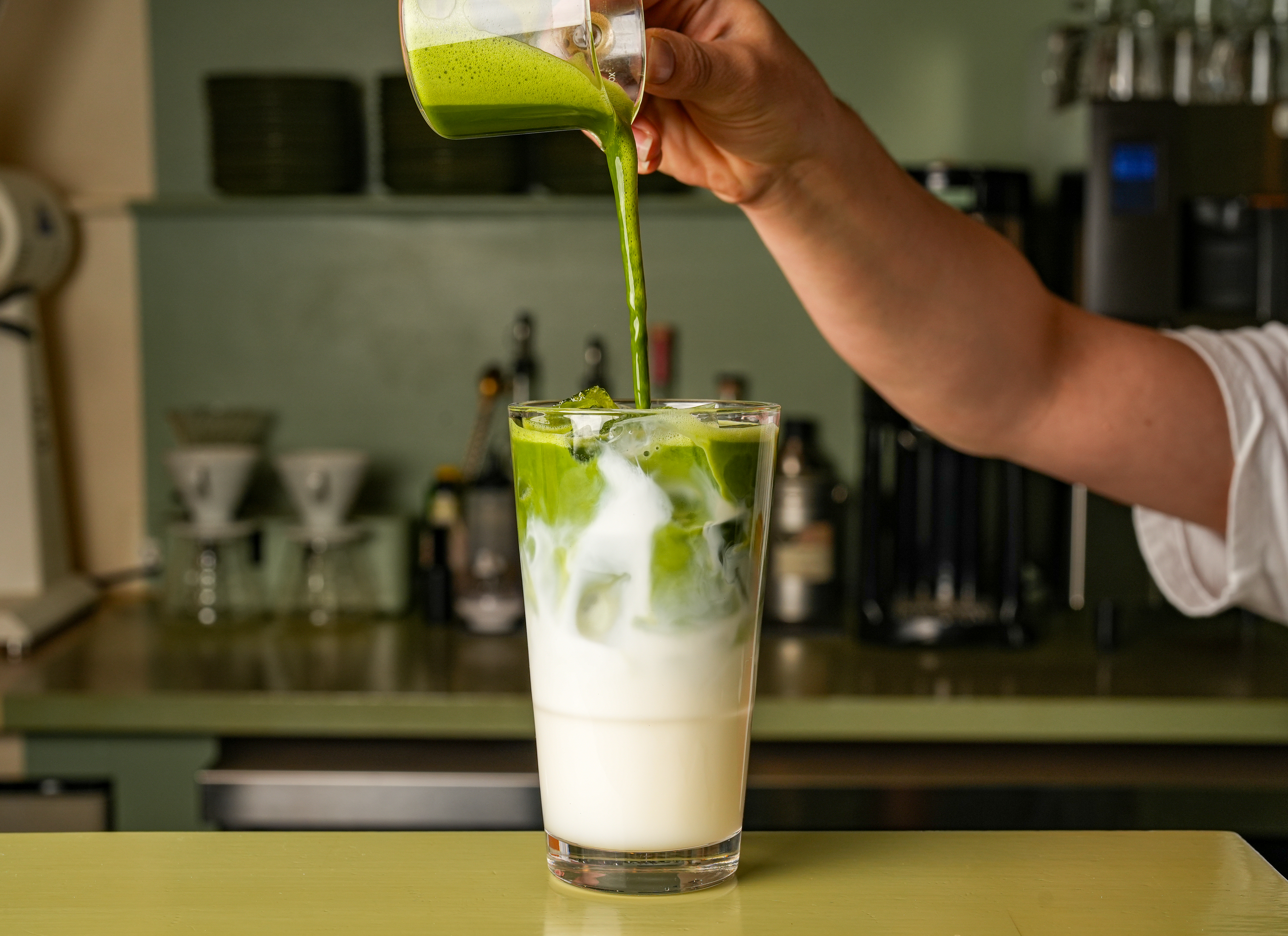
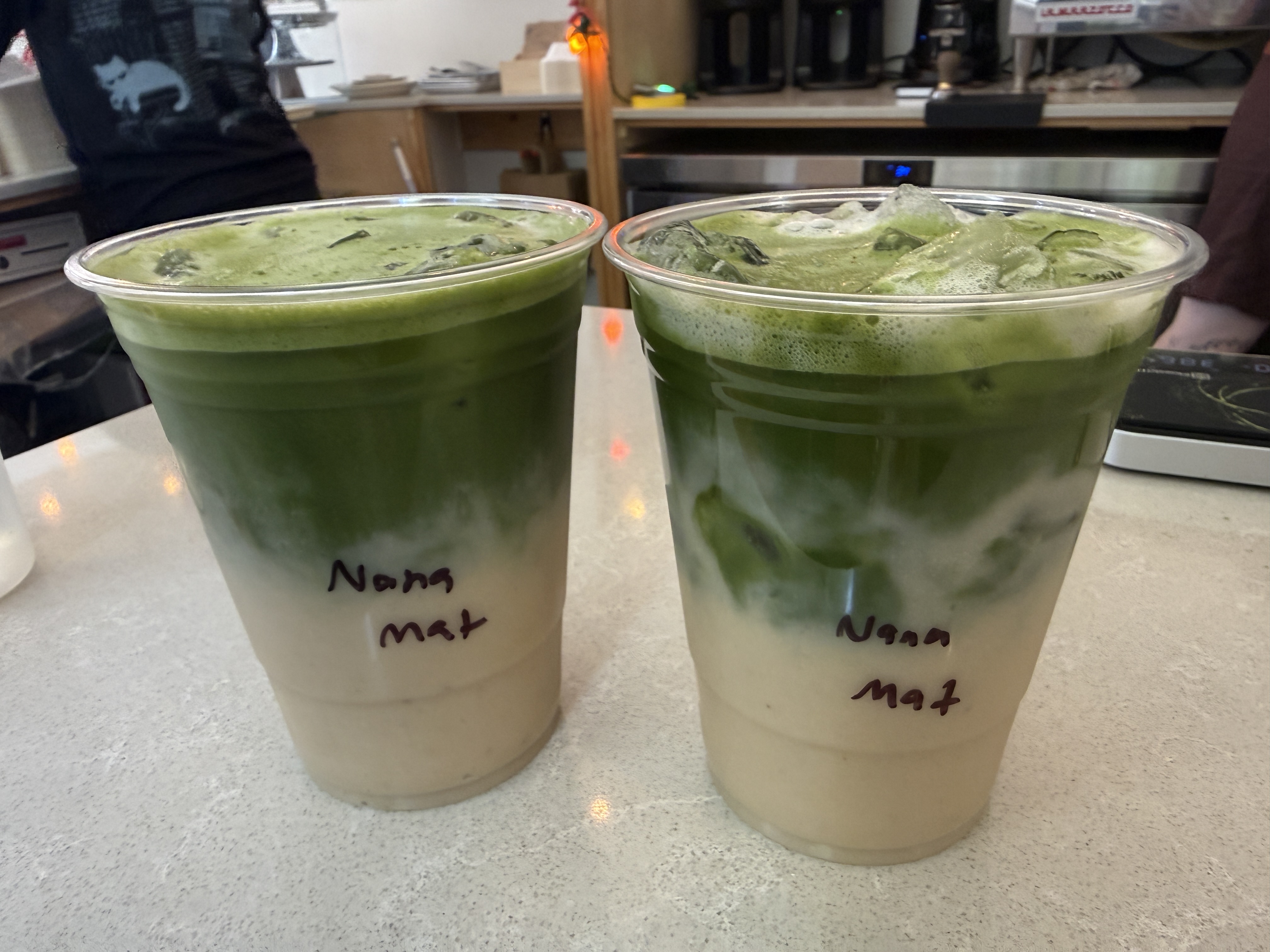
    At Seaforest Bakeshop, also in Grad Hospital, cafe manager Mackenzie Quick makes banana milk from scratch, blending oat milk, maple syrup, vanilla extract, and bananas. It’s layered into the cafe’s best-selling beverage: their iced banana milk matcha. And it can only be served iced. “It’s not good at all hot. When you steam it, it turns into porridge,” said Quick.

    The banana trend is national, with publications on either coast reporting on Americans’ newfound obsession with the fruit. But what’s particularly unusual about it is that it straddles both the cafe and cocktail realms of beverage, when normally, these spheres do not intersect.

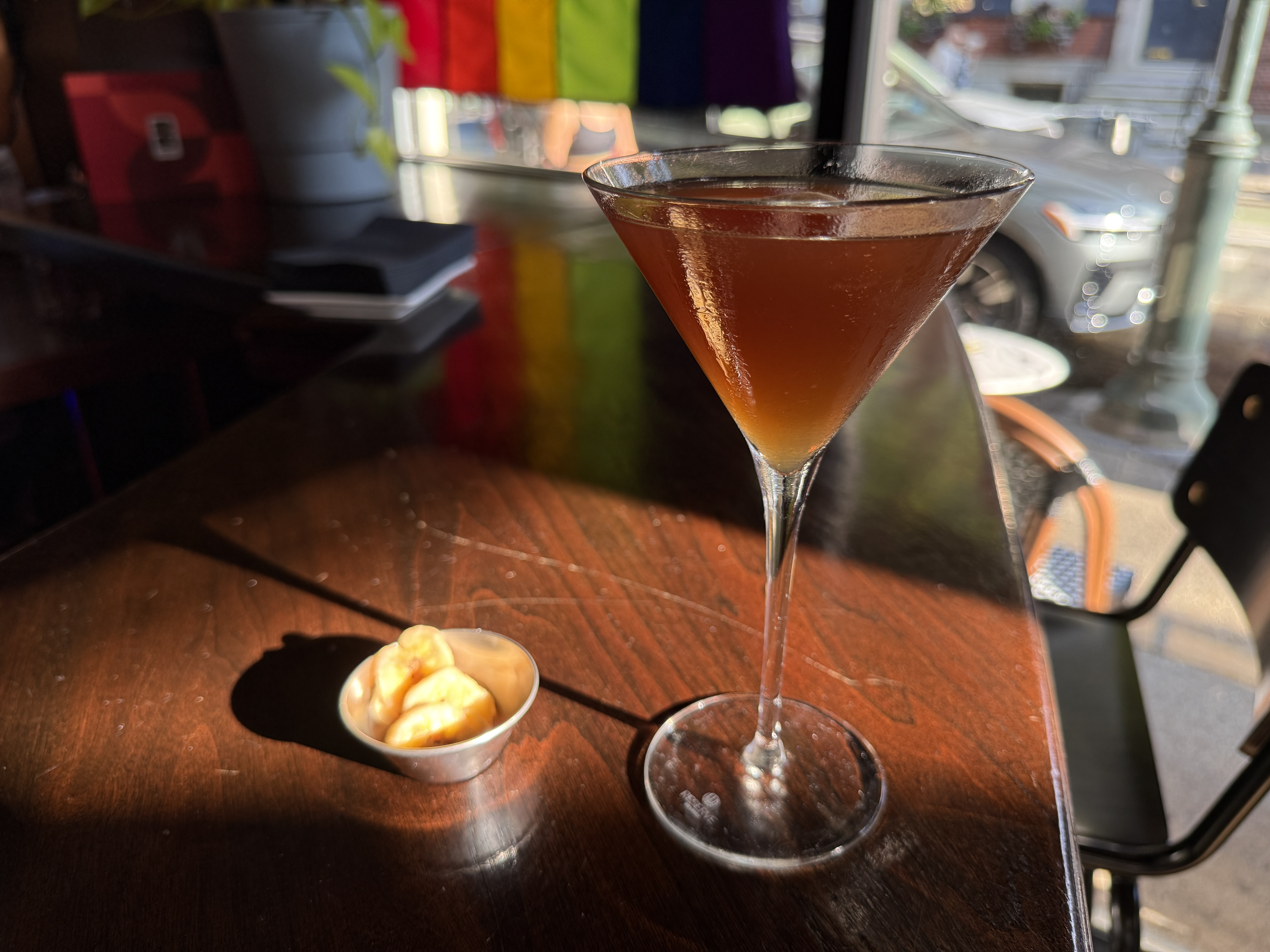
    Bartenders are reaching for all types of banana liquor, including Giffard’s Banane du Brésil, which goes into the banana cocktails at Friday Saturday Sunday and Sao, and Crème de Banane from Tempus Fugit Spirits, which is shaken into the banana Negroni ($13) at Cormorant Corner Bar and a banana-y Old Fashioned riff called the Triple Header ($16) at Bar ILU.

    Philly cocktail bars are also coming up with unique ways to use the banana in its entirety, including its peel.

    “We take the leftover peels after infusing bananas into dark rum and cut them down into half-inch slices,” said Josh Grejdus, the beverage manager at Bluebird Distilling. “Then we use equal parts by weight of sugar and macerate the skins. Let it sit overnight and then strain it” to create a banana oleo-saccharum (or aromatic syrup). A similar elixir is made at both Static! and Next of Kin, said co-owner Kyle Darrow, where brûléed banana goes into liquors like rum and scotch.

    Libertee Grounds, the bar with indoor mini golf in Fairmount, takes an approach akin to Seaforest Bakeshop’s. “I make a banana puree, then incorporate it into a simple syrup using a mixture of sugar, maple syrup, cinnamon, nutmeg, and vanilla to lean into the banana bread feel,” said beverage manager Ellie Bley. “I batch this about once a week or more depending on demand.”

    And demand for bananas sees no signs of waning.

    Where to fuel up with banana cafe drinks

    The iced banana milk matcha from Forin Cafe.Mike Prince

    Forin Cafe

    Forin makes a banana milk that consists of a simple syrup base with a banana emulsion and vanilla paste, which you can add to coffee and matcha drinks. Most popularly, it’s combined with ube and matcha.

    Forin Cafe, multiple locations, forincafe.com

    The iced banana milk matcha latte from Seaforest Bakeshop uses house-made banana milk.Kiki Aranita / Staff /

    Seaforest Bakeshop

    Seaforest’s iced banana milk matcha uses Junbi matcha with their house-made banana-oat-maple syrup milk. The matcha is vigorously whisked for a drink that is creamy, fresh, grassy, and thick. It’s lightly sweet and has the texture of a loose smoothie.

    Seaforest Bakeshop, 625 S. 16th St., seaforestbakeshop.com

    Drip Vietnamese Cafe

    This pink-tiled Chinatown cafe serves a banana latte ($7.75) made with strong Vietnamese phin-brewed coffee, poured over ice and layered with milk and foam spiked with DaVinci brand banana syrup.

    Drip Vietnamese Cafe, 225 N. 11th St., 267-243-0270, instagram.com/dripvietcafe

    Matcha Cafe Maiko

    Matcha Cafe Maiko in Chinatown is serving a banana pudding matcha latte, in which banana extract is mixed into whipped cream, the sweetness of which is balanced by a very robust matcha base. The whipped cream tastes like a cross between Runts and sunscreen (which some people love).

    Matcha Cafe Maiko, 923 Race St., 267-861-0251, matchacafe-maiko.com

    Where to sip banana cocktails

    Static! has a banana cocktail called Split Decision made of brûléed banana scotch, banana skin, absinthe, bitters, and is washed with brown butter. Sister bar Next of Kin uses a similar process for their banana cocktail, Crocodile Tears.Kiki Aranita / Staff /

    Next of Kin

    While Static’s bestselling banana cocktail is rotating off their menu soon, the process for making it continues at sister bar Next of Kin, where banana is brûléed, infused into liquor for a day, then strained. Next of Kin’s banana daiquiri, one of the cocktails that uses rum infused with banana, is also one of the bar’s top sellers.

    Next of Kin, 1414 Frankford Ave., instagram.com/nextofkinphl

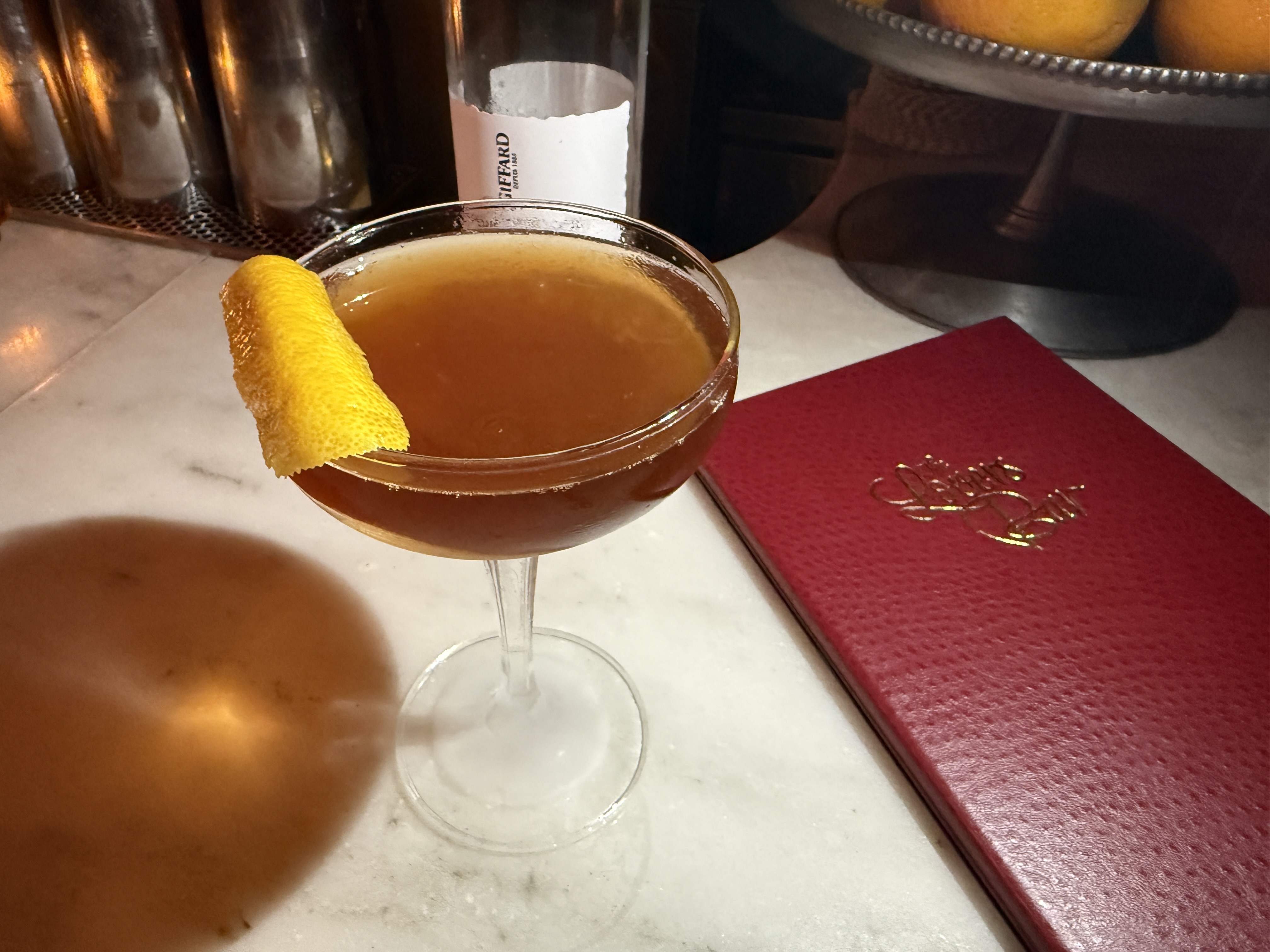
    The cocktail Saul’s Revenge at the Lovers Bar at Friday Saturday Sunday consists of quinquina, pineapple distillate, Malört, coffee and banana liqueurKiki Aranita / Staff /

    The Lovers Bar at Friday Saturday Sunday

    Bartender Eric Martinez created the extremely complex cocktail Saul’s Revenge ($20) for the Lovers Bar using six ingredients: Quinquina, a French bittersweet aperitif, a pineapple distillate akin to mezcal), the divisive and herbaceous Malört, coffee, and Giffard banana liqueur, which is made from overripe Brazilian bananas. The result is smoky, nuanced, and gets a bitter edge from the Malört.

    Friday Saturday Sunday, 261 S. 21st St., 215-546-4232, fridaysaturdaysunday.com

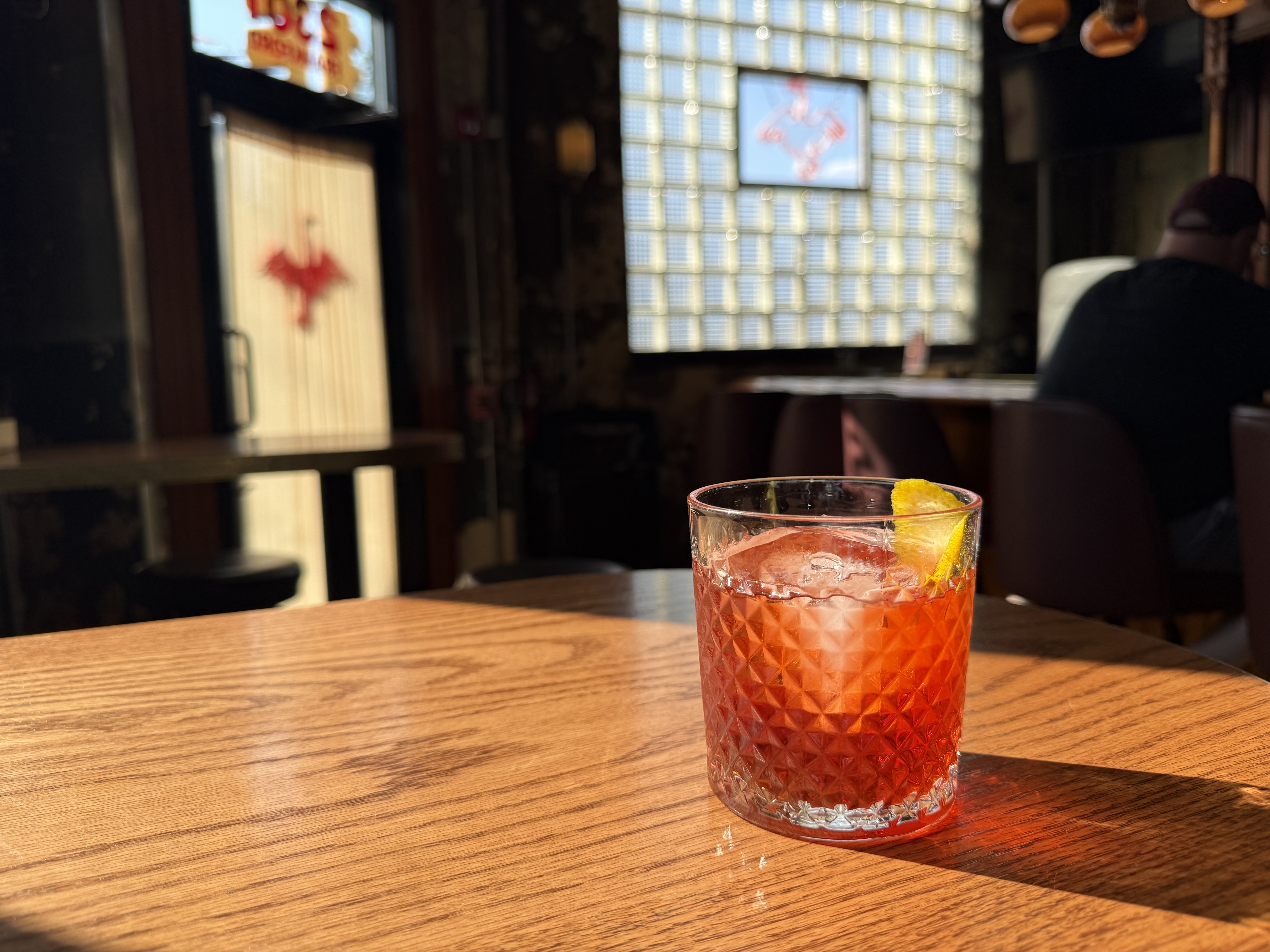
    The banana negroni from Cormorant Corner Bar uses Crème de Banane.Kiki Aranita / Staff /

    Cormorant Corner Bar

    A fairly straightforward Negroni (with gin, Campari, and sweet vermouth) is transformed with a slug of Crème de Banane liqueur. Crème de Banane lends a silky viscosity to the classic cocktail and balances out its herbal notes.

    Cormorant Corner Bar, 2301 Frankford Ave., 215-575-5112, cormorantphl.com

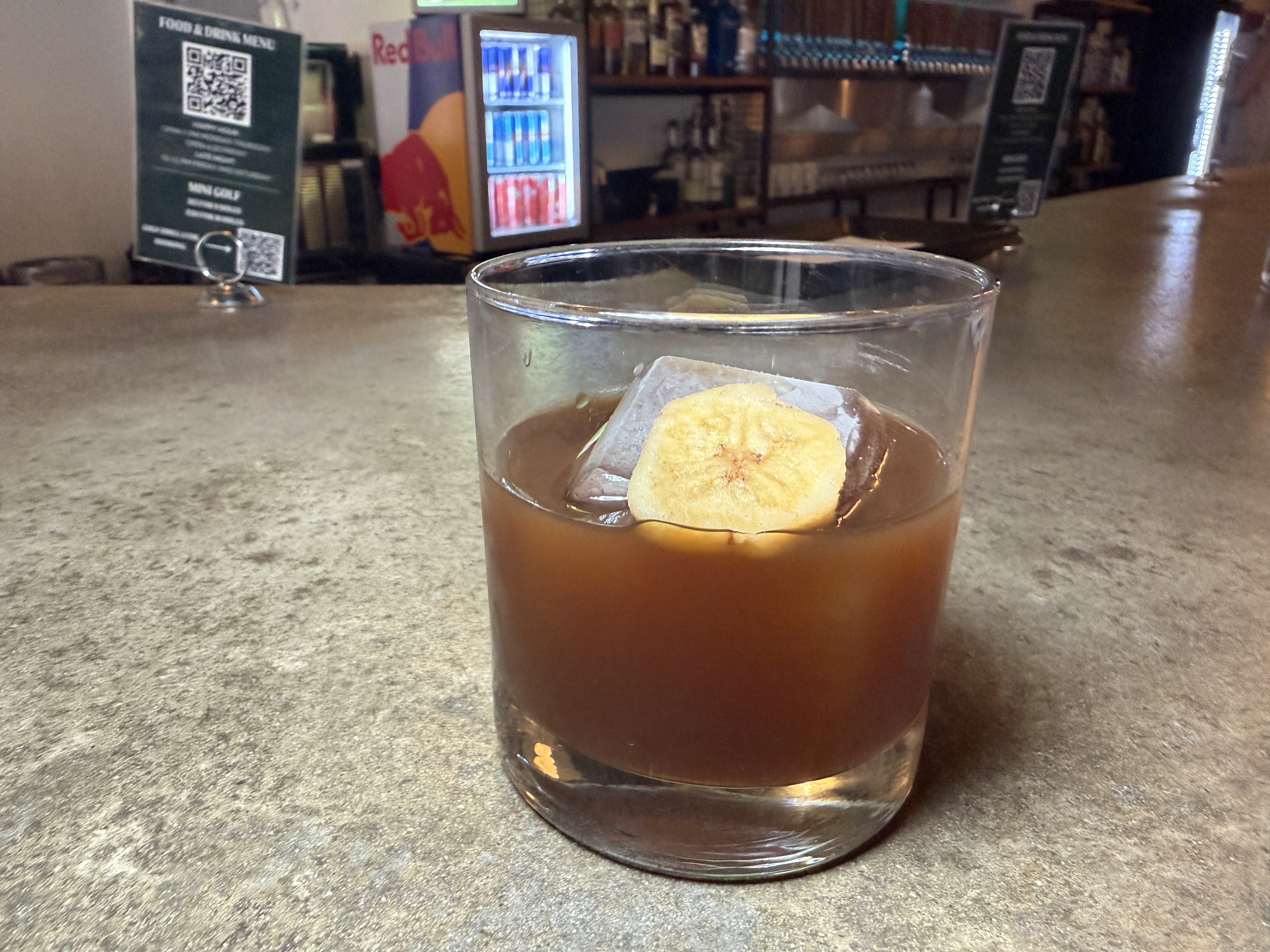
    The Drunken BBL cocktail at Libertee Grounds consists of vanilla vodka, Borghetti espresso liqueur, Cynar, La Colombe cold brew, and banana.Kiki Aranita / Staff /

    Libertee Grounds

    Take a break from mini golf to try Libertee Grounds’ clarified cocktail, the Drunken BBL ($14) which combines vanilla vodka with Borghetti espresso liqueur, Cynar, La Colombe cold brew, and a house-made banana milk that consists of banana puree mixed with wintry spices.

    Libertee Grounds, 1600 W. Girard Ave., Ste. C5, 267-324-3487, liberteegrounds.com

  • This corner store has the best chicken sandwich in Philly, but we don’t quite know what it’s called

    This corner store has the best chicken sandwich in Philly, but we don’t quite know what it’s called

    When Point Breeze resident Bonnary Lek, 46, first moved to the neighborhood in 2023, a neighbor told her that at the corner of 17th and Wharton Streets, “there’s an Asian couple who makes the best chicken sandwich in Philadelphia.” This particular sandwich has found fame in Point Breeze and far beyond, primarily through word-of-mouth.

    Some people refer to the store, which has no visible signage, as Mrs. Lee’s. Even Lek and her fiancé, Manong sous chef Juan De Ocampo, cannot agree on what to call the store. De Ocampo swears it’s “Jimmy’s.” Credit card receipts read “Kim Woa Store,” a name which is strikingly similar to another South Philly fried chicken sandwich institution, Kim Woo Store, which is at the corner of 19th and Moore Streets.

    Whatever the name of the store is, it’s an ordinary corner store with uneven linoleum floors laid with mismatched tiles, soda bottles lining the shelves along with single rolls of toilet paper and canned soup. Extremely neat, if a bit shabby.

    Longtime regulars drive in from New Jersey, Delaware, and as far south as North Carolina — mostly former Point Breeze residents who need their chicken sandwich fix. TikTok has brought customers as far away as Canada.

    The store is owned by Lynda Cong, 50, and Jimmy Cong, 53. They met in Philly in the early 2000s, after Lynda came to the area to study public health at Stockton University. Both the Congs are southern Chinese, but came from Saigon, now Ho Chi Minh City. They speak to their children (the two younger ones help out in the store, and two older ones are grown) in Cantonese.

    A customer, before he moved away seven years ago, presented the Congs with a custom sign that reads: “The Best Chicken Sandwich in Philly.” It hangs in the spotless, stainless steel kitchen, facing the interior of the store.

    Above the kitchen window: a handwritten menu with prices scratched out.

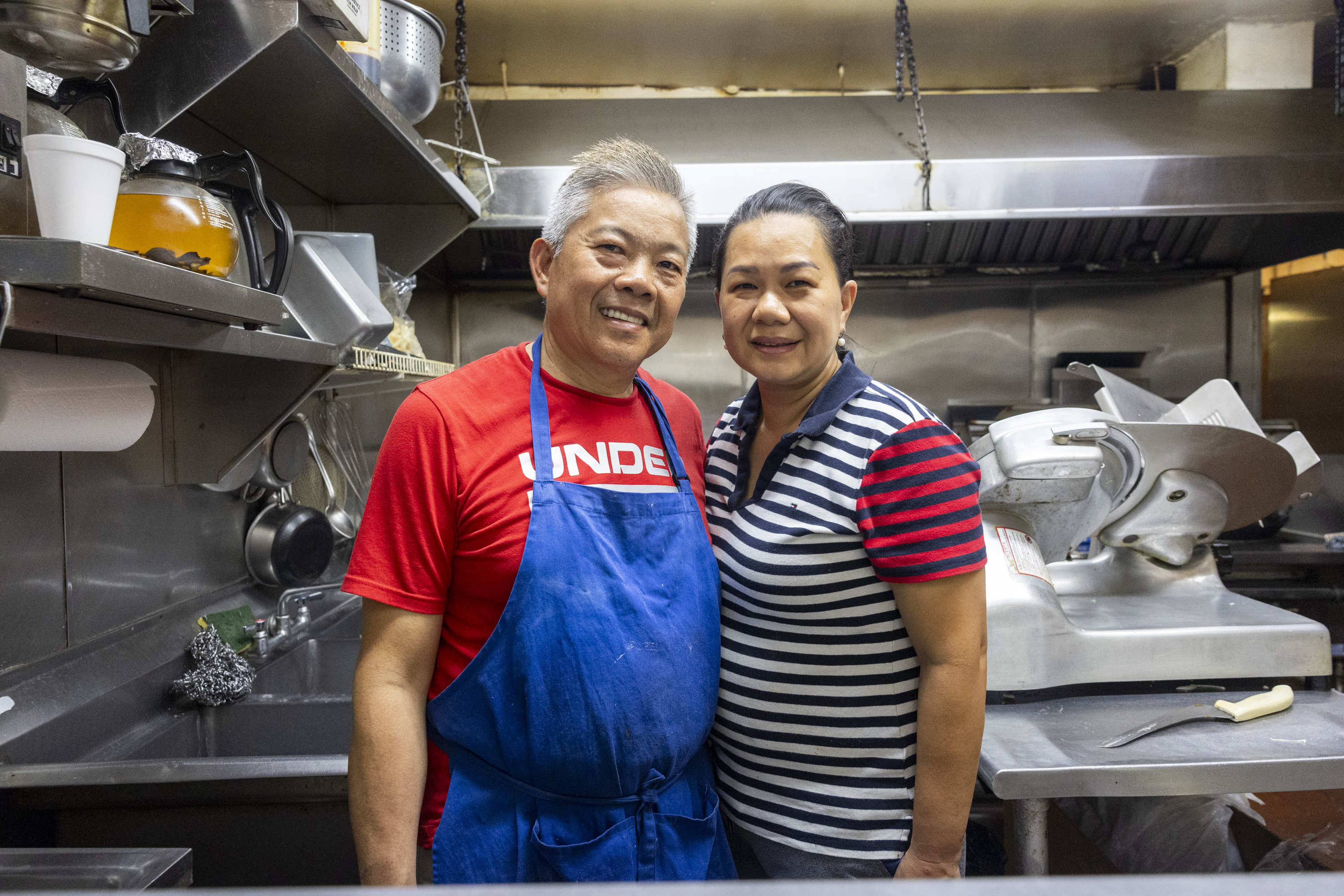
    Lynda Cong and her husband, Jimmy Cong, pose for a portrait at their corner store in Philadelphia on Aug. 5, 2026.Tyger Williams / Staff Photographer

    The Congs took the store over from Jimmy’s sister “between 10 and 15 years ago,” according to Lynda, when the sister retired. Jimmy’s sister was known as “Mrs. Lee” and she first opened the store in 1986. “Kim Woa” is an older Romanization of the Cantonese phrase “gam waa,” which translates literally to “golden splendor” and means “prosperity.”

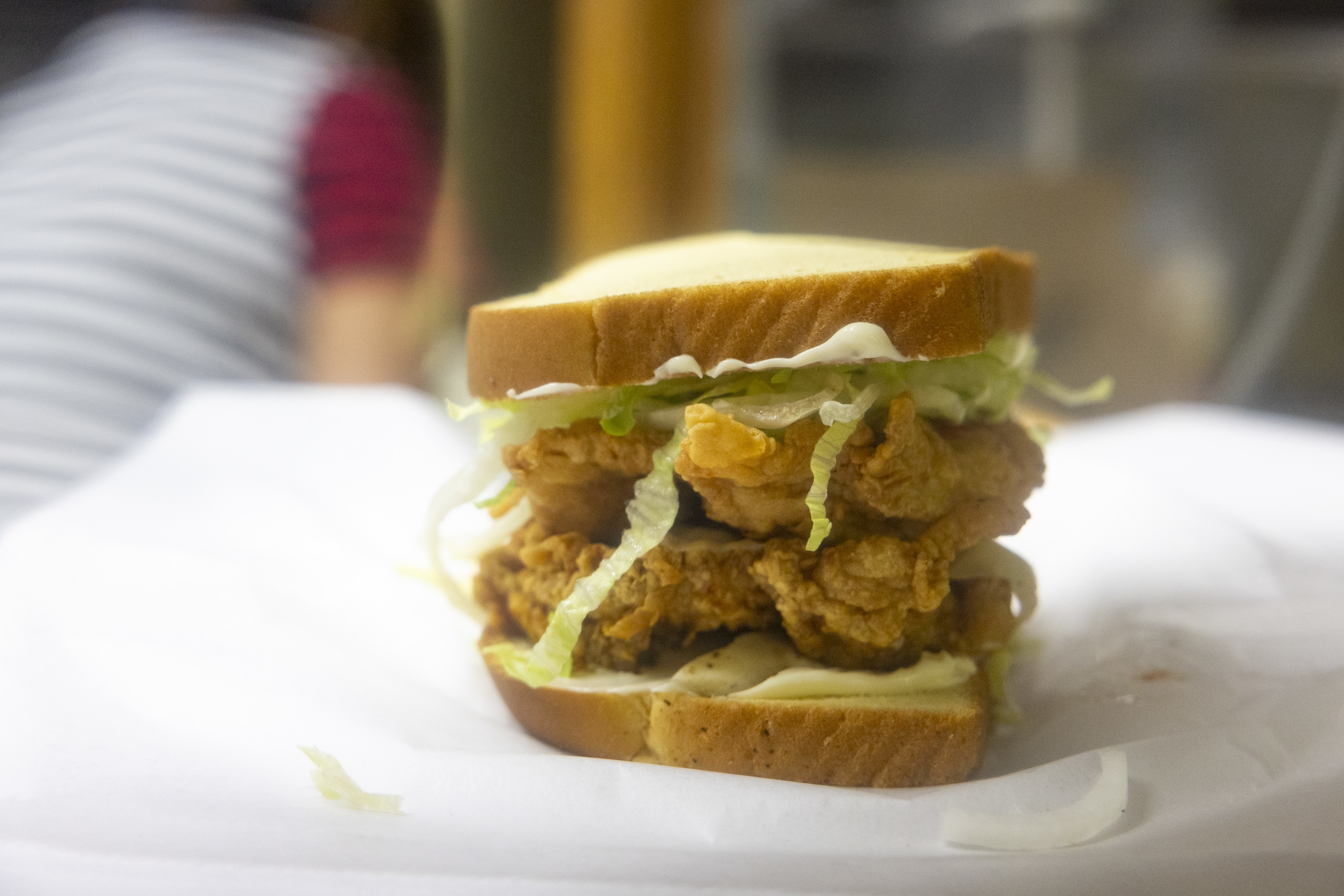
    “Golden” is apt, as it accurately describes the fried breading on the sandwich, which costs $9 and consists of two chicken breast cutlets, thickly breaded with a super crunchy exterior. Ordering it “with everything” means that it comes with pickles, mayo, onion, tomato, and lettuce, laid on two slices of potato bread.

    Earlier this year, a few TikTok influencers also discovered the sandwich, though it has still hardly reached the point of virality. The chicken sandwich whisper network, however, did prompt me to get one.

    After one bite, I promptly texted my editor, “I hit the chicken sandwich jackpot.”

    @reusparx

    Is this The Best Chicken Sandwich in Philly ? I let My Followers Pick My Spot & Meal for The day & This Was The First Suggestion ! So I’m at Kim Woo Store in Philly on 19th St I Got The Chicken Sandwich 🔥 . . . . . . . . . #food #fyp #philly #foodie #WhereToEat

    ♬ original sound – Reusparx

    The wings are improbably juicy, with the same crispy breading and are perhaps even more delectable than the famous chicken sandwich. “It’s just salt, pepper, flour, water, and garlic powder,” said Lynda, who has met this sudden interest in the sandwich with amusement. The Congs now sell about 50 of the sandwiches every day; they say the interest has only somewhat affected daily sales.

    The sandwich and the wings (three for $5 or six for $9.60), along with a massive array of salads, cheesesteaks, hoagies, wraps, and fried rice, emerge from a highly polished and well-scrubbed stainless steel kitchen. (You can order things that aren’t even on the menu. You can order whatever you’d like in a wrap.)

    Over the years, the Congs have watched the neighborhood around them evolve. They’ve added most of the menu items to meet new demands and new tastes. But the chicken sandwich has stayed the same.

    Kim Woa Store, 1300 S 17th St, 215-463-5426, Hours: Monday to Saturday, 9 a.m. to 6:30 p.m.

  • In Nolan’s ‘Odyssey,’ food and feasting are vehicles for disgust. What a shame.

    In Nolan’s ‘Odyssey,’ food and feasting are vehicles for disgust. What a shame.

    It is immensely exciting to me that right now, everyone is talking about The Odyssey. It’s also a little weird.

    I studied classics in graduate school and before I became a chef and then food writer, I taught Ancient Greek language and Greek and Roman epic poetry both in their original languages and in translation. I traced how Odysseus became Ulysses and how his story was retold through the ages, particularly in other forms of epic poetry. In my everyday life and at The Inquirer, nobody in the last decade has asked me about epic poetry, except for college students wanting help with their homework.

    But I’ll tell you how I felt about Nolan’s version of the poem.

    I felt hungry.

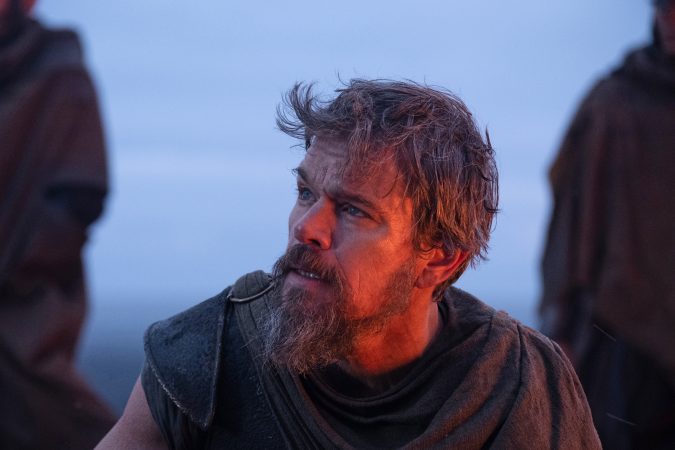
    In Christopher Nolan’s blockbuster movie, Odysseus’ men slurp up what look like tapeworms as the witch Circe, played by Samantha Morton, forcibly manipulates their faces, pulling their mouths into the form of pig snouts. She molds their faces and bodies like clay until the men are transformed into pigs, the animals that best represent their brutish, stupid behavior.

    It’s brilliant, stomach-churning, and wild, an extraordinarily visceral adaptation of the original Homeric text. It’s one of the rare scenes in Nolan’s adaptation of The Odyssey where one sees actual food, despite the food being wholly unappetizing.

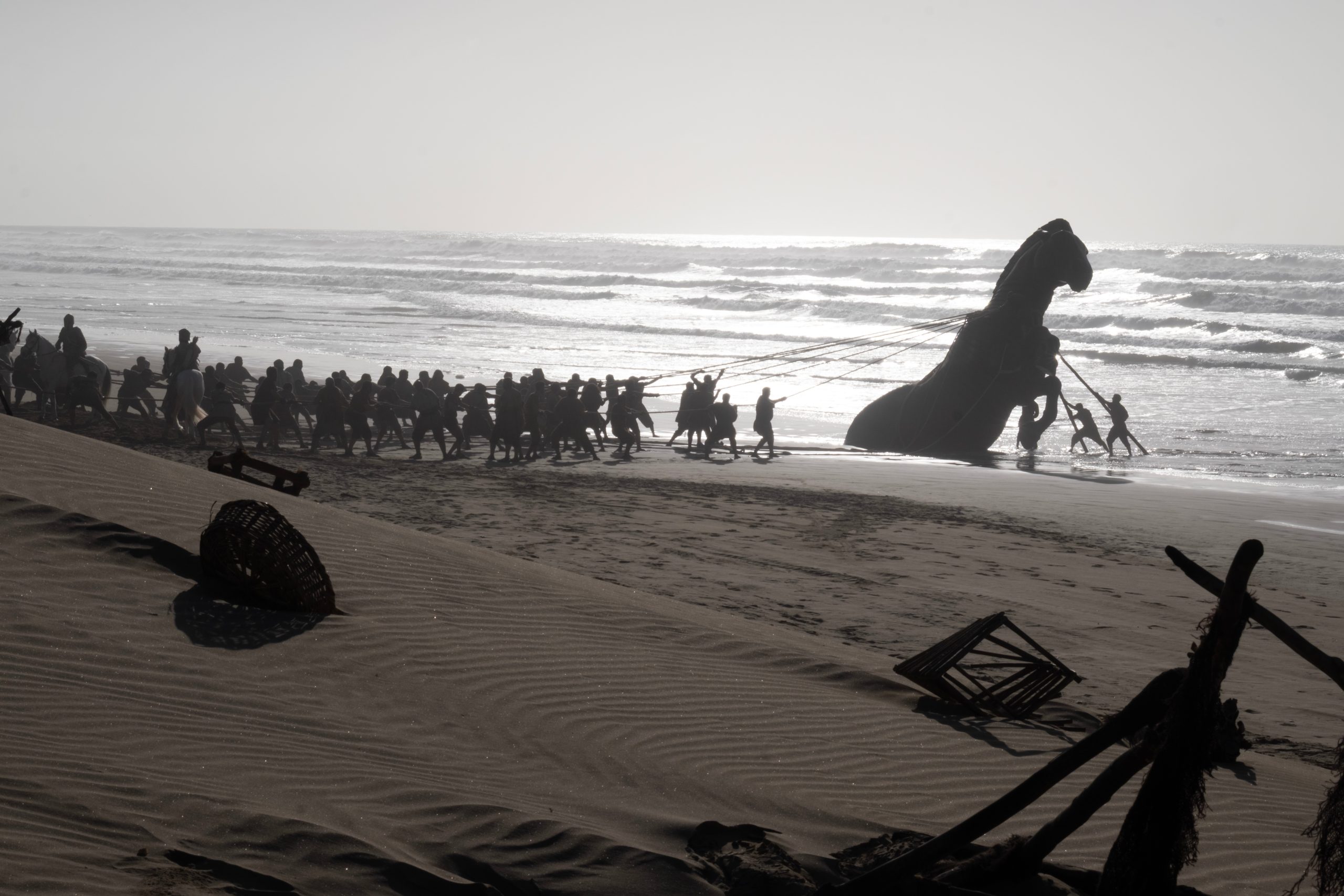
    This image released by Universal Pictures shows Matt Damon as Odysseus in a scene from “The Odyssey.” (Melinda Sue Gordon/Universal Pictures via AP)Melinda Sue Gordon

    Reading The Odyssey, though, makes me crave cheese and cakes that have been drizzled with honey, wine to wash down roasted meats like lechon or porchetta, sharing in the heady scent with friends, dining companions, and the gods, for whom the savor (or the aroma) is an offering.

    Watching Nolan’s movie also makes me long for those things, but due to their general absence. None of the food portrayed is conducive to conjuring up the pleasurable excess that is the very drumbeat of the Homeric text.

    In Nolan’s Odyssey, food and feasting are vehicles for disgust.

    The film is undoubtedly a cinematic masterpiece. It is the latest iteration — and I would even venture, translation — of Homer’s Odyssey.

    Back in eighth- or ninth-century BC, the bard, poet, or perhaps multiple bards, created what would be the longest-running superhero franchises of all time, matched only by the authors of the Old Testament. (And the two texts have a lot in common in how they were assembled, with language cobbled together from different eras).

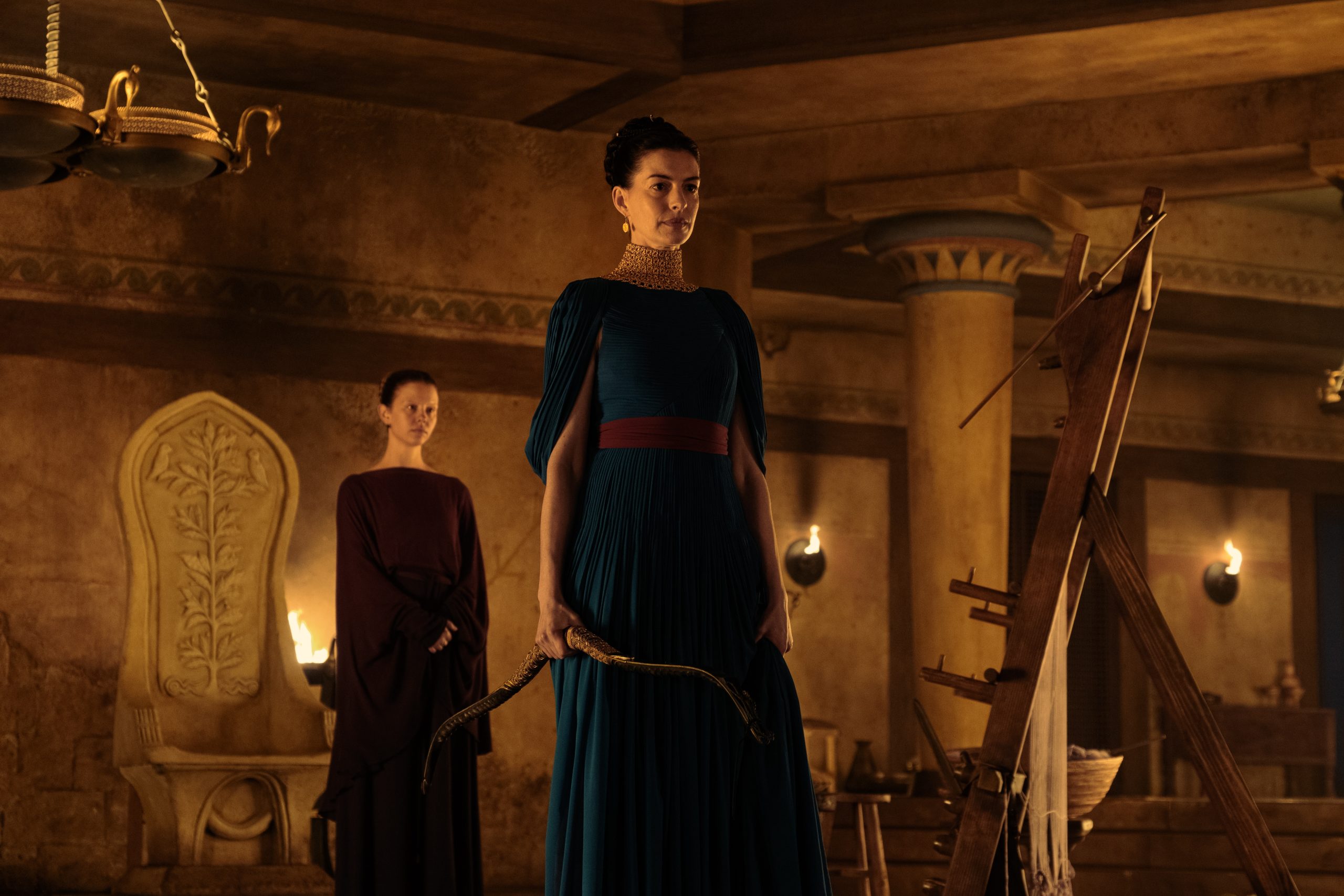
    This image released by Universal Pictures shows, (from left) Mia Goth as Melantho and Anne Hathaway as Penelope, in a scene from “The Odyssey.” (Melinda Sue Gordon/Universal Pictures via AP)Melinda Sue Gordon

    In both translation theory and storytelling, we can accept variances. In superhero movies and movie franchises, we welcome them.

    We can accept different actors playing the same roles. We eagerly anticipate actors’ interpretations of classic characters — just think of how we hunger for news of who will play the next James Bond or Batman.

    Translation theory generally dictates translations need to be updated every generation or so, to match the language of the times. The French philosopher Jacques Derrida saw translation as a never-ending process. It is a task that is necessary and impossible at the same time, he wrote in “Des tours de Babel” in 1985, as language has no fixed, stable meaning.

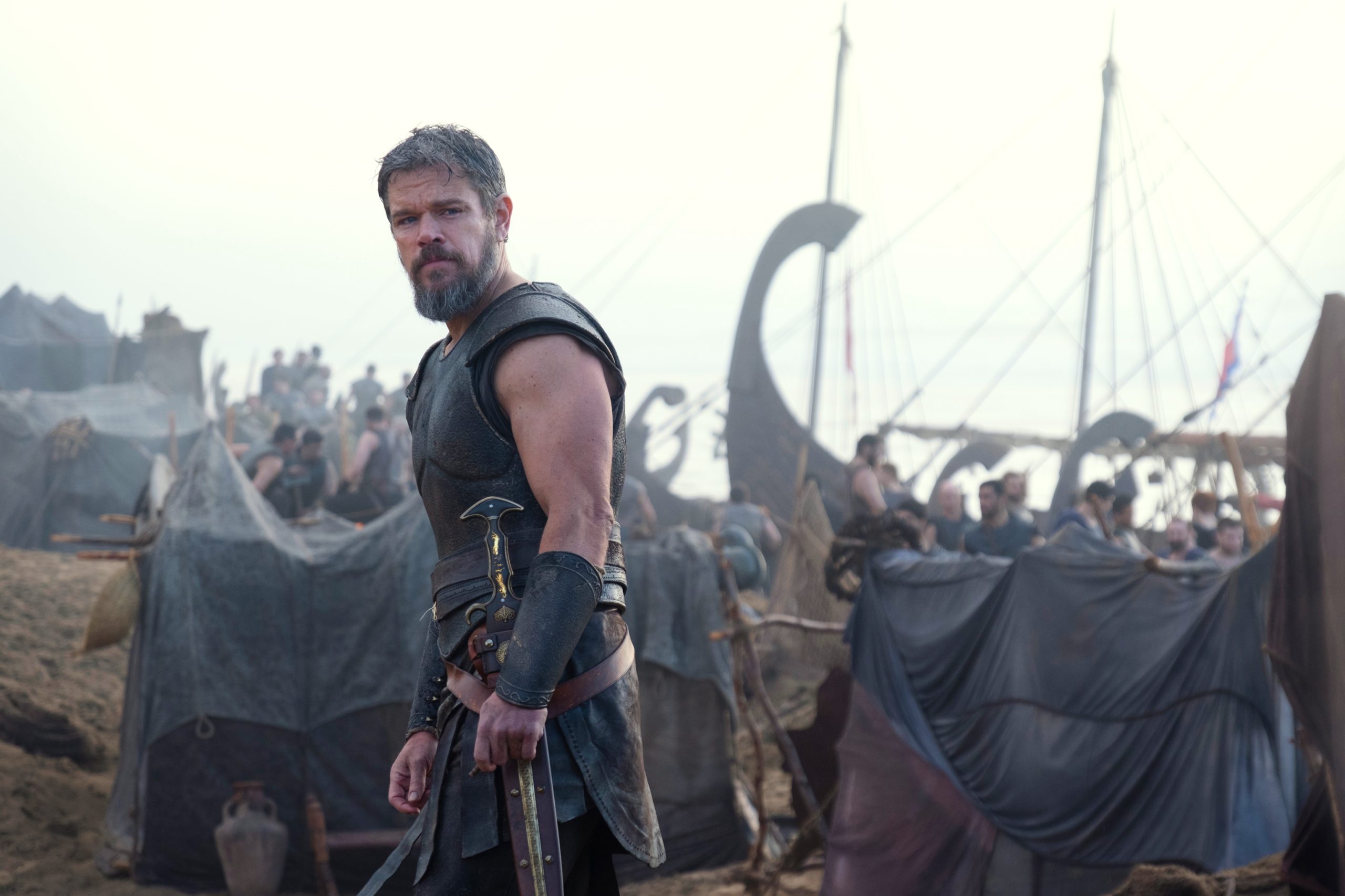
    This image released by Universal Pictures shows a scene from “The Odyssey.” (Melinda Sue Gordon/Universal Pictures via AP)Melinda Sue Gordon

    Did I expect Nolan’s Odyssey to hew to the text? I did not. But what I did long for was emotion and catharsis (Aristotle’s theory of which was developed four centuries after The Odyssey was composed), and food. I also hoped for a narrator, or bard tying the story together, conveying it to us, an audience at a feast.

    The lack of a narrator shows how much we have changed in nearly 3,000 years. Nolan’s Odyssey is episodic; he doesn’t tell us a story, he shows us one. We no longer gather at dinner and listen to stories performed. We gather for The Odyssey at movie theaters, silent. We gather at our phones. Our community is in the ether.

    Perhaps in the age of TikTok and ever-shortening attention spans, Nolan’s episodic, somewhat disjointed retold narrative is perfect. It is our generation’s translation. The one we deserve.

    Just as sex has been expunged from Nolan’s Odyssey, so have the food and Homer’s lengthy descriptions of feasting. Food is central to the original text. In the movie, I recall a suitor gnawing on one drumstick. There is no free-flowing wine, just drunkenness — effects of the invisible wine.

    I dare you to pick up Emily Wilson’s translation of The Odyssey (which helped inspire Nolan) and not smell the smoke of roasting pigs; not want to lick your fingers of dribbles of floral, fragrant honey; not ache for a creamy, salty cheese like ricotta salata, which was probably what is hanging in the Cyclops’ cave. These aren’t a translator’s embellishments. They are threaded throughout the original Greek, so much so that you may feel rather beaten over the head with how often people are feasting in The Odyssey.

    This image released by Universal Pictures shows Matt Damon as Odysseus, left, and Zendaya as Athen, in a scene from “The Odyssey.” (Melinda Sue Gordon/Universal Pictures via AP)Melinda Sue Gordon

    In Homer, wine is everywhere; the sea itself is like wine. In Nolan, we never see it.

    The code of xenia, a guest-host relationship (often translated as “hospitality”), which Nolan calls “Zeus’ law” in the movie, dictates that you host guests, offer them food, and feast with them. Xenia was the backbone of society and decency in Homeric Greece.

    Watching The Odyssey made me hungry, and given that it’s three hours long, it’ll probably make you hungry, too. Despite AMC Dine-In’s rather vast menu, its high sodium warnings gave me pause. I could not feast in the presence of watching The Odyssey (something its original listeners surely would have done), and could not bring myself to eat the chicken wings. So after you skip the AMC wings, go forth and dine like a Homeric hero.

    Compensate for the lack of feasting in Nolan’s Odyssey.

    This image released by Universal Pictures shows a scene from “The Odyssey.” (Melinda Sue Gordon/Universal Pictures via AP)Melinda Sue Gordon

    Go to Perla and grasp your lechon like Odysseus did when he landed on Ithaca’s shores and went to the cottage of Eumaeus, the swineherd, before he continued on home. Seek after North by Texas, the roving barbecue pop-up, just as Odysseus’ men held out until they could no longer and barbecued one of Apollo’s herd. Order a porchetta from Esposito’s or Porco’s Porchetteria and have all your friends over. Look for Le Virtù’s whole roasted goat, inhale the remnants of smoke, dig in with your hands. Grab yourself a cheesecake, imagine it to be Circe’s “kukion,” drizzle it with honey, and wash it down with wine.

    When I go to restaurants as part of my job, I always, at the end of each meal, ask my dining companions two questions that cut straight to the point: Would you come back? And would you recommend it to others?

    The answers to these are generally the same, both yes or both no. To hold Nolan’s Odyssey to the same parameters as a meal, I would not watch it again, but I would recommend it to others.

    Just please, go get a nice dinner afterward.

  • One of Philly’s top Vietnamese restaurants is closing, but owners are looking for a new location

    One of Philly’s top Vietnamese restaurants is closing, but owners are looking for a new location

    Gabriella’s Vietnam, the acclaimed South Philadelphia restaurant known for showcasing regional Vietnamese cooking, will close in mid-December after nearly six years as chef-owner Thanh Nguyen searches for a new home.

    Nguyen began looking for another location last fall after the building at 1837 E. Passyunk Ave., near Mifflin Street, was sold. She has continued operating under a month-to-month lease while planning the restaurant’s next chapter.

    The building’s new owners, Bharat Bist and Gigi Giri — who operate Mount Masala in Voorhees and Nepali Momo Kitchen in Spring Garden — plan to open a yet-to-be-named Himalayan restaurant there early next year. Giri said the menu will combine Mount Masala’s bold stews with Nepali Momo Kitchen’s extensive lineup of momos, the steamed, filled dumplings.

    “I have a dream to do something different,” said Giri, whose husband, Bist, is the chef.

    The couple also plan to open a shop serving coffee and momos on Third Street near South Street within the next two months.

    Nguyen said she and Giri reached an agreement that allowed Gabriella’s to remain open through mid-December.

    “Gigi was very sweet and nice,” Nguyen said. “She didn’t kick me out right away, and she gave me a year.”

    Gabriella’s backstory and future plans

    Gabriella’s, which opened in February 2021 in the former home of Ange Branca’s Saté Kampar, has earned widespread acclaim. It appeared on The Inquirer‘s 76 list and was named to the New York Times’ 2022 list of Best New Restaurants.

    The restaurant helped broaden Philadelphia’s understanding of Vietnamese cuisine beyond pho and bánh mì, centering its menu on dishes from across Vietnam’s regions. Among its specialties are lemongrass clams and a catfish hot pot, dishes rarely found elsewhere in the city.

    For Nguyen, Gabriella’s also fulfilled a longtime personal ambition.

    “I came to the U.S. and went to school for my family, not for me,” said Nguyen, who left the University of Pennsylvania one English composition class short of completing an undergraduate degree in biochemistry. “I wanted to make a business like my family did.”

    She told The Inquirer’s Craig LaBan that her parents own a seafood market in Ho Chi Minh City, formerly Saigon, and initially disapproved when she entered the restaurant business with her husband, Chris.

    The couple began building their restaurant company in the suburbs in 2012, opening Banh Mi Bar & Bistro in Norristown, followed by Melody’s Grillhouse in Ambler. Gabriella’s Vietnam, named for their younger daughter, marked a shift toward a more ambitious menu focused on traditional Vietnamese cooking beyond the country’s best-known dishes.

    Nguyen hopes her next restaurant will have a full liquor license, allowing her to expand the beverage program alongside the food. Gabriella’s now operates under a satellite license through Five Saints Distilling that permits it to serve Pennsylvania-produced spirits, including the vodka used in its signature pho cocktail.

    Developing those drinks sparked an unexpected passion for mixology, Nguyen said, and she envisions her next restaurant having a larger cocktail program and a menu of bar snacks to complement its Vietnamese cuisine.

    “I had several restaurants in the suburbs, but when I came to Philly, I realized Philly was really missing traditional Vietnamese food besides bánh mì,” Nguyen said. “There are so many other foods popular in Vietnam that don’t get as much focus. And I want people to try it.”

  • The best thing Kiki Aranita ate this week: The savory tomato tart from Market Day Canelé

    The best thing Kiki Aranita ate this week: The savory tomato tart from Market Day Canelé

    Market Day Canelé’s savory tart is a scrapbook of sorts for owners Gil Ortale and Nem Ngo. It’s sold at farmers’ markets on weekends, each tart a collection of every interaction they’ve had through the week, shopping from their fellow vendors at Rittenhouse, Headhouse, Chestnut Hill, and Swarthmore Farmers’ Markets, and filling in the gaps at Reading Terminal Market, where Ortale once ran Fireworks, a charcoal-grill stall four decades ago.

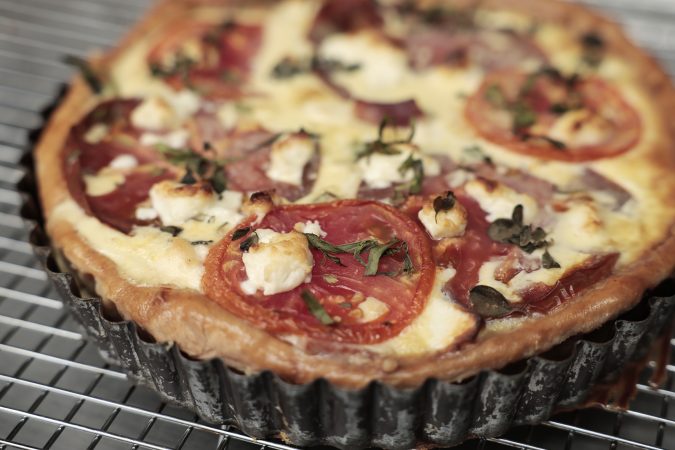
    It’s tomato season, and the Market Day savory tomato tart ($30) is an ode to this area’s most covetable, most anticipated fruit. Crimini and white button mushrooms, corn, herb-roasted cotto ham from Claudio, Alderfer Farm eggs, and gruyère play supporting roles to the tomato slices splayed across its top. It’s a tart that’s also a philosophical meditation on produce.

    “Flavors [in my cooking] should be crystal clear examples of the very thing you imagine,” said Ortale, whose resume reads like a highlights reel of Philadelphia’s most storied restaurants, as he has worked everywhere from Frog to La Terrasse. “Like when you’re a child and tasting herring or Roquefort for the first time.”

    Ortale’s goal is to make food that tastes exactly like one’s first recollection of tasting any food. And so, his tomato tart reminds me of the first time I tasted fresh tomatoes cooked gently on a pizza, when I was five years old. It made me think of the first time I had sweet, fresh corn and the kernels burst in my mouth, and the savory British pies I ate growing up in Hong Kong.

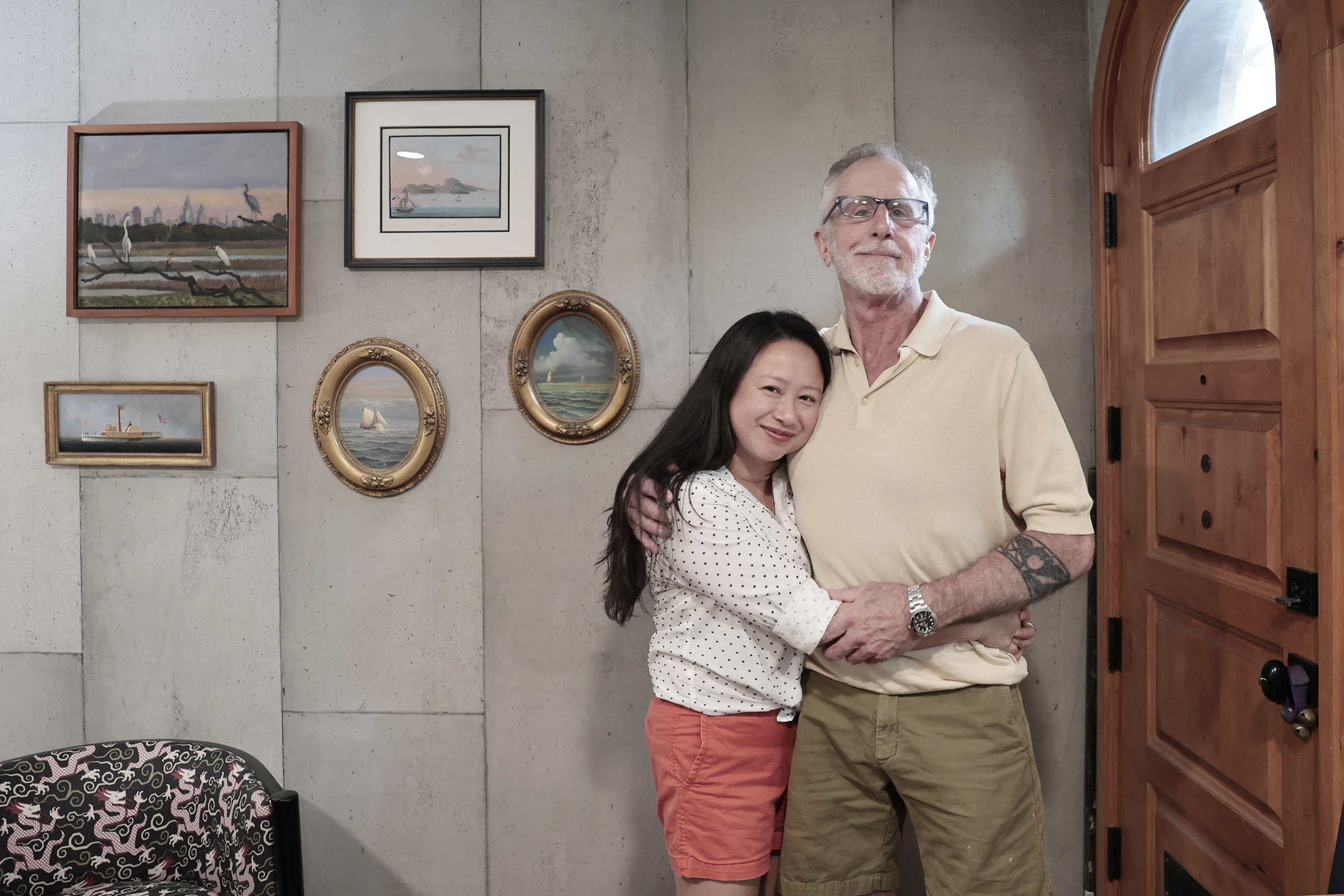
    Nem Ngo and Gil Ortale are the folks behind Market Day Canelé. They were photographed in their Philadelphia home on Thursday, July 30, 2026.Elizabeth Robertson / Staff Photographer

    It’s so good that I was hesitant to write about it, as Ortale and Ngo usually only make two dozen to sell every week, and if you get one, there’s far less of a chance I’ll be able to get one.

    The crust is intentionally imperfect and not uniform, which makes it so flaky, it will stop you in your tracks, mid-bite. Ortale makes every single tart by hand. He doesn’t use a mixer or a Robot Coupe. “He blends the butter into the dry ingredients for each dough ball. That’s why they taste the way they do, they’re light and never stodgy,” said Ngo. “You can’t get that without elbow grease. It can’t be done with a machine.”

    This approach is also why Market Day Canelé has never opened a brick-and-mortar bakery. They have no desire to scale up.

    “We’re not hardcore capitalists. We just genuinely want to make good food. The farmers’ market industry is the most supportive and values-driven part of the food economy. People are shopping there because they want to know where their food is coming from and they want to see the faces of the people who make the food. We try to uphold that by doing everything by hand, with love, and to the best of our ability,” said Ngo.

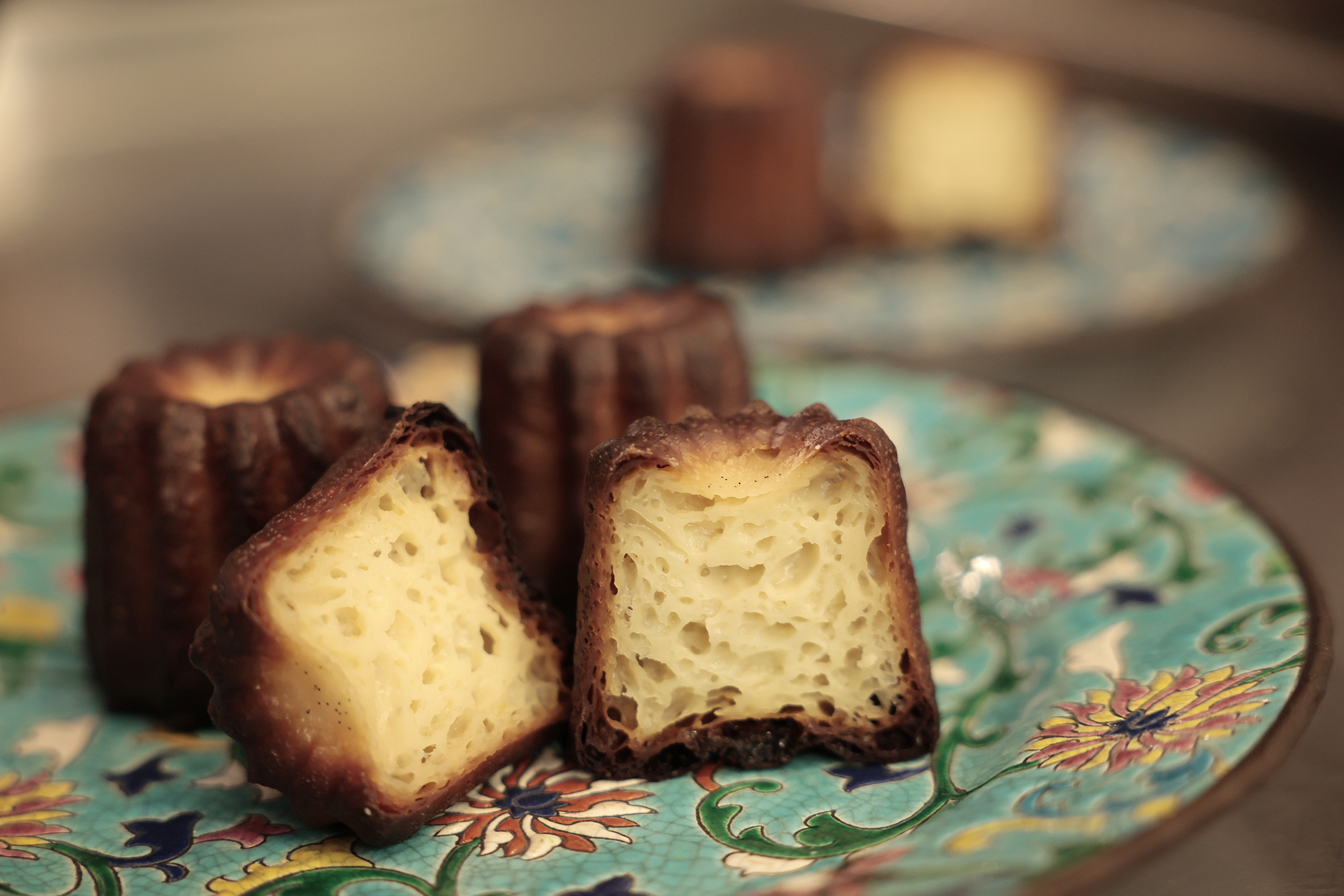
    The canelé by Market Day Canelé is a vanilla custard pastry that is the traditional pastry of Bordeaux. It was photographed in Philadelphia on Thursday, July 30, 2026.Elizabeth Robertson / Staff Photographer

    The airy, honey-combed crevices of beeswax and butter-slicked canelés may be the emblem of their business. They certainly have sent Ortale and then Ngo down an obsessive path of perfecting a corner of French-rooted baking traditions. But their savory tarts, with a rotation of ultra-local ingredients, many sourced from their friends, are the finest illustration of how skilled hands and devotion to one’s community can produce extraordinary things.

    Market Day Canelé, instagram.com/marketdaycanele. Hours: Every Saturday, 9 a.m. to 2 p.m. at Rittenhouse Farmers’ Market and every Sunday, 10 a.m. to 2 p.m. at Headhouse Farmers’ Market. Every other Saturday: Chestnut Hill Farmers’ Market and Swarthmore Farmers’ Market, 9 a.m. to 12 p.m.