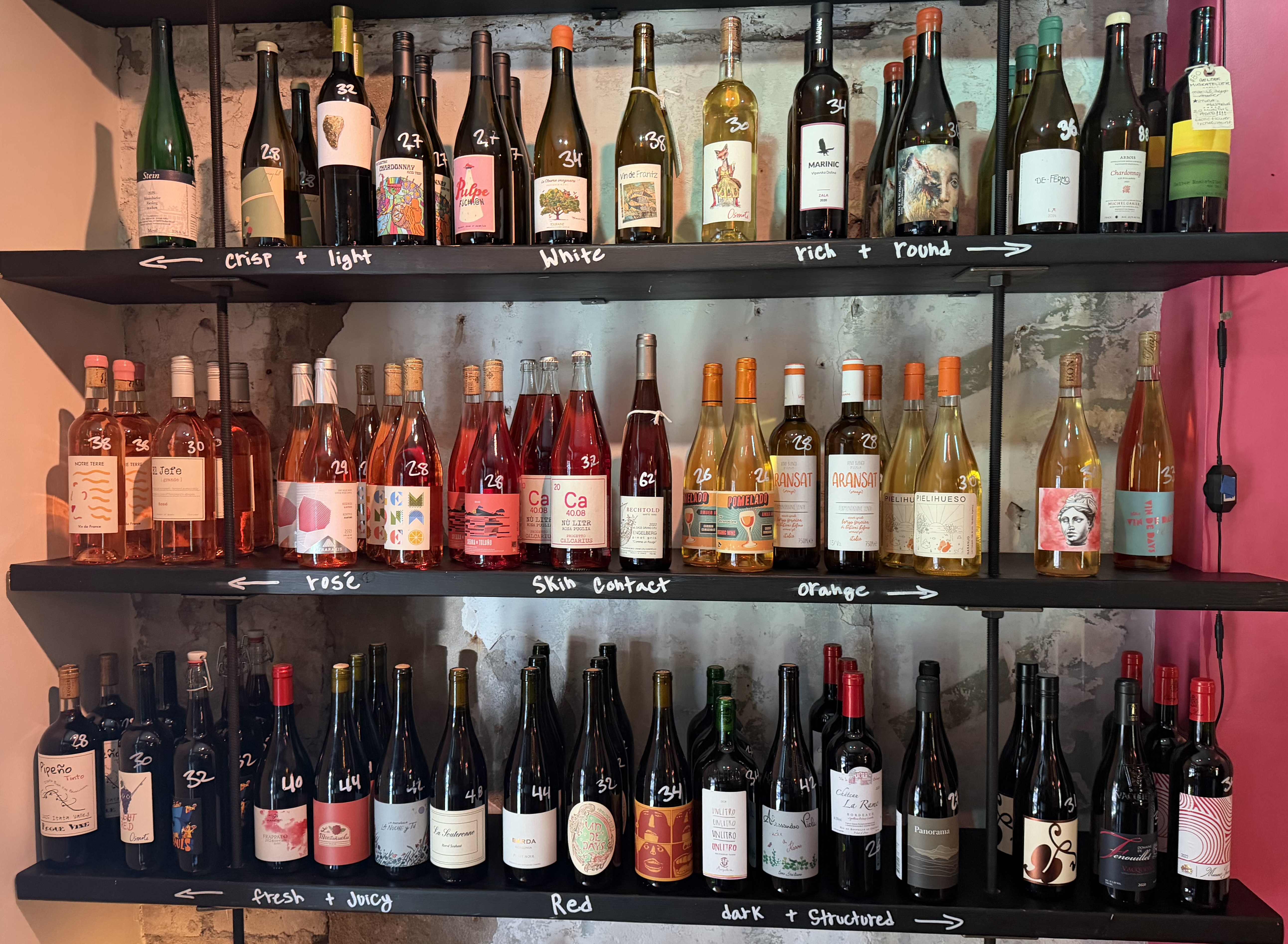
At some restaurants, you select the fish that will be cooked and served for your dinner before you sit down. In Philly restaurants, that particular experience is being replicated with wine. The PLCB’s “wine expanded permit,” which launched a decade ago, allows restaurants with conventional liquor licenses to greatly expand their wine lists. It’s turning your neighborhood restaurant into your neighborhood wine shop.
Restaurants like Sally in Fitler Square, Vernick in Rittenhouse, and Picnic in East Kensington (along with several others around the city), have evolved into retail wine shops, welcoming in guests who aren’t dining in and presenting them with reasonably priced bottles that cannot be found on the shelves of PLCB-run wine stores. The shopping experience is curated by the same sommelier who has selected the bottles for the restaurant’s wine list. Sally and Vernick also run their own monthly wine clubs.
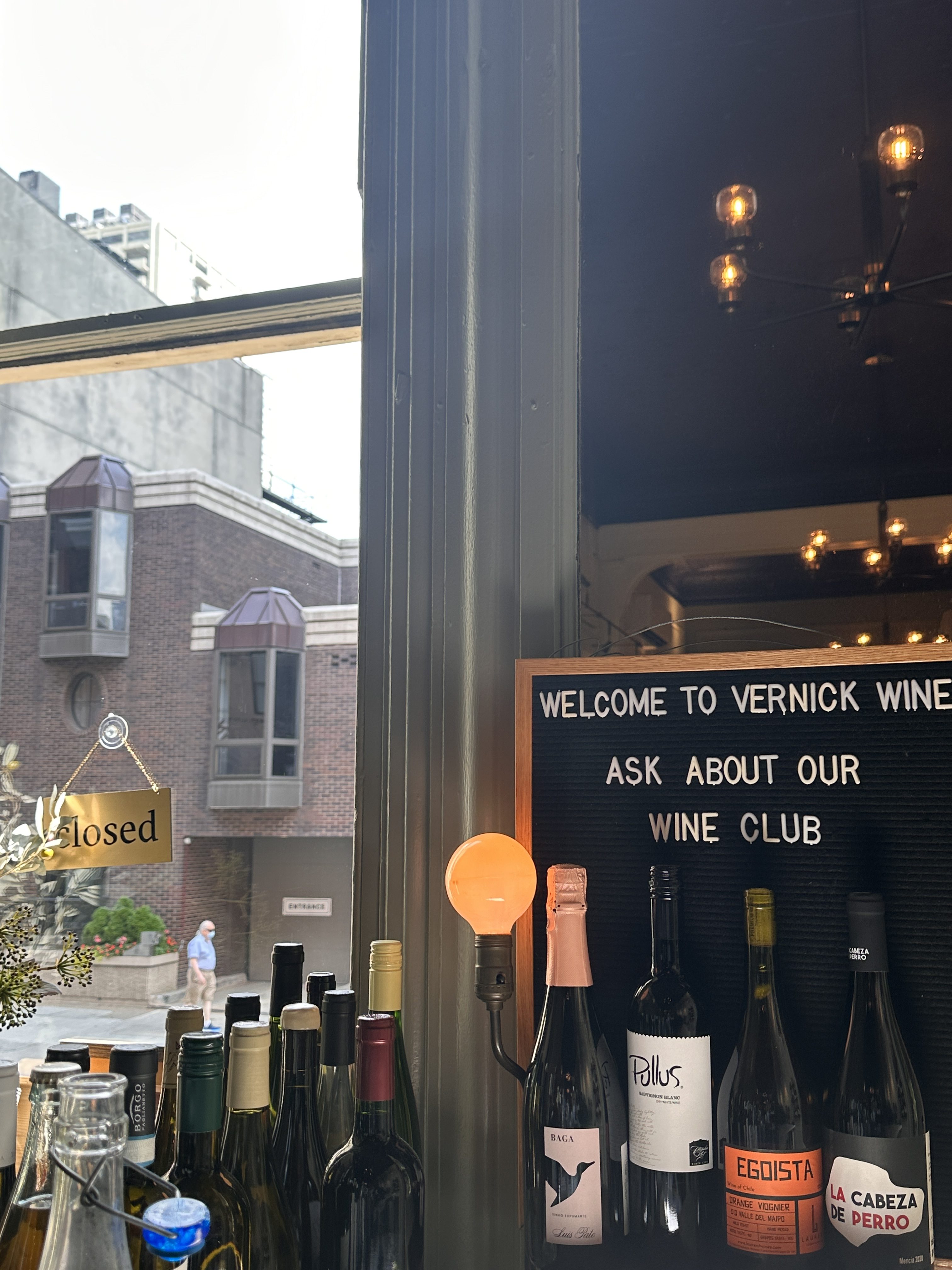
To be clear, you can’t drink the bottle in the restaurants you purchase them at, unless you pay a corkage fee or dining-in surcharge. But even with those fees, you’re still likely getting a great deal.
Take the offerings at Vernick Food & Drink. When Greg Vernick opened his award-winning restaurant with former business partner Ryan Mulholland in 2012, there had been no plan — and also no legal basis — for them to open a wine shop in the restaurant. But in 2019, several opportunities presented themselves. First, the former office space next door opened up, and they knew it would be perfect for the private parties the restaurant hosted. It also gave them the wall space to open a wine shop.
“It was a way to expand the curriculum of the wine program and spread the wings of the restaurant,” said Vernick. “It’s like giving a chef different ingredients to work out specials.”
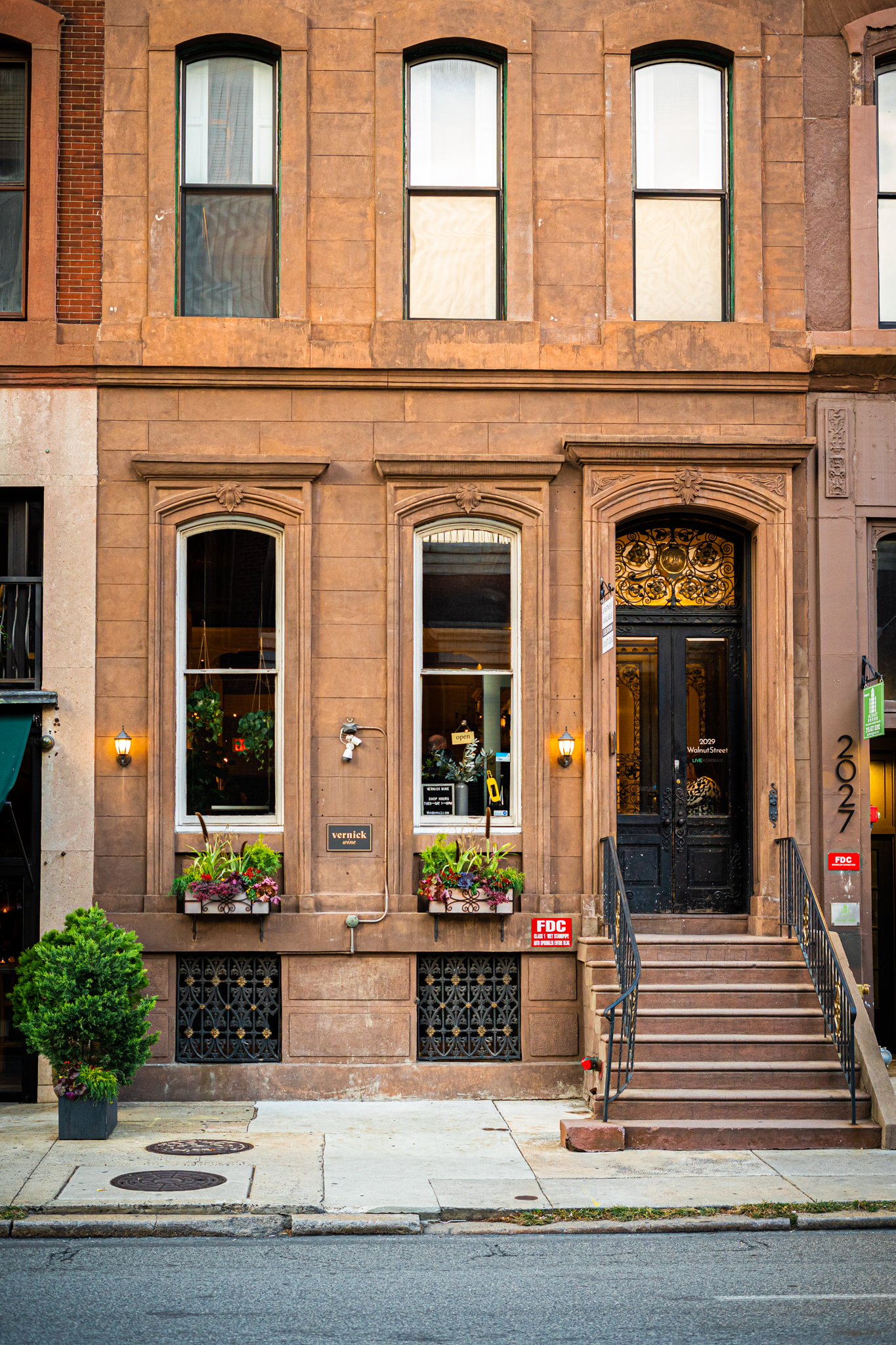
Today, Vernick Wine is connected to Vernick Food & Drink through a narrow passageway, and it has a separate street entrance that opens at 11 a.m. on Saturdays and at 1 p.m. from Tuesday to Friday — hours before the restaurant opens for dinner service. Its walls are lined with a hundred bottles that don’t appear on the restaurant’s wine list, which itself contains about 200 wines.
“There’s almost no overlap between the lists,” said Harry Jamison, the general manager of both Vernick Wine and Vernick Food & Drink, who stocks more easy-drinking rosés at Vernick Wine. “At Vernick Wine, we sell a lot of bottles that cost around $35 but at the restaurant, where people are celebrating special occasions, they’re usually going for something more elevated.”
Like at any other wine shop, you can purchase a bottle off the shelf, marked up for retail at 30% to 50% from its wholesale price, and take it home. Or you can enjoy it at Vernick Food & Drink with an additional $45 corkage fee, which applies to all bottles brought into the restaurant. The corkage fee covers the restaurant’s labor costs in serving the wine and in providing glassware.
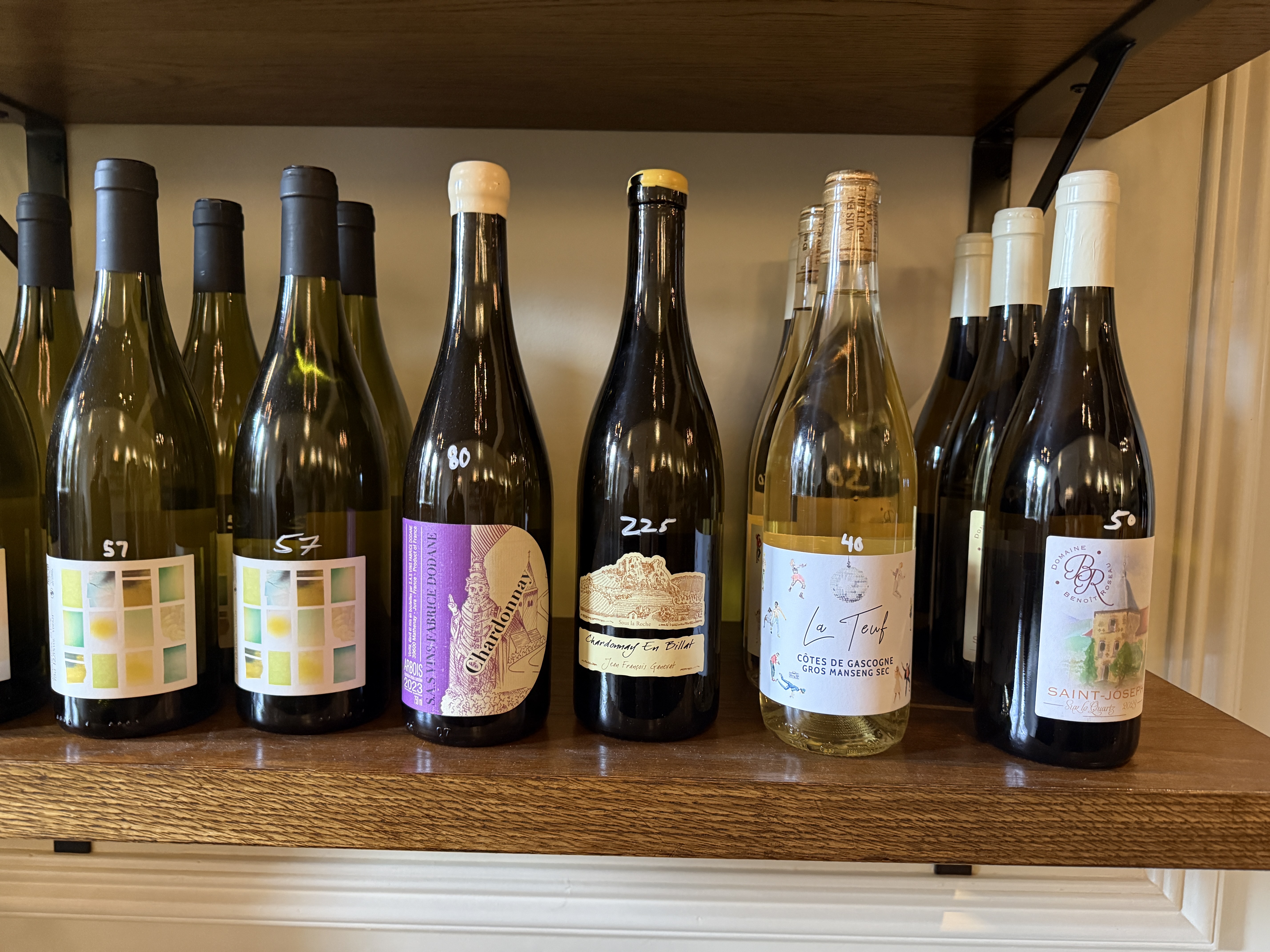
And when it comes to certain wines, that fee is really worth it. “If you buy a bottle that costs $26 from Vernick Wine and bring it into the restaurant and pay another $45, it’s probably going to be about the same price as just ordering a bottle at a restaurant,” said Jamison. “But if you order a bottle of really cool chardonnay from the Jura, a region that doesn’t produce a lot of wine and there is a great demand for it, on a restaurant list it can cost you $180.” Purchase it off the shelf at Vernick Wine, where it’s priced at $80, and with a corkage fee, you can drink it for $125 — far below what a restaurant would normally price it.
At Picnic, beverage director Max Glenn has over 100 bottles in rotation in its retail wine shop, which exists on shelves adjacent to the restaurant’s raw bar and kitchen, and which you walk through before you even get to their dining room.
The bottles change constantly. Glenn makes it a point to carry wines that aren’t available anywhere else in Philadelphia.
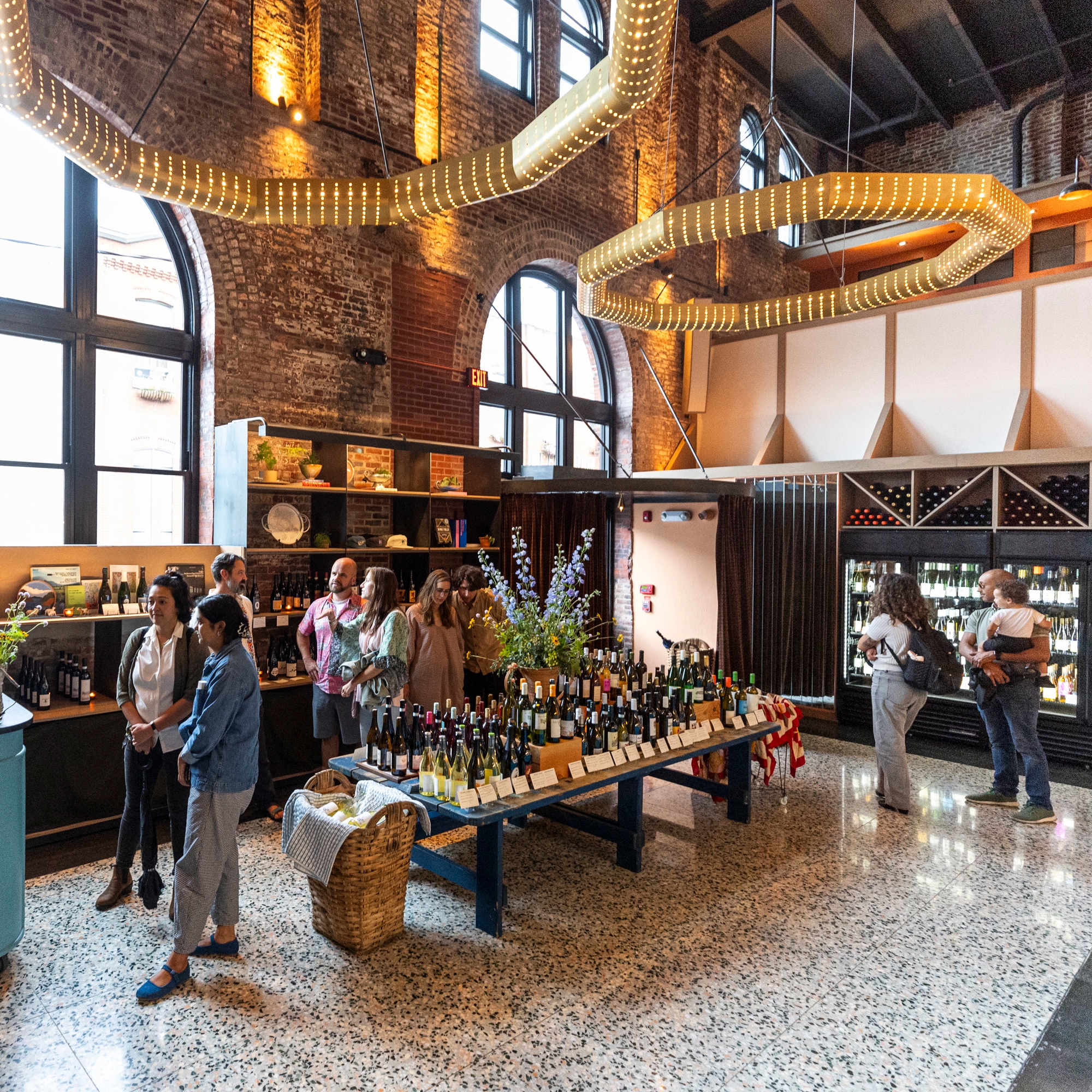
It’s also a way for Picnic’s servers to deepen their knowledge and excitement about wine. “The servers walk around the bottle shop, pick up bottles, hold them, and interact with them. They feel more connected to their work because it’s not just a name on a piece of paper that they’re expected to memorize. The wines are there for them to touch, look at, see the labels, and read the notes on.” Glenn said that experiences like these, “make wine cool.”
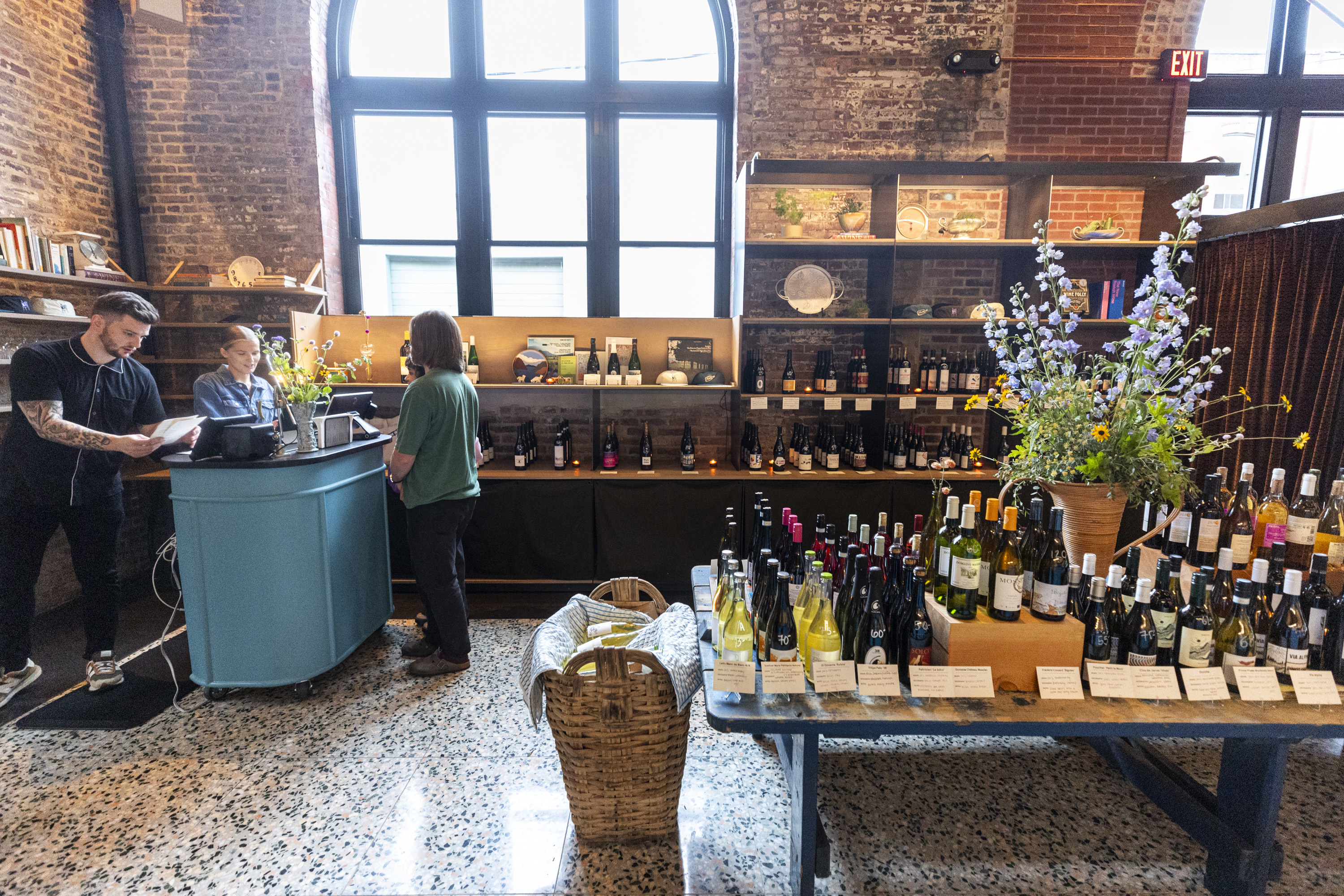
Roughly half of Picnic’s wine sales are from to-go bottles. Rather than a corkage fee, Picnic uses dynamic pricing to adjust each bottle’s cost for whether it’s going to be consumed in the restaurant or taken to go. This can sometimes mean, for limited, high-end wines like those from natural winemaker Domaine Yoyo in the south of France, that they’re charging a far smaller retail mark-up (about 20%) when you take it to go.
Even tiny restaurant wine shops like Sally, which takes up just one small wall in a nook near the pizza restaurant’s kitchen, are a boon to both customers and in-house beverage professionals. They offer opportunities to taste and explore far more wines than what can reasonably appear on a neighborhood restaurant’s by-the-glass list.
At Sally, where the corkage fee is $30, general manager Willem Sandercox (for whom “wine is my passion”) is able to bring in “a huge rotation of natural wines from small farmers who are crafting their wine without additives.”
In spite of the small physical footprint of Sally’s wine shop, Sandercox maintains that it and Sally the restaurant are separate entities and the lists are kept very separate, though they inform one another. A wine that was super-popular on the restaurant list may be pulled off it and sold by the bottle from the wine shop “because people are always constantly like, ‘Oh my God, I love this glass. Can I buy it?’” said Sandercox.
The wine shop has also been a means for Sandercox to replicate the atmosphere of the small, independent wine shop he once managed in Vermont.
Markups and corkage fees are, of course, necessary. “We have to pay our rent and we have to make sure that we are making the money for the space. But at the end of the day, we’re here to represent the people who are doing the work and making the wine,” said Sandercox.
Leave a Reply