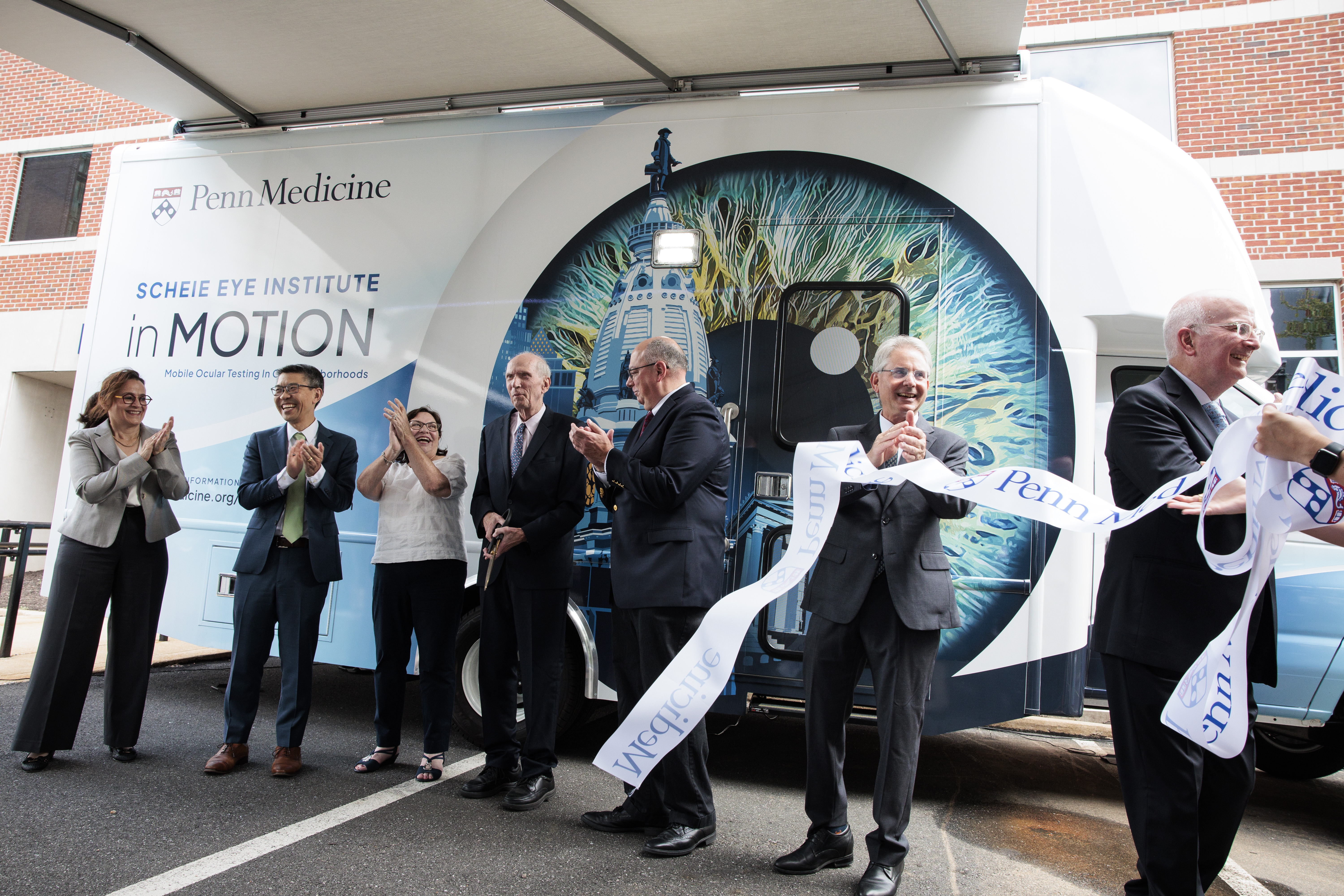
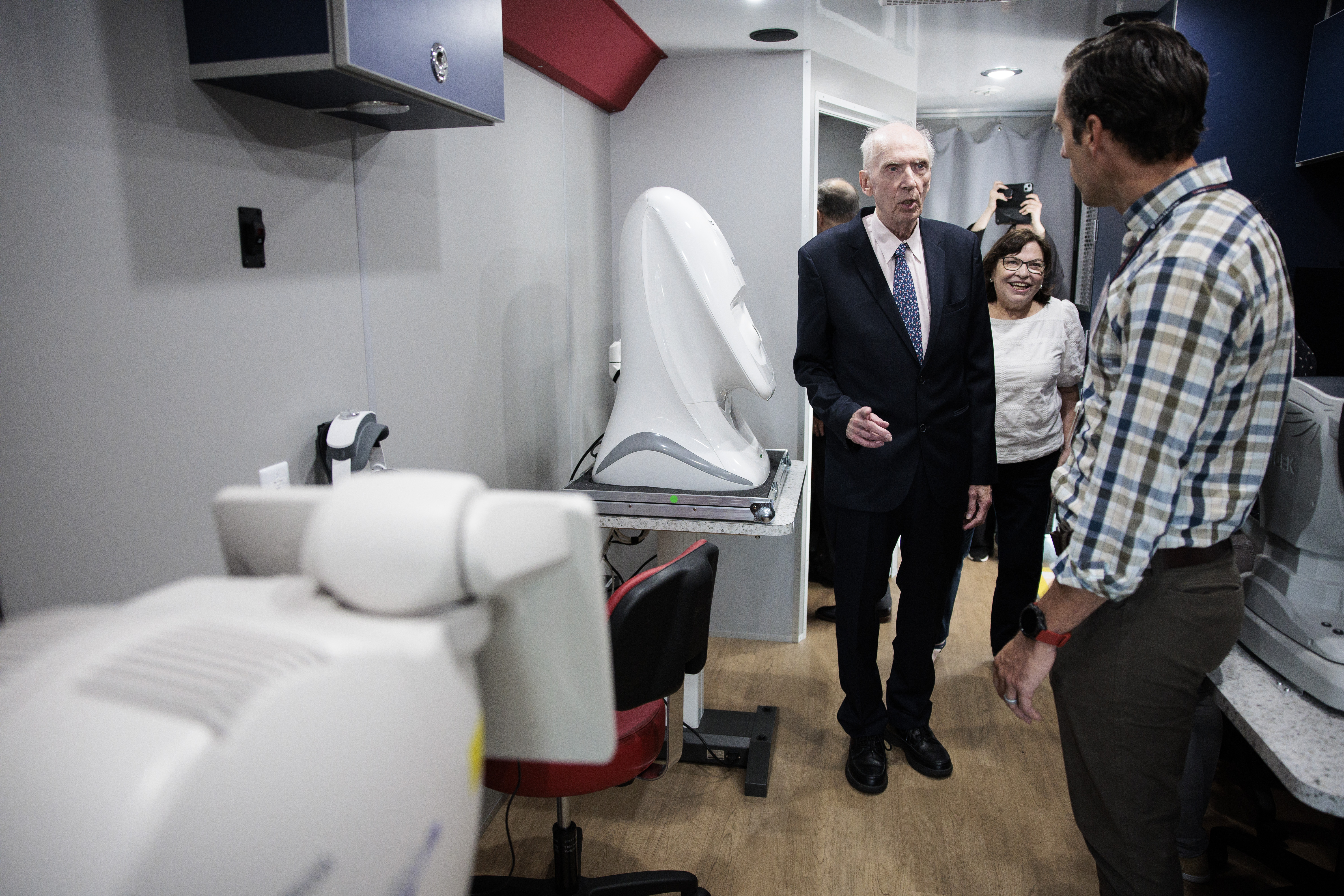
Penn Medicine’s newest mobile medical van features a giant mural of Philadelphia’s City Hall set against a bright, colorful eye.
It’s right on theme: the 26-foot-long van will travel around the city, offering free eye exams and education services to underserved communities. The project is led by Penn ophthalmologist Lama Al-Aswad, whose vision is to prevent blindness by improving access to eye care.
Called the Scheie Eye Institute In MOTION, the van will screen adults for the four major causes of blindness: glaucoma, macular degeneration, diabetic retinopathy, and cataracts.
The goal is to detect eye diseases early, so they can be treated before progressing to blindness. Half of an estimated 2.2 billion cases of visual impairment worldwide could have been prevented or still haven’t been properly treated, according to the World Health Organization.
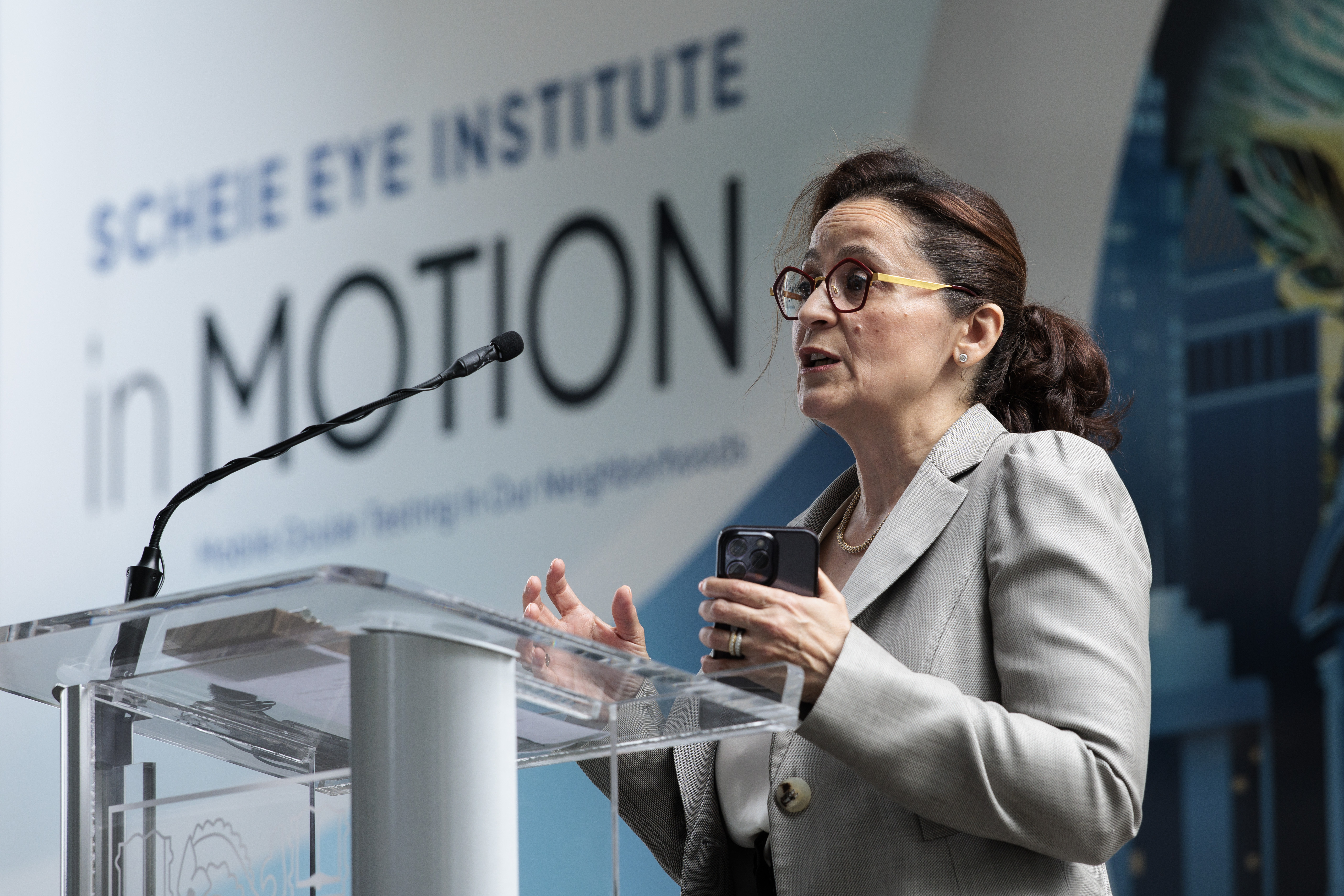
Lama Al-Aswad is the lead physician behind the new Scheie Eye Institute in MOTION mobile unit.Monica Herndon / Staff Photographer
Al-Aswad had previously launched a similar effort in New York City that screened more than 8,500 people for glaucoma. She found more than half of them had never seen an eye doctor before.
By teaching community members about eye diseases and expanding access tocare, she hopes they can avoid worse outcomes.
“By the time we say [patients] have a disease, we are improving their eye health literacy, so they understand the impact and the need to follow up,” Al-Aswad said.
Those who cannot afford follow-up care can receive services for free, thanks to donations from Philadelphia native Rick Campbell and family, and the New York-based organizations, Save Vision Foundation and Envision Health Technologies.
The van made its first appearance at Saunders Park in West Philadelphia in mid-September. The unit aimsto run at least two to three times a week and see 25 patients at each event.
The Inquirer spoke with Al-Aswad about the new mobile screening van in an interview lightly edited for length and clarity.
Lama Al-Aswad speaks during an event introducing the Scheie Eye Institute in MOTION mobile unit.Monica Herndon / Staff Photographer
What should the public know as part of eye health literacy?
The four leading causes of blindness: That includes cataracts, which are reversible. People who have cataracts slowly lose vision, but once we do cataract surgery, it goes back to your baseline vision.
Glaucoma is the leading cause of irreversible blindness. It’s called the silent thief of blindness because it’s asymptomatic until the end.
Diabetic retinopathy is another leading cause of blindness. That’s preventable too, if there is annual evaluation for it and better control of diabetes.
Macular degeneration is a disease that affects the macula and, with aging, slowly over time can affect vision. That can be treated with injection and monitoring.
A lot of eye diseases can be blinding. But, in general, if we catch it early and take care of it continuously, we can prevent blindness.
What communities are you hoping to reach?
We are hoping to reach the underserved or vulnerable communities in West Philly, North Philly, and other places. We are even targeting the unhoused community with this mobile unit.
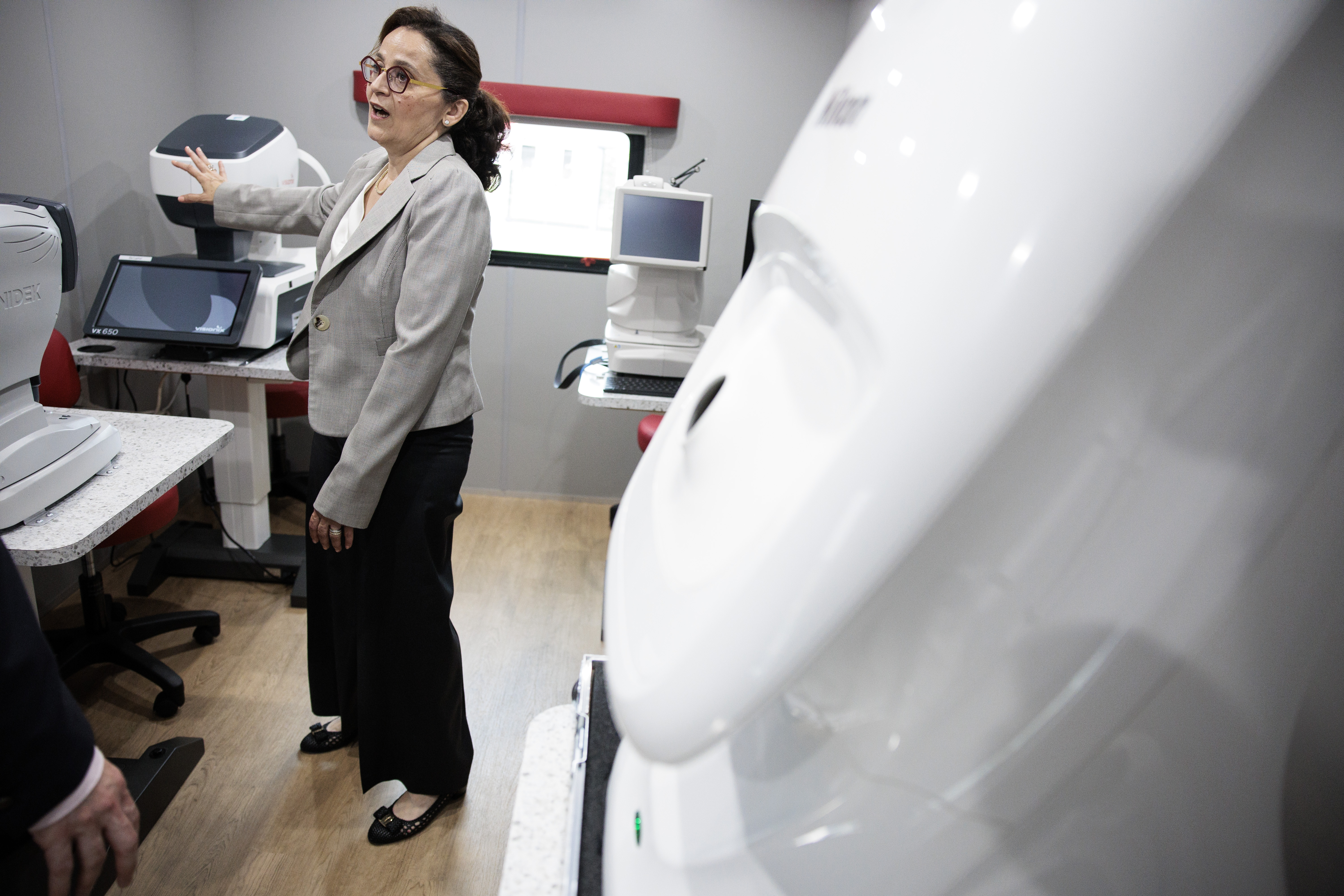
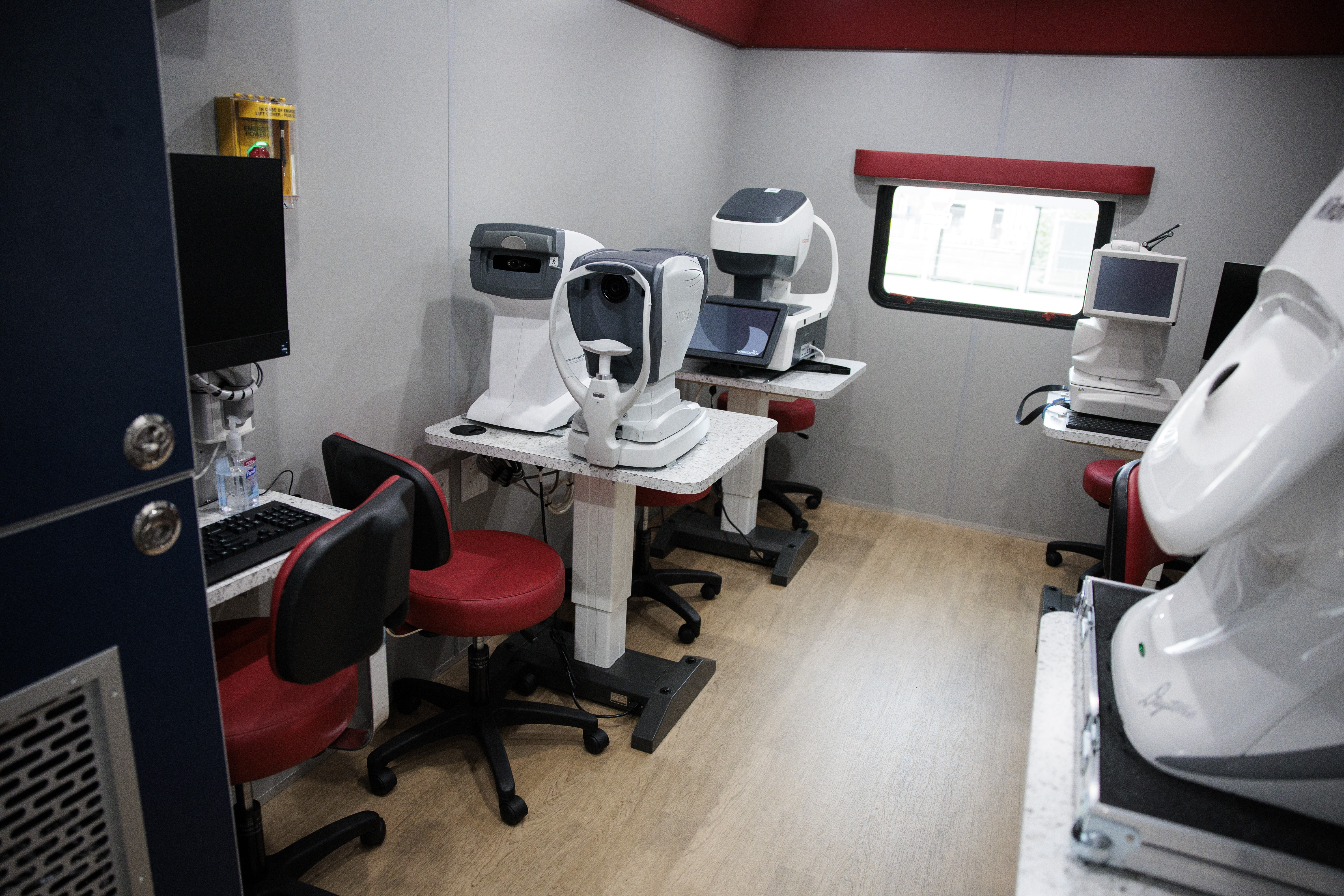
The inside of the mobile unit.Monica Herndon / Staff Photographer
What are some lessons that you learned in New York that will be guiding your new effort at Penn?
One of the lessons that I learned is how to close the loop.
Let’s say you go out to the community and you screen. But what happens after that? You tell the patient they have a disease. If you’re lucky, 50% follow up.
When we did a lot of the screening in New York, I did an analysis of the people who followed up and people who didn’t follow up. A couple of things came up:
It’s hard for individuals with mid- to low-socioeconomic status to take time off work. Second, eye health literacy is very, very important for blindness prevention. A good number of patients didn’t understand the need to follow up.
We would call them and they would say, “I have no problem, I don’t feel anything, and I have other priorities.” The other thing is how to target populations at a higher risk.
How will you help patients who require follow-up care after screening?
If we identify disease, we refer them to our practices to be seen in person by one of our physicians. If they are uninsured, we see if we can help them access insurance, and if they cannot access insurance, we can provide care for them for free, thanks to Mr. Campbell and his family’s generous support for this project.
Why is it important to catch eye diseases early?
People go to their internists or other doctors, but the last thing that they think about is their vision.
That’s because eye diseases most of the time are asymptomatic early on, so patients only go when it’s advanced. That’s a problem in itself because a lot of the vision loss we cannot reverse.
It’s really important to identify disease early and manage it for blindness prevention.
Donor Rick Campbell and his wife Marie Campbell walk into the Scheie Eye Institute in MOTION mobile unit.Monica Herndon / Staff Photographer
How do you feel about the launch?
Closing the loop is going where patients are, providing screening and diagnosis, providing education, and providing care to the uninsured. This is a dream come true to be able to do all of this together.
This week’s edition of Shackamaxon looks at a crackdown on “smoke shops,” the Philadelphia police’s handling of traffic citations, how Harrisburg deadlines can be leveraged to fund transit, and what City Council forgot to talk about in its first session after returning from summer break.
Up in smoke?
An increasingly common frustration has been expressed across Philadelphia over the rise of what are known as “smoke shops,” which have proliferated in the city’s commercial corridors. Ostensibly operating as grocery stores, they are often locations where illegal drugs and drug paraphernalia are sold. They tend to operate late into the night and attract the ire of both residents and other business owners.
That’s why it was refreshing to see someone make a substantive move to shut them down. State Rep. Amen Brown, whose district includes parts of West Philadelphia and Logan Square, has put together an initiative he’s called Operation Breezy. Working with both city and state law enforcement, and relying on the support of members of the community, Brown’s efforts have already shuttered 13 of the establishments.
Brown’s approach uses confidential informants, many of whom come from the community itself. He told me that one of the now-closed shops had roughly 40 pounds of marijuana on thepremises, the outlets routinely sell out-of-state cigarettes, and that firearms have been seized as part of the efforts. Residents who would like to help can send an email to OperationBreezy@gmail.com or a message to the effort’s Instagram page, @operationbreezy.
Brown said he’d like to do more to stop the smoke shops, but that the best option requires action at the local level. Rather than enacting a broad-based curfew for all businesses, he’d prefer to target just the smoke shops. He says that might be possible by imposing restrictions on the operating hours of grocery stores that are smaller than 300 square feet. That’s a size below which, officials say, legitimate uses for a storefront become impractical.
Still, I couldn’t help wondering whether this incident is a natural outgrowth of the department’s policies. The Philadelphia police simply do not seem to take enforcing traffic laws seriously enough. Traffic citations have plunged over the last few decades. In the 1990s, officers regularly issued roughly half a million tickets per year. In 2023, about 45,000 tickets were handed out. These days, we celebrate an increase of a few thousand citations, even as overall stops remain at a fraction of the total pedestrian safety experts say is needed. Commissioner Bethel has said that enforcing traffic violations is a lesser priority.
While many officers blame the city’s Driving Equality Law for this decline, that measure does not prevent officers from enforcing moving violations, which are the most dangerous offenses. Failing to do so is a choice the department has made on itsown. The result of this lack of enforcement, traffic safety experts say, has been an increase in reckless and aggressive driving.
Given thata city controller report called Philadelphia’s streets the most dangerous of any major U.S. city, this lack of prioritization must change. While speed cameras and other forms of automated enforcement have made a difference along high-traffic corridors like Roosevelt Boulevard and Broad Street, they can only enforce certain offenses in certain locations. Reckless driving is an issue almost everywhere.
It is impossible to know what went through the mind of the officer who left Eugene Beauford in the street. The department has declined to publish his name, let alone make him available for an interview. But perhaps this horrific incident will prompt police brass to rethink the department’s strategy for enforcing traffic laws.
Skill game shutdown
Next month, Pennsylvania’s so-called games of skill will need to be unplugged. Oct. 13 marks the last day of the grace period the state Supreme Court gave the General Assembly to devise a taxation and regulatory scheme for the machines, devices that resemble slot machines and which are currently banned under state law. For years, legislators have debated where the machines can operate, and whether they should pay the same tax rate as existing slot machines.
By pure coincidence, there’s another big deadline approaching: the authorization period for the state-appointed SEPTA prosecutor. I’d like to propose a potential compromise for both issues. Harrisburg should extend the SEPTA prosecutor’s authority by three years, agree to Gov. Josh Shapiro’s proposed shift in sales tax revenue to support public transit, and pay for it by legalizing skill games and taxing them at the same rate as slot machines. They should also pass regulations limiting the placement of the machines and creating penalties for owners who allow children to use them.
Given District Attorney Larry Krasner’s recent struggles, extending the SEPTA prosecutor should be less politically contentious now than it was in years past. Lawmakers can also point to the significant decline in fare evasion and violent crime on the transit system over the last few years as justification.
For Philadelphia lawmakers who may be reluctant to place limits on the authority of Krasner, who has been overwhelmingly elected by their constituents three times, that kind of middle ground can provide fiscal peace of mind for SEPTA, which has been subject to financial uncertainty for three years. While Democrats seem to be pinning their hopes for approving more state funding for SEPTA on winning control of the state Senate during this fall’s elections, that is hardly guaranteed. If a deal can be reached ahead of time, it reduces the risk of a collapse. It also does not preclude additional action next year.
Finally, the need to act on skill games is clear. As it stands, it will be difficult for the commonwealth to shut down every location that houses the machines. We don’t even know how many exist. I am not a fan of these devices, which have a negative impact on the communities that host them. Regulation will make it easier to mitigate that damage and ensure Pennsylvanians see some benefit from the funds that flow through them.
Council comeback
After its three-month summer hiatus, City Council is back in session. All eyes on the second floor of City Hall will be trained on how Mayor Cherelle L. Parker will respond to a series of potentially contentious legislative proposals — from Councilmember Jamie Gauthier’s bill to stop burning trash to Councilmember Isaiah Thomas’efforts to stop at least part of the school closure plan.
City Council should hold investigatory hearings into both officials. Residents deserve better from their leaders than what both Krasner and Bilal have shown.
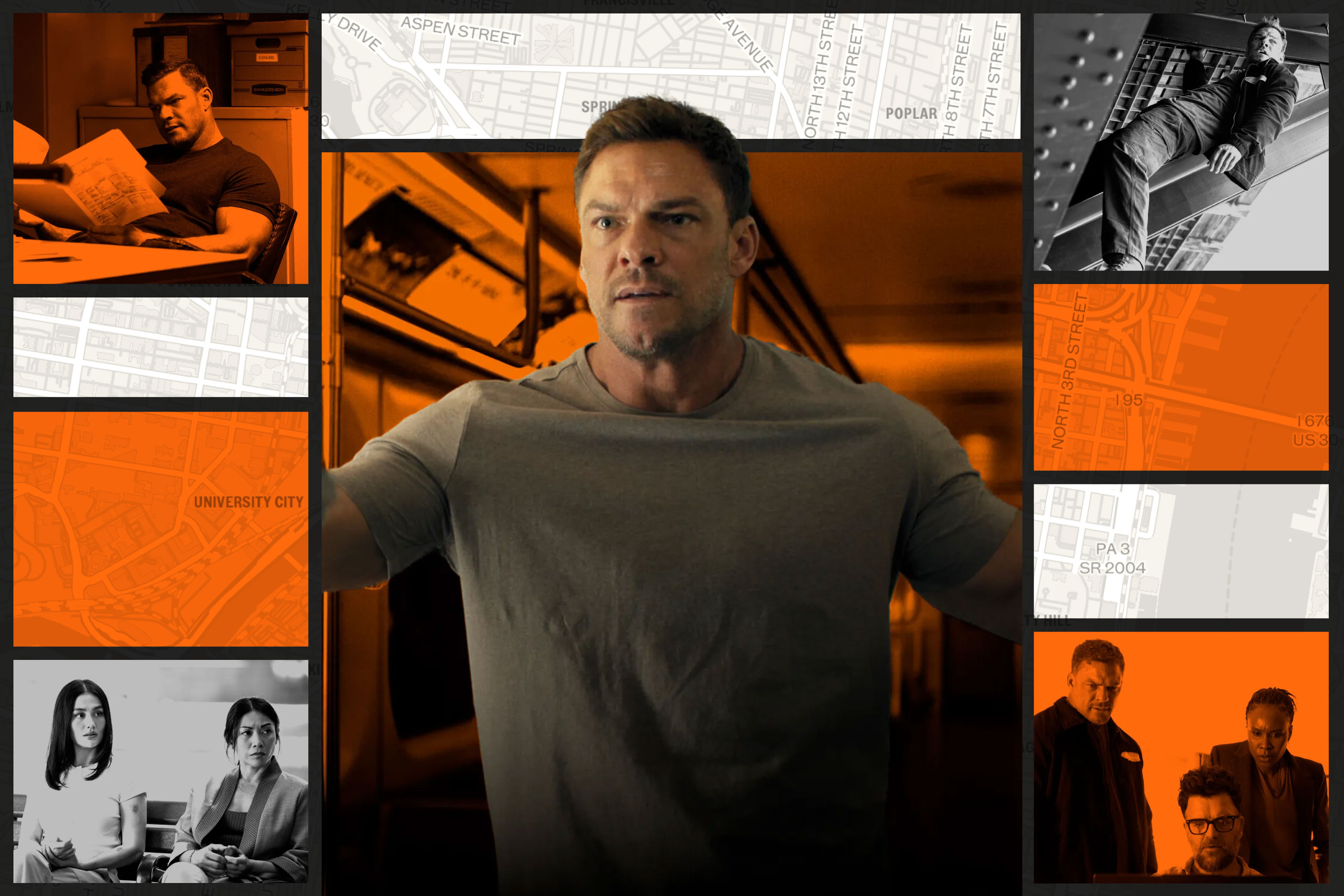
Vigilante Jack Reacher's shadowy dealings spilled out across Philadelphia for the Reacher’s fourth season, which is now available in full on Amazon Prime. Starring actor Alan Ritchson as the hulking retired Army investigator, the series was spotted filming around town in 2025.
Based on Lee Child's 2009 novel Gone Tomorrow, the fourth season of Reacher has its titular character facing off against he CIA, federal agents, and international mercenaries following a woman's suicide. And while much of the on-screen action appears to have been filmed elsewhere — namely Toronto, which looks a lot like Philly, but with space — the City of Brotherly Love does show up quite a bit.
Here, we've rounded up all the Philly spots we could identify in season four. Check out the map below for where Reacher and his cohorts went in the city.
story continues after advertisement
Loading…
Seen in episode 1
City Hall
Michael Bryant / Staff Photographer
Reacher's fourth season immediately sets the scene with a shot of the William Penn statue atop City Hall as a nightscape of Center City shines in the background.
Seen in episode 1
Uptown Beer Garden
Erin Blewett / For The Inquirer
We catch our first glimpse of our hero, Jack Reacher (Alan Ritchson), as he exits Uptown Beer Garden, walking out of the establishment silently with a beer in hand.
Seen in episode 1
LOVE Park
Michael Bryant / Staff Photographer
Reacher speaks for the first time this season, ordering a "wiz wit" from a nondescript food truck in Love Park.
Seen in episode 1
Avenue of the Arts
Jessica Griffin / Staff Photographer
Here, Reacher strolls down the sidewalk on the west side of Broad Street, chomping on his cheesesteak. Canonically, it is just after 2 a.m., and the street is deserted as he descends into the Walnut-Locust entrance of the B line, which runs along Broad Street.
Seen in episode 1
Walnut-Locust Station
Alejandro A. Alvarez / Staff Photographer
As he enjoys his cheesesteak, Jack Reacher (Alan Ritchson) heads down into the Broad Street Line at this Center City station. Several interior shots of the station are shown, including one in which a rat munches on a hot dog.
Seen in episode 1
Benjamin Franklin Bridge
Thomas Hengge / Staff Photographer
Philly is shown off in all its nocturnal glory in episodes one, and seven with a low-light shot of Center City from the Ben Franklin Bridge. Episode five features a skyline shot from the bridge, showing the One Water Street Apartments building.
Seen in episode 1
Benjamin Franklin Parkway
Tom Gralish / Staff Photographer
For the first time in the season's first episode, the sun rises on Philadelphia. And it does so in this stunning aerial shot showcasing many of the Ben Franklin Parkway's gems — Logan Circle, the Philadelphia Museum of Art, the works.
Seen in episode 1
Parkway Central Library
Tom Gralish / Staff Photographer
We get a great glimpse of the exterior of the Parkway Central Library before heading inside, where Jack Reacher (Alan Ritchson) and Jacob Merrick (Christopher Rodriguez-Marquette) do research on Congressman John Sampson (Marc Blucas), a North Carolina representative who is launching a presidential bid.
Seen in episode 1
Parc
Courtesy of HughE Dillon
Parc briefly plays host to Reacher, Lila Hoth (Agnez Mo), and Jacob Merrick (Christopher Rodriguez-Marquette) as the trio settles in at an outdoor table to evade police.
Seen in episode 3
Walt Whitman Bridge
Tom Gralish / Staff Photographer
Reacher and his cohorts travel back into Philly via this bridge after escaping Washington, D.C. In the background, the old Southwark Generating Station is clearly visible.
Seen in episode 3
Schuylkill Expressway
Tom Gralish / Staff Photographer
As Reacher and his crew traverse Philly at night, the action leads to a shot of the west end of Center City near 30th Street Station from the Schuylkill Expressway.
Seen in episode 3
Schuylkill Expressway
Monica Herndon / Staff Photographer
Here, we get another nightscape shot of Philly's skyline, again from I-76 near 30th Street Station looking east. In the foreground, Locust on the Park is lit up green and is featured prominently.
Seen in episode 4
Benjamin Franklin Parkway
Monica Herndon / Staff Photographer
The Philly skline is again featured in a sprawling shot from the Parkway. In the lower left, the Parkway House is visible.
Seen in episode 4
City Branch tunnel
Ed Hille / Staff Photographer
Fresh off a victory over some goons following a battle in the subway, Reacher makes his way back above ground here as he evades police.
Seen in episode 5
Philadelphia’s Magic Gardens
Margo Reed / Staff Photographer
While on the run from the police, Reacher and Tamara take refuge here, only narrowly avoiding capture in the Gardens' maze-like interior.
Seen in episode 5
The Rail Park
Yong Kim / Staff Photographer
Reacher and Tamara continue to evade capture, cutting through the Rail Park before dangling from its side to hide.
Seen in episode 6
12th and Market Streets
Alejandro A. Alvarez / Staff Photographer
Reacher and Tamara's mugshots appear on a screen at the corner of 12th and Market, which they see after passing by the Hard Rock Cafe.
Seen in episode 6
Italian Market
Alejandro A. Alvarez / Staff Photographer
Yet another Philly skyline shot, but this time from South Philly. If you look closely, you can see St. Paul Parish, as well as the seating area for the Di Bruno Bros. 9th Street Bottle Shop.
Seen in episode 7
56th and Market Streets
Kate McCann / Staff Photographer
This skyline shot looks east along the Market-Frankford El line, with one of Steve Powers' "A Love Letter For You" murals clearly visible.
Seen in episode 7
Highmark Mann Center for the Performing Arts
Jessica Griffin / Staff Photographer
The Mann becomes a plot point as a potential demonstration site for a toxin being sold on the dark web thanks to an orchestral concert of movie scores.
Seen in episode 8
Schuylkill Expressway
Tamara, Reacher, and Jacob travel along I-76 in South Philly, with a clear view of Kindy's Christmas Factory Outlet in the background. Reacher and his cohorts continue their journey on I-76, getting off at exit 349 and crossing over Packer Avenue. If you squint, you can just make out the Chickie's & Pete's sign in the background.
Seen in episode 8
Philadelphia Museum of Art
Tom Gralish / Staff Photographer
We get another aerial shot of the Parkway zooming into City Hall, but this time the camera travels over the roof of the Philadelphia Museum of Art. The building's bronze winged horses and griffins are the stars of the shot.
Seen in episode 8
45th and Market Streets
The season closes out on, you guessed it, an aerial shot of Center City. This one looks east from West Philadelphia as Reacher rides the subway to parts unknown, Drexel University's Vidas Field barely visible to the left.
story continues after advertisement
That was every location we could spot in this season of Reacher. Explore the map of all locations featured. Tap onHover overa pin to learn more.
Staff Contributors
Design and Development: Garland Fordice and Sam Morris
Philadelphia Sheriff Rochelle Bilal’s new second-in-command has left the job — three months after he arrived.
Undersheriff George Gossett Jr., whom Bilal hired in June as part of what she had described as a major “reorganization and modernization” initiative, confirmed Monday that he had resigned from the job effective last Friday.
Gossett said through a spokesperson that he is “excited to pursue opportunities in the private sector” but provided no other explanation for his short tenure.
Bilal’s office has been hit with three court orders since 2024 seeking to correct alleged mismanagement, most recently in May over delays in processing deeds of properties won at auction.
Gossett, a Roxborough-based lawyer and former assistant district attorney, was tapped in June at an annual salary of $185,000, weeks after a Common Pleas Court judge ordered Bilal to fix the sheriff sale process or face consequences.
According to a news release Bilal issued that month, Gossett was to “oversee daily operations, strategic planning initiatives, personnel management, and operational coordination across the agency.”
“This reorganization is about building a stronger organization for the future,” Bilal said at the time.
It is unclear where that plan now stands, with the new undersheriff having already departed.
Gossett is the fourth undersheriff to serve Bilal since she took office in 2020. Bilal and her spokesperson, Teresa Lundy, declined to provide any details about why her top deputy would leave so soon after taking the job.
Sources in the office said that the pair did not see eye-to-eye, and that Gossett was said to have made a remark about Bilal’s “anger management” issues, which may have escalated the situation.
Separately, Bilal last week fired Mark Wilson, the office’s codirector of real estate. Wilson declined to comment.
Gossett’s predecessors also had rocky terms in the sheriff’s office.
In August 2020, seven months into the job, Undersheriff Sommer Miller resigned after she said she faced retaliation for reporting alleged theft in the advertising department, unauthorized spending of public funds, and instances of extreme sexual harassment. She later claimed in a whistleblower lawsuit that Bilal had been “reading and monitoring her emails in real time.”
Miller’s replacement, Undersheriff Curtis Douglas, left in May 2021, about a week after reports that Bilal’s office had botched a contract meant to move sheriff sales to an online platform. A spokesperson at the time described Douglas’ departure as a planned retirement.
In May 2026, Undersheriff Tariq El-Shabazz, a criminal defense attorney who came to personally oversee the handling of deeds related to sheriff sales, also retired. He left one day after the most recent court order dropped.
Under Bilal, who was elected as a reformer in 2019, sales of foreclosed and tax-delinquent properties have been mired in post-auction delays, with winning bidders waiting a year or more to get their deeds.
Many auctions were halted altogether between 2021 and 2024. Court security and inmate transportation, two other key functions of the office, have also been recurring problems, with judges saying they have felt unsafe.
In addition to Gossett, Bilal recently hired William A. Brownlee Sr. as part of the office restructuring earlier this year.
Brownlee, a West Philadelphia pastor, a motivational speaker, a real estate investor, and an entrepreneur with a checkered financial history, has previously described himself on his website and social media as the office’s “Deputy Chief Financial Officer.” His website has since gone dark, and Bilal’s office said Brownlee currently serves as project manager. Payroll records show he is being paid $95,000 a year.
Another new hire, Steven A. Wakefield, is a former Philadelphia Law Department attorney serving as Bilal’s deputy undersheriff in charge of deed compliance. He is being paid $120,000 a year.
Wakefield took the stand last month and told Common Pleas Court Judge Paula Patrick, supervisor of the court’s commerce division, that the office had previously misplaced records and lost track of the distribution of some auction proceeds. Wakefield blamed the situation on a since-terminated employee who allegedly concealed the problem from Bilal.
Bilal did not testify at the hearing. Her city-appointed lawyer had filed a motion seeking to keep her off the stand, saying the sheriff had “limited personal knowledge” of how sheriff sales work.
Wakefield said he had enacted operational reforms, speeding the deed issuance process while largely clearing out a backlog of deeds from earlier sales.
Even so, Patrick took the rare step of imposing six months of outside supervision of sheriff sales.
Butter chicken has taken an indirect route to South Street’s Pronto Pizza: from its roots in North India to a Pakistani family kitchen in Northeast Philadelphia, then into an Italian American pizza shop and, finally, onto a roll.
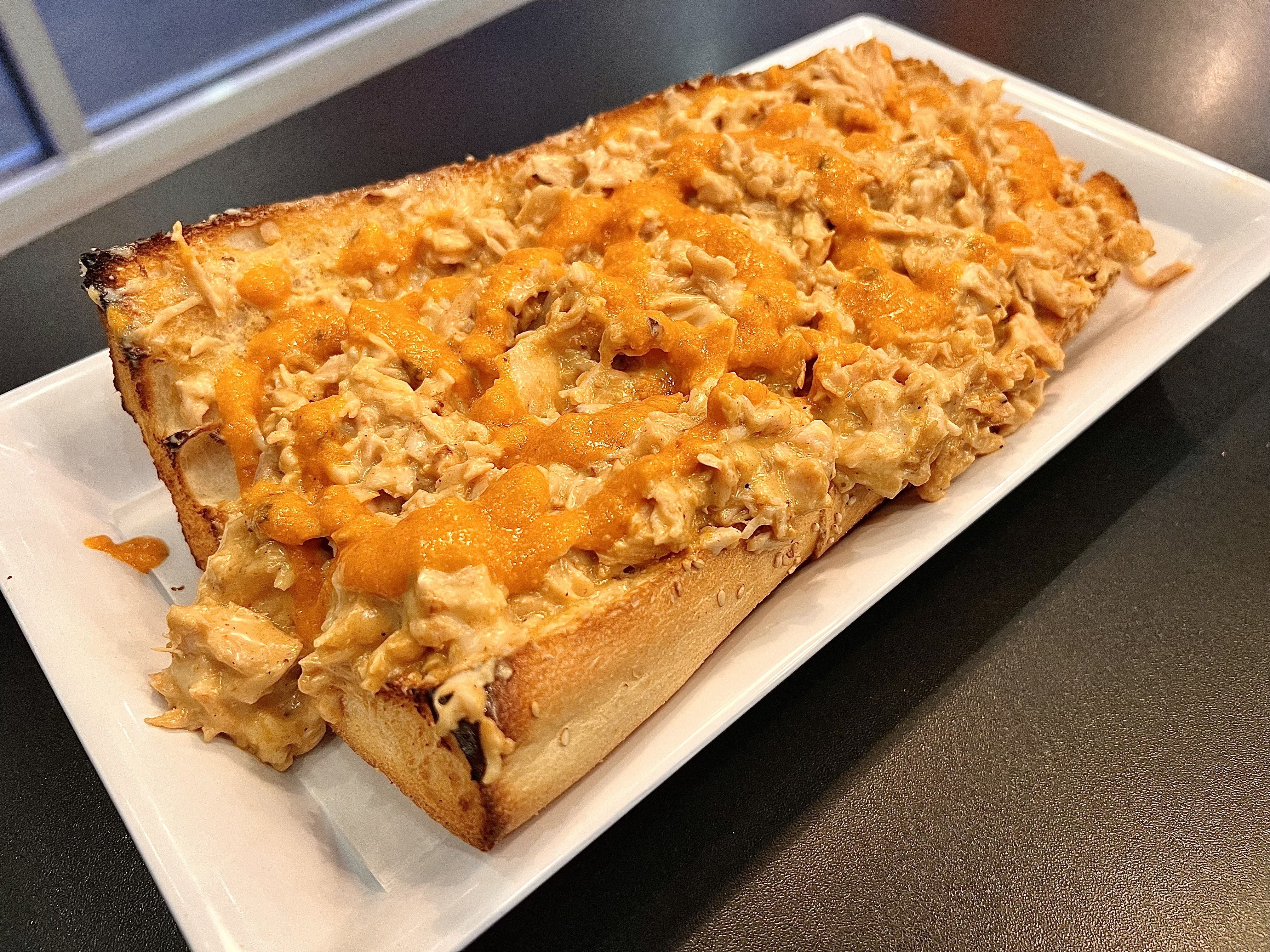
At Pronto, just off Broad Street, it’s a secret menu item. Owner Umair Cheema tops chopped marinated chicken with Cooper Sharp and butter chicken sauce based on his mother Asma’s recipe. The $12 sandwich is Cheema’s addition to a citywide assortment of cheesesteak variations that includes versions made with oxtail and salmon.
Cheema does not skimp. He lightly toasts the Liscio’s roll before adding nearly a pound of a mixture of chicken and melted cheese. Then comes a ladle or two of the rich butter sauce, which comes perilously close to gilding the lily.
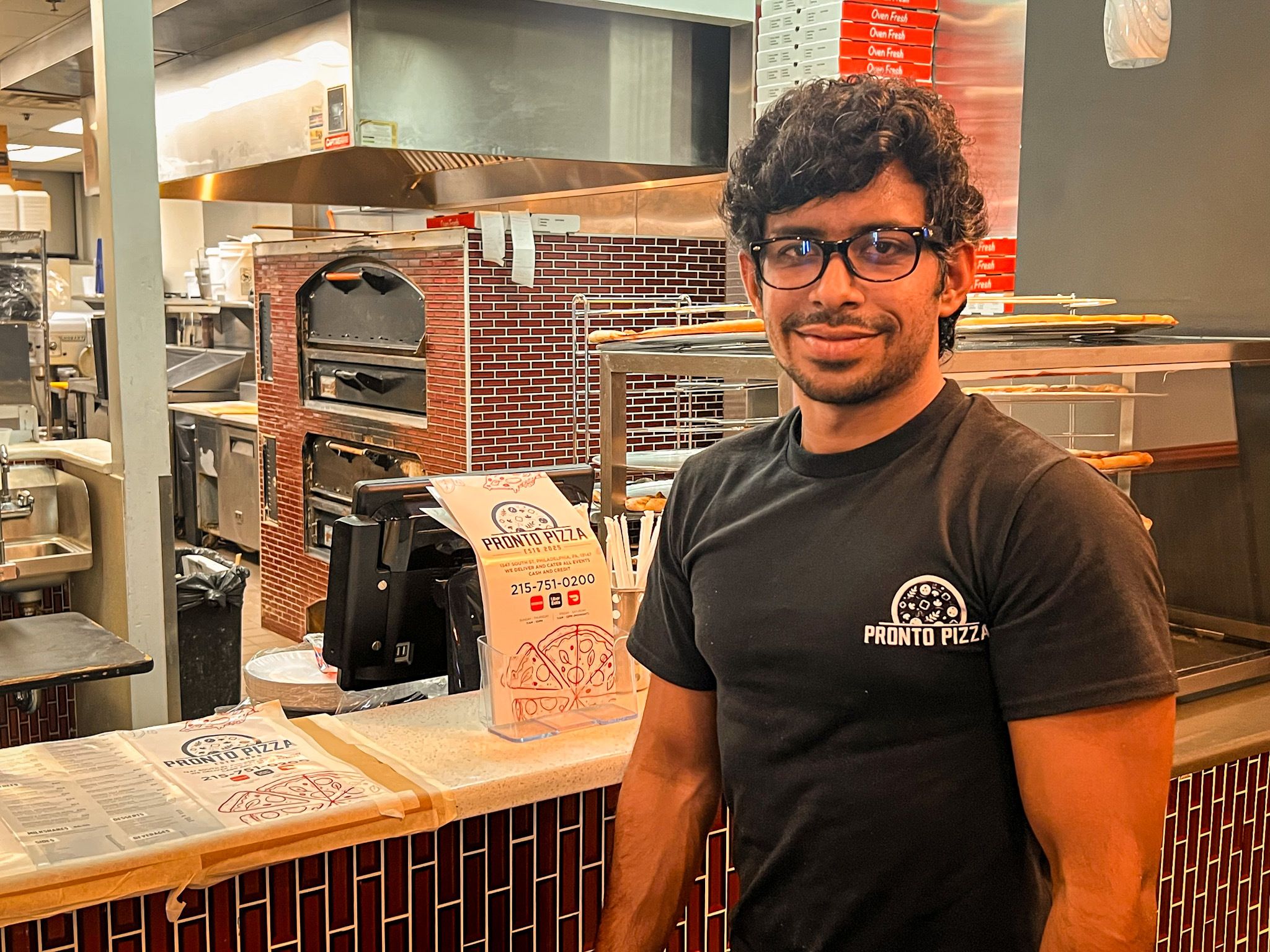
Umair Cheema owns Pronto Pizza, 1347 South St., which previously was LaScala’s Pronto.Michael Klein / Staff
Cheema, 28, had eaten plenty of butter chicken in Pakistan, but he credits his younger brother, Adil, with inspiring Pronto’s version. After the family moved to Northeast Philadelphia in 2019, Adil routinely asked their mother to cook for him.
“One day my mom made butter chicken, and I was like, ‘Mom, this is outstanding. This is the kind of butter chicken I eat at restaurants,’” Cheema said.
A staple entree on Indian restaurant menus in the United States, butter chicken typically features yogurt-marinated chicken in a mild, creamy tomato sauce seasoned with onions, garlic, and spices such as garam masala, turmeric, cumin, and coriander. The dish has proved adaptable to other formats. Chef Reuben Asaram, for example, has incorporated it into his Mexican-Indian “Reubychanga.”
Pronto is also not the area’s only shop making a butter chicken cheesesteak. Double Down Kitchen at Ridge Hall in Ambler serves one alongside versions made with jerk chicken and bulgogi-marinated rib-eye.
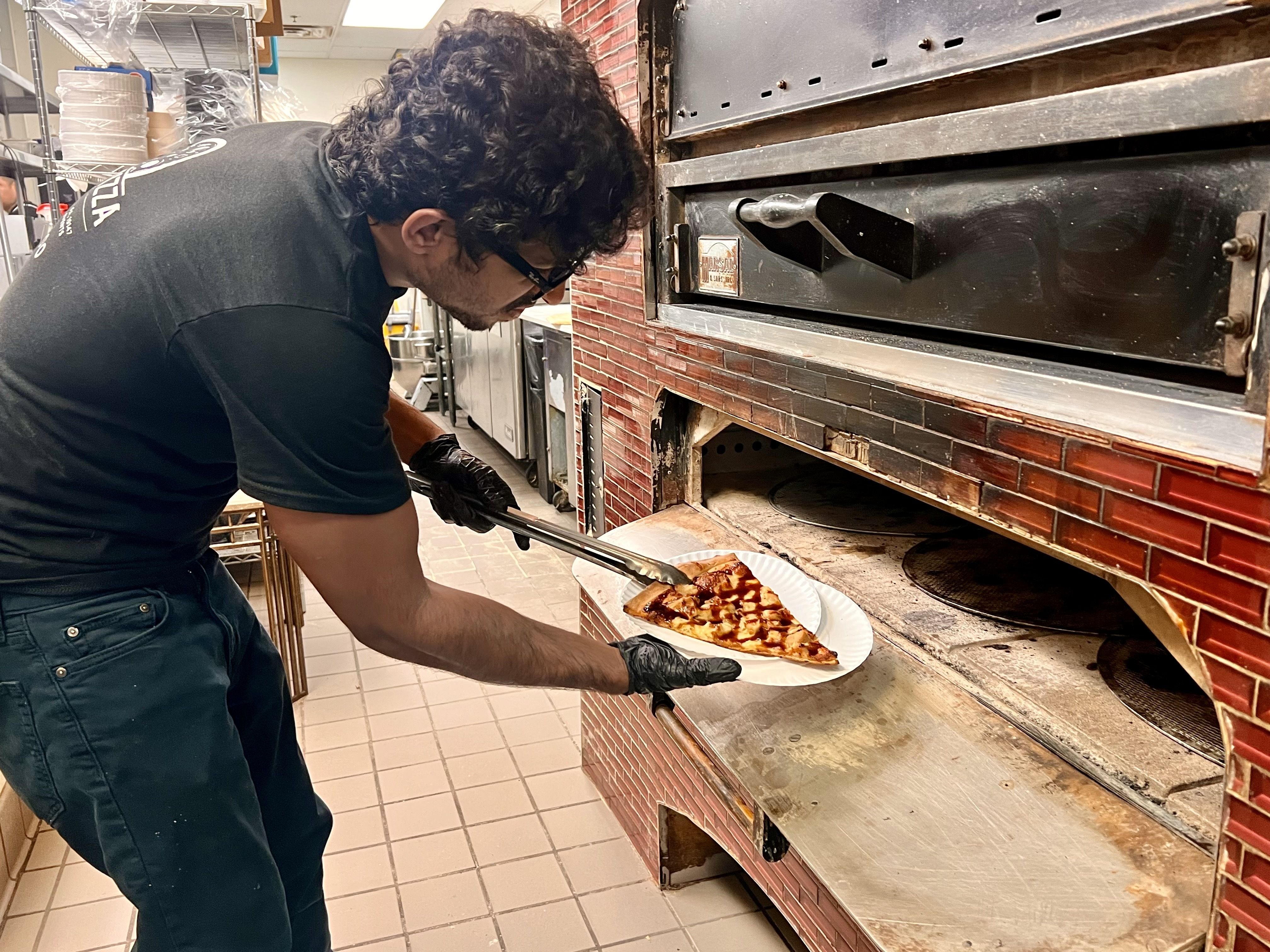
Owner Umair Cheema pulls a slice of pizza from the oven at Pronto Pizza, 1347 South St.Michael Klein / Staff
Cheema’s sandwich is part of his effort to broaden the menu at Pronto, which he bought from restaurateur Rob LaScala. He largely retained LaScala’s offerings of pizza, sandwiches, wings, pasta, meatballs, chicken Parmesan, and grilled salmon platters.
Cheema had not expected to enter the pizza business. After arriving from Pakistan, where his father had worked as a banker, he took a job at Kabobeesh, his aunt’s West Philadelphia restaurant. His father was diagnosed with severe diabetes soon afterward, while his mother found warehouse work.
“I took charge,” Cheema said. “I was like, ‘Let me deal with all of this now. It’s my time to handle this.’”
His opportunity came when an uncle learned that Naz’s Pizza in Chester was for sale.
“He called me and said, ‘Someone is really desperate. They want to sell their pizza shop. I know you have some money saved. If you really want to look into it, I’ll help you out, too.’”
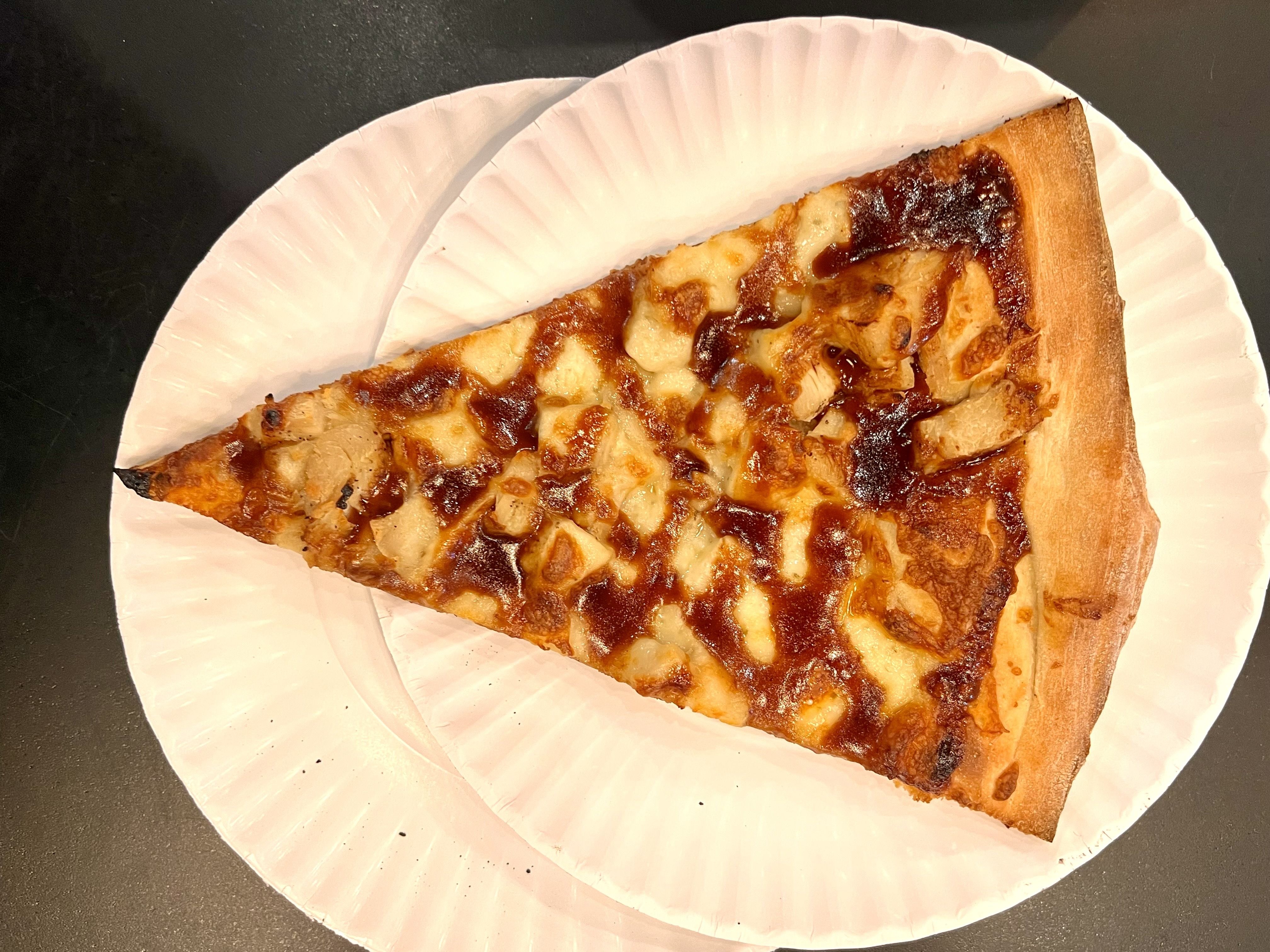
Barbecue chicken pizza slice at Pronto Pizza, 1347 South St.Michael Klein / Staff
Cheema drove to Chester the next day and arrived around 3 p.m., hardly primetime at most pizzerias. “I saw people coming in and the phones ringing,” he said. “That means a business is working. So I told my uncle, ‘Everything seems OK. They are short a couple of things, but we can fix it.’”
Cheema and his uncle bought the shop, and Cheema said sales doubled within six months. They eventually expanded to six shops before dividing the business to pursue separate growth; Cheema sold off the Chester store. Besides the Pronto at 1347 South St., Cheema owns another Pronto in Torresdale, Holme Style Pizza near Holme Circle, and Old English Style Pizza in Olney.
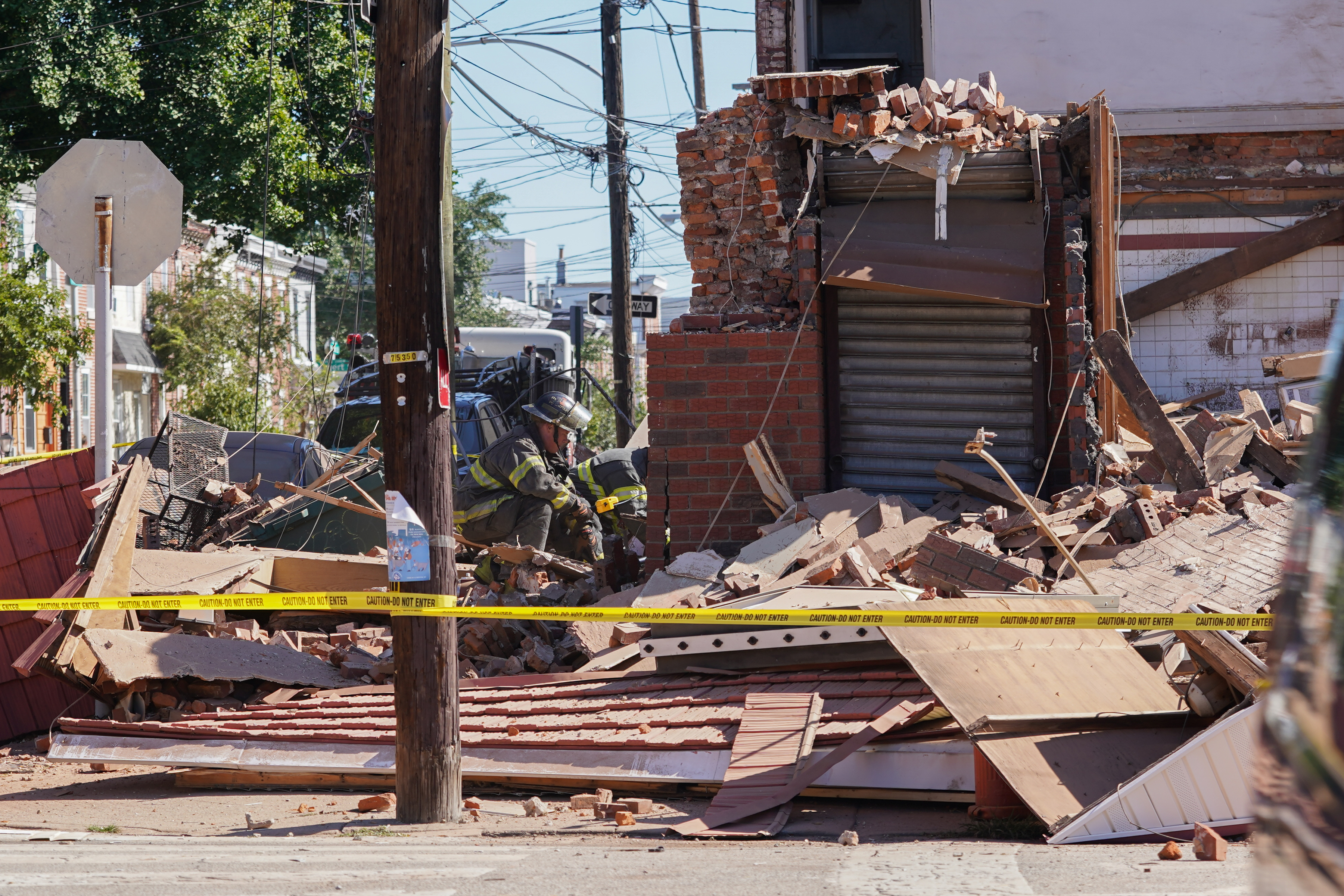
His most serious setback came in September 2022, when the three-story East York Street building housing Key Pizza, his busiest shop, collapsed. “You couldn’t tell there had been a pizza shop there the night before,” Cheema said. Construction work next door was blamed.
The roll-up door and some bricks are all that remained of Key Pizza at 2329 E. York St. after its collapse on Sept. 14, 2022.Jessica Griffin / Staff Photographer
No injuries were reported, but he lost the business, and the resulting insurance litigation was resolved only recently, about 3½ years later, he said.
Cheema does not plan to rebuild Key. He is focused instead on Pronto, its catering operation, and potential additional locations. The butter chicken cheesesteak gives him a way to integrate his family’s cooking into the kind of business in which he found his footing.
“Everybody in Philly knows what a cheesesteak is, and there are so many good places out there already selling cheesesteaks that are famous for them,” he said. “But I wanted to do something different, and something that still relates to Philly.”
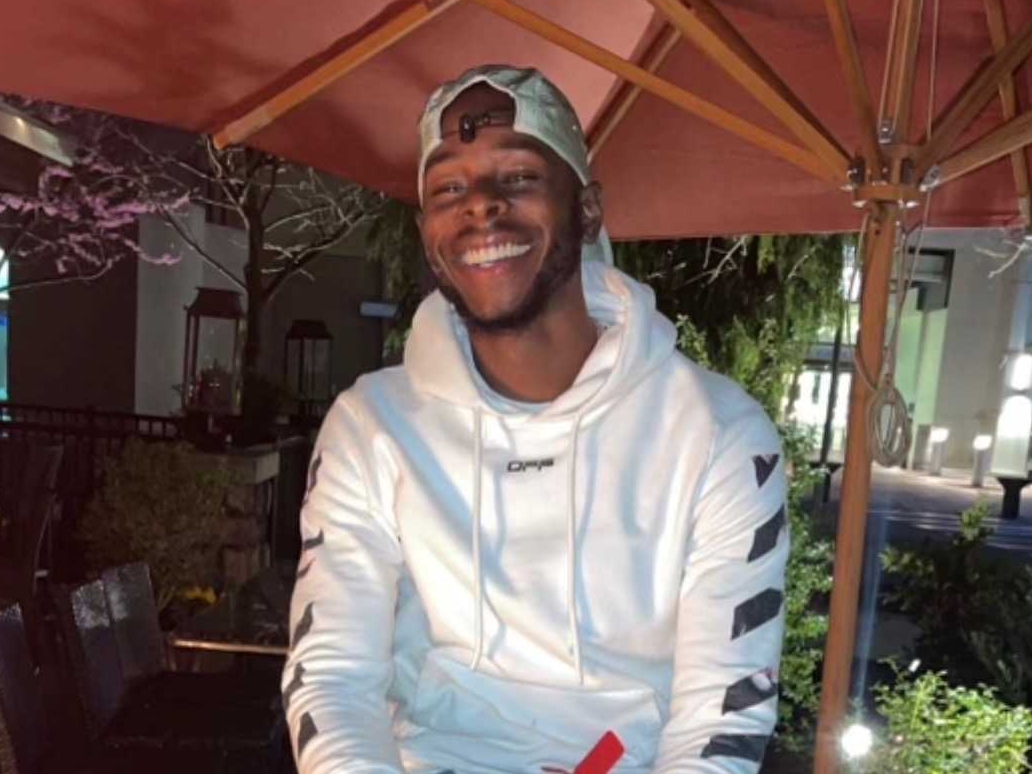
Davina Neuson has been haunted for years by questions about the killing of her son Armand Hayes, who was fatally shot outside a West Philadelphia bar in 2022.
She never understood how the fight that ended her 30-year-old son’s life escalated into murder.
Now, finally, she may get an answer.
Lawrence Cary, 44, was arrested in late August and charged with murder and related crimes in connection with Hayes’ killing after the men got into a bar fight the evening of Aug. 15, 2022, according to court documents. He is set to appear Monday before Judge Gregory O. Yorgey-Girdy for a preliminary hearing.
“I don’t know how to put it into words,” Neuson said. “I’ve waited four years for this moment.”
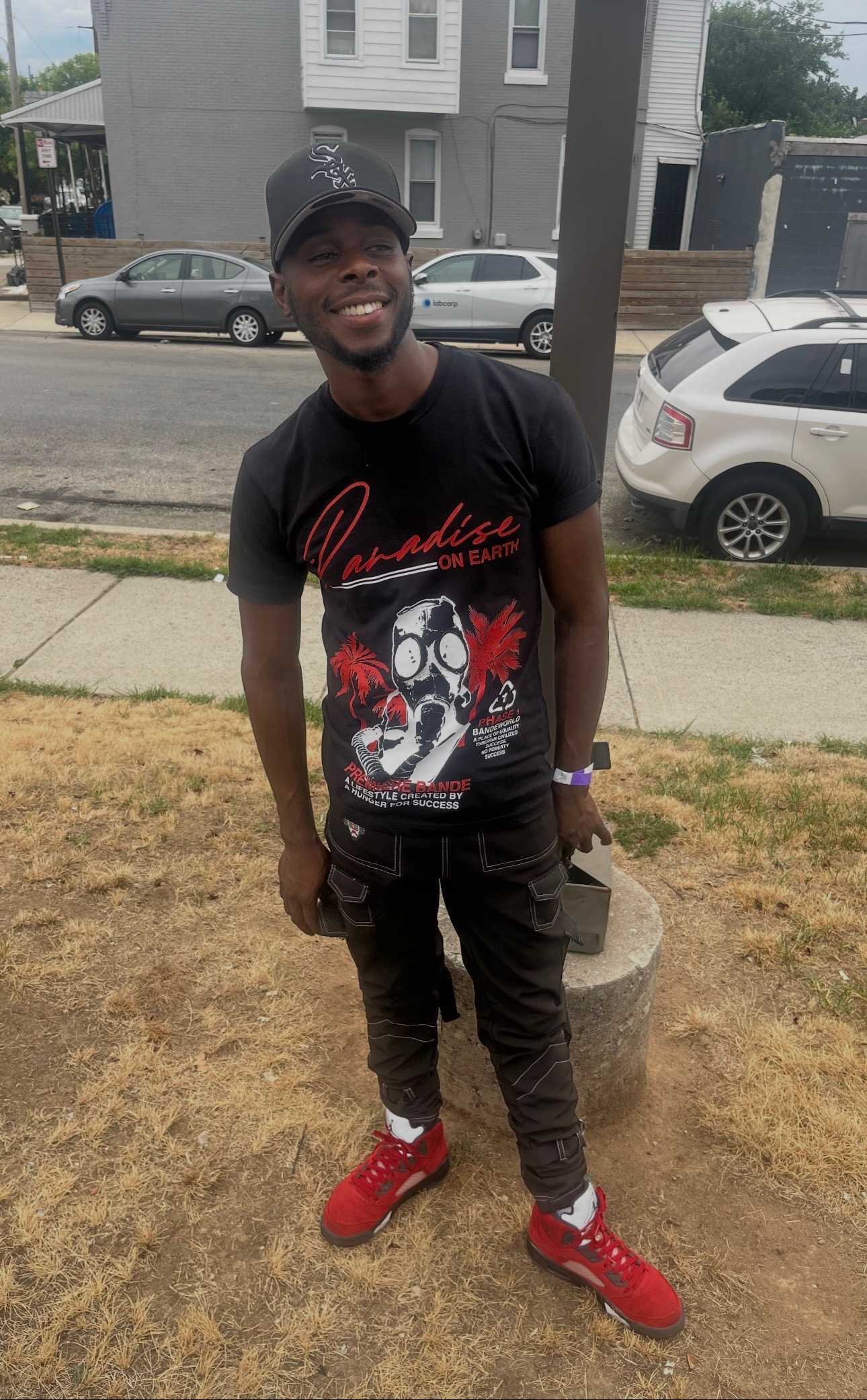
Hayes, known by many as “Ace,” was a father of two daughters and beloved by his family, Neuson said.
He attended Strayer University and Philadelphia Community College and had been working as a compressor operator for Philadelphia Gas Works when he was killed.
“Ace was a genuinely good person, he had a personality that could light up a room,” Neuson said. “A smile of his was unforgettable.”
Neuson said she never has been able to stop wondering about his last moments.
Police investigators said Cary and Hayes got into a physical altercation around 11:45 p.m. in the Asmara Lounge on Haverford Avenue, not far from where Hayes was found laying in the street with multiple gunshot wounds through his body.
He was taken to nearby Lankenau Hospital and pronounced dead shortly after his arrival.
A photo of Armand Hayes.Davina Neuson
Surveillance footage showed Cary leaving the bar after the altercation and driving in the area of 64th and Vine streets, near where Hayes was found wounded, according to the affidavit of probable cause for his arrest.
Investigators later learned that Cary, seated in the driver’s seat of his Chevrolet Trailblazer, fired multiple shots from a handgun out his passenger window when he encountered Hayes, the document says.
Earlier in the evening, Hayes had told a bartender that Cary had bitten him during the scuffle, according to the document.
Investigators soon identified Cary using eyewitnesses, surveillance footage, and receipts from the bar marked with his name.
And in 2023, they learned that a week after the killing, Cary’s Trailblazer had been given a new title and gifted to another man who registered the vehicle in the name of a Bryn Mawr woman. The man asked the woman to do that for insurance purposes, according to the affidavit.
Neuson, Hayes’ mother, said she did not believe that Cary and her son knew each other before the incident.
She still cannot comprehend why her son’s life was taken.
“What hurts the most is knowing his life was taken so suddenly,” she said. “He had so much more life to live, so many more memories to make, so many people who loved him.”
Many of those people will be present in court as Cary’s case works through the system, Neuson added.
Cary is being held at the Curran-Fromhold Correctional Facility and was denied bail.
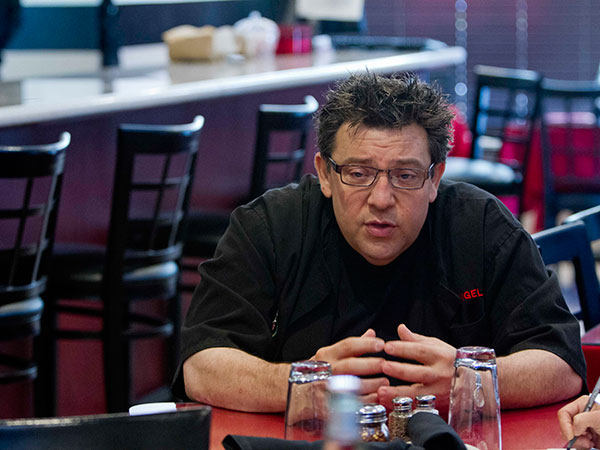
After more than a decade as a must-visit eatery for Mafia aficionados in South Jersey, Collingswood’s Kitchen Consigliere has run into some financial troubles.
“Like a lot of small businesses, we’ve gone through some very difficult financial periods,” Lutz said in a statement posted to social media Wednesday. “I made decisions along the way to keep our staff working, pay our vendors, keep the lights and gas on, and keep this restaurant operating.”
“We fell behind on certain obligations, including taxes owed to the State of New Jersey and I take full responsibility for that. We are addressing those obligations and have been working through a payment plan,” Lutz said, before emphasizing that the restaurant is operating as usual and all gift cards will be honored.
“The food, the recipes and the experience people have come to know and love are not changing one bit,” he said. “For me, this restaurant has always been more than the food. … It’s about the people who work here and the customers we love to serve — who have supported us over the number of years.”
Lutz first opened Kitchen Consigliere as an 11-table cafe in 2010, but it soon outgrew its original location on Powell Lane. Boosted by an online crowdfunding campaign, he was eventually able to expand to the restaurant’s current home at 700 Haddon Ave. in 2013.
Lutz’s culinary career began in earnest following a seven-year stint in prison on various charges related to organized crime.
When embarking on his second act, Lutz did not shy away from his criminal past — a consigliere is a trusted adviser or right-hand man to Mafia leadership, and the restaurant’s signage is styled to resemble the font used with The Godfather trilogy.
Now, Kitchen Consigliere Cafe LLC’s estimated assets total less than $50,000 while the company owes up to $500,000 to dozens of creditors, according to the bankruptcy filing.
The company’s largest outstanding debt, $117,663.73, is owed to S&M Provisions Inc., a West Philadelphia-based food and deli supply company.
Kitchen Consigliere is disputing the next two largest creditor claims listed in the filing: $102,000 owed to New Jersey’s taxation division and $58,503 owed to regional utility service provider PSE&G.
The next hearing in the case is a meeting of the creditors on Oct. 5 at 10:30 a.m., according to the court docket.
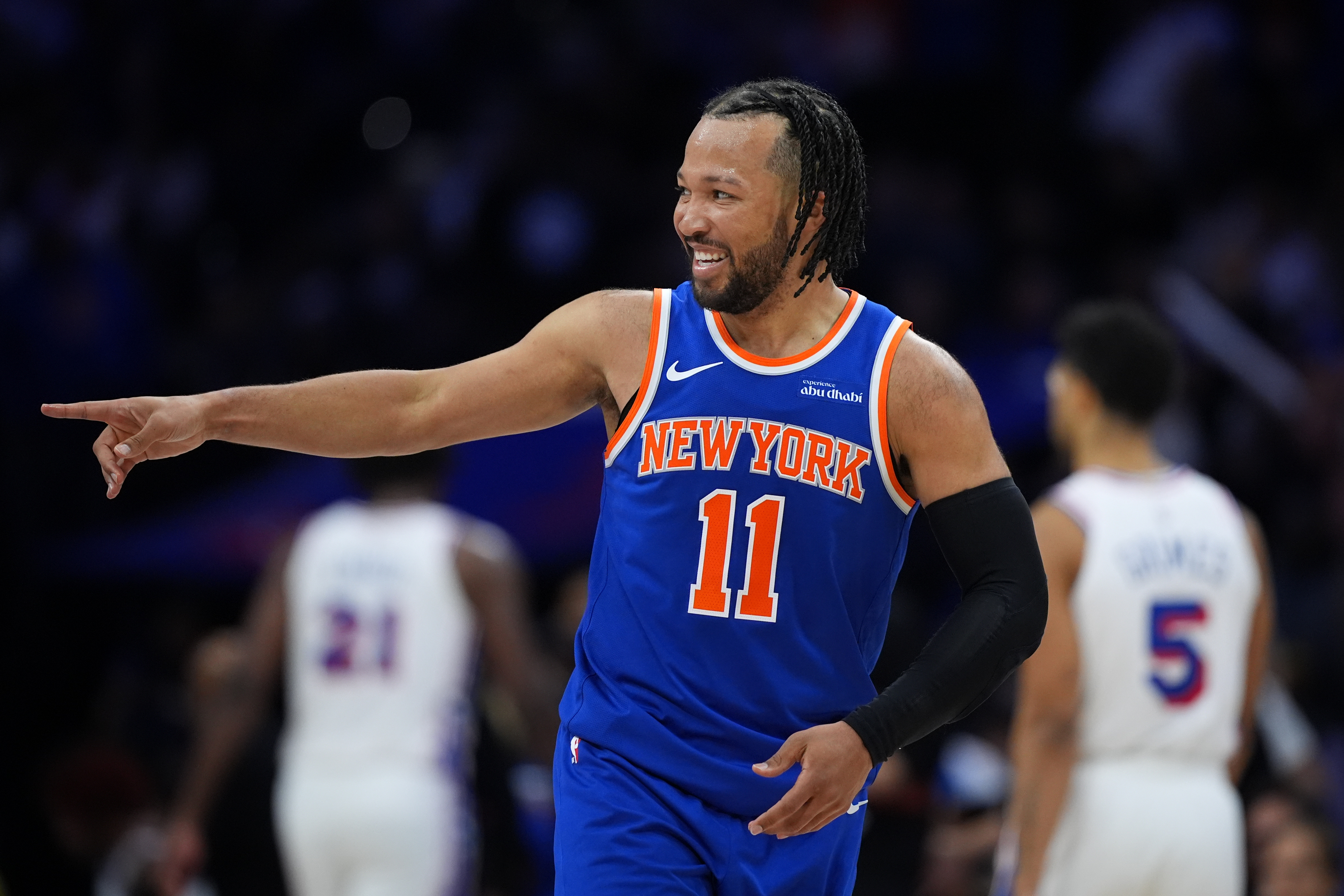
If Jalen Brunson, who just won the NBA championship for the New York Knicks, and Shane Gillis, who broke two Guinness World Records for a one-night-only comedy show at Lincoln Financial Field, weren’t already having a good year — they’re now gracing the stage of Saturday Night Live’s 52nd season.
Brunson, who is known to many locals as the Villanova superstar who brought home two NCAA national championships to the Philadelphia-adjacent school, will host the season premiere on Sept. 26 with girl pop group Katseye as musical guest.
Gillis, a comedian from Mechanicsburg, Pa., who got his start in Philadelphia, will host episode three on Oct. 10 alongside Spanish singer-songwriter Rosalía. Gillis cocreated the West Chester-filmed Netflix series Tires, and was at one point hired and fired from SNL.
SNL is charging forward after more than a half century in the American cultural zeitgeist, bringing celebs into 30 Rockefeller to flub, break, and laugh through the jokes.
Pennsylvania showed up in a big way last season, too, with Quakertown’s Sabrina Carpenter, Downingtown’s Miles Teller, and West Philadelphia’s Colman Domingo (the latter of whom was honored by Mayor Cherelle L. Parker on July 4).
Joining the first slate of episodes, announced on Wednesday, are actress Dakota Johnson with Baltimore rockers Turnstile on Oct. 3. Inde Navarrette, a breakout star from indie horror film Obsession, will host on Halloween, with Gracie Abrams as musical guest.
SNL’s 52nd season will premiere Sept. 26 at 11:30 p.m. Philadelphia time on NBC. Stream episodes the day after they air on Peacock.
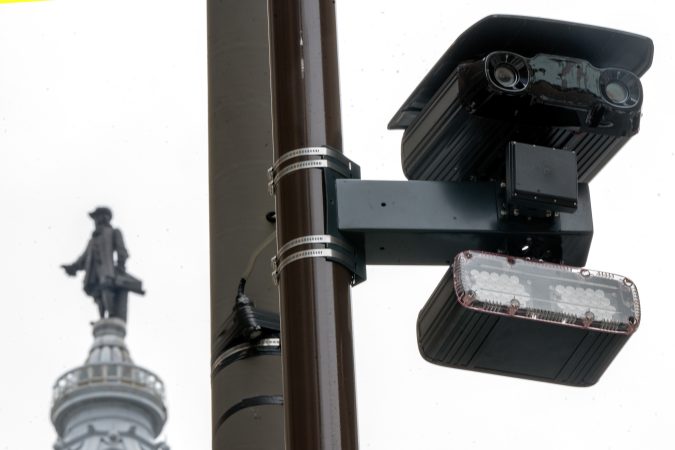
Enforcement cameras on Broad Street in Philadelphia caught about 800,000 motorists speeding in the first six months they were operating.
But the Philadelphia Parking Authority had to throw out 23,195 tickets and refund $1.25 million in fines — all because of a missing street sign at one spot.
A speed camera covering the southbound lanes in the 6500 block of North Broad Street operated for several months earlier this year without a required sign telling motorists that it was operating, PPA said last week in its annual speed-camera report.
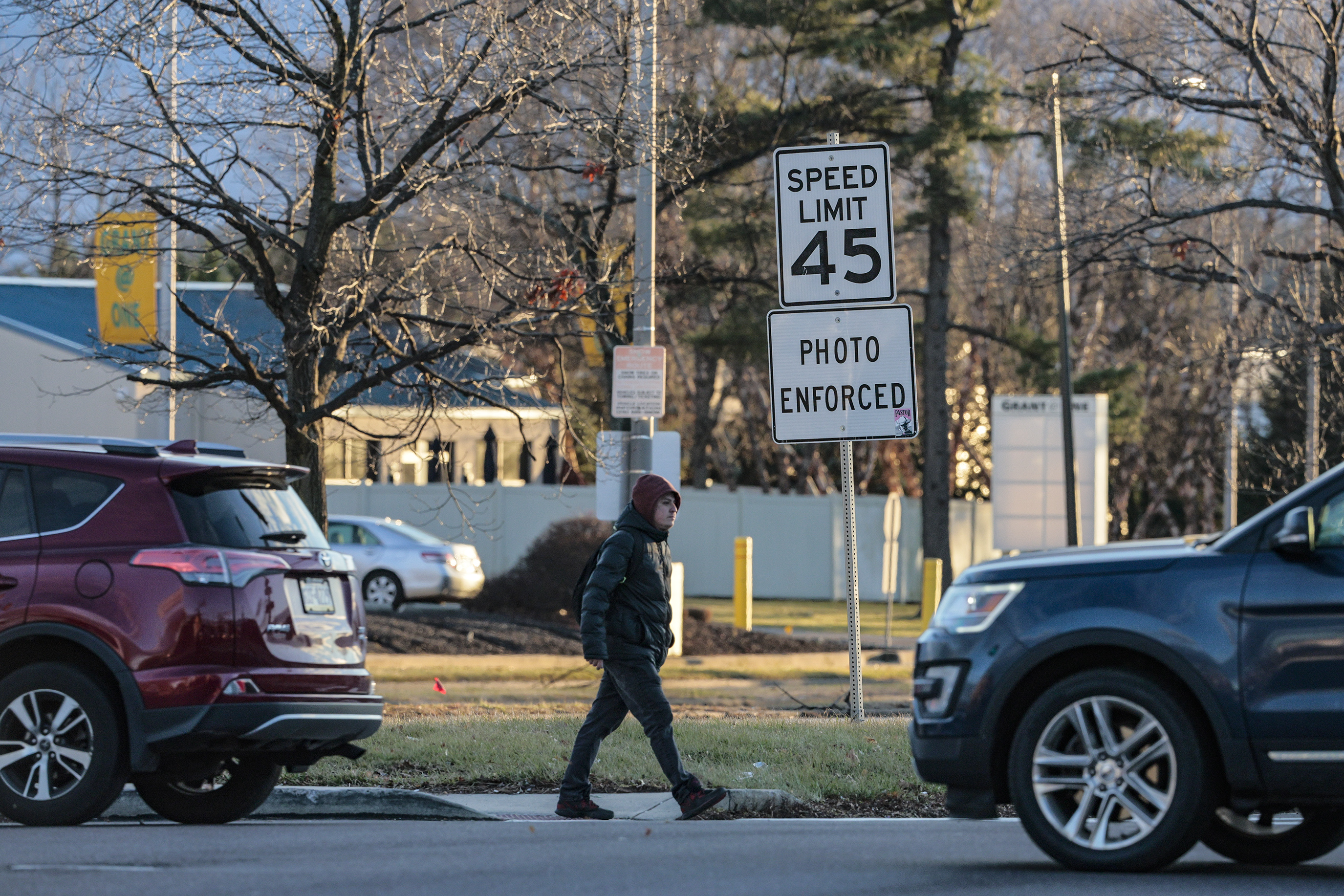
A construction crew dug up the sidewalk on the block, knocking down the curbside sign that says the speed limit is 25 mph and is “photo enforced,” said Corinne O’Connor, deputy executive director of the parking authority.
“We did the right thing,” O’Connor said. The violation notices were canceled because, she said, motorists did not have proper notice of the speed limit and the presence of enforcement cameras atBroad Street and 65th Avenue. State law requires those signs at camera locations.
Broad Street, also designated State Route 611, has 31 speed cameras at 15 locations spread out between Philadelphia’s northern and southern city limits. They began operating last September.
Drivers who travel more than 11 mph over the posted speed limit will eventually be ticketed, with fines starting at $100 and rising to $150 for those driving more than 30 mph over the limit.
A PPA staff member doing a regular check reported the signs near 65th Street missing in mid-January, but it took weeks to correct. Officials did not realize the cameras hadn’t been turned off, and did so on April 22, PPA said. The signs were replaced April 29.
O’Connor said the delay was due in part to ongoing construction and red tape required to get utility clearance to install a new pole with signs.
While the signs were missing, the cameras at that location clocked 23,195 speeding vehicles and issued violation notices.
Before the cameras were turned off, the PPA had processed $1.25 million in payments for 12,214 of the tickets. The money is being refunded, PPA said.
PPA spokesperson Marty O’Rourke said the drivers cited “were still speeding,” but the violations were annulled because the notification requirement of the law was not met. The tickets could have been canceled if a recipient appealed based on the missing signs.
O’Rourke said it was a “proactive decision” to cancel them.
Speeding has dropped 95% on the roadway, based on the declining number of violations issued since the first month cameras were operating there, PPA said.
Broad Street, also designated State Route 611, has 31 speed cameras spread over 13 miles between Philadelphia’s northern and southern city limits. They began operating last September.
Since then, PPA has issued warnings or violations to nearly 800,000 speeders.
In October 2025, the Broad Street cameras issued 213,057 formal warnings to people who drove 11 or more miles per hour above the 25 mph limit.
Fines began the next month. In March, 70,498 fines were handed out based on speed-camera readings.
(function(){function e(){window.addEventListener(`message`,function(e){if(e.data[`datawrapper-height`]!==void 0){var t=document.querySelectorAll(`iframe`);for(var n in e.data[`datawrapper-height`])for(var r=0,i;i=t[r];r++)if(i.contentWindow===e.source){var a=e.data[`datawrapper-height`][n]+`px`;i.style.height=a}}})}e()})();
“Fewer people are speeding, and that means fewer people seriously injured or killed on Philadelphia roadways,” Gabe Roberts, interim executive director of the PPA, said in an interview.
“That’s the goal and it’s how we measure the program’s success. We feel very good about where it stands today,“ Roberts said.
Drivers who travel more than 11 mph over the posted speed limit will eventually be ticketed, with fines starting at $100 and rising to $150 for those driving more than 30 mph over.
(function() {
var l2 = function() {
new pym.Parent(‘speed-camera-map2’,
‘https://media.inquirer.com/storage/inquirer/projects/innovation/arcgis_iframe/speed-camera-map2.html’);
};
if (typeof(pym) === ‘undefined’) {
var h = document.getElementsByTagName(‘head’)[0],
s = document.createElement(‘script’);
s.type = ‘text/javascript’;
s.src = ‘https://pym.nprapps.org/pym.v1.min.js’;
s.onload = l2;
h.appendChild(s);
} else {
l2();
}
})();
When speed cameras were placed on Broad Street, some suburban commuters had concerns they were being targeted. PPA’s numbers found 59% of speeders lived in Philadelphia zip codes.
Speeding has dropped 95% on the roadway, based on the declining number of violations issued since the first month cameras were operating there, PPA said.
The Route 13 corridor — identified by the city as a particularly dangerous stretch of road — spans Baltimore Avenue in West Philadelphia, Hunting Park Avenue in North Philadelphia, and Roosevelt Boulevard in the Northeast before leaving the city by way of Frankford Avenue.
The first set of cameras along Route 13, in the Northeast, began issuing warnings in June, and there are not enough data to report from the corridor, officials said.
PPA also operates cameras to enforce school-zone speed limits at five elementary schools in the city. Those were installed in the spring and by law had to be shut down in the summer when school was not in session. Roberts said that the school zones will be assessed more fully in next year’s annual report.