Tag: West Philadelphia

  • A Philadelphia man was charged with killing his two brothers. Prosecutors dropped the charges two years later.

    A Philadelphia man was charged with killing his two brothers. Prosecutors dropped the charges two years later.

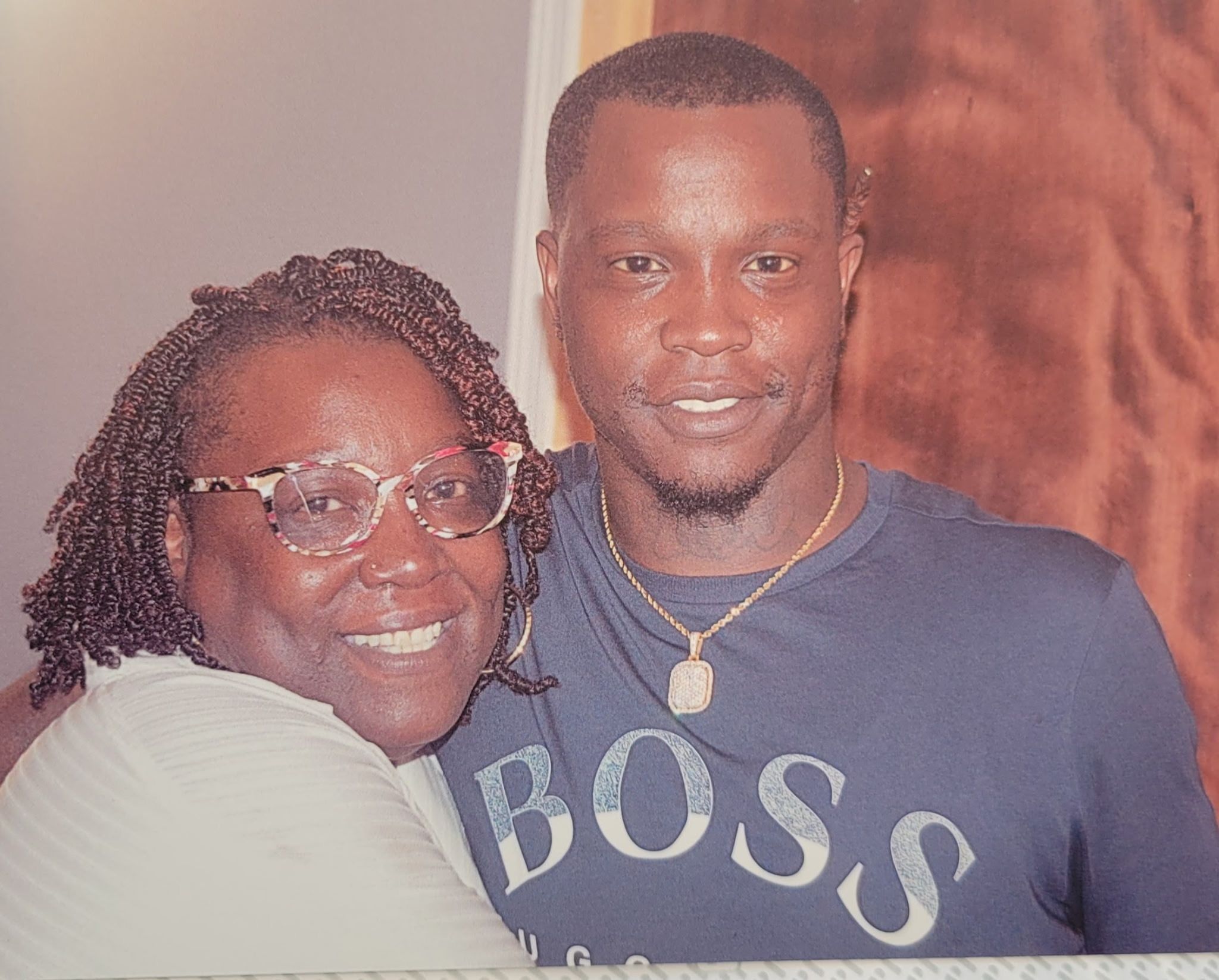
    Fatima Jones had already buried two of her sons when she sat in a courtroom and heard prosecutors accuse a third son of killing them.

    Amir Jones, 33, was among several men who opened fire when a brawl broke out at a West Philadelphia block party on July 21, 2024, prosecutors said. They charged him with murder in the deaths of his brothers, Akil, 33, and Rashie, 29, and a friend, Sekayi Robinson, 23, and with aggravated assault and other crimes for wounding four others on North Alden Street.

    Last week, that case fell apart.

    On the morning Jones’ trial was set to begin, prosecutors dropped the murder and aggravated assault charges, saying he had acted in defense of his brothers. And by the end of the trial, a judge had acquitted him of everything else.

    The reversal lets Fatima Jones finally grieve alongside her surviving son, she said in an interview. But it leaves open a question authorities have been unable to answer: If Amir Jones didn’t kill his brothers, who did?

    When Jones was arrested, his mother said, ”I felt like I lost three sons. Amir was alive, but incarcerated and accused of killing his two brothers — something I knew he would never do.”

    Now, she said, “I want the men who killed my sons held accountable. Like, where are they at?”

    The only person convicted in the shooting is Jones’ codefendant, Tahir Shoatz, 30. Before she acquitted Jones, Common Pleas Court Judge Roxanne Covington found Shoatz guilty of third-degree murder in Robinson’s death, along with attempted murder and other offenses, but acquitted him of killing the Jones brothers.

    Chaos on a crowded block

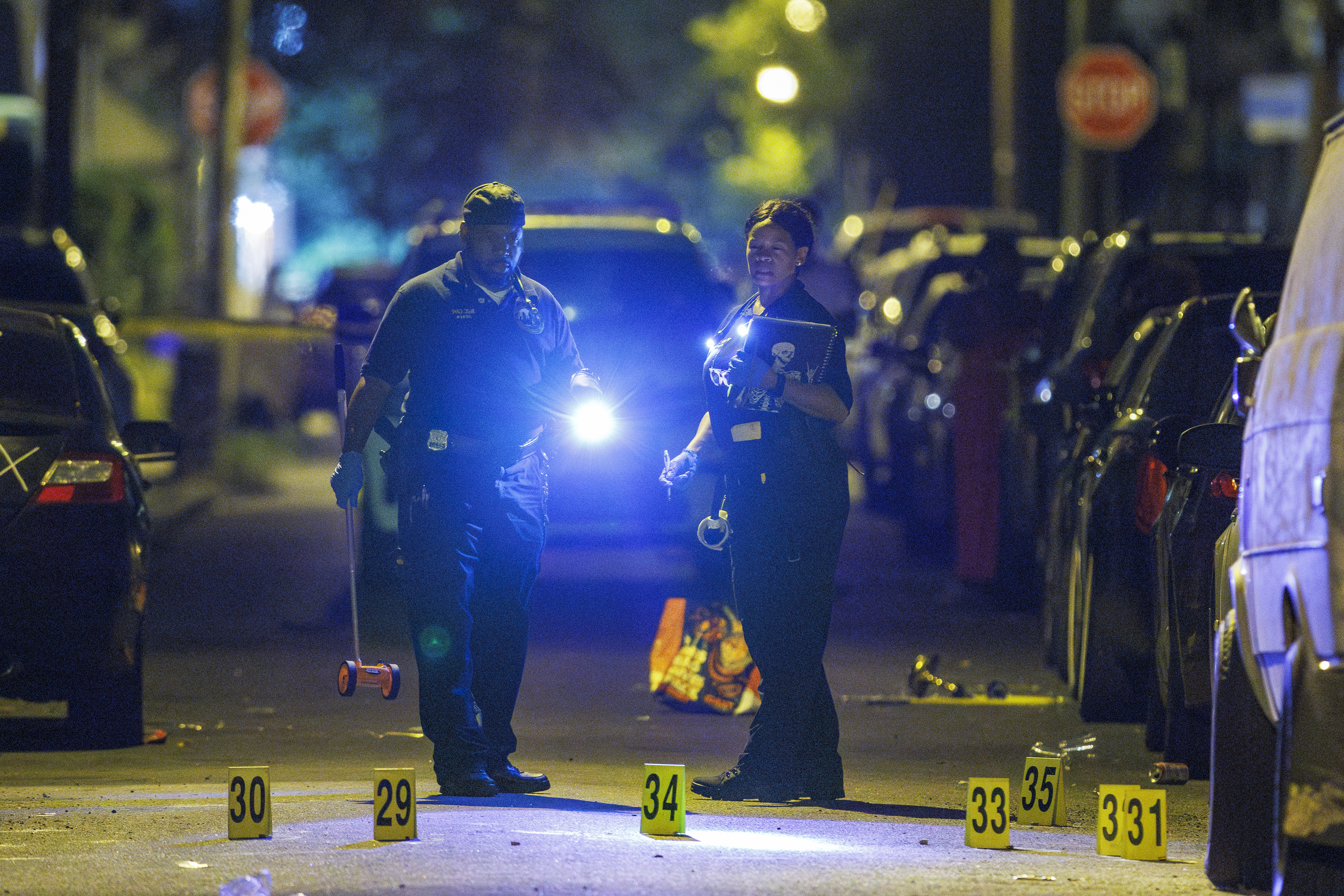
    The shooting turned the block party into a sprawling, chaotic crime scene, video footage played at the trial showed.

    Officers who arrived five minutes after the first gunshot found wounded victims scattered across the block, people shouting, and cars still passing down the road.

    They found Akil Jones dead in the street, his torso pierced by a bullet.

    Seconds later, after a woman screamed, “He’s not dead!” officers discovered Rashie Jones bleeding and crawling in an alleyway, a 9mm handgun in his hand. Shot once in the torso, at close range, he was pronounced dead soon after at a hospital.

    Inside a North Alden Street house, officers followed a trail of blood to Shoatz, who had been shot in the abdomen, right shoulder, and right knee. Four other victims — a 26-year-old woman and three men ages 26 to 29 — were also shot, but survived.

    Neither Jones, who was struck by two bullets on his left side, nor Robinson, who had been shot in his leg and chest, was at the scene when officers arrived. Both had already been taken to a hospital, where Robinson later died.

    Surveillance video captured how the shooting began, Assistant District Attorney Cydney Pope said at trial. Shoatz reached for a gun during an argument with Akil Jones, and the two wrestled over it, tumbling to the ground.
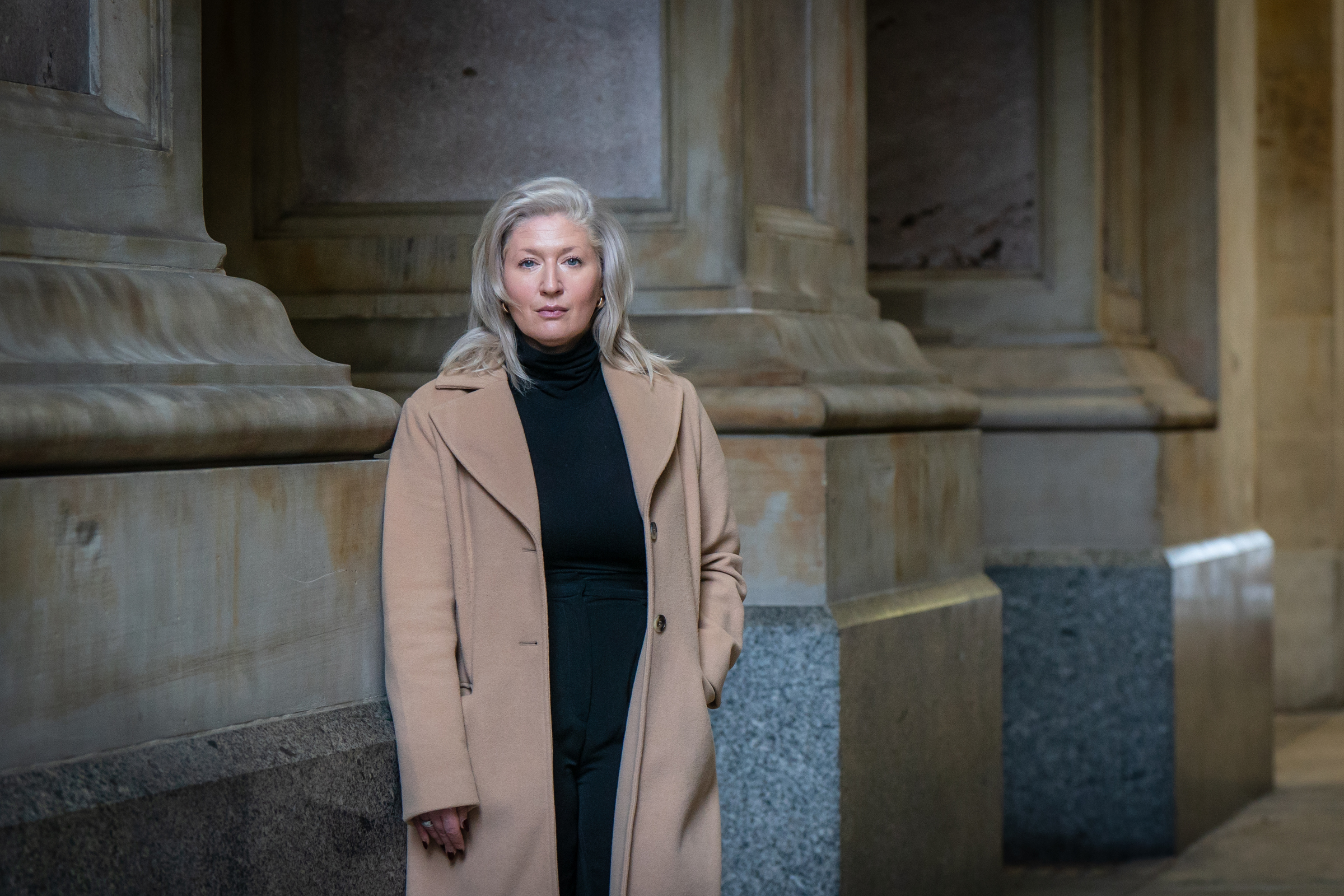
    Assistant District Attorney Cydney Pope outside City Hall in Philadelphia.Jessica Griffin / Staff Photographer

    Amir Jones jumped in, Pope said, and came out of the scrum holding a gun.

    Gunfire came from several directions, from at least six shooters, including Jones and Shoatz, firearms experts testified. Some, however, have not been identified.

    One gunman, taking cover behind a van across the street, fired repeatedly toward the men on the ground. As the judge delivered her verdict last week, she said it was clear that this gunman killed Akil Jones. Covington also found that one of the other shooters — not Jones or Shoatz — killed Rashie Jones.

    It was the verdict Loretta Jones, grandmother to all three brothers, said she had prayed for.

    As she sat in the courtroom awaiting it, she said, she made one request: “I said, ‘God, don’t nobody know the story but you. You was the only one there to see the whole thing. So please, let the judge see the same thing you saw and let my grandson go.’ And God made the judge see what He saw: that Amir had nothing to do with it.”

    Attempts to reach Jones were unsuccessful.

    What the videos showed

    Prosecutors built their case largely on videos. But the footage could not answer everything, and little else could fill the gaps.

    Police recovered 41 casings and bullet fragments and three guns, but none of the weapons could be linked to the killings.

    More than 100 people were at the party, and some may have disturbed evidence before police secured the scene, Pope acknowledged at trial. None of the partygoers — including the four other people who were shot — testified as witnesses.

    “We always knew there were people we could identify, and people we couldn’t,” Pope said in an interview. The shooter who fired from behind the van, “never gets close enough to the camera for us to be able to identify him,” she said.

    Jones’ attorney, David Nenner, raised the issue of the unidentified gunmen from the start, asking a judge to dismiss the case at a preliminary hearing — a request the judge rejected.

    Pope contended that Jones was responsible even if he didn’t fire the fatal shots.

    “This is a tragedy, there’s no question,” she said at the time. “But … the number of people who were ultimately killed would not have been what it was had it not been for the conduct of the defendant.”

    Pope said the decision to drop the murder and aggravated assault charges against Jones last week followed a “very intensive review of the videos” and a firearms examiner’s findings. Jones was “acting in defense of others,” she said, until after his brothers were hit.

    After that, cameras showed Jones firing several shots up North Alden Street, which Pope said she believes were aimed at Shoatz. Because of that, she said, prosecutors did not dismiss reckless endangerment and other charges against Jones.

    ‘An incredibly sad’ case

    Nenner, Jones’ lawyer, called the case “an incredibly sad situation” and said Jones had struggled with the weight of being accused of killing his brothers. Jones spent 14 months behind bars after he was arrested by U.S. marshals in July 2025, nearly a year after the shooting.

    Before acquitting Jones, Covington told him, “I am very sorry for your loss.” She said she believed he had acted to defend his brothers, and more than a dozen relatives applauded.

    Jones wiped tears away with a tissue. Then, as soon as he could, he rose from the defense table and walked quickly toward a holding cell, never turning to face his family.

    Amir, his mother said, was “always the quiet one.”

    Akil Jones had an entrepreneurial streak and owned a West Philadelphia daycare, his family said. Rashie was a free spirit who loved to rap, his mother said.

    Robinson owned a West Philadelphia water ice and ice cream shop and had played basketball in high school and college. He would do anything for anyone, his father, Vernon Robinson, said.

    “He was the glue to this family,” he said.

    Although Shoatz was convicted of Robinson’s murder, Robinson’s father said he doesn’t believe Shoatz fired the shot that killed his son. Citing the video evidence and the angle of the wound, he said he believed Shoatz hit his son in the leg and another gunman shot him in the chest.

    Like Fatima Jones, Vernon Robinson said he wants prosecutors to keep pursuing the other shooters.

    “I want my son back. But I need answers,” he said. “And I want justice.”

    Pope said investigators are still working to identify the other gunmen, and she urged anyone with information to contact police or prosecutors. The police department’s homicide unit can be reached at 215-686-3334 or 215-686-3335, and tips can be submitted anonymously to 215-686-TIPS.

    “We don’t believe that any case is closed until all suspects are identified,” she said.
  • Meldoria Miles, award-winning cosmetologist and retired salon owner, has died at 88

    Meldoria Miles, award-winning cosmetologist and retired salon owner, has died at 88

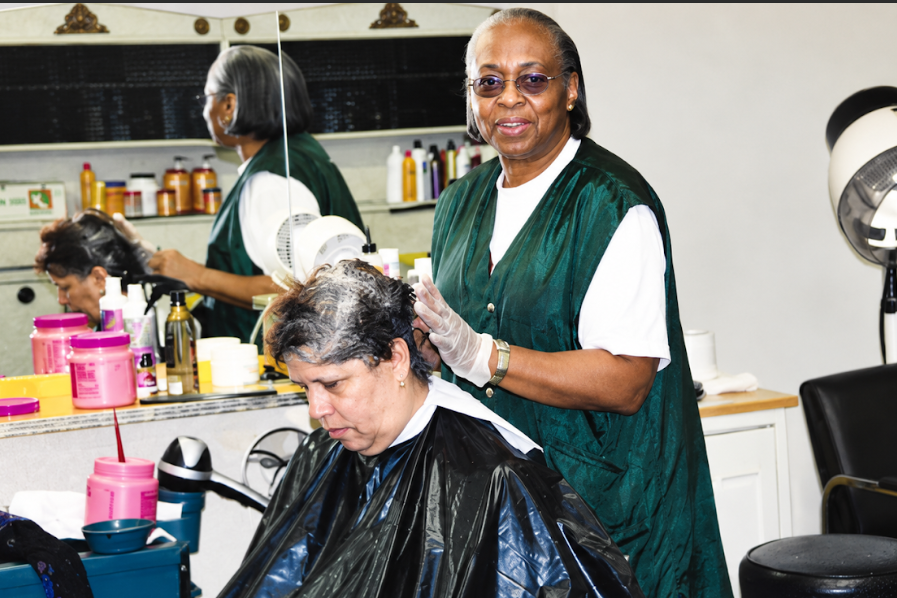
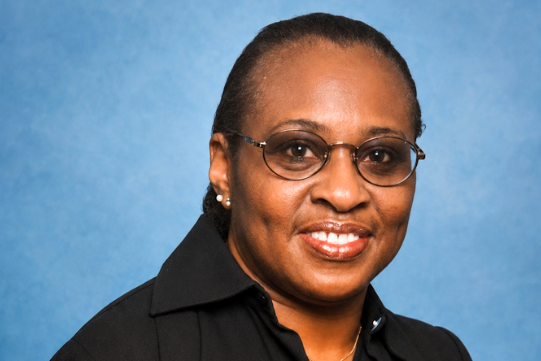
    Meldoria Miles, 88, of Philadelphia, award-winning cosmetologist, longtime beauty school instructor, retired salon owner, mentor, and big sister extraordinaire, died Wednesday, Aug. 26, of heart and lung disease at Jefferson Abington Hospital.

    The oldest of 11 children, Ms. Miles grew up in a two-room farm house in rural Mercer County, Kentucky. Naturally affable and supportive, she not only helped her mother with the household chores, she mentored her younger siblings, giving good advice, styling their hair, and generally making life more pleasant.

    “She always helped people,” her sister, Maureen Meaux, said. “She listened to people. She was beautiful inside and out.”

    After high school, Ms. Miles moved to Louisville, went to beauty school, and styled hair for clients at a salon and privately in her home. She left for Philadelphia in 1971 to work for Luster Products Inc. and became so proficient at developing, testing, selling, and demonstrating personal care products that Luster sent her to workshops, demonstrations, competitions, trade shows, and conventions across the country and around the world.

    Ms. Miles was at home in her shop, El Salon, (above) and at personal care product events (center below).Courtesy of the family

    She was especially skilled at matching colors with style, and anticipating ever-changing cosmetic trends. In 1971, she was named dean of technicians at Luster. She helped develop its groundbreaking hair relaxing formula in the 1980s and was named educational director in 1991.

    For decades, Ms. Miles, often with her sister Maureen along as her model, traveled to cosmetology events in Canada, Europe, the Caribbean, Africa, and elsewhere. She was dynamic in front of crowds, her family said, and won competitions for her use of cosmetics and wigs, and awards for her innovation.

    In 1996, she was named Philadelphia’s hair dresser of the year by the Affirm hair care line.

    Ms. Miles opened her own five-seat shop, El Salon, in 1973 on East Washington Lane in West Oak Lane and managed it for 37 years. Before Philadelphia, she worked in sales and product development for two companies in Louisville.

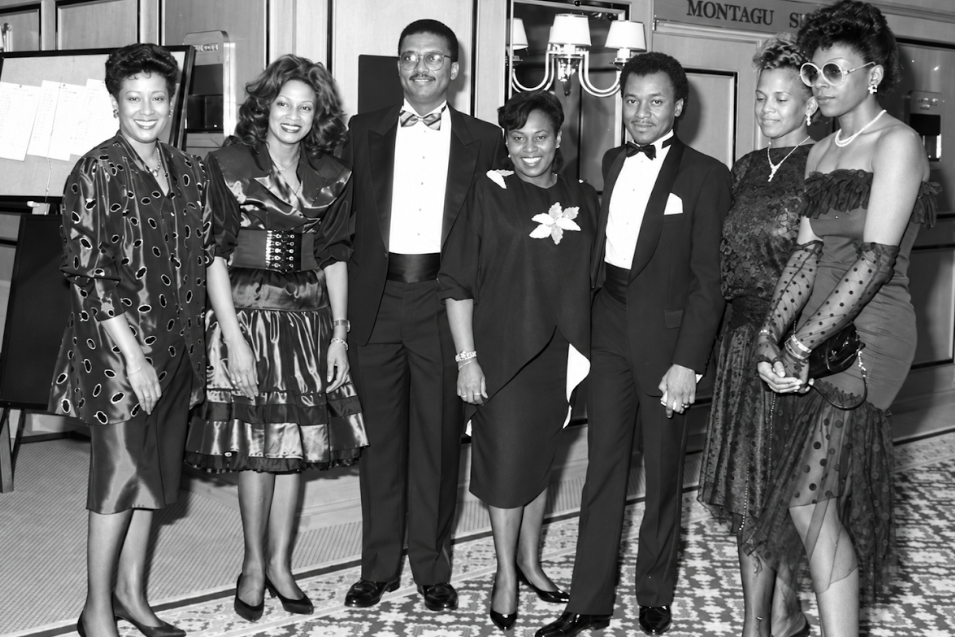
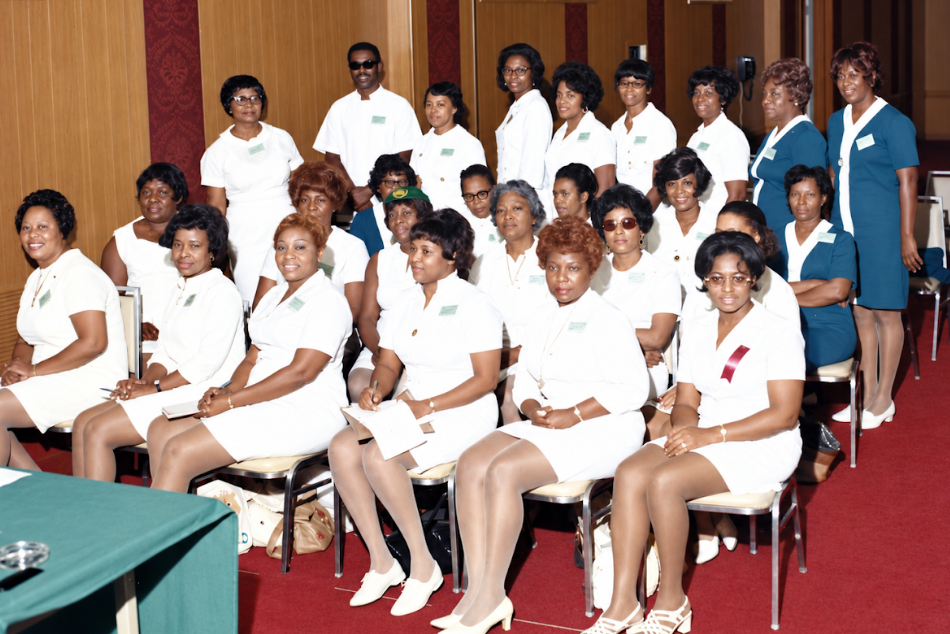
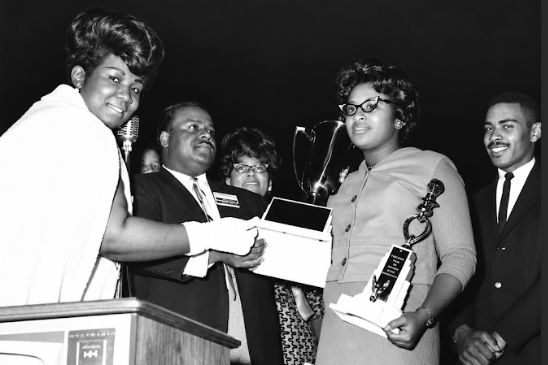
    Above, Ms. Miles (front right) attended several beauty schools. Below, she (right) won several competitions for personal care skills.Courtesy of the family

    In 1974, Ms. Miles earned her teaching certification at the old Wilfred Academy of Hair and Beauty in Philadelphia. She went on to teach chemical hair relaxing, manicuring, and other personal care skills for decades at Wilfred, Devine, Pearson VUE, and Gordon Phillips beauty schools in Philadelphia, the National Beauty Culture League in Washington D.C., Clairol in New York, and Pivot Point Academy in Chicago.

    In addition to Wilfred, she studied at the National Beauty Culture League, Pivot Point, and Vidal Sassoon in Paris. In 1980, she took business management classes at the University of Colorado.

    She was good at everything, her sister said, but “she dedicated herself to hair.”

    Meldoria Louise Meaux was born Sept. 12, 1937. She moved to Louisville after high school and spent a year at the old Tucker’s Beauty & Barber School.

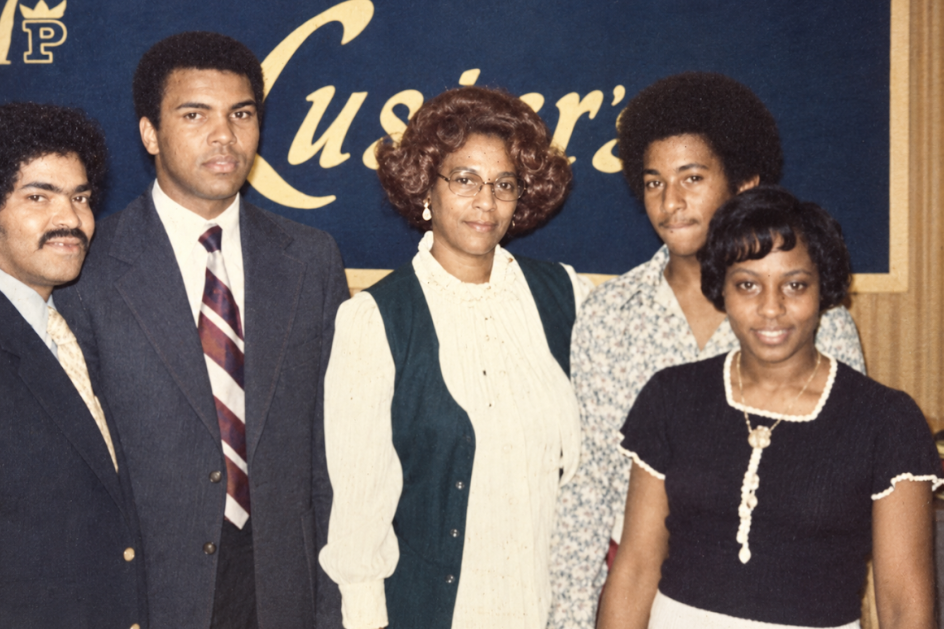
    Above, Ms. Miles sits with her children. Below, she (right) stands with Muhammad Ali (second from left) and others. Courtesy of the family

    She married James Miles, and they had a daughter, Lamarr, and a son, Gary. She and her husband divorced later. She married Jerome Wortham, and they divorced later.

    Ms. Miles lived in West Philadelphia and Mount Airy. She was active at church, taught Sunday School, and doted on her family. “She built a life of purpose, service, and faith,” her family said in a tribute.

    A friend said: “Mel was my teacher, mentor, friend, and I will miss our monthly visits and conversations.” Her daughter said: “She was the most caring, giving, positive, beautiful soul. She was effervescent. Her smile lit up the room.”

    In addition to her children, Ms. Miles is survived by four grandchildren, six siblings, and other relatives. Her first husband died earlier.

    Memorial services were held earlier.

    Ms. Miles “built a life of purpose, service, and faith,” her family said in a tribute.Courtesy of the family
  • Woman killed in Center City identified as a West Philly teacher

    Woman killed in Center City identified as a West Philly teacher

    Philadelphia police have identified the victim of a fatal car crash in Center City as a teacher at a West Philly elementary school.

    Zoe Schemm, 26, was attempting to catch a bus near 19th and Lombard Streets when the driver of another vehicle struck her at 6:42 a.m. Wednesday. Schemm suffered severe injuries after becoming trapped underneath the vehicle and was pronounced dead at the scene, according to police.

    The driver of the white Audi sedan was traveling west on Lombard when the car hit Schemm while she was crossing the street. The driver remained at the scene. Police are investigating but have made no arrests.

    Schemm was a teacher at Belmont Charter Elementary School in West Philadelphia. Belmont Charter’s elementary and middle school held classes virtually Thursday to give its community space to grieve Schemm’s death.

    “Belmont Charter Network is heartbroken by the unexpected death of a member of our school community. She was a valued teacher who cared deeply for her students and made a lasting impact during her time at Belmont. Her loss is being felt deeply across our community,” Aquilla Waller, Belmont Charter’s head of school, said by email.

    “I’m heartbroken that a young Belmont Charter teacher lost her life after being struck by a vehicle. … This is another somber reminder of how important it is to make sure our streets are safe,” City Councilmember Jamie Gauthier, who represents West Philadelphia, said in a social media statement.

  • Penn and Community College of Philadelphia launch an academy for West Philadelphia businesses

    Penn and Community College of Philadelphia launch an academy for West Philadelphia businesses

    A new, free educational program for West Philly small businesses is launching this fall, giving them access to faculty from the University of Pennsylvania, through a partnership with the Community College of Philadelphia.

    The deadline to apply is fast approaching, with instruction starting next month.

    Students of the Penn-CCP Entrepreneurship Academy will learn from Penn faculty, other entrepreneurs, and business advisers in three-hour weekly classes, as well as coaching sessions and office hours.

    The initiative aims to increase the opportunity for businesses that are connected to the West Philadelphia area. Participants should be registered in the neighborhood, have operations there, or its owner can live there.

    But the rules seem flexible: Because the program’s priority and focus is to help Philadelphia-based businesses, including nonprofits, interested owners are encouraged to apply even if they do not live in Philadelphia. Even businesses with no revenues can apply, but priority will be given to those generating revenue.

    West Philadelphia has “no shortage” of entrepreneurial talent, said Franne McNeal, executive director of the academy, but what it lacks most is resources.

    “Business owners here have less access to strategy, legal fluency, capital networks, and the kind of advice that turns a small business into a bigger one,” McNeal said. “The biggest gap I see is the owner with four employees who cannot figure out how to get to 14.”

    The academy’s curriculum is divided into four stages: build the foundation, strengthen the structure, prepare for growth, and put the plan into action.

    Students will learn about creating a business strategy, the right structure for their company, branding, and protecting intellectual property. Instruction will also cover financial literacy, workforce management, marketing and sales, and how to present to a potential investor.

    “We’re going to cover the foundational elements of growing a business,” faculty director Praveen Kosuri said. “Everything from business planning and strategy to structuring and branding.

    Besides learning how to build a business, participants are expected to gain confidence in identifying business risks, asking the right questions, and knowing when to seek specialized advice. The program is also intended to foster meaningful relationships between founders, faculty, practitioners, and members of Philadelphia’s entrepreneurial community.

    Each business owner will submit a business plan and pitch, along with a 90-day action plan, for faculty feedback.

    “They’ll have a funder-ready plan, the financial fluency to defend it, and practitioners in the room helping who know the Philadelphia capital landscape,” she said.
    While the academy is tuition-free, McNeal and Kosuri noted that participants will have to put in significant time.

    The 10 weekly sessions in West Philadelphia will take place from 6-9 p.m. beginning in late October through January.

    “Participants need to show up each week to learn, to work on their businesses, and to support the others in the class,” said Kosuri. “We hope it sets them on a path that continues to lead them to their goals.”

    Although start-up businesses can apply, the program seems more geared toward already established companies, whose owners want to take their companies to the next level.

    Unlike other programs I’ve seen, the academy is establishing a specific measurable goal that will hold both its leaders and students accountable: getting the businesses involved to achieve between $1 million to $10 million in revenues within three years.

    McNeal says the program is a pilot and its success will be measured by participants’ success.

    “Attendance and satisfaction scores are easy to report but revenue and employment are slower and harder, and they are the only numbers that mean anything, so those are the ones we are building the tracking for,” she said.
    “We will be judged on whether we come back,” she said.
    Applicants can apply online.

    The priority deadline is Oct. 1, but applications submitted later will be reviewed on a rolling basis if space remains.

  • Councilmember Curtis Jones Jr. is running for reelection. Some Democrats are questioning whether he should.

    Councilmember Curtis Jones Jr. is running for reelection. Some Democrats are questioning whether he should.

    City Councilmember Curtis Jones Jr. held a campaign fundraiser featuring Mayor Cherelle L. Parker at the Cobbs Creek Golf Course on Thursday night, a show of strength as he gears up to seek a sixth term in next year’s municipal election.

    But that hasn’t stopped a whisper campaign among Philly’s political class about whether he’ll actually appear on the Democratic primary ballot next spring, with as many as four potential candidates said to be eyeing his seat representing parts of West and Northwest Philadelphia.

    People close to Jones have recently encouraged him to reconsider seeking a new term and to clear the way for State Rep. Morgan Cephas to run to represent Council’s 4th District, according to a person with knowledge of the discussions who spoke on the condition of anonymity to discuss private conversations.

    Other possible candidates include criminal justice reform advocate Celeste Trusty, ex-Service Employees International Union staffer Leigh Owens, and developer Ryan Spak.

    The intrigue over Jones’ political future follows an Inquirer report in June that Jones and his wife, City Representative Jazelle Jones, who is a top official in the Parker administration, stand to reap up to $752,000 in payouts from the controversial Deferred Retirement Option Plan, or DROP.

    Jones, who makes $165,000 per year, told The Inquirer in June that he may need the extra money from DROP to pay for medical bills in retirement because he is suffering from glaucoma, an incurable disease that Jones said has already caused him to lose 40% of his vision.

    Councilmember Curtis Jones Jr. stands in for former Council President Darrell Clarke after he stepped away briefly during a Council meeting on Sept. 14, 2023.Tom Gralish / Staff Photographer

    State Sen. Vincent Hughes, a West Philadelphia Democrat who said he has been friends with Jones for 44 years, said he will support Jones no matter what he decides, adding that “no election is automatic.” But Hughes also said he has encouraged Jones to consider his health when deciding how to proceed.

    “I think the councilman has earned the opportunity to try to make an accurate determination as to what he wants to do for his future,” Hughes said in an interview Monday. “I have encouraged him to think about the personal side of this, the physical challenges.”

    Hughes said he would like to see Cephas eventually succeed Jones in the 4th District. But if Jones decides that he can serve another term, Hughes said he will back his reelection.

    “He’s been serving with this challenge, and he’s been serving well,” Hughes said.

    Jones said Thursday that he intends to run for reelection and serve a full term.

    ScreenshotSean Walsh

    DROP allows city workers to “double-dip” by accumulating four years of pension payments, which is usually paid out in a lump sum upon their retirement, while they are still working and receiving their regular paychecks.

    The Joneses’ enrollment in DROP is legal, but his use of the program resurrects a scandal from the early 2010s that ended the political careers of several prominent figures in City Hall.

    Elected officials, who were not initially envisioned as being eligible for the program, took advantage of it by briefly retiring at the end of their terms, collecting lucrative DROP payouts, and then getting rehired at the beginning of their new terms.

    As a junior Council member, Jones in 2010 voted for a bill banning future elected officials from enrolling in DROP. But the bill “grandfathered” in current elected officials at the time, he said, and Jones is now poised to become the first lawmaker to use the program in years.

    Jones enrolled in DROP in August 2024, meaning his mandatory retirement date would be in August 2028, during the first year of the next Council term. He would be eligible to collect a $432,000 payout then, and upon retirement he will begin collecting his regular city pension payments.

    But Jones in June said he plans to retire just before the start of the next Council term in January 2028, take a slightly reduced DROP payout, and then serve his entire next four-year term, if he is reelected. He has held the seat since 2008.

    The person familiar with the discussions about Jones’ future said 4th District voters are unhappy about his enrollment in DROP and that speculation about his potential successor is becoming a “self-fulfilling prophecy.”

    “This is a district that reads the newspaper and works to stay informed,” the person said. “And they don’t like what they’ve been reading and hearing.”

    In June, Jones said he has had four eye surgeries and that he enrolled in DROP to ensure he can afford the healthcare he needs in retirement, “so that if I was blind, I wouldn’t have been without resources.”

    He added that, due to his health challenges, he is grateful he was not elected Council president. He ran for the leadership post in 2023, losing to Kenyatta Johnson, a South Philadelphia Democrat.

    “I am functional. My staff kind of helps to keep that good,” Jones said. ”I am thankful to God that I did not get elected [Council] president. Do you know how much reading they do? I could have not kept up with all of the numbers and stuff like that, so I know my limitations.”

    Jazelle Jones, who has served in multiple mayoral administrations, enrolled in DROP in 2020 and was originally set to retire in 2024. Parker, however, has pushed through a series of exceptions to personnel rules allowing her to continue serving and collect a more lucrative DROP benefit of about $320,000. Those approvals were processed months after the fact, city records show, and the administration has not yet explained the gaps in paperwork.

    Curtis Jones, 69, has also said he hopes that Cephas, 42, a West Philadelphia Democrat, will succeed him when he retires after his next four-year term, meaning she would run in the 2031 municipal election cycle.

    State Rep. Morgan Cephas attends a get-out-the-vote rally for State Sen. Sharif Street at the Church of Christian Compassion in West Philadelphia on May 18, 2026, on the day before the Democratic primary election for the 3rd Congressional District. Cephas was a candidate for the same seat, but withdrew early in the race.Tom Gralish / Staff Photographer

    Philadelphia politicians sometimes retire in the middle of their terms, triggering a special election in which Democratic ward leaders, and not primary voters, choose the party’s nominee, who usually ends up winning the seat thanks to Philly’s deep-blue electorate. That can sometimes allow outgoing politicians to handpick their successors.

    But Jones has said he would not retire in the middle of his next term, and he instead plans to endorse Cephas to run in a Democratic primary in 2031.

    Amid the heightened scrutiny over his retirement plans, some allies of Jones and Cephas, who both got their start in the West Philadelphia-based political organization previously led by former U.S. Rep. Chaka Fattah, are encouraging him to speed up the transition. That could prevent a worst-case scenario for Cephas: if Jones lost to another challenger in next year’s Democratic primary while Cephas sat out the race in deference to Jones.

    Cephas, the chair of the Philadelphia delegation to the state House, ran for Congress earlier this year in a high-profile contest but dropped out of the race two months before Election Day.

    She declined to comment through a spokesperson.

    Several other potential candidates are considering running for Jones’ seat, setting up what could grow into a crowded primary.

    Spak — an affordable housing developer based in West Philadelphia who has in recent years been critical of some Council members’ more restrictive housing policies — is rumored to be considering a campaign. He declined to comment.

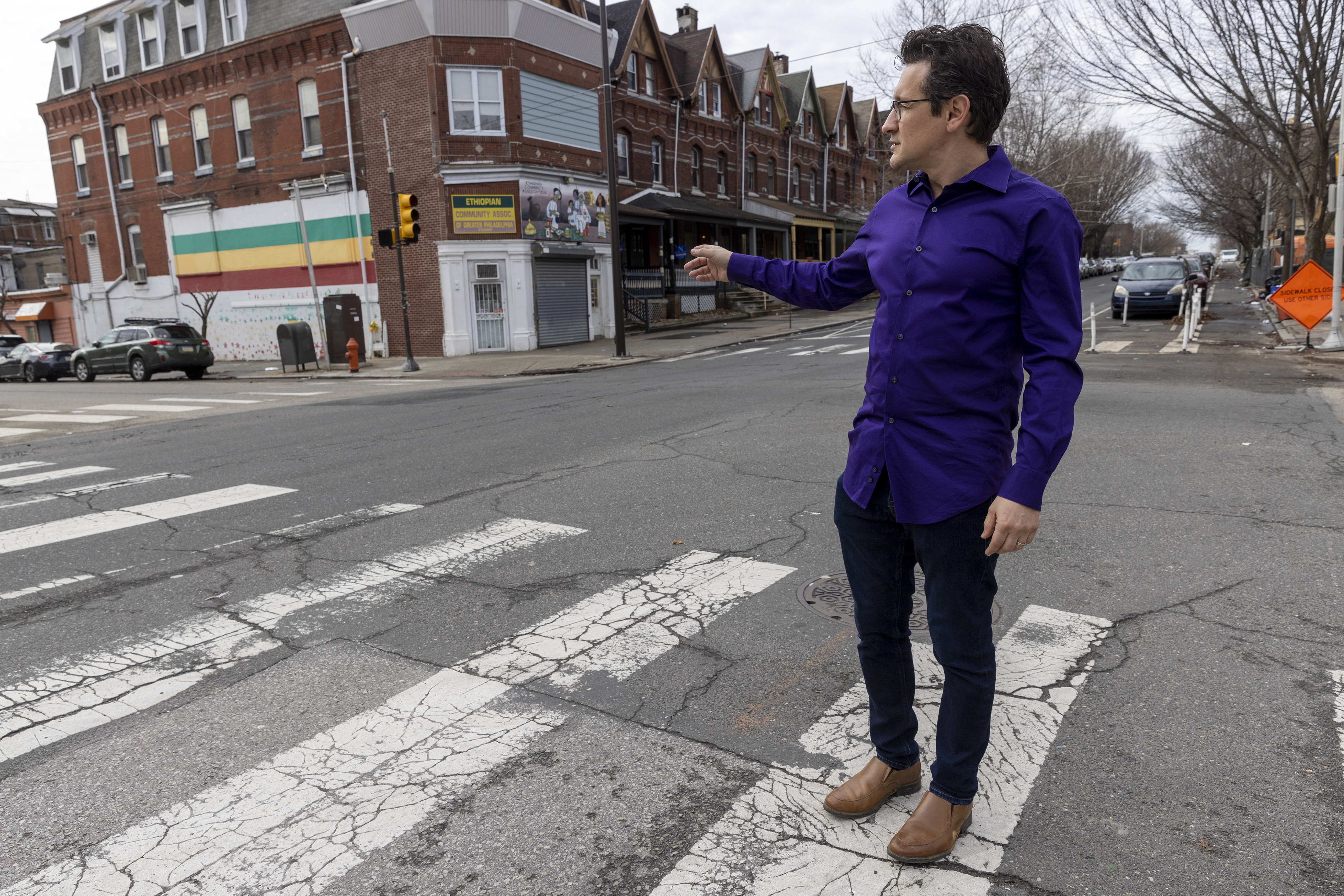
    In this 2022 file photo, Ryan Spak is photographed at 44th and Chestnut Street near the Ethiopian Community Association. Spak’s work has included collaborating with West Philly residential and commercial property owners on rehab projects.ALEJANDRO A. ALVAREZ / Staff Photographer

    In addition, the city’s progressive organizations are eyeing the district as a potential opportunity to grow their influence on Council. Candidates aligned with the left are already lining up to run against incumbents in at least two other districts.

    Three sources close to that effort, who requested anonymity because they were not authorized to discuss the plans publicly, said Trusty and Owens, both criminal justice reform advocates, are considering getting in the 4th District race.

    Trusty is the ex-secretary of the Pennsylvania Board of Pardons and has also worked with the national organization FAMM, formerly known as Families Against Mandatory Minimums. She declined to comment.

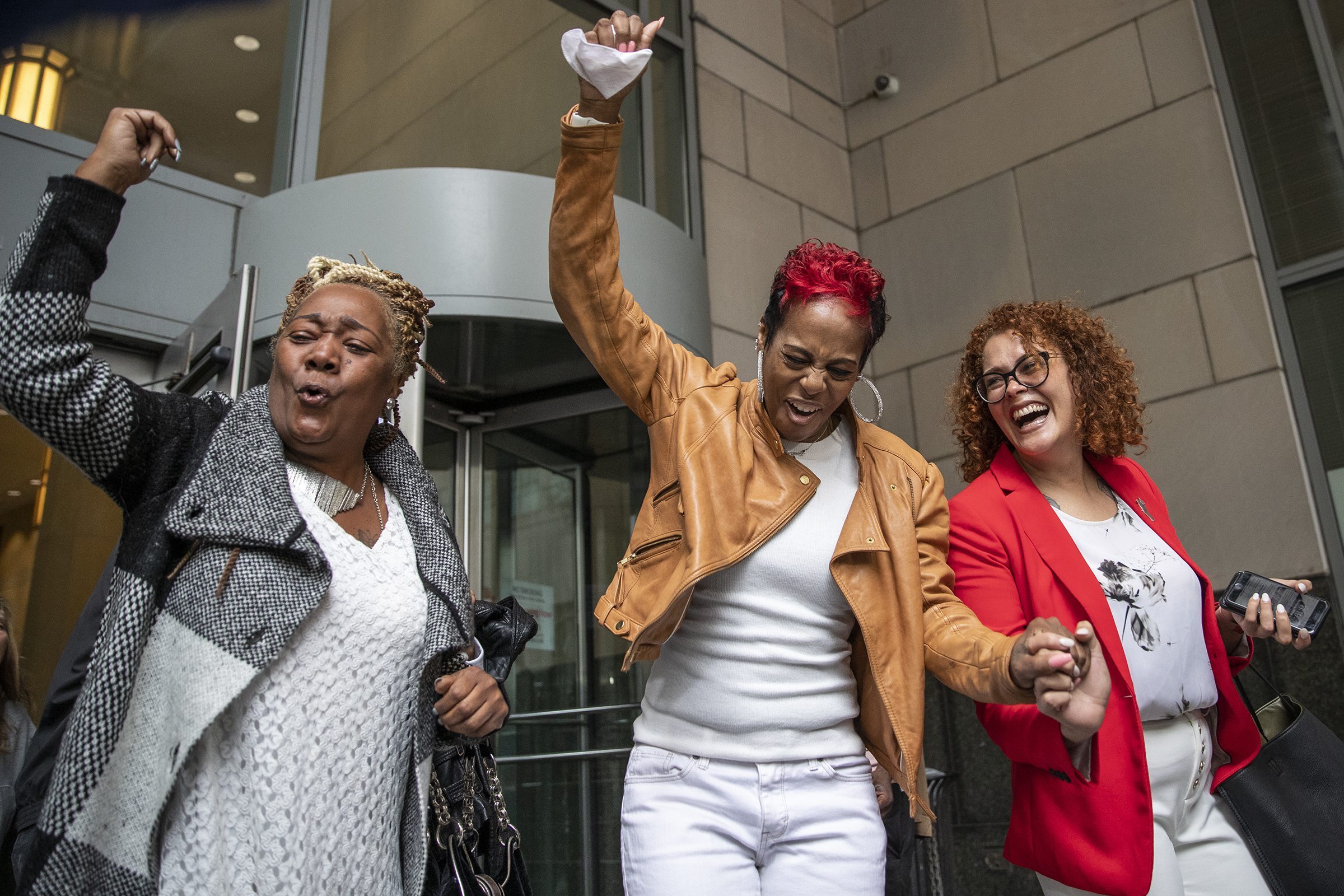
    Celeste Trusty, of FAMM, is at right in this 2019 file photo. She is celebrating with Ketra Veasy (center), sister of Willie Veasy, who had been imprisoned for 27 years for murder and was exonerated.HEATHER KHALIFA / Staff Photographer

    Owens, a former staffer at SEIU who was also a political aide to progressive ex-Councilmember Helen Gym, is now the education and advocacy director at the Pennsylvania Prison Society. He said in an interview that he has been considering running for Jones’ seat for about two years.

    He said he is a native of the district, and sees an opportunity for new voices on Council to advocate for stronger public education and more affordable housing.

    Owens, 46, said the revelations around Jones’ use of DROP made clear that it’s “time for the old guard to step down.”

    “When I see what he’s doing with this DROP money and people using politics as a tool to line their pockets and stifle progress, it’s upsetting,” Owens said. “It’s time for people that really have the lived experience and who are doing this for the right reasons to get these seats. That’s the only way the city is going to be better: if our leaders care about the people and not their own interest.”

    Staff researcher Ryan W. Briggs contributed to this article.

    Correction: A previous version of this article incorrectly listed a candidate considering running for the 4th District seat. The potential candidates are Curtis Jones Jr., Morgan Cephas, Ryan Spak, Celeste Trusty, and Leigh Owens.
  • Lenora D. Wolfgang, French professor emeritus at Lehigh University and literary scholar, has died at 91

    Lenora D. Wolfgang, French professor emeritus at Lehigh University and literary scholar, has died at 91

    Lenora D. Wolfgang, 91, of Philadelphia, French professor emeritus at Lehigh University, literary researcher, author, teacher, mentor, and artist, died Thursday, May 14, of heart failure at her home near the Philadelphia Museum of Art.

    Professor Wolfgang, or, as many of her Lehigh students and colleagues called her, Madame Wolfgang, planned to study art in Paris after high school and live as a painter. But, she told her family, she became so enthralled by the French language at Philadelphia High School for Girls that she curbed her art aspirations, earned three degrees in French at the University of Pennsylvania, and taught French and French literature at Lehigh for 26 years.

    Inspired by professors at Penn, she became an expert in medieval French language and literature, and her doctoral dissertation and first book were an analysis of an 800-verse prologue to a 13th-century French poem. She studied in France on a Fulbright Scholarship in 1956 and ’57, and in Spain on a grant from the American Council of Learned Societies in 1978.

    She wrote two books on French poetry, served research fellowships with the National Endowment for the Humanities in the 1980s and ’90s, and earned a grant from the American Philosophical Society in 1981 to transcribe manuscripts at the National Library in Paris. In 1990, reviewers at Penn’s French Forum journal said her second book, also on 13th-century French poetry, “provides the modern scholar with a standard text and thorough apparatus that will serve current and future generations well.”

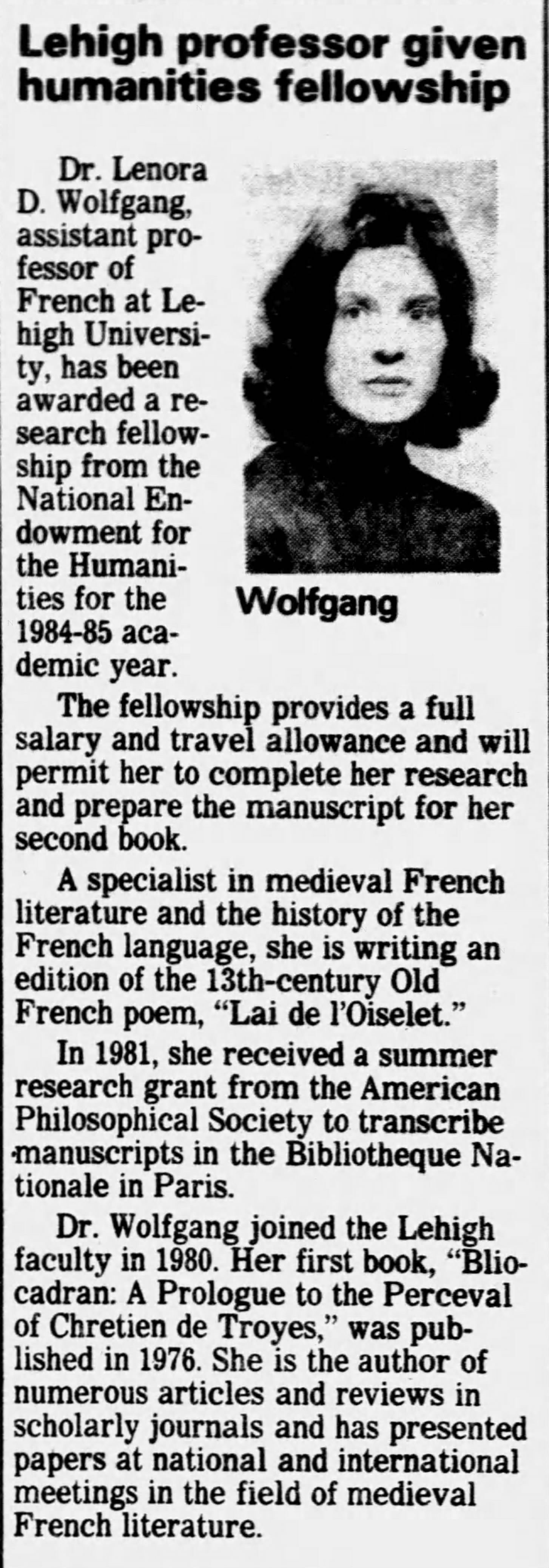
    This photo and story about Professor Wolfgang appeared in the Morning Call of Allentown in 1984.Newspapers.com

    She belonged to many academic language and literature organizations, and was a student adviser and faculty committee member at Lehigh. In tributes, former colleagues called her “a true mentor” and “a real mensch.” One said: “It was clear that I had an ally in Lenora and that she wanted me to succeed.”

    A former student said she was “a good friend and sounding board” in a 2025 interview with the Lehigh alumni relations department. “She was always ready to help, share her knowledge,” a former colleague said, “and always did it with tact and unselfishness.”

    Professor Wolfgang earned bachelor’s and master’s degrees, and a doctorate in French at Penn. She taught French classes at Temple and Rutgers Universities, Penn, and high schools in Philadelphia before joining Lehigh’s Department of Modern Languages and Literature in 1980.

    She commuted three hours round trip to Lehigh, in Bethlehem, Pa., from West Philadelphia three days a week and was promoted from assistant professor to associate professor in 1986, then to full professor in 1989. She retired from Lehigh in 2006.

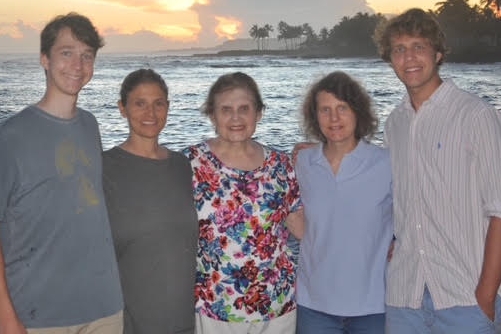
    Professor Wolfgang (center) traveled the world and enjoyed hosting dinner parties with family, friends, and academic colleagues. Courtesy of the family

    After Lehigh, Professor Wolfgang taught continuing education classes about French playwright Molière and other topics to adults at the Osher Lifelong Learning Institute at Temple. After the COVID-19 pandemic lockdown ended, she returned to the institute briefly as a student.

    Professor Wolfgang was adept at painting as a girl in West Philadelphia and won several art competitions, and later showed her photography at Penn’s Faculty Club. “She was a natural talent,” her family said in a tribute.

    Lenora Divida Poden was born Sept. 25, 1934, in Philadelphia. Her parents emigrated from Poland and Romania, and her mother left the family when Professor Wolfgang was in junior high school.

    She and her father had to hide their Jewish heritage and alter their last name to minimize antisemitic attacks. “Yet Lenora overcame these challenges,” her family said, “excelled academically, and rose to the top of her academic field.”

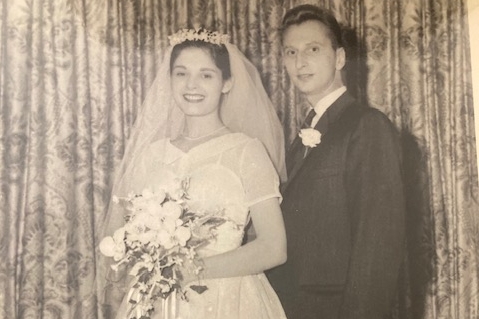
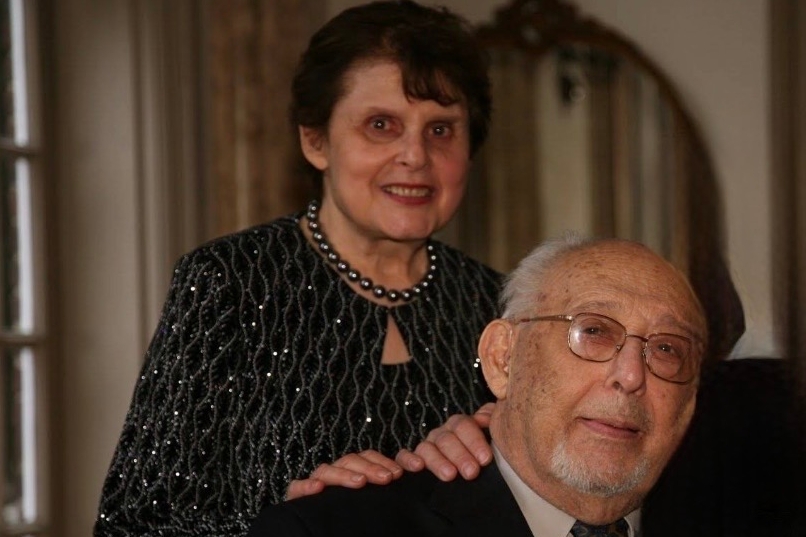
    Professor Wolfgang married her first husband, Marvin Wolfgang (above), in 1957, and her second husband, Leon Salganicoff (below), in 2010.Courtesy of the family

    An exceptional student, she was valedictorian of both her 1952 senior high school class at Girls’ High and her 1956 senior undergraduate class at Penn’s College for Women. She married Marvin Wolfgang, a professor at Penn, in 1957, and they had daughters Karen and Nina, and lived in University City.

    In 1977, The Inquirer featured their house in a photo spread about its French-inspired Gothic style of architecture. Professor Wolfgang said: “Perhaps that is one reason I feel so very much at home.”

    After her husband died in 1998, she married Leon Salganicoff, a professor emeritus at Temple, in 2010. He died in 2011.

    Professor Wolfgang was an avid reader. She traveled the world, listened to classical music, and enjoyed hosting dinner parties with friends and academic colleagues.

    Professor Wolfgang (left) doted on her family and sent personalized birthday cards. Courtesy of the family

    She almost went to law school in the 1970s before gaining her full-time teaching position at Lehigh. She doted on her family, sent personalized birthday cards, and kept in touch with teachers, colleagues, former students, and friends even after they parted.

    “She was brilliant,” a longtime friend said in a tribute, “and she was fun.” Her family said: “Everyone loved her.”

    In addition to her daughters, Professor Wolfgang is survived by two grandsons, a great-grandson, and other relatives. A brother died earlier.

    A private celebration of her life was held earlier.

    Donations in her name may be made to the Philadelphia Yearly Meeting of the Religious Society of Friends, Box 72077, Philadelphia, Pa. 19176.

    Professor Wolfgang “was brilliant,” a longtime friend said in a tribute, “and she was fun.”Courtesy of the family
  • Man convicted of murder in West Philadelphia shooting that left three dead, injured several others

    Man convicted of murder in West Philadelphia shooting that left three dead, injured several others

    A man who fired shots during a gun battle in West Philadelphia that left three men dead and wounded several others two years ago was convicted of murder this week.

    Tahir Shoatz, 30, was found guilty of third-degree murder in the death of Sekayi Robinson, 23, as well as attempted murder, aggravated assault, simple assault, four counts of reckless endangerment, and three firearms offenses, following a bench trial in Common Pleas Court.

    But Judge Roxanne Covington on Thursday acquitted Shoatz of murder in the deaths of brothers Akil Jones, 33, and Rashie Jones, 29, concluding that he did not fire the shots that killed them on July 21, 2024.

    That night, gunfire shattered a block party on the 1200 block of North Alden Street, where more than 100 people had gathered, prosecutors said. In addition to the three killings, six people were injured by bullets — including Shoatz, who was shot in the abdomen, shoulder, and knee, and his co-defendant in the case, Amir Jones, who was struck by two bullets on his left side.

    Covington also acquitted Shoatz of 15 other charges, including attempted murder, aggravated assault, simple assault, and other offenses.

    The mass shooting stemmed from an argument between Akil Jones and Shoatz that turned physical when Shoatz reached for a handgun at his waistband, Assistant District Attorney Cydney Pope said during the trial. Amir Jones — who is the brother of Akil and Rashie Jones — intervened in the fray to help his brother, Pope said, seconds before the first shot rang out.

    Prosecutors initially charged Jones with three counts of murder and four counts of aggravated assault, as well as multiple counts of reckless endangerment and firearms offenses. But they dismissed the murder and aggravated assault charges against him at the start of the trial.

    And on Thursday, Covington acquitted Jones of the remaining charges against him.

    The prosecution’s case relied heavily on surveillance and police body-worn camera footage that captured the shooting and its aftermath. Pope said the footage showed multiple shooters, including Shoatz, Amir Jones, Robinson, and another man. Police recovered 41 bullet casings and fragments from the scene, she said, and determined Rashie Jones had also fired a gun.

    After watching the footage several times, the judge said “it is clear” that the other man — whom prosecutors said has not been identified by police — killed Akil Jones. But it was unclear who shot Rashie Jones, she said, because “that is never seen on video.”

    Shoatz’s attorney, Robert Gamburg, contended that Shoatz had been disarmed by Amir Jones during the brawl, then shot multiple times. “He was a victim in this case,” Gamburg said. “He has always been a victim.”

    Shoatz is scheduled to be sentenced in December.

  • Fewer people are running red lights, PPA says

    Fewer people are running red lights, PPA says

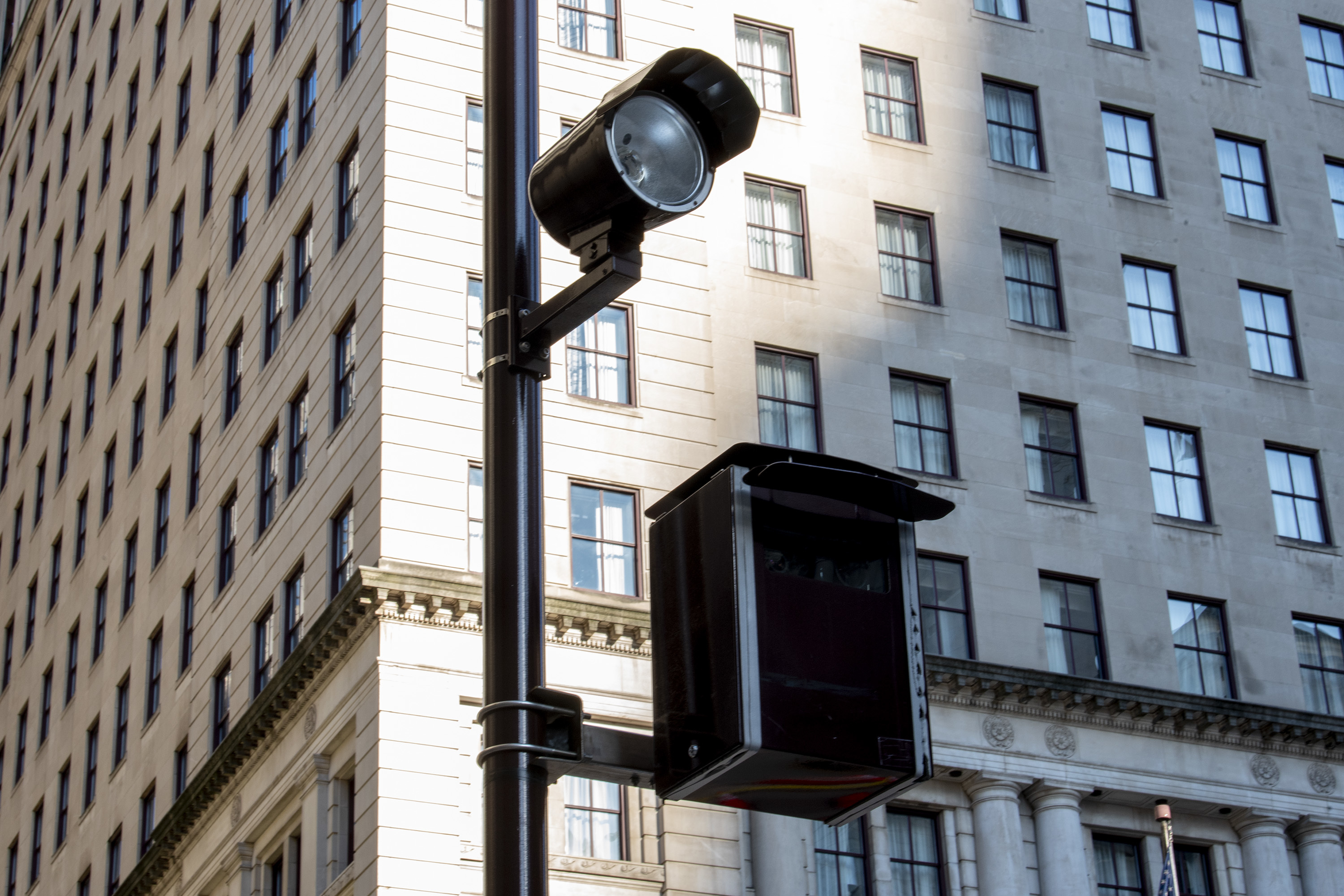
    Automated red-light enforcement cameras caught up to 17.4% fewer violations this year than in 2025, according to the Philadelphia Parking Authority’s annual report to the state legislature.

    Those cameras have been on guard in the city since 2005, but the program will expire next July, unless legislators renew the law that authorized them.

    “The numbers speak for themselves, and our hope is that they see the benefit of it,” said Gabe Roberts, interim executive director of the PPA.

    Recorded violations citywide declined from 340,931 in fiscal year 2025 to 338,979 in fiscal year 2026 — a decrease of 0.58%

    However, four new intersections were added at different points during this fiscal year. For the PPA, the fiscal year runs from April 1 through March 31.

    Excluding those four intersections, violations at existing program locations declined by 17.4%. Compared with 2024, they dropped 10.4%.

    “The way we measure success is through consistent enforcement, demonstrated changes in behavior, fewer people running red lights, and safer streets,” Roberts said.

    The red-light program has proved its worth, he said.

    New locations

    Over the 21 years of red-light cameras in the city, violations have trended down overall, Roberts said, though when a new location is added, tickets spike at first before leveling off and declining.

    As of March 31, PPA was operating 160 cameras at 38 locations.

    The newest locations are: 20th Street and John F. Kennedy Boulevard; Front Street and Hunting Park Avenue; Kelly Drive and Eakins Oval; and 58th Street and Baltimore Avenue.

    Cameras there led to 50,589 warning notices and violations.

    When a red-light camera is installed, there is a 45-day grace period when violators get a warning before tickets start. The fine is $100 per offense, but no points are assessed to a driver’s license.

    There has been continued demand for red-light cameras in the city. PPA received requests for coverage of 19 intersections from the Philadelphia Office of Transportation and Infrastructure and City Council members through March 31.

    Intersections are evaluated on the basis of crash statistics and a fresh traffic study that includes observations of violation levels there.

    Also considered: sight lines, driveways, trees, wires, crosswalk visibility, and the condition of the surrounding infrastructure.

    Usually an intersection gets some upgrades when red-light cameras are installed — new sidewalk accessibility ramps, new signal boxes, better lighting, more visible crosswalks, or the like, said deputy PPA director Corrine O’Connor.

    “You’re not going to put cameras in and have old infrastructure out there,” said O’Connor, who is in charge of automated enforcement programs. “It’s an opportunity to make it better and safer.”

    PPA says it typically takes one to two years to complete an intersection.

    Speed cameras

    In addition to the red-light program, PPA operates automated speed enforcement cameras.

    Speed cameras were first installed on Roosevelt Boulevard in 2020 on a trial basis and more were added in the next two years. State lawmakers made the program permanent in 2023 and gave Philadelphia permission to add them on up to five more dangerous corridors.

    Broad Street, for instance, now has 31 speed cameras spread over 13 miles. They began operating last September.

    New speed cameras went live on portions of Route 13 in North and West Philadelphia on Aug. 31.

  • Seniors asked their pastor for help finding affordable homes. So their West Philly church built apartments.

    Seniors asked their pastor for help finding affordable homes. So their West Philly church built apartments.

    Nearly a decade ago, seniors asked the pastor of their West Philadelphia church for help.

    They were getting older and so were their houses, and they needed safe, affordable homes that weren’t such a burden to keep up with. They wanted to stay in their community, too.

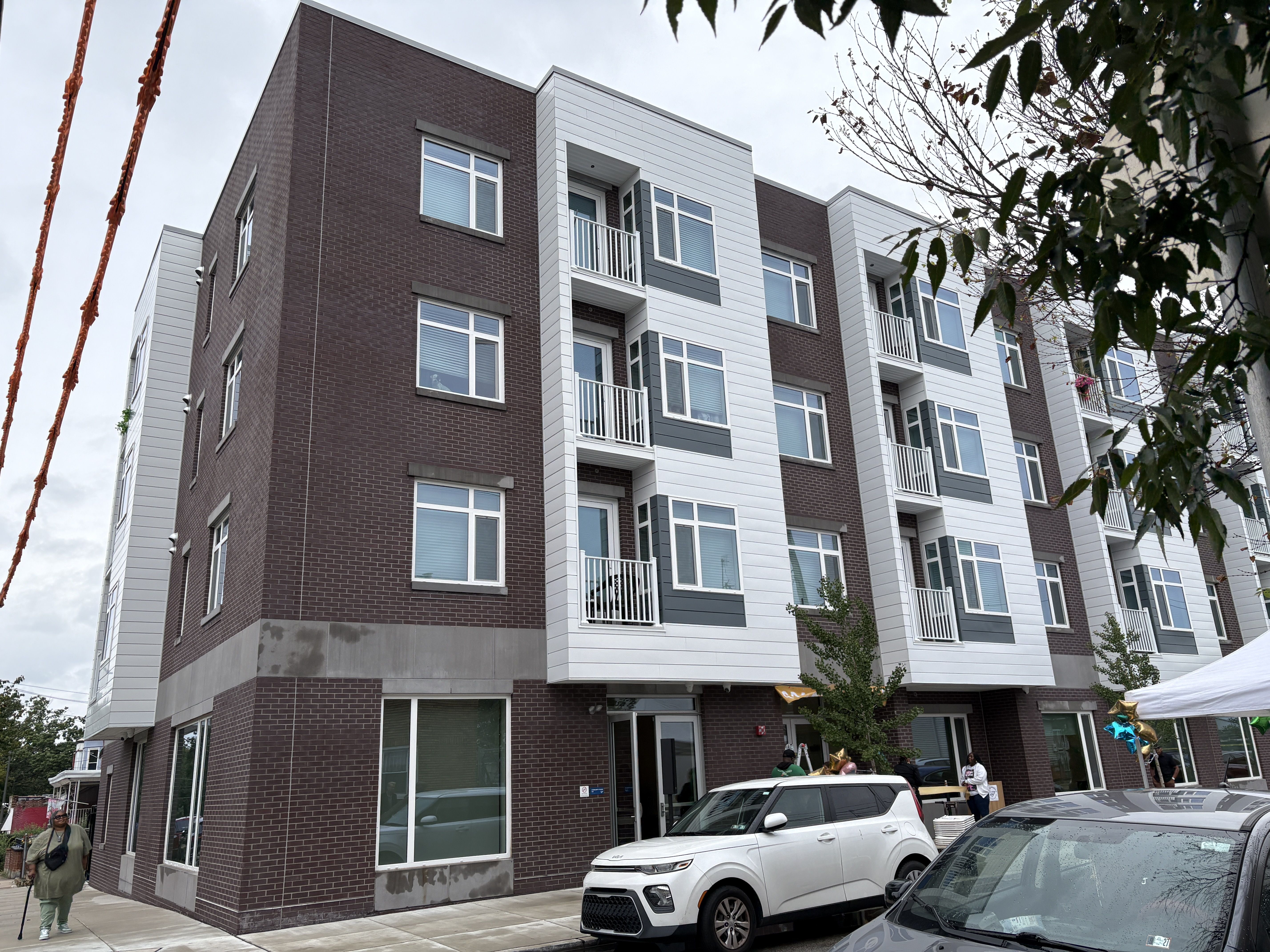
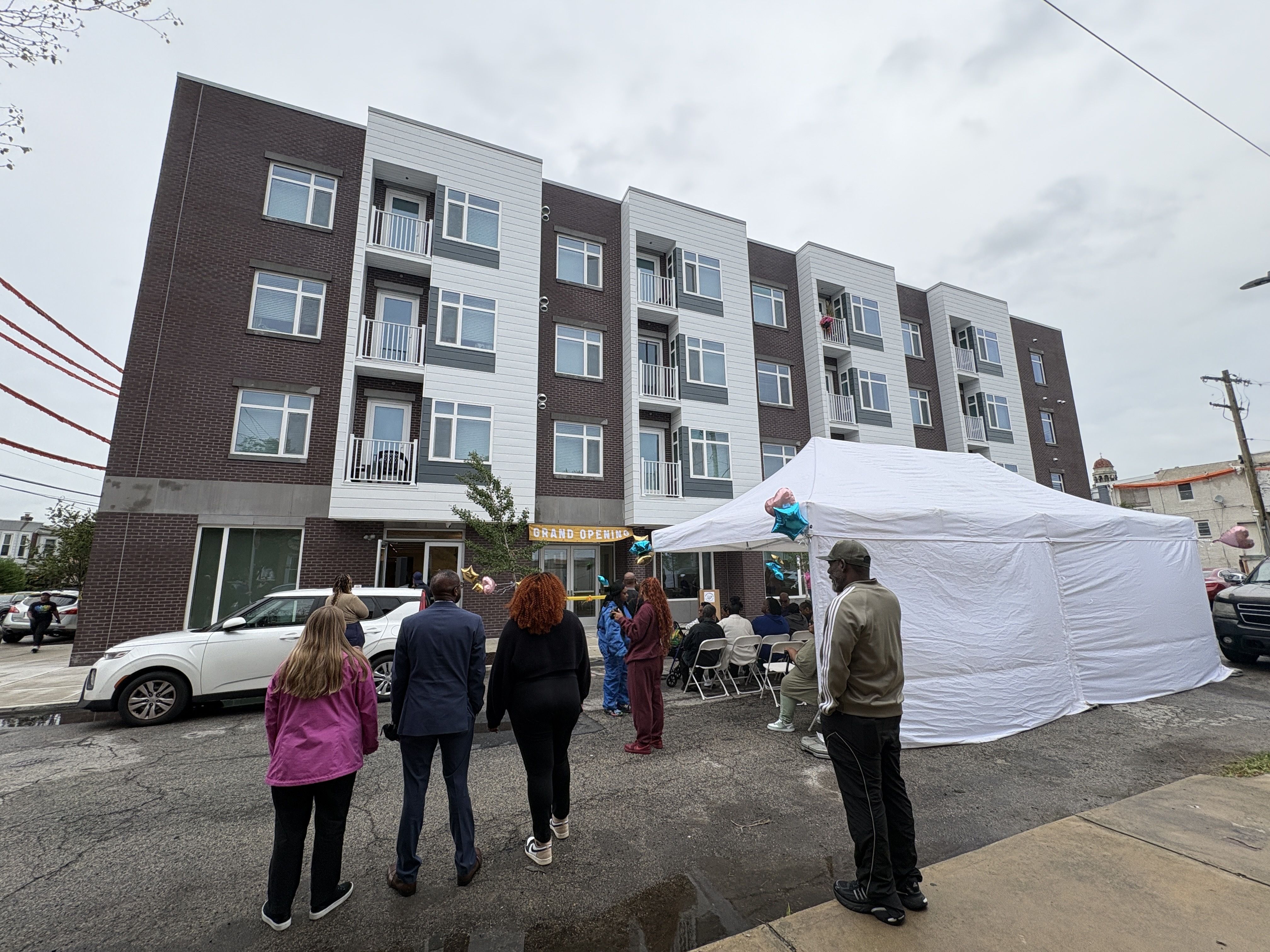
    In the beginning of this year, on the site of what was once a dilapidated house and vacant lots filled with trash and rodents, the Church of Christian Compassion opened Compassion Senior Living, a new 38-unit subsidized apartment building in Cobbs Creek.

    W. Lonnie Herndon, the church’s senior pastor, said the congregation “believe[s] ministry must extend beyond the walls of the church.”

    “We’re called not only to preach about love and compassion but to demonstrate it in practical ways that strengthen people’s lives,” he said Tuesday during an event celebrating the building filling with residents.

    People gather Tuesday for a grand opening ceremony at the Compassion Senior Living apartment building in Cobbs Creek.Michaelle Bond / Staff

    Philadelphia’s 65-and-older population is growing, and more than a third live below or near the poverty line, according to a 2025 Pew Charitable Trusts report. As housing costs rise, finding an affordable apartment as a senior can be difficult.

    Since 2001, the Church of Christian Compassion has owned a 10-unit, market-rate apartment building across from the new development. But the new apartments fill a specific need.

    Compassion Senior Living accepts people 62 and older who make between 20% and 60% of the area median income. That’s roughly $17,200 to $51,540 for a single-person household, which most of the building’s residents are. Four apartments are reserved for people who were formerly homeless.

    Rents for the complex’s one-bedroom apartments are based on tenants’ income and range from $900 to $1,300.

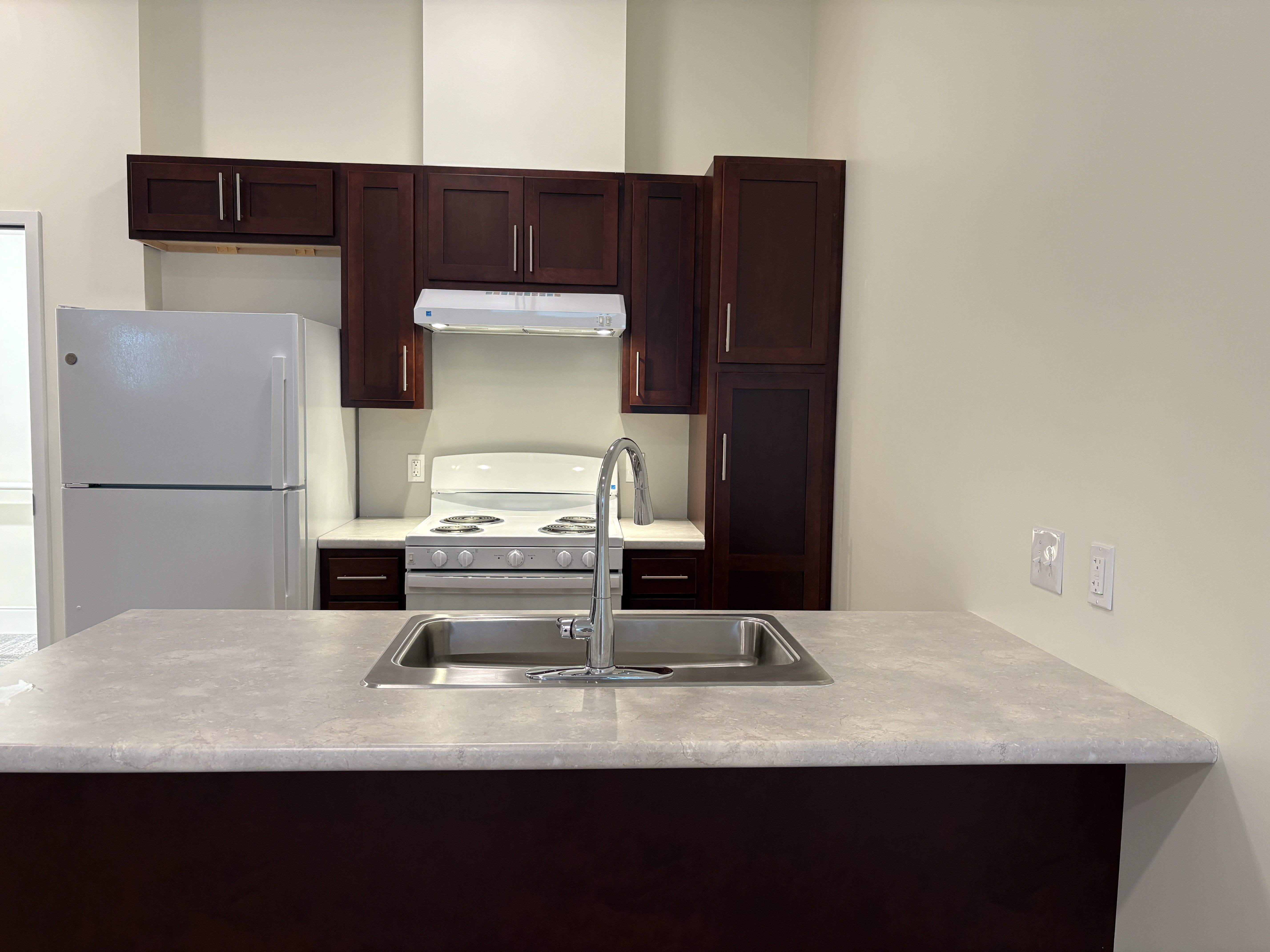
    This is the kitchen in a model unit in the Compassion Senior Living apartment building.Michaelle Bond / Staff

    Evelyn Norris, who declined to give her age but said she is older than she looks, moved into her apartment in early August from another West Philadelphia building. She is a member of the Church of Christian Compassion and called the pastor “a jewel” who “looks out for everybody.”

    Norris is thrilled to live in a newly constructed building where residents have formed a tight-knit community. She said everyone’s friendly and keeps an eye on each other.

    “This place is wonderful,” she said. “God is all in this.”
    More than three in five tenants were already residents of West or Southwest Philadelphia.

    That includes Angela Cook-Boyd, also a member of the Church of Christian Compassion, who turns 70 on Sunday. She was tired of climbing the steps at the West Philadelphia house she had been renting and said her legs told her it was time to move to a building for seniors.

    She had told the church she was interested in living at the property about five years ago when it was still in the works.

    “It was truly worth waiting for,” she said. “It just has been a blessing.”

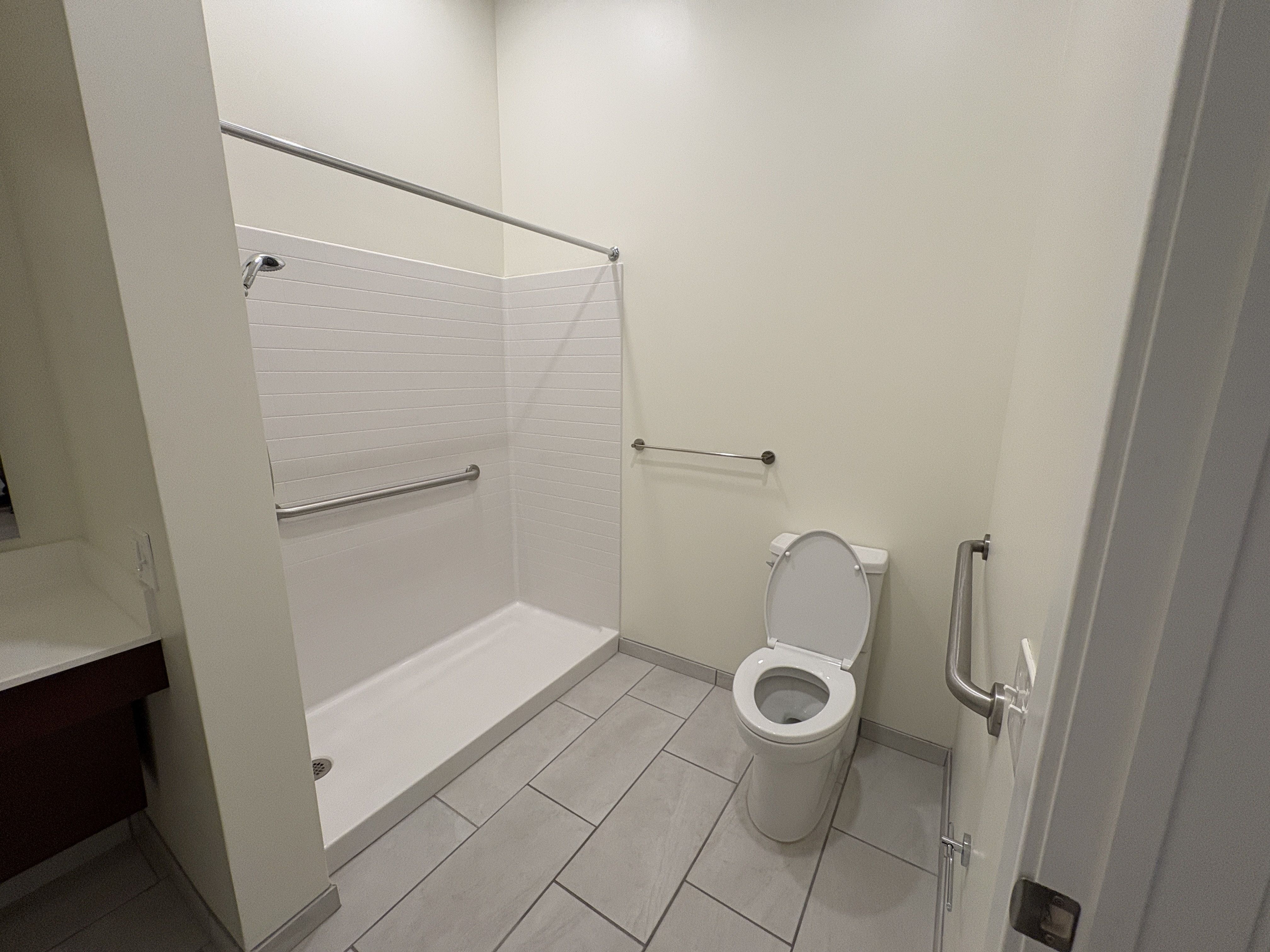
    This is the bathroom in a model unit in the Compassion Senior Living apartment building.Michaelle Bond / Staff

    The independent living community cost about $20 million, with millions coming from city, state, and federal funding.

    City Councilmember Jamie Gauthier, whose 3rd District includes the apartment building, said one of her first meetings after she was elected in 2020 was with the church’s pastors and now-Pennsylvania House Speaker Joanna McClinton (D., Philadelphia). They talked about the importance of finding funding for the project.

    “It is no secret that Cobbs Creek, like many of our neighborhoods, is being gentrified, and our wisest neighbors are the ones being hit the hardest,” Gauthier said. “Our seniors deserve to stay in the communities they’ve called home for decades, the communities that they’ve built into the desirable places that they are today.”

    Compassion Senior Living offers on-site social services and plans to partner with a healthcare provider in the future. The building includes a laundromat, a library, a multipurpose room, and a community center. It has a green roof, low-flow faucets, and energy-efficient heating, cooling, and ventilation systems.

    The building was designed by Philadelphia-based CICADA Architecture & Planning and built by Ardmore-based TN Ward Co. Builders. BFW Group, a construction project management agency, led the charge to raise money for the project.

    Pastor Terrilynn Donnell, who is also the executive director of the church’s community development corporation, the Community of Compassion CDC, called the completion of the senior apartments “a relief” after so many years. She said the church wants to build more homes.

  • A Philadelphia teacher pretended to be Black and Palestinian, ‘a betrayal’ of the activists she supported

    A Philadelphia teacher pretended to be Black and Palestinian, ‘a betrayal’ of the activists she supported

    A Philadelphia teacher is being called the “Palestinian Rachel Dolezal” after being caught lying about her background — a deception that has stirred strong emotions in education and racial justice organizing circles.

    Hannah Gann, a veteran Philadelphia School District educator, has claimed at times to be Palestinian and Black, and was so outspoken a mobile billboard once parked outside her school calling her “Philadelphia’s Leading Antisemite.”

    But Gann, it turns out, is white and Jewish, and lied about her identity for years.

    “Members met with Hannah and questioned her about her background on Thursday and after an hour of discussion, Hannah finally admitted she lied,” the Racial Justice Organizing Committee and Philly Educators for Palestine said in a statement. Gann had been a visible member of both groups. “We asked her to publicly acknowledge that she is a white woman of Jewish heritage and an Israeli settler family.”

    The groups are “stunned, saddened and angered by this betrayal,” their statement said. They said they have permanently cut ties with Gann.

    Gann, in an Instagram post, admitted the yearslong fabrication. She said she was “a white woman of significant privilege and wealth.”

    “I hid the truth or outright lied about my background to everyone in my life,” Gann said in a video post. “There is not a single person on this planet, no friend, no fellow organizer, no one in my family, no professional connection, no secret op or handler who knew what I was doing. I hid my family’s background from everyone in Philly and also hid from the people in my own family what I was doing.”

    Gann said she “allowed half-truths and obfuscations to grow into outright lies,” but that she “genuinely wanted to commit to the work I was doing in spite of those lies.”

    Gaining the trust of youth and activists

    Gann, who teaches at the Workshop School, a project-based Philadelphia School District high school, was front and center in education activism work after the Oct. 7 Hamas-led attacks on Israel.

    In 2024, for instance, Gann participated in a West Philadelphia “teach-in” on “scholasticide” — the destruction of educational infrastructure — in Gaza. Her biography for that event identified her as a Palestinian American.

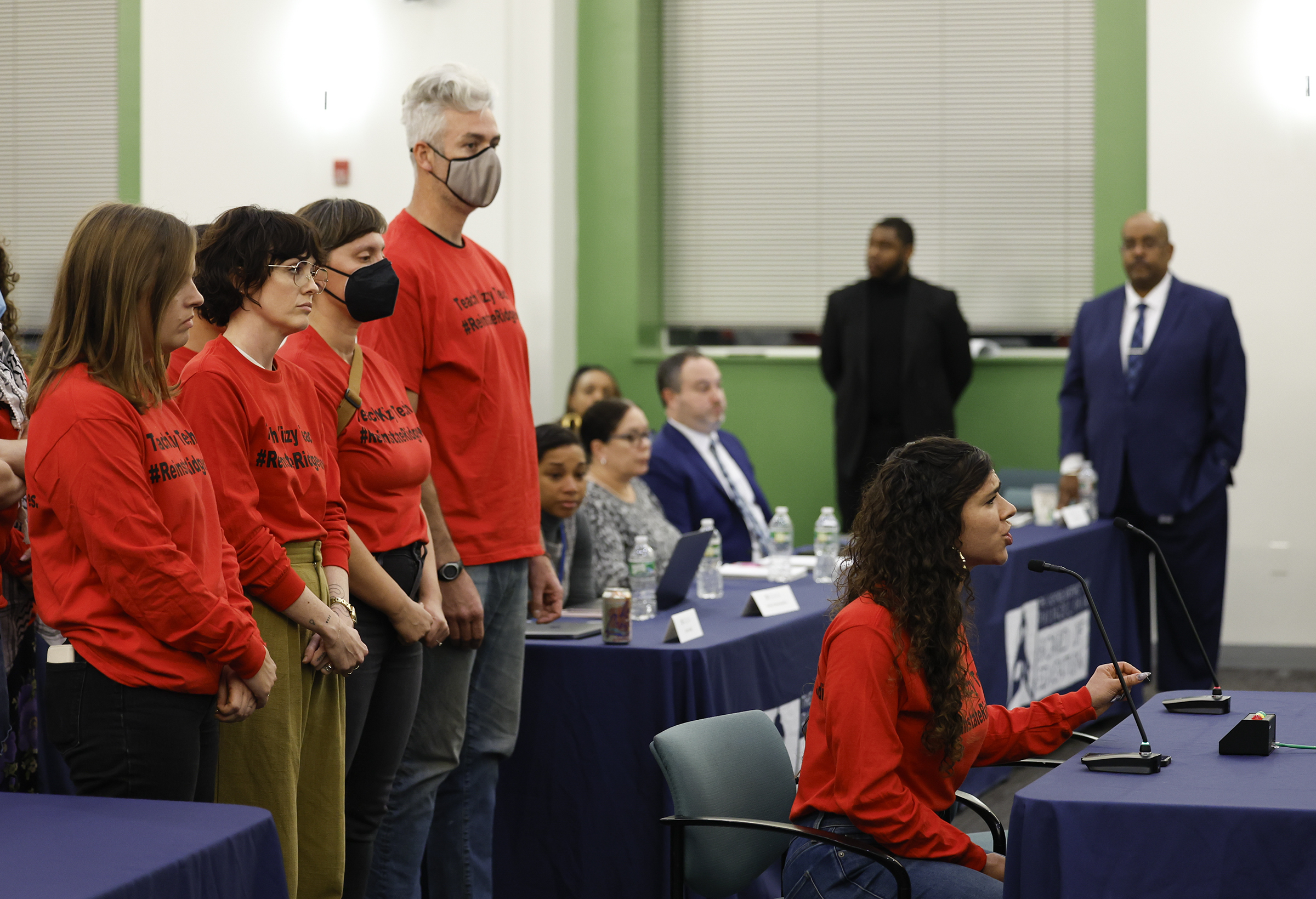
    And Gann was a leading voice in defending Keziah Ridgeway, a fellow Philadelphia teacher who was disciplined by the district over her private, pro-Palestinian social media posts. (Ridgeway has since sued the district, alleging anti-Islamic bias.)

    According to a document compiled by the Philly Palestine Coalition and obtained by The Inquirer, Gann has made frequent references to Palestinian family, including a Palestinian-born grandfather whom the PPC found was actually born in Baltimore, citing historical draft records and her great-grandfather’s U.S. naturalization papers. Her family abroad live in Israel, according to the group’s extensive, footnoted research.

    Gann told people she was low on money because she was sending cash to family in Palestine, according to the PPC document. Some people sent her money as a result. A University of Pennsylvania classmate of Gann’s said she was known in college “as a self-proclaimed white Jewish woman with family in the occupied West Bank. I watched her sudden transformation after she returned to Philly from the Peace Corps [in Rwanda]. She was clearly making herself look darker using makeup and fake tan, and speaking using [African American Vernacular English.]”

    The PPC research document noted that Gann “is a teacher of predominately Black youth. She has gained the trust of young people on the basis of a sense of shared oppression. She has served as a mentor to at least one young white person who was manipulated by Hannah on the basis of a fake identity. Her access to vulnerable young people, especially Black youth, is deeply concerning, given her pattern of lying and manipulation.”

    Monique Braxton, a district spokesperson, said the school district was “aware of social media posts concerning a district employee and her involvement with an outside advocacy organization. These posts reference the employee’s involvement in an external group.”

    The district is making support available to any affected Workshop School staff and students, Braxton said. As for possible consequences for Gann, Braxton said she could not comment on personnel matters.

    Gann’s “deception has compromised the safety and security of our movement, with disproportionate harm caused to Palestinians involved in this coalition. This pattern of deceit has rattled many organizers across PPC and allied groups, especially Palestinians, fellow teachers, and individuals who have been engaging with her closely under false pretenses.”

    ‘Aggravating, infuriating, and enraging’

    Sharif El-Mekki, a prominent Philadelphia educator and founder of the Center for Black Educator Development, said a person doesn’t have to be Black or Palestinian to support those groups.

    “But honesty is the price of entry,” El-Mekki said in a social media post. Gann’s lies are “aggravating, infuriating, and enraging,” El-Mekki said, in part because “she gets to apologize after being exposed and, eventually, return to the privilege she had all along. Actual Palestinians, Muslims, Arabs, Black people, and African people do not get to put down their identities when the consequences arrive. They cannot opt out of the suspicion, surveillance, hostility, or professional consequences attached to who they really are.”

    Gann’s misrepresentations will have real consequences for Black and Palestinian people, El-Mekki said — they’re likely to face more scrutiny because of her lies.

    “They will be asked to prove themselves again,” El-Mekki said. “Their grief will be questioned. Their politics will be treated as suspect. Their criticism of the Israeli government may be distorted into antisemitism. Their opportunities may be threatened because someone else chose to use their identities as a costume.”

    Gann acknowledged these realities in her video message.

    “The fact that I lied about who I was does not mean anyone else who speaks up for Palestine is lying and does not erase the urgency of listening to voices on the ground … This also extends to the genocide and humanitarian crisis in Sudan that far too many are ignoring, the genocide in Congo, the mortally urgent need to address ICE and police brutality here as well as the prison industrial complex, imminent Philly school closings, and more. It probably has little value to hear me say this, but please do not disengage from any of these vitally urgent causes or others you care about based off my dishonesty.”

    Local social media has been abuzz about Gann’s deception.

    “Is this the first Palestinian Rachel Dolezal?” a poster asked on Reddit, invoking the name of a white former NAACP president who lied about being Black.

    “I first and foremost express deep empathy for the Palestinian people and this violation of security and trust,” one observer said on Instagram. “I reject this level of wretched disrespect and trivialization.”