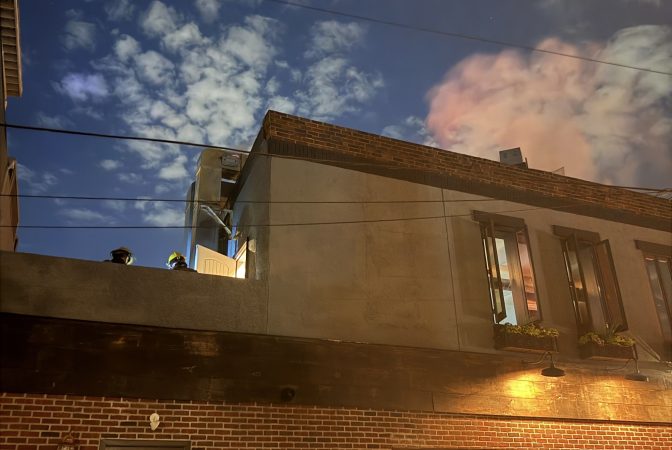
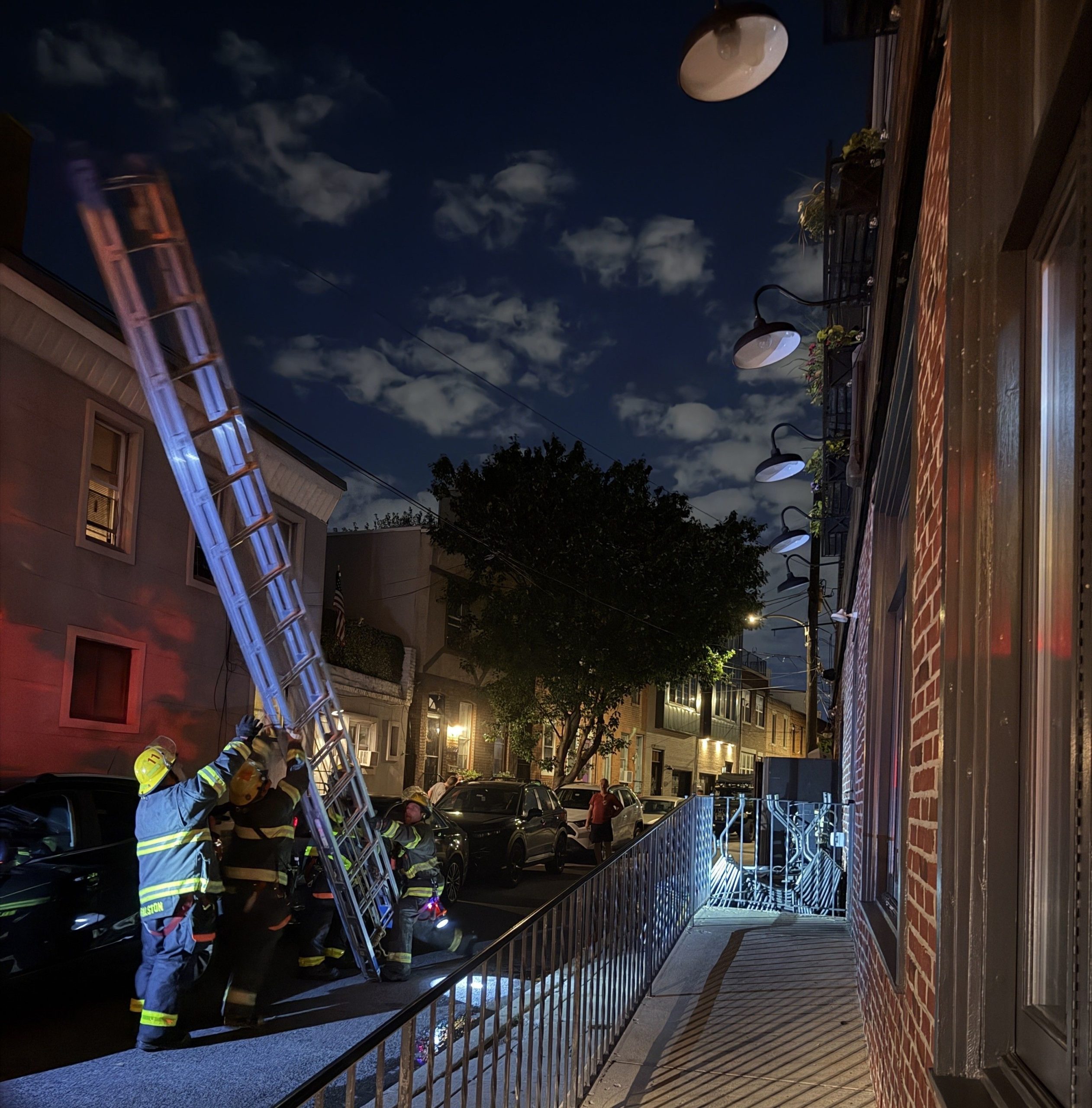
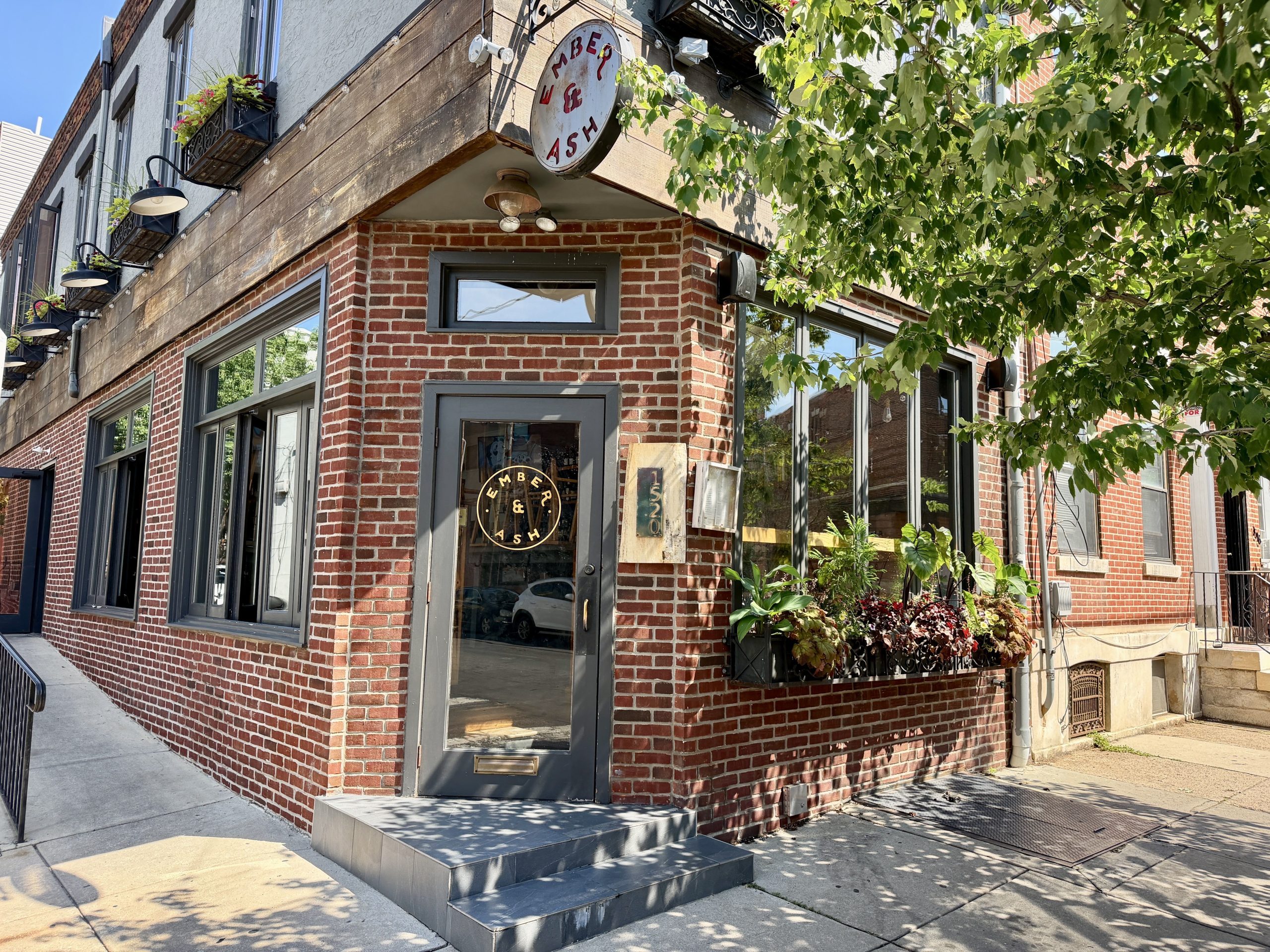
Ember & Ash restaurant on East Passyunk Avenue in South Philadelphia is closed indefinitely after a late-night fire Wednesday sent flames to the roof through its ventilation system, its owners said.
No injuries were reported. Owner Lulu Calhoun said she, her husband and chef-partner Scott Calhoun, and another chef, John Forkin, were leaving for the evening through the kitchen door about 10:20 p.m. when they heard a loud sound from above.
Firefighters positioning a ladder outside of Ember & Ash, 1520 E. Passyunk Ave., on June 24, 2026.Lulu Calhoun
“We didn’t know what it was,” she said. “We thought maybe like a helicopter or a jet.”
Scott Calhoun looked up to see fire on the roof. He grabbed fire extinguishers and ran upstairs to try to put it out, she said.
The couple called 911, and firefighters arrived almost immediately. Ember & Ash is about two blocks from Ladder 11 at 12th and Reed Streets, a fire company that was restored in 2024 after having been shuttered for 15 years. “We’re just so grateful, because it could have been a much, much worse situation,” Lulu Calhoun said.
A charred portion of the ventilation system at Ember & Ash, 1520 E. Passyunk Ave., as seen June 25, 2026.Lulu Calhoun
Thursday morning, the full extent of the destruction was still being assessed, but she said the restaurant was facing professional cleanup for water throughout the building and repairs to the hood and roof. Fire damage was not apparent from the Passyunk Avenue sidewalk. The Philadelphia Fire Department said the fire was under control in about an hour and 20 minutes but had no information on its cause.
“That’s the part that’s the most heartbreaking,” she said. “It’s not only our livelihoods, but our entire team.”
She said the timeline for repairs was not yet known, adding that the duct work had been professionally cleaned recently as part of maintenance.
Ember & Ash, 1520 E. Passyunk Ave., on June 25, 2026.Lulu Calhoun
The hearth at Ember & Ash, a live-fire restaurant built around a custom wood-burning grill made by Grills by Demant, has been the center of the kitchen since the restaurant’s opening in late 2020.
Fires that travel through ventilation systems can sideline a restaurant for months because damage is not always immediately visible and insurance claims can drag on. Kampar in Bella Vista has been closed since a February 2025 fire and has not announced a reopening date. Black Sheep in Rittenhouse has been closed since a May 18 fire. Tequilas in Center City was shuttered for about two years after a 2023 fire, though owners spent some of that time creating a second restaurant, La Jefa, in its rear dining room.
Calhoun said Ember & Ash was contacting customers with bookings along with parties that had reserved private events in July and August.
An overwhelming majority of Philadelphians feel safe in their neighborhoods and more than 40% believe that the city has become cleaner under the leadership of Mayor Cherelle L. Parker, according to a new poll, suggesting that city residents see significant progress on the mayor’s key campaign promises.
However, there is not a broad citywide consensus on Parker’s tenure as she heads into an expected reelection campaign next year, and there were also red flags for her and the city, including alarmingly bad evaluations of the public school system.
That is according to a recent Suffolk University/Philadelphia Inquirer poll that surveyed 500 Philadelphians across the city on issues including crime, quality of life, city services, and education. More than half of those surveyed said they would rate Philly as a “good” or “excellent” place to live.
About 83% of residents reported feeling safe in the city just five years after record-high rates of gun violence in Philadelphia, with respondents in neighborhoods most affected by violent crime most likely to say they feel that crime has decreased since Parker took office in 2024.
And the city’s public school system emerged as a primary concern, with 45% saying they would rate Philadelphia’s schools as of “poor” quality, while more than half of the poll’s respondents said that schools play an important role in whether they stay in the city or move out.
The survey was conducted last week, after the financially struggling Philadelphia School District and its controversial school closure plan dominated local headlines for more than a month.
David Paleologos, director of the Suffolk University Political Research Center in Boston, said the poll provides Philadelphia policymakers with a blueprint for how to keep people in the city: continue progress on crime and improve the public schools.
“If that happens,” he said, “then Philadelphia is poised to be a renaissance city.”
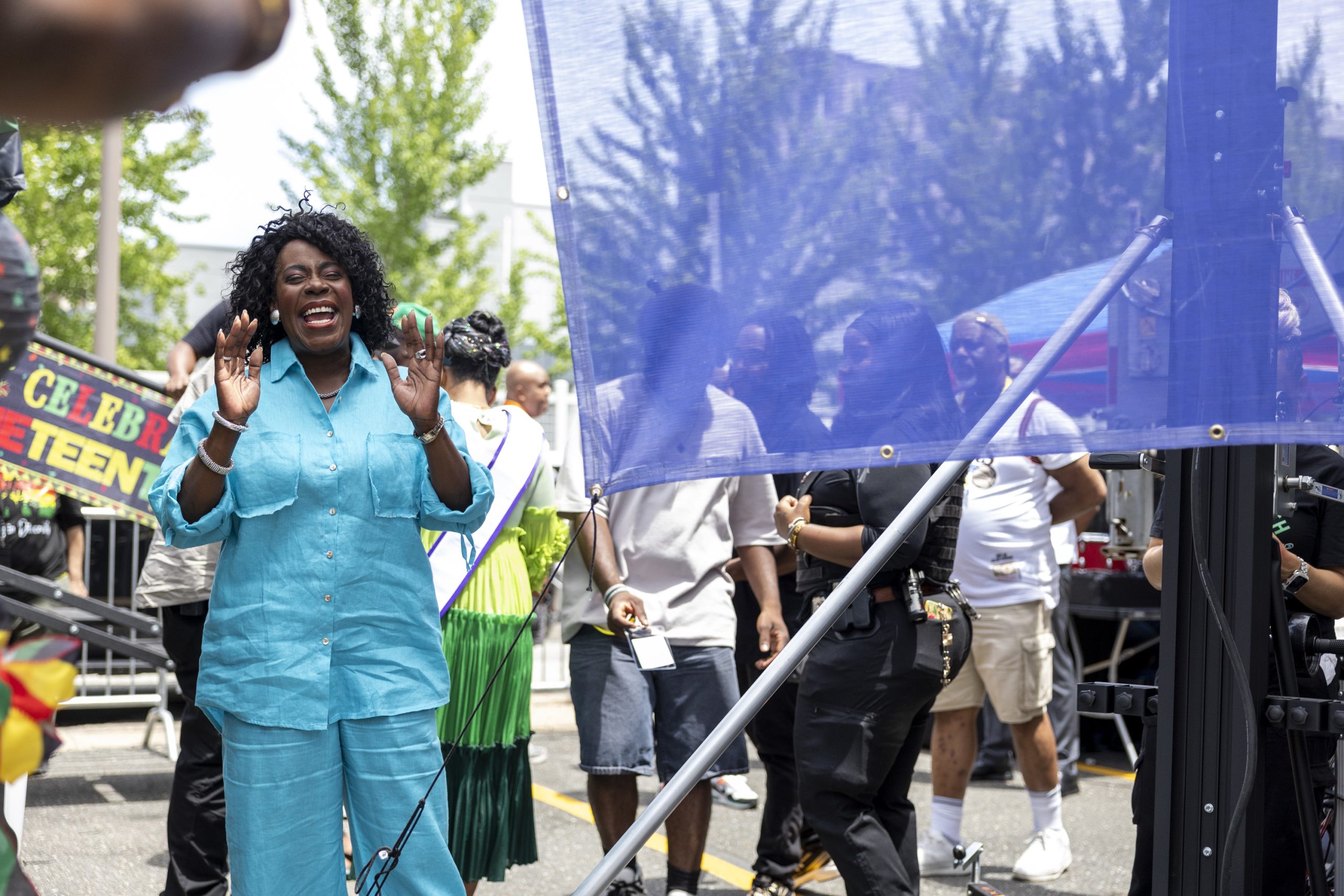
Mayor Cherelle L. Parker attending the Juneteenth Block Party at the African American Museum in Philadelphia on June 19.Tyger Williams / Staff Photographer
Parker said in a statement that her administration “values both qualitative and quantitative information.”
“The real-life, lived experiences of people in this city are what matters most,” she said. “Polling is not my North Star in how I govern. My solutions always come from the ground up, from what people can see, touch, and feel.”
For Parker’s political fortunes, the poll represents mixed results. It showed that the substantial base of support that lifted the mayor to office in 2023 is holding up, with Black residents and older Philadelphians most likely to say they have a favorable view of her and see progress on her campaign promises.
But Parker has not consolidated broad citywide enthusiasm, with 44% of respondents saying that they have a favorable view of the mayor and 35% saying they have an unfavorable one. That is positive territory for Parker more than halfway through her first term, but not overwhelmingly so.
Her biggest vulnerability is with young people — respondents under age 45 were more likely to say that they had an unfavorable view of the mayor than a favorable one. White residents were also more sour on Parker.
(function(){function e(){window.addEventListener(`message`,function(e){if(e.data[`datawrapper-height`]!==void 0){var t=document.querySelectorAll(`iframe`);for(var n in e.data[`datawrapper-height`])for(var r=0,i;i=t[r];r++)if(i.contentWindow===e.source){var a=e.data[`datawrapper-height`][n]+`px`;i.style.height=a}}})}e()})();
Paleologos said that the poll shows there are “pockets of strength” that make Parker, a centrist Democrat, electorally strong, but that he would not consider her support broad-based.
Those results come as the city’s most prominent progressive political groups are weighing whether to mount a challenge against Parker next year. As the incumbent, Parker would be the hands-down favorite in any contest, as no Philadelphia mayor has lost a campaign for reelection in modern history.
Aren Platt, the executive director of People for Parker, the mayor’s political arm, said in a statement that Parker’s support “has always been under-counted, especially in public polling.” He cited polling conducted during the 2023 mayor’s race that showed her tied with or trailing her top opponents in the Democratic primary, in which Parker prevailed by a commanding 10 percentage points.
Platt also said the Suffolk University/Inquirer poll is not necessarily predictive of how the mayor could perform in a theoretical reelection race. The poll was of Philadelphia residents, not likely primary voters.
“This poll may reflect the demographics of Philadelphia, but elections are decided by the people who show up to vote on election day,” he said. “In Philadelphia, those are two very different universes.”
The poll also showed relatively positive marks for one of Parker’s potential successors: City Council President Kenyatta Johnson. He has said that he supports Parker for reelection, but Philadelphia mayors are limited to two terms and Johnson is widely seen as a potential future contender for the city’s top office.
Overall, 48% of respondents said they had a favorable view of Johnson and only 12% had an unfavorable one. Johnson is also far less publicly known than Parker, with 40% of those surveyed saying they had either never heard of him or were undecided on their view of him.
Negative reviews of the Philadelphia School District
About one in five respondents said that schools and education are the most important issue in the city, making it second only to crime. Paleologos said that is somewhat unique to Philadelphia — in other major cities where he has polled public opinion, he said, respondents often rank jobs and the economy as greater concerns.
(function(){function e(){window.addEventListener(`message`,function(e){if(e.data[`datawrapper-height`]!==void 0){var t=document.querySelectorAll(`iframe`);for(var n in e.data[`datawrapper-height`])for(var r=0,i;i=t[r];r++)if(i.contentWindow===e.source){var a=e.data[`datawrapper-height`][n]+`px`;i.style.height=a}}})}e()})();
Nearly 75% of respondents said they would rate the quality of Philadelphia’s public schools as “fair” or “poor.” Younger residents were far more likely than older ones to rate the schools as “poor,” and more than half of all respondents said the public schools are an important factor in determining whether they and their family stay in the city or move away.
“That’s a big number,” Paleologos said. “That research alone gives the policymakers a bird’s-eye view of what they need to do to keep people here in Philadelphia.”
The survey also shows that residents see issues across the school system. When asked what should be the highest priority in improving the schools, there was little consensus among respondents: About a third said teacher pay, while a quarter said school safety, and another quarter said building repairs.
Just 4.4% said the highest priority should be instituting year-round school, an initiative that Parker campaigned on and that the district is piloting.
Superintendent Tony B. Watlington Sr., School Board President Reginald L. Streater, and Mayor Cherelle L. Parker stand together during an announcement at the School District of Philadelphia Headquarters on June 10.Monica Herndon / Staff Photographer
In a statement provided to The Inquirer after the initial publication of this story, Monique Braxton, a spokesperson for the School District of Philadelphia, said district leaders share “the public’s sense of urgency to significantly improve public schools in the City of Philadelphia.”
She said the district is making progress toward the superintendent’s goal of making the district the “fastest improving large urban district in the nation.”
Braxton added that the district’s own survey suggests most parents are satisfied. The district’s 2024-25 survey, Braxton said, found that 90.3% of more than 26,000 parents whose students attend district schools said they were pleased with the quality of education their child received.
The quality of Philadelphia’s public schools has been a perennial concern, and city leaders have long pointed to the chronic underfunding of the Philadelphia School District. In 2023, the state Commonwealth Court ruled that Pennsylvania had for years unconstitutionally deprived students in low-wealth districts of an adequate education, and state lawmakers are now funding schools under a new formula.
District leaders have undertaken significant efforts in recent years to improve academic performance. There have been some positive results, including improvement on test scores and a recent report that said Philadelphia School District students’ learning post-pandemic was tops in the nation among large urban districts.
The district also earlier this year adopted a sweeping, $3.3 billion effort to renovate and modernize 169 schools. That multiyear plan was hotly debated, as it included the closure of 17 schools.
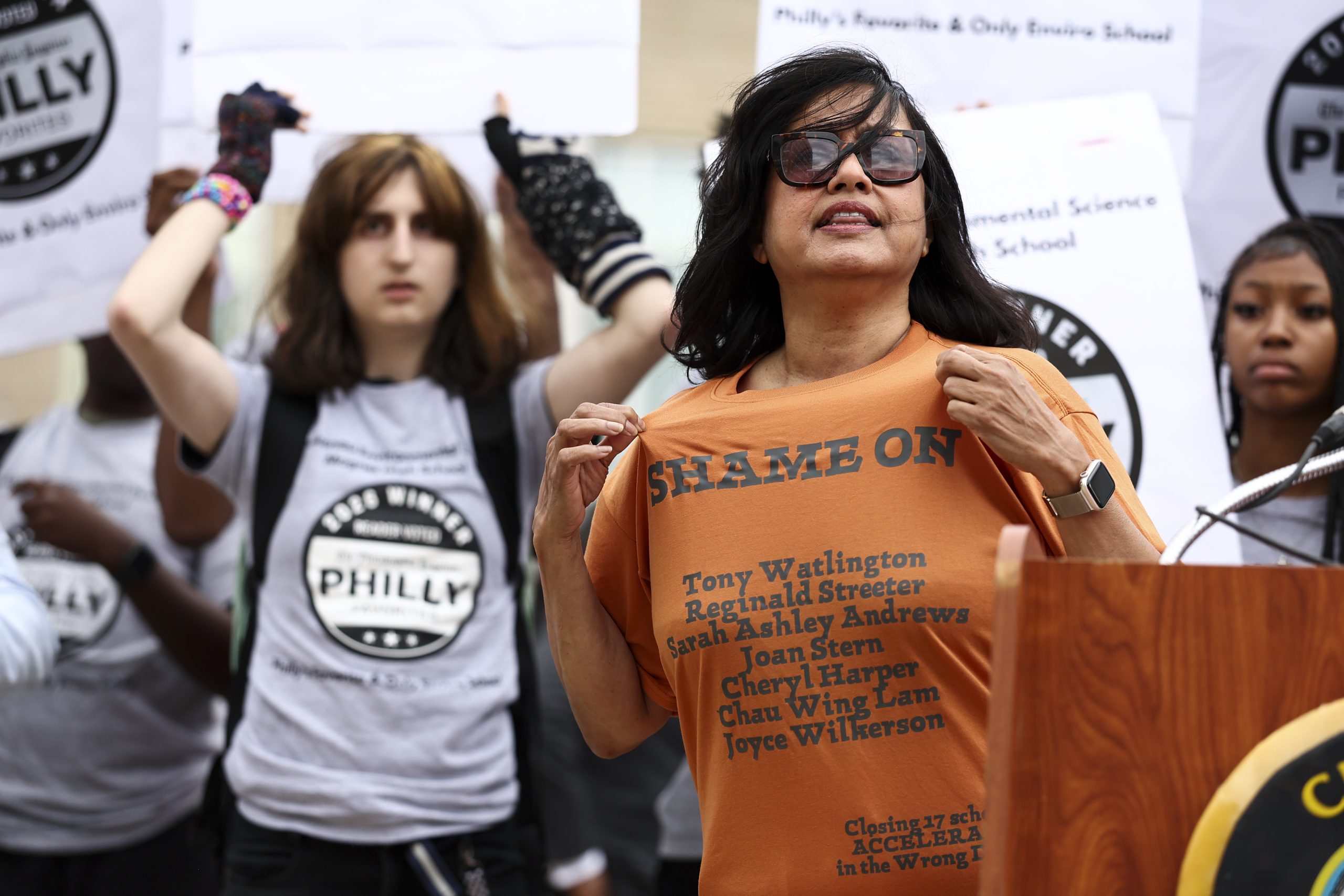
Councilmember Nina Ahmad shows off her T-shirt during a rally outside of the School District of the Philadelphia School District headquarters building on May 28. Council members rallied to oppose the school closure plan.Monica Herndon / Staff Photographer
Parker said the Commonwealth Court “got it right” in declaring that low-wealth districts like Philadelphia’s are chronically underfunded.
“If we had all the resources we need, we’d see even more enhanced improvements in our schools,” Parker said. “I’ll never stop fighting for our children and their right to a high-quality education.”
Crime is the top concern, but most residents feel safe
Despite rates of violent crime in the city plummeting to record lows under Parker, public safety remains the top concern for three in 10 Philadelphia residents, suggesting that people who live in the city are still anxious about crime.
When asked about whether they believe crime in their neighborhood has increased or decreased over the last two years, a third of respondents said they believe it has increased, about 32% said it has decreased, and 28% said they believe it has stayed the same.
(function(){function e(){window.addEventListener(`message`,function(e){if(e.data[`datawrapper-height`]!==void 0){var t=document.querySelectorAll(`iframe`);for(var n in e.data[`datawrapper-height`])for(var r=0,i;i=t[r];r++)if(i.contentWindow===e.source){var a=e.data[`datawrapper-height`][n]+`px`;i.style.height=a}}})}e()})();
(function(){function e(){window.addEventListener(`message`,function(e){if(e.data[`datawrapper-height`]!==void 0){var t=document.querySelectorAll(`iframe`);for(var n in e.data[`datawrapper-height`])for(var r=0,i;i=t[r];r++)if(i.contentWindow===e.source){var a=e.data[`datawrapper-height`][n]+`px`;i.style.height=a}}})}e()})();
A closer look at the results shows that a plurality of respondents in the neighborhoods most affected by violent crime, including North and West Philadelphia, believe that crime has decreased.
The respondents most likely to say that they believe crime in their area has increased live in Northeast Philly. But public data maintained by the Philadelphia District Attorney’s Office show overall crime has decreased there, too. There are five Northeast Philadelphia police districts, and the total number of crime incidents reported to police declined in all of them between 2023, the year before Parker took office, and last year.
Despite the mixed poll results, a vast majority of Philadelphians — nearly 83% — said that they feel safe in their own neighborhood.
That is good news for Parker, who ran for office as a tough-on-crime Democrat amid a historic wave of gun violence and who vowed often to “bring order back to our city.”
Philadelphia police officers stand along the 2800 block of Kensington Ave. after a police involved shooting on May 23. Police shot a robbery suspect.Yong Kim / Staff Photographer
Parker said in a statement that the polling results are evidence that her public safety strategy is working, calling it her “number one priority.”
She also vowed to continue her administration’s efforts in Kensington, the epicenter of the city’s opioid crisis. The Parker administration has deployed a multipronged approach, including increased police patrols in the neighborhood and an expansion of offerings for people in addiction.
But 53% of poll respondents said they do not believe the mayor’s efforts there are working, and those who live closest to the problem were the least supportive. In the region that encompasses the Lower Northeast and the river wards, where Kensington is located, 68% of people said Parker’s strategy is not working while only 18% said it is.
The mayor’s overall favorability was also lowest in that area of the city, the only region where more respondents said they had an unfavorable view of the mayor than a favorable one.
(function(){function e(){window.addEventListener(`message`,function(e){if(e.data[`datawrapper-height`]!==void 0){var t=document.querySelectorAll(`iframe`);for(var n in e.data[`datawrapper-height`])for(var r=0,i;i=t[r];r++)if(i.contentWindow===e.source){var a=e.data[`datawrapper-height`][n]+`px`;i.style.height=a}}})}e()})();
Parker acknowledged that there is “much more work to do” in Kensington and said that “changing culture and going to war with the status quo is never easy.“
Parker’s ‘clean and green’ message is landing
For a city derisively called “Filthadelphia” and where cleanliness has been a longtime concern, a significant number of people seem to think Philadelphia is getting cleaner.
When asked about trash and litter, 41% of poll respondents said they believe the city has gotten cleaner over the last two years. Just 19% said Philadelphia has gotten dirtier, and 38% said it has stayed the same.
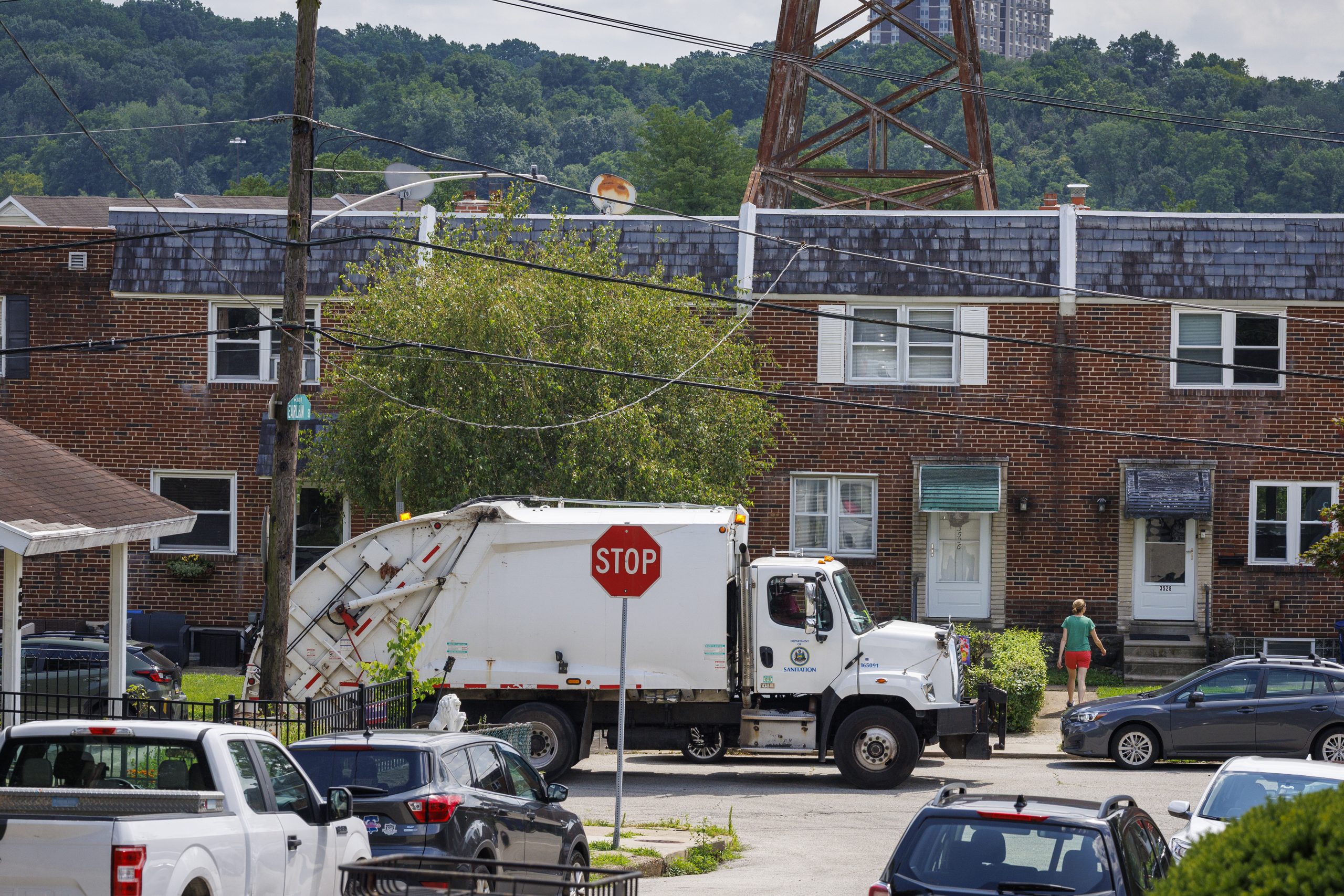
A sanitation department truck is seen along Cresson Street at West Earlham Street in Philadelphia on the first day of trash collection after a strike on July 14, 2025.Alejandro A. Alvarez / Staff Photographer
Those are positive marks for a mayor whose slogan is “safer, cleaner, greener” and who has instituted new programs including twice-weekly trash pickup in the densest parts of the city.
Despite those efforts, Philadelphians gave worse reviews to the overall quality of city services in their neighborhood. About six in 10 respondents said the quality was either “fair” or “poor,” while 40% said “good” or “excellent.”
Staff writer Michelle Baruchman contributed to this article.
Congress has failed to address the workforce disruption that artificial intelligence could generate. The White House, excited about the upside for stocks and investment, has downplayed the potential for widespread job losses.
Now, amid growing public anger over AI and a debate over how to regulate it, a group of employers, state governors, and foundations has raised $500 million to try to answer some of those questions themselves.
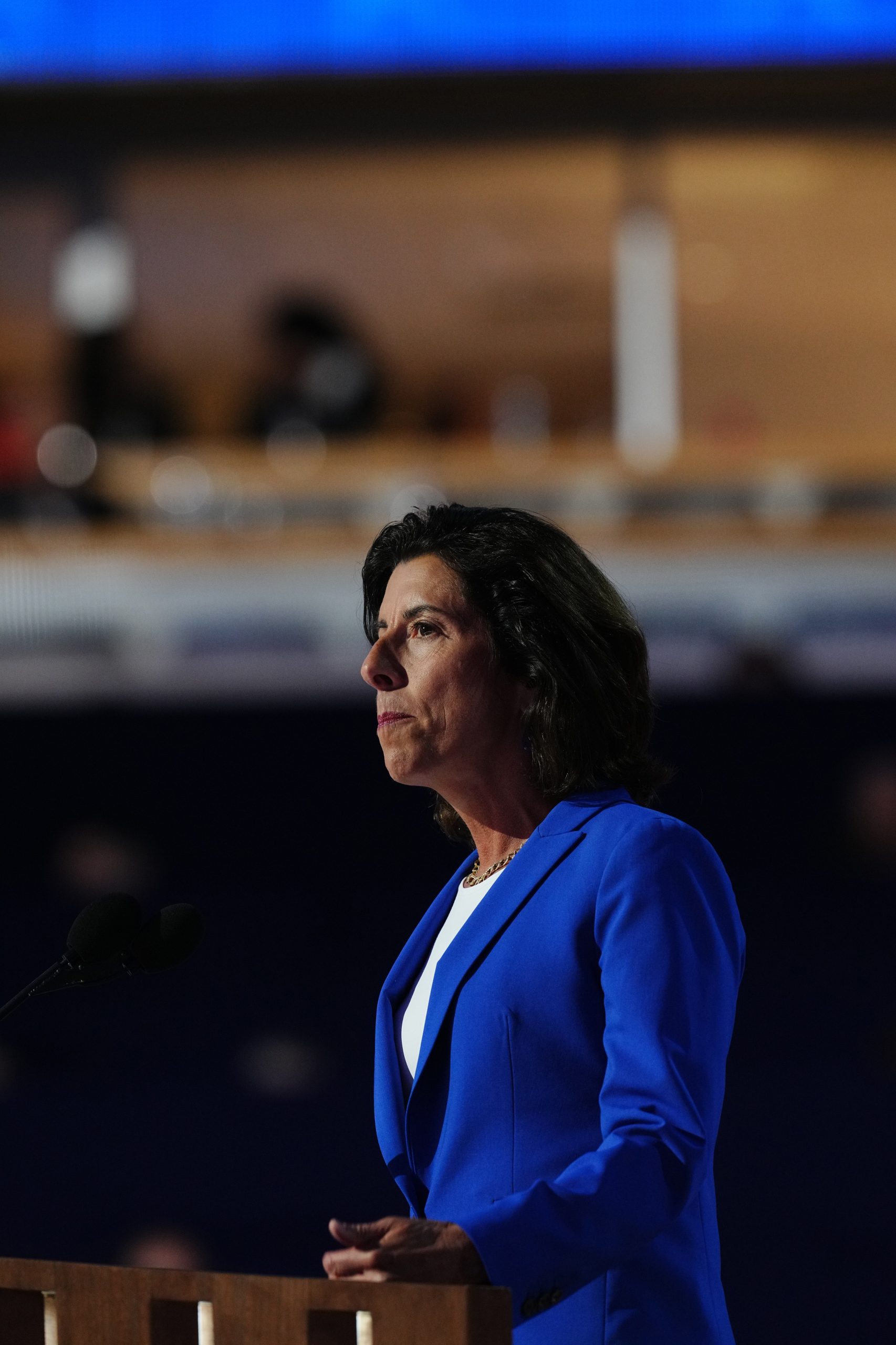
The funders include AI labs preparing to go public, like OpenAI and Anthropic, as well as established corporate giants such as Bank of America and Amazon. Their new nonprofit, called Raise Us, is led by Gina Raimondo, a former commerce secretary and Rhode Island governor who since leaving office has called for companies and the government to do more to orient American workers in a new AI era.
Tech companies and other corporate giants have signed on to an effort called Raise Us led by Gina Raimondo, former commerce secretary and Rhode Island governor.JAMIE KELTER DAVIS
“This is an independent effort,” Raimondo said. “It’s the first one I know of where competitors in the tech industry have put aside their competition to say, ‘We’re going to write big checks and, in the service of our country, do what we can to figure out this transition.’”
Estimates of the magnitude of job dislocation in store for the American workforce vary widely, from half of all entry-level white-collar jobs to a few thousand jobs here and there. Although layoffs are currently very low across the economy, the employee ratings site Glassdoor has found that worker sentiment toward AI has been worsening. Companies have made headlines by citing AI as a reason for deep job cuts. They include Workday and IBM, which are part of the new nonprofit, as well as Meta and Oracle, which are not.
The organization will work primarily with governors, starting with those in Utah, Arkansas, Maryland, and Connecticut. The theory: States generally control their community college systems, which can translate workforce policy through course offerings and industry partnerships. The bulk of the budget will fund pilot programs overseen by about 15 staff members and consultants.
For example, Maryland will establish a “service year” for recent high school graduates to provide experience in fields where there are shortages, such as healthcare. In other states, Raise Us hopes to offer “wage insurance” for workers who take lower-paying jobs rather than dropping out of the workforce entirely.
The group plans to furnish technical assistance for companies that want to retain workers as AI changes their roles, rather than eliminating them. Microsoft, one of the companies backing the organization, said it had already found a promising model: cross-training its entry-level lawyers in different parts of the organization and equipping them with AI skills in order for them to be repositioned as technology evolves.
“You can think of doing that with almost any job we have,” said Brad Smith, vice chair and president at Microsoft. “It creates an opportunity to transfer people from jobs that are being eliminated to jobs that are being created.”
Retraining displaced workers has always been a difficult task, and historically not a very successful one. Raimondo called past efforts “ineffective.”
Sam Manning, a senior research fellow with GovAI, a think tank, said the new group’s work offered a new opportunity to learn about what could work best.
“This model — of let’s work within states and try to do pilots and demonstration programs, build more evidence, learn what works for different types of workers with different constraints — does seem to me like a pretty good thing to do,” Manning said.
Congress has slashed funding for its flagship workforce development law since passing it in 1973. Planned overhauls of the statute have sputtered out. Research has found that while federal workforce programs do help place workers in new jobs, their long-term success is limited by the lack of high-paying positions for workers without college degrees.
Jane Oates ran the Labor Department’s Employment and Training Administration under President Barack Obama. Despite funding cuts, she said, states as disparate as Texas and Massachusetts have found ways to raise private capital and work with employers to meet their talent needs.
“I don’t know that she’s been anywhere else to look at the amazing, innovative things that are done in small and large places around the country,” Oates said of Raimondo.
Part of the Raise Us mission is to adapt existing budgets to the particular challenges of AI-driven disruption. The nonprofit includes a policy lab, funded by philanthropies rather than corporations, that will incubate new ideas that governments may carry out down the line.
Raimondo also serves as a chair on a commission, organized by the right-leaning American Enterprise Institute and the left-leaning Urban Institute, that will come up with policy recommendations to address the effect of AI on the workforce and the demands it may create. That effort is funded by Google.
On the policy front, the groups join a crowded landscape. The air has been thick in recent months with proposals for minimizing the potential downsides of AI while harnessing its benefits.
Sen. Bernie Sanders (I., Vt.) has suggested confiscating half of the stock value of top AI companies and depositing it in a publicly owned fund. Others have floated the idea of shifting the tax burden from payroll taxes to the computing power that is necessary to run sophisticated AI models. The Raise Us board includes Liz Shuler, president of the AFL-CIO, the labor federation, which has a technology institute that has emphasized protections for workers as AI develops.
Raimondo’s initiatives, underwritten by corporations that have much at stake, may seem ill-positioned to make recommendations that would burden the engines of America’s AI dominance. But Harry Holzer, a professor of public policy who is part of the joint American Enterprise Institute-Urban Institute commission, said its members would not shy away from doing so.
“I don’t think we’re going to hesitate to talk about resources,” Holzer said. “If the AI companies and tech companies start making money hand over fist, there might be an excess-profits way of dealing with that.”
Raimondo and her colleagues are not fans of a universal basic income, an idea that has gained popularity in Silicon Valley as an answer to job disruption. They emphasize that work provides more than just wages, and plan to focus on helping people find pathways to new jobs.
But it’s unclear whether AI will create jobs at the rate that it will destroy them. Jack Malde studied workforce policy for the Bipartisan Policy Center and is now going to work for the Windfall Trust, another AI-focused think tank. He said long-term income support might be necessary, even if better models for transitioning workers were found.
“The truth is, there’s still a lot of uncertainty,” Malde said. “What we think is resilient now might not be resilient later. We’re not going to get everything right, so we’re going to need those strong safety-net programs.”
Eventually, the backers of Raise Us think, federal action will be necessary to replicate successful policies across states and employers who aren’t early adopters. Raimondo said she had been in touch with the acting labor secretary, Keith Sonderling, whose department is establishing its own data hub for AI effects.
But at the moment, she thinks that there’s no time to wait for alignment from Washington. As a historical parallel, she cited the Committee for Economic Development, an organization formed by big businesses in 1942 with the goal of absorbing American soldiers back into the economy after World War II ended and defense production was scaled back. It encouraged ways to fight inflation and foster full employment, helping to head off postwar stagnation.
“I think this technology will lead to more productive people, new jobs and new industries, and I want to get there,” Raimondo said. “But I also worry about the transition, and a window where people could get hurt. The politics could get uglier. So I just want to get started now to build the infrastructure to be prepared to manage the transition.”
At $5 million, Philadelphia’s primary arts and cultural fund is not one of its many substantial burdens for taxpayers, amounting to well under a thousandth of the multibillion-dollar municipal budget. And yet, the city’s politicians can’t seem to resist the allure of the minuscule expense as a canvas for their financial creativity.
Having narrowly survived fiscal extinction during the pandemic, the Philadelphia Cultural Fund took another disproportionate cut in the city’s recently enacted budget for fiscal 2027, which begins next week. The spending plan recently passed by City Council and signed by Mayor Cherelle L. Parker appropriates $3.5 million for the fund, nearly a third less than this year, according to the fund’s executive director, Gabriela Sanchez. It’s hardly a rounding error in Philadelphia’s $7.1 billion budget, but it’s likely to devastate many of the tiny arts and cultural groups the line item supports citywide.
Nearly 100 of the almost 300 arts organizations that depend on the fund are expected to lose the aid as a result, Sanchez said in a statement. She said the fund would halve its eligibility threshold, limiting grants to groups with budgets of no more than $1.5 million, among other “untenable decisions,” hobbling neighborhood theaters, festivals, music programs, and more. “In practice,” Sanchez added, “this means that community-based arts and culture groups … will lose essential operating funding that sustains their day-to-day work.”
Created three decades ago to supplant more traditionally Philadelphian methods for distributing tax money — according to the whims and still less defensible motives of local politicians — the cultural fund brought a measure of evenhandedness and transparency to bear, offering clear rules and a fair process. Today, it funds groups ranging from A Book a Day, which has donated thousands of books to institutions serving young readers in West Philadelphia, to the Wyck Association, dedicated to preserving and interpreting the historic house of that name in Germantown.
The impact of these groups, economic and otherwise, is far greater than their cost: A 2024 report by the Greater Philadelphia Cultural Alliance found that nonprofit arts groups generate more than $2 billion in yearly economic activity, providing $1 billion in household incomes and $265 million in tax revenues. The alliance also found that the sector suffers from inadequate, unreliable, and uneven public funding.
The cut is cruelly contrary to what city arts groups and some Council members argued for amid the Trump administration’s retreat from federal arts funding, which was to increase the cultural fund’s allocation by 20%. It’s also at odds with a city budget that raises overall spending by about 3% over this fiscal year. At that rate, given the fund’s benefits, the city should at least be able to hold it harmless and maintain this year’s relatively meager contribution.
Philadelphia’s arts groups shouldn’t be perpetually on the budgetary brink just because most of them are small and lack powerful political patrons, making them easy to pick on. The mayor and Council should find a way to restore this funding and stop creating trouble for the city’s invaluable creators.
For nine years, every week, writer Anndee Hochman attempted to answer one question.
What does the road to parenthood look like for people who don’t follow the family “norm”?
For her Inquirer column “The Parent Trip,” she profiled different Philadelphia-area families with children, all with atypical experiences creating their family.
This included queer parents, single parents, interracial parents, interfaith parents, and so on. Hochman spoke to parents who adopted children, conceived them through IVF, got pregnant unexpectedly, and more.
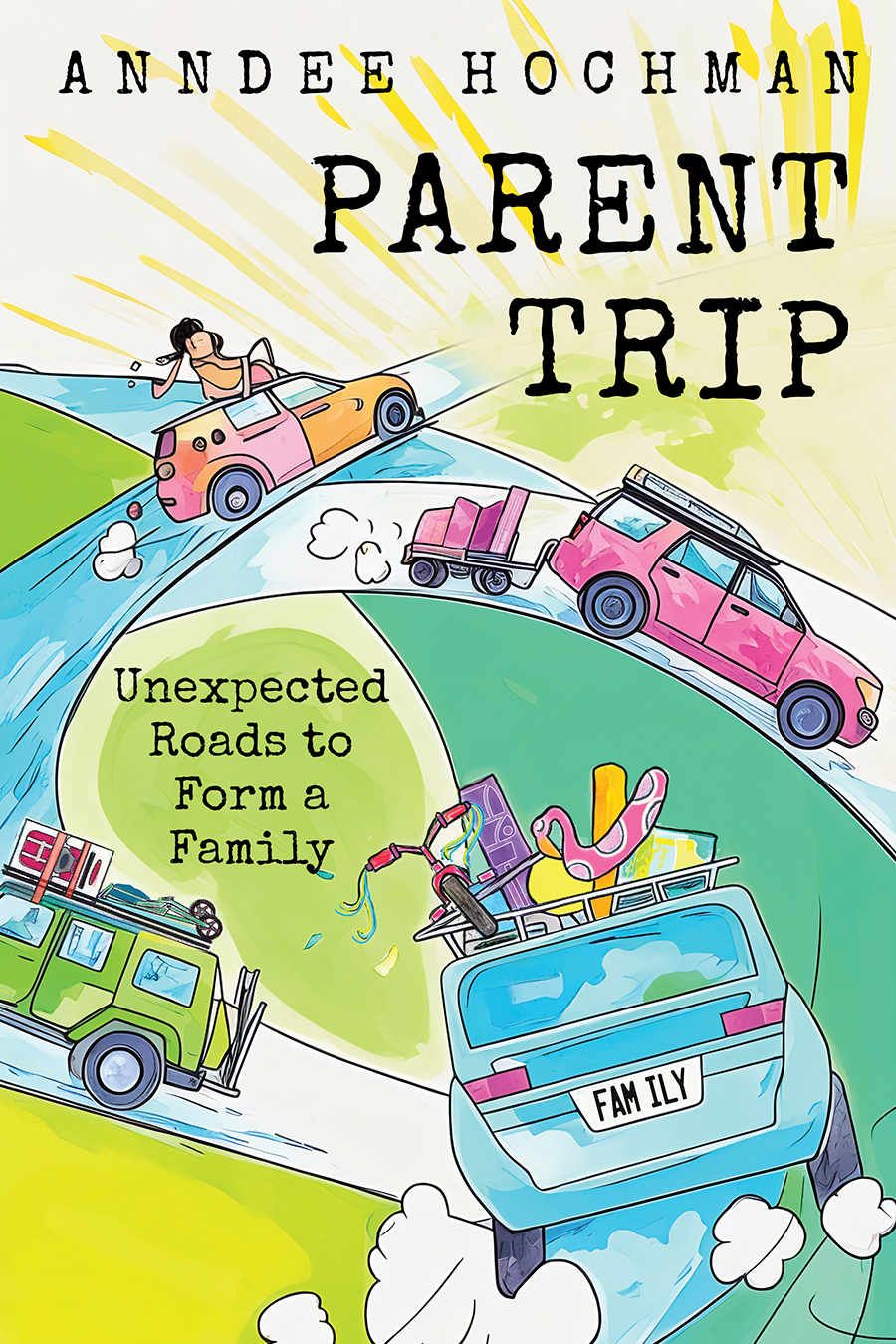
Anyone who had a story around parenthood with a less talked-about aspect found themselves in Hochman’s column. Forty-two of 468 of those profiles have now been compiled into a new book, Parent Trip: Unexpected Roads to Form a Family, published by Temple University Press.
Hochman, who is queer, started writing about family life in 1990, when she was living in Portland, Ore. After her straight housemates got engaged, she wrote an essay for the now-shuttered LGBTQ publication Just Out, detailing her feelings on the discrepancies between how straight and queer relationships are perceived socially.
The Eighth Mountain Press publisher Ruth Gundle reached out to Hochman, asking if she had more to say on the subject. As it turned out, she had a whole book’s worth. Her first book, Everyday Acts and Small Subversions: Women Reinventing Family, Community and Home, released on Eighth Mountain in 1994.
Anndee Hochman’s “Parent Trip: Unexpected Roads to Form a Family” is a collection of stories from her original column.Temple University Press
By 1999, Hochman had moved to Philadelphia and began freelancing for The Inquirer, still writing about family. In 2014, former Inquirer features editor Cathy Rubin asked her if she’d be interested in writing a weekly feature on people becoming parents.
That’s how “The Parent Trip,” the column, was born. Hochman began by reaching out to midwives and OB/GYN offices to see if any of their clients would be willing to participate. The column asked readers to submit their stories.
“Becoming a parent and forming a family felt like a messier version of the Wedding column, and that’s exactly what we got,” said Rubin, referring to the column on marital stories that “Parent Trip” replaced. “It was beyond my wildest dreams to witness and experience all of the different ways that families formed and the challenges that people had.”
Hochman, whose daughter with her long-term partner, Elissa, was born in 2001, was able to use her own experience as a parent to inform the column.
“When I was interviewing families who didn’t fit the norm and I shared my own family configuration with them,” she said, “I felt like I could feel their shoulders relax a little bit, particularly with the queer families.”
“The Parent Trip” began nine months before marriage equality for same-sex couples was legalized and concluded just over a year after Roe v. Wade was overturned, reversing a half-century of legalized abortion.
Hochman makes clear with this book that families will always exist beyond the heteronormative structures society deems “normal.”
The book is categorized into nine chapters, each carrying three to seven profiles. Through these, Hochman covers topics such as infertility, adoption, age gaps in relationships, religious differences, interracial marriages, and other circumstances that make families less “normal” per social mores.
“I wanted the 42 [profiles] that ended up in the book to reflect the same diversity and span as the 468 that comprised nine years worth of columns,” Hochman said. “You will not find a section of stories all about single parents, or a section all about queer parents. I was more interested in the themes that echoed across all kinds of families.”
Through writing this column, Hochman says she learned about situations she never experienced in becoming a parent, including adoption and how common miscarriages are.
A phrase repeated by many of the parents she interviewed was “you just don’t know what’s going to happen.” Whether that be when you try to adopt, conceive, when you’re in the delivery room, once the baby is home, and once they’re 2, 6, or 25, she said.
“There is no one right or normative way to be a family,” Hochman said. “I hope people come away with an expanded sense of what a family can look like and how children can be welcomed into one’s life.”
“Parent Trip: Unexpected Roads to Form a Family” by Anndee Hochman is now available all over the country. $20.
Georgette Luna planned her Father’s Day weekend down to a T, splurging $3,000 on three tickets to the Friday World Cup match in Philadelphia. The Fishtown resident, her husband, and her father — who traveled from New York — would go to Reading Terminal Market, she thought, barhop to mingle with fans before the game, and then head to the stadium early to tailgate before seeing Brazil take on Haiti.
She had purchased the tickets on the third-party ticket resale platform StubHub last fall, but the seller she bought the tickets from never transferred them. She called StubHub frequently in the months, weeks, and finally days leading up to the match, wondering when the transfer would go through.
Every time, a StubHub representative said her “tickets would transfer to her on the day of the game,” Luna said. But by Friday, the group — who could not wait to see Brazil play, since their favored Chileans did not qualify for the World Cup — never made it into the stadium.
“We’re standing outside the stadium and obviously everybody is in full celebration, and here we are, supposed to be living this World Cup moment together for the first time, and there’s just this feeling of disappointment,” Luna said.
As the World Cup takes over the country, people across U.S. host cities have shared the same story: Fans in Atlanta, Boston, Dallas, Houston, New Jersey, Seattle, and, of course, Philadelphia arrived at stadiums hoping their tickets would be transferred to no avail, with most facing issues with StubHub. Other reports indicate fans are having similar issues on SeatGeek.
StubHub, for one, blames FIFA’s tech infrastructure and the rollout of a new mobile phone app weeks before the tournament for why tickets have not been transferring on time. FIFA has urged fans not to buy tickets on third-party platforms, saying it “may result in issues, including the inability to cancel or accept transfers,” as well as a higher risk of fake or invalid tickets.
But fans who lost out on a generational moment are more interested in how platforms like StubHub plan to resolve these issues.
Stephanie Fred of Bristol and her 9-year-old son, Levi, are heartbroken after their tickets to the Monday France vs. Iraq game never materialized, even as they stood outside the stadium. To make matters worse, Levi, a soccer player himself, had been trying to see his favorite player, French superstar Kylian Mbappé.
Mbappé scored two goals, tyingfor the second-most goals scored by a player in men’sWorld Cup history. Fred’s son could hear the cheers from outside the stadium. He broke down into tears that did not stop even later that night, she said.
During Philadelphia’s first World Cup game, between Ecuador and Ivory Coast, Jayden Quezada, 17, and his parents came to Philadelphia from Bensalem, hoping for an Ecuadorian victory. But they were turned away. The night before the game, the trio had spent $4,350 to get three tickets through the TickPick app after seeing a social media advertisement. By the time they arrived at the stadium, the tickets still had not been transferred to their FIFA app.
“They have been the biggest fans since before I was born, and they don’t get to go to Ecuador often because of work,” Quezada said. He said they would try to get a refund, but missing the game was “really sad because we were looking forward to feeling the Ecuadorian pride.”
For that game, a line of more than 50 fans waited for help with their failed tickets. Monica Rojas, 22, and her friend Jose Avil, both Spanish speakers, were confused about what to do after the ticket office explained the problem with their ticket in English. The pair had driven two hours from New York, after having bought tickets on StubHub for $2,000, including parking. After a FIFA volunteer interpreter intervened, the pair found out their tickets had been refunded.
Brazilian fans cheers before a FIFA World Cup Group C soccer match between Brazil and Haiti at Lincoln Financial Field on Friday, June 19, 2026, in Philadelphia.Jose F. Moreno / Staff Photographer
StubHub blames FIFA
StubHub is aware that fans are not receiving the tickets that they bought, and a company representative blamed FIFA.
“The issues fans have experienced at this World Cup are largely driven by performance problems with the event organizer’s own ticketing infrastructure, which has created transfer failures across all resale platforms,” a StubHub spokesperson said.
StubHub said the launch of a new FIFA app right before the World Cup began has led to delays, failed transfers, and access issues that have affected all resale platforms, not just StubHub.
The ticket reseller also said sellers are required to fulfill their ticket orders or they face financial penalties and bans from the platform.
Bad actors on resale platforms can engage in a practice called “speculative ticketing,” where buyers will list a ticket that they do not yet own on StubHub and other platforms, in the hope that they will find a cheaper ticket later and recover profit, said Scott Friedman, owner of the Ticket Talk Network podcast and an industry veteran who is helping to sue StubHub on behalf of 160 buyers and sellers who said company practices harmed them.
StubHub does offer a “FanProtect Guarantee‚” a promise the company will find replacement tickets or refund the order when a ticket does not transfer. But the policy repeatedly states that resolving these issues falls under StubHub’s “sole discretion.”
StubHub ticket protection measures can look like replacement tickets, a full refund, or a voucher worth 120% of the value of the tickets. During the World Cup, the company said, it is prioritizing replacement tickets so fans can get to a match.
France forward Kylian Mbappé sprints for a pass against Iraq during the first half of a FIFA World Cup Group I soccer match Monday, June 22, 2026, at Lincoln Financial Field in Philadelphia.Jose F. Moreno / Staff Photographer
Refunds can’t replace a once-in-a-lifetime moment
All of this leads to confusion, and eventually disappointment, when the tickets never show, Luna said. As she and her family, hanging their heads low, took a depressing train ride home from the stadium last week, Luna continued to try to get answers.
Finally, on Monday, she said, she received word StubHub would refund her June 19 match tickets and gift her similar tickets to the July 4 match in Philadelphia, which she said she would accept. But, later, Luna was told she would only receive replacement tickets.
“Is this a wonderful outcome? For sure, but my father and I would have been happy with the perfect weekend that we had planned for ourselves as it was,” Luna said. “While they’re doing right by us, there are so many people who aren’t getting this result.”
Fred’s family got word Tuesday that StubHub would provide them with tickets to France vs. Norway in Boston on Friday. Fred does not mind the drive as long as Levi can achieve his dream of seeing Mbappé play.
“We don’t get this type of opportunity from where we come from,” Fred said. “Being able to provide a World Cup experience for our kids just means the world to us, and having that be ripped away from us, it was just so hard to process.”
A significant majority of residents want Philadelphia to remain a sanctuary for immigrants, according to a new poll that shows the overwhelmingly Democratic city is undeterred by President Donald Trump’s threats to defund so-called sanctuary cities.
A recent Suffolk University/Philadelphia Inquirer poll that surveyed 500 city residents asked respondents if Philadelphia should remain a sanctuary city, “even if it means losing federal funding.” A commanding 59% answered “yes,” with only 28% saying “no” and the remainder undecided or unwilling to say.
The support for Philadelphia’s sanctuary status was consistent across age and racial groups. The only geographic region where a plurality of respondents answered “no” was far Northeast Philadelphia, which is among the most politically conservative areas of the city.
The survey question did not elaborate on what a loss of federal funding could mean for the city in terms of the impact on residents. Philadelphia received $2.2 billion from the federal government in fiscal year 2024 to pay for a wide range of critical services, including infrastructure needs, as well as healthcare, food, and housing assistance for low-income people.
(function(){function e(){window.addEventListener(`message`,function(e){if(e.data[`datawrapper-height`]!==void 0){var t=document.querySelectorAll(`iframe`);for(var n in e.data[`datawrapper-height`])for(var r=0,i;i=t[r];r++)if(i.contentWindow===e.source){var a=e.data[`datawrapper-height`][n]+`px`;i.style.height=a}}})}e()})();
Still, the results of the poll show relatively widespread support in Philadelphia for the city’s sanctuary policies, which include its practice of not complying with detainers issued by U.S. Immigration and Customs Enforcement without a court order. Those detainers are effectively requests submitted by federal agents to local law enforcement agencies that ask to hold undocumented immigrants in custody.
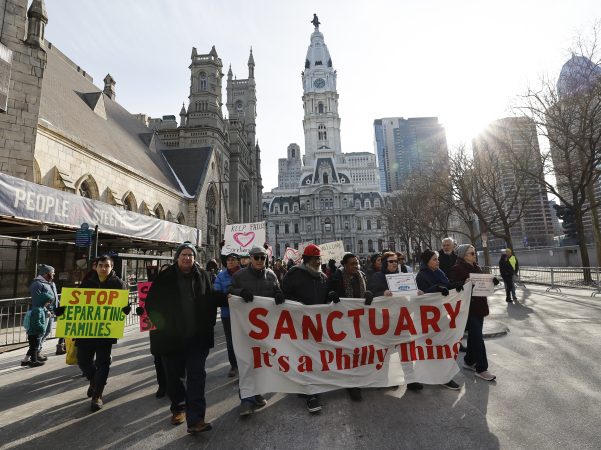
Mayor Cherelle L. Parker’s administration does not refer to Philadelphia as a “sanctuary city” — she and her top aides instead call it a “welcoming city,” language that has been increasingly adopted nationwide as Trump and his allies in the Republican Party have sought to crack down on sanctuary cities.
President Donald Trump travels to the Lehigh Valley to visit Mack Trucks in Macungie on Tuesday, June 23, 2026.Tom Gralish / Staff Photographer
The sanctuary policies predate Parker’s tenure and were in place under an executive order signed by former Mayor Jim Kenney. They were codified into law earlier this year after City Council passed a package of legislation aimed at limiting ICE’s operations in the city and instituting some of the nation’s toughest restrictions on ICE.
In May, Parker signed six of the seven bills in the package, but took no action on one that bars law enforcement officers from concealing their identities, including by wearing masks. City Solicitor Renee Garcia wrote in a letter to Parker that the legislation may not be legally enforceable, but the mayor did not veto the bill, allowing it to become law.
Last week, the Trump administration sued Philadelphia and some of its top officials, including Parker, over the mask-ban ordinance. The Trump administration contended that the law is “blatantly unconstitutional” and undermines federal law enforcement’s ability to do its job.
The lawsuit is one of several filed across the nation by the Trump administration challenging local laws related to immigration as federal authorities carry out the massive deportation campaign promised by the president.
That effort is also tied up in litigation. Last year, a federal judge issued an injunction blocking the Trump administration from denying funding to jurisdictions that limit cooperation with ICE, saying the White House could not impose funding conditions without authorization from Congress.
Staff writer Sean Collins Walsh contributed to this article.
But that may not jibe with what many Philadelphians want to see.
A new Suffolk University/Philadelphia Inquirer CityView poll of 500 city residents found that a quarter of respondents believe the city’s primary responsibility to the nation is to protect its historical sites for future generations. Nearly 27% said the city’s primary responsibility to the nation is to serve as a model for “diverse, multicultural urban progress.”
The poll, conducted from June 16 to 20 and released this week, comes after a ruling by the U.S. Court of Appeals for the Third Circuit in favor of the Trump administration and just weeks ahead of celebrations in Philadelphia for the nation’s 250th birthday.
(function(){function e(){window.addEventListener(`message`,function(e){if(e.data[`datawrapper-height`]!==void 0){var t=document.querySelectorAll(`iframe`);for(var n in e.data[`datawrapper-height`])for(var r=0,i;i=t[r];r++)if(i.contentWindow===e.source){var a=e.data[`datawrapper-height`][n]+`px`;i.style.height=a}}})}e()})();
The appeals court’s ruling last week was a turning point in a legal battle waged by Mayor Cherelle L. Parker’s administration that questioned the federal government’s authority to interfere in what information is presented at the President’s House. Both the Third Circuit ruling and a recent decision by a Boston-based federal appeals court regarding National Park Service exhibits nationwide have started to pave the way for the Trump administration to make unprecedented changes to displays of U.S. history in the region.
Alacia Maxton, 36, a respondent to the poll, said frustration with the attacks on the President’s House has been at the forefront of her mind as the city prepares to celebrate the Semiquincentennial.
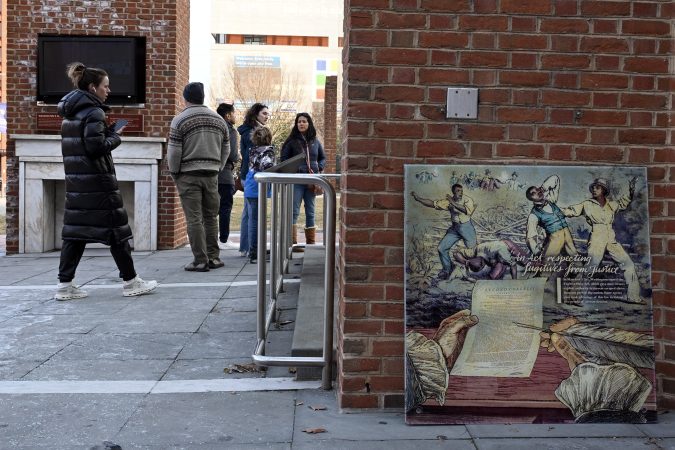
For nearly two decades without opposition, the site — which opened in December 2010 — has memorialized the nine people George Washington enslaved at his Philadelphia residence during the founding of America and detailed the brutality of slavery.
Last month, it was designated as an endangered historic site by a major national historic preservation organization. The new panels proposed by the Trump administration to replace the removed exhibits at the President’s House soften Washington’s role as an enslaver, according to those working to protect the site.
“I don’t like the idea that certain groups of people want to whitewash history and erase what doesn’t make them feel comfortable,” said Maxton, who lives in Overbrook Park.
Carolyn Keys, 61, another resident who responded to the poll, said the absence of the some of theoriginal panels is like “missing pieces to a puzzle.”
“Every piece was specifically put together for a purpose,” said Keys, 61, a veteran who lives in the Tacony neighborhood.
David Paleologos, director of the Suffolk University Political Research Center, said Philadelphians valuing preserving history and being a model for progress is a particularly localized issue.
“Which I think makes this really important information for the nation to see,” Paleologos said.
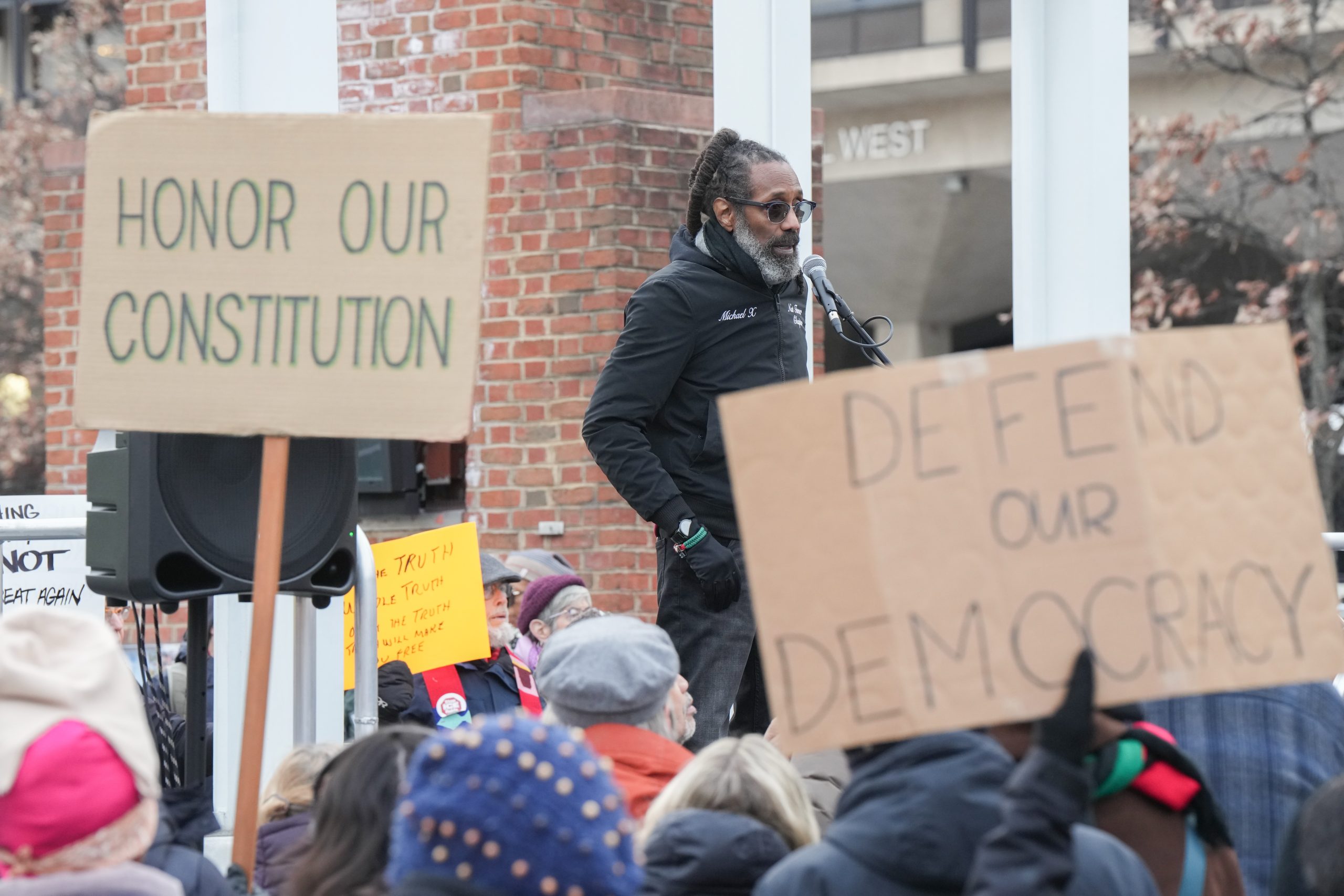
Philadelphia Lawyer Michael Coard speaks at a rally at the President’s House Site in response to the removal of the President’s House exhibit in Old City, in Philadelphia, Tuesday, Feb. 10, 2026, in Philadelphia Jessica Griffin / Staff Photographer
A bipartisan grassroots group of Philadelphians — called the President’s House/Slavery Memorial Coalition — has been spearheading efforts to protect the historical site, which has been under scrutiny from the Trump administration since last summer.
Michael Coard, an attorney and founder of one of the leading groups in the efforts to protect the President’s House, said in a statement Wednesday that the poll results show that “Philadelphians understand the importance of protecting our shared history.”
“Black history is American history, and we have both an obligation and, based on these results, a clear mandate to ensure that the stories of enslaved Africans and their descendants are preserved, honored, and accurately told,” Coard said.
Other respondents had different ideas for Philadelphia’s primary responsibility as the birthplace of democracy: Roughly 23% said “leading national conversations on civil rights and economic justice” was a top priority, while almost 17% said the city’s duty to the nation is “proving that a large, complex city can govern itself equitably.”
These insights come as Philadelphia is bracing for an influx of tourists, with particular emphasis on its history as the nation’s birthplace, ahead of the Semiquincentennial celebrations.
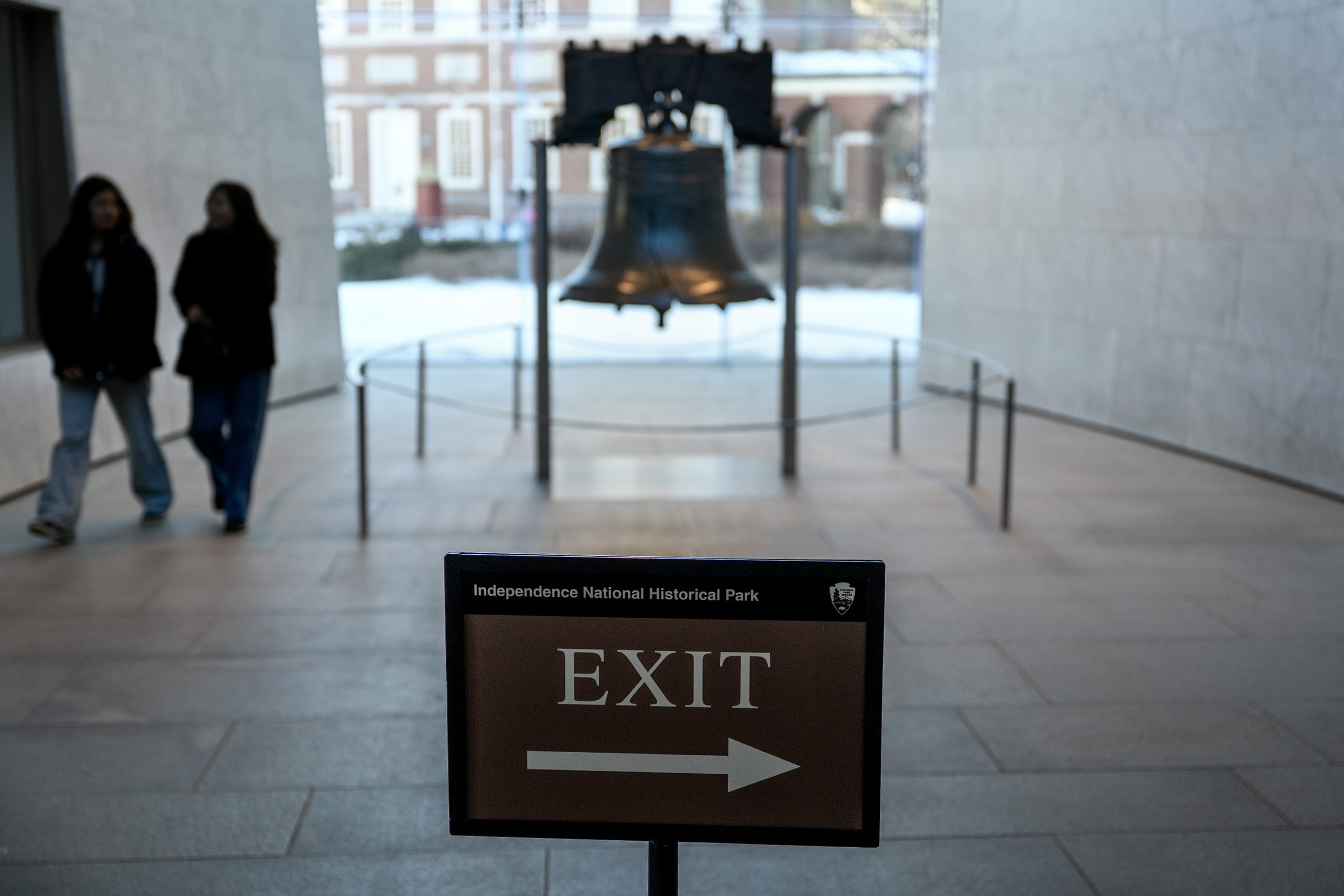
The Liberty Bell in Independence National Historical Park Feb. 2, 2026.Tom Gralish / Staff Photographer
Almost 28% of the Philadelphia residents polled see the Liberty Bell — in comparison to Independence Hall, the National Constitution Center, and the Rocky Steps — as the city landmark that best embodies American democracy.
But hanging over the impending 250th celebrations is the uncertain fate of the President’s House, said Leeanna Lundy, 34, of West Philly.
“For them to remove where the most impactful part of where history took place, it’s like mind-boggling,” Lundy said.
Staff writer Michelle Baruchman contributed to this article.
Councilmember Curtis Jones Jr. and City Representative Jazelle Jones, who are married, are poised to collect up to $752,000 in combined payouts from Philadelphia’s widely criticized Deferred Retirement Option Plan, an early retirement incentive that two decades ago sparked a major scandal in City Hall.
But neither of the city officials is actually retiring.
DROP is available to all city workers. But both of the Joneses are using the program in a way that is not available to a vast majority of municipal employees:temporarily retiring and immediately returning to their jobs, allowing them to receive their DROP payouts before the end of their city government careers.
Curtis Jones, 68, who has represented the 4th District for 18 years, is able to access that perk because he is a long-serving lawmaker. Jazelle Jones, 70, a high-ranking appointee of Mayor Cherelle L. Parker, received an exception from the mayor to be rehired after her DROP retirement.
Following her one-day retirement, Jazelle Jones also received a $97,000 payout for unused sick and vacation time, a benefit normally reserved for employees permanently departing from city government.
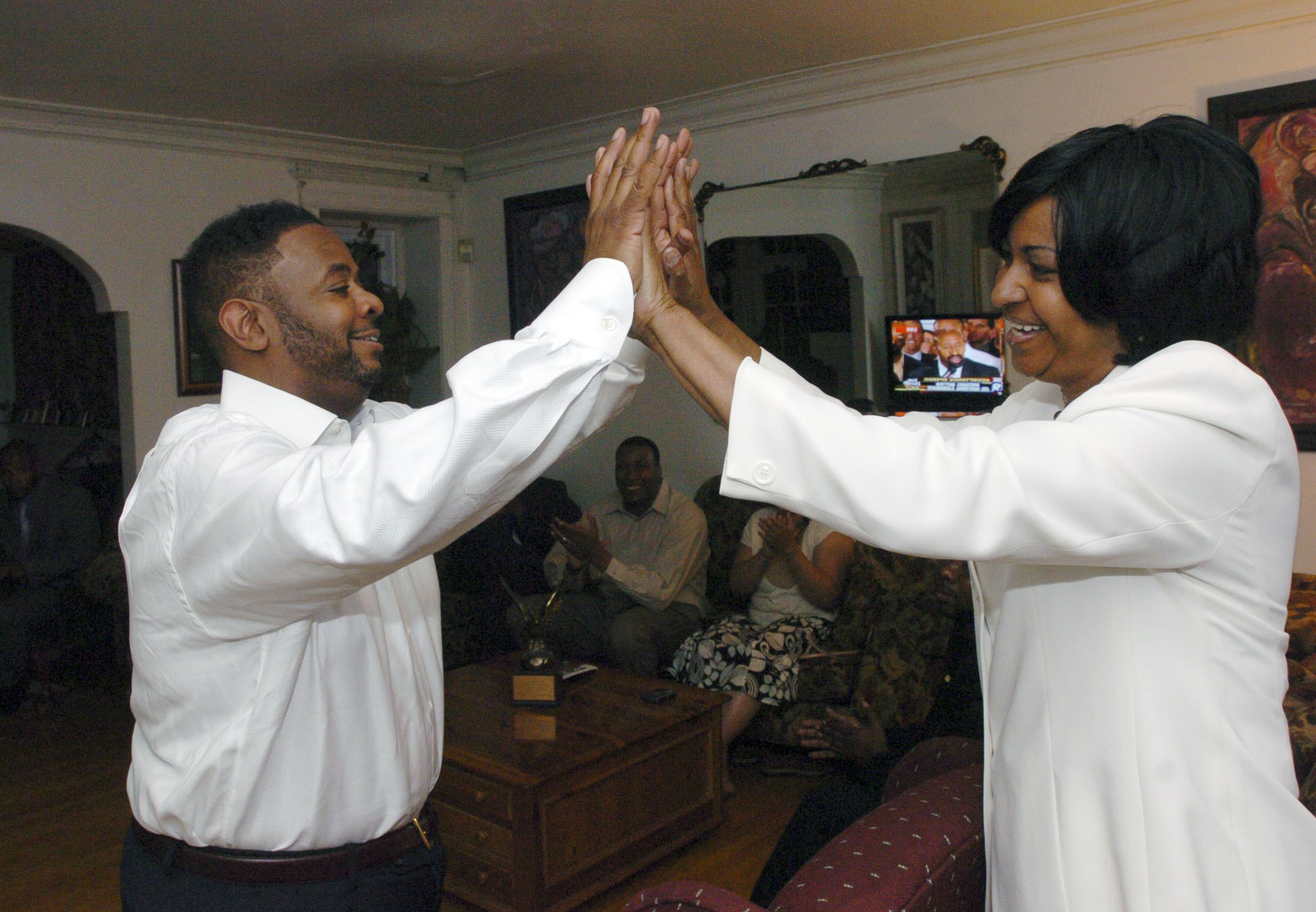
FILE – Curtis Jones, Jr. declares victory with his wife Jazelle and his family in the Council race in his home in West Philadelphia on Tuesday, May 15, 2007.Gina Gayle / Staff Photographer
Lauren Cristella, president of the government watchdog group Committee of Seventy, said the administration’s handling of the situation further undermines public confidence in the DROP program.
“Rehiring an employee to the same position the day after she collects a DROP payout defeats the purpose of the program,” Cristella said. “DROP exists to manage workforce transitions, not to serve as a bonus for employees with no intention of actually leaving.”
Established in the late 1990s during Mayor Ed Rendell’s administration, DROP was originally pitched as a cost-neutral way to give the city predictability over retirements and entice high-earning employees to step down early.
But the program ended up costing the city far more than expected, andvoter frustration withelected officials’ enrollment in DROP was credited with ending the political careers of several Council members.
At the height of that controversy in 2010, Curtis Jones voted to enact a law banning future elected officials from accessing DROP. But he and others already serving at that time were “grandfathered” in, Curtis Jones said.
He would be eligible to collect a $432,000 lump-sum DROP payment in August 2028. However, Curtis Jones said he plans to run for a sixth Council term in 2027, using the loophole to briefly retire to collect the payout before resuming his post.
In interviews, the Council member, who earns $165,000 annually, said he instead plans to retire in December 2027, collecting a reduced DROP payment closer to $350,000. If he is reelected, the maneuver would allow him to hang on to his Council seat for another four years by being sworn back into office the following month.
He justified his enrollment in DROP by saying that times have changed since the 2010 vote — both for the city’s finances, which have dramatically improved, and for his health. He said he is suffering from glaucoma, an incurable disease that causes vision loss.
“Over the years, I’ve had four surgeries on my eyes,” said Curtis Jones, who represents the Northwest and West Philadelphia-based Council district. “I’ve actually lost 40% of my vision.”
Curtis Jones said he enrolled in DROP “so that if I was blind, I wouldn’t have been without resources.”
A centrist Democrat, he endorsed Parker’s 2023 campaign for mayor and is viewed as her most reliable ally on Council.
His wife, Jazelle Jones — who receives a $199,000 annual salary for serving as an ambassador for the city and planning special events — temporarily retiredfor one day last year and was then immediately rehired by the city with a $4,000 raise.
The Philadelphia Administrative Board, which oversees personnel matters, granted her an exception to return to her job. That board is led byParker, a staunch defender of DROP, and other top officials in her administration.
The mayor said she personally asked Jazelle Jones to return to work, and defended the decision.
Parker cited Jazelle Jones’ “lived experience” and the potential disruption her departure could cause for major events this year, like the city hosting World Cup games.
“The essential nature of her role is why I asked” Jazelle Jones to continue working, Parker said Tuesday in a phone interview. “And I’m unapologetic about asking. It’s one of the most important decisions I’ve made as mayor.”
Jazelle Jones was originally scheduled to retire in September 2024. Instead, in a departure from typical DROP procedures, she continued to work as the city representative through that date and took her one-day retirement a year later, in September 2025.
None of those changes appear to have been approved at the time they occurred by the city’s administrative board. It was not until March 2026 when the board retroactively approved exceptions allowing Jazelle Jones to receive an extra year of DROP — resulting in the 2025 retirement date — and her rehiring, according to board minutes.
Parker declared an emergency in order to approve the extra year of DROP for Jazelle Jones, the mayor’s office said. The move effectively increased her retirement payout by almost 20%, to nearly $320,000.
Parker’s office did not respond to questions about the deviation in the approval timeline.
Jazelle Jones did not respond to a request for comment through the mayor’s office.
‘Tools in the toolbox’
When city employees enroll in DROP, they select a mandatory retirement date no more than four years in the future. Between the time they sign up for the program and their selected retirement date, the city pays their regular salaries and makes pension payments as if they had already retired.
The deferred pension payments are deposited into an interest-bearing account that each city worker collects in a lump-sum payout four years after enrolling. The departing employee then begins to receive standard monthly pension checks, which are calculated based on when they entered DROP.
City workers make contributions from their salaries to the municipal pension fund. But their contributions do not cover all of the pension fund’s liabilities, let alonethe added costs associated with DROP, which ultimately come out of taxpayer coffers.
Philadelphia’s original DROP law created a loophole in which elected officials, who generally serve four-year terms, can enter into the program, retire a day before their terms end, and rejoin the city workforce when they are sworn in again the following day.
The revelation that many members of Council had enrolled in DROP rocked City Hall in the early 2000s. The scandal was credited for several members’ decisions to not run for new terms in 2011 and was widely seen as the reason former Councilmember Frank Rizzo Jr. lost reelection that year.
A 2017 city controller report found that, cumulatively, the program had cost the city in excess of $277 million despite initially being projected as budget-neutral.
While DROP programs were once common in cities across the country, the Government Finance Officers Association — a national organization that Philadelphia officials regularly cite for best practices when shaping the city budget — in 2020 warned they led to unpredictable costs and detrimental impacts on municipal pension funds.
“Government defined benefit plans should not include deferred retirement option programs for a variety of reasons,” the GFOA said a statement.
Parker, however, has defended the program as a valuable recruitment and retention tool.
“Government doesn’t pay you as much as the private sector, so we offer a great benefits package,” Parker told reporters in March. “DROP, the defined-benefit pension — I’m never going to be for taking away any of the tools in the toolbox that would allow the city of Philadelphia to compete.”
‘Semi-hypocritical’
In 2008, when Council was in the early stages of considering a ban on elected officials enrolling in DROP, some wanted the prohibition to apply not just to future officeholders, but current ones as well.
Curtis Jones, a freshman legislator at the time, agreed.
“It would be semi-hypocritical if I say [end it] for only future elected officials,” he said then.
The bill that Council eventually passed did not prohibit current members from enrolling in DROP. Now, Curtis Jones is set to become the first lawmaker to benefit from the program in years.
“At the time, when I was 20/20 vision, [banning lawmakers from using DROP] was my decision. And now that I’ve had some surgeries, I’ve changed that position,” Jones said Monday. “It’s an earned benefit that I contributed to that I would like to receive.”
Cristella, of the Committee of Seventy, accused Jones of hypocrisy.
“Being grandfathered in is not the same as acting with integrity,” she said.
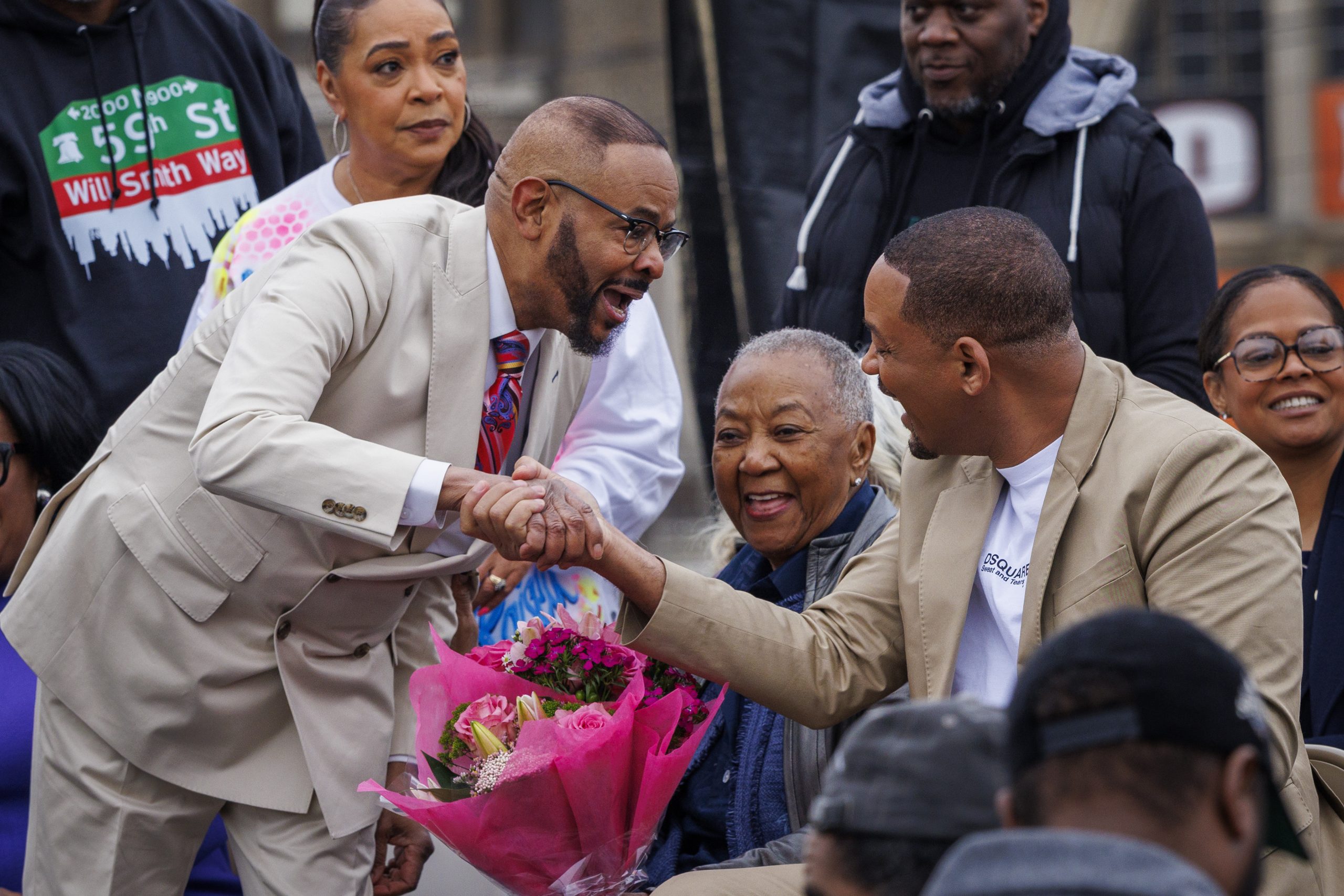
At left is Councilmember Curtis J. Jones Jr. shaking the hand of actor and rapper Will Smith who was honored with a street naming, Will Smith Way, at N. 59th and Lancaster, across from Overbrook High School, Wednesday, March 26, 2025.Alejandro A. Alvarez / Staff Photographer
Curtis Jones enrolled in DROP in August 2024, meaning he is required to retire no later than August 2028. He has made no secret of his intent to run for a sixth term next year, even publicly musing about delaying bridge repairs in his district so as not to subject potential voters to traffic jams.
Were he to win reelection and collect his maximum $432,221 DROP payout, Curtis Jones’ scheduled retirement date would fall within the first year of his next four-year term.
However, the lawmaker said in an interview that he intends to complete his next Council term. To achieve that, he said he would instead resign in December 2027, after the November election but just before he would be sworn into a new term in January 2028.
“I am going to resign, then be sworn in [if], God willing, I’m reelected,” he said.
In this scenario, Curtis Jones said, he would receive a reduced DROP payout by forgoing the final nine months of payments into his interest-bearing account by taking his brief retirement early. He would be effectively rehired to his city job by being sworn back into office.
He added that he hopes State Rep. Morgan Cephas, a West Philadelphia Democrat, will succeed him in the 4th Council District after the 2031 elections.
Cephas declined to comment.
In 2023, Curtis Jones ran for Council president, but lost to Kenyatta Johnson. He said he is now relieved he did not win.
“I am functional. My staff kind of helps to keep that good,” Jones said. ”I am thankful to God that I did not get elected [Council] president. Do you know how much reading they do? I could have not kept up with all of the numbers and stuff like that, so I know my limitations.”
‘I had heard whispers’
During Jazelle Jones’ one-day retirement in 2025, the 25-year city employee earned a $319,757 DROP payout and cashed out nearly 1,000 hours of unused sick and vacation time, worth $97,000, as all city workers are entitled to do upon their last day of service.
The very next day, she was back on the job, with a small raise that brought her salary to about $199,000.
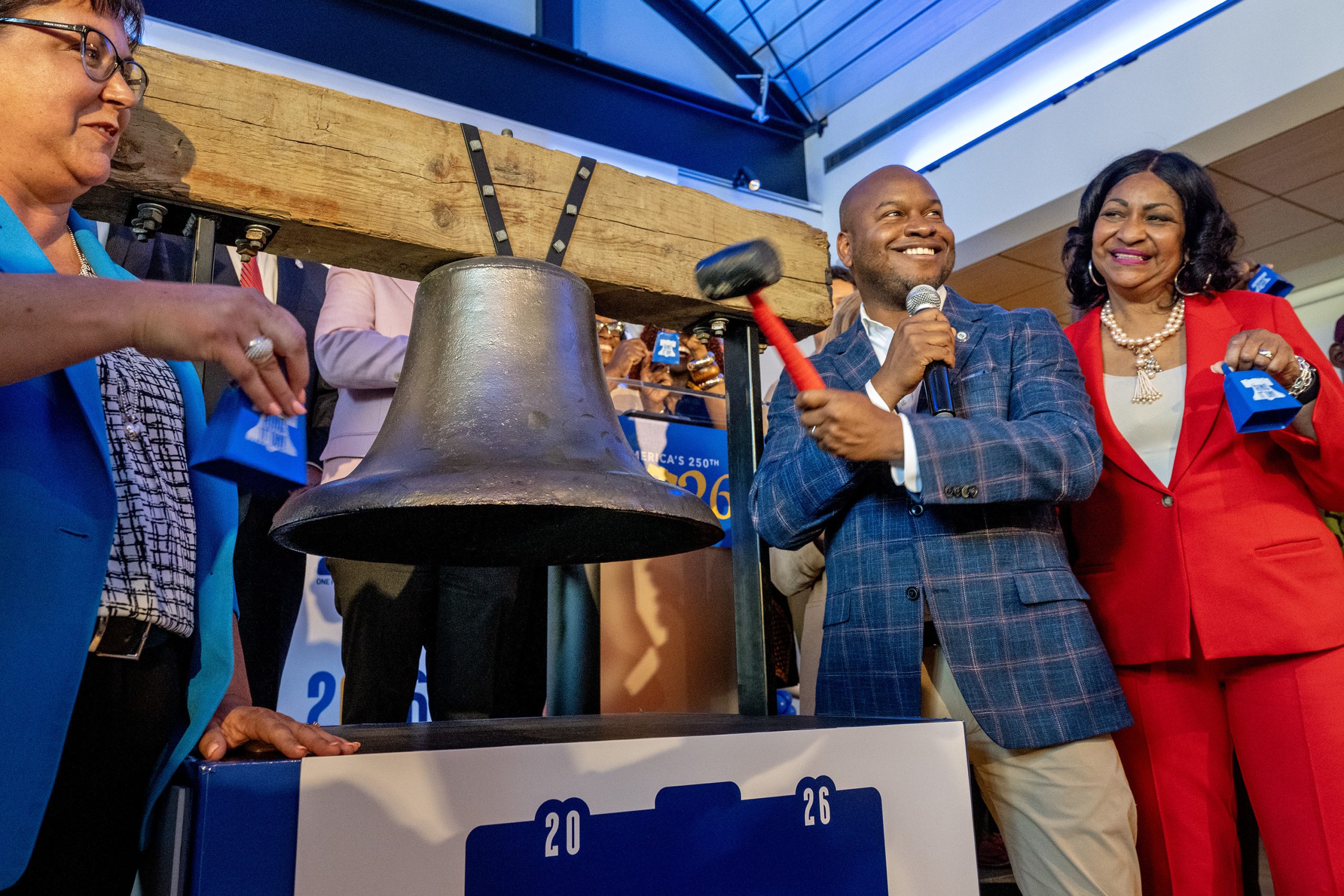
Michael Newmuis (center), the city’s 2026 Director Philadelphia, rings the bell to kick off the city’s “Ring It On! One Philly, A United Celebration” at Independence Visitor Center Wednesday, Sept. 3, 2025. Mayor Cherelle L. Parker announced the new initiative that puts city neighborhoods at the forefront of the city celebrations of America’s 250th birthday in 2026. At right is Jazelle Jones, City Representative and Director of Special Events.Tom Gralish / Staff Photographer
Despite saying Jazelle Jones was needed to coordinate the city’s 2026 festivities, Parker has also appointed a separate 2026 director, Michael Newmuis, to a $175,000 position to also oversee this year’s major events.
The mayor said Jazelle Jones was irreplaceable given her experience managing large events like the 2015 papal visit, the 2016 Democratic National Convention, the 2017 NFL Draft, and the Eagles’ Super Bowl wins.
“Could we have hired five to 10 people to try to do the job Jazelle does?” Parker asked. “We could have tried, but there would be no reason for me to do that when I had the best person.”
Parker indicated she was aware of the steep price tag required to keep Jazelle Jones working through 2026 when the mayor first appointed her as city representative shortly after taking office in 2024.
“I had heard whispers,” Parker said. “They said, ‘You’re going to lose Jazelle.’”
City personnel records show Jazelle Jones enrolled in DROP in September 2020, meaning her first planned retirement date was September 2024, just nine months after Parker appointed her to the role.
Jazelle Jones’ $97,000 payout for unused paid time off was deposited into her account this month, four days after The Inquirer contacted the mayor’s office about her rehiring. The mayor’s office did not respond to a question about the delay in her payment.
Unlike most newly hired city employees, who are entered into a hybrid 401(k)-style pension plan, she was granted an exception allowing her to continue paying into an older, more generous pension plan.
Cristella, from the Committee of Seventy, said the decision to hire Jazelle Jones into a vital role months prior to her mandatory retirement date was irresponsible.
“It is also deeply troubling that the city would retain a high-salaried senior official with full knowledge that a large DROP payout was imminent,” Cristella said. “If city leadership knew and proceeded anyway, that is a failure of fiscal stewardship that demands explanation.”
Staff writer Max Marin contributed to this article.
We take paper for granted now. But in the late 1600s, when Pennsylvania’s founder William Penn recruited German papermaker and preacher William Rittenhouse to manufacture the writing parchment in the New World, paper was a luxury.
England’s King William III made it difficult for his subjects — at home and in the Americas — to have it. Like many monarchs of his day, he believed it was the Crown’s duty to record history.
The English imported paper from other European countries. So, to make matters worse, colonists who managed to appeal to the king for paper were double and triple taxed. They got fed up and went about securing their own paper to document the goings on in the government, inform citizens, record history, and ultimately plan a revolution.
Artist Ava Haitz’s No. 1 honors the country’s first paper mill, celebrating the invention and craftsmanship that made widespread written communication possible.Ava Haitz for Colibri Workshop
In 1690, Rittenhouse partnered with Philadelphia’s first printer, William Bradford, to build America’s first paper mill, situated in northwest Philadelphia and powered by the Monoshone Creek, a tributary of the Schuylkill.
The paper mill will be celebrated this Saturday at Historic RittenhouseTown, part of a series of weekly “Firstival” celebrations. Firstivals are the Philadelphia Historic District’s yearlong birthday nod to places and events with Philadelphia roots. The day parties are a hallmark of this year’s Semiquincentennial fetes.
At the Rittenhouse mill, paper was made from linen rags fashioned from flax grown in Germantown, that were broken down and shaped into sheets. The mill grew quickly as Rittenhouse, America’s first Mennonite bishop, provided paper for Bibles and Quaker and Mennonite texts in German.
An aerial view of RittenhouseTown circa 1840-1860. The site eventually grew to more than 200 acres.Historic Rittenhouse Town
Rittenhouse’s first paper mill was destroyed by a flood, said Alexander Jones, preservation and education manager at Historic RittenhouseTown.
Then “Rittenhouse rebuilds and he buys out his partner,” Jones said. “The paper mill becomes his sole enterprise. Instead of hiring workers, he recruits his family and it becomes a giant company town. There is a church, a blacksmith, stone houses, a bake house, and more than 40 buildings with five or six of them under what is now Lincoln Drive.”
RittenhouseTown’s paper mill was the only source of paper in America for more than 40 years, Jones said. It would grow to more than 200 acres.
David Rittenhouse — Rittenhouse’s great-grandson and the astrologer, clockmaker, and first director of the U.S. Mint after whom Rittenhouse Square is named — was born in his family’s RittenhouseTown homestead in 1732.
The town thrived for more than a century.
By the mid-1800s, the paper mill began to slow down as dyes from textile and carpet manufacturers and chemicals from blacksmithing started to pollute the Schuylkill. The filthy water made it nearly impossible to produce good quality paper at the mill.
The Fairmount Park Commission began acquiring parts of RittenhouseTown through a series of purchases and donations from 1890 to 1917. The city demolished many of the town’s buildings, including a barn that, Jones said, was razed and rebuilt within a year.
RittenhouseTown’s homestead and bakehouse. The first permanent home for the Rittenhouse family and birthplace of David Rittenhouse, great-grandson of William Rittenhouse for whom Center City’s Rittenhouse Square is named.Al Cassidy for Historic Rittenhouse Town
By that time, however, the Rittenhouse family had spread throughout the Philadelphia region from Center City to Blue Bell, Jones said.
Today, RittenhouseTown spans 20 acres nestled in Fairmount Park right behind Lincoln Drive. Six of the original buildings remain, serving as a reminder that RittenhouseTown was the first building block of American industry.
“The paper mill really got the ball rolling for Philadelphia,” Jones said. “And from that first came so many other American firsts in Philadelphia: the first Mennonite bishop, the first company town, and America’s first director of the U.S. Mint.”
This week’s Firstival is Saturday, June 27, 11 a.m.-1 p.m., at Historic RittenhouseTown, 208 Lincoln Drive.