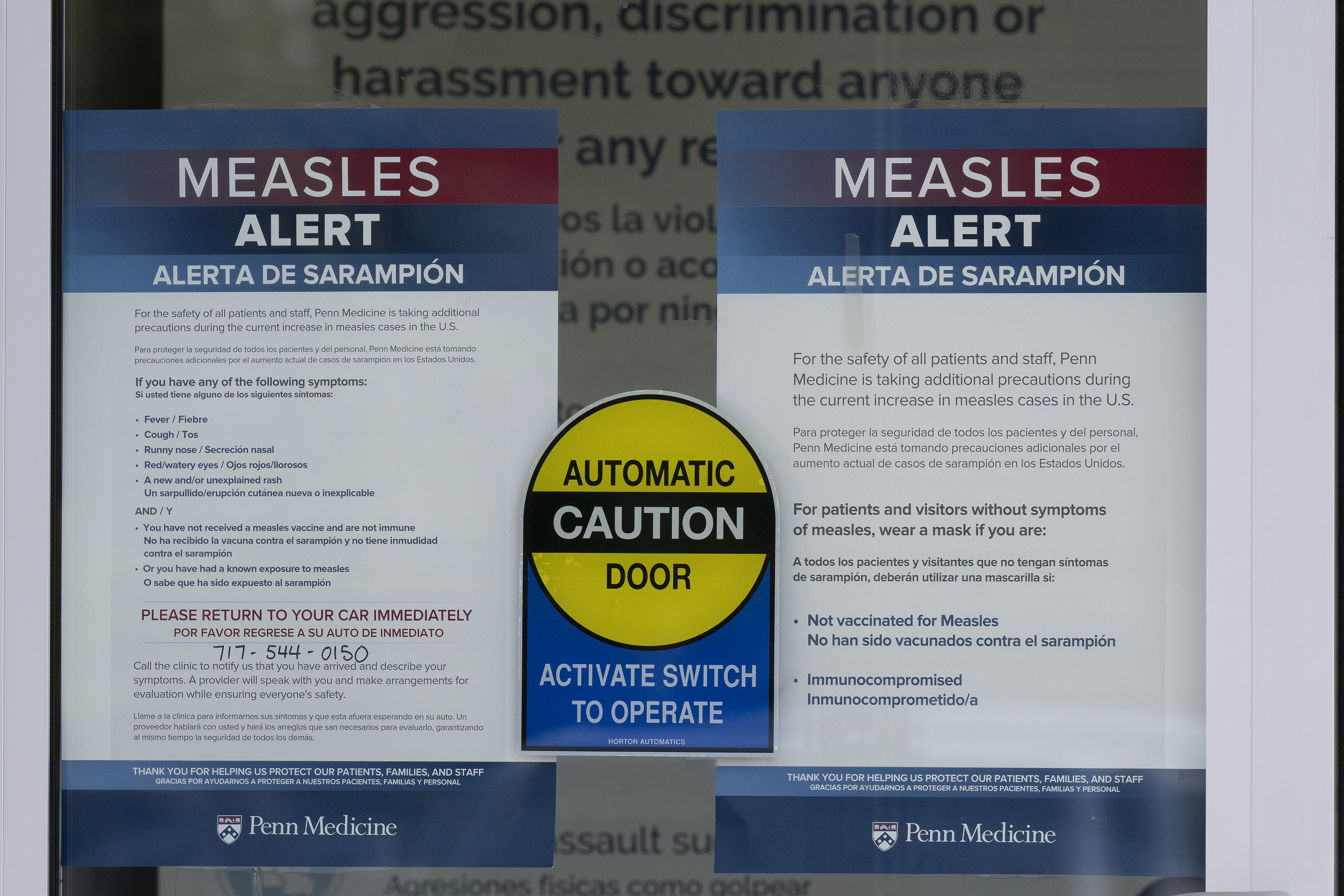
One is that with a total of nearly 700 measles cases across 36 counties so far this year, maximum information from the Pennsylvania Department of Health about the deaths — particularly the deaths of the infants in Lancaster County — is needed in order to prevent further harm.
And two, nothing the federal government has to say about measles is trustworthy.
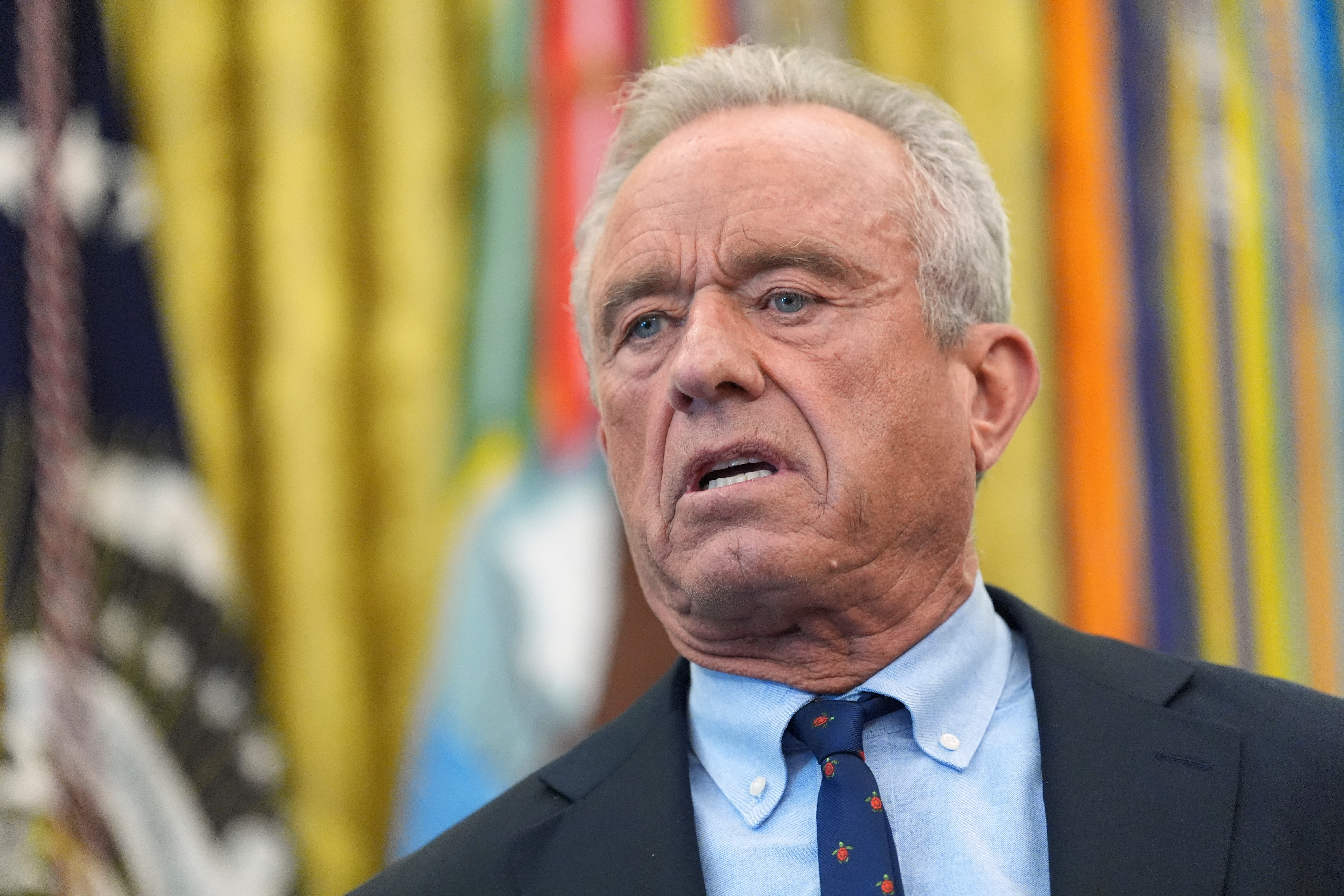
Health and Human Services Secretary Robert F. Kennedy Jr. speaks during a meeting to sign an executive order about vaccines in the Oval Office last month.Jacquelyn Martin
Kennedy is not telling the truth. His anti-vaccine efforts, along with President Donald Trump’s unhinged attacks on the measles, mumps, and rubella (MMR) shots — given in two doses to kids before entering kindergarten — have set off a 35-year high incidence of the disease in the U.S.
What is causing the rapid return of measles is a never-before-seen decline in vaccination rates. This has led to an explosion in measles cases that is, contrary to Kennedy’s assertions, worse than in many other countries.
Kennedy blames measles coming in from other nations. So does U.S. Rep. Byron Donalds, a Republican from Florida who is running for governor. He keeps pointing to “rampant illegal immigration” during the Biden administration for measles outbreaks.
Those claims are based on misinformation and bigotry about foreigners.
While some cases do have travel-related origins, the spread of measles is a domestic policy failure caused by falling vaccination rates. Other countries have tourists and immigrants, too — but only the U.S. is continuing to see rapidly increasing infection rates.
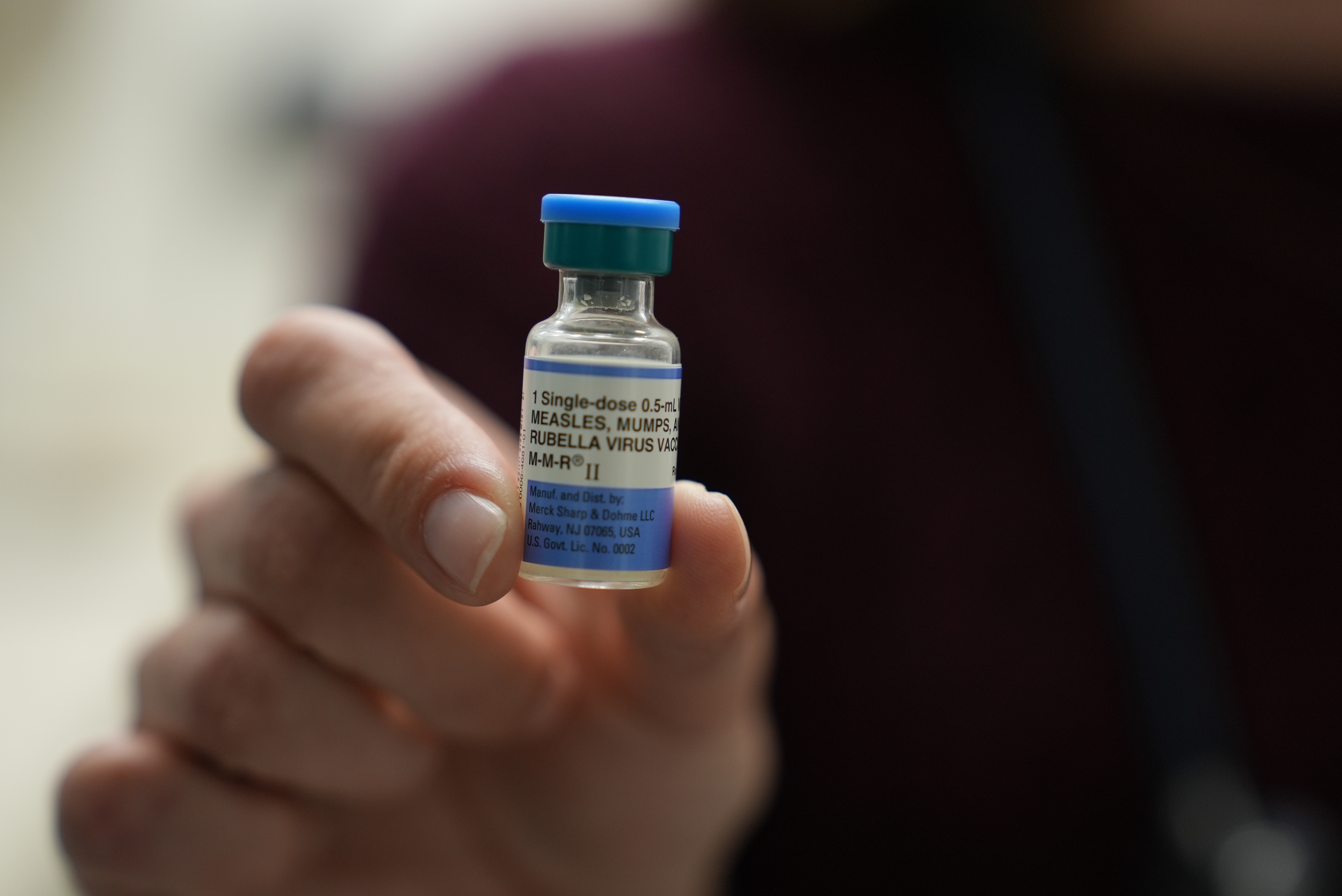
Jessica Early holds a vial of the combination measles, mumps, and rubella (MMR) vaccine at Prisma Health Pediatrics in Greer, S.C., in March.Mary Conlon
Our national leaders keep pouring inaccurate fuel on the epidemic.
They suggest autism is a risk from the measles vaccine, that the combined MMR vaccine is lethally dangerous, that kids get too many shots, and that the MMR shot is losing efficacy every year. None of that is true.
What is true is that measles is a dangerous disease that can cause seizures, immune problems, pneumonia, deafness, or contribute to deaths. Each case can cost as much as nearly $60,000, including the public health response.
We can’t fight this preventable plague using incorrect data, misinformation, and outright lies. America’s kids deserve so much better.
Arthur Caplan is a retired professor of medical ethics, soon to be moving to Medford, N.J. Samuel Howard is an undergraduate student at the School of Humanities and Sciences at Stanford University.
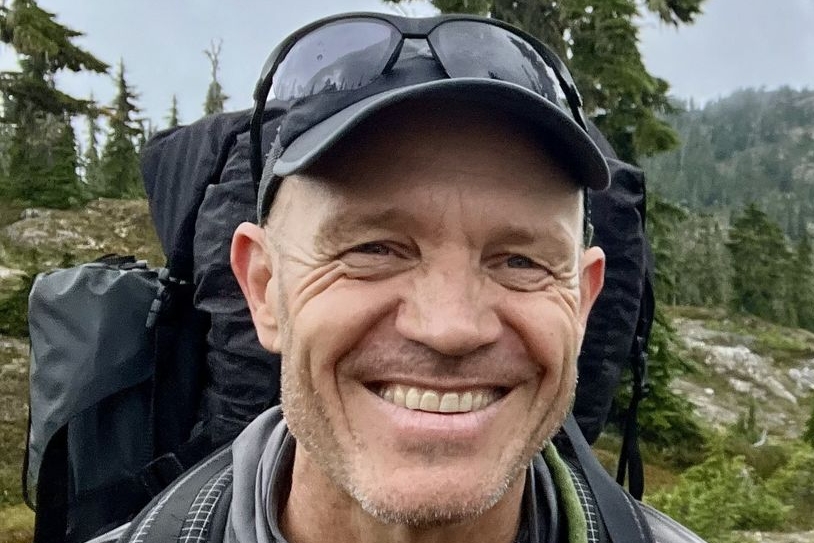
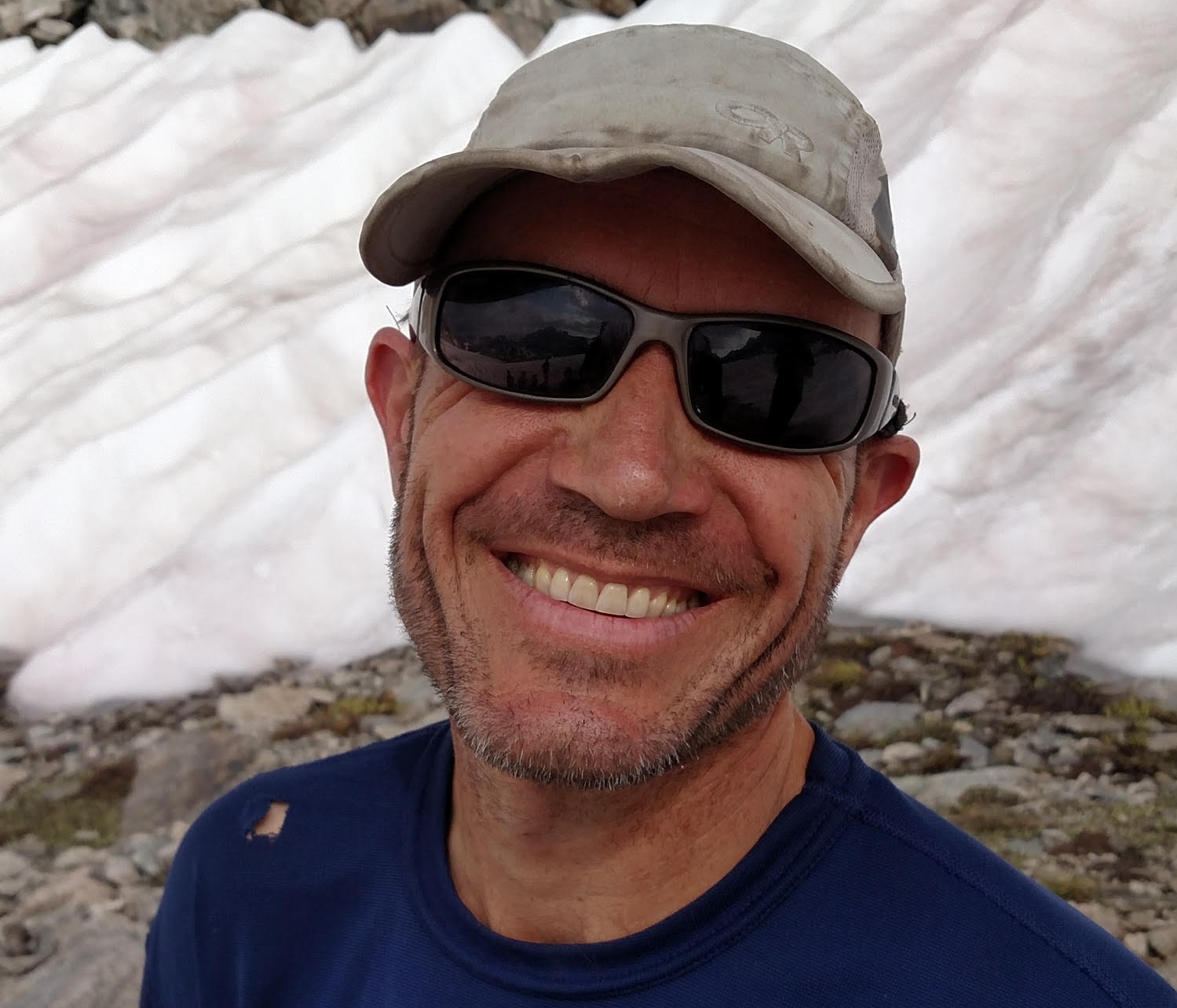
Peter D. Yeomans, 58, of Philadelphia, innovative clinical psychologist at the Corporal Michael J. Crescenz Department of Veterans Affairs Medical Center, founder of Cold Mountain Counseling LLC, worldwide mountaineer and backcountry adventurer, teacher, author, mentor, Quaker, and volunteer, died Friday, Aug. 28, of cardiac arrhythmia at the VA Medical Center in University City.
Dr. Yeomans was an expert in trauma, substance use disorder, moral injury, and spiritually integrated healthcare. He joined the Philadelphia VA Medical Center as a staff psychologist in 2009 and became director of its innovative PTSD outpatient team program in 2019.
He opened his own psychology practice, Cold Mountain Counseling, in 2021 and advised thousands of veterans, fellow backcountry adventurers, and other clients in need across the country. “He was instrumental in the healing process for so many veterans that it is hard to fathom the reach of his influence,” a VA colleague said in a tribute.
R. Tyson Smith, a friend and colleague, said several veterans told him: “Peter Yeomans saved my life.”
At the VA center, in addition to physical and mental ailments, Dr. Yeomans and others innovated a treatment for what are called “moral injuries” from military service. They connected therapists with VA chaplains to link emotional healing with faith rituals, and veterans in the program spoke appreciatively about shifting the guilt and shame of moral failures during war from soldiers in general to society at large.
“These are stories to hear and also for the public to wrestle with,” Dr. Yeomans told The Inquirer in 2019. His wife, Kate O’Shea, said: “He was the most responsible person you could imagine, and he felt he had a responsibility to humanity.”
Outside the medical center, Dr. Yeomans spent weeks at a time hiking, backpacking, packrafting, skiing, rock climbing, and mountain biking around the world. He reached summits in Alaska and Argentina, had to be rescued from a deep crevasse, and worked as a program supervisor and senior field instructor in the 1990s for the National Outdoor Leadership School in Alaska, Wyoming, Arizona, and Utah.
Later, he cofounded the local Wilderness Outdoor Leadership Force for teens in Kensington. Talia Young, a longtime WOLF member, called him “genuine and earnest … and joyful with kids.”
Dr. Yeomans was an avid cyclist.Bicycle Coalition of Greater Philadelphia
Longtime colleague Rob Riman said he was a “consummate adventure partner and wildly inspired guide.” On his website, coldmountaincounseling.com, Dr. Yeomans said: “Many of the fondest memories of my life are from adventures in the mountains.”
He earned a bachelor’s degree in psychology from Harvard University in 1991 and came to Philadelphia from Wyoming in 1997 to be with O’Shea. He earned a master’s degree in psychology from Lesley University in Massachusetts in 2001 and a doctorate in clinical psychology from Drexel University in 2008.
Dr. Yeomans traveled to New Zealand, Rwanda, Burundi, and elsewhere to train other counselors. He worked in state correctional institutions in Philadelphia and Chester, and earlier for the American Red Cross in Germany.
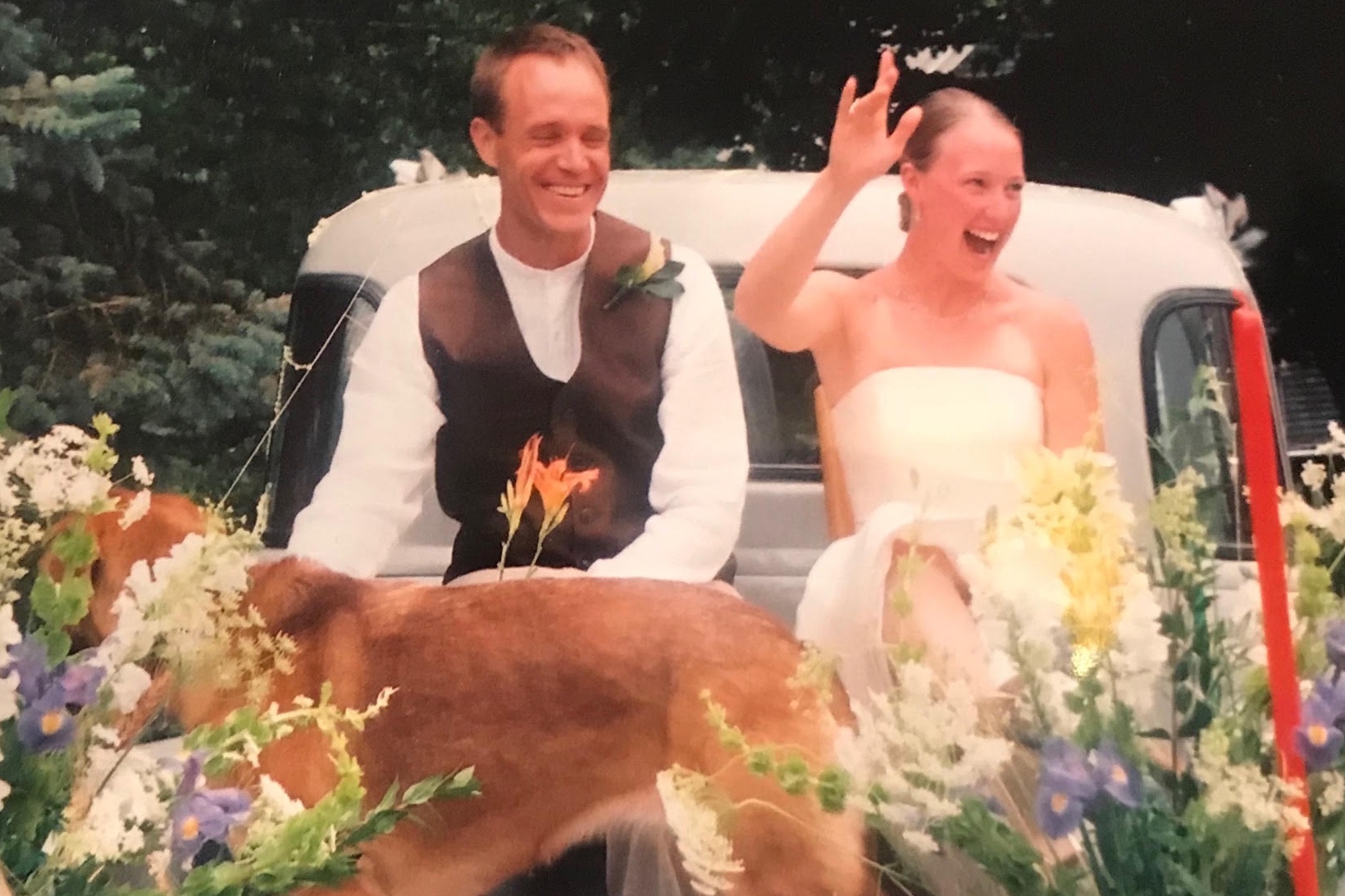
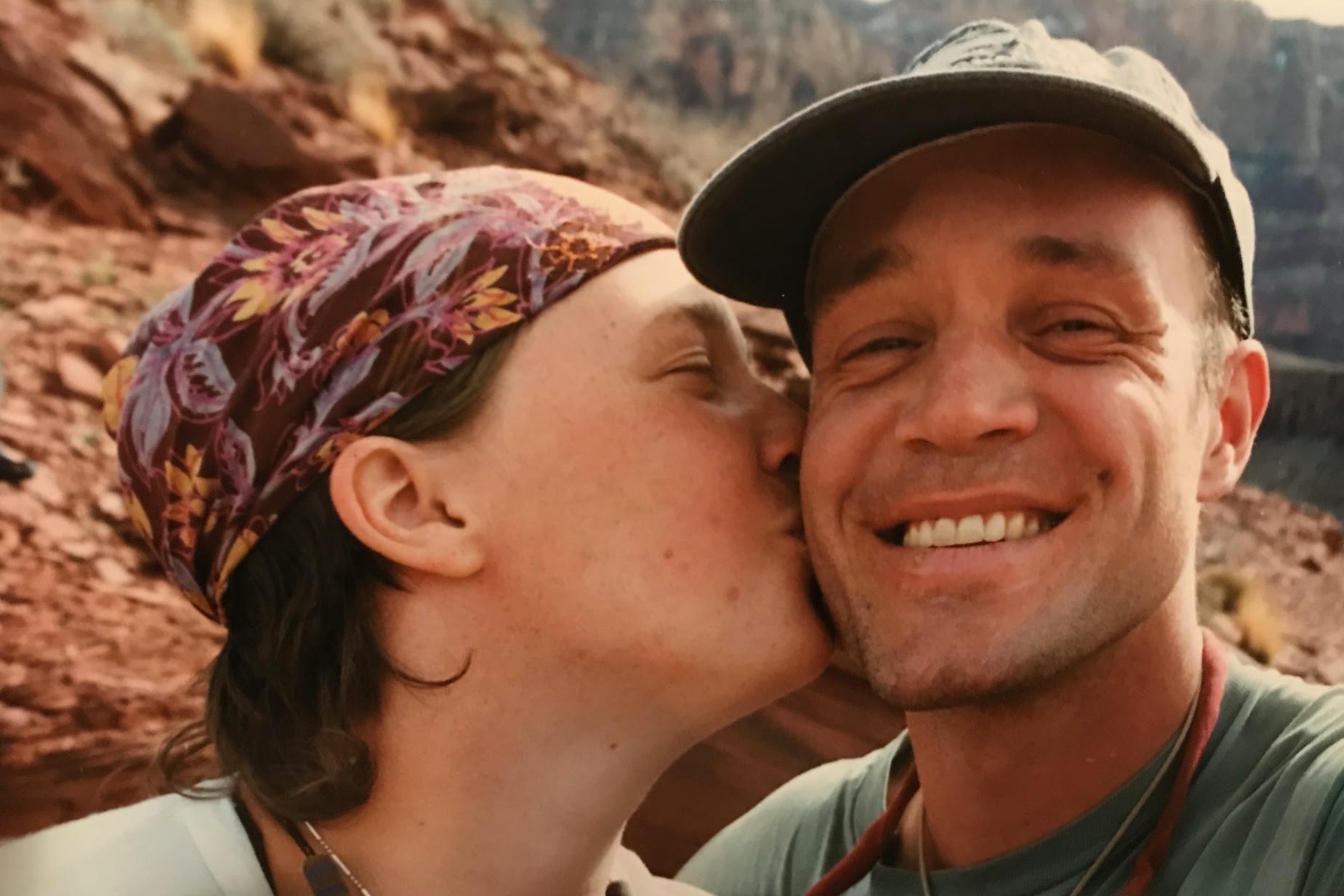
Dr. Yeomans and his wife, Kate, married in 2002 and had many adventures together. Courtesy of the family
He taught classes on moral injuries at Germantown Friends School, the University of Pennsylvania, and elsewhere. Longtime friend William Anninger said: “He was particularly good at creating emotional sharing among men.”
Friend Lila Berman said: “He exuded warmth and care for the people around him, and for the natural environment.”
Peter Douglass Yeomans was born Aug. 27, 1968, in Berkeley, Calif. The family moved to Massachusetts when he started high school, and he graduated from Concord Academy in 1986.
He met Kate O’Shea at an environmental ethics course in Utah in 1996, and they married in 2002 and lived in Germantown. He made her tea in the mornings and left love notes behind when he left the house first. They reared a daughter, Ada, and sons Josiah and Levi, and they all went on memorable adventures in Wissahickon Valley Park, across the country, and around the world.
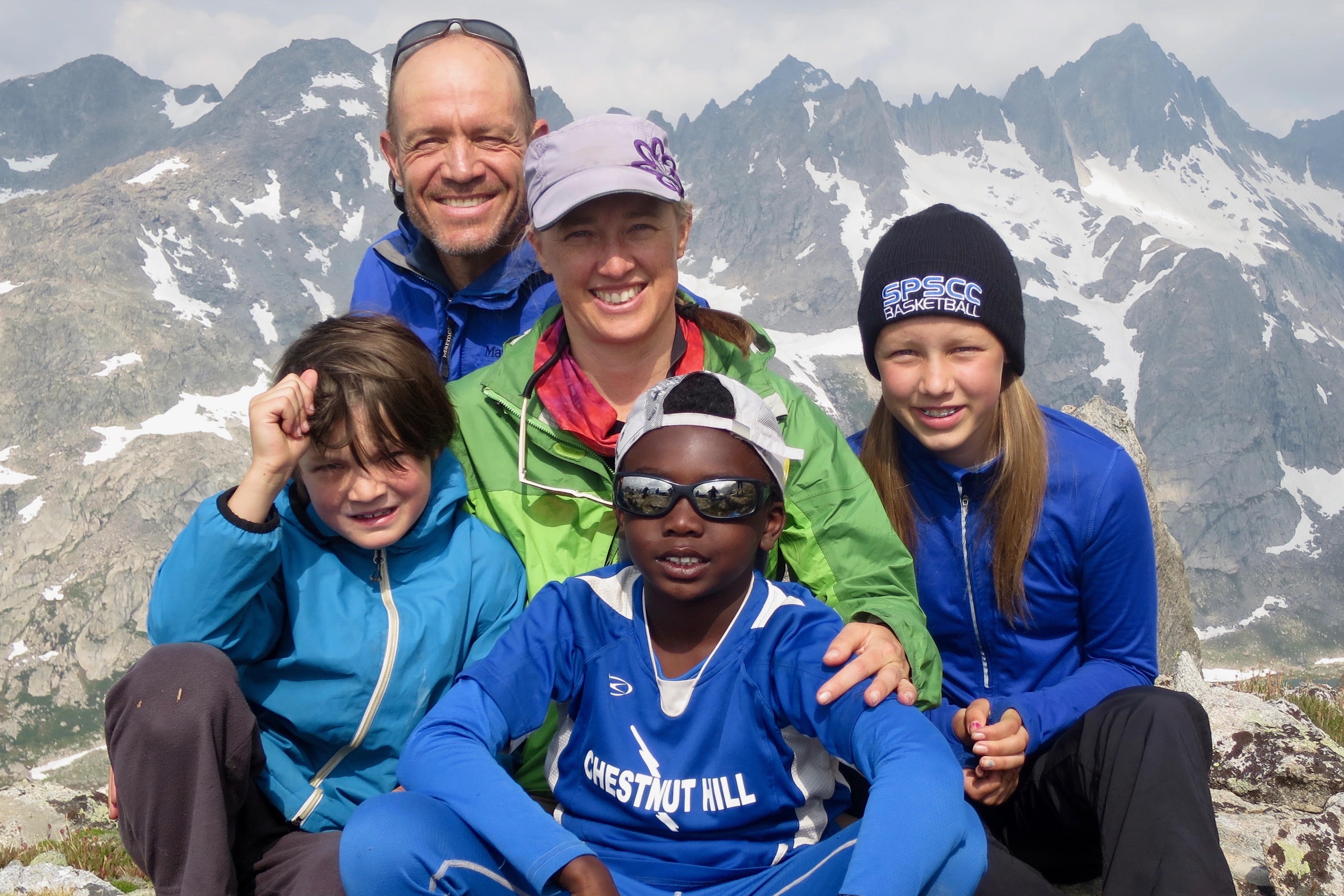
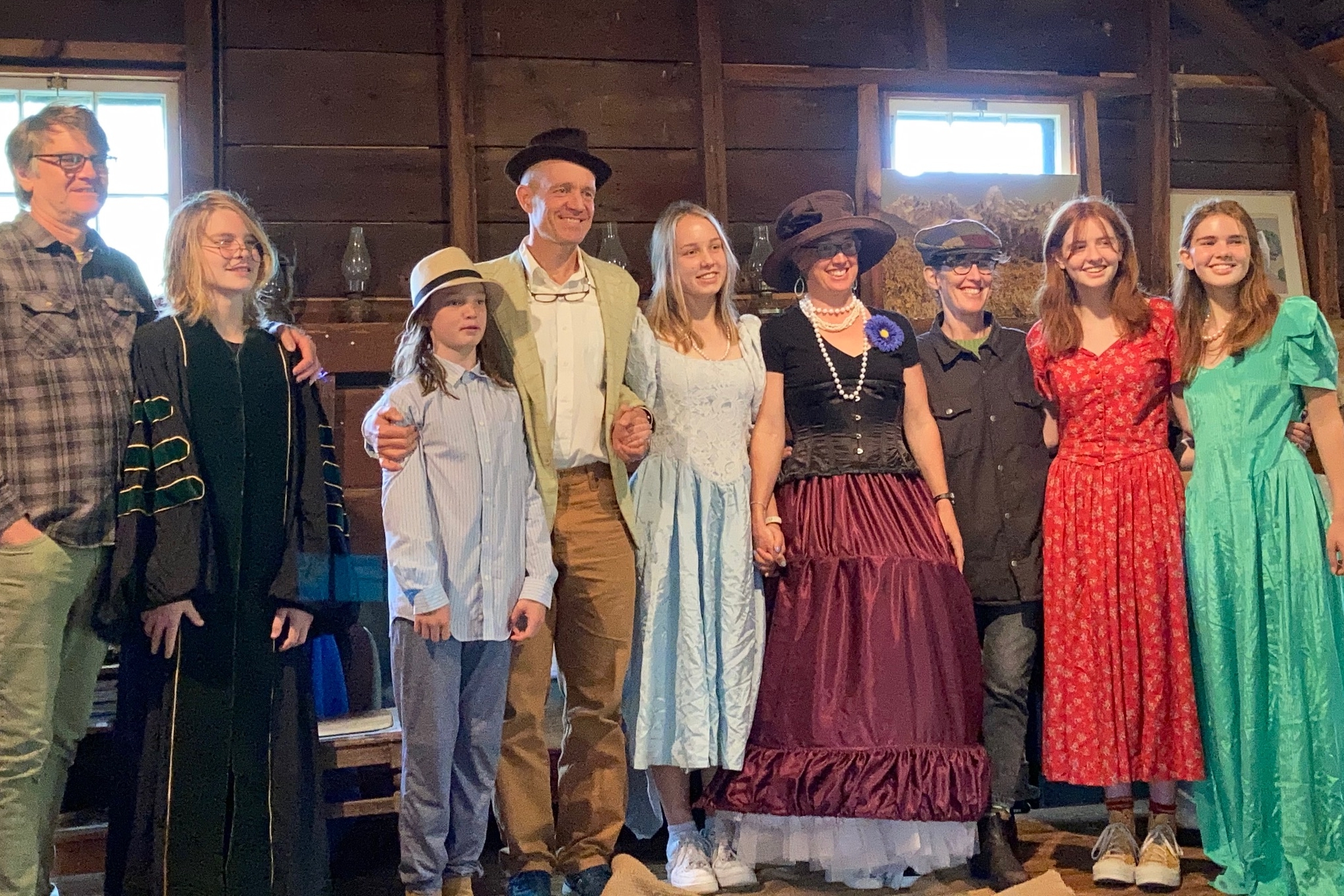
Dr. Yeomans, rear left on top and fourth from the left on bottom, enjoyed time with his family in the mountains and on stage. Courtesy of the family
“They complemented each other perfectly,” their daughter said. “He taught us how to read a map, find a campsite, and most importantly bake cinnamon rolls in the backcountry.”
Dr. Yeomans was a member of the Bicycle Coalition of Greater Philadelphia, and he rode his bike often from home in Germantown to work in University City. He went to Germantown Friends Meeting, played guitar, sang, and acted in theatrical shows in high school and later with community groups and his family.
He was inclusive and encouraging, his brother, Ben, said, “drawing out capacities in me I wasn’t yet trusting.” His parents, Anne and Tom, said: “It has been a great privilege to have been Peter’s parents.”
His mother-in-law, Margaret O’Shea, praised his “compassion, selflessness, nobility, and grace,” and his father-in-law, Dan O’Shea, said: “When our daughter met Peter she described him as ‘Mr. Perfect.’ Little did we know how perfect.”
“It has been a great privilege to have been Peter’s parents,” his parents said.Courtesy of the family
Kate O’Shea said: “Because of Peter, our world is a kinder, more generous, and more loving place.”
In addition to his wife, children, parents, brother, and in-laws, Dr. Yeomans is survived by other relatives.
A memorial service is to be held at 2 p.m. Saturday, Oct. 3, at Germantown Friends Meeting, 47 W. Coulter St., Philadelphia, Pa. 19144.
Here’s what you need to know about free speech on America’s college campuses: We’re all Marxists now.
No, we’re not those “crazy communists” whom President Donald Trump denounced at the Republican midterm convention in Dallas last week. I teach at the University of Pennsylvania, where nearly two-thirds of undergraduates enter finance, technology, or consulting. If I’m trying to convert them to Karl Marx, I’m doing a very poor job of it.
I’m talking about the comedian Groucho Marx, who authored the world’s funniest testament to hypocrisy. “These are my principles,” Groucho quipped, “and if you don’t like them … well, I have others.”
That’s the big takeaway from the annual report on campus free speech by the Philadelphia-based Foundation for Individual Rights and Expression (FIRE), which came out on the same day as Trump’s convention diatribe. We’re not communists or anarchists or any of the other slurs he lobbed at us. We’re hypocrites. All of us. On campus, and off of it.
Witness the response to the murder of conservative activist Charlie Kirk last fall. After complaining for years about “cancel culture” in American higher education, GOP politicians led the drive to fire or suspend professors and students who said the wrong thing about Kirk.
Meanwhile, left-leaning academics who had supported speech codes prohibiting “violent” speech insisted that comments praising the violence against Kirk must be protected. They were correct about that: Nobody should have been penalized for what they said about him. But there was no acknowledgment — none — that we had erred in trying to censor others.
Instead, as the FIRE report demonstrates, the censorship continued. Dozens of schools blocked conservative students from establishing chapters of Turning Point USA, the organization Kirk founded. And where chapters already existed, we tried to shut them down.
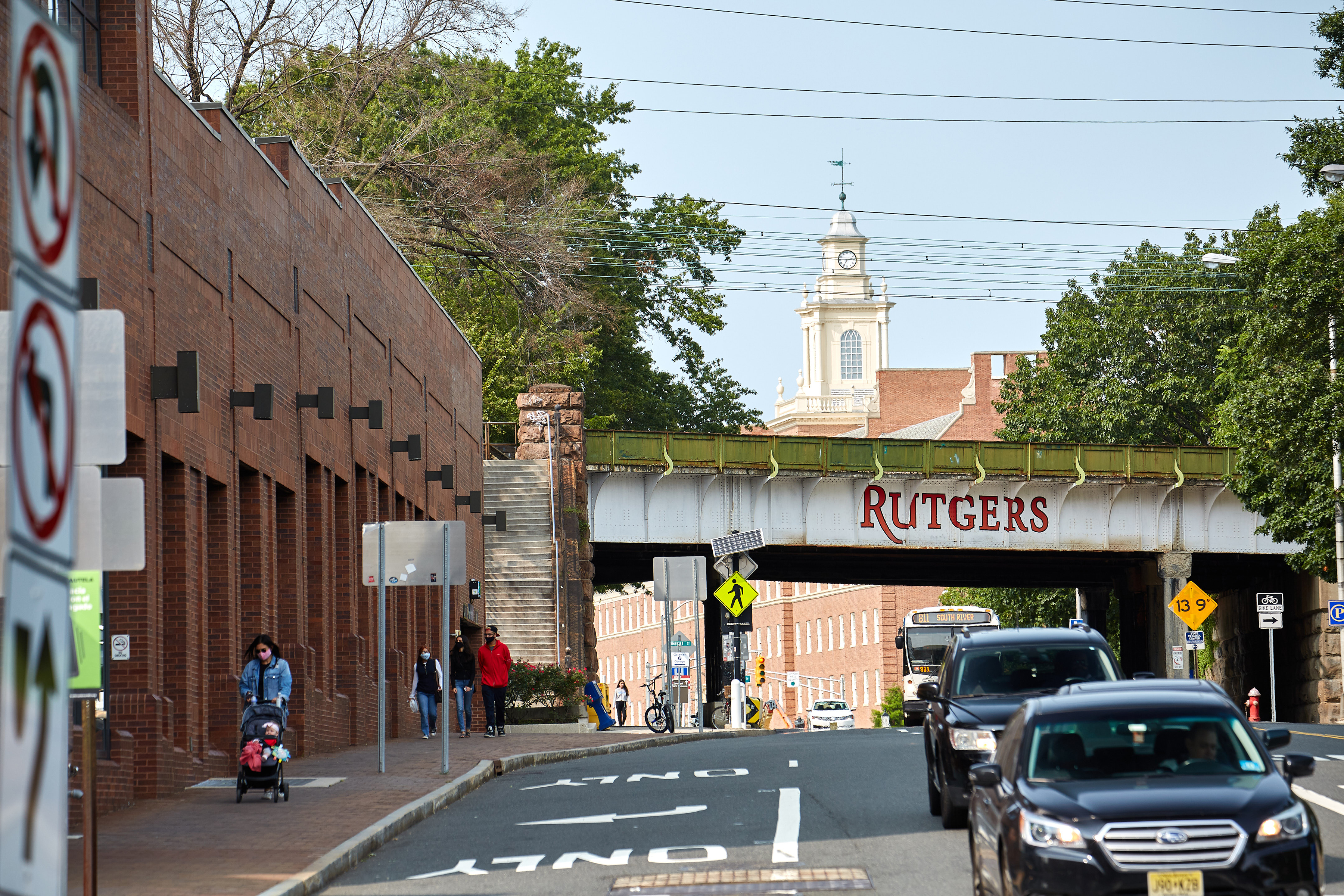
At Rutgers, for example, more than 7,000 people signed a petition asking the university to disband its TPUSA chapter because it made people feel unsafe. “It is imperative that we take decisive action to restore security and the feeling on inclusivity to the campus,” the petition declared.
Meanwhile, the Rutgers TPUSA chapter issued its own petition calling on the university to fire a history professor because of his alleged ties to antifa. Why? You guessed it: People felt unsafe. “Having a prominent leader of the Antifa movement on campus is a threat to conservative students,” the petition claimed.
Remember when right-wingers denounced liberal “snowflakes” on campus? Now everyone is a snowflake, just like we’re all (Groucho) Marxists. If you don’t like someone’s opinion, just say it threatens your safety. It will work.
And it will make everyone afraid to speak, no matter their politics. At Penn, the FIRE report notes, over half of surveyed students said they have self-censored on campus at least once or twice a month. “In classrooms, it is difficult at times to express full opinions without causing someone to become upset,” one Penn student told FIRE.
What’s wrong with that? If I write a column and nobody becomes upset, it was a lousy column. To be clear, I never go out of my way to offend anyone. But I take it for granted that if I have something meaningful to say, some readers will be angered or annoyed by it.
On our campuses, by contrast, causing upset has become a dangerous thing. Best to keep your big mouth shut, lest you get on the wrong side of anyone.
So both pro-Israel and pro-Palestinian students bite their tongues. And so do conservatives and — especially — Trump voters, who often stay in the closet instead of revealing their true selves.
I taught for 20 years at New York University, which was dead last in FIRE’s free speech ranking in this year’s report. I have taught for 10 years at Penn, which moved up slightly — from 261st to 227th — but still received an “F” grade from FIRE.
And I haven’t heard anyone at either institution acknowledge the report or pledge to do better. You would think the firing of professors for their comments about Kirk — or about gender fluidity, a frequent right-wing target — would make our heavily liberal professoriate rally around the principle of free speech.
But no. I’ve heard colleagues say Trump voters should keep quiet because they are racist and sexist and nobody wants to hear that. Other professors say scaredy-cat conservatives should just show some backbone instead of hiding in the shadows.
Please. Here’s the question we should pose to ourselves: If FIRE reported that any other sizable group of students — aside from political conservatives — felt too afraid to voice their views, how would we react? Would we see righteous protests across our campuses? Or would we tell those who were scared they should just suck it up?
“The secret of life is honesty and fair dealing,” Groucho Marx said. “If you can fake that, you’ve got it made.” We’ve got a lot of fake free speech warriors on our campuses right now. You either believe in it for everyone, or you don’t believe in it at all.
Jonathan Zimmerman teaches history and education at the University of Pennsylvania. He is the author of “Schooling Citizens: How Education Can Save Our Democracy,” which will be published in the spring by the American Philosophical Society Press.
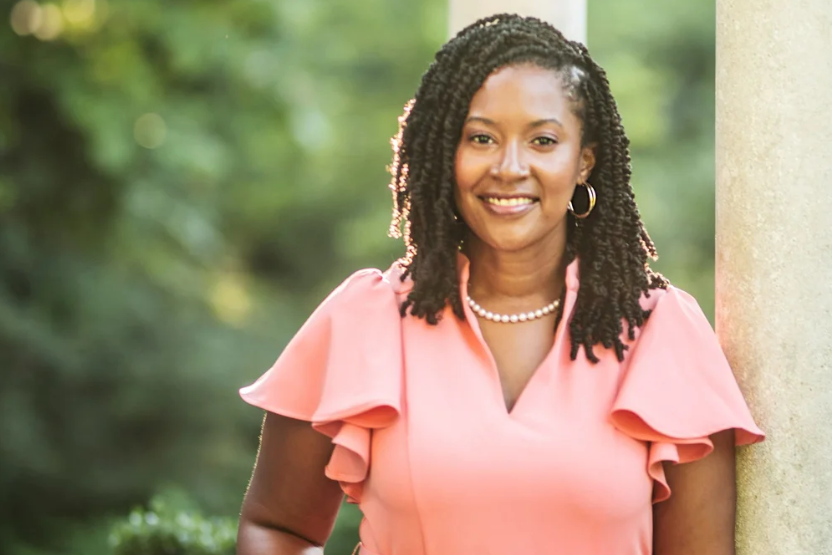
Kelly N. Moore, 46, of Burlington Township, award-winning clinical psychologist, founder of Moore Wellness LLC, director of the Center for Psychological Services at Rutgers University, graduate school clinical associate professor, former fellow at the University of Pennsylvania’s Center for the Treatment and Study of Anxiety, mentor, author, mental health activist, volunteer, and 2026 Willingboro High School Hall of Fame inductee, died Thursday, Aug. 20, of kidney cancer at Virtua Voorhees Hospital.
Adept at treating anxiety, depression, trauma, and perinatal disorders, Dr. Moorebecame director of the Rutgers Center for Psychological Services and a clinical associate professor in the Graduate School of Applied and Professional Psychology in 2020. As CPS director, she mentored hundreds of doctoral students regarding academic requirements and clinical procedures, and supervised the center’s community mental health clinic.
She significantly expanded the center’s services and outreach, Rutgers colleagues said in a Facebook tribute, and forged important partnerships on campus and in the community. Colleagues said: “Her warm demeanor, melodic voice, vibrant spirit, and calming presence made all who met, and were fortunate enough to know her, feel seen, welcomed, and heard.”
She spent two years as a fellow at Penn’s Center for the Treatment and Study of Anxiety after earning her doctorate in clinical psychology at Rutgers in 2011. During the COVID-19 pandemic, she founded Moore Wellness LLC and focused on helping women, children, and clients of color.
“Wellness does not mean you will never experience challenges,” Dr. Moore said in an online profile for Psychology Today magazine. “Rather, it means having the tools to manage the challenges when faced with them.”
Dr. Moore was an outspoken activist for mental health education and services. She spoke with groups often, organized workshops, and was featured in newspapers and magazines and on TV and podcasts. “Just trying to get people to understand as much as they can about the impact their mental health and well being have on their day-to-day lives,” she said in a 2026 podcast interviewwith the Multicultural Counseling Institute.
She belonged to the American Psychological Association and the New Jersey chapter of the Association of Black Psychologists. She was active with the Therapy for Black Girls podcast and the Leadership Institute for Women in Psychology.
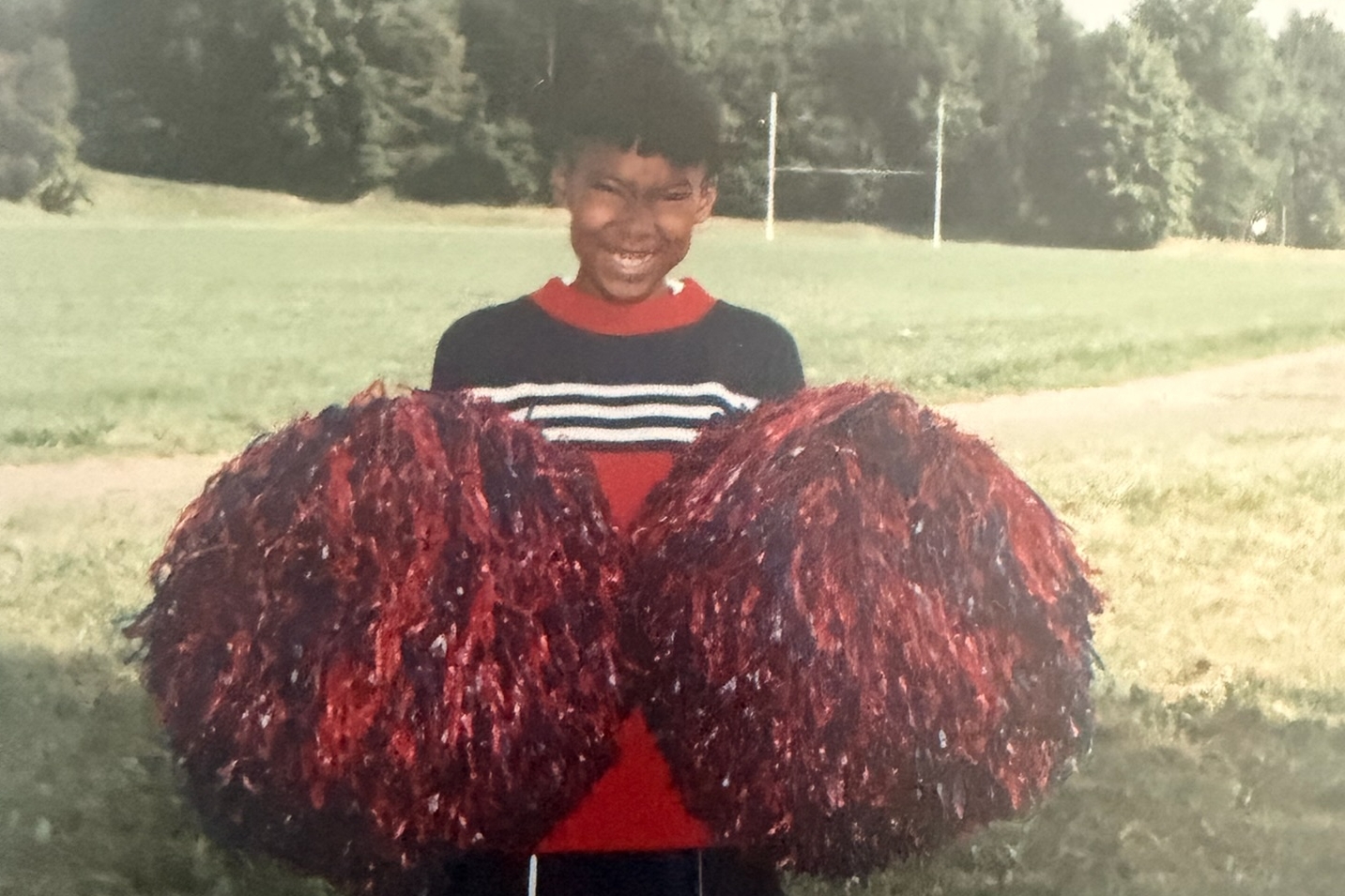
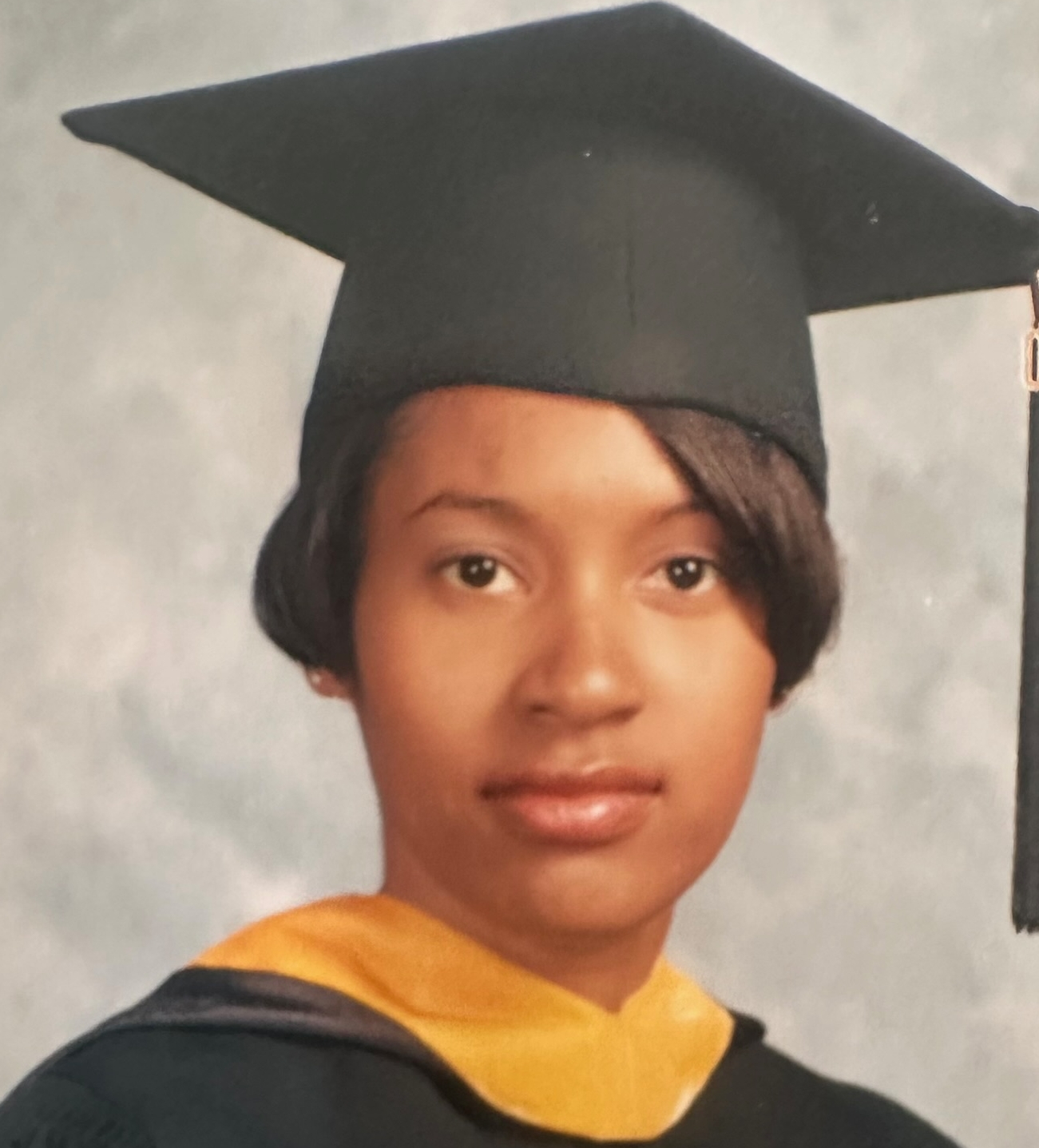
Dr. Moore was a cheerleader and lacrosse player, and graduated from Cornell University in 2002.Courtesy of the family
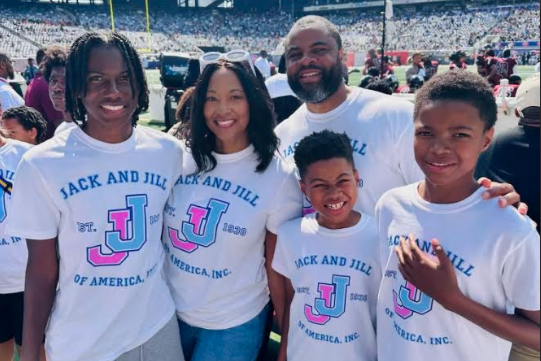
She earned leadership and achievement awards from the New Jersey Psychological Association, the National Council of Schools and Programs of Professional Psychology, and other groups. She was president and a board member of the Burlington County chapter of Jack and Jill of America Inc. Colleagues there called her “a beautiful example of leadership, service, grace, and love.”
Kelly Nicole Walker was born Aug. 20, 1980, in Philadelphia. Her family moved to Willingboro when she was 2, and she graduated from Willingboro High School in 1998.
She was a cheerleader and played lacrosse and viola as a teenager. Her mother, Diana, was a social worker, and she showed Dr. Moore up close how one person could impact their community.
“I was just fascinated by this concept,” Dr. Moore told the Multicultural Counseling Institute in the podcast interview. “It was already set at a young age that this was the kind of work I should be doing.”
She earned a bachelor’s degree in human development at Cornell University in 2002 and a master’s degree in education at Penn in 2003.
She met Melvin Moore through friends, and they married in 2004 and had sons Miles, Mason, and Matthew. They lived in Marlton and Delanco, and, since 2015, in Burlington Township.
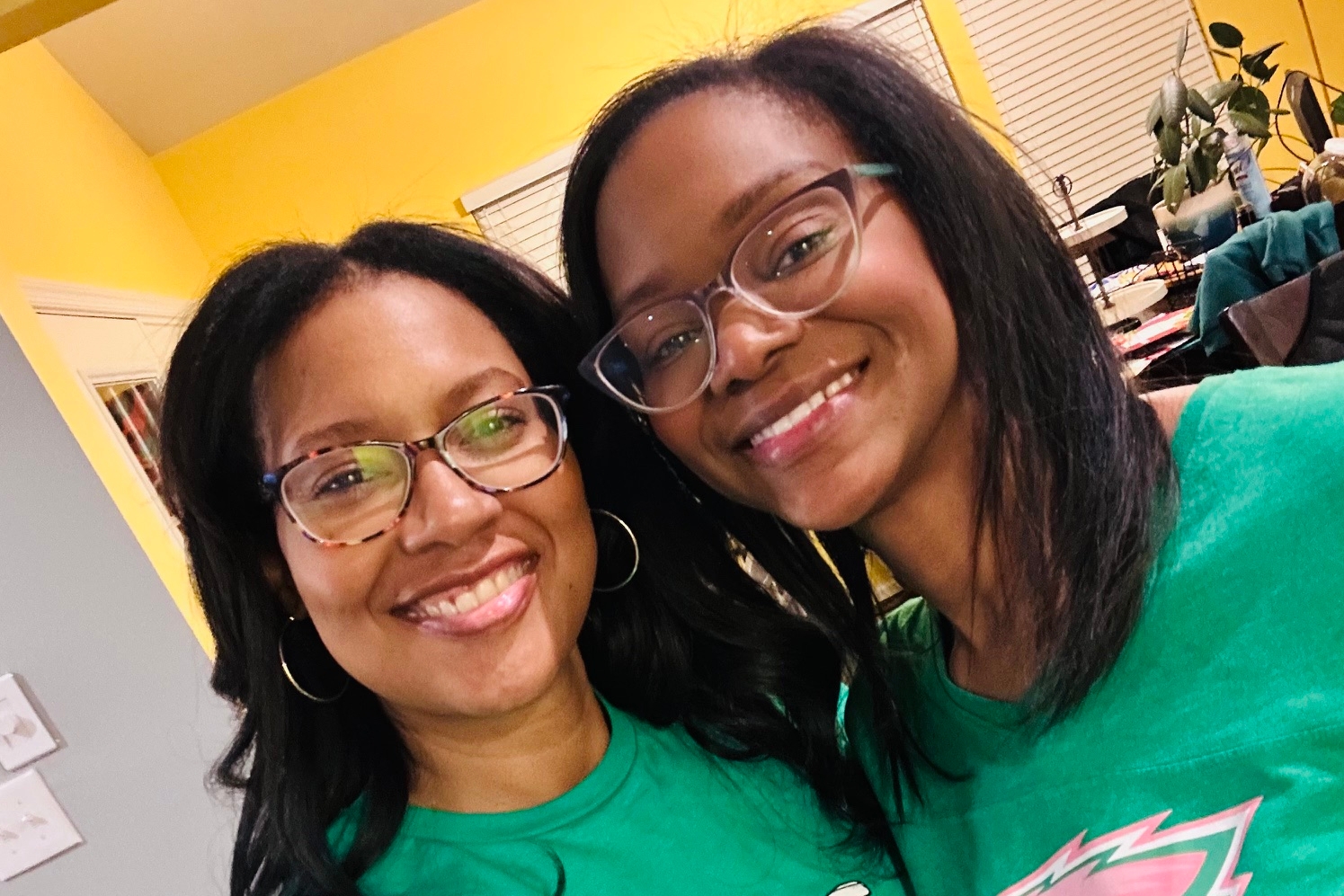
Dr. Moore was a longtime member and dance choreographer at the Gospel Tabernacle Church. She joined Alpha Kappa Alpha Sorority Inc. at Cornell in 2000 and was on the executive board of its Pi Mu Omega chapter in Willingboro.
Friends noted her “warmth, generosity, and kindness,” and called her “genuine” and “quietly brilliant” in online tributes. One friend said: “She sure made me proud to be from Willingboro.”
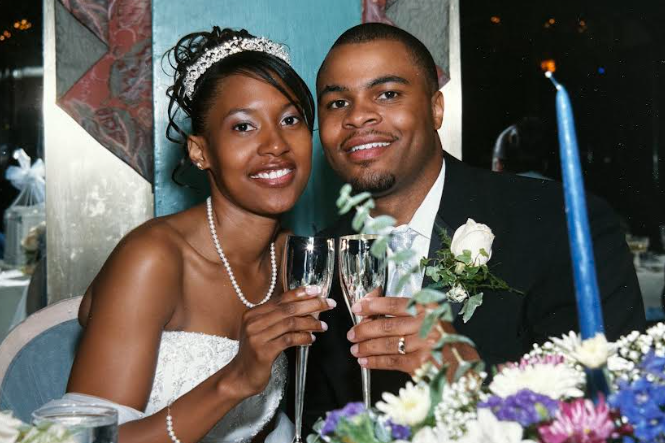
Dr. Moore and her husband, Melvin, married in 2004 and had three sons. Courtesy of the family
Dr. Moore doted on her sons and called them her “M & M’s.” She was an avid reader and led several book clubs.
She liked to garden, play piano, take photos, cook, and crochet. She was diagnosed with renal medullary carcinoma about a year ago and was determined, her husband said, to reach her 46th birthday. She did it.
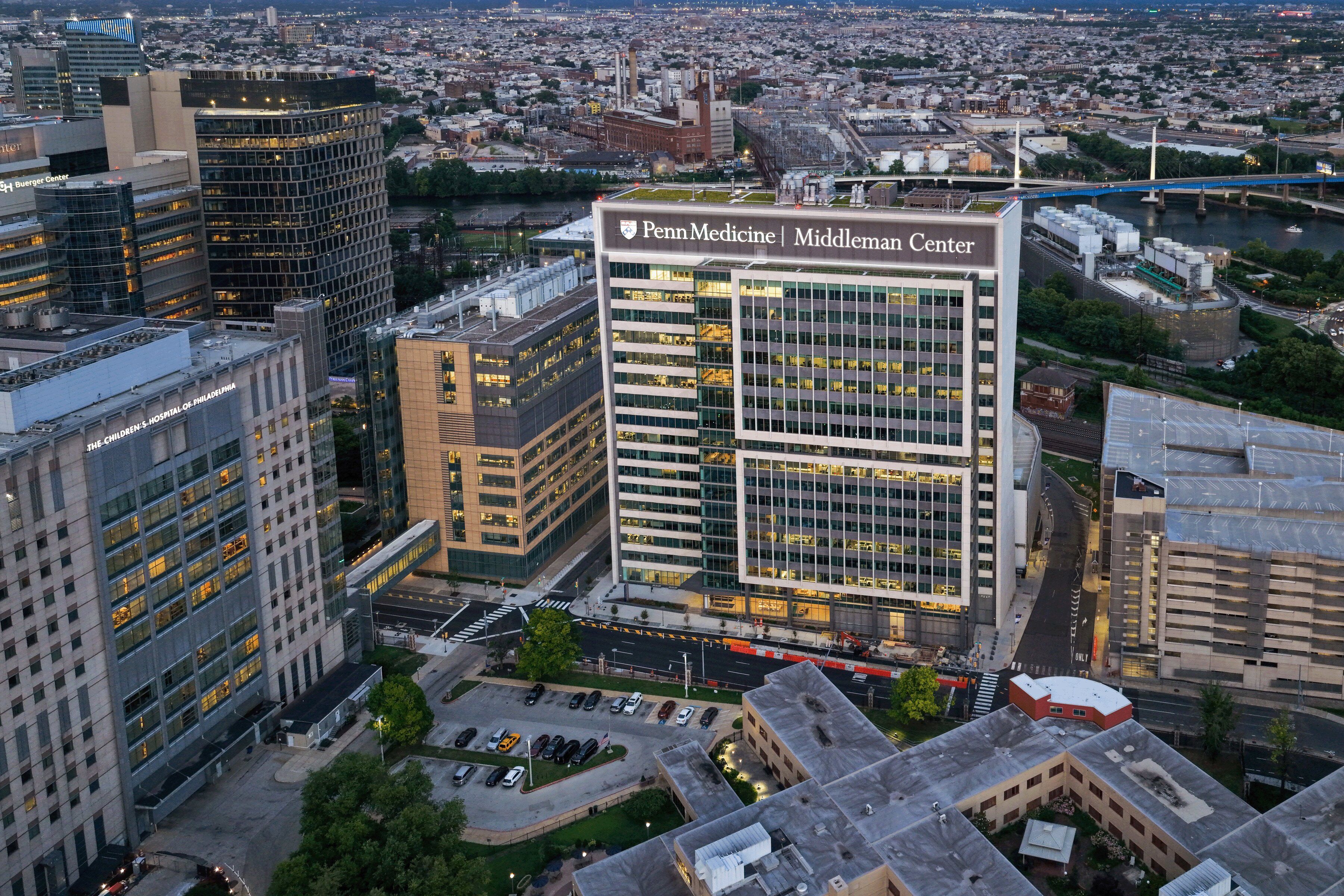
Penn Medicine announced a $50 million gift from Stanley C. Middleman on Thursday to support early-stage research and will name a recently expanded building at 3600 Civic Center Blvd. in the businessman’s honor.
Income from the fund will be used to accelerate work on therapies for cancer, autoimmune diseases, infectious diseases, and other serious conditions, with a goal ofshortening the path from the laboratory to the market, Penn said.
“I was born and raised in Philadelphia, and I’m proud to support Penn Medicine and the extraordinary work being done there to advance medicine and improve people’s lives,” Middleman said in a news release provided to The Inquirer in advance.
The Middleman Center “will bring together the people and ideas” to support new approaches to treatment and scientific discovery, he added.
The $50 million gift marks his first to Penn. He previously donated undisclosed amounts to his alma mater, Temple University, and to Children’s Hospital of Philadelphia, which named the main patient tower at its King of Prussia hospital for Middleman’s family.
Middleman founded privately owned Freedom Mortgage Corp. in South Jersey in 1990 and grew it into one of the nation’s largest lenders before moving the company’s headquarters to Florida in the early 2020s.
The building being renamed for Middleman underwent a $376 million, 217,000-square-foot expansion that opened last year. Itadded seven floors, including as many as 37 labs. Penn originally opened the building in 2018 with eight floors and 250,000 square feet of office space, which has also been renovated.
The new floors house the Colton Center for Autoimmunity at Penn and the High-Throughput Institute for Discovery, a specialized lab testing patient samples to help make diagnoses and guide treatments. The Middleman Center also includes a Biosafety Level 3 lab, which is specially equipped to handle infectious disease specimens.
“Anchoring the western edge of Penn Medicine’s campus, the Middleman Center is uniquely positioned to bring together biomedical researchers, physicians, medical students, patients, and experts from engineering, business, and other areas of the University of Pennsylvania,” said university president J. Larry Jamesonin the news release.
“This creates an extraordinary environment for discovery — not just sparking ideas but seeing them all the way through to the moments where lives change for the better, as a result of discovery,” he said.
Nearly a decade ago, when U.S. District Judge Paul S. Diamond was asked to determine the fate of a prosecutor who admitted breaking the law, he did not hold back.
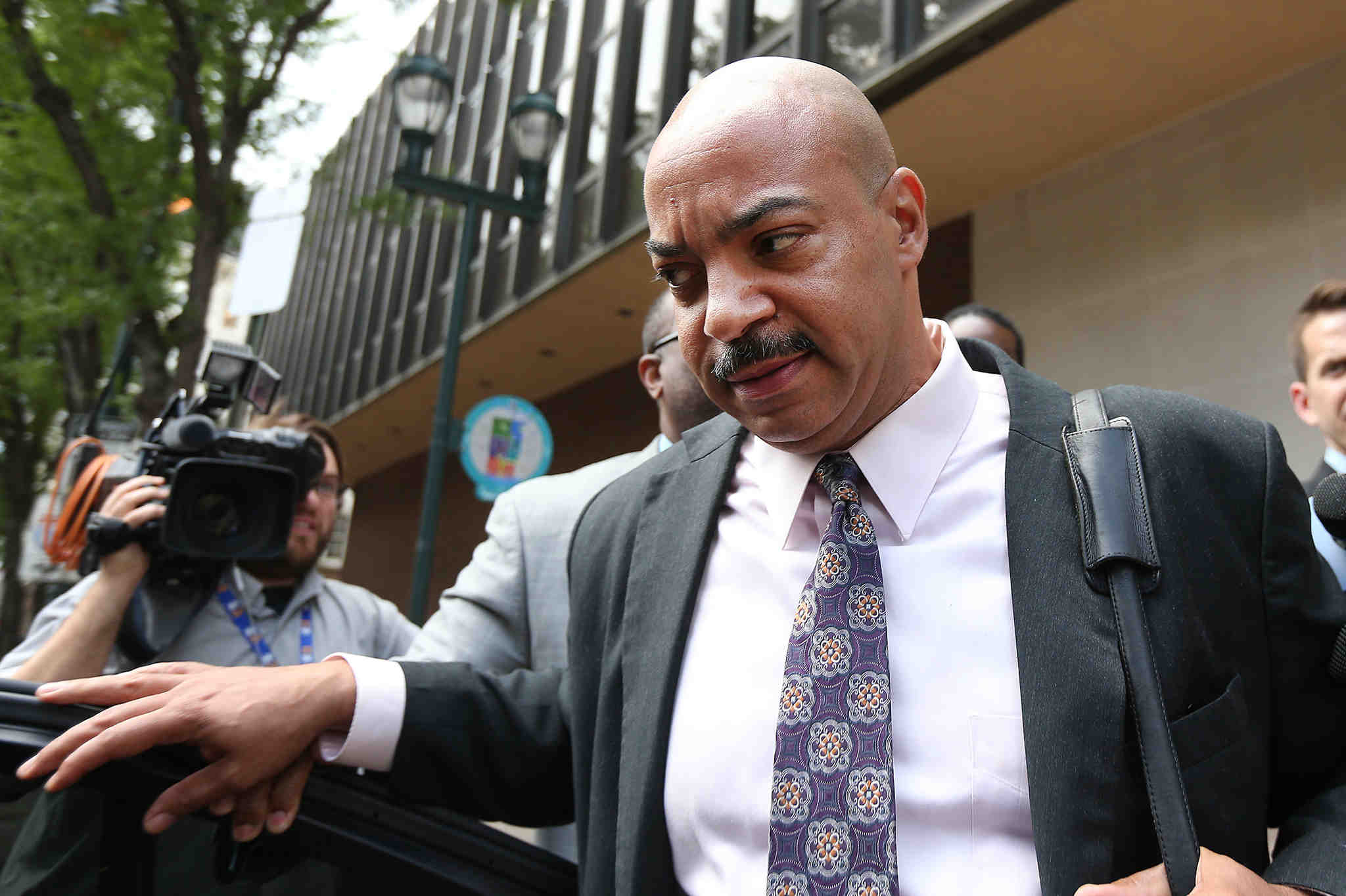
Just moments after then-Philadelphia District Attorney Seth Williams pleaded guilty in a public corruption case, Diamond had Williams handcuffed and hauled off to jail to await sentencing.
Then, a few months later, Diamond imposed the maximum prison term allowed by law — five years. And he upbraided Williams as a “criminal” who surrounded himself with “parasites” and “fed his face at the trough” of public money.
Then-District Attorney Seth Williams leaves the federal courthouse in 2017.DAVID MAIALETTI / Staff Photographer
Now, Diamond is overseeing a new case with a new set of accusations against a different district attorney.
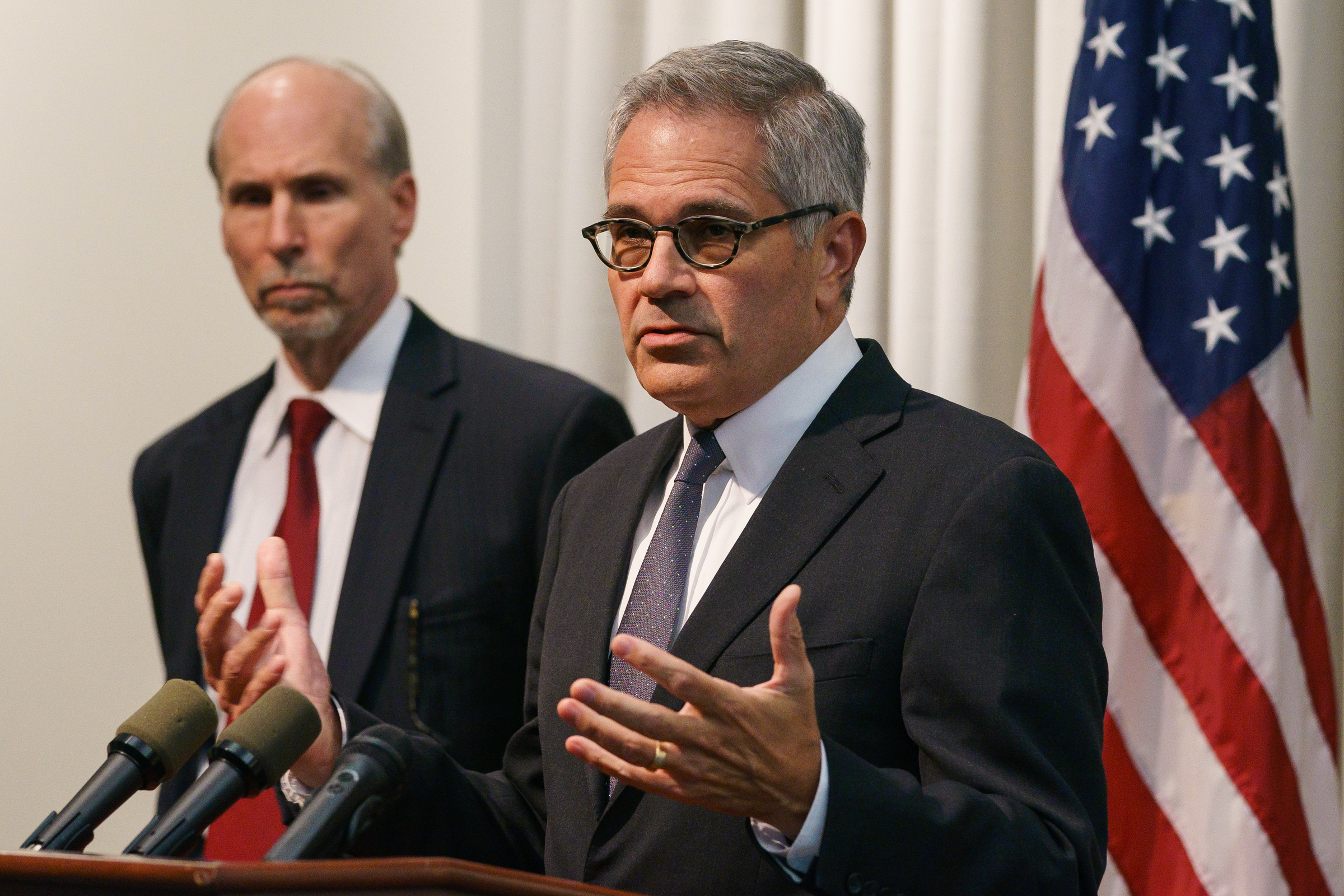
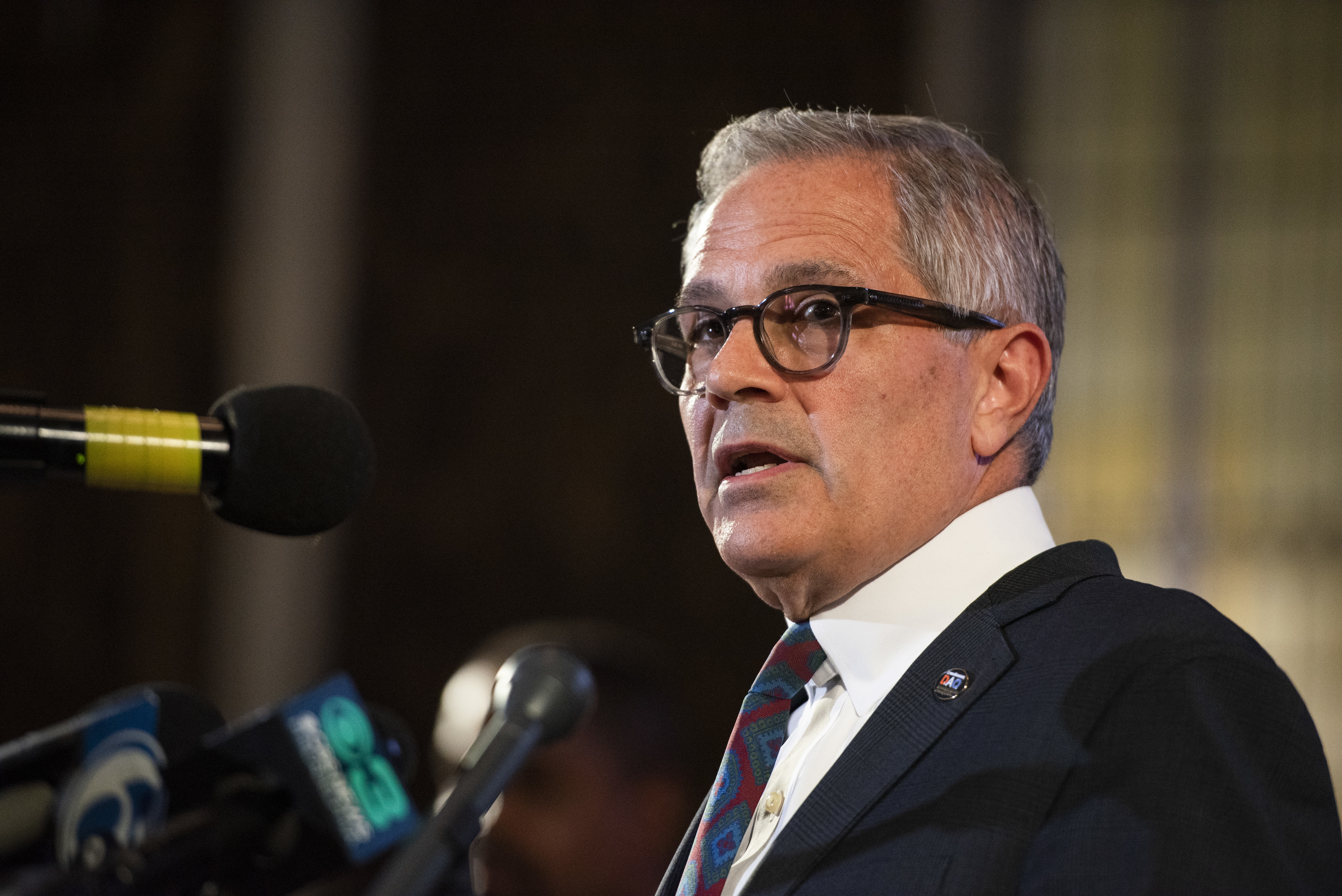
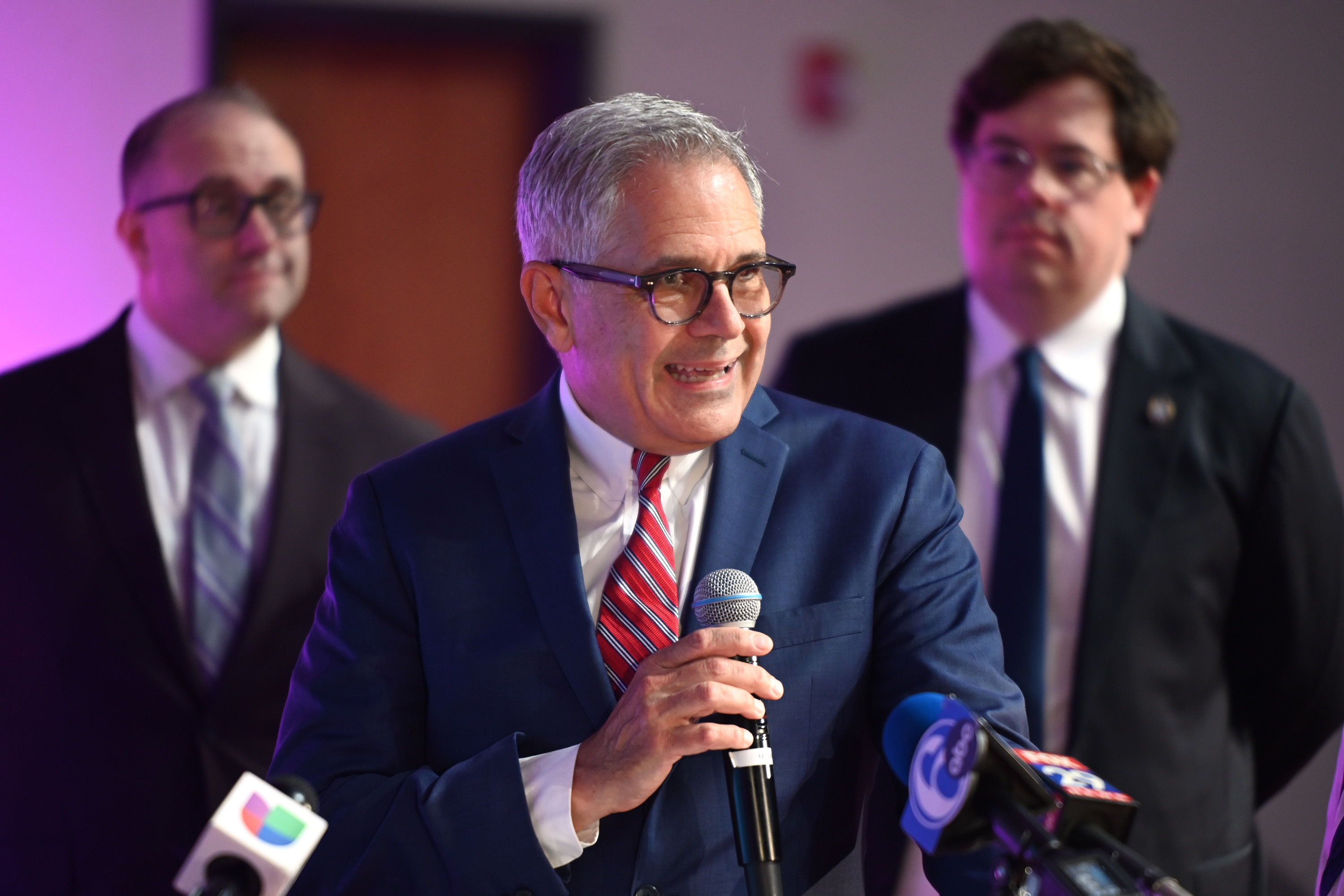
The allegations against top prosecutor Larry Krasner have come as part of a dispute with staffers over how to handle a case, and Diamond has already made clear that he views the assertions as serious — suggesting in a hearing last month that he believed some could amount to federal crimes.
“If what they say is true, potential wrongdoing abounds,” Diamond said, listing off offenses including perjury, conspiracy, and obstruction of justice.
To some area legal observers, the pointed remarks were reflective of Diamond’s reputation as a stern, no-nonsense jurist — particularly when it comes to assessing the conduct of fellow lawyers.
Then-Assistant District Attorney Paul George (back left) was disbarred in federal court in 2025.JESSICA GRIFFIN / Staff Photographer
In 2017, while the case against Williams was still pending, he ordered it to proceed to trial just months after the indictment was unsealed — a highly unusual timetable for a federal case, but one the judge said was necessary because of its “obvious and possibly calamitous effect on the city’s criminal justice system as well as the city itself.”
And even in a comparably trivial legal dispute in 2014, Diamond was unabashedly critical of a lawyer who sued over the rights to a song by the R&B artist Usher, writing: “It is difficult to convey the poisonous atmosphere created by [the lawyer’s] continual belligerence.” The lawyer was ultimately suspended from practicing in the region’s federal courts for three months.
Samuel Stretton, a veteran defense lawyer who often handles legal ethics cases, said Diamond “has high standards. And if someone violates, in his mind, those high standards, he takes a very tough position on them and voices that opinion quickly.”
Still, Stretton said he thinks Diamond’s principled views are sometimes expressed in overly harsh ways.
“He has a strong belief in ethics, and lawyers having those especially, and he feels he must enforce them,” Stretton said. “But sometimes his manner of enforcing them is overstated, and he’s abrupt and a little bit of a bully.”
The question now facing Krasner is what actions Diamond might take in the post-conviction case pending in his courtroom — and whether any could lead to consequences for the city’s DA.
District Attorney Larry Krasner in a file photo from 2023.Allie Ippolito / Staff Photographer
Who is Paul Diamond?
Diamond, 73, was appointed to the region’s federal bench in 2004 by then-President George W. Bush. He was unanimously confirmed by the U.S. Senate.
Before his judicial nomination, he spent nearly two decades in private practice. He began his career as an assistant district attorney in Philadelphia in the late 1970s, and graduated from the University of Pennsylvania law school and Columbia University.
While he worked in private practice, Diamond focused on civil litigation, white-collar criminal cases, and disciplinary matters, according to an online biography. And his clients were sometimes unique.
In 1994, he represented a South Philadelphia candy making company that pleaded guilty to safety violations after an unguarded taffy-pulling machine killed one of its workers.
A few years later, he represented Lower Merion Township when the Barnes Foundation sued and accused township officials of using racism and discrimination to try to hurt the foundation. The suit was dismissed, and a defiant Diamond was later quoted in The Inquirer saying he planned to bill the Barnes around $1 million to cover the township’s legal fees.
“This is a claim that should never have been filed; it’s outrageous that it was ever filed, and now the Barnes is going to see the mother of all fee petitions,’’ he said.
A consistently exacting judge
Like all federal court judges, Diamond oversees a mix of criminal and civil cases. And even though not all receive significant public scrutiny, Diamond is viewed by some as a consistently exacting judge.
In 2012, for example, he ordered a 60-year-old grandmother jailed for using her dead mother’s Social Security checks to support her grandchildren.
“Did it ever occur to you to go out and get a job?” Diamond asked the woman. “Did it ever occur to you that the way to help your grandchildren is not to commit a series of endless federal frauds?”
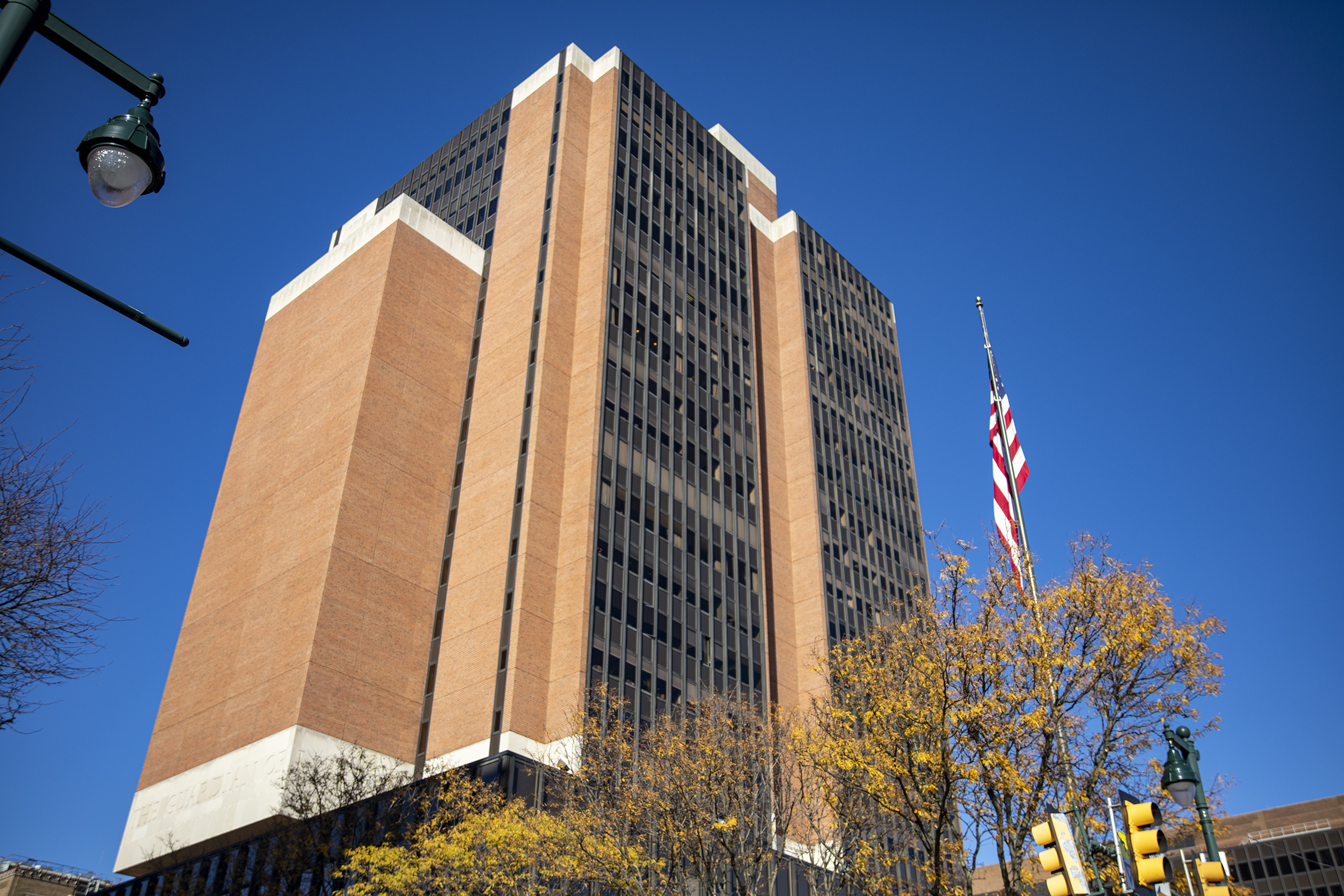
The federal courthouse in Philadelphia.TYGER WILLIAMS / Staff Photographer
Last year, he was subtly critical of the Trump administration in court documents, writing that it was using competing interpretations of the law to try to justify its policy to detain nearly all undocumented immigrants.
It is “difficult to credit the Government’s squarely contradictory position here,” Diamond wrote.
The Krasner matter that ended up in his courtroom arrived as a routine post-conviction case: Dennis Johnson, who was found guilty of second-degree murder in state court in 2009, filed a petition in federal court seeking to have his conviction overturned.
The petition was filed more than 10 years ago, but it wasn’t until 2022 that the origins of the current controversy would begin to take shape.
A frenzy within the DA’s office
That year, after the district attorney’s office had spent years opposing Johnson’s bid for relief, prosecutors changed course.
Then-Assistant District Attorney Jaclyn Mason filed a brief agreeing with Johnson’s lawyers that his trial counsel had been ineffective. And she said her office had discovered problems or inconsistencies with testimony from key witnesses, leading her to recommend that the conviction be overturned.
The case was first sent to a federal magistrate to review, and Judge Lynne A. Sitarski — relying on Mason’s brief — agreed with her position.
But Sitarski’s recommendation was not binding — the final call would fall to Diamond. And this spring, Diamond signaled he was not inclined to accept the assertions in Mason’s brief. He scheduled an evidentiary hearing to hear testimony that could corroborate — or undercut — the office’s conclusion.
That triggered a frenzied sequence of events inside the DA’s office, prosecutors have since testified.
District Attorney Larry Krasner speaks at a news conference while flanked by two prosecutors who have since testified about actions he took in a controversial post-conviction case: David Napiorski (left) and Peter Andrews.Tom Gralish / Staff Photographer
To prepare for the hearing, Mason’s supervisors in the law division reviewed her brief and found a series of what they called “material misstatements.” They decided they needed to try to withdraw Mason’s filing and apologize to Diamond for the mistakes. And they asked that Mason sign on to the new filing with them.
But Mason declined and resigned. She’s since said she only filed her brief at the urging of her then-boss, Matthew Stiegler, who she said had done nothing to review the case himself but instead was “colluding” with Johnson’s defense attorneys to secure his release from prison.
Mason said she didn’t want to become a scapegoat for Stiegler or the office. And she accused her colleagues of attempting to force her to lie to protect the institution.
Her former supervisors have denied that, saying that once they noticed the errors in her brief, they were ethically obligated to correct the record in front of Diamond.
But as they strategized their approach, they said, they encountered consistent resistance from an unusual source: Krasner.
In their telling, Krasner was ardently opposed to asking the state attorney general’s office to take over the case — something the supervisors generally agreed was appropriate because of the drama surrounding the matter within their office.
Assistant District Attorney David Napiorski, head of the office’s law division.Alejandro A. Alvarez / Staff Photographer
And according to the supervisors — Katherine Ernst, Steven Wildberger, David Napiorski, and Peter Andrews — Krasner made a series of notable statements during their discussions, including that he wanted to handle the case in a way that would “protect the office,” that those who didn’t follow his orders would face “consequences,” and that he wanted to keep the matter from the attorney general’s office because he viewed its staffers as “Nazis.”
Several potential paths forward
All of those assertions were aired in Diamond’s courtroom in recent weeks, after the judge decided the evidentiary hearing in Johnson’s case would, for now, focus on the conduct of the prosecutors involved, rather than the merits of his petition. The judge said he’ll evaluate that aspect of the case later.
The attorney conduct portion of the hearing concluded last month, leaving Diamond with several choices about what to do with their startling testimony, legal observers said.
The most immediate issue is whether he’ll allow the DA’s office to continue handling Johnson’s case. Given the dysfunction prosecutors testified to, he could ask the attorney general’s office to take over instead.
But Krasner — who was not called to testify and who has said he can’t comment on the case while it’s pending — will likely have the opportunity to propose his own solution in court documents. In earlier filings, he said he engaged an outside lawyer to handle the matter on the office’s behalf — which, in his view, would insulate the case from the issues roiling his office, and preclude the need to involve state prosecutors.
Beyond that question, however, the testimony about conduct by the DA’s office could, in theory, lead to other consequences.
District Attorney Larry Kranser was not called to testify in front of U.S. District Judge Paul S. Diamond in the post-conviction case that Diamond is overseeing.Heather Khalifa / Staff Photographer
Stretton, the defense lawyer and ethics expert, said Diamond could refer the matter to the federal court’s disciplinary committee. There, a panel of judges could seek to determine if any of the prosecutors involved — including Krasner — behaved in a way that might warrant disciplinary action, such as a suspension or disbarment from practicing in federal court.
That process, which is largely confidential, would also likely be lengthy: In an earlier federal case that led to sanctions for two supervisors in Krasner’s office, a federal judge said he was seeking to initiate the disciplinary process in 2022, and punishments were not decided for another three years.
After that, Stretton said, if discipline is imposed in federal court, the matter would likely be forwarded to the state’s disciplinary board, which would make its own determination of possible penalties. That could also be an extended process.
And in what would likely be the most serious scenario, Stretton said, Diamond could refer the matter to federal or state prosecutors — or prosecutors could decide to pursue it themselves — to determine if crimes were committed. That, too, would almost certainly not be resolved quickly.
Stretton said any of those processes — and any potential outcomes — could also be further delayed or complicated because of inevitable disputes or competing interpretations over what lawyers did. In his view, for example, ethical rules generally allow a supervisor such as Krasner to pursue a legal strategy opposed by his subordinates as long as he had a “reasonable” argument for doing so.
And the testimony that unfolded before Diamond has already demonstrated that different lawyers had different recollections of what occurred: Mason accused her bosses of encouraging her to participate in a cover-up, but the supervisors said that wasn’t true.
The supervisors, meanwhile, accused Krasner of trying to get them to violate their ethical obligations, a contention he has similarly denied.
For now, the case remains on hold as Diamond weighs how to move forward. He has asked lawyers in the case to file additional briefings by Tuesday about how they believe the case should proceed.
Beyond that, Diamond has not indicated how quickly he might rule on the matter.
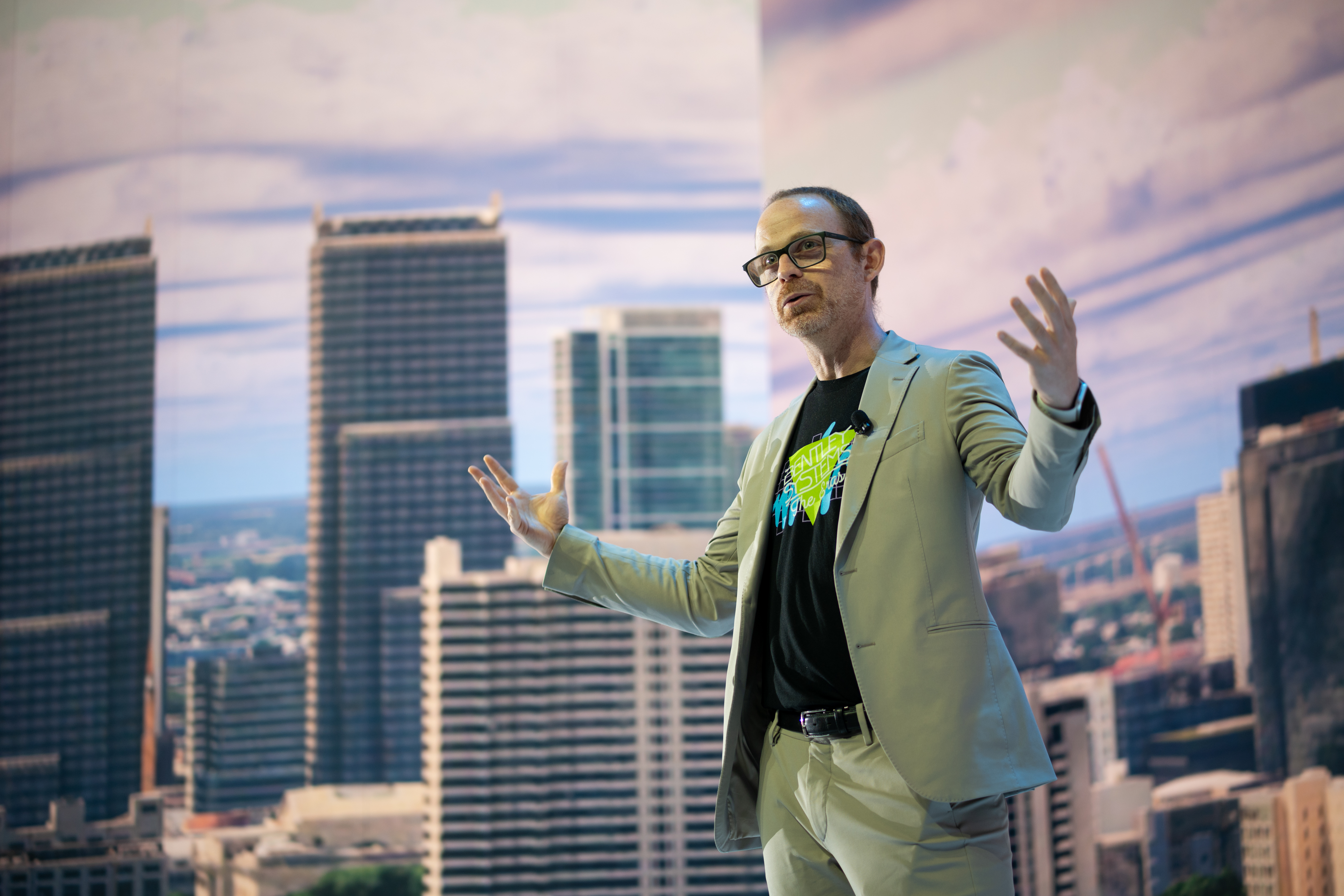
Exton-based Bentley Systems International, the software company with the highest market capitalization in the Philadelphia area, has opened a Center City office as its new base for 150 engineers and other tech and business staff, replacing two smaller outposts in the city.
Bentley customers use what’s now its Cesium Ion mapping platform to show sites and buildings in complex detail on office computers and hand-held devices.
A Penn State grad, who also earned a master’s and taught programming and architecture at the University of Pennsylvania, Cozzi says he sees Philadelphia as a “magical place” for tech companies.
“When I was CEO raising capital on the West Coast, some of the investors told me the best tech entrepreneurs want to move to the [San Francisco] Bay area. I said no, we can build a great tech company in Philadelphia,” he said.
Philadelphia was an early computing industry center. ENIAC, the pioneering system built at Penn to help plan World War II artillery attacks, and other early Philly-built computing systems relied on the vacuum tubes mass-produced for radio manufacturers in Philadelphia and Camden.
But by the 1970s, the industry committed to far more efficient silicon-based microprocessors developed in California’s “Silicon Valley.” Investor-rich cities such as Boston, Seattle, and Austin also became important computer hardware and software centers. Few large tech companies are now based in the Philadelphia region.
Cozzi says Philadelphia’s affordability is now an asset.
“We have reasonable cost of living and fantastic schools, graduates who want to stay here, great restaurants and quality of life, it’s an awesome place for the tech community,” he said, as he prepared to welcome Mayor Cherelle L. Parker, State Rep. Jordan Harris (D., Phila.), and 200 other guests to the new space for a grand opening celebration Thursday evening.
Cozzi said neither the city or state provided incentives for the new office.
Invited guests at Thursday’s event include Bentley clients from Center City-based Pennoni Engineering; Ansys, the Pittsburgh-based owner of AGI, and Earthbrain, a Japanese construction equipment and computing joint venture, which uses Philadelphia as a U.S. base.
Bentley went public in its 2020 IPO at $22 a share. The stock peaked in the low $60s the next year and ran almost as high last summer. It has lately tradedaround $35 a share.
It employs more than 5,000 at offices in 42 countries. The company is worth nearly $11 billion on the Nasdaq stock exchange. That compares to around $6 billion for Newtown, Bucks County-based software-outsourcing provider EPAM, $2 billion for King of Prussia tax-accounting software maker Vertex Inc., and $200 million for Blue Bell legacy hardware and software provider Unisys.
Bentley’s 10th-floor space in the Curtis Center includes a public-meeting area to host events.
The building was built in 1910 for Curtis Publishing and its mass market magazines, led by the Saturday Evening Post and Ladies’ Home Journal. Curtis moved its press operations to Delaware County in 1949 and shut both Philadelphia offices and Delco operations by the time of its 1969 bankruptcy.
The Curtis building’s owner, Keystone Development + Investment, has in recent years added apartments, biotech labs, and other specialized units to help fill the block-long complex.
This is not the America we thought we were. As nurses, we’re sensitive to negative shifts in compassion and empathy. Almost two years of multiple, relentless attacks on America’s core values have left us morally distressed.
It is not like us to set a weekly quota of arresting 2,000 of our law-abiding neighbors seeking asylum in the United States. It’s not like us to propose spending $20 million in taxpayer dollars on a device that will allow immigration agents to deliver painful electric shocks to any human being. It’s not like us to put those without criminal records in jails and provide them with less than adequate medical care that has now resulted in the deaths of at least 50 innocent human beings.
Values out of whack
As a nation, our actions are out of alignment with our values.
As nurses, we have seen how words are used to evoke false beliefs. We have never seen a “vat” of solution injected into any person — let alone an infant, asPresident Donald Trump recently claimed about the childhood vaccination regimen. We have witnessed the fear and confusion of parents related to the mixed messages coming from non-pediatricians about the value of childhood vaccinations. Why change the vaccination schedule without evidence?
President Donald Trump and his former press secretary Karoline Leavitt at the White House earlier this year. Both have brought a new level of coarseness and personal denigration to official public discourse.Tom Brenner
These developments are not mutually exclusive, and they represent a troubling sign for a country where trust in the values of public institutions and in government leaders and workers is being eroded by outright lies and a lack of mutual respect. In 2025, only 17% of Americans trusted the government to do “what is right.”
Moral distress occurs when one’s values are constrained because of institutional, social, political, or other barriers.
The concept is often applied to healthcare workers, such as nurses. For example, moral distress has been widely documented when nurses are unable to deliver a treatment they know is best because of restraints imposed by the healthcare system in which they work.
Repeated experiences of moral distress often lead to a sense of disillusionment, disengagement, moral outrage, burnout, and apathy. When this moral distress and resulting harm is experienced by a broad swath of the general population, we call this civic moral distress.
So what can we do?
We know respectful dialogue instead of derision advances collaborative agendas and builds solid coalitions. We know public health is key to the prevention of disease. We know respect for the dignity of our fellow humans has nothing to do with their age, race, gender, political ideology, or immigration status. We know a lack of basic healthcare leads to emergency room visits and higher costs. We know the average citizen is not being heard by those who represent them to address the broader societal and moral problems at home and feels powerless to change any of it.
Don’t be disillusioned
There are no easy antidotes to civic moral distress. Experts coalesce around key principles, grounded in a foundation of trust, that could move us from a morally distressed nation to one characterized by moral strength and integrity.
For everyone: Be kind, be truthful, perform one random act of kindness every day, care for your neighbors. For newspapers: Publish one issue a week that focuses on local community issues. For all government officials: Don’t break everything just because you can; stay in your lane and do not make healthcare recommendations out of your area of expertise.
For all Americans: Do not be disillusioned.
Advancing this agenda will require significant moral courage. Failing to do so will further erode our society, our humanity. And although civic moral distress is our current reality, it need not be our future.
Connie M. Ulrich is a registered nurse and professor of nursing and of medical ethics and health policy at the University of Pennsylvania School of Nursing. She is a Hastings Center Fellow. Mary D. Naylor is a registered nurse and professor of gerontology and nursing at Penn’s School of Nursing. Martha A.Q. Curley is a registered nurse and professor of pediatric nursing at Penn’s School of Nursing.
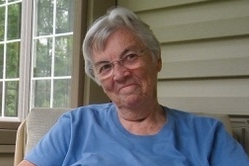
Joan E. Lynaugh, 90, of Gwynedd, Montgomery County, pioneering primary care nurse practitioner, award-winning professor emerita of nursing at the University of Pennsylvania, historian, mentor, author, birdwatcher, and “living legend,” died Friday, July 10, of age-associated decline at Foulkeways at Gwynedd retirement community.
Reared on a dairy farm in the Finger Lakes region of upstate New York, Dr. Lynaugh became a pioneering international expert on primary care nursing and nurse practitioner policies, education, and history. For decades, from the early 1960s through her retirement in the late 1990s, she treated patients, taught students, researched history, and joined colleagues in defining and expanding the role of nurses in modern healthcare.
During her career, the benefits of home care, the importance of critical care, and the need for nursing history education were hot topics in healthcare. “As a historian,” she told The Inquirer in 1997, “I take great interest in this shift from the intense emphasis on hospitals to the more balanced emphasis on other kinds of care.”
Dr. Lynaugh joined Penn’s School of Nursing in 1980. She took charge of the school’s new primary care nursing unit and went on to be director of the Robert Wood Johnson Foundation primary care nurse practitioner program and associate director of the foundation’s teaching nursing home project.
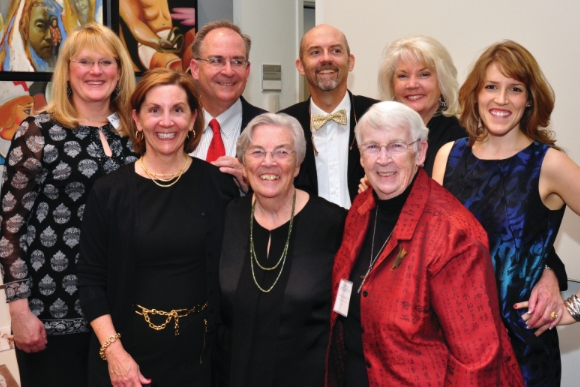
Dr. Lynaugh (front center) and her family celebrate her 2005 award as a “living legend.”Courtesy of the family
She was also the nursing school’s associate dean and director of graduate studies from 1993 to 1996, and chair of the nursing, history, and healthcare department from 1994 to 2000. In a tribute, colleagues at Penn Nursing said: “Dr. Lynaugh was a visionary leader, a prolific scholar, and a dedicated mentor whose extraordinary career left an indelible mark on Penn Nursing and the global nursing profession.”
In 2000, she told writer Suzanne Gordon: “We know we can’t get into the hospital without a doctor. That’s no surprise. We are, however, surprised to discover that we can’t get out of the hospital without a nurse.”
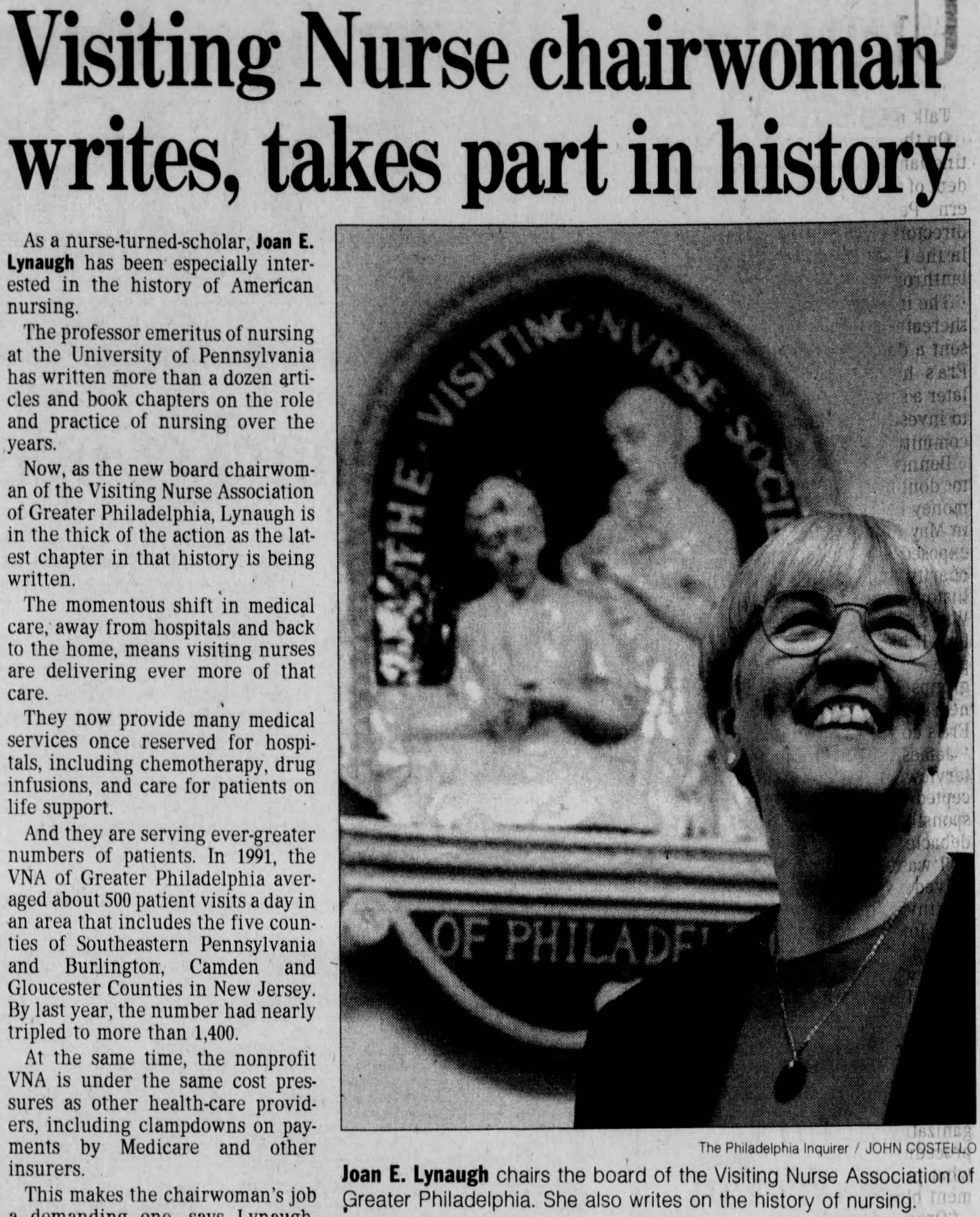
This story and photo of Dr. Lynaugh appeared in The Inquirer in 1997.Newspapers.com
In 2018, the center named its archives the Joan E. Lynaugh Archives and Special Collections. Before Penn, Dr. Lynaugh practiced and taught nursing at the University of Rochester and the old Providence Hospital in Washington, D.C.
She was a fellow at the American Academy of Nursing, board chair of the Visiting Nurse Association of Greater Philadelphia, and active with the College of Physicians of Philadelphia, the American Association of Critical Care Nurses, and other groups. She cowrote Critical Care Nursing: A History with Penn colleague Julie Fairman in 1998, and coedited the award-winning textbook Enduring Issues in American Nursing in 2000.
Colleagues at the American Association for the History of Nursing said in a tribute: “Joan’s intellectual curiosity, generosity as a mentor, commitment to excellence, and passion for nursing history left an indelible mark on the nursing profession worldwide.”
A friend on Facebook called her “one of the smartest, kindest scholars I ever had the honor and pleasure to be mentored by.”
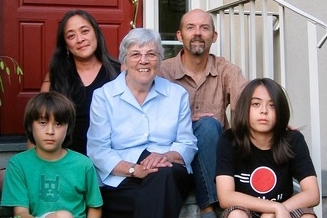
Dr. Lynaugh (center) enjoyed time with her family.Courtesy of the family
Joan Estelle Lynaugh was born Aug. 30, 1935, in Canandaigua, N.Y., about 28 miles southeast of Rochester. She studied nursing at St. Mary’s Hospital School of Nursing in Rochester and earned bachelor’s and master’s degrees in nursing at the University of Rochester, and a doctorate in history at the University of Kansas in 1982.
Her whole life, she enjoyed traveling, bird-watching, camping, and hiking. She was an engaging host and liked to read mysteries and newspapers.
She was a longtime colleague and personal partner of fellow medical professional Barbara Bates, and they lived in Bryn Mawr for years. Bates died in 2002, and Dr. Lynaugh moved to Gwynedd a few years later.
“Joan will always be remembered for her generous spirit, wonderful sense of humor, persistent intellectual curiosity, and a sincere commitment to making the world a better place,” her family said in a tribute.
Dr. Lynaugh grew up in the Finger Lakes region of upstate New York.Courtesy of the family
Her niece Mary Clare Hamlin said: “She was understated, humble, practical, and scientifically minded. She always wanted to help others.”
In addition to her niece, Dr. Lynaugh is survived by other relatives. Two brothers and a sister died earlier.
A celebration of her life is to be held at 1 p.m. Friday, Oct. 23, at Penn’s Claire M. Fagin Hall, Room 316, Third Floor front, 418 Curie Blvd., Philadelphia, Pa. 19104.
Donations in her name may be made to the Joan Lynaugh Founders Fund at Penn’s Barbara Bates Center for the Study of the History of Nursing, Office of Institutional Advancement, Claire M. Fagin Hall, 418 Curie Blvd., Suite 445, Philadelphia, Pa. 19104.
Dr. Lynaugh “was understated, humble, practical, and scientifically minded,” her niece said. Courtesy of the family
Philadelphia-area health systems are warning residents to beware of an online phishing scam that mimics MyChart, the secure online patient portal used by most leading health systems.
The scam involves emails and text messages that encourage people to claim a “MyChart Medicare Kit” by clicking on the embedded link to complete a survey. The resource kit is fictional, and clicking the malicious link could give hackers access to their MyChart portal, which stores identification information, including birth dates and addresses, and private health details, such as medications, medical conditions, and doctor conversations.
Penn Medicine, Jefferson Health, Temple Health, Main Line Health, and Virtua are among the local systems that have posted warnings on their websites and sent notices to patients urging them to not to share passwords or other personal information through email links.
Attorney General David Sunday has also urged people to “stay on the lookout for this new scam tactic.”
Phishing emails are becoming more sophisticated, as artificial intelligence does away with misspellings, grammatical errors, and graphics irregularities that were once telltale signs of a scam.
Phishing attacks have grown more than 40-fold since ChatGPT, an AI program that can draft emails and letters based on a prompt, was introduced in 2022, according to a 2026 trend report from HoxHunt, a cybersecurity risk management and training company.
Scams that relate to people’s healthcare or insurance can be especially dangerous because of the type of information they may expose and because of the urgency people may feel to respond to the message, said Tom Gordon, chief information officer at Virtua Health.
“The leverage with healthcare is you’re going to have a certain reaction,” Gordon said. “It drives an emotion, it affects people’s defenses.
A screenshot of a MyChart Medicare Kit phishing email shows one of the ways scammers attempt to obtain personal information.Sarah Gantz / Philadelphia Inquirer
Philadelphia hospitals take action
Philadelphia-area health systems work together to track scams and alert patients, said Lou Dignam, Virtua’s vice president of cybersecurity.
Virtua is part of Health Information Sharing and Analysis Center, known as Health-ISAC, a nonprofit membership organization for hospitals, insurers, pharmaceutical companies, and other health security professionals across the country to share real-time threats and best practices.
When Digman and Gordon heard about the MyChart Medicare scam, they turned to their group chat with security officers at Penn, Jefferson, Cooper, Inspira, Main Line Health, and others. They talked about what to do, even coordinating what to write in online notices and emails to patients.
“People may look at these organizations as competitors, but on this type of thing, it’s very collaborative and unified,” Gordon said.
Cohesive communication across health systems is especially valuable in the Philadelphia area, where a high concentration of providers means patients may see doctors at multiple systems, he said.
Their main message: Always be curious and cautious.
How to avoid phishing scams
Cybersecurity experts say vigilance is the best protection against phishing scams.
“Scammers are always looking for new ways to obtain as much of your personal information as possible,” Attorney General Sunday said in a statement.
Sunday and Gordon offered consumers some tips:
Be skeptical of unsolicited free offers and rewards.
Hover over email addresses and links, which can be disguised to appear to be from a trusted sender.
Avoid clicking links in emails and text messages. Instead, go directly to the website or mobile application.
Do not “unsubscribe” from emails that you suspect could be phishing attempts, as the “unsubscribe” link could also be malicious. Instead, delete the email.
Report phishing attempts sent to work email to your employer.