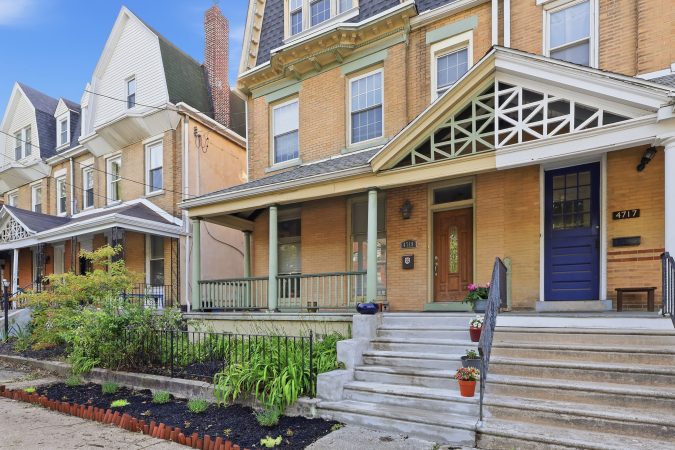
The six-bedroom, three-bathroom twin in University City is just two blocks from where Emma Steiner was born. Still, it has given her and her husband, Joe Leonard, a totally new housing experience.
Steiner, a psychotherapist, and Leonard, an attorney, had been renting in the Graduate Hospital neighborhood when they decided in 2013 to make the Victorian twin their first house.
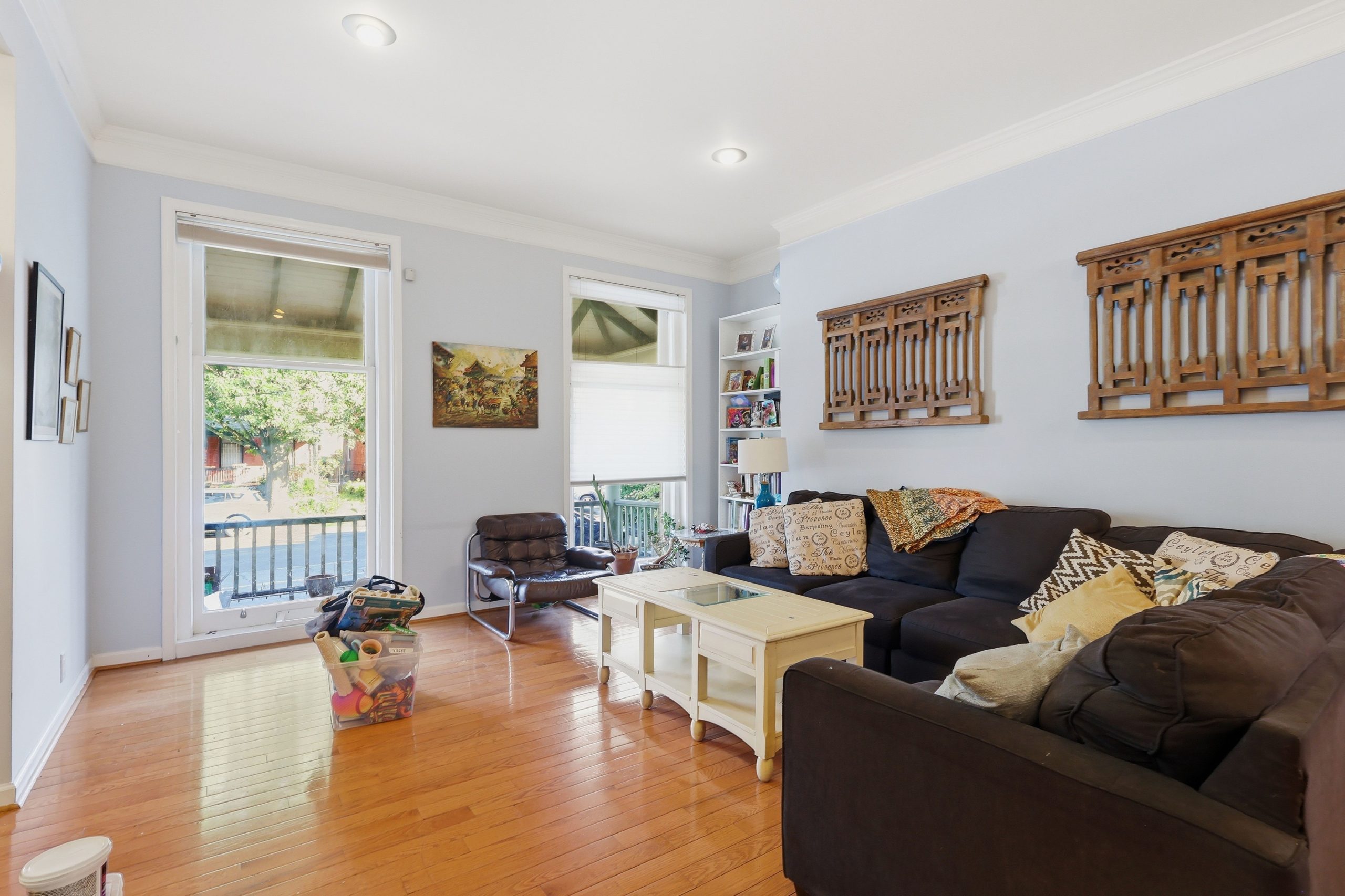
The living room. The home has hardwood floors.Adam Meyers/Smith & Meyers Photography
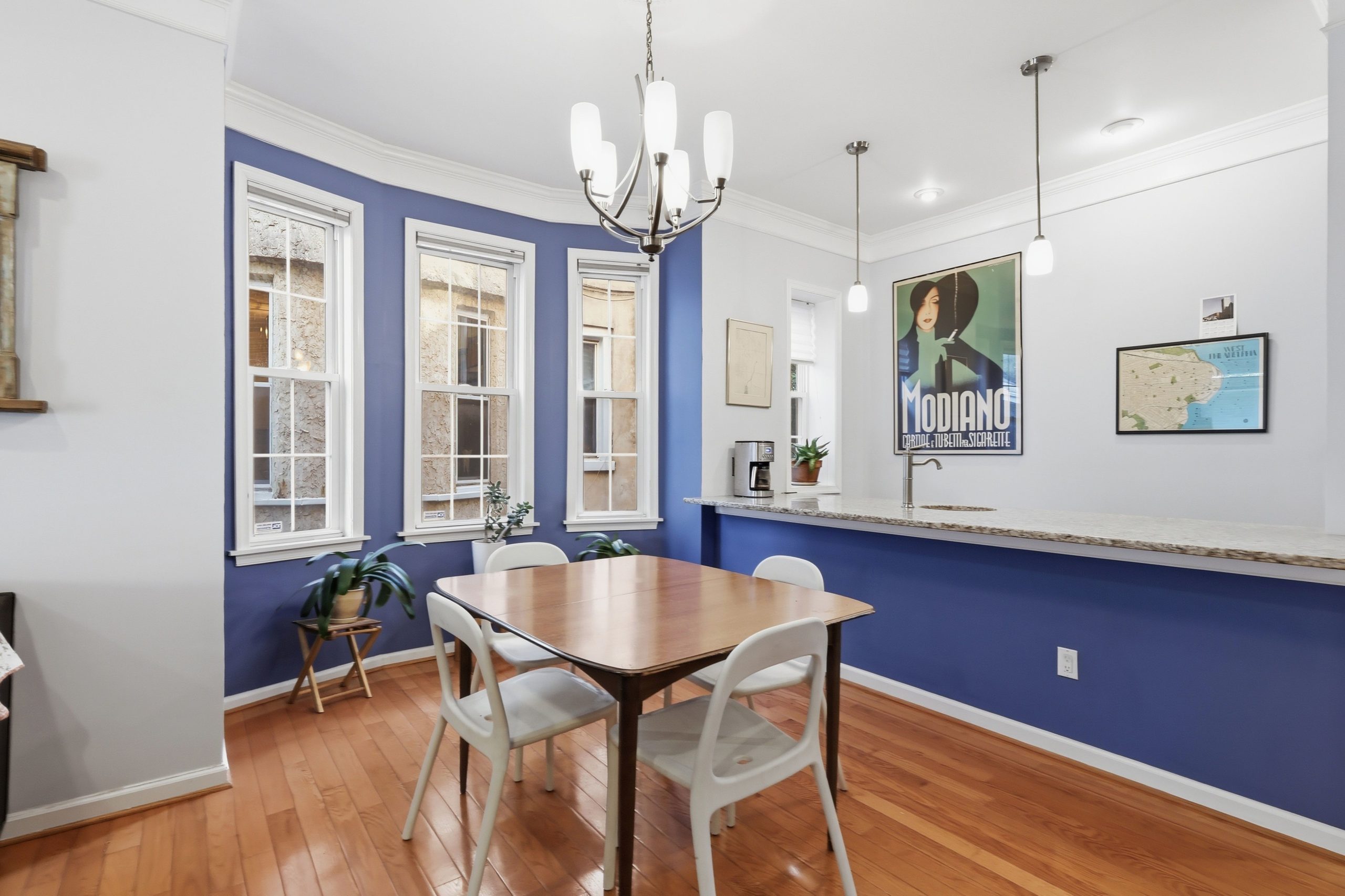
The open floor plan was unusual for the neighborhood, Steiner said, and Leonard “was blown away by the big old trees.” And she said both were impressed by the large windows at the front of the house.
The couple and their two children, aged 10 and 7, will be moving three blocks away to a larger house with a bigger yard.
“We’re staying in the neighborhood we love,” Steiner said.
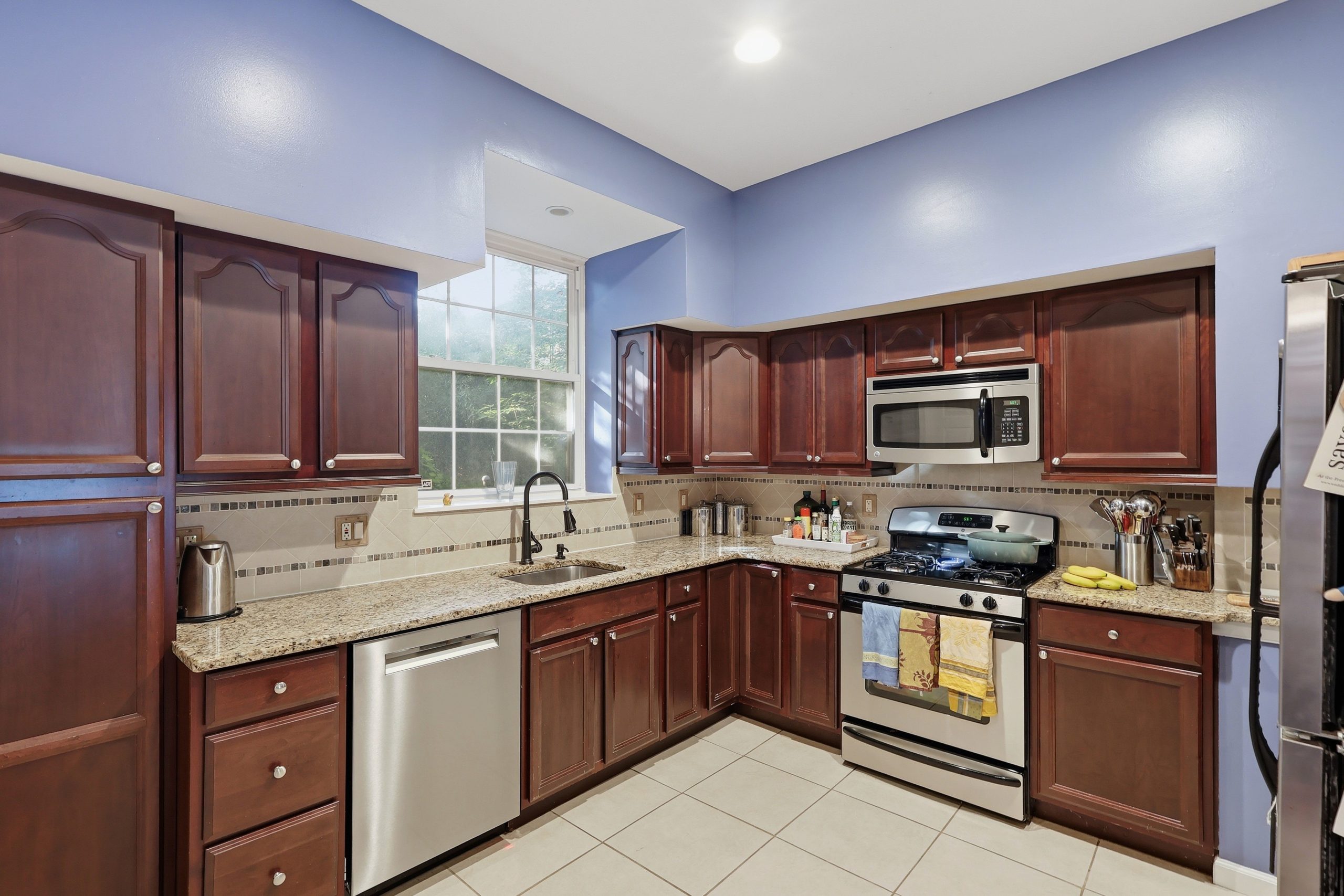
Their home had undergone a complete renovation in 2008, opening up the first floor with high ceilings.
Steiner and Leonard replaced the flat roof and mansard roof last year and this year, adding a new skylight. And they replaced the porch steps and basement electrical panel.
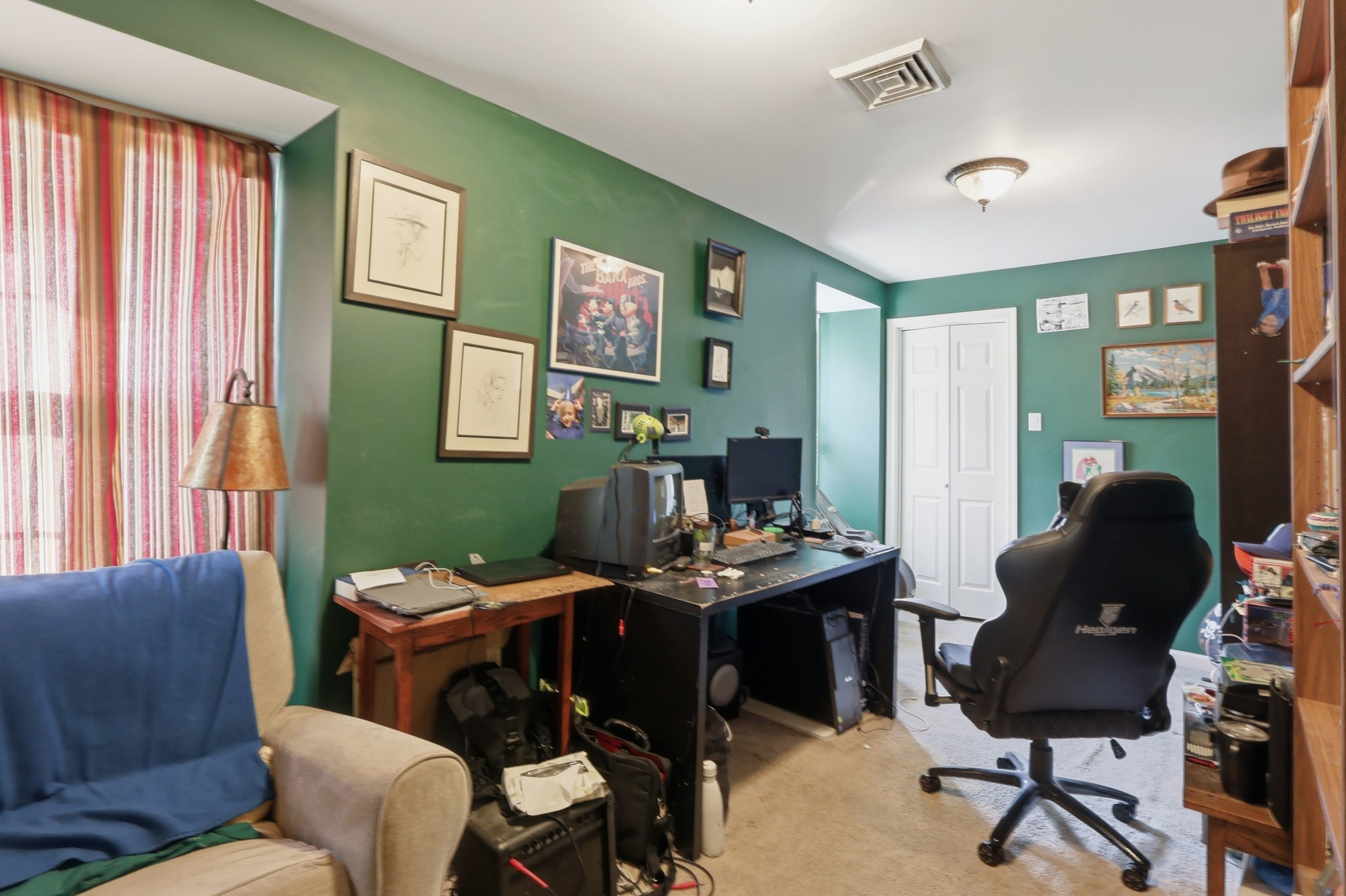
OfficeAdam Meyers/Smith & Meyers Photography
Built in 1913, or perhaps a little earlier, the house has hardwood floors, central air, and is 2,760 square feet.
There are three bedrooms on the second floor, including the primary suite and its en suite bathroom. One of the bedrooms is used as a family room.
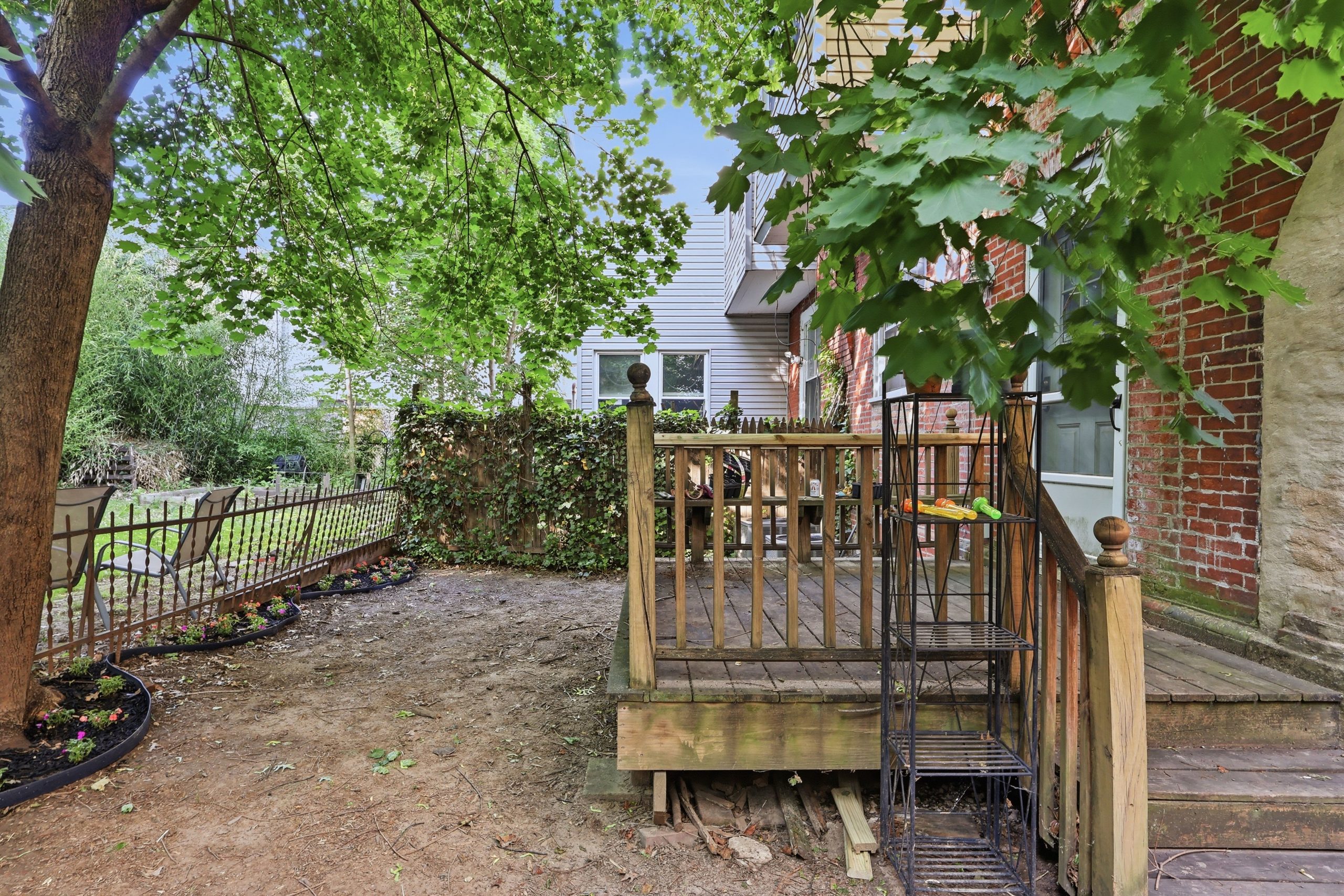
Back yardAdam Meyers/Smith & Meyers Photography
There are three bedrooms on the third floor. The second and third floors each have a hall bathroom.
The house is a short walk to Clark Park, the renovated Kingsessing Recreation Center, Baltimore Avenue stores, Children’s Hospital of Philadelphia, and Drexel University.
It is listed by Asher Brooks Chancey of OCF Realty for $689,000.
Inside Philadelphia’s new RNA manufacturing hub, scientists are working to create vaccines for fish, precision pesticides, and treatments to protect plants from extreme heat.
The recently launched biofoundry at the University of Pennsylvania aims to expand biotechnological capabilities in the United States, funded by an $18 million federal grant. The National Science Foundation has invested infive such facilities nationally, each focused on a specific biological material.
The term foundry traditionally refers to a factory where metal is melted and shaped into desired forms. Expanding the concept, Penn’s NSF AIRFoundry now offers a one-stop facility for designing and building RNA technology.
All products under development involve ribonucleic acid, or RNA, a key molecule in living cells. Some consider it the cousin of the better-known molecule, DNA. Both can carry the genetic instructions for life.
The facility opened in March at One uCity Square in University City. It builds upon Penn’s success with the 2023 Nobel Prize-winning development of an mRNA platform that led to the first COVID-19 vaccine.
“We need to democratize this technology,” said Daeyeon Lee, a Pennprofessor of chemical and biomolecular engineering who serves as the foundry’s director.
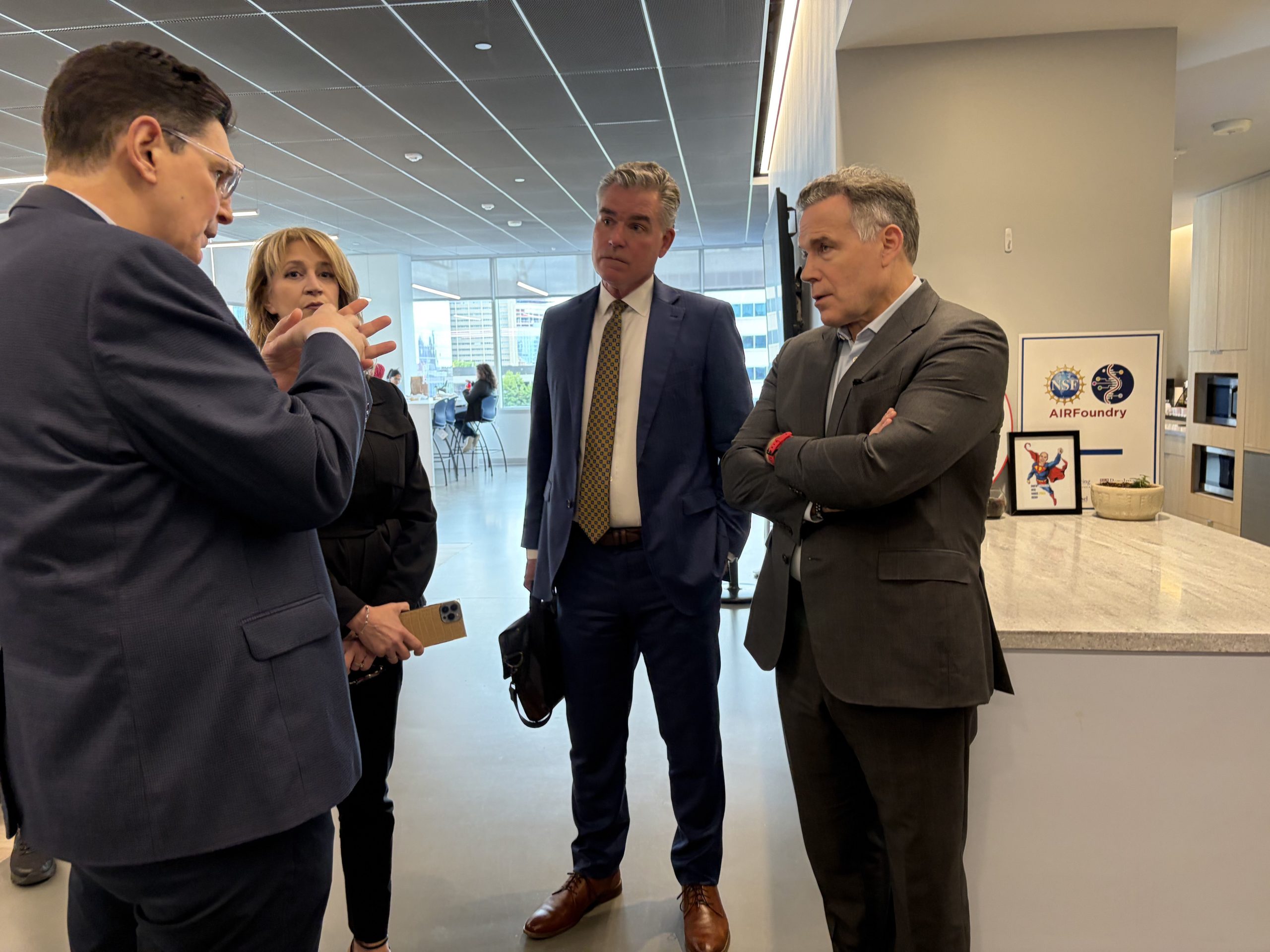
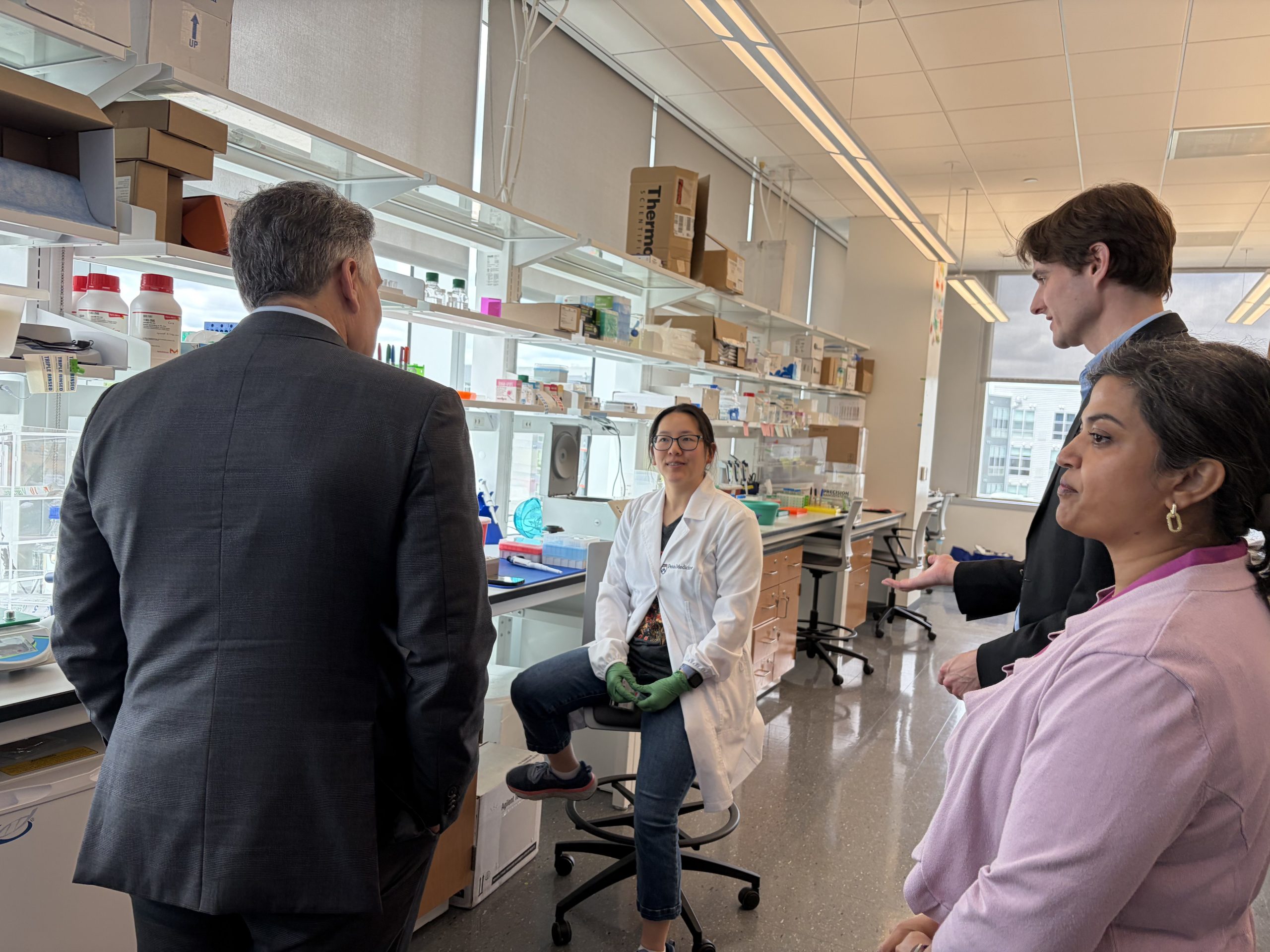
Penn Engineering professor George Pappas speaks with Sen. Dave McCormick about the AIRFoundry.Kayla Yup / Staff
AIRFoundry stands for Artificial Intelligence-driven RNA BioFoundry. Scientists hope AI will help them automate aspects of the design and manufacturing process, serving as a resource for researchers and commercial companies across the world.
A longtime anti-vaccine activist, Kennedy has claimed the technology is unsafe and ineffective, despite scientific evidence finding the vaccines to be highly safe and beneficial.
Now the foundry seeks to expand RNA’s applications in healthcare, agriculture and beyond.
Lee compared the technology to a hammer — good for certain things, but not everything.
“Our students and postdocs that get trained right now are going to be sort of the first generation of people to think about RNA as a tool for whatever problem they’re trying to solve,” Lee said.
An AIRFoundry scientist describes her work in the facility.Kayla Yup / Staff
A foundry for RNA
In themRNA COVID-19 vaccines, injected mRNA provides the instructions for cells to build a harmless fragment of the viral protein. That trains the body to recognize and fight a future infection.
Compared to traditional vaccines that use live or inactivated pathogens, mRNA vaccines can be produced more rapidly — useful in a pandemic.
One of the Nobel laureates behind that effort, Pennscientist Drew Weissman, has operated a smaller scale version of the facility, mainly to make mRNA for his lab and collaborators. The foundry’s launch marked an expansion beyond Penn.
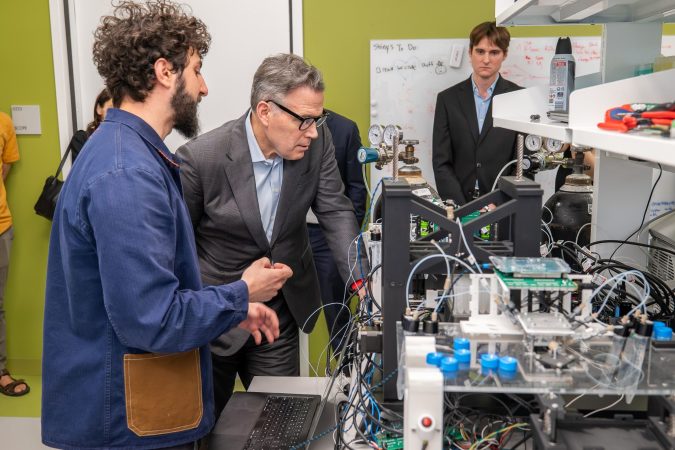
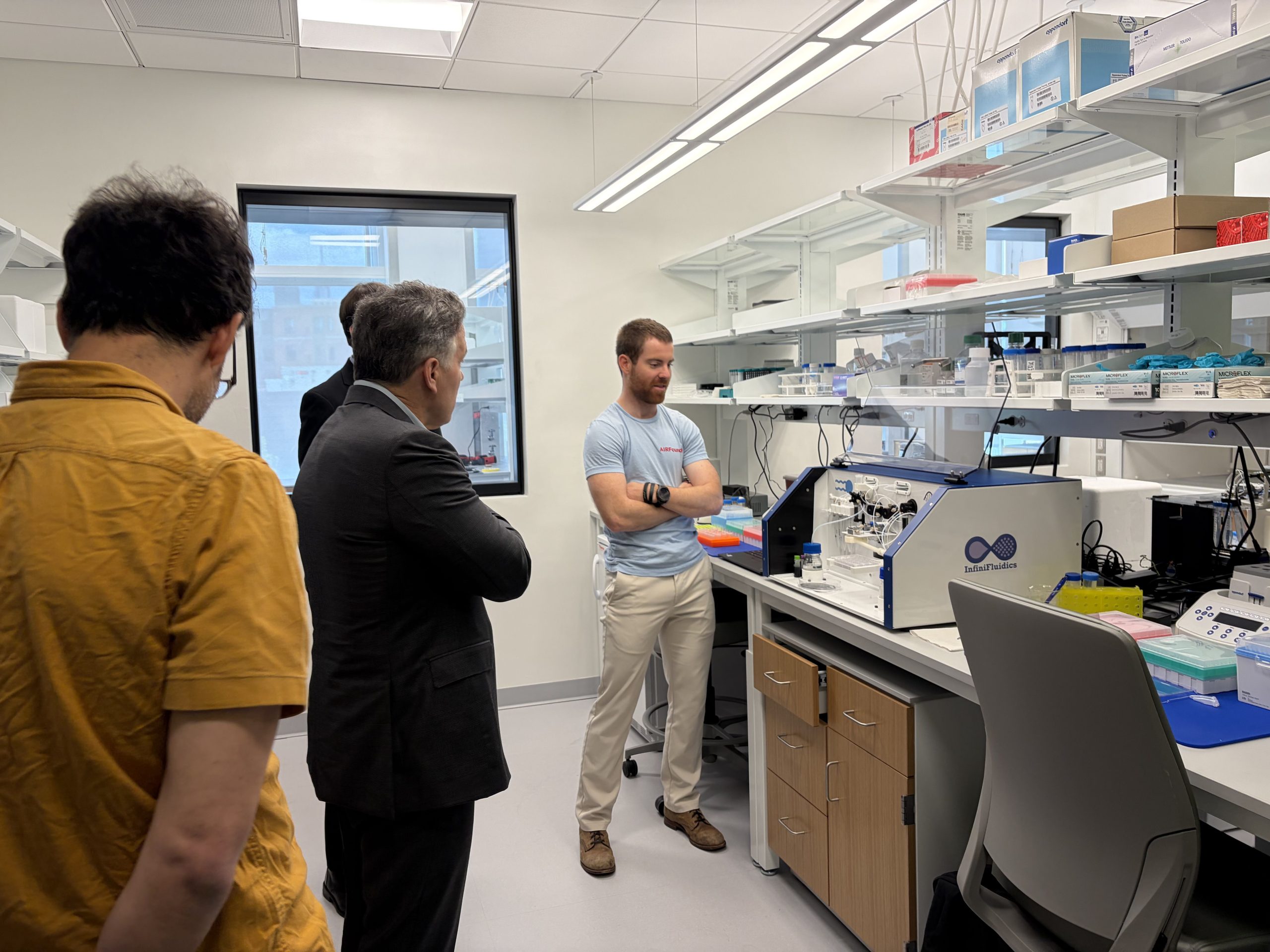
Its sterile instruments and busy lab benches were on display last month as students and faculty walked through the manufacturing process.
“It takes special facilities and skills to make RNA and associated materials,” Lee said.
Owen Land, an engineer at Infinifluidics (a Penn spinout), spoke about a device used to automate part of the process of creating liquid nanoparticles (a delivery vehicle for RNA).Kayla Yup / Staff
So far, Penn’s facility has operated on a “fee-for-service” basis, where collaborators request a specific RNA technology and the foundry builds it.
But its scientists hope to incorporate AI to help with synthesizing all the current knowledge, best practices and databases.
They also want to reach a point where users can come to the physical facility and use the instruments themselves.
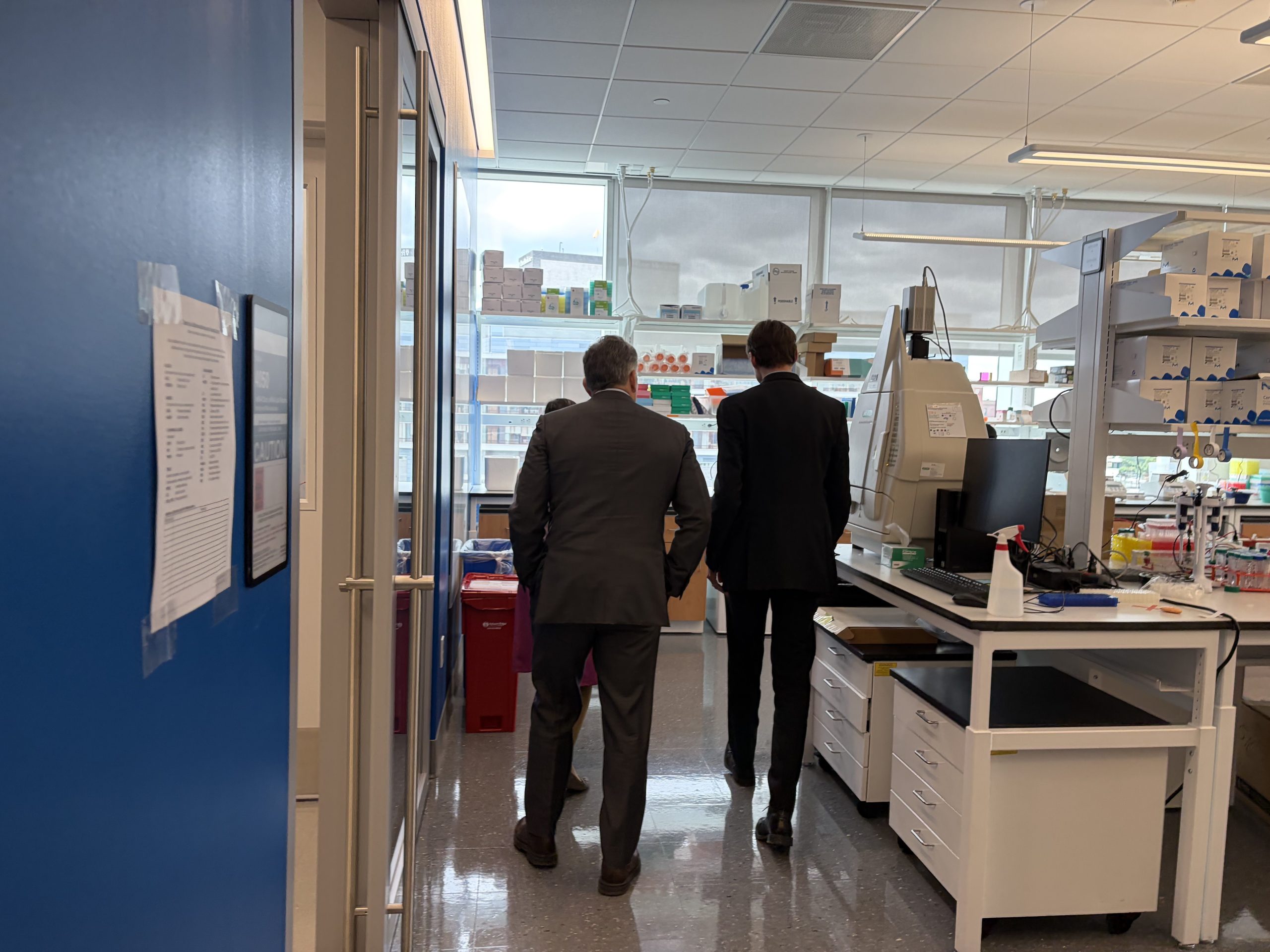
Sen. McCormick toured the AIRFoundry in May.Kayla Yup / Staff
The federal grant, which started in September 2024, supports the foundry for six years. Lee hopes it will eventually become self-sustaining through the services they provide.
Projects underway includeworking on vaccines to keep fish healthy.
Another collaboratoris developing ways to deliver RNA into plants to benefit the agriculture industry. For example, designing RNA molecules that carry instructions for producing a heat shock protein could protect plants from high temperatures. The plant would produce the protein and theoretically have greater resilience against extreme heat.
The molecule degrades over time, making its effects temporary. So if used during the summer months, the RNA could be gone by the time harvest rolls around.
This transient quality could also make RNA useful for pest control, in lieu of chemical-based pesticides, Lee said.
“We want to interact with everyone that’s interested in using RNA technology,” he said.
Former City Councilmember Jannie Blackwell, who has been a fixture of Philadelphia politics for decades, is no longer a Democratic wardleader. State Sen. Sharif Street — weeks after losing the city’s heated congressional race — just became one.
And the Rev. Lewis Nash Sr., who in 2024 was removed as leader of the 47th Ward after The Inquirer reported he was recorded making anti-LGBTQ+ remarks, has returned to the post after being reelected in his North Philadelphia ward Monday night.
Meanwhile, the upstart group Wards That Work, which was backed by progressive activists and sought to recruit hundreds of people to run for committee openings in the May 19 Democratic primary, claimed victories in six wards that were previously seen as aligned with the party establishment or more centrist Democrats.
Despite those notable gains,fewer than one-third of Philadelphia’s 69 Democratic ward leaders are seen as closely aligned with the party’s left wing.
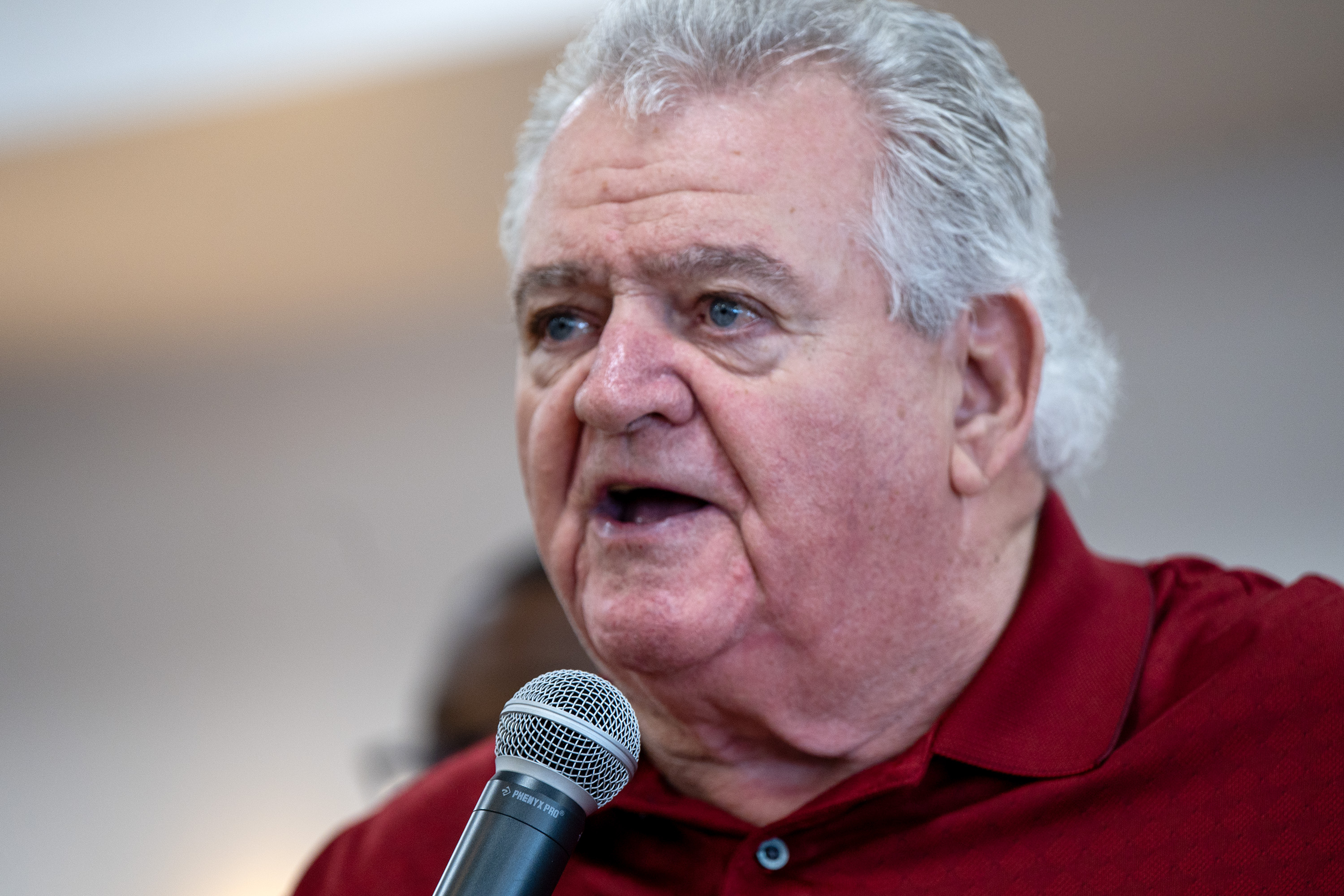
That means Bob Brady, who has led the local Democratic Party since 1986 and is seen by many as the embodiment of the political old guard, will likely coast to victory in party leadership elections — decided by the ward leaders — next week, securing an 11th term as chair of the Democratic City Committee.
The party’s internal politics have become a key battleground in the fight between progressive upstarts and the Democratic establishment. There has also been a renewed push to grow the number of “open wards” — those that allow committeepeople to vote on political endorsements rather than allowing ward leaders to decide unilaterally.
Brady, a former U.S. representative, has over the last few weeks struck a conciliatory tone regarding the party’s left wing after clashing with activists in a series of elections, most notably when the party sought to punish committeepeople who endorsed the elections of Councilmembers Kendra Brooks and Nicolas O’Rourke from the progressive Working Families Party.
“These labels — Working Families, Reclaim, socialist — the best labels they have that I love is they’re Democrats,” he said in an interview, referring in part to Reclaim Philadelphia, a group inspired by U.S. Sen. Bernie Sanders’ presidential runs that organized the local progressive movement’s first successful ward takeovers in 2018.
Now, he said, he is focused on unity as Democrats hope to make gains in this year’s midterm elections and defeat candidates aligned with President Donald Trump in future elections.
“We can come together and beat that nut in the White House,” Brady said.
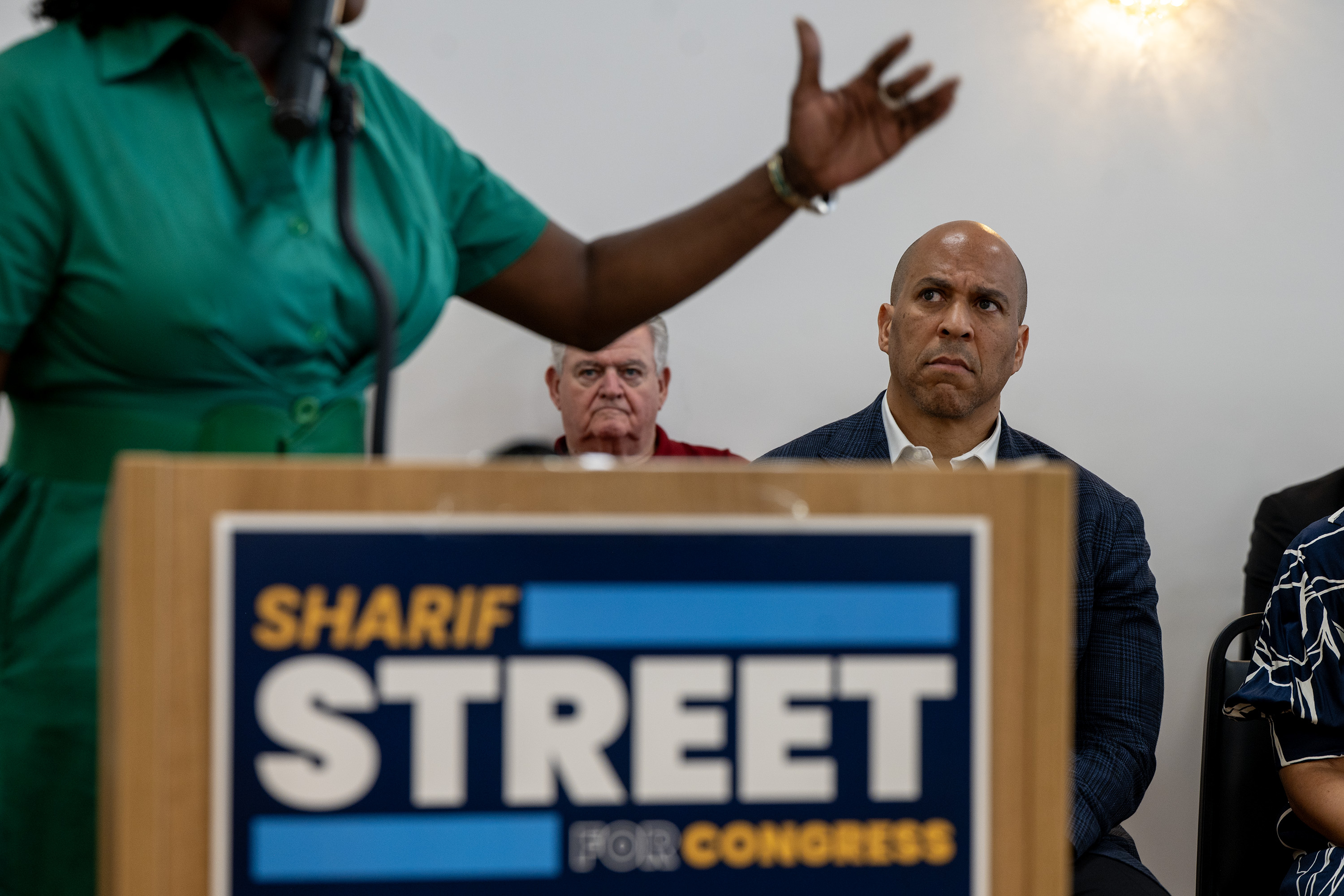
Philadelphia Democratic Party Chairman Bob Brady (left) and U.S. Sen. Cory Booker (right) listen as Mayor Cherelle L. Parker speaks in support of State Sen. Sharif Street at a get-out-the-vote rally at the Church of Christian Compassion in West Philadelphia Monday, May 18, 2026 the day before Tuesday’s Democratic primary election for the 3rd Congressional District.Tom Gralish / Staff Photographer
Earlier this year, however, Brady acknowledged that the Democratic City Committee funded mailers opposing some of the committeepeople backed by Wards That Work, and many on the left are still hoping for major changes in the local party.
District Attorney Larry Krasner, for instance, recently called on Brady to resign, and State Rep. Chris Rabb, a democratic socialist who last month won the Democratic primary for an open Philadelphia congressional seat, has emerged as a leading critic.
Rabb beat Street, the party’s endorsed candidate, in the 3rd Congressional District race, and has accused the city committee of neglecting the work of turning out the vote, instead concerning itself with backroom dealings among party insiders.
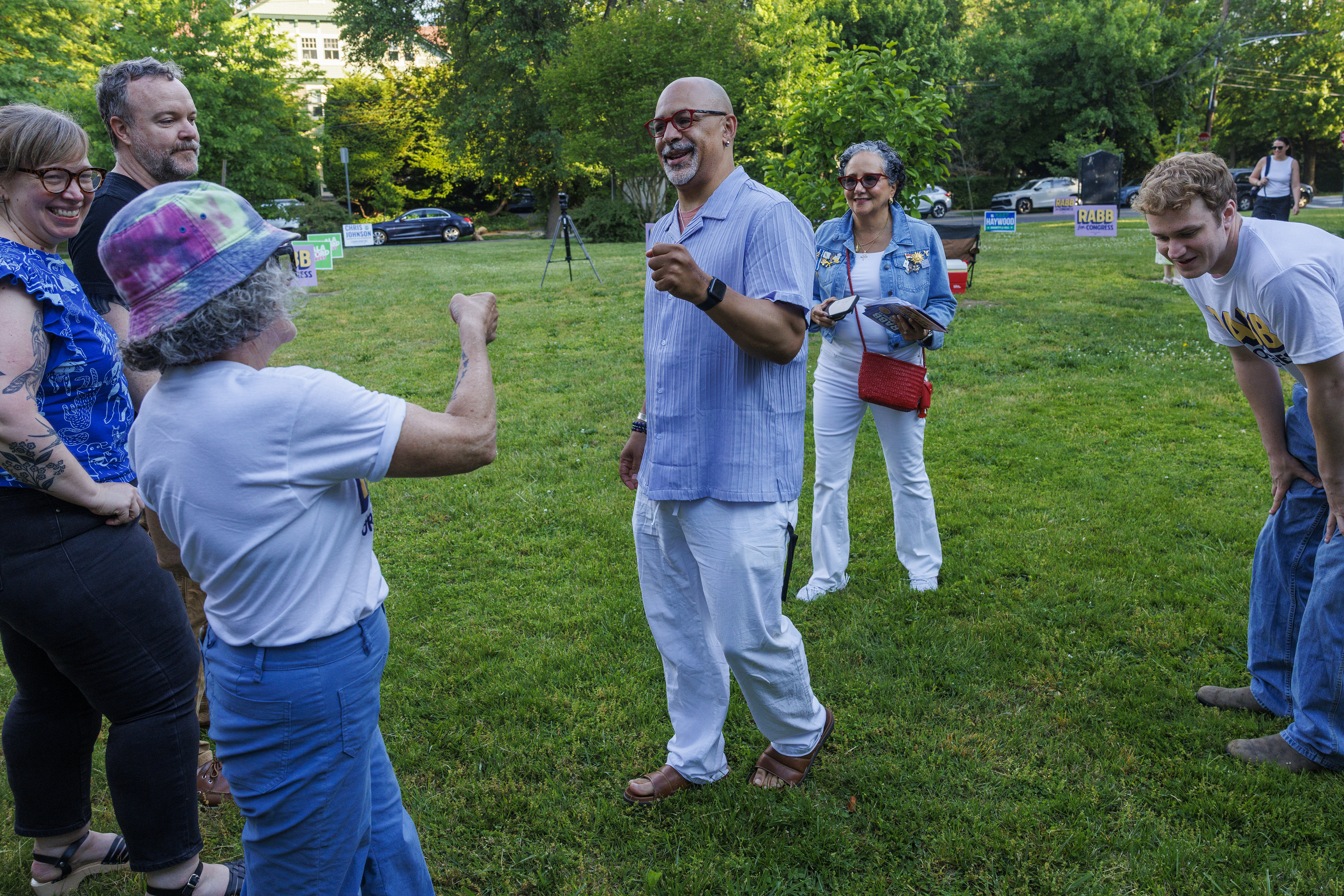
State Rep. Chris Rabb greets supporters on election day. He is arriving to his polling place to vote, Grace Epiphany Episcopal Church, Philadelphia, Tuesday, May 19, 2026.Alejandro A. Alvarez / Staff Photographer
Rabb has not explicitly called for Brady to resign. But he is now calling for a dramatic overhaul of the party, from its leaders to its bylaws to the city’s antiquated ward boundaries.
“What I’m asking for is for the ward leaders — whatever candidate is running for chair, whether it’s Bob Brady or anyone else — that they demand that their first order of business is to overhaul the bylaws by Labor Day [to focus] on building a local party built on transparency integrity and inclusion,” Rabb said in an interview last week.
Progressives make gains
On paper, Philadelphia’s Democratic Party structure is bottom-up. Every four years, during the primaries of presidential midterm cycles, registered Democrats elect two committeepeople from their precincts, as they did this year on May 19. The committeepeople then elect neighborhood-level ward leaders, and the ward leaders in turn elect the top officials in the city party, including Brady.
But in practice, many critics of the city’s old guard see a top-down reality, with Brady and other high-ranking city officials controlling the party’s agenda.
Progressives are hoping to wrest control of the party from the establishment or to force reforms that make it more hospitable to left-leaning candidates. But it remains an uphill battle given the diffuse nature of the party system.
Among the notable progressive wins in Monday night’s ward elections:
5th Ward (Center City): Ryan Alsayegh, a political consultant currently working for State Reps. Tarik Khan and Joe Hohenstein, unseated Mike Boyle.
25th Ward (Port Richmond, Kensington): Alexandria Mercedes Murphy, a neurophysiologist and volunteer with Reclaim Philadelphia, succeeded Tommy Johnson.
31st Ward (Fishtown, East Kensington): Molly Hartman, a staffer for Councilmember Rue Landau, faced no opponents in her bid to succeed Margaret Rzepski.
27th Ward (University City): Benjamin Moss-Horwitz, a staffer for State Rep. Rick Krajewski, won a contested race to succeed retiring ward leader Carol Jenkins, a party stalwart.
46th Ward (Squirrel Hill, Cedar Park): James Bridgeforth, a University of Delaware professor, ran an uncontested race to succeed Blackwell, who retired this year after defeating a progressive challenger for her ward in a contentious election four years ago.
In West Philadelphia’s 60th Ward, State Rep. Amen Brown, a centrist Democrat, was unseated by Lorraine White-Johnson.
White-Johnson, who had the backing of Wards That Work, said in an interview that she is not aligned with one faction and welcomes all Democrats. She added that she plans to explore opening up the ward but has not made formal plans to do so yet.
Philadelphia City Councilmember Cindy Bass on Thursday, September 11, 2025.Alejandro A. Alvarez / Staff Photographer
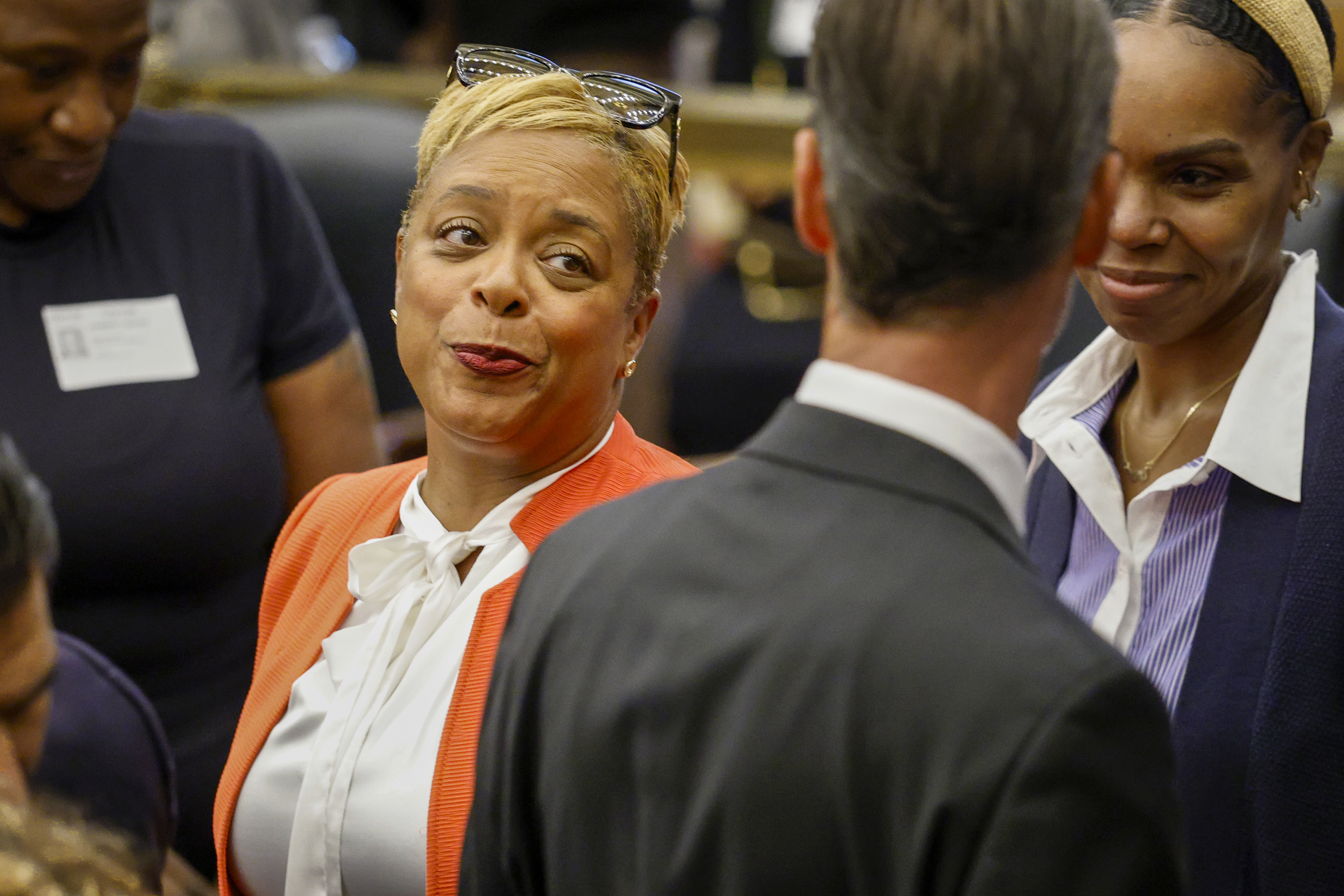
In Mount Airy’s 22nd Ward, Councilmember Cindy Bass declared herself reelected to a new term in a controversial move by saying she won a contested voice vote of committeepeople and denying motions for a roll-call vote that could have clarified the results. Her opponent, Octavius Price, was backed by progressive organizers and said he plans to challenge the election.
Some notable ward election results did not involve major ideological shifts.
Nash, who on Tuesday denied having made the anti-LGBTQ+ comments that previously cost him his seat, won a three-way race to reclaim the 47th Ward.
“I forgive everybody that was involved with those unforeseen circumstances,” Nash said in an interview Tuesday. “To anyone that was offended by the alleged comments, forgive me and the person who made those comments, allegedly and falsely, and let’s move forward.”
In a statement, Street said he would “take a back-to-basics approach, listening to my neighbors about their concerns and filling vacant committee member seats.”
“Last month’s election results galvanized my belief that we need to build the party from the ground up,” Street said in a statement. “We need to increase voter turnout in Black communities, like North Philadelphia, by demonstrating every day that Democrats are fighting for them.”
Staff writer Anna Orso contributed to this article.