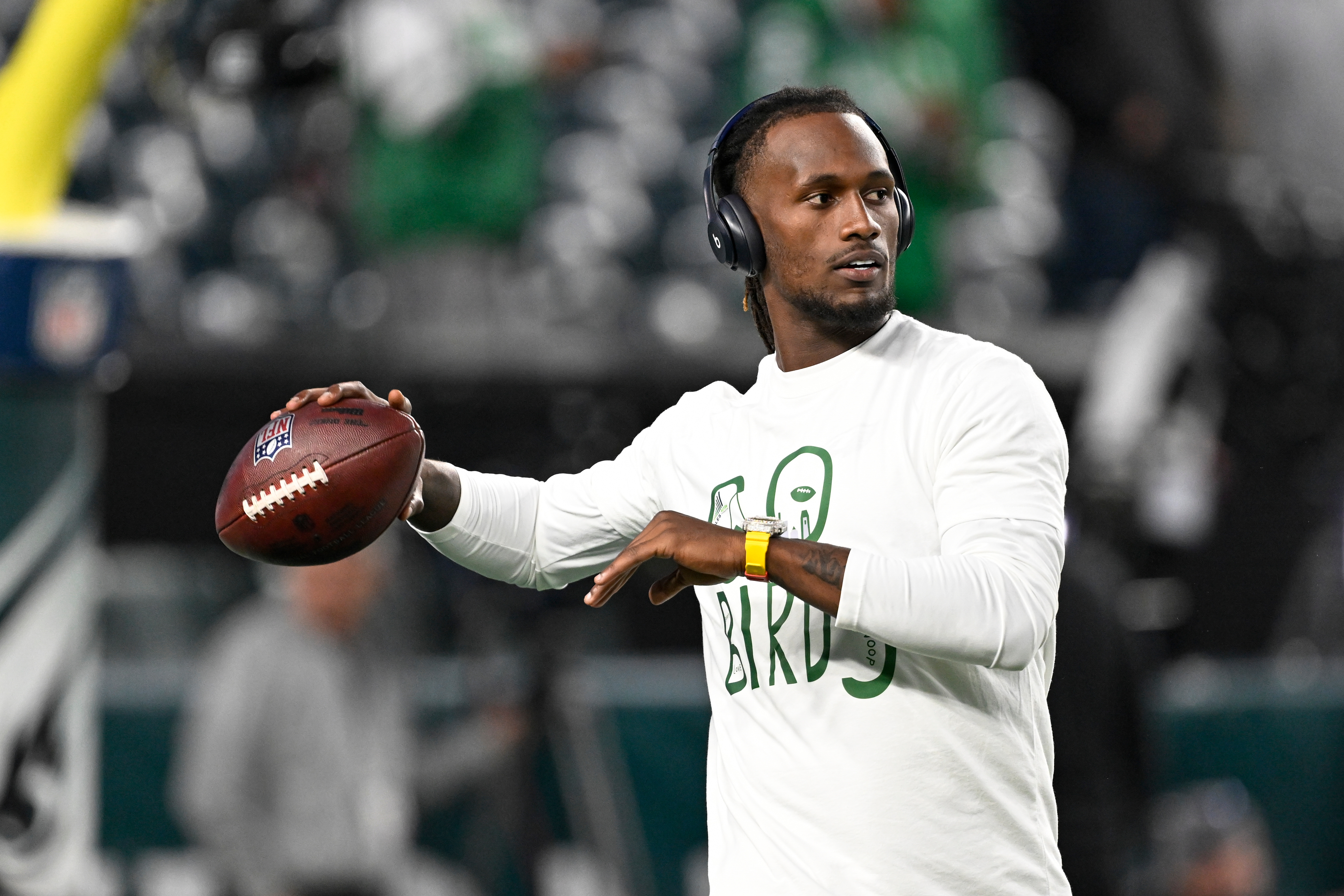
Nick Sirianni on Friday spoke publicly for the first time since benching quarterback Tanner McKee for Joe Milton on Wednesday.
Sirianni said he thought McKee “played solid,” but that he “felt [he] needed to” switch to Milton for a midseason spark, with the team sitting at 2-6 and on a six-game losing streak.
“This is just what I felt like we needed to do right at this particular moment to give ourselves the best chance to win this weekend,” Sirianni said.
Milton and the Eagles face the NFC East-leading Giants (4-2-1) Sunday at Lincoln Financial Field.
The Eagles signed Milton, 26, off the Cowboys’ practice squad to their active roster on Oct. 16 after placing quarterback Jalen Hurts on injured reserve due to blood clots. The Eagles first turned to McKee for three starts, but he was benched after three consecutive losses.
Part of the reason Sirianni pivoted to Milton was because of his arm talent.
“Yeah, obviously he’s talented and he’s been here for a couple weeks now,” Sirianni said. “Very talented arm, very talented athlete, can process and make decisions out there. Just a lot of good qualities that he has. I like his confidence and everything that he brings. And it’s been fun getting to know him and working with him.”
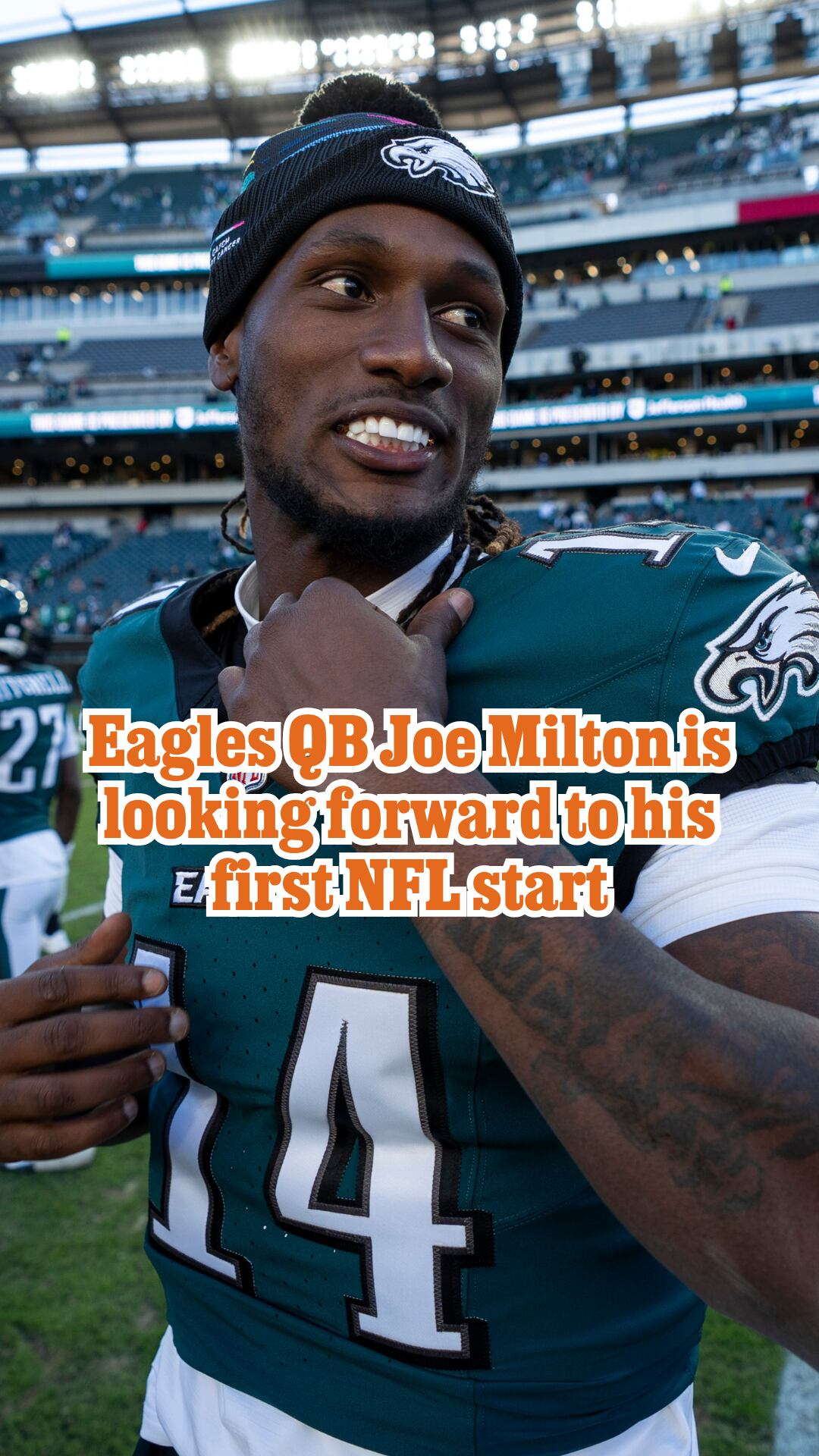
Video: Eagles QB Joe Milton is looking forward to his first NFL start
Milton was Dak Prescott’s backup in Dallas last season and had a strong preseason, tossing for 378 yards and three touchdowns with zero interceptions on 29-of-43 passing. Dallas waived him in August in favor of former Eagle Sam Howell, before bringing him back to the practice squad.
Milton has five NFL regular season appearances as a member of the New England Patriots and Cowboys under his belt. He’s completed 37 of 53 passes for 424 yards, two touchdowns, and two interceptions since entering the league in 2024. The Patriots selected him in the sixth round (193rd overall) of the 2024 NFL draft out of Tennessee.
Sirianni also offered an explanation for the unusual way the news leaked out this week.
On Monday, Sirianni said that McKee is “their guy” and added that they wouldn’t be making a quarterback change. On Wednesday, multiple reports surfaced that the Eagles were switching to Milton. On Thursday, Landon Dickerson and Jordan Mailata — the first two players to speak with reporters during media availability — said McKee and Milton “split reps” at practice. Dallas Goedert revealed the truth minutes later: Milton was the starter.
“I was going to hold on to [the news] as long as I possibly could,” Sirianni said. “I’m not real shy with you guys… I respect the job that y’all have to do, but I’m going to tell you what I want to tell you guys.
“I’m always going to protect the team first and foremost. Every second that goes by in a situation like that that you can hold on to information as long as you possibly can is a little less time for the opponent to get ready for the game.”
Philadelphia is not required to respect requests from federal agencies to keep undocumented immigrants in jail long enough to be handed over to U.S. Immigration and Customs Enforcement agents, a federal judge ruled Thursday.
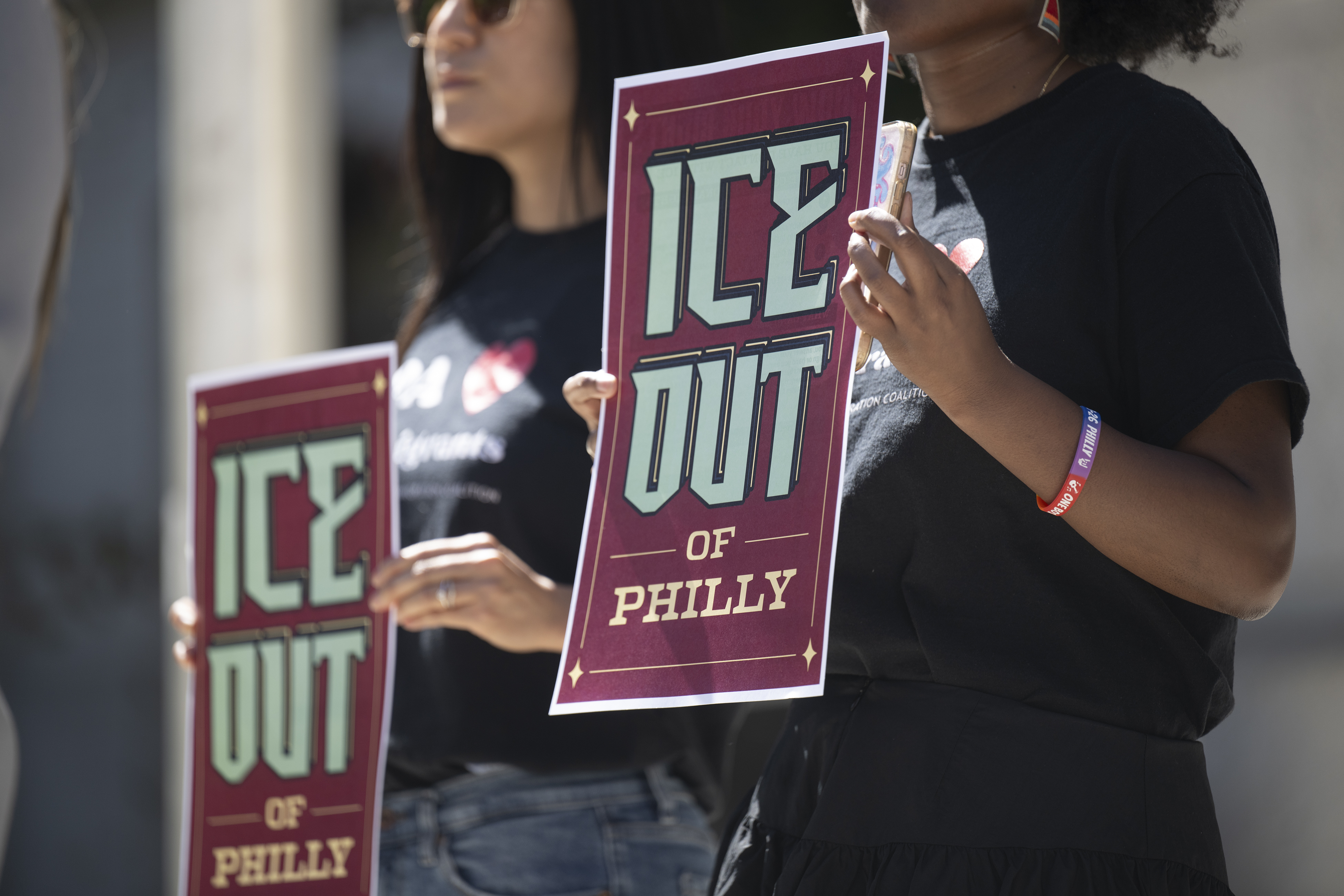
U.S. District Judge Chad F. Kenney dismissed a challenge brought by the Department of Justice against a provision in Philadelphia’s “ICE Out” legislation that codified the city’s long-standing practice of not honoring immigration detainers.
Philadelphia’s ordinance is not unlawful because “compliance with an immigration detainer is voluntary,” Kenney wrote. The prohibition on honoring detainers also “does not pose a true obstacle to the federal government’s execution and enforcement” of immigration law, the judge said.
A spokesperson for the city’s law department said in a statement the city “concurs” with the court’s decision and remains “committed to compliance with local, state, and federal laws.”
The Justice Department did not respond to a request for comment.
The lawsuit was originally filed in June against the city, its officials, and District Attorney Larry Krasner and focused on a provision prohibiting law enforcement officers from concealing their identity.
The Justice Department expanded its complaint to also target the detainer ordinance, which is part of the “ICE Out” legislation package that took effect in July, and makes it illegal for a city agency or employee to keep people otherwise eligible for release in custody because of an immigration detainer, an administrative warrant, or suspicion they violated immigration law.
The Justice Department argued the local provision imposed a “blanket refusal” by the city to cooperate with the federal government, and amounted to a “standing assurance that the federal handoff Congress built into federal immigration law will never happen within Philadelphia, whatever the circumstances.”
Plans for an age-restricted community with nearly 500 homes on hundreds of acres of open farmland in Uwchlan Township were denied by elected officials this week, who felt the proposal “did not meet the bar” for rezoning the property to include residential.
The township’s three supervisors voted unanimously Wednesday to deny both a zoning amendment that would have allowed for residential development at Lionville Station Road, and a tentative development plan that included about 492 homes, a swimming center, miles of nature trails, a Monarch butterfly way station, andmore than 100 acres of open space.
There are elements of the plan that would have served the township well, said board chairperson Laura Obenski, with its focus on recreation, preservation, and residential. But it wasn’t a perfect fit.
“Unfortunately at the end of the day, I think that the burden that was going to be borne by taxpayers of Uwchlan Township did not meet the bar in my head for a rezoning request and I hope that we can revisit those conversations because there are some extraordinary opportunities on the table,” she said.
The denial is a blow for some residents, who rallied together years ago as the groupSave Lionville Station Road to fend off plans for industrial development of the 237-acre property. They had worked with the developer, Rockwell Development, to create what they considered a satisfactory residential development proposal. The developer said there were about 112 meetings regarding the project.
Greg Lingo, president of Rockwell, said Friday the board’s decision was “surprising to us, and all the stakeholders that worked so earnestly to develop the low-density active adult residential plan that we all could be proud of.”
“It was helpful for us to now know formally that the Township does not desire to rezone the property and instead would like to see it developed under its current zoning,” he said. “…We anticipate over the next 60 days to be in front of the Township to process the plan that they prefer.”
Downingtown Area School District purchased the land in 2003 for roughly $22 million to build a school campus. The district has sought to sell the property for more than a decade after its request to change the zoning was denied.
After several deals didn’t come to fruition, including what could have become a warehouse complex with an outdoor recreation area that residents opposed, the district in 2024 entered into a sales agreement with Rockwell.
That year, the township tried to open communication between the district and prospective buyers to avoid repeating history: disagreements about zoning, Obenski said.
“I think the rest of this process has followed predictably when there’s not healthy communication with all the stakeholders at the table,” she said.
Still, it’s not a “dead conversation,” she added, saying she “hope[s] we can move forward in a productive way.”
Before the board took its vote, members of Save Lionville Station Road said while they’d prefer it to remain open farmland, they knew that was unlikely. A residential development seemed much more agreeable than a warehouse.
“If this community plan doesn’t go through, we’ll end up with ugly warehouses instead of homes and well-maintained properties,” said resident Bonnie Fertell.
Or, they worried, data centers.
“I have a great concern that we may be opening a Pandora’s box by allowing … the entry into data centers if we don’t go forward with the residential plan,” said resident Christopher Engle.
But it wasn’t enough for the supervisors to greenlight.
“I don’t think there’s enough positive benefit to the township to justify changing our comprehensive plan,” said vice chairperson Bill Miller, saying that while he wasn’t “necessarily fundamentally opposed” to adding homes there, “the density was too much.”
The traffic the development would create would be “just a nightmare,” Dennis Martin, chairperson of the planning commission, told the board Wednesday. “You don’t have to be a genius to figure all those cars are going to be a problem.”
Traffic was a large concern for other residents, who asked the township to look further into what it could do to preserve the open space. Some residents Wednesdaywere also opposed to the addition of a natatorium, which proved to be one of the more divisive parts of the plan. It would be used by the community and the Downingtown Area School District for its swim team’s practices and competitions.
Resident Kaitlin Knecht, an assistant swimming coach in the district, advocated for its approval, saying, “It is one thing that we’re missing in this community, and I know that from growing up here.”
Supervisor Larasz Moody was “agnostic” to the natatorium but believed residential development was better than what the alternatives could be.
“I do hope that future discussions will include a residential development that will better fit into the comprehensive plan of our community and that aligns with what we want as residents currently, and certainly what will benefit future residents as well,” she said.
Losing the natatorium in the denial “devastated” Obenski the most, she said.
“I think we have fantastic pieces on the table. They just did not fit together,” she said.
This suburban content is produced with support from the Leslie Miller and Richard Worley Foundation and The Lenfest Institute for Journalism. Editorial content is created independently of the project donors. Gifts to support The Inquirer’s high-impact journalism can be made at inquirer.com/donate. A list of Lenfest Institute donors can be found at lenfestinstitute.org/supporters.
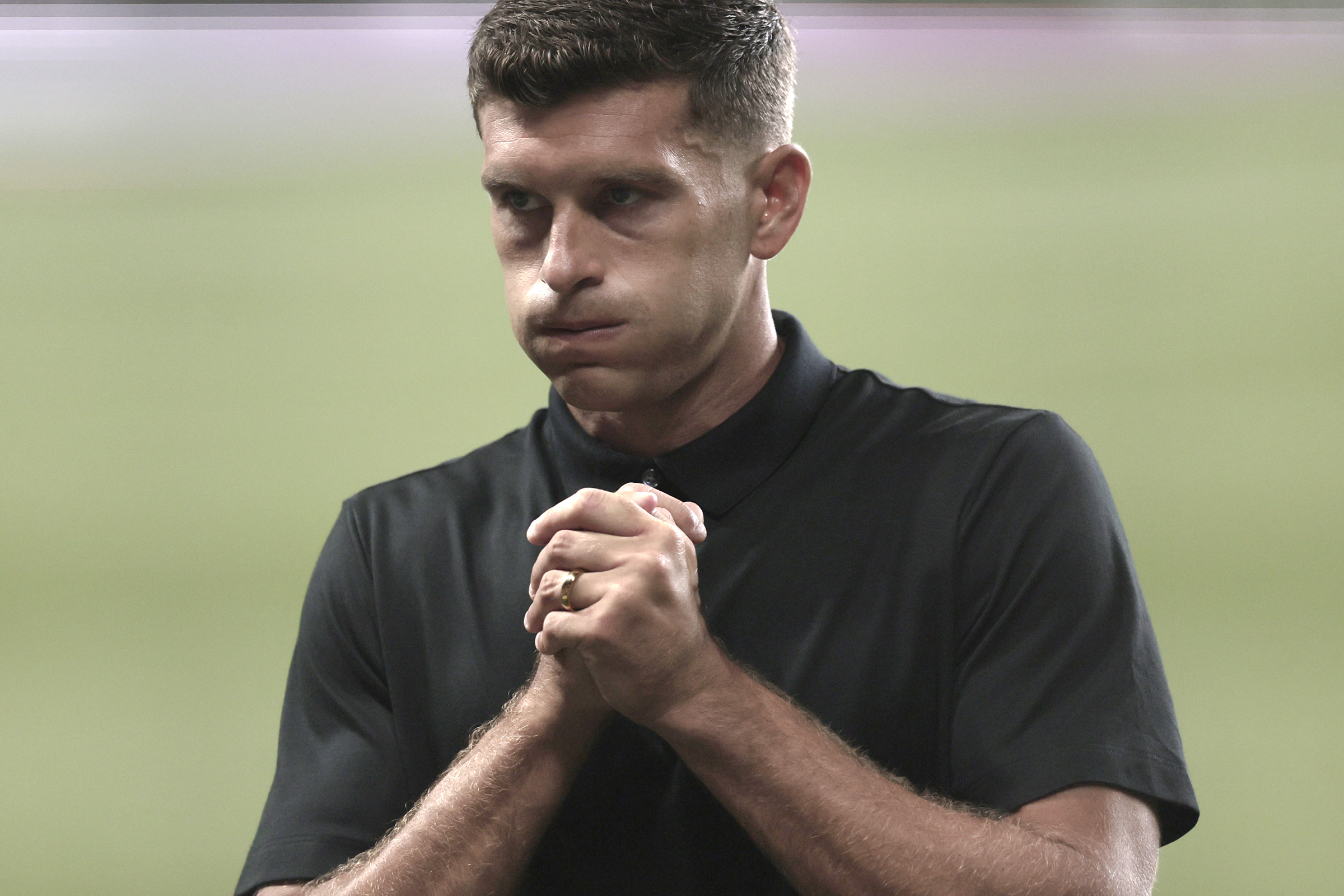
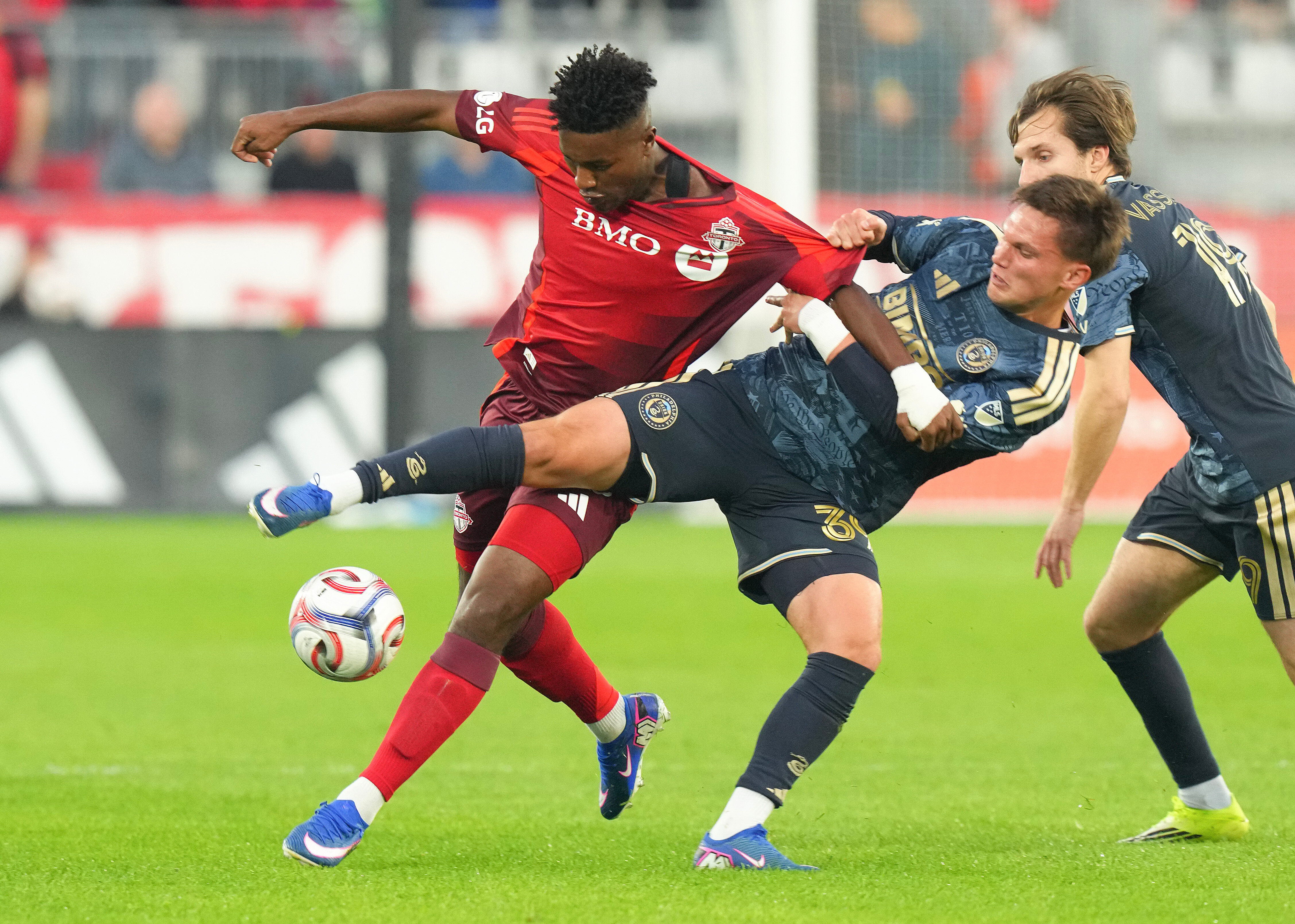
The Union don’t really need extra motivation heading into Saturday’s regular-season finale against Toronto FC at Subaru Park (4 p.m., Apple TV). Win the game against a team already eliminated from the playoffs, clinch sixth place, and head off to the postseason on a good note.
But give any team an opportunity to create a chip on its collective shoulder, and the invitation will almost always be accepted. The Union’s current four-game winless skid — two ties and two losses, to be precise — does exactly that.
So if the fuel tank is topped up with a dash of annoyance heading into the weekend, interim manager Ryan Richter won’t complain.
“’Annoyed’ is probably better a word to describe the coaching staff, just with the way the results have gone,” he said. “But the players, I feel like they’re motivated. And now that this last game of the regular season is really meaningful for us, it gives us that extra little bump of what we’re pushing for exactly.”
Ryan Richter hopes to get his team back to winning this weekend.Elizabeth Robertson / Staff Photographer
Though Richter had expected leading scorer Milan Iloski to return this weekend from a hamstring strain, he isn’t ready yet. Richter called him “questionable” on Thursday, and did not sound optimistic. Centerback Japhet Sery Larsen is also out due to concussion symptoms.
Iloski is expected to be back in shape next week, and should be on the field for the playoffs.
“As far as a training point of view, I don’t think he’ll miss next week,” Richter said. “I think he’ll probably be part of the group next week. It’s just a little tight for this weekend, the turnaround, but he’s close to being fully back in with the group.”
The Union (13-12-8, 47 points) would clinch sixth with a win, and at least seventh with a tie. That would keep them out of the 8-9 game in the Wild Card round. A loss could knock them into those last spots.
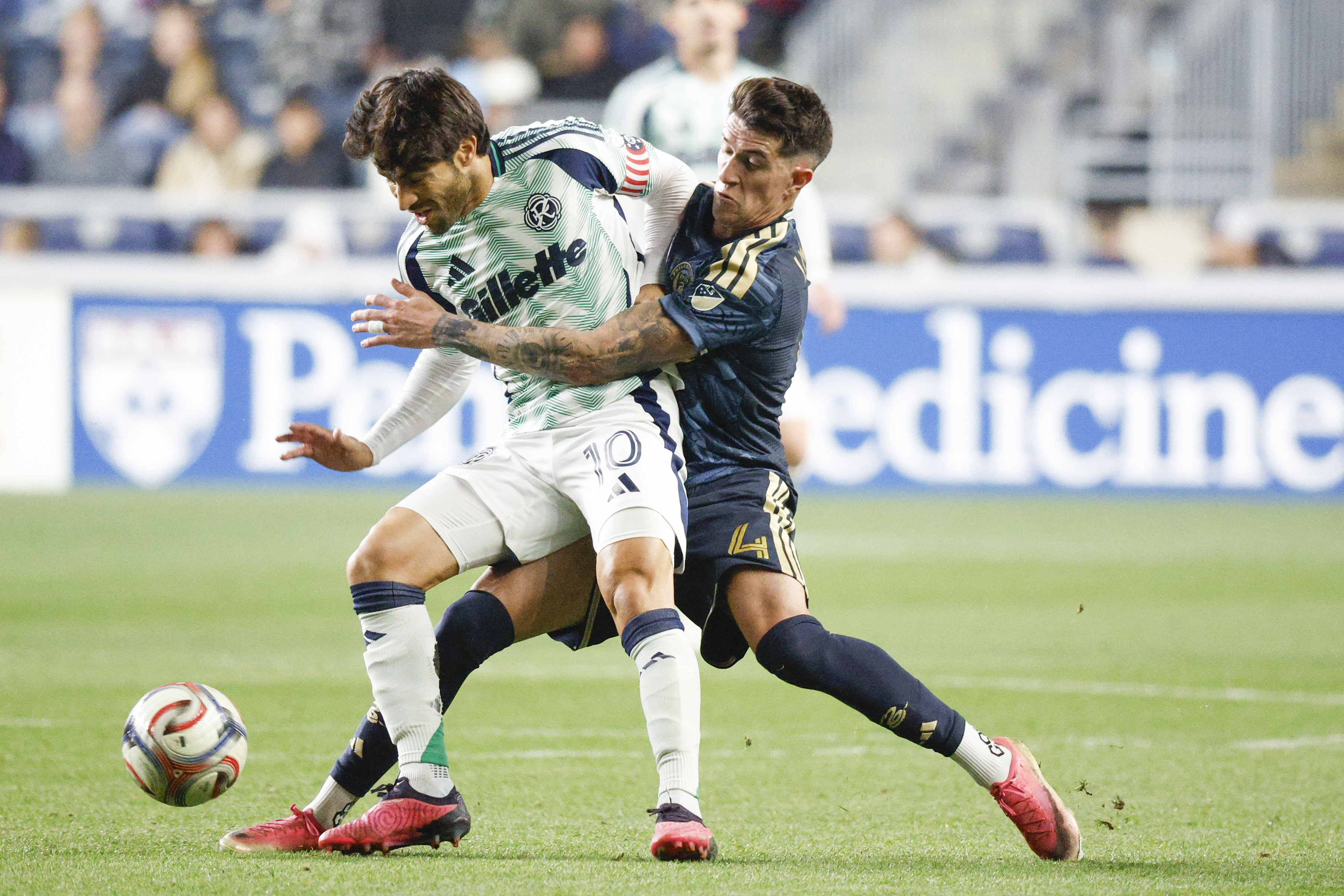
Frankie Westfield (center) battling with Toronto’s José Cifuentes when the teams met up north in April.Chris Young
Two teams can overtake the Union from below: seventh-place Cincinnati (12-11-10, 46 points) and eighth-place Columbus (13-15-5, 44 points).
Cincinnati hosts Nashville, which has clinched the Supporters’ Shield for the best record and is now playing to beat 74 points and set a new league record. Columbus visits fourth-place Chicago, which has to get a better result than Charlotte to keep that spot and home field in the first round.
Charlotte goes to second-place Miami, another game the Union will have an eye on. The same goes for third-place New England at ninth-place Orlando. Miami and New England will finish second and third in some order, but right now they are just one point apart.
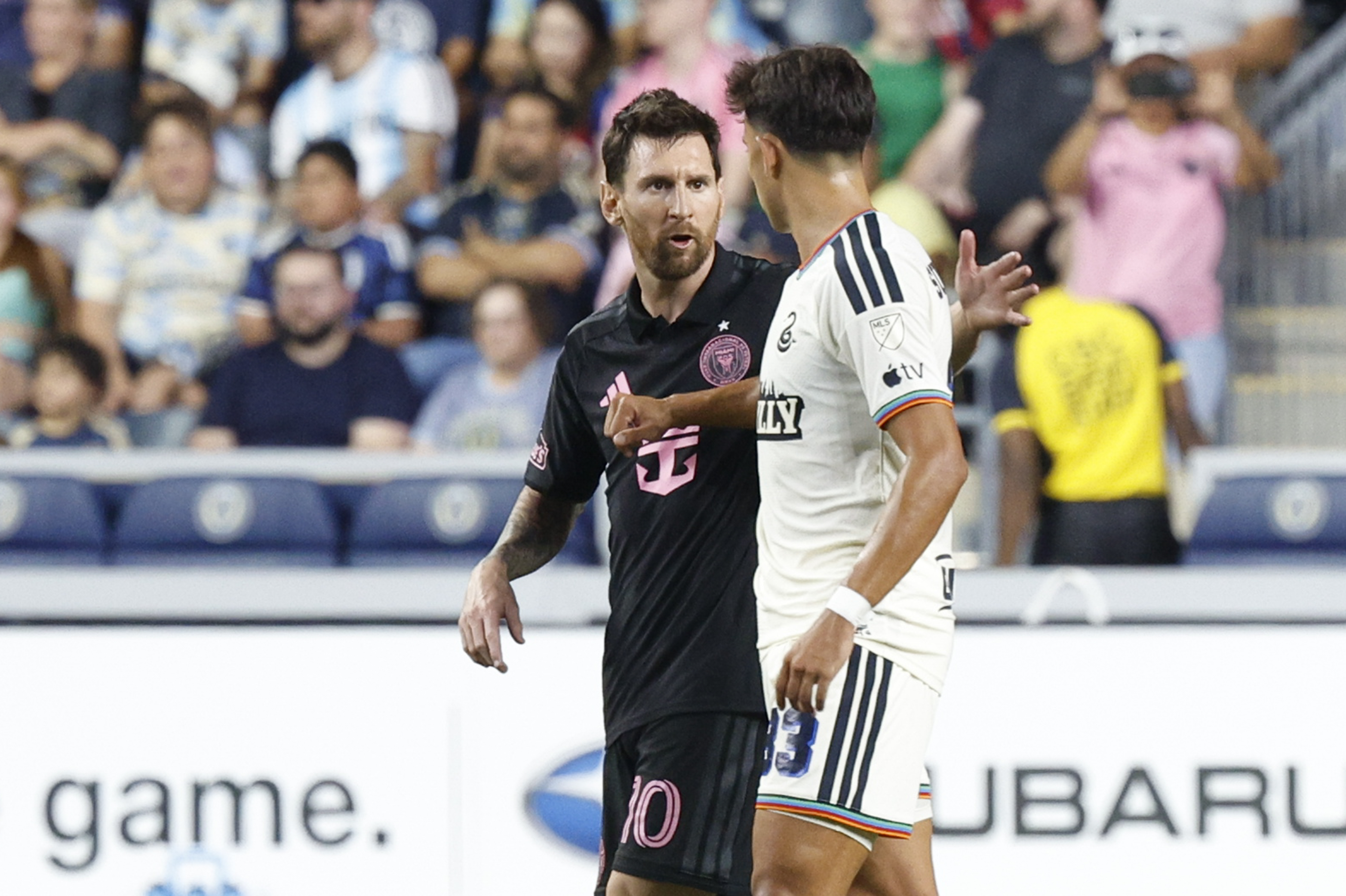
If the standings stay as they are, the Union will face New England in the first round for the second time in four years. But you can be sure plenty of people will hope for the combination of results that sets up a Union-Miami series, pitting Cavan Sullivan against Lionel Messi.
A Union-Miami playoff series would likely be as dramatic as it would be profitable at the box office.Steven M. Falk / For The Inquirer
“Some stuff is out of our control as far as how the opponent goes after [Saturday], but what is in our control is taking care of business, winning the game, finishing in sixth place, and then we can assess where we’re at after that and see what the opponent looks like,” Richter said. “I think the group is really motivated right now, and excited [with] how we bounce back from a tough week — a tough week physically, mentally, and then the results not going perfect either. But we’re ready for the game this Saturday.”
As is always the case on Decision Day, all the games in each conference kick off at the same time: 4 p.m. for the East and 7 p.m. for the West. Apple TV will carry them all, and the “MLS 360” whiparound show — a weekly feature similar to “NFL RedZone” — should be especially handy.
National team honors
Union striker Bruno Damiani earned his first callup to Uruguay’s senior national team, a reward for his good form since the World Cup. La Celeste plays two friendlies this month, visiting old rival Argentina (in that team’s first game since Lionel Messi’s international retirement) and hosting the Dominican Republic.
Lista definitiva de Diego Forlán para los amistosos con Argentina y República Dominicana por Fecha FIFA 📋 pic.twitter.com/hUkNrSRGfi
Another striker, academy product Malik Jakupović, was named to the U.S. squad for the upcoming under-17 World Cup. The tournament is Nov. 19-Dec. 13 in Qatar, and he will leave Chester after this weekend for a training camp.
The Union have been planning for this for months, even as the team got good enough to earn a playoff berth. They will hope they don’t miss Jakupović too much – and they will really hope Ezekiel Alladoh finally does something good if he’s called upon.
Former Union centerback Mark McKenzie was added to the senior U.S. national team squad for the Nations League quarterfinals, after Chester native George Campbell had to withdraw due to a groin injury suffered in a game on Wednesday. It wasn’t a surprising move, as U.S. manager Mauricio Pochettino admitted when he announced the roster that Campbell might not be able to travel.
Danley Jean Jacques is expected to be across the field from the U.S. with Haiti, while Andre Blake will be with Jamaica as the Reggae Boyz try to upset Mexico. Frankie Westfield and Andrew Rick will be across the Atlantic Ocean, at a U.S. under-23 team training camp in Spain, including games against Scotland and Ukraine.
window.addEventListener(“message”,function(a){if(void 0!==a.data[“datawrapper-height”]){var e=document.querySelectorAll(“iframe”);for(var t in a.data[“datawrapper-height”])for(var r,i=0;r=e[i];i++)if(r.contentWindow===a.source){var d=a.data[“datawrapper-height”][t]+”px”;r.style.height=d}}});
Delgreco Wilson, who formerly taught comparative politics and international relations at Lincoln University, is a political analyst, educator, and advocate whose work centers on empowering Black Americans through a deeper understanding of political strategy.
Exit polling and media reports, however, suggest that the dominant language of the election was economic, not constitutional. Roughly four in 10 voters said the economy was their top issue, and many blamed high prices on President Donald Trump’s policies. The war with Iran, which spiked fuel costs, and the tariff regime that raised consumer prices were the proximate causes of Republican losses.
The rebuke of MAGA, therefore, was largely a rejection of governance that made life more expensive, delivered by an electorate that has never been taught to evaluate the deeper architecture of democratic exclusion.
With that in mind, the most revealing insight about the 2026 election may not have been what voters punished, but what they would likely have tolerated.
Imagine a MAGA regime that had pursued its white nationalist domestic agenda with the same zeal it brought to tariffs and deportation, but had managed to keep inflation near the Federal Reserve’s 2% target.
Imagine the same assaults on voting rights, the same purges of civil service professionals, the same rhetorical accommodation of white supremacist constituencies — but with a grocery bill that did not climb.
On the evidence of the past 250 years, that MAGA regime would probably have won.
This is not speculation. It is the lesson of American political history. For most of the republic’s life, Americans have accepted explicit racial oppression and suppression as the ordinary cost of doing political business.
They accepted slavery as the constitutional foundation of the Union.
They accepted Jim Crow as the natural order of the South.
At no point did a majority of white Americans treat any of these as disqualifying. What they could not abide was material hardship.
One of the main drivers of the MAGA movement is explained in political science as “racial accommodation backlash,” when dominant groups mobilize politically in response to concessions that have been made to minorities — and it is not a fringe phenomenon. It is the mainstream of American electoral history.
What the Trump regime has revealed is that the invitation still works — provided the price is right. MAGA’s mistake was not its agenda. It was its arithmetic. It paired the cultural program that has historically been electorally viable with an economic program that made life worse for the very voters it needed.
Runaway inflation, in other words, was the bridge too far.
Racial oppression alone was not.
American students are taught a story of democracy achieved rather than democracy contested — and this miseducation leaves them ill-equipped to recognize structural regression. The 2026 results offer a partial test of that claim.
On one hand, the Democratic coalition assembled a broad majority that included the white working class and voters of color, and it elected candidates who explicitly campaigned on democratic protections. This suggests that the capacity for democratic self-defense is not absent. On the other hand, the mechanism of that defense was largely reactive: voters punished the party in power for material suffering, a dynamic as old as the republic itself.
The deeper question — whether Americans can identify and resist the slow erosion of democratic institutions when the grocery bill is manageable — was answered, and the answer was discouraging. They cannot, or at least they did not.
The prescription of self-education and conceptual literacy — Carter G. Woodson’s call for intellectual independence — finds validation in a different corner of the results. The candidates who won — Sen.-elect James Talarico in Texas, Sen.-elect Annie Andrews in South Carolina, and Gov.-elect Keisha Lance Bottoms in Georgia — ran as explicit foils to Trump, not as technocrats promising procedural reform.
Their victories depended on the same narrative clarity our civics education has suppressed: a story of who is included and who is excluded, of whose interests the system serves. When that story is told plainly, voters respond.
The midterms of 2026 demonstrated that American voters can deliver a decisive rebuke to a movement that threatens democratic norms. That is not nothing. It is, in fact, the minimum condition for any subsequent progress.
But a country that has never taught its citizens to understand democracy as a contested, incomplete, and reversible project will remain vulnerable to the next assault — especially when that assault arrives wrapped in the language of economic grievance rather than constitutional rupture.
The Democratic victory of 2026 may have bought time. It did not, by itself, build the democratic literacy that would make the next defense unnecessary. Worse, it may have taught the wrong lesson: that the way to stop authoritarianism is to lower the price of eggs.
The real lesson is harder. MAGA nearly succeeded because it understood something our civics classes have spent generations denying — that a substantial share of the American electorate will accept, and even embrace, the suppression of others so long as their own material conditions hold steady.
The task for democrats, small-d, is not merely to win the next inflation cycle. It is to build an electorate that would reject the white nationalist program even when the grocery bill is affordable.
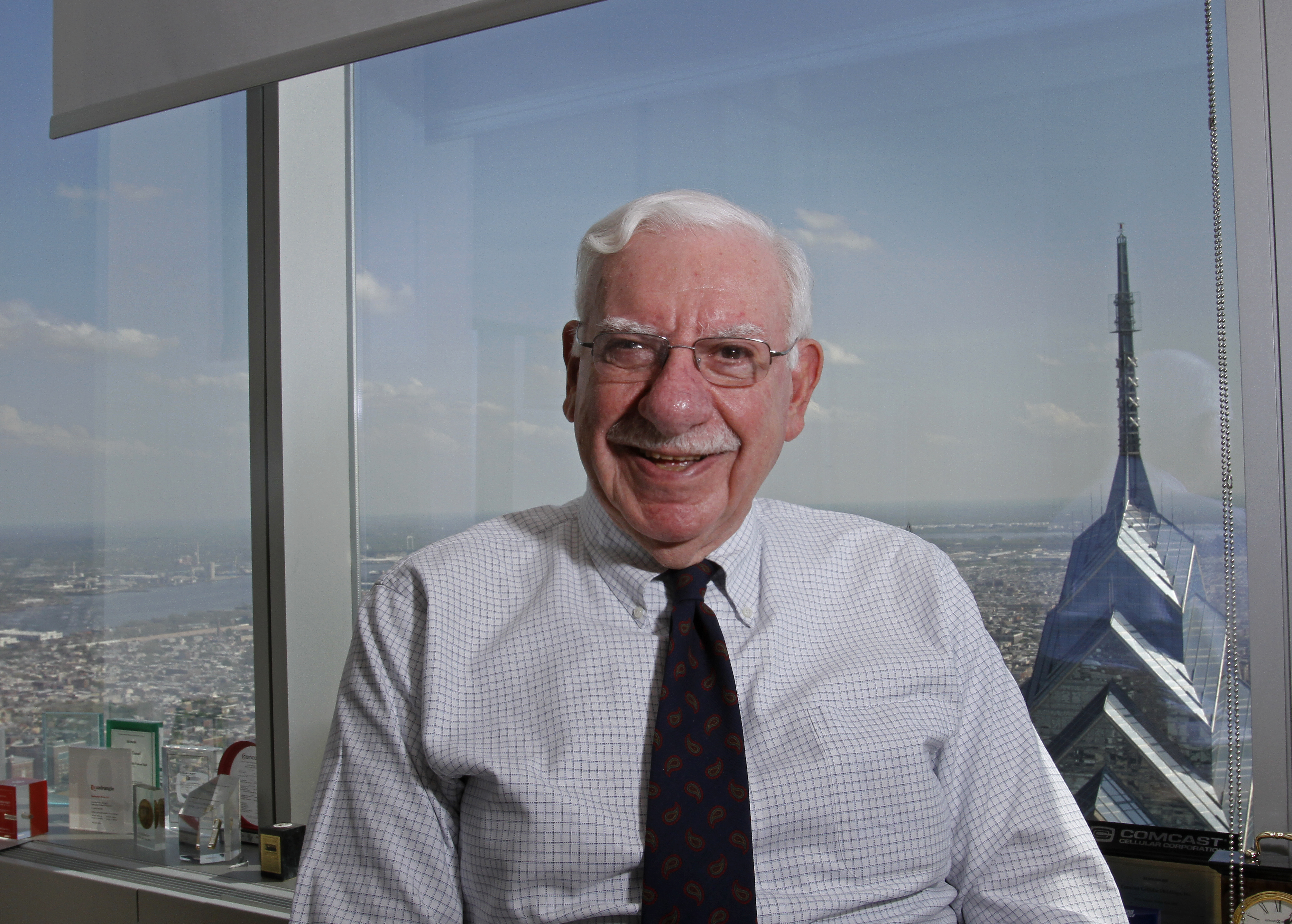
Julian A. Brodsky, 93, of Philadelphia, a cofounder of Comcast who helped grow a tiny cable venture in the Deep South into one of the biggest companies in the country, died Thursday, Nov. 5, while in hospice care.
He passed away peacefully, surrounded by his family, Comcast said.
Mr. Brodsky was described as “an extraordinary leader, a brilliant financial mind, and one of the architects of cable television” by Brian L. Roberts — Comcast’s co-CEO and chairman, whose late father, Ralph, founded the company in the 1960s.
“He was a trusted partner and close friend to my father, Ralph, and someone I was fortunate to learn from and work alongside for so many years,” Roberts said in a statement Friday.
Mr. Brodsky “established a culture of financial integrity, uncompromising standards, and respect for colleagues that remains at the heart of our company today,” Roberts said.
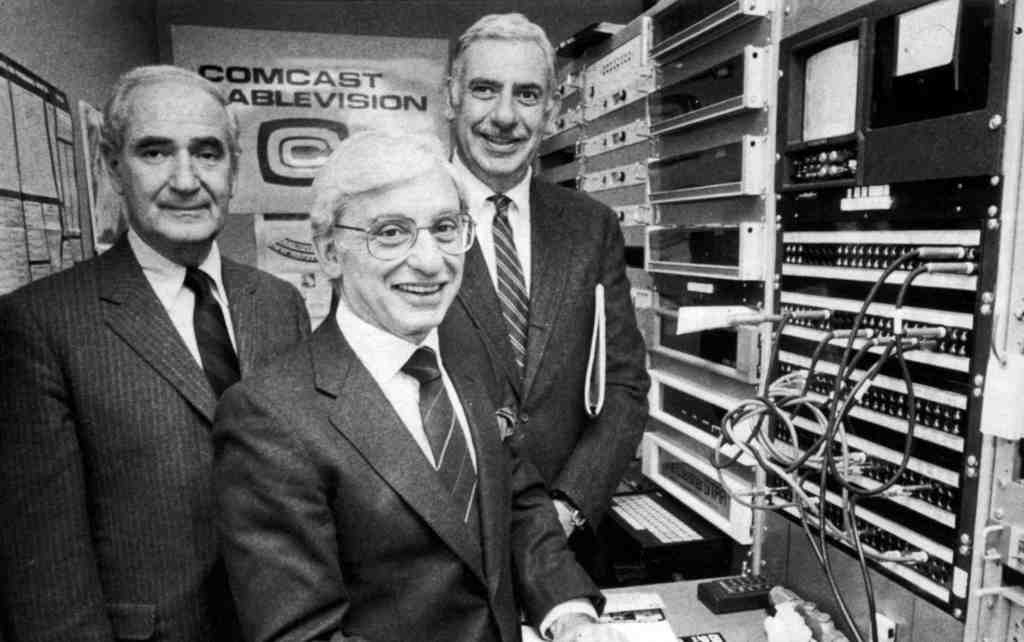
Comcast’s founders — Ralph Roberts (left), Julian Brodsky (right), and Daniel Aaron — at a Comcast facility in Northeast Philadelphia in the late 1980s or early 1990s. The firm started with a cable TV venture in the Deep South in the early 1960s.
While the elder Roberts was Comcast’s undisputed leader, Ralph credited Mr. Brodsky, an accountant, with much of the company’s success. “We were never short on money when we wanted to grow,” Ralph Roberts said in 2011, calling Mr. Brodsky one of the smartest men he ever met.
What began as a single cable system in Tupelo, Miss., with around 1,200 customers is now a telecommunications and media giant headquartered in Philadelphia, with $124 billion in annual revenue.
“We were lucky, and we were good,” Mr. Brodsky told The Inquirer in 2011. “We never saw a cable company we didn’t like.”
At 6-foot-4, 250 pounds, Brodsky had a commanding presence — “a very powerful figure, both physically and mentally,” John Malone, a billionaire cable and media pioneer, said in a statement Friday.
Mr. Brodsky was Comcast’s longtime chief financial officer and served as vice chairman from 2004 until his retirement in 2011. He was an early advocate at Comcast for focusing attention on the internet and started the company’s venture capital fund in 1999.
Mr. Brodsky was also known as a philanthropist. He served as a trustee at the Philadelphia Museum of Art for almost three decades. Last month, he and his wife, Lois, pledged $20 million to the museum to create a learning and engagement center aimed in part at educating schoolchildren.
“His impact on the Philadelphia Museum of Art will be felt for generations,” Ellen T. Caplan, chair of the museum’s board of trustees, said in a statement.
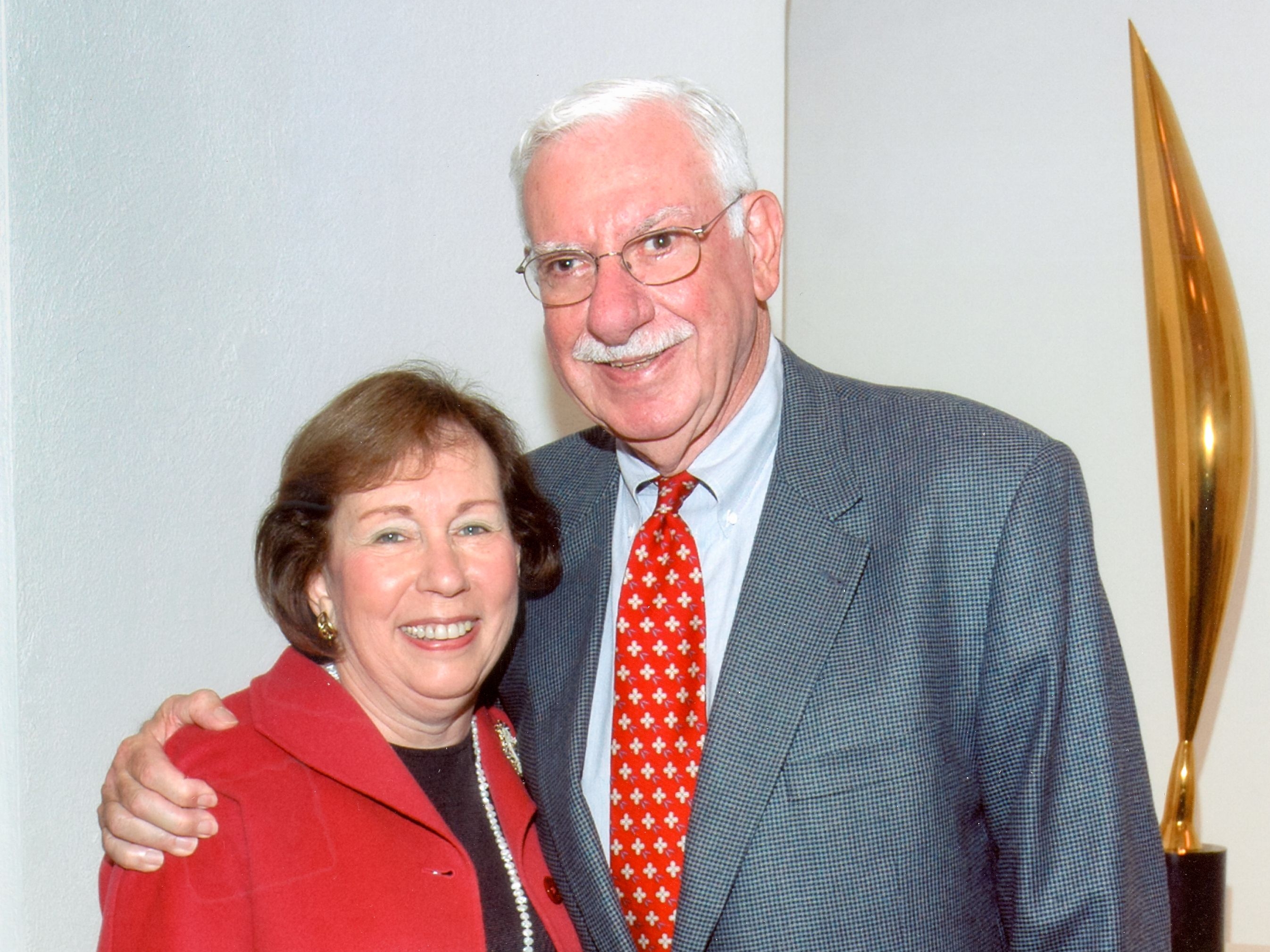
Lois G. and Julian A. Brodsky in 2005 at the Philadelphia Museum of Art with Constantin Brancusi’s ‘Bird in Space’ behind them.Courtesy the Philadelphia Museum of Art
Mr. Brodsky lived in Philadelphia’s Logan Square neighborhood for the last two years and before that resided in Cherry Hill for 42 years.
The son of a homemaker and Dock Street produce wholesaler, Mr. Brodsky was born in Philadelphia in 1933 and went to Overbrook High School.
When Mr. Brodsky was 17, he told an interviewer, he blocked a shot in a summer-league game by a teenager named Wilt Chamberlain — the future NBA superstar.
Mr. Brodsky graduated from the Wharton School at the University of Pennsylvania in 1956 and served two years in the Army in Alabama. He joined the Philadelphia accounting firm of Adler, Faunce & Leonard — whose clients included Ralph Roberts, an entrepreneur and Navy veteran who at the time owned a belt-manufacturing business.
Mr. Brodsky helped Roberts sell the company. Two years later, in 1963, Roberts bought the community antenna television system in Mississippi.
Mr. Brodsky and Daniel Aaron, a former business writer for the Philadelphia Bulletin, joined Roberts as partners.
“I said, ‘No way you’re doing this without me,’’ Mr. Brodsky recalled in a 1996 interview. “I loved cable, and I loved Ralph. What could be better?’’
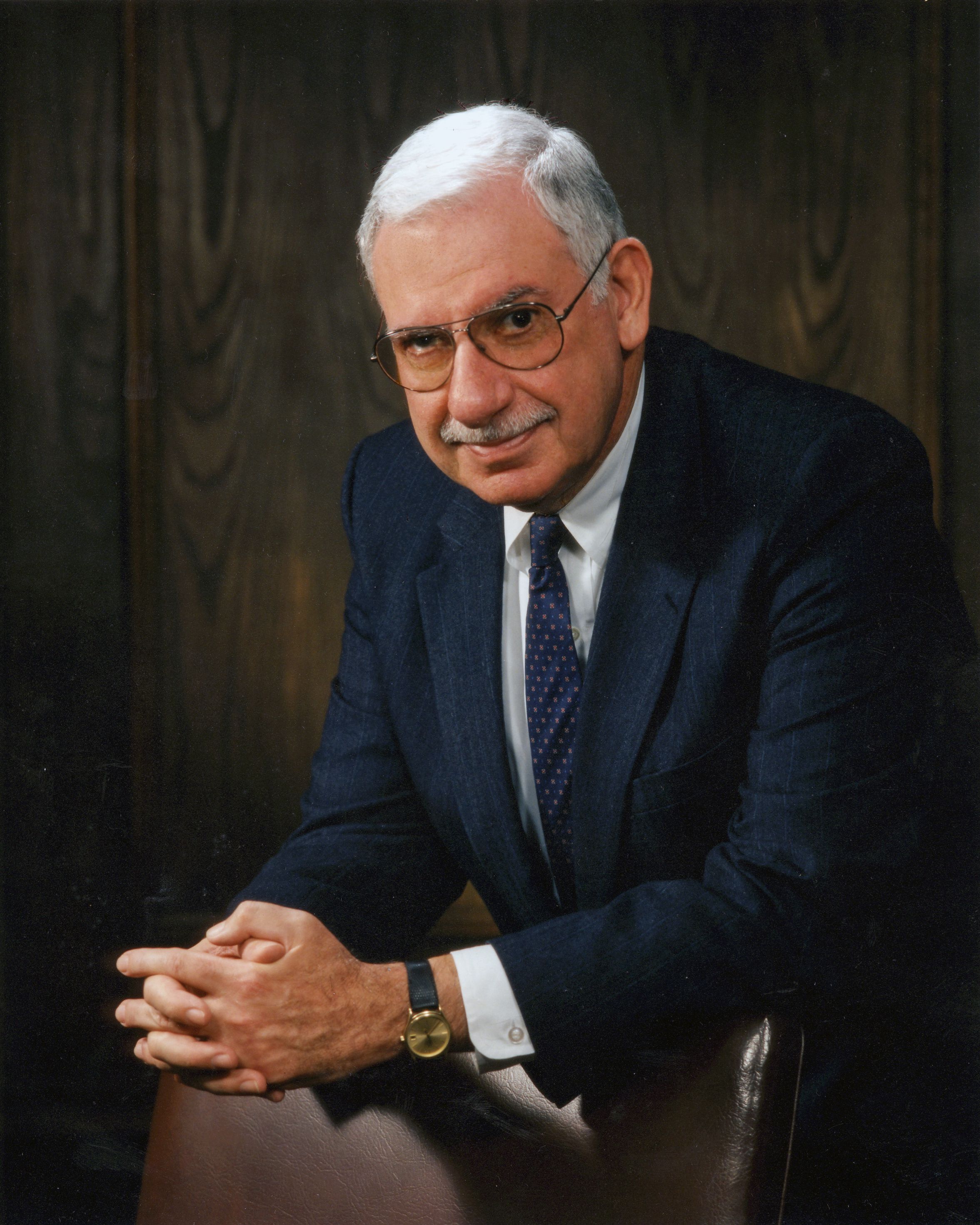
Comcast co-founding partner Julian Brodsky.Courtesy of Comcast
In the early days, Roberts operated out of a small office in Bala Cynwyd, where Mr. Brodsky used a card table as a desk.
Early on, banks sometimes viewed Comcast with skepticism, but Mr. Brodsky sold them on new financing schemes like low-interest, long-term loans.
With 40,000 cable-TV subscribers, Comcast went public in 1972. Mr. Brodsky played a “central role” in the initial public offering, the company said Friday.
He was “instrumental in financing the company’s expansion, efforts to raise capital, and helped guide major acquisitions that transformed Comcast from a small regional cable operator into an industry leader,” the company said.
Mr. Brodsky was the last remaining Comcast cofounder. Aaron died in 2003, and Roberts in 2015.
Mr. Brodsky is survived by Lois, his wife of 70 years; daughters, Debra, Ellen, and Laura; as well as four grandchildren, one brother, and a niece. A celebration of Mr. Brodsky’s life will be announced at a later date.
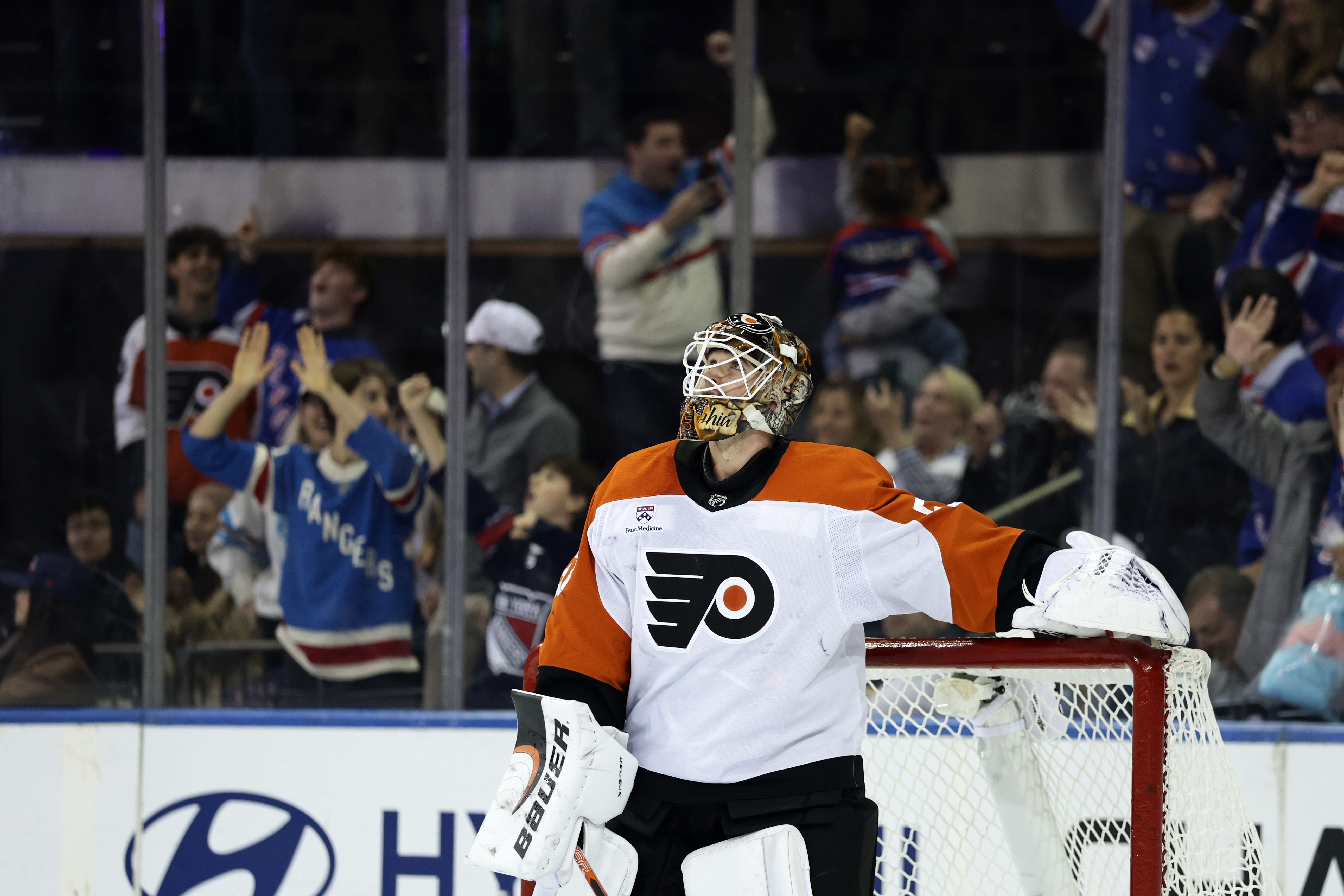
NEW YORK ― Simon Benoit should have been ecstatic after scoring his first goal since March 2025.
Denver Barkey and Noel Acciari should have been pumped to connect on Acciari’s second goal of the season.
Joseph Woll should have been grinning after collecting what might have become his second win of the season.
Instead, the four players, Travis Sanheim, and coach Rick Tocchet used words like “on our heels,” “frustrating,” and “inexcusable” after the game. Why? The Flyers led 2-1 with 6 minutes, 8 seconds left in regulation. When the final buzzer sounded, they had lost 3-2 to the New York Rangers.
It was their 14th defeat in 18 games to start the season. The Flyers have not beaten a team from the Metropolitan Division and are back to last place in the Eastern Conference in points percentage (.333). They are third from the bottom of the NHL.
“It’s frustrating because you’re trying to learn how to win under these circumstances, and we failed tonight,” Tocchet said.
“You’ve got to attack pressure; we keep talking about it. I don’t know the answer. When the pressure hits, you want to embrace it. You want the puck. You want to be in situations [where] I want to be the difference maker. Whether it’s a wall play, a blocked shot, a good back check. Those are the moments that we need people to consistently do.”
This has become a norm.
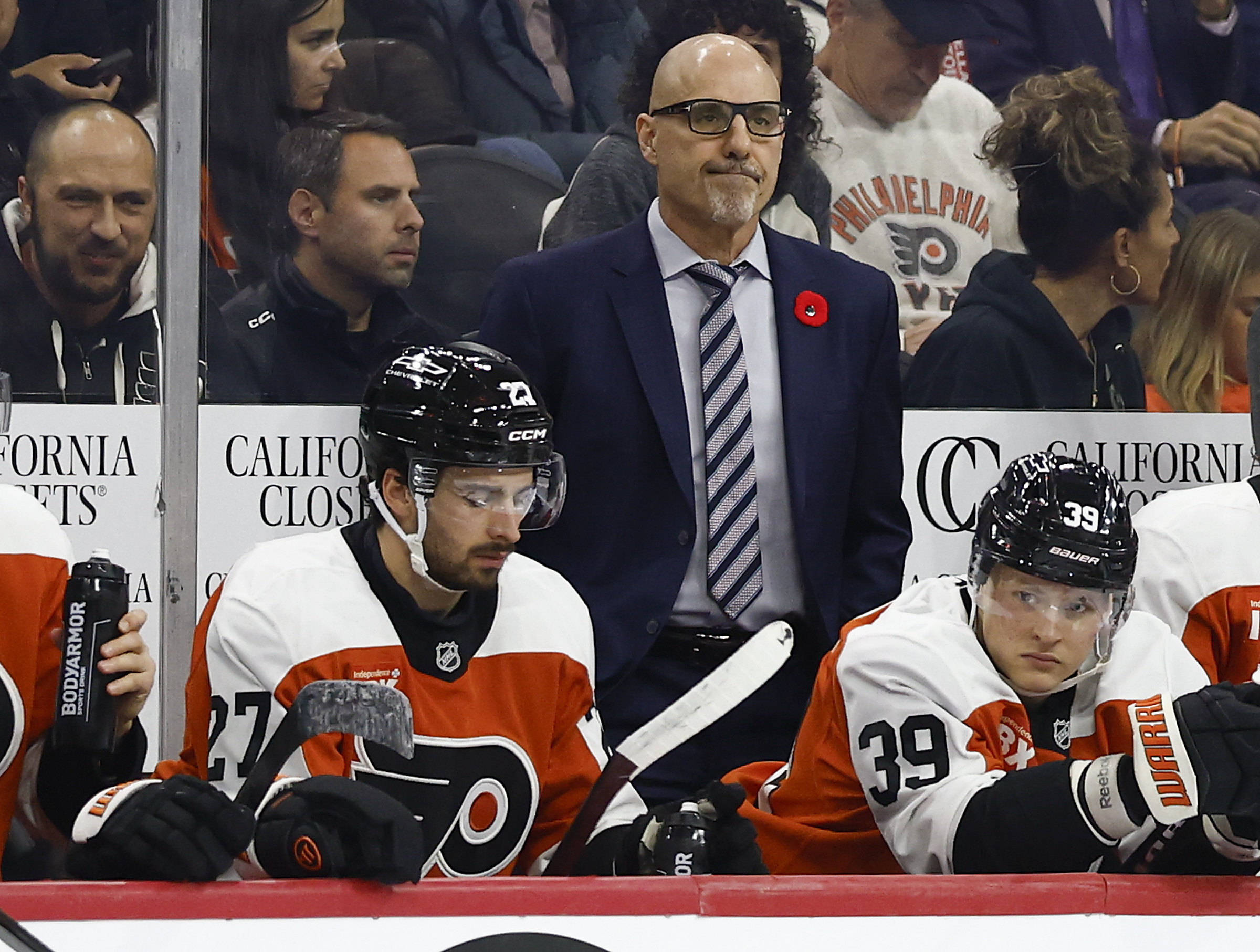
Rick Tocchet echoed the frustrations of his players regarding the Flyers’ late collapses. Yong Kim / Staff Photographer
The Flyers led 2-1 in the third against the New Jersey Devils in the second game of the season and lost 3-2 in overtime. The Flyers led 2-1 in the third versus the Carolina Hurricanes the next game, and lost 3-2 in overtime.
In the third period of a tied game, they allowed a late goal to the Senators in Ottawa and the Red Wings in Detroit. Tied 3-3 heading into the third against the Anaheim Ducks, the Flyers lost to the visitors for the first time since the Cutter Gauthier and Jamie Drysdale swap. And while they eventually won 6-3 against the Utah Mammoth, the Flyers led 3-1 in the third and allowed the Mammoth to close within 5-3 with 2:53 left and pushing for the comeback.
Third periods have not been kind to the Flyers this season, and they have been outscored 22-15.
According to Natural Stat Trick, on Thursday against the Rangers, they were held to 40% of the shot attempts in the final frame and 36.06% expected goal share. It followed a first period where the Flyers had 58.82% of the shot attempts and a second period split down the middle.
Why is it not sustainable in the third?
“Not enough guys to continue to stack those good shifts together,” Tocchet said. “That’s really what it comes down to. We need more guys — you can’t just rely on four or five — we need some more guys. That’s how our team’s built; we need the depth from everybody.
“It’s not one guy. It’s a collection of players for us. And like I said, that’s unexcusable.”
The Flyers allowed the Rangers to tie the game on a power-play goal, but the game-winner was an amalgamation of misreads and miscues. It defined where things are right now for the Flyers.
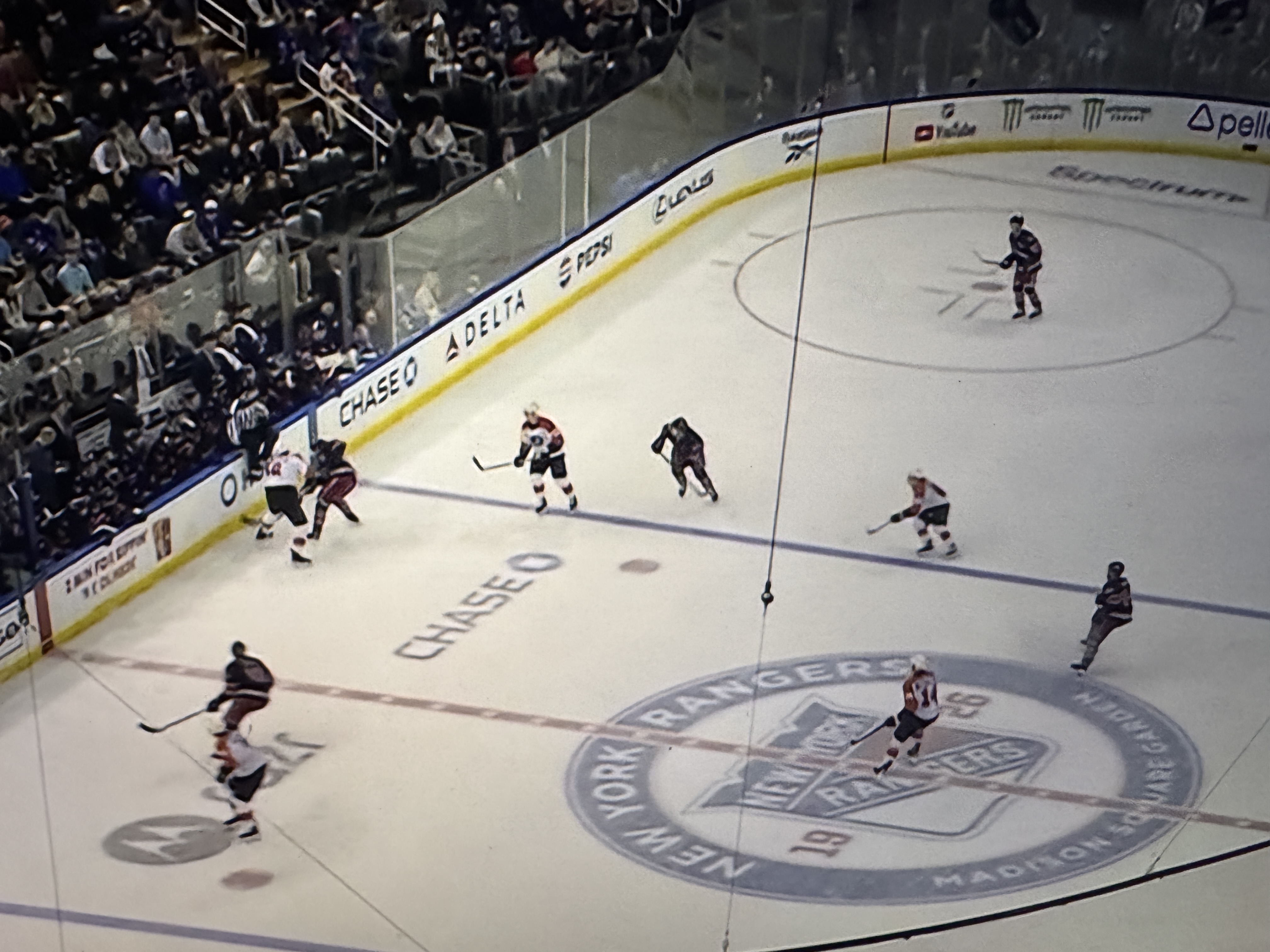
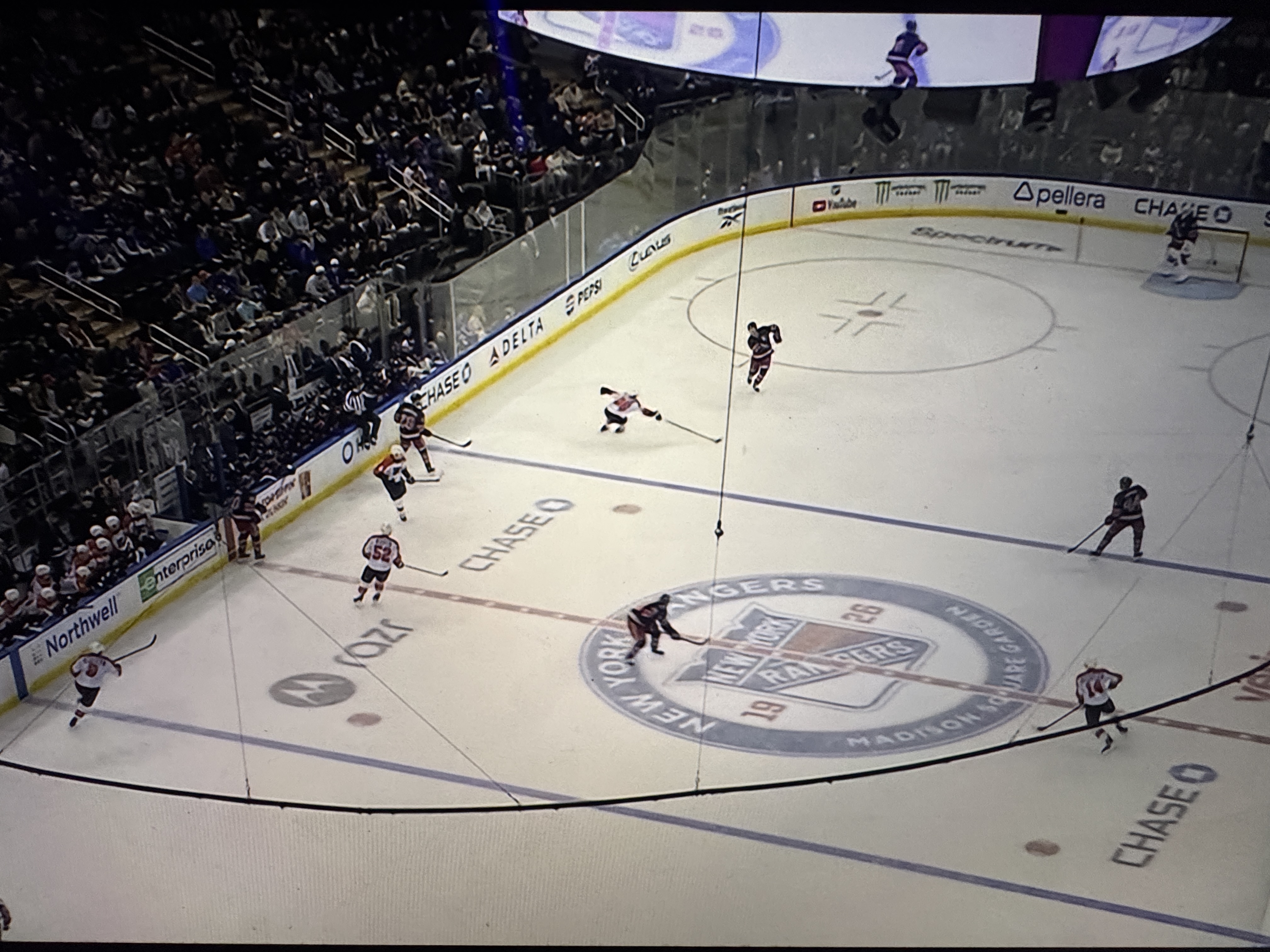
Everything seemed fine at first with the Flyers staying above the Rangers — meaning they are between the Rangers and the Flyers’ net — and everyone marked up with the puck in the neutral zone and by the benches.NBCSPBut as the puck went back to Rangers defenseman Adam Fox (top player in blue), the Flyers had four players trapped on the left side — Denver Barkey, Travis Sanheim, Noel Acciari, and Jamie Drysdale — and Sean Couturier got stuck on the right side after he slightly curled. It created a huge lane for Tye Kartye to get between.NBCSP
“I think we stopped moving our feet,” Barkey said of the third period. “I think we got on our heels, and we’re just focusing more on keeping the puck out of the net. I think we’re at our best when we’re on our toes, and we’re continuously executing our game plan for 60 minutes. And I think we just got away from that tonight in the third.”
The issue is that the Flyers have played well in several games this season for at least 40 minutes but then fall apart in the third when opponents make a push.
“You watch around the league, a team that’s down is going to push in the third period; they’re probably going to be the better team in the third. So that’s where we got to find a way to keep it simple, not turn over pucks and give them chances that they don’t deserve,” Sanheim said.
“And we didn’t do that. We gave them some looks, and then they get a power play and capitalize and make us pay. So, we’ve got to learn from these lessons and take a lot of the positives that we did do well, especially that second period where we pushed and generated and had some really good looks.
“We just got to continue to keep working at our game and hope that the process will translate into some success here.”
Time is ticking on the season, however, with 66 games left.
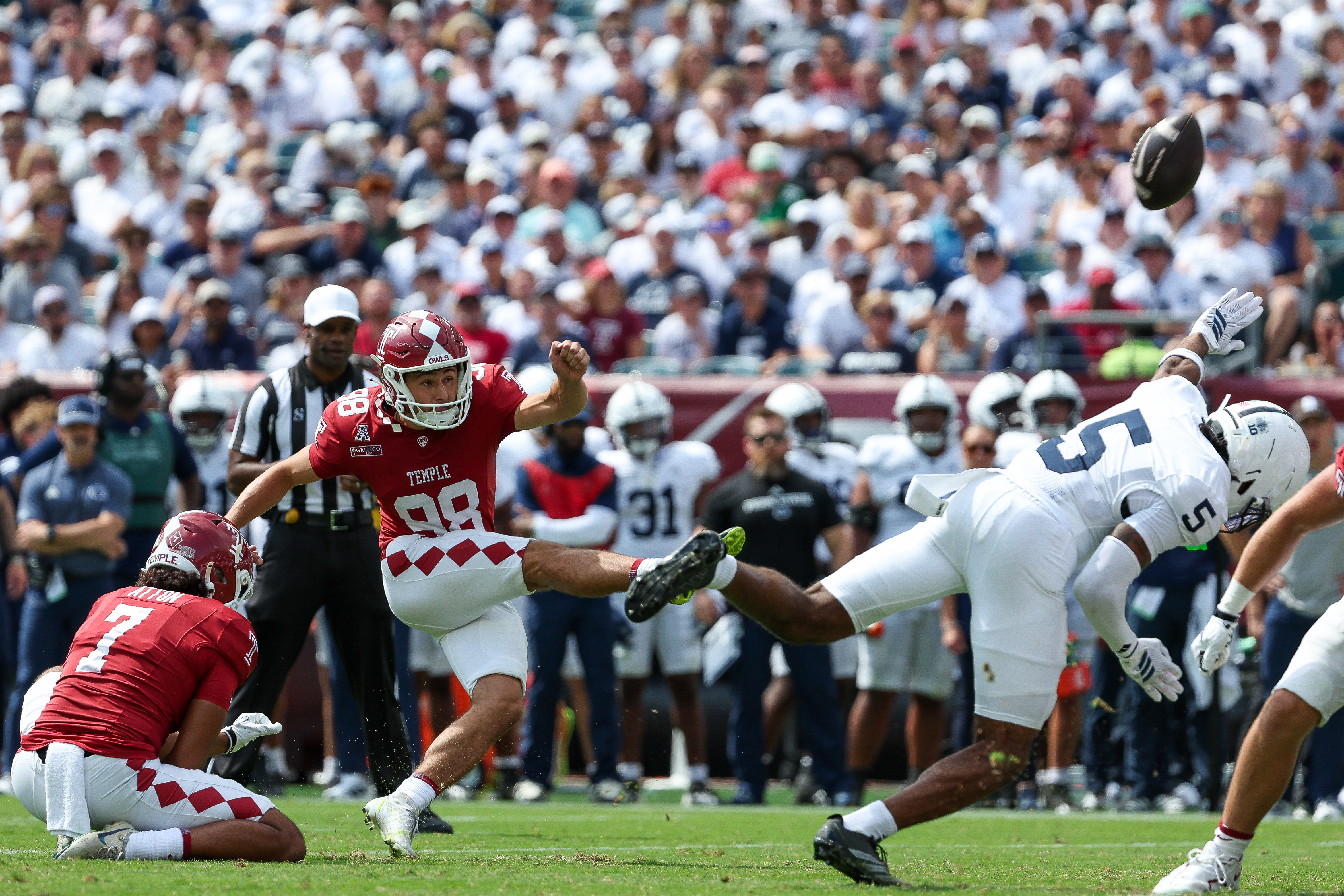
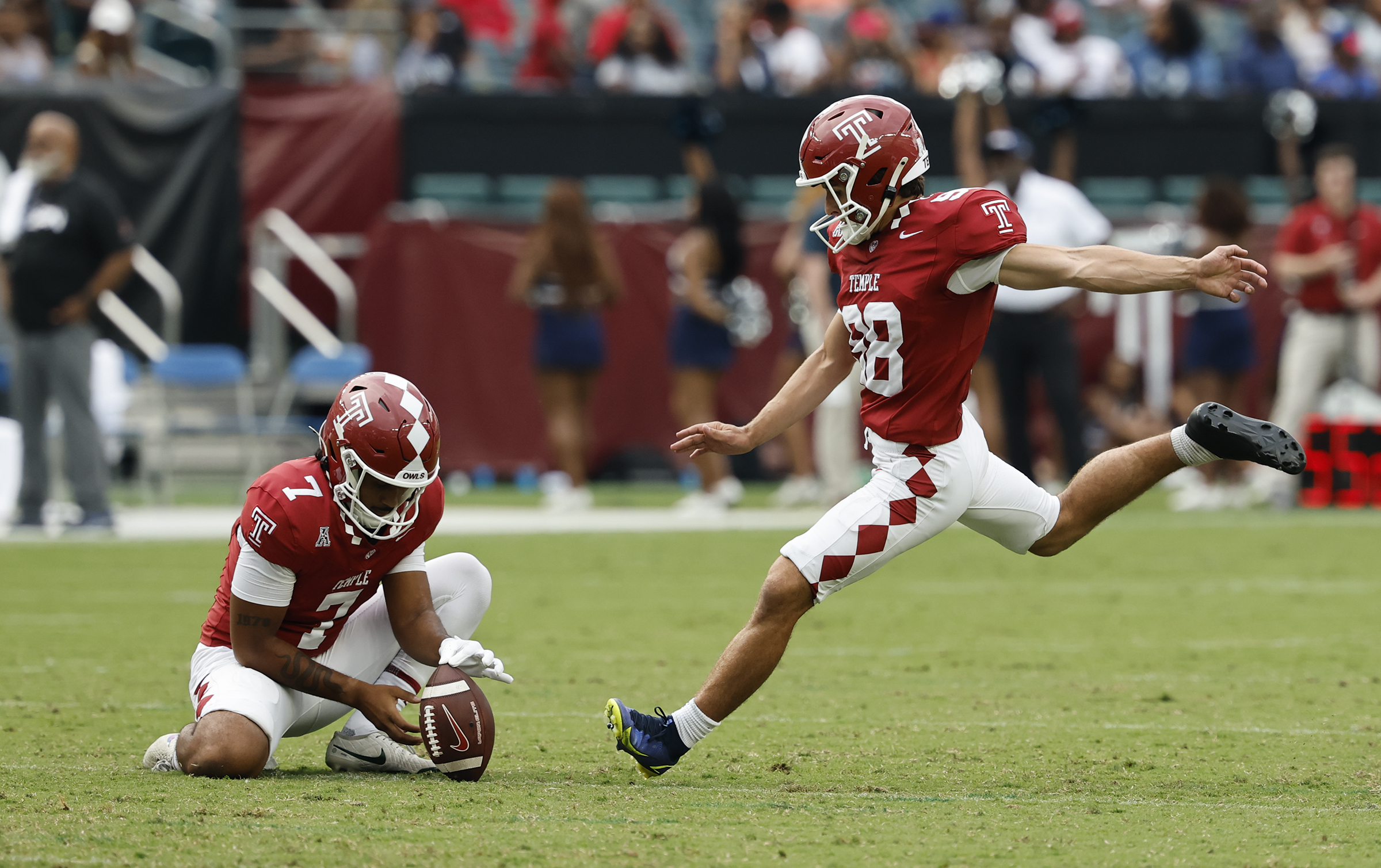
Dante Atton has noticed a peculiar celebration from Temple senior kicker Carl Hardin.
After making a field goal, Hardin will take a small jump, almost an involuntary burst of excitement. It’s a subtle movement fans might miss, but one Atton, Temple’s punter, recognizes.
“That’s just Carl in a nutshell,” Atton said. “He just loves kicking it. He literally just loves it. Lives for it.”
That enthusiasm has carried Hardin from a walk-on to a scholarship player and Temple’s starting kicker. Along the way, the Raleigh, N.C., native has balanced football with studying construction engineering technology, two pursuits he believes share similarities.
Hardin arrived at Temple in 2023 out of Broughton High School with one college football opportunity: a walk-on spot with the Owls.
He handled kickoffs as a freshman but didn’t appear in a game in 2024, spending the year behind Maddux Trujillo, who made a 64-yard field goal against Utah State, the longest field goal made at Lincoln Financial Field.
For Hardin, the lack of playing time didn’t change his approach.
“My mindset was just to keep improving, never be satisfied with the level I was at,” Hardin said. “And I think that mindset is what helped me get to the level where the coaches felt confident enough in me to put me on scholarship.”
His opportunity arrived unexpectedly after the 2024 season.
Hardin had finished a routine weightlifting session when he was summoned to special teams analyst John Fisher’s office. With Temple undergoing a coaching change, Hardin wasn’t sure what his future held.
Instead, he learned he was receiving a scholarship.
“That was an incredible moment,” Hardin said. “It was electric. Super happy moment.”
Fisher had vouched for Hardin to the incoming coaching staff, helping secure the scholarship even though Hardin hadn’t played that season.
Trujillo also advocated for him.
When Trujillo arrived in 2024, he immediately recognized Hardin’s talent. He wondered why the Owls needed another kicker with Hardin already on the roster.
“What are you recruiting me for?” Trujillo recalled asking the previous special teams coordinator. “You guys have a full scholarship kicker that you could be using right now.”
Trujillo said he pushed for Hardin to receive a scholarship, believing the younger kicker could succeed. The two grew close, with Trujillo offering advice on technique, confidence, and leadership.
“This is going to be yours next year,” Trujillo recalled telling Hardin.
The challenge wasn’t physical ability, Trujillo believed, but developing confidence.
“He was already talented enough to do it,” Trujillo said. “It was really just kind of a couple of mental things and that was it, just confidence stuff.”
Hardin became Temple’s primary placekicker in 2025, converting 11 of 14 field goals, including a career-long 52-yard field goal against Tulsa, and all 40 extra points.
He returned to the role this season, fulfilling the potential his teammates recognized. Hardin has made 12 of 16 attempts, with his season long being 49 yards.
“He always had the talent,” Atton said. “It was never a question of talent. He just needed the opportunity. When he got it, he took it.”
Atton sees that drive during practice, where Hardin’s willingness to keep kicking seems endless.
“He’ll kick till his leg falls off,” Atton said. “He’ll kick 100 balls from like 60 yards just to feel good about it.”
That dedication extends to the classroom.
Temple kicker Carl Hardin has made 12 of 16 field-goal attempts this season.Yong Kim / Staff Photographer
His interest in construction engineering began with an “enjoyment of building things” and a fascination with cities. His father’s work as a city planner in Raleigh helped introduce him to construction and urban design.
“I’ve always just liked building stuff and kind of working with a team to achieve like a bigger goal,” Hardin said. “So the idea of building buildings is kind of what got me to construction engineering.”
His academic performance earned him the Military Bowl STEM Scholar-Athlete Program honor, which is given through the American Conference.
Hardin has found balancing football and academics easier as his coursework becomes more specialized. He’s also discovered similarities between engineering and kicking, particularly their reliance on teamwork.
“Engineering, you’re always going to be part of a group that everyone has to execute their task for a successful result,” Hardin said. “And then same with kicking, like the snap has to be good, hold has to be good, I’ve got to be good, and the blocking has to be good.”
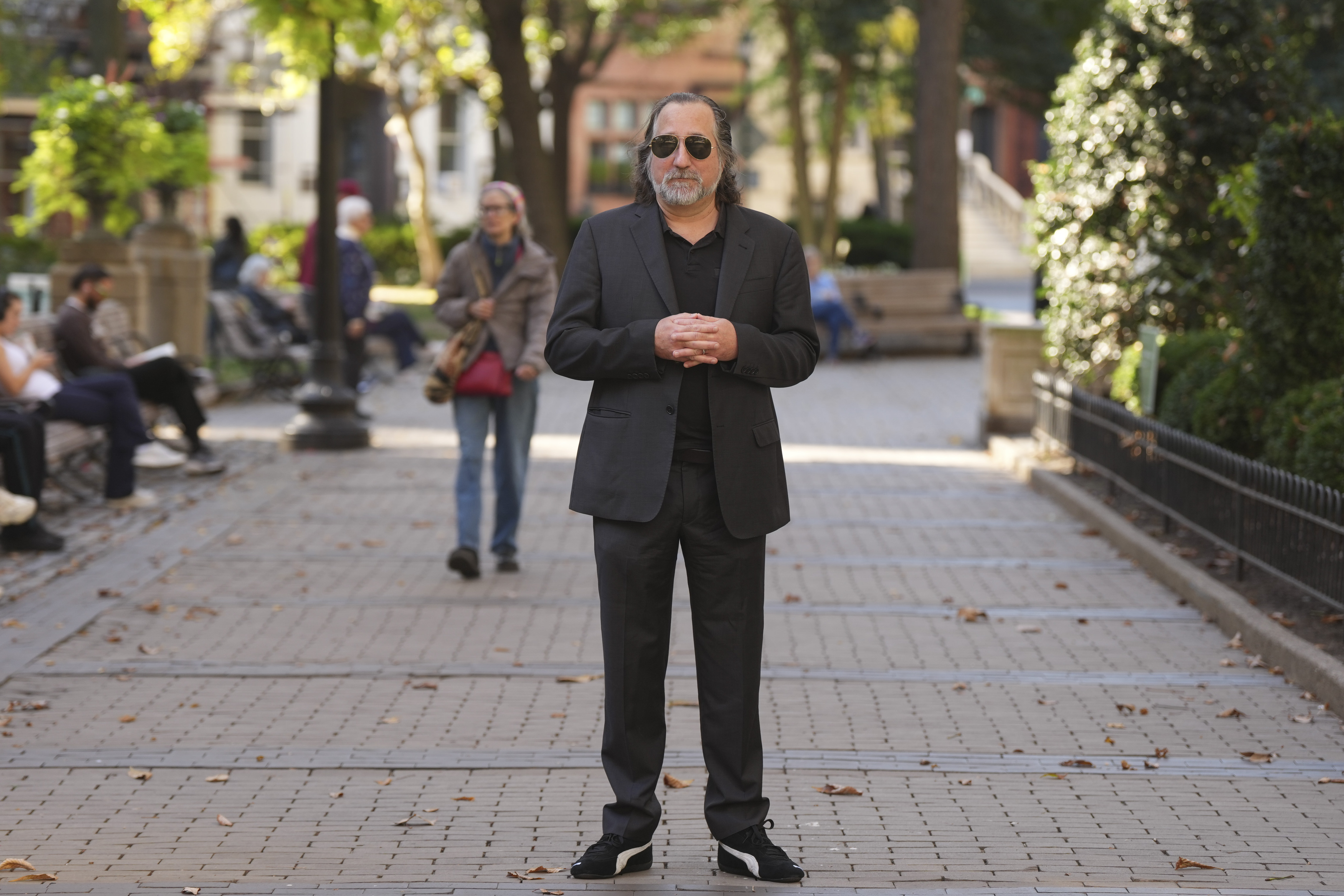
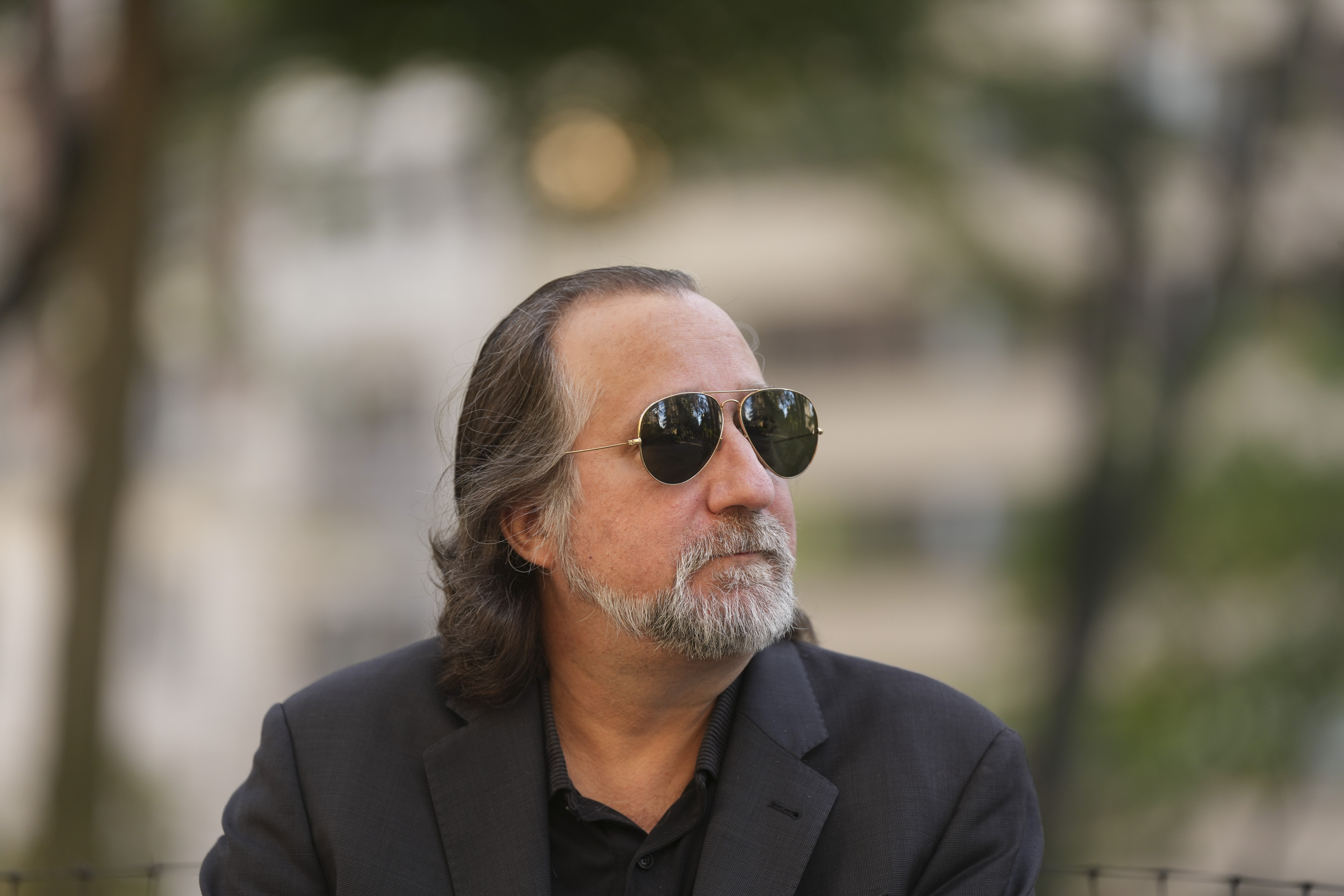
Before Dave Palmer moved to Philadelphia and recorded the score to the new movie I Play Rockywith a team of all-Philly musicians, the jazz pianist and composer built an impressive music and movie industry résumé.
He scored several films for Oscar-winning and Phoenixville-born I Play Rocky director Peter Farrelly before making the music for the Anthony Ippolito-starring love letter to Sylvester Stallone’s 1976 ultimate underdog story that topped The Inquirer’s 2026 list of the most Philly-centric movies of all time. It helps stitch together the making-of-Rocky movie and its aspiring screenwriter and actor’s nonnegotiable favorite three words: “I play Rocky.”
Those movies include 2022’s The Greatest Beer Run Ever and this year’s Balls Up.
Hanging out on a recent sunny afternoon in Rittenhouse Square a few blocks from where he lives with his wife, Cheryl, Palmer shared the bullet points of a busy career that began when he hit the road with the band MC 900 Ft. Jesus in the 1990s.
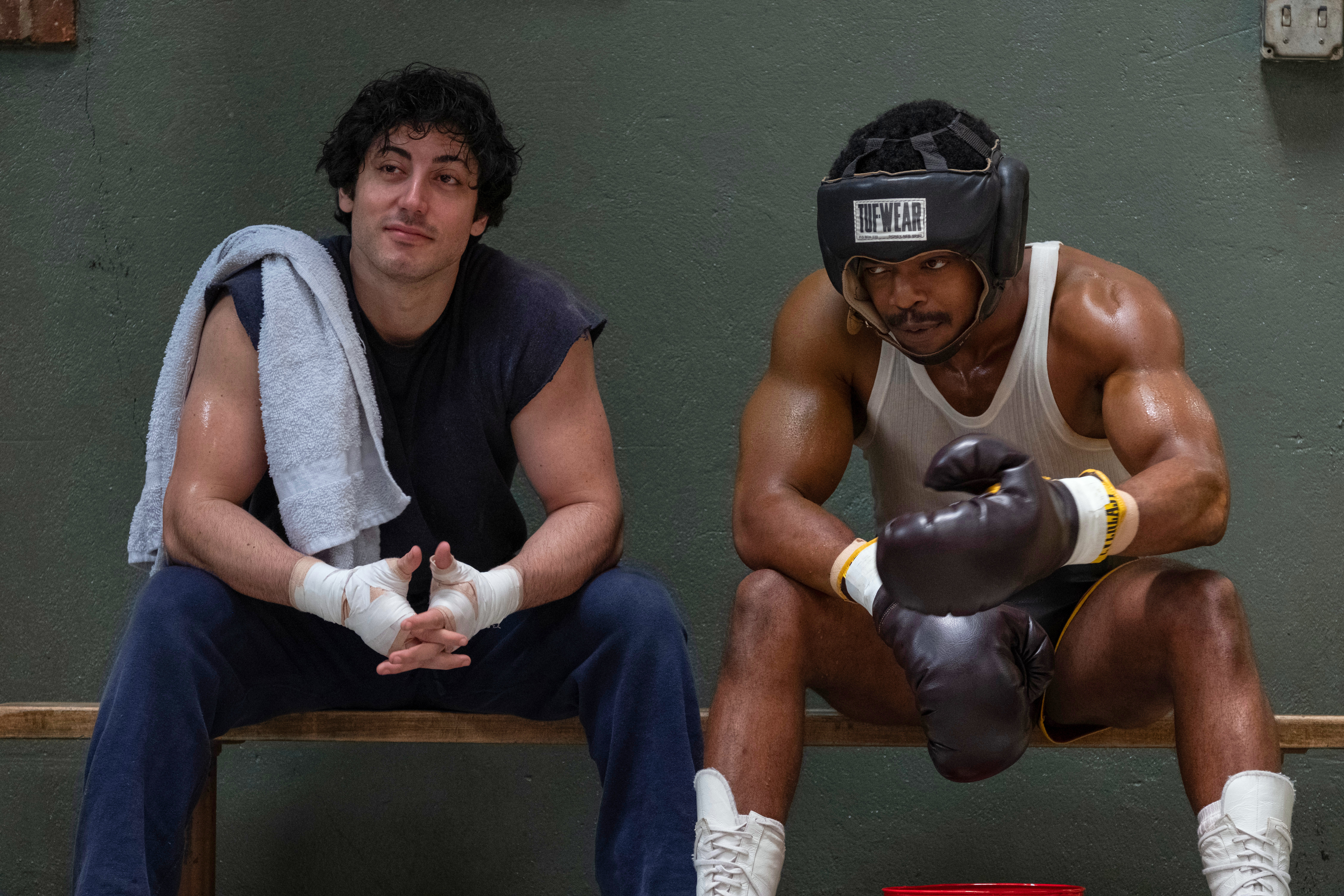
Anthony Ippolito is Sylvester Stallone (left) and Stephen James is Carl Weathers, in “I Play Rocky.” (Claire Folger/Amazon MGM Studios via AP)Claire Folger
It has included stints touring and recording with Fiona Apple, Seal, Chris Isaak, Aimee Mann, Air, and Joe Henry. He has collaborated with hip-hop acts such as De La Soul, Twista, David Banner, and the artist formerly known as Kanye West.
In 2009, Palmer produced The Best Is Yet To Come, a tribute to Great American Songbook writer Cy Coleman featuring Apple, Patty Griffin, and Jill Sobule. And Dave Palmer Trio Plays Cy Coleman, an EP with vocalist Gaby Moreno, came out Friday, the same day I Play Rocky hit theaters.
Palmer didn’t need to be in Philly to create the score for that film — along with songs by the Spinners, Hall & Oates, and Todd Rundgren, and, of course, Bill Conti’s “Gonna Fly Now.”
But, as it happened, he already was.
A real estate story
Palmer had operated out of Los Angeles for the last two decades. But he and Cheryl, who grew up in Wilmington — “I married into being an Eagles fan,” he said — had already relocated to Philly when he got the assignment to score I Play Rocky.
Like so many other musicians whose moves to Philly have benefited the city’s fruitful music scene in recent years, the Palmers’ migration is a real estate story.
They were renting in Hollywood, shut out of an ever-escalating housing market. “I equate it to being on a hamster wheel,” Palmer said. Buying a home “keeps being out of reach.”
“My wife used to hang out in Philly, she knew the neighborhoods,” Palmer said. So while also considering moving to pricey entertainment industry cities like New York and London, the couple bought an apartment in Rittenhouse as an investment.
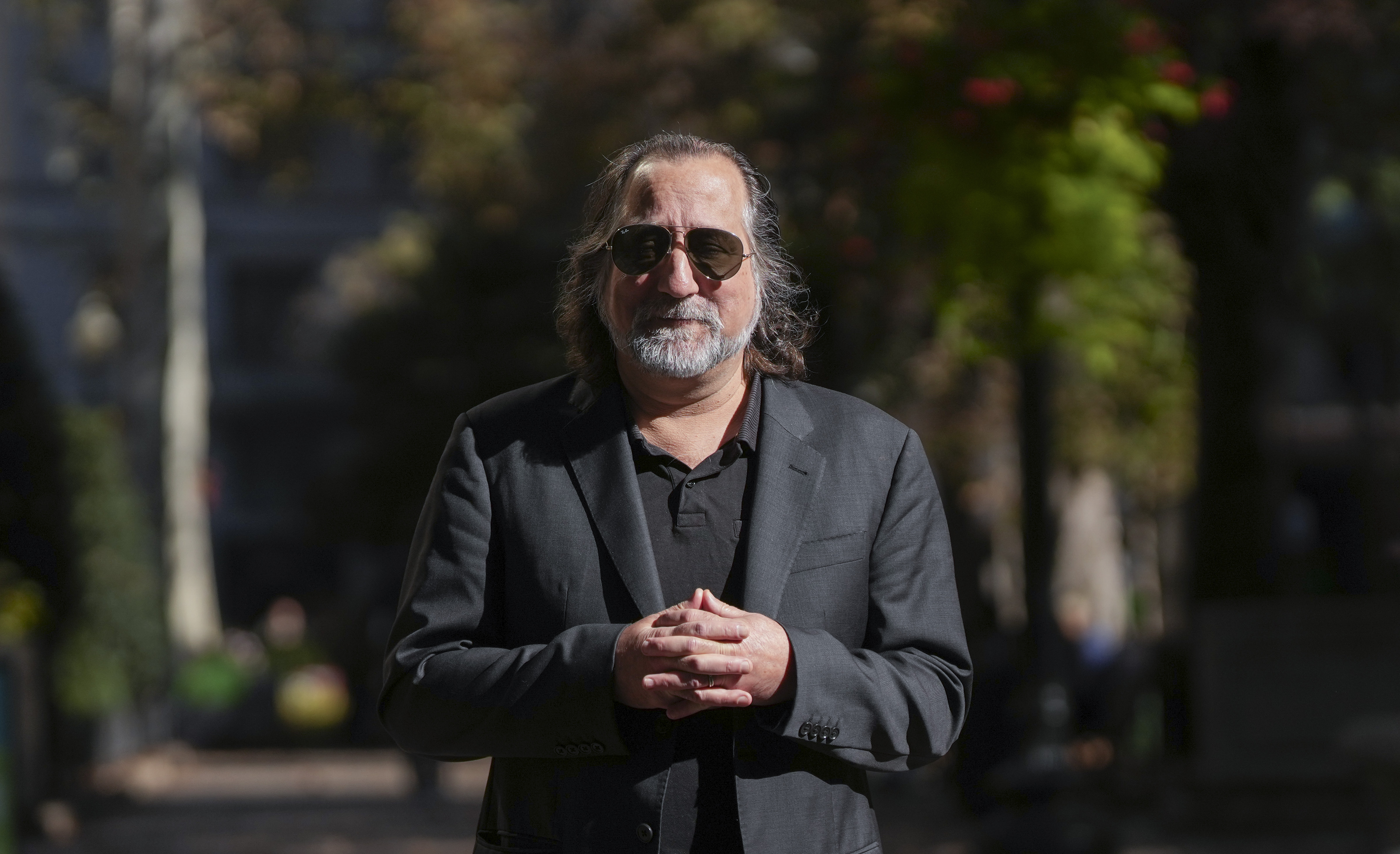
Dave Palmer, the jazz and rock pianist, bandleader and film score composer who’s behind the music in Peter Farrelly’s new Sylvester Stallone saga ‘I Play Rocky.’ In Rittenhouse Square, in Philadelphia, November 4, 2026.Jessica Griffin / Staff Photographer
They were unsure if they would move here permanently, but after the LA fires forced the couple to evacuate in early 2025, the Palmers decided to come east.
Palmer didn’t know anyone in the Philly music scene, “so I didn’t know what to expect,” he said. A bass-playing friend introduced him to Charlie Hall, the War on Drugs drummer and Philly Specials producer who is deeply connected in the local scene.
“Through Charlie, I started meeting all these people,” Palmer said, like guitarists Tom Spiker and Kevin Hanson, and percussionist Daniel Villarreal, with whom he played his first gig as a Philadelphian last October at the 700 Club in Northern Liberties.
Dave Palmer, the jazz and rock pianist, bandleader and film score composer who’s behind the music in Peter Farrelly’s new Sylvester Stallone saga ‘I Play Rocky.’ In Rittenhouse Square, in Philadelphia, November 4, 2026.Jessica Griffin / Staff Photographer
‘I love it here’
Palmer met Philly bandleader Don McCloskey that night, and has since produced the songwriter’s forthcoming album at Retro City Studios in Germantown. He also plays regularly with Spiker, Hall, Villarreal, and bass player Sandy Eldred in an aggregation called Tom Spiker’s Mobile Pleasure Lounge: Live Improvised Film Scoring.
The group performed at Black Squirrel Club in Fishtown last month, making up music as they went along, to clips from The Blues Brothers and other, more obscure films.
Dropping down into a scene where he had no contacts has turned out to be a seamless experience. And he’s smitten with his new hometown.
“I love it here,” he said. “It’s a big city, but at the same time, it’s kind of chill. All the neighborhoods are so different. And one thing I didn’t expect: People are really friendly. It’s way easier to get to know people and talk to them than in LA. And they’re not full of s—!”
Musically, he said, he didn’t know what to expect.
“I knew the history of the music. I knew there were good musicians here. But I’ve been working with top musicians in LA for 20 years. … And so far, it’s been amazing. I can do anything I need to do on any professional level in Philadelphia. 100%. Because the players are that good.”
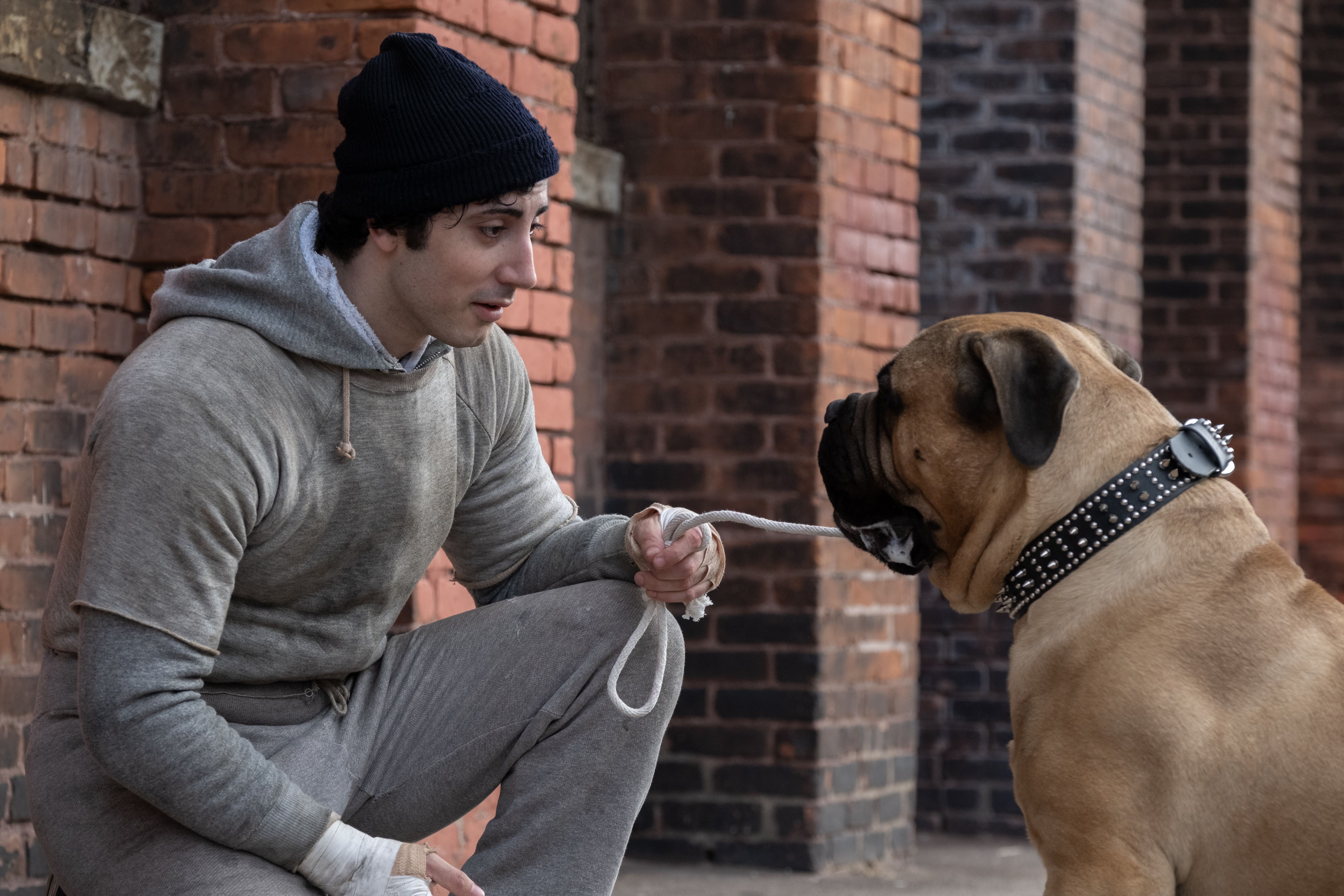
Anthony Ippolito as Sylvester Stallone and the bullmastiff who plays Stallone’s dog Butkus in the new making-of movie “I Play Rocky.”Claire Folger / Courtesy Amazon Content Services LLC
Playing for ‘I Play Rocky’
For I Play Rocky, Palmer wrote mostly what he calls “utilitarian” music to heighten tension or amplify a mood in the movie, which also includes original music by Andrew Bird.
In an early scene in the movie, when Ippolito as a young and broke Stallone auditions for a role in a soft-core porn film, Palmer followed Farrelly’s instruction to create a funky, boogaloo-style piece of music inspired by Mel Brown’s 1967 jam “Chicken Fat.”
A pivotal scene involving Stallone and his dog Butkus required a Latin instrumental passage. To recreate the drama behind the scene in which Rocky pummels a slab of meat instead of a punching bag, “we used a lot of banging on pieces of metal, and low drones, and big smashing piano sounds. It’s about creating tension.”
Palmer recorded the score at Spiker’s Undercarriage Recording in Northern Liberties, with a crew of Philly players, some of whom he also worked with in producing a forthcoming album with Indianapolis songwriter Richard Edwards.
Palmer shouts out other Philly players like guitarists Ross Bellenoit and Erik Sayles, drummers Fred Berman and Adrian Harpham, and songwriter Dave Cope.
“I’m really meeting a lot of musicians,” Palmer said, adding with a laugh, “The easiest way to get to know musicians is to hand them some money.”
He’s been able to do that “because I’m controlling the budgets for these projects. And in the case of I Play Rocky, it was a decent-sized budget, so you’ve got several thousand dollars to throw around at people.”
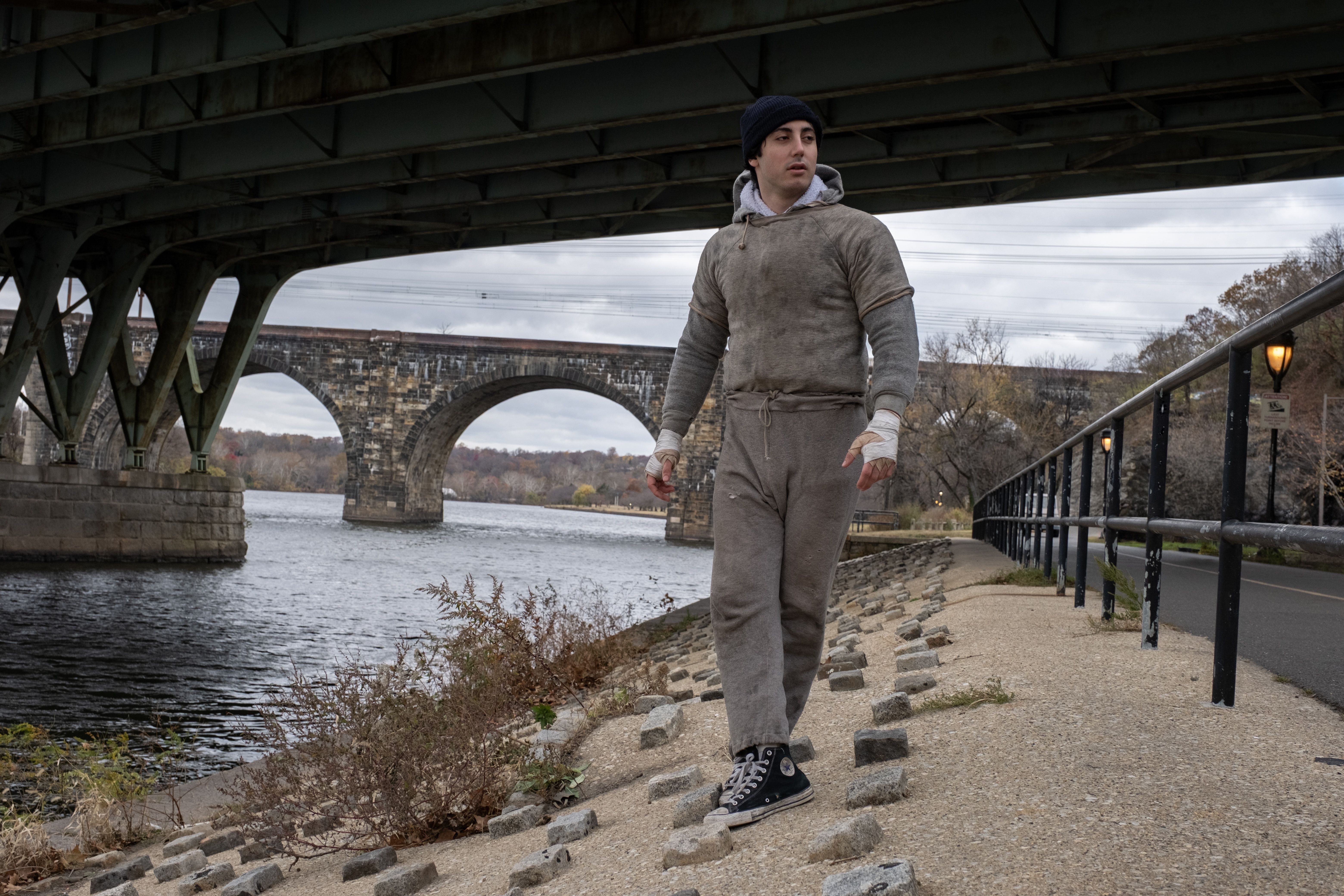
Anthony Ippolito as Sylvester Stallone on Kelly Drive in the Peter Farrelly diredtred ‘I Play Rocky.’ Composer and pianist Dave Palmer scored the film using all Philly musicians.Claire Folger / Courtesy Amazon Content Services LLC
Looking at the musical landscape, he sees a Philly scene primed to expand, with studios like Spice House Sound in Fishtown, where he recorded the Cy Coleman EP with his bandmates Joey Waronker and Reggie Hamilton, as well as facilities like Will Yip’s Memory Music Studios in South Philly.
Palmer has quickly seen how Philly’s affordability fuels creativity.
“There’s so much flexibility in doing music like this in Philadelphia, because the costs are substantially lower on every metric,” he said. “But the quality is just as high. The musicianship, the studios. Everything.
“So many young bands are here because it’s one of the last cities that you can afford to be a young, punkish musician,” Palmer said.
“I’ve been fortunate to be in different areas at different times. I was in Seattle in the mid-’90s and LA in the ’90s and early 2000s. I’ve been around places where scenes really happen, and I see all the seeds of it in Philadelphia right now.”
It was a remarkable image: the biggest, strongest inductee in the 2026 class of the Philadelphia Sports Hall of Fame dissolving on stage. Considering the subject matter, he had plenty of company.
Jon Runyan’s teary reminiscence of a mother’s devotion moistened many an eye among the nearly 500 so assembled friends, family, and fans of the 18 inductees at Live! Casino and Hotel.
Runyan told the story of how, knowing that Jon might struggle with algebra in the upcoming school year, his mother went back to a local community college near their home in Flint, Mich., and studied algebra so she could tutor him when his difficulties inevitably arose.
Jon had undiagnosed dyslexia.
The room, together, sighed.
This was the final of the dozens of moving stories told by those inducted or their representatives. But it was only the second-most emotional.
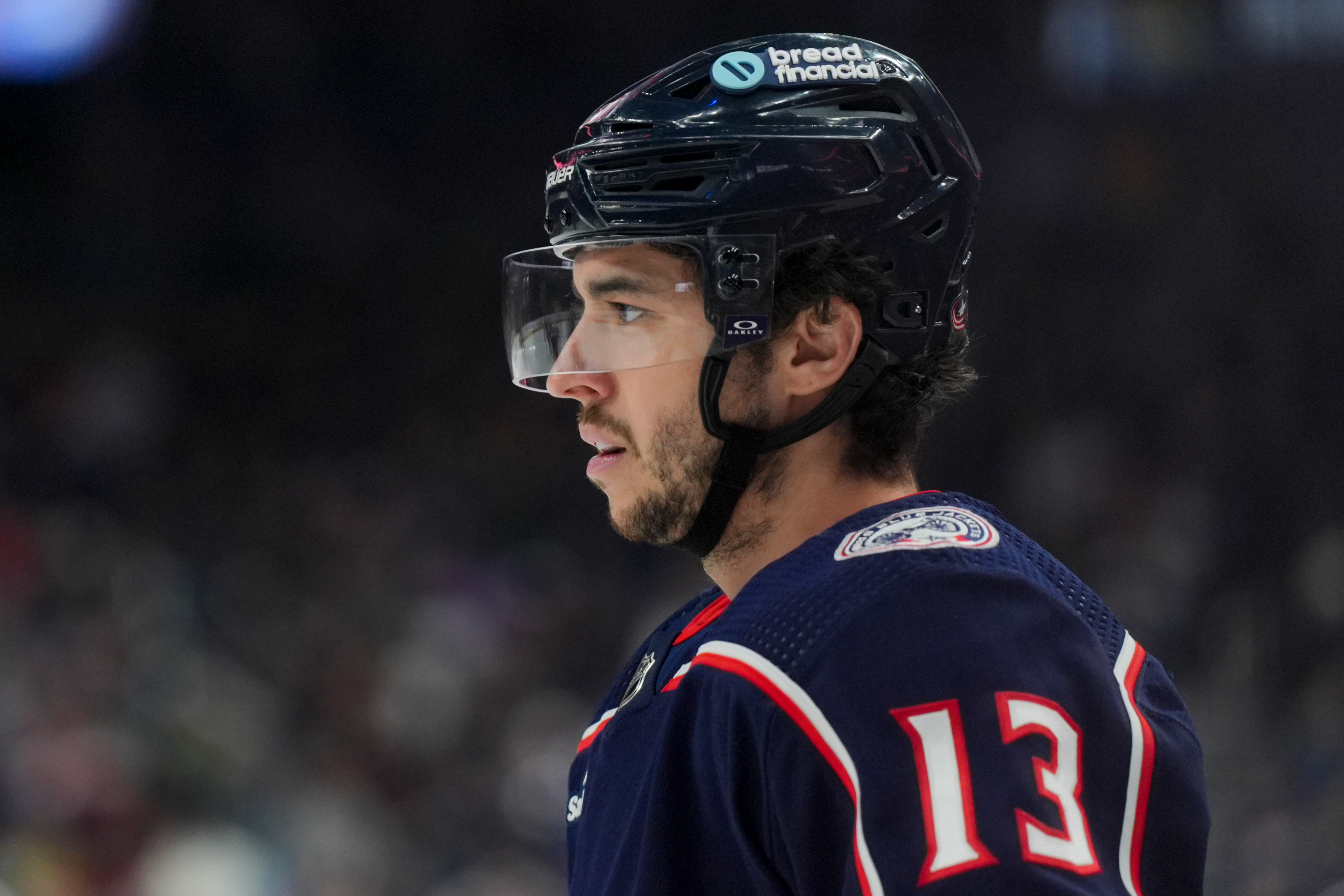
Blue Jackets star Johnny Gaudreau was killed by an alleged drunk driver while cycling with his brother Matthew in South Jersey two years ago. It shook the hockey world. On Thursday, their mother, Jane Gaudreau, was flanked onstage by their father and two sisters. First, a video from the Columbus team depicting little John’s unlikely rise to stardom; then, a video testimonial from three of his former Columbus teammates; then, Jane’s acceptance speech.
The audience traveled through waves of emotions: sadness, joy, pain. For a few minutes, all that mattered was the memory and the loss of a kid in Carneys Point Township who had worshipped the Orange and Black.
Gaudreau had starred at Boston College, then in Calgary, then in Columbus, but his final goal, even if it meant signing a symbolic, one-day contract, was closer to home, Jane said:
“He was going to end his career as a Philadelphia Flyer.”
Silence.
Sniffles.
“Johnny Hockey” never made it to the Flyers, but he is, at least, in the Philadelphia Sports Hall of Fame. That gives the Gaudreau family some degree of comfort, knowing their boy would be happy.
“He would be so incredibly proud,” she continued, “and so thankful to everyone.”
Some induction ceremonies have a measure of self-satisfaction, of hubris, of validation. Thursday had none of that.
The evening was a carnival of gratitude. Gratitude at being honored. Gratitude for the people who helped them along the way. Gratitude at fate smiling upon unlikely beneficiaries.
Gratitude was the overarching theme of the three hours of acceptance speeches. Yes, three hours.
Former Eagles defensive end and current radio host Hugh Douglas, who went third-from-last, provided a brief and funny (and loud) acknowledgment of the program’s length and promised that he and the other hosts on 94 WIP would “talk bad about all of y’all long talkers” during Friday’s slate of shows. Looking at you, Coach Lynam.
Douglas was joking, of course. Some of the speakers might have rambled — after all, jocks are schooled in performance, not rhetoric — but all of the speakers were authentic, and so entertaining, and many of them were even educational.
For instance, there were plenty of people in the crowd who didn’t know that Jim Lynam, the former Sixers coach and current TV analyst, was part of an All-Star backcourt at West Catholic High in 1959 with former Philadelphia Textile coach and world-renowned shooting guru Herb Magee.
Nor did we know that, when St. Joseph’s coach Dr. Jack Ramsay went to recruit Lynam at a high school game, he returned to tell his assistants that he was duly impressed — only to find that he had been impressed by Magee, not Lynam.
Nor did we know that Dr. Jack only had one scholarship allotted to his backcourt court that year, so he took Lynam over Magee, who then played at Philadelphia Textile (now known as Thomas Jefferson University). Both became successful coaches at their alma maters, but Magee beat Lynam to the Hall by 18 years, largely on the strength of his 1970 Textile team, which won the Division II title.
Former Inquirer writer Sal Paolantonio and Upper Merion product Lisa Salters, both of ESPN, both earned induction, but only one of them, at 5-foot-2, is the shortest player in the history of Penn State women’s basketball.
The original Philly fanatic, Dave Raymond, delivered a stirring example of how effective a motivational speaker he has become, following his days of donning the suit and then developing mascots for other college and professional teams. His successor, Tom Burgoyne, made a cameo in full-on Phanatic regalia as Raymond took to the stage.
Dave Raymond who was the original Phillie Phanatic gets inducted into the Philadelphia Sports Hall of Fame
Runyan told the most stirring story, but perhaps the most moving line of the night was delivered by former Villanova champion runner and coach Gina Procaccio. She said that, despite a career that includes national titles and world records, she always is stunned to receive any honors, because when she thinks about her career, “I always focus on the failures.”
Great athletes dwell on the losses.
Not so with Big 5 basketball coaches.
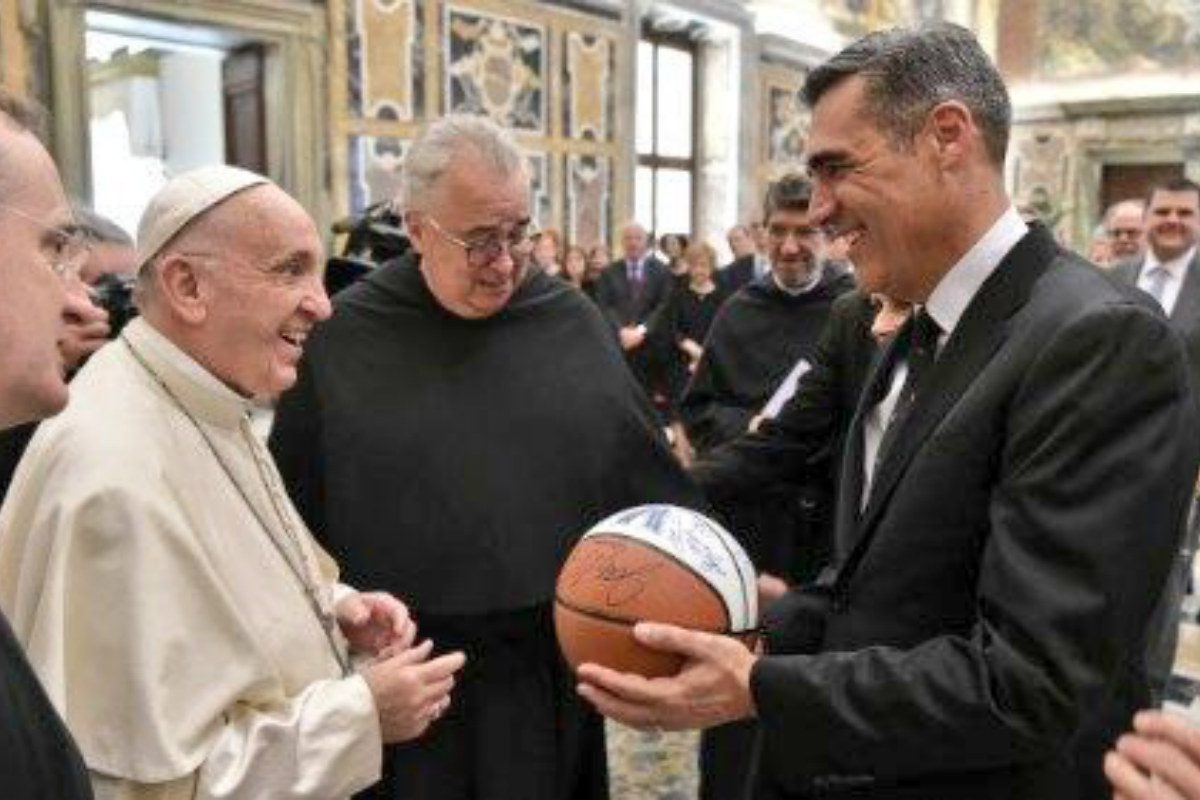
If you’d been there Thursday night you might have smelled the Palestra: Fran Dunphy, who coached and played at La Salle and coached both Penn and Temple; former Penn and current St. Joseph’s coach Steve Donahue; and Jay Wright, who somehow is even better looking and better dressed that he ever was at Villanova, despite having retired four years ago. Of course, Wright just met his second Pope, so maybe we’re witnessing divine intervention.
Pope Francis receiving the basketball autographed by the national-champion Villanova Wildcats from coach Jay Wright.VATICAN MEDIA
Dunphy made the Hall in 2019, Wright in 2023, and Donahue’s day will likely come; after he left Dunphy’s staff at Penn, Donahue took Cornell to the Sweet 16 in 2010, farther than Dunphy ever got with any of his teams.
There now are 374 members in the Hall, if you include inanimate honorees like JFK Stadium, which was part of this class, joining the Palestra, The Army-Navy Game, and, in 2014, Shibe Park, whose name was changed to Connie Mack Stadium but whose essence was always Shibe.
Shibe Park preceded its namesake, Ben Shibe, into the Hall. Ben Shibe was part of this year’s class. He owned the Philadelphia A’s, lived to see them take three of the five World Series titles they won while in Philadelphia, and oversaw innovations in manufacturing baseballs.
Shibe was the most significant inductee this year.
Carli Lloyd of Delran High School was the most decorated.
A soccer superstar for 21 years, she played in four World Cups, won two of them, and was the FIFA women’s player of the year in 2015 and 2016. However, fellow inductee Bobby Smith — a Trenton kid who starred at Rider University and won a NASL title as a rookie in 1973 with the Philadelphia Atoms — told the best soccer story.
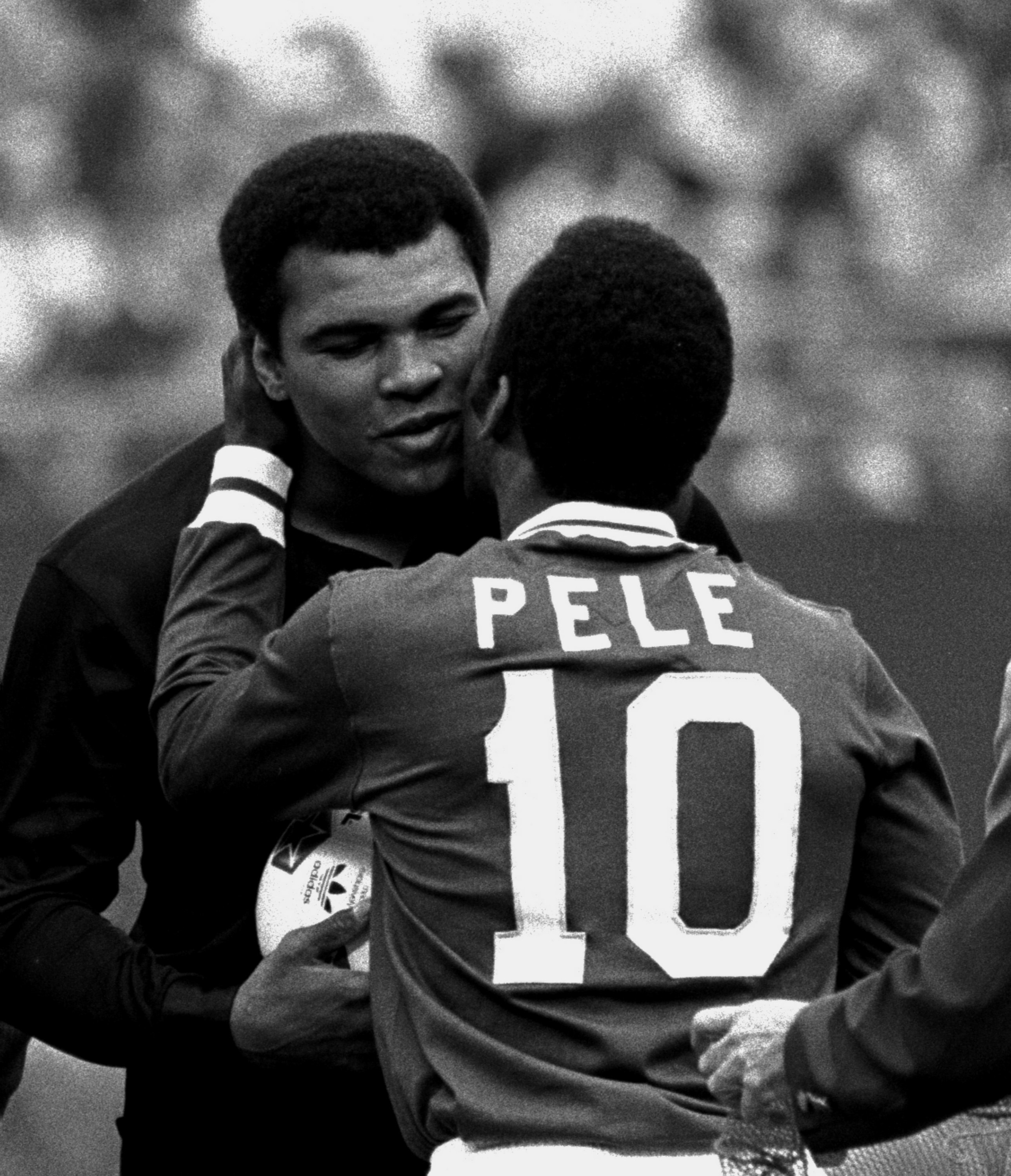
Smith later was Pelé’s teammate with the New York Cosmos, so he was there on Oct. 1, 1977, when Muhammad Ali came into the Cosmos’ locker room before a game to meet fútbol’s version of The Greatest.
Soccer player Pele embraces boxer Muhammad Ali during a ceremony honoring the Brazilian soccer star of the New York Cosmos on Oct. 1, 1977. Richard Drew
Thursday was a slick, professional production, with snappy videos for all of the inductees who were represented in person. The event has come a long way.
The first Hall of Fame ceremony, a shambolic event in 2004, has grown far past the constraints of the ballroom at the Sheraton Society Hill (now a Marriott).
I covered the induction of that charter class, which included Wilt Chamberlain, Mike Schmidt, Chuck Bednarik, Steve Carlton, and Julius “Dr. J” Erving.
Work and life conspired so that, before Thursday, I hadn’t been back since 2015. That was a memorable one.
Pete Rose crashed the party at the Sheraton. In a pink shirt with a white collar and a white baseball cap, Pete set up a pay-for-play autograph booth in an alcove near the ballroom.
He later lobbied organizers to induct him into the Hall.