Tag: topic-link-auto

  • A huge ICE detention center in Pa. could be sold to the federal government, losing local oversight

    A huge ICE detention center in Pa. could be sold to the federal government, losing local oversight

    Big change could be coming to a giant ICE detention center in central Pennsylvania, but not the kind that advocates have demanded at a facility facing federal complaints for medical neglect and assaults against detainees.

    There are signs the Moshannon Valley Processing Center could end up being sold to the federal government, a move critics fear could insulate the center from some state regulation.

    In the meantime, county officials approved a controversial extension of the current operating contract Tuesday, ensuring the largest detention center in the northeastern United States can run unimpeded for at least the next six months.

    The contract between Clearfield County and Florida-based GEO Group, the for-profit owner of the 1,876-bed facility, was set to expire at the end of September. But Republican Commissioners Tim Winters and John Sobel voted 2-1 against Democratic Commissioner Dave Glass to extend GEO Group and ICE’s contract to operate the Moshannon center.

    The vote came at a contentious meeting at which speakers from the audience mostly voiced opposition, questioning why the county had become entangled in federal immigration policy and doubting the true worth and use of the $100,000 payment.

    “Blood money!” one person shouted after the vote.

    Clearfield’s vote took place as President Donald Trump’s administration quietly mounts a takeover of private detention centers like Moshannon, as it is called, to expand bed capacity to support its mass-deportation goals.

    Some local officials and immigration advocates think Moshannon may be next to be sold. In a statement, the Department of Homeland Security said ICE does not discuss potential facility acquisitions.

    “The long-term solicitation process remains ongoing,” a spokesperson said.

    Federal ownership could insulate the properties from compliance with certain local and state laws, important to the Trump administration when other expansion plans, like turning empty warehouses into detention centers, bogged down amid community and legal opposition.

    Moshannon is a common destination of those arrested for immigration violations in Pennsylvania. An unannounced congressional oversight visit in May found that of the 1,417 adults detained there, roughly 78% lacked serious criminal charges or convictions of violent behavior — a contrast to Trump and his allies’ arguments for increased detention.

    ICE agents outside the Delaney Hall migrant detention center in Newark, N.J., in June.LEXI PARRA

    Trump’s push for mass detention and deportation

    Congress voted in July 2025 to allocate $45 billion to the Department of Homeland Security for immigration detention, more than a decade’s worth of typical funding. At the time, Trump immigration officials touted the funding as a way to treat deportation “like a business,” with acting ICE director Todd Lyons saying he wants to see the deportation system run “like [Amazon] Prime, but with human beings.”

    DHS, which oversees U.S. Immigration and Customs Enforcement, went on to spend millions on reopening shuttered prisons, allocated $1.2 billion to house thousands in tents on a Texas military base, and attempted to convert nearly a dozen warehouses across the country into mega detention centers to the tune of $1 billion.

    However, in June, ICE made plans to offload seven of those warehouses, totaling $700 million, by giving them to other agencies or selling them outright, according to the New York Times.

    A warehouse purchased by DHS to house an ICE detention center in Surprise. Caitlin O'Hara

    With a near-record 65,000 people in detention, ICE’s latest push has been to buy established private detention centers and build more facilities alongside them, as seen with the summer sale of four private detention centers owned by CoreCivic, the nation’s other large private prison owner, to ICE.

    GEO Group’s founder and executive chairman, George Foley, said in a May earnings call that the private prison company was “engaged in an active process for the sale” of several facilities to ICE. Foley acknowledged Democratic-led states were considering more active oversight in detention centers, saying, “I think the logical solution to much of that is federal ownership of the facilities.”

    CoreCivic and GEO Group reported a combined $1.4 billion in quarterly revenue this spring, not including the closed or potential sales of detention facilities.

    GEO Group did not respond to a request for comment.
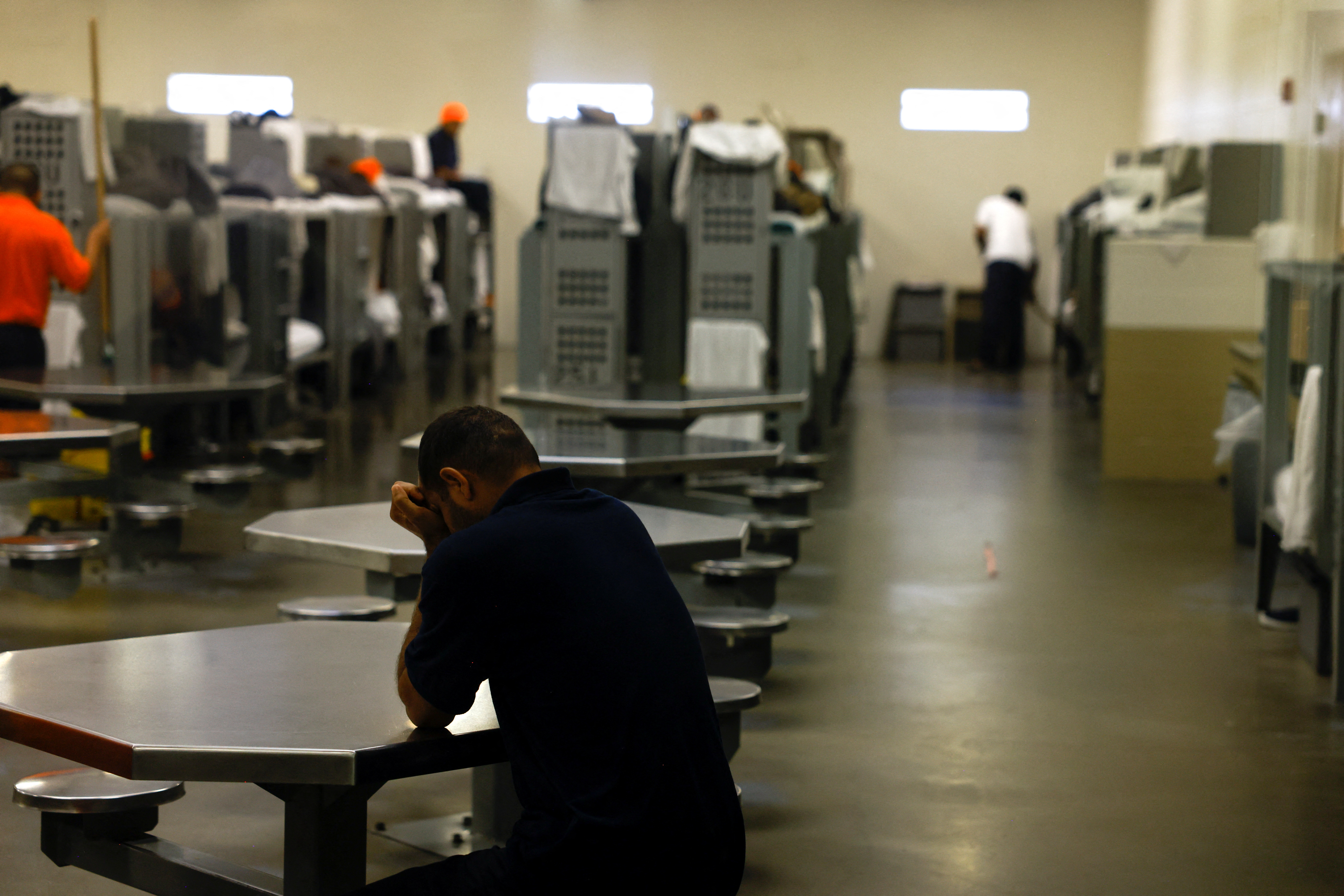
    A detainee sits behind glass in a common area at the Moshannon Valley Processing Center in 2023.REUTERS / Quinn Glabicki

    The potential sale of Moshannon to ICE

    GEO Group has not officially stated its intention to sell Moshannon to ICE. But recent ICE contract bid requests and local dealings with the center’s warden are leading local officials and immigration advocates to suspect a sale.

    Earlier this month, ICE requested 10-year contract bids for “turnkey” detention facilities across the country, including in the Philadelphia area. Moshannon is the only private facility in the region that fits that criteria, said Jasmine Rivera, executive director of the Pennsylvania Immigration Coalition, which had called on county commissioners to deny a contract extension.

    Rivera said the proposal requests include provisions that could lead to the sale of private detention centers to ICE, similar to its dealings with CoreCivic. GEO Group and ICE’s contract extension “is a stopgap measure” so the parties have “the time to finish the land assessment in the sale of Moshannon,” Rivera said.

    In a Sept. 8 Clearfield County commissioners meeting, Glass told the public he directly asked Moshannon warden Leonard Oddo earlier this year whether the Clearfield detention center could be sold to ICE. Oddo said no, according to Glass. In the first week of September, the commissioner e-mailed Oddo the same question, to which Oddo responded, “‘I’ll have to refer you to GEO corporate on that,’” Glass said.

    “I took that as kind of a red flag that there may be some kind of a sale,” Glass said at the meeting.

    Moshannon Valley Processing Center, an ICE detention facility operated by the Geo Group, where migrants are housed, in Philipsburg, Pennsylvania, U.S., August 24, 2025. REUTERS/Quinn GlabickiREUTERS

    What it means for Pennsylvania residents

    Having Moshannon fall under federal ownership would mean many of the tax benefits Clearfield County receives for serving as a middleman would cease, Glass said.

    “Whatever you think about the facility, having that facility sold to the federal government and losing the tax base on that would be a huge blow,” he said.

    Clearfield commissioners have no say in approving the sale if GEO Group and ICE agree to terms.

    Due to a now-reversed order that banned federal agencies from contracting with private prisons, GEO Group is contracted through Clearfield County, meaning ICE funding — around $5 million monthly — flows through Clearfield to GEO Group for operating the detention center. Clearfield collects a $200,000 administration fee for its intermediary role.

    The county also receives $688,000 in annual property taxes from the facility, and GEO employs 400 people there. However, Rivera noted ICE still owes more than $230,000 in unpaid medical services provided by regional EMS providers — a debt U.S. Sen. John Fetterman (D., Pa.) has urged ICE to repay.

    Winters, who voted to extend the contract, said that current federal immigration policy was “not working,” but that losing a seat at the table with ICE and GEO would leave Clearfield County worse off.

    Voting “no” on the contract extension would have eliminated “our communication and our ability to investigate claims,” he said. “Our oversight ability is very small, but we still have it.”

    For Rivera, any sale is concerning because ICE could ignore Pennsylvania lawmakers’ attempts to protect public health, environmental and zoning standards, and the safety of those detained, she said.

    Even if the commissioners had denied the contract extension, ICE would have continued operating without a contractual federal agreement, Winters said, as it did with CoreCivic in New Mexico last year after its contract with Torrance County expired.

    The newly extended contract will allow ICE to continue paying GEO Group for operating Moshannon through Clearfield County until mid-March 2027. At that point, GEO Group and ICE could approach the county with a new contract, or, as advocates and some local officials fear, federal ownership could come into play.


  • In his U.N. speech, Trump’s gushing self-praise could not disguise his foreign policy failures

    In his U.N. speech, Trump’s gushing self-praise could not disguise his foreign policy failures

    The scariest thing about President Donald Trump’s address to the United Nations General Assembly Tuesday was not the wild exaggerations, false claims, or disgusting slurs against (truthful) critics. That all has become par for the course and was to be expected.

    Far more terrifying was the distinct possibility that POTUS believed his delusional description of his alleged triumphs — in the Iran war, in bringing peace to the Middle East and the world, and in pursuit of victory in an unbounded artificial intelligence race with Beijing.

    Perhaps his 38 minutes of self-praise at the podium — to tepid applause at the beginning and end and mostly silence in between — were merely meant as a stump speech to rally midterm MAGA voters growing restless with his endless war. (Of course, most of his MAGA base will only see brief clips from the speech, since the president banned CNN, MS NOW, and Politico from the pool that normally covers such events, and the four other pool members — ABC, NBC, CBS, and Fox — stayed away in solidarity.)

    The greater danger is that, surrounded by sycophants, Trump truly believes his own hype. He showed no sign that he recognizes how Iran has out-strategized him, how Russia, China, and North Korea outmaneuvered him, and how he has alienated crucial European, Asian, and Mideast allies with his erratic and chaotic policies.

    On the U.N. podium, he appeared as a braggart touting triumphs his audience viewed as U.S. failures. Yes, he still represented the world’s most powerful country, but his puerile speech reflected his inability to translate that power into securing American interests or a more peaceful world.

    It is important for voters to fully grasp the self-delusion underlying Trump’s foreign policy. A new CNN poll shows only 29% of U.S. adults approve of POTUS’s handling of foreign affairs, with almost two-thirds saying the U.S. is not winning the Iran conflict. But domestic issues have become so paramount that many ordinary citizens can be excused for tuning out Trump’s overseas misadventures.

    Having just returned from the bracing realities of Ukraine, here is my brief guide to Trump’s delusions or deliberate deceptions — take your pick — about foreign policy issues he raised at the U.N.

    An armed Shiite cleric rides aboard a military vehicle past a billboard depicting Ayatollah Ruhollah Khomeini, founder of the Islamic Republic, during the state-organized “Janfada,” or “Sacrifice for Iran,” military-style parade in Tehran, Iran, Friday.Vahid Salemi

    Iran

    Trump verbally attacked the “cowards and traitors who would like to say we are low on munitions in Iran. That’s not true.” If POTUS were Pinocchio, his nose would have grown 10 feet at that lie.

    In truth, it is Trump who is too cowardly to admit the truth to a public that is instinctively grasping it anyway. That truth, which has been laid out in reputable think tank studies and news reports, and by serving and ousted Pentagon officials, is that U.S. forces have consumed half to two-thirds of highly expensive missile interceptors in fending off cheap Iranian drones.
    The Pentagon was not prepared for a war in which drones played such a major part. Never mind that Ukraine and some U.S. commanders had sounded the alarm beforehand.

    Nor is Trump truthful when he brags that new munitions plants will soon replace any shortfalls, because, unlike rapid production cycles in Ukraine, rebuilding the most critical U.S. weapons stocks will take up to five years.

    On the U.N. stump, Trump also repeated his mantra that he will never allow Iran to have a nuclear weapon. Yes, in 2025, a “12-day war” by the U.S. and Israel badly damaged Iran’s nuclear program. Yet, the current war, ongoing since February, has done little to nothing to further diminish that nuclear prospect. It is focused on lowering oil prices by reopening the Strait of Hormuz, which was functioning normally before Trump joined Israel in attacking Tehran.

    Because of its diminished missile and interceptor stocks, the U.S. is in no position to reopen a kinetic war with Iran — let alone, to use Trump’s irresponsible threat, “annihilate” it. In real terms, Trump is stuck, with Tehran still able to control Hormuz and no way out of his self-inflicted trap, unless he makes concessions to Tehran. Meantime, the war is spreading to other Mideast countries and drawing in new players such as Yemeni Houthis.

    Trump advertises his weakness when he desperately tries to convince fed-up Americans, in front of a U.N. audience, that peace is on the way.
    President Donald Trump meets with Ukraine’s President Volodymyr Zelensky during the United Nations General Assembly, Tuesday.Julia Demaree Nikhinson

    The Ukraine war

    On the podium, Trump regurgitated his mantra that, regarding the war, “we will get that one done,” and that Russia and Ukraine have “had it.” But in truth, Trump’s refusal to pressure Moscow to stop destroying Ukraine’s civilian infrastructure, while demanding Kyiv stop targeting Russian oil exports, ensures there will be no ceasefire.

    Why should Vladimir Putin stop his campaign of destruction when Trump only leans on Ukraine, and fails even to critique Putin’s new drone campaign against European airports and the industry of NATO members? Ukrainian President Volodymyr Zelensky said after meeting Trump Tuesday that he would agree to a ceasefire on hitting energy targets — but both sides would have to take part. Not likely, so long as Trump bows to Putin.

    And don’t expect Trump to enforce the bipartisan sanctions bill newly passed in memory of U.S. Sen. Lindsay Graham. Repeat, POTUS refuses to pressure Putin, with whom his negotiating team is discussing “lucrative” business deals.

    President Donald Trump holds up the document after signing a security agreement with Denmark’s Prime Minister Mette Frederiksen and Greenland’s Prime Minister Jens-Frederik Nielsen during the United Nations General Assembly, Tuesday.Julia Demaree Nikhinson

    Trump as global peacemaker

    The president shamefully read verbatim a long list of compliments by world leaders trying to pacify him, and once again exaggerated the “peace deals” he’s achieved — even though most were temporary ceasefires or have already been broken.

    Trump praised his triumph in Venezuela — where, when talking about oil, he bluntly admitted that “to the victor belong the spoils.” He crowed that Cuba “will fall,” with no mention of the humanitarian disaster caused by the ongoing U.S. blockade.

    And he bloviated about the “unprecedented agreement” the U.S. just signed with Denmark and Greenland, even though everything in that accord could have been agreed to under the terms of a 1951 treaty with Copenhagen, without alienating NATO allies by threatening to seize Greenland by force.

    To sum up, Trump’s performance at the U.N. revealed a delusional leader who may still be feared by allies and small countries for his unpredictable and bizarre behavior that upsets the world economy, trade ties, and markets.

    But adversaries watching the president’s self-praise could only conclude that a weakened old man with no clear strategy except self-aggrandizement now leads the world’s most powerful country. Voters of all parties, be aware.

  • A nor’easter is poised to rip sand from Shore beaches and flood roads

    A nor’easter is poised to rip sand from Shore beaches and flood roads

    While computer models still remain at sea on the fate of a nor’easter taking shape off the Southeast coast, it is all but certain that floodwaters will be covering some roads at the Jersey Shore the next few days while the beaches lose some sand.

    Already, the Army Corps of Engineers beach-fill contractor working in Avalon has decided to halt operations and move the equipment out of harm’s way, said Army Corps spokesperson Stephen Rochette.

    The National Weather Service has issued flood warnings for the oceanfronts and back-bay areas in effect from late Wednesday afternoon until early Saturday, with moderate flooding expected in four of the next five high-tide cycles, warning that “many roads” may become impassable. The agency said it’s possible that some of the flooding could reach the “major” category.

    Inland impacts remained a source of considerable less certainty, but the National Weather Service posted a flood advisory for the tidal Delaware River from northern Delaware to central Bucks County from 10 p.m. Wednesday until 4 a.m. Friday.

    And after that?

    “Once you get to Friday and beyond, the forecasts becomes uncertain,” said Zachary Cooper, a meteorologist at the weather service’s Mount Holly office.

    As expected, a coastal storm was taking shape off the Carolina coasts and was forecast to mature through the workweek, generating winds from the northeast — that’s why they are called nor’easters — adding to an already brisk onshore flow.

    In addition, with a full moon due Saturday, the tides are going to get an additional astronomical tug.

    “There could be some shenanigans with that,” said Matt Benz, senior meteorologist with AccuWeather Inc.

    The timing of the storm’s impacts at the Shore and in the Philly area

    The winds were forecast to increase Wednesday, with gusts to 45 mph at the coast and 35 mph in the Philly area.

    Moderate flooding was expected with the early-evening high tides on the oceanfront and back Wednesday, Thursday, and Friday evenings, and on Friday morning.

    Minor flooding was expected Tuesday evening on the oceanfront and back bays at the Shore, with more-significant moderate flooding at high tides Wednesday and Thursday evenings.

    Along the Delaware River in Philadelphia, high-tide flooding was likely to be minor but could approach moderate levels late Wednesday and Thursday nights.

    No significant rains were in the forecast at least through Thursday, but the outcome for the weekend would depend on the intensity and path of the coastal storm, with rain more likely at the Shore than inland.

    What’s with all the forecast uncertainty?

    The food fight among computer models has persisted, with the European favoring a more westward track, and the U.S. model more out to sea.

    A more westward track, which would make substantial rains, and more wind, more likely, Cooper said. For now, the weather service was going with a 20% to 50% chance of rain across the region Friday into Sunday.

    The forecasts are far more certain on the winds.

    The onshore winds Tuesday were the result of high pressure, or heavier air, over southeastern Canada. Winds circulate clockwise around centers of highs, and thus the winds from the northeast, which also explain the October-like chill, with temperatures getting no higher than the 60s this week.

    An intense coastal storm would add mojo to those winds and could make for quite a raw weekend.

    One thing that is a near certainty is that the forecasts will undergo significant changes in the next day or two.

    Yes, this is early for a nor’easter

    This is unusually early to be concerned about a nor’easter. They usually wait until later in the fall, when the temperature contrasts that ignite storms become sharper as warm air lingers and interacts with the ambitious colder air from the north.

    However, a precocious nor’easter would not be as unusual as what is happening with the hurricane season in the Atlantic Basin.

    That would be: nothing.

    The season already has set a record for the longest wait for a first hurricane, and nothing is cooking. It is also setting records for the least amount of tropical-cyclone energy, said Philip Klotzbach, hurricane expert with the Colorado State University Tropical Meteorology project.

    But while it will not become a hurricane, Benz said the coastal storm bears watching because it could draw up moisture from the waters around the Bahamas and take on some tropical characteristics.

    That would increase the rainmaking and wind potential, he said.

    Stay tuned.

  • After a long house hunt, they found a just-right 19th-century home in Mount Airy

    After a long house hunt, they found a just-right 19th-century home in Mount Airy

    Before landing in their historical Mount Airy farmhouse, Devin and Taylor Lashbrook tried to buy more than 10 properties in the neighborhood — including the house next door. But sometimes, things go exactly as they should.

    “Honestly we put some offers in on houses I’m so glad we did not get,” Devin, a 42-year-old director of operations for a data center, said. He recalled, for instance, the house with an unwanted pool where they made an offer in the spring of 2020.

    “You just start to get desperate,” he said. Devin and Taylor, 45, were starting to feel squeezed in the Manayunk rowhouse they had shared for six years and wanted out.

    The Lashbrooks first saw their 1804-built house over Labor Day weekend in 2020. With three floors, two bedrooms, 1½ bathrooms, a working fireplace, and off-street parking, it checked every box on their wish list. The home’s updated kitchen and bathroom as well as the former owner’s paint choices matched the Lashbrooks’ own mid-century rustic taste, so they felt little would need to be done if they bought it.

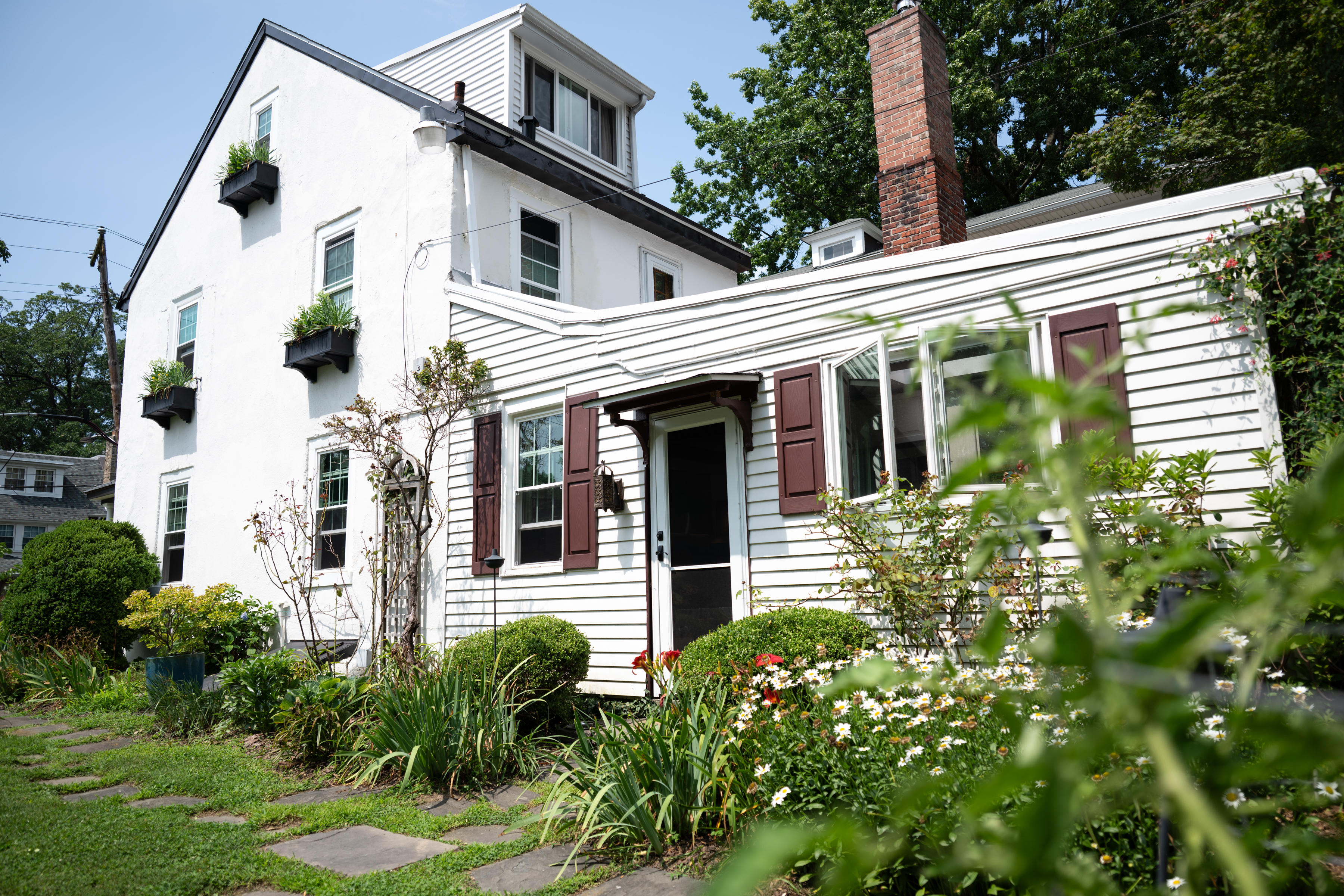
    The outside of Devin and Taylor Lashbrook’s home and their surrounding gardens.Erin Blewett / For The Inquirer
    A pillow displaying Mount Airy’s 19119 ZIP code sits under a window inside the home.Erin Blewett / For The Inquirer

    They offered $399,900 and the offer was accepted. They attribute their winning bid to the holiday weekend, when some buyers may have been out of town, and competition may have been deterred by the slate roof that needed replacing. They also gave credit to the cover letter they submitted with their bid.

    The Lashbrooks love the rich history conveyed through the home’s interiors and have done what they can to preserve it while making the necessary practical tweaks.

    Insurance required them to get a new roof after moving in and, as the home isn’t historically protected, the couple opted for a less-pricey shingle roof instead of replacing the slate. On the front of the house near the roof line, a fire inspection seal hearkens to the home’s age when only dues-paying community members with seals could use the fire department’s services.

    The living room of the Lashbrooks’ home, where they brought their mid-century interior design taste to a house built in the 1800s.Erin Blewett / For The Inquirer

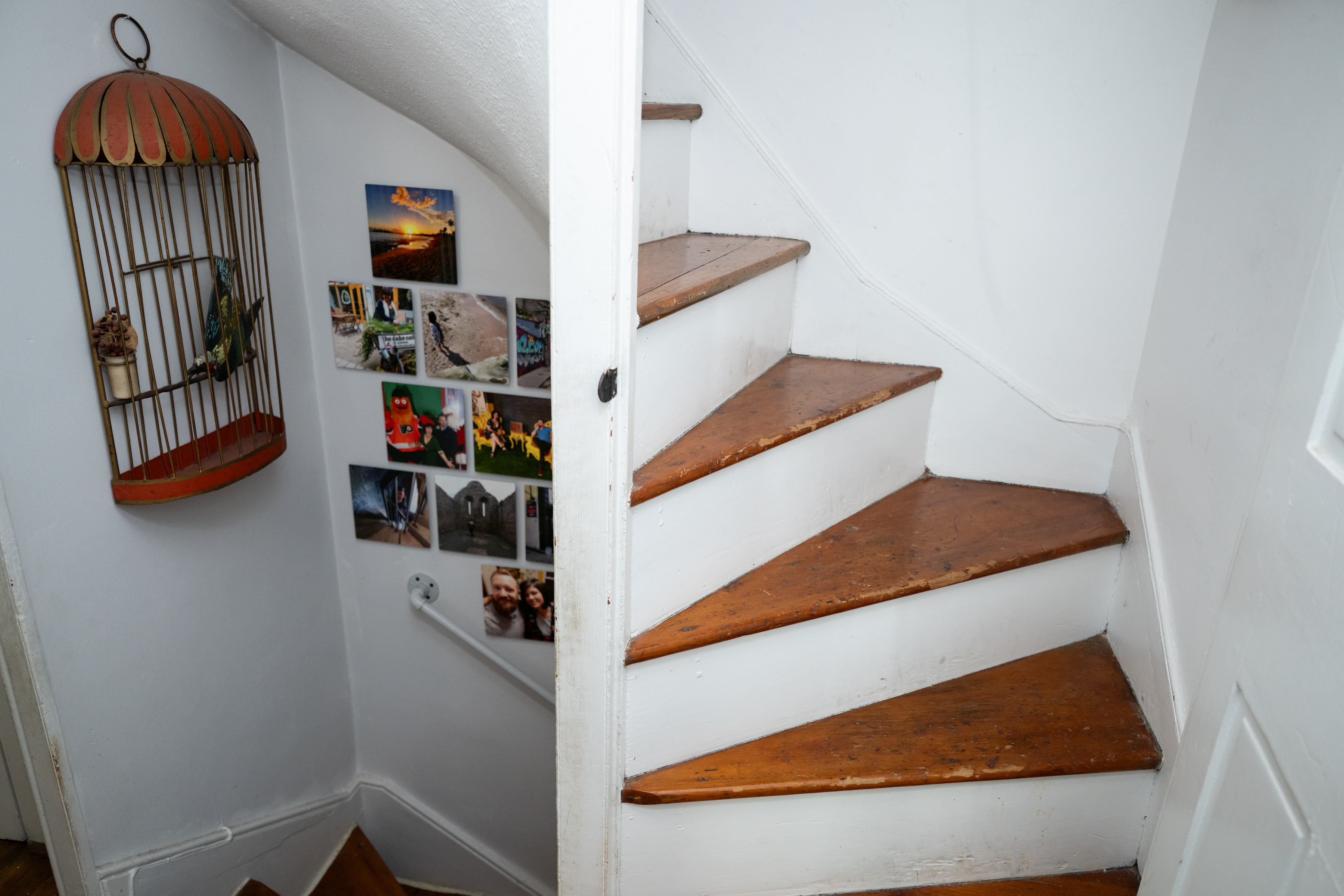
    Devin refinished the floors, many of them original, before they moved in. Grab bars were added in the steep, twisting box staircase after Taylor took a few tumbles.

    “There are a lot of families in the neighborhood,” Devin said, with Taylor adding, “This is not a house for little children.”

    Those grab bars complement the original handles in the staircases, adhered to the wall with hand-forged nails. The couple have also found hand-forged nails in shallow dirt around the grounds of the house, a sign of its permanence in the neighborhood.

    The Lashbrooks believe their home was the first built in the area, a farmhouse that once sat on empty acres with an outdoor kitchen. Of course that’s not the case anymore: All that’s left of the once-sprawling acreage is a second lot that serves as a driveway and the gardens that surround the house.

    The bathroom features a monochrome theme.Erin Blewett / For The Inquirer
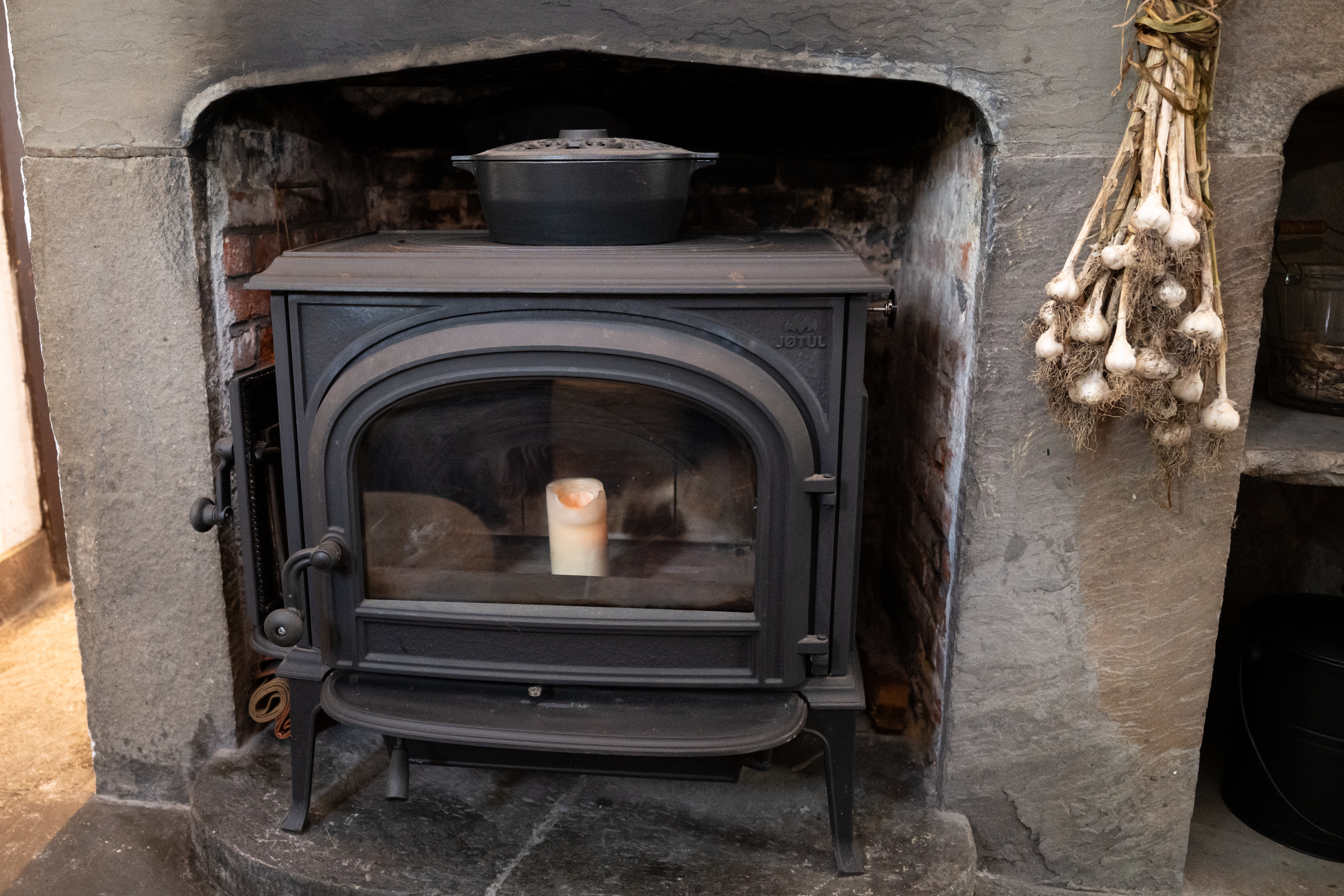
    A wood-burning stove sits inside the original cooking fireplace of the Lashbrook home.Erin Blewett / For The Inquirer
    The couple added grab bars to the twisting box staircase. Their photos decorate the lower part of the stairs.Erin Blewett / For The Inquirer
    Mid-century and rustic decor combine harmoniously in the historical home.Erin Blewett / For The Inquirer

    The kitchen has moved indoors, too, in a galley-style extension off the back. The former cooking fireplace now sports a cozy wood-burning insert that the Lashbrooks enjoy every day in the colder months, with a projection screen tucked into the opening for a bit of 21st-century entertainment.

    The old house has its quirks. Because the original cooking fireplace was once outside, the Lashbrooks’ small sitting room, powder room, and kitchen are on the other side of the home’s original two-foot exterior wall, meaning it can get drafty if the fire isn’t lit. Devin supposes the sitting room’s slate floor sits on wood slats and dirt, making for a cool place where the couples’ two cats, Paulie and Mona, like to lay in the summer.

    The galley kitchen has received modern updates over the years. Erin Blewett / For The Inquirer
    Mona the cat rests on the home’s cool floor.Erin Blewett / For The Inquirer

    There isn’t much storage space, so non-everyday items are relegated to the basement and garage, or the two small closets on the second floor. Taylor’s office, where she works from home in quality assurance, is also the guest room with a pullout sofa.

    The Lashbrooks have tried to honor the legacy of the home’s former owner, a master gardener, by keeping the grounds lush. Taylor uses the space to grow products for her small business, Mount Airy Microgreens, that supplies to a handful of local eateries. They also cultivate a native garden for pollinators.

    The couple want to add a large greenhouse off the kitchen to expand their living space, particularly for dining in the warmer months. They like to entertain but having more than four guests in their house is tough.

    Taylor Lashbrook tends to plants she grows for the microgreens business she runs from her home.Erin Blewett / For The Inquirer
    Taylor admires the flowers in her outdoor garden. She and Devin have added pollinator-friendly and native plants to the property.Erin Blewett / For The Inquirer

    They usually share meals at a small round table near the front door that’s surrounded by Lucite chairs to minimize the visual footprint. A 10-by-16-foot greenhouse framed by sturdy wood would transform their ability to entertain.

    “It’s currently a dream project,” Devin said, “but I don’t think it’s unattainable either.”

    Is your house a Haven? Nominate your home by email (and send some digital photographs) at properties@inquirer.com.

  • Five outs from Alex McFarlane, three eighth-inning runs move Phillies closer to a playoff berth

    Five outs from Alex McFarlane, three eighth-inning runs move Phillies closer to a playoff berth

    It’s all but inevitable now. But until the Phillies actually clinch a wild card, they will insist every game is akin to the postseason, in terms of significance and urgency.

    And Don Mattingly is managing accordingly.

    In case you’re wondering, then, how Mattingly will run a game next week — and beyond, if the Phillies move on — consider the sixth, seventh, and eighth innings Tuesday night in a 6-4 victory over the majors-leading Brewers that pushed them to the verge of a sudsy celebration.

    First, a few particulars:

    • After Zack Wheeler became the 96th pitcher ever to record 2,000 career strikeouts but also fumbled a three-run lead, the Phillies broke a tie by scoring three runs with two out in the eighth inning. Bryson Stott delivered the big hit, an RBI double, and the Brewers kicked around the ball to allow another run to score.
    • The Phillies lowered their magic number to clinch a wild card to two over the Diamondbacks, who defeated the Colorado Rockies late Tuesday. They can spray champagne as soon as Wednesday night with a victory and an Arizona loss.

    NL wild-card standings

    window.addEventListener(“message”,function(a){if(void 0!==a.data[“datawrapper-height”]){var e=document.querySelectorAll(“iframe”);for(var t in a.data[“datawrapper-height”])for(var r,i=0;r=e[i];i++)if(r.contentWindow===a.source){var d=a.data[“datawrapper-height”][t]+”px”;r.style.height=d}}});


    “That’s what we show up for and grind every single day for,” said Brandon Marsh, who interrupted a dreadful second-half slump with his first homer since Aug. 13 and a tack-on RBI double in the eighth inning. “Obviously it’s to win at the end of the day, but to end up holding that trophy at the end of the year.”

    Actually, Alex McFarlane already has. Sort of.

    While the rookie right-hander was getting five outs in a game for the first time in the majors — central to Mattingly’s plan for managing the late innings in the postseason — his minor-league teammates until the All-Star break were winning the Eastern League championship for double-A Reading.

    Does McFarlane expect to receive a ring?

    “I hope so,” he said, laughing.

    McFarlane will factor into the Phillies’ chances, too. Mattingly turned to him in a tie game in the seventh inning, and instead of shaking his hand after a scoreless 15-pitch frame, he sent him back out for more.

    In total, McFarlane recorded five outs — on 21 pitches — and kept the game tied.

    “Obviously he’s been really good,” Mattingly said after McFarlane’s ERA dipped to 2.12 in 17 appearances since getting called up. “His stuff’s really, really good. But more than anything, he’s handled everything. Just his demeanor around the clubhouse, the way he’s able to get himself ready, he can check himself and not throw a ton of pitches down there, so he stays fresh. He’s been huge.”

    It’s a lot of responsibility to place on the right shoulder of a 25-year-old who left Reading only in mid-July. But what choice does Mattingly have?

    Setup reliever Brad Keller was lost to season-ending elbow surgery in July. The Phillies didn’t make meaningful additions to the bullpen at the trade deadline. And Keller’s replacement, Jonathan Bowlan, is trying to make it back from a right groin strain that would’ve landed him on the injured list if the playoffs weren’t starting next week.

    It was McFarlane, then, who got the ball to lefty José Alvarado against lefty-hitting Brice Turang for the final out of the eighth inning.

    “I’m prepared for anything until [Mattingly] tells me I’m done,” McFarlane said. “I just went out there with that mentality. It felt great to go out there, come out in the eighth inning, and try to get the team into the ninth.”

    But while Mattingly plans to use McFarlane as the main link in the bridge to closer Jhoan Duran, it’s also clear he will ride his starters — Wheeler and Cristopher Sánchez, in particular — longer than most managers typically do in October.

    Consider the sixth inning against the Brewers. Clutching a 3-1 lead, as lefty Tim Mayza loosened in the bullpen and Wheeler gave up a leadoff single and a one-out walk, Mattingly stuck with his ace righty against dangerous William Contreras with the tying run in scoring position.

    Wheeler’s first pitch of the at-bat — his 96th of the game — was a low-and-inside sinker. Contreras hit it off his shoe tops and into left field for a two-run single to tie the game.

    “I wanted to go in, but it was down,” Wheeler said. “I wanted it kind of more up, you know? Down’s a little easier to hit than up. That’s probably what I was most upset about tonight — and probably the pitch I hate the most so far this season.”

    Otherwise, there was a lot to like about what may be Wheeler’s final regular-season start. He’s lined up to start Sunday, but the Phillies almost certainly will skip him to line him up for Game 1 or 2 of the wild-card miniseries Tuesday or Wednesday.

    Wheeler struck out the first seven batters, surpassing by one Brandon Duckworth’s 24-year-old club record for whiffs to begin a game. Wheeler’s third strikeout of the game was the 2,000th of his career.

    Zack Wheeler threw 101 pitches in his start on Tuesday.Elizabeth Robertson / Staff Photographer

    “It’s really cool, special,” Wheeler said. “Some of the guys asked me in here, ‘Would you have ever thought [of reaching 2,000 strikeouts]? The answer is no. Getting into the league, trying to get your feet under you, trying to last, game to game early on. Just trying to stay up in the big leagues and trying to figure out how to throw strikes. That was hard for me. Just being where I am now, it’s pretty special.”

    All that’s missing is a World Series championship.

    As the Phillies close in on a playoff spot, their pitching plan — heavy on the starters and an impressively calm rookie reliever — is taking shape.

  • Charles P. Baker III, celebrated cofounder of Baker Industries for the ‘least employable,’ has died at 101

    Charles P. Baker III, celebrated cofounder of Baker Industries for the ‘least employable,’ has died at 101

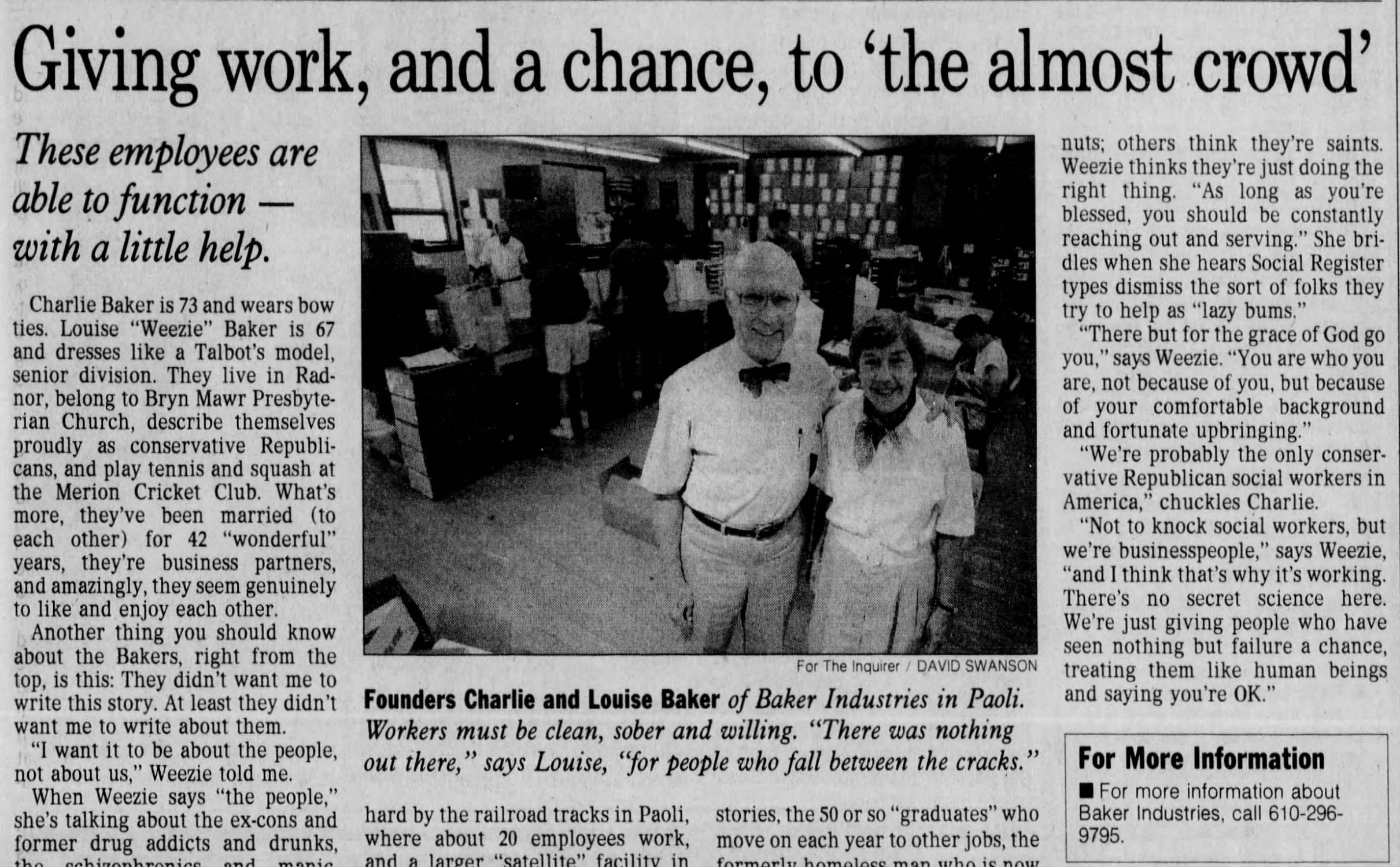
    Charles P. Baker III, 101, formerly of Radnor, celebrated cofounder of Baker Industries, longtime workplace for the “least employable,” former owner of the C.P. Baker & Co. chemical firm, Army veteran, national squash champion, mentor, and volunteer, died Wednesday, Sept. 16, of congestive heart failure at HarborChase assisted living community in Wilmington.

    Born in Philadelphia, Mr. Baker grew up in the old Colonial Hotel at 11th and Spruce Streets in Washington Square West. He and his wife, Louise, founded Baker Industries in 1980, and the workforce development nonprofit has hired, trained, and mentored more than 12,500 workers with physical and intellectual disabilities, substance use disorders, recent periods of incarceration, and housing insecurity who could not find jobs elsewhere.

    Their own son, Justin, lives with epilepsy and, when he could not find suitable employment years ago, Mr. Baker and his wife started their own two-person mail order packaging firm in their Strafford garage. Their son was their first hire.

    “We decided, if we’re going to start something like this, let’s go for the people who need it the most,” Mr. Baker told The Inquirer in 1998, “the ones who are least employable.”

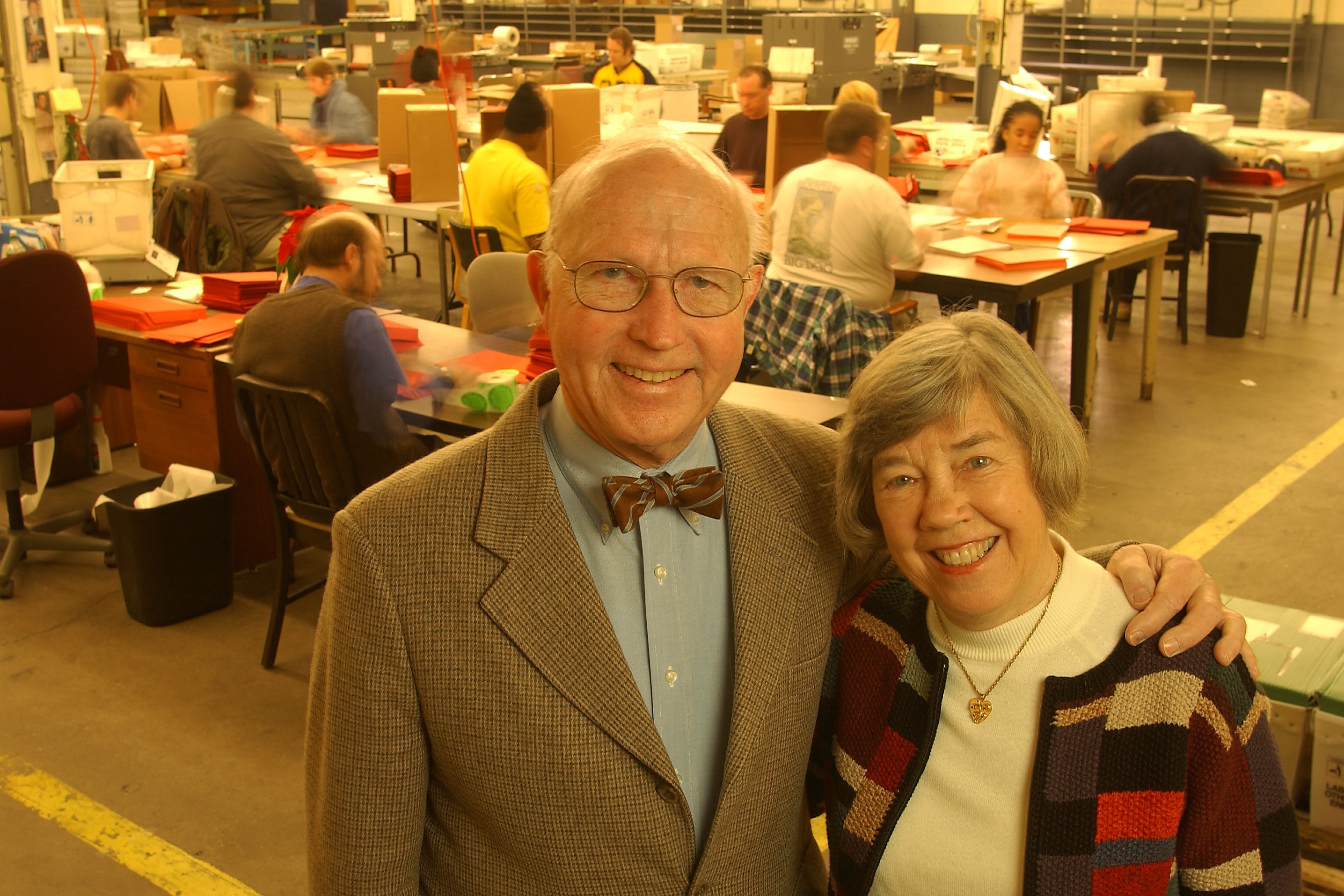
    Mr. Baker and his wife, Louise, stand inside their Baker Industries building in Malvern in 2003. Michael Bryant / Staff Photographer

    For nearly five decades, Baker Industries has contracted light industrial and office work from hundreds of businesses, and operated facilities in Philadelphia, Malvern, and elsewhere. Employees are paid an hourly wage, offered additional training, and encouraged to attend workshops, social events, and support group meetings.

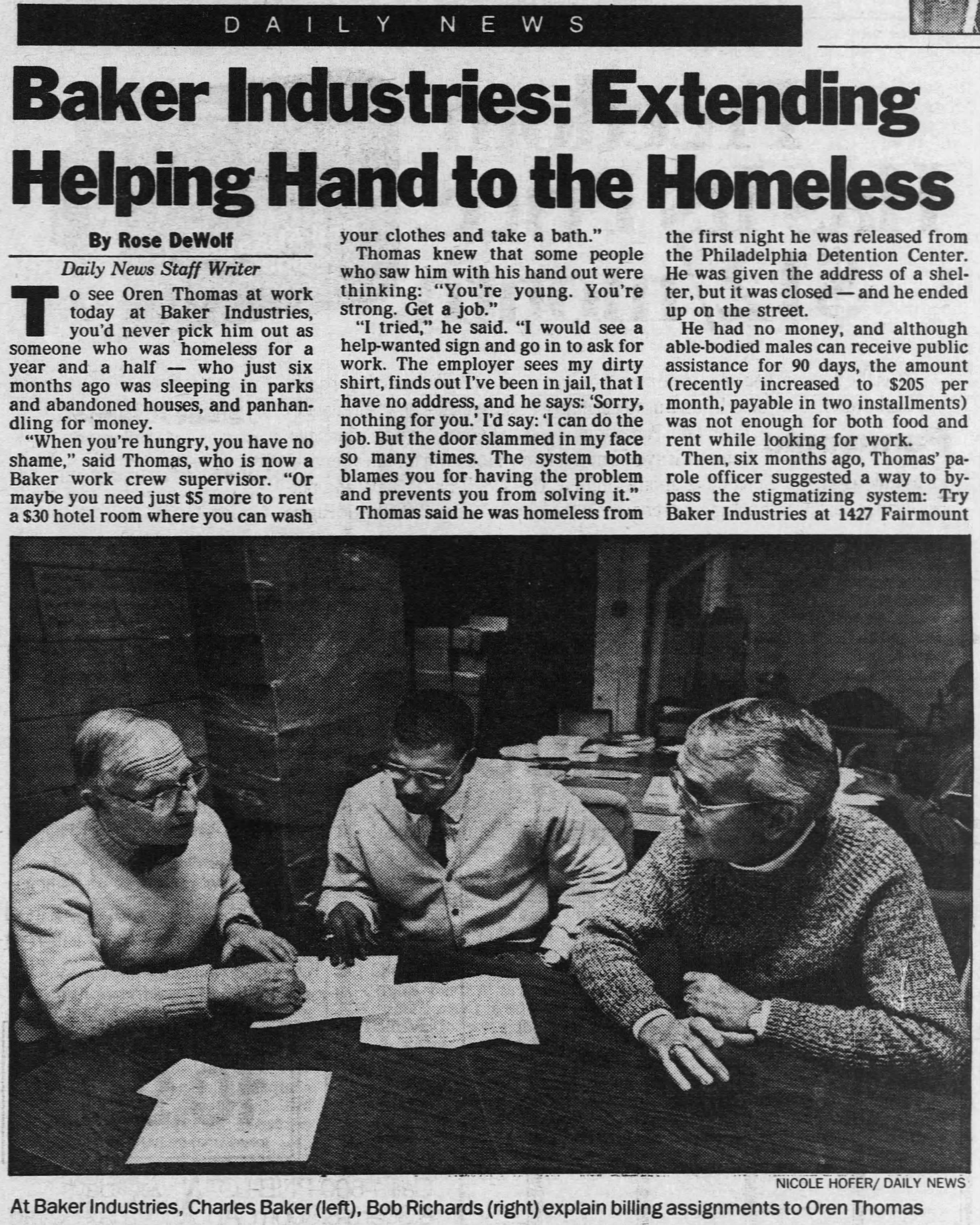
    The company motto is “providing a steppingstone to regular employment,” and many workers have moved on to higher-paying jobs elsewhere. “We have a philosophy of work as rehabilitation,” Mr. Baker told the Daily News in 1988. “The goal is to show these people they can do a whale of a lot more than they think they can do.”

    Mr. Baker served as the unpaid president at Baker Industries until 2002 and then on the board of directors. In the 1950s, he assumed control of his family’s small chemical company, C.P. Baker & Co., and he expanded it before selling it in 1980.

    “Charlie and Weezie Baker believed there is healing in work,” colleagues at Baker Industries said in a Facebook tribute on his 101st birthday in June. “Not just jobs. Work. Showing up. Being part of something. Contributing alongside others.”

    Mr. Baker played many roles at Baker Industries.Baker Industries

    Turk Thacher, vice board chair at Baker Industries, said: “Charlie was beloved. He was kind to everybody.”

    Mr. Baker, his wife, and their company were featured often on TV shows, and in The Inquirer, the Daily News, and other publications. They won many awards for their community service and innovative business model.

    “I was grateful to have their guidance,” Nic Watson, president of Baker Industries, said, “and we will follow their example for years to come.”

    In 1991, the company was named an inspirational Point of Light by President George H.W. Bush. In 2004, Mr. Baker and his wife earned the legacy award for “community generosity” from the Chester County Community Foundation.

    “They went above and beyond their own self-interest,” a foundation official told The Inquirer then.

    This photo and article about Mr. Baker were published in The Inquirer in 1998.Newspapers.com

    Away from work, Mr. Baker was an avid squash player, skier, and sailor. He won the U.S. national hardball singles squash championship six times in the 80-and-older division from 2006 to 2016, skied into his 70s, sailed into his 80s, and played squash and tennis at the Merion Cricket Club until recently.

    He graduated from the U.S. Military Academy in 1946 and served more than seven years in the Army. He was stationed in Europe and rose to captain. His family called him a “relentlessly joyful spirit” in a tribute and said: “The world was a better place for his presence.”

    Charles Pitman Baker III was born June 24, 1925, in Philadelphia. His father, Charles Jr., was manager at the old Colonial Hotel, and Mr. Baker told stories of dropping water balloons on passing pedestrians from windows when he was very young and spending summers at the beach and on boats with the Ocean City Yacht Club.

    He was a star squash player at the Haverford School and known by classmates as “the Arm,” his 1943 senior yearbook said, “because of the vicious way he wields a racket.” His mother died when he was 11.

    This photo and article about Mr. Baker (left) appeared in the Daily News in 1990.Newspapers.,com

    He met Louise Wilhelm while water-skiing in Ocean City, and they married in 1955, and had sons Charles IV and Justin and a daughter, Sandra. His wife died in 2025.

    Mr. Baker and his wife attended Wayne Presbyterian Church, and he was known for his bow ties and wide smiles. He was funny, his daughter said, and liked to sing show tunes anytime anywhere, and write corny poems on birthday cards.

    “He was a wonderful dad who loved his family,” his daughter said. His family said in a tribute: “His legacy of service, humor, and kindness will live on for many generations to come.”

    His wife told The Inquirer in 2004: “Charlie has a kind heart.”

    Mr. Baker (front left) celebrated his 100st birthday in June 2025 with his family.Courtesy of the family

    In addition to his children, Mr. Baker is survived by four grandchildren, five great-grandchildren, and other relatives. Two sisters died earlier.

    Visitation with the family is to be from 10 to 11 a.m. Saturday, Oct. 17, at Wayne Presbyterian Church, 125 E. Lancaster Ave., Wayne, Pa. 19087. A celebration of his life is to follow. Bow ties are optional but encouraged, the family said.

    Donations in his name may be made to Baker Industries, 184 Pennsylvania Ave., Malvern, Pa. 19355.

    His wife told The Inquirer in 2004: “Charlie has a kind heart.”Baker Industries
  • No joke, these are 15 best comedy shows coming to Philly this fall

    No joke, these are 15 best comedy shows coming to Philly this fall

    Amid global mayhem and disorder, the comforting distraction of a comedy show is always welcome.

    Whether it’s a witty punch line or a well-timed quip, comedy has the power to help us better understand our world or forget about the sadness that exists within it.

    Lucky for you, this fall features a lineup of world-class acts and emerging comics who will perform at clubs and theaters in the region.

    Here’s a list of the comedy shows we’re most excited about.

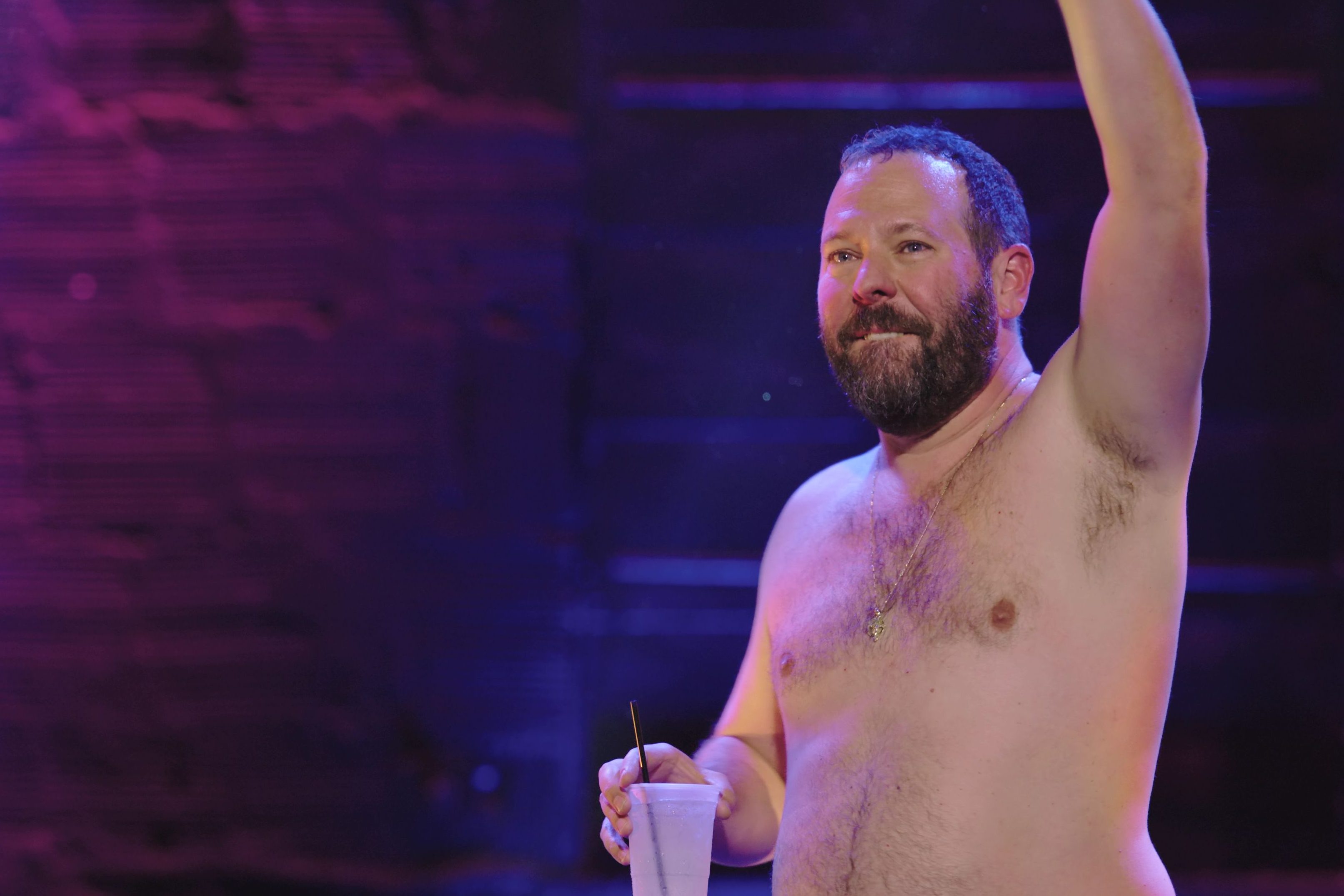
    Bert Kreischer: Secret TimeNetflix

    Bert Kreischer

    Oct. 9-10, the Met

    There aren’t a lot of things guaranteed in life, but at least three are certain: death, taxes, and a shirtless Bert Kreischer. The Florida-born comedian is bringing his wild, no-holds-barred brand of comedy to the Met Philadelphia for his “Permission to Party World Tour.” He will perform back-to-back nights at the historic venue. ticketmaster.com.

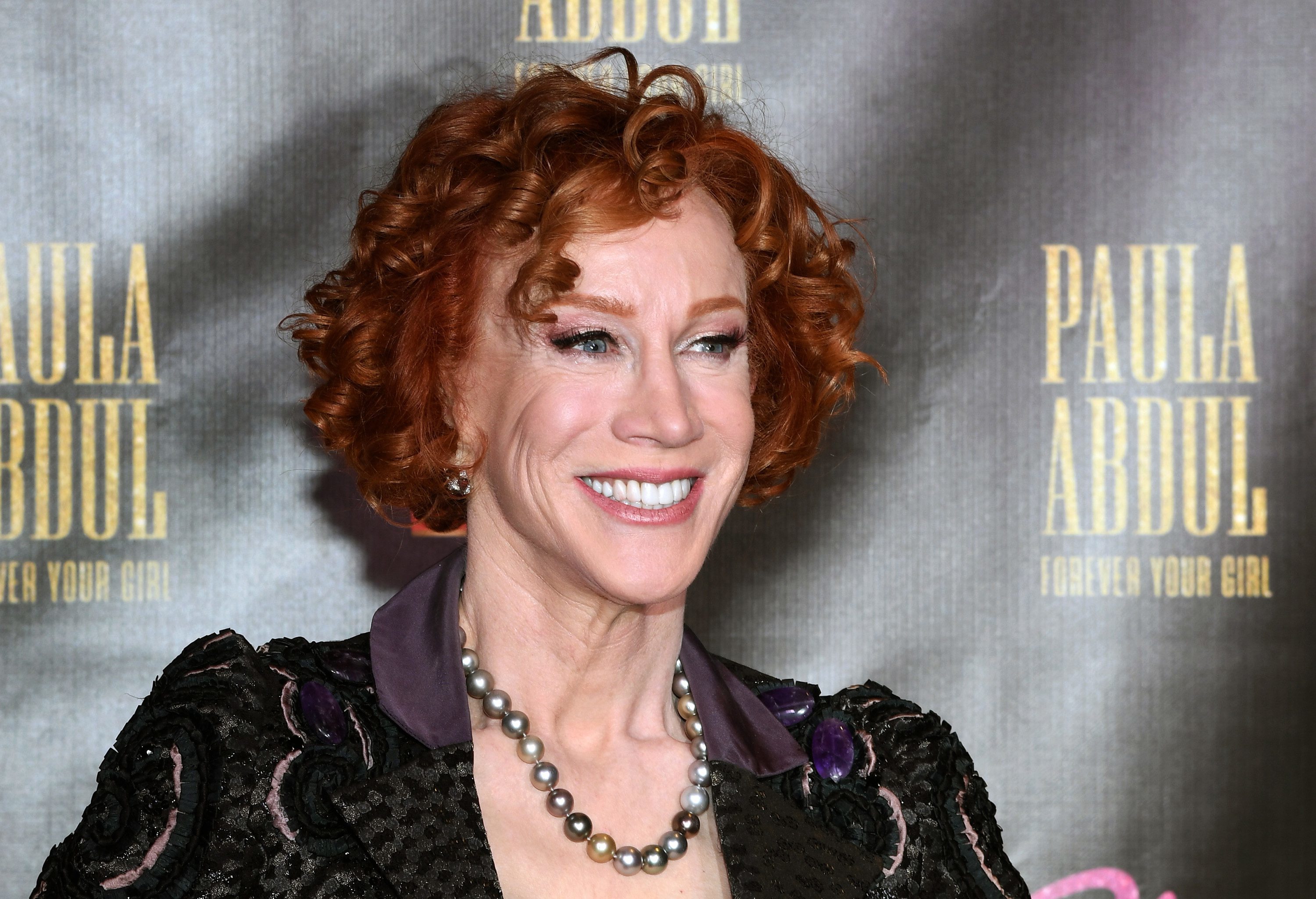
    Kathy Griffin attends the official opening of Paula Abdul’s Flamingo Las Vegas residency “Paula Abdul: Forever Your Girl” at the Cromwell Las Vegas on Oct. 24, 2019.Ethan Miller / MCT

    Kathy Griffin

    Oct. 15, Keswick Theatre

    Kathy Griffin, the Emmy-winning comedian and queen of the celebrity D-list, is back in the region for a one-night-only show in Glenside. Catch the fiery redhead in action at the Keswick Theatre. keswicktheatre.com.

    The comedian Earthquake (Nathaniel Stroman). SiriusXM

    Earthquake

    Oct. 23, Rivers Casino

    Check the Richter scale when comedian Earthquake descends onto Rivers Casino this fall. The veteran comic is bringing his brash, quick-hit humor to the Fishtown venue for a seismic night of laughter. riverscasino.com.

    Aussie comedian Jim Jefferies portrays … an Aussie comedian named Jim.Matthias Clamer / FX

    Jim Jeffries

    Oct. 24, Xcite Center at Parx Casino

    Jim Jeffries, the Australian comic best known for starring in FX’s Legit and heading his own late-night talk show on Comedy Central, returns to the region for his “Son of a Carpenter” tour. axs.com.

    Joanne McNally

    Oct. 29-31, Punch Line Comedy Club

    Joanne McNally, who’s headlined sold-out shows in her native Ireland and other parts of the world, is bringing her dark, edgy comedy to Philly this fall. She’s stopping by Punch Line in support of her “Pinotphile” show all Halloween weekend. ticketmaster.com.

    Comedian and impressionist Matt Friend in New York.Jesse Dittmar for The Washington Post

    Matt Friend

    Nov. 6, the Block at Harrah’s Philadelphia

    Comedian and master impressionist Matt Friend, who can embody folks from President Donald Trump to Jeff Goldblum, Andy Cohen, and King Charles III on command, is hitting the stage at Harrah’s Philadelphia in Chester. ticketmaster.com.

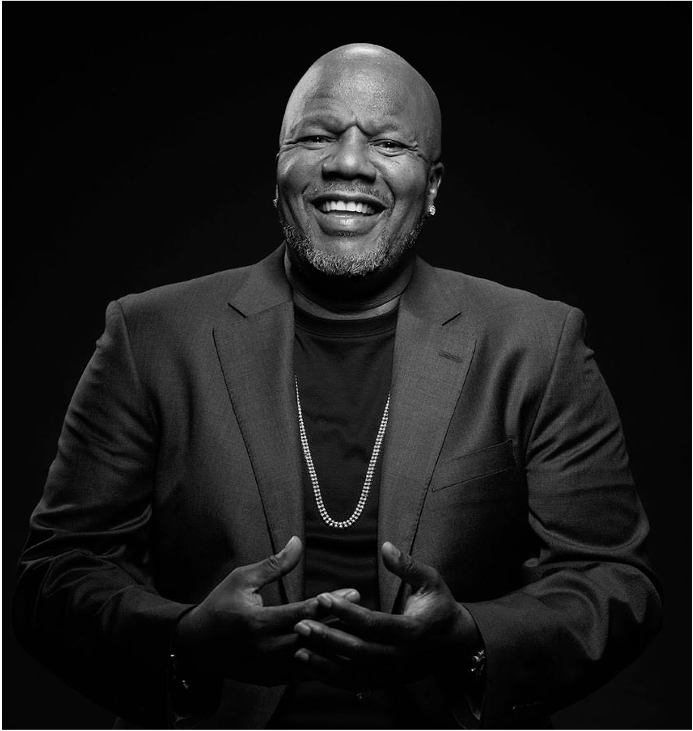
    Tony Baker

    Nov. 6-8, Punch Line Comedy Club

    When comedian Tony Baker isn’t roasting your favorite comic or putting on his film critic cap, he’s gracing the comedy stage. The veteran stand-up is slated for a three-night stint at Punch Line Philly this fall. ticketmaster.com.

    Actor/comedian Chris D’Elia, in an image processed using digital filters, performs his stand-up comedy routine as part of the Aces of Comedy series at the Mirage Hotel & Casino on Aug. 25, 2018, in Las Vegas. Ethan Miller / MCT

    Chris D’Elia

    Nov. 7, Xcite Center at Parx Casino

    Comic Chris D’Elia, who’s notched hit specials, TV shows, and global tours through his nearly 20-year career, will wrap up a string of European shows before dropping into Parx Casino for his “Go For It The Tour.” Catch the stand-up in action this November. axs.com.

    Mojo Brookzz

    Nov. 13, the Met Philadelphia

    Not every social media-based comic can succeed on the stand-up stage, but Chicago’s Mojo Brookzz has made the transition look easy. His compelling stories and impressive crowd work, which draw millions of views online, is why he’s become one of the fastest rising stars in the comedy game. Catch him at the Met Philadelphia for his “Outta Pocket Comedy Tour.” livenation.com.

    Tim Dillon

    Nov. 14, Xcite Center at Parx Casino

    Anyone who’s tuned into comedian Tim Dillon’s Netflix special, or listens to his hit podcast, knows there are very few boundaries that he won’t cross. The Long Island-born stand-up constantly delivers steaming-hot political and cultural takes, and the crowd at Parx Casino can expect the same blend of bold commentary and observational humor this fall. tix.axs.com.

    Craig Robinson at the 78th edition of the Venice Film Festival in Venice, Italy, on Sept. 5, 2021. Joel C Ryan

    Craig Robinson

    Nov. 19-22, Helium Comedy Club

    Don’t be fooled: comedian Craig Robinson, known for roles in The Office, Hot Tub Time Machine, and Pineapple Express, is certainly a recognizable face in film and TV. But he made his bones on the comedy stage. He is rolling into Philly to perform at the Helium Comedy Club. philadelphia.heliumcomedy.com.

    In this Sept. 17, 2018 file photo, Michelle Wolf arrives at the 70th Primetime Emmy Awards at the Microsoft Theater in Los Angeles.Jordan Strauss

    Michelle Wolf

    Dec. 5, Xcite Center at Parx Casino

    Hershey’s own Michelle Wolf, who racked up writing credits as a contributor for Late Night with Seth Meyers and The Daily Show with Trevor Noah before landing her own Netflix special, is heading to Bensalem’s Parx Casino this December. The Emmy-nominated comic will discuss everything from motherhood to gender roles, politics, and menopause during her “Best Job in the World” tour stop. axs.com.

    Emily Catalano

    Dec. 7-9, Helium Comedy Club

    From her late night stand-up debut on Conan to being added on the New York Times’ “Best Comedy of 2024″ list, it’s safe to say Emily Catalano is drawing national attention. The Los Angeles-based stand-up is dropping into Center City for three nights at Helium Comedy Club. philadelphia.heliumcomedy.com.

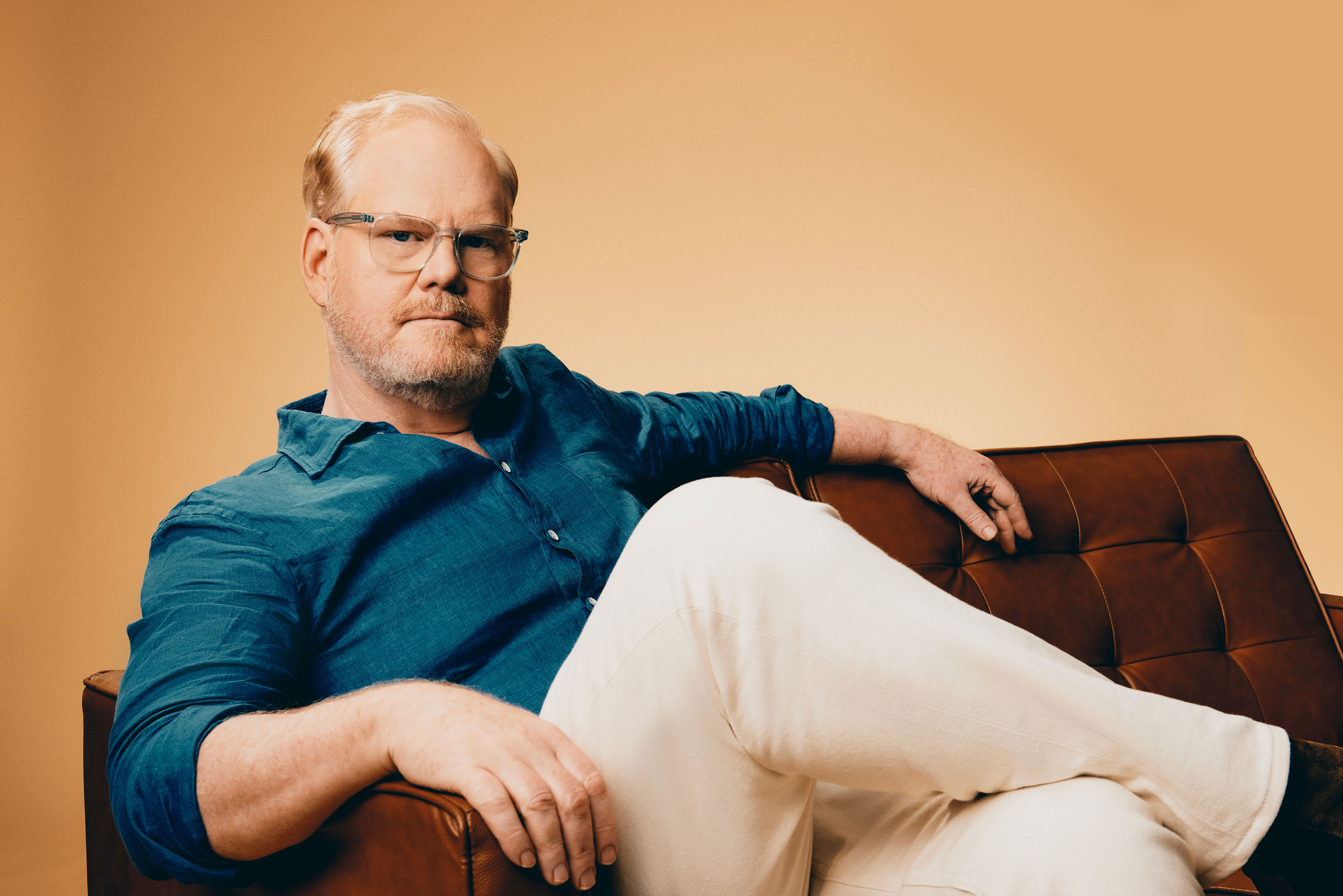
    Jim Gaffigan will perform two nights at the Miller Theater.Bronson Farr

    Jim Gaffigan

    Dec. 11-12, Miller Theater

    Emmy-winning comic Jim Gaffigan, whose decades-long career spans TV and film, hits the comedy stage for his “Everything Is Wonderful” tour. The veteran comic will perform all new material, complete with the same sly delivery, across three shows and two nights at Miller Theater. ensembleartsphilly.org.

    Tommy DavidsonCourtesy of Tommy Davidson

    Tommy Davidson

    Dec. 18-20, Helium Comedy Club

    Tommy Davidson, whose Martin spinoff series, Varnell Hill, premiered this month on Paramount+, is back on the stand-up circuit. The longtime comedian will perform three nights at the Helium Comedy Club to close out this year’s fall lineup. philadelphia.heliumcomedy.com.

  • Economic frustration tests Trump’s standing with rural voters, new AP-KFF poll finds

    Economic frustration tests Trump’s standing with rural voters, new AP-KFF poll finds

    WASHINGTON — About half of rural American voters believe the economy is worse off now than when President Donald Trump returned to office, according to a new survey that points to economic frustration among a key group that has backed Trump and other Republicans in recent elections.

    The Associated Press, in partnership with KFF, polled more than 2,000 rural registered voters and found broadly negative views of the national and local economies, including among many Republicans. The costs of groceries, gas and healthcare rank as top pain points for the rural voters, who were surveyed over two weeks starting in mid-August. And a larger share than among voters overall say they are worried about being able to afford groceries or gas.

    At the same time, about half of rural voters approve of Trump’s job performance, more than among U.S. adults overall in separate AP-NORC polling.

    The findings suggest that many rural voters haven’t turned on Trump but that they also largely don’t think he has delivered the economic renaissance he promised on the campaign trail.

    Ed Westrick, a registered Republican and veteran, rates Trump’s job performance as “mediocre, middle-of-the-road.” Westrick, who lives in rural Texas, isn’t sure he will cast a midterm ballot, a troubling sign for Republicans in a key state in their fight to keep control of Congress.

    Rural Americans skew Republican and historically have been an instrumental group of voters for Trump. The survey reveals that while rural voters seem unlikely to support Democrats on a large scale, Trump and the Republican Party could face challenges with them in November.

    Rural voters are deeply unhappy about the economy

    As the election approaches, only about 4 in 10 rural voters approve of Trump’s performance on the economy. They rate him similarly on his handling of the Iran war, an entanglement that has proved expensive for the U.S. and increased oil and gas prices. And rural voters rank pocketbook concerns and fraud in government programs higher among the things they want to hear about from politicians than other perennial issues, such as gun policy and abortion.

    Westrick, 59, is a technical trainer in the electronics industry and has seen an increase in business in part because he works with defense contractors, but he said he’s concerned about the cost of living.

    “I hear the politicians talk about making groceries more affordable and making healthcare more affordable, but yet none of them are addressing the issues,” Westrick said.

    In the poll, about three-quarters of rural voters rated the cost of living in their communities as “only fair” or “poor” — a 25 percentage point rise from a similar question asked in a KFF-Washington Post survey in 2017. Rural Americans, who have consistently lower wages than those who live in suburban and metro areas, have been hurting economically for decades, according to Tim Slack, a professor of sociology at Louisiana State University and co-author of the book “Rural and Small-Town America.”

    “Many folks are connecting the cost-of-living crisis to many of the Trump administration’s policy choices: the war in Iran, tariffs, trade wars,” he said. “None of those things are going to bring down prices at the pump or the local Walmart.”

    “Trump promised to lower prices on Day 1, and instead the cost of living’s continued to climb. And that’s especially painful in rural America,” Slack said, adding that he expects many working-class Republicans to skip voting in November.

    Rural Republicans do have a brighter economic perspective than rural Democrats or independents, particularly about the U.S. as a whole, according to the survey. About 6 in 10 rural Republican voters say Trump has improved the national economy, compared with only about 2 in 10 independents and fewer than 1 in 10 Democrats.

    But only 45% of rural Republican voters say Trump has made their local economies better off. About 1 in 4 said there are fewer good-paying jobs where they live than five years ago.

    In Michigan, 37-year-old independent voter Brittainy Sosebee said she isn’t sure if she will vote in the state’s midterm election, which includes a tight Senate race seen as crucial to the Democratic Party’s push to win back a majority. Sosebee voted for Trump in 2016 and Democratic candidate Joe Biden in 2020; she didn’t vote in 2024.

    Sosebee, who lives in St. Johns, a small town just north of Lansing, said she used to have extra money to take a vacation or buy a new pair of jeans without worrying. Now, she scrutinizes every expense, cringing at the rising cost of fresh produce when she shops for her three children.

    “We hunt, so we have a lot of venison and things like that, so we don’t have to buy meat from the grocery store, but it’s still crippling,” she said.

    Healthcare policies go unnoticed

    The AP-KFF poll found that rural voters overall don’t perceive much positive impact from the Trump administration’s healthcare policies even as they have been a top priority for Republican leaders, who have promoted efforts to lower drug costs and touted a $50 billion rural health program.

    Only 17% of the voters said the Trump administration’s healthcare policies have had a “positive impact” on their healthcare costs, while 41% said they’ve had “no impact” and another 41% said they’ve had a “negative impact.”

    Sitting on her front porch in Woolwich, Maine, 71-year-old Democrat Kathleen Hanning sipped a chai tea latte in the sun and recalled how she stopped voting for Republican Sen. Susan Collins in 2020.

    Collins and Trump are “intertwined,” Hanning said. “She is not independently voting on what’s best for Maine.”

    Hanning, a retired federal worker, said she hadn’t paid much attention to the health policies in Trump’s signature tax breaks and spending cuts bill passed last year. The law reduces federal Medicaid spending by roughly $900 billion over a decade but also includes billions of dollars for the Rural Health Transformation Program, which it created.

    A year after the law’s passage, more than 8 in 10 rural voters said they’d heard either “a little” or “nothing at all” about the health fund. About 60% said they had heard nothing, according to the survey.

    Rather than transforming, Hanning said, “hospitals up here in Maine are consolidating.” She travels an hour to see a specialist and noted that mothers will now have to drive farther for care because the hospital in nearby Damariscotta announced it would soon close its labor and delivery center.

    Nine in 10 rural voters said it was “extremely” or “very” important for candidates to talk about healthcare costs, with more than half saying it’s “extremely important.” Mirroring the general population, rural voters ranked healthcare costs and gas prices as top economic worries.

    Rural Republican voters still trust the GOP more

    When asked for the political party they trusted to do a better job handling issues such as the cost of healthcare or the cost of living, rural voters tended to side with their own party. The finding signals that Democratic candidates are more likely to benefit from rural Republicans staying home this November than from them voting across party lines in large numbers.

    Republicans are more ambivalent about their party’s ability to handle key healthcare issues, compared with Democrats. About 8 in 10 Democratic voters say they trust the Democrats to address healthcare costs, while closer to 6 in 10 Republican voters say the same of the Republicans.

    In Manassas, Georgia, a tiny town about an hour’s drive inland from Savannah, Republican voter Wanda Rogers feels the Trump administration is doing the best it can to clean up what she sees as an economic mess that Democrats left behind when they lost power.

    “I kind of think people think like I do, that he knows what needs to be done,” she said. “It’s just taking them a while to get it there.”

    Still, the 66-year-old said, “gas prices, they’re eating me alive right now.” She said she has stopped traveling to the beach because it has become too expensive.

    Pamela Shaw, an independent voter who lives in a rural area near Asheville, North Carolina, said she sees the impact of rising costs in her community.

    “When hamburger is over $7 a pound and steak is $15 or more a pound, a lot of people are not able to buy some of the things that they are used to buying,” the 59-year-old said in an interview.

    Trump’s rural standing has slipped

    Trump remains relatively popular among rural voters in the AP-KFF poll, with 48% approval — substantially higher than in a July AP-NORC poll of U.S. adults overall, in which only a third approved of his performance. But he’s also down slightly, from 56% approval, among rural voters, based on a similar question asked in the earlier KFF-Washington Post survey.

    This year’s competitive elections feature key Senate races in states including Ohio, Michigan and Maine, all of which have large rural populations. In close races, Democrats may have a chance to “show up and give a message that rural people might find appealing,” said Nicholas Jacobs, a political scientist at Colby College and co-author of the book “The Rural Voter.”

    “But it’s nothing more and it’s nothing less than that — an opportunity,” Jacobs said. “And time and time again, Democrats have shown a certain proclivity for not seizing that opportunity.”

    Many rural voters don’t think the major parties or the president respect people like them. About half, 48%, of rural voters say the GOP respects people like them “a lot” or “some,” while 45% of rural voters say this about Trump and 37% say this about the Democratic Party.

    On a recent Thursday, registered Republican Nate Lawrence answered his phone after paying $57 to fill up his Chevy Equinox in New Concord, Ohio, a village of fewer than 3,000 people about an hour’s drive east of Columbus.

    Lawrence, a middle-school English teacher, said the candidates should be talking about spending power: “I need to be able to go to the store and feed my family on what I make as a teacher,” Lawrence said. “I should be able to pay for a house on a teacher’s salary.”

    Lawrence has voted for Trump in the past but didn’t in 2024. For Ohio’s Senate race, Lawrence said he is torn and not sure whether to pick Democrat Sherrod Brown or Republican Jon Husted.

    Still, even if the politicians say they will lower prices, Lawrence said, he won’t believe them.

    “Trump said that, and it didn’t happen,” he said.

  • In court filing defending media ban, White House says access is a ‘privilege’

    In court filing defending media ban, White House says access is a ‘privilege’

    White House officials said in a court filing Tuesday that President Donald Trump had determined that CNN, MS NOW and Politico had breached standards of conduct, leading to their expulsion from the grounds of the White House.

    The alleged violations, said the filing, include “trafficking in verifiable falsehoods about national security and other issues, and publishing sensitive or classified information.”

    “Access to the White House is a privilege — not a right,” reads the filing, which argues that Trump’s action against the three news outlets does not violate the First Amendment and aligns with a long history of presidents favoring some journalists over others.

    The filing, furthermore, claims that the White House’s denial of access is a preliminary matter and that the outlets have until Friday to contest the decision.

    The clash began last Friday, when Trump announced on Truth Social, the platform that he owns, that he would ban the three outlets, saying they “shouldn’t be able to constantly write or report FICTION and LIES.” On Saturday morning, journalists from CNN, MS NOW and Politico were denied access to the White House grounds and had their press passes confiscated.

    By Monday morning, the news organizations had sued, arguing that the president’s ban “brazenly discriminates based on editorial viewpoint,” and was an affront to their First Amendment rights. They said that the move had blindsided its targets, depriving the outlets of the warning that any such drastic action required. They “received zero advance notice that the president would ban a news organization from the White House if he dislikes its coverage,” according to the complaint.

    U.S. District Judge Timothy J. Kelly, who was nominated in 2017 by Trump, will hold an emergency hearing Wednesday to consider the media outlets’ request for a temporary court order undoing the access ban.

    The government filing Tuesday night included copies of letters sent earlier in the day to each banned news outlet. In addition to accusing the organizations of failing to meet standards of conduct, the letters identified specific stories that allegedly either spread falsehoods or threatened national security. The letter to CNN, for example, cited a January 2026 story that “disclosed ‘top-secret’ construction details related to the East Wing bunker,” the letter reads.

    One of MS NOW’s alleged infractions, according to a White House letter, was a June 2026 story claiming “a source said that President Trump ‘underestimated the willingness of Iran to resume conflict.’” Politico is accused of publishing a “document detailing funding for the White House ballroom containing intricate descriptions of how the Secret Service would invest in security improvements,” according to a White House letter.

    In 2018, Kelly ruled against Trump in another media access case. Trump had expelled CNN reporter Jim Acosta from the White House grounds. But Kelly ordered his credentials restored, saying Trump hadn’t given Acosta enough notice to challenge the action.

    Other news organizations have responded to the ban with acts of support and solidarity. The consortium of five TV networks that covers the president as the so-called TV pool — ABC News, CBS News, NBC News, Fox News and CNN — suspended its immersive coverage of Trump, and some news outlets temporarily withheld publication of photos of Trump’s events.

    This article originally appeared in The New York Times.

  • Trump-backed Missouri congressional map returns to the Supreme Court for the third time

    Trump-backed Missouri congressional map returns to the Supreme Court for the third time

    WASHINGTON — The fight over Missouri’s congressional map returned to the U.S. Supreme Court for a third time late Tuesday, after an appeals court ordered the revival of new districts backed by President Donald Trump.

    The new map was drawn to help Republicans gain a U.S. House seat in the pivotal midterm elections, which will determine control of Congress. The Supreme Court has twice blocked efforts to use it in November.

    The latest emergency appeal comes after an unusual federal appeals court ruling that ordered a last-minute return to a GOP-friendly map even after the Supreme Court halted such a move.

    The justices had left in place a Missouri Supreme Court decision requiring the state to use its previous map. The state court ruled that the new districts could not take effect unless voters approved them in a statewide referendum.

    The U.S. Supreme Court gave supporters of the new map until midday Wednesday to respond to the latest appeal.

    The dispute has caused confusion for over a million potential voters who could be shuffled among districts. Absentee voting already is underway in Missouri using districts adopted in 2022, after the last census.

    The new congressional map backed by Trump significantly reshapes a Kansas City-based district held by Democratic Rep. Emanuel Cleaver. Republicans hope the map could help them win seven of the state’s eight House seats — one more than they currently hold.

    Missouri’s redistricting battle has been the longest and most complex among roughly a dozen states that sought to change their U.S. House districts over the past year. Districts are usually redrawn at the start of each decade, after a census. But Trump spurred a spate of mid-decade redistricting last year when he urged Republican-led states to redraw districts to gain an edge in the midterm.