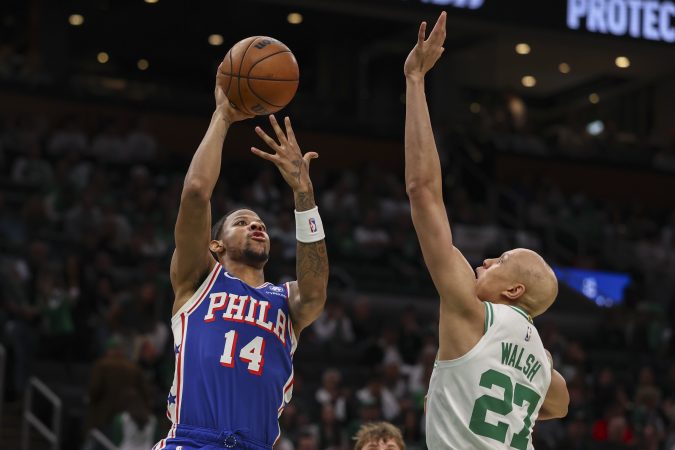
Dalen Terry has been waived by the 76ers, the team announced Sunday.
The move will allow the Sixers to officially sign megastar LeBron James and veteran wing Kentavious Caldwell-Pope while staying under the first apron hard salary cap. The Sixers need to waive (or potentially trade) one more player in order to get under that financial ceiling.
Terry being one of the cuts is unsurprising. His $2.6 salary for 2026-27 was nonguaranteed until Jan. 10, after the Sixers picked up the team option in his contract in late June.
Terry joined the Sixers on a two-way contract in February, and averaged 4.1 points, 1.6 rebounds, and 1.6 assists in 12.4 minutes across 14 games. He had his contract converted to a standard deal in April, after veteran point guard Cameron Payne sustained a hamstring injury that would have kept him sidelined for weeks.
The 24-year-old Terry was with a group of Sixers teammates and staff to watch a Las Vegas Summer League game earlier this month. He said then that he had spent his offseason working on his shooting, and was excited when the team acquired All-NBA wing Jaylen Brown.
With 100 days until Election Day in Pennsylvania and across the country, top Democratic leaders rallied in the Lehigh Valley Sunday to support a Democrat they hope will defeat the Republican incumbent and help take control of Congress during the midterm elections this November.
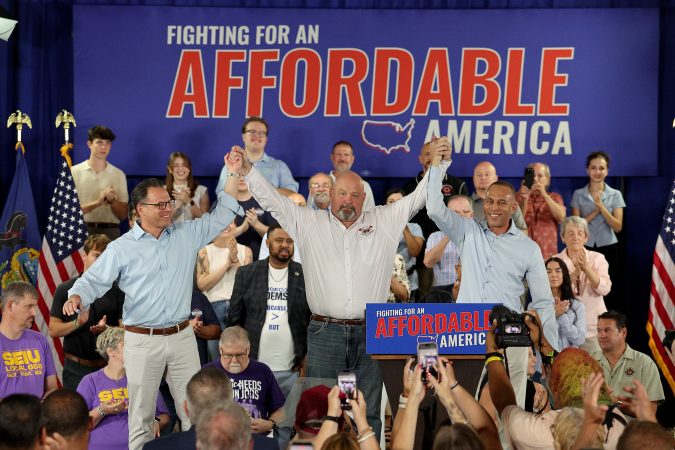
Pennsylvania Gov. Josh Shapiro and U.S. House Minority Leader Hakeem Jeffries stood on a union hall stage with Democrat Bob Brooks, a firefighter and union leader who is running for a House seat in a key Pennsylvania swing district, in front of a crowd of about 150 people.
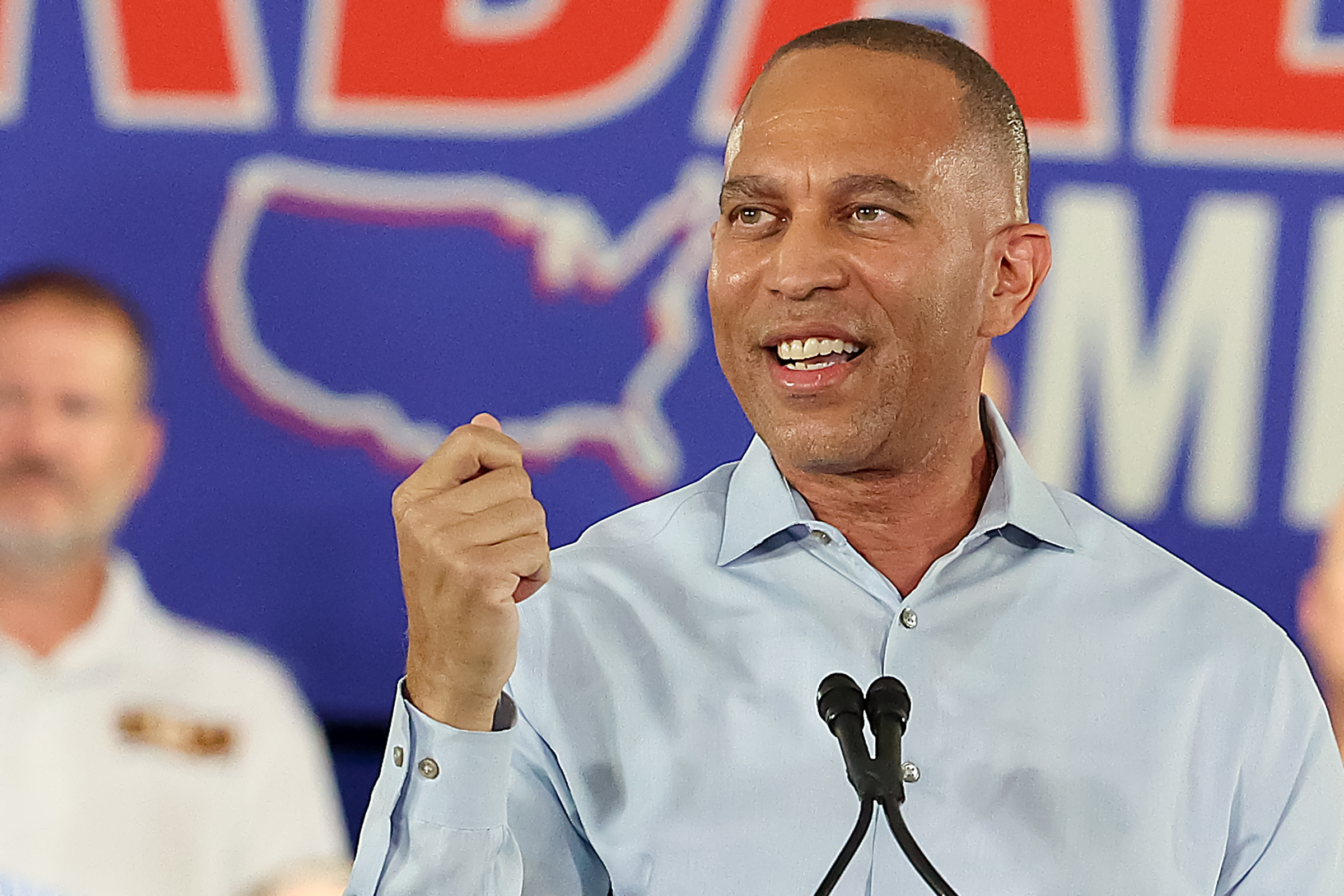
“We have just 100 days until the midterm election, 100 days to change direction in this country. This is no longer a marathon; it’s a sprint,” Jeffries said. “And there’s no better place to begin that sprint than right here in the steelworkers union hall in Bethlehem.”
Jeffries is poised to become the speaker of the House — and the first Black speaker — if his party wins control in the midterms. Democrats see winning Pennsylvania’s 7th Congressional District as a critical step in making Jeffries’ ascension happen, and taking action on a range of issues, from lowering gas prices to banning stock trading among members of Congress.
House Minority Leader Hakeem Jeffries addresses the audience during a rally for congressional candidate Bob Brooks at the United Steelworkers Union Hall in Bethlehem, Pa., on Sunday, July 26, 2026.David Maialetti / Staff Photographer
The visit comes as Republicans seek to bolster GOP Rep. Ryan Mackenzie, the district’s vulnerable freshman, who won his seat by just 1 percentage point in 2024, when President Donald Trump defeated Democrat Kamala Harris statewide. Trump visited the district in June, giving a speech about manufacturing, and a rambling range of other subjects, at the Macungie-based Mack Trucks facility — though he took nearly an hour to even mention Mackenzie by name.
Mackenzie has a financial edge over Brooks. He has raised a total of nearly $4.5 million, compared to Brooks’ $2.3 million. But Brooks outdid Mackenzie handily between April 30 and June 30, after Brooks’ first-place finish in the robust and competitive Democratic primary. He added roughly $1.2 million to his stockpile during that time period, while Mackenzie only took in about $631,000.
During the primary, Brooks was able to attract support from many ideological corners, including Shapiro, former Transportation Secretary Pete Buttigieg, and U.S. Sens. Bernie Sanders (Ind., Vt.) and Elizabeth Warren (D., Mass.), who saw him as an unpolished outsider committed to the party’s values.
Brooks, who dropped out of college after a baseball injury, worked as a bartender and beer truck driver in the Lehigh Valley before later becoming a firefighter in Bethlehem. He also mowed lawns and plowed snow on the side.
After his retirement from the fire department after more than 20 years of service, Brooks continues to serve as the president of the Pennsylvania Professional Fire Fighters Association, where he’s represented about 8,000 firefighters across the state since 2021.
“I’ve lived in public housing. I’ve relied on food stamps when times were hard. I’ve had to choose between paying the medical bills and paying the mortgage. I’ve worked hard, and I made it out of a fire. I’m proud to be standing here today,” Brooks said.
“Now I want to take that experience with me to the halls of Congress, so we can actually pass laws that work for working people,” he said.
His first foray into politics began with a lobbying effort to lower the standards for first responders to have post-traumatic stress injuries covered by workers’ compensation, legislation that Shapiro signed in 2024.
Shapiro, the first-term Democrat, has also been using his broad popularity to support Democratic candidates downballot in competitive elections across Pennsylvania while he campaigns for his own gubernatorial reelection bid.
Congressional candidate Bob Brooks (left) and Gov. Josh Shapiro talk during a rally at the United Steelworkers Union Hall in Bethlehem Sunday.David Maialetti / Staff Photographer
Last weekend near Harrisburg, Shapiro joined Pennsylvania Democrats to launch a campaign for candidates in key state Senate seats and congressional districts, both of which he hopes to flip to Democrats as a show of his political influence ahead of a widely expected run for the presidency in 2028. He also boosted former local TV anchor Janelle Stelson, who is challenging Republican U.S. Rep. Scott Perry for the second time in the Harrisburg-based 10th District.
“One reason why we need Bob Brooks in the Congress of the United States is he’s a firefighter, and firefighters are always there for you,” Shapiro said, who referenced his gratitude to firefighters after an arsonist attacked his residence last year.
“When you spend a lifetime being there for people when they’re young, being there for people when they are hurting, being there for people when they need help …. You have compassion in your heart. You’ve got a servant’s heart, and that’s the kind of people we need in the Congress of the United States,” he said.
Shapiro’s campaign said it has given more than $3.3 million to the state party and its election effort since the fall of 2025, as part of his signature effort to “put a check on Donald Trump’s chaos, cruelty, and corruption.”
Brooks’ and Stelson’s races are two of the four most competitive congressional contests in Pennsylvania this year. Republican U.S. Rep. Bob Bresnahan is facing a challenge from Scranton Mayor Paige Cognetti in the 8th District, and Republican U.S. Rep. Brian Fitzpatrick is running against Bucks County Commissioner Bob Harvie in the 1st District.
Republicans are fighting to keep the competitive seats in GOP control. Mackenzie’s campaign manager blasted Brooks’ “dumpster fire candidacy” ahead of Sunday’s event.
“At every step of his career, Bob Brooks has put himself first, his politician buddies next, and his own workers last,” Andres Weller said, in a statement.
Among other news, Weller mentioned a leaked audio recording of Brooks that alleged Shapiro pushed his union to support the GOP candidate for Pennsylvania treasurer in the 2024 election.
Shapiro has denounced claims that he dissuaded the state firefighter’s union from backing the then-Democratic nominee Erin McClelland because of a personal grudge, and Brooks later said he misspoke in the recording.
All three men blasted Mackenzie for supporting cuts to Medicaid, as part of Trump’s 2025 One Big Beautiful Bill Act.
Jeffries, who had last appeared in Pennsylvania on July 2 to commemorate the 250th anniversary of the vote for the Declaration of Independence, said if Democrats take the majority, they will also tackle “rampant corruption” and make life more affordable.
“As House Democrats, we will build an economy that works for everyday Americans and drive down the high cost of living in every possible area because life is too expensive,” he said. “That means the grocery store, the gas pump, and your housing costs. It also means that you should be able to go see a doctor and get the care that you need.”
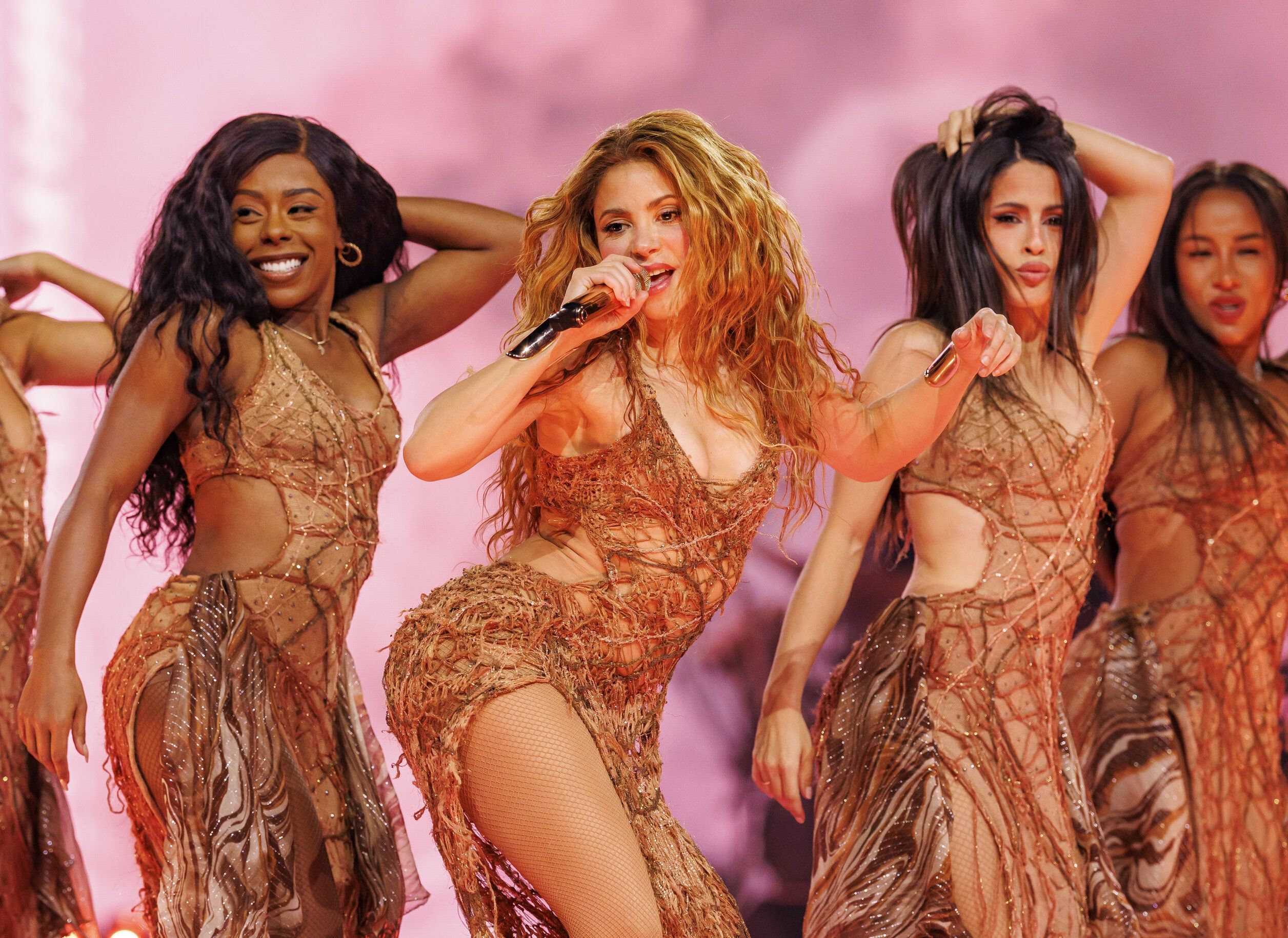
The final night of Shakira’s “Las Mujeres Ya No Lloran World Tour: World Cup Edition” played out like a quasi-religious experience for 15,000 or so ecstatic date-night — and girls-night-out — fans at Jim Whelan Boardwalk Hall in Atlantic City Saturday.
And the two-hour, 25-song performance by the irrepressibly dynamic Colombian entertainer on the short list of the biggest pop stars in the world came with its own 10 Commandments.
The 10 Commandments of the She-Wolf, that is.
That list of lupine words to live by was counted down as the singer hustled off for what was maybe her 10th costume change of the night — I lost count — after she had completed her pre-encore set.
It followed not one but two official World Cup anthems in “Waka Waka (This Time for Africa)” from 2010 and this year’s “Dai Dai,” a collaboration with Nigerian singer Burna Boy, which they performed together during the halftime show World Cup Final in East Rutherford, N.J., last weekend.
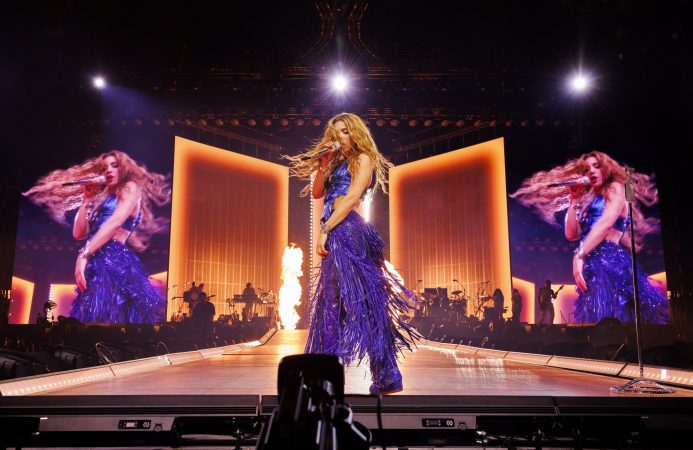
Shakira performs at the Intuit Dome in Inglewood, Calif., in June. The Colombian pop star played the final show on her Las Mujeres Ya No Lloran World Tour: World Cup Edition at Jim Whelan Boardwalk Hall in Atlantic City on Saturday night.Chris Polk
(For those seeking a deeper experience of “Dai Dai” — which is an Italian slang expression meaning “Come on” — a cocktail by that name made of tequila, Sprite, and pineapple was available on the concourse for $19 or in a supersized mason jar for $29.)
But back to the She-Wolf. “Las Mujeres Ya No Lloran” translates from Spanish to English — both of which Shakira sang in and used to address the crowd on Saturday — as “women no longer cry.”
The 2024 album that the tour is named for was largely inspired by the end of Shakira’s relationship with Spanish soccer player Gerard Piqué.
And during the South Jersey La Lloran tour date, she repeated themes of female solidarity. Early in the evening she wore a metallic She-Wolf breastplate designed by Gaurav Gupta while singing an acoustic “Acróstica,” speaking of emerging post-breakup “a little bit wiser, a little bit stronger.”
Shakira performs at the Intuit Dome in Inglewood, Calif., in June. The Colombian pop star played the final show on her Las Mujeres Ya No Lloran World Tour: World Cup Edition at Jim Whelan Boardwalk Hall in Atlantic City on Saturday night.Chris Polk
But that turned out to be only a teaser of the She-Wolf to come.
For the encore, first the commandments were revealed, including “Do not suppress your wild nature,” “Howl, for no one can silence you,” and “Protect and care for your pack above all else.”
Then, a giant inflatable and impressively lifelike wolf named Isabel emerged on stage, as a physical manifestation of the spirit animal of the headlining dynamo, who is 5 feet 2.
Isabel stood approximately 10 times that height, fitting comfortably beneath the 137-foot barrel-vaulted ceiling at the nearly 100-year-old Boardwalk Hall — a great place to see a show, and an intimate one by the standards of Shakira, who usually plays ginormous outdoor stadiums — shooting blue laser lights from her eyes into the crowd.
Shakira performs at the Intuit Dome in Inglewood, Calif., in June. The Colombian pop star played the final show on her Las Mujeres Ya No Lloran World Tour: World Cup Edition at Jim Whelan Boardwalk Hall in Atlantic City on Saturday night.Chris Polk
Meanwhile, Shakira moved about the room in a shimmery bodysuit with her six-woman dance team. (She also had four male dancers who, among other things, dressed as furry tigers and wore pink shorts to accompany her on “Zoo,” from the 2016 Disney animated movie Zootopia, in which she played the pop star Gazelle. She introduced that song, asking: “Are you ready for some surrealism?“)
When Shakira works a room, it’s with more intensity than most. The encore included both her 2009 disco hit “She Wolf” and “BZRP Music Session #53,” her 2023 single with Argentine producer Bizarrap.
The singer and dancer moved up and down the aisles of Boardwalk Hall, fearlessly pressing the flesh with fans, taking selfies, and in one case kissing a baby who, thankfully, was outfitted with giant noise-canceling headphones. When it was all said and done, customized confetti fell from the sky: faux $100 bills, with Shakira’s face on them.
Phew! It’s tiring just to write about how much energy Shakira puts into her show. Over the course of the evening, fronting a five-piece band that seemed to rely on triggering prerecorded parts at many junctures in recreating reggaeton or Afro-pop beats, she played acoustic and electric guitar. She also briefly got behind the drum kit on “Can’t Remember to Forget You.”
And of course, the “Hips Don’t Lie” singer shimmies, shakes, twerks, and gyrates on a level that is unparalleled among aerobic pop performers. A friend of mine commented online: “As my wife said, she moved parts of her body I didn’t even know existed!”
Shakira performs at the Intuit Dome in Inglewood, Calif., in June. The Colombian pop star played the final show on her Las Mujeres Ya No Lloran World Tour: World Cup Edition at Jim Whelan Boardwalk Hall in Atlantic City on Saturday night.Chris Polk
And indeed, with a runway extending halfway out onto the Boardwalk Hall floor, Shakira had ample opportunity to strut her stuff. At one point, there was pole dancing onstage, and also an odd pas de deux with a robot lover.
But while Shakira is certainly sexy, the crowd-pleasing presentation comes across as more wholesome than erotic. Even during the extended belly dancing on her 1998 hit “Ojos Asi” in which the singer — whose father is of Lebanese heritage — celebrated her Arabic roots, she nodded and winked to the audience, keeping the mood more lighthearted and playful than sultry.
That vibe carried through the evening, from when she first appeared in a shiny silver spacesuit that was soon discarded to an interlude when a mermaid iteration of the singer on a giant video screen appeared to pound on the glass of a fish tank in an effort to break through and free herself. Of course, she succeeded, because nothing can stop Shakira.
Shakira performs at the Intuit Dome in Inglewood, Calif., in June. The Colombian pop star played the final show on her Las Mujeres Ya No Lloran World Tour: World Cup Edition at Jim Whelan Boardwalk Hall in Atlantic City on Saturday night.Chris Polk
Late Thursday afternoon, news began to spread on social media that a Black man had been gunned down by police officers at a street corner in Madison, Wis. Over the next couple of hours, we learned that the shooting victim had died, and that a neighborhood bystander had captured much of the encounter, including the three fatal gunshots, on video.
The video shows the man — chased by Madison police officers after a report of someone checking door handles on parked cars — had fallen off his bicycle and was on the ground when four officers surrounded him. There is a struggle. Analysts say the suspect appeared to have a knife, and police would later say an officer was injured. The man is Tasered before one officer fires the deadly shots into the suspect while he’s lying on his side.
The dead man was identified as 38-year-old Corey Ruiz, and as the video of his killing spread, experts on policing raised serious questions. “What’s particularly egregious to me is that this person seems to have been going into compliance at the time he was shot in the head,” Ion Meyn, an associate professor of law at the University of Wisconsin-Madison, told the Capital Times.
The Ruiz case adds one more name to the ever-growing list of victims of American police violence, preceded by the likes of Eric Garner, killed in a New York Police Department choke hold after selling loose cigarettes; Tamir Rice, the 12-year-old killed with a toy gun on a Cleveland playground; and George Floyd, whose 2020 police murder in Minneapolis sparked the largest mass protests in U.S. history.
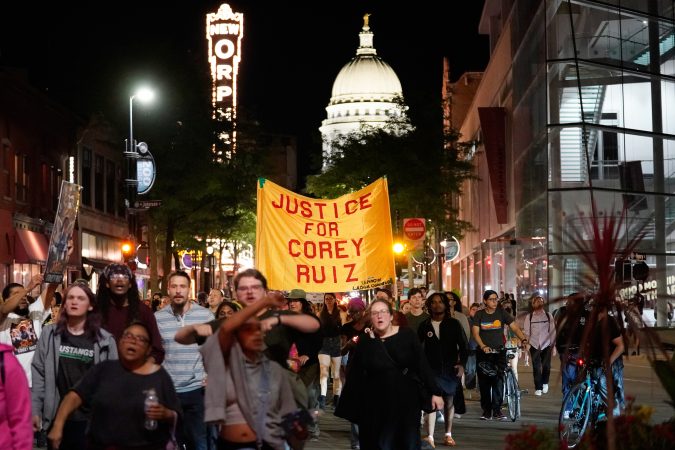
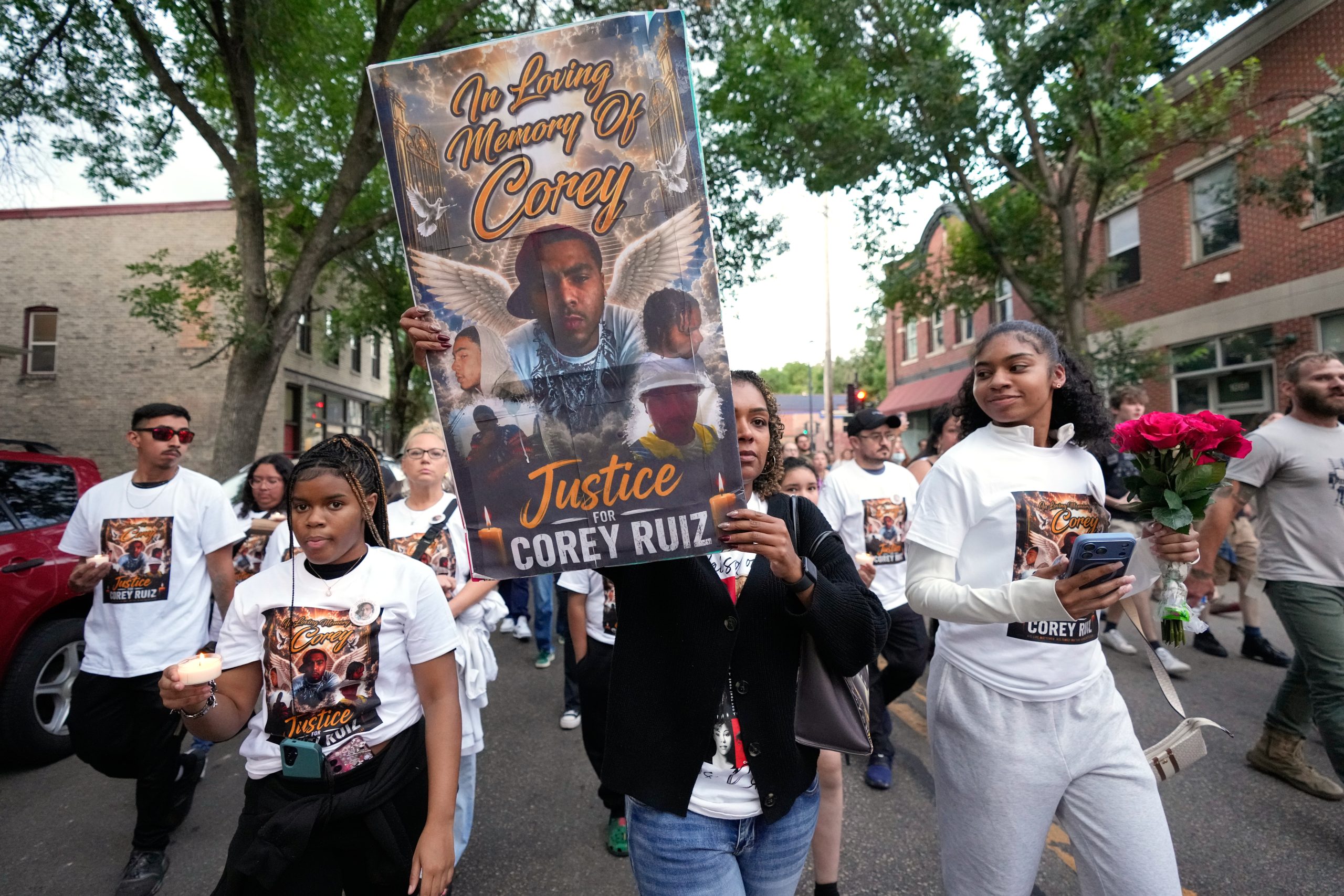
Yet, the brutal shooting of Ruiz also felt very different in one important way. Although the public outrage was real — hundreds have marched through the streets of the Wisconsin state capital each night since the incident, chanting for justice — it also felt quarantined, a virus of anger contained largely to Madison before it could spread nationally like the Black Lives Matter marches of six years ago.
On social media last week, while many posts did express dismay and anger over the actions of the Madison cops, the prevailing vibe was warning people to turn off autoplay functions, that they might want to avoid the gory footage of the man’s death. “Huge warning,“ one Bluesky poster wrote, echoing many others. ”The Madison police shooting is horrific. Careful watching news with kids around.”
No one shut down the expressways in New York City or Chicago, as we saw in the contentious era from 2014 to 2020 after the killings of Floyd, Ferguson, Mo.’s Mike Brown, and too many others. There was a nationwide day of marches and vigils on Saturday against violence by law enforcement, but it was all about recent killings by the immigration cops of U.S. Immigration and Customs Enforcement (ICE). These tragedies have seized the political attention that once focused on rank-and-file police.
How else to explain the similarly muted reaction to June’s police killing of a 1-year-old baby, Kohen Wiley, in Senatobia, Miss., who was inside a car with his mother; employees of a Walmart store had accused herof shoplifting diapers. An independent autopsy suggested the infant was shot from the side of the vehicle, raising questions about the official police version of events. Yet, Kohen — innocent victim of police violence — has also not become a household name like Floyd, Brown, or Rice.
Sure, part of the problem is that in the second year of Donald Trump’s second presidency, we have become as overloaded as the Texas power grid in an ice storm. I woke up this Sunday morning with potential columns about killer heat waves from Des Moines, Iowa, to Bordeaux, France, the idiocy of Trump’s Iran war and the administration’s efforts to pretend four U.S. deaths didn’t happen, the utter embarrassment of Trump’s speech to the White House Correspondents’ Association dinner and the assembled journalists who enabled it, or the Trump family’s latest, planet-threatening get-rich-quick scheme.
But I elected to write about this because it is alarming how numb the U.S. body politic has become to violence, especially the kind perpetrated by our warrior cops, in the years since the last echoes of the Floyd protests faded out.
Demonstrators in Madison, Wis., staged a protest Thursday after a police officer shot and killed Corey Ruiz the day before.Kayla Wolf
It’s not just that very little came about despite the massive nature of the protests — a few good municipal ideas here and there, a handful of state laws, but nothing along the lines of radical police reform that millions clamored for in 2020. It’s that police violence has actually gotten worse in the years since Minneapolis cop Derek Chauvin held his knee on George Floyd’s neck for nine minutes and 29 seconds.
The statistics tell the story. So far in 2026, with the year barely half over, police have already killed 703 people, on pace with the worst years on record, according to the tracking site Mapping Police Violence. It has only recorded seven days this year when there was not a police-involved fatality. What’s more, victims are 2.8 times more likely to be Black, like Ruiz and Kohen, than white.
Here’s the part that demands our attention: This sustained level of police violence — on a scale that is simply unfathomable in other developed nations around the world — is happening despite the fact that murder rates and other crime stats are plummeting.
“In the decade [prior] to 2024, the number of Americans killed by police jumped by about a third,” wrote the U.K.’s Economist, covering a topic the American news media has largely ignored. “Police killings dipped last year but this year have risen again. Perversely, the rise comes as national murder rates are falling. A growing share of Americans who are killed — one in ten — are dying at the hands of police.”
The problem isn’t crime. It’s the zeitgeist. While bloodshed has always been a problem in a nation with a Wild West mentality, awash with guns, violence from an Iranian girls’ school to fishing boats in the Caribbean to the icy streets of Minneapolis has become utterly pervasive. The omnipresence of state-sanctioned murder is arguably why so many elected not to even watch the Ruiz video.
This undated photo provided by Veronica Roberson shows her grandson, Kohen Wiley, of Senatobia, Miss.Veronica Roberson
And rather than tackle police violence as a social problem, Trump and his regime have encouraged it —in word(“Please don’t be too nice,” the president famously told a cop convention in 2017) and in deed, such as ending consent agreements with big-city police departments known for unwarranted brutality.
Meanwhile, those George Floyd marchers in 2020 arguably spiked the football way too soon — thinking they’d made their point when, within weeks, cowardly politicians in both parties would start running away from any notion of police reforms. Much of the worst police violence takes place in overwhelmingly Democratic cities run by ostensibly progressive mayors — places like Madison, a university town and a hotbed of left-wing activism and protest since the 1960s.
The shooting of Ruiz was the third contentious police killing in the same Madison neighborhood since 2012, when 30-year-old Paul Heenan, who was white, was fatally shot by an officer who claimed Heenan was trying to grab his gun. In 2015, a Madison cop shot and killed an unarmed 19-year-old biracial man, Tony Robinson. No officers were charged, even as the city paid out some $5.65 million to settle lawsuits.
So much about the Madison police echoes the broader problems of American policing. Federal data show nearly half of the department’s use-of-force incidents were against African Americans, even though the city’s population is just 7% Black. And despite Madison’s reputation for liberalism, major police reforms have been slow in coming.
None of the officers who apprehended Ruiz were wearing a body camera. Both activists and many public officials have been urging body cams for Madison officers since Robinson’s 2015 killing, yet the city has never come up with the money to fund them. Such footage would have provided the cops’ view of why they felt it necessary to shoot Ruiz in the scuffle.
Experts say Ruiz’s possession of the knife and the allegation that it was used to wound an officer all but guarantee no one will be criminally charged, noting the grounds of self-defense. No one is denying that police have a right to defend themselves — and that they oftenface tough decisions in the heat of the moment.
But that shouldn’t obscure the bigger debates over whether police have the training to prevent these encounters from needlessly reaching that point. The two most controversial police killings of 2026 began with allegations of shoplifting diapers and fiddling with locked car doors — not exactly capital offenses.
“He was a lyricist,” Marjorie Aliomar — Ruiz’s partner and mother of his 13-year-old daughter — told a tear-laden news conference this weekend. “He was a poet. He was an artist. He was very kind, and he was extremely funny.”
Yet, his story is already fading from our headlines. It doesn’t have to be this way. Ruiz’s killing could have been our wake-up call to fight for all the causes — the end of qualified immunity for officers, universal use of body cams, the death of occupation-style warrior cop policing, and the return of a U.S. Department of Justice that again treats brutality as a crime — that have been tossed down the memory hole since 2020.
If you can emotionally handle it, don’t avoid the Ruiz video — or the problem. Many of youreading this column marched for Floyd. Now’s a good time to look in the mirror and ask yourself: What have I done lately to oppose the violence of an American police state? In other words, have I become comfortably numb?
Police found a New Jersey teen with a deadly gunshot wound in the driver’s seat of a car that had been in a crash. Now a 15-year-old is facing charges for shooting the driver, said the Atlantic County Prosecutor’s Office.
A single-vehicle crash brought Mullica Township Police to Route 30 and Snow Hill Road on Friday evening. The driver, Javonte Stallworth, 19, of Mullica Township, was inside the car, lifeless, with a single gunshot wound to the head.
According to prosecutors, two people believed to be passengers in Stallworth’s vehicle were seen fleeing the area on foot. Witnesses identified the pair as juveniles, prosecutors said.
The teenagers were located, detained, and taken to the Atlantic County Prosecutor’s Office for questioning shortly after the incident, prosecutors said.
The questioning ended with a 15-year-old Mullica Township resident charged with multiple counts, including: aggravated manslaughter, unlawful possession of a handgun, and possession of a firearm without a serial number. The prosecutors did not provide the full name of the 15-year-old.
The investigation is ongoing, but the Atlantic County Prosecutor’s Office said the teen was transported to the Harbor Fields Juvenile Detention Center.
Authorities urged anyone with information to call the Atlantic County Prosecutor’s Office Major Crime Unit at 609-909-7666 or go to ACPO.org.
T-shirt hawkers have captured LeBron James’ name, image, and likeness.
The face of the newly minted Philadelphia 76er and all-time NBA legend has already wound up on unauthorized merch outside stadiums and down the Jersey Shore, as seen in social media posts.
“coming to you live from the wildwood boardwalk,” they wrote, alongside a photo of two T-shirts with LeBron’s face (likely) photoshopped onto No. 23 Sixers jerseys. The tweet has more than 3,500 likes.
A video from TickPick, a ticketing marketplace, also showed LeBron gear being peddled outside the Phillies’ game Saturday.
For decades, hawkers have been a fixture outside stadiums before and after games and concerts. And at the Jersey Shore, the staple mildly offensive and oft-vulgar garb has taken on its own culture.
These merchandisers are not beholden to trademark restrictions, capitalize on fan — not corporate — interests, and press catchy slogans onto cotton at lightning speeds.
That’s probably how King James landed at the Shore before the ink dried on the deal.
There’s math games and math art. Math theater and math music. Math for the family. Math for the kids. Mathdramatics. Math on stage. Math movies. Math podcasts. Math murals. Math rock stars. Math awards. Math in sports. Math in culture. Philly math.
Ancient math. Existential math! Asking whether it would even matter if machines solve the greatest math questions of all time but no human understands how. The beauty of math. The patterns and excitement. Ubiquity and mystery. The undeniable logic and truth. Of Math.
Welcome to the Super Bowl of Math. It’s in Philly, if you didn’t already know. For a limited time only.
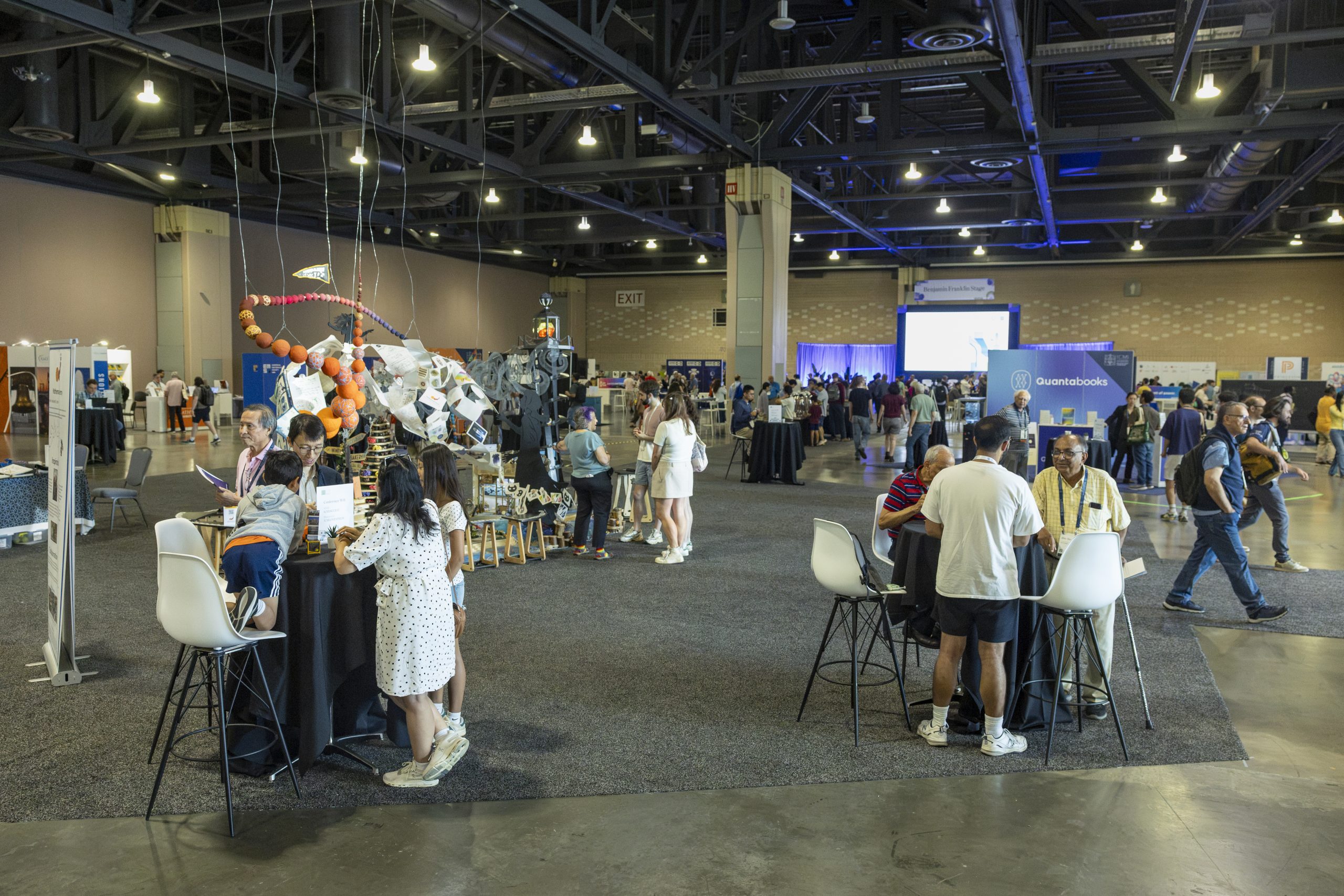
The second level of the 2026 International Congress of Mathematicians at the Convention Center on Saturday, July 25, 2026, in Philadelphia.Aidan T. Gallo / Staff Photographer
“It’s like the Olympics of math every four years,” said Thomas Sumner, a local official for the International Congress of Mathematicians, held this year at the Convention Center, from July 23 to 30, with public events from July 24 to 28. “Celebrating the beauty and ubiquity of all things math.”
The International Congress of Mathematicians is a big deal. Among the largest math gatherings in the world, it is where the Nobel Prize of math — the Fields Medal — is awarded. Hosted in rotating nations, like the Olympics, the prestigious affair this year marks the first time it has been held in the United States since 1986, when it was hosted in Berkeley, Calif. Previously it had been held in Cambridge, Mass., in 1950.
Controversy and awards
It was not without some controversy that the eminent math event returns to America. In March, Tarik Aougab, an associate professor of mathematics and statistics at Haverford College, circulated a petition — eventually signed by more than 2,600 mathematicians — to boycott the nearly 130-year-old conference this year if it was not moved out of the United States.
Petitioners expressed concern that some international colleagues would be unable to get visas to enter the United States due to President Donald Trump’s administration mostlysuspending entry for citizens of dozens of countries. Other concerns included fear of U.S. Immigration and Customs Enforcement and reluctance to travel to the United States at a time when the nation is embroiled in a war in the Middle East.
In response the International Mathematical Union, which oversees the conference, assured attendees it was committed to providing a safe and welcoming environment for all participants and had made “additional arrangements to help mitigate risk.”
On Saturday, at the Convention Center, crowds filled the event’s free math festival in the center’s exhibit hall. Sumner said that while some potential attendees did experience travel issues, over 3,000 mathematicians from all over the world made it to Philly .
“This is where they give out the top prizes,” said Sumner, managing editor for the Simons Foundation, one of the largest charitable mathematics organizations in the United States, and the congress’ main organizing partner. “This is where the most important talks in math are happening.”
Veer Mehta (center), 11, of Lower Merion, listens to a keynote panel discussion with headphones alongside his mother, Pooja Kapadia (to the left), during the 2026 International Congress of Mathematicians at the Convention Center on Saturday in Philadelphia.Aidan T. Gallo / Staff Photographer
Indeed, the congress’ Philly locale did not come up at all at a jammed-packed news conference Thursday when Sumner introduced the four mathematicians under 40 — including ones from the U.S., Canada, and China — to become Fields Medals recipients. The prizes are accompanied by a $10,600 award and a gold medal with the face of Archimedes, an ancient Greek math whiz. This year represented the first time the winners included more than one Asian mathematician — and also included just the third woman to ever be honored with a Fields: Hong Weng, 35, a New York University professor, awarded for breakthrough work in harmonic analysis.
‘How do we adapt?’
The conference comes as the discipline — like so much else — faces existential questions about its future from the threat of AI. On Friday, Terence Tao, an Australian American mathematician considered a rock star in the math world — and awarded the Fields in 2006 for his contributions to partial differential equations — offered a keynote address in the hall on “Mathematics in the Age of AI.”
“It’s starting to solve math problems that have been stumping people for decades,” Sumner said of AI. “How do we adapt to this future?”
But on Saturday, the Convention Center floor was filled less with the angst about the future and more with the everyday joys and esoteric wonders of math. Families from all over crowded into the math festival — as symposiums and lectures continue through Tuesday.
Math magicians performed magic card tricks while budding mathematicians from the world over struggled through math proofs on portable chalkboards, Good Will Hunting-style. On a stage, a sports analytics panel — with representatives from every Philly sports franchise — discussed how math helps them make their moves.
Magnus Postle, 5, of Waterloo, Canada, builds a tensegrity kit, which is a system of balancing tension and compression to create architectural pieces to appear to “float” during the 2026 International Congress of Mathematicians conference Saturday in Philadelphia.Aidan T. Gallo / Staff Photographer
In a bustling nook, renowned Duke University mathematician Ingrid Daubechies — another math rock star — showcased her world-famous multimedia art installation, Mathemalchemy. The 20-foot-long whimsical math wonderworld features tiny creatures and structures embodying complex mathematical concepts. She had created the installation with 23 other mathematicians and artists to showcase the beauty and creativity of math. Like a little model cat named Arnold who bakes perfectly rounded pi-cookies.
“People are constantly surrounding it,” Daubechies said, as crowds moved in.
At the festival, some mathematicians posed Philly-related probabilities. Like picking a random seat at Lincoln Financial Field that just happens to be in the premium club section (0.16), the likelihood that Kyle Schwarber hits a home run during the next Phillies game (0.36), or getting into the University of Pennsylvania (0.05).
“So it’s harder getting into Penn than it is getting a club seat,” explained Alissa Crans, a professor of mathematics at Loyola Marymount University, working the booth. “Got to have some Philly math fun!”
Others, like Ariana Chin, 26, who studies algebraic combinatorics at UCLA — an area of pure math that uses abstract algebra to solve elusive counting and structural problems — talked about what they love about math, and the hope it can bring, even amid the uncertainty.
“The beauty is the connections,” she said in the quiet of the crowd. “The beauty of mathematics is expanding those connections between things you wouldn’t expect to be connected.”
Jaylen Brown has yet to play a game for the 76ers, following the stunning blockbuster trade from the Boston Celtics earlier this month.
Yet a significant Brown-related decision already faces the Sixers. The All-NBA wing on Sunday became eligible for a one-year contract extension that could be worth nearly $69 million, which would keep him signed through the 2029-30 season.
If Brown does not sign the one-year extension this offseason, he will become eligible for a three-year extension in the 2027 offseason.
This all further demonstrates the financial investment the Sixers are making in Brown, who last season finished sixth in voting for the NBA’s Most Valuable Player award and is a five-time All-Star and former Finals MVP. He has three years remaining on his current supermax deal, with salaries of $57.7 million for the upcoming season, $61.7 million in 2027-28, and $65.6 million in 2028-29.
It also aligns with the rationale given by Celtics president of basketball operations Brad Stevens for why he dealt Brown in his prime.
Had Brown stayed with the Celtics, he instead would have been eligible for a two-year, $142 million extension. Stevens cited a reason for the trade was that Brown and fellow star Jayson Tatum — who has four years remaining on his current contract, including a $71.4 million player option for 2029-30 — would take up approximately 70% of the Celtics’ salary cap. That makes it increasingly more challenging to build out a roster with strong complementary players under the league’s new collective bargaining agreement, with “apron” penalties including trade restrictions for high-spending teams.
Stevens repeatedly used the word “optionality” when describing the roster-building reasons for the move that shocked the NBA.
“I might be wrong. I’m not going to stand up here and be defensive about that,” Stevens said at a news conference following the trade. “But the path [to winning a championship] looked a little bit more challenging. … You have to do a great job of building out depth that can hopefully replace the irreplaceable individual.”
But Brown being traded to the Sixers knocked his extension eligibility down to one year, because players on new teams are only allowed to extend their contracts out to four total seasons. According to NBA cap expert Keith Smith, the salary figure Brown can earn on that additional year is the greater number of either the max salary for a player with 10 years of NBA service, which Spotrac projects to be $66.9 million in 2029-30, or a 5% raise on the final year of his current deal, which is $68.9 million.
Though adding Brown is a bit less of an immediate financial burden for the Sixers, it still creates a top-heavy salary cap sheet for multiple seasons.
Former NBA Most Valuable Player Joel Embiid is slated to make $57.7 million on his max extension in the upcoming season, then $62.4 million in 2027-28 and $67 million in 2028-29. All-NBA guard Tyrese Maxey also has three years remaining on his first max contract, at $40.8 million for the upcoming season, then $43.6 million in 2027-28, and $46.4 million in 2028-29.
Though both contracts are scheduled to come off the books in the 2029 offseason — barring another max or supermax extension for Maxey — standout guard VJ Edgecombe will be eligible to sign his first (potentially max) extension in the 2028 offseason.
It is possible the Sixers could persuade Edgecombe to take the same route that Maxey once did. Instead of signing a max extension when eligible entering the final year of his rookie contract, in 2023, Maxey waited a year before inking a max deal. That gave Maxey a smaller cap hit in the 2024 offseason, and more financial flexibility for the Sixers that they ultimately used to sign Paul George to a four-year max contract.
Today that George deal is considered even more of an albatross than Brown’s contract, because George is older (36), no longer a perennial All-Star, and has struggled to stay on the court in recent seasons. But he will come off Boston’s books sooner, with two years remaining on his deal including a player option. That contract also becomes increasingly easier to trade the closer it gets to expiring.
Just because Brown is now eligible for the one-year extension does not mean that it will be offered by the Sixers and agreed to immediately — or at all.
Yet it is a reminder of at least part of the Celtics’ justification for trading Brown. And it gives the Sixers a Brown-related decision before he even steps on the court for his new team.
When Herman Welker came to Washington in 1951, he had what seemed to be the ideal résumé to become a man of influence.
The Republican senator from Idaho was an unwavering conservative — a former prosecutor and World War II veteran — whose opinion counted on matters including war, national security, and U.S. Supreme Court seats.
But Welker’s path to power and prominence — serving as a close ally and faithful wingman to Republican Sen. Joe McCarthy in his abusive, power-hungry, and attention-seeking campaign to root out American communists — undid him in a single term. Welker, known in the Senate as “Little Joe from Idaho,” was implicated in another senator’s blackmail-driven suicide. When McCarthy faced censure in the Senate, Welker tried to delay, dissuade, and, according to accounts at the time, bully others out of officially expressing their disgust.
Welker lost his seat in the next election, then, after a brief illness, died.
That’s the thing about influence attained through a grand bargain with those who wield power in ways that defy the law, norms, and anything approaching restraint: It requires a grasp of time and mortality few humans can reliably claim. Which is precisely the risk Sen. Lindsey Graham, a lawyer and a veteran of the wars in Iraq and Afghanistan, ran until his sudden death this month.
Unlike Welker, Graham transformed in full public view from a man who was once one of Donald Trump’s most strident and vociferous critics into a dependable MAGA workhorse in Congress.
Now, Graham’s legacy will be forever bound up with that of the 47th president, who took pains to tell NBC News that his faithful wingman’s death would be a “big blow” to the passage of the SAVE America Act.
In 2015, Sen. Lindsey Graham described Donald Trump as a bigot. Much changed over the next decade, Janell Ross writes.Jacquelyn Martin
In 2015, Graham was a third-term senator from South Carolina vying for the Republican presidential nomination — a field that included more than a dozen others — en route to being crushed by Trump.
Graham, for his part, described Trump as a bigot, interested in anti-American policy, and a malignancy that, if nominated, would destroy the GOP.
Given that, when Graham offered his pithy prescription for America in a December 2015 appearance on CNN, I wasn’t exactly surprised.
“You know how you make America great again?” he said. “Tell Donald Trump to go to hell.”
It was a riff on the recycled bit of American political sloganeering that Trump had pushed into the zeitgeist, again. Trump’s vision was to make America more like it was in the past: less diverse, more exclusionary, with group suspicion as public policy, and strict racial and gender hierarchies governing national life.
In 2015, Graham’s position on Trump seemed clear and immutable. He told reporters he did not vote for Trump in 2016. Then, Trump won the election, and Graham spent most of the decade since transforming into one of the president’s most steadfast defenders.
There was a brief interregnum, a wobble of sorts on Jan. 6, 2021. After Trump supporters invaded the U.S. Capitol, Graham gave a speech. On the Senate floor, Graham seemed to point the finger of responsibility directly at Trump.
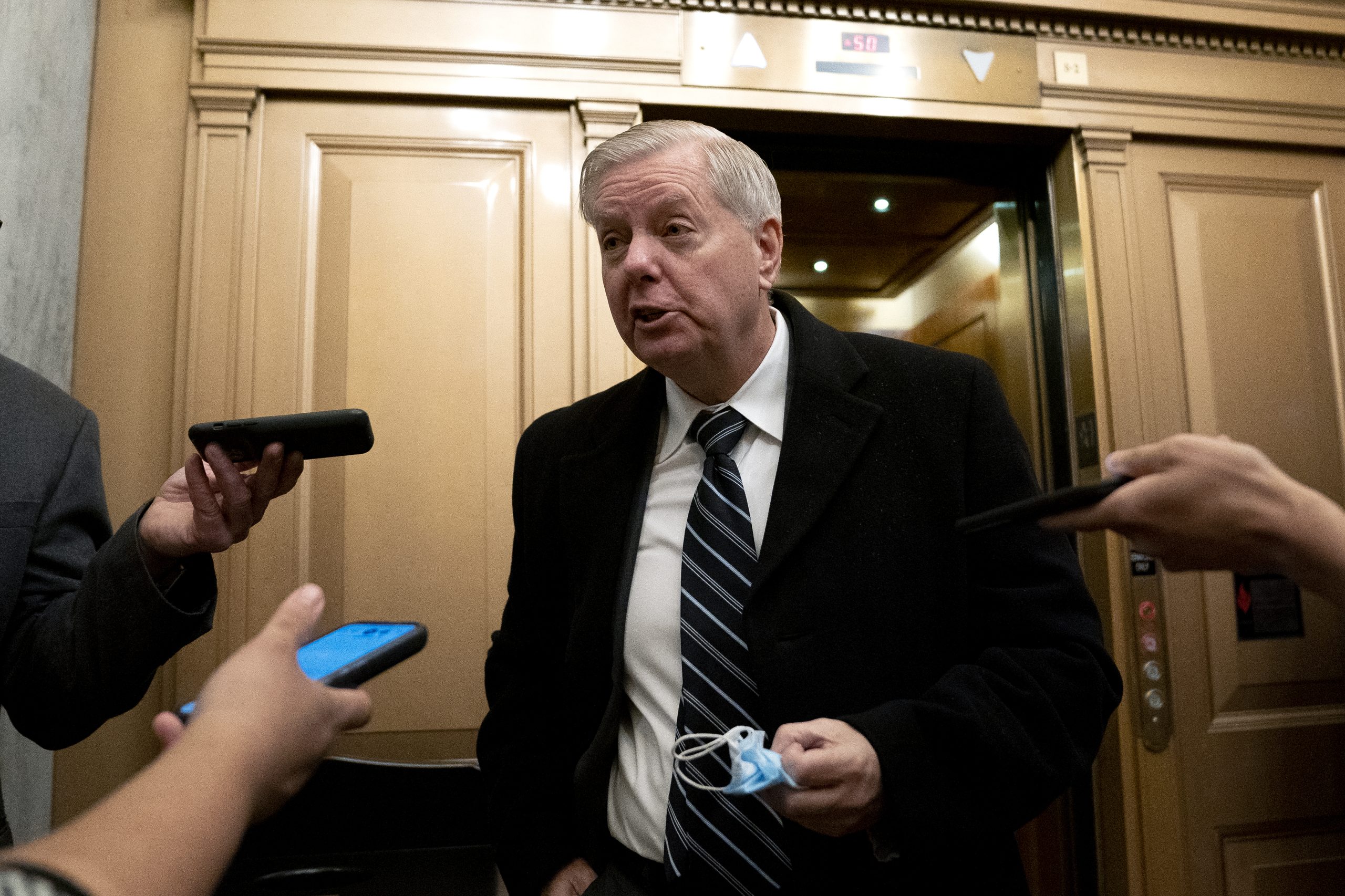
Sen. Lindsey Graham (R., S.C.) speaks with reporters during the second impeachment trial of former President Donald Trump in February 2021 at the U.S. Capitol Building.Stefani Reynolds
“Trump and I, we’ve had a hell of a journey,” Graham said. “I hate it to end this way. Oh my God, I hate it. From my point of view, he’s been a consequential president. All I can say is count me out. Enough is enough.”
But Graham, converted MAGA bannerman and, his critics say, Trump-era opportunist, soon returned.
Graham’s devotion to Trump was so sweeping and so sudden that the more conspiracy-minded have embraced the idea that Graham was the victim of blackmail or controlled by some sort of kompromat.
In death, Graham’s defenders — a group that, in these contentious times, notably includes Republicans and Democrats — have described his Trump transition as pragmatic, even admirable; what a skilled legislator must do.
Graham, they say, managed, in the final days of his life, three substantive foreign policy victories. He hammered out the details of a Russian economic sanctions bill Trump has said he will sign. He secured U.S. approval for Ukrainian strikes in Russia. And with these agreements, Graham effectively shored up NATO and its fundamental goal of staving off world war. Of course, all of that is contingent upon a mercurial president remaining uncharacteristically disciplined and consistent.
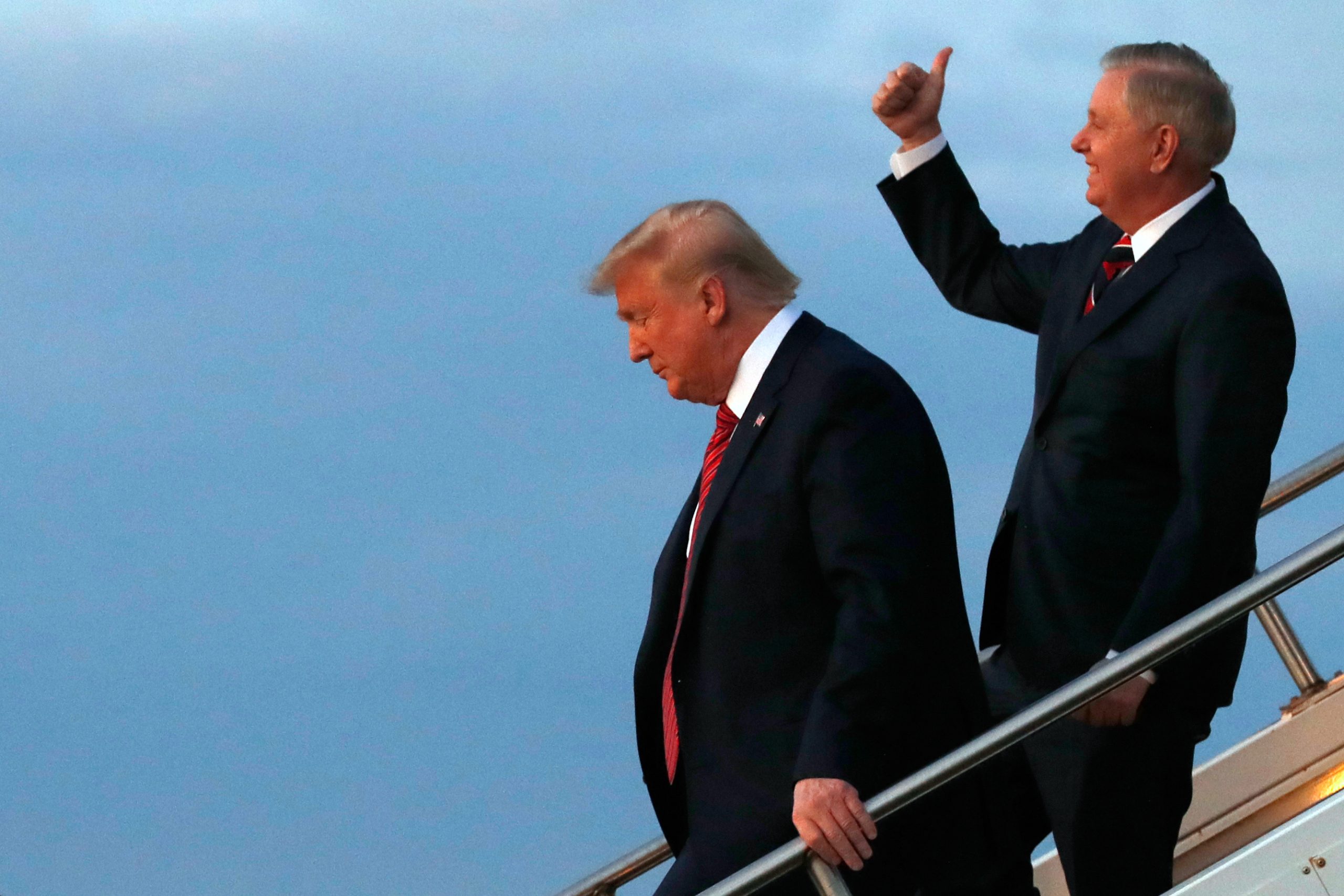
Sen. Lindsey Graham (R., S.C.) with President Donald Trump at a rally in Charlotte, N.C., in March 2020.DOUG MILLS
And therein lies the public lesson for us all. Time can and will run out. Redemption arcs, periods of public reconsideration, and book-tour explanations are not guaranteed.
Entirely honest assessments of the dead are rare. Many will offer familiar strings of superlatives, words of admiration, mutual respect, and sympathy — perhaps in the hope that those sentiments will be reciprocated when their time comes.
Others might just say our passing was a “big blow” to one of their pet projects.
Ultimately, though, our actions and associations will speak unvarnished truths about us long after we are gone.
Visit the block where Welker lived in Washington, D.C. Today there is not so much as a plaque. There’s just a Marriott.
Janell Ross is a former senior correspondent at Time magazine who frequently writes about race, politics, and identity.