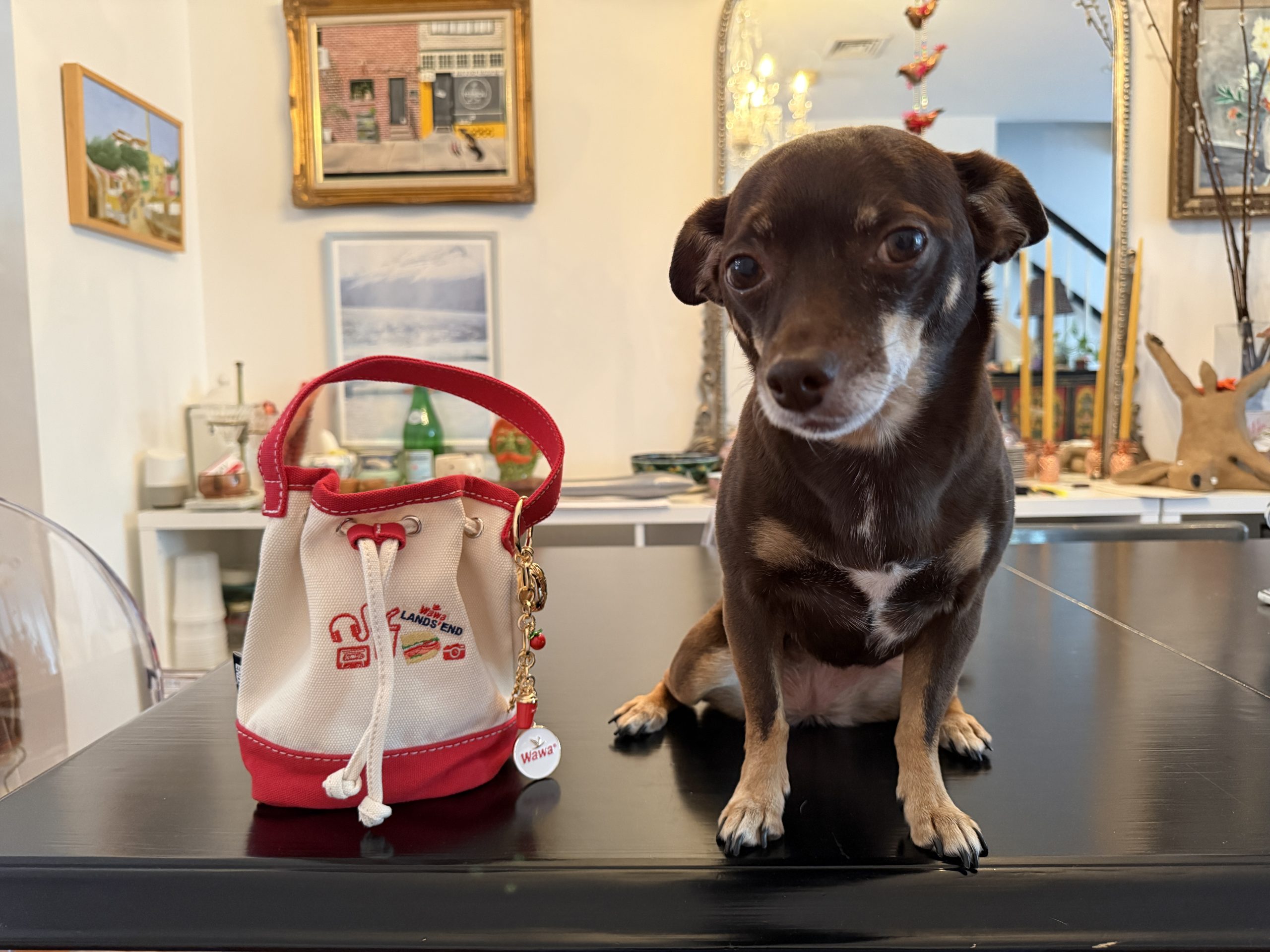
Three major trends have dominated recent cultural discourse: charms, food and fashion collaborations, and mini totes. The tote from Wawa and Lands’ End harnesses all three into one sandwich-sized bag. And I’m obsessed with it.
Labubu bag charms took the world by storm in 2025, inspiring almost everyone with a handbag to personalize theirs with dangling dolls. The post-Labubu era isn’t so much a reaction to the somewhat cumbersome creatures dangling from key chains, but an evolution into a fixation with different charms, like a bracelet proclaiming one’s devotion to the World Cup, the cities in which games were played, and one’s willingness to wait for many hours in line to procure one from a Bank of America sponsor tent.
Lands’ End was paying attention to all three trends, leading to the Wawa and Lands’ End limited-edition tote. It debuted Wednesday on both the Lands’ End website, where it immediately sold out, and in select Wawa stores in New Jersey (which allegedly still have them in stock). This is an aggression toward the beautiful city of Philadelphia, but I digress.
It’s called the Shorti® Tote. It costs $39.95 for the tote itself and a matching bag charm that features an enamel hoagie, tomato, Wawa coffee cup, and “East Coast” charm. The collaboration also includes a Wawa branded T-shirt from Lands’ End ($44.95) that comes wrapped up like a hoagie (of course). Wawa provided me with a sample bag for this review.
The collaboration celebrates the Jersey Shore and encourages you to take a Wawa hoagie to the beach, where it will be duly protected from the elements by the thick, high-quality cotton canvas of a dedicated bucket-shaped tote bag. As someone who does not ever go to the Jersey Shore, I found that the tote has numerous other merits: It’s perfectly sized for a small water bottle, my wallet, keys, flashlight (with which I snap food photos because I am a food writer), and other bits of detritus.
Unlike the Trader Joe’s tote, it has a drawstring opening that can keep all your belongings firmly inside. It’s entirely made of canvas (worthwhile to note because canvas totes with plastic handles are the absolute worst), with metal grommets to secure the drawstring. The embroidered graphic collage of cassette tape, wired headphones, a Shorti, analog camera, cup with straw, feels pretty ‘90s-coded (also so trendy right now), and the Wawa and Lands’ End logos are small and demure. True to its name, it also fits two hoagies very nicely.
It’s comfortable to hold on my forearm, and I have found that it’s also the perfect BYOB bag as it holds all the contents of my purse along with a bottle of wine. The only drawback I see is that it does not fit my Chihuahua, Coconut, whom I also generally like to throw into a tote bag.
The Shorti® Tote next to Coconut the Chihuahua, who does not fit inside the mini tote.Kiki Aranita / Staff /
But perhaps the greatest part of possessing this tote is the envy I have inspired.
“When you’re done reviewing it and need to give it to someone, I am available,” said my colleague Beatrice Forman as I slowly backed away from her.
Get your own.
Wawas that received totes are in Sea Isle City, Stone Harbor, Avalon, Somers Point, Cape May, Ocean View, Brigantine, Ship Bottom, Wildwood, North Wildwood, Ventnor, Marmora, Dorchester, Ocean City, Manasquan, Rio Grande, Normandy Beach, Margate, Villas, Long Beach Township, Barnegat, and Neptune.
Editor’s note: This article has been updated to correct the spelling of Lands’ End.
Lilly Chen, 30, wants people to stop thinking local government software “sucks.”
The cofounder and CEO of Philadelphia-basedFSH Technologies once worked at Facebook writing software that trains AI models, lived in a monastery as a teen, and is now on a mission to make local government technology more efficient.
In the last two years, her company has raised $5.5 million from venture capital, and secured a contract with the city’s Department of Commerce.
“We’re so gung ho about local government, which is like a weird thing to say, but it’s true,” said Chen.
The business just moved into a new office at 2400 Market St., where Aramark is headquartered, and opened a smaller outpost in New York City this month. Chen hopes to hire 40 workers by early 2027, adding to the current 12-person staff, to work on contracts the company has alreadysecured. She’s looking for software engineers and client strategists — positions that can come with a starting salary of $150,000 at FSH Technologies, as well as a signing bonus and equity, she said.
The company is “winning government contracts at a clip,” said Chen, who was born in New Jersey and went to college in Colorado. She was working in San Francisco when the pandemic started, and decided to move closer to her parents in Media.
She declined to share how much the company brought in last year in revenue but says “it’s in the millions.”
The Inquirer interviewed Chen on a hot July day over the phone while she enjoyed an ice cream from 1-900-ICE-CREAM. The following conversation has been edited for clarity and brevity.
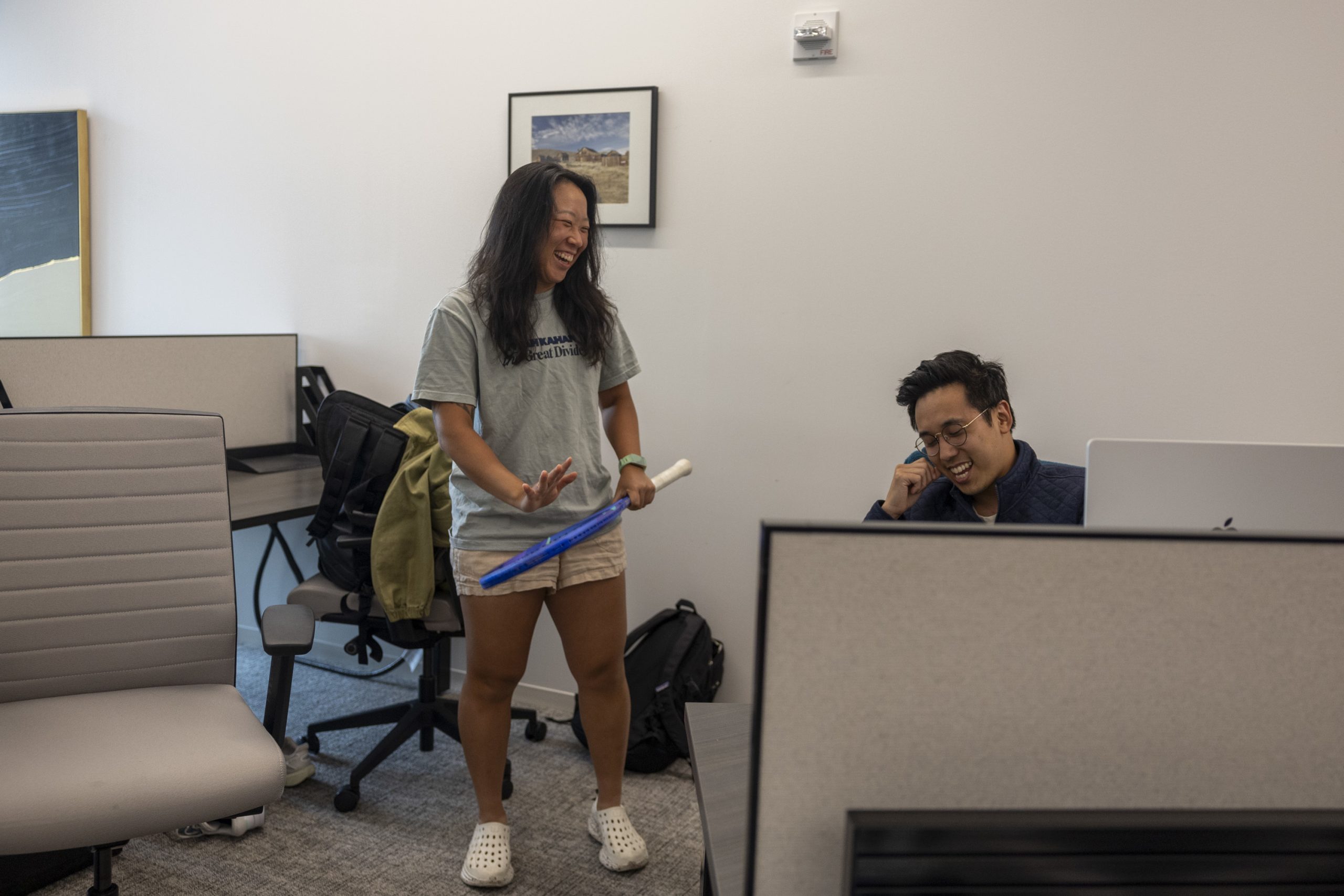
FSH Technologies cofounder Lilly Chen chats with COO Jason Chen in their Philadelphia office.Tyger Williams / Staff Photographer
Why did you start this company, FSH Technologies?
I used to work at Meta… when I worked there it was called Facebook. I was just very disenchanted with the apathetic nature of tech bros and the real-world impact that technology has on regular people.
FSH technologies is focused on creating software for local government. Why this niche?
I was [thinking about] what is a net positive on society that I can feel very good about, that I think technology is a good solution for. I landed on local government because it’s the one thing that universally everybody in America has to interface with, and the technology is so outdated. If you’ve tried to pay a parking ticket, get a permit, just try to navigate your local municipality, it’s so hard, it’s so complicated. Usually the software doesn’t even exist. It could be a manual paper thing.
In the last year there was a lot of talk in the Donald Trump administration of making the federal government more efficient. You’re talking about efficiency at the local government level. Did any of that narrative impact you?
There was actually no technology involved in the DOGE effort. When you drive real efficiency in government, it’s not rip and burn things. It’s actually getting into the weeds to understand the current process, who’s doing it, how they’re doing it, why they’re doing it, and then iteratively improving and wherever possible digitizing the relative components of that.
It’s not at all just being like, “Let’s just fire these people and see what happens.”
What about the name FSH Technologies? Where does that come from?
I used to be a Buddhist monk. I dropped out of high school when I was 16, and I moved to China and I lived in a monastery….We had a pond where we kept fish, and [my sensei] … would describe to me: “You are the pond, not the fish.”
If you can kind of separate yourself from the immediate feelings and see things as a bigger picture, as a system, you actually have a much more cohesive understanding and view of the problem.
You were a monk?
I was a real troublemaker in high school. I actually ended up getting very sick — I had an autoimmune disease … I was missing a lot of class, I was kind of misbehaving. My mom at one point threw her hands up in the air and was like, “We’re now Buddhists, we are moving to China, we’re going to live in a monastery, we’re shaving our heads.”
Can you tell me more about your work for the Philadelphia Department of Commerce?
We build software for the entire Department of Commerce, actually.
We standardized and unified all their forms into one platform, and then we created business profiles so that businesses would have to input, for example, their EIN number…once, and it’s there. If you put in your revenue, it will show you what you qualify for.
Prior, if you think about a Google form and you fill it out, you don’t actually know if you qualify, because anybody can open the form, anybody can submit it. It creates a lot of bureaucracy on both ends. You, as the business, don’t know if it was worth your time to fill it out, so you just fill it out – or you don’t fill it out. You, as the city, don’t know if this business is eligible, so you just spend time reviewing stuff for people who don’t qualify. Everything becomes slower and like sludge because the interface is really bad for actually streamlining the process.
The city spends so much less time reviewing applications now because they only get access to the ones that are actually qualified.
How are you managing the company’s work with your current staff of 12?
We have actually won a ton of contracts that are coming down the pipeline, but we haven’t started them yet. We have time to staff up, which is what we’re trying to do. If I can hire 50 people, I would.
Why can’t you?
What we do requires two things. One, is a deep passion and empathy for communities, civil servants, public good. You really need to care about the details because if you don’t care about them, you’re going to let people fall through the cracks.
That’s actually kind of hard to find because … people hear government software and they think it’s boring. They don’t necessarily realize how much impact you can have if you care deeply about this boring thing.
The second thing is software skill — the craft of building software that just works is hard.
The Venn diagram of skill and care is hard because a lot of people who are highly, highly skilled in technology end up at these AI frontier labs, which are paying a million dollars in salary.
What do you want the company to look like in five years? What’s the goal?
The goal is being able to have people no longer think local government software sucks.
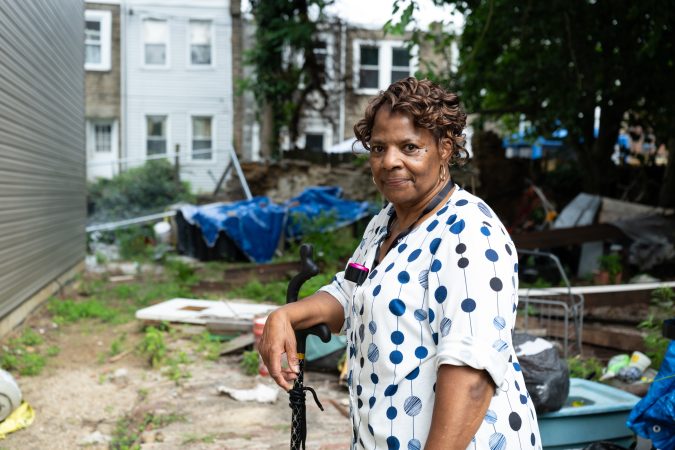
Most days during the summers — sometimes well into the evening — Delores Lawrence is outside her home in Germantown weeding, watering, and otherwise tending her garden.
Her small front yard is where she grows tomatoes, blackberries, purple daisies, and orange and yellow lilies, all planted closely together. There’s also a narrow strip on the side where Lawrence cares for a mix of potted calla lilies, peonies, and other vegetation.
The land around her home is her peace.
It’s her little slice of the American dream.
But instead of being able to enjoy another summer growing season, Lawrence is livid about how the construction of a new apartment building next door has disrupted life on the block where she has lived for more than 30 years.
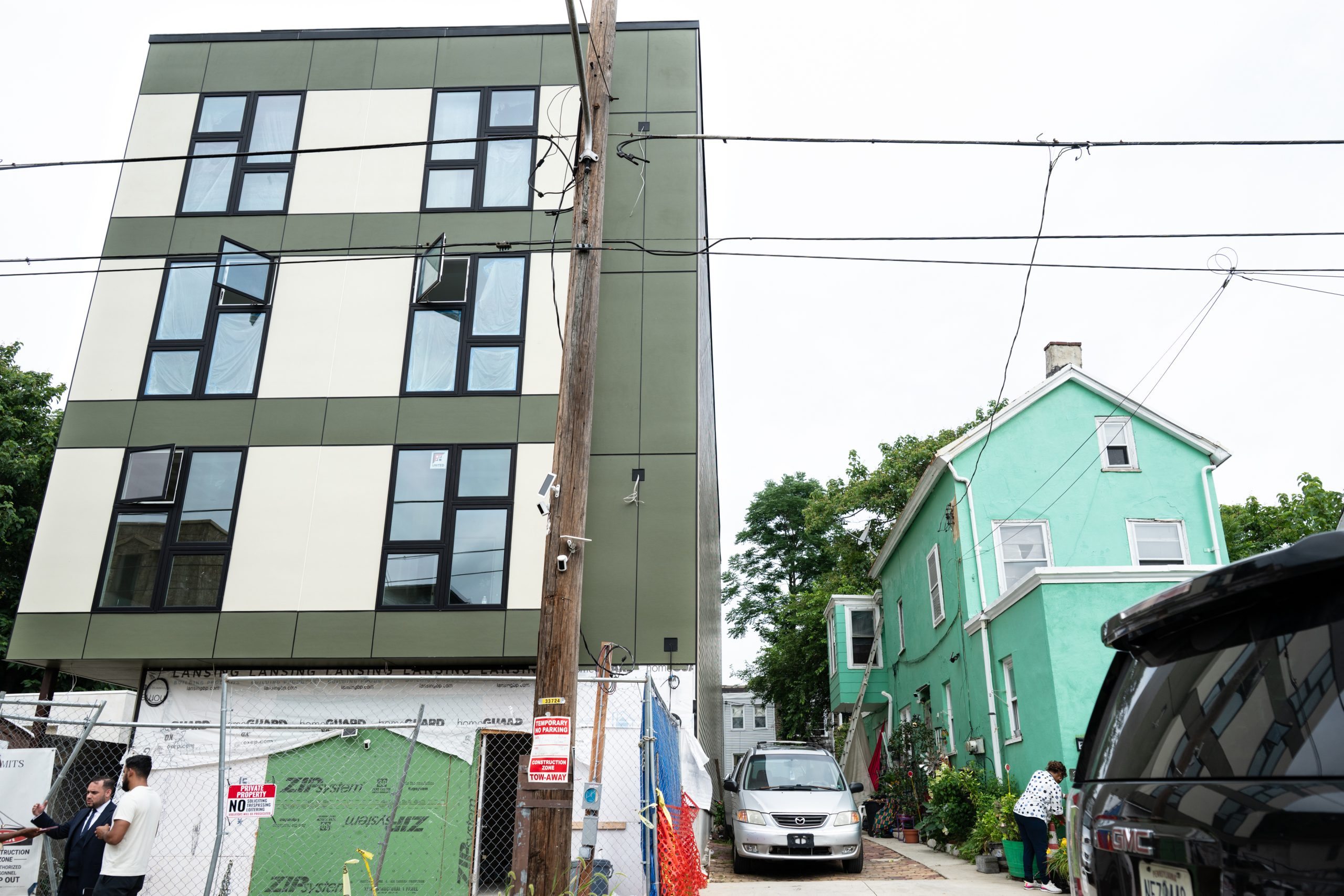
Her garage is no longer standing, her brick driveway damaged, and the construction noise at times was absolutely unbearable.
Lawrence, who worked in nursing before being injured, doesn’t know what to do. “I want my garage built back up. I want my driveway reconstructed,” she told me recently over the phone. “It makes me angry. It makes me upset. I even went to the doctor. I can’t even sleep.”
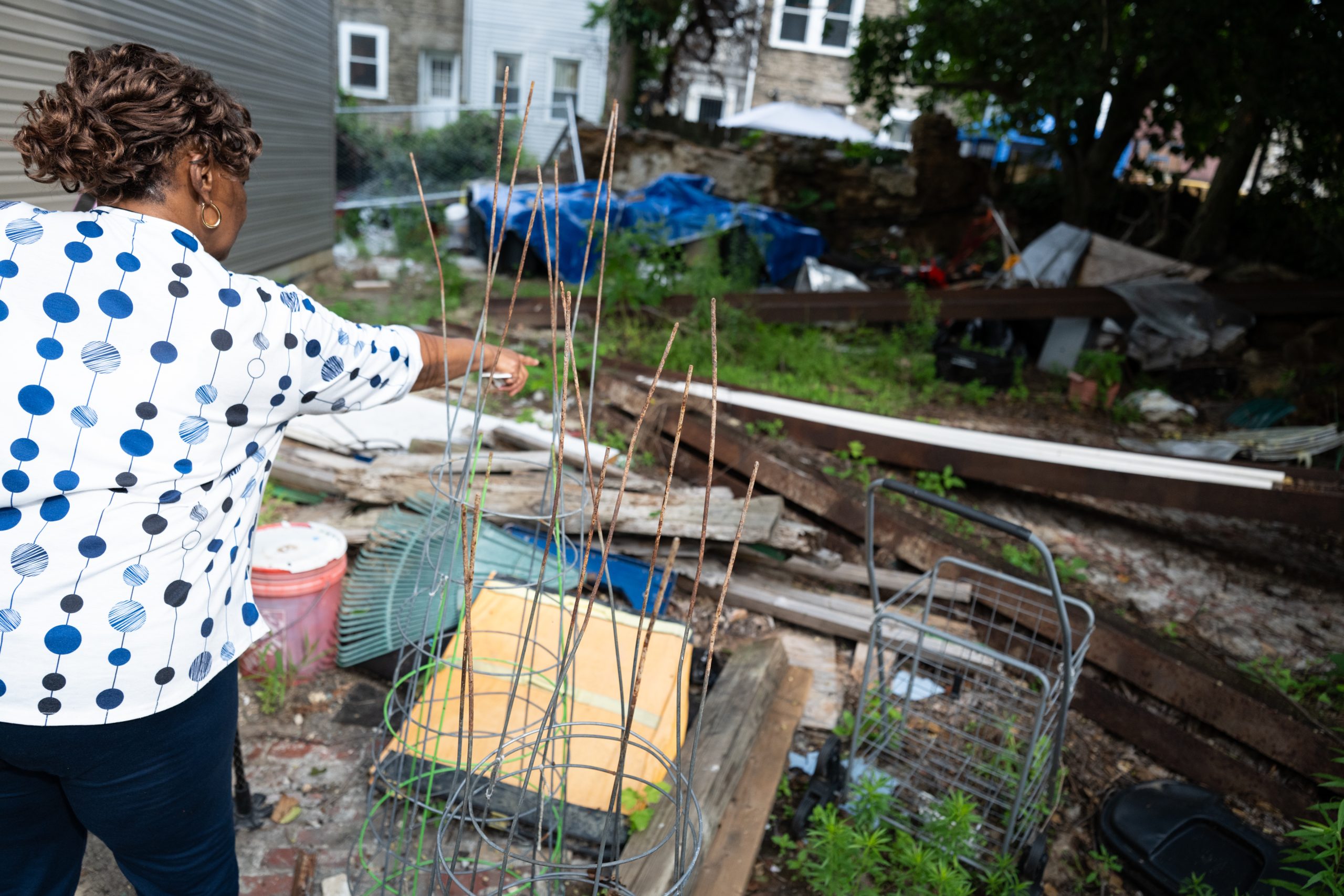
I recently paid a visit to the 200 block of East Bringhurst Street and walked with Lawrence as she pointed out the shambles the construction had made of her beloved yard.
There was a stack of old bricks that had been removed from her driveway. The remnants of an old stone garage where she would do arts and crafts projects. “These are iron beams that they took off the roof,” she said. “It was a building back here.”
There was more — a tree trunk lying on its side with its roots exposed, what looked like electrical cables in the rear, and containers of paint that she said belonged to the builders working next door.
Delores Lawrence points to the remains of a garage where she used to do arts and crafts projects amid the detritus of a construction project next door. The project — a 15-unit apartment building — has been underway since 2024.Erin Blewett / For The Inquirer
Taking in the scene, I thought to myself that this is a whole situation — and I saw how it has turned into a court fight that is shaping up to be as messy as Lawrence’s backyard.
On one side, there’s Lawrence, a 70-year-old homeowner who has filed a lawsuit demanding compensation for damage to her property caused by the construction of a new four-story, 15-unit building immediately adjacent to her driveway.
On the other side is Danilo A. Burgos, the cofounder of Burg Properties and the 29-year-old son of State Rep. Danilo Burgos, a Democrat who was first elected in 2018 and who serves the North Philly neighborhoods of Kensington, Hunting Park, and Feltonville. The four-story, 15-unit building is under the charge of the younger Burgos and has been in the works since 2024.
Given everything going on in Philly right now, it would be easy to ignore the situation between a politically connected developer creating much-needed affordable housing and a senior citizen upset about its impact on her property. But I can’t help but feel for Lawrence.
Besides, hers isn’t an isolated situation. What’s happening to her in Germantown is actually emblematic of similar struggles playing out between residents and developers in neighborhoods around the city.
Residents of Chinatown successfully pushed back against a proposal to build a new Sixers arena along Market Street. In Northern Liberties, several neighbors on Brown Street are suing a developer, claiming their homes were damaged by the construction of a nearby apartment building. In 2024, my colleagues at The Inquirer produced an entire series called Crumbling City about how housing redevelopment created construction issues among some rowhouses.
Whatsets the situation in Germantown apart is the reality that the developer is the son of a state legislator.
“This is about entitlement and privilege,” Kevin L. Valentine, Lawrence’s attorney, told mein an email.
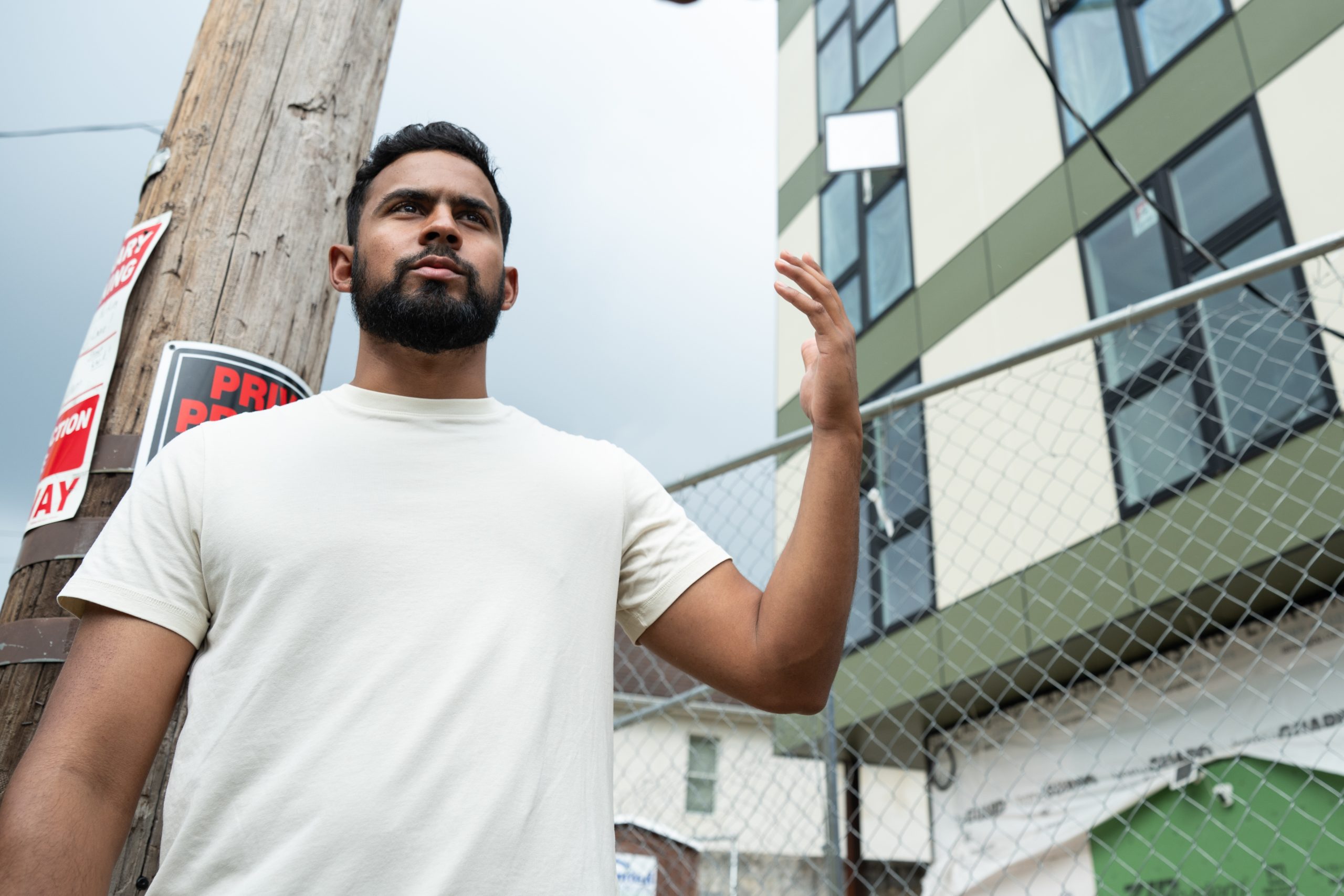
Property owner Danilo A. Burgos speaks to the press outside his affordable housing project under construction in the Germantown section of Philadelphia on Thursday, July 9.Erin Blewett / For The Inquirer
I reached out to Burgos, the state representative, who said: “My son has not done anything wrong. The lady, she’s suing him, and they’re in court. That’s it.” He added, “They have everything documented, and when the court case comes, everything will be squared away, God willing.”
As for the son, he says he’s doing good for the community by providing affordable housing. Philly is in the midst of a “severe housing crisis,” which is why Mayor Cherelle L. Parker has made building and restoring roughly 30,000 homes a cornerstone of her legislative agenda.
But developers still need to respect neighbors in the communities where they build. Christopher Edwards, a block captain and president of the Baynton Hill Neighbors Association, is deeply concerned about the impact the new Bringhurst Street apartment building will have on the narrow street with limited parking.
“We can see where this thing is going to become very unpleasant, especially for those of us who have lived there for years,” he told me.
After meeting with residents who aired their concerns, Burgos, a Temple University graduate, said he purchased a nearby lot that he intends to convert into a parking lot for his tenants’ use. Neighborhood residents, he said, will have priority when it comes to renting units.
As far as the garage in the rear of Lawrence’s home that had been negatively impacted, Burgos said that “it wasn’t a structure. It wasn’t a garage. It was like freestanding walls scattered [around]. Because some were up. Some weren’t.”
He said his workers knocked down a party wall the properties shared. “We notified her of the wall that we were going to knock down,” Burgos told me as we stood with his attorney in front of his new apartments. “Everything we did, we didn’t do it behind her back; we did it with her knowing what we were going to do.”
Attorney Saury A. Mejia and property owner Danilo A. Burgos (left) speak to the press outside Burgos’ affordable housing project under construction as neighbor Delores Lawrence (right) tends to her garden in the Germantown section of Philadelphia on July 9. Lawrence says construction of Burgos’ low-income housing project next door damaged her property.Erin Blewett / For The Inquirer
I liked hearing him say he was prepared to fix any of the property damaged by his workers. But Burgos said he is awaiting permission from Lawrence to do it.
“We’re willing to put it back to its prior condition,” Burgos said, adding that he’s willing to negotiate. “We’ve been open to dialogue the entire time.”
It sounds to me as if a meeting with all parties involved needs to happen quickly.
“I want him to sit down with my client and for him to make her whole,” Valentine said. “I’m just trying to get some justice for this woman.”
Councilmember Cindy Bass is willing to convene such a gathering. “If we can get all parties together, we’re certainly willing to do that and to do it soon,” she said.
Meanwhile, the proverbial clock continues to tick. Time is money. That’s not something Lawrence, who worked at Shriners Hospital for Children, has much of.
The more I think about what Lawrence is going through, the angrier I get. I’ve never been in her situation personally, but who would want workers coming onto their property and damaging it? People work hard for what they have. Your home is supposed to be your sanctuary. You may not have a say in what goes on around you, but you’re the custodian of what goes on inside your proverbial picket fence.
“I’m here minding my business. I’m not bothering nobody,” Lawrence told me. Her voice broke into sobs as she added, “How long do I have to put up with this?”
A new visitor center aims to root Germantown more firmly in its own history, showcasing it as the site of a major Revolutionary War battle and a place with important ties to religious freedom, abolition, and the Civil Rights Movement.
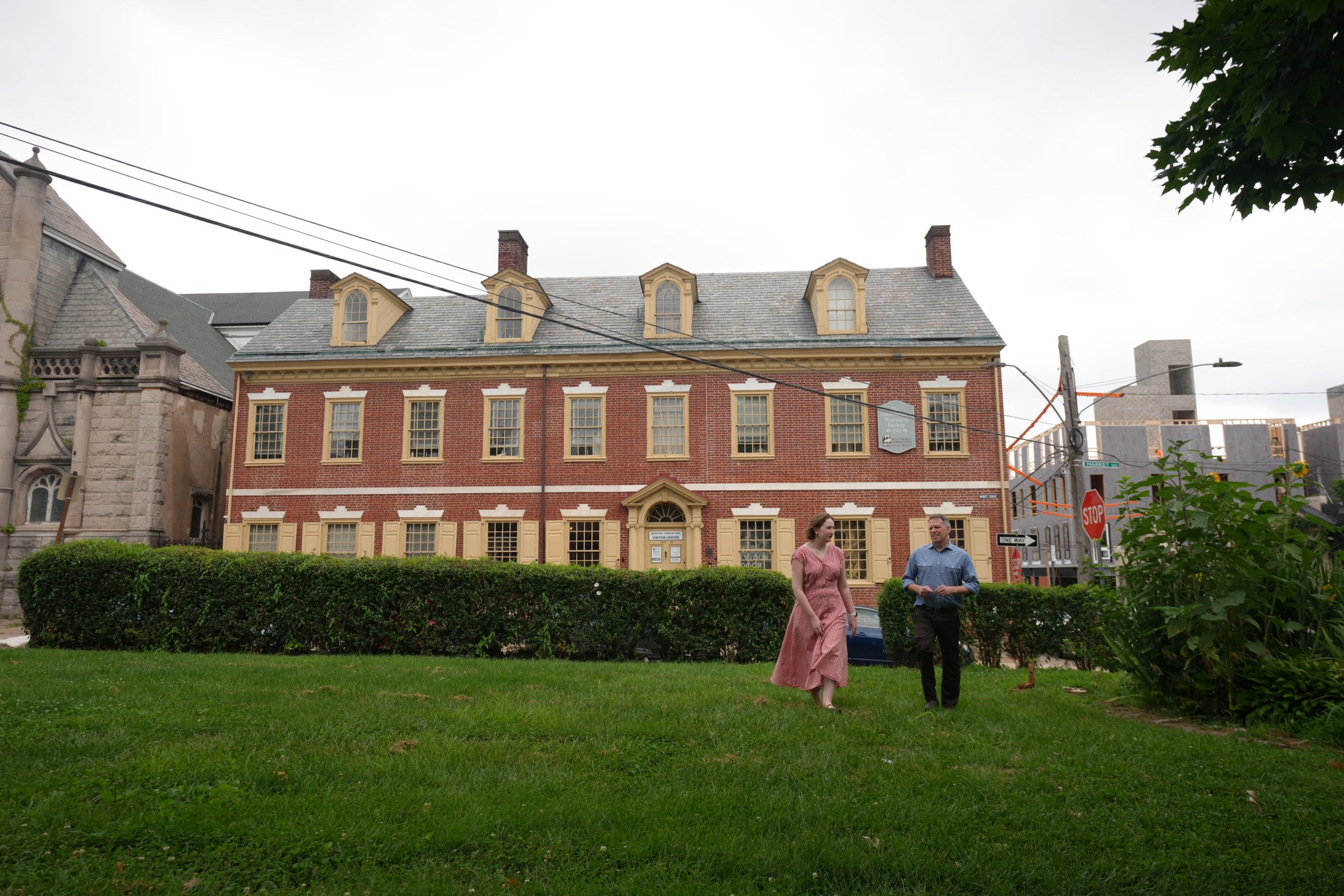
The center opened in a two-story redbrick building at 5501 Germantown Ave. earlier this month. Owned by the Germantown Historical Society, it is intended to serve as a starting point for visitors and residents alike.
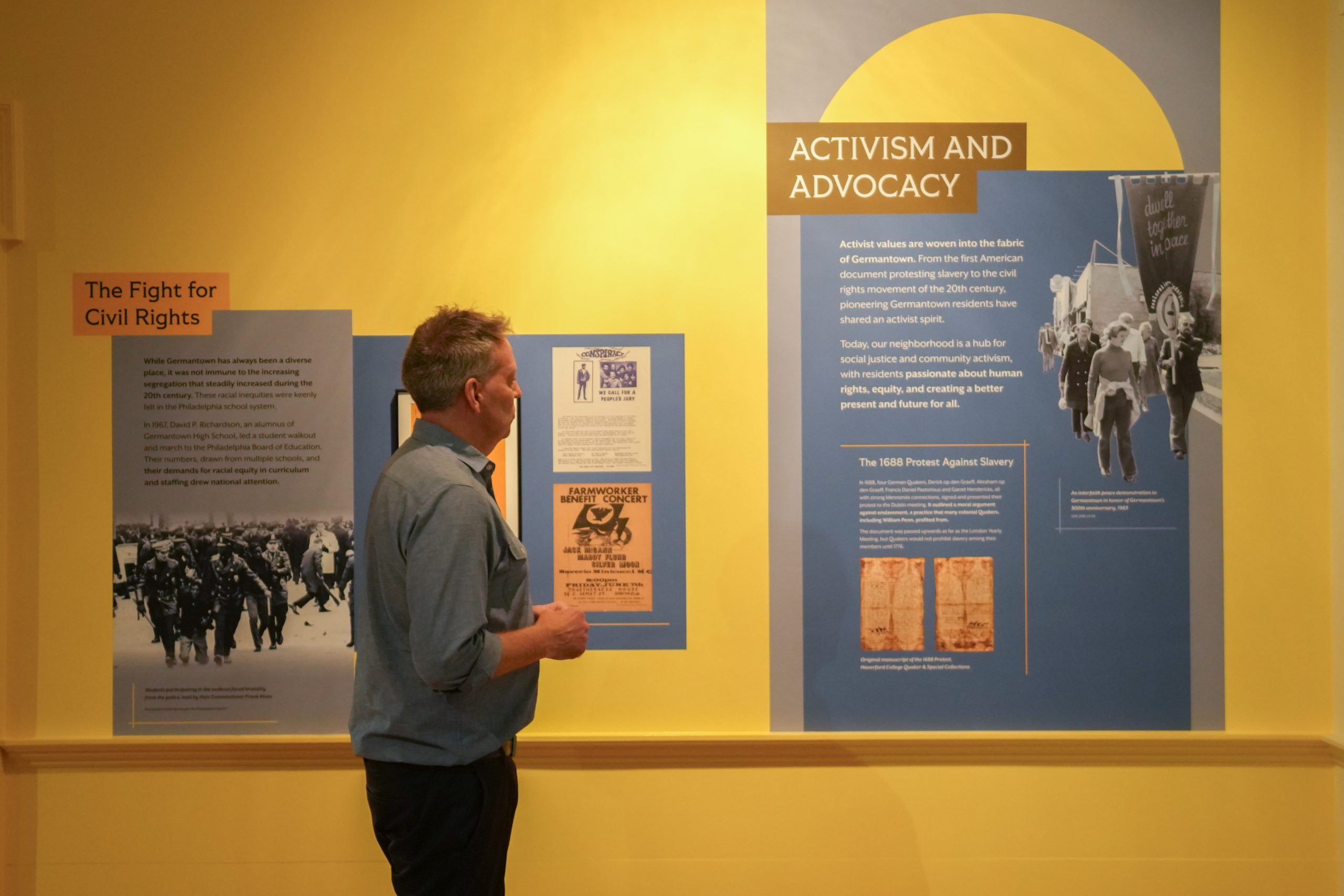
The exhibitions were curated using a process of community conversations in which neighborhood residentsshared what was important to them, said curatorKaila Temple. The main exhibit highlights major themes in Germantown’s history. Sections like “Activism and Advocacy” focus not only on the 1688 Germantown Quaker Petition Against Slavery, but also on a student protest in 1967 that was met with violent police opposition.
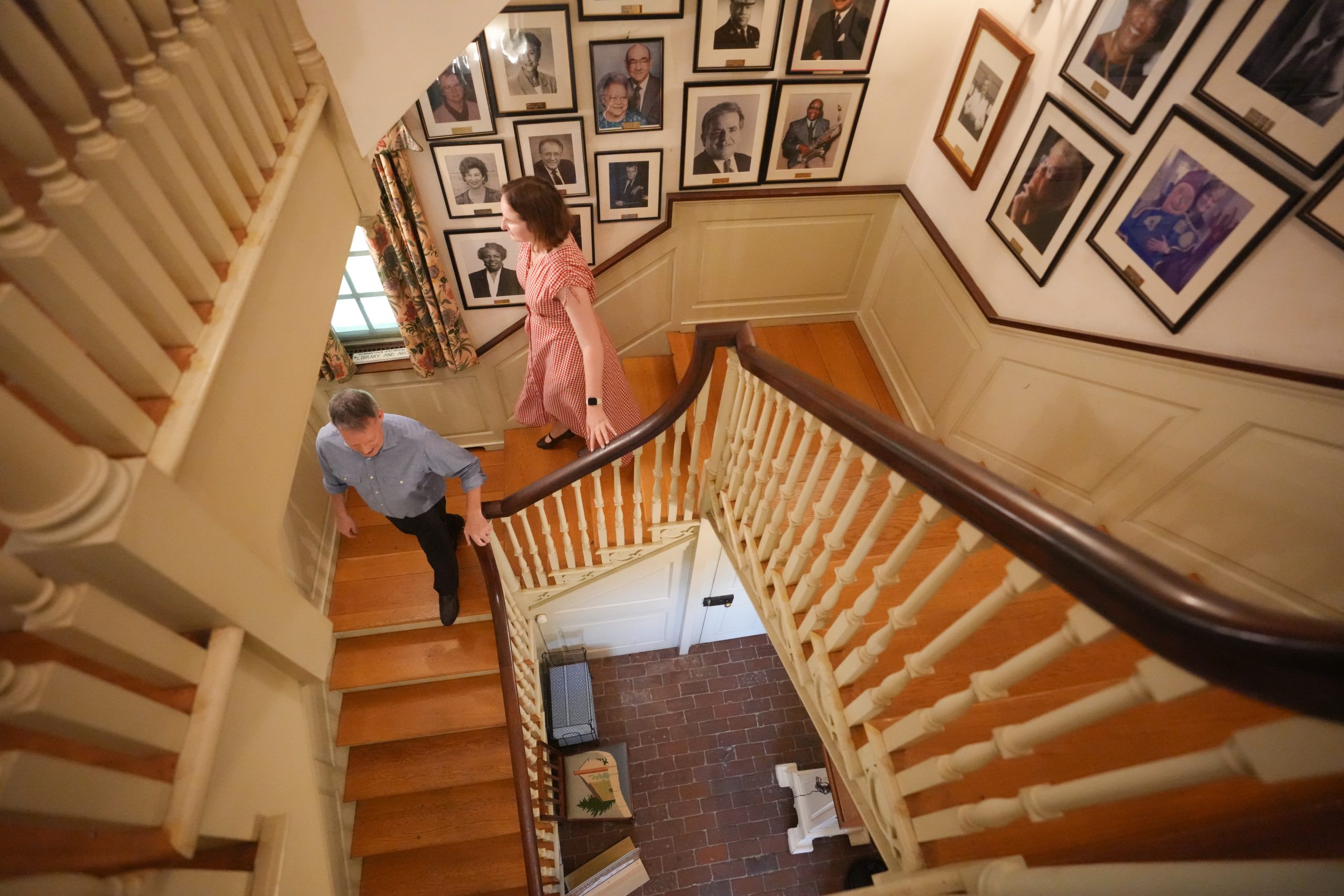
Tuomi Forrest, executive director at the Germantown Historical, in the new exhibit.Jessica Griffin / Staff Photographer
German immigrants first settled in Germantown in the late 16th century, fleeing Europe in search of religious freedom. Germantown played a central role in the American Revolution and later became the site of strong abolitionist advocacy, and robust student youth activism during the Civil Rights Movement.
The visitor center hopes to both connect residents of Germantown with their local history and draw visitors from elsewhere. Visitors will be directed to visit the many historical sights in the area with maps available for walking tours. Director Tuomi Forrest hopes the visitor center can be a resource for neighbors and bring in more visitors from outside Philadelphia, citing those as “twin” goals.
The visitor center received about 200 people the first week it opened and hopes for more. It recently collaborated with Neighborhood Jawnts Tour Series, a Philadelphia-based tourism effort, to bring in visitors from around the city.
It has also worked closely with neighbors who want to learn more about their own homes and their ancestors. One neighbor found a wedding invitation from 1912 during home renovations and wrote to the center to ask for documents that would shine more light on who used to live in the home; another wanted more information of how his mid-1800s home came to be an institution for orphans; others ask to come to the center to do research on their ancestors.
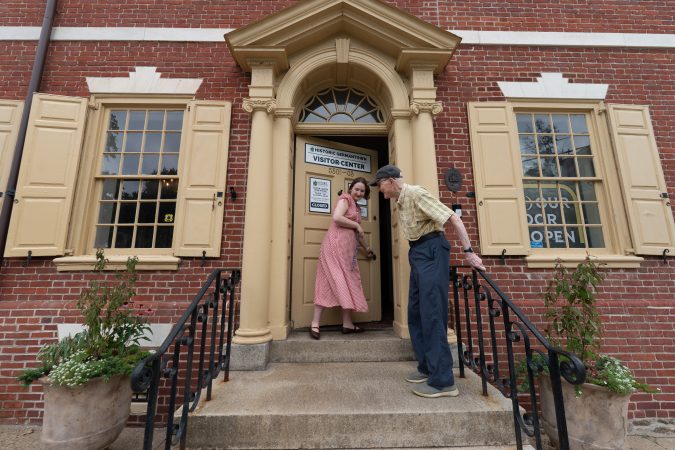
Tuomi Forrest, executive director, and Kaila Temple, curator, at the Germantown Historical Society building.Jessica Griffin / Staff Photographer
The square where the visitor center sits dates to 1703. George Washington lived across the street from it in 1793, and when Philadelphians wanted the federal government to stay locally, they touted the square as an asset.
The Colonial Revival building where the visitor center is now housed was constructed in the 1790s and restored around the 1940s and ’50s.
Visual markers of the Colonial Revival style, a result of the 1876 Centennial Exhibition’s reawakening of Americans’ desire to connect architecturally to their colonial past, still dominate the historical section of Germantown. Along Germantown Avenue, gray stone churches stand beside pale yellow, redbrick, and coral-colored houses.
But the visual character of the historic section of Germantown that houses the new center is not uniform, especially as new developments begin to populate empty lots.
A neighborhood ‘at an upswing’
As the local visitor center leans into Germantown’s past, some nearby residents and businesses — many of whom were not aware of the new center — said they were concerned with the direction of their neighborhood’s future.
Van Brooks, operations manager of a coffee shop kitty-corner from the visitor center, worries about development just down the street — afour-story apartment building that is visiblefrom the window of a visitor center gallery. “A lot of folks in this neighborhood don’t want this space to exist here,” he said. He worries the modern, flat apartment complex will begin to gentrify the neighborhood.
Nicholas Thaete, who has lived in Germantown for 46 years and runs an antique repair shop, says the neighborhood has gone through different periods. “It goes up and down. Right now, it is at an upswing,” he said.
And yet, as Debbie Curry, who works in a nearby fabric store, remembered, Germantown used to have more commercial activity: “There was a time when there were a lot of department stores. … You didn’t have to go to Center City to do your shopping.” Curry, 66, grew up in Germantown but moved from the neighborhood when she married. She is happy something is finally being done about empty lots.
“A lot of people thought for years that Germantown would see new development, but now it has,” Forrest said, standing in front of the visitor center.
Kaila Temple, curator of Collections at the Germantown Historical Society and Tuomi Forrest, executive director at GHS, outside the new Historic Germantown Visitor Center.Jessica Griffin / Staff Photographer
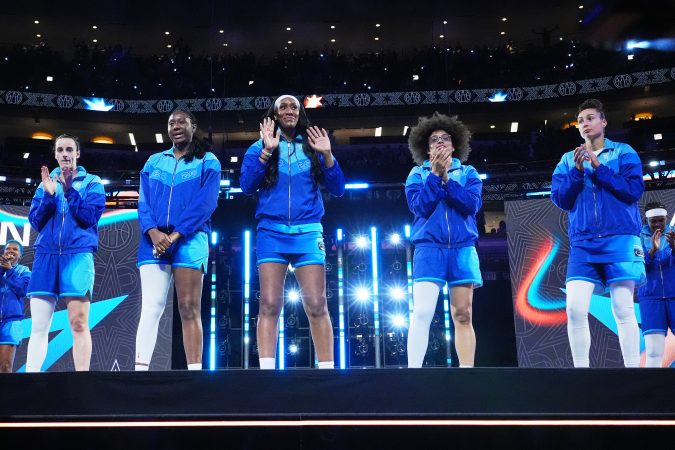
Some of the world’s best women’s basketball players were in Chicago for the WNBA All-Star Game, and, as usual, the fashion didn’t disappoint.
The WNBA orange carpet on Friday had heads turning to get a glimpse at this year’s All-Stars ahead of Saturday’s game. From top rookies like Azzi Fudd to superstars like Paige Bueckers, the All-Stars pulled out all the stops.
Playing for “Team Spoon” in the All-Star Game, the Las Vegas Aces center stunned on the orange carpet in one of the most formal looks of the evening. Alongside a bedazzled basketball, the sheer all black attire was chic, cool, and confident — all attributes of the four-time WNBA MVP, eight-time All-Star, and three-time champ with the Aces, including the 2025 crown.
Ahead of the Shooting Stars competition on Friday, Johnson arrived in a matching denim set with faux sticky notes with affirmations like “be intentional” and “out work your excuses.”
The rapper and Seattle Storm rookie said in an interview on the orange carpet that they were for “some positive energy and big four energy.”
Fudd, who was this year’s first overall pick in the WNBA draft, stepped onto the orange carpet with a cool street style pairing a black leather bralette and distressed jeans with a casual gray blazer. With a Coach Tabby bag to match, the Dallas Wings rookie was fitted to make history when she became the first rookie to win Friday night’s three-point contest, scoring 30 out of 40 possible points.
Fudd’s teammate, the second-year fan favorite Bueckers pulled out the stops with another iconic carpet look for her second WNBA All-Star Game.
Donning an ever-chic slicked-back bun and shades, the guard wore a sleeveless light blue button-up with a tan tie and baggy trousers, with crisp white Air Force 1s completing the basketball star’s ensemble.
The All-Star Game had some local flair, too. North Philly native Kahleah Copper pulled up to the Windy City — her WNBA home for seven seasons — in a silver-studded suit. The five-time All-Star was one of multiple players wearing the street style brand GRÉVYI, with the logo etched onto the cuff.
After starring at Prep Charter, Copper took her talents to Rutgers and the W, where she’s played for the Washington Mystics, Sky, and now the Phoenix Mercury.
In perhaps the most adorable look of the night, the New York Liberty star stepped out on the carpet with her whole family in matching fashion.
Her wife, Marta Xargay Casademont, a retired Spanish professional basketball player who also spent two seasons with the Mercury, and two children sported black and blue ensembles. Both women wore deep-cut blazers, and Stewart sported matching shorts and pearls.
The award for most colorful and sparkly on the orange carpet goes to Ogwumike. The Los Angeles Sparks forward dazzled in a green and purple asymmetrical dress, a cascade of fringe highlighting the ensemble that was complete with simple heels and diamond studs.
Howard had one of the most impactful looks of the night, decked out in purple in support of lupus awareness, a tribute to a close friend. The Atlanta Dream guard wore a custom suit with fine embroidery. Both legs were inscribed with a lilac “Think Within,” matching with beaded basketball hoops on each side of the chest. An autism awareness logo stood out on the back tying together Howard’s motivations before she headed out onto the court.
Ahead of her third All-Star Game, the Atlanta Dream star donned baby pink from head to toe. Complete with a feathered shawl trailing right down her pink platform heels, Reese was surrounded by an air of confidence entering the game, in which she was a forward for Team Coop.
Of course, one orange carpet guest who stood out more than the rest.
Ellie, the New York Liberty mascot and social media sensation, strutted on the orange carpet wearing a custom dress with her name on the side. Her nails and hair matched in the Liberty’s green, and the outfit was tied together with hoops and a New York-themed Coach Tabby bag. The best-dressed elephant around, Ellie was giving the pros a run for their money.
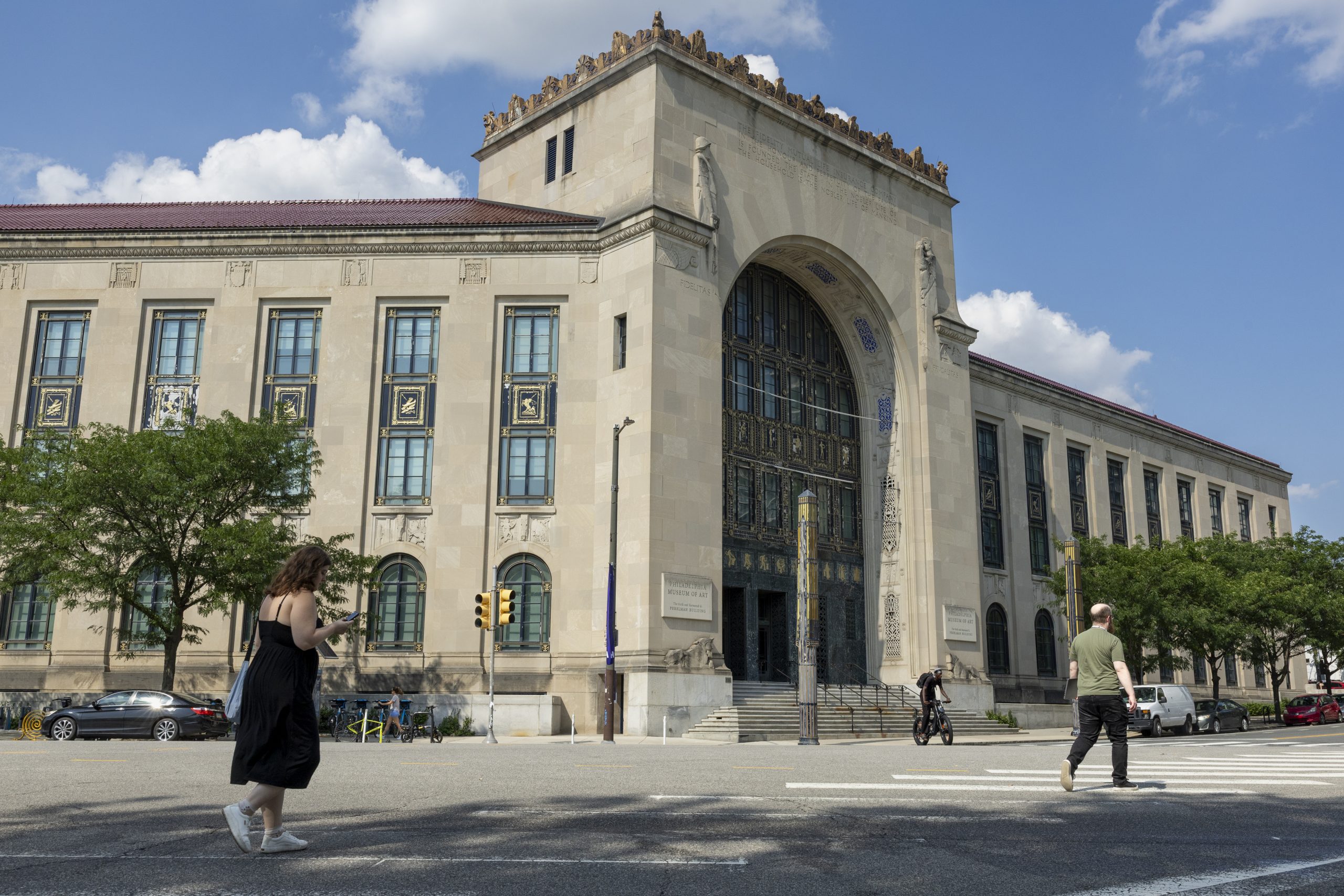
When art world veteran Daniel H. Weiss took over the Philadelphia Museum of Art in December, he quickly recruited a new team, including a chief financial officer and chief fundraiser. That team has begun to assess the museum’s financial condition and what can be done about it.
The picture that is emerging is not a pretty one.
Preliminary figures seen by The Inquirer show that the museum ran a deficit of about $10 million on a budget of $76.5 million for the fiscal year that ended June 30.
That is on top of a deficit of $5.4 million for the year before, and leaders say the outlook does not promise to improve soon. For the fiscal year that has just begun, the museum anticipates the deficit will be comparable to last year’s $10 million, but in planning the budget the museum has outlined the possibility that it could be as high as $15.9 million.
The shortfalls are the museum’s largest in recent history, leaders say.
Weiss said the museum’s financial situation is “substantial, but solvable.”
“I have no doubt that we will have a balanced budget in about three years,” he said, “but we have real work to do to get there.”
Financial pressures are not threatening the museum’s ability to remain open, but the run of red ink cannot continue. The museum is covering the deficits by drawing on a pool of money that includes cash and reserves — sometimes referred to as quasi-endowment — whose use was not restricted by donors for any specific purpose.
“The way I would describe it is, we have a savings account for rainy days. We’re spending it,” Weiss said. “We need to stop doing that.”
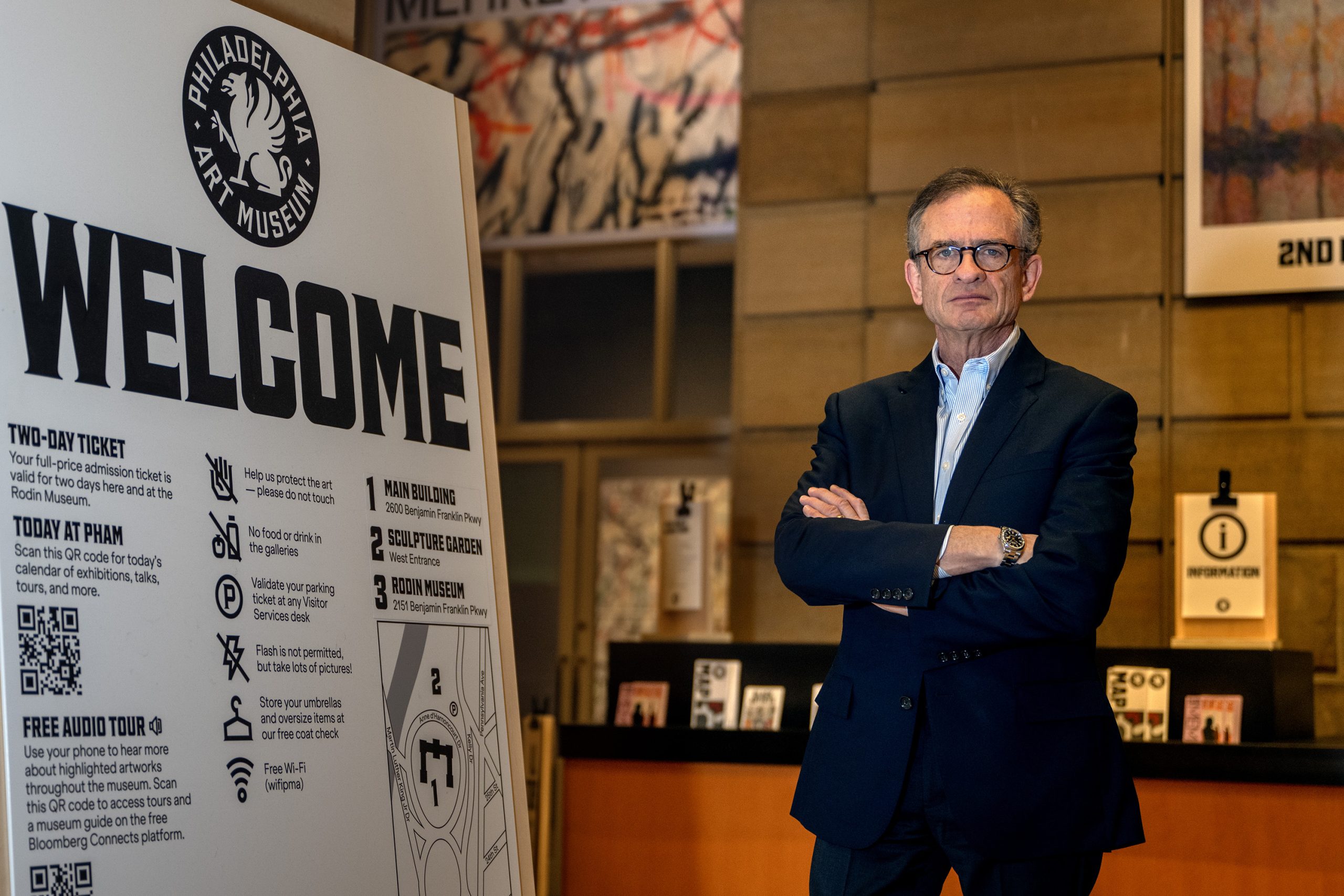
Daniel H. Weiss, director and CEO of the Philadelphia Museum of Art, at the museum in January.Tom Gralish / Staff Photographer
The museum’s struggle to right its finances comes as it faces some urgent needs and considers the fate of key projects. Among the unsettled questions is how to pay for deferred maintenance to both the main building and the Perelman building, the annex to the north that was closed to the public during the pandemic and never reopened.
The combined cost of work on the two buildings has a preliminary price tag of around $300 million.
As for a much sexier project, the museum’s much-trumpeted expansion envisioned by architect Frank Gehry: That will have to wait. Given the current challenges, the ambitious idea of carving out new spaces beneath the east terrace continues to be on hold; the timeline is uncertain.
“It is not, at this time, appropriate for us to be evaluating the feasibility of a very substantial new capital project which would be required to implement the Gehry plan,” Weiss said. “We need to determine the priorities and sequencing of capital work that needs to be done. And over the long term, we need to figure out what this institution can afford in a sustainable way.”
The famed architect died late last year.
The priority now is ringing the alarm that all is not well at one of the city’s two largest arts groups (the other being the Philadelphia Orchestra and Ensemble Arts) and rallying support around a rescue plan.
Weiss said:
“We want to be transparent and we want to be accessible to people, and they have a right to know — it’s their institution. But we don’t want to do it in a way that turns people away. It’s just an institution that needs repair. So how to tell that story is part of what we have to work on.”
The polychrome high-relief sculpture on the north pediment of the Philadelphia Museum of Art. The high-relief sculpture depicts 13 figures from classical mythology.Aidan T. Gallo / Staff Photographer
Ambitions despite deficit
The pool of money is finite, and the museum would like to stop tapping its reserves as quickly as possible. Instead of funding the deficit, it could be helping grow the nest egg.
Referring to what is being spent this year alone to cover the deficit, Weiss said:
“That’s $10 million of assets earning at least 5% a year till the end of time we’re foregoing. We’ll never get that back.”
And yet the museum does not expect to balance its budget this year or next.
“We anticipate getting within shouting distance of a balanced budget within three years. We don’t have the luxury of taking longer,” Weiss said.
Even as it struggles, the museum has not shelved ambitious projects. The idea of creating a new learning and engagement center on the north side of the museum is still very much in play, Weiss said. Design development for the facility could begin within a year.
Blockbuster exhibitions like the 1982 show of Nigerian art seen by 197,000 visitors or the Cézanne retrospective in 1996 that drew 548,741 are hard to come by, but the museum is working on a number of shows that it believes would draw 100,000-plus visitors each.
“We will have exhibitions that will be of very significant public interest that will draw large numbers that will be exciting and powerful,” said Weiss, who declined to give specifics on the exhibits.
The Perelman building, an annex to the Philadelphia Museum of Art containing exhibition galleries, offices, conservation labs, and the museum library.Aidan T. Gallo / Staff Photographer
About the future of the nearby Perelman building, Weiss said the museum is searching for ideas.
On the one hand, the highly decorated art deco structure contains the library, art conservation studios, and administrative offices for which there is no space in the main building. On the other, the costs of operating and maintaining it are high. It is more building than is needed, and the location across two busy streets limits the number of visitors who will make the trip to reach it.
A revenue stream that’s been flat
The museum’s new leadership has analyzed finances from the last 10 to 12 years — a period that includes the pandemic, plus the periods before and after — and determined that the deficit is the result of a revenue stream that has not grown much, while expenses have.
“Functional revenue — contributions, admissions, membership, and earned revenue — has grown by only 0.3%, effectively flat,” said Mitchell Wein, the museum’s executive vice president and chief financial and operating officer.
The museum has not fully yet developed a plan for reversing the trend, but is “modeling lots of scenarios and coming up with the best approach on how to do that,” Wein said.
“Part of this process is evaluating everything. Everything is on the table,” Weiss said.
Reducing expenses in some areas will be considered, but that cannot be the only answer.
“We also know we need to focus on revenue generation and supporting the museum for the long term,” Wein said.
But revenue from where?
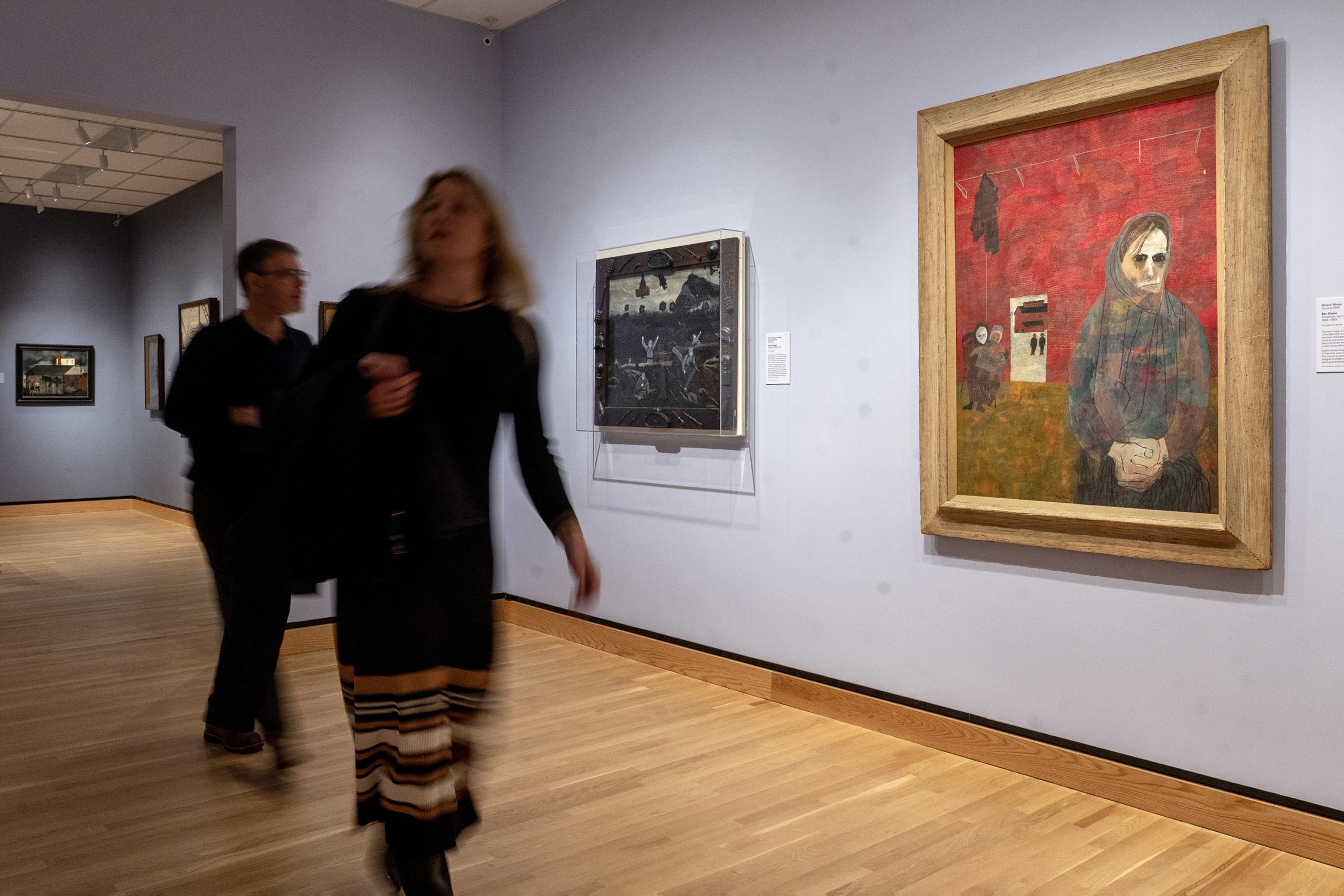
‘Miners’ Wives’ (right) by Ben Shahn and ‘The End of the War, Starting Home’ by Horace Pippin in the ‘A Nation of Artists’ show at the Philadelphia Museum of Art.Tom Gralish / Staff Photographer
Six keys to securing solvency
Ticket sales is one obvious place to look, but a big boost from admission is probably not in the cards. The museum once aspired to attract a million visitors a year, but that goal was floated before the pandemic, and the museum has not yet recovered its pre-COVID numbers.
This past fiscal year, the forecast called for 731,000 visitors; 672,753 showed up.
So the goal for next year has been adjusted down to 705,000, which the museum feels is more realistic. Attendance was 773,511 in the last full year before the pandemic.
The museum’s difficulty in coming back from the pandemic is not unusual. Over half (55%) of U.S. museums of all kinds were reporting lower attendance in 2025 than in 2019, according to a report from the American Alliance of Museums.
Daniel H. Weiss, director and CEO of the Philadelphia Museum of Art, looking out onto the museum’s east terrace.Tom Gralish / Staff Photographer
Weiss says the museum needs to focus on six key areas to achieve solvency:
Optimizing endowment income.
Boosting earned revenue, including income from retail, restaurants, special events and membership, and admissions. “Each of those needs to be examined to determine what’s possible,” he said.
Evaluating how much can be brought in through philanthropy.
Working toward more city and state government support. “We want to try to make the case to them that a larger investment in these facilities is in everybody’s best interests, and that’s a work in progress.”
Reviewing the operating budget. “The operating budget can be improved, but there’s not a ton of opportunity for us, for example, to lay people off. Our staffing levels are already down. We don’t think that’s the answer. But there are certain things we can cut and manage better or maybe outsource or streamline to improve the operating budget.”
Assessing programs, such as making better and more economical use of the Perelman building.
“If you add all of those things up and we do all of those things — even if we don’t also find a private equity guy who falls in love with us who’s going to give us $100 million — we’re going to balance our budget,” Weiss said.
Hundred million-dollar gifts may or may not be in the future, but the suggestion raises a salient question being pondered by leaders: What is the fundraising capacity of the museum?
“How much can that be, how much can we raise? I don’t know,” Weiss said. “What is this city set up to do? Most of the people who give money to an institution like this are local. So what is the philanthropic opportunity for one of the leading cultural institutions in this city?”
What Weiss is sure of is that fundraising depends on resetting the profile of an institution known more recently for organizational turmoil than for success.
“People who invest in an organization at lower levels as members, at higher levels as donors or major philanthropists, they always invest in winning organizations, and they rarely invest money to remediate problems. And one legacy I would like to leave is that we become an organization that’s known for being really good at what we do.
“The positive is a world-class institution with a great collection. If we can’t figure this out, then we’re the wrong people. It’s just not that hard.”
In the opening pages of the book he published between losing and then winning a Pennsylvania seat in the U.S. Senate, Dave McCormick painted the picture of an uncomfortable scene at Mar-a-Lago.
It was early 2022. McCormick, a former hedge fund CEO running in a tough Republican primary against celebrity doctor Mehmet Oz, had made the pilgrimage to meet with then-former President Donald Trump and ask him not to endorse Oz. Trump had maintained a firm grip on the party after leaving office and avoiding conviction for “incitement of insurrection” at his second impeachment trial.
According to McCormick’s retelling, Trump pulled up a television interview McCormick gave after the Jan. 6, 2021, attack on the U.S. Capitol in which he said the president was partially responsible for political divisiveness.
“Then the former president looked me in the eyes and warned, ‘You know you can’t win unless you say the election was stolen,’” McCormick wrote. “I made it clear to him that I couldn’t do that. Three days later, Trump endorsed Mehmet Oz.”
McCormick lost the race but ran again and won with Trump’s support two years later — when they shared a ballot. Now, three years after McCormick penned the book, he has become a prominent cheerleader in the Senate for an election reform proposal — the SAVE America Act — that Trump has advocated for while continuing to falsely say the 2020 election was rigged against him.
The Pennsylvania Republican has still not echoed the president’s debunkedclaims of widespread fraud in 2020. He also has not disputed them as he lobbies for the bill, which he and other Trump allies argue will build confidence in elections and which critics say will do the opposite while potentially disenfranchising millions of voters.
Other Pennsylvania Republicans in Congress — some of whom tried to block the state’s electoral votes hours after the Capitol attack— have similarly stayed quiet as Trump has both resurfaced old allegations and introduced new ones.
In a prime-time speech earlier this month, Trump claimed that China had secretly obtained U.S. voter information and that a “large-scale voter registration operation” led to fraud in Michigan six years ago. His administration also released a document alleging Pennsylvania was among four states where the Department of Homeland Security had identified more than 250,000 noncitizens registered to vote.
Pennsylvania Secretary of State Al Schmidt, a Republican appointed by Democratic Gov. Josh Shapiro, has forcefully rejected those claims.
But adding more fuel to the rhetoric about election integrity, New Jersey officials said last week that about 6,600 people who were not citizens were registered to vote before the 2024 election, and fewer than 400 cast a ballot.
Still, many of the claims Trump made in his speech have been refuted by election experts and, in many cases, were not new.Meanwhile, none of the 11 Republicans representing Pennsylvania in Congress have commented directly on them, including some who responded to certain questions for this story but did not answer others specifically about the new claims.
President Donald Trump, left, and Sen. Dave McCormick, R-Pa., attend the finals at the NCAA wrestling championship, Saturday, March 22, 2025, in Philadelphia. (AP Photo/Matt Rourke)Matt Rourke
McCormick’s spokesperson said only that the senator’s position on 2020 “remains unchanged.”
A spokesperson for U.S. Rep. Brian Fitzpatrick, a moderate Bucks County Republican who voted to certify President Joe Biden’s 2020 win, said the lawmaker “completely disagrees with the president’s allegations of interference in the 2020 election.” She did not answer a question about the new and specific claims, such as the 250,000 noncitizens registered, but said Fitzpatrick “has full faith and confidence [in] our election officials.”
Rep. Scott Perry, R-Pa., speaks during the Conservative Political Action Conference, CPAC 2024, in Oxon Hill, Md., Feb. 22, 2024. (AP Photo/Jose Luis Magana, File)Jose Luis Magana
U.S. Rep. Scott Perry, a York County Republican who tried to overturn election results and became a subject of investigations into Jan. 6, reposted comments online that raised alarm about the White House’s claims of noncitizen voters.
Perry’s office did not respond to a request for comment. He is one of four Republicans in the state facing a competitive reelection this fall — putting Pennsylvania in the national spotlight as Democrats push to gain control of the narrowly divided U.S. House, and potentially at the center of concerns about Trump’s attempts to control the election process.
Republicans point to N.J. as they call for new voting law
Every Pennsylvania Republican in Congress, meanwhile, has supported the SAVE America Act. The bill would require voters to provide proof of citizenship when registering to vote and to show photo ID at the polls. It would also scale back mail voting, which has become increasingly popular since the COVID-19 pandemic but has remained a focus of Trump’s false claims of fraud.
Supporters of the legislation say that voter ID is widely popular and that eliminating even a few noncitizens from the voter rolls is worth ensuring elections are legal and secure. Opponents say that the issues the bill is trying to solve are either nonexistent or statistically irrelevant, and that it would effectively make registering more difficult for about 21 million people who do not have easy access to the paperwork that would be required, like a passport or birth certificate.
“It would upend voter registration and our democracy and, on its own terms, is an extraordinarily harmful policy that would hurt millions of American citizens,” said Eliza Sweren-Becker, a voting rights expert at the Brennan Center for Justice. “It is being advanced on the backs of lies about our election system that are themselves harmful to our democracy and trust in election administration.”
Though he has not addressed Trump’s latest claims, McCormick renewed his public push for the SAVE America Act after Trump’s prime-time address — writing, “Let’s act now,” on social media following the speech.
Last week, he and others also grasped on to both a nearly decade-old voter registration issue in Pennsylvania and the fresh problem in New Jersey to underscore the need for the law.
“This isn’t a harmless ‘software error,’” McCormick wrote on social media after Gov. Mikie Sherrill said a technical mistake led to noncitizens registering to vote. “This is why we must confirm citizenship before anyone registers. Only U.S. citizens should vote in our elections.”
McCormick also elevated a statement from the Department of Homeland Security that referred to an issue that Schmidt, then a Philadelphia city commissioner, discovered in 2017. Schmidt found 168 noncitizens were registered in Philadelphia, and likely hundreds more were registered statewide, due to an error by the Pennsylvania Department of Transportation. State Auditor General Tim DeFoor, a Republican, has said fixes to the system were largely successful.
U.S. Rep. Ryan Mackenzie, a Lehigh County Republican who is running in one of the most competitive districts in the country, also pointed to the Pennsylvania example and the New Jersey developments while justifying his support for the SAVE America Act during a telephone town hall with constituents Wednesday.
But while trying to remember the details on the call, Mackenzie potentially overstated the problem.
“I believe it was about 8,000 people here in Pennsylvania made their way onto the voter rolls, who were not supposed to be there and weren’t asked those proper questions. So these things do happen,” Mackenzie said before stressing the need for the SAVE America Act.
Asked about that number, a spokesperson for Mackenzie pointed to the Pennsylvania Department of State’s additional review in 2018 that found 8,698 voters whose eligibility needed to be determined. Those voters, however, were not necessarily noncitizens or otherwise ineligible to vote, and the state never released a more detailed analysis.
The spokesperson did not answer questions about whether Mackenzie agrees with Trump’s old or new claims about election fraud in 2020, or whether Pennsylvanians should have confidence in the state’s current system.
“This case from Pa., and from N.J. more recently, highlight the lack of appropriate checks taking place when people initially register to vote. We should have appropriate checks to verify the citizenship status when someone initially registers, which is what the SAVE Act provides. The absence of these safeguards, as well as the egregious errors that have been seen in states like New Jersey, are key reasons for the bipartisan frustration with our elections.”
Sweren-Becker said overstated claims of noncitizen voters have contributed to spreading distrust. The Pennsylvania situation, she said, was also not an example of a scheme to defraud the system, and “not the basis for a policy that would block millions of Americans from being able to cast their ballots.” Both that case and the one in New Jersey are instead examples of administrative errors that occasionally happen in a complex election system and represent “an extraordinarily small fraction” of voters, she said.
The Cato Institute, a libertarian Washington-based think tank, has also thrown cold water on the idea that the SAVE America Act would have prevented the New Jersey error. Legal fellow and former Arizona Republican official Stephen Richer, in a post that referred to McCormick’s advocacy, wrote that the current structure of the bill “likely wouldn’t have prevented” the software error.
“Be wary of politicians who say, ‘All of these problems will be fixed with my simple legislation,’” Richer wrote. “That’s often not the case.”
‘Deeply unhelpful’
McCormick, in response to questions for this story, did not directly say if the law would have prevented the issue in New Jersey. But he stressed that the paperwork requirement “helps stop noncitizens from getting registered.” It would also require states to set up a program to “continuously check voter rolls to find noncitizens” using different datasets — which he noted some states already have.
In a telephone town hall with constituents on Wednesday, the senator also acknowledged concerns about the bill when asked about it by voters on both sides of the issue.
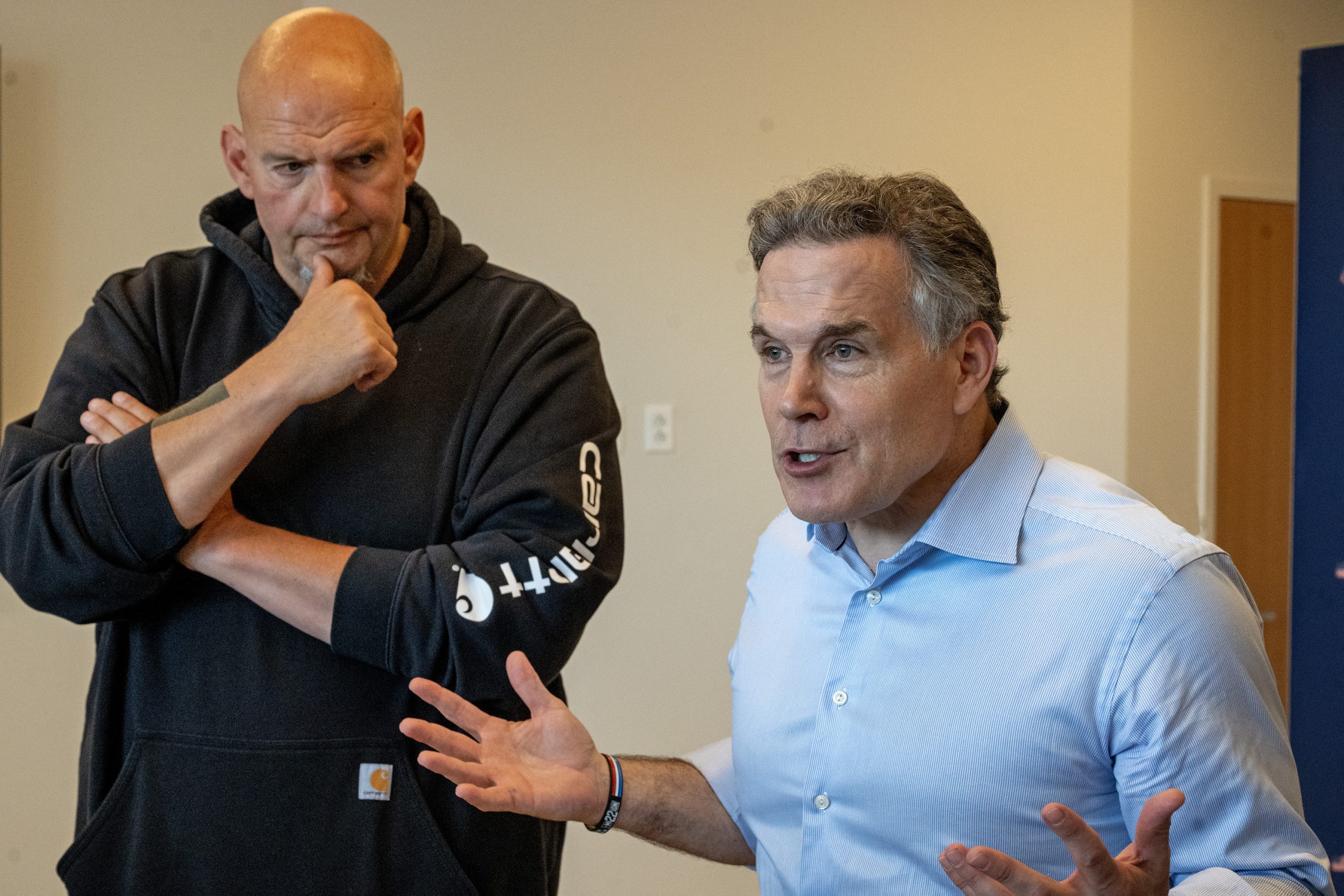
Pennsylvania’s U.S. Senators John Fetterman (left) and Dave McCormick appear together Monday, June 29, 2026 to promote the savings accounts for kids that were a signature piece of President Trump’s Big Beautiful Bill.Tom Gralish / Staff Photographer
He said he believed the law would “make it as easy as possible” for people to obtain valid forms of ID if they do not have them. And as someone who lost his first race against Oz by 950 votes and won his second race against Democratic U.S. Sen. Bob Casey by about 15,000 votes, he said even rare cases of noncitizen voting could make a difference in close elections. Eligibility for mail ballots also needs “to tighten up dramatically,” he said, though he did not fully explain his thoughts on the issue or if he believes there has been fraud associated with them.
As Democrats block the bill in the Senate, he called on them to “defend the indefensible” and said “there should be a political cost in objecting to something that most Americans agree with.”
One of the Democrats opposing the bill is McCormick’s close friend and ally — U.S. Sen. John Fetterman.
Though he has frequently broken with his party — and now supports voter ID after previously calling it “insidious and unnecessary” — Fetterman has said the bill’s changes to mail voting are “a nonstarter” for him.” In a CNN interview last week, he also said that the 2020 election in Pennsylvania was fair, that there is “no evidence” of 250,000 noncitizens registered, and that Trump was unnecessarily fixated on the 2020 election.
“In Pennsylvania, out of 67 counties, the vast, vast, vast majority of them are deep red counties, and they’ve never encountered any kinds of fraud,” Fetterman said. “I don’t know why the president is dragging up all of this stuff. You’re the president. Do something positive. And you are talking about 2020. That’s been settled over six years ago. It’s deeply unhelpful.”
Other Pennsylvania Democrats have lambasted Trump for dredging up the old claims, and they have blamed GOP “enablers” for supporting him and pushing the bill.
“The only thing it would ‘save’ is Trump and his Republican enablers from voters holding them accountable,” U.S. Rep. Dwight Evans (D., Philadelphia) said.
U.S. Rep. Chris Deluzio, an Allegheny County Democrat who worked on election security issues before running for Congress in 2022, said the bill “will do nothing to improve election security” and would instead harm married women — whose birth certificates might not have their current name — and people without passports. He said those who lie about the 2020 election are “cowards” who should not have a place in elected office.
“The fact that some Republican politicians are so scared of Donald Trump that they lie for him just to keep their jobs is spineless and pathetic,” Deluzio said.
McCormick, for his part, said during the telephone town hall that the bill is unlikely to pass as Democrats continue to block it from getting the required 60 votes in the Senate, and as Republicans decline to eliminate the filibuster rule to let it move forward with just 50 votes.
“Where does that leave us? That leaves us in a position where I think we should be constantly talking about this, and I try to do this every single week, multiple times, [saying] why the SAVE America Act is important,” said McCormick, whose staff said he was unavailable for an interview.
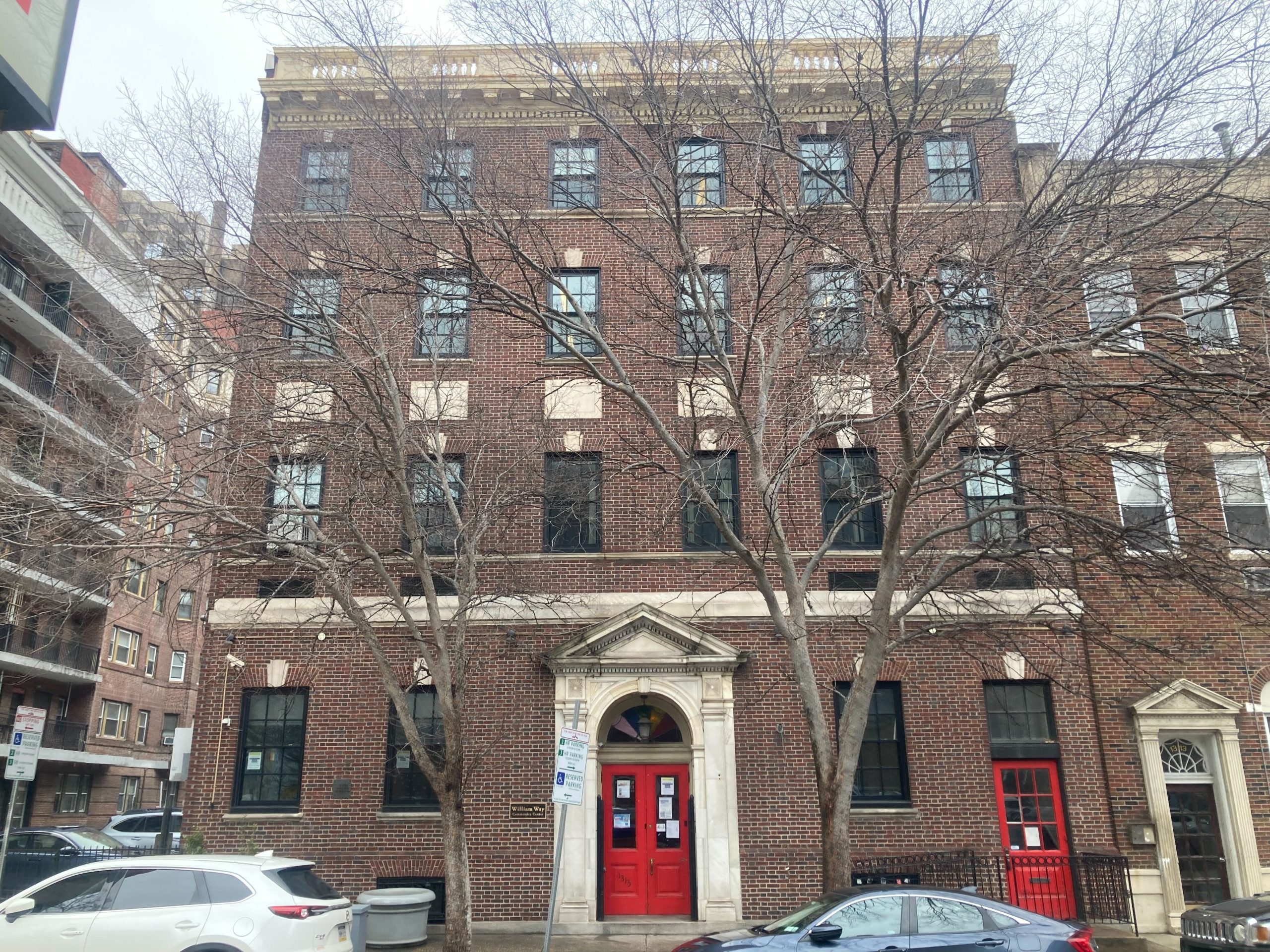
The first time people openly referred to the pocket of Center City between Jefferson University and Broad Street as the “Gayborhood” was 1995. Within a year, the William Way LGBT CommunityCenter made it official by purchasing a stately, Georgian-style clubhouse at Juniper and Spruce. The building has been a refuge for Philadelphia’s LGBTQ+ community ever since.
Sadly, that groundbreaking haven is now closed. It was shuttered in December to address maintenance issues, including an outbreak of black mold. At the time, the board said it was gearing up for a major renovation and would temporarily relocate its core services to St. Luke’s church on 13th Street.
Just three months later,William Way’s boardabruptly changed course and revealed the center would be demolished to build subsidized housing aimed at LGBTQ+ seniors.
The announcement came not from William Way’s board, but from Mark Segal, a longtime activist who founded the Philadelphia Gay News and oversees a nonprofit that has built affordable housing, the dmhFUND. The timing was noteworthy: The plan was made public a few days after a Common Pleas Court judge overturned the neighborhood’s historic district protections.
Segal’s announcement stunned William Way regulars, including many former board members. Sure, COVID-19 had scrambled the organization’s finances, as it did for many Philadelphia nonprofits. Revenue and donor gifts fell precipitously. The center laid off nearly a third of its staff in 2024, and its longtime director, Chris Bartlett, retired soon after.
The building was known to be in poor condition. But total demolition? Nothing suggested that the building was unsalvageable, including a major facilities assessment by Metcalfe Architecture& Design in late 2024.
While there is no doubt that the building requires extensive renovations, demolition is the wrong solution. It would rob all of Philadelphia — not just its LGBTQ+ community — of a major cultural touchstone.
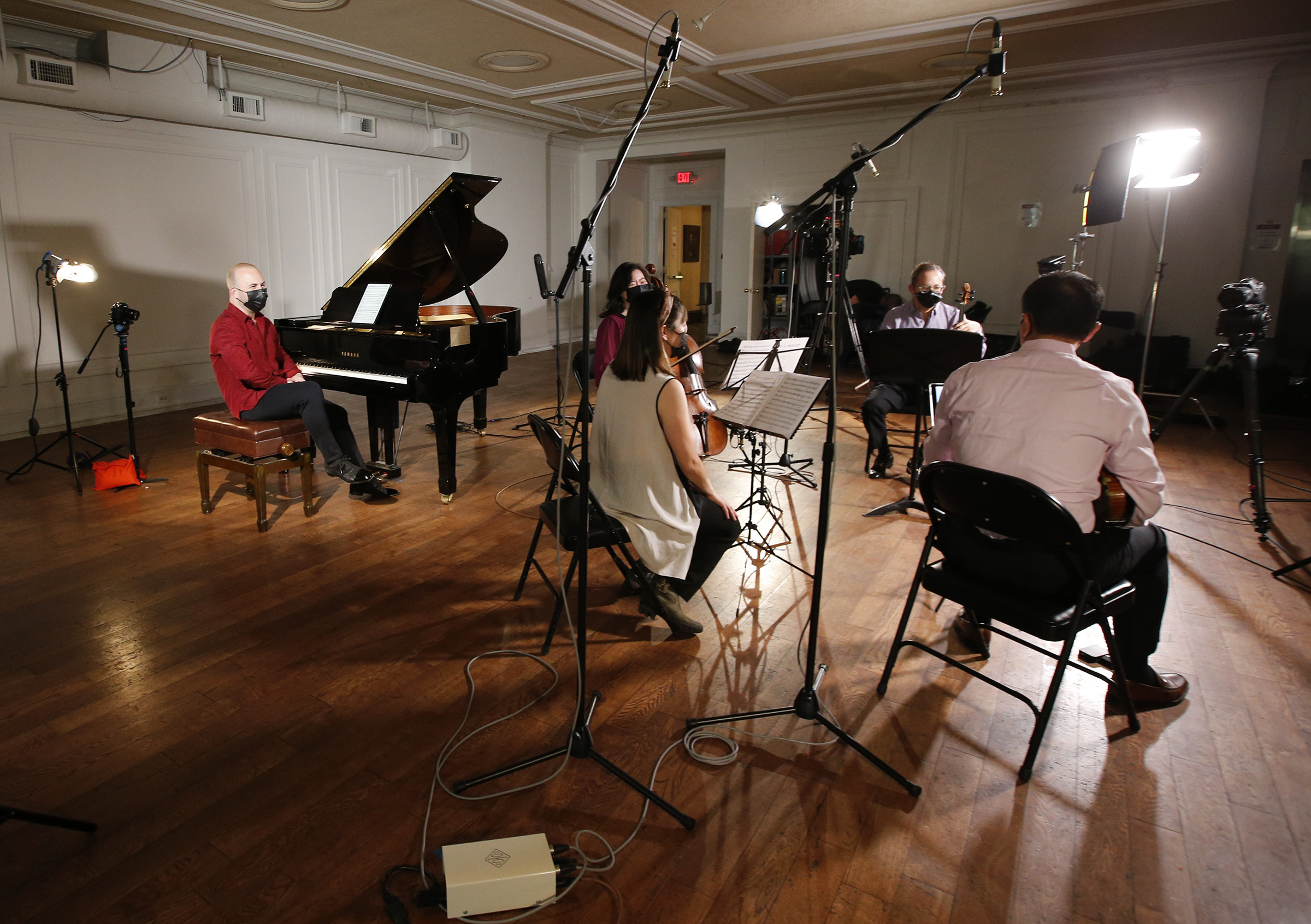
Philadelphia Orchestra music director Yannick Nézet-Séguin filmed a series called “Our City, Your Orchestra” in the William Way center ballroom in 2021, along with violist Pierre Tourville and other musicians.YONG KIM / Staff Photographer
A civil rights landmark
Although the William Way center has called 1315 Spruce St. home for only three decades, its presence has transformed the 19th-century building — originally a private club for engineers — into a civil rights landmark.
This is where Philadelphia’s LGBTQ+ community fought to address the AIDS crisis, advance marriage equality, and be accepted into the mainstream of American life. It’s where they attended cabarets in the elegant ballroom and art exhibits in the wood-trimmed parlor. The building’s visibility makes it the architectural equivalent of being out.
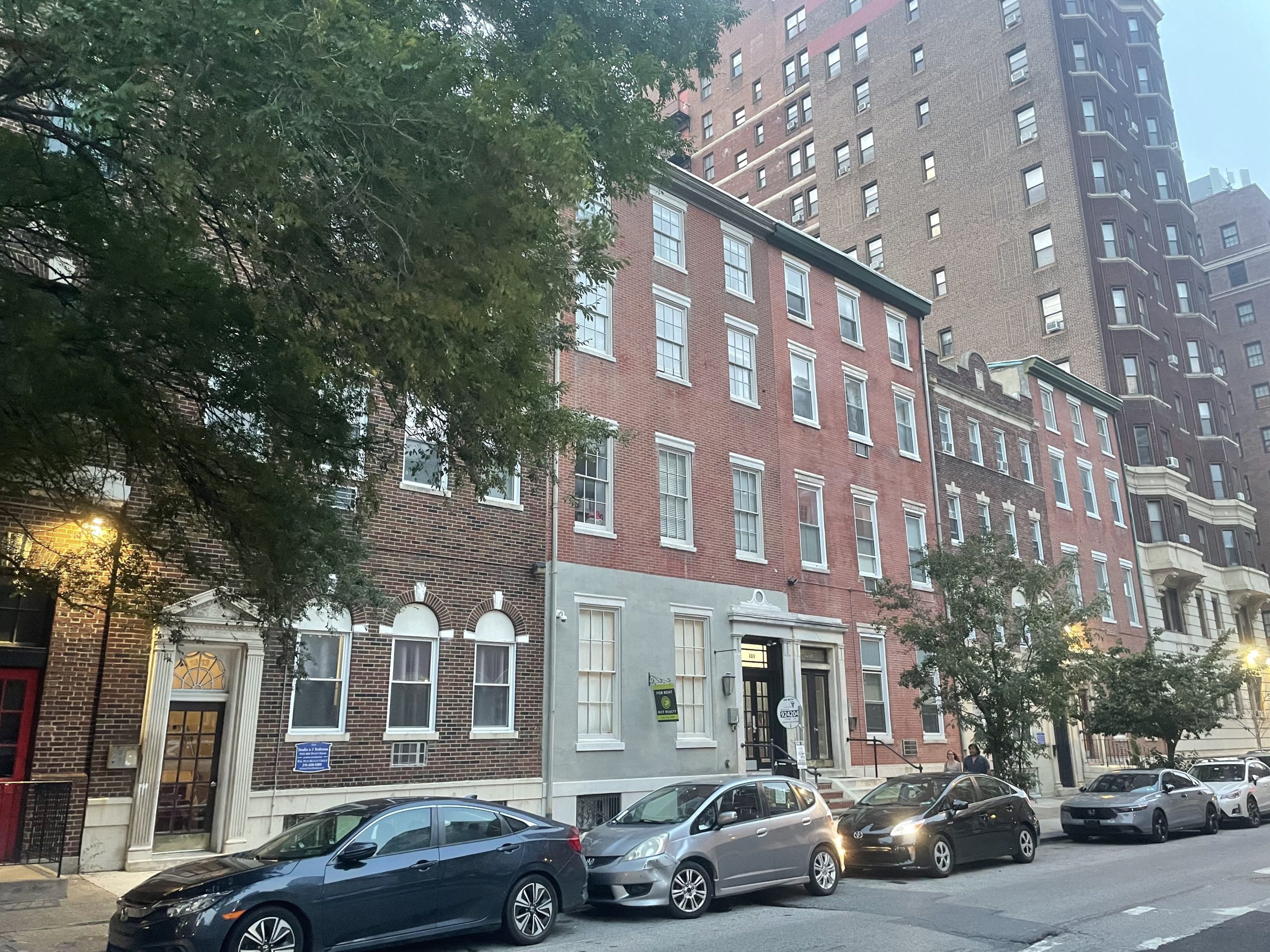
Beyond losing a place with profound cultural resonance, the demolition would break up the historic 1300 block of Spruce Street, a stretch that is still remarkably intact despite the presence of two unsightly parking lots at the Juniper Street corners.
Although the block’s large townhouses, which were built for lawyers and doctors in the 1840s, have been divided into apartments, the row retains most of its original architectural features and reads as a single ensemble. The William Way building, which was created in 1929 by fusing two townhouses behind a single facade, was designed to blend in with its neighbors.
No one would consider demolishing other community anchors, such as Christ Churchin Old City, Mother Bethel A.M.E. Churchin Center City, Rodeph Shalom synagoguein Spring Garden. So why is this one being written off so casually?
The 1300 block of Spruce Street, where the William Way Center is located, remains a largely intact architectural ensemble. The townhouses date from the 1840s and were originally private homes occupied by doctors and lawyers.Inga Saffron
I couldn’t get any of William Way’s board members or employees to answer that question. A communications consultant did provide written responses to several queries, but eventually directed me to Segal.
He told me that the financially strapped nonprofit had reached out to him because of his development experience, as well as his long association with the center. The second-floor ballroom is named in his honor.
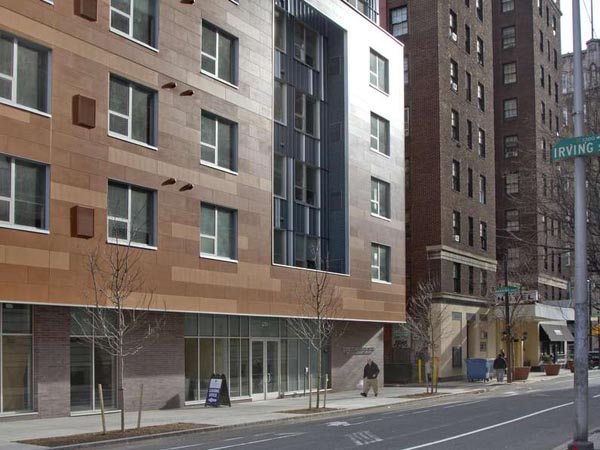
Segal was also the guiding force behind the John C. Anderson Apartments on 13th Street, the first subsidized housing in the United States marketed to low-income LGBTQ+ seniors. After the building opened to raves in 2014, Segal began searching for another Gayborhood site for a second affordable project. But land prices in the desirable Washington Square West neighborhood were just too high.
Completed in 2014, the John C. Anderson apartments at 13th and Spruce Streets were the first subsidized housing in the U.S. marketed to low-income LGBTQ+ seniors.
A new plan for William Way
William Way’s troubles provided a solution.
Segal told the board he could replace its 180-year-old clubhouse with a mid-rise building that would include both subsidized apartments and a new home for William Way. Theboard chairs, Dave Huting and Laura Ryan, readily accepted the deal and signed a letter of intent with the dmhFUND earlier this year. In exchange for providing the land, William Way would be given a condo space large enough to accommodate its programs for a dollar.
Completing that project won’t be easy, however. To raise money for the apartments, Segal and the dmhFUND will have to cobble together a mix of federal, state, city, and private grants. Most affordable housing projects rely heavily on Low Income Housing Tax Credits from Washington, and there is stiff competition for those funds. Any new construction on the site would also require Philadelphia Historical Commission approval, eventhough the historic district is currently in limbo.
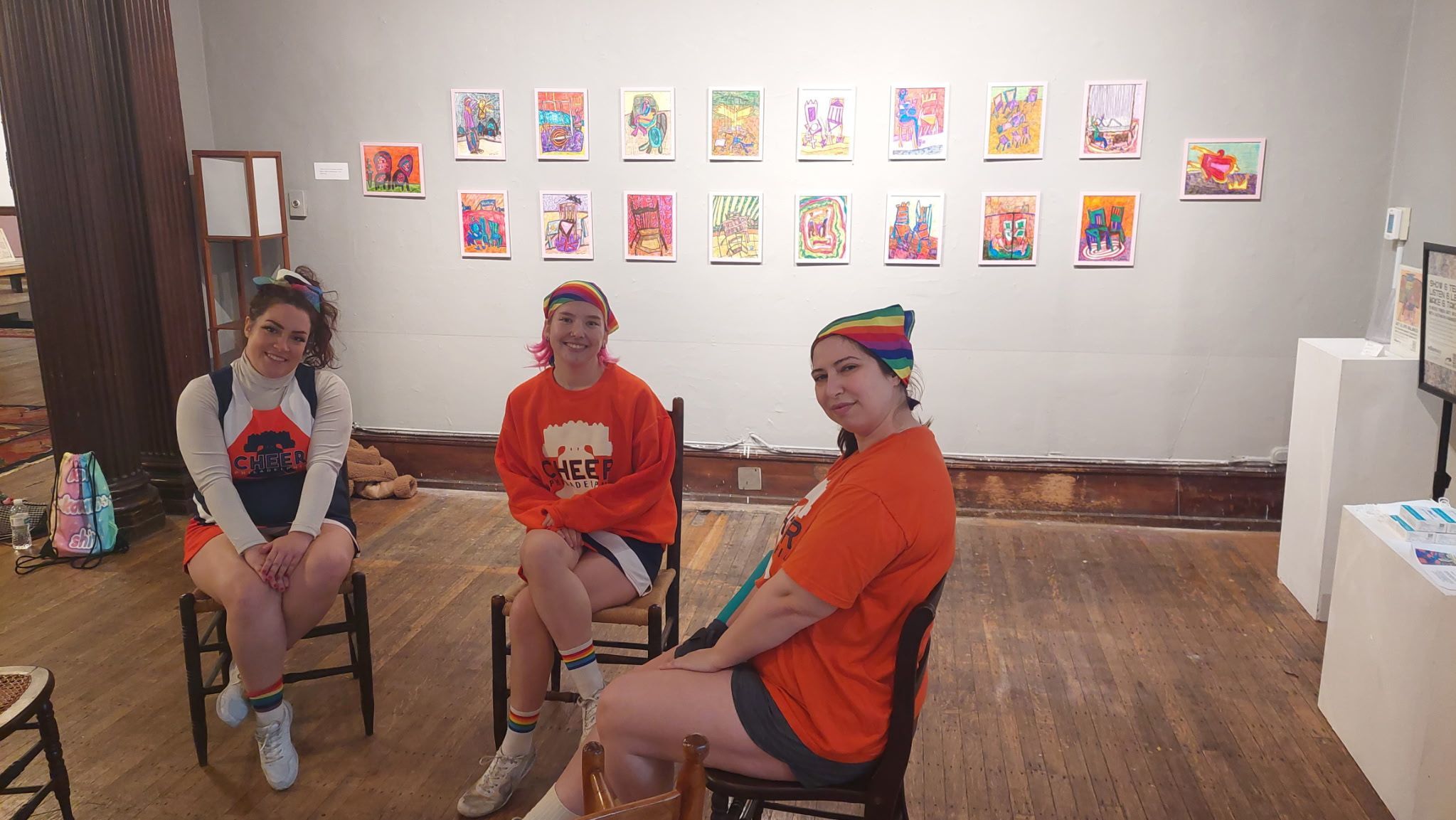
Artist Kathryn Pennepacker staged one of the last art exhibits in the William Way center’s wood-trimmed reception area. Titled “You are welcome here. I saved a chair for you,” it encouraged visitors to sit, talk and view her artwork.Courtesy of Kathryn Pennepacker
Because of those hurdles, Segal told me, it could take five to seven years to complete the apartments. During that time, William Waywould be without a permanent home. And once it moves back to Spruce Street, it’s unlikely the new space will have the same level of visibility as the existing building.
Segal says he is undaunted by the challenge. “People told me John C. Anderson was impossible,” he said. “People told me all the things I’ve fought for were impossible.”
Despite the Metcalfe report’s conclusions and a more upbeat assessment from J&M Preservation Studio, Segal maintains that the building is too far gone to be saved at a reasonable price. In his view, William Way must now choose between saving itself or saving the building.
Alternatives to demo?
It’s hard to believe the situation is that binary. Several people who have been involved in the center’s programs told me that the decision to go with Segal’s plan was made by a small circle of board members, without consulting the larger William Way community and its longtime donors.
Demolition “wasn’t even mentioned” as an option at the organization’s 50th anniversary gala celebrations in February, held just a week before the arrangement with Segal became public, noted Paul Steinke, executive director of the Preservation Alliance for Greater Philadelphia and a former William Way board member.
In a guest essay published last month in the Philadelphia Gay News, Steinke and a group of activists urged the board to hold a community meeting where the issues could be aired and debated. Segal has responded by forming an advisory board composed of a handpicked group of William Way staff, activists, elected officials, and neighborhood residents.
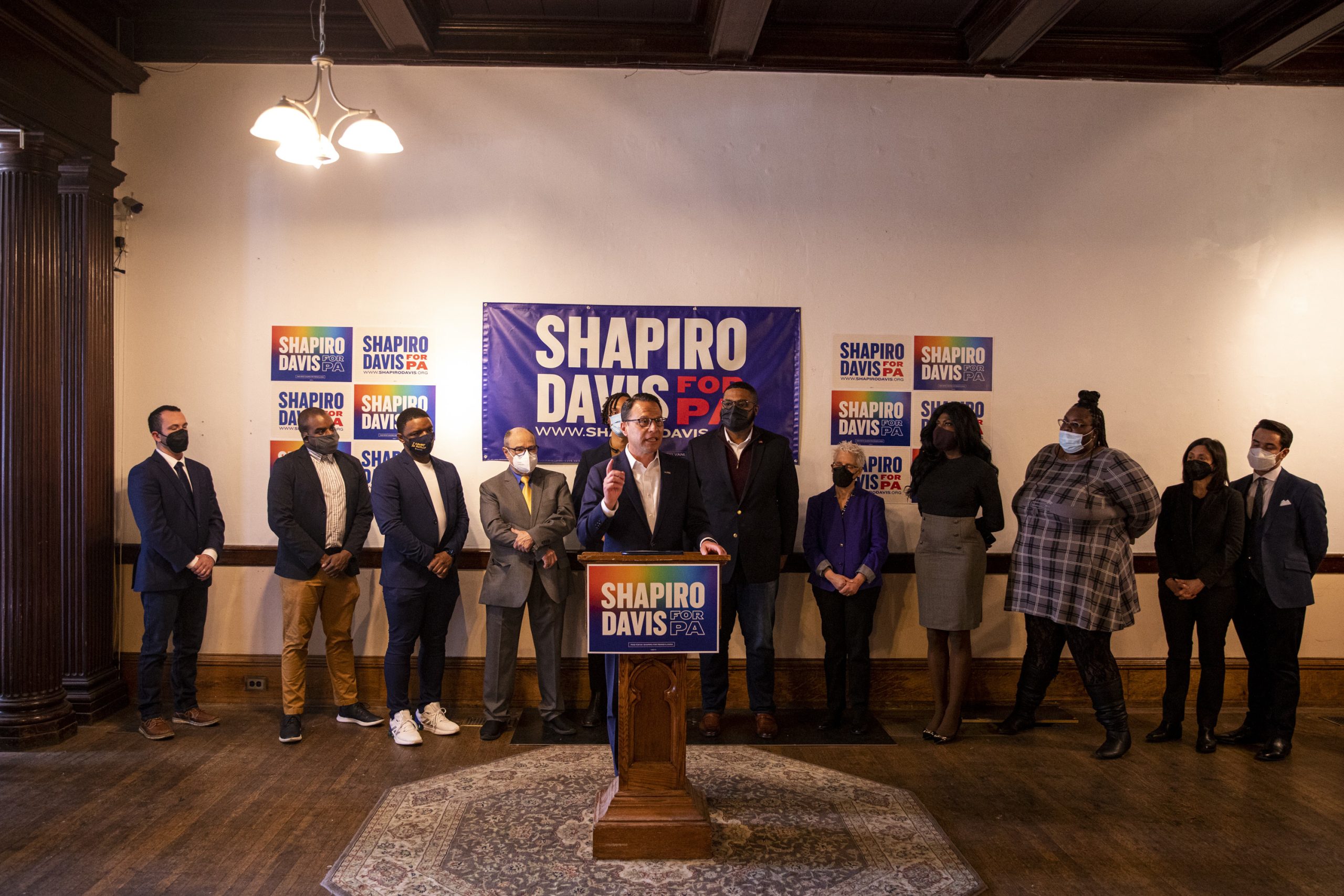
In 2022, Gov. Josh Shapiro spoke in the parlor of the William Way center, where he received endorsements from a variety of LGBQT+ leaders. TYGER WILLIAMS / Staff Photographer
Before COVID interfered, the board had been working on a design to reconfigure the building to address longstanding circulation issues. The plan called for slicing off the back of the structure and inserting a small tower with space for offices or apartments. The arrangement would have preserved the facade and the two most important ceremonial rooms, the ballroom and the large lobby area.
Why not use that idea to create affordable housing?
Segal argues that it would be difficult to insert two separate entrances — one for the William Way center, the other for the apartments. But there are plenty of narrow rowhouses in Philadelphia that have separate entrances serving apartments. I know it’s heresy in progressive circles to say this, but how about partnering with a market-rate developer who could finish the overbuild in less than five years?
An even faster option? Renovate the existing building. It can be done in stages so the center could move back sooner.
The William Way LGBT Community Center already has two entrances, which could be repurposed to serve an apartment tower inserted behind the front rooms.Jake Blumgart / Staff
Building affordable housing in Center City, close to transit, is a noble goal, and Segal deserves praise for making it a priority. But there is something seriously wrong when we demolish a building rich in Philadelphia history, while leaving the surface parking lots that flank it in place.
Since COVID, Philadelphia has lost a series of legacy cultural institutions that shaped the city’s identity. The Painted Bride. The Atwater Kent history museum. And, most painful of all, the University of the Arts.
William Way worked too hard for visibility to now be erased.
Clean? Reactors generate more than 100 radioactive chemicals, similar to atomic bomb explosions. This waste is stored at plants for hundreds of years, or escapes into air and water. The cancer death rate in Salem County, N.J., was slightly below the state until the mid-1980s (after three reactors opened), but is now 33% higher.
Marco Rubio is organizing an “antifa summit” to target “left-wing extremists,” which he claims pose a violent threat. Can he cite an example? There is no left-wing equivalent to the Ku Klux Klan, Proud Boys, or Oath Keepers. Right-wing individuals and groups have committed many acts of violence, including mass shootings at churches and synagogues. They held marches displaying racism and antisemitism, and played a prominent role in the violent (and televised) attack on the U.S. Capitol. The administration seeks to quell “violent secular political groups whose ideology is anti-American, radically pro-transgender, and anarchist.” Although no such groups exist, I will address those labels. For anti-American, Rubio should look at the White House. Donald Trump has expressed the desire to “terminate” any portion of the Constitution that stands in the way of his own agenda. When asked on Meet the Press if he needed to uphold the Constitution, he said, “I don’t know,” even though he swore an oath to do so. There is nothing more un-American than violating the Constitution, and Trump has done just that countless times. As for “pro-transgender,” I have read the Constitution, and there is not a word in it prohibiting people from being transgender, or requiring Americans to treat them with animosity. Nor is anarchy a goal of the left wing. On the contrary, the millions of people participating in No Kings rallies are doing so to remind Washington that the supreme law is the Constitution, and it applies to all, including elected officials.
Jean A. Kozel,West Norriton
Join the conversation: Send letters to letters@inquirer.com. Limit length to 150 words and include home address and day and evening phone number. Letters run in The Inquirer six days a week on the editorial pages and online.
DEAR ABBY: My unpleasant older sister lives by the creed, “It’s my way or the highway.” As a result, she has no close friends, no husband or partner, no social circle. She was “strongly encouraged” to take early retirement from teaching because she couldn’t get along with her co-workers.
After retirement, she joined a few clubs but soon quit because they “didn’t do things right,” aka her way. Even though she treats me terribly, I have tried for years to be the better person and invite her to my family gatherings so she doesn’t have to spend holidays alone. Unfortunately, she is also the world’s worst houseguest. Within minutes of arriving, she announces a list of things she just can’t stand (and are therefore prohibited during her stay). These include certain TV shows, music, foods, ingredients, topics of conversation, any family story that includes her, etc. She stays until everyone has gone and then berates me for everything that I did wrong during her visit.
If I don’t invite her, I feel guilty that she’s alone and has no other options. If I do invite her, I’m so stressed that I don’t get to enjoy having time with my children and grandchildren, which is very precious to me. What do you recommend I do?
— TORN SISTER IN WASHINGTON
DEAR SISTER: I think you have suffered enough. If you decide to invite your older sister to visit again, first establish some ground rules. The first should be that when she’s under your roof, you, not she, will decide on what entertainment is appropriate and what foods you will serve. And how they’re prepared. No topic of discussion will be off-limits. If there is something she can’t eat, she can refuse it. If something being talked about is not to her liking, she’s free to leave the room.
The second ground rule should be that you are not obligated to entertain her 24/7, particularly if you want to spend time with the grandchildren.
Of course, Sissy is free to reject your kind invitation, but if she accepts your conditions, the holiday will be a far happier one for you.
** ** **
DEAR ABBY: My husband passed away last year. I live by myself in a two-story house with three bedrooms and three bathrooms. My kids want me to sell it. I don’t care for the stairs, but that’s the only thing I don’t like about my house. I’ve lived in this house for more than 30 years, and I don’t want to sell. I’ve always done what everybody else, especially my husband, has told me to do. For once in my life, I want to do what I want to do.
Can you give me some advice?
— FINALLY FREE
DEAR FREE: My advice is to take your own advice. You seem to be happy where you are, so don’t allow your kids to pressure you into selling before you’re ready. I will add, though, that it would be wise to run your kids’ worries by your physician. If there are health concerns that make it unsafe for you to live alone in a big house with stairs, it’s best to listen to your doctor.