It’s a story about America’s founding that doesn’t begin in a Philadelphia state house — but on a rancid English slave ship sailing for Pennsylvania shores. It’s a story about the bustling slave auctions that once occupied the cobblestones outside the Old London Coffee House, while patriots plotted insurrection inside the Old City shop. A story about countless Black Philadelphians who sacrificed their own lives to a yellow fever epidemic — nursing dying victims and hauling the dead — to prove their worth to white Philadelphia residents.
Becoming American: Philadelphia’s Story, a new documentary now streaming on PBS.org, tells the story of Philadelphia and the creation of America through the lens and experiences of Black Philadelphians.
“At its core, this film is about people,” said executive producer Oliver St. Clair Franklin. “Those whose stories have too often gone untold — and the city that brought them together.”
While telling the story of America’s founding in its 250th year, the film stays firmly rooted in colonial Philadelphia neighborhoods, and the lives of lesser-known activists and artisans who shaped the republic — and the age.
People like Anthony Benezet, a French-born abolitionist who formed the African Free School out of his Chestnut Street home in 1770. Cyrus Bustill, a Revolutionary-era brewer and baker, who helped found the Philadelphia Free African Society. And the soaring lives of Richard Allen and Absalom Jones, pioneering Philadelphia abolitionists and rights leaders, both born into slavery.
“I wanted to tell the story that would connect African Americans to the founding era,” said Franklin, 80, scholar and former chief arts and cultural official for the city of Philadelphia. “In the process of doing this film, I realized that it will connect a lot of people to the founding because it’s a story of resistance and resilience.”
Franklin, who grew up in Baltimore, attended Lincoln University before earning a bachelor’s of philosophy in economics from Balliol College at University of Oxford in 1970. For years, he served as Philly’s chief British delegate.
Produced jointly with Bear House Media, a UK-based television production company, the film explores the nation’s origins through the racially diverse melting pot of colonial Philadelphia — its first makeshift capital and meeting points of cultures, ideas, and identities. And home to a vibrant free Black community fighting on the front lines for America’s freedom — and their own.
“I couldn’t have done this film 50 years ago,” said Franklin, crediting recent decades of research into the experiences of Revolutionary-Era Black Americans. “It makes it possible to tell a really coherent story — a human story — that touches everybody.”
In his film, bursting with Philly voices like historians Kelli Racine Barnes, a Mellon humanities postdoctoral fellow, and Emma Lapsansky-Werner, a visiting professor of history at Haverford College, those human stories are often about ordinary Philadelphians. Free, enslaved, Native, and immigrant people all doing extraordinary things for freedom.
“We focus on the lesser-known stories of individuals, whose dreams and challenges we explore at the ground level,” he said.
Do you have good dead bolts on all your doors? Strong latches on your windows? Are you diligent about keeping doors and windows locked? Have a barky dog?
If you can answer “yes” to the first three questions, you’re way ahead when it comes to home security (and get extra credit for the dog). Despite what thriller movies might suggest, most burglars enter homes by simply opening unlocked doors or windows — or pushing and kicking locked ones until they open.
Very few pick locks or circumvent alarm systems. Intruders prefer empty homes, visual obscurity, silence, easy entry, and quick exits. So your primary objective when planning home security is to beef up your locks and latches and maintain good security habits.
You can also DIY your own system by using home security components controlled by a smartphone app or similar interface. Dozens of companies now sell security system components that can easily connect to smart home hubs.
All this competition and choice means lower prices. You don’t have to pay a home-security service $750 to $3,000 for a professionally installed system plus $1,500 or more each year for monitoring. Instead, for $400 or less, you can assemble a basic DIY system and then pay as little as $200 per year to have it monitored — or nothing at all if you monitor it yourself.
Keep in mind that many people get annoyed by the alerts that self-monitoring requires and end up turning them off or not replacing batteries if they run out. If this will be you, don’t waste your money on the tech.
Here are somesimple steps to secure your home.
1. Secure the perimeter. Make your doors and windows as difficult to penetrate as possible. Although intruders prefer unlocked doors and windows, many can quickly and almost silently pry open locked ones. Some break a pane of glass so they can reach in and unlock the window or door.
Double-hung windows, for example, can be secured by screwing together the two frames.
Solid-wood doors are much sturdier than hollow ones. Many homeowners in high-crime neighborhoods install metal bar doors.
2. Get a security audit. Most police departments provide free advice and will send someone to evaluate your home for weaknesses.
3. Lose lousy locks. Key-in-the knob locks are inadequate. Install good deadbolt locks on all your exterior doors. The locks on sliding glass doors are notoriously flimsy — many doors can be lifted right off their tracks. Numerous how-to videos online can show you how to make yours more secure, or you can pay a locksmith to install reinforcements.
4. Keep valuables out of sight. Place articles of value out of the view of your front door or front windows. Stash cash and expensive jewelry in unlikely places — for example, in a large envelope or among many paper files. Select containers no one will accidentally discard.
5. Rent a safe-deposit box. A box may be inconvenient, but it provides a level of security against theft and fire that cannot be duplicated at home for less than several thousand dollars.
6. Keep your landscaping in check. Doors and windows hidden by garages, bushes, fences, and trees are attractive targets for intruders who prefer to invade unseen.
7. Light it up. Many burglars will flee if they activate an outdoor light connected to a motion detector.
8. Keep track of your keys. An AirTag key chain is a good idea if you’re forgetful.
In addition to improving your home’s physical security:
Evaluate your insurance. Consider adding replacement-cost coverage to your homeowners insurance policy for your personal property. If burglars clean out your home, this coverage could save you thousands of dollars. If you ownexpensive jewelry and othersimilar items, consider taking out additional policies.
Get to know your neighbors. Neighborhood watch groups are one of the most effective ways to protect all the homes in your neighborhood. At the very least, get to know your neighbors and share information on your not-at-home schedules and vacation plans, so everyone can look out for suspicious activities.
Keep up appearances. Because most burglars strike when no one is home, make sure your house always appears occupied. Leaving on lights and a TV helps. If you go on vacation, work with neighbors or friends to prevent mail from piling up and to keep your yard maintained.
Still want a professionally installed system?
If you decide to go pro, you’ll want a company that ensures your system is effective, convenient, and unobtrusive; minimizes false alarms; and controls costs.
Have several companies come to your home to propose systems and quote prices. When Checkbook’s undercover shoppers collected proposals from companies for a specific alarm system and three years of monitoring, they were quoted prices ranging from $2,200 to $4,200.
Read the contract before you sign. Some companies make it very difficult for customers to switch monitoring services by refusing to provide programming codes or to reset systems to their default modes. Choose a company willing to contractually agree to provide you with programming codes.
Discuss payment terms. The more you can pay after the job is complete, the better.
Delaware Valley Consumers’ Checkbook magazine and Checkbook.org is a nonprofit organization with a mission to help consumers get the best service and lowest prices. It is supported by consumers and takes no money from the service providers it evaluates. Until Sept. 5, readers can access Checkbook’s home-security ratings and advice free at Checkbook.org/Inquirer/home-security.
After the sudden departure of Jenkintown’s longtime superintendent in April, the school district’s new CEO started work this month, and she already has plans.
“I’m really excited once the year starts to really dive in and go into classrooms,” Brea D’Angelo said last week, “and get the narrative out to the community of the incredible things that are happening. … I’m really looking forward to being the communicator of those types of things.”
D’Angelo used to be a professional communicator: She went to Rider University for TV and radio and then took a reporting job covering the Sixers at WBCB radio in Levittown.
“I had the opportunity to go into the locker room and interview players,” D’Angelo said. “What I started realizing was that I wasn’t making a difference.”
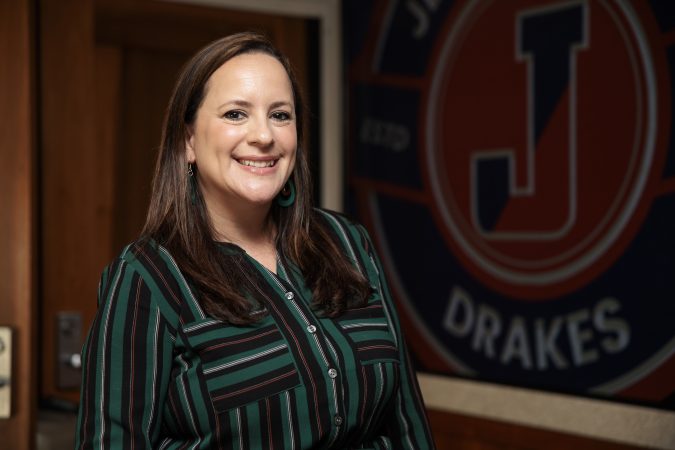
New superintendent Brea D’Angelo poses for a portrait at Jenkintown High School on Wednesday, July 22, 2026, in Jenkintown. D’Angelo comes to the Jenkintown School District from the Hatboro-Horsham School District.Monica Herndon / Staff Photographer
From Sixers to secondary education
She switched from communications to education, starting as a special education assistant in the Lower Moreland Township School District and spending seven years as a secondary school teacher there before working her way up as an administrator in the Hatboro-Horsham School District, where she spent more than 12 years and still lives with her husband and teenage daughter.
D’Angelo chose to teach English — a subject she came to love as a reluctant reader who learned the joy of books from a teacher when she was about 15.
“[She] really took an interest and was like, ‘You just haven’t found the right thing to read yet,’” D’Angelo said, and helped her find early favorites, such as Of Mice and Men. “You want teachers to be that for someone.”
Her plans as superintendent include a return to publishing, of sorts.
“I’m going to do a newsletter that comes out monthly, from me,” D’Angelo said. “I just want our story to get out there and to show what an incredible place we really are.”
Jenkintown finds comms pro to replace superintendent
Jenkintown’s last superintendent, Jill Takacs, had announced her retirement for Aug. 31 this year before leaving early, in April, for an administrator job in New Jersey.
Takacs’ departure came after an email from a retiring principal leaked to the public last fall that outlined concerns with Takacs’ management style, including a ”lack of transparency,” outgoing Jenkintown Elementary principal Christopher Jahnke wrote. Takacs was on leave shortly afterward.
But some locals said they had already had concerns about Takacs’ communication with parents in Montgomery County’s smallest school district — particularly amid the universally quick-shifting plans and procedures of the COVID-19 era.
Jenkintown’s school board appears to have taken that note, highlighting D’Angelo’s narrative chops as a reason for hiring her.
“The board decided to hire Dr. D’Angelo due to her combination of leadership, team building, and communication skills,” board president Carolyn Riley said. “She struck the right balance between expertise and a ‘friendly but firm’ quality.”
Riley also highlighted the new superintendent’s experience with special education and facilities management — critical for the steward of Jenkintown’s 103-year-old high school building.
But the district’s new chief storyteller also knows what communication barriers feel like: D’Angelo grew up hearing both English and Russian, but had to pick up much more Russian as a child to interact with her Ukrainian grandmother.
Those skills came in handy when Ukrainian refugees arrived in Hatboro-Horsham, and D’Angelo was enlisted to help families get settled.
“I fell into it because I was pretty much the only Russian speaker on the staff,” D’Angelo said. ”I can’t even imagine fleeing my home, going to a place not speaking the language. … That was really something that I pride myself in, being able to connect with these families and support them.”
Public relations is often a struggle for public schools, which must balance legally required disclosure with legally required secrecy, especially for personal details about individual students and staff — details like the circumstances surrounding Takacs’ departure.
D’Angelo, who earned her Ph.D. from Gwynedd Mercy University, hopes that being fully transparent from the beginning with information she is allowed to share will help residents trust her on topics she cannot say much about.
“I’m OK with being vulnerable in certain situations,” D’Angelo said. “When you build that strength with community members, with staff, with families — there’s a bit more understanding when I go silent on certain things, knowing it’s not because I don’t want to say it; it’s because I can’t.”
Perhaps sports will be one of those topics: A diehard Philadelphia football and basketball fan (“I bleed green for the Eagles,” she said), D’Angelo already attended a Color Day this year, but she refuses to say which team is better.
“I will be rooting for Blue and Red all the time, or I’ll be purple,” the new superintendent said. “Yeah, it’s gonna be one of those.”
This suburban content is produced with support from the Leslie Miller and Richard Worley Foundation and The Lenfest Institute for Journalism. Editorial content is created independently of the project donors. Gifts to support The Inquirer’s high-impact journalism can be made at inquirer.com/donate. A list of Lenfest Institute donors can be found at lenfestinstitute.org/supporters.
President Donald Trump wants to give ongoing talks with Iran “some space” as he considers whether to escalate attacks, the U.S. ambassador to the United Nations said Sunday.
Mike Waltz’s comments came as the U.S. military paused its bombing raids on Iran over the weekend after 13 consecutive days of heavy strikes and warnings by Trump of an even more aggressive bombing campaign.
On Friday, Trump emphasized ongoing talks between the United States and Iran in an Oval Office appearance. The day prior, he had told Axios that he is “considering a massive attack. Bigger than ever before. I am close to making a decision.”
When asked Sunday on NBC’s “Meet the Press” whether the U.S. has decided against ramping up attacks on Iran, Waltz said: “I wouldn’t go that far at all.” He said Trump is keeping “all options on the table.”
“What the president is doing right now, as we’ve seen all along, is giving some talks some space,” Waltz said, adding that discussions are ongoing “on every level,” both technical talks and between governments.
Waltz pushed back on reports that the decision to back away from escalation was driven in part by concerns within the Trump administration about depleted U.S. munitions.
“The U.S. military, and I’ve verified this every which way, has everything that it needs to conduct this campaign” effectively, he said.
Though the Pentagon has dismissed concerns about U.S. stockpiles, Pentagon officials have expressed far greater anxiety in private, according to current and former officials, arguing that the military desperately needs more money to replenish munitions, including to deter China and Russia.
Waltz said one diplomatic challenge in negotiations is that those on the Iranian side are “divided.” He said that “there’s internal fighting,” with some seeking guidance from the supreme leader and others who “want to move in a different direction.”
Still, the ambassador warned that Iran should “take the president very seriously. … The U.S. military is locked and loaded. In fact, more assets have gone into the region.”
Despite the pause in U.S. strikes, the conflict with Iran has widened amid new turmoil in the Red Sea. Yemen’s Iran-backed Houthi rebels asserted responsibility for strikes Saturday on oil facilities belonging to the Saudi state oil company, Aramco, in the Red Sea towns of Yanbu and Jazan.
The Houthi strikes could add to the pressure on global oil markets, which are already under severe strain amid disruptions caused by the closure of the Strait of Hormuz.
On Sunday, Iranian state-affiliated media reported that an oil tanker exploded after hitting a mine in the strait.
In a separate incident, Iran’s Foreign Ministry accused Ukraine of attacking a commercial Iranian vessel in the Caspian Sea on Saturday and killing a sailor.
In a Saturday statement on Telegram, President Volodymyr Zelensky said Ukraine has had “good results” with long-range strikes on Russian targets, including in the Caspian Sea. He said targets included a warship and vessels involved in the transportation of military cargo linked to Iran.
Iran’s Foreign Ministry on Sunday summoned Ukraine’s chargé d’affaires in Tehran over the attack. Iran’s assistant foreign minister, Manouchehr Moradi, said in the meeting that it amounted to an act of aggression, Iranian state media reported.
The Trump administration is reviewing its process for vetting U.S. immigration officers after reports that a man allegedly involved in the fatal shooting of an immigrant in Maine had a history of violent outbursts, a senior White House official said Sunday.
In an interview with The Washington Post earlier this month, Ashley Brouillette, said her former spouse, David Brouillette, told her in a phone call that he was the Immigration and Customs Enforcement officer who fatally shot Colombian immigrant Johan Sebastián Durán Guerrero, in Biddeford, Maine, on July 13.
Ashley Brouillette said her ex-husband had a pattern of violent outbursts, including throwing boiling hot water on her while she was holding their young daughter.
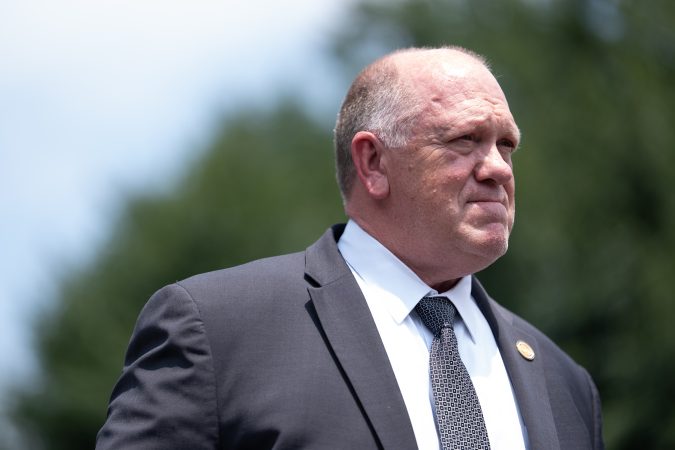
“If this person had that type of history, it would have been a vetting issue, and it should have been brought to the attention of those” who make such decisions, White House border czar Tom Homan told CNN’s “State of the Union.”
Homan did not confirm that David Brouillette shot Durán, but he said that the Department of Homeland Security is investigating whether the vetting process failed.
“When they hire somebody, they put them through a vetting process and look at all that stuff, so I know, based on that information, that that’s part of the ongoing investigation,” Homan said.
“Was that information not available? Did they not know? So there’s a separate administrative investigation on what happened here,” he added.
The Department of Homeland Security has not publicly released the name of the officer who shot Durán. The 25-year-old’s death led to mass protests in Maine.
Ashley Brouillette identified David Brouillette as the officer seen on video footage of the scene in Biddeford. The video does not show the shooting itself, but it does show two officers in the moments afterward.
She accused her ex-husband of pointing a gun at her and threatening her, among other instances of past violence. Ashley Brouillette also told The Post that he was diagnosed with several mental health disorders as a young adult. The Post could not independently verify those claims.
David Brouillette’s other ex-wife, Lucinda Brouillette, also has described a pattern of physical and mental abuse in court filings. In some filings, she said Brouillette had been medically discharged from the military in 2015 because of post-traumatic stress. The Post has not independently verified that claim.
In a statement to The Post, Lucinda Brouillette said that throughout her marriage, “and in the years that followed, I have feared for a long time that his anger, aggression, and escalating behavior would eventually result in severe, life threatening violence.”
The Post reported Friday that David Brouillette was found by a judge to have made statements in court last year that were not credible.
He said in an October court hearing related to child support payments that he was struggling to earn money because he had health issues and his driver’s license had been revoked, but a judge concluded in a Nov. 17 ruling that those claims were not credible.
The judge denied his request to terminate his child support payments to a former wife. Instead, the judge concluded that David Brouillette was “voluntarily underemployed.” David Brouillette did not respond to calls or emails for the story.
Ashley Brouillette said David Brouillette was hired by ICE in November, as the federal agency was rushing to put thousands of new officers on the streets. Former Department of Homeland Security officials have publicly questioned whether those new hires were properly vetted.
In the CNN interview, Homan said that ICE is also reviewing agent training and that agents are undergoing additional training.
“I know this specific case, as far as the vetting, is under review by internal affairs section, so we’ll see where it lies,” he said.
Durán, who had a work permit issued by the Trump administration, was shot shortly after leaving for work on July 13.
ICE has said that officers were in the area surveilling an address associated with an individual who has a final order of removal when they saw Durán leave and attempted to stop his vehicle. The agency has alleged that Durán tried to flee the officers and that an officer fired because he feared for public safety.
After the shooting, the office of Maine Attorney General Aaron Frey said the officer would be placed on leave. Sen. Angus King (I-Maine) said at a news conference that none of the officers involved in the fatal shooting were wearing body cameras.
A spokesperson for King said Homeland Security Secretary Markwayne Mullin told the senator that Durán was not the target of the ICE operation.
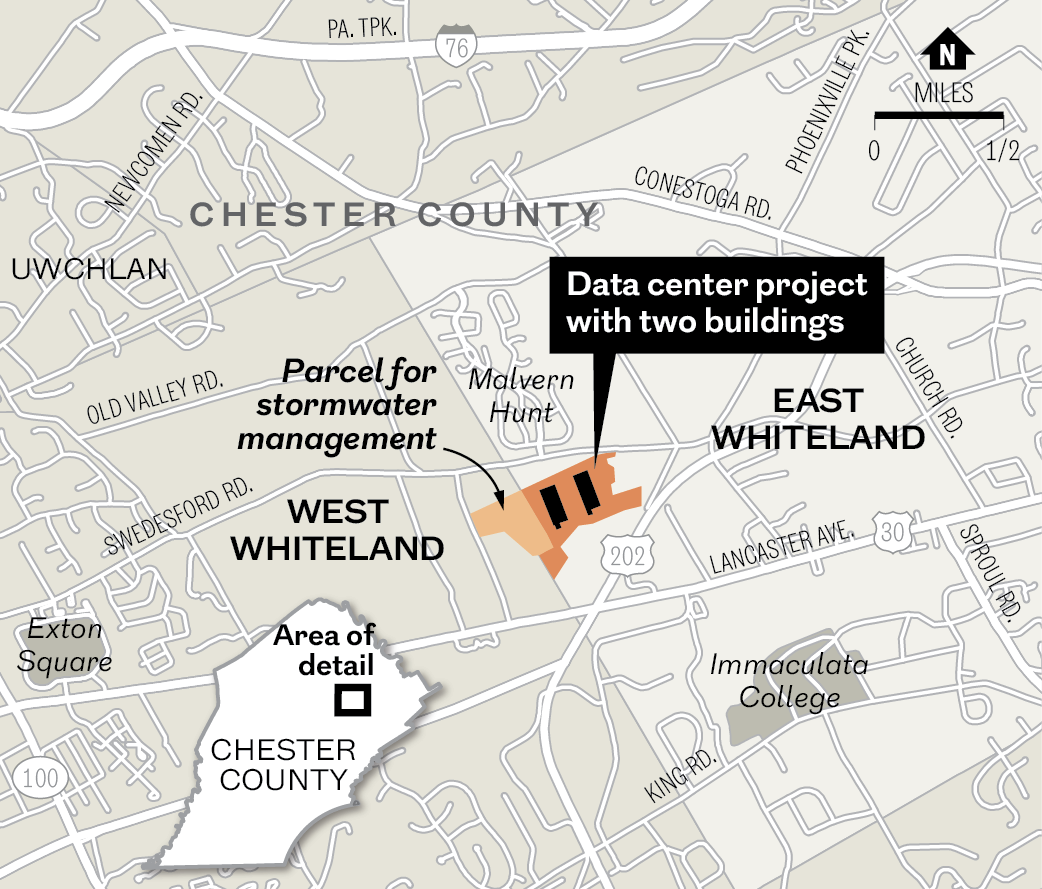
Kelly Donia was seated in her Malvern Hunt home when she spotted dust plumes rising from construction vehicles combing the site of a planned data center complex in East Whiteland Township.
She immediately drove to the site, across Swedesford Road from her development, to watch that day in June, anxious about the safety of building a 1.5 million-square-foot data center directly on top of a Superfund site in Chester County.
“No one seems to be concerned, but I mean, we live right here, we work right here, there are children — there’s a daycare,” Donia said. “I don’t understand. I don’t understand our officials, and I don’t understand the developer, and I don’t understand the general contractor.”
Donia is not alone in her fears. She and many of her neighbors, who had packed into East Whiteland meetings about the project for months, have continued to raise concerns about the safety of the building on the former 79-acre Cyprus Foote Mineral Co. property, which was contaminated over decades by a range of chemicals such as lithium, arsenic, and hexavalent chromium.
Not long after Donia saw those plumes, the township issued a stop-work order until it gathers more information on the environmental impact of construction.
While the developer says the site is safe, and the township has approved the plans, some residents believe that documents filed with the township and U.S. Environmental Protection Agency show that the site is still contaminated from its years as an industrial site, and they worry about what impact the construction will have on their community.
Here is what The Inquirer knows about the Foote Superfund site.
Location of the two-building data center project in East Whiteland, Chester County.John Duchneskie
Green Fig LLC first proposed a data center in 2018 and secured early zoning board approvals. The plans were greenlit by the township’s supervisors in 2024, drawing little pushback from the community.
Residents have been more engaged since the plan came back before the township earlier this year, first with ambitions to scale it up, then with a proposal to shrink it to appease outraged residents.
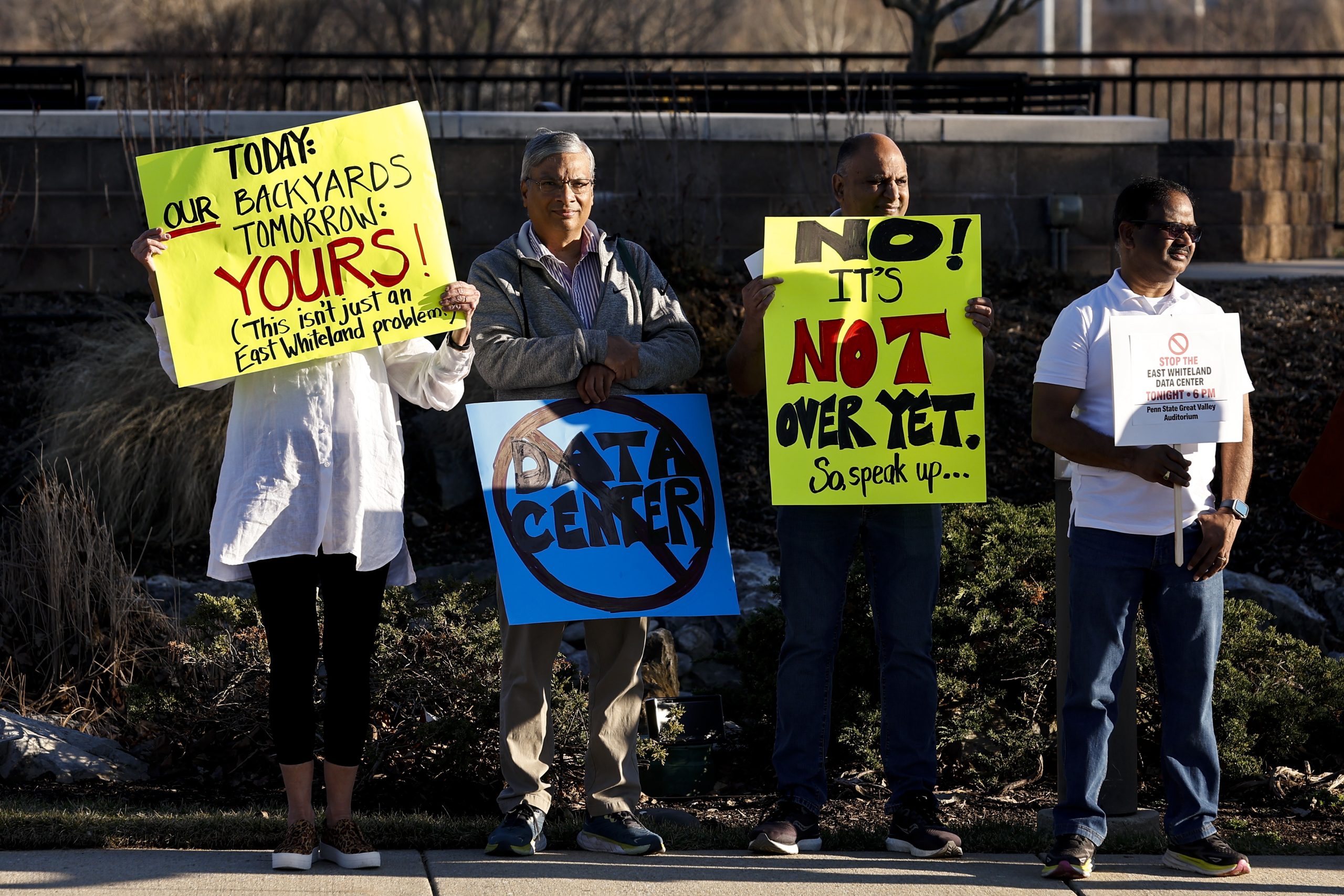
People protest the expanded data center before the East Whiteland Planning Commission meeting held at Penn State Great Valley on Monday, March 9, 2026 in Malvern.
What are residents concerned about?
Residents fear that construction work on the site will kick up pollution in the air and release contaminants into the drinking water. They worry that there has not been ongoing testing of the soil on the site, especially knowing that contamination exists below.
How did the site become polluted?
Pollution at the Foote Mineral Co. likely started as soon as 1941 when the company began crushing ores and minerals.
Foote closed in 1991 with two quarries, a pit where solvents were burned, a lined wastewater basin, and more than 50 buildings and processing areas. Three unlined lagoons were backfilled.
At the time, public and private wells within four miles of the site had supplied drinking water to approximately 42,300 people. Several private wells near the site were found to be contaminated and were closed. A public water-supply well one mile away was also shuttered.
Cleanup, led by the EPA, has included capping contaminated quarries, stabilizing waste areas, and maintaining a long-term monitoring program for an evolving groundwater plume. Pollutants included lithium, boron, and low-level radiation.
An open land site is shown in East and West Whiteland Townships in Chester County on Thursday, January 5, 2023, where Green Fig LLC has proposed its data center project.Jose F. Moreno / Staff Photographer
What is a Superfund site, and how did it become one?
A Superfund site is a contaminated location in the United States designated by the federal government as a severe health or environmental hazard. Foote was added to the federal Superfund list in 1992.
In a 2023 letter to East Whiteland Township officials, a contractor hired on behalf of the developers incorrectly said that the site had been removed from the U.S. Environmental Protection Agency’s National Priorities List, an inventory of the nation’s most serious hazardous waste sites.
As of Friday, Foote Mineral Co. remained on the list posted on the EPA’s website. The EPA says because of the ongoing pollution, there is no proposal to remove the Foote site from the National Priorities List, nor any timeline for remediation to be complete.
What does the EPA recommend?
It’s complicated.
A 2024 EPA report, the most recent environmental evaluation of the site, found concentrations of certain pollutants have decreased over time, but an excessive amount of volatile organic compounds, or VOCs, remained. VOCs are gases that contain a variety of chemicals that may adversely affect human health. VOCs tend to be much more concentrated when contained indoors.
The EPA recommended updated land-use restrictions and further data collection to ensure the site remains safe during future redevelopment.
On its website, the EPA wrote that the “hazardous substances, pollutants or contaminants remain at the site above levels that allow for unlimited use and unrestricted exposure.”
Days before the 2024 findings were released, an EPA engineer filed a report known as a “Superfund Checklist for Retracting the Sitewide Ready for Anticipated Use Measure (SWRAU)” that said the site “no longer meets” standards for human exposure.
The EPA said in an emailed statement that SWRAU forms are only for guidance.
SWRAU “designations are not required for redevelopment,” the statement said. “So long as all land and groundwater use restrictions continue to be met and redevelopment does not interfere with EPA’s cleanup or future investigations, sites can be reused and redeveloped.”
“Based on a careful review of construction plans by EPA subject matter experts, the agency does not anticipate the development to impact the remedy at the Foote Mineral Co. Superfund site,” Mike Bastasch, an EPA spokesperson, said in June. The EPA “remains engaged and will continue monitoring redevelopment progress to ensure the remedy remains intact,” he said.
What do experts say?
If a site is properly cleaned up, there are “potential ways that a data center could be a better use, environmentally, of the land,” said Noah Kittner, associate professor in the Department of Environmental Sciences and Engineering at the University of North Carolina Gillings School of Global Public Health.
But that is contingent onhow it uses water, what kind of systems are in place, what types of energy and electricity are being used, and whether diesel generators are being used in the construction, development, and operation of the site, he said.
The documentation from the EPA showing remaining contamination “certainly raises some red flags” about redeveloping the site, he added. And whether the project does more harm than good is “highly dependent on plans for construction.”
“You could have a poorly executed project, and it causes a lot more problems for the community,” Kittner said. “Or you could have a really well-designed remediation project that builds in sustainability principles and other factors that could really transform that area from what was once highly polluting to something that is environmentally positive.”
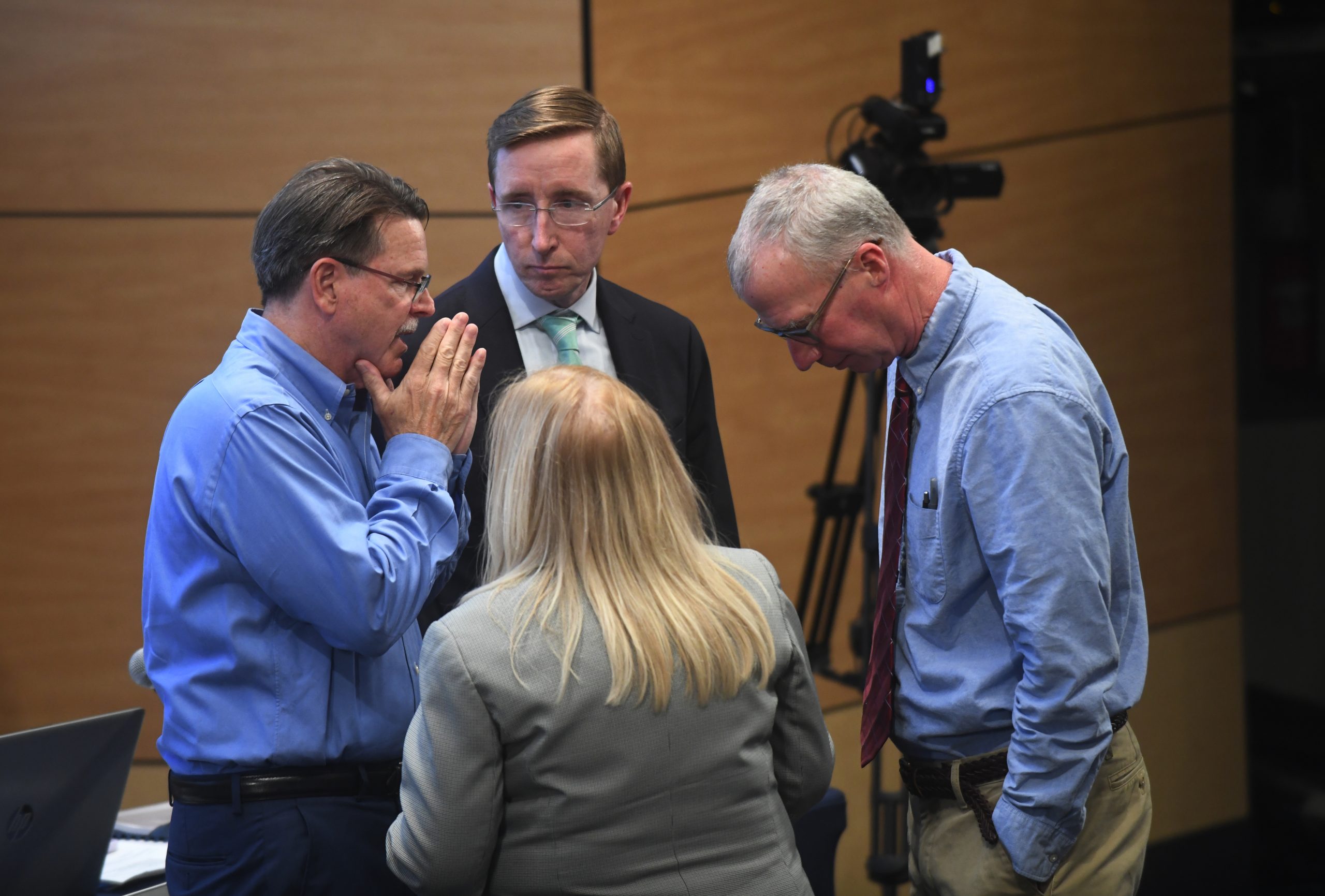
Scott Lambert, chair of the East Whiteland board of supervisors, left, confers with township officials about the data center proposal on April 14, 2026.Bob Williams / For The Inquirer
Who decides?
The EPA said in a statement to The Inquirer that it does not “recommend, propose, or approve specific Superfund redevelopment plans.” The agency reviews proposed uses and checks if there are “any potential conflicts with the selected remedy (including cleanup standards) or any issues that could reduce protection of human health and the environment,” the statement said.
The EPA’s goal is that most Superfund sites will be cleaned enough for commercial or industrial use. However, in some cases, the EPA can impose near permanent, severe restrictions on potential uses. Most Superfund sites undergo evaluations every five years to make those determinations until a site is removed from the National Priorities List.
Beyond that, it falls to the township to make final decisions on what the project will ultimately look like, and whether it could be built. Municipal leaders have said previously that, due to state law, they feel their hands are tied to allow for uses such as data centers.
What’s next?
The project remains in limbo: The developers have returned to the township seeking to amend their plans and alter the final design for the project. Supervisors tabled their decision at their last meeting on July 8, saying they needed more information about proposed changes.
Residents remain concerned about long-term construction at the site.
This suburban content is produced with support from the Leslie Miller and Richard Worley Foundation and The Lenfest Institute for Journalism. Editorial content is created independently of the project donors. Gifts to support The Inquirer’s high-impact journalism can be made at inquirer.com/donate. A list of Lenfest Institute donors can be found at lenfestinstitute.org/supporters.
LeBron James chose the Sixers the only way he could.
By letting everyone think there was no way he would.
It all makes a little more sense now, doesn’t it? The weeks of deliberations, the radio silence, the professions of ignorance from those close to James, the cryptic dispatches from the Man Behind the (Recording Studio) Curtain. For nearly a month, the world watched and waited and speculated amid a maddening self-muzzling interrupted only by the occasional communication via proxy. What we knew came almost entirely from a handful of podcast episodes where Rich Paul sounded more like a bystander than James’ agent and confidant.
Eyes were rolled. Deep breaths were sighed. Every lapsed news cycle was another shell in the stockpile of the critics and skeptics and purists who prefer brands of basketball to basketball brands. James’ most hostile audience has always been those who would rather live in a world where the Greatest of All Time is not first and foremost a business, man. But let’s give them their due. Even someone who is unbothered by the primacy of the 1099 in sports could have found their patience tested by James’ monthlong melodrama.
In hindsight, James’ actions seem perfectly reasonable. This wasn’t attention-seeking behavior. It was the private torment of a man who was about to choose, via his own free will, to move from Los Angeles to Philadelphia.
But it is deeper than that. Everybody involved needed it to go down this way. The significance of James’ signing with the Sixers is that he had every reason not to. He had other options, all of which had won championships within the last decade-and-a-half. They had superstars, some of the greatest to ever play the game: Steph Curry, Nikola Jokić, Giannis Antetokounmpo, James Harden.
They had stronger personal ties, more spotlight appeal. They had the tech scene, the outdoors, the party scene. James said he was looking for basketball bliss. Which means there is a lot of political capital in the fact that he chose the Sixers. The basketball is all they had to offer.
LeBron James has a well-documented friendship with Tyrese Maxey with both being part of Klutch Sports.Chris Szagola / AP
It’s perfectly valid to question whether James at 42 years old will create the on-court impact worthy of the hoopla surrounding his decision. There are plenty of scenarios where the sum of the parts exceeds the whole. That’s true even before you factor in age and injury. In James, Jaylen Brown, and Joel Embiid, the Sixers have three players who are accustomed to having the loudest voice in the room. In Tyrese Maxey and VJ Edgecombe, they have two young players who have been plagued by bouts of deference when sharing the court with more established veterans.
Yet, therein lies the significance of James’ deliberate evaluation of his options. The great general Charles de Gaulle once said that silence is the ultimate weapon of power. For weeks, everyone wondered what he would decide, and why. They thus imbued his ultimate decision and explanation with a tremendous amount of power. It meant something when James finally picked Maxey, and Edgecombe, and Brown, and, yes, Embiid. Everybody assumed James wouldn’t pick the Sixers because they were the Sixers. But he did pick them, which automatically makes them something nobody thought they were before.
Intentional or not, James’ decision-making process has empowered both his new organization and his new teammates before he has even arrived.
You probably saw the social media video Maxey released in the wake of James’ signing. It was just a few seconds of him yelling spastically. You have to think that there was a little bit of that going on inside Brown and Embiid as well. At various points over the last few years, both players have allowed their veils to slip from their insecurities. Brown, passed over for the Olympic team after winning NBA Finals MVP, second fiddle to Jayson Tatum, inefficient, overpaid, not a real superstar.
Embiid, injured, maybe finished, soft, selfish, supplanted by Maxey and Edgecombe as the heart and soul of a franchise. Who knows how those insecurities would have played in a power vacuum like that which could have existed without an unquestioned adult in the room. Insecurity is mostly thirst for validation. To be good enough for the best is a heck of a quench.
Part of me wonders whether LeBron’s real attraction to the Sixers is an opportunity to lead. Not that he hasn’t always led, in both spirit and example. But the Sixers offer him a unique opportunity.
More than any of the teams that pursued him this offseason, maybe even more than any team he has been on to this point, the Sixers were a team that genuinely needed exactly a player and a person like James is right now. It will be fascinating to see how the whole thing will look on the court, and what part James will play. Don’t be surprised if his biggest impact has already been made.
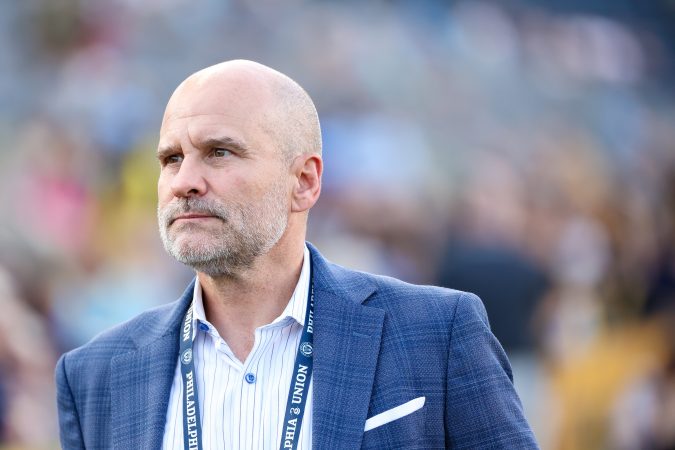
Union president Tim McDermott wants to clear a few things up.
McDermott, 51, who has hit multiple stops along the Philly professional sports highway as a former executive with both the Eagles and Sixers, is in his 11th year with the Union.
He’s been able to do a lot with what some might view as a little by resource standards when it comes to the first team — though he readily contends the money is there from ownership “should the right situation present itself.”
But in a town like Philadelphia, he’s well aware that success, when it comes to sports teams, is a year-over-year proposition. From an optics standpoint, after finishing off another successful season last year, winning their second Supporters’ Shield under a first-year head coach, depending on who you ask, the team has temporarily fallen off the precipice of relevancy — at the worst possible time.
With the eyes of the world on soccer courtesy of this summer’s FIFA World Cup, this was supposed to be the Union’s moment, showcasing itself as a powerhouse club in America’s domestic league situated in a city fortunate enough to be one of 16 that hosted FIFA’s grand event.
The Union hosted a series of jam-packed watch parties for the World Cup at Union Yards in Chester. However, it went into the World Cup break with just one win and was forced to take a hard look at where the club was going. Yong Kim / Staff Photographer
Instead, the Union limped into MLS’ World Cup break with issues both on and off the field, winning just one game and mired in the drama of its head coach losing a locker room and its sporting director undergoing league-mandated sensitivity training after allegations of misconduct were substantiated.
It forced a reset of almost everything. Ownership let both the coach and sporting director go, ushering in a fresh start in the player personnel department for a team that desperately needed it.
That lack of success has also ushered in reflection, as McDermott explained during a recent interview with The Inquirer. A reset that forced everyone from ownership on down to take a look at the club, not just in its current state, but visualize what the future looks like with the sport getting fresh eyes, courtesy of the World Cup.
Tim McDermott spearheaded the launch of the WSFS Bank Sportsplex in Chester, a 170,000-square-foot indoor facility complete with a series of outdoor fields, which opened last July. Tyger Williams / Staff Photographer
It’s a wide-ranging analysis, and it comes in two tiers. On one hand, you have devout ticket-paying supporters of the club, who contend that the Union doesn’t spend enough, that they rely on youth over experienced, world-renowned talent to win games.
Some say that among a hodgepodge of players, where is the one that you can build a team around? They’ll point to teams like defending champions Inter Miami, whose budget and star power dwarfs that of the Union.
Or Los Angeles FC, or Orlando City, or Vancouver, or…
McDermott will stop you right there. While he admits that those teams have readily found success with bringing in European stars to build a roster around, their model is very different. McDermott told The Inquirer that an annual investment of $10 million is spent on developing within the Union’s academy system, fostering the growth in everything from its school, YSC Academy, to coaching staffs, to maintaining the sprawling WSFS SportsPlex, basecamp for the Union’s youth movement.
“If you look at the entirety of how we do things, it does rely heavily on youth development,” said McDermott. “We’ve been very good at that, and we’ve been recognized as being the best at that.
“If you look at our [first team] payroll, we’re toward the bottom, and that’s what I think people get upset about, and it’s a fair statement. But what I would say is there’s lots of ways to bring players in, right? You can go free agency, you can go to transfers, you can transfer in the market, or you can bring people in from the league, outside the league, etc. There’s lots of different ways to do it. And we’ve chosen many of those methods, but we’ve [also] chosen heavily in youth development.”
But that’s the other issue. Retention of those young players. Over the last few years, the Union has brokered many of those it groomed within its system for substantial transfer fees to and from other clubs.
Perhaps its biggest young star at the moment, midfielder Cavan Sullivan, is set to move to Manchester City upon turning 18, and U.S. men’s national team standouts like Brendan Aaronson, Mark McKenzie, and Matt Freese were all shipped elsewhere. All of this has prompted the Union to be labeled as a “selling club” by many who say that comes first and that the franchise and ownership are content with just getting into the postseason but not doing anything more to lift a trophy.
Union midfielder Cavan Sullivan, a rising American star who hailed from the Union’s youth academy, is set to head to Manchester City as part of a $5 million transfer fee to the English club. Yong Kim / Staff Photographer
“I totally agree. I don’t think they’re wrong; I don’t think they’re wrong at all, but I think that’s more of a big picture problem that’s out of our immediate control,” McDermott said. “I want this not just for the Philadelphia Union, but for the MLS to grow. There needs to be a point in time where the players that are coming through our youth academies are starting to say, ‘No, I don’t want to leave. I want to do it here in my hometown.
“I think it has to also be on the players themselves [who] are not always looking overseas. We’re developing players, and we’re transacting in MLS, but keeping them in the lab right here is what’s going to elevate MLS to a higher profile.”
‘Our goal is to win’
As McDermott tells it, new sporting director Jon Scheer has been “working the phones heavily.” He says the club knows it needs to bring in new players, and added that there’s a board with “bigger name players” that they’re “actively working” to bring in. However, he contends it has to be a player that fits the club’s current methodology, a high-pressing team that will attack opponents from the outside, and frustrate defenders with dizzying diagonal runs wherever space allows.
The World Cup has offered a great look into some potential names, but at the time of this report, it seemed like it was only a discussion.
“I’ll just tell you right now, we’ve fielded calls for potential players over the last two weeks,” said McDermott. “We have a weekly call with ownership, myself, and Jon Scheer, and these names come up. But the question is always what does that do for our team?
“On the other side, we field calls about our own players and we may or may not transact on a player because we want to make sure that our focus is winning, right? What’s the point of the transaction if it’s going to make us less competitive? Maybe now’s not the time to do it. But you’re always balancing that.
“If somebody makes you an offer, you don’t know if that offer will be there a year from now, right? So you’re always trying to balance that. Our focus is we must win. The goal is not just to develop players to sell them. Our goal is to win.”
Bringing back players like Union left back Kai Wagner (27) cements that the team is looking to align itself with players that want to play in Philadelphia. Isaiah Vazquez / For The Inquirer
A place in Philly
McDermott inherited a hurdle when he joined the Union in 2016. How do you maintain relevancy as Philadelphia’s Major League Soccer representative from 18 miles away in Chester?
He knows that while the team’s marketing efforts aim to keep a grip on the collective consciousness of a city, as it’s stood since its inception, the Union’s success of filling up a stadium each game day heavily relies on people getting in their vehicles and navigating the I-95 corridor. But there begs a question. How many more fans could the club have with a stadium or a facility in Philly proper, situated somewhere fans can access the team by SEPTA, their bike, or even walk?
When asked the question, McDermott noted that the Union isn’t unique in being the only MLS franchise with a stadium outside city limits, and he’s right. Several clubs represent cities with stadiums outside their city limits, but many have begun to realize that there’s a real need to inhabit the city that emblazons your crest.
One of the more recent examples is the Chicago Fire, which last year announced plans for a $750 million, 22,000-seat stadium to be constructed downtown, financed entirely by team ownership.
It’s the type of move that inherently brings interest, and aligns the team more with being a part of the city. McDermott recognizes that too, and didn’t disagree that there is a connection lost by way of the Union’s footprint in Chester. However, in the same breath, he acknowledges just how good Chester has been for the growth of the club.
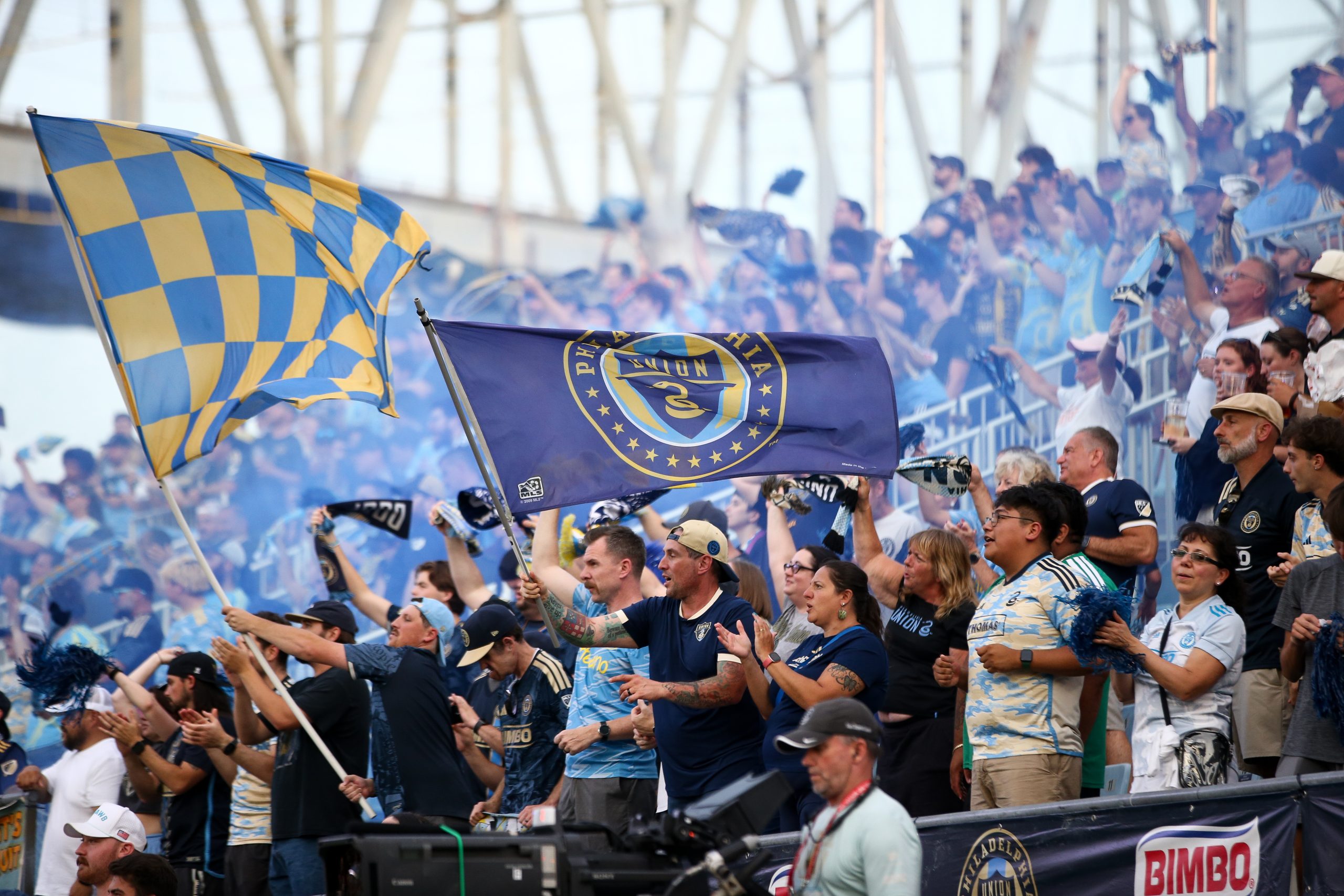
For the last 16 years, the Union have enjoyed an immense amount of success at Subaru Park, which opened as PPL Park in 2010. Philadelphia Union
But, according to McDermott, that doesn’t mean that the Union isn’t “actively studying” how to replicate what Chicago did.
“We have a great relationship with Delaware County and with Chester; that’s been phenomenal, and they’re incredible supporters of ours,” McDermott said. “But I would say at a more macro level, if you look at all of the teams that have come into the MLS in the last decade, where are they located? A lot of them, not all, but a lot of them are in a downtown location. That fact is not lost on us. I think it’s fair to say we’re proactively studying is that something we need to look at in the future? And is our future in an environment that looks like that?”
The exterior of WSFS bank Sportsplex in Chester.Alejandro A. Alvarez / Staff Photographer
As it stands, the Union sits on infrastructure, to the tune of over $300 million, when you consider the cost to build the stadium in 2010 for a reported $122 million, the newly designed WSFS SportsPlex, which came in at a $100 million price tag just last year, in addition to its annex for the first team, offices, and school in the adjacent Wharf Building.
“We are very comfortable where we are right now,” McDermott said. “It’s been a fantastic relationship. I think we’ve done a lot in terms of the development that we’ve done in Chester. But thinking about what a move downtown or some other place [within the city] would look like, I think it’s fair to say we have to be aware of it, studying it and being thoughtful to see if our future would be brighter if we were in a situation like that. So, I can say that yes, we’re actively studying that process and what that would look like.”
‘Still have our homework to do’
Perhaps the portion of the sitdown with McDermott where his eyes lit up was the notion that growth and expansion of the club comes from getting people out to matches. It’s a fair point, considering the Union’s gameday experience has been repeatedly lauded as one of the best in MLS, winning a J.D. Power Award for best fan experience just a year after McDermott joined the club in 2017.
Amanda Young Curtis, the club’s vice president of communications, told the Inquirer that fans who attend just three matches are significantly more likely to lock in as season ticket holders.
She said that it comes down to a few facets beyond just increasing brand awareness, but it’s everything from capturing new fan data to wooing potential first-time attendees with discounted tickets to, and perhaps most importantly, “converting attendees into repeat visitors.”
The Sons of Ben have been a devout supporters group for the club. To McDermott, a goal of ushering in more fans to the Union brand has to be the ultimate goal. Isaiah Vazquez / For The Inquirer
McDermott agreed, and added:
“We need to make sure that not only do they come and have a good time, but we’re actively always thinking about how do we get them back two more times. The likelihood of locking them in jumps pretty significantly. It’s why we’ve initiated this whole concept around trial and retention, and I believe that the momentum from the World Cup offers a major strategic opportunity for us to do that.”
But an area where McDermott says the Union still has their work cut out for them is cultivating stronger partnerships with youth clubs from an awareness standpoint so young players and their parents gravitate to the Union as supporters.
And for the youth coaches clutching pearls thinking that the Union is trying to woo a player away from their club, McDermott says it’s not about that. In fact, this notion transcends recruiting. Kind of…
“I think there’s two parts,” McDermott said. “There is the fan development part, and there’s the kind of talent identification part, and they somewhat link together. I’ll go back again to when my kids were 6, 7, 8 years old, and I was on the sideline of my daughter’s games. I looked down the sideline, and I saw all these parents wearing Eagles green.
Union president Tim McDermott contends that while the team has celebrated an immense amount of success, more is yet to come through the planning being done behind the scenes. Isaiah Vazquez / For The Inquirer
“I know we’ll be successful when I look down the sideline at a kid’s game and they are wearing blue and gold. I had many different instances like that where I felt like parents and the kids that were in the youth soccer ecosystem weren’t necessarily matriculating to being a Philadelphia Union fan, and we still have our homework to do to change that.”
McDermott knows the Union has work to do across the board from a grassroots perspective on up. In the immediate, righting the ship in an forgiving league like MLS is the goal, and the club is off to a strong start coming out of the World Cup break, winning two consecutive matches for the first time this season following wins against Red Bull New York and an impressive Saturday win over Seattle, two teams that if the season ended today would be playoff-bound.
It’s a great start in the eyes of a guy like McDermott, who contends his approach has always been to win. And listening to him speak now, it appears that talks are happening between ownership and team leadership about doing so — at all costs.
“As president, my job is solely focused on how can we win, across the board,” McDermott said. “I want to win; everyone in this organization wants that, but the culture is always and has to be first and foremost. You gotta have guys that want to play for each other, that believe in the system, that care for each other, that love one another and that are good quality character people.
“I think on the whole, we’ve really been doing a great job with that over the years. I’m not just talking about where we’re at today, but I’m talking about the last six, seven, eight years; we’ve been building towards having success, and we’ve had success. We’ve won a lot over the last five, six years, so our design works. I think [this reset] provides a real look at what we need to do to get back to that, and in the conversations we’re collectively having daily, I have no doubt that we’ll get there. None.”
Purchase the front page reprint of The Philadelphia Inquirer from Saturday, July 25, 2026, featuring LeBron James following the news that he was joining the 76ers.
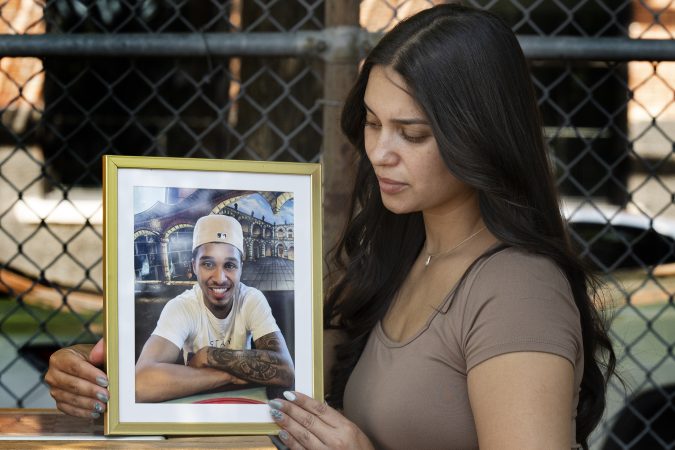
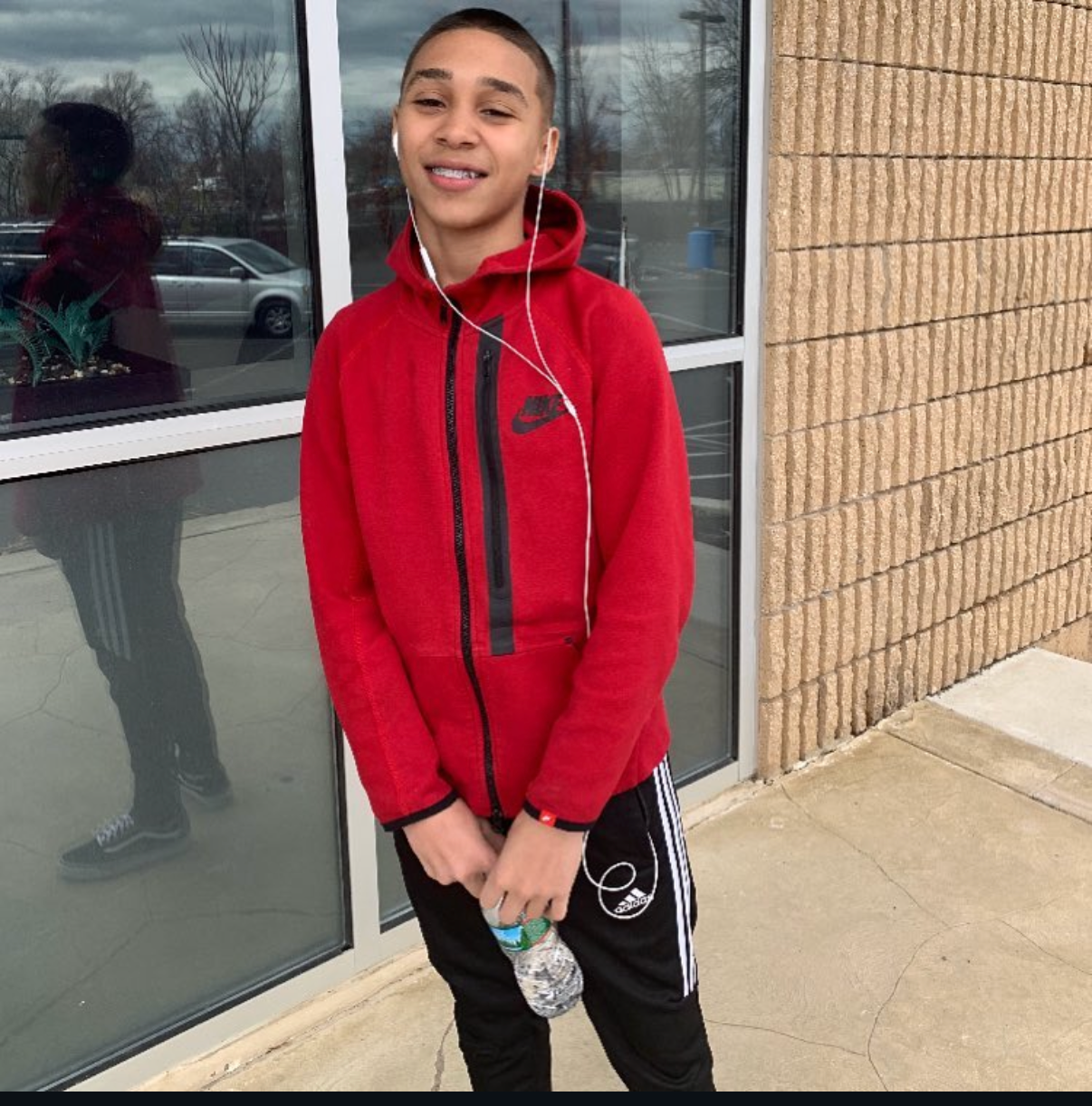
The first thing people noticed about Jadin Aviles was his smile. It was bright and big, and became part of his identity. Not just because of his youthful spirit, but the work that shaped each glistening tooth.
When Aviles was 9, his mother, Emelissa Gonzalez, saw that he was closing his mouth in photographs. Sometimes, he’d cover it with his arm. She asked why; Aviles explained that he was insecure.
Gonzalez turned to her son.
“Don’t worry,” she said. “Once we hit a certain age, we will get them done.”
A few years later, the mother surprised him with a trip to the orthodontist in Northeast Philadelphia. Not every child would react with enthusiasm, but this child did.
Aviles eagerly picked out the colors of his braces — red and blue — and was diligent in wearing his rubber bands. Tightening the wires was hardly a chore; the teenager saw this as a necessary (albeit painful) step to getting the grin he wanted.
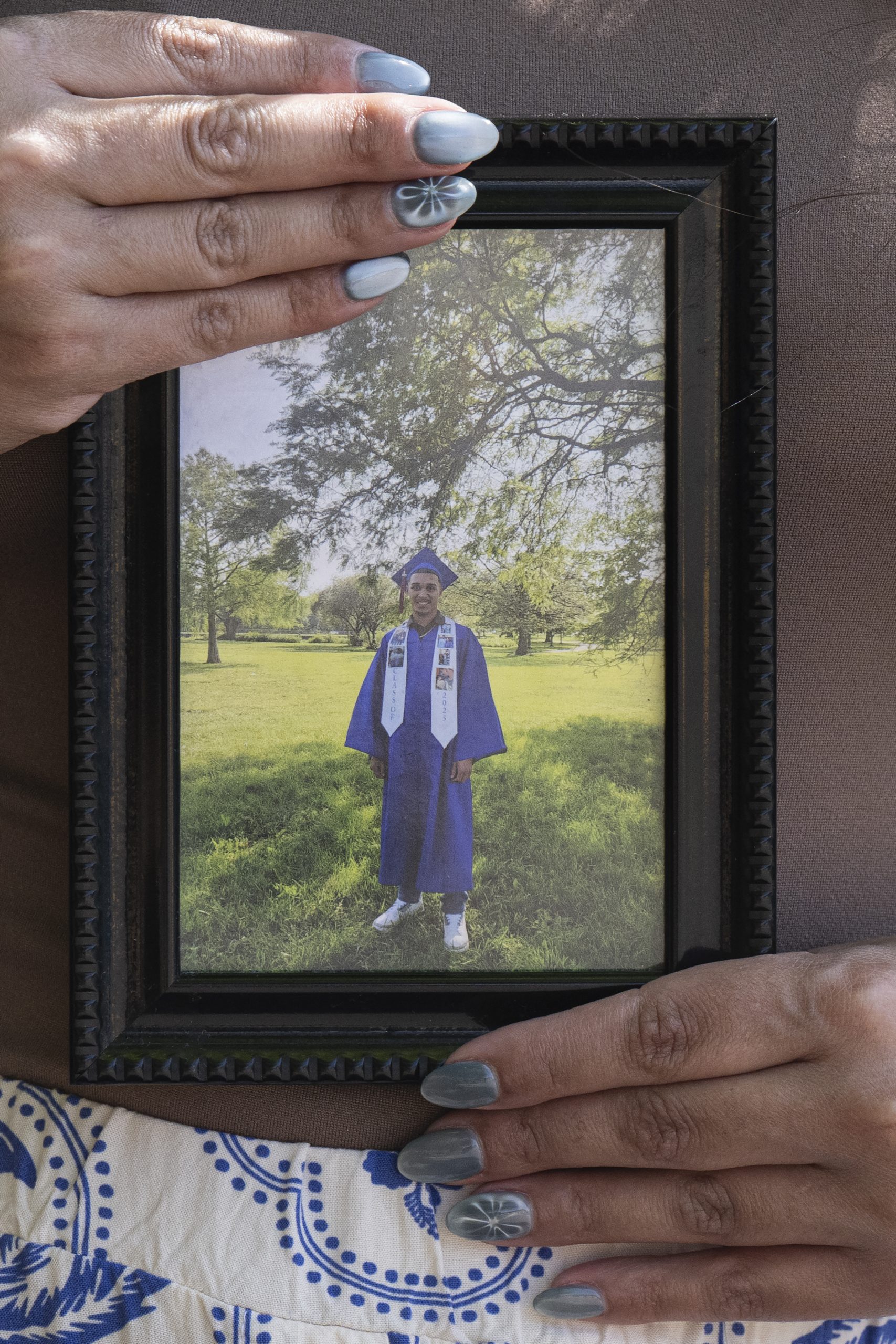
By age 15, he finally had it. Aviles smiled constantly — so much so that his friends began to tease him. But he didn’t mind. Gonzalez had invested her hard-earned money. He had treated that investment with care. Wasn’t that something to be proud of?
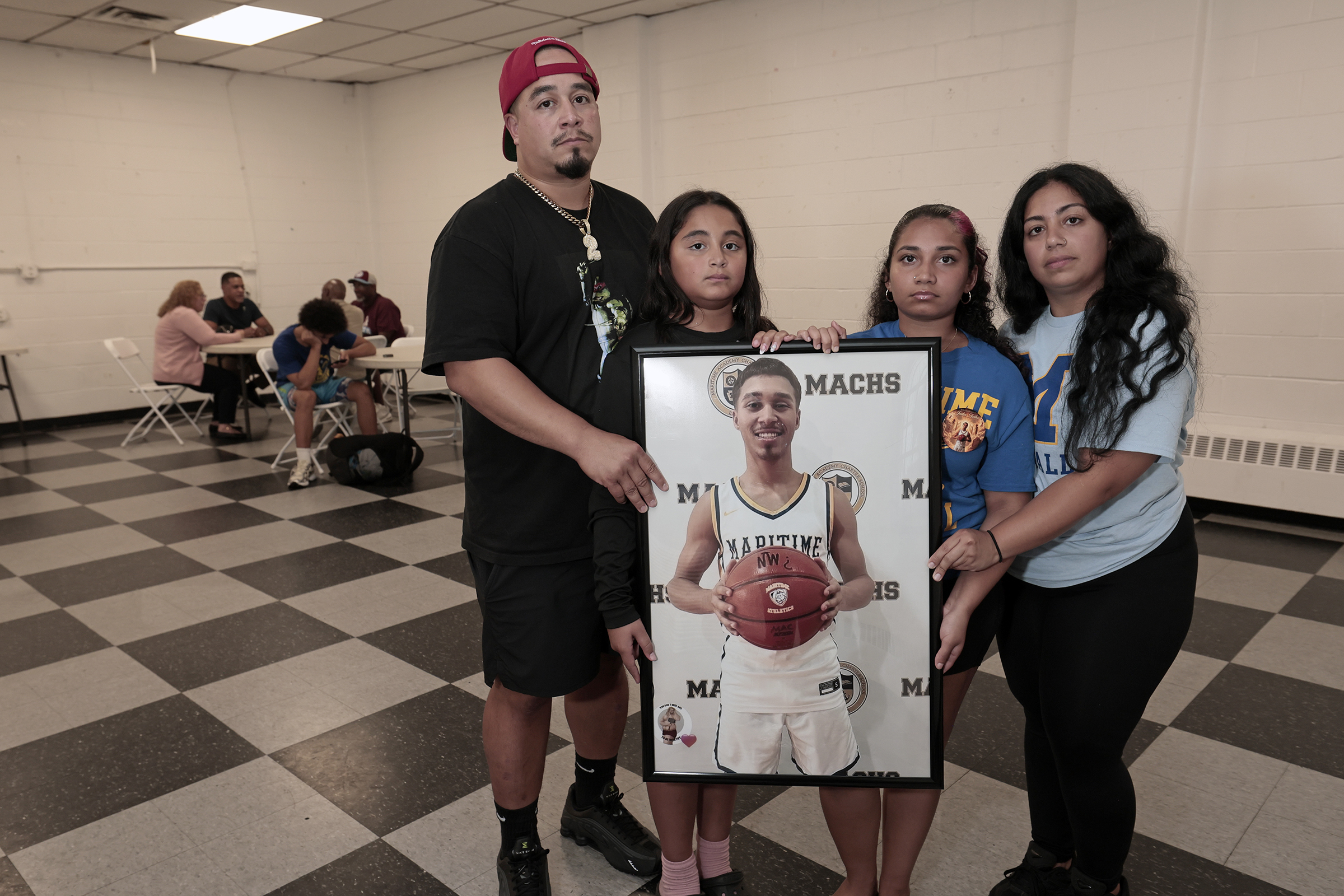
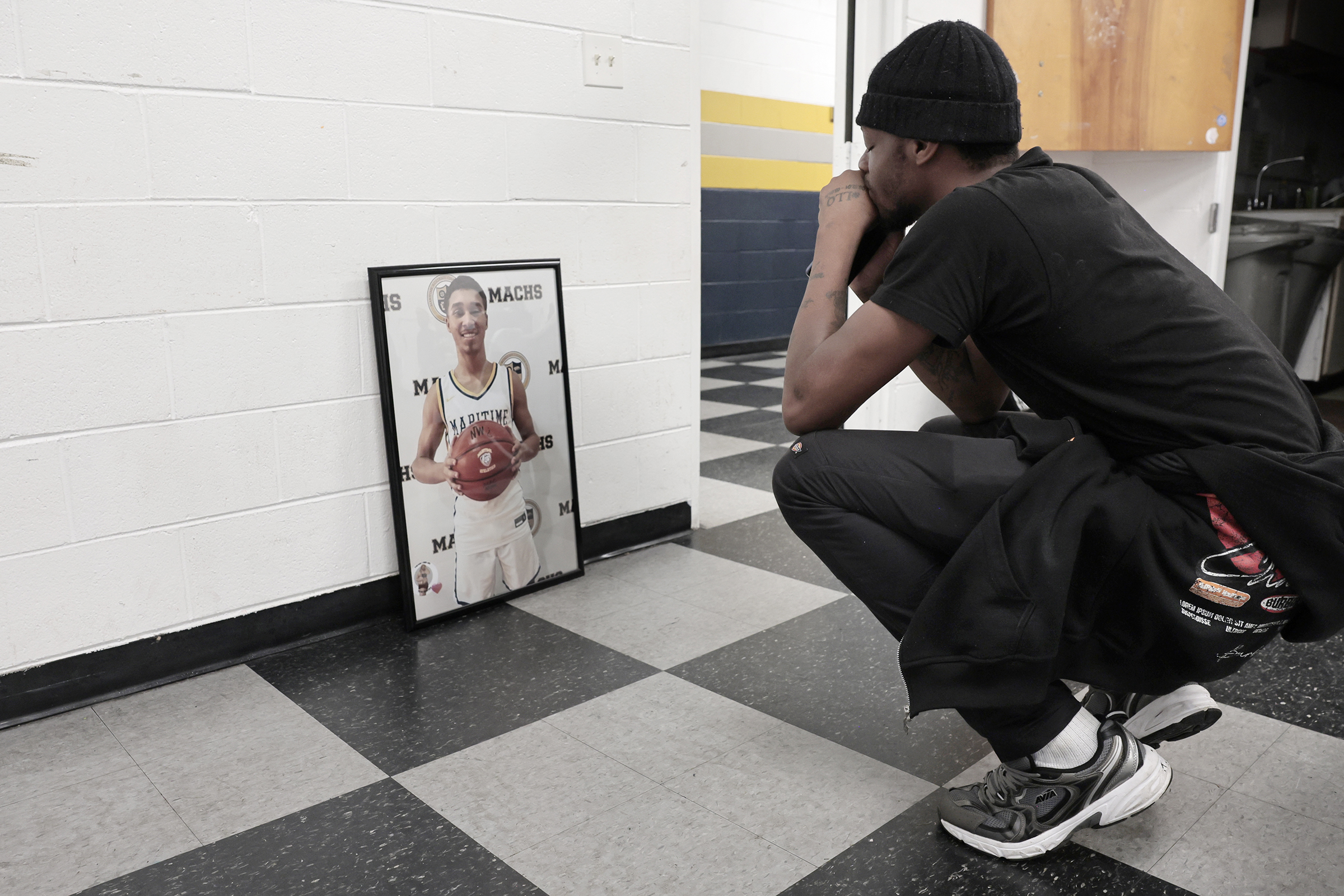
Aviles brought the same industrious energy to basketball. He played in two youth leagues — La Liga Del Barrio and Timoteo Sports — as well as on his high school team, Maritime Academy Charter.
Athletic director Kevin Schultz would let the shooting guard and his teammates into school early, so they could shoot from 5:30 a.m. to 7:30 a.m.
“Class started at 8:02 [a.m.],” former Maritime teammate Andy Figueroa said. “So we was in the building before all the teachers.”
Aviles wasn’t competing in front of a packed Palestra, but he did become a “street legend” in North Philadelphia, according to those who knew him.
This was as much about his ferocity as it was his empathy. The teenager would rarely, if ever, jaw at referees. He’d often extend a helping hand to an opponent who’d fallen on the court.
“He would come to our church sometimes,” said Pastor Rob Whitmire, executive director of Timoteo, “and to see how he cared for people, it was something unique. Because, if I’m thatguy, if I’m that player, that’s really not how they carry themselves. It’s not a caring spirit. And he just had a caring spirit.”
His community is now trying to keep it alive. On May 12, Aviles was riding his moped in a bike lane on Aramingo Avenue. A pickup truck, turning left, ran him over. Aviles suffered extensive brain damage, and died that night.
He had just turned 20.
It is a devastating loss, one that friends and family have struggled to reckon with. To many, Aviles, with his beaming smile, was brightness incarnate. He seemed to make all the right choices. How could things go so horribly wrong?
As North Philadelphia celebrates his past, and mourns his unfulfilled promise, they’ll continue to point to Aviles as an example. Proof that a life built on kindness and respect can be a life well-lived, no matter how it ends.
Sam Aviles with his son, Jadin.courtesy of Sam Aviles
Bonding through basketball
Aviles grew up with his mother. His parents broke up when he was 2 but maintained an amicable relationship. Even as a child, the future basketball star was self-sufficient.
He wasn’t the kind to throw a temper tantrum in a toy store. He rarely cried. If he did, his father, Sam, could quickly calm him down with a meal and some TV.
By the time he was 9, Jadin’s uncle and grandfather, who worked in electricity and construction, were teaching him odd jobs around the house.
The third grader knew how to navigate a switchbox and how to repair a lamp fixture. Once, when a pipe burst in the bathroom, Aviles called Gonzalez’s brother, Emanuel.
“‘Hey Tío, how do I fix this?’” she remembered him saying. “And over the phone, he’s literally fixing a pipe.”
Sam introduced the younger Aviles to basketball at age 5. He’d heard about La Liga through a cousin and signed Jadin up. One day, in the fall, they went to Towey Playground, around the block from Gonzalez’s home.
Jadin Aviles took early to multiple sports, but basketball quickly became his greatest love.courtesy of Emelissa Gonzalez
Sam was a new father, with no experience in youth sports. He did not realize that his son would be playing on a smaller court, with a hoop eight-feet high. So, they started practicing at the regulation-sized Towey, with Jadin chucking basketballs from above his head.
The boy didn’t complain, but once he and his father showed up to La Liga in December, it dawned on them that they had overestimated these dimensions. Even still, Jadin took to basketball, and began to participate in La Liga every winter.
Shortly after, Sam joined the organization as a coach. The father and son became inseparable; often watching games together, and taking extra shots at the Mariana Bracetti Academy gym (where La Liga is based).
The younger Aviles soon added another league, Timoteo, in the hopes of further refining his skills. At both stops, he established himself as a tough and bullish guard, who played far beyond his stature.
Whitmire became familiar with Aviles through his church, Grace and Peace Community Fellowship, where the teenager would volunteer. When the pastor first saw him play, in 2020, he didn’t recognize him.
The Jadin Aviles Whitmire knew was quiet and reserved. This kid was anything but. Eric Moore, assistant director at Timoteo, remembers that day vividly.
Aviles was in eighth grade, battling older students at the Esperanza High School gym. Moore and Whitmire stood in the back corner.
“And he was like, ‘Yo, is that Jadin?’” Moore recalled. “And I’m like, ‘Bro … yeah.’ And he’s like, ‘His defense is phenomenal.’
“And I was like, ‘Wait till he gets the rock. Wait till he handles the rock.’”
Added Whitmire: “I saw him come down and pull up on a guy and shoot, and I’m like, ‘Oh.’ There was something about his form that’s like, ‘No, that’s not normal. That’s not a rec player.’”
Jadin Aviles became a factor on the court and an approachable mentor to younger teammates.courtesy of Emelissa Gonzalez
At La Liga, Aviles always competed above his age group, and consistently held his own. His father called him a “giant slayer”; fully grown, Jadin stood at only 5-8, but was unafraid of opponents who were taller and larger than he was.
The numbers back this up. For five years in a row, Aviles averaged at least 11.1 points per game. He increased his scoring in 2025, with 24 and 46-point games. But despite his offensive output, he also devoted time and energy to his shortcomings.
One of the guard’s proudest moments came in 2023, when Timoteo named him defensive player of the year.
“[A coach] started working out with him, and he would ask what they wanted to do that day,” Sam said. “And Jadin was like, ‘Defensive drills, defensive drills, defensive drills.’”
Sam joined Timoteo as a coach in 2021, with the goal of spending more time with his son. But then an unexpected opportunity presented itself.
In 2022, Maritime’s head coach, Ercel Ballinger, contacted Sam to see if he would be interested in running the junior varsity team. He agreed, and took a job at the school a year later as a member of the support staff.
Jadin, who spent his freshman year at Roman Catholic, transferred to Maritime to play for his father. It turned out to be a life-changing decision. The younger Aviles thrived in the Philadelphia Public League.
He was reunited with childhood friends like Yozuet Pagan, an older kid on the block who taught him ballhandling and finishing at Towey. And as he matured, Aviles became comfortable taking on that role himself, with younger teammates.
Jadin Aviles flourished as a player after transferring from Roman Catholic to Maritime.Elizabeth Robertson / Staff Photographer
Andy Figueroa was the biggest example of this. Like Aviles, he’d tried Roman Catholic, only to find it wasn’t a fit. The veteran guard began to check in on his pupil, and one morning, he approached the 16-year-old in the hallway at school.
Jadin knew Figueroa had been struggling, and was at risk of becoming ineligible.
“He was like, ‘We need you on the court for our next game. So make sure you’re doing everything right,’” Figueroa recalled. “That made me realize that I got to make sure I do well, not just for me, but for my teammates, too.”
Aviles’ words were only bolstered by his play. By senior year, he was putting up career numbers, in points (15.3), rebounds (4.3), assists (2.5), and steals (3).
The teenager’s magical season came to an end on Jan. 23, 2025, Maritime’s senior night. A few hours earlier, Aviles told his father, who had since been promoted to varsity head coach, that he would “leave it all out on the court.”
And he did. Facing Hill Freedman World Academy, which sat atop the conference, Aviles dropped 25 points with four rebounds and five steals. The Juniata Boys & Girls Club was packed to capacity, and their crowd was going berserk, almost as if it were a cathedral all their own.
Sam Aviles (left), with Jadin Aviles’ sisters Madison and Mia Valerio, and stepmother Alexis Ferranti, witnessed Jadin’s development on the court. Elizabeth Robertson / Staff Photographer
A bright future, a brutal end
Aviles could have gone to college if he wished. Small institutions from Philadelphia and the surrounding areas sent him letters in the mail. Sam found a trade school in Media with a basketball team.
But none of this was enough to persuade him. Jadin wasn’t interested in sitting in a classroom, or accruing student debt. He was interested in working, though, and 30 days after he graduated, he was hired at Menasha, a packaging company on East Erie Avenue.
Two of his cousins worked there, as well as his uncle, James Arroyo Jr. It was an unnatural transition; Aviles was hired to work the night shift, from 11 p.m. to 7 a.m.
But as with most challenges in his life, the teenager embraced it. Before long, he was training for a promotion, going from stacking boxes, an entry-level role, to running the label machine.
“He got in there and [excelled],” said Arroyo Jr. “He hosed up pretty good.”
The job provided a good salary and strong benefits, giving Aviles a level of financial freedom he’d never experienced. He was proud of this, telling family and friends that he had “all of his bills on auto pay.”
In February, Aviles and his girlfriend, JaedaRodriguez, rented an apartment at Roosevelt Boulevard and C Street. It was a big step for them; Aviles had never lived apart from his mother or father.
Emelissa Gonzalez was proud of her son, Jadin Aviles, but had reservations about how quickly he had become self-sufficient. Jose F. Moreno / Staff Photographer
And Gonzalez was skeptical at first. She can still remember the day he told her; how nervous he was.
“I was like, ‘Is she pregnant?’” Gonzalez recalled. “‘Don’t tell me that I’m a grandma!’”
Aviles explained that he was moving out. His mother’s response was short and succinct: “Boy, no. You can’t be doing that.” But eventually, she warmed to the idea, and as Gonzalez packed her child’s belongings, in his new home, she began to cry.
“What’s wrong?” he asked.
“One day you will understand,” she replied.
The couple loved their newfound life. Within weeks, they’d adopted a pit bull from a local animal shelter — “Bubba” — and began to put him through dog training. Aviles suddenly had access to things like trips to the Shore and a newer car.
From a young age, he was drawn to bikes. Sam bought his son a black moped when he was 16, a miniature-motorcycle from Walmart that had a “lawnmower for an engine.”
Now, Aviles was able to purchase one of his own, and on May 11, he and a family friend, Kenny Enrique, drove to Allentown to retrieve it. They loaded the two mopeds into Enrique’s car, and brought them back to Philadelphia.
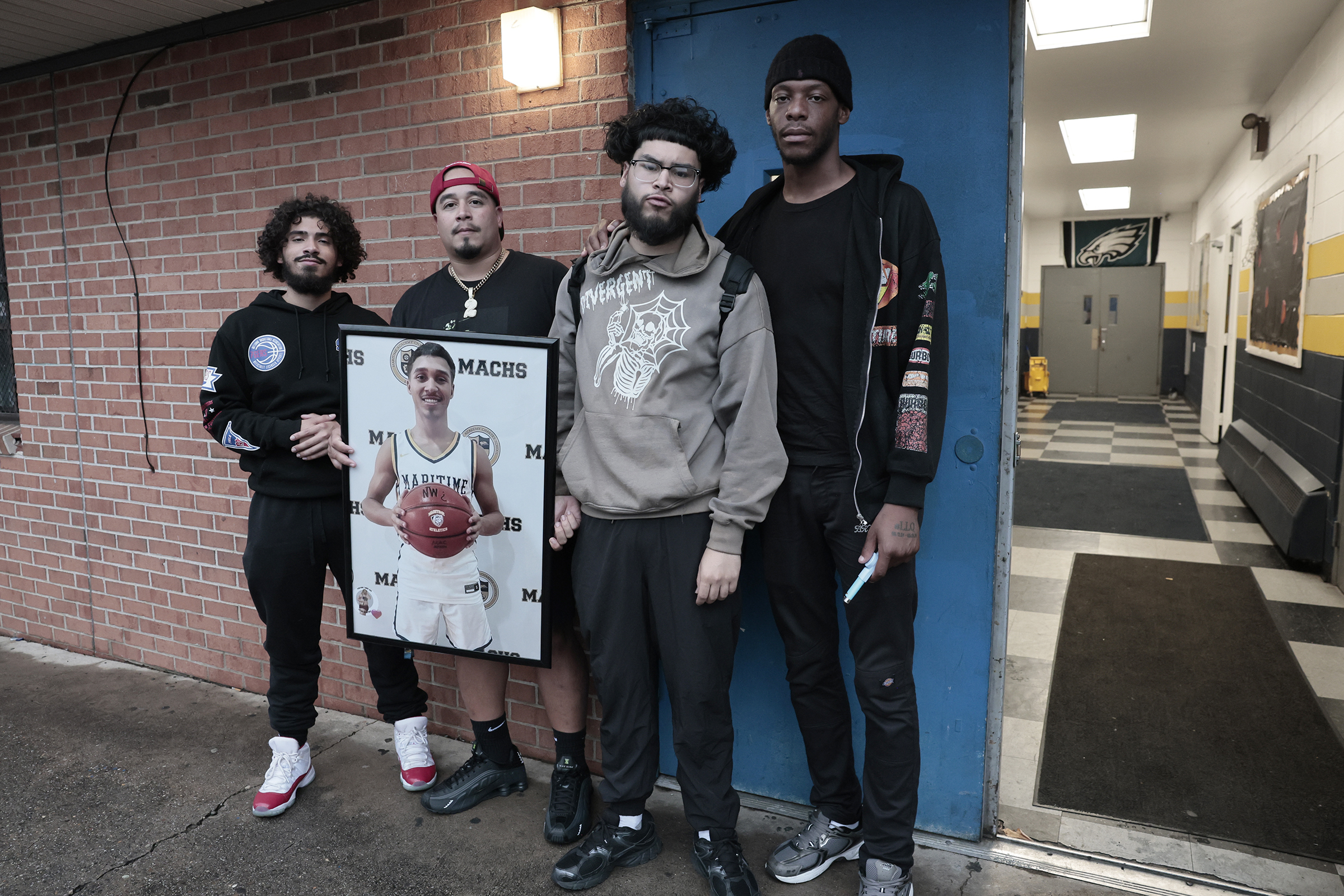
Hector Rosado (from left), Sam Aviles, Lucardo Marrero, and Sincere Jackson hold a photo of Jadin Aviles as they stand outside of the Juniata Park Boys & Girls Club earlier this month. Elizabeth Robertson / Staff Photographer
The next afternoon, the two men departed Aviles’ apartment in Olney, riding the mopeds to visit Sam at Maritime. They turned onto a bike lane on Aramingo Avenue; Jadin in front, Enrique behind him.
As they approached the four-way intersection, a pickup truck emerged in the left lane, heading northbound. A Philadelphia police report stated that the driver turned while the light was green, but failed to yield the right of way.
The right side of the truck hit Aviles. He fell to the ground and was run over. Enrique ran to find his friend face down, with his hood over his head, the moped laying a few feet away.
Enrique knelt and placed his hand on Aviles’ arm. Traffic began to slow; a few passersby stopped to call an ambulance. As Enrique went to retrieve his bike, he noticed something out of the corner of his eye.
“The [driver of the truck] was still moving,” he said. “I’m not going to say he left, but he probably would have left if I didn’t start yelling at people to make him stop.
“So, I started yelling, ‘Stop that truck, stop that truck!’”
The driver remained at the scene, where both men were questioned by the police. Throughout his interview, Enrique asked whether or not officers would give an alcohol or drug test to the driver.
“He said that our officers are trained to identify when somebody is under the influence,” Enrique recalled. “And I said, ‘Well, what’s an opinion versus an actual drug test or a blood test?’
“And he just ‘never minded’ what I said. I said the same thing to the next officer. They just ignored me.”
Officers later discovered that the driver of the truck had twice had his license suspended for driving under the influence, and did not have insurance at the time of the crash, according to a copy of the police report obtained by The Inquirer.
The police department’s Crash Investigation Division obtained footage of the fatal collision. One of the responding officers’ body cameras was “activated through the duration” of the interviews at the scene, the report shows.
A police spokesperson said that the crash remains under active investigation, and that the driver is cooperating with authorities.
The department did not respond to additional questions that The Inquirer submitted about the investigation, including why the driver of the truck was not required to undergo testing to determine if he was under the influence of drugs or alcohol.
Aviles was transported to Temple University Hospital, where his parents joined him. Sam’s girlfriend, Alexis Ferranti, met them there, as didRodriguez.It wasn’t until 7:03 p.m. that the family was able to see Jadin, who was unresponsive.
The 20-year-old’s face was wrapped in a bandage, covering the smile he’d worked so hard for. He couldn’t move or speak. Doctors told Gonzalez and Aviles that they had about an hour to say goodbye.
The parents prayed, and listened to Christian music, and told their child how much they loved him. That they were there for him, even if he couldn’t see them, and that they’d always be there for him.
“And we all watched,” Gonzalez said, “my son go with the Lord.”
Jadin Aviles’ friends and former teammates, including Sincere Jackson (pictured), remember a good person who developed himself into a basketball standout. Elizabeth Robertson / Staff Photographer
A funeral on hardwood
The funeral was held on the morning of May 22. Initially, Gonzalez and Aviles planned to use her church, but realized it couldn’t contain the large crowd they were expecting.
So, they moved the service to the Juniata Boys & Girls Club, a place where their son had some of his greatest moments. Building employees took out the scorer’s table, and angled team benches toward the court.
Rows of chairs were stacked in the middle, all facing a casket underneath the hoop. Just like on Jadin’s senior night, the gym was filled with people; so many that a line wrapped around the block onto Castor Avenue.
They came from all corners of the neighborhood — Hunting Park, Olney, Kensington — shuffling in and out to pay respects. At one point, the funeral director had to turn mourners away, because the family was able to rent the gym for only two hours.
It was a surreal day, especially for those who had played with Jadin on that same floor. Dominic Lopez, a Maritime teammate, thought about Aviles’ 25-point game.
Andy Figueroa did, too. After it was over, he walked up to Eric Moore, who’d watched Jadin grow up at Timoteo, to ask how he was doing.
“And I told him, ‘You are Jadin,’” Moore recalled. “‘Own it. Because you are him. You are that person.’”
Jadin Aviles’ family and friends are attempting to move on from his loss while honoring his memory. Jose F. Moreno / Staff Photographer
There has been an emptiness in North Philadelphia since Aviles passed. Spaces he used to frequent are quiet. Ray and Esther Alvarez, who run La Liga, returned to their home gym in June.
Esther found herself thinking back to that kind boy, who would always greet her with, “Bendiciones, Titi.”
“I knew I wasn’t going to physically see him,” she said, “but I was waiting for my bendición.”
Aviles’ spirit will continue to permeate. La Liga is planning a memorial fund in his name. Sam is thinking about hanging one of his jerseys in the Maritime rafters.
But perhaps the best way to honor him is to emulate him. To tell young people about a giant on the court and a leader off it, who was so remarkable, and so loved, that he drew hundreds, maybe a thousand, to his funeral.
And that he did it all on his own, with hard work and a big smile, and that someday, they could, too.