UNITED NATIONS — Iran’s foreign minister said Thursday that Tehran had proposed to Washington a seven-day plan to cease hostilities, reopen the Strait of Hormuz and then begin comprehensive talks on his country’s nuclear program.
Abbas Araghchi, the foreign minister, told reporters at a press briefing at the United Nations General Assembly that the proposal closely mirrored the commitments laid out in a so-called memorandum of understanding that was struck between the United States and Iran in June but quickly unraveled.
He said Iran was ready to begin putting the plan into effect as soon as Washington agreed to it.
“We have introduced a plan to the United States through the intermediators that if certain conditions are met, the Strait of Hormuz would be open on the end of the seventh day and talks would restart,” Araghchi said.
He said “it would be better” if a deal was reached before the U.S. midterm elections.
A U.S. official familiar with the talks said that the administration was having positive and constructive discussions through mediators, but that the United States was not going to rush into a deal.
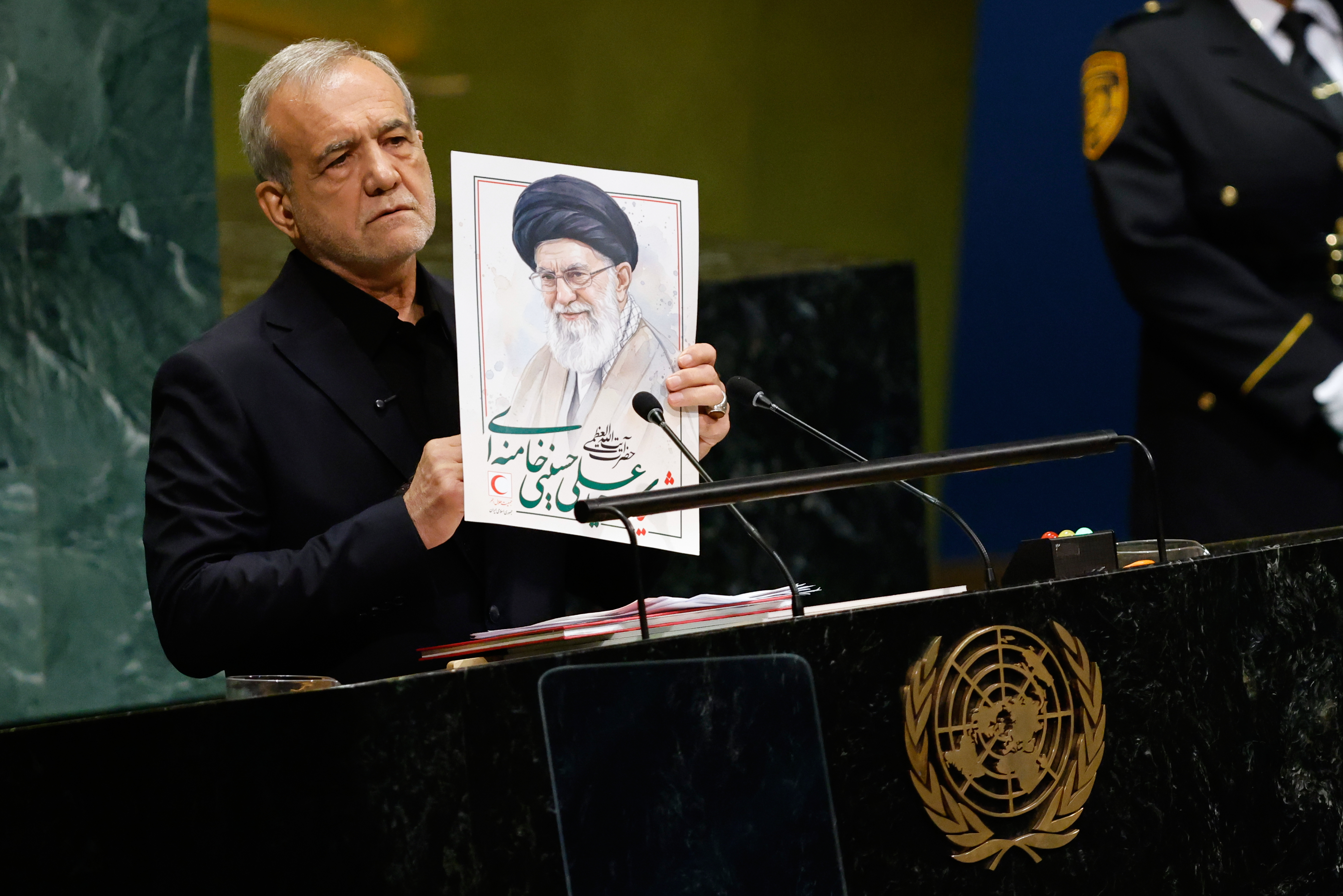
The Iranian proposal came even as President Donald Trump and Iran’s president, Masoud Pezeshkian, delivered mutually hostile speeches at the United Nations. Trump threatened Iran with “annihilation” if it did not strike a deal, while a defiant Pezeshkian told world leaders his country would not be bullied.
Though Iran’s proposal contains many of the same conditions of the deal that fell apart, the behind-the-scenes diplomacy suggested that both sides may see much to gain from finding an off-ramp from the war.
Iranian officials said that while the proposal was effectively the same as the memorandum of understanding made in June, it was designed to move at a much faster pace. In the earlier agreement, a 60-day time frame was set for reaching nuclear negotiations.
Under the conditions that Iran has set for the agreement, according to Araghchi, during the seven days all hostilities would end, including in Lebanon; the U.S. would release Iran’s frozen assets, estimated at least $12 billion; waive sanctions on Iranian oil; and lift the naval blockade on Iran. Then, on the last day, the Strait of Hormuz would be opened.
After the seven days, Aragchi said, comprehensive negotiations over Iran’s nuclear program would immediately begin. Trump has said that his top goal is for Iran not to have a nuclear weapon, and that he would either achieve that through a diplomatic deal or with more attacks.
The United States and Iran have been at war for nearly seven months. It began in late February when the United States and Israel launched airstrikes that killed Iran’s supreme leader, Ayatollah Ali Khamenei, and military chain of command. Trump initially said the war would take only a few weeks
The war has had widespread global repercussions including on oil, energy and food prices.
The Iranian proposal came as U.S. negotiators have tried to jump-start diplomacy with Iran on its nuclear program through talks on the sidelines of the U.N. assembly. U.S. Secretary of State Marco Rubio said a three-hour meeting, mediated by Qatar, between U.S. and Iranian officials did not end in a breakthrough.
Araghchi, who will be in New York until next Monday, met on Tuesday with U.S. envoy Steve Witkoff and Jared Kushner, a son-in-law of Trump’s. It was mediated by Qataris passing messages between the two sides, and Araghchi described it as “productive” and said the messaging continued.
Ismaeil Baghaei, the spokesperson for Iran’s foreign ministry who is also in New York, said that it was possible that there would be more mediated meetings in the coming days.
Iran’s economy is under serious strain, and Iranians are suffering from skyrocketing inflation on basic food items, a shortage of medicine and disruptions to commerce.
Analysts said that Trump would have to weigh the benefits of reaching a deal with Iran before the midterms against keeping a chokehold on its economy in the hope of getting more concessions from Tehran.
“This is a smart move,” said Ali Vaez, the Iran director of the International Crisis Group. “They know it’s very tempting for President Trump because it ends an unpopular war and brings down energy prices in the run-up the midterms. But it also restores a deal that was largely favorable to the Iranians. A compressed timeline to get to the nuclear issue should be appealing to an impatient president.”
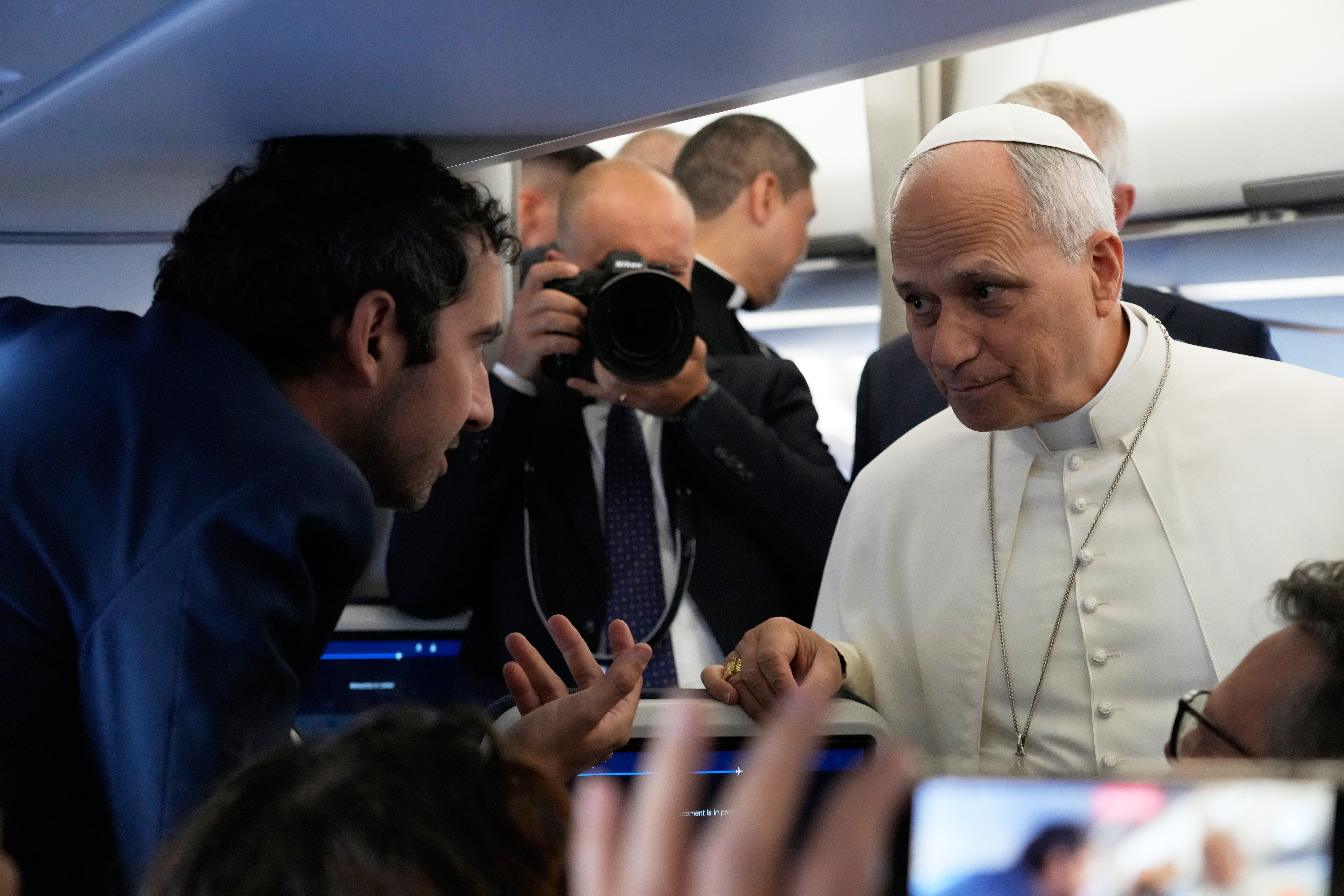
ABOARD THE PAPAL PLANE — Pope Leo XIV told reporters they were welcome to cover him, as he responded to the Trump administration’s attempt to bar U.S. media from the White House and affirmed the importance of journalists covering public figures.
Leo spoke to reporters Friday on his way to France for a four-day visit. Asked by a CNN reporter about the Trump administration’s attempt to bar CNN and other reporters, Leo said the media was welcome on his plane.
“I am very happy that here, you are all welcome,” he said. Good media coverage is important, he said, and equally important “that we have it all the way around, for everyone”
CNN, MS NOW and Politico were back at the White House on Thursday after a judge handed them a reprieve from President Donald Trump’s ban, but the extraordinary showdown between him and outlets whose coverage he dislikes continued.
On a high-profile day when Chinese leader Xi Jinping was visiting Washington and attending a state dinner, no major American network was airing live coverage, and both CNN and MS NOW said their journalists were denied access to Xi’s state dinner arrival.
Leo has long affirmed the need for free and independent press, a point he made in one of his first audiences as pope. Speaking to journalists who covered the 2025 conclave that elected him, the American pope called for the release of imprisoned journalists and affirmed the “precious gift of free speech and the press.”
That said, since the COVID-19 pandemic, independent media have been prevented from covering photo opportunities inside the pope’s private studio when visiting heads of state visit. Additionally, many of the pope’s private audiences with other groups and individuals are closed to non-Vatican press.
Leo had opposed Trump on the war
Leo’s airborne comments about Trump followed his April back-and-forth over the American president’s criticism of his opposition to the Iran war. The American pope’s position won him points with some Europeans opposed to Trump’s policies.
“He dared, at his level, to oppose the American president,” said retiree Thierry Marien, who lined up hours early to grab a spot on the popemobile route to Notre-Dame cathedral, where Leo was to celebrate vespers later Friday. “Not because he is opposed to the American president but because he’s opposed to countries where we can see there’s a risk of their political systems becoming a bit more dictatorial and there are already enough of those in the world.”
“I appreciated that he did that. He could quite easily have said to himself, ‘In my situation, I won’t criticize any heads of state,’” he said.
Leo apologizes to reporters
Also on the flight Friday, Leo also apologized for missing an opportunity to speak with the press the last time he traveled internationally, when his Iberia charter broke down in Spain’s Canary Islands and he returned home solo on the king’s private jet, skipping his traditional airborne press conference.
More than 70 reporters and the Vatican delegation waited for several hours at the airport for a replacement plane to arrive. Leo addressed the media’s disappointment when he came to the back of the plane to greet reporters.
“A special mention I would like to make for those of you who were traveling with me when we returned to Rome from Spain,” he said. “I want to apologize personally for an incident, that I had nothing to do with, but which I know left a number of you unhappy with the fact that we couldn’t have the flight back together back to Rome.”
In other comments to reporters, Leo said he believed his alma mater Villanova would be the fan favorite when the Augustinian university plays Notre Dame’s basketball team in Rome on Nov. 1.
“They tell me that the people coming to the match, 90% are Villanova and 10% Notre Dame, so the voice of the people of God will be very strong on the Villanova side,” Leo said.
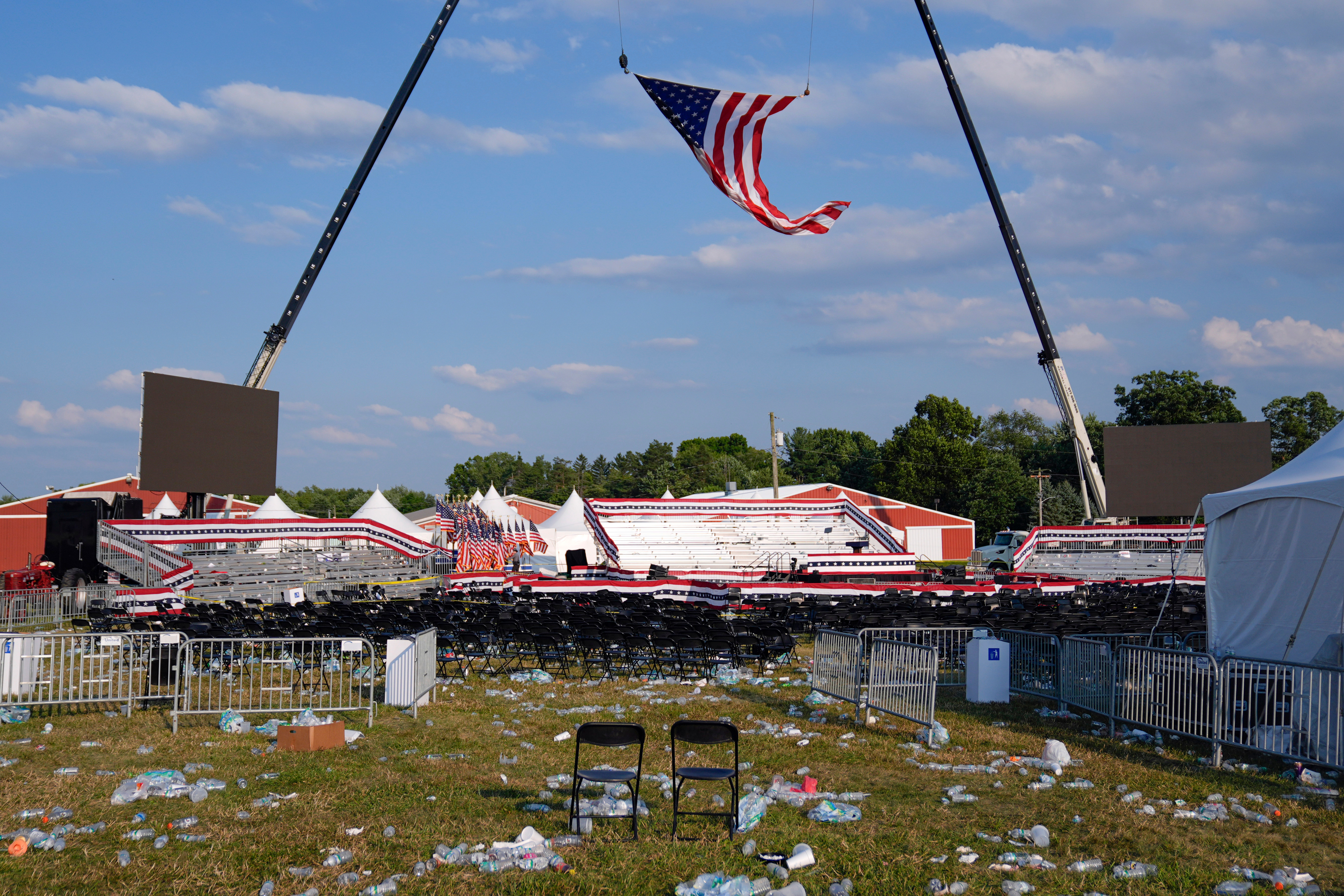
James Copenhaver, one of three campaign rally attendees shot in 2024 during an assassination attempt on then-candidate Donald Trump, has died in Pittsburgh, his lawyer said Thursday. He was 76.
Copenhaver was in the bleachers during the event in Butler, Pennsylvania, when a 20-year-old gunman opened fire from a nearby rooftop, grazing Trump’s right ear with one bullet. Copenhaver was struck in the arm and in the abdomen, wounds that left him with lingering injuries and walking with a cane.
Two other attendees were also shot — David Dutch, who survived, and Corey Comperatore, who shielded his family from gunfire and was killed.
Copenhaver died Wednesday at Allegheny Health Network’s West Penn Hospital in Pittsburgh, according to a statement from the Allegheny County medical examiner cited in local media accounts.
Copenhaver’s lawyer, Joseph Feldman, said in a statement issued on behalf of the family that he died surrounded by loved ones. The statement did not specify if his death was directly related to the injuries he suffered at the rally.
Copenhaver and his wife, Marianne Copenhaver, sued the federal government in June, alleging that the Secret Service and Department of Homeland Security had “utterly failed” to provide appropriate security at the rally. Copenhaver’s injuries required multiple surgeries, including a transection of his colon, and he had lingering kidney and other damage, including a loss of feeling in his leg. The lawsuit described the wounds as “debilitating, grievous, permanent and life altering.”
The family’s statement Thursday called Copenhaver above all else a devoted husband, father and grandfather who instilled the values of hard work, integrity and the service to others in his children.
“James’s dedication to this great country was a defining part of his life,” it said. “As a veteran, he proudly served our nation in the armed forces, and his love of country never wavered. James was a true American patriot who believed deeply in the freedoms and ideals upon which this nation was founded, and he embodied the very best traits of our great nation.”
In a statement posted to social media, Trump on Thursday called Copenhaver “a true American Patriot.”
“Jim showed tremendous bravery, courageously continuing to FIGHT, FIGHT, FIGHT, and maintaining a positive spirit despite unimaginable hardships,” Trump wrote.
This week marks a year since Shackamaxon debuted. Named for the place Lenape chiefs would meet for discussions and community ceremonies under the great elm, the column is focused on what happens at City Hall and Harrisburg — our modern Shackamaxons. This week’s edition focuses on SEPTA and whether bipartisanship is truly dead.
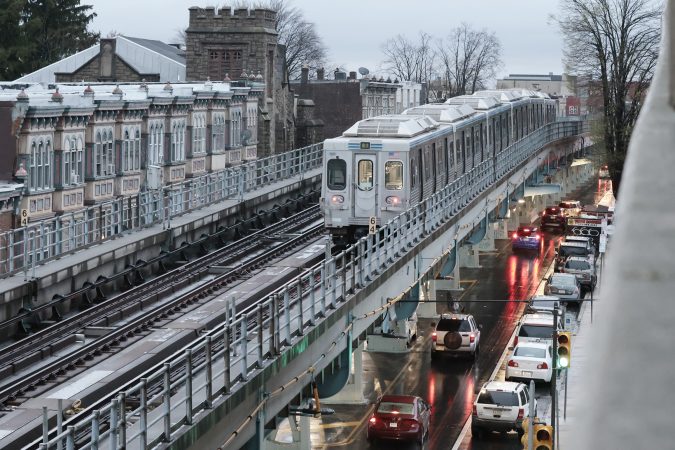
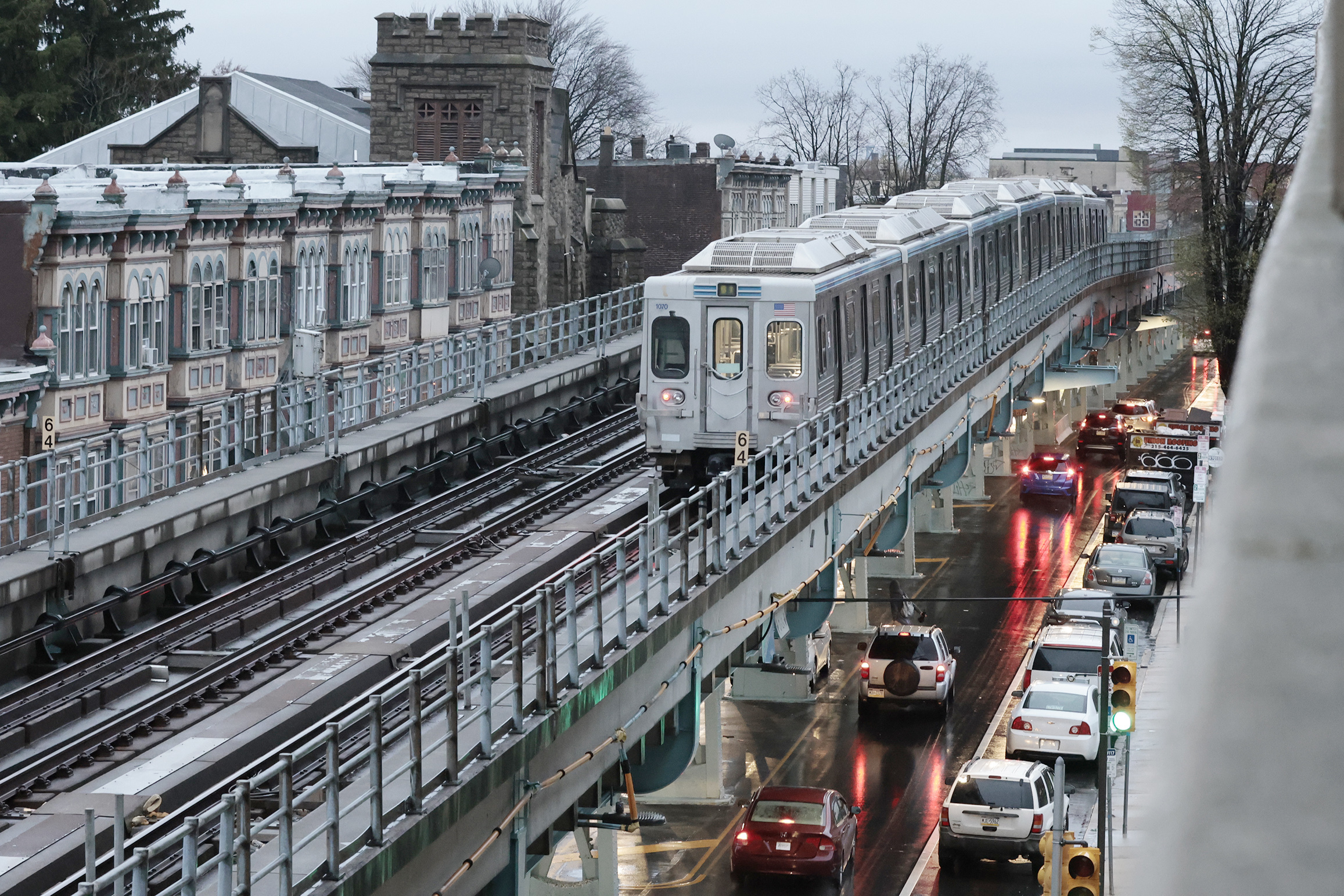
A SEPTA Market-Frankford Line train as it heads away from the Frankford Transportation Center in 2024.Elizabeth Robertson / Staff Photographer
Getting there
In 2032, if all goes according to plan, SEPTA will look quite different.
The Market-Frankford Line will have new trains and run more frequently. There’ll be new trolleys, as well, with modern light rail cars replacing the aging fleet. Instead of boarding at the corner, like a bus, trolley riders will have new, fully accessible stations with seating.
The Regional Rail fleet will be in the middle of its own modernization. While the process will take longer, SEPTA plans to make every Regional Rail station accessible, replace its fleet, and boost frequencies to every 15 or 30 minutes, depending on the line. It’s an ambitious undertaking that would more than double the number of people who live within a quarter mile of frequent mass transit, from 900,000 to two million.
This kind of optimism is rare for SEPTA, an agency that is accustomed to hearing complaints and begging lawmakers for enough money to keep current levels of service operating. The SEPTA Accelerate plan does depend on securing additional funding from Harrisburg. This time, however, the city’s transit leaders are trying a different approach: Instead of pointing out the potential dangers of losing services, they are highlighting what they could provide if given adequate resources.
It also comes at an opportune time. While there are always improvements to be made when it comes to timeliness and quality of life, SEPTA has made unmistakable progress.
The agency has hired hundreds of cleaners, with each station now covered by a dedicated member of staff during heavy-use periods. Customer satisfaction has reached record highs. Throughout it all, SEPTA has remained the country’s most efficient transit agency. Each ride costs less than $8 to provide, compared with the rest of the nation’s $12 average.
Even Republican state Senate Majority Leader Joe Pittman seems to have noticed. In an interview with NBC10’s Lauren Mayk, Pittman gave SEPTA and new General Manager Scott Sauer credit for responding to criticism, reducing crime, raising revenue, and improving its credit rating.
Locally, the proposal received praise. Montgomery County Commissioner (and SEPTA board member) Neil Makhija told me he’s been advocating for SEPTA to have 15-minute Regional Rail service for years, and that he is “thrilled to see that transformative vision has finally been released in this plan.”
Longtime SEPTA riders will remember the old “We’re Getting There” slogan. The Accelerate plan is the agency’s biggest chance to finally arrive.
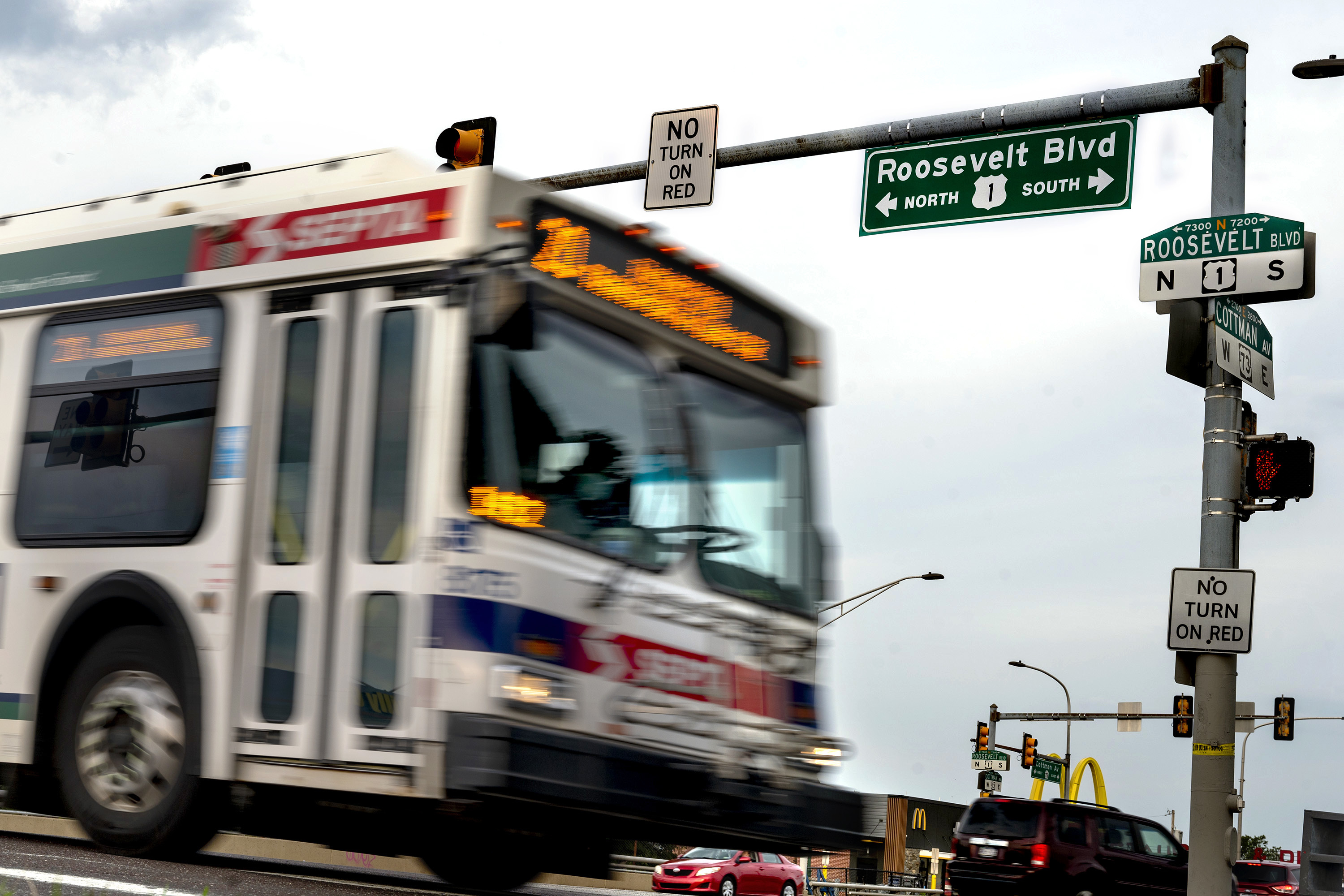
Traffic on the Roosevelt Expressway at Cottman Avenue in Northeast Philadelphia.TOM GRALISH / Staff Photographer
Boulevard or bust
The plan, while ambitious, does not call for any significant expansions in the immediate future. Extensions to Reading, Allentown, Maryland, and King of Prussia get a brief mention — as ideas the agency might embrace in a better-resourced future. The long-awaited subway extension to Roosevelt Boulevard is also included in the map. Events, however, may require deciding on this sooner rather than later.
After all, PennDot is already planning to redo the entire corridor. The initial plan is to add $134 million in safety improvements. Longer term, there are six different options. The route could either become a neighborhood boulevard, with less space for motorized traffic, or it could become a partially capped expressway, separating high-speed traffic from pedestrians and homes. Both proposals would then be paired with one of three transit options: a subway extension, a light rail route, or Bus Rapid Transit.
BRT is the cheapest option and would be my preference if the subway doesn’t get built. The idea is to give buses a dedicated lane and limit how often they stop. This would speed up service for current riders, but wouldn’t bring in a significant number of new commuters. There is also a chance future policymakers would remove the dedicated bus lanes in order to provide more space for motorists, something that has happened to BRT systems in other states.
To some policymakers, light rail represents a kind of Goldilocks option. It has more transformative potential than bus service, while costing less than a full metro line. To me, however, Roosevelt Boulevard is a particularly bad fit for the idea.
The cheapest way to build a light rail system would include trains traveling in their own lanes next to automobile traffic. Given the often-chaotic behavior of motorists in Philadelphia, trips would be subject to delays every time a driver decides to save a couple of minutes by driving along the tracks. The trains would also get caught at red lights anytime left-turning traffic builds up.
Officials could mitigate this risk by building an elevated trackway, but this would make the project significantly more expensive, negating the entire point of opting for light rail. Additionally, riders would have to transfer at the end of the line rather than seamlessly continuing into Center City, as they would with a subway expansion. Light rail also costs more to operate than a subway, meaning any savings would disappear over time.
While it has the highest construction costs, the subway option remains the ideal solution for the corridor. It would transform how people get around the region.
Bucks County residents would be able to travel all the way to the sports complex for events after parking at Rock Hill Station, helping to alleviate the postgame traffic crunch. Northeast Philadelphia’s emerging dining scene would benefit from improved access to diners from Center City and South Philadelphia. It would make the Boulevard an attractive corridor for employers, who could bring in talent from the city’s core via the subway, while also remaining accessible to suburban residents. It would also mitigate traffic congestion the most, which is especially important if PennDot selects the neighborhood boulevard option.
Lt. Gov. Austin Davis (left) and Attorney General Dave Sunday (right) joined Arnold Ventures’ Kevin Ring at the company’s Public Safety Boot Camp on Thursday.Photo from Lt. Gov Austin Davis staff
Bipartisan belief
With state lawmakers consistently unable to perform the basics, like passing a budget on time, it is worth wondering whether Washington’s allergy to bipartisanship has spread to Pennsylvania, which has traditionally been more collegial.
At a panel discussion last Thursday at the Franklin Institute, however, the spirit of cooperation was thriving. Lt. Gov. Austin Davis and Attorney General Dave Sunday spoke at Arnold Ventures’ Public Safety Boot Camp, which hosted legislators from around the country and both political parties. The two showed a remarkable amount of overlap, both professing support for evidence-based approaches, accountability, and second chances.
Even better? State and local leaders are already seeing results from this balanced approach: Homicides in Philadelphia are at generational lows, as well as being down across the commonwealth.
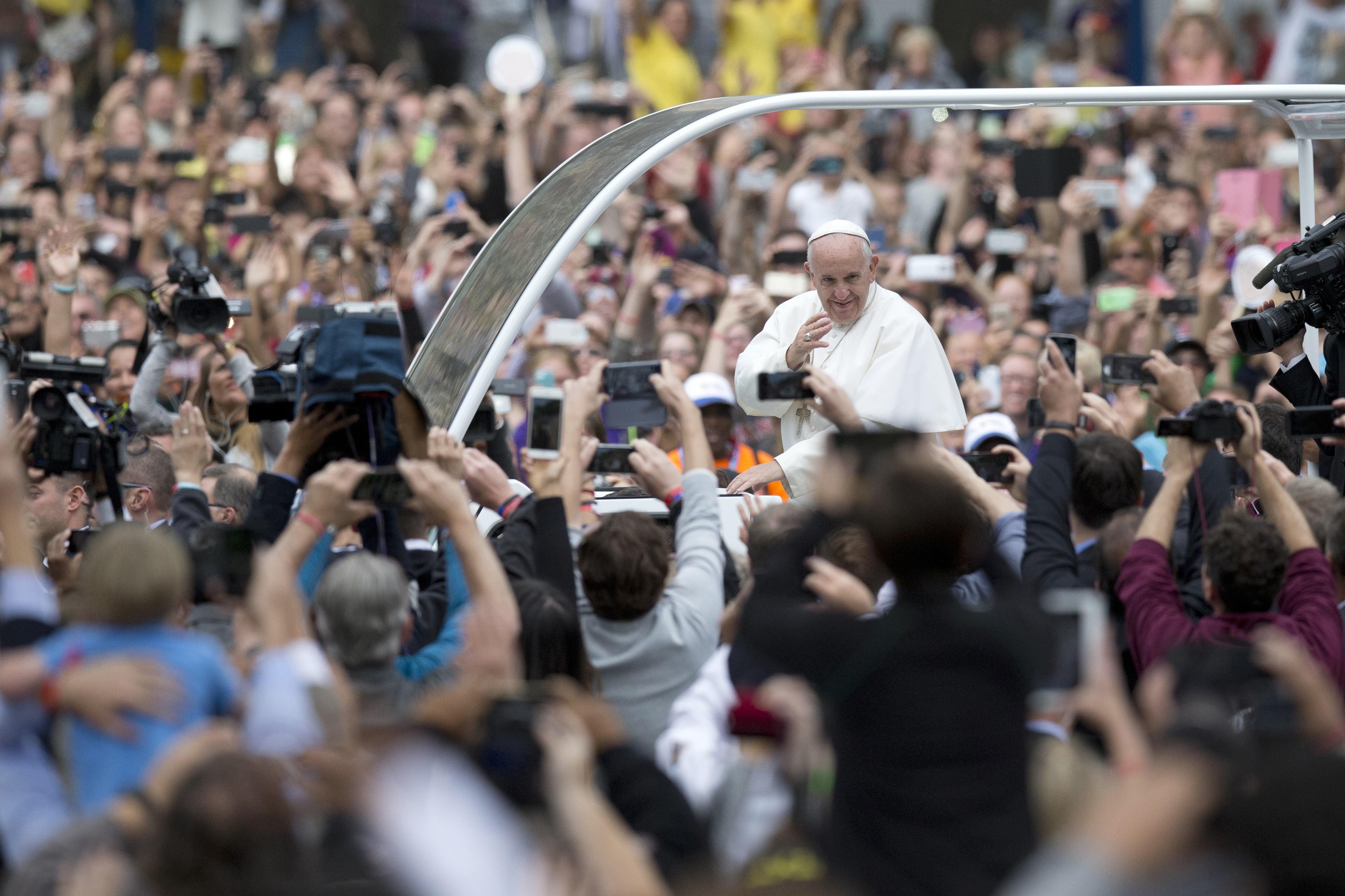
The pope who came in peace arrived in a Philadelphia seemingly under occupation.
For the roughly 1 million people who descended upon Philly to try to catch a glimpse of Pope Francis over his two-day visit in September 2015,there was an unprecedented level of security. Center City was put under 24-7 military supervision by armed personnel in vehicles stationed at busy intersections.
Security had not been as strict in 1979. When Pope John Paul II stepped off “Shepherd One” to kick off his not-quite 24-hour visit, he was met by a genuflecting Mayor Frank Rizzo before passing and waving to a mass of Catholics lined up on Broad Street.
Francis’ six-day tour covered three cities — including New York and Washington — as part of the first-ever World Meeting of Families, touted as the largest global gathering of Catholic families held on U.S. soil.
On his first night in town, in an address at Independence Hall, Francis emphasized the right to religious freedom, touched on immigration and the plight of refugees, and called for “peace, tolerance, and respect for the dignity and rights of others,” without specifically addressing same-sex marriage or abortion rights.
Despite the increased security, on night two, Francis rode in his popemobile up and down the Benjamin Franklin Parkway, to City Hall and back, before moving on to the night’s primary venue.
In an address on the Parkway, Francis preached to a throng of believers about the importance of family and again pleaded for more tolerance, faith, and love.
“Love is something we learn,” he said. “Love is something we live.”
Much like John Paul II’s visit, supporters filled Logan Square, streaming in from the Philadelphia Museum of Art, City Hall, and beyond. But despite being a sizable crowd, it was not as large as first anticipated because of the security restrictions.
To get in and out that night, visitors faced the aptly named papal box, which encased Center City ina safety cocoon. Vehicle travel was a nonstarter, with streets cut off by cement dividers, and pedestrians could enter the cocoon only after walking through serious-looking metal detectors.
Despite the restrictions, an overwhelming sense of joy permeated the city, as more than a million people united in celebration of a 78-year-old man and his relentless pursuit of a better world.
“It feels like a big embrace,” Katherine Brennan of Rhode Island told The Inquirer. “We feel like everybody here is family. This is a microcosm of what the world could be if we all embraced each other the way he does.”
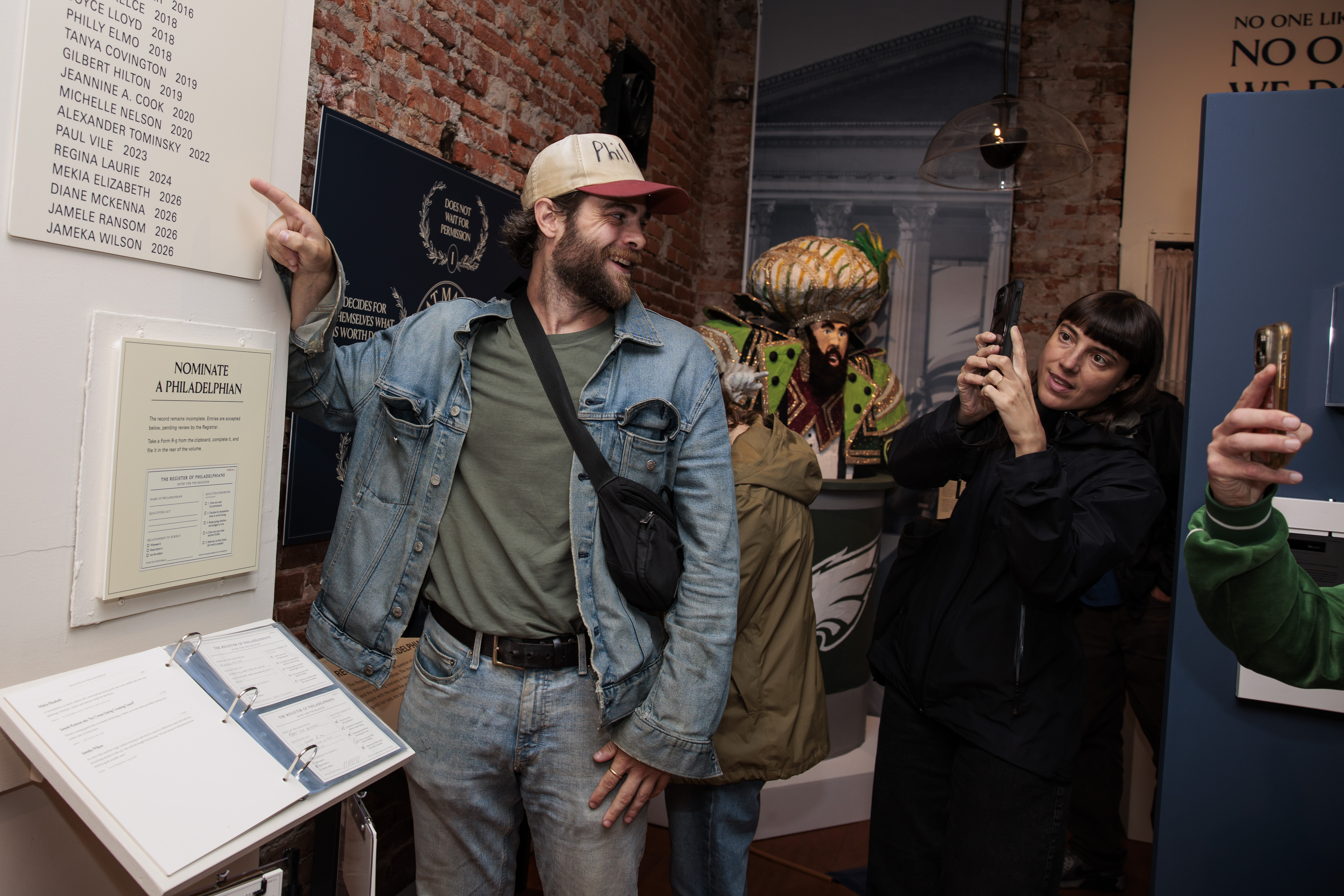
Alexander “Chicken Man” Tominsky walked into the Museum of the Philadelphian in a Canadian tuxedo and a baseball hat with “Phillies” written on it in marker on Tuesday and was blown away to find his name on a plaque alongside other local legends like Benjamin Franklin and Philly Elmo.
“No way! Oh my gracious! Who would have known when I was a little kid crying in my pillow something like this would happen,” he said, pointing to his name.
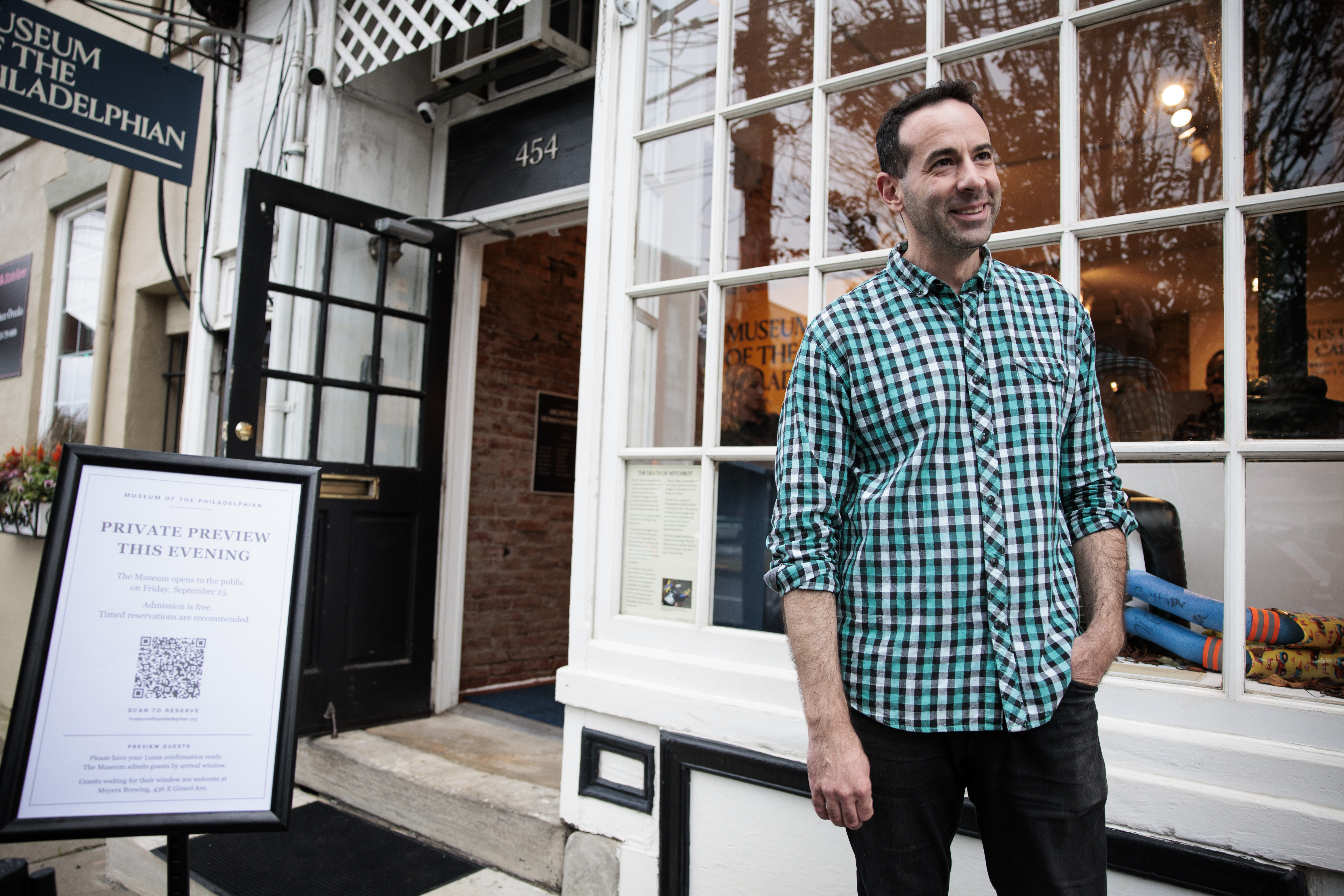
Tominsky — who became renowned throughout the land in 2022 for eating 40 rotisserie chickens in 40 days, culminating with a public noshing of a chicken on an abandoned Walmart pier in South Philly — was invited to a preview opening for the museum by its founder and creator, Brian Adoff.
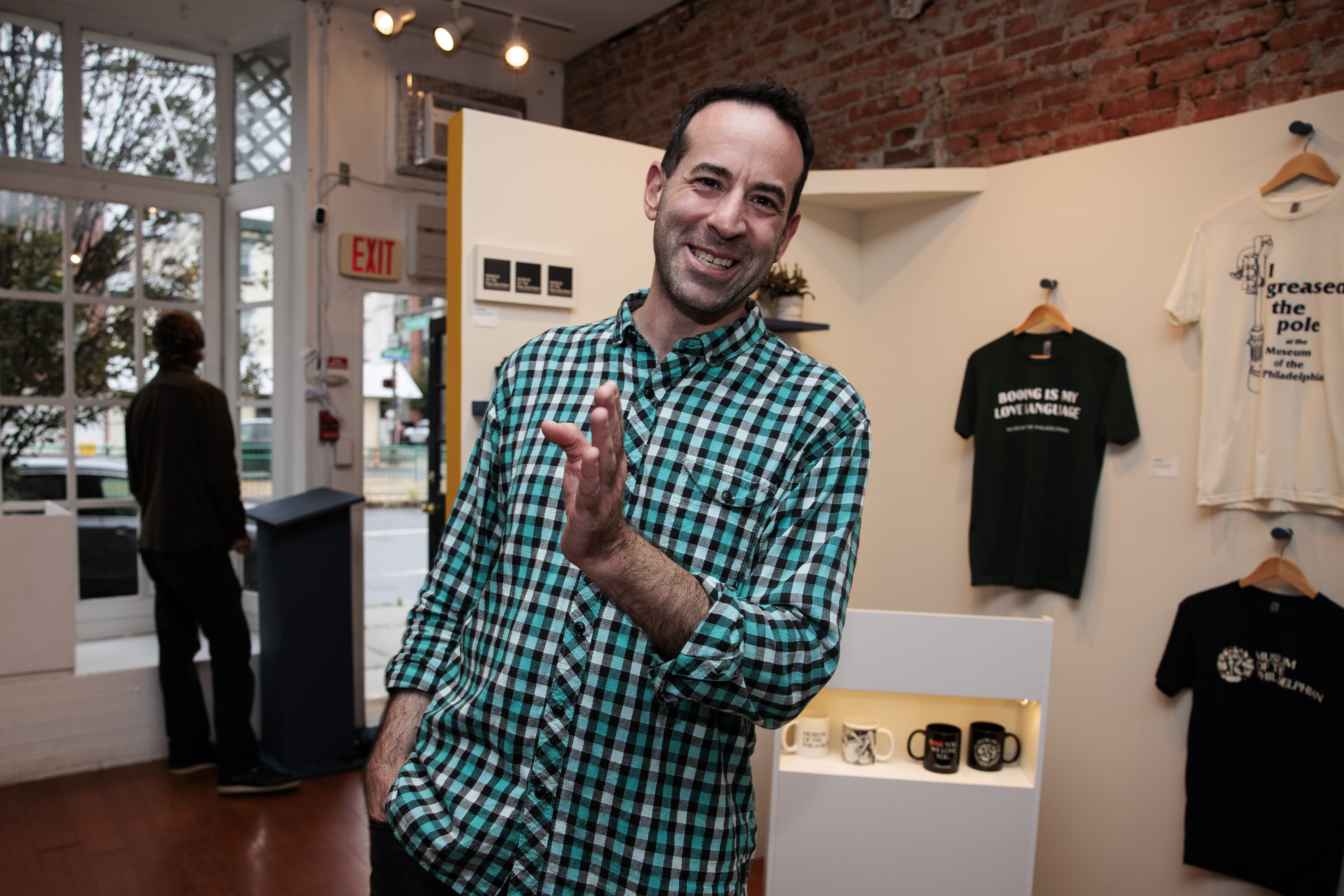
Founder and creator Brian Adoff outside his Museum of the Philadelphian in Fishtown.Monica Herndon / Staff Photographer
“The museum is about the personality and attitude and conduct of Philadelphians,” Adoff said. “My personal hope is that you leave inspired to really be the best version of yourself, the best Philadelphian you can be.”
Located in a 300-square-foot storefront that was previously Adoff’s office on East Girard Avenue in Fishtown, the free, temporary “micro museum” is just down the road from another Philly landmark — the “I Hate Bank of America” sign. The large, yellow banner was put up by a homeowner in 2007, after the bank branch across the street ticked him off. The branch closed many years ago, but the sign remains, a grand tribute to Philadelphians’ spite.
View on Threads
What makes Philadelphians this way? And what makes it so oddly endearing? These are questions Adoff explores in his absurd and unexpectedly heartwarming museum, which opens Friday.
“There’s an emotional narrative arc the museum takes in its 300 square feet, where it ends with literally a book of Philadelphians who exhibit five qualities that I’ve determined, with my crack team of curatorial advisers, that make up a Philadelphian,” Adoff said.
As of a student of the Philadelphian who’s written hundreds of profiles of the everyday people who make me love this city more every day, I thought Adoff had set a lofty goal for himself when we first met earlier this month. How do you distill what it means to be a Philadelphian in 300 square feet? And how do you decide who makes the cut?
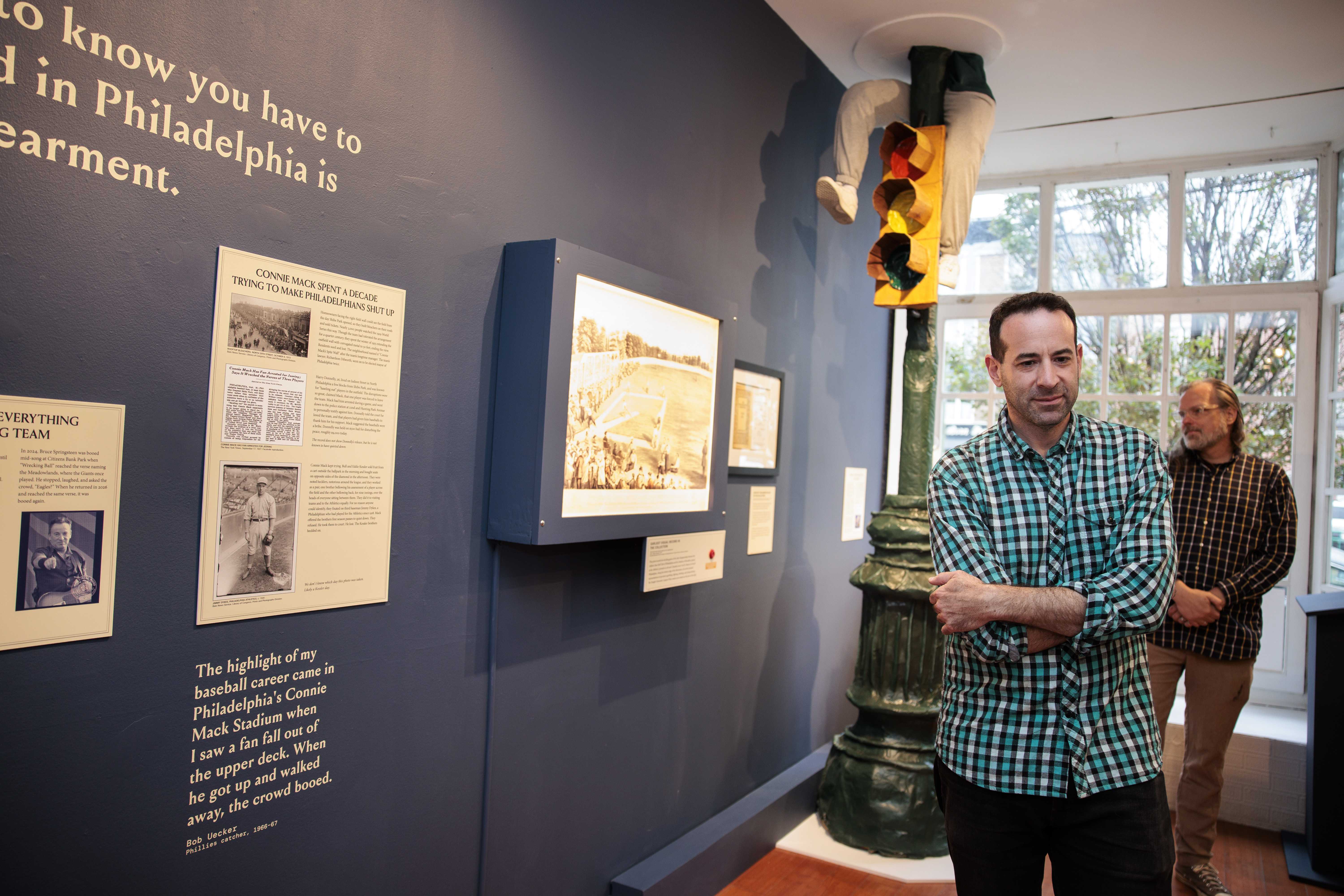
At the preview Tuesday, I was pleased to find that over the course of about 20 exhibits in the space, Adoff skillfully addresses the Santa-hating-battery-throwing-robot-killing tropes that haunt Philadelphians, while also getting to the oddly-touching truths behind those, and other very Philly stories.
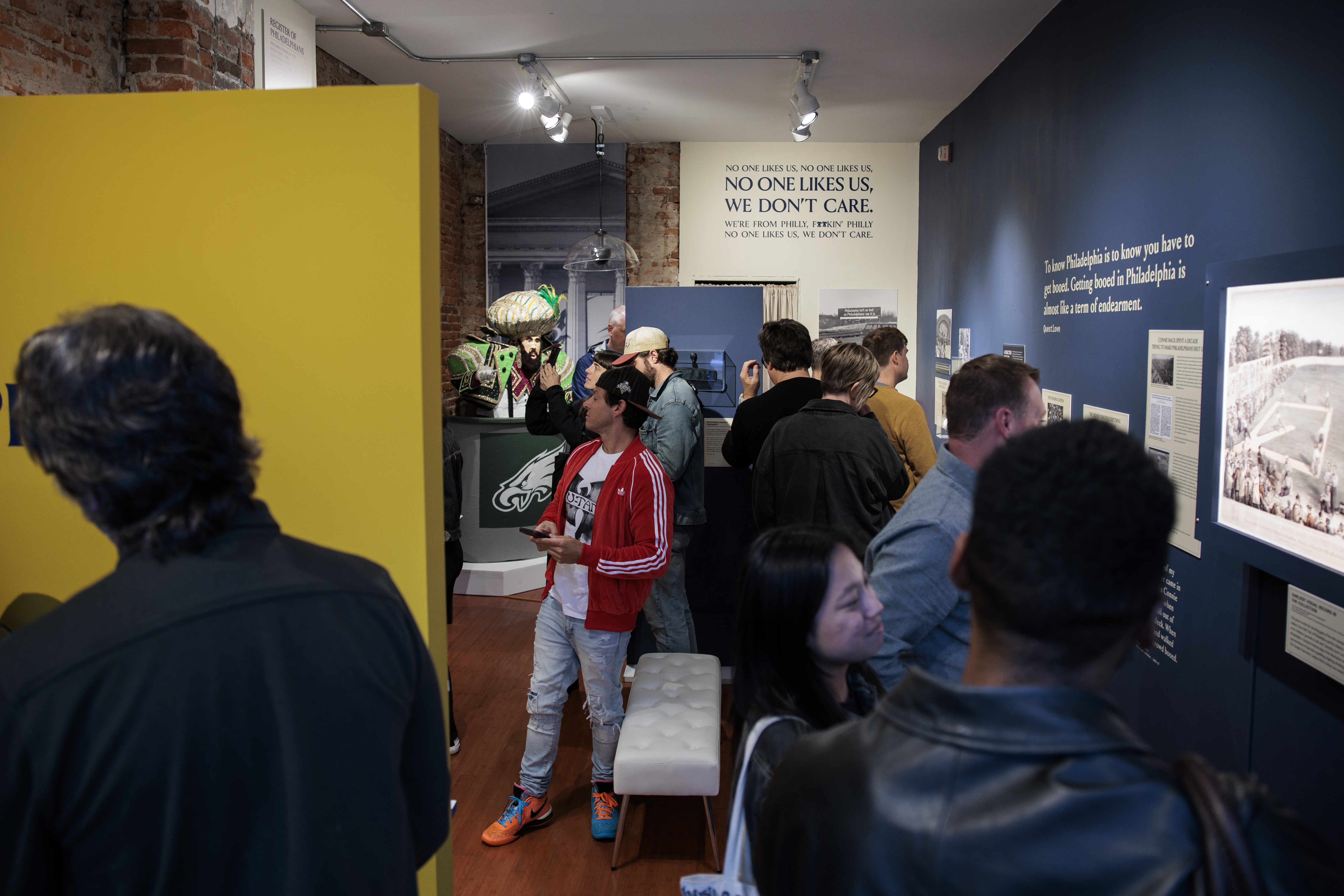
Visitors browse the Museum of the Philadelphian.Monica Herndon / Staff Photographer
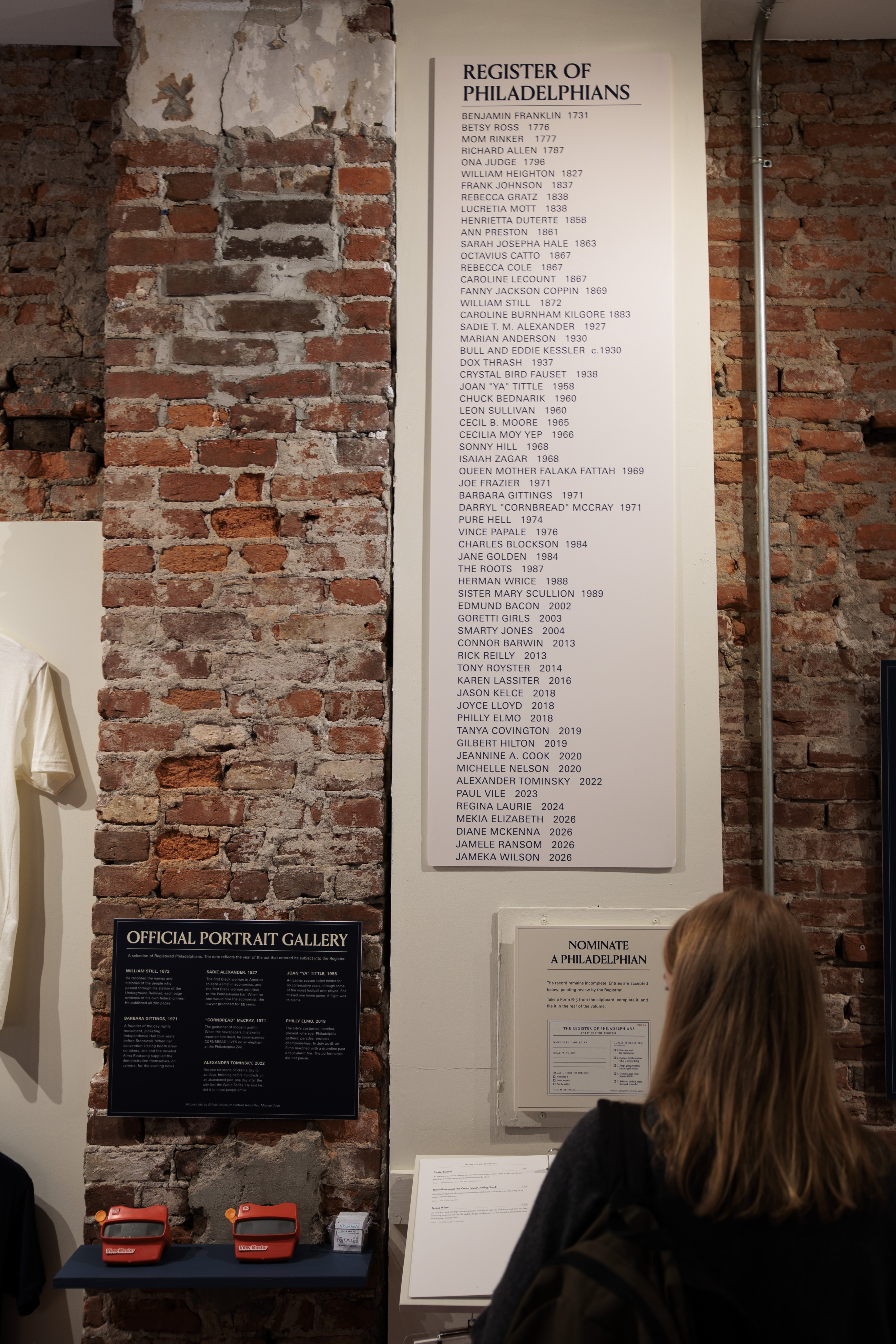
And while Adoff and his team have compiled a “Register of Philadelphians” with more than 50 names and stories of local folk heroes who epitomize what it means to be a Philadelphian, their best decision may have been to include cards for visitors to nominate their own quintessential Philadelphian. Because if one thing is certain, Philly is going to have thoughts.
Grease the pole
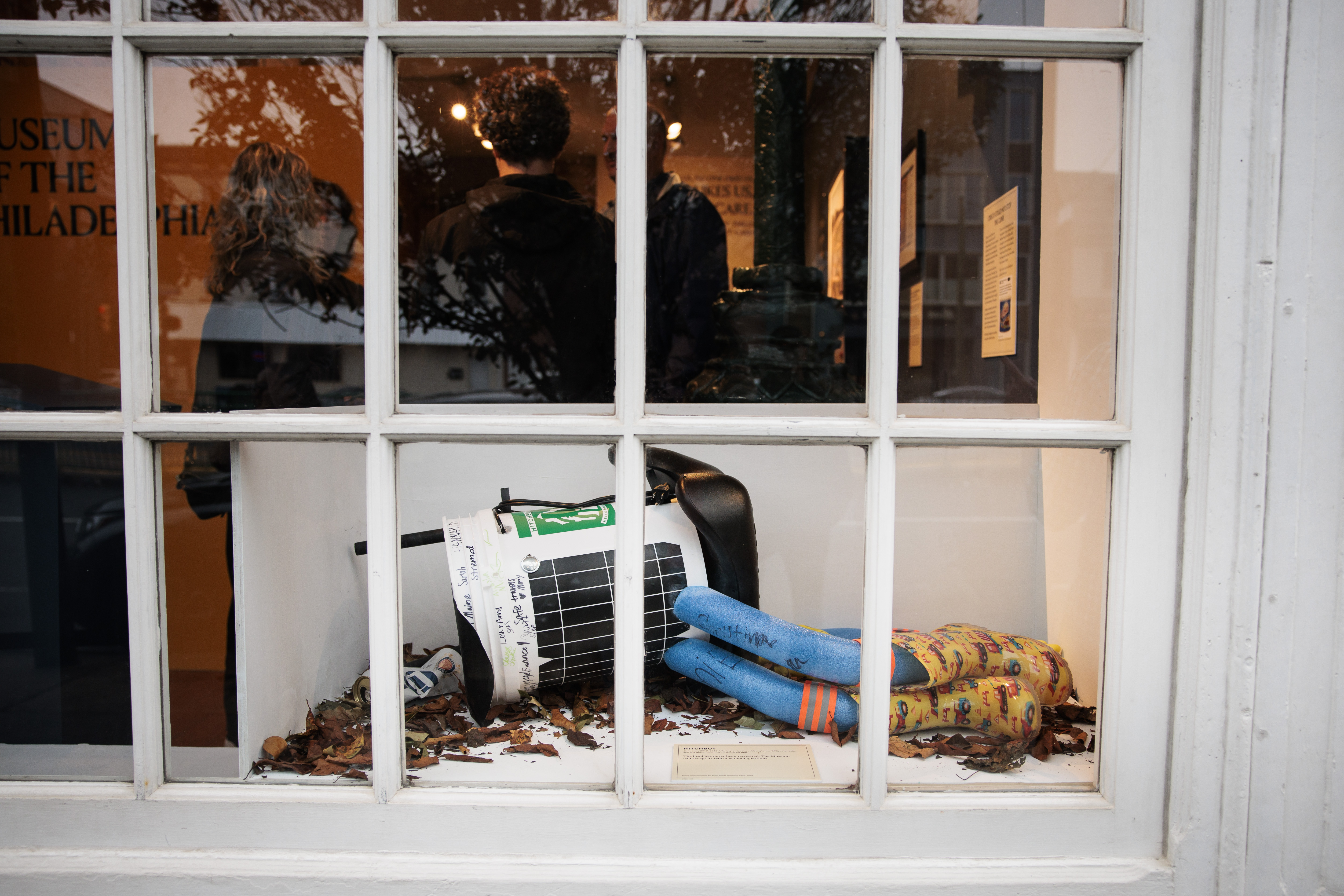
Guests are greeted in the museum’s front window by a re-creation of the death of hitchBOT, the hitchhiking Canadian robot who traveled across the country on human kindness, only to be dismembered and beheaded in Philly. In the accompanying plaque, Adoff notes that Philadelphians offered to rebuild the robot, and that a Philly police detective jokingly blamed the crime on New Jerseyans.
A re-creation of the death of hitchBOT is displayed in the front window of the Museum of the Philadelphian.Monica Herndon / Staff Photographer
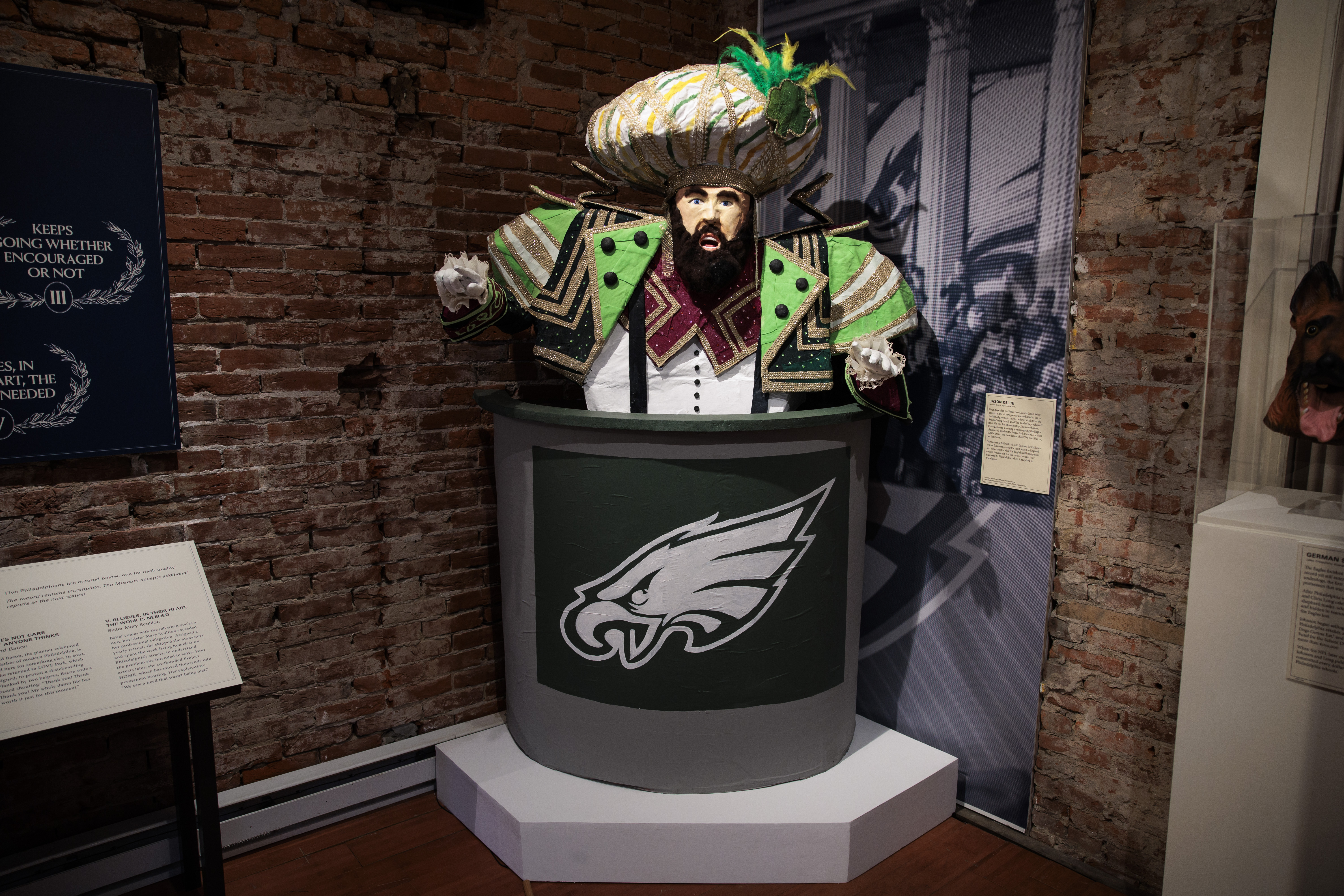
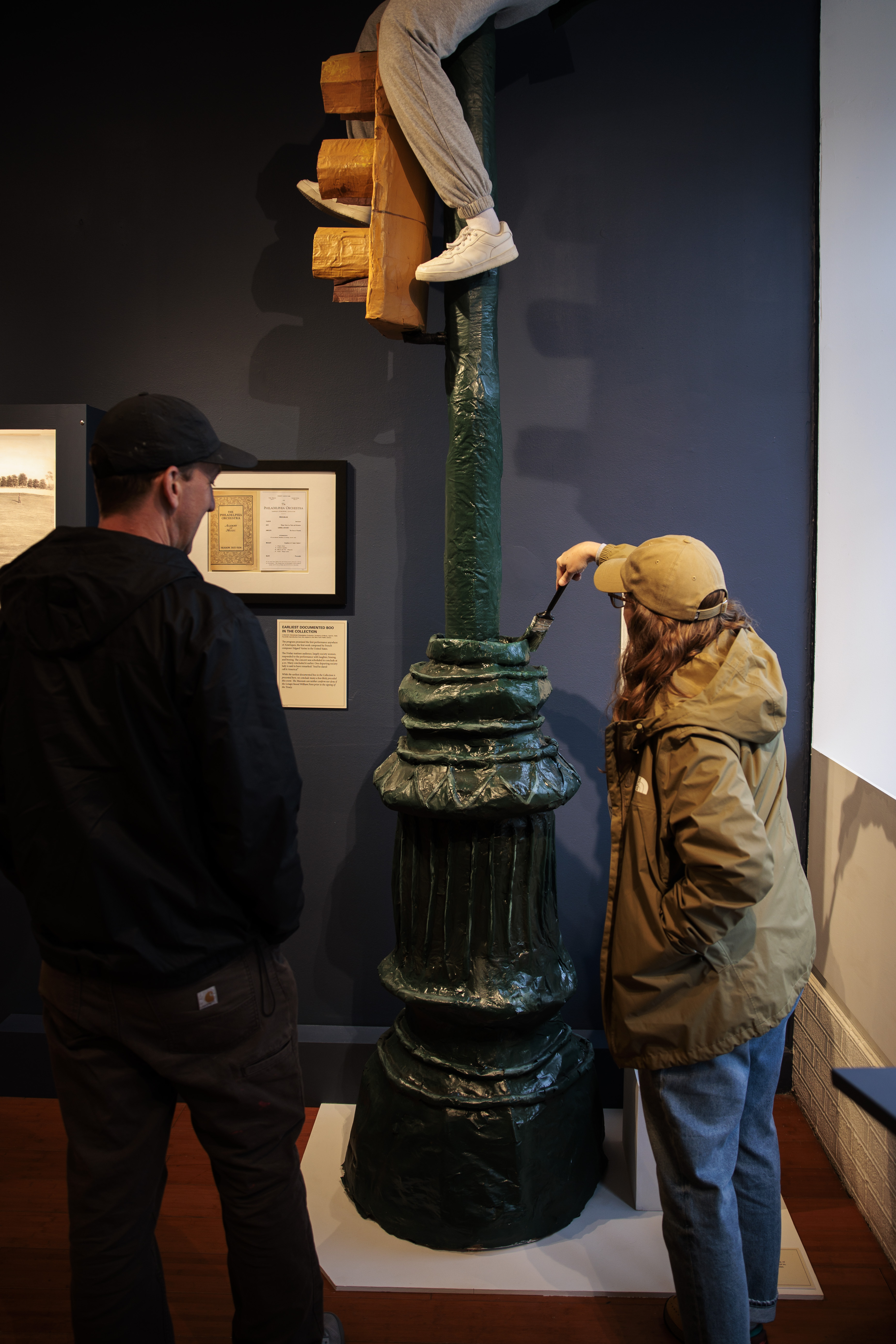
Once inside the museum, two large papier-mâché sculptures immediately catch the eye — one, of a Philadelphian climbing a greased pole, and the other of Jason Kelce during his Eagles Super Bowl speech. In the first, guests are invited to “grease the pole” with a paintbrush and clear goo from a nearby can (you know I did it!), and at the latter, visitors can stand under a sound dome (fancy!) in front of the sculpture to hear Kelce’s “Hungry Dogs” speech.
A papier-mâché sculpture of Jason Kelce during his 2018 Eagles Super Bowl speech is featured in the Museum of the Philadelphian.Monica Herndon / Staff Photographer
In the center of the room is a freestanding wall with a rearview mirror on it. The accompanying plaque tells the story of Ted Passon, whose parked car was flipped in the aftermath of the Phillies 2008 World Series win. Passon created a blog asking Philadelphians who enjoyed the spectacle to help pay for his vehicle, and through the generosity of donors, he was able to get a new car and give $3,000 to someone else whose car was flipped. On an iPad at the exhibit, visitors can play a YouTube video of the flipping and read Passon’s blog.
I remembered the story well because I interviewed Passon about it in 2008. Seeing him at the event Tuesday was a full-circle Philly moment for both of us. Passon, who’s now an Emmy Award-winning documentarian, said he was happy to loan the mirror of the vehicle Philly claimed from him to the museum.
“It’s an honor to be included in the story of Philadelphia,” he said. “If I can be a footnote in the city’s history, I did something right in my life.”
‘Booing is my love language’
Other exhibits explore Philadelphians’ history with booing, our history of throwing things, and the five qualities Adoff and his team have decided make a Philadelphian, with number one being, “Does not wait for permission.”
The “Register of Philadelphians” on the wall and accompanying book begins in 1731 with Benjamin Franklin and ends this year, with Jameka Wilson, the woman who went viral for her TV interview about kicking a man in a Chucky mask who was terrorizing pedestrians.
The Register of Philadelphians features notable Philadelphians ranging from Ben Franklin to Jameka Wilson. To the left of the register is the museum’s official portrait gallery, which can be seen through two ViewMasters. Monica Herndon / Staff Photographer
I was excited to see a couple people I’ve written about on the list, including Paul “Jelloman” Vile and the late Gilbert Hilton, who turned heads across the city for years in his “Badillac” car, which was covered in items from Goodwill, and who was one of the most Philly people I’ve ever met.
There’s also a portrait gallery by the Rev. Michael Alan of seven Philadelphians in the register that can only be seen through an old-school ViewMaster, which were a hit with the crowd.
“It was a small space and this was a way to make something look bigger without being bigger,” Alan said.
Creator and founder Brian Adoff talks about the Museum of the Philadelphian in front of the museum’s gift shop. Monica Herndon / Staff Photographer
The tiny museum even has a gift shop with shirts that say “I greased the pole at the Museum of the Philadelphian” and bumper stickers that read “Booing is my love language.”
‘The most Philadelphian thing’
The museum was funded by Adoff through his experience design studio, Architects of Human Connection, and admission is free because he believes “the Philadelphian has paid enough.”
The museum is a culmination of Adoff’s many endeavors over the years, from music, clowning, absurdist theater, and working as a tour guide for the Greater Philadelphia Film Office, to managing a software business and, most recently, creating events that connect Philadelphians.
In 2023, he cofounded the Fishtown Choir,and last year, Adoff created Join Philly, which connects Philadelphians with area clubs and groups.
The idea for the museum came to Adoff in June, as he was trying to think of uses for his storefront office space. With the help of five paid collaborators, Adoff built the museum in less than three months, which is impressive, given the amount of research that clearly went into the exhibits, plaques, and bios.
“It started kind of absurd and silly until I was like, ‘Oh, this is just like everything else I do. It matters and it actually has heart and it has meaning,” he said.
Brian Adoff in the Museum of the Philadelphian he created in Fishtown. Monica Herndon / Staff Photographer
Here’s the potentially scandalous thing — Adoff isn’t a Philly native. He’s originally from Long Island, moved to Cherry Hill as a kid, and came to Philly to attend the University of Arts. He spent time in Chicago then returned to Fishtown 20 years ago, where now lives with his wife and son.
Knowing how nativist Philly can be (my native colleagues said transplants can “never” say they’re from Philly if they moved after the age of 13), I had to ask Adoff what gave him the gall to open the museum.
“Because I express the qualities that make a Philadelphian,” he said.
“But you decided those qualities, right?” I asked. (They are: 1. Does not wait for permission 2. Decides for themselves what is worth doing 3. Keeps going whether encouraged or not 4. Does not care what anyone thinks 5. Believes, in their heart, the work is needed).
“Yes, which is the most Philadelphian thing I could have done,” he said.
Adoff wants people to leave his museum feeling as inspired as he did after watching the opening of the Obama Presidential Center on TV. He dreams of Rob Mac narrating an audio tour of the exhibit, like Steve Buscemi does for Eastern State Penitentiary. And his longterm goal is to open a more universal experience one day — a fart museum. Everybody isn’t lucky enough to be a Philadelphian, but everyone farts.
I imagine Benjamin Franklin, a fellow Philly transplant who once wrote a satirical essay about flatulence, would think that’s a gas.
Darrin Rowland (left), and Leslye Rowland grease the pole sculpture at the Museum of the Philadelphian on Tuesday. Monica Herndon / Staff Photographer
Know before you go
The museum, 454 E. Girard Ave., is open Fridays (5 to 8 p.m.), Saturdays (noon to 5 p.m.), and Sundays (noon to 5 p.m.) Sept. 25 through Nov. 1.
Admission is free, but timed reservations online are recommended. Opening night is already booked and only a few spots remain for this weekend.
Like Philadelphia, there is a lack of public bathrooms at the museum, in that there are none.
The museum is wheelchair accessible via a temporary ramp. Email visit@museumofthephiladelphian.org prior to visiting so staff can have the ramp ready.
All ages are welcome, but some exhibits do include profanity.
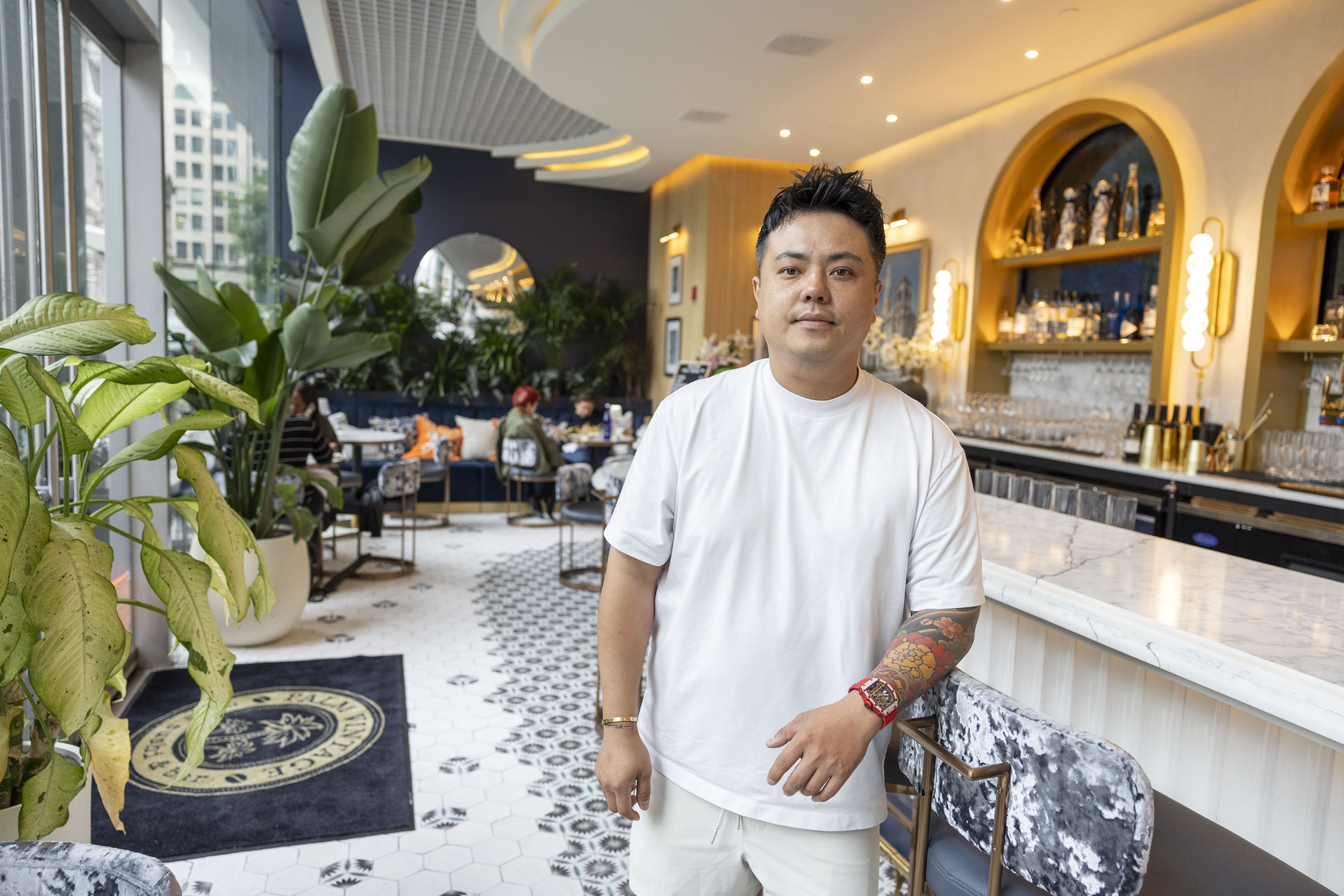
Palm Vintage, located on the ground floor of the Ritz-Carlton Residences, contains two concepts within one space. During the day, it’s an airy, welcoming cafe that serves Lavazza espresso drinks, sandwiches, and bagels. For dinner, the space morphs into a cocktail lounge that serves sushi rolls and sashimi sets that rival some of Philly’s best sushi restaurants.
Palm Vintage opened as a cafe in May and soft-opened dinner service last week, once it had obtained a liquor license. Its grand opening, which will highlight its evening offerings, is scheduled for Sept. 29. Until then, owner Houston Yang, 37, is tweaking the details of each dish and set.
Owner Houston Yang, of Fishtown, poses for a portrait at Palm Vintage on Tuesday, Sept. 22, 2026, in Philadelphia.Tyger Williams / Staff Photographer
The space’s name is meant to evoke Miami — where Yang loves to visit — and the old school, classic feel of its location.
Palm Vintage does not have an omakase: The space can only accommodate one counter, and that is dedicated to the cafe-cocktail bar. But its menu reads like a high-end sushi restaurant’s. There’s a mini omakase for $65 and a “treasure of the sea” set for $99.
The difference between sushi at Palm Vintage and, say, Oroshi, the nearby home of affordable omakase on Broad Street, is that at Palm Vintage, you receive all your pieces of nigiri and sashimi at once, rather than one by one.
The Hindi donburi set, which has toro, crab, scallop, yellowtail, oyster, caviar, and sushi rice at Palm Vintage.Tyger Williams / Staff Photographer
The types of fish served are crowd-pleasers, like salmon, fatty tuna, uni, and hamachi. Both the fish sets and cocktails are frequently decorated with gold leaf and edible flowers, appealing to the Instagram set and setting Palm Vintage apart from other casual sushi restaurants in Philly, including the others owned by Yang.
The five-piece hand roll set with toro, salmon, sweet shrimp, lobster, and crab at Palm Vintage.Tyger Williams / Staff Photographer
Yang is the entrepreneur behind Fuwa Teriyaki Grill and Fushimi, both located in the food court of the Shops at Liberty Place. Originally from Fuzhou, China, he moved to Philly as a child. Yang’s parents, who now help out at his food court sushi restaurants, owned a Chinese-American takeout restaurant in Delaware County that they sold a decade ago.
Yang and his wife lived in the Ritz-Carlton residences between 2023 and 2025 and during that time, identified a need within the building for a spot that served healthy dinners but also cocktails. “My wife loves sushi,” he explained as one impetus behind Palm Vintage’s sushi-driven menu. “But she also loves drinking, so I had to open a bar along with a sushi place.”
A toro hand roll from the five-piece hand roll set.Tyger Williams / Staff Photographer
Yang was also inspired by how readily available fresh sushi can be in Japan. “Two years ago, I grabbed sushi at an airport in Japan and had it on a flight — it was so easy,” he said. This sparked the idea that high-end sushi could be a casual experience. For years, going out for sushi in Philly has meant either grabbing affordable takeout, or splashing out for an expensive omakase. More recently, the gap in between those options has shrunk significantly, with the openings of places like Oroshi, Yanaga Kappo Izakaya, and the upstairs of Kissho House.
Palm Vintage took over the space that once belonged to Waterfront Deli and hired many of the former deli’s workers for their daytime cafe. This also means that they encounter the same regulars, many of them residents of the Ritz-Carlton Residences, on their morning coffee runs.
The Shiso Blossom cocktail.Tyger Williams / Staff Photographer
Palm Vintage’s craft cocktails are mellow and approachable and mostly within the $17 to $19 range. Like the sushi, they often are made of startlingly high-end ingredients, such as Hibiki Japanese whiskey.
“It’s a place to get nice drinks, nice food, but that food just happens to be sushi,” said Yang.
Palm Vintage is open every day from 8:30 a.m. to midnight. It operates as a cafe from 8:30 a.m. to 4 p.m. and the kitchen spends 4 to 5 p.m. flipping to sushi dinner service (the space remains open during this time). Dinner is served from 5 p.m. to midnight. Cocktails are served from 11 a.m. to midnight.
How will artificial intelligence affect student learning on college campuses?
We don’t know. And here’s the worst part: We don’t want to know.
That’s because we have never taken teaching — or learning — seriously. We don’t prepare future professors for the classroom. And have no real systems for evaluating and rewarding their instruction.
Dire warnings aren’t new
So we also don’t have good ways to evaluate the gee-whiz rhetoric from the AI industry, which assures us the tool will “revolutionize” learning. We’ve heard that song before. In 1913, Thomas Edison forecast that books would “soon be obsolete” in schools, and that “every branch of human knowledge” would be taught via film.
Like today’s AI barons, Edison had a vested interest in that outcome: He helped invent motion pictures and started a company to market them in schools. But none of his predictions came true. Ditto for the futurists who said radio, television, and personal computers would transform teaching and learning forever.
But AI is different, its enthusiasts tell us, because it interacts with us. In the brave new world to come, everyone will be taught by a robot tailored to their individual interests, skills, and goals. It will help students “build agency,” “learn continuously,” and “solve hard problems,” declares the largest provider, OpenAI.
The initial research suggests the opposite: Students forsake their agency to the bot when challenges arise. As a recent report by an AI committee at the Massachusetts Institute of Technology (MIT) warned, AI creates “the illusion of learning” for students who use it “at the first hint of struggle.”
But in higher education, we’ve been fostering the illusion of learning for a very long time. Over the past half century, we have assigned less work and awarded higher grades. And there’s no evidence — none — that our students are learning more.
Nor have we made a sustained effort to incentivize teaching. At every type of institution, from small community colleges to huge private universities, professors who spend more of their time on research make more money. Those who devote themselves to teaching make less.
And nobody is really minding the classroom itself. I have been teaching at the University of Pennsylvania for 10 years, and I have never been observed by someone with supervisory authority. I could be doing anything. Or nothing.
Sure, my students submit evaluations of my courses. But the results have never figured into my rank or salary. And a good review from your students doesn’t mean you did a good job teaching them.
Indeed, it might mean the inverse. In a 2010 study at the Air Force Academy, where everyone takes the same courses, professors who got high marks from their students gave out higher grades — and their students did worse in subsequent classes. Professors who were harder graders got lower student evaluations, but their students performed better later on.
Let’s teach teaching
If we really valued teaching, we would evaluate it the same way we judge each other’s research: via peer review. When I wrote a history of college teaching, I didn’t submit it to a group of 19-year-olds to decide if I had something important to say. It was vetted by specialists in my field.
We would also give future professors sustained instruction in how to teach. To obtain a doctorate at Penn, you have to spend six to nine years reading in your field and conducting research that contributes to it. To become a teaching assistant, by contrast, you receive a three-day training.
That’s why I called my book The Amateur Hour — not because all college teaching is terrible (some of it is terrific), but because we never professionalized it. We don’t hold each other to best practices, and we don’t have good data about who is doing what.
That’s the biggest scandal in higher education we talk the least about. And AI has shone a bright light on it.
Dozens of institutions — including Penn — have released policies and statements about proper and improper uses of AI. We want AI to “enhance student learning,” not inhibit it. But we never bothered to figure out how much students were learning in the first place. So we’re in no position to judge how the bot is affecting them.
Every institution providing Claude or ChatGPT to its students should also commit to researching their learning. It won’t be easy or cheap. But it’s the only way to see our way out of this mess. Without real knowledge, we’ll be flying blind.
I’ve heard colleagues say teaching and learning are too subtle and complicated to evaluate in a meaningful way. Please. Scholars at Penn have examined hugely complex forms of human behavior, from consumer choices to sexual decision-making. If we wanted to do the same for what happens in our classrooms, we could.
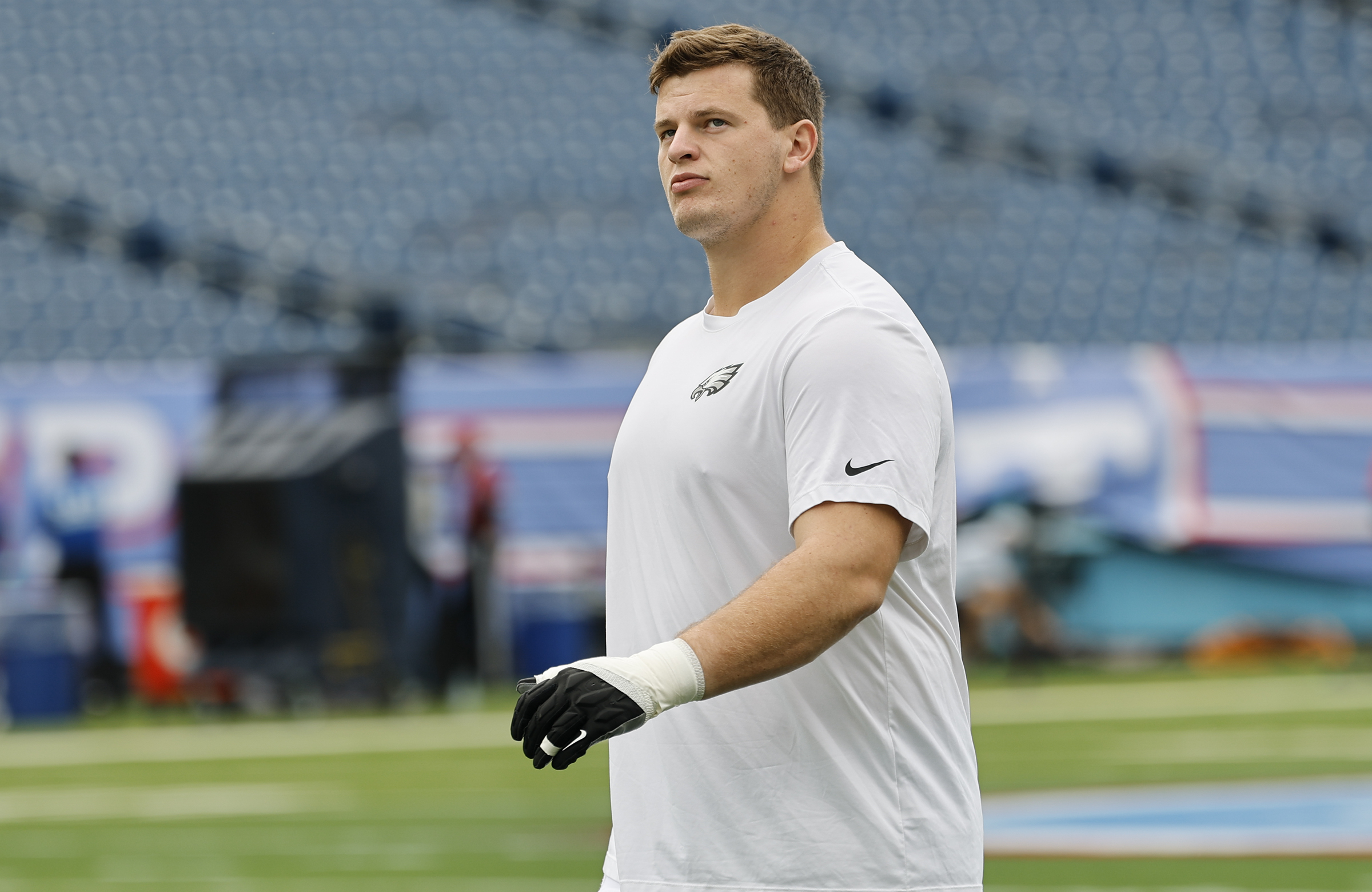
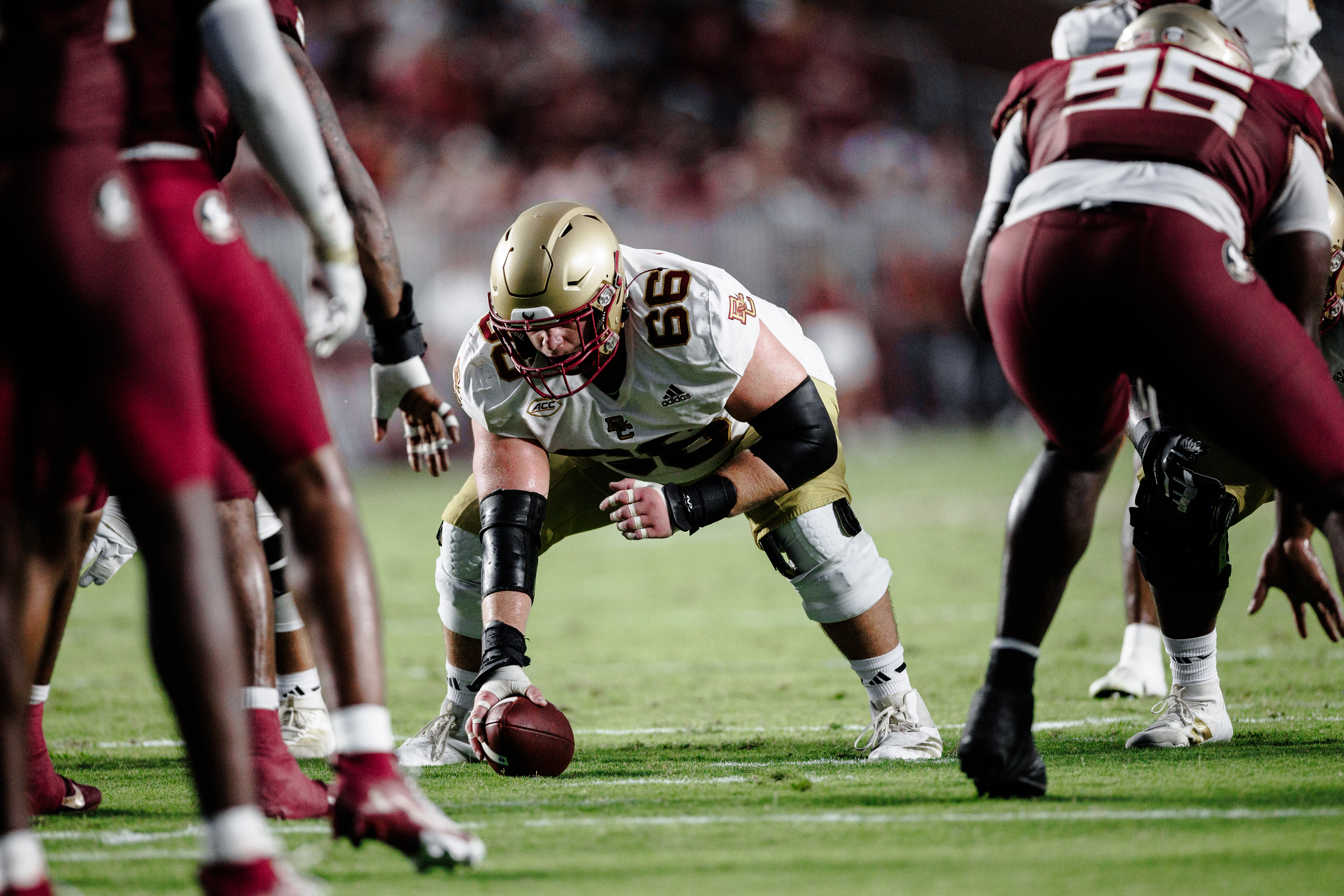
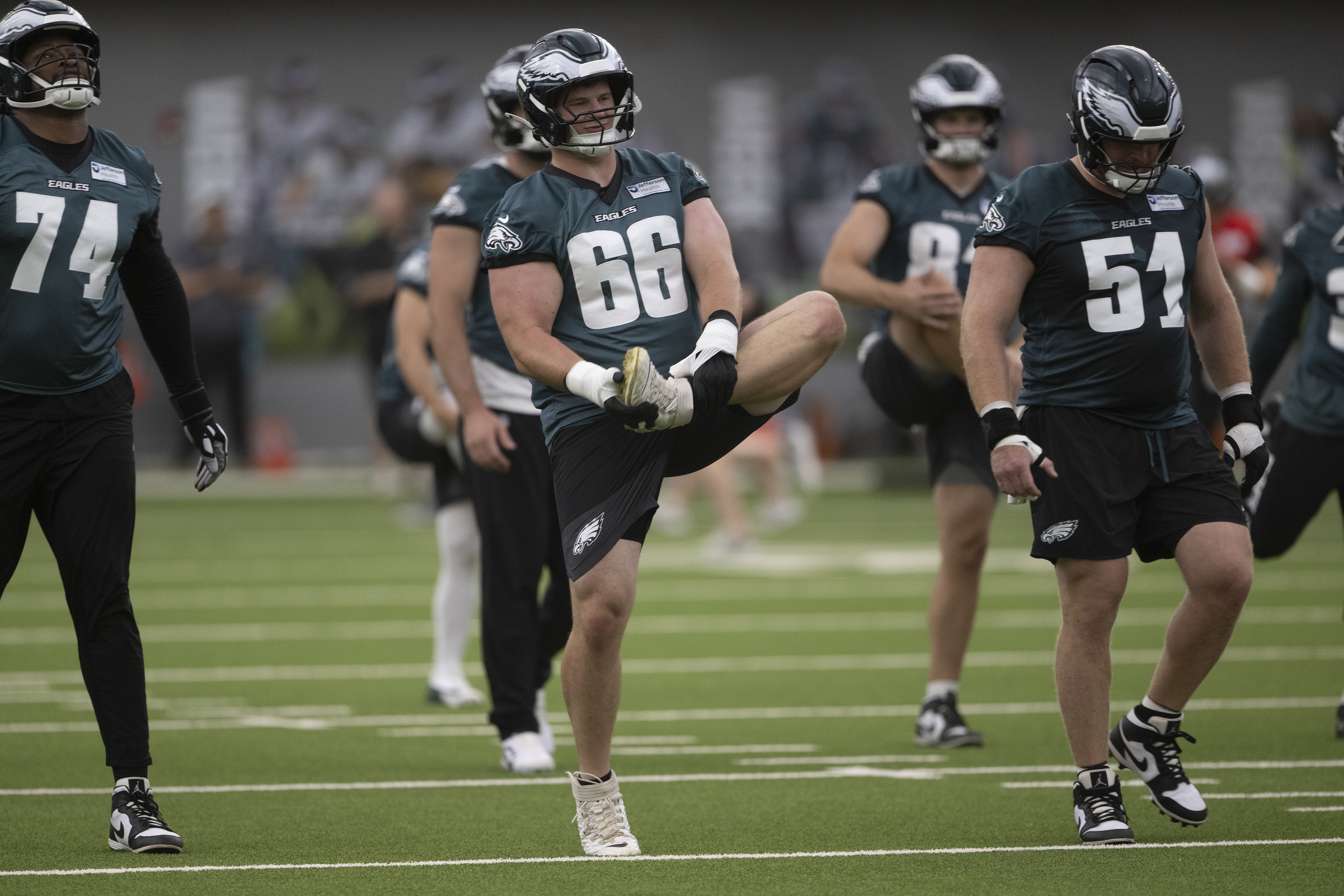
Jordan Mailata wasn’t exactly bashful when he shared his instant analysis of Drew Kendall’s first meaningful start at center, even as the second-year player stood within earshot of him in the Tennessee Titans visitors’ locker room.
Kendall, the Eagles’ 2025 fifth-round pick out of Boston College, took over Cam Jurgens’ typical starting spot at center, while Jurgens slid over to left guard in place of the injured Landon Dickerson last Sunday.
The Titans turned up the temperature of the game — and not only in a literal sense, with the turf reaching 157 degrees Fahrenheit, according to the Fox broadcast. The Eagles offensive line was also tasked with containing a Titans defensive front headlined by All-Pro defensive tackle Jeffery Simmons.
Kendall didn’t show any nerves, according to Mailata.
“He’s got f—ing ice in his veins,” Mailata said after the game.
Mailata then turned in Kendall’s direction and doubled down.
“Yes, you do, son,” Mailata continued. “Yes, you do. He’s cool as a cucumber out there, making sure that we’re all on the same page. That’s what you need. I think we won this game because of just his operation, the way he was very cool, calm, and collected.”
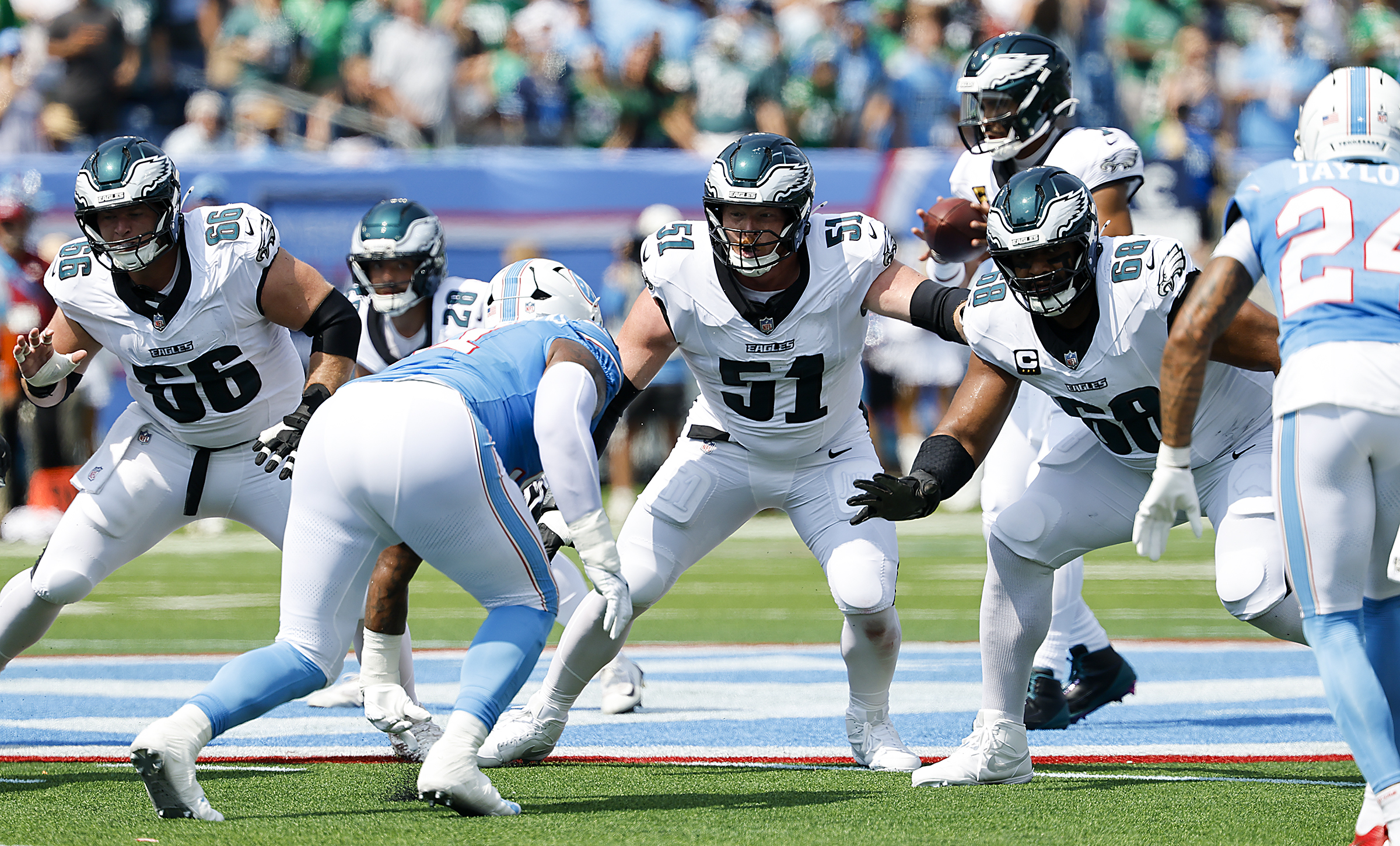
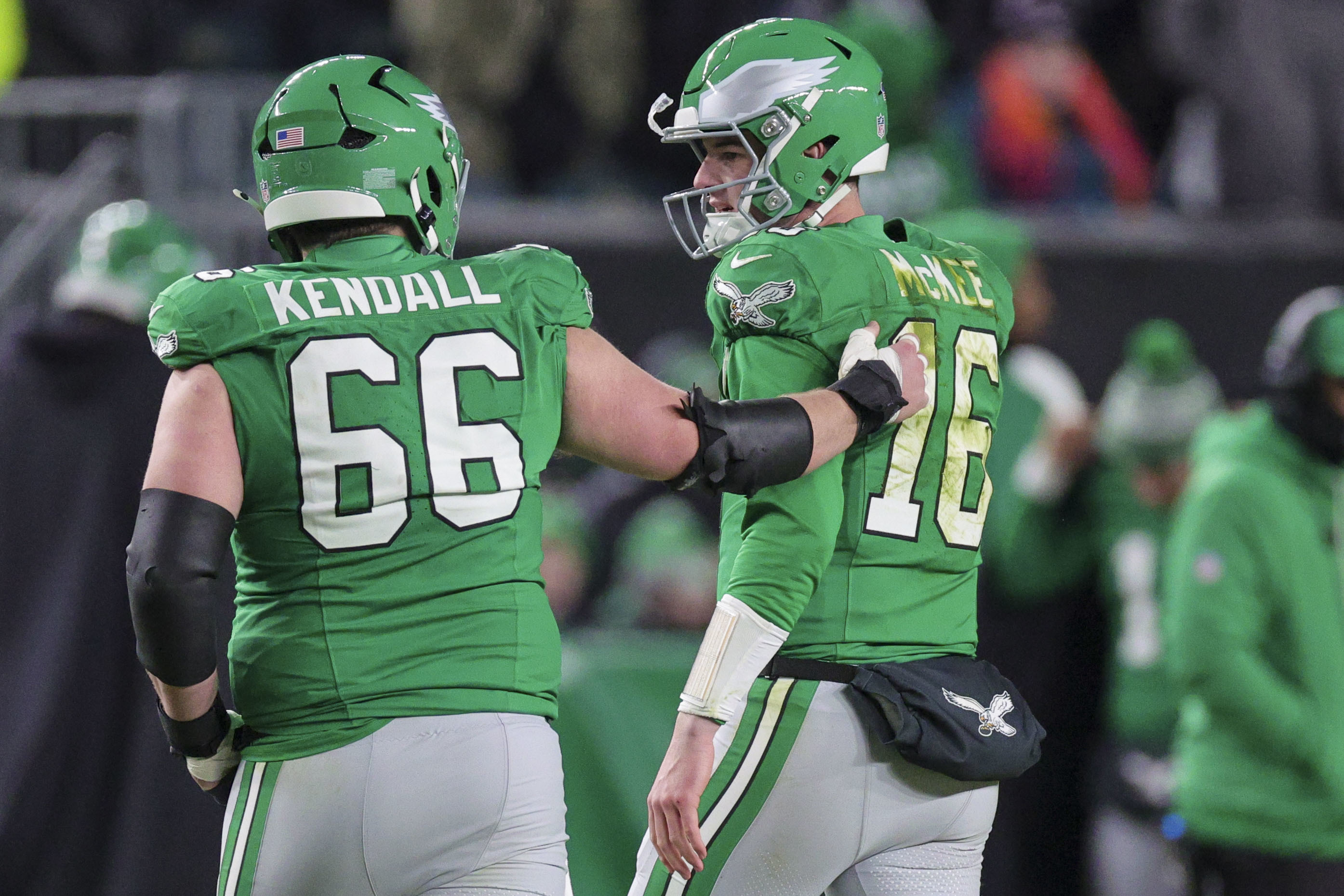
Eagles center Drew Kendall (66), guard Cam Jurgens (51) and Jordan Mailata (68) had their struggles in run blocking but helped fuel a thrilling 24-20 win in Tennessee. Yong Kim / Staff Photographer
Confidence begets confidence. Earlier in the week, Kendall noted that his confidence in his own play — one of the biggest self-identified differences in his mindset between his rookie and second seasons with the Eagles — stems from his teammates’ demonstration of belief in him.
Kendall could have more opportunities to affirm those votes of confidence, as Dickerson must miss at least the next three games while on injured reserve with a knee injury. Offensive coordinator Sean Mannion would not confirm that the Eagles will go with the same offensive line configuration against the Chicago Bears on Monday night, but Mailata emphasized the importance postgame of continuity among the group.
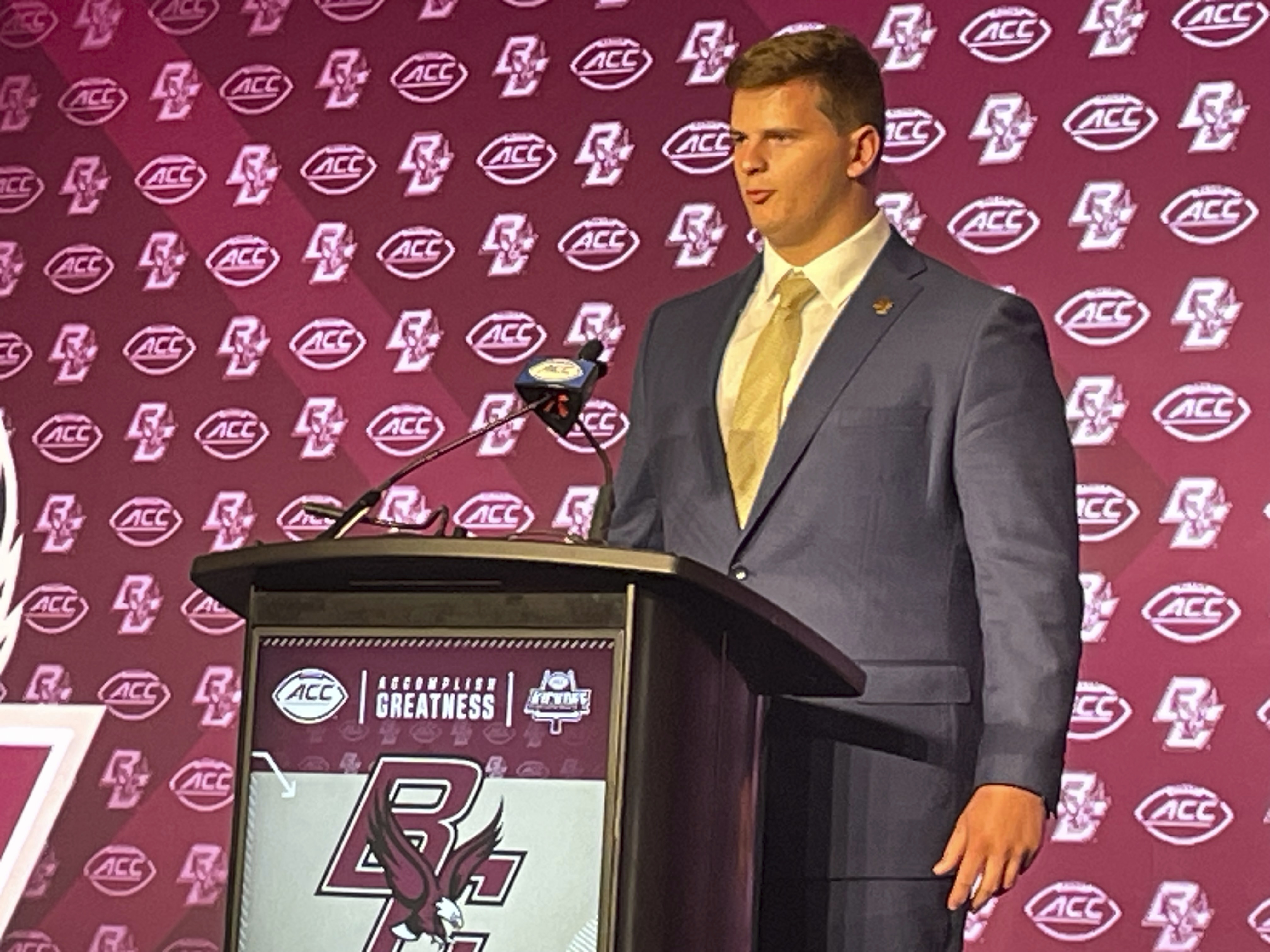
Regardless, Kendall met the moment on Sunday, with room to grow going forward. His solid start was no surprise to his former coaches at Boston College, who long believed he had the ability and the makeup to carve out a role on an NFL offensive line.
“He had the traits,” said Matt Applebaum, Kendall’s offensive line coach of three seasons at Boston College. “Just the competitiveness, the desire to do things the right way and be a great player. He just has all those traits. I thought very early in the process, in recruiting, my vision for him was that he could be a pro center.”
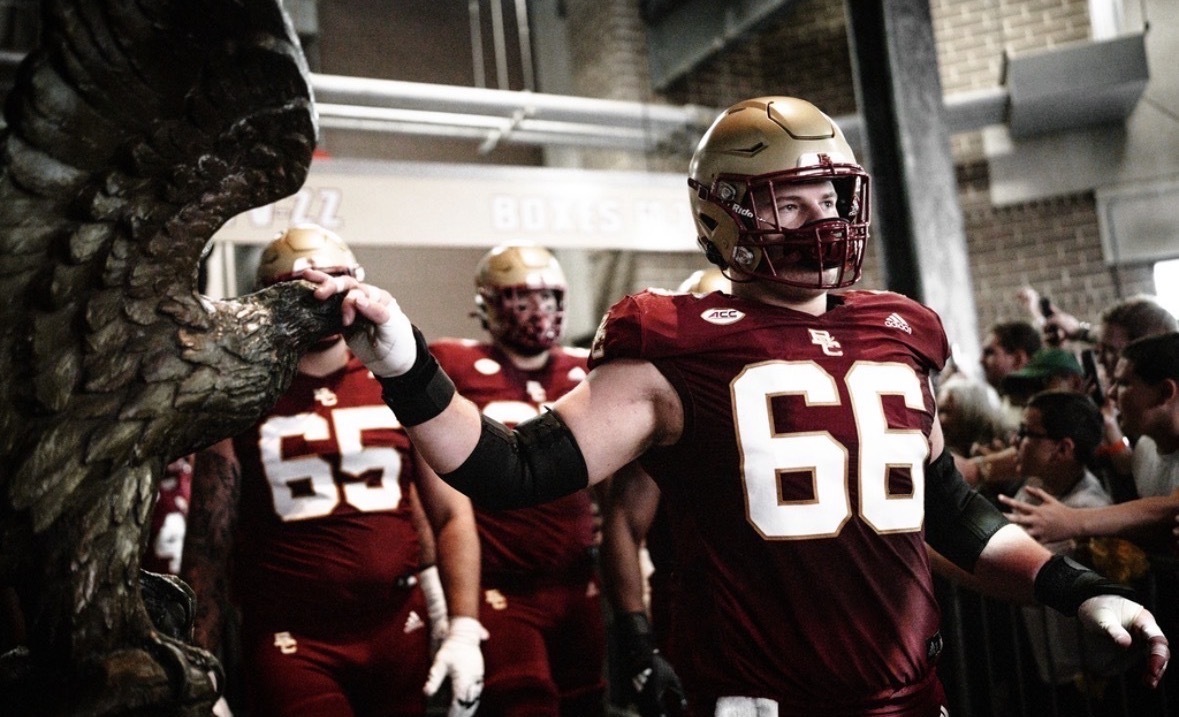
Drew Kendall (66) parlayed his performance at Boston College into a third-day selection in the NFL draft.Boston College athletics
A ‘pro center’ in college
Bill O’Brien assumed the head coaching role at Boston College in 2024, his 32nd season coaching at either the collegiate or pro levels.
When O’Brien arrived in Chestnut Hill, Mass., Kendall was entering his third season as the starting center in his redshirt junior season. According to O’Brien, who served as the Houston Texans head coach from 2014-20, Kendall reminded him of the centers he had encountered in the NFL.
“He was kind of like having a pro center in the college program,” O’Brien said. “That’s basically what Drew was. He knew exactly what we wanted to do, how we wanted to do it, and he was great at it.”
The signs of his potential were there early on, long before he started a game at BC. Applebaum, now the Miami Dolphins assistant offensive line coach, recruited Kendall out of high school in 2020. At the time, Kendall was a four-star recruit out of the Noble and Greenough School in Dedham, Mass., and the No. 1 recruit in the state.
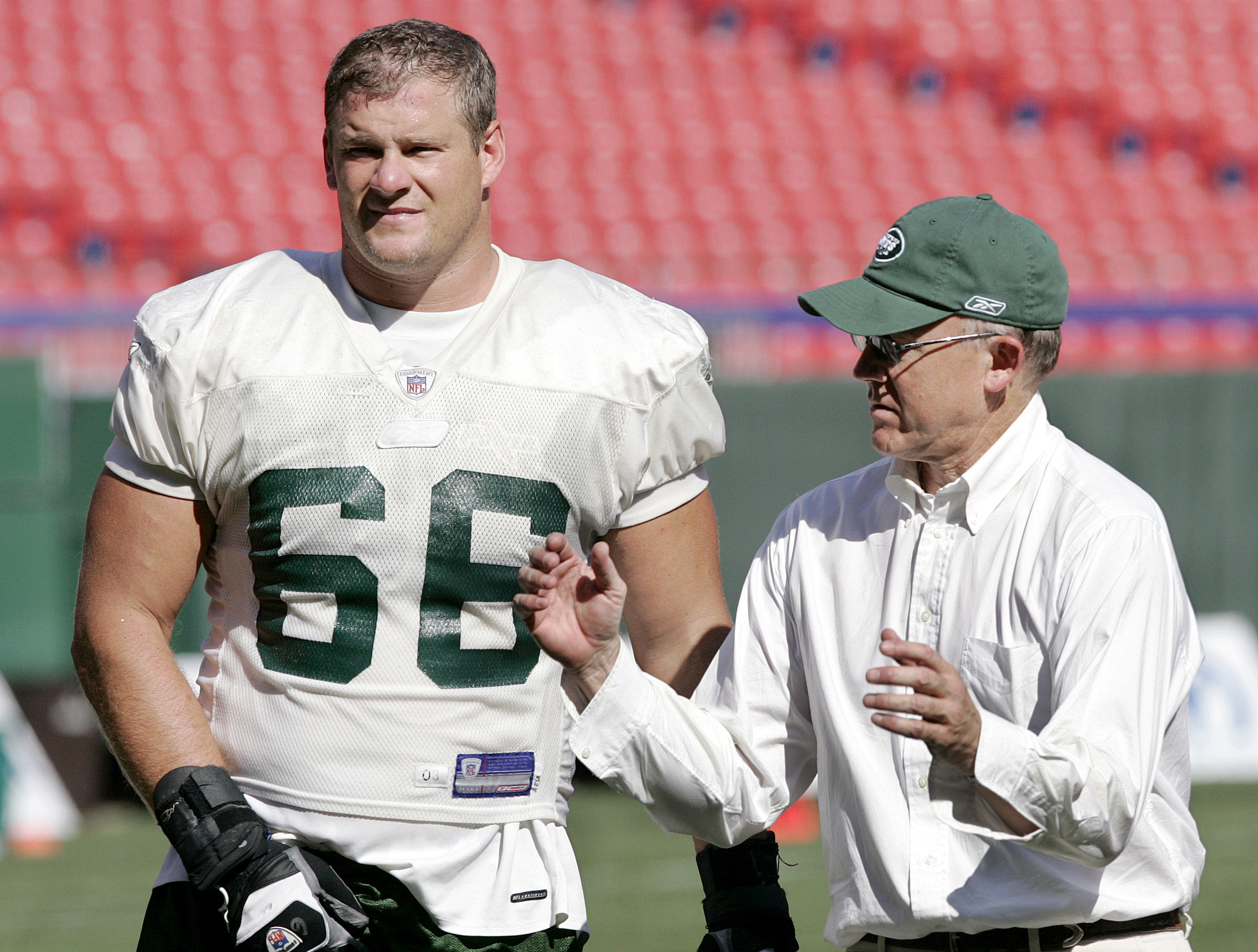
Applebaum understood why. The young offensive lineman possessed a maturity atypical of most 18-year-olds, which lent itself to his makeup as a center. He had a strong foundation, too, given that his father, Pete, was a first-round pick in the 1996 draft out of Boston College by the Seattle Seahawks and played at guard and center in the NFL for 13 seasons.
Pete Kendall (66, with Jets owner Woody Johnson) helped pass on offensive line acumen to his son, Drew.MEL EVANS
Then, there were the physical traits. Applebaum called the then-6-foot-4, 285-pound Kendall a “natural athlete,” as he played on both sides of the line in high school and even lettered in lacrosse.
“He was just one of those guys that was good at things and athletic and smart,” Applebaum said. “So the only thing he was going to have to do when he got to school was just get bigger and stronger throughout his career, which he did in college.”
Alec Lindstrom, who was the starting center for BC when Kendall arrived, was struck by his athleticism at his first summer workout. As Kendall went through positional drills, Lindstrom could tell that he wasn’t like most 18-year-old newcomers.
“You could kind of tell he was a step ahead, and you knew he was going to be a good player based on his quickness, his body control, and things like that,” Lindstrom said.
But Kendall would have to wait to display that athleticism on the gridiron on game days. He took a redshirt year in 2021 as Lindstrom, an eventual Rimington Trophy finalist and undrafted free agent in the NFL, commanded the starting center role in his redshirt senior season.
Kendall had the right attitude about taking the season to learn and grow behind Lindstrom, Applebaum said.
“Drew, right from the jump knew, ‘OK, this is set up for me to learn from somebody that’s been there, done that, knows what it’s supposed to look like,’ and he really took that very seriously and really pushed the envelope in terms of being ready to play if he needed to,” Applebaum said. “So he developed very quickly that way.”
Drew Kendall (66) won the respect of two coaching staffs while starring at Boston College.Boston College athletics
Kendall spurred that development, especially as he continued to grow comfortable with the pre-snap responsibilities on the center, by asking questions of his fellow offensive linemen and coaches. Lindstrom recalled Kendall asking him questions about what he was seeing from the defense in practice, after games, and in the meeting room while watching film.
That attitude toward learning was just as important as his intelligence and ability to process information quickly, according to Lindstrom.
“To play center you have to be smart, but you also have to be quick-thinking,” Lindstrom said. “You break the huddle, you get up to the line, you have two seconds to identify everything, so you have to be kind of quick on your feet and smart. And I think Drew, he has that to begin with, but also when you put his attitude and his wanting to learn together, I think it’s a good combination.”
Kendall would go on to put those traits together as a three-year starter in the ACC for the Eagles. He had to learn three different offenses throughout his college career, and Applebaum said he picked them up “excellently” thanks to his processing ability.
He could make all of the pre-snap identifications and adjustments with ease. While quarterbacks and centers typically share the burden of those pre-snap responsibilities on most teams, Applebaum said the team predominantly leaned on Kendall in that area.
“I would say we put probably more on his plate than a lot of other college centers would have to handle, because he was capable of handling it,” Applebaum said.
Drew Kendall’s decision to depart BC after his redshirt junior season was a blow to the program, but one the coaching staff understood. Steve Reed
His athleticism also fit well in Boston College’s offense, which incorporated a variety of run schemes, including outside zone, pin-and-pull runs. Kendall was often one of the pullers, O’Brien said, as he harnessed his initial quickness and lateral agility by kicking out defenders on the edge.
Kendall could handle the rigors of executing each play, all while ensuring everyone on the line was on the same page. But what ultimately made him a pro at the college level was his consistency, according to O’Brien.
“He was there every single day,” O’Brien said. “Did his job in every game. I wanted him to come back, and obviously he made the right decision [declaring for the draft], because he’s doing great.
“But we really missed him last year. We did not have a great year, and I think not having him was a big part of that.”
Emerging from another redshirt season
When the Eagles drafted Kendall last season, he didn’t have a clear path to a starting job with Jurgens — and even Brett Toth — ahead of him on the depth chart at center. In a way, history was repeating itself for Kendall, who didn’t start his first season at BC.
Kendall already understood how to take advantage of a redshirt season. But the challenges that awaited him at the NFL level were different.
“The type of guys you’re blocking week-in and week-out at practice, and then obviously on Sundays, much bigger, much stronger,” O’Brien said. “Maybe there were some guys that he blocked in college that were that size and that strength and had that power and explosion. But it’s every guy in the NFL.”
Drew Kendall (66) was forced to adjust to the rigors of the NFL as a rookie in 2025.Jose F. Moreno / Staff Photographer
Kendall said during training camp that he made it a priority to “reshape” his body, with a focus on adding muscle. He estimated during the summer that he was hovering between 300 and 305 pounds, and he’s now listed on the Eagles roster at 308.
He noted that prioritizing sleep, and not eating too close to bedtime, helped him with muscle growth. Kendall said he wasn’t “killing myself in the weight room” as he has in years past. He combined his focus on sleep, nutrition, and hydration with a consistent offseason workout plan, which included training sessions with Lindstrom, Bears left tackle Ozzy Trapilo, and other former Boston College offensive linemen.
Lindstrom said the group, led by former New England Patriots offensive line coach Dante Scarnecchia, would work out five days a week for two hours a day. They would also incorporate boxing into their regimen once or twice a week.
“You can learn how to throw your hands, even if you’re in different positions, weird positions,” Kendall said. “And hand speed was probably the biggest, but it’s also really good cardio.”
Jordan Davis could feel the strength behind Kendall’s hands this offseason. Kendall took what he learned playing behind the veterans of the Eagles offensive line last season and combined that with improved power, Davis said.
“He’s surprisingly savvy for a young player, very savvy,” Davis said. “He has strong hands, great grip. All those combined, all the best O-linemen have those traits. So when he started learning that, he started learning the savviness from the players that he’s playing with, like Lane [Johnson], Landon, Cam. All those guys have experience, it kind of adds into that.”
Even though he wasn’t playing last season, Kendall said he still prepared as if he was the starter, a directive that former offensive line coach Jeff Stoutland emphasized. He cross-trained at both guard and center. Kendall attributed his growth behind the scenes to the Eagles’ development staff for curating a specific plan to keep him on track.
Drew Kendall (66) received his first career NFL start in Week 18 of last season against the Washington Commanders.David Maialetti / Staff Photographer
Kendall’s experience learning a variety of prostyle offenses at Boston College helped him make the leap with the Eagles, he said. His understanding of a variety of schemes has allowed him to pick up Mannion’s offense quickly, as he can draw connections between plays in the Eagles’ new scheme to plays in past Boston College offenses. Similarly, Mannion’s offense also requires its linemen to possess great athleticism in order to execute the wide-zone blocking schemes at the foundation of the run- and play-action pass game.
He is also leaning on the leadership experience he cultivated in college. Jurgens lauded Kendall’s communication skills, especially when passing off defensive line games and stunts, as evidence of his improved confidence this season.
Willie Lampkin, Kendall’s contemporary among the Eagles interior offensive linemen, said the players listen to Kendall because they respect him.
“We respect Drew because he comes to work every single day,” Lampkin said “He’s always doing the right thing, and I feel like that just comes with respect. He does the right thing, and people look at him as a leader.”
Kendall appreciates his teammates’ confidence in him as the team leans on him in the absence of Dickerson. The second-year center called their support “awesome” — but their belief alone isn’t enough for him to feel comfortable in his newfound role.
“Everyone in this locker room, they’re all great guys, and they all support one another,” Kendall said. “The biggest thing that we all care about is winning. And then after that, it’s about, OK, how do we get rid of the bad stuff that might keep us from winning the next game?
“So you’re always happy after a win, but you always got to be your hardest critic.”
The basement on Almond Street didn’t have much, but it had one of those old couches that every basement needs.
“The one that you know is comfy just by looking at it,” Quinn Sullivan said.
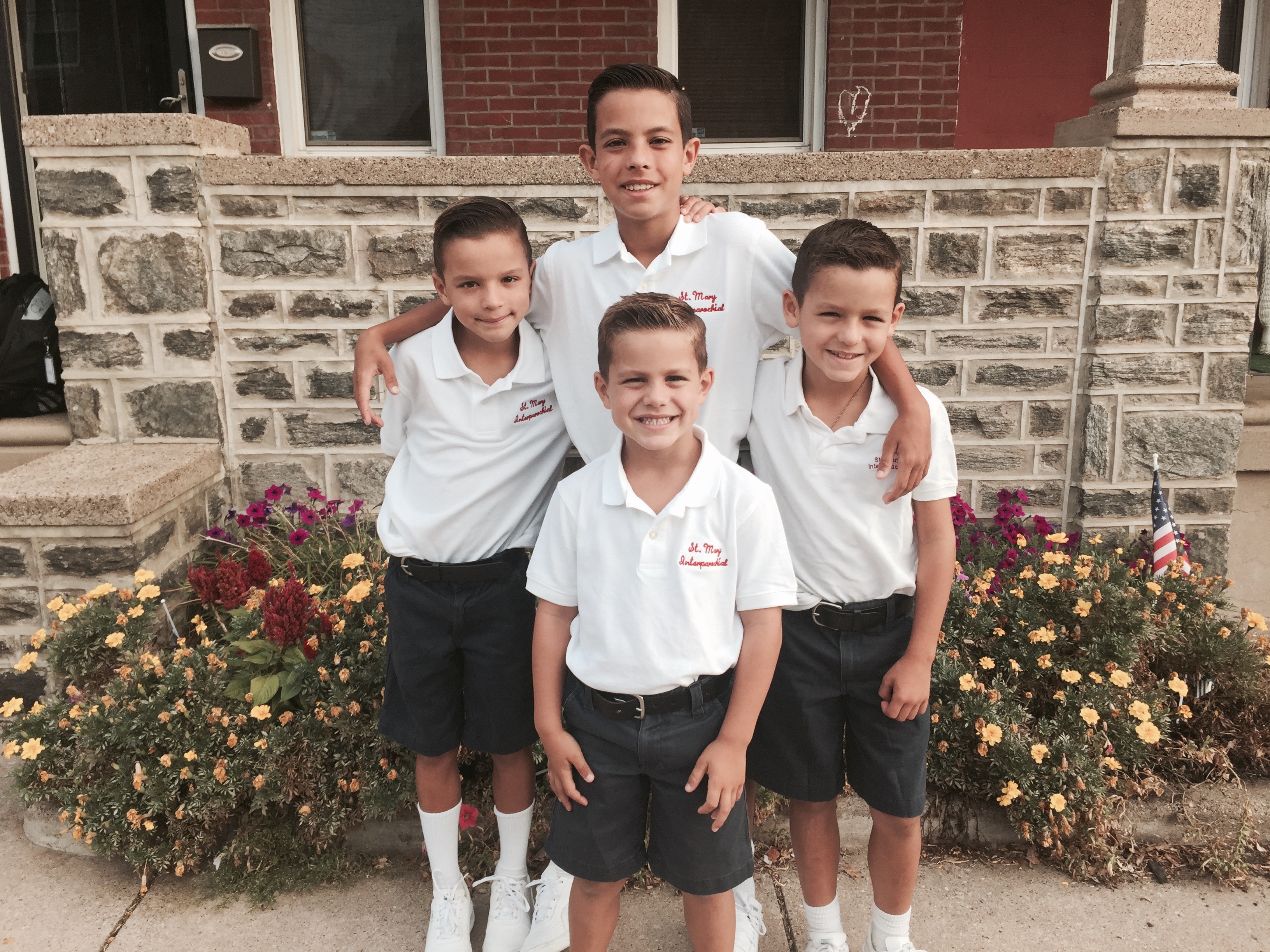
The Bridesburg basement, half of which was unfinished, became a clubhouse for the four Sullivan brothers. The miniature soccer net was all Quinn, Declan, Ronan, and Cavan needed to fill an afternoon. Cavan, the youngest of the four, did whatever he could to keep up as he played in a diaper and learned to volley a ball with both feet when he was just 18 months.
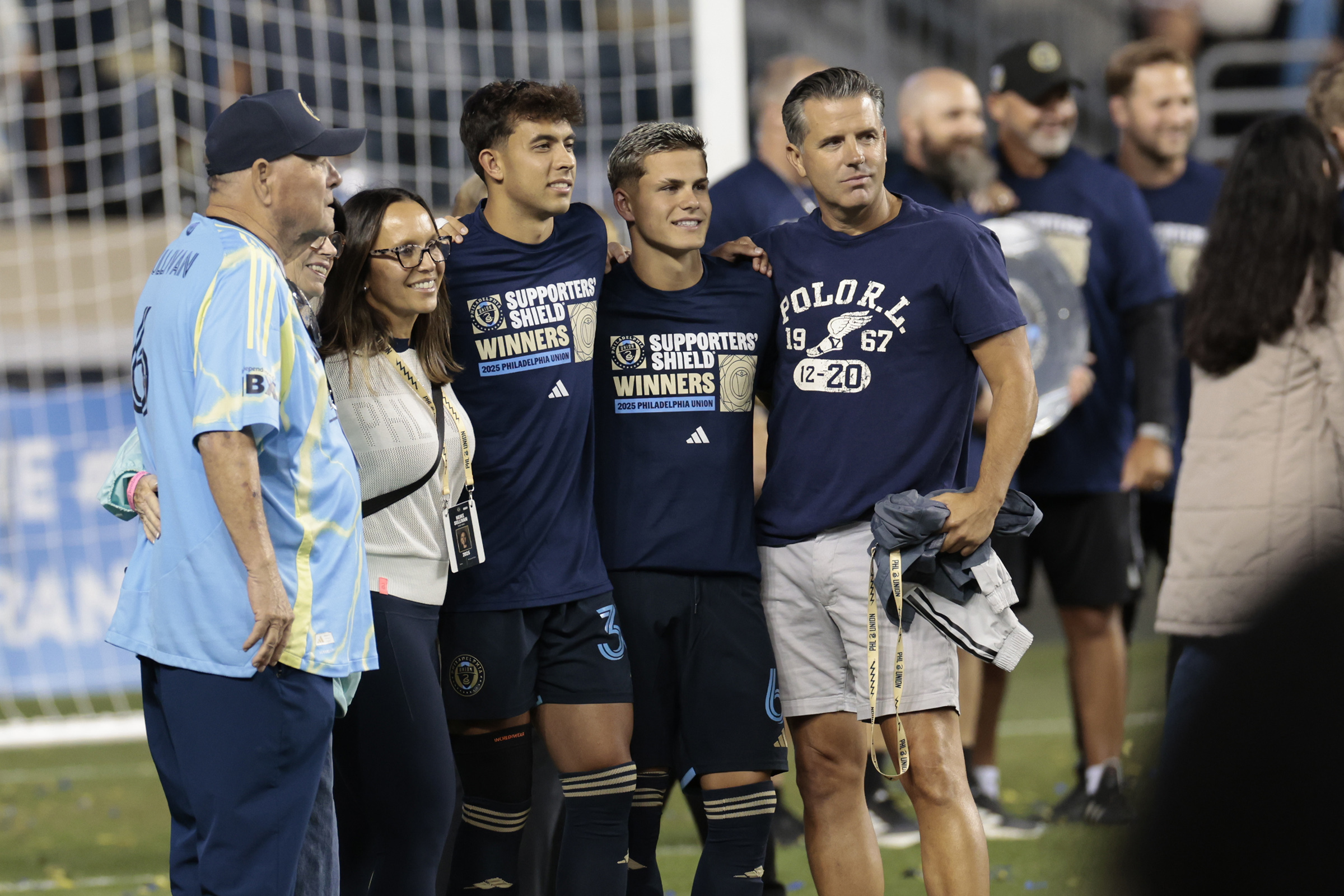
It was impossible to know that the seeds of Cavan’s career — perhaps the most promising in the history of American soccer — were being planted on Almond Street where Brendan and Heike Sullivan never told their sons that there was “no ball in the house.”
The boys caromed soccer balls off the living room radiator, played football in the kitchen, broke light bulbs in the basement, and got into some scraps. The parents were just letting their boys play, their mom said.
But there was something different about the toddler who knew how to catch a football.
“Like you throw it at him and he has his hands up,” Brendan said. “He’s not catching with his chest. He’s catching it with his hands. He caught a baseball with his glove. So you know but you don’t know the extent to how different it is.”
The soccer world soon saw what the Sullivans saw in their basement.
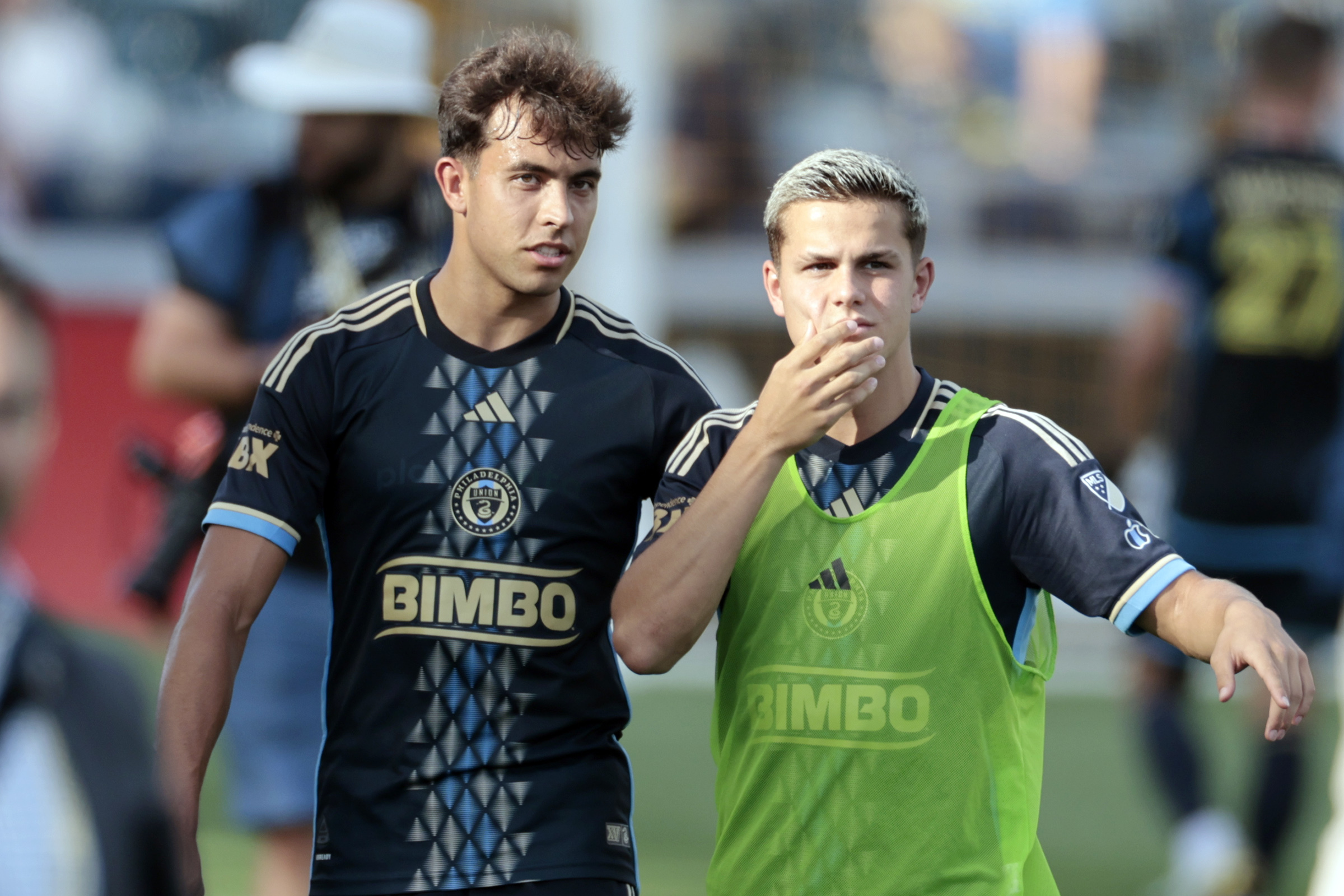
Cavan was deemed a prodigy when he was 6 years old and European powers scouted him before he was a teen. He signed his Philadelphia Union contract when he was 14, giving him the chance to play professionally alongside Quinn. He has an agreement to join England’s Manchester City next year when he turns 18, and is training this week for the first time with the senior U.S. men’s national team.
Even more? He’s a safe bet to play for the U.S. in the 2028 Olympics and then the 2030 FIFA World Cup.
The kid from Bridesburg could be the future of American soccer. It started on Almond Street.
“My dad would be in the net and we would just shoot on him all day, whenever we got the chance,” Cavan said of that old basement. “You fall in love with the game in moments like that.”
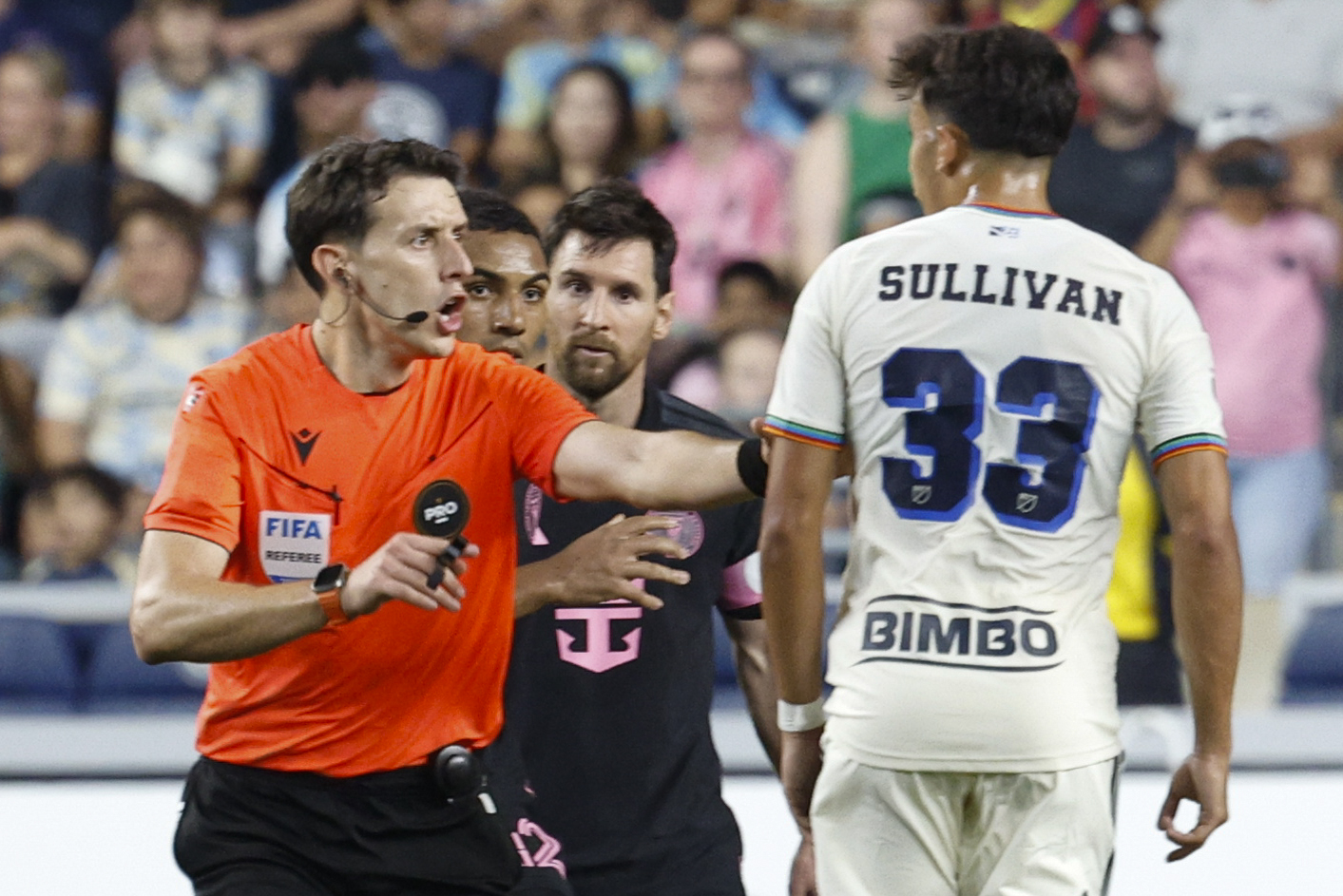
The Union’s Quinn Sullivan has words with Miami’s Lionel Messi during their match on Aug. 19 at Subaru Park.Steven M. Falk / For The Inquirer
No fear
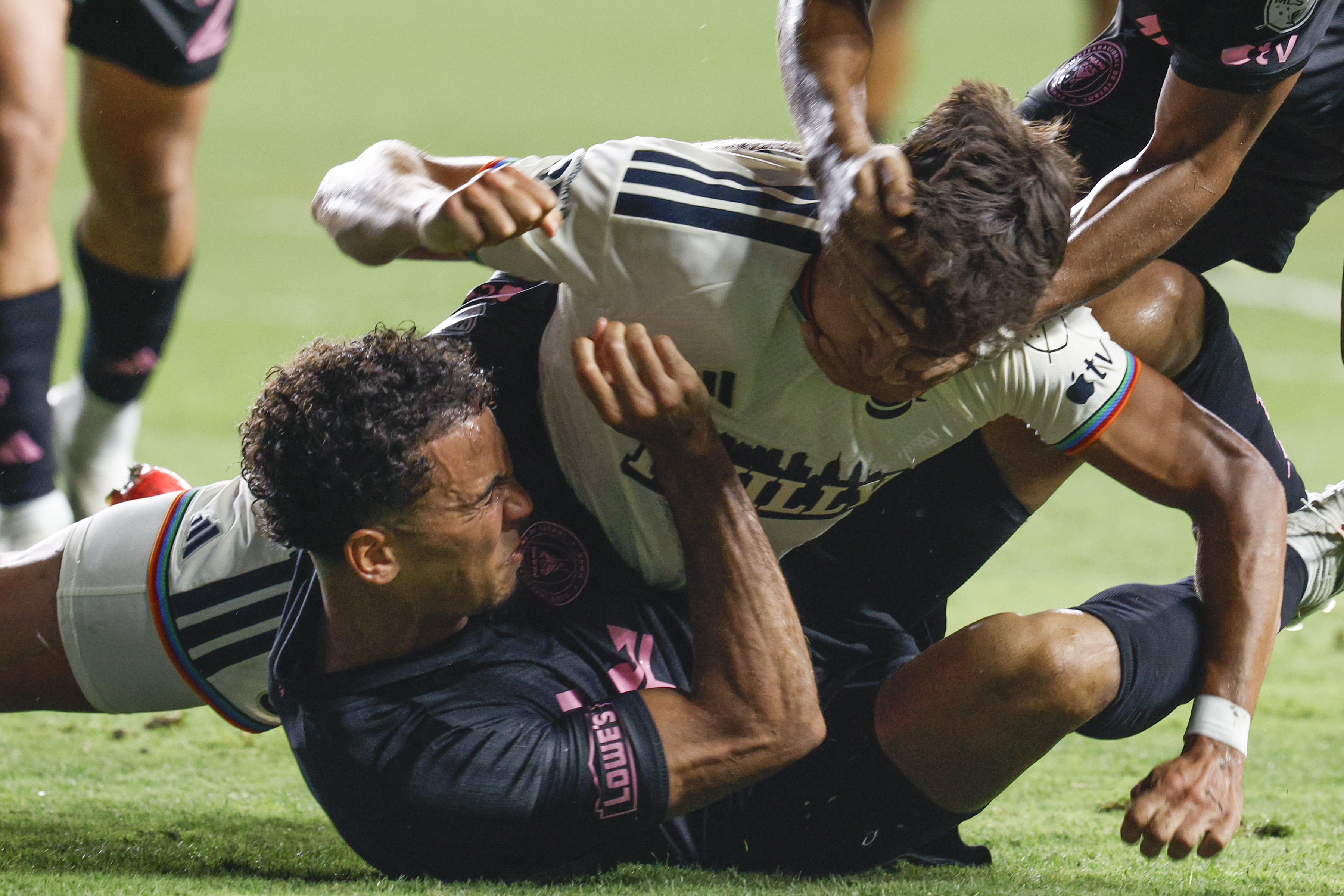
It happened so fast that the Sullivans couldn’t really tell what happened from their seats at Subaru Park. Did Cavan get punched? Did Quinn just go nose-to-nose with Lionel Messi?
Then they watched the replay of the fracas between the Union and Inter Miami, a skirmish that felt like the ones the parents — who met as college soccer players at Penn — used to break up in the backyard.
A Miami player tried to step over a fallen Quinn — “You got the wrong guy, buddy,” his dad said — before Quinn hooked his leg and took him to the ground like a UFC fighter.
A swarm of Miami players gathered around Quinn as Cavan sprinted across the field like his brother’s tag-team partner. Quinn used to spend hours on his computer cutting up Cavan’s game tapes and posting the highlights to YouTube. That was support, Quinn said. So of course the little brother had his back last month.
“It’s like ‘You better go in,’” said 18-year-old Ronan, who plays at St. Joe’s with his twin brother, Declan. “He would’ve gotten s— if he didn’t. It’s a lot about where we came from. That’s Northeast Philly right there.”
Cavan squared up against a 25-year-old foe who tried to throw a punch at the 16-year-old boy. Both players were sent off and Messi then slapped Sullivan in the head, appearing to reprimand him for taking down the Miami player. Quinn Sullivan, who grew up idolizing Messi, charged his hero and pushed his face against his.
“I was raised in Philly and you don’t take disrespect,” Quinn, 22, said. “It might sound corny to some people or cliche, but I didn’t like him touching my face and I’m not going to be the guy who falls down. I had to make sure he knew that I didn’t think it was cool.”
The Union’s Quinn Sullivan wrestles with Miami’s Ian Fray on Aug. 19 at Subaru Park.Steven M. Falk / For The Inquirer
It was Cavan’s footwork, speed, and skill that drew the world’s attention. But it is his fearlessness — the mentality that allowed a 16-year-old to run last month toward the fire — that sets him apart.
“There’s a little bit of a flair, a confidence, an arrogance,” said Taylor Twellman, the former U.S. player who now broadcasts MLS games on Apple TV. “But there’s also a real urgency to win, to compete. For a 16-year-old kid, I can see that there’s a little bit of a dog in him. You know what I mean?”
And it’s all about where he’s from. His grandfather, Larry, grew up in Kensington and played at North Catholic. His dad grew up in Juniata Park and played at St. Joe’s Prep. His uncle John Albright played at Frankford and his cousin Chris Albright went from Northeast Philly to the World Cup. Those guys were as tough as the cinders they often played on and they passed that grit down like an heirloom.
For generations, soccer was the sport in the Northeast Philly neighborhoods. And there was only one way to play.
Cavan always played two years ahead of his age group, which teamed him with the twins and allowed his parents to be at just two games every weekend instead of three. He held his own, just like he did in the basement.
Eventually, they figured, his age would catch up to him. It never happened, which is what allowed YSC Academy — the school connected to the Union Youth Academy — to see if Cavan could skip two grades and start seventh grade with his brothers. He handled that, too.
“We never really thought of him as younger,” Declan, 18, said. “I feel like because he was always in our circle, hanging with our friends, he was always like our age in our head. He’s mature for his age and part of that is because he was always around kids who were older than him.”
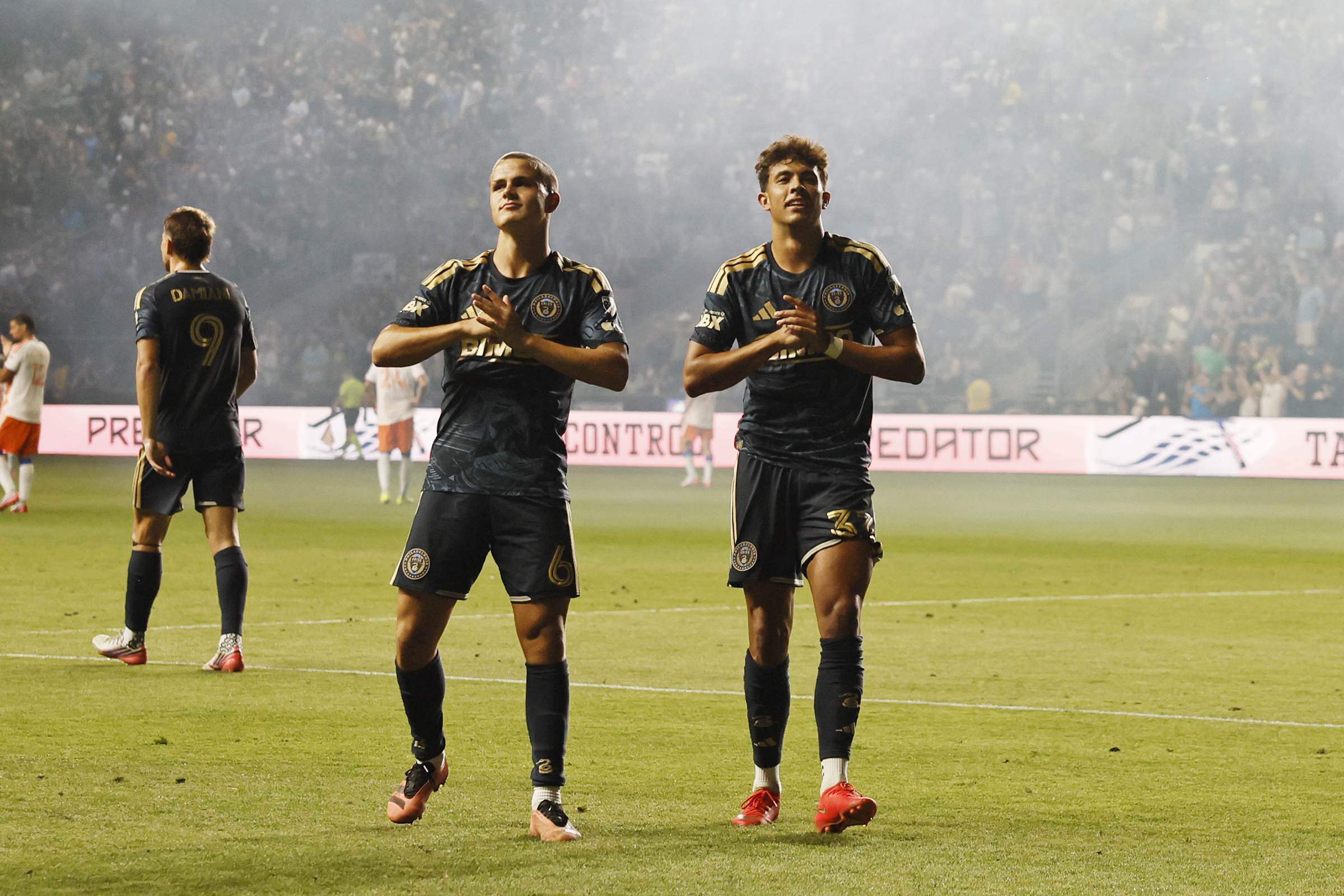
The Union’s Cavan (left) and Quinn Sullivan celebrate Quinn’s goal on Sept. 9 at Subaru Park.Elizabeth Robertson / Staff Photographer
Brendan coached Cavan’s first team at Lighthouse, which the son described as a group of “aggressive and eager kids” who just went out and played. They didn’t have private training but Cavan had a dad who was committed to teaching them the things he learned from his dad.
Brendan drilled his sons in Ocean City, often turning two-hour sessions into four-hour slogs while Heike waited to go to the beach. They played games their dad invented like “Gauntlet” and “Thirty Seconds of Hell” and debate what was worse: the burning of your quad muscles or the ringing in your ears from the fiery coach.
Cavan Sullivan, front, with his brothers Declan, Quinn, and Ronan and their father Brendan at Newt’s Field in Fishtown.Heike Sullivan
They practiced more on the beach and the boys remember being the last ones to leave travel tournaments while their dad gave instruction long after the final whistle. He was intense, but the boys learned to love it. Quinn said his dad always told his sons he loved them, even when they fell short. He taught his sons to play hard.
And that’s why the brothers from Almond Street weren’t afraid of Messi and Co.
“I love that Quinn didn’t back down in the face of Messi, a guy he has tremendous respect for,” Brendan said. “But you’re still just a dude on the field, same as me. We laced our boots up the same way today. I’m not backing down.
“The old saying goes, ‘If you’re looking for a fight from someone from Philadelphia, you’re more than likely going to get it.’ That’s how we’re raised here. You don’t back down. Stand your ground.”
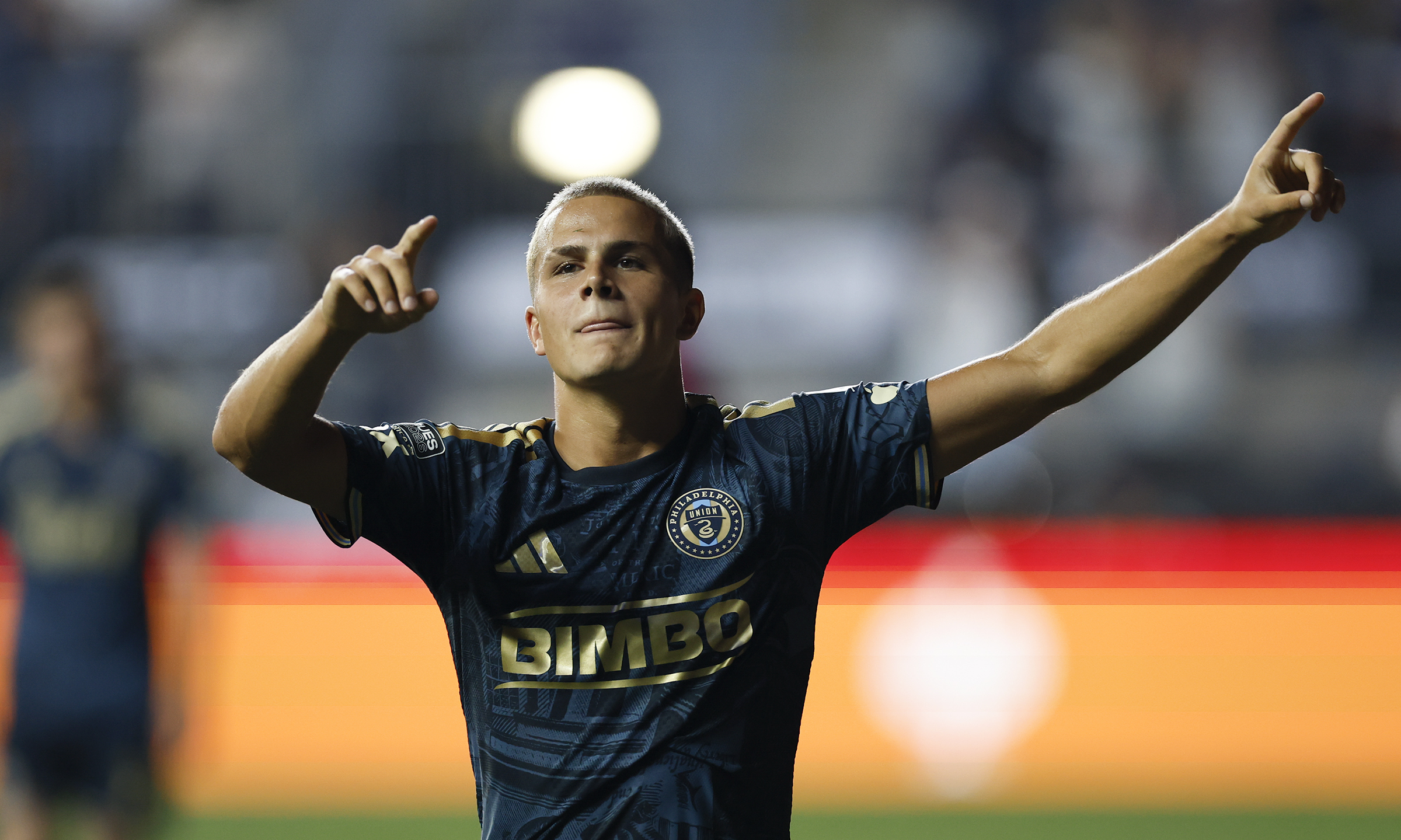
The spotlight on Cavan Sullivan has become in recent months as bright as his bleach blonde hair.Yong Kim / Staff Photographer
Bleached super star
Cavan left Sunday for Atlanta, where he’s training for the first time with the U.S. team and beginning a journey that could make him the star of the next World Cup. He’ll likely earn his first national team appearance before returning to the Union.
But before he boarded his flight, Cavan needed to get his hair right. So his mom, who used to bleach her husband’s hair in the 1990s when he played pro soccer in New York, got to work.
“I looked like a Duracell battery,” Brendan said as his old hair was more copper than blonde. “Cavan gets the extra love.”
Cavan looks the part of a star with his bleached hair, eyebrow slit, and gold chains. He breezes through interviews like he beats defenders as no question seems to trip him up. He’s been in modeling campaigns for non-soccer brands, was photographed this summer by Annie Leibovitz, and has more than 400,000 followers on Instagram.
He plays the game like a showman and often tops goals with choreographed celebrations like the time he threw chalk in the air as an homage to LeBron James.
“That’s him,” said Union teammate Frankie Westfield, who grew up in Morrell Park and is with Cavan with the U.S. team. “That’s how he performs. Even in the locker room and in training, he’s dancing around. I don’t want to say he doesn’t care because he cares so much, but I think just playing loose and free makes him what he is. He brings a whole new vibe.”
Cavan has the makings to be more than just a soccer star.
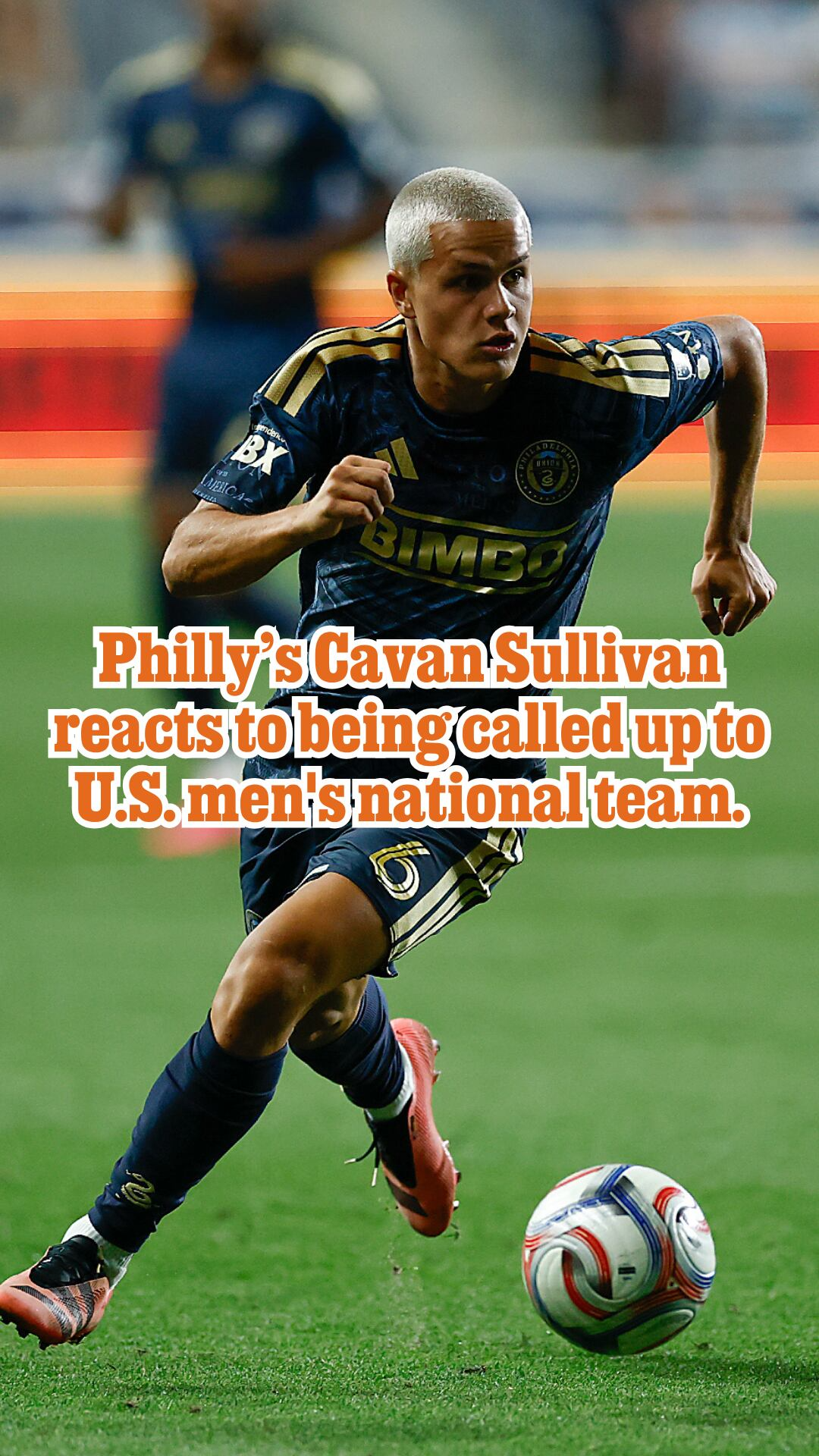
Video: Philly’s Cavan Sullivan reacts to being called up to U.S. men’s national team.
The spotlight on Cavan has become in recent months as bright as his hair. But the kid seems comfortable in it, managing the attention with ease despite being just 16.
“I think I just understand that I haven’t really done anything yet,” he said. “There hasn’t been anything major that I’ve done. I’m still trying to prove myself and make my mark on the city and on the club. I always want more. I always want to be the best. When you focus on it that way, it’s natural to just avoid all the other stuff.”
Quinn remembers driving Cavan home from their Union practice and how the younger brother would be breaking down footage from the session and sending clips to his dad for feedback. He’s always thinking about the game.
He doesn’t count his social media likes or chase clout and even remarked to his brother how he couldn’t get his latest ridiculous goal — a beautiful backheeled tip — off his timeline.
Quinn and Cavan Sullivan pose for a photo after a Union victory over New York City FC last season.Elizabeth Robertson / Staff Photographer
“I was like ‘Dude, you have to hit the not interested button,’” Quinn said. “But he deals with it well. It comes with the game. It comes with being the type of player he is.”
Perhaps Cavan’s ability to shrug at attention goes to how his parents treated him and his brothers. They talked to their kids about the games on the way home and then treated them like kids when they walked in the front door.
Cavan could be playing next year in Europe, but he still has chores at home. And the Sullivans never posted — “I did a couple times,” Heike admitted — about their children on social media.
“Why would you?” Brendan said. “There’s no need to talk about how you won a tournament or had a hat trick. You don’t brag about anything. This is his normal. It’s not normal to us, but he looks at it as his normal. So it’s weird for him if this is his normal. But then again, we don’t talk a whole lot about it. We never gave him media practice. He just knows, ‘Don’t sound like a jerk.’”
Cavan never played the game for attention or accolades. He became a child star, but he wasn’t groomed for it. His parents declined interviews over the years and other media projects.
The Sullivans knew they had a phenom, but they didn’t publicize him, not even on Facebook. They treated him like a kid, his mom said, because he was a kid. It was that simple.
“This wasn’t something we were seeking out,” Heike said. “And maybe that attitude prepared him to not make a big deal out of it.”
Older brother Quinn (left) has Cavan Sullivan’s back on and off the pitch.Elizabeth Robertson / Staff Photographer
Shaped by Philly
The Sullivans left Almond Street in 2018 for Norristown and the allure of a driveway, a backyard, and extra bedrooms. There’s not much to complain about. But they still miss things about the old neighborhood.
There was a corner store where a dollar was enough to score a handful of candy. Brendan can still taste the polish kielbasa and his sons remember the fear they felt as a 4-year-old walking alone around the corner to their grandparents and the pride of making it there safely. There was Wiffle ball and basketball with the neighbors, riding bikes through the cemetery, and playing for hours on the sidewalk.
Philadelphia’s soccer scene was born in neighborhoods like Bridesburg, where European immigrants brought the game decades ago when they came to work in factories along the Delaware River. Rowhouses — just like the one on Almond Street — produced pioneers like Walter Bahr and Benny McLaughlin. The Northeast is where Chris Albright and Bobby Convey, teammates on the 2006 U.S. World Cup squad, grew up. The cinder fields was where Don D’Ambra and Dave MacWilliams made their mark.
The same neighborhood that shaped Sullivan is what powered Philadelphia soccer for generations. He’s only 16 years old and he soon could be the face of a sport. But he was not an overnight sensation. Cavan’s emergence was generations in the making. Just the ones who came before him, he’s a kid from the neighborhood.
The Sullivans left Bridesburg years ago. The basement now belongs to someone else. But the memories? They’ll always belong to the four brothers.
“Northeast Philly sort of shaped me in a way,” Cavan said. “It was just a great place to be.”