Tag: topic-link-auto

  • Penn’s final home game of the season hits differently for Rick Santos and the seniors

    Penn’s final home game of the season hits differently for Rick Santos and the seniors

    In some ways, Penn’s matchup with Ivy League co-leader Harvard on Saturday afternoon carries a different weight.

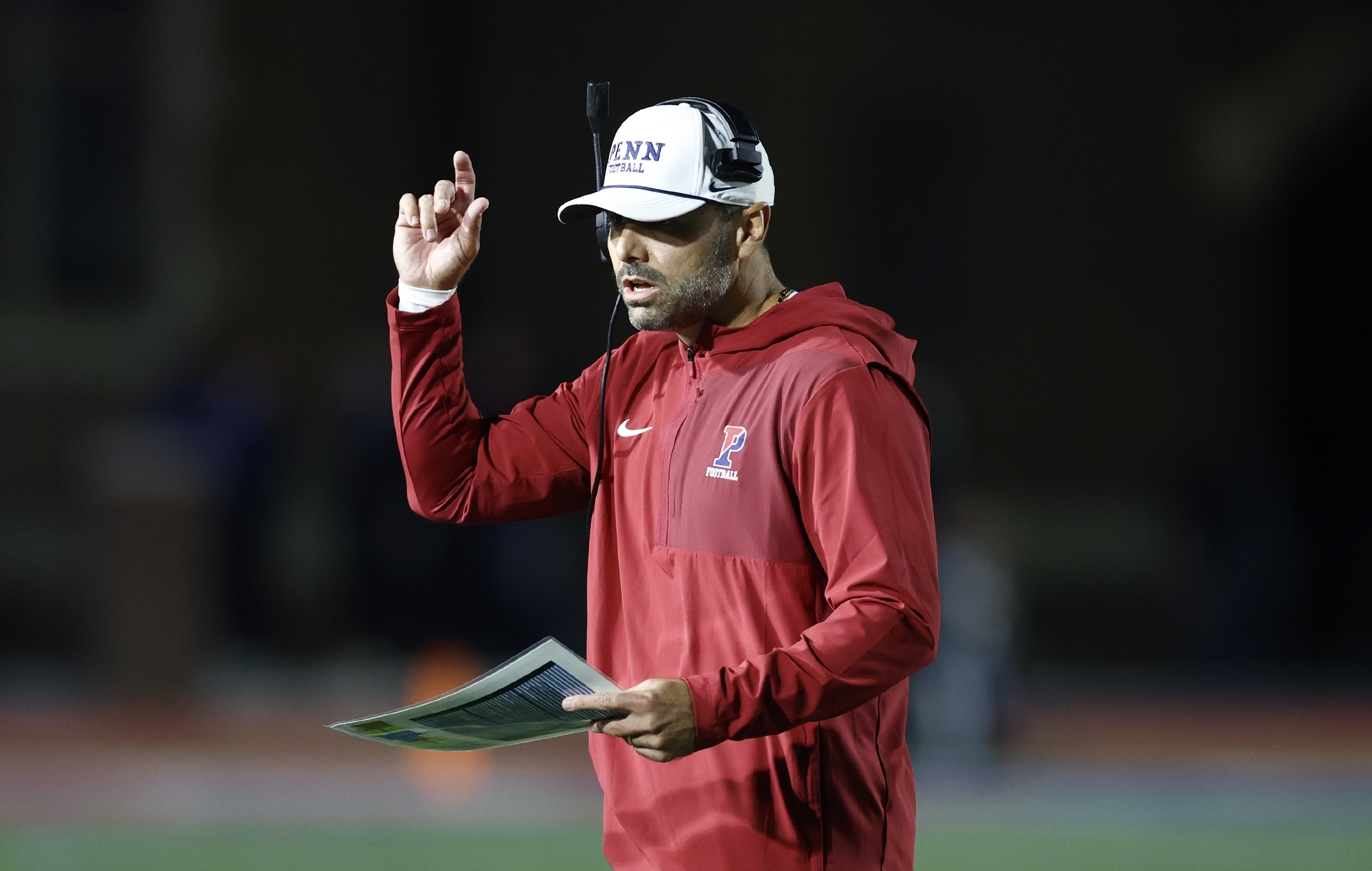
    For head coach Rick Santos and the freshmen, it’s their first homecoming game. For the seniors, it’s goodbye to Franklin Field.

    “I was just talking to my mom about it,” senior linebacker Cole Olsztyn said. “I can’t believe these are my last two games as a Quaker already. It seems like just yesterday I was getting to campus [in] August for freshman year.”

    Santos added: “We need to play for [the seniors]. We need to honor them with our effort and our toughness.”

    That effort is what Santos believes will give Penn (4-4, 2-3 Ivy League) an edge against the Crimson (7-1, 4-1), who beat the Quakers in each of their last five meetings and have been Ivy League co-champion the past three seasons. This season, Harvard is averaging 27.8 points, tied for first in the league, and 387.3 yards per game while leading the Ivy in multiple defensive categories.

    “Harvard doesn’t have many weaknesses right now, to be honest with you,” Santos said.

    With top running backs Donte West and Tommy Lafayette out for the season because of injury, Penn will need to be “creative” offensively.

    Karson Siqueiros-Lasky will get the start at quarterback in Penn’s final home game of the season, and Santos said he expects him to “play the majority part of the game,” while freshman Miles Teodecki will play “situationally.”

    Siqueiros-Lasky started last Saturday, and his passing game propelled Penn to a 14-13 win over Cornell. He completed 24 of 38 passes for 220 yards and a touchdown.

    “That was definitely the momentum we need going [into] this week,” said Olsztyn, who had his first interception since high school against Cornell.

    Olsztyn said the seniors have worked to lay a foundation for the team and build an “upward trajectory.”

    Penn wide receiver Mason Page has 408 receiving yards and two touchdowns through eight games.Yong Kim / Staff Photographer

    Freshman wide receiver Mason Page could be a key part to the team’s future. Page is second on the team with 408 receiving yards and has two touchdowns through eight games. He ranks eighth in the Ivy League in receiving yards.

    “He was a dog in high school, as he is out here,” said Jack Sacchetti, a freshman defensive lineman who also was teammates with Page at West Forsyth High School in Cumming, Ga. “Once he committed here, I’m like, ‘We got a guy.’”

    Page added: “You’re playing against guys that are three or four years older than you, so I knew that I needed to work twice as hard just to even be equal with them.”

    Page is averaging 13.4 yards per catch against Ivy League opponents.

    “The moments never really seem too big for him,” Santos said.

    While playing at Franklin Field for the last time is “surreal,” senior defensive back Josh Narcisse said, “It doesn’t change the fact that we’re all very focused on our goal for this week.”

    The seniors have yet to beat Harvard, “so this is a legacy type game for them,” Santos said.

    “Let’s create a memory that they can have for a lifetime,” he said, “and that’s beating a team as good as Harvard.”

  • Gina Hinojosa’s win in the Texas governor’s race is both historic and explained by history

    Gina Hinojosa’s win in the Texas governor’s race is both historic and explained by history

    Gina Hinojosa—a name few outside of Texas knew before this election cycle—made history Tuesday night after winning Texas’s governor race, part of a Democratic sweep of state-wide offices in 2026. Hinojosa will became the first Latina ever, and the first Democrat since 1995, to hold that office. She accomplished what many considered impossible, running a contentious gubernatorial campaign to defeat three-term Republican Governor Greg Abbott in a state largely considered a conservative stronghold.

    In truth, Texas’s political history is much more complicated. The state’s annexation into the United States in 1845 and the Treaty of Guadalupe Hidalgo (1848, ending the Mexican-American War) brought unprecedented numbers of new settlers—U.S. Southerners, ethnic Germans, and ethnic Polish among them—to the area, displacing Mexicans who had been there for generations. After the U.S. Civil War and Reconstruction, Southern Democrats dominated Texas politics and maintained their control through the regimes of Jim Crow and Juan Crow through much of the 20th century.

    But even that isn’t the whole story. Through the 20th century, examples abounded of grassroots, political resistance to racial injustice, economic exploitation and political repression. At mid-century, cross-racial alliances among Black, Mexican and poor white Texas residents forged meaningful changes on the streets and the ballot box. Of critical importance to such changes were the efforts of Chicana (Mexican American) women, whose long fight for political power as liberal feminists in the state renders Hinojosa’s victory as something a long time coming.

    In the early 20th century, Mexican Americans in Texas were viewed and treated as outsiders in their own land. Some naturalized or native-born U.S. citizens began to form civic organizations like the Order of the Sons of America (OSA, founded in 1921), laying the foundation for the League of United Latin American Citizens (LULAC) in 1929. LULAC, now considered the oldest Latino civil rights organization in the United States, fought racial discrimination, opposed school segregation, encouraged political participation and demanded Mexican American voting rights—all through the court system. What’s more, in 1948, Texas Mexican American veterans who had served in World War II established the American G.I. Forum to demand veterans’ benefits, labor rights and voting rights.

    While these organizations made critical contributions to the Mexican American civil rights movement, they tended to prioritize the experiences of upper- and middle-class men. But Mexican American women in Texas were also activated. They organized campaigns, registered voters, raised funds and founded women’s auxiliaries. This supportive political labor laid the blueprint for future generations of women to build upon.

    By the 1960s and 1970s, the expanding Chicano and women’s movements were transforming social, cultural and political life across the country. While the Democratic Party had increasingly positioned itself as the party of civil rights and sought the votes of Black and Mexican American voters in Texas, younger Mexican Americans, now calling themselves “Chicanos/as,” were frustrated by their still limited access to political power. In the face of police brutality, economic exploitation, continued political exclusion, gender inequality and erasure of their history and culture, they took to the streets calling for “Brown Power” and formed grassroots organizations across the Southwest. Chicanas were part of this fight, but they went further­. They challenged sexism in movements that shut them out of decision making, and they prioritized fighting for their own self-determination and autonomy.

    The La Raza Unida Party (RUP) formed as a liberal third party in South Texas in 1970, and Chicanas were at its center from the start. Not all ethnic Mexicans aligned themselves with the RUP; many remained with the Democratic Party. But through the RUP, women were able to exercise political power. Chicanas like Evey Chapa played major roles in crafting the party’s platform, which prioritized support for the Equal Rights Amendment and the recruitment of women within the party. Going one step further, the RUP became the first political party to actively recruit Chicanas to run for office themselves. In 1972, Marta (Martha) Cotera ran for the State Board of Education in District 23, and Alma Canales ran for lieutenant governor under the RUP banner.

    The RUP eventually spread from South Texas across the rest of the state, and even to the U.S. Southwest, Midwest and beyond. It further expanded its reach when its Chicana members joined the National Women’s Political Caucus, founded in 1971 to encourage women to run for public office and engage more deeply with the U.S. political process. In short, the RUP helped develop a blueprint for Mexican American political representation, but it also established the framework and network to ensure Mexican American women’s central role in political leadership.

    Chicanas’ organizing work in South Texas and beyond created an opening for them to participate in mainstream politics. In 1976, Irma Rangel launched her campaign for state representative for District 49. Her campaign centered the working people of Texas with the slogan “Representation for a Change.” She understood the economic hardship, lack of quality education and racial discrimination that South Texans endured. And she understood the importance of women’s rights. Rangel became the first Mexican American woman elected to the Texas House of Representatives and assumed office in 1977. Rangel helped fight for women’s rights, established a pharmacy school in Kingsville, Texas, and co-authored the “Top Ten Percent” bill that transformed higher education in Texas. She didn’t shy away from battle, and she sought opportunities to work in a bipartisan manner.

    Made By History sponsors. FOR USE ON MADE BY HISTORY STORIES ONLY.Inquirer Staff

    Like Rangel, Hinojosa grew up in South Texas, specifically Brownsville, where today ethnic Mexicans are the majority-minority and Mexico’s border is within driving distance. As an adult, she climbed the ranks in state politics, first winning a seat on the Austin ISD School Board and then in the Texas House of Representatives in District 49. All the while, she continued to work as a civil rights and union lawyer, advocating for everyday people at the grassroots level.

    In 2025, Hinojosa set her sights on the governor’s office and campaigned with the slogan “No te dejas,” or “Don’t let them.” It’s a familiar dicho (saying) in the Mexican community and something I grew up hearing my mother say. Hinojosa too said she often heard it from her grandmother, as I’m sure many ethnic Mexican women have. When we say “No te dejas,” we’re saying don’t give up, speak up, fight back, walk in your truth.

    Like the Texas Chicanas of the 1970s who came before her, Hinojosa “no se dejaron”—she didn’t let them shut her out, silence her or stop her. Hinojosa’s win may register as a major upset in Texas politics—but there has always been more to Texas than Republican men. Yes, she ran at the right time, but her victory is part of a movement decades in the making and one that will continue for decades to come.

    Tiffany Jasmin González is an assistant professor of history at the University of Kansas, where she teaches and writes on modern American history and Latina/o history.

    Made by History takes readers beyond the headlines with articles written and edited by professional historians. Opinions expressed do not necessarily reflect the views of The Inquirer.

  • In win over Raptors, Sixers flashed why their offseason roster revamp also applied to the bench

    In win over Raptors, Sixers flashed why their offseason roster revamp also applied to the bench

    When an off-target shot left the basketball wedged behind the backboard for the second time Thursday night, Kentavious Caldwell-Pope wound up with the broom in his hands.

    It took “too many tries” for him to get it dislodged, the 76ers’ veteran wing quipped after the game. But when he finally poked it free, he raised his arms to acknowledge the cheering crowd.

    “It was a lot of pressure, actually,” Caldwell-Pope told The Inquirer from his locker.

    That was one way the Sixers’ bench provided a lift in their 123-112 victory over the Toronto Raptors at Xfinity Mobile Arena.

    The reserve trio of Caldwell-Pope, Anfernee Simons, and Jabari Walker combined for 37 points — including a blistering 9-of-13 mark from three-point range — while also impacting the game as rebounders, facilitators, and defenders. They sparked the Sixers following an awful start, then supplied key fourth-quarter moments to help put away the short-handed Raptors playing without stars Kawhi Leonard and Scottie Barnes and on the second night of a back-to-back.

    Anfernee Simons (5) was among the bench scorers who made a big impact in Thursday’s win. Elizabeth Robertson / Staff Photographer

    The bench’s collective performance was evidence of why many outsiders believed the Sixers’ roster revamp did not just pertain to adding superstars LeBron James and Jaylen Brown, but improving the overall depth.

    “It’s very gratifying, for sure,” Simons said after the game. “[Our responsibilities are] going to change in every game. . … Obviously, the starting unit’s got great players, and [any player] can go for 30 each and every game if they wanted to.

    “As a bench unit, we’ve got to continue to bring the energy each and every night.”

    That loaded starting lineup featuring James, Brown, Tyrese Maxey, and Joel Embiid is at least partially why the Sixers (10-3) rank last in the NBA in bench points (23.7 per game) entering Friday.

    But against Toronto, Simons went 5-of-6 from three-point range and finished with 17 points. Caldwell-Pope added a balanced line of 11 points, five assists, and four rebounds, while also playing physical defense and being trusted with down-the-stretch minutes. Walker had nine points and eight rebounds in 16 minutes, many of them abrupt when Embiid briefly exited with a knee injury and then sat for the end of the first half with three fouls. Those outputs kept the starters in their normal minutes range before two welcomed days off Friday and Saturday.

    Jabari Walker helped prove the Sixers are not just about their starters on Thursday night. Elizabeth Robertson / Staff Photographer

    After the Sixers fell behind by 17 points in the opening frame, Simons jolted his team to life by hitting a three-pointer to beat the quarter buzzer. Caldwell-Pope then sank two deep shots in the second quarter, helping the Sixers swiftly close the gap and tie the score at halftime.

    Then, those reserves’ fingerprints were all over the final frame.

    Walker buried a corner three-pointer on the Sixers’ first possession and then converted a put back. Simons and Caldwell-Pope both finished at the rim. When the Raptors cut a double-digit deficit to 111-105 with less than five minutes to play, Simons answered with another make from beyond the arc. And after enthusiastically directing teammates while waiting at the scorer’s table to check back in for crunch time, Caldwell-Pope nailed a deep shot to give the Sixers a 121-108 lead with 2:02 remaining.

    “[Teammates] encourage us to keep shooting the ball,” Simons said. “And knowing that the team has that much confidence in us to keep shooting it, it makes the game that much easier.”

    The Sixers needed down-the-roster upgrades after last spring’s playoffs exposed their lack of depth. Those players also can provide reinforcements on load-management days for James or Embiid. Dean Wade slid into the starting lineup in James’ place Thursday and went 2-of-5 from beyond the arc.

    Simons agreed to sign as a free agent between the stunning blockbuster trade for Brown and James choosing the Sixers. Caldwell-Pope, who won NBA titles with the Los Angeles Lakers in 2020 and Denver Nuggets in 2023 but had struggled in recent seasons with the Orlando Magic and Memphis Grizzlies, was a late addition to the group. Walker is a returner from last season, after parlaying a two-way contract into a standard deal.

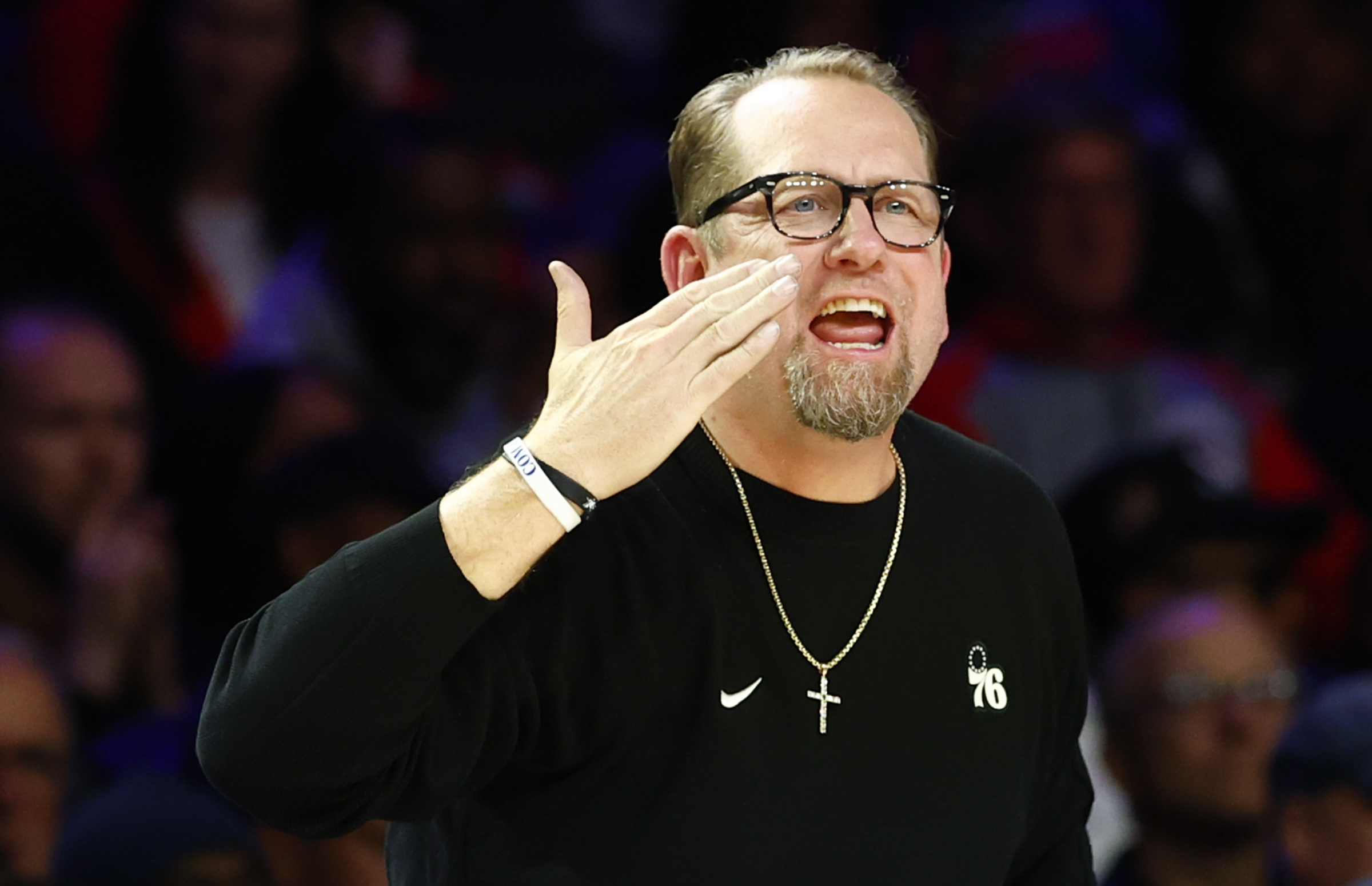
    Nick Nurse’s ability to call upon his bench will give the Sixers more flexibility and allow him to give his star-studded bench the requisite rest. Yong Kim / Staff Photographer

    Coach Nick Nurse still did not have his full complement of bench options Thursday, with Adem Bona (spine) sidelined for a fourth consecutive game and Dominick Barlow (back) waiting to play his first game of the season. Rookie guard Labaron Philon Jr., who was expected to be an immediate rotation player before the Sixers’ flurry of moves following the NBA draft, also did not play meaningful minutes Thursday.

    Sharpening chemistry among those bench players — who play in a variety of lineup combinations with starters and fellow reserves — has been a work-in-progress during the season’s initial weeks.

    Simons said he now recognizes when defenders try to prevent downhill drives from Maxey by hanging out at the top of the key, prompting him to space further outside the arc in order to step into his three-point shot. Caldwell-Pope said he and teammates have made their biggest early-season strides in defensive communication. When outside shots from Simons or Caldwell-Pope do start falling, that opens up lanes for Maxey and fellow electric guard VJ Edgecombe to get to the basket.

    Simons also emphasized the nonscoring ways he and others can help. Cutting. Making a crisp pass to Embiid down low. Boxing out.

    “Just being in the right position and making the right play each and every time,” he said.

    After Thursday’s victory, Simons and Walker sat side-by-side for a joint news conference. They both began their NBA careers with the rebuilding Portland Trail Blazers, with whom they probably logged heavier minutes and compiled more consistent statistical production but were part of fewer wins.

    While reflecting on that period, Simons acknowledged that they have “been through a lot.”

    “You feel appreciative of the times where you go into a situation where your role might be a little bit less, but you’re winning,” Simons said. “And so that’s something that you can’t take for granted, for sure, because it’s hard to win in the NBA. We’ve seen it firsthand.”

    That perspective is needed from the players who complement the Sixers’ stacked starting lineup. But their chance to provide the collective lift arrived Thursday — and illustrated why the Sixers’ offseason roster revamp also applied to the bench.

    “[Put] our best foot forward,” Simons said, “and be able to impact winning.”

  • Mauricio Pochettino officially leaves the USMNT for Manchester United

    Mauricio Pochettino officially leaves the USMNT for Manchester United

    Mauricio Pochettino’s departure from the U.S. men’s soccer team became official on Friday. He will formally step down after the upcoming Concacaf Nations League quarterfinal series against Haiti to take over Manchester United, after the English Premier League club chased him so hard that it agreed to pay a reported $10 million-plus to buy him and his staff out.

    “I think they know that not too many opportunities can happen in your career a size of Manchester United,” Pochettino said Friday, during a news conference at U.S. Soccer’s national training center in suburban Atlanta. “And of course when that arrives, it’s difficult to turn down that situation.”

    He sat at the podium flanked by two of the people who count as “they”: U.S. Soccer president Cindy Cone and CEO JT Batson.

    “What you’ve done with the men’s and the boys’ program in two years has been unbelievable,” Cone said in prepared remarks. “Not only have you contributed to their advancement, you’ve contributed to the entire federation being better, and you have been such a great partner to all of us. So I just want to give you a heartfelt thank you. We’re going to miss you.”

    Pochettino got choked up a few times, including when he admitted that “I didn’t prepare a speech — I am talking with my heart.”

    The most poignant moment came when he turned to address Batson, and ended up addressing a theme of the soccer world.

    “You never lied to us,” Pochettino said. “The human being is in front of everything, and that is why [this] is a really difficult decision. But we need to move forward. A big thank you from my heart and my people, because you always were transparent, and you always put in front the interest of the federation, but always trying to build something together. And we really enjoyed it.”

    He added that “we really enjoyed it” and “we learned a lot from you all, from this country, the amazing people.”

    Mauricio Pochettino in one of the moments when he got choked up.Colin Hubbard

    An admission that ‘it’s not ideal’

    A key factor in those sentiments was Batson’s offer of a new contract for the 2030 World Cup cycle before the this year’s tournament kicked off. That struck a manager who was dismissed from his previous three jobs: England’s Tottenham Hotspur in 2019, France’s Paris Saint-Germain in 2022, and England’s Chelsea in 2024.

    “That is why you always are going to be in my heart,” Pochettino said. “It’s difficult to find people like you that are transparent and really believe in more than a result if not seeing the project [make progress]. I think the federation is in great hands, and I think you have everything: the capacity, the knowledge, and the power in this country and behind it, that can be amazing in the future with one or another coach.”

    Batson’s prepared remarks certainly put a positive spin on the fact that the most famous coach in U.S. men’s team history was walking away from the job three months after signing a four-year deal for a second term.

    “The culture that Mauricio helped set within our team, and even more broadly within the federation, is something that will last for many, many years to come,” Batson said.

    Mauricio Pochettino (left) talking with JT Batson earlier this year.Jonathan Tannenwald

    When Pochettino agreed to the second term in August, he said “we signed the contract because we really believe that we are going to be four years there.” But not many other people did, and he knew it.

    Even during Pochettino’s first term, from the fall of 2024 through the World Cup, there were flirtations with European clubs including Tottenham and Italy’s AC Milan. This was seen for U.S. Soccer as part of the cost of hiring a famous name.

    Still, he wasn’t expected to leave the post this soon into the new deal. Maybe next summer, or especially the summer of 2028, but not now.

    “It’s true that this is not ideal, but it never is an ideal situation when this type of thing happens,” Pochettino said Friday. “But like in life, football goes quick … That is why we need to move more forward, I think, to keep that relationship and all the memories that we share.”

    Mauricio Pochettino helped the U.S. men’s soccer team capture the nation at the World Cup, but he didn’t take the team any farther than anyone else has in past tournaments.Julio Cortez

    What comes next?

    At least the timing works for U.S. Soccer. After the upcoming Concacaf Nations League quarterfinal against Haiti, there isn’t anything on the program’s schedule until a prospects camp in December. Olympic team coach Steve Cherundolo will lead that. The next thing from there is the Nations League final four in March, if the U.S. advances.

    It will be awkward to some observers that Pochettino is staying for the Haiti games, Saturday in Miami (4:30 p.m., TNT, Telemundo 62) and Tuesday in Cincinnati (7 p.m., TBS, Universo). But it’s practical, because there isn’t anyone else around. Pochettino’s entire coaching staff came with him and will leave with him; and Cherundolo is currently in Spain for a camp with Olympic team prospects.

    On top of that, Pochettino wants to see things out with his players.

    “Before professionals, we are persons,” he said. “The emotional link between us that we built in these two years, I think it’s to show the commitment, and respect, and care, and love, even if we take a decision that is not for one part maybe the best. … I think we have the respect of the players and the staff, and they understand the situation.”

    Will U.S. Soccer try to dance with another famous name now? The Athletic has reported that the brass want to land Pep Guardiola next, and Batson didn’t deny it Friday.

    “We’ve publicly shared our ambition is to be in a position where we’re winning major tournaments including World Cups and we want to make sure that we’re attracting leaders who help us do just that,” he said. “We know from our experience that great leaders want to work with great people, and great leaders want to make an impact on things that matter. And we think that we’ve proven that at U.S. Soccer that we are a great place to work, and we’re a great place to make legacy defining impact.”

    That was one of a few instances that sounded more like management-speak than plain talking. A brief moment of the latter came when Batson said the search for the next manager will be led by a committee of himself, chief operating officer Dan Helfrich, vice president of the sporting division Oguchi Onyewu, U.S. women’s team manager Emma Hayes, “and other soccer leaders.”

    But the full roster wasn’t revealed. Nor did Batson directly address what influence U.S. Soccer’s big-money donors will have, after they wrote the checks to pay Pochettino’s salary. He only said, and not quite directly, that the cash from Pochettino’s buyout will go into U.S. Soccer’s accounts and not to the donors.

    “Our supporters, our sponsors, our donors, our fans are very supportive around making sure that we have the resources to achieve our goals including having a world-class coach,” Batson said. “We’re appreciative of that support, and look forward to to that being a key part of our way of winning going forward

  • Democrats in position to end electoral college, but challenges await

    Democrats in position to end electoral college, but challenges await

    A movement to give the presidency to whoever receives the most votes nationally has new momentum after Democrats swept state races in the midterm elections, but still faces major hurdles in legislative chambers and courtrooms.

    For two decades, reformers have pressed states to agree to give their electoral votes to the winner of the national popular vote, regardless of who wins their state. The arrangement would render the electoral college moot and end aberrations like the ones in 2000 and 2016 that saw Republicans George W. Bush and Donald Trump win the presidency despite Democrats receiving more votes.

    “There is no other election in this country where the person who loses can win the election, where the person who gets the most votes doesn’t actually win,” said Wisconsin state Sen. Kelda Roys (D). “And it’s fundamentally unfair and antidemocratic, small-d democratic.”

    Finding a way to sidestep the electoral college once seemed all but impossible. But with Democrats winning full control of more state governments last week, it now appears within reach — at least politically. If supporters get their way, they will be met with a slew of litigation, and any one lawsuit could block their path.

    Such a change would transform the country politically, reshaping who can mount viable presidential bids and how they run their campaigns. Instead of concentrating on half a dozen or so swing states, they would seek votes across the nation. Supporters say that would guarantee presidential candidates find broad backing; detractors say they would ignore smaller states and spend most of their time in the most populous states: California, Texas and Florida.

    Opponents say those who want to overhaul the electoral college must go through the arduous process of amending the Constitution rather than rewriting the rules with state laws.

    Under the Constitution, states decide how to award their electoral votes, with most giving all of theirs to whoever wins their state. To get around that setup, reformers have asked states to agree to give their electoral votes to whoever wins the national popular vote. The agreement wouldn’t go into effect until states with at least the 270 electoral votes needed to win the presidency join.

    Over the last 20 years, 18 states and Washington, D.C., have signed on to the agreement. Together, they have 222 electoral votes.

    Supporters tout the plan as a neutral measure, but it’s one that’s secured lopsided support from Democrats. Republicans have shown little interest in changing a system that has allowed them to win two presidential races in recent decades without popular support.

    Last week, Democrats won full control of the state legislatures and governors’ mansions in five states that have not yet adopted the compact: Arizona, Michigan, Nevada, Pennsylvania and Wisconsin. They account for 61 electoral votes, and if four of them sign on, the compact would secure the majority needed to activate.

    Already, Democrats in those states are giving fuel to the idea.

    “The national popular vote makes sense,” Pennsylvania Gov. Josh Shapiro (D) said after the midterms on the “Pod Save America” podcast.

    Shapiro, a potential 2028 presidential candidate, added, “To me, the most important thing is that the will of the people is heard and respected, and I think popular vote is a way to do that.”

    Even with the renewed momentum, the plan faces dire political risks and guaranteed legal challenges. Opponents are prepared to sue because they see it as an illegal attempt to work around the Constitution, said Daniel Lennington, vice president of the conservative Wisconsin Institute for Law and Liberty.

    The electoral college is anti-democratic by design, Lennington said.

    “I’m going to side with the founders on the idea that there are certain things, certain structures and limitations, that we put on democracy,” he said. “There’s not a lot of difference between a society which is run by an autocrat versus one that’s run by 51 percent of the people in the country that are able to do whatever they want whenever they want.”

    Challenges ahead

    If enough states signed onto the agreement, supporters would have to wrestle with a provision of the Constitution that says Congress must sign off on some agreements among states. Some supporters of the agreement argue congressional approval isn’t necessary but say they would seek it anyway.

    Pushing the issue through a Democratic-controlled Congress could be tricky, especially when multiple senators from both parties are eyeing presidential runs and would have to weigh whether a popular vote would hurt or help their chances.

    There’s also debate over whether the president could veto the compact. A White House spokesperson didn’t respond to a request for comment.

    An avalanche of litigation is certain, with some lawsuits arguing the new arrangement would arbitrarily and unconstitutionally treat voters differently, said Derek Muller, a University of Notre Dame law professor. Different states have different voting rules — some require voters to show ID; some mail ballots to every registered voter; some have robust early-voting opportunities — and the challengers could argue that creates an unfair presidential contest.

    Under one theory, the national popular vote compact would violate state voter residency requirements because it would effectively turn state elections into national ones, Muller said.

    The Supreme Court would likely weigh in, but so would numerous state supreme courts. And supporters of the compact would have to win all of the cases.

    That’s no reason to hold back, said Chris Rabb, a Pennsylvania Democrat who was elected to Congress last week after working on the national popular vote compact as a state lawmaker for a decade.

    “If we had the attitude of not doing the right thing because of lawsuits, we wouldn’t do anything,” he said.

    Democrats may reconsider whether the electoral college is still biased against them, especially in light of the midterm results.

    On the one hand, they have new opportunities to advance the popular vote compact. On the other, they won states such as Ohio and Texas that are rich in electoral college votes and until recently were seen as solidly Republican.

    Support for adopting the popular vote is uneven across the states where Democrats won trifectas.

    “We can do away with” the electoral college, Wisconsin Gov.-elect David Crowley (D) told the Associated Press.

    Nevada Gov.-elect Aaron Ford (D), who unseated a Republican, has not committed to approving the compact. Ford spokesperson Tai Sims said that, for now, Ford is focused on lowering costs.

    But the measure failed before when Nevada Democrats held a trifecta in 2019. Then-governor Steve Sisolak (D) vetoed the measure passed by the Democratic-controlled legislature, saying it “could diminish the role of smaller states like Nevada in national electoral contests.”

    A spokesperson for Michigan Gov.-elect Jocelyn Benson (D) didn’t respond to questions.

    Arizona Gov. Katie Hobbs (D) declined to say in a television interview this week whether she backed the idea, even though she had sponsored a bill supporting the measure as a state lawmaker.

    The plan nonetheless is on the agenda of state Sen. Priya Sundareshan, the Democratic leader in the chamber.

    “This goes a long way to demonstrating that every vote matters, that the regular voter can make a difference with their vote,” she said.

  • Philadelphia’s House delegation in Harrisburg names Ben Waxman as its new chair

    Philadelphia’s House delegation in Harrisburg names Ben Waxman as its new chair

    Philadelphia’s state House delegation in Harrisburg has a new face, as Democrats enter uncharted territory where they control the House, Senate and governorship for the first time in decades.

    Rep. Ben Waxman (D., Philadelphia), who represents parts of Center City, was chosen to lead Philly’s 25-member House delegation. As the new chair, he is tasked with advocating for the city’s interests, from mass transit funding, to a minimum wage increase, to ambitious tax changes. He will replace Rep. Morgan Cephas, who was term-limited in the position.

    Philadelphia Democrats are again well positioned to push policies that will impact the city with two of the top three Democrats coming from the city — and Gov. Josh Shapiro hailing from its suburbs.

    House Speaker Joanna McClinton (D., Philadelphia) is expected to be reelected to the most powerful position in the state House in January for the new legislative session. Rep. Jordan Harris was also again chosen by House Democrats to lead the powerful appropriations committee, which almost every bill must pass through before becoming law.

    Waxman, a former top aide to District Attorney Larry Krasner and State Sen. Vince Hughes, said he envisions his new job as a unifier among the lawmakers representing the state’s most populous city. Prior to his time as a spokesperson, Waxman was a journalist at the Philadelphia Daily News.

    He described himself as a “Philadelphia nationalist” who plans to bring that view to his new position in Harrisburg, in an effort to “prioritize the whole city,” he said. Philly’s state lawmakers are highly motivated to increase Pennsylvania’s minimum wage to $15 an hour — a long-time Democratic priority and one that Shapiro promised will be the first bill to reach his desk next year.

    With newly consolidated power, Waxman said he is excited that Democrats should be able to deliver a new revenue stream to support statewide mass transit, including for SEPTA, which is the state’s largest transit agency and serves the Philadelphia area.

    Waxman said the delegation will focus on anti-poverty policies, such as housing affordability, education funding, workforce development, public safety, and more. Philadelphia recently returned to the top spot as the poorest big city in America, with 20.4% of Philadelphians living in poverty last year, according to data from the U.S. Census Bureau.

    “It’s a moment of possibility for Philadelphia,” Waxman said. “My goal is to make sure that we stick together,” he added.

    State Rep. Morgan Cephas surrounded by other lawamkers outside Abraham Lincoln High School in this 2025 photo. Alejandro A. Alvarez / Staff Photographer

    Cephas said she was proud to pass the reins to Waxman, who she said in a statement has been a “fierce advocate for mass transit, resources for our unhoused neighbors, while simultaneously securing significant investments for the cultural institutions in Philadelphia.”

    “While we represent different neighborhoods, our responsibility extends beyond our individual districts to fighting for our city as a whole,” Cephas added.

    Rep. Anthony Bellmon will serve as the Philadelphia Delegation’s vice-chair, followed by Reps. Roni Green and Darisha Parker as treasurer and secretary, respectively.

    Waxman said he hopes to continue and build on the work done by Cephas, including multilevel collaboration with Philadelphia Mayor Cherelle L. Parker and other top city officials.

    Parker is scheduled to host the Philadelphia Delegation for one of her private intergovernmental roundtables on Monday.

    The mayor, who led the delegation when she was a state representative, in a statement congratulated Waxman and the new leaders.

    “​When we work collaboratively, the Commonwealth, the City of Philadelphia and all our citizens prosper, as we work to deliver on an agenda of affordability and economic opportunity for all.”

    The Philadelphia Delegation is the state’s second-largest delegation, followed by the Southeast Delegation, which is composed of members from the collar counties.

    The Southeast Delegation is set to have 39 members, including five new members after Democrats ousted several of the remaining Republicans in Philadelphia’s suburbs. Regional delegations often serve as a way for members to join together to push for specific policies affecting their constituents.

    Lawmakers in Harrisburg are set to finalize their leadership teams for the 2027-28 legislative session next week, with Senate Democrats on Thursday naming longtime Senate Minority Leader Jay Costa (D., Allegheny) as the president pro tempore in the Senate and Sen. Maria Collett (D., Montgomery) as the next majority leader.

  • Your phone knows you’re at the doctor. So do data brokers.

    Your phone knows you’re at the doctor. So do data brokers.

    Chris McQueen finished treatment for leukemia a year and a half ago, but the ads for fake cures never stopped.

    Juice cleanses to cure cancer, “natural” cancer treatments, clinics in Mexico promising full recovery with little chemotherapy — all appeared on McQueen’s mobile phone during routine oncologist visits and monthly blood work.

    McQueen and others have taken to social media to vent about companies known as data brokers tracking their whereabouts via their smartphones’ location data, connecting it with other data gathered about them, and then drawing inferences about their health struggles to sell to companies hawking unproven treatments.

    “It makes me feel sick to my stomach,” said McQueen, who lives in San Diego and fears some patients are putting themselves at risk, potentially fatally, if they try such untested treatments instead of following their oncologists’ advice.

    More than 92% of patients in a 2022 American Medical Association survey said they believed their health data should not be available for purchase. But many people might not realize that when they are sitting in a hospital, an abortion clinic, or an Alcoholics Anonymous meeting in a church basement, the location data emitted from their mobile phones isn’t covered by the Health Insurance Portability and Accountability Act, better known as HIPAA, which protects patient privacy.

    That worries Eric Ellsworth, director of health policy and innovation at the Center for the Study of Services, a nonprofit focused on delivering consumers reliable information on local medical services and healthcare professionals.

    “Data brokers typically are just hoovering up data from the open web and then buying it from anybody,” he said.

    The U.S. government has begun to penalize some companies that track Americans when they visit health facilities and places of worship. But privacy and legal experts don’t think actions against a few companies will stop an entire industry built on scooping up Americans’ private data. They’re calling on more states or Congress to ban advertisers from tracking Americans’ locations via their phones.

    But progress has been fitful. California Gov. Gavin Newsom, a Democrat, on Sept. 27 vetoed a bill that would have blocked the sale and sharing of location and other sensitive personal data, saying it went “a step too far.” And a recent study from Stanford University showed that only 9% of data brokers are adhering to an existing California privacy law that gives consumers the right to delete their data, correct personal information, and learn what personal records the business is selling.

    In January, Consumer Reports released model legislation giving state lawmakers a framework to ban or limit the sale of geolocation data, which uses GPS to identify a person’s movements in real time. Connecticut, Delaware, Maryland, New Jersey, Oregon, and Virginia have already banned the sale of precise geolocation data. But digital advertisers have also lobbied states to block such proposed limits.

    The money behind data sales

    Data brokers and advertisers argue that location data itself is not sensitive data, said F. Mario Trujillo, senior staff attorney at the Electronic Frontier Foundation, a nonprofit that champions user privacy. “But location data is sensitive. It’s the comprehensive collection of location data that reveals sensitive things.”

    Advertising trade groups say that targeted advertising saves consumers time and lowers the cost of searching for products, while also allowing websites and apps to offer digital services without paywalls or subscriptions.

    “A national privacy law should protect consumers from harmful or unexpected uses of data without preventing businesses from providing the services consumers request and expect,” said Jim Potter, executive director of 4As Health, a subsidiary of the American Association of Advertising Agencies. “That balance is especially important in advertising, which is not merely a business model but a key part of the modern economy.”

    The U.S. government has begun to look into industry practices. In August, the Federal Trade Commission warned retailers about using private consumer data to increase prices.

    In May, the agency also placed limits on a data broker that the agency began investigating in 2022. That settlement prohibits Idaho-based data broker Kochava and a subsidiary from “selling, sharing, or disclosing sensitive location data without consumer consent” following allegations that the companies “sold location data from hundreds of millions of mobile devices” that could be used to trace the movements of people when they visited hospitals, churches, abortion clinics, and other sensitive locations.

    Kochava did not respond to requests for comment.

    While privacy advocates have welcomed the government actions, they pointed out that the terms of individual settlements don’t apply to other companies, because settlements aren’t laws or regulations.

    Meanwhile, digital advertising has become a major source of profits for big tech companies, which often offer consumers services such as apps, email, and cloud storage in exchange for monetizing personal data. A 2024 report by Federal Reserve Bank of St. Louis economists on the economic implications of digital advertising showed that the profit margins for three of the four biggest tech firms — Google parent Alphabet, Facebook parent Meta, and Microsoft — were at least twice as large as the services sector average.

    Other studies have shown that once data brokers build their collection systems, they face minimal additional costs to sell the same data repeatedly, including to AI companies. And their reach is wide: A 2019 study found that data brokers had data tied to more than 90% of Facebook accounts in the United States. And a 2020 report by the Electronic Frontier Foundation said Google shared sensitive user data — including geolocation, device IDs, identifying cookies, and browsing history — with potentially hundreds of digital advertising companies.

    Neither Google nor Meta responded to requests for comment. Microsoft has supported a national privacy law in the U.S., similar to one in the European Union. Microsoft spokesperson Paige Fisher said the company “has long believed that people should not have to give up their privacy simply because they use modern technology.”

    ‘Pretty big attack surface’

    The San Diego-based Privacy Rights Clearinghouse and the Electronic Frontier Foundation identified 750 data brokers operating in the U.S. as of last year. But they said many have not registered with state governments and may not offer easy opt-out forms or the ability for people to check the accuracy of their files, as one can for a credit report.

    “We’re seeing a lot of scary stories,” said Matt Schwartz, a policy analyst at Consumer Reports who focuses on privacy.

    Consumer Reports reported in September that when it had volunteers look at files companies had built about them, the information was often riddled with errors. One person’s report “showed four different ages, listed him as both male and female, predicted three markedly different incomes, and listed his jobs as ‘farmer,’ ‘homemaker,’ and a ‘self-employed white collar’,” though he was none of those.

    The data brokers create marketing lists that categorize consumers based on location data collected from their devices, Schwartz said. That could include whether they have visited reproductive health facilities, taken part in protests, or supported a particular political party by attending a rally.

    He’s also worried about the risk of data breaches.

    “The fact that we have an entirely unregulated space where anyone can buy and sell this information means there are hundreds of data brokers that are collecting this information,” Schwartz said. “That’s a pretty big attack surface.”

    Opting out

    One way companies are attempting to address privacy concerns is by asking internet users to “opt in” to sharing their geolocation and health data. But Schwartz said opt-ins often contain verbiage allowing for the unlimited use, sharing, and sale of consumers’ location and health data. He said it presents consumers with an awkward choice — opt in and share sensitive data, or be blocked from using the website or app.

    The other problem is that even when sensitive locations are stripped from a customer’s profile, data brokers and advertisers can still track a person’s route right up to the boundary of a sensitive zone and pick it up immediately upon departure, making it easy to infer the destination, the Electronic Frontier Foundation said in an August policy paper.

    “If you’re tracking an individual, you track them from their home to their work, and then you track them going to a medical facility,” EFF’s Trujillo said, describing the sensitive locations as essentially blackout windows on the map. “There would still be this assumption that you’re entering that medical facility.”

    To increase privacy on mobile phones in the absence of federal laws, Trujillo recommends people limit which apps track their location data and disable ad tracking on their phones. It is also possible to turn off location data or put phones in airplane mode before heading to sensitive locations.

    While policymakers debate new privacy laws, doctors such as Julien Cavanagh say they are left to fix the mess that targeted online ads for fake cures create for patients’ health. Cavanagh, a neurologist in Atlanta, said he now asks patients whether they are taking supplements bought online when they show up with unexplained neurological symptoms.

    “Some of these sham treatments can be toxic, cause vitamin or micronutrient deficiencies, or counteract the action of their prescribed medications,” he said. “The targeted ads are very common and insensitive.”

    How to stop your phone from tracking your location in healthcare settings

    At least 20 states allow their residents to demand that data brokers delete their personal data, but typically consumers must file requests with individual data brokers. California has a centralized portal for requesting such opt-outs, at privacy.ca.gov/drop/. People also can change their mobile device settings to prevent tracking:

    On an iPhone:

    To turn off location tracking:

    • Go to “Settings” and enter “Location” into the search bar.
    • Click “Location Services.”
    • To turn off location tracking completely, click the “Location Services” toggle switch at the top of the screen to the off position.
    • Or, from the same “Location Services” screen, navigate through individual apps to turn off location access app by app.

    To stop data brokers from tracking you:

    • Go to “Privacy & Security,” then “Tracking.”
    • Turn off “Allow Apps to Request to Track.”

    On Android:

    To turn off location tracking:

    • Open the “Settings” app.
    • Scroll down and tap “Location.”
    • To turn off location tracking completely, toggle the switch next to the tab to the off position.
    • Click the “Close” button if given the option to turn on location again.
    • Or, from the same location settings screen, navigate through individual apps to turn off location access app by app.

    To stop data brokers from tracking you:

    • In your settings, navigate to the security and privacy tab.
    • Scroll down and click on the privacy controls tab.
    • Click “Ads.”
    • Then tap “Delete advertising ID.”

    KFF Health News is a national newsroom that produces in-depth journalism about health issues and is one of the core operating programs at KFF — the independent source for health policy research, polling, and journalism.

  • Howard Lutnick took a softer line on Nvidia as calls for tougher controls grew

    Howard Lutnick took a softer line on Nvidia as calls for tougher controls grew

    WASHINGTON — There is broad agreement among most senior Trump administration officials that the United States should more aggressively tighten controls on Nvidia’s advanced chips to keep China from using them to catch up in the race to dominate artificial intelligence.

    Then there is Howard Lutnick, who runs the Commerce Department.

    Over the past year, Lutnick has frequently clashed with top officials over how to regulate sales of advanced technology, particularly Nvidia’s chip sales to Asia. That has drawn accusations from others in the administration and in Congress that the Commerce Department has become too cozy with Nvidia and its co-founder, Jensen Huang, and failed to adequately police the firm’s chip sales to China, in particular.

    The issue has exploded into public view in recent weeks with revelations from The New York Times that Nvidia CEO Jensen Huang was in a relationship with a woman believed by U.S. intelligence agencies to be a Chinese spy. The woman, Alice Huang, was a top executive at a Singapore-based company, Megaspeed, that is suspected of smuggling Nvidia chips to China. On Thursday, Jensen Huang announced that he was stepping down from the company, sending the company’s shares tumbling.

    The astonishing developments have thrust Lutnick into an uncomfortable spotlight and raised questions about whether he went too far in protecting Nvidia’s interests. And it has focused attention on whether the influence of Huang, an ally of President Donald Trump and among the most high-profile and successful of American business leaders, kept the United States from moving faster to clamp down on sales of Nvidia chips to companies like Megaspeed.

    The stakes in the AI race between the United States and China are high. China hawks warn that allowing sales of advanced chips to that country is speeding its AI development and giving it an economic and military edge. Those who support the sales say they help U.S. technology maintain global leadership, while deterring China from developing rival products. As the head of a department that has control over enforcing restrictions on technology sales, Lutnick is best positioned to single-handedly shape whether China has access to American technology, including Nvidia’s.

    Within the Commerce Department, Nvidia is treated differently than other firms, current and former officials say, with its issues given high priority and sent through specific channels.

    Lutnick frequently calls and messages with Huang, and the department prepares carefully for their private meetings together in Lutnick’s fifth floor office. All Nvidia matters are routed through Jeff Kessler, a top deputy to Lutnick, who is said to rarely take any significant action without the commerce secretary’s approval.

    Nvidia’s general counsel has also been given direct access to shape new rules, including leaving comments in draft regulations affecting the company.

    Nvidia’s general counsel, Tim Teter, is known within the Commerce Department for his aggressive outreach. An inquiry inside the agency into whether Megaspeed was smuggling Nvidia chips into China was shut down late last year and transferred to the Justice Department after Teter reached out directly to Commerce Department investigators, invoking Kessler’s name in doing so.

    Trump’s close relationship with Huang has also made department officials wary of taking aggressive steps to rein in sales of Nvidia chips, out of concern about angering Lutnick or the White House, according to interviews with current and former officials and others familiar with the policies, who discussed internal deliberations on the condition of anonymity.

    In the wake of revelations about Huang, frictions within the administration about how to deal with Nvidia’s interests erupted last week. Treasury Secretary Scott Bessent confronted Lutnick during a White House meeting over his handling of Megaspeed, demanding to know why the United States had not banned chip sales to the company.

    Lutnick responded that new measures could be put in place soon.

    A spokesperson for the Commerce Department denied that the interaction happened and said that the department had worked in concert with other agencies to issue export controls. She also denied that Trump’s relationship with Huang had put a chill on the department’s actions, calling the idea “false and reckless.”

    The spokesperson, who declined to be identified, said the department had charged defendants in multiple major criminal investigations targeting billions of dollars of chip smuggling, and imposed a license requirement on Nvidia’s H20 chip, unlike the Biden administration.

    Nvidia declined to comment. The White House did not respond to a request for comment.

    An impediment to the rules

    The Commerce Department has not always been so cautious on export controls. In Lutnick’s confirmation hearing in January 2025, he promised to take a tough stance on oversight of technology sales to China.

    “We need to stop helping them,” he said, referring to China’s progress in AI. “I’m going to be very strong on that.”

    But his critics say he has since been described as one of the biggest impediments to tighter rules.

    Bessent, Secretary of State Marco Rubio and Trade Representative Jamieson Greer have all had concerns about the sale of Nvidia’s advanced chips to China and have pushed for tighter restrictions.

    But Lutnick has repeatedly delayed or deferred technology controls, slowing efforts throughout the year, according to people who described the discussions.

    In October, a few weeks before the midterm elections, some top officials in the Trump administration hoped to move forward with sweeping rules that would restrict Chinese companies from access to AI computing power in Southeast Asia, what some view as a major loophole in U.S. technology restrictions.

    While the United States still bars the most advanced chips from being exported directly to China, Chinese companies have been able to gain access to them freely by remotely logging on to data centers in Southeast Asia. This is the business that Megaspeed, the Singaporean firm that was led by Alice Huang, is engaged in.

    The Biden administration issued regulations in January 2025 to clamp down on this issue, known as remote access, but the Trump administration rolled them back shortly after coming into office. Since then, officials have sparred over what to replace them with.

    Both the State and Treasury departments were in favor of moving forward with restrictions. The president had also signed off on the proposal.

    Trump officials had just approached Oracle, which operates data centers in Southeast Asia, to try to dissuade it from pursuing a $7 billion deal to lease advanced chips to the Chinese company Tencent. Oracle agreed to cancel the deal, but told officials that its competitors were continuing to provide America’s most advanced computing power to Chinese companies.

    Trump knew the step would affect Nvidia and Huang, but he had the support of most of his government advisers, as well as Elon Musk of Tesla and Mark Zuckerberg of Meta.

    Then Kessler weighed in, saying that Lutnick had substantial policy issues with the idea. And Lutnick told his colleagues that he didn’t understand the rush.

    The regulation was a serious issue that would impact other countries, as well as Nvidia, Lutnick said. He stressed to the team of Susie Wiles, then the White House chief of staff, that he believed any new action would instigate a further trade war with China and that he needed to have additional discussions with the president.

    The Commerce Department spokesperson said the department was actively considering new rules to address remote access, along with other agencies.

    Howard Lutnick’s evolution

    Frustrations about Lutnick’s position on export controls are part of a larger battle between the commerce secretary and many others in the Trump White House and Cabinet that dates to the presidential transition in late 2024. Lutnick led the effort, and his approach — seen by his internal critics as heavy-handed — earned him few fans.

    Lutnick pushed aggressively to eclipse Bessent and become Trump’s Treasury secretary, at times irritating Trump in the process.

    Lutnick has had a long relationship with Trump dating to their days in New York and has proved himself willing to do whatever he thinks Trump wants, including fighting to put the president’s name on the Kennedy Center and donating $25 million to the future Trump presidential library when his own standing was shaky.

    A former bond trader with no government experience, Lutnick initially deployed the export control powers of his department aggressively, though erratically, on several occasions last year. Those moves prompted harsh reactions from China, upset ongoing trade negotiations and prompted criticism from other top officials.

    In September 2025, the Commerce Department issued a rule that added tens of thousands of Chinese companies to the “entity list,” which restricts American companies from exporting products to any company on the list unless they obtain a license from the government to do so. China responded swiftly, by cutting off the supply of rare earth minerals to the United States, which threatened to shutter U.S. factories making cars, tools and other products.

    The administration started receiving panicked calls from CEOs, and officials quickly agreed to suspend the rule as part of a trade pact with China. Lutnick’s employees were then asked to write a short summary for him on what the entity list is.

    People familiar with those incidents say Lutnick was chastened by the blowback. Since then, the department has essentially halted new technology controls against China, concerned that any measures would upset a fragile truce. The department has not issued any entity listings in more than a year, the longest stretch of time without an update in 18 years.

    Lutnick’s defenders have repeatedly argued that when it came to Nvidia, he was doing what the president wanted. One person who witnessed a number of discussions about chips policy and Nvidia, who discussed internal deliberations on condition of anonymity, said the president was more often than not the person most sympathetic to Lutnick’s position. Trump, another official said, wanted to have a good relationship with President Xi Jinping of China.

    A third person said the relationship between Huang and Lutnick was not always pleasant, including when the commerce secretary took actions that the Nvidia chief did not like.

    The growing friendship between Trump and Huang also appeared to encourage commerce officials to take a more cautious approach to regulating the company. Huang has become a frequent guest at the White House, has traveled with Trump to China, and often speaks on the phone with the president.

    Nvidia’s inroads into the White House and the Commerce Department began last year. In spring 2025, the Trump administration began pushing forward with a ban on shipments to China of a chip called the H20. Lutnick told Nvidia that the matter was out of his hands. The company’s only recourse would be to appeal to the president.

    Huang, who was in Florida to receive an engineering award, traveled to Mar-a-Lago for a donor dinner to meet with the president and plead his case.

    In April, the ban was issued anyway. But Huang continued to cultivate his ties with the president. He promised a huge investment in U.S. manufacturing and pledged a donation to the White House ballroom.

    By December, Huang achieved a notable victory. Trump agreed to allow the company to sell its more advanced H200 chip to China, as long as the U.S. government got a cut of the revenue — an idea that prompted widespread outrage about U.S. national security being for sale. Commerce Department lawyers were deployed to figure out a way to sidestep a U.S. law banning export taxes and realize Trump’s proposal.

    There are also concerns about possible conflicts of interest given that the investment firm that Lutnick steered for decades, Cantor Fitzgerald, operates in a wide range of industries, from cryptocurrency to data centers, that rely on Nvidia chips and could be affected by rules Lutnick is currently weighing. That business is now run by Lutnick’s sons.

    Cantor Fitzgerald has served as a financing or placement agent for several companies that are involved in developing or operating data centers in Southeast Asia, like Gorilla Technology Group and Bitdeer Technologies Group, which could be hurt by tougher U.S. limits on chip sales to the region.

    The activities of Lutnick’s sons have been a source of irritation for Trump and concern for some other Trump advisers, despite the fact that Trump’s own sons’ businesses have prompted similar criticisms.

    The Commerce Department spokesperson said that Lutnick had fully divested all financial interests in Cantor Fitzgerald and had no interactions or discussions whatsoever with the company regarding Nvidia. Cantor Fitzgerald declined to comment.

    Influence and enforcement

    Trump and Lutnick’s closeness with Huang also reverberated inside the Commerce Department. Top officials appointed by the administration encouraged a more careful attitude toward the company, to the chagrin of rank-and-file employees who wanted to continue the department’s mission.

    Kessler, Lutnick’s deputy, required communications with the company to be routed through him. Some commerce officials said their bosses had shown little interest in proposed investigations into Nvidia, instead encouraging them to go after Nvidia’s smaller customers.

    The department says it has levied far more fines for export control violations than before, and been involved in at least six cases involving smuggling of Nvidia chips, though none of those charges have fallen on Nvidia itself. The department has also refrained from adding Chinese firms that are major Nvidia customers to its entity list, which restricts American companies from exporting products to those companies. The Commerce Department has approved licenses for Nvidia to sell its chips to Chinese firms that the Times found to have links with sanctioned entities or military contractors.

    Nvidia also tried to shape the department’s staff. In an effort coordinated by Ned Finkle, the head of external affairs, Nvidia funded opposition research into groups with ties to “effective altruism,” a movement that has sought tighter chip controls as part of an effort to protect humanity from AI.

    The company’s leaders spoke with officials in the administration about effective altruists and complained that there were some at Rand, which had a contract with the Commerce Department to provide a member of the administrative staff. The staff member was dismissed after Nvidia complained that licenses were not being granted for its chip sales to China, these people said.

    The tighter ties between Nvidia and the Commerce Department also gave Teter, Nvidia’s general counsel, unique influence over the department and its rule-making process. When department staff reviewed drafts of policies under consideration, they sometimes found themselves looking at comments and critiques in the document that had been inserted by Teter.

    With draft rules about the sale of Nvidia’s H200 chips to China, Teter inserted notes that had the potential to weaken rules that required companies to know who they were selling their chips to, and aimed to influence the volume of shipments allowed to China.

    While commerce officials often meet with industry representatives to discuss the impact on business of potential rules, this was viewed as an unusual amount of influence.

    A Commerce Department spokesperson said it was routine for agencies to consult with companies as they finalize rules. He said the agency aggressively pursues enforcement cases and had never directed staff to refrain from targeting any company. The agency was continuing to consider new entity listings and working with other agencies on that process, he said.

    This article originally appeared in The New York Times.
  • Chris Van Hollen to challenge Chuck Schumer for Senate Democratic leader

    Chris Van Hollen to challenge Chuck Schumer for Senate Democratic leader

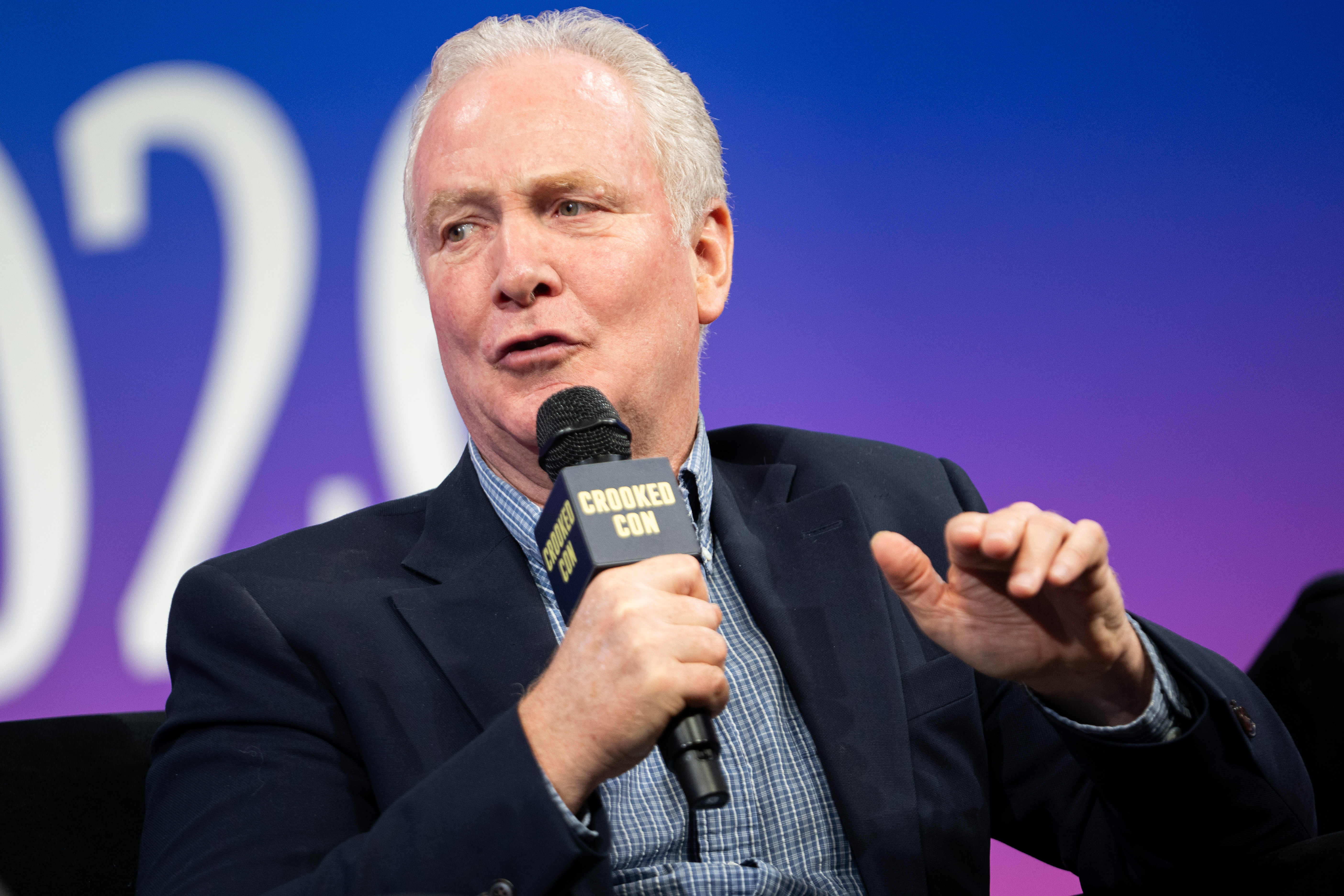
    WASHINGTON — Democratic Sen. Chris Van Hollen of Maryland said Thursday that he will run for Senate Majority Leader in the next Congress, setting up a challenge to Democratic Leader Chuck Schumer after the party swept to power in the midterm elections.

    Van Hollen said in a statement that “the American people called for change” and that is why he is running.

    “It’s now on us to meet this moment, and to do that we need new leadership,” Van Hollen said. “This is not about any one person — it’s about answering the call of the American people. That is why I’m running for Senate Majority Leader.”

    Schumer has said he has the necessary support to win the race, which will be the first contested election for Senate Democratic leader in decades. The closed-door, secret-ballot election will be held in early December.

    The question of whether to reelect Schumer has already divided the caucus and many senators have declined to say publicly how they will vote, even before Van Hollen entered the race. They have privately deliberated about what message to take from the election and many are torn — Schumer recruited many of the party’s winning candidates and raised money for them, but progressive groups are pushing for his removal.

    Making the pitch for his reelection, Schumer has been working with Democratic senators one-on-one to form an agenda for 2027. In private caucus meetings this week, Schumer opened discussion on a broad plan for their first 100 days in power that included healthcare and tariff legislation and efforts to stop the Iran war.

    “I’m going to win it,” Schumer told the Associated Press in an interview last week.

    In a statement after Van Hollen’s announcement, Schumer said he welcomes any discussion about the future of the caucus.

    “I’m proud of what we’ve accomplished together — 55 seats and counting is an amazing result — and I have the votes to continue serving as Democratic Leader,” Schumer said. “I look forward to leading our new Democratic majority and delivering for the American people.”

    Divisions over Schumer have simmered over last 2 years

    While Schumer is the favorite to win, Van Hollen’s run exposes a rift in the party that opened in the spring of 2025, when Schumer was put on the defensive after he sided with Republicans on a spending vote.

    Even as Schumer has redeemed himself within his caucus since then — leading them through a government shutdown last year and orchestrating huge wins in the election — many in the Democratic base are agitating for generational change.

    Van Hollen, 67, is not that much younger than Schumer, 75. But he has positioned himself as a new face in the party. He has also said he is considering a run for president.

    While most Democratic senators have either said they are supporting Schumer or are undecided, Van Hollen has at least two backers: Sen.-elect Abdul El-Sayed of Michigan, who won a competitive election in his state last week, and progressive standard-bearer Bernie Sanders.

    El-Sayed posted on X Thursday night that their majority will need “bold leadership.”

    “I called on Sen. @ChrisVanHollen to lead our caucus as a candidate back in April because he leads with courage and experience,” El-Sayed wrote. “We need both right now. Which is why I’m proud to stand with him in his bid to lead our Senate majority.”

    Sanders, an independent who caucuses with the Democrats, held a news conference Tuesday announcing he would not support Schumer. He posted Thursday night that the American people “want a Democratic Party that will stand up to powerful special interests, take on the billionaire class and fight for working families. That is why I am supporting Senator Chris Van Hollen to lead Senate Democrats.”

    Van Hollen has not yet laid out his own agenda, but he has criticized Schumer for his ties to Israel and other special interests.

    While Schumer has a long history of support for Israel, he has strongly criticized Prime Minister Benjamin Netanyahu and his handling of the war in Gaza.

    Schumer says he has broad support

    Several senators have said they are backing Schumer, including incoming Ohio Sen. Sherrod Brown, who beat Republican Sen. Jon Husted last week. Beyond the election wins, those who support him say being the leader is a difficult job, experience is necessary, and Schumer has proven himself with legislative successes when they held the Senate under President Joe Biden.

    “Why would you fire the manager when you just won the World Series?” posted Maine Sen. Angus King, another independent who caucuses with Democrats and votes in the leadership election.

    “Chuck Schumer is one of the principal architects of the most successful election in modern history, and I see no reason to change the leadership that helped make that success possible,” King wrote.

    Sen. Catherine Cortez Masto (D., Nev.) also posted her support Thursday evening:

    Cortez Masto said Schumer was key in “securing a historic majority. I will be supporting him as our Democratic leader.”

  • Pa. Republicans offered plenty of reasons for their midterm losses, but maybe voters just like Gov. Shapiro | Shackamaxon

    Pa. Republicans offered plenty of reasons for their midterm losses, but maybe voters just like Gov. Shapiro | Shackamaxon

    This week’s edition of Shackamaxon covers the fight over property assessments, a horrific failure in the system designed to protect children, why Gov. Josh Shapiro and the Pennsylvania Democrats won so big, City Council finally holding the sheriff’s office accountable, and a surprising admission from the city’s law department.

    The 1100 block of Ruby Street, Wednesday, Aug. 21, 2024, is one of the blocks with the highest new property tax assessments in the city.Tom Gralish / Staff Photographer

    Values vs. valuations

    Property tax reassessment is one of the most contentious, and essential, parts of city government. For years, Philadelphia used out-of-date valuations that left some paying far too much and others paying far too little. After Mayor Michael A. Nutter instituted the Actual Value Initiative, the system has become significantly more accurate. To some, however, regular reassessment simply feels unfair.

    That group seems to include most members of Philadelphia City Council, who have faced a flood of phone calls from residents who have seen significant increases in valuation from the Office of Property Assessment.

    At Monday’s hearing on assessments, however, I could not help noticing that the debate was less about the specifics of OPA’s methodology and more about the inability of Council to control the real estate market that determines valuations. After all, experts at the hearing praised OPA’s accuracy. Monty Wilson, an attorney at Community Legal Services, went as far as calling it the best office in the state, even as he acknowledged that this isn’t good enough.

    What frustrated the city’s legislators wasn’t the process but the results — including large increases in Kensington and other low-income areas. While the significant investments the city has made in combating the drug trade, reducing homicides, and cleaning up the streets (and the measured success of these efforts) means that some increase is expected, many residents were shocked that the home they once stepped over needles — or even people — to get to could now cost so much.

    The good news is the city has the tools to help. Instead of pausing reassessments, which would slowly take us back to the days of widespread inaccuracy, Council can increase the Homestead Exemption, which is the only exception to statewide uniformity rules. This would eliminate the tax burden for the city’s poorest homeowners and lessen it for everyone else. Panelists also suggested extending the appeals period.

    Family and friends of Malayshia Allford gather on Nov. 8 in Morris Park in Overbrook to remember the young girl.Tom Gralish / Staff Photographer

    Demand answers

    The murder of Malayshia Allford has refocused attention on Philadelphia’s foster care system. I know firsthand how important human services are. My younger brother and I are both adoptees, my older sister served as a social worker for years, and my parents fostered several newborns before adopting me.

    I understand there are times when the state must intervene in the private affairs of families to protect the interests of vulnerable children. At the same time, Philadelphia separates children from parents at the highest rate of any major city — four times the rate of Chicago.

    This separation can induce its own form of trauma. While infants like my brother and I benefited from placements with families, older children are often forced to live in group homes. This can be a miserable experience. My parents and the families that fostered my brother and me treated the babies in their homes like their own children. That’s less likely to happen in a group facility.

    What happened to 10-year-old Malayshia, however, went beyond denial of the love and support all children need. Authorities failed her. Her foster mother, Caprice Williams, is now accused of her murder. Making matters worse, Williams has prior abuse allegations, and state officials had recommended not placing any more children in her care. How Williams was able to maintain her job as a public school teacher given these claims is also worth further exploration.

    Three different Council members have moved to authorize hearings, and Mayor Cherelle L. Parker has vowed to investigate. This is a good start. But we’ve investigated the system before, and it still failed to protect Malayshia. This round must be different.

    Senate President Pro Tempore Kim Ward leaves the House chamber following Gov. Josh Shapiro’s annual budget proposal in February.Tom Gralish / Staff Photographer

    Illuminating exits

    After last week’s landslide election, politicians and pundits gave their own interpretation of the results. Soon-to-be former state Senate president pro tempore Kim Ward blamed “national headwinds” for her party’s poor results. Supporters of State Sen. Doug Mastriano, who ran and lost to Shapiro in 2022, took to social media to blame Pennsylvania Republican insiders for anointing state Treasurer Stacy Garrity all the way back in September of 2025, bypassing the primary process that had previously selected Mastriano.

    Pollster Jim Lee, with Susquehanna Polling, has his own theory for why Shapiro won big: Pennsylvanians, including a significant chunk of Republicans, just like the guy.

    In his organization’s exit polling, they asked why voters selected Shapiro and Garrity. In Shapiro’s case, 53% said he was doing a good job, while another 23% said they agreed with the Ambitious Abingtonian on the issues.

    As for Ward’s suggestion that President Donald Trump doomed her colleagues by bombing Iran and inflating gas prices, there are mixed signs. On the one hand, just 6% of Shapiro’s voters picked “standing up to Trump” as a reason he earned their vote. On the other hand, 44% of voters said they voted mostly for Democrats to send a message to the president. Still, that’s not enough to win, let alone score the first Democratic trifecta in decades. This means Shapiro and other Pennsylvania Democrats also did well with the 33% of voters who said Trump did not affect their vote this year.

    In fact, Democrats across Pennsylvania did exceptionally well with Republican voters in this election. Around 44% of voters selected a straight Democratic ticket, while just 33% of voters voted for just Republicans.

    It’s not all good news for Harrisburg Democrats, however. While their candidates may have earned Republican votes this year, these folks have not become progressives overnight. About 43% of voters identified themselves as Republicans, just one point shy of the 44% who called themselves Democrats. This means that going too far afield from the causes they campaigned on could erode their gains.

    Sheriff Rochelle Bilal testifies in City Council during its annual budget hearing in April.Tom Gralish / Staff Photographer

    Accountability at last?

    After years of scandals, City Council has finally seen fit to hold hearings into the Philadelphia Sheriff’s Office, which is led by Rochelle Bilal. From the very beginning of her tenure, whistleblowers have alleged that Bilal has misused public funds and failed to perform the essential functions of her office. During that time, City Council has refused to hold her accountable, at one point even honoring her via resolution.

    On Thursday, that finally changed. Council President Kenyatta Johnson moved to hold hearings into the operations and policies of the office, with the aim of restoring public confidence.

    This is a good start, but the best way to improve the office remains abolishing it.

    Map of the Washington Square West Historic District.

    No comment

    My newsroom colleague Jake Blumgart has chronicled the most recent chapter in the fight over the Washington Square West Historic District. The city’s appeal of the court ruling abolishing it, however, makes an interesting claim.

    It said Judge Christopher Hall should not have considered public comment in his ruling, because “The record does not reflect the overall views of affected owners, businesses, or residents, but only the self-selected bias of the limited number of persons who provided public comments.”

    Policy experts have raised similar concerns about public comment for years. Research shows that people who testify at public hearings are unrepresentative of the community at large.

    At the same time, city officials often lean on this testimony while making decisions. I expect developers and institutions to cite this filing going forward when their own ideas meet a skeptical public.