Tag: topic-link-auto

  • Cavan Sullivan’s assists and Bruno Damiani’s goals lead the Union to a stunning 3-2 win in New York

    Cavan Sullivan’s assists and Bruno Damiani’s goals lead the Union to a stunning 3-2 win in New York

    NEW YORK — The Union came from behind in stunning fashion to beat New York City FC, 3-2, at Yankee Stadium on Sunday night.

    Cavan Sullivan and Bruno Damiani were the stars of the show, with Sullivan notching two assists and Damiani scoring the last two goals after Danley Jean Jacques struck the first.

    Here are our takeaways on the wild game.

    A foul first half

    It’s always been hard enough for the Union at Yankee Stadium: they had just two wins in nine all-time trips to the Bronx entering this game. But they put themselves in a hole within three minutes, thanks to Neil Pierre’s takedown in the box of New York (and former Union) midfielder Andrés Perea.

    Bénie Traoré, an Ivorian winger whom City signed for a club record $10.1 million this summer, duly stepped up and converted from the spot.

    Money isn’t everything in MLS, but it’s a lot. That fee is more than twice what the Union have ever paid for a player, and it’s just $1.5 million than the club’s entire roster payroll — salaries, though not including transfer fees — this season.

    It’s worth knowing that for as well as Traoré and fellow newcomer Luighi (on loan from Brazil’s Palmeiras with a $6 million purchase option) played, New York entered this game with nine players absent due to injury or suspension. They included key attackers Nicolás Fernández Mercau, Alonso Martínez, and Thiago Martins.

    The Union, meanwhile, had their first-choice starting squad available after interim manager Ryan Richter’s lineup rotation in the Leagues Cup group finale. They were still overrun far too often, and referee Sergii Demianchuk had a quick whistle for their fouls.
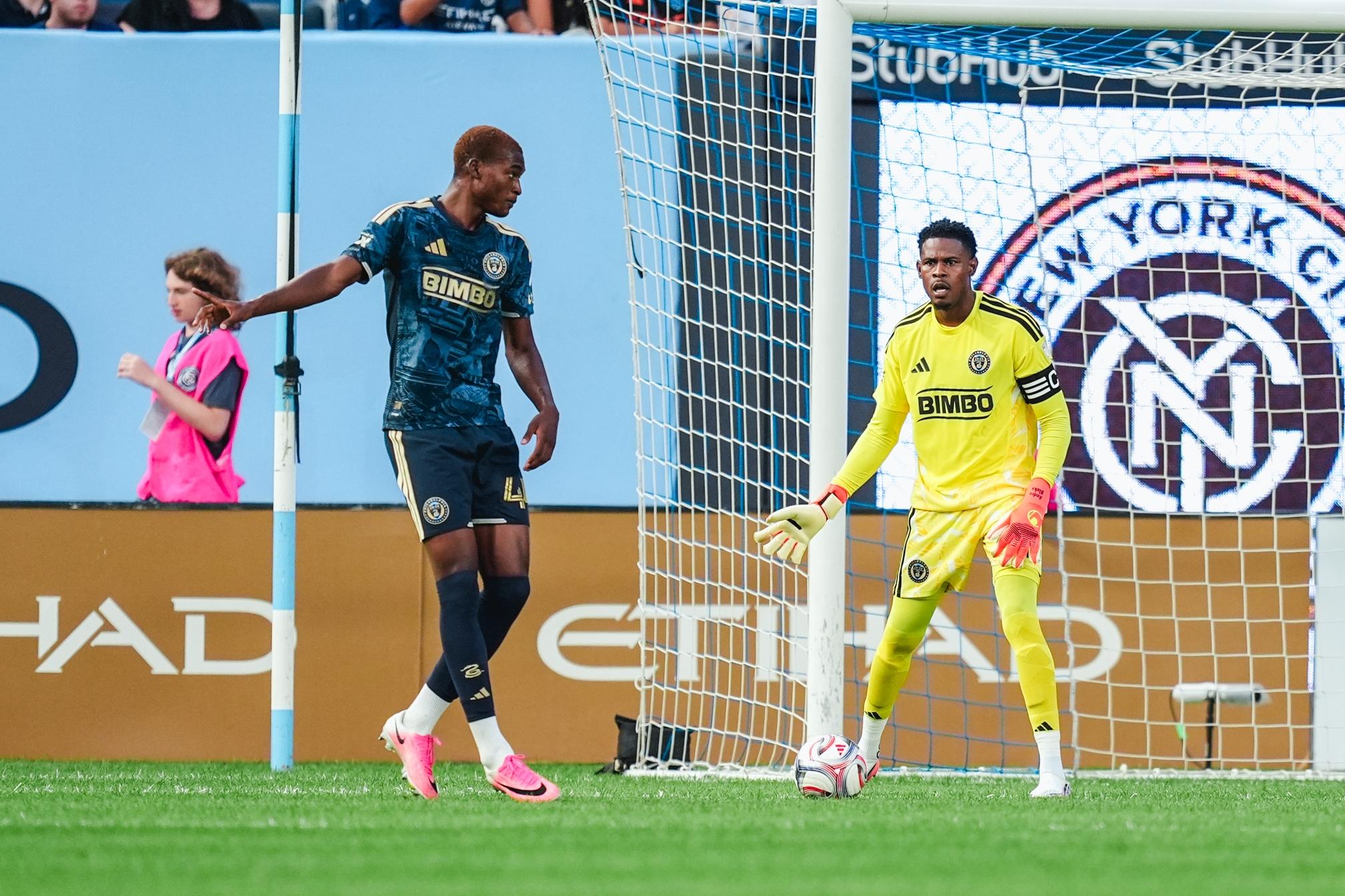
    Neil Pierre (left) talks with Andre Blake during the first half, when the Union fell behind 2-0.Philadelphia Union

    In the 44th minute, that led to a yellow card for Jovan Lukić which earned a suspension from Wednesday’s home game vs. Lionel Messi’s Inter Miami (7:30 p.m., Apple TV) for card accumulation. And just seconds later, Indiana Vassilev was whistled for a handball in the box, with Demianchuk not interested in claims it hit his shoulder.

    Luighi converted this one, with Andre Blake barely moving on his line for the second straight time.

    Digging deep to come back

    Though the Union played well at times in between New York’s goals, the hole felt awfully big at halftime. Yet they dug out of it, with Cavan Sullivan leading the way.

    The first goal of the comeback came just three minutes into the frame. Kai Wagner served a free kick from the left wing, Sullivan flicked the ball on in the box, and Danley Jean Jacques controlled an awkward bounce before slotting past Matt Freese from close range.

    Sullivan did even more on the equalizer. Milan Iloski set him free on the right wing after a drive up the middle, and Damiani was wide open to receive Sullivan’s pass.

    No doubt some Union fans held their breath when Damiani got the ball, for how many easy chances he has missed this year. But he calmly stuck this one home.

    The third goal was Quinn Sullivan’s creation. Five minutes after entering as a substitute, he dashed down the left wing, doing well to evade James Sands’ tackle along the way. Sullivan had a decent look to shoot, but he squared for Damiani instead and the striker struck a nice first-time hit.

    Wild pitch

    This can’t fully excuse how badly the Union (5-10-4, 19 points) played in the first half, but it bears saying anyway. The grass covering the infield dirt was in poor shape, clearly worse than it has traditionally been for soccer games here.

    There was also a big diagonal seam through the six-yard box along the first base line, and a shorter seam by the sideline nearer to home plate at that end.

    Is it a coincidence that the first five goals of the night were all scored at the other end, left and center field in baseball games, where the grass was cleaner?

    About the pitch…

    [image or embed]

    — Jonathan Tannenwald (@jtannenwald.bsky.social) August 16, 2026 at 6:13 PM

    Fortunately, this won’t matter for too much longer. NYCFC (7-7-5, 26 points) will open its own soccer stadium next summer in Queens, across the street from the Mets’ Citi Field.

    Etihad Park will have a capacity of 25,000 seats, and its construction cost is expected to total $780 million — all privately financed, though with a 49-year lease on the land instead of it being bought. That means the team won’t pay property taxes, which New York’s municipal budget office said is worth $516 million over the lease term.

    With the new venue coming, Sunday’s game might have been the Union’s last at Yankee Stadium. Next year will start with a “sprint season,” in which each team in the Eastern Conference will play each other just once.

    As the schedule isn’t out yet, we don’t know if the Union’s matchup with NYCFC will be at home or away; and if it’s away, whether it will be in the Bronx or at Citi Field, where the Pigeons have also played home games in recent years.

    Cavan Sullivan leads the Union over to the away fans’ section to celebrate the win:

    [image or embed]

    — Jonathan Tannenwald (@jtannenwald.bsky.social) August 16, 2026 at 8:12 PM

  • Jack Whaley overcomes an early deficit to win the 126th U.S. Amateur Golf Championship

    Jack Whaley overcomes an early deficit to win the 126th U.S. Amateur Golf Championship

    Jack Whaley stood on the iconic 13th hole of Merion Golf Club Wednesday morning fighting for a spot to compete in match play at the 126th U.S. Amateur. In a 16-for-11 playoff, he birdied the hole to earn the 60-out-of-64 seed.

    On a rainy Sunday afternoon, Whaley, a 22-year-old rising senior at Florida State, secured a 4-and-3 victory over rising Stanford senior Jay Leng Jr. on the 33rd hole of the 36-hole championship match. Whaley became the first Englishman to win the U.S. Amateur since Matthew Fitzpatrick in 2013, and the second Englishman to win a USGA title at Merion, joining Justin Rose, who won the U.S. Open there in 2013.

    Jack Whaley is a rising senior at Florida State.Yong Kim / Staff Photographer

    “I think Justin Rose is definitely one person that I look up to in terms of his success and the demeanor he has about himself,” Whaley said. “He’s an incredible person, incredible athlete. To be sat alongside him in that category is very, very honorable. I’m really very honored to be there.”

    The final match of the U.S. Amateur is a 36-hole match, with 18 holes in the morning, followed by a short lunch break and 18 holes in the afternoon.

    Whaley started strong in the morning match, with a chip-in on the first hole to take a 1-up lead. He birdied the par-3 third hole to take a 2-up lead, but lost the ninth and 10th holes to square the match. Leng made lengthy birdie putts to take the 2-up advantage heading into the lunch break.

    “To be honest, I wasn’t — I was kind of a little bit shocked that I managed to lose that many holes coming in,” he said. “I got off to a good start, and I was up, and then I was just like, what just happened, and Jay just made a 20-foot putt, a 30-foot putt and then another 20-foot putt, and I’m like, well, that was out of nowhere, and I’m kind of scraping my pars, and he’s just making birdies out of nowhere. He played unbelievable this morning coming down the stretch.”

    Confidence was the key for Whaley going into the final 18 holes.

    “During the break, it was kind of just reset, recoup and get ready for the afternoon,” he said. “I knew 2-down wasn’t too much for me to handle, so I think going into it, it was just be confident and let things happen.”

    After a lunch break, the momentum shifted toward Whaley after he won four holes in a row to take the 2-up advantage. Whaley won the 28th hole for a 3-up lead, but Leng won the famous 11th hole, the site of Bobby Jones’ 1930 Grand Slam-clinching match, with a bogey to cut the deficit to 2-up.

    On the 33rd hole, Whaley made a 10-foot putt to secure the win.

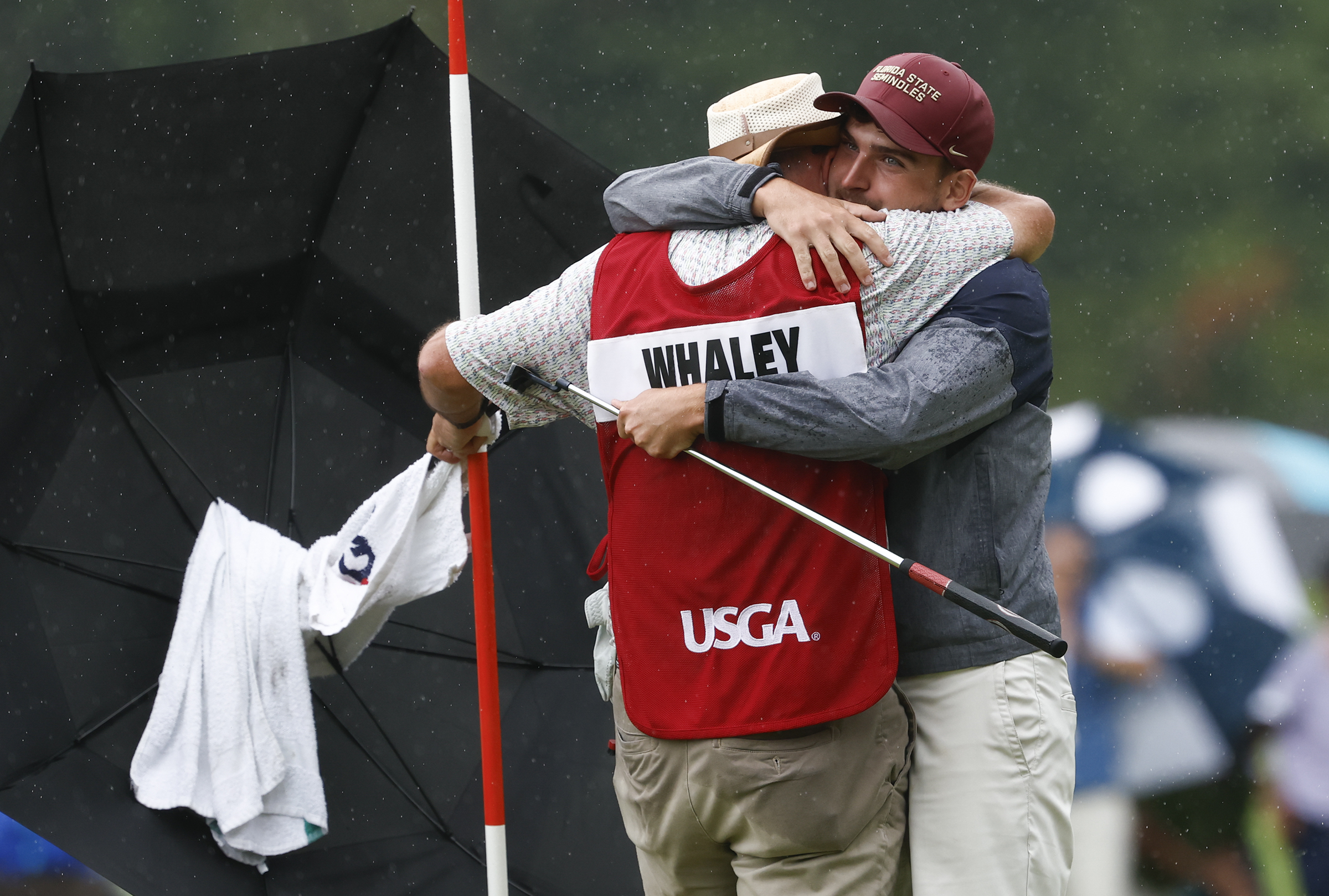
    Jack Whaley (right) hugs with his father and caddie, Andy Wahley, after making the birdie putt on the par-4 15th green.Yong Kim / Staff Photographer

    Whaley picked up the game at 4 years old, but it was not an easy journey for him. He missed many cuts, struggled early, and almost quit the game. But his dad, Andy, has been by his side the entire time — even on the bag at Merion.

    “I think from the hours that my dad has taken me to practice and all the different golf lessons he’s taken me to, it feels like it was all worth it,” he said. “Now he can actually see me happy, and I can see him happy coming off the golf course, which is really good. I’m very proud of myself for this week.”

    This was his dad’s first time caddying in a major tournament.

    “We just liked to be a part of it, me ball spotting, watching through binoculars,” Andy Whaley said. “But this week it just clicked. I can’t explain it. I don’t know why. We just thought it would be a bit of fun. We could enjoy ourselves out here. But all I’ve really done is validate his decisions. I’ve not helped him make those decisions. I’ve not really given him much idea of what to do. All I wanted him to do was be free of any doubt when he stepped up to play a shot so that he could just commit and play that shot.”

    Whaley played at Dalton (Ga.) State College and won five NAIA tournaments, including the 2025 NAIA Men’s Golf Championships after firing a record 61 to start the tournament. Whaley transferred to Florida State University in 2025 and will be a senior in the fall.

    Florida State coach Trey Jones and assistant coach Brandon Smith flew in from Tallahassee to support Whaley.

    He became the seventh player in U.S. Amateur history to come from at least 2 down at the lunch break to win the Havemeyer Trophy. His name will forever be engraved on the trophy with golf legends like Arnold Palmer, Tiger Woods, and Phil Mickelson.

    With this win, Whaley receives an exemption into the 2027 U.S. Open at Pebble Beach Golf Links and the Open Championship at the Old Course at St. Andrews, as well as a likely invitation to the 2027 Masters Tournament.

    Leng also earned a spot in the Masters and the U.S. Open.

  • Rains have returned to the Philly region, and they may come in handy later

    Just as the soils were beginning to take on that cracked and dried look and the vegetation was working up a thirst, the rains have returned to the Philly region, and showers and possible thunderstorms may bookend the week.

    Rains Sunday ended the first seven-day period without measurable rain in Philly in two months. More showers were possible Monday and later in the week, forecasters said.

    In all likelihood they won’t remotely approach the destructive deluges in the Midwest, said Brian Hurley, senior branch forecaster with the federal Weather Prediction Center, in College Park, Md.

    And around here, despite the generous rains that have fallen upon the region since mid-June, additional rain wouldn’t be altogether unwelcome, said Hurley.

    Precipitation in the last 60 days has been well above normal everywhere in the region save for Montgomery County, where they were just about normal, according to the weather service’s Middle Atlantic River Forecast Center, which uses a network of stations in the counties.

    However, not so long ago, as we headed into June, Philadelphia had experienced 16 consecutive months of below-average precipitation totals.

    And drier times may be coming, Hurley warned.

    Drought conditions have eased, but not disappeared

    New Jersey and Chester County remain under state-imposed drought warnings, with residents asked to go lighter on the water usage.

    “We’ve been putting a dent in that drought,” said Hurley, but in the latest interagency U.S. Drought Monitor update, most of the region remains “abnormally dry,” with parts of Burlington, Bucks, and Montgomery Counties in “moderate drought.”

    Thunderstorm activity has been well above normal this summer, with the weather service reporting 19 days officially with thunder detected at Philadelphia International Airport. The average for the entire June 1 to Aug. 31 period is about 15 days.

    It’s also been quite warm. In 12 of the first 15 days of August, the temperature reached at least 90 at the airport, and this almost certainly is going to end up being one of the warmer summers on record.

    The warmth and the rains are related.

    Philadelphia has spent a whole lot of time on the western edge of the so-called Bermuda high, centered over the North Atlantic. Winds circulate clockwise around the center of high pressure, and areas to the west of the center (where we are) experience winds from the south and southwest.

    Being on the edge also places the region in spraying distance of shower activity as fronts and minor disturbances approach along the western flank of the ridge, with daytime heating adding a kick to the storms.

    Thunderstorms may become scarcer come September

    Those convective thunderstorms, which can wring out rain in waterfall-like downpours, in all likelihood will become less numerous as September approaches and the days shorten, Hurley said.

    “It does get a little harder to pop convection when the sun doesn’t do its thing as much,” said Hurley.

    “In September we tend to dry out until we get tropical connections,” he said.

    This year, however, those tropical connections may be scarce, according to the National Oceanic and Atmospheric Administration and other forecast services.

    What could become the most intense El Niño — the anomalous warming of vast expanses of the tropical Pacific Ocean — in records dating to 1950 is rapidly gaining steam.

    During El Niño, the interaction of the ocean and the overlying air generates powerful upper-level winds from the west that can shear apart tropical storms in the Atlantic Basin before they mature.

    No Atlantic hurricanes have developed yet this season. Meanwhile, Hurricane Lala in the Pacific has caused extensive damage in Hawaii. Typically, when the Pacific is quiet, the Atlantic is active, and vice versa.

    Lala is the 12th named tropical storm — those with winds of at least 39 mph — of the season to form in the Pacific. The average for the date is seven.

    In the Philly region, historically tropical-storm remnants have been generous sources of rainfall.

    Sometimes, however, they have been overly generous. (See Ida, 2021.)

  • Phillies rally from five-run deficit to complete series sweep of Twins

    Phillies rally from five-run deficit to complete series sweep of Twins

    MINNEAPOLIS — Andrew Painter threw six balls to begin his start here Sunday. Upon finally landing a pitch in the strike zone, he received a derisive cheer.

    So much for “Minnesota nice.”

    Come to think of it, there was a sizable delegation of traveling Phillies fans in town for the weekend. For five innings, a stray strike from Painter was all there was to provoke their applause.

    But a funny thing happened along the way to a series-finale egg-laying. The Phillies rallied from an early five-run deficit to pull ahead in the eighth inning of a 7-5 victory to complete a three-game, two-state sweep of the Twins.

    “We’ve been able to come back, and our bats have been good,” interim manager Don Mattingly said after the Phillies inched ahead of the Diamondbacks and back into sole possession of a wild card. “Up and down [the lineup], as long as we stay with it and start getting guys out there, you’ve got a chance to break through.”

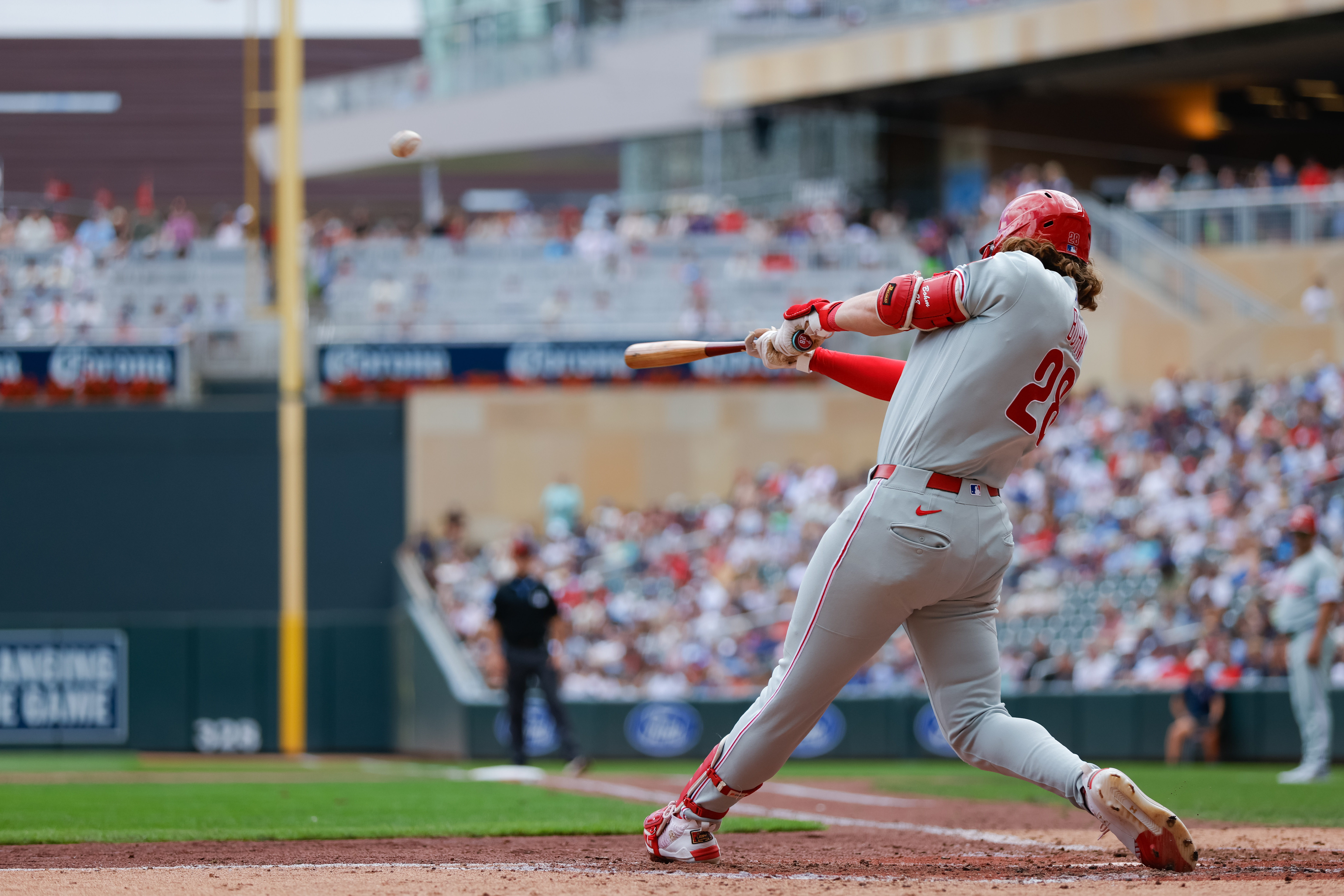
    For the record, Alec Bohm bashed a three-run homer in the sixth inning to draw the Phillies within 5-4, then dropped a fly ball inside the right-field line for a game-tying single in the eighth.

    But it was reserve outfielder Bryan De La Cruz, in only his third at-bat in eight days, who broke the tie by punching a two-run single through the right side.

    “I understand that’s my role, and I just have to take advantage of the opportunities that I get, seize the moment, and just keep going,” De La Cruz said through a team interpreter. “I know that maybe I haven’t earned a spot every day here, but that’s what I have to do, just try to come through on the spots that the team needs me to.”

    Andrew Painter throws during the first inning against the Minnesota Twins on Sunday.Bailey Hillesheim

    Jhoan Duran survived a 33-pitch tightrope walk in the ninth inning of his first appearance in Minnesota since getting traded by the Twins 382 days earlier. But the Phillies jetted home on the fuel of three consecutive wins over 243 miles from the Field of Dreams in Dyersville, Iowa, to the Twin Cities.

    They also took Painter off the hook for a rough start.

    Seeking to build off 5⅓ solid innings earlier in the week in St. Louis, Painter loaded the bases with two out in the first inning on back-to-back singles and a walk. He gave up a long, loud foul ball to Brooks Lee and hung a slider on the ensuing pitch for a grand slam.

    “That’s where I’m trying to bury it, especially ahead in the count,” Painter said. “I believe it’s 1-2. You have room to play around there, so you’ve got to be able to execute that. That’s got to be a ball down. We’re trying to get chase there. Just left it up.”

    Chalk it up as another lesson in a season full of them for the 23-year-old rookie.

    Painter hit the next batter, Luke Keaschall, on the bill of his batting helmet with a first-pitch fastball. Not a great look, but considering Painter’s lack of command, in keeping with the rest of the first inning.

    Even so, the umpires conferred behind the mound and issued warnings to both teams, a decision that irritated Twins manager Derek Shelton.

    “I’m not trying to go up and in with that,” said Painter, who has a 6.43 ERA through 18 games (16 starts). “I’m just trying to rip that through the zone and be really aggressive with the fastball there. It kind of just got away from me a little bit. Just got to be able to bounce back.”

    Alec Bohm celebrates after hitting a three-run home run during the sixth inning on Sunday.Bailey Hillesheim

    Painter allowed a solo homer to Kody Clemens in the third inning, but otherwise, he froze the scoreboard to enable the Phillies to mount their second-largest comeback of the season. They overcame a six-run deficit on May 15 in Pittsburgh.

    “I’m really happy with the way [Painter] responded after that because him getting through five is huge today,” Mattingly said. “He gives up the solo, but hung in there and kept going. That was huge.”

    Through five innings, the Phillies not only trailed 5-0 but had three hits. The third time through the order against Twins starter Dean Kremer was different. They loaded the bases on two walks and a single before breaking through on Luis Arraez’s groundout and Bohm’s three-run homer.

    It set the stage for the eighth-inning, which began with Bryce Harper’s one-out single and a double by Arraez before Bohm’s game-tying bloop and De La Cruz’s go-ahead single gave the traveling Phillies fans something real to cheer about.

    “I’ve got to be better from the jump,” Painter said. “I’ve got to be in zone more. Obviously I put the team in a really tough spot. But really good job by the guys to come back and battle like that.”

  • Perfect Game’s All-American Classic brings former major leaguers together to coach future stars

    Perfect Game’s All-American Classic brings former major leaguers together to coach future stars

    The past and the future met at Citizens Bank Park on Sunday morning for the Perfect Game All-American Classic. Sixty of the top high school baseball players in the country took the field and were coached by former major leaguers.

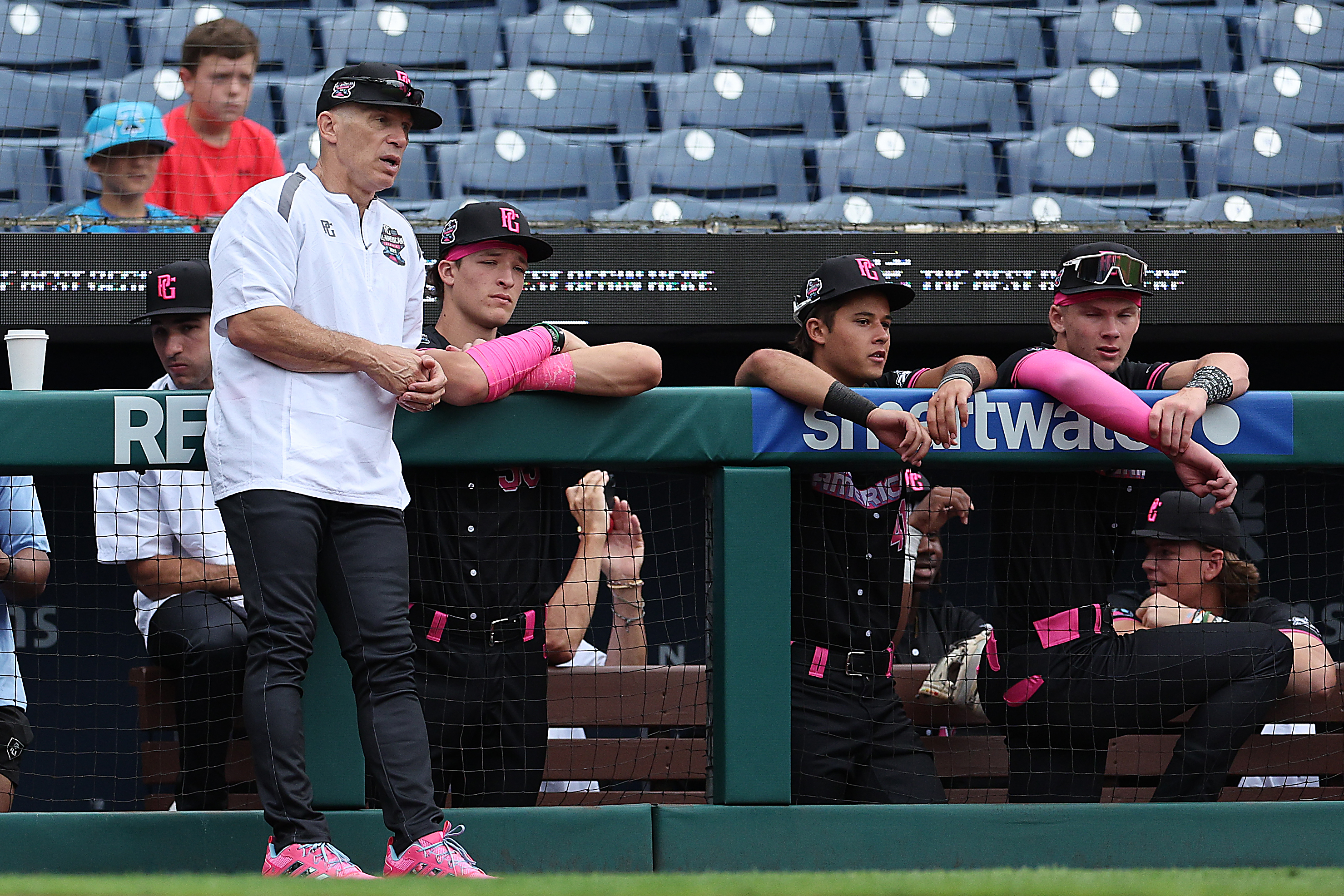
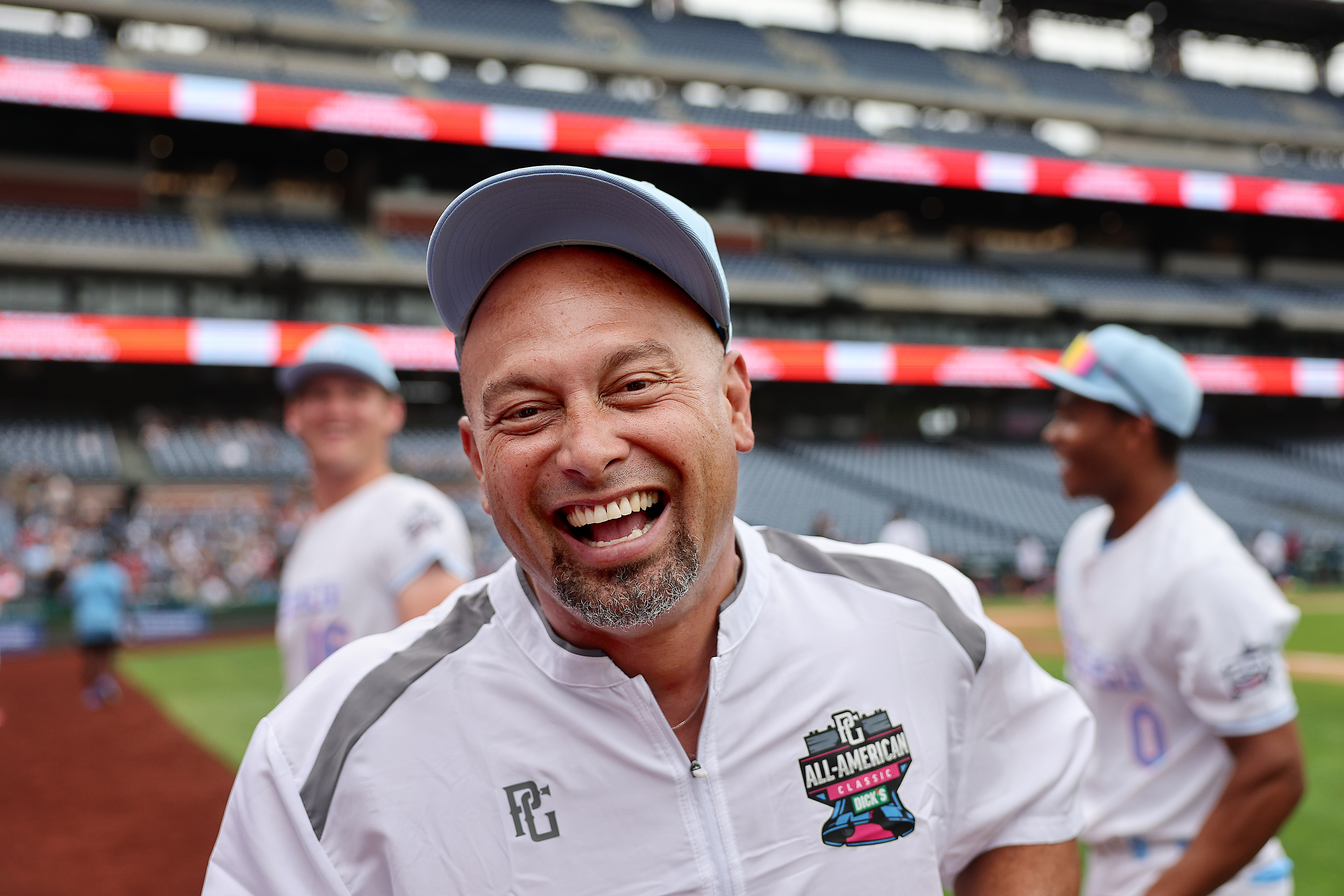
    Former Phillies manager Joe Girardi, a four-time World Series champion as both a Yankees skipper and player, served as the manager of the West team. Across the field in the first-base dugout, former Phillies center fielder Shane Victorino was the manager of the East team.

    Ultimately, it was Girardi who came out on top with an 8-3 win for the West team.

    Girardi spent 273 games as the Phillies manager starting in 2020. He went 132-141 record with a .484 win percentage before being fired early in the 2022 season. He hadn’t been back in the dugout at Citizens Bank Park since. Instead, he’s been focusing on his role as a Yankees game analyst for the YES network. He said it was great to be back in Philly.

    “I enjoyed my time here,” Girardi said. “It’s a great baseball town. People are extremely passionate. Just great to be around these young kids too.”

    Girardi was the manager of the West team for his first time back in the dugout at Citizens Bank Park after being fired in early 2022.David Maialetti / Staff Photographer

    Victorino, whose eight seasons in Philly included two All-Star selections, three Gold Gloves, and the 2008 World Series title, has spent a lot of time back in the city. During All-Star Weekend last month, he led Team Victorino to win the inaugural MLBx three-on-three tournament against Jimmy Rollins, Ryan Howard, and Andruw Jones.

    Also part of both the Perfect Game coaching staff and the 2008 Phillies were pitchers Kyle Kendrick and Tom Gordon. Milton Thompson and Ben Rivera, from the Phillies’ 1993 NL champions, joined them on the coaching staff, along with fellow ex-Phillie José Contreras. Former manager Charlie Manuel was in attendance as the honorary chairman for the first-ever Perfect Game event held at Citizens Bank Park.

    With so many players back and involved in the event, Victorino said it’s a testament to the “Phillie way.”

    “There’s something special when I came here, and I learned that through the years that there’s a way that they do it here,” he said. “To be a part of it, to be called back, and to be a part of this organization still, [with] five, six people involved in this [event] it’s always amazing.”

    Former Phillie Shane Victorino was the manager of the East team and was one of five former Phillies part of the coaching staff for the game.David Maialetti / Staff Photographer

    Fellow former major leaguers Mo Vaughn, Trevor Hoffman, Ryan Klesko, Todd Coffey, Denard Span, and Jason Phillips, and Girardi’s son Dante were also on the coaching staffs.

    For Dylan Seward, a shortstop from Corona, Calif., who is projected to be the top pick in the 2027 draft by MLB.com and is committed to Tennessee, the opportunity to play and learn under these veterans was “a major blessing.”

    “Joe’s managed some of the best players ever, so getting to pick his brain a little bit, to me, that’s how you get better,” Seward said. “Always [having an] open mind and ask a lot of questions from guys with a lot of knowledge and just really listening.”

    In line with the rest of the big names surrounding the game, Daron Sutton and former Phillies outfielder Hunter Pence called the game on PGTV.

    Pence’s nephew, Striker Pence, a 6-foot-6 two-way player also from Corona, pitched the first inning. The right-hander maxed out at 99 mph with the rest of his pitches sitting in the high 90s.

    In the fourth inning, Pence, who bats left-handed, hit a double to centerfield that brought in the first two runs of the game.

    On the East team, Brue Milner, a catcher from Tallassee, Ala., who is committed to Georgia Tech, went yard in the top of the sixth to bring in a run for Victorino’s team. Later in the inning, a base-hit from Harry Chubb Jones Jr., an Alabama pledge from Douglasville, Ga., tied the game.

    A sacrifice fly from Max Hemenway, a native of Puyallup, Wash., who’s another Tennessee recruit, gave the East a one-run lead in the top of the eighth. An RBI single from LSU recruit Sebastian Castillo, of Justin, Texas, in the bottom of the frame tied it up. Pence walked, moving Castillo to second before he stole third. A single from Ontario’s Jalen Jacobs brought Castillo home before a grand slam from another LSU pledge, Koa Romero from Des Allemands, La., ended the game.

    The talent displayed is something both Victorino and Girardi said they don’t recall possessing at 17, but it says a lot about the direction the game is heading.

    “It’s amazing the size, first and foremost, and then the ability to play the game at the level at such a young age,” Victorino said. “I think it’s pretty impressive, but again, there’s so much more for these kids to learn, so much more ahead for them.”

  • Man accused of burglarizing nearly 30 Philly stores arrested in Florida

    A man who police say burglarized nearly 30 stores in Philadelphia was arrested last week in Florida.

    Ravon Service, 31, was arrested Aug. 10 at a resort hotel in Kissimmee, Florida, about 20 miles southwest of Orlando, according to the U.S. Marshals Service in Philadelphia.

    Service is accused of breaking into and stealing cash from 26 stores in South and Northeast Philadelphia. According to police, he allegedly burglarized the businesses early in the morning and took the money from offices, safes, or cash boxes.

    Police had been the investigating a slew of commercial burglaries since early 2025.

    “This arrest stops a serial burglar from continuing to victimize Philadelphia businesses and brings his repeated criminal activity to an end,” Supervisory Deputy Robert Clark said in a statement.

    The Philadelphia Police Department did not immediately respond to an email Sunday seeking additional information.

    Service was also wanted in connection with other crimes in Montgomery County as well as Georgia and New Jersey, the U.S. Marshals said.

    He is currently being held in a Florida jail, where he awaits extradition back to Pennsylvania, the agency said.

  • Phillies’ Trea Turner avoids injury after fouling a pitch off his leg, but gets Sunday off vs. Twins

    Phillies’ Trea Turner avoids injury after fouling a pitch off his leg, but gets Sunday off vs. Twins

    MINNEAPOLIS — Trea Turner watched the replay before he left the ballpark here Saturday night.

    “It looked a lot worse than it was,” he said.

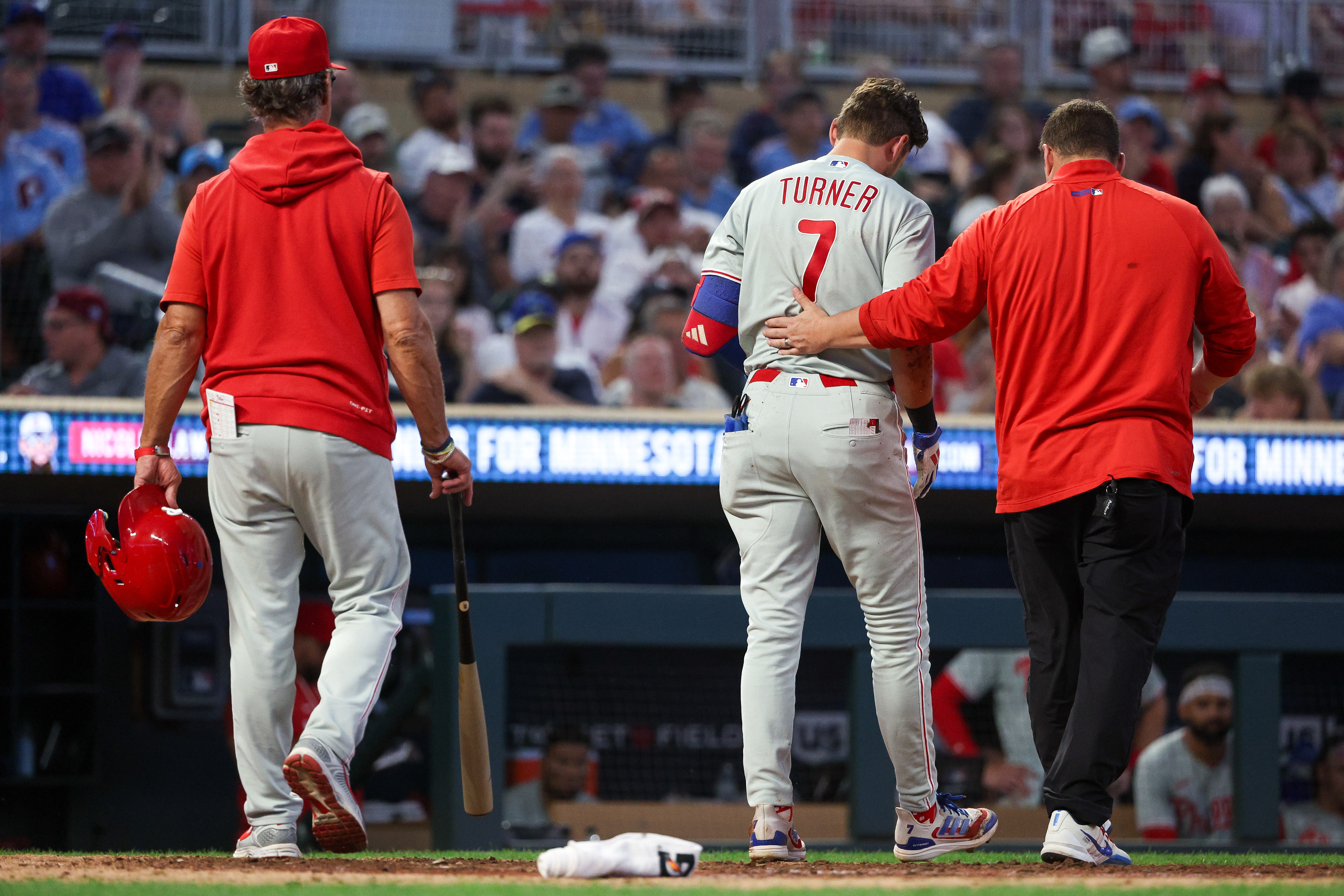
    Indeed, Turner left the game — and the Phillies hoping for the best — after fouling a pitch off his upper right leg in the eighth inning of a 9-1 rout of the Twins. He writhed on the ground and and got to his feet with assistance from head athletic trainer Paul Buchheit.

    But by the time the game was over, Turner was walking through the clubhouse without even a trace of a limp.

    Turner could have started Sunday, too, interim manager Don Mattingly said. But the Phillies weren’t pushing it with their star shortstop, whose legs make him one of the fastest players in the sport.

    “I don’t like taking chances with his legs,” Mattingly said. “Because he [could] end up running differently, and then he’s got a hamstring or he’s got a hip or something going on. It’s just kind of a natural, easy decision with Trea, just because you want to be more cautious with him than some other guys.”

    And so, Edmundo Sosa made a rare start at shortstop for the series finale against the Twins, with Turner available later in the game, according to Mattingly.

    In rewatching the swing from Saturday night, Turner said he was bothered more by falling hard on his right ankle than actually fouling the pitch off his leg.

    “I just couldn’t catch myself, couldn’t stop spinning and falling backwards,” Turner said. “I kind of like sat on my ankle. Watching a replay, I can see how the trainers and everyone’s like, ‘Oh no, that looked really bad.’”

    Turner has turned around his season over the last two months. At his nadir, he was batting .216 with a .595 OPS on June 15. Since then, he was batting .292 with an .841 OPS and 10 homers in 49 games through Saturday night.

    And after a rough stretch last month, his defense at shortstop has stabilized. Turner made four errors in four games — and six in 10 games — out of the All-Star break. But he has been error-free for 15 games.

    Even as the Phillies displaced three-fourths of the infield after trading for second baseman Luis Arraez, they left Turner at shortstop. Infield coach Bobby Dickerson has expressed confidence that the 33-year-old can stay at the position beyond this season.

    “He’s got to put a chip on his shoulders and say, ‘The way to quiet everybody is to make plays, to do my job and do it right and do it good,’” Dickerson said on The Inquirer’s Phillies Extra podcast. “I always talk about shortstop as the quarterback position. … We’ve got to get back to him leading as a shortstop — make plays, play it calm, let everybody breathe. That’s the only way he stays there.”

    Said Mattingly: “It seems like he’s cleaned stuff up and had better results. I think he’s just kind of stayed after it and kept working. I know he’s been doing a lot of hand [exercises], activation stuff, but just kind of continuing to work. And it has been better.”

    Phillies outfielder Derek Hill takes photos at the Field of Dreams movie site Thursday in Iowa.Yong Kim / Staff Photographer

    Hill gets a hand

    Reserve outfielder Derek Hill kept playing Saturday night after getting hit on the right hand while attempting to bunt in the fifth inning. But after the game he went for X-rays, which came back negative.

    “I think he’s good,” said Mattingly, who expected Hill to be available off the bench. “I’m sure he’s sore.”

    Hill, who plays center field against left-handed starting pitchers, has brought energy — highlight-reel defense and a few clutch hits, too — since being acquired in a trade with the White Sox for two minor leaguers on June 11. In 40 games through Saturday, he was batting .250 (21-for-84) and slugging .452 with five homers.

    With a righty on the mound Sunday for the Twins, Justin Crawford started in center field.

    Extra bases

    Backup catcher Rafael Marchan (knee) was scheduled to continue his triple-A assignment, but Lehigh Valley’s game got suspended by rain. The Phillies will gradually step up his workload behind the plate. “We’re trying to build him up to the nine-inning type of thing, and then we’ll kind of go from there,” Mattingly said. … The Phillies flew home after the game to begin a six-game homestand against the Marlins and Cardinals. Cristopher Sánchez (15-4, 2.54 ERA) is scheduled to start at 6:40 p.m. Monday night against Marlins righty Janson Junk (6-7, 4.41).

  • We need to care about Trump’s CIA murdering fishermen on the high seas

    We need to care about Trump’s CIA murdering fishermen on the high seas

    One of the worst things about Donald Trump’s America in the 2020s — I know, I know, it’s hard to pick — is the return of all the horrible stuff you foolishly thought our flawed nation was done with after the reckonings of the 1970s.

    The American quagmire in Iran makes Vietnam look practically wise in comparison. Then it came out last week that the government was spying in Minnesota on what should be constitutionally protected protest activity by labor unions or environmental groups, in a callback to the notorious illegal FBI op known as COINTELPRO.

    Oh, and the CIA is murdering* people in Latin America again.

    The asterisk is for “allegedly,” based on a report last week in the Washington Post that confirmed growing suspicions about mysterious drone attacks last winter by “gringos” that struck at least three fishing boats that had sailed deep into Pacific Ocean waters from an impoverished coastal village in Ecuador.

    One of the fishing vessels remains missing, its eight crew members presumed dead. The survivors of the other attacks remain traumatized from their injuries and their subsequent interrogation by men who wore no military uniforms — but had U.S. flag patches and spoke with American accents.

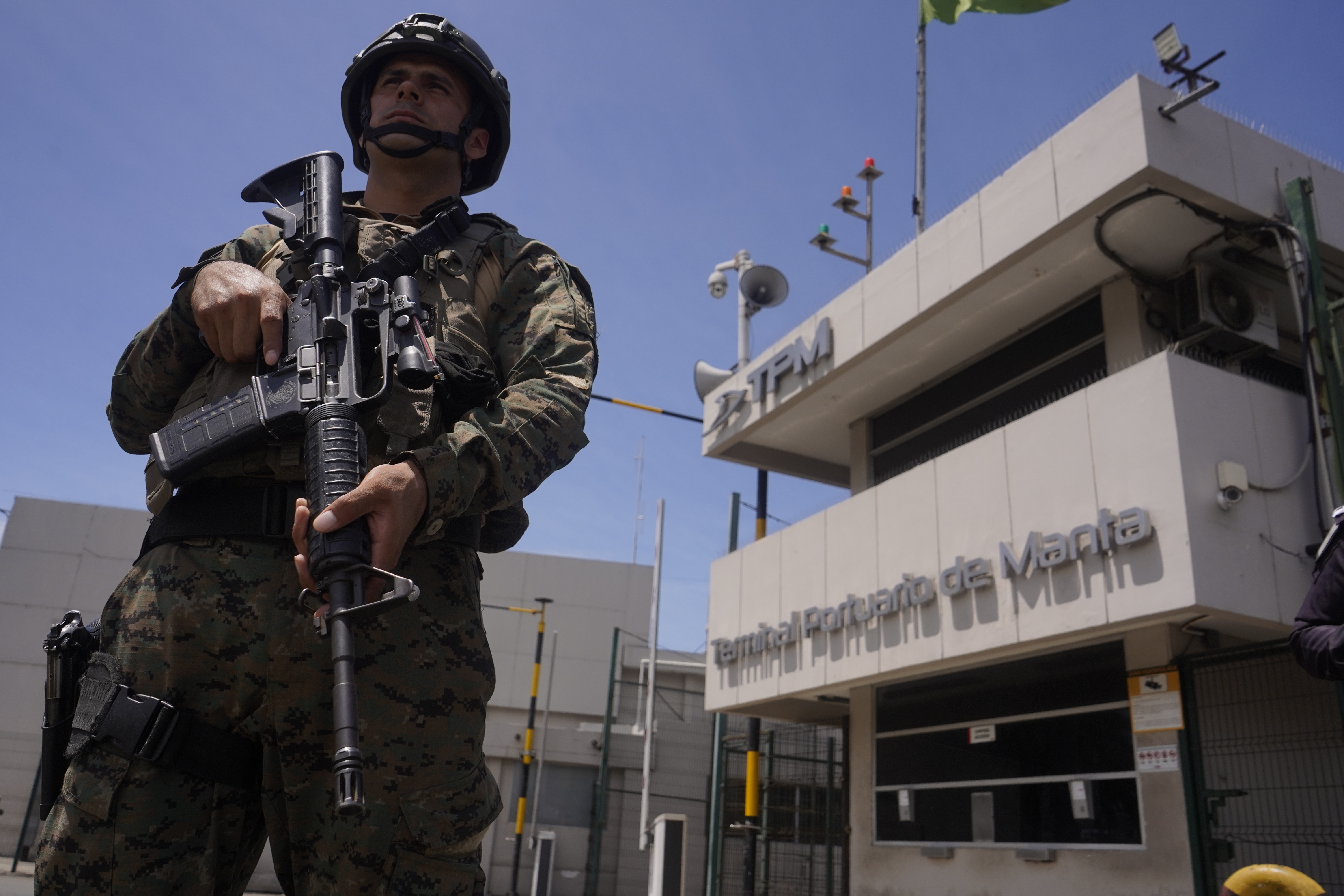
    In March, the crew of the Negra Francisca Duarte II was returning to its Ecuadorian port in Manta with a fresh catch of seafood and, its sailors insist, no illegal drugs when it noticed a blue ship was trailing it on the horizon. Moments later, drones flew over the fishing craft and began dropping explosives.

    Soldiers guard the port of Manta, Ecuador, in February.Cesar Munoz

    “The boys were there, hurt and scared. Some got a fire extinguisher to try to put out the fire, but there were too many flames,” the captain of the Negra Francisca, Hernán Flores, told the New York Times, which published the first U.S. media account of the mysterious attack. Flores said injured sailors jumped into the ocean or scrambled onto lifeboats, and all were at first relieved when the blue boat arrived to rescue them.

    Instead, according to the Times and other accounts, their ordeal was only beginning. The survivors were bound, hooded, and interrogated by the strange English speakers, who offered no medical treatment for their wounds. The boat headed north and transferred the crew members into custody in El Salvador, where officials soon released them — not charged with any crime, after the attack that nearly killed them.

    The initial Times article did not confirm whom the men were working for, but it noted extensive data showing how each of the three attacked fishing boats had been tracked by a maritime patrol plane that was registered to a UPS mailbox in Richmond, Va., and flew from Tennessee to a military airstrip in El Salvador in November.

    After the Times wrote about the three mystery boat attacks, the Post followed up with a report that the attacks were a special covert operation conducted by the CIA. These secret strikes have amplified a series of publicly acknowledged boat attacks in both the Pacific and the Caribbean by the U.S. military that have now killed more than 220 people since Trump returned to the White House 19 months ago.

    Last week’s news reports built upon research and more than 100 interviews by the group Human Rights Watch, which is troubled by the lack of both legality and morality in a partnership forged between the United States and Ecuador. This includes not only the three boat attacks but a land assault against a farm near the border with Colombia, which also found no drugs, but in which farmers said they were tortured by the Ecuadorian military.

    “The two countries’ security relationship is deepening at a moment when both governments have engaged in serious human rights violations fueled by their insistence on framing their confrontations with organized crime groups as a kind of war,” the rights group wrote.

    It’s no secret that drug cartels have enlisted some fishing boats — sometimes through desperation to boost their meager income, but often through extortion — to aid their smuggling operations out of South and Central America.

    But these alleged CIA drone strikes raise stark questions about the Trump regime’s strategy that is literally shoot first, ask questions later. Why are some sailors executed at sea when there’s not even evidence to charge the survivors with a crime? Even if some of these boats are tied to narcotics trafficking, what’s the legal and moral justification for a death sentence for low-level drug offenses?

    There’s also this: What are these extrajudicial killings even accomplishing, beyond cementing the image around the world that Trump is running a violent criminal enterprise? The Drug Enforcement Agency (DEA) has assessed that — some 230 or so lost human lives later — these U.S. boat attacks have had zero impact on reducing the flow of cocaine into the United States. That’s in part because most drugs that come into the United States by sea pass through larger commercial ports, not small fishing villages.

    Instead, the biggest impact from the military drone strikes has been the series of so-called snuff videos that either Trump or Pete Hegseth’s Pentagon has posted to social media platforms showing boats in gentle tropical waters getting blown to smithereens, in shock and awe tribute to their regime’s power to kill with impunity. But the secret, allegedly CIA attacks are not even that.

    What is even the point of this cruelty?

    I’m writing this column to honor the on-the-ground courage of Human Rights Watch and amplify the excellent journalism of Times and Post reporters — and because I’m furious that this story has drawn so little attention, and even less outrage.

    Deep into the second year of Trump’s strongman second presidency, the news media is overwhelmed by the Caligula-like craziness of his regime and its fights over matters as small as a ballroom and as big as the Strait of Hormuz, not to mention the frequent weather disasters made worse by the climate crisis the president believes is a hoax. Some maimed or missing fishermen in a tiny village on the bottom side of the planet aren’t making the cut.

    Which is probably exactly what the regime is going for. Trump and his MAGA minions would like nothing more than to numb you, me, and the rest of us to their growing archipelago of death, a bloodstained map that stretches from the icy streets of Minneapolis to a dingy detention site in Newark, N.J., and from a bomb-blasted island off Iran to the sickbeds in an African refugee camp. They want us to feel numb as their authoritarian death cult expands, and we cannot allow that to happen.

    The truth is that the United States will remain a global pariah — a pitiful, helpless giant — as long as there is no accountability for these war crimes, including, or perhaps especially, the terror perpetrated by mystery men with American flag patches on the high seas. That means public hearings, trials, prison sentences, and the kind of truth and reconciliation this nation has not seen before.

    Certainly the fishermen of Manta, Ecuador, will never forget the horrors that rained down upon them from a clear Pacific sky.

    Simon Villacreses, a 52-year-old crew member of the Negra Francisca Duarte II, told Reuters that he suffered a head injury in the assault, and remains traumatized months later. “They started pointing guns at us. They took us aboard, put hoods over our heads and tied ​our hands behind our backs,” he said of the “gringos.”

    The rattled Villacreses has not been back to sea since, telling the reporter, “Maybe I’ve given up fishing for good.” His livelihood has been destroyed by the criminal enterprise run out of 1600 Pennsylvania Avenue. Our outrage is not enough. We need to be relentless in the pursuit of justice.

  • The tale of Trump’s food cart escape in Ankara explains why he is losing in Iran

    The tale of Trump’s food cart escape in Ankara explains why he is losing in Iran

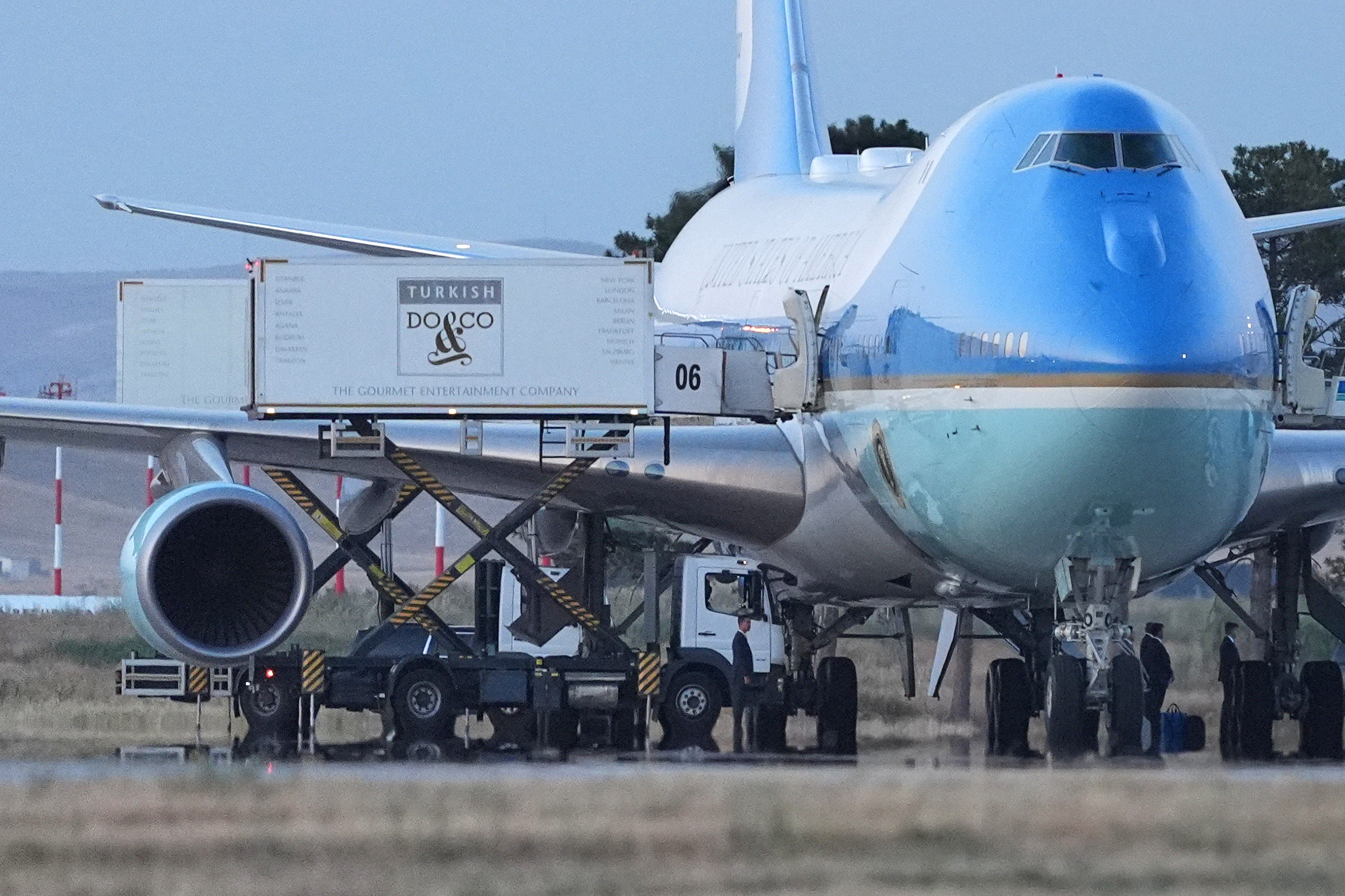
    The jokes about Donald Trump’s secret escape from Turkey last month via an airport catering truck are still flooding the internet. Typical mockery included AI-generated images of the president hunched inside the truck gorging himself on bags of McDonald’s fries, while making his furtive getaway.

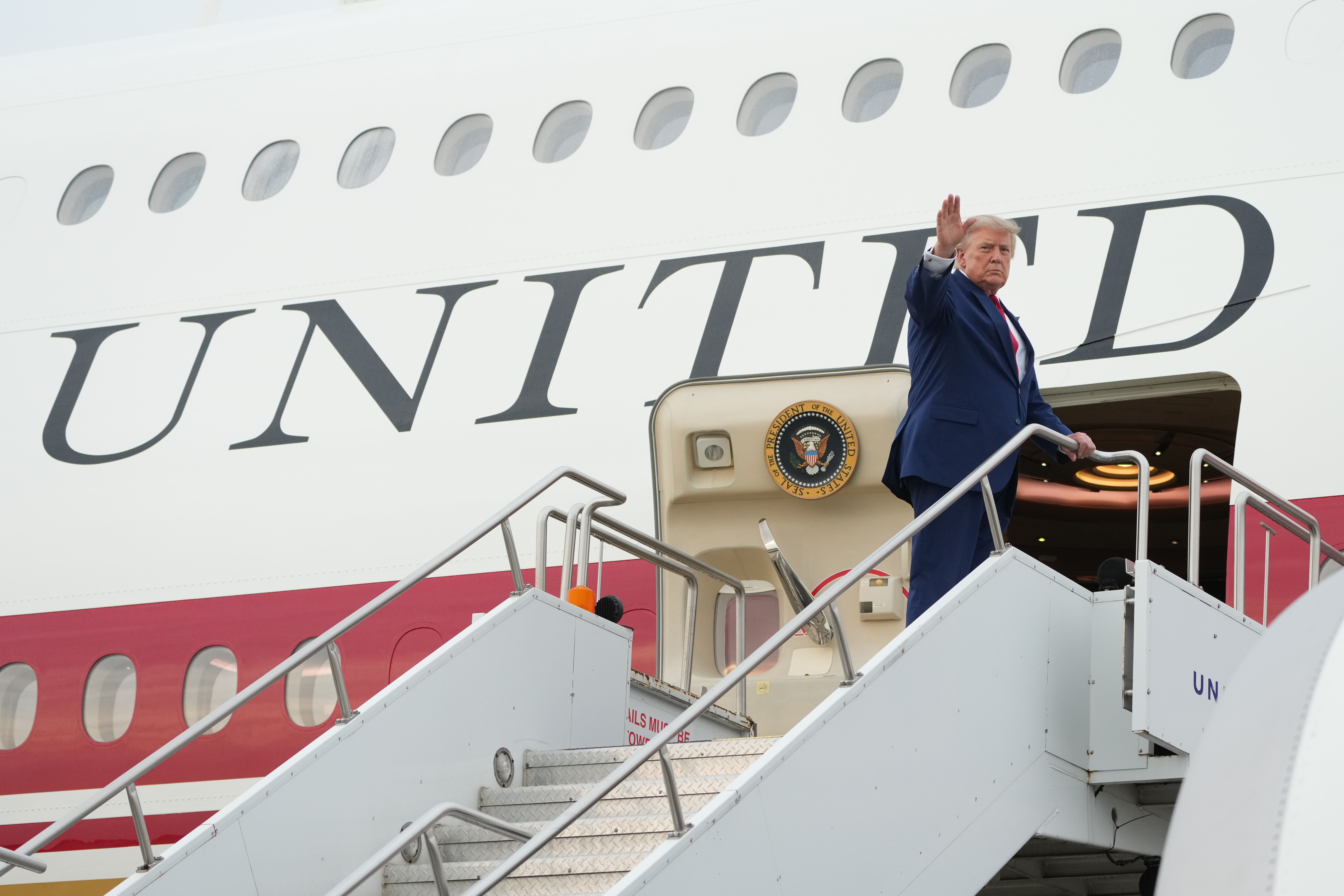
    The jests about Trump’s transfer from Air Force One to a smaller plane via the truck — after Israeli intelligence warned a dubious CIA of a possible shoulder-fired missile attack by Iranians — may be funny. But Trump’s clandestine feint, even if it was more Maxwell Smart than James Bond, should be taken seriously.

    It serves as a chilling metaphor for why Trump’s misbegotten Iran war has gone so wrong.

    “If you’re hiding in a catering truck when you control the most powerful military in the world, you aren’t winning,” posted Ron Filipkowski, editor-in-chief of the progressive MeidasTouch Network, who wasn’t above making fun of Trump before nailing the bitter truth.

    It is mind-boggling that an American president, who flies in one of the most highly protected planes in the world, had to be smuggled onto a different aircraft because the U.S. military couldn’t guarantee his safety. It’s all the more astonishing since the old Air Force One, on which POTUS was originally departing Ankara, had a defensive system designed to defeat such heat-seeking missiles (which Trump’s preferred luxury plane gifted to him by Qatar still doesn’t).

    You may recall that it was ragged, barefoot Afghans who drove the then-mighty Soviet military out of Afghanistan in the 1980s by using shoulder-fired missiles — known as MANPADS — to take down powerful Russian attack helicopters. That’s called asymmetrical warfare, in which the weaker party uses unconventional means to offset the conventional might of the opponent.

    Ukraine is waging a complex version of asymmetrical war against Moscow, having pioneered a staggering array of drones that can destroy tanks, ships, air defenses, and military infrastructure deep inside Russia.

    Yet, Trump refuses to grasp how radically the nature of warfare has changed, enabling weaker countries to hold off stronger ones using robots, long-range air drones, and sea drones — or even updated shoulder-fired missiles.

    Trump and his secretary of defense, Pete Hegseth, seem to envision war either as a throwback to World War II, or through the blurred lens of the U.S. kidnapping of Venezuelan President Nicolás Maduro. Either you crush the enemy with massive air power, ships, and male troops brimming with testosterone, or you do a quick, one-off beheading of the enemy, bringing them under your heel.

    Neither model applies to the war on Iran.

    Trump’s original goal was supposedly to halt Iran’s nuclear program. In the 12-day Israel-U.S. war on Tehran in June 2025, Iran’s nuclear sites were hit heavily. After that, the U.S. could have tracked any rebuilding of those sites by satellite and taken necessary action while negotiating a nuclear deal. The Strait of Hormuz, then wide open to global shipping, was not an issue.

    Instead, the president abandoned promising nuclear negotiations to join a cockamamie regime change scheme proposed by Israeli Prime Minister Benjamin Netanyahu in February. Jerusalem assassinated Iran’s grand ayatollah and planned to swiftly replace him with a former Iranian president who had constantly called for the destruction of Israel.

    I once had the stamina-draining opportunity to listen up close in a small room as said former leader, Mahmoud Ahmadinejad, ranted for two hours. I can tell you that anyone who knew anything about Iran, or who listened to advisers who did, knew this plan was deeply delusional.

    Catering trucks are parked at Air Force One on the tarmac as the motorcade carrying U.S. President Donald Trump arrives to depart following the NATO summit at Ankara International Airport in Ankara, Turkey, on July 8.Alex Brandon

    Trump was clearly suffering from Maduro Derangement Syndrome, mistaking Iran for Venezuela. As Gen. Dan Caine, chairman of the Joint Chiefs of Staff, warned at the time, a prolonged Iran war risked swallowing the bulk of America’s long-range missile arsenal. Indeed, these weapons, which cost millions of dollars each, were wasted chasing cheap Iranian drones.

    Most dangerously, Russia, China, and North Korea have now seen that Trump’s manly U.S. Army is woefully unprepared for the wars of the future. His staggering request to Congress for a $1.5 trillion budget, an increase of 42% over the past year, doesn’t even include tens of billions in additional funding that he wants for the endless Iran war.

    Yet, that budget is clogged with massive funding of legacy items and vanity projects unsuited for future warfare but protected by members of Congress, defense companies, and Trump cronies who benefit from the projects.

    Prime among them is the 15-ship, Trump-class nuclear-powered battleship program, costing $275 billion over a 30-year span. Not only is Trump’s extravagance not needed by the Navy, but his “golden fleet” will be easy targets for the constantly evolving armada of unmanned anti-ship drones.

    You might think the painful Iran experience would have awakened Trump to the urgent need to prepare the army for drone warfare. He and his showman secretary of war talk a big game, but neither he nor the Pentagon has yet grasped the lessons of the Iran — or Ukraine — wars.

    Trump still rejects Kyiv’s offer to share drones and technology and to jointly produce the scarce Patriot interceptors. Private U.S. companies simply can’t gear up fast enough to meet the immediate need. Private U.S. investors are rushing to Ukraine to check out their innovations, but the Pentagon’s budget is still stuck in the past.

    The result is clear: As the Wall Street Journal just reported, in military exercises in Germany, Ukrainian drone units once more defeated U.S. troops and armored vehicles.

    The U.S. military knows about its continued vulnerability to drones, and how essential they are to modern warfare — and understands the value of pairing with Ukraine, the world’s leader in the technology. “You can’t get training like this in the United States,” NATO’s top military leader, Air Force Gen. Alexus Grynkewich, told the Journal.

    But Trump is still fixated on traditional military might as the road to quick victories — unlike U.S. adversaries in Tehran, Moscow, Beijing, and North Korea. Sharing technology with each other, they are advancing in the use of unmanned and unconventional weapons, leaving the U.S. behind.

    Even as he absconded in a food cart, Trump was still declaring victory in Iran, and claiming Wednesday that he has “total control over the Strait of Hormuz.” Wrong. Iran now controls that vital waterway via drone and missile attacks.

    Trump’s current “strategy” is to wait Iran out while blockading its ships, or those loading up at Iranian ports, from exiting Hormuz. Never mind the cost to the global economy or to U.S. military readiness or to American consumers at the pump.

    POTUS has few options. Lacking munitions, the U.S. can’t launch a ground war against Tehran (thank goodness). And renewed bombing will only cause Iran to bomb energy production sites in Arab Gulf states, which will drive oil prices to new heights.

    What a president with a coherent mind and any rational strategy would do is squeeze the Pentagon to reorient U.S. military production. That, however, would involve a new defense secretary and a full-court press to reorient spending toward the future. Most of all, it would require making the most of all the hard-won drone wisdom Ukraine is so willing to share.

    For that, the U.S. would need a very different person than the man in the White House. It would also require a Congress willing to challenge the president if he refused.

    And so, pending midterm elections, I believe that all the food cart jokes ricocheting around the world convey the sad reality. My favorite was one that asked, “What was the name of the operation that lured Trump into the catering truck?” The answer: “Operation Orange Chicken.”

    That’s a good punch line, but here’s the grim reality: Trump is unwilling to face the truth of his failures and incapable of devising a strategy that will keep Americans safe.

  • A Kensington restaurant makes New York Times’ greatest Mexican restaurants list

    A Kensington restaurant makes New York Times’ greatest Mexican restaurants list

    Frankie Ramirez’s aguachiles, lamb-neck birria, and seasonal tlayudas have already earned his Kensington restaurant, Amá, a spot in Philadelphians’ hearts. Now, the chef has notched even higher-profile praise.

    Ramirez’s contemporary Mexican menu landed Amá on the New York Times’ list of the greatest Mexican restaurants across the U.S.

    “While Mexican restaurants [in Philadelphia] have long been shaped by Puebla, the home state of many local families, Mr. Ramirez offers a broad taste of the country’s extraordinary regional variety,” Times’ contributor Regan Stephens wrote of Amá, praising its standout chips and salsa combo — with house-nixtamalized heirloom corn tortilla chips and six artisan salsas — among other dishes.

    A variety of salsas representing different regions in Mexico, are lined up in the kitchen at Ama on Wednesday, July 16, 2025 in Philadelphia.Monica Herndon / Staff Photographer

    Inquirer critic Craig LaBan also singled that starter out in his 2025 review of Amá, whose ambitious menu signals “a golden moment for the city’s Mexican restaurant scene,” LaBan wrote.

    Amá, which opened in May 2025 at Front and Oxford Streets, is Ramirez’s ownership debut. The chef worked in Philadelphia kitchens for several years, starting as a dishwasher at Marcus Samuelsson’s Washington Square before moving on to a string of roles with Starr Restaurants, including executive chef at LMNO. His partners in Amá include his wife, Veronica, and Delaware County restaurateurs Crisalida Mata and Roberto Medina.

    Chef Frankie Ramirez is opening Amá at Front and Oxford Streets.Mike Prince

    Earlier this year Ramirez earned a nod from the James Beard Awards committee as a semifinalist for emerging chef. The restaurant was also a close contender for the 2025 edition of The 76 best restaurants in Philadelphia.

    “My goal is to change the way people stereotype our cuisine, and I think the time is right for Philly,” Ramirez told The Inquirer last summer.

    The restaurant, at 101 W. Oxford St., is open for dinner seven days a week, with reservations on Resy.