Tag: topic-link-auto

  • My husband was kicked out of hospice for dying too slowly

    My husband was kicked out of hospice for dying too slowly

    “No more operations,” he said.

    It was mid-January 2026, and my then-73-year-old husband, Mike Salmon, had just started bouncing back from a three-month ordeal of three operations related to aortic aneurysms, sepsis, and a terrifying descent into delirium tied to a stay in the intensive care unit. Now, after another potentially fatal aortic aneurysm and ambulance ride, the doctors clustered around his hospital bed said the fix involved two more major, risky operations.

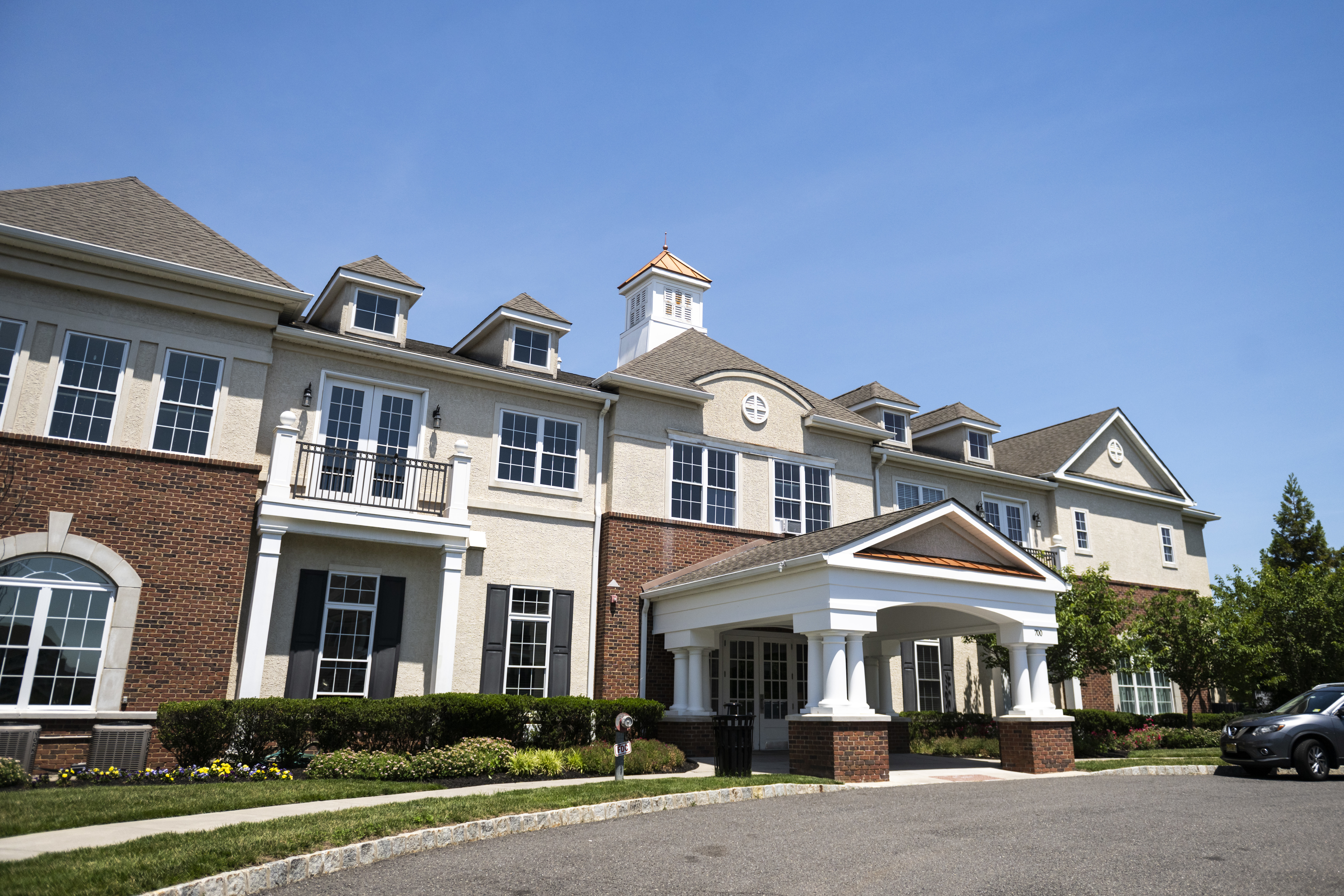
    If Mike did nothing, the aneurysm or sepsis would likely kill him, they predicted. How soon? “Weeks,” one doctor said. “I’m astonished I’ve made it this far,” Mike said. So, abruptly, we were shunted onto hospice care — the dead-end spur of the American medical system.

    Hospice agencies manage care for patients expected to die within six months. They don’t provide curative procedures or drugs. Instead, they aim to help families make terminally ill patients comfortable, typically at home, as an illness reaches its inevitable conclusion. Families provide most of the day-to-day care, and 85% have suggested they are very satisfied with their hospice’s services, which include supplies of drugs and medical equipment, and visits from nurses, therapists, and aides.

    More than 1.9 million Americans were enrolled in hospice in the last fiscal year. Over 80% of those patients stayed on hospice until they died — within four weeks, on average. But each year, about 6% of patients are kicked out because a hospice doctor decides they have stabilized or improved enough that they are no longer likely to die in the next six months.

    In May, Mike joined that select group. His experience in and out of the hospice system revealed surprising lessons about how families can manage care. And getting removed from hospice revealed a little-known process that can represent a welcome respite for families like ours — but can be devastating for patients with serious chronic illnesses.

    Here’s what we learned in our four months on and off hospice.

    Check before you choose

    “Choose one.” A hospital nurse handed me a list of local hospice agencies. The sooner we signed up, the sooner Mike could go home. Stunned by the suddenness of Mike’s health emergency, I just pointed to the name at the top of the alphabetical list, assuming they were pretty much the same.

    Big mistake. Medicare sets basic standards for the hospice agencies it reimburses, but some agencies are understaffed or poorly run. Amy Tucci, president of the Hospice Foundation of America, noted that some agencies provide extra therapy, aide support, and other services.

    The problems with the organization I had chosen started immediately. Staffers were often late. They entered inaccurate medical information on Mike’s paperwork and didn’t make corrections when alerted. Medicare allows you to quit or change agencies, so I asked neighbors for recommendations.

    That was a good start, but Kristina Newport, chief medical officer of the American Academy of Hospice and Palliative Medicine, said I should also have checked the quality ratings on Medicare’s Care Compare site and the National Hospice Locator. Those sites would have alerted me to our first agency’s low ratings. Ideally, Newport said, patients or caregivers should call their area’s top-rated agencies to find those that provide the services you need, such as staff members who speak the patient’s native language, provide spiritual care that aligns with the patient’s beliefs, or are stationed nearby to arrive quickly in an emergency.

    The local, long-established nonprofit that neighbors recommended handled the transfer seamlessly. Its staff was punctual, accurate, and kind. The chef’s kiss after we switched: A nurse from the original company we chose called to say she hoped I hadn’t initiated the change because of “concerns about our care of your mother.”

    Some people get better on hospice

    Research hasn’t yet fully explored why, but some people actually see their health improve under hospice care. Studies have found, for example, that hospice patients with congestive heart failure or lung cancer live about a month longer, on average, than similar patients in the standard medical system.

    Terry Berthelot, who teaches courses on elder law and hospice care at the University of Connecticut, said many patients benefit from hospice’s careful pain management and from leaving hospitals, where they risk infection and overtreatment. Returning home allowed Mike to get up and walk without waiting hours for an overworked nurse to unplug a bunch of monitors, and to enjoy real food. Also, the hospice nurse gave him medicine to help him sleep through the night. He soon started regaining weight and strength.

    You can flunk out of hospice for not dying quickly enough

    Medicare and many other insurers pay for hospice services only for patients whom physicians certify are likely to die within six months of the most recent assessment (not the date of enrollment), so hospice staffers regularly reassess patients. Medicare audits agencies to check for fraud and demands repayment of funds provided for care of patients its auditors deem have not proved to be terminal. Hospices, good and bad, worry about their bottom lines and Medicare’s fraud audits. They may feel pressure to discharge patients who threaten the organization’s finances, even though such discharges can remove important care. “Medicare is worried about fraud and abuse, not about people not getting enough care,” Berthelot said.

    Especially for diagnoses with uncertain prognoses — such as dementia — if a patient improves or even stabilizes, hospice physicians might discharge the patient because they can no longer certify a likelihood of death within six months.

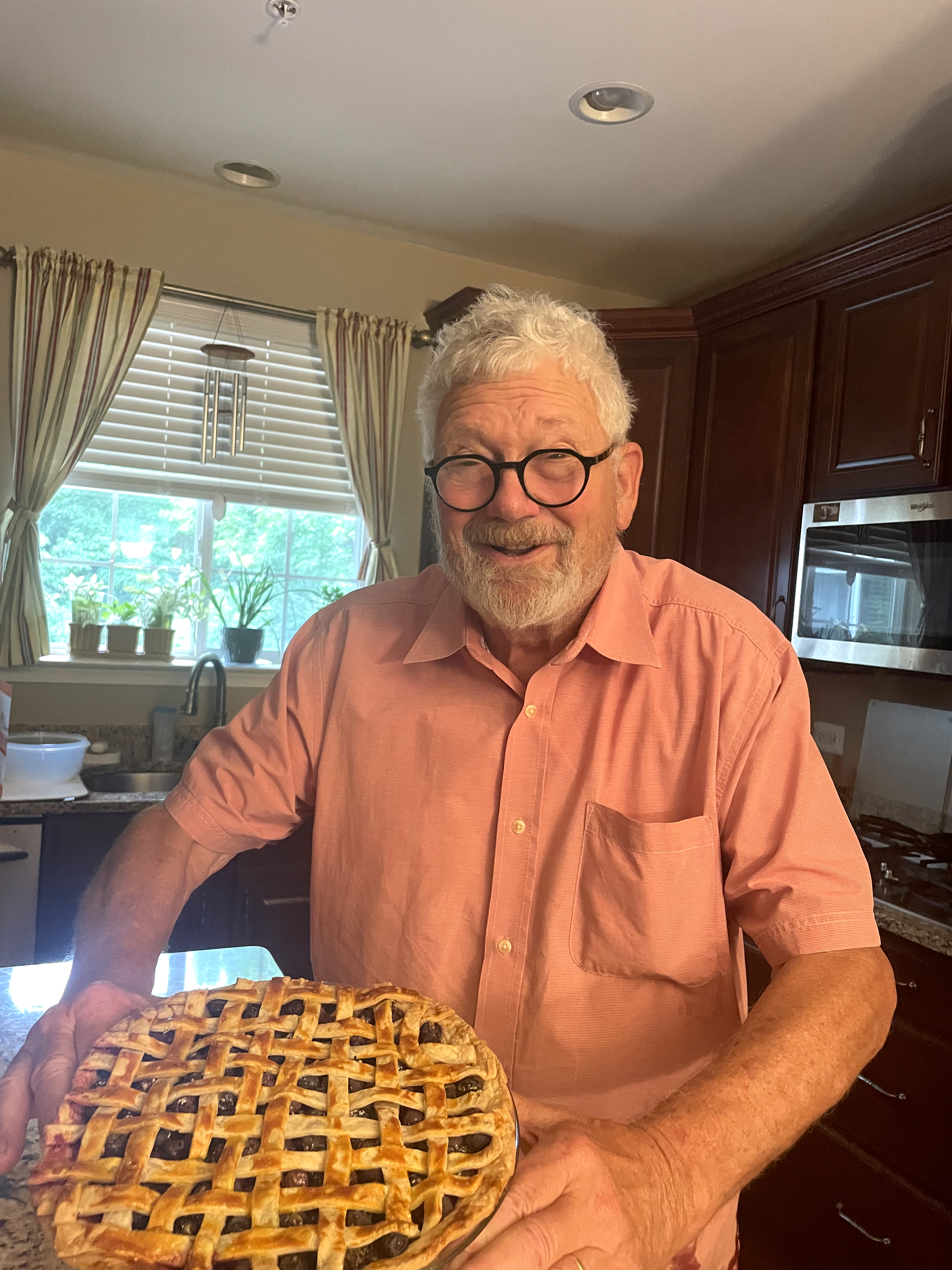
    For some lucky reason, Mike’s aneurysm and sepsis held off. By early May, his wounds had healed, and his strength had improved enough that he returned to gardening, playing bridge, and whipping up his signature lattice-topped blueberry-cinnamon pies. While we appreciated the convenience of the nurse’s visits and the drug and medical supply delivery, we realized Mike no longer needed care, so we agreed with our agency’s decision to discharge him.

    For patients suffering from more debilitating diseases, discharges can be a “nightmare,” said Krista Harrison, a hospice researcher at the University of California-San Francisco. Discharges often happen quickly. Medicare requires that patients be given a minimum of two days’ notice.

    When Harrison’s stepfather, suffering from a neurodegenerative disease similar to Parkinson’s, was discharged because his health seemed to plateau, the family scrambled to replace and pay for hospice-provided equipment such as a hospital bed and oxygen supply, and they had to quickly find and hire aides to replace the hospice aides. “Just getting his prescriptions reestablished and filled was a big deal,” she said. Her stepfather died six weeks after discharge, she said.

    Do your homework to ensure appropriate care

    Arming yourself with information about your risks and rights can help you get the hospice care you need when you need it.

    • Know your diagnosis. Discharges are unlikely for most cancer patients. But patients with dementia, heart disease, and Parkinson’s often plateau. So they are disproportionately likely to be discharged, UCSF’s Harrison said.
    • Choose a highly rated hospice. Research shows for-profit hospice agencies are more likely to discharge patients than nonprofits. Medicare’s Care Compare site will alert you to which is which.
    • Keep your own records. Caregivers who can document, say, a patient’s growing need for eating assistance can help hospice staff approve continuing care, or build a stronger appeal, UCSF’s Harrison said.
    • Keep your family doctor more informed. Doctors “don’t have the financial interest” the hospice faces and could help you dispute a discharge, Berthelot advised.
    • Appeal quickly. Hospice agencies must provide information on appealing a discharge. But you must file the appeal (online or by phone) by noon on the day before the termination date, which may mean you have only a few hours if you’ve been given the minimum two days’ notice, said Wey-Wey Kwok, a senior attorney for the Center for Medicare Advocacy.
    • Reenroll. Patients can try reenrolling in hospice at any time. Another hospice agency may take you immediately. Or you can wait until the patient’s health declines and try reenrolling with your original hospice agency, the Hospice Foundation’s Tucci advised.

    That last option is our plan. For now, Mike and I are enjoying these unexpected bonus days. But whenever fate catches up with him, Mike said, he’s comforted to know he’ll get good care from the hospice’s staff. “They’ll try to improve the quality of what time I have left,” he said.

    KFF Health News is a national newsroom that produces in-depth journalism about health issues and is one of the core operating programs at KFF — the independent source for health policy research, polling, and journalism.


  • Drexel grad Jeffrey Cunningham is making his mark in golf and pushing for diversity

    Drexel grad Jeffrey Cunningham is making his mark in golf and pushing for diversity

    For Jeffrey Cunningham, golf has always been more than the scores, wins, and losses.

    The Drexel alumnus started playing golf at 5 years old in Dallas. His coach, Dante Degrate, introduced him to his son Austin, another young Black golfer who was competing and winning U.S. Kids Golf tournaments. Seeing someone who looked like him playing golf made it easier for Cunningham to catch the golf bug.

    Now, the 27-year-old hopes to create the same sense of representation for the next generation.

    Cunningham graduated from Drexel in 2022 and earned a spot on the Advocates Professional Golf Association tour after finishing second in the APGA’s collegiate rankings. Cunningham returned to Philadelphia to compete at an APGA Tour event at The 1912 Club on Aug. 3-5.

    The APGA Tour provides competitive opportunities for underrepresented golfers and an inclusive future for the game. What began in 2010 as just three events has grown into a national schedule held almost every month from coast to coast.

    The APGA has provided Cunningham a place to compete, develop his game, and build a professional resume as he works toward earning his PGA Tour card.

    “The APGA Tour is definitely important for guys like me who need a place to play and get ready for qualifying school,” he said. “I don’t think what I’m doing now is possible without the APGA Tour because it gives me a chance to sharpen my game and learn more about myself to reach the highest level of the game.”

    Solomon Hughes, APGA’s chief operating officer, said co-founders Ken Bentley and Adrian Stills, the last Black player to make it through PGA Tour qualifying school for 25 years, created the organization to address the lack of access and opportunity for talented golfers from underrepresented communities.

    “Bentley and Stills started the organization really to help address access and opportunity issues for players who have the game but maybe haven’t had the resources,” Hughes said. “We give players you haven’t heard of, but certainly talented players, a chance to play and compete.”

    In 2022, Jeffrey Cunningham was the first African-American golfer to advance to the finals of the BMW Philadelphia Amateur Championship.APGA Tour

    But Cunningham sees the work of the tour extending beyond professional golfers.

    Along with the tour, the APGA has a foundation focused on empowering underserved youth through golf, education, and wellness. While in Philadelphia, the tour hosted a youth clinic for members of the First Tee of Philadelphia at The 1912 Club.

    The youth clinics are for ages 13-21, and they participate in a three-phase program focused on golf education, career development, and mental health advocacy.

    “We really want to try to give the game of golf to people who may have a background in it, but also to people who don’t,” Hughes said.

    This year, the APGA had more than 3,500 participants in the youth clinics, Hughes said.

    “Getting out in the community and educating the youth on the etiquette of the game and the culture and how to fit ourselves within the culture of the game is important for our country,” Cunningham said. “I think the game and the industry would look a lot more represented if we met at those crossroads.”

    Austin Degrate was a major influence on Cunningham’s golf journey and pushed him to compete in tournaments in West Palm Beach, Fla., where he moved to when he was 8. As Cunningham got older, he became more serious about competition and playing in college.

    After visiting Drexel, he loved the coach and program, so he decided “to take a gamble on West Philadelphia.” The difference in style of golf and wearing his North Face parka between shots in qualifying rounds during the winter was an adjustment for Cunningham, but his time in the city pushed him to be where he is today.

    “It was the best decision that I’ve made for my career because it gave me a place to play for five years and hone in my game, then get into the APGA Tour through their collegiate program,” he said.

    Cunningham said playing golf at Drexel was the “best decision that I’ve made for my career.”Drexel Athletics

    His time in Philadelphia also gave him a firsthand look at the barriers facing Black golfers.

    In 2022, Cunningham was the first African American golfer to advance to the finals of the BMW Philadelphia Amateur Championship.

    “In the city of Philadelphia, there is a large population of African Americans and Black folks who have not gotten the opportunity that I have gotten, as we can see from me being the first African American to reach the finals of the Philly Am,” he said. “It is awesome to be able to break that barrier, but we can also learn that it was 2022. … We should be pressing and doing what we can and using the right resources to make that more possible for people who look like me.”

    America is diverse, Cunningham said, and golf should reflect that.

    “The misrepresentation is something we see in all levels,” he added. “Whether it be professional golf, teaching pro level, we are not giving enough opportunities across the board to underrepresented communities.

    “It is cool to see we are on the right path, but we still have a lot of work to do, and it starts with getting the youth into the game.”

  • How Philly distributed an estimated 1 million meals to kids this summer — and kept them busy

    How Philly distributed an estimated 1 million meals to kids this summer — and kept them busy

    Michella Crosby first noticed it a couple of years ago: The children surrounding her block in West Philadelphia were hungry — and a little bored — during the summer break.

    Once a kid in need of a meal, often getting one at her local armory, Crosby decided to do something to make sure no child went unfed.

    The 74-year-old block captain signed up to run a Playstreet last summer. Through the city-run Playstreets program, and with the support of neighbors, she closed off her block to traffic on weekdays and distributed free, nutritious lunches to children, no questions asked.

    “This is survival,” Crosby said in her second summer running a Playstreet. “We have to live. We have to be able to take care of our children.”

    Crosby is just one part of the more than 500 churches, camps, schools, recreation centers, and Playstreets in Philadelphia that offer children under 18 opportunities to do everything from crafting to sports and unstructured play during the summer. These sites have the added benefit of feeding children for free.

    The meals were paid for through the Summer Food Service Program, a federal program with funds administered by Pennsylvania.

    Providing children with a free, federally approved breakfast and lunch is a benefit many families only speak about in whispers, according to program operators. At many sites, all children are handed meals, even if they don’t need them or come with their own snacks. Coordinators say this method of meal distribution makes it so no one feels less-than for lining up during breakfast or lunch.

    This summer, the city was projected to distribute more than a million meals. A final count of meal sites will not be available until the end of the year, according to the city.

    The Inquirer visited several of these meal sites to get a glimpse of the many purposes these hubs serve and the people who make it all possible.

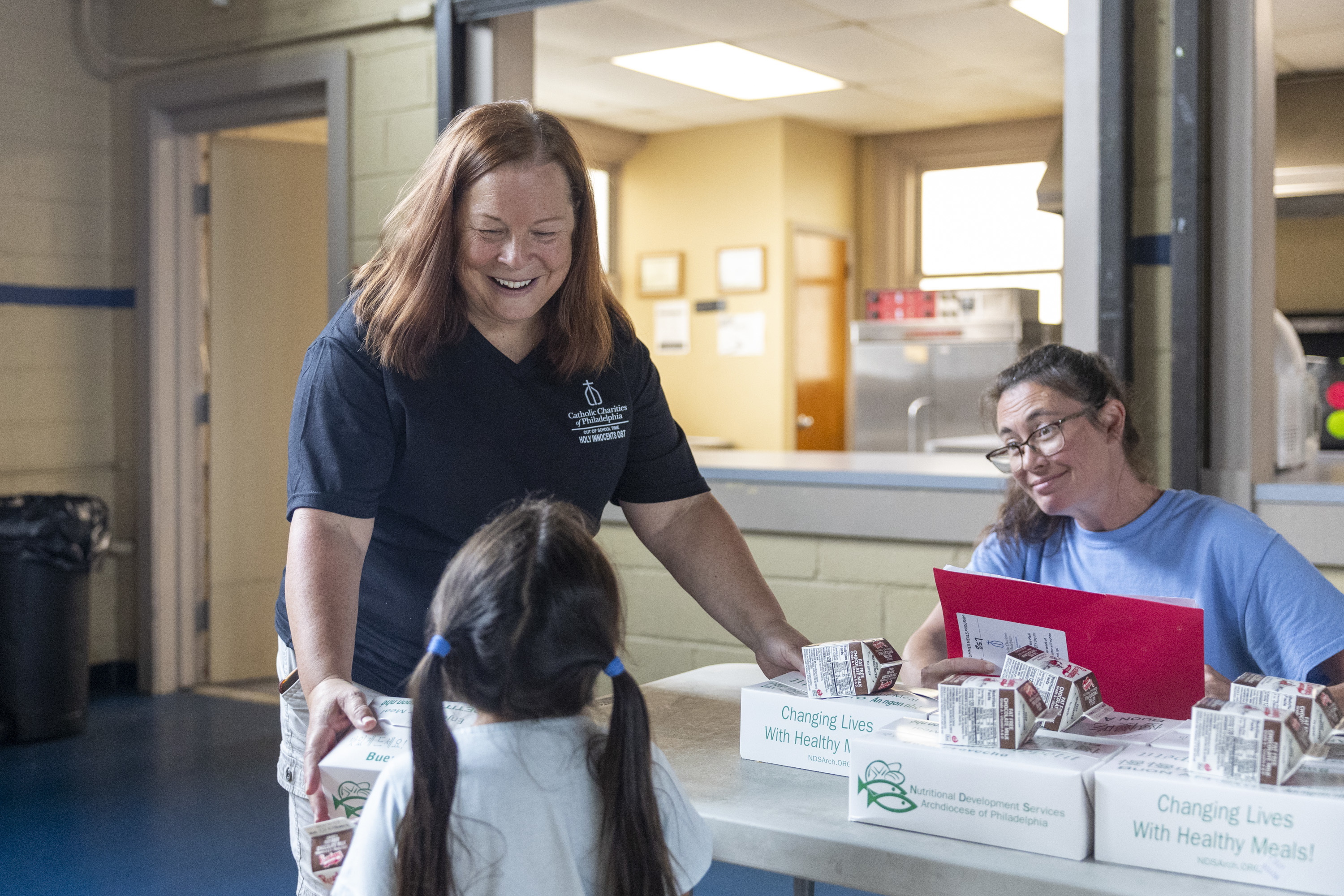
    Holy Innocents School summer camp

    The gymnasium is abuzz on a Tuesday with approximately 70 children ages 4 to 14.

    The pre-K children are the first to boldly rush the plastic folding table featuring a spread of small cardboard boxes topped with pints of milk.

    “There’s a line behind you,” an instructor gently reminds a little boy skipping past his classmates.

    The child spins around, offering a sheepish grin, and joins the friends he had zoomed past, giggling with glee.

    Almost every child in the room attends Holy Innocents School during the school year, said Dee D’Aulerio, director of the free all-day summer camp in Juniata Park.

    A calendar of the meals made by Nutrition Development Services for about 150 kids at Holy Innocents Catholic Church in Philadelphia, Pa., on Tuesday, July 28, 2026.Tyger Williams / Staff Photographer

    “Historically, they did have to pay a fee, but now that we’re free, it really eases the burden on the families who pay tuition to take something off their plate,” she said.

    In rapid succession, D’Aulerio personally hands every child a box that includes a ham and cheese sandwich, celery sticks, and potato salad.

    Most look past the celery, donating their untouched containers to the “share table,” where a milk crate is already overflowing with applesauce containers.

    One of the middle school boys walks up to the share box and grabs a handful of sandwiches. He tosses one to a friend and keeps the rest.

    “The kids can help themselves if they’re still hungry after eating; they’re also able to take things home with them, too,” no questions asked, D’Aulerio said. “That’s a big help, especially if there are multiple children in the family.”

    100 block of Dewey Street

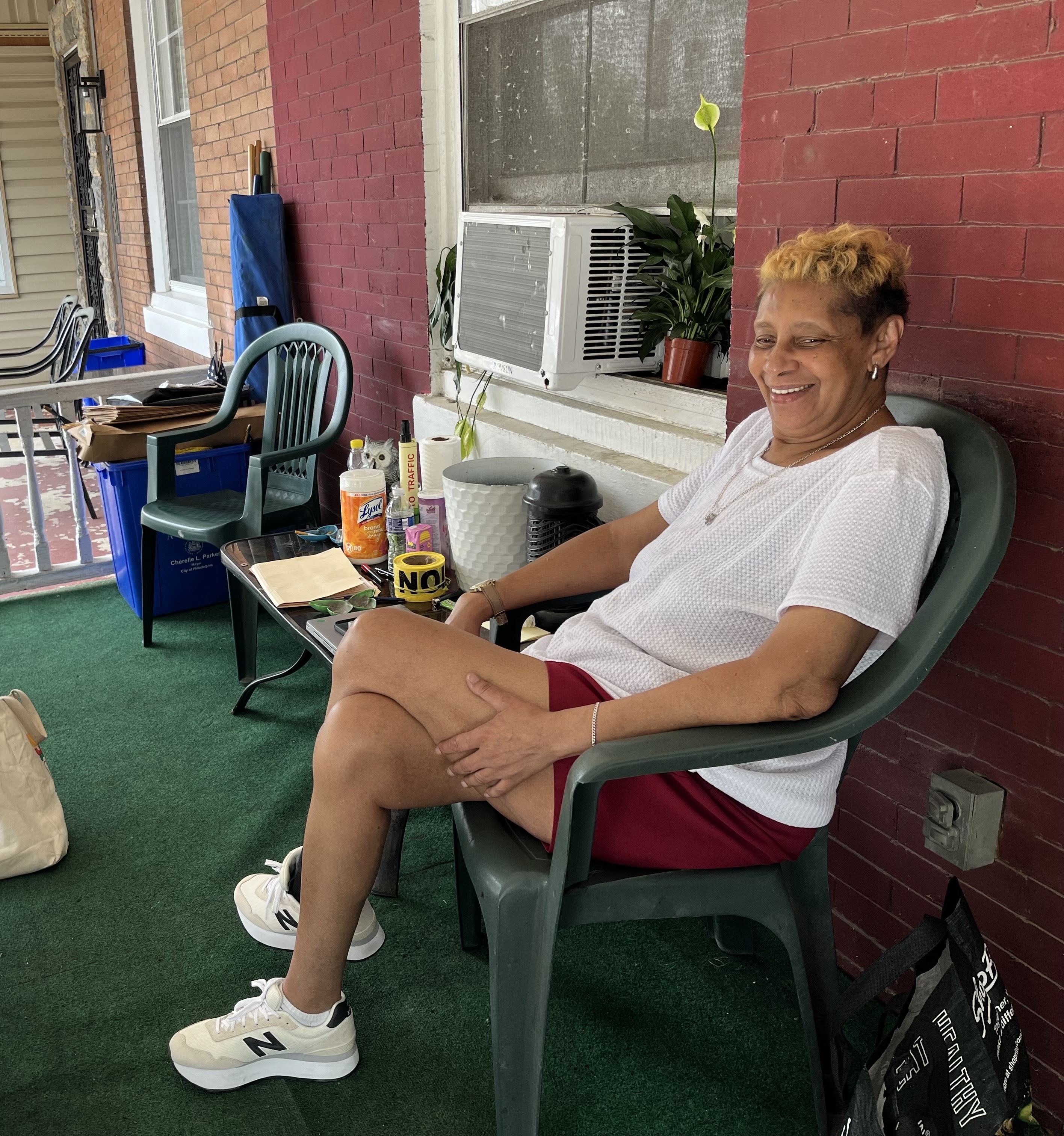
    Michella Crosby won’t admit it, but she is kind of the linchpin of her block, according to her neighbors.

    She had been block captain for a decade and a member of the nonprofit ACHIEVEability, which aims to break the “generational cycle of poverty,” for 16 years. She is the person neighbors go to for help applying to city programs that can lower their tax bills.

    Michella Crosby waits for children to stop by mid-August to pick up a free meal.Ximena Conde

    Last year, she started to tackle hunger in the neighborhood.

    Two children run up to Crosby’s house around 2 p.m. on a Friday, cracking open a blue cooler full of chocolate milk and apple juice. They are not from the 100 block of North Dewey Street, but they are near-daily visitors.

    “Got something to eat?” the boy asks, knowing the answer is yes.

    “I want two juices!” the girl says, pointing at a doll she is swinging around. “It’s for the baby.”

    “I got your applesauce,” Crosby says to the boy as he inspects the ham sandwich lunch. The boy is in a picky eating stage, Crosby notes.

    There were no Playstreets when she was coming up, so Crosby would head to the local armory. She only wishes she could do more for the modern-day latchkey kids who live in neighboring blocks. This summer, she has gotten faint knocks on the weekend of kids asking for food. Playstreets, however, only runs during the week.

    “As much as I would love to, I can’t give away my refrigerator,” she said, as a neighbor greets her from across the street.

    Still, she considers this summer a success, grateful that children feel safe enough to come to her for food and a chat. Their continued presence has persuaded her to continue the program.

    “As long as there’s a need for children to be fed, I’m going to do it,” she said.

    Kingdom Restoration Ministries

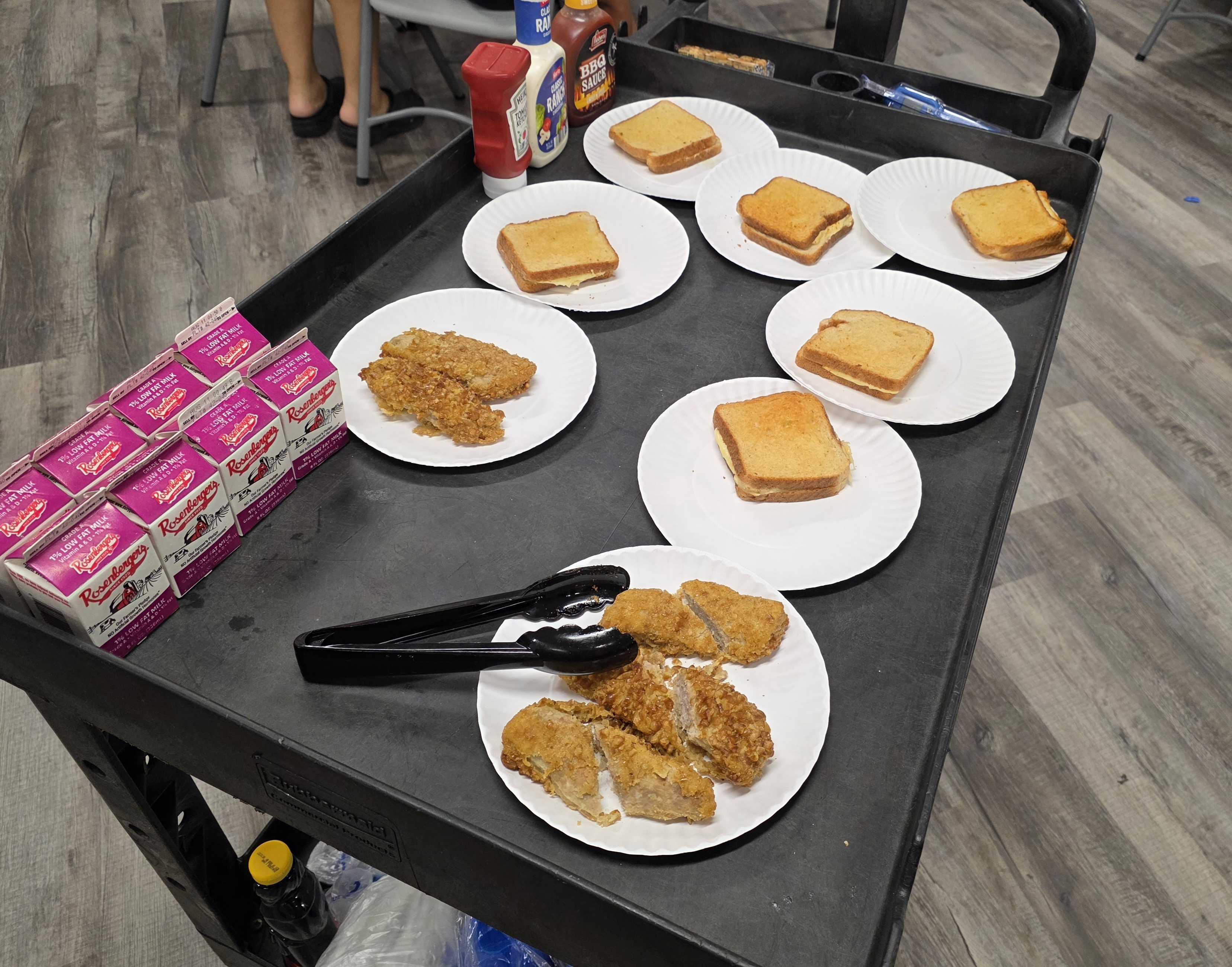
    Eight children were already digging into crispy grilled cheese sandwiches, fried chicken, corn, and fruit cups when Peace McClain, 35, walked into Kingdom Restoration Ministries in Olney with two of his own.

    A lunch of grilled cheese sandwiches and fried chicken is served at Kingdom Restoration Ministries in late July.Ximena Conde

    McClain keeps his kids busy with beach trips and other activities during the summer breaks, but worries they are missing out on an experience he remembers fondly: hanging out with friends freely on his block.

    “I remember summertime, going outside, and going to get free lunch from the block captain,” McClain said.

    Still, safety concerns keep McClain from letting his children too far out of his sight.

    The half-day camp he saw advertised on utility poles across the neighborhood felt like a good compromise.

    “I wanted to give them the experience to come in and meet these people because they don’t get to walk around,” McClain said.

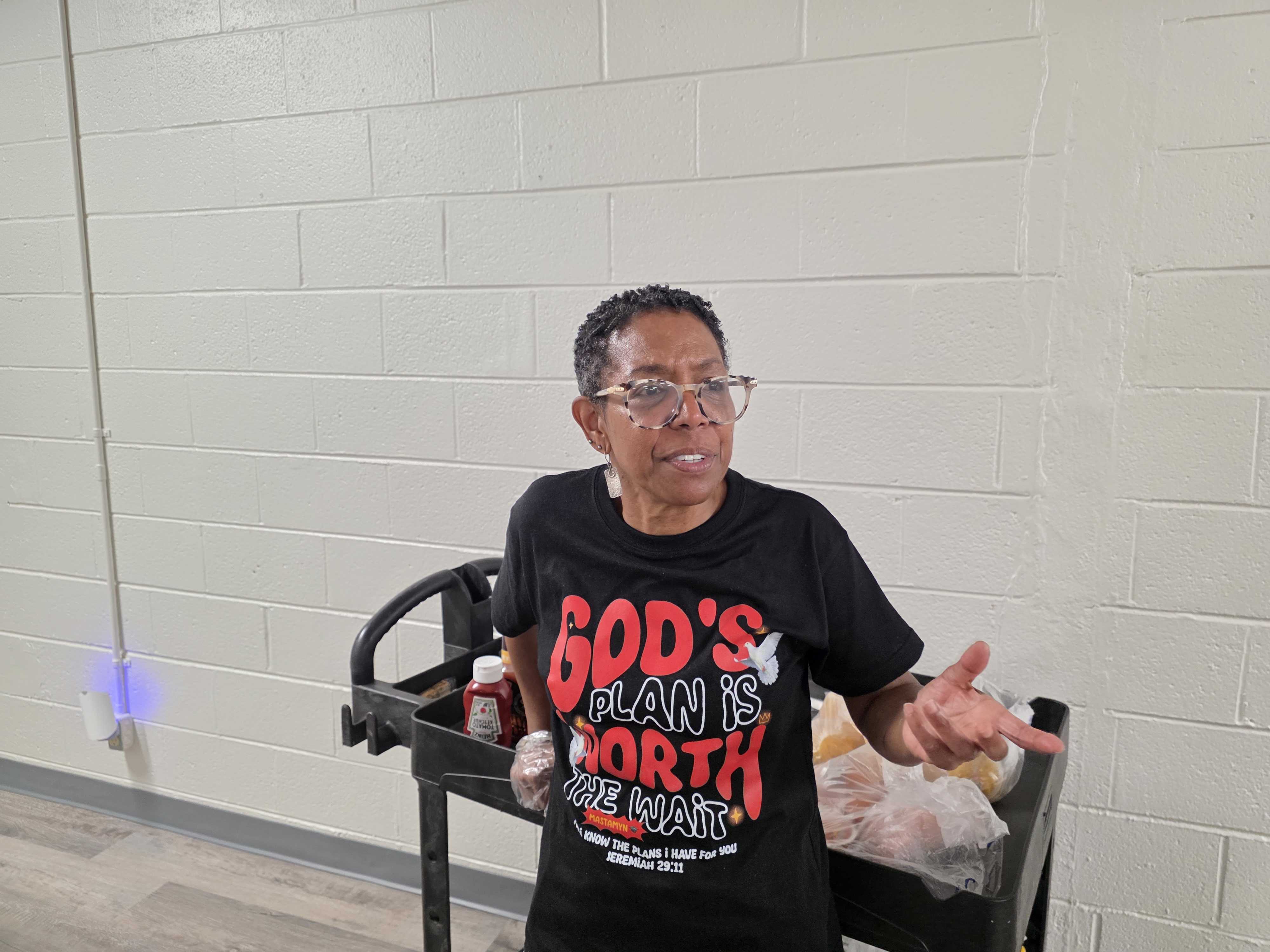
    Velvet Howard gets ready to serve a lunch of grilled cheese sandwiches and fried chicken at Kingdom Restoration Ministries.Ximena Conde

    Velvet Howard, 70, who is officially retired but is the camp supervisor for the summer, tells McClain how the camp works.

    In its first year, the camp offers half-day summer programming for children on Tuesdays and Wednesdays with breakfast and lunch included — all free. No preregistration is required, so the number of children in attendance fluctuates based on families’ summer plans. And while many of the children in attendance have some connection with the church, it is not required.

    (Left to right) Peace McClain picks up his children, Peace and Payton, from Kingdom Restoration Ministries in late July. The family was drawn by the possibility of having the children mingle safely with neighborhood kids their age, and the nutritious lunch was a bonus.Ximena Conde

    Lunchtime is almost over by the time Howard finishes answering McClain’s questions, but she encourages Peace, 10, and Payton, 8, to stick around, grab a bite, and mingle with the time left.

    “The staff was super nice here and it was really fun,” Payton said when reporting back to her father, noting she would come back. “And they had really good food.”

    The intersection of food insecurity and summer childcare

    More than 100,000 Philadelphia youth experience food insecurity, according to Laura Crandall, Philadelphia’s director of food security initiatives. In addition, close to 87,000 children under 18 live below the poverty line, according to the most recent data from the U.S. Census Bureau.

    Worries that many of these children lose access to reliable meals during the summer have long existed. But recent cuts to the Supplemental Nutrition Assistance Program, a result of the One Big Beautiful Bill Act, have exacerbated concerns.

    An estimated 45,000 SNAP recipients in Philadelphia could see benefits cut this year, according to the Pennsylvania Department of Human Services.

    As the social safety net tightens for families, summer camp enrollment has only grown more competitive.

    “Prior to the pandemic, we were already seeing that the options for families during the summer was decreasing,” said Erinn Hill, director of child nutrition programs for Catholic Charities of Philadelphia’s Nutritional Development Services, which sponsored 192 meal sites in the city this summer.

    “Camps and other programs were getting smaller, shorter, or closing. As of now, the number of sites is still not back to pre-pandemic levels.”

    The nonprofit CBS Food Program, which provides meals to Kingdom Restoration Ministries, responded to the mounting interest by delivering food to 41 partner locations in Philadelphia, close to double the number of sites it worked with last summer.

    Even so, some city partners worry food insecurity is only spreading amid the rising cost of groceries.

    At least two site operators, who asked not to be named to avoid getting in trouble, said seniors in their communities are increasingly coming to summer meal sites for food, which they are supposed to save for kids. In areas where the kids do not want the meals, operators will sometimes look the other way and let seniors take the leftovers.

    “We just can’t let our neighbors go hungry,” one site operator said.

  • What trades could Howie Roseman make to alter the Eagles roster in his typically active month of August?

    What trades could Howie Roseman make to alter the Eagles roster in his typically active month of August?

    The Eagles made five trades last August, acquiring four players who eventually landed on the team’s initial 53-man roster.

    It was an active month for Howie Roseman, even more so than usual. The longtime general manager has made a habit of August acquisitions. Over the last five years, Roseman has added backup quarterbacks, a starting safety, a third wide receiver, a depth corner, and others, never shying away from upgrading the roster early, in the middle of, or late in training camp.

    This August is more than halfway gone, and Roseman hasn’t yet made a trade. That could change soon, of course. The Eagles could be in need of an upgrade in a certain spot, or they may aim to acquire some draft capital.

    Where might the GM be looking to make a move?

    Here are some possibilities:

    Quarterback

    Let’s start with the obvious one.

    Andy Dalton and Tanner McKee are auditioning for the backup quarterback job behind Jalen Hurts. But they’re likely also auditioning for other teams. It seems unlikely the Eagles would keep both and either cut rookie fifth-round pick Cole Payton — which would expose him to waivers — or use four roster spots on the quarterback position.

    So, which of the two quarterbacks vying for the No. 2 job will go? Whichever one can fetch the best asset in return, is the obvious answer.

    Philadelphia Eagles quarterback Jalen Hurts (right) walks to the field with quarterback Tanner McKee (left) and quarterback Andy Dalton (center) before the preseason game against the Ravens on Saturday. David Maialetti / Staff Photographer

    Both Dalton and McKee are entering the final year of their contracts. A few weeks from now, teams could be hurting for quarterback help and might find one of them useful. The Eagles were one of those teams looking for help last season. Sixth-round pick Kyle McCord had a rough camp and the Eagles didn’t think he was ready to be the third quarterback, so they traded fifth- and seventh-round picks to Minnesota for Sam Howell and a sixth-rounder.

    Dalton, the Bengals’ starter from 2011-19, has played a lot of football and recently helped mentor young quarterback Bryce Young in Carolina. McKee, meanwhile, has been a solid backup and had a stellar starting debut at the end of the 2024 season, though his 2025 start in Week 18 wasn’t as strong.

    The Eagles parted with a 2027 seventh-round pick to acquire Dalton this offseason. They used a sixth-round pick on McKee in 2023. If they’re able to get a Day 3 pick for either player, it’s a pretty good result as far as asset management goes for a player who won’t play much and isn’t under contract next season.

    Safety

    The back end of the defense remains the thinnest position on the roster. It’s the only spot where an undrafted free agent rookie might make the team. But defensive coordinator Vic Fangio has at least publicly expressed confidence in what the Eagles have.

    Perhaps it’s less of a concern since Cooper DeJean, an All-Pro nickel, will play safety when the Eagles are in their base defense. But that still leaves something like 75% of the defensive snaps to Marcus Epps, the current leader in the race to start next to second-year safety Andrew Mukuba. Epps, 30, has been a solid player in the NFL, but he also was available at the end of camp last season for the Eagles to add to their practice squad.

    Behind Epps is Michael Carter II, a converted nickel who may also be the top option at backup nickel if DeJean goes down. An undrafted free agent like Max Pulley or Kapena Gushiken might make the team as the fourth safety, though seventh-round pick Cole Wisniewski returned to the practice field Monday after missing most of camp with a hamstring injury and veteran J.T. Gray, a special teams ace, is in the mix.

    Michael Carter II (35) is among those in the mix at safety. Tyger Williams / Staff Photographer

    The Eagles don’t have a lot of proven talent at safety. Mukuba is coming off a season-ending fibula fracture and has just 11 games of NFL experience under his belt. He’s the lone constant back there right now.

    Fangio’s defense might be the best in the NFL with or without Roseman addressing the safety spot, but the thought of what could happen if the defensive backfield is hit with an injury or two might force Roseman to make a move.

    Atlanta’s Jessie Bates III, for example, a veteran on an expiring contract, could be available.

    Wide receiver

    The Eagles travel up to Massachusetts this week to see old friend A.J. Brown and the New England Patriots for two joint practices and then a preseason game.

    It’ll provide a look at what they do and don’t have at wide receiver with Brown no longer with the team.

    DeVonta Smith returned to practice on Monday after missing time with a hamstring injury, and rookie first-round pick Makai Lemon, who also has a hamstring injury, looks like he’s nearing a return to the practice field. If both players are in uniform with the first-team offense Wednesday morning, the unit certainly will look a lot different than it has in recent practices.

    The Eagles aren’t lacking for top-end talent with Brown gone. Smith is more than capable of being a top-of-the-depth-chart receiver in the NFL. But behind him are players who are either unproven or aging.

    Hollywood Brown has not made a visible impact in training camp. Yong Kim / Staff Photographer

    Is Dontayvion Wicks ready to take the next step? Can Lemon provide an immediate impact in the slot? Is Darius Cooper more than the “dirty work” receiver Nick Sirianni described him as? Does Hollywood Brown just hate training camp and have more left in the tank? Is Elijah Moore’s NFL career nearing its end, or is there more? How much can you rely on Johnny Wilson after a season-ending knee injury last camp?

    The Eagles have reasons to like the position group. A trio of Smith, Wicks, and Lemon on the field has potential, and the Eagles probably are better at spots 3 through 6 on the depth chart than they were a year ago. But they don’t have the physical presence and one-on-one catching talent that A.J. Brown had.

    This position is an interesting one as far as trades go. Roseman actually could go either way. There’s a world where he gets to the end of August and realizes Hurts needs more top-end help. But there’s also a scenario that has him trading a player like Hollywood Brown, who Roseman signed to a one-year deal worth $5 million guaranteed, and flipping a receiver for a late-round draft pick because he’s comfortable rolling the dice with what the Eagles have.

    Honorable mentions

    Cornerback: The Eagles have arguably the best group of corners in the NFL with Quinyon Mitchell and Riq Woolen manning the outside and DeJean at nickel. But could they use better depth? Veteran Jonathan Jones, who’s in line to be the primary backup at outside corner, is out with a shoulder injury. Second-year corner Mac McWilliams has inside-out versatility, like Jones, but is he ready to be relied upon? Kelee Ringo is great on special teams but through three years hasn’t shown the coverage chops to play corner. Jakorian Bennett also hasn’t been consistent. The Eagles have a few other unproven players they like in Ambry Thomas and Tariq Castro-Fields, but Roseman could be in the market for some insurance.

    Edge rusher: Jonathan Greenard’s pectoral injury has the major offseason acquisition sidelined, and while the Eagles are hopeful he’ll be ready for Week 1, his absence highlights what could be a weakness. Jalyx Hunt has emerged as a talented pass rusher, but Nolan Smith Jr. is coming off a season that was marred by injury and inconsistency, and behind him the Eagles have two veterans on one-year deals in Arnold Ebiketie and A.J. Epenesa. International Pathway Player Joshua Weru may push to make the team during his first-ever football training camp, but edge rusher is an important position to complement an interior line group that might be the best in the NFL. A healthy Greenard should make a move unnecessary, but, like cornerback, you rarely consider the value of the insurance policy until it’s time to use it.

  • A.J. Brown and the Patriots vs. Jalen Hurts and the Eagles is the perfect rivalry for our hot-take age

    A.J. Brown and the Patriots vs. Jalen Hurts and the Eagles is the perfect rivalry for our hot-take age

    You know how this is going to go. The Eagles will take part in two joint practices, on Wednesday and Thursday, against the New England Patriots — and against A.J. Brown. Those workouts, plus the teams’ preseason game Saturday, will provide all the narrative jet fuel necessary to power us through the rest of the preseason and at least five weeks into the regular season.

    By then, Jalen Hurts will have played a few real games in Sean Mannion’s offense, and Brown will have caught who-knows-how-many passes from Drake Maye, and we’ll have a better if incomplete gauge of each team’s chances of qualifying for the playoffs, winning its division, and reaching Super Bowl LXI. Let’s be honest, though: A lot of people who follow the NFL and root for the Eagles will pay attention to how the Patriots fare, sure, but they’ll be more interested in another comparison, another unspoken competition: Jalen vs. A.J.

    Jalen vs. A.J. is about more than football. It’s about a friendship that fell apart and that may or may not have been put back together. It’s about a partnership that contributed to a championship, to four seasons’ worth of excellent collective performance, and to a year-plus of questions and passive-aggressive behavior that culminated in the acknowledgment that it was time for one of these men to move on.

    Best of all, Jalen vs. A.J. taps into one of the most visceral and familiar sensations within Philadelphia sports fandom (and, to a less intense degree, sports fandom generally). People here love to hate a villain, and Brown — whether he intended to or not, whether it’s fair that he is perceived this way or not — made himself one when he made it clear that he’d be happier playing for another team.

    He’s the guy who left, who snubbed the Eagles and everyone who cheers for them. Hurts is the guy who stayed, who wanted to be here. For a lot of fans here, it won’t be enough if Hurts has a terrific season or the Eagles win more games than the Patriots. Brown must drop every pass Maye throws to him, complain incessantly about how miserable he is, and be photographed paging through a copy of The TB12 Method on the New England sideline. These two are going to be held up against each other all season.

    A.J. Brown (1) wanted out, and now resides in New England where many Eagles fans wish him to fail. Charles Krupa

    So how will we judge who has won this soap-operatic battle? Obviously, team success and individual achievement will be the primary determining factors. And while there’s really no way to know for certain how the season will play out for either Hurts or Brown, we can look at some conditions and circumstances as they are now to make an educated guess about who will get the better of whom.

    For instance …

    Hurts’ head coach is Nick Sirianni, who has won a Super Bowl and sometimes has his children accompany him to his postgame news conferences. Mike Vrabel, who has lost a Super Bowl and isn’t quite as devoted a family man, will hold Brown’s hand throughout their time together with the Patriots. Advantage: Jalen.

    Brown’s quarterback will be Maye, who, before his four rocky playoff games, led the NFL last season in completion percentage, yards per attempt, passer rating, and QBR. Hurts’ wide receivers will be DeVonta Smith and three guys named Sal. Advantage: A.J.

    In fairness, Hurts can probably count on Sal 1, Sal 2, and Sal 3 to finish running all their routes. Advantage: Jalen.

    Jalen Hurts with wide receivers Dontayvion Wicks (center) and Britain Covey during training camp earlier this month. Yong Kim / Staff Photographer

    The Patriots’ play-caller will be Josh McDaniels, regarded as one of the league’s most astute orchestrators of offense. The Eagles’ will be Mannion, who has never called plays in the NFL but is also not Kevin Patullo. Advantage: A.J.

    Hurts still plays in Philadelphia, where he can have dinner at any number of world-class restaurants and partake of a robust cultural scene and night life. Brown now plays in Foxboro, Mass., where he can pay full price for a refill at Dunkin’. Advantage: Jalen.

    Over his career, Brown has spent a lot of time, perhaps too much time, on Instagram and X/Twitter and paid a lot of attention, perhaps too much attention, to what has been written and said about him there. But with the Patriots, he doesn’t have to worry about the franchise’s social media team undermining his standing in the locker room by posting a video of him doing something totally humiliating and vitally important like throwing an interception in training camp. Advantage: A.J.

    Welp, looks like Jalen vs. A.J. is too close to call at the moment. Which is great. More intrigue! More drama! More content! Two man enter. One man leave. There can be only one Highlander. The winner gets a free copy of Pat McAfee’s new country-rock-rap-grievance album and the satisfaction of knowing the other guy was the true source of the problems with the Eagles’ passing game all along. The loser must live with the shame of knowing he let down a desperate fan base starved for its first Super Bowl victory in a year and a half. Let our long march to the ultimate hot take begin.

  • Some of Philly’s oldest restaurants are closing or changing hands. What’s going on?

    Some of Philly’s oldest restaurants are closing or changing hands. What’s going on?

    An unusually visible collection of Philadelphia-area restaurant institutions is reaching a turning point at the same time — with some closing for good and others seeking buyers as a generation of longtime owners reaches retirement age.

    At Kelly’s Seafood, the end is definite. The Northeast Philadelphia restaurant will close this month as its owners retire, ending a run spanning three generations of the Kelly family. So will Steve Stein’s Famous Deli, whose history in the Northeast also reaches back nearly 70 years.

    Elsewhere, the outcomes are less certain.

    Cherry Street Tavern has been around for a century at 22nd and Arch Streets.Tyger Williams / Staff Photographer

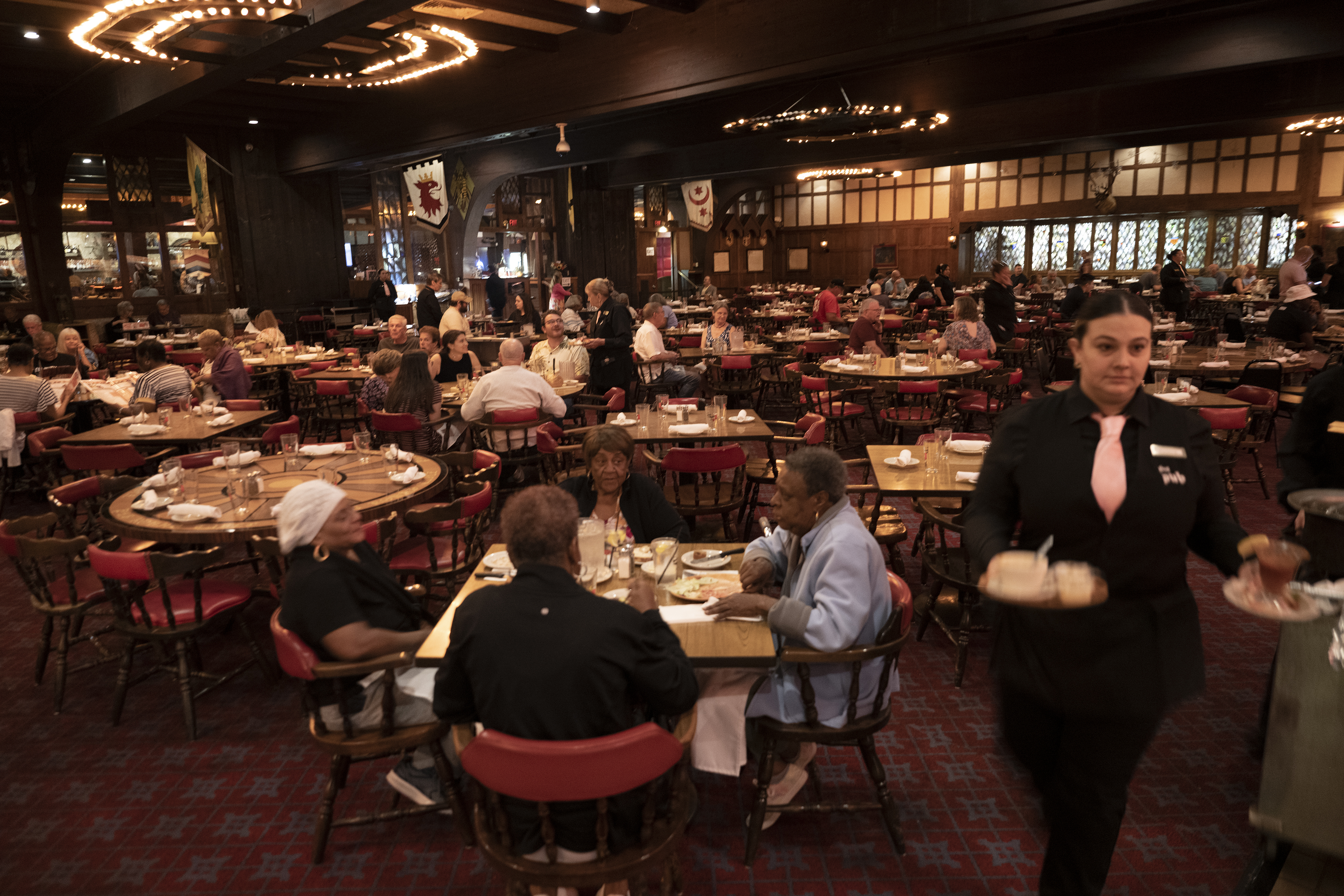
    The Pub, the sprawling Pennsauken steakhouse known for its open hearth, medieval decor, and thousand-plus seats, is on the market. The restaurant, which dates to 1951, is not closing: It is on its customary summer break and is scheduled to reopen Sept. 18.

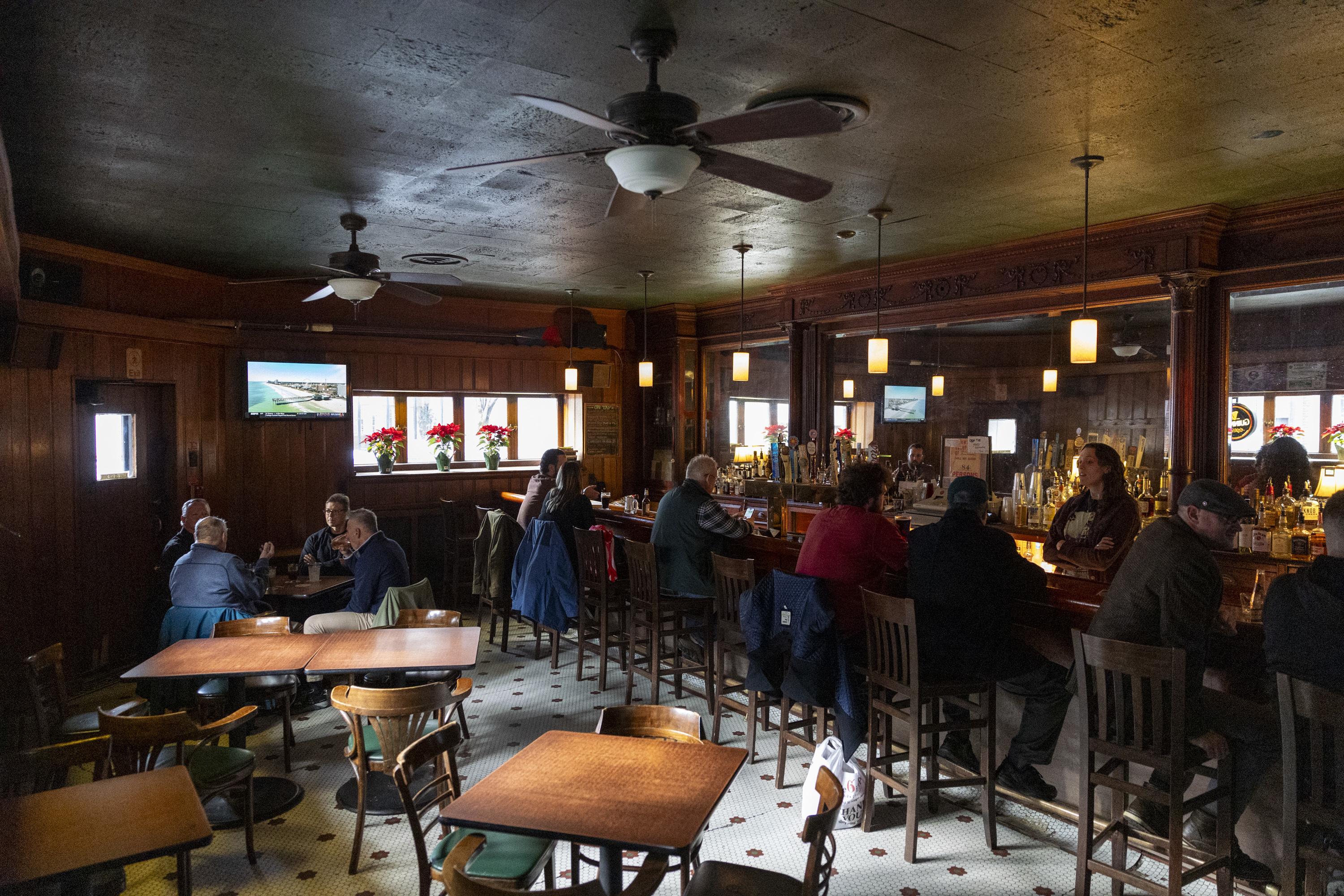
    The owners of Cherry Street Tavern, the Logan Square bar that has operated for more than a century, are looking for a buyer after 50 years of stewardship by the Loughery family. The buildings that housed Mamma Maria’s, the East Passyunk Italian restaurant that opened in 1992, went up for sale this month. Aldar Bistro in Bala Cynwyd has been sold after 34 years and will give way to an Italian restaurant called Bruzi.

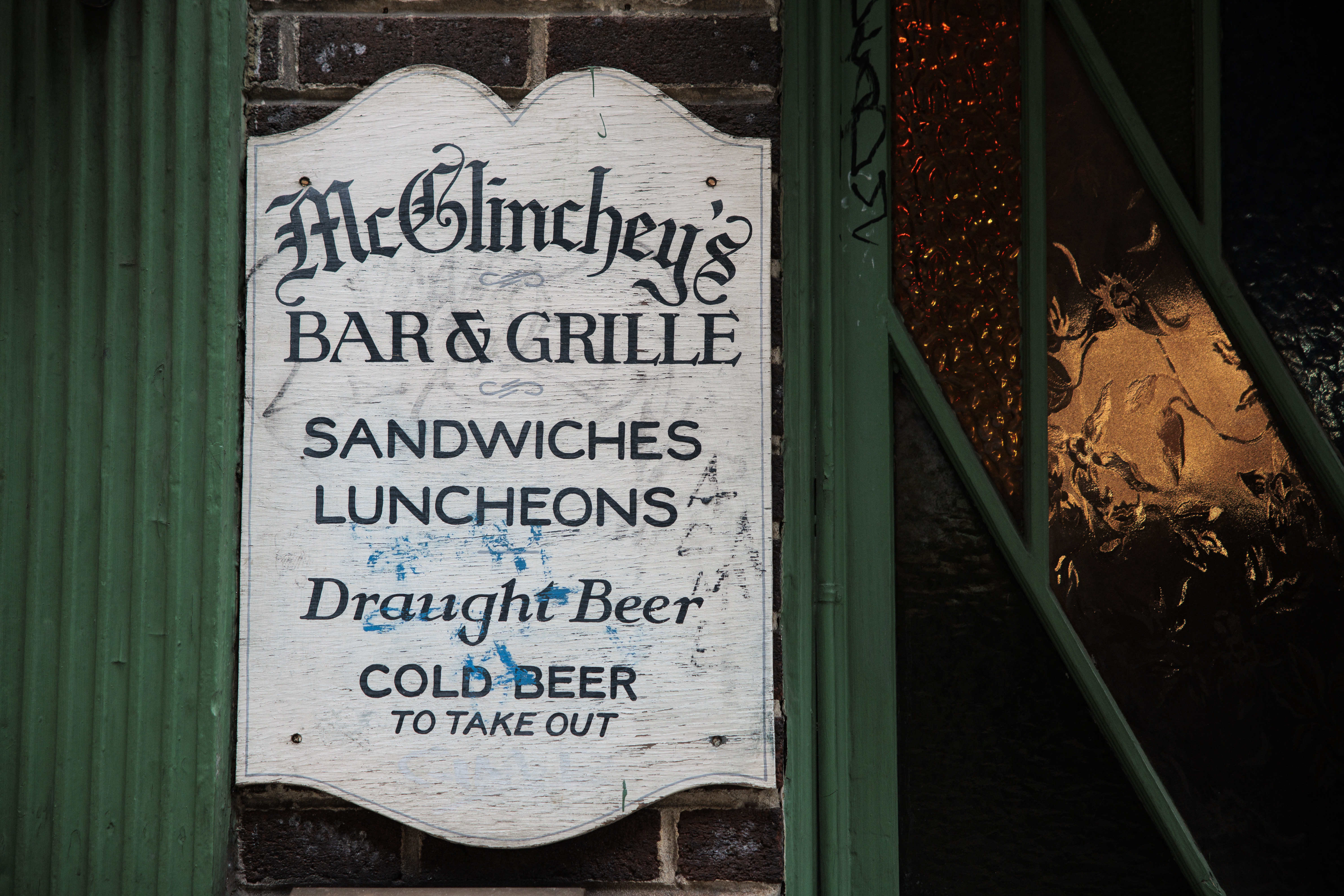
    McGlinchey’s, the Center City dive that closed last year after nearly 90 years, is back on the market after a prospective buyer walked away from a deal for the building.

    McGlinchey’s, at 259 S. 15th St., after its closing in August 2025.Monica Herndon / Staff Photographer

    And the nearly 40-year-old Jake’s & Cooper’s Wine Bar in Manayunk is being marketed for sale as owner Bruce Cooper looks toward retirement.

    Restaurants have always turned over, and the recent activity does not appear to reflect a restaurant market in retreat. The Inquirer counted 86 Philadelphia-area restaurant closings in 2025, while more than 100 new restaurants and bars were on the drawing board for 2026. What distinguishes many of the businesses now closing or being sold is their longevity: They survived for decades, weathering the pandemic and recent increases in food and labor costs, before their owners reached retirement.

    ‘The gray wave’

    People in the restaurant, liquor, and real estate businesses say the turnover is part of a broader generational transition among small businesses as longtime owners reach retirement without children interested in taking over.

    Jim Creed, handling Jake’s listing, calls it the “gray wave.”

    “You’ve got operators who have been in business 40 or 50 years, and they don’t have heirs who want to take over the business,” said Creed, a senior vice president with CBRE.

    His father, also Jim Creed, knows the issue from the other side. He opened Creed’s Seafood & Steaks in King of Prussia in 1982 and, at 78, has no immediate plans to sell. “I go to the restaurant every night,” he said. “It’s actually fun.” But when he does decide to close, he said, his children don’t want to take over.

    For the counterexample, consider McGillin’s Olde Ale House in Center City. Open since 1860, it has survived through generations of owners; the Spaniak family has run it since 1958, with Chris Mullins Jr. now the third generation involved. There are no plans to sell. “It’s part of my DNA, part of our customers’ DNA, part of our staff’s DNA,” Mullins told The Inquirer this year.

    Irene Levy Baker and Chris Mullins Jr. lead a toast at McGillin’s on Tuesday, Feb. 3, 2026 in Philadelphia. Attendees gathered for a book talk on “Cheers to McGillin’s: Philly’s Oldest Tavern” on Tuesday.Monica Herndon / Staff Photographer

    Ed Taraskus has watched generations of restaurant and bar owners come and go over 50 years of practicing liquor licensing law. He could not say whether the current number of sales and closings constitutes a statistical trend, but said the succession problem is familiar.

    “The parents retire and the children don’t want to get into the business — because it’s a hard business,” he said.

    Taraskus said the hours can be punishing for small family operators. His clients also complain about finding employees willing to work nights and weekends. Drinking habits have changed, he said, and some businesses are still feeling the effects of the pandemic.

    Taraskus knows the succession question personally. His South Philadelphia family owned a small restaurant and tavern, but his father discouraged him from entering the business. When his parents retired in the 1960s, they sold.

    Real estate on the line

    Retirement can present a second question for operators who own their buildings: What, exactly, are they selling?

    A restaurant may have value as a going business, but decades of appreciation can make the underlying real estate a substantial part of an owner’s nest egg. Sometimes the economics favor a different restaurant — or an entirely different use.

    Douglas Green, a principal at commercial real estate brokerage MSC, said the value of restaurant real estate is closely tied to the sales a location can support and, consequently, the rent an operator can afford.

    “The more volume they do, the more rent they can pay,” Green said.

    That means a location can be worth more to another restaurateur if the existing operator is underperforming. And in some cases, Green said, a restaurant may no longer be the property’s most valuable use at all.

    “At some point, perhaps the building becomes obsolete,” Green said. “Perhaps the highest and best use of the real estate is no longer a restaurant.”

    Those possibilities are playing out among the region’s longtime establishments.

    The Pub restaurant near the former Airport Circle in Pennsauken in 2024.Jose F. Moreno / Staff Photographer

    At the Pub, the Gelman family is seeking a buyer for the restaurant and its roughly 6.3 acres on Kaighns Avenue near the former Airport Circle. The family has operated it since Marc Gelman bought it in 2000.

    “I don’t think there’s one thing in general why we’re selling, but it’s time for a new steward — if you will — of the business, or the property,” Marc’s son David Gelman said.

    At Cherry Street Tavern, at 22nd and Arch Streets, the Loughery family hopes to find a buyer who understands what generations of regulars value about the place.

    McGlinchey’s illustrates the other possibility. Its nearly 5,000-square-foot property at 259 S. 15th St. is listed for $2.45 million, including the liquor license, bars, and McGlinchey’s name, as either a turnkey bar and restaurant or a redevelopment opportunity.

    Decisions for buyers

    Creed said longevity itself can tell a prospective buyer something about a restaurant property.

    “Anytime you have operating longevity, that speaks to the real estate,” he said. “When you have a concept that has been in operation for 40 years, clearly the real estate has something to do with that, too.”

    The retirement of one operator does not necessarily mean the end of restaurant use.

    The former Mixto space is set to become the revival of South Philadelphia bar Toll Man Joe’s.Charles Fox / Staff Photographer

    Mixto closed July 12 after nearly 24 years at 1141 Pine St. Within weeks, restaurateur Lori Penrose bought the property and announced plans to revive her former South Philadelphia sports bar, Toll Man Joe’s, there.

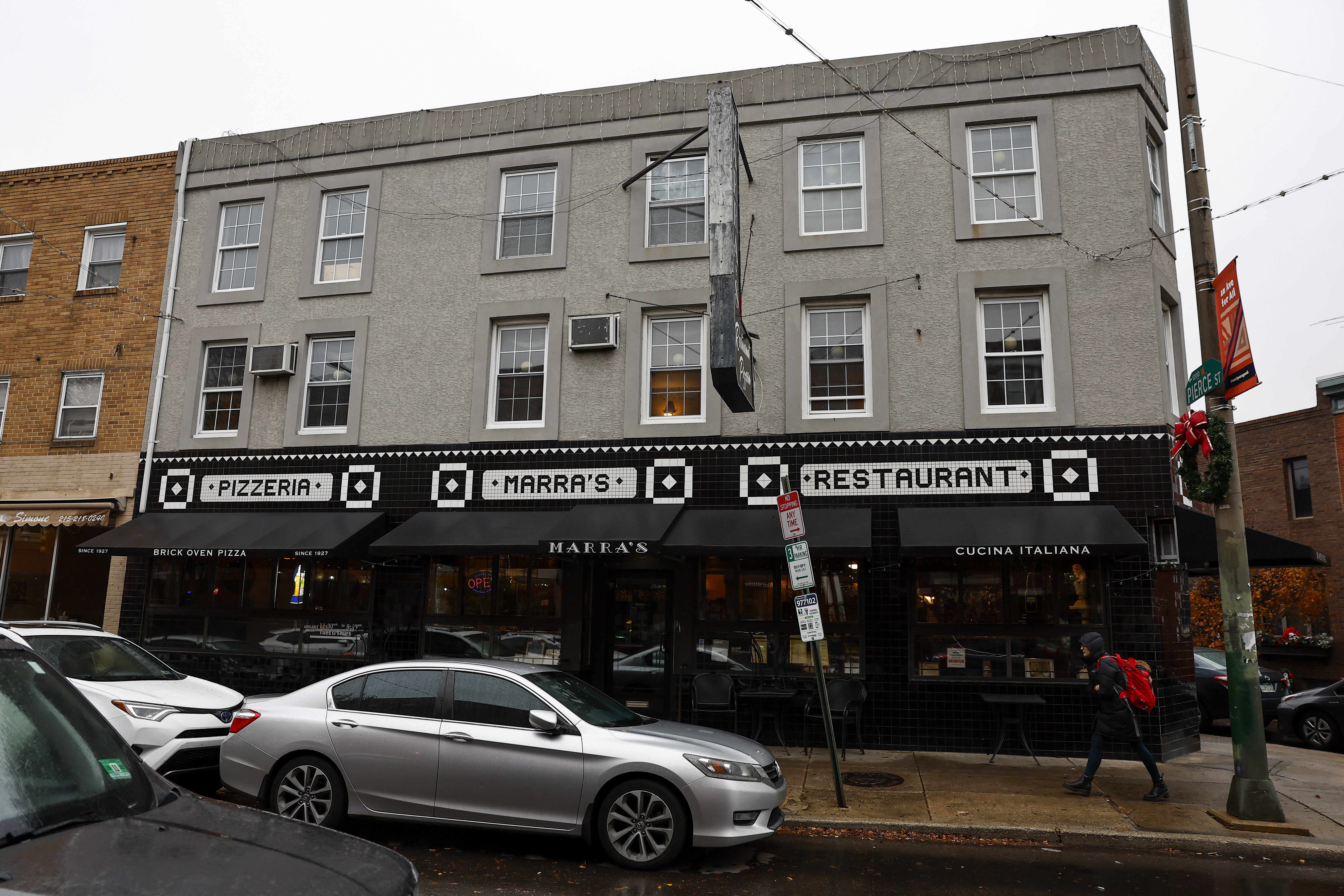
    Emei owner Dan Tsao has pursued that strategy on a larger scale. Over roughly a year, he acquired or leased four landmark restaurant properties: the former John Henry’s Pub in Ardmore, Marra’s on East Passyunk Avenue, the former Irish Pub in Rittenhouse, and the Old Original Bookbinder’s/Olde Bar property in Old City. All four are intended to remain in hospitality use.

    The exterior of Marra’s Restaurant on East Passyunk Avenue is due to become a branch of Dan Tsao’s burgeoning restaurant group. Monica Herndon / Staff Photographer

    “There are pros and cons to both,” Tsao said of taking over an existing restaurant rather than starting with a new space. “But with an existing restaurant space, especially a legacy restaurant, it already has a place in the neighborhood, and a place in the memories and hearts of generations of customers.”

    Such properties may also have much of the expensive infrastructure required to operate a restaurant.

    But for Tsao, the attraction isn’t purely economic.

    “I also like the idea of preserving some of that history,” he said, “while giving the space a new chapter.”

  • Could GLP-1s help with alcohol use disorder? A Philly VA doctor is leading a national trial to find out.

    Could GLP-1s help with alcohol use disorder? A Philly VA doctor is leading a national trial to find out.

    A Philadelphia Veterans Affairs doctor is leading a national trial testing whether GLP-1 drugs could help patients with alcohol use disorder.

    The treatments, which work by mimicking a natural hormone in the body, have skyrocketed in popularity in recent years for diabetes and weight loss. People have also reported unexpected benefits for other conditions, from heart issues to kidney disease. GLP-1s may even help reduce cravings for addictive substances, including alcohol, opioids, and nicotine, early studies suggest.

    While some of the additional health effects have been well-studied, others, like alcohol use disorder, still need a robust trial to assess safety and efficacy.

    The upcoming trial will take place at 18 VA sites around the country, including Philadelphia, with the goal of recruiting 622 participants.

    “The driving force has been really the groundswell of anecdotal and observational data from folks,” said David Oslin, the psychiatrist leading the national trial.

    Recruitment for the trial starts this week and will likely take two years. Half of participants will be randomly selected to receive the treatment for six months, while the other half will receive a placebo with no active drug.

    Participants will not know whether they received the intervention — a study design that’s considered the gold standard for medical research.

    Alcohol use disorder affects roughly 28 million people nationwide. While there are many options to treat it — including psychosocial treatment, peer support groups, and medications — uptake is low.

    Fewer than 10% of people with alcohol use disorder receive any treatment in a given year. Oslin hopes GLP-1s, should they prove safe and effective, could improve that statistic.

    “The impact is potentially very big in the sense that this is a drug that people seem comfortable prescribing and using,” he said.

    He anticipates publishing the results in about three years.

    The Inquirer spoke with Oslin, who also serves as the chief of behavioral health at the Philadelphia VA, about the trial in an interview lightly edited for length and clarity.

    David Oslin serves as the chief of behavioral health at the Philadelphia VA Medical Center and a professor of psychiatry at the University of Pennsylvania. He is leading the national trial.Courtesy of the VA
    What inspired the trial?

    Anecdotally, folks that have been receiving the GLP-1s for something else — diabetes or weight loss — had noticed a decline in use of alcohol.

    There have subsequently been three small clinical trials in the U.S. that have been published. They wouldn’t be sufficient to define efficacy from an FDA perspective, but they’re certainly encouraging.

    Each of them have their own little pitfalls. One of them is small — 40 subjects — so we wouldn’t want to change clinical practice based on that. But they certainly point us in the direction that we need a large trial, and this trial was designed specifically with FDA requirements in mind.

    How is this trial different?

    Semaglutide is already FDA-approved. What you would want to be able to do is change the existing label to add the indication of alcohol use disorder.

    The FDA has a number of requirements for trials in this domain for alcohol use disorder. One is that the duration be a minimum of six months, and we are doing that. The other is that it be a sufficient sample size to test a hypothesis. For our trial, we are hoping to enroll 622 veterans over the course of the next couple of years. That would be sufficient to answer the question of, ‘Is there efficacy and is there safety?’

    What is the theory behind how GLP-1s could treat alcohol use disorder?

    We know that GLP-1s have three main effects on the body.

    One effect is to induce the pancreas to release more insulin. The second effect is that it slows down the stomach’s emptying when you eat. The third effect is on GLP-1 receptors in our brain. Those receptors actually respond to reward, and the natural effect of GLP-1s is to indicate that you’re full or that you don’t need any more to eat or drink.

    These medicines will have the effect of reducing your desire to want to drink more. They don’t take away your pleasure or your ability to enjoy life, but they will reduce excessive eating and excessive drinking — that’s the hypothesis that is driving the study.

    (function() { var l = function() { new pym.Parent( ‘he1ozempic__graphic’, ‘https://media.inquirer.com/storage/inquirer/ai2html/he1ozempic/index.html’); }; if(typeof(pym) === ‘undefined’) { var h = document.getElementsByTagName(‘head’)[0], s = document.createElement(‘script’); s.type = ‘text/javascript’; s.src = ‘https://pym.nprapps.org/pym.v1.min.js’; s.onload = l; h.appendChild(s); } else { l(); } })();

    Who can participate in the study?

    They have to be a veteran getting their healthcare through the VA. They have to be between 18 and 80. They have to be drinking sufficiently enough to meet criteria for moderate to severe alcohol use disorder. You also can’t be on insulin and can’t be taking another medication for diabetes.

    The 18 sites would take any veteran and screen them, and if they’re not appropriate for the trial, we would get them into the right care for their needs.

    How could having a GLP-1 as an option improve uptake?

    A lot of folks that have alcohol use disorder will not seek treatment in a specialty care setting. They don’t think of their symptoms as being that severe. So they’ll talk to their primary care doctor.

    We need treatments that primary care providers are comfortable delivering. The current medicines are not medicines that they often prescribe, so they’re not used to using them. Meanwhile, they’re prescribing GLP-1s for diabetes and weight loss, so they clearly are comfortable prescribing them.

    There’s a lot of potential here that this could become a front-line treatment for folks, and we could reach many more people to get them in treatment. We need to establish the safety and efficacy first.

    How big of an impact could that have?

    The early clinical trials show that the effect of the treatment is actually larger than our current treatments, which would be really great if that’s replicated. It really could shepherd in a new era of being able to treat more people than we’ve been able to treat in the past.

    Is there anything else you would like to share?

    We want to really make sure that these compounds are safe in this population. I know that you can get these compounds pretty much anywhere these days, and I would discourage people from doing that when we don’t know that they’re safe and efficacious.

    Alcohol use disorder is a devastating illness, and people should feel comfortable reaching out for help. Even if they can’t get into the study, the VA is here to assist them in that journey and try to find them a path to sobriety and a better life.

    Veterans who need support can contact the Veterans Crisis Line 24/7. You don’t need to be in immediate crisis or enrolled in VA care to reach out. Dial 988 and press 1, visit VeteransCrisisLine.net/Chat, or text 838255 to connect with trained responders who can help with next steps.

    Those interested in participating in the clinical trial in Philadelphia can call: 215-823-5800 extension 203404.

  • The Eagles defense has immense upside, though questions about Jonathan Greenard and Riq Woolen linger

    The Eagles defense has immense upside, though questions about Jonathan Greenard and Riq Woolen linger

    The most notable thing about the latest round of Eagles’ press conferences was Vic Fangio’s cautious tone when asked about the two newcomers who will determine the ceiling of his defense.

    The first instance concerned Jonathan Greenard, whom the Eagles handed a four-year, $98 million contract extension after losing Jaelan Phillips to the Panthers. While the team has betrayed little concern regarding the pectoral strain that has sidelined the veteran defensive end since before training camp, Fangio didn’t go out of his way to reassure fans that Greenard will be ready for the season opener.

    “We aren’t going to see him for another couple of weeks, at least,” the defensive coordinator said last week.

    Your interpretation of that statement depends a lot on how you weigh the phrase, “at least.” Some might hear a coach who is timing Greenard’s return for the start of the week leading up to the Eagles’ Sept. 13 season opener against the Commanders. Others might instead train their angst on the uncertainty. Rarely does the phrase “at least” carry a hopeful connotation.

    Even less clear is where Fangio’s heart was in assessing new cornerback Riq Woolen. The Eagles’ signing of Woolen to a one-year, $12 million contract spoke volumes about their assessment of last year’s disappointing campaign. While the vast majority of the public attention has focused (rightly) on an offense that looked like a shadow of its previous year’s self, the Eagles clearly felt the same about the downgrade from Darius Slay to Adoree’ Jackson in the secondary. While $12 million is a small price to pay relative to the potential market worth of Woolen’s talent, it is also a lot more than Jackson was paid last season on a veteran minimum deal worth up to $5 million, per reports.

    General manager Howie Roseman consistently operates with the notion that potential salary cap dollars should be measured by how good you are at one position now vs. how much better you will become given expenditure X or Y. That logic precipitated the Eagles’ decision to sign Saquon Barkley to a contract that didn’t necessarily adhere to the current groupthink about running back value. The move to sign Woolen was an admission of how much better the Eagles think they would have been last year, and how much better they will be this year, with a legitimate outside cornerback to start opposite Quinyon Mitchell. That tells you all you need to know about Woolen’s importance to this team.

    “At times he can get a little lazy or sloppy with his technique and have a bad down or two, but he’s still showing everything that I think he can do,” Fangio said of Woolen. “He’s just got to get in such great shape and calloused to football that those don’t happen.”

    You could write off the comment as innocuous if it didn’t echo a lot of what came out of Seattle during the end of Woolen’s tenure there. One need spend only a day in the presence of Woolen to walk away convinced that Roseman and Fangio landed themselves a steal this offseason. The 26-year-old is as imposing a physical specimen as has ever played cornerback at a chiseled 6-foot-4 and 210 pounds with remarkable limb length. His All-Pro selection as a rookie in 2022 wasn’t a fluke.

    Riq Woolen was an All-Pro corner in 2022, but fell out of the Seahawks’ starting lineup last season.Monica Herndon / Staff Photographer

    At the same time, one would be foolish to completely discount what the market says when it values such a player for what the Eagles were able to sign him. Woolen is coming off a season in which the eventual Super Bowl champs jettisoned him from the starting lineup and then, after said Super Bowl victory, let him walk as a free agent for a pittance.

    Woolen is as big of a wild card as exists on the Eagles roster. That’s not a criticism. What makes his range of outcomes so broad is the high-end potential. Woolen at his best has been more of an impact player than Slay was at the tail end of his Eagles career, when he was good enough to start for a dominant Super Bowl defense. The Eagles are coming off a season in which they allowed an opposing receiver to gain 99 or more yards in five of their first seven games. That CeeDee Lamb, Puka Nacua, Courtland Sutton, Emeka Egbuka, and Jordan Addison were all able to accomplish the feat is even more remarkable given the level Mitchell played at last season.

    Greenard factors in here, too. The Eagles were desperate enough on the edge last season that Brandon Graham came out of retirement to become a true value add. The acquisition of Phillips at the trade deadline was a massive stabilizer, particularly defending the run. The Eagles defense was still one of the best units in the NFL. But their playoff loss to the 49ers was a microcosm of the season. That is, a game that was decided by a handful of plays that the 2025 defense was not in the habit of allowing.

    There are lots of reasons to think this year’s Eagles will be closer to 2025, even given the questions about Woolen and Greenard. Their decision to hand Jalen Carter a massive contract extension is a good indication in their confidence that the fourth-year defensive tackle will be back to his dominant self after some midseason shoulder troubles. Edge Jalyx Hunt looks poised to take another big leap forward. Mitchell and Cooper DeJean are still in the exponential growth phases of their careers.

    That said, in today’s NFL, a team is only as good as its weakest link, particularly when a weak link in the secondary is paired with a less-than-elite pass rush.

    There is no need to raise alarms with either Greenard or Woolen. Roseman’s recent decision-making has earned him the benefit of the doubt. Fangio’s first two years have shown his brilliance in making things work as the season unfolds. The schedule sets up nicely in that regard.

    Eagles defensive ends/outside linebackers coach Jeremiah Washburn (left) talks with edge rusher Jonathan Greenard, who has not yet practiced since joining the team in a trade.Monica Herndon / Staff Photographer

    The Commanders will enter the season with a new offensive coordinator and a quarterback who will have played just five games in the previous calendar year. They could also potentially have a new left tackle, after five-time Pro Bowler Laremy Tunsil suffered a triceps tear in practice last week.

    Washington has done surprisingly little to build on Jayden Daniels’ promising rookie season in 2024. The last Commanders receiver besides Terry McLaurin to gain 800 or more yards in a season was Pierre Garçon, who did it in 2016, three years before the Commanders drafted McLaurin. There are high school graduates who weren’t born when Garçon was a rookie. Newly signed Stefon Diggs still carries name value, and he is coming off a 1,000-yard season with the Patriots. But there is a reason the 33-year-old was available until the last moment and only then landed a contract with slightly more of a one-year guarantee than Juaun Jennings landed to be the Vikings’ third receiver.

    In Week 2, the Eagles travel to Tennessee, where they’ll face another new coaching regime. Titans offensive coordinator Brian Daboll inspired little fear in the Eagles during his tenure with the Giants. This time, he has even less talent, with quarterback Cam Ward entering his sophomore season as likely to get Josh Rosen’ed as to get a contract extension down the road.

    The immediate schedule means the Eagles defense will have a comfortable margin for error while easing into 2026. Granted, there are few unofficial bye weeks in the NFL. But the Eagles’ opening weeks are about as favorable as a team can hope when coming off an 11-6 season. They opened last season at home against the Cowboys and faced the Rams sandwiched around a road Super Bowl rematch in Kansas City. Two years ago brought the Packers in Brazil followed by the Falcons — maybe not a gauntlet, but a couple of teams with enough talent to rack up 400 or more yards of offense against an early-season defense.

    Given the health questions about Greenard and uncertainty inherent in Woolen, Fangio could need another few weeks of runway before his defense reaches its full stride. But the upside is immense, and Greenard and Woolen are two of the biggest reasons to bet on the Eagles reaching their potential. Perhaps Fangio’s understanding of this is the real source of his caution.

  • After 50 years in Delran, this couple downsized to a Cherry Hill apartment

    After 50 years in Delran, this couple downsized to a Cherry Hill apartment

    After raising their kids in Delran, Fred and Barbara Zucker were ready to downsize from the home they had lived in for 50 years. The retired couple spent several months searching for an over-55 community, but nothing seemed quite right. In March 2020, that changed.

    “I was shopping at Nordstrom Rack in Cherry Hill and saw a sign for an open house at the Plaza Grande,” Barbara recalled.

    They toured a 1,150-square-foot apartment with two bedrooms, two bathrooms, and a den featuring a balcony with a western exposure. The apartment was on the top floor, which meant no neighbors walking overhead, and the kitchen had a gas range. There was also plenty of closet space for Barbara’s treasured shoe collection.

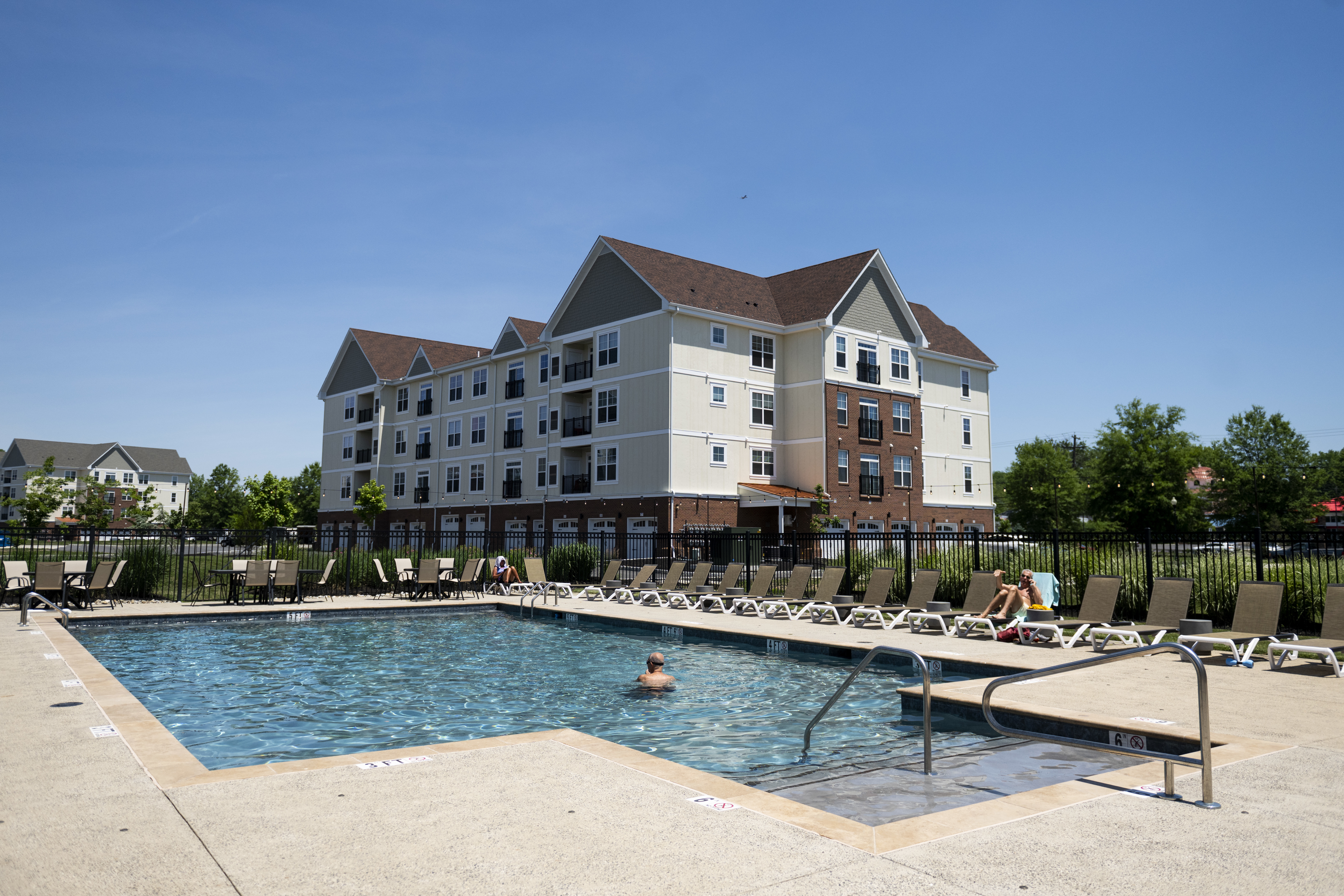
    Plaza Grande, which opened in 2008, is a sprawling community with 507 units within 16 buildings. Featuring lots of amenities and surrounded by shops and restaurants in walking distance, it seemed like a perfect home to the Zuckers.

    A view from the balcony at Fred and Barbara Zucker’s apartment.Allie Ippolito / For The Inquirer
    The outdoor pool at the Clubhouse at the Plaza Grande.Allie Ippolito / For The Inquirer

    While Fred and Barbara were excited to downsize, emptying the house, where they had lived for 50 years while raising their family, was no easy task.

    They had to offload most of their belongings, and with the help of a neighbor, they sold their furniture on Facebook Marketplace. Beyond Barbara’s favorite pots and pans, their televisions, family photos, and a few other keepsakes, they made a completely fresh start.

    “My stuff was 50 years old, and it was time to go,” said Barbara.

    The couple shopped at Raymour & Flanigan to outfit their new apartment, starting with a comfortable, dark gray velour couch, and matching chair and ottoman for the living room. With light pouring in from the balcony, it’s their favorite spot to relax, reading the newspaper and watching TV.

    Barbara admires family photos on display in her apartment.Allie Ippolito / For The Inquirer
    The balcony is one of Fred and Barbara Zucker’s favorite features in their apartment.Allie Ippolito / For The Inquirer

    Sliding glass doors lead to the balcony where they enjoy morning coffee, read for pleasure, or gaze at the pond below. The large, bustling community provides ample people-watching opportunity.

    The primary bedroom features creamy white furniture with bright white bedding. Family photos from special gatherings decorate the walls.

    “Family is everything,” Barbara said.

    The Zuckers prefer an uncluttered look, only keeping artwork and knickknacks that have personal meaning. Souvenirs from their travels are also on display.

    An avid cook, Barbara appreciates her new kitchen, with dark brown wood cabinets, speckled granite countertops, and a faux wood floor. The layout is roomy and the GE appliances are easy to use. She especially values the ice maker, a new-to-her luxury.

    Barbara is an avid cook, often found making soup for friends. Allie Ippolito / For The Inquirer
    The large door to the balcony lets plenty of light into the apartment’s living area.Allie Ippolito / For The Inquirer
    Fred points to a photo of his grandchildren.Allie Ippolito / For The Inquirer
    The primary bedroom features more family photos and a large window.Allie Ippolito / For The Inquirer

    “I don’t know what I was thinking for 50 years. Why I didn’t have an automatic ice maker?” she said.

    Barbara can often be found baking cakes or stirring up a pot of hearty chicken soup to share with her neighbors. Her role has become caregiver when her friends and neighbors need some TLC.

    “If somebody’s sick, I make a pot of soup,” Barbara said matter-of-factly.

    It is the development’s family-like feeling that the couple appreciates the most. Along with their neighbors, they take full advantage of the abundance of amenities the community has to offer.

    “Plaza Grande offers a resort-style experience for active adults 55+, anchored by an 18,500-square-foot clubhouse, the largest in South Jersey,” said Billy Procida, CEO of Procida Funding & Advisors, which developed the community.

    The complex features indoor and outdoor swimming pools, tennis and pickleball courts, a golf simulator, a sauna, massage rooms, and lifestyle programming.

    The golf simulator in the clubhouse at the Plaza Grande.Allie Ippolito / For The Inquirer
    The clubhouse, as seen from the outside.Allie Ippolito / For The Inquirer
    A movie room inside the clubhouse.Allie Ippolito / For The Inquirer
    The clubhouse lounge area includes elegant seating and a fireplace.Allie Ippolito / For The Inquirer

    “We’ve made good friends in the clubhouse, where we go every day,” noted Barbara. “We play cards and they have exercise classes and movies.”

    The couple has become close friends with their neighbors, taking advantage of nearby restaurants to meet for dinner. They recently traveled to Jamaica as a group.

    “Our home is a peaceful retreat for us,” said Barbara. “It is sort of like summer camp.”

    Added Fred: “We are a giant family. Every day is another day in paradise.”

    Is your house a Haven? Nominate your home by email (and send some digital photographs) at properties@inquirer.com.

  • Letters to the Editor | Aug. 19, 2026

    AveArts 2.0

    Alan Greenberger and Harris M. Steinberg are two of Philadelphia’s most respected voices on planning and the public realm. That’s why I was surprised by how narrowly they framed AveArts 2.0.

    We agree that South Broad Street is one of Philadelphia’s great civic spaces, with potential still unrealized.

    We disagree on the new median. They suggest it reinforces Broad Street’s highway feel. I see the opposite. Six lanes of traffic were already there. The median breaks up the noise and asphalt, making a street dominated by automobiles more welcoming to people.

    Is every decision perfect? Of course not. That’s why we are building a beta block: to gather data, learn what works, and let that inform the next nine blocks rather than relying on opinion alone.

    Landscaping won’t create street life. People do. Future phases will focus on sidewalks and places to gather and linger.

    Philadelphia knows how to debate. But debate doesn’t get things built. The hard part is raising money, solving problems, bringing people together, and sticking with a big idea long enough to make it real.

    So, Alan and Harris, join us.

    Broad Street began as an audacious idea. Together, let’s do the hard work to finish it.

    Carl Dranoff, board chair, Avenue of the Arts Inc., founder and CEO, Dranoff Properties

    . . .

    Alan Greenberger and Harris M. Steinberg’s condemnation of the new Broad Street median seems remarkably premature.

    My wife and I live two blocks away and walk this stretch regularly. We knew the old median well. No one was lingering, strolling, or dining there. Today, a ribbon of trees and greenery has replaced it. To our eyes, it creates a view rather than destroying one, and has already made this heavily trafficked block feel more humane.

    More importantly, the median is only the first part of the project. The next phase will expand the pedestrian realm along the sidewalks, adding landscaping, seating, public art, and performance space — the very kind of street life the authors say Broad Street needs.

    They may ultimately prove right that elements of the design should be changed. That’s the point of building a “beta block” before extending the concept up and down Broad Street. But calling for millions of dollars of completed work to be ripped out before the rest of the block has even been built seems less like thoughtful urban planning than a rush to judgment.

    Give the trees — and the project — a chance to grow.

    Pete Sparber, Philadelphia

    Security at home

    This weekend we learned of the invasion and assault of Central Synagogue in New York and the defacing of the Weitzman here in Philadelphia.

    Pick your emotion. Anger, fear, frustration. But let’s be determined to do something rather than wallow in anguish. Let us take action. I call upon every police force to ramp up their protective response to houses of worship, both Jewish and Muslim — as we are both under assault. I call upon government bodies to make funding accessible to help secure our sites, harden them, and actively man them.

    I call upon each of us to reach out in the following ways:

    Call your legislators and demand action to support safety and security, and put their offices behind the efforts noted above. Contribute what you can in time and money to help our institutions do the important work of bringing our tradition safely to our communities.

    Last but certainly not least: Show up, go to your synagogue, and be counted. It is an act of defiance in the face of hatred; it is a concrete way to be in a community supporting our institutions.

    We cannot remain on the sidelines hoping someone will address the problems. That is our job. Now is the time to stand for what we believe in. We must not succumb to the fear that makes us cower in the shadows. Together we are stronger.

    Rabbi David Levin, president, Board of Rabbis of Greater Philadelphia

    A safer future

    On my way home from the hospital, I held my breath as a child on an e-bike careened across an intersection, directly in the path of a car trying to beat a traffic light. As a pediatrician who has seen too many broken limbs and traumatic brain injuries from crashes like this, I ran through the mental checklist of what I could do to help. I exhaled only when I heard the boy’s laughter drifting down the street; he was alive and well.

    The rise in fatal and serious crashes involving children on e-bikes is a public health priority. As The Inquirer recently reported, however, responsibility for improving safety cannot rest with parents alone — nor should grieving parents face criminal charges when their children are killed. Parents may purchase e-bikes, but they cannot control reckless drivers, inadequate bike infrastructure, or inconsistently regulated retailers.

    Individual responsibility remains important. E-bike users should meet minimum age requirements, wear helmets, and follow speed limits, just as young drivers must follow rules when operating cars.

    We need consistent regulations, safer infrastructure, and proactive safety education. Protecting children from preventable death and disability requires a shared responsibility among parents, riders, retailers, drivers, and policymakers.

    Vongai Mlambo, Philadelphia

    Grand safari?

    The guilty elephant is in the room, not in Africa. Thanks to The Inquirer’s March exposé, the shameful conduct of some members of the Montgomery County intermediate unit board — who, since 2023, have expensed $40,000 in international trips, including a 14-day African safari — has been brought to the public’s attention. No laws may have been broken, but any sense of ethics appears to have been abandoned.

    The intermediate unit serves Montgomery County children with physical, psychological, or intellectual disabilities. These are our children and our neighbors’ children. If the intermediate unit was sincerely interested in learning how economically distressed communities addressed the needs of these children, then it need not have traveled to Africa, but closer to economically distressed communities, such as Camden or East St. Louis, Ill.

    Families seeking services know how precious the available resources are. From personal experience, we know that even our local district is constrained by its budget and may resist providing services. Often, it is only through the perseverance and persistence of parents or guardians that these children ultimately receive the support they deserve under the law. Many parents become discouraged and give up. Others attend meeting after meeting, often missing days of work in order to overcome denial of services.

    Once the services are finally obtained, the professionals who provide them prove to be skilled and helpful. Their abilities make the judgment demonstrated by their board all the more troubling. The Inquirer reported that not every board member participated. Good for them. However, the safari takers, if honorable, should resign. How can we trust them with the future of our children? The board doesn’t need to travel to see elephants; the guilty elephant is right in their room. I’m grateful for the work of the investigative reporters at The Inquirer — they once again demonstrate why we need a strong, independent, local press.

    Leon S. Malmud and Elsa C. Malmud, Rydal

    Join the conversation: Send letters to letters@inquirer.com. Limit length to 150 words and include home address and day and evening phone number. Letters run in The Inquirer six days a week on the editorial pages and online.